
Micro Motion Gas Specific Gravity Meters (SGM)
|
|
|
- Camron Melton
- 9 years ago
- Views:
Transcription
1 Configuration and Use Manual MMI , Rev AC April 2016 Micro Motion Gas Specific Gravity Meters (SGM) Configuration and Use Manual
2 Safety messages Safety messages are provided throughout this manual to protect personnel and equipment. Read each safety message carefully before proceeding to the next step. Emerson Flow customer service Worldwide: Asia-Pacific: Telephone: North and South America Europe and Middle East Asia Pacific United States U.K Australia Canada The Netherlands +31 (0) New Zealand Mexico +41 (0) France India Argentina Germany Pakistan Brazil Italy China Venezuela Central & Eastern +41 (0) Japan Russia/CIS South Korea Egypt Singapore Oman Thailand Qatar Malaysia Kuwait South Africa Saudi Arabia UAE
3 Contents Contents Part I Getting Started Chapter 1 Before you begin About this manual Model codes and device types Communications tools and protocols Additional documentation and resources... 5 Chapter 2 Orientation and planning Functional view of the SGM Terms and definitions Core process variable: Specific gravity, molecular weight, or relative density Core process variable and available gas process variables Core process variable, gas process variables, and required data Equations used to calculate specific gravity, molecular weight, and relative density Chapter 3 Quick start Power up the transmitter Check meter status Make a startup connection to the transmitter Part II Configuration and commissioning Chapter 4 Introduction to configuration and commissioning Default values SGM default values Enable access to the off-line menu of the display Disable HART security Set the HART lock Restore the factory configuration Chapter 5 Purging and calibration On-site setup requirements Preparing for SGM purging and calibration Core process variable Two-point calibration vs. three-point calibration Calibration gases Pressure Multiple calibrations Purge and purge-cycle the SGM device Calibrate the SGM device Calibrate the SGM device using the display Calibrate the SGM device using ProLink III Calibrate the SGM device using the Field Communicator Troubleshooting SGM calibration Review data for all calibrations Configuration and Use Manual i
4 Contents 5.6 Change the label for the active calibration Select the active calibration Chapter 6 Configure measurement units using the display Configure measurement units using the display...53 Chapter 7 Configure process measurement using ProLink III Configure specific gravity, molecular weight, or relative density parameters using ProLink III Configure Damping using ProLink III Configure the molecular weight of air using ProLink III Configure temperature measurement using ProLink III Configure Temperature Measurement Unit using ProLink III Configure Temperature Damping using ProLink III Configure Temperature Input using ProLink III Configure the pressure input Configure the pressure input using ProLink III Configure gas compressibility measurement using ProLink III Compressibility Method and process limits Configure base density calculations using ProLink III Options for Density Measurement Unit Define a special measurement unit for density Configure line density calculations using ProLink III Configure energy content measurement using ProLink III Set up concentration measurement using ProLink III Enable the concentration measurement application using ProLink III Configure a concentration measurement matrix using ProLink III Select the active concentration matrix using ProLink III Chapter 8 Configure process measurement using the Field Communicator Configure density measurement using the Field Communicator Configure Density Measurement Unit using the Field Communicator Configure Density Damping using the Field Communicator Configure temperature measurement using the Field Communicator Configure Temperature Measurement Unit using the Field Communicator Configure Temperature Damping using the Field Communicator Configure gas measurement using the Field Communicator Configure fundamental gas measurement parameters using the Field Communicator Configure gas compressibility measurement using the Field Communicator Configure energy content measurement using the Field Communicator Set up concentration measurement using the Field Communicator Enable the concentration measurement application using the Field Communicator Configure a concentration measurement matrix using the Field Communicator Select the active concentration matrix using the Field Communicator Chapter 9 Configure device options and preferences Configure the transmitter display Configure the language used for the display Configure the process variables and diagnostic variables shown on the display Configure the number of decimal places (precision) shown on the display Configure the refresh rate of data shown on the display Enable or disable automatic scrolling through the display variables...91 ii Micro Motion Gas Specific Gravity Meters (SGM)
5 Contents 9.2 Enable or disable the Acknowledge All Alerts display command Configure security for the display menus Configure alert handling Configure Fault Timeout Configure Alert Severity Configure informational parameters...97 Chapter 10 Integrate the meter with the control system Configure Channel B Configure the ma output Configure ma Output Process Variable Configure Lower Range Value (LRV) and Upper Range Value (URV) Configure Added Damping Configure ma Output Fault Action and ma Output Fault Level Configure the discrete output Configure Discrete Output Source Configure Discrete Output Polarity Configure Discrete Output Fault Action Configure an enhanced event Configure HART/Bell 202 communications Configure basic HART parameters Configure HART variables (PV, SV, TV, QV) Configure burst communications Configure Modbus communications Configure Digital Communications Fault Action Options for Digital Communications Fault Action Chapter 11 Complete the configuration Test or tune the system using sensor simulation Back up transmitter configuration Enable HART security Part III Operations, maintenance, and troubleshooting Chapter 12 Transmitter operation Record the process variables View process variables and diagnostic variables View process variables using the display View process variables and other data using ProLink III View process variables using the Field Communicator View and acknowledge status alerts View and acknowledge alerts using the display View and acknowledge alerts using ProLink III View alerts using the Field Communicator Alert data in transmitter memory Chapter 13 Measurement support Perform the Known Density Verification procedure Perform the Known Density Verification procedure using the display Perform the Known Density Verification procedure using ProLink III Perform the Known Density Verification procedure using the Field Communicator Configuration and Use Manual iii
6 Contents 13.2 Configure temperature compensation Configure temperature compensation using ProLink III Configure temperature compensation using the Field Communicator Adjust temperature measurement with Temperature Offset or Temperature Slope Perform temperature calibration Perform temperature calibration using the display Perform temperature calibration using ProLink III Perform temperature calibration using the Field Communicator Adjust concentration measurement with Trim Offset Adjust concentration measurement with Trim Slope and Trim Offset Set up user-defined calculations Equations used in user-defined calculations Measurement units used in user-defined calculations Chapter 14 Troubleshooting Quick guide to troubleshooting Check power supply wiring Check grounding Perform loop tests Perform loop tests using the display Perform loop tests using ProLink III Perform loop tests using the Field Communicator Status LED states Status alerts, causes, and recommendations Density measurement problems Temperature measurement problems Thermal insulation Gas measurement problems Concentration measurement problems Milliamp output problems Discrete output problems Time Period Signal (TPS) output problems Using sensor simulation for troubleshooting Trim ma outputs Trim ma outputs using ProLink III Trim ma outputs using the Field Communicator Check HART communications Check Lower Range Value and Upper Range Value Check ma Output Fault Action Check for radio frequency interference (RFI) Check for leakage Check the coalescing filter Check the drive gain Excessive or erratic drive gain Collect drive gain data Check the pickoff voltage Collect pickoff voltage data Check for internal electrical problems Locate a device using the HART 7 Squawk feature Appendices and reference iv Micro Motion Gas Specific Gravity Meters (SGM)
7 Contents Appendix A Calibration certificate A.1 Sample calibration certificate Appendix B Using the transmitter display B.1 Components of the transmitter interface B.2 Use the optical switches B.3 Access and use the display menu system B.3.1 Enter a floating-point value using the display B.4 Display codes for process variables B.5 Codes and abbreviations used in display menus Appendix C Using ProLink III with the transmitter C.1 Basic information about ProLink III C.2 Connect with ProLink III C.2.1 Connection types supported by ProLink III C.2.2 Connect with ProLink III over Modbus/RS C.2.3 Connect with ProLink III over HART/Bell Appendix D Using the Field Communicator with the transmitter D.1 Basic information about the Field Communicator D.2 Connect with the Field Communicator Configuration and Use Manual v
8 Contents vi Micro Motion Gas Specific Gravity Meters (SGM)
9 Getting Started Part I Getting Started Chapters covered in this part: Before you begin Orientation and planning Quick start Configuration and Use Manual 1
10 Getting Started 2 Micro Motion Gas Specific Gravity Meters (SGM)
11 Before you begin 1 Before you begin Topics covered in this chapter: About this manual Model codes and device types Communications tools and protocols Additional documentation and resources 1.1 About this manual This manual provides information to help you configure, commission, use, maintain, and troubleshoot the Micro Motion Specific Gravity Meter (SGM). Important This manual assumes that the following conditions apply: The meter has been installed correctly and completely, according to the instructions in the installation manual. The installation complies with all applicable safety requirements. The user is trained in all government and corporate safety standards. 1.2 Model codes and device types Your device can be identified by the model code on the device tag. Table 1-1: Model codes and device types Model code Device nickname I/O SGM*****C SGM ma Two ma outputs RS-485 terminals SGM*****D SGM DO One ma output One discrete output RS-485 terminals SGM*****B SGM TPS One ma output One Time Period Signal output RS-485 terminals Electronics mounting Integral Integral Integral Configuration and Use Manual 3
12 Before you begin Table 1-1: Model codes and device types (continued) Model code Device nickname I/O SGM*****E SGM Fixed One Time Period Signal output One ma output fixed to temperature Electronics mounting Integral Restriction The SGM ma and SGM DO support a complete set of application and configuration options. The SGM TPS and SGM Fixed support a subset of application and configuration options. Refer to the product data sheet for details. 1.3 Communications tools and protocols You can use several different communications tools and protocols to interface with the device. You may use different tools in different locations or for different tasks. Table 1-2: Communications tools, protocols, and related information Communications tool Supported protocols Scope In this manual For more information Display Not applicable Basic configuration and commissioning Complete user information. See Appendix B. Not applicable ProLink III Modbus/RS-485 HART/Bell 202 Service port Complete configuration and commissioning Basic user information. See Appendix C. User manual Installed with software On Micro Motion user documentation CD On Micro Motion web site ( Field Communicator HART/Bell 202 Complete configuration and commissioning Basic user information. See Appendix D. User manual on Micro Motion web site ( ) Tip You may be able to use other communications tools from Emerson Process Management, such as AMS Suite: Intelligent Device Manager, or the Smart Wireless THUM Adapter. Use of AMS or the Smart Wireless THUM Adapter is not discussed in this manual. For more information on the Smart Wireless THUM Adapter, refer to the documentation available at 4 Micro Motion Gas Specific Gravity Meters (SGM)
13 Before you begin 1.4 Additional documentation and resources Micro Motion provides additional documentation to support the installation and operation of the device. Table 1-3: Additional documentation and resources Topic Device installation Product data sheet Document Micro Motion Specific Gravity Meters (SGM): Installation Manual Micro Motion Specific Gravity Meters: Product Data Sheet All documentation resources are available on the Micro Motion web site at or on the Micro Motion user documentation DVD. Configuration and Use Manual 5
14 Before you begin 6 Micro Motion Gas Specific Gravity Meters (SGM)
15 Orientation and planning 2 Orientation and planning Topics covered in this chapter: Functional view of the SGM Terms and definitions Core process variable: Specific gravity, molecular weight, or relative density Equations used to calculate specific gravity, molecular weight, and relative density 2.1 Functional view of the SGM SGM components view The following figure illustrates the major components of the SGM. Depending on the order, some components may be shipped with the device or supplied by the customer. Configuration and Use Manual 7
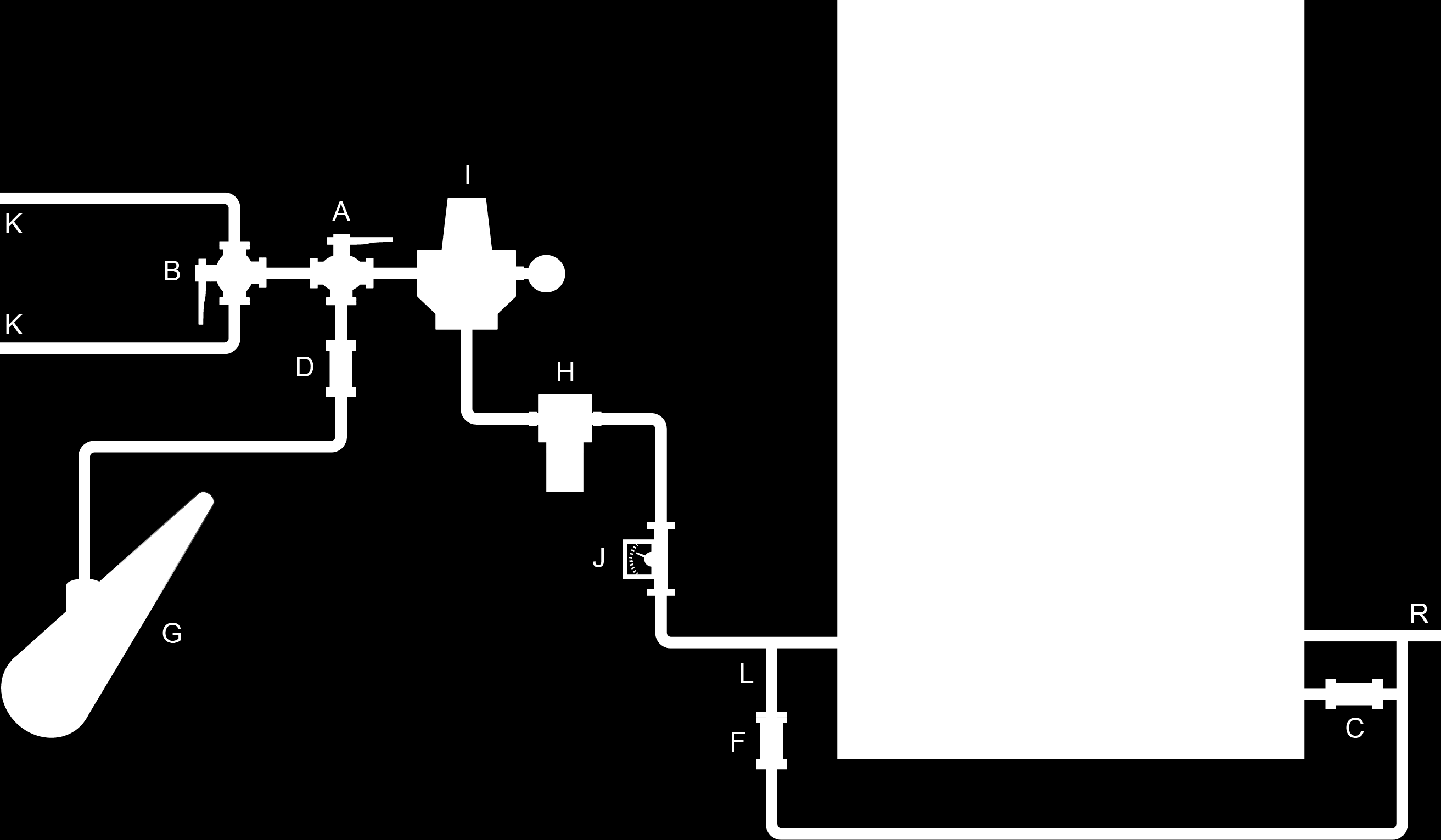
16 Orientation and planning Figure 2-1: Internal and external components A. Input valve (Valve A) B. Calibration valve (Valve B) C. Exit valve (Valve C) D. Isolation valve (Valve D) E. Chamber filling valve (Valve E) F. Purging valve (Valve F) G. Pipeline H. Coalescing filter I. Pressure regulator J. Flowmeter K. Calibration gas input L. Purge outlet M. Reference chamber N. Measurement chamber O. Control pressure indicator P. Diaphragm Q. Pressure relief valve R. Vent SGM gas path view When gas flows through the meter, the path it takes depends on whether you are purging, filling the reference chamber, calibrating, or measuring. The following figure illustrates the normal measurement path and the calibration path. 8 Micro Motion Gas Specific Gravity Meters (SGM)
17 Orientation and planning Figure 2-2: Gas path A. Input valve (Valve A) B. Calibration valve (Valve B) C. Exit valve (Valve C) D. Isolation valve (Valve D) E. Chamber filling valve (Valve E) F. Purging valve (Valve F) G. Pipeline H. Coalescing filter I. Pressure regulator J. Flowmeter K. Calibration gas input L. Purge outlet M. Reference chamber N. Measurement chamber O. Control pressure indicator P. Diaphragm Q. Pressure relief valve R. Vent Configuration and Use Manual 9
18 Orientation and planning 2.2 Terms and definitions Table 2-1: Term Terms used in meter setup and measurement Definition or usage Gas Calibration gas Reference gas Sample gas Pressure Control pressure Line pressure Sample pressure Supply pressure Vent pressure Measurement Base density (standard density, normal density) Calorific value Compressibility factor z Concentration (gas purity) Energy flow Molecular weight Net mass flow rate Net volume flow rate Relative density Specific gravity One of the two or three gases used during calibration. Calibration gases are selected to match the main constituents of the process gas. The gas in the reference chamber. Typically, the process gas is used as the reference gas. The gas stream to be measured by the meter. The pressure of the reference gas in the reference chamber. The pressure in the main pipeline, independent of the meter. The pressure of the sample gas after it passes through the pressure regulator. The pressure of the sample gas before it passes through the pressure regulator. The pressure required to force gas through the vent. The absolute density of a gas at reference conditions (base temperature and base pressure). Can be used to calculate standard volume flow from mass flow. Measured in user-specified units. The amount of heat released during the combustion of a specified amount of a gas. Measured in units of energy per units of the gas. Energy = calorific value. The correction factor for interactive molecular behavior of non-ideal gas mixtures. In a gas mixture, the quantity of the primary gas in comparison to the quantity of the secondary gas (contaminant). Measured in user-specified units. The energy content of the process gas flowing through the pipe per unit of time. Measured in units of energy per units of time. The ratio of the mass of a gas to its volume. Typically measured in g/mol. The flow rate as measured in mass flow units and multiplied by the current concentration value. The flow rate as measured in volume flow units, corrected to base temperature and base pressure, and multiplied by the current concentration value. The ratio of the weight of a volume of gas (or gas mixture) to the weight of an equal volume of dry air, where the weights of both the gas and air are taken under identical conditions of temperature and pressure. Unitless. The ratio of the molecular weight of a gas (or gas mixture) to the molecular weight of dry air. The molecular weight of dry air is normally assumed to be Unitless. 10 Micro Motion Gas Specific Gravity Meters (SGM)
19 Orientation and planning Table 2-1: Terms used in meter setup and measurement (continued) Term Wobbe index Definition or usage The ratio of the calorific value of a gas to its specific gravity. Measured in volumetric units (BTU/SCF, and MJ/SCM). 2.3 Core process variable: Specific gravity, molecular weight, or relative density The SGM can operate as a specific gravity meter, a molecular weight meter, or a relative density meter. This represents the core process variable that gas process data is based on. Your choice determines the set of process variables that the meter can report, the methods used to measure and calculate them, and the data that you must supply during setup and configuration. The core process variable specific gravity, molecular weight, or relative density was specified as part of the order. However, you can change it during calibration Core process variable and available gas process variables The gas process variables that the SGM can report are determined by the core process variable that you select during calibration. Table 2-2: Core process variable and available process variables Available process variables Default measurement unit Core process variable Specific gravity Molecular weight Relative density Specific gravity Unitless Molecular weight g/mol Relative density Unitless Base density g/cm³ Line density g/cm³ Line compressibility Unitless Base compressibility Unitless Calorific value MJ/m³ Wobbe index MJ/m³ Energy flow MJ/hr Concentration (gas purity) Concentration (% mass) Net mass flow rate g/sec Net volume flow rate l/sec Configuration and Use Manual 11
20 Orientation and planning Core process variable, gas process variables, and required data The gas process variables are calculated from a combination of measured variables, calculated variables, process data from external devices, and user-specified values. For each process variable that you want the meter to report, you must be able to supply all required external data and configuration values. Specific requirements are determined by the core process variable. Note The meter does not measure certain process variables directly. External devices are required for the following process variables: Line pressure Gas composition (% CO, % CO2, % H2, % N2) Flow rate (mass or volume) Line temperature (only if you choose to use external temperature rather than temperature data from the meter) Tip You can use temperature data from the meter or from an external device. If you use temperature data from the meter, related process variables will represent the gas inside the measurement chamber. If you use temperature data from an external device, related process variables will represent the gas at the location of the temperature probe. Table 2-3: Gas measurement when the core process variable is specific gravity Process variable to be reported Process data from the meter Process data from external devices User-specified values Specific gravity Specific gravity Molecular weight Specific gravity Molecular weight of air Base density Molecular weight Base pressure Base compressibility Base temperature Line density Temperature data from meter (RTD) (1) Base density External temperature (2) Line pressure Base pressure Base temperature Line compressibility Base compressibility Line compressibility NX 19 Temperature data from meter (RTD) (1) Specific gravity External temperature (2) Line pressure % CO2 % N2 Molecular weight of air 12 Micro Motion Gas Specific Gravity Meters (SGM)
21 Orientation and planning Table 2-3: Gas measurement when the core process variable is specific gravity (continued) Process variable to be reported Process data from the meter Process data from external devices User-specified values NX 19 Mod Temperature data from meter (RTD) (1) Specific gravity External temperature (2) Line pressure % CO2 % N2 NX 19 3h Temperature data from meter (RTD) (1) Specific gravity Calorific value External temperature (2) Line pressure % CO2 % N2 Molecular weight of air Base compressibility NX 19 Specific gravity % CO2 % N2 NX 19 Mod Specific gravity % CO2 % N2 Molecular weight of air Base temperature Base pressure Base temperature Base pressure NX 19 3h Specific gravity % CO2 Molecular weight of air Calorific value % N2 Base temperature Base pressure Calorific Value Specific gravity % CO % CO2 % H2 % N2 Wobbe Index Specific gravity Calorific value Energy Flow Mass units Line density (3) Calorific value Volume units Line density (4) Calorific value Mass flow rate (external or calculated) Volume flow rate (external or calculated) (1) Used when you want process variables to represent the gas in the measurement chamber. (2) Used when you want process variables to represent the gas at the location of the temperature probe. (3) Required only if you plan to use the calculated mass flow measurement unit as the measurement unit for energy flow. (4) Required only if you plan to use the calculated volume flow measurement unit as the measurement unit for energy flow. Table 2-4: Gas measurement when the core process variable is molecular weight Process variable to be reported Process data from the meter Process data from external devices User-specified values Molecular weight Molecular weight Specific gravity Molecular weight Molecular weight of air Base density Molecular weight Base compressibility Base pressure Base temperature Configuration and Use Manual 13
22 Orientation and planning Table 2-4: Gas measurement when the core process variable is molecular weight (continued) Process variable to be reported Line density Process data from the meter Temperature data from meter (RTD) (1) Molecular weight Line compressibility Line compressibility NX 19 Line temperature (1) NX 19 Mod NX 19 3h SGERG-88 Specific gravity Process data from external devices External temperature (2) Line pressure External temperature (2) Line pressure % CO2 % N2 Temperature data from External temperature (2) meter (RTD) (1) Line pressure Temperature data from meter (RTD) (1) Specific gravity Calorific value Temperature data from meter (RTD) (1) Calorific value % CO2 % N2 External temperature (2) Line pressure % CO2 % N2 External temperature (2) Line pressure % CO2 % H2 % N2 Base compressibility NX 19 Specific gravity % CO2 Calorific Value Wobbe Index % N2 NX 19 Mod Specific gravity % CO2 NX 19 3h Specific gravity Calorific value % N2 % CO2 % N2 SGERG-88 Calorific value % CO2 Line density Specific gravity Specific gravity Calorific value % H2 % N2 % CO % CO2 % H2 % N2 User-specified values Molecular weight of air Molecular weight of air Molecular weight of air Base temperature Base pressure Base temperature Base pressure Molecular weight of air Base temperature Base pressure Base temperature Base pressure 14 Micro Motion Gas Specific Gravity Meters (SGM)
23 Orientation and planning Table 2-4: Gas measurement when the core process variable is molecular weight (continued) Process variable to be reported Process data from the meter Process data from external devices User-specified values Energy Flow Mass units Line density Calorific value Mass flow rate (direct input or calculated) Volume units Calorific value Volume flow rate (direct input or calculated) (1) Used when you want process variables to represent the gas in the measurement chamber. (2) Used when you want process variables to represent the gas at the location of the temperature probe. Table 2-5: Gas measurement when the core process variable is relative density Process variable to be reported Process data from the meter Process data from external devices User-specified values Relative density Relative density Base density Relative density Base density of air Line density Temperature data from meter (RTD) (1) Base density External temperature (2) Line pressure Base temperature Base pressure Line compressibility Base compressibility Line compressibility Temperature data from meter (RTD) (1) Relative density External temperature (2) Line pressure % CO2 % H2 % N2 Base compressibility Relative density % CO2 % H2 % N2 Base temperature Base pressure (1) Used when you want process variables to represent the gas in the measurement chamber. (2) Used when you want process variables to represent the gas at the location of the temperature probe. 2.4 Equations used to calculate specific gravity, molecular weight, and relative density Core process variable = Specific gravity The following equations are used when the core process variable is specific gravity. Configuration and Use Manual 15
24 Orientation and planning Equation 2-1: Specific gravity SG Specific gravity of process gas SG = K0 + (K1 τ) + ( K2 τ 2) K0, K1, K2 Calibration factors from the on-site calibration. If a two-point calibration was performed, K1 is set to 0. τ Sensor time period (microseconds) Equation 2-2: Molecular weight calculated from specific gravity MW Gas = SG Gas MW Air MW Gas SG MW Air Molecular weight of process gas (g/mol) Specific gravity of process gas Molecular weight of air (user-specified; default = g/mol) Core process variable = Molecular weight The following equations are used when the core process variable is molecular weight. Equation 2-3: MW Molecular weight Molecular weight of process gas MW = K0 + (K1 τ) + ( K2 τ 2) K0, K1, K2 Calibration factors from the on-site calibration. If a two-point calibration was performed, K1 is set to 0. τ Sensor time period (microseconds) Equation 2-4: Specific gravity calculated from molecular weight SG = MW Gas MW Air SG MW Gas MW Air Specific gravity of process gas Molecular weight of process gas (g/mol) Molecular weight of air (user-specified; default = g/mol) Core process variable = Relative density The following equation is used when the core process variable is relative density. 16 Micro Motion Gas Specific Gravity Meters (SGM)
25 Orientation and planning Equation 2-5: Relative density RD Relative density of process gas RD = K0 + (K1 τ) + ( K2 τ 2) K0, K1, K2 Calibration factors from the on-site calibration. If a two-point calibration was performed, K1 is set to 0. τ Sensor time period (microseconds) Configuration and Use Manual 17
26 Orientation and planning 18 Micro Motion Gas Specific Gravity Meters (SGM)
27 Quick start 3 Quick start Topics covered in this chapter: Power up the transmitter Check meter status Make a startup connection to the transmitter 3.1 Power up the transmitter The transmitter must be powered up for all configuration and commissioning tasks, or for process measurement. 1. Ensure that all transmitter and sensor covers and seals are closed. WARNING! To prevent ignition of flammable or combustible atmospheres, ensure that all covers and seals are tightly closed. For hazardous area installations, applying power while housing covers are removed or loose can cause an explosion. 2. Turn on the electrical power at the power supply. The transmitter will automatically perform diagnostic routines. During this period, Alert 009 is active. The diagnostic routines should complete in approximately 30 seconds. Postrequisites Although the sensor is ready to receive process fluid shortly after power-up, the electronics can take up to 10 minutes to reach thermal equilibrium. Therefore, if this is the initial startup, or if power has been off long enough to allow components to reach ambient temperature, allow the electronics to warm up for approximately 10 minutes before relying on process measurements. During this warm-up period, you may observe minor measurement instability or inaccuracy. 3.2 Check meter status Check the meter for any error conditions that require user action or that affect measurement accuracy. 1. Wait approximately 10 seconds for the power-up sequence to complete. Immediately after power-up, the transmitter runs through diagnostic routines and checks for error conditions. During the power-up sequence, Alert A009 is active. This alert should clear automatically when the power-up sequence is complete. 2. Check the status LED on the transmitter. Configuration and Use Manual 19
28 Quick start Table 3-1: Transmitter status reported by status LED LED state Description Recommendation Green No alerts are active. Continue with configuration or process measurement. Yellow One or more low-severity alerts are active. A low-severity alert condition does not affect measurement accuracy or output behavior. You can continue with configuration or process measurement. If you choose, you can identify and resolve the alert condition. Flashing yellow Calibration in progress, or Known Density Verification in progress. The measurement can fluctuate during the calibration process or change as a result of the calibration process. The alert will clear when the calibration is complete. Check the calibration results before continuing. Red One or more high-severity alerts are active. A high-severity alert condition affects measurement accuracy and output behavior. Resolve the alert condition before continuing. View and acknowledge status alerts (Section 12.3) Status alerts, causes, and recommendations (Section 14.6) 3.3 Make a startup connection to the transmitter For all configuration tools except the display, you must have an active connection to the transmitter to configure the transmitter. Identify the connection type to use, and follow the instructions for that connection type in the appropriate appendix. Use the default communications parameters shown in the appendix. Communications tool Connection type to use Instructions ProLink III Modbus/RS-485 Appendix C HART/Bell 202 Field Communicator HART/Bell 202 Appendix D Postrequisites (Optional) Change the communications parameters to site-specific values. To change the communications parameters using ProLink III, choose Device Tools > Configuration > Communications. To change the communications parameters using the Field Communicator, choose Configure > Manual Setup > HART > Communications. 20 Micro Motion Gas Specific Gravity Meters (SGM)
29 Quick start Important If you are changing communications parameters for the connection type that you are using, you will lose the connection when you write the parameters to the transmitter. Reconnect using the new parameters. Configuration and Use Manual 21
30 Quick start 22 Micro Motion Gas Specific Gravity Meters (SGM)
31 Configuration and commissioning Part II Configuration and commissioning Chapters covered in this part: Introduction to configuration and commissioning Purging and calibration Configure measurement units using the display Configure process measurement using ProLink III Configure process measurement using the Field Communicator Configure device options and preferences Integrate the meter with the control system Complete the configuration Configuration and Use Manual 23
32 Configuration and commissioning 24 Micro Motion Gas Specific Gravity Meters (SGM)
33 Introduction to configuration and commissioning 4 Introduction to configuration and commissioning Topics covered in this chapter: Default values Enable access to the off line menu of the display Disable HART security Set the HART lock Restore the factory configuration 4.1 Default values Default values for your meter are configured at the factory. Important Default values are based on your purchase order options. Therefore, the default values described in the following tables may not be the factory default values configured for your system. For absolute accuracy, refer to the configuration sheet that was shipped with your meter SGM default values Table 4-1: SGM default ma scaling values Variable Default 4 ma Default 20 ma Line density 0 g/cm3 0.4 g/cm3 Sample temperature C -58 F C 392 F Drive gain % % External temperature C F C F External pressure PSIg PSIg Base density g/cm g/cm3 Calorific value 20 MJ/Nm3 60 MJ/Nm3 Wobbe index 20 MJ/Nm3 60 MJ/Nm3 Specific gravity for calibration range 1 Specific gravity for calibration range Configuration and Use Manual 25
34 Introduction to configuration and commissioning Table 4-1: SGM default ma scaling values (continued) Variable Default 4 ma Default 20 ma Specific gravity for calibration range 3 Specific gravity for calibration range 4 Molecular weight for calibration range 1 Molecular weight for calibration range 2 Molecular weight for calibration range 3 Molecular weight for calibration range g/mol g/mol 0 g/mol g/mol 0 g/mol g/mol 0 g/mol g/mol Sensor time period 400 us 1200 us User-defined calculation output %CO 2 0 % % %N 2 0 % % %H 2 0 % % %CO 0 % % Concentration Measurement enabled Gas purity concentration for curve 1 Gas purity concentration for curve 2 Gas purity concentration for curve 3 Gas purity concentration for curve 4 Flow input enabled % % % % % % % % Mass flow rate (calculated) g/sec g/sec Mass flow rate (external) g/sec g/sec Volume flow rate (calculated) SCFM SCFM Volume flow rate (external) -0.2 l/sec 0.2 l/sec 26 Micro Motion Gas Specific Gravity Meters (SGM)
35 Introduction to configuration and commissioning Table 4-2: SGM default variables Default variable Output option A Output options B and C Primary Variable (PV), ma1 Sample Temperature Specific Gravity for Calibration Set 1 Molecular Weight for Calibration Set 1 Relative Density Secondary Variable (SV), ma2 Time Period B Sample Temperature Tertiary Variable (TV) Specific Gravity for Calibration Set 1 Molecular Weight for Calibration Set 1 Relative Density Sensor Time Period Quaternary Variable (QV) Drive Gain Drive Gain 4.2 Enable access to the off-line menu of the display Display ProLink III Field Communicator Not available Device Tools > Configuration > Transmitter Display > Display Security Configure > Manual Setup > Display > Display Menus > Offline Menu Overview By default, access to the off-line menu of the display is enabled. If it is disabled, you must enable it if you want to use the display to configure the transmitter. Restriction You cannot use the display to enable access to the off-line menu. You must make a connection from another tool. 4.3 Disable HART security If you plan to use HART protocol to configure the device, HART security must be disabled. HART security is disabled by default, so you may not need to do this. Prerequisites Strap wrench 3 mm hex key Configuration and Use Manual 27
36 Introduction to configuration and commissioning Procedure 1. Power down the meter. 2. Using the strap wrench, loosen the grub screws and remove the transmitter endcap. Figure 4-1: A Transmitter with end-cap removed A. Transmitter end cap 3. Using the hex key, remove the safety spacer. 28 Micro Motion Gas Specific Gravity Meters (SGM)
37 Introduction to configuration and commissioning Figure 4-2: A Transmitter with end-cap and safety spacer removed B A. Transmitter end cap B. Safety spacer 4. Move the HART security switch to the OFF position (up). The HART security switch is the switch on the left. Figure 4-3: HART security switch B A A. HART security switch B. Unused Configuration and Use Manual 29
38 Introduction to configuration and commissioning 5. Replace the safety spacer and end-cap. 6. Power up the meter. 4.4 Set the HART lock If you plan to use a HART connection to configure the device, you can lock out all other HART masters. If you do this, other HART masters will be able to read data from the device but will not be able to write data to the device. Restrictions This feature is available only when you are using the Field Communicator or AMS. This feature is available only with a HART 7 host. Procedure 1. Choose Configure > Manual Setup > Security > Lock/Unlock Device. 2. If you are locking the meter, set Lock Option as desired. Option Permanent Temporary Lock All Description Only the current HART master can make changes to the device. The device will remain locked until manually unlocked by a HART master. The HART master can also change Lock Option to Temporary. Only the current HART master can make changes to the device. The device will remain locked until manually unlocked by a HART master, or a power-cycle or device reset is performed. The HART master can also change Lock Option to Permanent. No HART masters are allowed to make changes to the configuration. Before changing Lock Option to Permanent or Temporary, the device must be unlocked. Any HART master can be used to unlock the device. Postrequisites To avoid future confusion or difficulties, ensure that the device is unlocked after you have completed your tasks. 4.5 Restore the factory configuration Display ProLink III Field Communicator Not available Device Tools > Configuration Transfer > Restore Factory Configuration Service Tools > Maintenance > Reset/Restore > Restore Factory Configuration 30 Micro Motion Gas Specific Gravity Meters (SGM)
39 Introduction to configuration and commissioning Overview Restoring the factory configuration returns the transmitter to a known operational configuration. This may be useful if you experience problems during configuration. Tip Restoring the factory configuration is not a common action. You may want to contact Micro Motion to see if there is a preferred method to resolve any issues. Configuration and Use Manual 31
40 Introduction to configuration and commissioning 32 Micro Motion Gas Specific Gravity Meters (SGM)
41 Purging and calibration 5 Purging and calibration Topics covered in this chapter: On site setup requirements Preparing for SGM purging and calibration Purge and purge cycle the SGM device Calibrate the SGM device Review data for all calibrations Change the label for the active calibration Select the active calibration 5.1 On-site setup requirements The SGM is shipped with an empty reference chamber and no density calibration factors. Two on-site setup procedures, purging and calibration, are required to fill the reference chamber and to determine the density calibration factors. Preparing for SGM purging and calibration (Section 5.2) Purge and purge cycle the SGM device (Section 5.3) Calibrate the SGM device (Section 5.4) Review data for all calibrations (Section 5.5) Select the active calibration (Section 5.7) 5.2 Preparing for SGM purging and calibration Perform SGM purging and calibration on-site. Before you begin these procedures, you must: Know the core process variable that you want to use. In other words, you must know whether the meter will operate as a specific gravity meter, a molecular weight meter, or a relative density meter. Know whether to use two-point calibration or three-point calibration. Have the calibration gases ready. Know the appropriate control pressure. Be able to control sample pressure and vent pressure. If you plan to perform multiple calibrations, you must understand the requirements for multiple calibrations and know which calibration you are performing. Configuration and Use Manual 33
42 Purging and calibration Core process variable The SGM can operate as a specific gravity meter, a molecular weight meter, or a relative density meter. Your choice determines the process variables that the meter can report, the methods used to measure and calculate them, and the data that you must supply during setup and configuration. The core process variable was specified as part of the order. You can change it during calibration. Important If you want to change the core process variable after calibration, you must recalibrate the meter. Related information Core process variable and available gas process variables Core process variable, gas process variables, and required data Two-point calibration vs. three-point calibration Your choice of two-point calibration or three-point calibration depends on your process gas. Two-point calibrations are typically used for process gases with two main constituents. Three-point calibrations are typically used for process gases with three main constituents. A two-point calibration produces two calibration factors: K0 and K2. K1 is set to 0. A three-point calibration produces three calibration factors: K0, K1, and K Calibration gases For a two-point calibration, you need two calibration gases. For a three-point calibration, you need three calibration gases. The calibration gases should match the main constituents of your process gas. You can use the calibration gases in their pure forms or at defined specific gravities. If you cannot match the process gas exactly, select calibration gases that match its characteristics, especially its compressibility characteristics. Tip For the highest measurement accuracy, use calibration gases in their pure form. This avoids issues with stratification and other inconsistencies in the calibration gas. During the calibration, you will be required to enter data for each calibration gas: If the SGM is operating as a specific gravity meter, you must enter the specific gravity of the gas. 34 Micro Motion Gas Specific Gravity Meters (SGM)
43 Purging and calibration Pressure If the SGM is operating as a relative density meter, you must enter the relative density of the calibration gas. If the SGM is operating as a molecular weight meter, you must enter the molecular weight of the gas. During the calibration, you must be able to flow each calibration gas through the meter, in the order of their specific gravity: lowest to highest. You must be able to control the sample pressure and the vent pressure. In a typical installation, a pressure regulator is installed to control sample pressure. The meter includes a pressure indicator that allows you to verify sample pressure. The pressure in the system must meet the following requirements: The sample pressure must be less than the maximum pressure of the meter (12 bar a). The sample pressure must be greater than the control pressure. In a typical application, it must be 15% to 25% greater than the control pressure. The control pressure must be within the following range: 1.2 to 7.0 bar a at 20 C (17 to 101 psi a at 68 F). The control pressure must be greater than the vent pressure. At the end of the purge procedure, the reference chamber is filled with the reference gas to the appropriate control pressure. At this point, the reference chamber is sealed. Determining the control pressure The control pressure must be appropriate to your application. You must know the desired control pressure before you begin the purge and calibration process. The control pressure also affects the supply pressure and the vent pressure that you must maintain in the system. Control pressure refers to the pressure inside the reference chamber. The control pressure to use depends on three factors: The expected range of the process variable, from lowest specific gravity to highest specific gravity The expected change in gas supercompressibility (Z) The required measurement accuracy You can select a control pressure using general guidelines or you can calculate a control pressure using data that is specific to your meter and your process gas. Requirements for control pressure The control pressure must meet the following requirements: Between 1.2 and 7 bar a (17 and 101 psi a), at 20 C Less than the sample pressure, by 15% to 25% Configuration and Use Manual 35
44 Purging and calibration Greater than the vent pressure General guidelines for selecting a control pressure To select a control pressure using general guidelines: To minimize the effect of temperature on the meter, use a higher control pressure. To minimize the effect of temperature on compressibility, use a lower control pressure. To minimize the effect of compressibility on calibration, use a lower control pressure. To minimize error in general, use a higher control pressure. Method for calculating the error associated with a control pressure Your selection of control pressure determines the range of possible measurement error. You can calculate the measurement error associated with different control pressures and use this to help you select a control pressure. To calculate the measurement error associated with several different control pressures: 1. Use the following table as a calculation aid. 2. Record your process gas and the expected specific gravity range. 3. Record the DTC for the meter. The DTC is provided on the meter's calibration sheet and on a label inside the transmitter front cover. 4. Check the example control pressures in the table and change them as desired. 5. Using the following equation, calculate the density range for each control pressure. 6. Using the following equations and methods, calculate the measurement error for each density range. 7. Calculate the total error for each density range. With this data, you can select a control pressure based on its density range and accuracy. Be sure to convert the control pressure at 20 C to the equivalent value at operating temperature. Table 5-1: Gas Calculation aid for control pressure and associated measurement error Specific gravity range to DTC (kg/m³/ C) Control pressure at 20 C lb/in² absolute Density range at 20 C Measurement error (% of full-scale specific gravity/ C ) Bar absolute kg/m³ Temperature coefficient error Gas compressibility of sample gas 36 Micro Motion Gas Specific Gravity Meters (SGM)
45 Purging and calibration Table 5-1: Calculation aid for control pressure and associated measurement error (continued) Velocity of sound in sample gas Reference chamber or relief valve Total error (%) Equation 5-1: Density range (minimum and maximum) P Control pressure (bar a) ρ Air SG min SG min ρ min = P ρ Air SG min ρ max = P ρ Air SG max Density of clean dry air (1.2 kg/m 3 approximately) Specific gravity minimum value Specific gravity maximum value Equation 5-2: Temperature coefficient error Error DTC = DTC ρ max 100%/ C DTC Temperature coefficient for this meter ρ max Maximum density value (kg/m 3 ) Equation 5-3: Gas compressibility error Error Z = ± 0.67 (TCC GasRef - TCC GasSample ) TCC GasRef TCC GasSample For the reference gas, the coefficient that describes the relationship between temperature and compressibility at control pressure. Refer to the International Standard Gas Tables if required. For the sample gas, the coefficient that describes the relationship between temperature and compressibility at control pressure. Refer to the International Standard Gas Tables if required. Equation 5-4: SG max Velocity of Sound error Error VOS = SG max %/ C Maximum specific gravity value Configuration and Use Manual 37
46 Purging and calibration Example: Calculating the control pressure for natural gas Table 5-2: Gas Control pressure and measurement error calculations for natural gas Natural gas Specific gravity range 0.55 to 0.8 DTC (kg/m³/ C) Control pressure at 20 C lb/in² absolute Bar absolute Density range at 20 C kg/m³ 0.79 to to to to 6.72 Measurement error (% of full-scale specific gravity/ C ) Temperature coefficient Gas compressibility of sample gas Velocity of sound in sample gas Reference chamber or relief valve ± ± ±0.001 ± Total error (%) to to Example: Calculating the control pressure for an N 2 /CO 2 mix Table 5-3: Gas Control pressure and measurement error calculations for an N 2 /CO 2 mix N 2 /CO 2 mix Specific gravity range 1.0 to 1.5 DTC (kg/m³/ C) Control pressure at 20 C lb/in² absolute Bar absolute Density range at 20 C kg/m³ 1.44 to to to to 12.6 Measurement error (% of full-scale specific gravity/ C ) Temperature coefficient Gas compressibility of sample gas Velocity of sound in sample gas Reference chamber or relief valve ±0.002 ±0.004 ±0.008 ± Total error (%) to to Micro Motion Gas Specific Gravity Meters (SGM)
47 Purging and calibration Multiple calibrations The SGM can store calibrations for up to four different process gases or ranges. Each calibration is generated by an independent calibration procedure and contains an independent set of calibration coefficients. This feature allows you to switch between process gases or ranges without recalibrating the device. If you plan to use more than one calibration: Perform all calibrations using the same measurement option: specific gravity, molecular weight, or relative density. Set calibrations as either two-point calibrations or three-point calibrations. Complete each calibration before beginning the next calibration. Choose to add calibrations at a later time. You do not need to perform all calibrations at the same time. Important It is possible to use a different control pressure for each calibration. If you do, change the control pressure in the meter whenever you change the active calibration. If you do not change the control pressure to match the active calibration, measurement accuracy will be affected. Calibration ranges If you have a specific gravity meter, the meter will automatically calculate the specific gravity output variable for all four ranges during operation. If you have a molecular weight meter, the meter will automatically calculate the molecular weight output variable for all four ranges during operation. If you have a relative density meter, only one calibration is applied at a time. A control selects the active calibration. For specific gravity and molecular weight meters energy, energy flow, compressibility, and Wobbe index are calculated only from the active calibration. Gas purity is automatically calculated for the associated calibration (for example, Gas Purity Concentration for curve 4 automatically uses calibration range 4). Damping is applied only to the active variable. 5.3 Purge and purge-cycle the SGM device Purging the SGM device prepares it for calibration by ensuring that the reference chamber is filled to the desired control pressure and that the reference gas is pure. Prerequisites You must be able to flow process gas through the device. You must know the working pressure of your system and the desired control pressure (the pressure to be used in the reference chamber). Configuration and Use Manual 39
48 Purging and calibration Procedure 1. Close the isolation valve, the input valve, the calibration valve, and the purge valve (Valve D, Valve A, Valve B, and Valve F. 2. Open the exit valve (Valve C). 3. Open the chamber filling valve (Valve E). 4. Set the pressure regulator to the working pressure of the system. 5. Open the isolation valve (Valve D). 6. Open the input valve (Valve A) and allow gas to flow for three minutes. 7. Close the exit valve (Valve C). 8. Observe the control pressure indicator. When it is at the desired control pressure: a. Close the input valve (Valve A) and open the purge valve (Valve F). b. Allow the gas to vent to atmospheric pressure. 9. Purge-cycle the device. a. Close the purge valve (Valve F) and open the input valve (Valve A). b. Observe the control pressure indicator. When it is at the desired control pressure, close the input valve (Valve A) and open the purge valve (Valve F). c. Allow the gas to vent to atmospheric pressure. d. Repeat this step for the required number of cycles, as determined by the following equation: NumberPurgeCycles = 21 MaxRegulatorPressure 10. Close the purge valve (Valve F) and open the input valve (Valve A). 11. When the control pressure reaches the desired value, close the chamber filling valve (Valve E). The reference chamber is now filled with the reference gas at the control pressure. Important After the reference chamber has been filled, do not open the chamber filling valve (Valve E) again. Related information Functional view of the SGM 5.4 Calibrate the SGM device The SGM device must be calibrated for your process gas. Calibrate the SGM device using the display (Section 5.4.1) Calibrate the SGM device using ProLink III (Section 5.4.2) 40 Micro Motion Gas Specific Gravity Meters (SGM)
49 Purging and calibration Calibrate the SGM device using the Field Communicator (Section 5.4.3) Calibrate the SGM device using the display SGM calibration is required to generate calibration coefficients for your process gas. These coefficients are required for accurate measurement. Prerequisites You must have completed the purge procedure, and the reference chamber must be filled with the reference gas to the appropriate control pressure. You must know whether you want the device to operate as a specific gravity meter, a molecular weight meter, or a relative density meter. You must know whether you want to perform a two-point calibration or a threepoint calibration. You must have identified all required calibration gases and know their specific gravity, molecular weight, or relative density. You must be prepared to flow all calibration gases through the device, at the appropriate sample pressure. In a typical application, the sample pressure should be approximately 25% greater than the control pressure. Procedure 1. Enter the Off-Line Maintenance menu and activate SCROLL until OFF-LINE CAL appears on the display, then activate Select. 2. When CAL SG appears, activate Select. 3. Set the measurement type for this device. a. When CAL TYPE appears, activate Select, then scroll through the list of options. b. When the desired option appears, activate Select, then store the selection. Option Specific Gravity (SG) Molecular Weight (MW) Relative Density (RD) Description Gas density will be measured as specific gravity, and specific gravity will be used for calibration. Gas density will be measured as molecular weight, and molecular weight will be used for calibration. Gas density will be measured as relative density, and relative density will be used for calibration. 4. Set the calibration type (calibration format). a. Activate SCROLL until CAL PTS appears. b. Activate Select, then scroll through the list of options. c. When the desired option appears, activate Select, then store the selection. Configuration and Use Manual 41
50 Purging and calibration Option 2-Point Calibration (2 PT) 3-Point Calibration (3 PT) Description Appropriate for gases with two main constituents. Requires two calibration gases. Appropriate for gases with three main constituents. Requires three calibration gases. 5. Select the number of the calibration that you want to perform. a. When CAL NUMBR appears, activate Select, then scroll through the list of options. b. When the desired option appears, activate Select, then store the selection. The device can store up to four independent calibrations. All calibrations must have the same calibration type (2-point or 3-point). Each calibration can use different calibration gases. 6. Set the low-density calibration point. a. Connect Calibration Gas Low to the pipework. b. Set the pressure regulator on the calibration gas to the appropriate sample pressure for your installation. c. Open the calibration valve (Valve B) and the exit valve (Valve C). d. Activate SCROLL until ENTER GAS LOW appears, then activate Select. e. Enter the specific gravity, molecular weight, or relative density of the calibration gas and store the value. f. Activate SCROLL. g. When CAL GAS LOW appears, activate Select to start the calibration. h. During the calibration, activate SCROLL to observe the Sensor Time Period and Stability values during the calibration. i. Wait a minimum of 15 minutes for the system to stabilize. When Stability is Good, activate Select. If measurement does not stabilize after 30 minutes, activate SCROLL to abort the calibration. j. Activate Select again to accept the calibration value. k. As the gas flows, observe the Sensor Time Period and Stability values. l. Close the calibration valve (Valve B). m. Disconnect the calibration gas. 7. (3-point calibrations only) Set the mid-range calibration point. a. Connect Calibration Gas Medium to the pipework. b. Set the pressure regulator on the calibration gas to the appropriate sample pressure for your installation. c. Open the calibration valve (Valve B). d. Activate SCROLL until ENTER GAS MEDIUM appears, then activate Select. e. Enter the specific gravity, molecular weight, or relative density of the calibration gas and store the value. 42 Micro Motion Gas Specific Gravity Meters (SGM)
51 Purging and calibration f. Activate SCROLL g. When CAL GAS MEDIUM appears, activate Select to start the calibration. h. During the calibration, activate SCROLL to observe the Sensor Time Period and Stability values during the calibration. i. Wait for a minimum of 15 minutes for the system to stabilize. When Stability is Good, activate Select. If measurement does not stabilize after 30 minutes, activate SCROLL to abort the calibration. j. Activate Select again to accept the calibration value. k. As the gas flows, observe the Sensor Time Period and Stability values. l. Close the calibration valve (Valve B). m. Disconnect the calibration gas. 8. Set the high-density calibration point. a. Connect Calibration Gas High to the pipework. b. Set the pressure regulator on the calibration gas to the appropriate sample pressure for your installation. c. Open the calibration valve (Valve B). d. Activate SCROLL until ENTER GAS HIGH appears, then activate Select. e. Enter the specific gravity, molecular weight, or relative density of the calibration gas and store the value. f. Activate SCROLL g. When CAL GAS HIGH appears, activate Select to start the calibration. h. During the calibration, activate SCROLL to observe the Sensor Time Period and Stability values during the calibration. i. Wait for a minimum of 15 minutes for the system to stabilize. When Stability is Good, activate Select. If measurement does not stabilize after 30 minutes, activate SCROLL to abort the calibration. j. Activate Select again to accept the calibration value. k. As the gas flows, observe the Sensor Time Period and Stability values. l. Close the calibration valve (Valve B). m. Disconnect the calibration gas. 9. Activate SCROLL until CALC K VAL appears, then activate Select. The meter automatically calculates the calibration factors from the stored data. 10. View the calibration factors. a. When RESULT DISPLAY appears, activate Select. b. Activate SCROLL to view the calibration factors and data. Results are displayed in this order: Configuration and Use Manual 43
52 Purging and calibration The specific gravity, molecular weight, or relative density used to calculate the K0 calibration factor The time period used to calculate the K0 calibration factor The specific gravity, molecular weight, or relative density used to calculate the K1 calibration factor (3-point calibrations only) The time period used to calculate the K1 calibration factor (3-point calibrations only) The specific gravity, molecular weight, or relative density used to calculate the K2 calibration factor The time period used to calculate the K2 calibration factor The K0 calibration factor The K1 calibration factor (3-point calibrations only), displayed in exponential format The K2 calibration factor, displayed in exponential format c. When Exit appears, activate Select. 11. Select the calibration to be used for measurement. a. Activate SCROLL until CAL ACTIVE appears. b. Activate Select, then scroll through the list of options. c. When the desired option appears, activate Select, then store the selection. 12. (Optional) To add a calibration, return to the first step and repeat this procedure. Related information Functional view of the SGM Troubleshooting SGM calibration Calibrate the SGM device using ProLink III SGM calibration is required to generate calibration coefficients for your process gas. These coefficients are required for accurate measurement. Prerequisites You must have completed the purge procedure, and the reference chamber must be filled with the reference gas to the appropriate control pressure. You must know whether you want the device to operate as a specific gravity meter, a molecular weight meter, or a relative density meter. You must know whether you want to perform a two-point calibration or a threepoint calibration. You must have identified all required calibration gases and know their specific gravity, molecular weight, or relative density. You must be prepared to flow all calibration gases through the device, at the appropriate sample pressure. In a typical application, the sample pressure should be approximately 25% greater than the control pressure. 44 Micro Motion Gas Specific Gravity Meters (SGM)
53 Purging and calibration Procedure 1. Choose Device Tools > Calibration > Gas Calibration. 2. Set the measurement type for this device. Option Specific Gravity (SG) Molecular Weight (MW) Relative Density (RD) Description Gas density will be measured as specific gravity, and specific gravity will be used for calibration. Gas density will be measured as molecular weight, and molecular weight will be used for calibration. Gas density will be measured as relative density, and relative density will be used for calibration. 3. Set the calibration type (calibration format). Option 2-Point Calibration (2 PT) 3-Point Calibration (3 PT) Description Appropriate for gases with two main constituents. Requires two calibration gases. Appropriate for gases with three main constituents. Requires three calibration gases. 4. Select the number of the calibration that you want to perform. The device can store up to four independent calibrations. All calibrations must have the same calibration type (2-point or 3-point). Each calibration can use different calibration gases. 5. Enter data for each calibration gas. a. Select the calibration gas from the list. If it is not listed, select Other. b. Enter the specific gravity, molecular weight, or relative density of the calibration gas. Tip Enter the calibration gases in order of density, from lowest to highest. This allows heavier gases to replace lighter gases. 6. Set the low-density calibration point. a. Connect Calibration Gas Low to the pipework. b. Set the pressure regulator on the calibration gas to the appropriate sample pressure for your installation. c. Open the calibration valve (Valve B) and the exit valve (Valve C). d. As the gas flows, observe the Sensor Time Period and Stability values. e. Wait a minimum of 15 minutes for the system to stabilize. When Stability is Good, click Accept or Next. Configuration and Use Manual 45
54 Purging and calibration If measurement does not stabilize after 30 minutes, click Abort and troubleshoot the problem. f. Close the calibration valve (Valve B). g. Disconnect the calibration gas. 7. (3-point calibrations only) Set the mid-range calibration point. a. Connect Calibration Gas Medium to the pipework. b. Set the pressure regulator on the calibration gas to the appropriate sample pressure for your installation. c. Open the calibration valve (Valve B). d. As the gas flows, observe the Sensor Time Period and Stability values. e. Wait a minimum of 15 minutes for the system to stabilize. When Stability is Good, click Accept or Next. If measurement does not stabilize after 30 minutes, click Abort and troubleshoot the problem. f. Close the calibration valve (Valve B). g. Disconnect the calibration gas. 8. Set the high-density calibration point. a. Connect Calibration Gas High to the pipework. b. Set the pressure regulator on the calibration gas to the appropriate sample pressure for your installation. c. Open the calibration valve (Valve B). d. As the gas flows, observe the Sensor Time Period and Stability values. e. Wait a minimum of 15 minutes for the system to stabilize. When Stability is Good, click Accept or Next. If measurement does not stabilize after 30 minutes, click Abort and troubleshoot the problem. f. Close the calibration valve (Valve B). g. Disconnect the calibration gas. 9. Click Next. 10. Review the results for this calibration. 11. Click Finish to save the results and exit, or click Add Calibration to add a calibration. Tip You can use Add Calibration to create a new set of calibration coefficients. 12. Set Active Calibration to the calibration to be used for measurement. Tip You can also set Active Calibration from the Calibration Data window. This allows you to change the calibration without going through the calibration wizard. 46 Micro Motion Gas Specific Gravity Meters (SGM)
55 Purging and calibration For 2-point calibrations, two calibration coefficients (K0 and K2) are calculated and used in measurement. For 3-point calibrations, three calibration coefficients (K0, K1, and K2) are calculated and used in measurement. Postrequisites To restore normal gas flow, close the calibration valve (Valve B) and open the isolation valve (Valve D) and the input valve (Valve A). Related information Functional view of the SGM Troubleshooting SGM calibration Calibrate the SGM device using the Field Communicator SGM calibration is required to generate calibration coefficients for your process gas. These coefficients are required for accurate measurement. Prerequisites You must have completed the purge procedure, and the reference chamber must be filled with the reference gas to the appropriate control pressure. You must know whether you want the device to operate as a specific gravity meter, a molecular weight meter, or a relative density meter. You must know whether you want to perform a two-point calibration or a threepoint calibration. You must have identified all required calibration gases and know their specific gravity, molecular weight, or relative density. You must be prepared to flow all calibration gases through the device, at the appropriate sample pressure. In a typical application, the sample pressure should be approximately 25% greater than the control pressure. Procedure 1. Choose Configure > Manual Setup > Measurements > Optional Setup > Gas Meter Calibration. 2. Set the measurement type for this device. Option Specific Gravity (SG) Molecular Weight (MW) Relative Density (RD) Description Gas density will be measured as specific gravity, and specific gravity will be used for calibration. Gas density will be measured as molecular weight, and molecular weight will be used for calibration. Gas density will be measured as relative density, and relative density will be used for calibration. 3. Set the calibration type (calibration format). Configuration and Use Manual 47
56 Purging and calibration Option 2-Point Calibration (2 PT) 3-Point Calibration (3 PT) Description Appropriate for gases with two main constituents. Requires two calibration gases. Appropriate for gases with three main constituents. Requires three calibration gases. 4. Select the number of the calibration that you want to perform. The device can store up to four independent calibrations. All calibrations must have the same calibration type (2-point or 3-point). Each calibration can use different calibration gases. 5. Enter data for each calibration gas. a. Choose Setup Calibration and choose the calibration gas you are describing. b. Select the calibration gas from the list. If it is not listed, select Other. c. Enter the specific gravity, molecular weight, or relative density of the calibration gas. Tip Enter the calibration gases in order of density, from lowest to highest. This allows heavier gases to replace lighter gases. 6. Set the low-density calibration point. a. Connect Calibration Gas Low to the pipework. b. Set the pressure regulator on the calibration gas to the appropriate sample pressure for your installation. c. Choose Start Calibration and choose the calibration gas you are using, then click OK. d. Open the calibration valve (Valve B) and the exit valve (Valve C). e. As the gas flows, observe the Sensor Time Period and Stability values. f. Wait a minimum of 15 minutes for the system to stabilize. When Calibration Point is Good, click OK. If measurement does not stabilize after 30 minutes, click Abort and troubleshoot the problem. g. Close the calibration valve (Valve B). h. Disconnect the calibration gas. 7. (3-point calibrations only) Set the mid-range calibration point. a. Connect Calibration Gas Medium to the pipework. b. Set the pressure regulator on the calibration gas to the appropriate sample pressure for your installation. c. Choose Start Calibration and choose the calibration gas you are using, then click OK. d. Open the calibration valve (Valve B). 48 Micro Motion Gas Specific Gravity Meters (SGM)
57 Purging and calibration e. As the gas flows, observe the Sensor Time Period and Stability values. f. Wait a minimum of 15 minutes for the system to stabilize. When Calibration Point is Good, click OK. If measurement does not stabilize after 30 minutes, click Abort and troubleshoot the problem. g. Close the calibration valve (Valve B). h. Disconnect the calibration gas. 8. Set the high-density calibration point. a. Connect Calibration Gas High to the pipework. b. Set the pressure regulator on the calibration gas to the appropriate sample pressure for your installation. c. Choose Start Calibration and choose the calibration gas you are using, then click OK. d. Open the calibration valve (Valve B). e. As the gas flows, observe the Sensor Time Period and Stability values. f. Wait a minimum of 15 minutes for the system to stabilize. When Calibration Point is Good, click OK. If measurement does not stabilize after 30 minutes, click Abort and troubleshoot the problem. g. Close the calibration valve (Valve B). h. Disconnect the calibration gas. 9. Choose Results to review the results for this calibration. If you want to recalculate one or more of the calibration points, click Back and repeat the step. 10. (Optional) To add a calibration, return to the first step and repeat this procedure. Restriction The additional calibrations must use the same measurement type and calibration type. 11. Choose Configure > Manual Setup > Measurements > Gas Calibration and set Active Calibration to the calibration to be used for measurement. For 2-point calibrations, two calibration coefficients (K0 and K2) are calculated and used in measurement. For 3-point calibrations, three calibration coefficients (K0, K1, and K2) are calculated and used in measurement. Postrequisites To restore normal gas flow, close the calibration valve (Valve B) and open the isolation valve (Valve D) and the input valve (Valve A). Configuration and Use Manual 49
58 Purging and calibration Related information Functional view of the SGM Troubleshooting SGM calibration Troubleshooting SGM calibration If one of the calibration point measurements does not stabilize within 30 minutes, abort the calibration and check for problems. Typical problems include the following: The calibration gas does not have a consistent composition. Check for settling or stratification. The calibration gas is not flowing. Ensure that the pressure of the calibration gas is 15% to 25% higher than the control pressure, then check for obstructions in the gas path. The reference chamber or the gas path is leaking. Check for leakage. Depending on the problem, you may be able to restart the calibration at the abort point. Related information Check for leakage 5.5 Review data for all calibrations Display ProLink III Field Communicator Not available Device Tools > Calibration Data Configure > Manual Setup > Calibration Factors Overview For all calibrations, you can review the gas data and sensor time period data that was used to calculate the calibration factors, and you can review the calibration factors. 5.6 Change the label for the active calibration Display ProLink III Field Communicator Not available Device Tools > Calibration Data Configure > Manual Setup > Calibration Factors 50 Micro Motion Gas Specific Gravity Meters (SGM)
59 Purging and calibration Overview You can change the default calibration labels. Procedure 1. Select and delete the value in the Calibration x Label field. 2. Enter your preferred calibration label and press Apply. 5.7 Select the active calibration Display ProLink III Field Communicator OFF-LINE MAINT > OFF-LINE CAL > CAL SG > CAL ACTIVE OFF-LINE MAINT > OFF-LINE CAL > CAL MW > CAL ACTIVE OFF-LINE MAINT > OFF-LINE CAL > CAL RD > CAL ACTIVE Device Tools > Calibration Data > Active Calibration Configure > Manual Setup > Measurements > Gas Calibration > Active Calibration Overview The SGM can store up to four calibrations. The active calibration specifies the calibration to be used for measurement. Important Do not confuse the active calibration with the calibration being performed. For example, you may perform Calibration 4, and then choose to use Calibration 3 for measurement. Procedure Set Active Calibration to the calibration you want to use for measurement. Related information Review data for all calibrations Configuration and Use Manual 51
60 Purging and calibration 52 Micro Motion Gas Specific Gravity Meters (SGM)
61 Configure measurement units using the display 6 Configure measurement units using the display Restriction The display allows you to configure measurement units, but does not support any other process measurement configuration. To access all process measurement parameters, you must use one of the following: ProLink III Field Communicator 6.1 Configure measurement units using the display The measurement unit parameters specify the units that will be used for process variables. 1. Navigate to the Off-Line Maintenance menu and enter it. 2. Activate Scroll until OFF-LINE CONFIG appears, then activate Select. 3. When CONFIG UNITS appears, activate Select. 4. Set the units. a. When the first process variable appears, activate Select. b. Activate Scroll to scroll through the options for that process variable. c. When the desired unit appears, activate Select. d. Activate Select to store your choice. e. Repeat until you have set measurement units for all process variables. 5. When EXIT appears, activate Select to return to the higher-level menu. Configuration and Use Manual 53
62 Configure measurement units using the display 54 Micro Motion Gas Specific Gravity Meters (SGM)
63 Configure process measurement using ProLink III 7 Configure process measurement using ProLink III Topics covered in this chapter: Configure specific gravity, molecular weight, or relative density parameters using ProLink III Configure temperature measurement using ProLink III Configure the pressure input Configure gas compressibility measurement using ProLink III Configure base density calculations using ProLink III Configure line density calculations using ProLink III Configure energy content measurement using ProLink III Set up concentration measurement using ProLink III 7.1 Configure specific gravity, molecular weight, or relative density parameters using ProLink III These parameters control the measurement of the core process variable. Configure Damping using ProLink III (Section 7.1.1) Configure the molecular weight of air using ProLink III (Section 7.1.2) Configure Damping using ProLink III ProLink III Device Tools > Configuration > Process Measurement > Specific Gravity > Damping Device Tools > Configuration > Process Measurement > Molecular Weight > Damping Device Tools > Configuration > Process Measurement > Relative Density > Damping Overview Damping controls the amount of damping that will be applied to the core process variable: specific gravity, molecular weight, or relative density. Damping is used to smooth out small, rapid fluctuations in process measurement. Damping Value specifies the time period (in seconds) over which the transmitter will spread changes in the process variable. At the end of the interval, the internal value will reflect 63% of the change in the actual measured value. Configuration and Use Manual 55
64 Configure process measurement using ProLink III Tip Damping affects all process variables that are calculated from the core process variable: specific gravity, molecular weight, or relative density. Procedure Set Damping to the value you want to use. The default value is 0 seconds. The range is 0 to 440 seconds. Interaction between Damping and Added Damping When the ma output is configured to report the core process variable (specific gravity, molecular weight, or relative density), both Damping and Added Damping are applied to the reported value. Damping controls the rate of change in the value of the process variable in transmitter memory. Added Damping controls the rate of change reported via the ma output. If ma Output Process Variable is set to Specific Gravity, Molecular Weight, or Relative Density, and both Damping and Added Damping are set to non-zero values, density damping is applied first, and the added damping calculation is applied to the result of the first calculation. This value is reported over the ma output Configure the molecular weight of air using ProLink III ProLink III Device Tools > Configuration > Process Measurement > Specific Gravity > Molecular Weight of Air Device Tools > Configuration > Process Measurement > Molecular Weight > Molecular Weight of Air Device Tools > Configuration > Process Measurement > Relative Density > Molecular Weight of Air Overview The molecular weight of air is required for several different gas measurements. For most applications, the default value can be used. Procedure Set Molecular Weight of Air to the value to be used in your application. The default value is g/mol. This value is appropriate for most applications. 7.2 Configure temperature measurement using ProLink III The temperature measurement parameters control how temperature is measured and reported. 56 Micro Motion Gas Specific Gravity Meters (SGM)
65 Configure process measurement using ProLink III Configure Temperature Measurement Unit using ProLink III (Section 7.2.1) Configure Temperature Damping using ProLink III (Section 7.2.2) Configure Temperature Input using ProLink III (Section 7.2.3) Configure Temperature Measurement Unit using ProLink III ProLink III Device Tools > Configuration > Process Measurement > Line Temperature > Temperature Unit Overview Temperature Measurement Unit specifies the unit that will be used for temperature measurement. Procedure Set Temperature Measurement Unit to the option you want to use. The default setting is Degrees Celsius. Options for Temperature Measurement Unit The transmitter provides a standard set of units for Temperature Measurement Unit. Different communications tools may use different labels for the units. Table 8-1: Options for Temperature Measurement Unit Unit description Display Label ProLink III Degrees Celsius C C degc Degrees Fahrenheit F F degf Degrees Rankine R R degr Kelvin K K Kelvin Field Communicator Configure Temperature Damping using ProLink III ProLink III Device Tools > Configuration > Process Measurement > Line Temperature > Temperature Damping Overview Temperature Damping controls the amount of damping that will be applied to the line temperature value, when the on-board temperature data is used (RTD). Configuration and Use Manual 57
66 Configure process measurement using ProLink III Damping is used to smooth out small, rapid fluctuations in process measurement. Damping Value specifies the time period (in seconds) over which the transmitter will spread changes in the process variable. At the end of the interval, the internal value will reflect 63% of the change in the actual measured value. Tip Temperature Damping affects all process variables, compensations, and corrections that use temperature data from the sensor. Procedure Enter the value you want to use for Temperature Damping. The default value is 4.8 seconds. The range is 0 to 38.4 seconds. Tips A high damping value makes the process variable appear smoother because the reported value changes slowly. A low damping value makes the process variable appear more erratic because the reported value changes more quickly. Whenever the damping value is non-zero, the reported measurement will lag the actual measurement because the reported value is being averaged over time. In general, lower damping values are preferable because there is less chance of data loss, and less lag time between the actual measurement and the reported value. The value you enter is automatically rounded to the nearest valid value. Valid values for Temperature Damping are 0, 0.6, 1.2, 2.4, 4.8, Configure Temperature Input using ProLink III ProLink III Device Tools > Configuration > Process Measurement > Line Temperature > Line Temperature Source Procedure 1. Choose the method to be used to supply temperature data, and perform the required setup. Option Description Setup Internal RTD temperature data Temperature data from the onboard temperature sensor (RTD) is used. a. Set Line Temperature Source to Internal RTD. b. Click Apply. 58 Micro Motion Gas Specific Gravity Meters (SGM)
67 Configure process measurement using ProLink III Option Description Setup Polling The meter polls an external device for temperature data. This data will be available in addition to the internal RTD temperature data. a. Set Line Temperature Source to Poll for External Value. b. Set Polling Slot to an available slot. c. Set Polling Control to Poll as Primary or Poll as Secondary. Option Poll as Primary Poll as Secondary Description No other HART masters will be on the network. The Field Communicator is not a HART master. Other HART masters will be on the network. The Field Communicator is not a HART master. Digital communications A host writes temperature data to the meter at appropriate intervals. This data will be available in addition to the internal RTD temperature data. d. Set External Device Tag to the HART tag of the temperature device. e. Click Apply. a. Set Line Temperature Source to Fixed Value or Digital Communications. b. Click Apply. c. Perform the necessary host programming and communications setup to write temperature data to the meter at appropriate intervals. 2. If you set up an external temperature: a. Choose Device Tools > Configuration > I/O > Inputs > External Inputs. b. In the Line Temperature Input group, check or uncheck the checkboxes as desired. Postrequisites If a checkbox is checked, the internal temperature is used for that measurement or calculation. If a checkbox is unchecked, the external temperature is used. If you are using external temperature data, verify the external temperature value displayed in the Inputs group on the ProLink III main window. Need help? If the value is not correct: For polling: - Verify the wiring between the meter and the external device. - Verify the HART tag of the external device. For digital communications: - Verify that the host has access to the required data. - Verify that the host is writing to the correct register in memory, using the correct data type. Configuration and Use Manual 59
68 Configure process measurement using ProLink III 7.3 Configure the pressure input Pressure data is required to calculate base density from line density. The meter does not measure pressure, so you must provide an external pressure input. You must use absolute pressure. Pressure data is required for several different measurements. There are several different methods to obtain pressure data. Tip A fixed value for temperature is not recommended. Using a fixed temperature value may produce inaccurate process data. Prerequisites If you plan to poll an external device: The primary ma output must be wired to support HART communications. Ensure that the meter has the required polling slots available. The meter provides four polling slots, and they may be already in use. You may need to use a fixed value or digital communications for some external values. To check the current polling configuration, choose Device Tools > Configuration > Polled Variables Configure the pressure input using ProLink III 1. Choose Device Tools > Configuration > Process Measurement > Line Pressure. 2. Set Pressure Type to match the pressure measurement from the external pressure device. Option Absolute Gauge Description The external pressure device reports absolute pressure. The external pressure device reports gauge pressure. Restriction If Line Pressure Source is set to Fixed, you cannot configure Pressure Type. You must enter the pressure value in the required form. To set Pressure Type, you may need to change the setting of Line Pressure Source. The meter requires absolute pressure. If you select Gauge, the device will convert the input pressure value to the equivalent absolute pressure. 3. Set Pressure Unit to the unit used by the external pressure device. 4. Choose the method used to supply pressure data and perform the required setup. 60 Micro Motion Gas Specific Gravity Meters (SGM)
69 Configure process measurement using ProLink III Option Description Setup Polling The meter polls an external device for pressure data. a. Set Pressure Source to Poll for External Value. b. Set Polling Slot to an available slot. c. Set Polling Control to Poll as Primary or Poll as Secondary. Option Poll as Primary Poll as Secondary Description No other HART masters will be on the network. The Field Communicator is not a HART master. Other HART masters will be on the network. The Field Communicator is not a HART master. Digital communications A host writes pressure data to the meter at appropriate intervals. d. Set External Device Tag to the HART tag of the temperature device. a. Set Pressure Source to Fixed Value or Digital Communications. b. Perform the necessary host programming and communications setup to write pressure data to the meter at appropriate intervals. Postrequisites The current pressure value is displayed in the External Pressure field. Verify that the value is correct. Need help? If the value is not correct: Ensure that the external device and the meter are using the same measurement unit. For polling: - Verify the wiring between the meter and the external device. - Verify the HART tag of the external device. For digital communications: - Verify that the host has access to the required data. - Verify that the host is writing to the correct register in memory, using the correct data type. If necessary, apply an offset. Note Do not use the offset in conjunction with the fixed pressure value. Enter the adjusted value. Configuration and Use Manual 61
70 Configure process measurement using ProLink III 7.4 Configure gas compressibility measurement using ProLink III ProLink III Device Tools > Configuration > Process Measurement > Compressibility Overview Gas compressibility measurement is required for the following process variables: line density, calorific value, Wobbe index, and energy flow. Gas compressibility measurement can also be used to calculate compressibility as an independent process variable. Prerequisites You must know whether you will measure line compressibility and base compressibility or you will use fixed values. If you will use fixed values, you must know the line compressibility and base compressibility values for your application. If you will measure compressibility, you must be able to supply gas composition data to the meter, for the following constituents: - Carbon dioxide (CO2) - Nitrogen (N2) - Hydrogen (H2) (required only if you plan to measure compressibility according to SGERG 88) Gas composition must be measured in % by volume. If you plan to poll an external device for % CO2, % N2, or % H2, ensure that the meter has the required polling slots available. The meter provides four polling slots, and they may be already in use. You may need to use a fixed value or digital communications for some external values. To check the current polling configuration, choose Device Tools > Configuration > Polled Variables. Procedure 1. Choose Device Tools > Configuration > Process Measurement > Compressibility. 2. Set Compressibility Calculations as desired, and click Apply. Option Disabled Enabled Description The meter will not calculate compressibility. You must enter fixed values for line compressibility and base compressibility. The meter will calculate line compressibility and base compressibility. You must provide gas composition data. 3. If you set Compressibility Calculations to Disabled: a. Set Line Compressibility to the compressibility of your sample gas at line temperature and line pressure. 62 Micro Motion Gas Specific Gravity Meters (SGM)
71 Configure process measurement using ProLink III The default value is 0. The range is 0.7 to 1.1. b. Set Base Compressibility to the compressibility of your sample gas at base temperature and base pressure. The default value is 1.0. The range is 0.7 to 1.1. c. Click Apply. No further actions are required. 4. If you set Compressibility Calculations to Enabled, complete the configuration as described in the following steps. 5. Select the compressibility measurement method that you want to use or that meets site standards. Important Different options are available depending on your core process variable: specific gravity, molecular weight, or relative density. If you choose AGA NX 19 Mod 3 or SGERG 88, you must set up energy content measurement. If you choose any other method, energy content measurement is required only if you want the meter to report calorific value, Wobbe index, or energy flow. Each compressibility measurement method has associated process limits. If your process goes outside the valid range, compressibility will be reported as NaN (Not a Number), and all process variables that require a calculated compressibility value will also be reported as NaN. 6. Set % CO2 Source to the method you will use to supply % CO2 data, and perform the required setup. Option Description Setup Polling Digital communications Fixed value The meter polls an external device for % CO2 data. A host writes % CO2 data to the meter at appropriate intervals. The configured fixed value is used. a. Set % CO2 Source to Poll for External Value. b. Set Polling Slot to an available slot. c. Set Polling Control to Poll as Primary or Poll as Secondary. d. Set External Device Tag to the HART tag of the % CO2 measurement device. a. Set % CO2 Source to Fixed Value or Digital Communications. b. Perform the necessary host programming and communications setup to write % CO2 data to the meter at appropriate intervals. a. Set % CO2 Source to Fixed Value or Digital Communications. b. Set % CO2 (Fixed) to the desired value, in % by volume. 7. Set % N2 Source to the method you will use to supply % N2 data, and perform the required setup. Configuration and Use Manual 63
72 Configure process measurement using ProLink III Option Description Setup Polling Digital communications Fixed value The meter polls an external device for % N2 data. A host writes % N2 data to the meter at appropriate intervals. The configured fixed value is used. a. Set % N2 Source to Poll for External Value. b. Set Polling Slot to an available slot. c. Set Polling Control to Poll as Primary or Poll as Secondary. d. Set External Device Tag to the HART tag of the % N2 measurement device. a. Set % N2 Source to Fixed Value or Digital Communications. b. Perform the necessary host programming and communications setup to write % N2 data to the meter at appropriate intervals. a. Set % N2 Source to Fixed Value or Digital Communications. b. Set % N2 (Fixed) to the desired value, in % by volume. 8. If you set Compressibility Measurement Method to SGERG 88, set % H2 Source to the method you will use to supply % H2 data, and perform the required setup. Option Description Setup Polling Digital communications Fixed value The meter polls an external device for % H2 data. A host writes % H2 data to the meter at appropriate intervals. The configured fixed value is used. a. Set % H2 Source to Poll for External Value. b. Set Polling Slot to an available slot. c. Set Polling Control to Poll as Primary or Poll as Secondary. d. Set External Device Tag to the HART tag of the % H2 measurement device. a. Set % H2 Source to Fixed Value or Digital Communications. b. Perform the necessary host programming and communications setup to write % H2 data to the meter at appropriate intervals. a. Set % H2 Source to Fixed Value or Digital Communications. b. Set % H2 (Fixed) to the desired value, in % by volume Compressibility Method and process limits Each method for calculating compressibility has specific limits for line temperature, line pressure, and other process variables. If your process goes outside the valid range, compressibility will be reported as NaN (Not a Number). All process variables that require compressibility will also be reported as NaN. Table 8-2: Specific gravity and molecular weight meters: Compressibility Method and valid ranges for process variables Valid range Compressibility Method Temperature Pressure Specific gravity % CO2 % N2 % H2 AGA NX to C to BarA 0.55 to % 0 15% 0 15% 64 Micro Motion Gas Specific Gravity Meters (SGM)
73 Configure process measurement using ProLink III Table 8-2: Specific gravity and molecular weight meters: Compressibility Method and valid ranges for process variables (continued) Compressibility Method AGA NX-19 Mod Temperature 40 to C Pressure 0 to BarA AGA NX-19 Mod 3 0 to 30 C 0 to 80 BarA to Valid range Specific gravity % CO2 % N2 % H to % 0 15% N/A % 0 7% 0 4% Table 8-3: Relative density meters: Compressibility Method and valid ranges for process variables Compressibility Method SGERG-88 Temperature 30 to +100 C Pressure Valid range Relative density % CO2 % N2 % H2 0 to 120 BarA 0.55 to % (1) 0 50% (1)(1) N/A (1) The sum of CO2 and N2 must be less than 50%. 7.5 Configure base density calculations using ProLink III ProLink III Device Tools > Configuration > Process Measurement > Base Density Overview The base density parameters provide data for the base density calculations. Base density can be reported as a process variable. For specific gravity meters and relative density meters, base density is required for line density measurement. Procedure 1. Choose Device Tools > Configuration > Process Measurement > Base Density. 2. Set Density Unit to the unit to be used for base density, and click Apply. This unit is also used for line density. 3. Set Base Pressure to the pressure value to which density measurements will be corrected (the reference pressure). The default is 1 bar absolute. There is no upper limit. You must be using absolute pressure. Configuration and Use Manual 65
74 Configure process measurement using ProLink III This value is also used in line density measurement. Be sure that the value is appropriate for both process variables. 4. Set Base Temperature to the temperature value to which density measurements will be corrected (the reference temperature). The default is 20 C. The range is 50 C to +200 C. This value is also used in line density measurement. Be sure that the value is appropriate for both process variables. 5. (Relative density meters only) Set Density of Air to the value to be used in your application. Enter the value in the configured measurement unit. The default is g/cm³. The range is g/cm³ to g/cm³ Options for Density Measurement Unit The transmitter provides a standard set of measurement units for Density Measurement Unit. Different communications tools may use different labels. Table 8-4: Options for Density Measurement Unit Label Unit description Display (standard) ProLink III Field Communicator Grams per cubic centimeter G/CM3 g/cm3 g/cucm Grams per liter G/L g/l g/l Grams per milliliter G/mL g/ml g/ml Kilograms per liter KG/L kg/l kg/l Kilograms per cubic meter KG/M3 kg/m3 kg/cum Pounds per U.S. gallon LB/GAL lbs/usgal lb/gal Pounds per cubic foot LB/CUF lbs/ft3 lb/cuft Pounds per cubic inch LB/CUI lbs/in3 lb/cuin Short ton per cubic yard ST/CUY st/yd3 STon/Cuyd Degrees API D API degapi degapi Special unit SPECL special Spcl Define a special measurement unit for density Display ProLink III Field Communicator Not available Device Tools > Configuration > Process Measurement > Line Density > Special Units Configure > Manual Setup > Measurements > Optional Setup > Special Units 66 Micro Motion Gas Specific Gravity Meters (SGM)
75 Configure process measurement using ProLink III Overview A special measurement unit is a user-defined unit of measure that allows you to report process data in a unit that is not available in the transmitter. A special measurement unit is calculated from an existing measurement unit using a conversion factor. Procedure 1. Specify Density Special Unit Base. Density Special Unit Base is the existing density unit that the special unit will be based on. 2. Calculate Density Special Unit Conversion Factor as follows: a. x base units = y special units b. Density Special Unit Conversion Factor = x y 3. Enter Density Special Unit Conversion Factor. The original density value is divided by this conversion factor. 4. Set User-Defined Label to the name you want to use for the density unit. The special measurement unit is stored in the transmitter. You can configure the transmitter to use the special measurement unit at any time. Example: Defining a special measurement unit for density You want to measure density in ounces per cubic inch. 1. Set Density Special Unit Base to g/cm3. 2. Calculate Density Special Unit Conversion Factor: a. 1 g/cm3 = oz/in3 b = Set Density Special Unit Conversion Factor to Set User-Defined Label to oz/in Configure line density calculations using ProLink III ProLink III Device Tools > Configuration > Process Measurement > Line Density Overview The line density parameters provide data for line density measurement. Line density can be reported as a process variable. Line density is required to measure calorific value and energy flow. Configuration and Use Manual 67
76 Configure process measurement using ProLink III Procedure 1. Choose Device Tools > Configuration > Process Measurement > Line Density. 2. Set Density Unit to the unit to be used for line density, and click Apply. This unit is also used for base density. 3. Verify the value of Line Pressure. 4. Verify the value of Line Temperature. 5. Set Base Pressure to the pressure value to which density measurements will be corrected (the reference pressure). The default is 1 bar absolute. There is no upper limit. You must be using absolute pressure. This value is also used in base density measurement. Be sure that the value is appropriate for both process variables. 6. Set Base Temperature to the temperature value to which density measurements will be corrected (the reference temperature). The default is 20 C. The range is 50 C to +200 C. This value is also used in base density measurement. Be sure that the value is appropriate for both process variables. 7. (Relative density meters only) Set Density of Air to the value to be used in your application. The default is g/cm³. The range is g/cm³ to g/cm³. 7.7 Configure energy content measurement using ProLink III ProLink III Device Tools > Configuration > Process Measurement > Calorific Value/BTU/Wobbe Index/Energy Flow Overview The energy content parameters are used to measure and calculate calorific value, Wobbe index, and energy flow. Prerequisites You must be able to supply gas composition data to the meter, for the following constituents: Carbon monoxide (CO) Carbon dioxide (CO2) Nitrogen (N2) Hydrogen (H2) 68 Micro Motion Gas Specific Gravity Meters (SGM)
77 Configure process measurement using ProLink III Gas composition must be measured in % by volume. If you plan to measure energy flow, you must be able to supply flow data to the meter. You have the following options: If you are using an external volume flow device, Volume Flow (External) and Mass Flow (Calculated) are available. If you are using an external mass flow device, Mass Flow (External) and Volume Flow (Calculated) are available. Tip In either case, you can measure energy flow in either mass units or volume units. The meter automatically selects the appropriate process variable. If you plan to poll an external device for any of these, ensure that the meter has the required polling slots available. The meter provides four polling slots, and they may be already in use. You may need to use a fixed value or digital communications for some external values. To check the current polling configuration, choose Device Tools > Configuration > Polled Variables. If you are already polling for one of these, you can use the existing polled data. Procedure 1. Choose Device Tools > Configuration > Process Measurement > Calorific Value/BTU/Wobbe Index/Energy Flow. 2. Set Calorific Value Units to the unit to be used to measure energy content. 3. Set % CO Source to the method you will use to supply % CO data, and perform the required setup. Option Description Setup Polling Digital communications Fixed value The meter polls an external device for % CO data. A host writes % CO data to the meter at appropriate intervals. The configured fixed value is used. a. Set % CO Source to Poll for External Value. b. Set Polling Slot to an available slot. c. Set Polling Control to Poll as Primary or Poll as Secondary. d. Set External Device Tag to the HART tag of the % CO measurement device. a. Set % CO Source to Fixed Value or Digital Communications. b. Perform the necessary host programming and communications setup to write % CO data to the meter at appropriate intervals. a. Set % CO Source to Fixed Value or Digital Communications. b. Set % CO (Fixed) to the desired value, in % by volume. 4. Set % CO2 Source to the method you will use to supply % CO2 data, and perform the required setup. Configuration and Use Manual 69
78 Configure process measurement using ProLink III Option Description Setup Polling Digital communications Fixed value The meter polls an external device for % CO2 data. A host writes % CO2 data to the meter at appropriate intervals. The configured fixed value is used. a. Set % CO2 Source to Poll for External Value. b. Set Polling Slot to an available slot. c. Set Polling Control to Poll as Primary or Poll as Secondary. d. Set External Device Tag to the HART tag of the % CO2 measurement device. a. Set % CO2 Source to Fixed Value or Digital Communications. b. Perform the necessary host programming and communications setup to write % CO2 data to the meter at appropriate intervals. a. Set % CO2 Source to Fixed Value or Digital Communications. b. Set % CO2 (Fixed) to the desired value, in % by volume. 5. Set % N2 Source to the method you will use to supply % N2 data, and perform the required setup. Option Description Setup Polling Digital communications Fixed value The meter polls an external device for % N2 data. A host writes % N2 data to the meter at appropriate intervals. The configured fixed value is used. a. Set % N2 Source to Poll for External Value. b. Set Polling Slot to an available slot. c. Set Polling Control to Poll as Primary or Poll as Secondary. d. Set External Device Tag to the HART tag of the % N2 measurement device. a. Set % N2 Source to Fixed Value or Digital Communications. b. Perform the necessary host programming and communications setup to write % N2 data to the meter at appropriate intervals. a. Set % N2 Source to Fixed Value or Digital Communications. b. Set % N2 (Fixed) to the desired value, in % by volume. 6. Set % H2 Source to the method you will use to supply % H2 data, and perform the required setup. Option Description Setup Polling Digital communications Fixed value The meter polls an external device for % H2 data. A host writes % H2 data to the meter at appropriate intervals. The configured fixed value is used. a. Set % H2 Source to Poll for External Value. b. Set Polling Slot to an available slot. a. Set Polling Control to Poll as Primary or Poll as Secondary. b. Set External Device Tag to the HART tag of the % H2 measurement device. a. Set % H2 Source to Fixed Value or Digital Communications. b. Perform the necessary host programming and communications setup to write % H2 data to the meter at appropriate intervals. a. Set % H2 Source to Fixed Value or Digital Communications. b. Set % H2 (Fixed) to the desired value, in % by volume. 70 Micro Motion Gas Specific Gravity Meters (SGM)
79 Configure process measurement using ProLink III 7. (Optional) To configure Volume Flow (External) and Mass Flow (Calculated): a. Set Energy Flow Units to the unit to be used to measure energy flow. b. Set Mass Flow (Calculated) to Enabled. c. Set Standard Volume Flow Rate Units to the units used by the external volume measurement device d. set Volume Flow Source to the method you will use to supply volume flow data, and perform the required setup. Option Description Setup Polling Digital communications Fixed value The meter polls an external device for volume flow data and calculates the equivalent mass flow. A host writes volume flow data to the meter at appropriate intervals, and the meter calculates the equivalent mass flow. The configured fixed value is used for volume flow, and the meter calculates the equivalent mass flow. a. Set Volume Flow Source to Poll for External Value. b. Set Polling Slot to an available slot. c. Set Polling Control to Poll as Primary or Poll as Secondary. d. Set External Device Tag to the HART tag of the volume flow measurement device. a. Set Volume Flow Source to Fixed Value or Digital Communications. b. Perform the necessary host programming and communications setup to write volume flow data to the meter at appropriate intervals. a. Set Volume Flow Source to Fixed Value or Digital Communications. b. Set Volume Flow (Fixed) to the desired value. 8. (Optional) To configure Mass Flow (External) and Volume Flow (Calculated): a. Set Energy Flow Units to the unit to be used to measure energy flow. b. Set Standard Volume Flow (Calculated) to Enabled. c. Set Mass Flow Rate Units to the units used by the external mass measurement device. d. Set Mass Flow Source to the method you will use to supply mass flow data, and perform the required setup. Option Description Setup Polling Digital communications The meter polls an external device for mass flow data and calculates the equivalent volume flow. A host writes mass flow data to the meter at appropriate intervals, and the meter calculates the equivalent volume flow. a. Set Mass Flow Source to Poll for External Value. b. Set Polling Slot to an available slot. c. Set Polling Control to Poll as Primary or Poll as Secondary. d. Set External Device Tag to the HART tag of the mass flow measurement device. a. Set Mass Flow Source to Fixed Value or Digital Communications. b. Perform the necessary host programming and communications setup to write mass flow data to the meter at appropriate intervals. Configuration and Use Manual 71
80 Configure process measurement using ProLink III Option Description Setup Fixed value The configured fixed value is used for mass flow, and the meter calculates the equivalent volume flow. a. Set Mass Flow Source to Fixed Value or Digital Communications. b. Set Mass Flow (Fixed) to the desired value. 7.8 Set up concentration measurement using ProLink III This section guides you through the tasks required to set up, configure, and implement concentration measurement. 1. Enable the concentration measurement application using ProLink III (Section 7.8.1) 2. Configure a concentration measurement matrix using ProLink III (Section 7.8.2) 3. Select the active concentration matrix using ProLink III (Section 7.8.3) Enable the concentration measurement application using ProLink III The concentration measurement application must be enabled before you can perform any setup. If the concentration measurement application was enabled at the factory, you do not need to enable it now. 1. Choose Device Tools > Configuration > Transmitter Options. 2. Set Concentration Measurement to Enabled and click Apply. Next: Configure a concentration measurement matrix using ProLink III Configure a concentration measurement matrix using ProLink III A concentration measurement matrix defines the relationship between density and concentration for your process gas. You can configure up to six matrices. Previous: Enable the concentration measurement application using ProLink III Prerequisites You must know the primary and secondary constituents of your process gas, and the density of each constituent in pure form. Procedure 1. Choose Device Tools > Configuration > Process Measurement > Concentration Measurement. 2. To use a gas variable, set Gas Purity Variable to Specific Gravity, Molecular Weight, or Relative Density. 72 Micro Motion Gas Specific Gravity Meters (SGM)
81 Configure process measurement using ProLink III Meter Specific gravity Molecular weight Relative density Available option Specific Gravity or Molecular Weight Specific Gravity or Molecular Weight Relative Density 3. Set Matrix Being Configured to the matrix you want to configure and click Change Matrix. 4. Set Concentration Units Label to the label to use for the measurement unit. This selection does not affect measurement. It only selects a label. 5. If you set Concentration Units to Special, enter a string for the custom label. 6. Enter a name for the matrix. 7. Enter the density of the primary constituent of your process gas, in its pure form. 8. Enter the density of the secondary constituent of your process gas, in its pure form. 9. Click Apply. Next: Select the active concentration matrix using ProLink III Select the active concentration matrix using ProLink III You must select the concentration matrix to be used for measurement. Although the transmitter can store up to six concentration matrices, only one matrix can be used for measurement at any one time. Previous: Configure a concentration measurement matrix using ProLink III 1. Choose Device Tools > Configuration > Process Measurement > Concentration Measurement. 2. Set Active Matrix to the matrix you want to use and click Change Matrix. Configuration and Use Manual 73
82 Configure process measurement using ProLink III 74 Micro Motion Gas Specific Gravity Meters (SGM)
83 Configure process measurement using the Field Communicator 8 Configure process measurement using the Field Communicator Topics covered in this chapter: Configure density measurement using the Field Communicator Configure temperature measurement using the Field Communicator Configure gas measurement using the Field Communicator Set up concentration measurement using the Field Communicator 8.1 Configure density measurement using the Field Communicator The density measurement parameters control how density is measured and reported. Configure Density Measurement Unit using the Field Communicator (Section 8.1.1) Configure Density Damping using the Field Communicator (Section 8.1.2) Configure Density Measurement Unit using the Field Communicator Field Communicator Configure > Manual Setup > Measurements > Density > Density Unit Overview Density Measurement Unit controls the measurement units that will be used in gas measurement, calculations, and reporting. Procedure Set Density Measurement Unit to the option you want to use. The default setting for Density Measurement Unit is g/cm3 (grams per cubic centimeter). Options for Density Measurement Unit The transmitter provides a standard set of measurement units for Density Measurement Unit. Different communications tools may use different labels. Configuration and Use Manual 75
84 Configure process measurement using the Field Communicator Table 8-1: Options for Density Measurement Unit Label Unit description Display (standard) ProLink III Field Communicator Grams per cubic centimeter G/CM3 g/cm3 g/cucm Grams per liter G/L g/l g/l Grams per milliliter G/mL g/ml g/ml Kilograms per liter KG/L kg/l kg/l Kilograms per cubic meter KG/M3 kg/m3 kg/cum Pounds per U.S. gallon LB/GAL lbs/usgal lb/gal Pounds per cubic foot LB/CUF lbs/ft3 lb/cuft Pounds per cubic inch LB/CUI lbs/in3 lb/cuin Short ton per cubic yard ST/CUY st/yd3 STon/Cuyd Degrees API D API degapi degapi Special unit SPECL special Spcl Define a special measurement unit for density Display ProLink III Field Communicator Not available Device Tools > Configuration > Process Measurement > Line Density > Special Units Configure > Manual Setup > Measurements > Optional Setup > Special Units Overview A special measurement unit is a user-defined unit of measure that allows you to report process data in a unit that is not available in the transmitter. A special measurement unit is calculated from an existing measurement unit using a conversion factor. Procedure 1. Specify Density Special Unit Base. Density Special Unit Base is the existing density unit that the special unit will be based on. 2. Calculate Density Special Unit Conversion Factor as follows: a. x base units = y special units b. Density Special Unit Conversion Factor = x y 3. Enter Density Special Unit Conversion Factor. The original density value is divided by this conversion factor. 4. Set User-Defined Label to the name you want to use for the density unit. 76 Micro Motion Gas Specific Gravity Meters (SGM)
85 Configure process measurement using the Field Communicator The special measurement unit is stored in the transmitter. You can configure the transmitter to use the special measurement unit at any time. Example: Defining a special measurement unit for density You want to measure density in ounces per cubic inch. 1. Set Density Special Unit Base to g/cm3. 2. Calculate Density Special Unit Conversion Factor: a. 1 g/cm3 = oz/in3 b = Set Density Special Unit Conversion Factor to Set User-Defined Label to oz/in Configure Density Damping using the Field Communicator Field Communicator Configure > Manual Setup > Measurements > Density > Density Damping Overview Damping controls the amount of damping that will be applied to the core process variable: specific gravity, molecular weight, or relative density. Damping is used to smooth out small, rapid fluctuations in process measurement. Damping Value specifies the time period (in seconds) over which the transmitter will spread changes in the process variable. At the end of the interval, the internal value will reflect 63% of the change in the actual measured value. Tip Damping affects all process variables that are calculated from the core process variable: specific gravity, molecular weight, or relative density. Procedure Set Damping to the value you want to use. The default value is 1.6 seconds. The range is 0 to 440 seconds. Interaction between Damping and Added Damping When the ma output is configured to report the core process variable (specific gravity, molecular weight, or relative density), both Damping and Added Damping are applied to the reported value. Damping controls the rate of change in the value of the process variable in transmitter memory. Added Damping controls the rate of change reported via the ma output. Configuration and Use Manual 77
86 Configure process measurement using the Field Communicator If ma Output Process Variable is set to Specific Gravity, Molecular Weight, or Relative Density, and both Damping and Added Damping are set to non-zero values, density damping is applied first, and the added damping calculation is applied to the result of the first calculation. This value is reported over the ma output. 8.2 Configure temperature measurement using the Field Communicator The temperature measurement parameters control how temperature is measured and reported. Configure Temperature Measurement Unit using the Field Communicator (Section 8.2.1) Configure Temperature Damping using the Field Communicator (Section 8.2.2) Configure Temperature Measurement Unit using the Field Communicator Field Communicator Configure > Manual Setup > Measurements > Temperature > Temperature Unit Overview Temperature Measurement Unit specifies the unit that will be used for temperature measurement. Procedure Set Temperature Measurement Unit to the option you want to use. The default setting is Degrees Celsius. Important If you plan to use an external temperature device, you must set Temperature Measurement Unit to the unit used by the external device. Options for Temperature Measurement Unit The transmitter provides a standard set of units for Temperature Measurement Unit. Different communications tools may use different labels for the units. Table 8-2: Options for Temperature Measurement Unit Label Unit description Display ProLink III Field Communicator Degrees Celsius C C degc 78 Micro Motion Gas Specific Gravity Meters (SGM)
87 Configure process measurement using the Field Communicator Table 8-2: Options for Temperature Measurement Unit (continued) Label Unit description Display ProLink III Field Communicator Degrees Fahrenheit F F degf Degrees Rankine R R degr Kelvin K K Kelvin Configure Temperature Damping using the Field Communicator Field Communicator Configure > Manual Setup > Measurements > Temperature > Temp Damping Overview Temperature Damping controls the amount of damping that will be applied to the line temperature value, when the on-board temperature data is used (RTD). Damping is used to smooth out small, rapid fluctuations in process measurement. Damping Value specifies the time period (in seconds) over which the transmitter will spread changes in the process variable. At the end of the interval, the internal value will reflect 63% of the change in the actual measured value. Tip Temperature Damping affects all process variables, compensations, and corrections that use temperature data from the sensor. Procedure Enter the value you want to use for Temperature Damping. The default value is 4.8 seconds. The range is 0 to 38.4 seconds. Tips A high damping value makes the process variable appear smoother because the reported value changes slowly. A low damping value makes the process variable appear more erratic because the reported value changes more quickly. Whenever the damping value is non-zero, the reported measurement will lag the actual measurement because the reported value is being averaged over time. In general, lower damping values are preferable because there is less chance of data loss, and less lag time between the actual measurement and the reported value. Configuration and Use Manual 79
88 Configure process measurement using the Field Communicator The value you enter is automatically rounded to the nearest valid value. Valid values for Temperature Damping are 0, 0.6, 1.2, 2.4, 4.8, Configure gas measurement using the Field Communicator This section guides you through the tasks required to set up and configure gas measurement. Configure fundamental gas measurement parameters using the Field Communicator (Section 8.3.1) Configure gas compressibility measurement using the Field Communicator (Section 8.3.2) Configure energy content measurement using the Field Communicator (Section 8.3.3) Configure fundamental gas measurement parameters using the Field Communicator The fundamental gas measurement parameters are required for all gas process variables. Prerequisites You must be able to supply pressure data to the meter. You must be using absolute pressure. If you plan to poll an external device for pressure or temperature, ensure that the meter has the required polling slots available. The meter provides four polling slots, and they may be already in use. You may need to use a fixed value for some external values. To check the current polling configuration, choose Configure > Manual Setup > Inputs/Outputs > External Device Polling. If you are already polling for temperature or pressure, you can use the existing polled data. Important Temperature data is used in several measurements and calculations, for example: gas measurement, temperature compensation, and base density. For each of these, you can configure the temperature source. The RTD temperature data is stored separately in device memory. However, if you choose anything other than RTD, be aware that the fixed value and the polled value are stored in the same location in device memory. As a result, polled data will overwrite a fixed value. Before you decide how to supply temperature data, consider the other ways that line temperature data will be used and plan accordingly. Procedure 1. Choose Configure > Manual Setup > Measurements > Optional Setup > Gas Measurement > Calculation Constants. 80 Micro Motion Gas Specific Gravity Meters (SGM)
89 Configure process measurement using the Field Communicator 2. Set Base Density to the density of your process gas at reference temperature and reference pressure. 3. Set Base Temperature to the temperature value to which gas measurements will be corrected (the reference temperature). 4. Set Molecular Weight of Air to the value to be used in your application. The default value is g/mol. This value is appropriate for most applications. 5. (Optional) Set Base Compressibility to the compressibility of your process gas at reference temperature and reference pressure. Set Base Compressibility only if you do not plan to set up compressibility measurement. 6. Choose the method to be used to supply temperature data, and perform the required setup. Method Description Setup Internal temperature data Polling Temperature data from the onboard temperature sensor (RTD) will be used. The meter polls an external device for temperature data. a. Choose Configure > Manual Setup > Measurements > Optional Setup > Gas Measurement > Temperature. b. Set External Temperature for Gas to Disable. a. Choose Configure > Manual Setup > Measurements > Optional Setup > Gas Measurement > Temperature. b. Set External Temperature for Gas to Enable. c. Choose Configure > Manual Setup > Inputs/Outputs > External Device Polling. d. Choose an unused polling slot. e. Set Poll Control to Poll as Primary or Poll as Secondary. f. Set External Device Tag to the HART tag of the external temperature device. g. Set Polled Variable to Temperature. Tip A fixed temperature value is not recommended. Gas measurement is very sensitive to temperature, and a fixed temperature value may produce inaccurate process data. 7. Set up the pressure input. a. Choose Configure > Manual Setup > Inputs/Outputs > External Device Polling. b. Choose an unused polling slot. c. Set Poll Control to Poll as Primary or Poll as Secondary. d. Set External Device Tag to the HART tag of the external pressure device. e. Set Polled Variable to Pressure. f. Choose Configure > Manual Setup > Measurements > Pressure. g. Set Pressure Unit to the unit used by the external pressure device. h. (Optional) Choose Configure > Manual Setup > Measurements > Optional Setup > Gas Measurement > Pressure. Configuration and Use Manual 81
90 Configure process measurement using the Field Communicator i. Set Pressure Offset to the value required to adjust the pressure data for this meter. Tip A fixed pressure value is not recommended. Gas measurement is very sensitive to pressure, and a fixed pressure value may produce inaccurate process data Configure gas compressibility measurement using the Field Communicator Gas compressibility measurement is required for the following process variables: line density, calorific value, Wobbe index, and energy flow. Gas compressibility measurement can also be used to calculate compressibility as an independent process variable. Prerequisites You must know whether you will measure line compressibility and base compressibility or you will use fixed values. If you will use fixed values, you must know the line compressibility and base compressibility values for your application. If you will measure compressibility, you must be able to supply gas composition data to the meter, for the following constituents: Carbon dioxide (CO2) Nitrogen (N2) Hydrogen (H2) (required only if you plan to measure compressibility according to SGERG 88) Gas composition must be measured in % by volume. If you plan to poll an external device for % CO2, % N2, or % H2, ensure that the meter has the required polling slots available. The meter provides four polling slots, and they may be already in use. You may need to use a fixed value or digital communications for some external values. To check the current polling configuration, choose Configure > Manual Setup > Inputs/Outputs > External Device Polling. Procedure 1. Configure the meter to use fixed values or to measure compressibility. a. Choose Service Tools > Maintenance > Modbus Data > Write Modbus Data. b. To use fixed values, write 0 to Coil 442. c. To measure compressibility, write 1 to Coil If you are using fixed values: a. Write the line compressibility value to Registers , in 32-bit IEEE floating-point format. The default value is 0. The range is unrestricted. 82 Micro Motion Gas Specific Gravity Meters (SGM)
91 Configure process measurement using the Field Communicator b. Write the base compressibility value to Registers , in 32-bit IEEE floating-point format. The default value is 1.0. The range is 0.7 to 1.1. No further actions are required. 3. If you are measuring compressibility, complete the configuration as described in the following steps. 4. Choose Configure > Manual Setup > Measurements > Optional Setup > Gas Measurement > Setup Compressibility. 5. Choose Compressibility Method and select the compressibility measurement method that you want to use or that meets site standards. Important Each compressibility measurement method has associated process limits. If your process goes outside the valid range, compressibility will be reported as NaN (Not a Number), and all process variables that require a calculated compressibility value will also be reported as NaN. If you choose AGA NX 19 Mod 3 or SGERG 88, you must set up energy content measurement. If you choose any other method, energy content measurement is required only if you want the meter to report calorific value, Wobbe index, or energy flow. 6. If you want to use fixed values for Percent CO2, Percent N2, and/or Percent H2, Choose Configure > Manual Setup > Measurements > Optional Setup > Gas Measurement > Setup Compressibility > Gas Composition, and enter the fixed values, in % by volume. 7. If you want to poll for Percent CO2, Percent N2, and/or Percent H2: a. Choose Configure > Manual Setup > Inputs/Outputs > External Device Polling. b. Choose an unused polling slot. c. Set Poll Control to Poll as Primary or Poll as Secondary. d. Set External Device Tag to the HART tag of the external measurement device. e. Set Polled Variable to the appropriate variable. Related information Compressibility Method and process limits Compressibility Method and process limits Each method for calculating compressibility has specific limits for line temperature, line pressure, and other process variables. If your process goes outside the valid range, compressibility will be reported as NaN (Not a Number). All process variables that require compressibility will also be reported as NaN. Configuration and Use Manual 83
92 Configure process measurement using the Field Communicator Table 8-3: Specific gravity and molecular weight meters: Compressibility Method and valid ranges for process variables Compressibility Method AGA NX-19 AGA NX-19 Mod Temperature 40 to C 40 to C Pressure to BarA 0 to BarA AGA NX-19 Mod 3 0 to 30 C 0 to 80 BarA to Valid range Specific gravity % CO2 % N2 % H to % 0 15% 0 15% to % 0 15% N/A % 0 7% 0 4% Table 8-4: Relative density meters: Compressibility Method and valid ranges for process variables Compressibility Method SGERG-88 Temperature 30 to +100 C Pressure Valid range Relative density % CO2 % N2 % H2 0 to 120 BarA 0.55 to % (1) 0 50% (1)(1) N/A (1) The sum of CO2 and N2 must be less than 50% Configure energy content measurement using the Field Communicator The energy content parameters are used to measure and calculate calorific value, Wobbe index, and energy flow. Prerequisites You must be able to supply gas composition data to the meter, for the following constituents: Carbon monoxide (CO) Carbon dioxide (CO2) Nitrogen (N2) Hydrogen (H2) Gas composition must be measured in % by volume. If you plan to measure energy flow, you must be able to supply flow data to the meter. You have the following options: If you are using an external volume flow device, Volume Flow (External) and Mass Flow (Calculated) are available. 84 Micro Motion Gas Specific Gravity Meters (SGM)
93 Configure process measurement using the Field Communicator If you are using an external mass flow device, Mass Flow (External) and Volume Flow (Calculated) are available. Tip In either case, you can measure energy flow in either mass units or volume units. The meter automatically selects the appropriate process variable. If you plan to poll an external device for any of these, ensure that the meter has the required polling slots available. The meter provides four polling slots, and they may be already in use. You may need to use a fixed value or digital communications for some external values. To check the current polling configuration, choose Configure > Manual Setup > Inputs/Outputs > External Device Polling. If you are already polling for one of these, you can use the existing polled data. Procedure 1. Set the measurement units. a. Choose Configure > Manual Setup > Measurements > Energy. b. Set Calorific Value Unit to the unit to be used to measure calorific value. c. (Optional) Set Energy Flow Unit to the unit to be used to measure energy flow. 2. If you want to use fixed values for Percent CO, Percent CO2, Percent N2, and/or Percent H2: a. Choose Configure > Manual Setup > Measurements > Optional Setup > Energy Content Measurement > Gas Composition. b. Enter the fixed values, in % by volume. 3. If you want to poll for Percent CO, Percent CO2, Percent N2, and/or Percent H2: a. Choose Configure > Manual Setup > Inputs/Outputs > External Device Polling and click External Device Polling. b. Choose an unused polling slot. c. Set Poll Control to Poll as Primary or Poll as Secondary. d. Set External Device Tag to the HART tag of the external measurement device. e. Set Polled Variable to the appropriate variable. 4. (Optional) To configure Volume Flow (External) and Mass Flow (Calculated): a. Choose Configure > Manual Setup > Inputs/Outputs > External Device Polling. b. Choose an unused polling slot. c. Set Poll Control to Poll as Primary or Poll as Secondary. d. Set External Device Tag to the HART tag of the external measurement device. e. Set Polled Variable to Volume from Mag/Vortex Meter. f. Choose Configure > Manual Setup > Measurements > Optional Setup > External Inputs > Configure External Inputs > Volume. g. Set Volume Flow Source to Enable. h. Choose Configure > Manual Setup > Measurements > Volume. Configuration and Use Manual 85
94 Configure process measurement using the Field Communicator i. Set Volume Flow Rate Unit to the unit used by the external device. j. Choose Configure > Manual Setup > Measurements > Mass. k. Set Mass Flow Rate Unit to the unit to be used for Mass Flow (Calculated). 5. (Optional) To configure Mass Flow (External) and Volume Flow (Calculated): a. Choose Configure > Manual Setup > Inputs/Outputs > External Device Polling. b. Choose an unused polling slot. c. Set Poll Control to Poll as Primary or Poll as Secondary. d. Set External Device Tag to the HART tag of the external measurement device. e. Set Polled Variable to Mass Flow from Coriolis Meter. f. Choose Configure > Manual Setup > Measurements > Optional Setup > External Inputs > Configure External Inputs > Mass. g. Set Mass Flow Source to Enable. h. Choose Configure > Manual Setup > Measurements > Mass. i. Set Mass Flow Rate Unit to the unit used by the external device. j. Choose Configure > Manual Setup > Measurements > Gas Standard Volume. k. Set GSV Flow Unit to the unit to be used for Volume Flow (Calculated). 8.4 Set up concentration measurement using the Field Communicator This section guides you through the tasks required to set up, configure, and implement concentration measurement. 1. Enable the concentration measurement application using the Field Communicator (Section 8.4.1) 2. Configure a concentration measurement matrix using the Field Communicator (Section 8.4.2) 3. Select the active concentration matrix using the Field Communicator (Section 8.4.3) Enable the concentration measurement application using the Field Communicator The concentration measurement application must be enabled before you can perform any setup. If the concentration measurement application was enabled at the factory, you do not need to enable it now. 1. Choose Overview > Device Information > Applications > Enable/Disable Applications. 2. Enable the concentration measurement application. 86 Micro Motion Gas Specific Gravity Meters (SGM)
95 Configure process measurement using the Field Communicator Next: Configure a concentration measurement matrix using the Field Communicator Configure a concentration measurement matrix using the Field Communicator A concentration measurement matrix defines the relationship between density and concentration for your process gas. You can configure up to six matrices. Previous: Enable the concentration measurement application using the Field Communicator Prerequisites You must know the primary and secondary constituents of your process gas, and the density of each constituent in pure form. Procedure 1. Choose Configure > Manual Setup > Measurements > Conc Measure (CM) > Configure Matrix. 2. Set Matrix Being Configured to the matrix you want to configure. 3. Enter a name for the matrix. 4. Set Concentration Units to the label to used for the measurement unit. This selection does not affect measurement. It only selects a label. 5. If you set Concentration Units to Special, enter a string for the custom label. 6. Choose Enter Matrix Data. 7. Enter the density of the primary constituent of your process gas, in its pure form. 8. Enter the density of the secondary constituent of your process gas, in its pure form. Next: Select the active concentration matrix using the Field Communicator Select the active concentration matrix using the Field Communicator You must select the concentration matrix to be used for measurement. Although the transmitter can store up to six concentration matrices, only one matrix can be used for measurement at any one time. Previous: Configure a concentration measurement matrix using the Field Communicator 1. Choose Configure > Manual Setup > Measurements > Optional Setup > Concentration Measurement > CM Configuration. 2. Set Active Matrix to the matrix you want to use. Configuration and Use Manual 87
96 Configure process measurement using the Field Communicator 88 Micro Motion Gas Specific Gravity Meters (SGM)
97 Configure device options and preferences 9 Configure device options and preferences Topics covered in this chapter: Configure the transmitter display Enable or disable the Acknowledge All Alerts display command Configure security for the display menus Configure alert handling Configure informational parameters 9.1 Configure the transmitter display You can control the process variables shown on the display and a variety of display behaviors. Configure the language used for the display (Section 9.1.1) Configure the process variables and diagnostic variables shown on the display (Section 9.1.2) Configure the number of decimal places (precision) shown on the display (Section 9.1.3) Configure the refresh rate of data shown on the display (Section 9.1.4) Enable or disable automatic scrolling through the display variables (Section 9.1.5) Configure the language used for the display Display ProLink III Field Communicator OFF-LINE MAINT > OFF-LINE CONFG > DISPLAY > LANG Device Tools > Configuration > Transmitter Display > General Configure > Manual Setup > Display > Language Overview Display Language controls the language used for process data and menus on the display. Procedure Select the language you want to use. The languages available depend on your transmitter model and version. Configuration and Use Manual 89
98 Configure device options and preferences Configure the process variables and diagnostic variables shown on the display Display ProLink III Field Communicator Not available Device Tools > Configuration > Transmitter Display > Display Variables Configure > Manual Setup > Display > Display Variables Overview You can control the process variables and diagnostic variables shown on the display, and the order in which they appear. The display can scroll through up to 15 variables in any order you choose. In addition, you can repeat variables or leave slots unassigned. Restriction You cannot set Display Variable 1 to None or to a diagnostic variable. Display Variable 1 must be set to a process variable. Procedure For each display variable you want to change, assign the process variable you want to use Configure the number of decimal places (precision) shown on the display Display ProLink III Field Communicator Not available Device Tools > Configuration > Transmitter Display > Display Variables Configure > Manual Setup > Display > Decimal Places Overview You can specify the number of decimal places (precision) that are shown on the display for each process variable or diagnostic variable. You can set the precision independently for each variable. The display precision does not affect the actual value of the variable or the value used in calculations. Procedure 1. Select a variable. 2. Set Number of Decimal Places to the number of decimal places you want shown when the process variable or diagnostic variable appears on the display. For temperature and density process variables, the default value is 2 decimal places. For all other variables, the default value is 4 decimal places. The range is 0 to Micro Motion Gas Specific Gravity Meters (SGM)
99 Configure device options and preferences Tip The lower the precision, the greater the change must be for it to be reflected on the display. Do not set the precision too low or too high to be useful Configure the refresh rate of data shown on the display Display ProLink III Field Communicator OFF-LINE MAINT > OFF-LINE CONFG > DISPLAY > RATE Device Tools > Configuration > Transmitter Display > Display Variables Configure > Manual Setup > Display > Display Behavior > Refresh Rate Overview You can set Refresh Rate to control how frequently data is refreshed on the display. Procedure Set Refresh Rate to the desired value. The default value is 1000 milliseconds. The range is 100 milliseconds to 10,000 milliseconds (10 seconds) Enable or disable automatic scrolling through the display variables Display ProLink III Field Communicator OFF-LINE MAINT > OFF-LINE CONFG > DISPLAY > AUTO SCRLL Device Tools > Configuration > Transmitter Display > General Configure > Manual Setup > Display > Display Behavior > Auto Scroll Overview You can configure the display to automatically scroll through the configured display variables or to show a single display variable until the operator activates Scroll. When you set automatic scrolling, you can also configure the length of time each display variable is displayed. Procedure 1. Enable or disable Auto Scroll as desired. Option Enabled Description The display automatically scrolls through each display variable as specified by Scroll Rate. The operator can move to the next display variable at any time using Scroll. Configuration and Use Manual 91
100 Configure device options and preferences Option Disabled (default) Description The display shows Display Variable 1 and does not scroll automatically. The operator can move to the next display variable at any time using Scroll. 2. If you enabled Auto Scroll, set Scroll Rate as desired. The default value is 10 seconds. Tip Scroll Rate may not be available until you apply Auto Scroll. 9.2 Enable or disable the Acknowledge All Alerts display command Display ProLink III Field Communicator OFF-LINE MAINT > OFF-LINE CONFG > DISPLAY > ACK Device Tools > Configuration > Transmitter Display > Ack All Configure > Manual Setup > Display > Display Menus > Acknowledge All Overview You can configure whether or not the operator can use a single command to acknowledge all alerts from the display. Procedure 1. Ensure that the alert menu is accessible from the display. To acknowledge alerts from the display, operators must have access to the alert menu. 2. Enable or disable Acknowledge All Alerts as desired. Option Enabled (default) Disabled Description Operators can use a single display command to acknowledge all alerts at once. Operators cannot acknowledge all alerts at once. Each alert must be acknowledged separately. 92 Micro Motion Gas Specific Gravity Meters (SGM)
101 Configure device options and preferences 9.3 Configure security for the display menus Display ProLink III Field Communicator OFF-LINE MAINT > OFF-LINE CONFG > DISPLAY Device Tools > Configuration > Transmitter Display > Display Security Configure > Manual Setup > Display > Display Menus Overview You can control operator access to different sections of the display off-line menu. You can also configure a passcode to control access. Procedure 1. To control operator access to the maintenance section of the off-line menu, enable or disable Off-Line Menu. Option Enabled (default) Disabled Description Operator can access the maintenance section of the off-line menu. This access is required for configuration and calibration, including Known Density Verification. Operator cannot access the maintenance section of the off-line menu. 2. To control operator access to the alert menu, enable or disable Alert Menu. Option Enabled (default) Disabled Description Operator can access the alert menu. This access is required to view and acknowledge alerts, but is not required for Known Density Verification, configuration, or calibration. Operator cannot access the alert menu. Note The transmitter status LED changes color to indicate that there are active alerts, but does not show specific alerts. 3. To require a passcode for access to the off-line menu, enable or disable Off-Line Password. Option Enabled Disabled (default) Description Operator is prompted for the off-line passcode at entry to the off-line menu. No passcode is required for entry to the off-line menu. 4. Set Off-Line Password to the desired value. Configuration and Use Manual 93
102 Configure device options and preferences The default value is The range is 0000 to Tip Record your passcode for future reference. 9.4 Configure alert handling The alert handling parameters control the transmitter s response to process and device conditions. Configure Fault Timeout (Section 9.4.1) Configure Alert Severity (Section 9.4.2) Configure Fault Timeout Display ProLink III Field Communicator Not available Device Tools > Configuration > Fault Processing Configure > Alert Setup > Alert Severity > Fault Timeout Overview Fault Timeout controls the delay before fault actions are performed. Restriction Fault Timeout is applied only to the following alerts (listed by Status Alert Code): A003, A004, A008, A016, A033. For all other alerts, fault actions are performed as soon as the alert is detected. Procedure Set Fault Timeout as desired. The default value is 0 seconds. The range is 0 to 60 seconds. If you set Fault Timeout to 0, fault actions are performed as soon as the alert condition is detected. The fault timeout period begins when the transmitter detects an alert condition. During the fault timeout period, the transmitter continues to report its last valid measurements. If the fault timeout period expires while the alert is still active, the fault actions are performed. If the alert condition clears before the fault timeout expires, no fault actions are performed. 94 Micro Motion Gas Specific Gravity Meters (SGM)
103 Configure device options and preferences Configure Alert Severity Display ProLink III Field Communicator Not available Device Tools > Configuration > Alert Severity Configure > Alert Setup > Alert Severity > Change Alert Severity Overview Use Alert Severity to control the fault actions that the transmitter performs when it detects an alert condition. Restrictions For some alerts, Alert Severity is not configurable. For some alerts, Alert Severity can be set only to two of the three options. Tip Micro Motion recommends using the default settings for Alert Severity unless you have a specific requirement to change them. Procedure 1. Select a status alert. 2. For the selected status alert, set Alert Severity as desired. Option Fault Informational Ignore Description Actions when fault is detected: The alert is posted to the Alert List. Outputs go to the configured fault action (after Fault Timeout has expired, if applicable). Digital communications go to the configured fault action (after Fault Timeout has expired, if applicable). The status LED (if available) changes to red or yellow (depending on alert severity). Actions when alert clears: Outputs return to normal behavior. Digital communications return to normal behavior. The status LED returns to green. Actions when fault is detected: The alert is posted to the Alert List. The status LED (if available) changes to red or yellow (depending on alert severity). Actions when alert clears: The status LED returns to green. No action Configuration and Use Manual 95
104 Configure device options and preferences Status alerts and options for Status Alert Severity Table 9-1: Status alerts and Status Alert Severity Alert number Alert title Default severity A001 EEPROM Error Fault No A002 RAM Error Fault No A003 No Sensor Response Fault Yes A004 Temperature Overrange Fault No A006 Characterization Required Fault Yes A008 Density Overrange Fault Yes A009 Transmitter Initializing/Warming Up Ignore Yes A010 Calibration Failure Fault No A014 Transmitter Failure Fault No A016 Sensor Temperature (RTD) Failure Fault Yes A020 Calibration Factors Missing Fault Yes A021 Transmitter/Sensor/Software Mismatch Fault A029 Internal Electronics Failure Fault No A030 Incorrect Board Type Fault No A033 Insufficient Pickoff Signal Fault Yes A037 Sensor Check Failed Fault Yes A038 Time Period Signal Out of Range Fault No User can reset severity A100 ma Output 1 Saturated Informational To Informational or Ignore only A101 ma Output 1 Fixed Informational To Informational or Ignore only A102 Drive Overrange Informational Yes A104 Calibration in Progress Informational To Informational or Ignore only A106 Burst Mode Enabled Informational To Informational or Ignore only A107 Power Reset Occurred Informational Yes A113 ma Output 2 Saturated Informational To Informational or Ignore only A114 ma Output 2 Fixed Informational To Informational or Ignore only A115 No External Input or Polled Data Informational To Informational or Ignore only No 96 Micro Motion Gas Specific Gravity Meters (SGM)
105 Configure device options and preferences Table 9-1: Status alerts and Status Alert Severity (continued) Alert number Alert title Default severity User can reset severity A118 Discrete Output 1 Fixed Informational To Informational or Ignore only A120 Curve Fit Failure (Concentration) Informational No A132 Sensor Simulation Active Informational Yes A133 EEPROM Error (Display) Informational Yes A136 Incorrect Display Type Informational Yes 9.5 Configure informational parameters Display ProLink III Field Communicator Not available Device Tools > Configuration > Meter Information Configure > Manual Setup > Info Parameters Overview The informational parameters can be used to identify or describe your meter. They are not used in process measurement and they are not required. Procedure Enter data as desired. Parameter Meter Serial Number Message Descriptor Date Flange Type Description The serial number of the device. Enter the value from the device tag. A message to be stored in device memory. The message can contain up to 32 characters. A description of this device. The description can contain up to 16 characters. A static date (not updated by the meter). Enter the date in the form mm/dd/yyyy. The sensor flange type for this device. Obtain the value from the documents shipped with the device or from a code in the model number. Tips The Field Communicator does not support all informational parameters. If you need to configure all of the informational parameters, use ProLink III. Configuration and Use Manual 97
106 Configure device options and preferences The Field Communicator allows you to configure HART Tag and HART Long Tag from this location. These parameters are replicated from Configure > Manual Setup > HART > Communications. These parameters are used in HART communications. 98 Micro Motion Gas Specific Gravity Meters (SGM)
107 Integrate the meter with the control system 10 Integrate the meter with the control system Topics covered in this chapter: Configure Channel B Configure the ma output Configure the discrete output Configure an enhanced event Configure HART/Bell 202 communications Configure Modbus communications Configure Digital Communications Fault Action 10.1 Configure Channel B Display ProLink III Field Communicator OFF-LINE MAINT > OFF-LINE CONFG > IO > CONFIG CH B Device Tools > Configuration > I/O > Channels Configure > Manual Setup > Inputs/Outputs > Channels > Channel B Overview Depending on your device, you can configure Channel B to operate as either an ma output or a discrete output. Restriction You cannot configure Channel B on the following devices: SGM TPS or SGM Fixed. On these devices, Channel B always operates as a TPS output. Prerequisites The configuration of Channel B must match the wiring. See the installation manual for your device. To avoid causing process errors: Configure Channel B before configuring the ma output or discrete output. Before changing the channel configuration, ensure that all control loops affected by the channel are under manual control. Procedure Set Channel B as desired. Configuration and Use Manual 99
108 Integrate the meter with the control system Option ma output Discrete output Description Channel B will operate as the secondary ma output. Channel B will operate as a discrete output Configure the ma output The ma output is used to report the configured process variable. The ma output parameters control how the process variable is reported. The SGM ma device has two ma outputs: Channel A and Channel B. Both outputs are fully configurable. The SGM DO device has one ma output: Channel A. The output is fully configurable. The SGM TPS device has one ma output: Channel A. The output is fully configurable. The SGM Fixed device has one ma output: Channel A. The output is not configurable. Important Whenever you change an ma output parameter, verify all other ma output parameters before returning the meter to service. In some situations, the transmitter automatically loads a set of stored values, and these values may not be appropriate for your application. Configure ma Output Process Variable (Section ) Configure Lower Range Value (LRV) and Upper Range Value (URV) (Section ) Configure Added Damping (Section ) Configure ma Output Fault Action and ma Output Fault Level (Section ) Configure ma Output Process Variable Display OFF-LINE MAINT > OFF-LINE CONFG > IO > CONFIG MAO 1 > AO 1 SRC OFF-LINE MAINT > OFF-LINE CONFG > IO > CH B > MAO 2 > CONFIG MAO 2 > AO 2 SRC ProLink III Device Tools > Configuration > I/O > Outputs > ma Output > ma Output 1 > Source Device Tools > Configuration > I/O > Outputs > ma Output > ma Output 2 > Source Field Communicator Configure > Manual Setup > Inputs/Outputs > ma Output 1 > Primary Variable Configure > Manual Setup > Inputs/Outputs > ma Output 2 > Secondary Variable Overview Use ma Output Process Variable to select the variable that is reported over the ma output. Prerequisites 100 Micro Motion Gas Specific Gravity Meters (SGM)
109 Integrate the meter with the control system If you are using the HART variables, be aware that changing the configuration of ma Output Process Variable will change the configuration of the HART Primary Variable (PV) and/or the HART Secondary Variable (SV). Procedure Set ma Output Process Variable as desired. Default settings are shown in the following table. Table 10-1: Default settings for ma Output Process Variable Device Channel ma output Default process variable assignment SGM ma Channel A Primary ma output Specific gravity, relative density, or molecular weight Channel B Secondary ma output Temperature SGM DO Channel A Primary ma output Specific gravity, relative density, or molecular weight SGM TPS Channel A Primary ma output Temperature SGM Fixed Channel A Primary ma output Temperature (1) (1) Not configurable. Postrequisites If you changed the setting of ma Output Process Variable, verify the settings of Lower Range Value (LRV) and Upper Range Value (URV). Options for ma Output Process Variable The transmitter provides a basic set of options for ma Output Process Variable, plus several application-specific options. Different communications tools may use different labels for the options. Table 10-2: Options for ma Output Process Variable Label Process variable Display ProLink III Field Communicator Standard Line Density DENS Line Density Density Line Temperature TEMP Line Temperature Temperature Line Temperature (External or Fixed) Line Pressure (External or Fixed) EXT T EXT P Line Temperature (External or Fixed) Line Pressure (External or Fixed) External Temperature External Pressure Configuration and Use Manual 101
110 Integrate the meter with the control system Table 10-2: Options for ma Output Process Variable (continued) Process variable Label Display ProLink III Field Communicator Volume Flow Rate (External) MAG V Volume Flow Rate (External) Volume from Mag/Vortex Meter Mass Flow Rate (Calculated) MAG M Mass Flow Rate (Calculated) Calculated Mass Flow from Mag Meter Input Mass Flow Rate (External) COR M Mass Flow Rate (External) Mass from Coriolis Meter Volume Flow Rate (Calculated) COR V Volume Flow Rate (Calculated) Drive Gain DGAIN Drive Gain Drive Gain Volume Flow at Reference Temperature Sensor Time Period TP B Sensor Time Period Sensor Time Period User-Defined Calculation Output Concentration measurement UCALC User-Defined Calculation Output User-Defined Calculation Output Concentration CONC Concentration Concentration (CM) Net Mass Flow Rate NET M Net Mass Flow Rate Net Mass Flow Rate (CM) Net Volume Flow Rate NET V Net Volume Flow Rate Net Volume Flow Rate (CM) Gas measurement Base Density BDENS Base Density (Gas) Base Density (Gas) Specific Gravity SG Specific Gravity (Gas) Specific Gravity (Gas) Relative Density RD Relative Density (Gas) Relative Density Molecular Weight MW Molecular Weight (Gas) Molecular Weight %CO 2 CO2 %CO2 Percent CO2 %H 2 N2 %H2 Percent H2 %N 2 H2 %N2 Percent N2 %CO CO %CO Percent CO Energy measurement Calorific Value CV Calorific Value Calorific Value Wobbe Index WOBBE Wobbe Index Wobbe Index Energy Flow ENRGY Energy Flow Energy Flow 102 Micro Motion Gas Specific Gravity Meters (SGM)
111 Integrate the meter with the control system Configure Lower Range Value (LRV) and Upper Range Value (URV) Display OFF-LINE MAINT > OFF-LINE CONFG > IO > CONFIG MAO 1 > 4 ma OFF-LINE MAINT > OFF-LINE CONFG > IO > CONFIG MAO 1 > 20 ma OFF-LINE MAINT > OFF-LINE CONFG > IO > CH B > MAO 2 > CONFIG MAO 2 > 4 ma OFF-LINE MAINT > OFF-LINE CONFG > IO > CH B > MAO 2 > CONFIG MAO 2 > 20 ma ProLink III Device Tools > Configuration > I/O > Outputs > ma Output > ma Output 1 > Lower Range Value Device Tools > Configuration > I/O > Outputs > ma Output > ma Output 1 > Upper Range Vaue Device Tools > Configuration > I/O > Outputs > ma Output > ma Output 2 > Lower Range Value Device Tools > Configuration > I/O > Outputs > ma Output > ma Output 2 > Upper Range Vaue Field Communicator Configure > Manual Setup > Inputs/Outputs > ma Output 1 > ma Output Settings > PV LRV Configure > Manual Setup > Inputs/Outputs > ma Output 1 > ma Output Settings > PV URV Configure > Manual Setup > Inputs/Outputs > ma Output 2 > ma Output Settings > SV LRV Configure > Manual Setup > Inputs/Outputs > ma Output 2 > ma Output Settings > SV URV Overview The Lower Range Value (LRV) and Upper Range Value (URV) are used to scale the ma output, that is, to define the relationship between ma Output Process Variable and the ma output level. Prerequisites Ensure that ma Output Process Variable is set to the desired process variable. Each process variable has its own set of LRV and URV values. When you change the values of LRV and URV, you are configuring values for the currently assigned ma output process variable. Ensure that the measurement unit for the configured process variable has been set as desired. Procedure Set LRV and URV as desired. LRV is the value of ma Output Process Variable represented by an output of 4 ma. The default value for LRV depends on the setting of ma Output Process Variable. Enter LRV in the measurement units that are configured for ma Output Process Variable. URV is the value of ma Output Process Variable represented by an output of 20 ma. The default value for URV depends on the setting of ma Output Process Variable. Enter URV in the measurement units that are configured for ma Output Process Variable. Tip For best performance: Set LRV LSL (lower sensor limit). Set URV USL (upper sensor limit). Configuration and Use Manual 103
112 Integrate the meter with the control system Set these values so that the difference between URV and LRV is Min Span (minimum span). Defining URV and LRV within the recommended values for Min Span, LSL, and USL ensures that the resolution of the ma output signal is within the range of the bit precision of the D/A converter. Note You can set URV below LRV. For example, you can set URV to 50 and LRV to 100. The ma output uses a range of 4 20 ma to represent ma Output Process Variable. Between LRV and URV, the ma output is linear with the process variable. If the process variable drops below LRV or rises above URV, the transmitter posts an output saturation alert Configure Added Damping Display ProLink III Not available Device Tools > Configuration > I/O > Outputs > ma Output > ma Output 1 > Added Damping Device Tools > Configuration > I/O > Outputs > ma Output > ma Output 2 > Added Damping Field Communicator Configure > Manual Setup > Inputs/Outputs > ma Output 1 > ma Output Settings > PV Added Damping Configure > Manual Setup > Inputs/Outputs > ma Output 2 > ma Output Settings > SV Added Damping Overview Added Damping controls the amount of damping that will be applied to the ma output. Damping is used to smooth out small, rapid fluctuations in process measurement. Damping Value specifies the time period (in seconds) over which the transmitter will spread changes in the process variable. At the end of the interval, the internal value will reflect 63% of the change in the actual measured value. Added Damping affects the reporting of ma Output Process Variable through the ma output only. It does not affect the reporting of that process variable via any other method (e.g., a frequency output or digital communications), or the value of the process variable used in calculations. Note Added Damping is not applied if the ma output is fixed (for example, during loop testing) or if the ma output is reporting a fault. Added Damping is applied while sensor simulation is active. Procedure Set Added Damping to the desired value. The default value is 0.0 seconds. The range is 0.0 to 440 seconds. When you specify a value for Added Damping, the transmitter automatically rounds the value down to the nearest valid value. 104 Micro Motion Gas Specific Gravity Meters (SGM)
113 Integrate the meter with the control system Interaction between ma Output Damping and process variable damping When ma Output Process Variable is set to one of the core process variables (specific gravity, molecular weight, or relative density), or to temperature, Added Damping interacts with Density Damping or Temperature Damping. Example: Damping interaction Configuration: ma Output Process Variable = Specific Gravity (Gas) Density Damping = 1 second Added Damping = 2 seconds Result: A change in specific gravity will be reflected in the ma output over a time period that is greater than 3 seconds. The exact time period is calculated by the transmitter according to internal algorithms which are not configurable Configure ma Output Fault Action and ma Output Fault Level Display ProLink III Not available Device Tools > Configuration > I/O > Outputs > ma Output > ma Output 1 > Fault Action Device Tools > Configuration > I/O > Outputs > ma Output > ma Output 2 > Fault Action Field Communicator Configure > Manual Setup > Inputs/Outputs > ma Output 1 > mao1 Fault Settings > MAO1 Fault Action Configure > Manual Setup > Inputs/Outputs > ma Output 2 > MAO2 Fault Settings > MAO2 Fault Action Overview ma Output Fault Action controls the behavior of the ma output if the transmitter encounters an internal fault condition. Note For some faults only: If Fault Timeout is set to a non-zero value, the transmitter will not implement the fault action until the timeout has elapsed. Procedure 1. Set ma Output Fault Action to the desired value. The default setting is Downscale. Restriction If Digital Communications Fault Action is set to NAN (not a number), you cannot set ma Output Fault Action to None. If you try to do this, the device will not accept the configuration. Configuration and Use Manual 105
114 Integrate the meter with the control system 2. If you set ma Output Fault Action to Upscale or Downscale, set ma Output Fault Level as desired. Postrequisites CAUTION! If you set ma Output Fault Action to None, be sure to set Digital Communications Fault Action to None. If you do not, the output will not report actual process data, and this may result in measurement errors or unintended consequences for your process. Options for ma Output Fault Action and ma Output Fault Level Table 10-3: Options for ma Output Fault Action and ma Output Fault Level Option ma output behavior ma Output Fault Level Upscale Goes to the configured fault level Default: 21.5 ma Range: 21.0 to 21.5 ma Downscale (default) Goes to the configured fault level Default: 3.2 ma Range: 3.2 to 3.6 ma Internal Zero None Goes to the ma output level associated with a process variable value of 0 (zero), as determined by Lower Range Value and Upper Range Value settings Tracks data for the assigned process variable; no fault action Not applicable Not applicable 10.3 Configure the discrete output The discrete output is used to report specific meter or process conditions. The discrete output parameters control which condition is reported and how it is reported. Depending on your purchase option, your transmitter may have one discrete output or no discrete outputs. Important Whenever you change a discrete output parameter, verify all other discrete output parameters before returning the meter to service. In some situations, the transmitter automatically loads a set of stored values, and these values may not be appropriate for your application. Configure Discrete Output Source (Section ) Configure Discrete Output Polarity (Section ) Configure Discrete Output Fault Action (Section ) 106 Micro Motion Gas Specific Gravity Meters (SGM)
115 Integrate the meter with the control system Configure Discrete Output Source Display ProLink III Field Communicator OFF-LINE MAINT > OFF-LINE CONFG > IO > CH B > DO > CONFIG DO > DO SRC Device Tools > Configuration > I/O > Outputs > Discrete Output Configure > Manual Setup > Inputs/Outputs > Discrete Output > DO Source Overview Discrete Output Source controls which device condition or process condition is reported via the discrete output. Procedure Set Discrete Output Source to the desired option. The default setting for Discrete Output Source is Fault. Options for Discrete Output Source Table 10-4: Options for Discrete Output Source Option ProLink III Label Field Communicator State Discrete output voltage Enhanced Event 1 5 Enhanced Event 1 Enhanced Event 1 ON Site-specific Enhanced Event 2 Enhanced Event 3 Enhanced Event 2 Enhanced Event 3 OFF 0 V Enhanced Event 4 Enhanced Event 4 Enhanced Event 5 Enhanced Event 5 Calibration in Progress Calibration in Progress Calibration in Progress ON Site-specific OFF 0 V Fault (default) Fault Indicator Fault ON Site-specific OFF 0 V Important This table assumes that Discrete Output Polarity is set to Active High. If Discrete Output Polarity is set to Active Low, reverse the voltage values. Configuration and Use Manual 107
116 Integrate the meter with the control system Configure Discrete Output Polarity Display ProLink III Field Communicator OFF-LINE MAINT > OFF-LINE CONFG > IO > CH B > DO > CONFIG DO > DO POLAR Device Tools > Configuration > I/O > Outputs > Discrete Output Configure > Manual Setup > Inputs/Outputs > Discrete Output > DO Polarity Overview Discrete outputs have two states: ON (active) and OFF (inactive). Two different voltage levels are used to represent these states. Discrete Output Polarity controls which voltage level represents which state. Procedure Set Discrete Output Polarity as desired. The default setting is Active High. Options for Discrete Output Polarity Table 10-5: Options for Discrete Output Polarity Polarity Description Active High When asserted (condition tied to DO is true), the circuit draws as much current as it can, up to a maximum of 10 ma. When not asserted (condition tied to DO is false), the circuit draws less than 1 ma. Active Low When asserted (condition tied to DO is true), the circuit draws less than 1 ma. When not asserted (condition tied to DO is false), the circuit draws as much current as it can, up to a maximum of 10 ma Configure Discrete Output Fault Action Display ProLink III Field Communicator Not available Device Tools > Configuration > Fault Processing Configure > Manual Setup > Inputs/Outputs > Discrete Output > DO Fault Action Overview Discrete Output Fault Action controls the behavior of the discrete output if the transmitter encounters an internal fault condition. 108 Micro Motion Gas Specific Gravity Meters (SGM)
117 Integrate the meter with the control system Note For some faults only: If Fault Timeout is set to a non-zero value, the transmitter will not implement the fault action until the timeout has elapsed. CAUTION! Do not use Discrete Output Fault Action as a fault indicator. If you do, you may not be able to distinguish a fault condition from a normal operating condition. If you want to use the discrete output as a fault indicator, set Discrete Output Source to Fault and set Discrete Output Fault Action to None. Procedure Set Discrete Output Fault Action as desired. The default setting is None. Options for Discrete Output Fault Action Table 10-6: Options for Discrete Output Fault Action Label Polarity=Active High Discrete output behavior Polarity=Active Low Upscale Fault: discrete output is ON (site-specific voltage) No fault: discrete output is controlled by its assignment Downscale Fault: discrete output is OFF (0 V) No fault: discrete output is controlled by its assignment Fault: discrete output is OFF (0 V) No fault: discrete output is controlled by its assignment Fault: discrete output is ON (site-specific voltage) No fault: discrete output is controlled by its assignment None (default) Discrete output is controlled by its assignment Fault indication with the discrete output To indicate faults via the discrete output, set Discrete Output Source to Fault. Then, if a fault occurs, the discrete output is always ON and the setting of Discrete Output Fault Action is ignored. Configuration and Use Manual 109
118 Integrate the meter with the control system 10.4 Configure an enhanced event Display ProLink III Field Communicator Not available Device Tools > Configuration > Events > Enhanced Events Configure > Alert Setup > Enhanced Events Overview An enhanced event is used to provide notification of process changes. An enhanced event occurs (is ON) if the real-time value of a user-specified process variable moves above (HI) or below (LO) a user-defined setpoint, or in range (IN) or out of range (OUT) with respect to two user-defined setpoints. You can define up to five enhanced events. Procedure 1. Select the event that you want to configure. 2. Specify Event Type. Options HI LO IN OUT Description x > A The event occurs when the value of the assigned process variable (x) is greater than the setpoint (Setpoint A), endpoint not included. x < A The event occurs when the value of the assigned process variable (x) is less than the setpoint (Setpoint A), endpoint not included. A x B The event occurs when the value of the assigned process variable (x) is in range, that is, between Setpoint A and Setpoint B, endpoints included. x A or x B The event occurs when the value of the assigned process variable (x) is out of range, that is, less than Setpoint A or greater than Setpoint B, endpoints included. 3. Assign a process variable to the event. 4. Set values for the required setpoints. For HI and LO events, set Setpoint A. For IN and OUT events, set Setpoint A and Setpoint B. 5. (Optional) Configure a discrete output to switch states in response to the event status. Related information Configure Discrete Output Source 110 Micro Motion Gas Specific Gravity Meters (SGM)
119 Integrate the meter with the control system 10.5 Configure HART/Bell 202 communications HART/Bell 202 communications parameters support HART communications with the transmitter's primary ma terminals over a HART/Bell 202 network. Configure basic HART parameters (Section ) Configure HART variables (PV, SV, TV, QV) (Section ) Configure burst communications (Section ) Configure basic HART parameters Display ProLink III Field Communicator OFF-LINE MAINT > OFF-LINE CONFG > HART Device Tools > Configuration > Meter Information Device Tools > Configuration > Communications > Communications (HART) Configure > Manual Setup > HART > Communications Overview Basic HART parameters include the HART address, HART tags, and the operation of the primary ma output. Restrictions Your device supports HART 7. If you are using HART 5, HART Long Tag is not available. HART Tag, HART Long Tag, and ma Output Action are not configurable from the display. Procedure 1. Set HART Address to a unique value on your network. Valid address values are between 0 and 15. The default address (0) is typically used unless you are in a multidrop environment. Tip Devices using HART protocol to communicate with the transmitter may use either HART Address or HART Tag (Software Tag) to identify the transmitter. Configure either or both, as required by your other HART devices. 2. Set HART Long Tag to a unique value on your network. 3. Ensure that ma Output Action is configured appropriately. Options Enabled (Live) Description The primary ma output reports process data as configured. This is the appropriate setting for most applications. Configuration and Use Manual 111
120 Integrate the meter with the control system Options Disabled (Fixed) Description The primary ma output is fixed at 4 ma and does not report process data. Important If you use ProLink II or ProLink III to set HART Address to 0, the program automatically enables ma Output Action. If you use ProLink II or ProLink III to set HART Address to any other value, the program automatically disables ma Output Action. This is designed to make it easier to configure the transmitter for legacy behavior. Always verify ma Output Action after setting HART Address Configure HART variables (PV, SV, TV, QV) Display ProLink III Field Communicator Not available Device Tools > Configuration > Communications > Communications (HART) Configure > Manual Setup > Inputs/Outputs > Variable Mapping Overview The HART variables are a set of four variables predefined for HART use. The HART variables include the Primary Variable (PV), Secondary Variable (SV), Tertiary Variable (TV), and Quaternary Variable (QV). You can assign specific process variables to the HART variables, and then use standard HART methods to read or broadcast the assigned process data. Tip The Tertiary Variable and Quaternary Variable are also called the Third Variable (TV) and Fourth Variable (FV). Restriction On some devices, the PV is fixed to a specific process variable and cannot be changed. Options for HART variables Table 10-7: Options for HART variables Process variable Primary Variable (PV) Secondary Variable (SV) Third Variable (TV) Fourth Variable (QV ) Standard Line Density Line Temperature Line Temperature (External or Fixed) Line Pressure (External or Fixed) 112 Micro Motion Gas Specific Gravity Meters (SGM)
121 Integrate the meter with the control system Table 10-7: Options for HART variables (continued) Process variable Primary Variable (PV) Secondary Variable (SV) Third Variable (TV) Volume Flow Rate (External) Volume Flow Rate (Calculated) Mass Flow Rate (External) Mass Flow Rate (Calculated) Drive Gain Sensor Time Period User-Defined Calculation Output Board Temperature Input Voltage Concentration Concentration Net Mass Flow Rate Net Volume Flow Rate Gas measurement Base Density (Gas) Specific Gravity (Gas) Relative Density (Gas) Molecular Weight (Gas) Compressibility %CO 2 %H 2 %N 2 %CO Energy measurement Calorific Value Wobbe Index Energy Flow Fourth Variable (QV ) Interaction of HART variables and transmitter outputs The HART variables are automatically reported through specific transmitter outputs. They may also be reported through HART burst mode, if enabled on your transmitter. Configuration and Use Manual 113
122 Integrate the meter with the control system Restriction One some devices, the PV and the primary ma output are fixed to a specific process variable and cannot be changed. Table 10-8: HART variables and transmitter outputs HART variable Reported via Comments Primary Variable (PV) Primary ma output If one assignment is changed, the other is changed automatically, and vice versa. Secondary Variable (SV) Tertiary Variable (TV) Quaternary Variable (QV) Secondary ma output, if present on your transmitter Not associated with an output Not associated with an output If you have a secondary ma output: If one assignment is changed, the other is changed automatically. If you do not have a secondary ma output: The SV must be configured directly, and the value of the SV is available only via digital communications. The TV must be configured directly, and the value of the TV is available only via digital communications. The QV must be configured directly, and the value of the QV is available only via digital communications Configure burst communications Burst mode is a mode of communication during which the transmitter regularly broadcasts HART digital information to the network via the primary ma output. Restriction Burst communications, including trigger mode and event notification, are not available on HART/ RS-485. These features are supported only on HART/Bell 202. Configure HART burst messages Configure HART trigger mode Configure HART event notification Configure HART burst messages Display ProLink III Field Communicator Not available Device Tools > Configuration > Communications > Communications (HART) Configure > Manual Setup > HART > Burst Mode Overview Burst messages contain information on process variables or transmitter status. You can configure up to three burst messages. Each message can contain different information. Burst messages also provide the mechanism for trigger mode and event notification. 114 Micro Motion Gas Specific Gravity Meters (SGM)
123 Integrate the meter with the control system Restriction If you are using a HART 5 host, only one burst message is supported. Procedure 1. Navigate to the burst message you want to configure. 2. Enable the burst message. 3. Set Burst Option to the desired content. Table 10-9: Options for burst message contents HART command ProLink III Label Field Communicator Description 1 Source (Primary Variable) Primary Variable The transmitter sends the primary variable (PV) in the configured measurement units in each burst message (e.g., 14.0 g/sec, 13.5 g/sec, 12.0 g/sec). 2 Primary Variable (Percent Range/Current) Pct Range/Current The transmitter sends the PV s actual ma level and the PV s percent of range in each burst message (e.g.,11.0 ma 25%). 3 Process Variables/Current Process Vars/Current The transmitter sends the PV s actual milliamp reading and the PV, SV, TV, and QV values in measurement units in each burst message (e.g.,11.8 ma, 50 g/sec, 23 C, 50 g/sec, g/cm3). 9 Read Device Variables with Status Device Variables with Status The transmitter sends up to eight user-specified process variables in each burst message. 33 Transmitter Variables Field Device Vars The transmitter sends four user-specified process variables in each burst message. 48 Read Additional Transmitter Status Read Additional Device Status The transmitter sends expanded device status information in each burst message. 4. Depending on your choice, select the four or eight user-specified variables for the burst message, or set the HART variables as desired. Important If you change the HART Primary Variable (PV) or Secondary Variable (SV), the process variables assigned to the primary ma output and the secondary ma output (if applicable) are automatically changed to match. The PV cannot be changed on devices with fixed ma output assignments. Configuration and Use Manual 115
124 Integrate the meter with the control system Configure HART trigger mode Display ProLink III Field Communicator Not available Device Tools > Configuration > Communications > Communications (HART) Configure > Manual Setup > HART > Burst Mode > Burst Message x > Configure Update Rate Overview Trigger mode uses the burst message mechanism to indicate that a process variable has changed. When trigger mode is implemented, the bursting interval (HART update rate) changes if Primary Variable or Burst Variable 0 moves above or below the user-specified trigger level. You can set up a different trigger on each burst message. Restriction This feature is available only with a HART 7 host. Prerequisites Before you can configure trigger mode, the corresponding HART burst message must be enabled. Procedure 1. Select the burst message for which you will set up trigger mode. 2. Set Trigger Mode to the type of trigger you want to use. Option Continuous Description The burst message is sent at Default Update Rate. The burst interval is not affected by changes in process variables. Falling When the specified process variable is above Trigger Level, the burst message is sent at Default Update Rate. When the specified process variable is below Trigger Level, the burst message is sent at Update Rate. Rising When the specified process variable is below Trigger Level, the burst message is sent at Default Update Rate. When the specified process variable is above Trigger Level, the burst message is sent at Update Rate. Windowed This option is used to communicate that the process variable is changing rapidly. Trigger Level defines a deadband around the most recently broadcast value. If the process variable stays within this deadband, the burst message is sent at Default Update Rate. If the process variable moves outside this deadband in either direction, the burst message is sent at Update Rate. On Change If any value in the burst message changes, the burst message is sent at Update Rate. If no values change, the burst message is sent at Default Update Rate. 116 Micro Motion Gas Specific Gravity Meters (SGM)
125 Integrate the meter with the control system 3. Ensure that Primary Variable or Burst Variable 0 is set to the variable that will activate the trigger. If it is not, reconfigure the burst message contents. 4. Set Trigger Level to the value of the process variable at which the trigger will be activated. 5. Set Default Update Rate to the burst interval to be used when the trigger is not active. 6. Set Update Rate to the burst interval to be used when the trigger is active. Configure HART event notification Display ProLink III Field Communicator Not available Device Tools > Configuration > Communications > Communications (HART) > Event Notification Configure > Manual Setup > HART > Event Notification Overview Event notification uses the burst message mechanism to indicate that an alert has occurred. When event notification is enabled and one or more of the selected alerts occurs, each active burst message will broadcast HART Command 119 until the condition is acknowledged by a HART master. Tip Event notification affects only HART burst messages. Whether an alert is selected for event notification or not, alert severity, alert status (active or inactive), fault timeout, and alert acknowledgment operate as normal. Restriction This feature is available only with a HART 7 host. Prerequisites If you are using the Field Communicator, you must enable a burst message before you can configure event notification. Procedure 1. Enable event notification. 2. Select all desired alerts. If one or more of the selected alerts occurs, each active burst message will broadcast HART Command 119 until the alert is acknowledged by a HART master. 3. Set Trigger Interval as desired. Trigger Interval controls the delay before HART Command 119 is broadcast. Default: 0 seconds Range: 0.5 to 3600 seconds Configuration and Use Manual 117
126 Integrate the meter with the control system Trigger Interval begins when the transmitter detects the alert condition. When Trigger Interval expires: If the alert is still active, HART Command 119 is broadcast. If the alert is not active, no message is broadcast. Tip If you set Trigger Interval to 0, HART Command 119 is broadcast as soon as the alert is detected. 4. Set Retry Rate as desired. Retry Rate controls the rate at which HART Command 119 is broadcast when event notification is active. Default: 0.5 seconds 5. Set Maximum Update Time as desired. Maximum Update Time controls the rate at which HART Command 119 is broadcast when event notification is not active. Default: 60 seconds 10.6 Configure Modbus communications Display ProLink III Field Communicator OFF-LINE MAINT > OFF-LINE CONFG > CONFIG MBUS Device Tools > Configuration > Communications > Communications (Modbus) Not available Overview Modbus communications parameters control Modbus communications with the transmitter. Modbus support is implemented on the RS-485 physical layer via the RS-485 terminals. Important Your device automatically accepts all connection requests within the following ranges: Protocol: Modbus RTU (8-bit) or Modbus ASCII (7-bit) unless Modbus ASCII Support is disabled Parity: odd or even Stop bits: 1 or 2 Baud: 1200, 2400, 4800, 9600, 19200, You do not need to configure these communications parameters on the device. 118 Micro Motion Gas Specific Gravity Meters (SGM)
127 Integrate the meter with the control system Procedure 1. Enable or disable Modbus ASCII Support as desired. The setting of this parameter controls the range of valid Modbus addresses for your device. Modbus ASCII support Available Modbus addresses Disabled 1 127, excluding 111 (111 is reserved to the service port) Enabled 1 15, 32 47, 64 79, and Set Modbus Address to a unique value on the network. 3. Set Floating-Point Byte Order to match the byte order used by your Modbus host. Code Byte order See the following table for the bit structure of bytes 1, 2, 3, and 4. Table 10-10: Bit structure of floating-point bytes Byte Bits Definition 1 SEEEEEEE S=Sign E=Exponent 2 EMMMMMMM E=Exponent M=Mantissa 3 4 MMMMMMMM M=Mantissa 4. (Optional) Set Additional Communications Response Delay in delay units. A delay unit is 2/3 of the time required to transmit one character, as calculated for the port currently in use and the character transmission parameters. Additional Communications Response Delay is used to synchronize Modbus communications with hosts that operate at a slower speed than the device. The value specified here will be added to each response the device sends to the host. Default: 0 Range: 0 to 255 Configuration and Use Manual 119
128 Integrate the meter with the control system Tip Do not set Additional Communications Response Delay unless required by your Modbus host Configure Digital Communications Fault Action Display ProLink III Field Communicator Not available Device Tools > Configuration > Fault Processing Configure > Alert Setup > I/O Fault Actions > Digital Communication Fault Action Overview Digital Communications Fault Action specifies the values that will be reported via digital communications if the device encounters an internal fault condition. Procedure Set Digital Communications Fault Action as desired. The default setting is None. Restrictions If ma Output Fault Action is set to None, Digital Communications Fault Action should also be set to None. If you do not, the output will not report actual process data, and this may result in measurement errors or unintended consequences for your process. If you set Digital Communications Fault Action to NAN, you cannot set ma Output Fault Action to None. If you try to do this, the transmitter will not accept the configuration Options for Digital Communications Fault Action Table 10-11: Options for Digital Communications Fault Action ProLink III Label Field Communicator Description Upscale Upscale Process variable values indicate that the value is greater than the upper sensor limit. Downscale Downscale Process variable values indicate that the value is lower than the lower sensor limit. Zero IntZero-All 0 Density is reported as 0. Temperature is reported as 0 C, or the equivalent if other units are used (e.g., 32 F). Drive gain is reported as measured. 120 Micro Motion Gas Specific Gravity Meters (SGM)
129 Integrate the meter with the control system Table 10-11: Options for Digital Communications Fault Action (continued) ProLink III Label Field Communicator Description Not a Number Not-a-Number Process variables are reported as IEEE NAN. Drive gain is reported as measured. Modbus scaled integers are reported as Max Int. None None (default) All process variables are reported as measured. Configuration and Use Manual 121
130 Integrate the meter with the control system 122 Micro Motion Gas Specific Gravity Meters (SGM)
131 Complete the configuration 11 Complete the configuration Topics covered in this chapter: Test or tune the system using sensor simulation Back up transmitter configuration Enable HART security 11.1 Test or tune the system using sensor simulation Display ProLink III Field Communicator Not available Device Tools > Diagnostics > Testing > Sensor Simulation Service Tools > Simulate > Simulate Sensor Overview Use sensor simulation to test the system's response to a variety of process conditions, including boundary conditions, problem conditions, or alert conditions, or to tune the loop. Procedure 1. Enable sensor simulation. 2. Set the process variables to the desired test values. 3. Observe the system response to the simulated values and make any appropriate changes to the transmitter configuration or to the system. 4. Modify the simulated values and repeat. 5. When you have finished testing or tuning, disable sensor simulation Back up transmitter configuration ProLink III provides a configuration upload/download function which allows you to save configuration sets to your PC. This allows you to back up and restore your transmitter configuration. This is also a convenient way to replicate a configuration across multiple devices. Restriction This function is not available with any other communications tools. Configuration and Use Manual 123
132 Complete the configuration Procedure 1. Choose Device Tools > Configuration Transfer > Save or Load Configuration Data. 2. In the Configuration groupbox, select the configuration data you want to save. 3. Click Save, then specify a file name and location on your computer. 4. Click Start Save. The backup file is saved to the specified name and location. It is saved as a text file and can be read using any text editor Enable HART security When HART security is enabled, HART protocol cannot be used to write any data to the device. This prevents changes to configuration via HART. It does not prevent changes to configuration using any other protocol or method. Tip Do not enable HART security unless it is specifically required for your meter. Most installations do not enable HART security. Prerequisites Strap wrench 3 mm hex key Procedure 1. Power down the meter. 2. Using the strap wrench, loosen the grub screws and remove the transmitter endcap. 124 Micro Motion Gas Specific Gravity Meters (SGM)
133 Complete the configuration Figure 11-1: Transmitter with end-cap removed A A. Transmitter end cap 3. Using the hex key, remove the safety spacer. Figure 11-2: A Transmitter with end-cap and safety spacer removed B A. Transmitter end cap B. Safety spacer 4. Move the HART security switch to the ON position (down). Configuration and Use Manual 125
134 Complete the configuration The HART security switch is the switch on the left. Figure 11-3: HART security switch B A A. HART security switch B. Unused 5. Replace the safety spacer and end-cap. 6. Power up the meter. 126 Micro Motion Gas Specific Gravity Meters (SGM)
135 Operations, maintenance, and troubleshooting Part III Operations, maintenance, and troubleshooting Chapters covered in this part: Transmitter operation Measurement support Troubleshooting Configuration and Use Manual 127
136 Operations, maintenance, and troubleshooting 128 Micro Motion Gas Specific Gravity Meters (SGM)
137 Transmitter operation 12 Transmitter operation Topics covered in this chapter: Record the process variables View process variables and diagnostic variables View and acknowledge status alerts 12.1 Record the process variables Micro Motion suggests that you make a record of specific process variable measurements, including the acceptable range of measurements, under normal operating conditions. This data will help you recognize when the process or diagnostic variables are unusually high or low, and may help you diagnose and troubleshoot application issues. Procedure Record the following process and diagnostic variables, under normal operating conditions. Measurement Variable Specific Gravity, Molecular Weight, or Relative Density Line Temperature Line Pressure Sensor Time Period Pickoff Voltage Drive Gain Typical average Typical high Typical low 12.2 View process variables and diagnostic variables Process variables provide information about the state of the process fluid. Diagnostic variables provide data about meter operation. This information can be used to understand and troubleshoot your process. View process variables using the display (Section ) View process variables and other data using ProLink III (Section ) View process variables using the Field Communicator (Section ) Configuration and Use Manual 129
138 Transmitter operation View process variables using the display View the desired process variable(s). The display shows the configured display variables. For each display variable, the display reports the abbreviated name of the process variable (for example, DENS for density), the current value of that process variable, and the associated unit of measure (for example, G/ CM3). If Auto Scroll is enabled, the display cycles through the display variables, showing each display variable for a user-specified number of seconds. Whether or not Auto Scroll is enabled, you can activate Select to move to the next display variable. Figure 12-1: Transmitter display features A. Display (LCD panel) B. Process variable C. Scroll optical switch D. Optical switch indicator: turns red when Scroll is activated E. Optical switch indicator: turns red when Select is activated F. Select optical switch G. Unit of measure for process variable H. Status LED I. Current value of process variable View process variables and other data using ProLink III Monitor process variables, diagnostic variables, and other data to maintain process quality. ProLink III automatically displays process variables, diagnostic variables, and other data on the main screen. Tip ProLink III allows you to choose the process variables that appear on the main screen. You can also choose whether to view data in Analog Gauge view or digital view, and you can customize the gauge settings. For more information, see the ProLink III user manual. 130 Micro Motion Gas Specific Gravity Meters (SGM)
139 Transmitter operation View process variables using the Field Communicator Monitor process variables to maintain process quality. To view current values of basic process variables, choose Overview. To view a more complete set of process variables, plus the current state of the outputs, choose Service Tools > Variables View and acknowledge status alerts The transmitter posts status alerts whenever a process variable exceeds its defined limits or the transmitter detects a fault condition. You can view active alerts, and you can acknowledge alerts. Acknowledging alerts is not required. View and acknowledge alerts using the display (Section ) View and acknowledge alerts using ProLink III (Section ) View alerts using the Field Communicator (Section ) View and acknowledge alerts using the display You can view a list containing all alerts that are active, or inactive but unacknowledged. Note Only Fault and Informational alerts are listed. The transmitter automatically filters out alerts with Status Alert Severity set to Ignore. Prerequisites Operator access to the alert menu must be enabled (default setting). If operator access to the alert menu is disabled, you must use another method to view or acknowledge status alerts. Procedure See Figure Configuration and Use Manual 131
140 Transmitter operation Figure 12-2: Using the display to view and acknowledge the status alerts Scroll and Select simultaneously for 4 seconds SEE ALARM Select Is ACK ALL enabled? Yes ACK ALL No Yes No Select Scroll EXIT Select Scroll Active/ unacknowledged alarms? Yes No Alarm code NO ALARM Scroll Select Scroll ACK EXIT Yes No Select Scroll 132 Micro Motion Gas Specific Gravity Meters (SGM)
141 Transmitter operation Postrequisites To clear A010, A011, A012, A013 alerts, you must correct the problem, acknowledge the alert, then repeat the calibration. To clear A001, A002, A029, A031 alerts, you must correct the problem, acknowledge the alert, then power-cycle the transmitter. For all other alerts: - If the alert is inactive when it is acknowledged, it will be removed from the list. - If the alert is active when it is acknowledged, it will be removed from the list when the alert condition clears. Related information Alert data in transmitter memory View and acknowledge alerts using ProLink III You can view a list containing all alerts that are active, or inactive but unacknowledged. From this list, you can acknowledge individual alerts or choose to acknowledge all alerts at once. 1. View alerts on the ProLink III main screen under Alerts. If the alerts are not displayed, choose Device Tools > Alerts. All active or unacknowledged alerts are listed, and displayed according to the following categories: Category Failed: Fix Now Maintenance: Fix Soon Advisory: Informational Description A meter failure has occurred and must be addressed immediately. A condition has occurred that can be fixed at a later time. A condition has occurred, but requires no maintenance from you. Notes All fault alerts are displayed in the Failed: Fix Now category. All information alerts are displayed in either the Maintenance: Fix Soon category or the Advisory: Informational category. The category assignment is hard-coded. The transmitter automatically filters out alerts with Alert Severity set to Ignore. 2. To acknowledge a single alert, check the Ack checkbox for that alert. To acknowledge all alerts at once, click Ack All. Postrequisites To clear A010, A011, A012, A013 alerts, you must correct the problem, acknowledge the alert, then repeat the calibration. To clear A001, A002, A029, A031 alerts, you must correct the problem, acknowledge the alert, then power-cycle the transmitter. Configuration and Use Manual 133
142 Transmitter operation For all other alerts: - If the alert is inactive when it is acknowledged, it will be removed from the list. - If the alert is active when it is acknowledged, it will be removed from the list when the alert condition clears. Related information Alert data in transmitter memory View alerts using the Field Communicator You can view a list containing all alerts that are active, or inactive but unacknowledged. To view active or unacknowledged alerts, choose Service Tools > Alerts. All active alerts and unacknowledged alerts are listed. Note Only Fault and Informational alerts are listed. The transmitter automatically filters out alerts with Status Alert Severity set to Ignore. To refresh the list, choose Service Tools > Alerts > Refresh Alerts. Related information Alert data in transmitter memory Alert data in transmitter memory The transmitter maintains three sets of data for every alert that is posted. For each alert occurrence, the following three sets of data are maintained in transmitter memory: Alert List Alert Statistics Recent Alerts Table 12-1: Alert data in transmitter memory Alert data structure Contents Transmitter action if condition occurs Clearing Alert List As determined by the alert status bits, a list of: All currently active alerts All previously active alerts that have not been acknowledged Cleared and regenerated with every transmitter power cycle 134 Micro Motion Gas Specific Gravity Meters (SGM)
143 Transmitter operation Table 12-1: Alert data in transmitter memory (continued) Alert data structure Alert Statistics Contents One record for each alert (by alert number) that has occurred since the last master reset. Each record contains: A count of the number of occurrences Timestamps for the most recent posting and clearing Transmitter action if condition occurs Clearing Not cleared; maintained across transmitter power cycles Recent Alerts 50 most recent alert postings or alert clearings Not cleared; maintained across transmitter power cycles Configuration and Use Manual 135
144 Transmitter operation 136 Micro Motion Gas Specific Gravity Meters (SGM)
145 Measurement support 13 Measurement support Topics covered in this chapter: Perform the Known Density Verification procedure Configure temperature compensation Adjust temperature measurement with Temperature Offset or Temperature Slope Perform temperature calibration Adjust concentration measurement with Trim Offset Adjust concentration measurement with Trim Slope and Trim Offset Set up user defined calculations 13.1 Perform the Known Density Verification procedure The Known Density Verification procedure is used to verify that the meter's current operation matches the factory baseline. If the meter passes the test, the meter does not have any physical problems such as denting, bending, twisting, erosion, or corrosion. Restriction Known Density Verification is not available on the Fixed Outputs version (Transmitter Output Options, code E). Prerequisites Check calibration integrity inline first by running a known gas through the system using the factory measurements. Verify that the reported density is correct. If it is not correct, continue with a KDV check and the following prerequisites. 1. Minimize variation in ambient temperature. 2. Eliminate or minimize vibration. 3. Power down the meter. 4. Use a vacuum pump to empty the meter. Pull a vacuum inside the meter to a maximum pressure of 0.2 Torr. 5. Power up the meter. Perform the Known Density Verification procedure using the display (Section ) Perform the Known Density Verification procedure using ProLink III (Section ) Perform the Known Density Verification procedure using the Field Communicator (Section ) Configuration and Use Manual 137
146 Measurement support Perform the Known Density Verification procedure using the display Procedure 1. Read Section 13.1 if you have not done so already. 2. Enter the Off-Line Maintenance menu and scroll to RUN KDV. 3. When START KDV appears, activate SELECT. 4. Wait while the meter collects and analyzes process data. This step should be complete in approximately 20 seconds. 5. Check the results in the Results data display. If all process variables passed the tests, no action is required. Click Close to exit the wizard. If one or more process variables failed the test: - For problems with Line Temperature, verify that the ambient temperature of the meter is stable, and that the meter temperature has stabilized in the test location. Then retry the Known Density Verification procedure. - For problems with Verification Time Period Signal or Drive Gain, ensure that the meter is clean and dry. Then retry the Known Density Verification procedure. - If the Known Density Verification procedure continues to fail, contact Micro Motion customer service Perform the Known Density Verification procedure using ProLink III 1. Read Section 13.1 if you have not done so already. 2. Choose Device Tools > Diagnostics > Known Density Verification. 3. (Optional) Enter identification data. 4. Click Start, then wait while the meter collects and analyzes process data. This step should be complete in approximately 20 seconds. 5. Check the results in the Results data display. If all process variables passed the tests, no action is required. Click Close to exit the wizard. If one or more process variables failed the test: - For problems with Line Temperature, verify that the ambient temperature of the meter is stable, and that the meter temperature has stabilized in the test location. Then retry the Known Density Verification procedure. - For problems with Verification Time Period Signal or Drive Gain, ensure that the meter is clean and dry. Then retry the Known Density Verification procedure. 138 Micro Motion Gas Specific Gravity Meters (SGM)
147 Measurement support - If the Known Density Verification procedure continues to fail, contact Micro Motion customer service Perform the Known Density Verification procedure using the Field Communicator 1. Read Section 13.1 if you have not done so already. 2. Choose Service Tools > Maintenance > Verification > Known Density Verification. 3. Click Next to start the procedure. 4. Wait while the meter collects and analyzes process data. This step should be complete in approximately 20 seconds. 5. Check the results in the Results data display. If all process variables passed the tests, no action is required. Click Close to exit the wizard. If one or more process variables failed the test: - For problems with Line Temperature, verify that the ambient temperature of the meter is stable, and that the meter temperature has stabilized in the test location. Then retry the Known Density Verification procedure. - For problems with Verification Time Period Signal or Drive Gain, ensure that the meter is clean and dry. Then retry the Known Density Verification procedure. - If the Known Density Verification procedure continues to fail, contact Micro Motion customer service Configure temperature compensation Temperature compensation adjusts process measurement for the effect of temperature on the sensor. Temperature compensation is always enabled. You must decide how to provide temperature data to the meter, then perform the required configuration and setup. Configure temperature compensation using ProLink III (Section ) Configure temperature compensation using the Field Communicator (Section ) Configure temperature compensation using ProLink III Temperature compensation adjusts process measurement for the effect of temperature on the sensor. Temperature compensation is always enabled. You must decide how to provide temperature data to the meter, then perform the required configuration and setup. Configuration and Use Manual 139
148 Measurement support Prerequisites If you plan to poll an external device for temperature, ensure that the meter has the required polling slots available. The meter provides four polling slots, and they may be already in use. You may need to use a fixed value or digital communications for some external values. To check the current polling configuration, choose Device Tools > Configuration > Polled Variables. If you are already polling for temperature, you can use the existing polled data. Important Temperature data is used in several measurements and calculations, for example: gas measurement, temperature compensation, and base density. For each of these, you can configure the temperature source. The RTD temperature data is stored separately in device memory. However, if you choose anything other than RTD, be aware that the fixed value, the polled value, and the digital value are all stored in the same location in device memory. As a result, polled data or digital input will overwrite a fixed value. Before you configure Line Temperature Source, consider the other ways that line temperature data will be used and plan accordingly. Procedure 1. Choose Device Tools > Configuration > Process Measurement > Line Temperature. 2. Set Temperature Source to the method you will use to supply temperature data, and perform any required setup. Option Description Setup RTD Polling Digital communications Temperature data from the onboard temperature sensor (RTD) will be used. The meter will poll an external device for temperature data. A host writes temperature data to the meter at appropriate intervals. a. Set Temperature Source to RTD. a. Set Temperature Source to Poll for External Value. b. Set Polling Slot to an available slot. c. Set Polling Control to Poll as Primary or Poll as Secondary. d. Set External Device Tag to the HART tag of the temperature device. a. Set Temperature Source to Fixed Value or Digital Communications. b. Perform the necessary host programming and communications setup to write temperature data to the meter at appropriate intervals. 3. If you set up an external temperature: a. Choose Device Tools > Configuration > I/O > Inputs > External Inputs. b. In the Line Temperature Input group, check or uncheck the checkboxes as desired. If a checkbox is checked, the internal temperature is used for that measurement or calculation. If a checkbox is unchecked, the external temperature is used. 140 Micro Motion Gas Specific Gravity Meters (SGM)
149 Measurement support Postrequisites If you are using external temperature data, verify the external temperature value displayed in the Inputs group on the ProLink III main window Configure temperature compensation using the Field Communicator Temperature compensation adjusts process measurement for the effect of temperature on the sensor. Temperature compensation is always enabled. You must decide how to provide temperature data to the meter, then perform the required configuration and setup. Prerequisites If you plan to poll an external device for temperature, ensure that the meter has the required polling slots available. The meter provides four polling slots, and they may be already in use. You may need to use a fixed value for some external values. To check the current polling configuration, choose Configure > Manual Setup > Inputs/Outputs and click External Device Polling. If you are already polling for temperature, you can use the existing polled data. Important Temperature data is used in several measurements and calculations, for example: gas measurement, temperature compensation, and base density. For each of these, you can configure the temperature source. The RTD temperature data is stored separately in device memory. However, if you choose anything other than RTD, be aware that the fixed value and the polled value are stored in the same location in device memory. As a result, polled data will overwrite a fixed value. Before you decide how to supply temperature data, consider the other ways that line temperature data will be used and plan accordingly. Procedure Choose the method to be used to supply temperature data, and perform the required setup. Method Description Setup Internal temperature data Temperature data from the onboard temperature sensor (RTD) will be used. a. Choose Configure > Manual Setup > Measurements > External Inputs > Temperature. b. Set External Temperature to Disable. Configuration and Use Manual 141
150 Measurement support Method Description Setup Polling The meter polls an external device for temperature data. a. Choose Configure > Manual Setup > Measurements > External Inputs > Temperature. b. Set External Temperature to Enable. c. Choose Configure > Manual Setup > Inputs/Outputs > External Device Polling. d. Choose an unused polling slot. e. Set Poll Control to Poll as Primary or Poll as Secondary. f. Set External Device Tag to the HART tag of the external temperature device. g. Set Polled Variable to Temperature. h. Choose Configure > Manual Setup > Measurements > Temperature. i. Set Temperature Unit to the unit used by the external temperature device. Postrequisites If you are using external temperature data, choose Service Tools > Variables > External Variables and verify the external temperature value Adjust temperature measurement with Temperature Offset or Temperature Slope You can adjust the line temperature measurement by modifying the value for Temperature Offset or Temperature Slope. The measured temperature value is always multiplied by the temperature slope. The temperature offset is always added to the result. Meter-specific temperature calibration factors are determined at the factory. These values are available on the meter tag. The default value for Temperature Offset is 0. The default value for Temperature Slope is 1.0. Accordingly, the default values have no effect on the reported temperature value. Note Temperature offset and temperature slope are applied only to temperature data from the on-board temperature sensors (internal RTD). External temperature data is not adjusted. Tip Although you can set Temperature Offset or Temperature Slope manually, the temperature calibration procedure will generate a pair of offset and slope values that are more accurate for the individual meter. However, temperature calibration can be difficult. Consult Micro Motion before performing a temperature calibration. Prerequisites You will need an external temperature measurement method that is highly accurate. 142 Micro Motion Gas Specific Gravity Meters (SGM)
151 Measurement support Ensure that your process is stable during the sampling procedure. Minimize variation in density, temperature, flow rate, and fluid composition. Minimize aeration. Procedure 1. Take a temperature reading from the meter. 2. Immediately after the previous step, take a sample from a location as close to the meter as possible. 3. Using the external measurement method, measure the temperature of the sample. 4. Use the following equation to calculate an appropriate value for Temperature Offset or Temperature Slope. t Line = TemperatureSlope (ρ Line + TemperatureOffset) Tip In most cases, you will set only one parameter. Follow the guidelines established for your site. 5. If you are using the offset to adjust temperature measurement, set Temperature Offset to the calculated value. Using the display: Not available Using ProLink III: Device Tools > Configuration > Process Measurement > Line Temperature > Temperature Offset Using the Field Communicator: Not available The default value is 0. The range is unlimited. 6. If you are using the slope to adjust temperature measurement, set Temperature Slope to the calculated value. Using the display: Not available Using ProLink III: Device Tools > Configuration > Process Measurement > Line Temperature > Temperature Slope Using the Field Communicator: Not available The default value is 1.0. The recommended range is 0.8 to 1.2. If your calculated slope is outside this range, contact Micro Motion customer service Perform temperature calibration Temperature calibration establishes the relationship between the temperature of the calibration fluids and the signal produced by the sensor. Prerequisites The temperature calibration is a two-part procedure: temperature offset calibration and temperature slope calibration. The two parts must be performed without interruption, in the order shown. Ensure that you are prepared to complete the process without Configuration and Use Manual 143
152 Measurement support interruption. You will need a low-temperature calibration fluid and a high-temperature calibration fluid. You will not see the effect of the calibration until both the temperature offset calibration and the temperature slope calibration are complete. Important Consult Micro Motion before performing a temperature calibration. Under normal circumstances, the temperature circuit is stable and should not need an adjustment. Perform temperature calibration using the display (Section ) Perform temperature calibration using ProLink III (Section ) Perform temperature calibration using the Field Communicator (Section ) Perform temperature calibration using the display 1. Fill the sensor with the low-temperature fluid. 2. Wait until the sensor achieves thermal equilibrium. 3. Navigate to the calibration menu and enter it. a. Activate Scroll and Select simultaneously. b. Scroll to OFF-LINE MAINT and activate Select. c. Scroll to OFF-LINE CAL and activate Select. d. Scroll to CAL TEMP and activate Select. 4. Enter the temperature of the low-temperature fluid. a. When CAL OFFSET TEMP is flashing, activate Select. b. Enter the temperature value and save it. 5. Fill the sensor with the high-temperature fluid. 6. Wait until the sensor achieves thermal equilibrium. 7. Enter the temperature of the high-temperature fluid. a. When CAL SLOPE TEMP is flashing, activate Select. b. Enter the temperature value and save it. 8. Activate Scroll to view the new offset and slope values. 9. Activate Select to exit. 144 Micro Motion Gas Specific Gravity Meters (SGM)
153 Measurement support Perform temperature calibration using ProLink III Temperature Offset Calibration Temperature Slope Calibration Fill sensor with low-temperature fluid Fill sensor with high-temperature fluid Wait until sensor achieves thermal equilibrium Wait until sensor achieves thermal equilibrium Device Tools > Calibration > Temperature Calibration > Temperature Calibration - Offset Device Tools > Calibration > Temperature Calibration > Temperature Calibration - Slope Enter temperature of low-temperature fluid Enter temperature of high-temperature fluid Start Calibration Start Calibration Done Configuration and Use Manual 145
154 Measurement support Perform temperature calibration using the Field Communicator Temperature Offset calibration Fill sensor with lowtemperature fluid Temperature Slope calibration Fill sensor with hightemperature fluid Wait until sensor achieves thermal equilibrium Wait until sensor achieves thermal equilibrium Service Tools > Maintenance > Calibration > Service Tools > Maintenance > Calibration > Temperature Calibration Offset Temperature Calibration Slope Enter temperature of lowtemperature fluid Enter temperature of hightemperature fluid Next Next Calibration in Progress Calibration in Progress Calibration Complete Calibration Complete Next Finish Done 13.5 Adjust concentration measurement with Trim Offset Trim Offset adjusts the meter's concentration measurement to match a reference value. Tip You can adjust concentration measurement by applying the trim offset only, or by applying both the trim offset and the trim slope. For most applications, the trim offset is sufficient. 146 Micro Motion Gas Specific Gravity Meters (SGM)
155 Measurement support Prerequisites Ensure that the active matrix is the one that you want to trim. You can set the offset separately for each matrix on your transmitter. Procedure 1. Take a concentration reading from the meter, and record line density and line temperature. 2. Subtract the meter value from a reference device. 3. Enter the result as the trim offset. Using the display: Not available Using ProLink III: Choose Device Tools > Configuration > Process Measurement > Concentration Measurement, set Matrix Being Configured to your matrix, and enter Trim Offset. Using the Field Communicator: Configure > Manual Setup > Measurements > Conc Measure (CM) > Trim CM Process Variables > Concentration Offset 4. Take another concentration reading from the meter, and compare it to the laboratory value. If the two values are acceptably close, the trim is complete. If the two values are not acceptably close, repeat this procedure. Example: Calculating the trim offset Laboratory value % Meter value % = 0.72 Concentration offset: 0.72 Related information Adjust concentration measurement with Trim Slope and Trim Offset 13.6 Adjust concentration measurement with Trim Slope and Trim Offset Trim Slope and Trim Offset adjust the meter's concentration measurement to match a reference value. Tip You can adjust concentration measurement by applying the trim offset only, or by applying both the trim offset and the trim slope. For most applications, the trim offset is sufficient. Configuration and Use Manual 147
156 Measurement support Prerequisites Ensure that the active matrix is the one that you want to trim. You can set the offset and slope separately for each matrix on your transmitter. For each sample, you must be able to obtain a laboratory concentration value at line density and line temperature. Procedure 1. Collect data for Comparison 1. a. Take a concentration reading from the meter and record line density and line temperature. b. Subtract the meter value from a reference device. c. Obtain a laboratory value for concentration at line density and line temperature, in the units used by the meter. 2. Collect data for Comparison 2. a. Change the concentration of your process fluid. b. Take a concentration reading from the meter and record line density and line temperature. c. Subtract the meter value from a reference device. d. Obtain a laboratory value for concentration at line density and line temperature, in the units used by the meter. 3. Populate the following equation with values from each comparison. 4. Solve for A (slope). Concentration Lab = (A Concentration Meter ) + B 5. Solve for B (offset), using the calculated slope and one set of values. 6. Enter the results as the trim slope and the trim offset. Using the display: Not available Using ProLink III: Choose Device Tools > Configuration > Process Measurement > Concentration Measurement, set Matrix Being Configured to your matrix, and enter Trim Slope and Trim Offset. Using the Field Communicator: Configure > Manual Setup > Measurements > Conc Measure (CM) > Trim CM Process Variables 7. Take another concentration reading from the meter, and compare it to the laboratory value. If the two values are acceptably close, the trim is complete. If the two values are not acceptably close, repeat this procedure. Example: Calculating the trim slope and the trim offset Comparison 1 Laboratory value 50.00% 148 Micro Motion Gas Specific Gravity Meters (SGM)
157 Measurement support Meter value 49.98% Comparison 2 Laboratory value 16.00% Meter value 15.99% Populate the equations: 50 = (A 49.98) + B 16 = (A 15.99) + B Solve for A: = = = A A = Solve for B: = ( ) + B = B B = Concentration slope (A): Concentration offset (B): Related information Adjust concentration measurement with Trim Offset 13.7 Set up user-defined calculations Display ProLink III Field Communicator Not available Device Tools > Configuration > User-Defined Calculations Configure > Manual Setup > Measurements > Optional Setup > User-Defined Calculations Overview User-defined calculations are used to enhance measurement or to adapt the meter to special process conditions. A user-defined calculation allows you to create a new process variable by inserting constants and existing process variables into an equation. The output of the equation is the new process variable. Depending on your meter, either two or three equations are available. Configuration and Use Manual 149
158 Measurement support Procedure 1. Select the user-defined calculation that you want to use. 2. If you selected User-Defined Calculation 1: a. Enter the values to be used for the constants: A, B, X, Y. b. Enter the values to be used for a, b, c, d, e, and f. For these terms: You can specify a constant value. You can specify a process variable. If you choose this, the current value of the process variable is used in the calculation. Important User-defined calculations are performed using the meter's internal measurement units. Therefore: If a constant represents a process variable, you must enter its value in the internal measurement units. If a constant will be used to modify a process variable, you must use the internal measurement units to derive the constant. 3. If you selected User-Defined Calculation 2: a. Enter the values to be used for the constants: A, B, C. b. Enter the value to be used for t. For this term: You can specify a constant value. You can specify a process variable. If you choose this, the current value of the process variable is used in the calculation. Important User-defined calculations are performed using the meter's internal measurement units. Therefore: If a constant represents a process variable, you must enter its value in the internal measurement units. If a constant will be used to modify a process variable, you must use the internal measurement units to derive the constant. 4. Enter a label to be used for the output of the user-defined calculation (the new process variable). 5. (Optional) Set up a reporting method for the new process variable. The new process variable can be configured as a display variable or a HART variable, or assigned to an ma output. It can also be read using digital communications. 150 Micro Motion Gas Specific Gravity Meters (SGM)
159 Measurement support Important The output of the user-defined calculation is based on internal measurement units for process variables. You may need to convert this value to the configured units before using it in your application or process. Equations used in user defined calculations (Section ) Measurement units used in user defined calculations (Section ) Equations used in user-defined calculations Each user-defined calculation has an equation and a set of user-programmable constants and/or user-specified process variables. Equation 13-1: User-defined calculation 1 (square root) y=a + B ( a (b + (X c)) d ( e + ( Y f )) ) A, B, X, Y User-programmable constants a, b, c, d, e, f User-programmable constants or user-specified process variables y Result of calculation Equation 13-2: User-defined calculation 2 (exponential) y = e ( A+(B t)+( C t 2)) e Natural logarithm A, B, C User-programmable constants t User-programmable constant or user-specified process variable y Result of calculation Measurement units used in user-defined calculations The meter's internal measurement units are used for all process variables referenced by a user-defined calculation. All constants must be entered in the internal measurement units or derived using the internal measurement units. Table 13-1: Process variables and internal measurement units Process variable Density Referred Density Relative Density Molecular Weight Calorific Value Internal measurement unit g/cm³ g/cm³ g/cm³ g/mol MJ/kg Configuration and Use Manual 151
160 Measurement support Table 13-1: Process variables and internal measurement units (continued) Process variable Internal measurement unit Mass Flow (external or calculated) kg/sec Volume Flow (external or calculated) l/sec Energy Flow MJ/sec Line Temperature C External Temperature C Board Temperature C Drive Gain % Concentration % % CO, % CO 2, %N 2, %H 2 % Line Pressure Bar a Sensor Time Period Microseconds Specific Gravity (gas) Unitless Specific Gravity (concentration measurement) Unitless Compressibility Unitless CII Unitless CCAI Unitless Quality Factor Unitless Wobbe Index Unitless 152 Micro Motion Gas Specific Gravity Meters (SGM)
161 Troubleshooting 14 Troubleshooting Topics covered in this chapter: Quick guide to troubleshooting Check power supply wiring Check grounding Perform loop tests Status LED states Status alerts, causes, and recommendations Density measurement problems Temperature measurement problems Gas measurement problems Concentration measurement problems Milliamp output problems Discrete output problems Time Period Signal (TPS) output problems Using sensor simulation for troubleshooting Trim ma outputs Check HART communications Check Lower Range Value and Upper Range Value Check ma Output Fault Action Check for radio frequency interference (RFI) Check for leakage Check the coalescing filter Check the drive gain Check the pickoff voltage Check for internal electrical problems Locate a device using the HART 7 Squawk feature 14.1 Quick guide to troubleshooting The meter may report or exhibit issues that are caused by installation problems, wiring problems, configuration problems, process problems, problems with external devices, or mechanical issues with the sensor itself. To identify and resolve problems as effectively as possible, work through the following list of suggestions: If this is a first installation: Configuration and Use Manual 153
162 Troubleshooting - Verify the power wiring and power supply. - Verify the output wiring. The outputs must be powered externally. - Verify the grounding. - Verify cable shielding. - Perform loop tests for each output. - Check the sensor installation and orientation. Ensure that it is appropriate for your application. - Ensure that the installation meets temperature and/or pressure requirements. Check for active status alerts and follow the recommendations. If the device appears to be functioning correctly, but the process data is not acceptable, review the symptoms and suggestions in the following sections: - Density measurement problems (see Section 14.7) - Temperature measurement problems (see Section 14.8) - Gas measurement problems (see Section 14.9) - Concentration measurement problems (see Section 14.10) If the device appears to be functioning correctly, but the control loop is not performing as expected: - Verify the output wiring. - Ensure that all external devices are operational, are receiving data, and are configured appropriately. - Use sensor simulation to test boundary conditions and system response Check power supply wiring If the power supply wiring is damaged or improperly connected, the transmitter may not receive enough power to operate properly. Prerequisites You will need the installation manual for your transmitter. Procedure 1. Use a voltmeter to test the voltage at the transmitter s power supply terminals. If the voltage is within the specified range, you do not have a power supply problem. If the voltage is low, ensure that the power supply is adequate at the source, the power cable is sized correctly, there is no damage to the power cable, and an appropriate fuse is installed. If there is no power, continue with this procedure. 2. Before inspecting the power supply wiring, disconnect the power source. 154 Micro Motion Gas Specific Gravity Meters (SGM)
163 Troubleshooting CAUTION! If the transmitter is in a hazardous area, wait five minutes after disconnecting the power. 3. Ensure that the terminals, wires, and wiring compartment are clean and dry. 4. Ensure that the power supply wires are connected to the correct terminals. 5. Ensure that the power supply wires are making good contact, and are not clamped to the wire insulation. 6. Reapply power to the transmitter. CAUTION! If the transmitter is in a hazardous area, do not reapply power to the transmitter with the housing cover removed. Reapplying power to the transmitter while the housing cover is removed could cause an explosion. 7. Test the voltage at the terminals. If there is no power, contact Micro Motion customer service Check grounding The sensor and the transmitter must be grounded. Prerequisites You will need: Installation manual for your sensor Installation manual for your transmitter (remote-mount installations only) Procedure Refer to the sensor and transmitter installation manuals for grounding requirements and instructions Perform loop tests A loop test is a way to verify that the transmitter and the remote device are communicating properly. A loop test also helps you know whether you need to trim ma outputs. Perform loop tests using the display (Section ) Perform loop tests using ProLink III (Section ) Perform loop tests using the Field Communicator (Section ) Configuration and Use Manual 155
164 Troubleshooting Perform loop tests using the display Prerequisites Before performing a loop test, configure the channels for the transmitter inputs and outputs that will be used in your application. Follow appropriate procedures to ensure that loop testing will not interfere with existing measurement and control loops. Procedure 1. Test the ma outputs. a. Choose OFFLINE MAINT > SIM > AO1 SIM or OFFLINE MAINT > SIM > AO2 SIM, and select a low value, e.g., 4 ma. Dots traverse the display while the output is fixed. b. Read the ma current at the receiving device and compare it to the transmitter output. The readings do not need to match exactly. If the values are slightly different, you can correct the discrepancy by trimming the output. c. At the transmitter, activate Select. d. Scroll to and select a high value, e.g., 20 ma. Dots traverse the display while the output is fixed. e. Read the ma current at the receiving device and compare it to the transmitter output. The readings do not need to match exactly. If the values are slightly different, you can correct the discrepancy by trimming the output. f. At the transmitter, activate Select. 2. Test the discrete outputs. a. Choose OFFLINE MAINT > SIM > DO SIM, and select SET ON. Dots traverse the display while the output is fixed. b. Verify the signal at the receiving device. c. At the transmitter, activate Select. d. Scroll to and select SET OFF. e. Verify the signal at the receiving device. f. At the transmitter, activate Select. 3. Test the TPS output. 156 Micro Motion Gas Specific Gravity Meters (SGM)
165 Troubleshooting a. Attach a frequency counter, oscilloscope, digital multimeter (DMM), or digital voltmeter (DVM) to the TPS output loop. b. Compare the reading to the Sensor Time Period process variable at your meter. Postrequisites If the ma output readings are within 200 microamps of each other, you can correct this discrepancy by trimming the output. If the discrepancy between the ma output readings is greater than 200 microamps, or if at any step the reading was faulty, verify the wiring between the transmitter and the remote device, and try again. If the discrete output readings are reversed, check the setting of Discrete Output Polarity. If the TPS output readings do not match, contact Micro Motion customer service Perform loop tests using ProLink III Prerequisites Before performing a loop test, configure the channels for the transmitter inputs and outputs that will be used in your application. Follow appropriate procedures to ensure that loop testing will not interfere with existing measurement and control loops. Procedure 1. Test the ma outputs. a. Choose Device Tools > Diagnostics > Testing > ma Output 1 Test or Device Tools > Diagnostics > Testing > ma Output 2 Test. b. Enter 4 in Fix to:. c. Click Fix ma. d. Read the ma current at the receiving device and compare it to the transmitter output. The readings do not need to match exactly. If the values are slightly different, you can correct the discrepancy by trimming the output. e. Click UnFix ma. f. Enter 20 in Fix to:. g. Click Fix ma. h. Read the ma current at the receiving device and compare it to the transmitter output. The readings do not need to match exactly. If the values are slightly different, you can correct the discrepancy by trimming the output. i. Click UnFix ma. Configuration and Use Manual 157
166 Troubleshooting 2. Test the discrete outputs. a. Choose Device Tools > Diagnostics > Testing > Discrete Output Test. b. Set Fix To: to ON. c. Verify the signal at the receiving device. d. Set Fix To: to OFF. e. Verify the signal at the receiving device. f. Click UnFix. 3. Test the TPS output. a. Attach a frequency counter, oscilloscope, digital multimeter (DMM), or digital voltmeter (DVM) to the TPS output loop. b. Compare the reading to the Sensor Time Period process variable at your meter. Postrequisites If the ma output readings are within 200 microamps of each other, you can correct this discrepancy by trimming the output. If the discrepancy between the ma output readings is greater than 200 microamps, or if at any step the reading was faulty, verify the wiring between the transmitter and the remote device, and try again. If the discrete output readings are reversed, check the setting of Discrete Output Polarity. If the TPS output readings do not match, contact Micro Motion customer service Perform loop tests using the Field Communicator Prerequisites Before performing a loop test, configure the channels for the transmitter inputs and outputs that will be used in your application. Follow appropriate procedures to ensure that loop testing will not interfere with existing measurement and control loops. Procedure 1. Test the ma outputs. a. Choose Service Tools > Simulate > Simulate Outputs > ma Output 1 Loop Test or Service Tools > Maintenance > Simulate Outputs > ma Output 2 Loop Test, and select 4 ma. b. Read the ma current at the receiving device and compare it to the transmitter output. The readings do not need to match exactly. If the values are slightly different, you can correct the discrepancy by trimming the output. c. Press OK. d. Select 20 ma. 158 Micro Motion Gas Specific Gravity Meters (SGM)
167 Troubleshooting e. Read the ma current at the receiving device and compare it to the transmitter output. The readings do not need to match exactly. If the values are slightly different, you can correct the discrepancy by trimming the output. f. Press OK. g. Choose End. 2. Test the discrete outputs. a. Press Service Tools > Simulate > Simulate Outputs > Discrete Output Loop Test. b. Choose Off. c. Verify the signal at the receiving device. d. Press OK. e. Choose On. f. Verify the signal at the receiving device. g. Press OK. h. Choose End. 3. Test the TPS output. a. Attach a frequency counter, oscilloscope, digital multimeter (DMM), or digital voltmeter (DVM) to the TPS output loop. b. Compare the reading to the Sensor Time Period process variable at your meter. Postrequisites If the ma output readings are within 200 microamps of each other, you can correct this discrepancy by trimming the output. If the discrepancy between the ma output readings is greater than 200 microamps, or if at any step the reading was faulty, verify the wiring between the transmitter and the remote device, and try again. If the discrete output readings are reversed, check the setting of Discrete Output Polarity. If the TPS output readings do not match, contact Micro Motion customer service Status LED states The status LED on the transmitter indicates whether or not alerts are active. If alerts are active, view the alert list to identify the alerts, then take appropriate action to correct the alert condition. Your meter has one or two status LEDs: A status LED on the display (only if your meter has a display) A status LED on the board, beneath the meter housing cover Configuration and Use Manual 159
168 Troubleshooting CAUTION! If your meter is in a hazardous area, do not remove the meter housing cover. Use a different method to determine meter status. The status LEDs use colors and flashing to indicate device status. Table 14-1: Transmitter status reported by status LED LED state Description Recommendation Green No alerts are active. Continue with configuration or process measurement. Yellow One or more low-severity alerts are active. A low-severity alert condition does not affect measurement accuracy or output behavior. You can continue with configuration or process measurement. If you choose, you can identify and resolve the alert condition. Flashing yellow Calibration in progress, or Known Density Verification in progress. The low-severity alert condition does not affect measurement accuracy or output behavior. You can continue with configuration or process measurement. If you chose, you can identify and resolve the alert condition. Red One or more high-severity alerts are active. A high-severity alert condition affects measurement accuracy and output behavior. Resolve the alert condition before continuing. Related information View and acknowledge status alerts 14.6 Status alerts, causes, and recommendations Table 14-2: Status alerts, causes, and recommendations Alert number Alert title Possible causes Recommended actions A001 EEPROM Error The transmitter has detected a problem communicating with the sensor. A002 RAM Error The transmitter has detected a problem communicating with the sensor. A003 No Sensor Response The transmitter is not receiving one or more basic electrical signals from the sensor. Cycle power to the meter. Contact Micro Motion. Cycle power to the meter. Contact Micro Motion. Check the drive gain and the pickoff voltage. See Section and Section Micro Motion Gas Specific Gravity Meters (SGM)
169 Troubleshooting Table 14-2: Status alerts, causes, and recommendations (continued) Alert number Alert title Possible causes Recommended actions A004 A006 A008 A009 A010 Temperature Overrange Characterization Required Density Overrange Transmitter Initializing/Warming Up Calibration Failure The RTD resistance is out of range for the sensor. Calibration factors have not been entered, or the sensor type is incorrect, or the calibration factors are incorrect for the sensor type. Applies only to the active calibration. If calibrated for specific gravity or relative density, the overrange is greater than 3.0 If calibrated for molecular weight, the overrange is greater than 86.7 g/mol Transmitter is in power-up mode. Many possible causes. This alert will not clear until you correct the problem, acknowledge the alert, and repeat the calibration. Check your process conditions against the values reported by the device. Verify temperature characterization or calibration parameters. Contact Micro Motion. Verify all of the characterization or calibration parameters. See the sensor tag or the calibration sheet for your meter. Contact Micro Motion. If other alerts are present, resolve those alert conditions first. If the current alert persists, continue with the recommended actions. Check for foreign material in the process gas or fluid, coating, or other process problems. Verify all of the characterization or calibration parameters. See the sensor tag or the calibration sheet for your meter. Check the drive gain and the pickoff voltage. See Section and Section Perform Known Density Verification. Contact Micro Motion. Allow the meter to complete its power-up sequence. The alert should clear automatically. If other alerts are present, resolve those alert conditions first. If the current alert persists, continue with the recommended actions. Verify that the transmitter is receiving sufficient power. - If it is not, correct the problem and cycle power to the meter. - If it is, this suggests that the transmitter has an internal power issue. Replace the transmitter. Ensure that your calibration procedure meets the documented requirements, cycle power to the meter, then retry the procedure. Configuration and Use Manual 161
170 Troubleshooting Table 14-2: Status alerts, causes, and recommendations (continued) Alert number Alert title Possible causes Recommended actions A014 A016 A020 A021 A029 A030 A033 A037 A038 Transmitter Failure Sensor Temperature (RTD) Failure Calibration Factors Missing Transmitter/ Sensor/Software Mismatch Internal Electronics Failure Incorrect Board Type Insufficient Pickoff Signal Sensor Check Failed Time Period Signal Out of Range Many possible causes. Ensure that all wiring compartment covers are installed correctly. Ensure that all transmitter wiring meets specifications and that all cable shields are properly terminated. Check the grounding of all components. See Section Evaluate the environment for sources of high electromagnetic interference (EMI) and relocate the transmitter or wiring as necessary. Contact Micro Motion. The value computed for the resistance of the line RTD is outside limits. Some calibration factors have not been entered or are incorrect. The configured board type does not match the physical board. This can indicate a loss of communication between the transmitter and the display module. The loaded software is not compatible with the programmed board type. The signal from the sensor pickoff(s) is insufficient. This suggests that the sensor tubes or vibrating elements are not vibrating. This alert often occurs in conjunction with Alert 102. Known Density Verification failed. The time period signal is outside the limits for the sensor type. Check your process against the values reported by the device. Contact Micro Motion. Verify all of the characterization or calibration parameters. See the sensor tag or the calibration sheet for your meter. Perform site calibration procedures. Verify all of the characterization or calibration parameters. See the sensor tag or the calibration sheet for your meter. Ensure that the correct board is installed. Cycle power to the meter. Replace the display module. Contact Micro Motion. Contact Micro Motion. Check for foreign material in the process gas or fluid, coating, or other process problems. Check for fluid separation by monitoring the density value and comparing the results against expected density values. Ensure that the sensor orientation is appropriate for your application. Settling from a two-phase or three-phase fluid can cause this alert. Check the subtest results and perform the recommended actions. Retry the test. Contact Micro Motion. Check your process conditions against the values reported by the device. 162 Micro Motion Gas Specific Gravity Meters (SGM)
171 Troubleshooting Table 14-2: Status alerts, causes, and recommendations (continued) Alert number Alert title Possible causes Recommended actions A100 ma Output 1 Saturated A101 ma Output 1 Fixed A102 A104 A106 A107 Drive Overrange Calibration in Progress Burst Mode Enabled Power Reset Occurred A113 ma Output 2 Saturated The calculated ma output value is outside the configured range. The HART address is set to a non-zero value, or the ma output is configured to send a constant value. The drive power (current/ voltage) is at its maximum. A calibration procedure is in process. HART burst mode is enabled. The transmitter has been restarted. The calculated ma output value is outside the configured range. Check the settings of Upper Range Value and Lower Range Value. See Section Check process conditions. Actual conditions may be outside the normal conditions for which the output is configured. Check for foreign material in the process gas or fluid, coating, or other process problems. Verify that the measurement units are configured correctly for your application. Check whether the output is in loop test mode. If it is, unfix the output. Exit ma output trim, if applicable. Check the HART address. If the HART address is non-zero, you may need to change the setting of ma Output Action (Loop Current Mode). Check whether the output has been set to a constant value via digital communication. Check the drive gain and the pickoff voltage. See Section and Section Check for foreign material in the process gas or fluid, coating, or other process problems. Check for fluid separation by monitoring the density value and comparing the results against expected density values. Ensure that the sensor orientation is appropriate for your application. Settling from a two-phase or three-phase fluid can cause this alert. Allow the procedure to complete. No action required. If desired, you can set Alert Severity Level to Ignore. No action required. If desired, you can set Alert Severity Level to Ignore. Check the settings of Upper Range Value and Lower Range Value. See Section Check process conditions. Actual conditions may be outside the normal conditions for which the output is configured. Check for foreign material in the process gas or fluid, coating, or other process problems. Verify that the measurement units are configured correctly for your application. Configuration and Use Manual 163
172 Troubleshooting Table 14-2: Status alerts, causes, and recommendations (continued) Alert number Alert title Possible causes Recommended actions A114 ma Output 2 Fixed A115 A118 A120 A132 A133 A136 No External Input or Polled Data Discrete Output 1 Fixed Curve Fit Failure (Concentration) Sensor Simulation Active EEPROM Error (Display) Incorrect Display Type The ma output is configured to send a constant value. The connection to an external measurement device has failed. No external data is available. The discrete output has been configured to send a constant value. The transmitter was unable to calculate a valid concentration matrix from the current data. Sensor simulation is enabled. There is a memory error in the display module. An incorrect display module has been installed on the device. This may cause a safety violation in hazardous areas. Check whether the output is in loop test mode. If it is, unfix the output. Exit ma output trim, if applicable. Check whether the output has been set to a constant value via digital communication. Verify that the external device is operating correctly. Verify the wiring between the transmitter and the external device. Verify the HART polling configuration. Check whether the output is in loop test mode. If it is, unfix the output. Verify the configuration of the concentration measurement application. Disable sensor simulation. Cycle power to the meter. Replace the display module. Contact Micro Motion. Replace the installed display module with an appropriate display module. 164 Micro Motion Gas Specific Gravity Meters (SGM)
173 Troubleshooting 14.7 Density measurement problems Table 14-3: Density measurement problems and recommended actions Problem Possible causes Recommended actions Erratic density reading Normal process noise Line pressure too low Flow rate too high Pipe diameter too small Condensation or deposition on the vibrating element or the internal walls of the cylinder Contaminants or suspended solids in the process gas Vibration in the pipeline Leakage from the reference chamber Malfunction of the pressure control valve Erosion or corrosion Inaccurate density reading Density reading too high Density reading too low Inaccurate temperature measurement Incorrect calibration factors Leakage from the reference chamber or into the reference chamber Condensation or deposition on the vibrating element or the internal walls of the cylinder Contaminants or suspended solids in the process gas Condensation or deposition on the vibrating element or the internal walls of the cylinder Leakage from the sample path into the reference chamber Corrosion, dents, scratches, or other damage to the cylinder Leakage from the reference chamber to the atmosphere Leaks in the pipework or fittings Check your process conditions. Increase the density damping value. Reduce the flow rate. Ensure that line pressure or sample pressure meets installation requirements. Increase back pressure to minimize bubble formation. Minimize vibration in the pipeline. Check the coalescing filter. See Section Check for leakage. See Section Increase the pipe diameter. Install a flow control method (bypass, flow chamber, expander, etc.). Perform Known Density Verification. Verify the temperature reading from the RTD (on-board temperature sensor). Verify the temperature reading from the external temperature device, if applicable. Check the coalescing filter. See Section Increase the flow rate. Install a thermal insulation jacket. Verify the calibration factors. Ensure that the cylinder is positioned correctly. Perform Known Density Verification. Check for leakage. See Section Check the coalescing filter. See Section Check for leakage. See Section Replace the meter. Check for leakage. See Section Configuration and Use Manual 165
174 Troubleshooting 14.8 Temperature measurement problems Table 14-4: Temperature measurement problems and recommended actions Problem Possible causes Recommended actions Temperature reading significantly different from process temperature Temperature reading slightly different from process temperature Inaccurate temperature data from external device RTD failure Incorrect compensation factors Line temperature in bypass does not match temperature in main line Sensor temperature not yet equalized Sensor leaking heat Wiring problem Problem with input configuration Problem with external device Verify that the temperature compensation factors match the value on the sensor tag or calibration sheet. If Alert A004, A016, or A017 is active, perform the actions recommended for that alert. Perform a temperature calibration. If the error is within the temperature specification for the sensor, there is no problem. If the temperature measurement is outside the specification, contact Micro Motion. The temperature of the fluid may be changing rapidly. Allow sufficient time for the sensor to equalize with the process fluid. If Alert A004, A016, or A017 is active, perform the actions recommended for that alert. The electrical connection between the RTD and the sensor may be damaged. This may require replacing the sensor. Verify the wiring between the transmitter and the external device. Verify that the external device is operating correctly. Verify the configuration of the temperature input. Ensure that both devices are using the same measurement unit. Related information Thermal insulation Thermal insulation Temperature measurement is a potential source of significant error in density measurement. Thermal insulation helps to maintain a constant temperature, and can reduce or eliminate temperature problems. Thermal insulation is especially important when the line temperature and the ambient temperature are significantly different, or when there are abrupt changes in either the line temperature or the ambient temperature. 166 Micro Motion Gas Specific Gravity Meters (SGM)
175 Troubleshooting A thermal insulation jacket should protect both the sensor body and the flanges. A thermal insulation jacket designed specifically for your meter is available from Micro Motion. See the product data sheet for your meter Gas measurement problems Table 14-5: Gas measurement problems and recommended actions Problem Possible causes Recommended actions Compressibility or other gas process variable reads NaN (Not a Number) Inaccurate gas readings Process variable outside valid range for compressibility method Input to gas measurement not operational Inaccurate density reading due to leakage Inaccurate density, temperature, pressure, or other inputs Inappropriate calibration factors Ensure that your process is within the valid range for the configured compressibility method. Ensure that all inputs are configured correctly. Ensure that all inputs are operating correctly. Check for leakage. Ensure that the process data used for gas measurement is accurate. This includes density, temperature, pressure, gas composition. Ensure that the correct calibration is being used for measurement. Recalibrate the device. Related information Compressibility Method and process limits Concentration measurement problems Table 14-6: Concentration measurement problems and recommended actions Problem Possible causes Recommended actions Inaccurate concentration measurement reading Inaccurate density measurement Incorrect matrix data Inappropriate trim values Verify the molecular weight, specific gravity, or relative density value. If it is not accurate, resolve your measurement problems. Ensure that the appropriate matrix is active. Ensure that the matrix is configured correctly. Adjust the concentration value by applying an offset. See Section Configuration and Use Manual 167
176 Troubleshooting Milliamp output problems Table 14-7: Milliamp output problems and recommended actions Problem Possible causes Recommended actions No ma output Output not powered Wiring problem Circuit failure Loop test failed Output not powered Power supply problem Wiring problem Circuit failure ma output below 4 ma Open in wiring Bad output circuit Process condition below LRV LRV and URV are not set correctly Fault condition if Fault Action is set to Internal Zero or Downscale Bad ma receiving device Constant ma output Incorrect process variable assigned to the output Fault condition exists Non-zero HART address (ma Output 1) Output is configured for loop test mode ma output below 3.6 ma or above 21.0 ma Incorrect process variable or units assigned to output Fault condition if Fault Action is set to Upscale or Downscale LRV and URV are not set correctly Verify that the output loop is powered externally. Check the power supply and power supply wiring. See Section Verify the output wiring. Check the Fault Action settings. See Section Contact Micro Motion. Verify that the output loop is powered externally. Check the power supply and power supply wiring. See Section Verify the output wiring. Check the Fault Action settings. See Section Contact Micro Motion. Check your process conditions against the values reported by the device. Verify the receiving device, and the wiring between the transmitter and the receiving device. Check the settings of Upper Range Value and Lower Range Value. See Section Check the Fault Action settings. See Section Verify the output variable assignments. View and resolve any existing alert conditions. Check the HART address. If the HART address is non-zero, you may need to change the setting of ma Output Action (Loop Current Mode). Check to see if a loop test is in process (the output is fixed). Check HART burst mode configuration. Verify the output variable assignments. Verify the measurement units configured for the output. Check the Fault Action settings. See Section Check the settings of Upper Range Value and Lower Range Value. See Section Check the ma output trim. See Section Micro Motion Gas Specific Gravity Meters (SGM)
177 Troubleshooting Table 14-7: Milliamp output problems and recommended actions (continued) Problem Possible causes Recommended actions Consistently incorrect ma measurement ma output correct at lower current, but incorrect at higher current Loop problem Output not trimmed correctly Incorrect measurement unit configured for process variable Incorrect process variable configured LRV and URV are not set correctly Check the ma output trim. See Section Verify that the measurement units are configured correctly for your application. Verify the process variable assigned to the ma output. Check the settings of Upper Range Value and Lower Range Value. See Section ma loop resistance may be set too high Verify that the ma output load resistance is below the maximum supported load (see the installation manual for your transmitter) Discrete output problems Table 14-8: Discrete output problems and recommended actions Problem Possible causes Recommended actions No discrete output Output not powered Wiring problem Circuit failure Loop test failed Output not powered Power supply problem Wiring problem Circuit failure Discrete output readings reversed Wiring problem Configuration does not match wiring Verify that the output loop is powered externally. Check the power supply and power supply wiring. See Section Verify the output wiring. Contact Micro Motion. Verify that the output loop is powered externally. Check the power supply and power supply wiring. See Section Verify the output wiring. Contact Micro Motion. Verify the output wiring. Ensure that Discrete Output Polarity is set correctly. Configuration and Use Manual 169
178 Troubleshooting Time Period Signal (TPS) output problems Table 14-9: TPS output problems and recommended actions Problem Possible causes Recommended actions No TPS output The TPS output is not supported on this device TPS wiring is connected to the wrong terminals Output not powered External short or low input impedance Loop test failed Power supply problem Wiring problem Circuit failure Verify that the output loop is powered externally. Check the power supply and power supply wiring. See Section Verify the output wiring. Contact Micro Motion. Verify that the output loop is powered externally. Check the power supply and power supply wiring. See Section Verify the output wiring. Contact Micro Motion Using sensor simulation for troubleshooting When sensor simulation is enabled, the transmitter reports user-specified values for basic process variables. This allows you to reproduce various process conditions or to test the system. You can use sensor simulation to help distinguish between legitimate process noise and externally caused variation. For example, consider a receiving device that reports an unexpectedly erratic specific gravity value. If sensor simulation is enabled and the observed density value does not match the simulated value, the source of the problem is probably somewhere between the transmitter and the receiving device. Important When sensor simulation is active, the simulated value is used in all transmitter outputs and calculations. Disable all automatic functions related to the transmitter outputs and place the loop in manual operation. Do not enable simulation mode unless your application can tolerate these effects, and be sure to disable simulation mode when you have finished testing. Related information Test or tune the system using sensor simulation Trim ma outputs Trimming an ma output calibrates the transmitter's ma output to the receiving device. If the current trim values are inaccurate, the transmitter will under-compensate or overcompensate the output. 170 Micro Motion Gas Specific Gravity Meters (SGM)
179 Troubleshooting Trim ma outputs using ProLink III (Section ) Trim ma outputs using the Field Communicator (Section ) Trim ma outputs using ProLink III Trimming the ma output establishes a common measurement range between the transmitter and the device that receives the ma output. Important You must trim the output at both ends (4 ma and 20 ma) to ensure that it is compensated accurately across the entire output range. Prerequisites Ensure that the ma output is wired to the receiving device that will be used in production. Procedure 1. Choose Device Tools > Calibration > MA Output Trim > ma Output 1 Trim or Device Tools > Calibration > MA Output Trim > ma Output 2 Trim. 2. Follow the instructions in the guided method. Important If you are using a HART/Bell 202 connection, the HART signal over the primary ma output affects the ma reading. Disconnect the wiring between ProLink III and the transmitter terminals when reading the primary ma output at the receiving device. Reconnect to continue the trim. 3. Check the trim results. If any trim result is less than 200 microamps or greater than +200 microamps, contact Micro Motion customer service Trim ma outputs using the Field Communicator Trimming the ma output establishes a common measurement range between the transmitter and the device that receives the ma output. Important You must trim the output at both ends (4 ma and 20 ma) to ensure that it is compensated accurately across the entire output range. Prerequisites Ensure that the ma output is wired to the receiving device that will be used in production. Procedure 1. Choose Service Tools > Maintenance > Routine Maintenance > Trim ma Output 1 or Service Tools > Maintenance > Routine Maintenance > Trim ma Output Follow the instructions in the guided method. Configuration and Use Manual 171
180 Troubleshooting Important The HART signal over the primary ma output affects the ma reading. Disconnect the wiring between the Field Communicator and the transmitter terminals when reading the primary ma output at the receiving device. Reconnect to continue the trim. 3. Check the trim results. If any trim result is less than 200 microamps or greater than +200 microamps, contact Micro Motion customer service Check HART communications If you cannot establish or maintain HART communications, or if the primary ma output is producing a fixed value, you may have a wiring problem or a HART configuration problem. Prerequisites You may need one or more of the following: The installation manual for your meter A Field Communicator A voltmeter Optional: The HART Application Guide, available at Procedure 1. Verify the HART address. Tip The default HART address is 0. This is the recommended value unless the device is in a multidrop network. 2. If the primary ma output is producing a fixed value of 4 ma, ensure that ma Output Action (Loop Current Mode) is enabled. For all HART addresses except 0, ma Output Action must be enabled to allow the primary ma output to report process data. 3. Refer to the wiring diagrams in the installation manual and verify that the primary ma output is correctly wired for HART support. 4. Ensure that the output is powered. 5. Check for electrical problems at the transmitter terminals. a. Disconnect the primary ma output wires from the transmitter's MAO1 terminals. b. Wire and power the MAO1 terminals as shown in the following figure. 172 Micro Motion Gas Specific Gravity Meters (SGM)
181 Troubleshooting Figure 14-1: Wiring and power to test terminals C D A B A. Voltmeter B Ω resistance C. External power supply D. Transmitter with end cap removed c. Using a voltmeter, check the voltage drop across the resistor. For a 250 Ω resistor, 4 20 ma = 1 5 VDC. If the voltage drop is less than 1 VDC, add resistance to achieve a voltage drop within the required range. d. Connect a Field Communicator directly across the resistor and attempt to communicate (poll). If this test fails, the transmitter may need service. Contact Micro Motion. Related information Configure basic HART parameters Using the Field Communicator with the transmitter Check Lower Range Value and Upper Range Value If the process variable assigned to the ma output falls below the configured Lower Range Value (LRV) or rises above the configured Upper Range Value (URV), the meter will post a saturation alert (A100 or A113), then perform the configured fault action. 1. Record your current process conditions. 2. Check the configuration of the LRV and URV. Related information Configure Lower Range Value (LRV) and Upper Range Value (URV) Configuration and Use Manual 173
182 Troubleshooting Check ma Output Fault Action ma Output Fault Action controls the behavior of the ma output if the transmitter encounters an internal fault condition. If the ma output is reporting a constant value below 4 ma or above 20 ma, the transmitter may be in a fault condition. 1. Check the status alerts for active fault conditions. 2. If there are active fault conditions, the transmitter is performing correctly. If you want to change its behavior, consider the following options: Change the setting of ma Output Fault Action. For the relevant status alerts, change the setting of Alert Severity to Ignore. Restriction For some status alerts, Alert Severity is not configurable. 3. If there are no active fault conditions, continue troubleshooting Check for radio frequency interference (RFI) The meter's TPS output or discrete output can be affected by radio frequency interference (RFI). Possible sources of RFI include a source of radio emissions, or a large transformer, pump, or motor that can generate a strong electromagnetic field. Several methods to reduce RFI are available. Use one or more of the following suggestions, as appropriate to your installation. Procedure Use shielded cable between the output and the receiving device. - Terminate the shielding at the receiving device. If this is impossible, terminate the shielding at the cable gland or conduit fitting. - Do not terminate the shielding inside the wiring compartment degree termination of shielding is unnecessary. Eliminate the RFI source. Move the meter Check for leakage Leakage can cause process problems and inaccurate density readings. Tip Micro Motion recommends checking for leakage on a regular schedule. 174 Micro Motion Gas Specific Gravity Meters (SGM)
183 Troubleshooting Procedure 1. Check for a leak from the reference chamber to the atmosphere. This can cause low density readings. a. Observe the reference chamber pressure reading. If this leak is present, the reference chamber pressure will be low. b. Apply a soap solution around the reference chamber valve and the fitting into the reference chamber. c. Watch for bubbles. If you find a leak, you may be able to plug it. If you cannot resolve the problem, contact Micro Motion. 2. Check for a leaky diaphragm. The diaphragm can allow leaks from the sample path into the reference chamber. This produces high density readings. a. Observe the reference chamber pressure reading. If this leak is present, the reference chamber pressure will increase, and will eventually match line pressure. Contact Micro Motion. 3. Check for leaks in the pipework or fittings. Leaks in the pipework or fittings will reduce input pressure. When the input pressure is too low to create flow, the density reading will be low. a. Apply a soap solution to all locations where you suspect leaking, including both internal and external pipework. b. Watch for bubbles. If you find a leak, you may be able to plug it. If you cannot resolve the problem, contact Micro Motion Check the coalescing filter For accurate measurement, the coalescing filter must be clean and functional. Check the coalescing filter frequently for liquid or particulate contamination, and replace as needed. Frequency of checking depends on the condition of the sample gas. Replace the coalescing filter on a regular basis. This guards against air or moisture entering the system. Configuration and Use Manual 175
184 Troubleshooting CAUTION! Do not operate the SGM with air in the system. Air in the system, combined with corrosion, can create a source of ignition Check the drive gain Use the following table to check drive gain values. If you see a value that is too high or too low, there could be a problem with the process or with the device. Consider other diagnostics along with drive gain values to determine whether or not you have a problem. Table 14-10: Abnormal drive gain, possible causes, and recommended actions Drive gain value Possible causes Recommended actions 0% The transmitter is not connected to the sensor. The connection between the transmitter and the sensor is damaged. For integral installations, inspect the connection between the transmitter and the sensor and check for visible problems. Contact Micro Motion customer service. Around 5% Normal operation No action required. Up to 100% See Section Excessive or erratic drive gain Excessive or erratic drive gain may indicate any of a variety of process conditions or sensor problems. To know whether your drive gain is excessive or erratic, you must collect drive gain data during the problem condition and compare it to drive gain data from a period of normal operation. Excessive (saturated) drive gain Table 14-11: Possible causes and recommended actions for excessive (saturated) drive gain Possible cause Deposition on the vibrating element or inner walls of the device Moisture, settling of two-phase or three-phase fluids Recommended actions Check for deposition and clean the device if necessary. Increase the inlet or back pressure at the meter. If a pump is located upstream from the meter, increase the distance between the pump and meter. Check for moisture inside the measurement chamber or the reference chamber. 176 Micro Motion Gas Specific Gravity Meters (SGM)
185 Troubleshooting Table 14-11: Possible causes and recommended actions for excessive (saturated) drive gain (continued) Possible cause Drive board or module failure Vibrating element not free to vibrate Open drive coil Incorrect sensor characterization Recommended actions Contact Micro Motion. Ensure that the vibrating element is free to vibrate. Contact Micro Motion. Verify the characterization or calibration parameters. Erratic drive gain Table 14-12: Possible causes and recommended actions for erratic drive gain Possible cause Foreign material caught on vibrating element or in sensor Recommended actions Ensure that the vibrating element is free to vibrate Collect drive gain data Drive gain data can be used to diagnose a variety of process and equipment conditions. Collect drive gain data from a period of normal operation, and use this data as a baseline for troubleshooting. 1. Navigate to the drive gain data. 2. Observe and record drive gain data over an appropriate period of time, under a variety of process conditions Check the pickoff voltage If the pickoff voltage readings are unusually low, you may have any of a variety of process or equipment problems. To know whether your pickoff voltage is unusually low, you must collect pickoff voltage data during the problem condition and compare it to pickoff voltage data from a period of normal operation. Configuration and Use Manual 177
186 Troubleshooting Table 14-13: Possible causes and recommended actions for low pickoff voltage Possible cause Moisture, settling of two-phase or three-phase fluids The vibrating element is not vibrating Moisture in the sensor electronics The sensor is damaged, or sensor magnets may have become demagnetized Recommended actions Increase the inlet or back pressure at the meter. If a pump is located upstream from the meter, increase the distance between the pump and meter. Check for moisture inside the measurement chamber or the reference chamber. Check for plugging or deposition. Ensure that the vibrating element is free to vibrate (no mechanical binding). Eliminate the moisture in the sensor electronics. Replace the sensor Collect pickoff voltage data Pickoff voltage data can be used to diagnose a variety of process and equipment conditions. Collect pickoff voltage data from a period of normal operation, and use this data as a baseline for troubleshooting. 1. Navigate to the pickoff voltage data. 2. Observe and record data for both the left pickoff and the right pickoff, over an appropriate period of time, under a variety of process conditions Check for internal electrical problems Shorts between sensor terminals or between the sensor terminals and the sensor case can cause the sensor to stop working. Table 14-14: Possible causes and recommended actions for electrical shorts Possible cause Faulty cable Shorts to the housing created by trapped or damaged wires Loose wires or connectors Liquid or moisture inside the housing Recommended action Replace the cable. Contact Micro Motion. Contact Micro Motion. Contact Micro Motion. 178 Micro Motion Gas Specific Gravity Meters (SGM)
187 Troubleshooting Locate a device using the HART 7 Squawk feature The Squawk feature causes the device to show a specific pattern on its display. You can use this to locate or identify a device. Restriction The Squawk feature is available only with HART 7 connections. It is not available with ProLink III. Procedure 1. Choose Service Tools > Maintenance. 2. Click Locate Device, then click Next. An pattern is shown on the display. To return to the normal display, activate either Scroll or Select, or wait 60 seconds. Configuration and Use Manual 179
188 Troubleshooting 180 Micro Motion Gas Specific Gravity Meters (SGM)
189 Calibration certificate Appendix A Calibration certificate A.1 Sample calibration certificate Your meter was shipped with a calibration certificate. The calibration certificate describes the calibrations and configurations that were performed or applied at the factory. Configuration and Use Manual 181
190 Calibration certificate Figure A-1: Sample calibration certificate CALIBRATION CERTIFICATE SGM GAS SPECIFIC GRAVITY METER SERIAL NO : SGM3AAAAC2Z9EZBZTG CAL DATE : PRESSURE TEST AMPLIFIER NO CYLINDER NO CUSTOMER TAG NO : : : : May Bar DERF-DOGGER SPECIFIC GRAVITY CALIBRATION 20 C : SG = K0 + K1*TP + K2*TP² K0 = CUSTOMER CALIBRATION REQUIRED CALIBRATED RANGE = CUSTOMER DEFINED K1 = SEE INSTALLATION MANUAL FOR K2 = CALIBRATION PROCEDURE DETAILS NOTE : K1 = 0 FOR TWO POINT CALIBRATIONS CYLINDER TEMPERATURE 20 C : CTC (µs/ C) DTC (kg/m3/ C) = = SAMPLE KNOWN DENSITY VERIFICATION DATA : VERIFICATION TIME PERIOD 20 C = µs where SG = Gas Specific Gravity (uncompensated) TP = Time period (µs ) CTC = Cylinder coefficient at 20 C DTC = Cylinder coefficient [Density units] at 20 C FINAL TEST & INSPECTION Passed Reference V All equipment used for this calibration is calibrated at routine intervals against standards that are traceable to National Standards of Measurement. 182 Micro Motion Gas Specific Gravity Meters (SGM)
191 Using the transmitter display Appendix B Using the transmitter display Topics covered in this appendix: Components of the transmitter interface Use the optical switches Access and use the display menu system Display codes for process variables Codes and abbreviations used in display menus B.1 Components of the transmitter interface The transmitter interface includes the status LED, the display (LCD panel), and two optical switches. B.2 Use the optical switches Use the optical switches on the transmitter interface to control the transmitter display. The transmitter has two optical switches: Scroll and Select. To activate an optical switch, block the light by holding your thumb or finger in front of the opening. Tip You can activate the optical switch through the lens. Do not remove the transmitter housing cover. The optical switch indicator lights up when the transmitter senses that an optical switch has been activated. Table B-1: Optical switch indicator and optical switch states Optical switch indicator Solid red Flashing red State of optical switches One optical switch is activated. Both optical switches are activated. Configuration and Use Manual 183
192 Using the transmitter display B.3 Access and use the display menu system The display menu system is used to perform various configuration, administrative, and maintenance tasks. Tip The display menu system does not provide complete configuration, administrative, or maintenance functions. For complete transmitter management, you must use another communications tool. Prerequisites To access the display menu system, operator access to either the Off-Line menu or the Alert menu must be enabled. To access the complete menu system, operator access must be enabled for both the Off-Line menu and the Alert menu. Procedure 1. At the transmitter display, activate the Scroll and Select optical switches simultaneously until the display changes. You will enter the Off-Line menu at any of several locations, depending on several factors. If an alert is active and access to the Alert menu is enabled, you will see SEE ALARM. If no alert is active, you will see OFF-LINE MAINT. 2. If CODE? appears on the display when you make a choice, enter the value that is configured for Off-Line Password. a. With the cursor flashing on the first digit, activate Scroll until the correct digit is displayed, then activate Select. b. Repeat this process for the second, third, and fourth digits. Tip If you do not know the correct value for Off-Line Password, wait 30 seconds. The password screen will time out automatically and you will be returned to the previous screen. 3. Use the Scroll and Select optical switches to navigate to your destination in the display menu system. Use Scroll to move through a list of options. Use Select to choose the current option. 4. If Scroll flashes on the display, activate the Scroll optical switch, then the Select optical switch, and then the Scroll optical switch again. The display will prompt you through this sequence. The Scroll-Select-Scroll sequence is designed to guard against accidental activation of the off-line menu. It is not designed as a security measure. 5. To exit a display menu and return to a higher-level menu: 184 Micro Motion Gas Specific Gravity Meters (SGM)
193 Using the transmitter display Activate Scroll until the EXIT option is displayed, then activate Select. If the EXIT option is not available, activate Scroll and Select simultaneously and hold until the screen returns to the previous display. 6. To exit the display menu system, you can use either of the following methods: Exit each menu separately, working your way back to the top of the menu system. Wait until the display times out and returns to displaying process variable data. B.3.1 Enter a floating-point value using the display Certain configuration values (for example, Lower Range Value and Upper Range Value) are entered as floating-point values. The display supports both decimal notation and exponential notation for floating-point values. The display allows you to enter a maximum of 8 characters, including the sign. The decimal point is not counted as a character. Exponential notation is used to enter values that require more than 8 characters. Enter a floating-point value using decimal notation Decimal notation allows you to enter values between and You can use the decimal point to enter values with a precision of 0 through 4 (4 characters to the right of the decimal point). Decimal values entered via the display must meet the following requirements: They can contain a maximum of 8 digits, or 7 digits plus a minus sign ( ) to indicate a negative number. They can contain a decimal point. The decimal point does not count as a digit. The decimal point must be positioned so that the precision of the value does not exceed 4. When you first enter the configuration screen, the current configuration value is displayed in decimal notation, and the active character is flashing. If the value is positive, no sign is displayed. If the value is negative, a minus sign is displayed. Procedure To change the value: 1. Activate Select until the digit you want to change is active (flashing). Select moves the cursor one position to the left. From the leftmost position, Select moves the cursor to the rightmost digit. 2. Activate Scroll to change the value of the active digit. 3. Repeat until all digits are set as desired. To change the sign of the value: - If the current value is negative, activate Select until the minus sign is flashing, then activate Scroll until the space is blank. Configuration and Use Manual 185
194 Using the transmitter display - If the current value is positive and there is a blank space at the left of the value, activate Select until the cursor is flashing under the blank space, then activate Scroll until the minus sign appears. - If the current value is positive and there is no blank space at the left of the value, activate Select until the cursor is flashing under the leftmost digit, then activate Scroll until the minus sign appears. To move the decimal point: 1. Activate Select until the decimal point is flashing. 2. Activate Scroll. The decimal point is removed from its current position. 3. Activate Select and watch the position of the decimal point. As the cursor moves to the left, the decimal point will flash between each pair of digits, up to a maximum precision of four (four digits to the right of the decimal point). Tip If the position is not valid, the decimal point is not displayed. Continue to activate Select until the decimal point appears at the right of the displayed value. 4. When the decimal point is in the desired position, activate Scroll. The decimal point is inserted at its current position. To save the displayed value to transmitter memory, activate Scroll and Select simultaneously and hold until the display changes. - If the displayed value is the same as the value in transmitter memory, you will be returned to the previous screen. - If the displayed value is not the same as the value in transmitter memory, SAVE/ YES? flashes on the display. Activate Select. To exit the menu without saving the displayed value to transmitter memory, activate Scroll and Select simultaneously and hold until the display changes. - If the displayed value is the same as the value in transmitter memory, you will be returned to the previous screen. - If the displayed value is not the same as the value in transmitter memory, SAVE/ YES? flashes on the display. Activate Scroll. Enter a floating-point value using exponential notation Exponential notation is used to enter values that are larger than or smaller than Exponential values entered via the display must be in the following form: SX.XXXEYY. In this string: 186 Micro Motion Gas Specific Gravity Meters (SGM)
195 Using the transmitter display S = Sign. A minus sign ( ) indicates a negative number. A blank indicates a positive number. X.XXX = The 4-digit mantissa. E = The exponent indicator. YY = The 2-digit exponent. Procedure 1. Switch from decimal notation to exponential notation. a. Activate Select as required until the rightmost digit is flashing. b. Activate Scroll until E is displayed. c. Activate Select. Tip If you have modified the value in decimal notation without saving the changes to transmitter memory, the changes will be lost when you switch to exponential notation. Save the decimal value before switching to exponential notation. 2. Enter the exponent. The first character may be a minus sign or any digit between 0 and 3. The second character may be any digit between 0 and 9. a. Activate Select to move the cursor to the rightmost character on the display. b. Activate Scroll until the desired character is displayed. c. Activate Select to move the cursor one position to the left. d. Activate Scroll until the desired character is displayed. 3. Enter the mantissa. The mantissa must be a 4-digit value with a precision of 3 (that is, all values between and 9.999). a. Activate Select to move the cursor to the rightmost digit in the mantissa. b. Activate Scroll until the desired character is displayed. c. Activate Select to move the cursor one digit to the left. d. Activate Scroll until the desired character is displayed. e. Activate Select to move the cursor one digit to the left. f. Activate Scroll until the desired character is displayed. g. Activate Select to move the cursor one digit to the left. h. Activate Scroll until the desired character is displayed. 4. Enter the sign. a. Activate Select to move the cursor one digit to the left. b. Activate Scroll until the desired character is displayed. For positive numbers, select a blank space. Configuration and Use Manual 187
196 Using the transmitter display 5. To save the displayed value to transmitter memory, activate Scroll and Select simultaneously and hold until the display changes. If the displayed value is the same as the value in transmitter memory, you will be returned to the previous screen. If the displayed value is not the same as the value in transmitter memory, SAVE/ YES? flashes on the display. Activate Select. 6. Switch back from exponential notation to decimal notation. a. Activate Select until the E is flashing. b. Activate Select until d is displayed. c. Activate Select. B.4 Display codes for process variables Table B-2: Code Standard DENS TEMP EXT T EXT P Z MAG V MAG M COR M COR V DRIVE% TP B UCALC Display codes for process variables Definition Line Density Line Temperature Line Temperature (External) Line Pressure (External) Compressibility Volume Flow Rate (External) Mass Flow Rate (Calculated) Mass Flow Rate (External) Volume Flow Rate (Calculated) Drive Gain Sensor Time Period User-Defined Calculation Output Concentration measurement CONC NET M NET V Gas measurement BASE/DENS or BDENS SG RD MW Concentration Net Mass Net Volume Base Density Specific Gravity Relative Density Molecular Weight 188 Micro Motion Gas Specific Gravity Meters (SGM)
197 Using the transmitter display Table B-2: Code Display codes for process variables (continued) Definition CO2 %CO 2 N2 %H 2 H2 %N 2 CO %CO Energy measurement CV WOBBE ENRGY/FLOW Calorific Value Wobbe Index Energy Flow B.5 Codes and abbreviations used in display menus Table B-3: Display codes for measurement units Code Measurement unit % Percent %PLATO Plato %SOL-V % solution by volume %SOL-W % solution by weight C Celsius F Fahrenheit K Kelvin R Rankine ATM Atmospheres B BBL Beer barrels BALL Balling BAR Bars BAUMH Baumé heavy BAUML Baumé light BBBL/D Beer barrels per day BBBL/H Beer barrels per hour BBBL/M Beer barrels per minute BBBL/S Beer barrels per second BBL Barrels BBL/D Barrels per day Configuration and Use Manual 189
198 Using the transmitter display Table B-3: Display codes for measurement units (continued) Code Measurement unit BBL/H Barrels per hour BBL/MN Barrels per minute BBL/S Barrels per second BTU/D British Thermal Units per day BTU/H British Thermal Units per hour BTU/lb British Thermal Units per pound BTU/MN British Thermal Units per minute BTU/scf British Thermal Units per standard cubic foot CM Centimeters CMHG0 Centimeters of mercury at 4 C CMW60 Centimeters of water at 60 F cp Centipoise cst Centistoke CUF/LB Cubic feet per pound CUF/MN Cubic feet per minute CUFT Cubic feet CUFT/D Cubic feet per day CUFT/H Cubic feet per hour CUFT/S Cubic feet per second CUIN Cubic inches CUYD Cubic yards D API API DAY Days DBRIX Brix DTWAD Twaddle FT Feet FT/S Feet per second FTH2O Feet 68 F FTW4C Feet of water at 4 C FTW60 Feet of water at 60 F G Grams G/CM3 Grams per cubic centimeter G/H Grams per hour G/L Grams per liter G/MIN Grams per minute G/mL Grams per milliliter 190 Micro Motion Gas Specific Gravity Meters (SGM)
199 Using the transmitter display Table B-3: Display codes for measurement units (continued) Code Measurement unit G/MOL Grams per mole G/S Grams per second G/SCM Grams per square centimeter HL Hectoliters HOUR Hours HPA Hectopascals HZ Hertz IN Inches INH2O Inches of water at 68 F INHG Inches of mercury at 0 C INW4C Inches of water at 4 C INW60 Inches of water at 60 F KG Kilograms KG/D Kilograms per day KG/H Kilograms per hour KG/L Kilograms per liter KG/M2 Kilograms per square meter KG/M3 Kilograms per cubic meter KG/MIN Kilograms per minute KG/S Kilograms per second KG/SCM Kilograms per square centimeter KPA Kilopascals L Liters L/H Liters per hour L/MIN Liters per minute L/S Liters per second LB Pounds LB/CUF Pounds per cubic foot LB/CUI Pounds per cubic inch LB/D Pounds per day LB/GAL Pounds per gallon LB/H Pounds per hour LB/MIN Pounds per minute LB/S Pounds per second LT/D Long tons per day LT/H Long tons per hour Configuration and Use Manual 191
200 Using the transmitter display Table B-3: Display codes for measurement units (continued) Code Measurement unit M/H Meters per hour M/S Meters per second M3 Cubic meters M3/D Cubic meters per day M3/H Cubic meters per hour M3/MIN Cubic meters per minute M3/S Cubic meters per second ma Milliamperes mbar Millibars METER Meters MHG0C Meters of mercury at 0 C MILG/D Million gallons per day MILL/D Million liters per day MIN Minutes MJ/DAY Megajoules per day MJ/H MegaJoules per hour MJ/kg Megajoules per kilogram MJ/m3 Megajoules per cubic meter MJ/MIN Megajoules per minute mm Millimeters mmh2o Millimeters of water at 68 F mmhg Millimeters of mercury at 0 C mmw4c Millimeters of water at 4 C MPA Megapascals mv Millivolts MW4C Meters of water at 4 C NL Normal liters NL/D Normal liters per day NL/H Normal liters per hour NL/MIN Normal liters per minute NL/S Normal liters per second NM3 Normal cubic meters NM3/D Normal cubic meters per day NM3/H Normal cubic meters per hour NM3/M Normal cubic meters per minute NM3/S Normal cubic meters per second 192 Micro Motion Gas Specific Gravity Meters (SGM)
201 Using the transmitter display Table B-3: Code OHM OUNCE PA PF PPM PRF/M PRF/V PSF PSI PSI A SCF SCFD SCFH SCFM SCFS SEC SGU SL SL/D SL/H SL/MIN SL/S SM3 SM3/D SM3/H SM3/M SM3/S SPECL ST/CUY ST/D ST/H ST/MIN T T/D T/H T/MIN Display codes for measurement units (continued) Measurement unit Ohms Ounce Pascals Picofarads Parts per million Proof per mass Proof per volume Pounds per square foot Pounds per square inch gauge Pounds per square inch absolute Standard cubic feet Standard cubic feet per day Standard cubic feet per hour Standard cubic feet per minute Standard cubic feet per second Seconds Specific gravity units Standard liter Standard liters per day Standard liters per hour Standard liters per minute Standard liters per second Standard cubic meter Standard cubic meters per day Standard cubic meters per hour Standard cubic meters per minute Standard cubic meters per second Special Short tons per cubic yard Short tons per day Short tons per hour Short tons per minute Metric tons Metric tons per day Metric tons per hour Metric tons per minute Configuration and Use Manual 193
202 Using the transmitter display Table B-3: Display codes for measurement units (continued) Code Measurement unit TONUK Long tons (2240 pounds) TONUS Short tons (2000 pounds) TORR Torr at 0 C UKGAL Imperial gallons UKGPD Imperial gallons per day UKGPH imperial gallons per hour UKGPM Imperial gallons per minute UKGPS Imperial gallons per second UMHO Microsiemens usec Microseconds USGAL Gallons USGPD Gallons per day USGPH Gallons per hour USGPM Gallons per minute USGPS Gallons per second V Volts Table B-4: Display codes for menus, controls, and data Code Definition 12 ma 12 ma value 20 ma 20 ma value 20 ma 20 ma 4 ma 4 ma value 4 ma 4 ma ABORT Abort ACCPT Accept ACK Acknowledge ACK ALL? Acknowledge all ACTIV Active ADDR Address ALARM Alert ALL All ALT Altitude ANTHR Another AO 1 ma Output Micro Motion Gas Specific Gravity Meters (SGM)
203 Using the transmitter display Table B-4: Display codes for menus, controls, and data (continued) Code Definition AO 1 SRC ma Output 1 Source AO 2 ma Output 2 AO 2 SRC ma Output 2 Source API API (American Petroleum Institute) APPLY Apply ASCII ASCII AUTO Auto AUTOSCRL Auto Scroll AVG Average BASE Base BDENS Base Density BRD T Board temperature CAL Calibrate or Calibration CAL Calibration result CALC Calculate CCAI Calculated Carbon Aromaticity Index CH B Channel B CHANGE Change CHMBR Chamber CII Calculated Ignition Index CO Carbon monoxide CO2 Carbon dioxide CODE? Passcode CONC Concentration CONCENTR Concentration CONFG Configure or Configuration CONFIG Configure or Configuration COR M Mass flow rate from Coriolis input COR V Volume flow rate calculated from Coriolis input CUR Z Current zero value CURVE Matrix CUSTD Custody transfer (Weights & Measures) CUSTODY XFER Custody transfer (Weights & Measures) CV Calorific value DENS Density DEV Maximum deviation Configuration and Use Manual 195
204 Using the transmitter display Table B-4: Display codes for menus, controls, and data (continued) Code Definition DGAIN Drive gain DISBL Disabled DISPLAY Display DO Discrete Output DO SRC Discrete Output Source DRIVE Drive gain DRIVE% Drive gain DSPLY Display DYNV Dynamic viscosity ENABL Enabled ENGL English ENRGY Energy ENTER Enter ETO Engineer To Order EVNT1 Enhanced event 1 EVNT2 Enhanced event 2 EVNT3 Enhanced event 3 EVNT4 Enhanced event 4 EVNT5 Enhanced event 5 EXIT Exit EXT P External or fixed pressure EXT T External or fixed temperature FAC Z Factory zero value FACT Factor FACTORY Factory FAIL Fail FAULT Fault FCTOR Factor FILL Fill FIX Fix FREN French GAS Gas GER German GOOD Good H2 Hydrogen HART HART 196 Micro Motion Gas Specific Gravity Meters (SGM)
205 Using the transmitter display Table B-4: Display codes for menus, controls, and data (continued) Code Definition HIDE Hide HIGH High IO Input/Output K VAL K value K0 K0 calibration factor K1 K1 calibration factor K2 K2 calibration factor KDV Known Density Verification KINV Kinematic viscosity LANG Language LANGUAGE Language LOADING Loading LOW Low LPO Left pickoff MAG M Mass flow rate calculated from external volume input MAG V Volume flow rate from external input MAINT Maintenance MAO 1 ma Output 1 MAO 2 ma Output 2 MASS Mass MBUS Modbus MDIUM Medium MEASR Measurement MMI Micro Motion ms Millisecond MTR F Meter factor MW Molecular weight N2 Nitrogen NET M Net mass flow rate NET V Net volume flow rate NO No nsec Nanoseconds NUMBR Number OFF Off OFF-LINE Offline OFFLN Offline Configuration and Use Manual 197
206 Using the transmitter display Table B-4: Code OFFSET OFFST ON O-O-O-O OOR PASS PASSW POLAR POLARITY POOR PoVLt PTS Q FCTOR RANG RATE RD RDENS REF RESTORE RESULT RPO RTEMP RUN RVISC SAVE SCALE SCL F SCREEN SCRLL SCROLL SECURE SEE SELECT SET SETPOINT SG Display codes for menus, controls, and data (continued) Definition Offset Offset On HART Squawk display Out of range Password or passcode Password or passcode Polarity Polarity Poor Pickoff voltage Time period signal Quality Factor Range Scroll Rate or Display Rate Relative density Referred density Reference or Referred Restore Result Right pickoff Reference temperature Run Referred viscosity Save Scale Dynamic viscosity scale factor Screen Scroll Scroll Secure mode enabled See Select Set, Set simulated value, Set configuration value Setpoint Specific gravity 198 Micro Motion Gas Specific Gravity Meters (SGM)
207 Using the transmitter display Table B-4: Display codes for menus, controls, and data (continued) Code SGU SHOW SIM SLOPE SPAN SRC SRVIS STAB START STORE SW SWREV TCASE TDIFF TEMP TP TP A TP B TPS TYPE UCALC ULTRA UNITS VEL VELSW VERSION_STRING VISC VOL VOLTS WOBBE XMTR YES YES? Z ZERO Definition Specific gravity Show Simulate, Simulated Slope Spanish Source Secondary referred viscosity Stability Start Store Software Software revision Case temperature Tube-Case Temperature Difference Temperature Time Period Sensor Time Period (Upper) Sensor Time Period Time Period Signal Type User-defined calculation Ultra-low Units Velocity Flow switch or velocity switch Revision or Version Viscosity Volume Volts Wobbe index Transmitter Yes Confirm Compressibility Zero Configuration and Use Manual 199
208 Using the transmitter display 200 Micro Motion Gas Specific Gravity Meters (SGM)
209 Using ProLink III with the transmitter Appendix C Using ProLink III with the transmitter Topics covered in this appendix: Basic information about ProLink III Connect with ProLink III C.1 Basic information about ProLink III ProLink III is a configuration and service tool available from Micro Motion. It runs on a Windows platform and provides complete access to transmitter functions and data. Version requirements The following version of ProLink III is required: v3.2 or later. ProLink III requirements To install ProLink III, you must have: The ProLink III installation media The ProLink III installation kit for your connection type: - Converter: RS-232 to RS-485, or RS-232 to Bell Cables and connectors: Serial port or USB port To obtain ProLink III and the appropriate installation kit, contact Micro Motion. ProLink III documentation Most of the instructions in this manual assume that you are already familiar with ProLink III or that you have a general familiarity with Windows programs. If you need more information than this manual provides, see the ProLink III manual (ProLink III Configuration and Service Tool for Micro Motion Transmitters: User Manual). In most ProLink III installations, the manual is installed with the ProLink III program. Additionally, the ProLink III manual is available on the Micro Motion documentation CD or the Micro Motion web site ( ProLink III features and functions ProLink III offers complete transmitter configuration and operation functions. ProLink III also offers a number of additional features and functions, including: The ability to save the transmitter configuration set to a file on the PC, and reload it or propagate it to other transmitters The ability to log specific types of data to a file on the PC The ability to view performance trends for various types of data on the PC Configuration and Use Manual 201
210 Using ProLink III with the transmitter The ability to connect to and view information for more than one device A guided connection wizard These features are documented in the ProLink III manual. They are not documented in the current manual. ProLink III messages As you use ProLink III with a Micro Motion transmitter, you will see a number of messages and notes. This manual does not document all of these messages and notes. Important The user is responsible for responding to messages and notes and complying with all safety messages. C.2 Connect with ProLink III A connection from ProLink III to your transmitter allows you to read process data, configure the transmitter, and perform maintenance and troubleshooting tasks. Connection types supported by ProLink III (Section C.2.1) Connect with ProLink III over Modbus/RS 485 (Section C.2.2) Connect with ProLink III over HART/Bell 202 (Section C.2.3) C.2.1 Connection types supported by ProLink III Different connection types are available for connecting from ProLink III to the transmitter. Choose the connection type appropriate to your network and the tasks you intend to perform. The transmitter supports the following ProLink III connection types: Service port connections HART/Bell 202 connections Modbus/RS bit connections (Modbus RTU) Modbus/RS bit connections (Modbus ASCII) When selecting a connection type, consider the following: Service port connections are specialized Modbus/RS-485 connections that use standard connection parameters and a standard address that are already defined in ProLink III. Service port connections are typically used by field service personnel for specific maintenance and diagnostic functions. Use a service port connection only when another connection type does not provide the functionality you need. Some connection types require opening the wiring compartment or the power supply compartment. These connection types should be used only for temporary connections, and may require extra safety precautions. 202 Micro Motion Gas Specific Gravity Meters (SGM)
211 Using ProLink III with the transmitter Modbus connections, including service port connections, are typically faster than HART connections. When you are using a HART connection, ProLink III will not allow you to open more than one window at a time. This is done to manage network traffic and optimize speed. You cannot make concurrent Modbus connections if the connections use the same terminals. You can make concurrent Modbus connections if the connections use different terminals. C.2.2 Connect with ProLink III over Modbus/RS-485 You can connect directly to the RS-485 terminals on the transmitter or to any point on the network. CAUTION! If the transmitter is in a hazardous area, do not remove the transmitter end-cap while the transmitter is powered up. Removing the end cap while the transmitter is powered up could cause an explosion. To connect to the transmitter in a hazardous environment, use a connection method that does not require removing the transmitter end-cap. Prerequisites ProLink III v3.2 or later installed and licensed on your PC An available serial port or USB port The installation kit appropriate to your connection type (RS-485 or Bell 202, serial port or USB) Adapters as required (for example, 9-pin to 25-pin) Procedure 1. Attach the signal converter to the serial port or USB port on your PC. 2. To connect directly to the transmitter terminals: a. Remove the transmitter end-cap to access the wiring compartment. b. Connect the leads from the signal converter to the RS-485 terminals. Tip Usually, but not always, you should connect the black lead to the A terminal and the red lead to the B terminal. Configuration and Use Manual 203
212 Using ProLink III with the transmitter Figure C-1: Connection to RS-485 terminals A B C A. PC B. RS 232 to RS 485 converter C. Transmitter with end cap removed Note This figure shows a serial port connection. USB connections are also supported. 3. To connect over the RS-485 network: a. Attach the leads from the signal converter to any point on the network. b. Add resistance as necessary. c. Ensure that the PLC or DCS is not trying to communicate to this meter at this time. Restriction The meter does not support concurrent connections from ProLink III and a PLC or DCS. If another host is already communicating with the meter, ProLink III will not be able to connect, but its connection attempts will corrupt messages from the other host. To make a ProLink III connection, disconnect the cable from the host. 204 Micro Motion Gas Specific Gravity Meters (SGM)
213 Using ProLink III with the transmitter Figure C-2: Connection over network A D C B E A. PC B. RS 232 to RS 485 converter C. 120-Ω, 1/2 watt resistors at both ends of the segment, if necessary D. DCS or PLC E. Transmitter with end cap removed Note This figure shows a serial port connection. USB connections are also supported. 4. Start ProLink III. 5. Choose Connect to Physical Device. 6. Set the parameters that are required for your connection type. Table C-1: RS-485 connection parameters Connection type Parameter Value Optional or required? Auto-detection Service port Protocol Service Port Required No PC Port The PC port that you are using for this connection. Required No Modbus/RS-485 Protocol Modbus RTU or Modbus ASCII Required Yes. The device accepts connection requests that use either protocol, and responds using the same protocol. PC Port The PC port that you are using for this connection. Required No Address The Modbus address configured for this transmitter. The default is 1. Required No Configuration and Use Manual 205
214 Using ProLink III with the transmitter Table C-1: RS-485 connection parameters (continued) Connection type Parameter Value Optional or required? Auto-detection Baud Rate 1200 to Optional Yes. The device accepts connection requests that use any valid setting, and responds using the same setting. Parity None, Odd, Even Optional Yes. The device accepts connection requests that use any valid setting, and responds using the same setting. Stop Bits 1 or 2 Optional Yes. The device accepts connection requests that use any valid setting, and responds using the same setting. 7. Click Connect. Need help? If an error message appears: Switch the leads and try again. Verify the Modbus address of the transmitter. Ensure that you have specified the correct port on your PC. Check the wiring between the PC and the transmitter. For long-distance communication, or if noise from an external source interferes with the signal, install 120-Ω ½-W terminating resistors in parallel with the output at both ends of the communication segment. Ensure that there is no concurrent Modbus communication to the transmitter. C.2.3 Connect with ProLink III over HART/Bell 202 You can connect directly to the primary ma terminals on the transmitter, to any point in a local HART loop, or to any point in a HART multidrop network. CAUTION! If the transmitter is in a hazardous area, do not remove the transmitter end-cap while the transmitter is powered up. Removing the end cap while the transmitter is powered up could cause an explosion. To connect to the transmitter in a hazardous environment, use a connection method that does not require removing the transmitter end-cap. 206 Micro Motion Gas Specific Gravity Meters (SGM)
215 Using ProLink III with the transmitter CAUTION! If you connect directly to the ma terminals, the transmitter's ma output may be affected. If you are using the ma output for process control, set devices for manual control before connecting directly to the ma terminals. Prerequisites ProLink III v3.2 or later installed and licensed on your PC An available serial port or USB port The installation kit appropriate to your connection type (RS-485 or Bell 202, serial port or USB) Adapters as required (for example, 9-pin to 25-pin) Procedure 1. Attach the signal converter to the serial port or USB port on your PC. 2. To connect directly to the transmitter terminals: a. Remove the transmitter end-cap to access the wiring compartment. b. Connect the leads from the signal converter to terminals 1 and 2. Note HART connections are not polarity-sensitive. It does not matter which lead you attach to which terminal. c. Add resistance as necessary to achieve at least one volt across the connection points. Important HART/Bell 202 connections require a voltage drop of 1 VDC. To achieve this, add resistance of Ω to the connection. Configuration and Use Manual 207
216 Using ProLink III with the transmitter Figure C-3: Connection to ma output terminals A. PC B. RS 232 to Bell 202 converter C Ω resistance D. External power supply E. Transmitter with end cap removed Note This figure shows a serial port connection. USB connections are also supported. The signal converter must be connected across a resistance of Ω. The ma output requires an external power supply with a minimum of 250 Ω and 17.5 V. See the following figure to help determine the appropriate combination of voltage and resistance. Note that many PLCs have a built-in 250-Ω resistor. If the PLC is powering the circuit, be sure to take this into consideration. 208 Micro Motion Gas Specific Gravity Meters (SGM)
217 Using ProLink III with the transmitter Figure C-4: Supply voltage and resistance requirements A. External resistance (ohms) B. Supply voltage VDC (volts) C. Operating range Note 3. To connect to a point in the local HART loop: a. Attach the leads from the signal converter to any point in the loop, ensuring that the leads are across the resistor. b. Add resistance as necessary to achieve at least one volt across the connection points. Important HART/Bell 202 connections require a voltage drop of 1 VDC. To achieve this, add resistance of Ω to the connection. Configuration and Use Manual 209
218 Using ProLink III with the transmitter Figure C-5: Connection over local loop A. PC B. RS 232 to Bell 202 converter C. Any combination of resistors R1 and R2 as necessary to meet HART communication resistance requirements D. DCS or PLC E. Transmitter with end cap removed F. External power supply Note This figure shows a serial port connection. USB connections are also supported. The signal converter must be connected across a resistance of Ω. The ma output requires an external power supply with a minimum of 250 Ω and 17.5 V. See the following figure to help determine the appropriate combination of voltage and resistance. Note that many PLCs have a built-in 250-Ω resistor. If the PLC is powering the circuit, be sure to take this into consideration. 210 Micro Motion Gas Specific Gravity Meters (SGM)
219 Using ProLink III with the transmitter Figure C-6: Supply voltage and resistance requirements A. External resistance (ohms) B. Supply voltage VDC (volts) C. Operating range Note 4. To connect over a HART multidrop network: a. Attach the leads from the signal converter to any point in the loop. b. Add resistance as necessary to achieve at least one volt across the connection points. Important HART/Bell 202 connections require a voltage drop of 1 VDC. To achieve this, add resistance of Ω to the connection. Configuration and Use Manual 211
220 Using ProLink III with the transmitter Figure C-7: Connection over multidrop network D B C A A. RS 232 to Bell 202 converter B Ω resistance C. Devices on the network D. Master device 5. Start ProLink III. 6. Choose Connect to Physical Device. 7. Set Protocol to HART Bell 202. Tip HART/Bell 202 connections use standard connection parameters. You do not need to configure them here. 8. If you are using a USB signal converter, enable Toggle RTS. 9. Set Address/Tag to the HART polling address configured in the transmitter. Tips If this is the first time you are connecting to the transmitter, use the default address: 0. If you are not in a HART multidrop environment, the HART polling address is typically left at the default value. If you are unsure of the transmitter s address, click Poll. The program will search the network and return a list of the transmitters that it detects. 10. Set the PC Port value to the PC COM port that you are using for this connection. 11. Set Master as appropriate. Option Secondary Primary Description Use this setting if a primary HART host such as a DCS is on the network. Use this setting if no other primary host is on the network. The Field Communicator is a secondary host. 212 Micro Motion Gas Specific Gravity Meters (SGM)
221 Using ProLink III with the transmitter 12. Click Connect. Need help? If an error message appears: Verify the HART address of the transmitter, or poll HART addresses Ensure that there is at least 1 VDC across the connection terminals. Add resistance as necessary to achieve at least 1 volt. Ensure that you have specified the correct port on your PC. Check the wiring between the PC and the transmitter. Ensure that the ma output is powered. Increase or decrease resistance. Disable burst mode. Ensure that the resistor is installed correctly. If the ma output is internally powered (active), the resistor must be installed in parallel. If the ma output is externally powered (passive), the resistor must be installed in series. Ensure that there is no conflict with another HART master. If any other host (DCS or PLC) is connected to the ma output, temporarily disconnect the DCS or PLC wiring. Configuration and Use Manual 213
222 Using ProLink III with the transmitter 214 Micro Motion Gas Specific Gravity Meters (SGM)
223 Using the Field Communicator with the transmitter Appendix D Using the Field Communicator with the transmitter Topics covered in this appendix: Basic information about the Field Communicator Connect with the Field Communicator D.1 Basic information about the Field Communicator The Field Communicator is a handheld configuration and management tool that can be used with a variety of devices, including Micro Motion transmitters. It provides complete access to transmitter functions and data. Field Communicator documentation Most of the instructions in this manual assume that you are already familiar with the Field Communicator and can perform the following tasks: Turn on the Field Communicator Navigate the Field Communicator menus Establish communication with HART-compatible devices Send configuration data to the device Use the alpha keys to enter information If you are unable to perform these tasks, consult the Field Communicator manual before attempting to use the Field Communicator. The Field Communicator manual is available on the Micro Motion documentation CD or the Micro Motion web site ( Device descriptions (DDs) In order for the Field Communicator to work with your device, the appropriate device description (DD) must be installed. This meter requires the following HART device description: Density Gas Viscosity Meter Dev v2 DD v1 or later. To view the device descriptions that are installed on your Field Communicator: 1. At the HART application menu, press Utility > Available Device Descriptions. 2. Scroll the list of manufacturers and select Micro Motion, then scroll the list of installed device descriptions. Configuration and Use Manual 215
224 Using the Field Communicator with the transmitter If Micro Motion is not listed, or you do not see the required device description, use the Field Communicator Easy Upgrade Utility to install the device description, or contact Micro Motion. Field Communicator menus and messages Many of the menus in this manual start with the On-Line menu. Ensure that you are able to navigate to the On-Line menu. As you use the Field Communicator with a Micro Motion transmitter, you will see a number of messages and notes. This manual does not document all of these messages and notes. Important The user is responsible for responding to messages and notes and complying with all safety messages. D.2 Connect with the Field Communicator A connection from the Field Communicator to your transmitter allows you to read process data, configure the transmitter, and perform maintenance and troubleshooting tasks. You can connect the Field Communicator to the primary ma terminals on the transmitter, to any point in a local HART loop, or to any point in a HART multidrop network. CAUTION! If the transmitter is in a hazardous area, do not connect the Field Communicator to the ma terminals on the transmitter. This connection requires opening the wiring compartment, and opening the wiring compartment in a hazardous area can cause an explosion. Important If the HART security switch is set to ON, HART protocol cannot be used to perform any action that requires writing to the transmitter. For example, you cannot change the configuration, reset totalizers, or perform calibration using the Field Communicator or ProLink II with a HART connection. When the HART security switch is set to OFF, no functions are disabled. Prerequisites The following HART device description (DD) must be installed on the Field Communicator: Density Gas Viscosity Meter Dev v2 DD v1 or later. Procedure 1. To connect to the transmitter terminals: a. Remove the transmitter end-cap. b. Attach the leads from the Field Communicator to terminals 1 and 2 on the transmitter and add resistance as required. The Field Communicator must be connected across a resistance of Ω. 216 Micro Motion Gas Specific Gravity Meters (SGM)
225 Using the Field Communicator with the transmitter Tip HART connections are not polarity-sensitive. It does not matter which lead you attach to which terminal. Figure D-1: Field Communicator connection to transmitter terminals A. Field Communicator B Ω resistance C. External power supply D. Transmitter with end cap removed 2. To connect to a point in the local HART loop, attach the leads from the Field Communicator to any point in the loop and add resistance as necessary. The Field Communicator must be connected across a resistance of Ω. Figure D-2: Field Communicator connection to local HART loop A. Field Communicator B Ω resistance C. External power supply D. Transmitter with end cap removed Configuration and Use Manual 217
226 Using the Field Communicator with the transmitter 3. To connect to a point in the HART multidrop network, attach the leads from the Field Communicator to any point on the network. Figure D-3: Field Communicator connection to multidrop network E C D B A. Field Communicator B. Devices on the network C. External power supply (may be provided by the PLC) D Ω resistance (may be provided by the PLC) E. Master device A 4. Turn on the Field Communicator and wait until the main menu is displayed. 5. If you are connecting across a multidrop network: Set the Field Communicator to poll. The device returns all valid addresses. Enter the HART address of the transmitter. The default HART address is 0. However, in a multidrop network, the HART address has probably been set to a different, unique value. Postrequisites To navigate to the Online menu, choose HART Application > Online. Most configuration, maintenance, and troubleshooting tasks are performed from the Online menu. Tip You may see messages related to the DD or active alerts. Press the appropriate buttons to ignore the message and continue. Need help? The Field Communicator requires a minimum of 1 VDC across the connection leads to communicate. If necessary, increase the resistance at the connection point until 1 VDC is achieved. 218 Micro Motion Gas Specific Gravity Meters (SGM)
227 Using the Field Communicator with the transmitter Configuration and Use Manual 219
228 *MMI * MMI Rev AC 2016 Micro Motion Inc. USA Worldwide Headquarters 7070 Winchester Circle Boulder, Colorado T T F Micro Motion Europe Emerson Process Management Neonstraat WX Ede The Netherlands T +31 (0) F +31 (0) Micro Motion Asia Emerson Process Management 1 Pandan Crescent Singapore Republic of Singapore T F Micro Motion United Kingdom Emerson Process Management Limited Horsfield Way Bredbury Industrial Estate Stockport SK6 2SU U.K. T F Micro Motion Japan Emerson Process Management 1-2-5, Higashi Shinagawa Shinagawa-ku Tokyo Japan T F Micro Motion, Inc. All rights reserved. The Emerson logo is a trademark and service mark of Emerson Electric Co. Micro Motion, ELITE, ProLink, MVD and MVD Direct Connect marks are marks of one of the Emerson Process Management family of companies. All other marks are property of their respective owners.
Micro Motion Model 2700 Transmitters with Analog Outputs
 Configuration and Use Manual MMI-20019043, Rev AA March 2012 Micro Motion Model 2700 Transmitters with Analog Outputs Configuration and Use Manual Safety messages Safety messages are provided throughout
Micro Motion Model 1700 Transmitters with Analog Outputs
 Configuration and Use Manual MMI-20019028, Rev AA March 2012 Micro Motion Model 1700 Transmitters with Analog Outputs Configuration and Use Manual Safety messages Safety messages are provided throughout
Micro Motion 3098 Gas Specific Gravity Meter
 Product Data Sheet PS-001161, Rev. D April 2013 Micro Motion 3098 Gas Specific Gravity Meter Micro Motion density and concentration meters are built to tackle the most demanding process and fiscal applications.
Micro Motion Net Oil Computer Software and NOC System
 Instruction Manual P/N 20006444, Rev. A May 2007 Micro Motion Net Oil Computer Software and NOC System Configuration and Use Manual 2007, Micro Motion, Inc. All rights reserved. ELITE and ProLink are registered
Oilfield Services Measurement Solutions
 Oilfield Services Measurement Solutions Superior flow and density measurement Best-in-class measurement How can I streamline my operations for efficiency without compromising environmental, safety and
User Manual MMI-20020246, Rev AE March 2016. ProLink III. Configuration and Service Tool for Micro Motion and Rosemount Flow Devices
 User Manual MMI-20020246, Rev AE March 2016 ProLink III Configuration and Service Tool for Micro Motion and Rosemount Flow Devices About this manual This user manual explains how to navigate and use the
Micro Motion Series 3000 MVD Transmitters and Controllers
 Instruction Manual P/N 20001266, Rev. CB October 2010 Micro Motion Series 3000 MVD Transmitters and Controllers Configuration and Use Manual 2010 Micro Motion, Inc. All rights reserved. The Micro Motion
Micro Motion ELITE CMFS Series Meter
 Revolutionize your Coriolis measurement technology Micro Motion ELITE CMFS Series Meter Introducing Emerson s Micro Motion Elite CMFS Series METER Our ELITE CMFS meter delivers unmatched, real-world performance
Chemical Measurement Solutions
 Chemical Measurement Solutions Superior flow and density measurement Best-in-class measurement I need to simultaneously increase production and plant up-time while lowering operations and maintenance costs.
Instruction Manual. T3111 T3111L T3111P T3111Ex
 www.cometsystem.cz Instruction Manual T3111 T3111L T3111P T3111Ex Programmable transmitter of temperature, relative humidity and other calculated humidity values with external probe and 4-20 ma outputs
ProLink II Software for Micro Motion Transmitters
 Instruction Manual P/N 20001909, Rev. DA August 2009 ProLink II Software for Micro Motion Transmitters Installation and Use Manual 2009 Micro Motion, Inc. All rights reserved. The Micro Motion and Emerson
S4000TH HART. HART Communication Manual
 HART Communication Manual The information and technical data disclosed in this document may be used and disseminated only for the purposes and to the extent specifically authorized in writing by General
4-Channel Thermometer / Datalogger
 USER GUIDE 4-Channel Thermometer / Datalogger RTD and Thermocouple Inputs Model SDL200 Introduction Congratulations on your purchase of the Extech SDL200 Thermometer, an SD Logger Series meter. This meter
Rosemount 333 HART Tri-Loop
 Product Data Sheet Rosemount 333 Rosemount 333 HART Tri-Loop HART-TO-ANALOG SIGNAL CONVERTER Convert a digital HART signal into three additional analog signals Easy to configure and install Accessory product
Quick Start Guide 00825-0100-4764, Rev DA March 2014. Rosemount 8714D (Calibration Standard) Magnetic Flowtube Simulator
 Quick Start Guide 00825-0100-4764, Rev DA Rosemount 8714D (Calibration Standard) Magnetic Flowtube Simulator Quick Start Guide NOTICE This document provides basic guidelines for the Rosemount 8714D. It
Agilent 4338B Milliohm Meter
 Agilent 4338B Milliohm Meter 10 µω to 100 kω Technical Overview Introduction Ideal for precise measurements of extremely low resistances using an ac test signal, the Agilent Technologies 4338B suits bench-top
Micro Motion Coriolis Interface Module User Manual (for ROC800-Series and FloBoss 107 Controllers)
 Part D301753X012 May 2016 Micro Motion Coriolis Interface Module User Manual (for ROC800-Series and FloBoss 107 Controllers) Remote Automation Solutions Revision Tracking Sheet May 2016 This manual may
Mapping Assignments for. Micro Motion
 Instruction Manual P/ 20001741, Rev. B October 2004 Modbus Mapping Assignments for Micro Motion Transmitters Instruction Manual TM Micro Motion Modbus Mapping Assignments for Micro Motion Transmitters
Online Infrared Flue Gas Analyzer Gasboard 3000
 Online Infrared Flue Gas Analyzer Gasboard 3000 O 2 CO CO2 SO 2 NO NO x Use of measurement methods Proprietary Infrared NDIR Detectors - Micro-flow in ppm range: CO, NO, SO2, CO2 - Dual beam in % volume
Micro Motion Model 2200S Transmitters
 Installation Manual P/N MMI-20012740, Rev. BA February 2009 Micro Motion Model 2200S Transmitters Installation Manual 2009, Micro Motion, Inc. All rights reserved. ELITE and ProLink are registered trademarks,
T0118 T2118 T3118. Instruction Manual
 Programmable indoor transmitter of temperature T0118 Programmable indoor transmitter of atmospheric pressure T2118 Programmable indoor transmitter of temperature, relative humidity and other derived humidity
Michael Montgomery Marketing Product Manager Rosemount Inc. Russ Evans Manager of Engineering and Design Rosemount Inc.
 ASGMT / Averaging Pitot Tube Flow Measurement Michael Montgomery Marketing Product Manager Rosemount Inc. Russ Evans Manager of Engineering and Design Rosemount Inc. Averaging Pitot Tube Meters Introduction
Rosemount 333 HART Tri-Loop
 Product Data Sheet September 2014 00813-0100-4754, Rev GA Rosemount 333 HART Tri-Loop HART-to-Analog Signal Converter Convert a digital HART signal into three additional analog signals Easy to configure
MTI10 Insertion and MTL10 In-line Thermal Mass Flowmeter and Temperature Transmitter
 Thermal Mass meter and Temperature Transmitter Description The MTI10 insertion thermal mass flowmeter and the MTL10 in-line thermal mass flowmeter provide accurate mass flow measurement of clean, dry gases
PREMIUM CLEAN ROOM MONITOR MODELS 8630-CRM-S 8630-CRM-P
 PREMIUM CLEAN ROOM MONITOR MODELS 8630-CRM-S 8630-CRM-P MANUAL SUPPLEMENT Contents of this manual supplement include: Sequence of Operation Menu Structure Description of New Software Items Deleted Software
Agilent 4339B/4349B High Resistance Meters
 Agilent 4339B/4349B High Resistance Meters Technical Overview Within Budget Without Compromise Introducing the Agilent Technologies 4339B and 4349B High Resistance Meters Used for Making Ultra- High Resistance
Micro Motion Model D and DL Coriolis Flow and Density Meters
 Product Data Sheet PS-00388, Rev. F April 2013 Micro Motion Model D and DL Coriolis Flow and Density Meters Micro Motion Model D and DL sensors provide flow and density measurement for liquids, gases,
Waters Corporation. Waters 2690/5 USER & TROUBLESHOOTING GUIDE
 Waters Corporation Waters 2690/5 USER & TROUBLESHOOTING GUIDE Contents 2690/5 Theory Setup procedures. Troubleshooting the 2690/5 User maintenance of the 2690/5 Spare Parts 2 2690/5 Theory 2690/5 Solvent
For Multi-Parameter Meters see mvx
 BULLETIN BULLETIN EM20607 VORTEX IN-LINE FLOW METERS Design Features For Multi-Parameter Meters see m Principles of Operation n No moving parts to wear or fail. n Electronics can be remotely mounted up
Contents. Document information
 User Manual Contents Document information... 2 Introduction... 3 Warnings... 3 Manufacturer... 3 Description... Installation... Configuration... Troubleshooting...11 Technical data...12 Device Scope: PCB
To install the I/O Module Board: 1. Remove AC power from decoder.
 Installation Data (Catalog Number 2755-NB0, -NB1, -NB2) This document shows how to install the following components in the 2755-DSxx ➀ and 2755-DDxx ➀ Bar Code Decoders. I/O Module Board (Catalog No. 2755-NB1
COMBIMASS. Technical Data COMBIMASS eco-bio +
 COMBIMASS Technical Data THE SYSTEM COMBIMASS The field transmitters of the COMBIMASS eco series are suitable for gas flow measurement and cover a wide range of different applications. The instruments
Keysight Technologies Connecting Data Acquisition Systems to a Wireless Network
 Keysight Technologies Connecting Data Acquisition Systems to a Wireless Network Application Brief Test Challenges: Designing heating and air conditioning (HVAC) systems Collecting data on a remotely located
Operational Overview and Controls Guide
 DOCUMENT: ECSEQ2-1 EFFECTIVE: 02/14/07 SUPERSEDES: 02/26/03 Operational Overview and Controls Guide Standard Two or Three Pump Type VFD Booster Controls 6700 Best Friend Road. Norcross, GA 30071. (770)
RS Stock No. 724-4207 Instruction Manual RS-1340 Hot Wire Anemometer
 RS Stock No. 724-4207 Instruction Manual RS-1340 Hot Wire Anemometer EN FR IT DE ES CONTENTS / EN Title CONTENTS Page 1. SAFETY INFORMATION...1 2. INTRODUCTION...2 3. SPECIFICATIONS...3 4. PARTS & CONTROLS...4
1805 Series Relief Valves
 October 2011 1805 Series Relief Valves P1026 1805G Type 1805-2 Type 1805-4 Figure 1. Typical 1805 Relief Valves Introduction The 1805 Series relief valves are designed for use in farm tap applications
802.11ac Power Measurement and Timing Analysis
 802.11ac Power Measurement and Timing Analysis Using the 8990B Peak Power Analyzer Application Note Introduction There are a number of challenges to anticipate when testing WLAN 802.11ac [1] power amplifier
Product Manual. CVS Type 67AFR Filter Regulator. Introduction. Installation. Description
 Product Manual CVS Type 67AFR Filter Regulator Introduction This CVS Controls product manual includes instructions for the installation, adjustment, maintenance and parts ordering of the CVS Type 67AFR
Non-Isolated Analog Voltage/Current Output module IC695ALG704 provides four configurable voltage or current output channels. Isolated +24 VDC Power
 July 2010 PACSystems* RX3i Non-Isolated Analog Output Module with HART Communications, IC695ALG728 Non-Isolated Analog Output Modules, IC695ALG704, IC695ALG708 MODULE OK FIELD STATUS TB IC695ALG708 Q1
ValveLink Mobile Software
 Quick Start Guide ValveLink Mobile Software Version 4.0 ValveLink Mobile Software ValveLink Mobile software lets you configure, calibrate, and troubleshoot FIELDVUE DVC2000, DVC6000, DVC6000f, DVC6200,
Application of the Orifice Meter for Accurate Gas Flow Measurement page 1. Application of the Orifice Meter for Accurate Gas Flow Measurement.
 Application of the Orifice Meter for Accurate Gas Flow Measurement page 1 DANIEL MEASUREMENT AND CONTROL WHITE PAPER Application of the Orifice Meter for Accurate Gas Flow Measurement www.daniel.com Summary
Technical data. General specifications. Indicators/operating means. Electrical specifications Operating voltage U B Power consumption P 0 Interface
 Release date: 06-0- 09: Date of issue: 06-0- 009_eng.xml Model Number Single head system Features Parameterization interface for the application-specific adjustment of the sensor setting via the service
4310/4320 Wireless Position Monitor
 Quick Start Guide Wireless Position Monitor 4310/4320 Wireless Position Monitor This document is intended to guide you through initial set up of the 4310/4320 wireless position monitor. Steps include:
Programmable Room Thermostat 7 Day (5-2 Day) Models: 22083 / 22087 Power Supply: Battery / Mains
 Drayton Programmable Room Thermostat 7 Day (5-2 Day) Models: 22083 / 22087 Power Supply: Battery / Mains Invensys Controls Europe Technical Helpline: +44 (0) 845 130 7722 www.draytoncontrols.co.uk Installation
T U R B I N E G A S M E T E R
 TURBINE GAS METER TURBINE GAS METER CGT 1 2 3 4 5 6 7 Design and function page 2 General technical data page 3 Measurement outputs page 4 Dimensions and weights page 5 Performance page 7 Pressure loss
Application Note - Connecting an Electricity Meter to SolarEdge Devices (Europe and APAC)
 February 2015 February 2015 Application Note - Connecting an Electricity Meter to SolarEdge Devices (Europe and APAC) This document describes how to connect an electricity meter to a SolarEdge device (inverters,
Models SFP33 & SFP32 Pressure Transmitters
 SFP33 Flow-Through Pressure Transmitter SFP32 Single-Ended Pressure Transmitter DS-PR-SFP-eng April, 2016 Data Sheet Models SFP33 & SFP32 Pressure Transmitters Pressure Brooks Seal Free Pressure Measurement
Operational Overview and Controls Guide. Two or Three Pump IronHeart Lite with Variable Frequency Drives
 DOCUMENT: ECSEQ6-0 EFFECTIVE: 09/23/10 SUPERSEDES: Operational Overview and Controls Guide Two or Three Pump IronHeart Lite with Variable Frequency Drives 6700 Best Friend Road. Norcross, GA 30071. (770)
Image Lab Software for the GS-900 Densitometer
 Image Lab Software for the GS-900 Densitometer Quick Start Guide Catalog # 170-9690 Bio-Rad Technical Support For help and technical advice, please contact the Bio-Rad Technical Support department. In
Valve Proving System VPS 504 Series S06 (120 VAC) Series S05 (24 VDC)
 Valve Proving System VPS 504 Series S06 (120 VAC) Series S05 (24 VDC) VPS 504 S06 (120 VAC) is: CSA Certified File # 1637485 CSA Requirement No. 4-01 (USA) Technical Information Letter R-15 (Canada) UL
Gas Custody Transfer Calibration
 Gas Custody Transfer Calibration Using multi variable temperature / pressure calibrators for flowmeter calibration 2013 Introduction Gas custody transfer flow computers require special calibration to perform
Integrated Custom Systems
 Integrated Custom Systems Compact panels Standard Manifolds & Assemblies Electronic pressure control Custom manifolds & Assemblies Automated test benches S t r e a m l i n e y o u r p r o c e s s Complete
Thermal Mass Flow Meter (Series MST)
 Overview MaxiFlo TM MST series Thermal Mass Flow Meter is the instrument of choice for reliable and accurate measurement of mass flows for various gases. It measures the mass flow of gas based on constant
Technical Manual. FAN COIL CONTROLLER COOLING or HEATING ANALOG or PWM Art. 119914 631001A
 COOLING or HEATING ANALOG or PWM Art. 119914 631001A TOTAL AUTOMATION GENERAL TRADING CO. LLC SUITE NO.506, LE SOLARIUM OFFICE TOWER, SILICON OASIS, DUBAI. UAE. Tel. +971 4 392 6860, Fax. +971 4 392 6850
PRODUCT PROFILE FEATURES
 PRODUCT PROFILE Pressure Transmitters & Pneumatic Transducer Airflow Transmitter, Differential Air Pressure Transmitter and Differential & Gauge Liquid/Gas Pressure Transmitter FEATURES AIRFLOW TRANSMITTER
Brooks Models SLA5850, SLA5851, SLA5853 Mass Flow Controllers and Models SLA5860, SLA5861, SLA5863 Mass Flow Meters
 Data Sheet Brooks Digital MFC's & MFM's Brooks Models SLA5850, SLA5851, SLA5853 Mass Flow Controllers and Models SLA5860, SLA5861, SLA5863 Mass Flow Meters GENERAL FEATURES Wide FS flow range for measurement
Model 3051 Pressure Transmitter with HART Protocol
 Model 3051 Pressure Transmitter with HART Protocol Start Step 1: Mount the Transmitter Step 2: Consider Housing Rotation Step 3: Set the Jumpers Step 4: Connect the Wiring and Power Up Step 5: Configure
289 SERIES FLOW METER TRANSMITTERS
 289 SERIES FLOW METER TRANSMITTERS INSTRUCTION MANUAL 289 SERIES TRANSMITTER 289-763 Pickup Coil/Amplifier, Amphenol Connector 289-773 Pickup Coil/Amplifier, Weather-Tight, Explosion-Proof* TABLE OF CONTENTS
Electronic Flow Switches
 Industries Electronic Flow Switches Petrochemical Refining Oil Production Water Treatment Pharmaceutical Food and Beverage Pulp and Paper Power Production Gas Processing Mining Biotechnology Semiconductor
Battery Powered Digital Mass Flow Meters for Gases
 Next Generation red-y compact: AA Battery Powered Touch Technology Micro-UB Port red-y compact series product information Battery Powered Digital Mass Flow Meters for Gases Independent digital convenience:
PIEZOMETER AIRFLOW MEASURING RING
 PIEZOMETER AIRFLOW MEASURING RING M.K. Plastics is pleased to introduce The Piezometer Airflow Measuring Ring, now available as an accessory for our steel Axijet fans. The system consists of a Piezometer
Data Sheet PS1B Pressure Switch
 Data Sheet PS1B Pressure Switch Main Features Pressure Ranges 0 to 6 up to 0 to 600 bar (gage) Electrical Connection G 1/4 A DIN 3852-E or -A Pressure Connection Output Signal M12-4 Pin 4-20 ma, Programmable
Series DFMT Digital Paddlewheel Flowmeter
 Series DFMT Digital Paddlewheel Flowmeter Bulletin F-DFMT Specifications - Installation Operating Instructions -/8 [00] -/ [8] -/8 [00] A The Series DFMT Digital Paddlewheel Flow Transmitter provides instantaneous
Installation Instructions. Before Installation. Read these installation instructions carefully before commissioning the pressure transmitter.
 Installation Instructions Differential Air-pressure Transmitter Catalog Numbers 1414-IPZ10FODAA, 1414-IPZ10FNDAA, 1414-IPD10FNRAA, 1414-CPZ10FODAA, 1414-CPZ10FNDAA, 1414-CPD10PNRAA Topic Page Before Installation
ANNUBAR FLOW CALCULATION PROGRAM (For the FloBoss 103) User Manual (QER 04Q019)
 Flow Computer Division ANNUBAR FLOW CALCULATION PROGRAM (For the FloBoss 103) User Manual (QER 04Q019) Form A6159 September 2004 Revision Tracking Sheet September 2004 This manual may be revised from time
RGC-IR Remote Gas Calibrator for IR400
 Remote Gas Calibrator for IR400 The information and technical data disclosed in this document may be used and disseminated only for the purposes and to the extent specifically authorized in writing by
Installing a Probe. Typical Installation
 for hazardous locations. Prior to any installation in a Classified Hazardous Location, verify installation methods by the Control Drawing referenced on the product s name tag 2. The Feed Through Assembly
AVL FUEL MASS FLOW METER & FUEL TEMPERATURE CONTROL
 FUEL CONSUMPTION MEASUREMENT AVL FUEL MASS FLOW METER & FUEL TEMPERATURE CONTROL Description The combination of AVL Fuel Mass Flow Meter and AVL Fuel Temperature Control is a high precise and continuous
CW-5000/ 5200,1'8675,$/ &+,//(5 86(5 0$18$/
 CW-5000/ 5200 Contents Cautions ---------------------------------------------------------------- 3 Parts introduction --------------------------------------------------- 4 Installation ------------------------------------------------------------
Duct Humidity Transmitter
 SDC-H Duct Humidity Transmitter Features Replaceable sensor element Humidity measurement for air ducts Minimum and maximum value memory 0 0V, 0 0mA or 0V, 4 0mA measuring signals selectable with jumpers
Operation Manual For NDJ-8S Digital Rotary Viscometer
 Operation Manual For NDJ-8S Digital Rotary Viscometer 1 Contents 1. General... 2 2. Main technical data... 2 3. Working principle... 2 4. Installation... 3 5. Operation procedures... 4 6. Precautions...
Sulfuric Acid 2013 World Market Outlook and Forecast up to 2017
 Brochure More information from http://www.researchandmarkets.com/reports/2547547/ Sulfuric Acid 2013 World Market Outlook and Forecast up to 2017 Description: Sulfuric Acid 2013 World Market Outlook and
Troubleshooting and Diagnostics
 Troubleshooting and Diagnostics The troubleshooting and diagnostics guide provides instructions to assist in tracking down the source of many basic controller installation problems. If there is a problem
How To Control A Power Supply With A Mini Transmitter And Switch (Power Supply)
 transmitter (2 wire) / switch for continuous or On/Off Control Indication, monitoring, transmitting and continuous or On/Off control in one device Output signal 4...20 ma, 2-wire for continuous control
RI-215A Operator s Manual. Part Number: 71-0045RK Revision 0 Released: 10/3/05
 RI-215A Operator s Manual Part Number: 71-0045RK Revision 0 Released: 10/3/05 Warranty RKI Instruments, Inc., warrants gas alarm equipment sold by us to be free from defects in materials and workmanship,
Liquid level measurement using hydrostatic pressure and buoyancy
 iquid level measurement using hydrostatic pressure and buoyancy This worksheet and all related files are licensed under the Creative Commons Attribution icense, version 1.0. To view a copy of this license,
AIR QUALITY SURVEILLANCE BRANCH ACCEPTANCE TEST PROCEDURE (ATP) FOR. Teledyne Advanced Pollution Instruments Model 400 E Ozone Analyzer AQSB ATP 002
 AIR QUALITY SURVEILLANCE BRANCH ACCEPTANCE TEST PROCEDURE (ATP) FOR Teledyne Advanced Pollution Instruments Model 400 E Ozone Analyzer AQSB ATP 002 First Edition MONITORING AND LABORATORY DIVISION August
Sanitary Type Electronic Flow Switches
 Industries Pharmaceutical Sanitary Type Electronic Flow Switches Food and Beverage Biotechnology Semiconductor Water Treatment S Series Ameritrol, Inc. Instruments and Controls Features No Moving Parts
Agilent Television Power Consumption Testing. Application Note
 Agilent Television Power Consumption Testing Application Note Introduction Today, there are many types of televisions (TVs) on the market: the cathode ray tube (CRT) TV, liquid crystal display (LCD) TV,
BROOKFIELD MODEL VTE250 ELECTRIC VISCOSEL PROCESS VISCOMETER. Installation, Operation, and Maintenance Instructions. Manual No.
 BROOKFIELD MODEL VTE250 ELECTRIC VISCOSEL PROCESS VISCOMETER Installation, Operation, and Maintenance Instructions Manual No. M06-512 SPECIALISTS IN THE MEASUREMENT AND CONTROL OF VISCOSITY BROOKFIELD
Disclaimers. Important Notice
 Disclaimers Disclaimers Important Notice Copyright SolarEdge Inc. All rights reserved. No part of this document may be reproduced, stored in a retrieval system, or transmitted, in any form or by any means,
LS1024B / LS2024B/ LS3024B. Solar Charge Controller USER MANUAL
 EPSOLAR LS1024B / LS2024B/ LS3024B Solar Charge Controller USER MANUAL Thank you very much for selecting our product! This manual offers important information and suggestions with respect to installation,
OxySense Gen III Operations Manual
 OxySense Gen III Operations Manual OxySense GEN III 300 Series OxySense GEN III 5000 Series COMPLIES WITH ASTM 2714-08 OxySense, Inc. 13111 North Central Expressway, Suite 440 Dallas, Texas 75243 Phone
RDJ10RF/SET. Wireless room temperature controller with 24-hour time switch and LCD. Programmable, for heating systems
 3 072 RDJ10RF RCR10/433 Wireless room temperature controller with 24-hour time switch and LCD Programmable, for heating systems RDJ10RF/SET Operating modes: Automatic, Comfort, Energy Saving, and Frost
Tank Level Gauging, Safety Equipment & Inventory Management for Alcohol and Beverage Applications
 Tank Level Gauging, Safety Equipment & Inventory Management for Alcohol and Beverage Applications Beverage Wine Spirits Brewery 5911 Butterfield Road Hillside, IL 60162 P: 708-236-6000 F: 708-236-6006
Rosemount 8800D Series Vortex Flowmeter. Reference Manual 00809-0100-4004, Rev DC May 2016
 Rosemount 8800D Series Vortex Flowmeter Reference Manual Reference Manual Table of Contents Contents 1Section 1: Introduction 1.1 How to use this manual.................................................
MOUNTING AND OPERATING INSTRUCTIONS
 MOUNTING AND OPERATING INSTRUCTIONS CF 51/55 1. Delivery CF 51/55-1 calculator with battery (optionally with mains power supply) - 1 wall mounting bracket - package with material for sealing, screws, wall
Thermo Scientific Barnstead TII Pure Water Systems. Pure water. Pure research. Total confidence.
 Thermo Scientific Barnstead TII Pure Water Systems Pure water. Pure research. Total confidence. Thermo Scientific Barnstead TII Pure Water Systems Ideal for any daily application needs for pure water,
DeltaV SIS for Burner Management Systems
 January 2011 Page 1 DeltaV SIS for Burner Management Systems RESULTS Inhibit startup when unsafe conditions exist Protect against unsafe operating conditions, including improper fuel quantities Provide
INPUT/OUTPUT MODULE CONVERT INPUTS AND OUTPUTS TO WIRELESS
 VMC A4 INPUT/OUTPUT MODULE CONVERT INPUTS AND OUTPUTS TO WIRELESS PRODUCT DATA SHEET FEATURES RF to 0-10 VDC out, analogue or PWM Maximal 3 digital inputs to RF RF communication with other equipment Wireless
e-ask electronic Access Security Keyless-entry
 e-ask electronic Access Security Keyless-entry e-fob Keyless-entry entry System Full-Function Function Installation Manual FCC ID: TV2EFOB1 (UM20 ~ 22793-02) Table of Contents Introduction... 1 e-fob Operation
Kurz Instruments Inc. Document 360209-AV Document Title: MFTB Event Code Definitions. MFT B-Series Event Codes
 MFT B-Series Event Codes The MFT B-series status information is contained in a 4-byte long word (32-bit) Event Code. This Event Code provides a bit-wise mapping of the status of the flow meter with each
F ox W hi t e Paper. Reduce Energy Costs and Enhance Emissions Monitoring Systems
 F ox W hi t e Paper Reduce Energy Costs and Enhance Emissions Monitoring Systems A Technical White Paper from Fox Thermal Instruments Rich Cada, VP Sales & Marketing, Fox Thermal Instruments, Inc. 399
The Unique Accelabar Flow Meter
 The Unique Accelabar Flow Meter The Accelabar is a new and unique flow meter that combines two differential pressure technologies to produce operating ranges never before attainable in a single flow meter.
FAQ s on Siemens Magmeters
 FAQ s on Siemens Magmeters 1. The cables for the coils and electrodes for the magmeters look the same. Does it matter which cable is used for coils and which one is used for the electrodes? Both cables
SDX Submersible Depth Transmitter User Manual
 SDX Submersible Depth Transmitter User Manual January 2011 USER INFORMATION Stevens makes no warranty as to the information furnished in these instructions and the reader assumes all risk in the use thereof.
THE WORLD'S FIRST WIRELESS GUIDED WAVE RADAR
 THE WORLD'S FIRST WIRELESS GUIDED WAVE RADAR Level measurements where you need them, however remote "Research 80% indicates that nearly of production downtime is preventable..." Ian Nimmo, Founder of the
http://waterheatertimer.org/how-to-troubleshoot-gas-water-heater.html
 http://waterheatertimer.org/how-to-troubleshoot-gas-water-heater.html APPLY POWER TO APPLIANCE FIELD WIRING CORRECT? DPLAY ERROR CODE 1 OR 2 Intelli-Vent TM Sequence of Operation REQUEST FOR HEAT PRESENT?
Rosemount 5300 and 5400 Series Terminal Compartment Spare Part Instruction
 Manual Supplement Rosemount 5300 and 5400 Series Rosemount 5300 and 5400 Series Terminal Compartment Spare Part Instruction Introduction..................................... page S-1 Safety Messages.................................
User s Manual Before using the inverter, you need to read and save the safety instructions.
 User s Manual Before using the inverter, you need to read and save the safety instructions. STI SERIES (STI200, STI300, STI500, STI700, STI1000) Power Frequency Pure Sine Wave Inverter The information