
Chapter 6 SUBSIDIES AND COUNTERVAILING MEASURES
|
|
|
- Ralph Marsh
- 9 years ago
- Views:
Transcription
1 Chapter 6 SUBSIDIES AND COUNTERVAILING MEASURES (1) Background of rules 1. OVERVIEW OF RULES It has been widely acknowledged since the establishment of the GATT in 1947 that subsidies could be an element of unfair trading. On the other hand, the economic effectiveness of subsidies as a means of realizing a country s industrial policies has been acknowledged. Therefore, various forms of subsidies have been granted in different countries in order to realize various industrial policies. Thus, an across-the board cutback or abolition of subsidies is not appropriate as industrial policy, and so is unrealistic. Therefore, trade rules concerning subsidies need to secure their effectiveness as industrial policies while reducing trade distortion. The developmental history of trade rules related to subsidies indicates the difficulty of the task to categorize subsidies that distort trade. Firstly, Article XVI:4 of GATT 1947 has a provision that stipulates that subsidies that result in an increase in exports or a decrease in imports should be reported. The provision stipulates that in case the subsidies cause serious injury for other countries, consultations with the other countries must be held. However, there was no obligation to reduce subsidies. Provisions for export subsidies were added in 1955 (Articles XVI:2 to XVI:5 of GATT 1947, prohibiting export subsidies other than primary products. However, provisions for subsidies concerning primary products only stipulate obligations not to apply such subsidies in a manner that results in the granting country having more than an equitable share of world export trade. As an achievement of the Tokyo round of the GATT, in 1979, a subsidy code was established. Although there was no change regarding the subject of subsidy elimination and obligations, provisions regarding imposition of countervailing duty compensatory tariffs were implemented. They clarified that serious injury to domestic industries is required and detailed the specific content of serious injury -- (1) effects on domestic markets, (2) import substitution effects within the country that granted the subsidies, and (3) impeding exports in third-country markets. That being said, the subsidy code was not accepted and implemented by all GATT contracting parties sanctioned; it was a plurilateral agreement in which only those countries that wanted to participate in it did so. This limited the effectiveness of the code. In 1995, two of WTO agreements that came into effect were the Agreement on Agriculture, which stipulates special provisions on agricultural subsidies, and the Agreement on Subsidies and Countervailing Measures (ASCM). The ASCM applies to all WTO Members and contains more effective provisions than the Tokyo Round code. 423

2 (As a side note, there are provisions that provide special and differential treatment for developing countries). The ASCM clarifies the definition of subsidies. It categorizes them into two categories: (1) subsidies that are prohibited on all occasions (the so-called red subsidies -- export subsidies and domestic-content subsidies), and (2) subsidies to specific industries and enterprises against which counteraction can be taken when they adversely affect the interests of other countries (so-called yellow subsidies). The ASCM provides two routes of address subsidies WTO dispute settlement and imposition of domestic countervailing duties. Furthermore, the Agreement on Agriculture also incorporated obligations to reduce export subsidies and domestic aid for agricultural products. In this manner, trade rules concerning subsidies, including rules related to subsidies reduction and elimination and procedures related to countervailing duties, have become clarified. There still are aspects of the Agreement that are not clear and limitations that remain in the current Agreement. Since the Agreement came into effect in 1995, the WTO s dispute settlement procedures have been used for many disputes related to subsidies, with panel reports and Appellate Body reports being released. The 2011 Appellate Body report on disputes sets out significant cases, such as the dispute concerning the double remedies of anti-dumping duties and countervailing duties (DS379), Airbus (DS316) and Boeing (DS 353). An outline of the facts and the limitations of the subsidy rules that became apparent after an accumulation of precedents on dispute settlement procedures is given below. (2) Outline of rules Definition of subsidies In the ASCM subsidies are defined as something given (1) by a government or a public body, (2) through a financial contribution, (3) that creates a benefit for the recipient company. The three requisites will be examined in order below, but firstly, financial contribution is not limited to grants in which governments provide funds to companies without receiving any compensation. It includes tax reduction measures and the provision of items and services. Thus, it has a wider concept than subsidies as stipulated in Japanese domestic law (i.e., Subsidy Budget Rationalization Act). The ASCM is an agreement on goods trade. Therefore, the regulations presume a situation in which benefits from subsidies are provided with respect to goods. Although there may be subsidies that affect service trade (such as government aid to teachers for educational service export), there is at present no regulation of them. Subsidies concerning service trade are currently under negotiations based on Article XV of GATS. Therefore, it is important to firstly ascertain whether subsidies influence goods trade or service trade (or influence both). 424

3 i. A government or public body (ASCM Article 1.1(a)(1)) Although a government is a concept that includes all governmental organizations, it was not clear which organizations were public bodies. On this point, the Appellate Body determined that in order to be considered a public body, the shares of an entity need not only to be owned by a government (in other words, being a government-owned enterprise is not enough), but that entity also needs to possess, exercise or have been delegated some government authority (US-AD/CVD (China), Paragraph 317)). Concerning specific applications of this interpretation, the Appellate Body has certified a Chinese state-owned commercial bank to be a public body for exercising government functions in place of the government, while a state-owned company that produces steel was not certified as a public body because there was no evidence that the company was delegated the right to exercise government functions. Furthermore, according to this interpretation, while companies that have become temporarily owned by the government for management reconstruction may not be considered as public bodies, a company that is judged to have been delegated government authority will be considered a public body even if the government stockholding ratio is low. ii. Financial Contribution (ASCM Article 1.1(a)(1) (i) (iv)) Financial Contribution as stated in ASCM is not restricted to grants by the government, but is a concept that includes the active and passive transfer of all types of property, such as renunciation of income (i.e., loans, financing, loan guarantees and tax reductions) and the provision of goods and services. Although measures that provide goods and services do not constitute subsidies under Japanese domestic law (i.e., Subsidy Budget Rationalization Act), if goods and services are provided by the government at an unsuitable value, that creates an economical effect akin to where the government has provided a grant. Excluding such situations from the provisions of the Agreement on Subsidies naturally might lead to permitting circumvention in which the government could purchase goods at an unsuitable value, aiming to create a same effect as a grant. Therefore, the ASCM considers financial measures from government that have the possibility of creating benefit as financial contribution. To determine whether a financial contribution is actionable under the ASCM requires examining whether it bestows a benefit on the recipient. Moreover, even if a financial contribution is provided by a private body, if this was done by entrusts or direction of a government or a public body, it will be treated as a financial contribution from a government or a public body (ASCM Article 1.1(a)(1)(iv)). This provision was put into place to prevent the government from granting subsidies via private bodies in order to evade the regulations of the ASCM. This provision therefore makes instances where the government grants subsidies using private bodies as its proxy subject to the ASCM (US-DRAMS Appellate Body report, Paragraphs ). Concerning the definition of entrusts and directs, the Appellate Body considers it difficult to indicate which actions correspond to this. However, it has been determined that administrative guidance by the government may constitute 425

4 entrustment and direction. iii. Benefit (ASCM Article 1.1(b)) As mentioned above, subsidies in the ASCM are actions that create benefits through a financial contribution. According to the Appellate Body, a benefit is exists when a financial contribution is a more advantageous condition for the recipient when compared with the market value (Canada-Aircraft, Paragraph 157). In other words, when the government does not receive payment of value equivalent to what would have occurred in a transaction in the commercial marketplace, it will be deemed that there was a benefit to the recipient. For example, instances in which the government loans at a rate lower than that of a private financial institution or when the government purchases goods from a company at a price higher than the market price, there will be a benefit to the recipient. (Specific case examples are indicated in Article 14 of the ASCM). In this manner, whether a benefit exists or not is determined by comparison with the conditions of market (i.e., market price and interest rates). That being said, there are many cases where it is not clear what the market value is. For example, for loans, the credit capability of the borrower, the prospects of the financing service and the loan amount, as well as the market rates and other circumstances at the time of the loan, need to be considered for the financial organization that does the lending to determine the risk. The conditions of the loans are ultimately determined after negotiating with the borrowing company. In order to determine whether or not the company who received loans from the government had received a benefit, what the market price was needs to be determined. However, it is often unlikely that there exists a company that received loans from a private financial organization that was in the same exact situation as the borrower who received loans from the government. The market price, a price that does not exist in reality, needs to be estimated from various situations. Therefore, there has been a tendency for panels and the Appellate Body to seek persuasive evidence (including econometric analysis) that analyzes the circumstances in which the government contributed funds in order to determine what the suitable comparison market price should be. Furthermore, when it is determined that there is a benefit to the recipient of the financial contribution, the benefits from the subsidies are amortized over the products that the recipient produces. If the product in question is a raw material (so-called upstream products ), there is a possibility that products made from using the raw material (so-called downstream products ) may have the benefits from subsidies added on as well. Specifically, if benefits from subsidies given to an enterprise that manufactures and sell logs by cutting down timber can be proven to have transferred to softwood which is produced by log processors who use the timber, a subsidized product, the Appellate Body will judge the softwood to be a subsidized product as well which could be subjected to countervailing duties. (It goes without saying that if there is a connection between the log dealer and the log processor, such as the two belong to the same company, the benefits will be naturally transferred. (US softwood Lumber IV, Paragraphs )). It should be noted that not only products produced by companies that receive subsidies directly are deemed as subsidized products, but also products 426

5 produced by using subsidized products as their raw material may be deemed as such. Red subsidies Export subsidies and subsidies contingent of the use of domestic products are prohibited for having high trade distortion effects, regardless of whether or not they actually cause adverse effects to other countries. When it is determined that such subsidies are being granted, the ASCM says that the subsidies in question must be abolished without delay (ASCM, Article 4.7). i. Export subsidies (ASCM Article 3.1(a)) The Agreement on Subsidies firstly stipulates that the granting and maintenance of subsidies contingent, in law or in fact, whether solely or as one of several other conditions, upon export performance are prohibited. It then stipulates in a note that This standard is met when the facts demonstrate that the granting of a subsidy, without having been made legally contingent upon export performance, is in fact tied to actual or anticipated exportation or export earnings. The mere fact that a subsidy is granted to enterprises which export shall not for that reason alone be considered to be an export subsidy within the meaning of this provision. Due to this provision, it is clear that subsidies that are specified by regulations to be granted only to products that are to be exported will be classified as export subsidies and will be prohibited. However, it was unclear as to what constitutes as export subsidies. Concerning this point, the Appellate Body indicated that the fact that a grant of subsidies leads to an increase in export volume as a result alone does not make the subsidies export subsidies. However, subsidies that have the characteristic of giving a strong incentive to export sales compared to domestic sales will be judged to be export subsidies (EC Large Civil Aircraft, Paragraphs ). Furthermore, whether or not subsidies possess such a characteristic will be judged not by the subjective motive of the government that grants the subsidy but by the objective structure of the subsidy in question (Paragraph 1051). Subsidies that have been deemed to be export subsidies by the Panel and the Appellate Body include the following: A program in which a public body ensures lower interest terms when a foreign airline company receives fund loans to purchase aircraft from a financial organization (Brazil Aircraft). A tax system in which export goods are sold through an overseas subsidiary whose earnings will receive the privilege of greater tax exemption than earnings earned from domestic sales (US-FSC) Subsidies that compensate for the difference to the exporter if the export price falls below the regulated price (US Upland Cotton) Assistance to exports by a governmental financial organization (such as when the exporters borrows purchase funds from a financial organization, the exporting country s government, or public financial organization make loans to the importer or to 427

6 the financial organization that loans to the importer at a low rate i.e., export credit ) will constitute export subsidies due to the characteristic that such loans are granted based on exports. However, export credit granted in accordance with the conditions of the OECD s Arrangement of Export Credits are not considered export subsidies (ASCM Appendix I, Clause (k), Paragraph 2). When a country provides an export credit that deviates from the OECD export credit arrangement, other countries are allowed to provide matching export credits that deviate from the OECD export credit). The Panel in Canada-Aircraft determined that matching export credits do not constitute export subsidies and are excluded from the scope of prohibition by Appendix I, Clause (k), Paragraph 2. (Canada Aircraft II Paragraph 7.157). Export subsidies related to agricultural products are allowed to the extent permitted by the Agreement on Agriculture. Provisions of this Agreement will be mentioned later. ii. Preferential subsidies for domestic products (ASCM Article 3.1(b)) The ASCM, in addition to prohibiting export subsidies, stipulates the prohibition of granting and maintaining of subsidies contingent, whether solely or as one of several other conditions upon the use of domestic over imported goods. This provision exists to sanction in the ASCM subsidies that constitute violations of national treatment obligations which are prohibited in the GATT Article III:4. In other words, subsidies that provide discriminatory treatment depending on whether the parts used for producing products are domestically or foreign produced are preferential subsidies for domestic products. Specifically, subsidies that are granted only when domesticallyproduced parts are used or when more subsidies are given when the producer uses domestically-produced products rather than foreign-produced products for parts when producing products are preferential subsidies for domestic products. Concerning this point, the Appellate Body has determined that subsidies in which the usage of domestically-produced products for the production of products is preferentially treated as a matter of fact constitutes preferential subsidies for domestic products, as well as instances in which such a discriminatory structure is legislatively stipulated (Canada- Autos, Paragraph 143). Providing subsidies to domestic producers in relation to the production of products itself is not prohibited. Granting subsidies only for domestic producers and not for foreign producers does not constitute preferential subsidies for domestic products (Article III:8(b) of GATT) and is not prohibited by the ASCM. What is prohibited is discrimination between domestic and foreign products concerning parts used for the production of products. In respect to agricultural products, the Appellate Body has determined that the provisions of ASCM Article 3.1(b) will be applicable since there are no special provisions in the Agreement on Agriculture concerning preferential subsidies for domestic products (US-Upland Cotton, Paragraph 545). iii. The effect of red subsidies As mentioned previously, the granting and maintenance of export subsidies and preferential subsidies for domestic products are prohibited (ASCM Article 3.2). If a 428

7 WTO Member believes that another Member is granting and maintaining prohibited subsidies, the Member can use the dispute settlement procedures. The ASCM provides that disputes related to export subsidies require prompt processing and says they are to be processed in half of the period stipulated in the Dispute Settlement Understanding for other disputes (ASCM Article 4.12). If a Panel or the Appellate Body determines that the subsidies in question constitute export subsidies of preferential subsidies for domestic products, they will recommend the Member to abolish the subsidies in question immediately (ASCM Article 4.7). To be specific, most cases to date have recommended that the subsidy be abolished within three months. The Member which received the request is obligated to abolish the subsidies. However, it is not clear what constitutes as the abolition of subsidies. It is problematic whether promising never again to provide the subsidies that received were determined to be prohibited constitutes abolishing, or whether it is returning the already-provided subsidies (and furthermore, if a refund is sought, will it be the entire amount given to the company or will it be restricted to the benefit remaining). The decisions of the Panel and the Appellate Body still are unclear. The compliance implementation panel in the Australia-leather case addressed this point. Australia, which received subsidy abolition recommendations to abolish a prohibited, claimed that not giving subsidies in the future qualified as abolition, while the US claimed that measures do does not qualify as abolition unless the benefit remaining with the company which received the subsidy is returned. The Panel did not adopt either of the positions taken by Australia or the US, and determined that it cannot be said that the subsidy has been abolished unless the entire amount of the subsidy has been returned (Australia Automotive Leather II (21.5), Paragraph 6.48). However, this decision has been severely criticized by many Members, including Japan. Thereafter, panels and the Appellate Body have not ruled whether subsidies are not abolished if they are not returned. Future rulings will be necessary to determine whether or not the refund of subsidies by the company is necessary in order to satisfy a subsidy abolition recommendation (and if the refund is necessary, its scope), and what abolition signifies. iv. Countermeasures for WTO recommendation non-compliance If a WTO recommendation which seeks the abolition of subsidies has not been complied with, the complainant member can seek authorization to take an appropriate countermeasure (i.e., increasing tariffs) (ASCM, Article 4.10). The meaning of what appropriate means is referred to in the footnote to the Article as This expression is not meant to allow countermeasures that are disproportionate in light of the fact that the subsidies dealt with under these provisions are prohibited. This provision is a special provision of DSU Article 22.4, which requires that countermeasures be equivalent to the level of the nullification or impairment in cases of WTO noncompliance with WTO recommendations. In other words, in disputes related to Agreement violations other than subsidies, the fact that the interest of the complainant country has been nullified or impairment is a requirement for receiving WTO authorization to take countermeasures (DSU Article 22.4). Furthermore, the nullification and impairment of the benefit of the complainant country will be estimated 429

8 based on DSU Article 3.8. The responding country has the responsibility to refute). In contrast to this, export subsidies and preferential subsidies for domestic products are required to be abolished based only on the fact that they have the characteristics of corresponding to that type of subsidies. Therefore, the complainant country is not required to prove whether there was any effect of nullification or impairment. The level of nullification or impairment is not relevant for export subsidies and preferential subsidies for domestic products. Instead, a countermeasure that is of an appropriate degree is accepted. To be specific, the total amount of red subsidies given by the government has been approved as the upper limit of appropriate countermeasure in many cases. That being said, there have been cases where an amount that was 20% greater was the estimated amount of countermeasures since a higher degree of countermeasure is necessary in order to fulfill the requirement of prompt compliance with the WTO recommendation (Canada Aircraft II (22.6), Paragraph 3.121). In such a manner, the upper limit of the countermeasures for noncompliance with abolition recommendation of red subsidies is an amount which the arbitrator believes to be appropriate. It could be said that the discretion of the arbitrator is acknowledged with respect to this decision. Therefore, the upper limit cannot be predicted with any certainty, though likely it will be higher in amount compared to countermeasures for violations of Agreements other than the ASCM. Yellow subsidies Even if the subsidies do not constitute export subsidies or preferential subsidies for domestic products, subsidies with specificity that cause adverse effects to other countries may be required as a result of WTO dispute settlement to be abolished or removed. Therefore, the concept of specificity and what situations adverse effect signifies become issues to consider. i. Specificity In ASCM Article 2.1, the principles for determining the existence of specificity are stipulated: (a) if the granting authority explicitly limits access to a subsidy to certain enterprises, then such subsidy shall be specificity; (b) if the grant recipient or its amount is stipulated by an objective criteria/condition, then there is no specificity; and (c) although it is considered that there is no specificity according to (a) or (b), if subsidies can be deemed to be used in fact by a specific company/industry, then there is specificity. Considering the principles mentioned above, the Appellate Body states that (a) and (b) are both provisions concerning the recipient s qualification for receipt of subsidies and that the factors of both provisions should be examined in determining the existence of specificity (US AD/CVD (China,) Paragraph 368). If (a) and (b) are looked at from the perspective that they are provisions concerning the recipient s qualification, subsidies in which different types of industries can receive the assistance do not have specificity, while subsidies in which only a specific industry (in other words, subsidies which only certain companies/industries are not eligible to receive) have specificity. In other words, subsidies that stipulate certain criteria and conditions as a 430

9 requirement for the granting of subsidies (i.e., revenue, earnings condition and number of employees) can be granted to any type of business as long as the criteria and conditions of specificity are not met. However, subsidies that only approve the application of certain companies/industries mean that there obviously exist companies/industries which are excluded from being recipients of the government assistance. The former are judged not to have specificity, while the latter are judged to have be specific. That being said, even among subsidies that all types of companies/industries can receive, there are in fact those that only specific companies/industries can receive (or do not receive). (c) stipulates that in such situations, there is specificity. For example, even if revenue, earning conditions and the number of employees are the objective criteria/conditions, if there is only one company that fulfills such criteria/conditions in fact, only this one company receives those subsidies; This is no different than specifying the recipient s qualification for the company in question. Therefore, it will be judged that there is specificity. Additionally, export subsidies or preferential subsidies for domestic products are both deemed to be subsidies with specificity (ASCM Article 2.3). Therefore, there is no need to examine for above-mentioned specificity; red subsidies automatically will be treated as subsidies with specificity and will be subject to countervailing duties as mentioned later on. ii. Adverse effects ASCM Article 5 stipulates three types of adverse effect: injury to domestic industry, (2)nullification and impairment of benefits given based on the GATT (in particular the benefit of tariff concession), and serious injury. Injury to domestic industry is a concept that is also a requirement for antidumping and countervailing duties. Detailed provisions for the determination of injury are stipulated in the ASCM Article 15. Moreover, the remedy based on this provision (the imposition of countermeasures based on a WTO recommendation) has the same effect as countervailing duties in the sense that it prevents injury occurring to domestic industries. Therefore, Members cannot impose countermeasures based on a WTO recommendation and countervailing duties at the same time (note to ASCM Article 5) nullification and impairment of benefits given based on the GATT (in particular the benefits of tariff concession), is stipulated as having the same meaning as Article XXIII:I of GATT. That being said, in order to satisfy the requirements, it is necessary that(a) the negotiating party could not have predicted during the tariff negotiation that the subsidy in question would have been implemented, and (b) due to the subsidy in question, the competitive position of imported goods would be lowered (EC-Can, Paragraph 55). That being said, for the requirements for (b), it is believed that it is possible to prove that there was serious injury (or threat of it) as import substitutes have been introduced into the market (or there is a threat that they will be) as mentioned later on. Therefore, it seems unnecessary to particularly state the nullification and impairment of benefit of a specific tariff negotiation. In fact, there are almost no cases where such claims have been made. 431

10 serious injury, is stipulated in Article XVI:I of GATT. However, since the details were not clear, it was expanded in the Subsidies Code during the Tokyo Round. The ASCM further expanded the definition and explanation in the Tokyo Code. ASCM Article 6.3 stipulates that serious injury is generated if the effect of subsidies is to: (a) displace or impede the import of a like product of another Member into the market of the subsidizing Member; (b) displace or impede the export of a like product of another Member from a third-country market; (c) cause significant price undercutting or price suppression, price depression or lost sales by reason of the subsidized product as compared with the price of a like product of another Member in the same market; or (d) increase the world market share of the subsidizing Member in a particular subsidized primary product or commodity as compared to the average share it had during the previous period of three years, and this increase follows a consist trend over a period when subsidies have been granted. Countervailing duties cannot resolve these phenomena. Therefore, there is a tendency for WTO dispute settlement procedures to be used where the adverse effect is experienced in a market other than the domestic market of the complainant Member. There have been disputes over the existence of the serious injury regarding products such as cotton and civil large aircraft which have such tendencies. In order to claim that a subsidy has caused serious injury, there needs to be a causal link between the effect of subsidies and serious injury. Concerning the causal link, the Appellate Body has ruled that conditional relationships that state that but for are not enough; a genuine and substantial relationship is necessary (US-Upland Cotton, Paragraph 438). Therefore, in situations where the relationship between the effect and the cause is thin, such as claiming one thing has led to another, even if the subsidy was a factor that caused the result, the subsidy cannot pursuant to the ASCM be acknowledged to have caused serious injury. Furthermore, since countervailing duties, which will be mentioned later are intended to counteract the effect of subsidies, the size of benefit needs to be accurately calculated. However, the Appellate Body has ruled that when determining the causal link between subsidies and serious injury, there is no need for them to be accurately calculated based on the benefit of the subsidies (US-Upland Cotton, Paragraph 465). Based on this, panels have indicated that it is important to consider the nature of subsidies when determining such causal links. From such determinations, one can see that panels and the Appellate Body tend to determine that a qualitative analysis is necessary when determining causal links. Since the ASCM came into effect, subsidies that panels and the Appellate Body determined to cause serious injury include the following: The exemption of domestic taxes which are only approved when domestic products are used at a fixed ratio (Indonesia-Automobile Panel. The subsidies in question constituted preferential subsidies for domestic products. However, due to the ASCM Article 27.3, Indonesia at that time was not covered by the ASCM Article 3.1(b). Subsidies in which the amount varies in conjunction with market price (Appellate Body in US-Upland Cotton) in which it was judged to have significantly increased the price of like products in the global market. 432

11 A subsidy which provides a low-rate loan for the construction of a new type of civil aircraft. If the completed new type of aircraft did not reach its sales targets, then the repayment obligations would be absolved (so-called launch aid ). In Appellate Body report in EC-Large Civil Aircraft it was determined to have caused displacement of imports within the EC regional market and displacement of import and lost sales of like products in a third-country market.. Provision of funds and facilities from the American government for developing a new type of civil aircraft and tax reduction measures that were linked to the sales of aircraft (US Large Civil Aircraft). It was determined that it caused a displacement of imports, lost sales, and price suppression of like products in a third-party country. All subsidies that have been determined to have caused serious injury in the past could have been said to have had the objective of directly decreasing the price of the product. In other words, these subsidies aimed to maintain and strengthen competitiveness in markets by giving an inflation called subsidies. Therefore, as soon as the inflation is removed, the competitiveness of the products in question will be lost as well. In light of the spirit of the ASCM, which tries to avoid elimination of the international competitiveness of products because of the size of subsidies that other country s grant, it is necessary to restrict the granting of subsidies with natures mentioned above. On the other hand, subsidies that are necessary to correct mistakes of the market (for example, subsidies with the objective of environmental protection or subsidies for adjusting industrial structures) do not aim to maintain or strengthen competitiveness in markets by giving an inflation ; rather, they have the characteristic of promoting international competitiveness that should exist. Therefore, such subsidies should not be considered the same as subsidies that aim to directly lower the price of products. (Addendum) Presumptive provision of serious injury ASCM Article 6.1 stipulates that if a subsidy satisfies certain quantitative or qualitative requirements, it will be presumed to have serious injury. Unless the country that is granting the subsidy proves that there has been no serious injury it will be considered that serious injury by the subsidy exists (ASCM Articles 6.2 and 6.3). However, since these provisions lost their effect five years after the Agreement came into effect (ASCM Article 31), countries that have requested the establishment of a panel need to prove serious injury as stipulated in the ASCM Article 6.3. iii. The effect of yellow subsidies Governments that have subsidies that have specificity and that cause adverse effects must either take appropriate measures to remove the adverse effect of the subsidies or be withdraw them (ASCM Article 7.8). If a WTO Member believes that another Member is granting and maintaining such subsidies, it can use the dispute settlement procedures. If the Panel or the Appellate Body determines that the subsidy in question possesses specificity and causes adverse effects to the complainant Member, they will be requested to act appropriately to remove the adverse effects caused by the subsidies within six months or to withdraw it. 433

12 That being said, as mentioned earlier, it is not clear what constitutes withdrawal of a subsidy. Furthermore, it is not clear what specific measures are appropriate measures for removing adverse effects. Clarification by precedent is needed at this point. iv. Countermeasures for noncompliance with WTO recommendations If WTO recommendations were not complied with, the complainant Member can take countermeasures (i.e., increasing tariffs) commensurate with the degree and the nature of the adverse effects that have been determined to exist (ASCM Article 7.9). It is not clear how this provision differs from DSU Article 22.4, which stipulates that countermeasures should be equal to the level of the nullification or impairment. To date, the US-Cotton case is the only case in which a decision was made concerning a countermeasure based on the WTO recommendation regarding a yellow subsidy. The arbitrator used the adverse effect that Brazil, the complainant country, received (specifically, the decline in sales of cotton that was actually sold and the inability to sell cotton that it should have been able to sell), as a basis for calculation. The arbitrator calculated the amount by comparing the situation as if there was no subsidy with the actual situation, and determined that amount as the amount of countermeasure that was commensurate with the degree and the nature of adverse effects. In respect to the losses incurred by a complainant Member, this approach calculating the level of the countermeasure as the difference between reality and a situation in which a WTO Agreement violation did not occur seems to be no different than DSU Article 22.4, which stipulates that it shall be equivalent to the level of the nullification or impairment. Whether the calculation of countermeasures of yellow subsidies differs substantially from the countermeasures related to a WTO Agreement violation will become clear from an accumulation of precedents. Countervailing duties i. Outline As mentioned previously, depending on the subsidy, it may decrease the price of the product as a result of the benefit from the subsidy. Thus, it provides a competitive disadvantage to the products of importing country that does not grant subsidies. Therefore, Article VI of GATT approves Members imposing countervailing duties, special taxation for protecting domestic industries from subsidies, and the ASCM has detailed provisions on the procedure for countervailing duty subjection. ii. Actionable Subsidies Subsidies that become subjects of countervailing duties are subsidies with specificity. The definitions of specificity and subsidies are as mentioned above. Since export subsidies and preferential subsidies for domestic products are both deemed to be specific (ASCM Article 2.3), these subsidies can become subject to countervailing duties. On the other hand, countervailing duties cannot be imposed for subsidies without 434

13 any specificity even if they cause losses for the domestic industries of the importing country. Furthermore, it should be noted that there are cases where the triggering of countervailing duties becomes restricted even for subsidies with specificity. Firstly, if countervailing duties and anti-dumping duties for export subsidies compensate for the same situation, they cannot be imposed at the same time (Article VI:5 of GATT). Due to the characteristics of export subsidies treating export sales more advantageously than domestic sales, they create a situation in which export prices are lower than domestic sales prices. If such a situation occurs, this simultaneously satisfies the requirement of imposing an anti-dumping duty, which is when the export price is lower than the domestic sales price. In such situations, where the imposition requirements of anti-dumping duties have been satisfied by an export subsidy, if countervailing duties and anti-dumping duties are imposed simultaneously, it will cause a double remedy. Therefore, in such situations, it is enough to trigger either antidumping duties or countervailing duties, with simultaneous imposition being prohibited. On the other hand, the simultaneous imposition of anti-dumping duties and countervailing duties for separate reasons is not prohibited. Secondly, when imposing a countermeasure against WTO recommendations based on adverse effects to domestic industries, countervailing duties for the same subsidy cannot be imposed (Footnote to ASCM Article 5). Since countervailing duties and WTO dispute both are systems for protecting domestic industries from loss, there is no necessity to simultaneously conduct both remedy procedures for the same objective. On the other hand, the simultaneous imposition of countervailing duties cannot be prevented if the displacement of imports, or price suppression etc. within the country granting subsidies and the third-country market, are decided in WTO dispute settlement proceedings. iii. These provisions are stipulated in detail in ASCM Articles 15 and 16, with their content being virtually the same as the provisions of the AD Agreement (see Chapter 5 Anti-Dumping Measures). iv. Effects Where it is determined that the injury to domestic industries is occurring as a result of subsidies with specificity, the importing country can impose subject countervailing duties in the excess of the amount of subsidy found to exist on the product in question (ASCM Article 19. 4). The amount of subsidies is the difference between the financial contribution at issue and the situation if a similar financial contribution was given in the marketplace (in other words, the amount of benefit created by the financial contribution) (ASCM Article 14). Since the objective of countervailing duties is to prevent domestic products from becoming competitively disadvantaged due to imported goods having the benefits of subsidies, this amount is set as the upper limit for countervailing duties in order to align the competitive conditions of imported goods and domestic goods by setting the tariffs to the amount of the benefit of subsidies. If a subsidy of the same amount is granted every year, countervailing duties can correspondingly counteract the upper limit to the amount of subsidy every year. However, if capital investments and such have been provided as one-time only subsidies 435

14 (i.e., financing and loans), how to calculate the benefit of subsidies and imposes countervailing duties becomes problematic. Although there are no related provisions in the Agreement on Subsidies, the investigating authority of the importing country should determine logically how the benefit of subsidies is used over the course of years and how it should be amortized. Concerning this point, if the investigating authority determines that the benefit of subsidies of financing and loan exemption have been allocated over five years, the Appellate Body has stated that countervailing duties cannot be imposed from the sixth year onward (Japan-DRAMS Appellate Body report, Paragraph 214). (Addendum) Green subsidies ASCM Articles 8 and 9 state that certain subsidies with the objective of research and development, regional development assistance and environmental protection do not constitute yellow subsidies, even if they are determined to have specificity. Therefore, they were stipulated to be non-actionable and subject to WTO dispute settlement or countervailing duties. However, this provision sunsetted five years after the effective date of the WTO (ASCM Article 31). Therefore, currently, they have become yellow subsidies, and are also the subject to imposition of countervailing duties. Agricultural subsidies Export subsidies During the GATT era, the obligations with respect to export subsidies of agricultural products were no more than to make an effort in reduction, and only subsidies that led to the securing more than equitable share of the world market were prohibited. Since what equitable share referred to was not clear, the subsidies provisions in the Agreement on Agriculture that came into effect with the start of the WTO adopted the approach of reducing export subsidies in accordance with the Agreement and a country s schedule of tariff concessions and prohibiting the granting of all other export subsidies (Agreement on Agriculture, Article 8). Firstly, concerning, the subsidies that have become the subject for reduction, the obligation was to reduce by 36% of the amount of subsidy and 21% of export volume of subsidized agricultural products within the six years after the Agreement came into effect; for developing countries, the obligation of reduction was lessened to 24% for the former and 14% for the latter. Agreement on Agriculture, Article 9.2(b)(iv)). Concerning all other export subsidies, it is stipulated that they shall not be applied in a manner which results in, or which threatens to circumvent, export subsidy commitments (Agreement on Agriculture, Article 10:1). Furthermore, after an agreement has been made on international provisions, export credit guarantees and export credit insurance are to be granted in accordance with the relevant provisions of such agreement (Agreement on Agriculture, Article 10.2). However, currently there are no established international provisions on these subsidies in the OECD. The Appellate Body has determined that since at present relevant international provisions do not exist, the provision that stipulates methods that may avoid the commitment of export subsidies or may have the threat of doing so should not be used as principles for export 436

15 credit, export credit guarantees or export credit insurance as principles (US-Upland Cotton Paragraph 615). ii. Domestic Aid Concerning domestic subsidies for agriculture, the WTO s dispute settlement provisions concerning requests for consultations and panel establishment and those regarding imposition of countervailing duties apply to yellow subsidies under the ASCM. Subsidies that do not cause adverse effects for agricultural products (i.e., research, natural disaster measures, structural adjustment and environment -- so-called green subsidies ) were exempted from cutbacks (Agreement on Agriculture, Article 6.1 and Appendix 2). In addition, subsidies with the possibility of posing adverse effects for agricultural product markets were supposed to be reduced in the schedule of agricultural tariff concessions for each country within the six years after the Agreement came in effect (these are called yellow subsidies) (Agreement on Agriculture, Article 7.). That being said, certain subsidies that are directly paid (stipulated in the Agreement on Agriculture and called blue subsidies), such as those under production restriction plans, are excluded from the obligation to cut back (Agreement on Agriculture Article 6 Clause 5). These blue subsidies were established as exceptions based on the EU s Common Agricultural Policy, and Japan s Rice Crop Management Stabilization Measures also are excluded as result of the Uruguay Round negotiations. Therefore, green and blue subsidies are excluded from cutbacks; Members bear the responsibility to cut back other subsidies in accordance with their schedule of agricultural tariffs concessions. (Addendum) Valid Self-regulation The Agreement on Agriculture stipulated that each Member is to self-regulate requests for consultation, panel establishment and the imposing of countervailing duties concerning export subsidies and each of the green and blue subsidies during the sixyear period after the Agreement came into effect. However, that provision lapsed, and so it is possible to request consultation, establish panels and impose countervailing duties even concerning subsidies on agricultural products based on the above special provisions. Members granted export subsidy extensions 1. Members with export subsidies under Annex VII(b)(16 countries) Bolivia, Cameroon, Congo, Cote d Ivoire, Egypt, Ghana, Guyana, Honduras, India, Indonesia, Kenya, Nicaragua, Nigeria, Pakistan, Philippines, Senegal, Sri Lanka and Zimbabwe. (Note 1) The Dominican Republic, Guatemala and Morocco were removed from Annex VII(b) in 2009, Egypt, Philippines in 2011 since GNP was established as attaining US$1, per capita (see footnote 6. (G/SCM/110/Add.7) (G/SCM/110/Add.9)) 437

16 2. Members with export subsidies granted extensions under the special extension procedures for smaller economies found in Paragraph 10.6 of the Doha Ministerial Declaration: Antigua and Barbuda (2), Barbados (5), Belize (4), Costa Rica (2), Colombia (2), 1 Dominica (1), Dominican Republic (1), El Salvador (1), Fiji (3), Granada (3), Guatemala (3), Jamaica (4), Jordan (1), Mauritius (2), Panama (2), Papua New Guinea (1), St. Lucia (3), St. Kitts and Nevis (1), St. Vincent and the Grenadines (1), and Uruguay (1) 3. Members granted extensions for export subsidies under normal Article 27.4 procedures Barbados (4), El Salvador (1), Panama (1), Thailand (2)2 4. Rights reserved 3 Bolivia, Honduras, Kenya, Sri Lanka Note: numbers in parentheses ( ) indicate the number of subsidy programs contained in the 2009 report. 4. RECENT DEVELOPMENTS There was only one case that was investigated in Japan before the inauguration of the WTO. Japan initiated an investigation of DRAMs manufactured by Hynix of Republic of Korea in 2004 and issued a final determination on January 27, 2006, imposing countervailing duties at a rate of 27.2%. 4 However Republic of Korea asserted that the determination of subsidies in Japan s countervailing duty investigation was in violation of the ASCM and a Panel was established based on the request of Republic of Korea. Japan appealed the Panel repot to the Appellate Body. As a result of the subsidy investigation conducted by Japan based on implementation of the recommendation of the report of the Panel and the report of the Appellate Body (DS336, discussed below under 2. Major Cases (2)), countervailing duties were reduced to 9.1%. Furthermore, on the request of Hynix, a changed circumstances review 1 Colombia's export subsidy program was extended until the end of 2004 (to be phased out by the end of 2006 after an additional two-year transition period and it was subsequently abolished). 2 Since Barbados, El Salvador, Panama and Thailand did not apply for an extension in 2003, their subsidies, including the phase-out period, terminated at the end of Least developed countries are not prohibited from granting export subsidies (Article 27:2(a) and Annex VII of the Agreement), except with respect to products where that Member has reached export competitiveness, in which case Article 27.5 requires that export subsidies be phased out over eight years. 4 Japan initiated an investigation on imports of cotton thread from Pakistan in April 1983, but did not impose a countervailing duty because Pakistan eliminated the subsidy in February An application requesting a countervailing duty against Brazilian ferro-silicon was filed in March 1984, but was withdrawn in June of that year and an investigation was never initiated. 438

17 investigation was conducted, and the measure was withdrawn on 23 rd April 2009 (see fig. 6-3 for the process involved). Japan has not been subject to an investigation by another country in recent years. Countervailing duty investigations have declined in recent years. However, many countervailing measures still are in effect. The United States and the EU impose countervailing duties more frequently than any other WTO Member (see Figure 6-4). Figure 6-3 Imposition of Countervailing Duties in regard to DRAMs manufactured by Hynix of Republic of Korea (Process) 16 th June 2004: Application for initiation of subsidy investigation (application made by two Japanese manufacturing companies) 27 th July 2004: Bilateral consultation with the Korean government based on ASCM Article nd August 2005: Extension of investigation for six months 4 th August 2005: Initiation of subsidy investigation 14 th November/1 st December 2005: Bilateral consultation between Korean and Japanese governments 27 th January 2006: Implementation of countervailing duties (27.2%, for a period of five years) 14 th March 2006: Korean Government requested consultation regarding the imposition of countervailing duties 19 th June 2006: WTO Panel established in response to filing of complaint by Korean Government relating to countervailing duties measures 13 th July 2007: Publication of Panel report 30 th August 2007: Japanese government appeals the Panel report to the Appellate Body 28 th November 2007: Publication of Appellate Body report 17 th December 2007: the DSB adopted the Appellate Body s corrective recommendations 30 th January 2008: Reopening of investigation in order to implement corrective recommendations 1 st September 2008: Rate of countervailing duties lowered (27.2% 9.1%) based on the findings of the compliance investigation 23 rd September 2008: Formation of WTO compliance implementation panel, on request of Korean Government 29 th September 2009: Application for the change or withdrawal of countervailing duties (application made by one foreign manufacturing company) 439

18 15 th October 2008: Opening of review into changed circumstances 4 th March 2009: Dissolution of compliance implementation panel, based on request by Korean Government 23 rd April 2009: Withdrawal of countervailing duties based on the findings of the review into changed circumstances 5 Th March 2009: Dissolution of compliance confirmation panel (since over twelve months had passed since the application to halt to the procedure). Figure 6-4 Number of Countervailing Duty Investigations on Major Countries Since WTO s Inception (As of the end of June 2012) Year Country US Australia Canada NZ EU Brazil Mexico South Africa Japan Total (1995-) No. of duties imposed Source: GATT/WTO statistics Subsidies and countervailing measures have triggered many disputes. One reason for the frequency of subsidy complaints under the GATT was the ambiguity of the previous Subsidies Agreement. Countries interpreted differently the definition of subsidies and the procedural rules for invoking countervailing duties. Underlying this disagreement was a basic conflict between the various Contracting Parties on how to address government assistance designed to protect and nurture a domestic industry. Exporting countries frequently initiated GATT disputes involving subsidies. The exporting countries often claimed that countervailing duties had been imposed unfairly on the basis of arbitrary determinations of subsidies, injury or causation. Other disputes concerned domestic subsidies that nullified the benefits gained through tariff reductions by effectively excluding exports from the domestic market. While there has been a decline in the number of cases brought before panels since the WTO Agreement went into force, several cases (including prohibited subsidy disputes) have reached a panel. (See Figures 6-3 and 6-4) Furthermore, in the recent financial crisis, trends have been noted in various countries towards the introduction of rescue packages for various industries. These measures could, in the future, be the target of countervailing duties or dispute settlement 440

19 procedures, if they are considered to cause a damaging effect to the industry of other countries. Figure 6-5 Number of Disputes Concerning Subsidies CVD Measures Others Total Source: GATT/WTO Documents. Note: CVD = countervailing duties. 5. ECONOMIC ASPECTS AND SIGNIFICANCE Government subsidy practices may have far-reaching implications. When a government subsidizes projects, such as research projects for advanced technology, the benefits may extend well beyond the targeted industry. The results of these projects spill over into a wide range of fields. Government assistance for research activities can contribute not only to domestic economic development, but also to the development of the world economy as a whole. Subsidies may also be used to encourage less competitive industries to reduce excess capacity or to withdraw from unprofitable sectors. They may, therefore, smooth the way for structural adjustment and shifts in employment. Such subsidies promote appropriate allocation of resources and encourage imports of competitive goods. On the other hand, subsidies used to protect a domestic industry despite its noncompetitiveness can distort trade. Governments have often used subsidies to needlessly prolong the natural adjustment process among certain industries under the guise of structural adjustment. Over the short term, such subsidies may provide a domestic product with a competitive advantage or increase the profitability of the product and keep employment in that industry stable. Over the longer term, however, the disadvantages of the subsidies outweigh any gains. They impede the productivity gains that come from intensely competitive environments and undermine the efforts of companies to rationalize operations. Thus, from medium- and long-term perspectives, subsidies may obstruct an industry's development or impede the rational allocation of domestic resources. On a global economic level, distortions in the allocation of resources and the international division of labor have also become serious problems. Even when subsidies are used to make up for short-term market failures, the potential for their purpose and terms of use to be subverted remains. Subsidies that are used as part of a beggar-thyneighbor policy ultimately may induce counter subsidies, leading to subsidy wars. Subsidy policies will then be to blame not only for preventing a product from achieving its proper competitive position, but for needlessly draining the treasuries of the countries involved. The result is a larger burden for taxpayers. In no way, therefore, do such policies improve the economic welfare of anyone concerned. 441

20 Consequently, countervailing duties should be used properly or not at all. When improperly imposed, countervailing duties seriously affect the trade of the product concerned and distort the flow of world trade. 6. NEGOTIATIONS IN THE DOHA ROUND (1) Background of discussions In the Doha Ministerial Declaration of November 2001, it was decided to carry out negotiations for strengthening the regulations of Agreement on Subsidies and Countervailing Measures. Also, as a part of this effort, willingness to hold a discussion on the fishery subsidies was expressed (Declaration Paragraph 28). By the end of March 2011, the rules negotiation group has held 55 rounds of negotiations. In the Hong Kong Ministerial Declaration of December 2005, the mandates in the Doha Ministerial Declaration were recalled and the commitment to the negotiations was reaffirmed by rules set forth in Annex D to this document. The achievement of substantial results in the form of amendments to the Agreement on Subsidies and the AD Agreement is important to ensuring the balance of the overall Doha Development Agenda negotiations and the development of the multilateral trading system based on the rules. The Chairman was granted the authority to prepare a comprehensive draft text (chairman text) at a time early enough to be used as the basis for the final phase of negotiations. (2) Current Status In the Hong Kong Ministerial Meeting, July 2006 was set as the target date for submission of the Chairman's text by the Rules Negotiations Chairman. However, due to the G6 Ministerial Meeting held in July of the same year, the entire Doha Round negotiations had to be suspended and the Chairman's text was not issued. Later, in December of the same year discussions were resumed on the subsidy sectors (including fisheries subsidies) to discuss the technical issues. The progress of the discussions was relatively slow as compared to anti-dumping. The Rules Chairman's text was issued in November In the text, which is a revised draft of the current WTO agreement, provisions related to the methods of calculating subsidy levels were incorporated in the general subsidy sectors, and fishery infrastructure subsidy, prohibited subsidies such as operating subsidies and exceptions to prohibited subsidies such as subsidies on resource management were listed for the fisheries subsidy sectors. In subsequent negotiations, as the demand by member countries increased for an early issuance of a revised Chairman's text for the entire rule negotiation sectors, in May 2008, the Rules negotiation Chairman released a "working document". Similar to the AD sector, the negotiations up to the release of the working document were summarized by the Chairman instead of a "revised text". The working document included the responses of other countries regarding the Chairman s text and proposal provisions made by countries after issuance of that text. 442

21 In December 2008, a "revised Chairman's text" was issued. In the general subsidy sectors, similar to the AD text, a draft proposal was presented where there was a certain degree of convergence in the positions of the countries. Where member countries had conflicting views, only the item names were listed along with the views of the countries. For the fisheries subsidy sectors, a revised text was not issued due to the large disparities in opinion of countries on discipline. Therefore, a "Roadmap for Fisheries Subsidies Discussions" containing major agendas to be discussed in the future, such as the scope of prohibited subsidies and exceptions, etc. in a question format, was presented. In April 2011, a "Chairman report" that summarizes the past discussions on both the general subsidy sectors and fisheries subsidy sectors was presented. The positions of major countries with regard to these negotiation sectors are as follows: i. General regulations on subsidies and countervailing measures For general subsidies, revision of the related provisions and revival of the provisions that expired in the past was proposed based on decisions of the panel and Appellate Body to date. In February 2006, the United States proposed funding of companies with bad financial situations, industrial restructuring, subsidies that inhibit rationalization and the currently expired Article 6.1 as new candidates for the category of prohibited subsidies. In June 2007, the United States submitted a proposal for amendments of the agreement provisions. Also, in May 2006, it submitted a proposal regarding the distribution of subsidy profits. In May 2006, the EU proposed that dual pricing systems for export and domestic sales, and below cost investment should be added to the category of prohibited subsidies. In May 2006, with regard to "significant harm" Canada proposed revival of Article 6.1 (expired in 1999) and improvements in the discipline. In the same month, Brazil also made a proposal regarding "significant harm". Canada submitted proposals on regarding "the transfer of subsidy profits" in April 2004 and on significance in May 2006, stating that various elements should be comprehensively considered,. Australia, since April 2004, has made four proposals on the clarification of abolishing subsidies on established WTO violations and four on the clarification of Export Subsidies De Facto ; in November 2005, a proposal was also made by Brazil. In addition, provisions on export confidence (Brazil) and clarification on countervailing duty rules (Canada, EU, Taiwan, India) were proposed and discussions were held. Developing countries have requested Special and Differential Treatment (S&D), and in May 2006, India, Egypt, Kenya and Pakistan submitted a proposal related to criteria for exemption of export subsidies. Proposals were made in December 2009 by China on the (1) treatment of 443
22 subsidies that are discovered after the investigation and (2) expansion of consultation procedures before the start of a countervailing duty investigation. In October 2010, China submitted a proposal regarding Facts Available related to the countervailing duty investigation procedure, and India submitted a proposal on related issues. Although Japan did not submit any proposal papers, it is in favor of the clarification and reinforcement of subsidy/countervailing measures in the negotiations, as with reinforcing AD discipline. ii. Fisheries Subsidies Many countries including Japan have submitted proposal papers and actively discussed clarification and improvement of the discipline of fisheries subsidies. New Zealand, Chile, and the United States etc., (Fish Friends) are of the opinion that fisheries subsidies not only distort the market but also trigger the deterioration of marine resources, and so fisheries subsidies should be prohibited in general, and only in exceptional cases should they be permitted. In response, Japan, South Republic of Korea, Taiwan, the EU, etc., opposed, stating that prohibition of fisheries subsidies not only has the risk of prohibiting subsidies contributing to resource management but also violates the Doha Declaration that calls for seeking clarification and improvements in the fisheries subsidy discipline in line with the principles of the WTO Agreement on Subsidies, and the Hong Kong Ministerial Declaration that opined that only fishery subsidies that adversely affect the natural resources should be banned. They also stated that there should not be disciplines that hamper the development of fisheries in developing countries. Discussions regarding the Chairman's text are being conducted based on such positions. 2. MAJOR CASES 1)Countervailing Measures by the United States and EU on Korean DRAMs (DS296, DS299) The EU and the United States initiated countervailing duty investigations on July 25, 2002, and November 27, 2002, respectively, against imports of DRAMs (Dynamic Random Access Memory) manufactured by Hynix and Samsung Corporations of Republic of Korea. According to the petitions, Korean DRAM producers benefited from corporate bonds issued by the Korean Development Bank and other institutions, as well as from new investment and debt restructuring measures introduced by the Korean Government in 2001 to help rebuild Republic of Korea s industry after the Asian financial crisis. The EU issued a provisional determination on April 23, 2003, and a final determination on August 22, 2003, to impose countervailing duties of 34.8% against Hynix and all others; no duty was imposed against Samsung. The United States issued a provisional determination on April 7, 2003, and a final determination on June 23, 2003, to impose countervailing duties of 44.71% against 444
23 Hynix and all others5; Samsung received a 0.04% de minimis margin. In response to the measures imposed, the Korean Government requested WTO consultations with the United States on June 30, 2003 and with the EU on July 29, However, the consultations failed to reach settlements and the Korean Government requested the establishment of separate panels for each of the cases on November 21, The panels were established at the regular meeting of the DSB on January 23, (Japan, China, Taiwan, the EU and the United States participated as third parties.) The Panel Report in DS296 was circulated on February 21, The Korean Government and the United States appealed certain issues of law covered in the Panel Report and certain legal interpretations developed by the Panel. Having found various errors in the Panel s consideration of the evidence, the Appellate Body reversed the findings of the Panel that had found that the measures taken by the United States were inconsistent with the ASCM. However, the Appellate Body made no findings with respect to the WTO consistency of the measures. This Appellate Body report was circulated on June 27, 2005 and was adopted by the DSB on July 21. The US reinvestigated relevant factors of the case that the panel found to be inconsistent with ASCM, but which the US did not appeal, and in its re-determination of the original decision reaffirmed on February 13, 2006 that the domestic US industry did suffer material injury because of imports from Republic of Korea. In regard to this particular countervailing duty, a further review of changed circumstances was initiated, and the withdrawal of the measure was confirmed in October The Panel Report in DS299 was circulated on June 17, The Panel found that the EU failed to establish the existence of entrusts or directs for certain transactions, and to examine all relevant factors that were not attributable to the subsidized imports. However, the Panel found the existence of entrusts or directs by government for most of the other transactions. On August 3, 2005, the DSB adopted the Panel Report. Upon receiving this report from the panel, the EU conducted a review investigation and revised the countervailing duty rate to 32.9% in April In regard to this particular countervailing duty, a further review of changed circumstances was initiated, and the withdrawal of the measure was confirmed in October )Countervailing Measures by Japan on Korean DRAMs (DS336) As in the above mentioned case, suffering losses as a result of the Asian financial crisis, Korean semiconductor company Hynix Semiconductor was granted certain subsidies including new loans and debt relief by financial institutions, including banks managed by the Korean Government. Concerned that DRAMs produced by Hynix were causing injury to domestic industry in Japan, Elpida Memory Inc. and Micron Japan, Ltd. submitted a petition to the Government of Japan on June 16, 2004, requesting that countervailing duties be imposed upon Korean imports of DRAMs. After receiving the petition, the Japanese Government initiated an investigation 5 The United States subsequently obtained additional information from Hynix and changed the countervailing duty rate for the company to % in July
24 on August 4, 2004, to determine the existence of subsidies and any injury to the Japanese domestic industry (see pp. 5 and 6 Official Gazette No.3906, August 4, 2004). The investigation showed that the support for Hynix constituted a governmental subsidy and the importation of the subsidized DRAMs caused material injury to the Japanese industry. Based on this fact, the Japanese Government imposed countervailing duties of 27.2 % on imports of DRAMs produced by Hynix. Taking the above into consideration, Republic of Korea requested bilateral consultations with Japan on March 14, 2006 under the WTO dispute settlement procedures, saying the determination of subsidies in Japan s countervailing duty investigations was in violation of the ASCM. The consultations took place on April 25, 2006 in Geneva with third party attendance by the US and the EU. However, the consultations did not result in resolution and Republic of Korea requested establishment of a panel at a meeting of the WTO Dispute Settlement Body (DSB), and the DSB established a panel on June 19, 2006, with the US, the EU and China as third party participants. The Panel Report was circulated on July 13, 2007, based on panel meetings that took place December 5 and 6, 2006 and January 23 and 24, The Korean Government and the United States appealed certain issues of law covered in the Panel Report and certain legal interpretations developed by the Panel. The Appellate Body report was circulated on November 28, 2007 and was adopted by the DSB on December 17. The Appellate Body pointed out errors in the examination criteria applied by the Panel when considering the evidence relating to the determination of subsidies made by Japan in Then, it reversed the Panel s finding that Japan s determination of entrustment or direction was in violation of the ASCM. It also reversed the Panel s findings that the method used by Japan to calculate the amount of benefit conferred on Hynix was not provided for in Japan s national laws. It supported the Panel s findings that: (i) Japan s argument that Hynix benefitted from certain subsidies was incorrect; and (ii) benefits from a part of the subsidies Japan determined to exist in 2001 no longer were received when countervailing duties were imposed. On January 30, 2008, Japan started an investigation to implement the WTO recommendations, and on September 1 of the same year implemented further measures to reduce the rate of countervailing duty to 9.1%. The measures implemented by Japanese Government were the subject of a complaint by the Korean Government, resulting in the establishment of a WTO compliance panel. However, Japan initiated a review of changed circumstances, and the withdrawal of the measure was confirmed in October As a result, the panel s considerations were halted at the request of the Korean Government, on 4 th March 2009, leading to the dissolution of the panel in March )EU and Republic of Korea disputes on Shipbuilding (DS273, DS301) The EU requested the establishment of a WTO dispute settlement panel alleging that the Korean Government provided subsidies in the form of debt forgiveness and investment transfers to corporations manufacturing commercial shipping vessels. The panel was established on July 21, 2003, and on March 7, 2005, the Panel Report 446
25 (DS273) was circulated to Members. The panel acknowledged the EU s claim with regard to prohibited subsidies and recommended that the Korean Government withdraw the relevant subsidies without delay. With regard to serious prejudice, the Panel rejected the EU s claim. Republic of Korea also requested the establishment of a WTO panel alleging that the EU subsidies for commercial shipbuilding were inconsistent with WTO Agreements. The panel was established on March 19, 2004 and the Panel Report (DS301) was circulated to Members on April 22, Japan was concerned that these disputes could affect the international competitiveness of Japan s shipbuilding industry and participated as a third-party. Republic of Korea claimed that the alleged subsidies for commercial shipbuilding violated not only Article 32.1 of the Agreement on Subsidies, Articles I:1 and III:4 of GATT, but also Article 23 of the WTO s Dispute Settlement Understanding (DSU), which prohibits the imposition of unilateral measures. Republic of Korea claimed that the EU subsidies for shipbuilders implemented under the Temporary Defensive Mechanism (TDM) for shipbuilding were solely designed to remedy the alleged harm experienced by EU shipbuilders as a result of the Korean subsidies. The Panel rejected the claims by Republic of Korea that the measures at issue breached Articles I and III of the GATT and Article 32.1 of the SCM Agreement. Regarding Republic of Korea s claim under the Article 23.1 of the DSU, the Panel interpreted this provision as imposing a general obligation on WTO Members not to act unilaterally when seeking the redress of violations of an obligation under the WTO Agreement. The Panel found that the EU had adopted the TDM mechanism that served to provide the same type of redress as the DSU, and that the EU was seeking to induce Republic of Korea to modify its allegedly WTO-inconsistent subsidies. Accordingly, the Panel concluded that the EU had acted inconsistently with Article 23.1 of the DSU. On June 20, 2005, the Panel Report was adopted by the DSB. The effective period for the TDM regulations ended March 31, )EU and United States Measures Affecting Trade In Large Civil Aircraft (DS316/347, DS317/353) In the late 1980s, European Airbus S.A. drastically increased its share of the civil aircraft market through the use of subsidies from many governments in the EU (the UK, France, Germany and Spain). In response, in May 1991, the US requested consultations under the Tokyo Round Subsidies Agreement with the then-eec. The US claimed that the EU s aircraft subsidies were inconsistent with their obligations under the GATT Subsidies Agreement. In July 1992, the US and the EU signed the 1992 US- EU Agreement on Trade in Large Civil Aircraft, which included a prohibition of future production support and a limitation on the share of government support for the development of new aircraft programs to 33 percent of the project s total development cost. The US withdrew its request for consultations. However, responding to the fact that Airbus sold more large civil aircraft than Boeing in 2003, the US once again alleged that launch-aid and other forms of support by the EU and its member States to Airbus were inconsistent with the
26 Agreement and the ASCM. On October 6, 2004, the US requested WTO consultations with the EU and with the Member States in WTO dispute settlement procedures (DS316) concerning measures affecting trade in large civil aircraft, and also notified its intention to repeal the 1992 Agreement, claiming that the EU s subsidies were in violation of the Agreement. At the same time, the EU requested WTO consultations with the US, claiming that the US s support for large civil aircraft violated the ASCM (DS317). The EU also rejected the US s unilateral abrogation of the EU-US 1992 Agreement. Then, on January 11, 2005, the US and the EU suspended the WTO dispute procedure and began negotiations toward a new bilateral agreement. However, the negotiations broke down on June 13, 2005, and both sides requested establishment of WTO dispute settlement panels. On July 20, 2005, the DSB established panels, and Japan, Australia, Brazil, Canada, China and Republic of Korea participated as third parties. Furthermore, on January 31, 2006 the US requested new consultations on subsidies from the Government of Wales in the UK to Airbus UK and an additional panel (DS347) was established on April 10, (The additional panel procedures have been suspended until the panel examination of DS316 is completed.) The EU established an additional panel on February 17, 2006 (DS353) in order to take up broader points than DS317. (The EU is no longer pursuing DS317.) The DS316 panel report was issued on June 30, The panel found that the launch aid provided by governments in the EU to Airbus are export subsidies, and serious prejudice was being caused to interests of the other Member because Airbus products that received subsidies from governments in the EU were replacing or impeding the export and import of like products made by Boeing. The EU appealed on July 21, 2010, and Appellate Body hearings were held in November and December, (As of Jan 24, 2011, the Appellate Body report had not been issued.) The DS353 panel report also has not yet been issued. On May 18, 2011, the DS316 Appellate Body report was issued. The Appellate Body overturned the decision by the Panel that the low-interest loans provided by several EU member state governments to Airbus called Launch Aid, in which the reimbursement was exempted depending on the sales of aircraft, constituted export subsidies. The Appellate Body decided that the subsidies in question did not satisfy the provisions on export contingency; however, it determined such loans caused significant adverse effects on the US industry. Within this report, the Appellate Body determined that the appealing country does not need to prove that the adverse effects continue to exist at the time of the dispute settlement proceeding. Therefore, the Appellate Body rejected the claim by the EU that the benefit of the subsidies had disappeared at the time the adverse effects had been existed. Upon receiving this decision, on December 1, 2011, the EU reported that they had complied with the recommendation by the Appellate Body. However, the US requested bilateral consultation with the EU and submitted an application for countermeasures prior to establishment of the DSU Article 21.5 Compliance Panel on the 9th of the same month, claiming that the US had doubts about the EU assertion. The EU objected to the amount of the US countermeasure application and the decision of the amount of countermeasures was referred to WTO arbitration. On January 12, 2012, an agreement was established to conduct the bilateral consultation before the arbitration 448
27 procedure to determine the amount of countermeasures. On March 30, 2012, the US requested establishment of a compliance panel and the panel was set up on April 17 of the same year Concerning DS353, the Appellate Body issued a report on March 13, It supported the Panel s decision that research and development subsidies that the American government (i.e., NASA and the Department of Defense) granted caused significant harm to the EU. In response to this, on September 23, 2012, the US sent the DSB a report on implementation of the DSB recommendations, but on October 11, the EU expressed doubts and requested the establishment of a compliance panel; on 30th of the same month a panel was set up. Furthermore, prior to the request for panel establishment, the EU filed an application of countermeasures on September 27, 2012, and as a result of subsequent consultations with the United States, the arbitration process for the countermeasures was temporarily suspended. 5)United States and Canada Dispute on Softwood Lumber (DS236, DS257, DS264, DS277) Most of Canada's forests are owned by the provincial or federal governments and the provinces administer tenure systems (known as the stumpage program ) which provide harvesting rights for standing timber on provincial lands to the provincial lumber industry. On May 22, 2002 the US International Trade Commission (USITC) made a final determination that a US industry was threatened with material injury. Subsequently, the US government imposed a countervailing duty of 18.79% (flat rate) and an average antidumping duty of 8.43% (set by company). The Canadian Government claimed that the countervailing duties imposed by the United States violated the WTO Agreements. Upon the request of the Canadian Government, a WTO panel was established regarding the provisional determination on December 5, 2001 (DS236), and another panel to examine the final determination on October 1, 2002 (DS257). With respect to the provisional determination (DS236), the panel circulated its final report on September 27, 2002, finding that: (1) the Stumpage Program constituted subsidies defined under the ASCM; but (2) the US investigation violated the ASCM. The report was adopted at a special meeting of the DSB on November 1, On August 29, 2003, the Panel with respect to the final determination (DS257) circulated its report including the same findings as DS236. However, the US government appealed the report to the Appellate Body on October 21, On January 19, 2004, the Appellate Body circulated its report reversing the finding of the panel report that the US method to calculate the subsidies violated the ASCM and upholding the finding that the US pass through analysis violated the ASCM. The Appellate Body report was adopted at a regular meeting of the DSB on February 17, On December 16, 2004 the DOC issued a revised countervailing duty determination, and then it published the final results of the first administrative review on December 20. Canada again claimed that these measures violated the WTO Agreements and requested the establishment of a WTO compliance panel under Article 449
28 21.5 of the DSU. The compliance panel was established on January 14, The panel report was issued on August 1 and the Appellate Body report was circulated on December 5, finding that these measures were, again, inconsistent with the WTO Agreements. In addition, another panel was established at the Canadian Government s request on January 8, 2003 (DS264), to examine the final US Antidumping determination on Softwood Lumber from Canada. The panel report was issued on April 13, 2004; following an appeal, the Appellate Body issued its report on August 11, 2004, finding that the final antidumping determination was inconsistent with the WTO Anti-Dumping Agreement in determining the existence of margins of dumping on the basis of a zeroing methodology. These reports were adopted on August 31, Although the DOC issued a revised antidumping determination on April 15, 2005, Canada requested a compliance panel under DSU 21.5, claiming that the measure still violated the WTO Agreement and did not comply with the recommendations and rulings. As a result, a Compliance Panel was established on June 1, On April 3, 2006 the panel report was issued describing the US measures as being consistent with the WTO and as complying with recommendations and rulings under the DSU, and Canada appealed to the Appellate Body. On August 15, 2006 the Appellate Body reversed the panel s conclusion and distributed a report saying that the US measures were a violation of the WTO Agreements and did not comply with the recommendation and rulings of the Appellate Body report. Furthermore, a WTO panel was established on May 7, 2003 (DS277) to examine the USITC s injury determination. The panel found that the USITC s analysis violated WTO Anti-Dumping and ASCM Agreements. The panel report was circulated on March 22, 2004, and adopted on April 26, 2004, at a regular meeting of the Dispute Settlement Body. The USITC made a revised determination on November 24, 2004, but Canada again objected to this measure and a DSU 21.5 compliance panel was established on February 25, On November 15, the compliance panel issued its report, concluding that the USITC determination was consistent with the WTO Agreements. Canada appealed to the Appellate Body, and on April 13, 2006 the Appellate Body distributed a report finding that the revised decision by the USITC was a violation of the WTO Agreement and overturning the panel s conclusion that the US measures followed the recommendations of the DSB. The two countries came to an agreement on September 21, 2006 to comprehensively resolve this dispute; it became effective on October 12, Under the agreement the US ended its anti-dumping duties and countervailing duties retroactively and returned to Canada $4 of the approximately $5 billion in accumulated duties collected since 2002 (the remaining $1 billion is to be applied to funds for the US lumber industry), and agreed not start a new investigation during the effective period of the agreement. Meanwhile, when domestic prices in the US fall below a given standard, Canada should either collect an export tax, or combine an export tax with limitations on export quantities. Specifically, export taxes will be between 0% and 15%, depending on the monthly average of softwood lumber prices. When the market share of Canadian lumber in the US falls, Canada will return the export taxes it has collected to the exporters. The effective period for this agreement is seven years, but it can be extended two additional years based on agreement by both countries. (However, the agreement 450
29 also includes a provision that it can be terminated 18 months after it becomes effective, with a six-month advance written notice to the other country.) The US claimed that Canada violated the agreement on the grounds that Canada did not consider the decrease in consumption in the US when determining the export amount based on which additional import control measures would be issued. In August 2007, the US filed a complaint in the International Court of Arbitration in London. In January 2008, the US filed a second suit claiming that the tax cut and subsidies offered by the provinces of Quebec and Ontario were circumvention of export control measures that Canada had agreed not to take. However, In January 2011, the court acknowledged an SLA violation by Canada. In accordance with this arbitration, in March of the same year, Canada began to impose additional export tax on exports from Quebec and Ontario. On July 18, 2012, the International Arbitration Court dismissed the appeal made by the United States that the cost of timber harvested in the public domain of British Columbia fell below the SLA standards. The United States was not satisfied with this decision, and it expressed the intention to monitor developments in Canada in the future. In January 2012, both countries announced an agreement to extend the SLA deals that expire in October 2013 for two years until Hence, hereafter based on the SLA, cases may be filed in the International Court of Arbitration. 6) Disputes on EU Sugar Subsidies DS265, DS266, DS283 Among the subsidy disputes in recent years, EU sugar subsidies (DS265, 266 and 283) and the below-mentioned US cotton subsidies (DS267) disputes have attracted much attention. The EU subsidies were determined to be in violation of the Agreement on Agriculture and the US subsidies were determined to be in violation of the Agreement on Agriculture and the ASCM. Both cases are worthy of attention because they indicate that these subsidies, which have long been a concern for developing countries, can be successfully challenged under the WTO dispute settlement procedures. With respect to EU sugar subsidies, Australia, Brazil and Thailand requested a WTO panel; the panel reports were issued on October 15, 2004, and appealed to the Appellate Body on January 13, 2005; the Appellate Body report was circulated on April 29, 2005, and was adopted at a regular meeting of the DSB on May 19, The EU adopted a decision regarding reforms of sugar programs at the Agriculture and Fisheries Council meeting on November 24, 2005; the reforms were to apply from July 1, The decision includes replacement of the existing intervention price with an indexed price, a sugar price reduction, and provision of a subsidy to sugar beet farmers to replace lost income. In addition, it introduces a voluntary restructuring of the EU sugar industry in order to encourage uncompetitive farmers to change their trade. The EU targeted reduction of production allocations of more than 6 million tons by 2010 through this restructuring of its system. This was amended by the Agriculture and Fisheries Council on September 26, 2007 because the reduction of production allocations did not progress as planned. The EU is expecting to reduce production allocations by more than 3.8 million tons by this amendment. 451
30 7)Dispute on US Cotton Subsidies DS267 With respect to US cotton subsidies, Brazil requested a WTO panel; the panel report was circulated on September 8, Following a US appeal, the Appellate Body issued a report on March 3, The report of the Appellate Body was circulated on March 3, 2005, and was adopted at a regular meeting of the DSB on March 21, In February 2006, the US House of Representatives approved the Deficit Reduction Act of 2005, which repealed the export credit guarantee program determined to be a violation of the ASCM. However, a compliance panel was established on September 28, 2006, due to a claim by Brazil that the US was not sufficiently in compliance. Japan participated as a third party and a panel report was circulated on December 18, 2007, describing the revised US measures as still being inconsistent with the WTO Agreements. Subsequently, the US appealed to the Appellate Body on February 12, On 2 nd June 2008 the Appellate Body judged that the US measures still were subsidies that were an intrinsic infringement of the ASCM Agreement. An arbitration report, issued in August 2009, granted Brazil the right to impose retaliatory measures equivalent to 295 million dollars per year against the United States (although calculations relating to the amount vary annually). Afterwards, in August 2010, the US and Brazil agreed to establish a program for bilateral problem solving, and Brazil announced it would not invoke countermeasures during the implementation of this program. Canada requested the establishment of a panel on 8 th November 2007 in relation to subsidies on agricultural produce such as corn granted by US Government, but the request was withdrawn on 15th November 2007 (DS357). In this case, Canada stated that the subsidies provided to the US corn industry were causing serious prejudice to its domestic markets, and that the export credit guarantee program was tantamount to an export subsidy. The 2008 United States Farm Bill expired on September 30, 2012; however, as of October 2012 a new Farm Bill has not yet been passed by the US Congress. 8)Tax Treatment for Export Companies (ETI regime; formerly FSC regime) (DS108) The United States excluded from taxable income a portion of the export revenues generated by foreign sales corporations ( FSC, i.e., companies that sell or lease outside of the United States goods produced in the United States), provided these revenues include above a certain threshold of US products. Also, a parent company could treat dividends paid to it by an FSC as non-taxable income. The regime was employed mainly by US parent companies exporting their products through foreign subsidiaries. In November 1997, the EU requested WTO consultations with the United States, claiming that the regime represented an export subsidy and a subsidy contingent upon the use of domestic goods over imported goods prohibited under Article 3 of the Agreement on Subsidies and Countervailing Measures (ASCM). Consultations were held between the United States and the EU, but they were unable to reach an agreement. In September 1998, a panel was established. Japan participated in the panel proceeding as a third party. The Panel Report was issued in October 1999 and found that the tax exemptions granted under the FSC program constitute export subsidies in violation of 452
31 the Agreement. The Report recommended that the United States eliminate the regime by October The Panel did not, however, rule on whether the program was a subsidy contingent upon the use of domestic goods over imported goods. The United States appealed the panel ruling, while the EU requested Appellate Body review of whether the program was a subsidy contingent upon the use of domestic goods over imported goods. Japan again participated as a third party. In February 2000, the Appellate Body upheld the panel ruling. In light of the Appellate Body ruling, the US declared that it would repeal the FSC program by November 1, Congress repealed the FSC and replaced it with the Extraterritorial Income Exclusion Act of 2000 ( ETI ) signed by the President on November 17, The US claimed that the ETI: (1) expands the scope of tax deductions by not requiring that products (including services) be produced within the United States, so that the ETI does not constitute an export subsidy; and (2) amends the Internal Revenue Code of 1986 to exclude tax deductions for the income derived from foreign sales or leasing of products (including services) produced under certain conditions, therefore not creating a subsidy as defined in the Agreement. The EU criticized the ETI for: (1) maintaining the condition that sales be outside the United States, so that the ETI still provides an export subsidy; (2) requiring at least 50 percent US content, so that the ETI also provides a subsidy contingent upon the use of domestic over imported goods; and (3) containing a transitional measure allowing the FSC program to continue to operate after November 2000 for the foreseeable future, thereby violating the DSB decision that the regime be eliminated by November 1, The EU thus argued that the ETI continues to violate the ASCM. A panel was established to judge the WTO consistency of the ETI pursuant to Article 21.5 of the DSU. The EU also submitted a list of US products which could be subject to sanctions, preparing to invoke countermeasure. In August 2001, the panel upheld the claims of the EU and Japan and found that the ETI provides an export subsidy prohibited under the ASCM and the Agreement on Agriculture and that its local content requirement violates GATT Article III (national treatment). In October 2001, the US appealed to the Appellate Body, arguing that the ETI did not comprise an export subsidy in that the method used to receive tax breaks was not restricted to exports and that there was accordingly no direct causal link between the ETI and exports. In January 2002, the Appellate Body upheld the panel s decision. One of the major points of contention with regard to the ETI pertains to the relation between the ASCM and the prevention of double taxation of income for which tax is withheld abroad. The US claimed that, because the ETI was a system designed to prevent double taxation on such income, it was permitted under Footnote 59 of the ASCM Annex I, and, therefore, did not constitute an export subsidy banned under the Agreement. The EU and Japan rejected this argument on the grounds that the ETI was little more than a whitewashed version of the FSC regime and was clearly an export subsidy. Moreover, the EU and Japan argued that it was unlikely that the system was designed to prevent double taxation, as the US claimed, because the scope of the tax breaks under the ETI was selective. In August 2002, a WTO arbitrator concluded that the US$4 billion tariff concessions proposed by the EU constitutes appropriate countermeasures. The US American Jobs Creation Act of 2004 (the Act), which repealed the 453
32 ETI, was signed into law on October 22, The EU had imposed retaliatory measures on March 1, 2004, but agreed to temporarily suspend them when the Act took effect on January 1, However, to determine whether the Act complies with the rulings of the WTO, the EU requested the establishment of a WTO Article 21.5 compliance panel; the panel was established on February 17, The EU argued that the transition provisions of the ETI and the fact that the ETI will remain in effect for any contract signed before September 17, 2003 (grandfathering provision) are inconsistent with the WTO Agreements. In response, the United States did not contest the first Article 21.5 panel s findings. Instead, the United States argued that the first 21.5 panel made no new recommendation regarding the Act. The United States maintained its position that the recommendations of the first 21.5 Panel and the Appellate Body were not related to the ETI. The Panel rejected the US s argument and concluded that the United States maintained prohibited FSC and ETI subsidies through the transition and grandfathering measures at issue, and that it continued to fail to implement fully the operative DSB recommendations and rulings to withdraw the prohibited subsidies. The Panel Report was circulated on September 30, The United States appealed to the Appellate Body, and the EU also appealed on November 27, The Appellate Body upheld the 21.5 Panel s findings, concluding that the US still had not implement the recommendation. The Appellate Body report was circulated in February, In May 2006 the US Congress passed a bill that included provisions to repeal the grandfathering provisions in the US Job Creation Act of In consideration of this, the EU adopted a Council Resolution to extend the period to repeal sanctions through May 29, 2006 or, if President Bush signed the tax reduction bill by May 26, to repeal the regulations providing for sanctions measures effective May 29. President Bush signed the bill on May 17; therefore the resolution invoking sanctions was repealed effective May 29. Column: Rules for the realization of fair competition concerning state-owned enterprises 1 Introduction State-owned enterprises 1 have existed from time to time in developed countries (such as western countries), which have adopted them in areas that require a large amount of capital investment (i.e., airlines and resources development) and in which is difficult for private companies to invest. However, because of increased privatization since the 1990s, the remaining state-owned enterprises operate only public services within the country. Therefore, the phenomenon was rarely seen in which state-owned enterprises conduct large-scale transactions or investment activities across borders, excluding private companies from the market by distorting competitive relationships. Recently, cases in which state-owned enterprises exist in a wide-range of industrial sectors in emerging economies have become more noticeable. In addition, with the expansion of the economic size of a country, state-owned companies funds often are diverted into overseas investments. Since there are situations in which state-owned enterprises are given preferential financial and regulatory treatment from the 454
33 government which private companies cannot obtain, situations in which Japanese companies are at a competitive disadvantage in international competition against such state-run companies can be seen frequently. Although the definition of a state-owned enterprise is an extremely important issue, this column for the time being will define them as a company in which the government is fulfilling a dominant role by owning the shares, adopting the approach that the subject of a discussion should not be narrowed down more than necessary before beginning a review. Therefore, the scope of examination will not be limited to topics such as share ownership rates and the reason for the ownership of shares (i.e., temporary nationalization). That being said, when examining new regulations such as those mentioned later on, narrowing down the scope of state-owned enterprises that shall be regulated is necessary. Therefore, along with the content of regulation, how to define state-owned enterprises, which are to be regulated, is a major issue. It goes without saying that there are public interests that cannot be achieved by leaving free economic activities to private companies. In order to achieve such public interests, there are cases in which the government should intervene or become involved. Furthermore, there is the need to understand that there will be differences in the type of public interests that would be pursued, and the policy measures to be selected depends on the conditions of policies and economies of each country. However, if the financial and regulatory preferential treatments given to state-owned enterprises are used to give them an advantage over their competition with other countries private companies, the competition between companies will be distorted, disadvantaging private companies which in reality on their own have competitiveness. As result, the optimization of resource allocation around the entire globe may be harmed. Therefore, in order to prevent impairing the fair competition between state-owned enterprises and private companies in a market, the following point on how to utilize the present trade and investment rules and their limitations will be examined 2. Along with the activities of state-owned enterprises, the activities of sovereign wealth funds have also had significant influence on the investment activities of private companies. Therefore, regulations concerning sovereign wealth funds and private equity funds are also an issue that should be reviewed. It goes without saying that in order to review regulations concerning sovereign wealth funds, a careful review from the perspective of international finance systems and not just of trade and investment will be necessary. In this column, only state-owned enterprises will be examined; regulations pertaining to sovereign wealth funds will be examined as future agenda. 2. The growth and overseas expansion of state-owned enterprises Although there are several scales that could be used to measure the size and the growth of a company, this column will start by looking at total market value rankings. The 2006 edition of the Global 500 that the Financial Times releases every year shows that there was only one state-owned enterprise that was within the top 10 (Gazprom, Russia). However, in 2010, PetroChina (China) was ranked number one out of all companies. The 2011 edition will reveal that although the company was ranked second, Industrial and the Commercial Bank of China was ranked fourth, Petróleo Brasileiro (Brazil) fifth, and China Construction Bank tenth; a total of four companies 455
34 ranked within the top 10. Within just five years, the top 10 company list has changed greatly, with Citibank (ranked fourth) and Bank of America (sixth) which were in the top 10 in 2006 now lowering their positions greatly. In 2011, they were ranked 39th and 38th, respectively. Also, in the 2012 edition, PetroChina is ranked 3rd, Industrial and Commercial Bank of China Limited is 6th, maintaining their high positions. Next, this column will look at the sales ranking. According to the 2006 edition of Fortune Global 500 which the Fortune publishes every year, there were no stateowned enterprises ranked within the top 10. Only Sinopec (China) was ranked 23rd. However, looking at the 2011 edition reveals that Sinopec was ranked 5th, PetroChina 6th and Smart Grid 7th, resulting in three Chinese state-run companies ranking within the top 10 (as a side note, Japanese companies that ranked included Toyota Automobiles in 8th and Japan Post, which the Japanese government owns all the shares, at 9th). In the 2012 ranking, the above-mentioned top 3 Chinese companies are holding their ranks. In this manner, the increase of state-owned enterprises in emerging economies can be observed. Additionally, when looked at sector-wise, the rapid growth of state-owned enterprises in the field of finance and resources in emerging countries can be noted. For example, with regard to the steel industry, in the 2011 edition of crude steel production ranking of World Steel, enterprises that rank 2nd, 3rd, 5th, 7th, and 8th are all stateowned by China. Furthermore, looking at the ranking by sector will also indicate that the presence of state-owned enterprises of emerging economies is also increasing. For example, within the steel industry, Chinese state-owned enterprises ranked in second, third and fourth of crude steel production ranking. Looking at the chemical industry will also show that within the production ranking of ethylene, one of the main products, state-owned enterprises in China, Saudi Arabia, and Iran have each made it into the top 10. Furthermore, in the automobile industry, three Chinese major state-owned enterprises have been increasing their sales by establishing a joint venture with automobile companies around the world. Even in the railway sector, CSR Corporation (China), which has been reported to rival Japan in high-speed railway exports, is a stateowned enterprise. In this manner, state-owned enterprises in emerging economies, in particular within the area of resources and finance, are rapidly growing. From the resources and finance that these state-owned enterprises acquired, the state-owned enterprises located in downstream industries are also growing. Next, to list a few specific activities of state-owned enterprises overseas, for example, in the banking sector, the Bank of Brazil, in which the Brazilian government has owned the majority of shares since 2010, has bought private banks from Argentina and the US. The Commercial Bank of China has been buying private companies in Thailand and the Republic of South Africa since Furthermore, one can observe many cases involving the securement of interests related to mineral resources and raw materials and the acquisition of companies that have such interests. Even in the past, there have been many countries that had the stateowned enterprises of their own country manage the resources in the oil and natural gas industries (in an extreme case, Venezuela has put all oil exploration and development under the management of PDVSA (Petróleos de Venezuela) and nationalized it on May 456
35 2007. There has been a case of expropriating the assets of Exxon Mobile). Recently, cases in which state-run companies have appeared as competitors to Japanese companies in competitions for resources in third-countries have been seen frequently. For example, Russian state-owned enterprises have been embarking in offshore gas field development in India and Viet Nam. Indian and Malaysian state-owned enterprises related to petroleum have also established venture companies with companies in order to cooperate in the oil development in Venezuela. Furthermore, Chinese state-owned enterprises have been acquiring exploration rights for mineral resources (i.e., iron ore and copper) and the collaboration and acquisition of companies that possess interests not only in Asia-Pacific regions such as Australia and Laos, but also in South America including Brazil and Peru, as well as in African regions, such as the Congo, Guinea, Liberia and Madagascar. 3. Impact on Japanese domestic industries and world economies by the activities of state-owned enterprises As mentioned above, investment activities that are notable in particular in recent years are the investments from state-owned enterprises into mineral resources. In general, mining rights for mineral resources and raw materials and acquisition of local companies that have such rights require a sizable cost, in addition to the existence of significant investment risk. Concerning such investment activities, it has been pointed out that state-owned enterprises, in which the government has provided both tangible and intangible aids, have been conducting investments by presenting exceptional favorable terms that cannot be offered by private companies. To be specific, examples include presenting a high bidding price to resource-rich countries using low-interest loans via state-run banks and such or promptly presenting with national assistance through other state-owned enterprises concerning infrastructure development necessary for developing mines. Furthermore, it has also been pointed out that state-owned enterprises can conduct investment activities that private companies cannot perform, such as mobilizing government military forces in politically unstable regions such as conflict zones. If such arguments are true, and resources are acquired from active investments by state-owned enterprises with favorable conditions that private companies cannot give, the international competition in the concerned area will be distorted, significantly losing optimum resource usage, as well as the realization of Japanese companies international competitiveness being unjustly infringed upon. If that is the case, for the investment host country, there is a merit of being able to earn funds in favorable terms in a short period. Since it is not an economically rational investment decision it is undeniable that there is a possibility for incentives, such as additional investments becoming necessary for business operations that will be omitted or an excessive streamlining will be pursued in the middle- to long-term. As a result, the manufacturing and sales activities of products, as an output of investment activities, will lose their competitiveness, ultimately creating possible demerit of the operation itself folding. Such a situation will significantly deprive the optimum resource usage to both investing countries and recipient countries and is clearly not desirable from a global economy point of view. Thus, this is the reason why the prevention of measures that invite the distortion of international competition by investment is sought after. 457
36 4. The background that enables investment actives in unprecedented terms (1) Low-interest loans from state-owned banks Firstly, a possible factor that is enabling investment actives in unprecedented terms is the low-rate interest loans offered by state-owned banks. Comparing enterprise activities with a human body, it is said that banks are like a human heart that flows in blood called money to companies (Japanese Bankers Association). As such, no matter how healthy a company is, if the blood stagnates, it will not be able to continue its economic activities. On the other hand, even if a company is in a bankruptcy state without generating any revenues, it will be able to continue its economic activities if blood is kept being supplied. In this respect, it has been pointed out that under policy intentions, a portion of state-owned banks are conducting low-interest loans at unprecedented conditions without validly judging the loan risks concerning areas in which the nation stipulated as strategic industries or key industries. Although it is difficult to quantitatively indicate the influence of lowrate loans to prices, the countervailing duties investigation by the US and the EU against China serves as a reference for this point. In the countervailing duties investigation regarding off-road tires that the US conducted, the US was determined to subject countervailing duties of 2.45%-14%, stating that the product prices have been decreasing due to subsidies, mainly low-interest loans from state-owned banks of China. In the subsidies countervailing duties investigation regarding coated paper that the EU conducted, the EU concluded that they can subject countervailing duties of 1.26%- 5.37% against the low-interest loans offered by state-owned banks of China. Loans at favorable terms that ignore the risks, which allow for the lowering of product prices by several percentages, are impossible for private financial organizations that pursue economic rationality. If such enormous amounts of loans at low interest rates are being conducted by state-owned banks, foreign investments and product exports that use funds earned in such a manner are likely to be ones that ignore economic efficiency. In contrast to this, Japan s policy finance institutions conduct their operations in order to complement the roles of private finance institutions after sufficiently reviewing loan risks. Therefore, it is extremely difficult for Japanese industries to compete against company activities of emerging countries who are obtaining loans in a manner that ignores financial risks. Furthermore, even in the area of export credit, there have been indications that low-interest rates that have surpassed the interest rates stipulated in the OECD export credit arrangement have been conducted. For example, in January 2011 the Export- Import Bank of the United States reported to the OECD that the bank provided export credit to GE that surpassed financial and regulatory by using the matching article in order to compete with China. They claimed it was providing export credit inconsistent with the OECD export credit arrangement concerning the procurement project related to railways in Pakistan. If the usage of export credit is inconsistent with the OECD export credit arrangement and matching provision as its countermeasures continue, countries will each dish out export credit at favorable terms, leading to endless unreasonable 458
37 competition until reaching a financial limit. The OECD export credit arrangement has been enacted to avoid such a situation, and export credit that is not consistent with it should be strictly refrained. Furthermore, if export credit inconsistent with the OECD export credit arrangement is conducted in an unclear manner, it is clear that Japanese industries which receive export credit in a manner that complies with the arrangement will be put in a disadvantageous position. It is believed that the importance of export credit increases with large projects (i.e., infrastructure export), and it is extremely important to ensure and maintain the equality of competition within this area. (2) Domestic operation environments that are advantageous for state-owned enterprises Another factor that could be attributed to enabling investment activities at unprecedented conditions is a situation in which state-owned enterprises are making profits monopolistically without other competitors existing within the country. Although it is not rare for regulations to be in place concerning new entries in many sectors, in emerging economies in particular, there are cases in which new entries other than that of state-owned enterprises are restricted to especially strategic industries. Furthermore, even if there are no restrictions imposed legally, it is believed that there may be cases in which cooperation and joint ventures with state-owned enterprises are forced. In other words, there could be situations in which the influence and presence of state-owned enterprises are extremely significant in the sector in question (i.e., the presence of state-owned enterprises in a horizontal relationship) or the manufacturing and sales in procurement and circulation of necessary raw materials would be difficult without being involved with state-owned enterprises (i.e., the presence of state-owned enterprises in a vertical relationship). In situations in which competitions do not exist domestically, state-owned enterprises companies can make monopolistic profits even in that country. Furthermore, since the shareholder is the government, the companies do not have to distribute dividends. In such an environment, state-owned enterprises companies can use abundant funds retained within the company for foreign investments. Furthermore, even if they come across a situation in which it will not be economically viable if they present investment conditions better than their competitors, since unlike private companies, state-owned enterprises do not require investigations into the accounting liability by stakeholders who are private citizens, state-owned enterprises can make investments that aren t economically viable if there are policies and orders by the government. 5 Regulations for state-owned enterprises (1) Perspective of analysis As mentioned above, Japanese companies are at times placed in internationally disadvantageous competition environments due to (1) preferential treatment of funds for state-owned enterprises by state-run banks, such as low-interest rate loans and (2) the domination of markets through immense influence in the market of state-owned companies. From the distortion of competitive conditions from these factors, investments poor in economic efficiency in the medium- to long-term will be conducted. As result, there is a possibility that even the efficiency of the entire global 459
38 economy will be harmed. Conducting business activities with conditions more favorable than conducting business activities in one s own country by using the abundance accumulated by putting obstacles within domestic markets in place in foreign markets have already been solved with anti-dumping duties and subsidy countervailing duties in respect to goods trade. However, what is currently becoming an issue is that the business activities of state-owned enterprises are not limited to goods trade but are mainly those involved with investment. Furthermore, since the markets in which Japanese companies compete in with state-owned enterprises tend to be third-country markets and not Japanese or of the country of the state-owned enterprises, such issues cannot be solved with WTO Agreements on subsidies or internal regulations or existing bilateral investment agreements. An analysis on the areas that can be dealt with existing trade and investment rules and their limitations will be analyzed below in accordance with above documentation. Concerning the domination of markets, this is not an issue limited to state-owned enterprises since this is a problem that similarly arises with monopolistic and oligopolistic companies. That being said, most state-owned enterprises are approved legally or as a fact by the government to monopolize or over-concentrate. Therefore, this column will examine the effect of dominating domestic markets regarding international trade and investment and related regulations. (2) Preferential treatment of funds for state-owned enterprises A. WTO Agreement on Subsidies and Countervailing Measures (ASCM) and OECD export credit arrangements In respect to subsidies, they are regulated by the WTO ASCM. The ASCM is not only concerned with subsidies granted by the government without compensation, but also treats low-interest rate loans, debt waivers and the provision of goods and services at low prices as subsidies, as well as the body providing the subsidies not being restricted to governments and regional governments, but including public body. Although state-owned enterprises do not automatically become public body, there are cases in which Chinese state-owned enterprises have been determined to be public body in a WTO dispute settlement. Therefore, it is possible that the provisions of the ASCM will apply not only to subsidies granted directly from governments but also to low-interest rate loans offered by state-run banks. In respect to the exportation of goods, providing export credit that deviates from the OECD export credit arrangement is also prohibited by the ASCM. If such a situation becomes clear, it is possible to seek for the abolition of the export credit in question (countries not participating in the OECD export credit arrangement are also restrained legally through the ASCM). Furthermore, if injury are occurred to domestic industries (or there is a threat that they might) due to subsidies granted through state-run banks and such, protecting domestic industries by imposing countervailing duties, instead of requesting for the abolishment of subsidies themselves, is a measure that is allowed. 460
39 B. The limits and issues of the ASCM However, there are limits and issues in the ASCM. Firstly, the ASCM can only be applied to subsidies on goods, and its provisions do not extend to subsidies for services and investments. In actuality, there have been negotiations conducted between Members to establish subsidies regulations concerning services in the GATS. However, there has been no prospective of such negotiations coming into settlement. Therefore, the provisions in the ASCM do not apply to company activities other than goods trade, such as advancing into other countries (establishing bases), company acquisition and acquisition of interests. If the effect of subsidies has not been transferred to other countries companies that have been invested into, regulations cannot be enforced to exports by the companies in question. Secondly, the actualities of subsidy granting in each country are low in transparency. The ASCM has made it mandatory to report to the WTO concerning subsidies granted to specific industries and companies. However, it is not easy for other countries to confirm whether the reporting includes all the subsidies in question or not. C. Transparency of state-owned enterprise accounts Indeed, with state-owned enterprises, there is the issue of whether state finances and state-owned company accounts are clearly separated, which is a larger issue than the transparency of subsidization. As long as these two are not clearly separated, it is not possible to ascertain how much funds are being invested from the government into state-owned enterprises. Since state-owned enterprises are conducting economic activities, there is a necessity to clearly separate accounts between that of the government and state-owned enterprises, and at the very least aim to attain transparency of company accounts. This issue is an issue that could be said to be the premise of provision for the notification of specific subsidies as stipulated in the ASCM. Although it is included in the Guidelines on State-Owned Enterprises adopted in OECD in April 2005, there are no regulations that have a more binding authority. There are cases in which the state itself conducts business and is not restricted to creating a corporate identity as a state-owned enterprise to conduct business activities. Even in such cases, it is necessary that there be transparency in the relationship between business activity accounts and national finances. (3) Domestic business operations of state-owned enterprises - a privileged presence treated by the government Characteristics of state-owned enterprises other than the aspect of price include: (1) they are frequently legally or factually monopolistic or oligopolistic, on top of easily being able to construct a dominating status even in a vertical relationship; and (2) they are able to execute business activities in order to achieve certain policy intentions for the state while disregarding the prospect of profit. Such business environments are created from the preferential treatment given by the government to state-owned enterprises. A. Execution of great operative force within markets by the monopoly and oligopoly of state-owned enterprises Concerning the issue (1) above, if Japanese companies used their dominant status 461
40 within a market to exclude and dominate competitors, the antimonopoly law (the Act on Prohibition of Private Monopolization and Maintenance of Fair Trade) would be applied to them. However, some countries have rules that stipulate that competition laws do not apply to state-owned enterprises. For example, in China the antimonopoly law does not apply to businesses in which the national economy occupies a dominant position or related to the foundation of national economy or national safety. Such businesses reportedly are in the military, electrical, oil, petrochemical, telegraphic communication, coal and civil aviation industries. If the competition law is not applied, the investments of Japanese industries in the markets concerned will be suppressed, as well as the possibility that Japanese companies will be put into a harsh competitive situation in third-country markets, since the revenue of state-owned enterprises accumulated from monopolized profits within the country will be directed into foreign investments. Although it is possible that there are situations where competition should be restricted from the standpoint of competition policies and public interests (i.e., stable provision of lifelines and stable management of public transportation organizations), there is a need to clarify from which competition provisions state-operated enterprises are being excluded or restricted in case such situations. For example, in the US, state policies regarding exclusions from competition are clearly indicated in state laws that set out the sovereign act of the state government to restrict competition. In addition, antitrust laws are not meaningful to the extent that sufficient supervision is not being exercised. Even if the company is categorized as executing a government s authority as a sovereign act, it should not be excluded from the application of the competition law. It is very suggestive that explicitly stating a policy which restricts competition and the existence of supervision of market are set as requisites of such policies. Even if the competition law is applied to a state-owned enterprise, there is a possibility that in reality it is operated to the advantage of the state-owned enterprise. In this instance, there is a regulatory issue of whether a system is in place in which competition authorities can appropriately investigate and decide independently of the government. In addition, there is the issue of operations in which several state-owned enterprises are operating in the same market similarly to public-holding companies. Can they be treated as operating as a single unit under a single shareholder that is the government? That being said, the necessity of harmonization related to the enforcement of competition laws is an issue that does not stop at state-owned enterprises. There is a need to discuss these issues in order to answer the needs of industries. Concerning the application of competition laws, the GATS, which regulates service trade, states that when service providers which have been determined to legally monopolize provide services outside of the area in which their exclusive rights apply, the providers are stipulated not to abuse their monopolistic status in a matter that violates the commitment of the Member country in question (GATS Article 8.2). This provision reflects ideas seen in competition laws. That being said, since service market access and the national treatment obligations of the GATS are only applicable within the areas in which Member countries have made commitments, there is a limitation; as long as the Member does not infringe on the commitment, its monopolistic status cannot be raised as an issue. (Similar provision does not exist in GATT which regulates goods 462
41 trade). B. Execution of business activities that disregard profit prospects The issue (2) above largely concerns a domestic business environment in which there is legislation that does not raise issues regarding business activities of a company that disregards the profit prospective. If a private company conducts sales that disregard profit prospective for the reason of excluding other companies from the market, such action will be raised as an issue of competition law as dumping. On the other hand, if this action was the result of company activities that neglected the economic profit of the company in order to prioritize national profit, then it can become an issue of management responsibility (i.e., corporation law). The issue of exemption of competition laws related to state-owned enterprises has been mentioned above. However, there also are instances in which state-owned enterprises are exempted or restricted from application of corporate and insolvency laws (also including exemption in effect). The OECD guidelines on state-owned enterprise seek clarification of rights protecting minority shareholders and authority of board of directors, as well as restrictions on the state from exceeding its position as a shareholder and becoming involved with daily management matter. (These guidelines do not have any legal binding force). Reviewing the WTO agreements will reveal that the GATT stipulates that a government should not discriminate between foreign countries concerning the exports and imports of state-owned enterprises (for example, procedures such as allowing exports and imports from country A yet not from country B despite there being no commercial reasons is not allowed) or to restrict the volume of exports and imports by state-owned enterprises (GATT Article XVII:1(a) and GATT ad Article XVII:1(a)). However, GATT Article XVII:1(b) does not contain an obligation for the state not to intervene in daily management matters of state-owned enterprises and to let such companies act in accordance with commercial consideration. Although there were views that stated that such obligations are also covered, this has been rejected by the WTO Appellate Body). Thus, there are areas concerning activities by state-owned enterprises in which there are no provisions in the WTO agreements. As a side note, when China acceded WTO, it committed as a legal obligation to making the purchase and sales activities of state-owned enterprises in accordance of commercial consideration, and that the government will not exert its influence over the management of state-owned enterprises. However, ensuring implementation is difficult. 6. Recent trends concerning regulations of state-owned enterprises As mentioned previously, although there exists a certain amount of legal regulation for state-owned enterprises within the WTO agreements, their disciplines (as trade rules) do not extend to issues of the application of competition laws to state-owned enterprises and the management responsibilities placed on them as a matter of corporate governance. Although there are OECD guidelines relating to such areas, they are simply viewed as gentlemen s agreements. Furthermore, not many emerging countries participating in the OECD have adopted such limitations in their regulations. In respect to this issue, the FTAs which have been concluded recently have 463
42 recognized the limitations of the WTO agreements. Therefore, there are regulations in them that go beyond the limitations of the WTO agreements. To be specific, there are stipulations in the EU-Republic of Korea FTA and the P4 Agreement (Singapore, Brunei, Chile and New Zealand) concerning the obligation to apply competition laws to state-owned enterprises. Furthermore, there are requirements that the purchase and sale of goods and services by state-owned enterprises in a manner that discriminates between domestic and foreign companies is prohibited (US-Republic of Korea FTA, EU-Republic of Korea FTA) and that the obligation for state-owned enterprises to sell and purchase only in accordance with commercial consideration (US-Singapore FTA). These provisions go beyond provisions included in the WTO agreements. From this point, one can read that the intention of these FTAs is to go beyond the provisions of the WTO agreements. Furthermore, the US revised the template of bilateral investment agreements (model BIT) in April 2012, announced that regulations pertaining to the advantageous treatment of state-owned enterprises have been improved. The US model BIT is a notable move, since it will not only serve as a bilateral investment agreement, but may become a model of investment chapters for FTAs that the US concludes in future. 7. Future Tasks When examining rules in order to ensure fair competition between state-owned enterprises and private companies, it is necessary to first acknowledge that securing equal competition conditions in liberalized trade and investment environments in the world is essential in order to realize optimum resource allocation. Furthermore, regulations should prevent damage to the valid role which state-owned enterprises are fulfilling (and that the roles in which state-owned enterprises should be fulfilling) in the realization of public interests that cannot be achieved through competition and recognize that they differ under the situations of each country s economy. Thereafter, the perspective that places importance on effective regulations for preventing government from exceeding its valid role and treating state-owned enterprises preferentially in financial and regulatory aspects are necessary for preventing such companies from conducting economic activities that ignore economic activities and efficiency in which foreign public companies cannot perform. The above analysis shows that although there are a few issues which are regulated by the WTO Agreements concerning securing equality of competition between state-owned enterprises and private companies, there also are areas in which regulations are insufficient. Furthermore, rules to complement areas which the WTO agreements do not cover have been implemented in recent FTAs. In the OECD, guidelines that focus on state-owned enterprises have been formulated. Thus, there is the need to pay close attention to other countries FTAs and initiatives within the OECD. What is necessary for the future is to deepen the factual analysis related to competition with state-owned enterprises that industries are facing and examine whether issues can be addressed by the current trade and investment rules. It is also necessary to implement new international rules if the current rules cannot address all the issues, as well as to review domestic legal systems in light of such new rules. 464
AGREEMENT ON SUBSIDIES AND COUNTERVAILING MEASURES PART I: GENERAL PROVISIONS. Article 1. Definition of a Subsidy
 Page 229 AGREEMENT ON SUBSIDIES AND COUNTERVAILING MEASURES Members hereby agree as follows: PART I: GENERAL PROVISIONS Article 1 Definition of a Subsidy 1.1 For the purpose of this Agreement, a subsidy
Guidelines for DBA Coverage for Direct and Host Country Contracts
 Guidelines for DBA Coverage for Direct and Host Country Contracts An Additional Help document for ADS Chapter 302 New Reference: 06/14/2007 Responsible Office: OAA/P File Name: 302sap_061407_cd48 BACKGROUND:
State Aid, Subsidy and Tax Incentives under EU and WTO Law. Claire Micheau. 0 Wolters Kluwer Law & Business
 State Aid, Subsidy and Tax Incentives under EU and WTO Law Claire Micheau 0 Wolters Kluwer Law & Business Summary of Contents About the Author Table of Contents List of Abbreviations Acknowledgements vii
Countries Ranked by Per Capita Income A. IBRD Only 1 Category iv (over $7,185)
 Page 1 of 5 Note: This OP 3.10, Annex C replaces the version dated September 2013. The revised terms are effective for all loans that are approved on or after July 1, 2014. Countries Ranked by Per Capita
NATIONAL TREATMENT PRINCIPLE
 Chapter 2 NATIONAL TREATMENT PRINCIPLE 1. OVERVIEW OF RULES National treatment (GATT Article III) stands alongside MFN treatment as one of the central principles of the WTO Agreement. Under the national
EXECUTIVE SUMMARY OF U.S. APPELLANT SUBMISSION
 EXECUTIVE SUMMARY OF U.S. APPELLANT SUBMISSION 1. Introduction. The ETI Panel Report is analytically flawed and expands the meaning of provisions of the SCM Agreement. In addition, the Panel s analysis
MOST-FAVOURED-NATION TREATMENT PRINCIPLE
 Chapter 1 MOST-FAVOURED-NATION TREATMENT PRINCIPLE OVERVIEW OF RULES Most-Favoured-Nation ( MFN ) treatment requires Members to accord the most favourable tariff and regulatory treatment given to the product
Senate Committee: Education and Employment. QUESTION ON NOTICE Budget Estimates 2015-2016
 Senate Committee: Education and Employment QUESTION ON NOTICE Budget Estimates 2015-2016 Outcome: Higher Education Research and International Department of Education and Training Question No. SQ15-000549
Mineral Industry Surveys
 4 Mineral Industry Surveys For information contact: Robert L. Virta, Asbestos Commodity Specialist U.S. Geological Survey 989 National Center Reston, VA 20192 Telephone: 703-648-7726, Fax: (703) 648-7757
INSTRUCTIONS FOR COMPLETING THE USAID/TDA DEFENSE BASE ACT (DBA) APPLICATION
 INSTRUCTIONS FOR COMPLETING THE USAID/TDA DEFENSE BASE ACT (DBA) APPLICATION Full Name of Insured or Company and Complete Mailing Address: This is whoever has the contract with USAID. Generally, it is
Notice of Renewal of Countermeasures (Takeover Defense) against Large-Scale Purchases of the Company s Shares
 For Immediate Release Company name Representative Contact February 13, 2014 : Fujisoft Incorporated : Satoyasu Sakashita, President & Representative Director (Code: 9749 TSE First Section) : Tatsuya Naito,
Eligibility List 2015
 The Global Fund adopted an allocation-based approach for funding programs against HIV/AIDS, TB and malaria in 2013. The Global Fund policy states that countries can receive allocation only if their components
Japan s Economic Partnership Agreement (EPA)
 Japan s Economic Partnership Agreement (EPA) Customs & Tariff Bureau, MOF JAPAN May 30 2008 1 2002 Entered into force in November Japan s Current Status of EPA/FTA negotiations Preliminary discussions
APPENDIX D MOTOR VEHICLE TRADE UNITED STATES. Appendix Party means either Japan or the United States, as the case may be;
 Article 1 1. For the purposes of this Appendix, APPENDIX D MOTOR VEHICLE TRADE UNITED STATES Appendix Party means either Japan or the United States, as the case may be; motor vehicle(s) means any good(s)
Appendix 1: Full Country Rankings
 Appendix 1: Full Country Rankings Below please find the complete rankings of all 75 markets considered in the analysis. Rankings are broken into overall rankings and subsector rankings. Overall Renewable
Fall 2015 International Student Enrollment
 Fall 2015 International Student Enrollment Prepared by The Office of International Affairs Nova Southeastern University Nova Southeastern University International Student Statistics Fall 2015 International
CHAPTER 11 TRADE IN SERVICES. Article 11.1. Definitions
 CHAPTER 11 TRADE IN SERVICES For the purposes of this Chapter: Article 11.1 Definitions a service supplied in the exercise of governmental authority means any service which is supplied neither on a commercial
THE ADVANTAGES OF A UK INTERNATIONAL HOLDING COMPANY
 THE ADVANTAGES OF A UK INTERNATIONAL HOLDING COMPANY Ideal Characteristics for the Location of an International Holding Company Laurence Binge +44 (0)1372 471117 [email protected] www.woolford.co.uk
Dial 00-800-0010, when prompted to enter calling number, enter 800-544-6666 American Samoa 1-800-544-6666 Number can be dialed directly Angola 0199
 National Financial Services International Calling Instructions Albania 00-800-0010 Dial 00-800-0010, when prompted to enter American Samoa 1-800-544-6666 Number can be dialed directly Angola 0199 Dial
Takeover Defense Guidelines: Policies on Response to Large-Scale Purchases of the Company s Shares
 Takeover Defense Guidelines: Policies on Response to Large-Scale Purchases of the Company s Shares Based on the resolution made at the Board of Directors meeting held on May 15, 2006, the Company introduced
PROTOCOL ON THE ACCESSION OF THE PEOPLE'S REPUBLIC OF CHINA
 PROTOCOL ON THE ACCESSION OF THE PEOPLE'S REPUBLIC OF CHINA Preamble The World Trade Organization ("WTO"), pursuant to the approval of the Ministerial Conference of the WTO accorded under Article XII of
Recent developments regarding Mexico s tax treaty network and relevant court precedents
 Recent developments regarding Mexico s tax treaty network and relevant court precedents Mexico has a relatively short background on the negotiation and application of treaties for the avoidance of double
ENVIRONMENTAL AND PRODUCT SAFETY CASES IN THE WTO WTO Research Center of AGU William J. Davey *
 ENVIRONMENTAL AND PRODUCT SAFETY CASES IN THE WTO WTO Research Center of AGU William J. Davey * I. Introduction A. The World Trade Organization - Background - result of Uruguay Round negotiations 1986-1994
Tentative Translation
 Tentative Translation GUIDELINES TO APPLICATION OF THE ANTIMONOPOLY ACT CONCERNING REVIEW OF BUSINESS COMBINATION May 31, 2004 Japan Fair Trade Commission Revised as of May 1, 2006 Revised as of March
AGREEMENT ON SAFEGUARDS
 Page 273 AGREEMENT ON SAFEGUARDS Members, Having in mind the overall objective of the Members to improve and strengthen the international trading system based on GATT 1994; Recognizing the need to clarify
Appendix A. Crisis Indicators and Infrastructure Lending
 Appendix A. Crisis Indicators and Infrastructure Lending APPENDIX A Table A.1. Crisis Indicators (Case Study Countries) Country % as Share of GDP Share of in Bank Crisis Severity Score (principal factor
Side-by-side Comparison of the 2014 and 2015 TPA Bills
 Side-by-side Comparison of the 2014 and 2015 TPA Bills ***Prepared by Ways and Means Committee Democratic Staff*** A comparison of the Bipartisan Congressional Trade Priorities Act of 2014 (Baucus-Hatch-Camp)
RESOLUTION. (Adopted on Committee Two of CNMUN 2010)
 RESOLUTION (Adopted on Committee Two of CNMUN 2010) Council: UN Human Rights Council Committee Two Topic: the Impact of Financial Crisis on the Universal Realization and Effective Enjoyment of Human Rights
When was UNCITRAL established? And why?
 The significance of technology neutrality in support of trade facilitation 6 June 2013 Jaesung Lee (Secretary of Working Group IV on Electronic Commerce) Ahreum Lee (Former Legal Officer) Secretariat Vienna,
Bangladesh Visa fees for foreign nationals
 Bangladesh Visa fees for foreign nationals No. All fees in US $ 1. Afghanistan 5.00 5.00 10.00 2. Albania 2.00 2.00 3.00 3. Algeria 1.00 1.00 2.00 4. Angola 11.00 11.00 22.00 5. Argentina 21.00 21.00 42.00
Estimation of PPPs for non-benchmark economies for the 2005 ICP round
 Estimation of PPPs for non-benchmark economies for the 25 ICP round This note provides a brief explanation on the imputation method used to estimate PPP rates at the GDP and private consumption level for
INCOME TAX PRACTICES MAINTAINED BY BELGIUM. Report of the Panel presented to the Council of Representatives on 12 November 1976 (L/4424-23S/127)
 2 November 1976 INCOME TAX PRACTICES MAINTAINED BY BELGIUM Report of the Panel presented to the Council of Representatives on 12 November 1976 (L/4424-23S/127) 1. The Panel's terms of reference were established
Action required The Committee is requested to take note of the position of 2010 11 income and expenditure as of 30 September 2010.
 INTERNATIONAL LABOUR OFFICE Governing Body 309th Session, Geneva, November 2010 Programme, Financial and Administrative Committee GB.309/PFA/1 PFA FOR INFORMATION FIRST ITEM ON THE AGENDA Programme and
ANNUAL REPORT ON DISCRIMINATION IN FOREIGN GOVERNMENT PROCUREMENT April 30, 2001
 ANNUAL REPORT ON DISCRIMINATION IN FOREIGN GOVERNMENT PROCUREMENT April 30, 2001 I. Introduction A longstanding objective of U.S. trade policy has been to open opportunities for U.S. suppliers to compete
General Overview of Trade Remedy Measures
 General Overview of Trade Remedy Measures International Conference on Trade Remedial Measures At 10:45 AM on 9 th April, 2015 at IIFT, New Delhi by J.K.Dadoo, Joint Secretary & Designated Authority Directorate
Citizens of the following nationalities are exempted from holding a visa when crossing the external borders of the SCHENGEN area:
 WEB SUMMIT BULLETIN VISA The VISA requirement to cross the external borders of the SCHENGEN area it is one of the most important procedural steps for all those participants in the next Web Summit that
WORLD TRADE ORGANIZATION 3.5 GATT 1994
 WORLD TRADE ORGANIZATION 3.5 GATT 1994 ii Dispute Settlement N O T E The Course on Dispute Settlement in International Trade, Investment and Intellectual Property consists of forty modules. This module
REGISTRATION POLICY Version 1.1 5/2/2016. Summary
 REGISTRATION POLICY Version 1.1 5/2/2016 Summary This Registration Policy, to be read together with the Registration Agreement and the.hoteles Registry Policies, sets forth the criteria which all Applicants,
External Trade. An Introduction to the EU Scheme of Generalised Tariff Preferences. DG Trade July 2008
 An Introduction to the EU Scheme of Generalised Tariff Preferences DG Trade July 2008 What is the GSP? The GSP is a scheme of generalised tariff preferences that offers preferential access to imports into
Recognition of Judgments 2016
 The United Nations High Commissioner for Refugees, Sin Fronteras, the Inter-American Commission on Human Rights, and the Asociación Mexicana de Impartidores de Justicia A.C. CALL FOR PROPOSALS Recognition
MANAGED INVESTMENT TRUST (MIT) WITHHOLDING TAX CONCESSION
 OCTOBER 2015 AUSTRALIAN TAX UPDATE MANAGED INVESTMENT TRUST (MIT) WITHHOLDING TAX CONCESSION BACKGROUND, OVERVIEW AND CURRENT STATUS OF MIT CONCESSION AND RELATED REFORMS The MIT withholding tax concession
מדינת ישראל. Tourist Visa Table
 Updated 22/06/2016 מדינת ישראל Tourist Visa Table Tourist visa exemption is applied to national and official passports only, and not to other travel documents. Exe = exempted Req = required Press the first
Migration and Remittances: Top Countries
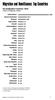 Migration and Remittances: Top Countries Top Immigration Countries a, 010 number of immigrants, millions United States b Russian Federation b Germany b Saudi Arabia b Canada b United Kingdom b Spain b
Preparing Tomorrow's Teachers with Web 2.0 Tools and 21st Century Skills 1
 Professional Development Scholarship Program Preparing Tomorrow's Teachers with Web 2.0 Tools and 21st Century Skills 1 OAS/DHDEC/CIR.031/2012 1) Study venue: The course will be delivered entirely online
Thierry Tressel Lead Economist, Research Group, World Bank 2015 High Level Caribbean Forum, Sept. 3-4 2015, St. Kitts
 Thierry Tressel Lead Economist, Research Group, World Bank 215 High Level Caribbean Forum, Sept. 3-4 215, St. Kitts Policy issue Focus on SMEs: they are the biggest contributors to employment across countries,
The World Market for Medical, Surgical, or Laboratory Sterilizers: A 2013 Global Trade Perspective
 Brochure More information from http://www.researchandmarkets.com/reports/2389480/ The World Market for Medical, Surgical, or Laboratory Sterilizers: A 2013 Global Trade Perspective Description: This report
'(0878$/,=$7,21 5(*,0( )25 &$1$',$1 /,)(,1685$1&( &203$1,(6 CONSULTATION PAPER August 1998
 CONSULTATION PAPER August 1998 Copies of this report may be obtained from: Distribution Centre Department of Finance 300 Laurier Avenue West Ottawa, Ontario K1A 0G5 Telephone: (613) 995-2855 Facsimile:
American Funds Insurance Series. New World Fund. Summary prospectus Class 2 shares May 1, 2015
 American Funds Insurance Series New World Fund Summary prospectus Class 2 shares May 1, 2015 Before you invest, you may want to review the fund s prospectus and statement of additional information, which
TRINIDAD & TOBAGO SECURITIES AND EXCHANGE COMMISSION
 TRINIDAD & TOBAGO SECURITIES AND EXCHANGE COMMISSION INTERPRETATION OF STOCKBROKING ACTIVITY IN ACCORDANCE WITH SECTION 54(2)(E) OF THE SECURITIES INDUSTRY ACT, 1995 (FOR PUBLIC COMMENT). Disclosure, Registration
The WTO Dispute Settlement System: Objectives - Procedures - Experience
 Page 1 The System: Objectives - Procedures - Experience Workshop at the Model WTO 2003 Thomas A. Zimmermann St. Gallen (Switzerland), [updated in September 2003] Thomas A. Zimmermann The Swiss Institute
Application Guideline. for Korea-LAC Scholarship Program (KLSP)
 Application Guideline for Korea-LAC Scholarship Program (KLSP) CONTENTS 1. Admissions Overview 2. Admissions Schedule 3. Program Information 5. Requirements - Application Documents - Important Notices
Global Education Office MSC06 3850, 1 University of New Mexico Albuquerque, NM 87131-0001 Phone: (505) 277-4032, FAX: (505) 277-1867
 Global Education Office MSC06 3850, 1 University of New Mexico Albuquerque, NM 87131-0001 Phone: (505) 277-4032, FAX: (505) 277-1867 NEW INTERNATIONAL STUDENT ENROLLMENT FALL 2014 The following charts
Obtaining Finance in Latin America and the Caribbean 1
 Obtaining Finance in Latin America and the Caribbean 1 World Bank Group latin America and the Caribbean Series Note No. REV. 8/14 Basic Definitions Countries surveyed in and how they are grouped for analysis:
Know the Facts. Aon Hewitt Country Profiles can help: Support a decision to establish or not establish operations in a specific country.
 Aon Hewitt Country Profiles Your eguide to employment requirements and practices Profiles for nearly 90 countries worldwide Risk. Reinsurance. Human Resources. Know the Facts Whether you are a newcomer
Cisco Global Cloud Index Supplement: Cloud Readiness Regional Details
 White Paper Cisco Global Cloud Index Supplement: Cloud Readiness Regional Details What You Will Learn The Cisco Global Cloud Index is an ongoing effort to forecast the growth of global data center and
Benefits of WTO Trade Facilitation Rules
 Benefits of WTO Trade Facilitation Rules Problems confronting private business Unclear rules on trade procedure and fees Excessive discretion of government officials Excessive documents requirements for
International Fuel Prices 2012/2013
 International Fuel Prices 212/213 8 th Edition Published by International Fuel Prices 212/213 8 th Edition Disclaimer Findings, interpretation and conclusions expressed in this document are based on the
INDEX FOR RISK MANAGEMENT RESULTS 2015
 INDEX FOR RISK MANAGEMENT RESULTS 2015 INFORM 2015 INFORM MEASURES THE RISK OF HUMANITARIAN CRISES AND DISASTERS IN 191 COUNTRIES COUNTRY RISK 3 YR TREND Afghanistan 7.88 æ Albania 2.61 à Algeria 4.64
Company Overview. Global Recovery Alliance AG specializes in international credit management & medical debt collection.
 Company Overview Global Recovery Alliance AG specializes in international credit management & medical debt collection. Global Recovery Alliance provides a single point of contact for American, Canadian
OFFICIAL NAMES OF THE UNITED NATIONS MEMBERSHIP
 OFFICIAL NAMES OF THE UNITED NATIONS MEMBERSHIP Islamic Republic of Afghanistan Republic of Albania People s Democratic Republic of Algeria Principality of Andorra Republic of Angola Antigua and Barbuda
Oxfam International Concerns With Initialled Interim EPA Texts
 Summary Oxfam International Concerns With Initialled Interim EPA Texts Friday, 07 December 2007 Over the past two weeks, a number of Interim Economic Partnership Agreements (Interim EPA) have been initialled
FDI performance and potential rankings. Astrit Sulstarova Division on Investment and Enterprise UNCTAD
 FDI performance and potential rankings Astrit Sulstarova Division on Investment and Enterprise UNCTAD FDI perfomance index The Inward FDI Performance Index ranks countries by the FDI they receive relative
KYOTO PROTOCOL STATUS OF RATIFICATION
 KYOTO PROTOCOL STATUS OF RATIFICATION Notes: R = Ratification At = Acceptance Ap = Approval Ac = Accession 1. ALBANIA ----- 01/04/05 (Ac) 30/06/05 2. ALGERIA ---- 16/02/05 (Ac) 17/05/05 3. ANTIGUA AND
Glossary of trade terms
 Glossary of trade terms ACP: African, Caribbean and Pacific States; normally used to identify the countries that are signatories of the Lomé Convention with the European Union (EU), and are now negotiating
CHAPTER 2 : TRADE IN GOODS. Except as otherwise provided, this Chapter applies to the trade in goods between the Parties.
 CHAPTER 2 : TRADE IN GOODS ARTICLE 2.1 : SCOPE AND COVERAGE Except as otherwise provided, this Chapter applies to the trade in goods between the Parties. ARTICLE 2.2 : DEFINITIONS For the purpose of this
How To Understand The World Trade Union Dsusa
 Jayant Raghu Ram Research Fellow (Legal) Centre for WTO Studies Indian Institute of Foreign Trade OUTLINE I. Origins of WTO Dispute Settlement-GATT Days II. Objectives of the WTO Dispute Settlement System
UNHCR, United Nations High Commissioner for Refugees
 Belgium 22 Jul 1953 r 08 Apr 1969 a Belize 27 Jun 1990 a 27 Jun 1990 a Benin 04 Apr 1962 s 06 Jul 1970 a Bolivia 09 Feb 1982 a 09 Feb 1982 a Bosnia and Herzegovina 01 Sep 1993 s 01 Sep 1993 s Botswana
Global Dialing Comment. Telephone Type. AT&T Direct Number. Access Type. Dial-In Number. Country. Albania Toll-Free 00-800-0010 888-426-6840
 Below is a list of Global Access Numbers, in order by country. If a Country has an AT&T Direct Number, the audio conference requires two-stage dialing. First, dial the AT&T Direct Number. Second, dial
Knowledge of language and life in the UK and Islands for settlement and naturalisation Changes to the requirement from October 2013
 Isle of Man Immigration Office Knowledge of language and life in the UK and Islands for settlement and naturalisation Changes to the requirement from October 2013 Introduction Individuals wishing to apply
KS 1 Activities Matching game. Flash Cards. KS2 Activities Sorting. Top Trumps. www.oddizzi.com
 . KS 1 Activities Matching game s pieces of Flash Cards KS2 Activities Sorting Top Trumps t www.oddizzi.com Ghana Population 24,392,000 people Size 227,540 square kilometres (87,853 square miles) Kenya
States Parties to the 1951 Convention relating to the Status of Refugees and the 1967 Protocol
 States Parties to the 1951 Convention relating to the Status of Refugees and the 1967 Protocol Date of entry into force: 22 April 1954 (Convention) 4 October 1967 (Protocol) As of 1 October 2008 Total
Fiscal Rules and Fiscal Responsibility Frameworks for Growth in Emerging and Low-Income Countries
 Fiscal Affairs Department Effects of Good Government, by Ambrogio Lorenzetti, Siena, Italy, 1338-39 Fiscal Rules and Fiscal Responsibility Frameworks for Growth in Emerging and Low-Income Countries Martine
Emerging Markets Value Stock Fund
 SUMMARY PROSPECTUS PRIJX March 1, 2016 T. Rowe Price Emerging Markets Value Stock Fund A fund seeking long-term growth of capital through investments in undervalued stocks of companies in emerging market
Evolution of EU exports and imports of goods with CELAC, 2004-2014 (in billion)
 100/2015-9 June 2015 EU Community of Latin American and Caribbean States (CELAC) summit CELAC represents the fifth most important trading partner of the EU More than 200 bn total trade The 28 Member States
Canada - European Free Trade Association (EFTA)
 Page 1 of 18 Canada, and the Republic of Iceland, the Principality of Liechtenstein, the Kingdom of Norway and the Swiss Confederation (the EFTA States ), hereinafter collectively referred to as the Parties,
Entrance Visas in Brazil (Updated on July 08, 2014)
 Ministry of External Relations Immigration Division Padip Holders of diplomatic passports Pasof Holders of official or service passports Entrance Visas in Brazil (Updated on July 08, 2014) Caption Vitem
TRANSFERS FROM AN OVERSEAS PENSION SCHEME
 PENSIONS PROFILE DECEMBER 2011 TRANSFERS FROM AN OVERSEAS PENSION SCHEME = Summary A simplified guide to the process: 1. Individual requests transfer from their overseas pension scheme to their UK registered
AGREEMENT ON IMPORT LICENSING PROCEDURES. Taking into account the particular trade, development and financial needs of developing country Members;
 Page 221 AGREEMENT ON IMPORT LICENSING PROCEDURES Members, Having regard to the Multilateral Trade Negotiations; Desiring to further the objectives of GATT 1994; Taking into account the particular trade,
Chapter Sixteen. Labor
 Chapter Sixteen Labor Article 16.1: Statement of Shared Commitment 1. The Parties reaffirm their obligations as members of the International Labor Organization (ILO) and their commitments under the ILO
Shell Global Helpline - Telephone Numbers
 Shell Global Helpline - Telephone Numbers The Shell Global Helpline allows reports to be submitted by either a web-based form at https://shell.alertline.eu or by utilising one of a number of telephone
Outsource International Ltd
 Providing global technology solutions for: Carriers Systems Integrators Resellers Outsource Manufacturers International Ltd Government agencies Financial sector Global Technology Solutions Providing global
REPORT OF THE KNOWLEDGE TRANSFER NETWORK*
 Distr. LIMITED LC/L.3379(CEA.6/7) 19 October 2011 ENGLISH ORIGINAL: SPANISH Sixth meeting of the Statistical Conference of the Americas of the Economic Commission for Latin America and the Caribbean Bávaro,
THE ICSID CASELOAD STATISTICS (ISSUE 2015-1)
 THE ICSID CASELOAD STATISTICS (ISSUE 05-) The ICSID Caseload Statistics (Issue 05-) This issue of the ICSID Caseload Statistics updates the profile of the ICSID caseload, historically and for the calendar
Global Online Business Intelligence Masterfile
 Size of Universe Cost Source Min Order Quantity 5,000 Update Frequency 6,074,363 Names USD 150.00 /M Addresses (Business Addresses Only) USD 175.00 /M Addresses (Named Executives) USD 150.00 /M Addresses
Agreement setting up a free trade area between the Arab Mediterranean countries
 Agreement setting up a free trade area between the Arab Mediterranean countries The government of the Kingdom of Morocco, the government of the Kingdom of Jordan, the government of the Republic of Tunisia
Mexico Trade and Economic Overview (June 2015)
 Mexico Trade and Economic Overview (June 2015) 1. Economic performance The Mexican economy is highly concentrated in services, accounting for 62% of GDP, then industry 34% and agriculture only 4%. Mexico