
U.S. National Report on CPT
|
|
|
- Pierce May
- 10 years ago
- Views:
Transcription
1 U.S. National Report on CPT Proceedings, International Symposium on Cone Penetration Testing, Vol. 1 (CPT 95), Swedish Geotechnical Society Report 3:95, Linköping, Paul W. Mayne Georgia Tech, Atlanta, Georgia James K. Mitchell Virginia Tech, Blacksburg, Virginia Jay A. Auxt Hogentogler & Company, Columbia, Maryland Recep Yilmaz Fugro USA, Houston, Texas SYNOPSIS: Over the two decades since its introduction into the United States, the CPT has now established its position as a routine, reliable, and expedient means for site characterization, stratigraphic profiling, evaluation of soil engineering parameters, and geotechnical design. Piezocones provide measurements of penetration pore water pressures either midface (type 1) or at the shoulder (type 2). The latter is necessary for the proper correction of tip resistance in soft soils, while the former provides better resolution and detailing in stiff fissured materials. Most areas of the U.S. are now serviced by specialty firms with cone trucks for optimizing production, penetration depths, and areal coverage. Portable cone systems are available for small projects and remote locations. Research on CPT testing and analysis continues to have high priority within many organizations. The incorporation of additional sensors has increased cone versatility, thus favoring use of seismicgeophones, resistivity- or conductivity-, natural gamma-, and chemical-cones. This is attractive on geoenvironmental projects for expedient contaminant mapping while minimizing site damage and wastes generated from testing. 1. GEOLOGICAL REGIONS The vast expanse of the United States of America includes many complex, mixed, and varied geomorphological formations throughout the 50 states. An overview of the surficial geologies of the U.S. is given by Hunt (1986). While CPT is not possible in the very rocky and mountainous regions of the country, the test is very applicable to the coastal regions, inland sedimentary deposits, residual soil types, as well as reclaimed lands formed from hydraulic fills, dredgings, and mine tailings. The cone has become particularly popular for use in the marine sediments of the Atlantic and Pacific Coastal Plain Provinces, the deltaic and marine sediments of the Gulf states, glacial lacustrine deposits around the Great Lakes to New England, and floodplain alluvium from the Great Plains and following the Mississippi River. Throughout these regions, a number of specialized testing firms with cone trucks or trailers to provide CPT services. 2. TYPES OF PENETRATION TESTING Penetration tests common to U.S. practice include the standard penetration test (SPT) and cone penetration test (CPT). In some regions, the flat blade dilatometer test (DMT) is used. Testing procedures for these three tests are essentially standardized, for the most part, excepting local practices that accommodate a the specific geology or needs of the region. Other kinds of penetration tests are employed throughout the U.S., but are unique and localized to certain parts of the country. For example, a variety of dynamic cones and driven penetrometers (Texas Highway-type, Sowers drive cone, Michigan-state, Dinastar), and large split-barrel type samplers (D&M,

2 Converse, Acker, California-type) is used that are similar in concept to the SPT. However, the cone/spoon diameters, hammer sizes, and driving forces of these devices are not standardized, except perhaps within a given locality. For gravelly soils, the Becker penetration test (BPT) has been developed and primarily utilized in western North America. Initially developed for use in assessing pile driveability and design of pile lengths in very coarse deposits, the BPT has also proved useful in evaluating liquefaction potential (e.g., Sy & Campanella 1994). 3. CPT EQUIPMENT Most serious CPT work in the U.S. is now performed using standard electronic cones having a 60 apex pushed continuously at 20 mm/s, essentially making the mechanical versions obsolete. Initial designs that required the amplification of electric cone outputs, have now been replaced with superior electronics within the cone using signal conditioning to provide better resolution, increased reliability, and minimal noise. Data acquisition systems typically include a portable computer, analog-digital converter, storage media (hard drive, floppy drives), and strip chart recorder or printer. 3.1 Penetrometers and rigs Penetrometers having diameters of either 35.7 mm (10 cm 2 projected area) and 43.7 mm (15 cm 2 ) are used routinely. Because of the superior stratigraphic detailing, much CPT is accomplished with piezocones (designated PCPT or CPTU). As shown in Fig. 1, two basic types of piezocones are used for routine site investigations: (1) one with midface element for pore water pressure measurements (designated u 1 or u t ), and (2) with shoulder or behind the tip position (u 2 or u bt ). Earlier versions of the type 1 design placed the element at the cone apex. However, later designs put the element midface because it is less vulnerable to damage and excessive wear. There are advantages and disadvantages associated with either type 1 or 2 cones. Porewater pressure readings from type 2 cones are Fig. 1. Various Penetrometers (bottom to top): Miniature 4 cm 2 Electric Cone; 10 cm 2 Type 2 Piezocone (shoulder element); Type 1 (midface) piezocones; Type 2 Seismic, Hogentogler Dual Type 1 & 2 Seismic; 15 cm 2 Fugro Triple-Element Cone. necessary for the proper correction of measured cone tip resistances (q c 6 q T ), as per Campanella & Robertson (1988) and DeBeer et al. (1988). This correction is very important in soft to medium stiff intact clays, but not significant in medium to dense clean sands or overconsolidated fissured clays where small positive, zero, or even negative )u 2 readings are obtained (Mayne et al. 1990). In general, type 2 cones may be more appropriate to the northern regions of the U.S. because of the preponderance of near surface recent geologic deposits comprised of soft to firm lightly overconsolidated soils, including marine deposits of the Atlantic coastal plain (e.g, Boston Blue clay; Calvert clay), glacial lacustrine sediments of the Great Lakes, and alluvial deposits. Maximum detailing is accom-plished using type 1 cones, however, and if stratigraphic profiling is paramount, u 1 measurements may be preferred. In contrast, the hot temperate climate of the southern U.S. has formed overconsolidated and stiff materials by desiccation (e.g., Florida, Lousiana Southern California). If the materials are fissured, little detail is observed with type 2 readings and u 2 measurements can be small or even negative. Thus, a type 1 cone may be of better value in profiling. On the other hand, some difficulties have been noted in smearing and clogging of type 1 face porous elements during penetration of fat plastic clays, e.g. the Beaumont clays of Texas. In

3 this case, less smearing occurs with a type 2 cone. Of course, exceptions to the above geographic generalities occur, and hard OC Cretaceous clays can also be found in the northern U.S. (e.g., Washington, DC), as well as the presence of very soft deltaic sediments in the south (e.g., offshore Gulf of Mexico). Thus, an ideal scenario for general use would be a dual-element cone for site characterization (Juran & Tumay 1989). In order to maximize production and efficiency, most regions of the U.S. are now serviced by commercial testing firms and research institutions with specialized cone trucks (e.g., see Fig. 2). Compared with a conventional 10-tonne drill rig, a standard cone truck weighs about 20-tonnes, although special 30- and 40-tonne models have been built that use stronger rods in order to successfully penetrate dense sands or facilitate the completion of soundings with penetration depths of up to 60 m or more. Fig. 2. Cone Truck operated by Fugro Geosciences Conducting CPTUs at Georgia Tech Civil & Environmental Engrg. Building. During CPT, depth increments are measured above ground using either potentiometers, depth wheels, or ultrasonic beams. Successive increments are summed to give the total depth. Although cableless systems are available (Larsson & Mulabdiƒ 1991), almost all U.S. systems employ a cable through the rods to connect the cone to the data acquisition unit at the ground surface. 3.2 Testing & calibration procedures. Electronic penetrometers require a minimum of two calibration procedures: (1) load cell cali-bration in a compression apparatus to obtain output voltage for q c and f s ; and (2) hydrostatic calibration in a triaxial cell for determination of output voltage for u 1 or u 2, as well as the net area ratios for correction of tip (q T ) and sleeve (f T ) resistances. Details on these calibrations have been given elsewhere (e.g., Jamiolkowski et al. 1985; DeBeer et al. 1988). If the cone will be used in very cold or very hot climates, a calibration check for temperature variations is also recommended (Lunne et al. 1986). Calibrations of ancillary devices such as potentiometers for depth measurements and oscilloscopes for seismic velocity arrival times are handled separately. Porous elements are often made of flexible polypropylene and are disposed of after each sounding. In stiff or dense soils, stainless steel or rigid ceramic elements are better for type 1 cones because of high abrasion and the compressibility of the filter affects the pore pressure readings (Campanella & Robertson 1988). Proper saturation of the porous element is important for quality results (Lunne et al. 1986). A 50/50 mixture of glycerine and water provides excellent results, although some testing firms use either silicon oil or distilled water. A prophylactic is placed over the saturated cone with a rubber band to maintain saturation until penetration. 3.3 Corrections & data presentation Type 1 cones have a non-standard position of the pore pressure element, as shown in Fig. 3, thus giving different recorded u 1 for each particular cone (Brown 1993). For stratigraphic profiling, this is unimportant since only relative variations with depth are compared. For the assessment of soil properties, however, these differences in u 1 affect the numerical outcome and interpretation and therefore should be taken into account. Measured data from cone soundings are usually presented graphically (and/or digitally)

4 obtained, thus producing profiles of the interpreted P- and S-wave velocities vs. depth (Campanella 1994). Usually, these data are presented at discrete increments corresponding to rod changes (approx. each meter). Alternatively, the complete wave trace record with time (forward and/or reverse) can be shown for each event. If a conductivity cone is used (Campanella & Weemes 1990), a continuous profile of electrical resistivity is presented and used to infer the presence of subsurface contaminants. 3.4 National standards Fig. 3. Porous element positions: (a) general; and (b) specific or "rainbow" cone (Brown 1993). in terms of the individual readings versus depth, including: cone tip resistance (q c or q T ), sleeve friction (f s or f T ), and penetration pore pressure (u 1 or u 2 or excess )u). Sometimes, an additional profile of dynamic pore pressure, u/q c, or the normalized piezocone parameter, B q = )u/(q T -F vo ), is presented (Wroth 1984). Figure 4 illustrates an example profile summary of q T, f s, and u from single-, dual-, and triple-element soundings in overconsolidated desiccated clay in Baton Rouge, Louisiana. Note the u 3 position is located behind the friction sleeve. Excellent repeatability of results is evident for the first three channels, while differences are observed for the two trailing pore pressure locations, thus inferring difficulties in maintaining saturation. If piezocone dissipation tests at specific test depths are made, the results are presented with either penetration pore pressure (u) or excess )u versus time or logarithm of time (e.g., Levadoux & Baligh 1986). For seismic cone soundings, a downhole assessment of the time arrivals of the compression (P) and shear (S) waves can be Standard procedures for CPT have been established by ASTM D-3441 since 1975 that addressed mechanical and electrical friction cones. For the piezocone test, a revised ASTM D-3441 procedure has been proposed in which a type 2 porous element position is recommended (Farrar 1995). 4. INTERPRETATION The results of CPT and PCPT are used for delineating soil strata and for evaluating the geotechnical engineering parameters of the subsurface layers. In recent environmental applications, cone data are used to infer or detect the presence of anomalies such as contaminants in the pore fluid. 4.1 Soil classification and stratigraphy Piezocone results are unsurpassed in the detail-ing of soil stratigraphy. Exceptional resolution makes the detection of thin seams and lenses possible, particularly via the pore pressure channel. This facet is very important from a geoenvironmental viewpoint and for slope stability evaluations. Soil classification using CPT and PCPT data is indirect and relies entirely on empirical charts for interpretation of strata (see Table 1) Engineering parameters Considerable effort has been made to derive soil engineering properties from the results of cone and piezocone data. Methodologies have

5 Fig. 4. Summary profiles of single-, dual-, and triple-element piezocone soundings in desiccated overconsolidated clay at I-10 and Route 42 in Baton Rouge, LA (Chen 1994). been developed using empirical and statistical methods, backcalculation, analytical studies, and numerical simulation. In organizing Table 1, various interpretation methods have been grouped into one of three basic categories: those specifically addressing (a) clays and cohesive materials, (b) sands and cohesionless materials, and (c) applicable to both soil types. Abbreviated references are given in the table to conserve space. 4.3 Environmental data Many recent developments in CPT (or directpush technology) have centered around its use for geoenvironmental concerns. The incorporation of additional sensors within the penetrometer to instantaneously and continuously monitor phenomena offers significant potential for evaluating subsurface chemical and biological conditions. Some success has been obtained with sensors that quantify bulk resistivity of the pore fluid (Campanella & Weemees 1990) or electrical conductivity (Woeller et al. 1991a, 1991b), temperature (MacFarlane et al. 1983), ph and redox (Olie et al. 1992), light hydrocarbons (Malone et al. 1992), neutron moisture (Shibata et al. 1992), and petroleum vapors (Horsnell 1988). Most of these methods involve contaminant mapping by inference, however, and no direct chemical assessment is made. A review of some additional sensors and technologies under development is given by Bowders & Daniel (1994). In addition to modifications and add-on modules to the standard cone penetrometer, direct-push technology has led to other specialized probes for sampling & testing groundwater & soil during environmental site characterization, including: push-in soil samplers, push-in water samplers, push-in piezometers, and soil-gas extraction-type samplers. One example of a specialized device is the "hydro-trap", a commercially-made groundwater sampler used to obtain volatile

6 Fig. 5. Push-in hydro trap for obtaining groundwater samples (Yilmaz 1995). Fig. 6. Environmental CPT rod washing system (Yilmaz 1995). organic compounds under controlled confining pressures, as shown in Figure 5. For geoenvironmental CPT explorations, additional measures must be undertaken to decontaminate the push rods during extraction from the ground. This is necessary for the safety and health of the crew and to reduce potential contamination of the subsequent test location. Fig. 6 illustrates one commercial concept used for rod washing. Of equal concern is the potential for crosscontamination of aquifers and groundwater reserves by penetration. Many states (e.g., LA, NJ, CA) require that exploratory holes be grouted upon completion. Thus, self-grouting systems or companion grouting units for hole closure have been developed (Yilmaz 1995). 5. CPT IN FOUNDATION DESIGN Routinely, CPT data are used for the analysis and design of foundations, including bearing capacity and settlement of spread footings, driven piles, and drilled shafts (bored piles). Both direct and indirect methods of CPT assessment are used, as discussed in the following sections. In a recent ASCE/FHWA-sponsored prediction symposium involving large footings on sand (Briaud & Gibbens 1994), the CPT proved to be the most preferred test (used by 30% of predictors) for assessing the foundation performance, as compared with 25% for SPT, 16% for PMT, 14% for DMT, and 10% for triaxial tests. The CPT is also useful in assessing compaction control during placement of structural fills and in the evaluation of effectiveness of ground modification techniques (e.g., vibroflotation, dynamic compaction) and site improvement works (Mitchell 1986). 5.1 Direct methods In these approaches, the measured CPT data are directly input into empirical formulas to provide estimates of foundation capacity and settlement (e.g., Schmertmann 1978). For example, regarding the prediction of axial capacity of deep foundations, there are at least 6 methods for driven piles (Robertson et al. 1988) and 5 for drilled shafts or bored pile systems (Alsammam 1995). Poulos (1989) provides a review for both types.

7 5.2 Indirect methods In these methods, the CPT data are used to estimate soil properties that are input into a theoretical model for predicting capacity or deformation response. General procedures for interpreting engineering parameters for foundation analysis from in-situ data are given by Kulhawy & Mayne (1990). Berardi et al. (1991) outline settlement analysis procedures for spread footings on sand from CPT data. CPT-based methods for calculating axial capacity and settlement of driven piles are discussed by Robertson et al. (1988) and Poulos (1994), respectively. Van Impe (1994) extensively covers drilled and bored pile analysis from CPT. 6. COMPARISONS & CORRELATIONS OF CPT WITH OTHER METHODS Fig. 7. Summary interrelationships between penetration pore pressures and tip resistance for unstructured intact clays (after Brown, 1993). Comparisons of cone measurements can be made within the test (intra-correlative) or between other in-situ tests that are conducted in the field adjacent to the CPT location (intercorrelative). the parameter Q* = (q T -F vo )/(F vo N) 0.5 more appropriate. 6.2 Extra-correlative studies may be 6.1 Intra-correlative studies Internal relationships among paired sets of q c and f s readings with physically-retrieved soil samples form the original basis for empirical soil classification charts. In sands, intracorrelative trends for f s vs. q c are discussed by Parkin (1988). For clays, Mayne et al. (1990) present u vs. q T trends for face- and shouldertype PCPTs. More specifically, one set of intra-correlations for uncemented intact clays is shown in Fig. 7. However, the relationships also depend on OCR and degree of fissuring (Powell et al. 1988). Initially, q c vs. f s plots were used to infer soil type (e.g., Schmertmann 1978). Later, Senneset et al. (1989) developed a soil classification scheme based on q T vs. B q, while Robertson (1990) suggested a system that utilizes all three readings of the PCPT. However, the normalization scheme for q T and f T (and u) should actually depend upon soil type (Olsen 1994). That is, Q = (q T -F vo )/F vo ' is appropriate for clays, while for clean sands, Relationships between the SPT-N value and CPT-q c have been studied for a variety of soil types (Schmertmann 1978; Robertson et al. 1983; Mullen, 1991). The ratio of q c /N generally increases with mean grain size and averages (Kulhawy & Mayne 1990): q c /N (D 50 ) 0.26 (1) where q c is in kpa, N 60 = energy corrected SPT resistance, and D 50 is in mm. However, there is considerable variation around this average. The ratio q c /N 60 also depends on the percent fines (particles < 75:), as well as other factors. Correlations between CPT and DMT have also been investigated. For clays (intact and fissured), the DMT contact pressures (p o ) are comparable to type 1 PCPT penetration pore pressures (Mayne & Bachus 1989), such that: Clays: u 1. p o (2) In clean sands, measurement of the DMT blade thrust provides a wedge resistance (q D ) that is comparable in magnitude to q c. For

8 McDonald Farm sand, Campanella & Robertson (1991) found that: Sands: q D /q c. 1.1 (3) which was later confirmed appropriate for Toyoura sand in calibration chamber studies (Bellotti et al. 1994). 6.3 National Test Sites (NGES) Since 1988, a combined effort by the Federal Highway Administration (FHWA) and National Science Foundation (NSF) resulted in the cataloging and establishment of several National Geotechnical Experimentation Sites (NGES) throughout the U.S. (Woods, 1994). Currently, 40 designated sites have been cited throughout the 48 contiguous states and Alaska, with the majority classified as Level 3 (unfunded) sites, as shown by Fig. 8. Two high-priority (Level 1) and three mediumpriority (Level 2) sites receive annual funding for databasing, management, and site improvements. The NGES permit the opportunity to compare cone and piezocone data with results derived from other in-situ tests and/or laboratory devices. Figure 8. Locations of the initial National Geotechnical Experimentation Sites (NGES) in the U.S.A. [June 2002: Note: addition of the Opelika, Spring Villa NGES in Alabama] 7. MAJOR RESEARCH ACTIVITIES Academic research on CPT has been mainly directed at improved means of interpretation, including analytical studies based on limit plasticity (Masood 1990) or cavity expansion (Chen 1994 for clays; Salgado 1993 for sands). In addition, numerical simulation of the penetration problem has been attempted using dislocation-based models (Elsworth 1991), strain paths (Whittle & Aubeny, 1993), and discrete elements (Huang & Ma, 1994). Empirical and theoretical methods for interpreting CPT data have been derived from analyses of available field data (Birgisson 1991; Brown 1993; Olsen 1994) or from controlled laboratory calibration chamber testing (Kulhawy & Mayne, 1990). Recent programs providing additional reference data include field studies by Mullen (1991) and Murray (1995) and chamber tests for sands (Puppala et al. 1991; Rix & Stokoe 1991; Salgado 1993), silty sands (Brandon & Clough, 1991), and clays (Kurup et al. 1994). Research by cone manufacturers and commercial testing firms has focussed on improvements in equipment performance and reliability (also see future trends). The effects of temperature variations, electromagnetic noise, and zero drift have essentially been eliminated with the use of internal signal conditioning and microelectronics. Many innovative ideas have resulted in the increased applicability of the cone to difficult soil conditions and to geoenvironmental problems (Mitchell 1988). Bratton et al. (1995) and Auxt & Gilkerson (1995) provide recent reviews of the various types of geoenviron-mental penetrometers, their capabilities, and shortcomings. 8. FUTURE TRENDS Innovative new developments and the incorpor-ation of additional capabilities to the CPT are currently underway (Bowders & Daniel 1994). A few interesting ongoing projects are dis-cussed briefly in the following paragraphs. The USAE Waterways Experiment Station has developed an elaborate design (SCAPS =

9 site characterization and analysis penetrometer system) that includes a fiber-optics guide from a sapphire window located near the cone tip to measure the laser-induced fluorescence (LIF) of petroleum chemicals which may be present (Schroeder et al. 1991; Stark, 1991). A similar system using a fiber optic chemical sensor (FOCS) and photo-ionization detector was developed (Leonard & Tillman 1993), but has been discontinued because the sensor is not reversible. An LIF probe utilizing a tuneable laser fluorescence system (ROST system) is now in use for the identification of aromatic hydrocarbons (Yilmaz 1995). A miniature cone unit for expedient CPTs has been designed with a caterpillar thrust system and self-coiling rods that mount at the front of a 4-wheel drive diesel pickup truck (Tumay 1994). A new subsurface vision probe has been proposed for direct optical soil classification by CPT. The development will use a sapphire viewing window, high-resolution video camera, and image processing center to determine grain size distributions in real time (Hryciw & Raschke 1996). 9. REFERENCES Alsamman, O.M. (1995). The use of CPT for calculating axial capacity of drilled shafts. Phd Dissertation, University of Illinois at Urbana-Champaign, 300 p. Auxt, J.A. and Gilkerson, R. (1995). Environmental site characterization in the U.S. using the cone. Proceedings, CPT'95, Vol.2, Linköping. Bellotti, R., Fretti, C., Jamiolkowski, M. & Tanizawa, F. (1994), Proc. 13 th Intl. Conf. on Soil Mech & Foundation Engineering (4), New Delhi, Berardi, R., Jamiolkowski, M., & Lancellotta, R. (1991). Settlement of shallow foundations in sands: selection of stiffness from penetration resistance. Foundation Engineering Congress (I), ASCE GSP 27, New York, Birgisson, B. (1991). Reliability-based evaluation of clay strength from the cone penetration test, MS Thesis, Civil Engineering, Cornell University, Ithaca, NY, 142 p. Bowders, J. & Daniel, D.E. (1994). Cone penetration technol. for subsurface characterization. Geotechnical News 12 (3), Brandon, T.L. and Clough, G.W. (1991). Methods of sample fabrication in the VT calibration chamber. Calibration Chamber Testing, Elsevier, New York, Bratton, W.L., Bratton, J.L., and Shinn, J.D. (1995). Direct penetration technology for geotechnical and environmental site characterization. Geoenvironment 2000 (1), GSP 46, ASCE, New York, Briaud, J-L. and Gibbens, R.M. (1994). Predicted and Measured Behavior of Five Spread Footings on Sand (GSP 41), ASCE, New York, 255 p. Brown, D.N. (1993). The prediction of clay soil properties using the piezocone. MS Thesis, Georgia Institute of Technology, Atlanta, 168 p. Campanella, R.G (1994). Field methods for dynamic geotechnical testing. Dynamic Geotechnical Testing II (STP 1213), ASTM, Philadelphia, Campanella, R.G. and Robertson, P.K. (1988). Current status of the piezocone test. Penetration Testing 1988 (1), Balkema, Rotterdam, Campanella, R.G. and Robertson, P.K. (1991). Use and interpretation of a research dilatometer. Canadian Geotechical J. 28 (1), Campanella, R.G., and Weemees, I. (1990). Development and use of an electrical resistivity cone for groundwater contamination. Canadian Geotechnical Journal 27(5), Chen, B.S-Y. (1994). Profiling OCR in clays by dual piezocone tests. PhD Thesis, Civil & Environmental Engrg, Georgia Institute of Technology, Atlanta, 350 p. Chen, B.S-Y. and Mayne, P.W. (1994). Profiling the overconsolidation ratio of clays by piezocone tests. Report GIT- CEEGEO- 94-1, Civil Engrg., Georgia Tech, Atlanta, 280 p. DeBeer, E.E., Goelen, E., Heynen, W. and Joustra, K. (1988). CPT: international reference test procedure. Penetration Testing 1988 (1), Balkema, Elsworth, D. (1991). Dislocation analysis of penetration in saturated porous media.

10 ASCE Journal of Engineering Mechanics 117 (2), Farrar, J. (1995). Development of the new ASTM standard for CPT and piezocone test in soils. Proceedings, CPT''95, Vol. 2, Paper A79, Linköping. Horsnell, M.R. (1988). The use of cone penetration testing to obtain environmental data. Penetration Testing in the UK, Thomas Telford, London, Hryciw, R.D. & Raschke, S.A. (1996). Development of a computer vision technique for in-situ soil characterization. Transportation Res. Record (session on image analysis). Huang, A-B. and Ma, M.Y. (1994). An analytical study of CPTs in granular materials. Canadian Geot. J. 31 (1), Hunt, C.B. (1986). Surficial Deposits of the United States. Van Nostrand Reinhold Company, New York, 189 p. Jamiolkowsi, M., Ladd, C.C., Germaine, J. & Lancellotta, R. (1985). New developments in field & lab testing of soils. Proc. 11 th ICSMFE (1), San Francisco, Juran, I. and Tumay, M.T. (1989). Soil stratification using dual element piezocone. Transportation Research Record 1235, National Acad Press, Kulhawy, F.H. and Mayne, P.W. (1990). Manual on estimating soil properties for foundation design. Report EL-6800, Electric Power Research Inst., Palo Alto, 306 p. Kurup, P.U., Voyiadjis, G.Z., and Tumay, M.T. (1994). Calibration chamber studies of piezocone test in cohesive soils. Journal of Geotechnical Engineering 120 (1), Larsson, R. and Mulabdiƒ, M. (1991). Piezocone tests in clay. Report No. 42, Swedish Geotechnical Inst., Linköping, 240 p. Levadoux, J-N. and Baligh, M.M. (1986). Consolidation after undrained piezocone penetration. Journal of Geotechnical Engineering 112 (7), Leonard, L. and Tillman, N. (1993). Sensor integration for site screening. Proceedings, 3 rd Intl. Symp. on Field Screening Methods for Hazardous Wastes, Las Vegas. Lunne, T., Eidsmoen, T.E., Gillespie, D. and Howland, J. (1986). Laboratory and field calibration of cone penetrometers. Use of In-Situ Tests in Geotechnical Engineering, ASCE GSP 6, MacFarlane, D.S., Cherry, J., Gillham, R. & Sudicky, E. (1983). Migration of contaminants in groundwater at a landfill. Journal of Hydrology 63 (1), Malone, P.G., Comes, G.D., Chrestman, A., Cooper, S.S., & Franklin, A.G. (1992). Cone penetrometer surveys of soil contamination. Environmental Geotechnology, Balkema, Rotterdam, Masood, T. (1990). Determination of lateral earth pressure in soils by in-situ measurement. PhD Thesis, Civil Engineering, Univ. of California, Berkeley. Mayne, P.W. & Bachus, R.C. (1989). Penetration pore pressures in clay. Proc. 12 th Intl. Conf. Soil Mechanics and Foundation Engrg. (1), Rio de Janeiro, Mayne, P.W. and Burns, S.E. (1994). Optoelectronics geoenvironmental cone penetrometer for detecting subsurface contaminants. Proc., Workshop on Advancing Technology for Cone Penetration Testing, University of Austin, Texas. Mitchell, J.K. (1986). Ground improvement evaluation by in-situ tests. Use of In-Situ Tests in Geotechnical Engineering, ASCE GSP 6, Mitchell, J.K. (1988). New developments in penetration tests and equipment. Penetration Testing 1988 (1), Balkema, Rotterdam, Mullen, W.G. (1991). An evaluation of the utility of in-situ test methods for transmission foundation design. PhD Thesis, CEE, Virginia Tech, Blacksburg, 553 p. Murray, R.F. (1995). Piezocone exploration of marine clay deposit at Pease Air Force Base, MS Thesis, Univ. of New Hampshire, Durham, 254 p. Myers, A.E. (1993). Electric cone penetrometer as a geoenvironmental investigation tool. Proceedings, Joint Symposium of the Association of Engineering Geologists & American Society of Civil Engineers, Baltimore, MD, 12 p. Olie, J.J., Van Ree, C., & Bremmer, C. (1992). In-situ measurement by chemoprobe of groundwater from sanitation of versatic acid spill. Geotechnique 42 (1), Olsen, R.S. (1994). Normalization & predicttion of geotechnical properties using the CPT. Technical Report GL-94-29, USAE

11 Waterways Experiment Station, Vicksburg, MS, 322 p. Poulos, H.G. (1989). Pile behavior: theory and application. Geotechnique 39 (3), Poulos, H.G. (1994). Settlement prediction for driven piles and pile groups. Vertical & Horiz. Deformations of Foundations (2), ASCE GSP 40, Powell, J.J.M., Quarterman, R.S.T. & Lunne, T. (1988). Interpretation and use of the piezocone test in UK. Penetration Testing in the UK, Thomas Telford, London, Puppala, A.J., Acar, Y.B., and Tumay, M.T. (1991). Miniature CPT tests in dense Monterey sand. Calibration Chamber Testing, Elsevier, New York, Rix, G.J. and Stokoe, K.H. (1991). Correlation of initial tangent modulus and cone resistance, Calibration Chamber Testing, Elsevier, New York, Robertson, P.K. (1990). Soil classification using the CPT. Canadian Geot. J. 27 (1), Robertson, P.K. and Campanella, R.G. (1983). Interpretation of cone penetration tests, Canadian Geotechnical J. 20 (4), Robertson, P.K., Campanella, R.G., and Wightman, A. (1983). SPT-CPT correlations. Journal of Geotechnical Engineering 109 (11), Robertson, P.K, Campanella, R.G., Davies, M.P., and Sy, A. (1988). Axial capacity of driven piles in deltaic soils using CPT. Penetration Testing 1988 (2), Balkema, Rotterdam, Salgado, R. (1993). Analysis of penetration resistance in sands. PhD Thesis, University of California, Berkeley, 357 p. Schmertmann, J.H. (1978). Guidelines for CPT: performance and design. Report FHWA-TS , Federal Highway Administration, Washington DC, 145 p. Schroeder, J.D., Booth, S.R., and Trocki, L.K. (1991). Cost effectiveness of the site characterization and analysis penetrometer system. Report LA-UR prepared by Los Alamos National Laboratory, New Mexico, to the Department of Energy, 46 p. Senneset, K., Sandven, R. and Janbu, N. (1989). Evaluation of soil parameters from PCPT. Transportation Research Record 1235, Washington DC, Shibata, T., Mimura, M., Shrivastava, A.K., and Nobuyama, M. (1992). Moisture measurement by neutron moisture cone penetrometer. Soils & Foundations 32 (4), Stark, T.D. (1991). Geotechnical engineering at WES. Geotechnical News 9 (4), Stark, T.D. and Olson, S.M. (1995). Liquefaction resistance using CPT and field case histories. Journal of Geotechnical Engineering 121 (12), Sy, A. and Campanella, R.G. (1994). Becker & SPT correlations with casing friction. Canadian Geot. J. 31 (3), Tumay, M.T. (1994). Implementation of Louisiana electric cone penetrometer system. Rept. LA-94/280-B to Federal Highway Admin., Washington DC, 18 p. Van Impe, W.F. (1994). Developments in pile design. Piling & Deep Foundations (2), Balkema, Rotterdam, Whittle, A.J. and Aubeny, C.P. (1993). The effects of installation disturbance on interpretation of in-situ tests in clay. Predictive Soil Mechanics, Thomas Telford, London, Woeller, D.J., Weemees, I., and Kokan, M. (1991a). Penetration testing for groundwater contaminants. Geotechnical Engineering Congress, ASCE GSP 27 (1), Woeller, D.J., Weemees, I., and Kurfurst, P.J. (1991b). Penetration testing for arctic soil conditions. Proceedings, 44th Canadian Geotechnical Conf., Calgary (1), Woods, R.D., Benoît, J. & dealba, P. (1994). National Geotechnical Experimentation Sites. Geotechnical News 12 (1), Wroth, C.P. (1984). The interpretation of insitu tests. Geotechnique 34 (4), Yilmaz, R. (1995). Hazardous waste site investigation. Internal Bulletin. Fugro Geosciences, Houston, TX.

12 US National Report on CPT - Proceedings, Symposium by Swedish Geot. Society, 1995 Table 1. List of soil parameters interpreted from cone and piezocone data. ALL SOIL TYPES (Clays, Silts, and Sands)! Soil Classification Begemann (1965), 6 th ICSMFE (1), Montreal, Schmertmann (1978), Report TS , FHWA, Washington, DC, 145 p. Douglas & Olsen (1981), Cone Testing & Experience, ASCE, New York, Jones & Rust (1982), ESOPT (2), Amsterdam, Vlasblom (1985), Report No. 92, Laboratorium voor Grondmechanica, Delft, 51 p. Senneset & Janbu (1985), STP 883, ASTM, Philadelphia, Robertson, et al. (1986). ASCE GSP 6, Olsen & Farr (1986), ASCE GSP 6, Blacksburg, Robertson (1990), CGJ 27 (1), and CGJ 28 (1), Cheng-hou, et al. (1990), Engineering Geology 29 (1), Jefferies & Davies (1993), ASTM GTJ 16 (4), ! Unit Weight (( T ) Lunne, Robertson, & Powell (1997), Cone Penetration Testing in Geot. Practice, Routledge, New York! Effective Friction Angle (N') Senneset & Janbu (1985), STP 883, ASTM, Philadelphia, Senneset, Sandven, & Janbu (1989). TRR 1235, Sandven (1990), PhD Thesis, Norwegian Institute of Technology (NTH ), Trondheim. Masood & Mitchell (1993), ASCE JGE 119 (10), Sandven & Watn (1995). CPT 95, Vol. 3, Swedish Geot. Society, ! Effective Cohesion Intercept (c') Senneset et al. (1989), Transporation Research Record 1235, ! Hydraulic Conductivity (k) Schmertmann (1978), Report TS , FHWA, Washington, DC, 145 p. Parez & Fauriel (1988), Revue de Française de Géotechique 44, ! Constrained Modulus (M = 1/m v ) Mitchell & Gardner (1975), ASCE In-Situ Measurement (II), Raleigh, Senneset, et al. (1982), ESOPT (2), Amsterdam, Sandven & Watn (1995). CPT 95, Vol. 3, Swedish Geot. Society, ! Shear Wave Velocity (V s ) Hegazy & Mayne (1995), Paper A87, CPT'95, Linköping. CLAYS! Undrained Strength (s u ) Jamiolkowski et al. (1982), ESOPT (2), Amsterdam, Robertson & Campanella (1983), CGJ 20 (4), Lunne et al. (1985), 11 th ICSMFE (2), San Francisco, Keaveny & Mitchell (1986), ASCE GSP 6, Blacksburg, Aas et al. (1986), ASCE GSP 6, Blacksburg, Konrad & Law (1987), CGJ 24 (3), Marsland & Powell (1988), PTUK, Birmingham, Jamiolkowski et al. (1988), ISOPT-1 (1), Orlando,

13 Rad & Lunne (1988), ISOPT-1 (2), Orlando, Stark & Juhrend (1989), 12 th ICSFME (2), Rio, Houlsby & Wroth (1989), 12 th ICSFME (1), Rio, Stark & Delashaw (1990), Transportation Research Record 1278, Chen & Mayne (1993), ICCHGE (II), St. Louis, ! Stress History (F p ' or OCR) Tavenas & Leroueil (1979), 7 th ECSMFE (1), Brighton, Tumay et al. (1982, ESOPT (2), Amsterdam, Wroth (1984), Geotechnique 34 (4), Jamiolkowski et al. (1985), 11 th ISCMFE (1), San Francisco, Battaglio et al. (1986), 4 th SE Asian Geotechnical Seminar, Singapore, Konrad & Law (1987), Geotechnique 37 (2), Mayne & Bachus (1988), ISOPT (2), Orlando, Sills et al. (1988), PTUK, Birmingham, Sully et al. (1988), ASCE JGE 114 (2), Sandven (1990), PhD Thesis, Norwegian Inst. of Tech (NTH ), Trondheim. Mayne (1991), Soils & Foundations 31 (2), 65-76; 32 (4), Mayne & Chen (1994), 13 th ICSMFE (1), New Delhi, Jamiolkowski (1995). CPT 95, Vol. 3, Swedish Geot. Society, Chen & Mayne (1996). Canadian Geot. J. 33 (3), Mayne (2001). In-Situ 2001, Intl. Conf. on In-Situ Meas. of Soil Properties, Bali, Jamiolkowski & Pepe (2001). ASCE JGGE 127 (10), Demers & Leroueil (2002). Canadian Geot. J. 39 (1), ! Effective Stress Friction (N') Senneset & Janbu (1985), ASTM STP 883, Philadelphia, Lunne et al. (1985), 11 th ICSMFE (2), San Francisco, Keaveny & Mitchell (1986), ASCE GSP 6, Blacksburg, Sandven et al. (1988), ISOPT-1 (2), Orlando, Senneset et al. (1989), Transportation Research Record 1235, ! In-Situ Stress State (K o ) Mayne & Kulhawy (1990), Transportation Research Record 1278, Sully & Campanella (1991), ASCE JGE 117 (7), Masood & Mitchell (1993), ASCE JGE 119 (10), ! Coefficient of Consolidation (c h ); from dissipation tests: Hansbo et al. (1981), Geotechnique 31 (1), Battaglio et al. (1981), Cone Testing & Experience, ASCE, New York, Tumay & Acar (1985), ASTM STP 883, Philadelphia, Jamiolkowski et al. (1985), 11 th ICSMFE, San Francisco (1), Levadoux & Baligh (1986), ASCE JGE 112 (7), Gupta & Davidson (1986), Soils & Foundations 26 (3), Robertson et al. (1988), CGJ 25 (1), Houlsby & Teh (1988), ISOPT-1 (2), Orlando, Kabir & Lutenegger (1990), CGJ 27 (1), Teh & Houlsby (1991), Geotechnique 41 (1), Robertson et al. (1992), CGJ 29 (3), Sully & Campanella (1994), 13 th ICSMFE (1), New Delhi, Burns & Mayne (1995), Paper A33, CPT'95, Vol. 2, Linköping, Burns & Mayne (1998). Canadian Geot. J. 35 (6), ! Hydraulic Conductivity (k) Tavenas et al. (1982), ESOPT (2), Amsterdam, Robertson et al. (1992), CGJ 29 (4), Elsworth (1993), ASCE JGE 119 (10), Manassero (1994), ASCE JGE 120 (10), Jamiolkowski (1995). CPT 95, Vol. 3, Swedish Geot. Society, 7-15.

14 ! Constrained Modulus (D=1/m v ) Robertson & Campanella (1983), CGJ 20 (4), Sandven et al. (1988), ISOPT-1 (2), Orlando, Kulhawy & Mayne (1990), Report EL-6800, EPRI, Palo Alto, 306 p.! Shear Wave Velocity (V s ) Mayne & Rix (1995), Soils & Foundations 35 (2).! Low-Strain Shear Modulus (G max ) Bouckovalas et al. (1989), 12 th ICSMFE (1), Rio, Mayne & Rix (1993), ASTM GTJ 16 (1), Tanaka, et al. (1994). PreFailure Deformation of Geomaterials, Sapporo, ! Sensitivity (S t ) Robertson & Campanella (1983), CGJ 20 (4), ! Unit Weight (( T ) Larsson & Mulabdic (1993), Rept 42, Swedish Geotechnical Institute, Linköping, 240 p. Denver (1995). Proc. CPT 95, Vol. 3, Swedish Geot. Society, ! Rigidity Index (I r ) Chen and Mayne (1994), Report CEEGEO-94-1, Georgia Tech, Atlanta, 280 p. Mayne (2001). In-Situ 2001, Intl. Conf. on In-Situ Meas. of Soil Properties, Bali, SANDS! Effective Friction Angle (N') Trofimenkov (1974), ESOPT-1 (1), Stockholm, Mitchell & Lunne (1978), ASCE JGE 104 (7), Robertson & Campanella (1983), CGJ 20 (4), Lunne & Christophersen (1983), 15 th Offshore Tech. Conf. (1), Houston, Mitchell & Keaveny (1986), ASCE GSP 6, Blacksburg, Jamiolkowski et al. (1988), ISOPT-1 (1), Orlando, Kulhawy & Mayne (1990), Report EL-6800, EPRI, Palo Alto, 306 p. Lunne, et al. (1992). ICSMFE, Vol. 4, Rio de Janeiro, Lunne, Robertson, & Powell (1997). Cone Penetration Testing in Geotech Practice, Routledge, NY.! Relative Density (D r ) Schmertmann (1978), Report TS , FHWA, Washington, DC, 145 p. Lunne & Christophersen (1983), 15 th Offshore Technol. Conf. (1), Houston, Jamiolkowski et al. (1985), 11 th ISCMFE (4), San Francisco, Kulhawy & Mayne (1991), Calibration Chamber Testing, Elsevier, ! State Parameter (R) Been et al. (1986), Geotechnique 36 (2), Been et al. (1987), Geotechnique 37 (3), Jamiolkowski & Robertson (1988), PTUK, Birmingham, Robertson & Fear (1995). CPT 95, Vol. 3, Swedish Geot. Society, ! Stress State (K o ) Manassero (1991), ISOCCT-1, Clarkson University, Mayne (1991), ISOCCT-1, Clarkson University, Masood & Mitchell (1993), ASCE JGE 119 (10), Schnaid & Houlsby (1994). Geotechnique 44 (3), Mayne (1995). Proc. CPT 95, Vol. 2, Swedish Geot. Society, Lunne, Robertson, & Powell (1997). Cone Penetration Testing in Geotech Practice, Routledge. Mayne (2001). In-Situ 2001, Intl. Conf. on In-Situ Meas. of Soil Properties, Bali,

15 ! Constrained Modulus (M = 1/m v ) Robertson & Campanella (1983), CGJ 20 (4), Jamiolkowski et al. (1988), ISOPT-1 (1), Orlando, Kulhawy and Mayne (1990), Report EL-6800, EPRI, Palo Alto, 306 p.! Low-Strain Shear Modulus (G max ) Baldi, et al. (1988). Penetration Testing, Vol. 2, Orlando, Baldi, et al. (1989). Proc. 12 ICSMFE, Vol. 1, Rio de Janeiro, Rix & Stokoe (1991), ISOCCT-1, Clarkson University, Lunne et al. (1994), Proc. 12 th ICSMFE (4), Rio, DeAlba et al. (1994), Proc. 13 th ICSMFE (1), New Delhi, Olsen (1994), Rept. TR-GL-9429, USAE Waterways Experiment Station, Vicksburg, 322 p. Jamiolkowski (1995). Proc. CPT 95, Vol. 3, Swedish Geot. Society, 7-15.! Shear Wave Velocity (V s ) Baldi et al. (1989), 12 th ICSMFE (1), Rio, ! Overconsolidation Ratio (OCR) Mayne (1991), Calibration Chamber Testing, Elsevier, (ISOCCT-1, Clarkson University), Lunne, Robertson, & Powell (1997). Cone Penetration Testing in Geotech Practice, Routledge. Mayne (2001). In-Situ 2001, Intl. Conf. on In-Situ Meas. of Soil Properties, Bali, ! Liquefaction Potential Jamiolkowski et al. (1985), 11 th ICSMFE (4), San Francisco, Robertson & Campanella (1985), ASCE JGE 111 (3), Seed & DeAlba (1986), ASCE GSP 6, Blacksburg, Shibata & Teparaksa (1988), Soils & Foundations 28 (2), Sugawara (1989), 12 th ICSMFE (1), Rio, Stark & Olson (1995), ASCE JGE 121 (12). Suzuki, et al. (1995). Proc. CPT 95, Vol. 2, Swedish Geot. Society, Robertson & Wride (1998). Canadian Geotechnical Journal 35 (3), Youd, Idriss, et al. (2001). ASCE Journal of Geotechnical Engineering 127 (10), NOTES: ASCE ASTM CGJ ECSMFE EPRI ESOPT FHWA GSP GTJ ICCHGE ICSMFE ISOPT ISOCCT JGE JGGE PTUK STP TRR = American Society of Civil Engineers, New York. = American Society for Testing and Materials, Philadelphia. = Canadian Geotechnical Journal, National Research Council/Canada, Ottawa. = European Conference on Soil Mechanics & Foundation Engineering. = Electric Power Research Institute, Palo Alto, CA. = European Symposium on Penetration Testing. = Federal Highway Administration (US DOT), Washington, DC. = Geotechnical Special Publication (ASCE). = Geotechnical Testing Journal, ASTM, Philadelphia. = International Conference on Case Histories in Geotech. Engineering. = International Conference on Soil Mechanics & Foundation Engineering. = International Symposium on Penetration Testing, Orlando, FL. = International Symposium on Calibration Chamber Testing, Potsdam, NY. = Journal of Geotechnical Engineering, ASCE, New York. = Journal of Geotechnical & Geoenvironmental Engineering, ASCE, Reston/Virginia. = Penetration Testing in the UK, Thomas Telford, London. = Special Technical Publication (ASTM). = Transportation Research Record (TRR), National Academy Press.

16 To Order CPT 95 Proceedings, contact SGF at:

Soil behaviour type from the CPT: an update
 Soil behaviour type from the CPT: an update P.K. Robertson Gregg Drilling & Testing Inc., Signal Hill, California, USA ABSTRACT: An initial application of CPT results is to evaluate soil type and soil
PREDICTING THE HYDRAULIC CONDUCTIVITY OF MAKASSAR MARINE CLAY USING FIELD PENETRATION TEST (CPTU) RESULTS
 Proceedings of the Sixth International Conference on Asian and Pacific Coasts (APAC 2011) December 14 16, 2011, Hong Kong, China PREDICTING THE HYDRAULIC CONDUCTIVITY OF MAKASSAR MARINE CLAY USING FIELD
Penetration rate effects on cone resistance measured in a calibration chamber
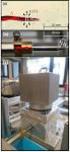 Penetration rate effects on cone resistance measured in a calibration chamber K. Kim Professional Service Industries, Inc, Houston, TX, USA M. Prezzi & R. Salgado Purdue University, West Lafayette, IN,
Numerical Simulation of CPT Tip Resistance in Layered Soil
 Numerical Simulation of CPT Tip Resistance in Layered Soil M.M. Ahmadi, Assistant Professor, [email protected] Dept. of Civil Engineering, Sharif University of Technology, Tehran, Iran Abstract The paper
International Journal of Scientific & Engineering Research, Volume 4, Issue 9, September-2013 409 ISSN 2229-5518
 International Journal of Scientific & Engineering Research, Volume 4, Issue 9, September-2013 409 Estimation of Undrained Shear Strength of Soil using Cone Penetration Test By Nwobasi, Paul Awo Department
Equivalent CPT Method for Calculating Shallow Foundation Settlements in the Piedmont Residual Soils Based on the DMT Constrained Modulus Approach.
 Equivalent CPT Method for Calculating Shallow Foundation Settlements in the Piedmont Residual Soils Based on the DMT Constrained Modulus Approach. Paul W. Mayne, PhD, P.E., Professor, Geosystems Engineering
Cone Penetration Testing in Geotechnical Practice. Tom Lunne Peter K. Robertson John J.M. Powell
 Cone Penetration Testing in Geotechnical Practice Tom Lunne Peter K. Robertson John J.M. Powell BLACKIE ACADEMIC & PROFESSIONAL An Imprint of Chapman & Hall London Weinheim New York Tokyo Melbourne Madras
Cone Penetration Testing (CPT) Michael Bailey, P.G. U.S. Army Corps of Engineers, Savannah District
 Cone Penetration Testing (CPT) Michael Bailey, P.G. U.S. Army Corps of Engineers, Savannah District Recommended publications ASTM D 5778-07 Standard Test Method for Electronic Friction Cone and Piezocone
CONE PENETRATION TESTING AND SITE EXPLORATION IN EVALUATING THE LIQUEFACTION RESISTANCE OF SANDS AND SILTY SANDS ABSTRACT
 CONE PENETRATION TESTING AND SITE EXPLORATION IN EVALUATING THE LIQUEFACTION RESISTANCE OF SANDS AND SILTY SANDS E. J. Newman 1, T. D. Stark 2, and S. M. Olson 3 ABSTRACT Refined relationships between
Fellenius, B. H., and Eslami, A.
 Page SOIL PROFILE INTERPRETED FROM CPTu DATA Fellenius, B. H., and Eslami, A. Fellenius, B. H., and Eslami, A., 2000. Soil profile interpreted from CPTu data. Year 2000 Geotechnics Geotechnical Engineering
HAULBOWLINE, CORK STATIC CONE PENETRATION TESTS FACTUAL REPORT
 HAULBOWLINE, CORK STATIC CONE PENETRATION TESTS FACTUAL REPORT CONE PENETRATION TESTS Cone resistance Local friction Porewater pressure Dissipations REPORT NO: RRM CONTRACT NO: GLOVER SITE INVESTIGATIONS
c. Borehole Shear Test (BST): BST is performed according to the instructions published by Handy Geotechnical Instruments, Inc.
 Design Manual Chapter 6 - Geotechnical 6B - Subsurface Exploration Program 6B-2 Testing A. General Information Several testing methods can be used to measure soil engineering properties. The advantages,
Soft Soil Overconsolidation and CPTU Dissipation Test
 Archives of Hydro-Engineering and Environmental Mechanics Vol. 53 (2006), No. 2, pp. 155 180 IBW PAN, ISSN 1231 3726 Soft Soil Overconsolidation and CPTU Dissipation Test Lech Bałachowski Gdańsk University
NUMERICAL MODELLING OF PIEZOCONE PENETRATION IN CLAY
 NUMERICAL MODELLING OF PIEZOCONE PENETRATION IN CLAY Ilaria Giusti University of Pisa [email protected] Andrew J. Whittle Massachusetts Institute of Technology [email protected] Abstract This paper
CPTic_CSM8. A spreadsheet tool for identifying soil types and layering from CPTU data using the I c method. USER S MANUAL. J. A.
 CPTic_CSM8 A spreadsheet tool for identifying soil types and layering from CPTU data using the I c method. USER S MANUAL J. A. Knappett (2012) This user s manual and its associated spreadsheet ( CPTic_CSM8.xls
Assessment of stress history in glacial soils on the basis of cone penetration tests
 Assessment of stress history in glacial soils on the basis of cone penetration tests ALOJZY SZYMANSKI 1, ANNA DROZDZ & MAREK BAJDA 1 Warsaw Agricultural University. (e-mail: [email protected])
NOTES on the CONE PENETROMETER TEST
 GE 441 Advanced Engineering Geology & Geotechnics Spring 2004 Introduction NOTES on the CONE PENETROMETER TEST The standardized cone-penetrometer test (CPT) involves pushing a 1.41-inch diameter 55 o to
Site Investigation. Some unsung heroes of Civil Engineering. buried right under your feet. 4. Need good knowledge of the soil conditions
 This is an attempt to create a stand alone self learning module on site investigation. Fasten your seat belts. Sit back, relax and enjoy. 1 2 Site Investigation Some unsung heroes of Civil Engineering
CPT AND CPTu DATA FOR SOIL PROFILE INTERPRETATION: REVIEW OF METHODS AND A PROPOSED NEW APPROACH *
 Iranian Journal of Science & Technology, Transaction B, Vol. 28, No. B Printed in Islamic Republic of Iran, 2004 Shiraz University CPT AND CPTu DATA FOR SOIL PROFILE INTERPRETATION: REVIEW OF METHODS AND
Soil Classification Through Penetration Tests
 Pak. J. Engg. & Appl. Sci. Vol. 9, Jul., 2011 (p. 76-86) Soil Classification Through Penetration Tests A. H. Khan, A. Akbar, K. Farooq, N. M. Khan, M. Aziz and H. Mujtaba Department of Civil Engineering,
Fundamentals of CONE PENETROMETER TEST (CPT) SOUNDINGS. J. David Rogers, Ph.D., P.E., R.G.
 Fundamentals of CONE PENETROMETER TEST (CPT) SOUNDINGS J. David Rogers, Ph.D., P.E., R.G. Cone Penetration Test CPT soundings can be very effective in site characterization, especially sites with discrete
By D. P. StewarP and M. F. Randolph z
 T-BAR PENETRATION TESTING IN SOFT CLAY By D. P. StewarP and M. F. Randolph z ABSTRACT: A t-bar penetration test for soft clay that can be performed with existing cone penetration test (CPT) equipment is
CHAPTER 1 INTRODUCTION
 CHAPTER 1 INTRODUCTION 1.1 Introduction The design and construction of foundations require a good knowledge of the mechanical behaviour of soils and of their spatial variability. Such information can be
INSITU TESTS! Shear Vanes! Shear Vanes! Shear Vane Test! Sensitive Soils! Insitu testing is used for two reasons:!
 In-situ Testing! Insitu Testing! Insitu testing is used for two reasons:! To allow the determination of shear strength or penetration resistance or permeability of soils that would be difficult or impossible
A Ground Improvement Update from TerraSystems
 TERRANOTES A Ground Improvement Update from TerraSystems SOIL MODULUS AFTER GROUND IMPROVEMENT Evaluation of ground improvement is accomplished using a variety of methods, from simple elevation surveys
Soil Behavior Type using the DMT
 Soil Behavior Type using the DMT Peter K. Robertson Gregg Drilling & Testing Inc., Signal Hill, CA, USA. E-mail: [email protected] Keywords: Soil Behavior Type, CPT, DMT ABSTRACT: The most promising
Case history of axial pile capacity and load-settlement response by SCPTu
 Case history of axial pile capacity and load-settlement response by SCPTu F.S. Niazi & P.W. Mayne Georgia Institute of Technology, Atlanta, Georgia, USA D.J. Woeller ConeTec Investigations Ltd., Richmond,
Statistical identification of homogeneous soil units for Venice lagoon soils
 Statistical identification of homogeneous soil units for Venice lagoon soils M. Uzielli Georisk Engineering, Florence, Italy P. Simonini, S. Cola Department of Hydraulic, Maritime, Environmental and Geotechnical
Some issues related to applications of the CPT
 Some issues related to applications of the CPT N. Ramsey Sinclair Knight Merz, Melbourne, Australia ABSTRACT: This paper reviews some issues related to the use of Cone Penetration Testing for geotechnical
Using Combination of SPT, DMT and CPT to Estimate Geotechnical Model for a Special Project in Turkey
 Using Combination of SPT, DMT and CPT to Estimate Geotechnical Model for a Special Project in Turkey Figen Orhun Onal GE, M.Sc., Site Works Manager, Zemin Etud ve Tasarım A.Ş., Istanbul, [email protected]
Toe Bearing Capacity of Piles from Cone Penetration Test (CPT) Data
 Toe Bearing Capacity of Piles from Cone Penetration Test (CPT) Data Abolfazl Eslami University of Ottawa, Civil Engineering Department PREPRINT International Symposium on Cone Penetrometer Testing, CPT
Cone Penetration Test (CPT)
 Cone Penetration Test (CPT) The cone penetration test, or CPT in short, is a soil testing method which will provide a great deal of high quality information. In the Cone Penetration Test (CPT), a cone
INTERPRETATION OF CONE PENETRATION TESTS IN COHESIVE SOILS
 Final Report FHWA/IN/JTRP-2006/22 INTERPRETATION OF CONE PENETRATION TESTS IN COHESIVE SOILS by Kwang Kyun Kim Graduate Research Assistant Monica Prezzi Assistant Professor and Rodrigo Salgado Professor
In Situ Subsurface Characterization
 27 In Situ Subsurface Characterization J. David Frost Georgia Institute of Technology Susan E. Burns Georgia Institute of Technology 27.1 Introduction 27.2 Subsurface Characterization Methodology 27.3
Use and Application of Piezocone Penetration Testing in Presumpscot Formation
 Use and Application of Piezocone Penetration Testing in Presumpscot Formation Craig W. Coolidge, P.E. Summit Geoengineering Services, Rockland, Maine ABSTRACT: This paper examines the advantages and limitations
References. Baligh, M.M. (1976). "Cavity Expansion in Sands with Curved Envelopes." Journ. of Geot. Engrg. Div. 111(GT9), p. 1108-1136.
 Arias, A. (1970). "A Measure of Earthquake Intensity." Seismic Design of Nuclear Power Plants, R.J. Hansen (ed.), The M.I.T. Press, Cambridge, MA, p. 438-483. Azzouz, A., Baligh, M., and Ladd, C. (1983).
SUGGESTION ABOUT DETERMINATION OF THE BEARING CAPACITY OF PILES ON THE BASIS OF CPT SOUNDING TESTS
 SUGGESTION ABOUT DETERMINATION OF THE BEARING CAPACITY OF PILES ON THE BASIS OF CPT SOUNDING TESTS JóZSEF PUSZTAI About the authors Pusztai József Budapest University of Technology and Economics, Department
ON THE INTERPRETATION OF SEISMIC CONE PENETRATION TEST (SCPT) RESULTS
 Studia Geotechnica et Mechanica, Vol. XXXV, No. 4, 213 DOI: 1.2478/sgem-213-33 ON THE INTERPRETATION OF SEISMIC CONE PENETRATION TEST (SCPT) RESULTS IRENA BAGIŃSKA Wrocław University of Technology, Faculty
Improvement in physical properties for ground treated with rapid impact compaction
 International Journal of the Physical Sciences Vol. 6(22), pp. 5133-5140, 2 October 2011 Available online at http://www.academicjournals.org/ijps ISSN 1992-1950 2011 Academic Journals Full Length Research
Table of Contents 10.1 GENERAL... 10.1-1
 Table of Contents Section Page 10.1 GENERAL... 10.1-1 10.1.1 Overview... 10.1-1 10.1.2 Role of Uncertainty in Property Interpretation... 10.1-1 10.1.3 Role of Drainage in Property Interpretation... 10.1-2
INDIRECT METHODS SOUNDING OR PENETRATION TESTS. Dr. K. M. Kouzer, Associate Professor in Civil Engineering, GEC Kozhikode
 INDIRECT METHODS SOUNDING OR PENETRATION TESTS STANDARD PENETRATION TEST (SPT) Reference can be made to IS 2131 1981 for details on SPT. It is a field edtest to estimate e the penetration e resistance
Caltrans Geotechnical Manual
 Cone Penetration Test The cone penetration test (CPT) is an in-situ sounding that pushes an electronic penetrometer into soil and records multiple measurements continuously with depth. Compared with rotary
Soil unit weight estimation from CPTs
 Soil unit weight estimation from CPTs P.W. Mayne Georgia Institute of Technology, Atlanta, GA USA J. Peuchen and D. Bouwmeester Fugro, Leidschendam, The Netherlands ABSTRACT: Soil unit weight is needed
Numerical study of rate effects in cone penetration test
 Numerical study of rate effects in cone penetration test Daichao Sheng, Richard Kelly, Jubert Pineda and Lachlan Bates Australian Research Council Centre of Excellence for Geotechnical Science and Engineering,
Eurocode 7 - Geotechnical design - Part 2 Ground investigation and testing
 Brussels, 18-20 February 2008 Dissemination of information workshop 1 Eurocode 7 - Geotechnical design - Part 2 Ground investigation and testing Dr.-Ing. Bernd Schuppener, Federal Waterways Engineering
Geotechnical Measurements and Explorations Prof. Nihar Ranjan Patra Department of Civil Engineering Indian Institute of Technology, Kanpur
 Geotechnical Measurements and Explorations Prof. Nihar Ranjan Patra Department of Civil Engineering Indian Institute of Technology, Kanpur Lecture No. # 13 (Refer Slide Time: 00:18) So last class, it was
Geotechnic Parameters Analysis Obtained by Pencel Presuremeter Test on Clayey Soils in Resistencia City
 American Journal of Science and Technology 2015; 2(5): 237-242 Published online August 10, 2015 (http://www.aascit.org/journal/ajst) ISSN: 2375-3846 Geotechnic Parameters Analysis Obtained by Pencel Presuremeter
GUIDE TO CONE PENETRATION TESTING
 GUIDE TO CONE PENETRATION TESTING www.greggdrilling.com Engineering Units Multiples Micro (μ) = 10-6 Milli (m) = 10-3 Kilo (k) = 10 +3 Mega (M) = 10 +6 Imperial Units SI Units Length feet (ft) meter (m)
GUIDE TO CONE PENETRATION TESTING
 GUIDE TO CONE PENETRATION TESTING www.greggdrilling.com Engineering Units Multiples Micro (μ) = 10-6 Milli (m) = 10-3 Kilo (k) = 10 +3 Mega (M) = 10 +6 Imperial Units SI Units Length feet (ft) meter (m)
Final Report* Cone Penetration Testing State-of-Practice
 Final Report* NCHRP Project 0-05 Topic 37-14 Cone Penetration Testing State-of-Practice Prepared by Paul W. Mayne, PhD, P.E. Professor, Civil & Environmental Engineering Georgia Institute of Technology
CIVL451. Soil Exploration and Characterization
 CIVL451 Soil Exploration and Characterization 1 Definition The process of determining the layers of natural soil deposits that will underlie a proposed structure and their physical properties is generally
Ingeniería y Georiesgos Ingeniería Geotécnica Car 19 a Nº 84-14 of 204 ; TEL : 6916043 E-mail: [email protected]
 The plot below presents the cross correlation coeficient between the raw qc and fs values (as measured on the field). X axes presents the lag distance (one lag is the distance between two sucessive CPT
Instrumented Becker Penetration Test for Liquefaction Assessment in Gravelly Soils
 Instrumented Becker Penetration Test for Liquefaction Assessment in Gravelly Soils Mason Ghafghazi 1, PhD, PEng. Jason DeJong 2, Professor Department of Civil and Environmental Engineering University of
Multiple parameters with one Cone Penetration Test. by Mark Woollard
 Multiple parameters with one Cone Penetration Test by Mark Woollard Subjects introduction MW introduction APB introduction CPT portfolio APB onshore CPT equipment near shore CPT equipment offshore CPT
ODOT/OSU collaboration on the development of CPT Capabilities for use in Ohio Transportation Projects
 CPT Cone Penetration Testing ODOT/OSU collaboration on the development of CPT Capabilities for use in Ohio Transportation Projects Presented by: Jason Ross, Staff Engineer, BBC&M Engineering, Inc. Kirk
Physical, mechanical, and hydraulic properties of coal refuse for slurry impoundment design
 Physical, mechanical, and hydraulic properties of coal refuse for slurry impoundment design Y.A. Hegazy, A.G. Cushing, & C.J. Lewis D Appolonia Engineering, Monroeville, PA, USA Keywords: coal, refuse,
Figure 2.31. CPT Equipment
 Soil tests (1) In-situ test In order to sound the strength of the soils in Las Colinas Mountain, portable cone penetration tests (Japan Geotechnical Society, 1995) were performed at three points C1-C3
NEW DEVELOPMENTS AND IMPORTANT CONSIDERATIONS FOR STANDARD PENETRATION TESTING FOR LIQUEFACTION EVALUATIONS. Jeffrey A Farrar M.S.
 NEW DEVELOPMENTS AND IMPORTANT CONSIDERATIONS FOR STANDARD PENETRATION TESTING FOR LIQUEFACTION EVALUATIONS Jeffrey A Farrar M.S., P E 1 ABSTRACT Standard Penetration Tests (SPT) are often used for evaluating
BEARING CAPACITY AND SETTLEMENT RESPONSE OF RAFT FOUNDATION ON SAND USING STANDARD PENETRATION TEST METHOD
 SENRA Academic Publishers, British Columbia Vol., No. 1, pp. 27-2774, February 20 Online ISSN: 0-353; Print ISSN: 17-7 BEARING CAPACITY AND SETTLEMENT RESPONSE OF RAFT FOUNDATION ON SAND USING STANDARD
1 Mobilisation and demobilisation 1 Deep boring sum 2 Cone penetration tests sum 3 Miscellenous tests sum
 Malaysian Civil Engineering Standard Method of Measurement (MyCESMM) CLASS D: SITE INVESTIGATION WORK Measurement covered under other classes: Excavation not carried out for the purpose of soil investigation
CPT interpretation in marine soils less than 5m depth examples from the North Sea
 CPT interpretation in marine soils less than 5m depth examples from the North Sea R. Mitchell SEtech (Geotechnical Engineers) Limited, Great Yarmouth, England S. Wootton & R. Comrie SEtech (Geotechnical
Measurement of Soil Parameters by Using Penetrometer Needle Apparatus
 Vol.3, Issue.1, Jan-Feb. 2013 pp-284-290 ISSN: 2249-6645 Measurement of Soil Parameters by Using Penetrometer Needle Apparatus Mahmoud M. Abu zeid, 1 Amr M. Radwan, 2 Emad A. Osman, 3 Ahmed M.Abu-bakr,
SPECIFICATION FOR DYNAMIC CONSOLIDATION / DYNAMIC REPLACEMENT
 SPECIFICATION FOR DYNAMIC CONSOLIDATION / DYNAMIC REPLACEMENT 1.0 SOIL IMPROVEMENT 1.1 General Soil Investigation Information are provided in Part B1 annex as a guide to the Contractor for his consideration
Measurement of In-Place Relative Density in Coarse Grained Alluvium for Comparison to Penetration Tests DSO-99-01
 Measurement of In-Place Relative Density in Coarse Grained Alluvium for Comparison to Penetration Tests DSO-99-01 Department of the Interior Bureau of Reclamation Earth Sciences and Research Laboratory
Using Miniature Cone Penetration Test (Mini-CPT) to determine engineering properties of sandy soils
 JGeope 2 (2), 2012, P. 65-76 Using Miniature Cone Penetration Test (Mini-CPT) to determine engineering properties of sandy soils Mohammad Reza Nikudel*, Seyed Ehsan Mousavi, Mashaallah Khamehchiyan, Amin
Correlation of Standard and Cone Penetration Tests for Sandy and Silty Sand to Sandy Silt Soil
 Correlation of Standard and Cone Penetration Tests for Sandy and Silty Sand to Sandy Silt Soil Bashar Tarawneh Ph.D, P.E Assistant Professor Civil Engineering Department The University of Jordan Amman,
Chapter 7 Analysis of Soil Borings for Liquefaction Resistance
 Chapter 7 Analysis of Soil Borings for Liquefaction Resistance 7.1. Introduction. This chapter addresses the analysis of subsurface soil data to determine the factor of safety against liquefaction and
Abstract. Keywords. Pouya Salari 1, Gholam Reza Lashkaripour 2*, Mohammad Ghafoori 2. Email: * [email protected]
 Open Journal of Geology, 2015, 5, 231-2 Published Online May 2015 in SciRes. http://www.scirp.org/journal/ojg http://dx.doi.org/./ojg.2015.55021 Presentation of Empirical Equations for Estimating Internal
Determination of undrained shear strength parameters for buried pipeline stability in deltaic soft clays
 Determination of undrained shear strength parameters for buried pipeline stability in deltaic soft clays T.A. Newson and M.F. Bransby Division of Civil Engineering, The University of Dundee, Nethergate,
ASSESSMENT OF SHEAR WAVE VELOCITY FROM INDIRECT INSITU TESTS
 Proceedings of Indian Geotechnical Conference IGC-2014 December 18-20, 2014, Kakinada, India ASSESSMENT OF SHEAR WAVE VELOCITY FROM INDIRECT INSITU TESTS Kant, L., M. Tech Student, Department of Earthquake
Piezocone Penetration Tests CPTU
 Piezocone Penetration Tests CPTU Fernando Schnaid Universidade Federal do Rio Grande do Sul, Brazil CPTU Standards Equipment & Procedures Measurements & Corrections Interpretation methods New devices Cone-pressuremeter
Pavements should be well drained both during and upon completion of construction. Water should not be allowed to pond on or near pavement surfaces.
 Project No. 208-8719 January, 2009 Ref: 2-8719BR Anthony Hudson - Broadscale Geotechnical Investigation - Proposed Commercial Development - 52 Old Pacific Highway, Pimpama Page 32 iii) Pavements should
Numerical Analysis of Texas Cone Penetration Test
 International Journal of Applied Science and Technology Vol. 2 No. 3; March 2012 Numerical Analysis of Texas Cone Penetration Test Nutan Palla Project Engineer, Tolunay-Wong Engineers, Inc. 10710 S Sam
Evaluating Axial Elastic Pile Response from Cone Penetration Tests (The 2009 Michael W. O Neill Lecture)
 Evaluating Axial Elastic Pile Response from Cone Penetration Tests (The 9 Michael W. O Neill Lecture) Paul W. Mayne, Geosystems Engineering Group, School of Civil & Environmental Engineering, Georgia Institute
Module 1 : Site Exploration and Geotechnical Investigation. Lecture 4 : In-situ tests [ Section 4.1: Penetrometer Tests ] Objectives
![Module 1 : Site Exploration and Geotechnical Investigation. Lecture 4 : In-situ tests [ Section 4.1: Penetrometer Tests ] Objectives](/thumbs/26/8734290.jpg "Module 1 : Site Exploration and Geotechnical Investigation. Lecture 4 : In-situ tests [ Section 4.1: Penetrometer Tests ] Objectives") Lecture 4 : In-situ tests [ Section 4.1: Penetrometer Tests ] Objectives In this section you will learn the following Penetrometer Tests Standard penetration test Static cone penetration test Dynamic cone
Lecture 4 : In-situ tests [ Section 4.1: Penetrometer Tests ] Objectives In this section you will learn the following Penetrometer Tests Standard penetration test Static cone penetration test Dynamic cone
Module5: Site investigation using in situ testing
 Module5: Site investigation using in situ testing Topics: Introduction Penetration testing 1. Standard penetration test 2. Cone penetration test Strength and compressibility testing 1. Field vane shear
A study on the Effect of Distorted Sampler Shoe on Standard Penetration Test Result in Cohesionless soil
 ISSN: 319-53 (An ISO 39: 00 Certified Organization) A study on the Effect of Distorted Sampler Shoe on Standard Penetration Test Result in Cohesionless soil Utpal Kumar Das Associate Professor, Department
ABSTRACT 2. TAILINGS TYPES AND TESTS 1. INTRODUCTION. the Ball Penetration Test (BPT) and the Field Vane Test (FVT).
 CORRELATIONS OF SHEAR STRENGTHS OF SOFT OIL SANDS TAILINGS ASSESSED BY DIFFERENT IN SITU METHODS Srboljub Masala, Barr Engineering, Calgary, Alberta Navdip Dhadli, Shell Canada Energy, Calgary, Alberta
Standard Test Method for Mechanical Cone Penetration Tests of Soil 1
 Designation: D 3441 98 AMERICAN SOCIETY FOR TESTING AND MATERIALS 100 Barr Harbor Dr., West Conshohocken, PA 19428 Reprinted from the Annual Book of ASTM Standards. Copyright ASTM Standard Test Method
EVALUATING THE IMPROVEMENT FROM IMPACT ROLLING ON SAND
 EVALUATING THE IMPROVEMENT FROM IMPACT ROLLING ON SAND D.L. Avalle, Broons Hire (SA) Pty Ltd, Australia J.P. Carter, The University of Sydney, Australia Abstract Impact rolling, utilising a non-circular
product manual HS-4210 HS-4210_MAN_09.08 Digital Static Cone Penetrometer
 HS-4210_MAN_09.08 product manual HS-4210 Digital Static Cone Penetrometer Introduction This Manual covers the measurement of bearing capacity using the Humboldt Digital Static Cone Penetrometer (DSCP).
STP883-EB/Nov. 1985. Subject Index
 STP883-EB/Nov. 1985 Subject Index A Aas in-situ tests, 209-210 Analytical model technique, 432, 438 Andersen's procedure, 342, 345,349-351 Arabian Gulf soils, 413 ASCE conference, 41 ASTM Standards D 422:385
Use of the Cone Penetration Test for Geotechnical Site Characterization in Clay-Mantled Karst. T. C. Siegel 1 and P. E. Cargill 2
 Use of the Cone Penetration Test for Geotechnical Site Characterization in Clay-Mantled Karst T. C. Siegel 1 and P. E. Cargill 2 Abstract Adapted for use as a mechanical soil exploration device in the
Geotechnical Testing Methods II
 Geotechnical Testing Methods II Ajanta Sachan Assistant Professor Civil Engineering IIT Gandhinagar FIELD TESTING 2 1 Field Test (In-situ Test) When it is difficult to obtain undisturbed samples. In case
Cone penetration testing, CPTu
 1 Cone penetration testing, CPTu Preface Our company is Environmental Mechanics AB or short Envi. A Swedish company developing, producing and marketing systems for cone penetration testing (also known
Washington 98102-3699, [email protected]
 LESSONS LEARNED FROM A STONE COLUMN TEST PROGRAM IN GLACIAL DEPOSITS Barry S. Chen 1, P.E., Member, Geo-Institute and Michael J. Bailey 2, P.E., Member, Geo-Institute ABSTRACT A stone column test program
Interpretation of cone penetration tests a unified approach
 1337 Interpretation of cone penetration tests a unified approach P.K. Robertson Abstract: The electric cone penetration test (CPT) has been in use for over 40 years and is growing in popularity in North
REPORT. Earthquake Commission. Christchurch Earthquake Recovery Geotechnical Factual Report Merivale
 REPORT Earthquake Commission Christchurch Earthquake Recovery Geotechnical Factual Report Merivale REPORT Earthquake Commission Christchurch Earthquake Recovery Geotechnical Factual Report Merivale Report
ENHANCED GEOTECHNICAL SITE CHARACTERIZATION BY SEISMIC PIEZOCONE PENETRATION TESTS
 Invited Lecture, Fourth International Geotechnical Conference, Cairo University, January 2000, pp. 95-120. ENHANCED GEOTECHNICAL SITE CHARACTERIZATION BY SEISMIC PIEZOCONE PENETRATION TESTS Paul W. Mayne,
Electronic Soil Test Logging. Strategic Advantage or Unnecessary Headache?
 1 Electronic Soil Test Logging Strategic Advantage or Unnecessary Headache? 2 The Plan 3 4 What is it? Digitally Recording Soil Test Data Why? 5 6 Traditional Work Flow Field Digital Entry Sample Review
Field tests using an instrumented model pipe pile in sand
 Field tests using an instrumented model pipe pile in sand D. Igoe University College Dublin K. Gavin University College Dublin B. O Kelly Trinity College Dublin Reference: Igoe D., Gavin K., and O'Kelly
Standard penetration test (SPT)
 Standard penetration test (SPT) Evolution of SPT Test methods and standards Influence of ground conditions on penetration resistance SPT energy measurement and corrections for SPT Use of SPT results Profiling
USE OF CONE PENETRATION TEST IN PILE DESIGN
 PERIODICA POLYTECHNICA SER. CIV. ENG. VOL. 47, NO. 2, PP. 189 197 (23) USE OF CONE PENETRATION TEST IN PILE DESIGN András MAHLER Department of Geotechnics Budapest University of Technology and Economics
Comparison of Continuous Dynamic Probing with the Standard Penetration Test for Highly Weathered Limestone of Eastern Sudan
 Comparison of Continuous Dynamic Probing with the Standard Penetration Test for Highly Weathered Limestone of Eastern Sudan Prof. Dr. Khairul Anuar Kassim Deputy Dean, Research and Graduate Studies, Faculty
DISCRETE ELEMENT MODELLING OF CONE PENETRATION TESTING IN GRANULAR MATERIALS
 DISCRETE ELEMENT MODELLING OF CONE PENETRATION TESTING IN GRANULAR MATERIALS By Omar Falagush M.Sc, B.Sc Thesis submitted to the University of Nottingham for the degree of Doctor of Philosophy December
INTERNATIONAL JOURNAL OF CIVIL AND STRUCTURAL ENGINEERING Volume 3, No 3, 2013
 INTERNATIONAL JOURNAL OF CIVIL AND STRUCTURAL ENGINEERING Volume 3, No 3, 2013 Copyright by the authors - Licensee IPA- Under Creative Commons license 3.0 Research article ISSN 0976 4399 Reliability of
Evaluation of Post-liquefaction Reconsolidation Settlement based on Standard Penetration Tests (SPT)
 RESEARCH ARTICLE OPEN ACCESS Evaluation of Post-liquefaction Reconsolidation Settlement based on Standard Penetration Tests (SPT) AlketaNdoj*,VeronikaHajdari* *Polytechnic University of Tirana, Department
K. Ishihara Department of Civil Engineering, Chuo University, Tokyo, Japan
 GEOTECHNICAL ENGINEERING K. Ishihara Department of Civil Engineering, Chuo University, Tokyo, Japan Keywords: Sounding, Penetration tests, Plate loading test, Downhole method, Crosshole method, Mat foundation,
IN SITU GEOTECHNICAL TESTING USING LIGHTWEIGHT PLATFORMS. Peter Zimmerman, MSCE David Brown, P.G. Geoprobe Systems Salina, Kansas.
 IN SITU GEOTECHNICAL TESTING USING LIGHTWEIGHT PLATFORMS Peter Zimmerman, MSCE David Brown, P.G. Geoprobe Systems Salina, Kansas June, 1999 ABSTRACT In situ testing in geotechnical engineering has traditionally