
PEOSH Model Tuberculosis Infection Control Program
|
|
|
- Emery Cox
- 10 years ago
- Views:
Transcription
1 PEOSH Model Tuberculosis Infection Control Program Revised November, 2004 NOTE: The information in this document is not considered to be a substitute for any provision of the PEOSH Act or for any standards issued or adopted by the PEOSH Program. Richard J. Codey Acting Governor

2 MODEL TUBERCULOSIS INFECTION CONTROL PROGRAM INTRODUCTION The Public Employees Occupational Safety and Health (PEOSH) Program has developed this Model Tuberculosis Infection Control Program to help public employers understand and comply with the NJDHSS PEOSH Requirements for Preventing Occupational Exposure to Tuberculosis (TB Requirements) which became effective on July 1, Employers should use the Model Tuberculosis Infection Control Program in order to establish and maintain a comprehensive Tuberculosis Infection Control Program. Completion of this written program is not required. However, each covered facility must have a written protocol for the prompt identification of individuals with suspected or confirmed infectious TB in order to be in compliance with the TB Requirements. As stated in the revised TB Requirements, all employers who have employees working in one of the five covered facilities (refer to Attachment B of the TB Requirements) and whose employees have potential exposure to the exhaled air of an individual with suspected or confirmed infectious TB disease, or are present during a high-hazard medical procedure performed on an individual with suspected or confirmed infectious TB disease, should: assign responsibility for the TB Infection Control Program; conduct a baseline risk assessment; conduct periodic risk assessments; and develop and implement a written TB Infection Control Program (TB ICP). The following actions are mandatory under the TB Requirements: the development of a written protocol for the early identification of individuals with suspected or confirmed infectious TB; providing medical surveillance for employees; providing case management of infected employees; reporting cases of TB; providing employee education and training; implementing engineering controls (when required); providing and ensuring the use of respiratory protection (when required).

3 INSTRUCTIONS Attached is a model TB Infection Control Program. The program has been designed in a fill in the blank format. Comment sections have also been included for additional information which should be included to tailor this program to your facility. This model TB Infection Control Program is based on information contained in the CDC s Guidelines for Preventing the Transmission of Mycobacterium tuberculosis in Health-Care Facilities, 1994 (1994 CDC TB Guidelines) referred to as Attachment A. For a copy of the CDC 1994 TB Guidelines, visit the CDC s website at: or call the NJDHSS PEOSH Program at NOTE: There is no requirement that this specific Model Tuberculosis Infection Control Program be used; however, it is required that each facility develop a written protocol for the early identification of individuals with suspected or confirmed infectious TB. ACKNOWLEDGMENTS The PEOSH Program would like to thank the New Jersey public workplaces participating in the New Jersey Department of Health and Senior Services (NJDHSS) and the Centers for Disease Control and Prevention s (CDC) Cooperative Agreement for the Control of Tuberculosis and Tuberculous Infection in Health-Care Workers. The participating facilities include: Bergen Pines County Hospital, Paramus Runnells Specialized Hospital, Berkeley Heights University of Medicine and Dentistry of New Jersey (UMDNJ), University Hospital, Newark UMDNJ, New Jersey Medical School National Tuberculosis Center, Newark If you have any questions or comments about the information in this model program, please contact the PEOSH Program at (609) or a

4 TUBERCULOSIS INFECTION CONTROL PROGRAM 1. NAME OF FACILITY This Tuberculosis Infection Control Program was developed for: Name and address of this facility This Model TB Infection Control Program was completed on : Date program was completed 2. PURPOSE The purpose of this written TB Infection Control Program is to reduce the risk of transmission of Mycobacterium tuberculosis to employees. The information contained in this program also serves as a resource for educating employees about TB. 3. ASSIGNMENT OF RESPONSIBILITY Supervisory responsibility for the TB Infection Control Program has been assigned to. Name(s) of individual(s) in charge can be contacted by calling: Name(s) of individual(s) in charge Telephone number(s) or by paging: Pager number(s) This designated person or group of persons has expertise in infection control, occupational health and/or engineering. This designated person or group of persons also has been given the authority to implement and enforce the TB Infection Control Program policies. NOTE: If supervisory responsibility has been assigned to a committee, one person should be designated as the TB contact person. Comments: - 1 -

5 4. RISK ASSESSMENT AND PERIODIC REASSESSMENT NOTE: The first step in developing a TB Infection Control Program is to conduct a baseline risk assessment to evaluate the risk for transmission of M. tuberculosis in each area and for each occupational group in the facility for the prior twelve month period. The risk assessment will determine the required frequency of health-care worker Mantoux skin testing. The frequency will depend on whether the risk for transmission of M. tuberculosis in the facility, area, or occupational group is minimal, low, intermediate, or high: - A minimal risk category refers to an entire facility which has not treated, admitted or transported an individual with suspected or confirmed infectious TB disease; - A low risk category refers to areas or occupational groups within a workplace that treat, transport, and/or admit one to five individuals with suspected or confirmed infectious TB disease; - An intermediate risk category refers to areas or occupational groups within a workplace that treat, transport, and/or admit six (6) or more individuals with suspected or confirmed infectious TB disease; - A high risk category refers to areas or occupational groups in which a) employee purified-protein derivative(ppd) conversion rates were significantly greater than for areas or groups in which occupational exposure to M. tuberculosis was unlikely or greater than previous rates for the same area or occupational group, and epidemiologic evaluation suggests nosocomial transmission; or b) a cluster of PPD test conversions occurred, and epidemiologic evaluation suggests nosocomial transmission of M. tuberculosis; or c) possible person-to-person transmission has been detected. A. Baseline (initial) Risk Assessment A careful assessment of the risk for transmission of M. tuberculosis has been conducted for Specify if this risk assessment is for the entire facility, areas within this facility. and/or occupational groups within this facility. The risk assessment was conducted by:. The baseline risk assessment was based on: Name(s) of qualified person - the number of individuals with suspected or confirmed infectious TB treated at, transported by, or admitted to this facility or area within this facility was determined to be: - 2 -

6 0 from to = minimal risk one to five from to = low risk six or more from to = intermediate risk If it has been determined that (check appropriate box or boxes): employee TB skin test conversion rates are significantly greater than for areas or groups in which occupational exposure to M. tuberculosis was unlikely or greater than previous rates for the same area or occupational group, and epidemiologic evaluation suggests nosocomial transmission; or a cluster of TB skin test conversions occurred, and epidemiologic evaluation suggests nosocomial transmission of M. tuberculosis; or possible person-to-person transmission has been detected; then this facility, or area within this facility, or occupational group within this facility will temporarily be assigned a high risk category. The RISK LEVEL for Designate if risk level is for the facility, area(s) within the facility, or occupational group was determined to be on Specify if the risk level is minimal, low, intermediate, or high NOTE: If suspected infectious TB cases have been identified, but are later ruled out as confirmed infectious TB disease by a physician, then a lower risk category can still be assigned to a facility. B. Periodic Risk Assessments At a minimum, a reassessment of risk will be conducted annually, covering the period from: to Based on the reassessment of risk, the number of individuals with suspected or confirmed infectious TB treated at, transported by, or admitted to this facility in the last 12 month period was determined to be: - 3 -

7 was 0 from to = minimal risk one to five from to = low risk six or more from to = intermediate risk If it has been determined that (check appropriate box or boxes): employee TB skin test conversion rates are significantly greater than for areas or groups in which occupational exposure to M. tuberculosis was unlikely or greater than previous rates for the same area or occupational group, and epidemiologic evaluation suggests nosocomial transmission; or a cluster of TB skin test conversions occurred, and epidemiologic evaluation suggests nosocomial transmission of M. tuberculosis; or possible person-to-person transmission has been detected; then this facility will temporarily be assigned a high risk category. The RISK LEVEL for Designate if risk level is for the facility, area(s) within the facility, or occupational group was determined to be on Specify if the risk level is minimal, low, intermediate, or high NOTE: If the reassessment of risk in a minimal risk facility indicates that an individual with suspected infectious TB disease (without a TB rule-out) or confirmed infectious TB disease has been treated at, transported by, or admitted to the facility, their risk level should be promptly changed and the TB Infection Control Program would need to be reassessed and revised to reflect the new risk level

8 The number of infectious TB cases reported for a facility's area of service, county, etc., should be used as an indicator of the prevalence of the disease. This number is not used to determine the risk category for a facility, but should be determined for awareness and education purposes. - The profile of TB in the community served by this facility was determined to be. # of individuals confirmed to have infectious TB - This quantity represents the number of infectious TB cases reported in the (check): municipality (city, town or township) areas of service county state This information was obtained by contacting the. Name of local/county health department at OR by contacting the NJDHSS, TB Program at (609) Comments: 5. DEVELOPMENT AND IMPLEMENTATION OF A TB INFECTION CONTROL PLAN A. Identification and Assessment of Individuals With Suspected or Confirmed Infectious TB Disease If individuals with suspected or confirmed infectious TB disease enter this facility, they will be promptly identified by employees who are the first points of contact. These employees include. Specify employees (booking, patient assessment, admissions) Employees who are the first points of contact have been trained to ask questions that will facilitate identification of individuals with suspected or confirmed infectious TB disease. (Refer to Section 9.) Potentially exposed employees have been trained to recognize the signs and symptoms of TB disease noted by the CDC. These signs and symptoms include persistent cough (lasting greater than 3 weeks), bloody sputum, night sweats, weight loss, anorexia, and/or fever, and other risk factors

9 B. Management of Individuals With Suspected or Confirmed Infectious TB Disease for Facilities With Collaborative Agreements (an agreement with a facility with an isolation room and appropriate protocols for handing TB patients) If an individual has been identified with suspected or confirmed infectious TB disease, they will immediately be placed in. Specify room or area which is separate from other individuals and is not an open waiting area. A surgical mask, a box of tissues, and instructions in the use of both will be provided to the identified individual until prompt referral to a collaborating facility occurs. C. Referral of Individuals to a Collaborating Facility for Diagnostic Evaluation and Treatment or TB Rule-out Arrangements with have been Name of collaborating facility, phone #, contact name made in the event an individual is identified with suspected or confirmed infectious TB disease. This individual will promptly be transported by Specify how individual will be transported to collaborating facility. Include phone # and contact name Individuals with suspected or confirmed infectious TB disease will be transported to the collaborating facility in vehicles that are open (e.g., open windows and ventilation controls set on fresh outside air). If individuals with suspected or confirmed infectious TB cannot be transported to the collaborating facility in vehicles that are open, Name of other transporter will be contacted to transport them to the collaborating facility in open vehicles or while the employee wears respiratory protection. NOTE: If individuals with suspected or confirmed infectious TB are promptly (in less than five hours) transported to a collaborating facility for inpatient treatment and/or high hazard procedures, the referring facility is not required to have an AFB isolation room. Comments: - 6 -

10 D. Management of Individuals With Suspected or Confirmed Infectious TB Disease in Facilities With No Collaborating Agreements If an individual has been identified with suspected or confirmed TB disease, they will immediately be placed in a negative pressure AFB isolation room. Negative pressure isolation rooms at this facility are room(s):. Designate negative pressure rooms by number and location A surgical mask, a box of tissues, and instructions in their use will be provided for the individual. The individual will be instructed to wear the mask and use the tissues while being transported to the negative pressure AFB isolation room. 6. MEDICAL SURVEILLANCE FOR EMPLOYEES A. Initial (Baseline) Screening NOTE: The two-step tuberculin skin testing procedure is recommended by the CDC for the baseline testing of persons who will periodically receive tuberculin skin tests to reduce the likelihood of mistaking a boosted reaction for a new infection. If the initial tuberculin-test result is classified as negative, a second test needs to be done 1 to 3 weeks later. If the reaction to the second test is positive, it probably represents a boosted reaction. The employee should be referred to his or her own physician for further evaluation. If the second result is also negative, the person is classified as not infected. A positive reaction to a subsequent test would indicate new infection (i.e., a skin-test conversion) in such a person. Refer to Attachment A, pages 59-61, regarding the application, reading, and interpretation of PPD skin tests. The Mantoux TB skin test is the preferred method of skin testing. All employees (including current potentially exposed and new employees prior to exposure) will be offered a Mantoux TB skin test (at no cost to them) in low, intermediate, and high risk category facilities. NOTE: Mantoux skin testing in minimal risk facilities is recommended, but is not required under the PEOSH Program. The Mantoux two-step tuberculin skin test will be used for employees who have an initially negative PPD skin test result and who have not had a documented negative TB skin test during the preceding 12 months. TB skin testing will be offered at a time and location convenient to employees

11 Follow-up and treatment evaluations will also be offered to employees at no cost to them. The reading and interpretation of TB skin tests will be performed by Specify qualified individual NOTE: Acceptable reading and interpretation of TB skin tests are described in the 1994 CDC TB Guidelines on pages Comments: B. Periodic Screening Refer to the Risk Assessment in order to determine the frequency of TB skin testing for areas and/or occupational groups within the facility. The exact location and/or job title should be used, such as: nurses on the third floor; admissions in the TB Clinic; or the booking area in the jail. Check appropriate box or boxes that apply to this facility: One-step TB skin testing will be offered annually for the following occupational groups or areas in low risk categories: One-step TB skin testing will be offered every six (6) months for the following occupational groups or areas in intermediate risk categories: One-step TB skin testing will be offered every three (3) months for the following occupational groups or areas in high risk categories until the cause of transmission is identified and corrected: - 8 -

12 Periodic skin testing will be conducted by notifying:, The employee and/or supervisor during. Hire month, birthday OR specify other means to ensure that TB skin testing is offered Employees with a documented positive (in millimeters of induration) TB skin test, who have received treatment for TB disease or preventive therapy for TB infection, will be exempt from further TB skin testing. Exempt employees will be informed about the symptoms of TB by: Specify how this is to be done and the need for immediate evaluation of any pulmonary symptoms suggestive of TB by to determine if Specify the physician or trained health-care provider symptoms of TB disease have developed. Comments: C. Reassessment Following an Exposure or Change in Health Employees who experience an exposure, without appropriate protection, to an individual with suspected or confirmed infectious TB disease will be properly managed by: Specify how employee will be managed. i.e., PPD skin testing Employees who develop symptoms of TB will be immediately evaluated by: Specify how employee will be evaluated. i.e., PPD skin testing, chest x-rays, etc. NOTE: Refer to the 1994 CDC TB Guidelines pages for appropriate reassessment testing information. Comments: 7. CASE MANAGEMENT OF INFECTED EMPLOYEES A. Protocol for New Converters Employees who convert to a positive TB skin test (as defined by the CDC in Attachment A, pages 59-65), will be offered Specify appropriate physical, laboratory, and radiographic evaluations to determine whether the employee has active TB disease

13 Follow-up and treatment evaluations will also be offered at no cost to employees and at a time and location convenient to them. NOTE: If an employee's initial skin test is given within two weeks of his or her start date and is positive, a workplace exposure could not have caused the infection. The minimum time necessary for TB transmission to result in a conversion to a positive skin test is two weeks. B. Work Restrictions for Infectious Employees Employees, with physician-diagnosed infectious or clinically suspected infectious TB disease, will be restricted from work until Specify physician certifies that they are no longer contagious, or infectious TB disease has been ruled out. Employees who discontinue treatment before they are cured will be evaluated promptly for infectiousness. If the evaluation indicates that the employee is still contagious, they will be excluded from the work until treatment has been resumed and they are no longer contagious. Comments: 8. REPORTING CASES OF TB: The will report employees with physician-diagnosed Specify person and/or department active or clinically-suspected active TB disease by phone to the NJDHSS, Tuberculosis Program at (609) within 24 hours and in writing (Tuberculosis Program, P.O. Box 369, 3635 Quakerbridge Road, Trenton, New Jersey ) within 72 hours. The report can also be faxed to (609) Comments:

14 9. EMPLOYEE EDUCATION AND TRAINING: TB training and education shall be provided to employees who may be the first points of contact to individuals with suspected or confirmed infectious TB disease, and other employees determined by this facility to have the potential for exposure. The employees at this facility having the potential for exposure to individuals with suspected or confirmed infectious TB disease include (list job classifications such as nurses, housekeeping, emergency service personnel, and police, etc.,) Employees must be trained to ask questions that will facilitate identification of individuals with signs and symptoms suggestive of TB and to consider other risk factors. These signs and symptoms include: - persistent cough (i.e., lasting equal to or greater than three (3) weeks); - bloody sputum (coughing up blood); - night sweats; - weight loss; - anorexia (loss of appetite); - fever; - chills; - lethargy/weakness. Other risk factors to consider include: - past history of TB infection (positive TB skin test result) or inadequate treatment for infectious TB disease; - close contact to an individual with infectious TB disease; - foreign-born persons from areas where infectious TB disease is common, medically underserved, low income populations; - age (children under the age of 4 and elderly persons); - persons who inject illegal drugs; - locally identified groups with high rates of infections (e.g., migrant farm workers, alcoholics, or homeless persons); and/or - immunocompromised persons (HIV infection). Other topics to be included in the training program include: - the mode of TB transmission; - medical surveillance and therapy; - site-specific protocols including the purpose and proper use of controls; - post-exposure protocols to be followed after an exposure incident

15 NOTE: The content of the education program should be based on the training elements listed on pages 36 and 37 of the 1994 CDC TB Guidelines as they relate to employee work responsibilities. Refer to for a complete listing of Specify location of records or attach the names of employees who received training, the dates the training was received, and a training outline. The need for additional training will be reevaluated and repeated as necessary. Comments: 10. ENGINEERING CONTROLS If individuals with suspected or confirmed infectious TB are admitted to this facility as in-patients, they will be immediately placed into an AFB isolation room. AFB isolation room(s) in this facility are located: Specify the exact location by floor and room number If AFB isolation rooms are not available for use during aerosol generating procedures on individuals with suspected or confirmed infectious TB, acceptable local ventilation devices will be used. In this facility the acceptable local ventilation devices are located: Specify location(s) of local ventilation devices and type of device (i.e. booth, hood, etc.) AFB isolation rooms will be maintained under negative pressure while in use for an individual with suspected or confirmed infectious TB. Negative pressure will be tested daily using Specify how negative pressure will be monitored (smoke tube, pressure gauge, etc.) The air exhausted from AFB isolation or treatment rooms will be exhausted directly to the outside. In this facility, air from room(s): Specify room numbers or location is directly exhausted to the outside. All potentially contaminated air which is ducted through this facility will be kept under negative pressure until it is discharged safely outside. The air will not be discharged into occupied areas, walkways, or near fresh air intakes or operable windows

16 If air from AFB isolation or treatment rooms or local exhaust ventilation devices can not be directly exhausted to the outside, HEPA filters will be installed on the units or in the duct work. HEPA filters have been installed at the following locations: Specify location(s) of HEPA filters The HEPA filters will be changed Specify time frame or pressure reading if room or local ventilation device is equipped with a gauge After high hazard procedures are performed and patients have left the booth, hood, or other enclosure, will be allowed to pass for at least Specify the amount of time 99% of the airborne contaminants to be removed. If employees must enter the room before 99% of the airborne contaminants are removed, a respirator will be worn. NOTE: Employers must use the formula for the rate of purging airborne contaminants to calculate the purge time interval. This formula can be found on page 72 of the 1994 CDC TB Guidelines. 11. RESPIRATORY PROTECTION All potentially exposed employees will wear National Institute for Occupational Safety and Health (NIOSH)-approved respirators for protection against tuberculosis when: - entering an isolation room housing an individual with suspected or confirmed infectious TB disease; - employees are present during the performance of high-hazard procedures on individuals with suspected or confirmed infectious TB. The high-hazard procedures performed in this facility which require the use of respiratory protection are: Specify the high hazard procedures performed (sputum collection, bronchoscopy, aerosolized medication treatment, endoscopy, etc.) - employees must enter a booth, enclosure, or room where high-hazard procedures are performed during a purge time interval before 99% of the airborne contaminants have been removed; - emergency medical response personnel or others must transport an individual with suspected or confirmed infectious TB disease in a closed vehicle. A respiratory protection program will be established and maintained inclusive of the requirements outlined in 29 CFR

17 Only respirators meeting the performance criteria established by NIOSH for exposure to TB will be permitted. The minimally acceptable level of respiratory protection for tuberculosis will be the N-95 series. The use and reuse of disposable respirators will be limited by hygiene considerations, damage to the filter, or by increased breathing resistance. Comments: 12. ACCESS TO EMPLOYEE EXPOSURE AND MEDICAL RECORDS Records concerning employee exposure to TB, TB skin testing results, and medical evaluations and treatment will be maintained by Specify person and/or department Comments: 13. LOG AND SUMMARY OF OCCUPATIONAL INJURIES AND ILLNESSES Employee TB infections (positive TB skin test) and TB disease will be recorded on the NJOSH 300 Log by. Specify name of person and/or department If an employee's TB infection progresses to TB disease during the five-year maintenance period, the original NJOSH 300 log entry for the infection will be updated to reflect the new information. Comments:

MIOSHA s Tuberculosis Guidelines For Worker Protection from Mycobacterium (Occupational Health Program Directive No. 96-9)
 MIOSHA s Tuberculosis Guidelines For Worker Protection from Mycobacterium (Occupational Health Program Directive No. 96-9) In recent years, the incidence of Mycobaterium Tuberculosis (M. tuberculosis)
Maryland County Health Department Tuberculosis Infection Control Plan
 Maryland County Health Department Tuberculosis Infection Control Plan Introduction In 1998, the Division of TB Control developed a Tuberculosis (TB) Prevention Plan template for use by the local health
Tuberculosis Exposure Control Plan for Low Risk Dental Offices
 Tuberculosis Exposure Control Plan for Low Risk Dental Offices A. BACKGROUND According to the CDC, approximately one-third of the world s population, almost two billion people, are infected with tuberculosis.
3. Blood and blood products such as serum, plasma, and other blood components.
 Mississippi Downloaded 01/2011 101.11 Infectious Medical Waste. The term "infectious medical waste" includes solid or liquid wastes which may contain pathogens with sufficient virulence and quantity such
Long-term Care - TB Risk Assessment
 Montana DPHHS Tuberculosis Program Long-term Care - TB Risk Assessment Long-term Care, Residential Treatment, ESRD (outpatient), Hospice (inpatient) Today s Date Facility Address Phone County Completed
Assisted Living - TB Risk Assessment
 Montana DPHHS Tuberculosis Program Assisted Living - TB Risk Assessment Assisted Living, Adult Day Care, Adult Foster Care & Transitional Living Centers Today s Date Facility Address Phone County Completed
Tuberculosis (TB) Screening Guidelines for Substance Use Disorder Treatment Programs in California
 Tuberculosis (TB) Screening Guidelines for Substance Use Disorder Treatment Programs in California 1 of 7 Table of Contents Preface 2 TB Symptoms and TB History 2 Initial Screening 2 Follow-Up Screening
09/27/2006 Centers for Disease Control and Prevention Division of Tuberculosis Elimination
 Appendix B. Tuberculosis (TB) risk assessment worksheet This model worksheet should be considered for use in performing TB risk assessments for healthcare facilities and nontraditional facility-based settings.
Enforcement Policy and Procedures for Occupational Exposure to Tuberculosis.
 SUBJECT: Purpose: Scope: Enforcement Policy and Procedures for Occupational Exposure to Tuberculosis. To provide uniform inspection procedures and guidelines to be followed when conducting inspections
TUBERCULOSIS (TB) SCREENING GUIDELINES FOR RESIDENTIAL FACILITIES AND DRUG
 TUBERCULOSIS (TB) SCREENING GUIDELINES FOR RESIDENTIAL FACILITIES AND DRUG Tx CENTERS Tuberculosis Control Program Health and Human Services Agency San Diego County INTRODUCTION Reducing TB disease requires
Maria Dalbey RN. BSN, MA, MBA March 17 th, 2015
 Maria Dalbey RN. BSN, MA, MBA March 17 th, 2015 2 Objectives Participants will be able to : Understand the Pathogenesis of Tuberculosis (TB) Identify the Goals of Public Health for TB Identify Hierarchy
Tuberculosis Intensive November 17 20, 2015 San Antonio, TX
 Tuberculosis Infection Prevention in Health Care Settings Jeffrey L. Levin, M.D., M.S.P.H. November 18, 2015 Tuberculosis Intensive November 17 20, 2015 San Antonio, TX EXCELLENCE EXPERTISE INNOVATION
Chapter 8 Community Tuberculosis Control
 Chapter 8 Community Tuberculosis Control Table of Contents Chapter Objectives.... 227 Introduction.... 229 Roles and Responsibilities of the Public Health Sector Providers.... 229 Roles and Responsibilities
U.S. DEPARTMENT OF HEALTH AND HUMAN SERVICES Public Health Service Centers for Disease Control and Prevention
 U.S. DEPARTMENT OF HEALTH AND HUMAN SERVICES Public Health Service Centers for Disease Control and Prevention National Center for HIV, STD, and TB Prevention Division of Tuberculosis Elimination Public
Targeted Testing for Tuberculosis Infection
 Targeted Testing for Tuberculosis Infection CONTENTS Introduction... 3.2 Purpose... 3.2 Policy... 3.2 When to Conduct Targeted Testing... 3.3 Approaches to increasing targeted testing and treatment for
CDC TB Testing Guidelines and Recent Literature Update
 Pocket Guide QuantiFERON -TB Gold CDC TB Testing Guidelines and Recent Literature Update Using IGRAs for TB screening in your patients June 2010 A full copy of the US Centers for Disease Control and Prevention
MANAGEMENT OF TUBERCULOSIS IN PRISONS: Guidance for prison healthcare teams
 MANAGEMENT OF TUBERCULOSIS IN PRISONS: Guidance for prison healthcare teams Document control Title Type Author/s Management of tuberculosis in prisons: Guidance for prison healthcare teams Operational
Tuberculosis: FAQs. What is the difference between latent TB infection and TB disease?
 Tuberculosis: FAQs What is TB disease? Tuberculosis (TB) is a disease caused by bacteria (germs) that are spread from person to person through the air. TB usually affects the lungs, but it can also affect
Hawaii Administrative Rules. Title 11. Department of Health. Chapter 164. Tuberculosis
 Hawaii Administrative Rules Title 11 Department of Health Chapter 164 Tuberculosis 11-164-1 Purpose 11-164-2 Definitions 11-164-3 Reports to the department 11-164-4 Content of report 11-164-5 Examination
Recommendations from the Minnesota Department of Health (MDH) for Completing the CDC Facility TB Risk Assessment Worksheet
 Recommendations from the Minnesota Department of Health (MDH) for Completing the CDC Facility TB Risk Assessment Worksheet The Facility TB Risk Assessment Worksheet, developed by the Centers for Disease
 You can get more information about TB from the following: Local Public Health Nurse Community Clinic Nurse Communicable Disease Control Nurse Your Family or Community Doctor Your Infection Control Practitioner
Chapter 7 Tuberculosis Infection Control
 Chapter 7 Tuberculosis Infection Control Table of Contents Chapter Objectives.... 189 Introduction.... 191 Infectiousness.... 192 TB Infection Control Measures.... 196 TB Infection Control Program................................................
Clinical description 2 Laboratory test for diagnosis 3. Incubation period 4 Mode of transmission 4 Period of communicability 4
 Tuberculosis Contents Epidemiology in New Zealand 2 Case definition 2 Clinical description 2 Laboratory test for diagnosis 3 Case classification 3 Spread of infection 4 Incubation period 4 Mode of transmission
TB CARE EARLY DETECTION AND PREVENTION OF TUBERCULOSIS (TB) IN CHILDREN. Risk factors in children acquiring TB:
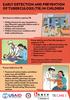 EARLY DETECTION AND PREVENTION OF TUBERCULOSIS (TB) IN CHILDREN Risk factors in children acquiring TB: Children living in the same household as a lung TB patient (especially children under 5) Children
RULES OF THE DEPARTMENT OF MENTAL HEALTH AND DEVELOPMENTAL DISABILITIES OFFICE OF LICENSURE
 RULES OF THE DEPARTMENT OF MENTAL HEALTH AND DEVELOPMENTAL DISABILITIES OFFICE OF LICENSURE CHAPTER 0940-5-46 MINIMUM PROGRAM REQUIREMENTS FOR ALCOHOL AND DRUG RESIDENTIAL TREATMENT FACILITIES FOR CHILDREN
RULES OF THE TENNESSEE DEPARTMENT OF MENTAL HEALTH AND DEVELOPMENTAL DISABILITIES
 RULES OF THE TENNESSEE DEPARTMENT OF MENTAL HEALTH AND DEVELOPMENTAL DISABILITIES CHAPTER 0940-5-45 MINIMUM PROGRAM REQUIREMENTS FOR ALCOHOL AND DRUG RESIDENTIAL REHABILITATION TREATMENT FACILITIES TABLE
Guidelines for Preventing the Transmission of Mycobacterium tuberculosis in Health-Care Facilities, 1994
 October 28, 1994 / Vol. 43 / No. RR-13 Recommendations and Reports Guidelines for Preventing the Transmission of Mycobacterium tuberculosis in Health-Care Facilities, 1994 U.S. DEPARTMENT OF HEALTH AND
Tuberculosis. Subject. Goal/Objective. Instructions. Rationale. Operations Directorate, Health Branch Immigration Medical Examination Instructions
 Subject Instructions for the screening of clients to detect tuberculosis (TB) in the context of the Canadian immigration medical examination (IME). Goal/Objective These instructions are provided to ensure
KEY CAL/OSHA STANDARDS THAT APPLY TO MOST EMPLOYERS
 KEY CAL/OSHA STANDARDS THAT APPLY TO MOST EMPLOYERS FACTSHEET 1 Below are some key Cal/OSHA standards that apply to most employers: A. INJURY AND ILLNESS PREVENTION PROGRAM STANDARD (Title 8 California
Guidelines for TB Blood Testing. Minnesota Department of Health TB Prevention and Control Program June 2011
 Guidelines for TB Blood Testing Minnesota Department of Health TB Prevention and Control Program June 2011 Outline Interferon-Gamma Release Assays aka TB blood tests 1. What are they? 2. What are the current
NCI-Frederick Safety and Environmental Compliance Manual 03/2013
 C-6. Medical Surveillance I. Purpose The purpose of the medical surveillance of employees at the NCI-Frederick is to preserve health and prevent work related disease. The medical surveillance program will
Tuberculosis Prevention and Control Protocol, 2008
 Tuberculosis Prevention and Control Protocol, 2008 Preamble The Ontario Public Health Standards (OPHS) are published by the Minister of Health and Long- Term Care under the authority of the Health Protection
RULES OF THE TENNESSEE DEPARTMENT OF MENTAL HEALTH AND DEVELOPMENTAL DISABILITIES
 RULES OF THE TENNESSEE DEPARTMENT OF MENTAL HEALTH AND DEVELOPMENTAL DISABILITIES CHAPTER 0940-5-41 MINIMUM PROGRAM REQUIREMENTS FOR ALCOHOL AND DRUG HALFWAY HOUSE TREATMENT FACILITIES TABLE OF CONTENTS
OSHA Compliance Checklist ASC
 OSHA Compliance Checklist ASC Date Inspectors Facility OSHA is the agency responsible for establishing and enforcing standards that will make the workplace safe and healthful for the employees. The way
Tuberculosis Surveillance and Screening for Long Term Care Facilities in Colorado
 Tuberculosis Surveillance and Screening for Long Term Care Facilities in Colorado Developed by the Colorado Medical Directors Association and The Colorado Department of Public Health and Environment Introduction:
Patient Education CONTENTS. Introduction... 12.2
 CONTENTS Introduction... 12.2 Purpose... 12.2 General Guidelines... 12.3 Language and Comprehension Barriers... 12.4 Education Topics... 12.5 Medical Diagnosis... 12.5 Contact Investigation... 12.6 Isolation...
BASIC INFORMATION ABOUT HIV, HEPATITIS B and C, and TUBERCULOSIS Adapted from the CDC
 BASIC INFORMATION ABOUT HIV, HEPATITIS B and C, and TUBERCULOSIS Adapted from the CDC HIV What are HIV and AIDS? HIV stands for Human Immunodeficiency Virus. This is the virus that causes AIDS. HIV is
Chapter 5. INFECTION CONTROL IN THE HEALTHCARE SETTING
 Chapter 5. INFECTION CONTROL IN THE HEALTHCARE SETTING INTRODUCTION This chapter addresses infection control measures and practices in the healthcare setting and provides guidance to healthcare facilities
Get the Facts About. Disease
 Get the Facts About TB TUBERCULOSIS Disease What s Inside: 3 PAGE Get the facts, then get the cure 4 PAGE 9 PAGE 12 PAGE Learn how TB is spread Treatment for TB disease Talking to family and friends about
Shelters and TB: What Staff Need to Know VIEWER S GUIDE
 Shelters and TB: What Staff Need to Know VIEWER S GUIDE SECOND EDITION, 2008 Shelters and TB: What Staff Need to Know VIEWER S GUIDE SECOND EDITION, 2008 The Francis J. Curry National Tuberculosis Center
Sandblasting & Silica Exposure Control Plan
 Safety & Health Program 10627 Midwest Industrial Boulevard, St. Louis, MO Phone: 314-785-6425 Fax: 314-785-6426 Sandblasting & Silica Exposure Control Plan The purpose of this program is to inform interested
NOTICE OF PUBLIC HEARING REGARDING PROPOSED CHANGES IN HEALTH CARE SERVICES PROVIDED BY FRESNO COUNTY
 NOTICE IS HEREBY GIVEN that a public hearing will commence on Tuesday, September 23, 2008, at 9:00 a.m. (subject to continuance on that date of the hearing) at the Fresno County Board of Supervisors Chambers,
Delaware. Downloaded 01/2011
 Delaware Downloaded 01/2011 3.0 CNA Training Program Requirements 3.3 Curriculum Content 3.3.2 Environmental Needs Of The Resident Key Concepts: Introduces the nursing assistant to the need to keep residents
KUMC. Medical Surveillance Program
 KUMC Medical Surveillance Program INTRODUCTION Employees at KUMC could potentially be exposed to safety hazards such as chemical, biological, and physical hazards. These hazards are most likely to occur
FLORENCE TOWNSHIP BOARD OF EDUCATION FILE CODE: 4112.4/4212.4 Florence, New Jersey
 FLORENCE TOWNSHIP BOARD OF EDUCATION FILE CODE: 4112.4/4212.4 Florence, New Jersey Regulation Exposure Control Administration BLOODBORNE PATHOGENS A. The district safety and health program officer, district
Notice of Rulemaking Hearing. Department of Mental Health and Developmental Disabilities Office of Licensure
 Notice of Rulemaking Hearing Department of Mental Health and Developmental Disabilities Office of Licensure There will be a hearing before the Tennessee Department of Mental Health and Developmental Disabilities,
OCCUPATIONAL SAFETY AND HEALTH ADMINISTRATION (OSHA)
 OCCUPATIONAL SAFETY AND HEALTH ADMINISTRATION (OSHA) The OSHA/VOSH 1910.1030 Blood borne Pathogens Standard was issued to reduce the occupational transmission of infections caused by microorganisms sometimes
Lesson 7: Respiratory and Skeletal Systems and Tuberculosis
 Glossary 1. asthma: when the airways of the lungs narrow, making breathing difficult 2. bacteria: tiny living creatures that can only be seen with a microscope; some bacteria help the human body, and other
Guidelines For Occupational Safety and Health Programs
 Guidelines For Occupational Safety and Health Programs Public Employees Occupational Safety and Health Program Len Fishman Christine Todd Whitman Mel Gelade Commissioner Governor Commissioner GUIDELINES
EAST CAROLINA UNIVERSITY INFECTION CONTROL POLICY
 EAST CAROLINA UNIVERSITY INFECTION CONTROL POLICY Department: Adult and Pediatric HealthCare/ECU-Doctor s Park, Building #2 Date Originated: October 28, 1992 Date Reviewed: 10.28.92, 12.14.94, Date Approved:
FEDERAL BUREAU OF PRISONS REPORT ON INFECTIOUS DISEASE MANAGEMENT
 FEDERAL BUREAU OF PRISONS REPORT ON INFECTIOUS DISEASE MANAGEMENT What is the purpose of this report? The purpose of this report is to present the administrative policies and clinical guidelines for the
Pediatric Latent TB Diagnosis and Treatment
 Date Updated: April 2015 Guidelines Reviewed: 1. CDC Latent TB Guidelines 2. Harborview Pediatric Clinic Latent TB Management, 2010 3. Pediatric Associates Latent TB Guidelines, 2013 4. Seattle Children
Santa Clara County Tuberculosis Screening Requirement for School Entrance Effective June 1, 2014. Frequently Asked Questions
 Frequently Asked Questions A child has history of BCG vaccination, should they have TST or IGRA? According to the American Academy of Pediatrics Red Book (2012), Interferon Gamma Release Assay (IGRA) is
British Columbia Institute of Technology. BCIT Safety Manual ASBESTOS MANAGEMENT
 BCIT Safety Manual Contents 1. Purpose... 3 2. Definitions... 3 2.1 Asbestos... 3 2.2 Asbestos Containing Material (ACM)... 3 2.3 Friable Material... 3 2.4 Low Risk Work Activity... 3 2.5 Moderate Risk
T()LED() Name ofpolicy: Mandatory Tuberculosis (TB) Screening of Students from World Health Organization Designated High TB Prevalence Countries
 Name ofpolicy: Mandatory Tuberculosis (TB) Screening of Students from World Health Organization Designated High TB Prevalence Countries Policy Number: 3364-81-04-030 T()LED() Revision date: I 0/22/13 Approving
Interim Guidance for Medical Schools on health checks for active and latent Tuberculosis in medical students returning from elective periods overseas
 Interim Guidance for Medical Schools on health checks for active and latent Tuberculosis in medical students returning from elective periods overseas This document has been developed by: Dr Mathina Darmalingam
Responsibilities of Public Health Departments to Control Tuberculosis
 Responsibilities of Public Health Departments to Control Tuberculosis Purpose: Tuberculosis (TB) is an airborne infectious disease that endangers communities. This document articulates the activities that
LTBI Program Implementation in a Substance Abuse Treatment Facility
 LTBI Program Implementation in a Substance Abuse Treatment Facility (A Case Study) Acknowledgments The New Jersey Medical School (NJMS) National Tuberculosis Center wishes to acknowledge the following
RULES OF THE TENNESSEE DEPARTMENT OF MENTAL HEALTH AND DEVELOPMENTAL DISABILITIES
 RULES OF THE TENNESSEE DEPARTMENT OF MENTAL HEALTH AND DEVELOPMENTAL DISABILITIES CHAPTER 0940-05-44 MINIMUM PROGRAM REQUIREMENTS FOR ALCOHOL AND DRUG RESIDENTIAL DETOXIFICATION TREATMENT FACILITIES TABLE
Regulations for Tuberculosis Control in Minnesota Health Care Settings
 Regulations for Tuberculosis Control in Minnesota Health Care Settings A guide for implementing tuberculosis (TB) infection control regulations in your facility Tuberculosis Prevention and Control Program
RULES OF THE TENNESSEE DEPARTMENT OF MENTAL HEALTH AND DEVELOPMENTAL DISABILITIES
 RULES OF THE TENNESSEE DEPARTMENT OF MENTAL HEALTH AND DEVELOPMENTAL DISABILITIES CHAPTER 0940-05-47 MINIMUM PROGRAM REQUIREMENTS FOR ALCOHOL AND DRUG OUTPATIENT DETOXIFICATION TREATMENT FACILITIES TABLE
TUBERCULOSIS (TB) CASE MANAGEMENT/TEAM APPROACH. I. TITLE: Protocol for the case management of persons with suspected or confirmed active TB disease.
 REVISED (original 4/93) TUBERCULOSIS (TB) CASE MANAGEMENT/TEAM APPROACH I. TITLE: Protocol for the case management of persons with suspected or confirmed active TB disease. II. TYPE OF STANDARD: Service
Risk for Tuberculosis in Swiss Hospitals. Content. Introduction. Dr. med. Alexander Turk Zürcher Höhenklinik Wald alexander.turk@zhw.
 Risk for Tuberculosis in Swiss Hospitals 17. Tuberkulose Symposium Münchenwiler Risk for Tuberculosis in Swiss Hospitals Dr. med. Alexander Turk Zürcher Höhenklinik Wald [email protected] 1 Content
New York City Department of Health Protocols for Latent TB Infection Treatment
 New York City Department of Health Protocols for Latent TB Infection Treatment CONTENT A. Medical evaluation for latent TB infection (LTBI) treatment 1. Medical history and physical examination 2. Chest
4. Infection control measures
 4. Infection control measures Apart from general hygienic practices and vaccination, staff of institutions should also adopt specific infection control measures against communicable diseases. The measures
PRE-CLINICAL HEALTH AND SAFETY PACKET
 PRE-CLINICAL HEALTH AND SAFETY PACKET Effective Spring 2014 ALLIED HEALTH PROGRAMS Information on Pre-Clinical Health and Safety Requirements 108 N. 40th Street Phoenix, AZ 85034 www.gatewaycc.edu (602)
Table. Positive Purified Protein Derivative Results (Pediatrics In Review Apr 2008)
 PPD and TB Sreening COMPETENCY- The resident should know the risk factors for TB exposure, when to screen, and the appropriate criteria for recognizing a positive PPD in children of different age groups
12 Points of Tuberculosis (TB) Patient Education
 12 Points of Tuberculosis (TB) Patient Education Transmission of TB TB is a disease caused by the TB germ. The disease is mainly in the lungs (pulmonary TB), but the germ can travel to other parts of the
Pregnancy and Tuberculosis. Information for clinicians
 Pregnancy and Tuberculosis Information for clinicians When to suspect Tuberculosis (TB)? Who is at risk of TB during pregnancy? Recent research suggests that new mothers are at an increased risk of TB
Roger Williams University. Bloodborne Pathogens Exposure Control Plan
 Roger Williams University Bloodborne Pathogens Exposure Control Plan Revised 12/2010 ROGER WILLIAMS UNIVERSITY BLOODBORNE PATHOGENS EXPOSURE CONTROL PLAN I. STATEMENT OF POLICY It is the policy of Roger
Preventing Adverse Health Effects From Exposure To Beryllium In Dental Laboratories
 U. S. Department of Labor Occupational Safety and Health Administration Directorate of Science, Technology and Medicine Office of Science and Technology Assessment PROVIDED TO YOU COURTESY OF NATIONAL
NON-PHARMACEUTICAL INTERVENTIONS (NPIs): ACTIONS TO LIMIT THE SPREAD OF THE PANDEMIC IN YOUR MUNICIPALITY
 TOOL 4 HEALTH NON-PHARMACEUTICAL INTERVENTIONS (NPIs): ACTIONS TO LIMIT THE SPREAD OF THE PANDEMIC IN YOUR MUNICIPALITY WHAT ARE NON-PHARMACEUTICAL INTERVENTIONS? PREPAREDNESS RESPONSE This tool will help
Lead Monitoring / Removal
 Lead Monitoring / Removal 1.0. INTRODUCTION The Occupational Safety and Health Administration (OSHA) adopted standards which regulate occupational exposures to lead in general industries. Since that time,
X-Plain Pediatric Tuberculosis Reference Summary
 X-Plain Pediatric Tuberculosis Reference Summary Introduction Tuberculosis, or TB, is a bacterial infection that causes more deaths in the world than any other infectious disease. When a child gets TB,
R 3160 PHYSICAL EXAMINATION
 TEACHING STAFF EBERS PHYSICAL EXAINATION R 3160/Page 1 of 6 A. Definitions R 3160 PHYSICAL EXAINATION 1. Employee assurance statement means a statement signed by the employee certifying that information
Ambulance Service. Patient Care. and. Transportation Standards
 Ambulance Service Patient Care and Transportation Standards Ministry of Health and Long-Term Care Emergency Health Services Branch Patient Care A. General Each operator and each emergency medical attendant
Questions and Answers About Tuberculosis
 Questions and Answers About Tuberculosis 2014 Questions and Answers About Tuberculosis 2014 Questions and Answers About Tuberculosis ( TB) was written to provide information on the diagnosis and treatment
Department of Veterans Affairs VHA DIRECTIVE 2011-036 Veterans Health Administration Washington, DC 20420 September 22, 2011
 Department of Veterans Affairs VHA DIRECTIVE 2011-036 Veterans Health Administration Washington, DC 20420 SAFETY AND HEALTH DURING CONSTRUCTION 1. PURPOSE: This Veterans Health Administration (VHA) Directive
Yale New Haven Health System Center for Healthcare Solutions
 Table of Contents Education and Training Yale New Haven Health System Center for Healthcare Solutions 2009-2010 Fall/Winter Course Guide TOPICS [email protected] www.yalenewhavenhealth.org/healthcaresolutions
6.0 Infectious Diseases Policy: Student Exposure Control Plan
 6.0 Infectious Diseases Policy: Student Exposure Control Plan 6.1 PURPOSE & SCOPE This exposure control plan has been established to define the infection control program for students of Pacific University.
Guide to the European Union
 Guide to the European Union (Prevention of Sharps Injuries in the Healthcare Sector) Regulations 2014 Our vision: A country where worker safety, health and welfare and the safe management of chemicals
TB Prevention, Diagnosis and Treatment. Accelerating advocacy on TB/HIV 15th July, Vienna
 TB Prevention, Diagnosis and Treatment Accelerating advocacy on TB/HIV 15th July, Vienna Diagnosis Microscopy of specially stained sputum is the main test for diagnosing TB (1 2 days) TB bacilli seen in
The methods of implementation of these elements of the standard are discussed in the subsequent pages of this ECP.
 Exposure Control Plan (ECP) for Bloodborne Pathogens Updated 9/15/2009 Purpose Our Company is committed to providing a safe and healthful work environment for our entire staff. In pursuit of this endeavor,
Pennsylvania Hospital & Surgery Center of Pennsylvania Hospital ADMINISTRATIVE POLICY MANUAL
 Page 1 Issued: March 1978 Committee Approval: Human Resources Employee Health Infection Control Administrative Policy Review Committee: January 1982 December 1986 June 1989 April 1991 December 1993 March
Ginny Dowell, RN, BSN October 21, 2015. Comprehensive Care of Patients with Tuberculosis and Their Contacts October 19 22, 2015 Wichita, KS
 Principles of Nurse Case Management Ginny Dowell, RN, BSN October 21, 2015 Comprehensive Care of Patients with Tuberculosis and Their Contacts October 19 22, 2015 Wichita, KS EXCELLENCE EXPERTISE INNOVATION