
INTRODUCTION USER S MANUAL
|
|
|
- Dominic Carter
- 10 years ago
- Views:
Transcription
1 USER S MANUAL BATTERY OPERATED CARBON MONOXIDE ALARM WITH SILENCE FEATURE INTRODUCTION BASIC SAFETY INFORMATION Dangers, Warnings, and Cautions alert you to important operating instructions or to potentially hazardous situations. Pay special attention to these items. THIS IS NOT A SMOKE ALARM! This CO Alarm is designed to detect carbon monoxide from ANY source of combustion. It is NOT designed to detect smoke, fire, or any other gas. This CO Alarm is approved for use in single-family residences. It is NOT designed for marine use. This CO Alarm will only indicate the presence of carbon monoxide gas at the sensor. Carbon monoxide gas may be present in other areas. Printed in Mexico M P 06/07 Model CO400 IMPORTANT! PLEASE READ CAREFULLY AND SAVE. This user s manual contains important information about your Carbon Monoxide (CO) Alarm s operation. If you are installing this CO Alarm for use by others, you must leave this manual or a copy of it with the end user. TABLE OF CONTENTS Introduction Basic Safety Information How Your CO Alarm Works Understanding Your CO Alarm Installation Where to Install CO Alarms Where CO Alarms Should NOT Be Installed How to Install Your CO Alarm If Your CO Alarm Sounds If the Alarm Signal Sounds Using the Silence Feature Testing and Maintenance Weekly Testing Regular Maintenance What You Need To Know About CO What is CO? Symptoms of CO Poisoning Finding the Source of CO After an Alarm How Can I Protect My Family? Potential Sources of CO in the Home Regulatory Information for CO Alarms General Limitations Of CO Alarms Troubleshooting Guide Limited Warranty BRK Brands, Inc., a Jarden Corporation company (NYSE: JAH) 3901 Liberty Street Road, Aurora, IL All rights reserved. Consumer Affairs: (800) The Silence Feature is for your convenience only and will not correct a CO problem. Always check your home for a potential problem after any alarm. Failure to do so can result in injury or death. NEVER ignore your Carbon Monoxide Alarm if it alarms. Refer to If Your CO Alarm Sounds for more information. Failure to do so can result in injury or death. Test the CO Alarm once a week. If the CO Alarm ever fails to test correctly, have it replaced immediately! If the CO Alarm is not working properly, it cannot alert you to a problem. This product is intended for use in ordinary indoor locations of family living units. It is not designed to measure CO levels in compliance with Occupational Safety and Health Administration (OSHA) commercial or industrial standards. Individuals with medical conditions that may make them more sensitive to carbon monoxide may consider using warning devices which provide audible and visual signals for carbon monoxide concentrations under 30 ppm. For additional information on carbon monoxide and your medical condition contact your physician. HOW YOUR CO ALARM WORKS GENERAL INFORMATION This CO Alarm does not operate without working batteries. Removing the batteries, or failure to replace them at the end of their service life, removes your protection. A CO Alarm measures the CO levels in the air. It will alarm if CO levels rise quickly (if the heat exchanger on your furnace breaks, for example), or if CO is consistently present (a slow CO leak on a fuel-burning appliance). This Carbon Monoxide Alarm features a permanently installed sensor and an 85 db alarm horn. It also has a silence feature to temporarily quiet the alarm horn. THE PARTS OF YOUR CO ALARM 5 1 Open door here 2 Test/Silence Button 3 POWER/ALARM Light (RED) 2 4 Battery Compartment 5 (Behind Cover) Alarm Horn: 85dB audible alarm for test, alarm, and unit malfunction warning

2 UNDERSTANDING YOUR CO ALARM WELCOME CHIRP Horn chirps and light blinks once when batteries are first connected. ALARM RECEIVING BATTERY POWER Light flashes every minute. Horn is silent. LOW BATTERY WARNING The light continues to flash (RED) and the horn also chirps once every minute. This warning should last for up to 30 days, but you should replace the batteries as soon as possible. DURING TESTING Light flashes Red in sync with the horn pattern (4 beeps, pause, 4 beeps), simulating a CO Alarm condition. CO ALARM Sensor has detected enough CO to trigger an alarm. Light flashes rapidly and horn sounds loudly (repeating 4 beeps, pause). See If Your CO Alarm Sounds for details. During an alarm, move everyone to a source of fresh air. DO NOT move the CO Alarm! CO ALARM REQUIRES SERVICE (MALFUNCTION SIGNAL) The light flashes (RED) and the horn sounds 3 quick chirps every minute. CO Alarm needs to be replaced. INSTALLATION WHERE TO INSTALL CO ALARMS The National Fire Protection Association (NFPA) recommends that a CO Alarm should be centrally located outside of each separate sleeping area in the immediate vicinity of the bedrooms. For added protection, install additional CO Alarms in each separate bedroom, and on every level of your home. If your bedroom hallway is longer than 40 feet (12 meters), install a CO Alarm at BOTH ends of the hallway. WHERE CO ALARMS SHOULD NOT BE INSTALLED DO NOT LOCATE THIS CO ALARM: In garages, kitchens, furnace rooms, or in any extremely dusty, dirty or greasy areas. Within 5 feet (1.5 meters) of any cooking appliance. In extremely humid areas. This alarm should be at least 10 feet (3 meters) from a bath or shower, sauna, humidifier, vaporizer, dishwasher, laundry room, utility room or other source of high humidity. In areas where temperature is colder than 40 F (4 C) or hotter than 100 F (38 C). These areas include unconditioned crawl spaces, unfinished attics, uninsulated or poorly insulated ceilings, porches, and garages. In turbulent air, like near ceiling fans, heat vents, air conditioners, fresh air returns, or open windows. Blowing air may prevent CO from reaching the sensors. Outside the Mobile Home. In direct sunlight. This CO Alarm is designed for use inside a single-family home or apartment. It is not meant to be used in common lobbies, hallways, or basements of multi-family buildings unless working CO Alarms are also installed in each family living unit. CO Alarms in common areas may not be heard from inside individual family living units. This CO Alarm alone is not a suitable substitute for complete detection systems in places which house many people, like hotels or dormitories, unless a CO Alarm is also placed in each unit. DO NOT use this CO Alarm in warehouses, industrial or commercial buildings, special-purpose non-residential buildings, or airplanes. This CO Alarm is specifically designed for residential use, and may not provide adequate protection in non-residential applications. BEDROOM BEDROOM BEDROOM LIVING ROOM HALL KITCHEN GARAGE BASEMENT REQUIRED TO MEET NFPA RECOMMENDATIONS SUGGESTED AREAS FOR INSTALLING ADDITIONAL CO ALARMS In a Single-level Home: Install at least one CO Alarm near or within each separate sleeping area. For added protection, install an additional CO Alarm at least 20 feet (6 meters) away from the furnace or fuel burning heat source. In a Multi-level Home: Install at least one CO Alarm near or within each separate sleeping area. For added protection, install at least one CO Alarm on each level of the home. For added protection, install an additional CO Alarm at least 20 feet (6 meters) away from the furnace or fuel burning heat source. In Mobile Homes: Install CO Alarms on inside walls ONLY. Uninsulated outside walls and roofs of mobile homes often transfer heat and cold from outdoors. The Alarm should be located at least 152 mm (6 inches) from all exterior walls and at least 305 mm (12 inches) from supply or return vents. 2

3 HOW TO INSTALL YOUR CO ALARM Read Where To Install Your CO Alarm before starting. Before you start installation, find the pair of self-adhesive labels included with this CO Alarm. On each label write in the phone number of your emergency responder (like 911) and a qualified appliance technician. Place one label near the CO Alarm, and the other label in the fresh air location you plan to go if the alarm sounds. INSTALLING THE AA BATTERIES 1. Flip the battery door down to open. 2. Install both AA batteries (included) inside the battery compartment as indicated. Make sure the + and ends of each battery are aligned properly. A chirp will be issued. 3. Close the battery door. TO MOUNT ON THE WALL Tools you will need: pencil, drill with 3/16 or 5mm drill bit, flathead screwdriver, hammer. 1. Choose a location on the wall. Do not install the Alarm closer than 4 (102 mm) from where the wall meets the ceiling. 2. Hold the mounting guide template against the wall, and make a mark inside each keyhole where you will drill your mounting hole as shown in the diagram below. 3. Use a 3/16 (5 mm) drill bit to drill through the marks you made for the mounting holes. 4. Insert the plastic screw anchors into the mounting holes until they are flush with the wall. If necessary, tap them gently with a hammer. 5. Insert the screws into the anchors until the screwhead is 1/8 inch (3 mm) away from the wall. 6. Slide the CO Alarm onto the screws until you feel it click into place. 7. Test the CO Alarm as described in Weekly Testing. IF YOUR CO ALARM SOUNDS Actuation of your CO Alarm indicates the presence of carbon monoxide (CO) which can kill you. In other words, when your CO Alarm sounds, you must not ignore it! USING THE SILENCE FEATURE The Silence Feature is for your convenience only and will not correct a CO problem. Always check your home for a potential problem after any alarm. Failure to do so can result in injury or death. NEVER remove the batteries from your CO Alarm to silence the horn. Use the silence feature. Removing the batteries removes your protection! See If Your CO Alarm Sounds for details on responding to an alarm. The Silence Feature is intended to temporarily silence your CO Alarm s alarm horn while you correct the problem it will not correct a CO problem. While the alarm is silenced it will continue to monitor the air for CO. When CO reaches alarm levels the alarm will sound repeating horn pattern: 4 beeps, a pause, 4 beeps, etc. Press and hold the Test/Silence button until the horn is silent. The initial Silence cycle will last approximately 4 minutes. NOTE: After initial 4-minute Silence cycle, the CO Alarm re-evaluates present CO levels and responds accordingly. If CO levels remain potentially dangerous or start rising higher the horn will start sounding again. While the detector is silenced: If the CO Alarm... Is silent for only 4 minutes, then starts sounding loudly 4 beeps, pause, 4 beeps, pause If the CO Alarm... Remains silent after you pressed the Test/Silence button This means... CO levels are still potentially dangerous. This means... CO levels are dropping. SILENCING THE LOW BATTERY WARNING This silence feature can temporarily quiet the low battery warning chirp for up to 8 hours. You can silence the low battery warning chirp by pressing the Test/Silence button. The LED will flash twice, acknowledging that the low battery silence feature has been activated. After 8 hours, the low battery chirp will resume. Replace the batteries as soon as possible; this unit will not operate without battery power! To deactivate this feature: Press the Test/Silence button again. The unit will go into Test Mode and the low battery warning will resume (LED flashes and unit sounds chirp once a minute.) If you cannot silence the low battery warning, replace the batteries immediately. IF THE ALARM SIGNAL SOUNDS: 1. Operate the Test/Silence button. 2. Call your emergency services, fire department or 911. Write down the number of your local emergency service here: 3. Immediately move to fresh air outdoors or by an open door or window. Do a head count to check that all persons are accounted for. Do not reenter the premises, or move away from the open door or window until the emergency services responder has arrived, the premises have been aired out, and your CO Alarm remains in its normal condition. 4. After following steps 1-3, if your CO Alarm reactivates within a 24-hour period, repeat steps 1-3 and call a qualified appliance technician to investigate for sources of CO from fuel-burning equipment and appliances, and inspect for proper operation of this equipment. If problems are identified during this inspection have the equipment serviced immediately. Note any combustion equipment not inspected by the technician, and consult the manufacturers instructions, or contact the manufacturers directly, for more information about CO safety and this equipment. Make sure that motor vehicles are not, and have not, been operating in an attached garage or adjacent to the residence. Write down the number of a qualified appliance technician here: ALARM-MOVE TO FRESH AIR If you hear the alarm horn and the Red light is flashing, move everyone to a source of fresh air. DO NOT disconnect the batteries from the CO Alarm! Alarms have various limitations. See "General Limitations of CO Alarms" for details. Mounting Guide Template 2.5 inches (64 mm) inches inches 3

4 TESTING & MAINTENANCE WEEKLY TESTING Test the CO Alarm once a week. If the CO Alarm ever fails to test correctly, have it replaced immediately! If the CO Alarm is not working properly, it cannot alert you to a problem. DO NOT stand close to the Alarm when the horn is sounding. Exposure at close range may be harmful to your hearing. When testing, step away when horn starts sounding. Push and hold the Test/Silence button on the cover until the LED flashes. The alarm horn will sound 4 beeps, a pause, then 4 beeps. The ALARM (RED) light will flash. The alarm sequence should last 5-6 seconds. If it does not alarm, make sure fresh batteries are correctly installed, and test it again. If the unit still does not alarm, replace it immediately. If the alarm does not test properly: 1. Make sure that fresh batteries are installed correctly. 2. Be sure the Alarm is clean and dust-free. 3. Install fresh AA batteries* and test the Alarm again. DO NOT try fixing the Alarm yourself this will void your warranty! If the CO Alarm is still not operating properly, and it is still under warranty, please see "How to Obtain Warranty Service" in the Limited Warranty. Install a new CO Alarm immediately. The Test/Silence button is the only proper way to test the CO Alarm. NEVER use vehicle exhaust! Exhaust may cause permanent damage and voids your warranty. *For a list of acceptable replacement batteries, see Regular Maintenance. REGULAR MAINTENANCE To keep the CO Alarm in good working order: Test it every week using the Test/Silence button. Vacuum the CO Alarm cover once a month, using the soft brush attachment. Never use water, cleaners, or solvents, since these may damage the unit. Test the CO Alarm again after vacuuming. Replace the batteries when the CO Alarm chirps about every minute (the low battery warning). The low battery warning should last for 30 days, but you should replace the battery immediately to continue your protection. Choosing a replacement battery: This CO Alarm requires two standard AA batteries. The following batteries are acceptable as replacements: Energizer E91. These replacement batteries are commonly available at local retail stores. Use only the replacement batteries listed. The unit may not operate properly with other batteries. Never use rechargeable batteries since they may not provide a constant charge. DO NOT spray cleaning chemicals or insect sprays directly on or near the CO Alarm. DO NOT paint over the CO Alarm. Doing so may cause permanent damage. Household cleaners, aerosol chemicals, and other contaminants can affect the sensor. When using any of these materials near the CO Alarm, make sure the room is well ventilated. WHAT YOU NEED TO KNOW ABOUT CO WHAT IS CO? CO is an invisible, odorless, tasteless gas produced when fossil fuels do not burn completely, or are exposed to heat (usually fire). Electrical appliances typically do not produce CO. These fuels include: Wood, coal, charcoal, oil, natural gas, gasoline, kerosene, and propane. Common appliances are often sources of CO. If they are not properly maintained, are improperly ventilated, or malfunction, CO levels can rise quickly. CO is a real danger now that homes are more energy efficient. Air-tight homes with added insulation, sealed windows, and other weatherproofing can trap CO inside. SYMPTOMS OF CO POISONING These symptoms are related to CO POISONING and should be discussed with ALL household members. Mild Exposure: Slight headache, nausea, vomiting, fatigue ( flu-like symptoms). Medium Exposure: Throbbing headache, drowsiness, confusion, fast heart rate. Extreme Exposure: Convulsions, unconsciousness, heart and lung failure. Exposure to carbon monoxide can cause brain damage, death. Some individuals are more sensitive to CO than others, including people with cardiac or respiratory problems, infants, unborn babies, pregnant mothers, or elderly people can be more quickly and severely affected by CO. Members of sensitive populations should consult their doctors for advice on taking additional precautions. FINDING THE SOURCE OF CO AFTER AN ALARM Carbon monoxide is an odorless, invisible gas, which often makes it difficult to locate the source of CO after an alarm. These are a few of the factors that can make it difficult to locate sources of CO: House well ventilated before the investigator arrives. Problem caused by backdrafting. Transient CO problem caused by special circumstances. Because CO may dissipate by the time an investigator arrives, it may be difficult to locate the source of CO. BRK Brands, Inc. shall not be obligated to pay for any carbon monoxide investigation or service call. HOW CAN I PROTECT MY FAMILY? A CO Alarm is an excellent means of protection. It monitors the air and sounds a loud alarm before carbon monoxide levels become threatening for average, healthy adults. A CO Alarm is not a substitute for proper maintenance of home appliances. To help prevent CO problems and reduce the risk of CO poisoning: Clean chimneys and flues yearly. Keep them free of debris, leaves, and nests for proper air flow. Also, have a professional check for rust and corrosion, cracks, or separations. These conditions can prevent proper air movement and cause backdrafting. Never cap or cover a chimney in any way that would block air flow. Test and maintain all fuel-burning equipment annually. Many local gas or oil companies and HVAC companies offer appliance inspections for a nominal fee. Make regular visual inspections of all fuel-burning appliances. Check appliances for excessive rust and scaling. Also check the flame on the burner and pilot lights. The flame should be blue. A yellow flame means fuel is not being burned completely and CO may be present. Keep the blower door on the furnace closed. Use vents or fans when they are available on all fuel-burning appliances. Make sure appliances are vented to the outside. Do not grill or barbecue indoors, or in garages or on screen porches. Check for exhaust backflow from CO sources. Check the draft hood on an operating furnace for a backdraft. Look for cracks on furnace heat exchangers. Check the house or garage on the other side of shared wall. Keep windows and doors open slightly. If you suspect that CO is escaping into your home, open a window or a door. Opening windows and doors can significantly decrease CO levels. In addition, familiarize yourself with all enclosed materials. Read this manual in its entirety, and make sure you understand what to do if your CO Alarm sounds. 4

5 POTENTIAL SOURCES OF CO IN THE HOME Fuel-burning appliances like: portable heater, gas or wood burning fireplace, gas kitchen range or cooktop, gas clothes dryer. Damaged or insufficient venting: corroded or disconnected water heater vent pipe, leaking chimney pipe or flue, or cracked heat exchanger, blocked or clogged chimney opening. Improper use of appliance/device: operating a barbecue grill or vehicle in an enclosed area (like a garage or screened porch). Transient CO Problems: transient or on-again-off-again CO problems can be caused by outdoor conditions and other special circumstances. The following conditions can result in transient CO situations: 1. Excessive spillage or reverse venting of fuel appliances caused by outdoor conditions such as: Wind direction and/or velocity, including high, gusty winds. Heavy air in the vent pipes (cold/humid air with extended periods between cycles). Negative pressure differential resulting from the use of exhaust fans. Several appliances running at the same time competing for limited fresh air. Vent pipe connections vibrating loose from clothes dryers, furnaces, or water heaters. Obstructions in or unconventional vent pipe designs which can amplify the above situations. 2. Extended operation of unvented fuel burning devices (range, oven, fireplace). 3. Temperature inversions, which can trap exhaust close to the ground. 4. Car idling in an open or closed attached garage, or near a home. These conditions are dangerous because they can trap exhaust in your home. Since these conditions can come and go, they are also hard to recreate during a CO investigation. WHAT LEVELS OF CO CAUSE AN ALARM? Underwriters Laboratories Inc. Standard UL2034 requires residential CO Alarms to sound when exposed to levels of CO and exposure times as described below. They are measured in parts per million (ppm) of CO over time (in minutes). UL2034 Required Alarm Points*: If the alarm is exposed to 400 ppm of CO, IT MUST ALARM BETWEEN 4 and 15 MINUTES. If the alarm is exposed to 150 ppm of CO, IT MUST ALARM BETWEEN 10 and 50 MINUTES. If the alarm is exposed to 70 ppm of CO, IT MUST ALARM BETWEEN 60 and 240 MINUTES. * Approximately 10% COHb exposure at levels of 10% to 95% Relative Humidity (RH). The unit is designed not to alarm when exposed to a constant level of 30 ppm for 30 days. REGULATORY INFORMATION FOR CO ALARMS CO Alarms are designed to alarm before there is an immediate life threat. Since you cannot see or smell CO, never assume it s not present. An exposure to 100 ppm of CO for 20 minutes may not affect average, healthy adults, but after 4 hours the same level may cause headaches. An exposure to 400 ppm of CO may cause headaches in average, healthy adults after 35 minutes, but can cause death after 2 hours. This CO Alarm measures exposure to CO over time. It alarms if CO levels are extremely high in a short period of time, or if CO levels reach a certain minimum over a long period of time. The CO Alarm generally sounds an alarm before the onset of symptoms in average, healthy adults. Why is this important? Because you need to be warned of a potential CO problem while you can still react in time. In many reported cases of CO exposure, victims may be aware that they are not feeling well, but become disoriented and can no longer react well enough to exit the building or get help. Also, young children and pets may be the first affected. The average healthy adult might not feel any symptoms when the CO Alarm sounds. However, people with cardiac or respiratory problems, infants, unborn babies, pregnant mothers, or elderly people can be more quickly and severely affected by CO. If you experience even mild symptoms of CO poisoning, consult your doctor immediately! Standards: Underwriters Laboratories Inc. Single and Multiple Station carbon monoxide alarms UL2034. According to Underwriters Laboratories Inc. UL2034, Section 1-1.2: Carbon monoxide alarms covered by these requirements are intended to respond to the presence of carbon monoxide from sources such as, but not limited to, exhaust from internal-combustion engines, abnormal operation of fuel-fired appliances, and fireplaces. CO Alarms are intended to alarm at carbon monoxide levels below those that could cause a loss of ability to react to the dangers of Carbon Monoxide exposure. This CO Alarm monitors the air at the Alarm, and is designed to alarm before CO levels become life threatening. This allows you precious time to leave the house and correct the problem. This is only possible if Alarms are located, installed, and maintained as described in this manual. Gas Detection at Typical Temperature and Humidity Ranges: The CO Alarm is not formulated to detect CO levels below 30 ppm typically. UL tested for false alarm resistance to Methane (500 ppm), Butane (300 ppm), Heptane (500 ppm), Ethyl Acetate (200 ppm), Isopropyl Alcohol (200 ppm) and Carbon Dioxide (5000 ppm). Values measure gas and vapor concentrations in parts per million. Audible Alarm: 85 db minimum at 10 feet (3 meters). This CO Alarm is intended for residential use. It is not intended for use in industrial applications where Occupational Safety and Health Administration (OSHA) requirements for carbon monoxide detectors must be met. CO alarms may not waken all individuals. If children or others do not readily waken to the sound of the CO alarm, or if there are infants or family members with mobility limitations, make sure that someone is assigned to assist them in the event of an emergency. CO Alarms will not work without power. This alarm requires two standard AA batteries to operate. CO Alarms for Solar or Wind Energy users and battery backup power systems: AC powered CO Alarms should only be operated with true or pure sine wave inverters. Operating this Alarm with most battery-powered UPS (uninterruptible power supply) products or square wave or quasi sine wave inverters will damage the Alarm. If you are not sure about your inverter or UPS type, please consult with the manufacturer to verify. This CO Alarm will not sense carbon monoxide that does not reach the sensor. This CO Alarm will only sense CO at the sensor. CO may be present in other areas. Doors or other obstructions may affect the rate at which CO reaches the CO Alarm. For this reason, if bedroom doors are usually closed at night, we recommend you install a CO Alarm in each bedroom and in the hallway between them. CO Alarms may not sense CO on another level of the home. For example, a CO Alarm on the second level, near the bedrooms, may not sense CO in the basement. For this reason, one CO Alarm may not give adequate warning. Complete coverage is recommended. Place CO Alarms on each level of the home. GENERAL LIMITATIONS OF CO ALARMS 5 CO Alarms may not be heard. The alarm horn loudness meets or exceeds current UL standards of 85 db at 10 feet (3 meters). However, if the CO Alarm is installed outside the bedroom, it may not wake up a sound sleeper or one who has recently used drugs or has been drinking alcoholic beverages. This is especially true if the door is closed or only partly open. Even persons who are awake may not hear the alarm horn if the sound is blocked by distance or closed doors. Noise from traffic, stereo, radio, television, air conditioner, or other appliances may also prevent alert persons from hearing the alarm horn. This CO Alarm is not intended for people who are hearing impaired. CO Alarms are not a substitute for a smoke alarm. Although fire is a source of carbon monoxide, this CO Alarm does not sense smoke or fire. This CO Alarm senses CO that may be escaping unnoticed from malfunctioning furnaces, appliances, or other sources. Early warning of fire requires the installation of smoke alarms. CO Alarms are not a substitute for life insurance. Though these CO Alarms warn against increasing CO levels, BRK Brands, Inc. does not warrant or imply in any way that they will protect lives from CO poisoning. Homeowners and renters must still insure their lives. CO Alarms have a limited life. Although the CO Alarm and all of its parts have passed many stringent tests and are designed to be as reliable as possible, any of these parts could fail at any time. Therefore, you must test your CO Alarm weekly. CO Alarms are not foolproof. Like all other electronic devices, CO Alarms have limitations. They can only detect CO that reaches their sensors. They may not give early warning to rising CO levels if the CO is coming from a remote part of the home, away from the CO Alarm.

6 TROUBLESHOOTING GUIDE PROBLEM... THIS MEANS... YOU SHOULD... The light continues to flash (RED) and the horn chirps once every minute. The light flashes (RED) and the horn sounds 3 quick chirps every minute. CO Alarm goes back into alarm 4 minutes after you press the Test/Silence button. CO Alarm sounds frequently even though no high levels of CO are revealed in an investigation. Low battery warning. MALFUNCTION SIGNAL. CO Alarm needs to be replaced. CO levels indicate a potentially dangerous situation. The CO Alarm may be improperly located. Refer to Where to Install CO Alarms. Install 2 new AA batteries*. CO Alarms under warranty should be returned to manufacturer for replacement. See Limited Warranty for details. IF YOU ARE FEELING SYMPTOMS OF CO POISONING, EVACUATE your home and call 911 or the Fire Department. If not, press the Test/Silence button again and keep ventilating your home. Relocate your alarm. If frequent alarms continue, have home rechecked for potential CO problems. You may be experiencing an intermittent CO problem. *For a list of acceptable replacement batteries, see Page 4: Regular Maintenance. If you have any questions that cannot be answered by reading this manual, call Consumer Affairs at LIMITED WARRANTY BRK Brands, Inc. ("BRK") the maker of BRK brand and First Alert brand products, warrants that for a period of five years from the date of purchase, this product will be free from defects in material and workmanship. BRK, at its option, will repair or replace this product or any component of the product found to be defective during the warranty period. Replacement will be made with a new or remanufactured product or component. If the product is no longer available, replacement may be made with a similar product of equal or greater value. This is your exclusive warranty. This warranty is valid for the original retail purchaser from the date of initial retail purchase and is not transferable. Keep the original sales receipt. Proof of purchase is required to obtain warranty performance. BRK dealers, service centers, or retail stores selling BRK products do not have the right to alter, modify or any way change the terms and conditions of this warranty. This warranty does not cover normal wear of parts or damage resulting from any of the following: negligent use or misuse of the product, use on improper voltage or current, use contrary to the operating instructions, disassembly, repair or alteration by anyone other than BRK or an authorized service center. Further, the warranty does not cover acts of God, such as fire, flood, hurricanes and tornadoes or any batteries that are included with this unit. BRK shall not be liable for any incidental or consequential damages caused by the breach of any express or implied warranty. Except to the extent prohibited by applicable law, any implied warranty of merchantability or fitness for a particular purpose is limited in duration to the duration of the above warranty. Some states, provinces, or jurisdictions do not allow the exclusion or limitation of incidental or consequential damages or limitations on how long an implied warranty lasts, so the above limitations or exclusion may not apply to you. This warranty gives you specific legal rights, and you may also have other rights that vary from state to state, or province to province. How to Obtain Warranty Service: Service: If service is required, do not return the product to your retailer. In order to obtain warranty service, contact the Consumer Affairs Division at , 7:30 AM to 5:00 PM, Central Standard Time, Monday through Friday. To assist in serving you, please have the model number and date of purchase available when calling. For Warranty Service return to: 25 Spur Drive, El Paso, TX Battery: BRK Brands, Inc. makes no warranty, express or implied, written or oral, including that of merchantability or fitness for any particular purpose, with respect to battery. For your records, please record: Date Purchased: Where Purchased: Date Installed: / Month/Year Replacement date is five years after installation: / Month/Year NOTE: End of Life Signal Once the unit reaches the end of its lifecycle, the MALFUNCTION SIGNAL will sound once a minute to indicate the need to immediately replace the Alarm. First Alert is a registered trademark of the First Alert Trust. Printed in Mexico M P 06/07 6

INSTALLATION BASIC SAFETY INFORMATION USER S MANUAL PLUG-IN EXPLOSIVE GAS AND CARBON MONOXIDE ALARM WITH BATTERY BACK-UP AND SILENCE FEATURE
 PLUG-IN EXPLOSIVE GAS AND CARBON MONOXIDE ALARM WITH BATTERY BACK-UP AND SILENCE FEATURE IMPORTANT! PLEASE READ CAREFULLY AND SAVE. This unit was shipped with a user s manual that contains important information
120 VAC, 60 Hz, 100 ma Maximum Single Station Carbon Monoxide Alarm Also suitable as a Residential Gas Detector
 Models MCN400, MCN400L, MCND401, MCND401L Certified to Standards UL 2034 & UL 1484 Plug-In Carbon Monoxide & Natural Gas Alarm with Backup Battery Protection Models MCN600, MCN600L, MCND601, MCND601L Single
USER S MANUAL AC POWERED CARBON MONOXIDE ALARM
 WITH BATTERY BACK-UP Model CO0BN IMPORTANT! PLEASE READ CAREFULLY AND SAVE. This user s manual contains important information about your CO Alarm s operation. If you are installing this CO Alarm for use
INTRODUCTION BASIC SAFETY INFORMATION USER S MANUAL
 USER S MANUAL INTRODUCTION BASIC SAFETY INFORMATION Dangers, Warnings, and Cautions alert you to important operating instructions or to potentially hazardous situations. Pay special attention to these
USER S MANUAL TABLE OF CONTENTS INTRODUCTION. SMOKE ALARM WITH TEN-YEAR NON-REPLACEABLE LITHIUM POWERCELL Model SA340
 USER S MANUAL SMOKE ALARM WITH TEN-YEAR NON-REPLACEABLE LITHIUM POWERCELL Model SA340 IMPORTANT! PLEASE READ CAREFULLY AND SAVE. This user s manual contains important information about your Smoke Alarm
Carbon Monoxide Alarm User s Guide
 Carbon Monoxide Alarm User s Guide Models: KN-COB-B-LPM and KN-COPP-B-LPM (with Digital Display) KN-COB-B-LPM KN-COPP-B-LPM with Digital Display Digital Display Peak Level Memory 3-AA Battery Operation
Alarms. State of Wisconsin Rules ss. 101.149(2) and (3) Comm. 62.1200 Comm.21.097
 Carbon Monoxide Alarms State of Wisconsin Rules ss. 101.149(2) and (3) Comm. 62.1200 Comm.21.097 Carbon Monoxide Hazards CO, is a colorless, odorless and tasteless, yet highly toxic gas. Its molecules
USER S MANUAL Carbon Monoxide Alarm
 USER S MANUAL Smoke & Carbon Monoxide Alarm AC Powered Smoke & Carbon Monoxide Alarm with Battery Back-up, Silence Feature and Latching Alarm Model SC9120B Input: 120V AC ~ 60 Hz, 0.09A IMPORTANT! PLEASE
! WARNING: RECREATIONAL VEHICLE (RV) Combination Carbon Monoxide and Gas Alarm USER S MANUAL Model 25-741 ABOUT THIS ALARM
 RECREATIONAL VEHICLE (RV) Combination Carbon Monoxide and Gas Alarm USER S MANUAL Model 25-741 PATENT US 7,248,156 ALL RIGHTS RESERVED 25RV052013-1 ATTENTION: This user s manual contains important Carbon
USER S MANUAL BATTERY POWERED SMOKE ALARM. Model FG225 Model FG250
 USER S MANUAL BATTERY POWERED SMOKE ALARM Model FG225 Model FG250 IMPORTANT! PLEASE READ CAREFULLY AND SAVE. This user s manual contains important information about your Smoke Alarm s operation. If you
IMPORTANT! PLEASE READ CAREFULLY AND SAVE.
 USER S MANUAL SMOKE ALARM Model SA00 Model SA0 and Model SA05 With Silence Feature IMPORTANT! PLEASE READ CAREFULLY AND SAVE. This user s manual contains important information about your Smoke Alarm s
WTSL-SN-1 Alarm Control Unit with Wi-Safe 2 Installation and User Guide
 WTSL-SN-1 Alarm Control Unit with Wi-Safe 2 Installation and User Guide "sona control unit install" For use with Wi-Safe 2 Smoke, Heat and Carbon Monoxide Alarms 1 PLEASE READ THIS GUIDE IN FULL BEFORE
USER S MANUAL SMOKE ALARMS
 USER S MANUAL SMOKE ALARMS Battery Powered Photo & Ion Smoke Alarm Model SA30 with Silence All First Alert and BRK Smoke Alarms conform to regulatory requirements, including UL7 and are designed to detect
User s Manual General Use Smoke Alarm Cat. SA67C, SA67B
 INSIDE THIS MANUAL User s Manual General Use Smoke Alarm Cat. SA67C, SA67B Ionization smoke alarms are generally more effective at detecting flaming fires which consume combustible materials rapidly and
Sounding the Call Carbon Monoxide What You Need to Know
 Sounding the Call Carbon Monoxide What You Need to Know Bob Scott NASCSP Energy Services Director CO Overview What We Will Talk About What is CO? What are the effects and at what levels? What are the symptoms?
2-WAY WIRELESS SUPERVISED PHOTOELECTRIC SMOKE DETECTOR. Model: EL-4703 INSTALLATION INSTRUCTIONS
 2-WAY WIRELESS SUPERVISED PHOTOELECTRIC SMOKE DETECTOR Model: EL-4703 INSTALLATION INSTRUCTIONS GENERAL DESCRIPTION Electronics Line's smoke detector is single station, photoelectric smoke detector with
LOUTH COUNTY COUNCIL STATEMENT OF POLICY ON DOMESTIC FIRE DETECTION AND ALARM SYSTEMS
 LOUTH COUNTY COUNCIL STATEMENT OF POLICY ON DOMESTIC FIRE DETECTION AND ALARM SYSTEMS Louth County Council as both a Housing and Fire Authority has a responsibility to encourage compliance and best practise
Macurco CM-E1 Carbon Monoxide Detector
 Macurco CM-E1 Carbon Monoxide Detector User Instructions Important: These User Instructions are to be provided to the homeowner/end user upon product installation. Each person installing or using this
OWNER S MANUAL for Models:
 RU L E196731 LISTED DESIGN CERTIFIED IAS 6-96-2nd EDITION CO ALARM US R OWNER S MANUAL for Models: 7030SL 7035/7035SL 9 Volt Battery CO Alarm, Single Station 9 Volt Battery CO Alarm with LCD Digital Display
Carbon Monoxide Alarm User s Guide
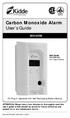 Carbon Monoxide Alarm User s Guide 900-0099 900-0099 KN-COPP-3-RC with Digital Display AC Plug-in Operated with Self Recharging Battery Backup ATTENTION: Please take a few minutes to thoroughly read this
TX-6310-01-1 Carbon Monoxide Alarm Manual
 TX-6310-01-1 Carbon Monoxide Alarm Manual Figure 1: Alarm features Green Power LED Alarm sounder Test/Hush button Attention: Please take a few minutes to thoroughly read this guide which should be saved
Carbon Monoxide Alarm User s Guide
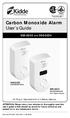 Carbon Monoxide Alarm User s Guide 900-0235 and 900-0234 SINGLE STATION CARBON MONOXIDE ALARM Carbon Monoxide Alarm Carbon Monoxide Alarm 900-0235 KN-COB-DP-LS-CA 900-0234 KN-COP-DP-LS-CA with Digital
Natural Gas Safety. What You Need to Know
 Natural Gas Safety What You Need to Know Knowledge is Safety Approximately 52% of all U.S. households use natural gas for Home heating Cooking Water heaters Gas logs Outdoor gas grills Our Local History
Smoke Alarm User s Manual
 V-MUL-007-A(A0) Smoke Alarm User s Manual Please read and save this manual PHOTOELECTRIC SMOKE ALARM MODEL: VST-S598I Class II Apparatus Photoelectric smoke alarms are generally more effective at detecting
www.coned.com Natural Gas Safety What You Need To Know
 www.coned.com Natural Gas Safety What You Need To Know We are committed to keeping our customers safe and we respond rapidly to any calls about gas leaks. We work with emergency responders to protect you.
Smoke and Carbon Monoxide Alarm
 User s Guide for Model KN-COSM-B Combination Smoke and Carbon Monoxide Alarm Battery Operated 2-LED Display Hush Peak Level Memory For questions concerning your Smoke and Carbon Monoxide Alarm, please
READ ALL INSTRUCTIONS
 Visit Us on the Web! www.smokealarms.com MODEL SS-770/SS-771 SMOKE & FIRE ALARM READ ALL INSTRUCTIONS The smoke alarm has a recommended service life of at least 10 years under normal conditions. The smoke
el-720 Carbon Dioxide Gas Leak Detector User s Guide
 el-720 Carbon Dioxide Gas Leak Detector User s Guide Congratulations on the purchase of the AccuTools el-720 Carbon Dioxide Gas Leak Detector, the most technologically advanced instrument of its kind.
2087DF-BD / 2092DF-BD
 Operation & Installation Guide DF-BD / DF-BD MANUAL M-- www.firstalert.com DIGITAL WATERPROOF FIRE SAFE WITH READY-SEAL MANUAL M-- L--XZ Index / Overview of Your Safe INDEX Overview of Your Safe... Opening
User Guide for the Kidde RemoteLync. Remote Notification Device
 User Guide for the Kidde RemoteLync Remote Notification Device 120V AC 3 Color LED Indicator Voice Message System For questions concerning your device, please call our Product Support Line at 1-800-880-6788.
Owner s Manual & Safety Instructions
 Owner s Manual & Safety Instructions Save This Manual Keep this manual for the safety warnings and precautions, assembly, operating, inspection, maintenance and cleaning procedures. Write the product s
Carbon Monoxide Alarm User s Guide
 Carbon Monoxide Alarm User s Guide Models: KN-COB-DP-LS and KN-COP-DP-LS Carbon Monoxide Alarm Carbon Monoxide Alarm KN-COB-DP-LS 120V AC Plug-In 9V Battery Backup Tamper Resist Feature KN-COP-DP-LS with
SL280UHV SERIES GAS FURNACE WARNING
 2010 Lennox Industries Inc. Dallas, Texas, USA 506677 01 11/2010 Supersedes 506409 01 SL280UHV SERIES GAS FURNACE Litho U.S.A. FIRE OR EXPLOSION HAZARD. Failure to follow safety warnings exactly could
USER S MANUAL SMOKE ALARMS
 US Patent 6,377,182 Printed in Mexico M08-000-000 Q 09/03 USER S MANUAL SMOKE ALARMS AC Powered Photoelectric Smoke Alarm with Battery Back-Up and Silence Feature Model 7010B Input: 120V AC ~, 60Hz, 0.04A
INSTALLATION AND OPERATION MANUAL
 Photoelectronic Smoke Detector with Built-in Wireless Transmitter INSTALLATION AND OPERATION MANUAL 1 Model # 1008-4 What smoke detectors can do: Smoke detectors are designed to provide early warning of
543-0032-00, 943-0032-00. User s Manual
 543-0032-00, 943-0032-00 User s Manual 1 Comfort Alert Diagnostics Faster Service And Improved Accuracy The Comfort Alert diagnostics module is a breakthrough innovation for troubleshooting heat pump and
The Alberta Fire Code requires all homes in the province to have working smoke alarms.
 Your chances of dying in a home fire may be significantly reduced if a working smoke alarm is present in your home. Smoke alarms, when properly installed, tested and maintained, provide an early warning
User s Guide. Security Systems D220
 User s Guide Security Systems D220 Table of Contents About This User s Guide... 3 Introduction... 3 Security System Basics... 4 Controlled Points... 5 24-Hour Points... 6 Keypad Keys... 6 Keypad Lights...
10 YEAR LIFE SMOKE ALARM
 User Manual 10 YEAR LIFE SMOKE ALARM ST-620 Please read me as I could save your life. Please retain this user manual for future reference CONTENTS INTRODUCTION 2 ALARM SMART SILENCE 11 AUTOMATIC POWER
USER S MANUAL SMOKE ALARMS
 USER S MANUAL SMOKE ALARMS AC Powered Photoelectric Smoke Alarm with Battery Back-Up and Silence Feature Model 7010B Input: 120V AC ~, 60Hz, 0.04A AC Powered Photoelectric Smoke Alarm with Silence Feature
Carbon Monoxide (CO) Detection PRODUCTS. Accessories Conventional Detectors
 Carbon Monoxide (CO) Detection PRODUCTS Accessories Conventional Detectors 2 Complete CO Detection The system-connected CO1224T and CO1224TR CO detectors with RealTest provide early warning by using reliable
System-Connected Carbon Monoxide Detectors
 A P P L I C A T I O N S G U I D E System-Connected Carbon Monoxide Detectors S Y S T E M S E N S O R System-Connected Carbon Monoxide Detectors Contents Introduction...2 Section 1: Standards That Apply...2
527 CMR: BOARD OF FIRE PREVENTION REGULATIONS
 527 CMR 31.00: CARBON MONOXIDE ALARMS Section 31.01: Purpose and Scope 31.02: Definitions 31.03: General Installation Provisions 31.04: Specific Installation Provisions 31.05: Carbon Monoxide Protection:
Nest Protect (Wired 120V ~ 60Hz) Detects smoke and carbon monoxide (CO) User s Guide
 Nest Protect (Wired 120V ~ 60Hz) Detects smoke and carbon monoxide (CO) User s Guide ATTENTION: Please read carefully and save this user s guide in a safe place. 1 TABLE OF CONTENTS... Meet your Nest Protect.
Visit Us on the Web! www.smokealarms.com MODEL USI-1122L LONG LIFE* LITHIUM POWERCELL SMOKE & FIRE ALARM WITH SILENCE CONTROL
 Visit Us on the Web! www.smokealarms.com MODEL USI-1122L LONG LIFE* LITHIUM POWERCELL SMOKE & FIRE ALARM WITH SILENCE CONTROL READ ALL INSTRUCTIONS The smoke alarm has a recommended service life of at
ANSI/BPI-1200-S-2015:
 Guidelines for Home Energy Professionals Project Standard Work Specifications (SWS) Update to Align SWS with the Combustion Appliance Section of ANSI/BPI-1200-S-2015: Standard Practice for Basic Analysis
Fire Facts Smoke Alarms
 Fire Facts Smoke Alarms Your chances of dying in a home fire may be reduced by 50 per cent if a working smoke alarm is present in your home. Smoke alarms, when properly installed, tested and maintained,
USER S MANUAL Smoke Alarms
 USER S MANUAL Smoke Alarms AC Powered Ionization Smoke Alarm with Silence and Latching Features Model 90 Input: 0V AC ~, 60 Hz, 0.0A AC Powered Ionization Smoke Alarm with Battery Back-up, Silence and
MODEL MI3050S. UNIVERSAL SMOKE SENSING TECHNOLOGY 2-in-1 SMOKE & FIRE ALARM WITH 10 YEAR PERMANENT POWER SEALED BATTERY
 Conforms to UL Std. 217 MODEL MI3050S Single Station Smoke Alarm UNIVERSAL SMOKE SENSING TECHNOLOGY 2-in-1 SMOKE & FIRE ALARM WITH 10 YEAR PERMANENT POWER SEALED BATTERY READ ALL INSTRUCTIONS THANK YOU
SMOKE ALARM MAINTENANCE PROGRAM
 SMOKE ALARM MAINTENANCE PROGRAM The intent of this program is for owners who normally do not get in to their rental units on an annual basis to make sure the smoke alarms are properly maintained. By having
CO-220 Carbon Monoxide Meter
 Page 1 CO-220 Carbon Monoxide Meter Instruction Sheet Introduction The CO-220 Carbon Monoxide Meter (hereafter referred to as the Meter ) detects the presence of carbon monoxide (CO) and measures concentrations
CO-9B User Manual CARBON MONOXIDE POISONOUS GAS ALARM
 CO-9B User Manual CARBON MONOXIDE POISONOUS GAS ALARM CONTENTS INTRODUCTION FEATURES CARBON MONOXIDE AND HOW IT CAN AFFECT YOU AND YOUR FAMILY WHERE TO INSTALL YOUR DETECTOR 2 2 3 5 WHAT TO DO IN THE EVENT
GEORGIA DEPARTMENT OF COMMUNITY AFFAIRS (DCA) STATE CODES ADVISORY COMMITTEE (SCAC) CARBON MONOXIDE DETECTORS FOR SCHOOLS TASK FORCE
 Important Discussion Points about Carbon Monoxide and Schools 1. What happened to make carbon monoxide in schools an important issue for the State? On December 3, 2012, approximately 40 students and staff
WFS-627 User Manual. Wi-Safe Strobe Alert System Part of the Wi-Safe Home Safety System
 WFS-627 User Manual Wi-Safe Strobe Alert System Part of the Wi-Safe Home Safety System INTRODUCTION 2 OVERVIEW 3 DEFINITIONS 4 APPLICATION 5 POSITIONING 5 LIMITATIONS 6 HOW TO INSTALL YOUR STROBE ALERT
Weather Radio Alarm Clock
 1200093 User s Guide Weather Radio Alarm Clock Thank you for purchasing your Weather Radio Alarm Clock from RadioShack. Please read this user s guide before installing, setting up, and using your new weather
Fire Damage. To Help Prevent. a Guide
 a Guide To Help Prevent Fire Damage Fire damage in your home can be costly and emotionally devastating. The damage caused by the flames and smoke can destroy a lifetime of memories in a matter of minutes.
MUNICIPALITY OF KAZABAZUA. SMOKE DETECTORS By-Law number 07-2012
 MUNICIPALITY OF KAZABAZUA SMOKE DETECTORS By-Law number 07-2012 Notice of motion : August 7, 2012 Publication : September 9, 2012 Adoption : November 15, 2012 Effective November 15, 2012 Resolution: 2012-09-234
ICC CODE CORNER 2012 IFC Code & Commentary
 SECTION 908 EMERGENCY ALARM SYSTEMS 908.1 Group H occupancies. Emergency alarms for the detection and notification of an emergency condition in Group H occupancies shall be provided as required in Chapter
USER INSTRUCTIONS CONTENTS
 CONTENTS Full Set [1]...2 Part Set [2]...2 Night Set [3]...3 Unsetting...3 Unsetting after or during an alarm...3 Testing the system [5]...3 Isolating zones [6]...4 Reprogramming codes [8]...4 Chime facility
Wireless Indoor/ Outdoor Thermometer
 Wireless Indoor/ Outdoor Thermometer Owner s Manual Please read before using this equipment. ˆ Contents FCC Information... 3 FCC Declaration of Conformity... 5 Preparation... 5 Installing Batteries...
Upstate NY Recovery assistance information
 Upstate NY Recovery assistance information www.nationalgrid.com Emergency contact information National Grid Customer Service 1-800-642-4272 National Grid Gas Emergency: 1-800-892-2345 Federal Emergency
Carbon Monoxide and Explosive Gas Alarm User s Guide
 Carbon Monoxide and Explosive Gas Alarm User s Guide Model: KN-COEG-3 (900-0113) SINGLE STATION CARBON MONOXIDE ALARM ALSO SUITABLE FOR USE AS A RESIDENTIAL GAS DETECTOR KN-COEG-3 with Digital Display
Carbon monoxide. General information
 Carbon monoxide General information Key Points Fire Flammable gas May react violently with other substances Use fine water spray with normal fire-fighting clothing and breathing apparatus Health Toxic
Home Owners Guide HR SERIES HEAT RECOVERY VENTILATOR (HRV) Models HR100V, HR160H & HR220H RESIDENTIAL USE ONLY HR160H & HR220H
 HR SERIES HEAT RECOVERY VENTILATOR (HRV) Home Owners Guide Models HR100V, HR160H & HR220H RESIDENTIAL USE ONLY HR100V HR160H & HR220H READ AND SAVE THIS GUIDE PP0924 09/2013 ABOUT S&P S&P is the world's
Smoke Alarm User s Guide
 10Y29 For model: 10Y29 Smoke Alarm User s Guide Lithium (non-replaceable sealed in) Battery-Operated Optical Smoke Alarm with HUSH TM Control to temporarily silence nuisance alarms. Thank you for purchasing
MODEL USI-7795 SMOKE & CARBON MONOXIDE ALARM WITH SILENCE CONTROL
 MODEL USI-7795 SMOKE & CARBON MONOXIDE ALARM WITH SILENCE CONTROL READ ALL INSTRUCTIONS The smoke alarm uses an extremely small amount of a radioactive element in the ionization chamber. Do not tamper
Housing Quality Standards Inspection Checklist
 Housing Quality Standards Inspection Checklist To prevent delays, the R.T.A. must be complete and upon submission the unit must be in move in condition or an inspection will not be conducted. A Fair Housing
Guide to Massachusetts Smoke & Carbon Monoxide Requirements
 Guide to Massachusetts Smoke & Carbon Monoxide Requirements When Selling a One- or Two-Family Residence DEPARTMENT OF FIRE SERVICES Stephen D. Coan State Fire Marshal M.G.L. c 148 s. 26F - The Law Massachusetts
Passive Infrared Sensor Alarm
 49-329.fm Page 1 Wednesday, August 18, 1999 4:23 PM Cat. No. 49-329 OWNER S MANUAL Please read before using this equipment. Passive Infrared Sensor Alarm with Keychain Remote 49-329.fm Page 2 Wednesday,
SMOKE/CARBON MONOXIDE ALARM MODEL FADCQ
 2002 INVENSYS CLIMATE CONTROLS AMERICAS SMOKE/CARBON MONOXIDE ALARM MODEL FADCQ PLEASE READ AND SAVE THIS MANUAL Installer: Please leave this manual with the product 110-1050 The ionization type alarms
Owner s Guide. ca6554
 PROFESSIONAL SERIES Owner s Guide For Models: ca6554 Deluxe Vehicle Security and Remote Start System with 2 Way Confirming LCD Remote Control IMPORTANT NOTE: The operation of the Security and Convenience
Severe Weather Safety Resources to help weather the storm
 Severe Weather Safety Resources to help weather the storm Hurricanes: By the Basics What: A Hurricane is a severe weather system that brings high winds, torrential rain, storm surges, and flooding. Hurricanes
Ionisation Smoke Alarm
 0945-7204-00.qxd:_ 2009.7.31 4:25 PM Page Ionisation Smoke Alarm Manual Model Q945 Ionisation smoke alarms are designed to detect invisible particles (associated with fast flaming fires). Home fires develop
NewAir AC-10100E / AC-10100H Portable Air Conditioner Owner s Manual PLEASE READ AND SAVE THESE INSTRUCTIONS
 NewAir AC-10100E / AC-10100H Portable Air Conditioner Owner s Manual PLEASE READ AND SAVE THESE INSTRUCTIONS ELECTRICAL SAFETY This appliance is for indoor use only. Always turn off the unit and unplug
IMPORTANT INSTRUCTIONS & OPERATING MANUAL. Houston 50 Inch Electric Wall Mounted Fireplace Black / White
 IMPORTANT INSTRUCTIONS & OPERATING MANUAL Houston 50 Inch Electric Wall Mounted Fireplace Black / White Model Number:MFE5050BK Model Number:MFE5050WH Read these instructions carefully before attempting
Contents. Product Code -------------------------------------------------------15. Page 1
 Contents Important Safety Instructions -------------------------------------2 BT HP01 --------------------------------------------------------------4 BT HP01 Anatomy ---------------------------------------------------5
www.ealarm.com.my P/N 5-051-371-00 Rev D
 System 236 System 236i P/N 5-051-371-00 Rev D Thank you for purchasing this C&K alarm system Your system is one of the most powerful and advanced alarm systems on the market today, designed to provide
KITCHEN AND BATH REMODELING BUILDING PERMIT REQUIREMENTS
 St. Louis County Department of Public Works Division of Code Enforcement KITCHEN AND BATH REMODELING BUILDING PERMIT REQUIREMENTS This guideline is intended to provide the homeowner/contractor with the
Combination Smoke & Carbon Monoxide Alarm
 120 V AC and 9 V Battery Backup Combination Smoke & Carbon Monoxide Alarm with Voice Alarm System, Hush, and Peak Level Memory Model KN-COSM-ICA (model KN-COSM-IBCA only) User s Guide Model KN-COSM-IBCA
SECURITY CAMERA. USER S MANUAL Model DWC-400 1 Camera Included. ADD-ON CAMERA for DWS SERIES DVR NIGHT VISION INDOOR/OUTDOOR CAMERAS
 SECURITY CAMERA ADD-ON CAMERA for DWS SERIES DVR USER S MANUAL Model DWC-400 1 Camera Included AUDIO SURVEILLANCE INDOOR/OUTDOOR CAMERAS NIGHT VISION 1 INTRODUCTION THANK YOU WELCOME Thank you for choosing
CERTIFICATE OF COMPLIANCE
 CERTIFICATE OF COMPLIANCE (Smoke Detector Inspection) Smoke detectors and carbon monoxide detectors must be in the proper locations and operational. Your house must also be properly numbered in order to
SMOKE DETECTOR INSTALLATION PROGRAM The Burlington Ordinance Perspective
 SMOKE DETECTOR INSTALLATION PROGRAM The Burlington Ordinance Perspective The National Fire Alarm Code, NFPA 72, sets the minimum requirements of performance, selection, use and location of automatic detection
Please read this owner s Manual carefully before operating the unit. - Cooling - Heating - Dehumidifying - Fan
 Please read this owner s Manual carefully before operating the unit. - Cooling - Heating - Dehumidifying - Fan TABLE OF CONTENTS INTRODUCTION 2 IMPORTANT SAFEGUARDS...2 PACKAGE CONTAINS..2 NAMES OF PARTS.3
The Only GUY To Call. Why are my utility bills so high? What can I do to lower my energy expenses?
 The Only GUY To Call May 2014 412.885.2356 Why are my utility bills so high? What can I do to lower my energy expenses? Did you know... that between 2007 and 2012, the average U.S. household spent more
Natural Gas Appliance Testing Action Guidelines (Non ESA/Low Income 5 )
 Natural Gas Appliance Testing Action Guidelines (n ESA/Low Income 5 ) The purpose of these Action Guidelines is to describe the actions participating contractors and/or inspectors should take in the event
OHIO BOARD OF BUILDING STANDARDS. Smoke Alarms and Fire Safety
 OHIO BOARD OF BUILDING STANDARDS Smoke Alarms and Fire Safety Updated January 2016 2 UNDERSTANDING THE TERMINOLOGY Detector. An initiation device suitable for connection to a circuit that has a sensor
SHELTER-IN-PLACE OR EVACUATE
 SHELTER-IN-PLACE OR EVACUATE WOULD YOU KNOW WHAT TO DO? A PREPAREDNESS GUIDE FOR THE HOME No matter where you live, your community may experience a natural or man-made disaster a tornado, floor, winter
ITC-BTTN Cellular Bluetooth Gateway. Owner s Manual 1
 ITC-BTTN Cellular Bluetooth Gateway Owner s Manual 1 2 Table of Contents Introduction...3 Package Contents...3 XLink Connections Diagram...4 Setup...5 Pairing your Bluetooth Cell Phone to the XLink...6
Smoke & Carbon Monoxide
 A Guide to the Massachusetts Smoke & Carbon Monoxide Requirements when Selling a Oneor Two-Family Residence FIRE SERVICES Department of Fire Services PO Box 1025 Stow, MA 01775 978-567-3300 www.mass.gov/dfs
Wireless Alarm System. Panic Button. User s Manual. Choice ALERT. Control all sensors, accessories and remote transmitters from one location
 Wireless Alarm System Panic Button User s Manual Choice ALERT Control all sensors, accessories and remote transmitters from one location Table of Contents Important Safeguards 4 Introduction 5 Activating
Air Conditioning Systems DOE, DOE ARRA, LIHEAP WX, RMP. Heating Systems DOE, DOE ARRA, LIHEAP WX, LIHEAP Crisis, Questar
 Air Conditioning Systems DOE, DOE ARRA, LIHEAP WX, RMP Air conditioning system replacement or repair is an approved Weatherization Measure for our climate when auditing with a SIR of 1 or higher. It is
CA 1050 Owner s Guide
 PROFESSIONAL SERIES CA 1050 Owner s Guide Vehicle Security and Keyless Entry System IMPORTANT NOTE: The operation of the Security and Convenience System as described in this manual is applicable to most
SINGLE-STATION PHOTOELECTRIC SMOKE DETECTOR SD-738/w USER S MANUAL
 SINGLE-STATION PHOTOELECTRIC SMOKE DETECTOR SD-738/w USER S MANUAL TABLE OF CONTENTS INTRODUCTION... 1 LOCATIONS TO INSTALL YOUR SMOKE DETECTOR... 1 LOCATIONS NOT TO INSTALL YOUR SMOKE DETECTORS... 2 INSTALLING
USER MANUAL WARNING! CONTENTS MODEL 1 SPECIFICATIONS READ ALL INSTRUCTIONS BEFORE PROCEEDING. Non-Programmable Single Stage Heat/Cool Thermostat
 Builder MODEL 1010 Series Non-Programmable Single Stage Heat/Cool Thermostat USER MANUAL Compatible with low voltage single stage gas, oil or electric heating or cooling systems, including single stage
Gas appliances. Get them checked Keep them safe. The problem
 Gas appliances Get them checked Keep them safe The problem Every year about 14 people die from carbon monoxide poisoning caused by gas appliances and flues which have not been properly installed or maintained.
Manual for Fire Suppression & Methane Detection System
 Manual for Fire Suppression & Methane Detection System Fogmaker North America Post address: 150 Gordon Dr Exton, PA 19341 Delivery address: 150 Gordon Dr Exton, PA 19341 Tel: 610-265-3610 Fax: 610-265-8327