
UNECE STANDARD BOVINE MEAT CARCASES AND CUTS
|
|
|
- Ashlee Maxwell
- 10 years ago
- Views:
Transcription
1 UNITED NATIONS ECONOMIC COMMISSION FOR EUROPE UNECE STANDARD BOVINE MEAT CARCASES AND CUTS 2007 EDITION United Nations New York and Geneva, 2007

2 Page 2 NOTE The Working Party on Agricultural Quality Standards The commercial quality standards of the UNECE Working Party on Agricultural Quality Standards help facilitate international trade, encourage high-quality production, improve profitability and protect consumer interests. UNECE standards are used by Governments, producers, traders, importers and exporters, and other international organizations, and cover a wide range of agricultural products, including fresh fruit and vegetables, dry and dried produce, seed potatoes, meat, cut flowers, eggs and egg products. For more information on UNECE agricultural standards, please visit our website < This present new Standard for Bovine Meat Carcases and Cuts is based on document ECE/TRADE/C/WP.7/2007/24, adopted at the sixty-third session of the Working Party. The designations employed and the presentation of the material in this publication do not imply the expression of any opinion whatsoever on the part of the United Nations Secretariat concerning the legal status of any country, territory, city or area or of its authorities, or concerning the delimitation of its frontiers or boundaries. Mention of company names or commercial products does not imply endorsement by the United Nations. All material may be freely quoted or reprinted, but acknowledgement is requested. Please contact the following address with any comments or enquiries: Agricultural Standards Unit Trade and Timber Division United Nations Economic Commission for Europe Palais des Nations Geneva 10, CH-1211, Switzerland Tel: Fax: [email protected]

3 Page 3 PREFACE One of the principal goals of the United Nations Economic Commission for Europe (UNECE) is to promote greater economic integration of its members. As one activity for achieving this goal, UNECE provides a forum for Governments to develop internationally harmonized standards that: Facilitate fair international trade and prevent technical barriers to trade. Define a common trading language for sellers and buyers. Promote a high quality, sustainable production. Create market transparency for buyers and consumers. UNECE began work on standards for perishable produce in Today, close to 100 internationally harmonized, commercial quality standards have been developed for different agricultural produce: Fresh Fruit and Vegetables, Dry and Dried Produce, Potatoes (Early, Ware and Seed), Eggs and Egg Products, Meat and Cut Flowers. Issues of commercial quality that have implications for international trade can be discussed in different specialized groups, and assistance is offered to countries that are interested in implementing UNECE standards (e.g. training workshops and seminars). For each standard it is the aim to involve all interested parties in the work (members and non-members of UNECE, international governmental and non-governmental organizations) and to come to a consensus acceptable to all. It is a sign of the quality of UNECE standards that in many cases they have served as a basis for European Union, Codex Alimentarius and OECD standards. The UNECE standards for Meat occupy a special place because of the complexity of the subject: a large number of product options can be specified by the buyer and the quality of the final product depends to a large extent on the way the meat is cut. The standards offer, for the first time, internationally agreed specifications written in a consistent, detailed and accurate manner using anatomical names to identify cutting lines. Comprehensive colour photographs and diagrams are included to facilitate practical application of the standards. The standards also define a product code allowing all relevant information to be combined in 20-digits. In developing this code, UNECE cooperated closely with GS1 International, a not-for-profit private sector organization that supports supply chain systems with globally unique identification codes and electronic communications (e.g. bar codes). The standardization of the trading language is the foundation which allows the meat industry to adopt modern data transfer methods and streamline the flow of information and product throughout the supply chain. I hope that the new edition of the UNECE Standard for Bovine Meat Carcases and Cuts will contribute substantially to the facilitation of fair international trade. Marek Belka Executive Secretary United Nations Economic Commission for Europe

4 Page 4 CONTENTS Page 1. INTRODUCTION UNECE standards for meat products Scope Application Adoption and publication history MINIMUM REQUIREMENTS PURCHASER-SPECIFIED REQUIREMENTS Additional requirements Species Product/cut Refrigeration Production history Traceability Bovine category Production system Feeding System Slaughter system Post-slaughter system Fat limitations and evaluation of fat thickness in certain cuts Fat thickness Trimming Bovine quality system Meat and fat colour and ph Weight ranging of carcases and cuts Packing, storage, and transport Description and provisions Definition of codes Labelling information to be mentioned on or fixed to the marketing units of meat Mandatory Information Additional information... 15

5 Page Provisions concerning conformity-assessment requirements UNECE CODE FOR PURCHASER REQUIREMENTS FOR BEEF Definition of the code Example CARCASES AND CUTS DESCRIPTIONS Multilingual index of products Bovine side skeletal diagram Standard bovine primal cuts flow chart Bovine meat cuts Boneless beef manufacturing bulk packs definition Standard bovine primal cuts muscle reference Lateral/medial view carcase structure Alphabetical list of muscle names Hindquarter primals Forequarter primals Meat quality standards Meat colour reference standards Fat colour reference standards Marbling...46 ANNEX I. ADDRESSES...47 ANNEX II: CODIFICATION SYSTEM Purpose of the GS1 System Use of the UNECE code in the GS1 System Application of the system in the supply chain Use of UNECE meat-cut definitions in the GDSN...50

6 Page 6 1. INTRODUCTION 1.1 UNECE standards for meat products UNECE STANDARD BOVINE MEAT - CARCASES AND CUTS The purpose of UNECE standards for meat products is to facilitate trade by recommending an international language for use between buyer and seller. The language describes meat items commonly traded internationally and defines a coding system for communication and electronic trade. As the texts will be updated regularly, meat industry members who believe that additional items are needed or that existing items are inaccurate or no longer being traded are encouraged to contact the UNECE secretariat. The text of this publication has been developed under the auspices of the UNECE Specialized Section on Standardization of Meat. It is part of a series of standards, which UNECE has developed or is planning to develop. The following table contains the species for which UNECE standards exist/or are in different stages of development and their code for use in the UNECE meat code (see chapter 4). For further information please visit the UNECE website at < Annex II contains a description of the GS1 system, which contains a specific application identifier for the implementation of the UNECE Code. Species Species code (data field 1) Bovine (Beef) 10 Bovine (Veal) 11 Porcine (Pork) 30 Ovine (Sheep) 40 Caprine (Goat) 50 Llama 60 Alpaca 61 Chicken 70 Turkey Scope This Standard recommends an international language for raw (unprocessed) beef (bovine) carcases and cuts marketed as fit for human consumption. It provides purchasers with a variety of options for meat handling, packing and conformity assessment that conform to good commercial practice for meat and

7 Page 7 meat products intended to be sold in international trade. To market beef (bovine) carcases and cuts, the appropriate legislative requirements of food standardization and veterinary control must be complied with. The standard does not attempt to prescribe those aspects, which are covered elsewhere. Throughout the standard, such provisions are left for national or international legislation, or requirements of the importing country. The standard contains references to other international agreements, standards and codes of practice that have the objective of maintaining the quality after dispatch and of providing guidance to Governments on certain aspects of food hygiene, labelling and other matters that fall outside the scope of this standard. Codex Alimentarius Commission Standards, Guidelines, and Codes of Practice should be consulted as the international reference for health and sanitation requirements. 1.3 Application Contractors are responsible for delivering products that comply with all contractual and specification requirements and are advised to set up a quality control system designed to assure compliance. For assurance that items comply with these detailed requirements, buyers may choose to use the services of an independent, unbiased third-party to ensure product compliance with a purchaser s specified options. The standard includes illustrative photographs of carcases and selected commercial parts/cuts to make it easier to understand the provisions. 1.4 Adoption and publication history Following the recommendation of the Specialized Section, the Working Party on Standardization of Perishable Produce and Quality Development (now: Working Party on Agricultural Quality Standards) adopted the text for the first edition of this standard at its 56 th session (TRADE/WP.7/2000/11). The first edition of the standard was published on behalf of UNECE by AUS-MEAT. In the second edition (agreed by the Specialized Section in May 2003 see TRADE/WP.7/GE.11/2003/12) a number of editorial changes were made. The standard is now presented in five Chapters including the former General Requirements, Bovine Specific Requirements and Carcases and Cuts Descriptions in order to align it with the other standards. This alignment included also a reordering of the data fields in the bovine code and minor corrections to the carcases and cuts descriptions. The document ECE/TRADE/C/WP.7/2007/24 collects amendments and editorial changes to the second edition of the standard. UNECE Standards for meat undergo a complete review three years after publication. Following the review, new editions are published as necessary. Changes requiring immediate attention are published on the UNECE website at: < 2. MINIMUM REQUIREMENTS All meat must originate from animals slaughtered in establishments regularly operated under the applicable regulations pertaining to food safety and inspection. Carcases/cuts must be:

8 Page 8 Intact, taking into account the presentation. Free from visible blood clots, or bone dust. Free from any visible foreign matter (e.g. dirt, wood, metal particles 1 ). Free of offensive odours. Free of obtrusive bloodstains. Free of unspecified protruding or broken bones. Free of contusions having a material impact on the product. Free from freezer-burn 2. Free of spinal cord (except for whole unsplit carcases) 3. Cutting, trimming, and boning of cuts shall be done with sufficient care to maintain cut integrity and identity, and avoid scores in the lean. Ragged edges shall be removed close to the lean surfaces. Except for cuts that are separated through natural seams, all cross-sectional surfaces shall form approximate right angles with the skin surface. Minimal amounts of lean, fat, or bone may be included on a cut from an adjacent cut. For boneless cuts, all bones, cartilage, and visible surface lymph glands shall be removed. 3. PURCHASER-SPECIFIED REQUIREMENTS The following subsections define the requirements that can be specified by the purchaser together with the codes to be used in the UNECE Bovine Code (see chapter 4). 1 2 When specified by the purchaser, meat items will be subject to metal particle detection. Freezer-burn is localized or widespread areas of irreversible surface dehydration indicated, in part or all, by changes from original colour (usually paler), and/or tactile properties (dry, spongy). 3 Removal of other high risk material can be specified under Post-slaughter system.

9 Page Additional requirements Additional purchaser specified requirements, which are either not accounted for in the code (e.g. if code 9 other is used) or that provide additional clarification on the product or packing description shall be agreed between buyer and seller and be documented appropriately. 3.2 Species The code for bovine in data field 1 as defined in section 1.1 is Product/cut The four-digit product code in data field 2 is defined in chapter Refrigeration Meat may be presented chilled, frozen or deep-frozen. Depending on the refrigeration method used, tolerances for product weight to be agreed between buyer and seller. Ambient temperatures should be such throughout the supply chain to ensure uniform internal product temperatures as follows: Refrigeration code Category Description (data field 4) 0 Not specified 1 Chilled Internal product temperature maintained at not less than 1.5 C or more than +7 C at any time following the post-slaughter chilling process 2 Frozen Internal product temperature maintained at not exceeding 12 C at any time after freezing 3 Deep-frozen Internal product temperature maintained at not exceeding 18 C at any time after freezing 4 8 Codes not used 9 Other 3.5 Production history Traceability The requirements concerning production history that may be specified by the purchaser require traceability systems to be in place. Traceability requires a verifiable method of identification of bovine animals, carcases, cartons and cuts at all stages of production. Traceability records must be able to substantiate the claims being made and the conformity of the procedures must be certified in accordance with Provisions concerning conformity assessment requirements in section Bovine category Bovine category code Category Description (data field 5) 0 Not specified 1 Intact male Evidence of sex traits, greater than 24 months

10 Page 10 Bovine category code Category Description (data field 5) 2 Young intact male Less than 24 months 3 Steer Young castrate 4 Heifer Young female, uncalved 5 Steer and/or Heifer Young castrate or young female, uncalved 6 Cow Mature female 7 Young bovine 6-12 months 8 Code not used 9 Other Production system The purchaser may specify a production system. In any case the production has to be in conformity with the regulations in force in the importing country. If no such regulation exists, the regulation of the exporting country shall be used. Production system code Category Description (data field 6) 0 Not specified 1 Intensive Production methods that include restricted stocking, housing and feeding regimes developed to promote rapid growth 2 Extensive Production methods that include relatively unrestricted access to natural forage for the majority of the animals lives 3 Organic Production methods that are conform to the legislation of the importing country concerning organic production 4-8 Codes not used 9 Other Can be used to describe any other production system agreed between buyer and seller Feeding System The purchaser may specify a feeding system. In any case the feeding has to be in conformity with the regulations in force in the importing country. If no such regulation exists, the feeding system shall be agreed between buyer and seller. Feeding system Category Description code (data field 7a) 0 Not specified 1 Grain fed Grain is the predominant component of the diet 2 Forage fed Forage is the predominant component of the diet with some grain supplement 3 Exclusively forage fed Forage is the only component of the diet 4-8 Codes not used 9 Other Can be used to describe any other feeding

11 Feeding system code (data field 7a) Slaughter system Category Bovine Meat Carcases and Cuts Page 11 Description system agreed between buyer and seller Slaughter system code Category Description (data field 8) 0 Not specified 1 Conventional Stunning prior to bleeding 2 Kosher Appropriate ritual slaughter procedures used 3 Halal Appropriate ritual slaughter procedures used 4-8 Codes not used 9 Other Any other authorized method of slaughter must be agreed between buyer and seller Post-slaughter system Post-slaughter processing codes (data field 9) Category Description 0 Not specified 1 Specified Post-slaughter system specified as agreed between buyer and seller 2 9 Codes not used NOTE 1: Removal of high risk material: Individual market requirements will have specific regulations governing the removal of the spinal cord. Regulations applicable to spinal cord removal will specify at what stage the carcase and/or cut must have the spinal cord removed. If required, there must be total removal. NOTE 2: The following list describes some common post-slaughter processes that may be agreed between buyer and seller. These requirements are not included in the bovine specific coding. Dressing specification Electrical stimulation Method of carcase suspension Neck stringing Chilling regimes Maturation process 3.6 Fat limitations and evaluation of fat thickness in certain cuts Fat thickness The purchaser can specify the maximum fat thickness of carcases, sides and cuts. Allowable fat

12 Page 12 limitations are as follows: Fat thickness code Category (data field 10) 0 Not specified 1 Peeled, denuded, surface membrane removed 2 Peeled, denuded 3 Practically free (75% lean/seam surface removed) 4 3 mm maximum fat thickness or as specified 5 6 mm maximum fat thickness or as specified 6 13 mm maximum fat thickness or as specified 7 25 mm maximum fat thickness or as specified 8 Chemical lean specified 9 Other Trimming Trimming of external fat shall be accomplished by smooth removal along the contour of underlying muscle surfaces. Bevelled fat edges alone do not substitute for complete trimming of external surfaces when required. Fat thickness requirements may apply to surface fat (subcutaneous and / or exterior fat in relation to the item), and seam (intermuscular) fat as specified by the purchaser. Two definitions are used to describe fat trim limitations: - Maximum fat thickness at any one point. Evaluated by visually determining the area of a cut that has the greatest fat depth, and measuring the thickness of the fat at that point. - Average (mean) fat thickness. Evaluated by visually determining and taking multiple measurements of the fat depth of areas where surface fat is evident only. Average fat depth is determined by computing the mean depth in those areas. Actual measurements of fat thickness (depth) are made on the edges of cuts by probing or scoring the overlying surface fat in a manner that reveals the actual thickness and accounts for any natural depression or seam which could affect the measurement. When a natural depression occurs in a muscle, only the fat above the portion of the depression, which is more than 19 mm (0.75 inch) in width is considered (known as bridging; see figure 1). When a seam of fat occurs between adjacent muscles, only the fat above the level of the involved muscles is measured (known as planing; see figure 1). Figure 1 BRIDGING PLANING 19MM (3/4 ) WIDTH

13 Page 13 However, when fat limitations for Peeled/Denuded 4 or Peeled/Denuded, Surface Membrane Removed 5 are specified, the bridging method shall be used for evaluating fat above a natural depression in a muscle and fat occurring between adjacent muscles. 3.7 Bovine quality system Bovine quality Category Description system code (data field 11) 0 Not specified 1 Official standards Quality classifications based on official standards at the exporting country 2 Company standards Quality classifications based on sellers standards 3 Industry standards Quality classifications based on industry-wide standards 4-8 Codes not used 9 Other Other quality classifications agreed between buyer and seller 3.8 Meat and fat colour and ph Normally, lean meat and fat, depending on the specific species, demonstrates a characteristic colour and ph. Any specific requirements regarding colour and ph need to be agreed between buyer and seller and are not provided for in the coding system. 3.9 Weight ranging of carcases and cuts Weight range code Category (data field 12) 0 Not specified 1 Specified Range required 2-9 Codes not used Description 3.10 Packing, storage, and transport Description and provisions The primary packaging is the primary covering of a product and must be of food grade materials. The 4 Peeled/Denuded The term Peeled implies surface fat and muscle separation through natural seams so that the resulting cut s seamed surface ( silver or blue tissue ) is exposed with remaining flake fat not to exceed 2.5cm (1.0 inch) in the longest dimension and/or 3mm (0.125 inch) in depth at any point. The term denuded implies all surface fat is removed so that the resulting cuts seamed surface ( silver or blue tissue ) is exposed with remaining flake fat not to exceed 2.5cm (1.0 inch) in any dimension and/or 3mm (0.125 inch) in depth at any point. 5 Peeled/Denuded, Surface Membrane Removed When the surface membrane ( silver or blue tissue ) is required to be removed (skinned), the resulting cut surface shall expose at least 90 percent lean with remaining flake fat not to exceed 3mm (0.125 inch) in depth.

14 Page 14 secondary packaging contains products packaged in their primary packaging. During the storage and transport, the meat must be packaged to the following minimum requirements: Carcases and quarters - Chilled with or without packaging - Frozen / deep-frozen packed to protect the products Cuts - chilled - Individually wrapped (I.W.) - Bulk packaged (plastic or wax-lined container) - Vacuum-packed (VAC) - Modified atmosphere packaging (MAP) - Other Cuts - frozen / deep frozen - Individually wrapped (I.W.) - Bulk packaged (plastic or wax-lined container) - Vacuum-packed (VAC) - Other The conditions of storage before dispatch and the equipment used for transportation shall be appropriate to the physical and in particular the thermal condition of the meat (chilled, chilled in a modified atmosphere, frozen, or deep-frozen) and shall be in accordance with the requirements of the importing country. Attention is drawn to the provisions of the UNECE Agreement on the International Carriage of Perishable Foodstuffs and on the Special Equipment to be Used for Such Carriage (ATP) (ECE/TRANS/165) Definition of codes Packing code Category (data field 13) 0 Not specified 1 Carcases, half carcases and quarters without packaging 2 Carcases, half carcases and quarters with packaging 3 Cuts individually wrapped (I.W.) 4 Cuts bulk packaged (plastic or wax-lined container) 5 Cuts vacuum-packed (VAC) 6 Cuts modified atmosphere packaging (MAP) 7 8 Codes not used 9 Other 3.11 Labelling information to be mentioned on or fixed to the marketing units of meat Mandatory Information Without prejudice to national requirements of the importing countries, the following table contains information that must be listed on product labels, as designated by an X, for unpackaged carcases, quarters, and cuts, and for packaged or packed meat items.

15 Page 15 Labelling information Unpackaged Packaged carcases, quarters packed meat and cuts Health stamp X X Slaughter number or batch number X X Slaughter date X Packaging date X Name of the product X Use-by information as required by each country X Storage methods: chilled, frozen, deep-frozen X Storage conditions X Details of packer or retailer X 6 Quantity (number of pieces) X 6 Net weight X 6 or Additional information Additional information may be listed on product labels as required by the importing country s legislation, or at the buyer s request or as chosen by the processor. If listed, such product claims must be verifiable (see also 3.5.1). Examples of such product claims include the following: Country of birth Country(ies) of raising Country of slaughter Country(ies) of processing/cutting Country(ies) of packing Country of origin: In this standard the term country of origin is reserved to indicate that birth, raising, slaughter, processing/cutting and packing have taken place in the same country. Production and processing systems Characteristics of the livestock, production and feeding systems Slaughtering procedures Processing/packaging date Quality/grade/classification ph, lean and fat colour 3.12 Provisions concerning conformity-assessment requirements The purchaser may request third-party conformity assessment of the product s quality/grade/classification, purchaser-specified options of the Standard, and/or animal identification. Individual conformity assessments or combinations may be selected as follows: Quality/grade/classification conformity assessment (quality): a third party examines and certifies that the product meets the quality level requested. The name of the third-party certifying authority and quality grade standard to be used must be designated as noted in This information can also be provided in accompanying documentation.

16 Page 16 Trade standard conformity assessment (trade standard): a third party examines and certifies that the product meets the purchaser-specified options as specified in this trade standard, except for quality level. The name of the third-party certifying authority must be designated as noted in 3.1. Optionally, the purchaser may indicate specific purchaser-specified options to be certified after the name of the thirdparty certifying authority. Bovine or batch identification conformity assessment (bovine/batch ID): a third party certifies that the product meets specified requirements. The name of the third-party certifying authority and the requirements must be designated as noted in 3.1. Conformity assessment Category code (data field 14) 0 Not specified 1 Quality/grade/classification (quality) conformity assessment 2 Trade standard conformity assessment 3 Bovine/batch identification (bovine/batch ID) conformity assessment 4 Quality and trade standard conformity assessment 5 Quality and bovine/batch ID conformity assessment 6 Trade standard and bovine/batch ID conformity assessment 7 Quality, trade standard, and bovine/batch ID conformity assessment 8 Code not used 9 Other 4. UNECE CODE FOR PURCHASER REQUIREMENTS FOR BEEF 4.1 Definition of the code The UNECE Code for Purchaser Requirements for Beef has 14 fields and 20 digits (3 digits unused) and is a combination of the codes defined in chapters 3 and 5. Annex II contains a description of the GS1 system, which contains a specific application identifier for the implementation of the UNECE Code. Field no. Name Section Code Range 1 Species Product/cut Field not used Refrigeration Category Production system a Feeding system b Field not used Slaughter system Post-slaughter system Fat thickness Quality

17 Page 17 Field no. Name Section Code Range 12 Weight range Packing Conformity assessment Example The following example describes a chilled, vacuum-packed, brisket that was trimmed to 3 mm max fat thickness from a steer or heifer raised in an organic production system, forage fed and slaughtered conventionally. This item has the following code: Field No. Name Requirement Value 1 Species Beef 10 2 Product/cut Brisket Field not used 00 4 Refrigeration Chilled 1 5 Category Steer and/or heifer 5 6 Production system Organic 3 7a Feeding system Forage fed 2 7b Field not used 0 8 Slaughter system Conventional 1 9 Post-slaughter system Not specified 0 10 Fat thickness 3 mm maximum fat thickness 4 11 Quality Not specified 0 12 Weight range Not specified 0 13 Packing Cuts - vacuum-packed (VAC) 5 14 Conformity assessment Not specified 0

18 Page CARCASES AND CUTS DESCRIPTIONS 5.1 Multilingual index of products English Item P a g French Russian Spanish Chinese e Bone-in Avec os Кости Con hueso 带 骨 牛 肉 Brisket 1643 Poitrine sans plat de Челышко Pecho 胸 肉 Brisket point end (Bone-in) Brisket navel end (Bone-in) Brisket point (sternum) Brisket rib plate côtes Gros bout de poitrine Край челышка (грудина) 1673 Poitrine Передняя часть говяжей грудинки Punta de pecho (Con hueso) Punta de pecho Asado ventral 前 胸 肉 胸 肋 肉 Butt Cuisse entière Оковалок Rueda 臀 腿 肉 1503 Butt - shankoff 1510 Cuisse sans jarret Оковалок без Rueda sin garrón 去 腱 臀 腿 肉 голяшки Butt and rump 1502 Cuisse et Rumsteck Оковалок и Rueda con cuadril 臀 部 肉 кострец Butt square 1520 Cuisse coupe droite Оковалок Rueda corte 方 切 臀 腿 肉 cut прямоу-гольной разделки cuadrado Carcase 1001 Carcasse entière Цельная туша Canal 胴 体 Chuck roll long cut (Bone-in) Chuck - Aguja 方 切 肩 肉 square cut 1617 Basse-côtes Лопаточная часть прямоугольной разделки Full Rib Set 1599 Forequarter 1063 Quartier avant droit Передняя четвертина Forequarter and flank (pistola forequarter) Forequarter / Hindquarter shin shank 1050 Quartier avant CAPA Передняя четвер-тина и пашина (Пистолетный отруб передней четвертины) 1680 Jarret avant / Jarret Рулька-Голяшка arrière передней/задней Cuarto delantero Cuarto delantero con vacío Brazuelo/garrón 前 四 分 体 четвертины Hindquarter 1010 Quartier arrière droit Задняя Cuarto trasero четвертина Loin (bone-in) 1525 Neck 1630 Collier Шейная часть Cogote 颈 肉 枪 形 前 四 分 体 前 / 后 腱 子 肉 后 四 分 体 Pistola 1020 Quartier arrière pistola Пистолетный Pistola 枪 形 后 四 分 体

19 Page 19 English Item P a g French Russian Spanish Chinese e hindquarter отруб задней четвертины Ribs 1597 Ribs-prepared 1604 Milieu de train de côtes Реберная часть Espinazo 脊 排 подготовленная preparado Rump and loin 1540 Rumsteck et aloyau Кострец и Филей Espinazo con 臀 腰 部 肉 cuadril Short ribs 1694 Plat de côtes Реберный край Asado corto 肋 排 грудинки (Porción de asado) Shortloin 1550 Faux-filet Короткий филей Espinazo trasero 腰 脊 肉 Shoulder and 1626 foreleg Side 1000 Demi-carcasse Полутуша Media canal 半 胴 体 Spare ribs 1695 Plat de côtes Ребра без Costillar 仔 排 поверх-ностного мяса Boneless Sans Os Без костей Sin hueso 剔 骨 牛 肉 Blade (clod) 2300 Macreuse à bifteck + paleron Лопатка (мякоть лопаточной части) Paleta 肩 胛 肉 Blade bolar 2302 Boule de macreuse Основание Centro de carnaza 保 乐 肩 肉 лопатки de paleta Blade oyster 2303 Paleron Нежная мякоть Marucha 牡 蛎 肉 лопатки Blade 2304 Dessus de palette Подрезанная Paleta sin tapa 肩 胛 内 肉 undercut лопатка Bottom sirloin 2133 butt, ball tip Brisket 2323 Poitrine sans os Челышко Pecho 胸 肉 Brisket point 2330 end (Boneless) 2333 Brisket navel end (Boneless) Brisket deckle 2358 Morceau de poitrine Челышко без Pecho sin tapa 精 修 胸 肉 off sans os épluché декеля Brisket navel 2473 Flanchet / tendron sans Завиток Falda 后 胸 肉 plate os Brisket point 2353 Gros bout de poitrine Край челышка Pecho corto sin 精 修 前 胸 肉 end deckle off sans os épluché без декеля tapa Butt set 2483 Ensemble cuisse : T de Набор отрубов Cortes de la rueda 臀 腿 肉 系 列 T, semelle et TG оковалка Chuck crest 2278 Bosse du cou Выступ лопаточной Giba 上 脑 盖 мякоти Chuck eye roll 2268 Morceau de basse-côte Рулет изглазка Aguja sin tapa 精 修 上 脑 sans os ло-паточной мякоти Chuck roll 2275 Basse-côte sans os Рулет из лопаточной мякоти Aguja 上 脑

20 Page 20 English Item Chuck eye 2264 Chuck roll long cut P a g e French Russian Spanish Chinese 2289 Collier basse-côte sans Рулет из Aguja larga 长 切 上 脑 os лопаточ-ной части длинновырезанный Chuck tender 2310 Jumeau à bifteck Мякоть передка Chingolo 嫩 肩 肉 Cube roll (rib 2240 Noix d entrecôte Рулет из Bife ancho sin 精 修 眼 肉 eye roll) спинной мякоти tapa (Рулет из мясистой части спины) Cutaneus 2196 Peaucler du tronc Поверхностная Matambre 皮 肌 trunci (rose) фасция (розовая) Eye of rump 2093 Coeur de rumsteck Глазок костреца Corazón de 臀 腰 肉 心 cuadril Eye round 2040 Rond de gîte noix Глазок бедра Peceto 小 米 龙 Flank steak 2210 Bavette de flanchet Порционный Bife de vacio 牛 腩 排 (F 肉 ) кусок пашинки Shin shank 2360 Jarret avant / jarret Рулька/Голяшка Brazuelo/Garrón 前 后 腱 子 肉 arrière sans os передней/задней четвертины Heel muscle 2364 Nerveux de gîte noix Пяточная мышца Tortuguita 蹄 肉 Inside 2010 Tende de tranche Внутренняя Nalga de adentro 臀 肉 часть бедра Inside cap 2012 Dessus de tranche Верх внутренней Tapa de nalga 臀 肉 盖 части Inside cap 2011 Tende de tranche sans Внутренняя Nalga de adentro 去 盖 臀 肉 off dessus de tranche Inside meat 2035 Tende de tranche sans dessus de tranche PAD часть без верха Мясо внутренней части Inside skirt 2205 Fausse bavette Внутренняя диафрагма sin tapa Nalga de adentro sin tapa al rojo Entraña interna (Falsa entraña) 精 修 臀 肉 内 裙 肉 Internal flank 2203 Bavette d aloyau Внутренняя Bife grande de 内 腹 肉 plate часть пашины vacío (плоская часть) Knuckle 2070 Tranche grasse Огузок Bola de lomo 膝 圆 Loin 2146 (boneless) Neck 2280 Collier sans os Шейная часть Cogote 颈 肉 Outside 2030 Semelle sans nerveux Наружная часть Nalga de afuera 米 龙 Outside flat 2050 Gîte noix Плоский отруб Cuadrada 大 米 龙 наружной части Outside meat 2033 Gîte noix et rond de gîte Мясо наружной Nalga de afuera al 米 龙 肉 PAD части rojo Pectoral meat 2329 Rump 2090 Rumsteck Кострец Cuadril con colita 臀 腰 肉

21 Page 21 English Item P a g French Russian Spanish Chinese e Rump cap 2091 Aiguillette de rumsteck Верх костреца Tapa de cuadril 臀 腰 肉 盖 (Picaña) Rib eye cap 2229 meat Bottom sirloin 2081 butt 2020 Semelle entière Ссек Nalga de afuera 粗 米 龙 Silverside con tortuguita Spencer roll 2230 Entrecôte sans os avec Рулет «Спенсер» Bife ancho 眼 肉 dessus de côte Striploin 2140 Faux-filet Филейный край Bife angosto 外 脊 ( 西 冷 ) Shoulder tender 2306 Tenderloin 2150 Filet avec chaînette Вырезка Lomo 里 脊 ( 牛 柳 ) Tenderloin side strap off 2160 Filet sans chaînette Вырезка из малой поясничной мышцы Толстая часть Thick flank 2060 Tranche grasse + aiguillette baronne Thick skirt (hanging tender) пашины 2180 Onglet Толстая диафраг-ма (мясистая часть диафрагмы) Thin flank 2200 Bavettes Тонкая часть пашины Thin skirt 2190 Hampe Тонкая (outside skirt) диафрагма (наружная) Top sirloin 2120 Rumsteck et partie Оковалок (top butt) d aiguillette baronne (верхняя часть) Tri-tip 2131 Partie d aiguillette Тройная baronne верхушка Manufacturing Minerai de boeuf Упаковка bulk packs навалом 5.2 Bovine side skeletal diagram Lomo sin cadena Bola de lomo con colita Entraña gruesa Vacio Entraña fina Cuadril Colita de cuadril Carne sin hueso en bloque [Picture: OTHERS: skel_col but text and lines and gland locations need to be added] 5.3 Standard bovine primal cuts flow chart 修 清 里 脊 粗 膝 圆 厚 裙 肉 腹 肉 薄 裙 肉 上 臀 腰 肉 下 臀 腰 肉 加 工 牛 肉 [Picture: MEATCUTS b-carcase1, b-carcase2 and assorted meat cuts on white background] 5.4 Bovine meat cuts SIDE 1000
22 Page 22 The carcase is split into sides down the length dividing the spinal column. Diaphragm: retained or removed. Kidney retained. Kidney fats and channel fats: retained, partial or completely removed. Standard carcase trim to be defined. [Picture B-carcase 1] NOTE: Item number 1001 for the whole carcase. HINDQUARTER 1010 Hindquarter is prepared from a side (1000) by the separation of the hindquarter and forequarter by a cut along the specified rib, at right angles to the vertebral column through to the ventral portion of the flank. Rib number required (0 to 10). Diaphragm retained or removed. Kidney retained or removed. Kidney/channel fat retained or removed. [Picture B1010] PISTOLA HINDQUARTER 1020 Pistola hindquarter is prepared from a hindquarter (1010) by the removal of the thin flank (2200), lateral portion ribs and portion of the navel end brisket. A cut is made commencing at the superficial inguinal lymph node separating the M. rectus abdominus and following the contour of the hip, running parallel to the bodies of the vertebrae approximately 50mm from the M. longissimus dorsi (eye muscle) to the specified rib. Rib number required (1 to 10). Diaphragm retained or removed. Kidney retained or removed. Kidney / channel retained or removed. Specified rib length from eye muscle. Flank steak, inside skirt and internal flank plate retained. NOTE: Pistola hindquarter is frequently prepared from a side (1000). [Picture B1020] BUTT AND RUMP 1502 Butt and rump is prepared from a hindquarter (1010) with the removal of the tenderloin (2150) in one piece from the ventral surface of the lumbar vertebrae and the lateral surface of the ilium. The loin is removed by a cut at the junction of the lumbar and sacral vertebrae at a point cranial to the tuber coxae to
23 Page 23 the ventral portion of the flank. [Picture U1502] BUTT 1500 Butt is prepared from a hindquarter (1010) by a cut commencing at the subiliac lymph node passing just cranial of the hip joint to the ischia lymph node. Superficial inguinal and subiliac lymph node retained or removed. Portion of aitch bone and overlying fibrous tissue retained or removed. Tri-tip (2131) removed. [Picture U1500] BUTT 1503 Butt is prepared from a hindquarter (1010) by a straight cut at the cranial end beginning at the junction of the last sacral and first coccygeal vertebrae, exposing the ball of the femur without severing the protuberance. No more than two vertebrae shall remain on the butt. Superficial inguinal and subiliac lymph node retained or removed. Portion of aitch bone and overlying fibrous tissue retained or removed. [Picture U1503] BUTT - SHANK-OFF 1510 Butt shank off is prepared from a butt ( ) by the removal of the tibia (at the stifle joint), the tarsal bone (excluding the calcaneal tuber) and the extensor group of muscles along the seam, leaving the M. gastrocnemius (heel muscle) in situ. Superficial inguinal and subiliac lymph node retained or removed. [Picture U1510] BUTT SQUARE CUT 1520 Butt square cut is prepared from ( ) by a cut through the stifle joint, parallel to the base, removing the tibia, tarsal bones and surrounding meat. [Picture U1520] RUMP AND LOIN 1540 Rump and loin is prepared from a hindquarter (1010) by removing the butt (1500). The thin flank (2200) is removed at a point cranial to the tuber coxae and approximately 75mm from M. longissimus dorsi (eye muscle) and running parallel to the body of the vertebrae to the specified rib.
24 Page 24 Rib number required (0 to 6 ribs). Distance from eye muscle. Diaphragm retained or removed. Kidney and kidney fat retained or removed. NOTE: This cut can also be prepared from a pistola hindquarter (1020). [Picture U1540] LOIN (BONE-IN) 1525 Loin is prepared from a Pistola Hindquarter (1020) by the removal of the Tenderloin (2150). The Loin is removed from the Butt and Rump (1502) by a cut at the junction of the lumbar and sacral vertebrae. Rib number required. Scapular cartilage retained or removed. [Picture U1525] SHORTLOIN 1550 Shortloin is prepared from a hindquarter (1010) by a straight cut at the junction of the lumbar and sacral vertebrae to a point cranial to the tuber coxae to the ventral portion of the flank. The thin flank (2200) is removed at a point cranial to the tuber coxae and approximately 50mm to 75mm from M. longissimus dorsi (eye muscle) and running parallel to the body of the vertebrae to the specified rib. Rib number required (0 to 3 ribs). Distance from eye muscle. Diaphragm retained or removed. Kidney retained or removed. Kidney fat retained or removed. [Picture U1552] FOREQUARTER 1063 Forequarter is prepared from a side (1000) by the separation of the forequarter and hindquarter (1010) by a cut along the specified rib and at right angles to the vertebral column through to the ventral portion of the flank. Rib number required (5 to 13 ribs). Diaphragm retained or removed. [Picture U1060]
25 Page 25 FOREQUARTER AND FLANK 1050 (PISTOLA FOREQUARTER) Forequarter and flank is prepared from a side (1000) and consists of a forequarter cut to the specified rib after the removal of a hindquarter pistola trim (1020) from a side. The 13 rib brisket (1643) / full flank remains attached to the forequarter. Forequarter rib numbers (5 to 9 ribs). Diaphragm retained or removed. Rib length distance from eye muscle. The Flank portion removed along the contour of the 13 th rib. [Picture U1050] BRISKET 1643 Brisket is prepared from a 13-rib forequarter (1063) by a straight cut that commences at the junction of the 1st rib and 1st sternal segment to the reflection of the diaphragm at the 11th rib and continuing to the 13th rib. Rib number required (10 to 13 ribs). Diaphragm retained or removed. Specify parallel cutting line and brisket removal point. NOTE: Brisket Set: see specification details code item numbers 1673, 1674 and [Picture U1643, U1673_74_2473] BRISKET POINT END ( ribs, ribs, ribs, ribs) Brisket Point is prepared from a Brisket (item1643) by the removal of the Navel End by following the caudal edge of the specified rib. Rib number required. BRISKET POINT END (BONELESS) ( ribs, ribs, ribs, ribs) [Picture U2473] BRISKET NAVEL END (BONE-IN) ( ribs, ribs, ribs, ribs, ribs, ribs) Navel End is prepared from a Brisket (1643) by the removal of the Point End by following the caudal edge of the specified rib.
26 Page 26 Rib number required. BRISKET NAVEL END (BONELESS) ( ribs, ribs, ribs, ribs, ribs, ribs) [Picture U1662] BRISKET RIB PLATE 1673 Brisket rib plate is prepared from a 13-rib brisket (1643). The sternum and associated muscles are removed by a cut commencing at the 1st sternal segment cutting through the costal cartilage to and including the cartilage at the 7th rib removing the sternum and associated attached muscle. A cut is made following the ventral contour of the rib cartilage from the 7th rib to the 13th rib of the forequarter removing the boneless ventral portion of the navel (M. transversus abdominis) and associated muscles. The brisket rib plate can consist of the following optional rib numbers: (4th to 13th rib - 1st to 10th rib inclusive). Rib numbers and rib location. Length of rib from dorsal cutting line. Diaphragm retained or removed. [Picture U1673] BRISKET POINT (STERNUM) 1674 The brisket point (sternum) and associated muscles are removed from a brisket (1643) by a cut commencing at the 1st sternal segment cutting through and along the costal cartilage to and including the cartilage at the 7th rib. The sternum is removed with associated muscle attached. (Major muscles M. pectoralis superficialisis, M. pectoralis profundus and M. rectus thoracis). M. transversus thoracis retained or removed. M. pectoralis profundus muscle removed. [Picture U1674] BRISKET NAVEL PLATE 2473 Brisket navel end plate is prepared from a brisket (1643) by a cut following the ventral contour of the costal cartilage from the 7th rib to the 13th rib of the forequarter removing the boneless ventral portion of the navel end. major muscles are (M. transversus abdominis and M. rectus abdominis). The white fibrous tissue on the ventral edge (linea alba) is removed. Peritoneum removed or retained. [Picture U2473] FULL RIB SET 1599
27 Page 27 Full Rib Set is prepared from a Forequarter (1063). The Shoulder and Foreleg (1626) is removed. Rib Set is removed by a cut commencing at the dorsal end of the 1 st rib and cut parallel to the vertical column. The diaphragm skirt is retained. Rib number to be agreed between buyer and seller. Width of ribs. Diaphragm skirt remove. [Picture U1599] RIBS 1597 Ribs are prepared from the Pistola Forequarter (1049). To remove the Ribs from the Pistola Forequarter a straight cut is made between and along contour of the 5 th and 6 th rib to the ventral edge separating the rib portion from the forequarter. The flank is removed by a cut along the contour of the 13 th rib to the ventral edge. Rib number to be agreed between buyer and seller. Width of ribs. Diaphragm skirt retained or removed. [Picture U1659] CHUCK ROLL-LONG CUT (BONE-IN) 1622 Chuck Roll-Long Cut (bone-in) is prepared from a Forequarter (items 1049) after the removal of the shoulder foreleg (1626), rib full set (1599), and the ribs prepared (1604). The ventral cutting line is approximately 75mm from the eye muscle (M. longissimus dorsi) and cut parallel to the vertebral column and includes 7 cervical vertebrae and 4 to 6 thoracic vertebrae and corresponding rib numbers. The M. trapezius and the M. rhomboideus are removed and the undercut (M. subscapularis) remains firmly attached. Points requiring specification: M. trapezius retained. Rib number required. Ligamentum nuchae removed. Undercut (M. subscapularis) removed. [Picture B1622] CHUCK - SQUARE CUT 1617 Chuck square cut is prepared from a forequarter (1063) after the removal of the brisket (1643) and ribs prepared (1604). Neck (1630) is removed from the forequarter by a straight cut parallel and cranial to the 1st rib and through the junction of the 7 th cervical and 1 st thoracic vertebrae. The chuck square cut to consist of 4 to 6 ribs and the ventral cutting line is 75mm from the eye muscle (M. longissimus dorsi) and parallel to the vertebral column to the 1st rib. The fat deposit located at the dorsal edge is removed along with loose muscle tissue.
28 Page 28 Rib number required (4 to 6 ribs). Distance from eye muscle. M. subscapularis retained or removed. Ligamentum nuchae retained or removed. [Picture U1617_1, U1617_2] NECK 1630 Neck is removed from the forequarter (1063) by a straight cut parallel and cranial to the 1st rib and through the junction of the 7th cervical and 1st thoracic vertebrae. Ligamentum nuchae retained or removed. [Picture U1630_1, U1630_2] RIBS - PREPARED 1604 Ribs Prepared is prepared from a forequarter (1063) after the removal of the brisket (1643) and chuck square cut (1617). Short ribs portion (1694) is removed at a distance of 75mm from the M. longissimus dorsi (eye muscle) at the loin (caudal) end, parallel with the vertebral column (cranial) to the specified rib. The body of the vertebrae (chine) on the ribs prepared is removed exposing the lean meat but leaving the spinous processes (feather bones) attached. Rib numbers required (4 to 9 ribs). Spinous process retained or removed. Tip of scapular and associated cartilage retained or removed. Rib length distance from eye muscle. Cap muscle (M. trapezius) retained or removed. Ligamentum nuchae retained or removed. NOTE: Ribs prepared is frequently derived from a pistola hindquarter (1020 to 1028). [Picture U1604_CR, U1604_w] SHORT RIBS 1694 Short ribs are prepared from a forequarter (1063) after the removal of the brisket (1643) / ribs prepared (1604) and chuck square cut (1617). Short rib cutting line is approximately 75mm from the (eye of meat) M. longissimus dorsi and parallel to the vertebral column. The M. cutaneus trunci is removed unless otherwise specified. Rib numbers required (1 to 9 ribs) and rib location.
29 Page 29 M. cutaneus trunci retained. M. laterissimus dorsi muscle retained or removed. Fat cover retained or removed. Diaphragm retained or removed. Sliced portion size requirements. [Picture U 1694_w, U 1694_s, U 1694_5Rb, U 1694_5FR, U 1694_5CO] SPARE RIBS 1695 Spare ribs are prepared from a forequarter (1063) and consist of rib bones and intercostals muscles. Spare ribs can be derived from any portion of the rib cage. Rib number and rib location. Size of rib portion. [Picture U1695_9R] FOREQUARTER / HINDQUARTER SHIN - SHANK 1680 Shin-shank is prepared from either forequarter/hindquarter legs (extensor/flexor group of muscles). The fore leg is removed by a cut following the brisket removal line from the forequarter through the M. triceps and M. biceps brachii and distal end to the humerus to include the (radius/ulna) and associated muscles. The hind leg is removed from the hindquarter by a cut through the stifle joint removing the (tibia/tarsal bones) including the surrounding flexor / extensor muscle groups. The hind shank includes the tibia/tarsal bones and surrounding muscle groups of the flexor/extensor. Removal of forequarter elbow (olecranon) and carpus joint at meat level. Removal of hindquarter trasus and stifle joints at meat level. NOTE: 1680 as forequarter / hindquarter shin / shank (packed together) specifically for forequarter and 1683 specifically for hindquarter. [Picture U 1682, U1683, U 1680a, U 1680b/U 1680b_w] INSIDE 2010 Inside is situated caudal and medial to the femur bone and attached to the os coxae (aitchbone), and removed by following the natural seam between the thick flank (2060) and silverside (2020). The pizzle butt, fibrous tissue and inguinal lymph node and surrounding fat are removed. Fat cover to be specified. Erector muscle retained or removed. Connective tissue retained or removed. Femoral blood vessels retained or removed.
30 Page 30 [Picture BP2000] INSIDE CAP OFF 2011 Inside - Cap Off is prepared from the Inside (2010) by the removal of the M. gracilis along the natural seam. Fat deposits are removed. M. pectineus and / or M. sartorius retained or removed. [Picture BP2011] INSIDE CAP 2012 Inside Cap consists of the M. gracilis muscle removed from the Inside (2010) along the natural seam. Fibrous tissue and fat deposits retained or removed. M. pectineus and M. sartorius retained or removed. [Picture B2002] OUTSIDE MEAT 2033 Outside meat is prepared from an outside (2030) and by separating the outside flat (2050) and eye of round (2040) along the natural seam. All sub-cutaneous fat, connective tissue, membrane and silverskin on the outside flat and eye round are removed. The wedge shape muscle located on the caudal flat portion of the M. glutobiceps (outside flat) can be separated to allow fat deposits along the seam to be removed. Wedge shape muscle or flat portion of the M. glutobiceps retained or removed. [Picture B2033] INSIDE MEAT 2035 Inside meat is prepared from an inside - cap off (2011) with the removal of all the membrane, connective tissue and femoral blood vessels. M. pectineus and M. sartorius retained or removed. NOTE: Specified combinations of inside meat (2035) and outside meat (2033) can be described alternatively as RED MEAT and apply either code identification. [Picture B2035] SILVERSIDE 2020 Silverside is situated lateral / caudal to the femur bone and attached to the os coxae (aitchbone) and is removed by following the natural seam between the thick flank (2060) and Inside (2010). The leg end of
31 Page 31 the primal is cut straight at the junction of the archilles tendon and heel muscle (M. gastrocnemius). The attached cartilage / gristle (thimble) from the aitch bone is removed. Achilles tendon retained or removed. Popliteal lymph node retained or removed. [Picture B2020] OUTSIDE 2030 Outside is prepared from the Silverside (2020) by the removal of the heel muscle (M. gastrocnemius). The popliteal lymph node, surrounding fat and connective tissue are removed. Heavy connective tissue (silver skin) on ventral side removed or retained. [Picture B2030] EYE ROUND 2040 The Eye Round is prepared from the outside (2030) by following the natural seam between the outside flat M. gluteobiceps and the eye round M. semitendinosus separating the two muscles. [Picture B2040] OUTSIDE FLAT 2050 Outside flat is prepared from the outside (2030) by following the natural seam between the outside flat M. gluteobiceps and the eye round M. semitendinosus separating the two muscles. Heavy connective tissue (silver skin) on ventral side removed or retained. [Picture B2050] THICK FLANK 2060 Thick flank is derived from a butt (1500) and is removed along the natural seams between the inside (2010) and silverside (2020). The patella, joint capsule and surrounding connective tissue are removed. Red bark (M. cutaneus trunci) retained or removed. Specify degree of exposure of ball tip muscles at rump end. [Picture B2060] KNUCKLE 2070 Knuckle is prepared from a thick flank (2060) by removing the cap muscle (M. tensor fasciae latae) and associated fat and subiliac lymph node.
32 Page 32 Specify degree of exposure of ball tip muscles at rump end. [Picture B2070] MAJOR MUSCLES M. rectus femoris (eye of knuckle) 2067 M. vastus lateralis (knuckle cover) 2068 M. vastus intermedius (knuckle undercut) 2069 [Picture U 2067, U 2068, U 2069] TENDERLOIN 2150 Tenderloin is prepared from the hindquarter and is removed in one piece from the ventral surface of the lumbar vertebrae and the laterial surface of the ilium. The side strap muscle (M. psoas minor), remains attached. Fat cover retained or removed. Silverskin retained or removed. M. iliacus (adjacent to side strap) retained or removed. [Picture B2150] TENDERLOIN SIDE STRAP OFF 2160 Tenderloin (2150) is further trimmed by the removal of the side strap M. psoas minor. [Picture B2160] LOIN (BONELESS) 2146 Loin is prepared from the bone-in Loin (1525) by the removal of all bones and cartilage. Loin consists of the M. longissimus dorsi and associated muscles. Rib number required. Distance from eye muscle. M. multifidus retained or removed. [Picture B2146] STRIPLOIN 2140 Striploin is prepared from a hindquarter (1010) by a cut at the lumbo sacral junction to the ventral portion of the flank. The flank is removed at a specified distance from the eye muscle M. longissimus dorsi at both cranial and caudal ends.
33 Page 33 Rib numbers required (0 to 3 ribs). Distance from eye muscle. Intercostals retained or removed. Supraspinous ligament retained or removed. M. multifidus retained or removed. [Picture U2140] THIN FLANK 2200 Thin Flank is prepared from a hindquarter (1010) by a cut commencing at the superficial inguinal lymph node, bisecting the M. rectus abdominus and following the contour of the hip, and continuing to the 13th rib by following the contour of the rib to the ventral surface. The connective tissue (linea alba) on the ventral edge is removed. M. cutaneus trunci retained or removed. Gland and fat deposits under M. cutaneus trunci retained or removed [Picture B2200] FLANK STEAK 2210 Flank steak is prepared from a thin flank (2200) and is the flat lean fleshy portion of the M. rectus abdominis with the serous membrane and connective tissue stripped from the muscle. [Picture B2210] INSIDE SKIRT 2205 Inside skirt (M. transversus abdominis) is located on the inside of the abdominal wall of the hindquarter (1010) and extends to the naval end portion of the brisket (1643). The peritoneum and fat flakes are removed. Hindquarter and / or forequarter portion included. Membrane covering retained or removed. [Picture B2205] INTERNAL FLANK PLATE 2203 Alternative description: Bottom Sirloin Butt, Flap Internal Flank Plate is prepared from the Thin Flank (2200) and is the thickest portion of the M. obliquus internus abdominis muscle. All visual fat is removed. [Picture B2203] THIN SKIRT (OUTSIDE SKIRT) 2190 Thin skirt is the costal muscle portion of the diaphragm. All white tendinous tissue not covering lean red
34 Page 34 muscle is removed. Fat and membrane covering retained or removed. [Picture B2190] THICK SKIRT (HANGING TENDER) 2180 Thick skirt is the lumbar portion of the diaphragm. All connective tissue, membrane and fat are removed. [Picture B2180] BOTTOM SIRLOIN BUTT 2081 Bottom Sirloin Butt is prepared from a Hindquarter ( ) and is removed by a cut cranial to the acetabulum to the ischiatic lymph node and a ventral cut across the quadriceps group of muscles and following along the natural seam to include the M. tensor fasciae latae muscle. The loin is separated by a cut at the lumbo sacral junction in a straight line to the ventral portion of the Flank. A portion of the tail (Flank) is removed. Heavy connective tissue removed. [Picture B2081] TOP SIRLOIN (TOP BUTT) 2120 Top sirloin is prepared from a rump (2090) by the removal of the M. tensor fasciae latae (tail) by a straight cut at the junction of the M. gluteus medius and the M. tensor fasciae latae exposing approximately 25mm surface of the M. gluteus medius, leaving a portion of the M. tensor fasciae latae attached to the lateral surface of the top sirloin. Heavy connective tissue retained or removed. [Picture B2120] RUMP 2090 Rump is prepared from a hindquarter (1010) by a cut commencing at the caudal tip of the M. tensor fasciae latae lying over of the knuckle (2070) and cutting along the natural seam to the base of the quadriceps group of muscles. A straight cut is made to a point cranial of the acetabulum to the ischiatic lymph node at the dorsal edge of the rump. The loin (cranial end) is separated by a cut at the lumbo sacral junction in a straight line cranial to the tuber coxae to the ventral portion of the flank. Heavy connective tissue retained or removed.
35 Page 35 Specify length of M. tensor fasciae latae (tail) retained. [Picture B2090] EYE OF RUMP 2093 Eye of rump is prepared from rump (2090) by the removal of all muscle groups and retaining the portion M. gluteus medius muscle only as the eye of rump. Heavy connective tissue retained or removed. Separation of the dorsal side of the M. gluteus medius muscle by a cut following along the natural seam. Removal of membrane and silverskin. Specification to be agreed between buyer and seller. [Picture BP2110] RUMP CAP 2091 Rump cap is prepared from a rump (2090) by removal of the cap muscle (M. gluteobiceps) along the natural seam. Fat retained or removed. Silverskin retained or removed. [Picture B2091] BOTTOM SIRLOIN BUTT, BALL TIP 2133 Bottom Sirloin Butt Ball Tip consists of the muscles M. vastus lateralis and the M. rectus femoris. The Bottom Sirloin Butt Ball Tip is separated from the M. tensor fascia laterate (Tritip) and the M. obliquus internus adbominus (Internal Flank Plate) through the natural seam. All pieces of bone, cartilage and external skin tissue are excluded. [Picture B2133] TRI-TIP 2131 Bottom sirloin triangle tip (tri-tip) is the portion of the M. tensor fasciae latae (triangle shape muscle) separated from the rump (2090) along the natural seam between the M. tensor fasciae latae and the M. gluteus medius muscles. Fat cover retained or removed. Connective tissue retained or removed. [Picture U2131/ U2131_w] BRISKET 2323
36 Page 36 Brisket is prepared from a bone-in brisket (1643) by the removal of all bones and cartilage. The fatty tissue medial to the pectoral muscles is removed. The white fibrous tissue on the ventral edge (linea alba) is removed. Rib number required (10 to 13 ribs). Intercostals retained or removed. Diaphragm retained or removed. Peritoneum retained or removed. Inside skirt (2205) (M. transversus abdominis) retained or removed. Skeletal shade not correct remove shade from shin area. [Picture B2320] BRISKET DECKLE OFF 2358 Brisket deckle off is prepared from a brisket (2323) by the complete removal of the deckle, associated fat and intercostals by following the natural seam. The Inside Skirt (2205) (M. transversus abdominis) and white fibrous tissue (linea alba) on the navel end are removed. Red Bark (M. cutaneus trunci) is removed unless otherwise specified Rib number required (10 to 13 ribs). Red bark (M. cutaneus trunci) retained. [Picture B2355] BRISKET POINT END DECKLE OFF 2353 Brisket point end deckle off is prepared from a brisket (2323) by the removal of the navel end portion following the caudal edge of the specified rib. The deckle is removed from the point end along the natural seam together with associated fat and intercostals. The fatty tissue between the pectoral muscles is completely removed. Rib number required (4 to 7 ribs) and rib location. M. cutaneus trunci retained or removed. [Picture B2350] PECTORAL MEAT 2329 Alternative description: Chuck-Square Cut Pectoral Meat Pectoral Meat is remaining portion of the (M. pectoralis profundus) muscle located in the chuck after the removal of the brisket (1643) along the specified cutting line. The deep pectoral or (M. pectoralis profundus) muscle portion remaining in the chuck is removed by following the natural seams. Brisket removal cutting line.
37 Page 37 [Picture B2329] SPENCER ROLL 2230 The Spencer Roll is prepared from a forequarter (1063) after the removal of the Brisket (1643) and Chuck - Square cut (1617) the Blade (2300) and the Foreshin (1680). The rib ends are removed at a specified distance from the M. longissimus dorsi (eye muscle). All bones and intercostals muscles are removed from the Spencer Roll. Rib number required and rib location. Rib end removal line distance from the eye muscle. Ligamentum nuchae retained or removed. NOTE: Spencer roll is frequently derived from a pistola hindquarter (1020 to 1028). [Picture B2232] CUBE ROLL (RIB EYE ROLL) 2240 Cube roll is prepared from a forequarter (1063) and consists of M. longissimus dorsi and associated muscles underlying the dorsal aspects of the ribs (caudal edge of the 4 th rib to the 13 th rib inclusive). Rib number required (4 to 8 ribs) and rib location. M. illocostalis: Retained or removed NOTE: Cube roll is frequently derived from a pistola hindquarter code numbers 1020 to [Picture B2240] RIB EYE CAP MEAT 2229 Alternative description: CUBE ROLL PLATE Rib Eye Cap Meat is derived from the Cube Roll (Rib Eye Roll) (2240) and consists of the M. spinalis dorsi and M. multifidus dorsi muscles. The M. longissimus and M. complexus muscles shall be removed by cutting through the natural seams. M. complexus included. M. multifidus removed. [Picture B2229] CHUCK ROLL 2275 Chuck roll (boneless) is prepared from a bone-in chuck - square cut (1617). The ventral cutting line is approximately 75mm from the M. longissimus dorsi (eye muscle) and parallel to the vertebral column to the 1 st rib. The M. rhomboideus is removed and the M. subscapularis (undercut) remains firmly attached. The M. trapezius is removed unless otherwise specified.
38 Page 38 Rib numbers required. Cranial cutting line: - Between the 6th and 7th cervical vertebrae. - Between the 7th cervical and 1st thoracic vertebrae. M. trapezius retained. Ligamentum nuchae retained or removed. M. subscapularis (undercut) retained or removed. [Picture B2275] CHUCK ROLL - LONG CUT 2289 Chuck roll long cut (boneless) is prepared from a forequarter (1063) after the removal of the brisket (1643) and ribs prepared (1604). The ventral cutting line is approximately 75mm from the M. longissimus dorsi (eye muscle) and parallel to the vertebral column. The neck (2280) is removed by a straight cut parallel to the caudal cutting line between the 3rd and 4th cervical vertebrae. The M. rhomboideus is removed. The M. subscapularis (undercut) remains firmly attached unless otherwise specified. The M. trapezius is removed unless otherwise specified.. M. trapezius retained. Ligamentum nuchae retained or removed. M. subscapularis (undercut) removed. [Picture B2289] CHUCK EYE ROLL 2268 The chuck eye roll is prepared from the chuck roll (2275) by removing a portion of the M. serratus ventralis at approximate distance of 75mm from the ventral edge and cut parallel to the vertebral column. Width: distance of cutting line from ventral edge. Ligamentum nuchae retained or removed. [Picture B2268a/ B2268b] CHUCK EYE 2264 Chuck Eye is prepared from a Chuck Eye Roll (2268) and is the eye muscle mass remaining after the removal of rib meat at the ventral edge of the eye of meat and parallel to the thoracic vertebrae. The Chuck Eye consists of the (M. longissimus dorsi, M. spinalis dorsi, M. complexus and M. multifidus dorsi). To be specified Cranial cutting line as agreed between buyer and seller. [Picture B2264]
39 Page 39 NECK 2280 Neck is prepared from a bone-in neck (1630). Bones, cartilage and exposed tendons are removed. The Ligamentum nuchae is removed unless otherwise specified. Ligamentum nuchae retained [Picture B2280] CUTANEUS TRUNCI (ROSE) 2196 Cutaneus trunci (rose) is the thin red meat cover on the external surface of the carcase and is removed by separation from the underlying fat. Thickest portion retained or removed. Minimum size of portion. [Picture U2196] CHUCK CREST 2278 The chuck crest is derived from a forequarter (1063) and is the predominant portion of the M. rhomboideus muscle which is located on the dorsal edge of the chuck and neck. Proportion of muscle retained. [Picture B2278] CHUCK TENDER 2310 Chuck tender is a conical shape muscle lying lateral to the blade bone on the cranial side of the blade ridge. The fat cover is removed. Connective tissue cover: retained or removed. [Picture B2310] SHOULDER AND FORELEG 1626 Shoulder and Foreleg is removed from a Forequarter by following the natural seams between the ribs and scapular. The scapular and scapular cartilage is retained. The Shoulder and Foreleg is removed from the forequarter in one piece by a cut lateral to the serratus ventralis/deep pectoral muscles and continues to the scapula ensuring that the M. subscapularis (undercut) is retained in situ. The blade and chuck tender will remain in situ and all muscles associated with the humerus, radius ulna are retained.
40 Page 40 M. pectoralis profundus muscle removed or retained. Scapular cartilage removed or retained Shin removed or retained (muscle pertaining to radius-ulna) separated at the joint or sawn [Picture U1626] BLADE (CLOD) 2300 Blade is prepared from a forequarter (1063) by following the natural seam between the ribs and the scapular M. latissimus dorsi and M. trapezius (overlying muscle) and the M. serratus ventralis (underlying muscle). The blade lies caudal to the humerus and below the spine of the scapula and comprises of a large portion of the triceps group of muscles. Length of tail from tip of scapular cartilage. M. subscapularis retained (undercut) or removed. Tendons at shoulder joint end retained or removed. [Picture B2300] BLADE BOLAR 2302 Alternative description: BLADE - ARM ROAST Blade Bolar or Blade Arm Roast is derived from the Blade (Clod) (2300) and shall consist of the large muscle system of the thick end of the clod (M. triceps brachii), long head, (M. triceps brachii), lateral head, and may consist of the (M. triceps brachii), medial head and (M. tensor fascia antribrachii). M. triceps brachii, long head and a small portion of the M. triceps brachii, lateral head at the thick end of the blade to be retained. M. tensor fascia antibrachii removed Shoulder tendon to be removed. M. cutaneous trunci M. latissimus dorsi muscles retained or removed. Trimmed of all fat and connective tissue. [Picture B2302] BLADE OYSTER 2303 Alternative Description: TOP BLADE Blade Oyster is prepared from a Blade (Clod) (2300) by the removal of the Blade Bolar (triceps group) from the Blade Oyster (M. infraspinatus) long the natural seam. M. trapezius removed. Periosteum removed. *Separated into two separate pieces by a butterfly cut that exposes the heavy connective shoulder tendon tissue. This tendon tissue and periosteum is completely removed. *This item is referred to as (Flatiron) and can be prepared in two equal portions.
41 Page 41 Specification to be agreed between buyer and seller. [Picture B2303] BLADE UNDERCUT 2304 Blade undercut is prepared by removing the M. subscapularis, M. teres major from the medial surface of the blade. The muscle consists of 3 parts and is trimmed to the required specification. Prepared to specific size requirements. [Picture B2304] SHOULDER TENDER 2306 Alternative description: *CHUCK SHOULDER TENDER Shoulder Tender is derived from the Blade (Clod) (2300) by separating the M. teres major from the clod by cutting through the natural seam. * This individual muscle is sometimes referred to as Petite Tender. Peeled/denuded. Surface membrane removed. [Picture B2306] SHIN - SHANK 2360 FOREQUARTER/HINDQUARTER Shin-shank is prepared from the muscles of the fore and hind legs, namely the extensor and flexor group of muscles. In addition, the shin-shank includes the M. gastrocnemius (heel muscle from the silverside). Connective tissue and skin retained or removed. Fore or hind shin - shank only. Sinews / tendons removed or retained. Heel muscle (only). [Picture U 2360a, U2360b, U2364] HEEL MUSCLE 2364 Heel muscle is prepared from a silverside (2020) by separation from the M. gluteo biceps. The heel muscle consists of the M. gastrocnemius and the M. flexor superficialis. Both muscles must be retained. Connective tissue retained or removed. Maximum length of tendon retained.
42 Page 42 [Picture U2364] BUTT SET 2483 Butt set consists of the primals cuts from the butt ( ). Inside (2010) Silverside (2020) - outside (2030) Thick flank (2060) - knuckle (2070) Refer each item number for specification details. [Picture Bp2000/ BP2020/ BP2060] 5.5 Boneless beef manufacturing bulk packs definition Manufacturing bulk packs are generally made up of the following combinations : Primal or portions of primal cuts. Residual trimming from primal cut preparation. Boneless forequarter or hindquarter. Grinding beef. Manufacturing packs are generally prepared to a specified lean content assessed visually or tested chemically and expressed as a percentage of lean meat of the pack. [Picture Bp 90cl, Bp 80cl, Bp 60cl] 5.6 Standard bovine primal cuts muscle reference Lateral/medial view carcase structure [Picture MUSCLE U_Lview, U_Mview] Alphabetical list of muscle names 0001 M. adductor femoris 0002 M. anconaeus 0003 M. articularis genu 0004 M. biceps brachii 0005 M. biceps femoris (syn. gluteobiceps) 0006 M. brachialis 0007 M. brachiocephalicus 0008 M. coracobrachialis 0009 M. cutaneus omobrachialis 0010 M. cutaneus trunci 0011 M. deltoideus 0012 M. diaphragma 0013 M. extensor carpi obliquus
43 0014 M. extensor carpi radialis 0015 M. extensor carpi ulnaris 0016 M. extensor digiti quarti proprius 0017 M. extensor digiti quarti proprius (pedis) 0018 M. extensor digiti tertii proprius 0019 M. extensor digiti tertii proprius (pedis) 0020 M. extensor digitorum communis 0021 M. extensor digitorum longus 0022 M. flexor carpi radialis 0023 M. flexor carpi ulnaris 0024 M. flexor digitorum longus 0025 M. flexor digitorum profundus 0026 M. flexor digitorum profundus 0027 M. flexor digitorum sublimis 0028 M. flexor hallucis longus 0029 M. gastrocnemius 0030 M. gluteus accessorius 0031 M. gluteus medius 0032 M. gluteus profundus 0033 M. gracilis 0034 M. iliacus 0035 M. iliocostalis 0036 M. infraspinatus 0037 Mm. intercostales externus and internus 0038 Mm. intertransversarii cervicis 0039 M. intertransversarius longus 0040 M. ischiocavernosus 0041 M. latissimus dorsi 0042 M. levatores costarum 0043 M. longissimus cervicis 0044 Mm. longissimus capitis et atlantis 0045 M. longissimus dorsi (syn. M longissimus thoracis et lumborum) 0046 M. longus capitis 0047 M. longus colli 0048 M. multifidi cervicis 0049 Mm. multifidi dorsi 0050 M. obliquus capitus caudalis 0051 M. obliquus externus abdominis 0052 M. obliquus internus abdominis 0053 Mm. obturator externus and internus 0054 M. omotransversarius 0055 M. pectineus 0056 M. pectoralis profundus 0057 M. pectoralis superficialis 0058 M. peronaeus longus 0059 M. peronaeus tertius 0060 M. popliteus 0061 M. protractor praeputii 0062 M. psoas major 0063 M. psoas minor 0064 M. rectus abdominis 0065 M. rectus capitis dorsalis major Bovine Meat Carcases and Cuts Page 43
44 Page M. rectus femoris 0067 M. rectus thoracis 0068 M. rhomboideus 0069 Mm. sacrococcygeus dorsalis et lateralis 0070 M. sartorius 0071 M. scalenus dorsalis 0072 M. scalenus ventralis 0073 M. semimembranosus 0074 M. semispinalis capitis 0075 M. semitendinosus 0076 M. serratus dorsalis caudalis 0077 M. serratus dorsalis cranialis 0078 M. serratus ventralis cervicis 0079 M. serratus ventralis thoracis 0080 M. soleus 0081 M. spinalis dorsi 0082 M. splenius 0083 M. sternocephalicus 0084 M. subscapularis 0085 M. supraspinatus 0086 M. tensor fasciae antibrachii 0087 M. tensor fasciae latae 0088 M. teres major 0089 M. teres minor 0090 M. tibialis anterior 0091 M. tibialis posterior 0092 M. transversus abdominis 0093 M. trapezius cervicalis 0094 M. trapezius thoracis 0095 M. triceps brachii caput laterale 0096 M. triceps brachii caput longum 0097 M. triceps brachii caput mediale 0098 M. vastus intermedius 0099 M. vastus lateralis 0100 M. vastus medialis Other structures 0101 atlantal lymph node 0102 ischiatic lymph node 0103 ligamentum nuchae 0104 periosteum 0105 prescapular lymph node 0106 scapula 0107 scapula cartilage 0108 subiliac lymph node Note: The inclusion of four digit numbers shown in the index is for bar coding requirements. Muscle illustration numbers on the following pages are shown numerically.
45 Page Hindquarter primals Inside / silverside [Picture MUSCLE Topside B.&A/ Silverside A.&B] Rump / thick flank / thin flank (3 ribs) [Picture MUSCLE full rump A.&B/thick flanka/thin flanka] Striploin (3 ribs)/ tenderloin [Picture MUSCLE Striploin A.& B/tenderloin A.& B] Forequarter primals Blade / chuck tender [Picture MUSCLE blade/chuck tender] Short ribs (5 ribs)/ rib set (5 ribs, 6 th to 10 th rib) [Picture MUSCLE rib set A/ rib set B&C] Chuck (5 ribs)/ brisket (10 ribs) [Picture MUSCLE chuck A.&B/brisket A.&B] Shin-shank (forequarter) / shin-shank (hindquarter) [Picture MUSCLE shin shanka, fore shinb/hind shanka.&b] 5.7 Meat quality standards BOVINE CARCASE ASSESSMENT The following bovine meat quality standards are a benchmark for the measurement of the main quality characteristics of the bovine carcases using a uniform set of standards under controlled conditions. Assessments are to be made by qualified assessors and results are allocated to the carcase and provide a means of (carcase) selection according to individual contract specifications prior to packaging. These characteristics include the colour of meat and fat, the amount of marbling of the carcase. [Picture OTHERS chiller asessment] Meat colour reference standards BEEF AND VEAL MEAT COLOUR Meat colour is the predominant colour of the rib eye muscle (M. longissimus dorsi). Meat colour (Beef
46 Page 46 and or Veal) is assessed on the chilled carcase at the bloomed surface of the rib eye muscle area (M. longissimus dorsi) and is scored against the colour reference standards. Beef meat colour standards range - (0) to (7). Veal meat colour standards range - (V1) to (V5) [Picture OTHERS meat colour.tif & meat col.tif] Fat colour reference standards FAT COLOUR Fat colour is the intermuscular fat lateral to the rib eye muscle. Fat colour is assessed on the chilled carcase and scored against the fat colour reference standards. Fat colour is assessed by comparing the intermuscular fat colour lateral to the M. longissimus dorsi muscle and adjacent to the M. iliocostalis with reference standards. Fat colour standards range - (0) to (9). [Picture OTHERS fat col.tif&fat colour.tif] Marbling Marbling is the fat that is deposited between muscles fibers of the M. longissimus dorsi muscle. Marbling is assessed and scored against the Marbling reference standards. Marbling is an assessment of the chilled carcase and scored by comparing the proportion of marble fat to meat at the surface of the assessment site which lies within the M. longissimus dorsi boundary. Marbling standards range- (0) to (9). [Picture OTHERS marbling.tif & marble0-6.tif]
47 Page 47 ANNEX I. ADDRESSES United Nations Economic Commission for Europe Agricultural Standards Unit Trade and Timber Division Palais des Nations CH 1211 Geneva 10 SWITZERLAND Tel: Fax: AUS-MEAT Ltd 9 Buchanan Street South Brisbane 4101 Queensland AUSTRALIA Tel: Fax: [email protected] United States Department of Agriculture (USDA) Agricultural Marketing Service Livestock and Seed Program 1400 Independence Ave., S.W. Washington D.C UNITED STATES Tel: Fax: [email protected] GS1 International Blue Tower Avenue Louise, 326 BE 1050 Brussels BELGIUM Tel: Fax:
48 Page 48 ANNEX II: CODIFICATION SYSTEM 1. Purpose of the GS1 System The GS1 System is widely used internationally to enhance communication between buyers and sellers and third-party conformity assessment entities. It is an identification and communication system standardized for use across international borders. It is managed by GS1 Global Office, together with national GS1 member organizations around the world. The system is designed to overcome the limitations of using company, industry or country-specific coding systems and to make trading more efficient and responsive to trading partners. The use of the GS1 Standards improves the efficiency and accuracy of international trade and product distribution by unambiguously identifying trade items, services, parties, and locations. GS1 identification numbers can be represented by data carriers (e.g. bar code symbols) to enable electronic reading whenever required in the trading process. GS1 Standards can be used in Electronic Data Interchange (EDI) and the GS1 Global Data Synchronization Network (GDSN). Trading partners use EDI to electronically exchange messages regarding the purchase and shipping status of product lots. Trading partners use GDSN to synchronize trade-item and party information in their back-end information systems. This synchronization supports consistent global product identification and classification, a critical step towards efficient global electronic commerce. 2. Use of the UNECE code in the GS1 System GS1 uses Application Identifiers as prefixes to identify the meaning and format of the data that follow it. It is an open standard, which can be used and understood by all companies in the international supply chain, regardless of the company that originally issued the codes. The UNECE purchase specification code defined in section 4.1 has been assigned the GS1 Application Identifier (7002) to be used in conjunction with a Global Trade Item Number (GTIN) and represented in the GS1-128 Bar Code Symbology. This allows the UNECE code information to be included in GS1-128 Bar Code Symbols on shipping containers along with other product information (see example 1). UNECE meat-cut definitions are also being proposed for use by suppliers as an attribute of the GDSN Global Product Classification system. In this way, suppliers can use the UNECE meat-cut code to globally specify the cut of each product GTIN in the GDSN. Once defined by the supplier, all interested buyers will know the exact UNECE cut of each product published in the GDSN (see example 3).
49 Page 49 Example 1: ( 01) ( 3102) ( 15) (01) Global trade item number (GTIN) (3102) Net weight, kilograms (15) Use-by date (7002) UNECE purchase specification code (10) Batch number ( 7002) ( 10) Example 2: ( 01) ( 3102) ( 13) ( 21) (01) Global Trade Item Number (GTIN) (3102) Net weight, kilograms (13) Slaughter/packing date (21) Serial number Other data, such as the UNECE code, refrigeration, grade and fat depth can be linked to the GTIN via Electronic Data Interchange (EDI) messages. 3. Application of the system in the supply chain (1) Customers order, using the UNECE Standard and the coding scheme. [picture] (2) On receipt of the order, the suppliers translate the UNECE codes into their own trade item codes (i.e. Global Trade Item Number). [picture]
50 Page 50 (3) Suppliers deliver the order to the customers. The goods are marked with the GS1-128 bar code symbol. [picture] (4) Customers receive the order and the GS1-128 bar code symbol scanned, thus allowing for the automatic update of commercial, logistics and administrative processes. [picture] (5) The physical flow of goods, marked with GS1 standards, may be linked to the information flow using Electronic Data Interchange (EDI) messages. [picture] Example 3 4. Use of UNECE meat-cut definitions in the GDSN (1) Suppliers publish or update information about a product in the GDSN and use the appropriate UNECE meat-cut definition to define the meat cut of the product using the GDSN Meat Cut attribute. (2) Interested buyers use the UNECE meat-cut and other product information published in the GDSN to synchronize product information in their own information systems.
51 Page 51 (3) Buyers use UNECE meat-cut information in their information systems to identify by GTIN which products they wish to order. (4) Buyers use product GTIN and related information to order product from supplier using EDI or GDSNcompatible data pool service providers.
Beef Primal Cuts OUTSIDE FLAT 2050 OUTSIDE 2030
 Beef Primal Cuts OUTSIDE FLAT 2050 OUTSIDE 2030 EYE ROUND 2040 SILVERSIDE 2020 TOPSIDE 2000 KNUCKLE 2070 THICK FLANK 2060 TOP SIRLOIN 2120 RUMP 2090 FLANK STEAK 2210 TENDERLOIN 2150 (Side strap on) D-RUMP
United States Standards for Grades of Carcass Beef
 United States Department of Agriculture Agricultural Marketing Service Livestock and Seed Division United States Standards for Grades of Carcass Beef Effective date January 31, 1997 United States Standards
UNITED NATIONS ECONOMIC COMMISSION FOR EUROPE. UNECE STANDARD FFV-46 concerning the marketing and commercial quality control of KIWIFRUIT
 UNITED NATIONS ECONOMIC COMMISSION FOR EUROPE UNECE STANDARD FFV-46 concerning the marketing and commercial quality control of KIWIFRUIT 2008 EDITION UNITED NATIONS New York, Geneva 2008 Page 2 NOTE The
UNECE STANDARD FFV-52 concerning the marketing and commercial quality control of EARLY AND WARE POTATOES 2011 EDITION
 UNECE STANDARD FFV-52 concerning the marketing and commercial quality control of EARLY AND WARE POTATOES 2011 EDITION UNITED NATIONS New York and Geneva, 2011 NOTE Working Party on Agricultural Quality
BeefCuts. Primal & Subprimal Weights and Yields 1300-pound Steer Choice, YG3 Dressing Percentage: 62% Chuck Rib Loin. Round. Brisket. Plate.
 BeefCuts Primal & Subprimal Weights and Yields 1300-pound Steer Choice, YG3 Dressing Percentage: 62% Chuck Rib Loin Brisket Plate Flank Round Chuck Rib Loin Round Thin Cuts Miscellaneous BeefCuts Primal
BEEF ARM HALF Approved Name
 BEEF ARM HALF Beef Chuck Arm Pot Roast Beef Chuck Arm Pot Roast Boneless Beef Chuck Cross Rib Pot Roast Beef Chuck Cross Rib Pot Roast Boneless Beef Chuck Shoulder Pot Roast Boneless Beef Chuck Arm Steak
A comparison of beef breed bulls for beef production & carcass traits. Future cattle production -seminar Viikki Campus 23.08.
 A comparison of beef breed bulls for beef production & carcass traits Future cattle production -seminar Viikki Campus 23.08.2013 Maiju Pesonen Outline of the presentation Beef production in Finland Ø Numbers,
UNECE STANDARD DDP-04 HAZELNUT KERNELS
 UNECE STANDARD DDP-04 concerning the marketing and commercial quality control of HAZELNUT KERNELS 2010 EDITION UNITED NATIONS New York and Geneva, 2010 Working Party on Agricultural Quality Standards NOTE
UNECE Standard on the marketing and commercial quality control of. Sweet Peppers. Explanatory Brochure
 UNECE Standard on the marketing and commercial quality control of Sweet Peppers Explanatory Brochure UNECE Standard on the marketing and commercial quality control of Sweet Peppers Explanatory Brochure
TAKING FEED AND FOOD ALL AROUND THE WORLD!
 TAKING FEED AND FOOD ALL AROUND THE WORLD! About Us AGROM is a Brazilian trading company established to understand, meet and provide suppliers and customers with a differentiated service representative
SYSCO Branded Premium Pork Products Produced By
 SYSCO Branded Premium Pork Products Produced By Terms You Should Know #1 Butcher Hogs: An animal, male or female, that is raised strictly for meat. Weight range 195 lbs. to 320 lbs. False Lean: The cutaneous
Division of Consumer Affairs. Regulations (N.J.A.C. 13:45A-1 et seq.) Division of Consumer Affairs N.J. Department of Law & Public Safety
 Regulations (N.J.A.C. 13:45A-1 et seq.) Division of Consumer Affairs N.J. Department of Law & Public Safety As of June 2001 Division of Consumer Affairs New Jersey Department of Law & Public Safety N.J.
Home Slaughtering and Processing of Beef
 Oklahoma Cooperative Extension Service ANSI-3400 Home Slaughtering and Processing of Beef Harold R. Hedlick and William C. Shingel Department of Food Science and Nutrition Maurice Alexander Department
Classification of bones Any bone may be classified into one of the following groups:
 Skeletal system This system is made up of hard tissues like bone and cartilages. This system gives form and shape to animal body The skeleton of a living animal is made up living structures of bones. The
UNECE STANDARD FFV-57 concerning the marketing and commercial quality control of BERRY FRUITS 2010 EDITION
 UNECE STANDARD FFV-57 concerning the marketing and commercial quality control of BERRY FRUITS 2010 EDITION UNITED NATIONS New York and Geneva, 2010 NOTE Working Party on Agricultural Quality Standards
Chicken. Beef. Pork. Mutton. agriculture, forestry & fisheries. Department: Agriculture, Forestry and Fisheries REPUBLIC OF SOUTH AFRICA
 Mutton Beef Pork Chicken agriculture, forestry & fisheries Department: Agriculture, Forestry and Fisheries REPUBLIC OF SOUTH AFRICA October 2012 Directorate Marketing DEPARTMENT OF AGRICULTURE, FORESTRY
SHEEP. The Value of Independence CARCASE AUTHENTICATION AND VERIFICATION SERVICES MEAT AND LIVESTOCK COMMERCIAL SERVICES LTD (MLCSL)
 The Value of Independence MEAT AND LIVESTOCK COMMERCIAL SERVICES LTD (MLCSL) SHEEP CARCASE AUTHENTICATION AND VERIFICATION SERVICES MLCSL s Carcase Authentication Service The Value of Independence Sheep
Anatomy and Physiology 121: Muscles of the Human Body
 Epicranius Anatomy and Physiology 121: Muscles of the Human Body Covers upper cranium Raises eyebrows, surprise, headaches Parts Frontalis Occipitalis Epicranial aponeurosis Orbicularis oculi Ring (sphincter)
HOW TO PREPARE THE PERFECT PRIME RIB
 HOW TO PREPARE THE PERFECT PRIME RIB Information courtesy of the Wyoming Beef Council www.wybeef.com A beef roast is the perfect entrée for special meals. Roasts are extremely easy to prepare and make
IMPORT HEALTH STANDARD FOR PIG MEAT AND PIG MEAT PRODUCTS FOR HUMAN CONSUMPTION FROM CANADA AND/OR THE UNITED STATES OF AMERICA
 IMPT HEALTH STANDARD F PIG MEAT AND PIG MEAT PRODUCTS F HUMAN CONSUMPTION FROM CANADA AND/ THE UNITED STATES OF AMERICA Issued pursuant to Section 22 of the Biosecurity Act 1993 Dated: 18 March 2011 Certification
THE SKELETAL SYSTEM FUNCTIONS OF THE SKELETAL SYSTEM
 THE SKELETAL SYSTEM The skeleton is the body s bony framework which consists of 206 bones. The bones are made up of water(45%), calcium and phosphorous(35%) and other organic materials(20%). The calcium
United States Standards for Grades of Lettuce
 United States Department of Agriculture Agricultural Marketing Service Fruit and Vegetable Division United States Standards for Grades of Lettuce Fresh Products Branch Effective December 1, 1975 (Reprinted
LOCOMOTION AND MOVEMENT
 UNIT - HUMAN PHYSIOLOGY Chapter 18 LOCOMOTION AND MOVEMENT Movement is an important feature of living organism. Both the microbes and macrobes show wide range of movements. The movements results in change
15.10.2005 Official Journal of the European Union L 271/17
 15.10.2005 Official Journal of the European Union L 271/17 COMMISSION REGULATION (EC) No 1688/2005 of 14 October 2005 implementing Regulation (EC) No 853/2004 of the European Parliament and of the Council
Muscles of Mastication
 Muscles of Mastication Masseter Zygomatic Arch Mandibular angle Elevates mandible Mandibular ramus Temporalis Temporal fossa of the temporal bone Coronoid process of the mandible Elevates mandible Retracts
UNECE STANDARD FFV-14 concerning the marketing and commercial quality control of CITRUS FRUIT 2012 EDITION
 UNECE STANDARD FFV-14 concerning the marketing and commercial quality control of CITRUS FRUIT 2012 EDITION UNITED NATIONS New York and Geneva, 2012 NOTE Working Party on Agricultural Quality Standards
Thoracic Spine Anatomy
 A Patient s Guide to Thoracic Spine Anatomy 228 West Main, Suite C Missoula, MT 59802 Phone: [email protected] DISCLAIMER: The information in this booklet is compiled from a variety of sources.
Lab 5 Overview of the Skeleton: Classification and Structure of Bones and Cartilages Exercise 9 The Axial Skeleton Exercise 10
 Lab 5 Overview of the Skeleton: Classification and Structure of Bones and Cartilages Exercise 9 The Axial Skeleton Exercise 10 Overview of the Skeleton Locate the important cartilages in the human skeleton
MEAT SPECIFICATION GUIDE
 MEAT SPECIFICATION GUIDE 800-275-9500 www.pfgafi.com Choose Quality With over 60 brands of beef, only one makes the cut. New York Chateau for Two with Classic Steak Butter PSMO Beef Tenderloin is also
Human Anatomy & Physiology
 PowerPoint Lecture Slides prepared by Barbara Heard, Atlantic Cape Community College Ninth Edition Human Anatomy & Physiology C H A P T E R 7 The Skeleton: Part B Annie Leibovitz/Contact Press Images Vertebral
Horse Meat Production in Canada
 Horse Meat Production in Canada How can Canadian consumers be sure that the meat they are buying is exactly what is stated on the package (i.e. if it is labelled beef, then it only contains beef, not horse
Laboratory 1 Anatomical Planes and Regions
 Laboratory 1 Anatomical Planes and Regions Goals: Define the anatomical position, including the application of the terms right and left. List and correctly use the major directional terms used in anatomy.
SAMPLE WORKOUT Full Body
 SAMPLE WORKOUT Full Body Perform each exercise: 30 secs each x 2 rounds or 2-3 sets of 8-12 reps Monday & Wednesday or Tuesday & Thursday Standing Squat Muscles: glutes (butt), quadriceps (thigh) Stand
Equine Bodywork Basics Clinic
 Comprehensive Care. Tailored Solutions. Real Results. Ilene Nessenson, J.D., CEBW Certified Equine Body Worker English and Western Saddle Fitting Saddle Reflocking and Refleecing Tack Repair Certified
EBLEX BEEF BRP MANUAL 4. Beef production from the dairy herd
 EBLEX BEEF BRP MANUAL 4 Beef production from the dairy herd The information in this booklet was compiled by: Mary Vickers, MLC; Clive Brown and Liz Ford, EBLEX. EBLEX Beef Better Returns Programme is grateful
Surgical Art. Formulaic Drawing Method. DRAWING WORKSHOP Learning to sketch for patient notes
 DRAWING WORKSHOP Learning to sketch for patient notes Surgical Art Formulaic Drawing Method Formulaic figure drawing systems involve using abstract rhythms and interlocking shapes to construct the human
Apprenticeship Training Standard. Schedule of Training. Retail Meat Cutter. Trade Code: 245R
 Apprenticeship Training Standard Schedule of Training Retail Meat Cutter Trade Code: 245R This document is the property of the apprentice named inside and represents the official record of his/her training.
Chapter 11. What are the functions of the skeletal system? More detail on bone
 Skeletal System Chapter 11 11.1 Overview of the skeletal system What are the functions of the skeletal system? 1. Supports the body 2. Protects the soft body parts 3. Produces blood cells 4. Stores minerals
Vertebral anatomy study guide. Human Structure Summer 2015. Prepared by Daniel Schmitt, Angel Zeininger, and Karyne Rabey.
 Vertebral anatomy study guide. Human Structure Summer 2015 Prepared by Daniel Schmitt, Angel Zeininger, and Karyne Rabey. 1. Plan of Action: In this guide you will learn to identify these structures: Cervical
Isabelle LEGRAND S. CHRIKI, L. JOURNAUX, J.F. HOCQUETTE, B. PICARD, D. PETHICK, R. POLKINGHORNE. 18 th October2012. www.idele.fr. www.idele.
 Prediction of beef sensory quality in France Isabelle LEGRAND S. CHRIKI, L. JOURNAUX, J.F. HOCQUETTE, B. PICARD, D. PETHICK, R. POLKINGHORNE 18 th October2012 1 Context-Beef sensoryquality Great and uncontrolled
CHAPTER 9 BODY ORGANIZATION
 CHAPTER 9 BODY ORGANIZATION Objectives Identify the meaning of 10 or more terms relating to the organization of the body Describe the properties of life Describe the function for the structures of the
Unit 4: Skeletal System Test Review Test Review
 Name: Period: Unit 4: Skeletal System Test Review Test Review 1. List four functions of the skeletal system: a. b. c. d. 2. Define ossification and identify the roles of the osteoblasts, osteocytes, and
JACK RUSSELL TERRIER
 05.12.2012 / EN FEDERATION CYNOLOGIQUE INTERNATIONALE (AISBL) SECRETARIAT GENERAL: 13, Place Albert 1 er B 6530 Thuin (Belgique) FCI-Standard N 345 JACK RUSSELL TERRIER SMOOTH COATED VARIETY BROKEN COATED
Introduction to A&P (Chapter 1) Lecture Materials for Amy Warenda Czura, Ph.D. Suffolk County Community College. Eastern Campus
 Introduction to A&P (Chapter 1) Lecture Materials for Amy Warenda Czura, Ph.D. Suffolk County Community College Primary Sources for figures and content: Eastern Campus Marieb, E. N. Human Anatomy & Physiology
Anatomy & Physiology 120. Lab #7 Muscle Tissue and Skeletal Muscles
 Anatomy & Physiology 120 Lab #7 Muscle Tissue and Skeletal Muscles What you Need to Know Look briefly at the Structure of: 1) Skeletal, 2) Smooth & 3) Cardiac Muscle Naming, Identification, Functions You
Produce Traceability Initiative Best Practices for Formatting Hybrid Pallet Labels
 Produce Traceability Initiative Best Practices for Formatting Hybrid Pallet Labels About this Best Practice Guideline (Revision 2.5) Best practices are generally accepted, informally standardized techniques,
CONTINUING EDUCATION COURSES. for Massage Therapists. Online!
 CONTINUING EDUCATION COURSES for Massage Therapists Online! ccmh Halifax Canadian College of Massage & Hydrotherapy Online Continuing Education Program CCMH Halifax offers a variety of Continuing Education
Human Bones BROWARD COUNTY ELEMENTARY SCIENCE BENCHMARK PLAN ACTIVITY ASSESSMENT OPPORTUNITIES. Grade 4 Quarter 3 Activity 21
 activity 21 Human Bones BROWARD COUNTY ELEMENTARY SCIENCE BENCHMARK PLAN Grade 4 Quarter 3 Activity 21 SC.F.1.2.1 The student knows that the human body is made of systems with structures and functions
FCI-Standard N 105 / 29. 03. 2006 /GB FRENCH WATER DOG. (Barbet)
 FCI-Standard N 105 / 29. 03. 2006 /GB FRENCH WATER DOG (Barbet) 2 TRANSLATION : Jennifer Mulholland. ORIGIN : France DATE OF PUBLICATION OF ORIGINAL VALID STANDARD : 21.02.2006. UTILIZATION: Water dog
SKELETON AND JOINTS G.C.S.E. PHYSICAL EDUCATION. Unit 1. Factors Affecting Participation and Performance. G.C.S.E. P.E. Teacher:.
 G.C.S.E. PHYSICAL EDUCATION Unit 1 Factors Affecting Participation and Performance SKELETON AND JOINTS Name: G.C.S.E. P.E. Teacher:. By the end of this booklet you should be able to: Understand what the
Skeletal System. Axial Skeleton: Vertebral Column and Ribs
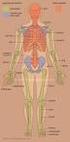 Skeletal System Axial Skeleton: Vertebral Column and Ribs Functions Regions Cervical Thoracic Lumbar Sacral Primary & secondary curvatures There are three major functions of the vertebral column. First,
THE SHOULDER JOINT T H E G L E N O H U M E R A L ( G H ) J O I N T
 THE SHOULDER JOINT T H E G L E N O H U M E R A L ( G H ) J O I N T CLARIFICATION OF TERMS Shoulder girdle = scapula and clavicle Shoulder joint (glenohumeral joint) = scapula and humerus Lippert, p115
Locating Common Bones*
 4H1656 4ANATOMY & PHYSIOLOGY ACTIVITY Locating Common Bones* Skill Level: 4Beginner to advanced Life Skills: 4Communication, critical thinking, decision-making and teamwork Setting: 4Room with chairs arranged
Produce Traceability Initiative Best Practices for Formatting Hybrid Pallet Labels
 Produce Traceability Initiative Best Practices for Formatting Hybrid Pallet Labels About this Best Practice Guideline (Revision 2.6) Best practices are generally accepted, informally standardized techniques,
CSE511 Brain & Memory Modeling. Lect04: Brain & Spine Neuroanatomy
 CSE511 Brain & Memory Modeling CSE511 Brain & Memory Modeling Lect02: BOSS Discrete Event Simulator Lect04: Brain & Spine Neuroanatomy Appendix of Purves et al., 4e Larry Wittie Computer Science, StonyBrook
DSM Spine+Sport - Mobility
 To set yourself up for success, practice keeping a neutral spine throughout all of these movements. This will ensure the tissue mobilization is being applied to the correct area, and make the techniques
Divisions of the Skeletal System
 OpenStax-CNX module: m46344 1 Divisions of the Skeletal System OpenStax College This work is produced by OpenStax-CNX and licensed under the Creative Commons Attribution License 3.0 By the end of this
Lesson # 9: Poultry Processing
 Lesson # 9 Poultry Processing Core Area: Animal Science Unit: Poultry Industry Lesson # 9: Poultry Processing National Agriculture, Food and Natural Resources (AFNR) Career Cluster Content Standards: AS.02.02
Transverse Sections of the Spinal Cord
 Transverse Sections of the Spinal Cord The spinal cord is perhaps the most simply arranged part of the CNS. Its basic structure, indicated in a schematic drawing of the eighth cervical segment (Figure
Contact your Doctor or Nurse for more information.
 A spinal cord injury is damage to your spinal cord that affects your movement, feeling, or the way your organs work. The injury can happen by cutting, stretching, or swelling of the spinal cord. Injury
1.4 Metallic Impurities Iron must not exceed 150 ppm and copper shall not exceed 6 ppm when tested according to TAPPI T 266.
 Library of Congress Preservation Directorate Specification Number 100 132 09 Specifications for 3 x 10ʺ Paper Enclosures For the Storage of Strip Photographic Negatives This specification is provided as
Instructions for Drawing Blood Samples
 Instructions for Drawing Blood Samples For Blood Collection Supplies please contact us. *Whatever means of restraint is used it should cause minimal distress and should be quick and safe for both the animal
SC Pullorum Typhoid Plate Testing & Banding Procedures (aka Pullorum Testing & Banding for Dummies)
 (for South Carolina Dr. Julie Helm, 803 260 6442, [email protected]) 1. Items needed: a. SC NPIP wing or leg bands with pliers b. Pullorum Typhoid antigen c. Test plate d. Needles (22, 20 gauge) with syringe
BIO 113 LAB 1. Anatomical Terminology, Positions, Planes, and Sections and more
 BIO 113 LAB 1. Anatomical Terminology, Positions, Planes, and Sections and more Objectives Describe the anatomical position verbally or by demonstrating it Demonstrate ability to use anatomical terms describing
Introduction. I. Objectives. II. Introduction. A. To become familiar with the terms of direction and location.
 E X E R C I S E Introduction I. Objectives A. To become familiar with the terms of direction and location. B. To become familiar with different types of planes and sections. C. To learn the names and locations
MARKET LAMB & GOAT SELECTION & EVALUATION. Aaron Renfroe Extension Assistant Sheep and Goat Texas AgriLife Extension Service San Angelo, Texas
 MARKET LAMB & GOAT SELECTION & EVALUATION Aaron Renfroe Extension Assistant Sheep and Goat Texas AgriLife Extension Service San Angelo, Texas Selection Selecting your project is one of the most important
Installing Window and Door Mouldings
 Installing Window and Door Mouldings About Window and Door Mouldings The trim around windows and doors greatly influences the look and style of your interior. They also bridge the gaps and cover spaces
ANATOMY & PHYSIOLOGY ONLINE COURSE - SESSION 2 ORGANIZATION OF THE BODY
 ANATOMY & PHYSIOLOGY ONLINE COURSE - SESSION 2 ORGANIZATION OF THE BODY Human beings are arguably the most complex organisms on this planet. Imagine billions of microscopic parts, each with its own identity,
EHFA Assessment Strategy (EAD 03) Name of Training Organisation:
 EHFA Assessment Strategy (EAD 03) Name of Training Organisation: Introduction European Health and Fitness Association (EHFA) Standards The following EHFA standards are currently available: Fitness Instructor
INDEX 03010-1 DESCRIPTION 2 03010-2 MATERIALS 2 03010-3 APPROVAL OF SUBBASE COURSE 3 03010-4 CONSTRUCTION 4 03010-5 MEASUREMENT 6 03010-6 PAYMENT 6
 03010_Dec22_2009.pdf Page 1 of 5 INDEX Page 03010-1 DESCRIPTION 2 03010-2 MATERIALS 2 03010-3 APPROVAL OF SUBBASE COURSE 3 03010-4 CONSTRUCTION 4 03010-5 MEASUREMENT 6 03010-6 PAYMENT 6 03010_Dec22_2009.pdf
DRAFT MALAYSIAN STANDARD
 DRAFT MALAYSIAN STANDARD 14A004R0 STAGE: PUBLIC COMMENT (40.20) DATE: 01/03/2015 30/04/2015 Fresh water convolvulus (Ipomoea reptans and Ipomoea aquatica) - Specification ICS: 67.080.20 Descriptors: water
Processi della Tecnologia Alimentare - Prof. Davide Barbanti. The frying process
 The frying process 1 Frying is a unit operation which is mainly used to alter the eating quality of a food. A secondary consideration is the preservative effect that results from thermal destruction of
Clarification of Terms
 Shoulder Girdle Clarification of Terms Shoulder girdle = scapula and clavicle Shoulder joint (glenohumeral joint) = scapula and humerus What is the purpose (or function) of the shoulder and entire upper
Nutritious & Hearty Recipes
 Nutritious & Hearty Recipes Nutrition Tips Pork is a leading dietary source of Thiamin, or vitamin B1. Thiamin builds and repairs nerves and muscles, maintains an appetite and helps to release energy from
IHSS-N1 WELDED HONEYCOMB CORE SPECIFICATION. Generated: Sergiy Papyshev Engineering. Approved: Don Prysi Manufacturing. Approved: Merzuk Ramic Quality
 IHSS-N1 WELDED HONEYCOMB CORE SPECIFICATION Generated: Sergiy Papyshev Engineering Approved: Don Prysi Manufacturing Approved: Merzuk Ramic Quality Approved: Steven Barnett Administrative DATE DATE DATE
Beef Cattle Frame Scores
 Beef Cattle Frame Scores AS-1091, May 1995 John Dhuyvetter, Area Livestock Specialist Frame scores are an objective, numerical description of cattle skeletal size which reflect the growth pattern and potential
Harrington s guide to serving The World s Finest Ham. & other fine smoked meats
 Harrington s guide to serving The World s Finest Ham & other fine smoked meats 141 HARRINGTON S Years C E L E B R A T I N G The unique flavor of our hams comes from the slow smoking methods we have been
!!!!!! !!! Decra Plus DPSW010 DPSTW011 DPSW012 DPSW013 DPSW014 DPSW015 DPSW016 DPSW020 DPSW021 DPSW024 DPSW030 DPSW031 DPSW035 DPSW030 DPSW031 DPSW035
 Decra Plus Drawing no DPSW010 DPSTW011 DPSW012 DPSW013 DPSW014 DPSW015 Description Shown In Decra Brochure Most Commonly Used Detail t~êã=oççñ=b~îéë=aéí~áä=b~îéë=lîéêü~åö=táíü=fåëìä~íéç=c~ëåá~=~åç=pçññáí
Part 1: Introduction Tell the name of your organ system and describe the major functions.
 Team Members: System: Your team s job is prepare a presentation to educate your classmates about one of the body systems that makes up the human body. Your presentation must include the following requirements:
Sectional drawings cutting plane
 Section Views Section Views The technique called section views is used to improve the visualization of new designs, clarify multiview drawings and facilitate the dimensioning of drawings. For mechanical
Introduction to A&P (Chapter 1) Lecture Materials for Amy Warenda Czura, Ph.D. Suffolk County Community College Eastern Campus
 Introduction to A&P (Chapter 1) Lecture Materials for Amy Warenda Czura, Ph.D. Suffolk County Community College Eastern Campus Primary Sources for figures and content: Marieb, E. N. Human Anatomy & Physiology
KNOW YOUR FOOD SLICER
 KNOW YOUR FOOD SLICER Your food slicer is suitable for cutting bread, all kinds of meats (such as ham or sausage meat), as well as cheese and vegetables. Thickness guide Blade switch Sliding meat table
2012 SPECIAL EDITION. A Meat Buyers Guide. A publication of. 800-275-9500 www.performancefoodservice.com/afi
 2012 SPECIAL EDITION A Meat Buyers Guide A publication of 800-275-9500 www.performancefoodservice.com/afi Sliders - Thick n Juicy Beef Patties 8/1 984436...160/2 oz Thick n Juicy Beef Patties 2/1 43301...30/8
ANTERIOR LUMBAR INTERBODY FUSION (ALIF) Basic Anatomical Landmarks: Anterior Lumbar Spine
 (ALIF) Anterior In human anatomy, referring to the front surface of the body or the position of one structure relative to another Lumbar Relating to the loins or the section of the back and sides between
Medical Terminology, Anatompy & Physiology
 1. Which of the following BEST describes the anatomical position? a. Supine with arms crossed over the chest and knees slightly bent b. Standing, facing forward, with arms raised above the head c. Standing,
Australian standard for the hygienic production and transportation of meat and meat products for human consumption
 Australian standard for the hygienic production and transportation of meat and meat products for human consumption FRSC Technical Report No. 3 AS 4696:2007 This book is available from CSIRO PUBLISHING
Heart Healthy Diet: Tips for Lowering Cholesterol and Fat in Your Diet
 Heart Healthy Diet: Tips for Lowering Cholesterol and Fat in Your Diet Cholesterol Saturated Fats Polyunsaturated and Mono-unsaturated Fats This fat-like substance is needed for good health. However, high
NETWORK FITNESS FACTS THE HIP
 NETWORK FITNESS FACTS THE HIP The Hip Joint ANATOMY OF THE HIP The hip bones are divided into 5 areas, which are: Image: www.health.com/health/static/hw/media/medical/hw/ hwkb17_042.jpg The hip joint is
Level 2 Certificate in Fitness Instructing Unit 1: Anatomy and Physiology
 Level 2 Certificate in Fitness Instructing Unit 1: Anatomy and Physiology These questions have been compiled based on the information available for the above qualification and unit. This mock should be
YFS Automotive Systems, Inc. Supplier Packaging Guidelines
 Table of Contents 1.0 Introduction... 2 2.0 Supplier Responsibilities and General Guidelines... 2 3.0 Packaging Data Form... 2 4.0 Expendable Packaging... 2 5.0 Shipping Identification Labels... 3 6.0
Pineapples. Ian Hewett Horticultural Marketing Inspectorate United Kingdom. Version - October 2011
 Pineapples Ian Hewett Horticultural Marketing Inspectorate United Kingdom Version - October 2011 1 Definition Of Produce This Standard applies to pineapples of varieties (cultivars) grown from Ananascomosus(L).
Original Kinesiology Tape
 Original Kinesiology Tape Recommended by the German Olympic Sports Confederation (DOSB) Recommended by the German Academy of Applied Sports Medicine(DAASM) irst in Korea Introduce and distribute Kinesiology
SkillsUSA. National Culinary Arts Contest High School June 26, 2014 Kansas City, Missouri
 SkillsUSA National Culinary Arts Contest High School June 26, 2014 Kansas City, Missouri SkillsUSA High School Culinary Arts Contest June 26, 2014 MENU Composed Salad with Emulsified Dressing Clear Soup
Extending Shelf-Life of Beef Cuts Utilizing Low Level Carbon Monoxide in Modified Atmosphere Packaging Systems
 Extending Shelf-Life of Beef Cuts Utilizing Low Level Carbon Monoxide in Modified Atmosphere Packaging Systems Project Summary Principal Investigator: J. Brad Morgan Oklahoma State University Study Completed
Managing cattle for the kind of beef you want your kids to eat.
 Managing cattle for the kind of beef you want your kids to eat. A cooperative program by Texas and Southwestern Cattle Raisers Association, Texas Beef Council and the Texas AgriLife Extension Service Table
Basic techniques of pulmonary physical therapy (I) 100/04/24
 Basic techniques of pulmonary physical therapy (I) 100/04/24 Evaluation of breathing function Chart review History Chest X ray Blood test Observation/palpation Chest mobility Shape of chest wall Accessory