
The Basics of Marine Oil Spill Response
|
|
|
- Chester Bishop
- 10 years ago
- Views:
Transcription
1 The Basics of Marine Oil Spill Response

2 Table of Contents Page Responder Health and Safety Basic Safety Rules Confined Spaces Aircraft Safety Rules Workplace Risk Assessment Safe Work Procedures Safe Vessel Operations Vessel Crew Requirements Water Safety/Emergency Procedures Workboat Protocol Equipment Safety Equipment Safety Vessel Operations Vessel Maintenance General Safety Rules Engine Room Safety Galley Safety Safe Boarding Fueling Safety Pre-trip Safety Check Spill Response Command Structure Manageable Span of Control Span of Control Considerations Spill Response Strategies 18 Shoreline Cleanup Assessment Team (SCAT) 19 Characteristics of Oil Spilled in the Marine Environment Behavior of Oil Spilled in the Marine Environment Spreading Weathering Evaporating Photo-oxidization Dispersion Dissolution Emulsification Biodegradation Oil Spill Control 22 Containment Sorbents Boom basics Boom deployment Open water deployment Containment boom Deflection boom Exclusion boom Boom anchoring Sorbent boom Snare The Basics of Marine Oil Spill Response Page 2

3 Page Mechanical Recovery 32 RBS Multi Head Skimmer T-12 Disk Skimmer T-18 Disk Skimmer GT-185 Skimmer Passive Recovery 41 Deployment considerations and limitations Shoreline flush kit Shoreline flushing (low pressure deluge) Decontamination (Decon) 46 Goals of decon Types of decon Primary decon area set up Equipment and personnel resources Portable Storage 51 Storage selection CANFLEX Sea Slug Procedure 52 Waste Management 58 Temporary off-site storage Transportation options Oil Identification 59 Oil Spill Estimations 69 Oil Types 70 Standard/Metric Area Chart 71 Operational Effectiveness 72 Entrainment Containment Glossary of Terms 74 Glossary of Acronyms 84 The Basics of Marine Oil Spill Response Page 3

4 Responder Health and Safety Protection of human health and safety are fundamental objectives in any oil spill response operation. The use of safe work procedures and practices help to reduce safety risks to response personnel, the surrounding community and the environment. Controlling access to the affected area is an important means of protecting the public by avoiding exposure to the spilled oil. Basic Safety Rules All spill response personnel must be trained in basic safety rules including the appropriate selection and use of personal protective equipment and the safe operation of any equipment they will be operating. Regardless of their experience and the work they are required to perform all workers must be oriented to: Site-specific health and safety rules Emergency procedures Evacuation procedures Location of first aid attendant Basic safety rules which should be followed by all spill response workers: Respond defensively Never work alone Incorporate safety risk assessments into all actions Never work in environments that are beyond their training Never enter the spill area unnecessarily Avoid contamination contact Remember every spill situation has potential health hazards In order to provide a flexible and safe approach for spill responders, a buddy system must be used during all oil spill response efforts. This buddy system involves a minimum of two people working as a team. Typically, spill response equipment is staged in temporary configurations in locations where surfaces may be slippery or uneven. Many cleanup efforts will be performed in remote, isolated locations where immediate medical assistance may not be available. These and other types of situations can increase the risk of accidents and their consequences. The potential humane health risk associated with oil spill response efforts include: Fire Explosion Hazardous atmospheres Demanding physical activities under possibly adverse climatic conditions such as extreme cold or heat The Basics of Marine Oil Spill Response Page 4

5 Hearing protection must be used in high noise areas. Locations where hearing protection is required include: the vicinity of aircraft, any areas where personnel are working around vacuum trucks, heavy equipment, generators, power packs and generally where noise levels require personnel to raise their voices to be heard. Also, be aware of hazards from: Large mammals (especially bears) Poisonous plants (i.e. poison ivy) Insect bites/stings Vehicle accidents off-road (rollover, bank instability) High tides that may block access or escape routes Working in areas with slippery surfaces due to ice, oil or kelp Confined spaces Appropriate personal protective equipment (PPE), suitable for the exposure and risk at hand, will be provided to all response personnel. PPE will typically consist of: Hard hats Gloves Coveralls Boots Safety glasses Ear protectors Rain gear Cold weather gear as needed Respiratory protection (after fit test) Confined Spaces Many areas considered as confined spaces can be found along both urban and isolated shorelines. Examples are caves, road & railway bridges, docks and wharfs. At NO time will response workers be required to work inside a confined space. They must be aware of the risks and notify their supervisor immediately if oiled shoreline extends into a confined space. The Basics of Marine Oil Spill Response Page 5

6 Aircraft Safety Rules There are situations where oil spill responders will require transportation to isolated locations by fixed wing aircraft or helicopters. All passengers will be given an aircraft safety orientation prior to flying. However, some basic safety rules are as follows: The pilot is in charge of the aircraft and passengers during all phases of flight and in emergency situations When approaching or leaving the aircraft: Approach only after the pilot has signaled Always approach or leave at a 90 o angle to the aircraft and in view of the pilot Never walk near or under the tail rotor of a helicopter or near the propeller of an airplane Always approach or leave a helicopter in a crouched position DO NOT leave any aircraft until instructed by the pilot Passenger and pilot must wear: Seat belts that must be fastened during takeoff and remain fastened until after the aircraft has landed Hearing protection on all helicopter flights Life jacket during overwater flights Workplace Risk Assessment Risk analysis tools are used to identify and address hazards associated with: Planned tasks and procedures Task Specific Risk Assessment Tailgate Safety Meeting Real-time actions Last Minute Risk Assessment A risk assessment serves as a tool to: involve workers by asking them stop and think about the work they are about to start and risks involved; record the steps to take before the preparation of the equipment, the area, and the work to be performed; identify and communicate to the persons performing the work, all safety precautions to take, the specific procedures to follow, and the protective equipment to use in order to safely complete the work; ensure the proper authorization of non-routine work and provide records; prevent errors of judgment and the taking of shortcuts which may increase the risk; and safeguard people and assets. The Basics of Marine Oil Spill Response Page 6

7 The risk assessment itself does not make the job safe. However, it ensures that proper consideration is given to the hazards and that the risk is mitigated prior to the commencement work. Safe Work Procedure The need for safe work procedures arises in instances of any non-routine or high-risk maintenance/repair work, construction work, vehicle entry into an undesignated area, or any other work which may expose the workers to hazards and variables encountered in the line of duty. All tasks requiring a safe work procedure will require approval from a supervisor. Last Minute Risk Assessment 5 STEP PLANNING PROCESS 1. WHAT AM I ABOUT TO DO? 2. HOW AM I GOING TO DO IT? 3. WHAT DO I NEED TO DO THE JOB? 4. HOW CAN I BE INJURED? 5. WHAT AM I GOING TO DO ABOUT IT? DO THE JOB SAFELY The Basics of Marine Oil Spill Response Page 7

8 Safe Vessel Operations Oil Spill Response Vessels are used during all aspects of a marine spill response. Basic safety rules for the operation of WCMRC vessels are as follows: Skimming Vessels Burrard Cleaner No. 1, 2 9 and Eagle Bay Burrard Cleaner No. 1: All operations (including training, exercises, and spill response) minimum three (3) crew qualified as deckhands and in operation of the LORI brush skimmer and ancillary systems. Skimmer crew shall travel aboard the tug boat when in transit. Burrard Cleaner No. 2: In transit minimum of two (2) persons, consisting of a qualified Master and a qualified deck crew member. All operations (including training, exercises, and spill response) minimum of three (3) persons, consisting of a qualified Master and two (2) qualified deck crew trained in the operation of the MARCO skimmer. Burrard Cleaner No. 9 In transit minimum of two (2) persons, consisting of a qualified Master and a qualified deck crew member. All operations (including training, exercises, and spill response) minimum of three (3) persons, consisting of a qualified Master and two (2) qualified deck crew trained in the operation of the MARCO skimmer. Eagle Bay In transit minimum of two (2) persons, consisting of a qualified Master and a qualified deck crew member. All operations (including training, exercises, and spill response) minimum of three (3) persons, consisting of a qualified Master and two (2) qualified deck crew trained in the operation of the LAMOR brush skimmer. One (1) deck crew shall be qualified as vessel engineer. Response Vessels Burrard Cleaner No. 8 and 11 In transit minimum of two (2) persons, consisting of a qualified Master and a qualified deck crew member. All operations (including training, exercises, and spill response) minimum of three (3) persons, consisting of a qualified Master and two (2) qualified deck crew. Boom Boats Burrard Cleaner No. 6 and 7 In transit minimum of two (2) persons, consisting of a qualified Master and a qualified deck crew member. All operations (including training, exercises, and spill response) minimum of three (3) persons, consisting of a qualified Master and two (2) qualified deck crew. The Basics of Marine Oil Spill Response Page 8

9 Work Boats and Skiffs All operations (including training, exercises, and spill response) minimum of two (2) persons, consisting of a qualified Operator and one (1) qualified deckhand. Crew Boat Burrard Cleaner No. 5 All operations (including training, exercises, and spill response) minimum of two (2) persons, consisting of a qualified Operator and one (1) qualified deckhand. Transport Canada approved personal floatation devices or life jackets must be properly worn by Master and deck crew at all times. All cargo must be stowed and secured. Vessels are never to be overloaded. When underway, crews must: Maintain a log of activities using the vessel logbook Respect all speed restrictions established in the area Obey all Collision Regulations Ensure that forecast weather and sea conditions are appropriate for the size and type of vessel Ensure that crew members are properly clothed and equipped for the conditions to be encountered Advise someone of the trip destination, course, radio frequency, planned action and estimated time of arrival and return Water Safety/Emergency Procedures In the event that an on-water accident/emergency is reported, the following information should be obtained: name and location of vessel? number of people on board? any injuries, and if so, identify them any immediate danger? is the caller able to operate the vessel or the radio equipment (VHF/UHF/cellular)? is the operator on traffic (channel 12)? This information should be passed on to the Canadian Coast Guard Search and Rescue Center immediately at: In the event of an emergency at or on a dock, dial 911. Workboat Protocol Workboats are used extensively during spill response activities. Some basic safety rules are as follows: Transport Canada approved personal floatation devices or lifejackets must be worn at all times. Decks may be slippery. Remove the source of potential slip and fall. Either clean up immediately or post signage warning of the hazard. Do not overload the vessel. Know the maximum capacity. The Basics of Marine Oil Spill Response Page 9

10 Secure all cargo to prevent shifting during transit. When traveling in a boat: obey all speed limitations; follow all navigation rules; have a proper first aid kit, emergency signal kit, communications equipment, navigation equipment, running lights, and warning horns on board; do not go out in bad weather or rough seas unless absolutely necessary; and always inform someone of your trip destination, course, radio frequency, planned actions, and estimated time of arrival and return. Smoking is not permitted on or around workboats at any time. Possession or consumption of alcohol is not permitted. Dress warmly; temperatures away from the shoreline usually decrease and the wind chill may be significant. Stay out of the water unless absolutely necessary; hypothermia can occur quickly. Equipment Safety Follow the manufacturer s instructions for operating and maintaining all equipment. If machinery is in need of repair, it must be reported to the supervisor so that it may be fixed as soon as possible. Following is a list of other steps to improve safety around equipment. Inspect winches, booms, and related equipment regularly. Check the hardware, lines, and cables closely for signs of wear or stress. Moving parts of power-operated equipment should be guarded if possible. All rigging (i.e. slings, chains, hoists, etc.) must be inspected regularly and kept in safe working order. All movable davits must have a device to lock them in place. This prevents the davit from jerking back and striking crew. Don t use a bolt in place of a locking pin. Never stand under a suspended load. Avoid stepping over lines under tension. Ladders must be of sound design and good condition. Any portable ladders must be secured. Ensure that all equipment controls are clearly marked. Winches, drums, capstans, and other related equipment must have a master on/off switch on deck that is easy to reach. Ensure that it is clearly marked and that all personnel on board know its location. Stay clear of the radar scanner. Place a Do Not Operate sign on the wheelhouse radar receiver when someone is working around the scanner. Operating equipment should not be oiled, adjusted, or cleaned unless safe work procedures are in place that will protect the worker from injury. Before repairing machinery, the power must be disconnected and secured (see Energy Lockout Procedures No. 11.3). If equipment has to be kept operating during maintenance (i.e. if shutting down equipment is unsafe), procedures must be put in place to prevent injury from moving or energized parts. The Basics of Marine Oil Spill Response Page 10

11 Vessel Operating Procedures The following lists some basic safety procedures for all WCMRC vessels. For instructions regarding specific WCMRC vessels, including start-up and shut down procedures, refer to the WCMRC Operations Policies and Procedures Manual. Vessel Maintenance It is very important to perform all vessel maintenance tasks at their scheduled intervals. This will ensure not only a quick and efficient response, but also the safety of all personnel on board. Keeping a general state of safety on your vessel means thinking ahead, staying alert, and being organized. Following are some general tips to keep personnel safe when on board vessels. Included are general safety guidelines, safe work procedures and tips for engine room, galley, boarding safety and fueling. General Vessel Safety A Transport Canada approved PFD or Life Jacket must be worn at all times when on a vessel. Coil tie-up lines when not in use so crew do not trip over them. Tie ladders down or store them safely when you are not using them. When not using water hoses, coil them on brackets. After removing hatch covers, secure them so they won t slide or shift. Keep passageways clear. Don t store gear in them. Tools and equipment must be securely stowed when not in use. Don t clean with gasoline or other liquids that can catch on fire. All work areas including decks and the engine room must be kept free of slipping and tripping hazards. Unless told otherwise (for instance, as listed in the Operations Branch Procedures Manual), turn off all stoves and cabin heaters when leaving the vessel. Monitor channel 16. Also, monitor the vessel traffic system (VTS) for updates on traffic and navigation hazards, and the weather channel. All personnel aboard should inform their supervisor of any allergies or special medication requirements. Safe Work Procedures Keep long hair tucked under a hat. This will prevent hair from getting caught in pulleys, winches, and other equipment. Wear close-fitting clothing (such as coveralls), which are less likely to get caught in machinery. Avoid wearing clothing with exposed buttons they can easily get caught in gear. Wear a hard hat when working under moving equipment, or when working under objects that could fall. Protect your hands by wearing the right gloves for the job. Wear gloves when handling rope. Wire rope may have jaggers which can cause cuts or lodge in the skin. All types of rope can cause skin burns. Avoid wearing rings. They can get caught in lines and other gear and equipment. The Basics of Marine Oil Spill Response Page 11

12 Grab rails, handrails, and guardrails, must be installed, where practical, to keep crew from falling overboard. Use lifelines, where practical, when there is a risk of falling into the sea. All work areas must have enough lighting so that work can be done safely. Make sure there is enough lighting in stairways, companionways, and near ladders. Make sure deck lights do not interfere with the night navigation of other vessels. As an added safety step, consider attaching a safety line to large floodlights. A light fixture that falls from its mounting could seriously injure crew. Do not run on deck you are more likely to slip, trip, or fall. Never walk over a partially open hatch or manhole. If the hatch or manhole covers shifts, you could fall down the opening. Deck openings and hatches that are not being used must be closed and secured to prevent down flooding and crew accidentally falling into them. Ensure that manhole covers seal properly. Deck openings and hatches that need to be open for ventilation must be marked and guarded. Take the engine out of gear if you need to go out on deck when traveling alone. The vessel is less likely to travel away from you if you fall overboard. The main engine must be turned off if a diver is working underwater near the vessel. Look for diving flags to tell you when there is a diver in the area. All WCMRC personnel and/or contractors must use safe lifting techniques. When lifting, bend your knees and lift with your legs not your back. Use a hoist or winch, or ask for help, if something is too heavy to lift alone. All WCMRC personnel and/or contractors should report all unsafe conditions to their supervisor. Engine Room Safety Keep as little water in the bilge as possible. Clean bilge strainers regularly and test the bilge alarm. Don t let oil and grease build up on engine room ladders or in the engine room itself. Clean ladders regularly to prevent personnel from slipping and falling. Wear hearing protection when working in the engine room. Ensure that all exhaust pipes are away from wood and other material that can catch fire: where needed, cover the pipes with lagging. When seacocks are not required to be open, turn the valve handle to the off position. Galley Safety Don t hang washcloths, gloves, hats, or other items over the stove to dry. They could fall onto the stovetop and catch fire. When cooking with grease and oil, do not leave the stove unattended. A fire may start accidentally. Keep knives and other utensils stores safely in racks or drawers. Store pots and pans safely. Use table covers made of non-slip material. Keep an ABC or AB fire extinguisher in the galley, near the entrance, if possible. Hang the extinguisher in a bracket, where it can be easily seen and reached. Galley stoves must have guards to stop cooking gear from siding off the stovetop. The Basics of Marine Oil Spill Response Page 12

13 Stove fuel tanks and lines must not be located directly above the stove. A leaking tank or line above the stove can easily catch fire. Stove fuel tanks must have a shut-off valve at the tank. The valve allows you to turn off the fuel supply if there s a stove fire, if the stove controls break, or if the stove needs repair. Use proper fuel lines. Galley stoves must be bolted down or otherwise secured so they don t slide or move. The space between the stove and firewalls must be large enough to allow clean-up of oil and grease. Safe Boarding Use a gangway or ladder (which must be secured) to board or exit the vessel. Keep gangways and ladders clean. Never run or jump from the dock to the vessel, or between vessels. If the vessel deck is lower than the dock, climb down the dock ladder to the deck or bulwarks. Then step over, holding a ladder rung with one hand and the vessel railing with the other hand. When tying the vessel to the dock, don t exit the vessel until it s safe. An early exit could cause a slip between the dock and the vessel. Fueling Procedures The following steps should be taken every time a vessel is refueled: NO SMOKING Moor boat securely Stop engines. Portable tanks must be fueled ashore. Turn off heater, stove, fridge, etc. Do not operate electrical equipment. Close hatches and doors. Keep sorbent pads handy in case of spill. Hold nozzle against fill pipe. Do not overfill. After fueling, start blower and ventilate before starting engine. Pre-trip Before leaving the dock, your vessel must be ready and capable to travel. Many safety concerns can be identified through the scheduled maintenance inspections. In addition, completing a checklist of the vessel s systems, equipment, and supplies can ensure vessel and crew safety. Ensure that all boats comply with the appropriate federal regulations. In addition to the items discussed below, certain types of vessels will require items such as Coast Guard approved fire extinguishers, backfire flame control, powered ventilation, sound signaling devices (different from emergency signals), navigation lights/signals, pollution placards, and marine sanitation devices. The Basics of Marine Oil Spill Response Page 13

14 Boat operators should familiarize themselves and crew with safety features and equipment on their boats. Boats should only be operated by qualified individuals. Life jackets, floater coats, floater suits, or other appropriate and approved Personal Flotation Devices (PFDs) must be worn by all personnel. Use of floater suits is particularly critical under conditions of cold stress. Types of PFDs: 1. TYPE I. Near-shore buoyancy vests are intended for calm inland water, or where there is a good chance of quick rescue. 2. TYPE II. HYBRID INFLATABLE. These PFDs contain a small amount of inherent buoyancy and an inflatable chamber. These are presently approved for pleasure craft use only in Canada. Small boats should generally not be operated for oil recovery after sunset. If this is required or poses minimal risk, routes of operation should be carefully prescribed, individual boats should maintain a communication schedule with a shore base; and should be fully equipped with appropriate running lights, emergency signals, and personnel onboard should be wearing emergency night signaling devices. Distress signals are required by regulation to be carried onboard all vessels. They may be stored onboard or issued to individuals. If stored onboard, they should be in a sealed, watertight container marked DISTRESS SIGNALS. Coast Guard approved pyrotechnic visual distress signals include red flares (hand-held or aerial), orange smoke (hand-held or floating), and launchers (for aerial red meteors or parachute flares). PYROTECHNIC FLARES SHOULD NOT BE USED NEAR FLAMMABLE PRODUCT SPILLS. Non-pyrotechnic distress signals are not approved individually but need to meet certain requirements. They should be in serviceable condition, readily accessible, and certified by the manufacturer as complying with Coast Guard or SOLAS requirements. These devices include orange distress flags and electric distress flags. Distress flags are day signals only. They must be at least 3 3 ft. with a black square and ball on an orange background. 1. Electric distress lights are for night use only. These devices automatically false the international SOS code ( --- ), so a flashlights is NOT considered a distress signal. Under inland navigation rules, a high intensity strobe light is considered a distress signal. 2. It is a violation of regulations to display visual distress signals on the water except when assistance is required. Boat operators must keep their supervisors informed of their area of operations, especially when they change their work area. If plans call for a boat to move to another location during a shift, the operator should advise their supervisor of their actual time of departure. Boat operators should never anchor their boats by the stern. This is typically the lowest point on the boat due to design and/or loading, and is often squared off making it vulnerable to swamping. The Basics of Marine Oil Spill Response Page 14

15 Portable fuel tanks should be filled outside of the boat. All sources of ignition in the area of fuelling (i.e. engines, stoves or heat producing equipment and electrical equipment) should be secured while fuelling. Strict adherence to the buddy system must be observed in small boats; and all boats should be in direct visual or radio contact with a shore base at all times. To avoid slipping on wet decks or falling in small boats, personnel should remain seated while the boat is underway. Horseplay and speeding must be strictly prohibited. Personnel should keep their centre of gravity as low as possible while working in small boats. Boat operators must also ensure that boats are not overloaded. The capacity should be marked on a label on the boat. If it is not, a general rule of thumb is: LENGTH X WIDTH / 15 = # PERSONS (150 lbs.) Since equipment adds to the weight, it should be considered as well. Weight should be distributed evenly. Personnel working in or operating small boats should be equipped with appropriate shoes/boots designed to help maintain traction on wet surfaces. Safety sunglasses and hearing protection should be worn by personnel working in or operating small boats where appropriate. Fixed ladders or other substantial access/egress should be provided at boat transfer locations exceeding several feet. Depending on the specific nature of the operations (i.e. work in remote areas), other emergency equipment should be considered, such as: anchors, radios, bailers, first aid kits, and additional means of propulsion (i.e. paddles). Workers should be cautioned about using their legs as fenders, or getting their hands, arms, or legs between vessels or between vessels and docks or fixed structures. The Basics of Marine Oil Spill Response Page 15


16 Spill Response Command Structure While the technical aspects of dealing with the oil spill are clearly important, the effectiveness of the response will ultimately depend upon the quality of pre-spill contingency planning and the organization and management of the clean-up operations. This is especially the case with shoreline clean-up because of the probable involvement in a major spill of a large number of different parties, including separate central, regional and local government authorities, various agencies, port and harbour authorities, terminal operators, other private companies, commercial clean-up contractors and special interest groups. Western Canada Marine Response Corporation (WCMRC) responds to oil spills using a strict Incident Command System (ICS) structure. The components of ICS include Incident Commander, Command Staff (Safety Officer, Liaison Officer, Legal Officer), Operation Section, Finance/Admin. Section, Logistics Section and Planning Section. There are numerous roles within each section including resource management, trajectory modeling, situation unit, environmental unit, documentation unit, etc. The Basics of Marine Oil Spill Response Page 16


17 Manageable Span of Control Span of control: Pertains to the number of individuals or resources that one supervisor can manage effectively during an incident. Is key to effective and efficient incident management. Span of Control Considerations Span of control considerations are influenced by the: Type of incident. Nature of the task. Hazards and safety factors. Distances between personnel and resources. Span of control for any supervisor: Is between 3 and 7 subordinates. Optimally does not exceed 5 subordinates The Basics of Marine Oil Spill Response Page 17

18 Spill Response Strategies Marine oil spill cleanup needs to be carried out in accordance with a clear strategy that takes account of the characteristics of the oil, the level of contamination and the relative environmental, economic and amenity sensitivities of different locations. Because equipment availability and manpower may be limited in the early stages of a spill, it is often necessary to prioritize sensitive areas, which can result in conflicts between, for example, economic and environmental interests. Marine oil spill cleanup is usually carried out in stages, starting with the removal of the heaviest accumulations of oil. Secondary cleanup ideally should not begin until heavy accumulations have been removed and the risk of recontamination by floating oil has receded. The need for secondary cleaning and the degree to which it is carried out must be judged against the economic and environmental sensitivities. The final traces of oil are often difficult and time consuming to remove. In many instances, natural degradation processes deal with them quickly and effectively, especially where wave action and tidal water movements are strong. In special circumstances, for example where beaches are heavily used by the public, final 'polishing' to a very high standard may be justified, although some of the techniques which may be required can cause environmental impacts. Wherever cleanup is carried out, arrangements will need to be made for temporary storage of recovered oil before it is moved for disposal. This can be organized at the beachhead, in car parks or open land close to the beach. It is important to keep different kinds of waste (pure oil, oily sand, oily debris, plastic and PPE) segregated as this considerably simplifies final disposal. Depending on local regulations, the different wastes can be sent through different final disposal routes. In particular, pure liquid oil can be recycled. A contingency plan prepared for the area involved in a spill may identify environmentally sensitive areas or other constraints to spill response work or the transportation of cleanup equipment and personnel. The evaluation of oiling is carried out by a multi-disciplinary evaluation team called SCAT (Shoreline Cleanup Assessment Team). The team visits all areas of potential shoreline oiling and prepares a Shoreline Oiling Summary. These summaries are used by the Regional Environmental Emergency Team (REET) and other planning groups to develop shoreline cleanup plans. The Basics of Marine Oil Spill Response Page 18

19 Shoreline Cleanup Assessment Team SCAT is a simple and comprehensive way to perform a survey of an effected shoreline. This systematic approach uses standardized terminology to collect data on shoreline oiling conditions and supports decision making for shoreline cleanup. SCAT is flexible in its scale of surveys and in the detail of data collected. SCAT is an important part of the oil spill response and outpaces operations. This process continues past the initial assessment to verify cleanup effectiveness and conduct final evaluations. The SCAT process uses eight steps: 1. Conduct reconnaissance survey 2. Segment the shoreline 3. Assign teams and conduct shoreline surveys 4. Develops cleanup guidelines and endpoints 5. Submit reports and sketches to Planning Section 6. Monitor effectiveness of cleanup 7. Post cleanup inspections 8. Do final evaluation of cleanup activities Members of a SCAT may include representatives from: Environment Canada BC Ministry of Environment Responsible Party Stakeholders (First Nations, Land Owners, Local Governments, etc.) The Basics of Marine Oil Spill Response Page 19

20 Characteristics of marine oil spills The major spills of crude oil and its products in the sea occur during their transport by oil tankers, loading and unloading operations, blowouts, etc. When introduced in the marine environment the oil goes through a variety of transformation involving physical, chemical and biological processes. Physical and chemical processes begin soon after petroleum is spilled on the sea. These include evaporation, spreading, emulsification, dissolution, sea-air exchange and sedimentation. Chemical oxidation of some of the components of petroleum is also induced in the presence of sunlight. The degraded products of these processes include floating tar lumps, dissolved and particulate hydrocarbon materials in the water column and materials deposited on the sea bed. Biological processes though slow also act simultaneously with physical and chemical processes. The important biological processes include degradation by microorganisms to carbon dioxide or organic material in intermediate oxidation stages, uptake by large organisms and subsequent metabolism, storage and discharge. Bahaviour of oil spilled in the marine environment Spreading When spilled, oil begins to spread immediately, with the rate depending on the volume of oil discharged, viscosity, temperature, wind velocity, waves and current. Spreading of crude oil on water is probably the most important process following a spill. Apart from chemical nature of oil, the extent of spreading is affected by wind, waves and currents. Under the influence of hydrostatic and surface forces, the oil spreads quickly attaining average thickness of less than 0.03 mm within 24 h. Once a spill has thinned to the point that surface forces begin to play an important role, the oil layer is no longer continuous and uniform but becomes fragmented by wind and waves into islands where thicker layers of oil are in equilibrium with thinner films rich in surface active compounds. Weathering- The major processes which contribute to weathering are evaporation, photo-oxidation, dispersion, dissolution, emulsification and biodegradation. The rate of weathering depends on site conditions and the type of oil spilled. Evaporation - Evaporation and dissolution are the major processes degrading petroleum crude when spilled on water. The composition of oil, its surface area and physical properties, wind velocity, air and sea temperatures, turbulence and intensity of solar radiation, all affect evaporation rates of hydrocarbons. Evaporation alone will remove about 50% of hydrocarbons in an "average" crude oil on the ocean's surface. Loss of volatile hydrocarbons increases the density and the kinematic viscosity of oil. As more volatile hydrocarbons are lost, the viscosity of the resulting oil increases and this results in breakup of slick into smaller patches. Agitation of these patches enhances incorporation of water due to increased surface area. Photo-oxidation - The natural sunlight in the presence of oxygen can transform several petroleum hydrocarbons into hydroxy compounds such as aldehydes and ketones and ultimately to low molecular weight carboxylic acids, As the products are hydrophilic, they change the solubility behaviour of the spill. The Basics of Marine Oil Spill Response Page 20

21 Dispersion - Dispersion is οil-in-water emulsion resulting from the incorporation of small globules of oil into water column. Oil begins dispersing immediately on contact with water and is most significant during the first ten hours or so. Dissolution - Dissolution is another physical process in which the low molecular weight hydrocarbons as well as polar non-hydrocarbon compounds are partially lost from the oil to the water column. Emulsification - Wave action causes the dispersion of oil droplets into water to form oil-in-water emulsions or water droplets into viscous oil to form water-in-oil emulsions. Oil-in-water emulsions can be accelerated with the use of dispersants which reduce the oil-water interfacial tension. Other weathering processes are accelerated once oil-inwater emulsions are formed due to the increased surface area of the oil. By contrast, water-in-oil emulsions are very stable and can persist for months or years following a spill because the surface area that is available for chemical or biological reaction is small. These emulsions, known as chocolate mousse, may contain up to 80% water and have viscosities much greater (up to 1,000 times) than the parent oil. Once a chocolate mousse emulsion is formed, it is not easily dispersed into the water column. In some instances, particularly with weathered crude oils and Bunker fuels, neutral buoyancy of the oil results and sinking occurs. Bio-degradation Bio-degradation processes influencing fate of petroleum in aquatic environment include microbial degradation, ingestion by zooplankton, uptake by aquatic invertebrates and vertebrates as well as bio-turbation. Microorganisms capable of oxidising petroleum hydrocarbons and related compounds are widespread in nature. The rate of microbial degradation varies with the chemical complexity of the crude, the microbial populations and many of the environmental conditions. The Basics of Marine Oil Spill Response Page 21
22 Oil Spill Control Oil spills can occur when there is a problem with oil handling facility/vessel transfer, when a pipeline ruptures or leaks or when there is a transportation accident. Since conditions are different with each spill, different methods of spill control may be used. a) Some of the tools used to control oil in a spill include booms, which are floating barriers used to clean oil from the surface of water and to prevent slicks from spreading. A boom can be placed around the tanker that is spilling oil. Booms collect the oil off the water. A boom may be placed somewhere before an oil spill. They can also be placed around an entrance to the ocean, like a stream. They also can be placed around a habitat with many animals living there. These booms absorb any oil that flows around it. The workers can also use skimmers. Skimmers are boats that can remove the oil off the water. Skimmers which use pumps or vacuums to remove oil as it float on water. Sorbents are sponges that can collect the oil. Sorbents absorb oil when they are placed in a spill area. b) Sometimes chemicals called dispersants are used to break down oil and move it from the top of the water. An airplane can be used to fly over the water dropping chemicals into the ocean. The chemicals can break down the oil into the ocean. Moving the oil in this way keeps it from animals that live at the surface of the water and allows it to eventually be consumed by bacteria. c) A process called bioremediation may be used to accelerate the process of biodegradation of the oil after a spill. In this process, bacteria or other microbes are introduced to the environment to help oxidize the oil. Unfortunately, this process can work slowly and is not very useful for large spills. d) Occasionally the slick caused by a spill is removed through a controlled burn. Workers can burn freshly spilled oil with fireproof booms to contain the oil. Burning, only works under certain wind and weather conditions. Burning is the last option to decide, as this method causes air pollution. e) Oil spill control on land is often conducted manually. Scooping, cleansing and scraping of the rocks and sand are performed until the oil has been removed. Crews can use high or low pressure hoses to spray the oil that is on the beaches. Vacuum trucks may be driven on the beaches to vacuum up the oil. They can also simply use shovels or road equipment to collect all the oil off the beaches. Mechanical containment and recovery is the most commonly used and most environmentally acceptable response technique to cleanup oil spills in North America. Mechanical spill response uses containment boom to contain and concentrate floating oil, skimmers as well as synthetic sorbent materials to remove oil from the water s surface, and temporary storage devices to store the recovered oil and water until it can be disposed of properly. Where feasible and effective, this technique is preferable to other methods (use of dispersants or in situ burning), since spilled oil is removed from The Basics of Marine Oil Spill Response Page 22
23 the environment to be recycled or properly disposed. In most instances, the containment and recovery phase of an oil spill proceed simultaneously. Spilled oil floating on the water s surface is affected by wind, currents, and gravity, all of which cause it to spread, fragment and disperse. The first stage of an effective response is to deploy containment boom to limit further spreading and concentrate the oil for recovery. Containment of an oil spill is the process of preventing its spread by confining the oil to the area where it has been discharged. Containment not only localizes the spill but also facilitates the removal of the oil by causing it to concentrate in thicker layers on the surface of the water. Oil containment booms are generally the first equipment mobilized at the scene of a spill and the last to be removed. They are used for concentrating oil so that it is thick enough to be skimmed, for keeping oil out of sensitive areas, or for diverting oil into collection areas. When deploying booms and skimmers to recover spilled oil a common difficulty is controlling the movements and activities of vessels and directing them to the thickest areas of the oil slick. This can be overcome by using aircraft equipped with air to sea communications. Booms come in many different shapes, sizes, and styles ranging from small, lightweight models intended for manual deployment in harbors, to large, robust units which usually need cranes and sizeable vessels designed for the open seas to handle them. Booms vary considerably in their design, but all normally incorporate the following features: The most important characteristic of a boom is its oil containment or deflection capability, determined by its behavior in relation to water movement. The boom should be flexible enough to conform to wave motion yet sufficiently rigid to retain as much oil as possible. Most booms are not capable of containing oil in currents greater than 0.7 knot (0.35 meter/second) that flow at right angles to the boom, irrespective of boom size or skirt depth. This factor limits the speed at which booms can be towed to less than 0.5 knots (0.26 m/s). The success of containment booming is dependent on currents, wind, and waves. Even minor currents can draw oil under the booms; waves may cause splash-over, and wind and currents may cause the boom to sink or plane. Oil patches or water turbulence appearing on the down-current side indicates that the boom is failing. New open ocean boom designs capable of containing oil as tow speeds greater than 3 knots (15.4 m/s) are becoming commercially available. In Arctic conditions even very low concentrations of ice can seriously affect the performance of most booms. Containment booms will quickly collect ice and subsequently lose oil as flotation chambers are submerged or lifted out of the water. Other important boom characteristics are strength, ease and speed of deployment, reliability, weight and cost. It is essential that a boom be sufficiently robust for its intended purpose and tolerate inexpert handling, since trained personnel are not always available. Strength is required to withstand the forces of water and wind when being towed. Ease and speed of deployment combined with reliability are very important in a rapidly changing situation and may strongly influence the selection of equipment. Practical limitations of strength, water drag and weight mean that generally only relatively short lengths (tens to a few hundred meters) can be deployed and maintained in a working configuration. Towing booms at sea in V, U or J configurations, is a difficult task requiring specialized The Basics of Marine Oil Spill Response Page 23
24 vessels. Because of the difficulties of operating multi-ship towed boom systems, specialized ships have been built which incorporate sweeping arms, skimming devices and on board oil storage. The limitations posed by sea conditions still also apply to larger versions of these vessels of which are unable to work in shallow inshore waters. The efficiency of a specialized vessel is mainly determined by the built-in oil recovery system or skimmer which is deployed. Because of the relatively narrow sweep width, these specialized vessels are best suited to recovering oil in ribbons or windrows. Following containment of the oil, the next step in the cleanup operation is physical recovery of the oil from the water s surface. Containment When oil is accidentally released into a body of water, the most urgent priority is limiting the spill's spread to minimize the natural resources at risk and to facilitate cleanup and removal. Swift and skillful deployment of a containment boom is essential for achieving both of these goals. Boom Basics Because oil is less dense than water, it rises to the surface, where floating fences called booms can corral it. In its simplest form, a boom consists of a length of rugged fabric with buoyant filler stitched into the side intended to float above the water, and a heavy chain or other ballast inserted into the bottom to weigh down the sub-surface skirt and make it sink. Boom material is brightly colored for ease of recovery and to help crews spot a break in the line. The freeboard (above surface) component is commonly designed to reduce splash-over, while the skirt is engineered to keep oil from escaping beneath the boom. Under ideal conditions, a spill is quickly contained by booms strung end to end until they completely encircle the floating oil. Realistically, however, a number of factors, such as water current, wave height, wind velocity and oil viscosity steadily work to churn up the surface and hamper a boom's capacity to contain oil. The result is that in heavy seas or during rough weather, some of the oil sloshes over and under the boom, making a single line inadequate. These cases require multiple concentric circles of oil boom extending over increasing diameters until the spatial extent of the leak is contained. The Basics of Marine Oil Spill Response Page 24
25 When a slick becomes too dispersed for circular containment or when it begins to approach land, a mobile retention boom, with or without a built-in recovery system or skimmer, can be deployed to assist the oil roundup. Boom Deployment Each oil spill presents different challenges depending on the type of oil spilled, the location, weather, time of day, the manpower available and the equipment at hand. It is important to plan a practical strategy to protect sensitive resources utilizing the resources available and keeping safety in mind at all times. The effective and timely deployment of the oil spill boom can lessen both cleanup time and money. There are three types of boom deployment: Containment Deflection Exclusion Open Water Containment Before deploying any boom, response team members must observe the direction and velocity of wind and water currents to attempt to determine the best point of interception and to avoid splash over and/or entrainment (undertow of oil droplets below the boom) The Basics of Marine Oil Spill Response Page 25


26 If the spill is drifting away from the source or vessel, containment boom should be deployed in a U shape in advance of the movement of the slick. Two vessels of equal towing power can be used to deploy boom; however, one of the vessels may be replaced by a smaller boat or anchor/buoy system. Once the slick, or a significant amount of oil is contained within the boom, the ends can be brought together (if desired) and attached to form a closed containment area. A B C D Successful containment actions may require that the contained oil be removed rapidly from within the boom with skimmers. Oil tends to concentrate against the boom in the direction of the wind and current. The skimmer should be located in this area and continually repositioned to skim the thickest area. If a portable skimmer is used, it should be deployed from a vessel situated outside the containment boom. The Basics of Marine Oil Spill Response Page 26
27 Containment Boom Containment boom deployment for spill containment requires the placement of a boom in a moving body of water and involves several distinct operations. A simple spill in calm weather along with minimal current movement (<.75 knots) can be contained by stretching a boom across a waterway perpendicular to the path of the spill. Containment boom is also used to encircle or otherwise entrap floating oil so it can be accumulated and recovered at the spill location - a grounded barge, a vessel at anchor or at dockside. The diagram below shows two examples of partial containment of a spill from a vessel at a dock and a link to a training video showing Partial Containment Boom being deployed. Deflection Boom A deflection boom is used to intercept, deflect, or move a slick towards a more desirable recovery site. Deflection booming is a good option when strong currents are present, which make containment impossible. Entrainment or loss of oil under the boom begins to occur when a boom is placed perpendicluar to a current of more than.75 knots. To increase the boom's ability to contain oil in a current, the boom must be placed at an angle to the current. Angling the boom has the net effect of deflecting the slick towards the shoreline where currents may be less severe. The diagram below shows two examples of deflection boom of a spill from a docked vessel, and a link to a training video showing Deflection Boom being deployed. The Basics of Marine Oil Spill Response Page 27
28 Other Types of Deflection Boom Cascade Boom A cascade boom configuration can be used to remove, intercept, deflect, or move a slick towards a more desirable recovery site. Several booms can be deployed in this configuration when a single boom cannot be used because of fast currents or because it is necessary to leave openings in the boom for vessel traffic, etc. A cascade boom can be used in strong currents where it may be impossible to effectively deploy one continuous section of boom. Shorter sections of boom, when used in a cascade deployment, are easier to handle in faster water, thereby increasing safety and efficiency. Additional equipment will be required to set and maintain this system in comparison to the single boom configuration. The Basics of Marine Oil Spill Response Page 28
29 Staggered Chervon A staggered chervon boom configuration can be used in areas with strong currents to remove, intercept, deflect, or move a slick towards a more desirable recovery site. While the closed chevron configuration is used to divide a slick for diversion to two or more recovery areas, an open chevron can be used where boat traffic must be able to pass. In the open chevron configuration the two booms are anchored separately midstream, with one anchor point up-stream or downstream of the other. An inverted chevron can also be used to funnel an oil slick to a marine recovery unit anchored mid-channel. Exclusion Boom Exclusion booming is largely a protective measure, the idea being to protect sensitive areas such as marshlands, water intakes and shorelines. This technique requires the area to be completely boomed off, thereby forming a protective barrier. Conventional oil boom, tidal-seal boom, or a combination of each can be used to exclude spilled oil from a sensitive area. Typically, tidal-seal boom is employed at the shoreline/water interface on both shores and is secured/anchored into position. Conventional oil boom is then connected to the tidal-seal boom and is secured with additional anchor systems to form a barrier and to maintain shape. This technique is most efficient in low current areas. Freshwater outflow from a river or stream may assist in maintaining boom configuration and pushing oil away from the area inside the boom. The Basics of Marine Oil Spill Response Page 29
30 Sorbents Sorbents work on two principles: absorption and adsorption. In most cases sorbent materials are broadcast upon an oil slick and float along its surface until they become saturated with oil. Then the oil-soaked sorbents must be recovered and disposed of or squeezed free of oil and re-used. Sorbents are not recognized as a primary means of recovering most oil spills for several reasons: The application and recovery of sorbent products is labor intensive activities. The problems associated with disposal of oily sorbents are considerable. The costs of using sorbents as a primary recovery tool are prohibitive. Even if sorbents are re-used time and again, the labor necessary to support such recovery efforts makes it uneconomical to use sorbents. Consequently, sorbents are not recommended as a primary recovery tool. Rather, they should be used in mopping up operations, removing sheens, and in areas where conventional skimming devices are ineffective. In simple terms absorbents serve to soak up spilled products by capillary action. These types of sorbents resemble sponges in both form and function, and are ideal for low viscosity oil and fuel spills on land or water. Sorbent Boom A variety of booms designed to repel water (hydrophobic) and soak up oil (oleophilic) serve as a backup or replacement for physical containment booms. Unlike barrier-only booms, absorbent booms are lightweight, easy to deploy, and have the ability to simultaneously contain a spill and begin the recovery process. They also require timely retrieval or an anchor point to prevent sinking as the booms become heavy with oil. The Basics of Marine Oil Spill Response Page 30
31 Commercial absorbent booms are commonly made of an outer mesh with polypropylene filler and are engineered for easy deployment and maximum absorbency, as well as a long flotation period. Often functioning as the first and last line of defense in an oil spill, booms are meant to both contain and concentrate the oil close to the source, so it can be skimmed or vacuumed from the surface by other equipment, and then prevent the oil that manages to get through from washing up on beaches or marshes. Metal clips link Sorbent booms together for adding extra lengths. Oil sorbent booms are ideal for rivers, ponds, oceans or where fuel spills occur. The Basics of Marine Oil Spill Response Page 31
32 Adsorbents rely on the forces of molecular adhesion that cause heavy oil products to cling to the surface of the sorbent; the oil simply sticks to the sorbent material. Snare, also called pom-poms, nets, and multi-strand sorbents are most effective on viscous oils. Sorbents may be re-used numerous times before the sorbent begins to deteriorate. The re-use potential of a sorbent may appear to be an advantage to other methods but the process of applying the sorbent, recovering it, wringing it free of oil, and reapplying it is labor intensive, time consuming and expensive, in addition to creating the problem of disposal in conventional landfills. Mechanical Recovery Once booms have concentrated oil in sufficiently thick layers on top of the water, mechanical methods such as skimming and vacuuming can be mobilized where conditions are favorable. Because these techniques take place at the surface, they are subject to the same disruptions that applied to booms, particularly those posed by wind, waves and currents. Skimmers are slow yet very effective machines used for surface removal in calm or sheltered waters and along shorelines. They work by taking advantage of the adhesive nature of the oil, which will cling to any surface that it comes into contact with. Using rotation, suction, gravity or other forces to drive motion, these machines: a) provide a never-ending surface for the spilled petroleum to cling to, b) clean the surface, and c) repeat that process continuously. The Basics of Marine Oil Spill Response Page 32
33 The primary types of oil skimmers include belt, brush/disk/drum. Skimmers are lowered into the contaminated water and then passed through special wiper blades, which remove the oil from both sides as it passes through. Brush/disk/drum skimmers float on the surface and are fitted with a brush, disk or drum that collects oil as it rotates. The oil is then scraped off and discharged from the skimmer. For very thick layers of oil, floating weir oil skimmers (designed with pivoting flaps that trap the oil while letting water recycle outward through a filter) are most effective. However, these work best when sitting on highly concentrated oil or they tend to take on large amounts of water with the oil. These devices feature multiple floats and a central intake weir, which is adjustable to help accommodate oil layer thickness. Skimmers that are used to recover oil from the water all incorporate an oil recovery element and some form of flotation or support. In addition a pump or vacuum device is necessary to transfer recovered oil and water to some sort of temporary storage device. Because skimmers float on the water surface, they experience many of the same operational difficulties that apply to booms, particularly those posed by wind, waves and currents. Even moderate wave motion greatly reduces the effectiveness of most skimmer designs. In calm waters better performance can be achieved if the skimmer is The Basics of Marine Oil Spill Response Page 33
34 suited to the viscosity of the oil in question. The simplest skimmers are suction devices which remove oil from the water surface directly or via a weir, although these tend to pick up a lot of water at the same time. More complex units rely on the adhesion of oil to metal or plastic disks, or oleophilic belts or ropes. Still others employ brush systems or are designed to generate vortices to concentrate the oil. The effectiveness of a skimmer is determined by how quickly it can collect the oil, and how well it minimizes the water to oil ratio collected. Many factors should be considered when selecting skimmers. The intended use and expected operational conditions should first be identified before criteria such as size, robustness and ease of operation, handling and maintenance can be evaluated. The most important factors to consider are the viscosity and adhesive properties of spilled oil, including any change in these properties over time. At oil terminals and refineries where oil type may be predictable, specialized units may be selected. Otherwise it is preferable to retain versatility and select units which can deal with a range of oils. A wide variety of skimmers are available that use different methods for separating oil from water. Vessel-based skimming systems remove oil from open water, while vacuum trucks are often used to remove oil that has collected near the shoreline. It is also important to recognize the difficulties posed by floating debris, both natural (e.g. sea weeds, sea grasses, trees and branches) and manmade (e.g. plastic, glass, timber). Skimmers may need trash screens and regular unblocking where debris is common, such as near urban areas or the mouths of river. In cold weather conditions, even very low concentrations of ice seriously affect the performance of most skimmer systems through plugging and bridging. The skimmers will need continuous maintenance by specially trained staff with a supply of spare parts. Because of the various constraints imposed on skimmers in the field, their design capacities are rarely realized. Experience from numerous spills has consistently shown that recovery rates reported under test conditions cannot be sustained during a spill. It is important not to have unrealistic expectations about what can be achieved. Oil collected by the skimmer is stored in a containment tank or temporary storage device. It is important to have adequate temporary oil storage facilities available otherwise this becomes a bottleneck to successful oil recovery operations. Temporary storage needs to be easy to handle, and easy to empty once full so that it can be used repeatedly. Suitable units include barges and portable tanks which can be set up on vessels of opportunity. When recovering very viscous oils, storage tanks must be heated to allow them to be emptied. Once oil recovery is completed, booms and skimmers will need to be cleaned, overhauled and repaired and made ready for use in the next spill. It is also important to inspect and test equipment regularly so that it is in good working order, and to maintain personnel training standards by regular drills. Overall, containment and recovery operations at sea require extensive logistical support. In rough seas, a large spill of low viscosity oil such as a light or medium crude oil can be scattered over many square kilometers within just a few hours. Oil recovery systems typically have a swath width of only a few meters and move at slow speeds (1 knot) while recovering oil. Thus, even if response personnel can be operational within a The Basics of Marine Oil Spill Response Page 34
35 few hours, it will not be feasible for them to encounter more than a fraction of a widely dispersed slick. RBS Multi Head Skimmer The following outlines the standard for the RBS Multi Skimmer as stocked in WCMRC operating areas. Kit inventory: RBS 05 Multi Skimmer Head Length 36 x Width 33 x Height 19 1 Brush Attachment for heavy oil 1 Drum Attachment for light to medium oil 1 Disk Attachment for light to medium oil Hydraulic Power Pak Length 34 x Width 26 x Height 32 Recovery Pump Length 40 x Width 34 x Height 29 Accessory Kit Bag Length 34 x Width 26 x Height ft x 2 inch suction hose 1 15 ft a 2 inch suction hose 1 25 ft x 2 inch suction hose 1 50 ft x 2 inch suction hose 1 Hose float 1 set 75 ft hydraulic lines Skimmer Operating Instructions: Pre Operation Check Power Pak Connect both hydraulic lines from the Power Pak to the Skimmer Head Power Pak Skimmer Head 1. Check oil 1. Check discs and scrappers for wear 2. Check fuel 3. Check hydraulic oil The Basics of Marine Oil Spill Response Page 35
36 Starting Instructions Turn fuel supply to the open position Place the throttle to ¾ open Push down and release the De-compressor lever Pull the Start Pull Cord If engine does not start, repeat steps 3 and 4 Allow engine to warm up (adjust throttle as required) Operating Instructions To engage the hydraulics, open the flow control valve. Adjust speed to minimize water pick up and prevent oil being thrown off discs. Shut Down Slow the engine (throttle back) Close the throttle control valve Move throttle to the off position Pre Operation Checks Pump Connect the suction hose to the skimmer and the pump Connect the discharge hose to the pump and secure the other end to the storage tank Check oil Check fuel Starting Instructions Turn fuel supply to the open position Place the throttle to ¾ open Push down and release the De-compressor lever Pull the Start Pull Cord If engine does not start, repeat steps 3 and 4 Allow engine to warm up (adjust throttle as required) Operating Instruction Adjust pump speed as required Shut Down Slow the engine (throttle back) Close the throttle control valve Move throttle to the off position The Basics of Marine Oil Spill Response Page 36
37 T-12 Disc Skimmer The following outlines the standard for the T-12 Disc Skimmer as stocked in WCMRC operating areas. Kit inventory: T-12 Disc Skimmer Length 48 x Width 43 x Height 20 Weight 154 lb or 70 kg Hydraulic Power Pak Length 60 x Width 27 x Height 38 Accessories 2 25 ft x 2 inch suction hose 2 25 ft a 2 inch discharge hose 1 2 inch lay-flat hose Skimmer Operating Instructions: Pre Operation Check Power Pak Connect both hydraulic lines from the Power Pak to the Skimmer Head Power Pak Skimmer Head 1. Check oil 1. Check discs and scrappers for wear 2. Check fuel 3. Check hydraulic oil 4. Check engine coolant 5. Connect battery Starting Instructions Turn fuel supply to the open position On the hydraulic control panel, turn the Start valve to the right Place the throttle to ¾ open Engage electric started until engine starts Allow engine to warm up (adjust throttle as required) The Basics of Marine Oil Spill Response Page 37
38 Operating Instructions To engage the hydraulics, turn the Start valve all the way to the left. Set the disc speed using the individual controls to maximize recovery rate. Operate pump as required Shut Down Pump remaining product from skimmer to storage Turn the Start valve on the hydraulic control panel to the right to disengage hydraulics Close throttle to shut down engine T-18 Disc Skimmer The following outlines the standard for the T-18 Disc Skimmer as stocked in WCMRC operating areas. Kit inventory: T-18 Disc Skimmer Length 55 x Width 52 x Height 24 Weight 209 lb or 95 kg Hydraulic Power Pak Length 44 x Width 29 x Height 38 Weight 670 lb or 315 kg Accessories 2 25 ft x 2 inch suction hose 2 25 ft a 2 inch discharge hose 1 Remote control hydraulic panel 2 Boom connectors The Basics of Marine Oil Spill Response Page 38
39 Skimmer Operating Instructions: Pre Operation Check Power Pak Connect both hydraulic lines from the Power Pak to the Skimmer Head Power Pak Skimmer Head 6. Check oil 1. Check discs and scrappers for wear 7. Check fuel 2. Check drain valves on spate pump are 8. Check hydraulic oil closed 9. Check engine coolant 10. Connect battery Starting Instructions Turn fuel supply to the open position On the hydraulic control panel, turn the Start valve to the right Place the throttle to the start position Engage electric started until engine starts Allow engine to warm up (adjust throttle as required) Operating Instructions To engage the hydraulics, turn the Start valve all the way to the left. Set the desired pump and disc speed using the individual controls Shut Down Pump remaining product from skimmer to storage Turn the Start valve on the hydraulic control panel to the right to disengage hydraulics Move the engine Stop lever to the Stop position GT-185 with Helix Brush Conversion The Basics of Marine Oil Spill Response Page 39
40 This procedure applied to the GT-185 skimmer with the Helix 1000 Circular Brush Attachment. The brushes enable oil to flow freely into the skimmer from any angle of the collection surface. The rotating brushes are hydraulically driven through a gearbox. The GT-185 skimmer is especially suitable for collecting medium to very viscous oil. However performance is still satisfactory with even light oil. Transportation/storage The skimmer is to be lifted by the lifting eye. For lifting by hand, the skimmer is equipped with a handle in each corner at the floats. Skimmer weight: 80 kg Operation The skimmer can be operated in both directions, but is to be operated in the underflow mode, reverse in used only to clear debris, etc. The underflow mode is when the visible part of the brush wheels are moving towards the surface. The brushes are picking up the oil from under the brush wheels. In the underflow mode the oil on the surface is actually being pulled towards the Helix in a steady flow. Preparing to launch Before launching the skimmer at sea make sure that all hydraulic connections to the offloading pump and the brush wheel drive are connected and properly engaged and that the discharge hose is connected to the off-loading pump. All hoses connected to the skimmer should be self buoyant in order to not disturb the skimmer trim on the surface. The correct draft would be when the bristles are submerged to ¾ of their length. Starting and trimming speed Trimming the brush wheel drive and pump RPM should be made in accordance with the actual working conditions. The Basics of Marine Oil Spill Response Page 40
41 When starting up the wheel drive, the most advantageous way is to slowly increase the speed and keep an eye on the oil on the surface in order to check that it still has a steady flow towards the skimmer. If the oil layer seems to be breaking, the speed should be decreased accordingly. In underflow mode the shaft speed should normally not exceed 30 RPM, unless the oil layer is very thick. Once the Helix attachment is picking up oil, the offloading pump can be started. The speed of the offloading pump should be adjusted so that the sump is not overflowing. After operation After each operation of the GT-185 skimmer it is important to clean it thoroughly. It is not recommended to allow the skimmer be left in the product without operating the belt drive. This will increase the risk of the drive mechanism becoming jammed by oil/wax hardening on the drive mechanism. Draining the skimmer Use the offloading pump to drain the hopper. Pick-up rate The pick-up rate very much depends on the viscosity and thickness of the oil layer. In general the pick-up rates are increasing concurrently with viscosity, oil layer thickness and speed. The water content of the picked up product may be 0%. Passive Recovery The objective of Passive Recovery is to remove oil by collecting it in a sorbent material. The sorbent material and associated oil are then removed from the environment and disposed of according to the approved Waste Management Plan. Passive Recovery is performed through a process of absorption on sorbent materials, such as sorbent pads, sweeps, boom and pom-poms (snare). Sorbent boom and pompoms are made from substances like polypropylene, a synthetic material that is oleophilic (oil-attracting) and hydrophobic (water-repelling). When left in an oily water mixture, they can collect many times their own weight in oil while collecting very little water. Their effectiveness depends on the type of oil, how they are placed and the environmental conditions at the recovery site. The tactic is usually deployed by anchoring rows of sorbent boom or snare along the shoreline or in the intertidal zone. The Basics of Marine Oil Spill Response Page 41
42 Passive Recovery can be deployed along shorelines prior to impact to reduce the quantity of oil that might otherwise impact sensitive habitat. The tactic can also be applied to shorelines that have already been oiled to help keep the remobilizing oil from refloating and migrating to another non-impacted shoreline. Passive Recovery can also be used to line the inside of containment or exclusion boom as an effective collection technique. Likewise Passive Recovery can be used with diversion boom in cases where small amounts of oil are anticipated. In all cases the sorbent materials must be monitored after each tide and changed as necessary. Passive Recovery operations can produce a significant solid waste stream; all wastes generated must be measured, stored and disposed of according to an approved Waste Management Plan. Logistical support for this waste stream should be mobilized early in the spill response. The Basics of Marine Oil Spill Response Page 42
43 Deployment Considerations and Limitations Safety Passive recovery teams may require bear guards when working in bear habitat Daily weather evaluation is recommended and should include distance to shelter and transit times Vessels setting and tending the boom should be able to safely transit seas which exceed the boom s operating limitations Deployment Shoreline access may influence deployment platform options Passive recovery materials require periodic tending and replacement Logistics for solid waste transport and disposal need to be considered The Basics of Marine Oil Spill Response Page 43
44 Shoreline Flush Kit Kit Inventory Quantity Item 1 Deluge Kit Kit Dimensions Length 48 a Width 43 x Height 41 Weight 350 lb or 160 kg 2 3 inch x 20 ft suction hoses 4 3 inch x 50 ft deluge hoses 1 3 inch x 10 ft discharge hose 1 3 inch cam-lock strainer 2 3 inch cam-lock caps 1 3 inch Tee-fittings 1 Honda 3 inch 1 2 x 2 Berm Pump Specifications Rated Capacity 266 imperial gallons/min liters/min. Total Head 27 m or 89 ft Suction Head 8 m or 26 ft The Basics of Marine Oil Spill Response Page 44
45 Shoreline Flushing (low pressure deluge) The saturation of the ground with low pressure water (<10 psi) permits that part of the oil floats for later retrieval. The water flushing applied to rocky shorelines could have an impact depending on the pressure used. Low pressure water flushing with large volumes of sea water could be beneficial, if used with caution. This can be efficient in the removal of substantial quantities of oil from the vegetation where the vegetation is relatively stable and continuous. Washing with running water of the affected rocky coastlines is a recommended technique as long as it does not provoke more damage. However, this technique should be utilized immediately after the areas were affected, it will prove less efficient in the removal of weathered oil that has already adhered to the substrate. A perforated hose is placed in the location of contamination with the objective of saturating the sediment with water so the oil floats. Any oil liberated should be recovered immediately so that contamination of other areas does not occur. The water is pumped at and low pressure. In porous sediments, the flows of water in the substrate, by the difference in densities, will easily carry the loose oil to the surface. The viscosity of the oil will influence the success of the operation. We should always use water with the same physical-chemical characteristics as the place of the spill to reduce further damage. Care should be taken to ensure oil does not flow into sensitive habitats and should be recovered to prevent later contamination of adjacent areas. This technique should not be used directly on fixed algae or in inter-tidal areas. The habitat may be physically disturbed by traffic during the operations and these environments may be suffocated by the fine sediments washed over sensitive areas. If retention methods are not effective, the oil could contaminate sediments in the adjacent areas. Inundation can cause loss of sediment and erosion of the coastal contours and scrub vegetation. Fine sediment can bury benthic organisms especially in the upper tidal zone. As can be seen in this photograph, oil is floating on the surface again but the fine sediments have been driven into the most sensitive zone on this shoreline thus doing more damage than the oil did when it arrived. The Basics of Marine Oil Spill Response Page 45
46 Decontamination (Decon) Each response incident will require a different decontamination operation. The nature of the incident, the type of oil, the weather, the temperature, the number of people to be decontaminated, the equipment to be contaminated and the number of trained personnel available are a few of the factors which dictate the method, size, and type of decontamination operation that will be required. All response personnel should be briefed on decon procedures before entering the Hot Zone. The Decon zone should always be kept as clean and organized as possible. This will ensure efficient decontamination operations and the safety of all personnel. Goals of Decon Protect spill response workers Prevent contaminant migration Prevent the mixing of incompatible materials Methods of Decon Physical or manual separation includes scraping, scrubbing or brushing. May include the use of water or heat/steam. Chemical decon includes the use of detergents and solvents. Types of Decon Emergency Decon Emergency decon is conducted when it is suspected a person has been contaminated by a hazardous material Remove contaminated clothing Wash with copious amounts of water Follow up with medical attention as required Primary Decon Primary decon will be utilized for most oil spill incidents. Oil spill response incidents involving highly viscous oils may require a more sophisticated operation and more personnel. Basic decontamination steps and procedures include the following: The best location for a decon station would be uphill from the hot zone, and upwind so that airborne contaminants blow back toward the hot zone. An equipment drop zone will be established at the edge of the Hot Zone for contaminated equipment. Small equipment such as pumps and hand tools should be placed into wading pools in this zone. If required this equipment may be re-used in the Hot Zone without decontaminating. Disposable personal protective equipment that is heavily contaminated will be disposed of without decontaminating. Contaminated raingear, tyvec suits, gloves etc. should be disposed of as indicated. The Basics of Marine Oil Spill Response Page 46
47 Proceed through a primary decontamination wash (wading pool) and rinse (wading pool) as the first step near the Hot Zone to wash the most significant contamination off of the PPE. Proceed through a secondary decontamination wash (wading pool) and rinse (wading pool) about 10 feet away from the first wash to assure thorough decontamination of PPE. Typically dish washing liquid, especially ones with enhanced grease cutting properties diluted with water are acceptable as the decon solution for PPE. Brushes will be provided. When decontaminating personnel the brush strokes should always be done in a downward motion. This will reduce the risk of any backsplash into the facial area. Sorbents can also be used for wiping off contaminated areas of clothing or equipment. Wiping should mainly be done in the secondary wash after the heaviest contamination has been removed in the primary decon wash. Splash goggles must always be left on until decon procedures have been fully completed. Change respirator cartridges if required. Rain suits, Tyvec suits, rubber boots and other items, that can be reused during spill response operations will be placed into an appropriate container (wading pool) for further inspection before being reissued back into the field. After the responders PPE has been removed hand wipes and facial wipes will be available to those personnel that require further cleaning. All used equipment and hand tools (pumps, rakes, shovels etc) and other contaminated items should remain in the Decontamination Corridor until it can be determined if these items can be decontaminated Primary Decon The Basics of Marine Oil Spill Response Page 47
48 Primary Decon Area Set-up BCO - BASIC PERSONNEL DECON AREA SETUP TOOL DROP WATER SUPPLY SPRAYER SOLUTION BUCKETS WADING POOL ENTER WADING POOLS EXIT CHAIRS TARP DECON POOL WADING POOL Secondary Decon Secondary decon is typically conducted off site and is required prior to demobilization. Usually some type of decon solution is used. Steam or pressure washing may be utilized. Containment is required. Secondary Decon The Basics of Marine Oil Spill Response Page 48
49 All workers leaving the Hot Zone whether contaminated or not should be considered exposed and be decontaminated. This is because: Contaminants cannot always be seen Contaminants may be located on the surface of PPE or on the inside (permeation) We never assume anything is 100% clean Decontamination Workers Protection Levels As specified on the Site Specific Health & Safety Plan Decon personnel must have the same level of protection as the workers entering the hot zone Based on: Degree of hazard Amount of contamination Length of exposure Deployment Considerations Plan for containment, collection and disposal of contained solutions and waste generated from decontamination. Develop separate decontamination processes for larger equipment (vessels, skimmers, boom, etc.) to prevent cross contamination of personnel. Develop distinct entry and exit points and physically separate entry paths from contaminated areas and vice versa. Establish procedures to minimize decontamination for restroom use, meals breaks and medical emergencies. Locate medical/first aid stations to avoid exposure to contaminants. Stress the use of extra steps to avoid contact with or handling of contaminants. Where possible, use disposable protective clothing and equipment, such as PPE. Use double containerization of contaminated wastes and recovered materials (e.g., plastic liners in bins and drums). Inspect all PPE for cuts, tears, punctures, abrasions and other signs of deterioration prior to reuse. Consider placing containment boom around vessel or dock where on-water decontamination is performed. The Basics of Marine Oil Spill Response Page 49
50 Equipment and Personnel Resources Resources required for decontamination and decontamination setup will depend on the following: Availability of potable water, electric power and waste disposal Mobilization time and duration of site activities Level and type of cleanup and response activity expected at site and site conditions Available space for decontamination setup and location requirements for decontamination line Health hazards presented by contaminants at cleanup/response site Need for additional controls (e.g., vapour diffusion/dispersion, movement/transfer of gross waste) Typical Equipment Function Quantity Wash tubs, scrub brushes, disposable rags Decontamination 3-5 Ground tarp Ground protection 1-2 Portable decon berm Contain decon wash 1-3 Wash buckets Decontamination 3-5 Sprayer Decontamination 3-5 Traffic cones Designated decon area 8-12 Caution tape Designated decon area 2-3 rolls Trash cans (with liners) Waste receptacle 2-4 Oil waste dumpster (lines) Waste receptacle 1 Generator Site power 1-2 Portable building/tent Keep personnel warm/dry 1-2 Typical Personnel Function Quantity Field team leader Supervises operation 1 General laborers Work under the direction of the supervisor 2-10 The Basics of Marine Oil Spill Response Page 50
51 Portable Storage In the ideal oil spill response situation there would be no need for temporary storage and collection of oil and oily waste would move directly by available transport to disposal sites. Frequently, however, it is not possible to immediately move all collected materials to a disposal location. Temporary storage must be furnished or constructed near the site of the spill to ensure that debris collection efforts can continue at maximum efficiency. Storage Selection There are two types of storage alternatives for oil-contaminated materials: Offshore storage Vessel with deck tank Tank barge Open top barge Tank vessel Floating towable tank (sea slug) Onshore storage 45-gallon drums Porta-tank Vac-truck Tank truck Dump truck Earthen pit Selection is based on storage volume requirements and type of materials to be stored. Selection of an appropriate storage method depends on the following factors: Storage location offshore or on-shore Storage capacity required Type of material to be stored Degree of permanence (i.e. days, weeks or months) Method of disposal ultimately to be used The Basics of Marine Oil Spill Response Page 51
52 CANFLEX Sea Slug Proceedure Sea Slug Inventory Fittings/Valves (Note: may vary slightly) Three: One: One: One: 3 NPT Flange connections with PVC Caps (4 optional) (Inlet/Outlet) 2 Pressure relief valve (Vent) 4 NTP Air bladder Nose cone fitting with PVC Cap 3 NTP Stern Tail cone fitting with PVC Cap (4 optional) (Inlet/Outlet) Standard Accessories for Sea Slug (Note: may vary slightly) 1. Nose Cone Air Bladder 2. Towing bridal and stainless steel towing connection 3. PVC carry/storage satchel 4. Repair Kit 5. Flexible PVC drogue with line 6. Two floats with lanyards, one to connect to the stern and one to valve at outer end of stern hose 7. Stern hose assembly: 12 x3 Non collapse with 3 offload hose with 3 ball valve 8. Three 3 PVC ball valve with cam-lock fittings (4 optional) 9. One 3 x 90 o elbow with swivel 10. Hand pump to inflate nose cone bladder Unpack the Sea Slug and all accessories The Basics of Marine Oil Spill Response Page 52
53 Attach the Top 3 PCV Valve: This valve has 3 NTP female thread and male cam-lock connection and is assembled to the 3 connection located on the top bow end. This valve is used as a VENT ; however it also can be used as a filling connection when the 3 center connection is used as a vent. Connect the Stern Floatation Top 3 ball valve is always open when filling the Sea Slug A 16 buoy is used to keep the Sea Slug stern afloat when it is empty or partially filled, when in the water. Make sure the float has a very short connection line so it is nearly flush with the stern plate. Connecting the Drogue Attach the drogue to the aft eye bolt (same eye bolt where the 16 buoy is connected) with the drogue line provided. The drogue damps lateral oscillation during towing and assists in slowing the Sea Slug when the towing vessel slows down. The drogue is not used when the Sea Slug is towed from the hip. Use the drogue chute when the bladder is going to be towed from the vessels stern. Note: It is not necessary to use the drogue when the Sea Slug is empty. The Basics of Marine Oil Spill Response Page 53
54 Attach the Stern 3 PVC Ball Valve This valve has male and female cam-lock connections and is connected to the 3 stern non-collapsible hone suction hose. This hose is then connected to the 3 cam-lock connection located at the stern end of the Sea Slug. Close the ball valve and secure it to one of the handles located at the stern end before getting under way. This assembly is used as an OFFLOADING connection. Attach the 3 ball valve with swivel and 90 o elbow This valve has 3 NTP female thread and male cam-lock connection and is assembled to the 3 connection located on the top bow end or center of bladder. At the top of the ball valve the 3 swivel with 90 o elbow should be connected. This valve is used for FILLING/OFFLOADING. Attach a filling hose with a capped end to one of the NPT flanges before the Sea Slug is deployed. Connection of this hose before deployment allows one to access the filling connection easily. Note when the Sea Slug is empty the top connection may be slightly beneath the water surface making it difficult to access the fill connection if the filling hose is not attached ahead of time. Top 3 valve is always open when filling the Sea Slug SAFETY ISSUE #1 Leave the 2 pressure relief valve uncovered The Basics of Marine Oil Spill Response Page 54
55 Leave the PVC cap on any unused with exception of the 2 relief valve. Inflate the Bow Air Chamber Inflating this chamber provides floatation for this section and improves the towing performance. Note that foam floats at each side of the Sea Slug provide more than enough floatation for this unit; the bow air chamber is added for user convenience and improved towing performance. The bow air chamber is inflated via the bow end cone NPT flange. There is a check valve in this flange that allows air to flow in, but not out. Remove the cap from the bow flange and close the Monsun valve before inflating any of the air chambers. This air chamber can be inflated via either a standard leab blower or the hand pump. The discharge hose from most blowers will fit sufficiently inside the bow end cone flange to inflate the chamber. If the discharge hose to the inflation unit does not fit properly, use tape to make a seal between the blower and the NPT flange. Replace the PVC caps when inflation is complete Connect a tether line to a handle near the Sea Slug longitudinal center and to some attachment near the stern (lifting bridal, hand hold strap or an eye bolt on the end cone). The towing line can be used as a bow tether if needed. SAFETY ISSUE #2 Handles have a maximum pull of 500 lb The Basics of Marine Oil Spill Response Page 55
56 Filling the Sea Slug Connect the skimmer or other fluid transfer device to the filling hose and begin pumping. When the Sea Slug is nearly full, the topside ball valve can be opened and monitored to determine a stop filling point. It is best to stop filling the Sea Slug when the unit still has some flexibility to conform to wave motion. Be careful not to over pressurize the Sea Slug by leaving the filling pump running after the bladder is full. Sea Slugs cannot take the pressure most pumps can deliver. SAFETY ISSUE #3 DO NOT over pressurize the Sea Slug Towing the Sea Slug The sea slug comes a four point towing bridal and ring connected to the end cone with stainless steel eye bolts. To tow the Sea Slug, simply connect the bridal to a tow line and begin towing. SAFETY ISSUE #4 The Sea Slug is capable of being towed at a relative speed of 6 knots (including current) when full and 12 knots when empty. Variable sea conditions will require adjustments to towing speeds. Make sure the nose cone is inflated The Basics of Marine Oil Spill Response Page 56
57 Off Loading the Sea Slug A common method of off loading the Sea Slug is simply to attach a suction hose to one of the top or end connections and begin pumping out the fluid. The suction end of the off loading hose should have a tight connection for proper suction. Prepare the proper hose connection ahead of time. The Basics of Marine Oil Spill Response Page 57
58 Waste Management Typically, the Responsible Party is accountable for waste disposal, wildlife rescue and rehabilitation and site remediation. They can however, contract assistance from the Response Organization. Any and all waste management plans must be approved by the appropriate government authorities. Physical recovery of all oil and oil debris from the environment commonly produces volumes of waste much larger than the volume of the initial spill. After oil waste is recovered, it must be recycled, reused or disposed. Cleanup activities will result in a waste stream that requires temporary handling and permanent disposal. Temporary Off-site Storage The guidelines for locating temporary storage site(s) include: Access: off-site storage sites should be accessible via road and situated as near disposal facilities as possible; Location of the site: the site must be above highest high tide levels and flood plains and not easily accessible to the public; Slope stability: on stable terrain and not at a site likely to be affected by potential surface mass movements (slides etc.); Soil/substrate type: generally the site should be located on low permeability soils if possible; Security: the site must have controlled entry; Sensitivity of nearby resources including (but not limited to): cultural activities and resources, fish spawning areas, human use, rare or endangered species, shell fish beds, streams, wells, and wetlands. Transportation Options Transportation options available for oil spill wastes include: freight boats tank trucks freight trucks railroad cars The Basics of Marine Oil Spill Response Page 58
59 light trucks helicopters dump trucks Oil Identification There are five primary terms used to represent oil colours on water. Similarly, there are terms used to represent the structure or distribution of oil on water. Use of this terminology during a spill response will promote consistency among responders. Colour Codes Common Descriptors Silver Sheen Rainbow Metallic Transitional Dark Code S R M T D Oil Colour/Appearance Examples of Silver/Gray (S), Rainbow (R) and Metallic (M) sheens The Basics of Marine Oil Spill Response Page 59
60 Oil layers that look metallic reflect the colour of the sky, but with some element of oil colour. Silver/Gray sheen (S), Rainbow (R) and Metallic (M) oil colours The Basics of Marine Oil Spill Response Page 60
61 Sheen surfacing from a sunken vessel Patches of Silver/Gray (S) and minimal amounts of Rainbow (R) and Metallic (M) Fresh Diesel Slick Metallic (M) slick in center fading to Rainbow (R) and Silver/Gray (S) along the edges The Basics of Marine Oil Spill Response Page 61
62 Patches of Transitional Oil Transitional (T) oil colour patch in bottom half of photo separated from Streamers (st) of Metallic (M) top of photo by clear water. Note: light Silver/Gray (S) sheen along edges. Black Dark (D) oil leaking from barge Black oil true colour Dark (D) forming Streamers (st) from barge. The Basics of Marine Oil Spill Response Page 62
63 Black Dark (D) Oil Note the small orangish streaks and patches of emulsified oil. This oil has no structure (ns) slick configuration. Diesel spill in marina Oil spreading out into Metallic (M) layer, Rainbow (R) and Silver/Gray (S) sheens in and around piers. Very light wind and current. The Basics of Marine Oil Spill Response Page 63
64 Summary Five Primary Colour Codes Common Descriptors Silver Sheen Rainbow Metallic Transitional Dark Code S R M T D Note: Oil colour codes use single-letter capitals The Basics of Marine Oil Spill Response Page 64
65 Oil Structure/Distribution Common Descriptors Streamers Convergence Line Windrows Patches Tar Balls No Structures (random eddies or swirls) Code st co wr pa tb D Streamers (st) Narrow bands or lines of oil (sheen, dark or emulsified) with clean water on each side. Sometimes referred to as fingers or ribbons. Streamers (st) may be caused by wind and/or currents, but should not be confused with multiple bands of oil associated with windrows or with convergence zones or lines commonly associated with temperature and/or salinity discontinuities. The Basics of Marine Oil Spill Response Page 65
66 Streamers (st) and Black Oil (D) Streamers (st) of Black oil (D) are breaking up into Windrows (wr). Note Transitional (T) and Metallic (M) oil layers. Convergence Zone (co) A long narrow band of oil (and possibly other materials) often caused by convergence of two bodies of water with different temperatures and/or salinities. Unlike windrows and streamers commonly associated with wind, convergence zones are normally associated with the interface between differing water masses or with the effect of tidal and depth changes that cause currents to converge due to density differences or due to large bathymetric changes. Such zones may be several kilometers in length and consist of dark or emulsified ol and heavy debris surrounded by sheen. The Basics of Marine Oil Spill Response Page 66
67 Windrows (wr) Multiple bands or streaks of oil (sheen, dark or mousse) that lines up nearly parallel with the wind. Such streaks (typically including seaweed, foam and other organic materials) are caused by a series of counter rotating vortices in surface layers that produce alternating convergent and divergent zones. The resulting windrows begin to form with wind speeds of ~ 6 knots or more. Bands are usually spaced a few meters to 10s of meters apart; however, windrows have been observed with spacing of 100 meters or more. Patches (pa) 1 meter (crude oil) 50 meters (diesel) 200 meters (crude oil) An oil configuration or structure that reflects a broad range of shapes and dimensions. Numerous tarballs could combine to form patches ; oil of various colours and consistencies could form a patch or single layer 10s of centimeters to 10s (or even 100s) of meters in diameter; and a large patch of dark or rainbow oil could have patches of emulsion within it. Patches of oily debris, barley able to float with sediment/plants in them, might be called tarmats:; circular patches at sea might be called pancakes ; really big patches might simply be called continuous slicks, but they are all patches. The Basics of Marine Oil Spill Response Page 67
68 Patch (pa) of emulsified oil Isolated Patch (pa) or pancake of emulsified oil surrounded by Windrows (wr) of Silver/gray (S) sheen. Tarballs (tb) From Helicopter From Boat From Ground level on beach Discrete, and usually pliable, globules of weathered oil ranging from mostly oil to emulsified with varying amounts of debris and/or sediment. Tarballs may vary from millimeters to centimeters across. Depending on exactly how weathered or hardened, the outer layer of the tarball is, sheen may or may not be present. The Basics of Marine Oil Spill Response Page 68
69 Tarballs Viewed from Boat Dime to Loonie-sized Tarballs (tb) surrounded by Metallic (M) and Silver/gray (S) sheen. Oil Spill Estimations Based on Normal (middle range) thicknesses Area (feet 2 ) 10 (~3 x 3 ) 100 (10 x 10 ) 1,000 (~32 x 32 ) 10,000 (100 x 100 ) 40,000 (200 x 200 ) (~1 acre) 250,000 (500 x 500 ) (>5 ½ acres) Silvery Sheen Rainbow Metallic Transitional Dark Dark < teaspoon < teaspoon 2 teaspoons ~ ½ cup ¼ gal. < teaspoon 2 teaspoons ~ ½ cup ¼ gal. 2 ½ gal. 2 teaspoons ~ ½ cup ¼ gal. 2 ½ gal. 25 gal. ~ ½ cup ¼ gal. 2 ½ gal. 25 gal. 250 gal. 1/10 gal. 1 gal. 10 gal. 100 gal. 1,000 gal. ~ ½ gal. ~ 6 gal. ~ 62 gal. ~ 620 gal. ~ 6,200 gal. Traditional dark (thick enough to show true colour of oil, ~ 1/10 mm thick; possibly discontinuous in structure) Dark (true colour of oil, nominal thickness ~ 1 mm) The Basics of Marine Oil Spill Response Page 69
70 Oil Types Group Description Characteristics I Light Distillates Sp. Gr. < 0.8 o API > 45 Visc.: o C. Very volatile and highly flammable High evaporation rates Rapid spreading rates Highly toxic to biota Little if any emulsification High penetration of substrata II Light Crudes Sp. Gr o API Visc.: 4 to solid (avg o C. Moderate volatility Low to moderate viscosity Below pour points, behaves like group IV oils Moderate to high toxicity Can form stable emulsions Moderate to high penetration of substrata III Medium Crude Sp. Gr o API Visc.: 8 to solid (avg o C. Moderate volatility Moderate viscosity Below pour points, behaves like group IV oils Variable acute toxicity depending on light fractions remaining Can form stable emulsions Low to moderate penetration of substrata IV Heavy Crude/Fuel Oil Sp. Gr o API Visc.: 1,500 to 15 o C. Moderate volatility Moderate viscosity Variable acute toxicity depending on light fractions remaining Can form stable emulsions Low to moderate penetration of substrata V Very Heavy Fuel/Bunker Oil Sp. Gr o API 10.0 Visc.: Solid (unless heated) Very low volatility Little if any evaporation Very high viscosity Vary low acute toxicity Can form stable emulsions Little if any penetration of substrata The Basics of Marine Oil Spill Response Page 70
71 Group I oils (or non-persistent oils) tend to disappear rapidly from the sea surface. Group II-V oils (often referred to as persistent oils) dissipate more slowly depending upon their specific physical/chemical properties and volume spilled. Standard/Metric area chart The Basics of Marine Oil Spill Response Page 71
72 Operational Effectiveness Oil being contained within boom (without entrainment). This is possible with low currents until boom reaches holding capacity. Entrainment Entrainment of oil under boom deployed in high current The Basics of Marine Oil Spill Response Page 72
73 Containment Dark black (D) oil contained between boom and shoreline under very calm wind and current conditions. Boom Towing Boom towed in front of skimming vessel, funneling oil into skimmer. The Basics of Marine Oil Spill Response Page 73
74 Glossary of Terms This glossary contains definitions of terms and acronyms frequently used during WCMRC responses and ICS documentation. ACTION PLAN ACCOUNTING UNIT ADMINISTRATION UNIT AUDIT UNIT AGENCY AGENCY EXECUTIVE AGENCY REPRESENTATIVE AIR OPERATIONS BRANCH DIRECTOR ALLOCATED RESOURCES AREA COMMAND ASSIGNED RESOURCES ASSIGNMENTS See Incident Action Plan A functional unit within the finance/administration section responsible for compiling daily cost data, the payment of supplier invoices and the preparations invoices to the Responsible Party and other general accounting functions A functional unit within the finance/administration section responsible for compiling and maintaining records of all agreements and circulate documentation externally as defined in the tasks. A functional unit within the finance/administration section responsible for reviewing all invoices, purchase orders, daily time sheets, daily worksheets, and other related documentation to ensure the accuracy and completeness. An agency is a division of government with a specific function, or a nongovernment organization that offers a particular kind of assistance. In the Incident Command System agencies are defined as jurisdictional (having statutory responsibility for incident mitigation) or assisting and/or coordinating (providing resources and/or assistance). A policy group of executive personnel from a key (lead) agency (ministry) that addresses matters pertaining to declaring an emergency, to evoking response levels, to liaison with support agencies, to prepare a public communications strategy and to informing cabinet ministers (equivalent to crisis management team in industry). An individual assigned to an incident from an assisting or coordinating agency that has been delegated authority to make decisions on matters affecting that agency s participation at the incident. Agency representatives report to the Liaison Officer. The person primarily responsible for preparing and implementing the air operations portion of the Incident Action Plan. Also responsible for providing logistical to aircraft assigned to the incident. Resources (people, equipment, supplies vessels and vehicles) dispatched to an incident. An organization established to oversee the management of multiple incidents that are each being held by an Incident Command System organization; or to oversee the management of a very large incident that has multiple Incident Management Teams assigned to it. Area command has the responsibility to set overall strategy and priorities, allocate critical resources based on priorities, ensure that incidents are properly managed and ensure objectives are met and strategies followed. Resources checked-in and assigned work tasks on an incident. Tasks given to resources to perform within a given operational period, based upon tactical objectives in the Incident Action Plan. The Basics of Marine Oil Spill Response Page 74
75 ASSISTANT ASSISTING AGENCY AVAILABLE RESOURCES BASE BRANCH CACHE CAMP CENTRAL COORDINATION GROUP CHAIN OF COMMAND CHECK-IN CHIEF Title for subordinates of the Command Staff positions. The title indicates a level of technical capability, qualification and responsibility subordinate to the primary position. An agency directly contributing tactical or service resources to another agency. The general term augmenting may be used to describe this activity. Incident based resources which are immediately available for assignment. The location at which the primary logistics functions are coordinated and administered. The Incident Command Post may be collocated with the base. There is only one base per incident. The organizational level having functional/geographical responsibility for major incident operations. The Branch level is organizationally between Section and Division/Group in Operations Section and between Section and Units in the Logistical Section. A pre-determined compliment of tools, equipment and/or supplies stored in a designated location and available for incident use. A geographical site, within the general incident area, separate from the base, equipped and staffed to provide sleeping areas, food and sanitary services to incident personnel. Provides overall policy direction to provincial agencies and resources supporting or assisting with the situation whenever the BC Emergency Response Management System is invoked. A series of management positions in order of authority. The process whereby resources first report to an incident response. Check-in locations include Incident Command Post (Security and Resource Unit), Incident Base, Camps, Staging Areas, Heli-bases, and Division/Group Supervisors (for direct line assignments). An Incident Command System title for individuals responsible for command of the functional sections: Operations, Planning, Logistics, Finance/Administration. CLEAR TEXT The use of plain English in radio communications transmissions. Neither 10 codes nor agency specific codes are used when using clear text. COLD ZONE COMMAND COMMAND POST COMMAND STAFF COMMUNICATIONS UNIT A safe area free of contamination or threat of exposure, at a hazardous material incident for responders. The area where a command post or staging area is located. Also called the support zone. The act of directing, ordering and/or controlling resources by virtue of explicit legal, agency or delegated authority. May also refer to the Incident Commander/Unified Command. See Incident Command Post. The Command Staff consists of the Information Officer, Safety Officer, Legal Officer and Liaison Officer, who repost directly to the Incident Commander. They may have assistants as needed. Command Staff has responsibilities that can involve the entire incident management team. An organizational unit in the Logistics Section responsible for providing communication services at an incident. A Communications Unit also be a facility (e.g. trailer or mobile unit) used to provide the major incident communications center. The Basics of Marine Oil Spill Response Page 75
76 COMPENSATION UNIT/CLAIMS UNIT CONTROL ZONE COOPERATING AGENCY COORDINATION COORDINATION CENTER COST UNIT CREW DECONTAMINATION DELEGATION OF AUTHORITY DEMOBILIZATION UNIT DEPUTY DIRECTOR DISPATCH DISPATCH CENTER DIVISION DOCUMENTATION UNIT EMERGENCY INCIDENT EMERGENCY Functional unit within the Finance/Administration Section responsible for financial concerns resulting from property damage, injury or fatalities at the incident. The areas in and around a hazardous material incident whereby entry by people and equipment are controlled to ensure human safety and reduce the spread of contamination. See the following terms: exclusion zone; decontamination reduction or cold zone; support or control zone. An agency supplying assistance other than direct tactical, support, or service functions or resources to the incident effort (e.g. Red Cross, Telephone Company, etc.). The process of systematically analyzing a situation, developing relevant information and informing appropriate command authority of viable alternatives for selection of the most effective combination of available resources to meet specific response objectives. A general term used to describe any facility that is used for the coordination of agency or jurisdictional resources in support of an incident, such as a command post. Functional unit within the Finance/Administration Section responsible for tracking costs, analyzing cost data, making cost estimates and recommending cost saving measures. (See Single Resource) The process of removing re neutralizing contaminants that have accumulated on personnel and equipment. A statement provided to the Incident Commander by an agency or company executive delegating authority and assigning responsibility. The delegation accompanies a declaration of emergency. Functional unit within the Planning Section responsible for assuring orderly, safe and efficient demobilization of incident response resources. A fully qualified individual who, in the absence of a superior, could be delegated the authority to manage a functional operation of perform a specific task. In some cases, a Deputy could act as relief for a superior and therefore must be fully qualified in the position. Deputies can be assigned to the Command Staff, General Staff and Branch Directors. The ICS title for individuals responsible for supervising a branch. The implementation of a command decision to move resources from one place to another. A facility from which resources are directly assigned to an incident. The organization level having responsibility for operation within a defined geographical area or with functional responsibility. The Division level is organizationally between the Task Force/Strike Force and Branch. Functional unit within the Planning Sectional responsible for collecting, recording and safeguarding all documentation relevant to the incident. In BC, a situation as defined by Emergency Programs Act, Environment Management Act and other provincial acts and regulations which require saving lives, reducing suffering, protecting property and the environment and mitigating economical and social losses. A pre-designated facility established by an agency or jurisdiction to coordinate The Basics of Marine Oil Spill Response Page 76
77 OPERATION CENTER EMERGENCY RESPONSE PLAN (ERA) ENHANCED RESPONSE AREA FACILITIES UNIT (FMO) FEDERAL MONITORING OFFICER (FOSC) FEDERAL ON-SCENE COORDINATOR (FOG) FIELD OPERATIONS GUIDE FIRST RESPONDERS FOSET FOOD UNIT FUNCTION (GAR) GEOGRAPHIC AREA OF RESPONSE GENERAL STAFF (GIS) GEOGRAPHIC INFORMATION SYSTEM (GSG) GOVERNMENT STAKEHOLDERS GROUP GROUND SUPPORT UNIT the overall agency or jurisdictional response. The plan that each jurisdiction and industry has and maintains for responding to hazards. A marine region designated by the Ministry of Transportation which does not have a Designated Port as a reference point, but which holds the same significance as a Primary Area of Response. Juan de Fuca Strait is the only ERA on the Pacific Coast. Functional unit within the Support Branch of the Logistics Section that provides fixed facilities for the incident. These facilities may include the Incident Base, food services, sleeping areas, sanitary facilities. (Canada) The Canadian Coast Guard representative who has overall responsibility for monitoring a polluter managed response to an incident. (USA) A pre-designated official operating under the authority of the National Contingency Plan (NCP) A manual of instructions on the application of the Incident Command System. Used extensively by the US Coast Guard and Canadian and US Industry for marine oil spills. The first trained responders arriving on the scene of an incident. A team of specially trained fishermen that provide logistical and operational support to WCMRC along the BC coast. (Fishermen Oil Spill Emergency Team) Functional unit within the Service Branch of the Logistics Section responsible for providing meals for incident personnel. In ICS, function refers to the five major activities, i.e. Command, Operations, Planning, Logistics and Finance/Administration. The term function is also used when describing the activity involved, e.g. the planning function. The area identified by a Response Organization within which it intends to offer services. The group of incident management personnel comprised of: Incident Commander, Operations Section Chief, Planning Section Chief, Logistics Section Chief and Finance/Administration Section Chief. An electronic information system that provides a geo-referenced database to support management decision making. A subcommittee of the Regional Environmental Emergency Team (REET) composed of senior representatives of the government agencies having jurisdiction over the particular spill. The role of the GSG during a spill is to 1.) review and endorse the objectives, priorities and strategies developed by Incident Command during the Objectives and Strategies Meeting and throughout the Planning process and 2.) ensure that all stakeholders concerns are considered and where applicable, prioritize within the objectives and strategies. Functional unit within the Support Branch of the Logistics Section responsible for fueling, maintaining and repairing vehicles and ground transportation of personnel and supplies. The Basics of Marine Oil Spill Response Page 77
78 GROUP HAZARD AND RISK ANALYSIS HAZMAT SPECIALIST OR TECHNICIAN HELIBASE HELISPOT HOT ZONE INCIDENT (IAP) INCIDENT ACTION PLAN INCIDENT AREA INCIDENT BASE INCIDENT COMMAND POST INCIDENT COMMAND SYSTEM (ICS) INCIDENT COMMANDER INCIDENT COMMUNICATION CENTER INCIDENT MANAGEMENT TEAM Groups are established to divide the incident into functional areas of operation. Groups are composed of resources assembled to perform a specific function not necessarily within a single geographic division. Groups are located between Branches and Single Resources in the Operation Section. Evaluation of the relative hazards and risks of materials to response personnel, the public and the environment. Are levels of training and competency as defined by the National Fire Protection Association (NFPA 472) The main location for parking, refueling, maintaining and loading helicopters operating in support of an incident. It is usually located at or near the incident base. Any designated location where a helicopter can safely take off and land. Some helispots may be used for loading supplies, equipment and personnel. The area surrounding a hazardous material incident site which is immediately dangerous to life and health. Entry to the zone is by qualified responders with the appropriate personal protective equipment. An occurrence either human caused or by natural phenomenon, that requires action to prevent or minimize loss of life or damage to property and/or natural resources. Initially prepared at the first meeting, contains general objectives reflecting the overall incident strategy and specific action plans for the next operational period. The plan may be oral or written. When written, the plan may have a number of forms as attachments (e.g., traffic plan, safety plan, communications plan, maps, etc.). Legal geographical area of the incident including area(s) and traffic route(s) to corresponding storage and disposal sites. Location at the incident where the primary logistics functions is coordinated and administrated. The incident command post may be collocated with the base. The location at which the primary command functions are executed. The incident command post may be collated with the incident base or other incident facilities. A standardized on-scene management system specifically designed to allow its user(s) to adapt an integrated organizational structure equal to the complexity and demands of single or multiple incidents, without being hindered by jurisdictional boundaries. The individual responsible for the management of all incident operations at the incident site. Designations such as provincial, federal and responsible party identify the incident commander s jurisdiction. Coordinator is often used in the USA. The location of the Communications Unit and the Message Center. The Incident Commander and appropriate command and general staff personnel assigned to an incident. Incident Management Team is also generally referred to as an emergency response team. The Basics of Marine Oil Spill Response Page 78
79 INCIDENT OBJECTIVES INCIDENT STATUS DISPLAY INCIDENT SUPPORT ORGANIZATION INFORMATION OFFICER INITIAL ACTION INITIAL RESPONSE INITIAL RESPONSE PHASE JOINT INFORMATION CENTER (JIC) JURISDICTION JURISDICTIONAL AGENCY LANDING ZONE LEAD AGENCY LEADER LOGISTICS SECTION CHIEF Statements of guidance and direction necessary for the selection of appropriate strategies and the tactical direction of resources. Incident objectives are based on realistic expectations of what can be accomplished when all allocated resources have been effectively deployed. Incident objectives must be achievable and measurable, yet flexible enough to allow for strategic and tactical alternatives. The Situation Unit is responsible for maintaining a display of status boards which communicate critical incident information vital to establish and maintain an effective command and control environment. Includes any off-incident support provided to an incident. Examples would be agency dispatch centers, airports, mobilization centers, etc. A member of the Command Staff responsible for interfacing with the public and media or with other agencies requiring information directly from the incident, etc. The action taken by personnel which are first to arrive at an incident. Resources initially committed to an incident. The time between the initial notification that a spill has occurred and the beginning of the ICS Planning and Operational Cycles. This phase covers the responder s first critical hours at an operational cleanup site, aboard a response vessel, at a staging area or in the Incident Command Post. This phase may be as short as a few hours or as long as 72 hours depending on the location and nature of the spill. The goal of the Incident Command is to shorten the initial response phase and enter the Planning/Operational Cycle as soon as possible. A facility established within, or near, the Incident Command Post where the Information Officer and staff can coordinate and provide incident information to the public, news media and other agencies or organizations. A range or sphere of authority. At an incident, public agencies have jurisdiction related to their legal responsibilities and authority for incident mitigation. Jurisdictional authority at an incident can be political/geographical (e.g., city, municipal, provincial or federal) or functional (e.g. police, health department, etc.) The agency having jurisdiction and responsibility for a specific geographical area or mandated function as defined by law (BC Emergency Programs Act, Canada Shipping Act 2001, Environmental Management Act). See Helispot In Canada, the agency designated or mandated by law to have overall responsibility for emergency preparedness and response of their respective government. Also referred to as key agency under the BC Emergency Programs Act. The ICS title for an individual responsible for an Task Force/Strike Team or functional Unit. A member of the general staff responsible for providing facilities, services and materials in support of an incident. The Logistics Section Chief participates in development and implementation of the incident action plan and activates and supervises the units within the Logistics Section The Basics of Marine Oil Spill Response Page 79
80 LOGISTICS SECTION (MBO) MANAGEMENT BY OBJECTIVES MANAGERS MEDICAL UNIT MESSAGE CENTER MOBILIZATION MULTI-AGENCY COORDINATION (MAC) MULTI-AGENCY INCIDENT MULTI- JURISDICTIONAL INCIDENT MUTUAL AID AGREEMENT NOTICE TO AIRMEN (NOTAM) NOTICE TO SHIPPING (NOTSHIP) OFFICER ON SCENE COMMANDER OPERATIONAL PERIOD OPERATIONS SECTION OPERATIONS The Section responsible for providing facilities, services and materials during an incident. In ICS, this is a top down management activity that involves a three step process to achieve the incident goal. The steps are establishing the incident objectives, selection of appropriate strategies to achieve the objectives and the tactical direction associated with the selected strategies. Tactical direction includes selection of tactics, selection of resources, resource assignment and performance monitoring. Individuals within the ICS organizational units who are assigned specific managerial responsibilities (e.g. Staging Manager, Camp Manager). Functional unit within the Services Branch of the Logistics Section responsible for developing the Medical Plan and for providing emergency medical care for incident response personnel. The Message Center is part of the Communications Center and collated with or adjacent to it. It receives, records, and routes information about resources reporting to the incident, resource status and handles administration and tactical traffic. The process and procedures used by all agencies and organizations activating, assembling and transporting all resources that have been requested to respond to, or to support an incident. A generalized term which describes the functions and activities to representatives of involved agencies and/or jurisdictions who come together to make decisions regarding the prioritizing of incidents and the sharing and use of critical resources. The MAC is not part of the on scene ICS and is not involved in developing incident strategies or tactics. An incident where one or more agencies assist a jurisdictional agency or agencies. May be single of Unified Command. An incident requiring action from multiple agencies that have statutory responsibility for incident mitigation. In ICS, these incidents will normally be managed using Unified Command. Written agreement between agencies and/or jurisdictions in which they agree to assist one another upon request, by furnishing personnel and equipment. Temporary airspace restrictions for non-emergency aircraft in the incident area. Notices to airmen are established by Transport Canada to ensure aircraft safety. Are issued by the Canadian Coast Guard to alert mariners about hazards to navigation or other important information which may affect navigation. The ICS title for personnel responsible for the Command Staff positions of Safety, Liaison, Legal and Information. Individual responsible for management of a response to a spill incident. The period of time schedules for execution of a given set of operational actions specified in the Incident Action Plan. Operational Periods can be various lengths, usually not over 24 hours. Responsible for all operations directly applicable to the primary mission. Directs unit operational plan preparation (as necessary) and reports such to the Incident Commander. A member of the general staff responsible for the management of all tactical The Basics of Marine Oil Spill Response Page 80
81 SECTION CHIEF OUT OF SERVICE RESOURCES OVERHEAD PERSONNEL PRIMARY AREA OF RESPONSE (PAR) PLANNING SECTION CHIEF PLANNING MEETINGS PLANNING SECTION PROCUREMENT UNIT (QI) QUALIFIED INDIVIDUAL (USA) RADIO CACHE RECORDERS (REET) REGIONAL ENVIRONMENTAL EMERGENCY TEAMS REPORTING LOCATION RESOURCES operations in accordance with the Incident Action Plan. Resources assigned to an incident but unable to respond for mechanical, rest or personnel reasons Personnel who are assigned to supervisory positions that include Incident Commander, Command Staff, General Staff, Directors, Supervisors and Unit Leaders. The marine region, extending to a distance of 50 nautical miles in all directions, from boundaries of a designated port used as a reference point. A member of the Incident Commander s General Staff responsible for collection, evaluation and use of information about the development of the incident and status of resources. A meeting held as needed throughout the duration of an incident to select strategies and tactics for incident control operations and for service and support planning. On larger incidents, the planning meeting is a major element in the development of the Incident Action Plan. Responsible for collecting, evaluating and disseminating tactical information related to the incident and for preparing and documenting Incident Action Plans. The section also maintains information on the current and forecast situation, and the status of resources assigned to the incident. Includes the Situation, Resource, Environmental, Documentation and Demobilization Units and Technical Specialists. Functional unit within the Finance/Administration Section responsible for financial matters involving vendor contracts. The person authorized by the Responsible Party to expend funds and obligate resources. A cache may consist of a number of portable radios, a base station, and, in some cases, a repeater stored in a predetermined location for dispatch to incidents. Individuals within the ICS organizational units who are responsible for recording information. Recorders may be found in Planning, Logistics and Finance/Administration Sections. Is designed to provide consolidated and coordinated environmental advice, information and assistance in the event of an environmental response. REET members represent several federal, provincial and municipal government departments, First Nation communities, private sector agencies and local individuals. In BC, REET is co-chaired by Environment Canada and BC Ministry of Environment. Any one of six facilities/locations where incident assigned resources may be checked in. the locations are: Incident Command Post-Resource Unit, Base, Camps, Staging Area, Helibase, or Division/Group Supervisors (for direct line assignments). Check in for each specific resource occurs at one location only. Personnel and equipment available, or potentially available, for assignment to incidents. Resources are described by kind and type, e.g., ground vehicles, trailers, water vessels, skimmers, boom, aircraft, etc., and may be used in tactical support or overhead capacities at an incident. The Basics of Marine Oil Spill Response Page 81
82 RESOURCES UNIT (RP) RESPONSIBLE PARTY SAFETY OFFICER SAFETY WATCH SECTION SEGMENT SERVICE BRANCH SINGLE RESOURCE SITE SPECIFIC HEALTH AND SAFETY PLAN SITUATION UNIT SOURCE CONTROL SPAN OF CONTROL STAGING AREA STAKEHOLDERS Functional unit within the Planning Section responsible for recording the status of resources committed to the incident. The Unit also evaluates resources currently committed to the incident, the impact that additional responding resources will have on the incident and anticipated resource needs. Refers to an agency or company taking responsibility for impact mitigation, e.g. cleanup, response management. A member of the command staff responsible for monitoring and assessing hazards or unsafe conditions and for developing measures for ensuring personnel safety. The Safety Officer may have an assistant. A member of the Operations Section, reporting to the Operations Section Chief and responsible for working with the Safety Officer to implement the Site Specific Health and Safety Plan at an operational level. Depending on the size of the incident, there may be more than one Safety Watch assigned. The organization level having functional responsibility for primary segments of incident operation such as: Operations, Planning, Logistics and Finance/Administration. The Section level is organizationally between Branch and Incident Commander. A geographical area in which a task or strike force team leader or supervisor of a single resource is assigned authority and responsibility for the coordination of resources and implementation of planned tactics. A segment may be a portion of a division or an area inside or outside the perimeter of an incident. A Branch within the Logistics Section responsible for service activities at the incident. Includes the Communications, Medical and Food Units. An individual, a piece of equipment and its personnel complement or a crew or team of individuals with an identified work supervisor that can b eused on an incident. Site specific required regulations and specified in Contingency Plans and IAPs. The Site Specific Health and Safety Plan, at minimum, addresses, includes or contains the following elements: health and safety hazard analysis for each site task or operations, comprehensive operations work plan, personnel training requirements, personal protective equipment selection criteria, site specific atmosphere monitoring, site control measures, confined space entry procedures (if needed), pre-entry briefings, (tailgate safety meetings, initial and as needed), pre-operations commencement health and safety briefing for all incident participants and quality assurance of plan effectiveness. Functional unit within the Planning Section responsible for collecting, organizing and analyzing incident status information and for analyzing the situation as it progresses. Reports to the Planning Section Chief. Action necessary to control the spill source and prevent the continued release of oil into the environment. Indicates the number of organizational elements that may be directly managed by one person. Span of Control may vary from three to seven and a ratio of one to five reporting elements is recommended. Are locations set up at an incident where resources can be held while awaiting a tactical assignment. Staging areas are managed by the Operations Section. Any person, group or organization affected by, and having a vested interest in, the incident and/or the response operation. The Basics of Marine Oil Spill Response Page 82
83 STRATEGY STRIKE TEAM SUPERVISOR SUPPLY UNIT SUPPORT BRANCH SUPPORT RESOURCES SUPPORTING AGENCY SUPPORTING MATERIALS TACTICAL DIRECTION TACTICS TASK FORCE TEAM TECHNICAL SPECIALIST TEMPORARY FLIGHT RESTRICTIONS TIME UNIT TYPE UNIFIED AREA COMMAND UNIFIED COMMAND The general plan or direction selected to accomplish incident objectives. Specified combinations of the same kinds of resources, with common communications and a leader. The ICS title for individuals responsible directing the activities of a Division or Group. Functional unit within the Support Branch of the Logistics Section responsible for ordering equipment and supplies required for incident operations A Branch within the Logistics Section responsible for providing personnel, equipment and supplies to support incident operations. Includes the Supply, Facilities, Ground Support and Vessel Support Units. Non-tactical resources under the supervision of the Logistics, Planning, Finance/Administration Sections or the Command staff. The term used in the BC Emergency Response Management System to designate provincial assistance and cooperating agencies. Refers to the several attachments that may be included with an Incident Action Plan (e.g., communications plan, maps, site specific health and safety plan, traffic plan, etc.) Directions given by the Operations Section Chief including the tactics appropriate for the selected strategy; the selection and assignment of resources; tactics implementation and performance monitoring for each operational period. Deploying and directing resources assembled during an incident to accomplish the desired objectives. A combination of single resources assembled for a particular tactical need, with objectives. Specified combinations of the same kind and type of resources, with common communications and a leader. Personnel with special skills who can be used anywhere within the ICS organization. Temporary airspace restrictions for non emergency aircraft in the incident area. Established by Transport Canada to ensure aircraft safety and are normally limited to a five nautical mile radius and 2,000 feet in altitude. Functional unit within the Finance/Administration Section responsible for recording times for incident personnel. Refers to resource capacity. A type 1 resource provides a greater overall capacity due to power, size, capacity, etc., than would be found in type 2 resources. Resource typing provides manages with additional information in selecting the best resource for the task. Is established when incidents under an Area Command are multi jurisdictional. In ICS, Unified Command is a unified team effort which allows all agencies with responsibility for the incident, either geographical or functional, to manage an incident by establishing a common set of incident objectives and strategies. This is accomplished without losing or abdicating authority, responsibility or accountability. The Responsible Party (company) is also part of unified command. The Basics of Marine Oil Spill Response Page 83
84 UNIT UNITY OF COMMAND VESSEL SUPPORT UNIT The organizational element having functional responsibility for a specific incident planning, logistics or finance/administration activity. The concept by which each person within an organization reports to one and only one designated person. Functional unit within the Support Branch on the Logistics Section responsible for implementing the Vessel Routing Plan; or fueling, maintenance and repairing and other vessel support equipment; and coordinating transportation on the water and between or among shore resources. Glossary of Acronyms ACP Area Contingency Plan AES Atmospheric Environmental Services (Environment Canada) AOBD Air Operations Branch Director APICOM Association of Petroleum Industry Cooperative Managers BCERMS British Columbia Emergency Response Management System BCMOE British Columbia Ministry of Environment CANUSDIX Canada/United States Dixon Entrance (Contingency Plan) CANUSPAC Canada/United States Pacific (Contingency Plan) CCG Canadian Coast Guard CLC International Convention on Civil Liability for Oil Pollution Damage CSA Canada Shipping Act (2001) CUL Communications Unit Leader CWS Canada Wildlife Services DFO Department of Fisheries and Oceans DGPS Digital Global Positioning System DMOB Demobilization Unit Leader DND Department of National Defense DWT Dead Weight Ton EC Environment Canada ECDIS Electronic Chart Display Information System ECRC Eastern Canada Response Corporation EERO Environmental Emergency Response Officer (BC. Government) EMS Emergency Medical Services EMT Emergency Medical Technician EOC Emergency Operations Center EPA Environmental Protection Agency (US) EPC Emergency Preparedness Canada ERT Emergency Response Team The Basics of Marine Oil Spill Response Page 84
85 ETA ERA FEMA FMO FOG FOSC FOSET FSC GAR GIS GRP GRT GSUL GSG H/C HAZMAT HAZSUB HQ HS&LC IAP ICP ICS IMT IMS IMO IOPC ISB ISM ITOPF JIC LEL LSC MACS MARPOL MCTS MOC MROC Estimated Time of Arrival Enhances Response Area Federal Emergency Response Agency (US) Federal Monitoring Officer Field Operating Guide Federal On Scene Coordinator Fishermen Oil Spill Emergency Team Finance/Administration Section Chief Geographical Area of Response Geographical Information System Geographic Response Plan Gross Registered Tonnage Ground Support Unit Leader Government Stakeholder Group Historic/Cultural Hazardous Materials Hazardous Substances Hear Quarters Health Safety & Loss Control Incident Action Plan Incident Command Post Incident Command System Incident Management Team Incident Management System International Marine Organization International Oil Pollution Compensation Fund In-situ Burning International Safety Management System (shipping) International Tanker Owners Pollution Federation Joint Information Center Lower Explosive Limits Logistics Section Chief Multi Agency Coordination System International Convention for the Pollution from Ships Marine Communications and Traffic Services Ministry Operations Center (BC) Ministry Regional Operations Center (BC) The Basics of Marine Oil Spill Response Page 85
86 MSCC MSDS MSRC MUL NOAA NRS OPA-90 OSC OSHA OSRIS OSRO OSRM OWSBC PA PAR PECC PEP PFD PIO PPE PREOC PSC QI RAR REET RO RP RRT RUL SAR SCAT SCBA SITREP SEAPRO SO SOLAS SONS Marine Spill Coordination Center (BC) Material Safety Data Sheet Marine Spill Response Corporation (US Response Organization) Medical Unit Leader National Oceanic and Atmosphere Administration (US) National Response System (US Oil Pollution Act of 1990 (US) On Scene Commander Occupational Safety and Health Administration Oil Spill Response Information System (BC government) Oil Spill Response Organization Oil Spill Response Manual Oiled Wildlife Society of BC Programmatic Agreement Primary Area of Response Provincial Emergency Coordination Center (BC) Provincial Emergency Preparedness (BC) Personal Floatation Device Public Information Officer Personal Protective Equipment Provincial Regional Emergency Operations Center (BC) Planning Section Chief Qualified Individual Resources at Risk Regional Environmental Emergency Team Response Organization Responsible Party Regional Respone Team Resource Unit Leader Search and Rescue Shoreline Cleanup Assessment Team Self Contained Breathing Apparatus Situation Report Southeast Alaska Petroleum Resource Organization (SE Alaska RO) Safety Officer Safety of Life at Sea (international convention) Spill of National Significance The Basics of Marine Oil Spill Response Page 86
87 SOPF SPCA SRO SRM SSC SSHP SUL TC TDG UC USCG VOO VOSS WOSM Ship-source Oil Pollution Fund Society for the Prevention of Cruelty to Animals Senior Response Officer (CCG) Spill Response Manager (WCMRC) Scientific Support Coordinator Site Specific Health & Safety Plan Situation Unit Leader Transport Canada Transportation of Dangerous Goods Unified Command United States Coast Guard Vessels of Opportunity Vessel of Opportunity Skimming System World Oil Spill Modeling The Basics of Marine Oil Spill Response Page 87
Oil Spill Response Methods
 Oil Spill Response Methods Summary: This lecture gives students an overview of the equipment, procedures, and strategies used in oil spill response. This lesson builds on The Fate of Spilled Oil (although
CONTAINMENT BOOM OBJECTIVE & STRATEGY TACTIC DESCRIPTION. Mechanical Recovery Containment and Recovery
 Mechanical Recovery Containment and Recovery CONTAINMENT BOOM OBJECTIVE STRATEGY ing is a fixed- tactic. The objective is to corral spilled oil on the water, usually near the source, thus minimizing spreading
skirt Appendix A Mechanical Containment and Cleanup Technologies Containment Booms
 Appendix A Mechanical Containment and Cleanup Technologies Containment Booms Oil spill containment barriers or booms are floating devices generally resembling short curtains that restrict an oil slick
SEAPRO has both foam filled flotation boom and inflatable boom systems.
 BOOMING OPERATIONS SEAPRO Response Operations Manual General Information Booming operations are necessary for the containment and concentration of spilled oil on water. By containing product, potential
Civil Engineering Sector Labour-Management Health and Safety Committee
 PROCEDURE FOR THE STORAGE AND HANDLING OF FUEL ON CONSTRUCTION SITES Civil Engineering Sector Labour-Management Health and Safety Committee July 2008 PROCEDURE FOR THE STORAGE AND HANDLING OF FUEL ON CONSTRUCTION
OIL POLLUTION REPONSE POLICY
 OIL POLLUTION REPONSE POLICY Ref: (a) Town of Nantucket Waterways Bylaw, Chapter 137 (b) Town of Nantucket Coastal Oil Spill Plan (c) Massachusetts Geographic Response Plan Tactics Guide (http://grp.nukaresearch.com/cigrp.htm)
Pollution Response RESPONDING TO AN OIL SPILL
 Pollution Response RESPONDING TO AN OIL SPILL Most oil spills within New Zealand waters are likely to happen close to the coast or in harbours. This makes it extremely difficult for responders to prevent
APPENDIX O. Spill Prevention and Emergency Response Plan. G3 Terminal Vancouver Port Metro Vancouver Project Permit Application APPENDIX O
 APPENDIX O Spill Prevention and Emergency Response Plan APPENDIX O G3 Terminal Vancouver Port Metro Vancouver Project Permit Application G3 TERMINAL VANCOUVER: PORT METRO VANCOUVER SPILL PREVENTION AND
OIL. Booming. Objective: 1. To prevent oil from contacting resources at risk 2. To facilitate oil removal.
 BOOOOOOM Booming Objective: 1. To prevent oil from contacting resources at risk 2. To facilitate oil removal. Description: A boom is a floating, physical barrier, placed on the water to: 1. Contain 2.
Appendix J3 - Outline Fuel Spill Contingency Response Plan. Control room receives call on fuel spill from staff or public
 Appendix J3 - Outline Fuel Spill Contingency Response Plan Control room receives call on fuel spill from staff or public Initial Actions to be taken after Fuel Spill reported Identification of the source
Competency Framework for Marine Engineer Class 6. Competency Framework for Marine Engineer Class 6
 Table of Contents (MEC 6)... 1 Function: Operate Vessel Machinery and Systems... 1 Diesel engines.... 1 Operational procedures.... 3 Operate and monitor a vessel s engines and auxiliary equipment.... 4
Advances in Arctic Oil-Spill Mitigation, Response Measures and Clean-up Techniques
 Advances in Arctic Oil-Spill Mitigation, Response Measures and Clean-up Techniques Vince Mitchell St John s Newfoundland 28 May 2013 Looking Forward LNXG 1000 Skimming System Animation Present day status
CHARTER CHECK LIST. PART II Passenger Manifest Weather Safety Orientation Emergency Instructions Procedural Demonstration
 CHARTER CHECK LIST PART I License (original copy on board) Vessel Documentation and Registration Markings Communicationso radio telephone required if over 65.6ft. o VHF-FM system and at least 2 VHF-FM
TECHNICAL INFORMATION
 Page: 1/6 This checklist recognizes the major accident hazards found by experience of previous HAZID studies. It is not intended to be totally exhaustive and feedback from users should be incorporated
SITE SPECIFIC FALL PROTECTION PLAN
 1 THIS PLAN IS SPECIFIC TO: PROJECT & ADDRESS 1.1 THIS PLAN IS SPECIFIC TO THE FOLLOWING AREA(S) ON SITE: Parkade level: Typical level: Other: Between G/L: 1.2 THIS PLAN IS APPLICABLE TO THE FOLLOWING
<Your> Yacht Club. Oil Spill Response Plan
 Oil Spill Response Plan EMERGENCY RESPONSE ACTION Reaction * Identify the source of the spill if possible. * Attempt to secure the source of the spill. * Make a preliminary assessment as to what the spill
How To Prevent Over Water Activities
 Objectives Cover Contain Educate Reduce/Minimize Product Substitution Description Over-water activities occur at boat and ship repair yards, marinas, and yacht clubs. The discharge of pollutants to receiving
Walking and Working Surface Checklist:
 Walking and Working Surfaces Purpose: This information is presented to improve the level of safety in our operations, and to inform you that we will comply with the OSHA Standard 29 CFR 1910.23. Responsibility:
MAGB HEALTH, SAFETY AND ENVIRONMENT GROUP POLLUTION INCIDENT RESPONSE PLAN
 MAGB HEALTH, SAFETY AND ENVIRONMENT GROUP POLLUTION INCIDENT RESPONSE PLAN SCOPE: This guidance sets out best practice for producing a Pollution Incident Response Plan to deal with an environmental incident
imgkid.com OIL SPILLS
 OIL SPILLS imgkid.com OIL SPILLS An oil spill occurs when liquid petroleum hydrocarbon is released into the environment. The term applies to spills in the ocean or coastal waters, rivers, or on land. Oil
PRECAUTIONS ON TANKER AND TERMINAL DURING CARGO HANDLING
 Chapter 24 PRECAUTIONS ON TANKER AND TERMINAL DURING CARGO HANDLING This Chapter provides guidance on precautions to be observed by both tanker and shore when cargo handling, ballasting, bunkering, tank
Slips, Trips and Falls
 Slips, Trips and Falls Introduction o Slips, trips and falls cause: The majority of general industry accidents 15 percent of all accidental deaths (~12,000/yr) More fatalities than all other causes but
Installation Instructions for Alarm Module Kit A043F059
 Instruction Sheet 07-2013 Installation Instructions for Alarm Module Kit A043F059 1 Introduction The information contained within is based on information available at the time of going to print. In line
Spill Response Procedures & Sorbent Materials
 Spill Response Procedures & Sorbent Materials Document Number: 146 Introduction Emergency spill response is an important part of a company's safety and health program. In the event of a spill, well-prepared
Powered Industrial Truck Safety Program
 Powered Industrial Truck Safety Program TABLE OF CONTENTS Forklift Safety Program 1.0 Overview... 3 2.0 Policy.....3 3.0 Requirements 3 4.0 Purpose. 3 5.0 Scope......4 6.0 Forklift Procedures 4 6.0 Responsibilities.....6
ALLEGANY WIND POWER PROJECT CONSTRUCTION SPILL PREVENTION PLAN
 ALLEGANY WIND POWER PROJECT CONSTRUCTION SPILL PREVENTION PLAN Best Management Practices (BMPs) will be implemented during construction of the Allegany Wind Power Project to prevent and contain spills.
CONSTRUCTION SAFETY. NOTE: Barriers, guards, and warning signs are required to ensure safety against existing hazards.
 CONSTRUCTION SAFETY Introduction The following sections provide general guidelines and procedures for construction safety. This chapter covers the following topics: TOPIC PAGE General Construction Guidelines
CONFINED SPACE HAZARD ANALYSIS. In order to determine if the space is a confined space, please answer Yes or No to the following questions:
 Appendix A Name of Confined Space: Space Location: CONFINED SPACE HAZARD ANALYSIS In order to determine if the space is a confined space, please answer Yes or No to the following questions: A. IS IT A
There is no water, surface tension cracks, nor other environmental conditions present that reduce the stability of the excavation.
 Part 1926 Subpart P Introduction The Occupational Safety and Health Administration (OSHA) issued its first Excavation and Trenching Standard in 1971 to protect workers from excavation hazards. Since then,
Lesson Plan for Oil Spills Part 2: Cleaning Up an Oil Spill Written by Phillip Tu (UC Berkeley) and adapted by Liz Roth-Johnson (UCLA)
 Lesson Plan for Oil Spills Part 2: Cleaning Up an Oil Spill Written by Phillip Tu (UC Berkeley) and adapted by Liz Roth-Johnson (UCLA) Introduction An oil spill is the release of a liquid petroleum hydrocarbon
Company Name Company Address Company Phone Number Company Fax Number
 Job Hazard Analysis Plumbing Company Name Company Address Company Phone Number Company Fax Number Job/Task Plumbing fixture and piping Date Prepared: 08.04.2010 installation Project Name: Project Name
Stormwater BMPs: Secondary Containment and Spill Control. September 2012
 Stormwater BMPs: Secondary Containment and Spill Control September 2012 Secondary Containment Secondary Containment Helps to minimize the potential for pollution by: Keeping spills in a confined area Preventing
FUELING AND FUEL STORAGE
 FUELING AND FUEL STORAGE BENCHMARK Implement spill prevention measures whenever fuel is handled or stored. Report, minimize, contain and clean up spills that do occur. FUELING BMPS Spills of diesel, oil,
Walking/Work Surfaces Fall Protection Program
 Reviewed: 10-2006 Walking/Work Surfaces Fall Protection Program It is the responsibility of all supervisors and/or administrators to implement this safety program. Their responsibility includes yearly,
SECTION 5. Action for Emergency Response
 SECTION 5 Action for Emergency Response Page 1 Accident and Incident Reporting Action Card No: A1 An accident is any unforeseen, uncontrolled event which has the potential for injury or loss, whether injury
Section 14. Forklift Safety Contents 14.1 Operator Safety
 Section 14. Forklift Safety Contents 14.1 Operator Safety... 14-1 14.2 Inspection and Maintenance... 14-2 14.3 Handling the Load... 14-3 14.4 Fueling Liquefied Petroleum (LP) Gas Forklifts... 14-3 14.5
ACTIVITY NAME. Training Requirements for Spill Prevention Control and Countermeasures (SPCC) 40 CFR Part 112 Naval Air Station Corpus Christi Texas
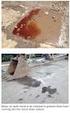 ACTIVITY NAME Training Requirements for Spill Prevention Control and Countermeasures (SPCC) 40 CFR Part 112 Naval Air Station Corpus Christi Texas CY 2014 BOTTOM LINE UP FRONT To prevent oil discharges
FIRE SAFETY FOR OFFICE WORKERS
 FIRE SAFETY FOR OFFICE WORKERS This easy-to-use Leader s Guide is provided to assist in conducting a successful presentation. Featured are: INTRODUCTION: A brief description of the program and the subject
MARINA ENVIRONMENTAL MANAGEMENT POLICY
 MARINA ENVIRONMENTAL MANAGEMENT POLICY Clean Water & A Clean Environment Are Essential To Good Boating The Abbey Marina Is Committed To Being Environmentally Compatible STATEMENT OF PURPOSE: CLEAN & PROTECT
RISK MANAGEMENT IN THE NATIONAL SYSTEM A PRACTICAL GUIDE
 RISK MANAGEMENT IN THE NATIONAL SYSTEM A PRACTICAL GUIDE RISK MANAGEMENT IN THE NATIONAL SYSTEM A PRACTICAL GUIDE Contents Introduction 2 Terms associated with risk management 3 The risk management process
TEMPORARY EMPLOYEES SAFETY PROCEDURES
 TEMPORARY EMPLOYEES SAFETY PROCEDURES Temporary Agencies will ensure that any temporary employee sent to work at Modern will have received and understand the General Safety Rules. GENERAL SAFETY RULES
Confined Space Entry Procedure Worksheet
 1. Location Exact name and location of space to be entered. Confined Space Entry Procedure Worksheet 2. Hazard Identification & Determination - (circle all that apply) a. Tasks to be performed. Welding/Cutting
Preventing and Responding to a Fuel or Oil Spill. Recommended Practices
 Preventing and Responding to a Fuel or Oil Spill The best way to reduce the possibility of a fuel or oil spill is to take preventative steps to minimize the chance that a spill will occur. Preventative
History of the SPCC Rule
 2010 SPCC Training SPCC Rule History of the SPCC Rule The SPCC plan is a document required under the clean water act (CWA) It became effective in 1972 and has changed little in 32 years. The rule was formally
Florida Department of Environmental Protection
 Florida Department of Environmental Protection Background Mobile vehicle and equipment washing involves washing at a location where vehicles are based (such as a trucking company, warehouse, bus station,
Developing a simple risk register a basic approach
 Developing a simple risk register a basic approach Some of the Terms used when dealing with Risks: HAZARD. This is something that could cause you, a crew member, a passenger, your vessel, another vessel
E3902 Seeing Accidents Before They Happen Leader s Guide
 E3902 Seeing Accidents Before They Happen Leader s Guide ERI PRODUCTIONS INC. SEEING ACCIDENTS BEFORE THEY HAPPEN This easy-to-use Leader s Guide is provided to assist in conducting a successful presentation.
APPENDIX 7-B. Hazardous Materials Management Plan
 S TAR-ORION S OUTH D IAMOND P ROJECT E NVIRONMENTAL I MPACT A SSESSMENT APPENDIX 7-B Hazardous Materials Management Plan SX03733 Section 6.0 1.1.1 Hazardous Materials Management Plan 1.1.1.1 Introduction
Topics of the Presentation
 Drill Rig Safety Topics of the Presentation Personnel safety and monitoring PPE Health (Drugs and Alcohol) Drill Rig operation Safe set up procedures Safe operation of machine Safety related accidents
FALLING OBJECTS EXCESSIVE NOISE CHAINSAW & CHIPPER WORK AT HEIGHTS MANUAL HANDLING
 JOB NO: PROJECT: DATE: SWMS NO: SWMS 001.1 PREPARED BY: Ian Hartley REVISED BY: Nick Bragg & Cameron McNeil ACTIVITY: TREE REMOVAL & PRUNING SIGNED BY: REVISION DATE: December 2015 MINIMUM PERSONAL PROTECTIVE
DIRECT TRANSFER COAL FACILITY SPILL RESPONSE PLAN
 DIRECT TRANSFER COAL FACILITY SPILL RESPONSE PLAN Last revised June 5th, 2015 Page 1 of 13 Table of Contents 1. PURPOSE... 2 2. ROLES AND RESPONSIBILITIES... 2 3. SAFETY... 2 4. COAL SPILLS... 3 4.1. COAL
Vehicle Fire Protection. An Ownerʼs Manual for ANSUL Fire Suppression/Detection Systems
 Vehicle Fire Protection An Ownerʼs Manual for ANSUL Fire Suppression/Detection Systems 002792 Off-road vehicles do have fires Statistics show that off-road vehicles burn with alarming frequency. These
Good practice. Enclosed lifeboat launching. It s your ship and equipment look after them and they will look after you GOOD PRACTICE
 Enclosed lifeboat launching NUMBER 72 Counterweight rigged correctly, externally All crew aware of operation through drills and lecture Monthly checks as per SMS The brake wire should fall free from the
68 Metal Industry Guidelines for Safe Work
 3 68 Metal Industry Guidelines for Safe Work section 3 high-risk 3 activities Metal Industry Guidelines for Safe Work 69 section 3 high risk activities 3.1 working at heights Falls from heights have been
The Application of Rope Access Methods in the Construction, Inspection, Repair and Maintenance of Wind Turbines
 The Application of Rope Access Methods in the Construction, Inspection, Repair and Maintenance of Wind Turbines Introduction IRATA International s rope access system is a safe method of working at height,
Independent Contractor Policy
 Independent Contractor Policy This Policy has been implemented to prevent accidents and personal injuries. It is not intended to be entirely inclusive. It is the responsibility of the Independent Contractor
All You Ever Wanted to Know About Fire Extinguishers...
 All You Ever Wanted to Know About Fire Extinguishers... There are basically four different types or classes of fire extinguishers, each of which extinguishes specific types of fire. Newer fire extinguishers
Discussion Leaders Guide Session Slips, Trips and Falls
 Discussion Leaders Guide Session Slips, Trips and Falls 1. Preparation You will need a DVD player and a television. Review the Tell, Ask and Review portions of the Discussion Leaders Guide. You will be
BOATING SAFETY EDUCATION REQUIREMENT
 A vessel which is lawfully numbered in another state and which is brought into and kept in North Carolina may be used on the waters of this state during the 90 day period immediately ensuing its introduction
Fall Protection Guidelines
 OCT 2015 1 of 6 Fall Protection Guidelines 1.0 PURPOSE To establish the requirements and procedures to protect employees and other persons conducting work from hazards associated with falling from one
FACT SHEET: HAZARDOUS MATERIALS ACCIDENTS
 FACT SHEET: HAZARDOUS MATERIALS ACCIDENTS A hazardous materials accident can occur anywhere. Communities located near chemical manufacturing plants are particularly at risk. However, hazardous materials
Company Name Chemical Spill Prevention & Clean-up Procedures Program. Last Revised On 00/00/0000
 Company Name Chemical Spill Prevention & Clean-up Procedures Program Last Revised On 00/00/0000 PURPOSE The following program will discuss how prevent chemical spills from occurring and setting forth procedures
Simple Damage Control Aboard
 Simple Damage Control Aboard By Marc A. Barredo Damage control aboard ship involves any prudent action that will; prevent or reduce expected damage to the ship, stabilize the situation caused by the damage,
WORKSAFE VICTORIA A HEALTH AND SAFETY SELF-ASSESSMENT CHECKLIST FOR SMALL BUSINESS
 Aug 2013 WORKSAFE VICTORIA A HEALTH AND SAFETY SELF-ASSESSMENT CHECKLIST FOR SMALL BUSINESS As a small business operator, you need to be aware of your health and safety responsibilities, and identify risks
Notes. Material 1. Appropriate Flammable Liquids
 29 CFR 1910.106 Flammable Materials Flammable Liquids Preparation 1. Read Applicable Background information and related Company Policy Chapter. 2. Make Copies of this Lesson Plan for Personnel 3. Make
Accidents/Incidents are Preventable
 Section 4 Fundamentals of Accident/Incident Prevention Accidents/Incidents are Preventable Many people believe that accidents are the inevitable result of unchangeable circumstances, fate, or a matter
CONFINED SPACE ENTRY WORK STANDARD
 CONFINED SPACE ENTRY WORK STANDARD CONFINED SPACE ENTRY WORK STANDARD Copyright 2007 All rights reserved. Reproduction of this document in whole or in part by any means is prohibited, unless authorized
Safety Manual Title: Spill Prevention & Response Review Date: 6/1/2014
 Operation s Purpose The purpose of this plan is to document spill prevention and response requirements. Each Elkhorn Construction, Inc. jobsite will develop a spill prevention and response plan based on
TANKER - SHORE SAFETY CHECK-LIST
 TANKE - SHOE SAFETY CHECK-LIST Part A - Bulk Liquid General - Physical Checks Bulk Liquid - General Tanker Terminal Code emarks 1 There is safe access between the tanker and shore. L1 The fendering arrangements
Fuel Storage Who to ask: tank farm owners/operators
 Fuel Storage Fuel Storage Who to ask: tank farm owners/operators 89. How many tank farms are there in the village and who owns them? Fuel tank farm The questions in the following section should be answered
Slips, Trips, and Falls
 Slips, Trips, and Falls Slips, Trips, and Falls Cause Many Injuries Sometimes Serious Ones Thousands of disabling injuries- and even deaths- occur each year as a result of slips, trips, and falls: From
PBX Series Quick Fit Connector Bimetallic Steam Traps
 6262100/6 IM-P626-01 ST Issue 6 PBX Series Quick Fit Connector Bimetallic Steam Traps Installation and Maintenance Instructions 1. Safety information 2. General product information 3. Installation 4. Commissioning
SPILL PREVENTION PLAN
 SPILL PREVENTION PLAN ASPHALT BATCH PLANT NIRB FILE # 15XN046 Presented to NIRB September 2015 TABLE OF CONTENTS PAGE 1. SPILL CONTROL PLAN... 1 1.1 RESPONSE EQUIPMENT... 1 1.2 GENERAL PROCEDURES IN CASE
SAMPLE FRACTION MITIGATION CONTINGENCY PLAN FOR DIRECTIONAL DRILLING
 SAMPLE FRACTION MITIGATION CONTINGENCY PLAN FOR DIRECTIONAL DRILLING 1 TABLE OF CONTENTS 1.0 Introduction and Purpose 3 2.0 Description of Work 3 3.0 Site Supervisor/Foremen Responsibilities 4 4.0 Equipment
Safety of Life at Sea, 1974 (SOLAS)
 Safety of Life at Sea, 1974 (SOLAS) Prof. Manuel Ventura Ship Design I MSc in Marine Engineering and Naval Architecture Chap. III. Lifesaving Appliances and Arrangements 1 Cargo Ships Cargo Ships - Case
VERIFY HARD COPY AGAINST WEB SITE IMMEDIATELY PRIOR TO USE
 Nuclear Safe Work Practice 6.7 Safety Signs/Tapes/Ropes/Chains and Tags 1.0 PURPOSE/SCOPE To provide consistent standards for using safety signs, tapes, ropes and chains (barriers) to communicate existing
Preventing slips, trips, and falls
 Many workers are injured annually due to falls on walking and working surfaces. These injuries account for a significant percentage of lost-time injuries. Not only are slips, trips, and falls an economical
SAFETY SELF-INSPECTION PROGRAM
 Palm Beach State College Florida s First Public Community College SAFETY SELF-INSPECTION PROGRAM PALM BEACH STATE COLLEGE SAFETY SELF-INSPECTION PROGRAM 1. INTRODUCTION An important element of any employee
SPILL RESPONSE PROCEDURE
 SPILL RESPONSE PROCEDURE Queen's University Spill Response Procedure May 2000 1 SOP-HAZMAT-01 1.0 Preamble This document outlines emergency spill response procedures as part of the overall Queen's University
Spill Prevention, Control and Countermeasure (SPCC) Rule
 Spill Prevention, Control and Countermeasure (SPCC) Rule Code of Federal Regulations Title 40 CFR Part 112 Training Guide for Oil and Fuel handlers on Farms 1 Purpose of SPCC Rule To prevent oil discharges
CHAPTER 2 GENERAL SAFETY REQUIREMENTS
 Bridge Inspection Handbook 2-1 2.1 INTRODUCTION CHAPTER 2 GENERAL SAFETY REQUIREMENTS Safety is everyone's business. As an employer, MassDOT is obligated to promote job safety and furnish safe tools, equipment,
Example risk assessment for a motor vehicle mechanical repair workshop
 Example risk assessment for a motor vehicle mechanical repair workshop Setting the scene The garage manager did the risk assessment. The business employed 12 mechanics, including two apprentices who carried
Section 2 Hazard Assessment and Risk Control Table of Contents
 Section 2 Hazard Assessment and Risk Control Table of Contents 2.1 INTRODUCTION... 2 Class A Hazard... 3 Class B Hazard... 3 Class C Hazard... 3 Class D Hazard... 3 2.2 HAZARD ASSESSMENT... 4 2.2.1 Hazard
PITTSBURG TANK AND TOWER CO., INC.
 PITTSBURG TANK AND TOWER CO., INC. HEALTH, SAFETY & ENVIROMENTAL PROGRAM INDEX 1.SAFETY POLICY & MANAGEMENT RESPONSIBILITIES - Safety Policy - Administrative Duties * Top Management * Safety Director *
CONSTRUCTION FIRE SAFETY PLANNING GUIDELINES
 CONSTRUCTION FIRE SAFETY PLANNING GUIDELINES Review the following information pertaining to Construction Fire Safety Planning: B.C. Building Code Sections 8.1 up to and including Subsection 8.2.3 B.C.
WORKING IN CONFINED SPACES GUIDELINES
 WORKING IN CONFINED SPACES GUIDELINES Contents 1 Introduction... 2 2 Scope... 2 3 Definitions... 2 4 Responsibilities... 3 4.1 Permit Authoriser... 3 4.2 Permit Receiver... 3 4.3 Responsible UOW Officer...
Guide to Fall Protection Regulations
 Guide to Fall Protection Regulations Produced by: Workers Compensation Board of PEI PO Box 757 Charlottetown PE C1A 7L7 902-368-5697 or 1-800-237-5049 website: www.wcb.pe.ca Revised June 2013 Guide to
How To Prevent Accidents At Work
 2 Preventing vehicle accidents Construction work is considered to be one of the most hazardous industrial activities in the EU. The rate of injury in the construction industry is higher than in other industries.
FACILITY FIRE PREVENTION AND EMERGENCY PREPAREDNESS INSPECTION CHECKLIST
 FACILITY FIRE PREVENTION AND EMERGENCY PREPAREDNESS INSPECTION CHECKLIST Date of Inspection: Conducted by: Location: Reviewed by: Date of Review: Comments or additional corrective action taken as a result
OREGON FIRE CODE Interpretations and Technical Advisories
 OREGON FIRE CODE Interpretations and Technical Advisories A collaborative service by local and state fire professionals, along with our stakeholders and customers, to provide consistent and concise application
A Guide to Trouble-Free Cooling Towers
 A Guide to Trouble-Free Cooling Towers A basic understanding of cooling tower operation and maintenance will help keep a cooling water system running in top condition, year after year By David M. Suptic
MD 52 WASTE MANAGEMENT AUTHORITY CORPORATE HEALTH AND SAFETY PROGRAM
 UNSAFE ACTS AND CONDITIONS All accidents are the result of an unsafe act, an unsafe condition or a combination of both. Unsafe acts account for approximately 80% of all incidents/accidents, while unsafe
Flammable and Combustible Liquids. Slide 1 (of 23)
 Flammable and Combustible Liquids Slide 1 (of 23) Introduction The two primary hazards associated with flammable and combustible liquids are explosion and fire Safe handling and storage of flammable liquids
Static Electricity. A Health and Safety Guideline for Your Workplace. What Are Some Sources of Static Electricity? What is Static Electricity?
 A Health and Safety Guideline for Your Workplace What is static electricity? What causes it? How is it hazardous? And, most importantly, how can it be controlled? All of these questions will be answered
OPRC Level II CONTINGENCY PLANNING, RESPONSE MANAGEMENT AND ORGANIZATION
 OPRC Level II CONTINGENCY PLANNING, RESPONSE MANAGEMENT AND ORGANIZATION Outline 1. Purpose and types of plans 2. Structure of a contingency plan 3. The response organization 4. Escalation of the response
Outdoor Storage of Raw Materials SC-33
 Objectives Cover Contain Educate Reduce/Minimize Description Raw materials, by-products, finished products, containers, and material storage areas exposed to rain and/or runoff can pollute stormwater.
MATERIAL HANDLING PROGRAM (Section 10)
 MATERIAL HANDLING PROGRAM (Section 10) OVERVIEW (WMI Facility) (1) Only certified personnel will operate powered industrial lifts. (2) Training will be provided to those who require to be certified or
Chapter 2 Stormwater Pollution Prevention Plan (SWPPP) for Park Operations
 SWPPP for Park Operations 2 Chapter 2 Stormwater Pollution Prevention Plan (SWPPP) for Park Operations Bordered by Lake Washington & Lake Sammamish, the City of Bellevue has more than 60 miles of streams,
Fire Extinguishers. A Health and Safety Guideline for Your Workplace. Fire Extinguishing Methods. Introduction. Types of Extinguishers
 A Health and Safety Guideline for Your Workplace Introduction Fire extinguishers are designed to put out or control small fires. A small fire, if not checked immediately, will soon spread out of control.