
Promoting wound healing is the focus during the PROPERTY OF ELSEVIER SAMPLE CONTENT - NOT FINAL. Surgical Wound Care CHAPTER BASIC NURSING SKILLS
|
|
|
- Moses Dorsey
- 10 years ago
- Views:
Transcription
1 CHAPTER 13 UNIT TWO BASIC NURSING SKILLS Surgical Wound Care ELAINE KOCKROW Objectives After reading this chapter the student should be able to do the following: 1. Define key terms as listed. 2. Discuss the body s response during each stage of wounds healing. 3. Identify common complications of wound healing 4. Differentiate between healing by primary and secondary intention. 5. Discuss common complications of wound healing 6. Explain procedure for applying dry dressings: wet-todry dressings. 7. Identify the procedure for removing sutures and staples. 8. Discuss care of the patient with a wound drainage system: Hemovac/Davol suction, T-tube drainage. 9. Identify procedure for performing sterile wound irrigation. 10. Describe the purposes of and precautions taken when applying bandages and binders. 11. List nursing diagnoses associated with impaired skin integrity. Key Terms Be sure to check out the bonus material on the free CD-ROM, including selected audio pronunciations. bandage (p. XXX) binder (p. XXX) dehiscence (de -HĬS-ĕns, p. XXX) drainage (p. XXX) evisceration (e -vĭs-ĕr-a -shŭn, p. XXX) exudate (ĔKS-u -da t, p. XXX) granulation (grăn-u -LA -shŭn, p. XXX) incision (ĭn-sĭzh-ŭn, p. XXX) infectious process (p. XXX) inflammatory response (p. XXX) irrigation (p. XXX) primary intention (p. XXX) purulent (PU -roo-lĕnt, p. XXX) sanguineous (săng-gwĭn-e -ŭs, p. XXX) secondary intention (p. XXX) serosanguineous (SĔR-o -săng-gwĭn-e -ŭs, p. XXX) serous (SĔR-ŭs, p. XXX) tertiary intention (TĔR-she -ăr-e, p. XXX) Promoting wound healing is the focus during the postsurgical recovery phase. Various stresses affect a wound s ability to repair itself. Stress and strain (nausea, vomiting, abdominal distention, coughing, respiratory efforts) place tension against a surgical incision, especially an abdominal incision. During this phase, the abdominal muscles contract and cause intraabdominal pressure; if the incisional area is weak, dehiscence may occur. As the postoperative period lengthens, patient-related factors influence wound healing: age, nutritional status, physical condition, preexisting health problems (e.g., diabetes), and medication habits. Other factors that may affect wound healing include preoperative skin preparation, type of surgical procedure, environment within the surgical suite, and postoperative wound care. WOUND CLASSIFICATION Wound classifications result from their cause, severity of injury, amount of contamination, or the skin s integrity. For planned surgery, a wound is made by an incision (a cut produced surgically by a sharp instrument creating an opening into an organ or space in the body) or puncture (stab wound for a drainage system). In unplanned or emergency surgeries (traumatic injury from a knife stabbing), wound edges are brought together to aid healing. Unless a dirty surgery is performed (e.g., a perforated bowel, ruptured appendix), a surgical incision is cleaner than a traumatic wound. The Centers for Disease Control and Prevention (CDC) classifiy wounds according to the amount of contamination involved: clean, clean-contaminated, contaminated, and dirty or infected. A clean wound is an uninfected surgical wound; the chance of an infection occurring postoperatively is less than 5%. A surgical incision made into the respiratory, gastrointestinal (GI), or genitourinary tract after special presurgical preparation is called a clean-contaminated wound. The likelihood that an infection will occur postoperatively in a clean-contaminated wound is between 3% and 11%. A contaminated wound results from the presence of GI products (e.g., feces with Escherichia coli in the colon); from an acute, nonpurulent inflammation (inflamed appendix); or when aseptic technique is broken during surgery (scalpel is reused after incising a contaminated area). A wound infection occurs 10% to 17% of the time from a contaminated wound. Dirty 1
2 2 UNIT TWO BASIC NURSING SKILLS or infected wounds have a 27% chance of causing a wound infection. Wounds in this category (e.g., gangrenous toe) are infected before surgery. WOUND HEALING The healing process begins immediately after an injury and may continue for a year or longer. Although the healing process follows the same pattern, the type of wound and tissue, severity, and overall condition of the patient influence the overall process. Wound healing follows four phases: hemostasis, inflammatory, reconstruction, and maturation. PHASES OF WOUND HEALING Hemostasis (termination of bleeding) begins as soon as the injury occurs. As blood platelets adhere to the walls of the injured vessel, a clot begins to form. Fibrin in the clot begins to hold the wound together, and bleeding subsides. During the inflammatory phase an initial increase in blood elements (antibodies, electrolytes, plasma proteins) and water flow out of the blood vessel into the vascular space. This process causes the cardinal signs and symptoms of inflammation: erythema (redness), heat, edema (swelling), pain, and tissue dysfunction. Leukocytes appear and begin to engulf bacteria, fungi, viruses, and toxic proteins. If an infection is not present, the number of leukocytes decreases. During the inflammatory phase, cells migrate, divide, and form new cells. Slowly, blood clots dissolve and the wound fills; the sides of the wound usually meet in 24 to 48 hours. As the inflammatory phase ends, new cells and capillaries fill the wound from the underlying tissue to the surface. This process seals the wound to protect it from contamination. Collagen formation occurs during the reconstruction phase. This phase begins on the third or fourth day after injury and lasts for 2 to 3 weeks. Fibroblasts produce collagen, a gluelike protein substance that adds tensile strength to the wound and tissue. Collagen formation increases rapidly between postoperative days 5 and 25. During this phase the wound s appearance changes to an irregular, raised, purplish, immature scar. Foods rich in protein and vitamins A and C, which assist in wound repair, are encouraged during this time. If a patient is not well nourished, nutrient supplements may be ordered. Wound dehiscence most frequently occurs during the reconstruction phase. Approximately 3 weeks after surgery, fibroblasts begin to exit the wound. The wound continues to gain strength, although healed wounds rarely return to the strength the tissue had before surgery. Although tissue heals at varying speeds, internal wounds (stomach, colon) regain strength faster than skin wounds. Occasionally a keloid, which is an overgrowth of collagenous scar tissue at the site of a wound, may form during this maturation phase. The keloid s color ranges from red to pink to white. This new tissue is elevated, rounded, and firm. African-Americans, dark-complexioned whites, and young women have the highest incidence of keloid formation. Therapy can worsen the condition and should be performed only by skilled professionals. PROCESS OF WOUND HEALING The process of wound healing occurs by primary intention (primary union), secondary intention (granulation), and tertiary (third) intention. Wounds that are made surgically and that have little tissue loss heal by primary intention; skin edges are close together, and minimal scarring results. Primary intention healing begins during the inflammatory phase of healing (Figure 13-1). Secondary intention healing occurs when skin edges are not close together (approximated) or when pus has formed. If the wound has a purulent (producing or containing pus) exudate (fluid, cells, or other substances that have been slowly exuded, or discharged, from cells or blood through small pores or breaks in cell membranes) that forms when injured or diseased tissue dies, the surgeon provides a means for its release. This is accomplished through a drainage system or by packing the wound with gauze. Slowly the necrotized tissue decomposes and escapes; the cavity begins to fill with soft, pink, fleshy projections consisting of capillaries surrounded by fibrous collagen, or granulation tissue. The amount of granulation tissue required depends on the size of the wound; scarring is greater in a large wound. Tertiary intention (delayed primary intention) occurs with delayed suturing of a wound in which two layers of granulation tissue are sutured together. This occurs when a contaminated wound is left open and sutured closed after the infection is controlled. It also occurs when a primary wound becomes infected, is opened, is allowed to granulate, and is then sutured. Tertiary intention results in a larger and deeper scar than primary or secondary intention. An important concept in wound healing is that the stages of wound healing, although progressive, do not occur in a linear (strictly sequential) fashion. A normally healing wound could simultaneously be in all three stages of wound healing. The stages described previously provide a model for acute wound healing. FACTORS THAT AFFECT HEALING To promote healing the nurse should closely monitor fluid and nutritional needs of the patient. If the patient cannot tolerate food or fluids, total parenteral nutrition or nasogastric feedings can be provided. Because patients may not be able to tolerate large meals or solid foods, dietary services can provide small frequent feedings. Fluids, when tolerated, should be offered
3 Surgical Wound Care CHAPTER 13 3 A Incision with blood clot Edges approximated with suture Fine scar Irregular, large wound with blood clot hourly. Unless contraindicated, the nurse should encourage an intake of 2000 to 2400 ml in 24 hours. As the patient progresses from clear to full liquids, fluids the patient enjoys should be provided. Until the patient s hydration level is stable (usually 24 to 72 hours), the patient s intake and output (I&O) are monitored. The nurse assists the patient to achieve a balance between time to rest as a means to facilitate healing and activity to decrease venous stasis. When the patient is confined to bed, moving one body section at a time head, chest, hip, legs should be encouraged. To sit up, the patient should roll to the side and, using the elbow as a lever, push to a sitting position; this reduces the stress placed on the incision. If coughing occurs, the nurse can apply a pillow, rolled bath blanket, or the palms of the hands to the incisional area to lessen intraabdominal pressure. Visitors may be restricted if the patient tires too easily. Preexisting conditions, such as heart murmurs, and chronic diseases (arthritis, diabetes mellitus, hypertension) add stress to the recovering body and require ongoing monitoring (Table 13-1). Granulation tissue fills in wound Large scar Contaminated wound Granulation tissue Delayed closure with suture FIGURE 13-1 Types of wound healing. A, Primary intention. B, Secondary intention. C, Tertiary intention. SURGICAL WOUND The selection of the site for the surgical wound is based on the tissue and organ involved, nature of the injury or disease process, presence of inflammation or infection, and strength of the site. If surgical procedures require a drainage system, the position of the drain also influences the placement of the incision. The surgeon s goal is to enter the cavity involved, repair the injured or diseased area, and minimize trauma as quickly as possible. Patients may be placed in positions that add stress to the tissue to facilitate the surgery. Therefore pain after surgery may be caused from strained muscles and ligaments, as well as from the surgical process. Many options are available to the surgeon for closing the surgical incision. Common closures are sutures, staples, Steri-Strips, butterfly strips, and transparent sprays and films. A binder or bandage may be used to support the incision or secure dressings without using adhesive materials. The nurse inspects dressings every 2 to 4 hours for the first B C
4 Table 13-1 Factors That Impair Wound Healing PHYSIOLOGIC EFFECTS INTERVENTIONS AGE Aging alters all phases of wound healing. Vascular changes impair circulation to wound site. Reduced liver function alters synthesis of clotting factors. Inflammatory response is slowed. Formation of antibodies and lymphocytes is reduced. Collagen tissue is less pliable. Scar tissue is less elastic. MALNUTRITION All phases of wound healing are impaired. Stress from burns or severe trauma increases nutritional requirements. OBESITY Fatty tissue lacks adequate blood supply to resist bacterial infection and deliver nutrients and cellular elements. IMPAIRED OXYGENATION Low arterial oxygen tension alters synthesis of collagen and formation of epithelial cells. If local circulating blood flow is poor, tissues fail to receive needed oxygen. Decreased hemoglobin (anemia) reduces arterial oxygen levels in capillaries and interferes with tissue repair. SMOKING Smoking reduces amount of functional hemoglobin in blood, thus decreasing tissue oxygenation. Smoking may increase platelet aggregation and cause hypercoagulability. Smoking interferes with normal cellular mechanisms that promote release of oxygen to tissues. DRUGS Steroids reduce inflammatory response. Antiinflammatory drugs suppress protein synthesis, wound contraction, epithelialization, and inflammation. Prolonged antibiotic use may increase risk of superinfection. Chemotherapeutic drugs can depress bone marrow function, number of leukocytes, and inflammatory response. DIABETES MELLITUS Chronic disease causes small blood vessel disease that impairs tissue perfusion. Diabetes causes hemoglobin to have greater affinity for oxygen, so it fails to release oxygen to tissues. Hyperglycemia alters ability of leukocytes to perform phagocytosis and also supports overgrowth of fungal and yeast infection. RADIATION Fibrosis and vascular scarring eventually develop in irradiated skin layers. Tissues become fragile and poorly oxygenated. WOUND STRESS Vomiting, abdominal distention, and respiratory effort may stress suture line and disrupt wound layer. Sudden, unexpected tension on incision inhibits formation of endothelial cell and collagen networks. Instruct patient on safety precautions to avoid injuries. Be prepared to provide wound care for longer period. Teach home caregivers wound care techniques (Patient Teaching: Wound Care box). Provide balanced diet rich in protein, carbohydrates, lipids, vitamins A and C, and minerals (e.g., zinc, copper). Provide adequate amounts of calories and fluids. Observe obese patient for signs of wound infection, dehiscence, and evisceration. Provide diet adequate in iron, vitamin B, and folic acid. Monitor hematocrit and hemoglobin levels of patients with wounds. Discourage patient from smoking by explaining its effects on wound healing. Carefully observe patient; signs of inflammation may not be obvious. Vitamin A can counteract effects of steroids. Instruct patient to take preventive measures to avoid cuts or breaks in skin. Provide preventive foot care. Control blood sugar to reduce the physiologic changes associated with diabetes. Closely observe patients who have had surgery for wound complications. Control nausea with ordered antiemetics. Keep NG tubes patent and draining to avoid accumulation of secretions. Instruct patient to splint abdominal wound during coughing.
5 Surgical Wound Care CHAPTER 13 5 Table 13-2 TYPE Types of Wound Drainage APPEARANCE A. Serous Clear, watery plasma B. Purulent Thick, yellow, green, tan, or brown C. Serosanguineous Pale, red, watery: mixture of serous and sanguineous D. Sanguineous Bright red: indicates active bleeding From Elkin, M.K., Perry, A.G. & Potter, P.A. (2004). Nursing interventions and clinical skills (3rd ed.). St. Louis: Mosby. 24 hours. The day of surgery, most wounds produce either sanguineous (pertaining to blood) or serosanguineous (thin and red, composed of serum and blood) exudate. Later, as the exudate subsides, it becomes serous (thin and watery, composed of the serum portion of blood) (Table 13-2). Because pressure to the surgical wound retards bleeding, wounds are usually covered by a gauze dressing. It is imperative that the nurse inspect both the dressing or incisional area and the area under the patient. Exudate follows the flow of gravity; therefore, depending on the contour of the body, the dressing may remain dry while blood/exudate flows under the body, and hemorrhaging might go undetected. Gradually fluid from the cells clusters with leukocytes along the vessel walls so that fibrin walls off the injury and begins to build a new cell. The extent of the inflammatory response (a tissue reaction to injury) depends on the level of injury inflicted, size of the area involved, and physical condition of the patient. With repair, leukocytes attempt to rid the tissue of exudate from the injured cells. This process, phagocytosis, is an important function of leukocytes. Phagocytosis (a process by which certain cells engulf and dispose of microorganisms and cell debris) occurs when exudate from the injured cell is surrounded, engulfed, and digested by leukocytes. The leukocyte becomes the body s vacuum cleaner by removing its debris. Evidence of leukocyte action can be observed through changes in the white blood cell (WBC) count. An infectious process (a condition caused by the invasion of the body by pathogenic microorganisms) would be evidenced by an elevated WBC count. STANDARD STEPS IN WOUND CARE SKILLS All nursing skills must include certain basic steps for the safety and well-being of the patient and the nurse. To save space and minimize repetition, these steps are not included in each skill unless it is necessary to clarify them as applied for that skill. Remember that these skills are essential and must be followed with exactness to deliver appropriate and responsible nursing interventions. Before the skill: 1. Refer to medical record, care plan, or Kardex for special interventions. (Provides basis for care. Many nursing interventions require a physician s order. Verification is ensured when nurse reviews medical record.) 2. Introduce yourself; include your name and title or role. (Decreases patient anxiety.) 3. Identify patient by checking armband and requesting patient to state his or her name. (Identifies correct patient for procedure.) 4. Explain the procedure and the reason it is to be done in terms the patient can understand, and give patient time to ask questions. Advise patient of any unpleasantness that might be experienced. (Seeks cooperation, decreases patient s anxiety, and prepares patient. Also helps determine if procedure is still appropriate.) 5. Assess need for and provide patient teaching during procedure. (Promotes patient s independence.) 6. Assess patient. Each skill has an assessment section that includes specific data. (Provides baseline information for later comparisons.) 7. Wash hands and don clean gloves according to agency policy and guidelines from the CDC and Occupational Safety and Health Administration (OSHA) (see Chapter 12). (Reduces the spread of microorganisms.)
6 6 UNIT TWO BASIC NURSING SKILLS 8. Assemble equipment and complete necessary charges. (Organizes procedure. Some equipment is reusable and is kept at the bedside. Some of the equipment is disposable and charged to the patient as used. Know agency policy. Specific equipment is listed for each skill.) 9. Prepare patient for intervention: a. Close door/pull privacy curtain. (Provides privacy and promotes patient s comfort.) b. Raise bed to comfortable working height; lower side rail on side nearest the nurse. (Promotes proper body mechanics by minimizing muscle strain on caregivers and preventing injury and fatigue.) c. Position and drape patient as necessary. (Respect for privacy is basic for preserving human dignity. Patients have the right to privacy. Specific positions are included in each skill.) During the skill: 10. Promote patient involvement as possible. (Participation encourages patient motivation and cooperation.) 11. Assess patient s tolerance, being alert for signs and symptoms of discomfort and fatigue. Inability to tolerate a procedure is described in the nurse s notes. (Patient s ability to tolerate interventions varies depending on severity of illness and disability. Nurses need to use judgment in providing the opportunity for rest and comfort measures.) Completion of procedure: 12. Assist patient to a position of comfort and place needed items within easy reach. Be certain patient has a means to call for assistance and knows how to use it. (Promotes safety patients may attempt to reach items and risk falling or injury.) 13. Raise the side rails and lower the bed to the lowest position. (This minimizes the risk of patients getting out of bed unattended. Nursing judgment may allow alert, cooperative patients to have their side rails down during daytime hours without the risk of injury.) 14. Remove gloves (see Skill 13-3, step 6) and all protective barriers, such as gown, goggles, and masks if worn. Store or remove and dispose of soiled supplies and equipment according to agency policy and guidelines from CDC and OSHA (see Chapter 12). (Reduces spread of microorganisms, cleans environment, enhances patient comfort.) 15. Wash hands after patient contact and after removing gloves. (Wearing gloves does not eliminate the need to wash hands. Hand hygiene is the single most important technique in prevention and control of the spread of microorganisms.) 16. Document patient s response, expected or unexpected outcomes, and patient teaching. (Timely and quality documentation records patient progress and promotes continuity of care. Recording also fulfills legal responsibility of nurse.) Specific notes for documentation are included in each skill. 17. Report any unexpected outcomes. (Additional therapies may be necessary.) Specific notes for reporting are included in each skill. CARE OF THE INCISION Surgical wounds, because they are aseptically created, generally heal well and quickly. For psychologic reasons and to prevent trauma until epithelialization occurs, the wound is usually covered initially by a dressing. Incision coverings may be gauze, semiocclusive, or occlusive dressings (Figure 13-2). Gauze dressings permit air to reach the wound; semiocclusive dressings permit oxygen but not air impurities to pass; occlusive dressings permit neither air nor oxygen to pass. Occlusive and semiocclusive dressings are thought to promote healing by keeping wounds moist (yet sterile) so epithelial cells can slide more easily over the surface of the wound during epithelialization. Dressings over closed wounds are usually removed by the third day. Some surgeons remove dressings the first postoperative day if no drains are present. If an occlusive dressing is used, the tape strips are placed on all sides of the dressing. Otherwise the tape strips are placed several inches apart to allow air or just oxygen to pass over the wound. The nurse may use tape, ties, or bandages and cloth binders to secure a dressing over a wound site. The choice of anchoring depends on the wound size, location, presence of drainage, frequency of dressing changes, and the patient s level of activity. When the nurse removes dressings, care is taken to avoid accidental removal or displacement of un- FIGURE 13-2 Types of dressings. Left to right: Rolled gauze, Telfa, ABD, 4 4, and drain dressing.
7 Surgical Wound Care CHAPTER 13 7 derlying drains. Because removal of dressings can be painful, it may help to give an analgesic at least 30 minutes before exposing a wound. There is a trend either to leave sutured, clean wounds not dressed after surgery or to use loose dressings. These methods allow atmospheric oxygen to circulate above the wound, aiding in the healing process. In many cases if a dressing has been used for closed wounds, it is removed within 24 hours postoperatively to allow air circulation. Within 24 hours enough fibrin has usually been produced at the wound site to stop the entry of microorganisms. The nurse will refer to agency policy and the physician or surgeon. Often the initial dressing change is done by the physician or surgeon. Sterile technique is followed whenever the wound or dressing is handled (see Chapter 12 for principles of sterile technique). Asepsis not only protects the nurse against wound drainage, but also decreases the introduction of pathogenic (any microorganism capable of producing disease) organisms into the wound (Figure 13-3). Using sterile asepsis (absence of germs) lessens the chance of the patient acquiring a nosocomial (hospital-acquired) infection. Standard precautions (see Chapter 12) should be employed when handling body secretions. Good hand hygiene technique and the use of sterile aseptic procedures are essential when providing surgical wound care. A gown, mask, and protective goggles are worn if soiling or splashing of wound exudate is expected. A dry dressing may be chosen for management of a wound with little exudate/drainage. The dressing protects the wound from injury, prevents introduction of bacteria, reduces discomfort, and speeds healing. A dry dressing also prevents deeper tissues from drying out by keeping the wound surface moist. Box 13-1 How to Make Montgomery Straps If ready-made Montgomery straps are not available, follow these steps to make your own: Cut four to six strips of 2- to 3-inch-wide (5 to 7.6 cm) hypoallergenic tape of sufficient length to allow the tape to extend about 6 inches beyond the wound on each side. (The length of the tape varies depending on the patient s size and the type and amount of dressing.) Fold each strip 2 to 3 inches back on itself (sticky sides together) to form a nonadhesive tab. Then cut a small hole in the folded tab s center, close to its top edge. Make as many pairs of straps as you will need to snugly secure the dressing. Clean the patient s skin to prevent irritation. After the skin dries, apply skin protectant. Then apply the sticky side of each tape to a skin Adapted from Nursing procedures. (3rd ed.). (2000). Springhouse, PA: Lippincott Williams & Wilkins. FIGURE 13-3 Applying a drain dressing. Dry dressings are most commonly used for abrasions and nondraining postoperative incisions. The dry dressing does not debride the wound and should not be selected for wounds requiring debridement. If a dry dressing adheres to a wound, the nurse should moisten the dressing with sterile normal saline or water before removing the gauze. Moistening the dressing in this manner decreases the adherence of the dressing to the wound and reduces the risk of further trauma to the wound (Skill 13-1). WET-TO-DRY DRESSING The primary purpose of wet-to-dry dressing (Skill 13-2) is to mechanically debride a wound. The moistened contact layer of the dressing increases the absorptive ability of the dressing to collect exudate and wound debris. As the dressing dries, it adheres to the wound and debrides it when the dressing is removed. These dressings are most appropriate for barrier sheet composed of opaque hydrocolloidal or nonhydrocolloidal materials, and apply the sheet directly to the skin near the dressing. Thread a separate piece of gauze tie, umbilical tape, or twill tape (about 12 inches [30.5 cm]) through each pair of holes in the straps, and fasten each tie as you would a shoelace. Do not stress the surrounding skin by securing the ties too tightly. Repeat this procedure according to the number of Montgomery straps needed. Replace Montgomery straps whenever they become soiled (every 2 to 3 days). If skin maceration occurs, place new tape about 1 inch (2.5 cm) away from any irritation. See Skill 13-1, step 14.
8 8 UNIT TWO BASIC NURSING SKILLS Skill 13-1 Changing a Sterile Dry Dressing Nursing Action (Rationale) 1. See standard nursing interventions 1 to 9, p.. 2. Assemble equipment: Clean gloves Sterile gloves Refuse container Dressing set Sterile normal saline (if indicated) Antiseptic swabs Ointment, if ordered Sterile 4 4 gauze squares Nonadherent dressing Fluff or loose gauze Sterile abdominal pads Barrier drape (optional) Tape (e.g., paper or micropore), Montgomery straps, or binder Adhesive remover (optional) Protective apparel (gown, goggles, mask [optional]) Disposable measuring device to accurately assess wound size and amount of drainage 3. Place refuse container in convenient location away from sterile field. (Avoids reaching across sterile field to prevent contamination.) 4. Set up sterile field. (Maintains asepsis during procedure and organizes approach to procedure.) a. Open sterile dressings. b. Use barrier drape as needed. c. Open sterile gloves. d. Open dressing set, if needed. e. Prepare antiseptic swabs. 5. Loosen tape by gently removing toward incision and gently using thumb to retract skin away from tape. (Minimizes tissue trauma and decreases patient discomfort.) 6. Don clean gloves and remove dressing and discard. If drains are present, remove dressings one layer at a time. (Avoids accidental removal of drain.) 7. Assess status of wound and wound drainage. (Evaluates healing process and collects data for accurate documentation.) 8. Remove gloves; discard. Wash hands and don sterile gloves. (Prevents spread of microorganisms and maintains surgical asepsis.) 9. Cleanse wound and surrounding area with antiseptic swab, starting from incision outward, one stroke per swab (see illustration). (Aids in removing bacteria from wound areas. Prevents contaminating previously cleaned area.) Step 9 Step Use sterile gauze to dry in same manner or allow antiseptic to air dry. (Drying reduces excess moisture that could eventually harbor microorganisms.) 11. Cleanse drain site if applicable (see illustration). (Cleansing of drain site helps to remove bacteria or prevent bacteria from entering wound area.) 12. Apply antibiotic ointment, if ordered, using same techniques as for cleansing. (Helps reduce growth of microorganisms.) 13. Cover wound with appropriately sized dry sterile dressing and use drain dressing, if applicable (see Figure 13-3). (Protects wound and skin around drain site from skin impairment.) 14. Secure dressing with tape, Montgomery straps (see illustration), or binder. Some facilities use a Skin Prep at tape sites to protect skin from irrita- 5
9 Surgical Wound Care CHAPTER 13 9 A B Step 14 Montgomery straps. A, Each tie is placed at side of dressing. B, Securing ties encloses dressing. wounds that do not have significant amounts of ischemic or necrotic tissue or large amounts of drainage/exudate. Take care not to apply a dressing so wet that it remains wet continuously. A too-wet dressing may cause tissue maceration and bacterial growth. Commonly used wetting agents include normal saline and lactated Ringer s solution, which are isotonic solutions that aid in mechanical debridement. Acetic acid is effective against Pseudomonas aeruginosa but is toxic to fibroblasts in standard dilutions. Sodium hypochlorite solution (Dakin s) may be used to facilitate debridement in a wound with necrotic debris and is an effective deodorizing solution. Povidone-iodine, usually one-quarter to one-half strength, is a rapid-acting antimicrobial agent for cleansing intact skin. In wounds, the solution is toxic to fibroblasts and has questionable efficacy in infected wounds. Other antibiotic solutions may be ordered, although their use is controversial. Wetting solutions should be discarded 24 hours after opening and replaced with fresh solution because they can harbor microorganism growth. tion. Consider use of Montgomery straps when dressings require frequent changing to prevent tape irritation of skin (see Box 13-1 on p. 7). (Supports wound and ensures placement and stability of dressings.) 15. See standard nursing interventions 10 to 17, pp Document: (Records patient s progress and therapy provided.) Status of wound Description of exudate/drainage (see Table 13-2) Dressings applied Patient s response to procedure Patient teaching (see Patient Teaching: Wound Care) 17. Report any unexpected appearance of wound or drainage or accidental removal of drain within an hour to physician. (Unless patient shows evidence of wound dehiscence, notification of physician of unexpected findings within an hour is adequate.) TRANSPARENT DRESSINGS Another type of dressing is a self-adhesive transparent film, a synthetic permeable (capable of allowing the passage of fluids or substances in solution) membrane that acts as a temporary second skin. It has several advantages. It adheres to undamaged skin to contain exudate and minimize wound contamination. It also serves as a barrier to external fluids and bacteria yet still allows the wound to breathe. It promotes a moist environment that speeds epithelial cell growth. It also permits visualization of the wound. See Skill 13-3 for applying a transparent dressing. IRRIGATIONS Wound cleansing and irrigation is accomplished using sterile technique or clean technique. The cleansing solution is introduced directly into the wound with a syringe, syringe and catheter, shower, or whirlpool. When a syringe is used, the tip should remain 1 inch (2.5 cm) above the wound. If the patient has a deep wound with a narrow opening, a soft catheter is attached to the syringe to permit the fluid to enter the wound using sterile technique. Irrigation should then
10 10 UNIT TWO BASIC NURSING SKILLS Skill 13-2 Applying a Wet-to-Dry Dressing Nursing Action (Rationale) 1. See standard nursing interventions 1 to 9, p.. 2. Assemble equipment: Barrier drape Sterile dressing Gauze Sterile basin Sterile solution Antiseptic swabs Instrument set, if needed Clean gloves Sterile gloves Refuse container Tape or Montgomery straps Waterproof pad 3. Place waterproof pad appropriately. (Prevents soiling of bed or linens.) 4. Place refuse container appropriately. (Avoids reaching across sterile field and thus prevents contamination.) 5. Set up sterile field. (Maintains sterile technique during procedure and organizes approach to procedure.) a. Open barrier drape. b. Add sterile dressing and gauze. c. Add sterile basin. d. Pour sterile solution into basin. e. Add instrument set, if needed. f. Add antiseptic swabs. 6. Loosen tape by gently removing toward incision and, using thumb, gently retracting the skin away from tape (countertraction). (Minimizes tissue trauma. Decreases patient discomfort.) 7. Don clean gloves. Remove dressing and discard. Do not moisten dressings to remove, because this will interfere with the debriding process. A kind nurse will medicate the patient before the procedure. (Protects nurse from microorganisms. Prevents contamination from soiled dressing and promotes patient comfort.) 8. Assess status of wound and wound exudate/ drainage on dressing (see Table 13-2). (Evaluates healing process. Collects data for accurate documentation.) 9. Remove gloves; discard. Wash hands and don sterile gloves. (Reduces spread of microorganisms and maintains surgical asepsis.) 10. Cleanse wound from incision outward, one stroke per swab, and discard. (Removes old drainage and bacteria from skin area.) 11. Place gauze into basin. (Wets gauze with solution.) 12. Wring excess solution from dressing, leaving it slightly moist. (Prevents growth of bacteria from dressing that is too wet.) 13. Apply moist gauze dressing as a single layer directly onto wound surface. If wound is deep, gently pack gauze into wound with forceps until all wound surfaces are in contact with moist gauze (see illustration). (Allows solution to come into contact with wound, which makes it effective. Moist gauze absorbs drainage and adheres to debris.) Step 13
11 Surgical Wound Care CHAPTER Apply dry dressing over wet gauze. (Allows for absorption of excess moisture pulling moisture from the wound.) 15. Cover with additional dressing as needed. (Protects wound from bacteria.) 16. Secure with tape or Montgomery straps. (Secures dressings in place.) 17. See standard nursing interventions 10 to 17, pp Document: (Documents patient s progress and therapy provided.) Wound status Description of exudate/drainage (see Table 13-2) Dressings applied Patient s response to procedure Patient teaching (see Patient Teaching: Wound Care) 19. Discuss change in dressing procedure with physician as wound surface becomes clean and granulation tissue is evident. (Promotes anticipated wound healing.) Skill 13-3 Applying a Transparent Dressing Transparent dressings are thin, self-adhesive elastic films (e.g., Op-site or Tegaderm). This synthetic permeable membrane acts as a temporary second skin, adheres to undamaged skin to contain exudates and minimize wound contamination, and allows the wound surface to breathe. The nurse is able to assess the wound without removing the film. This dressing conforms well to body contours with less restriction of movement. It promotes a moist environment, which speeds epithelial cell growth, and can be removed without damaging underlying tissues. The film is ideal for small, superficial wounds and as a dressing over an intravenous catheter site. Transparent dressings may be with or without adhesives and may stay in place up to 7 days, if complete occlusion is maintained. For best results, these dressings are used on clean, debrided wounds that are not actively bleeding. The film is applied wrinkle free but not stretched over the skin and may be used over another, smaller dressing (e.g., Telfa) cut to fit the area of the wound. Topical medications may be applied over nonadhesive transparent dressings without disturbing the dressing. Nonadhesive transparent dressings will fall off as the wound heals. If removal is needed, moisten with normal saline. If approved by physician, the patient may shower or bathe with the dressing in place. Nursing Action (Rationale) 1. See standard nursing interventions 1-9, p.. 2. Assemble equipment: Clean disposable gloves Sterile gloves (optional) Sterile dressing set (scissors and forceps; optional) Sterile saline or wound cleanser (as ordered) Transparent dressings (size as needed and sterile 2 2 gauze pad) Refuse container (waterproof bag) 3. Position refuse container within easy reach of work area. (Helps prevent spread of microorganisms.) 4. Don clean gloves. (Protects the nurse from patient s body fluids.) 5. Remove old dressings by pulling back slowly across dressing in direction of hair growth and toward the center. (Reduces excoriation, pain, and irritation of skin after dressing removal.) 6. Remove disposable gloves by pulling them inside out over soiled dressings, and dispose of them in refuse container (see illustration). (Provides containment of soiled dressings and prevents contact of nurse s hands with drainage.) Step 6
12 12 UNIT TWO BASIC NURSING SKILLS Skill 13-3 Applying a Transparent Dressing cont d 7. Inspect wound for color, odor, and drainage/exudates. Measure if indicated. (Appearance indicates status of wound healing.) 8. Clean area gently, swabbing toward area of most exudate, or spray with cleanser know agency policy and physician s order. (Reduces transmission of microorganisms from contaminated area to cleaner site.) 9. Reapply sterile or clean gloves as indicated. (Prevents risk of exposure to body fluids if present.) 10. Dry skin around wound thoroughly with sterile gauze. Make sure skin surface is dry. (Transparent dressings with adhesive backing will not adhere to damp surface. Nonadhesive transparent dressing will cling to wet surface.) 11. Apply transparent dressing according to manufacturer s direction. a. Remove paper backing, taking care not to allow adhesive areas to touch each other (see illustration). (May result in wrinkles and be impossible to use.) b. Place film smoothly over wound without stretching (see illustration). c. Label with date, initials, and time, if required by agency policy (see illustration). 12. Remove gloves, discard them in refuse container, and wash hands. (Prevents transmission of microorganisms.) 13. See standard nursing interventions 10 to 17, pp Document: (Records care given and progress of wound.) Wound status Description of exudates Dressing applied Patient s response to procedure Patient teaching 15. Report any unexpected appearance of the wound or exudates. (Further treatment may be necessary.) Step 11b Step 11a Step 11c
13 Surgical Wound Care CHAPTER be done gently to prevent tissue injury and avoid discomfort. Fluid retention is avoided by positioning the patient on his or her side to encourage the flow of the irrigant away from the wound. With small wounds, it is often helpful to use a 35 ml syringe with a 19-gauge needle attached to facilitate optimal pressure for cleansing with minimal risk of tissue injury. Ambulatory or home patients may benefit from the use of a handheld shower for wound cleansing, holding the shower spray approximately 12 inches from the wound. If the force applies too much pressure for the patient s comfort, a clean washcloth may be tied around the shower head to disperse the force. An alternative is the shower table, frequently used in burn and trauma wound care units, which allows cleansing in acute care areas. For patients who require cleansing but cannot tolerate the aforementioned methods, the whirlpool is useful. The whirlpool procedure is frequently performed by or with the assistance of physical therapists, who then help apply dressings. Wound irrigations promote wound healing through removing debris from a wound surface, decreasing bacterial counts, and loosening and removing eschar (a black, leathery crust). Solutions used for irrigations include warm water, saline, or mild detergents. Nonsurgical indications include management of pressure Skill 13-4 Performing Sterile Irrigation Nursing Action (Rationale) 1. See standard nursing interventions 1 to 9, p.. 2. Assemble equipment: Refuse container Clean gloves Sterile gloves Dressing set Antiseptic swabs Sterile basin Warmed sterile irrigation solution (200 to 1000 ml) Irrigation syringe or soft catheter for deep wounds Clean basin Waterproof pad Sterile dressings Gown and goggles (optional) Tape, gauze, and elastic bandage, if appropriate Mask (optional) 3. Position waterproof pad appropriately. (Protects patient and bed linens from contaminated fluids.) 4. Place refuse container in convenient location away from sterile field. (Prevents reaching across sterile field, preventing contamination.) ulcers (see Chapter 18). Meticulous hand hygiene and proper infection control procedure before and after removing soiled dressings, coupled with proper irrigation procedures, limit the risk of nosocomial infection. Basic wound cleansing is accomplished by applying antiseptic solutions with sterile gauze or by irrigation. Skin cleansing in the area of the suture line or drain site is indicated when an excessive amount of drainage occurs. The presence of wound exudate is an expected stage of epithelial cell growth. An irrigation is gentle washing of an area with a stream of solution delivered through an irrigating syringe. This nursing intervention is used for wounds on any part of the torso or extremities. In addition to cleansing an area, prescribed medications may be introduced in solution form. Principles of basic wound irrigation include the following: 1. Cleanse in a direction from the least contaminated area to the most contaminated. 2. When irrigating, all the solution flows from the least contaminated to the most contaminated area. When administrating an irrigation (Skill 13-4) be sure that the flow of irrigation moves from the area being cleansed to an area that is both distal to and lower than the wound area. In wound care, the area being cleansed is considered clean and the surrounding skin surfaces 5. Set up sterile field. (Maintains asepsis during procedure and organizes approach to procedure.) a. Set up sterile basin. b. Add sterile warmed irrigation solution to basin. c. Add antiseptic swabs. d. Open sterile gloves. e. Add dressing set (optional). f. Add sterile syringe and catheter if necessary. g. Add disposable measuring device. 6. Don gown and goggles if appropriate. (Protects nurse if splashing is anticipated.) 7. Don clean gloves and remove dressing. Discard dressing in refuse container. (Protects nurse from pathogens and prevents contamination from soiled dressing.) 8. Remove gloves, dispose of in proper receptacle, and wash hands. (Reduces transmission of microorganisms.) 9. Assess status of wound and exudate/drainage on dressing (see Table 13-2). (Evaluates healing process and collects data for accurate documentation.)
14 14 UNIT TWO BASIC NURSING SKILLS Skill 13-4 Performing Sterile Irrigation cont d 10. Place collection basin appropriately (see illustration). (Collects contaminated solution.) 11. Wash hands and don sterile gloves. (Maintains asepsis.) 12. Cleanse area around wound with antiseptic swabs. (Removes bacteria and drainage.) 13. Fill irrigating syringe with solution. Attach soft catheter if irrigating a deep wound with small opening. (Allows for direct flow of solution into wound.) Use a 19-gauge needle (or angiocath) with a 35 ml syringe to clean most pressure ulcers, especially deep ulcers (see illustration). 14. Instill solution gently into wound, holding syringe approximately 1 inch above wound. If using catheter, gently insert into wound opening until slight resistance is met, pull back, and gently instill solution. (Minimizes tissue trauma, irritation, and bleeding.) 15. Allow solution to flow from clean area of wound to dirty area. (Prevents contamination of clean tissue by exudate.) 16. Pinch off catheter during withdrawal from wound. (Avoids aspiration of contaminating fluid into syringe.) 17. Refill syringe and continue irrigation until solution returns clear. (Thoroughly cleanses wound.) 18. Blot wound edges with sterile gauze. (Prevents tissue impairment from excess moisture.) 19. Dress wound again, if applicable. (Protects wound from injury and microorganisms and provides for patient comfort.) 20. See standard nursing interventions 10 to 17, pp Document: Status of wound Wound irrigation Solution used Character of exudate/drainage Patient s response to procedure Patient teaching (see Patient Teaching: Wound Care) 22. Report immediately any evidence of fresh bleeding, sharp increase in pain, retention of irrigant, or signs of shock to attending physician. (These are signs of tissue damage and fistula or sinus tract development. Shock phenomena may indicate internal bleeding or tissue damage.) Step 10 Step 13 are considered contaminated without respect to whether the wound is infected. Within the wound, the flow is directed from healthy tissue toward infected tissue. The tip of the irrigating syringe is placed above the area being cleansed. This prevents contamination of the syringe. Careful attention to placement of the syringe also prevents unsafe pressure of the flowing solution. Patient comfort should be provided, because an irrigation can cause pain. Patients may need to be medicated before performing the procedure. Gentleness is important in performing any type of irrigation to avoid tissue damage and pain. COMPLICATIONS OF WOUND HEALING Impaired wound healing, regardless of the cause, requires accurate observation and ongoing interventions. Because wound complications can be life threatening, recognizing the seriousness of signs and symptoms is vital throughout the patient s recovery phase (Table 13-3). Wound bleeding may indicate a slipped suture, dislodged clot, coagulation problem, or trauma to blood vessels or tissue. Inspection of the wound and dressing aids in detecting increased drainage and color
15 Surgical Wound Care CHAPTER Table 13-3 Terms Associated with Wound Complications Box 13-2 Responding to Wound Evisceration TERM Abscess Adhesion Cellulitis Dehiscence Evisceration Extravasation Hematoma DEFINITION Cavity containing pus and surrounded by inflamed tissue, formed as a result of suppuration in a localized infection Band of scar tissue that binds together two anatomic surfaces normally separated; most commonly found in the abdomen Infection of the skin characterized by heat, pain, erythema, and edema Separation of a surgical incision or rupture of a wound closure Protrusion of an internal organ through a wound or surgical incision Passage or escape into the tissues; usually of blood, serum or lymph Collection of extravasated blood trapped in the tissues or in an organ resulting from incomplete hemostasis after surgery changes. If hemorrhage results internally, the dressing may remain dry while the abdominal cavity collects blood. The patient with increased thirst; restlessness; rapid, thready pulse; decreased blood pressure; decreased urinary output; and cool, clammy skin may be hemorrhaging. Thus monitoring vital signs, intake and output (I&O), skin condition, wound site, and overall patient response hastens the identification of hemorrhage and hypovolemic shock. Internal abdominal bleeding, if allowed to continue, causes the abdomen to become rigid and distended. If hemorrhage is not detected and stopped, hypovolemic shock can cause the circulatory system to collapse, causing death. When wound layers separate, resulting in dehiscence, the patient may say that something has given way (see Chapter 2 in Adult Health Nursing). This feeling may result after periods of sneezing, coughing, or vomiting. Evidence of serosanguineous drainage on the dressing is an important sign to assess. Dehiscence may be preceded by serosanguineous drainage. If the wound is not covered and dehiscence occurs, the patient should remain in bed and receive nothing by mouth (NPO), be told not to cough, and be reassured, and the nurse should place a warm, moist sterile dressing over the area until the physician evaluates the site (Box 13-2). When a skin suture breaks and dehiscence occurs, Steri-Strips or a butterfly strip may close the wound effectively. Dehiscence most frequently occurs between the 5th and 12th postoperative days. Be- If a patient s wound eviscerates, you will need to respond swiftly and accurately, as outlined here. 1. Stay calm. Projecting a calm and confident manner will help keep the patient and family calm as well. 2. Ask a colleague to obtain supplies and to notify a physician while you stay with the patient. 3. Help the patient into semi-fowler s position with the knees slightly flexed after gatching the foot of the bed. This position will ease pressure on the wound, prevent further tearing of the wound edges, and reduce the risk of further evisceration. 4. Cover the protruding intestine with a sterile dressing moistened with sterile normal saline solution to help prevent wound contamination and keep the abdominal contents moist. If no sterile dressing is available, use clean towels or dressings. 5. Monitor the patient closely and assess vital signs and pulse oximetry readings. Frequent monitoring will help detect impending shock. 6. Establish intravenous access to provide fluids and prepare the patient for surgery as ordered. The patient will most likely need surgery to repair the wound and will not be permitted oral intake. 7. Continue to provide emotional support to patient and family. Wound evisceration can be extremely frightening. A calm, supportive approach can help the patient through this emergency. Adapted from Harkreader, H. & Hogan, M. (2004). Fundamentals of nursing. (2nd ed.). cause most patients have been dismissed from the hospital by day 12, patient teaching should include identification of dehiscence and the care to provide. If an evisceration (abdominal organs protrude through opened incision) follows the dehiscence the patient is to remain in bed, and the wound and contents should be covered with warm, sterile saline dressings. The surgeon is notified immediately (see Box 13-2). Wound infection, or wound sepsis, results when the surgical wound becomes contaminated. CDC labels a wound infected when it contains purulent (pus) drainage. A surgical wound infection may develop by the fourth or fifth postoperative day, whereas a contaminated wound may show an infectious process in 2 or 3 days. A patient with an infected wound displays a fever, tenderness and pain at the wound, edema, and an elevated WBC count. Purulent drainage has an odor and is brown, yellow, or green, depending on the pathogen. In infections, exudate cultures confirm the presence of the pathogenic organism, so that the appropriate medical therapy can follow (see Chapter 19).
16 16 UNIT TWO BASIC NURSING SKILLS STAPLE AND SUTURE REMOVAL Institutional policy determines whether only the physician or the physician and nurse may remove sutures and staples. The physician s written order is always obtained before implementing either skill. The time of removal is based on the stage of incisional healing and extent of surgery. Sutures and staples are generally removed within 7 to 10 days or sooner after surgery if healing is adequate. The physician determines and orders removal of sutures or staples one at a time or removal of every other suture or staple and replace with a Steri-Strip as the first phase, with the remainder removed in the second phase. Sutures are threads of wire or other materials (silk, steel, cotton, linen, nylon, and Dacron) used to sew body tissues together. Sutures are placed within tissue layers in deep wounds and superficially as the final means for wound closure. The deeper sutures are usually made of an absorbable material that disappears in several days. Sutures may be interrupted or separate sutures, continuous sutures, blanket sutures, or reten- A B C D FIGURE 13-4 Sutures. A, Interrupted, or separate, sutures. B, Continuous suture. C, Blanket suture. D, Retention suture covered with rubber tubing to provide greater strength. tion sutures covered with rubber tubing to provide greater strength (used primarily in obese patients who have had abdominal surgery). The cosmetic result may not be as desirable as that obtained with finer suture material (Figure 13-4). Staples are made of stainless steel wire, are quick to use, and provide ample strength. They are popular for skin closure of abdominal incisions and orthopedic surgery when appearance of the incision is not critical (Figure 13-5). The time of removal is based on the stage of incisional healing and extent of surgery. Sutures and staples are generally removed within 7 to 10 days after surgery if healing is adequate. Retention sutures are left in place longer (14 days or more). Leaving sutures in too long makes removal more difficult and increases the risk of infection. The physician determines the time for removal of sutures or staples. Removal of staples requires a sterile staple extractor and maintenance of aseptic technique (Skill 13-5, Figure 13-6). Routinely, every other suture or staple is removed first and each replaced with a Steri-Strip, with the rest removed if the incision remains securely closed. If any sign of suture line separation is evident during the removal process, the remaining sutures are left in place and a description is documented and reported to the physician. In some cases, these sutures are left to be removed several days to a week later. The patient s history of wound healing, site of wound, tissues involved, and the purpose of the sutures determine the suture material selected. For example, a patient with repeated abdominal surgeries might require wire sutures for greater strength to promote wound closure. EXUDATE/DRAINAGE Exudate is fluid, cells, or other substances that have slowly exuded or discharged from cells or blood vessels through small pores or breaks in cell membrane. FIGURE 13-5 Wound closure with staples. FIGURE 13-6 Steri-Strips placed over incision for closure.
17 Surgical Wound Care CHAPTER Skill 13-5 Removing Staples or Sutures (Applying Steri-Strips) Nursing Action (Rationale) 1. Refer to standard nursing interventions 1 to 9, p.. 2. Assemble equipment: Refuse container Clean gloves Sterile gloves (optional) Sterile sutures/staple removal set Antiseptic swabs Appropriate sterile dressings, including butterfly or adhesive Steri-Strips Compound benzoin tincture or other skin protectant such as Skin Prep 3. Place refuse container in convenient location away from sterile field. (Avoids reaching across sterile field and thus prevents contamination.) 4. Set up sterile field. (Maintains asepsis during procedure and organizes approach to procedure.) a. Open suture or staple set. b. Open sterile dressings (use sterile barrier if necessary for sterile field). 5. Remove dressing and soiled gloves. Discard into plastic refuse bag. (Bag may then be used for additional refuse.) (Protects nurse from microorganisms and prevents contamination from soiled dressing.) 6. Assess status of wound and drainage on dressing. (Determines alterations in healing process and collects data for accurate documentation.) 7. Wash hands and don sterile gloves. (Allows nurse s hands to handle sterile equipment.) 8. Cleanse area with antiseptic swab, starting from incision outward, one stroke per swab. (Removes bacteria from wound area.) Staple Removal 9. Place staple remover under staple while slowly closing the ends of the staple remover together. Squeeze the center of the staple with the tips, freeing the staple from the skin (see illustration). (Avoids excess pressure to suture line and secures removal of each staple.) Prepare patient for pulling sensation and site tenderness during removal. 10. Release handles and discard staple in refuse container. (Avoids contaminating sterile field with used staple.) 11. Repeat steps 9 and 10 until all staples have been removed. (Promotes complete removal of all staples.) Every other staple may be removed and Steri- Strips applied or two or three staples removed at a time and Steri-Strips applied until all staples have been removed and Steri-Strips applied. 12. Count number of staples removed. (Ensures count for documentation.) Special Considerations for Suture and Staple Removal Include the Following: Wire sutures are removed by physician. Limit amount of dressing supplies because either a light dressing or no dressing will be needed after suture/staple removal. Notify physician immediately if inadequate wound healing is noted; discontinue removal of staples. It is common to see wounds closed with Steri- Strips, sterile tape applied along both sides of a wound to keep the edges approximated and closed (see Figure 13-6). These Interventions Should Be Followed When Applying Steri-Strips: a. Gently cleanse suture line with antiseptic swab to remove as much surface bacteria as possible. b. Carefully inspect the incision to ensure that all sutures have been removed. c. Apply tincture of benzoin to the skin on each side of suture line over an area 1.5 to 2 inches (4 to 5 cm) wide, and allow to dry a few minutes until tacky. (This makes Steri-Strips adhere more securely.) d. When skin is dry, cut Steri-Strips to allow strips to extend 1.5 to 2 inches (4 to 5 cm) on each side of the incision. Some physicians request the strips be placed side by side, whereas others request they be spaced evenly and appropriately apart (see Figure 13-6). e. Instruct patient to take showers rather than soak in bathtub according to physician s pref- Staple shape after extraction Staple shape during postoperative healing (7-10 days) Step 9
18 18 UNIT TWO BASIC NURSING SKILLS Skill 13-5 Removing Staples or Sutures (Applying Steri-Strips) cont d erence. Steri-Strips are not removed and are allowed to loosen and peel off gradually. f. On removal of sutures, many physicians request that only one to three sutures be removed at a time. Steri-Strips are then applied, repeating this action until all sutures are removed and Steri-Strips applied. 13. Assess healing status of wound. (Determines need for butterfly or Steri-Strip skin closures.) 14. Cleanse area with antiseptic swabs. (Decreases the risk of infection.) Removal of Intermittent Sutures (see Figure 13-4, A) 15. Each suture has a knot. Each interrupted suture is secured with its own knot. Knots are lined up on the same side of incision. 16. Grasp and elevate knotted end of suture with hemostat or forceps. (Exposes the knot and ensures removal of and maintains skin integrity.) 17. Snip suture at skin level on opposite side, proximal to knot (see illustration). (Releases suture.) 18. Gently remove entire sutures with forceps and discard on sterile gauze. (Avoids contaminating sterile field with used materials.) 19. Repeat steps 16 to 18 until all sutures have been removed. (Ensures removal of all sutures.) Removal of Continuous Sutures (see Figure 13-4, B) 20. To remove continuous sutures: a. Snip suture close to skin surface at end distal to knot. b. Snip second suture on same side. c. Grasp knot and gently pull with continuous smooth action, removing suture from beneath the skin. Place suture on gauze. d. Grasp and lift next suture, and snip with tip of scissors close to skin. e. Grasp suture and gently remove loop of suture. Never pull the contaminated stitch through tissue. f. Repeat these steps until the end knot is reached. Cut the last one and remove it by grasping and pulling the knot. Removal of Blanket Continuous Suture (see Figure 13-4, C) 21. To remove blanket continuous sutures: a. Cut the suture opposite the looped blanket edge. b. Remove each suture by grasping at the looped end. 22. Apply sterile dressing or leave open to air as ordered. (Dressing may not be needed unless patient s clothing will irritate wound area.) (Protects wound and facilitates healing process.) 23. Refer to standard interventions 10 to 17, pp Document: Record number of staples/sutures removed Condition of staple/suture line Patient s response Dressings applied, if necessary Patient teaching (see Patient Teaching: Wound Care) A B Step 17 A, The nurse cuts the suture as close to the skin as possible, away from the knot. B, The nurse removes the suture and never pulls the contaminated stitch through tissue.
19 Surgical Wound Care CHAPTER Drainage is the removal of fluids from a body cavity, wound, or other source of discharge by one or more methods. Exudate/drainage is described as serous, sanguineous, or serosanguineous. Serous exudate/drainage is a clear, watery fluid that has been separated from its solid elements (e.g., the exudate from a blister). Serous fluid has the characteristics of serum. Serum is the clear, thin, sticky fluid portion of blood that remains after coagulation. In contrast, sanguineous exudate/ drainage is fluid that contains blood. Thus serosanguineous exudate/drainage is thin and red (usually described as pink), because it is composed of both serum and blood. If the tissue is infected, exudate/ drainage may be purulent or brown-green. Exudate/ drainage from organs has its own particular color (e.g., bile from the liver and gallbladder is green or greenbrown). The type and amount of exudate/drainage produced depend on the tissue and organs involved. Exudate/ drainage greater than 300 ml in the first 24 hours should be treated as abnormal. When patients first ambulate, a slight increase of exudate/drainage may occur. If sanguineous exudate/drainage continues, small blood vessels may be oozing. Not all surgical wounds drain. If exudate/drainage does occur, accurate assessments are vital. The following exudate/drainage characteristics are important to note and chart: color, amount, consistency (thick/thin), and odor. If the exudate/drainage has a pungent or strong odor, infection is likely. A wound culture should be performed (see Chapter 19). Exudate may be contained either in a drainage system or on a dressing. If a dressing is used, the amount of exudate/drainage (such as from a Penrose drain) can be monitored by weighing the soiled dressing (1 g of exudate/drainage equals 1 ml) by circling and dating the drainage area or by reporting the number and type of dressing used and saturated over what interval. Until the surgeon orders a dressing change, the soiled dressings should never be removed, only reinforced (Box 13-3). DRAINAGE SYSTEMS Frequently surgical procedures are performed to remove or repair organs that lie within the body (e.g., removing the gallbladder). In these cases a mechanism is needed to assist gravity in removing exudate from the cavity. If a gastrectomy were performed using an upper abdominal midline incision, fluid would collect and remain at the surgical site. To facilitate drainage, an incision, or stab wound, is made close to the incision. The site for the stab wound is planned deliberately. It is the intent of the surgeon to drain exudate away from the incision, not toward it. If the exudate were to enter the surgical incision, contamination and infection could follow. Several methods are available to facilitate the removal of exudate away from the wound site. Closed drainage is a system of tubing and other apparatus attached to the body to remove fluid in an airtight circuit that prevents environmental contaminants from entering the wound or cavity. Open drainage is drainage that passes through an open-ended tube into a receptacle or out onto the dressing. Suction drainage uses a pump or other mechanical device to help extract a fluid (Skill 13-6). Gentle suction is needed in some surgeries to help gravity move the exudate. A drainage system is chosen to fit the area to be drained, type of exudate, and amount of drainage expected. A rubber or plastic drain may be used to remove exudate from the wound and deposit it out through the skin onto a dressing (open drain system) or may be situated through the surgical incision or stab wound. The Penrose drain is commonly used for this purpose. When it is inserted, a sterile safety pin is placed through the drain to keep it from sliding into the wound. When the surgeon wants a gentle vacuum, a closed drainage system can be used. The portable vacuum container (e.g., Hemovac, RediVacettem Snyder) is an expandable unit that is connected by tubes to the drainage site (see Skill 13-6). As gentle suction is provided, exudate is collected in the drainage unit. The Jackson-Pratt and Davol evacuators are other types of closed drainage systems that use a bulb to provide the needed vacuum (Figures 13-7 and 13-8). A drainage system requires close monitoring. In addition to noting the color, consistency, and amount of drainage, the tube s patency is important. A tube should not be kinked or occluded; if blood clots or exudate have slowed drainage, this should be recorded and reported. Box 13-3 Nosocomial Wound Infections Nosocomial (hospital-acquired) infections are a continual threat to patients, especially the postsurgical patient. Virulence of the bacterial contamination and resistance of the patient are two major factors in determining whether a wound becomes infected. Because wound infections usually have an incubation period of 4 to 6 days, some patients are discharged before problems are noted. Patient teaching includes ongoing observations to determine if medical treatment is required. Although exudate/drainage is a sign of healing, accurate assessments can signal potential complications of wound healing.
20 20 UNIT TWO BASIC NURSING SKILLS Skill 13-6 Maintaining Hemovac/Davol Suction and T-tube Drainage Nursing Action (Rationale) 1. Refer to standard nursing interventions 1 to 9, p.. 2. Assemble equipment: Clean gloves Calibrated drainage receptacle Moisture-proof padding (optional) 3. Examine drainage system (pump and tubing) for seal, patency, and stability (see Figure 13-8). If not working, notify head nurse/physician. (Maintains efficiency of system.) 4. Don goggles, if appropriate. (Protects nurse s eyes from contaminants.) 5. Remove Hemovac/Davol plug labeled pouring spout. (Permits accurate measuring of drainage.) a. Empty drainage into measuring device. b. When emptying Hemovac, compress device by pushing top and bottom together with your hands. 6. Hold pump of Hemovac tightly compressed and reinsert plug to reestablish closed drainage system Step 6 (see illustration). When caring for a Davol, reestablish suction by pumping bulb until balloon is completely inflated. Recap drainage port. For both Hemovac and Davol, keep plug out of drainage stream hold the plug by stem. (Maintains unit sterility.) 7. Observe the drainage for color, consistency, and odor. (Basis for documentation.) 8. Measure and record amount of drainage; rinse measuring container. (Basis for documentation.) 9. Position drainage system on bed, and secure system. (Maintains efficiency of system.) 10. Dispose of drainage and rinse container. Remove gloves and wash hands. (Reduces spread of microorganisms.) 11. If specimen is ordered, send to laboratory. (If dressing change is required, do so at this time.) (Provides continuity of care.) 12. Observe Davol/Hemovac every 2 to 4 hours. (Ascertains integrity of suction.) Measure drainage every 8 hours or as ordered. (An accurate output of drainage must be recorded so the physician can determine any change in the amount or characteristic of wound drainage.) 13. Refer to standard interventions 10 to 17, pp Document: Time of procedure Amount of drainage Characteristics of drainage Patient response Suction reestablished Patient teaching (see Patient Teaching: Wound Care) 15. Report any abnormal characteristics of drainage (see Table 13-2). FIGURE 13-7 Jackson-Pratt drains have a wide, flat area that must be brought through the stab wound with great force. T-Tube Drainage System After surgical removal of the gallbladder (an open cholecystectomy) the bile duct is often inflamed and edematous. A drainage tube is frequently inserted into the duct to maintain a free flow of bile until edema subsides. This tube is called a T-tube. The long end of the T-tube exits through the abdominal incision or through a separate surgical wound (Figure 13-9). The tube drains by gravity into a closed drainage system. The collection bag is emptied and measured every shift or as necessary (Box 13-4).
21 Surgical Wound Care CHAPTER Hepatic ducts Cystic duct stump Stab wound T-tube Common bile duct Duodenum Pancreatic duct A B FIGURE 13-8 Jackson-Pratt drainage device. A, Drainage tubes and reservoir. B, Emptying drainage reservoir. Wound Vacuum-Assisted Closure The wound vacuum-assisted closure (wound VAC ) is a device that assists in wound closure by applying localized negative pressure to draw the edges of a wound together. VAC accelerates wound healing by promoting the formation of granulation tissue, collagen, fibroblasts, and inflammatory cells in order to completely close or improve the health of a wound in preparation for a skin graft. The use of negative pressure removes fluid from the area surrounding the wound, thus reducing local or peripheral edema and improving circulation to the area (Figure 13-10). In addition, after 3 or 4 days of therapy, bacterial counts in the wound drop. Box 13-4 FIGURE 13-9 T-tube. Care of the T-Tube Drainage System Nursing interventions for the patient with bile drainage include the following: Include specific measures or techniques for dressing change in the nursing care plan to provide continuity of care. Assess the patency of drainage tube frequently, avoiding twists or kinks to ensure appropriate, continuous drainage. Keep the collection receptacle below the level of the wound or common bile duct to ensure appropriate drainage. Keep the receptacle compressed, and frequently monitor it to maintain a vacuum. (Many T-tube drainage systems are gravity drainage only.) Protect the skin surrounding the wound from bile drainage to prevent tissue impairment. Assess excessive bile leakage from the wound, because it may indicate occluded drainage tube. Assess for normal bile drainage: amount varying from 250 to 500 ml per 24 hours, with color normally greenish brown, thick, and slightly blood tinged in the first 24 hours. Consider the use of Montgomery straps when the dressing requires frequent changing to prevent skin impairment from the tape (see Box 13-1 and Skill 13-1, step 14). Assess the need for patient teaching during the dressing change and wound care. Secure the vacuum unit to the patient s gown with a safety pin, avoiding tension on the tubing. Record the amount of drainage on the intake and output sheet to provide an accurate intake and output record.
22 22 UNIT TWO BASIC NURSING SKILLS FIGURE Wound VAC system using negative pressure to remove fluid from area surrounding the wound, reducing edema and improving circulation to the area. Skill 13-7 Wound Vacuum-Assisted Closure Nursing Action (Rationale) 1. See standard nursing interventions 1-9, p.. 2. Assemble equipment VAC System (requires physician s order) VAC foam dressing Tubing for connection between VAC System and VAC dressing Gloves, clean and sterile Scissors (sterile) Skin Prep/skin barrier Moist washcloth Plastic/refuse bag Linen bag 3. Position patient comfortably, and drape to expose only wound site. Instruct patient not to touch wound or sterile supplies. (Maintaining patient comfort assists in completing skill smoothly. Draping provides access to wound while minimizing unnecessary exposure.) 4. Place disposable waterproof bag within reach of work area with top folded to make a cuff. (Facilitates safe disposal of soiled dressings.) 5. When VAC System is in place, begin by pushing therapy on/off button. (Deactivates therapy and allows for proper drainage of fluid in drainage tubing.) Absorbent foam dressing Wound VAC may be used to treat acute and chronic wounds. The schedule for changing wound VAC dressings varies. An infected wound may need a dressing change every 24 hours, whereas a clean wound can be changed three times a week. As the wound heals, the wound base becomes redder and granulation tissue lines the surface of the wound. The wound has a stippled or granulated appearance. Last, the surface area of the wound may increase or decrease depending on wound location and the amount of drainage removed by the wound VAC system. As the wound heals, paler areas in the wound may develop. This indicates an increase in fibrous tissue. The wound will need to be assessed for location, appearance, and size of wound. This will provide information regarding status of wound healing, presence of complications, and the proper type of supplies and assistance needed to apply a new transparent dressing (Skill 13-7). Keeping tube connectors with VAC System disconnect tubes from each other to drain fluids into canister. Before lowering, tighten clamp on canister tube. 6. With dressing tube unclamped, introduce 10 to 30 ml of normal saline, if ordered, into tubing to soak underneath foam. (Facilitates loosening of foam when tissue adheres to foam.) Step 2 VAC unit Connective tubing
23 Surgical Wound Care CHAPTER Gently stretch transparent film horizontally, and slowly pull up from the skin. (Reduces stress on suture line or wound edges and reduces irritation and discomfort.) 8. Remove old VAC System dressing, observing appearance and drainage on dressing. Use caution to avoid tension on any drains that are present. Discard dressing and remove gloves. Perform hand hygiene. (Determine dressings needed for replacement. Avoids accidental removal of drains because they may or may not be sutured in place.) 9. Apply sterile or clean gloves. Irrigate the wound with normal saline or other solution ordered by the physician. Gently blot to dry. (If this is a new surgical wound, sterile technique may be ordered. Chronic wounds may use clean technique.) (Irrigation removed wound debris.) 10. Measure wound as ordered: at baseline, first dressing change, weekly, and discharge from therapy. Remove and discard gloves. (Wound cultures may be ordered on a routine basis. However, when drainage looks purulent, there is change in amount or color, or drainage has a foul odor, wound cultures should be obtained even when they are not ordered for that particular dressing change.) (Objectively documents wound healing process in response to negative pressure, wound therapy.) 11. Depending on the type of wound, apply sterile gloves or new clean gloves. (Fresh sterile wounds require sterile gloves. Chronic wounds may require clean technique. However, do not use the same gloves worn to remove old dressing because cross contamination may occur.) 12. Prepare VAC foam. Select appropriate foam. Using sterile scissors, cut foam to wound size. Proper size of foam dressing helps maintain negative pressure to entire wound. Dressing must be cut to fit the size and shape of the wound, including tunnels and undermined areas. (Patients may experience more pain with the black foam because of excessive wound contraction. For this reason they may need to be switched to the PVA soft foam.) (Black polyurethane [PU] foam has larger pores and is most effective in stimulating granulation tissue and wound contraction. White polyvinyl alcohol [PVA] soft foam is denser with smaller pores and is used when the growth of granulation tissue needs to be restricted.) 13. Gently place foam in wound, being sure that the foam is in contact with entire wound base and margins and tunneled and undermined areas. (Maintains negative pressure to entire wound. Edges of the foam dressing must be in direct contact with the patient s skin.) 14. Apply tubing to foam in the wound. (For deep wounds regularly reposition tubing to minimize pressure on wound edges. In addition, patient with restricted mobility or sensation must be repositioned frequently so that they do not lie on the tubing and cause further skin damage.) (Connects the negative pressure from the VAC System to the wound foam.) 15. Apply skin protectant, such as Skin Prep or Stomahesive water, to skin around the wound. (Protects periwound skin from injury that may result from the occlusive dressing.) 16. Apply wound VAC dressing. (Ensures that the wound is properly covered and a negative pressure seal can be achieved (Box 13-5.) Cover VAC foam, with (3 to 5 cm) 1-2 of surrounding healthy tissue. Apply wrinkle-free transparent dressing. (Excessive tension may compress foam dressing and impede wound healing. Excessive tension also produces a shear force on periwound area.) Secure tubing to transparent film, aligning drainage holes to ensure an occlusive seal. Do not apply tension to drape and tubing. Step 12 Step 14 Step 15 Step 16
24 24 UNIT TWO BASIC NURSING SKILLS Skill 13-7 Wound Vacuum-Assisted Closure cont d 17. Secure tubing several centimeters away from the dressing. (Prevents pull on the primary dressing, which can cause leaks in the negative pressure system.) 18. Once wound is completely covered, connect the tubing from the dressing to the tubing from the canister and VAC System. (Intermittent or continuous negative pressure can be administered at 5 mm Hg to 200 mm Hg, according to physician s order and patient comfort. The average is 125 mm Hg.) Remove canister from sterile packaging, and push into VAC System until a click is heard. Note: An alarm will wound if the cannister is not properly engaged. Connect the dressing tubing to the canister tubing. Make sure both clamps are open. Place VAC System on a level surface, or hang from the foot of the bed. NOTE: The VAC System will alarm and deactivate therapy if the unit is tilted beyond 45 degrees. Press green-lit power button, and set pressure as ordered. Step Discard old dressing materials, removed gloves, and perform hand hygiene. (Reduces transmission of microorganisms.) 20. Inspect wound VAC System to verify that negative pressure is achieved. (Negative pressure is achieved when an airtight seal is achieved (see Box 13-4). Verify that display screen reads THERAPY ON. Be sure clamps are open and tubing is patent. Identify air leaks by listening with stethoscope or by moving hand around edges of wound while applying light pressure. If a leak is present, use strips of transparent film to patch areas around the edges of the wound. 21. See standard nursing interventions 10-17, p Document: Appearance of wound color; characteristics of any drainage. Presence of wound healing augmentation such as wound VAC. Response to dressing change. Record date and time of dressing change on new dressing. 23. Report immediately to the physician. Brick red, bright bleeding. Evidence of poor wound healing Evisceration Dehiscence Possible wound infection (These signs are abnormal and need immediate interventions.)
25 Surgical Wound Care CHAPTER Box 13-5 The nurse will want to assess the patient s comfort level using a scale of 0 to 10. This will determine effectiveness of comfort control measures before, during and after dressing change. The nurse should assess the patient s knowledge of the purpose of the dressing change because this will determine the level of support and explanation required. Skill 13-8 Maintaining an Airtight Seal To avoid wound desiccation, the wound must stay sealed once therapy is initiated. Problem seal areas include wounds around joints and near the sacrum. The following points may assist in maintaining an airtight seal: Shave hair around wound Cut transparent film to extend 1 to 2 inches (3 to 5 cm) beyond wound parameter Avoid wrinkles in transparent film Use multiple small strips of transparent film to hold dressing in place before covering dressing with large piece of transparent film Avoid adhesive remover because it leaves a residue that hinders film adherence Adapted from Elkin, M., Perry, A.G., & Potter, P.A. (2004). Nursing interventions and clinical skills. (3rd ed.). St. Louis: Mosby. Applying a Bandage Nursing Action (Rationale) 1. Refer to standard nursing interventions 1 to 9, p.. 2. Assemble equipment: Correct width and number of bandages Safety pins/fasteners/tape Gloves, if wound drainage is present 3. Ensure that skin and dressing are clean and dry. (Allows bandages to be applied to clean, dry areas to prevent further impaired skin integrity.) 4. Separate any adjacent skin surfaces. (Prevents irritation and impaired skin integrity.) 5. Align part to be bandaged, providing slight flexion as appropriate and not contraindicated. (Promotes comfort and functional use.) 6. Apply bandage from distal to proximal part. (Encourages return of venous blood flow to heart.) Nurses need to focus on the expected outcomes of preventing infection, promoting healing, control of pain, and patient and family education. BANDAGES AND BINDERS A bandage is a strip or roll of cloth or other material that may be wound around a part of the body in a variety of ways for multiple purposes. Bandages are available in rolls of various widths and materials, including gauze, elasticized knit, elastic webbing, flannel, and muslin. Gauze bandages are lightweight and inexpensive, mold easily around contours of the body, and permit air circulation to prevent skin maceration (the softening and breaking down of skin from prolonged exposure to moisture). Elastic bandages conform well to body parts but also can be used to exert pressure over a body part. Flannel and muslin bandages are thicker than gauze and thus stronger for supporting or applying pressure. A flannel bandage also insulates to provide warmth. A binder is a bandage that is made of large pieces of material to fit a specific body part, for example, an abdominal binder or a breast binder. Most binders are made of elastic, cotton, muslin, or flannel. Correctly applied bandages and binders do not cause injury to underlying and nearby body parts or create discomfort for the patient (Skills 13-8 and 13-9, Table 13-4). For example, a chest binder must not be so 7. Apply bandage with even distribution of pressure. (Maintains uniform bandage tension, prevents circulation impairment.) 8. For the circular bandage, see Table For the spiral bandage, see Table For the spiral-reverse bandage, see Table For the recurrent (stump) bandage, see Table For the figure-eight bandage, see Table Secure first bandage before applying additional rolls. Apply additional rolls without leaving any uncovered areas. (Prevents wrinkling or loose ends.) 14. Assess tension of bandage and circulation of extremity. (Ensures that bandage is applied appropriately.) 15. Refer to standard interventions 10 to 17, pp. -.
26 26 UNIT TWO BASIC NURSING SKILLS Skill 13-9 Applying a Binder, Arm Sling, and T-binder Nursing Action (Rationale) 1. Refer to standard nursing interventions 1 to 9, p.. 2. Assemble equipment: Binder Safety pins Washcloth Towel Soap Water Cotton or gauze pad Pain medication, if indicated 3. Change dressing if appropriate; cleanse skin if needed. (Prepares underlying skin surfaces for binder application.) 4. Separate skin surfaces or pad bony prominences. (Protects skin surfaces from contact.) 5. Apply binder. a. Triangular binder (sling) i. Have patient flex arm at approximately 80-degree angle, depending on purpose of binder. (Allows proper angle for application.) ii. Place end of triangular binder over shoulder of the uninjured side, anterior to posterior (see illustration). (Places point of triangle under patient s elbow of injured arm.) iii. Grasp other end of binder and bring it up and over injured arm to shoulder of injured arm. (Supports the impaired arm.) iv. Use square knot to tie two ends together at lateral area of neck on uninjured side. (Prevents slippage to knot. Prevents wear on bony prominences.) v. Support wrist well with binder; do not allow it to extend over end of binder. (Maintains body alignment. Prevents circulation impairment.) vi. Fold third triangle end neatly around elbow and secure with safety pins. (Secures binder. Prevents arm from slipping out.) b. T-binder (see illustrations) i. Using appropriate binder, place the waistband smoothly under patient s waist; tail(s) should be under patient. (Allows use of appropriate binder; single tail for female patients and two tails for male patients.) ii. Secure two ends of waistband together with safety pin. (Allows securing at the waist.) iii. Single tail bring the tail up between legs to secure dressing in place. Two tails bring tails up one on each side of penis or large dressing. (Secures dressing, pad, or other item without causing pressure on the genitalia.) iv. Bring tails under and over waistband; secure with safety pins. c. Elastic abdominal binder (see illustration) i. Center binder smoothly under appropriate part of patient. (Promotes effectiveness of binder.) ii. Close binder: pull one end of binder over center of patient s abdomen while main- Female Male Step 5a(ii) Step 5b
27 Surgical Wound Care CHAPTER taining tension on that end of binder; pull opposite end of binder over center and secure with Velcro closure tabs, metal fasteners, or horizontally placed safety pins. (Provides continuous wound support and comfort.) Step 5c tight as to restrict chest wall expansion. Before a bandage or binder is applied, the nurse s responsibilities include the following: Inspecting the skin for abrasions, edema, discoloration, or exposed wound edges Covering exposed wounds or open abrasions with sterile dressings Assessing the condition of underlying dressings and changing them if soiled Assessing the skin of underlying body parts and parts that will be distal to the bandage for signs of circulatory impairment (coolness, pallor or cyanosis, diminished or absent pulses, numbness, and tingling) to provide a means for comparing changes in circulation after bandage application After a bandage is applied, the nurse assesses, documents, and immediately reports changes in circulation, skin integrity, comfort level, and body function, such as ventilation or movement. The nurse who applies a bandage can loosen or readjust it as necessary. The nurse should have a physician s order before loosening or removing a bandage applied by a physician. The nurse explains to the patient that any bandage or binder feels relatively firm or tight. A bandage should be carefully assessed to be sure that it is properly applied and is iii. Observe patient s respiratory status. (Abdominal binders that are too tight may interfere with respirations.) d. For postsurgical application of scultetus abdominal binders, proceed upward from bottom (except for a patient after cesarean delivery) to minimize pull on the suture line (see illustration). 6. Note comfort level of patient. Smooth out binder to prevent wrinkles. Adjust binder as necessary. (Promotes comfort and chest expansion.) 7. Refer to standard nursing interventions 10 to 17, pp Document: Time Type of binder Patient s response Patient teaching (see Patient Teaching: Wound Care) Step 5d providing therapeutic benefit, and soiled bandages should be replaced. Like a damp dressing, a bandage or binder can harbor microorganisms (Box 13-6). NURSING PROCESS The role of the licensed practical nurse/licensed vocational nurse (LPN/LVN) in the nursing process as stated is that the LPN/LVN will: Participate in planning care for patients based on patient needs. Review patient plan of care and recommend revisions as needed. Review and follow defined prioritization for patient care. Use clinical pathways/care maps/care plan to guide and review patient care. Assessment The nurse notes whether wound edges are closed. A surgical incision should have clean, well-approximated edges. Crusts often form along the wound edges from exudate. A puncture wound is usually a small, circular wound with the edges coming together toward the center. If a wound is open, the wound edges are separated, and the nurse inspects the condi-
28 Table 13-4 Basic Bandage Turns BASIC BANDAGE TURNS USE CIRCULAR 1. Unroll 3 to 4 inches of bandage from back of roll. 2. Place flat bandage surface on anterior surface of portion of body to be covered and hold end in place with thumb of nondominant hand. 3. Continue rolling bandage around same area until two overlapping layers of bandage cover part. Remove excess bandage roll. 4. Secure end of bandage with safety pin or clip if it is attached to end of bandage. If end of bandage has raw edge, fold 0.5 to 1 inch under before securing bandage. Gauze bandage may be secured with strip of adhesive tape. SPIRAL 1. Anchor bandage at distal end of body part with two circular turns (note steps 1 through 3 above). 2. Advance bandage on ascending angle, overlapping each preceding turn by one half to two thirds width of bandage roll until proximal border of area is covered. 3. Secure end of bandage. SPIRAL-REVERSE 1. Anchor bandage at distal border of area to be covered (use one to three circular turns). 2. Advance bandage on ascending angle of approximately 30 degrees. 3. Halfway through each turn fold bandage toward nurse and continue around part in downward stroke. 4. Continue advancing bandage as in steps 2 and 3 until desired proximal point is reached. 5. Secure bandage. FIGURE-EIGHT 1. Anchor bandage at center of joint (steps 1 through 3, Circular). 2. Ascend obliquely around upper half of circular turn above joint followed by turn that descends obliquely below joint. 3. Continue in same manner, overlapping half of previous turn until desired immobilization is attained. 4. Be certain to cover the joint with bandage to prevent fluid shift to those tissues and subsequent impaired circulation. 5. Secure end of bandage. Circular turns are used to cover small body regions such as a digit or wrist and are used to anchor bandaging materials. Used to cover cylindric body parts where contour of part does not vary significantly in size (e.g., slender wrist and forearm). Used to cover inverted cone-shaped body parts such as calf or thigh. Designed to cover joints and provide immobilization. Outer surface of fabric is against skin during ascending application of bandage. Each reverse turn places alternate side of bandage toward skin. RECURRENT 1. Anchor bandage with two circular turns (steps 1 through 3, Circular) at proximal ends of body part to be covered. 2. Make reverse turn at center front, advance fabric over distal end of the body part to center back, forming covering perpendicular to first circular turns. 3. Make reverse turn at back and bring bandage forward, overlapping one half of perpendicular bandage on one side. Make reverse turn at front and overlap opposite side of center, continuing on to back. Repeat these steps, overlapping each previous strip of bandage until entire area is covered. 4. Anchor bandage with two circular turns. 5. Secure end of bandage. Provides caplike coverage for scalp or amputation stump.
29 Surgical Wound Care CHAPTER tion of underlying tissue such as adipose and connective tissue. The nurse also looks for complications such as dehiscence (separation of surgical incision or rupture of wound closure, typically an abdominal incision) and evisceration (the protrusion of an internal organ through a wound or surgical incision, especially in the abdominal wall). The outer edges of a wound normally appear inflamed for the first 2 to 3 days, but this slowly disappears. Within 7 to 10 days a normally healing wound fills with epithelial cells, and edges close. If infection develops, the wound edges become brightly erythematous and edematous. Box 13-6 Guidelines for Applying a Bandage or Binder 1. Position body part to be bandaged in comfortable position of normal anatomic alignment. Bandages cause restriction in movement. Immobilization in normal functioning position reduces risks of deformity or injury. 2. Prevent friction between and against skin surfaces by applying gauze or cotton padding. Skin surfaces in contact with each other (e.g., between toes, under breasts) can rub against each other to cause abrasion or chafing. Bandages over body prominences may rub against skin to cause impairment of skin integrity. 3. Apply bandages securely to prevent slippage during movement. Friction between bandage and skin can cause skin impairment. 4. When bandaging extremities, apply bandage first at the distal end and progress toward the trunk (heart). 5. Gradual application of pressure from the distal toward the proximal portion of the extremity promotes venous return and minimizes the risk of edema or circulatory impairment. 6. Apply bandages firmly with equal tension exerted over each turn or layer. Avoid excess overlapping of bandage layers. (Approximately one third to one half of previous layer should be covered by successive Delegation Considerations layers.) Proper application prevents unequal pressure distribution over bandaged body part. Localized pressure causes circulatory impairment. 7. Position pins, knots, or ties away from wound or sensitive skin areas. These materials can exert localized pressure and irritation. 8. Remove and reapply an elastic bandage at least once every 8 hours unless otherwise directed by physician. 9. Remove elastic bandage whenever necessary to readjust wrinkles, looseness, or tightness; because of patient discomfort; or when signs and symptoms of nerve or vascular impairment are noted. 10. Bandages applied to the lower extremities are applied before the patient sits or stands. 11. Use increasingly wider bandages as size of body part increases. 12. Use adhesive tape rather than loose clips or pins to fasten bandages on small child or infant. Safety pins are more effective than clips and do not fall out of bandage. Many facilities prefer tape for safety and maintenance of skin integrity. 13. Patients with tubes or drains who have binders will need to be assessed frequently to ensure patency of tubes for drainage. Changing Dressings Check institutional policy and the state s nurse practice act regarding which wound care interventions can be delegated to assistive personnel (AP). In some states, aspects of wound care such as dressing change can be delegated. This may include the changing of dry dressings using clean technique for chronic wounds. In this situation instruct staff in what to report when a wound is cleansed. AP must also know how to use clean technique so as to avoid cross-contamination. All wound assessment the care of acute new wounds and those that require sterile technique for dressing changes generally remains within the domain of professional nursing practice. The assessment of the wound requires the critical thinking and knowledge application unique to a nurse even when the dressing change is delegated to others. The skill of applying a transparent dressing may be delegated to an AP. Assessment of wound drainage and maintenance of drains and the drainage system require the critical thinking and knowledge application unique to a nurse. However, delegation to an AP may be appropriate for emptying a closed drainage container, measuring the amount of drainage, and reporting the amount on the patient s intake and output (I&O) record. The skill of suture removal requires the critical thinking and knowledge application unique to the nurse. For this skill, delegation is inappropriate. The skills of applying a binder (abdominal or breast) can be delegated to AP. However, it is the responsibility of the nurse to assess the patient s ability to breathe deeply, cough effectively, and move independently before and after binder application. The nurse is also responsible for assessing the patient s skin for irritation/abrasion, the underlying wound, and patient s level of comfort. The skill of applying the wound vacuum assisted closure (VAC) is inappropriate to delegate due to the unique knowledge necessary for application.
30 30 UNIT TWO BASIC NURSING SKILLS If a closed wound is covered by a dressing, the dressing is observed but not changed until an order is issued. Should a dressing become saturated with exudate before the order is given, the dressing over the incisional area can be reinforced by placing sterile gauze on top of the original dressing and anchoring it securely. The nurse should record and report any dressing that is reinforced. The amount of exudate observed and the dressings applied are documented. See Chapter 2 in Adult Health Nursing.) Nursing Diagnosis After completing an assessment of the patient s wound, the nurse identifies nursing diagnoses that will direct supportive and preventive care. Existence of a wound clearly indicates the following nursing diagnosis: Impaired skin integrity This nursing diagnosis directs the nurse to initiate interventions that promote the healing process. The patient may be at risk for poor wound healing because of preexisting conditions that impair healing (see Table 13-1). Thus, even though the patient s wound may appear normal, the nurse identifies nursing diagnoses that direct nursing interventions toward support of wound repair, such as the following: Imbalanced nutrition: more than body requirements Imbalanced nutrition: less than body requirements Ineffective tissue perfusion Box 13-7 Nursing Diagnoses Related to Wound Healing Ineffective breathing pattern, related to: Pain secondary to abdominal or thoracic incision Risk for infection, related to: Malnutrition Tissue loss and increased environmental exposure Impaired physical mobility, related to: Pain of surgical wound or site of surgery (e.g., joint replacement) Imbalanced nutrition: less than body requirements, related to: Inability to ingest or tolerate food Acute pain, related to: Surgical incision Situational low self-esteem, related to: Perception of scars Perception of surgical drains Reaction to surgically removed body part Impaired skin integrity, related to: Surgical incision Pressure Chemical injury Secretions and excretions Risk for impaired skin integrity, related to: Physical immobilization Exposure to secretions The nature of a wound can cause problems unrelated to wound healing. Pain and impaired mobility can affect a patient s eventual recovery. For example, a large abdominal incision can cause enough pain to interfere with the patient s ability to turn in bed effectively (Box 13-7). Expected Outcomes/Planning The nurse establishes a plan of care based on the patient s health care needs. These needs are identified during the assessment phase of the nursing process. Next the nursing diagnostic statement is formed and the plan of care is devised. The patient s plan of care for discharge should be considered because patients are discharged earlier than in the past (Home Health Considerations box). Patient and family teaching should be incorporated into the patient s plan of care Home Health Considerations Wound Care Demonstrate wound care and provide time for return demonstration. Explain need for specialized supplies such as irrigating solutions and dressings and need to maintain sterile asepsis when performing care. Instruct as to where and how additional supplies are obtained. Instruct about signs of improper wound healing and wound infections. Explain why wound is being allowed to heal by secondary intention. Assess understanding of need for the methods of wound care. Instruct primary caregiver and patient in how to maintain clean technique when changing dressings. Wear clean gloves, and perform hand hygiene after procedure. Clean dressings may be used in the home environment. Make certain patient knows when and what signs and symptoms to report to physician/primary caregiver. Assess extent of wound or incision in relation to patient s level of activity to determine type of dressing that will achieve desired purpose. Assess area where procedure will be performed for adequate lighting and running water. Determine whether there is table or cabinet on which sterile supplies may be placed with reasonable security. Bedroom or bathroom is usually ideal for procedure. Wound may be cleansed in the shower if approved by physician. If drainage system is present, explain how system operates. Explain importance of drainage system. Demonstrate procedure for emptying the drainage chamber and how to reseal it without contaminating unit. The drain should be protected from the disoriented patient, who may pull it out. Teach proper application of binder. Teach proper care of binder.
31 Surgical Wound Care CHAPTER (Patient Teaching box). Special needs of the older adult should be considered when performing wound care (Older Adult Considerations and Cultural & Ethnic Considerations boxes). Goals such as the following are developed for the patient based on the nursing diagnosis. Goal 1: Patient s wound heals without complications. Goal 2: Patient has minimal pain. Expected outcomes are based on the goals of care: Outcome 1: Patient s wound is free of infection; drainage begins to diminish in amount. Outcome 2: Patient reports minimal discomfort. Implementation While performing wound care the nurse will observe the wound for signs and symptoms of infection. The nurse makes certain sterile technique is used when Patient Teaching Wound Care Assist patient to accept the surgical wound by stating the progress of the wound and how healing is occurring. Teach importance of early ambulation after surgery. Teach importance of a nutritious diet in wound healing. Explain that dressings may be required at home and how to purchase what will be needed. Inform of home health services if needed or per physician s order. Wounds out of patient s reach and vision require a family member s assistance. Explain expected wound appearance, what should be reported, and risks of improper wound care. After demonstrating wound care, allow the patient or family member to perform wound care with supervision. Teach the importance of keeping dressings, sutures, and staples dry and clean. Explain the importance of washing hands before and after dressing changes. Teach signs and symptoms of infection. Instruct the patient to notify the physician if signs of wound infection appear. Follow physician s instructions for limiting activity. Provide written in addition to verbal instructions. Allow time for patient s questions. If drainage system is present: Explain purpose of drainage system. Explain importance of measuring output. Instruct to keep Hemovac or Davol tubing clipped/ pinned to gown to prevent accidental dislodgement. Teach what to do if the drain accidentally comes out. If binder is present, teach function of the binder. Teach to report if binder is loose or causing pain or discomfort. Teach to report any breathing restrictions if binder is too tight. gloving, handling sterile equipment and dressings, performing procedures that involve care of the open wound, and caring for wound drainage systems. Documentation of wound care must include the appearance of the wound, presence of drains and drainage/ exudate, medication or solutions used in wound care, type of dressings applied, and patient response to the procedure. Any variation from normal healing should be reported. Include specific interventions or techniques of dressing changes in the nursing care plan to provide continuity of care. Evaluation The nurse will evaluate wound healing with each dressing change, after application of heat and cold therapies, after wound irrigation, and after stress to the wound site. The nurse determines whether expected outcomes have been met. The following evaluative measures may be taken: Assess condition of the wound, ask Older Adult Considerations Wound Care Assess ability of the older adult to perform self-care, to reach the wound, and to manipulate the wound dressings. The skin of older adults is fragile and may not tolerate adhesives. Frequent dressing changes should be avoided. Use paper tape. Decrease extraneous noises. Increase time allowed for the skills and allow time for repetition. Slow the pace. Give small amounts of information at a time. Older patients learn better by doing and using multiple senses than by reading instructions. The increased fragility of the skin of the older adult may contraindicate the use of a binder. Assess skin thoroughly before any binder application. Observe underlying skin more frequently for the older adult. Patient should have two binders. Because binders are washable and must be line dried, the patient has one to wear while the other is being washed and dried. Older adults may need reassurance about the suture removal procedure. Assess mental status for comprehension of the procedure. Older skin may be at higher risk for dehiscence after sutures are removed. Be aware that patients will need additional fluid intake to prevent dehydration. Measures may need to be taken to prevent a confused patient from pulling out the drain. Compensate for any auditory, visual, or cognitive impairment the patient has when performing a dressing change.
32 32 UNIT TWO BASIC NURSING SKILLS Cultural and Ethnic Considerations Key Points Wound Care Detecting cyanosis and other changes in skin color in patients is an important clinical skill. However, this detection can become a challenge in dark-skinned patients. Cyanosis is defined as a slightly blue-gray slatelike or dark purple discoloration of the skin due to the presence of at least 5 g of reduced hemoglobin in arterial blood. Color differentiation of cyanosis varies according to skin pigmentation. In dark-skinned patients, the nurse needs to know the individual s baseline skin tone. The nurse should not confuse the normal hyperpigmentation of mongolian spots that are seen on the sacrum of African-American, Native American, and Asian-American patients as cyanosis. The nurse should observe the patient s skin in nonglare daylight. Keep in mind the following points: Cyanosis is difficult but possible to detect in a darkskinned patient. Nurses need to be aware of situations that produce changes in skin tone. Examine body sites with the least melanin for underlying color identification. The pigmented skin should be evaluated for colorspecific changes in skin tone. whether patient notes discomfort during procedure, and inspect condition of dressings at least every shift. Note the following examples: Goal: Patient s wound heals without complications. Evaluative measure: Assess the wound and dressing for odor, exudate, separation, color, and edema. Goal: Patient has minimal pain; rates pain at 3 on a scale of 1 to 10. Evaluative measure: Compare dosage and frequency of pain medication delivered over recovery period. Request patient to rate pain on a scale of 0 to 10, with 10 being the most pain and 0 being no pain. Wounds are described as open or closed. Care of the open wound is determined by the extent of the wound. It is essential to maintain sterile technique when providing care for an open wound. A wound assessment requires a description of the appearance of the wound, character of drainage/exudate, presence of drains and wound closures, and presence of pain. The wet-to-dry dressing mechanically removes necrotic tissue and wound exudate to cleanse the wound. Wound drains remove secretions within tissue layers to promote wound closure. A drainage system requires close monitoring. In addition to noting color, consistency, and amount of drainage, the tube patency is important. After a bandage or binder is applied, the nurse will assess, document, and immediately report changes in circulation, skin integrity, comfort level, and body function, such as ventilation or mobility. Dressings should be removed gently to prevent further injury to the wound. Used dressings must be discarded appropriately to prevent cross-contamination. The type of suture securing a wound influences the method of suture removal. Wound care may involve cleaning wounds, changing dressings, maintaining drains, irrigating, inserting packing, applying heat and cold, and applying bandages and binders. Major types of wound exudate are serous, purulent, and sanguineous. The main complications of wound healing are hemorrhage, infection, dehiscence, and evisceration. Major nursing responsibilities related to wound care include preventing infection, preventing further tissue damage, preventing hemorrhage, promoting healing, and preventing skin excoriation around draining wounds. The wet-to-dry dressing mechanically removes dead tissue to debride the wound. Physical stress from vomiting, coughing, or sudden muscular contraction can cause separation of wound edges dehiscence. A bandage or binder should be applied in a manner that does not impair circulation or irritate the skin. Go to your free CD-ROM for an Audio Glossary, animations, video clips, and Review Questions for the NCLEX-PN Examination. Be sure to visit the companion Evolve site at for WebLinks and additional online resources.
33 Surgical Wound Care CHAPTER CHAPTER CHALLENGE 1. Ms. J. has just returned from the PAC unit. During report the nurse is told Ms. J. has a Penrose drain in the LLQ. The purpose of a Penrose drain is: 1. to instill solution for wound irrigation. 2. to prevent blockage of a passageway. 3. to drain the wound area by suction. 4. to drain the wound area by gravity. 2. Which of the following nursing interventions would be appropriate should Ms. P. s abdominal wound eviscerate? 1. Place her in high Fowler s position. 2. Give her fluids to prevent shock. 3. Replace dressings with sterile fluffy pads. 4. Apply warm, moist sterile dressings. 3. The nurse prepares to irrigate a patient s wound. The primary reason for performing this procedure is to: 1. remove debris from the wound. 2. decrease scar formation. 3. improve circulation from the wound. 4. decrease irritation fro mwound drainage. 4. Which of the following is the best indicator that a wound has become infected? 1. Palpation of the wound reveals excess fluid under its edges. 2. Wound cultures are positive. 3. Purulent drainage is coming from the wound area. 4. The wound has a distinct odor. 5. Which of the following ursing entries is the most complete in its description of a wound? 1. Wound appears to be healing well, dressing dry and intact 2. Wound well approximated with minimal drainage 3. Drainage size of quarter; wound pink; 4 4 applied 4. Incisional edges approximated without erythema or exudate; two 4 4s applied 6. A patient has peripheral edema that causes the left leg to swell. Which of the following is the most appropriate technique in applying a bandage around the affected extremity? 1. Increasing tension with each successive turn when applying the bandage 2. Place clips and tape over the area with the most swelling to prevent slippage. 3. Assessing the skin integrity carefully before reapplying each new bandage 4. Encouraging peripheral blood flow by beginning bandaging at the proximal end and working to the distal area 7. The nurse recognizes that which of the following statements is correct in regard to the use of an abdominal binder? 1. It replaces the need for underlying dressings. 2. It should be kept loose for patient comfort. 3. The patient should be sitting or standing when it is applied. 4. The patient must have adequate ventilatory capacity. 8. The first stop in packing a wound is to: 1. assess its size, shape, and depth. 2. prepare a sterile field. 3. select gauze packing material. 4. irrigate the wound. 9. The correct procedure for the wet-to-dry dressing method is to: 1. place dry gauze into the wound and remove it when it s wet. 2. medicate the patient for pain after you change the dressing. 3. complete this type of dressing change just once a day. 4. place moist gauze into the wound and remove it when it s dry. 10. Serous drainage from a wound is defined as: 1. fresh bleeding. 2. thick and yellow. 3. clear, watery plasma. 4. beige to brown and foul smelling. 11. A binder place around a surgical patient with new abdominal wound is indicated for: 1. collection of wound drainage. 2. reduction of abdominal swelling. 3. reduction of stress on the abdominal incision. 4. stimulation of peristalsis from direct pressure. 12. The purpose of a wet-to-dry dressing is: 1. debridement. 3. comfort. 2. cooling. 4. antiinfection. 13. A surgical wound infection can be reduced by: 1. adhering to the principles of hand hygiene. 2. cleansing the incision from the least contaminated to the most contaminated area. 3. leaving the incision open to the air. 4. changing the dressing using sterile technique. 14. When the nurse changes a patient s dressing, which nursing action is correct? 1. The nurse encloses the soiled dressing within a latex glove. 2. The nurse cleans the wound in circles toward the incision. 3. The nurse frees the tape by pulling it away from the incision. 4. The nurse removes the soiled dressing with sterile gloves. 15. When a nurse empties the drainage in a Jackson- Pratt reservoir, which nursing action is essential for reestablishing the negative pressure within this drainage device? 1. The nurse fills the bulb reservoir with sterile normal saline. 2. The nurse secures the bulb reservoir to the skin near the wound. 3. The nurse compresses the bulb reservoir and closes the vent. 4. The nurse opens the vent, allowing the bulb to fill with air.
APPLICATION OF DRY DRESSING
 G-100 APPLICATION OF DRY DRESSING PURPOSE To aid in the management of a wound with minimal drainage. To protect the wound from injury, prevent introduction of bacteria, reduce discomfort, and assist with
Caring for a Hemovac Drain
 Caring for a Hemovac Drain 269 12. Raise side rail. Lower bed height and adjust head of bed to a comfortable position. 13. Remove additional PPE, if used. Perform hand hygiene. These promote patient safety.
How To Recover From A Surgical Wound From A Cast
 Care of Your Wounds After Amputation Surgery by Paddy Rossbach, RN Depending on the reason for your amputation and the state of your limb at the time of surgery, definitive closure of the wound may take
X-Plain Subclavian Inserted Central Catheter (SICC Line) Reference Summary
 X-Plain Subclavian Inserted Central Catheter (SICC Line) Reference Summary Introduction A Subclavian Inserted Central Catheter, or subclavian line, is a long thin hollow tube inserted in a vein under the
41 Assisting with Minor Surgery
 Learning Outcomes 41.1 Define the medical assistant s role in minor surgical procedures. 41-2 CHAPTER 41 Assisting with Minor Surgery 41.2 Describe types of wounds and explain how they heal. 41.3 Describe
Nursing college, Second stage Microbiology Dr.Nada Khazal K. Hendi L14: Hospital acquired infection, nosocomial infection
 L14: Hospital acquired infection, nosocomial infection Definition A hospital acquired infection, also called a nosocomial infection, is an infection that first appears between 48 hours and four days after
Laparoscopic Colectomy. What do I need to know about my laparoscopic colorectal surgery?
 Laparoscopic Colectomy What do I need to know about my laparoscopic colorectal surgery? Traditionally, colon & rectal surgery requires a large, abdominal and/or pelvic incision, which often requires a
Introduction A JP Drain is a soft tube and container used to drain fluids that build up under the skin after surgery.
 JP Drain Introduction A JP Drain is a soft tube and container used to drain fluids that build up under the skin after surgery. This reference summary explains what a JP Drain is and discusses how to take
RATIFIED BY NNPDG SEPTEMBER 2006 FOR REVIEW 2009
 NOTTINGHAM UNIVERSITY HOSPTIALS/RUSHCLIFFE PCT NURSING PRACTICE GUIDELINES GUIDELINES FOR CARE OF A PATIENT WITH A WOUND DRAINAGE SYSTEM CONTENTS PAGE Introduction and Types of Drains 1 Procedure for Applying
Wound Care: The Basics
 Wound Care: The Basics Suzann Williams-Rosenthal, RN, MSN, WOC, GNP Norma Branham, RN, MSN, WOC, GNP University of Virginia May, 2010 What Type of Wound is it? How long has it been there? Acute-generally
Chapter 11. Everting skin edges
 Chapter 11 PRIMARY WOUND CLOSURE KEY FIGURE: Everting skin edges In primary wound closure, the skin edges of the wound are sutured together to close the defect. Whenever possible and practical, primary
FUNCTIONS OF THE SKIN
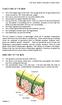 FUNCTIONS OF THE SKIN Skin is the largest organ of the body. The average adult has 18 square feet of skin which account for 16% of the total body weight. Skin acts as a physical barrier for you to the
PATIENT GUIDE. Understand and care for your peripherally inserted central venous catheter (PICC). MEDICAL
 PATIENT GUIDE Understand and care for your peripherally inserted central venous catheter (PICC). MEDICAL Introduction The following information is presented as a guideline for your reference. The best
Inflammation and Healing. Review of Normal Defenses. Review of Normal Capillary Exchange. BIO 375 Pathophysiology
 Inflammation and Healing BIO 375 Pathophysiology Review of Normal Defenses Review of Normal Capillary Exchange 1 Inflammation Inflammation is a biochemical and cellular process that occurs in vascularized
Laparoscopic Cholecystectomy
 Laparoscopic Cholecystectomy Gallbladder removal is one of the most commonly performed surgical procedures in the United States. Today,gallbladder surgery is performed laparoscopically. The medical name
Safety FIRST: Infection Prevention Tips
 Reading Hospital Safety FIRST: Infection Prevention Tips Reading Hospital is committed to providing high quality care to our patients. Your healthcare team does many things to help prevent infections.
Care for your child s Central Venous Catheter (CVC)
 Care for your child s Central Venous Catheter (CVC) This booklet is intended for general informational purposes only. You should consult your doctor for medical advice. Please call the clinic or your home
Caring for a Tenckhoff Catheter
 Caring for a Tenckhoff Catheter UHN A Patient s Guide What is a Pleural Effusion? There is a small space between the outside of your lung and the chest wall (ribs). This space is called the pleural space.
TAKING CARE OF WOUNDS KEY FIGURE:
 Chapter 9 TAKING CARE OF WOUNDS KEY FIGURE: Gauze Wound care represents a major area of concern for the rural health provider. This chapter discusses the treatment of open wounds, with emphasis on dressing
PICC & Midline Catheters Patient Information Guide
 PICC & Midline Catheters Patient Information Guide medcompnet.com 1 table of contents Introduction 4 What is a PICC or Midline Catheter? 4 How is the PICC or Midline Catheter Inserted? 6 Catheter Care
Infection control. Self-study course
 Infection control Self-study course Course objectives By the end of this course you will be able to: 1) Define a germ 2) Define the environment that a germ needs to live and grow 3) Explain the chain of
COALINGA STATE HOSPITAL. Effective Date: August 31, 2006
 COALINGA STATE HOSPITAL NURSING POLICY AND PROCEDURE MANUAL SECTION Emergency Procedures POLICY NUMBER: 715 Effective Date: August 31, 2006 SUBJECT: EMERGENCY CARE OF HEMORRHAGE 1. PURPOSE: The management
Home Care for Your Nephrostomy Catheter
 Home Care for Your Nephrostomy Catheter This handout covers information about caring for your nephrostomy catheter right after placement and caring for it long term. If you have any questions, please call
TREATMENT 1. Control bleeding by applying pressure over wound with Gauze Pads (Surgical Supply-4). 2. Contact Surgeon for laceration repair options.
 Page 1 of 8 pages NOTE Contact Surgeon before giving any medication marked with an asterisk. In an emergency or during Loss of Signal, begin appropriate treatment; then call Surgeon as soon as possible.
Urinary Diversion: Ileovesicostomy/Ileal Loop/Colon Loop
 Urinary Diversion: Ileovesicostomy/Ileal Loop/Colon Loop Why do I need this surgery? A urinary diversion is a surgical procedure that is performed to allow urine to safely pass from the kidneys into a
X-Plain Foley Catheter Male Reference Summary
 X-Plain Foley Catheter Male Reference Summary Introduction A Foley catheter is a tube that is put through the urinary opening and into your bladder to drain urine. Your doctor may have placed or may ask
Care of Gastrostomy Tubes for Adults with IDD in Community Settings: The Nurse s Role. Lillian Khalil, BSN, RN Volunteers of America, Chesapeake
 Care of Gastrostomy Tubes for Adults with IDD in Community Settings: The Nurse s Role Lillian Khalil, BSN, RN Volunteers of America, Chesapeake Objectives The participants will be able to identify the
All About Your Peripherally Inserted Central Catheter (PICC)
 All About Your Peripherally Inserted Central Catheter (PICC) General Information Intravenous (IV) therapy is the delivery of fluid directly into a vein. An intravenous catheter is a hollow tube that is
Orthopaedic Spine Center. Anterior Cervical Discectomy and Fusion (ACDF) Normal Discs
 Orthopaedic Spine Center Graham Calvert MD James Woodall MD PhD Anterior Cervical Discectomy and Fusion (ACDF) Normal Discs The cervical spine consists of the bony vertebrae, discs, nerves and other structures.
Management of Burns. The burns patient has the same priorities as all other trauma patients.
 Management of Burns The burns patient has the same priorities as all other trauma patients. Assess: - Airway - Breathing: beware of inhalation and rapid airway compromise - Circulation: fluid replacement
Clinical Guideline for: Aseptic Technique
 Clinical Guideline for: Technique Summary This guideline provides the principles of, Non Touch, and Clean Techniques to be implemented in the hospital environment. Key Points The essential elements of
Summary of Recommendations
 Summary of Recommendations *LEVEL OF EVIDENCE Practice Recommendations Assessment 1.1 Conduct a history and focused physical assessment. IV 1.2 Conduct a psychosocial assessment to determine the client
URINARY CATHETER CARE
 URINARY CATHETER CARE INTRODUCTION Urinary catheter care is a very important skill, and it is a skill that many certified nursing assistants (CNAs) must know. Competence at providing urinary catheter care
URINARY CATHETER INSERTION - STRAIGHT OR INDWELLING CATHETER
 URINARY CATHETER INSERTION - STRAIGHT OR INDWELLING CATHETER PURPOSE To obtain a sterile urine specimen. To facilitate emptying bladder. To relieve bladder distention. To irrigate bladder. To measure residual
call 811 to get advice from a nurse, or have someone drive the patient to a hospital Emergency Department. Patients should NOT drive themselves.
 Taking Care at Home After Surgery This checklist is to help you and your support person know what to do after you go home following your surgery. If you are given instructions verbally or in writing by
Your Guide to Peritoneal Dialysis Module 3: Doing Peritoneal Dialysis at Home
 Your Guide to Peritoneal Dialysis Module 3: 6.0959 in Preparing to do PD One of the most important things about PD is to keep the dialysis area and anything that comes in contact with the PD equipment
CHAPTER V CONCLUSION AND RECOMMENDATIONS. findings are presented, implications for nursing practice and education are discussed,
 CHAPTER V CONCLUSION AND RECOMMENDATIONS In this chapter, a summary of the findings and conclusion drawn from the findings are presented, implications for nursing practice and education are discussed,
STANDARD OPERATING PROCEDURE #201 RODENT SURGERY
 STANDARD OPERATING PROCEDURE #201 RODENT SURGERY 1. PURPOSE The intent of this Standard Operating Procedure (SOP) is to describe procedures for survival rodent surgery. 2. RESPONSIBILITY Principal investigators
Peripherally Inserted Central Catheter (PICC) for Outpatient
 Peripherally Inserted Central Catheter (PICC) for Outpatient Introduction A Peripherally Inserted Central Catheter, or PICC line, is a thin, long, soft plastic tube inserted into a vein of the arm. It
PATIENT GUIDE. Care and Maintenance Drainage Frequency: Max. Drainage Volume: Dressing Option: Clinician s Signature: Every drainage Weekly
 PATIENT GUIDE Care and Maintenance Drainage Frequency: Max. Drainage Volume: Dressing Option: Every drainage Weekly Clinician s Signature: ACCESS SYSTEMS Pleural Space Insertion Site Cuff Exit Site Catheter
NIH Clinical Center Patient Education Materials Giving a subcutaneous injection
 NIH Clinical Center Patient Education Materials What is a subcutaenous injection? A subcutaneous injection is given in the fatty layer of tissue just under the skin. A subcutaneous injection into the fatty
What Is. Norovirus? Learning how to control the spread of norovirus. Web Sites
 Web Sites Centers for Disease Control and Prevention (CDC) http://www.cdc.gov/norovirus/index.html Your Local Health Department http://www.azdhs.gov/diro/lhliaison/countymap.htm What Is Ocument dn Norovirus?
Informed Consent for Laparoscopic Vertical Sleeve Gastrectomy. Patient Name
 Informed Consent for Laparoscopic Vertical Sleeve Gastrectomy Patient Name Please read this form carefully and ask about anything you may not understand. I consent to have a laparoscopic Vertical Sleeve
Total Abdominal Hysterectomy
 What is a total abdominal hysterectomy? Is the removal of the uterus and cervix through an abdominal incision (either an up and down or bikini cut). Removal of the ovaries and tubes depends on the patient.
Laparoscopic Gallbladder Removal (Cholecystectomy) Patient Information from SAGES
 Laparoscopic Gallbladder Removal (Cholecystectomy) Patient Information from SAGES Gallbladder removal is one of the most commonly performed surgical procedures. Gallbladder removal surgery is usually performed
Understand nurse aide skills needed to promote skin integrity.
 Unit B Resident Care Skills Essential Standard NA5.00 Understand nurse aide s role in providing residents hygiene, grooming, and skin care. Indicator Understand nurse aide skills needed to promote skin
ATI Skills Modules Checklist for Urinary Catheter Care
 For faculty use only Educator s name Score Date ATI Skills Modules Checklist for Urinary Catheter Care Student s name Date Verify order Patient record Assess for procedure need Identify, gather, and prepare
Biliary Drain. What is a biliary drain?
 Biliary Drain What is a biliary drain? A biliary drain is a tube to drain bile from your liver. It is put in by a doctor called an Interventional Radiologist. The tube or catheter is placed through your
Central Venous Catheter (CVC) Sterile Dressing Change - The James
 PATIENT EDUCATION patienteducation.osumc.edu Central Venous Catheter (CVC) Sterile Dressing Change - The James A dressing protects your catheter site and helps reduce the risk of infection. You will need
Patient Information Guide Morpheus CT Peripherally Inserted Central Catheter
 Patient Information Guide Morpheus CT Peripherally Inserted Central Catheter IC 192 Rev C A measure of flexibility and strength. Table of Contents 1. Introduction 2. What is the Morpheus CT PICC? 3. What
Streptococcal Infections
 Streptococcal Infections Introduction Streptococcal, or strep, infections cause a variety of health problems. These infections can cause a mild skin infection or sore throat. But they can also cause severe,
Excision of Vaginal Mesh
 What is excision of vaginal mesh? This procedure is done to remove mesh from the vagina. When is this surgery used? If mesh has eroded into the vagina, bladder, urethra, or bowel If there is pain associated
Laparoscopic Repair of Hernias. A simple guide to help answer your questions
 Laparoscopic Repair of Hernias A simple guide to help answer your questions What is a hernia? A hernia is defined as a hole or defect in the abdominal (belly) wall. A hernia can either be congenital (a
Total Vaginal Hysterectomy
 What is a total vaginal hysterectomy? Is the removal of the uterus and cervix through the vagina. Removal of the ovaries and tubes depends on the patient. Why is this surgery used? To treat disease of
Quality Measures for Long-stay Residents Percent of residents whose need for help with daily activities has increased.
 Quality Measures for Long-stay Residents Percent of residents whose need for help with daily activities has increased. This graph shows the percent of residents whose need for help doing basic daily tasks
CORONARY ARTERY BYPASS GRAFT & HEART VALVE SURGERY
 CORONARY ARTERY BYPASS GRAFT & HEART VALVE SURGERY www.cpmc.org/learning i learning about your health What to Expect During Your Hospital Stay 1 Our Team: Our cardiac surgery specialty team includes nurses,
PATIENT TEACHING GUIDE: Wound Care Handbook
 PATIENT TEACHING GUIDE: Wound Care Handbook PATIENT TEACHING GUIDE: WOUND CARE Design by Mariscal Design, Illustrations by Lysa Hawke. The Wound Care Self Care Guide was written and prepared by: Barbara
Information for patients and nurses
 Information for patients and nurses Rocket IPC Pleural Catheter Indwelling Catheter Rocket Indwelling Pleural Catheter (IPC) Contents Contact Information...03 What s in the Rocket Dressing Pack and Bottle
Care of Your Hickman Catheter
 Care of Your Hickman Catheter Johns Hopkins Kimmel Cancer Center, Revised 7/11 Contents What is a Hickman Catheter? Page 3 Does the Catheter Limit My Activities? Page 4 How Do I Care for My Catheter? Page
C. difficile Infections
 C. difficile Infections Introduction C. difficile is a type of bacteria that can cause diarrhea and infection of the colon. This bacterium is more likely to infect patients at hospitals and other healthcare
Consent for Treatment/Procedure Laparoscopic Sleeve Gastrectomy
 Patient's Name: Today's Date: / / The purpose of this document is to confirm, in the presence of witnesses, your informed request to have Surgery for obesity. You are asked to read the following document
CHAPTER 15 SCLEROTHERAPY FOR VENOUS DISEASE
 Introduction CHAPTER 15 SCLEROTHERAPY FOR VENOUS DISEASE Original authors: Niren Angle, John J. Bergan, Joshua I. Greenberg, and J. Leonel Villavicencio Abstracted by Teresa L. Carman New technology has
PATIENT CONSENT TO PROCEDURE - ROUX-EN-Y GASTRIC BYPASS
 As a patient you must be adequately informed about your condition and the recommended surgical procedure. Please read this document carefully and ask about anything you do not understand. Please initial
Individualized Care Plans Fully Developed
 Appendix Individualized Care Plans Fully Developed A Refer to Chapter 1 The Nursing Process: A Synopsis, p. 32: Two Individualized Care Plans Fully Developed; Care Plan 1 for Mr. John Walters, Care Plan
Surgical removal of fibroids through an abdominal incision-either up and down or bikini cut. The uterus and cervix are left in place.
 What is an abdominal myomectomy? Surgical removal of fibroids through an abdominal incision-either up and down or bikini cut. The uterus and cervix are left in place. When is this surgery used? Treatment
Tired, Aching Legs? Swollen Ankles? Varicose Veins?
 Tired, Aching Legs? Swollen Ankles? Varicose Veins? Healthy Legs 2006 http://healthylegs.com Page 1 Venous disorders are widespread Leg problems are widespread throughout the world, but what most people
ARTHROSCOPIC HIP SURGERY
 ARTHROSCOPIC HIP SURGERY Hip Arthroscopy is a relatively simple procedure whereby common disorders of the hip can be diagnosed and treated using keyhole surgery. Some conditions, which previously were
GOING HOME AFTER YOUR TAVR PROCEDURE
 GOING HOME AFTER YOUR TAVR PROCEDURE HENRY FORD HOSPITAL CENTER FOR STRUCTURAL HEART DISEASE GOING HOME After your TAVR procedure, you will need help when you go home. It is hard to predict how much help
Shoulder Arthroscopy
 Copyright 2011 American Academy of Orthopaedic Surgeons Shoulder Arthroscopy Arthroscopy is a procedure that orthopaedic surgeons use to inspect, diagnose, and repair problems inside a joint. The word
Abdominal Wall (Ventral, Incisional, Umbilical) Hernia Repair Postoperative Instructions
 Abdominal Wall (Ventral, Incisional, Umbilical) Hernia Repair Postoperative Instructions No lifting greater than 10 15 lbs for the first three weeks following your surgery. Walking around the house, office
GASTRIC BYPASS SURGERY CONSENT FORM
 Page 1 of 6 I, have been asked to read carefully all of the (name of patient or substitute decision-maker) information contained in this consent form and to consent to the procedure described below on
Laparoscopic Bilateral Salpingo-Oophorectomy
 Laparoscopic Bilateral Salpingo-Oophorectomy What is a? This is a surgery where your doctor uses a thin, lighted camera and small surgical tool placed through a small (1/2 inch) incision usually in the
Laparoscopic Cholecystectomy
 Laparoscopic Cholecystectomy Removal of Gall Bladder Page 12 Patient Information Further Information We endeavour to provide an excellent service at all times, but should you have any concerns please,
OPERATION:... Proximal tibial osteotomy Distal femoral osteotomy
 AFFIX PATIENT DETAIL STICKER HERE Forename.. Surname NHS Organisation. Responsible surgeon. Job Title Hospital Number... D.O.B.././ No special requirements OPERATION:..... Proximal tibial osteotomy Distal
Managing Your Non-Tunneled (Percutaneous) Catheter: PICC, SICC, and JCC. What is a PICC catheter?
 Managing Your Non-Tunneled The staff of the Procedure, Vascular Access, Conscious Sedation Service has written this information to explain your new PICC (peripherally inserted central catheter), SICC (subclavian
Total Vaginal Hysterectomy with an Anterior and Posterior Repair
 Total Vaginal Hysterectomy with an Anterior and Posterior Repair What is a total vaginal hysterectomy with an anterior and posterior repair? Total vaginal hysterectomy is the removal of the uterus and
Managing cavity wounds Journal of Community Nursing March 1998 Author: Rosemary Pudner
 Managing cavity wounds Journal of Community Nursing March 1998 Author: Rosemary Pudner It has been seen in recent years, that an increasing number of patients are being discharged early into the community,
Location: Clinical Practice Manual
 Subject: Area: Classification: Relevant to: Bladder Management Clinical Practice All Clinical Staff Implementation Date: March 2001 Review Date: March 2004 Responsible for Review: Approved by: Distribution:
Gallbladder Surgery with an Incision (Cholecystectomy)
 Gallbladder Surgery with an Incision (Cholecystectomy) It is normal to have questions about your surgery. This handout gives you information about what will happen to you before, during and after your
Recto-vaginal Fistula Repair
 What is a recto-vaginal fistula repair? Rectovaginal fistula repair is a procedure in which the healthy tissue between the rectum and vagina is closed in multiple tissue layers. An incision is made either
Policies & Procedures. ID Number: 1118
 Policies & Procedures Title: INTRAVENOUS AND/OR PERIPHERAL SALINE LOCK INSERTION AND MAINTENANCE ID Number: 1118 Authorization [X] SHR Nursing Practice Committee Source: Nursing Date Revised: September
Caring for Your PleurX Pleural Catheter
 Caring for Your PleurX Pleural Catheter A PleurX Pleural Catheter has been placed in your chest through a small incision in your skin into the pleural space (see picture below). This allows you to drain
You will be having surgery to remove a tumour(s) from your liver.
 Liver surgery You will be having surgery to remove a tumour(s) from your liver. This handout will help you learn about the surgery, how to prepare for surgery and your care after surgery. Surgery can be
Knee arthroscopy advice sheet
 Knee arthroscopy advice sheet During an arthroscopy, a camera is inserted into the knee through two or three small puncture wounds. It allows the surgeon to look at the joint surfaces, cartilage and the
MRSA. Living with. Acknowledgements. (Methicillin-Resistant Staphylococcus aureus)
 How can I keep myself healthy? Hand washing and use of an alcohol-based hand sanitizer are the primary way to prevent acquiring or transmitting bacteria. If you get a cut or scrape, wash it well with soap
After your gastric banding
 After your gastric banding Exceptional healthcare, personally delivered 2 Please call J Ward at Southmead Hospital on 0117 323 5132 if you have any questions or concerns soon after discharge. You may be
Policies & Procedures. Care of
 Policies & Procedures Title: SUPRAPUBIC CATHETER Care of Changing Removal Authorization: [x] SHR Nursing Practice Committee I.D. Number: 1021 Source: Nursing Date Revised: November 2014 Date Effective:
St. Louis Eye Care Specialists, LLC Andrew N. Blatt, MD
 St. Louis Eye Care Specialists, LLC Andrew N. Blatt, MD 675 Old Ballas Rd. Suite 220 St. Louis, MO 63141 Phone:314-997-EYES Fax: 314-997-3911 Toll Free: 866-869-3937 STRABISMUS SURGERY (Post-Op Strabismus
X-Plain Inguinal Hernia Repair Reference Summary
 X-Plain Inguinal Hernia Repair Reference Summary Introduction Hernias are common conditions that affect men and women of all ages. Your doctor may recommend a hernia operation. The decision whether or
Flushing and Dressing a Peripherally Inserted Central Catheter (PICC Line): a Guide for Nurses
 Flushing and Dressing a Peripherally Inserted Central Catheter (PICC Line): a Guide for Nurses Information for Nurses Introduction This information is for community nursing staffs who have been asked to
Peripherally Inserted Central Catheter
 Peripherally Inserted Central Catheter (PICC) by Patricia Griffin Kellicker, BSN En Español (Spanish Version) Definition A peripherally inserted central catheter is a long, thin tube that is inserted through
Long-term urinary catheters: prevention and control of healthcare-associated infections in primary and community care
 Long-term urinary catheters: prevention and control of healthcare-associated infections in primary and community care A NICE pathway brings together all NICE guidance, quality standards and materials to
BANDAGES AND BANDAGING TECHNIQUES
 BANDAGES AND BANDAGING TECHNIQUES Your role as a veterinary assistant is to understand the theory behind bandaging, as bandaging is the veterinary technician s and the veterinarian s role. You ll need
4. Infection control measures
 4. Infection control measures Apart from general hygienic practices and vaccination, staff of institutions should also adopt specific infection control measures against communicable diseases. The measures
LOSS OF BLADDER CONTROL IS TREATABLE TAKE CONTROL AND RESTORE YOUR LIFESTYLE
 LOSS OF BLADDER CONTROL IS TREATABLE TAKE CONTROL AND RESTORE YOUR LIFESTYLE TALKING ABOUT STRESS INCONTINENCE (SUI) Millions of women suffer from stress incontinence (SUI). This condition results in accidental
Y O U R S U R G E O N S. choice of. implants F O R Y O U R S U R G E R Y
 Y O U R S U R G E O N S choice of implants F O R Y O U R S U R G E R Y Y O U R S U R G E O N S choice of implants F O R Y O U R S U R G E R Y Your Surgeon Has Chosen the C 2 a-taper Acetabular System The
MISSISSIPPI BOARD OF NURSING IV THERAPY COURSE FOR THE EXPANDED ROLE LICENSED PRACTICAL NURSE COURSE OUTLINE
 THEORY MINIMUM 40 HOURS COURSE OUTLINE UNIT TOPIC HOURS* I LEGAL ASPECTS AND PRACTICE OF IV THERAPY 1 II REVIEW OF ANATOMY AND PHYSIOLOGY 6 III FLUID AND ELECTROLYTE BALANCE 10 IV EQUIPMENT AND PROCEDURES
Hysteroscopy. What is a hysteroscopy? When is this surgery used? How do I prepare for surgery?
 What is a hysteroscopy? This is a procedure where a doctor uses a thin tube with a tiny camera to look inside the uterus. There are no incisions. Saline solution is used to expand the uterus in order to
Informed Consent For Laser Hair Removal
 Informed Consent For Laser Hair Removal INSTRUCTIONS This informed-consent document has been prepared to help inform you about laser procedures, its risks, as well as alternative treatment(s). It is important
HICKMAN Catheter Care with a Needleless Connector
 HICKMAN Catheter Care with a Needleless Connector Table of Contents Part 1 Learning about the HICKMAN Catheter... 2 Part 2 Caring for Your Hickman Catheter... 3 A. Preventing Infection... 3 B. Bathing...