
Polybia, Paraphyly, and Polistine Phylogeny
|
|
|
- Juniper Greer
- 10 years ago
- Views:
Transcription
1 PUBLISHED BY THE AMERICAN MUSEUM OF NATURAL HISTORY CENTRAL PARK WEST AT 79TH STREET, NEW YORK, NY Number 3298, 24 pp., 53 figures, 3 tables June 28, 2000 Polybia, Paraphyly, and Polistine Phylogeny JAMES M. CARPENTER, 1 JUN-ICHI KOJIMA, 2 AND JOHN W. WENZEL 3 ABSTRACT A cladistic analysis of the subgenera of the paper wasp genus Polybia Lepeletier (Hymenoptera: Vespidae; Polistinae), and the other genera that construct phragmocyttarus nests, is presented. The results clearly indicate paraphyly of Polybia in terms of the genus Synoecoides Ducke. To remove the paraphyly, Synoecoides is reduced in rank, to a subgenus of Polybia, new synonymy. INTRODUCTION Polybia is one of the most familiar of the neotropical paper wasp genera. From Mexico to Argentina, this genus is typically the most abundantly represented by individuals (e.g., Jeanne, 1991: table 6.2). Its colonies are likewise the most commonly encountered (Jeanne, 1991: table 6.3), especially among those genera that make phragmocyttarus nests, that is, with each comb covered by an envelope and succeeding combs built upon the envelopes of those preceding. With 56 species currently recognized (and another 19 subspecies) the genus is by far the most speciose among the Epiponini, the endemic New World tribe characterized by founding new colonies by swarms. A number of these species are among the most well studied of the Polistinae (see references in Jeanne, 1991; West-Eberhard et al., 1995). The genus ranks first by the measures of success listed by Jeanne (1991: table 6.4), and Richards (1978: 33) stated that it might be regarded as the most typical of the genera of South American social wasps. 1 Curator, Division of Invertebrate Zoology (Entomology), American Museum of Natural History. 2 Research Associate, Division of Invertebrate Zoology (Entomology), American Museum of Natural History; Associate Professor, Natural History Laboratory, Faculty of Science, Ibaraki University, Mito 310, Japan (corresponding address). 3 Research Associate, Division of Invertebrate Zoology (Entomology), American Museum of Natural History; Associate Professor, Department of Entomology, Ohio State University, Columbus, Ohio (corresponding address). Copyright American Museum of Natural History 2000 ISSN / Price $2.80

2 2 AMERICAN MUSEUM NOVITATES NO Yet if typical, Polybia is not characteristic. Alone among the epiponine genera, Polybia possesses no obvious autapomorphy nor even an ambiguous one. The other genera that construct phragmocyttarus nests are all readily characterized. In the cladistic analysis by Carpenter (1991: table 3), which did not include autapomorphies as such, the phylogenetic diagnoses for these genera were as follows: Protonectarina (eyes bristled); Chartergus (thyridium transverse and basal); Brachygastra (eyes bristled, pretegular carina lost, and scrobal sulcus lost); and Synoecoides (occipital carina lost, and tempora narrowed). Neither Epipona nor Polybia was optimized for a phylogenetically informative trait, but for Epipona autapomorphies are readily adduced: for example, the parallelsided metasomal petiole, emarginate clypeus, and shiny black cuticle. Other autapomorphies can be adduced for the other genera (e.g., Protonectarina, posterior ocelli widely separated; Chartergus, propodeum dorsally carinate; Brachygastra, scutellum sharply angled; and Synoecoides, flattened mesosoma). Listing autapomorphies does not appear to be possible for Polybia. Nor do larvae (Kojima, 1998) or nest characters (Wenzel, 1998) provide autapomorphies for Polybia, with many characters showing polymorphic states in the genus. Cladistic analysis has only recently been applied at the generic level in Polistinae (Carpenter and Wenzel, 1990; Carpenter, 1991, 1993, 1996; Wenzel, 1993; Wenzel and Carpenter, 1994; Carpenter et al., 1996; Kojima, 1997). In studies of relationships among genera, the placement of Polybia has fluctuated greatly. In the analysis by Carpenter (1991), based primarily on adult morphology, Polybia was placed in an unresolved hexatomy (!) with the other phragmocyttarus-nesting genera, the genus Protopolybia, and the genera that make astelocyttarus nests (with a single comb flat on a substrate and covered by an envelope). In the analysis of behavioral characters by Wenzel (1993), Polybia was placed as the sister group of the genus Protonectarina. In the simultaneous analysis of behavioral data with adult and larval morphology by Wenzel and Carpenter (1994), Polybia was placed as the sister group of Synoecoides Epipona. The lack of any diagnostic apomorphy for Polybia raises the question as to whether the instability of its placement in previous analyses might not be due, at least in part, to the genus not being monophyletic. If that is the case, progress in understanding phylogenetic relationships among the polistine genera will remain hindered. The present study therefore addresses the question of the monophyly of Polybia. This genus was divided into subgenera by Richards (1978). Thus, analysis at the level of subgenera, together with a sufficient number of outgroup genera, can test the monophyly of the genus, and that is what is undertaken here. TAXONOMIC BACKGROUND The description of the genera Polistes and Epipona by Latreille (1802) might be said to be the first recognition of the group we now treat as the subfamily Polistinae. Into these genera Latreille and other authors transferred many of the species described in the 18th century in the Linnaean genus Vespa. After Latreille, a few other genera were described (Gyrostoma Kirby, 1828; Ropalidia Guérin- Méneville, 1831; Brachygastra Perty, 1833), but it is in the work of Lepeletier de St. Fargeau (1836) that the first outlines of the modern classification are seen. Lepeletier first recognized a group Polistinae (as Polistides ), and described the genus Polybia, as well as Agelaia, Apoica, Chartergus, and Rhopalidia (suppressed, International Commission on Zoological Nomenclature, 1976; Angiopolybia Araujo, 1946). This work was expanded upon in the worldwide monograph by de Saussure ( ). As well as describing several new genera of Polistinae and many new species, de Saussure proposed the first subdivision of Polybia. He divided it into two subgenera, the newly described Clypearia and Polybia proprement dites. The latter was, in turn, subdivided into seven divisions : Alpha, Iota, Phi, My, Kappa, Omega, and Parapolybia. Later, de Saussure (1863) added Pseudopolybia as a division of the genus Polybia, without mentioning subgenera. As detailed in Carpenter and Day (1988), the criteria of availability now in the International Code of Zoological Nomenclature make all of these names avail-

3 2000 CARPENTER ET AL.: PARAPHYLY OF POLYBIA 3 able (Carpenter and Day were referring to the third edition; the new fourth edition is the same in this case). Thus, the subgeneric classification by Richards (1978), who rejected these names as published by de Saussure, was corrected by Carpenter and Day, and that revised nomenclature is followed here. Subsequent to the monograph of de Saussure, two of his divisions of Polybia came to be treated as genera (Parapolybia and Pseudopolybia), but the other infrasubgeneric names were otherwise largely ignored. The modern generic classification of Epiponini took shape in the work of Ducke (1905). Ducke treated Clypearia as a genus, and described several new genera (Metapolybia, Monacanthocnemis, Protopolybia, Pseudochartergus, and Synoecoides), in part for species previously placed in Polybia. Ducke (1905: 5) stated that the aim of his new classification was to be more natural than de Saussure s ( je crois avoir réussi à classifier les Vespides d une manière plus naturelle qu on ne l a fait jusque ici ) by taking into account new observations on nesting behavior. Nevertheless, Synoecoides, monotypic for the new species depressus, was described without knowledge of its nesting behavior. It was distinguished by morphology: depressed thorax; narrow, truncate clypeus; narrow tempora; obtusely angulate metanotum; and sessile metasoma. Ducke emphasized the lack of resemblance to other social wasps, albeit naming it for resembling on first view Synoeca. The phragmocyttarus nest was later described by Ducke (1907: 163, pl. 3, fig. 7), but the status of the genus was not reassessed by Ducke, or by subsequent workers (e.g., Araujo, 1944; Richards, 1978). Ducke s classification was embellished upon by subsequent workers, and Richards (1978) brought the classification of Polybia to its current form by removal of two species to another genus (Occipitalia; one included species was subsequently split off into another genus, Asteloeca Raw, 1985; Occipitalia was later synonymized with Clypearia by Carpenter et al., 1996). As mentioned previously, Richards (1978) also subdivided Polybia, into 10 subgenera: Apopolybia, Cylindroeca, Formicicola, Furnariana, Hypopolybia, Myrapetra, Pedothoeca, Platypolybia, Polybia s.s., and Trichothorax. All of these taxa save the typical subgenus and Myrapetra White, 1841, were newly described. As already noted, Richards classification has been amended (Carpenter and Day, 1988): Hypopolybia Richards, 1978, is a synonym of Alpha de Saussure, 1854, and Trichothorax Richards, 1978, has been replaced on account of homonymy by Trichinothorax Carpenter and Day, Richards subgeneric scheme has not otherwise been re-examined. In his monograph, Richards (1978: 33) stated of Polybia, it is a well defined and almost certainly monophyletic group. He did not establish that however; as pointed out by Carpenter (1991), Richards dendrogram is not actually based on phylogenetic analysis of the characters he adduced. For reasons enumerated above, the question of the monophyly of Polybia is, in fact, open and will now be addressed. MATERIALS AND METHODS Characters for the subgenera of Polybia and the outgroup genera are presented in tables 1 3. The outgroups are all the other genera that construct phragmocyttarus nests: Protonectarina, Chartergus, Brachygastra, Epipona, and Synoecoides. The phragmocyttarus-nesting genera were supported as a monophyletic group in the analyses by Wenzel (1993) and Wenzel and Carpenter (1994). The program DADA (Nixon, 1998a) was used for data editing. Cladistic analysis (Hennig, 1966) was implemented with the programs NONA (Goloboff, 1999a) and PIWE (Goloboff, 1999b). A posteriori character weighting included both successive weighting, as implemented in NONA, and implied weighting, as implemented in PIWE, to check the self-consistency of results under more than one weighting scheme. Character optimization and diagnoses were accomplished with the CLADOS program (Nixon, 1998b). There are three sources of character data: morphology of the adults, morphology of the larvae, and morphology of the nests. Each of these character partitions will be dis- 4 Iota is now considered a synonym of Polybia s.s., and My is a synonym of Myrapetra; Phi, Kappa, and Omega are subgenera of the genus Mischocyttarus de Saussure.

4 4 AMERICAN MUSEUM NOVITATES NO TABLE 1 Adult Characters for Subgenera of Polybia and Five Outgroup Genera Multistate character 15 is treated as additive; multistate characters are otherwise treated as nonadditive. An asterisk denotes a polymorphism showing all applicable states; a dollar sign denotes a subset polymorphism (Myrapetra: states 0 and 1 in character 1, 0 and 1 in character 11, and 1 and 4 in character 20; and Trichinothorax: states 0 and 2 in character 1, 0 and 1 in character 5, 0 and 1 in character 11, 0 and 1 in character 14, 1 and 3 in character 20, and 0 and 1 in character 23). Taxa Character Protonectarina Epipona Synoecoides Chartergus Brachygastra 2000$ Polybia Apopolybia Alpha Myrapetra $10000**00$ $0004 Furnariana * Cylindroeca Trichinothorax $10*$10**0$01$01*00$10$4 Pedothoeca Formicicola Platypolybia TABLE 2 Larval Characters for Subgenera of Polybia, and Five Outgroup Genera Multistate characters are treated as nonadditive. Question marks denote missing values; the larva of the genus Synoecoides and of the subgenera Furnariana and Platypolybia, are unknown. An asterisk denotes a polymorphism showing all applicable states; a dollar sign denotes a subset polymorphism (Chartergus: states 0 and 1 in character 41; Brachygastra: states 0 and 1 in character 37; Myraptetra: states 1 and 2 in character 41; and Trichinothorax: states 1 and 2 in character 35, and 0 and 2 in character 37). Taxa Character Protonectarina 0?1110???200??0??0??? Epipona Synoecoides????????????????????? Chartergus $0001 Brachygastra *00321$10*10000 Polybia?011? Apopolybia ???01???0?????? Alpha Myrapetra *011*1*1*2200**0$0001 Furnariana????????????????????? Cylindroeca?0??11???01???0?????? Trichinothorax $0$ Pedothoeca * *00* Formicicola ? Platypolybia????????????????????? cussed in turn, and the results of separate and combined analyses presented. The data were combined by splicing together the data sets with the program WINCLADA (Nixon, 1999). ADULT CHARACTERS The study of adult characters was made by Carpenter, who examined specimens of nearly all described species in these taxa. 5 Morphological terminology is as in Carpenter (1991, 1996). Characters examined were drawn particularly from the subgeneric classification by Richards (1978), with new characters added as detailed below. Most of these characters have never previously been illus- 5 Specifically, all described species in these genera except one of Polybia (viz., eberhardae Cooper). trated, therefore 12 plates are provided, that show a range of taxa (figs. 1 48). 1. Eyes: without bristles (0), figs. 1 2, 5 8; few bristles (1), fig. 4; many bristles (2), fig. 3 [nonadditive]. Richards (1978: 35) used Eyes with some hairs as a key character for Platypolybia. Eyes hairy was also used as a key character for some species of Trichinothorax (Richards, 1978: 43). The condition in the species of Platypolybia (and some Myrapetra) is distinct from the densely bristled condition in Protonectarina (figs. 3, 9) and Brachygastra (fig. 11). It is intermediate, and so the character could be treated as additive. However, because it is polymorphic, it is treated as nonadditive, as is the case with most of the multistate characters in table 1. In this particular case, Trichinothorax has states 0 (e.g., figs. 6, 12) and 2; thus, if the character were additive, it should evi-

5 2000 CARPENTER ET AL.: PARAPHYLY OF POLYBIA 5 TABLE 3 Nest Characters for Subgenera of Polybia, and Five Outgroup Genera Multistate characters are treated as nonadditive. The question mark denotes a missing value. An asterisk denotes a polymorphism showing all applicable states. Taxa Character Protonectarina Epipona Synoecoides Chartergus Brachygastra Polybia Apopolybia Alpha Furnariana Cylindroeca 10001?100 Trichinothorax Pedothoeca Formicicola Myrapetra *00010*** Platypolybia dently be interpreted as having the full range of values in the polymorphism within Trichinothorax, although this is not observed. 2. Clypeus: convex (0), figs. 9, 11; dorsally flattened in profile (1), figs. 10, 12, New character. 3. Clypeal apex: rounded point (0), figs. 3 8; truncate (1), fig. 1; emarginate (2), fig. 2 [nonadditive]. Synoecoides and Epipona are characterized, respectively, by the truncate or emarginate apex of the clypeus. The clypeus also appears longer than broad in Synoecoides. 4. Clypeal eye contact: equal to length of antennal socket (0), figs. 2 3, 7; much longer than antennal socket (1), figs. 1, 4 5, 8. A long clypeal eye contact appeared repeatedly in the key to species of Polybia and subgeneric diagnoses by Richards (1978). He also distinguished a condition of Clypeus at sides in contact with eyes for a distance equal to half the height of the antennal socket in his couplet 6 (Richards, 1978: 36) when keying out the subgenus Myrapetra, however couplet 16 (p. 39) contradicted this, with divisoria Richards stated to have Eyes in contact with the sides of clypeus for a distance about equal to height of antennal socket. Distinguishing more than a short versus a long state does not appear to be useful, as it is partitioning small degrees of continuous variation, and in any event offers no resolution at the level of the present study. 5. Clypeal pubescence: present (0); reduced (1); absent (2) [nonadditive]. By pubescence is meant the tomentum, dense over most of the clypeus in some of these taxa, restricted to a dorsal area in others (fig. 4), or even absent (most of the taxa figured, however this character does not show up well in the scanning electron micrographs). The character appeared in several places in Richards (1978) key and diagnoses, and is variable in some of the taxa (Brachygastra and Trichinothorax). 6. Malar space: very short (0), figs. 1, 3 4, 7 8; elongate (1), figs. 2, 5 6. Relative length of the malar space was used by Richards (1978) to distinguish among species of Trichinothorax and Pedothoeca. The elongate condition distinguished here refers to a length about half the width of the antennal socket. 7. Tempora: nearly as wide as eye (0), figs ; half width of eye (1), figs. 10, This is one of the traditional diagnostic features for Synoecoides, but the tempora narrow was also used repeatedly as a key character in Richards (1978) key to species of Polybia. 8. Occipital carina: present (0), figs. 9, 11 12, 15 16; absent (1), figs. 10, 13. A traditional character, both for genera and species. 9. Cuticle: dull (0); shiny (1). This character appeared repeatedly in Richards (1978) key and descriptions. Not visible in the scanning electron micrographs, it can readily be seen with light microscopy or the naked eye. 10. Anterior pronotal carina: present (0), figs , 27 28; reduced (1), fig. 26; lamellate (2), fig. 25 [nonadditive]. Richards (1978: 35) characterized Furnariana and Cylindroeca, respectively, by whether the anterior pronotal carina was reduced ( Pronotal fovea evanescent or even absent, area in front of it not raised ) or raised ( Prominence in front of pronotal fovea long and

6 6 AMERICAN MUSEUM NOVITATES NO Figs Head in frontal view. 1. Synoecoides depressus Ducke. 2. Epipona niger (Brèthes). 3. Protonectarina sylveirae (de Saussure). 4. Polybia procellosa Zavattari. mostly sharp ). Although not polymorphic, these different states are not similar, hence the character is treated as nonadditive. 11. Dorsal pronotal carina: lamellate (0), figs. 17, 19 20, 23 24, 26, 28; absent (1), figs. 18, 27; pronotum dorsally compressed (2), fig. 22 [nonadditive]. Presence or absence of the dorsal pronotal carina is a traditional character. As Richards (1978: 99) noted in his diagnosis of Cylindroeca, Pronotal keel not developed though there is an obtuse curved elevation in the relevant position (partially visible in our fig. 25). A somewhat less pronounced condition also occurs in Polybia s.s. (fig. 22). 12. Pronotal fovea: present (0), figs ; absent (1), figs This character figured prominently in Richards (1978) key to genera. 13. Prothoracic external groove: absent (0), fig. 37; present (1), fig. 39. New character. This groove is also found in those genera that make astelocyttarus nests. 14. Secondary spiracular entrance: narrow (0), fig. 26; wide (1), figs. 23, 28; elongate (2), fig. 18 [nonadditive]. Richards (1978) emphasized this character, distinguishing various states having to do with curvature of the lip, etc., but those states do not appear informative at this level. 15. Mesoscutum: convex (0), figs , 26 27; flattened (1), figs ; planar (2), fig. 21. This character refers to the strongly flattened scutum of Synoecoides (fig. 21) but note that various subgenera of Polybia also have a flattened scutum (e.g., fig. 22); the state found in Synoecoides is simply more pronounced. Thus, three additive states are distinguished in this character. 16. Scutal setae: appressed (0), figs. 18, 21 23, 28; outstanding, hairlike (1), figs. 20,
![17, 19 20, 23 24, 26, 28; absent (1), figs. 18, 27; pronotum dorsally compressed (2), fig. 22 [nonadditive]. Presence or absence of the dorsal pronotal carina is a traditional character.](/docs-images/45/7963025/images/page_6.jpg "As Richards (1978: 99) noted in his diagnosis of Cylindroeca, Pronotal keel not developed though there is an obtuse curved elevation in the relevant position (partially visible in our fig. 25).")
7 2000 CARPENTER ET AL.: PARAPHYLY OF POLYBIA 7 Figs Head in frontal view. 5. Polybia dimidiata. 6. Polybia chrysothorax (Lichtenstein). 7. Polybia nidulatrix Bequaert. 8. Polybia richardsi Cooper This was an important subgeneric character in the key by Richards (1978). 17. Scutal margin: absent (0); present (1), fig. 17. A margined scutum was used to diagnose Apopolybia by Richards (1978), who also used it as a key character for several species of Trichinothorax. 18. Scutellum: convex (0), figs. 18, 27; flattened (1), figs. 22, 24, 26; planar (2), fig. 21; compressed (3), fig. 20 [nonadditive]. The scutellum is strongly flattened in Synoecoides (fig. 21), but is also flattened, albeit less so, in various subgenera of Polybia. In Chartergus and Brachygastra the scutellum is compressed (sharply angled in Brachygastra, fig. 20, as mentioned above). 19. Metanotum: convex (0), figs. 18, 24, 27; vertically projecting (1), figs ; compressed in profile (2), fig. 20 [nonadditive]. The metanotum very convex was used as a diagnostic character for Polybia s.s. by Richards (1978). His generic key stated of Synoecoides Metanotum oblique throughout (Richards, 1978: 10), but the state is similar (cf. figs. 21 and 22). In Chartergus and Brachygastra the scutellum is compressed, almost vertical in Chartergus (which is tuberculate) to quite vertical in Brachygastra (which may have a rudimentary tubercle). 20. Propodeal concavity: deep furrow (0), fig. 31; weak furrow (1), fig. 33; shallow (2), figs ; deep, wide (3), figs. 30, 32; absent (4); deep, basal (5); shallow, wide (6), fig. 29 [nonadditive]. The type of posterior cavity of the propodeum was used by Richards (1978) in both generic and subgeneric keys. 21. Propodeal punctation: absent in propodeal concavity (0), figs. 33, 36; present in propodeal concavity (1), figs. 30, 35; propodeum rugoso-punctate (2) [nonadditive].

8 8 AMERICAN MUSEUM NOVITATES NO Figs Head in lateral view. 9. Protonectarina sylveirae. 10. Synoecoides depressus. 11. Brachygastra lecheguana (Latreille). 12. Polybia chrysothorax. This was an important subgeneric character in the key by Richards (1978). 22. Propodeal orifice: dorsally broad (0), figs , 35 36, 42 44; narrow (1), figs. 34, 45. A dorsally pointed propodeal orifice was used as a diagnostic feature for Formicicola by Richards (1978: 35, as Propodeal muscle-slit ). As the figures show, the alternative condition subsumes a wide range of variation, and the orifice is sometimes more or less pointed above (e.g. fig. 33), albeit less narrow. 23. Propodeal valvula: smooth (0); with secondary emargination (1), fig. 22; anteriorly narrow (2), fig. 24; smooth, broad (3), fig. 21 [nonadditive]. Richards (1978) mentioned the valvula (as valves ) in his keys and subgeneric diagnoses. Because the valvula is translucent, it is best seen under light microscopy. 24. Metasomal petiole: parallel-sided petiolate (0), fig. 41; subsessile (1), fig. 43; forming narrow cap on second segment (2), figs. 38, 40; short, broad petiole (3), figs. 42,

9 2000 CARPENTER ET AL.: PARAPHYLY OF POLYBIA 9 Figs Head in lateral view. 13. Polybia rejecta. 14. Polybia jurinei. 15. Polybia liliacea (Fabricius). 16. Polybia bifasciata de Saussure. 44, 47; long petiole (4), figs , 48 [nonadditive]. A traditional character. LARVAL CHARACTERS The study of larvae was made by Kojima. Although larval characters are often useful for phylogenetic studies of social wasps, such information is still limited. For the tribe Epiponini, Reid (1942) described mature larvae of 8 species in 5 genera and 3 subgenera in Polybia and Dias Filho (1975) 19 species in 8 genera including 4 subgenera of Polybia. However, their descriptions did not refer to most of the microscopic structures that are often useful for phylogenetic studies (Kojima and Keeping, 1988). Richards (1978) provided a key to mature larvae of polistine genera, including 14 epiponine genera and 6 subgenera of Polybia; his key, however, did not provide sufficient information for phylogenetic analysis and included some errors (Kojima, 1998). Later Silveira (1994) described ma-

10 10 AMERICAN MUSEUM NOVITATES NO Fig. 17. Polybia jurinei. scutum in dorsal view. Figs Mesosoma in lateral view. 18. Epipona niger. 19. Brachygastra lecheguana. Fig. 20. Brachygastra lecheguana. dorsum of mesosoma in lateral view. ture larvae of Protopolybia chartergoides for the first time, but did not add new information at the generic level. Kojima (1998) made a comprehensive descriptive work on social wasp larvae, and presently the only epiponine genera for which no larval information is available are Marimbonda Richards, 1978, and Synoecoides Ducke, 1905, and the only subgenera Funariana Richards, 1978, and Platypolybia Richards, 1978, of the genus Polybia. In the present paper, we extracted larval characters from Kojima (1998), with reference to Dias Filho (1975) for the species (also the genus Protonectarina, and subgenera Apopolybia and Cylindroeca) that Kojima did not examine. For a list of specimens examined, as well as illustrations of the characters, see Kojima (1998). 25. Hypostomal ridge: nearly straight (0); ventral margin produced ventrally near mandibular base (1). In Trichinothorax and Myrapetra the ventral margin of the hypostomal ridge is produced ventrally near the mandibular base, and thus the cranium in frontal view appears produced just below the mandibles. Two of the species of Myrapetra examined had a nearly straight ventral margin of the hypostomal ridge (bistriata (Fabricius) and scrobalis Richards). A similarly produced hypostomal ridge is found in Agelaia cajennensis (Fabricius) and Parachartergus (Kojima, 1998). 26. Cranial setae: short and inconspicuous (0); conspicuous, bristlelike (1). Richards (1978: 16) used this character in his key to larvae of the polistine genera; ambiguity of his definition, however, was pointed out by Kojima (1998). Among the genera treated in this study, Epipona and Brachygastra have conspicuous bristlelike setae on the cranium.

11 2000 CARPENTER ET AL.: PARAPHYLY OF POLYBIA 11 Figs Mesosoma in lateral view. 21. Synoecoides depressus. 22. Polybia liliacea. 23. Polybia bifasciata. 24. Polybia rejecta. Such bristlelike setae on the cranium are also found in Synoeca chalibea de Saussure and Clypearia sulcata (de Saussure). 27. Antenna: small (0); large (1). In the Polistinae small antennae are found in Polistes and Mischocyttarus. In the clade Ropalidiini Epiponini the antennae are large except in Epipona. The condition in Epipona might be secondary reduction in size, thus this character is uninformative for the analysis within the Epiponini. 28. Antenna anterior tentorial pit distance: distinctly more than diameter of antenna (0); less than diameter of antenna (1). State 0 (not 1) is found in Polistes, Mischocyttarus, and Epipona. As with the size of the antenna, the state found in Epipona might have been secondarily derived. 29. Labral width: narrower than the maximum width of the clypeus (0); nearly as wide as the maximum width of the clypeus (1). In the Vespidae except Polistinae, the clypeus is produced and narrowed ventrally, and the dorsal width of the labrum is nearly the same as the ventral width of the clypeus. Consequently the labrum is narrower than the maximum width of the clypeus. In the Polistinae, the clypeus is hardly produced below, and thus this character is sometimes ill defined. 30. Dorsal margin of labrum except dorsal membraneous area: narrowed where it joins clypeus (0); not narrowed narrowed where it joins clypeus (1). 31. Spicules on palate: present ventrally, laterally, or both (0); absent (1). 32. Shape of palate spicules: pointed apically (0); scalelike (1). In the clade Pseudopolybia-Epipona in Wenzel and Carpenter (1994), spicules on the palate are, if present, scalelike except in Brachygastra, of which

12 12 AMERICAN MUSEUM NOVITATES NO Figs Mesosoma in lateral view. 25. Polybia dimidiata. 26. Polybia richardsi. 27. Polybia emaciata. 28. Polybia jurinei. the larvae have apically pointed spicules on the palate, if present, in very reduced form. 33. Spicules on mandibular corium: absent (0); present (1). 34. Mandibles: touching or slightly separated when closed (0); elongate, attenuate, crossed when closed (1); reduced in size, widely separated when closed, with tooth elongate (2); reduced in size, with tooth short or nearly disappearing (3) [nonadditive]. 35. Mandibular teeth: two, nearly equal in size (0); two, one shorter (1); one (2) [nonadditive]. 36. Mandibular setae: absent (0); present (1). One or a few setae are present on the outer surface of the mandible in Brachygastra, Pedothoeca, and Formicicola. Such setae are also found in some species of Polistes and Charterginus. 37. Maxillary spicules: present on upper surface, extending apically, or both (0); present in basal (or lateral) half both on upper and lower surface (1); absent (2) [nonadditive]. 38. Maxillary palpus: flat apically (0); not flat and irregular apically (1). 39. Prementum: circular or subcircular (0); rounded-quadrate (1). 40. Labial palpus: thick, flat apically (0); weakly bilobed apically (1). 41. Spicules on postmentum: absent (0); present ventrally, laterally, or both (1); dense on nearly entire surface (2) [nonadditive]. 42. First spiracle: as large as or slightly larger than successive spiracles (0); larger, about 1.5 (1). 43. Setae on venter of first thoracic segment: minute or short (0); thick bristles (1). Bristles on the venter of the first thoracic segment are present in Epipona and Synoeca chalibea. Thus this character is uninformative for the present analysis.

13 2000 CARPENTER ET AL.: PARAPHYLY OF POLYBIA 13 Figs Propodeum in posterior view. 29. Chartergus globiventris. 30. Synoecoides depressus. 31. Polybia emaciata. 32. Polybia liliacea. 44. Setae on venter of first abdominal segment: minute or short (0); thick bristles (1). The situation for the present character is similar to that for the setae on the venter of the first thoracic segment, although bristles on the venter of the first abdominal segment are found in Mischocyttarus. 45. Spicules on venter of second and third thoracic segments: simple, pointed apically (0); simple, rounded apically or minutely dentate ridges (1). This character shows considerable homoplasy in the Polistinae. NEST CHARACTERS The study of nests was made by Wenzel (see Wenzel, 1998, for illustrations). Nest architecture has been important for recognizing groups in Polistinae, with many groups distinguished originally by their nests and subsequently supported by morphological characters. The nest types formalized by de Saussure ( ) were retained to greater or lesser degree over the years and sometimes augmented (Richards and Richards, 1951). The major categories are gymnodomous (no envelope) versus calyptodomous (covered by an envelope), stelocyttarus (comb hanging on pedicels from the substrate), astelocyttarus (combs sessile on the substrate, nest expanded primarily along the substrate) and phragmocyttarus (primary comb without a pedicel, subsequent combs built sessile on the preceding envelope). Subcategories exist also, such as laterinidal versus rectinidal to distinguish combs built such that cells are perpendicular versus parallel to the supporting pedicel, respectively. While these terms are useful as phenetic descriptors, they are nonetheless in-

14 14 AMERICAN MUSEUM NOVITATES NO Figs Propodeum in posterior view. 33. Polybia nidulatrix. 34. Polybia rejecta. 35. Polybia jurinei. 36. Polybia bifasciata. adequate to capture the variation now known in South American Polistinae (let alone the world fauna) and may not relate to homologous states that are useful in modern systematic treatments. One shortcoming of the classical descriptions of nests is that they tended to focus on diagnosing species and exploring what may be unique aspects of a species nest rather than describing features shared with some relatives. Many new nest characters are now available to help in the systematic context, and for the most part all genera can be distinguished easily (Wenzel, 1998) and placed in a hierarchical scheme of relationships using cladistic methods (Wenzel, 1993). As indicated above, such a hierarchy is not yet stable to the addition of new data, nor does it match exactly the pattern obtained by cladistic analysis of adult morphology, but the two forms of data frequently appear to complement each other (Wenzel, 1993) even as they come in conflict (above). In the present context, the challenge is to find some synapomorphic characters among the genera that build phragmocyttarus nests. De Saussure s description of the phragmocyttarus form was based on a geometrical ideal that was supposed to represent in abstraction the perfect forms of nests built imperfectly by natural species (de Saussure : XLVII, and ff., pl. XXXV). Certain ideal elements seem to be true of all taxa concerned here, whether recognized by de Saussure (such as secondary combs sessile on preceding envelope) or by more recent authors (such as the envelope not being removed and expanded after closure; Wenzel, 1991), but it is nonetheless appropriate to question what, if anything else, does phragmocyttarus really mean? Variation among these nests does not form a neat pattern, as the characters offered be-

15 2000 CARPENTER ET AL.: PARAPHYLY OF POLYBIA 15 Figs Protonectarina sylveirae. 37. Prothorax in frontal view. 38. Metasomal tergum I in dorsal view. Fig. 39. Polybia rejecta, prothorax in frontal view. Fig. 40. Brachygastra lecheguana, metasomal tergum I in dorsal view. low demonstrate (more thorough descriptions are available in earlier work such as Wenzel, 1991, 1993, 1998). But, just as important as the characters themselves is the identity of the species chosen to represent each group. Certain hypothetical ideals may be postulated (as de Saussure did), but they do not exist. Actual species should be used rather than ideals. For example, Brachygastra and Polybia cannot be separated easily because the diversity of forms in each genus is overlapping (Wenzel, 1998). For the present purposes, nests of B. smithii (de Saussure) were used partly because they are easy to characterize, whereas the very different nests of B. mellifica (Say) are not. For Polybia, the species used were P. (Polybia) striata (Fabricius), P. (Alpha) quadricincta de Saussure, P. (Apopolybia) jurinei de Saussure, P. (Furnariana) furnaria von Ihering, P. (Cylindroeca) dimidiata (Olivier), P. (Trichinothorax) sericea (Olivier), P. (Pedothoeca) emaciata Lucas, P. (Formicicola) rejecta (Fabricius), and P. (Platypolybia) incerta Ducke. The subgenus Myrapetra is so diverse that polymorphisms were coded because finding a typical species is a great challenge. For the monotypic genera Protonectarina and Synoecoides, and for Epipona, in which all species nests look very much alike, there is no problem with diversity of forms within the genus. Chartergus globiventris de Saussure was used as representative of that genus, because this species is best represented in both new and old nests in collections, and the mode of nest expansion is clearer. 46. Envelope reinforcement: blots of paper (0); both blots and imbricate reinforcement (1).

16 16 AMERICAN MUSEUM NOVITATES NO Figs Metasomal tergum I in dorsal view. 41. Epipona niger. 42. Polybia bifasciata. 43. Synoecoides depressus. 44. Polybia liliacea. 47. Envelope material: coarse vegetable matter (0); tiny fragments (1); mud (2); long fiber (3) [nonadditive]. States 0 and 1 divide the class of short chips defined elsewhere (e.g., Wenzel, 1998). 48. Secretion: sparse (0); common, at least on top (1). 49. Primary comb: initially sessile, but growing off substrate (0); entirely sessile (1); supported by a buttressed sheet (2) [nonadditive]. 50. Entrance: ventral (0); lateral (1). 51. Sculpture below entrance: none (0); pair of ribs (1). 52. Secondary envelopes: close to preceding comb, with narrow passage (0); distant from preceeding comb, deeply dished (1). 53. Abrupt angles on upper surface of nest: absent (0); present (1). 54. Abrupt angles on lower surface of nest: absent (0); present (1). RESULTS Analysis of the data on adult morphology (table 1) with NONA, using a variety of approximate search commands, resulted in eight cladograms of length 72, consistency index 0.61, and retention index This result was verified with exact analysis, using the command mswap 12, which swapped cutting the trees in 12 places. All of the cladograms are strictly supported (sensu Nixon and Carpenter, 1996b). The consensus is shown in figure 49. Weighting with either successive weighting (using the consistency index) or implied weighting (default concavity) resulted in one cladogram, with the topology shown in figure 53; this topology is
![Secretion: sparse (0); common, at least on top (1). 49. Primary comb: initially sessile, but growing off substrate (0); entirely sessile (1); supported by a buttressed sheet (2) [nonadditive]. 50.](/docs-images/45/7963025/images/page_16.jpg "Entrance: ventral (0); lateral (1). 51. Sculpture below entrance: none (0); pair of ribs (1). 52.")
17 2000 CARPENTER ET AL.: PARAPHYLY OF POLYBIA 17 Figs Metasomal tergum I in dorsal view. 45. Polybia rejecta. 46. Polybia dimidiata. 47. Polybia jurinei. 48. Polybia nidulatrix. one of those resulting from the analysis under equal weights. Analysis of the data on larval morphology (table 2) with NONA results in many thousands of cladograms of length 31, consistency index 0.67, and retention index 0.54, but of course this is an artifact: the three taxa unknown for the larvae, and thus scored with all missing values, function as wildcards in the sense of Nixon and Wheeler (1992), being placed in every possible position on the topology. The consensus of even a small number of the cladograms is thus completely unresolved. Analysis of the data excluding these three terminals results in 157 cladograms of length 31, and, of these, just 79 are strictly supported (retained after the best command). The consensus of this set of cladograms is shown in figure 50; it resolves one group. With successive weighting of the exclusive data 12 cladograms result, the consensus of which contains this group, and also places Brachygastra with Pedothoeca. With implied weighting of the exclusive data a single cladogram results, one of those produced under equal weights, better resolved but likewise placing Brachygastra with Pedothoeca. Analysis of the data on nest architecture (table 3) with NONA yields 1002 cladograms of length 27, consistency index 0.44, and retention index Of these cladograms, 457 are strictly supported, but their consensus is entirely unresolved (not shown). Many of these cladograms differ in alternative placement of Myrapetra, which may take many positions due to the polymorphisms. If Myrapetra is excluded from the analysis, 186 trees of 27 steps are found, 123 being retained after filtering with the best command. The consensus is still unresolved, but successive weighting stabilized on four cladograms. The consensus of these four

18 18 AMERICAN MUSEUM NOVITATES NO Fig. 49. in table 1. Consensus tree for eight cladograms resulting from analysis of the adult character matrix cladograms includes Synoecoides among the subgenera of Polybia, but not near Polybia s.s. As might have been predicted, Brachygastra also falls among the subgenera of Polybia, and this is true even when a matrix using B. mellifica rather than B. smithii is run (not included here). Both Synoecoides and Brachygastra are simlarly included among the subgenera of Polybia under implied weighting using the program PIWE. The incongruence length difference (Mickevich and Farris, 1981; see Farris et al., 1994) for combination of the three data sets is 17. This amount is significant, according to the test implemented in DADA (which required using the program HENNIG86 (Farris, 1988), in turn requiring that polymorphic variables be treated as missing values) at a level of p 0.02 for 100 replicates. The pairwise data set combinations were each congruent, according to the test implemented in NONA; it is the three-way combination that is incongruent. Some authors would interpret the significant incongruence as a reason not to combine the data sets, but as reviewed in Nixon and Carpenter (1996a), simultaneous analysis of combined data is the method of choice in cladistics, because it better maximizes parsimony than do separate analyses. We agree with Nixon and Carpenter (1996b) in regarding the significance test of Farris et al. (1994) simply as a means of determining whether the amount of incongruence is large or small. It is large among these three data sets; these data sets nevertheless should be combined, and we analyze them simultaneously next. Analysis of the combined data in tables 1 3 with NONA resulted in 13 cladograms of length 147, consistency index 0.52,and retention index This result was verified with exact analysis, using the command mswap 12. All of the cladograms are strictly supported; the consensus is shown in figure 51.

19 2000 CARPENTER ET AL.: PARAPHYLY OF POLYBIA 19 Fig. 50. Consensus tree for 79 strictly supported cladograms resulting from analysis of the larval character matrix in table 2, excluding the three terminals that have all missing values. Successive weighting resulted in one cladogram, shown in figure 52; this is not identical to any of the cladograms resulting from the analysis under equal weights. Implied weighting resulted in a different cladogram (figure 53), also not among those resulting from analysis under equal weights. Selection of either cladogram from a posteriori weighting on the basis of the self-consistency of results (that is, most parsimonious under the weights that it implies, and so considered the best established cladogram, in the sense of being based upon the most reliable characters; Carpenter et al., 1993; Goloboff, 1993) would thus be dependent upon the particular weighting function adopted. The basis for adopting a particular weighting function is unclear. However, the weighted cladograms differ in just two respects: relative relationships of Furnariana and Platypolybia, and of Alpha and Apopolybia. Both cladograms are permitted by the relatively unresolved consensus. The discussion that follows will therefore refer to the weighted cladograms. The combined data indicate paraphyly of Polybia, in terms of Synoecoides, which is the sister group of the subgenus Polybia s.s. This relationship is also shown by the adult characters alone. It is established by the deep, wide, propodeal concavity, and the narrow secondary spiracular entrance (a homoplastic character, reversing from the wide condition). The consensus under equal weights does not resolve that particular sister-group relationship (fig. 51), but all analyses support a clade including Polybia s.s., Synoecoides, and the subgenera Alpha and Apopolybia, based on a short, broad metasomal petiole (from which the subsessile condition in Synoecoides is then a further derivation) and presence of an occipital carina and appressed scutal hairs (both optimized as reversals). The envelope reinforcement (both blots and imbricate reinforcement) could also be optimized as homoplastic support for this clade. The larval mandible with two teeth, one shorter, could also be optimized to support this clade on the tree resulting from successive weighting, but is unknown for Synoecoides. Under implied weighting, the sister group of Polybia s.s. Synoecoides is the subgenus Apopolybia, a grouping supported by the projecting metanotum. Under successive weighting the sister group is the subgenus Alpha, supported only by homoplasies (in the propodeal valvula and lower surface of the nest). The sister group to the clade including these four taxa is the subgenus Formicicola, a relationship also supported under equal weights, based on by the flattened scutum and change of a weak furrow into a shallow propodeal concavity. Under implied weighting, the sister group, in turn, to this clade of five taxa is the subgenus Platypolybia, based on narrow tempora. Under successive weighting, however, Platypolybia is the sister group of Furnariana, based on two homoplastic nest characters (abrupt angles on upper and lower surfaces). In either case, Platypolybia and Furnariana are placed with the aforementioned subgenera and Synoecoides based on the flattened scutellum and anteriorly narrow propodeal valvula (a homoplastic character). Successive sister groups under both equal weighting and a posteriori weighting are, in

20 20 AMERICAN MUSEUM NOVITATES NO Fig. 51. Consensus tree for 13 cladograms resulting from simultaneous analysis of the combined character data in tables 1 3. turn, Myrapetra, supported by a short malar space (a reversal), and Trichinothorax, supported by change of the propodeal concavity from a deep to a weak furrow and clypeal pubescence present (homoplastic). Interrelationships of the subgenera Cylindroeca and Pedothoeca are not resolved, but Polybia inclusive of Synoecoides is a monophyletic group. This is supported by the dorsally flattened clypeus and larval maxillary spicules on the upper surface (unknown for several taxa). Several other, homoplastic characters support this clade as well: the elongate clypeal eye contact (then reversed in Myrapetra and polymorphic in Trichinothorax), the secondary spiracular entrance wide (several subsequent reversals), and nest primary support sessile and entrance lateral (both reversing subsequently). Under weighting, Epipona is the sister group to Polybia inclusive of Synoecoides. The consensus under equal weights does not resolve that relationship, because both Epipona and Chartergus Brachygastra group with some of the basal subgenera of figure 51 on various of the underlying cladograms. In any case this analysis should not be regarded as addressing the question of the sister group of Polybia (inclusive of Synoecoides), as discussed below. CONCLUSIONS The conclusion that may be drawn for taxonomic purposes from these analyses is clear: Synoecoides cannot be maintained as a genus. It is closely related to the subgenus Polybia s.s., thus, recognition of a genus Synoecoides renders Polybia paraphyletic. Although Synoecoides has a number of autapomorphies, most of those by which the genus was originally diagnosed are now seen to be an extreme development of characters found in Polybia. This situation is most sim-

21 2000 CARPENTER ET AL.: PARAPHYLY OF POLYBIA 21 Fig. 52. Cladogram resulting from successive weighting of the combined character data. Characters have been optimized with only unambiguous changes plotted. Character numbers are above the hashmarks; state changes are shown below, with the respective primitive and derived conditions separated by a greater than sign. Filled hashmarks denote uncontroverted changes whereas open hashmarks indicate homoplasy in the character. ply rectified by synonymizing Synoecoides with Polybia, and that is the solution we are adopting here (NEW SYNONYMY). It seems best to treat Synoecoides as a subgenus of Polybia given the unsettled status of the subgeneric taxa of Polybia, a topic we will next discuss. Even if Polybia inclusive of Synoecoides is monophyletic, the need for further work on the subgenera of Polybia, and the relationships of Polybia to other epiponine genera, is also clear. Weighted or not, none of the trees is completely resolved. The weighted cladograms contain groups supported only by homoplasies, and thus do not appear to be well established. This is also the case for a number of the subgenera (Polybia s.s., Alpha, Platypolybia, Myrapetra Trichinothorax, and Pedothoeca), and all of the rest are supported mostly by homoplasies. Two of the subgenera are highly polymorphic (Trichinothorax, 12 cells in the combined matrix; Myrapetra, 16), and thus the course of breaking these terminals into monomorphic ones suggests itself (Nixon and Davis, 1991). That is, analysis at the species level should be pursued. In addition, the outgroup could be expanded. Although this group of phragmocyttarus-nesting genera has been supported as monophyletic by analysis of behavioral data (Wenzel, 1993) and simultaneous analysis of behavior along with adult and larval morphology (Wenzel and Carpenter, 1994), it was not monophyletic in the analysis by Carpenter (1991). The instability of relationships among these genera from one analysis to another may now be seen to be, in part, the product of paraphyly of Polybia. Settling the relationships among these genera has not
22 22 AMERICAN MUSEUM NOVITATES NO Fig. 53. Cladogram resulting from implied weighting of the combined character data. Plotting conventions as in fig. 52. been an object of this study, and the characters listed in tables 1 3 are insufficient to do so. Addition of related genera (namely, the astelocyttarus-nesting genera, Protopolybia, and Charterginus) and relevant characters are required. Both courses are necessary to advance further toward a more comprehensive picture of polistine phylogeny. In the meantime, the subgenera of Polybia should be maintained, now including Synoecoides. ACKNOWLEDGMENTS Part of JMC s research was carried out at the Universidade de São Paulo in Ribeirão Preto; thanks to Ronaldo Zucchi, Fernando Barbosa Noll, and Sidnei Mateus for hospitality and assistance. The scanning electron micrographs were provided by Molly Rightmyer. REFERENCES Araujo, R. L Contribuiçâo para o conhecimento do gênero Synoecoides Ducke, 1905 (Hym., Vespidae). Rev. Bras. Biol. 4(3): Carpenter, J. M Phylogenetic relationships and the origin of social behavior in the Vespidae. In K. G. Ross and R. W. Matthews (eds.), The social biology of wasps: Ithaca, NY: Cornell Univ. Press Biogeographic patterns in the Vespidae (Hymenoptera): Two views of Africa and South America. In P. Goldblatt (ed.), Biological relationships between Africa and South America: New Haven, CT: Yale Univ. Press Phylogeny and biogeography of Polistes. In S. Turillazzi and M. J. West- Eberhard (eds.), Natural history and
23 2000 CARPENTER ET AL.: PARAPHYLY OF POLYBIA 23 evolution of paper-wasps: Oxford: Oxford Univ. Press. Carpenter, J. M., and M. C. Day Nomenclatural notes on Polistinae (Hymenoptera: Vespidae). Proc. Entomol. Soc. Washington 90: Carpenter, J. M., and J. W. Wenzel 1990(1989). Synonymy of the genera Protopolybia and Pseudochartergus (Hymenoptera: Vespidae; Polistinae). Psyche 96: Carpenter, J. M., J. E. Strassmann, S. Turillazzi, C. R. Hughes, C. R. Solís, and R. Cervo Phylogenetic relationships among paper wasp social parasites and their hosts (Hymenoptera: Vespidae; Polistinae). Cladistics 9: Carpenter, J. M., J. W. Wenzel, and J. Kojima Synonymy of the genus Occipitalia Richards, 1978, with Clypearia de Saussure, 1854 (Hymenoptera: Vespidae; Polistinae, Epiponini). J. Hym. Res. 5: Dias Filho, M. M Contribuição a morfologia de larvas de vespídeos sociais do Brasil. Rev. Bras. Entomol. 19: Ducke, A Nouvelles contributions à la connaissance des vespides sociales de l Amérique du Sud. Rev. Entomol. Caen 24: Novas contribuiçoes para o conhecimento das vespas (Vespidae sociales) da região neotropical. Bol. Mus. Emilio Goeldi Pará 5: Farris, J. S Hennig86, ver Program and documentation. Port Jefferson Station, NY. Farris, J. S., M. Källersjö, A. G. Kluge, and C. Bult Testing significance of incongruence. Cladistics 10: Goloboff, P. A Estimating character weights during tree search. Cladistics 9: a. NONA, version 2. Program and documentation. Fundación e Instituto Miguel Lillo, Tucumán, Argentina. 1999b. PIWE, version 3. Program and documentation. Ibid. Hennig, W Phylogenetic systematics. Urbana: Univ. Illinois Press. International Commission on Zoological Nomenclature Opinion Rhopalidia Lepeletier, 1836 (Insecta: Hymenoptera): Suppressed under the plenary powers. Bull. Zool. Nomencl. 32: Jeanne, R. L The swarm-founding Polistinae. In K. G. Ross and R. W. Matthews (eds.), The social biology of wasps: Ithaca, NY: Cornell Univ. Press. Kojima, J Abandoment of the subgeneric concept in the Old World polistine genus Ropalidia Guérin-Méneville, 1831 (Insecta: Hymenoptera: Vespidae). Nat. Hist. Bull. Ibaraki Univ. 1: Larvae of social wasps (Insecta: Hymenoptera; Vespidae). Nat. Hist. Bull. Ibaraki Univ. 2: Kojima, J., and M. G. Keeping Description of mature larva of Belonogaster dubia Kohl (Hymenoptera, Vespidae), with notes on the larval characters of the Polistinae. Kontyû 56: Latreille, P. A Histoire naturelle, générale et particulière des crustacées et des insectes. Paris: Sonnini s suites à Buffon. Lepeletier de St. Fargeau, A.L.M Histoire naturelle des insectes. Hyménoptères, 1. Paris: Roret s Suites à Buffon. Mickevich, M. F., and J. S. Farris The implications of congruence in Menidia. Syst. Zool. 30: Nixon, K. C. 1998a. DADA, version 1.3. Program and documentation. Ithaca, NY: Bailey Hortorium, Cornell University. 1998b. CLADOS, version 1.7. Program and documentation. Ibid WINCLADA, version b (beta). Program and documentation at cladistics.com. Nixon, K. C., and J. M. Carpenter 1996a. On simultaneous analysis. Cladistics 12: b. On consensus, collapsibility and clade concordance. Ibid.: Nixon, K. C., and J. I. Davis Polymorphic taxa, missing values and cladistic analysis. Cladistics 7: Nixon, K. C., and Q. D. Wheeler Extinction and the origin of species. In Q. D. Wheeler and M. J. Novacek (eds.), Extinction and phylogeny: New York: Columbia Univ. Press.
24 24 AMERICAN MUSEUM NOVITATES NO Raw, A Asteloeca, a new neotropical wasp genus (Hymenoptera, Vespidae). Rev. Bras. Entomol. 29: Reid, J. A On the classification of the larvae of the Vespidae. Trans. R. Entomol. Soc. London 92 (2): Richards, O. W The social wasps of the Americas, excluding the Vespinae. London: British Museum (Natural History). Richards, O. W. and M. J. Richards Observations on the social wasps of South America (Hymenoptera, Vespidae). Trans. Entomol. Soc. London 102: Saussure, H. de Monographie des Guêpes Sociales ou de la Tribu des Vespiens. Paris: Masson; and Genève: J. Cherbuliez. [1 96, 1853; , 1854] Mélanges Hyménoptérologiques. II. Vespides. Mém. Soc. Phys. Hist. Nat. Genève 17: Silveira, O. T External morphology of the larva of Pseudochartergus chartergoides (Gribodo) (Hym., Vespidae, Polistinae). Entomol. Mon. Mag. 130: Wenzel, J. W Evolution of nest architecture in social vespids. In Ross, K. G. and R. W. Matthews (eds.), The social biology of wasps: Ithaca, NY: Cornell Univ. Press Application of the biogenetic law to behavioral ontogeny: a test using nest architecture in paper wasps. J. Evol. Biol. 6: A generic key to the nests of hornets, yellowjackets, and paper wasps worldwide (Vespidae: Vespinae, Polistinae). Am. Mus. Novitates 3224: 39 pp. Wenzel, J. W., and J. M. Carpenter Comparing methods: Adaptive traits and tests of adaptation. In P. Eggleton and R. I. Vane-Wright (eds.), Phylogenetics and ecology: London: Academic Press. West-Eberhard, M. J., J. M. Carpenter, and P. Hanson The vespid wasps (Vespidae). In P. Hanson and I. Gauld (eds.), The Hymenoptera of Costa Rica: London: The Natural History Museum. White, A Description of a South American wasp which collects honey. Ann. Mag. Nat. Hist. 7: Recent issues of the Novitates may be purchased from the Museum. Lists of back issues of the Novitates and Bulletin published during the last five years are available at World Wide Web site Or address mail orders to: American Museum of Natural History Library, Central Park West at 79th St., New York, NY TEL: (212) FAX: (212) [email protected] a This paper meets the requirements of ANSI/NISO Z (Permanence of Paper).
Description of three new species of Helconichia Sharkey & Wharton (Hymenoptera: Braconidae: Ichneutinae) with a revised key to all species
 Zootaxa 1502: 45 53 (2007) www.mapress.com/zootaxa/ Copyright 2007 Magnolia Press ISSN 1175-5326 (print edition) ZOOTAXA ISSN 1175-5334 (online edition) Description of three new species of Helconichia
FIELD RECOGNITION OF THE LARVAE OF NATIVE COCCINELLIDAE, COMMON TO THE POTATO FIELDS OF AROOSTOOK COUNTY
 FIELD RECOGNITION OF THE LARVAE OF NATIVE COCCINELLIDAE, COMMON TO THE POTATO FIELDS OF AROOSTOOK COUNTY R. H. Storch Department of Entomolgy, University of Maine TECHNICAL BULLETIN 43 MAINE AGRICULTURAL
Lab 5 Overview of the Skeleton: Classification and Structure of Bones and Cartilages Exercise 9 The Axial Skeleton Exercise 10
 Lab 5 Overview of the Skeleton: Classification and Structure of Bones and Cartilages Exercise 9 The Axial Skeleton Exercise 10 Overview of the Skeleton Locate the important cartilages in the human skeleton
A NEW GENUS OF THE SPIDER SUBFAMILY GNAPHOSINA E FROM THE VIRGIN ISLANDS (ARANEAE, GNAPHOSIDAE ) Norman I. Platnick and Mohammad U.
 Platnick, N. I., and M. U. Shadab. 1977. A new genus of the spider subfamily Gnaphosinae from th e Virgin Islands (Araneae, Gnaphosidae). J. Arachnol. 3 :191-194. A NEW GENUS OF THE SPIDER SUBFAMILY GNAPHOSINA
ISOPERLA UMPQUA A NEW SPECIES OF WESTERN NEARCTIC STONEFLY (PLECOPTERA: ISOPERLINAE)
 Szczytko, S.W. and K.W. Stewart. 2013. Isoperla umpqua, a new species of western Nearctic stonefly (Plecoptera: Isoperlinae). http://zoobank.org/ urn:lsid:zoobank.org:pub:2dca0e5d-15be-4f6b-af64-3ac7aa19b1f4
CHAPTER 10 RESTS AND PREPARATIONS. 4. Serve as a reference point for evaluating the fit of the framework to the teeth.
 CHAPTER 10 RESTS AND DEFINITIONS A REST is any rigid part of an RPD framework which contacts a properly prepared surface of a tooth. A REST PREPARATION or REST SEAT is any portion of a tooth or restoration
New Species of Leaf Beetles (Coleoptera, Chrysomelidae) from China: VI
 ISSN 0013-8738, Entomological Review, 2006, Vol. 86, No. 6, pp. 662 669. Pleiades Publishing, Inc., 2006. Original Russian Text I.K. Lopatin, 2006, published in Entomologicheskoe Obozrenie, 2006, Vol.
Sergey V. Kazantsev Ñ.Â. Êàçàíöåâ
 Russian Entomol. J. 8(4): 77 8 RUSSIAN ENTOMOLOGICAL JOURNAL, 009 On the status and systematic position of the genera Falsolucidota Pic, 9 and Macrolycinella Pic, 9, with notes on Lopheros LeConte, 88
IDENTIFICATION OF ADULT CORIXIDS 25
 IDENTIFICATION OF ADULT CORIXIDS 25 THE IDENTIFICATION OF BRITISH ADULT SPECIMENS OF SIGARA LATERALIS (LEACH), SIGARA CONCINNA (FIEBER), CALLICORIXA PRAEUSTA (FIEBER) AND CALLICORIXA WOLLASTONI (DOUGLAS
Classification of Malocclusion
 Classification of Malocclusion What s going on here? How would you describe this? Dr. Robert Gallois REFERENCE: Where Do We Begin? ESSENTIALS FOR ORTHODONTIC PRACTICE By Riolo and Avery Chapter 6 pages
ZOOLOGISCHE MEDEDELINGEN
 ZOOLOGISCHE MEDEDELINGEN UITGEGEVEN DOOR HET RIJKSMUSEUM VAN NATUURLIJKE HISTORIE TE LEIDEN (MINISTERIE VAN CULTUUR, RECREATIE EN MAATSCHAPPELIJK WERK) Deel 56 no. 1 15 augustus 1980 T H E GENUS ODONTOFROGGATIA
A new genus and species of Tricorythidae (Ephemeroptera : Pannota) from Madagascar
 Annls Limnol. 31 (3) 1995 : 179-183 A new genus and species of Tricorythidae (Ephemeroptera : Pannota) from Madagascar W.P. McCafferty 1 T.-Q. Wang 1 Keywords : Tricorythidae, Madagascar, Provonshaka,
Stanislav Jákl. Geologická 1218, CZ- Praha 5-Hlubočepy, Czech Republic e-mail: [email protected]
 Studies and Reports Taxonomical Series 10 (2): 453-464, 2014 Contribution to knowledge of Cosmiomorpha (Microcosmiomorpha) Mikšič, 1977 (Coleoptera: Scarabaeidae: Cetoniinae: Goliathini) with descriptions
Descriptions of two new species of Gyrocarisa (Trichoptera: Petrothrincidae)
 Zootaxa : 15 20 (2005) www.mapress.com/zootaxa/ Copyright 2005 Magnolia Press ISSN 1175-5326 (print edition) ZOOTAXA ISSN 1175-5334 (online edition) Descriptions of two new species of Gyrocarisa (Trichoptera:
The Clompleat Cladist
 Seminars on Science Sharks and Rays: Myth and Reality THE UNIVERSITY OF KANSAS SPECIAL PUBLICATION MUSEUM OF NATURAL HISTORY No. 19 The Clompleat Cladist A Primer of Phylogenetic Procedures E.O. WILEY
Simplified Positioning for Dental Radiology
 Simplified Positioning for Dental Radiology Prepared by: Animal Dental Care Tony M. Woodward DVM, Dipl. AVDC 5520 N. Nevada Ave. Suite 150 Colorado Springs, CO 80918 (719) 536-9949 [email protected] www.wellpets.com
DEVELOPMENT AND GROWTH OF THE MANDIBLE
 2012-2013 ORAL BIOLOGY DEVELOPMENT AND GROWTH OF THE MANDIBLE Ass. Prof. Dr. Heba M. Elsabaa Development and Growth of the Mandible DEVELOPMENT OF THE MANDIBLE The Mandible Is the largest and strongest
A new species of Halystus from Socotra Island (Coleoptera: Curculionidae: Scolytinae: Polygraphini)
 ACTA ENTOMOLOGICA MUSEI NATIONALIS PRAGAE Published 17.xii.2012 Volume 52 (supplementum 2), pp. 511 516 ISSN 0374-1036 A new species of Halystus from Socotra Island (Coleoptera: Curculionidae: Scolytinae:
MA 323 Geometric Modelling Course Notes: Day 02 Model Construction Problem
 MA 323 Geometric Modelling Course Notes: Day 02 Model Construction Problem David L. Finn November 30th, 2004 In the next few days, we will introduce some of the basic problems in geometric modelling, and
THREE NEW SPECIES OF MYRABOLIA REITTER (COLEOPTERA: CUCUJOIDEA: MYRABOLIIDAE)
 A N N A L E S Z O O L O G I C I (Warszawa), 2011, 61(2): 367-374 THREE NEW SPECIES OF MYRABOLIA REITTER (COLEOPTERA: CUCUJOIDEA: MYRABOLIIDAE) KAROL SZAWARYN 1 and WIOLETTA TOMASZEWSKA 2 Museum and Institute
ON A NEW SPECIES OF DENISONIA (REPTILIA, SERPENTES) FROM NEW GUINEA
 ON A NEW SPECIES OF DENISONIA (REPTILIA, SERPENTES) FROM NEW GUINEA by L. D. BRONGERSMA and M. S. KNAAP-VAN MEEUWEN Until now the Elapid genus Denisonia had not been recorded from New Guinea, and this
New Mites in the Family Caeculidae
 BULLETIN OF THE U N IV E R SIT Y OF UTAH Vol. 35 March 15, 1945 No. 17 New Mites in the Family Caeculidae B Y STANLEY M ULAIK BIOLOGICAL SERIES, Vol. VIII, No. 6 PUBLISHED BY THE UNIVERSITY OF UTAH SALT
Full Crown Module: Learner Level 1
 Full Crown Module Restoration / Tooth # Full Gold Crown (FGC) / 30 Extensions: Porcelain Fused to Metal (PFM) / 12 All Ceramic / 8 Learner Level 1 Mastery of Tooth Preparation Estimated Set Up Time: 30
Description of a new Omophron Latreille, 1802 species from Madagascar (Coleoptera: Carabidae: Omophronini)
 Baltic J. Coleopterol. 10(1) 2010 ISSN 1407-8619 Description of a new Omophron Latreille, 1802 species from Madagascar (Coleoptera: Carabidae: Omophronini) Uldis Valainis Valainis U. 2010. Description
floridanum Banks, the only species of the genus previously
 1944] Three Species o[ Coleosoma ]rom Florida 51 THREE SPECIES OF COLEOSOMA FROM FLORIDA (ARANE/E; THERIDIID.E) x BY ELIZABETH B. BRYANT Among material recently sent the Museum of Comparative Zoology by
Implants in your Laboratory: Abutment Design
 1/2 point CDT documented scientific credit. See Page 41. Implants in your Laboratory: Abutment Design By Leon Hermanides, CDT A patient s anatomical limitations have the greatest predictive value for successful
A new species of Myrmarachne from Kenya (Araneae: Salticidae)
 Genus Vol. 13 (3): 409-415 Wroc³aw, 30 IX 2002 A new species of Myrmarachne from Kenya (Araneae: Salticidae) WANDA WESO OWSKA 1 and KATHRYN SALM 2 1 Zoological Institute, Wroc³aw University, Sienkiewicza
FOLIA ENTOMOLOGICA HUNGARICA ROVARTANI KÖZLEMÉNYEK Volume 70 2009 pp. 219 224
 FOLIA ENTOMOLOGICA HUNGARICA ROVARTANI KÖZLEMÉNYEK Volume 70 2009 pp. 219 224 Contributions to the knowledge of the scuttle fly fauna of Hungary (Diptera: Phoridae) G. D. LENGYEL Department of Zoology,
MISSING ENTRY REPLACEMENT DATA ANALYSIS: A REPLACEMENT APPROACH TO DEALING WITH MISSING DATA IN PALEONTOLOGICAL AND TOTAL EVIDENCE DATA SETS
 Journal of Vertebrate Paleontology ():, June 00 00 by the Society of Vertebrate Paleontology MISSING ENTRY REPLACEMENT DATA ANALYSIS: A REPLACEMENT APPROACH TO DEALING WITH MISSING DATA IN PALEONTOLOGICAL
Chapter 6: The Information Function 129. CHAPTER 7 Test Calibration
 Chapter 6: The Information Function 129 CHAPTER 7 Test Calibration 130 Chapter 7: Test Calibration CHAPTER 7 Test Calibration For didactic purposes, all of the preceding chapters have assumed that the
Entomofauna Ansfelden/Austria; download unter www.biologiezentrum.at
 Entomofauna Ansfelden/Austria; download unter www.biologiezentrum.at Entomofauna ZEITSCHRIFT FÜR ENTOMOLOGIE Band 32, Heft 32: 429-436 ISSN 0250-4413 Ansfelden, 25. November 2011 Two new species of Alocanthedon
The Genus Austroleptis from South Chile and Patagonia (Diptera, Rhagionidae)
 Title The Genus Austroleptis from (Diptera, Rhagionidae) South C Author(s) NAGATOMI, Akira; NAGATOMI, Hisako Citation 南 海 研 紀 要, 8(2): 139-156 Issue Date 1988-02-29 URL http://hdl.handle.net/10232/15696
The Compleat Cladist. A Primer of Phylogenetic Procedures INTRODUCTION, TERMS, AND CONCEPTS
 Seminars on Science: Diversity of Fishes THE UNIVERSITY OF KANSAS MUSEUM OF NATURAL HISTORY SPECIAL PUBLICATION No. 19 October 1991 The Compleat Cladist A Primer of Phylogenetic Procedures E. O. WILEY
Exercise V. Bacterial Cultural Characteristics or Morphology
 Exercise V Bacterial Cultural Characteristics or Morphology When a single bacterial cell is deposited on a solid or in a liquid medium, it begins to divide. One cell produces two, two produce four, four
specimen, a practically complete cranium, was found by the author's
 Article 56.9,33N XLI.- PRELIMINARY DIAGNOSIS OF AN APPARENTLY NEW FAMILY OF INSECTIVORES. BY H. E. ANTHONY. PLATE XXIII. In July, 1916, while searching for remains of fossil mammals in Porto Rico, in accordance
A new species of Fissiphalliidae from Brazilian Amazon Rain Forest (Arachnida: Opiliones)
 Zootaxa : 1 6 (2004) www.mapress.com/zootaxa/ Copyright 2004 Magnolia Press ISSN 1175-5326 (print edition) ISSN 1175-5334 (online edition) A new species of Fissiphalliidae from Brazilian Amazon Rain Forest
Revision of African Parandrinae (Coleoptera, Cerambycidae)
 University of Nebraska - Lincoln DigitalCommons@University of Nebraska - Lincoln Insecta Mundi Center for Systematic Entomology, Gainesville, Florida 8-24-2012 Revision of African Parandrinae (Coleoptera,
A new araneid genus from the Galapagos Islands (Araneae: Araneidae)
 A new araneid genus from the Galapagos Islands (Araneae: Araneidae) Herbert W. Levi ABSTRACT Contrib. Nat. Hist. 12: 893 898. A new araneid, Galaporella thaleri sp. nov., similar to species of the genus
Objectives AXIAL SKELETON. 1. Frontal Bone. 2. Parietal Bones. 3. Temporal Bones. CRANIAL BONES (8 total flat bones w/ 2 paired)
 Objectives AXIAL SKELETON SKULL 1. On a skull or diagram, identify and name the bones of the skull 2. Identify the structure and function of the bones of the skull 3. Describe how a fetal skull differs
SPECIAL PERTURBATIONS UNCORRELATED TRACK PROCESSING
 AAS 07-228 SPECIAL PERTURBATIONS UNCORRELATED TRACK PROCESSING INTRODUCTION James G. Miller * Two historical uncorrelated track (UCT) processing approaches have been employed using general perturbations
Revision of the ant genus Streblognathus (Hymenoptera: Formicidae: Ponerinae)
 ZOOTAXA : 1-16 (2002) www.mapress.com/zootaxa/ Copyright 2002 Magnolia Press ISSN 1175-5326 (print edition) ZOOTAXA ISSN 1175-5334 (online edition) Revision of the ant genus Streblognathus (Hymenoptera:
Periapical radiography
 8 Periapical radiography Periapical radiography describes intraoral techniques designed to show individual teeth and the tissues around the apices. Each film usually shows two to four teeth and provides
DRAFTING MANUAL. Gears (Bevel and Hypoid) Drafting Practice
 Page 1 1.0 General This section provides the basis for uniformity in engineering gears drawings and their technical data for gears with intersecting axes (bevel gears), and nonparallel, nonintersecting
Gas Dynamics Prof. T. M. Muruganandam Department of Aerospace Engineering Indian Institute of Technology, Madras. Module No - 12 Lecture No - 25
 (Refer Slide Time: 00:22) Gas Dynamics Prof. T. M. Muruganandam Department of Aerospace Engineering Indian Institute of Technology, Madras Module No - 12 Lecture No - 25 Prandtl-Meyer Function, Numerical
CHEM 107. Hair handout. Basic Structure of Hair. 3-22-05 and 3-24-05
 CHEM 107 Hair handout. 3-22-05 and 3-24-05 Basic Structure of Hair A hair can be defined as a slender, thread-like outgrowth from a follicle in the skin of mammals. Composed mainly of keratin, it has three
A Morphological Study On Endemic Malabaila lasiocarpa Boiss. (Apiaceae) From Bingol (Turkey)
 Araştırma Makalesi/Research Article A Morphological Study On Endemic Malabaila lasiocarpa Boiss. (Apiaceae) From Bingol (Turkey) Ömer KILIÇ 1 Abstract- In this study morphological characters of Malabaila
Introduction. I. Objectives. II. Introduction. A. To become familiar with the terms of direction and location.
 E X E R C I S E Introduction I. Objectives A. To become familiar with the terms of direction and location. B. To become familiar with different types of planes and sections. C. To learn the names and locations
In Class IV arch: Fulcrum line passes through two abutments adjacent to single edentulous space.
 It is that part of removable partial denture which assists the direct retainers in preventing displacement of distal extension denture bases by resisting lever action from the opposite side of the fulcrum
A revision of the Aphthona gracilis species group (Coleoptera: Chrysomelidae) A.S. Konstantinov
 Труды Русского энтомологического общества. С.-Петербург, 2006. Т. 77: 178 188. Proceedings of the Russian Entomological Society. St. Petersburg, 2006. Vol. 77: 178 188. A revision of the Aphthona gracilis
Solid shape molding is not desired in injection molding due to following reasons.
 PLASTICS PART DESIGN and MOULDABILITY Injection molding is popular manufacturing method because of its high-speed production capability. Performance of plastics part is limited by its properties which
Hair & Fiber. (Unit 5)
 37 Hair & Fiber (Unit 5) Morphology of Hair Hair is encountered as physical evidence in a wide variety of crimes. A review of the forensic aspects of hair examination must start with the observation that
Topographic Change Detection Using CloudCompare Version 1.0
 Topographic Change Detection Using CloudCompare Version 1.0 Emily Kleber, Arizona State University Edwin Nissen, Colorado School of Mines J Ramón Arrowsmith, Arizona State University Introduction CloudCompare
Palmprint Recognition. By Sree Rama Murthy kora Praveen Verma Yashwant Kashyap
 Palmprint Recognition By Sree Rama Murthy kora Praveen Verma Yashwant Kashyap Palm print Palm Patterns are utilized in many applications: 1. To correlate palm patterns with medical disorders, e.g. genetic
(From the Department of Anatomy, Harvard Medical School, Boston)
 THE FINE STRUCTURE OF THE ELECTRIC ORGAN OF THE ELECTRIC EEL AND TORPEDO RAY* PRELIMINARY COMMUNICATION BY JOHN H. LUFT, M.D. (From the Department of Anatomy, Harvard Medical School, Boston) PLATE 76 Electric
Big Data: Rethinking Text Visualization
 Big Data: Rethinking Text Visualization Dr. Anton Heijs [email protected] Treparel April 8, 2013 Abstract In this white paper we discuss text visualization approaches and how these are important
DESIGN OF SLABS. 3) Based on support or boundary condition: Simply supported, Cantilever slab,
 DESIGN OF SLABS Dr. G. P. Chandradhara Professor of Civil Engineering S. J. College of Engineering Mysore 1. GENERAL A slab is a flat two dimensional planar structural element having thickness small compared
CS 4204 Computer Graphics
 CS 4204 Computer Graphics 3D views and projection Adapted from notes by Yong Cao 1 Overview of 3D rendering Modeling: *Define object in local coordinates *Place object in world coordinates (modeling transformation)
Studies on Pore Systems in Catalysts
 JOURNAL OF CATALYSIS 4, 319323 (1965) Studies on Pore Systems in Catalysts V. The t Method B. C. LIPPENS* AND J. H. DE BOER From the Department of Chemical Technology, Technological University of Delft,
CONTRIBUTION TO THE KNOWLEDGE OF DERMESTIDAE (COLEOPTERA) FROM CHILE CONTRIBUCIÓN AL CONOCIMIENTO DE LOS DERMESTIDAE (COLEOPTERA) DE CHILE
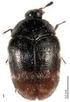 Rev. Chilena Ent. 2012, 37: 17-21 CONTRIBUTION TO THE KNOWLEDGE OF DERMESTIDAE (COLEOPTERA) FROM CHILE CONTRIBUCIÓN AL CONOCIMIENTO DE LOS DERMESTIDAE (COLEOPTERA) DE CHILE Jiří Háva 1 and Jaime Solervicens
Data Mining Clustering (2) Sheets are based on the those provided by Tan, Steinbach, and Kumar. Introduction to Data Mining
 Data Mining Clustering (2) Toon Calders Sheets are based on the those provided by Tan, Steinbach, and Kumar. Introduction to Data Mining Outline Partitional Clustering Distance-based K-means, K-medoids,
Digitization of Old Maps Using Deskan Express 5.0
 Dražen Tutić *, Miljenko Lapaine ** Digitization of Old Maps Using Deskan Express 5.0 Keywords: digitization; scanner; scanning; old maps; Deskan Express 5.0. Summary The Faculty of Geodesy, University
FURTHER MORPHOLOGICAL CONSIDERATIONS ON THE
 ARTÍCULO: FURTHER MORPHOLOGICAL CONSIDERATIONS ON THE GENUS BIRULATUS VACHON (SCORPIONES, BUTHIDAE), WITH THE DESCRIPTION OF A NEW SPECIES FROM ISRAEL Wilson R. Lourenço ARTÍCULO: Further morphological
MECHANICAL PRINCIPLES HNC/D MOMENTS OF AREA. Define and calculate 1st. moments of areas. Define and calculate 2nd moments of areas.
 MECHANICAL PRINCIPLES HNC/D MOMENTS OF AREA The concepts of first and second moments of area fundamental to several areas of engineering including solid mechanics and fluid mechanics. Students who are
Structural Integrity Analysis
 Structural Integrity Analysis 1. STRESS CONCENTRATION Igor Kokcharov 1.1 STRESSES AND CONCENTRATORS 1.1.1 Stress An applied external force F causes inner forces in the carrying structure. Inner forces
Galaxy Morphological Classification
 Galaxy Morphological Classification Jordan Duprey and James Kolano Abstract To solve the issue of galaxy morphological classification according to a classification scheme modelled off of the Hubble Sequence,
Helices From Readily in Biological Structures
 The α Helix and the β Sheet Are Common Folding Patterns Although the overall conformation each protein is unique, there are only two different folding patterns are present in all proteins, which are α
AP Physics B Ch. 23 and Ch. 24 Geometric Optics and Wave Nature of Light
 AP Physics B Ch. 23 and Ch. 24 Geometric Optics and Wave Nature of Light Name: Period: Date: MULTIPLE CHOICE. Choose the one alternative that best completes the statement or answers the question. 1) Reflection,
The Olympus stereology system. The Computer Assisted Stereological Toolbox
 The Olympus stereology system The Computer Assisted Stereological Toolbox CAST is a Computer Assisted Stereological Toolbox for PCs running Microsoft Windows TM. CAST is an interactive, user-friendly,
Yves Alarie, J. Randy Gibson & Kelly B. Miller
 Tijdschrift voor Entomologie 156 (2013) 1 10 brill.com/tve Descriptions of larvae of the North American endemic stygobiontic Ereboporus naturaconservatus Miller, Gibson & Alarie and Haideoporus texanus
Writing a Dichotomous Key to Wildflowers
 Writing a Dichotomous Key to Wildflowers Objectives: 1. Understand how to use and make dichotomous keys. 2. Understand common terminology of plant morphology. 3. Learn to recognize some fall wildflowers.
appalachian state university bfa graphic design Candidacy Portfolio Review
 portfolio materials» intro. to graphic design all projects & process book» typography i all projects & process book» three drawings» two works from non-graphic design courses (one of which must be 3d)»
Technical Drawing Specifications Resource A guide to support VCE Visual Communication Design study design 2013-17
 A guide to support VCE Visual Communication Design study design 2013-17 1 Contents INTRODUCTION The Australian Standards (AS) Key knowledge and skills THREE-DIMENSIONAL DRAWING PARALINE DRAWING Isometric
Tooth Supported Overdentures
 Unless otherwise noted, the content of this course material is licensed under a Creative Commons Attribution - Non-Commercial - Share Alike 3.0 License. Copyright 2008, Dr. Jeff Shotwell. The following
Coaxial Cable Feeder Influence on Yagi Antenna Dragoslav Dobričić, YU1AW [email protected]
 Coaxial Cable Feeder Influence on Yagi Antenna Dragoslav Dobričić, YU1AW [email protected] Introduction o far, in several previous articles [1, 2, 3], we investigated how boom radius and its S distance
LOCAL SURFACE PATCH BASED TIME ATTENDANCE SYSTEM USING FACE. [email protected]
 LOCAL SURFACE PATCH BASED TIME ATTENDANCE SYSTEM USING FACE 1 S.Manikandan, 2 S.Abirami, 2 R.Indumathi, 2 R.Nandhini, 2 T.Nanthini 1 Assistant Professor, VSA group of institution, Salem. 2 BE(ECE), VSA
Reflection and Refraction
 Equipment Reflection and Refraction Acrylic block set, plane-concave-convex universal mirror, cork board, cork board stand, pins, flashlight, protractor, ruler, mirror worksheet, rectangular block worksheet,
A review of Diphuia (Diptera: Ephydridae) with description of two new species from southern Brazil
 doi: 10.1590/S1984-46702010000500017 A review of Diphuia (Diptera: Ephydridae) with description of two new species from southern Brazil Wayne N. Mathis 1 & Luciane Marinoni 2 1 Department of Entomology,
HYDROPHILIDAE: I. Check list and key to Palearctic and Oriental genera of aquatic Hydrophilidae (Coleoptera)
 JÄCII & Jl (eels.): Water Beetles of China Vol. Ill 3S3-395 Wien, April 2003 HYDROPHILIDAE: I. Check list and key to Palearctic and Oriental genera of aquatic Hydrophilidae (Coleoptera) A. KOMAREK Abstract
TAXONOMIC (DICHOTOMOUS) KEYS
 TAXONOMIC (DICHOTOMOUS) KEYS One method of classifying and identifying objects includes using a taxonomic key, sometimes called a dichotomous key. A taxonomic key looks at the similarities and differences
Visualization of Phylogenetic Trees and Metadata
 Visualization of Phylogenetic Trees and Metadata November 27, 2015 Sample to Insight CLC bio, a QIAGEN Company Silkeborgvej 2 Prismet 8000 Aarhus C Denmark Telephone: +45 70 22 32 44 www.clcbio.com [email protected]
MetaMorph Software Basic Analysis Guide The use of measurements and journals
 MetaMorph Software Basic Analysis Guide The use of measurements and journals Version 1.0.2 1 Section I: How Measure Functions Operate... 3 1. Selected images... 3 2. Thresholding... 3 3. Regions of interest...
Geometry Chapter 1. 1.1 Point (pt) 1.1 Coplanar (1.1) 1.1 Space (1.1) 1.2 Line Segment (seg) 1.2 Measure of a Segment
 Geometry Chapter 1 Section Term 1.1 Point (pt) Definition A location. It is drawn as a dot, and named with a capital letter. It has no shape or size. undefined term 1.1 Line A line is made up of points
Universal Crown and Bridge Preparation
 Universal Crown and Bridge Preparation The All-Ceramic Crown Preparation Technique for Predictable Success According to Dr. Ronald E. Goldstein Expect the Best. Buy Direct. The Universal * Crown and Bridge
So, you want to make a photo-realistic rendering of the Earth from orbit, eh? And you want it to look just like what astronauts see from the shuttle
 So, you want to make a photo-realistic rendering of the Earth from orbit, eh? And you want it to look just like what astronauts see from the shuttle or ISS (International Space Station). No problem. Just
IAS 1 Presentation of Financial Statements current/non-current classification of debt (rollover agreements) outreach results
 IFRS Interpretations Committee Meeting Staff Paper Agenda reference 8 Date January 2011 Project Topic Work in progress IAS 1 Presentation of Financial Statements current/non-current classification of debt
A Key to the Empoasca Solana Complex with Descriptions of New Species
 The Ohio State University Knowledge Bank kb.osu.edu Ohio Journal of Science (Ohio Academy of Science) Ohio Journal of Science: Volume 60, Issue 5 (September, 1960) 1960-09 A Key to the Empoasca Solana
Replacement of the upper left central incisor with a Straumann Bone Level Implant and a Straumann Customized Ceramic Abutment
 Replacement of the upper left central incisor with a Straumann Bone Level Implant and a Straumann Customized Ceramic Abutment by Dr. Ronald Jung and Master Dental Technician Xavier Zahno Initial situation
Orthodontic mini-implants, or temporary anchorage devices
 Anchors, away by John Marshall Grady, DMD, Dan E. Kastner, DMD, and Matthew C. Gornick, DMD Drs. John Marshall Grady (center), Dan E. Kastner (left), and Matthew C. Gornick (right). Drs. John Marshall
Surface Machining. NATIONAL INSTITUTE FOR AVIATION RESEARCH Wichita State University. Revision 5.13 Copyright 2004. All rights reserved.
 Surface Machining NATIONAL INSTITUTE FOR AVIATION RESEARCH Wichita State University Revision 5.13 Copyright 2004. All rights reserved. www.cadcamlab.org None of this material may be reproduced, used or
Human, Male, White. Bone Clones Osteological Evaluation Report. Product Number: 1 intact mandible. General observations:
 Human, Male, White Product Number: Specimen Evaluated: Skeletal Inventory: BC-107 Bone Clones replica 1 intact cranium 1 intact mandible General observations: In general, the molding process has preserved
The Scientific Data Mining Process
 Chapter 4 The Scientific Data Mining Process When I use a word, Humpty Dumpty said, in rather a scornful tone, it means just what I choose it to mean neither more nor less. Lewis Carroll [87, p. 214] In
Data Mining Cluster Analysis: Basic Concepts and Algorithms. Lecture Notes for Chapter 8. Introduction to Data Mining
 Data Mining Cluster Analysis: Basic Concepts and Algorithms Lecture Notes for Chapter 8 by Tan, Steinbach, Kumar 1 What is Cluster Analysis? Finding groups of objects such that the objects in a group will
The Discussion Paper. Conceptual Framework of Financial Accounting
 The Discussion Paper Conceptual Framework of Financial Accounting Accounting Standards Board of Japan December 2006 (Tentative translation: 16 Mar. 2007) Contents Preface 1 Chapter 1 Objectives of Financial
DATA MINING CLUSTER ANALYSIS: BASIC CONCEPTS
 DATA MINING CLUSTER ANALYSIS: BASIC CONCEPTS 1 AND ALGORITHMS Chiara Renso KDD-LAB ISTI- CNR, Pisa, Italy WHAT IS CLUSTER ANALYSIS? Finding groups of objects such that the objects in a group will be similar
SYSTEMATIC APPROACH TO ORTHODONTIC DIAGNOSIS DENT 656
 SYSTEMATIC APPROACH TO ORTHODONTIC DIAGNOSIS DENT 656 ORTHODONTIC CLASSIFICATION / DIAGNOSIS Goal of diagnosis: An orderly reduction of the data base to a useful list of the patient s problems Useful??
ECE 533 Project Report Ashish Dhawan Aditi R. Ganesan
 Handwritten Signature Verification ECE 533 Project Report by Ashish Dhawan Aditi R. Ganesan Contents 1. Abstract 3. 2. Introduction 4. 3. Approach 6. 4. Pre-processing 8. 5. Feature Extraction 9. 6. Verification
SCALABILITY OF CONTEXTUAL GENERALIZATION PROCESSING USING PARTITIONING AND PARALLELIZATION. Marc-Olivier Briat, Jean-Luc Monnot, Edith M.
 SCALABILITY OF CONTEXTUAL GENERALIZATION PROCESSING USING PARTITIONING AND PARALLELIZATION Abstract Marc-Olivier Briat, Jean-Luc Monnot, Edith M. Punt Esri, Redlands, California, USA [email protected], [email protected],
Advancements in High Frequency, High Resolution Acoustic Micro Imaging for Thin Silicon Applications
 Advancements in High Frequency, High Resolution Acoustic Micro Imaging for Thin Silicon Applications Janet E. Semmens Sonoscan, Inc. 2149 E. Pratt Boulevard Elk Grove Village, IL 60007 USA Phone: (847)