
Spinal and shoulder complex posture. II: thoracic alignment and shoulder complex position in normal
|
|
|
- Shawn Johnson
- 10 years ago
- Views:
Transcription
1 27- Spinal and shoulder complex posture. II: thoracic alignment and shoulder complex position in normal and osteoporotic women Elsie Culham and Malcolm Peat School of Rehabilitation Therapy, Queen s University, Kingston, Ontario Thoracic spine and shoulder complex posture were measured in 57 women over the age of 50. On the basis of thoracic spine measures, the women were divided into normal posture (n 27), thoracic kyphosis (n 18) and thoracolumbar = = kyphosis (n 12) posture = groups. Analysis of variance was used to determine if shoulder complex postural measures differed in the three groups. In the sagittal plane, both abnormal posture groups had significantly greater forward angulation of the scapula and humeral extension compared with the normal posture group. In the transverse plane, scapular protraction and the angle between the scapular spine and clavicle were significantly greater in the thoracic kyphosis group compared with the other two groups. In the coronal plane, the abduction angle of the humerus was significantly less in the thoracic kyphosis group compared with the normal posture group. No difference was found in scapular position in this plane. Although differences were apparent between the posture groups, many of the clinical hypotheses regarding the effect of spinal posture on shoulder complex position were not substantiated by the results of this study. Introduction It is generally recognized that abnormal sagittal plane alignment of the cervical and thoracic spine can contribute to pain and dysfunction in the neck and shoulder region.l-6 Specifically, several authors have suggested that an exaggerated thoracic kyphosis alters the resting Address for correspondence: Elsie Culham, School of Rehabilitation Therapy, Louise D Acton Building, Queen s University, Kingston, Ontario K7L 3N6, Canada. position of the shouldered complex resulting in a forward- or round-shoulder posture.2,6,7 The scapula is described as following the contour of the thorax and is said to shift anterolaterally or to assume a more protracted position in subjects with increased thoracic kyphosis. In addition, the scapula is thought to rotate such that the glenoid cavity has an increased downward inclination.6-8 Kessler and Hertling7 stated that the freely hanging humerus assumes a more abducted position relative to the scapula and that tension is lost in the superior joint structures. An increase in the inter-

2 28 nally rotated position of the arms is said to occur due to the protracted position of the scapula.9 The consequences of the altered position are postulated to include lengthening or shortening of muscle, muscle weakness and changes in the direction of muscle pull as well as limitation of upper extremity range of motion.2,3 Rehabilitation efforts are often aimed at restoration of the normal position and function by stretching structures assumed to be contracted and strengthening musculature assumed weak due to prolonged stretch.l However, despite the various clinical observations regarding the detrimental effects of abnormal spinal posture on shoulder complex position, no studies could be found in which the claims were substantiated by objective measurement. The purpose of this part of the study was to determine if, and to what extent, shoulder complex position was affected by alignment of the thoracic spine in the sagittal plane. An older female population was chosen for study as previous research has demonstrated that postural changes are age related and are greater in females than males.11,12 In addition, the incidence of spinal osteoporosis, which is known to affect sagittal plane spinal alignment, is higher in women. 13~--15 Methodology A detailed description of the technique used to measure spinal and shoulder complex posture is found in part I* (Figure 1). Since the linear measures of scapular position were compared across subjects in this part of the study it was necessary to normalize these measures to account for differences in subject size. Both measures (Yabs and Zabs) were normalized by dividing by the length of the clavicle (three-dimensional distance between the landmarks on the medial and lateral ends of the clavicle). The resulting measures were labelled Ynor and Znor respectively. * Clinical Rehabilitation 1993; 7: Figure 1 Angular measures of shoulder complex position. (A) Sagittal plane. ScSg, forward angulation of the medial border of the scapula; HSg, flexion angle of the humerus relative to the vertical. (B) Coronal plane. ScCo, abduction angle of the scapula; CICo, elevation of the clavicle from medial to lateral; HCo. abduction angle of the humerus. (C) Transverse plane. ScTr, protraction angle of the scapula; CITR, retraction angle of the clavicle; HTr, internal rotation angle of the humerus.

3 29 Subjects Thoracic posture and shoulder complex position were measured in a total of 57 women between the ages of 50 and 85 years. Thirty-six of the subjects were recruited from the community. Two of these subjects were being treated for osteoporosis. Twenty-one women with a diagnosis of osteoporosis were recruited from an outpatient metabolic clinic of a local hospital. Fifteen of these subjects had radiographic evidence of vertebral fracture at at least one spinal level. Exclusion criteria included presence of a cardiac pacemaker, history of neurological disorder, history of surgery involving the spine and shoulder complex and a significant scoliosis of the spine. Subjects had to be medically stable and be able to assume and maintain a standing position for a minimum of 10 minutes without discomfort. The procedure was explained to the subjects and all gave informed consent prior to their participation in the study. Postural subgroups Subjects were classified into one of three postural groups on the basis of the values obtained for thoracic kyphosis and upper thoracic slope (Figure 2). The groups resulting from this classification were: 1) Thoracic kyphosis: 18 subjects had a thoracic kyphosis value of greater than 42 degrees, higher than any of the values found in normal young women in a pilot study. These individuals were placed in the thoracic kyphosis posture group. 2) Thoracolumbar kyphosis: this group included subjects in whom the location of the kyphotic curvature was low, at the thoracolumbar junction or in the lumbar region. Criteria for inclusion in this group included an upper thoracic slope of greater than or equal to 20 degrees and a kyphosis value of less than 35 degrees. Thoracolumbar kyphosis was evident in the osteoporotic subjects whose fractures primarily involved the lower thoracic or lumbar vertebrae, but was also seen in several of the women recruited from the com- met the criteria for munity. Twelve subjects thoracolumbar kyphosis and were included in this group. 3) Normal posture: thoracic posture was considered to be normal in the remaining 27 subjects who were subsequently placed in the normal posture group. The two abnormal posture groups are similar to the hollow round back and lower acute kyphosis postures described by Itoil6 for women with spinal osteoporosis. Descriptive statistics for age, height and weight of the subjects in the three postural groups are found in Table 1. Figure 2 Classification of spinal posture into three groups on the basis of values obtained for thoracic kyphosis and upper thoracic slope Table 1 Physical characteristics of subjects

4 30 Statistical analysis The mean values of age, height.. and mass as well as means of the spinal and shoulder com- across the three plex measures were compared postural groups using a one-way analysis of variance (ANOVA). In the case of a significant F-ratio a post hoc Scheffe test was completed to determine where the differences were. A level of p < 0.05 was chosen as the maximum level for statistical significance for all ANOVA analyses. Systat (Systat Inc., Evanston, IL) statistical software was used for all analyses. Results Posture subgroups Although the mean age was greater and the mean mass less in the thoracic kyphosis group than in the other two postural groups the differences were not statistically significant. Similarly, there were no significant differences in mean height among the three postural subgroups (p > 0.05). The spinal posture measures and results of statistical analyses are presented in Table 2. The mean kyphosis angle was much greater in the thoracic kyphosis group than in the other two 38.46; p < = postural groups (F 0.001). Upper thoracic slope was greatest in the thoracic kyphosis group followed by the thoracolumbar kyphosis group. The mean was significantly different for all comparisons. The lower thoracic slope was greatest in the thoracic kyphosis group and lowest in the thoracolumbar kyphosis group. The differ ; ence between groups was significant (F = p < 0.001). Post hoc analyses revealed that the difference was significant for all comparisons. Shoulder complex position Sagittal plane Results of analyses of sagittal plane measures are presented in Table 3. The medial border of the scapula was angled forward degrees on average in the normal posture group. This angle was significantly greater, and degrees in the thoracolumbar and thoracic kyphosis groups, respectively. The relative angle between the upper thoracic spine and the medial border of the scapula (ScSgR) was significantly increased in the thoracic kyphosis group compared with the other two postural groups. The humerus was flexed a mean of 1.85 degrees from the vertical in the normal posture group. This compared with a mean angle of 5 degrees extension in both the abnormal posture groups. There was no difference in the humeral angle relative to the medial border of the scapula among the three groups (p > 0.05). Transverse plane Results of analyses of transverse plane Table 2 Thoracic spine measures in postural groups All values in degrees. SD = standard deviation; UTS = slope of the upper thoracic spine measured from T1 downward; LTS = slope of the lower thoracic spine measured from T12 upward; K = thoracic kyphosis angle, derived by summing UTS and LTS.

5 31 measures are presented in Table 4. The mean retraction angle of the clavicle (CITr) was degrees in the normal posture group. This was not significantly different from a mean of and degrees in the thoracolumbar and thoracic kyphosis group respectively. The protraction angle of the scapula (ScTr) and the relative angle between the spine of the scapula and clavicle (CITrR) were significantly greater in the group with thoracic kyphosis compared with the other groups. The humeral angle in the transverse plane was the most variable of all the shoulder complex measures as indicated by the standard deviations. This angle was less in the thoracic kyphosis group, compared to the other two groups, but the difference was not statistically significant. Humeral rotation relative to the spine of the scapula was lower in the thoracic kyphosis group and higher in the thoracolumbar kyphosis group compared with the normal posture group. The difference between the two abnormal posture groups was significant. Coronal plane Results of analyses of coronal plane measures are presented in Table 5. The angle of the medial border of the scapula to the horizontal was degrees in the normal posture group. This angle was lower in the two abnormal posture groups but the difference was not significant (p < 0.05). The angle of elevation of the clavicle from medial to lateral was 7.13 degrees in the normal posture group. This angle was increased in both abnormal posture groups with the greatest difference occurring between the normal and thoracolumbar kyphosis groups. The humeral abduction angle was less in both with the nor- abnormal postural groups compared mal group. Post hoc analysis revealed that the difference was significant only between the thoracic kyphosis and normal group. The abduction angle of the humerus relative to the scapula (HCoR) was lowest for the thoracic kyphosis group. However, the difference among groups was not statistically significant. Linear measures Results of analysis of the linear measures are presented in Table 6. The normalized linear distance from Tl to the scapular centre along the y (Ynor) and z (Znor) axes were not significantly different in the postural groups. Table 3 Sagittal plane shoulder complex measures in postural groups All values in degrees. SD = standard deviation; ScSg = angle of forward tilt of the medial border of the scapula to the vertical; ScSgR = relative angle between the medial border of the scapula and the upper thoracic spine derived by subtracting ScSg from UTS; HSg = angle of the long axis of the humerus to the vertical, a positive value indicating flexion; HSgR = angle of the humerus relative to the medial border of the scapula.

6 32 Table 4 Transverse plane shoulder complex measures in postural groups All values in degrees. SD = standard deviation; ScTr = the protraction angle of the scapular spine relative to a coronal axis defined by a line connecting the roots of the right and left scapular spines; CITr = the retraction angle of the clavicle relative to the coronal axis as defined above; CITrR = the angle between the clavicle and the spine of the scapula in the transverse plane; HTr = the angle of internal rotation of the humerus; HTrR = internal rotation angle of the humerus relative to the spine of the scapula. Table 5 Coronal plane shoulder complex measures in postural groups All values in degrees. SD = standard deviation; ScCo = scapular abduction angle measured as the lateral angle formed between the medial border of the scapula and the horizontal; CICo = the medial to lateral angle of elevation of the clavicle; HCo = the abduction angle of the humerus relative to the vertical; HCoR = the abduction angle of the humerus relative to the medial border of the scapula.

7 33 Table 6 Linear shoulder complex measures in postural groups All values in cm. SD = standard deviation; YNor = the linear distance in centimetres from T1 to the centre of the three scapular landmarks along the y axis, normalized by dividing by the length of the clavicle; ZNor = linear distance from T1 to the centre of the three scapular landmarks, normalized by dividing by the length of the clavicle. Discussion It has been hypothesized that changes in sagittal plane posture, specifically thoracic kyphosis and forward-head posture, result in changes in the resting position of the shoulder complex. The results of this study indicate that an increase in anteroposterior curvature of the spine, regardless of the level at which it occurs, causes an increase in upper thoracic slope which could contribute to a forward head position. However, it is also evident from the results that the position of the skeletal components of the shoulder complex was dependent on the location of the curve. It is not surprising that changes in sagittal plane spinal posture affected the sagittal plane shoulder complex position measures, although no clinical reports regarding the effect of postural changes on the shoulder complex position in this plane have been found. Forward angulation of the medial border of the scapula was greater in both of the with the nor- abnormal posture groups compared mal posture group. However, the relative angle between the medial border of the scapula and the upper thoracic spine was increased only in the subjects with an increase in thoracic kyphosis angle. These findings can be explained by the location of the kyphotic curve and the resulting effect on the shape of the thorax. In subjects with a thoracolumbar curve the scapula angled forward to approximately the same degree as the upper thorax and the relative angle between the upper thoracic spine and medial border of the scapula (ScSgR) was not significantly altered. When the curvature is in the thoracic region the ribs become prominent dorsally and the anteroposterior diameter of the thorax appears to be increased. The prominent dorsal ribs may prevent the scapula from tilting forward to the same degree as the upper thoracic spine resulting in the marked increase in the relative angle between the upper thoracic spine and scapular medial border (ScSgR) in these individuals. This could potentially result in a gradual elongation of structures having attachment to both the cervical spine and the scapula. For example, this abnormal and irritation at the site posture may lead to pain of insertion of the levator scapula as described by Cailliet.s The fibres of the upper trapezius and rhomboid muscles and the suprascapular nerve might be similarly affected. The humerus was in more extension in both the abnormal posture groups compared with the normal group, but there was no significant difference in the angle of the humerus relative to the scapula (HSgR) in this plane. This indicates that the humerus moved with the scapula or the humerus extended as the forward angulation of the scapula increased. Both abnormal postures resulted in an increase in upper thoracic slope. Extension of the arms may be a compensatory movement to help offset the anterior displacement of the upper thorax and maintain balance. The protraction angle of the scapula (ScTr) in the transverse plane was significantly greater in the subjects with an increase in curvature of the

8 34 thoracic spine. This finding can also be explained by the increased prominence of the ribs dorsally and the increased anteroposterior diameter of the thorax evident in subjects with a mid-thoracic curves The angulation of the scapula and/or the clavicle must increase to accommodate the greater anteroposterior thoracic diameter. The results are in agreement with the clinical literature describing increased scapular protraction with thoracic kyphosis.7,9,17 The relative angle between the scapular spine and clavicle (CITrR) was also greatest in subjects with thoracic kyphosis again suggesting an accommodation to an increased anteroposterior diameter of the thorax. The results of this study suggest that protracted scapulae or round shoulder posture does not necessarily accompany a forward head position as suggested in the literature. 7.9,17 Subjects in both the thoracolumbar and thoracic kyphosis posture groups had an increase in upper thoracic slope and a clinically apparent forward head position compared with the normal posture subjects. However, subjects with a thoracolumbar kyphosis did not have protracted scapulae. The position of the scapula in the transverse plane appears to be affected more by the anteroposterior depth of the thorax than by sagittal plane posture of the spine. It would appear, therefore, to be incorrect to equate a particular shoulder complex position with a forward head posture. The relative angle between the humerus and was less scapula in the transverse plane (HTrR) in the thoracic kyphosis group compared with the other two posture groups, indicating external rotation of the humerus relative to the scapula. This finding does not support the concept of increasing internal rotation of the humerus as kyphosis increases. The relative external rotation of the humerus may be compensatory to protraction of the scapula in order to maintain an upper extremity position more conducive to function. The angle of the scapula in the coronal plane was less in the two abnormal posture groups compared with the normal posture group, indicating a tendency towards scapular adduction. However, the differences in the mean angles were small and not statistically significant. Thus, there is little evidence from this study to indicate that scapular adduction (downward rotation of the glenoid) accompanies an increase in thoracic curvature as proposed by previous authors.7,9 Downward scapular rotation as a cause of elongation of levator scapula and irritation at its site of insertion proposed by Cailliet5 also appears doubtful based on these findings. The mean elevation angle of the clavicle was greater in both the abnormal posture groups. Subjects in both of these groups had an increase in upper thoracic slope. As this slope increases the sternum and medial end of the clavicle would tend to become depressed possibly resulting in the observed increase in the angle of elevation from medial to lateral in the abnormal posture groups. The humerus was less abducted in the thoracic kyphosis group compared with the other two groups. The abduction angle of the humerus to the scapula (HCoR) was also less in this group though the difference was not statistically significant. Thus, there was no evidence from this study to support the hypothesis that the humerus abducts relative to the downwardly rotated scapula in subjects with kyphotic posture as proposed by Kessler and Hertling.7 The trend would appear to be the reverse with adduction of the humerus relative to the scapula occurring in subjects with increasing thoracic kyphosis. The linear distance from Tl to the scapular centre was not significantly different in the three postural groups. There is no evidence from this study, therefore, to support the theory that the scapula moves laterally on the chest wall in subjects with kyphosis leading to elongation of the rhomboid and middle and lower trapezius muscies.4,10 The stretch-weakness of the middle and lower trapezius muscle in persons with kyphosis and forward shoulders as proposed by Kendall and McCreary O and, thus, the need for strengthening of the scapular retractors in persons with kyphosis should be questioned in light of these findings. Although mean values of Znor indicated that the scapula was depressed on the thorax in the thoracic kyphosis subjects and elevated in the thoracolumbar group compared with the normals this difference was not statistically significant. Conclusions The resting position of the shoulder complex was altered in the abnormal posture groups compared with those identified as having normal

9 35 thoracic posture. The shoulder complex position was dependent on where the curve was located; thoracic versus thoracolumbar region. The effect of posture on the resting position of the shoulder complex may be related more to the resulting changes in the shape of the thoracic cage rather than to the sagittal plane curvature alone. References 1 Nicholas JA, Wilson PD. Osteoporosis of the aged spine. Clin Orthop 1963; 26: Bowling RW, Rockar PA, Erhard R. Examination of the shoulder complex. Phys Ther 1986; 66: Braun BL, Amundson LR. Quantitative assessment of head and shoulder posture. Arch Phys Med Rehabil 1989; 70: Darnell MW. A proposed chronology of events for forward head posture. J Craniomandib Pract 1983; 1: Cailliet R. Soft tissue pain and disability. Philadelphia: F.A. Davis Company, Cailliet R. Neck and arm pain. Philadelphia: F.A. Davis Company, Kessler RM, Hertling D. Management of common musculoskeletal disorders: physical therapy principles and methods. Philadelphia: Harper and Row, 1983: Kendall HO, Kendall FP, Boynton DA. Posture and pain. Baltimore: Williams and Wilkins, Cailliet R. Shoulder pain. Philadelphia: F.A. Davis Company, Kendall FP, McCreary EK. Muscles: testing and function. Baltimore: Williams and Wilkins, Milne JS, Lauder IJ. Age effects in kyphosis and lordosis in adults. Ann Hum Biol 1: 1974; Fon GT, Pitt MJ, Thies AC. Thoracic kyphosis: range in normal subjects. Am J Roentgenol 1980; 134: Albanese AA, Edelson AH, Lorenze EJ, Woodhull ML, Wein EH. Problems of bone health in elderly: ten year study. N Y State J Med 1975; 75: Riggs BL, Wahner HW, Dunn WL, Mazess RB, Offord KP, Melton LJ, III. Differential changes in bone mineral density of the appendicular and axial skeleton with aging: relationship to spinal osteoporosis. J Clin Invest 1981; 67: Aloia JF, Vaswani A, Ellis K, Yuen K, Cohn SH. A model for involutional bone loss. J Lab Clin Med 1985; 106: Itoi E. Roentgenographic analysis of posture in spinal osteoporotics. Spine 1991; 16: Ayub E. Posture and the upper quarter. In: Donatelli R ed. Clinics in physical therapy: physical therapy of the shoulder. New York: Churchill Livingstone, 1987 :

Clarification of Terms
 Shoulder Girdle Clarification of Terms Shoulder girdle = scapula and clavicle Shoulder joint (glenohumeral joint) = scapula and humerus What is the purpose (or function) of the shoulder and entire upper
Chapter 4 The Shoulder Girdle
 Chapter 4 The Shoulder Girdle Key Manubrium Clavicle Coracoidprocess Acromionprocess bony landmarks Glenoid fossa Bones Lateral Inferior Medial border angle McGraw-Hill Higher Education. All rights reserved.
Basic techniques of pulmonary physical therapy (I) 100/04/24
 Basic techniques of pulmonary physical therapy (I) 100/04/24 Evaluation of breathing function Chart review History Chest X ray Blood test Observation/palpation Chest mobility Shape of chest wall Accessory
.org. Fractures of the Thoracic and Lumbar Spine. Cause. Description
 Fractures of the Thoracic and Lumbar Spine Page ( 1 ) Spinal fractures can vary widely in severity. While some fractures are very serious injuries that require emergency treatment, other fractures can
Chapter 5. The Shoulder Joint. The Shoulder Joint. Bones. Bones. Bones
 Copyright The McGraw-Hill Companies, Inc. Reprinted by permission. Chapter 5 The Shoulder Joint Structural Kinesiology R.T. Floyd, Ed.D, ATC, CSCS Structural Kinesiology The Shoulder Joint 5-1 The Shoulder
Pilates for Kyphosis A BASI Pilates program designed to help correct thoracic kyphosis
 Pilates for Kyphosis A BASI Pilates program designed to help correct thoracic kyphosis 1 Lucy Penrose 19/01/2014 Wimbledon UK, April 2013 Abstract Kyphosis refers to an exaggerated curve in the thoracic
The Shoulder Complex & Shoulder Girdle
 The Shoulder Complex & Shoulder Girdle The shoulder complex 4 articulations involving The sternum The clavicle The ribs The scapula and The humerus Bony Landmarks provide attachment points for muscles
Human Anatomy & Physiology
 PowerPoint Lecture Slides prepared by Barbara Heard, Atlantic Cape Community College Ninth Edition Human Anatomy & Physiology C H A P T E R 7 The Skeleton: Part B Annie Leibovitz/Contact Press Images Vertebral
Bringing Back the Shoulders
 Bringing Back the Shoulders Mike Kamal Peak performance in competition should always be the primary goal of training. The unfortunate and sometimes unavoidable consequences of sport are fatigue, breakdown
HYPERLORDOSIS & PILATES TREATMENT
 HYPERLORDOSIS & PILATES TREATMENT Grace Tiangco 3/18/15 2012-2013 Abstract Sacramento/Mountain View Lordosis or Hyperlordosis is defined as a postural type in which the natural curves of the spine are
THE SHOULDER JOINT T H E G L E N O H U M E R A L ( G H ) J O I N T
 THE SHOULDER JOINT T H E G L E N O H U M E R A L ( G H ) J O I N T CLARIFICATION OF TERMS Shoulder girdle = scapula and clavicle Shoulder joint (glenohumeral joint) = scapula and humerus Lippert, p115
An Anatomical Comparison of the Human and Bovine Thoracolumbar Spine
 Journal of Orthopaedic Research 4:298-303, Raven Press, New York 0 1986 Orthopaedic Research Society An Anatomical Comparison of the Human and Bovine Thoracolumbar Spine Paul C. Cotterill, J. P. Kostuik,
Rotator Cuff Pathophysiology. treatment program that will effectively treat it. The tricky part about the shoulder is that it is a ball and
 Rotator Cuff Pathophysiology Shoulder injuries occur to most people at least once in their life. This highly mobile and versatile joint is one of the most common reasons people visit their health care
SCAPULAR FRACTURES. Jai Relwani, Shoulder Fellow, Reading Shoulder Unit, Reading.
 SCAPULAR FRACTURES Jai Relwani, Shoulder Fellow, Reading Shoulder Unit, Reading. Aims Anatomy Incidence/Importance Mechanism Classification Principles of treatment Specific variations Conclusion Anatomy
Muscle Energy Technique. Applied to the Shoulder
 Muscle Energy Technique Applied to the Shoulder MUSCLE ENERGY Theory Muscle energy technique is a manual therapy procedure which involves the voluntary contraction of a muscle in a precisely controlled
Biomechanical Analysis of the Deadlift (aka Spinal Mechanics for Lifters) Tony Leyland
 Biomechanical Analysis of the Deadlift (aka Spinal Mechanics for Lifters) Tony Leyland Mechanical terminology The three directions in which forces are applied to human tissues are compression, tension,
Reading, Writing & Posture
 Expert Content body mechanics by Joseph E. Muscolino Healthy posture of the upper body when reading and writing is dependent upon the location and angulation of the surface that we are reading and/or writing
Shoulder Instability. Fig 1: Intact labrum and biceps tendon
 Shoulder Instability What is it? The shoulder joint is a ball and socket joint, with the humeral head (upper arm bone) as the ball and the glenoid as the socket. The glenoid (socket) is a shallow bone
SPINE. Postural Malalignments 4/9/2015. Cervical Spine Evaluation. Thoracic Spine Evaluation. Observations. Assess position of head and neck
 SPINE Observations Body type Postural alignments and asymmetries should be observed from all views Assess height differences between anatomical landmarks Figure 25-9 Figure 25-10 Figure 25-11 & 12 Postural
DSM Spine+Sport - Mobility
 To set yourself up for success, practice keeping a neutral spine throughout all of these movements. This will ensure the tissue mobilization is being applied to the correct area, and make the techniques
SPINAL FUSION. North American Spine Society Public Education Series
 SPINAL FUSION North American Spine Society Public Education Series WHAT IS SPINAL FUSION? The spine is made up of a series of bones called vertebrae ; between each vertebra are strong connective tissues
I tro r duct c io i n t o Exercise Technique
 Introduction to Exercise Technique Is Exercise Technique Important? It is the actual technique used for a resistance training exercise that determines; The precise movement pattern the body will be attempting
MD 2016. Back Muscles & Movements Applied Anatomy. A/Prof Chris Briggs Anatomy & Neuroscience
 MD 2016 Back Muscles & Movements Applied Anatomy A/Prof Chris Briggs Anatomy & Neuroscience WARNING This material has been provided to you pursuant to section 49 of the Copyright Act 1968 (the Act) for
Unit 4: Skeletal System Test Review Test Review
 Name: Period: Unit 4: Skeletal System Test Review Test Review 1. List four functions of the skeletal system: a. b. c. d. 2. Define ossification and identify the roles of the osteoblasts, osteocytes, and
Determining the Posture, Shape and Mobility of the Spine
 Determining the Posture, Shape and Mobility of the Spine The World of Biomechanics Assessment of the Mobility Function Using a special Triple Cervical marker set comprising miniature ultrasound transmitters,
Wheelchair Back Supports
 Wheelchair Back Supports Mark R. Schmeler, MS, OTR/L, ATP Mary Ellen Buning, MS, OTR, ATP Center for Assistive Technology, UPMC Health System Department of Rehabilitation Science & Technology University
Divisions of the Skeletal System
 OpenStax-CNX module: m46344 1 Divisions of the Skeletal System OpenStax College This work is produced by OpenStax-CNX and licensed under the Creative Commons Attribution License 3.0 By the end of this
Shoulder and Related Upper Extremity Radiating Pain
 Shoulder and Related Upper Extremity Radiating Pain ICD-9-CM codes: 723.3 Cervical brachial syndrome ICF codes: Activities and Participation Domain codes: d4301 Carrying in the hands (Taking or transporting
Evaluation and Treatment of Spine Fractures. Lara C. Portmann, MSN, ACNP-BC
 Evaluation and Treatment of Spine Fractures Lara C. Portmann, MSN, ACNP-BC Nurse Practitioner, Neurosurgery, Trauma Services, Intermountain Medical Center; Salt Lake City, Utah Objectives: Identify the
Ken Ross BSc ST, Nat Dip ST
 Ken Ross BSc ST, Nat Dip ST Trunk Most people will suffer from back pain at some point in their lives. Good spinal posture places minimal strain on the muscles which maintain the natural curve of the spine
Addressing Pelvic Rotation
 1 of 5 4/20/2008 10:31 AM http://www.strengthcoach.com Addressing Pelvic Rotation Aaron Brooks of Perfect Postures When trying to address your athlete's or client's limitations due to pain or joint restriction,
Objectives. Spinal Fractures: Classification Diagnosis and Treatment. Level of Fracture. Neuro exam Muscle Grading
 Objectives Spinal Fractures: Classification Diagnosis and Treatment Johannes Bernbeck,, MD Review and apply the understanding of incidence and etiology of VCF. Examine conservative and operative management
Spine Anatomy and Spine General The purpose of the spine is to help us stand and sit straight, move, and provide protection to the spinal cord.
 Spine Anatomy and Spine General The purpose of the spine is to help us stand and sit straight, move, and provide protection to the spinal cord. Normal List Kyphosis The human spine has 7 Cervical vertebra
BODY BODY PEDICLE PEDICLE TRANSVERSE TRANSVERSE PROCESS PROCESS
 Learning Objective Radiology Anatomy of the Spine and Upper Extremity Identify anatomic structures of the spine and upper extremities on standard radiographic and cross-sectional images Timothy J. Mosher,
What is Pilates? Pilates for Horses?
 What is Pilates? Pilates is a conditioning system that increases core stability, strength and body awareness; redresses imbalances, and re aligns the body from the inside out. It can improve posture, achieve
Body Mechanics for Mammography Technologists
 Body Mechanics for Mammography Technologists Diane Rinella RT(R)(M)(BD)RDMS(BR)CDT Objectives Recognize causes and risk factors for Musculoskeletal Disorders (MSDs) for mammography technologists Understand
Spine Trauma: When to Transfer. Alexander Ching, MD Director, Orthopaedic Spine Trauma OHSU
 Spine Trauma: When to Transfer Alexander Ching, MD Director, Orthopaedic Spine Trauma OHSU Disclosures Depuy Spine Consultant (teaching and courses) Department education and research funds Atlas Spine
DAMAGING EFFECTS OF FORWARD HEAD POSTURE
 DAMAGING EFFECTS OF FORWARD HEAD POSTURE The effect of posture on health is becoming more evident. Spinal pain, headache, mood, blood pressure, pulse and lung capacity are among the functions most easily
Study on Structural Behaviour of Human Vertebral Column Using Staad.Pro
 Study on Structural Behaviour of Human Vertebral Column Using Staad.Pro Healtheephan alexis. S Post graduate student, Government College of Technology, Coimbatore 641 013 [email protected] ABSTRACT
Exploration of Cervical Problems Arising from Inappropriate Posture and. Improvement. By Li Nianlin. Director: Luo Leisheng
 Exploration of Cervical Problems Arising from Inappropriate Posture and Improvement By Li Nianlin Director: Luo Leisheng The High School Attached to Tsinghua University Abstract Many people have problems
Pilates Based Treatment For Low Back Pain with Contradicting Precautions : A Case Study
 Pilates Based Treatment For Low Back Pain with Contradicting Precautions : A Case Study Kerry Susser, DPT January 27, 2013 Body Arts and Science International Comprehensive Teacher Training Program 2013
What types of scoliosis are there?
 Patient and Family Education Scoliosis About idiopathic scoliosis and its treatment This handout covers the most common type of scoliosis, adolescent idiopathic scoliosis. Other types of scoliosis may
SKELETON AND JOINTS G.C.S.E. PHYSICAL EDUCATION. Unit 1. Factors Affecting Participation and Performance. G.C.S.E. P.E. Teacher:.
 G.C.S.E. PHYSICAL EDUCATION Unit 1 Factors Affecting Participation and Performance SKELETON AND JOINTS Name: G.C.S.E. P.E. Teacher:. By the end of this booklet you should be able to: Understand what the
Skeletal System. Axial Skeleton: Vertebral Column and Ribs
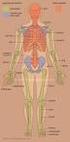 Skeletal System Axial Skeleton: Vertebral Column and Ribs Functions Regions Cervical Thoracic Lumbar Sacral Primary & secondary curvatures There are three major functions of the vertebral column. First,
Biomechanics of Lifting and Lower Back Pain S.N. Robinovitch
 Biomechanics of Lifting and Lower Back Pain S.N. Robinovitch Outline Epidemiology of lower back pain Strength of spinal segments Lifting models: muscle and intervertebral joint forces (compression and
Massage and Movement
 Massage and Movement Incorporating Movement into Massage Part One: Theory and Technique in Prone With Lee Stang, LMT NCBTMB #450217-06 1850 West Street Southington, CT 06489 860.747.6388 www.bridgestohealthseminars.com
Mechanics of the Human Spine Lifting and Spinal Compression
 Mechanics of the Human Spine Lifting and Spinal Compression Hamill and Knutzen: Chapter 7 Nordin and Frankel: Ch. 10 by Margareta Lindh Hall: Ch. 9 (more muscle anatomy detail than required) Low Back Pain
by joseph e. muscolino, DO photography by yanik chauvin
 by joseph e. muscolino, DO photography by yanik chauvin body mechanics palpation of the anterior neck ESOUCES For more information go to www.medlineplus.gov and search under anterior neck. The anterior
PILATES Fatigue Posture and the Medical Technology Field
 PILATES Fatigue Posture and the Medical Technology Field Marybeth Kane May 2014 Course: 2014, Pacific Palisades, CA 1 ABSTRACT A medical laboratory scientist (MLS) (also referred to as a medical technologist
Thoracic and Chest Pain Anatomy Risk Factors and Prevention Posture: Increased thoracic curve
 Thoracic and Chest Pain The thoracic spine is the region of the spine least likely to be injured in sport when compared to the cervical and lumbar region. However, this region can contribute to lumbar
Movement Pa+ern Analysis and Training in Athletes 02/13/2016
 Objec:ves Movement Pa+ern Analysis and Training in Athletes Department of Physical Therapy and Human Movement Sciences Appreciate the importance of movement pa+ern analysis and training in treahng athletes
Structure and Function of the Hip
 Structure and Function of the Hip Objectives Identify the bones and bony landmarks of the hip and pelvis Identify and describe the supporting structures of the hip joint Describe the kinematics of the
The type of cancer Your specific treatment Your pre training levels before diagnose (your current strength and fitness levels)
 Exercise and Breast Cancer: Things you can do! Cancer within the fire service is one of the most dangerous threats to our firefighter s health & wellness. According to the latest studies firefighters are
Temporo-Mandibular Joint Complex Exercise Suggestions
 Temporo-Mandibular Joint Complex Exercise Suggestions I. Exercise Generalizations: A. Patients with post-traumatic TMJ problems or with recent-onset dysfunction that is largely posture-related will generally
MANAGEMENT OF SCAPULAR DYSKINESIA
 MANAGEMENT OF SCAPULAR DYSKINESIA supplement to Comprehensive Approach to the Management of Scapular Dyskinesia in the Overhead Throwing Athlete UPMC Rehab Grand Rounds Fall 2012 1A. Scapular Clock at
he American Physical Therapy Association would like to share a secret with you. It can help you do more with less effort breathe easier feel great.
 The Secret... T he American Physical Therapy Association would like to share a secret with you. It can help you do more with less effort breathe easier feel great. The secret is about good posture, which
Professor Alan Hedge, Cornell University, August 2013
 Lifting and Back Stress DEA3250/6510 Professor Alan Hedge Low Back Pain Low back pain occurs in 80% of adults at some point in their lives Low back pain is second only to upper respiratory infections as
THE SKELETAL SYSTEM FUNCTIONS OF THE SKELETAL SYSTEM
 THE SKELETAL SYSTEM The skeleton is the body s bony framework which consists of 206 bones. The bones are made up of water(45%), calcium and phosphorous(35%) and other organic materials(20%). The calcium
X-Plain Neck Exercises Reference Summary
 X-Plain Neck Exercises Reference Summary Introduction Exercising your neck can make it stronger, more flexible and reduce neck pain that is caused by stress and fatigue. This reference summary describes
SPINE, LOWER EXTREMITY, AND PELVIC IMPAIRMENT SECTION
 SPINE, LOWER EXTREMITY, AND PELVIC IMPAIRMENT SECTION Lev.II Curriculum Rev. 6/09 99 OBJECTIVES FOR SPINAL, LOWER EXTREMITY, AND PELVIC IMPAIRMENT RATING SECTION 1. Demonstrate ability to properly measure
REHAB 544 FUNCTIONAL ANATOMY OF THE UPPER EXTREMITY & LOWER EXTREMITY
 REHAB 544 FUNCTIONAL ANATOMY OF THE UPPER EXTREMITY & LOWER EXTREMITY Mark Guthrie, PhD Rehabilitation Medicine University of Washington REHAB 544: Musculoskeletal Anatomy of the Upper & Lower Extremities,
Overhead Strength Training for the Shoulder: Guidelines for Injury Prevention and Performance Training Success
 Overhead Strength Training for the Shoulder: Guidelines for Injury Prevention and Performance Training Success Robert Panariello MS, PT, ATC, CSCS Strength training is an important component in the overall
o Understand the anatomy of the covered areas. This includes bony, muscular and ligamentous anatomy.
 COURSE TITLE Kin 505 Activities, Injuries Disease in the Larger Society On-Line offering Instructor Dr. John Miller [email protected] Course Description. Sports and exercise are a part of American society
Anatomy and Physiology for Exercise and Health Level 3
 Anatomy and Physiology for Exercise and Health Level 3 A/600/9051 Mock Paper There are 25 questions within this paper To achieve a pass you will need to score 18 out of 25 marks All questions are multiple
Mechanical Diagnosis And Therapy of the Cervical Spine. The McKenzie Method. Allan Besselink, PT, Dip.MDT Smart Sport International Austin, Texas
 Mechanical Diagnosis And Therapy of the Cervical Spine The McKenzie Method Allan Besselink, PT, Dip.MDT Smart Sport International Austin, Texas Background Physical Therapist Queen s s University 1988 McKenzie
Instability concept. Symposium- Cervical Spine. Barcelona, February 2014
 Instability concept Guillem Saló Bru, MD, Phd AOSpine Principles Symposium- Cervical Spine Orthopaedic Depatment. Spine Unit. Hospital del Mar. Barcelona. Associated Professor UAB Barcelona, February 2014
Avoid The Dreaded Back Injury by Proper Lifting Techniques
 Avoid The Dreaded Back Injury by Proper Lifting Techniques If you ve ever strained your back while lifting something, you ll know the importance of lifting safely. Agenda Introduction About the Back The
Rehabilitation after shoulder dislocation
 Physiotherapy Department Rehabilitation after shoulder dislocation Information for patients This information leaflet gives you advice on rehabilitation after your shoulder dislocation. It is not a substitute
*A discrete, hypersensitive nodule within tight band of muscle or fascia that present with classic pattern of pain referral that does not follow
 A patient presents with c/o cervical spine pain and chronic headaches that radiates across the top of his head. He also experiences frequent bouts of nausea, dizziness and indigestion. The patient also
Rotator Cuff and Shoulder Conditioning Program. Purpose of Program
 Prepared for: Prepared by: OrthoInfo Purpose of Program After an injury or surgery, an exercise conditioning program will help you return to daily activities and enjoy a more active, healthy lifestyle.
Cervicothoracic Mobility Exercises
 Cervicothoracic Mobility Exercises Upper Cervical Mobility Exercises... 2 Lower Cervical Mobility Exercises... 3 Cervicothoracic Junction Mobility Exercises... 4 1 st Rib Mobility Exercises... 5 Cervical
The Pilates Studio of Los Angeles / PilatesCertificationOnline.com
 Anatomy Review Part I Anatomical Terminology and Review Questions (through pg. 80) Define the following: 1. Sagittal Plane 2. Frontal or Coronal Plane 3. Horizontal Plane 4. Superior 5. Inferior 6. Anterior
Level 2 Certificate in Fitness Instructing Unit 1: Anatomy and Physiology
 Level 2 Certificate in Fitness Instructing Unit 1: Anatomy and Physiology These questions have been compiled based on the information available for the above qualification and unit. This mock should be
Ron Schenk PT, PhD 1
 Ron Schenk PT, PhD 1 Objectives Describe the anatomy of the neck (cervical spine) and low back (lumbar spine) Describe the risk factors associated with neck and low back injury Describe physical therapy
Thoracic Spine Anatomy
 A Patient s Guide to Thoracic Spine Anatomy 228 West Main, Suite C Missoula, MT 59802 Phone: [email protected] DISCLAIMER: The information in this booklet is compiled from a variety of sources.
Shoulder Pain and Weakness
 Shoulder Pain and Weakness John D. Kelly IV, MD THE PHYSICIAN AND SPORTSMEDICINE - VOL 32 - NO. 11 - NOVEMBER 2004 For CME accreditation information, instructions and learning objectives, click here. A
CHA SERIES. Key Chiropractic Concepts for the CHA. Ontario Chiropractic Association. Treatment That Stands Up.
 CHA SERIES Key Chiropractic Concepts for the CHA AGENDA Welcome & Introductions About Chiropractic Terminology ABOUT CHIROPRACTIC You will get lots of questions about the profession & chiropractic care
Stability of the spine modelled as an arch
 Loughborough University Institutional Repository Stability of the spine modelled as an arch This item was submitted to Loughborough University's Institutional Repository by the/an author. Citation: XIAO,
Effective Treatments for the Neck
 Effective Treatments for the Neck A manual therapy course to improve your treatment of radicular pain and foraminal impingement syndromes www.advancedmassageeducation.com 1 Effective Treatments for the
Patient Information. Lateral Lumbar Interbody Fusion Surgery (LLIF).
 Patient Information. Lateral Lumbar Interbody Fusion Surgery (LLIF). Understanding your spine Disc Between each pair of vertebrae there is a disc that acts as a cushion to protect the vertebra, allows
Important rehabilitation management concepts to consider for a postoperative physical therapy rtsa program are:
 : General Information: Reverse or Inverse Total Shoulder Arthroplasty (rtsa) is designed specifically for the treatment of glenohumeral (GH) arthritis when it is associated with irreparable rotator cuff
Muscular System. Student Learning Objectives: Identify the major muscles of the body Identify the action of major muscles of the body
 Muscular System Student Learning Objectives: Identify the major muscles of the body Identify the action of major muscles of the body Structures to be identified: Muscle actions: Extension Flexion Abduction
Mike s Top Ten Tips for Reducing Back Pain
 Mike s Top Ten Tips for Reducing Back Pain The following article explains ways of preventing, reducing or eliminating back pain. I have found them to be very useful to myself, my clients and my patients.
Patient Information. Anterior Cervical Discectomy and Fusion Surgery (ACDF).
 Patient Information. Anterior Cervical Discectomy and Fusion Surgery (ACDF). Understanding your spine Disc Between each pair of vertebrae there is a disc that acts as a cushion to protect the vertebra,
Protrusions and slipped discs as phenomena originated by compression A new approach with the global non-compensated muscular stretching
 Protrusions and slipped discs as phenomena originated by compression A new approach with the global non-compensated muscular stretching Authors: prof. Daniele RAGGI Degree in Sport Science, Physiotherapist,
Stretching the Low Back THERAPIST ASSISTED AND CLIENT SELF-CARE STRETCHES FOR THE LUMBOSACRAL SPINE
 EXPERT CONTENT by Joseph E. Muscolino photos by Yanik Chauvin body mechanics THE ESSENCE OF MOST MANUAL THERAPIES, and certainly clinical orthopedic massage therapy, is to loosen taut soft tissues, thereby
A Patient s Guide to Diffuse Idiopathic Skeletal Hyperostosis (DISH)
 A Patient s Guide to Diffuse Idiopathic Skeletal Hyperostosis (DISH) Introduction Diffuse Idiopathic Skeletal Hyperostosis (DISH) is a phenomenon that more commonly affects older males. It is associated
Biceps Tenodesis Protocol
 Department of Rehabilitation Services Physical Therapy The intent of this protocol is to provide the clinician with a guideline of the postoperative rehabilitation course of a patient that has undergone
Degenerative Changes of the Cervical Spine
 Anatomical Demonstration of Cervical Degeneration 1 Anatomical Demonstration: Degenerative Changes of the Cervical Spine 20 Slides of anatomical specimens, Xrays and MRIs By: William J. Ruch, D.C. Copyright
Diagnosis of Acromioclavicular Joint Injuries
 PO Box 15 Rocky Hill, CT 06067 (860) 463-9003 [email protected] www.chirocredit.com ChiroCredit.com is proud to present a section from one of our continuing education programs: Physical Diagnosis
Musculoskeletal Ultrasound Technical Guidelines. I. Shoulder
 European Society of MusculoSkeletal Radiology Musculoskeletal Ultrasound Technical Guidelines I. Shoulder Ian Beggs, UK Stefano Bianchi, Switzerland Angel Bueno, Spain Michel Cohen, France Michel Court-Payen,
Anatomy and Physiology 121: Muscles of the Human Body
 Epicranius Anatomy and Physiology 121: Muscles of the Human Body Covers upper cranium Raises eyebrows, surprise, headaches Parts Frontalis Occipitalis Epicranial aponeurosis Orbicularis oculi Ring (sphincter)
Lower Back Pain An Educational Guide
 Lower Back Pain An Educational Guide A publication from the Center of Pain Medicine and Physiatric Rehabilitation 2002 Medical Parkway Ste 150 1630 Main St Ste 215 Annapolis, MD 21401 Chester, MD 21619
Complications in Adult Deformity Surgery
 Complications in Adult Deformity Surgery Proximal Junctional Kyphosis: Thoracolumbar and Cervicothoracic Sigurd Berven, MD Professor in Residence UC San Francisco Disclosures Research/Institutional Support:
SLAP Repair Protocol
 SLAP Repair Protocol Anatomy and Biomechanics The shoulder is a wonderfully complex joint that is made up of the ball and socket connection between the humerus (ball) and the glenoid portion of the scapula
ACTIVE SEATING FOR PEOPLE WITH A KYPHOTIC SPINE. - backrest cushion for the kyphotic spine
 ACTIVE SEATING FOR PEOPLE WITH A KYPHOTIC SPINE - backrest cushion for the kyphotic spine Netti Kyphotic is designed for users who require optimum stabilization of their spinal curvature. The upholstery
1 REVISOR 5223.0070. (4) Pain associated with rigidity (loss of motion or postural abnormality) or
 1 REVISOR 5223.0070 5223.0070 MUSCULOSKELETAL SCHEDULE; BACK. Subpart 1. Lumbar spine. The spine rating is inclusive of leg symptoms except for gross motor weakness, bladder or bowel dysfunction, or sexual
Lower Back Pain HealthshareHull Information for Guided Patient Management
 HealthshareHull Information for Guided Patient Management Index Introduction 2 Lumbar spine anatomy 2 What is lower back pain? 3 Conditions that may be causing your back pain 3 When should I see my doctor?