
MARI Home Study (Distance Learning) Courses
|
|
|
- Primrose Roberts
- 10 years ago
- Views:
Transcription
1 Expanded Description of Courses: COURSES DIRECTLY RELATED TO THE MARI 1. Joan Kellogg, Mandala: Path of Beauty, 5 hours This work by Joan Kellogg, the creator of the Mandala Assessement Research Instrument (MARI), is a basic articulation of the symbols and colors of the Archetypal Stages of the Great Round of the Mandala. This work, dedicated to Dr. Carl G. Jung, is her master's thesis submitted to Antioch University in partial fulfillment of the requirements of the Master of Arts degree in Psychology in Kellogg continued revisions of the symbols and colors of the Archetypal Stages of the Great Round of the Mandala which was subsequently called Mandala Card Test in 1980 and then called the MARI Card Test in In 1993, Kellogg undertook the final revision of the MARI Card Test. 2. Theodor Abt, Introduction to Picture Interpretation: According to C.G. Jung, 9 hours This book is the result of Abt's teaching picture interpretation at the C.G. Jung Institute in Zurch- Kusnacht, and, since 1995, at the Research and Training Centre in Depth Psychology according to C.G. Jung and Marie-Louise von Franz in Zurich, Switzerland. From the perspective of Jung's Analytical Psychology, one significant approach to the unconscious is by the method of dream analysis in which the images and symbols of the dream are dealt with by 'dream interpretation.' In this work, somewhat analogous to dream interpretation, Abt shows how pictures may be subjected to 'picture interpretation.' By this means, Abt has opened up another approach to the unconscious. 3. Philosophical Visions of Reality and the Stages of Human Development, based on Joan Kellogg, Mandala Path of Beauty, Anthony Stevens, On Jung, Konstantin Kolenda, Philosopher's Journey, and a selection from Plato, The Republic, 15 hours Joan Kellogg, creator of the MARI (Mandala Assessment Research Instrument), acknowledges her indebtedness to Carl Gustav Jung and his Analytical Psychology in her Master's thesis which was subsequently published as Mandala: Path of Beauty. The stages of the Great Round, with its thirteen stages, are generally interpreted psychologically in relation to the stages of human development. Anthony Stevens, a Jungian analyst and psychiatrist, endeavors to present the basic principles of Jung's Analytical Psychology and the archetypal program for each stage of human development. Further, the author deals with Jung's life within the framework of these stages of human development and the consequences of each stage for Jung's psychological perspective. Konstantin Kolenda, a professor of Philosophy, discusses the major thinkers and movements in Western philosophy. A section of Plato's major work, The Allegory of the Cave, will also be used as a framework for the philosophical perspective of the stages of human development. This course endeavors to correlate the stages of human development with the metaphysical enterprise articulated by Western philosophers since the time of the ancient Greeks. Philosophy is often viewed as a relatively abstract enterprise in which systems of rational thought are articulated. These systems, viewed as a whole, conflict with each other, such that if one is claimed to be 'true,' then the others must be viewed as 'false.' Yet, from a limited perspective, each system contains insights that are relevant for the individual as he/she undergoes the process of human development. As Plato saw the need to bring the vision of the Sun into the cave, this course will endeavor to bring the abstractions of philosophical visions of reality into the concreteness of the developmental stages of human existence. 1

2 STUDIES OF CARL GUSTAV JUNG 4. Carl Gustav Jung, Analytical Psychology: Its Theory and Practice, 18 hours This course will explore the basic principles of Carl Gustav Jung's Analytical Psychology (a label which he chose to distinguish his psychological perspective from Sigmund Freud's Psychoanalysis) as it is articulated by him in his Tavistock Lectures which were presented in Jung was invited by the Institute of Medical Psychology (Tavistock Clinic), Malet Place, London, England, at the invitation of Dr. J. A. Hadfield, to give a series of five lectures, which Jung delivered from September 30 to October 4, The audience, of some two hundred, consisted chiefly of members of the medical profession. The text is presented first as a lecture which is followed by a discussion period. 5. Violet S. delaszlo, The Basic Writings of C.G. Jung, 44 hours This course will explore selections from the writings of C.G. Jung: Psychological Types, Symbols of Transformation, On the Nature of the Psyche, The Relation Between the Ego and the Unconscious, On the Nature of Dreams, Archetypes of the Collective Unconscious, Psychological Aspects of the Mother, The Psychology of Transference, Introduction to the Religious and Psychological Problems of Alchemy, Psychology and Religion, Marriage as a Psychological Relationship. (While several collected editions of Jung's work are available, the instructor considers this work to encompass the best of Jung's Analytical Psychology.) 6. Anthony Stevens, On Jung, 25 hours This course will explore the basic principles of Carl Gustav Jung's Analytical Psychology, as it is articulated by Anthony Stevens. In addition, Stevens also deals with the following issues: a) the archetypal program for each stage of human development; b) Jung's life within the framework of these stages of human development; and c) the consequences of each stage for Jung's psychological perspective. Stevens endeavors to correct the outlook that Jung is a mystic and/or religious thinker and/or a gnostic by dealing with what he considers to be Jung's biological and evolutionary standpoint. A careful reading on Jung's writings shows that Stevens' perspective on Jung is indeed the more viable one. 7. Anthony Stevens, Archetypes: A Natural History of the Self, 29 hours One of the major problems with respect to understanding Carl Gustav Jung's Analytical Psychology has been the endeavor to understand exactly what he means by 'archetypes'--given its long history in the intellectual tradition of humankind. Plato, for example, presents archetypes as equivalent to the eternal ideas which are embedded in the soul and thus the means by which human kind has a connection with the eternal realm. These eternal ideas have also been interpreted as ideas within the 'mind of God' in the theological traditions of the West. Jung himself seemingly exacerbated the problem by his explorations into the religious, mystical, and occult literature of both the East and the West. Thus, while Jung himself viewed himself as 'empirical' and 'scientific', he was often accused of being 'unscientific' because of the seemingly 'metaphysical/religious' nature of the archetypes. The subtitle of this work indicates that it is 'a pioneering investigation into the biological basis of Jung's theory of archetypes.' From Stevens' perspective, Jung 'suffered ostracism by the academic establishment not because he was a mystic but because his ideas ran counter to the intellectual currents of his time.' The purpose of this book is to understand the intellectual currents of Jung's time and more importantly, to understand the biological basis of Jung's theory of archetypes. 8. June Singer, Boundaries of the Soul: The Practice of Jung's Psychology, 41 hours The majority of interpreters of Jungian thought, to the extent that they are also Jungian analysts, discuss Jung's principles of Analytical Psychology from a relatively abstract perspective, that is, independent from the ongoing relationship between the Jungian analyst and the analysand (client). It is to Singer's credit that she is primarily thinking of this ongoing relationship and endeavors to discuss the various principles of Jung's Analytical Psychology within the context of this relationship. Hence, what seems to be 'disjointed' from a logical point of view, however, makes good sense given the often 'amorphous and circuitous' process between the analyst and the analysand. 9. Graham Dunstan Martin, Shadows in the Cave: Mapping the Conscious Universe, 18 hours 2

3 Carl Gustav Jung was well aware of and sensitive to the epistemological limits of his Analytical Psychology. Jung often claimed that he was not a philosopher nor a theologian, but mainly a psychologist with an empirical orientation. He claimed that he was a 'scientist,' but not in the sense that he was committed to a Newtonian world view, nor to the logico-mathematical orientation of the then prevailing scientific methodology, but in the sense that he was willing to explore 'psychic experiences.' Unfortunately, Jung did not undertake an extensive articulation of his epistemological position. Consequently, he was criticized for being a 'mystic,' a 'religious thinker,' 'an occultist,' 'a gnostic,' and 'unscientific' for undertaking explorations into areas which, according to the prevailing scientific perspective, was questionable, because, fundamentally there was nothing there to explore. The author of this book is not a Jungian, but he does articulate an epistemological outlook that correlates with the Jungian position, and, by extension, presents a justification for Jung's principles of Analytical Psychology. Basing his discussion on the findings of Michael Polyani, a scientist and a philosopher of science, the author draws a distinction between explicit knowledge and tacit knowledge. He claims that tacit knowledge is far more extensive than explicit knowledge, that explicit knowledge is based on words/language, while tacit knowledge is based on 'experience.' This distinction is similar to Jung's discussion of the conscious and the unconscious. STUDIES IN MYTHOLOGY 10. Joseph Campbell, The Hero With a Thousand Faces, 29 hours Carl Gustav Jung looked upon mythology as a means of confirmation of his hypothesis of the collective unconscious. Joseph Campbell, the author of numerous celebrated works of mythological stories and tales, is also one of the important interpreters of the nature and function of myths. Campbell is 'Jungian' in the sense that he acknowledges his awareness of Jung's perspectives on myth and basically undertakes further confirmation of the hypothesis of the collective unconscious. Jung, in his published works, focused on the psychological significance of myth and left the issue of the 'metaphysical' implications of the nature of myths to philosophers and theologians. In this work, Campbell undertakes several tasks: a) presentation of various mythological accounts of the theme of the hero; b) a psychological interpretation of the hero; and c) a metaphysical interpretation of the hero. Campbell was a member of the Literature Faculty of Sarah Lawrence College. Hence, he was neither a philosopher nor a theologian, but he made a significant interpretation of the 'metaphysical' implications of the nature of myths. 11. Mircea Eliade, Cosmos and History: The Myth of the Eternal Return, 11 hours According to the author, the chief difference between the man of the archaic and traditional societies and the man of the modern societies with their strong imprint of Judaeo-Christianity lies in the fact that the former feels himself indissolubly connected with the Cosmos and the cosmic rhythms, whereas the latter insists that the is connected only with History. In the language of Campbell, Eliade is concerned with the 'metaphysical' interpretation of the nature of myths. In this work, Eliade is focused on the concepts of time and history, but specifically on 'sacred time' and 'sacred history,' in contrast to 'profane time' and 'profane history.' The myths preserve and transmit the paradigms, the exemplary models, for all the responsible activities in which men engage. By virtue of these paradigmatic (archetypal) models revealed to men in mythical times, the Cosmos and society are periodically regenerated. 3

4 STUDIES IN SCIENCE AND EVOLUTION 12. Fritjof Capra, The Turning Point: Science, Society and the Rising Culture, 36 hours This work is one of more readable presentation/exposition of the Newtonian Physics and the New Physics. The author clearly has the lay reader in mind and thus avoids technical language and concepts of science and endeavors to explain clearly the significant principles and concepts. More importantly, the author endeavors to articulate the influences and ramifications of the Newtonian scientific world view for the fields of medicine, psychology, economics and social development. Further, given the New Physics (Quantum), the author presents his new vision of reality, incorporating principles of the systems view of life, wholeness and health, and how the field of psychology is undergoing significant changes. Carl Jung's Analytical Psychology and Ken Wilber's transpersonal perspective are discussed. 13. Ernst Mayr, One Long Argument: Charles Darwin and the Genesis of Modern Evolutionary Thought, 13 hours While there has been considerable discussion, pro and con, concerning Darwin's evolutionary perspective, there are very few, outside of the field of Biology, who have a clear understanding of what is entailed by this perspective. Ernst Mayr, one of the authoritative writers in the area of biological thought and Darwin's evolutionary perspective, indicates that Darwin's perspective is a combination of five distinct theories, each of which has been subjected to considerable criticism. Even among thinkers and researchers who claim to be evolutionary in their perspective have disagreed with Darwin on this or that specific theory. Further, the articulation of the evolutionary perspective was undertaken over the course of his life time and continues to be carried on by neo-darwinians. Mayr endeavors to present the issues within a chronological framework, starting with the climate of the times and why Darwin's initial presentation of his evolutionary perspective in his Origin of the Species was met by a storm of opposition. Mayr identifies the issues and articulates the various reasons for the opposition by theists, essentialists, physicists, and philosophers. The first three theories were established within the life time of Darwin. The final two theories were subjects of considerable discussion after Darwin's passing. Hence, it is important to recognize that there is the First Darwinian Revolution (mainly by Darwin himself) and then the Second Darwinian Revolution (by neo-darwinians). The key issue today is the theory of natural selection. STUDIES IN TRANSPERSONAL PSYCHOLOGY 14. Brant Cortright, Psychotherapy and Spirit: Theory and Practice of Transpersonal Psychotherapy, 19 hours This book is an excellent articulation and summary of the various approaches to psychotherapy given the transpersonal framework. It endeavors to present: a) working definitions of transpersonal psychology and transpersonal psychotherapy; b) basic assumption of the transpersonal perspective; c) the various dimensions of human existence that are involved in the transpersonal perspective; d) several approaches to transpersonal psychotherapy; e) clinical issues that are encountered in transpersonal psychotherapy; and f) concludes with a valuable section which discusses the fundamental principles of transpersonal practice. 15. Ken Wilber, No Boundary: Eastern and Wesern Approaches to Personal Growth, 13 hours The purpose of this book is articulated by Ken Wilber in the Preface: 'We artificially split our awareness into compartments such as subject vs. object, life vs. death, mind vs. body, inside vs. outside, reason vs. instinct--a divorce settlement that sets experience cutting into experience and life fighting life.' In addition, Wilber's transpersonal model of the spectrum of consciousness is presented in a more readable format. 4

5 STUDIES IN PHILOSOPHY 16. Robert Pirsig, Zen and the Art of Motorcycle Maintenance: An Inquiry into Values, 40 hours This book first appeared in 1974 at a time when there was considerable civil unrest in the United States as the war in Viet Nam was drawing to a close. For various reasons, this book became a 'hot topic' in the 'counter-culture' and has continued to sell. This book appeared at a time when books in Eastern thought were being published, especially in the area of Zen Buddhism. What we have is Pirsig's journey into the labyrinth of the philosophical modes of discourse, from the articulations and analyses of Western Philosophy, its fundamental problems, and what he discovers about Eastern modes of thinking as solutions to these fundamental problems. Using Pirsig's own terms, the duality of the Classical vs. Romantic modes of knowledge is the central concern of the book. Insofar as the individual focuses upon one at the expense of the other, there is a 'breakdown'--a falling away from Quality. Insofar as the individual focuses on the healing of the rupture between subject and object, there is self-repair and self-maintenance, that is, growth toward Quality. The terms 'buddha,' 'zen,' 'quality,' are symbols for the healing, unification, transcendence of the duality of subject-object. STUDIES IN THE MAJOR RELIGIONS OF THE WORLD 17. Huston Smith, The World's Religions: Our Great Wisdom Traditions, 35 hours This course will explore the basic principles of the major religious orientations of the world--- Hinduism, Buddhism, Confucianism/Taoism, Judaism, Christianity, Islam and Primal Religions. Some kind of orientation to the world's religions is necessary given the international climate that now pervades the cities and towns of the United States and the consequent diversity of languages and cultures. In 1958, when Smith initially published this book, there was little public awareness of the religions of world. Smith thus provided a great service in increasing the understanding of the world's religion. Since then, in spite of fact that there has been a tremendous growth of interest in books in the religions of the world, Smith's work has continued to be popular with the public as indicated by a revised edition which appeared in 1986 and then again in Swami Prabhavananda, The Spiritual Heritage of India, 30 hours Hinduism is, without question, the oldest of the religious perspectives in terms of an oral tradition which was eventually written as 'scripture.' While one can argue that the Primal Religions historically precede Hinduism, the fact remains that their oral traditions were not transcribed into written texts. Further, the study of Hinduism is important because it presents and anticipates all the principal issues of the major religions of the world, in terms of the systems of pluralism, dualism and monism. Hinduism encompasses a diversity of perspectives and interpretations and hence can be initially divided into the Orthodox (accepts the authority of the Vedic scriptures) and Heterodox (does not accept the authority of the Vedic scriptures) schools. Among the Orthodox schools are Nyaya, Vaisesika, Samkhya, Yoga, Mimamsa and Vedanta systems. Among the Unorthodox schools are Jainism and Buddhism. This book presents the scope of Indian Philosophical and Religious perspectives with their origins in the Vedic teachings to Samkara (Shankara) and Sri Ramakrisha, two of the major philosophical interpreters of the Vedanta school of thought. 19. Richard Robinson, Willard Johnson, The Buddhist Religion: A Historical Introduction, 29 hours Buddhism is a term used to denote an array of social and cultural phenomena that, over the course of time, focused around the teachings of a figure called the Buddha, the Awakened One. The followers of the Buddha prefer the terms the Dharma, the Buddha's message or the Buddha's Way. On the basis of what scholars are able to ascertain, the Buddha himself referred to his teachings as the Dharma-Vinaya (Doctrine and Discipline). The Buddha and his teachings began in India, and several centuries after his death, the various schools of Indian Buddhism expanded into Asia: the Southeast region (Sri Lanka, Burma, Thailand and Cambodia as Theravada Buddhism) ; the Central regions (China, Korea and Japan as Mahayana Buddhism); and the North region (Tibet as Vajrayana Buddhism). 5

6 This course will cover: 1) what can be ascertained as the life and teachings of the Buddha in India; 2) the development of early Indian Buddhism; 3) the rise and development of Theravada Buddhism in Southeast Asia; 3) the rise and development of Mahayana Buddhism in Central Asia; and 4) the rise and development of Vajrayana Buddhism in North Asia. 20. Laurence G. Thompson, Chinese Religion: an Introduction, 9 hours Chinese religion is unusual, as compared to the majority of world religions, in the sense that not only does it have its origins within the context of family, and, by extension, the community and finally the state, including the roles of the emperor and the officials, but also all of these factors are essential to the nature of Chinese religion. The author of this book indicates that he has profound admiration for, and indebtedness to, the epoch-making work of Professor C.K. Chang, Religion in Chinese Society. According to the author, 'it is this book which has for the first time provided us with a real understanding of the nature of Chinese religion, a methodology by the use of which all the pieces of the jigsaw puzzle fall into place.' This course will cover: 1) the world view of Chinese philosophy; 2) the family, community and state; and 3) the discussion of the individual within the context of Buddhism and Taoism. 21. Robert Goldenberg, The Origins of Judaism, 16 hours According to the author, 'The Jewish religion (Judaism) emerged out of the writings of the Hebrew Bible, but it is not actually to be found in those writings. Judaism is a religion that worships God through words--prayer, sermons, the reading of scripture and the like--in buildings called synagogues under the leadership of rabbis. The Bible knows something of prayer but nothing of the rest. The Bible portrays a religion centered on a single building commonly called the Temple and led by hereditary priests who worship through actions -- elaborate sacrificial rites and other ceremonies of purification and atonement. The transition from that earlier religion to one that modern people would recognize is the story line of this book.' This course will cover: a) the history of Israel; b) the significant religious issues which emerge because of historical situations; and c) the beginnings and articulation of Rabbinic Judaism. 22. Roland Bainton, Christianity, 11 hours This work is a comprehensive discussion beginning with the background of Christianity to Christianity in the modern age. While the awareness of the full scope of the history of Christianity is important, it is, at the same time, not essential for a grasp of the basic principles of the Christian religion. Consequently, the focus of this course will be on the background, beginnings and the emergence of the Christian faith during the times of the empires of the ancient world which culminates in the demise of the Roman empire in the 5th century, ce. 23. Fazlur Rahman, Islam, 9 hours The purpose of this book is to give the reader a general development of Islam throughout the approximately fourteen centuries of its existence. The work primarily is informative, but it is also interpretative in order to maintain a coherent and meaningful narrative. While the major events and issues of Islamic history are covered in this book, this course endeavors to be a basic introduction to Islam. Hence, only certain chapters will be covered. 24. Sam Gill, Beyond 'The Primitive', 9 hours A considerable amount of literature has been published about the religious perspectives of 'nonliterate peoples' since the middle of the 19th century as a consequence of the activities of European colonization, on the one hand, and Christianity missionary ventures, on the other. Unfortunately, the majority of these works present the religions of these people from the presuppositions of the European and/ or Christian outlooks. The author of this book endeavors to deal with the religions of these people, first, by examining the use of the term 'primitive,' and second, by endeavoring to present keys issues of these 'nonliterate peoples' from a perspective which is relatively inherent to the understanding of these peoples. 25. Huston Smith, Forgotten Truth: The Common Vision of the World's Religions, 12 hours In the summer of 1973, Smith wrote the 'Introduction to the Revised Edition' of the English translation of Firthjof Schuon's The Transcendent Unity of Religions in which he outlines and explains the major thesis of the author, mainly, of a unified vision of the diverse religious traditions. While Schuon's 6

7 project was a landmark work, it is also difficult to read because the author presupposes, on the part of the reader, an understanding of both philosophical and theological concepts and categories. In this work, Smith presents Schuon's fundamental thesis, but in terms of language that is comprehensible to the non-professional. Smith discusses the four dimensions of space, the four levels of reality and the four levels of selfhood. It is on the basis of the fourth dimension/levels that one has a glimpse of the 'transcendental unity of religions,' or, given Smith's discussion, 'the common vision of the world's religions.' 7

UNIVERSITY OF METAPHYSICS: [email protected] www.universityofmetaphysics.com UNIVERSITY OF SEDONA: [email protected] www.universityofsedona.
 COMMUNICATIONS ADDRESS: 2675 W. State Route 89A, No. 465, Sedona, AZ 86336 ADMINISTRATION TOLL FREE WITHIN THE CONTINENTAL US: (888) 866-4685 OUTSIDE US: (928) 203-0730 FAX (928) 204-0543 UNIVERSITY OF
SYLLABUS PERSPECTIVES IN TRANSPERSONAL PSYCHOLOGY Distance Learning FACULTY: Patricia Norris, PhD Date Revised: 12/29/12 for Spring/Fall 2013
 SYLLABUS PERSPECTIVES IN TRANSPERSONAL PSYCHOLOGY Distance Learning FACULTY: Patricia Norris, PhD Date Revised: 12/29/12 for Spring/Fall 2013 COURSE DESCRIPTION In this course, students will be exposed
BSC LRSC NDSCS WSC DSU MISU NDSU UND
 Philosophy & Religion The following matrix indicates those courses deemed transferable among institutions listed across the top of the matrix. The numbers on the matrix represent the number of semester
Cornerstone Christian University School of Theology Orlando, FL. Doctor of Theology Program
 Cornerstone Christian University School of Theology Orlando, FL Doctor of Theology Program This is 48 credit hours of Theological Studies program. Completing this track will lead to a Doctor Degree in
RELIGION & CULTURE (REL) Updated January 29, 2016
 RELIGION & CULTURE (REL) Updated January 29, 2016 Note: The department/program code REL replaces the former code 47. Students cannot hold credit in REL-xxxx and the former 47.xxxx having the same course
Comparative Religion. College of Humanities and Social Sciences
 Comparative Religion College of Humanities and Social Sciences INTRODUCTION The mission of the Department of Comparative Religion is to describe and interpret the developments, worldviews and practices
Doctoral Course Descriptions
 Dissertation Research (DR) DR 9108 - Dissertation Research This course will enable the student to conduct preliminary research for a dissertation proposal, to draw from bibliographical resources relevant
Philosophy and Religious Studies Course Offerings
 Philosophy and Religious Studies Course Offerings 100 Creating Meaning: Introduction to Existentialism emphasizing film and literature (3) Existentialism was one of the most influential intellectual currents
3. The Buddha followed some Hindu ideas and changed others, but he did not consider himself to be a god.
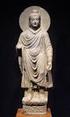 True / False Indicate whether the statement is true or false. 1. Like the ancient Greeks, Indian astronomers proposed the theory that the Earth was round and revolved around the sun. 2. During his time
Religious education. Programme of study (non-statutory) for key stage 3. (This is an extract from The National Curriculum 2007)
 Religious education Programme of study (non-statutory) for key stage 3 and attainment targets (This is an extract from The National Curriculum 2007) Crown copyright 2007 Qualifications and Curriculum Authority
Jainism Jainism also began in India; religion teaches ahimsa nonviolence - Jains believe all living things have souls and should not be hurt
 Lesson 3 Buddhism and India s Golden Age MAIN IDEAS Belief System A teacher called the Buddha developed a new religion that focused on helping people to escape suffering. Government The Maurya rulers united
Religious education. Programme of study (non-statutory) for key stage 4. (This is an extract from The National Curriculum 2007)
 Religious education Programme of study (non-statutory) for key stage 4 and years 12 and 13 (This is an extract from The National Curriculum 2007) Crown copyright 2007 Qualifications and Curriculum Authority
Kansas Board of Regents Precollege Curriculum Courses Approved for University Admissions
 Kansas Board of Regents Precollege Curriculum Courses Approved for University Admissions Original Publication April 6, 2011 Revision Dates June 13, 2011 May 23, 2012 Kansas Board of Regents Precollege
ABSTRACT 1.1. BACKGROUND WAYS OF DEFINING A DOMAIN
 Two Axes of Domains for Domain Analysis Joseph T. Tennis Information School University of Washington Seattle, WA 98195-2840 ABSTRACT This paper adds two analytical devices to domain analysis. It claims
CONTENT OF UNDERGRADUATE TRANSPERSONAL PSYCHOLOGY COURSES
 CONTENT OF UNDERGRADUATE TRANSPERSONAL PSYCHOLOGY COURSES John Davis Denver, Colorado Charles Wright Denver, Colorado The purpose of the present research was to survey the content of undergraduate transpersonal
Religious Studies Cognates. Christianity This cognate introduces students to historical and contemporary Christianity.
 Religious Studies Cognates Christianity This cognate introduces students to historical and contemporary Christianity. REL 232 History of Christianity REL 101 Introduction to Religion REL 103 One God REL
GCE Religious Studies Explanation of Terms Unit 1D: Religion, Philosophy and Science
 hij Teacher Resource Bank GCE Religious Studies Explanation of s Unit 1D: Religion, Philosophy and Science The Assessment and Qualifications Alliance (AQA) is a company limited by guarantee registered
THEOLOGY COURSE DESCRIPTIONS
 4.6.25 Theological Studies Academic Staff Randall Holm, Ph.D., Laval University: Biblical Studies and Practical Theology Kara Mandryk, D.W.S., Institute for Worship Studies: Practical Theology Program
Curriculum Overview. A Personalized Program. Streamlined Learning Objectives
 Curriculum Overview A Personalized Program We view our students as future leaders in their fields and because this can represent such a broad spectrum of interests, we provide the opportunity for a highly
A Study Guide for The Structure of Scientific Revolutions by Thomas Kuhn
 A Study Guide for The Structure of Scientific Revolutions by Thomas Kuhn In 1962, Thomas Kuhn wrote one of the most influential books of the last half of the twentieth century. He was inspired to write
Bachelor of Arts Degree Completion Program in Psychology
 Bachelor of Arts Degree Completion Program in 2015-2017 B.A. Degree Completion Program in Program Prerequisites: Associate s degree and a minimum G.P.A. of 2.5. 42 residency credits are required for an
Mission Outcomes Major Requirements Bachelor of Arts (BA) Degree in Philosophy
 228 Philosophy Mission The study of philosophy is based on the recognition that all human beings are engaged in a search for meaning and values with which to interpret their experiences and give order
THE BACHELOR OF ARTS DEGREE IN HISTORY (HIST)
 THE BACHELOR OF ARTS DEGREE IN HISTORY (HIST) The study of History is an important part of the journey for intellectual development and human understanding. Through a study of History, we cultivate and
Guidelines for the Approval of State University General Education Requirement Courses
 Guidelines for the Approval of State University General Education Requirement Courses For each State University General Education Requirement (SUNY GER) category, the Task Forcedefined learning outcomes
Bachelor of Arts Degree Completion Program in Psychology
 Bachelor of Arts Degree Completion Program in B.A. Degree Completion Program in Program Prerequisites: PSY 101 General and a minimum G.P.A. of 2.5. major program: 36 credits Description: is the scientific
Ninth Grade History & Social Science World History I
 SEPTEMBER WHI.1 Historical Research and Geographical Analysis *(ongoing throughout year) identify, analyze, and interpret primary and secondary sources use maps, globes, artifacts, pictures identify major
Value equivalent. 6. Attendance Full-time Part-time Distance learning Mode of attendance X X No. Minimum length of programme 3 years 6 years N/A
 PROGRAMME APPROVAL FORM SECTION 1 THE PROGRAMME SPECIFICATION 1. Programme title and designation Theology Single honours Joint Major/minor 2. Final award Award Title Credit ECTS Any special criteria Value
PhD in Theology - Course Descriptions
 PhD in Theology - Course Descriptions Interdisciplinary Core Courses DS9010 Research Methods & Design A doctoral seminar that deals with the essential elements of academic research and writing, including
A publication of Creative Longevity and Wisdom A project of The Institute for Social Innovation at Fielding Graduate University Santa Barbara, CA
 Creative Longevity: Essays on Aging and Wisdom A publication of Creative Longevity and Wisdom A project of The Institute for Social Innovation at Fielding Graduate University Santa Barbara, CA Preface
Bachelor of Arts Degree Completion Program in Psychology 2014-2016
 Bachelor of Arts Degree Completion Program in 2014-2016 B.A. Degree Completion Program in Program Prerequisites: PSY 101 General and a minimum G.P.A. of 2.5. major program: 36 credits Description: is the
NCSS Theme #1 Lesson Plan: Culture
 NCSS Theme #1 Lesson Plan: Culture Lesson Title: World Religions Lesson Author: Kathryn Yarbrough Key Curriculum Words: Judaism, Christianity, Islam, Buddhism, Hinduism, religion, monotheism, polytheism
Guidelines for Integrative Core Curriculum Themes and Perspectives Designations
 Guidelines for Integrative Core Curriculum Themes and Perspectives Designations The purpose of this document is to provide guidelines for faculty wishing to have new or existing courses carry Themes and
PH.D. PROGRAM IN PSYCHOLOGY: CONSCIOUSNESS & SOCIETY
 PH.D. PROGRAM IN PSYCHOLOGY: CONSCIOUSNESS & SOCIETY A program grounded in Critical, Transpersonal & Humanistic Psychologies Department of Psychology University of West Georgia Policies and Procedures
The following is a list of competencies to be demonstrated in order to earn the degree:
 The Master of Ministry degree (M.Min.) is granted for demonstration of competencies associated with being a minister of the gospel (pastor, church planter, missionary) and other ministry leaders who are
International Master in Religion and Culture (MRC)
 HUMBOLDT UNIVERSIÄT ZU BERLIN THEOLOGISCHE FAKULTÄT International Master in Religion and Culture (MRC) Syllabus (2010) English Version ( Draft ) This document contains the current syllabus of the Master
What is Psychology? A set of questions about mental functioning trace back to philosophy Aristotle asked about memory, personality, emotions, etc.
 What is? The science of behavior and the mind behavior - observable actions of a person or animal mind - thoughts, feelings, sensations, perceptions, memories, dreams, motives and other subjective experiences
DEPARTMENT OF PHILOSOPHY
 198 PHILOSOPHY (College of Arts and Sciences) DEPARTMENT OF PHILOSOPHY 341 0 DOWD HALL (248) 370-3390 Fax: (248) 370-3144 Chairperson: Paul R. Graves Professor emeritus: Richard W. Brooks Professors: David
Honours programme in Philosophy
 Honours programme in Philosophy Honours Programme in Philosophy The Honours Programme in Philosophy offers students a broad and in-depth introduction to the main areas of Western philosophy and the philosophy
Program Level Learning Outcomes for the Department of Philosophy Page 1
 Page 1 PHILOSOPHY General Major I. Depth and Breadth of Knowledge. A. Will be able to recall what a worldview is and recognize that we all possess one. B. Should recognize that philosophy is most broadly
Religious Studies In the College of Arts and Letters
 In the College of Arts and Letters OFFICE: Arts and Letters 662 TELEPHONE: 619-594-5185 / FAX: 619-594-1004 E-MAIL: [email protected] http://religion.sdsu.edu Faculty Emeritus: Downing, Frost,
A CROSS-CULTURAL INTERDISCIPLINARY STUDY OF THE HEALING POWER OF SINGING. A dissertation submitted by WENDY MAUDE MCCLURE PACIFICA GRADUATE INSTITUTE
 A CROSS-CULTURAL INTERDISCIPLINARY STUDY OF THE HEALING POWER OF SINGING A dissertation submitted by WENDY MAUDE MCCLURE to PACIFICA GRADUATE INSTITUTE in partial fulfillment of the requirement for the
MA1 Methods and Resources in Contextual Theology MA1a Methods in Contextual Theology MA1b Resources in Contextual Theology
 MA1 Methods and Resources in Contextual Theology The unit will enable students to develop and evaluate contextual approaches to the Bible, mission, and congregational studies. It will analyse different
B. H. Carroll Theological Institute 301 S. Center St., Ste 100, Arlington, TX 76010 (817) 274-4284 www.bhcti.org [email protected]
 B. H. Carroll Theological Institute 301 S. Center St., Ste 100, Arlington, TX 76010 (817) 274-4284 www.bhcti.org [email protected] Master of Divinity in Chaplain Ministry CORE Gateway 2 Old Testament* 4
Master of Divinity. Upon graduation, students will achieve the following program outcomes:
 Master of Divinity The Master of Divinity is a professional degree open to anyone, regardless of whether you wish to become a Unity minister. People who are interested in Unity licensing and ordination
Religious Education. Teaching Objectives and Learning Outcomes
 Religious Education Teaching Objectives and Directorate for Quality and Standards in Education Curriculum Management and elearning Department Malta 2012 FORM 1 Religious Education Unit code and title Objective
HOW TO WRITE A DYNAMITE COMPARE AND CONTRAST AP ESSAY Remember :
 HOW TO WRITE A DYNAMITE COMPARE AND CONTRAST AP ESSAY Remember : 1. Introduction should be no longer than 2-3 sentences. 2. Thesis must be clear, analytical (i.e.,complex - arguable, tenable and comprehensive
LIVERPOOL HOPE UNIVERSITY
 LIVERPOOL HOPE UNIVERSITY FACULTY OF ARTS AND HUMANITIES THEOLOGY & RELIGIOUS STUDIES YOUR FUTURE STARTS WITH HOPE 021015 Theology & Religious Studies Fact File Faculty: Arts and Humanities Department:
How To Teach Philosophy
 PHILOSOPHY MAJOR/MINOR DISTRIBUTIVE REQUIREMENTS DEPARTMENT OF PHILOSOPHY UNIVERSITY OF MARYLAND, COLLEGE PARK METAPHYSICS AND EPISTEMOLOGY VALUE THEORY PHIL209I PHIL209K PHIL209N PHIL230 PHIL236 PHIL250
Department of Buddhist Chaplaincy
 Department of Buddhist Chaplaincy 101 Chair Faculty Adjunct Faculty Rev. Victor Gabriel, PhD Tina Jitsujo Gauthier, PhD Chaplain Bryan Ferry, MDiv Tom Moritz, MA Introduction University of the West offers
College of Arts and. Sciences
 THEOLOGY Chair: Julia A. Fleming Department Office: Humanities Building, Room 121 Professors: J. Fleming, D. Hamm, S.J., W. Harmless, S.J., R. Hauser, S.J., B. Malina, J. Mueller, J. O Keefe, R. Reno,
Course Catalog - Spring 2015
 Course Catalog - Spring 2015 Philosophy Philosophy Chair of Department: Kirk Sanders Department Office: 105 Gregory Hall, 810 South Wright, Urbana Phone: 333-2889 www.philosophy.illinois.edu Note: Students
Ethics and Religious Studies
 Ethics and Religious Studies Introduction 1. As an elective PSHE subject in the senior secondary curriculum, Ethics and Religious Studies (ERS) helps students explore questions of meaning, value and purpose
Four Models for Understanding the Relationship Between Religion and Science
 Phil 3303 Phil of Religion Religion and Science 1 I. Conflict A. Areas of conflict Four Models for Understanding the Relationship Between Religion and Science 1. Creation and evolution 2. Freudian psychoanalytic
Joint Honours in Philosophy at NTU
 Joint Honours in Philosophy at NTU Thank you for your interest in Philosophy at NTU. Philosophy is a major subject on the Joint Honours Programme in the Humanities and each year we typically recruit 35-45
COLLEGE OF ARTS AND SCIENCES
 Dr. Daniel Kiser, Dean Dr. David Ratke, Chair COLLEGE OF ARTS AND SCIENCES SCHOOL OF HUMANITIES AND SOCIAL SCIENCES HISTORY FACULTY: Associate Professor Paul Custer Assistant Professors Brian Goldsmith,
Graduate Studies in Theology
 Graduate Studies in Theology 2 Contents Welcome to graduate studies in Theology at Oxford 3 Welcome...3 The Faculty of Theology...4 How To Apply...4 The Degrees...5 Entry Requirements...5 Master s Courses...6
Curriculum Vitae. Robert J. Stephens. Instructor Department of Religious Studies The University of Alabama
 Curriculum Vitae Robert J. Stephens Instructor The University of Alabama Office address: 212 Manly Hall, Box 870264, The University of Alabama, Tuscaloosa, AL 35487. Office phone: 205/348-4218, fax: 205/348-6621,
Mathematicians Religious Affiliations and Professional Practices: The Case of Bo
 The Mathematics Educator 2003, Vol. 13, No. 1, 41 45 Mathematicians Religious Affiliations and Professional Practices: The Case of Bo Anderson Norton III Bo s case is the third of three case studies exploring
Comparison of Religions
 Comparison of Religions Eastern (Indian-Hinduism, Buddhism, and Jainism) and Western (Judaism, Christianity, Islam) Religions Pravin K. Shah Jain Study Center of North Carolina 401 Farmstead Drive, Cary
INTEGRATION EXAM STUDY GUIDE
 INTEGRATION EXAM STUDY GUIDE Dear Student, The purpose of this study guide is to assist you in preparing for taking the 20-question Integration section of your comprehensive exam. This guide covers all
WILL WE BE MARRIED IN THE LIFE AFTER DEATH?
 Explanatory Notes: WILL WE BE MARRIED IN THE LIFE AFTER DEATH? Series title: Topic: Marriage in heaven / heaven as a marriage Table of Contents: Message 1: What is the Life after Death Like? p. 1 Message
A-H 106 RENAISSANCE THROUGH MODERN ART. (3) Historical development of Western art and architecture from the fourteenth century through the present.
 101 INTRODUCTION TO VISUAL STUDIES. (3) The course introduces students to the concepts and techniques of visual literacy. It explores a full spectrum of man-made visual forms encountered by contemporary
[MJTM 13 (2011 2012)] BOOK REVIEW
![[MJTM 13 (2011 2012)] BOOK REVIEW](/thumbs/29/13503176.jpg "[MJTM 13 (2011 2012)] BOOK REVIEW") [MJTM 13 (2011 2012)] BOOK REVIEW James K. Mead. Biblical Theology: Issues, Methods and Themes. Louisville: Westminster John Knox, 2007. 327 pp. Pbk. ISBN 0664229726. This book is proof positive of the
[MJTM 13 (2011 2012)] BOOK REVIEW James K. Mead. Biblical Theology: Issues, Methods and Themes. Louisville: Westminster John Knox, 2007. 327 pp. Pbk. ISBN 0664229726. This book is proof positive of the
To explore the teaching of Jesus as presented in different ways by the Gospel writers.
 Local Preachers s and Learning Outcomes of the Faith & Worship programme Section A Unit 4 The Teaching of Jesus To explore the teaching of Jesus as presented in different ways by the Gospel writers. be
Wiesław M. Macek. Theology of Science. according to. Father Michał Heller. Wydawnictwo Uniwersytetu Kardynała Stefana Wyszyńskiego
 Wiesław M. Macek Theology of Science according to Father Michał Heller Wydawnictwo Uniwersytetu Kardynała Stefana Wyszyńskiego Warszawa 2010 Wiesław M. Macek Theology of Science according to Father Michał
Master of Science in Transpersonal Psychology Akamai University Dr. Elliot Benjamin Revised: 25 May 2013
 Akamai University Dr. Elliot Benjamin Revised: 25 May 2013 The Transpersonal Psychology Program at Akamai University is an exciting venture that is designed to engage students in their studies in every
Xavier University Course Sharing FREQUENTLY ASKED QUESTIONS (FAQS)
 1. What are X courses? Xavier University Course Sharing FREQUENTLY ASKED QUESTIONS (FAQS) Beginning Summer 2015 Aultman College and Xavier University (Cincinnati, OH) have formed a relationship that will
Course Descriptions Psychology
 Course Descriptions Psychology PSYC 1520 (F/S) General Psychology. An introductory survey of the major areas of current psychology such as the scientific method, the biological bases for behavior, sensation
6. TAOISM AND CONFUCIANISM
 6. TAOISM AND CONFUCIANISM Chapter Overview At this point, putting the subject matter of Chapter 6 into a partial, brief, geographical and chronological perspective might be helpful for students. Something
Standards of Accreditation
 Standards of Accreditation Theological schools accredited by the Commission on Accrediting of the Association of Theological Schools (the Commission ) are special-purpose institutions of postbaccalaureate,
Faculty of Divinity, Trinity College. Outcomes for the Master of Divinity degree
 Faculty of Divinity, Trinity College Outcomes for the Master of Divinity degree Graduates of the Trinity College Master of Divinity degree will demonstrate (1) a graduate level and ecumenically justifiable
Science and Religion
 1 Science and Religion Scripture: Colossians 1:15-20 By Pastor John H. Noordhof Williamsburg Christian Reformed Church October 21, 2012 Morning Service People of God: Today we will deal with the troubling
Ancient Greece: Teacher s Guide
 Ancient Greece: Teacher s Guide Grade Level: 6-8 Curriculum Focus: Ancient History Lesson Duration: 2 or 3 class periods Program Description Warring city-states flourished into centers of culture 2,500
WEDNESDAY NIGHT BIBLE STUDY August 18 In-depth study of Hebrews
 WEDNESDAY NIGHT BIBLE STUDY August 18 In-depth study of Hebrews Hebrews An Overview A book of many different parts historical, pastoral, exhortation and sermon. The author, date and location of writing
Curriculum Outline Yale-NUS College
 September 2, 2011 Curriculum Outline Yale-NUS College Yale-NUS College offers an outstanding education in the liberal arts and sciences for 21 st - century leaders. Our curriculum is driven by one central
PÁZMÁNY PÉTER CATHOLIC UNIVERSITY FACULTY OF THEOLOGY LITURGY AND PASTORAL THEOLOGY DEPARTMENT. The archetypical model of the liturgical anthropology
 PÁZMÁNY PÉTER CATHOLIC UNIVERSITY FACULTY OF THEOLOGY LITURGY AND PASTORAL THEOLOGY DEPARTMENT OPUS OPERANTIS The archetypical model of the liturgical anthropology DISSERTATIO AD LAUREAM - theses Written
Master Program for Studying Chinese Religions (in English) Fudan University (Shanghai, China)
 Master Program for Studying Religions (in English) Fudan University (Shanghai, China) 1. Overview China has been called the land of gods since ancient times. people have a unique religious experience and
Unit 01 - Study Questions 1. In what ways did geography and climate affect the development of human society? 2. What were the economic and social
 Unit 01 - Study Questions 1. In what ways did geography and climate affect the development of human society? 2. What were the economic and social results of the agricultural revolution? 3. What are the
Bioethics Program Program Goals and Learning Outcomes
 Bioethics Program Program Goals and Learning Outcomes Program Goals 1. Students will develop a solid knowledge base in areas of Biology including cell biology, evolution, genetics, and molecular biology.
BIBLE-THEOLOGY AND PHILOSOPHY
 BIBLE-THEOLOGY AND PHILOSOPHY Professor Miller, Chair Professors N. Anderson, Dickens, Kierstead, Peterson, Rightmire Associate Professor K. Anderson The BIBLE AND THEOLOGY PROGRAM offers an in-depth exploration
A New Approach to Christian-Muslim Relations: Inter-Religious, International and Interdisciplinary Studies in Indonesia
 Asian Christian Review vol.2 no.2&3 (Summer/Winter 2008) 31 A New Approach to Christian-Muslim Relations: Inter-Religious, International and Interdisciplinary Studies in Indonesia Bernard Adeney-Risakotta
PHILOSOPHY AT COPENHAGEN BUSINESS SCHOOL
 PHILOSOPHY AT COPENHAGEN BUSINESS SCHOOL by Ole Thyssen research professor, dr. phil Dept. Of Management, Politics and Philosophy Copenhagen Business School In 1986, a position in general systems theory
Chapter 1. Hatha-yoga philosophy and practice. Para-religious aspects of hatha-yoga
 Krzysztof T. Konecki Lodz University Is our body the temple of the soul? Contemporary yoga practice as a psycho-sociological phenomenon (#$%&'()#*+,-+.$/01234"356+,')78$9&-.:;)
~~~~~~~~~~~~~~~~~~~~~~~~~~~~~~~~~~~~~~~~~~~~~~~~~~~~~~~~~~~~~~~~~~~~~~~~~~~~~~~~~~~~~~~~~~~~~~~~~
 BRIAR CLIFF UNIVERSITY THEOLOGY MAJOR AND MINOR The Theology program at Briar Cliff University is a concrete expression of the University s identity as a Catholic Franciscan institution and an important
Psychology. Department Faculty Kevin Eames Michael Rulon Phillip Wright. Department Goals. For General Education. Requirements for Major in
 Psychology Department Faculty Kevin Eames Michael Rulon Phillip Wright Department Goals The discipline of psychology is concerned with the examination of human behavior. For General Education The goals
Theology and Religious Studies
 Undergraduate Theology and Religious Studies Religion is a major factor, perhaps the determining factor, behind much of world history and culture. It is also an area where there is a great deal of ignorance,
Tennessee Curriculum Standards for High School World History Correlations to Wright Group/McGraw-Hill s World History
 Tennessee Curriculum Standards for High School World History Correlations to Wright Group/McGraw-Hill s World History Course Description: In World History High School, students study the history of humankind
THE AGE OF ENLIGHTENMENT
 THE AGE OF ENLIGHTENMENT To view this PDF as a projectable presentation, save the file, click View in the top menu bar of the file, and select Full Screen Mode To request an editable PPT version of this
Department of Philosophy University of New Mexico Undergraduate Programs Plan for Assessment of Student Learning Outcomes
 University of New Mexico Undergraduate Programs Plan for Assessment of Student Learning Outcomes A. College, Department and Date 1. College: College of Arts and Sciences 2. Department: Philosophy 3. Date:
Religion and Science
 Religion and Science Glossary Cosmology the study of the origins of the universe How did the world come into existence? Theory one Aristotle Taught that the universe has always existed and would always
CHRISTIAN STUDIES (CST)
 CHRISTIAN STUDIES (CST) CST 1011: Survey of the Old Testament (3) A survey of the content of the Old Testament in its historical and cultural setting, with a particular emphasis upon its relevance for
essentials of Buddhism
 BUDDHISM essentials of Buddhism ESSENTIALS OF BUDDHISM There are 350 million Buddhists worldwide. Buddhists do not worship gods or deities. Buddhists believe that the pathway to enlightenment is found
ASIA THEOLOGICAL ASSOCIATION (INDIA)
 ASIA THEOLOGICAL ASSOCIATION (INDIA) APPROVED MODEL FOR TWO-YEAR DIPLOMA PROGRAMME According to the guidelines provided by the Accreditation Commission, the three year B.Th. degree programme will have
Studies of Religion I
 2001 HIGHER SCHOOL CERTIFICATE EXAMINATION Studies of Religion I Total marks 0 General Instructions Reading time minutes Working time 1 1 2 hours Write using black or blue pen Write your Centre Number
WORLD HISTORY AND GEOGRAPHY: ANCIENT CIVILIZATIONS
 WORLD HISTORY AND GEOGRAPHY: ANCIENT CIVILIZATIONS Students in grade six expand their understanding of history by studying the people and events that ushered in the dawn of the major Western and non- Western
A sermon preached by the Dean on Sunday 5 th January 2014 The Fest of the Epiphany at the Cathedral Eucharist.
 A sermon preached by the Dean on Sunday 5 th January 2014 The Fest of the Epiphany at the Cathedral Eucharist. The Christmas story mentions two groups of visitors to the holy family in Bethlehem. Each
Shinnyo-En at a glance
 Shinnyo-En at a glance What is Shinnyo-En? Shinnyo-En is an independent Buddhist order, which belongs to the Mahayana school of Buddhism in Japan. The complex Buddhist term Shinnyo ( reality ) designates
Course Syllabus Department of Philosophy and Religion Skidmore College. PH 101: Introduction to Philosophy TUTH 3:40-5:30 Spring, 2011
 Course Syllabus Department of Philosophy and Religion Skidmore College PH 101: Introduction to Philosophy Reg Lilly TUTH 3:40-5:30 Spring, 2011 COURSE DESCRIPTION: This course is designed to introduce