
Program Level Learning Outcomes for the Department of Philosophy Page 1
|
|
|
- Imogen Harrison
- 10 years ago
- Views:
Transcription
1 Page 1 PHILOSOPHY General Major I. Depth and Breadth of Knowledge. A. Will be able to recall what a worldview is and recognize that we all possess one. B. Should recognize that philosophy is most broadly an activity of thinking hard or an activity of rational inquiry into all reality. It is the critical reflection that can develop out of one s worldview, but isn t necessarily limited by it. It is a human enterprise, and not merely a western, educated, or masculine activity. C. Should have enough exposure to critical thinking and logic to be able to carefully and justly critique other worldviews and philosophies, and, just as importantly, recognize the need to critically reflect upon one s own worldview and philosophy to make one s own worldview and philosophy more rational, consistent, etc. D. Should, whether they be Christian or not, be able to reflect upon the major philosophical themes in the (Reformed) Christian worldview, in particular, creation, fall and redemption, and give a rational account of these, and, in keeping with the biblical injunction to give reasons for the hope within, be able to rationally defend the Christian worldview. More specifically, students should know enough of the philosophy of religion to illustrate both how negative apologetics and positive apologetics are important to Christian philosophy. Students should be able to construct and accurately answer major philosophical objections to Christianity, such as the Problem of Evil and the Problem of Other Religions (negative apologetics), and students should be able to positively construct plausible explanations for major Christian philosophical and theological themes, such as the cultural mandate, the nature of God, our knowledge of God, free will, the logic of God incarnate, the final cause of creation and so on (positive apologetics). E. Should differentiate between various Christian approaches to philosophy, in particular students should be conversant with the two approaches to Reformed philosophy: Reformed Epistemology (analytic) and Reformational Philosophy (continental). Familiarity with major Reformed philosophers, such as Alvin Plantinga, Nicholas Wolterstorff and Herman Dooyeweerd, is expected. F. Are expected to be able to explain the origins of western philosophy, showing particular awareness of the thought of Plato and Aristotle, and how these were developed by the first Christian philosophers, namely, Augustine and Aquinas. Students should also be to explain how Christian philosophy develops out of the Middle Ages, was critiqued by the Enlightenment, and subsequently diverged into analytic and continental philosophies. G. Should recognize some ways that philosophy has developed outside of the western context. Some exposure to Hindu, Buddhist and Confucian philosophies, for example, is to be expected. H. Should be able to identify the major branches of philosophy as a first order discipline, that is, they should be able to identify and explain what metaphysics, epistemology, logic and ethics are. More specific to logic, students should be able to identify topics and issues, construct arguments and recognize how arguments work within varying traditions. They should be aware of the major differences between deduction and induction, recall different kinds of definitions, construct propositions, recall the Square of Opposition, build categorical syllogisms from ordinary texts (including the Bible) and test these for fallacies against Venn diagrams. Students should be able to identify other types of syllogisms, be able to test these for fallacies, explain Mill s Five Cannons, and classify a few dozen informal fallacies. More specific to metaphysics, students should recognize the major themes, such as the question of existence, the question of identity reductionism, substances and properties, and mind body dualism.

2 Page 2 More specific to epistemology, students should recognize the major themes, such as reason and rationality, skepticism, the nature of faith, theories of truth, foundationalism, postmodernism, and coherentism. More specific to ethics, the capstone course, students should be able to identify major moral branches such as Ethical Relativism and Deontology, and also their various children, such as Divine Command Theory, Utilitarianism, Conventionalism, Natural Law and Virtue Ethics. Students should have some awareness of the nature of virtues and vices, rights, duties and happiness. Additionally, some familiarity with contemporary moral issues, such as intellectual property ethics,gender ethics, censorship, cloning, abortion, euthanasia, animal ethics, capital punishment, torture, war, and drugs is to be expected. I. By the end of this program, students should be able to explain the nature of philosophy as a second order discipline. Students should recognize the importance of philosophy to every academic program hence the need for philosophy of courses. J. Should know the difference between a primary and secondary source, and know how to gather evidence of both sorts. K. Should be able to construct a philosophical essay. II. Knowledge of Methodologies A. Should have the tools and confidence to able to critique worldviews, especially the dominate worldviews in our culture such as metaphysical naturalism, metaphysical anti realism (including postmodernism), and, of course, their own particular Christian worldview. Students should be able to recognize the difference between objective and subjective truths, and articulate the distinction between impossibility, possibility, probability and certainty. B. Should be able to identify topics and issues, and construct and evaluate arguments. Particular emphasis should be on testing non Christian arguments to see how they agree and also disagree with basic Christian beliefs. C. Should be comfortable thinking about whether a given thing is pre fallen, fallen or redeemed, and recognize the importance between these. D. Will be able to develop constructive Christian philosophical arguments for their positions. III. Application of Knowledge A. Should be able to review, present, interpret, and, to some measure recognize as valuable, different evidence sets, especially those presented by the major philosophical thinkers such as Plato, Aristotle, the Buddha, Confucius, Augustine, Aquinas, Descartes, Kant, Kierkegaard, Plantinga, and some major metaphysical naturalist thinkers, such as Dennett. More specifically, students should be able to identify problematic assertions in these thinkers, and either reject or refine these assertions. For instance, Plato s theory of the Forms and Aristotle s theory of virtue should be carefully analyzed and students should try to see how these either fit or don t fit within their own Christian worldview. Students should not be afraid of challenging paradigms, principles, and assumptions, especially non Christian ones, which dominate and influence our culture. B. Should be able to articulate arguments in defence of their own worldview, hopefully a robust Christian one, and be able to intellectually defend it. Students, moreover, should recognize the need to fully integrate new insights into practice to make themselves more developed human beings, which both glorifies God and results in greater happiness for the individual.

3 Page 3 C. Should able to read for context and meaning, and not simply dwell on the words spoken. An appreciation of the difference between metaphorical and literal ways of speaking, and a recognition that in philosophy the literal is favored is to be expected. Should be able to research both ancient and modern philosophical writings. This means, some awareness of how to use the library and online journals is to be expected. IV. Communication Skills A. Should be able to write a philosophical essay and engage in philosophical debate, wherein victory isn t the goal, but truth. Thus, justice in all things is central to both philosophical writ and speech. B. Should have some confidence in presenting complex philosophical ideas, and be accustomed to leading groups of their peers from time to time. C. Should demonstrate good listening skills and an ability to accurately and justly summarize an opposing view. D. Should be able to construct analogies and creative examples to illustrate major philosophical points. E. Should be able to point to some sources behind their own ideas, and identify themselves as students in a tradition, either loosely or narrowly. V. Awareness of Limits of Knowledge A. Should recognize both their ability to know, due to being created in the image of the Rational God, and yet appreciate that their ability to know is also limited not only by nature limitations imposed by God, but also by the fall and sin. B. Should be able to judge what truths are known with certainty, what are known with probability and possibility, and what are impossible. C. Should recognize that the desire for knowledge is good in and of itself, and should have a healthy desire and boldness to know, all while being humble before God and His infinite nature, full of genuine mysteries. VI. Maturity and Professional Capacity A. Should be able to demonstrate good work habits, such as careful class scheduling, adequate presentation and essay preparation, and industrious study habits for tests and exams. Students are expected to be fairly self reliant and should have some ability as autodidacts. B. Should be able to demonstrate some competency at working with others. C. Should feel confident and comfortable asking questions and voicing opposition, hough in all things with love, respect and courtesy. D. Should recognize they are still limited creatures, and demonstrate an awareness of the need to continue to educate themselves, in some fashion or another, throughout their lives. E. Should be able to see how philosophy transfers over not only to life in general but also to a particular job. They should have a certain confidence and competency to fit themselves and their training into relevant job areas, such as the law profession, politics, the pastorate, social work, journalism and so on. F. Should see how their training fits into the mission of the Christian church and God s kingdom work, and should demonstrate some sense of how Christian philosophy can serve the world at large. Minor I. Depth and Breadth of Knowledge. A. Will be able to recall what a worldview is and recognize that we all possess one.

4 Page 4 B. Should recognize that philosophy is most broadly an activity of thinking hard or an activity of rational inquiry into all reality. It is the critical reflection that can develop out of one s worldview, but isn t necessarily limited by it. It is a human enterprise, and not merely a western, educated, or masculine activity. C. Should have enough exposure to critical thinking and logic to be able to carefully and justly critique other worldviews, and, just as importantly, recognize the need to critically reflect upon one s own worldview to make one s own worldview more rational, consistent, etc. D. Should, whether they be Christian or not, be able to reflect upon the major philosophical themes in the (Reformed) Christian worldview, in particular creation, fall and redemption, and give a rational account of these, and, in keeping with the biblical injunction to give reasons for the hope within, be able to rationally defend the Christian worldview. E. Should differentiate between various Christian approaches to philosophy, and be familiar with in particular the two approaches to Reformed philosophy: Reformed Epistemology (analytic) and Reformational Philosophy (continental). F. Are expected to be able to explain the origins of western philosophy, showing particular awareness of the thought of Plato and Aristotle, and how these were developed by the first Christian philosophers, such as Augustine. G. Should be able to identify the major branches of philosophy as a first order discipline, that is, they should be able to identify and explain what metaphysics, epistemology, logic and ethics are. More specific to logic, students should be able to identify topics and issues, and construct arguments. They should be aware of the major differences between deduction and induction, recall different kinds of definitions, construct propositions, recall the Square of Opposition, build categorical syllogisms from ordinary texts (including the Bible) and test these for fallacies against Venn diagrams. Students should be able to identify other types of syllogisms, be able to test these for fallacies, explain Mill s Five Cannons, and classify a few dozen informal fallacies. More specific to ethics, the capstone course, students should be able to identify major moral branches such as Ethical Relativism and Deontology, and also their various children, such as Divine Command Theory, Utilitarianism, Conventionalism, Natural Law and Virtue Ethics. Students should have some awareness of the nature of virtues and vices, rights, duties and happiness. Additionally, some familiarity with contemporary moral issues, such as intellectual property ethics, gender ethics, censorship, cloning, abortion, euthanasia, animal ethics, capital punishment, torture, war, and drugs is to be expected. H. By the end of this program, students should be able to explain the nature of philosophy as a second order discipline. Students should recognize the importance of philosophy to every academic department hence the need for philosophy of courses. I. Should be able to construct a philosophical essay. II. Knowledge of Methodologies A. Should have the tools and confidence to able to critique worldviews, especially the dominate worldviews in our culture such as metaphysical naturalism, metaphysical anti realism (postmodernism), and, of course, their own particular Christian worldview. B. Should be able to identify topics and issues, and construct and evaluate arguments. Particular emphasis should be on testing non Christian arguments to see how they agree and also disagree with basic Christian beliefs. C. Should be comfortable thinking about whether a given thing is pre fallen, fallen or redeemed, and recognize the importance between these. D. Will be able to develop constructive Christian philosophical arguments for their positions.

5 Page 5 III. Application of Knowledge A. Should be able to review, present, interpret, and, to some measure recognize as valuable, different evidence sets, especially those presented by the major philosophical thinkers such as Plato, Aristotle and Augustine. More specifically, students should be able to identify problematic assertions in these thinkers, and either reject or refine these assertions. For instance, Plato s theory of the Forms and Aristotle s theory of virtue should be carefully analyzed and students should try to see how these either fit or don t fit within their own Christian worldview. Students should not be afraid of challenging paradigms, principles, and assumptions, especially non Christian ones, which dominate and influence our culture. B. Should be able to articulate arguments in defence of their own worldview, hopefully a robust Christian one, and be able to intellectually defend it. Students, moreover, should recognize the need to fully integrate new insights into practice to make themselves more developed human beings, which both glorifies God and results in greater happiness for the individual. C. Should able to read for context and meaning, and not simply dwell on the words spoken. An appreciation of the difference between metaphorical and literal ways of speaking, and a recognition that in philosophy the literal is favored is to be expected. IV. Communication Skills A. Should be able to write a philosophical essay and engage in philosophical debate, wherein victory isn t the goal, but truth. Thus, justice in all things is central to both philosophical writ and speech B. Should have some confidence in presenting philosophical ideas, and be accustom to leading groups of their peers from time to time. C. Should demonstrate good listening skills. D. Should be able to construct analogies and examples to illustrate major philosophical points. V. Awareness of Limits of Knowledge A. Should recognize both their ability to know, due to being created in the image of that Rational God, and yet appreciate that their ability to know is also limited not only by nature limitations imposed by God, but also by the fall and sin. B. Should recognize that the desire for knowledge is good in and of itself, and should have a healthy desire and boldness to know, all while being humble before God and His infinite nature, full of genuine mysteries. VI. Maturity and Professional Capacity A. Should be able to demonstrate good work habits, such as careful class scheduling, adequate presentation and essay preparation, and industrious study habits for tests and exams. B. Should be able to demonstrate some competency at working with others. C. Should feel confident and comfortable to ask questions and voicing opposition, though in all things with love, respect and courtesy.

Honours programme in Philosophy
 Honours programme in Philosophy Honours Programme in Philosophy The Honours Programme in Philosophy offers students a broad and in-depth introduction to the main areas of Western philosophy and the philosophy
Philosophy and Religious Studies Course Offerings
 Philosophy and Religious Studies Course Offerings 100 Creating Meaning: Introduction to Existentialism emphasizing film and literature (3) Existentialism was one of the most influential intellectual currents
GLOBAL GOAL 1: THE STUDENT WILL ACQUIRE CRITICAL THINKING SKILLS. Instructional Learning objectives: The student will be able to...
 A B C D E F G H I PHL 100*#^ PHL 125#^ PHL 203 PHL 209 1 2 3 Philosophy Major Program Applied Ethics Concentration Philosophy of Art & Culture Concentration Intro. to Philosophy Critical Reasoning Business
Mission Outcomes Major Requirements Bachelor of Arts (BA) Degree in Philosophy
 228 Philosophy Mission The study of philosophy is based on the recognition that all human beings are engaged in a search for meaning and values with which to interpret their experiences and give order
Grande Prairie Regional College Department of Arts and Education Philosophy 1020 (UT) Introduction to Philosophy: Knowledge and Reality Winter 2012
 Grande Prairie Regional College Department of Arts and Education Philosophy 1020 (UT) Introduction to Philosophy: Knowledge and Reality Winter 2012 Instructor: Tom Enders, PhD Office: C303 E-mail: [email protected]
Course Proposal: PHI 1000G Introduction to Philosophy
 Course Proposal: PHI 1000G Introduction to Philosophy 1. Catalog Description: a. Course level: Philosophy 1000G b. Title: Introduction to Philosophy c. Meeting times and credits: (3-0-3) d. Terms offered:
Department of Philosophy
 246 Department of Philosophy Department of Philosophy Chairman: Brassier, Ray Professor Emeritus: Fakhry, Majid Professor: Haydar, Bashshar H. Associate Professors: Brassier, Ray; Muller, Hans D.; Nasr,
Religious education. Programme of study (non-statutory) for key stage 3. (This is an extract from The National Curriculum 2007)
 Religious education Programme of study (non-statutory) for key stage 3 and attainment targets (This is an extract from The National Curriculum 2007) Crown copyright 2007 Qualifications and Curriculum Authority
Cornerstone Christian University School of Theology Orlando, FL. Doctor of Theology Program
 Cornerstone Christian University School of Theology Orlando, FL Doctor of Theology Program This is 48 credit hours of Theological Studies program. Completing this track will lead to a Doctor Degree in
AQA PHILOSOPHY SYLLABUS: USEFUL WEB LINKS
 AQA PHILOSOPHY SYLLABUS: USEFUL WEB LINKS These web links could be used by you as teachers to help deepen your knowledge of the various topics on the A level syllabus. Many of them are too detailed to
#HUMN-104 INTRODUCTION TO PHILOSOPHY
 Coffeyville Community College #HUMN-104 COURSE SYLLABUS FOR INTRODUCTION TO PHILOSOPHY Mike Arpin Instructor COURSE NUMBER: HUMN-104 COURSE TITLE: Introduction to Philosophy CREDIT HOURS: 3 INSTRUCTOR:
Ethics and Religious Studies
 Ethics and Religious Studies Introduction 1. As an elective PSHE subject in the senior secondary curriculum, Ethics and Religious Studies (ERS) helps students explore questions of meaning, value and purpose
How To Teach Philosophy
 PHILOSOPHY MAJOR/MINOR DISTRIBUTIVE REQUIREMENTS DEPARTMENT OF PHILOSOPHY UNIVERSITY OF MARYLAND, COLLEGE PARK METAPHYSICS AND EPISTEMOLOGY VALUE THEORY PHIL209I PHIL209K PHIL209N PHIL230 PHIL236 PHIL250
Bethany Bible College and Bethany Theological Seminary. Textbook: Introduction to Theology. Author: Geisler/Feinbert
 Bethany Bible College and Bethany Theological Seminary Course Name: Introduction to Philosophy Course Number: Ph-531 Textbook: Introduction to Theology Author: Geisler/Feinbert Text The required text is
DEPARTMENT OF PHILOSOPHY
 198 PHILOSOPHY (College of Arts and Sciences) DEPARTMENT OF PHILOSOPHY 341 0 DOWD HALL (248) 370-3390 Fax: (248) 370-3144 Chairperson: Paul R. Graves Professor emeritus: Richard W. Brooks Professors: David
PHILOSOPHY Section 31.220
 Section 31.220 Faculty Chair DAVID MORRIS, PhD University of Toronto; Professor Professors MURRAY CLARKE, PhD University of Western Ontario MATTHIAS FRITSCH, PhD Villanova University CHRISTOPHER B. GRAY,
BIBLE STUDIES FOR LIFE Where Life Connects to God s Word
 Life. It s not easy. Yet the Bible says we can have life to the fullest! Life that s found in Jesus. Millions of adults are searching for this kind of life. But they aren t sure how to find it. So we ve
College of Arts and Sciences: Social Science and Humanities Outcomes
 College of Arts and Sciences: Social Science and Humanities Outcomes Communication Information Mgt/ Quantitative Skills Valuing/Ethics/ Integrity Critical Thinking Content Knowledge Application/ Internship
BIBLE-THEOLOGY AND PHILOSOPHY
 BIBLE-THEOLOGY AND PHILOSOPHY Professor Miller, Chair Professors N. Anderson, Dickens, Kierstead, Peterson, Rightmire Associate Professor K. Anderson The BIBLE AND THEOLOGY PROGRAM offers an in-depth exploration
CHRISTIAN STUDIES (CST)
 CHRISTIAN STUDIES (CST) CST 1011: Survey of the Old Testament (3) A survey of the content of the Old Testament in its historical and cultural setting, with a particular emphasis upon its relevance for
Course Syllabus Department of Philosophy and Religion Skidmore College. PH 101: Introduction to Philosophy TUTH 3:40-5:30 Spring, 2011
 Course Syllabus Department of Philosophy and Religion Skidmore College PH 101: Introduction to Philosophy Reg Lilly TUTH 3:40-5:30 Spring, 2011 COURSE DESCRIPTION: This course is designed to introduce
6. Attendance Full-time Part-time Distance learning Mode of attendance Yes Yes N/A. Minimum length of programme 1 year 2 years N/A
 PROGRAMME APPROVAL FORM SECTION 1 THE PROGRAMME SPECIFICATION 1. Programme title and designation Youth Ministry Single honours Joint Major/minor 2. Final award Award Title Credit value ECTS Any special
PHL 202 Introduction to Ethics Spring 2004
 PHL 202 Introduction to Ethics Spring 2004 Course Goals: This course is designed to enhance your understanding of the moral dimensions of human experience and to provide you with the theoretical understanding
Programme Regulations 2015-16 Philosophy (New Regulations)
 Programme Regulations 2015-16 Philosophy (New Regulations) BA Diploma of Higher Education Certificate of Higher Education Important document please read This document contains important information that
Course Catalog - Spring 2015
 Course Catalog - Spring 2015 Philosophy Philosophy Chair of Department: Kirk Sanders Department Office: 105 Gregory Hall, 810 South Wright, Urbana Phone: 333-2889 www.philosophy.illinois.edu Note: Students
Messiah College THEO 205 Introduction to Christian Theology Summer 2013 May 29 - July 20, 2012
 Messiah College THEO 205 Introduction to Christian Theology Summer 2013 May 29 - July 20, 2012 Instructor: Dr. Sharon L. Baker Phone: 717-697-0818 E-mail: [email protected] Course Description: Introduction
DOMINICAN UNIVERSITY COLLEGE
 DOMINICAN UNIVERSITY COLLEGE PHILOSOPHY UNDERGRADUATE COURSES 2015-2016 COURSES FALL INTRODUCTION TO PHILOSOPHY (DPHY 1100) MONDAY, 1:30-4:30 PM This course will initiate students into the universe of
Joint Honours in Philosophy at NTU
 Joint Honours in Philosophy at NTU Thank you for your interest in Philosophy at NTU. Philosophy is a major subject on the Joint Honours Programme in the Humanities and each year we typically recruit 35-45
Bioethics Program Program Goals and Learning Outcomes
 Bioethics Program Program Goals and Learning Outcomes Program Goals 1. Students will develop a solid knowledge base in areas of Biology including cell biology, evolution, genetics, and molecular biology.
What is public theology?
 What is public theology? David Bromell 1 Visiting Fellow, Centre for Theology and Public Issues University of Otago, May 2011 This paper addresses a set of four related questions. What is the proper Does
A Major Matter: Minoring in Philosophy. Southeastern Louisiana University. The unexamined life is not worth living. Socrates, 470-399 B.C.E.
 The unexamined life is not worth living. Socrates, 470-399 B.C.E., Apology A Major Matter: Minoring in Philosophy Department of History & Political Science SLU 10895 Hammond, LA 70402 Telephone (985) 549-2109
MASTER OF ARTS (TALBOT)
 Biola University MASTER OF ARTS (TALBOT) Director: Alan Hultberg, Ph.D. Mission The mission of the Master of Arts is to produce biblically, theologically, and spiritually discerning Christian thinkers
Introduction. Dear Leader,
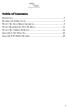 Table of Contents Introduction...4 Meeting and Setting Goals...6 Week 1: The Great Human Questions...9 Week 2: Examining the Ways We Know...15 Week 3: The Christian Worldview...24 Appendix A: The Divine
ACADEMIC POLICY AND PLANNING COMMITTEE REQUEST FOR AHC GENERAL EDUCATION CONSIDERATION
 ACADEMIC POLICY AND PLANNING COMMITTEE REQUEST FOR AHC GENERAL EDUCATION CONSIDERATION Allan Hancock College General Education Philosophy General education is a pattern of courses designed to develop in
Value equivalent. 6. Attendance Full-time Part-time Distance learning Mode of attendance X X No. Minimum length of programme 3 years 6 years N/A
 PROGRAMME APPROVAL FORM SECTION 1 THE PROGRAMME SPECIFICATION 1. Programme title and designation Theology Single honours Joint Major/minor 2. Final award Award Title Credit ECTS Any special criteria Value
Teaching Critical Thinking Skills to English for Academic Purposes Students
 Teaching Critical Thinking Skills to English for Academic Purposes Students Agenda 1. What is critical thinking? 2. Critical thinking and culture 3. Critical thinking tasks, Bloom s Taxonomy 4. Structuring
MASTER OF ARTS in Theology,
 MASTER OF ARTS in Theology, Ministry and Mission 2015-2016 INSTITUTE FOR ORTHODOX CHRISTIAN STUDIES formally APPROVED and blessed BY the Pan-Orthodox Episcopal Assembly for great britain and Ireland ALSO
College of Arts & Sciences Goals
 College of Arts & Sciences Goals 1.) Demonstrated ability to engage in critical thinking appropriate to the discipline. 2.) Demonstrated ability to use the information literacy skills, including research
LEGAL POSITIVISM vs. NATURAL LAW THEORY
 LEGAL POSITIVISM vs. NATURAL LAW THEORY There are two natural law theories about two different things: i) a natural law theory of morality, or what s right and wrong, and ii) a natural law theory of positive
Approaches to Apologetics
 Approaches to Apologetics By John McClean Matthias Media (The Briefing #119; www.matthiasmedia.com.au/briefing). Used with permission. A poverty stricken student reaches the end of her financial resources
UNIVERSITY OF METAPHYSICS: [email protected] www.universityofmetaphysics.com UNIVERSITY OF SEDONA: [email protected] www.universityofsedona.
 COMMUNICATIONS ADDRESS: 2675 W. State Route 89A, No. 465, Sedona, AZ 86336 ADMINISTRATION TOLL FREE WITHIN THE CONTINENTAL US: (888) 866-4685 OUTSIDE US: (928) 203-0730 FAX (928) 204-0543 UNIVERSITY OF
Religious education. Programme of study (non-statutory) for key stage 4. (This is an extract from The National Curriculum 2007)
 Religious education Programme of study (non-statutory) for key stage 4 and years 12 and 13 (This is an extract from The National Curriculum 2007) Crown copyright 2007 Qualifications and Curriculum Authority
Philosophy 101: Introduction to Philosophy Section 4170 Online Course El Camino College Fall, 2015
 Philosophy 101: Introduction to Philosophy Section 4170 Online Course El Camino College Fall, 2015 Instructor: Dr. Felipe Leon Phone: (310) 660-3593 ext.5742 Email: [email protected] Office: SOCS 108
Critical Inquiry in Educational Research and Professional Practice
 DOCTOR IN EDUCATION COURSE DESCRIPTIONS A. CORE COURSES NEDD 800 Professionalism, Ethics, and the Self This introductory core course will explore and interrogate ideas surrounding professionalism and professionalization.
PHILOSOPHY OF EDUCATION AND TEACHING COURSE OUTLINE
 PHILOSOPHY OF EDUCATION AND TEACHING COURSE OUTLINE Course Description This course is designed for students aspiring to be educators as well as those interested in education as a field of study in and
GRADUATE PROGRAMS GRADUATE PROGRAMS
 GRADUATE PROGRAMS Luther Rice offers five Master of Arts programs of study: The Master of Arts in Apologetics, the Master of Arts in Christian Studies, the Master of Arts in Biblical Counseling, the Master
TH605 THEOLOGY I Course Syllabus Dr. Andy Snider
 TH605 THEOLOGY I Course Syllabus Dr. Andy Snider I. COURSE DESCRIPTION A study of prolegomena, dealing with the essence and source of systematic theology, and reasons for its study; bibliology, emphasizing
2014-15 College-wide Goal Assessment Plans (SoA&S Assessment Coordinator September 24, 2015)
 2014-15 College-wide Goal Assessment Plans (SoA&S Assessment Coordinator September 24, 2015) College-wide Goal 1: Intellectual Engagement PG1 Students will demonstrate the ability to think critically and
THEOLOGY COURSE DESCRIPTIONS
 4.6.25 Theological Studies Academic Staff Randall Holm, Ph.D., Laval University: Biblical Studies and Practical Theology Kara Mandryk, D.W.S., Institute for Worship Studies: Practical Theology Program
PHIL 1012- Introduction to Philosophy: Relationship of the Individual to the World
 UCD PHILOSOPHY DEPARTMENT 2016 SPRING COURSE LISTINGS Undergraduate & Graduate For all online courses: $100 course fee Call 303-315-3700 for more information or visit HTTP://WWW.CUONLINE.EDU PHIL 1012-
Philosophical Study at Duquesne University a guide for seminarians
 Philosophical Study at Duquesne University a guide for seminarians 17 November 2011 contents Admissions 2 Requirements 3 of the usccb...................... 3 of the Philosophy Department............ 3
PHILOSOPHY AND RELIGION Chair: David H. Nikkel
 240 The University of North Carolina at Pembroke 2015-2016 Academic Catalog PHILOSOPHY AND RELIGION Chair: David H. Nikkel Faculty: Jeffery L. Geller, Mordechai Inbari, Sharon Lea Mattila, Melinda Rosenberg,
B. H. Carroll Theological Institute 301 S. Center St., Ste 100, Arlington, TX 76010 (817) 274-4284 www.bhcti.org [email protected]
 B. H. Carroll Theological Institute 301 S. Center St., Ste 100, Arlington, TX 76010 (817) 274-4284 www.bhcti.org [email protected] Master of Divinity in Chaplain Ministry CORE Gateway 2 Old Testament* 4
Department of Philosophy University of New Mexico Undergraduate Programs Plan for Assessment of Student Learning Outcomes
 University of New Mexico Undergraduate Programs Plan for Assessment of Student Learning Outcomes A. College, Department and Date 1. College: College of Arts and Sciences 2. Department: Philosophy 3. Date:
My Revision Notes: OCR AS Religious Studies: Religious Ethics
 My Revision Notes: OCR AS Religious Studies: Religious Ethics Exam practice questions OCR G572 2007 2012. Answer guidance has not been written or approved by OCR. These are guidelines of what might be
The Logical Way to Teach Introduction to Philosophy. Gabriel R. Camacho El Paso Community College, Transmountain Campus
 1 The Logical Way to Teach Introduction to Philosophy Gabriel R. Camacho El Paso Community College, Transmountain Campus Correspondence concerning this article should be addressed to Gabriel R. Camacho,
GRADUATE PROGRAMS GRADUATE PROGRAMS
 GRADUATE PROGRAMS Luther Rice University offers four Master of Arts programs of study: The Master of Arts in Apologetics, the Master of Arts in Christian Studies, the Master of Arts in Biblical Counseling,
PSYCHOLOGY PROGRAM LEARNING GOALS AND OUTCOMES BY COURSE LISTING
 PSYCHOLOGY PROGRAM LEARNING GOALS AND OUTCOMES BY COURSE LISTING Psychology 1010: General Psychology Learning Goals and Outcomes LEARNING GOAL 1: KNOWLEDGE BASE OF PSYCHOLOGY Demonstrate familiarity with
I. Purpose of the Course
 NT 553: Faith, Hope, Love: A Biblical Theology Gordon-Conwell Theological Seminary, Summer Semester Scott J. Hafemann Office Hours: After class each day and later by appointment Library 112; extension
Developing your Graduate Attributes: MA in Marketing
 Developing your Graduate Attributes: MA in Marketing The MA in Marketing involves studying theory and practice. The programme is distinctive in that it adopts a critical marketing and management studies
School for New Learning DePaul University The Examined Life: A Question of Philosophy
 Faculty: R. Craig Sautter 7658 N. Rogers Avenue Chicago, Illinois 60626 (773) 262-5806 [email protected] School for New Learning DePaul University The Examined Life: A Question of Philosophy Summer 2015
Philosophy. LOWER-DIVISION TRANSFER PATTERN California State University (CSU) Statewide Pattern
 July 29, 2009 California State University (CSU) Statewide Pattern The Lower-Division Transfer Pattern (LDTP) consists of the CSU statewide pattern of coursework outlined below, plus campus-specific coursework,
Women and Religion THEO 278
 STANDARD SYLLABUS Women and Religion THEO 278 This course will study the role of women in three of the major world religious traditions. Through study of the teachings (e.g., the understandings of the
hij Teacher Resource Bank GCE Religious Studies Unit B Religion and Ethics 2 Example of Candidate s Work from the January 2009 Examination Candidate A
 hij Teacher Resource Bank GCE Religious Studies Unit B Religion and Ethics 2 Example of Candidate s Work from the January 2009 Examination Candidate A Copyright 2009 AQA and its licensors. All rights reserved.
PHIL 121 - Elementary Ethics 3 Credit Hours
 PHIL 121 - Elementary Ethics 3 Credit Hours Course Description: Morality is tentatively defined as those rules that tell us what is good or bad, right or wrong. They govern our behavior. Ethics is tentatively
Basic Programs Oriented Toward Ministerial Leadership
 Basic Programs Oriented Toward Ministerial Leadership A MASTER OF DIVINITY (MDiv) A.I Purpose of the Degree A.1.0 The Master of Divinity degree is the normative degree to prepare persons for ordained ministry
1/9. Locke 1: Critique of Innate Ideas
 1/9 Locke 1: Critique of Innate Ideas This week we are going to begin looking at a new area by turning our attention to the work of John Locke, who is probably the most famous English philosopher of all
PHILOSOPHY Higher First edition published September 2006
 PHILOSOPHY Higher First edition published September 2006 National Course Specification COURSE Philosophy (Higher) COURSE CODE C237 12 COURSE STRUCTURE This Course has four mandatory Units which are: DV55
Doctor of Ministry (AQF level 10 Doctoral Degree) 71
 Doctor of Ministry (AQF level 10 Doctoral Degree) 71 Course Rationale DOCTOR OF MINISTRY (AQF LEVEL 10 DOCTORAL DEGREE, COURSE CODE 200) The Doctor of Ministry is an AQF level 10 research doctoral award
PERFORMANCE STANDARDS FOR ADVANCED MASTERS PROGRAMS CURRICULUM STUDIES
 1 PERFORMANCE STANDARDS FOR ADVANCED MASTERS PROGRAMS CURRICULUM STUDIES 2 PREAMBLE VINCENTIAN SPIRIT AND URBAN MISSION Given that the School of Education subscribes to the Vincentian spirit and urban
7 Bachelor s degree programme in the Philosophy of a Specific Scientific Discipline
 7 Bachelor s degree programme in the Philosophy of a Specific Scientific Discipline 7.1 General introduction to degree programmes in the Philosophy of a Specific Scientific Discipline This chapter contains
COURSE SYLLABUS PHILOSOPHY 001 CRITICAL THINKING AND WRITING SPRING 2012
 1 COURSE SYLLABUS PHILOSOPHY 001 CRITICAL THINKING AND WRITING SPRING 2012 All students are required to read and have a thorough understanding of the syllabus. Any questions or concerns need to be addressed
Messiah College THEO 205 Introduction to Christian Theology Summer 2014 June 9 August 1, 2014
 Messiah College THEO 205 Introduction to Christian Theology Summer 2014 June 9 August 1, 2014 Instructor: Dr. Sharon L. Putt Phone: 717-364-7888 E-mail: [email protected] Course Description: Introduction
Ph. D. Program in Education Specialization: Educational Leadership School of Education College of Human Sciences Iowa State University
 Ph. D. Program in Education Specialization: Educational Leadership School of Education College of Human Sciences Iowa State University The purpose of the doctoral program in Educational Leadership is to
Engineering Ethics. Engineering Dimensions Magazine. Dr. Bowers s Notes. These articles are posted on the course website
 Engineering Ethics Dr. Bowers s Notes from the 4 Ethics Articles taken from Engineering Dimensions Magazine These articles are posted on the course website 85-219 Introduction to Engineering Materials
Doctoral Course Descriptions
 Dissertation Research (DR) DR 9108 - Dissertation Research This course will enable the student to conduct preliminary research for a dissertation proposal, to draw from bibliographical resources relevant
Wiesław M. Macek. Theology of Science. according to. Father Michał Heller. Wydawnictwo Uniwersytetu Kardynała Stefana Wyszyńskiego
 Wiesław M. Macek Theology of Science according to Father Michał Heller Wydawnictwo Uniwersytetu Kardynała Stefana Wyszyńskiego Warszawa 2010 Wiesław M. Macek Theology of Science according to Father Michał
THEOLOGICAL STUDIES Section 31.330
 Section 31.330 Faculty Chair LUCIAN TURCESCU, PhD University of St. Michael s College (in the University of Toronto); Professor Associate Professors PAUL ALLEN, PhD Saint Paul University, Ottawa MARIE
Peace Studies. Philosophy. Philosophy. Political & Economic Philosophy 86 PEACE STUDIES/PHILOSOPHY
 86 PEACE STUDIES/PHILOSOPHY Peace Studies Contact Person: Fr. James A. O Brien, S.J., Ph.D. The minor in peace studies is an interdisciplinary academic program which proposes a vision of human community
Appendix A: Assessment Plans
 Appendix A: Assessment s * Assessment for all programs is ongoing, but will not be reported until at least 5 students have graduated with minor. dates are blank for now, but will be changed once programs
GRADUATE PROGRAMS. Programs of Study
 GRADUATE PROGRAMS Tennessee Temple University offers seven graduate degree programs. Temple Baptist Seminary offers programs for those students interested in pursuing an advanced degree in theological
Positive Philosophy by August Comte
 Positive Philosophy by August Comte August Comte, Thoemmes About the author.... August Comte (1798-1857), a founder of sociology, believes aspects of our world can be known solely through observation and
Philosophy 101 Critical Thinking/ Uncritical Thinking
 Philosophy 101 Critical Thinking/ Uncritical Thinking Dr. Ada Jaarsma Office Hours: 12-1pm, Tues & Thurs Course Overview In this class, we will learn about several different approaches to what it means
Phil 420: Metaphysics Spring 2008. [Handout 4] Hilary Putnam: Why There Isn t A Ready-Made World
![Phil 420: Metaphysics Spring 2008. [Handout 4] Hilary Putnam: Why There Isn t A Ready-Made World](/thumbs/24/2354653.jpg "Phil 420: Metaphysics Spring 2008. [Handout 4] Hilary Putnam: Why There Isn t A Ready-Made World") 1 Putnam s Main Theses: 1. There is no ready-made world. Phil 420: Metaphysics Spring 2008 [Handout 4] Hilary Putnam: Why There Isn t A Ready-Made World * [A ready-made world]: The world itself has to
1 Putnam s Main Theses: 1. There is no ready-made world. Phil 420: Metaphysics Spring 2008 [Handout 4] Hilary Putnam: Why There Isn t A Ready-Made World * [A ready-made world]: The world itself has to
Undergraduate Psychology Major Learning Goals and Outcomes i
 Undergraduate Psychology Major Learning Goals and Outcomes i Goal 1: Knowledge Base of Psychology Demonstrate familiarity with the major concepts, theoretical perspectives, empirical findings, and historical
Preparation for Teaching in Catholic Schools
 PREPARATION FOR TEACHING IN CATHOLIC SCHOOLS Preparation for Teaching in Catholic Schools (Initial Teacher Education Course) 2012 1. Introduction 1 The Institute for Catholic Education periodically updates
HMS Richards Divinity School Assessment Report Summary 2014-2015
 !1 HMS Richards Divinity School ls s and matrix) nd matrix) s) rses (we need to generate these) onsecration Service Events dar eetings lty Annual Reports DUE t Weekend uate Consecration HMS Richards Divinity
Programme Specification 1
 Programme Specification 1 1. Programmes: Programme Title UCAS GU Code Code Master of Arts with Joint Honours in Theology and Religious Studies A1HV813H 2.1 SCQF Level: 10 2.2 Credits: 480 3. Awarding Institution:
PHI 2600: Ethics and Critical Thinking Valencia College
 PHI 2600: Ethics and Critical Thinking Valencia College Reference Number: 26729 COURSE SYLLABUS General Information Meeting Location and Times: Valencia College West Campus Bldg. 5 Rm. 229 Tuesday and
Learning Objectives for Selected Programs Offering Degrees at Two Academic Levels
 Learning Objectives for Selected Programs Offering Degrees at Two Academic Levels Discipline Degree Learning Objectives Accounting 1. Students graduating with a in Accounting should be able to understand
A relevant business ethics curriculum
 A relevant business ethics curriculum Robert Shaw Graduate School of Business Guangdong University of Foreign Studies Victoria Business School Orauariki, New Zealand 29 July 2013 2 The internationalization
Higher Religious, Moral and Philosophical Studies Course Assessment Specification (C764 76)
 Higher Religious, Moral and Philosophical Studies Course Assessment Specification (C764 76) Valid from August 2014 This edition: August 2015, version 1.2 This specification may be reproduced in whole or
Philosophy 145, Critical Thinking
 Philosophy 145, Critical Thinking Professor Nicholas Ray E-mail: [email protected] Lecture: Tuesdays, 7:00-9:50 (HH 1104) Office: HH 326 Office Hours: Thursdays, 10:00 12:00 DESCRIPTION Whether we are
Psychology Senior Exit Interview Spring, 20XX
 Psychology Senior Exit Interview Spring, 20XX We value your input as to how well we are meeting the goals for the psychology major at Wells. Given your experience as a graduating senior, please look over