
Health Care Sector in Kerala: Growth, Structure and Spatial and Sectoral Distribution
|
|
|
- Grant Arnold
- 10 years ago
- Views:
Transcription
1 CHAPTER III Health Care Sector in Kerala: Growth, Structure and Spatial and Sectoral Distribution Introduction Kerala is well known the world over for achievements in the sphere of human development at extremely low levels of per capita income. This Indian state is often compared with China, Sri Lanka and Costa Rica for the level of social development and particularly, of health and education. However, most of the social scientists and policy makers looked at the health outcomes of Kerala as resulting from the unusually large spending of government resources in. the social sector in the State compared to other states of India and from public action. Such comparisons hardly took notice of the growing. private sector in health care and the environment within which it grew and sustained. Therein lies a methodological problem with this class of studies. A distinction needs to be drawn between situations of large government spending in the presence of large private health care services and that in the absence of private health care services. These two situations might lead to altogether different health outcomes. It has been recognized that Kerala has a large private health care sector that has grown during the last two decades (KSSP 1991). Owing to the methodological problem raised above it is imperative that the dimensions of the private sector and the role of the regulatory environment within which it has grown, be investigated. In this chapter we first trace the evolution of the health care system of Kerala; then pass on to an analysis of the current features of public and private sector health care systems and their services as manifested through pluralism and multiplicity. We also try to document the density and spread of health care facilities in the different districts ofkerala. Here, we also try to look at the possible implications of laxity of government regulation of health care sector in general. This chapter is organized in the followin~ six sections: Section 2 presents an analysis ofkerala's health care sector in general. The next section discusses the provision, coverage, density and spread of public health services in the state. Section 4 deals with these questions with respect to the private health sector. The fifth section is about the overall provision in the state. In the sixth

2 section, we carry out an analysis of the regulatory environment in which the public sector, and more importantly, the private sector health care operates. 3.1 Kerala's Health Care Sector Kerala's Healtlt Status Indicators Kerala's achievement in the field of health care is well appreciated, as its health standards are almost comparable to those of the developed countries in the World. Kerala is considered a model to be emulated not only by the rest of the country but also by other developing countries of the world for maintaining high health standards with low levels of per capita income. Kerala's high health status is reflected through low birth, death and infant mortality rates, and the long life expectancy. With resp~ct to these rates, Kerala stands far ahead of all India averages. In 1994, Kerala's birth rate was 17 per 1000 population compare~ to 29 for all India. Similarly, Kerala's death rate of 6 per 1000 population in the same year was ahead of ~l India figures of 9.2. Infant mortality rate in Kerala was at a low 13 per 1000 live births while for all India, it was 79. The child mortality rate in Kerala for the year 1999 was 4.6 as against the all India average of The pre-natal and neo-natal mortality rates are also considerably very low in Kerala. The maternal mortality rate for every three thousand deliveries is below one. Taking the case of life expectancy, which is one of the important indicators of health, Kerala is on a par with any western society. According to the Economic Review (1997) of the Government ofkerala, due to the wide network of health institutions in Kerala, 97 percent of the deliveries are institutionalised. Immunization coverage is 88 percent in respect of pregnant women for IT and 100 percent of infants of DTP, Polio and 90 percent for BeG. The anti-measles coverage is 88 percent. However, such e"aceptionaliy high indicators of health development do not in any way suggest that the need for health care services has come down. In fact, Kerala's morbidity rate is one of the highest in the world (KSSP; 1991). The high indicators are attributed by researchers to better utilization of the health care services (see the review of literature in chapter 2) rendered possible by the existence of a well-developed infrastructure of health care facilities. The health infrastructure and the network of available facilities in a region should be viewed in relation to its socio-economic, cultural and political conditions, as they could act upon the pattern of health 39

3 infrastructure existing in that region. An understanding of the growth of the health care sector thus becomes essential as a pre-condition for analysing the regulatory environment. Evolution Kerala is famous for its tradition of organized medical care in the indigenous sector, which had been in existence even before the advent of the Europeans, and is still flourishing. The Europeans brought the system of western biomedicine when they colonized this part of the globe. In the nineteenth century, the princely rulers of the erstwhile states of Travancore and Cochin (which later were integrated into the state of Kerala along with the Malabar district of the Madras presidency of British India in 1956) took the initiative in making the western system of care available to their subjects. A royal proclamation of 1879 in Travancore made vaccination compulsory for public servants, prisoners and students (Panikar and Soman; 1984). Some, medical colleges were set up for training in indigenous medicines too. It was, the development of proper infrastructure that facilitated the Travancore State to carry out its public health' activities. By 1920, Travancore State had established a wide network of hospitals and dispensaries, and almost every taluk was served by that time by a hospital. In that year, there were 60 state-run medical institutions, visited by patients and 12 private ones that were given state aid. (Kabir; 1997). By the state had 140 government medical institutions, 32 hospitals and 108 dispensaries, and 20 private medical institutions that received grants-in-aid of the state. From 1914 all the medical institutibns in the state were accessible to all caste and communities. Till about 1938 when separate maternity care centres were started, hospitals and dispensaries served as the centres for maternity and child health (Kabir; 1997). Development of health services was not confined to the provision of preventive Care- the general hospitals in Trivandrum and Co chin are about 150 years old (Raman Kutty; 2000). At the time of the formation of the Kerala State in 1956, the foundation for a medical care system accessible to all citizens had already been laid. From 1961 to 1986, the state rapidly expanded health facilities in the public sector. The number of beds and institutions increased sharply. However, since the mid-1980s, public sector expansion has slowed down, as there is a widespread feeling that the public provision has reached its expected levels. 40

4 3.2. Government Health Care Services Public Provision of Health Care Services The overall health infrastructure provided by the government needs to be analysed separately for each system of medicine. The government of Kerala has recognized and institutionalised the three major systems of Medicine that are popular in th~ state-allopathic, Ayurveda and Homeopathy. The three systems are under three parallel organizational structures in terms of training, research or functioning. The allopathic system of medicine under the government encompasses both the rural and the urban areas. The rural public health care sector provides preventive and curative care. Hospitals at the urban areas comprise Medical College Hospitals, district/general hospitals and taluk hospitals which provide outpatient and in-patient treatment. Rural health services are provided through Primary Health Care Centres, Sub-Health Centres, Maternal and Child Welfare Centres, Maternity Homes, Community Welfare Centres and Family Planning Centres. The Ayurveda and Homeo systems of medicines under the government consist of dispensaries at the primary level and hospitals at the secondary level. The medi~al institutions in the government sector are organized in a hierarchical order. The structure of government provision of health facilities in the modem (allopathic) system of medicine is as follows: At the top of the hierarchy are the Medical College hospitals; at the district level are the district hospitals/general hospitals and at the sub-district level are Taluk hospitals. The medical colleges in the state provide not only medical education facilitates ~ through the hospitals attached to them, they also provide the most modem medical care. Next in the hierarchy come the district hospitals that provide curative services. In almost all the district hospitals specialist care such as Paediatrics, ENT, Ophthalmology, Obstetrics and Gynaecology, General Surgery and General Medicine is available. However, specific details of the facilities available in district hospital are not published. Overall, there are 14 district/general hospitals, of which two are in the rural areas. There are 36 Taluk hospitals in the state spread in all the districts expect in Kasargode and Wynad. Of the 36 taluk hospitals, 21 are located in urban centres and 15 are in rural areas. Apart from these district hospitals and taluk hospitals, there exist a few other government hospitals as well. Except in the Idukki District, all districts have such hospitals. And most importantly, a majority of these hospitals are located in rural areas. In the urban areas the number of such hospitals is around 30 and in rural areas, more than

5 Slightly less than one-fifth (19 percent) of the villages in Kerala have government hospital facilities while 45 percent of the villages in Kollam and 30 percent of the villages in Emakulam had such facilities, only about 10 percent of the villages of Kasargode, Kannur and Kozhikode have them. The lowest proportion, less than 6 percent, is in Kasargode. Rural areas a:e mainly served by health centres- the community health centres and primary health centres and their sub-centres, which constitute the lowest stratum of the hierarchy. In addition, there are supporting facilities like TB centres, Leptosy control clinics and other hospitals. Primary Health Care Centre is the core institution of the rural health services infrastructure in Kerala as in the case in other states. Primary Health Centres(pHCs) are multipurpose units established at the peripheral level to render preventive and curative medical facilities to the rural population. The first PHCs were established in 1952 as part of the Community Development Programme. This programme represented the official strategy for integrated rural development initiated in the first five-year plan. The concept of rural health service delivery through the PHCs was in line with the recommendations of the Bhore committee in 1946 and of the National Planning Committee's sub-committee on national health I. The primary health centres (PHCs) are designed in such a way that each centre gives coverage to a minimum of 30,000 rural populations or 20,000 populations in hilly and tribal area. An average health team at the PHC consists of two to three physicians known as medical officers including one in overall charge of the PHC, one male health assistant, one female health assistant, both of whom are multipurpose personnel providing the link between the health workers at the subcentre/ village level and the physicians, a block extension educator, a few of female health workers giving nursing care to outpatients and inpatients, a laboratory technician, a computer or statistician, a driver for the PHC transport, a store keeper and other ancillary staff and attendants (Kannan et. al.;1991). In Kerala, according to the census report of 1991, percent of its ITbe Health Survey and Planning Committee, known as the Bhore Committee, after three years of detailed study of the socio-economic and health scene of India, provided in 1946 a comprehensive plan for the development of health services in a vast and predominantly agrarian country with limited fmancial resources. The concept of Primary Health centre evolved at Alma Ata Conference in 1978 to achieve the goal of the "Health for All by 2000 AD"; primary health care centre is defmed as essential health care based on scientifically sound and socially acceptable methods and technologically Inade universally accessible to individuals and families in the community through their full participation and at a low cost that the community and country can afford to maintain at every stage of their development, in a spirit of self reliance and self determination. 42

6 villages had primary health centres and 30.2 percent of the villages had primary health subcentres. The PHCs have a network of sub-centres, each serving a population of 5000 (2500 in hilly areas) according to revised norms. It is manned by one two multi-purpose health workers - one a male and the other a female. The female health worker provides maternal and child health and family planning services to women; deliveries, advice on diet, immunization of infants and children with BCG, DPT, Measles, Polio vaccine etc, distribution of vitamin A and treatment of minor ailments. Family planning services include motivation, contraception advice and follow up. The male health worker is expected to prepare and maintain a register of vital events and of eligible couples, to render family planning advice and to undertake house-to-house malaria surveillance and immunization. Community Health Centres, larger version of the PHCs ~ction in some districts. As regarding the Maternity and Child Welfare Centre, Maternity Home, Child Welfare Centre and Family Planning Centre, little more than one-fifth of the villages in Kerala have them. Apart from Maternity and Child Welfare Centres, Maternity Homes exist in 7 percent of the villages and Child Welfare Centres in an almost a similar proportion of villages (see Table 3.1). The Family Planning Centres were found in a little more than one-fourth of the villages in Kerala. Apart from these primary facilities, there are dispensaries also; 45 percent villages in the state have dispensaries in them. The ipstitutions differ among themselves in respect of the facilities available- medical and paramedical personnel and techniques and skills. They also differ in terms of the number of beds and other facilities like laboratories. Government expenditure on the higher-level hospitals is much higher than that on lower-level institutions at the village and taluk levels. Table Medical Institutions and Beds Under Allopathic System in Kerala; 1981 to 1996 Year No. Beds Beds per Lakh No 01 MI* Population PHCs NA NA l *No. Ml refers to the Number of Medical InstitutIOns Source: Economic Review, Govt. of Kerala, No 01 CHCs CHC Suh- PHCheds beds centres NA NA NA NA NA NA NA NA 2880 NA NA NA

7 Graph3.1. Rural Health Facility Coverage- % of Villages Across Districts TVM KLM PTA ALPY KTM loki EKM TCR PLKO MLPM KKO WYD KNR KRGO KERALA I_Any Facility riiany Govt Facility I Graph3.2. Distribution of GoY! Mis Across Dlstrlcls (% TVM KLM PTA ALPV KTM loki EKM TCR PLKO MLPM KKD WYD KNR KRGD IBAllopathlc IIIAyurveda BHomeo CTotal I Graphs 3.1 and 3.2 show the percentage distribution of government medical institutions and beds across districts. The disparities are wider in tenns of the distribution of government beds than of medical institutions. While Thiruvananthapuram had 18 percent of the total number of beds in the government sector hospitals, Kasargode had only two percent. These figures are slightly misleading since they are not standardized for the area and population. Area Covered by Government Medical Institutions In order to understand the extent of coverage of rural health services, see graph 3.3. It is observed that there are villages, which do not have medical facilities. 44

8 Graph 3.3. Distribution of Govt Beds Across Districts o ~~ ~~ «A..."?- y.~.j....(:-~ ~~ <v*-~ A...v«:- «.f> ~~ *-~ ~.J...<;) *-~«:- ~0<;) IOAliopathic ~ayurveda ElHomeo mtotal1 A few villages have only private health facilities. Thjs suggests that the claims about the government having predominant role in bringing about "good healp1" in Kerala for the people might not be unifonnly true. See table 3.2. Table 3.2 Percentage ofinhabited Villages Having Different Types of Health Centres District PHC PHSC HC Dispensary M&CWC Mat. Home CWC FPC Thiruvananthapuram Kollam Pathanamthitta Alappuzha Kottayam Idukki Emakulam Thrissur Palakkad Malappuram Kozhikode Wayanad Kannur Kasargode IKERALA Source of Data: Census

9 Table 3.2 shows that 40 percent of the inhabited villages have PHCs, another 30 percent - sub centres, 6 percent - health centres and 45 percent - a dispensary each. Across districts, the percentage differs. However, it is interesting to note that it is not the backward rural areas that have more rural facilities, but the more developed districts of Trivandrum and Ernakulam. The data used for the analysis of the government sector provision is for the year 1996; this year is taken because the,data on private sector is available for this ye. Data for the private sector are '. not available for later years. Here, "institution density-by area" is taken as the total area of the district (in square kilometres) divided by the number of medical institutions in the district. "Institution density- by area" shows not only disparities across districts, but also across systems of medicines. For the state as a whole, there is one allopathic medical institution in the government sector for every 31 square kilometres, one government ayurvedic medical institutions for every 56 square kilometres, and one government homeo medical institution for every square kilometre. However, all these medical institutions under the different systems taken together, there is one medical institution in the government sector for every 16 square kilometres. The figures of institutional density by area of government medical institutions are given in Graph 3.4. Graph 3.4. Area to be Covered by Govt MIs of Different Systems TVM KLM PTA ALPY KTM IDKI EKM TCR PLKD MLPM KKD WYD KNR KRGD KERALA lmallopathic mayurvedic ElHomeo CTOTAL I Institution density by area under the public sector varies widely across districts: Alappuzha district had the highest density with one medical institution for every 9 square kilometres. At 46

10 the other extreme is Idukki district, where a government medical institution is available per 41 square kilometres. Population Coverage of Government Medical Institutions Kerala is a state with high density of population, second only to West Bengal in India. Institution density by population refers to the number of Medical institutions available per 100 thousand populations. The population coverage of the government medical institutions is shown in graph 3.5. Graph 3.5. Availability of Govt. MI per '00000 Population KERALA KNR KKD pum EKM KTM PTA TVM IOALLOPATHIC ~AYURVEDIC mhomeo iii TOTAL I In Kerala, for every 100 thousand population, there are 4 allopathic, 2 ayurvedic and one homeopathic medical institutions in the government sector. Districts of Idukki and Wayanad, which did not have adequate number of institutions when reckoned in terms of area, fare better when population is taken as the criterion. The possible implications of such a situation are that for the providers, there is less target population per institution while for the local population more distance is to be covered for availing the medical resources provided. Hospital Beds and Population Size The preceding discussion does not give any idea of the bed-population. Graph 3.6 gives this information. 47

11 , I Graph 3.6. Govt Hospital Beds per People o TVM PTA KTM EKM PLKD KKD KNR KERALA IIIALLOPATHIC mayurveda [JHOMEO I In the government sector, a total of 143 beds for every 100 thousand persons are available for the state as a whole. More than 90 percent of them are in the allopathic hospitals. Inter-district. variations in the ratio are large: it varies from a maximum of 250 in Trivandrum to 77 in Malappuram. The regions with high bed- population ratios are areas in which medical colleges, and tertiary sector hospitals (meant for serving the entire state), are situated Private Provision of Health Care Evolution Historically, it was the activities of the voluntary and charitable organizations that paved the way for the development of the private health care services in Kerala. In the pre-colonial times, this region was endowed with a well-developed system of medicine of the indigenous type, the Ayurvedic system practiced by the traditional healers called vaidyans. They were basically private providers who learned the art of medicines from their familial sources rather than from institutions. The native rulers were patrons for some of them, while others survived on the returns from their practice. However, these private practitioners were bound by the corresponding "social and behavioural environment governing relationships within and among different communities as determined by distribution of land and other economic assets, the caste structure and the gender attitudes" (Kabir and Krishnan; 1998; p.241). It was these affiliations which determined who would receive treatment and from whom. While it was the colonial rulers who later introduced western medicine in the state, primarily for their own health care purposes, it was the private social groups and Missionaries that spearheaded its expansion among the common people. However, the governments of the native rulers, who were subsidiaries to the 48

12 British rule assisted the movements through grants-in-aid schemes and other social intermediation programmes. During the period since independence, the role of the private sector in providing health care '\ under the allopathio; system took the form of charity, most of the hospitals being run by Missionaries, charging patients, if at all, only moderate rates. As time progressed, the private sector flourished as people's demand for health care increased. The structure of the private sector health care underwent a tremendous change. The entry of profit-seeking players in the field has changed its "charity" character. Starting around the seventies, other agencies such as cooperatives, groups of professionals and other entrepreneurs have entered the field. And in consequence, the private health care has had a phenomenal rise in recent years. Private Provision of Healtlt Care Services Though the number of private medical care institutions in the stat~ is large, information about them is scanty. However, some limited data are available for a few time points in the recent past about private medical institutions. The physicians who provide health care services in their individual capacity, outside the medical institutions are not covered by such data; however information is available about the number of medical practitioners registered with the medical councils. An estimate of the number of practitioners in the government and private medical sectors (estimated by subtracting the number of government sector medical practitioners from the total) is given in Table 3.3. Table 3.3 (a) Medical practitioners in the Government and Non-government Sectors by Systems of Medicine Year Allopatlzic System Percentage in Total no. of physicians Govt. Non- Govt. Govt. Non- Govt

13 Table 3.3 (b) Year Ayurveda Homeo Total No Govt. Non- %in Total No of Govt. Non- % in Govt. of govt. Govt. physicians govt. physicians % % % % % 3812 NA NA NA % 4204 NA NA NA % % % % NA NA NA 7055 NA NA NA NA NA NA 7253 NA NA NA NA NA NA 7599 NA NA NA Source: Govt. of Kerala EconomIC ReVIew, State Plannmg Board; Statistics for Planning, Department of Economics and Statistics; Administration Report (varioui years, Directorate of Health Services, Trivandrum. It is observed that even as early as 1970s, (possibly even before that period also) the government sector employed only less than two-fifths of the total allopathic medical practitioners in the state. The proportion of physicians in this sector has been steadily on the decline, accounting for less than one-fourth in and only about one-fifth in In the ayurvedic and homeopathic systems, the proportion of physicians employed in the government sector has remained at around 5 to seven percent. But it should be borne in mind that the ayurvedic system consists of practitioners such as the traditional 'vaidyans', who are not formally registered with any medical councils, formed a major chunk of physicians in the system, during earlier periods. If these unregistered' pr~ctitioners are included, the magnitude of the private sector provision in the ayurvedic system becomes even larger. The other indigenous systems of medicines, such as Siddha and Unani are virtually absent in the public sector. Thus, the preliminary estimate of physicians in the private sector taken as the total number of registered practitioners less physicians employed in the public sector shows that~ larger proportion of health care in the state was provided by the private sector even in early 1970s. In order to fill the gap and to update the data already available, the Dept of Economics and Statistics conducted a census of medical institutions in March The department had 2 The survey defmed a Medical Institution as one where patients are examined for diagnosis of diseases and medical treatment prescribed and provided. A private medical institution is one run by individual(s) or and organizations (E.g.: trust, co-operative society, company etc.) other than government. Institutions receiving government grants were also considered private medical institutions. Places/ institutions where only consultation facility is available 50

14 carried out a similar attempt in The main objective of the census was to find out the number of private medical institutions in the state under various systems of medicine, the strength of medical and paramedical staff and the ministerial staff employed in them and the types of facilities available in them. The two government surveys give a more detailed picture of private health care sector. Our analysis ofthe private medical market is done on the basis ofthese surveys. Growth of Private Sector The proliferation of private sector in the health care market in the past few decades is evident from the fact that the number of private medical institutions (hereafter referred to as PMIs) in Kerala had increased by around 3000 within the span of one single decade from 1986 to In 1995, the number of PMIs was almost six times the number of government medical institutions. Private medical institutions are spread across the differ~i).t systems of medicine. However, only 34 percent of these PMIs (in 1995) were of the allopathic system, while 39 percent of the medical institutions were of the Ayurvedic system and 24.'Z percent of the homeopathy system. The share of the other systems of medicine (mostly Unani, Siddha etc) was marginal. (Table 3.4) Table 3.4. System-Wise Distribution of Private Medical Institutions; & lsystem MIWithBeds MI Without Beds System Growth Rate Growth Rate Allopathic Ayurveda Homeo Other Total TotalMI Total Beds System Growth rate Growth rate Allopathic Ayurveda Homeo Other Total Source: Govt. of Kerala: Report on the survey of private medical institutions in Kerala 1986 & such as consulting rooms and institutions engaged in only selling medicines were not covered in the census. (Thus, there exist no sources of data about places/ institutions where only consultation facility is available). 51

15 The organizations of private health care services comprise of institutions of varying size groups ranging from institutions without bed facilities to those with bed facilities. In 1986, of the 2040 MIs with in-patient facilities, percent were in the allopathic system, while MIs in nonallopathic systems had only very few institutions with such facilities. However by 1995, the share of allopathic MIs had come down slightly indicating that a larger growth rate of MIs with beds has been taking place in non-allopathic systems in recent years. However, the non-allopathic systems of medicines are dominated by the clinical or consulting type of institutions without bed facilities; while Allopathy had only less than 25 % of such institutions, Ayurveda had one-half of all the institutions in this category. However, from the data, it cannot be taken as to how many of these MIs with bed facilities are big hospitals, small hospitals or just clinics. Change in the Orientation of the Private Health Care Sector While all systems of medicines flourish simultaneously, profit-seeking MIs are more rapidly growing than MIs with a predominantly service orientation. Investors such as professionals including doctors and other players, enter the sector with purely commercial interests. The most common characteristic of the private medical institutions entering the profession is that most of them are run by the owners themselves- the so-called 'physician,cum-owner' clinic -and are on a, \ proprietorship basis like any other commercial firm. This is true with all the systems (see table 3.5). Table 3.5 System-wise Distribution of Medical Institutions in the Private sector according to Ownership (% to the total within systems). Ownership Type Allopathic Ayurvedic Homeopathic Others All Proprietorship Partnership Cooperatives Trusteeship Others , Total \ (4282) (492~) (3118) (290) (12612) Source: Govt. of Kerala: Report on the survey of private medical institutions In Kerala 1986 &

16 Size Distribution of Huspitais and Clinics Across Systems Though there are super-specialty hospitals, a large proportion of Medical Institutions, especially in systems other than allopathic, work either as small clinics or nursing homes. A functional difference (in terms of the staff strength) may be drawn among medical institutions of different systems of medicine in the private sector. The smaller the medical institution, the lower the staff employed and vice versa. While the hospital system is needed more in the modern medicine (Allopathy) sector, the indigenous and the other systems, which do not handle much of inpatient care, do not require hospital facilities to a large extent. Most of them need to operate only on a small scale. Our data show that the majority of the non-allopathic medical institutions (Ayurveda (96 percent), Romeo (98 percent) and other systems of medicine (93 percent)) are functioning with only less than five members including the physician. On the other hand, most of the medical, institutions with large staffing are in the allopathic system. Institutions under the modern system employ much larger medical and paramedical staff on the average - particularly since most of them have facilities for inpatient treatment. This situatiomcreates the popular impression that the allopathy is the dominant system in the health care sector in Kerala. The importance of other systems with their clinics/pharmacy type of operations thus gets underestimated; see graph 3.7. Graph 3.7. Private MIs According to Staff Strength Across Systems , , , , , ~ ~ _ ~ ~ ~ _ ~ _ ~ ~ J : : :- 10 o MI with only 1 staff 2-4 staff 5-24 staff staff I_ Allopathic D Ayurvedic ~ Homeo 0 Others I 50 or more staff 53

17 Increase in Medical Personnel in the Private Sector With increase in the size and nature of medical institutions demand for medical and paramedical staff, the supply of practitioners in the health care market has also increased. The number of doctors in the modern system accounted for more than 52 per cent of the doctors working in the private sector. Among the paramedical staff, almost 90 per cent also work in the allopathic sector. Table 3.6. System-wise Distribution of Doctors and Other Staff in the Private Sector System No of Doctors No of Paramedical Staff Growth Rate Growth Rate Allopathic Ayurveda Homeo Others Total Source: Govt. of Kerala: Report on the survey of private medical institutions in Kerala 1986 & Increase in the Number of Medical Institutions Offering Treatment in Specialized Areas In the allopathic system, the proportion of specialists has been increasing quite rapidly. The Specialty treatment ranges from gynaecology to psychiatry to AIDS treatment. Providers of other systems of medicines also are now increasingly opting for specialized treatments; for example, in Ayurveda, massage using medicinal oil preparations to rejuvenate the body is increasingly advertised as a specialty and there are medical institutions aimed at providing exclusively this type of treatment; Ste Graph

18 Graph 3.8 Private MIs with Specialty Treatment Facility. Neurology ~ ENT Aids Cardiology Massage.. Dental TB Gynecology ~ o Growth and Diffusion of Medical Technology It is to be noted that though supply of and demand for private care is large and rising in Kerala; more sophisticated patient care involving support services and demanding team-work from a.. number of professionals, such as coronary artery bypass surgery, infertility care, liver transplantation, intensive neo-natal care and joint-replacement surgery have. made a rather delayed appearance in Kerala (Raman Kutty; 1998). But in recent years, most of the items of sophisticated and high technology medical care have...,made their appearances in the private sector. In terms of specialty and super-specialty treatment and the required laboratory and technical facilities the rate of diffusion has been more rapid in the private sector. In the public sector, such facilities are available only at the tertiary level hospitals. Graph 3.9 shows the diversification of specialty treatment and diffusion of technology achieved in the private medical institutions in Kerala. Table 3.7 shows the system-wise details of private medical institutions and facilities in Kerala. 55

19 Graph 3.9 PMls Having Laboratory and Diagnostic Facilities (%) At least one facility Others Laser rays ~ Echo test ~ Laboratory Scanning IC Unit ECG X-ray Table 3.7 System-wise Details of Private Medical Institutions in Kerala Allopatltic Ayun:eda Homeo Otlters Total No % of Medical institutions %of institutions with IP facility % of beds % ofip ' %ofop ' % of Total patients Employment: % of Doctors Doctors per population Average population per Doctor % of paramedical staff No. of technical staff No. of ministerial staff Total Employees Source: Govt. of Kerala: Report on the survey of private medical institutions in Kerala 1986 & (* Figures in brackets are share in the total, calculated as percentages of the total). Though the number of Ayurvedic medical institutes is much more than that of the allopathic institutions, it is the allopathic system that dominates with respect to the facilities. Ninety five per cent of the beds and 97 per cent of the inpatients in the private sector are under the allopathic system. More than half of the number of doctors in the private sector is also under this system. 56

20 The number and role of paramedical staff are increasing fast because of the growing importance of various kinds of medical tests and advances in inpatient care. District-wise Distribution of Private Medical Facilities Private medical facilities tend to be concentrated in well-developed areas in the hope of bright.. prospects in terms of demand and utilization. This fact comes out clearly in the analysis of the geographical spread of PMI's in the districts of Kerala. The economically well-developed districts have larger proportions of private medical facilities, especially for the allopathic system; see graph and Graph 3.10 Private MI Distribution Across Districts 18r ~ 16r-~ ~ "r-~ ~ ~ _--_+~ ~ 12r-~r_ ~------_m~ ~~ ~ KLM PTA ALPY KTM IDKI EKM TCR PLKD MLPM KKD WYD KNR KROD I_ Allopathic IJ ayurveda III Homeo lsi Other IIiI Total I Graph 3.11.Distribution of Private Private Hospital Beds Across Districts IS.. 10, ,,,,,,,,., ~ :, '., ~I lib I TVM KLM PTA ALPY KTM loki EKM TCR PLKD MLPM KKD WYD KNR KRGD I m Allopathic 11 ayurveda r;j Homeo 0 Other Total I 1, HI The private health facilities in the allopathic sector are more concentrated in districts of Thiruvananthapuram, Kottayam and Emakulam, whereas in the case of the ayurvedic system, 57

21 the share of districts that have a tradition of Ayurveda is relatively large. However, as we have done in the case of the government medical institutions, we shall discuss institution density by area and by population of private medical institutions in the different districts. District-wise Distribution of Private Medical Institutions by Catchments Area The number of private sector medical institutions is larger than the number of government sector institutions; therefore the average area to be covered per private medical institution is smaller (see Graph 3.12). Graph Area Coverage of Private MIs Across Districts KERALA KNR KKD PLKD EKM KTM PTA TVM IBJAllopathic IIAyurvedic IBHomeo _TOTAL I For every 9 square kilometres, there is a private allopathic institution: for every 7 square kilometres, there is a private ayurvedic institution, and for every 12 square kilometres, there is a private homeopathic institution. All together, at least one private medical institution is available for every 3 square kilometres. This is five times the availability in the government sector. District-wise disparities, however, prevail. Some districts have a private medical facility per each square kilometre, while in some others, it is available only for every square 10 kilometres. Here again, the districts with lower availability are the same as those( with lower availability of government facilities. It is also the case with the better-endowed districts in tenns of institution density by area. However, compared to the government sector,; the systems of medicines other than the allopathic under the private sector have better coverage. In fact, in some districts, the availability of the Ayurveda institutions is more than that of the allopathic institutions (e.g. Thrissur, Palakkad, Malappuram and the other northern districts). 58
22 Population Coverage of Private Medical Institutions The private sector provision is almost 5 times that of the government sector. In the government sector, there were only 8 medical institutions for 100 thousand populations, whereas in the private sector it is more than 40. While in the government sector, there are only 4 MIs in the allopathic system, the corresponding number is 15 in the private sector. In the ayurvedic system, the availability of medical institutions per 100 thousand population in the private sector is almost eight times that in the government sector. Further, there are more ayurvedic MIs than allopathic institutions in the private sector. However, this does not mean that the ayurvedic sector is the dominant sector because the average facilities available per institutions are much larger in the allopathic system; see graphs 3.13 and Graph Availability of Private Medical Institutions per Lakh Population KERALA KRGD KNR WYD KKD MLPM PLKD TCR EKM IDKI KTM ALPY PTA KLM TVM " I (;] Allopathic rj Ayurveda m Homeo 0 Total I 59
23 Graph Availability of Private Beds per 100 Thousand Population SOD 4S S0 ; )00 2S0 200 ISO 100 SO n 1VM KLM PTA ALPY KTM loki EKM TCR PLKD MLPM KKD WYD KNR KRGO KERALA 01 III IDIIALLOPATHY I'IAYURVEDA "TOTAL I A few districts (e.g. Ernakulam and Kottayam) have more than 400 private hospital beds per 100 thousand persons. This is in contrast to the situation- prevailing in other districts (such as Palakkad, Malappuram and Wayanad), which have only, less than 150 beds for 100 thousand persons The Overall Health Care Provision Having analysed the provision and distribution of health care facilities in the government and the private sectors across districts, we may now take a view of the overall provision and distribution of health care facilities across districts. District-wise Distribution of Overall Health Facilities We have already seen that both in the public and the private sectors, the shares of districts with better socio-economic development are much higher than those of the not-so developed districts. However, we also found considerable differences in the shares of districts in the facilities provided by the different systems. The overall pattern of distribution of medical facilities is shown in Table 3.8. As expected, the economically higher off and more developed districts have better shares of medical institutions. 60
24 Table 3.8 Distribution ofmi and Bed Facilities Across Districts MI Distribution- in % shares Total beds available - in % shares District Allopathic Ayurveda Homeo Other Total Allopathic Ayurveda Homeo Other Total Thiruvananthapuram Kollam Pathanamthitta Alappuzha Kottayam Idukki Emakulam Thrissur Palakkad Malappuram Kozhikode Wayan ad Kannur Kasargode KERALA Source: Government of Kerala (1997) Overall Coverage of Medical Institutions by Area From the previous analysis we observed that private provision is higher and that the area served per institution is smaller than that of the government sector. When we take the two sectors together we find the inter-district disparities observed earlier persist. The coverage of medical institutions of the different systems also shows inter-district disparities. There is one medical institution in the allopathic system for every seven square kilometres while one ayurvedic system needs to cover only 6 square kilometres. The northern districts have more ayurvedic medical facilities coverage while the southern districts have more allopathic medical facilities. The district of Idukki is the most deprived in terms of area covered for all the systems and both the sectors, while Alappuzha seems to enjoy better coverage in all these aspects. The picture that emerges when calculated in terms of population size is examined next. 61
25 Table 3.9 Availability of (All) Medical Institutions in Terms of Area Coverage ldistrict IArea to be covered by each medical institution (Total areal total MI) Allopathic Ayurveda Homeo Other TOTAL Thiruvananthapuram Kollam Pathanamthitta Alappuzha Kottayam Idukki Ernakulam Thrissur Palakkad Malappuram Kozhikode Wayanad Kannur Kasargode IKERALA Source: Govt. of Kerala (J 996) Population Coverage of All Medical Institutions Across Districts In Kerala, there are around 50 medical institutions for every 100 thousand persons. This means that on an average, for every 1940 people, there is one medical institution of Allopathy, Ayurveda, Homeopathy or any other systems whatever be its size or the sector to which it belongs. However, this fact alone does not ensure universal availability and accessibility; see table For the state as a whole, there are 387 medical beds for every 100 thousand persons, all the systems and sectors taken together. The maximum number is found in Ernakulam while the lowest is in Palakkad. The development status of the district, understood in terms of income, commercialisation and urbanization, is seen to be positively associated with the availability of hospital beds. 62
26 Table Overall Availability of Medical Facilities per 100 Thousand Population 'District Availability ofmi Beds Allopa Ayurveda Homeo Others Total Allopa Ayurveda Homeo Others Total thic thic Thiruvananthapuram Kollam Pathanamthitta Alappuzha Kottayam Idukki Emakulam Thrissur Palakkad Malappuram ' ] Kozhikode Wayanad Kannur Kasargode KERALA Source: Government ofkerala (1997) Relative Shares o/government and Private Medical Institutions To obtain a better understanding of the health scenario in Kerala we have also examined the KSSP study of 1991 (based on the 1987 survey), which tried to capture the private and public provision of health care. This survey furnished data for the private sector health care -the number of institutions, beds, doctors, nurses, lab technicians, X-ray technicians and other personnel, for the year From the survey data of the private sector and the government sector, we find that 78 percent of the medical institutions, 64 per cent of the hospital beds, 66 percent of the doctors, 67 percent of the nurses and more than 80 percent of the paramedical staff such as lab technicians were employed in the private sector; see Table
27 Table Public-Private Mix ofinstitutions, Beds and Medical Personnel, 1987 Allopathic Ayurveda Homeo AllSvstems Govt. Private. Govt. Private Govt. Private Govt. Private Institutions Beds Doctors Nurses l.I Lab technicians X-ray technicians Others Source: Kannan et al (1991). As mentioned earlier, it is the private sector that is the dominant provider among all the different systems of medicines in all the districts. However, proportions vary across districts. The share of the private sector is relatively large in the commercially and economically developed districts compared to that in the backward districts. Overall, the government sector caters only around 15 percent of the total provision. He'wever, in the case of hospital beds, the scene is a little different. The private sector accounts for a larger proportion of hospital beds, for the state as a whole, the situation differs from district to district. In the districts where medical colleges exist, such as Thiruvananthapuram, Alappuzha, Kottayam, Trissur and Kozhikode, it is the government sector that has a relatively larger share of hospital beds when compared to other districts. See table 3.12 and 3.l3. Table Relative Shares of Govt. and Non-Govt. in Total Provision ofmi Allopathic Ayurveda Homeo Other Total District. Govt. Pvt. Govt. Pvt. Govt. Pvt. Govt. Pvt. Govt. Pvt. Thiruvananthaguram Kollam Pathanamthitta Alappuzha Kottayam Idukki Ernakulam l Thrissur Palakkad Malappuram Kozhikode Wayanad Kannur Kasargode KERALA Source: Government of Kerala (1996 & 97). 64
28 Table 3.13 Share of Govt. and Pvt. Sector in the Provision of Total Hospital Beds Allopathic Ayurveda Homeo Other Total District Govt. Pvt. Govt. Pvt. Govt. Pvt. Govt Pvt. Govt. Pvt. Thiruvananthapuram Kollam Pathanamthitta Alappuzha Kottayam Idukki Emakulam Thrissur Palakkad Malappuram Kozhikode Wayanad Q Kannur Kasargode KERALA Source: Government ofkerala (1996) 3.5 Share of Public and Private in Treatment The earlier analysis provides a picture of the relative levels of public and private provision of health care services in t~e various sector and this is from the input perspective alone. However, t there is also a need to h~ve an understanding of the relative roles of public and private sectors in the utilization of health care services (as revealed by earlier studies). Viewed from this end, one would perceive the pattern of utilization of the provision in place. The only variable available from the previous studies to show the extent of utilization of the private and the public sector facilities is the details on inpatients and outpatients treated in these sectors (from the IP and OP records available with the institutions). For this, we use the data on the number of inpatients and outpatients treated in the government and the private sector institutions, given in the Economic Reviews and the government survey report on the private sector for the year Table 3.14 shows that both in the inpatient as well as in the outpatient categories, the utilization of the private sector was higher than of the government sector. On an average, 3151 IPs and 1200 thousand OPs were treated in government hospitals per day while in the private medical institutions the corresponding figures were around 10 thousand and 1500 thousand respectively. 65
29 Thus, despite the widespread public infrastructure, a higher proportion of the patients was treated in the private sector during An analysis of the categories of people who use private health care facilities may now be attempted. Table: Utilisation of Health Services by Sector According to Inpatients and Outpatients System Total Patients/ Year Share of Govt MI Share of Private MI Allopathic Total ' Inpatient Outpatient Ayurveda Total Inpatient ~O Outpatient Homeo Total Inpatient Outpatient Total Inpatient Outpatient All Source: Economic Review (1996) and Govt. of Kerala, Report on Private Medical Institutions (1996) The results of the NSS ( ) showed that in the case of Kerala, the share of the users of the private health care facilities for IP care increased across income groups, with increase in monthly per capita expenditure (MPCE). It is likely that the better off sections of the society with their higher purchasing power and greater awareness and concern about the 'quality' of services opted for private facilities. However, though availability of free health services (in the government sector) varied inversely with the MPCE for IP care, for OP care also the pattern was the same. Taking free health services as proxy for the public health care provision, we find that even a large proportion of the lower level income groups (representing the poorer sections of the society) used not-free services, thus indicating a higher utilization rate of private sector health 66
30 care facilities. Even large proportions of the poor belonging to the scheduled caste and tribe population relied on private providers for their day-to-day health care needs. Table Percentage of patients who received free health services by MPCE Quintiles, MPCE QUINTILE TYPE OF CARE ALL Inpatient Care Rural Urban Outpatient Care RURAL Urban Source: Gumher (1997) The findings also point to the fact that substantial financial burden for health care had to be borne by households by opting for private health services. In fact, private household expenditure on medical care was nearly four to five times of public health expenditure. In the case ofkerala, the NSSO study (1987) puts the average amount of payment made to hospitals in the rural government sector at Rs , and in the rural private sector at Rs , and the average for rural health care Rs For urban areas, the expenditure averaged at in the government provision, Rs for the private sector the average being Rs The KSSP study also showed that as people move up in the socio-economi~ scale, the proportion of people going to government institutions declined sharply (Kannan et. al; 1991). Even the majority of the poor depend more on private sector facilities than on the government sector. All these studies show that the increase in the utilization of the growing private sector would aggravate the burden on people. The implications of the growth of private sector health care and the laxity of regulations need attention in such a situation. 3.6 Regulatory Environment in Health Sector It was only recently that the state government took some initiative to even formally register the private sector health care institutions in the state. But even as recently as in 1995, half of the state's private medical institutions were functioning without any formal registrations. This is 67
31 evident from the recent survey conducted by the government on the private medical institutions. The table below shows the number of registered and unregistered PMIs in Kerala in What this means is that there exists a registration requirement that has not been enforced properly. However, these registrations are not the registrations for the medical institutions as such, these are acts which give general guidelines for legally running an institution in other fields also (for example, educational institutions). Generally most of the religious missionaries' medical institutions, with service motive than profit motive get them registered under the Charitable Societies Act or Trust. The medical institutions operating under the provisions of the Cooperative Societies Act register themselves as co-operative medical institutions, while those hospitals which needs to be registered for legal conveniences for other purposes (for example; for validating the needs to purchase or import certain equipment, it is better to have a registration), register under the general category of institutions. Table Private Medical Institutions According to R~gistration/Approval. Registration Allopathic Ayurvedic Homeo Other Total Total MI Total Unregistered Total Registered Registered General Charitable Society Act Co-operative Source: Government of Kerala (1996) The state has an obligation to ensure that safe and appropriate health care services are provided to the population. It should have an idea as to who is eligible for practicing the health care profession, what type of health care is to be practiced and how the practice should be carried out in terms of quantity, quality and price of services, and for specific categories of illness. However, the state governments often do not interfere with the rules and regulations of medical education or of registration. All that the government requires the private sector in health care to do is registration of the private medical institutions. No act has been implemented by the government in Kerala to regulate medical practice and ensure quality of health care provided by the private sector. It is disturbing to note that of the total number of private medical institutions in the state, (as per data available on government records) more than half did not register with the concerned 68
32 authorities. It is institutions under systems of medicine other than allopathy that such unregistered institutions abounded. In the case of allopathy also, institutions without registration are not few; they are as large in number as the registered institutions. The seriousness of the problem is, in fact, still largest since the number of privately practicing physicians could be much larger than what the data brought out by the government and other organizations through surveys have reported. It is likely that private institutions and practitioners who work without registration would come to almost 3/4 th of the total. A perusal of the rules and regulations in the health care sector in Kerala shows that the private health sector has outgrown the public health sector and that the growth has been unregulated, unplanned and unaccountable. The situation is not confined to Kerala alone. There do not exist any prescribed minimum standards for the functioning of the private health care institutions in the country as a whole. Even where regulations exist on paper, they are seldom implemented. Our foregoing discussion raises the question why no systematic attempts were made by government of Kerala to regulate the health- care sector, especially in the private sector. Is it because of the often-feted 'success' of the public provision of health care that the Government failed to sense the rising role that the emerging private sector was appropriating to itself? Perhaps, there has been some sense of complacency within the Government. Alternatively, the Government could have thought it inappropriate, in the absence of a system of health insurance, to put restrictions on the for-profit activities that would affect the accessibility and availability but also the quality of hf'alth care provided. Conclusions The public health care sector in Kerala is no longer the dominant player in Kerala. The private health care sector has outgrown the public health care sector and private expenditure on health care has increased, particularly in the past few decades. The implications of this situation for disease control and improvement of the health status of the population are not yet clear. While it is obvious that the private sector has to be controlled and regulated more effectively, regulations should not choke and discourage private sector growth. The permissive regulatory environment, non-registration of medical institutions and lack of guidelines on treatment and case reporting do not have much scope for improving the efficiency of the private health care sector. This is the paradox and challenge that Kerala faces now. 69
KERALA STATE PROFILE Geographical Location of Districts
 KERALA STATE PROFILE Geographical Location of Districts IV STATE AT A GLANCE Geographical Area 38, 86,287 Ha Percentage area of State to Area of Indian Union 1.2% Coastal Line 590 Km Average Annual Rain
Road Accident Report ROAD ACCIDENT REPORT FOR THE YEAR 2009. State Crime Records Bureau, Thiruvananthapuram is maintaining
 ROAD ACCIDENT REPORT FOR THE YEAR 2009. State Crime Records Bureau, Thiruvananthapuram is maintaining database on Road Accident cases in Kerala State in various parameters. The road accident details are
ORAL HEALTH CARE DELIVERY SYSTEMS IN INDIA: AN OVERVIEW
 ORAL HEALTH CARE DELIVERY SYSTEMS IN INDIA: AN OVERVIEW *Kumar Sumit 1, Sandeep Kumar 2, Ashrita Saran 1 and Felita Sharal Dias 3 1 Department of Public Health, Manipal University 2 Department of Public
COST OF HEALTH CARE- A STUDY OF UNORGANISED LABOUR IN DELHI. K.S.Nair*
 Health and Population -Perspectives and Issues: 24 (2): 88-98, 2001 COST OF HEALTH CARE- A STUDY OF UNORGANISED LABOUR IN DELHI K.S.Nair* ABSTRACT The study attempts to estimate the economic burden of
INDICATOR REGION WORLD
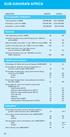 SUB-SAHARAN AFRICA INDICATOR REGION WORLD Demographic indicators Total population (2006) 748,886,000 6,577,236,000 Population under 18 (2006) 376,047,000 2,212,024,000 Population under 5 (2006) 125,254,000
INDICATOR REGION WORLD
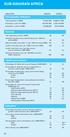 SUB-SAHARAN AFRICA INDICATOR REGION WORLD Demographic indicators Total population (2005) 713,457,000 6,449,371,000 Population under 18 (2005) 361,301,000 2,183,143,000 Population under 5 (2005) 119,555,000
Karnataka Private Medical Establishments Act. 2007
 Karnataka Private Medical Establishments Act. 2007 Dr. S. B. N.PRAKASH Former district and sessions judge, Now the professor of Law. National Law school of India University. Bangalore. What the law stated
MEDICAL AND PUBLIC HEALTH
 Introduction MEDICAL AND PUBLIC HEALTH The Health Care in the Union Territory of Puducherry has been delivered through a network of 8 major Hospital, 4 CHCs, 39 PHCs, 77 Sub-Centres, 14 ESI Dispensaries
Cloud Computing: An enabler of IT in Indian Healthcare Sector. Media Briefing September 29, 2010
 Cloud Computing: An enabler of IT in Indian Healthcare Sector Media Briefing September 29, 2010 Executive Summary Indian healthcare spending is about 4.1 percent of its GDP. The Indian healthcare industry
HOSPITAL SUBSECTOR ANALYSIS
 HOSPITAL SUBSECTOR ANALYSIS Fourth Health Sector Development Project (RRP MON 41243) A. Introduction 1. The health status of the people of Mongolia has generally improved over the years, and significant
HEALTH TRANSITION AND ECONOMIC GROWTH IN SRI LANKA LESSONS OF THE PAST AND EMERGING ISSUES
 HEALTH TRANSITION AND ECONOMIC GROWTH IN SRI LANKA LESSONS OF THE PAST AND EMERGING ISSUES Dr. Godfrey Gunatilleke, Sri Lanka How the Presentation is Organized An Overview of the Health Transition in Sri
MYANMAR HEALTH CARE SYSTEM
 M MYANMAR HEALTH CARE SYSTEM yanmar health care system evolves with changing political and administrative system and relative roles played by the key providers are also changing although the Ministry of
The practice of medicine comprises prevention, diagnosis and treatment of disease.
 English for Medical Students aktualizované texty o systému zdravotnictví ve Velké Británii MUDr Sylva Dolenská Lesson 16 Hospital Care The practice of medicine comprises prevention, diagnosis and treatment
Outsourcing of diagnostic services in public health facilities in Chhattisgarh. A critique by Jan Swasthya Abhiyan Chhattisgarh
 Outsourcing of diagnostic services in public health facilities in Chhattisgarh A critique by Jan Swasthya Abhiyan Chhattisgarh The Chhattisgarh State Government has taken out a Request For Proposal (RFP)
AN ANALYSIS OF INVESTORS PREFERENCE ON VARIOUS LIFE INSURANCE POLICIES
 AN ANALYSIS OF INVESTORS PREFERENCE ON VARIOUS LIFE INSURANCE POLICIES Abstract Divya Joseph* The business of insurance is related to the protection of the economic values of asset every asset has a value
This document is developed by Swasti, Health Resource Centre as a product of the People for Health Project.
 Developed by Acknowlegement This document is developed by Swasti, Health Resource Centre as a product of the People for Health Project. This study has given us a better understanding of the human resource
cambodia Maternal, Newborn AND Child Health and Nutrition
 cambodia Maternal, Newborn AND Child Health and Nutrition situation Between 2000 and 2010, Cambodia has made significant progress in improving the health of its children. The infant mortality rate has
Health Insurance Policies
 Standard Definitions of Terminology used in Health Insurance Policies PUBLISHED IN THE GUIDELINES ON STANDARDISATION IN HEALTH INSURANCE VIDE IRDA CIRCULAR NO: IRDA/HLT/CIR/036/02/2013 DATED 20.02.2013
Title: Changing Landscape of Private Health Care Providers in India: implications for National Level Health Policy
 Title: Changing Landscape of Private Health Care Providers in India: implications for National Level Health Policy Authors: Indranil Mukhopadhyay 1, Sakthivel Selvaraj, Sandeep Sharma, Pritam Datta 1:
Individual Health Plan Proposal
 Individual Health Plan Proposal Table of Contents Page Section Ⅰ Company Introduction 3 Section Ⅱ Plan Introduction 4 Ⅰ Geographic Coverage 4 Ⅱ Benefit Schedule 4 Ⅲ Exclusions 8 Section Ⅲ Plan Administration
Islamic Republic of Afghanistan Ministry of Public Health. Contents. Health Financing Policy 2012 2020
 Islamic Republic of Afghanistan Ministry of Public Health Contents Health Financing Policy 2012 2020 Table of Content 1. Introduction 1 1.1 Brief County Profile 1 1.2 Health Status Data 1 1.3 Sources
APPENDIX B HONG KONG S CURRENT HEALTHCARE SYSTEM. Introduction
 APPENDIX B HONG KONG S CURRENT HEALTHCARE SYSTEM Introduction B.1 Over the years, Hong Kong has developed a highly efficient healthcare system and achieved impressive health outcomes for its population.
Knowledge Management policy for Health - Service, Education and Research
 Knowledge Management policy for Health - Service, Education and Research (Final Draft Document) 1 Knowledge Management policy for Health - Service, Education and Research Department of Health Research
What can China learn from Hungarian healthcare reform?
 Student Research Projects/Outputs No.031 What can China learn from Hungarian healthcare reform? Stephanie XU MBA 2009 China Europe International Business School 699, Hong Feng Road Pudong, Shanghai People
Health Care Access to Vulnerable Populations
 Health Care Access to Vulnerable Populations Closing the Gap: Reducing Racial and Ethnic Disparities in Florida Rosebud L. Foster, ED.D. Access to Health Care The timely use of personal health services
MATERNAL AND CHILD HEALTH
 MATERNAL AND CHILD HEALTH 9 George Kichamu, Jones N. Abisi, and Lydia Karimurio This chapter presents findings from key areas in maternal and child health namely, antenatal, postnatal and delivery care,
Q.11012/6/2015-P&E Government of India Ministry of AYUSH (P&E Cell)
 Q.11012/6/2015-P&E Government of India Ministry of AYUSH (P&E Cell) To AYUSH Bhawan, B Block, GPO Complex, INA, New Delhi-110023, Dated the 24 th April, 2015 The Principal, All Post-graduate Ayurvedic,
Jobs in Botswana - Ministry of Health
 Jobs in Botswana - Ministry of Health Botswana is a landlocked country in Southern Africa surrounded by the Republic of South Africa, Namibia, Zimbabwe and Zambia The country has an area of 581, 730 sq
IMA NOTES ON THE ISSUE OF PHYSIOTHERAPISTS
 IMA NOTES ON THE ISSUE OF PHYSIOTHERAPISTS Few points The physiotherapist all over India and in the state of Kerala is defined as a Rehabilitation professional under section 2 (i) [n] (xvii) of the Rehabilitation
Commission on the Future of Health and Social Care in England. The UK private health market
 Commission on the Future of Health and Social Care in England The UK private health market The NHS may dominate the provision of health care in England, but that still leaves the country with a significant
CORRELATIONAL ANALYSIS BETWEEN TEENAGE PREGNANCY AND MATERNAL MORTALITY IN MALAWI
 CORRELATIONAL ANALYSIS BETWEEN TEENAGE PREGNANCY AND MATERNAL MORTALITY IN MALAWI Abiba Longwe-Ngwira and Nissily Mushani African Institute for Development Policy (AFIDEP) P.O. Box 31024, Lilongwe 3 Malawi
Comparison of Healthcare Systems in Selected Economies Part I
 APPENDIX D COMPARISON WITH OVERSEAS ECONOMIES HEALTHCARE FINANCING ARRANGEMENTS Table D.1 Comparison of Healthcare Systems in Selected Economies Part I Predominant funding source Hong Kong Australia Canada
3. Financing. 3.1 Section summary. 3.2 Health expenditure
 3. Financing 3.1 Section summary Malaysia s public health system is financed mainly through general revenue and taxation collected by the federal government, while the private sector is funded through
Overview of the Health System in Egypt
 Chapter 2 Overview of the Health System in Egypt The Egyptian health care system faces multiple challenges in improving and ensuring the health and wellbeing of the Egyptian people. The system faces not
Inventory Management of Drugs at a Secondary Level Hospital Associated with Ballabgarh HDSS- An Experience from North India
 Original Article Inventory Management of Drugs at a Secondary Level Hospital Associated with Ballabgarh HDSS- An Experience from North India Shashi Kant 1,2 Partha Haldar 1,2, Arvind Singh 1, Ankita Kankaria
Telemedicine Services for Remote Regions in Cameroon The Genesis Experience
 Telemedicine Services for Remote Regions in Cameroon The Genesis Experience Jacques Bonjawo, Genesis Telecare Overview Introduction Presentation of the project Evaluation Methods Results Discussion Conclusion
THE MEDICAID PROGRAM AT A GLANCE. Health Insurance Coverage
 on on medicaid and and the the uninsured March 2013 THE MEDICAID PROGRAM AT A GLANCE Medicaid, the nation s main public health insurance program for low-income people, covers over 62 million Americans,
Trends in Physician Compensation: Specialist Physician Growth Coupled with Primary Care Stagnation
 Special Report: Trends in Physician Compensation: Specialist Physician Growth Coupled with Primary Care Stagnation Bruce A. Johnson, JD, MPA Physicians in the United States in virtually all medical and
Why Accept Medicaid Dollars: The Facts
 Why Accept Medicaid Dollars: The Facts If we accept federal Medicaid dollars, nearly 500,000 North Carolinians will gain access to health insurance. As many as 1,100 medically unnecessary deaths per year
4. ROLE OF PRIVATE SECTOR IN HEALTH CARE IN INDIA CHALLENGES, OPPORTUNITIES & STARTEGIES
 4. ROLE OF PRIVATE SECTOR IN HEALTH CARE IN INDIA CHALLENGES, OPPORTUNITIES & STARTEGIES * G K Lath Type of Health Care Systems 3 Basic Types Type Finance Sector Delivery Sector Examples I Private Private
STATISTICAL OFFICE IN WARSAW 1 Sierpnia 21, 02-134 Warszawa HEALTH CARE IN MAZOWIECKIE VOIVODSHIP IN 2013
 STATISTICAL OFFICE IN WARSAW 1 Sierpnia 21, 2-134 Warszawa Current information Contact: e-mail: [email protected] tel. 22 464 23 15 faks 22 846 76 67 Prepared on 2.8.214 http://warszawa.stat.gov.pl/
The American Health Care System
 2 HISTORICAL OUTLOOK OF PATIENT EDUCATION IN AMERICAN HEALTH CARE Objectives After completing Chapter 2, the reader will be able to: Describe the development of patient education in health care. Identify
GOVERNMENT OF KERALA
 Kerala Gazette No. 20 dated 14th May 2013. PART I GOVERNMENT OF KERALA Abstract HEALTH AND FAMILY WELFARE DEPARTMENT KERALA GOVERNMENT SERVANTS MEDICAL ATTENDANCE RULES, 1960 EMPANELMENT OF PRIVATE HOSPITALS
Homeopathy Naturopathy Osteopathy Chiropractic Ayurveda and Conventional
 Credit: The image of Chinese medicine bottles from http://www.flickr.com/photos/moriza/49897087/ Homeopathy Naturopathy Osteopathy Chiropractic Ayurveda and Conventional Russell A. Faust, PhD, MD, FAAP
CENTRAL SERVICES (MEDICAL ATTENDANCE) RULES, 1944
 CENTRAL SERVICES (MEDICAL ATTENDANCE) RULES, 1944 PREAMBLE In exercise of the powers conferred by sub-section (2) of section 241, read with sub-section (3) of section 313 of the Government of India Act,
IJPSS Volume 2, Issue 3 ISSN: 2249-5894
 A STUDY ON PROBLEM AND PROSPECTS OF WOMEN ENTREPRENEURS WITH SPECIAL REFERENCE TO G. PALANIAPPAN* C. S. RAMANIGOPAL** A. MANI*** ERODE DISTRICT ABSTRACT: Women have been successful in breaking their confinement
ASIAN JOURNAL OF MANAGEMENT RESEARCH Online Open Access publishing platform for Management Research
 Online Open Access publishing platform for Management Research Copyright by the authors Licensee IPA Under Creative Commons license 3.0 Research Article ISSN 2229 3795 Indian life insurance industry changing
Health Care Services Overview. Pennsylvania Department of Corrections
 Health Care Services Overview Pennsylvania Department of Corrections Richard S. Ellers Director Bureau of Health Care Services Pennsylvania Department of Corrections [email protected] 717-728-5311 27 State
REGIONAL GUIDELINES FOR ASSESSMENT AND RECOGNITION OF MEDICAL SCHOOLS
 REGIONAL GUIDELINES FOR ASSESSMENT AND RECOGNITION OF MEDICAL SCHOOLS INTRODUCTION: The guidelines were developed by Medical Regulatory Boards and Councils following a directive by the 3 rd EAC Sectoral
Circle Of Life SM : Cancer Education and Wellness for American Indian and Alaska Native Communities
 Wellness along the Cancer Journey: American Indian, Alaska Native and Complementary Healing Revised October 2015 Chapter 3: Complementary and Alternative Medicine Alternative & Native Healing Rev. 10.8.15
1. TRENDS IN INTERNATIONAL MIGRATION
 1. TRENDS IN INTERNATIONAL MIGRATION This chapter provides a brief overview of global and regional patterns and trends in international migration since 199. It also describes selected characteristics of
PLAN DESIGN AND BENEFITS AETNA LIFE INSURANCE COMPANY - Insured
 PLAN FEATURES Deductible (per calendar year) Individual $750 Individual $1,500 Family $2,250 Family $4,500 All covered expenses accumulate simultaneously toward both the preferred and non-preferred Deductible.
Awareness and Impact of Globalization of Life Insurance in India
 Awareness and Impact of Globalization of Life Insurance in India Jyoti Agarwal 1, Dr. K.K. Shukla 2 1 Research Scholar, Bhagwant University, Ajmer, Rajasthan 2 Assistant Professor, KCPG Degree College,
Street Smart: Demographics and Trends in Motor Vehicle Accident Mortality In British Columbia, 1988 to 2000
 Street Smart: Demographics and Trends in Motor Vehicle Accident Mortality In British Columbia, 1988 to 2000 by David Baxter 3-Year Moving Average Age Specific Motor Vehicle Accident Death Rates British
INDIA. Overview: National Cancer Control Programme
 INDIA Overview: National Cancer Control Programme Cancer has become one of the ten leading causes of death in India. At present there are 2.5 million cancer cases and nearly 0.8 million new cases occurring
National Family Health Survey-3 reported, low fullimmunization coverage rates in Andhra Pradesh, India: who is to be blamed?
 Journal of Public Health Advance Access published March 15, 2011 Journal of Public Health pp. 1 7 doi:10.1093/pubmed/fdr022 National Family Health Survey-3 reported, low fullimmunization coverage rates
GOVERNMENT OF ANDHRA PRADESH ABSTRACT
 GOVERNMENT OF ANDHRA PRADESH ABSTRACT Medical Education B.Sc. (Nursing) Colleges Regulation for grant of permission to Private Colleges Rules Issued. ----------------------------------------------------------------------------------------------------------
INDIAN LIFE INSURANCE INDUSTRY CHANGING SCENARIO AND NEED FOR INNOVATION
 Journal of Social and Economic Policy, Vol. 11, No. 1, June 2014, pp. 103-108 INDIAN LIFE INSURANCE INDUSTRY CHANGING SCENARIO AND NEED FOR INNOVATION ARVIND KUMAR SINGH * AND MAMTA SINGH ** In the last
China s 12th Five-Year Plan: Healthcare sector
 China s 12th Five-Year Plan: Healthcare sector May 2011 KPMG CHINA One of the guiding principles of the 12th Five-Year Plan (5YP) is inclusive growth : helping ensure that the benefits of the country s
Important Issues on Ageing in India Recommendations To Planning Commission- Will social improvements for elderly grow by 8 %?
 Important Issues on Ageing in India Recommendations To Planning Commission- Will social improvements for elderly grow by 8 %? HELPAGE INDIA Comparative Demographic Facts 25 21 21 20 % 15 10 8 12 India
Health Security for All
 Health Security for All A joint partnership between Government of Jharkhand and ILO Sub Regional Office for South Asia, New Delhi Dr. Shivendu Ministry of Health, Family Welfare, Medical Education and
PROSPECTUS FOR B.TECH LATERAL ENTRY COURSE 2015 (Approved vide G.O (Rt) No:342/2015/H.Edn Dated, Thiruvananthapuram, 20.02.2015) 1.
 PROSPECTUS FOR B.TECH LATERAL ENTRY COURSE 2015 (Approved vide G.O (Rt) No:342/2015/H.Edn Dated, Thiruvananthapuram, 20.02.2015) 1. Introduction Lateral Entry Scheme is intended to admit meritorious Diploma
Mouwasat Medical Services Company - Mouwasat
 Recommendation Overweight Fair Value (SR) 92.00 Price as of 2 nd of March 2014 (SR) 81.75 Expected return 12.5% Company data Tadawul symbol 4002.SE 52- week high (SR) 94.00 52-week low(sr) 52.25 YTD change
How To Get A Medicaid Card
 MEDICAID care is reasonable, necessary, and provided in the most appropriate setting. The PROs are composed of groups of practicing physicians. To receive Medicare payments, a hospital must have an agreement
http://www.cdc.gov/nchs.
 As the Nation s principal health statistics agency, the National Center for Health Statistics (NCHS) compiles statistical information to guide actions and policies to improve the health of the population.
How Universal is Access to Reproductive Health?
 How Universal is Access to Reproductive Health? A review of the evidence Cover Copyright UNFPA 2010 September 2010 Publication available at: http://www.unfpa.org/public/home/publications/pid/6526 The designations
APPENDIX - 2 STRUCTURED QUESTIONNAIRE FOR PRINCIPAL OF GENERAL NURSING SCHOOLS
 APPENDIX - 2 STRUCTURED QUESTIONNAIRE FOR PRINCIPAL OF GENERAL NURSING SCHOOLS For Data Collection on Implementation of General Nursing & Midwifery Course Revised Syllabus of INC You are requested to provide
Inviting Possibilities. Healthcare. Cover Page- Healthcare Sector Report.indd 1
 Inviting Possibilities Healthcare Cover Page- Healthcare Sector Report.indd 1 7/30/13 1:4 PM TABLE OF CONTENTS Overview of Dubai's Healthcare Industry Investment opportunities Medical research and development
CHAPTER - Vll. Need for the study. Findings. Conclusions. Suggestions. Conclusion
 217 CHAPTER - Vll Need for the study Findings Conclusions Suggestions Conclusion 218 NEED FOR STUDY In the recent times, life Insurance have become a very important area of research in all most all the
Translating System Thinking for Health Systems Strengthening and Development. 1. The journey from real world practice to systems thinking
 Translating System Thinking for Health Systems Strengthening and Development 1. The journey from real world practice to systems thinking Marcel Tanner & Don de Savigny Swiss Tropical & Public Health Institute
COUNTRY UPDATE ORGANISATION OF THE HEALTH CARE SYSTEM IN AUSTRALIA
 COUNTRY UPDATE ORGANISATION OF THE HEALTH CARE SYSTEM IN AUSTRALIA 1. Organisation Briefly outline the structural provision of health care. The Australian health system is complex, with many types and
Medical Plan - Healthfund
 18 Medical Plan - Healthfund Oklahoma City Community College Effective Date: 07-01-2010 Aetna HealthFund Open Choice (PPO) - Oklahoma PLAN DESIGN AND BENEFITS PROVIDED BY AETNA LIFE INSURANCE COMPANY -
Population, Health, and Human Well-Being-- Benin
 Population, Health, and Human Well-Being-- Benin Demographic and Health Indicators Benin Sub- Saharan Africa World Total Population (in thousands of people) 1950 2,046 176,775 2,519,495 2002 6,629 683,782
Summary. Accessibility and utilisation of health services in Ghana 245
 Summary The thesis examines the factors that impact on access and utilisation of health services in Ghana. The utilisation behaviour of residents of a typical urban and a typical rural district are used
INCREASING COMPLETE IMMUNIZATION IN RURAL UTTAR PRADESH
 INCREASING COMPLETE IMMUNIZATION IN RURAL UTTAR PRADESH The Government of India has recommended that a child must be vaccinated against six vaccine-preventable diseases (polio, tuberculosis [TB], diphtheria,
Telemedicine in India: Initiatives and Perspective
 Telemedicine in India: Initiatives and Perspective B.S.Bedi Senior Director Department of Information Technology Ministry of Communications & IT Government of India ehealth 2003: Addressing the Digital
State of medical education and practice in the UK: 2013. Name: Dr. Judith Hulf Senior Medical Adviser to the GMC
 State of medical education and practice in the UK: 2013 Name: Dr. Judith Hulf Senior Medical Adviser to the GMC What is the General Medical Council - GMC? An independent public body A charity The independent
Mapping of Health Care Providers in Ireland to the Provider Classification (ICHA HP) within the System of Health Accounts.
 Mapping of Health Care Providers in Ireland to the Provider Classification (ICHA HP) within the System of Health Accounts December 2015 Mapping of the Health Care Providers in Ireland to the SHA Provider
Health Insurance Policy Holders Perception towards Public Sector Health Insurers in Erode District Of Tamil Nadu
 Health Insurance Policy Holders Perception towards Public Sector Health Insurers in Erode District Of Tamil Nadu P.Saravana Kumar, Assistant Professor & Head, Dept. of M.Com(CA), Sri Vasavi College(SF),Erode.
South Eastern Health and Social Care Trust
 South Eastern Health and Social Care Trust JOB DESCRIPTION TITLE OF POST: Consultant General Surgeon LOCATION: This post is part of the South Eastern Trust and will be based at the Ulster Hospital. However,
Caring for Vulnerable Babies: The reorganisation of neonatal services in England
 Caring for Vulnerable Babies: The reorganisation of neonatal services in England LONDON: The Stationery Office 13.90 Ordered by the House of Commons to be printed on 17 December 2007 REPORT BY THE COMPTROLLER
Top-down cost allocation can help universal healthcare schemes in developing countries set better package rates
 Top-down cost allocation can help universal healthcare schemes Sudhanshu Bansal Lalit Baveja Richard Kipp Shailesh Maloo Kshama Saluja Governments looking to expand universal healthcare schemes need to
Randy Fink Frontier Nursing University December 5 th, 2012
 Randy Fink Frontier Nursing University December 5 th, 2012 A Registered Nurse trained in one of four advanced practice roles at the graduate level (National Council of State Boards of Nursing, 2008) Certified
MEDICLINIC MIDDLE EAST CONTINUES TO BE WELL PLACED AMONG THE COMPETITION WITH ITS STRATEGIC PLAN TO BRIDGE GAPS IN UNDER-REPRESENTED AREAS
 OPERATIONAL REVIEWS UNITED ARAB EMIRATES David Hadley Chief Executive Officer, Mediclinic Middle East MEDICLINIC MIDDLE EAST CONTINUES TO BE WELL PLACED AMONG THE COMPETITION WITH ITS STRATEGIC PLAN TO
bulletin 126 Healthy life expectancy in Australia: patterns and trends 1998 to 2012 Summary Bulletin 126 NOVEMBER 2014
 Bulletin 126 NOVEMBER 2014 Healthy life expectancy in Australia: patterns and trends 1998 to 2012 Summary bulletin 126 Life expectancy measures how many years on average a person can expect to live, if
Social Protection and Healthcare Financing: Ghana s NHIS Experience by Danaa Nantogmah, FES Ghana
 Social Protection and Healthcare Financing: Ghana s NHIS Experience by Danaa Nantogmah, FES Ghana Introduction and Background The 2010 provisional census results estimated Ghana s population at 24,233,431