
MYANMAR HEALTH CARE SYSTEM
|
|
|
- Katherine Barton
- 10 years ago
- Views:
Transcription
1 M MYANMAR HEALTH CARE SYSTEM yanmar health care system evolves with changing political and administrative system and relative roles played by the key providers are also changing although the Ministry of remains the major provider of comprehensive health care. It has a pluralistic mix of public and private system both in the financing and provision. care is organized and provided by public and private providers. Evolution of Organization and Administration of Services Following complete colonization of the country by the British in 1886, Services Administration, a centralized body responsible for both the curative as well as the preventive health services was set up and a post of Sanitary Commissioner was created. Later in 1889, the two services were separated and a new post of Inspector General of Hospitals was created for administration of hospital services. In addition to the control of government hospitals, the Inspector General of Hospitals controlled the following government institutions, the Chemical Examination Laboratory, the Pasteur Institute (a large bacteriological laboratory) and the Burma Government Medical School. The Sanitary Commissioner, renamed Director of Public Services was responsible for the public health aspect of the administration. These two centralized bodies controlled the health services. At the peripheral level where the geographic regions were called districts, health services under the central control, was managed by senior doctors called Civil Surgeons. In the larger districts curative and preventive services ran parallel and the latter was managed by senior medical officer called the District. The post did not exist in smaller districts and both services were managed by the Civil Surgeons. Hospitals were then divided into two categories by virtue of ownership. These were Governmental and Local Fund Hospitals. The former hospitals included the Rangoon General Hospital, the Rangoon Dufferin Hospital, the Tadagalay Mental Hospital, the Mandalay General Hospital, the Maymyo Civil Hospital and the Myitkyina Civil Hospital. Virtually all other hospitals in the districts and the townships belonged to the local fund group of hospitals. All financial commitments of the government institutions and hospitals were the responsibility of the Government while the local fund hospitals were financed from a collection of funds called the Hospital Finance Scheme. The sources of income for this scheme were; funds from respective in Myanmar

2 local bodies, government contributions and subscriptions and donations from the public. These Local Fund Hospitals were managed by Hospital Management Committees the members of which were determined by the Divisional Commissioner. During the Japanese occupation the general administration remained the same though new posts namely, Director of Medical Services and the Director of Public Services replaced the two earlier posts. With return of the British administration the health services were reintegrated under a single director called Director of Medical and Services. Another directorate was set up, called the Directorate of Women and Child Welfare, previously the Women and Child Welfare Board. Following the Independence and in 1951 a Directorate of Child Services was formed. This directorate functioned as a separate body and was responsible for both the social welfare (including control of juvenile delinquents) and health of the children. Consequently there was some overlapping of work with incompetency in administration. Following reorganization of health services in 1953, with the assistance from the World Organization which assigned an advisor in Public Administration, these shortcomings were redressed. Consequently these independent directorates were unified into a single directorate called the Directorate of Services, fore-runner of the current Department of. The directorate was headed by a Director of Services. In 1953 all local fund hospitals were nationalized by the Government. But at the peripheral level, hospitals still remained separate from public health services. In 1965 the Directorate of Services was again re-organized to expand the coverage of health services to reach the rural areas, to ensure a uniform increase in the level of health of the Union, to integrate health services, to eliminate duplication of work through unification of different sections of the health services and to decentralize health administration by delegation of authority to the Divisional and Township Departments. In addition to undertaking reorganization at central level, an intermediate level of health administration was introduced in six among nine of administrative regions in the Union. These were; Rangoon Special Division, the Central Division, the North Western Division, the South Western Division, the South Eastern Division and the Eastern Division. They are now called State/Division (State/Regional) Departments. Township became the basic health unit at the peripheral level and Township Medical s were assigned responsibilities for all health services (curative and preventive). Organization and administration of health services by levels at different administrative period are shown by organization charts in the following pages. 2 in Myanmar 2011

3 Organization and administration of health services from the period following Independence to the period of Revolutionary Government Central Organization Minister of National Secretary, Ministry of Director of Services Nurses and Midwives Myanmar Medical on Special Duty International Work Two Directors of Services-North and South Burma Administration and Finance Deputy Director, Hospital and Dispensaries Deputy Director, Public Deputy Director, Laboratory Services Deputy Director, MCH and School Director of: (i) Pasteur Institute (ii) Harcourt Butler (iii) Chemical Examiners Director, Epidemics Director, PH, General Director, MCH Director, SH Director, Medical Stores Director, TB Director, Leprosy (i) Control of CD (ii) VD Control (iii) Vital & Statistics (iv) Port & Quarantine Special, Malaria Control Education Bureau (i) PH General (ii) Education & Training (iii) Nutrition Nursing Chief Deputy Nursing Chief Medical, BCG Source: Annual Report of the Director of Services, Burma, 1955 in Myanmar

4 District Organization District Township Medical Malaria Inspector Educator Leprosy Clerical Staff Hospital Township Center Urban Center Rural Center Lady Visitor Midwives Vaccinators Source: Annual Report of the Director of Services, Burma, in Myanmar 2011

5 Organization and administration of health services from the late 1960s to 1973 Central Organization Ministry of Directorate of Services Deputy Director (C.D.) Deputy Director (H and D) Deputy Director (Lab) Deputy Director (P.H.) Administrative I and II Nursing Chief National Laboratory Asst. Director (Malaria) Asst. Director (TB and BCG) Asst. Director (Leprosy) Asst. Director (Epidemiology Director, Asst. Training School Asst. Director (Quarantine) Asst. Director (MCH and SH) Asst. Director (Stores) Statistician Medical Social Worker Sanitary Engineer Chief Education Nutrition Divisional Organization Director of Services Divisional Director Regional Campaign Deputy Director Divisional Township Medical Station Medical Township Township Source: Annual Report of Report the Director of the Director of of Services, Services, Burma, Burma, August in Myanmar

6 Township Organization Director of Services Township Medical Township Campaign Team Leader District Town Maternity and Child and School Station Unit Rural Centre Rural Centre Station Unit Organization Township Medical Township Station Medical Station Hospital Campaign Worker Rural Centre Rural Centre Rural Centre Rural Centre Rural Centre Rural Centre Sub-Centres Sub-Centres Sub-Centres Source: Report of the Director of Services, Burma, August in Myanmar 2011

7 Organization and administration of health services from 1974 to 1988 ASSISTANT DIRECTOR (TRAINING) MINISTER OF HEALTH DEPUTY MINISTER OF HEALTH DIRECTOR-GENERAL SPORTS & PHYSICAL EDUCATION DIRECTOR-GENERAL DEPARTMENT OF HEALTH DIRECTOR-GENERAL MEDICAL RESEARCH DIRECTOR-GENERAL MEDICAL EDUCATION DIRECTOR (PLANNING, ADMIN & TRAINING ) DIRECTOR (LABORATORY) DIRECTOR (DISEASE CONTROL) DIRECTOR (PUBLIC HEALTH) DIRECTOR (MEDICAL CARE) DEPUTY DIRECTOR (TRAINING) DEPUTY DIRECTOR (PLANNING, FINANCE & ADMINISTRATION) DEPUTY DIRECTOR (PUBLIC HEALTH LABORATORY) DEPUTY DIRECTOR (CHEMICAL ANALYSIS) DEPUTY DIRECTOR (HOSPITAL LABORATORY) DEPUTY DIRECTOR (MALARIA) DEPUTY DIRECTOR (TUBERCULOSIS) DEPUTY DIRECTOR (LEPROSY) DEPUTY DIRECTOR (EPIDEMICS) DEPUTY DIRECTOR (RURAL HEALTH, MCH AND SCHOOL HEALTH) DEPUTY DIRECTOR (OCCUPATIONAL HEALTH) DEPUTY DIRECTOR (MEDICAL STORE) DEPUTY DIRECTOR (MEDICAL CARE) ASSISTANT DIRECTOR (NURSING) ASSISTANT DIRECTOR (BUDGET & ACCOUNTS) ASSISTANT DIRECTOR (ADMINISTRATION) ASSISTANT DIRECTOR (POISON ANALYSIS) (CHEMICAL AND FOOD ANALYSIS ASSISTANT DIRECTOR (HOSPITAL LAB) SENIOR ENTOMOLOGIST REGIONAL LEPROSY OFFICER EPIDEMIOLOGIST (CENTRAL EPIDEMIOLOGICAL UNIT) PORT HEALTH OFFICER ASSISTANT DIRECTOR ASSISTANT DIRECTOR (SANITARY HEALTH) ASSISTANT DIRECTOR (NUTRITION) ASSISTANT DIRECTOR (HEALTH EDUCATION) ASSISTANT DIRECTOR (OCCUPATIONAL HEALTH) ASSISTANT DIRECTOR (MEDICAL STORE) ASSISTANT DIRECTOR (HEALTH STATISTICS) ASSISTANT DIRECTOR (SOCIAL SECURITY) ASSISTANT DIRECTOR (MEDICAL CARE) DEPUTY DIRECTOR ASSISTANT DIRECTOR (DENTAL HEALTH) Source: Country Profile, Department of, Burma, 1979 in Myanmar

8 Organization of Service Delivery during the period of the State Peace and Development Government UNION OF MYANMAR National Committee CABINET Ministry of NHP M & E Committee Department of Planning Department of Department of Medical Sciences Department of Medical Research (Lower) Department of Medical Research (Upper) Department of Medical Research (Central) Department of Traditional Medicine State/Regional Peace and Development District Peace and Development Township Peace and Development State/Region Committee District Committee Township Committee State/Division Department District Department Township Department 1. Ministries 2. Myanmar Women's Affairs Federation 3. Maternal & Child Welfare Association 4. Red Cross Society 5. Medical Association 6. Dental Association 7. Nurses Association 8. Association 9. Traditional Medicine Practitioners Association 10. Religious Organization 11. Parent-Teacher Association Station Hospital Ward/ Village Peace and Development Ward/ Village Tract Committee Rural Center Village Volunteers 8 in Myanmar 2011

9 Current Care System In implementing the social objective laid down by the State, and the National Policy, the Ministry of is taking the responsibility of providing promotive, preventive, curative and rehabilitative services to raise the health status of the population. Department of one of 7 departments under the Ministry of plays a major role in providing comprehensive health care throughout the country including remote and hard to reach border areas. Some ministries are also providing health care, mainly curative, for their employees and their families. They include Ministries of Defense, Railways, Mines, Industry I, Industry II, Energy, Home and Transport. Ministry of Labour has set up three general hospitals, two in Yangon and the other in Mandalay to render services to those entitled under the social security scheme. Ministry of Industry (1) is running a Myanmar Pharmaceutical Factory and producing medicines and therapeutic agents to meet the domestic needs. The private, for profit, sector is mainly providing ambulatory care though some providing institutional care has developed in Yangon, Mandalay and some large cities in recent years. Funding and provision of care is fragmented. They are regulated in conformity with the provisions of the law relating to Private Care Services. General Practitioners Section of the Myanmar Medical Association with its branches in townships provide these practitioners the opportunities to update and exchange their knowledge and experiences by holding seminars, talks and symposia on currently emerging issues and updated diagnostic and therapeutic measures. The Medical Association and its branches also provide a link between them and their counterparts in public sector so that private practitioners can also participate in public health care activities. The private, for non-profit, which is another sector also providing ambulatory care though some providing institutional care has developed in large cities and some townships. One unique and important feature of Myanmar health system is the existence of traditional medicine along with allopathic medicine. Traditional medicine has been in existence since time immemorial and except for its waning period during colonial administration when allopathic medical practices had been introduced and flourishing it is well accepted and utilized by the people throughout the history. With encouragement of the State scientific ways of assessing the efficacy of therapeutic agents, nurturing of famous and rare medicinal plants, exploring, sustaining and propagation of treatises and practices can be accomplished. There are a total of 14 traditional hospitals run by the State in the country. Traditional medical practitioners have in Myanmar

10 been trained at an Institute of Traditional Medicine and with the establishment of a new University of Traditional Medicine conferring a bachelor degree more competent practitioners can now be trained and utilized. As in the allopathic medicine there are quite a number of private traditional practitioners and they are licensed and regulated in accordance with the provisions of related laws. In line with the National Policy NGOs such as Myanmar Maternal and Child Welfare Association, Myanmar Red Cross Society are also taking some share of service provision and their roles are also becoming important as the needs for collaboration in health become more prominent. Recognizing the growing importance of the needs to involve all relevant sectors at all administrative levels and to mobilize the community more effectively in health activities health committees had been established in various administrative levels down to the wards and village tracts. These committees at each level were headed by the responsible person of the organs of power concern and include heads of related government departments and representatives from the social organizations as members. Heads of the health departments were designated as secretaries of the committees. 10 in Myanmar 2011

11 Financing aiming towards Universal Coverage Promoting and protecting health is essential to human welfare and sustained economic and social development. This was recognized more than 30 years ago by the Alma-Ata Declaration signatories, who noted that for All would contribute both to a better quality of life and also to global peace and security. There are many ways to promote and sustain health. Some lie outside the confines of the health sector. The circumstances in which people grow, live, work, and age strongly influence how people live and die. Education, housing, food and employment all impact on health. Redressing inequalities in these will reduce inequalities in health. It determines whether people can afford to use health services when they need them. Recognizing this, the countries committed in 2005 to develop their health financing systems so that all people have access to services and do not suffer financial hardship paying for them. This goal was defined as Universal Coverage, sometimes called universal health coverage. Globally, about 150 million people suffer financial catastrophe annually while 100 million are pushed below the poverty line. financing is an important part of broader efforts to ensure social protection in health. Countries in the South-East Asia Region are at different levels in terms of equitable financing through a mix of government expenditure and social insurance. Financing in South-East Asia Region (2009) 100% 90% 80% Percentage of Expenditure 70% 60% 50% 40% 30% 20% 10% 0% Timor-Leste Bangladesh India Myanmar Nepal Bhutan Indonesia Thailand DPRK Maldives Sri Lanka Government Expenditure Social Security Expenditure Out of Pocket Expenditure Other Private Expenditure Source: Financing Strategy for the Asia Pacific Region ( ) in Myanmar

12 The approach to universal coverage allows three reinforcing strategic choices for countries to advance toward equity in health: in the choice of the benefit package, in the selection of priority populations and in public subsidy of cost of care. Countries must raise sufficient funds, reduce the reliance on direct payments to finance services, and improve efficiency and equity. Three ways of moving towards UC The health system has been plagued by much inefficiency in terms of financial, poor management, human resources among others. There are irrational practices being carried out with regard to use of medicines, overuse of medical services with unnecessary use of technologies. There is a need to strengthen the public health systems in the countries. Financing in Myanmar The major sources of finance for health care services are the government, private households, social security system, community contributions and external aid. Government has increased health spending on both current and capital yearly. Total government health expenditure increased from kyat 464.1million in to kyat million in in Myanmar 2011

13 As spending by Ministry of as a financing agent constitutes the major share in the public spending on health and also taken into account the availability of data, estimates on public expenditures on health by financing entities were based solely on spending by the ministry. By functions curative and rehabilitative services accounted for around 32 to 38 % followed by 30% to 34% of spending devoted to health related functions. Prevention and public health accounted for about 22% to around 33% and Administration & Insurance accounted around 3% to 4%. Governmental Expenditures by Functions ( to ) Functions (%) Curative & Rehabilitative Ancillary Services Medical Goods Dispensed Prevention & Public Administration & Insurance Related Services Social security scheme was implemented in accordance with 1954 Social Security Act by the Ministry of Labour. According to the law factories, workshops and enterprises that have over 5 employees whether State owned, private, foreign or joint ventures, must provide the employees with social security coverage. The contribution is tri-partite with 2.5% by the employer 1.5% by the employee of the designated rate while the government contribution is in the form of capital investment. Insured workers under the scheme are provided free medical treatment, cash benefits and occupational injury benefit. To effectively implement the scheme branch offices, workers hospitals, dispensaries and mobile medical units have been established nation-wide. in Myanmar

MYANMAR HEALTH CARE SYSTEM
 MYANMAR HEALTH CARE SYSTEM M yanmar health care system evolves with changing political and administrative system and relative roles played by the key providers are also changing although the Ministry of
Five-Year Strategic Plan (2011-2015) HEALTH INFORMATION SYSTEM MYANMAR
 MINISTRY OF HEALTH Five-Year Strategic Plan (2011-2015) HEALTH INFORMATION SYSTEM MYANMAR Department of Health Planning CONTENTS Acknowledgement Executive Summary i ii Introduction 1 Myanmar Health Care
The Union of Myanmar. The State Peace and Development Council. The Law Relating to Private Health Care Services
 The Union of Myanmar The State Peace and Development Council The Law Relating to Private Health Care Services ( The State Peace and Development Council Law No. 5/2007 ) The 4th Waning Day of Hnaung Tahu,
CHAPTER 5 HEALTH ADMINISTRATION AT UNION AND STATE LEVEL
 CHAPTER 5 HEALTH ADMINISTRATION AT UNION AND STATE LEVEL 212 CHAPTER 5 HEALTH ADMINISTRATION AT UNION AND STATE LEVEL Outline of the chapter 1 Health administration at union level and state level 1.1 Health
CENTRAL SERVICES (MEDICAL ATTENDANCE) RULES, 1944
 CENTRAL SERVICES (MEDICAL ATTENDANCE) RULES, 1944 PREAMBLE In exercise of the powers conferred by sub-section (2) of section 241, read with sub-section (3) of section 313 of the Government of India Act,
National Health Research Policy
 National Health Research Policy The establishment of a Department of Health Research (DHR) in the Ministry of Health is recognition by the GOI of the key role that health research should play in the nation.
VOLUNTARY HEALTH INSURANCE FOR RURAL INDIA* GYAN SINGH** ABSTRACT
 Health and Population - Perspectives and Issues 24(2): 80-87, 2001 VOLUNTARY HEALTH INSURANCE FOR RURAL INDIA* GYAN SINGH** ABSTRACT The rural poor suffer from illness are mainly utilising costly health
Role of private sector in Myanmar s health care system: Implications for health sector reform
 Role of private sector in Myanmar s health care system: Implications for health sector reform San San Aye, Yoshimi Nishino, Khaing Soe, Ko Ko Zaw, Yin Thet Nu Oo, Wai Wai Han, Than Tun Sein, Shakil Ahmed
Questions and Answers on Universal Health Coverage and the post-2015 Framework
 Questions and Answers on Universal Health Coverage and the post-2015 Framework How does universal health coverage contribute to sustainable development? Universal health coverage (UHC) has a direct impact
National Health Insurance Policy 2013
 National Health Insurance Policy 2013 1. Background The Interim Constitution of Nepal 2007 provides for free basic health care as a fundamental right of citizens. Accordingly, the Government of Nepal has
Tuberculosis in Myanmar Progress, Plans and Challenges
 Tuberculosis in Myanmar Progress, Plans and Challenges Myanmar is one of the world s 22 high tuberculosis (TB) burden countries, with a TB prevalence rate three times higher than the global average and
Colombia REACHING THE POOR WITH HEALTH SERVICES. Using Proxy-Means Testing to Expand Health Insurance for the Poor. Differences between Rich and Poor
 REACHING THE POOR WITH HEALTH SERVICES 27 Colombia Using Proxy-Means Testing to Expand Health Insurance for the Poor Colombia s poor now stand a chance of holding off financial catastrophe when felled
Presentations by panellists were followed by a dialogue with members of the Council. These discussions are hereunder summarized.
 Panel Discussion on Universal Health Coverage at the Center of Sustainable Development: Contributions of Sciences, Technology and Innovations to Health Systems Strengthening Geneva, 3 July 2013 On 3 July
Civil Surgeon 10000-15150 16650-23200 a Dental Civil Surgeon 10000-15150 16650-23200
 27. Health Services Director of Health Services 16300-19900 26600-33750 Additional Director of Health Services 14300-18300 25400-33100 Deputy Director of Health Services 14000-18000 23200-31150 District
Jean Yan Chief Scientist Nursing and Midwifery WHO/Geneva FINE, Paris October 4-5,2006
 European Nurse Training: The Common Political Strategy Jean Yan Chief Scientist Nursing and Midwifery WHO/Geneva FINE, Paris October 4-5,2006 we're here with the health workers who are with the people
Overview of the Health System in Egypt
 Chapter 2 Overview of the Health System in Egypt The Egyptian health care system faces multiple challenges in improving and ensuring the health and wellbeing of the Egyptian people. The system faces not
3. Financing. 3.1 Section summary. 3.2 Health expenditure
 3. Financing 3.1 Section summary Malaysia s public health system is financed mainly through general revenue and taxation collected by the federal government, while the private sector is funded through
Ministry of Finance and Planning, Sri Lanka > Annual Report 2012. Cadre Management in the Public Sector
 Ministry of Finance and Planning, Sri Lanka > Annual Report 2012 10 Cadre Management in the Public Sector 413 10 Cadre Management in the Public Sector 10.1 Overview Public Sector Human Resource Management
WORLD HEALTH ORGANIZATION
 WORLD HEALTH ORGANIZATION FIFTY-SIXTH WORLD HEALTH ASSEMBLY A56/27 Provisional agenda item 14.18 24 April 2003 International Conference on Primary Health Care, Alma-Ata: twenty-fifth anniversary Report
IFMSA Policy Statement Human Resources for Health
 IFMSA Policy Statement Human Resources for Health Location: Taipei, Taiwan. Date of Adoption: August 9 th 2014. Date of Expiry: August 9 th 2017. Summary We, the International Federation of Medical Students
Mississippi Public Health Timeline
 Mississippi Public Health Timeline Public health programs have changed considerably since the Mississippi Legislature established the State Board of Health in 1877. Shifts in health problems that affect
Immunisation Services - Authority for Registered Nurses and Midwives
 Policy Directive Ministry of Health, NSW 73 Miller Street North Sydney NSW 2060 Locked Mail Bag 961 North Sydney NSW 2059 Telephone (02) 9391 9000 Fax (02) 9391 9101 http://www.health.nsw.gov.au/policies/
An Introduction to State Public Health for Tribal Leaders
 The governmental public health system in the United States is comprised of federal agencies, state health agencies, tribal and territorial health departments, and more than 2,500 local health departments.
Synopsis of Healthcare Financing Studies
 Synopsis of Healthcare Financing Studies Introduction (DHA) is a set of descriptive account that traces all the financial resources that flow through Hong Kong s health system over time. It is compiled
Decree On National Health Insurance Fund. Government issued Decree: Chapter I General Provisions
 Government Lao People s Democratic Republic Peace Independence Democracy Unity Prosperity ------------------ No.../ GO Vientiane Capital, date./ Decree On National Health Insurance Fund - Pursuant to Law
COUNTRY REPORT: CAMBODIA Sophal Oum, MD, MTH, DrPH, Deputy Director-General for Health
 COUNTRY REPORT: CAMBODIA Sophal Oum, MD, MTH, DrPH, Deputy Director-General for Health I. ESTABLISHED PROFESSIONAL QUALIFICATIONS IN HEALTH, 2003 Sector Medical Service, Nursing, First Aid Medical Service
Comparisons of Health Expenditure in 3 Pacific Island Countries using National Health Accounts
 Comparisons of Health Expenditure in 3 Pacific Island Countries using National Health Accounts Hopkins Sandra* Irava Wayne. ** Kei Tin Yiu*** *Dr Sandra Hopkins PhD Director, Centre for International Health,
Health in the 2030 Agenda for Sustainable Development
 EXECUTIVE BOARD EB138/CONF./8 138th session 27 January 2016 Agenda item 7.2 Health in the 2030 Agenda for Sustainable Development Draft resolution proposed by Japan, Panama, South Africa, Thailand, United
Vacancy Announcement (SVNMM099)
 Vacancy Announcement (SVNMM099) The International Organization for Migration (IOM) office in Yangon, a Geneva based international organization with over 150 offices world wide, is seeking qualified professionals
Loretta Dostal, RN, MHS/ NP CV
 Loretta Dostal, RN, MHS/ NP CV 1. Name: Loretta (Lori) Dostal 2. Address: 705 Terrace Drive, Carlisle, Iowa 50047 3. Phone Number: 515-650-0128 4. E-Mail address: [email protected] AREAS OF PROFESSIONAL
DRUG SAFETY AND HUMAN RESOURCES SUBSECTORS ANALYSIS
 Additional Financing of Fourth Health Sector Development Project (RRP MON 41243) DRUG SAFETY AND HUMAN RESOURCES SUBSECTORS ANALYSIS I. Drug Safety Subsector A. Drug Safety Issues 1. Lack of coordination.
National Health Perspectives in the Tsunami Crisis. (Myanmar)
 National Health Perspectives in the Tsunami Crisis (Myanmar) S U B D U C T I O N Z O N E 26-12-2004 &ufaeywgif viyf½sm;cjhaom ajrivsifa[dkcsufesifh tiftm;jy ajryhk tded,e dkifih Richter MST scale
ISCO-08 and health occupations
 ISCO-08 and health occupations David Hunter Department of Statistics International Labour Office 1 International Standard Classification of Occupations (ISCO-08) Endorsed by the ILO Governing Body in 2008
Number 2 2005 DESIGNING HEALTH FINANCING SYSTEMS TO REDUCE CATASTROPHIC HEALTH EXPENDITURE
 Number 2 2005 DESIGNING HEALTH FINANCING SYSTEMS TO REDUCE CATASTROPHIC HEALTH EXPENDITURE Every year, more than 150 million individuals in 44 million households face financial catastrophe as a direct
Child Survival and Equity: A Global Overview
 Child Survival and Equity: A Global Overview Abdelmajid Tibouti, Ph.D. Senior Adviser UNICEF New York Consultation on Equity in Access to Quality Health Care For Women and Children 7 11 April 2008 Halong
Private Health Insurance: What Consumers Want. Anna Greenwood. Deputy Chief Executive Officer. Presentation to the 2012 PHIO Industry Seminar
 Private Health Insurance: What Consumers Want Presentation to the 2012 PHIO Industry Seminar Anna Greenwood Deputy Chief Executive Officer Consumers Health Forum Advocates for appropriate and equitable
Section 7. Terms of Reference
 APPENDIX-A TERMS OF REFERENCE UNION-LEVEL TECHNICAL ASSISTANCE TO PROVIDE INSTITUTIONAL SUPPORT TO THE MYANMAR NATIONAL COMMUNITY DRIVEN DEVELOPMENT PROJECT I. INTRODUCTION IDA GRANT H814MM FY 2013-16
Primary care is the first point of contact for individuals and families in a continuing healthcare process.
 APPENDIX C HONG KONG S CURRENT PRIVATE HEALTHCARE SECTOR An Overview of Hong Kong s Healthcare System C.1 Hong Kong s healthcare delivery system is characterized by its dual public and private healthcare
Draft Sri Lanka National Health Promotion Policy
 Draft Sri Lanka National Health Promotion Policy Table of contents Executive summary...1 Forewords...2 Preamble...3 The Concept for Health Promotion development...4 Guiding Principles...4 Current Sri Lanka
Corporate Plan 2012-2014. Table of Contents. 1. Introduction 1. 2. Vision & Mission 2. 3. Objectives & Functions 3-4. 4. Organizational Structure 5
 Corporate Plan 2012-2014 Table of Contents Title Page No 1. Introduction 1 2. Vision & Mission 2 3. Objectives & Functions 3-4 4. Organizational Structure 5 5. SWOT Analysis 6-7 6. Strategic Plan for 2012
20, 1994. Service on Feb. 20, 1994.
 DEPARTMENT OF AGRICULTURE Agricultural Cooperative Service Agricultural Marketing Service Agricultural Research Service Agricultural Stabilization & Conservation Service Animal & Plant Health Inspection
WHO in 60 years: a chronology of public health milestones
 WHO in 60 years: a chronology of public health milestones In 2008, WHO is celebrating its 60 th anniversary. The chronology below tells the story of WHO and public health achievements over the last 60
MANAGING HEALTH WORK FORCE
 MANAGING HEALTH WORK FORCE Quality Improvement for Medical Education Under the leadership of the Ministry of Health, the Department of Medical Science is carrying out the responsible duty of training and
Cord Blood - Public and Private Cord Blood Banking
 Policy Directive Ministry of Health, NSW 73 Miller Street North Sydney NSW 2060 Locked Mail Bag 961 North Sydney NSW 2059 Telephone (02) 9391 9000 Fax (02) 9391 9101 http://www.health.nsw.gov.au/policies/
The objectives of the Sri Lankan National Medicinal Drug Policy are
 NATIONAL MEDICINAL DRUG POLICY FOR SRI LANKA Preamble Sri Lanka had a partly written Drug Policy from the 1960s. It was written as elements of a policy, beginning from selection of drugs for the government
EU support for climate training in LDCs: some examples
 EU support for climate training in LDCs: some examples Tony Carritt, EU Art 6 Focal Point First Article 6 Dialogue Bonn, 10-11 June 2013 EU support in context EU is leading provider of official development
Classification of Health Expenditures by Function
 Health Budget Tracking System Classification of Health Expenditures by Function RTI 5875-001-003 Prepared for Data for Decision Making Project United States Agency for International Development DPI-5991-A-00-1052-00
216.267 Duties and responsibilities of Kentucky e-health Network Board -- Permitted functions of the board -- Elements of fully implemented Kentucky
 216.267 Duties and responsibilities of Kentucky e-health Network Board -- Permitted functions of the board -- Elements of fully implemented Kentucky e- Health Network. (1) The duties and responsibilities
iii. Vision: promoting Decent Work for Afghan workers (men and women) overseas and regulating foreign workers in Afghanistan.
 WORKING GROUP PAPER ON ECONOMIC DEVELOPMENT (LABOR MIGRATION) 1 Table of Contents 1- Introduction... 3 2- Importance of regional Cooperation... 3 3- Five priority areas for regional cooperation (inc recommendations...
Topic One: Discussion on - How to Build the Financing Cooperation Mechanism for the Construction of BCIM Free Trade Zone; and
 BCIM Exchanges Forum China-South Asia International Financial Opening Cooperation and Formation of Pan Asia Stock Exchange 9 th - 10 th June 2014, Kunming, China Brief Background / Introduction The Kunming
Brief description, overall objective and project objectives with indicators
 H Indonesia: Improving Health in Nusa Tenggara Timur Ex post evaluation report OECD sector 12230 / Basic health infrastructure BMZ project ID 1998 65 049, 1998 70 122, 2001 253 Project executing agency
The Community Health Fund in Tanzania
 10 The Community Health Fund in Tanzania R. M. Shirima, Community Health Fund Consultant, Ministry of Health, Tanzania In collaboration with the World Bank and other donors, the government of Tanzania
The American Health Care System
 2 HISTORICAL OUTLOOK OF PATIENT EDUCATION IN AMERICAN HEALTH CARE Objectives After completing Chapter 2, the reader will be able to: Describe the development of patient education in health care. Identify
Mainstreaming Disaster Risk Reduction into National and Sectoral Development Process
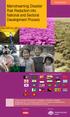 Mainstreaming Disaster Risk Reduction into National and Sectoral Development Process Safer Training Health Course Facilities Regional Consultative Committee on Disaster Management (RCC) Training Course
FINANCE (PAY CELL) DEPARTMENT G.O. Ms. No. 236, DATED: 1 ST JUNE, 2009 ( Vaikasi--18, Thiruvalluvar Aandu 2040)
 GOVERNMENT OF TAMIL NADU 2009 MANUSCRIPT SERIES FINANCE (PAY CELL) DEPARTMENT G.O. Ms. No. 236, DATED 1 ST JUNE, 2009 ( Vaikasi--18, Thiruvalluvar Aandu 2040) OFFICIAL COMMITTEE, 2009 Recommendations of
SCHEME OF SERVICE FOR THE NURSING CADRE CIVIL SERVICE OF THE GAMBIA PERSONNEL MANAGEMENT OFFICE OFFICE OF THE PRESIDENT
 SCHEME OF SERVICE FOR THE NURSING CADRE CIVIL SERVICE OF THE GAMBIA PERSONNEL MANAGEMENT OFFICE OFFICE OF THE PRESIDENT MARCH 2014 CONTENT 1. Introduction 2. Objectives 3. Functions of Cadre 4. Grade Levels
THE ORGANISATION AND FINANCING OF HEALTH CARE SYSTEM IN LATVIA
 THE ORGANISATION AND FINANCING OF HEALTH CARE SYSTEM IN LATVIA Eriks Mikitis Ministry of Health of the Republic of Latvia Department of Health Care Director General facts, financial resources Ministry
Community Based Rehabilitation (CBR) Experience MYANMAR. Mr. Tha Uke Eden Centre for Disabled Children (ECDC) Yangon,, Myanmar.
 Community Based Rehabilitation (CBR) Experience MYANMAR by Mr. Tha Uke Eden Centre for Disabled Children (ECDC) Yangon,, Myanmar. Community Based Rehabilitation (CBR) Experiences (Myanmar) Country Profile
China. Old Age, Disability, and Survivors. China. Exchange rate: US$1.00 = 6.78 yuan. Regulatory Framework. Coverage. Qualifying Conditions
 China Exchange rate: US$1.00 = 6.78 yuan. Old Age, Disability, and Survivors First law: 1951. Current laws: 1953 (regulations); 1978, 1995, 1997, 1999, and 2005 (directives); and 2009 (guideline on rural
Health, history and hard choices: Funding dilemmas in a fast-changing world
 Health, history and hard choices: Funding dilemmas in a fast-changing world Thomson Prentice Global Health Histories Health and Philanthropy: Leveraging change University of Indiana, August 2006 An embarrassment
Preventable mortality and morbidity of children under 5 years of age as a human rights concern
 Preventable mortality and morbidity of children under 5 years of age as a human rights concern 1. Has your government developed a national policy/strategy/action plan aimed at reducing mortality and morbidity
SRI LANKA. Special Education in Sri Lanka. Mr. H.P.Nimal Lakshman Director, Non Formal and Special Education, Ministry of Education
 SRI LANKA Special Education in Sri Lanka Mr. H.P.Nimal Lakshman Director, Non Formal and Special Education, Ministry of Education The Education service is administrated by the Ministry of Education and
UNIFORM EMERGENCY VOLUNTEER HEALTHCARE PRACTITIONERS ACT
 FOR APPROVAL UNIFORM EMERGENCY VOLUNTEER HEALTHCARE PRACTITIONERS ACT NATIONAL CONFERENCE OF COMMISSIONERS ON UNIFORM STATE LAWS MEETING IN ITS ONE-HUNDRED-AND-FIFTEENTH YEAR HILTON HEAD, SOUTH CAROLINA
INDIA. Overview: National Cancer Control Programme
 INDIA Overview: National Cancer Control Programme Cancer has become one of the ten leading causes of death in India. At present there are 2.5 million cancer cases and nearly 0.8 million new cases occurring
HEALTH SERVICES [Cap. 550
 [Cap. 550 Acts Nos.l2of l952, 10 of 1956, 13 of 1962, Law No. 3 of 1977. Short title. The Department of Health. Appointment of officers, &c. CHAPTER 550 AN ACT TO PROVIDE FOR THE CONSTITUTION AND RESPONSIBILITIES
The European Neighbourhood Policy (ENP) and health
 INFORMAL BACKGROUND DOCUMENT The European Neighbourhood Policy (ENP) and health General The European Neighbourhood Policy (ENP) was developed in 2004, with the objective of avoiding the emergence of new
Police Academy in Szczytno
 Police Academy in Szczytno Szczytno is situated in Warmia and Mazury Province, 50 km away from Olsztyn, which is the capital of the region. The town and its surroundings are famous for the characteristic
Primary Health Care Act (66/1972)
 Unofficial translation Ministry of Social Affairs and Health Primary Health Care Act (66/1972) Chapter 1. Primary health care Section 1. (928/2005) (1) Primary health care means health promotion addressing
NATIONAL HEALTH ACCOUNTS:
 THE REPUBLIC OF UGANDA MINISTRY OF HEALTH NATIONAL HEALTH ACCOUNTS: KEY MESSAGES (FY2010/11 & 2011/12) NATIIONAL HEALTH ACCOUNTS: KEY MESSAGES Introduction The overall purpose of the National Health Accounts
Botswana MINIMAL ADVANCEMENT
 In 2013, Botswana made a minimal advancement in efforts to eliminate the worst forms of child labor. The Government continued its Stay-in-School Program which is focused on training educators and social
PPACA, COMPLIANCE & THE USA MARKET
 PPACA, COMPLIANCE & THE USA MARKET INTRODUCTION The USA healthcare market is the largest in the world followed by Switzerland and Germany It consists of broad services offered by various hospitals, physicians,
Restructuring Regional Health Systems In Russia Patricio V. Marquez and Nadezhda Lebedeva 1
 Restructuring Regional Health Systems In Russia Patricio V. Marquez and Nadezhda Lebedeva 1 Key Messages The delivery of health services in Russia is a federal, regional and municipal responsibility. Reform
Private Health Insurance Consultations 2015 2016
 Submission to Private Health Insurance Consultations 2015 2016 November 2015 Lee Thomas Federal Secretary Annie Butler Assistant Federal Secretary Australian Nursing & Midwifery Federation PO Box 4239
Child Protection in Crisis Network: Three-Year Plan
 Child Protection in Crisis Network: Three-Year Plan Introduction Mission Statement The Child Protection in Crisis (CPC) Network was established in 2008 to strengthen and systematize child care and protection
Country Report for Ministry of Health, Malaysia. By : Dato Haji Siajam bin Buyong
 Country Report for Ministry of Health, Malaysia By : Dato Haji Siajam bin Buyong Question 3 Sector Job Qualification 1. Child Welfare, Nursery Disabled and Elderly Welfare, Care Management Welfare. 2.
MINISTERIAL REGULATION ON THE PRESCRIBING OF STANDARD FOR ADMINISTRATION AND MANAGEMENT OF OCCUPATIONAL SAFETY, HEALTH AND ENVIRONMENT B.E.
 MINISTERIAL REGULATION ON THE PRESCRIBING OF STANDARD FOR ADMINISTRATION AND MANAGEMENT OF OCCUPATIONAL SAFETY, HEALTH AND ENVIRONMENT B.E. 2549 (A.D.2006) «à ß 4 MINISTERIAL REGULATION ON THE PRESCRIBING
Please find below my answers to the questions on The EU role in global health
 Jean-Pierre Unger, MD, MPH, PhD Professor of Public Health Institute of Tropical Medicine Antwerp, Belgium [email protected] Tel 32 3 2476254 Antwerp, November the 18 th, 2009 Dear Sir, Please find below
Social health protection : Comparison between Belgium and Thailand. Thomas Rousseau COOPAMI-NIHDI
 Social health protection : Comparison between Belgium and Thailand Thomas Rousseau COOPAMI-NIHDI 3.11.2014 Overview 1. Comparison between Belgium and Thailand 2. The Belgium system more in detail Overview
Current challenges in delivering social security health insurance
 International Social Security Association Afric ISSA Meeting of Directors of Social Security Organizations in Asia and the Pacific Seoul, Republic of Korea, 9-11 November 2005 Current challenges in delivering
ORAL HEALTH CARE DELIVERY SYSTEMS IN INDIA: AN OVERVIEW
 ORAL HEALTH CARE DELIVERY SYSTEMS IN INDIA: AN OVERVIEW *Kumar Sumit 1, Sandeep Kumar 2, Ashrita Saran 1 and Felita Sharal Dias 3 1 Department of Public Health, Manipal University 2 Department of Public
CITIZENS' LABOR RIGHTS PROTECTION LEAGUE N.Narimanov street, 11 \ 16, Baku AZ1006, Azerbaijan
 CITIZENS' LABOR RIGHTS PROTECTION LEAGUE N.Narimanov street, 11 \ 16, Baku AZ1006, Azerbaijan INTERNATIONAL COVENANT ON ECONOMIC, SOCIAL AND CULTURAL RIGHTS ANNEX TO THE ALTERNATIVE REPORT SUBMITTED BY
C-IMCI Program Guidance. Community-based Integrated Management of Childhood Illness
 C-IMCI Program Guidance Community-based Integrated Management of Childhood Illness January 2009 Summary This document provides an overview of the Community-based Integrated Management of Childhood Illnesses
China s 12th Five-Year Plan: Healthcare sector
 China s 12th Five-Year Plan: Healthcare sector May 2011 KPMG CHINA One of the guiding principles of the 12th Five-Year Plan (5YP) is inclusive growth : helping ensure that the benefits of the country s
Introduction to Draft Regional Strategy (2014-2020) & Call for collaboration on ehealth COIA initiative
 Introduction to Draft Regional Strategy (2014-2020) & Call for collaboration on ehealth COIA initiative WHO/ITU Regional Workshop on National ehealth Strategy for Improving Women & Children s Health 30
Universal Health Care
 Universal Health Care in the Philippines Gains and Challenges Enrique T. Ona, MD, FPCS, FACS ( Hon.) Secretary of Health The Social Contract with the Filipino From treating health as just another area