
Calculating interest rates
|
|
|
- Thomas Malone
- 10 years ago
- Views:
Transcription
1 Calculating interest rates A reading prepared by Pamela Peterson Drake O U T L I N E 1. Introduction 2. Annual percentage rate 3. Effective annual rate 1. Introduction The basis of the time value of money is that an investor is compensated for the time value of money and risk. Situations arise often in which we wish to determine the interest rate that is implied from an advertised, or stated rate. There are also cases in which we wish to determine the rate of interest implied from a set of payments in a loan arrangement. 2. The annual percentage rate A common problem in finance is comparing alternative financing or investment opportunities when the interest rates are specified in a way that makes it difficult to compare terms. One lending source may offer terms that specify 9 1 / 4 percent annual interest with interest compounded annually, whereas another lending source may offer terms of 9 percent interest with interest compounded continuously. How do you begin to compare these rates to determine which is a lower cost of borrowing? Ideally, we would like to translate these interest rates into some comparable form. One obvious way to represent rates stated in various time intervals on a common basis is to express them in the same unit of time -- so we annualize them. The annualized rate is the product of the stated rate of interest per compounding period and the number of compounding periods in a year. Let i be the rate of interest per period and let n be the number of compounding periods in a year. The annualized rate, also referred to as the nominal interest rate or the annual percentage rate (APR), is APR = i x n where i is the rate per compounding period and n is the number of compound periods in a year. The Truth in Lending Act requires lenders to disclose the annual percentage rate on consumer loans. 1 As you will see, however, the annual percentage rate ignores compounding and therefore 1 15 U.S.C j; Federal Reserve System Regulation Z, Calculating interest rates, a reading prepared by Pamela Peterson Drake 1

2 understates the true cost of borrowing. Also, as pointed out in the Report to Congress by the Board of Governors of the Federal Reserve System, Finance Charges for Consumer Credit under the Truth in Lending Act, the APR does not consider some other costs associated with lending transactions. The Truth in Savings Act (Federal Reserve System Regulation DD, 1991) requires institutions to provide the annual percentage yield (APY) for savings accounts, which is a rate that considers the effects of compound interest. As a result of this law, consumers can compare the yields on different savings arrangements. But this law does not apply beyond savings accounts. To see how the APR works, let's consider the Lucky Break Loan Company. Lucky's loan terms are simple: pay back the amount borrowed, plus 50 percent, in six months. Suppose you borrow $10,000 from Lucky. After six months, you must pay back the $10,000, plus $5,000. The annual percentage rate on financing with Lucky is the interest rate per period (50 percent for six months) multiplied by the number of compound periods in a year (two six-month periods in a year). For the Lucky Break financing arrangement, APR = 0.50 x 2 = 1.00 or 100 percent per year But what if you cannot pay Lucky back after six months? Lucky will let you off this time, but you must pay back the following at the end of the next six months: the $10,000 borrowed, the $5,000 interest from the first six months, and 50 percent interest on both the unpaid $10,000 and the unpaid $5,000 interest ($15,000 x.50 = $7,500). So, at the end of the year, knowing what is good for you, you pay off Lucky: Amount of original loan $10,000 Interest from first six months 5,000 Interest on second six months 7,500 Total payment at end of year $22,500 It is unreasonable to assume that, after six months, Lucky would let you forget about paying interest on the $5,000 interest from the first six months. If Lucky would forget about the interest on interest, you would pay $20,000 at the end of the year -- $10,000 repayment of principal and $10,000 interest -- which is a 100 percent interest rate. Using the Lucky Break method of financing, you have to pay $12,500 interest to borrow $10,000 for one year's time -- or else. Because you have to pay $12,500 interest to borrow $10,000 over one year's time, you pay not 100 percent interest, but rather 125 percent interest per year: Annual interest rate on a Lucky Break loan = $12,500 / $10,000 = 125 percent What's going on here? It looks like the APR in the Lucky Break example ignores the compounding (interest on interest) that takes place after the first six months. And that's the way it is with all APR's: the APR ignores the effect of compounding. And therefore this rate understates the true annual rate of interest if interest is compounded at any time prior to the end of the year. Nevertheless, APR is an acceptable method of disclosing interest on many lending arrangements since it is easy to understand and simple to compute. However, because it ignores compounding, it is not the best way to convert interest rates to a common basis. Calculating interest rates, a reading prepared by Pamela Peterson Drake 2

3 3. Effective annual rate Another way of converting stated interest rates to a common basis is the effective rate of interest. The effective annual rate (EAR) is the true economic return for a given time period -- it takes into account the compounding of interest -- and is also referred to as the effective rate of interest. Using our Lucky Break example, we see that we must pay $12,500 interest on the loan of $10,000 for one year. Effectively, we are paying 125 percent annual interest. Thus, 125 percent is the effective annual rate of interest. In this example, we can easily work through the calculation of interest and interest on interest. But for situations where interest is compounded more frequently we need a direct way to calculate the effective annual rate. We can calculate it by resorting once again to our basic valuation equation: FV = PV (1 + i) n Next, we consider that a return is the change in the value of an investment over a period and an annual return is the change in value over a year. Suppose you invest $100 today in an investment that pays 6 percent annual interest, but interest is compounded every four months. This means that 2 percent is paid every four months. After four months, you have $100 (1.2) = $102, after eight months you have $102 (1.02) = $104.04, and after one year you have $ (1.02) = , or, $100 (1.02) 3 = $ The effective annual rate of interest (EAR) is $ paid on $100, or percent. We can arrive at that interest by rearranging the basic valuation formula based on a one year period: $ = $100 ( ) 3 $ /$100 = ( ) = ( ) 3 EAR = ( ) 3 1 = or percent In more general terms, the effective interest rate, EAR, is: EAR = (1 + i) n 1 The effective rate of interest (a.k.a. effective annual rate or EAR) is therefore an annual rate that takes into consideration any compounding that occurs during the year. Let's look how the EAR is affected by the compounding. Suppose that the Safe Savings and Loan promises to pay 6 percent interest on accounts, compounded annually. Because interest is paid once, at the end of the year, the effective annual return, EAR, is 6 percent. If the 6 percent interest is paid on a semi-annual basis -- 3 percent every six months -- the effective annual return is larger than 6 percent because interest is earned on the 3 percent interest earned at the end of the first six months. In this case, to calculate the EAR, the interest rate per compounding period -- six months -- is 0.03 (that is, 0.06 / 2) and the number of compounding periods in an annual period is 2: EAR = (1 + i) n - 1 EAR = ( ) 2-1 = = or 6.09%. Extending this example to the case of quarterly compounding with a nominal interest rate of 6 percent we first calculate the interest rate per period, r, and the number of compounding periods in a year, n: The EAR is: i = 0.06 / 4 = per quarter, and n = 12 months / 3 months = 4 quarters in a year. Calculating interest rates, a reading prepared by Pamela Peterson Drake 3

4 EAR = ( ) 4-1 = = or 6.14% Suppose there are two banks: Bank A, paying 12 percent interest compounded semi-annually, and Bank B: paying 11.9 percent interest compounded monthly. Which bank offers you the best return on your money? Comparing APR's, Bank A provides the higher return. But what about compound interest? The EAR's for each account are calculated as: Bank A: EAR = ( /2) 2-1 = ( ) 2 = = or 12.36% Bank B: EAR = ( /12) 12-1 = ( ) 12-1 = = or 12.57% Bank B offers the better return on your money, even though it advertises a lower APR. If you deposit $1,000 in Bank A for one year, you will have $1, at the end of the year. If you deposit $1,000 in Bank B for one year, you will have $1, at the end of the year, providing the better return on your savings. PayDay Loans The fast and expensive way to borrow A payday loan is a short-term loan with very high interest rates. In a typical payday loan, if you want to borrow $100 you write a check for $125. The lender holds on to your check during the loan period. At the end of the loan period, usually days, the lender deposits your check. If you want to extend your loan, you pay the minimum of $25 cash and then enter into a new contract to pay. If you do not pay off the loan or pay the fee to roll over the loan, the lender will deposit your check and you risk being charged with writing bad checks. What is the APR for this payday loan? APR = 0.25 (365/14) = % What is the EAR for this payday loan? EAR = ( ) 365/14-1 = 3,351.86% The regulations pertaining to payday loans varies among states, but most states allow very generous lending terms generous, that is, to the lenders. [For a list of state limits on payday loans, see the Bankrate Monitor.] Calculating interest rates, a reading prepared by Pamela Peterson Drake 4

5 A. Continuous compounding The extreme frequency of compounding is continuous compounding. Continuous compounding is when interest is compounded at the smallest possible increment of time. In continuous Example 1: Comparing effective rates compounding, the rate per period becomes Problem extremely small: Which of the following terms represent the lowest cost of i = nominal interest rate / credit on an effective annual interest rate basis? And the number of compounding periods in a year, n, is infinite. As the rate of interest, i, gets smaller and the number of compounding periods approaches infinity, the EAR is: EAR = (1 + APR / n ) n - 1 where APR is the annual percentage rate. What does all this mean? It means that the interest rate per period approaches 0 and the number of compounding periods approaches infinity -- at the same time! For a given nominal interest rate under continuous compounding, it can be shown that: EAR = e APR - 1 For the stated 6 percent annual interest rate compounded continuously, the EAR is: EAR = e = EAR = or 6.18 percent. The relation between the frequency of compounding, for a given stated rate, and the effective annual rate of interest for this example indicates that the greater the frequency of compounding, the greater the EAR. Solution d 1. 10% APR, interest compounded semi-annually % APR, interest compounded continuously % APR, interest compounded annually % APR, interest compounded quarterly. 1. EAR = ( ) 2-1 = 10.25% 2. EAR = e = % 3. EAR = 10.5% 4. EAR = ( ) 4-1 = % Exhibit 1: Effective Annual Rates of Interest Equivalent to an Annual Percentage Rate of 6 percent Frequency of compounding per year Calculation EAR Annual ( ) % Semi-annual ( ) Quarterly ( ) Continuous e B. Calculator and spreadsheet applications Financial calculators typically have a built-in program to help you go from APRs to EARs and vice versa. For example, using the financial calculator, we can TI 83/84 HP10B calculate the EAR that corresponds to a 10 percent APR with Using TVM Solver quarterly compounding: 2 The result is an EAR of EFF(10,4) 10 NOM% percent. ENTER 4 P/Y EFF% 2 Because these calculations require changing the payments per period settings (i.e., P/YR) in some calculator models, be sure to change these back to one payment per period following the calculations -- otherwise all subsequent financial calculations may be incorrect. Calculating interest rates, a reading prepared by Pamela Peterson Drake 5

6 In a similar manner, we can calculate the nominal (i.e., APR) rate that corresponds to a given EAR. TI 83/84 Using TVM Solver NOM(10,4) ENTER HP10B 10 EFF% 4 P/Y NOM% Suppose we want to find the nominal rate with quarterly compounding that is equivalent to an effective rate of 10 percent. The equivalent APR is percent. In other words, if a lender charges percent APR, it will earn, effectively, 10 percent on the loan. Continuous compounding calculations cannot be done using the built in finance programs. However, most calculators -- whether financial or not -- have a program that allows you to perform calculations using e, the base of natural logarithms. The EAR corresponding to an APR with continuous compounding is percent, which you can calculate as e TI 83/84 HP10B e x (.1)-1 ENTER.1 e x 1 = which produces an answer of percent. Spreadsheet functions can also be used to calculate either the nominal rate or the effective rate. In Microsoft Excel, for example, you can calculate the effective rate that equivalent to an APR of 10 percent with monthly compounding as: =EFFECT(.10,12), Similarly, finding the nominal rate with monthly compounding that is equivalent to an EAR of 10 percent, which produces an answer of percent. =NOMINAL(.10,12), Calculating interest rates, a reading prepared by Pamela Peterson Drake 6

Solutions to Time value of money practice problems
 Solutions to Time value of money practice problems Prepared by Pamela Peterson Drake 1. What is the balance in an account at the end of 10 years if $2,500 is deposited today and the account earns 4% interest,
Bond valuation. Present value of a bond = present value of interest payments + present value of maturity value
 Bond valuation A reading prepared by Pamela Peterson Drake O U T L I N E 1. Valuation of long-term debt securities 2. Issues 3. Summary 1. Valuation of long-term debt securities Debt securities are obligations
The time value of money: Part II
 The time value of money: Part II A reading prepared by Pamela Peterson Drake O U T L I E 1. Introduction 2. Annuities 3. Determining the unknown interest rate 4. Determining the number of compounding periods
Chapter 6. Discounted Cash Flow Valuation. Key Concepts and Skills. Multiple Cash Flows Future Value Example 6.1. Answer 6.1
 Chapter 6 Key Concepts and Skills Be able to compute: the future value of multiple cash flows the present value of multiple cash flows the future and present value of annuities Discounted Cash Flow Valuation
Discounted Cash Flow Valuation
 Discounted Cash Flow Valuation Chapter 5 Key Concepts and Skills Be able to compute the future value of multiple cash flows Be able to compute the present value of multiple cash flows Be able to compute
Time Value of Money. If you deposit $100 in an account that pays 6% annual interest, what amount will you expect to have in
 Time Value of Money Future value Present value Rates of return 1 If you deposit $100 in an account that pays 6% annual interest, what amount will you expect to have in the account at the end of the year.
Problem Set: Annuities and Perpetuities (Solutions Below)
 Problem Set: Annuities and Perpetuities (Solutions Below) 1. If you plan to save $300 annually for 10 years and the discount rate is 15%, what is the future value? 2. If you want to buy a boat in 6 years
DISCOUNTED CASH FLOW VALUATION and MULTIPLE CASH FLOWS
 Chapter 5 DISCOUNTED CASH FLOW VALUATION and MULTIPLE CASH FLOWS The basic PV and FV techniques can be extended to handle any number of cash flows. PV with multiple cash flows: Suppose you need $500 one
CHAPTER 5. Interest Rates. Chapter Synopsis
 CHAPTER 5 Interest Rates Chapter Synopsis 5.1 Interest Rate Quotes and Adjustments Interest rates can compound more than once per year, such as monthly or semiannually. An annual percentage rate (APR)
5. Time value of money
 1 Simple interest 2 5. Time value of money With simple interest, the amount earned each period is always the same: i = rp o We will review some tools for discounting cash flows. where i = interest earned
Chapter 4 Time Value of Money ANSWERS TO END-OF-CHAPTER QUESTIONS
 Chapter 4 Time Value of Money ANSWERS TO END-OF-CHAPTER QUESTIONS 4-1 a. PV (present value) is the value today of a future payment, or stream of payments, discounted at the appropriate rate of interest.
In this section, the functions of a financial calculator will be reviewed and some sample problems will be demonstrated.
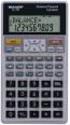 Section 4: Using a Financial Calculator Tab 1: Introduction and Objectives Introduction In this section, the functions of a financial calculator will be reviewed and some sample problems will be demonstrated.
CHAPTER 2. Time Value of Money 2-1
 CHAPTER 2 Time Value of Money 2-1 Time Value of Money (TVM) Time Lines Future value & Present value Rates of return Annuities & Perpetuities Uneven cash Flow Streams Amortization 2-2 Time lines 0 1 2 3
Key Concepts and Skills. Multiple Cash Flows Future Value Example 6.1. Chapter Outline. Multiple Cash Flows Example 2 Continued
 6 Calculators Discounted Cash Flow Valuation Key Concepts and Skills Be able to compute the future value of multiple cash flows Be able to compute the present value of multiple cash flows Be able to compute
Basic financial arithmetic
 2 Basic financial arithmetic Simple interest Compound interest Nominal and effective rates Continuous discounting Conversions and comparisons Exercise Summary File: MFME2_02.xls 13 This chapter deals
Finding the Payment $20,000 = C[1 1 / 1.0066667 48 ] /.0066667 C = $488.26
![Finding the Payment $20,000 = C[1 1 / 1.0066667 48 ] /.0066667 C = $488.26](/thumbs/17/134163.jpg "Finding the Payment $20,000 = C[1 1 / 1.0066667 48 ] /.0066667 C = $488.26") Quick Quiz: Part 2 You know the payment amount for a loan and you want to know how much was borrowed. Do you compute a present value or a future value? You want to receive $5,000 per month in retirement.
Quick Quiz: Part 2 You know the payment amount for a loan and you want to know how much was borrowed. Do you compute a present value or a future value? You want to receive $5,000 per month in retirement.
Module 5: Interest concepts of future and present value
 file:///f /Courses/2010-11/CGA/FA2/06course/m05intro.htm Module 5: Interest concepts of future and present value Overview In this module, you learn about the fundamental concepts of interest and present
first complete "prior knowlegde" -- to refresh knowledge of Simple and Compound Interest.
 ORDINARY SIMPLE ANNUITIES first complete "prior knowlegde" -- to refresh knowledge of Simple and Compound Interest. LESSON OBJECTIVES: students will learn how to determine the Accumulated Value of Regular
Chapter 1: Time Value of Money
 1 Chapter 1: Time Value of Money Study Unit 1: Time Value of Money Concepts Basic Concepts Cash Flows A cash flow has 2 components: 1. The receipt or payment of money: This differs from the accounting
The Time Value of Money
 The following is a review of the Quantitative Methods: Basic Concepts principles designed to address the learning outcome statements set forth by CFA Institute. This topic is also covered in: The Time
Introduction to the Hewlett-Packard (HP) 10BII Calculator and Review of Mortgage Finance Calculations
 Introduction to the Hewlett-Packard (HP) 10BII Calculator and Review of Mortgage Finance Calculations Real Estate Division Sauder School of Business University of British Columbia Introduction to the Hewlett-Packard
Discounted Cash Flow Valuation
 BUAD 100x Foundations of Finance Discounted Cash Flow Valuation September 28, 2009 Review Introduction to corporate finance What is corporate finance? What is a corporation? What decision do managers make?
FINANCIAL MATHEMATICS FIXED INCOME
 FINANCIAL MATHEMATICS FIXED INCOME 1. Converting from Money Market Basis to Bond Basis and vice versa 2 2. Calculating the Effective Interest Rate (Non-annual Payments)... 4 3. Conversion of Annual into
Chapter 2 Applying Time Value Concepts
 Chapter 2 Applying Time Value Concepts Chapter Overview Albert Einstein, the renowned physicist whose theories of relativity formed the theoretical base for the utilization of atomic energy, called the
Stock valuation. Price of a First period's dividends Second period's dividends Third period's dividends = + + +... share of stock
 Stock valuation A reading prepared by Pamela Peterson Drake O U T L I N E. Valuation of common stock. Returns on stock. Summary. Valuation of common stock "[A] stock is worth the present value of all the
Chapter 5 Time Value of Money 2: Analyzing Annuity Cash Flows
 1. Future Value of Multiple Cash Flows 2. Future Value of an Annuity 3. Present Value of an Annuity 4. Perpetuities 5. Other Compounding Periods 6. Effective Annual Rates (EAR) 7. Amortized Loans Chapter
Discounted Cash Flow Valuation
 6 Formulas Discounted Cash Flow Valuation McGraw-Hill/Irwin Copyright 2008 by The McGraw-Hill Companies, Inc. All rights reserved. Chapter Outline Future and Present Values of Multiple Cash Flows Valuing
CHAPTER 4 DISCOUNTED CASH FLOW VALUATION
 CHAPTER 4 DISCOUNTED CASH FLOW VALUATION Answers to Concepts Review and Critical Thinking Questions 1. Assuming positive cash flows and interest rates, the future value increases and the present value
CHAPTER 5 INTRODUCTION TO VALUATION: THE TIME VALUE OF MONEY
 CHAPTER 5 INTRODUCTION TO VALUATION: THE TIME VALUE OF MONEY 1. The simple interest per year is: $5,000.08 = $400 So after 10 years you will have: $400 10 = $4,000 in interest. The total balance will be
2. How would (a) a decrease in the interest rate or (b) an increase in the holding period of a deposit affect its future value? Why?
 CHAPTER 3 CONCEPT REVIEW QUESTIONS 1. Will a deposit made into an account paying compound interest (assuming compounding occurs once per year) yield a higher future value after one period than an equal-sized
CHAPTER 4 DISCOUNTED CASH FLOW VALUATION
 CHAPTER 4 DISCOUNTED CASH FLOW VALUATION Solutions to Questions and Problems NOTE: All-end-of chapter problems were solved using a spreadsheet. Many problems require multiple steps. Due to space and readability
Chapter 7 SOLUTIONS TO END-OF-CHAPTER PROBLEMS
 Chapter 7 SOLUTIONS TO END-OF-CHAPTER PROBLEMS 7-1 0 1 2 3 4 5 10% PV 10,000 FV 5? FV 5 $10,000(1.10) 5 $10,000(FVIF 10%, 5 ) $10,000(1.6105) $16,105. Alternatively, with a financial calculator enter the
Integrated Case. 5-42 First National Bank Time Value of Money Analysis
 Integrated Case 5-42 First National Bank Time Value of Money Analysis You have applied for a job with a local bank. As part of its evaluation process, you must take an examination on time value of money
Introduction to Real Estate Investment Appraisal
 Introduction to Real Estate Investment Appraisal Maths of Finance Present and Future Values Pat McAllister INVESTMENT APPRAISAL: INTEREST Interest is a reward or rent paid to a lender or investor who has
9. Time Value of Money 1: Present and Future Value
 9. Time Value of Money 1: Present and Future Value Introduction The language of finance has unique terms and concepts that are based on mathematics. It is critical that you understand this language, because
Present Value Concepts
 Present Value Concepts Present value concepts are widely used by accountants in the preparation of financial statements. In fact, under International Financial Reporting Standards (IFRS), these concepts
1.4 Interest-Rate calculations and returns
 .4 Interest-Rate calculations and returns Effective Annual Rate (EAR) The Effective Annual Rate (EAR) is the actual rate paid (or received) after accounting for compounding that occurs during the year
Chapter 4: Time Value of Money
 FIN 301 Homework Solution Ch4 Chapter 4: Time Value of Money 1. a. 10,000/(1.10) 10 = 3,855.43 b. 10,000/(1.10) 20 = 1,486.44 c. 10,000/(1.05) 10 = 6,139.13 d. 10,000/(1.05) 20 = 3,768.89 2. a. $100 (1.10)
5.1 Simple and Compound Interest
 5.1 Simple and Compound Interest Question 1: What is simple interest? Question 2: What is compound interest? Question 3: What is an effective interest rate? Question 4: What is continuous compound interest?
TIME VALUE OF MONEY (TVM)
 TIME VALUE OF MONEY (TVM) INTEREST Rate of Return When we know the Present Value (amount today), Future Value (amount to which the investment will grow), and Number of Periods, we can calculate the rate
Key Concepts and Skills. Chapter Outline. Basic Definitions. Future Values. Future Values: General Formula 1-1. Chapter 4
 Key Concepts and Skills Chapter 4 Introduction to Valuation: The Time Value of Money Be able to compute the future value of an investment made today Be able to compute the present value of cash to be received
Chapter 8. Present Value Mathematics for Real Estate
 Chapter 8 Present Value Mathematics for Real Estate Real estate deals almost always involve cash amounts at different points in time. Examples: Buy a property now, sell it later. Sign a lease now, pay
How to calculate present values
 How to calculate present values Back to the future Chapter 3 Discounted Cash Flow Analysis (Time Value of Money) Discounted Cash Flow (DCF) analysis is the foundation of valuation in corporate finance
BEST INTEREST RATE. To convert a nominal rate to an effective rate, press
 FINANCIAL COMPUTATIONS George A. Jahn Chairman, Dept. of Mathematics Palm Beach Community College Palm Beach Gardens Location http://www.pbcc.edu/faculty/jahng/ The TI-83 Plus and TI-84 Plus have a wonderful
CHAPTER 6. Accounting and the Time Value of Money. 2. Use of tables. 13, 14 8 1. a. Unknown future amount. 7, 19 1, 5, 13 2, 3, 4, 6
 CHAPTER 6 Accounting and the Time Value of Money ASSIGNMENT CLASSIFICATION TABLE (BY TOPIC) Topics Questions Brief Exercises Exercises Problems 1. Present value concepts. 1, 2, 3, 4, 5, 9, 17, 19 2. Use
Formulas and Approaches Used to Calculate True Pricing
 Formulas and Approaches Used to Calculate True Pricing The purpose of the Annual Percentage Rate (APR) and Effective Interest Rate (EIR) The true price of a loan includes not only interest but other charges
Key Concepts and Skills
 McGraw-Hill/Irwin Copyright 2014 by the McGraw-Hill Companies, Inc. All rights reserved. Key Concepts and Skills Be able to compute: The future value of an investment made today The present value of cash
How To Read The Book \"Financial Planning\"
 Time Value of Money Reading 5 IFT Notes for the 2015 Level 1 CFA exam Contents 1. Introduction... 2 2. Interest Rates: Interpretation... 2 3. The Future Value of a Single Cash Flow... 4 4. The Future Value
Oklahoma State University Spears School of Business. Time Value of Money
 Oklahoma State University Spears School of Business Time Value of Money Slide 2 Time Value of Money Which would you rather receive as a sign-in bonus for your new job? 1. $15,000 cash upon signing the
3. Time value of money. We will review some tools for discounting cash flows.
 1 3. Time value of money We will review some tools for discounting cash flows. Simple interest 2 With simple interest, the amount earned each period is always the same: i = rp o where i = interest earned
FNCE 301, Financial Management H Guy Williams, 2006
 REVIEW We ve used the DCF method to find present value. We also know shortcut methods to solve these problems such as perpetuity present value = C/r. These tools allow us to value any cash flow including
Using Financial Calculators
 Chapter 4 Discounted Cash Flow Valuation 4B-1 Appendix 4B Using Financial Calculators This appendix is intended to help you use your Hewlett-Packard or Texas Instruments BA II Plus financial calculator
The values in the TVM Solver are quantities involved in compound interest and annuities.
 Texas Instruments Graphing Calculators have a built in app that may be used to compute quantities involved in compound interest, annuities, and amortization. For the examples below, we ll utilize the screens
Future Value. Basic TVM Concepts. Chapter 2 Time Value of Money. $500 cash flow. On a time line for 3 years: $100. FV 15%, 10 yr.
 Chapter Time Value of Money Future Value Present Value Annuities Effective Annual Rate Uneven Cash Flows Growing Annuities Loan Amortization Summary and Conclusions Basic TVM Concepts Interest rate: abbreviated
CHAPTER 6 DISCOUNTED CASH FLOW VALUATION
 CHAPTER 6 DISCOUNTED CASH FLOW VALUATION Answers to Concepts Review and Critical Thinking Questions 1. The four pieces are the present value (PV), the periodic cash flow (C), the discount rate (r), and
Main TVM functions of a BAII Plus Financial Calculator
 Main TVM functions of a BAII Plus Financial Calculator The BAII Plus calculator can be used to perform calculations for problems involving compound interest and different types of annuities. (Note: there
Ch. 12 FINANCIAL CALCULATIONS 1. 1998 by Steven J. Willis All Rights Reserved
 Ch. 12 FINANCIAL CALCULATIONS 1 1998 by Steven J. Willis All Rights Reserved CHAPTER TWELVE FINANCIAL CALCULATIONS An understanding of the Internal Revenue Code time value of money sections requires a
If P = principal, r = annual interest rate, and t = time (in years), then the simple interest I is given by I = P rt.
 13 Consumer Mathematics 13.1 The Time Value of Money Start with some Definitions: Definition 1. The amount of a loan or a deposit is called the principal. Definition 2. The amount a loan or a deposit increases
1.3.2015 г. D. Dimov. Year Cash flow 1 $3,000 2 $5,000 3 $4,000 4 $3,000 5 $2,000
 D. Dimov Most financial decisions involve costs and benefits that are spread out over time Time value of money allows comparison of cash flows from different periods Question: You have to choose one of
Time Value of Money. 2014 Level I Quantitative Methods. IFT Notes for the CFA exam
 Time Value of Money 2014 Level I Quantitative Methods IFT Notes for the CFA exam Contents 1. Introduction... 2 2. Interest Rates: Interpretation... 2 3. The Future Value of a Single Cash Flow... 4 4. The
Time Value of Money Problems
 Time Value of Money Problems 1. What will a deposit of $4,500 at 10% compounded semiannually be worth if left in the bank for six years? a. $8,020.22 b. $7,959.55 c. $8,081.55 d. $8,181.55 2. What will
Using the Finance Menu of the TI-83/84/Plus calculators KEY
 Using the Finance Menu of the TI-83/84/Plus calculators KEY To get to the FINANCE menu On the TI-83 press 2 nd x -1 On the TI-83, TI-83 Plus, TI-84, or TI-84 Plus press APPS and then select 1:FINANCE The
The Institute of Chartered Accountants of India
 CHAPTER 4 SIMPLE AND COMPOUND INTEREST INCLUDING ANNUITY APPLICATIONS SIMPLE AND COMPOUND INTEREST INCLUDING ANNUITY- APPLICATIONS LEARNING OBJECTIVES After studying this chapter students will be able
Section 5.1 - Compound Interest
 Section 5.1 - Compound Interest Simple Interest Formulas If I denotes the interest on a principal P (in dollars) at an interest rate of r (as a decimal) per year for t years, then we have: Interest: Accumulated
Financial Math on Spreadsheet and Calculator Version 4.0
 Financial Math on Spreadsheet and Calculator Version 4.0 2002 Kent L. Womack and Andrew Brownell Tuck School of Business Dartmouth College Table of Contents INTRODUCTION...1 PERFORMING TVM CALCULATIONS
Finance Unit 8. Success Criteria. 1 U n i t 8 11U Date: Name: Tentative TEST date
 1 U n i t 8 11U Date: Name: Finance Unit 8 Tentative TEST date Big idea/learning Goals In this unit you will study the applications of linear and exponential relations within financing. You will understand
International Financial Strategies Time Value of Money
 International Financial Strategies 1 Future Value and Compounding Future value = cash value of the investment at some point in the future Investing for single period: FV. Future Value PV. Present Value
Chapter F: Finance. Section F.1-F.4
 Chapter F: Finance Section F.1-F.4 F.1 Simple Interest Suppose a sum of money P, called the principal or present value, is invested for t years at an annual simple interest rate of r, where r is given
Calculations for Time Value of Money
 KEATMX01_p001-008.qxd 11/4/05 4:47 PM Page 1 Calculations for Time Value of Money In this appendix, a brief explanation of the computation of the time value of money is given for readers not familiar with
Compounding Assumptions. Compounding Assumptions. Financial Calculations on the Texas Instruments BAII Plus. Compounding Assumptions.
 Compounding Assumptions Financial Calculations on the Texas Instruments BAII Plus This is a first draft, and may contain errors. Feedback is appreciated The TI BAII Plus has built-in preset assumptions
FNCE 301, Financial Management H Guy Williams, 2006
 Review In the first class we looked at the value today of future payments (introduction), how to value projects and investments. Present Value = Future Payment * 1 Discount Factor. The discount factor
Texas Instruments BAII Plus Tutorial for Use with Fundamentals 11/e and Concise 5/e
 Texas Instruments BAII Plus Tutorial for Use with Fundamentals 11/e and Concise 5/e This tutorial was developed for use with Brigham and Houston s Fundamentals of Financial Management, 11/e and Concise,
Prepared by: Dalia A. Marafi Version 2.0
 Kuwait University College of Business Administration Department of Finance and Financial Institutions Using )Casio FC-200V( for Fundamentals of Financial Management (220) Prepared by: Dalia A. Marafi Version
How To Calculate A Balance On A Savings Account
 319 CHAPTER 4 Personal Finance The following is an article from a Marlboro, Massachusetts newspaper. NEWSPAPER ARTICLE 4.1: LET S TEACH FINANCIAL LITERACY STEPHEN LEDUC WED JAN 16, 2008 Boston - Last week
Time Value Conepts & Applications. Prof. Raad Jassim
 Time Value Conepts & Applications Prof. Raad Jassim Chapter Outline Introduction to Valuation: The Time Value of Money 1 2 3 4 5 6 7 8 Future Value and Compounding Present Value and Discounting More on
Present Value (PV) Tutorial
 EYK 15-1 Present Value (PV) Tutorial The concepts of present value are described and applied in Chapter 15. This supplement provides added explanations, illustrations, calculations, present value tables,
The cost of capital. A reading prepared by Pamela Peterson Drake. 1. Introduction
 The cost of capital A reading prepared by Pamela Peterson Drake O U T L I N E 1. Introduction... 1 2. Determining the proportions of each source of capital that will be raised... 3 3. Estimating the marginal
FINA 351 Managerial Finance, Ch.4-5, Time-Value-of-Money (TVM), Notes
 FINA 351 Managerial Finance, Ch.4-5, Time-Value-of-Money (TVM), Notes The concept of time-value-of-money is important to know, not only for this class, but for your own financial planning. It is a critical
THE TIME VALUE OF MONEY
 QUANTITATIVE METHODS THE TIME VALUE OF MONEY Reading 5 http://proschool.imsindia.com/ 1 Learning Objective Statements (LOS) a. Interest Rates as Required rate of return, Discount Rate and Opportunity Cost
Chapter 4. Time Value of Money. Copyright 2009 Pearson Prentice Hall. All rights reserved.
 Chapter 4 Time Value of Money Learning Goals 1. Discuss the role of time value in finance, the use of computational aids, and the basic patterns of cash flow. 2. Understand the concept of future value
Chapter 4. Time Value of Money. Learning Goals. Learning Goals (cont.)
 Chapter 4 Time Value of Money Learning Goals 1. Discuss the role of time value in finance, the use of computational aids, and the basic patterns of cash flow. 2. Understand the concept of future value
USING THE SHARP EL 738 FINANCIAL CALCULATOR
 USING THE SHARP EL 738 FINANCIAL CALCULATOR Basic financial examples with financial calculator steps Prepared by Colin C Smith 2010 Some important things to consider 1. These notes cover basic financial
CHAPTER 8 INTEREST RATES AND BOND VALUATION
 CHAPTER 8 INTEREST RATES AND BOND VALUATION Answers to Concept Questions 1. No. As interest rates fluctuate, the value of a Treasury security will fluctuate. Long-term Treasury securities have substantial
Module 5: Interest concepts of future and present value
 Page 1 of 23 Module 5: Interest concepts of future and present value Overview In this module, you learn about the fundamental concepts of interest and present and future values, as well as ordinary annuities
3 More on Accumulation and Discount Functions
 3 More on Accumulation and Discount Functions 3.1 Introduction In previous section, we used 1.03) # of years as the accumulation factor. This section looks at other accumulation factors, including various
Purpose EL-773A HP-10B BA-II PLUS Clear memory 0 n registers
 D-How to Use a Financial Calculator* Most personal finance decisions involve calculations of the time value of money. Three methods are used to compute this value: time value of money tables (such as those
APPENDIX. Interest Concepts of Future and Present Value. Concept of Interest TIME VALUE OF MONEY BASIC INTEREST CONCEPTS
 CHAPTER 8 Current Monetary Balances 395 APPENDIX Interest Concepts of Future and Present Value TIME VALUE OF MONEY In general business terms, interest is defined as the cost of using money over time. Economists
hp calculators HP 20b Time value of money basics The time value of money The time value of money application Special settings
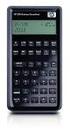 The time value of money The time value of money application Special settings Clearing the time value of money registers Begin / End mode Periods per year Cash flow diagrams and sign conventions Practice
Unit VI. Complete the table based on the following information:
 Aqr Review Unit VI Name 1. You have just finished medical school and you have been offered two jobs at a local hospital. The first one is a physical therapist for the hospital with a salary of $45,500.
How To Value Cash Flow
 Lecture: II 1 Time Value of Money (TVM) A dollar today is more valuable than a dollar sometime in the future...! The intuitive basis for present value what determines the effect of timing on the value
CHAPTER 5 INTRODUCTION TO VALUATION: THE TIME VALUE OF MONEY
 CHAPTER 5 INTRODUCTION TO VALUATION: THE TIME VALUE OF MONEY Answers to Concepts Review and Critical Thinking Questions 1. The four parts are the present value (PV), the future value (FV), the discount
Review Page 468 #1,3,5,7,9,10
 MAP4C Financial Student Checklist Topic/Goal Task Prerequisite Skills Simple & Compound Interest Video Lesson Part Video Lesson Part Worksheet (pages) Present Value Goal: I will use the present value formula
Investments. 1.1 Future value and present value. What you must be able to explain:
 Investments What you must be able to explain: Future value Present value Annual effective interest rate Net present value (NPV ) and opportunity cost of capital Internal rate of return (IRR) Payback rule
Compound Interest Formula
 Mathematics of Finance Interest is the rental fee charged by a lender to a business or individual for the use of money. charged is determined by Principle, rate and time Interest Formula I = Prt $100 At
Credit Cards & Payday Loans
 Credit Cards & Payday Loans Payday Loans: What is a Payday Loan? A Payday loan is a small loan, also known as a cash advance. These loans typically become due in 14 days - your next payday. When taking
About Compound Interest
 About Compound Interest TABLE OF CONTENTS About Compound Interest... 1 What is COMPOUND INTEREST?... 1 Interest... 1 Simple Interest... 1 Compound Interest... 1 Calculations... 3 Calculating How Much to
The Time Value of Money
 The Time Value of Money Time Value Terminology 0 1 2 3 4 PV FV Future value (FV) is the amount an investment is worth after one or more periods. Present value (PV) is the current value of one or more future
Chapter 8. 48 Financial Planning Handbook PDP
 Chapter 8 48 Financial Planning Handbook PDP The Financial Planner's Toolkit As a financial planner, you will be doing a lot of mathematical calculations for your clients. Doing these calculations for
Fin 3312 Sample Exam 1 Questions
 Fin 3312 Sample Exam 1 Questions Here are some representative type questions. This review is intended to give you an idea of the types of questions that may appear on the exam, and how the questions might