
A short note on American option prices
|
|
|
- Sophia Dennis
- 10 years ago
- Views:
Transcription
1 A short note on American option Filip Lindskog April 27, The set-up An American call option with strike price K written on some stock gives the holder the right to buy a share of the stock (exercise the option) at the strike price K at any time before and including the time of maturity T. The value of exercising the option at time t [0, T ] is max(s t K, 0), where S t is the share price at time t. Similarly for an American put option. American options are not necessarily stock option. Other examples include American futures options where the underlying price process is the process of futures on some asset or good. Write c A t = c A t (S t, K, t, T ) and c E t for the option price at time t of an American and European call option, respectively. Write p A t and p E t for the option price at time t of an American and European put option, respectively. Since the cash flow of an American option held to maturity is the cash flow of the corresponding European option, c A t c E t and p A t p E t must hold in order not to violate the Law of One Price. In what follows we assume that we can take long and short positions of arbitrary sizes, that the bid and ask coincide, and that short-selling does not lead to additional costs (fees, commissions, etc). We assume that zero-coupon bonds of all maturities are available and that the zero rates are strictly positive. We also assume that we can trade in the underlying asset on which the options are written. The stock is said to be a pure investment asset if it does not pay dividends or give other benefits before time T. This short note is intended as a complement to the lecture notes [1] used in the course SF2701 Financial Mathematics at KTH. More details and further properties of American options can be found in [2] on which this note is based. The notation used follows that in [1]. 2 No-arbitrage relations Theorem 1. If T 1 [0, T 1 ]. < T 2, then c A t (S t, K, t, T 1 ) c A t (S t, K, t, T 2 ) for t 1
2 Proof. Suppose that the inequality does not hold and consider the following strategy. At time t buy the (cheaper) call option with maturity T 2 and shortsell the (more expensive) call option with maturity T 1. This gives a strictly positive cash flow at time t. Whenever the short-sold call option is exercised, exercise the call option maturing at T 2. This produces a zero cash flow at the exercise time of the short-sold call option and cancels the call option position. The strategy violates the Law of One Price since it produces a strictly positive cash flow at time t and no other cash flows. Theorem 2. If the stock is a pure investment asset, then c E t Z t,t K, 0) for t [0, T ]. max(s t Proof. Consider the following strategy: at time t buy the call option, buy K zero-coupon bonds maturing at T with face value 1, short-sell the underlying asset and close the short position at time T. The payoff at time T is max(s T K, 0)+K S T = max(s T, K) S T 0. The initial cash flow is c E t Z t,t K + S t. Since the payoff is nonnegative, the initial cash flow must be nonpositive in order not to violate the Law of One Price. Similarly, c E t 0. Therefore, c E t max(s t Z t,t K, 0). Theorem 3. If the stock is a pure investment asset, then an American call option is not exercised prior to maturity and c A t = c E t for t [0, T ]. Proof. The value of exercising the American call option at time t is max(s t K, 0). Moreover, c A t c E t. The call option is only exercised if S t > K and in this case Theorem 2 gives c A t c E t max(s t Z t,t K, 0) > max(s t K, 0), t < T. In particular, at time t < T selling the option is always better for the holder than exercising it. Since the cash flow of an American call option held to maturity is identical to a European call option the Law of One Price implies that the option must coincide. Theorem 4. The American call option price c A t (S t, K, t, T ) is a convex function of K, i.e. if λ [0, 1], K 1 < K 2, and K 3 = λk 1 + (1 λ)k 2, then c A t (S t, K 3, t, T ) λc A t (S t, K 1, t, T ) + (1 λ)c A t (S t, K 2, t, T ). Proof. Suppose that the inequality does not hold and consider the following strategy. At time t buy λ call options with strike price K 1, buy 1 λ call options with strike price K 2, and short-sell one call option with strike price K 3. This gives a strictly positive cash flow at time t. Whenever the short-sold call option is exercised, exercise the other two call options. This produces the cash flow C = λ max(s K 1, 0) + (1 λ) max(s K 2, 0) max(s λk 1 (1 λ)k 2, 0) 2
3 at the exercise time of the short-sold call option and cancels the call option position, where S denotes the share price at the exercise time. Since max(x, 0) is a convex function, max(s λk 1 (1 λ)k 2, 0) = max(λ(s K 1 ) + (1 λ)(s K 2 ), 0) λ max(s K 1, 0) + (1 λ) max(s K 2, 0). Therefore C 0 so the strategy produces a strictly positive cash flow at time t, a nonnegative cash flow at the exercise time of the short-sold call option, and no other cash flows. The strategy thereby violates the Law of One Price. Theorem 5. c A t p A t S t Z t,t K for all t [0, T ]. Proof. Consider the following portfolio. At time t buy a put option with strike K and maturity T, short-sell a call option with the same strike and maturity, buy a share of the stock, and short-sell K zero-coupon bonds maturing at T with face value one. Consider the following strategy. If the call option is held to maturity, then we hold the put option to maturity and at that time sell the share. The net payoff in this case is zero. The value of the portfolio excluding the short position in the call option at time u prior to maturity is p A u + S u Z u,t K = p A u + K(1 Z u,t ) + S u K > S u K which is strictly greater than the exercise value for the call option at that time. If the call option is exercised prior to maturity, then we pay the call option payoff, sell the put option and the share, and close out the short position in the zero-coupon bonds by buying bonds. The net cash flow is in that case positive. The cash flow of the strategy is therefore always nonnegative for the holder of the portfolio. In order not to violate the Law of One Price the cost for buying the portfolio must therefore by nonnegative, i.e. p A t c A t + S t Z t,t K 0. Problems Consider the American IBM stock option (in $) at closing on April 26 in Table 1. The IBM share price at that time was $ A dividend of $0.85 per share is paid on June 9 to stock holders of record May 10. The current zero rates for all maturities less than three months is assumed to be 1% per year. The in Table 1 are last and not necessarily at which you can trade. Assume, however, that you can trade at these and take both long and short positions in the options, the stock, and in zero-coupon bonds with arbitrary maturities. 3
4 Problem 1. Determine any violations of the Law of One Price (or determine that there are no such violations) in the option in Table 1. If you find a violation of the Law of One Price, construct a strategy that capitalizes on the inconsistent. For the computation of discount factors, assume that a year consists of 365 days. Strike Last Vol Open Int Last Vol Open Int Call, exp. at close May 18 Put, exp. at close May Call, exp. at close June 15 Put, exp. at close June Table 1: Prices of American stock options at closing on April 26. Set S 0 = , r = 0.01, T 1 = 22/365, and T 2 = 50/365. We first check whether (K, T ) = c A 0 (K, T ) pa 0 (K, T ) S 0 + Z T K 0 for all T = T 1, T 2 and K = 190, 195, 200, 205, 210, 215. We find that the (K, T )s are T = T 1 : T = T 2 : We notice that the inequality does not hold for (K, T ) = (190, T 1 ). Consider the following portfolio. At time 0 buy a put option with strike 190 and maturity T 1, short-sell a call option with the same strike and maturity, buy a share of the stock, and short-sell 190 zero-coupon bonds maturing at T 1 with face value one. The initial cash flow is here > 0. Consider the following strategy. If the call option is held to maturity, then we hold the put option to maturity and at that time sell the share. The net payoff in this case is max(190 S T1, 0) max(s T1 190, 0)+S T1 190 = 0 (plus a dividend payment later). If the call option is exercised at time u prior to maturity, then we pay 4
5 the call option payoff, sell the put option and the share, and close out the short position in the zero-coupon bonds by buying bonds. The net cash flow is in that case (S u 190) + p A u (190, T 1 ) + S u 190Z u,t1 = p A u (190, T 1 ) + 190(1 Z u,t ) > 0. Next we check whether c A 0 (K, T 1) c A 0 (K, T 2) 0 for all K and p A 0 (K, T 1) p A 0 (K, T 2) 0 for all K. Call: Put: Finally we check whether the option are convex as functions of the strike price by plotting the linearly interpolated. Figure 1 shows that the convexity property is not violated. References [1] Harald Lang, Lectures on Financial Mathematics, Lecture notes, KTH Mathematics, [2] Robert Merton (1973), Theory of Rational Option Pricing, The Bell Journal of Economics and Management Science, 4,
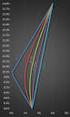
6 Call exp. May 18 Call exp. June Put exp. May 18 Put exp. June Figure 1: Convexity of option as functions of strike price 6
K 1 < K 2 = P (K 1 ) P (K 2 ) (6) This holds for both American and European Options.
 Slope and Convexity Restrictions and How to implement Arbitrage Opportunities 1 These notes will show how to implement arbitrage opportunities when either the slope or the convexity restriction is violated.
Lecture 7: Bounds on Options Prices Steven Skiena. http://www.cs.sunysb.edu/ skiena
 Lecture 7: Bounds on Options Prices Steven Skiena Department of Computer Science State University of New York Stony Brook, NY 11794 4400 http://www.cs.sunysb.edu/ skiena Option Price Quotes Reading the
Computational Finance Options
 1 Options 1 1 Options Computational Finance Options An option gives the holder of the option the right, but not the obligation to do something. Conversely, if you sell an option, you may be obliged to
Chapter 1: Financial Markets and Financial Derivatives
 Chapter 1: Financial Markets and Financial Derivatives 1.1 Financial Markets Financial markets are markets for financial instruments, in which buyers and sellers find each other and create or exchange
FIN-40008 FINANCIAL INSTRUMENTS SPRING 2008
 FIN-40008 FINANCIAL INSTRUMENTS SPRING 2008 Options These notes consider the way put and call options and the underlying can be combined to create hedges, spreads and combinations. We will consider the
LOG-TYPE MODELS, HOMOGENEITY OF OPTION PRICES AND CONVEXITY. 1. Introduction
 LOG-TYPE MODELS, HOMOGENEITY OF OPTION PRICES AND CONVEXITY M. S. JOSHI Abstract. It is shown that the properties of convexity of call prices with respect to spot price and homogeneity of call prices as
Options. Moty Katzman. September 19, 2014
 Options Moty Katzman September 19, 2014 What are options? Options are contracts conferring certain rights regarding the buying or selling of assets. A European call option gives the owner the right to
American Options. An Undergraduate Introduction to Financial Mathematics. J. Robert Buchanan. J. Robert Buchanan American Options
 American Options An Undergraduate Introduction to Financial Mathematics J. Robert Buchanan 2010 Early Exercise Since American style options give the holder the same rights as European style options plus
1 Introduction to Option Pricing
 ESTM 60202: Financial Mathematics Alex Himonas 03 Lecture Notes 1 October 7, 2009 1 Introduction to Option Pricing We begin by defining the needed finance terms. Stock is a certificate of ownership of
Lecture 4: Properties of stock options
 Lecture 4: Properties of stock options Reading: J.C.Hull, Chapter 9 An European call option is an agreement between two parties giving the holder the right to buy a certain asset (e.g. one stock unit)
Session IX: Lecturer: Dr. Jose Olmo. Module: Economics of Financial Markets. MSc. Financial Economics
 Session IX: Stock Options: Properties, Mechanics and Valuation Lecturer: Dr. Jose Olmo Module: Economics of Financial Markets MSc. Financial Economics Department of Economics, City University, London Stock
Finance 400 A. Penati - G. Pennacchi. Option Pricing
 Finance 400 A. Penati - G. Pennacchi Option Pricing Earlier we derived general pricing relationships for contingent claims in terms of an equilibrium stochastic discount factor or in terms of elementary
Lecture 4: Derivatives
 Lecture 4: Derivatives School of Mathematics Introduction to Financial Mathematics, 2015 Lecture 4 1 Financial Derivatives 2 uropean Call and Put Options 3 Payoff Diagrams, Short Selling and Profit Derivatives
2. How is a fund manager motivated to behave with this type of renumeration package?
 MØA 155 PROBLEM SET: Options Exercise 1. Arbitrage [2] In the discussions of some of the models in this course, we relied on the following type of argument: If two investment strategies have the same payoff
Convenient Conventions
 C: call value. P : put value. X: strike price. S: stock price. D: dividend. Convenient Conventions c 2015 Prof. Yuh-Dauh Lyuu, National Taiwan University Page 168 Payoff, Mathematically Speaking The payoff
Chapter 6 Arbitrage Relationships for Call and Put Options
 Chapter 6 Arbitrage Relationships for Call and Put Options Recall that a risk-free arbitrage opportunity arises when an investment is identified that requires no initial outlays yet guarantees nonnegative
4: SINGLE-PERIOD MARKET MODELS
 4: SINGLE-PERIOD MARKET MODELS Ben Goldys and Marek Rutkowski School of Mathematics and Statistics University of Sydney Semester 2, 2015 B. Goldys and M. Rutkowski (USydney) Slides 4: Single-Period Market
THE FUNDAMENTAL THEOREM OF ARBITRAGE PRICING
 THE FUNDAMENTAL THEOREM OF ARBITRAGE PRICING 1. Introduction The Black-Scholes theory, which is the main subject of this course and its sequel, is based on the Efficient Market Hypothesis, that arbitrages
7: The CRR Market Model
 Ben Goldys and Marek Rutkowski School of Mathematics and Statistics University of Sydney MATH3075/3975 Financial Mathematics Semester 2, 2015 Outline We will examine the following issues: 1 The Cox-Ross-Rubinstein
9 Basics of options, including trading strategies
 ECG590I Asset Pricing. Lecture 9: Basics of options, including trading strategies 1 9 Basics of options, including trading strategies Option: The option of buying (call) or selling (put) an asset. European
Bond Options, Caps and the Black Model
 Bond Options, Caps and the Black Model Black formula Recall the Black formula for pricing options on futures: C(F, K, σ, r, T, r) = Fe rt N(d 1 ) Ke rt N(d 2 ) where d 1 = 1 [ σ ln( F T K ) + 1 ] 2 σ2
Option pricing. Vinod Kothari
 Option pricing Vinod Kothari Notation we use this Chapter will be as follows: S o : Price of the share at time 0 S T : Price of the share at time T T : time to maturity of the option r : risk free rate
Chapter 3: Commodity Forwards and Futures
 Chapter 3: Commodity Forwards and Futures In the previous chapter we study financial forward and futures contracts and we concluded that are all alike. Each commodity forward, however, has some unique
Chapter 2 An Introduction to Forwards and Options
 Chapter 2 An Introduction to Forwards and Options Question 2.1. The payoff diagram of the stock is just a graph of the stock price as a function of the stock price: In order to obtain the profit diagram
FIN-40008 FINANCIAL INSTRUMENTS SPRING 2008. Options
 FIN-40008 FINANCIAL INSTRUMENTS SPRING 2008 Options These notes describe the payoffs to European and American put and call options the so-called plain vanilla options. We consider the payoffs to these
Martingale Pricing Applied to Options, Forwards and Futures
 IEOR E4706: Financial Engineering: Discrete-Time Asset Pricing Fall 2005 c 2005 by Martin Haugh Martingale Pricing Applied to Options, Forwards and Futures We now apply martingale pricing theory to the
EC372 Bond and Derivatives Markets Topic #5: Options Markets I: fundamentals
 EC372 Bond and Derivatives Markets Topic #5: Options Markets I: fundamentals R. E. Bailey Department of Economics University of Essex Outline Contents 1 Call options and put options 1 2 Payoffs on options
Chapter 21: Options and Corporate Finance
 Chapter 21: Options and Corporate Finance 21.1 a. An option is a contract which gives its owner the right to buy or sell an underlying asset at a fixed price on or before a given date. b. Exercise is the
Lecture Notes: Basic Concepts in Option Pricing - The Black and Scholes Model
 Brunel University Msc., EC5504, Financial Engineering Prof Menelaos Karanasos Lecture Notes: Basic Concepts in Option Pricing - The Black and Scholes Model Recall that the price of an option is equal to
Chapter 11 Options. Main Issues. Introduction to Options. Use of Options. Properties of Option Prices. Valuation Models of Options.
 Chapter 11 Options Road Map Part A Introduction to finance. Part B Valuation of assets, given discount rates. Part C Determination of risk-adjusted discount rate. Part D Introduction to derivatives. Forwards
Pricing Forwards and Swaps
 Chapter 7 Pricing Forwards and Swaps 7. Forwards Throughout this chapter, we will repeatedly use the following property of no-arbitrage: P 0 (αx T +βy T ) = αp 0 (x T )+βp 0 (y T ). Here, P 0 (w T ) is
CS 522 Computational Tools and Methods in Finance Robert Jarrow Lecture 1: Equity Options
 CS 5 Computational Tools and Methods in Finance Robert Jarrow Lecture 1: Equity Options 1. Definitions Equity. The common stock of a corporation. Traded on organized exchanges (NYSE, AMEX, NASDAQ). A common
Option Properties. Liuren Wu. Zicklin School of Business, Baruch College. Options Markets. (Hull chapter: 9)
 Option Properties Liuren Wu Zicklin School of Business, Baruch College Options Markets (Hull chapter: 9) Liuren Wu (Baruch) Option Properties Options Markets 1 / 17 Notation c: European call option price.
CHAPTER 20. Financial Options. Chapter Synopsis
 CHAPTER 20 Financial Options Chapter Synopsis 20.1 Option Basics A financial option gives its owner the right, but not the obligation, to buy or sell a financial asset at a fixed price on or until a specified
a. What is the portfolio of the stock and the bond that replicates the option?
 Practice problems for Lecture 2. Answers. 1. A Simple Option Pricing Problem in One Period Riskless bond (interest rate is 5%): 1 15 Stock: 5 125 5 Derivative security (call option with a strike of 8):?
Underlying (S) The asset, which the option buyer has the right to buy or sell. Notation: S or S t = S(t)
 INTRODUCTION TO OPTIONS Readings: Hull, Chapters 8, 9, and 10 Part I. Options Basics Options Lexicon Options Payoffs (Payoff diagrams) Calls and Puts as two halves of a forward contract: the Put-Call-Forward
CHAPTER 7: PROPERTIES OF STOCK OPTION PRICES
 CHAPER 7: PROPERIES OF SOCK OPION PRICES 7.1 Factors Affecting Option Prices able 7.1 Summary of the Effect on the Price of a Stock Option of Increasing One Variable While Keeping All Other Fixed Variable
Coupon Bonds and Zeroes
 Coupon Bonds and Zeroes Concepts and Buzzwords Coupon bonds Zero-coupon bonds Bond replication No-arbitrage price relationships Zero rates Zeroes STRIPS Dedication Implied zeroes Semi-annual compounding
Payoff (Riskless bond) Payoff(Call) Combined
 Short-Answer 1. Is the payoff to stockholders most similar to the payoff on a long put, a long call, a short put, a short call or some combination of these options? Long call 2. ebay s current stock price
LECTURE 15: AMERICAN OPTIONS
 LECTURE 15: AMERICAN OPTIONS 1. Introduction All of the options that we have considered thus far have been of the European variety: exercise is permitted only at the termination of the contract. These
Lecture 6: Arbitrage Pricing Theory
 Lecture 6: Arbitrage Pricing Theory Investments FIN460-Papanikolaou APT 1/ 48 Overview 1. Introduction 2. Multi-Factor Models 3. The Arbitrage Pricing Theory FIN460-Papanikolaou APT 2/ 48 Introduction
Manual for SOA Exam FM/CAS Exam 2.
 Manual for SOA Exam FM/CAS Exam 2. Chapter 7. Derivatives markets. c 2009. Miguel A. Arcones. All rights reserved. Extract from: Arcones Manual for the SOA Exam FM/CAS Exam 2, Financial Mathematics. Fall
DERIVATIVE SECURITIES Lecture 2: Binomial Option Pricing and Call Options
 DERIVATIVE SECURITIES Lecture 2: Binomial Option Pricing and Call Options Philip H. Dybvig Washington University in Saint Louis review of pricing formulas assets versus futures practical issues call options
Final Exam Practice Set and Solutions
 FIN-469 Investments Analysis Professor Michel A. Robe Final Exam Practice Set and Solutions What to do with this practice set? To help students prepare for the final exam, three practice sets with solutions
Option Basics. c 2012 Prof. Yuh-Dauh Lyuu, National Taiwan University Page 153
 Option Basics c 2012 Prof. Yuh-Dauh Lyuu, National Taiwan University Page 153 The shift toward options as the center of gravity of finance [... ] Merton H. Miller (1923 2000) c 2012 Prof. Yuh-Dauh Lyuu,
Factors Affecting Option Prices
 Factors Affecting Option Prices 1. The current stock price S 0. 2. The option strike price K. 3. The time to expiration T. 4. The volatility of the stock price σ. 5. The risk-free interest rate r. 6. The
CHAPTER 22: FUTURES MARKETS
 CHAPTER 22: FUTURES MARKETS PROBLEM SETS 1. There is little hedging or speculative demand for cement futures, since cement prices are fairly stable and predictable. The trading activity necessary to support
1 Portfolio mean and variance
 Copyright c 2005 by Karl Sigman Portfolio mean and variance Here we study the performance of a one-period investment X 0 > 0 (dollars) shared among several different assets. Our criterion for measuring
Call and Put. Options. American and European Options. Option Terminology. Payoffs of European Options. Different Types of Options
 Call and Put Options A call option gives its holder the right to purchase an asset for a specified price, called the strike price, on or before some specified expiration date. A put option gives its holder
ECMC49F Options Practice Questions Suggested Solution Date: Nov 14, 2005
 ECMC49F Options Practice Questions Suggested Solution Date: Nov 14, 2005 Options: General [1] Define the following terms associated with options: a. Option An option is a contract which gives the holder
Questions and Answers
 MA3245 Financial Mathematics I Suggested Solutions of Tutorial 1 (Semester 2/03-04) Questions and Answers 1. What is the difference between entering into a long forward contract when the forward price
Guaranteed Annuity Options
 Guaranteed Annuity Options Hansjörg Furrer Market-consistent Actuarial Valuation ETH Zürich, Frühjahrssemester 2008 Guaranteed Annuity Options Contents A. Guaranteed Annuity Options B. Valuation and Risk
Consider a European call option maturing at time T
 Lecture 10: Multi-period Model Options Black-Scholes-Merton model Prof. Markus K. Brunnermeier 1 Binomial Option Pricing Consider a European call option maturing at time T with ihstrike K: C T =max(s T
Solutions to Practice Questions (Bonds)
 Fuqua Business School Duke University FIN 350 Global Financial Management Solutions to Practice Questions (Bonds). These practice questions are a suplement to the problem sets, and are intended for those
CHAPTER 22: FUTURES MARKETS
 CHAPTER 22: FUTURES MARKETS 1. a. The closing price for the spot index was 1329.78. The dollar value of stocks is thus $250 1329.78 = $332,445. The closing futures price for the March contract was 1364.00,
1.1 Some General Relations (for the no dividend case)
 1 American Options Most traded stock options and futures options are of American-type while most index options are of European-type. The central issue is when to exercise? From the holder point of view,
COMPLETE MARKETS DO NOT ALLOW FREE CASH FLOW STREAMS
 COMPLETE MARKETS DO NOT ALLOW FREE CASH FLOW STREAMS NICOLE BÄUERLE AND STEFANIE GRETHER Abstract. In this short note we prove a conjecture posed in Cui et al. 2012): Dynamic mean-variance problems in
Valuation, Pricing of Options / Use of MATLAB
 CS-5 Computational Tools and Methods in Finance Tom Coleman Valuation, Pricing of Options / Use of MATLAB 1.0 Put-Call Parity (review) Given a European option with no dividends, let t current time T exercise
Lecture 3: Put Options and Distribution-Free Results
 OPTIONS and FUTURES Lecture 3: Put Options and Distribution-Free Results Philip H. Dybvig Washington University in Saint Louis put options binomial valuation what are distribution-free results? option
Bodie, Kane, Marcus, Perrakis and Ryan, Chapter 2
 Bodie, Kane, Marcus, Perrakis and Ryan, Chapter 2 Answers to Selected Problems 1. The following multiple-choice problems are based on questions that have appeared in past CFA examinations. a A firm s preferred
C(t) (1 + y) 4. t=1. For the 4 year bond considered above, assume that the price today is 900$. The yield to maturity will then be the y that solves
 Economics 7344, Spring 2013 Bent E. Sørensen INTEREST RATE THEORY We will cover fixed income securities. The major categories of long-term fixed income securities are federal government bonds, corporate
Chapter 7. Sealed-bid Auctions
 Chapter 7 Sealed-bid Auctions An auction is a procedure used for selling and buying items by offering them up for bid. Auctions are often used to sell objects that have a variable price (for example oil)
Lecture 12. Options Strategies
 Lecture 12. Options Strategies Introduction to Options Strategies Options, Futures, Derivatives 10/15/07 back to start 1 Solutions Problem 6:23: Assume that a bank can borrow or lend money at the same
10. Fixed-Income Securities. Basic Concepts
 0. Fixed-Income Securities Fixed-income securities (FIS) are bonds that have no default risk and their payments are fully determined in advance. Sometimes corporate bonds that do not necessarily have certain
Determination of Forward and Futures Prices
 Determination of Forward and Futures Prices Options, Futures, and Other Derivatives, 8th Edition, Copyright John C. Hull 2012 Short selling A popular trading (arbitrage) strategy is the shortselling or
Lecture 11. Sergei Fedotov. 20912 - Introduction to Financial Mathematics. Sergei Fedotov (University of Manchester) 20912 2010 1 / 7
 Lecture 11 Sergei Fedotov 20912 - Introduction to Financial Mathematics Sergei Fedotov (University of Manchester) 20912 2010 1 / 7 Lecture 11 1 American Put Option Pricing on Binomial Tree 2 Replicating
Institutional Finance 08: Dynamic Arbitrage to Replicate Non-linear Payoffs. Binomial Option Pricing: Basics (Chapter 10 of McDonald)
 Copyright 2003 Pearson Education, Inc. Slide 08-1 Institutional Finance 08: Dynamic Arbitrage to Replicate Non-linear Payoffs Binomial Option Pricing: Basics (Chapter 10 of McDonald) Originally prepared
Forwards, Swaps and Futures
 IEOR E4706: Financial Engineering: Discrete-Time Models c 2010 by Martin Haugh Forwards, Swaps and Futures These notes 1 introduce forwards, swaps and futures, and the basic mechanics of their associated
24. Pricing Fixed Income Derivatives. through Black s Formula. MA6622, Ernesto Mordecki, CityU, HK, 2006. References for this Lecture:
 24. Pricing Fixed Income Derivatives through Black s Formula MA6622, Ernesto Mordecki, CityU, HK, 2006. References for this Lecture: John C. Hull, Options, Futures & other Derivatives (Fourth Edition),
Figure S9.1 Profit from long position in Problem 9.9
 Problem 9.9 Suppose that a European call option to buy a share for $100.00 costs $5.00 and is held until maturity. Under what circumstances will the holder of the option make a profit? Under what circumstances
The Binomial Option Pricing Model André Farber
 1 Solvay Business School Université Libre de Bruxelles The Binomial Option Pricing Model André Farber January 2002 Consider a non-dividend paying stock whose price is initially S 0. Divide time into small
Forward Contracts and Forward Rates
 Forward Contracts and Forward Rates Outline and Readings Outline Forward Contracts Forward Prices Forward Rates Information in Forward Rates Reading Veronesi, Chapters 5 and 7 Tuckman, Chapters 2 and 16
Options/1. Prof. Ian Giddy
 Options/1 New York University Stern School of Business Options Prof. Ian Giddy New York University Options Puts and Calls Put-Call Parity Combinations and Trading Strategies Valuation Hedging Options2
Analysis of Deterministic Cash Flows and the Term Structure of Interest Rates
 Analysis of Deterministic Cash Flows and the Term Structure of Interest Rates Cash Flow Financial transactions and investment opportunities are described by cash flows they generate. Cash flow: payment
EXP 481 -- Capital Markets Option Pricing. Options: Definitions. Arbitrage Restrictions on Call Prices. Arbitrage Restrictions on Call Prices 1) C > 0
 EXP 481 -- Capital Markets Option Pricing imple arbitrage relations Payoffs to call options Black-choles model Put-Call Parity Implied Volatility Options: Definitions A call option gives the buyer the
Options Markets: Introduction
 Options Markets: Introduction Chapter 20 Option Contracts call option = contract that gives the holder the right to purchase an asset at a specified price, on or before a certain date put option = contract
Option Premium = Intrinsic. Speculative Value. Value
 Chapters 4/ Part Options: Basic Concepts Options Call Options Put Options Selling Options Reading The Wall Street Journal Combinations of Options Valuing Options An Option-Pricing Formula Investment in
TPPE17 Corporate Finance 1(5) SOLUTIONS RE-EXAMS 2014 II + III
 TPPE17 Corporate Finance 1(5) SOLUTIONS RE-EXAMS 2014 II III Instructions 1. Only one problem should be treated on each sheet of paper and only one side of the sheet should be used. 2. The solutions folder
Options on an Asset that Yields Continuous Dividends
 Finance 400 A. Penati - G. Pennacchi Options on an Asset that Yields Continuous Dividends I. Risk-Neutral Price Appreciation in the Presence of Dividends Options are often written on what can be interpreted
Introduction to Options. Derivatives
 Introduction to Options Econ 422: Investment, Capital & Finance University of Washington Summer 2010 August 18, 2010 Derivatives A derivative is a security whose payoff or value depends on (is derived
Name Graph Description Payoff Profit Comments. commodity at some point in the future at a prespecified. commodity at some point
 Name Graph Description Payoff Profit Comments Long Commitment to purchase commodity at some point in the future at a prespecified price S T - F S T F No premium Asset price contingency: Always Maximum
Finance 350: Problem Set 6 Alternative Solutions
 Finance 350: Problem Set 6 Alternative Solutions Note: Where appropriate, the final answer for each problem is given in bold italics for those not interested in the discussion of the solution. I. Formulas
CHAPTER 20: OPTIONS MARKETS: INTRODUCTION
 CHAPTER 20: OPTIONS MARKETS: INTRODUCTION PROBLEM SETS 1. Options provide numerous opportunities to modify the risk profile of a portfolio. The simplest example of an option strategy that increases risk
Determination of Forward and Futures Prices. Chapter 5
 Determination of Forward and Futures Prices Chapter 5 Fundamentals of Futures and Options Markets, 8th Ed, Ch 5, Copyright John C. Hull 2013 1 Consumption vs Investment Assets Investment assets are assets
Dynamic Trading Strategies
 Dynamic Trading Strategies Concepts and Buzzwords Multi-Period Bond Model Replication and Pricing Using Dynamic Trading Strategies Pricing Using Risk- eutral Probabilities One-factor model, no-arbitrage
Interest Rate and Currency Swaps
 Interest Rate and Currency Swaps Eiteman et al., Chapter 14 Winter 2004 Bond Basics Consider the following: Zero-Coupon Zero-Coupon One-Year Implied Maturity Bond Yield Bond Price Forward Rate t r 0 (0,t)
The Term Structure of Interest Rates CHAPTER 13
 The Term Structure of Interest Rates CHAPTER 13 Chapter Summary Objective: To explore the pattern of interest rates for different-term assets. The term structure under certainty Forward rates Theories
1 Pricing options using the Black Scholes formula
 Lecture 9 Pricing options using the Black Scholes formula Exercise. Consider month options with exercise prices of K = 45. The variance of the underlying security is σ 2 = 0.20. The risk free interest
Lecture 8. Sergei Fedotov. 20912 - Introduction to Financial Mathematics. Sergei Fedotov (University of Manchester) 20912 2010 1 / 1
 Lecture 8 Sergei Fedotov 20912 - Introduction to Financial Mathematics Sergei Fedotov (University of Manchester) 20912 2010 1 / 1 Lecture 8 1 One-Step Binomial Model for Option Price 2 Risk-Neutral Valuation
Lecture 21 Options Pricing
 Lecture 21 Options Pricing Readings BM, chapter 20 Reader, Lecture 21 M. Spiegel and R. Stanton, 2000 1 Outline Last lecture: Examples of options Derivatives and risk (mis)management Replication and Put-call
Options, Futures, and Other Derivatives 7 th Edition, Copyright John C. Hull 2008 2
 Mechanics of Options Markets Chapter 8 Options, Futures, and Other Derivatives, 7th Edition, Copyright John C. Hull 2008 1 Review of Option Types A call is an option to buy A put is an option to sell A
Introduction to Mathematical Finance
 Introduction to Mathematical Finance Martin Baxter Barcelona 11 December 2007 1 Contents Financial markets and derivatives Basic derivative pricing and hedging Advanced derivatives 2 Banking Retail banking
1 The Black-Scholes model: extensions and hedging
 1 The Black-Scholes model: extensions and hedging 1.1 Dividends Since we are now in a continuous time framework the dividend paid out at time t (or t ) is given by dd t = D t D t, where as before D denotes
Valuation of Razorback Executive Stock Options: A Simulation Approach
 Valuation of Razorback Executive Stock Options: A Simulation Approach Joe Cheung Charles J. Corrado Department of Accounting & Finance The University of Auckland Private Bag 92019 Auckland, New Zealand.
Trading Strategies Involving Options. Chapter 11
 Trading Strategies Involving Options Chapter 11 1 Strategies to be Considered A risk-free bond and an option to create a principal-protected note A stock and an option Two or more options of the same type
FIN 411 -- Investments Option Pricing. Options: Definitions. Arbitrage Restrictions on Call Prices. Arbitrage Restrictions on Call Prices
 FIN 411 -- Investments Option Pricing imple arbitrage relations s to call options Black-choles model Put-Call Parity Implied Volatility Options: Definitions A call option gives the buyer the right, but
Lectures. Sergei Fedotov. 20912 - Introduction to Financial Mathematics. No tutorials in the first week
 Lectures Sergei Fedotov 20912 - Introduction to Financial Mathematics No tutorials in the first week Sergei Fedotov (University of Manchester) 20912 2010 1 / 1 Lecture 1 1 Introduction Elementary economics
Bonds, Preferred Stock, and Common Stock
 Bonds, Preferred Stock, and Common Stock I. Bonds 1. An investor has a required rate of return of 4% on a 1-year discount bond with a $100 face value. What is the most the investor would pay for 2. An