
Poseidon Poseidon 1250 Starting Guide 2. Poseidon 1250 Manual 7. Poseidon model Manual
|
|
|
- Agatha Francis
- 10 years ago
- Views:
Transcription
1 Poseidon 1250 Poseidon 1250 Starting Guide 2 Poseidon 1250 Manual 7

2 Poseidon model Manual Starting Guide - Poseidon 1250 THset Start measuring quickly with a Poseidon unit Poseidon 1250 THset package contents: Poseidon unit, model 1250 [ ] HTemp-485 temp/humidity sensor [ ] Sensor RJ45 MIDDLE cable [ ] Door contact [ ] 12V power supply adapter [ ] Hardcopy of this Starting Guide CD with documentation, manual and software 1) Connecting the Poseidon 1250 Connect the supplied Sensor RJ45 MIDDLE cable to the HTemp-485 sensor: GND (-) = brown/white, Vcc (+) = brown RS485 (A) = (blue/white + green), RS485 (B) = (green/white + blue), Connect the power supply adapter via the supplied cable to the power supply connector Use terminals 1 and 2 to connect the door contact or other Dry Contact sensor Connect the HTemp- 485 humidity and temperature sensor (Port 1 RS-485). Connect the unit to the Ethernet (use a standard cable to connect to a switch, or a cross-over cable to connect to a PC) The green POWER LED lights up. If the Ethernet connection works properly, the green LINK LED lights up and flashes whenever data are transferred (activity indication). Oficjalny dystrybutor: Opole ATEL ELECTRONICS [email protected] ul. Oleska 121 tel. +48 (77) fax. +48 (77)


3 Poseidon model Manual 2) Configuring the IP address UDP Config The UDP Config executable file is located in the root folder of the CD, or it can be downloaded at Run UDP Config. The program automatically searches for connected devices. The program searches for devices on your local network. To identify a particular Poseidon unit, look at its MAC address (printed on the label at the bottom of the unit). Double-click a MAC address to open a dialog window with basic device settings. Set the: IP address Set the HTTP Port Set the Mask of your network Set the Gateway IP address Optionally set the device Name Note: If you don t know these details or are not sure, please contact your network administrator. Click Apply Changes to save the entered values to the Poseidon unit. Alternatively, you can use the following ways to configure the IP address: UDP Config for Linux Hercules utility (/Hercules.exe) (UDP Setup or Serial port terminal) RS-232 serial port (any terminal program, N1, DIP1=ON, restart)


4 3) Accessing and configuring the Poseidon with a web browser Enter the device IP address to the web browser, or run UDP Config and click the device IP address in the list of detected devices: The following web page displays: Device IP address Dry Contact states Overview of connected sensors, current values, alarm conditions, etc. Graphic Flash Setup, see next page Vendor information (customizable, see TCP Setup) SNMP MIB file, XSD definition file, firmware update over TCP

5 4) Flash Setup feature Click the Flash Setup link at the web page to open a graphic version of the setup utility. Adobe Flash player must be installed in your web browser. You can find it on the supplied CD (\Poseidon\install_flash_player_7.msi), or download the latest version from the Internet. Flash Setup allows you to: Set names for sensors and values for raising alarm ( Safe range ) Select units for displaying temperature ( C, F, K ) Monitor current sensor values, values are refreshed at predefined intervals Set SNMP parameters (Community names & rights), define targets for SNMP Traps Set device name, password, and secure IP address range More information about the settings is available in the manual and on our web page

6 5) Connecting the sensors IT Bus sensors (1-Wire) Short distance bus for local sensors wiring. To connect a single sensor: Connect the sensor to the Poseidon Port2 RJ12. To connect 2 to 10 sensors: Connect the sensor to the T-Box (TBox2) the connector must click-inin to make a proper connection. Connect the hub to the Poseidon. Open the WWW interface of the Poseidon, start the Flash Setup, and click Autodetect Sensors on the Sensor Setup tab. Industrial bus sensors (RS-485) Long distance bus for connecting industrial sensors. Connect the Temp-485 or HTemp-485 sensor to Port 3 (RJ45 connector). Terminate the RS-485 line with a 120 Ω to 470 Ω terminator. Some sensors (e.g. Temp-485) contain a built-in in terminator controlled with a jumper or a DIP switch (TERM = ON). Verify or set the sensor address using jumpers on the sensor. When adding a new sensor, use an address that is not used by any other sensor connected to the same bus. If your sensor has no jumpers to set the address, find its pre-set address on the device label. If necessary, see the sensor manual for the procedure to change the sensor address. Open the WWW interface of the Poseidon, start the Flash Setup, and click Autodetect Sensors on the Sensor Setup tab. Note: Sensor address is specified as an uppercase or lowercase letter, or as a number from 65 ( A ) to 122 ( z ). The sensor address is displayed in the Poseidon WWW interface as well as in the Flash setup. Sensor functionality is bound to the RS-485 address. Sensors with the same address can be swapped without the need for a new detection. Oficjalny dystrybutor: Opole ATEL ELECTRONICS [email protected] ul. Oleska 121 tel. +48 (77) fax. +48 (77)

7 Poseidon 1250 Manual WEB (HTML) INTERNET (INTRANET) XML Ethernet Power 12V DC Binary Input Poseidon 1250 Port 1 RJ45 Pt100 Temp-485-Pt100 Temperature Humidity HTemp-485 Current loop 4-20mA SNMP SNMP trap Alarm alert 1-Wire Up to 20m RS-485 Up to 1.000m Temp-485 Alarm alert Temperature Sensors Temp-485 EN

8 Ordering numbers OID Product name Product description Poseidon model 1250 Poseidon unit, model Poseidon 1250 Tset Poseidon 1250 start set, power adaptor, CD, temperature sensor Poseidon 1250 THset Poseidon 1250 start set, power adaptor, temp. sensor, humidity sensor Special versions Power adapter connects to terminals instead of a jack socket Dry Contact inputs galvanically isolated from the power supply Please contact us for pricing and delivery dates OID Product name Product description Poseidon model 1250a Power connector = jack, contact inputs galvanically isolated Poseidon model 1250b Power connector = terminals, contact inputs NOT galvanically isolated Poseidon model 1250c Power connector = terminals, contact inputs galvanically separated Safety information The device complies with regulations and industrial standards in force in the Czech Republic. The device has been tested and is supplied in working order. To keep the device in this condition, it is necessary to adhere to the following safety and maintenance instructions. In particular, the device must not be used anymore under any of the following conditions: The device is noticeably damaged The device does not function properly Unfastened parts can move inside the device The device was exposed to moisture or rain The device was serviced by unauthorized personnel The power adapter or power supply cable are noticeably damaged The manufacturer warrants the device only if it is powered by the supplied power adapter or an approved power supply.

9 Table of Contents POSEIDON 1250 MANUAL... 7 Ordering numbers... 8 Safety information... 8 Table of Contents... 9 Basic features Application examples Sensors Overview of the Poseidon product line 13 Poseidon models General Poseidon family features Supported interfaces Technical characteristics 18 Mechanical dimensions Detailed device description User interface 31 UDP config WEB interface Flash setup TCP Setup Serial setup Firmware Update Sensors for Poseidon 61 Accessories for sensor connecting Temperature sensors Sensors humidity Voltage and current sensors Outputs On/Off type sensors Special accessories Sample solutions and connections 67 Connecting 10 sensors to IT Bus Poseidon Spider bus converter Using the Industrial Bus star topology Using the Industrial Bus daisy chain Software 71 Using Poseidon units in your programs 72 Poseidon & Damocles Installation Wizard PosDamIO Command line control HWg SDK Poseidon unit formats and interfaces 81 SMS interface description interface description XML interface description... 84

10 Modbus over TCP interface description SNMP interface description SNMP Trap interface description Connectors and connections 99 Industrial Bus (RS-485) connections List of ordering ID numbers 102

11 Poseidon model 1250 The Poseidon 1250 connects up to 42 sensors (temperature, humidity, voltage, current and others) and 3 binary inputs (contact) to Ethernet over HTTP (WWW and XML pages) over SNMP, Modbus/TCP protocols and sends s or SNMP Traps to notify of the Alarm. 3 inputs to connect break-type contact are fitted on the box, the other sensors are connecting over RS-485 (RJ45 connector/ up to 1000m) and IT Bus (RJ12 connector/ up to 10m). Basic features Graphic WWW interface for configuration, no special SW needed. One Poseidon 1250 unit monitors up to 42 external sensors. Alert of Alarm - , SNMP Trap, and SMS (via supplied SW). Wide range of sensors from inexpensive ones to professional sensors, over up to 1000m. Open communication protocols (SNMP, XML, Modbus/TCP and others) Safety increased with password, IP address range, HW protection against configuration changes. The Poseidon 1250 directly controls two outputs and it can be used to connect two external relays. Package of supporting programs and utils (PN Eye, Pos-Excel, Alarm Forwarder etc.) SDK (Software Development Kit) SW development library + examples (VB, Delphi, C, C#) We supply software for food industry (CapTemp), IT monitoring (nmsdashboard) a others Support of plug-in modules for many NMS applications (LoriotPro, HP OpenView, Nagios, IBM Tivoli, SNMPc, MRTG and others). The latest FirmWare versions can be downloaded from our WWW pages, over network or RS We offer custom made HTML page design, list of contacts and more to OEM partners


12 Application examples Monitoring sensors: humidity, door position, movement detector, dangerous gas and others. Logging: storages, cold-storages, freezers and fridges (food and pharmacy) System interconnection: fire (EPS), safety (EZS), access system Large buildings: heating and air-conditioning optimizing, monitoring of IT Camera systems: connecting external sensors (door contacts, PIR) IT monitoring: server rooms, 19 racks (IT and ICT) AC monitoring: temperature and evaporated water leak UPS monitoring: AC and DC voltage, fuel in Diesel-engines tanks, Network devices monitoring: MW wireless points, APs, switchboards System monitoring: Information points, cash-machines, terminals SCADA systems: external value connecting Dry Contact SNMP Trap Sensors Temperature (up to 42 sensors, -55 C to +640 C, over up to 1000 m) Humidity (up to 25 sensors over up to 1000m) General sensors Voltage (0..10V and 110/230V) Current (0..20mA and 230V) Flood detector (water level) Air- flow Movement and position Smoke and gas Shake and angle Door open/close General contact

13 Overview of the Poseidon product line Poseidon models The Poseidon line of products comprises several models targeted at various applications and markets. All models share similar features: Unified, easy-to-install graphical interface Mutually compatible network communication protocols Range of inputs, outputs and sensors, depending on the price range. Poseidon model WWW interface Yes Yes Yes Yes Yes Yes Binary (dry contact) inputs Outputs (contacts) (RS-232) 2 (RS-232) IT bus (RJ12) 6 sensors 5 sensors 3 sensors 4 sensors 10 sensors 10 sensors Industrial bus (RS485) sensors 31 sensors Logger capacity records HTML, XML Yes Yes Yes Yes Yes Yes SMTP Yes Yes Yes Yes Yes Yes SNMP (R/W), Trap Yes Yes Yes Yes Yes - Modbus/TCP - Yes Yes Yes Yes Yes Alarm SMS (with an external GSM modem) - Yes Yes Poseidon 3262 Economy model for simple IT, ICT and Telco applications. Monitors one to six temperature and humidity sensors. Data are accessible via XML, SNMP, E- mail alarm notifications, or SNMP trap. Poseidon 3265 Popular model for IT, ICT and Telco applications with GSM modem support. Supports sending SMS alarms without the need for a PC or special software. Supports up to 5 temperature and humidity sensors connected to the IT bus. Current data are accessible via XML, SNMP, alarm notifications, SNMP trap, and SMS. Text messages (SMS) are sent through a GSM modem that is connected directly to the Poseidon via RS-232.

14 Poseidon 3266 Economy model for IT and Telco applications. Supports 3 external sensors connected to the IT bus, and 4 dry contact inputs. The inputs can be connected to any digital sensors, e.g. door contacts, electrical power meters, smoke detectors, etc. Measured values are available via XML, SNMP, alarm notifications, and SNMP trap. Poseidon 3268 Monitoring and control model for IT applications. Supports 4 external sensors connected to the IT bus, 4 binary (dry contact) inputs, and two outputs (double-throw contacts of an internal relay). The outputs can control multiple devices, e.g. a ventilation system, an alarm system, a power source for a server, etc. The device is controlled via XML and SNMP, alarm notifications are sent via and SNMP trap. Poseidon 1250 Industrial model of Poseidon device. Controls a maximum of 42 sensors installed up to 1000m away from the unit. Supports two buses for connecting the sensors: IT bus up to 10 sensors up to 10m away, and Industrial bus (RS-485) industry-standard interface for connecting e.g. Pt100 precise platinum temperature sensors or analog input modules. Supports the popular Modbus/TCP industrial protocol. The device is controlled via XML, SNMP (R/W); notifications are sent via and SNMP trap. Poseidon 2251 Industrial model. Supports a maximum of 42 sensors and contains a separate built-in Flash logger for recording data. Stored values are accessible via http as a.csv file (compatible with MS Excel). The device is controlled via XML, notifications are sent via and SNMP trap.

15 General Poseidon family features Characteristics of displayed values The Poseidon unit displays actual values of all sensors. Values from binary inputs are read within 200ms period Values from all sensors of both busses (RS-485 and IT Bus) are read in one loop that repeats every second but time needed may vary from 1 to 30 seconds. All values are in integer/10 format, range is defined with range itself it means ± Sensor value is out of range of all supported sensors and means that the sensor was not found. In case you disconnected the sensor or exchanged for another, run autodetection or erase sensor from the list. After increasing load on Poseidon unit from network demands (for example public online demo) value can sometimes appear though the sensor works properly. The reason is in device capacity, lower load from direct demands on Poseidon unit. Values to units are assigned automatically depending on sensor detection type and it can be one of following Temperature: C, K, F (note that setting of min a nd max values for Saferange is possible in C only) Humidity: %RH Voltage: V,Current: A or ma Another units: %, and others Input / sensor in Alarm Alarm state can be set independently to every single input (Contact) / sensor For sensors Alarm is considered value out of set range, in case sending of alarm state is activated at least to one outputs (SNMP / & SMS) Reactions to sensor disconnecting value is displayed Value is interpreted as Alarm (value out of safe range) and if alarm for current sensor is activated, or SNMP Trap is sent.

16 Sensor hysteresis Hysteresis value defines width of tolerance belt for alarm raising. The function protects against multiple alarms in case the value oscillates around set value. See graph for detail. Without hysteresis of 5 C, alarm raised in point 8 would end in point 9, due to hysteresis function alarm is extended until temperature raises to the end of hysteresis belt (point 10) 5 C + (-15 C) = - 10 C. Safe Range C, Hysteresis = 0 C, Alarm in points 0..1, 2..3, 8..9, , 14.. Safe Range C, Hysteresis = 5 C, Alarm in points 0..4, 8..10, 12..

17 Supported interfaces Particular Poseidon models support several hardware interfaces for sensors connecting. Brief description follows, more details are available in interface technical specification. Binary inputs (Dry Contact Inputs) Digital inputs for connecting two-level sensors. Dry Contact means direct connection of non-potential contact. The input signalizes two states only - "On"/"Off" ("Open"/"Close") which can be interpreted by Poseidon as "Normal" / "Alarm". Relay Outputs The Poseidon supports binary outputs. They can be controlled over WWW interface (over SNMP, Modbus/TCP, XML) or Alarm can be indicated. Two output types exist: - Switch contact relay (Poseidon 3268) - Voltage output to control external relay (Poseidon 1140, 1250). Value sensors can be connected over two bus types IT bus (1-Wire support up to 10 sensors over up to 10m) Dallas Semiconductor bus designed to connect several sensors over short wiring. The bus contains power supply wire and one data wire. The bus is not suitable EMC disturbance environment. The sensors assigned unique address during manufacture which is automatically detected as sensor ID. Industrial bus (RS-485 supports up to 31 sensors over up to 1000m). We use TP cables and RJ45 connectors for RS-485 industrial line; it is quick and easy for common user. The RS-485 bus uses blue wire pair (pin 4 and 5) which is marked as A and B. 12V power supply uses brown wire pair (7, 8). In case you use supplied S-Hub unit and B-Cable module, green wire pair (pin 3 and 6) is used for backward RS-485 connection. This wire pair is not designed on Poseidon 1250 unit. Sensor address detected as sensor ID (within 48 to 127 range) is setup with protocol or jumper. Oficjalny dystrybutor: Opole ATEL ELECTRONICS [email protected] ul. Oleska 121 tel. +48 (77) fax. +48 (77)

18 Technical characteristics Ethernet: RJ45 10BASE-T/10 Mbit/s Port 1: RS-485 bus (RJ45 connector) Port 2: IT Bus (RJ12 connector) Port 3: RS-232 (Canon 9M connector) Port4: Dry contact Inputs switchboard for 3 contacts (0 to 500 Ω) Device setting: Locally RS-232 sensor setting and initialization, IP address configuration. UDP Setup IP addresses configuration etc. works remotely over network but only on local network segment. Over http graphic Flash interface protected with password and IP addresses range. Over SNMP some parameters only Power supply: +12V / 250 ma Dimensions: 25 x 82 x 90 [mm] Indication LEDs: Power, LINK, Sensor, Mode

19 Ethernet port + Interface RJ45 (10BASE-T) 10 Mbit It s compatible also with 10/100 Mbit networks + Supported protocols IP: ARP, TCP/IP (HTTP, Modbus over TCP), UDP/IP (SNMP) + SNMP compatibility Ver:1.00 compatible, some parts of the ver 2.0 implemented Port 1 RJ12 IT Bus (Dallas 1-Wire Microlan) + Connector RJ12 (6 pins - 4 pins used only, can be used for RJ11 connectors) + Sensors / distance Max. 10 sensors, up to 20 m Port 2 - RJ45 - Industrial Bus (RS-485) + Connector RJ45 (8 pins) + Sensors / distance Max. 31 sensors, up to 1000m + Bur termination Internally terminated, Poseidon has to be placed to beginning or the end of the bus. + Power 12V / max 120 ma Max 4 external RS-485 sensors without external power. Port 3 DB9M - RS Connector Cannon 9 male (DB9M) + Pinout Standard IBM PC (RxD,TxD,RTS,CTS, DTR, DSR, GND) + Usage Serial Setup, extended pins + Sensors / distance No sensors, up to 20 m + Outputs 2 additional outputs (1/0), RTS(+10V/-10V), DTR(+10V/0V) Port 4 Dry contact Inputs + Contact inputs 3 digital inputs, ready to connect NO/NC dry contacts + Input type One common pin, all inputs Opto-coupled, max distance 30m LED Status indicators + POWER Green power OK + LINK & Activity Green Ethernet connectivity Yellow slow Any RS-485 sensor not found + SENSOR RS-485 Yellow fast RS-485 sensors reading, value valid Red Device is in the RS-232 Setup mode + MODE & RS-232 Red lit One (or more) of the sensors out of defined Safe Range Green fast once sensor reading, value valid DIP SWITCH configuration + DIP1 - RS 232 Setup ON = RS-232 Setup mode (RS-232 mode only), OFF = Run network mode + DIP2 Not used + DIP3 - Security ON = Security mode (HW protection) no configuration change available OFF = Non-Security mode configuration not HW protected + DIP4 RS-485 Echo ON = RS-485 bus Echo mode on RS-232 port Physical parameters + Voltage requirements 12V / 250 ma DC coaxial power connector (barrel), GND on the shield + Dimensions 25 x 82 x 90 [mm] (H x W x D ) + Weight 450g Functional parameters Device SETUP configuration possibilities - RS-232 Setup over any RS-232 terminal N1, DIP1=On when Power-UP - UDP Setup IP address assign via UDP Config program - TCP Setup Setup mode via Telnet connection to port 99 - WWW Setup http Flash application from web interface - SNMP (not available for all parameters) Note: Description above is intended for Poseidon model 1250 ordering number (without galvanic separation of binary inputs for sensor connecting)

20 Mechanical dimensions Wall mount L bracket

21 Detailed device description Power connector To supply power typical connector is used 2,5mm pin diameter. Negative pole is connected to connector case. Special versions of the Poseidon model 1250 [ ] preferred model version, see table [ ] galvanically separated inputs Ethernet Ethernet network interface connected to standard RJ45 connector on power connector end is connected over Twisted Pair (TP) cable to switch or over crosscable directly to PC. The device is equipped only with Ethernet 10 Mbit interface => it can be connected only to 10 Mbit or to 10/100 Mbit network. Note: The device can not be directly connected to 100 Mbit network! If you need to do so, use 10/100 Mbit Ethernet Switch. MAC Address MAC address is unique number identifying every device. It can be found on device label located on bottom part. It always consists of six pairs of numbers, first three pairs are always 00:0A:59. With MAC address you can always define each device in UDP setup program to assign IP address. DIP switches Four DIP switches controls following functions. After change in setting, we recommend to reset the device with power supply interrupting. Preset configuration is: DIP1=Off, DIP2=Off, DIP3=Off, DIP4=Off, DIP SWITCH configuration + DIP1 - RS 232 Setup ON = RS-232 Setup mode (RS-232 mode only), OFF = Run network mode LOAD DEFAULTS: Toggle with switch 3 times up to 5 seconds after power-up. + DIP2 Not used + DIP3 - Security ON = Security mode (HW protection) no configuration change available OFF = Non-Security mode configuration not HW protected + DIP4 RS-485 Echo ON = RS-485 bus Echo mode on RS-232 port Oficjalny dystrybutor: Opole ATEL ELECTRONICS [email protected] ul. Oleska 121 tel. +48 (77) fax. +48 (77)
22 DIP1 - RS-232 Setup mode DIP1 activates RS-232 Setup mode, Ethernet is not active if DIP1=ON, device is active after power on, RS-232 Setup and red MODE led is blinking! Set default device configuration: Toggle with DIP switch 3 times up and down during first 5 seconds after power up. DIP3 HW-Security protection If DIP3=ON, HW-Security protection mode is active. Any changes in configuration are ignored in this mode: No settings can be changed via UDP Setup (Herkules program) Flash Setup can be displayed in web browser but no changes are allowed No parameters can be changed over SNMP TCP Setup can not be run (port 99 default). Port 1 RJ45 Port 2 RJ12 Port 3 DB9M POWER (green) LINK (green) SENSOR (yellow) MODE (red/green) Signalization leds LEDs signalize actual mode activity, power supply, Ethernet activity and sensor readings. POWER (green) Signalizes power supply on. LINK (green) Signalizes connection to working Ethernet. SENSOR RS-485 (yellow) Quick blink signalizes reading value from RS-485 bus. Slow blinking means that some sensor on RS-485 bus was not found. MODE & RS-232 (Red/green) Slow blinking The device is set to RS-232 Setup mode = Ethernet interface is not working (check DIP1). Red lights Alarm occurred at least on one sensor or input Error Ethernet disconnected Ripped off RS-485 sensor (alarm inactive) Ripped off RS-485 sensor (alarm active) Ripped off IT bus sensor (alarm active) LED signalization Green LED (Link) turns off Slow blinking of yellow LED (Sensor) Red LED lights (Mode) Red LED lights (Mode) Port 3 - DB9M
23 Port 3 DB9M - RS-232 The interface is designed to setup the device (RS-232 Setup, in case DIP1=ON) or to install new FirmWare. Outputs DTR and RTS can be controlled from Flash setup interface, bound them with Alarm state or control over network. Voltage on outputs that links to log levels: RTS 0 (Off) = -10V ( V) 1 (On) = +10V (6..12V) Not used 2 RxD <-- Receive Data 3 TxD --> Transmit Data 4 DTR --> Data Terminal Ready 5 GND --- System Ground 6 DSR <-- Data Set Ready 7 RTS --> Request to Send 8 CTS <-- Clear to Send Not used DTR 0 (Off) = 0V 1 (On) = +10V (6..12V) Use of RTS and DTR outputs Port 3 complies with RS-232 specifications but P1250 RC can be used to wake external relay with circa 10V (It can control relay of 9V or 12V DC rated voltage).it is a converter to connect two relays to 12V to Poseidon 1250 over RS-232. P1250 RC (Relay Cable) - ordering number Relay coil are connected directly to small terminal board, polarity is shown on the label and state is signalized with LED.
24 Port 4 Dry contact Inputs 3 non-potential contacts can be connected to terminal board, use Common pin. Inputs are not galvanically connected to power supply. Not connected input has O (Off) value. Not active input is named as 1 (On), resistance of input against Common pin must be between 0 and 500Ω. Connection parameters: Wiring length: up to 50m Supported sensors: Any non-potential contact Setting alarms for every input: Alarm activation and its state (0/1), configuration over WWW - Poseidon Flash setup. o Alarm not active o Alarm state when contact is open or closed o Alarm state when contact is open Actions after Alarm occurs: Common setting for all inputs o No reaction o Notification of Alarm with SNMP Trap o Notification of Alarm with or SMS o Notification of Alarm with SNMP Trap and or SMS together Reading period: 800 ms Range of sensors ID: Inputs use ID addresses from 1 to 9. Rename sensor: Sensor can be named with up to 12 chars Detection of sensor disconnecting: Negative, disconnected sensor shows O (Off) value.
25 Port 1 RJ12 IT Bus (Dallas 1-Wire Microlan) IT bus or 1-Wire is a bus from Dallas Semiconductor Company designed to be connected to several sensors over short wiring. The bus contains power supply and one data wire; it is not designed for long distances and EMC disturbance environment. We recommend wiring up to 10m. Experimentally, some successful working applications over distances of tens or even hundreds of meters are applied. For wiring longer than circa 15m from one connector of Poseidon unit we can not guarantee error-free operating, it depends on wiring implementation, topology and environment, where the wiring is located, etc. Port 1 RJ V Power 2 - Not used 3 Data Transmit Data 4 GND Ground 5 +5V Power 6 - Not used Wiring length: up to 10m totally. Supported sensors: temperature and humidity sensors (see Sensors overview of our assortment) Number of sensors on one bus: up to 10 sensors. Sensors powering: 5V/50 ma connected to RJ12 connector. Sensor consumption: Power is sufficient for all connected sensors. Communication cable: Phone cable 4-wire (2-wire on special occasion). Alarm setting: Value monitoring with safe range, setting over WWW The Poseidon Flash setup. Reading period: 800 ms up to 10 seconds (according to number of connected sensors, 10 seconds for 41 sensors). Sensor addressing: Automatically, every sensor has its unique address. ID sensor range: Sensors use ID from 257 to range. Sensor rename: Sensor can be independently named with up to length of 12 chars, name is bound to sensor ID. Detection of disconnecting: Yes, disconnected sensors shows "-999.9" value. Alarm after sensor is disconnected: If sensor signalizes Alarm with value out of safe range, disconnecting raises Alarm. Do not forget: All IT Bus sensors has unique serial number that is recorded along with sensor name. Sensor is defined with ID. If sensor is changed with another, it must be detected again with Autodetection from Flash SETUP
26 Special accessories for IT Bus Poseidon T-Box2 RJ12 switch for 2 sensors Connecting cable length: 1m Number of connectable sensors: 2 Connector type: RJ12 Designed for: IT Bus (1-Wire) Poseidon T-Box RJ12 switch for 5 sensors Connecting cable length: 10cm Number of connectable sensors: 5 Connector type: RJ12 Designed for: IT Bus (1-Wire) Poseidon Spider IT bus to Industrial bus converter The Spider unit connects to the Poseidon through the Industrial Bus (RS-485) Up to 4 IT Bus sensors can be connected to the Spider to measure temperature, humidity, or to react to contacts. Each sensor is connected to a separate connector and may be located up to 25m away. Maximum number of connected sensors: 4 Connectors: RJ12 for IT Bus sensors RJ45 Industrial bus to connect the Spider to the Poseidon unit Supported sensors: IT Bus (1-Wire) Connects to: Industrial Bus (RS-485) Warning: The Poseidon unit warranty explicitly excludes failures caused by connecting sensors from other manufacturers or by excessively long wiring.
27 Port 2 RJ45 Industrial Bus (RS-485) RS-485 bus can be used to connect up to 31 sensors over up to 1000m even in industrial environment. We use TP cables and RJ45 connector for RS-485 line wiring. It is suitable for common user. RS-485 bus is conducted over blue pair (pins 4 and 5) that is labeled as A and B. Brown pair (7, 8) is used for 12V sensor powering. In case you use supplied S-Hub unit and B-Cable module, green pair (pins 3 and 6) is used for backward connecting of RS-485. Green pair is not connected to Poseidon 1250 unit B (-) 5 A (+) Port 1 RJ Not used Not used 485 B back RS-485 Industrial bus Wiring length: 1000m totally Supported sensors: temperature, humidity, current, voltage and others (see Sensor overview) Number of sensors on RS-485: up to 31 sensors. Power supply: 12V/120 ma connected to RJ45. Sufficient for up to 3 external sensors, S-Hub support can be added. Communication cable: twisted pair UTP, occasionally 4-wire phone cable Alarm setting: Monitoring of value safe range, setting over Poseidon Flash setup Reading sensor: 800 ms to 10 seconds (according to number, 10 seconds for 41) A back 7 GND 8 +12V Ground Power Sensor addressing: Manual, every sensor must have unique address (see sensor manual) Sensor ID range: Sensors use ID addresses from range between 48 and 122, the address is ASCII value of characters 0..9, A..Z, a..z. Detection of sensor disconnecting: Yes, disconnected sensor shows "-999.9" value. Alarm after sensor disconnecting: If sensor signalizes Alarm with value out of safe range, disconnecting causes Alarm state. General RS-485 characteristics Total wiring length up to 1000m Up to 32 devices on the line (Poseidon unit + 31 sensors) High industrial disturbance resistivity Daisy chain topology necessary (not star topology) Unique address of every device is a must Necessary to respect conductor polarity Line beginning and end must be terminated
28 Line terminating RS-485 must be terminated. It can be realized with following methods: Internal jumper on some sensors (jumper named as TERM or TERMINATOR) for example Temp-485 or HTemp-485. In case you use B-Cable reduction, select "LAST" configuration. External resistor of last sensors that do not have jumper nor DIP switch (Temp-485- Pt100), terminate bus with external resistor on the wiring end (connect resistor between A and B pins of the last sensor). Resistance should be 120Ω. For short wirings, resistance of 470Ω can be used to lower current consumption of all sensors together. Note: Disadvantage is topology with one beginning and one terminated end, not a popular star topology with one connecting point. Special accessories for RS-485 bus B-Cable - RJ45 / 4-wire B-Cable module is a reduction between RJ45 connector and 4 pin connector A,B,+,-.. Some of supplied RS-485 sensors have already RJ45 connector but some of them only 4 pin connector signed as A,B,+,-. You can use TP cable (4 or 6 conductor) or B-Cable module to connect them to the Poseidon 1250 unit or to S-Hub. 4-wire connection should be used over up to 0.2m Sensor position on RS-485 line (MIDDLE / LAST) is selected via jumper configuration, for detail see the picture.
29 Sensor RJ45 MIDDLE cable RS-485 cable, 0.5m, RJ45/4 pins. Connects 4 terminals (A, B, +, - ) to a RJ45 modular jack (uses 3 pairs). This cable is used to connect all sensors except for the last one in the chain. The sensor connected with this cable should not terminate the RS-485 bus. Sensor RJ45 LAST cable RS-485 cable 0.5m, RJ45/4 pins. Connects 4 terminals (A, B, +, - ) to a RJ45 modular jack (2 pairs only). This cable is used to connect the last sensor in the chain. The sensor connected with this cable wiring have to contain termination of the RS-485 bus: External termination resistor 120Ω placed The jumper or dip switch TERM=ON on the sensor body placed Other way, check the manual for the sensor
30 Poseidon Spider A converter to connect four IT Bus (1-Wire) sensors to the Industrial Bus (RS-485). Each IT Bus sensor connects to a separate connector to allow a higher distance (up to meters, it s defined by Industrial Bus details). S-Hub 8 RJ45 TP switch To connect RS-485 sensors connected over TP cable, S- hub with one input and 8 ports can be used. Option to connect sensor in star topology (sensors always connected over TP cable). Simpler and faster type of connecting. Easy to extend whole application. Easier power supply for sensors. It is connected directly to S-Hub unit and standard power adapter can be used. Note: S-Hub unit enables you to combine sensor topology daisy chain/star, see examples in following chapter.
31 Industrial Bus (RS-485) wiring example C C Poseidon C %RH 1 2 C %RH 3 C 3 C 4 4 S-Hub Mode=MIDDLE C C %RH IN Spider OUT Temp-485 HTemp Temp-1Wire 10m C C 10m Term=ON C 10m C Door Contact RJ45 4 pins 4 pins, LAST (Terminated) RJ12 2 wires cable RJ45 Patch Straight Cable RJ45, MIDDLE cable RJ45, LAST cable Cat5 TP cable, 3 pairs used Cat5 TP cable, 2 pairs used Telephone cable, 2/3 wires used The bus leads via a 4-wire connection from the Poseidon 1250 unit to two daisy-chained sensors, Temp-485 and HTemp-485. Two twisted pairs are used by the connection. A S-Hub unit is daisy-chain-connected via the RJ45 jack after the second sensor, using a 4- wire connection from the HTemp-485 sensor. The brown pair is used for power, the blue pair for data. Temp-485 and HTemp-485 sensors are connected to the S-Hub connectors 1 through 3 with 6-wire connections (brown pair for power, blue pair leads the bus to the device, green pair back from the device). Connector 4 of the first S-Hub unit is used to connect a Spider converter with a patch cable. The Spider unit is used to connect three Temp-1Wire 10m temperature sensors and one door contact (the contact is connected to the blue pair of the RJ45). A second S-Hub connects to the Spider unit output via a patch cable. Its connectors 1 through 3 are used to connect the Temp-485 and HTemp-485 sensors with 6-wire connections (brown pair for power, blue pair to the device, green pair back from the device). Connector 4 is used to connect a Temp-485 sensor with a 4-wire connection (brown pair for power, blue pair for the A/B signals of the bus). Termination is enabled at the Temp-485 sensor using the TERM jumper.
32 User interface The product can be configured in various methods which are described in following section including parameter details. UDP config Uncomplicated utility for setting IP address (for Windows and Linux). Web interface Base communication interface, it commands links and graphic Flash setup. Flash setup Detailed user setting of all device features Telnet setup Settings of specialized characteristics and problems solving. Backing up and using configuration How to save product configuration Open communication interfaces which are described in next section (Use of Poseidon unit with your programs) can be used for automatic settings and logging values from programs.

33 UDP config UDP Config is free utility which can assign IP address and change network settings over Ethernet. Version for Linux and Windows (runs under Windows Vista as well) Assigning of IP address to product with defined MAC address No installation necessary, simply run EXE file Brief list of names and parameters of all devices Basic program parameters Device name, type, MAC address, IP address and communication port is displayed after the device is found Compatible with all products (Poseidon and Damocles families, PortBox, PortStore, I/O Controller, IP relay and others) Versions for Windows and Linux available Displays actual setting of your computer network settings Checks whether the IP address it is about to assign is free before continuation Opens product web page after click on device underlined IP address Opens Telnet for TCP Setup (right mouse click on menu) Enables return to default values Detailed program description and instructional video are available on CD supplied with device or on our web page:
34 WEB interface Base communication interface which commands other links and opens graphic Flash setup. The Poseidon 1250 offers simple and user friendly graphic WWW interface which enables not only to display measured values and administrate devices but define basic network parameters, measuring sensors and failure actions (SNMP traps) as well. Web interface is accessible via web browser after entering the Poseidon IP address: The main page with values on sensors and inputs is reloaded every 15 seconds.
35 Dry Contact Inputs Displaying of current inputs states for contact connecting including alarm settings and its states. Raised alarm is signalized with red color of particular line background. Name Input text name which assigned user in Flash Setup. Number Unique input ID marked on each box. Current Value is represented with O (On) or 1 (Off). The O value represents Open contact, 1 switched contact. For details of contact connecting see device technical parameters. Alarm Alert List of alarm raising conditions for each input, value out of safe range. Line background color: White / no color = the input is not in Alarm Red = the input is in Alarm, Sensors The Sensors show information about found and activated sensors and states during loading WWW page. Name Input text name which assigned user in Flash Setup. ID Unique 16-bit ID of sensor. Current Value Current sensor value and value unit. Note: In case the sensor is not connected, value is displayed Safe Range Alarm is not active for Safe Range values. Alarm Alert List of settings of alarm activation for each sensor. Lie background color: White / no color = no Alarm. Red = input is in Alarm. Yellow = Alarm is not active but value is out of Safe range.
36 Further details Device name Device name which assigned user in Flash Setup. Web Configuration link to Flash Setup. Terminal Configuration (TCP Setup) Link to IP address and port to terminal setting over TCP setup. Firmware firmware version and option of web update (update link), MIB contains link to SNMP definition file (right mouse click on the link and save file to disk use Save Target as.. option) XSD contains link to XML definition file for values.xml (right mouse click on the link and save file to disk use Save Target as.. option) Text link For more information try Editable link to service organization or to supplier. The chain can be edit in TCP Setup, see detailed description. Note: Main page design can be changed after consulting device manufacturer as a part of program Customization. Contact your supplier for more information.
37 Flash setup The Poseidon Graphic Flash setup is designed for user device configuration. The user can access it following Web Configuration: Flash Setup link in bottom part of web page. Brief and user friendly graphic interface offers 7 tabs. General tab provides common information about connected sensors. Temperatures are displayed in graph on the left page area as well, reload period can be changed. Note: To open FLASH page you need to have installed support for flash applications on your computer. If the computer is connected to internet, plug-in will download automatically or it can be installed from supplied CD - \Poseidon\install_flash_player_7.msi Values reloaded X times shows how many times the page was reloaded. Reload values every period for reloading pages to web browser in seconds Start/Stop button turn on/off periodic reloading data from Poseidon unit
38 General Setup tab Device network parameters configuration: network parameters, IP address range, temperature units, output states, etc. Output Settings Controlling of binary inputs, value is valid until device restart. Following options are available: On (log 1) Off (log 0) On when any alarm output is controlled locally from Poseidon unit, in case none of sensors (inputs for contacts including) is in Alarm state than the output is set to log 0, state Off. In case at least one output is in Alarm than the output is set to log 1, state On. Off when any alarm output is controlled locally from Poseidon unit. In case at least one output is in Alarm than the output is set to log 0, state Off.
39 Security Product security settings, relations between particular modes are shown in following table. Lines show method how to access to device over IP; columns settle limitations which come from each security settings. No limitation HW protection Dip = On Read only User Password Read + Outputs Read & Write Web index R R R R R Access Flash setup R/W R R R/W** R/W Access Values.xml R R R R/W** R Access Setup.xml R/W R R R R/W Access SNMP get (next) IP Access filter SNMP communication HTTP SNMP Comun1 Comun2 R R Access R* R* SNMP set R/W R Access [R*/]W* [R*/]W* Modbus/TCP R/W R TCP setup Disabled R R R/W Access UDP config R * R*/W* option shows that you need to allow R and W on SNMP Setup tab with check boxes. W** option enable write only the outputs value, but nothing else. You cannot change neither output mode! Note: Column named No limitations is default state which show following screen shots. This setting means HW protection DIP=Off, no password set, IP Access filter is / HW Security protection Jumper (or DIP) protection against change in device s configuration. OUTPUTS: You can change output s value with enabled this jumper. CONFIGURATION: No changes available when this function enabled. In left button corner information about protection activity is displayed. After HW protection activity all changes in settings are ignored, change in output state including. The mode is ideal for application when Poseidon unit is connected to public network.
40 User Passwords It enables to setup name and password for two different user accounts for SNMP and HTTP access. Account types: Read Only can only read values but cannot apply changes Read Only + Outputs can only read & write values but cannot change settings. Can t change neither sensor or output name. Read & Write account can change device settings from WWW interface login is necessary. Passwords are valid for values.xml and setup.xml files, see table Read Only user do not have permision to change settings over Flash setup. IP Access filter It enables to define IP address range from where you can access to Poseidon over HTTP and SNMP. Each protocol is configured separately. To setup filter use base IP address and range of addresses defined with mask. AND is bit multiplier. Access is granted in case the condition is fulfilled. (IP trying to access AND Mask Range) = IP Address Value Setting of IP filter SNMP comunity (passwords) 2 difrent password can be used. Each of them can be configured for R or R/W access and can be temporarily disabled. The most of SNMP program work with following (defaultní) setting. From security reasons we highly recommend to change the R/W access password. R (get, get next) public R/W (set) private Access granted to Address value Mask Value From - To Only one IP can access Only one IP can access addresses can access All 254 addresses x a Only 1 address, but from two segments. 4 x 16 addresses can access Note: SNMP Access settings are available in the SNMP Setup tab.
41 What to do when you forget password Setup device to default configuration with: UDP config program(must be on local network segment) Use DIP Load default function Switch DIP1 several times during first 5 seconds after power supply start up. COnnect to Serial Setup (RS-232) and call Load Defaults from terminal menu which corrensponds with Telnet Setup. Enter to menu: 9600/8N1, DIP1=1, device restart.
42 Device Name Settings of particular device name. This name is shown in all lists along with IP address (UDP config); it is used as a sysname variable in SNMP protocol. Network Settings Segment contains main settings of network parameters for Ethernet communication: Device IP address Device IP address, after change in configuration restart is necessary Network mask Local network mask, after change in configuration restart is necessary Gateway Gateway for communication, after change in configuration restart is necessary HTTP port Setting of port for communication over http protocol, standard value is 80 TCP Telnet Setup Setting of port for terminal telnet setup mode, standard value is 99 DNS Settings Setting of primary and secondary DNS server, for proper function correct Gateway setting is necessary. DNS server is necessary for conversion of domain name to IP address, without proper setting of DNS following services will not run: Time synchro (SNTP) is used in s and SNMP Trap for event time Sending (SMTP) Logging values with time indication Note: DNS is often equal to Gateway or local firewall does not permit to use any other than the local one. Contact your administrator. Other Settings and Information Display Temperature In Setting of temperature units (C Celsius, F Fahrenheit, K - Kelvin). Settings apply to WWW interface only, in all other interfaces and protocols C is used unless it is stated different. Flash Setup Version graphic interface version. Device FirmWare device firmware version. Update FW button To update FirmWare over WEB. The link located on main HTML page too. Current device setting is deleted during FW update.
43 Note: All changes must be confirmed with Apply Changes button. Successful change in configuration is signalized with animation in StatusBar next to Apply changes button. SNMP Setup tab The SNMP Setup tab provides settings of parameters for user communication with Poseidon device over SNMP protocol. General SNMP Settings SNMP port Setting port for communication over SNMP protocol [161]. SNMP Access Define authorization and name of user groups for work with Poseidon unit. Community Text name of group which have authorization (standard Public and Private) Read assigning authorization to community for reading variables over SNMP
44 Write assigning authorization to community for writing values to variables via SNMP Enable enabling or disabling group SNMP Trap Destination Define target destinations A and B for sending SNMP Traps. Community Text name of group sending SNMP Trap IP address Target address where SNMP Traps are sent to. Port target port where SNMP Traps are sent to. Enable Enabling of SNMP Trap to destination. MIB II System Group User setting of standard SNMP head. SysContact Contact to system administrator, for example SysName Device name SysLocation system location, IT room for example. Note: All changes must be confirmed with Apply Changes button. Successful change is signalized with animation in Status-Bar (next to Apply changes button).
45 Sensors Setup tab The tab configures parameters for all sensors and inputs for sensor connecting (Dry Contacts Inputs). Autodetect Sensors Button for running autodetection of connected sensors. Click the button and a dialog asking whether you want to stop all processes and run sensor autodetection will pop-up. Click OK to stop all processes and to run autodetection which can take up to 2 minutes. After finishing detection information dialog with results will appear. After successful autodetection all sensors are immediately ready to work. Note: Faster autodetection with more detailed list is available in TCP setup section.
46 Dry Contact Inputs Settings of parameters of binary inputs for contact connecting. Name input name with 12 chars ( door on left, smoke room 1 ). ID identification of input variable of the device. Current Value list of current input state ( O (Off) / 1 (On) ) Alarm State Definition of Alarm state for each input Active if On Alarm active when input is in state 1 (On) Active if Off Alarm active when input is in state 0 (Off) Inactive Input has no defined Alarm state Dry Contact Inputs state reaction General setting of response to turning on/off Alarm state for contact inputs. Inactive Poseidon unit does not react to alarm from particular inputs Send SNMP Trap sending SNMP Trap when Alarm is raised and ended Send & SMS - sending and SMS when Alarm is raised and ended Send SNMP Trap + & SMS - sending SNMP Trap and (SMS) when Alarm is raised and ended Note: SMS message means sending SMS over GSM modem connected directly to Poseidon unit over RS-232, see Poseidon models. Sensors Settings of parameters of detected sensors. The sensors must be detected beforehand with Autodetection. Name input name with 12 chars (for example over door, humidity on1 ). ID unique sensor identifier, it defines its address on bus. More details on sensor addressing are available description of Poseidon family philosophy or in HW interface. Current Value list of actual sensor state. Not found or nor working sensor returns value. Safe Range Range of values which are considered to be correct, exceeding them raises Alarm. Hysteresis Idle Range To define belt of insensibility; it keeps from raising multiple alarms in case the value oscillates. See detailed description in Poseidon family philosophy section. Out of Safe Range To define response to value out of safe range SNMP Trap enables sending SNMP Trap after raising and ending of Alarm & SMS enables sending and SMS after raising and ending of Alarm It enables or disables to send or SMS after exceeding of safe range. Note: SMS message means ending SMS over GSM modem connected directly to Poseidon unit over RS-232, see Poseidon models.
47 & SMS Setup tab This tab contains parameters for sending s and SMS over GSM modem connected to the Poseidon unit. In case Poseidon does not support sending SMS this section is visible but inactive. Settings SMTP Server domain name or IP address of SMTP server Port port for communication with SMTP server (standard 25) Sender Address address shown in as a sender Subject Text Subject of sent Alarm Recipient address of recipient Authentication activation of password in case SMTP server demands authorization Name name used for authorization on SMTP server Password password used for authorization on SMTP server Send Test button to sends test
48 Tip: To send it is not always necessary to configure SMTP Server, Poseidon can work as SMTP server itself and send directly to user mailbox. This mode needs to be verified in real due to missing reverse MX records, s send this way are often erased by SPAM filter. Received example: subject: Table1 is sent at the beginning and at terminating of every Alarm state :28:24 Poseidon ID Name Value Unit ALARM Safe Range ALARM state: Contact Input 2 OFF if OFF 3 Contact Input 3 ON if ON Sensors: Contact Input 1 OFF if ON 2 Contact Input 2 OFF if OFF 3 Contact Input 3 ON if ON Sensor 1 - Temp 23.2 C Enabled Sensor 2 - Temp 25.4 C Enabled Sensor 3 - Humi 36.6 %RH Enabled Poseidon 1250 : Tip: Detailed description of format can be found in capture Application of Poseidon units and your programs. Test sending Several parameters needs to be configured before you can send from devices; please check following: Gateway at network connection DNS server at network connection SMTP server and port Authorization is turned on, correct name and password Spam filter of your mailbox is turned off
49 Gsm SMS Interface Setting of parameters for communication over GSM connected to Poseidon over RS-232. This function is supported by Poseidon 3265 for example. RS-232 GSM Module found/not found Detection of GSM modem after start up SMS + Ring when Alarm Temporarily not supported function which will send SMS and ring 4 times phone number of the SMS recipient. SMS Center Number Phone number to send SMS to. You can get from your mobile operator; it is usually preset on SIM cards. Alarm SMS Recipient 1 Phone number of SMS recipient to inform about Alarm. Alarm SMS Recipient 2 Phone number of second SMS recipient to inform about Alarm. Send Test SMS button to send test SMS according to set parameters SMS examples Device name: Poseid11 Sensors on Alarm: Rack11 = 48,5 C, limit value is 40 C T-Room = 48,3 C, limit value is 35 C H-Room = 10% RH, limit value is 45% RH Poseid11 #ALARM Rack11:48C/40C T-Room:48C/35C H-Room:10%/45% Imp3:0/1 #STATUS Inp:0 0 1 Sens:-18C 21C 22C 19C 28C 48C 10% 42C Tip: Detailed description of SMS format can be found in chapter Application of Poseidon units with your programs. Note: All changes need to be confirmed by Apply Changes button. Successfully changed value is signalized in StatusBar next to Apply changes button.
50 Log & Time tab Settings of data, time and value logging in case particular Poseidon model supports it. Actual Date / Time Current date and time setting Current Date date in [dd.mm.yyyy] format, example: Current Time Setting of current time, 24-hour format is used [hh:mm:ss], example: 17:38:55. Time is automatically running during browser window opening and is saved only after Set Date & Time button click. Note: Date and time change is independent on Apply Changes button and needs to be confirmed by Set Date & Time button.
51 Time Synchronization SNTP server settings for time synchro. Time is sychronized automatically with period circa once an hour until it gets synchronized SNTP Server IP address or DNS name of SNTP server to be used to synchronize time with. Preset server is ntp1.sth.netnod.se Your time shift compared to time server Configure you time shift compared to SNTP server. SNTP server use UTC time which is nearly the same as London GMT time. For time zone of Paris, Berlin, Prague please set up +1 hour. Note: Time is not running when device is not supplied with power. The unit contains no battery. After power failure time will sychronize with SNTP server. Data Logger Settings Settings of parameters for logging values to internal flash memory, to round buffer. After memory is fully used, the oldest values are erased by the newest. This function is supported only by some Poseidon models, for example Poseidon Store all actual sensor values to the logfile every Setting of period to log all values to logfile Estimated log capacity is Capacity is indicated in days, hours and minutes. The Poseidon calculates capacity on sensors number basis. Store current logfile to your computer button To save current logfile to disk, external spilog.txt file is commanded Clear all values from the logfile button To clear all values from logfile, external /spilog.del file is commanded Note: All changes need to be confirmed by Apply Changes button. Successfully changed value is signalized in StatusBar next to Apply changes button.
52 Info tab The Info tab shows table with brief overview of all Poseidon models. On the right part of window brief description of model, interface and more details can be found. Index Page link works as a quick link to main /index.html page.
53 TCP Setup TCP Setup is a terminal interface, working with common Telnet, standard port it 99. Some special parameters and basic network parameters can be configured in TCP setup. It is considered to be a shell for Flash setup only. You can enter TCP setup via standard Telnet program, via HyperTerminal utility (connecting to IP address and TCP port) or via Hercules program from TCP Client tab. Port [99] - port 99 is standard but can be changed in Flash setup User name and password You can configure them in web browser via General Setup tab in Flash Setup. Empty space is default. Notice: TCP setup mode is not accessible when DIP3 is set to ON (HW Security Protection enabled) List of parameters -=[ Poseidon model ]=- -=[ Setup ]=- h,?.. help i... IP address [ ] m... netmask [ ] g... gateway address [ ] t... trap address [ ] n... telnet port [99] a... DNS primary [ ] b... DNS secondary [ ] k... SNTP server [ntp1.sth.netnod.se] l... SNTP time zone [60] wire [1x] 3... RS-485(Temp-485)[2x J j] 9... Assign RS-485 sensor address s... HTML string [For more information try <a href=" d... load default setup r... system reboot x... exit

54 Using TCP setup from Hercules program The Hercules is for free to download from our webpoage: or from the CD. Default setting of the whole device can be reloaded with D option in setup mode. For settings of other parameters always follow first letters highlighted in the list on left. They represent prefix for calling settings menu.
55 Terminal setup parameters (TCP setup and Serial setup) IP address setting i... IP address Enter IP address ( ): Enter letter i for dialog to configure Poseidon IP address and push Enter button to confirm. Network mask m... netmask Enter IP mask ( ): To configure network IP mask of local network. Communication with all devices (IP addresses out of the mask and mask given from its IP address) will run over Gateway. Gateway g... gateway address Enter gateway address ( ): Gateway address which provides access for device to outer networks, out of IP address range limited by IP address and Mask. The Gateway must be within the range set by the IP address and the. Notice: Changes will be preceded after device reset Target address for SNMP traps t... trap address Enter trap address ( ): SNMP Trap of UDP packet which is sent by Poseidon to IP address always after Alarm rising and termination (exceeding limited temperature range or switching binary input). Setup IP address of SNMP monitoring centre (SNMP Client). TCP Setup port n... telnet port [99] Telnet port: Define TCP port number on which TCP Setup mode is accessible. Default value is 99. SNTP server setting k... SNTP server SNTP server name: SNTP server name you want to synchronize time to.
56 Primary and secondary DNS server setting a... DNS primary Enter DNS primary IP address ( ): b... DNS secondary Enter DNS secondary IP address ( ): Primary and secondary DNS server setting. Setting is necessary for example for correct time in s notifying of alarm. Time zone setting l... SNTP time zone [60] SNTP time zone (in seconds): Define time shift in seconds against SNTP server (Server usually shows GMT time) Information string setting It might be useful for service purposes to place on web page direct link to service organization web page or phone. Option s can be define 160 bytes of text string which will be located on main page. HTML commands for HTML link can be included into the string, etc. s... HTML string [Detailed information can be found on <a href=" Loading default configuration This option can be used to reset after confirmation all Setup mode options to default values. d... load default setup Poseidon>d Load default values? (yes/no)y Setting, please wait... Notice: Default values changes device IP address, to refresh values reset is necessary. Device restart This feature is equal to Poseidon power supply disconnecting, necessary in case you changed network settings! r... system reboot
57 Setup mode exit This feature is equal to DIP1 = OFF and to device reset. The only difference is only when DIP1 = ON, red MODE led blinks to notify of setting in RS-232 Setup mode. x... exit Note: Please pay attention during installation, operator often uses x option to exit from the mode of RS-232 Setup but forgets to setup DIP1=OFF. All sensors stop working after power supply reset because they get to Setup mode.
58 Configuring temperature sensors with TCP setup Via TCP Setup you are able to activate and configure all supported sensors on both busses. Numbers in brackets mean number of found and active sensors or their addresses (for sensors on RS-485) Wire [4x] 3... RS-485(Temp-485)[1x k] 9... Assign RS-485 sensor address Aktivation IT Bus (1-Wire) sensors Push 1 from RS-232 Setup to enter following dialog: Enable 1-Wire temperature sensors? (yes/no) Use letters y or n. The Poseidon will after run autodetection on IT Bus and shows number of found sensors: Searching... 4 sensors found It is necessary to connect all IT bus sensors that you want Poseidon to work with before setting them in TCP Setup. This is the only way how to initialize them. Number of sensors can not be changes manually. Detection is bounded to unique sensor ID address, unknown sensor number on IT Bus will be ignored. Industrial bus (RS-485) sensors activation Sensors connected over RS-485 interface must be identified with unique address on RS-485 line and define number of sensors. Autodetection can be helpful. Press key 3 from RS-232 Setup to call following dialog Enable RS485 temperature sensors? (yes/no) use y a n letters and push Enter. Prompt for automatic search of connected devices follows: Automatic scanning? (yes/no) The y option will proceed automatic detection of currently connected RS-485 bus (takes couple seconds) and show a list of found sensors: Automatic scanning? (yes/no) y Scanning... found sensor n.1 on add z (z c) Poseidon>) In case you do not use autodetection of RS-485 sensors (Automatic scanning? > No), manual sensor definition follows: The Poseidon shows request to number of sensors and expects number 1 to 32: Automatic scanning? (yes/no) n Set how many available? (1..32) :
59 After setting number of sensor a request on sensor address is set. The address can be within range or a.. z or A.. Z (except T ). The character given in brackets is used, when you push Enter without entering new address, previous address is used. Set 1. sensor address : (A) A Set 2. sensor address : (a) a Set 3. sensor address : (3) 3 Note: Order of sensors on RS-485 bus can be changed but you also change order of sensors in the list on web page. Change of RS-485 sensors address When you use RS-485 sensors which do not support change of address with jumpers, a problem may occur. You can do it when only one sensor is connected via RS-485 Use (9) to select Assign RS-485 sensor address function: Please check you have only one sensor on the RS-485 bus! (Press enter to continue) Enter new sensor address : Q Address changed RS-485 sensors identification RS-485 sensor address is considered in ID shown in XML interface and in table on web page. The address ( 0.. 9, a.. z or A.. Z ) corresponds to decimal value of address letter ( 0 =48, 1 =49, A =65, a =97, z =122). With this variable you identify which sensor is where before you name them in Flash Setup. Serial setup The Setup over serial port is a terminal interface, accessible via classic terminal over serial port. The serial setup enables the same as TCP setup and it considered to be a bonus for Flash setup. You can enter TCP setup from HyperTerminal program (serial port N1) or Hercules program, serial tab. Configure your terminal program to N1 Get connected to Poseidon unit over serial cable and select serial port Setup DIP1=On and disconnect power supply to the Poseidon unit for at least 3 seconds After you finish, setup DIP1 back to Off and disconnect power supply to the Poseidon unit for at least 3 seconds Note: Some Poseidon units do not have RS-232 interface and so they support TCP setup only.

60 Firmware Update Firmware Update over RS-232 Poseidon devices version and later support firmware updates over the RS-232 interface. The firmware consists of a single file with the.hwg extension. It is available at our website, or sent by e- mail upon request. Caution: Please contact us in case of any problems with firmware upload. Poseidon Firmware Upload step by step Disconnect the Poseidon power supply. Connect the Poseidon to the serial port on your PC using a Laplink RS-232 cable. Set the Poseidon DIP switches to: DIP1=ON, DIP2=OFF, DIP3=OFF, DIP4=OFF. Run the Hercules Setup utility and select the Serial tab. Select the serial port where the Poseidon is connected. Click the HWg FW update option and select the firmware file you want to upload to the Poseidon. When the screen with the progress bar appears, reconnect power. After uploading the firmware, previous parameter settings are retained. The Poseidon restarts and is immediately operational. Remember to return the DIP1 to DIP4 switches to their previous positions. Firmware Update over the Web Firmware in the.hwg format can be uploaded over the http interface using the /upload/ page. However, connection problems during the transfer cause the update to fail. If the update fails, use the RS-232 based method described above. Firmware in the.hwg format is available on the Poseidon website, or on the supplied CD.
61 Sensors for Poseidon To the Poseidon 1250 you can connect sensors or outputs over: Input for contact (Dry Contact input) 3x inputs for connecting contact (door) or relay output (NO or NC) Model 1250 supports: 3 inputs for contact IT bus (1-Wire RJ12) Inexpensive interface for connecting up to 10 temperature sensors over up to 10m totally. Model 1250 supports: up to 10 sensors on IT bus Industrial bus (RS-485 RJ45) Industrial interface, up to 31 sensors over up to 1000m. Temperature, humidity and other kinds of sensors. Converters of current loop (4 to 20 ma) or platinum temperature sensors Pt100, Pt500, Pt1000 (2,3 or 4-wire connector). Model 1250 supports: up to 31 sensors over Industrial bus Output for relay (RS-232 Cannon9) The Poseidon model 1250 supports 2 outputs to control 2 external relays. Model 1250 supports: 2 outputs for control external relays over RS-232 Warning: For details on sensor connecting please see this manual. OID Ord.num. Sensor Value Distance Interface/Port Accuracy Note Temp-1Wire 1m temperature 10m totally IT Bus / Port 1 ± 0,5 C Temp-1Wire 3m temperature 10m totally IT Bus / Port 1 ± 0,5 C Temp-1Wire 10m temperature 10m totally IT Bus / Port 1 ± 0,5 C Temp-1Wire-Outdoor 3m temperature 10m totally IT Bus / Port 1 ± 0,5 C Unshielded sensor or indoor use Silicon cable, sensor from stainless steel Humid-1Wire 1m humidity 10m totally IT Bus / Port 1 ± 2% RH Unshielded sensor or Humid-1Wire 3m humidity 10m totally IT Bus / Port 1 ± 2% RH indoor use Temp HTemp-485 1x temperature 1x temperature, 1x humidity 1000m Ind. bus / Port 2 ± 0,5 C 1000m Ind. bus / Port 2 ± 0,5 C For indoor use, wall mounting For indoor use, wall mounting Temp-485-Pt100 "Head" temperature 1000m Ind. bus / Port 2 ± 0,15 C external sensor Pt Temp-485-Pt100 "DIN" temperature 1000m Ind. bus / Port 2 ± 0,15 C external sensor Pt Temp-485-2xPt100 "DIN" 2x temperature 1000m Ind. bus / Port 2 ± 0,15 C external sensor Pt Temp-485-Pt100 "Box" temperature 1000m Ind. bus / Port 2 ± 0,15 C Temp-485-Pt100 "Cable" temperature 1000m Ind. bus / Port 2 ± 0,15 C Temp-485-Pt100 "Cable2" temperature 1000m Ind. bus / Port 2 ± 0,15 C external Pt100, outdoor wall sensor Pt100 with 2m cable including Uses external sensor Pt100 (without sensor) Pt30-2m Pt100 version temperature 1000m Ind. bus / Port 2 sensor Pt Temp-485-Pt100 "Frost" temperature 1000m Ind. bus / Port 2 ± 0,5 C Sens-485-UI Voltage,curre nt 1000m Ind. bus / Port 2 Set for measurements from -100 C Converter 0 to15v and 0 to 25mA. Note: Ordering ID numbers (OID) for our products mentioned here may change. Please see our website for valid OID numbers before placing your order.
62 Accessories for sensor connecting OID Ord. number Accessories Bus Note Poseidon T-Box2 IT bus Hub for 2 sensors over RJ12 over IT bus Poseidon T-Box IT bus Hub for up to 5 sensors RJ12 over IT bus Poseidon S-Hub Industrial bus Hub for up to 8 sensors over RJ45 over Industrial bus Poseidon B-Cable Industrial bus Reduction for connecting pins to RJ Sensor RJ45 MIDDLE cable Industrial bus 0,5m long connecting cable Sensor RJ45 LAST cable Industrial bus Spider-485 Industrial bus 0,5m long cable for connecting last sensor with terminator. Converter for connecting 4 sensors over IT bus to Industrial bus RJ45. T-Box T-Box B-Cable Poseidon S-Hub Connecting sensor with terminal board over B-Cable module to RJ45 cable
63 Nie moŝna wyświetlić obrazu. Na komputerze moŝe brakować pamięci do otwarcia obrazu lub obraz moŝe być uszkodzony. Uruchom ponownie komputer, a następnie otwórz plik ponownie. Jeśli czerwony znak x nadal będzie wyświetlany, konieczne moŝe być usunięcie obrazu, a następnie ponowne wstawienie go. Poseidon model Manual Temperature sensors IT bus (1-Wire RJ12) T-box is suitable when you want to use several sensors along with one Poseidon unit. Maximum wiring length is 10m. Each sensor contains unique ID. Temp-1Wire 1m Temp-1Wire 3m Temp-1Wire 10m Temp-1Wire-Outdoor 3m Indoor Indoor Indoor Outdoor, IP67, stainless steel Silicon cable Industrial bus (RS-485 RJ45) To connect several sensors with one Poseidon unit use daisy chain topology and Spider converter or S-Hub. Maximum wiring length 1000m. Each sensor must have a valid address in case preset addresses are in conflict. See TCP Setup capture and Setting temperature sensors over TCP setup. Temp Temp-485-Pt100 "Box" Temp-485-Pt100 "Cable" Temp-485-Pt100 "Frost" Indoor Outdoor, IP67 Indoor, Outdoor, can measure up to 650 C For cryogenic temperatures -100 C Temp-485-2xPt100 "DIN" DIN rail mout converter for two external PT100 sensors Temp-485-Pt100 "Cable2" Boxed converter for external PT100 sensor Pt30-2m Pt External Pt100 sensor, IP67, stainless steel, silicon cable 2m Temp-485-Pt100 "DIN" DIN rail mout converter for external PT100 sensor Temp-485-Pt100 "Head" Head type A converter for external PT100 sensor
64 Sensors humidity IT bus (1-Wire RJ12) Use T-Box - external hub when connecting several sensors to one Poseidon unit. Maximum wiring length is 10m. Each sensor has unique ID. Humid-1Wire 1m Indoor Humid-1Wire 3m Indoor Industrial bus (RS-485 RJ45) When you need to connect more sensors to one Poseidon unit, use daisy chain topology and Spider converter or S-Hub. Maximum length is 1000m. Each sensor must have a valid address in case preset addresses are in conflict. See TCP Setup capture and Setting temperature sensors from TCP setup part. HTemp Indoor Temperature & Humidity
65 Voltage and current sensors Industrial bus (RS-485 RJ45) In case you connect higher number of sensors use daisy chain topology and Spider converter or S-Hub. Maximum wiring length is 1000m. Each sensor must have a valid address in case preset addresses are in conflict. See TCP Setup capture and Setting temperature sensors from TCP setup part. Sens-485-UI DIN rail voltage, current converter Input for contact (Dry Contact inputs) Connect directly to Poseidon unit to one from input pins for contact connecting, follow sensor documentation. PowerEgg Power 110/230V detector / control Outputs Outputs for relay (RS-232 Cannon9) The Poseidon 1250 supports two outputs for controlling external relays. For easier relay connecting we supply RS-232 to terminal board reduction. DIN Relay 2s DIN Rail 12V relay, two switch contacts Poseidon 1250 Relay cable Converter to Conner 2 relays DIN Relay 1s DIN Rail 12V relay, one switch contact
66 On/Off type sensors Input for contact (Dry Contact inputs) Connect directly to Poseidon unit to one of input pins for contact connecting, follow sensors documentation. Door Contact Door position sensor Flood detector Water detection sensor, battery powered AirFlow sensor AirFlow speed sensor Gas Leak Detector Battery powered Smoke detector SD-212SP Battery powered Motion PIR detector Battery powered Special accessories 2x L shape "A" size [ ] 2x side "L" mountings on the wall. Dimensions are shown on the Poseidon drawing. DB9 Prolong cable 2m [ ] Extending Canon 9 cable 1:1, 2m long. Used for connecting sensors to Port1. DB9 LapLink cable 2m [ ] RS-232 communication cable LapLink for connecting to PC on Port2 (needed for RS-232 FirmWare update). 12V power adaptor 3pin ATX [ ] Power source for Poseidon and several sensors over RS V Wall plug adaptor EU [ ] 12V Wall plug adaptor USA [ ] 12V Wall plug adaptor UK [ ]
67 Sample solutions and connections Poseidon model 1250 is extremely versatile. The following examples should answer most questions about what can be connected where. Connecting 10 sensors to IT Bus Eight temperature sensors and two humidity sensors are connected via the IT Bus (RJ12) to a Poseidon 1250 unit. The 10 sensors are connected using two T-Box hubs and one T-Box2 unit. Bus used to connect the sensors: IT Bus Total bus length: 10m Maximum number of sensors: 10 Sensors used: 2x Humid-1Wire 1m 8x Temp-1Wire 1m Accessories used: 2x T-Box 1x T-Box2 Conclusion: This solution is limited by the maximum IT Bus length. It is suitable for applications that use 1 to 10 sensors at one place (one location, 19 rack cabinet, etc.).
68 Poseidon Spider bus converter The solution combines the properties of both buses. Two Spider units are far apart, connected via a Patch cable with RJ45 modular jacks. Both Spider units connect to four temperature or humidity sensors, each with a 10m cable. One Temp-485 sensor is located at the end of the chain and terminates the bus. One Temp-1Wire temperature sensor with a 10m cable is connected directly to the Poseidon unit to the RJ12 jack. Six temperature sensors and two humidity sensors are connected via the IT Bus (RJ12) to the Spider units. Each sensor is connected with a 10m cable. Two Spider units are connected to Poseidon 1250 with a standard RJ45 Patch cable over the Industrial Bus. Bus length is limited to 1000m. The Spider unit comprises 4 inputs for external sensors and supports one sensor per connector for a maximum of 4 sensors. The Industrial Bus is terminated by connecting a Temp-485 sensor with termination enabled over a 4-wire connection. The Spiders have different addresses and the middle mode set. Bus used to connect the sensors: IT bus, Industrial Bus Total bus length: 1000m + 9x 10m Maximum number of sensors: 40 Sensors used: 6x Temp-1Wire 10m 2x Humid-1Wire 3m 1x Temp-485 Accessories used: 2x Poseidon Spider 2x RJ45 Patch cable 300m (RJ45 RJ45) 1x RJ45 TP cable 300m (RJ45 4 pins LAST wiring) Conclusion: This solution is not limited by the IT Bus length. The Spider units can be up to 1000m apart. The solution is suitable for large-scale applications with many sensors (e.g. server rooms).
69 Using the Industrial Bus star topology This solution demonstrates a star-like connection of sensors to the Industrial Bus using an S-Hub unit. The S-Hub is the central point that connects individual sensors. The maximum bus length decreases to 500m because the cable length of all sensors connected to the S-Hub must be counted twice. A Temp-485 sensor with termination is at the end of the bus. One Temp-1Wire temperature sensor with a 10m cable is connected directly to the Poseidon unit to the RJ12 jack. The Industrial Bus connects to the S-Hub input via a RJ45 Patch cable. At the same time, the cable powers the sensors as well as the S-Hub; extra power can be supplied by an external power adapter. Sensors must be connected to the S-Hub in a sequence, starting from output No. 1. Outputs cannot be skipped. (For instance, connecting outputs 1,2,5,6 while leaving outputs 3 and 4 unconnected will not work.) First three temperature (Temp-485) and temperature/humidity (HTemp-485) sensors are connected in sequence to the first three outputs. An RJ45 / 6 wires cable, wired according to the MIDDLE version, is used to connect them. The Spider unit is connected with a Patch cord. The Spider connects four Temp-1Wire sensors at 4x 10m distances. The Spider unit is in the MIDDLE mode. The Industrial Bus is terminated at the Temp-485 sensor connected to the S-Hub at position No. 5. The connecting cable is wired according to the LAST version, termination is enabled at the sensor (Term=On).
70 Using the Industrial Bus daisy chain The solution demonstrates daisy-chain linked sensors on the Industrial Bus. Note the distances between sensors. The Spider unit connects four local temperature sensors. At the end of the bus, there is a Sens-UI voltage and current sensor with termination enabled. One Temp-1Wire temperature sensor with a 10m cable is connected directly to the Poseidon unit to the RJ12 jack. Two HTemp-485 temperature/humidity sensors are connected at the beginning of the bus, using a 4-wire cable connected to the terminals. The bus continues to the Temp-485 temperature sensor, still with 4 conductors. The Temp-485-Pt100-Cable uses a 4-wire connection as well. The temperature is measured by a Pt100 sensor mounted on a 2m silicon cable. The next Temp-485-Pt100-2xDIN converter, mounted on a DIN rail, uses a 4-wire connection. Two external Pt100 thermometers measure two temperature values. The following Temp-485-Pt100-Box sensor, designed for external environment, includes a probe for precise temperature measurement. 4-wire connection. The Spider unit is, on the contrary, connected via a RJ45 jack. The Spider connects four Temp-1Wire sensors located 4x 10m away. Please note the crossing of cables. It is necessary to respect the input and output designation of the RJ45 jacks. The Spider is in the middle mode. The Industrial Bus finally leads, via a 4-wire connection, to a Sens-UI sensor that measures external voltage and current. At this point, the bus is terminated by an external resistor 120Ω between A and B pins.
71 Software Setup & monitoring software UDP setup - free utility for IP address configuration. PD trigger it can turn off server (PC) in case power supply failure or overheating. Development software supports SW applications of third parties SDK Software Development Kit with sample programs for programming languages - VB,.NET, Borland C, Microsoft C, Delphi PHP logger central server software application for data logging. JAVA demo examples of data collecting and analyzing via XML and SNMP in Java VB Excel example example of value transfer to MS Excel sheet over XML PosDamInstWiz wizard of Poseidon and Damocles installations for third parties applications Independent third parties applications Software for security applications: PowerCon, GisWare Food & Pharmacy application: CapTemp SW compatible with IT market: IBM Tivoli, HP Open View, NMS dashboard, SNMPc, LoriotPro, MRTG, CA Unicenter TNG, NetDecision SW compatible with industrial applications: FactoryLink v7.5, Wonderware InTouch Conclusion Current list of software for Poseidon products are available online including details on third parties SW and their functions on following web page:
72 Using Poseidon units in your programs Poseidon & Damocles Installation Wizard The Installation Wizard simplifies the use of Poseidon and Damocles products in your applications. Simply call the wizard from within your application to add, remove or configure a Poseidon or Damocles unit. Applications that use remote inputs and outputs over the network need to have device support added, for instance using XML, which is easily achieved with our HWg SDK. However, the user then still needs to connect the Poseidon or Damocles unit to the application. To do so, one can either prompt the user for an IP address and a port, or search the network for units automatically. The latter, user-friendly method, is exactly what the Installation Wizard supports. The wizard guides the user through the process of identifying the devices, and returns one or more IP addresses of the selected devices to your application. Source code of the wizard is available in the HWg SDK for several programming languages, together with an example application that calls the wizard. Advantages of using the wizard User-friendly device detection Ability to find one or more devices Quick and easy way to add support for our products to your application Visual look-and-feel matches the Poseidon and Damocles style All functions that you need to call from your application are available in source form Summary: The installation wizard is completely free. It is intended for SW developers and aims to simplify support for Poseidon and Damocles line of products. For detailed information, see: AN30: Poseidon & Damocles Installation Wizard
73 PosDamIO Command line control Poseidon Damocles I/O is a command-line utility for Windows and Linux that allows you to control Poseidon and Damocles units over the XML interface. The utility can display states of sensors, inputs and outputs, as well as set an output high or low. The PosDamoIO is intended for command-line scripts and applications that need a simple way of controlling or reading the values of remote sensors, digital inputs and digital outputs. You can modify the utility to suit your needs it is included in the HWg SDK. Basic functions Dump the states of sensors, digital inputs and outputs to the screen, or to a file Set the state of an output via a command-line command Read the state of an input and set the ErrorLevel return value accordingly Download or upload the values.xml file containing the current states Download or upload the setup.xml file containing device configuration for easy device cloning Features Windows and Linux version Source code included in the HWg SDK All communication with the device takes place over the XML interface Before uploading, the utility transforms the XML file to the format required by the device (see product manual) Summary: PosDamIO is a free command-line utility that enables simple control of Poseidon units from batch files. Its source code is freely available in the HWg SDK package. For detailed information, see: AN29: PosDamIO use command line to control outputs
74 HWg SDK HWg SDK is a function and example library for Unix and Windows. These functions help SW solutions of external firms to communicate with our products over IP. SDK is designed for decreasing time needed for implementation of product support to your SW. HWg SDK is free of charge, you need to register first to download it. After registration you will automatically receive link to the latest version download. HWg SDK is available in English only SDK is installed to Windows, HTML interface When is SDK useful for you? For example Poseidon products share measured data in XML file. Simply use XML parser for transfer to structure. For receiving Alarm alerts SNMP Trap parser must be implemented. All these functions use standard interface but in case you do not have installed full SNMP than it is easier to use function from HWg SDK which call service for individual events in your program. Basic SDK features HWg SDK is simple to understand HWg SDK speed up products implementation into your SW HWg SDK works on old and future structure changes, interface updates etc. HWg SDK is ready to cooperate with the most of programming languages Sorting according to programming languages Visual Basic (6.0) (all 3xx examples) Borland C++ (all 1xx examples) Delphi (all 4xx examples) Microsoft Visual C++ (all 2xx examples).net (all 5xx examples) other examples which do not connect on functions from SDK (all 9xx examples)

75 SDK content Complete examples of working complexes which can be used Documented functions used in examples Ready-made examples in HWg SDK (for Borland C++ builder) EX101: UDP setup Simple application to handle with UDP setup functions in Borland C++ Builder using the HWg SDK. It's searching for the devices, read & write their basic network parameters. Used functions: hwudps_init, hwudps_uninit, hwudps_reinit, hwudps_search, hwudps_search_finish, hwudps_count, hwudps_record, hwudps_setup, hwudps_setup_finish EX102: I/O Controller example Simple example to demonstrate of UDP setup search, read & write their basic network parameters and control I/O pins of the I/O Controller device. It's written in Borland C++ Builder using the HWg SDK. The I/O pins are controlled over NVT commands and based on extension of the RFC2217 Used functions: hwudps_init, hwudps_uninit, hwudps_reinit, hwudps_search, hwudps_search_finish, hwudps_count, hwudps_record, hwudps_setup, hwudps_setup_finish, hwnvt_init, hwnvt_uninit, hwnvt_open, hwnvt_close, hwnvt_open_finish, hwnvt_clr_callback_struct, hwnvt_in_change2callback, hwnvt_get_in, hwnvt_wait_finish, hwnvt_get_in_cache, hwnvt_get_out, hwnvt_get_out_cache, hwnvt_set_out_pin Example features UDP broadcast search for devices List found devices Edit define MAC address parameters Apply changes to defined device Read input 8 bits state Write state to the output register (write per bit) Use callback function to quickly detect changes of input pins EX103: Control remote serial port Single example to demonstrate of UDP search, read & write their basic network parameters and control parameters of remote serial port. Communicate with remote device and read & write data over TCP connection. It's written in Borland C++ Builder using the HWg SDK. Serial port settings are controlled over NVT commands and based on extension of the RFC2217.

76 EX104: XML file downloader XML A Single example to demonstrate of UDP search, read their basic network parameters and download and parse XML file with binaries and sensors values. It's able to download values only from one device at a time. It is written in Borland C++ Builder using the HWg SDK. Used functions: hwudps_init, hwudps_uninit, hwudps_reinit, hwudps_search, hwudps_search_finish, hwudps_count, hwudps_record, hwxml_init, hwxml_uninit, hwxml_open, hwxml_close, hwxml_get_values, hwxml_get_values_cache, hwxml_finish Example features UDP broadcast search for devices List found devices and select five of them Download XML file with values via HTTP protocol and parse it Store all values from device into table Download values manually or automatically every XX seconds All errors are logged to the log list window EX105: XML file downloader XML B The application to demonstrate UDP search, read basic network parameters and download and parse XML file with binaries and sensors values. It is able to download values from maximum five devices at a time. It is written in Borland C++ Builder with the HWg SDK. Used functions: hwudps_init, hwudps_uninit, hwudps_reinit, hwudps_search, hwudps_search_finish, hwudps_count, hwudps_record, hwxml_init, hwxml_uninit, hwxml_open, hwxml_close, hwxml_get_values, hwxml_get_values_cache_many, hwxml_count_modules, hwxml_finish EX106: SNMP traps receiver The application to demonstrate UDP search, read basic network parameters and download and parse XML file with binaries and sensors values. It is able to download values from maximum five devices at a time. It is written in Borland C++ Builder with the HWg SDK. Used functions: hwxml_init, hwxml_uninit, hwxml_open, hwxml_close, hwxml_get_values, hwxml_get_values_cache, hwxml_finish, hwxml_error, hwsnmp_init, hwsnmp_uninit, hwsnmp_trap_recv_create, hwsnmp_trap_recv_create_finish, hwsnmp_clr_traps_callback, hwsnmp_traps2callback Example features It can receive traps from several devices at a time


77 Support Poseidon and Damocles family Parse known traps and write it to the log list Download detailed information about all sensors from one specified device EX107: Install Wizard The application shows how to find device and change basic network parameters and get detailed information about device and sensors. It can use as simple install wizard in you application. This example use high-level library PosDamSDK.dll. It is written in Borland C++ Builder using the HWg SDK. Example features Use high-level library PosDamSDK.dll Support Poseidon and Damocles family Search all available devices on local network List found devices and read & write their network parametrs Download detailed information about device Download information about all connected sensors EX108: Show Install Wizard The application shows how to use Install Wizard in other languages. Install wizard is added into the PosDamInstWiz.dll library and is available for another applications. This example is written in Borland C++ Builder using this high-level HWg SDK library. Used functions: InstWiz_Show, InstWiz_GetDevice, InstWiz_FirstDevice, InstWiz_AddDevice, InstWiz_RemoveDevice, InstWiz_Clear EX109: Polling data The application shows how to search device on the local network, add device to the "device list". From all devices in this list will be downloaded sensor values periodically. All values from all device are shown in one shared sensor list. It is written in Borland C++ Builder using the HWg SDK. Used functions: SearchDevice, SearchDone, GetDeviceList, AddToDeviceList, ClearDeviceList, CreatePolling, GetNowPolling, DestroyPolling, LockPolling, UnlockPolling

78 Example features Use high-level library PosDamInstWiz.dll Support Poseidon and Damocles family Show how to use Install Wizard Store all values from all devices into one big shared table Set values of digital outputs Set safe range values of analog sensors EX110: Set outputs The application shows how to use Install Wizard for adding device to the host application. All sensors and digital inputs/outputs are shown in shared sensor list. It is shown how to change values of digital outputs and ranges of sensors. It is written in Borland C++ Builder using the HWg SDK. Used functions: InstWiz_Show, InstWiz_GetDevice, InstWiz_FirstDevice, InstWiz_AddDevice, InstWiz_RemoveDevice, InstWiz_Clear, AddToDeviceList, ClearDeviceList, CreatePolling, DestroyPolling, GetNowPolling, LockPolling, UnlockPolling, SetBinaryOutput, SetSensorRange Example features Use high-level library PosDamInstWiz.dll Support Poseidon and Damocles family Show how to use Install Wizard Store all values from all devices into one big shared table Set values of digital outputs Set safe range values of analog sensors EX111: Simple Set Outputs The very simple application shows how to change values of digital outputs. It is written in Borland C++ Builder using the HWg SDK. Used functions: SetBinaryOutput Example features Use high-level library PosDamSDK.dll Support Poseidon and Damocles family Set values of digital outputs Don't support HTTP authorization

79 EX112: Unblocked Set Outputs The application shows how to change values of digital outputs. It shows how to create unblocked application withhout "freezing" graphical user interface. Support HTTPauthorization to access to the device. It is written in Borland C++ Builder using the HWg SDK. Used functions: hwxml_init, hwxml_uninit, hwxml_open, hwxml_close, hwxml_authenticate_set, hwxml_clr_callback, hwxml_callback, hwxml_send_setup_xml, hwxml_finish, hwxml_get_setup_cache Example features Support Poseidon and Damocles family Set values of digital outputs Support HTTP authorization Non-freezing graphical user interface (GUI) EX113: Device Config The application shows how to change configuration of WEB51 based devices through TCP setup. Quiet mode of TCP Setup is used. It is written in Borland C++ Builder using the HWg SDK. EX114: PortStore2 Downloader The PosDow utility is designed for line scripts and applications that need to easily download data from remote buffer. It is written in C and compiled in Borland C++ Builder using the HWg SDK. EX115: Poseidon & Damocles I/O The PosDamoIO utility is designed for line scripts and applications that need to easily control or log remote sensors, digital inputs and outputs. It is written in C and compiled in Borland C++ Builder using the HWg SDK. Example features List of sensor's states, digital inputs and outputs displayed on a monitor or recorded to a file Setting of an output via command line Reading input state and setting of ErrorLevel value according to its returned value Downloading and Uploading file with values.xml Downloading/Uploading configuration setup.xml file of the device - easy device duplication
80 Documentation for programmers Generated automatically by Doxygen program It opens after SDK instalation and click on SDK > HWg SDK main page Conclusion: Register and download from link in the actual SDK version:
81 Poseidon unit formats and interfaces SMS interface description SMS format DEVICE_NAME #ALARM SENSOR1_NAME:VALUE/EXCEEDED_LIMIT_VALUE SENZOR1_NAME:VALUE/EXCEEDED_LIMIT_VALUE #STATUS: INP: SENS:VALUES_OF_ALL_SENSORS_WITH_UNIT Description: values are separated by a space DEVICE_NAME is shorten to maximum 8 characters SENZORU1 _NAME is shorten to maximum 6 characters values are only integer positive or negative = no decimal separator List shows always all sensors including those in Alarm Temperature is displayed in following form: 48C Humidity is displayed in following form: 10%. Only one SMS is sent, this is why the list is at the end it can be easily cut. SMS example: Device name: Poseid11 Sensors in Alarm: Rack11 = 48,5 C, limit value is 40 C T-Room = 48,3 C, limit value is 35 C H-Room = 10% RH, limit value is 45% RH Poseid11 #ALARM Rack11:48C/40C T-Room:48C/35C H-Room:10%/45% Imp3:0/1 #STATUS Inp:0 0 1 Sens:-18C 21C 22C 19C 28C 48C 10% 42C
82 interface description format < > < > <---8--> < > < > <-5-> < > < > < > <--7--> DATE TIME Device_NAME Device_IP XX.XX.XXXX XX:XX:XX XXXXXXXXXXXXXXXX XXX.XXX.XXX.XXX ID Sensor_name VALUE UNIT Safe range ALARM ALARM state: XXXXX XXXXXXXXXXXXXXX XXXX.X XXX XXXX.X.. XXXX.X XXXXXXX -2 NORMAL state: XXXXX XXXXXXXXXXXXXXX XXXX.X XXX XXXX.X.. XXXX.X XXXXXXX XXXXX XXXXXXXXXXXXXXX XXXX.X XXX XXXX.X.. XXXX.X XXXXXXX XXXXX XXXXXXXXXXXXXXX XXXX.X XXX XXXX.X.. XXXX.X XXXXXXX Device_NAME: Description In case the sensor is not available (disconnected, not found) -999,99 value appears All longer texts are cut to needed length Device name is 16 chars long and sensor name 15. All numbers in and log use as a decimal separator decimal point.
83 example: DATE TIME Device_NAME Device_IP :04:27 Server_room ID Sensor_name VALUE UNIT Safe range ALARM ALARM state: T-Room 25.3 C Enable 1 C-water OFF if OFF NORMAL state: T-Room 25.3 C Enable 1559 H-Room 53.0 %RH Enable 48 T-Srv C Disable 257 ABCDEFGHIJKLMNO C Enable 1 C-water OFF if OFF 2 C-AirFl OFF if ON 3 C-Door1 OFF Disable Server_room1:
84 XML interface description The Poseidon supports XML files: values.xml Small file for periodical reading values from sensors. Selection from setup.xml, only basic identification and sensors value reading. setup.xml Complete device configuration
85 Reading values from XML Monitored values from sensors are displayed in defined HTML page for user and in XML page (values.xml). Any application can easily read them from XML tags. XML record example of temperature sensor: <Entry> <Name>Sensor 16</Name> <Interface>RS485</Interface> <ID>75</ID> <Value>27.8</Value> <Min>10.0</Min> <Max>50.0</Max> <Hyst>0.0</Hyst> <SNMPTrap>1</SNMPTrap> < SMS>0</ SMS> <AlarmState>Active</AlarmState> <Color>0</Color> <UnitType>C</UnitType> </Entry> - Sensors name - Sensor interface - Unique Identification - Current temperature, string with decimal separator, no units - Minimum alarm value, string with decimal separator, no units - Maximum alarm value, string with decimal separator, no units - hysteresis, string with decimal separator, no units - SNMP Trap, 0 = turned off, 1 = turned on - , SMS, 0 = turned off, 1 = turned on - Alarm, Aktive or Inactive - Line color, represents sensor status. Note: You can back up configuration with downloaded setup.xml file. Record values to device over XML setup.xml and values.xml files can be uploaded to the Poseidon unit under condition it is allowed by the protections (http password, IP address filter, DIP switch setting). For XML file download and upload to and from Poseidon unit we recommend utility enclosed to application note 29: AN29: PosDamIO controls outputs from command lines.
86 Setup.xml format version 2.34 <?xml version="1.0" encoding="utf-8"?> <Root> <Agent> <Version>1.9.7</Version> <XmlVer>2.34</XmlVer> <DeviceName>Poseidon in kitchen</devicename> <Model>10</Model> <VendorID>10</VendorID> <MAC>00:0A:59:03:0C:91</MAC> <Title>Poseidon model 1250</Title> <Contact>Information: </Agent> - Read only device parameters group - Device firmware version (Read only) - XML file version (Read only) - Device name User configurable, Identical with <SysName> value, here read only (64 chars) (Here read only, change in <Network> part of XML) - Technical device type available also over UDP Setup (5 chars) - Vendor ID number bit number in ASCII - Unique device MAC address - Customizable device title Top of the HTML page (Read only), Marketing device name (more in customisation) (max 32 chars) - User definable contact message, HTML code support (max 254 chars) (Read only here, updatable over TCP setup only, more in customisation) <TemperRange> <Min>19</Min> <Max>27</Max> </TemperRange> - Visualisation value for the Flash setup temperature bargraf - Min value from all displayed thermosensors - Min value from all displayed thermosensors <BinaryInSet> - Binary inputs alias Dry contact inputs (next only Binary input ) <Entry> <ID>1</ID> - Input Entry identification unique per device Input 1 <Name>Binary 1</Name> <Value>0</Value> - Defined name of the input (text string, 20 chars) - Current value 0/1 (Read only) <Alarm>2</Alarm> - alarm settings for this Binary input 1 byte 0 = active if off (log 0], 1 = active if on (log 1], 2 = Single input Alarm inactive <State>0</State> </Entry> - Current sensor status 0 = normal, 1 = Alarm value currently active, but Alarm not activated, 2 = Alarm activated - <Entry> <ID>2</ID> - Input Entry identification unique per device Input 2 <Name>Binary 2</Name> <Value>0</Value> <Alarm>2</Alarm> <State>0</State> </Entry> - <Entry> <ID>3</ID> - Input Entry identification unique per device Input 3 <Name>Binary 3</Name> <Value>0</Value> <Alarm>2</Alarm> <State>0</State> </Entry> <AlarmAction>0</AlarmAction> - Alarm routing of Binary digital dry contact inputs (common for all inputs) 0 = inactive, 1 = send SNMP trap, 2 = send & SMS 3 = send SNMP trap & & SMS </BinaryInSet> <BinaryOutSet> <Entry> <ID>151</ID> <Name>RTS</Name> <Type>1</Type> <Value>0</Value> - Binary outputs settings & values - Output identification, unique ID per device, reserved for outputs - Output name (Read only) - Type of the binary outputs 0: X/Y = On / Off (Relay output), 1: X/Y = On (+10V) / Off (-10V) (RTS output), 2: X/Y = On (+10V) / Off (0V) (DTR output) - 0/1 Current output value - R/W for the Manual output control 0 = Y ( Off / Off (-10V) / Off (0V) ) 1 = X ( On / On (+10V) / On (+10V) ) Read only for the Auto output mode (when tag Mode <> 0) <Mode>0</Mode> - Output control mode (Manual / Local + condition) 0 = Manual output control (value defined by Value tag) 1 = Local output control (On if any alarm) 2 = Local output control (On if value equal to Trigger) 3 = Local output control (On if value higher than Trigger) 4 = Local output control (On if value lower than Trigger) 5..8 reserved for Damocles G1,G2
87 <CondInputID>0</CondInputID> <Trigger>0.0</Trigger> </Entry> <Entry> <ID>152</ID> <Name>DTR</Name> <Type>2</Type> <Mode>0</Mode> <Value>0</Value> <CondInputID>0</CondInputID> <Trigger>0.0</Trigger> </Entry> </BinaryOutSet> - Condition related input ID - Trigger value for condition <SenSet> <Entry> - All detected sensors <ID>38687</ID> - Sensor entry identification (unique per device, Read only, ) <Name>Sensor 240</Name> - Defined name of the sensor (text string, 15 chars) <Units>C</Units> <Value>23.0</Value> <Calib>-0.15</Calib> <Min>-1.5</Min> <Max>24.6</Max> <Hyst>0.0</Hyst> - Unit of send value "C" for temperature, "%RH" for humidity, "V" for voltage "ma" for current s for Switch (0/1) p for counter pulses (1/10 digit can be used) - Current value, one defimal value, decimal separator is. (Read only) - Sensors calibration shift value (Value = Raw sensor value + Calib) Not implemented yet - ready to use in the future - SafeRange minimal limit - SafeRange maximal limit - Hysteresis (non sensitivity range) value <SNMPTrap>1</SNMPTrap> < SMS>0</ SMS> <State>0</State> </Entry> <Entry> <ID>38687</ID> <Name>Sensor 240</Name> <Units>C</Units> <Value>-999.9</Value> <Calib>0</Calib> <Min>10.0</Min> <Max>60.0</Max> <Hyst>0.0</Hyst> <SNMPTrap>0</SNMPTrap> < SMS>0</ SMS> <State>4</State> </Entry> - SNMP trap alarm enable 0 = don't send, 1 = send if value out of SafeRange - & SMS alarm enable 0 = don't send, 1 = send if value out of SafeRange - Current sensor status 0 = normal, 1 = value out of SafeRange - Alarm not activated, 2 = value out of SafeRange - Alarm activated, 4 = sensor invalid (not connected) <Entry> <ID>77</ID> <Name>Spider 1</Name> <Units>C</Units> <Value>22.2</Value> <Calib>0</Calib> <Min>10.0</Min> <Max>60.0</Max> <Hyst>0.0</Hyst> <SNMPTrap>0</SNMPTrap> < SMS>0</ SMS> <State>0</State> </Entry> </SenSet> <SnmpTraps> <Entry> <Idx>1</Idx> <Community>public</Community> <IPaddr> </IPaddr> <Port>162</Port> - SNMP Traps settings (delivery destinations) - Entry identification - SNMP Community settings (32 chars) - SNMP trap destination IP address - SNMP trap destination port <E>1</E> - Enable / Disable destination (0/1) </Entry> <Entry> <Idx>2</Idx> <Community></Community>
88 <IPaddr></IPaddr> <Port></Port> <E>0</E> </Entry> </SnmpTraps> <Global> <Units>Celsius</Units> <Logo>logo.swf</Logo> <HWSec>Disabled</HWSec> <AlarmDelay>0</ AlarmDelay> </Global> - Global settings - Temperature units displayed in a Flash setup interface Celsius, Fahrenheit, Kelvin - show this file as logo (the Flash setup interface - left upper corner) swf format (*.swf) format required - HW DIP security value - Enabled / Disabled Time delay in hundred ms to Alarm state reaction. To send alarm when value is 10, Alarm state have to take min 1 second <Network> <Name>Poseidon in kitchen</name> <DHCP>0</DHCP> <IPAddr> </IPAddr> <Submask> </Submask> <Gateway> </Gateway> <DNSPrimary> </DNSPrimary> <DNSSecondary> </DNSSecondary> - Network settings - Device name (64 chars) Identical with item <Agent><DeviceName>, here R/W - 0/1 - Enable DHCP, when enabled show assigned IP values. - IP address of the device - Value of the IP subnet mask - IP address of the Gatteway - Primary DNS server (you have to set DNS server as IP address) - Secondary DNS server <HTTPport>80</HTTPport> <TelnetPort>99</TelnetPort> <SNMPPort>161</SNMPPort> </Network> - Internal device WEB server port - Telnet setup (TCP setup) port. 0 = TCP setup disabled - SNMP Polling port settings < > <Server></Server> <Port>25</Port> <From>[email protected]</From> <To>[email protected]</To> <Subject>Subject_0</Subject> <Auth>0</Auth> <Name>User login name</name> <Pswd></Pswd> <State>0</State> <Message></Message> </ > - settings - DNS addres or IP address of remote SMTP server (40 chars) - Port for communication with remote SMTP server - address of sender (40 chars) - Recipient of (40 chars) - Subject of message (50 chars) - SMTP server Autentisation (0 = not required, 1 = required) - SMTP autentification Login name (40 chars) - SMTP autentification Password (20 chars) - processing report from last TEST Constant 0 to 15 check documentation - SMTP server report message from last TEST (100 chars) <Time> <SNTPServer>ntp1.sth.netnod.se</SNTPServer> <TimeShift>1</TimeShift> <Date> </Date> <Time>03:09:33</Time> </Time> - Time settings - DNS addres or IP address of SNTP server (time server) (40 chars) - time shift (in hours) - date - time <SMS> - SMS part, used only in devices with GSM modem support <E>0</E> - Enable GSM modem (0/1) Setup Checkbox <Module>NOT FOUND</Module> - FOUND / NOT FOUND of GSM serial terminal <CenterNmr><CenterNmr/> - SMS center number (15 char) <Recp1> </Recp1> - SMS1 destination Number (15 char) <Recp2> </Recp2> - SMS2 destination Number (15 char) <RingOut>0</RingOut> - Enable Ring alert (0/1) <State>0</State> - Test processing report <Message></Message> - SMS Test report message from last SMS test(30 chars) </SMS> <DataLogger> <StorePeriod>360</StorePeriod> <LogCapacity> </LogCapacity> <LogBins>0<LogBins> <Report> <E>0</E> <To>[email protected]</To> <Period>5</Period> <Erase>0</ Erase> </Report> - Log period in sec. Minimal is 1 cycle through sensor and is depend on sensor count. 0 = Logger disabled, max. value is estimated log capacity (How long device can storage data.) format hours.mins.secs it is only aproximate value - 0/1 1= store to Log file also Dry contact Inputs and Outputs state - Periodic with current value and logged data - Enable periodic reporting - Recipient of Report (40 chars) - Reporting period in min. Minimal is 5 minutes - 0/1, 1=Erase reported (delivered to SMTP server) values from Logfile
89 </DataLogger> <HTTPIPFilter> <IPAddr> </IPAddr> <Mask> </Mask> </HTTPIPFilter> - HTTP acces filter values - IF ((IPAddr AND Mask) XOR (TestAdress AND Mask)) = 0 than access enabled <SNMPIPFilter> <IPAddr> </IPAddr> <Mask> </Mask> </SNMPIPFilter> - SNMP acces filter - IF ((IPAddr AND Mask) XOR (TestAdress AND Mask)) = 0 than access enabled <SnmpAccess> <Entry> <Idx>1</Idx> <Community>public</Community> - SNMP access settigs - Entry identification - Community name (32 chars) <R>1</R> - Read access (0/1) <W>0</W> - Write access (0/1) <E>1</E> - Enable / Disable comunity (0/1) </Entry> <Entry> <Idx>2</Idx> <Community>private</Community> <R>1</R> <W>1</W> <E>1</E> </Entry> </SnmpAccess> <User> <Entry> <Idx>1</Idx> <Name></Name> <Pswd></Pswd> </Entry> <Entry> <Idx>2</Idx> <Name></Name> <Pswd></Pswd> </Entry> <Entry> <Idx>3</Idx> <Name></Name> <Pswd></Pswd> </Entry> </User> - secure of HTTP server by password - Read only access to setup.xml and Flash setup interface - Name (32 chars) - Password (filled by * ) (32 chars) - Read &Write Outputs, Read only device configuration - Name - Password (you can see current Password in Flash Setup) - Read&Write access to setup.xml and Flash setup interface - Name - Password (you can see current Password in Flash Setup) <MIBIISysGroup> - MIB II settings <SysContact>[email protected]</SysContact> - MIB's administrator (64 chars) <SysLocation></SysLocation> - MIB's system database placement (64 chars) <SysName>Poseidon in kitchen </SysName> - MIB's database name (64 chars) Identical with item <Agent><DeviceName>, here R/W </MIBIISysGroup> <Info>1</Info> </Root> - Info tab in the Flash setup interface (0 = disabled, 1 = enabled) Command Format Note: this format is valid only for POST operations <?xml version="1.0" encoding="utf-8"?> <Root> <Cmd> <SensAutodet/> <SMTP/> <Datetime/> <SMS/> <Restart/> </Cmd> </Root> - only 1 command from following group of tags will be processed (last one wins) - sensor autodetect (will restart device) - send test - currently does nothing - send test SMS to all destinations - restart device (after a XML response is sent)
90 Modbus over TCP interface description The Modbus is a communication protocol designed for measuring devices, communicating over RS- 485 or RS-232 (sometimes named as a Modbus RTU). Modbus itself enables to share one of each interfaces memory variable array, from measuring quantity for example. Modbus/TCP is extension of this protocol for communication over Ethernet. Advantage is easy implementation to visual systems in industrial applications. Mapping of variables of the Modbus/TCP protocol alue Analog quantities Address I/O Type Function Units Description 100 Input Int x Input Int 4 0,1 C (K, F) Actual number of installed (in Setup configured) sensors Actual value of the sensor 1 - x where x is value from 100 address, units are configured in Flash Setup mode Binary values Address I/O Type Function Units Description In bit 2 0 / 1 Actual value of binary input 200 In bit 1 0 / 1 It reads actual values of DTR output 200 Out bit 5 0 / 1 Setting of RTS output value 201 In bit 1 0 / 1 It reads actual values of DTR output 201 Out bit 5 0 / 1 Setting of RTS output value The Poseidon works here on TCP Server on port 502 (Modbus standard), communication runs on mentioned addresses via Modbus/TCP, for more see Note: Support of Modbus/TCP implementation requests setting of Slave ID variable to 2. Check it, in case you can not establish connection (it may be named differently in your program, it originally was a address for several devices on RS-485 for Modbus/RTU). Note: Details about Modbus/TCP can be found on our web page under AN28: Damocles & Modbus/TCP family

91 Testing Modbus/TCP with Modbus Poll 3.20 On supplied CD is burn a Modbus Poll utility which can work as a simple client for reading Modbus/TCP values for the first 30 days. During first 4 minutes in demo version you can see sensors values and dry contact states. Configuration file is available in the CD directory or in archive on the internet Poseidon_Sensors.mbp and Poseidon_Inputs.mbp, defining sensor addresses and digital inputs for online Poseidon demo. Open both files, select TCP/IP connection and address to your online demo a get connected. Connect over Modbus/TCP to our online demo In our office in Prague a Poseidon unit is installed and permanently running on public IP address. Link to this address can be found on server map. Values are multiplied by 10 because decimal values are no supported.
92 SNMP interface description SNMP protocol (Simple Network Management Protocol) was designed for exchange of basic system information over short packets sent over UDP/IP. Particular variable are described in so called MIB (Management Information Base) table which is relative to every device. The base is distributed as a separated mib file which can be for Poseidon unit downloaded from our web page or found on supplied CD. SNMP is a asynchronous protocol based on client/server model (here renamed to SNMP Client / SNMP Agent). It means that monitoring center (SNMP Client) requests on state of particular variable and SNMP Agent implemented in the device responds. SNMP support is implemented into number of languages designed for dynamic pages (PHP, ASP, Java, Perl, Python and others). Due to current module it is possible in relatively short time to enable access to data (for reading and recording) over SNMP that provides peripheral system device. Classic communication mode uses request respond type of communication. Variables are defined in hierarchy (string) of numbers which is described in MIB file. It describes meaning of particular variables, format and name. In case you know hierarchy (number string e.g ) for the value than you do not need MIB table. Couple basic terms needs to be explained: MIB table mib is a text file describing particular variables which are supported by the device. It contains variable addresses, names, description and number format. OID is variable identifier in the table the long number which defines position of variable in variable string tree. Some programs for work with SNMP do not support MIB files. Than you need to enter OID manually. The string can be found in MIB table but to simplify first orientation we provide overview of some variable including their OID:
93 Downloading MIB file from main product web page MIB file is saved directly in the device; simply download it from web browser via right mouse click.
94 OID description of SNMP variables Following table shows variables, their OID addresses and values. These values are related to the Poseidon configuration which you can see on the picture: Firmware: dry contact state: 1=ON, 2=Off, 3=Off, - no alarms Connected sensors 1x HTemp-485 (1x temperature [ID 80], 1x humidity [ID 112]) 1x IT Bus (temperature [ID 50176, 47872]) sysdescr Variable OID Value Description sysuptime Input 1 state Input 3 state Input 2 Name Input 3 Alarm RTS Output (Port 2) Sensor 1 Name Sensor 1 State Sensor 2 State Sensor 1 Value Sensor 2 Value Sensor 4 Value Sensor 2 Name Sensor 1 ID iso.org.dod.internet.mgmt.mib-2.system.sysDescr iso.org.dod.internet.mgmt.mib-2.system.sysUpTime *).inptable.inpentry.inpstate *).inptable.inpentry.inpstate *).inptable.inpentry.inpname *).inptable.inpentry.inpsetupalarm *).outtable.outentry.outstate *).temptable.tempentry.sensorname *).temptable.tempentry.sensorstate *).temptable.tempentry.sensorstate *).temptable.tempentry.tempvalue *).temptable.tempentry.tempvalue *).temptable.tempentry.tempvalue *).setup.tempsetup.tempsetuptable.tempsetupentry.tempsensorname *).setup.tempsetup.tempsetuptable.tempsetupentry.tempsensoraddr 80 Poseidon SNMP Supervisor v :17:12:32.18 On (2) Off (1) Binary 2 No (0) Off (1) HTemp temp normal (1) alarm (2) HTemp humid A textual description of the entity. The time (in hundredths of a second) since the network management portion of the system was last re-initialized. The binary input state. (integer) The binary input name (string) Alarm for the Binary input, generated by the device under defined condition. The binary input state. (integer) The sensor name (string) The binary input state. (integer) The integer (decimal * 10) representation of temperature value (integer) The sensor name (string) The sensor unique ID(integer) *) OID text version begin by.iso.org.dod.internet.private.enterprises.hwgroup.charonii.poseidon which responding to the OID in numbers..
95 Shortened OID list Poseidon family SNMP OID description Poseidon Device Values: Device description (string) Device name (string) Dry Contact Inputs Contact Input 1 state (integer, 1=Off, 2=On) Contact Input 3 state (integer, 1=Off, 2=On) Dry Contact Input 1 name (R/W string) Dry Contact Input 1 Alarm state (integer) Sensor Sensor 1 current value *10 (integer) Sensor 2 current value *10 (integer) Sensor 10 current value *10 (integer) Sensor 1 name (R/W string) Sensor 2 name (R/W string) Sensor 1 state (integer, 0=Invalid, 1=Normal, 2=AlarmState, 3=Alarm) Sensor 1 current value, units included (string) Sensor 1 unique ID (integer) Sensor 1 units (integer, 0= C, 1= F, 2= K, 3=%, 4=V, 5=mA, 6=unknown, 7=pulse, 8=switch) Outputs Output 1 state (R/W integer, 1=Off, 2=On) Output 2 state (R/W integer, 1=Off, 2=On) Output 1 name (R/W string) For more details, analyze MIB file or Cheb detailed device s manual..
96 SNMP Trap interface description In case value gets out of save range on any single sensor, it moves to ALARM state. To notify of ALARM SNMP Trap is send to configured IP address. It contains two UDP packets which are sent by SNMP Agent to monitoring center (SNMP Client). The packet format is described in MIB table. The first packet contains information about raising ALARM and the second one detailed information where the alarm came from. It is alarm state which means that after alarm terminating (value gets back to limit range) two more UDP packets with information about alarm terminating are send. This method was developed for quicker reaching information about alarm because classic SNMP - request/response may have a period up to several hours. For input contacts you can define sending alarm after opening/ closing or turn the alarm off. SNMP Traps sent from Poseidon List and detail description of SNMP Traps can be found in MIB base, we offer basic description. Cold Start + Link Up Trap Couple of SNMP Traps sent after device start up. In case alarm is active during start up, two more traps are sent. Alarm raised on dry contact Couple SNMP Traps sent after alarm rising on dry contact. First Trap contains identification of alarm rising for the operator. The second one contains input name (for example) which is in alarm etc. Alarm terminated on dry contact Couple SNMP Traps sent after alarm terminating on dry contact. This couple is always after traps about raising alarm. First Trap contains identification of alarm rising for the operator. The second one contains input name (for example) which is in alarm etc. Alarm rose from sensor value Couple SNMP Traps sent after raising alarm of sensor (temperature, humidity and others). Alarm raises when value gets out of defined range ± hysteresys. First Trap contains identification of alarm rising for the operator. The second one contains sensor name and value input name (for example) which is in alarm etc. Alarm terminated from sensors value Couple of SNMP Traps sent after terminating alarm of sensor. Alarm terminated when the value gets back to safe range ± hysteresys. First Trap contains identification of alarm rising for the operator. The second one contains sensor name and value (for example) which is in alarm etc.

97 Recommended SW for testing SNMP GetIf The Getif is a utility for work with SNMP variable, it enables to go through SNMP tree, reading and setting values, displaying details according to attached MIB. Before trying we recommend to watch instructional Flash animation which can be found on our web page. License: Freeware Supported OS: Windows 2000, XP, 2003 Server Communication protocol: SNMP, contains MIB Manager Response to Alarm: No, receiving SNMP Traps not supported
98 ireasoning MIB Browser + Trap Receiver Two free utilities for work with SNMP variables that enable going through the SNMP tree, reading and setting values, displaying details according to MIB which can be implemented into the program as well. Before trying we recommend to watch instructional Flash animation which can be found on our web page.
99 Connectors and connections Port 3 RS DB9M DIP1 = on Serial setup DIP3 = on HW protection Not used 2 RxD <-- Receive Data 3 TxD --> Transmit Data 4 DTR --> Data Terminal Ready 5 GND --- System Ground 6 DSR <-- Data Set Ready 7 RTS --> Request to Send 8 CTS <-- Clear to Send Not used Port 1 RJ V Power 2 - Not used 3 Data Transmit Data 4 GND Ground 5 +5V Power 6 - Not used B (-) 5 A (+) Port 1 RJ45 - Not used - Not used B back RS-485 Industrial bus A back 7 GND Ground RJ45 (7) brown/white (8) - brown (4+3) blue + green/white (5+6) green + blue/white GND PWR (Vcc) B RS485 A RS V Power Oficjalny dystrybutor: Opole ATEL ELECTRONICS [email protected] ul. Oleska 121 tel. +48 (77) fax. +48 (77)
100 Industrial Bus (RS-485) connections Connecting the 4-terminal block to the RJ45 modular jack Connecting certain sensors Pt100 & Pt1000 connections (5+6) green + blue/white RS-485 bus RJ45 connector (8) - brown (7) brown/white (4+3) blue + green/white - + A B Connecting Pt100 sensors Pt100 and Pt1000 sensors are usually connected using 3 wires All three wires must have the same properties (diameter, ) When connecting a Pt100 using two wires only, connect the third terminal locally Addresses of Pt100 sensors (Temp-485-Pt100 sensors) When shipped, the configured sensor address is in the A..Z range and shown on the label Address can be changed on the RS-485 bus in the TCP setup mode, see Configuring temperature sensors with TCP Setup


101 Configuring addresses of the Temp-485 and HTemp-485 sensors (RS-485 bus) A4 A3 A2 A1 A0 Address A4 A3 A2 A1 A0 Address A4 A3 A2 A1 A0 Address X X X X X Adr by SETUP X O X O O K O X O O X V X X X X O A X O O X X L O X O O O W X X X O X B X O O X O M O O X X X X X X X O O C X O O O X N O O X X O Y X X O X X D X O O O O O O O X O X Z X X O X O E O X X X X P O O X O O Adr by SETUP X X O O X F O X X X O Q O O O X X Adr by SETUP X X O O O G O X X O X R O O O X O Adr by SETUP X O X X X H O X X O O S O O O O X Adr by SETUP X O X X O I O X O X X restricted O O O O O Adr by SETUP X O X O X J O X O X O U Note: O (open) = jumper disconnected, X (close) = jumper connected Temp-485 to RJ45 connection (B-Cable) HTemp-485 connection
102 List of ordering ID numbers OID Product name Product description Poseidon model 1250 Poseidon unit, model 1250 standard version Poseidon 1250 Tset Poseidon 1250 start set, power adaptor, CD, temperature sensor Poseidon 1250 THset Poseidon 1250 start set, power adaptor, temp sensor, humidity sensor Wall power adaptor 12V Power supply adaptor 0.5A, Euro plug (UK= , US = ) Back-up power supply 12V Power supply 12V / 0.4 A backed up with a rechargeable battery x Wall Bracket "A" size L brackets for mounting on a wall Note: Ordering ID numbers (OID) for our products mentioned here may change. Please see our website for valid OID numbers before placing your order. IT Bus 1-Wire (RJ12) Up to 10 sensors connected at the same time, maximum bus length 10m OID Product name Product description Temp-1Wire 3m Temperature sensor, 3m cable (1m = , 10m = ) Humid-1Wire 3m Humidity sensor, 3m cable (1m = ) Poseidon T-Box Hub to connect five RJ12 sensors to the unit Poseidon T-Box2 Hub to connect two RJ12 sensors to the unit, 3m cable Industrial bus RS-485 (RJ45) Up to 31 sensors connected at the same time, maximum bus length 1000 m OID Product name Product description Poseidon S-Hub Hub to connect up to 8 sensors to the RS-485 bus (8x RJ45) Sensor RJ45 MIDDLE cable Cable 0.5m to connect sensors with a terminal block to a RJ45 jack Poseidon B-Cable RS-485 adapter converts RJ45 to a block of 4 terminals ( A,B,+,- ) Spider-485 Connects up to four 1-Wire (RJ12) sensors to RS Temp-485 Temperature sensor vertical wall mount, indoor use HTemp-485 Temperature and humidity sensor vertical wall mount, indoor use Sens-485-UI Voltage (0..15V) and current (0..25mA) sensor, DIN rail Temp-485-Pt100 Box Platinum temperature sensor, ±0.15 C, IP65 for out door use Temp-485-Pt100 Cable Pt100 platinum temperature sensor on a 2m cable, ±0.2 C Temp-485-2xPt100 DIN Adapter for two external Pt100 temperature sensors, DIN rail
103 Digital outputs (DB9) Two RS-232 serial line outputs OID Product name Product description P1250 RC (Relay Cable) Adapter for connecting two 12V relays to a Poseidon 1250 via RS PowerEgg AC output control (110 to 230V) DIN Rail Relay 2s Double-throw relay 10A / LED indicator, DIN rail Binary inputs (terminals) Three inputs for Dry Contact sensors OID Product name Product description Door Contacts Door open/close detector (set of 3 pieces) PowerEgg AC voltage detector (110 to 230V), controlled AC output(110 to 230V) Flood detector Fluid level detector Smoke detector Ionizing smoke detector Gas Leak Detector 12V Flammable gas detector Motion PIR detector Infra-red sensor to detect people moving in a room
Starting Guide - Poseidon 3265 First steps for remote monitoring with Poseidon & GSM
 Poseidon 3265 starting guide Poseidon 3265 Starting Guide - Poseidon 3265 First steps for remote monitoring with Poseidon & GSM 1) Connecting Poseidon 3265 1.1) Check DIP switches settings. For installation
Poseidon2 3268 MANUAL
 Poseidon2 3268 MANUAL Safety information The device complies with regulations and industrial standards in force in the Czech Republic and the European Union. The device has been tested and is supplied
HWg-STE HWg-STE PoE MANUAL
 HWg-STE HWg-STE PoE MANUAL www.hw-group.com Page 2 HWg-STE connectors LED indicators Green: Power & Mode Yellow: Link & Activity SENSORS S1 and S2 ports for connecting temperature or humidity sensors.
MONITORING. m 3 /s. m/s F. g/m 3. Software. Data Input. M2M Transfer. Processing. Reports Graphs, Excel Alarms. Measurement Sensors Dry contacts
 MONITORING A m 3 /s C Rh V J m/s F g/m 3 Pa kw Measurement Sensors Dry contacts Logging Analysis, Alarms Various products XML/HTTP SNMP, E-mail GPRS/SMS Reports Graphs, Excel Alarms www.hw-group.com Measurement,
MONITORING. Software. M2M Transfer. Data Input. Processing. Reports Graphs, Excel Alarms. Logging Analysis, Alarms Various products
 MONITORING Measurement Sensors Dry contacts Logging Analysis, Alarms Various products XML/HTTP SNMP, E-mail GPRS/SMS Reports Graphs, Excel Alarms www.hw-group.com Measurement, Sensors Temperature Humidity
MONITORING. m 3 /s. m/s F Pa. g/m 3. Software. Data Input. M2M Transfer. Processing. XML/HTTP SNMP, E-mail GPRS/SMS. Measurement Sensors Dry contacts
 MONITORING A g/m 3 m 3 /s C Rh V J m/s F Pa kw Measurement Sensors Dry contacts Logging Analysis, Alarms Various products XML/HTTP SNMP, E-mail GPRS/SMS Reports Graphs, Excel Alarms www.hw-group.com Measurement,
MONITORING. Software. M2M Transfer. Data Input. Processing. Reports Graphs, Excel Alarms. Logging Analysis, Alarms Various products
 MONITORING Measurement Sensors Dry contacts Logging Analysis, Alarms Various products XML/HTTP SNMP, E-mail GPRS/SMS Reports Graphs, Excel Alarms www.hw-group.com Measurement, Sensors em e u e H m d ty
Manual. IP Sensor and Watchdog IPSW2210. I P S W 2 2 1 0 M a n u a l P a g e 1. Relay Output. Power input. 12VDC adapter LED Indicators. 2 Dry.
 IP Sensor and Watchdog IPSW2210 Manual Relay Output Power input 12VDC adapter LED Indicators 1 wire 2 Dry Output Green : Power Yellow: Link temperature & humidity contact inputs LED indicator sensor input
NetProbe Lite. Web Based 8 Channel Sensor Collector. User Manual. Version 1.2
 NetProbe Lite Web Based 8 Channel Sensor Collector User Manual Version 1.2 Copyright Information Copyright 2004-2005, Mega System Technologies, Inc. All rights reserved. Reproduction without permission
TDP43ME NetPS. Network Printer Server. Control Center. for Ethernet Module
 Panduit Corp. 2010 TDP43ME NetPS PA26306A01 Rev. 01 11-2010 Network Printer Server Control Center for Ethernet Module NOTE: In the interest of higher quality and value, Panduit products are continually
Users manual. TCW181B-CM_R1 Page 1
 Ethernet controller TCW181B-CM Users manual 1. Short description TCW181B-CM is 8-channel Ethernet relay board, which is designed to work in IP-based networks and managed by WEB interface or SNMP programs.
2012 uptimedevices.com
 2012 uptimedevices.com Contents Product Overview...3 Installation...4 Web Interface Orientation...5 Web Interface (Login Screen)...6 Summary Screen...7 Sensors Screen...8 Sensor Names...9 Graph...10 Alerts
One Port Serial Server Users Manual Model ESP901, ESP901E
 One Port Serial Server Users Manual Model ESP901, ESP901E Documentation Number: ESP901-2303 International Headquarters B&B Electronics Mfg. Co. Inc. 707 Dayton Road -- P.O. Box 1040 -- Ottawa, IL 61350
Internet-bridge XPort
 Ing. Z.Královský Ing. Petr Štol Perk 457 Okrajová 1356 675 22 STA 674 01 T EBÍ Development & production of control equipment Tel.: 568 870982 Tel.: 568 848179 Visualization, measurement and regulation
HWg-PWR: M-Bus IP energy meter (SNMP, WEB)
 HWg-PWR MANUAL Package contents A complete shipment contains the following items: HWg-PWR unit Printed manual + datasheet Safety information The device complies with regulations and industrial standards
MAKING MODERN LIVING POSSIBLE. AK-SC255 On-Site Installation Guide DANFOSS ELECTRONIC CONTROLS & SENSORS
 MAKING MODERN LIVING POSSIBLE AK-SC255 On-Site Installation Guide DANFOSS ELECTRONIC CONTROLS & SENSORS How to Use This Guide Read this Guide completely as you install and start up your new AK-SC 255 controller.
Innovative Electronics for a Changing World INDEX
 Innovative Electronics for a Changing World INDEX 1. SYSTEM DESCRIPTION 2. BOARD CONNECTIONS terminals and indicators 3. CONNECTION DIAGRAM 4. START UP GUIDE and passwords 5. HOME PAGE 6. STATUS PAGE 7.
ENET-710. ENET-710 - Ethernet Module ENET-710 JAN / 06 FOUNDATION
 ENET-710 ENET-710 - Ethernet Module JAN / 06 ENET-710 FOUNDATION E N E T 7 1 0 ME smar www.smar.com Specifications and information are subject to change without notice. Up-to-date address information is
Ethernet. Customer Provided Equipment Configuring the Ethernet port.
 Installing the RDSP-3000A-NIST Master Clock. Ethernet Connect the RJ-45 connector to a TCP/IP network. Equipment The following equipment comes with the clock system: RDSP-3000A-NIST Master Clock Module.
GPS NTP Time Server for Intranet Networks DIN RAIL Version
 GPS NTP Time Server for Intranet Networks DIN RAIL Version Description: GPS NTP time server is very simple low cost solution for Ethernet / Intranet time synchronization. Each computer or devices with
Product Description... 1 Internal Management Features... 3 Front Panel... 5 Watchdog Features... 7
 Contents Introduction--1 Product Description.................................. 1 Internal Management Features........................... 3 Front Panel........................................ 5 Watchdog
USER MANUAL. PingBrother EPIW104 managed passive poe switch & IP watchdog
 USER MANUAL PingBrother EPIW104 managed passive poe switch & IP watchdog CONTENT Content... 2 Chapter 1... 3 1.1 Preface... 3 1.2 CE mark warning... 3 1.3 FCC warning... 4 Chapter 2... 5 2.1 Physical description...
SETUP GUIDE SNMP ALARM ADAPTOR COMPATIBLE WITH SIGMA, RADIAN, TPCMQ, auro-he & BLUEstreak POWER SHELVES
 SNMP ALARM ADAPTOR COMPATIBLE WITH SIGMA, RADIAN, TPCMQ, auro-he & BLUEstreak POWER SHELVES www.unipowerco.com 2014 UNIPOWER LLC All Rights Reserved NORTH AMERICA 3900 Coral Ridge Drive, Coral Springs,
User s Manual TCP/IP TO RS-232/422/485 CONVERTER. 1.1 Introduction. 1.2 Main features. Dynamic DNS
 MODEL ATC-2000 TCP/IP TO RS-232/422/485 CONVERTER User s Manual 1.1 Introduction The ATC-2000 is a RS232/RS485 to TCP/IP converter integrated with a robust system and network management features designed
BIT COMMANDER. Serial RS232 / RS485 to Ethernet Converter
 BIT COMMANDER Serial RS232 / RS485 to Ethernet Converter (Part US2000A) Copyrights U.S. Converters 1 Contents Overview and Features... 3 Functions..5 TCP Server Mode... 5 Httpd Client Mode.5 TCP Auto mode....6
TCP/IP MODULE CA-ETHR-A INSTALLATION MANUAL
 TCP/IP MODULE CA-ETHR-A INSTALLATION MANUAL w w w. c d v g r o u p. c o m CA-ETHR-A: TCP/IP Module Installation Manual Page Table of Contents Introduction...5 Hardware Components... 6 Technical Specifications...
securityprobe 5E Standard
 securityprobe 5E Standard securityprobe 5E Standard Monitor the physical environment and receive alerts of any disturbances, such as unauthorized intruders, security breaches, high temperatures, smoke,
IP SERIAL DEVICE SERVER
 IP SERIAL DEVICE SERVER ( 1 / 2 / 4 serial port ) Installation guide And User manual Version 1.0 1Introduction... 5 1.1Direct IP mode...5 1.2Virtual COM mode...5 1.3Paired mode...6 1.4Heart beat... 6
LBNP16312. RS-232/485/422 serial device server. User manual
 Tu Sitio de Automatización! LBNP16312 RS-232/485/422 serial device server User manual Summarize-----------------------------------------------------------------------------14-3 Package checklist---------------------------------------------------------------------14-3
Network Power Manager. User Manual
 Network Power Manager User Manual Table of Contents 1. Introduction... 1 2. PDU Package... 2 3. Function... 3 4. Installation... 4 5. Web Interface... 5 1. Introduction The PDU is an Internet ready device
Computer Cabinet Environment Monitor
 Computer Cabinet Environment Monitor WxGoos-1 (03/30/2006) Individual or Multiple Cabinet Monitoring A simple, low-cost device for monitoring cabinets and racks, the WxGoos-1 contains five built-in environment
SNMP Web card. User s Manual. Management Software for Uninterruptible Power Supply Systems
 SNMP Web card User s Manual Management Software for Uninterruptible Power Supply Systems Table of Contents 1. Overview... 3 1.1 Introduction... 3 1.2 Features... 3 1.3 Overlook... 3 1.4 Installation and
Firmware version: 1.10 Issue: 7 AUTODIALER GD30.2. Instruction Manual
 Firmware version: 1.10 Issue: 7 AUTODIALER GD30.2 Instruction Manual Firmware version: 2.0.1 Issue: 0.6 Version of the GPRS transmitters configurator: 1.3.6.3 Date of issue: 07.03.2012 TABLE OF CONTENTS
Ethernet controller TCW122B-CM (Firmware version 2.xx) User manual
 Ethernet controller TCW122B-CM (Firmware version 2.xx) User manual 1. Short description TCW122B-CM is an Ethernet controller, based on TCW122 hardware. It has 2 digital and 2 analog inputs, 1-Wire interface
3.5 EXTERNAL NETWORK HDD. User s Manual
 3.5 EXTERNAL NETWORK HDD User s Manual Table of Content Before You Use Key Features H/W Installation Illustration of Product LED Definition NETWORK HDD Assembly Setup the Network HDD Home Disk Utility
JKW-IP. IP Video Entry System. QuikStart Guide
 1210 JKW-IP IP Video Entry System QuikStart Guide This is an abbreviated instruction manual for installation purposes. Please see the JKW-IP Installation Manual and JKW-IP Operation Manual for complete
MODBUS TCP to RTU/ASCII Gateway. User s Manual
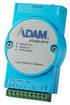 MODBUS TCP to RTU/ASCII Gateway User s Manual 1 INTRODUCTION... 1 1.1 FEATURES... 2 1.2 PRODUCT SPECIFICATIONS... 3 1.3 DEFAULT SETTINGS... 4 2 MAKING THE HARDWARE CONNECTIONS... 5 2.1 POWER CONNECTION...
Expert Power Control NET 4x 8212 / 8213
 2010 Gude Analog- und Digitalsysteme GmbH 2010 Gude Analog- und Digitalsysteme GmbH 23.08.2010 Content 3 Table of content Kapitel 1 Security Advise 5 Kapitel 2 Description 5 Kapitel 3 Hardware 6 3.1 Content
Compatible with all of the Ravica range of Intelligent Sensors it provides a complete environmental, access control and security monitoring solution.
 Sensor Control... Control... Sensor Control... Access securityprobe 5E Standard securityprobe 5E Standard Monitor the physical environment and receive alerts of any disturbances, such as unauthorized intruders,
3.1 RS-232/422/485 Pinout:PORT1-4(RJ-45) RJ-45 RS-232 RS-422 RS-485 PIN1 TXD PIN2 RXD PIN3 GND PIN4 PIN5 T+ 485+ PIN6 T- 485- PIN7 R+ PIN8 R-
 MODEL ATC-2004 TCP/IP TO RS-232/422/485 CONVERTER User s Manual 1.1 Introduction The ATC-2004 is a 4 Port RS232/RS485 to TCP/IP converter integrated with a robust system and network management features
Remote Monitoring Unit SC8100. Monitoring Unit SC8100
 Monitoring Unit SC8100 Remote Monitoring Unit SC8100 Environmental monitoring of any facilities, control of security breaches, temperatures, smoke, water leakages, voltages and more. Compatible with all
1 Serial RS232 to Ethernet Adapter Installation Guide
 Installation Guide 10/100 Mbps LED (amber color ) Link/Activity LED (green color ) 1. Introduction Thank you for purchasing this 1-port RS232 to Ethernet Adapter (hereinafter referred to as Adapter ).
T-BOXN12R. First steps with T-BOXN12R. You can make it wireless. Date: 2004-07-16 Version 1.0
 T-BOXN12R You can make it wireless First steps with T-BOXN12R Date: 2004-07-16 Version 1.0 Content 1. Purpose of this document... 3 2. T-BoxN12R overview... 4 3. First step... 5 3.1. Preparing your workshop
SMS Alarm Messenger. Setup Software Guide. SMSPro_Setup. Revision 090210 [Version 2.2]
![SMS Alarm Messenger. Setup Software Guide. SMSPro_Setup. Revision 090210 [Version 2.2]](/thumbs/29/13662687.jpg "SMS Alarm Messenger. Setup Software Guide. SMSPro_Setup. Revision 090210 [Version 2.2]") SMS Alarm Messenger SMSPro_Setup Revision 090210 [Version 2.2] ~ 1 ~ Contents 1. How to setup SMS Alarm Messenger?... 3 2. Install the SMSPro_Setup software... 5 3. Connection Type... 6 4. Connection Port
SMS Alarm Messenger SMSPro_Setup Revision 090210 [Version 2.2] ~ 1 ~ Contents 1. How to setup SMS Alarm Messenger?... 3 2. Install the SMSPro_Setup software... 5 3. Connection Type... 6 4. Connection Port
Table of Contents. 1. Introduction...1. 2. PDU Package...2. 3. Function...3. 4. Installation...5. 5. Web Interface...7
 PDU User Manual Table of Contents 1. Introduction...1 2. PDU Package...2 3. Function...3 4. Installation...5 5. Web Interface...7 1. Introduction The PDU is an Internet ready device designed and is equipped
TCP/IP Converter DDS EX-9132 Operation Manual for 8051 Series
 TCP/IP Converter DDS EX-9132 Operation Manual for 8051 Series First Edition, March 2005 Table of Contents 1. Introduction 3 Overview 4 Package Checklist 5 Block Diagram 6 Features 7 Product Specifications
Broadband Router ESG-103. User s Guide
 Broadband Router ESG-103 User s Guide FCC Warning This equipment has been tested and found to comply with the limits for Class A & Class B digital device, pursuant to Part 15 of the FCC rules. These limits
Remote monitoring of Crouzet Millenium 3 Using Netbiter EasyConnect EC220 & Netbiter Argos
 Remote monitoring of Crouzet Millenium 3 Using Netbiter EasyConnect EC220 & Netbiter Argos HMS Industrial Networks AB Page 1 (37) History Revision Date Description Responsible 1.11 2012-09-26 Typos SDA
Table of Contents. Chapter1. Introduction...1. 1.1 Before Installation... 1 1.2 System Requirements... 1
 Table of Contents Chapter1. Introduction...1 1.1 Before Installation... 1 1.2 System Requirements... 1 Chapter2. IVS-110 1-Channel Internet Video Server...2 2.1 Package Content... 2 2.2 Physical Installation...
HC Products ILF-100WD User Manual
 Internet Line Fault Monitor 2012 HC Security Products Patent Pending 7711 Idlewild RD. Indian Trail, NC 28079 www.hcproductlines.com Tel: 877-908-CCTV (2288) Fax: 888-801-8295 Rev. 2.00 03/22/2012 Table
WEB log. Device connection plans
 WEB log LIGHT+ 20 BASIC 100 PRO unlimited Device connection plans Version 20151210* Copyright Copyright for this manual remains with the manufacturer. No part of this manual may be reproduced or edited,
Intelligent power sockets IQsocket tm IQSB-PicoIP. makes your life more comfortable. User guide. IQSB-PicoIP documentation v1.0 R1
 Intelligent power sockets IQsocket tm IQSB-PicoIP makes your life more comfortable User Guide IQSB-PicoIP documentation v1.0 R1 User guide www.iqsocket.eu Important information... 2 1 Introduction... 4
COMET SYSTEM. www.cometsystem.cz. P2520 two-channel current loop converter USER GUIDE
 COMET SYSTEM www.cometsystem.cz P2520 two-channel current loop converter USER GUIDE Copyright: COMET System, Ltd. Is prohibited to copy and make any changes in this manual, without explicit agreement of
Data Bulletin. Communications Wiring for POWERLINK G3 Systems Class 1210 ABOUT THIS BULLETIN APPLICATION INTRODUCTION.
 Data Bulletin 1210DB0002R3/05 03/2005 LaVergne, TN, USA Communications Wiring for POWERLINK G3 Systems Class 1210 Retain for future use. ABOUT THIS BULLETIN This data bulletin describes the proper wiring
securityprobe5es -X20
 securityprobe5es -X20 v.100.00x securityprobe5es -X20 will monitor the physical environment and alert you of any disturbances, such as unauthorized intruders, security breaches, high temperatures, smoke,
Setting Up the ZigBee Ethernet Gateway
 Setting Up the ZigBee Ethernet Gateway MAN-01-00030-1.4 This manual describes how to install and set up ZigBee communication between a SolarEdge device (Inverters or Safety and Monitoring Interface) and
QUICK INSTALLATION GUIDE
 QUICK INSTALLATION GUIDE (v. 1.1) WARNING: This is a class A product. In a domestic environment this product may cause radio interference
JNIOR. Overview. Get Connected. Get Results. JNIOR Model 310. JNIOR Model 312. JNIOR Model 314. JNIOR Model 410
 The INTEG is an Ethernet I/O (digital, analog) device that monitors and controls a small set of process signals. functions as both basic I/O for integration with another application or system AND as a
WxGoos-1 Climate Monitor Installation Instructions Page 1. Connections. Setting an IP Address
 Instructions Page 1 Connections The WxGoos-1 is a self-contained web server and requires 6vdc of power at 300ma. A center-positive 2.1 mm plug is used. There are five ports: 1. 10/100 Ethernet RJ-45 receptacle
SDN INSTRUCTIONS 07/10, Ver 1.2. Somfy Digital Network (SDN) Installation and Programming
 Somfy Digital Network (SDN) Installation and Programming SSoomffyy SSyysst teemss IInncc.. 1 Table of Contents 1 General Information and Features... 3 1.1 ILT2 Motor... 3 1.2 SDN Switches... 4 1.3 ILT2
Temp-485-Pt100. A temperature sensor (Pt100 or Pt1000) communicating over the RS-485 bus with a simple communication protocol
 Temp-485-Pt100 A temperature sensor (Pt100 or Pt1000) communicating over the RS-485 bus with a simple communication protocol Temp-485-Pt100 Box version [600 113] Temp-485-Pt100 Cable version [600 114]
RS-232/422/485, Power over Ethernet
 IP-COM-M IP-COMi-M IP-COM-M PoE IP-COMi-M PoE RS-232 RS-232/422/485 RS-232, Power over Ethernet RS-232/422/485, Power over Ethernet Edition: September 2012 The computer programs provided with the hardware
Wireless Router Setup Manual
 Wireless Router Setup Manual NETGEAR, Inc. 4500 Great America Parkway Santa Clara, CA 95054 USA 208-10082-02 2006-04 2006 by NETGEAR, Inc. All rights reserved. Trademarks NETGEAR is a trademark of Netgear,
DOORKING SYSTEMS 1830 SERIES NETWORK WORKSHOP LAN APPLICATIONS ACCESS CONTROL SOLUTIONS LOCAL AREA NETWORK (LAN) CONNECTION REV 04.
 DOORKING SYSTEMS ACCESS CONTROL SOLUTIONS 1830 SERIES NETWORK WORKSHOP LAN APPLICATIONS REV 04.11 LOCAL AREA NETWORK (LAN) CONNECTION Ethernet Connection: An Ethernet Cable, or wireless connection must
Networking. General networking. Networking overview. Common home network configurations. Wired network example. Wireless network examples
 Networking General networking Networking overview A network is a collection of devices such as computers, printers, Ethernet hubs, wireless access points, and routers connected together for communication
2 Setting Up the Hardware for a Wired Ethernet Network... 13. 3 Setting Up the Software for an Ethernet Network... 21
 Contents 1 Networking Basics............................................... 1 Selecting a network connection........................................ 2 Wired Ethernet network...........................................
User s Manual Network Management Card
 User s Manual Network Management Card RMCARD202 Intelligent Network Management Card allows a UPS system to be managed, monitored, and configured Version 1.0 E-K01-SNMP005-0 TABLE OF CONTENTS Introduction
for Windows Media Center User's Guide
 for Windows Media Center User's Guide Table of Contents Introduction System Requirements Installation Running HAI Home Control Using HAI Home Control Product Support Introduction Thank you for purchasing
How To Run An Nport I5000A Device Server
 NPort IA5000A Series 1, 2, and 4-port serial device servers for industrial automation Enhanced surge protection for serial, LAN, and power 2 KV isolation for serial signals Rugged screw-type terminal blocks
EDI Distributor Control Interface Wiring and Setup Instructions
 Universal I/O EDI Distributor Control Interface Wiring and Setup Instructions EDI UNIVERSAL I/O INTERFACE MODULE The only interface needed for EDI-V5 controls Network compatible with all older EDI controls
Setup Manual and Programming Reference. RGA Ethernet Adapter. Stanford Research Systems. Revision 1.05 (11/2010)
 Setup Manual and Programming Reference Stanford Research Systems Revision 1.05 (11/2010) Certification Stanford Research Systems certifies that this product met its published specifications at the time
The data between TC Monitor and remote devices is exchanged using HTTP protocol. Monitored devices operate either as server or client mode.
 1. Introduction TC Monitor is easy to use Windows application for monitoring and control of some Teracom Ethernet (TCW) and GSM/GPRS (TCG) controllers. The supported devices are TCW122B-CM, TCW181B- CM,
Ultra Thin Client TC-401 TC-402. Users s Guide
 Ultra Thin Client TC-401 TC-402 Users s Guide CONTENT 1. OVERVIEW... 3 1.1 HARDWARE SPECIFICATION... 3 1.2 SOFTWARE OVERVIEW... 4 1.3 HARDWARE OVERVIEW...5 1.4 NETWORK CONNECTION... 7 2. INSTALLING THE
EPND-2A. Gebruikershandleiding/Manual. ATAL B.V. Ampèrestraat 35-37 NL-1446 TR PURMEREND. Postbus 783 NL-1440 AT PURMEREND
 EPND-2A Gebruikershandleiding/Manual ATAL B.V. Ampèrestraat 35-37 NL-1446 TR PURMEREND Postbus 783 NL-1440 AT PURMEREND T (+31) 0299 630 610 F (+31) 0299 630 611 E [email protected] I www.atal.nl Inhoud Introduction...
GV-Data Capture V3 Series User's Manual
 GV-Data Capture V3 Series User's Manual Before attempting to connect or operate this product, please read these instructions carefully and save this manual for future use. 2006 GeoVision, Inc. All rights
Application/Connection Examples
 This Quick Start Guide is designed to familiarize the user with the connection and configuration of the DTS-305 DIN rail mounted single / 3 phase power & energy meter with RS-485 or TCP communications.
Network Management Card
 Network Management Card Installation manual IP= MAC=00E0D8FF855E Reset 100 10 data Card Settings 1 2 RS232 Download ETHERNET RS232 66074 34003641EN/AG - Page 1 1 2 1 2 Quick start ASI or STS U-Talk ASI
BiPAC 7404V series. VoIP/(802.11g) ADSL2+ (VPN) Firewall Router. Quick Start Guide
 BiPAC 7404V series VoIP/(802.11g) ADSL2+ (VPN) Firewall Router Quick Start Guide VoIP/(802.11g) ADSL2+ (VPN) Firewall Router For more detailed instructions on configuring and using the Billion VoIP/(802.11g)
User s Manual UPS SERIES. Network Interface Card UPS-IPCARD. I-00453 Rev B
 User s Manual UPS SERIES Network Interface Card UPS-IPCARD I-00453 Rev B TABLE OF CONTENTS INTRODUCTION............................................................. 3-4 INSTALLATION GUIDE.......................................................
IP SENSOR 9216 USER MANUAL IP SENSOR 9216 USER MANUAL
 IP SENSOR 9216 USER MANUAL USER MANUAL IP SENSOR 9216 Version: 1.0 2006.08-1 - VER. 1.0, Warning: Any changes to this equipment without permission may cause damages to your equipment! This equipment has
USING THE XPERT2 / 9210B ON A TCP/IP NETWORK
 1 USING THE XPERT2 / 9210B ON A TCP/IP NETWORK Prepared by: R&D January, 2009 Sutron Corporation 21300 Ridgetop Circle Sterling, Virginia 20166 TEL: (703) 406-2800 FAX: (703) 406-2801 WEB: http://www.sutron.com/
StruxureWare Power Monitoring 7.0.1
 StruxureWare Power Monitoring 7.0.1 Installation Guide 7EN02-0308-01 07/2012 Contents Safety information 5 Introduction 7 Summary of topics in this guide 7 Supported operating systems and SQL Server editions
Prestige 202H Plus. Quick Start Guide. ISDN Internet Access Router. Version 3.40 12/2004
 Prestige 202H Plus ISDN Internet Access Router Quick Start Guide Version 3.40 12/2004 Table of Contents 1 Introducing the Prestige...3 2 Hardware Installation...4 2.1 Rear Panel...4 2.2 The Front Panel
Contents. Section A Networking Basics... 1. 1 Learning the Basics... 3. Section B Wired Ethernet Networking... 17
 Contents Section A Networking Basics...................................... 1 1 Learning the Basics............................................. 3 Selecting a network connection........................................
The GV-I/O Box 8 Ports provides 8 inputs and 8 relay outputs, and supports both DC and AC output voltages.
 GV-I/O Box 8 Ports The GV-I/O Box 8 Ports provides 8 inputs and 8 relay outputs, and supports both DC and AC output voltages. Key Features 8 inputs and 8 outputs are provided. Up to 9 pieces of GV-I/O
IP Power Stone 4000 User Manual
 IP Power Stone 4000 User Manual Two Outlet Remote AC Power Controller Multi Link, Inc. 122 Dewey Drive Nicholasville, KY 40356 USA Sales and Tech Support 800.535.4651 FAX 859.885.6619 techsupport@multi
LAN / WAN Connection Of Instruments with Serial Interface By Using a Terminal Server
 Products: EFA with EFA Scan, DVRM and DVMD with Realtime Monitor or Stream Explorer DVMD-B1 LAN / WAN Connection Of Instruments with Serial Interface By Using a Terminal Server Remote control of test and
Remote Client Program... 3. Web Client... 39
 Remote Client / Web Client USER MANUAL T Series Digital Video Recorder Remote Client Program... 3 Remote Client Program Installation... 4 Remote Client... 6 Main Window... 6 Site Registration... 7 Group
SNMP Web Management. User s Manual For SNMP Web Card/Box
 SNMP Web Management User s Manual For SNMP Web Card/Box Management Software for Off-Grid Inverter Version: 1.2 Table of Contents 1. Overview... 1 1.1 Introduction... 1 1.2 Features... 1 1.3 Overlook...
USER GUIDE. Ethernet Configuration Guide (Lantronix) P/N: 2900-300321 Rev 6
 KRAMER ELECTRONICS LTD. USER GUIDE Ethernet Configuration Guide (Lantronix) P/N: 2900-300321 Rev 6 Contents 1 Connecting to the Kramer Device via the Ethernet Port 1 1.1 Connecting the Ethernet Port Directly
Installation and start-up guide NETA-21 remote monitoring tool
 Remote monitoring options for ABB drives, converters and inverters Installation and start-up guide NETA-21 remote monitoring tool 3AUA0000096881 REV C Effective: 2013-03-01 2013 ABB Oy. All rights reserved.
USER MANUAL GUIMGR Graphical User Interface Manager for FRM301/FRM401 Media Racks
 USER MANUAL GUIMGR Graphical User Interface Manager for FRM301/FRM401 Media Racks CTC Union Technologies Co., Ltd. Far Eastern Vienna Technology Center (Neihu Technology Park) 8F, No. 60 Zhouzi St. Neihu,
Remote monitoring of Millenium 3 Logic Controller using Netbiter EasyConnect EC-220 & Netbiter Argos
 Remote monitoring of Millenium 3 Logic Controller using Netbiter EasyConnect EC-220 & Netbiter Argos (Remote monitoring of data in the Millenium 3 using SL-In/SL-Out function blocks) Your partner for industrial
F453. TiF453. User guide 10/11-01 PC
 F453 TiF453 User guide 10/11-01 PC 2 TiF453 User guide Contents 1. Hardware and Software requirements 4 2. Installation 4 1.1 Minimum Hardware requirements 4 1.2 Minimum Software requirements 4 3. Fundamental
Dominion KX II-101-V2
 Dominion KX II-101-V2 Quick Setup Guide Thank you for your purchase of the Dominion KX II-101-V2, the economical, full-featured, single-port digital KVM-over-IP device. For details on using the KX II-101-V2,
PREFACE http://www.okiprintingsolutions.com 07108001 iss.01 -
 Network Guide PREFACE Every effort has been made to ensure that the information in this document is complete, accurate, and up-to-date. The manufacturer assumes no responsibility for the results of errors
Firewall VPN Router. Quick Installation Guide M73-APO09-380
 Firewall VPN Router Quick Installation Guide M73-APO09-380 Firewall VPN Router Overview The Firewall VPN Router provides three 10/100Mbit Ethernet network interface ports which are the Internal/LAN, External/WAN,
SX-3000EDM Integration Guide
 SX-3000EDM Integration Guide SX-3000EDM Integration Guide PN: 140-20116-110 Rev. A 1 Table of Contents SX-3000EDM Integration Guide Product Overview... 3 Introduction... 3 Features... 4 Block Diagram...
1.1 Connection. 1.1.1 Direct COM port connection. 1. Half duplex RS232 spy cable without handshaking
 POS function Marchen POS-DVR surveillance system is a professional surveillance integrated with POS system. By bringing video and POS transaction data together, the POS-DVR surveillance system provides