
What Do Nursing Students Need to Know About Microbiology?
|
|
|
- Hubert Sherman
- 10 years ago
- Views:
Transcription
1 What Do Nursing Students Need to Know About Microbiology? Carolyn Holcroft-Burns R.N., Ph. D. ASMCUE 2007 Stress - these are just suggestions based on experience in nursing career and as micro instructor Struggled with approaches for how to get info across in 45 min! decided to share topics I cover in MY class, and give as much rationale as I can fit in My focus is on what R.N.s will use in practice, and secondarily on topics that they may see on boards NOTE - I do cover info in my course that they probably aren t going to use in practice, for various reasons Great idea: go to Borders, etc. and look at the NCLEX review manuals to get ideas of test questions re: micro. They are almost always critical thinking questions. Could also ask nursing school faculty if they have review books you could borrow. 1

2 Pervasive themes Nosocomial infection Hand washing Enzymes Virulence factors & pathogenicity Microbial antagonism Immune system Aseptic technique Scientific method Critical thinking housingbubblecasualty.com Pervasive themes, a.k.a. the topics we beat to death thruout the quarter Nosocomial infection importance to both them and their patients, prevalence, their role in controlling Hand washing - goes hand in hand with controlling nosocomial infection. They ARE going to get insanely busy on the floor. MUST stop and take time to wash hands (when super busy is probably most important time!) Enzymes central to metabolism as well as understanding why microbes behave the way they do. Joke - Magic answer to why questions on exams Virulence factors & pathogenicity Big emphasis on pathogenic microbes, especially opportunistics students have a lot of interest in what makes one bug worse than another Microbial antagonism After lab experience, the tendency is to think about microbes in isolation from one another. Must realize that in nature (incl. human body) that s not reality. Also important to understand role of normal flora in health 2

3 Pervasive themes Nosocomial infection Hand washing Critical thinking Enzymes Virulence factors & pathogenicity Microbial antagonism Immune system Aseptic technique Scientific method housingbubblecasualty.com Pervasive themes, a.k.a. the topics we beat to death thruout the quarter Immune system - BIG TOPIC importance of supporting own and patient s immune health (some start getting paranoid when learn about microbes so good opportunity to emphasize) MUST automatically register the 3 populations who are at an immunological disadvantage: very young, very old, & immunocompromised BEAT into them :) emphasizing applicability to patient care ie. Most realize that these three groups are susceptible on a microbiology exam, but often don t translate this into practice e.g. can t put a pt with a communicable disease in the same room with an elderly patient on steroids! aseptic technique: 1 goal of lab: gain understanding of/ability to execute properly stress their personal role in prevention of nosocomial infection avoid getting yelled at by a doctor Scientific Method: important to be able to problem-solve in logical, systematic way LABELING: teach not only to label plates, etc. in class but also how to label patient speciments Saved most important for last: CRITICAL THINKING, No matter which topics you teach, important to get them to think critically about them teaching them to try to apply what they learn in actual practice - they learn lots of facts but it doesn t immediately occur to them to apply them. I help them to learn to do this (I.e. I often don t make the connections straight out to them, rather, I lead them through. Helps build confidence in thinking ability. 3

4 Encouraging Ownership of the Information: Applicability Helping them understand how learning X will help them in their job PLEASE don t think of this as justifying your curriculum choices! My own experience is that students make more effort to understand and retain the info if they know it will be of use to them (either career or life) Anytime you can provide an example of how they might use a particular piece of info in practice, go for it! I also encourage my guys to watch shows like House, ER or CSI - they get very excited when they understand something from the show 4

5 The Hook: Why Do We Care? Disease Agriculture Food and beverages Chemicals Basic research and biotechnology primary focus of course is role of microbes in disease, so easy to get them interested in the disease applications other topics not covered in depth, but briefly mentioned to point out importance of microbes in their everyday lives, help them understand why microbiology is important to them personally Do R.N.s need to know? No (except biotech). I just want them to try to form a personal connection with the subject matter 5

6 Providing Perspective Animalcules Miasma Semmelweis Germ Theory of Disease* Koch s Postulates* Golden Age of Microbiology Providing Perspective brief history of microbiology from healthcare perspective emphasize people didn t always know microbes existed, and that they caused disease Perspective to get them interested, engaged before they start hating me and the class, but not essential to know non-starred items Koch s postulates still used today - student heard SARS researcher interviewed on NPR and got very excited when KP mentioned Semmelweis esp useful learning opportunity Not every crazy idea actually is (most are, though) Careful consideration before dismissing new ideas 6

7 Laying the Groundwork: Eukaryotes vs. Bacteria Membrane - bound organelles Cell walls Gram positive Gram negative O antigen Lipid A Acid fast Bauman 1 st Ed. Fig As get deeper into content & material gets more challenging, I focus on big picture & I try to elim details they won t actually use (again if you have one you re wondering about you can contact me) Must understand fundamental differences & similarities in order to understand basis of control, antibiotics, selective toxicity, immune response Gm stain: WILL get lab reports back that say, Gram negative coccus, etc. so need to know what this means (don t HAVE to know how to Gram stain but I teach) For Gm neg focus on OM, esp: O-antigen (r/t O157:H7) Lipid A & role in endotoxic shock - if they have pt with systemic Gm neg infx beware For AF wall, introduce Mycobacterium tuberculosis need to understand role of wall in virulence need to know that if Dr orders AF stain it s b/c suspect TB talk about basics of TB infection, why CXR is needed and what Dr is looking for Fair amount of detail but not TOO much minutae E.g. presence of teichoic acids in Gram positive cell walls interesting but not essential info, runs, tumbles, flagellar structure nonessential 7

8 Disclosure No Bug Parade Goal: Solid foundation of knowledge that they can apply to new microbes/diseases as needed This is a good place for me to add a disclosure (maybe should have done it earlier) I don t do a Bug Parade. I.e. I don t make them memorize a laundry list of bacteria and diseases. They will be covering specific diseases in pathophysiology class They will need to know completely different organisms/diseases depending on the specialty area they end up in My goal is to give them a solid foundation of underlying knowledge that they will be able to apply to any microbe they come across in the future I DO introduce many, many specific microbes throughout the course. However, I present them as appropriate to main discussion topics, not as topics in an of themselves. E.g. when talk about acid fast cell wall, we discuss Mycobacterium tuberculosis, and basic overview of TB. When talk about spores, we discuss Clostridium difficile and B. anthracis, etc.. 8

9 Laying the Groundwork: Eukaryotes vs. Bacteria Capsules Fimbriae BIOFILMS Spores capsule Bauman 2 nd ed. Fig. 3.4 a DO talk about capsules, spores, fimbriae and biofilms as virulence factors capsules - (introduce Strep pneumoniae) and how capsule used to evade immune syx fimbriae - talk about N. gonorrhoeae using to attach to UT cells (and why pee after sex) talk about how BOTH may be used to form biofilms BF play a role in huge amount of human disease, e.g. gum disease, infections in CF patients talk about BF forming on all sorts of medical catheters & indwelling tubes e.g. urinary catheters, IV catheters, central liines, respiratory tubes (important to monitor for s/s infx visually and via labs) MAKE the connection for them another example of a topic they can tell you all about on paper, but in practice they forget to monitor catheters for signs of infection spores - introduce Bacillus & Clostridium do ask them to remember that these two genera are spore formers spores everywhere, emphasize importance of proper disinfection, aseptic technique Introduce C. difficile - prevalent in hospitals, many drug resistant strains 9

10 Basic Cellular Metabolism Enzymes OVERVIEW: Cellular respiration Aerobic Anaerobic Fermentation Culture environments cyanide Bauman 2nd ed. Fig ,4- dinitrophenol Fundamental importance of enzymes and enzyme function in governing cell activity lock and key enzyme regulation - groundwork for understanding metabolic disorders in their pts cellular respiration - SO many students have NO idea why it s important! Focus on BIG PICTURE Focus on what goes in, what comes out, and what the whole point is (converting food energy into form cells can use) Admittedly, no one is going to quiz them at the hospital about what the final product of glycolysis is, for example. Some faculty may choose to omit cellular metabolism and it probably isn t going to kill anyone. Personal teaching decision. I think it s fundamentally important. Important to understand role of O 2 - they re going to spend hours interpreting blood gas levels and monitoring their pt s O 2 sats & I think they should have a clue why to help understand I use examples they can relate to E.g. why can t they survive long if bag placed over their head? Why cyanide (blocker) and 2,4-dinitrophenol (uncoupler) are poisonous Brief overview of anaerobic resp & ferm b/s many pathogens with this metabolism (facultative anaerobes, etc.) when collecting pt specimens important to put specimen in proper environment e.g. aerobic blood culture bottles vs. anaerobic cx bottles (don t want Dr to yell at you) :) 10

11 Basic Genetics DNA Structure Chromosomal Plasmids OVERVIEW Replication OVERVIEW gene expression Transcription Translation Bauman, 2nd ed. Fig. 7.1 Applicability: role of genetics as basis for life DNA understanding of genetics re: role in disease and disease treatment - future of medicine! e.g. role in antibiotic resistance e.g. role in biotechnology Structure noting points of similarity and differences between bacterial and eukaryotic DNA Role of Chromosomal DNA Role of Plasmid DNA; intro resistance & virulence plasmids OVERVIEW (These are fair game for standardized tests) Replication - WHY does the cell do this? Enzyme? Gene expression - errors in expression lead to disease - I give basic intro to promoters Transcription - WHY? Basics of how. Translation - WHY? Basics of how. give OVERVIEW, not nitty gritty. Need to understand basics, and overall purpose of these processes 11

12 Role of genetics in disease Mutations Cancer M G2 G1 I N T E S R P H A S E Role of genetics in disease Mutations Basic types (point, frameshift) Talk about significance of spontaneous error during replication, use UV radiation as Model Mechanism mutagen role of oncogenes - on surface level and how a mutagen can be a carcinogen - very basic level 12

13 Transfer of genetic information Transformation Transduction Conjugation Recombination Basic cloning Flu pandemic Insulin production Antibiotic resistance Gene therapy Vaccine production Laying this groundwork helps them understand basics of some of the up and coming treatments in medicine, as well as importance in spread of disease BASICS of each process, not nitty gritty details like role of Rec A protein, etc. BASIC cloning only Do talk about restriction enzymes & how important their discovery was, & that they come from bacteria use examples shown on slide 13

14 Viruses Viruses vs. cells Structure Replication/Metabolism Bauman 2nd Ed. Fig 13.7 b Mononucleosis Rubella Hepatitis Influenza Herpes Smallpox Common cold Mumps SARS Rabies HIV Chicken pox Rotaviral diarrhea Measles BASIC structure, highlighting acellularity, unique genomes, intracellular parasites, size difference bet. viruses and cells basic classification based on genome, shape helical - e.g. measles, rabies polyhedral - e.g. Herpes simplex complex - e.g. pox virus Basic replication & metabolism using T4 bacteriophage, generic DS DNA virus e.g. chickenpox and retrovirus (HIV) as models talk relatively quite a while about HIV (e.g minutes) mention possibility of using phage in lieu of antibiotics, think about advantages, risks Also discuss prions Need to be able to recognize that the illnesses listed are viral in origin (but will get pathoohys in nursing school) 14

15 Controlling Microbial Growth: Chemical Methods Mechanisms of action Membranes Denaturation Categories Surfactants Halogens Heavy metals Oxidizing agents Alcohols Phenolics Aldehydes Chemical control Membranes Denaturation of proteins and nucleic acids They are going to come into contact with many of these in healthcare setting so I ask them to remember: in general how each class works, special precautions (e.g. aldehydes) specific example for each category Great opportunity to discuss pros and cons of antibacterial soaps, etc. Factors that affect control also important (time, population composition, presence of organic material, etc.) I don t make them menorize parameters for use of each agent, but I do stress that they ALWAYS need to READ the DIRECTIONS talk about why H 2 O 2 is terrible on open wounds but is a great disinfectant 15

16 Controlling Microbial Growth: Other Means Heat, cold, dessication Filtration Radiation Osmotic pressure How to choose? Bauman 2nd Ed. Fig Again, going to come in contact with supplies that have been treated with most of these in healthcare setting (except maybe osmotic) e.g. lyophilized drugs or irradiated instruments I ask them to understand how each works and what their limitations are Heat, cold, dessication Filtration introduce Listeria & discuss cold resistance, foods that should be avoided by pregnant women & immunocompromised individuals Radiation - great opportunity to discuss use on foods Osmotic pressure Discuss how to choose (Critical thinking!) 16

17 Control of Microbial Growth: Antibiotics Selective Toxicity Therapeutic index General mechanisms Cell wall synthesis inhibitors Membrane disruption Protein synthesis inhibitors Antimetabolites Nucleic acid synthesis inhibition Bauman 2nd Ed. Fig Sources of antibiotics - reminder of microbial antagonism Selective Toxicity Therapeutic index (toxic dose:therapeutic dose) ideal charactistics - critical thinking General mechanisms - overview of how each works, give 1-2 examples of each (don t make memorize list of drugs b/c they re going to do that in pharm); CT - selective toxicity of each? Cell wall synthesis inhibitors Membrane disruption Protein synthesis inhibitors Antimetabolics Nucleic acid synthesis inhibition Ask them to think about using these for viral infections BRIEF discussion of mechanisms of antiviral agents - focus on NAS inhibitors want to expand (incl. antimetabolites, etc.) emphasize importance of using correct drug (R.N. can be sued just like Dr. although not as likely - we don t have as much $$$) 17

18 Control of Microbial Growth: Antibiotics Spectrum of activity Superinfection Antibiotic resistance Exposure to drug Time Drug-sensitive Drug-resistant mutant Spectrum of activity discuss when broad vs. narrow preferred (CritThinking) Superinfection - e.g. C. difficile, Candida infections in pts on abx Antibiotic resistance need to understand practices that have led to increase in development & spread of resistance, and how they can help SLOW spread I don t discuss on actual mechanisms of resistance 18

19 Basic Epidemiology Incidence, prevalence Reservoirs Zoonoses Disease transmission Contact Vehicle Vector Bauman 1 st Ed. Fig Incidence, prevalence, zoonosis - terms they need to be familiar with Reservoirs - need to be familiar with common: humans, animals, inanimate objects need to be prepared to APPLY this knowledge, not just memorize it Transmission need to be aware of these modes both in terms of protecting themselves and their patients emphasize hand washing and aseptic technique! Mention CDC web site as great resource 19

20 Basic disease classification Basis Body system affected Longevity/severity Transmission Extent of body affected State of host when infected Examples of terms Respiratory disease Acute, chronic, subacute, latent Communicable, noncommunicable Local, systemic Primary, secondary Need to be familiar with this basic terminology - they will use it! Use HIV-AIDS as great example for primary vs. secondary infections 20

21 Nosocomial Infection Who is most susceptible? The Usual Suspects Pathogenic cocci Enterobacteriaciae Pseudomonas Candida Common infections Bauman 1st Ed. Fig 19.1 Nosocomial infections about 10% hospital patients in America get one! 20,000 die from their infection! > 5 billion $$ Who most susceptible? - young, old, immunocomp. A red flag should pop into their head AUTOMATICALLY whenever they re caring for a patient in one of these groups Most common causative agents DO make them remember Gm result, cell shape for these (wil see this info come back in lab reports) DO expect them to know where these are usually found in environment Common infections UTIs critical thinking opportunity - instead of TELLING them what diseases these usually cause, ask them since they now know where e.g. Staph lives, make an educated guess about what kind of infection it might commonly cause Can reverse this, too, e.g. ask if pt. gets a particular infection, which organism might be causing? where should they start looking for the source? Intervention? (Hand washing after bathroom? Cleaning surfaces? Cleaning medical equipment like respirators, etc?) Wound infections Respirator-related pneumonia Central lines, other catheters - import. of rotating PIV site every three days 21
22 Pathogenicity & Virulence Normal flora Opportunistic vs. obligate Virulence factors Coagulase, hemolysins, leukocidins, collagenase Exotoxins vs. endotoxins Bauman 2nd Ed. Fig. 14.9c emphasizing microbial antagonism and normally protective role of normal flora MUST remember which sites of human body are supposed to have flora and which are not Opportunistic vs. obligate pathogens and what circumstances might allow an opportunist to cause disease (aseptic technique!) Examples used typically the same ones from last slide - common causes of nosocomial infections V factors listed on the slide not necessarily imperative, just fit material well. Could easily choose others to illustrate concepts. General physiological effects of exo- and endotoxins should be able to discriminate between neuro-, entero-, and cytotoxins CT opportunity: Are Gram positives worse, or Gram negatives? 22
23 Portals of Entry & Exit IMPERATIVE (Stages of infectious process) Discuss these as we cover stages of infectious process MUST be familiar with these to protect themselves and their patients EVERY TIME they expose their or their patients portals of entry, use aseptic technique (universal precautions) must be on alert every time they contact secretions from any of these potential portals of exit and take appropriate precautions Point out eyes are great way for microbes to access respiratory tract - stop touching their eyes! Wash hands! 23
24 Bug Parade: Eukaryotic Pathogen Overview Fungi Cell structure Protozoa Locomotory structures Trophozoites vs. cysts Helminths Cestodes Trematodes Nematodes Candida Trichomonas Necator Taenia Giardia Plasmodium Aspergillus Enterobius Entamoeba histolytica Balantidium coli Ascaris lumbricoides Toxoplasma For listed organisms, I ask them to know what kind of organism it is and generally what type of disease it causes Mostly for benefit of my vet tech students but do have tendency to pop up on State Boards (In my course is a lab, observation) For fungal cell structure, talk about what a thallus is, what hyphae and mycelia are For Protozoa, recall the three locomotory structures & recognize that this is how they used to be classified ciliates, pseudopods, flagellates 24
25 Immune Response Nonspecific defenses 1 st line: skin, mucous membranes, chemicals 2 nd line: phagocytosis, complement, interferon, inflammation, fever Specific defenses 3 rd line: lymphocytes, antibodies Bauman 1 st Ed. Fig Understand that nonspecific defenses don t have to fail before the specific defenses kick in Cover basic overview of nonspecific defenses, just basics e.g. don t think they need to memorize complement cascade e.g. DO need to understand what starts it, and what consequences there are to it s activation, and explain how it complements specific immunity basic gist of interferon, not discriminating between interferon beta and gamma 25
26 Specific Immune Response Humoral immunity Cell-mediated immunity BIG PICTURE Antigens Antibodies Cytokines BCRs and TCRs Clonal deletion Clonal selection MHC I and II Primary vs. secondary response Bauman 2nd Ed. Fig BASICs of humoral and cell-immunity (NOT regulation of, etc.) ID Common examples of microbial antigens, distinguish an antigen from an epitope should be familiar with the different classes of antibodies and general role of each Importance of MHC - which cells have, what s their basic function? obvious application is tissue transplantation general roles of cytokines, not who secrete which, when Similarities and differences in primary and secondary immune response 26
27 Antigens & Antibodies in the Lab Agglutination & precipitation reactions Blood typing Antibody titers Labeled antibody tests ELISA Bauman 1st Ed. Fig Should be able to describe basics of agglutination and precipitation reactions explain basis of blood typing and antibody titers (very common for titers to be ordered) Familiarity with ELISA as common diagnostic test (won t be performing themselves in practice but should have basic understanding of how these work) 27
28 History Immunization Vaccine types Attenuated Inactivated Subunit Toxoid Safety History of and historical significance of immunization Basic understanding of vaccine types: attenuated - risks to immunocompromised patients inactivated subunit toxoid Safety issues and importance of helping patients making informed choices 28
29 Immune hypersensitivities Type I (allergies) Type II Transfusion reactions Hemolytic disease of the newborn Rh + fetus Bauman, (2003) Microbiology 1st ed. Fig 18.7 Type I (allergies) Type II Transfusion reactions Hemolytic disease of the newborn 29
30 Information Competency Peer-reviewed vs. popular journals Web site sources Ways to optimize searches Lots of apathy expect teacher (or someone else) to be there to feed them answers. In life, sometimes there IS no such person too often they give up and don t even try to find answer they CAN T be this way in their career! They need to be motivated to get answers for questions that arise. Sometimes just showing them that they DO have the power to find the answer does the trick. DON T understand that web sites are not peer-reviewed Encourage healthy, reasonable amount of skepticism of web sources Usually don t/aren t aware of using basic Boolean operators in searches I used to assume they already had this knowledge coming in, or would get it elsewhere in college, but am finding this is not true, It is SO important to have this knowledge I use a lab to teach it in collaboration with librarian. They do a library research project which entails them asking a question about ANYTHING related to microbiology, and then demonstrating that they can find two peer-reviewed sources and two web page sources to answer their question. NOT a term paper. Easy to grade (sources appropriate or not?) They learn about an interesting topic in the process. 30
Required Text: Tortora, Funke, and Case. Microbiology, An Introduction, 9 th ed. Benjamin Cummings, 2007.
 Department of Biology Introduction to Microbiology Biol 132 (3 credit hours) Dr. Kathryn Sutton, Assistant Professor of Biology Spring, 2007 M 9-9:50; CBH Room 203 General Information Office Location CBH
1) Siderophores are bacterial proteins that compete with animal A) Antibodies. B) Red blood cells. C) Transferrin. D) White blood cells. E) Receptors.
 Prof. Lester s BIOL 210 Practice Exam 4 (There is no answer key. Please do not email or ask me for answers.) Chapters 15, 16, 17, 19, HIV/AIDS, TB, Quorum Sensing 1) Siderophores are bacterial proteins
Chapter 18: Applications of Immunology
 Chapter 18: Applications of Immunology 1. Vaccinations 2. Monoclonal vs Polyclonal Ab 3. Diagnostic Immunology 1. Vaccinations What is Vaccination? A method of inducing artificial immunity by exposing
FACULTY OF MEDICAL SCIENCE
 Doctor of Philosophy Program in Microbiology FACULTY OF MEDICAL SCIENCE Naresuan University 171 Doctor of Philosophy Program in Microbiology The time is critical now for graduate education and research
Course Descriptions. I. Professional Courses: MSEG 7216: Introduction to Infectious Diseases (Medical Students)
 Course Descriptions I. Professional Courses: MSEG 7216: Introduction to Infectious Diseases (Medical Students) This course is offered during the first semester of the second year of the MD Program. It
Approaches to Infection Control
 Approaches to Infection Control Considerations for PTAs in the Clinic Objectives Describe the basic characteristics of bacteria, viruses, fungi, and parasites. Discuss the locations, advantages, and disadvantages
The Immune System and Disease
 Chapter 40 The Immune System and Disease Section 40 1 Infectious Disease (pages 1029 1033) This section describes the causes of disease and explains how infectious diseases are transmitted Introduction
Multiple Choice Questions
 C hapter 13 WHY DO WE FALL ILL Multiple Choice Questions 1. Which one of the following is not a viral disease? (a) Dengue (b) AIDS (c) Typhoid (d) Influenza 2. Which one of the following is not a bacterial
Course Outline and Syllabus for Students
 Course Outline and Syllabus for Students Name: Ian Crandall Course Number: PHM242H1 Course Title: Microbiology of Infectious Diseases Course Description: The course provides a brief introduction to the
Principles of Disease and Epidemiology. Copyright 2010 Pearson Education, Inc.
 Principles of Disease and Epidemiology Pathology, Infection, and Disease Disease: An abnormal state in which the body is not functioning normally Pathology: The study of disease Etiology: The study of
Solid Organ Transplantation
 Solid Organ Transplantation Infection Prevention And Control Transplant Atlantic 2011 October 13/2011 Kathy Hart Introduction In the past several years, the drugs that we use, the surgeries themselves,
10. T and B cells are types of a. endocrine cells. c. lymphocytes. b. platelets. d. complement cells.
 Virus and Immune System Review Directions: Write your answers on a separate piece of paper. 1. Why does a cut in the skin threaten the body s nonspecific defenses against disease? a. If a cut bleeds, disease-fighting
WHY IS THIS IMPORTANT?
 CHAPTER 1 WHAT IS MICROBIOLOGY AND WHY IS IT IMPORTANT? WHO / TDR / Crump WHY IS THIS IMPORTANT? Microbiology is more relevant than ever in today s world. Infectious diseases are a leading health-related
Viruses. Viral components: Capsid. Chapter 10: Viruses. Viral components: Nucleic Acid. Viral components: Envelope
 Viruses Chapter 10: Viruses Lecture Exam #3 Wednesday, November 22 nd (This lecture WILL be on Exam #3) Dr. Amy Rogers Office Hours: MW 9-10 AM Too small to see with a light microscope Visible with electron
Course Curriculum for Master Degree in Medical Laboratory Sciences/Clinical Microbiology, Immunology and Serology
 Course Curriculum for Master Degree in Medical Laboratory Sciences/Clinical Microbiology, Immunology and Serology The Master Degree in Medical Laboratory Sciences / Clinical Microbiology, Immunology or
specific B cells Humoral immunity lymphocytes antibodies B cells bone marrow Cell-mediated immunity: T cells antibodies proteins
 Adaptive Immunity Chapter 17: Adaptive (specific) Immunity Bio 139 Dr. Amy Rogers Host defenses that are specific to a particular infectious agent Can be innate or genetic for humans as a group: most microbes
Bacteria vs. Virus: What s the Difference? Grade 11-12
 Bacteria vs. Virus: What s the Difference? Grade 11-12 Subject: Biology Topic: Bacteria, viruses, and the differences between them. The role that water plays in spreading bacteria and viruses, and the
C. difficile Infections
 C. difficile Infections Introduction C. difficile is a type of bacteria that can cause diarrhea and infection of the colon. This bacterium is more likely to infect patients at hospitals and other healthcare
Immunity Unit Test Z
 Immunity Unit Test Z Name MB Multiple Choice Identify the choice that best completes the statement or answers the question. 1. Which of the pathogens in Figure 31.1 cause disease by taking over healthy
Introduction to Microbiology The Microbial World and You (Chapter 1) Lecture Materials for Amy Warenda Czura, Ph.D. Suffolk County Community College
 Introduction to Microbiology The Microbial World and You (Chapter 1) Lecture Materials for Amy Warenda Czura, Ph.D. Suffolk County Community College Primary Source for figures and content: Eastern Campus
Why use passive immunity?
 Vaccines Active vs Passive Immunization Active is longer acting and makes memory and effector cells Passive is shorter acting, no memory and no effector cells Both can be obtained through natural processes:
Mini-Medical School on Infectious Diseases. Session #1 - Basic Science
 Mini-Medical School on Infectious Diseases Session #1 - Basic Science The Microbial World Michael V. Norgard, Ph.D., Chairman Department of Microbiology U.T. Southwestern Medical Center The Microbial World
Immunology Ambassador Guide (updated 2014)
 Immunology Ambassador Guide (updated 2014) Immunity and Disease We will talk today about the immune system and how it protects us from disease. Also, we ll learn some unique ways that our immune system
CHAPTER 35 HUMAN IMMUNE SYSTEM STANDARDS:SC.912.L.14.52 & SC.912.L.14.6
 CHAPTER 35 HUMAN IMMUNE SYSTEM STANDARDS:SC.912.L.14.52 & SC.912.L.14.6 SECTION 1 - Infectious Disease 1.Identify the causes of infectious disease. 2.Explain how infectious diseases are spread. Causes
Name (print) Name (signature) Period. (Total 30 points)
 AP Biology Worksheet Chapter 43 The Immune System Lambdin April 4, 2011 Due Date: Thurs. April 7, 2011 You may use the following: Text Notes Power point Internet One other person in class "On my honor,
JIANGSU CARTMAY INDUSTRIAL CO.,LTD www.labfurniture.asia mail: [email protected]
 The basic layout, the main functions and instrumentation concept of micro Inspection Division laboratory, 1, Virology Laboratory 1. Functions: for the city to monitor the prevalence of HIV disease, dealing
Immunity and how vaccines work
 1 Introduction Immunity is the ability of the human body to protect itself from infectious disease. The defence mechanisms of the body are complex and include innate (non-specific, non-adaptive) mechanisms
Chapter 43: The Immune System
 Name Period Our students consider this chapter to be a particularly challenging and important one. Expect to work your way slowly through the first three concepts. Take particular care with Concepts 43.2
Name Date Class. This section explains what kinds of organisms cause infectious disease and how infectious diseases are spread.
 Fighting Disease Name Date Class Infectious Disease This section explains what kinds of organisms cause infectious disease and how infectious diseases are spread. Use Target Reading Skills Before you read,
BIOL 584 (Medical Microbiology) Syllabus Spring 2009
 BIOL 584 (Medical Microbiology) Syllabus This course will focus on mechanisms of microbial pathogenesis and the host response, and the scientific approaches that are used to investigate these processes.
Chapter 20: Antimicrobial Drugs
 Chapter 20: Antimicrobial Drugs 1. Overview of Antimicrobial Drugs 2. Antibacterial Drugs 3. Antiviral Drugs 4. Drugs for Eukaryotic Pathogens 1. Overview of Antimicrobial Drugs Antibiotics An antibiotic
C-Difficile Infection Control and Prevention Strategies
 C-Difficile Infection Control and Prevention Strategies Adrienne Mims, MD MPH VP, Chief Medical Officer [email protected] 1/18/2016 1 Disclosure This educational activity does not have commercial
The Immune System. 2 Types of Defense Mechanisms. Lines of Defense. Line of Defense. Lines of Defense
 The Immune System 2 Types of Defense Mechanisms Immune System the system that fights infection by producing cells to inactivate foreign substances to avoid infection and disease. Immunity the body s ability
One of the more complex systems we re looking at. An immune response (a response to a pathogen) can be of two types:
 Immune system. One of the more complex systems we re looking at. An immune response (a response to a pathogen) can be of two types: (pathogen - disease causing organism) 1) Non specific. Anything foreign
The Body s Defenses CHAPTER 24
 CHAPTER 24 The Body s Defenses PowerPoint Lectures for Essential Biology, Third Edition Neil Campbell, Jane Reece, and Eric Simon Essential Biology with Physiology, Second Edition Neil Campbell, Jane Reece,
Core Topic 2. The immune system and how vaccines work
 Core Topic 2 The immune system and how vaccines work Learning outcome To be able to describe in outline the immune system and how vaccines work in individuals and populations Learning objectives Explain
Microbiology AN INTRODUCTION EIGHTH EDITION
 TORTORA FUNKE CASE Microbiology AN INTRODUCTION EIGHTH EDITION Differentiate between innate and acquired immunity. Chapter 17 Specific Defenses of the Host: The Immune Response B.E Pruitt & Jane J. Stein
Medical Microbiology Culture Media :
 Lecture 3 Dr. Ismail I. Daood Medical Microbiology Culture Media : Culture media are used for recognition and identification (diagnosis) of microorganisms. The media are contained in plates (Petri dishes),
BE SURE. BE SAFE. VACCINATE.
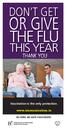 DON T GET OR GIVE THE FLU THIS YEAR THANK YOU Vaccination is the only protection. www.immunisation.ie BE SURE. BE SAFE. VACCINATE. FLU VACCINE 2013-2014 Healthcare workers prevent the spread of flu and
Key Facts about Influenza (Flu) & Flu Vaccine
 Key Facts about Influenza (Flu) & Flu Vaccine mouths or noses of people who are nearby. Less often, a person might also get flu by touching a surface or object that has flu virus on it and then touching
2) Macrophages function to engulf and present antigen to other immune cells.
 Immunology The immune system has specificity and memory. It specifically recognizes different antigens and has memory for these same antigens the next time they are encountered. The Cellular Components
BASIC INFORMATION ABOUT HIV, HEPATITIS B and C, and TUBERCULOSIS Adapted from the CDC
 BASIC INFORMATION ABOUT HIV, HEPATITIS B and C, and TUBERCULOSIS Adapted from the CDC HIV What are HIV and AIDS? HIV stands for Human Immunodeficiency Virus. This is the virus that causes AIDS. HIV is
Exposure. What Healthcare Personnel Need to Know
 Information from the Centers for Disease Control and Prevention National Center for Infectious Diseases Divison of Healthcare Quality Promotion and Division of Viral Hepatitis For additional brochures
Ch 14: Principles of Disease and Epidemiology
 Ch 14: Principles of Disease and Epidemiology Learning Objectives Define pathology, etiology, infection, and disease Explain the difference between normal, transient, and opportunistic microbes Compare
7- Master s Degree in Public Health and Public Health Sciences (Majoring Microbiology)
 7- Master s Degree in Public Health and Public Health Sciences (Majoring Microbiology) Students should fulfill a total of 38 credit hours: 1- Basic requirements: 10 credit hours. 150701, 150702, 150703,
Figure 14.2 Overview of Innate and Adaptive Immunity
 I M M U N I T Y Innate (inborn) Immunity does not distinguish one pathogen from another Figure 14.2 Overview of Innate and Adaptive Immunity Our first line of defense includes physical and chemical barriers
Single-celled microorganisms, which can live inside or outside the body. Some cause sickness, but others are harmless.
 The Science behind the Noses are Red show: Introduction: The Noses are Red show is about allergies and the biological causes behind them. In order to explain allergies you need to understand a certain
Masters of Science in Microbiology and Immunology 2013/2014
 Fall semester: Graduate Medical Microbiology (4 credits). This course is designed to introduce graduate students to bacterial, fungal and viral pathogens that are the etiological agents of the most significant
Biotechnology and Recombinant DNA (Chapter 9) Lecture Materials for Amy Warenda Czura, Ph.D. Suffolk County Community College
 Biotechnology and Recombinant DNA (Chapter 9) Lecture Materials for Amy Warenda Czura, Ph.D. Suffolk County Community College Primary Source for figures and content: Eastern Campus Tortora, G.J. Microbiology
Course Curriculum for Master Degree in Medical Laboratory Sciences/Clinical Biochemistry
 Course Curriculum for Master Degree in Medical Laboratory Sciences/Clinical Biochemistry The Master Degree in Medical Laboratory Sciences /Clinical Biochemistry, is awarded by the Faculty of Graduate Studies
KEY CAL/OSHA STANDARDS THAT APPLY TO MOST EMPLOYERS
 KEY CAL/OSHA STANDARDS THAT APPLY TO MOST EMPLOYERS FACTSHEET 1 Below are some key Cal/OSHA standards that apply to most employers: A. INJURY AND ILLNESS PREVENTION PROGRAM STANDARD (Title 8 California
Graduate Certificate Pre-Med Program Course Descriptions For Year 2015-2016 FALL
 Graduate Certificate Pre-Med Program Course Descriptions For Year 2015-2016 FALL COURSE TITLE: BIOCHEMISTRY COURSE NUMBER: 5104 This course emphasizes biochemical compounds, processes and systems, designed
The general structure of bacteria
 The general structure of bacteria The uni-cellular organisms Viruses Herpes virus, HIV, influenza virus The procaryotic organisms Escherichia, Salmonella, Pseudomonas Streptococcus, Staphylococcus, Neisseria
Overview of the Cattle Immune System 1
 Oregon State University BEEF043 Beef Cattle Library Beef Cattle Sciences Overview of the Cattle Immune System 1 Reinaldo F. Cooke 2 Introduction On average, the U.S. cattle industry loses more than $1
FOUR-YEAR DEGREE PROGRAMME I MICROBIOLOGY YEAR I
 FOUR-YEAR DEGREE PROGRAMME I MICROBIOLOGY YEAR I FSC 101 Introductory Biology 3 FSC 102 Introductory Chemistry 3 FSC 103 Introductory Computer Science 2 FSC 104 Introductory Mathematics 3 FSC 105 Introductory
Tuberculosis: FAQs. What is the difference between latent TB infection and TB disease?
 Tuberculosis: FAQs What is TB disease? Tuberculosis (TB) is a disease caused by bacteria (germs) that are spread from person to person through the air. TB usually affects the lungs, but it can also affect
Chapter 3. Immunity and how vaccines work
 Chapter 3 Immunity and how vaccines work 3.1 Objectives: To understand and describe the immune system and how vaccines produce immunity To understand the differences between Passive and Active immunity
Cystic Fibrosis Webquest Sarah Follenweider, The English High School 2009 Summer Research Internship Program
 Cystic Fibrosis Webquest Sarah Follenweider, The English High School 2009 Summer Research Internship Program Introduction: Cystic fibrosis (CF) is an inherited chronic disease that affects the lungs and
Biochemistry. Entrance Requirements. Requirements for Honours Programs. 148 Bishop s University 2015/2016
 148 Bishop s University 2015/2016 Biochemistry The Biochemistry program at Bishop s is coordinated through an interdisciplinary committee of chemists, biochemists and biologists, providing students with
Lymph capillaries, Lymphatic collecting vessels, Valves, Lymph Duct, Lymph node, Vein
 WLHS/A&P/Oppelt Name Lymphatic System Practice 1. Figure 12-1 provides an overview of the lymphatic vessels. First color code the following structures. Color code in Figure 12-1 Heart Veins Lymphatic vessels/lymph
ANIMALS FORM & FUNCTION BODY DEFENSES NONSPECIFIC DEFENSES PHYSICAL BARRIERS PHAGOCYTES. Animals Form & Function Activity #4 page 1
 AP BIOLOGY ANIMALS FORM & FUNCTION ACTIVITY #4 NAME DATE HOUR BODY DEFENSES NONSPECIFIC DEFENSES PHYSICAL BARRIERS PHAGOCYTES Animals Form & Function Activity #4 page 1 INFLAMMATORY RESPONSE ANTIMICROBIAL
Registered Nursing Health Requirements Checklist
 Registered Nursing Health Requirements Checklist The applicant must: 1). Upload the original completed form to your CertifiedBackground profile. 2). Retain a copy for your records. www.certifiedbackground.com
Medical Laboratory Technology Program. Student Learning Outcomes & Course Descriptions with Learning Objectives
 Medical Laboratory Technology Program Student Learning Outcomes & Course Descriptions with Learning Objectives Medical Laboratory Technology Student Learning Outcomes All Colorado Mesa University associate
METHICILLIN-RESISTANT STAPHYLOCOCCUS AUREUS (MRSA) COMMUNITY ACQUIRED vs. HEALTHCARE ASSOCIATED
 METHICILLIN-RESISTANT STAPHYLOCOCCUS AUREUS (MRSA) COMMUNITY ACQUIRED vs. HEALTHCARE ASSOCIATED Recently, there have been a number of reports about methicillin-resistant Staph aureus (MRSA) infections
How can you protect yourself from infections?
 How can you protect yourself from infections? Your Infection Prevention Guide www.esrdncc.org Table of Contents Preventing an infection is an important part of your kidney care...3 Things you can do...4
KEY CONCEPT Organisms can be classified based on physical similarities. binomial nomenclature
 Section 17.1: The Linnaean System of Classification Unit 9 Study Guide KEY CONCEPT Organisms can be classified based on physical similarities. VOCABULARY taxonomy taxon binomial nomenclature genus MAIN
Delaware. Downloaded 01/2011
 Delaware Downloaded 01/2011 3.0 CNA Training Program Requirements 3.3 Curriculum Content 3.3.2 Environmental Needs Of The Resident Key Concepts: Introduces the nursing assistant to the need to keep residents
Immunization Healthcare Branch. Meningococcal Vaccination Program Questions and Answers. Prepared by
 Immunization Healthcare Branch Meningococcal Vaccination Program Questions and Answers Prepared by Immunization Healthcare Branch (IHB), Defense Health Agency Last Updated: 27 Mar 06 www.vaccines.mil 877-GET-VACC
I B2.4. Design of the patient information leaflet for VariQuin
 (English translation of official Dutch version) I B2.4. Design of the patient information leaflet for VariQuin Information for the Patient: Read this package leaflet carefully when you have some time to
Use the steps below to complete the CertifiedBackground (CB) electronic health record tracking process.
 Medical Coding Health Requirements Checklist All MATC Health Science students are required to complete and upload health requirements prior to petitioning for courses which contain a clinical component.
CONTENT. Chapter 1 Review of Literature. List of figures. List of tables
 Abstract Abbreviations List of figures CONTENT I-VI VII-VIII IX-XII List of tables XIII Chapter 1 Review of Literature 1. Vaccination against intracellular pathogens 1-34 1.1 Role of different immune responses
3.0 Treatment of Infection
 3.0 Treatment of Infection Antibiotics and Medicine National Curriculum Link SCN 3-13b SCN 3-20b HWB 3-15a HWB 3-16a HWB 3-17a Learning Outcomes All students will know: Most common infections will get
Nursing college, Second stage Microbiology Dr.Nada Khazal K. Hendi L14: Hospital acquired infection, nosocomial infection
 L14: Hospital acquired infection, nosocomial infection Definition A hospital acquired infection, also called a nosocomial infection, is an infection that first appears between 48 hours and four days after
33 Infection Control Techniques
 CHAPTER 33 Infection Control Techniques Learning Outcomes 33.1 Describe the medical assistant s role in infection control. 33.2 Describe methods of infection control. 33.3 Compare and contrast medical
Introduction to Infection Control
 CHAPTER 3 Introduction to Infection Control George Byrns and Mary Elkins Learning Objectives 1 Define terms used in infection control. 2. Review significant risk factors for infection. 3. Identify the
Biology 270/270L: Microbiology (Nursing / Allied Health) Course Syllabus Summer, 2014
 Biology 270/270L: Microbiology (Nursing / Allied Health) Course Syllabus Summer, 2014 Course Information Instructor: Dr. Brian M. Forster [email protected] 112 Connelly Hall; 610-660-3188 Office Hrs: 5pm
Plan early - get your vaccinations in time for full protection. To prepare for your trip, schedule an appointment: (910) 347-2154, option #2.
 The Onslow County Health Department Travel Clinic offers a complete line of immunizations and prescriptions to protect you while traveling abroad. The most appropriate immunizations and travel medications
20.3 Diseases Caused by Bacteria and Viruses
 20.3 Diseases Caused by Bacteria and Viruses Lesson Objectives Explain how bacteria cause disease. Explain how viruses cause disease. Define emerging disease and explain why emerging diseases are a threat
POTENTIAL HAZARD INFORMATION & SIGNATURE SHEET
 POTENTIAL HAZARD INFORMATION & SIGNATURE SHEET Scientific research involves exposure to various hazards. When deciding to allow your child to participate in research projects conducted in University of
What is whooping cough. (pertussis)? Information and Prevention. Ocument dn
 What is whooping cough Ocument dn (pertussis)? Information and Prevention IMPORTANT Pertussis (or whooping cough) is a highly contagious infection that can cause uncontrollable, violent coughing. If you
Bachelor of Science in Nursing Transfer Admission Information Packet. Preferred Application Deadlines
 Bachelor of Science in Nursing Transfer Admission Information Packet Preferred Application Deadlines Spring Semester: December 1 Fall Semester: February 15 Please read this Information Packet carefully
CHAPTER 2 ANTIGEN/ANTIBODY INTERACTIONS
 CHAPTER 2 ANTIGEN/ANTIBODY INTERACTIONS See APPENDIX (1) THE PRECIPITIN CURVE; (2) LABELING OF ANTIBODIES The defining characteristic of HUMORAL immune responses (which distinguishes them from CELL-MEDIATED
Tuberculosis and HIV/AIDS Co-Infection: Epidemiology and Public Health Challenges
 Tuberculosis and HIV/AIDS Co-Infection: Epidemiology and Public Health Challenges John B. Kaneene, DVM, MPH, PhD University Distinguished Professor of Epidemiology Director, Center for Comparative Epidemiology
Weill Graduate School of Medical Sciences of Cornell University Program in Pharmacology. Graduate School Curriculum
 Weill Graduate School of Medical Sciences of Cornell University Program in Pharmacology Graduate School Curriculum Weill Graduate School of Medical Sciences Partnership between Weill Medical College and
Summary of infectious disease epidemiology course
 Summary of infectious disease epidemiology course Mads Kamper-Jørgensen Associate professor, University of Copenhagen, [email protected] Public health science 3 December 2013 Slide number 1 Aim Possess knowledge
Course Curriculum for Master Degree in Food Hygiene /Faculty of Veterinary Medicine
 Course Curriculum for Master Degree in Food Hygiene /Faculty of Veterinary Medicine The Master Degree Food Hygiene /Veterinary Medicine is awarded by the Faculty of Graduate Studies at Jordan University
A: Nursing Knowledge. Alberta Licensed Practical Nurses Competency Profile 1
 A: Nursing Knowledge Alberta Licensed Practical Nurses Competency Profile 1 Competency: A-1 Anatomy and Physiology A-1-1 A-1-2 A-1-3 A-1-4 A-1-5 A-1-6 A-1-7 A-1-8 Identify the normal structures and functions
Kean University BS Degree Program in Athletic Training BLOOD BORN PATHOGENS POLICY
 Kean University BS Degree Program in Athletic Training BLOOD BORN PATHOGENS POLICY Effective September 2, 2014 The following policy will apply to students taking classes and faculty teaching those classes
Genetic Engineering and Biotechnology
 1 So, what is biotechnology?? The use of living organisms to carry out defined chemical processes for industrial or commercial application. The office of Technology Assessment of the U.S. Congress defines
Transient Hypogammaglobulinemia of Infancy. Chapter 7
 Transient Hypogammaglobulinemia of Infancy Chapter 7 An unborn baby makes no IgG (antibody) and only slowly starts producing it after birth. However, starting at about the sixth month of pregnancy, the
FAQs HIV & AIDS. What is HIV? A virus that reduces the effectiveness of your immune system, meaning you are less protected against disease.
 HIV & AIDS What is HIV? A virus that reduces the effectiveness of your immune system, meaning you are less protected against disease. What does HIV stand for? Human Immunodeficiency Virus Where did HIV
Recombinant DNA and Biotechnology
 Recombinant DNA and Biotechnology Chapter 18 Lecture Objectives What Is Recombinant DNA? How Are New Genes Inserted into Cells? What Sources of DNA Are Used in Cloning? What Other Tools Are Used to Study
MIAMI DADE COLLEGE MEDICAL CAMPUS SCHOOL OF HEALTH SCIENCES EMERGENCY MEDICAL SERVICES Emergency Medical Technician (EMT) Application Packet
 MEDICAL CAMPUS SCHOOL OF HEALTH SCIENCES EMERGENCY MEDICAL SERVICES Emergency Medical Technician (EMT) Application Packet Student Name (Print) Student Number The information in this 8 - page packet must
Physical Methods Of Microbial Control: 1. Heat: denatures proteins (enzymes) = death
 Physical Methods Of Microbial Control: 1. Heat: denatures proteins (enzymes) = death A. Moist heat: disrupts H-bonds, coagulates molecules denatures proteins 1. Boiling: 100 C, 10 min Kills: vegetative
Biohazard and Biosafety
 Biohazard and Biosafety Topics covered Quick Introduction Some definitions Pathogens and biosafety levels Good microbiological techniques Helpful equipment Introduction Why do we care about biosafety?
HIV/AIDS. HIV- Human Immunodeficiency Virus. AIDS immume system severely damaged
 HIV/AIDS HIV- Human Immunodeficiency Virus Person is infected with virus. May have no s/s (but may transmit virus) More common to have brief flu-like illness 2-6 wks after becoming infected (swollen lymph
Unit I: Introduction To Scientific Processes
 Unit I: Introduction To Scientific Processes This unit is an introduction to the scientific process. This unit consists of a laboratory exercise where students go through the QPOE2 process step by step
Maria Dalbey RN. BSN, MA, MBA March 17 th, 2015
 Maria Dalbey RN. BSN, MA, MBA March 17 th, 2015 2 Objectives Participants will be able to : Understand the Pathogenesis of Tuberculosis (TB) Identify the Goals of Public Health for TB Identify Hierarchy