
WF-500 File Analysis
|
|
|
- Berenice Mason
- 10 years ago
- Views:
Transcription
1 WF-500 File Analysis This section describes the WF-500 WildFire appliance and how to configure and manage the appliance to prepare it to receive files for analysis. In addition, this section provides steps for configuring a Palo Alto Networks firewall to forward files to a WildFire appliance for file analysis. About the WF-500 WildFire Appliance Configure the WF-500 WildFire Appliance Set Up the VM Interface on the WildFire WF-500 Appliance Forward Files to a WF-500 WildFire Appliance Update the WF-500 WildFire Appliance Software WildFire Administrator s Guide 13

2 About the WF-500 WildFire Appliance WF-500 File Analysis About the WF-500 WildFire Appliance The WF-500 WildFire appliance provides an on-premises WildFire private cloud, enabling you to analyze suspicious files in a sandbox environment without requiring the files to be sent outside of the network. To use a WF-500 appliance in place of the WildFire public cloud, configure the WildFire cloud setting on the firewall to point to your WF-500 appliance rather than to the WildFire public cloud servers. The WF-500 appliance sandboxes all files locally and analyzes them for malicious behaviors using the same engine that is used by the WildFire public cloud system. Within minutes, the appliance returns the results of the analysis back to the firewall in the WildFire Submissions log. By default, the WF-500 appliance does not send any files to the Palo Alto Networks WildFire cloud. However, malware must be sent to the WildFire public cloud in order to receive antivirus signatures for the malware discovered by the appliance. The WF-500 appliance has an automatic submission feature that will allow it to only send confirmed malware to the public cloud for signature generation. The signatures are then distributed to all customers who receive WildFire and antivirus signature updates from Palo Alto Networks. If you do not want auto-submit enabled, samples files can be manually downloaded by clicking the Download File link in the firewall s WildFire Submissions log in the WildFire Analysis Report tab area. The file can then be uploaded to the WildFire Portal. You can configure up to 100 Palo Alto Networks firewalls to forward to a single WildFire appliance. Each firewall must have a valid WildFire subscription in order to forward files to a WildFire appliance. The WildFire appliance has two interfaces: MGT Receives all files forwarded from the firewalls and returns logs detailing the results back to the firewalls. See Integrate the WF-500 Appliance into the Network. Virtual Machine Interface (vm-interface) Provides network access for the WildFire sandbox systems to enable sample files to communicate with the Internet, which allows WildFire to better analyze the behavior of the sample. When configured, WildFire can then observe some malicious behaviors that would not be exhibited without network access, such as phone-home activity. However, to prevent malware from entering your network from the sandbox, you must be sure to configure this interface on an isolated network with an Internet connection. You can also enable the Tor option to hide your company s public IP address from malicious sites that may be accessed by the sample. For more information on the vm-interface, see Set Up the VM Interface on the WildFire WF-500 Appliance. 14 WildFire Administrator s Guide

3 WF-500 File Analysis Configure the WF-500 WildFire Appliance Configure the WF-500 WildFire Appliance The following topics describe how to integrate a WildFire appliance into the network: Prerequisites for Configuring the WildFire WF-500 Appliance Integrate the WF-500 Appliance into the Network Verify the WF-500 WildFire Appliance Configuration Prerequisites for Configuring the WildFire WF-500 Appliance Rack mount and cable the WF-500 WildFire appliance. Refer to the WF-500 WildFire Appliance Hardware Reference Guide. Obtain the information required to configure network connectivity on the MGT port and the virtual machine interface from your network administrator (IP address, subnet mask, gateway, hostname, DNS server). All communication between the firewalls and the appliance occurs over the MGT port, including file submissions, WildFire log delivery, and appliance administration. Therefore, ensure that the firewalls have connectivity to the appliance s MGT port. In addition, the appliance must be able to connect to the updates.paloaltonetworks.com site to retrieve its operating system software updates. Have a computer ready with either a console cable or Ethernet cable to connect to the device for the initial configuration. WildFire Administrator s Guide 15

4 Configure the WF-500 WildFire Appliance WF-500 File Analysis Integrate the WF-500 Appliance into the Network This section describes the steps required to install a WF-500 WildFire appliance on a network and perform basic setup. Integrate the WF-500 Appliance Into a Network Step 1 Connect the management computer to the appliance using the MGT or Console port and power on the appliance. 1. Connect to the console port or the MGT port. Both are located on the back of the appliance. Console Port This is a 9-pin male serial connector. Use the following settings on the console application: N-1. Connect the provided cable to the serial port on the management computer or USB-To-Serial converter. MGT Port This is an Ethernet RJ-45 port. By default, the MGT port IP address is The interface on your management computer must be on the same subnet as the MGT port. For example, set the management computer s IP address to Power on the appliance. The appliance will power on as soon as power is supplied to the first power supply. A warning beep will sound until both power supplies are connected. If the appliance is already plugged in and is in the shutdown state, use the power button on the front of the appliance to power on. Step 2 Register the WildFire appliance. 1. Obtain the serial number from the S/N tag on the appliance, or run the following CLI command: admin@wf-500> show system info 2. From a browser, navigate to 3. Register the device as follows: If this is the first Palo Alto Networks device that you are registering and you do not yet have a login, click Register on the right side of the page. To register, provide an address and the serial number of the device. When prompted, set up a username and password for access to the Palo Alto Networks support community. For existing accounts, log in and then click My Devices. Scroll down to Register Device section at the bottom of the screen and enter the serial number of the device, the city and postal code, and then click Register Device. 16 WildFire Administrator s Guide

5 WF-500 File Analysis Configure the WF-500 WildFire Appliance Integrate the WF-500 Appliance Into a Network (Continued) Step 3 Reset the admin password. 1. Log in to the appliance with an SSH client or by using the Console port. Enter a username/password of admin/admin. 2. Set a new password by running the command: admin@wf-500# set password 3. Type the old password, press enter and then enter and confirm the new password. There is no need to commit the configuration because this is an operational command. 4. Type exit to log out and then log back in to confirm that the new password is set. Step 4 Set the IP information for the MGT interface and the hostname for the appliance. All firewalls that will send files to the WF-500 appliance will use the MGT port, so ensure that this interface is accessible from those firewalls. This example uses the following values: IPv4 address /22 Subnet Mask Default Gateway Hostname - wildfire-corp1 DNS Server Log in to the appliance with an SSH client or by using the Console port and enter configuration mode: admin@wf-500> configure 2. Set the IP information: admin@wf-500# set deviceconfig system ip-address netmask default-gateway dns-setting servers primary A secondary DNS server can be configured by replacing primary with secondary in the above command, excluding the other IP parameters. For example: admin@wf-500# set deviceconfig system dns-setting servers secondary Set the hostname (wildfire-corp1 for this example): admin@wf-500# set deviceconfig system hostname wildfire-corp1 4. Commit the configuration to activate the new management (MGT) port configuration: admin@wf-500# commit 5. Connect the MGT interface port to a network switch. 6. Put the management PC back on your corporate network, or whatever network is required to access the appliance on the management network. 7. From the management computer, connect to the new IP address or hostname of the appliance s MGT port using an SSH client. In this example, the new IP address is WildFire Administrator s Guide 17

6 Configure the WF-500 WildFire Appliance WF-500 File Analysis Integrate the WF-500 Appliance Into a Network (Continued) Step 5 Step 6 (Optional) Configure additional user accounts for managing the WildFire appliance. Two roles can be assigned: superuser and superreader. Superuser is equivalent to the admin account, and superreader only has read-only access. (Optional) Configure RADIUS authentication for administrator access. The following steps are a summary on where to configure RADIUS on the appliance. In this example, we will create a superreader account for the user bsimpson: 1. Enter configuration mode by running the following command: admin@wf-500> configure 2. To create the user account, enter the following command: admin@wf-500# set mgt-config users bsimpson <password> 3. Enter and confirm a new password. 4. To assign the superreader role, enter the following command and then press enter: admin@wf-500# set mgt-config users bsimpson permissions role-based superreader yes 1. Create a RADIUS profile using the options in the following command: admin@wf-500# set shared server-profile radius <profile-name> (Configure the RADIUS server and other attributes.) 2. After the profile is configured, create an authentication profile. admin@wf-500# set shared authentication-profile <profile-name> method radius server-profile <server-profile-name> 3. After the authentication profile is configured, assign the profile to a local admin account as follows: admin@wf-500# set mgt-config users username authentication-profile authentication-profile-name> Step 7 Activate the appliance with the WildFire authorization code that you received from Palo Alto Networks. 1. Change to operational mode to run the following commands: admin@wf-500# exit 2. Fetch and install the WildFire license: admin@wf-500> request license fetch auth-code <auth-code> 3. Press enter to fetch and install the license. 4. Verify the license: admin@wf-500> request support check Information about the support site and the support contract date is displayed. Confirm that the date displayed is valid. 18 WildFire Administrator s Guide

7 WF-500 File Analysis Configure the WF-500 WildFire Appliance Integrate the WF-500 Appliance Into a Network (Continued) Step 8 Set the current date/time and timezone. 1. Set the date and time: admin@wf-500> set clock date <YY/MM/DD> time <hh:mm:ss> 2. Enter configuration mode: admin@wf-500> configure 3. Set the local time zone: admin@wf-500# set deviceconfig system timezone <timezone> The time stamp that will appear on the WildFire detailed report will use the time zone set on the appliance. If you have multiple people viewing these reports, you may want to set the time zone to UTC. Step 9 (Optional) Configure auto-submit to enable the WildFire appliance to forward files that contain malware to the Palo Alto Networks WildFire cloud. The WildFire cloud system will then generate signatures, which are distributed via the WildFire and antivirus signature updates. This option is disabled by default. 1. To enable auto-submit, run the command: admin@wf-500# set deviceconfig setting wildfire auto-submit yes 2. To confirm the setting, run the following command from operational mode: admin@wf-500> show wildfire status Step 10 (Optional) Enable logging of benign files, which is a good way to confirm that files are being forwarded to WildFire without having to download real malware files. In this case, the Data Filtering log will contain information on the results of any file that was checked by WildFire and are determined to be benign. 1. Select Device > Setup > WildFire and edit General Settings. 2. Click the Report Benign Files check box to enable and then click OK to save. You can also run the CLI command: admin@wf-500# set deviceconfig setting wildfire report-benign-file yes This option is disabled by default. Step 11 Set a password for the portal admin account. This account is used when accessing WildFire reports from a firewall. The default username and password is admin/admin. To change the WildFire portal admin account password: 1. Enter the following command: admin@wf-500> set wildfire portal-admin password 2. Press enter and type and confirm the new password. The portal admin account is the only account that can be used for viewing reports from the logs. Only the password can be changed for this account and additional accounts cannot be created for this purpose. This is not the same admin account used to manage the appliance. WildFire Administrator s Guide 19

8 Configure the WF-500 WildFire Appliance WF-500 File Analysis Integrate the WF-500 Appliance Into a Network (Continued) Step 12 Choose the virtual machine image that best fits your environment. You can only choose one virtual image, which will be used for file analysis. Each virtual image contains different versions of operating systems and software, such as Windows XP, Windows 7, Adobe Reader and Flash. To view a list of available virtual machines to determine which one best represents your environment, run the following command: admin@wf-500> show wildfire vm-images To view the current virtual machine image, run the following command and check the Selected VM field: admin@wf-500> show wildfire status To select the image that will be used, enter configuration mode (type configure) and enter the following command: admin@wf-500# set deviceconfig setting wildfire active-vm <vm-image-number> For example, to use vm-1, run the following command: admin@wf-500# set deviceconfig setting wildfire active-vm vm-1 Where to Go Next: To verify the WF-500 appliance configuration, see Verify the WF-500 WildFire Appliance Configuration. To start forwarding files from a firewall, see Forward Files to a WF-500 WildFire Appliance. To update the WildFire appliance software, see Update the WF-500 WildFire Appliance Software. To configure the vm-interface that the appliance uses as part of its malware analysis, see Set Up the VM Interface on the WildFire WF-500 Appliance. Verify the WF-500 WildFire Appliance Configuration This section describes the steps required to verify the configuration of the WildFire appliance to ensure that it is ready to receive files from a Palo Alto Networks firewall. For more detailed information on the CLI commands referenced in this workflow, see WildFire Appliance Software CLI Reference. 20 WildFire Administrator s Guide

9 WF-500 File Analysis Configure the WF-500 WildFire Appliance Verify the WildFire Appliance Configuration Step 1 Verify that the appliance is registered and that the license is activated. 1. Start an SSH session to the appliance s MGT interface. 2. From the CLI, enter the following command: admin@wf-500> request support check Information about the support site and the support contract date is displayed. Confirm that the date displayed is valid. 3. For appliances enabled for auto-submit, verify that the WildFire appliance can communicate with the Palo Alto Networks WildFire cloud by entering the following command: admin@wf-500> test wildfire registration The following output indicates that the appliance is registered with one of the Palo Alto Networks WildFire cloud servers. If auto-submit is enabled, malware-infected files will be sent to this server. Test wildfire wildfire registration: successful download server list: successful select the best server: cs-s1.wildfire.paloaltonetworks.com The appliance will only forward files to the WildFire cloud if auto-submit is enabled. For information on enabling auto-submit, see Integrate the WF-500 Appliance into the Network. WildFire Administrator s Guide 21

10 Configure the WF-500 WildFire Appliance WF-500 File Analysis Verify the WildFire Appliance Configuration (Continued) Step 2 Check the WildFire server status on the appliance. 1. The following command displays the status of WildFire: admin@wf-500> show wildfire status The following displays an example output: Connection info: Wildfire cloud: wildfire-public-cloud Status: Idle Auto-Submit: enabled Select VM: vm-1 VM internet connection: disabled VM network using Tor: disabled Best server: Device registered: yes Service route IP address: Signature verification: enable Server selection: enable Through a proxy: no In this example, auto-submit is enabled. Status Idle indicates that the appliance is ready to receive files. Device registered displays yes, which means the appliance is registered with the WildFire cloud system. The appliance is also using vm-1, which is the virtual machine sandbox in which the samples will be analyzed. 2. After configuring your firewalls to forward files to the appliance as described in Forward Files to a WF-500 WildFire Appliance, you can verify the status of the firewalls from the appliance. To verify that the appliance is receiving files from the firewalls and to verify if the appliance is sending files to the WildFire cloud for signature generation (if auto-submit is enabled), enter the following command: admin@wf-500> show wildfire statistics days 7 Last one hour statistics: Total sessions submitted : 0 Samples submitted : 0 analyzed : 0 pending : 0 malicious : 0 benign : 0 error : 0 Uploaded : 0 Last 7 days statistics: Total sessions submitted : 66 Samples submitted : 34 analyzed : 34 pending : 0 malicious : 2 benign : 32 error : 0 Uploaded : 0 3. To view more granular statistics, enter the following command: admin@wf-500> show wildfire latest [analysis samples sessions uploads] For example, to display details about the recent analysis results, enter the following command: admin@wf-500> show wildfire latest analysis 22 WildFire Administrator s Guide

11 WF-500 File Analysis Configure the WF-500 WildFire Appliance Verify the WildFire Appliance Configuration (Continued) Step 3 Verify that firewalls configured to forward files have successfully registered with the WildFire appliance. 1. Enter the following command to display a list of firewalls that have registered with the appliance: admin@wf-500> show wildfire last-device-registration all The output should include the following information for each firewall that is registered to send files to the appliance: firewall serial number, date registered, IP address, software version, hardware model, and status. If no firewalls are listed, there may be network connectivity issues between the firewalls and the appliance. Check the network to confirm that the firewalls and WildFire appliance can communicate. Use ping tests from the appliance to the gateway address, or to one of the firewalls that is configured to forward to the appliance. For example, if one of the firewalls is at the IP address , replies will be displayed when running the following CLI command from the appliance: admin@wf-500> ping host Verify that the Firewall Can Forward Files to a WildFire Appliance. WildFire Administrator s Guide 23

12 Set Up the VM Interface on the WildFire WF-500 Appliance WF-500 File Analysis Set Up the VM Interface on the WildFire WF-500 Appliance The virtual machine interface (vm-interface) provides external network connectivity from the sandbox virtual machines in the WF-500 appliance to enable observation of malicious behaviors in which the file being analyzed seeks network access. The following sections describe the vm-interface and the steps required for configuring it. You can optionally enable the Tor feature with the vm-interface, which will mask any malicious traffic sent from the WF-500 appliance through the vm-interface, so the malware sites that the traffic may be sent to cannot detect your public-facing IP address. This section also describes the steps required to connect the vm-interface to a dedicated port on a Palo Alto Networks firewall to enable Internet connectivity. What is the Virtual Machine Interface? Configure the VM Interface on the WF-500 WildFire Appliance Configure the Firewall to Control Traffic for the WF-500 VM Interface What is the Virtual Machine Interface? When configured and enabled, the vm-interface (labeled 1 on the back of the appliance) enables improved malware detection capabilities. This interface allows a file sample running on the WildFire virtual machines to communicate with the Internet and enables WildFire to better analyze the behavior of the sample file to determine if it exhibits characteristics of malware. While it is recommended that the vm-interface is enabled, it is very important that the interface is not connected to a network that allows access to any of your servers/hosts because malware that runs in the WildFire virtual machines could potentially use this interface to propagate itself. This connection can be a dedicated DSL line or a network connection that only allows direct access from the vm-interface to the Internet and restricts any access to internal servers/client hosts. The following illustration shows two options for connecting the vm-interface to the network. 24 WildFire Administrator s Guide

13 WF-500 File Analysis Set Up the VM Interface on the WildFire WF-500 Appliance Virtual Machine Interface Example Internet Option-2 vm-interface Ethernet port 1 with a public IP address connected directly to the Internet and is isolated from all of your internal servers/hosts. WildFire Zone Untrust Zone Corp-Firewall Trust Zone Option-1 vm-interface Ethernet port /22 Interface connects to a WildFire Zone on your firewall with a policy to the Internet and has no access to any of your internal servers/hosts. MGT Interface Port /22 Receives files forwarded from Corp-Firewall and forwards malware to the WildFire cloud if auto-submit is enabled. WildFire Appliance Option-1 (recommended) The vm-interface is connected to an interface in a dedicated zone on a firewall that has a policy that only allows access to the Internet. This is important because malware that runs in the WildFire virtual machines can potentially use this interface to propagate itself. This is the recommended option because the firewall logs will provide visibility into any traffic that is generated by the vm-interface. Option-2 Use a dedicated Internet provider connection, such as a DSL connection to connect the vm-interface to the Internet. Ensure that there is no access from this connection to internal servers/hosts. Although this is a simple solution, traffic generated by the vm-interface will not be logged unless a firewall or a traffic monitoring tool is placed between the WildFire appliance and the DSL connection. Configure the VM Interface on the WF-500 WildFire Appliance This section describes the steps required to configure the vm-interface on the WildFire appliance using the Option 1 configuration detailed in the Virtual Machine Interface Example. After configuring the vm-interface using this option, you must also configure an interface on a Palo Alto Networks firewall through which traffic from the vm-interface will be routed as described in Configure the Firewall to Control Traffic for the WF-500 VM Interface. By default, the vm-interface is configured using the following settings: IP Address: Netmask: WildFire Administrator s Guide 25

14 Set Up the VM Interface on the WildFire WF-500 Appliance WF-500 File Analysis Default Gateway: DNS: If you plan on enabling this interface, configure it with the appropriate settings for your network. If you do not plan on using this interface, leave the default settings. The interface must have network values or a commit failure will occur. Configure the Virtual Machine Interface Step 1 Set the IP information for the vm-interface on the WildFire appliance. The following will be used for this example: IPv4 address /22 Subnet Mask Default Gateway DNS Server The vm-interface cannot be on the same network as the management interface (MGT). 1. Enter configuration mode be entering the CLI command: admin@wf-500> configure 2. Set the IP information for the vm-interface: admin@wf-500# set deviceconfig system vm-interface ip-address netmask default-gateway dns-server Only one DNS server can be assigned to the vm-interface. As a best practice, use your ISP s DNS server or an open DNS service. Step 2 Enable the vm-interface. 1. To enable the vm-interface: admin@wf-500# set deviceconfig setting wildfire vm-network-enable yes 2. Commit the configuration: admin@wf-500# commit Step 3 Test connectivity of the vm-interface. To test connectivity of the vm-interface, ping a system and specify the vm-interface as the source. For example, if the vm-interface IP address is , run the following command where ip-or-hostname is the IP or hostname of a server/network that has ping enabled: admin@wf-500> ping source host ip-or-hostname Step 4 Step 5 (Optional) Enable the Tor network. When this option is enabled, any malicious traffic coming from the sandbox systems on the WF-500 during sample analysis will be sent through the Tor network. The Tor network will mask your public facing IP address, so the owners of the malicious site cannot determine the source of the traffic. Continue to the next section to configure the firewall interface to which the vm-interface will be connected. To enable the Tor network, run the following command: 1. admin@wf-500# set deviceconfig setting wildfire vm-network-use-tor 2. Commit the configuration: admin@wf-500# commit See Configure the Firewall to Control Traffic for the WF-500 VM Interface. 26 WildFire Administrator s Guide

15 WF-500 File Analysis Set Up the VM Interface on the WildFire WF-500 Appliance Configure the Firewall to Control Traffic for the WF-500 VM Interface The following example workflow describes how to connect the vm-interface to a port on a Palo Alto Networks firewall. Before connecting the vm-interface to the firewall, the firewall must already have an Untrust zone connected to the Internet. In this example, a new zone named wf-vm-zone is configured for connecting the appliance s vm-interface to the firewall. The policy associated with the wf-vm-zone will only allow communication from the vm-interface to the Untrust zone. Configure the Firewall to Control Traffic for the WF-500 VM Interface Step 1 Step 2 Configure the interface on the firewall that the vm-interface will connect to and set the virtual router. The wf-vm-zone that is configured in this step should only be used to connect the vm-interface from the appliance to the firewall. Do not add any other interfaces to the wf-vm-zone because intra-zone traffic will be enabled by default, which would enable traffic from the vm-interface to access a network other than the Internet. Create a security policy on the firewall to allow access from the vm-interface to the Internet and block all incoming traffic. In this example, the policy name is WildFire VM Interface. Because we will not create a security policy from the Untrust zone to the wf-vm-interface zone, all inbound traffic is blocked by default. 1. From the web interface on the firewall, select Network > Interfaces and then select an interface, for example Ethernet1/3. 2. Select the Interface Type Layer3. 3. On the Config tab, from the Security Zone drop-down box, select New Zone. 4. In the Zone dialog Name field enter wf-vm-zone and then click OK. 5. In the Virtual Router drop-down box, select default. 6. To assign an IP address to the interface, select the IPv4 tab, click Add in the IP section, and enter the IP address and network mask to assign to the interface, for example / To save the interface configuration, click OK. 1. Select Policies > Security and click Add 2. In the General tab, enter a Name, WildFire VM Interface in this example. 3. In the Source tab, set the Source Zone to wf-vm-interface. 4. In the Destination tab, set the Destination Zone to Untrust. 5. In the Application and Service/ URL Category tabs, leave the default as Any. 6. In the Actions tab, set the Action Setting to Allow. 7. Under Log Setting, select the Log at Session End check box. If there are concerns that someone may inadvertently add other interfaces to the wf-vm-zone, clone the WildFire VM Interface security policy and then in the Action tab for the cloned rule, select Deny. Make sure this new security policy is listed below the WildFire VM Interface policy. This will cause the implicit intra-zone allow rule that allows communications between interfaces in the same zone to be overridden and will deny/block all intra-zone communication. Step 3 Connect the cables. Physically connect the vm-interface on the WildFire appliance to the port you configured on the firewall (Ethernet 1/3 in this example) using a straight through RJ-45 cable. The vm-interface is labeled 1 on the back of the appliance. WildFire Administrator s Guide 27

16 Set Up the VM Interface on the WildFire WF-500 Appliance WF-500 File Analysis Configure the Firewall to Control Traffic for the WF-500 VM Interface (Continued) Step 4 Verify that the vm-interface is transmitting and receiving traffic. 1. From the WildFire appliance CLI operational mode run the following command: admin@wf-500> show interface vm-interface 2. All of the interface counters will be displayed. Verify that received/transmitted counters have incremented. Run the following command to generate ping traffic: admin@wf-500> ping source vm-interface-ip host <gateway-ip> For example: admin@wf-500> ping source host WildFire Administrator s Guide

17 WF-500 File Analysis Forward Files to a WF-500 WildFire Appliance Forward Files to a WF-500 WildFire Appliance The following topics describe how to configure a firewall to forward files to a WF-500 WildFire appliance and how to verify the appliance s configuration. If your firewalls are managed by Panorama, simplify WildFire administration by using Panorama Templates to push the WildFire server information, allowed file size, and the session information settings to the firewalls. Use Panorama device groups to configure and push file blocking profiles and security policy rules. Starting with PAN-OS 6.0, the WildFire logs show which WildFire system each firewall used for file analysis (WildFire cloud, WF-500 appliance, and/or the WildFire Japan cloud). Configure a Firewall to Forward Files to a WF-500 WildFire Appliance Verify that the Firewall Can Forward Files to a WildFire Appliance Configure a Firewall to Forward Files to a WF-500 WildFire Appliance Perform the following steps on each firewall that you want to forward files to the WildFire appliance: If there is a firewall between the firewall that is forwarding files to WildFire and the WildFire cloud or WildFire appliance, make sure that the firewall in the middle has the necessary ports allowed. WildFire cloud: Uses port 443 for registration and file submissions. WildFire appliance: Uses port 443 for registration and for file submissions. Configure Forwarding to the WF-500 WildFire Appliance Step 1 Step 2 Verify that the firewall has a WildFire subscription and that dynamic updates are scheduled and are up-to-date. When configuring a WildFire signature update schedule, you must enter a value other than zero in the Minutes Past Hour field. Define the WildFire server that the firewall will forward files to for analysis. 1. Select Device > Licenses and confirm that the firewall has valid WildFire and Threat Prevention subscriptions installed. 2. Select Device > Dynamic Updates and click Check Now to ensure that the firewall has the most recent Antivirus, Applications and Threats, and WildFire updates. 3. If the updates are not scheduled, schedule them now. Be sure to stagger the update schedules because only one update can be performed at a time. See Best Practices for Keeping Signatures up to Date for recommended settings. 1. Select Device > Setup > WildFire. 2. Click the General Settings edit icon. 3. In the WildFire Server field, enter the IP address or FQDN of the WF-500 WildFire appliance. WildFire Administrator s Guide 29

18 Forward Files to a WF-500 WildFire Appliance WF-500 File Analysis Configure Forwarding to the WF-500 WildFire Appliance (Continued) Step 3 Step 4 Configure the file blocking profile to define which applications and file types will trigger forwarding to WildFire. If you choose PE in the objects profile File Types column to select a category of file types, do not also add an individual file type that is part of that category because this will result in redundant entries in the Data Filtering logs. For example, if you select PE, there is no need to select exe because it is part of the PE category. This also applies to the zip file type, because supported file types that are zipped are automatically sent to WildFire. If you would like to ensure that all supported Microsoft Office file types are forwarded, it is recommended that you choose the category msoffice. Choosing a category rather than an individual file type also ensures that as new file type support is added to a given category, they are automatically made part of the file blocking profile. If you select Any, all supported file types will be forwarded to WildFire. (Optional) If the continue-and-forward action is configured for any file type, you must enable the response page option on the ingress interface (the interface that first receives traffic for your users). 1. Select Objects > Security Profiles > File Blocking. 2. Click Add to add a new profile and enter a Name and Description. 3. Click Add in the File Blocking Profile window and then click Add again. Click in the Names field and enter a rule name. 4. Select the Applications that will match this profile. For example, selecting web-browsing as the application will cause the profile to match any application traffic identified as web-browsing. 5. In the File Type field, select the file types that will trigger the forwarding action. Choose Any to forward all file types supported by WildFire. 6. In the Direction field select upload, download, or both. Selecting both will trigger forwarding whenever a user attempts to upload or download a file. 7. Define an Action as follows (choose Forward for this example): Forward The firewall will automatically forward any files matching this profile to WildFire for analysis in addition to delivering the file to the user. Continue-and-forward The user is prompted and must click Continue before the download occurs and the file is forwarded to WildFire. Because this action requires user interaction with a web browser, it is only supported for web-browsing applications. 8. Click OK to save. 1. Select Network > Network Profiles > Interface Mgmt and either add a new profile or edit an existing profile. 2. Click the Response Pages check box to enable. 3. Click OK to save the profile. 4. Select Network > Interfaces and then edit the layer 3 interface or VLAN interface that is your ingress interface. 5. Click the Advanced tab and select the Interface Mgmt profile that has the response page option enabled and select it from the drop-down menu. 6. Click OK to save. 30 WildFire Administrator s Guide

19 WF-500 File Analysis Forward Files to a WF-500 WildFire Appliance Configure Forwarding to the WF-500 WildFire Appliance (Continued) Step 5 Step 6 Step 7 Enable forwarding of decrypted content. To forward SSL encrypted files to WildFire, the firewall must have a decryption policy and have forwarding of decrypted content enabled. Only a superuser can enable this option. Attach the file blocking profile to a security policy. (Optional) Modify the maximum file size that the firewall can upload to WildFire. 1. Select Device > Setup > Content-ID. 2. Click the edit icon for the URL Filtering options and enable Allow Forwarding of Decrypted Content. 3. Click OK to save the changes. If the firewall has multiple virtual systems, you must enable this option per VSYS. In this situation, select Device > Virtual Systems, click the virtual system to be modified and select the Allow Forwarding of Decrypted Content check box. 1. Select Policies > Security. 2. Click Add to create a new policy for the zones that you are applying WildFire forwarding to, or select an existing security policy. 3. On the Actions tab, select the File Blocking profile from the drop-down. If this security rule does not have any profiles attached to it, select Profiles from the Profile Type drop-down to enable selection of a file blocking profile. 1. Select Device > Setup > WildFire. 2. Click the General Settings edit icon. 3. Set the maximum size that will be sent for each file type. WildFire Administrator s Guide 31

20 Forward Files to a WF-500 WildFire Appliance WF-500 File Analysis Configure Forwarding to the WF-500 WildFire Appliance (Continued) Step 8 Step 9 (PA-7050 only) If you are configuring a PA-7050 firewall, a data port on one of the NPCs must be configured with the interface type Log Card. This is due to the traffic/logging capabilities of the PA-7050 to avoid overwhelming the MGT port. When a data port is configured as type Log Card, log forwarding and WildFire file forwarding will be sent through the Log Card port instead of using the default service route. This port will be used by the log card directly and will act as a log forwarding port for Syslog, , SNMP, and WildFire file forwarding. After the port is configured, WildFire file forwarding will use this port, as well as the following log types: traffic, HIP match, threat, and WildFire logs. If the port is not configured, a commit error will be displayed and only one port can be configured with the Log Card type. The MGT port cannot be used for forwarding samples to WildFire, even if you configure a service route. The PA-7050 does not forward logs to Panorama. Panorama will only query the PA-7050 log card for log information. (Optional) Modify session options that define what session information to record in WildFire analysis reports. 1. Select Network > Interfaces and locate an available port on an NPC. 2. Select the port and change the Interface Type to Log Card. 3. In the Log Card Forwarding tab, enter IP information (IPv4 and/or IPv6) for the network that is used to communicate with the systems that you will use to receive logs. For example: Syslog servers and servers. For WildFire file forwarding ensure connectivity to the WildFire cloud or a WildFire appliance, such as the WF Connect the newly configured port to a switch or router. There is no other configuration needed. The PA-7050 will use this port as soon as it is activated. 1. Click the Session Information Settings edit icon. 2. By default, all session information items will display in the reports. Clear the check boxes that correspond to any fields to remove from the WildFire analysis reports. 3. Click OK to save the changes. Step 10 Commit the configuration. Click Commit to apply the settings. During security policy evaluation, all files that meet the criteria defined in the file blocking policy will be forwarded to WildFire for analysis. For information on viewing reports for files that have been analyzed, see WildFire Reporting. For information on verifying the configuration, see Verify that the Firewall Can Forward Files to a WildFire Appliance. 32 WildFire Administrator s Guide

21 WF-500 File Analysis Forward Files to a WF-500 WildFire Appliance Verify that the Firewall Can Forward Files to a WildFire Appliance This section describes the steps required to verify the WildFire configuration on the firewall. For information on a test file that can be used during the verification process, see Malware Test Samples. Verify the WildFire Configuration on the Firewall Step 1 Step 2 Check the WildFire and Threat Prevention subscriptions and WildFire registration. The firewall must have a WildFire subscription to forward files to a WildFire appliance. See WildFire Subscription Requirements. Confirm that the firewall is sending files to the correct WildFire system. 1. Select Device > Licenses and confirm that a valid WildFire and Threat Prevention subscription is installed. If valid licenses are not installed, go to the License Management section and click Retrieve license keys from the license server. 2. To check that the firewall can communicate with a WildFire system, so files can be forwarded to it for analysis, run the following CLI command: admin@pa-200> test wildfire registration In the following output, the firewall is pointing to a WildFire appliance. If the firewall is pointing to the WildFire cloud, it will show the hostname of one of the WildFire systems in the WildFire cloud. Test wildfire wildfire registration: successful download server list: successful select the best server: :10443 If problems persist with the licenses, contact your reseller or Palo Alto Networks System Engineer to confirm each license and to get a new authorization code if required. 1. To determine where the firewall is forwarding files (WildFire cloud or WildFire appliance), select Device > Setup > WildFire. 2. Click the General Settings edit button. 3. If the firewall is forwarding files to the WildFire cloud, this field will show wildfire-public-cloud for the U.S. based WildFire cloud, or wildfire.paloaltonetworks.jp for the Japan based WildFire cloud. If the firewall forwards files to a WildFire appliance, the IP address or FQDN of the WildFire appliance will be displayed. WildFire Administrator s Guide 33
22 Forward Files to a WF-500 WildFire Appliance WF-500 File Analysis Verify the WildFire Configuration on the Firewall (Continued) Step 3 Check the logs. 1. Select Monitor > Logs > Data Filtering. 2. Confirm that files are being forwarded to WildFire by viewing the Action column: Forward Indicates that the file was successfully forwarded by the file blocking profile and security policy. Wildfire-upload-success Indicates that the file was sent to WildFire. This means the file is not signed by a trusted file signer and it has not been previously analyzed by WildFire. Wildfire-upload-skip Indicates that the file was identified as eligible to be sent to WildFire by a file blocking profile/security policy, but did not need to be analyzed by WildFire because it has already been analyzed previously. In this case, the action will display as forward in the Data Filtering log because it was a valid forward action, but it was not sent to WildFire and analyzed because the file has already been sent to the WildFire cloud from another session, possibly from another firewall. 3. View the WildFire Logs by selecting Monitor > Logs > WildFire Submissions. If WildFire logs are listed, the firewall is successfully forwarding files to WildFire and WildFire is returning file analysis results. Step 4 Check the file blocking policy. 1. Select Objects > Security Profiles > File Blocking and click the file blocking profile to modify it. 2. Confirm that the action is set to forward or continue-and-forward. If set to continue-and-forward, only http/https traffic will be forwarded because this is the only type of traffic that allows for prompting the user to click continue. Step 5 Check the security policy. 1. Select Policies > Security and click the security policy rule that triggers file forwarding to WildFire. 2. Click the Actions tab and ensure that the file blocking policy is selected in the File Blocking drop-down. 34 WildFire Administrator s Guide
23 WF-500 File Analysis Forward Files to a WF-500 WildFire Appliance Verify the WildFire Configuration on the Firewall (Continued) Step 6 Check the WildFire status. Check WildFire Status: admin@pa-200> show wildfire status When forwarding files to the WildFire cloud, the output should look similar to the following: Connection info: Wildfire cloud: public cloud Status: Idle Best server: s1.wildfire.paloaltonetworks.com Device registered: yes Valid wildfire license: yes Service route IP address: Signature verification: enable Server selection: enable Through a proxy: no Forwarding info: file size limit for pe (MB): 10 file size limit for jar (MB): 1 file size limit for apk (MB): 2 file size limit for pdf (KB): 500 file size limit for ms-office (KB): file idle time out (second): 90 total file forwarded: 1 file forwarded in last minute: 0 concurrent files: 0 If the firewall is forwarding files to a WildFire appliance, the Wildfire cloud: field will display the IP address or FQDN of the appliance and Best server: will not display a value. Check WildFire Statistics: Use the following command to check statistics to determine if the values have incremented: admin@pa-200> show wildfire statistics The following displays the output of a working firewall. If no values display, the firewall is not forwarding files. Packet based counters: Total msg rcvd: 599 Total bytes rcvd: Total msg read: 599 Total bytes read: Total files received from DP: 2 Counters for file cancellation: Counters for file forwarding: file type: apk file type: pdf FWD_CNT_LOCAL_FILE 1 FWD_CNT_REMOTE_FILE 1 file type: ms-office file type: pe FWD_CNT_LOCAL_FILE 1 FWD_CNT_REMOTE_DUP_CLEAN 1 file type: jar file type: unknown file type: pdns Error counters: FWD_ERR_UNKNOWN_QUERY_RESPONSE 4 FWD_ERR_CONN_FAIL 8 Reset counters: DP receiver reset cnt: 2 File cache reset cnt: 3 Service connection reset cnt: 1 Log cache reset cnt: 3 Report cache reset cnt: 3 Resource meters: data_buf_meter 0% msg_buf_meter 0% ctrl_msg_buf_meter 0% File forwarding queues: priority: 1, size: 0 priority: 2, size: 0 WildFire Administrator s Guide 35
24 Forward Files to a WF-500 WildFire Appliance WF-500 File Analysis Verify the WildFire Configuration on the Firewall (Continued) Step 7 Check dynamic updates status and schedules to ensure that the firewall is automatically receiving signatures generated by WildFire. When configuring a WildFire signature update schedule, you must enter a value other than zero in the Minutes Past Hour field. See Best Practices for Keeping Signatures up to Date 1. Select Device > Dynamic Updates. 2. Ensure that Antivirus, Applications and Threats, and WildFire have the most recent updates and that a schedule is set for each item. Stagger the update schedules because only one update can be performed at a time. 3. Click Check Now at the bottom of the windows to see if any new updates are available, which also confirms that the firewall can communicate with updates.paloaltonetworks.com. If the firewall does not have connectivity to the update server, download the updates directly from Palo Alto Networks. Log in to and in the Manage Devices section, click Dynamic Updates to see available updates. Step 8 Check the registration status and statistics for firewalls forwarding to a WildFire appliance. See Verify the WF-500 WildFire Appliance Configuration. 36 WildFire Administrator s Guide
25 WF-500 File Analysis Update the WF-500 WildFire Appliance Software Update the WF-500 WildFire Appliance Software This section describes the steps required to update the WildFire appliance software on a WF-500 WildFire appliance. The software updates contain the latest features and bug fixes for the software. The appliance can be upgraded using the Palo Alto Networks update server or by downloading and installing the updates manually. For details about a specific software release, refer to the corresponding release note. Update the WF-500 WildFire Appliance Software Step 1 Step 2 View the current version of the WildFire appliance software on the appliance and check to see if there is a new version available. Download and install a new version of the WildFire appliance software. 1. Enter the following command and check the sw-version field: admin@wf-500> show system info 2. Enter the following command to view the latest release versions: admin@wf-500> request system software check If the appliance cannot contact the Palo Alto Networks update server, make sure it is licensed and that DNS is resolving properly. You can also test from the appliance by pinging the Palo Alto Networks update server to make sure it is reachable. Run the following CLI command: admin@wf-500> ping host updates.paloaltonetworks.com 1. To install a new version of the software use the following command: admin@wf-500> request system software download file <filename> For example: admin@wf-500> request system software download file WildFire_m Verify that the file has finished downloading using the following command: admin@wf-500> show jobs pending or admin@wf-500> show jobs all 3. After the file is downloaded, install it using the following command: admin@wf-500> request system software install file <filename> For example: admin@wf-500> request system software install file WildFire_m To install by version: admin@wf-500> request system software install version <version> WildFire Administrator s Guide 37
26 Update the WF-500 WildFire Appliance Software WF-500 File Analysis Update the WF-500 WildFire Appliance Software (Continued) Step 3 Step 4 After the new version is installed, reboot the appliance. Perform a manual software update. If the WildFire appliance does not have network connectivity to the Palo Alto Networks update servers, you can manually upgrade the software. 1. Monitor the upgrade status using the following command: admin@wf-500> show jobs pending 2. After the upgrade is complete, reboot the appliance using the following command: admin@wf-500> request restart system 3. After the reboot, verify that the new version is installed by running the following CLI command and then check the sw-version field: admin@wf-500> show system info 1. Navigate to the Palo Alto Networks Support site and in the Manage Devices section, click Software Updates. 2. Download the WildFire appliance software image file to be installed to a computer running SCP server software. 3. Import the software image from the SCP server: admin@wf-500> scp import software from <username@ip_address>/<folder_name/imagefile_name> For example: admin@wf-500> scp import software from user1@ :/tmp/wildfire_m Install the image file: admin@wf-500> request system software install file <image_filename> 5. After the upgrade is complete, reboot the appliance: admin@wf-500> request restart system 6. After the reboot, verify that the new version is installed by entering the following CLI command and then check the sw-version field: admin@wf-500> show system info 38 WildFire Administrator s Guide
WF-500 Appliance File Analysis
 WF-500 Appliance File Analysis Palo Alto Networks WildFire Administrator s Guide Version 6.1 Contact Information Corporate Headquarters: Palo Alto Networks 4401 Great America Parkway Santa Clara, CA 95054
WildFire Cloud File Analysis
 WildFire 6.1 Administrator s Guide WildFire Cloud File Analysis Palo Alto Networks WildFire Administrator s Guide Version 6.1 Contact Information Corporate Headquarters: Palo Alto Networks 4401 Great America
WildFire Cloud File Analysis
 WildFire Cloud File Analysis The following topics describe the different methods for sending files to the WildFire Cloud for analysis. Forward Files to the WildFire Cloud Verify Firewall File Forwarding
WildFire Reporting. WildFire Administrator s Guide 55. Copyright 2007-2015 Palo Alto Networks
 WildFire Reporting When malware is discovered on your network, it is important to take quick action to prevent spread of the malware to other systems. To ensure immediate alerts to malware discovered on
Configuring PA Firewalls for a Layer 3 Deployment
 Configuring PA Firewalls for a Layer 3 Deployment Configuring PAN Firewalls for a Layer 3 Deployment Configuration Guide January 2009 Introduction The following document provides detailed step-by-step
Set Up Panorama. Palo Alto Networks. Panorama Administrator s Guide Version 6.0. Copyright 2007-2015 Palo Alto Networks
 Set Up Panorama Palo Alto Networks Panorama Administrator s Guide Version 6.0 Contact Information Corporate Headquarters: Palo Alto Networks 4401 Great America Parkway Santa Clara, CA 95054 www.paloaltonetworks.com/company/contact-us
WildFire Overview. WildFire Administrator s Guide 1. Copyright 2007-2015 Palo Alto Networks
 WildFire Overview WildFire provides detection and prevention of zero-day malware using a combination of malware sandboxing and signature-based detection and blocking of malware. WildFire extends the capabilities
WildFire Features. Palo Alto Networks. PAN-OS New Features Guide Version 6.1. Copyright 2007-2015 Palo Alto Networks
 WildFire Features Palo Alto Networks PAN-OS New Features Guide Version 6.1 Contact Information Corporate Headquarters: Palo Alto Networks 4401 Great America Parkway Santa Clara, CA 95054 http://www.paloaltonetworks.com/contact/contact/
Content Inspection Features
 Content Inspection Features PAN-OS New Features Guide Version 6.0 Contact Information Corporate Headquarters: Palo Alto Networks 4401 Great America Parkway Santa Clara, CA 95054 http://www.paloaltonetworks.com/contact/contact/
Decryption. Palo Alto Networks. PAN-OS Administrator s Guide Version 6.0. Copyright 2007-2015 Palo Alto Networks
 Decryption Palo Alto Networks PAN-OS Administrator s Guide Version 6.0 Contact Information Corporate Headquarters: Palo Alto Networks 4401 Great America Parkway Santa Clara, CA 95054 www.paloaltonetworks.com/company/contact-us
Installing and Configuring vcloud Connector
 Installing and Configuring vcloud Connector vcloud Connector 2.7.0 This document supports the version of each product listed and supports all subsequent versions until the document is replaced by a new
Device Management. Palo Alto Networks. PAN-OS Administrator s Guide Version 6.0. Copyright 2007-2015 Palo Alto Networks
 Device Management Palo Alto Networks PAN-OS Administrator s Guide Version 6.0 Contact Information Corporate Headquarters: Palo Alto Networks 4401 Great America Parkway Santa Clara, CA 95054 www.paloaltonetworks.com/company/contact-us
WildFire Reporting. WildFire Administrator s Guide. Version 6.1
 WildFire Reporting WildFire Administrator s Guide Version 6.1 Contact Information Corporate Headquarters: Palo Alto Networks 4401 Great America Parkway Santa Clara, CA 95054 www.paloaltonetworks.com/company/contact
Set Up a VM-Series Firewall on an ESXi Server
 Set Up a VM-Series Firewall on an ESXi Server Palo Alto Networks VM-Series Deployment Guide PAN-OS 6.0 Contact Information Corporate Headquarters: Palo Alto Networks 4401 Great America Parkway Santa Clara,
Manage Licenses and Updates
 Manage Licenses and Updates Palo Alto Networks Panorama Administrator s Guide Version 6.1 Contact Information Corporate Headquarters: Palo Alto Networks 4401 Great America Parkway Santa Clara, CA 95054
About the VM-Series Firewall
 About the VM-Series Firewall Palo Alto Networks VM-Series Deployment Guide PAN-OS 6.0 Contact Information Corporate Headquarters: Palo Alto Networks 4401 Great America Parkway Santa Clara, CA 95054 http://www.paloaltonetworks.com/contact/contact/
Barracuda Link Balancer Administrator s Guide
 Barracuda Link Balancer Administrator s Guide Version 1.0 Barracuda Networks Inc. 3175 S. Winchester Blvd. Campbell, CA 95008 http://www.barracuda.com Copyright Notice Copyright 2008, Barracuda Networks
Set Up a VM-Series Firewall on the Citrix SDX Server
 Set Up a VM-Series Firewall on the Citrix SDX Server Palo Alto Networks VM-Series Deployment Guide PAN-OS 6.1 Contact Information Corporate Headquarters: Palo Alto Networks 4401 Great America Parkway Santa
Set Up a VM-Series Firewall on an ESXi Server
 Set Up a VM-Series Firewall on an ESXi Server Palo Alto Networks VM-Series Deployment Guide PAN-OS 6.1 Contact Information Corporate Headquarters: Palo Alto Networks 4401 Great America Parkway Santa Clara,
Installing and Configuring vcloud Connector
 Installing and Configuring vcloud Connector vcloud Connector 2.0.0 This document supports the version of each product listed and supports all subsequent versions until the document is replaced by a new
VM-Series Firewall Deployment Tech Note PAN-OS 5.0
 VM-Series Firewall Deployment Tech Note PAN-OS 5.0 Revision A 2012, Palo Alto Networks, Inc. www.paloaltonetworks.com Contents Overview... 3 Supported Topologies... 3 Prerequisites... 4 Licensing... 5
QUICK START GUIDE. Cisco S170 Web Security Appliance. Web Security Appliance
 1 0 0 0 1 1 QUICK START GUIDE Web Security Appliance Web Security Appliance Cisco S170 303417 Cisco S170 Web Security Appliance 1 Welcome 2 Before You Begin 3 Document Network Settings 4 Plan the Installation
Manage Firewalls and Log Collection
 Manage Firewalls and Log Collection Palo Alto Networks Panorama Administrator s Guide Version 6.0 Contact Information Corporate Headquarters: Palo Alto Networks 4401 Great America Parkway Santa Clara,
Manage Log Collection. Panorama Administrator s Guide. Version 7.0
 Manage Log Collection Panorama Administrator s Guide Version 7.0 Contact Information Corporate Headquarters: Palo Alto Networks 4401 Great America Parkway Santa Clara, CA 95054 www.paloaltonetworks.com/company/contact
Cisco S380 and Cisco S680 Web Security Appliance
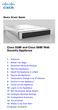 QUICK START GUIDE Cisco S380 and Cisco S680 Web Security Appliance 1 Welcome 2 Before You Begin 3 Document Network Settings 4 Plan the Installation 5 Install the Appliance in a Rack 6 Plug In the Appliance
Troubleshooting. Palo Alto Networks. Panorama Administrator s Guide Version 6.0. Copyright 2007-2015 Palo Alto Networks
 Palo Alto Networks Panorama Administrator s Guide Version 6.0 Contact Information Corporate Headquarters: Palo Alto Networks 4401 Great America Parkway Santa Clara, CA 95054 www.paloaltonetworks.com/company/contact-us
How to Configure Captive Portal
 How to Configure Captive Portal Captive portal is one of the user identification methods available on the Palo Alto Networks firewall. Unknown users sending HTTP or HTTPS 1 traffic will be authenticated,
Configuring SSL VPN on the Cisco ISA500 Security Appliance
 Application Note Configuring SSL VPN on the Cisco ISA500 Security Appliance This application note describes how to configure SSL VPN on the Cisco ISA500 security appliance. This document includes these
Chapter 9 Monitoring System Performance
 Chapter 9 Monitoring System Performance This chapter describes the full set of system monitoring features of your ProSafe Dual WAN Gigabit Firewall with SSL & IPsec VPN. You can be alerted to important
Hillstone StoneOS User Manual Hillstone Unified Intelligence Firewall Installation Manual
 Hillstone StoneOS User Manual Hillstone Unified Intelligence Firewall Installation Manual www.hillstonenet.com Preface Conventions Content This document follows the conventions below: CLI Tip: provides
1 You will need the following items to get started:
 QUICKSTART GUIDE 1 Getting Started You will need the following items to get started: A desktop or laptop computer Two ethernet cables (one ethernet cable is shipped with the _ Blocker, and you must provide
Manage Firewalls. Palo Alto Networks. Panorama Administrator s Guide Version 6.1. Copyright 2007-2015 Palo Alto Networks
 Manage Firewalls Palo Alto Networks Panorama Administrator s Guide Version 6.1 Contact Information Corporate Headquarters: Palo Alto Networks 4401 Great America Parkway Santa Clara, CA 95054 www.paloaltonetworks.com/company/contact-us
Deployment Guide AX Series for Palo Alto Networks Firewall Load Balancing
 Deployment Guide AX Series for Palo Alto Networks Firewall Load Balancing DG_PAFWLB_120718.1 TABLE OF CONTENTS 1 Overview... 4 2 Deployment Prerequisites... 4 3 Architecture Overview... 5 4 Access Credentials...
Web Interface Reference Guide Version 6.1
 Web Interface Reference Guide Version 6.1 Contact Information Corporate Headquarters: Palo Alto Networks 4401 Great America Parkway Santa Clara, CA 95054 http://www.paloaltonetworks.com/contact/contact/
SuperLumin Nemesis. Administration Guide. February 2011
 SuperLumin Nemesis Administration Guide February 2011 SuperLumin Nemesis Legal Notices Information contained in this document is believed to be accurate and reliable. However, SuperLumin assumes no responsibility
Palo Alto Networks Users Group. February 2014
 Palo Alto Networks Users Group February 2014 Topics of Discussion Syslog configuration, Integration and supported partners Panachrome App Scope Destination NAT Wildfire decision making Pan OS 6.0 brief
Firewall VPN Router. Quick Installation Guide M73-APO09-380
 Firewall VPN Router Quick Installation Guide M73-APO09-380 Firewall VPN Router Overview The Firewall VPN Router provides three 10/100Mbit Ethernet network interface ports which are the Internal/LAN, External/WAN,
F-Secure Messaging Security Gateway. Deployment Guide
 F-Secure Messaging Security Gateway Deployment Guide TOC F-Secure Messaging Security Gateway Contents Chapter 1: Deploying F-Secure Messaging Security Gateway...3 1.1 The typical product deployment model...4
QUICK START GUIDE. Cisco C170 Email Security Appliance
 1 0 0 1 QUICK START GUIDE Email Security Appliance Cisco C170 303357 Cisco C170 Email Security Appliance 1 Welcome 2 Before You Begin 3 Document Network Settings 4 Plan the Installation 5 Install the Appliance
Configuration Information
 This chapter describes some basic Email Security Gateway configuration settings, some of which can be set in the first-time Configuration Wizard. Other topics covered include Email Security interface navigation,
Internet Filtering Appliance. User s Guide VERSION 1.2
 Internet Filtering Appliance User s Guide VERSION 1.2 User s Guide VERSION 1.2 InternetSafety.com, Inc 3979 South Main Street Suite 230 Acworth, GA 30101 Phone 678 384 5300 Fax 678 384 5299 1 Table of
User Manual. Onsight Management Suite Version 5.1. Another Innovation by Librestream
 User Manual Onsight Management Suite Version 5.1 Another Innovation by Librestream Doc #: 400075-06 May 2012 Information in this document is subject to change without notice. Reproduction in any manner
Mobility System Software Quick Start Guide
 Mobility System Software Quick Start Guide Version 8.0 P/N 530-041387 Rev.05 Table of Contents About this Guide Using the Web Quick Start (WLC2, WLC8, WLC200,WLC800R, and WLC880R) Remotely Configuring
Testing and Restoring the Nasuni Filer in a Disaster Recovery Scenario
 Testing and Restoring the Nasuni Filer in a Disaster Recovery Scenario Version 7.2 November 2015 Last modified: November 3, 2015 2015 Nasuni Corporation All Rights Reserved Document Information Testing
Panorama High Availability
 Panorama High Availability Palo Alto Networks Panorama Administrator s Guide Version 6.0 Contact Information Corporate Headquarters: Palo Alto Networks 4401 Great America Parkway Santa Clara, CA 95054
How To Industrial Networking
 How To Industrial Networking Prepared by: Matt Crites Product: Date: April 2014 Any RAM or SN 6xxx series router Legacy firmware 3.14/4.14 or lower Subject: This document provides a step by step procedure
Web Application Firewall
 Web Application Firewall Getting Started Guide August 3, 2015 Copyright 2014-2015 by Qualys, Inc. All Rights Reserved. Qualys and the Qualys logo are registered trademarks of Qualys, Inc. All other trademarks
StorSimple Appliance Quick Start Guide
 StorSimple Appliance Quick Start Guide 5000 and 7000 Series Appliance Software Version 2.1.1 (2.1.1-267) Exported from Online Help on September 15, 2012 Contents Getting Started... 3 Power and Cabling...
Installing and Configuring vcenter Support Assistant
 Installing and Configuring vcenter Support Assistant vcenter Support Assistant 5.5 This document supports the version of each product listed and supports all subsequent versions until the document is replaced
Chapter 2 Connecting the FVX538 to the Internet
 Chapter 2 Connecting the FVX538 to the Internet Typically, six steps are required to complete the basic connection of your firewall. Setting up VPN tunnels are covered in Chapter 5, Virtual Private Networking.
CREATING AN IKE IPSEC TUNNEL BETWEEN AN INTERNET SECURITY ROUTER AND A WINDOWS 2000/XP PC
 CREATING AN IKE IPSEC TUNNEL BETWEEN AN INTERNET SECURITY ROUTER AND A WINDOWS 2000/XP PC 1 Introduction Release date: 11/12/2003 This application note details the steps for creating an IKE IPSec VPN tunnel
About the VM-Series Firewall
 About the VM-Series Firewall Palo Alto Networks VM-Series Deployment Guide PAN-OS 6.1 Contact Information Corporate Headquarters: Palo Alto Networks 4401 Great America Parkway Santa Clara, CA 95054 http://www.paloaltonetworks.com/contact/contact/
Multi-Homing Dual WAN Firewall Router
 Multi-Homing Dual WAN Firewall Router Quick Installation Guide M73-APO09-400 Multi-Homing Dual WAN Firewall Router Overview The Multi-Homing Dual WAN Firewall Router provides three 10/100Mbit Ethernet
Quick Start Guide. Sendio Email System Protection Appliance. Sendio 5.0
 Sendio Email System Protection Appliance Quick Start Guide Sendio 0 Sendio, Inc. 4911 Birch St, Suite 150 Newport Beach, CA 92660 USA +949.274375 www.sendio.com QUICK START GUIDE SENDIO This Quick Start
Note: This case study utilizes Packet Tracer. Please see the Chapter 5 Packet Tracer file located in Supplemental Materials.
 Note: This case study utilizes Packet Tracer. Please see the Chapter 5 Packet Tracer file located in Supplemental Materials. CHAPTER 5 OBJECTIVES Configure a router with an initial configuration. Use the
Upgrade Guide. Platform Compatibility. Dell Secure Mobile Access 11.0.0 Upgrade Guide
 Dell SonicOS This document describes the process of obtaining your Dell Secure Mobile Access firmware update file, verifying it, and installing it on an existing appliance. Updating a clustered pair of
Set Up the VM-Series Firewall in AWS
 Set Up the VM-Series Firewall in AWS Palo Alto Networks VM-Series Deployment Guide PAN-OS 6.1 Contact Information Corporate Headquarters: Palo Alto Networks 4401 Great America Parkway Santa Clara, CA 95054
Chapter 8 Router and Network Management
 Chapter 8 Router and Network Management This chapter describes how to use the network management features of your ProSafe Dual WAN Gigabit Firewall with SSL & IPsec VPN. These features can be found by
Shield Pro. Quick Start Guide
 Shield Pro In the box: Power Adapter Shield Network Cables Let s get started! Before installing Shield you will first need to determine which operating mode best fits your needs. To help with this process,
SevOne NMS Download Installation and Implementation Guide
 SevOne NMS Download Installation and Implementation Guide 5.3.X 530 V0002 Contents 1. Get Started... 3 2. SevOne Download Installation... 6 3. Appliance Network Configuration... 9 4. Install License and
Apache CloudStack 4.x (incubating) Network Setup: excerpt from Installation Guide. Revised February 28, 2013 2:32 pm Pacific
 Apache CloudStack 4.x (incubating) Network Setup: excerpt from Installation Guide Revised February 28, 2013 2:32 pm Pacific Apache CloudStack 4.x (incubating) Network Setup: excerpt from Installation Guide
Prestige 202H Plus. Quick Start Guide. ISDN Internet Access Router. Version 3.40 12/2004
 Prestige 202H Plus ISDN Internet Access Router Quick Start Guide Version 3.40 12/2004 Table of Contents 1 Introducing the Prestige...3 2 Hardware Installation...4 2.1 Rear Panel...4 2.2 The Front Panel
Configuring Global Protect SSL VPN with a user-defined port
 Configuring Global Protect SSL VPN with a user-defined port Version 1.0 PAN-OS 5.0.1 Johan Loos [email protected] Global Protect SSL VPN Overview This document gives you an overview on how to configure
Load Balancing. Outlook Web Access. Web Mail Using Equalizer
 Load Balancing Outlook Web Access Web Mail Using Equalizer Copyright 2009 Coyote Point Systems, Inc. Printed in the USA. Publication Date: January 2009 Equalizer is a trademark of Coyote Point Systems
UIP1868P User Interface Guide
 UIP1868P User Interface Guide (Firmware version 0.13.4 and later) V1.1 Monday, July 8, 2005 Table of Contents Opening the UIP1868P's Configuration Utility... 3 Connecting to Your Broadband Modem... 4 Setting
Configuring Trend Micro Content Security
 9 CHAPTER This chapter describes how to configure the CSC SSM using the CSC Setup Wizard in ASDM and the CSC SSM GUI, and includes the following sections: Information About the CSC SSM, page 9-1 Licensing
High Availability. Palo Alto Networks. PAN-OS Administrator s Guide Version 6.0. Copyright 2007-2015 Palo Alto Networks
 High Availability Palo Alto Networks PAN-OS Administrator s Guide Version 6.0 Contact Information Corporate Headquarters: Palo Alto Networks 4401 Great America Parkway Santa Clara, CA 95054 www.paloaltonetworks.com/company/contact-us
Barracuda Link Balancer
 Barracuda Networks Technical Documentation Barracuda Link Balancer Administrator s Guide Version 2.2 RECLAIM YOUR NETWORK Copyright Notice Copyright 2004-2011, Barracuda Networks www.barracuda.com v2.2-110503-01-0503
Installation Steps for PAN User-ID Agent
 Installation Steps for PAN User-ID Agent If you have an Active Directory domain, and would like the Palo Alto Networks firewall to match traffic to particular logged-in users, you can install the PAN User-ID
A Guide to New Features in Propalms OneGate 4.0
 A Guide to New Features in Propalms OneGate 4.0 Propalms Ltd. Published April 2013 Overview This document covers the new features, enhancements and changes introduced in Propalms OneGate 4.0 Server (previously
3.5 EXTERNAL NETWORK HDD. User s Manual
 3.5 EXTERNAL NETWORK HDD User s Manual Table of Content Before You Use Key Features H/W Installation Illustration of Product LED Definition NETWORK HDD Assembly Setup the Network HDD Home Disk Utility
emerge 50P emerge 5000P
 emerge 50P emerge 5000P Initial Software Setup Guide May 2013 Linear LLC 1950 Camino Vida Roble Suite 150 Carlsbad, CA 92008 www.linearcorp.com Copyright Linear LLC. All rights reserved. This guide is
Virtual Appliance Setup Guide
 The Virtual Appliance includes the same powerful technology and simple Web based user interface found on the Barracuda Web Application Firewall hardware appliance. It is designed for easy deployment on
Configuration Guide. BES12 Cloud
 Configuration Guide BES12 Cloud Published: 2016-04-08 SWD-20160408113328879 Contents About this guide... 6 Getting started... 7 Configuring BES12 for the first time...7 Administrator permissions you need
Vantage RADIUS 50. Quick Start Guide Version 1.0 3/2005
 Vantage RADIUS 50 Quick Start Guide Version 1.0 3/2005 1 Introducing Vantage RADIUS 50 The Vantage RADIUS (Remote Authentication Dial-In User Service) 50 (referred to in this guide as Vantage RADIUS)
WEBTITAN CLOUD. User Identification Guide BLOCK WEB THREATS BOOST PRODUCTIVITY REDUCE LIABILITIES
 BLOCK WEB THREATS BOOST PRODUCTIVITY REDUCE LIABILITIES WEBTITAN CLOUD User Identification Guide This guide explains how to install and configure the WebTitan Cloud Active Directory components required
1 PC to WX64 direction connection with crossover cable or hub/switch
 1 PC to WX64 direction connection with crossover cable or hub/switch If a network is not available, or if it is desired to keep the WX64 and PC(s) completely separated from other computers, a simple network
Connecting the DG-102S VoIP Gateway to your network
 Contents of Package: DG-102S VoIP Station Gateway Power adapter CD-ROM, including User s Manual Quick Install Guide Requirements: RS-232 Console Cable Two RJ-45 CAT-5 Straight-Through Cables For more information
Broadband Router ESG-103. User s Guide
 Broadband Router ESG-103 User s Guide FCC Warning This equipment has been tested and found to comply with the limits for Class A & Class B digital device, pursuant to Part 15 of the FCC rules. These limits
Virtual Appliance Setup Guide
 Virtual Appliance Setup Guide 2015 Bomgar Corporation. All rights reserved worldwide. BOMGAR and the BOMGAR logo are trademarks of Bomgar Corporation; other trademarks shown are the property of their respective
IP Configuration Manual
 IP Configuration Manual Safety precautions and warnings Thank you for deciding to use a Frama Franking System. The information in this guide is intended to support you during the configuration of the franking
Updating MNS-BB CUSTOMER SUPPORT INFORMATION PK012906
 Updating MNS-BB PK012906 CUSTOMER SUPPORT INFORMATION Order toll-free in the U.S. 24 hours, 7 A.M. Monday to midnight Friday: 877-877-BBOX FREE technical support, 24 hours a day, 7 days a week: Call 724-746-5500
Management Software. Web Browser User s Guide AT-S106. For the AT-GS950/48 Gigabit Ethernet Smart Switch. Version 1.0.0. 613-001339 Rev.
 Management Software AT-S106 Web Browser User s Guide For the AT-GS950/48 Gigabit Ethernet Smart Switch Version 1.0.0 613-001339 Rev. A Copyright 2010 Allied Telesis, Inc. All rights reserved. No part of
System Administration Training Guide. S100 Installation and Site Management
 System Administration Training Guide S100 Installation and Site Management Table of contents System Requirements for Acumatica ERP 4.2... 5 Learning Objects:... 5 Web Browser... 5 Server Software... 5
How to configure Linksys SPA 941 942 for VOIP Connections
 How to configure Linksys SPA 941 942 for VOIP Connections Congratulations. Welcome to VOIP Connections family. 1.) Connect the phone properly. Make sure the phone is connected securely to your router or
Broadband Phone Gateway BPG510 Technical Users Guide
 Broadband Phone Gateway BPG510 Technical Users Guide (Firmware version 0.14.1 and later) Revision 1.0 2006, 8x8 Inc. Table of Contents About your Broadband Phone Gateway (BPG510)... 4 Opening the BPG510's
Aspen Cloud Server Management Console
 Aspen Cloud Server Management Console Management of Cloud Server Resources Power All Networks Ltd. User Guide June 2011, version 1.1.1 Refer to ICP V1.1 PAGE 1 Table of Content 1. Introduction... 4 2.
Connect the Host to attach to Fast Ethernet switch port Fa0/2. Configure the host as shown in the topology diagram above.
 Lab 1.2.2 Capturing and Analyzing Network Traffic Host Name IP Address Fa0/0 Subnet Mask IP Address S0/0/0 Subnet Mask Default Gateway RouterA 172.17.0.1 255.255.0.0 192.168.1.1 (DCE) 255.255.255.0 N/A
SSL-VPN 200 Getting Started Guide
 Secure Remote Access Solutions APPLIANCES SonicWALL SSL-VPN Series SSL-VPN 200 Getting Started Guide SonicWALL SSL-VPN 200 Appliance Getting Started Guide Thank you for your purchase of the SonicWALL SSL-VPN
Deploying Secure Internet Connectivity
 C H A P T E R 5 Deploying Secure Internet Connectivity This chapter is a step-by-step procedure explaining how to use the ASDM Startup Wizard to set up the initial configuration for your ASA/PIX Security
VMware vcloud Air Networking Guide
 vcloud Air This document supports the version of each product listed and supports all subsequent versions until the document is replaced by a new edition. To check for more recent editions of this document,
Plesk 11 Manual. Fasthosts Customer Support
 Fasthosts Customer Support Plesk 11 Manual This guide covers everything you need to know in order to get started with the Parallels Plesk 11 control panel. Contents Introduction... 3 Before you begin...
PineApp Surf-SeCure Quick
 PineApp Surf-SeCure Quick Installation Guide September 2010 WEB BASED INSTALLATION SURF-SECURE AS PROXY 1. Once logged in, set the appliance s clock: a. Click on the Edit link under Time-Zone section.
STARTER KIT. Infoblox DNS Firewall for FireEye
 STARTER KIT Introduction Infoblox DNS Firewall integration with FireEye Malware Protection System delivers a unique and powerful defense against Advanced Persistent Threats (APT) for business networks.
Barracuda IM Firewall Administrator s Guide
 Barracuda IM Firewall Administrator s Guide Version 3.0 Barracuda Networks Inc. 3175 S. Winchester Blvd Campbell, CA 95008 http://www.barracuda.com Copyright Notice Copyright 2007, Barracuda Networks www.barracuda.com
ez Agent Administrator s Guide
 ez Agent Administrator s Guide Copyright This document is protected by the United States copyright laws, and is proprietary to Zscaler Inc. Copying, reproducing, integrating, translating, modifying, enhancing,
3.1 RS-232/422/485 Pinout:PORT1-4(RJ-45) RJ-45 RS-232 RS-422 RS-485 PIN1 TXD PIN2 RXD PIN3 GND PIN4 PIN5 T+ 485+ PIN6 T- 485- PIN7 R+ PIN8 R-
 MODEL ATC-2004 TCP/IP TO RS-232/422/485 CONVERTER User s Manual 1.1 Introduction The ATC-2004 is a 4 Port RS232/RS485 to TCP/IP converter integrated with a robust system and network management features
SOHO 6 Wireless Installation Procedure Windows 95/98/ME with Internet Explorer 5.x & 6.0
 SOHO 6 Wireless Installation Procedure Windows 95/98/ME with Internet Explorer 5.x & 6.0 Before You Begin Before you install the SOHO 6 Wireless, you must have: A computer with a 10/100BaseT Ethernet card
c. Securely insert the Ethernet cable from your cable or DSL modem into the Internet port (B) on the WGT634U. Broadband modem
 Start Here Follow these instructions to set up your router. Verify That Basic Requirements Are Met Assure that the following requirements are met: You have your broadband Internet service settings handy.
Testing and Restoring the Nasuni Filer in a Disaster Recovery Scenario
 Testing and Restoring the Nasuni Filer in a Disaster Recovery Scenario Version 7.0 July 2015 2015 Nasuni Corporation All Rights Reserved Document Information Testing Disaster Recovery Version 7.0 July