
WildFire Reporting. WildFire Administrator s Guide 55. Copyright Palo Alto Networks
|
|
|
- Jack Morrison
- 10 years ago
- Views:
Transcription
1 WildFire Reporting When malware is discovered on your network, it is important to take quick action to prevent spread of the malware to other systems. To ensure immediate alerts to malware discovered on your network, configure your firewalls to send notifications, SNMP Traps, and/or syslogs whenever WildFire returns a malware verdict on a file forwarded from a firewall. This allows you to quickly view the WildFire analysis report and identify the user who downloaded the malware, determine if the user ran the infected file, and assess whether the malware attempted to spread itself to other hosts on the network. If you determine that the user ran the file, you can quickly disconnect the computer from the network to prevent the malware from spreading and follow incident response and remediation processes as required. The following topics describe the WildFire reporting and logging system and will show you how to use this information to track down threats and to identify users who have been targeted by malware. WildFire Logs Monitor Submissions Using the WildFire Portal Customize WildFire Portal Settings Add WildFire Portal User Accounts View WildFire Reports What is in the WildFire Reports? Set Up Alerts for Detected Malware Use Case: Use WildFire to Detect and Block Threats WildFire Administrator s Guide 55

2 WildFire Logs WildFire Reporting WildFire Logs Each firewall that is configured to forward files to WildFire will log the forward action in the data filtering logs. After WildFire analyzes the file, if the verdict is malware, the results will be sent back to the firewall and will appear in the WildFire logs. The detailed analysis report for each file is available in the detailed WildFire log by clicking the View WildFire Report button. The report is then retrieved from the WildFire appliance or the WildFire cloud. The reports can also be viewed from the WildFire portal at If your firewalls are forwarding files to a WildFire appliance for analysis, log results can only be viewed from the firewall; there is no direct web portal access to the appliance. Forwarding Action Logs The data filtering logs located in Monitor > Logs > Data Filtering will show the files that were blocked/forwarded based on the file blocking profile. To determine which files were forwarded to WildFire, look for the following values in the Action column of the log: Log wildfire-upload-success wildfire-upload-skip Description The file was sent to the WildFire cloud a WildFire appliance. This means the file is not signed by a trusted file signer, it has not been previously analyzed by WildFire. Displayed for all files identified as eligible to be sent to WildFire by a file blocking profile/security policy, but did not need to be analyzed by WildFire because it has already been analyzed previously. In this case, the forward action will appear in the Data Filtering log because it was a valid forward action, but it was not sent to WildFire and analyzed because the file has already been sent to the WildFire cloud or WildFire appliance from another session, possibly from another firewall. WildFire Logs The analysis results of the files scanned by WildFire are sent back to the firewall logs after the analysis completes. These logs are written to the firewall that forwarded the file in Monitor > Logs > WildFire Submissions. If logs are forwarded from the firewall to Panorama, the logs are written to the Panorama server in Monitor > Logs > WildFire Submissions. The Category column for the WildFire logs will either show benign, meaning that the file is safe, or malicious, indicating that WildFire determined that the file contains malicious code. If the file is determined to be malicious, a signature will be generated by the WildFire signature generator. If you are using a WildFire appliance, auto-submit must be enabled on the appliance so malware infected files will be sent to the WildFire cloud for signature generation. By default, devices with a WildFire subscription will only retrieve analysis results from the WildFire cloud for files that are found to be malware. To also log files with the benign verdict, select Device > Setup > WildFire and edit General Settings and then click the Report Benign Files check box. You can also run the CLI command: admin@wf-500# set deviceconfig setting wildfire report-benign-file. To view the detailed report for a file that has been analyzed by WildFire, locate the log entry in the WildFire log, click the icon to the left of the log entry to show the log details and then click the View WildFire Report button. A login prompt will appear to access the report and after entering the correct credentials the report is retrieved from the WildFire system and is displayed in your browser. For information on portal accounts to access the WildFire cloud, see Add WildFire Portal User Accounts. For information on the admin account that is used to retrieve reports from a WildFire appliance, see Integrate the WF-500 Appliance into the Network and the step that describes the portal-admin account. 56 WildFire Administrator s Guide

3 WildFire Reporting Monitor Submissions Using the WildFire Portal Monitor Submissions Using the WildFire Portal Browse to the Palo Alto Networks WildFire Portal at and log in using your Palo Alto Networks support credentials or your WildFire account. The portal opens to display the dashboard, which lists summary report information for all of the firewalls associated with the specific WildFire subscription or support account (as well as any files that have been uploaded manually). For each device, statistics will be displayed for the number of malware files that have been detected, benign files that have been analyzed, and the number of pending files that are waiting to be analyzed. Also displayed is the date and time that the firewall first registered with the portal to begin file forwarding to WildFire. When a firewall forwards files to a WF-500 WildFire appliance, the WildFire reports can only be viewed from the WildFire Submissions log on the firewall that sent the file. You can not view reports from the WildFire cloud portal, even if auto-submit is enabled on the WF-500 appliance. For information on configuring additional WildFire accounts that can be used to review report information, see Add WildFire Portal User Accounts. WildFire Administrator s Guide 57

4 Customize WildFire Portal Settings WildFire Reporting Customize WildFire Portal Settings This section describes the settings that can be customized for a portal account, such as time zone and notifications for each firewall. You can also delete logs for each firewall that forwards files to the WildFire cloud. Customize the WildFire Portal Settings Step 1 Step 2 Configure the time zone for the portal account. Delete WildFire logs for specific firewalls. This will delete all logs and notifications for the selected firewall. 1. Access the WildFire Portal and log in using your Palo Alto Networks support credentials or your WildFire user account. 2. Click the Settings link located at the upper right of the portal window. 3. Select the time zone from the drop-down and then click Update Time Zone to save the change. The time stamp that will appear on the WildFire detailed report will use the time zone set on your portal account. 1. In the Delete WildFire Logs drop-down, select the firewall (by serial number). 2. Click the Delete Logs button. 3. Click OK to proceed with the deletion. Step 3 Configure notifications that will be generated based on the results of files submitted to WildFire. The notification swill be sent to the account registered in the support account. 1. From the portal settings page, a table will be displayed with the column headings Device, Malware, and Benign. Check Malware and/or Benign for each firewall to which you would like to receive notifications. Click the Update Notification to enable notifications for the selected firewalls. 2. The first row item will show Manual. Select Malware and/or Benign to receive a notification for files that are manually uploaded to the WildFire cloud, or that are submitted using the WildFire API and click Update Notification to save. Select the check boxes directly below the column headings Malware and Benign to select all of the check boxes for the listed devices. 58 WildFire Administrator s Guide

5 WildFire Reporting Add WildFire Portal User Accounts Add WildFire Portal User Accounts WildFire portal accounts are created by a super user (or the registered owner of a Palo Alto Networks device) to give additional users the ability to log in to the WildFire web portal and view WildFire data for devices specifically granted by the super user or registered owner. A super user is the person who registered a Palo Alto Networks firewall and has the main support account for the device(s). The WildFire user can be an existing support site user that belongs to any account (including the sub-account, parent account, or any other account in the system), or they may not have a Palo Alto Networks support account at all and can be granted access to just the WildFire portal and a specific set of firewalls. When a firewall forwards files to a WF-500 WildFire appliance, the WildFire reports can only be viewed from the WildFire Submissions log on the firewall that sent the file. You can not view reports from the WildFire cloud portal, even if auto-submit is enabled on the WF-500 appliance. Add WildFire User Accounts Step 1 Access the manage users and accounts section on the support site and select an account. 1. Log in to Palo Alto Networks Support site. 2. Under Manage Account click on Users and Accounts. 3. Select an existing account or sub-account. Step 2 Add a WildFire user. 1. Click the Add WildFire User button. 2. Enter the address for the user recipient would like to add. The user can be an existing support site user that belongs to any account (including the sub-account, parent account, Palo Alto Networks, or any other account in the system), as well as any address that does not have a support account at all. The only restriction is that the address cannot be from a free web-based account (Gmail, Hotmail, Yahoo, and so on). If an address is entered for a domain that is not supported, a pop-up warning will be displayed. Step 3 Assign firewalls to the new user account and access the WildFire portal. 1. Select the firewall(s) by S/N that you want to grant access to and fill out the optional account details. An will then be sent to the user. Users with an existing support account will receive an with a list of the firewalls that are now available for WildFire report viewing. If the user does not have a support account, an will be sent with instructions on how to access the portal and how to set up a new password. 2. Users can now log in to the WildFire Portal and view WildFire reports for the firewalls to which they have been granted access. Users can also configure automatic alerts for these devices in order to receive alerts on files analyzed. They can choose to receive reports on malicious and/or benign files. WildFire Administrator s Guide 59

6 View WildFire Reports WildFire Reporting View WildFire Reports The primary method for viewing WildFire reports sent to the WildFire cloud or to a WildFire appliance is to access the firewall that forwarded the file to WildFire and then select Monitor > Logs > WildFire Submissions, select the WildFire Analysis Report tab. If the firewall is forwarding logs to Panorama, logs can be viewed from Panorama in the same area. When submitting files to the WildFire portal (by firewall forwarding, manual upload, or the WildFire API), reports can be accessed from the firewall as well as from the WildFire portal. To access the reports from the portal, log in to and click the Reports button at the top of the WildFire portal page. A list will be displayed showing the date the file was received, the firewall serial number that forwarded the file (or manual if the file was uploaded manually or using the WildFire API), the filename or URL, and the verdict (Malware or Benign). Search is also available at the top of the page and you can search by file name or the sha256 value. To view an individual report from the portal, click the Reports icon to the left of the report name. To save the detailed report, click the Download as PDF button on the upper right of the report page. The following shows a list of sample files submitted by a firewall: 60 WildFire Administrator s Guide

7 WildFire Reporting What is in the WildFire Reports? What is in the WildFire Reports? The WildFire reports will show detailed behavioral information on the file that was run in the WildFire system, along with information on the user who was targeted, the application that delivered the file, and all URLs involved in the delivery or phone-home activity of the file. The following table describes each section that will be displayed in a typical WildFire analysis report. The organization of the report may differ depending on the version of the WildFire appliance software installed on the WildFire appliance, or if reports are viewed from the WildFire cloud. The report will contain some or all of the following information based on the session information defined on the firewall that forwarded the file and depending on the observed behavior. When viewing a WildFire report for a file that was manually uploaded to the WildFire portal or by using the WildFire API, the report will not show session information because it was not forwarded by a firewall. For example, the report would not show the Attacker/Source and Victim/Destination. Report Heading Download PDF File Information Description This button is located in the upper right corner of each report. Click the button to download a PDF version of the analysis report. File Type PE, PDF, APK, JAR/Class, or MS Office. File Signer The entity that signed the file for authenticity purposes. SHA-256 Displays the SHA information for the file. The SHA information is much like a fingerprint that uniquely identifies a file to ensure that the file has not been modified in any way. MD5 Displays the MD5 information for the file. The MD5 information is much like a fingerprint that uniquely identifies a file to ensure that the file has not been modified in any way. File Size The size (in bytes) of the file that was analyzed. First Seen Timestamp If the WildFire system has analyzed the file previously, this is the date/time that it was first seen. Verdict Displays the analysis verdict: Benign The file is safe and does not exhibit malicious behavior. Malware WildFire identified the file as malware and a signature will be generated to protect against future exposure. Sample File Click the Download File link to download the sample file to your local system. Virus Coverage Click this link to see if the file has been previously identified. This will bring up the website, which contains information about various antivirus vendors and will show whether or not the vendors have coverage for the infected file. If the file has never been seen by any of the listed vendors, file not found will be displayed. WildFire Administrator s Guide 61

8 What is in the WildFire Reports? WildFire Reporting Report Heading Session Information Dynamic Analysis Description Options used to customize which session information to include in the WildFire reports for files forwarded by a Palo Alto Networks firewall. The settings for these options are defined on the firewall that sends the sample file to WildFire and is configured in Device > Setup > WildFire tab in the Session Information Settings section. The following options are available: Source IP Source Port Destination IP Destination Port Virtual System (If multi-vsys is configured on the firewall) Application User (If User-ID is configured on the firewall) URL Filename If a file is low risk and WildFire can easily determine that it is safe, only a static analysis is performed, instead of a dynamic analysis. When a dynamic analysis is performed, this section contains tabs for each virtual environment that the sample was run in when analyzing files in the WildFire cloud. For example, Virtual Machine 1 tab may have Windows XP, Adobe Reader 9.3.3, and Office 2003 and Virtual Machine 2 may have similar attributes, but with Office When a file goes through a full dynamic analysis, it is run in each virtual machine and the results of each environment can be viewed by clicking any of the Virtual Machine tabs. On the WF-500 WildFire appliance, one virtual machine will be used and is selected by the administrator based on the virtual environment attributes that best matches the local environment. For example, if most users have Windows 7, that virtual machine would be selected. 62 WildFire Administrator s Guide

9 WildFire Reporting What is in the WildFire Reports? Report Heading Behavior Summary Report Incorrect Verdict Description Each Virtual Machine tab summarizes the behavior of the sample file in the specific environment. Examples include whether the sample created or modified files, started a process, spawned new processes, modified the registry, or installed browser helper objects. The following describes the various behaviors that are analyzed.: Network Activity Shows network activity performed by the sample, such as accessing other hosts on the network, DNS queries, and phone-home activity. A link is provided to download the packet capture. Host Activity Lists any registry keys that were set, modified, or deleted. Process Activity Lists files that started a parent process, the process name, and the action the process performed. File Lists files that started a child processes, the process name, and the action the process performed. Mutex If the sample file generates other program threads, the mutex name and parent process will be logged in this field. Activity Timeline Provides a play-by-play list of all recorded activity of the sample. This will help in understanding the sequence of events that occurred during the analysis. The activity timeline information is only available in the PDF export of the WildFire reports. Click this link to submit the sample to the Palo Alto Networks threat team if you feel the verdict is a false positive or false negative. The threat team will perform further analysis on the sample to determine if it should be reclassified. If a malware sample is determined to be safe, the signature for the file will be disabled in an upcoming antivirus signature update or if a benign file is determined to be malicious, a new signature will be generated. After the investigation is complete, an will be sent to the submitter (if an address is provided) on the status of the investigation. WildFire Administrator s Guide 63

10 Set Up Alerts for Detected Malware WildFire Reporting Set Up Alerts for Detected Malware This section describes the steps required to configure a Palo Alto Networks firewall to send an alert each time WildFire returns a threat log to the firewall indicating malware was detected. Alerts can also be configured from the WildFire portal, see Monitor Submissions Using the WildFire Portal. If you are using a WF-500 appliance and do not forward files to the WildFire cloud using the auto-submit option, you will need to configure alerts on the firewall. This example describes how to configure an alert, however you could also configure log forwarding to receive alerts via syslog, SNMP traps, and/or Panorama. Set Up Alerts for Malware Step 1 Configure an server profile if one is not configured. 1. Select Device > Server Profiles > Click Add and then enter a Name for the profile. For example, WildFire- -Profile. 3. (Optional) Select the virtual system to which this profile applies from the Location drop-down. 4. Click Add to add a new server entry and enter the information required to connect to the Simple Mail Transport Protocol (SMTP) server and send (up to four servers can be added to the profile): Server Name to identify the mail server (1-31 characters). This field is just a label and does not have to be the host name of an existing SMTP server. Display Name The name to show in the From field of the . From The address where notification s will be sent from. To The address to which notification s will be sent. Additional Recipient(s) Enter an address to send notifications to a second recipient. Gateway The IP address or host name of the SMTP gateway to use to send the s. 5. Click OK to save the server profile. 6. Click Commit to save the changes to the running configuration. Step 2 Test the server profile. 1. Select Monitor > PDF Reports > Scheduler. 2. Click Add and select the new profile from the Profile drop-down. 3. Click the Send test button and a test should be sent to the recipients defined in the profile. 64 WildFire Administrator s Guide

11 WildFire Reporting Set Up Alerts for Detected Malware Set Up Alerts for Malware (Continued) Step 3 Configure a log forwarding profile. The log forwarding profile determines what traffic is monitored and what severity will trigger an alert notification. 1. Select Objects > Log Forwarding. 2. Click Add and name the profile. For example, WildFire-Log-Forwarding. 3. In the WildFire Settings section, choose the profile from the column for Benign and/or Malicious. The reason why medium is used here is because WildFire malware logs have a Medium severity. To alert on WildFire benign logs, select the severity Informational. 4. Click OK to save the changes. You can also forward logs to Panorama, Syslog servers, or send SNMP traps. Select the check box in the Panorama column to enable, or select a profile for SNMP or syslog destinations. Step 4 Apply the log forwarding profile to the security profile that contains the file blocking profile. 1. Select Policies > Security and click on the policy that is used for WildFire forwarding. 2. In the Actions tab Log Setting section, click the Log Forwarding drop-down and select the new log forwarding profile. In this example, the profile is named WildFire-Log-Forwarding. 3. Click OK to save the changes and then Commit the configuration. WildFire logs will now be forwarded to the address( s) defined in the profile. WildFire Administrator s Guide 65

12 Set Up Alerts for Detected Malware WildFire Reporting Set Up Alerts for Malware (Continued) Step 5 (PA-7050 only) If you are configuring a PA-7050 firewall, a data port on one of the NPCs must be configured with the interface type Log Card. This is due to the traffic/logging capabilities of the PA-7050 to avoid overwhelming the MGT port. When a data port is configured as type Log Card, log forwarding and WildFire file forwarding will be sent through the Log Card port instead of using the default service route. This port will be used by the log card directly and will act as a log forwarding port for Syslog, , SNMP, and WildFire file forwarding. After the port is configured, WildFire file forwarding will use this port, as well as the following log types: traffic, HIP match, threat, and WildFire logs. If the port is not configured, a commit error will be displayed and only one port can be configured with the Log Card type. The MGT port cannot be used for forwarding samples to WildFire, even if you configure a service route. The PA-7050 does not forward logs to Panorama. Panorama will only query the PA-7050 log card for log information. 1. Select Network > Interfaces and locate an available port on an NPC. 2. Select the port and change the Interface Type to Log Card. 3. In the Log Card Forwarding tab, enter IP information (IPv4 and/or IPv6) for the network that is used to communicate with the systems that you will use to receive logs. For example: Syslog servers and servers. For WildFire file forwarding ensure connectivity to the WildFire cloud or a WildFire appliance, such as the WF Connect the newly configured port to a switch or router. There is no other configuration needed. The PA-7050 will use this port as soon as it is activated. 5. Commit the configuration. 66 WildFire Administrator s Guide

13 WildFire Reporting Use Case: Use WildFire to Detect and Block Threats Use Case: Use WildFire to Detect and Block Threats The following example scenario summarizes the full WildFire lifecycle. In this example, a sales representative from Palo Alto Networks downloads a new software sales tool that a sales partner uploaded to Dropbox. The sales partner unknowingly uploaded an infected version of the sales tool install file and the sales rep then downloads the infected file. This example will demonstrate how the Palo Alto Networks firewall in conjunction with WildFire can discover zero-day malware downloaded by your users even when the traffic is SSL encrypted. After the malware is identified, the administrator is notified, the user who downloaded the file is contacted, and a new signature to protect against future exposure of the malware is automatically downloaded by the firewall through antivirus updates. Although some file sharing web sites have an antivirus feature that checks files as they are uploaded, they can only protect against known malware. For more information on configuring WildFire, see Forward Files to the WildFire Cloud or Forward Files to a WF-500 WildFire Appliance. This example uses a web site that uses SSL encryption, so decryption must be configured on the firewall and Allow forwarding of decrypted content must be enabled. For information on enabling forwarding of decrypted content, see Forward Files to the WildFire Cloud or Forward Files to a WF-500 WildFire Appliance. WildFire Example Scenario Step 1 Step 2 The sales person from the partner company uploads a sales tool file named sales-tool.exe to his Dropbox account and then sends an to the Palo Alto Networks sales person with a link to the file. The Palo Alto sales person receives the from the sales partner and clicks the download link, which takes her to the Dropbox site. She then clicks Download and the file is saved to her desktop. WildFire Administrator s Guide 67

14 Use Case: Use WildFire to Detect and Block Threats WildFire Reporting WildFire Example Scenario (Continued) Step 3 The firewall that is protecting the Palo Alto sales rep has a file blocking profile attached to a security policy that will look for files in any application that is used to download or upload any of the supported file type (PE, PDF, APK, JAR/Class, or MS Office). As soon as the sales rep clicks download, the firewall policy also forwards the sales-toole.exe file to WildFire, where the file is analyzed for zero-day malware. Even though the sales rep is using Dropbox, which is SSL encrypted, the firewall is configured to decrypt traffic, so all traffic can be inspected and files can be forwarded to WildFire. The following screen shots show the File Blocking Profile, the Security Policy configured with the File Blocking profile, and the option to allow forwarding of decrypted content. 68 WildFire Administrator s Guide

15 WildFire Reporting Use Case: Use WildFire to Detect and Block Threats WildFire Example Scenario (Continued) Step 4 At this point, WildFire has received the file and is analyzing it for more than 200 different malicious behaviors. To see that the file was forwarded successfully, view Monitor > Logs > Data Filtering on the firewall. Step 5 Within approximately five minutes, WildFire has completed the file analysis and then sends a WildFire log back to the firewall with the analysis results. In this example, the WildFire log shows that the file is malicious. Step 6 A log forwarding profile used to WildFire alerts is also configured, so the security administrator immediately receives an about the malware download. WildFire Administrator s Guide 69

16 Use Case: Use WildFire to Detect and Block Threats WildFire Reporting WildFire Example Scenario (Continued) Step 7 The security administrator identifies the user by name if User-ID is configured, or by IP address if User-ID is not enabled. At this point, the administrator can shut down the network or VPN connection that the sales rep is using and then contact the desktop support group to work with the user to check and clean the system. By using the WildFire detailed analysis report, the desktop support person can determine if the user system is infected with malware by looking at the files, processes, and registry information detailed in the WildFire analysis report. If the malware was run, the support person can attempt to clean the system manually or re-image it. For details on the WildFire report fields, see What is in the WildFire Reports?. Figure: Partial View of the WildFire Analysis Report in PDF 70 WildFire Administrator s Guide

17 WildFire Reporting Use Case: Use WildFire to Detect and Block Threats WildFire Example Scenario (Continued) Step 8 Now that the malware has been identified and the user s system is being checked, how do you protect from future exposure? Answer: In this example, the administrator set a schedule on the firewall to download and install WildFire signatures every 15 minutes and to download and install Antivirus updates each day. In less than an hour and a half after the sales rep downloaded the infected file, WildFire identified the zero-day malware, generated a signature, added it to the WildFire update signature database provided by Palo Alto Networks, and the firewall downloaded the new signature. This firewall and any other Palo Alto Networks firewall configured to download WildFire and threat signatures is now protected against this newly discovered malware. The following screenshot shows the WildFire update schedule: All of this happens well before most antivirus vendors are even aware of the zero-day malware. In this example, the malware is no longer considered zero-day because Palo Alto Networks knows about the malware and has already provided protection to customers. WildFire Administrator s Guide 71

18 Use Case: Use WildFire to Detect and Block Threats WildFire Reporting 72 WildFire Administrator s Guide

WildFire Reporting. WildFire Administrator s Guide. Version 6.1
 WildFire Reporting WildFire Administrator s Guide Version 6.1 Contact Information Corporate Headquarters: Palo Alto Networks 4401 Great America Parkway Santa Clara, CA 95054 www.paloaltonetworks.com/company/contact
WildFire Cloud File Analysis
 WildFire Cloud File Analysis The following topics describe the different methods for sending files to the WildFire Cloud for analysis. Forward Files to the WildFire Cloud Verify Firewall File Forwarding
WildFire Cloud File Analysis
 WildFire 6.1 Administrator s Guide WildFire Cloud File Analysis Palo Alto Networks WildFire Administrator s Guide Version 6.1 Contact Information Corporate Headquarters: Palo Alto Networks 4401 Great America
Content Inspection Features
 Content Inspection Features PAN-OS New Features Guide Version 6.0 Contact Information Corporate Headquarters: Palo Alto Networks 4401 Great America Parkway Santa Clara, CA 95054 http://www.paloaltonetworks.com/contact/contact/
WF-500 File Analysis
 WF-500 File Analysis This section describes the WF-500 WildFire appliance and how to configure and manage the appliance to prepare it to receive files for analysis. In addition, this section provides steps
WildFire Overview. WildFire Administrator s Guide 1. Copyright 2007-2015 Palo Alto Networks
 WildFire Overview WildFire provides detection and prevention of zero-day malware using a combination of malware sandboxing and signature-based detection and blocking of malware. WildFire extends the capabilities
WF-500 Appliance File Analysis
 WF-500 Appliance File Analysis Palo Alto Networks WildFire Administrator s Guide Version 6.1 Contact Information Corporate Headquarters: Palo Alto Networks 4401 Great America Parkway Santa Clara, CA 95054
WildFire Features. Palo Alto Networks. PAN-OS New Features Guide Version 6.1. Copyright 2007-2015 Palo Alto Networks
 WildFire Features Palo Alto Networks PAN-OS New Features Guide Version 6.1 Contact Information Corporate Headquarters: Palo Alto Networks 4401 Great America Parkway Santa Clara, CA 95054 http://www.paloaltonetworks.com/contact/contact/
Configuring PA Firewalls for a Layer 3 Deployment
 Configuring PA Firewalls for a Layer 3 Deployment Configuring PAN Firewalls for a Layer 3 Deployment Configuration Guide January 2009 Introduction The following document provides detailed step-by-step
Configuration Information
 This chapter describes some basic Email Security Gateway configuration settings, some of which can be set in the first-time Configuration Wizard. Other topics covered include Email Security interface navigation,
Palo Alto Networks Users Group. February 2014
 Palo Alto Networks Users Group February 2014 Topics of Discussion Syslog configuration, Integration and supported partners Panachrome App Scope Destination NAT Wildfire decision making Pan OS 6.0 brief
How To Monitor Network Activity On Palo Alto Network On Pnetorama On A Pcosa.Com (For Free)
 Monitor Network Activity Palo Alto Networks Panorama Administrator s Guide Version 6.0 Contact Information Corporate Headquarters: Palo Alto Networks 4401 Great America Parkway Santa Clara, CA 95054 www.paloaltonetworks.com/company/contact-us
Monitor Network Activity
 Monitor Network Activity Palo Alto Networks Panorama Administrator s Guide Version 6.1 Contact Information Corporate Headquarters: Palo Alto Networks 4401 Great America Parkway Santa Clara, CA 95054 www.paloaltonetworks.com/company/contact-us
Manage Licenses and Updates
 Manage Licenses and Updates Palo Alto Networks Panorama Administrator s Guide Version 6.1 Contact Information Corporate Headquarters: Palo Alto Networks 4401 Great America Parkway Santa Clara, CA 95054
Reports and Logging. Palo Alto Networks. PAN-OS Administrator s Guide Version 6.0. Copyright 2007-2015 Palo Alto Networks
 Reports and Logging Palo Alto Networks PAN-OS Administrator s Guide Version 6.0 Contact Information Corporate Headquarters: Palo Alto Networks 4401 Great America Parkway Santa Clara, CA 95054 www.paloaltonetworks.com/company/contact-us
Decryption. Palo Alto Networks. PAN-OS Administrator s Guide Version 6.0. Copyright 2007-2015 Palo Alto Networks
 Decryption Palo Alto Networks PAN-OS Administrator s Guide Version 6.0 Contact Information Corporate Headquarters: Palo Alto Networks 4401 Great America Parkway Santa Clara, CA 95054 www.paloaltonetworks.com/company/contact-us
Sophos for Microsoft SharePoint startup guide
 Sophos for Microsoft SharePoint startup guide Product version: 2.0 Document date: March 2011 Contents 1 About this guide...3 2 About Sophos for Microsoft SharePoint...3 3 System requirements...3 4 Planning
Device Management. Palo Alto Networks. PAN-OS Administrator s Guide Version 6.0. Copyright 2007-2015 Palo Alto Networks
 Device Management Palo Alto Networks PAN-OS Administrator s Guide Version 6.0 Contact Information Corporate Headquarters: Palo Alto Networks 4401 Great America Parkway Santa Clara, CA 95054 www.paloaltonetworks.com/company/contact-us
Configuration Information
 Configuration Information Email Security Gateway Version 7.7 This chapter describes some basic Email Security Gateway configuration settings, some of which can be set in the first-time Configuration Wizard.
Monitor Network Activity
 Monitor Network Activity Panorama provides a comprehensive, graphical view of network traffic. Using the visibility tools on Panorama the Application Command Center (ACC), logs, and the report generation
About the VM-Series Firewall
 About the VM-Series Firewall Palo Alto Networks VM-Series Deployment Guide PAN-OS 6.0 Contact Information Corporate Headquarters: Palo Alto Networks 4401 Great America Parkway Santa Clara, CA 95054 http://www.paloaltonetworks.com/contact/contact/
Content Filtering Client Policy & Reporting Administrator s Guide
 Content Filtering Client Policy & Reporting Administrator s Guide Notes, Cautions, and Warnings NOTE: A NOTE indicates important information that helps you make better use of your system. CAUTION: A CAUTION
Reports and Logging. PAN-OS Administrator s Guide. Version 6.1
 Reports and Logging PAN-OS Administrator s Guide Version 6.1 Contact Information Corporate Headquarters: Palo Alto Networks 4401 Great America Parkway Santa Clara, CA 95054 www.paloaltonetworks.com/company/contact-us
Manage Firewalls and Log Collection
 Manage Firewalls and Log Collection Palo Alto Networks Panorama Administrator s Guide Version 6.0 Contact Information Corporate Headquarters: Palo Alto Networks 4401 Great America Parkway Santa Clara,
Web Interface Reference Guide Version 6.1
 Web Interface Reference Guide Version 6.1 Contact Information Corporate Headquarters: Palo Alto Networks 4401 Great America Parkway Santa Clara, CA 95054 http://www.paloaltonetworks.com/contact/contact/
Use Host Information in Policy Enforcement
 Use Host Information in Policy Enforcement Although you may have stringent security at your corporate network border, your network is really only as secure as the end devices that are accessing it. With
Sophos Enterprise Console Help. Product version: 5.1 Document date: June 2012
 Sophos Enterprise Console Help Product version: 5.1 Document date: June 2012 Contents 1 About Enterprise Console...3 2 Guide to the Enterprise Console interface...4 3 Getting started with Sophos Enterprise
STARTER KIT. Infoblox DNS Firewall for FireEye
 STARTER KIT Introduction Infoblox DNS Firewall integration with FireEye Malware Protection System delivers a unique and powerful defense against Advanced Persistent Threats (APT) for business networks.
Chapter 9 Monitoring System Performance
 Chapter 9 Monitoring System Performance This chapter describes the full set of system monitoring features of your ProSafe Dual WAN Gigabit Firewall with SSL & IPsec VPN. You can be alerted to important
System Administration Training Guide. S100 Installation and Site Management
 System Administration Training Guide S100 Installation and Site Management Table of contents System Requirements for Acumatica ERP 4.2... 5 Learning Objects:... 5 Web Browser... 5 Server Software... 5
How To Configure A Kiwi Ip Address On A Gbk (Networking) To Be A Static Ip Address (Network) On A Ip Address From A Ipad (Netware) On An Ipad Or Ipad 2 (
 UAG715 Support Note Revision 1.00 August, 2012 Written by CSO Scenario 1 - Trunk Interface (Dual WAN) Application Scenario The Internet has become an integral part of our lives; therefore, a smooth Internet
Novell ZENworks Asset Management 7.5
 Novell ZENworks Asset Management 7.5 w w w. n o v e l l. c o m October 2006 USING THE WEB CONSOLE Table Of Contents Getting Started with ZENworks Asset Management Web Console... 1 How to Get Started...
PAN-OS Syslog Integration
 PAN-OS Syslog Integration Tech Note Revision M 2012, Palo Alto Networks, Inc. www.paloaltonetworks.com Contents Log Formats...3 TRAFFIC...3 Descriptions...3 Subtype Field...5 Action Field...6 Flags Field...6
F-Secure Messaging Security Gateway. Deployment Guide
 F-Secure Messaging Security Gateway Deployment Guide TOC F-Secure Messaging Security Gateway Contents Chapter 1: Deploying F-Secure Messaging Security Gateway...3 1.1 The typical product deployment model...4
Manage Log Collection. Panorama Administrator s Guide. Version 7.0
 Manage Log Collection Panorama Administrator s Guide Version 7.0 Contact Information Corporate Headquarters: Palo Alto Networks 4401 Great America Parkway Santa Clara, CA 95054 www.paloaltonetworks.com/company/contact
K7 Business Lite User Manual
 K7 Business Lite User Manual About the Admin Console The Admin Console is a centralized web-based management console. The web console is accessible through any modern web browser from any computer on the
RBackup Server Installation and Setup Instructions and Worksheet. Read and comply with Installation Prerequisites (In this document)
 RBackup Server Installation and Setup Instructions and Worksheet Fill out the Installation Worksheet. (In this document) Read and comply with Installation Prerequisites (In this document) Review the Partner
Application Control and URL Filtering
 Application Control and URL Filtering R77 Versions Administration Guide 17 May 2015 Classification: [Protected] 2015 Check Point Software Technologies Ltd. All rights reserved. This product and related
Integrating with IBM Tivoli TSOM
 Integration Notes Integrating with IBM Tivoli TSOM The Cascade Profiler integrates with the IBM Tivoli Security Operations Manager (TSOM) through the use of SNMP traps. It has been tested with TSOM Version
SevOne NMS Download Installation and Implementation Guide
 SevOne NMS Download Installation and Implementation Guide 5.3.X 530 V0002 Contents 1. Get Started... 3 2. SevOne Download Installation... 6 3. Appliance Network Configuration... 9 4. Install License and
XMS Quick Start Guide
 812-0055-002D XMS Quick Start Guide Overview of Quick Start Steps This guide will quickly get you up and running with the Xirrus Management System (XMS). It includes instructions for setting up the XMS
NETWRIX EVENT LOG MANAGER
 NETWRIX EVENT LOG MANAGER ADMINISTRATOR S GUIDE Product Version: 4.0 July/2012. Legal Notice The information in this publication is furnished for information use only, and does not constitute a commitment
User Guide Online Backup
 User Guide Online Backup Table of contents Table of contents... 1 Introduction... 2 Adding the Online Backup Service to your Account... 2 Getting Started with the Online Backup Software... 4 Downloading
1 You will need the following items to get started:
 QUICKSTART GUIDE 1 Getting Started You will need the following items to get started: A desktop or laptop computer Two ethernet cables (one ethernet cable is shipped with the _ Blocker, and you must provide
Plesk 11 Manual. Fasthosts Customer Support
 Fasthosts Customer Support Plesk 11 Manual This guide covers everything you need to know in order to get started with the Parallels Plesk 11 control panel. Contents Introduction... 3 Before you begin...
The PA-4000 Series can add visibility and control into your network for webmail applications to stop incoming threats and limit uploaded data.
 Controlling Webmail Tech Note Overview Webmail interfaces are widespread and available from search providers (Yahoo, Google), software vendors (Microsoft s Hotmail), social networking sites (Myspace, Facebook),
WildFire. Preparing for Modern Network Attacks
 WildFire WildFire automatically protects your networks from new and customized malware across a wide range of applications, including malware hidden within SSL-encrypted traffic. WildFire easily extends
Sophos Enterprise Console Help
 Sophos Enterprise Console Help Product version: 5.2.1, 5.2.2 Document date: September 2014 Contents 1 About Enterprise Console...6 2 Guide to the Enterprise Console interface...7 2.1 User interface layout...7
Using Protection Engine for Cloud Services for URL Filtering, Malware Protection and Proxy Integration Hands-On Lab
 Using Protection Engine for Cloud Services for URL Filtering, Malware Protection and Proxy Integration Hands-On Lab Description In this hands-on session, you will learn how to turn your proxy into a security
Ciphermail Gateway PDF Encryption Setup Guide
 CIPHERMAIL EMAIL ENCRYPTION Ciphermail Gateway PDF Encryption Setup Guide March 6, 2014, Rev: 5454 Copyright c 2008-2014, ciphermail.com. CONTENTS CONTENTS Contents 1 Introduction 4 2 Portal 4 3 PDF encryption
Scan to E-mail Quick Setup Guide
 Xerox WorkCentre M118i Scan to E-mail Quick Setup Guide 701P42574 This guide provides a quick reference for setting up the Scan to E-mail feature on the Xerox WorkCentre M118i. It includes procedures for:
Setting Up Scan to SMB on TaskALFA series MFP s.
 Setting Up Scan to SMB on TaskALFA series MFP s. There are three steps necessary to set up a new Scan to SMB function button on the TaskALFA series color MFP. 1. A folder must be created on the PC and
Installing GFI MailSecurity
 Installing GFI MailSecurity Introduction This chapter explains how to install and configure GFI MailSecurity. You can install GFI MailSecurity directly on your mail server or you can choose to install
Web Application Firewall
 Web Application Firewall Getting Started Guide August 3, 2015 Copyright 2014-2015 by Qualys, Inc. All Rights Reserved. Qualys and the Qualys logo are registered trademarks of Qualys, Inc. All other trademarks
Panorama High Availability
 Panorama High Availability Palo Alto Networks Panorama Administrator s Guide Version 6.0 Contact Information Corporate Headquarters: Palo Alto Networks 4401 Great America Parkway Santa Clara, CA 95054
SecureAnywhereTM Web Security Service
 SecureAnywhereTM Web Security Service This document provides a general overview of the Webroot SecureAnywhere Web Security Service Partner Management Portal. Webroot Partners such as Managed Service Providers
Manage Firewalls. Palo Alto Networks. Panorama Administrator s Guide Version 6.1. Copyright 2007-2015 Palo Alto Networks
 Manage Firewalls Palo Alto Networks Panorama Administrator s Guide Version 6.1 Contact Information Corporate Headquarters: Palo Alto Networks 4401 Great America Parkway Santa Clara, CA 95054 www.paloaltonetworks.com/company/contact-us
6.0. Getting Started Guide
 6.0 Getting Started Guide Netmon Getting Started Guide 2 Contents Contents... 2 Appliance Installation... 3 IP Address Assignment (Optional)... 3 Logging In For the First Time... 5 Initial Setup... 6 License
McAfee Network Security Platform Administration Course
 McAfee Network Security Platform Administration Course Intel Security Education Services Administration Course The McAfee Network Security Platform Administration course from McAfee Education Services
for Small and Medium Business Quick Start Guide
 for Small and Medium Business Quick Start Guide Trend Micro Incorporated reserves the right to make changes to this document and to the products/services described herein without notice. Before using
Installing and Configuring vcloud Connector
 Installing and Configuring vcloud Connector vcloud Connector 2.7.0 This document supports the version of each product listed and supports all subsequent versions until the document is replaced by a new
Dashboard Admin Guide
 MadCap Software Dashboard Admin Guide Pulse Copyright 2014 MadCap Software. All rights reserved. Information in this document is subject to change without notice. The software described in this document
QUICK START GUIDE. Cisco C170 Email Security Appliance
 1 0 0 1 QUICK START GUIDE Email Security Appliance Cisco C170 303357 Cisco C170 Email Security Appliance 1 Welcome 2 Before You Begin 3 Document Network Settings 4 Plan the Installation 5 Install the Appliance
Troubleshooting. Palo Alto Networks. Panorama Administrator s Guide Version 6.0. Copyright 2007-2015 Palo Alto Networks
 Palo Alto Networks Panorama Administrator s Guide Version 6.0 Contact Information Corporate Headquarters: Palo Alto Networks 4401 Great America Parkway Santa Clara, CA 95054 www.paloaltonetworks.com/company/contact-us
ReadyNAS Remote. User Manual. June 2013 202-11078-03. 350 East Plumeria Drive San Jose, CA 95134 USA
 User Manual June 2013 202-11078-03 350 East Plumeria Drive San Jose, CA 95134 USA Support Thank you for selecting this NETGEAR product. After installing your device, locate the serial number on the label
WatchGuard Training. Introduction to WatchGuard Dimension
 WatchGuard Training Introduction to WatchGuard Dimension Introduction to WatchGuard Dimension What is WatchGuard Dimension? Deploy WatchGuard Dimension Configure WatchGuard Dimension Use WatchGuard Dimension
GRAVITYZONE HERE. Deployment Guide VLE Environment
 GRAVITYZONE HERE Deployment Guide VLE Environment LEGAL NOTICE All rights reserved. No part of this document may be reproduced or transmitted in any form or by any means, electronic or mechanical, including
Cisco S380 and Cisco S680 Web Security Appliance
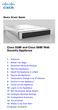 QUICK START GUIDE Cisco S380 and Cisco S680 Web Security Appliance 1 Welcome 2 Before You Begin 3 Document Network Settings 4 Plan the Installation 5 Install the Appliance in a Rack 6 Plug In the Appliance
About the VM-Series Firewall
 About the VM-Series Firewall Palo Alto Networks VM-Series Deployment Guide PAN-OS 6.1 Contact Information Corporate Headquarters: Palo Alto Networks 4401 Great America Parkway Santa Clara, CA 95054 http://www.paloaltonetworks.com/contact/contact/
NMS300 Network Management System
 NMS300 Network Management System User Manual June 2013 202-11289-01 350 East Plumeria Drive San Jose, CA 95134 USA Support Thank you for purchasing this NETGEAR product. After installing your device, locate
Advanced Endpoint Protection Overview
 Advanced Endpoint Protection Overview Advanced Endpoint Protection is a solution that prevents Advanced Persistent Threats (APTs) and Zero-Day attacks and enables protection of your endpoints by blocking
QUICK START GUIDE. Cisco S170 Web Security Appliance. Web Security Appliance
 1 0 0 0 1 1 QUICK START GUIDE Web Security Appliance Web Security Appliance Cisco S170 303417 Cisco S170 Web Security Appliance 1 Welcome 2 Before You Begin 3 Document Network Settings 4 Plan the Installation
Sonian Getting Started Guide October 2008
 Sonian Getting Started Guide October 2008 Sonian, Inc. For Authorized Use Only 1 Create your new archiving account 3 Configure your firewall for IMAP collections 4 (Skip this step if you will be using
http://docs.trendmicro.com/en-us/smb/hosted-email-security.aspx
 Trend Micro Incorporated reserves the right to make changes to this document and to the product described herein without notice. Before installing and using the product, review the readme files, release
TRITON Unified Security Center Help
 TRITON Unified Security Center Help Websense TRITON Unified Security Center v7.7 2011-2012, Websense Inc. All rights reserved. 10240 Sorrento Valley Rd., San Diego, CA 92121, USA Published 2012 Printed
Secure Web Appliance. SSL Intercept
 Secure Web Appliance SSL Intercept Table of Contents 1. Introduction... 1 1.1. About CYAN Secure Web Appliance... 1 1.2. About SSL Intercept... 1 1.3. About this Manual... 1 1.3.1. Document Conventions...
Management, Logging and Troubleshooting
 CHAPTER 15 This chapter describes the following: SNMP Configuration System Logging SNMP Configuration Cisco NAC Guest Server supports management applications monitoring the system over SNMP (Simple Network
Manage Traps in a VDI Environment. Traps Administrator s Guide. Version 3.3. Copyright 2007-2015 Palo Alto Networks
 Manage Traps in a VDI Environment Traps Administrator s Guide Version 3.3 Contact Information Corporate Headquarters: Palo Alto Networks 4401 Great America Parkway Santa Clara, CA 95054 www.paloaltonetworks.com/company/contact-us
http://docs.trendmicro.com/en-us/enterprise/safesync-for-enterprise.aspx
 Trend Micro Incorporated reserves the right to make changes to this document and to the product described herein without notice. Before installing and using the product, review the readme files, release
Cox Managed CPE Services. RADIUS Authentication for AnyConnect VPN Version 1.3 [Draft]
![Cox Managed CPE Services. RADIUS Authentication for AnyConnect VPN Version 1.3 [Draft]](/thumbs/39/18543129.jpg "Cox Managed CPE Services. RADIUS Authentication for AnyConnect VPN Version 1.3 [Draft]") Cox Managed CPE Services RADIUS Authentication for AnyConnect VPN Version 1.3 [Draft] September, 2015 2015 by Cox Communications. All rights reserved. No part of this document may be reproduced or transmitted
Cox Managed CPE Services RADIUS Authentication for AnyConnect VPN Version 1.3 [Draft] September, 2015 2015 by Cox Communications. All rights reserved. No part of this document may be reproduced or transmitted
Nessus Enterprise Cloud User Guide. October 2, 2014 (Revision 9)
 Nessus Enterprise Cloud User Guide October 2, 2014 (Revision 9) Table of Contents Introduction... 3 Nessus Enterprise Cloud... 3 Subscription and Activation... 3 Multi Scanner Support... 4 Customer Scanning
Dell SupportAssist Version 2.0 for Dell OpenManage Essentials Quick Start Guide
 Dell SupportAssist Version 2.0 for Dell OpenManage Essentials Quick Start Guide Notes, Cautions, and Warnings NOTE: A NOTE indicates important information that helps you make better use of your computer.
Using WhatsUp IP Address Manager 1.0
 Using WhatsUp IP Address Manager 1.0 Contents Table of Contents Welcome to WhatsUp IP Address Manager Finding more information and updates... 1 Sending feedback... 2 Installing and Licensing IP Address
Architecture and Data Flow Overview. BlackBerry Enterprise Service 10 721-08877-123 Version: 10.2. Quick Reference
 Architecture and Data Flow Overview BlackBerry Enterprise Service 10 721-08877-123 Version: Quick Reference Published: 2013-11-28 SWD-20131128130321045 Contents Key components of BlackBerry Enterprise
VMware Identity Manager Administration
 VMware Identity Manager Administration VMware Identity Manager 2.4 This document supports the version of each product listed and supports all subsequent versions until the document is replaced by a new
Configuring Trend Micro Content Security
 9 CHAPTER This chapter describes how to configure the CSC SSM using the CSC Setup Wizard in ASDM and the CSC SSM GUI, and includes the following sections: Information About the CSC SSM, page 9-1 Licensing
Preparing for GO!Enterprise MDM On-Demand Service
 Preparing for GO!Enterprise MDM On-Demand Service This guide provides information on...... An overview of GO!Enterprise MDM... Preparing your environment for GO!Enterprise MDM On-Demand... Firewall rules
Release Notes for Websense Email Security v7.2
 Release Notes for Websense Email Security v7.2 Websense Email Security version 7.2 is a feature release that includes support for Windows Server 2008 as well as support for Microsoft SQL Server 2008. Version
HP A-IMC Firewall Manager
 HP A-IMC Firewall Manager Configuration Guide Part number: 5998-2267 Document version: 6PW101-20110805 Legal and notice information Copyright 2011 Hewlett-Packard Development Company, L.P. No part of this
Core Protection Suite
 Core Protection Suite Admin Guide Spam Soap, Inc. 3193 Red Hill Avenue Costa Mesa, CA 92626 United States p.866.spam.out f.949.203.6425 e. [email protected] www.spamsoap.com Contents EMAIL PROTECTION OVERVIEW...3
NETWRIX EVENT LOG MANAGER
 NETWRIX EVENT LOG MANAGER QUICK-START GUIDE FOR THE ENTERPRISE EDITION Product Version: 4.0 July/2012. Legal Notice The information in this publication is furnished for information use only, and does not
Deployment Guide for Microsoft Lync 2010
 Deployment Guide for Microsoft Lync 2010 Securing and Accelerating Microsoft Lync with Palo Alto Networks Next-Generation Firewall and Citrix NetScaler Joint Solution Table of Contents 1. Overview...3
Certificate Management
 Certificate Management Palo Alto Networks PAN-OS Administrator s Guide Version 6.0 Contact Information Corporate Headquarters: Palo Alto Networks 4401 Great America Parkway Santa Clara, CA 95054 www.paloaltonetworks.com/company/contact-us
Set Up Panorama. Palo Alto Networks. Panorama Administrator s Guide Version 6.0. Copyright 2007-2015 Palo Alto Networks
 Set Up Panorama Palo Alto Networks Panorama Administrator s Guide Version 6.0 Contact Information Corporate Headquarters: Palo Alto Networks 4401 Great America Parkway Santa Clara, CA 95054 www.paloaltonetworks.com/company/contact-us
OneLogin Integration User Guide
 OneLogin Integration User Guide Table of Contents OneLogin Account Setup... 2 Create Account with OneLogin... 2 Setup Application with OneLogin... 2 Setup Required in OneLogin: SSO and AD Connector...
v6.1 Websense Enterprise Reporting Administrator s Guide
 v6.1 Websense Enterprise Reporting Administrator s Guide Websense Enterprise Reporting Administrator s Guide 1996 2005, Websense, Inc. All rights reserved. 10240 Sorrento Valley Rd., San Diego, CA 92121,
How To Use Senior Systems Cloud Services
 Senior Systems Cloud Services In this guide... Senior Systems Cloud Services 1 Cloud Services User Guide 2 Working In Your Cloud Environment 3 Cloud Profile Management Tool 6 How To Save Files 8 How To
GFI Product Manual. Administration and Configuration Manual
 GFI Product Manual Administration and Configuration Manual http://www.gfi.com [email protected] The information and content in this document is provided for informational purposes only and is provided "as is"
F-Secure Internet Gatekeeper Virtual Appliance
 F-Secure Internet Gatekeeper Virtual Appliance F-Secure Internet Gatekeeper Virtual Appliance TOC 2 Contents Chapter 1: Welcome to F-Secure Internet Gatekeeper Virtual Appliance.3 Chapter 2: Deployment...4
Note: With v3.2, the DocuSign Fetch application was renamed DocuSign Retrieve.
 Quick Start Guide DocuSign Retrieve 3.2.2 Published April 2015 Overview DocuSign Retrieve is a windows-based tool that "retrieves" envelopes, documents, and data from DocuSign for use in external systems.