
CHICO MUNICIPAL AIRPORT MOVEMENT AREA DRIVER TRAINING PROGRAM
|
|
|
- Louise Stanley
- 10 years ago
- Views:
Transcription


1 CHICO MUNICIPAL AIRPORT MOVEMENT AREA DRIVER TRAINING PROGRAM

2 Introduction In compliance with Federal Aviation Regulations (FAR) Part , and to provide for a safe operating environment for tenants, staff and users of the Chico Municipal Airport (CIC), Airport Operations provides this training program to all persons who may be required to conduct surface movement operations on the airfield. The training will provide familiarization with the layout of the runways and taxiways, airport signage, marking and lighting, proper aviation communication procedures and general procedures for safely operating vehicles on the airport. A written exam is included as part of this training along with a practical driving test with authorized airport operations personnel to assist in ensuring the information provided has been understood and retained. These guidelines and procedures are designed to enhance safety and efficiency of all aircraft surface movement operations.

3 Additionally, the implementation of this program is intended to assist in the elimination of surface incidents and runway incursions with the goal of increasing overall safety and efficiency. Surface Incident is defined as any movement area activity by a vehicle/pedestrian that has not been authorized by the ATCT. Runway Incursion is defined as any occurrence at an airport involving an aircraft, vehicle, person or object on the ground, that enters a protected area of a surface designated for the landing and take-off of aircraft. These events can result in an aircraft collision. Such collisions are often deadly and always expensive.

4 Movement area driver training is mandatory for all Fire, Police, and Airport personnel, as well as for FAA, TSA, Fixed Base Operator, contractor personnel whose job activities may require driving in the movement area. This training must be completed prior to obtaining an airport gate access card. Recurrent driver training is required every 12 consecutive calendar months to maintain these privileges. Movement area driver training consists of a study guide, PowerPoint presentation, a written exam administered by Airport/City personnel and a practical driving test with Airport Operations personnel.

5 Goals 1. Prevent incursions/surface incidents on airport movement areas. 2. Provide familiarization with CIC airfield layout, signage, markings and lighting. 3. Teach proper aviation terms, radio communication procedures and phraseology. 4. Provide general information regarding vehicle operating procedures on the airport. 5. Increase operational safety.

6 Sections SECTION 1: Airfield Familiarization SECTION 2: Airfield Markings, Lighting and Signage SECTION 3: Aviation Radio Communication Procedures and Phraseology SECTION 4: Guidelines for Vehicle Operations on the Airfield

7 Terms and Definitions Air Operations Area (AOA) the area of the airport located within the perimeter fence line used or intended to be used for landing, takeoff, or surface maneuvering of aircraft. The AOA includes active runways, taxiways, apron/ramp and the infield turf areas. Access to the AOA is restricted and is off-limits to the general public. Air Traffic Control Tower (ATCT) a service operated by an appropriate authority to promote the safe, orderly and expeditious flow of air traffic. Aircraft Apron or Ramp an area of the airport used or intended to be used for aircraft surface maneuvering, parking, fueling and the transport of passengers to and from aircraft.

8 Common Traffic Advisor Frequency (CTAF) radio frequency designed for the purpose of carrying out airport advisory practices while operating to or from an airport without an operating ATCT or when the tower is closed. Light Gun a hand held directional light-signaling device that emits a narrow beam of white, green, or red light, as selected by the tower controller. The color and type of light transmitted can be used to approve or disapprove anticipated pilot or vehicle actions where radio communication is not available. Movement Area the runways, taxiways and other areas of an airport that aircraft use for taxiing, takeoff and landing exclusive of loading ramps and parking areas, and that are under the control of the ATCT and which require clearance from the ATCT prior to entering.

9 Non-movement Area those areas of the airport where aircraft taxi, or are towed or pushed without radio contact with the ATCT, such as taxiways, aprons and other areas not under the control of the ATCT or at airports without an operating ATCT. Restricted Areas areas of the airport posted to prohibit or limit entry or access by the general public such as the area where air carrier operations take place. Runway a defined, rectangular, paved surface on an airport designed for the landing or takeoff of aircraft. Runway Incursion - any occurrence at an airport involving an aircraft, vehicle, person, or object on the ground that enters a protected area of a surface designated for the landing and takeoff of aircraft.

10 Surface Incident - any movement area activity by a vehicle/pedestrian that has not been authorized by the ATCT. Taxiways those parts of the airside designated for the surface maneuvering of aircraft to and from the runways and aircraft parking areas. Vehicle/Pedestrian Deviation (V/PD) any event where unauthorized movement by an aircraft, vehicle, or pedestrian occurs on the Movement Area that affects or could affect the safety of flight. Vehicle Travel Lane a designated roadway for vehicles in a non-movement area.

11 Airport Familiarization

12 Non-Movement Area A non-movement area is an area that is not under the control of the ATCT. Aircraft and vehicle operations on a nonmovement area are done so at the operator s own risk. The diagram to the right shows the locations and designations of the non-movement area taxilanes at CIC. Apron/Ramp a paved surface which is designed for the parking of aircraft for the purposes of loading, unloading, fueling and servicing. Taxilane a paved surface that is not under the control of the ATCT, taxilanes connect apron/ramp areas to the main taxiways.

13 Vehicle Travel Lane is a paved surface delineated by a solid white line on each side and a broken line in the center.

14 Movement Area The movement area consists of the runways, taxiways and other areas on the airport which are used for taxiing, takeoff and landing of aircraft, and that are under the control of the ATCT. Following are the types of movement areas found on the airfield at CIC. Runway a defined, rectangular, paved surface on an airport designed for the landing or takeoff of aircraft. Taxiway a paved surface designed for the movement of aircraft from one part of an airport to another, including to and from the runways.

15 Movement / Non-Movement Area Boundary The movement / non-movement area boundary marking delineates the movement area that is under the control of the ATCT from the nonmovement area.

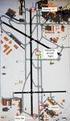
16 CIC Runway Layout CIC has two parallel runways as shown in the diagram to the right. Runway 13 Left / 31 Right is the precision instrument runway (PIR) which is the longer of the two runways. It is used by both propeller and jet aircraft, with jet aircraft having the majority of operations. Runway 13 Right / 31 Left is a basic runway and is referred to as the short runway. This runway is used by smaller propeller aircraft and helicopters. ATCT

17 Taxiways CIC has two main taxiways which are north-south oriented and run parallel to the runways. These taxiways are designated Alpha (A) and Romeo (R). Taxiway Alpha (A) is located on the east side of Runway 13 Left/31 Right. Taxiway Romeo (R) is located on the west side of the apron/ramp.

18 Connector Taxiways (Tie-ins) The taxiways that cross the runways are known as connector taxiways or tie-ins. They are used by aircraft to taxi on, off, or across the runways. The image to the right shows the designations and locations of the connector taxiways found at CIC.

19 Safety Areas A safety area is the surface surrounding the runway and/or taxiway which is prepared to be suitable for the occasional passage of an aircraft without undue risk of damage to the aircraft. Ground vehicles are prohibited from entering the safety areas. At CIC the safety areas are the dirt and grass infield areas adjacent to the runways and taxiways as depicted in the diagram to the right. CIC Runway and Taxiway Safety Areas within yellow lines.

20 At CIC the runway safety area (RSA) is centered on the runway centerline. At CIC, the RSA is the standard 500 feet wide (250' each side of the runway centerline) and 1000 feet long (from the runway end). The RSA enhances the safety of aircraft which undershoot, overrun, or veer off the runway and it provides greater accessibility for fire-fighting and rescue equipment during such incidents. The taxiway safety area is 118' centered on every taxiway (59' on each side of the taxiway centerline).

21 Restricted Area The Restricted Area is the portion of the AOA where air carrier operations occur. The Restricted Area is the most secure area on the airport and all persons who operate within the Restricted Area have special security clearance. The Restricted Area at CIC is located adjacent to the passenger terminal building and is delineated by a red line in the shape of a box painted on the apron/ramp with white inscription stating Restricted Area.

22 Airport Markings, Lighting and Signage
23 Runway Surface Markings Surface painting markings that denote a runway are white and include centerline, edge-lines, runway designation, threshold and threshold bar markings. Runway Centerline Marking White in color Wide dashed stripe Indicates the center of the runway Provides alignment guidance for aircraft Runway Edge-lines White in color Single solid wide stripe Indicates edge of the usable runway as well as the edge of the full-strength pavement Runway Designation White in color Numbers and letters that identify runway
24 Runway Threshold Marking White in color Identifies the beginning of the runway which is available for landing Runway Threshold Bar White in color Identifies the runway threshold
25 Runway Aiming Point White in color Serves as a visual aiming point for a landing aircraft. These two rectangular markings consist of a broad white stripe located on each side of the runway centerline and approximately 1,000 feet from the landing threshold Runway Touchdown Zone (TDZ) White in color Identifies the touchdown zone for landing operations and are coded to provide distance information in 500 feet increments. These markings consist of groups of one, two, and three rectangular bars symmetrically arranged in pairs about the runway centerline
26 Runway Holding Position Markings Yellow in color Located at the intersection where a taxiway meets a runway Made up of two solid and two dashed yellow lines Denote a runway holding position When approaching this marking from the solid side, an operator must Hold Short and may not cross without first obtaining clearance from the ATCT When approaching this marking from the broken side of the line, the operator must cross the solid lines to be clear of the runway
27 Movement / Non-Movement Area Boundary Marking Yellow in color Located on the boundary between the movement and non-movement area Delineates the movement area that is under the control of the ATCT from the non-movement area Taxiway Romeo (movement area side) Vehicle Travel Lane (non-movement area side)
28 Taxiway Surface Markings Taxiway surface markings are yellow. Markings include the single solid yellow centerline and a double solid yellow edge line marking. Shoulder areas beyond the solid double yellow edge lines are not intended for aircraft use. Taxiway Centerline Marking Yellow in color Solid line Denotes the center of the taxiway and to provides alignment and guidance for aircraft Taxiway Edge Line Marking Yellow in color Solid double line Defines the edge of the full-strength pavement
29 Enhanced Taxiway Centerline Marking Yellow in color Solid line with dashed lines on each side Warns pilots that they are approaching a runway holding position marking Intermediate Holding Position Markings Yellow in color Located where two taxiways intersect or at a point on a taxiway where the ATCT may instruct you to Hold At CIC Intermediate Holding Position Markings are located on Taxiways Bravo (B) and Hotel (H)
30 Surface Painted Holding Position Marking Red in color with white lettering Denotes entrance to runway from a taxiway
31 Runway Lighting Runway Edge Lights White in color Runway lighting at CIC consists of white edge lighting only, there are no runway centerline lights These edge lights exist in two different forms as pictured Elevated Runway Threshold Lights Red/Green in color Used to ensure that pilots of both landing and departing aircraft know exactly where the runway begins and ends Flush-mounted
32 Taxiway Lighting Taxiways Edge Lights Blue in color Define the edge of a taxiway during periods of darkness and reduced visibility Elevated Taxiway Edge Light
33 Airfield Signage Airfield signs are visual aids designed to guide operations on the movement areas. The colors and inscriptions of the signs are significant to the meaning of the information that the sign conveys. Mandatory Instruction Signs Red background with white inscriptions Denote the entrance to a runway or other critical area Mandatory instruction signs are often co-located with location signs Location Signs Black background with yellow inscriptions and a yellow border Identify the taxiway an operator is currently on Location signs are often co-located with other types of signs.
34 Direction Signs Yellow background with black inscriptions and always include arrows Indicate the name and direction of other taxiway(s) leading out of an intersection There are two kinds of direction signs, Taxiway Exit and Runway Exit signs (the exit sign depicted at right is a runway exit sign) Direction signs are often co-located with location signs. Information Signs Yellow background with black inscriptions Provide various types of general advisory information
35 Destination Signs Yellow background with black inscriptions and always include arrows Provide various types of general destination information Runway Distance Remaining Signs Black background with white inscriptions Provide distance remaining information to pilots during takeoff and landing operations The number on the sign provides the remaining runway length in 1,000-foot increments
36 Closed Areas Marked with orange cones, delineators, low profile barricades, standing red lights placed along the perimeter of the area and/or an X surface painted marking Closed areas are common during construction projects
37 Aviation Radio Communication Procedures & Phraseology
38 Aviation Radio Communication It is essential to safety that personnel responsible for surface movements on the movement areas at CIC be thoroughly familiar with air traffic control tower (ATCT) procedures and proper radio phraseology. Correct phraseology and radio technique must be used in all communications with the ATCT. Use of correct radio techniques will reduce miscommunications, increase safety, reduce frequency congestion, and result in a more expeditious flow of aircraft movements.
39 CIC Air Traffic Control VHF Frequencies Ground Control Frequency MHz Tower Control Frequency MHz Common Traffic Advisory Frequency (CTAF) is used from 7:00 p.m. to 7:00 a.m. when the ATCT is not in operation. Unicom Frequency Used by FBO/Fueler for fueling operations. ATIS / AWOS Frequency MHz MHz The ATIS/AWOS frequency provides a continuous broadcast of current weather conditions, runways in use, and notices for hazards on the airfield such as construction areas, or closed/restricted areas. It is recommended that you listen to the ATIS/AWOS broadcast before conducting a surface movement operation to find out the current conditions on the airport so that you may act accordingly. Alternates between ATIS (7:00 a.m. to 7:00 p.m.) and AWOS (7:00 p.m. to 7:00 a.m.).
40 Transmitting on Aviation VHF Frequencies When using aviation VHF radio, it is important to communicate in a clear and concise manner so that the air traffic controller understands your transmission. Use of slang, CB or police jargon should be avoided. Transmissions should be brief yet complete enough to adequately convey the message to the air traffic controller. There are a few simple measures, which should be taken before transmitting on the VHF radio: 1. Prior to transmitting, verify that the correct frequency has been selected on your radio, the volume is turned up to an appropriate level and that the radio is in good working condition (i.e. fresh batteries).
41 2. The frequency should be briefly monitored to determine that no one else is transmitting or waiting for a read-back. Monitoring the frequency prior to transmitting helps in establishing a mental picture of the current situation, commonly called situational awareness. This procedure will also eliminate instances of transmitting at the same time as someone else. 3. Before you key the microphone, consider what you are going to say, and use the following, WHO / WHERE / WHAT format: WHO you are WHERE you are on the airport WHAT you are requesting or intending to do NOTE: It is imperative that, after receiving your instructions and beginning your operation on the movement areas, you read back all hold short and runway instructions received from the ATCT and that you continue to monitor the frequency until your operation is concluded.
42 Phonetic Alphabet To minimize confusion between similar sounding letters, a standardized aviation phonetic alphabet has been adopted for use by the International Civil Aviation Organization (ICAO). The ATCT will use this alphabet during all transmissions to identify taxiways. The phonetic alphabet is shown on the next slide and must be memorized.
43 Phonetic Alphabet A Alpha AL-fah N November no-vem-bur B Bravo BRAH-voh O Oscar OSS-cah C Charlie CHAR-lee P Papa Pah-PAH D Delta DELL-tah Q Quebec keh-beck E Echo ECK-oh R Romeo ROW-me-oh F Foxtrot FOKS-trot S Sierra SEE-air-ah G Golf GOLF T Tango TANG-oh H Hotel HOH-tell U Uniform YOO-nee-form I India IN-dee-ah V Victor VIK-tah J Juliett JEW-lee-ETT W Whiskey WISS-key K Kilo KEE-loh X X-ray ECKS-ray L Lima LEE-mah Y Yankee YANG-key M Mike MIKE Z Zulu ZOO-loo
44 Phraseology Use of correct radio phraseology enhances safety and saves time. Below are some common terms and their meanings: Acknowledge Let me know that you have received my message. Advise Intentions Tell me what you plan to do. Affirmative Yes Confirm My version is, is that correct? Correction An error has been made in the transmission and the correct version follows. Expedite Proceed with approved instruction without hesitation. Go-Ahead Proceed with your message. Not to be used for any other purpose. Hold Stop where you are
45 Hold Position Stop where you are. Hold short of (Location) Proceed to, but stop before reaching a specified point. Negative No, or permission is not granted or that is not correct. No Delay Proceed with approved instruction without hesitation. Proceed You are authorized to begin or continue moving. Proceed as Requested You are authorized to conduct the operation. (ONLY as you requested it). Read Back Repeat my message back to me. Roger I have received all of your last transmission. Should not be used to answer a question requiring a yes or no answer. Say Again Used to request a repeat of the last transmission. Stand By The controller or pilot must pause for a moment, usually to attend to other duties of a higher priority. Stand By is not an approval or denial. If the delay is lengthy, the caller should re-establish contact.
46 Unable Indicates inability to comply with a specific instruction, request or clearance. Verify Request confirmation of information; e.g. verify cleared to tow on Alpha? Wilco I have received your message, understand it, and will comply. Without Delay Proceed with approved instruction without hesitation.
47 Proper Radio Procedures Use appropriate frequency Turn up the volume Monitor to ensure frequency is clear BEFORE transmitting and during the entire operation Do not interrupt controller or pilot transmissions Establish contact with ATCT and wait for a response prior to making any request Be clear and concise with your request communicate WHO you are, WHERE you are on the airport, and WHAT you are requesting or intending to do Acknowledge and read back all hold short instructions
48 Radio procedures when the ATCT is not in Operation Monitor CTAF frequency MHz Announce advisory when frequency is clear Begin all transmissions with CHICO MUNICIPAL AIRPORT TRAFFIC and then advise WHO you are, WHERE you are, and WHAT you intend to do. End all transmissions with CHICO MUNICIPAL AIRPORT TRAFFIC Monitor frequency during entire operation Report clear of movement area when operation is completed
49 Radio Failure Procedures Should you encounter a VHF radio failure while conducting a surface movement operation on the movement areas at CIC, you should turn your vehicle toward the air traffic control tower, maintain visual contact with the tower, and expect to receive instructions via light gun signals (ALDIS lights). The light gun signals used and their associated meaning: Light Signal Steady Green Steady Red Flashing Red Flashing White Alternating Red and Green Meaning Clear to proceed STOP! Move off of taxiway/runway Go back to your starting point Use extreme caution Green Light-Gun Signal Red Light-Gun Signal
50 Automatic Terminal Information Service (ATIS) / Automated Weather Observation System (AWOS) Both the ATIS and AWOS are broadcast on frequency The ATIS is in service when the ATCT is in operation (7:00 a.m. to 7:00 p.m.) The AWOS is in service when the ATCT is closed (7:00 p.m. to 7:00 a.m.) Provide airport information such as: - Current weather conditions - Runways in use - Notices for hazards on the airfield such as construction areas, or closed / restricted areas
51 Aircraft Position Lights FAR No person shall tow or move an aircraft on the AOA during hours of darkness or inclement weather without the position lights illuminated. Lights are red on the left wing tip, green on the right wing tip and white on the tail. This lighting provides other aircraft and vehicles with a reference as to the direction the aircraft is moving. For instance, an aircraft moving toward you will have a red light on the right side and a green light on the left side. GREEN WHITE RED Right wing GREEN Left wing RED Tail WHITE
52 Guidance for Vehicle Operations on the Airport
53 Motor Vehicle Rules and Regulations 1. No vehicle shall be operated on the Airport Operations Area (AOA) unless the driver has a valid California Drivers License in their possession and they have successfully completed the applicable airport driver training program within the last 12 consecutive calendar months. 2. No person operating a vehicle on the aircraft apron/ramp or the vehicle travel lane shall exceed 25 mph. When driving around aircraft the speed limit is reduced to 5 mph. 3. No vehicle shall pass another vehicle in the vehicle travel lane. 4. Vehicle operators must always yield the right-of-way to aircraft, passengers and emergency vehicles. 5. Never drive under any portion of an aircraft and be aware and avoid moving propellers that can cause damage, injury or death. 6. Be aware of and avoid jet blast or prop wash which can blow debris or overturn vehicles.
54 7. No vehicle may enter onto a movement area without clearance from the ATCT via two way radio or escorted by CIC Airport Operations. 8. Aircraft under tow shall not cross the runway unless the operator of the tow vehicle has received the required driver training from CIC Airport Operations and clearance from the ATCT. 9. No person shall operate any motor vehicle that is in such physical or mechanical condition as to endanger persons or property or that CIC Airport Operations considers an endangerment. 10. No person shall operate a vehicle that is overloaded or carrying more passengers than it was designed, ride on the running board or stand up on the body of a moving vehicle, or ride with arms or legs outside of the vehicle unless it was designed for such use. 11. A vehicle guide person is required whenever the vision of the vehicle operator is restricted.
55 12. No fuel truck may be brought into, stored, or parked within 50 feet of a building. Fuel trucks must not be parked within 10 feet of other vehicles. 13. No person shall park, or leave unattended, a vehicle or other equipment in an area or in a manner that obstructs or interferes with operations of aircraft, emergency vehicles, or other motor vehicles or equipment. Personal vehicles shall not be parked on the apron/ramp at any time. 14. No person shall park a vehicle or equipment within 15 feet of a fire hydrant, in a manner that prohibits a vehicle from accessing the fire hydrant or in a designated fire lane. 15. No person shall operate a vehicle or other equipment within the AOA under the influence of alcohol or any drug that impairs or may impair the operator s abilities. 16. Each vehicle operator shall ensure that airport access gates close behind the vehicle prior to leaving the vicinity of the gate. The vehicle operator shall also ensure no unauthorized vehicles or persons gain access to the AOA while the gate is open.
56 17. Vehicle operators shall not operate vehicles in a reckless or careless manner that would intentionally or through negligence threaten the life or safety of any person or damage or destroy property. 18. Driving on the AOA at night or during periods of poor visibility should be avoided. 19. Each vehicle operator is responsible for the activities of their passengers on the AOA at all times. 20. No vehicle shall be operated on the AOA unless it has valid California vehicle registration and license plates or is a qualified aircraft service vehicle not normally operated on public streets. 21. All vehicles operated on the AOA must have vehicle liability insurance.
57 22. No vehicle shall be permitted on the AOA unless it: a) Is in sound mechanical condition with unobstructed forward and side vision from the driver s seat. b) Has the appropriately rated and inspected fire extinguishers (fuel trucks). c) Has operable headlamps and brake lights. 23. All vehicles operating on the movement area shall be equipped with an operating amber rotating beacon or a correct orange and white flag. 24. All fuel trucks and any other vehicle 8-foot or more in width shall be equipped with a flashing amber beacon and flashing front, tail and clearance lights that are activated at all times when operating on the AOA.
58 Vehicle Accidents and Incidents Operators of vehicles involved in an accident on the airport that results in injury to a person or damage to an aircraft, airport property, airport access gates, or another vehicle shall: 1. Immediately stop and remain at the scene and report the accident to the Chico Police Department at 911 or (530) Vehicles involved in an accident that involves an aircraft shall not be moved from the scene of the accident until permission is given by CIC Airport Operations or Chico Police Department. 3. Disabled vehicles must be immediately reported to Airport Operations. Drivers should remain with the vehicle, attempt to delineate the vehicle with cones or hazard markers and must make arrangements to have the vehicle promptly removed. 4. Report any hazard or obstruction to aircraft or vehicular traffic to Airport Operations immediately at (530) or Chico Police Department at (530) Poor weather conditions (fog, rain, etc.) might obscure visual cues, roadway markings, and airport signs. Vehicle operators should remain vigilant of their surroundings.
59 Airfield Security 1. Allowing another driver to enter the airfield through a gate behind you ( piggybacking ) is considered a serious violation and may result in the loss of your airport access privileges. 2. When entering the airfield through any gate (vehicle or pedestrian) it is your responsibility to ensure the gate closes and no one gains access behind you. 3. When exiting more than one vehicle may exit provided that the last vehicle through the gate stops and waits for the gate to close completely. 4. If you allow someone onto the airport you are responsible for them and their actions at all times. 5. If an airport gate fails to close it is your responsibility to immediately report the issue to CIC Airport Operations at (530) or Chico Police Department at (530)
60 Aircraft Fueling Operations (if applicable) 1. The fueling vehicle / equipment must be properly bonded to the aircraft during the entire fueling operation. 2. The fueling vehicle / equipment may not be left unattended at any time while connected to an aircraft. 3. The fueling control valve Deadman must be held by hand during the entire fueling operation. Blocking the Deadman in any manner is strictly prohibited. 4. Hot refueling (refueling an aircraft while the aircraft s engine(s) are running) is strictly prohibited. 5. The wheels of the fueling vehicle / equipment must be chocked at all times when the vehicle is parked and / or during fueling operations. 6. Report all fuel spills regardless of type or amount to Chico Police Department at 911 or (530) and Airport Operations at (530)

61 When driving on the airfield: Conclusion 1. Exercise forethought, proper planning, and continuous situational awareness; 2. Follow established procedures to ensure safe vehicle operations; and 3. Only drive on the airfield when absolutely necessary. Operating a vehicle on the airport is a privilege that may be revoked at any time for serious or frequent violations of CIC Rules and Regulations.
62 Please forward questions or comments to: Chico Municipal Airport (530)
VDFP General Aviation Firefighting for Structural Firefighters
 VIRGINIA DEPARTMENT OF FIRE PROGRAMS Aviation Firefighting for Chapter 3 Communications 3-1 Learning Objectives Understand the correct radio procedures for talking to pilots or airport personnel List examples
Appendix D GENERAL AVIATION AIRPORTS GROUND VEHICLE OPERATIONS TRAINING PROGRAM
 Appendix D GENERAL AVIATION AIRPORTS GROUND VEHICLE OPERATIONS TRAINING PROGRAM Section 1. Airport Driving Rules and Regulations I. Applicability. This training program applies to all users of, and persons
Carson City Airport. Driving Rules and Regulations
 Carson City Airport Driving Rules and Regulations Adopted February 18, 2009 The following Driving Rules and Regulations were adopted on February 18, 2009 by the Carson City Airport Authority in accordance
Yakima Air Terminal-McAllister Field MOVEMENT AREA DRIVING GUIDE
 Yakima Air Terminal-McAllister Field MOVEMENT AREA DRIVING GUIDE Section 1: Definitions Yakima Air Terminal-McAllister Field The following terms are defined as indicated in this section for the purpose
APPENDIX B SAMPLE GROUND VEHICLE OPERATIONS TRAINING MANUAL. Section 1. Airport Driving Rules and Regulations
 3/31/2008 AC 150/5210-20 Change 1 APPENDIX B SAMPLE GROUND VEHICLE OPERATIONS TRAINING MANUAL NOTE: This sample training manual provides airport operators with a template for developing and implementing
www.faa.gov/runwaysafety
 www.faa.gov/runwaysafety A A Pilot s Pilot s Guide to to Safe Safe Surface Operations Introduction Traffic levels rise. Airports expand. And you, the pilot, are expected to understand how to safely taxi
Vehicle Operator and Pedestrian Handbook of AOA Knowledge V2.3
 February 23, 2015 For Additional Information Lt. Robert Gonterman Abraham Lincoln Capital Airport Department of Public Safety [email protected] Vehicle Operator and Pedestrian Handbook of AOA Knowledge
AIRFIELD DRIVING TEST
 AIRFIELD DRIVING TEST NAME: COMPANY: DATE: SCORE: 1. Runway incursions are primarily caused by the following errors, except a. Pilot/ground vehicle/controller communication errors b. Lack of airport familiarity
Radio Communications in Class D Airspace by Russell Still, Master CFI
 Radio Communications in Class D Airspace by Russell Still, Master CFI Class D airspace is one of the most common parts of the airspace system that requires specific radio communications. Although you can
Atlanta, Georgia Road Test
 1. When driving your car Into traffic from a parked position, you should: A. Sound your horn and pull Into the other lane. B. Signal and proceed when safe. C. Signal other traffic and pull directly into
Bicycle riding is a great way to get into shape
 Bicycle riding is a great way to get into shape and have fun. To remain safe on Illinois roads, it is important to follow the same traffic safety laws that govern vehicle drivers. No amount of bicycle
Bicycle Safety Quiz Answers Parental Responsibilities
 Bicycle riding is a great way to get into shape and enjoy the outdoors. To remain safe on Illinois roads, it is important to follow the same traffic safety laws that govern vehicle drivers. No amount of
Document Name: Driving Skills. Purpose: To outline necessary driving skills required to maximize driving safety.
 Document Name: Driving Skills Date Created: 8 October 2013 Date Reviewed: 4 February 2014 Date Approved: 29 July 2015 Purpose: To outline necessary driving skills required to maximize driving safety. Overview:
COMMUNICATIONS GROUND COMMUNICATIONS OUTLET (GCO)
 388 COMMUNICATIONS GROUND COMMUNICATIONS OUTLET (GCO) An automatic, remotely controlled, ground to ground communications device. Pilots at non-tower airports may contact the local Air Traffic Control (ATC)
GENERAL AVIATION AIRPORT RULES AND REGULATIONS
 GENERAL AVIATION AIRPORT RULES AND REGULATIONS GA WEST MINETA SAN JOSE INTERNATIONAL AIRPORT (CITY OF SAN JOSE) GENERAL AVIATION AIRPORT ACCESS CONTROL SYSTEM INSTRUCTION SHEET The following information
Airfield Driver Training Program
 Airfield Driver Training Program July 2013 *This handbook is provided by the City of Portland to acquaint all employees with the local procedures for operating vehicles on the airport. These rules and
Los Angeles International Airport North Airfield Assessment
 Appendix H-3 LAX SPECIFIC PLAN AMENDMENT STUDY REPORT Los Angeles International Airport North Airfield Assessment May 2007 Prepared for: Los Angeles World Airports One World Way Los Angeles, California
Accident Prevention Program
 Accident Prevention Program RADIO COMMUNICATIONS PHRASEOLOGY AND TECHNIQUES GENERAL a. Radio communications are a critical link in the ATC system. The link can be a strong bond between pilot and controller
PEDESTRIAN LAWS OF NORTH CAROLINA
 PEDESTRIAN LAWS OF NORTH CAROLINA Under North Carolina law, pedestrians have the right of way at all intersections and driveways. However, pedestrians must act responsibly, using pedestrian signals where
PART I TRAFFIC VIOLATIONS
 PART I TRAFFIC VIOLATIONS A. MOTOR VEHICLE STATUTES N.J.S.A. 39:3-4 Driving or parking unregistered motor vehicle 39:3-9a Failure to notify change in name $22 39:3-9a Failure to endorse license $42 39:3-10
CTAF PROCEDURES GUIDE
 CTAF PROCEDURES GUIDE First Edition Updated on 02 December 2010 to correct minor errors. Information contained within this document is intended for simulation use only and should not be applied to real
NORTH CAROLINA NUG UPDATES FOR SUCCESSFUL TIM TEAMS. Traffic Incident Management Workshop June 19th, 2012
 NORTH CAROLINA NUG UPDATES FOR SUCCESSFUL TIM TEAMS Traffic Incident Management Workshop June 19th, 2012 OUTLINE FEMA PARKING GUIDELINES DVD / CARD RESPONDER VISIBILITY ACCIDENT INVESTIGATION SITES SAFE,
ILLINOIS STATUTES REGARDING BICYCLES Updated March 2009
 ILLINOIS STATUTES REGARDING BICYCLES Updated March 2009 ILLINOIS VEHICLE CODE 625 ILCS 5/ "Every person riding a bicycle upon a highway shall be granted all of the rights and shall be subject to all of
AOA Driver Rules and Safety Violations
 AOA Driver Rules and Safety Violations Approved: August 1, 2010 Revision: December 30, 2014 Revision Index Revision No. Descrip on Date Revised By Approved By N/A Original 8/01/10 N/A BW 1 2 Review and
Model Fleet Safety Program Short
 TM Model Fleet Safety Program Short CORPORATE HEADQUARTERS 518 EAST BROAD STREET COLUMBUS, OHIO 43215 614.464.5000 STATEAUTO.COM TM Disclaimer: The information contained in this publication was obtained
211 CMR: DIVISION OF INSURANCE 21 APPENDIX A: TRAFFIC LAW VIOLATIONS. The following abbreviations are used in Appendix A:
 211 CMR: DIVISION OF INSURANCE 21 APPENDIX A: TRAFFIC LAW VIOLATIONS The following abbreviations are used in Appendix A: "M.G.L. c., ", " CMR ", Chapter and Section of the Massachusetts General Laws Code
Massachusetts Private Passenger Automobile Statistical Plan Appendix C Traffic Law Violations
 The following abbreviations are used in Appendix C: M.G.L. c., Chapter and Section of the Massachusetts General Laws CMR Code of Massachusetts Regulations The following out-of-state incidents are to be
AVIATION INVESTIGATION REPORT A06F0014 MISALIGNED TAKE-OFF
 AVIATION INVESTIGATION REPORT A06F0014 MISALIGNED TAKE-OFF AIR CANADA AIRBUS A319-114 C-FYKR LAS VEGAS, NEVADA 30 JANUARY 2006 The Transportation Safety Board of Canada (TSB) investigated this occurrence
AOA Non-Movement Area Driver Training Manual
 Seattle-Tacoma International Airport Airport Operations Training Department AOA Non-Movement Area Driver Training Manual TABLE OF CONTENTS Introduction 2 Sea-Tac Airport Map 3 Important Terms and Surface
New Hampshire State Laws Pertaining To Bicycles. CHAPTER 230 STATE HIGHWAYS Planning and Laying Out Bicycle Routes
 New Hampshire State Laws Pertaining To Bicycles Current as of April 21, 2009; most but not all laws mentioning bicycles are included below. For current laws, see http://www.gencourt.state.nh.us/rsa/. Compiled
Investigation Report
 Bundesstelle für Flugunfalluntersuchung German Federal Bureau of Aircraft Accident Investigation Investigation Report Identification Type of Occurrence: Accident Date: 14 December 2011 Location: Aircraft:
The State Government recognises. areas, and regulates bicycle
 cycling & THE LAW rules introduction for roads The State Government recognises The cycling South Australian as a legitimate Road Traffic form of Act including transport the Australian and an increasingly
12.0 SAFETY AND SECURITY
 12.0 SAFETY AND SECURITY 12.0 SAFETY AND SECURITY Key points The development plan within this Master Plan: Will improve airfield safety by reducing the towed aircraft runway crossings and other airfield
SAFETY PLAN. Tom Bradley International Terminal. Refurbishment Project
 SAFETY PLAN Tom Bradley International Terminal Refurbishment Project Introduction The purpose of the TBIT construction/ramp safety program is to produce an effective, integrated safety program for the
VFR COMMUNICATIONS FOR IDIOTS
 VFR COMMUNICATIONS FOR IDIOTS A CRANIUM RECTUM EXTRACTUS PUBLICATION INTRODUCTION The crowded nature of today s aviation environment and the affordability of VHF transceivers for general aviation aircraft
What Every Driver Must Know Review Assignment
 What Every Driver Must Know Review Assignment 1. Who is the Michigan Secretary of State? What services does the Secretary of State office offer? What days and hours is your local Secretary of State branch
Beginner s Permit. Survival Guide. Compliments of. (843) 263-5023 www.123drivedrivingacademy.com [email protected]
 Beginner s Permit Survival Guide Compliments of (843) 263-5023 www.123drivedrivingacademy.com [email protected] Please use this study guide to assist you in studying for your written knowledge
8-1 Chapter 8 Radio Operations: Aviation Spoken Here
 8-1 Chapter 8 Radio Operations: Aviation Spoken Here Radio Technique 1. [8-2/1/1] Using the radio is no great mystery. When transmitting, hold the radio close to your. A. mouth B. ear C. tongue VHF Transmitions
ROAD SIGNS IN JAPAN PARKING SIGNS. No Parking or Stopping Anytime SIZE & WEIGHT LIMIT SIGNS SPEED LIMIT SIGNS
 ROAD SIGNS IN JAPAN Stop Slow & all Do Not Enter & Motorcycles Road Large Sized Trucks & Special Duty Road All Except Two Wheeled Light Except Bicycles Large Passenger No Right Turn No Passing No U-Turn
Stop The stop sign, a red octagon with white lettering, means come to a full stop and be sure the way is clear before proceeding.
 Tr a f f i c S i g n s 7 7. TRAFFIC SIGNS Many collisions and near crashes occur as a result of drivers who ignore or fail to respond appropriately to traffic signs. It is essential that the meaning of
TEST ON Driving Safely Among Bicyclists and Pedestrians
 TEST ON Driving Safely Among Bicyclists and Pedestrians Next you will take a 16 question test about driving safely among bicyclists and pedestrians. Please take out a sheet of paper to mark down and score
Incident Management Response Plan Hampton Roads Highway Incident Management Committee
 Incident Management Response Plan Hampton Roads Highway Incident Management Committee Multi-Jurisdictional Memorandum of Understanding Highway Incident Management Plan This memorandum of understanding
Appendix E FAA ALP Sheet Checklist
 Appendix E FAA ALP Sheet Checklist AC 150/5070-6B (incl. Chg. 1, 5/1/07) Airport Layout Plan Drawing Set The following list provides general guidelines in preparing the Airport Layout Plan set. The individual
SAMPLE VEHICLE FLEET SAFETY & USAGE POLICY
 SAMPLE VEHICLE FLEET SAFETY & USAGE POLICY Policy The purpose of this policy is to ensure the safety of those individuals who drive company vehicles and to provide guidance on the proper use of company
Handbook 1. Handbook 1. General duties and track safety for track workers. GE/RT8000/HB1 Rule Book
 GE/RT8000/HB1 Rule Book Uncontrolled When Printed Handbook 1 General duties and track safety for track workers Handbook 1 If you go on electrified lines, you will also need the relevant electrified lines
CHAPTER 2 TRAFFIC SIGNS AND HIGHWAY MARKINGS
 CHAPTER 2 TRAFFIC SIGNS AND HIGHWAY MARKINGS This chapter summarizes traffic signs, signals and road markings that control the flow of traffic, making streets and highways safer for motorists, bicyclists
Application For General Liability Coverage
 HOLMAN INSURANCE BROKERS LTD. Application For General Liability Coverage Instructions Please read carefully This application form deals with all areas of operations that may require this type of coverage.
CHAPTER 3 ALTERNATIVES CONSIDERED
 3.0 INTRODUCTION CHAPTER 3 ALTERNATIVES CONSIDERED The existing Afton Airport parallel taxiway, with its approximate 4,360 foot length, only accommodates one half of the runway s length, and is too short
UNION COLLEGE MOTOR VEHICLE POLICY
 UNION COLLEGE MOTOR VEHICLE POLICY October 2015 1 TABLE OF CONTENTS Section Title I. Scope II. III. IV. Eligibility and Authorization Procedures Reserving a Fleet Vehicle Passengers V. Vehicle Use/Fleet
Aircraft Radio Operator Certificate of Proficiency
 Aircraft Radio Operator Certificate of Proficiency 327 Flight AAFC Designed by PLTOFF(AAFC) Stewart Hignett Amended for 327FLT by SQNLDR(AAFC) Bill Gleeson-Barker, OCT10 Objectives Understand legislation
COLORADO DEPARTMENT OF TRANSPORTATION CHAPTER 5 PILOT ESCORT CERTIFICATION REQUIREMENTS
 COLORADO DEPARTMENT OF TRANSPORTATION CHAPTER 5 PILOT ESCORT CERTIFICATION REQUIREMENTS 500 Pilot Escort Driver Requirements 500.1 Pilot Escort drivers must comply with all applicable traffic laws (contained
BICYCLE AND IN-LINE SKATE LAWS ROAD SHARING RESPONSIBILITIES OF BICYCLISTS AND MOTORISTS, REQUIRED EQUIPMENT AND PARENTAL RESPONSIBILITY
 BICYCLE AND IN-LINE SKATE LAWS ROAD SHARING RESPONSIBILITIES OF BICYCLISTS AND MOTORISTS, REQUIRED EQUIPMENT AND PARENTAL RESPONSIBILITY The statutes in this material have been generated from the database
WHICH AIR TRAFFIC CONTROLLER TO CONTACT
 WHICH AIR TRAFFIC CONTROLLER TO CONTACT 1. Introduction This article is written in order to explain to all beginners in the IVAO network the basics for any pilot to contact the correct air traffic controller.
Rockhampton Office Brisbane Office Tarong Site. Barron Gorge Hydro PS Kareeya Hydro PS Mica Creek PS
 Business Procedure Traffic Management Document Number OHS-PROC-130 This document applies to the following sites: All Sites Rockhampton Office Brisbane Office Tarong Site Barron Gorge Hydro PS Kareeya Hydro
Springdale Fire Department Policy & Procedures Manual Volume 2 Operations Section 203 Fire Operations 203.20 City Airport Emergency Plan
 Springdale Fire Department Policy & Procedures Manual Volume 2 Operations Section 203 Fire Operations 203.20 City Airport Emergency Plan In order to better protect the lives and property on and around
GUIDELINES FOR MOVEMENT OVER SOUTH CAROLINA HIGHWAYS OF OVERSIZE AND OVERWEIGHT VEHICLES AND LOADS
 GUIDELINES FOR MOVEMENT OVER SOUTH CAROLINA HIGHWAYS OF OVERSIZE AND OVERWEIGHT VEHICLES AND LOADS Statutory Authority: Section 56-5-4010 through 56-5-4230 and 57-3-130 through 57-3-160 A. Implements of
NASHVILLE BICYCLE LAW 3/18/09
 NASHVILLE BICYCLE LAW 3/18/09 12.60.010 Compliance with Title 12 provisions. It is unlawful for any person to do any act prohibited or fail to perform any act required by Title 12 of this code. (Prior
ORDINANCE CODES FOR PARKING TICKETS
 ORDINANCE CODES FOR PARKING TICKETS Ordinance Ordinance Fine Fine if towed Code 001 Expired Meter (Municipal Lot) - Did park a motor vehicle in a municipal lot without paying or depositing in the meter,
ICAO Standard Phraseology A Quick Reference Guide for Commercial Air Transport Pilots
 ICAO Standard Phraseology A Quick Reference Guide for Commercial Air Transport Pilots Communication error is the biggest causal factor in both level busts and runway incursions in Europe. This document
CHECKLIST FOR APRON OPERATIONS INSPECTION
 Section/department/division Aerodromes & Facilities Form Number: CA 139-08 Telephone number: 011-545-1000 Fax Number: 011 545 1451 Physical address Ikhaya Lokundiza, 16 Treur Close, Waterfall Park, Bekker
ENGINEERING SOLUTIONS FOR DESIGNING YOUR SAFE ROUTES
 How to Get Started ENGINEERING SOLUTIONS FOR DESIGNING YOUR SAFE ROUTES Design Elements Selecting appropriate design treatments for school neighborhoods creates environments that address the needs of all
Maximum speed. Stop and Give way to Manually operated temporary No entry for give way traffic on STOP and GO signs vehicular traffic major road
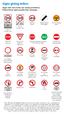 Signs giving orders Signs with red circles are mostly prohibitive. Plates below signs qualify their message. Entry to 20 mph zone End of 20 mph zone Maximum speed National speed limit applies School crossing
Site Traffic Management Plan
 Masterton Primary School Aberdour Road Dunfermline Fife KY11 8HY Telephone: 01383 602455 Email: [email protected] Head Teacher: Mr Stephen Humphries Site Traffic Management Plan Date December
Oostwold Airshow 2015
 Oostwold Airshow 2015 Briefing visiting aircraft 25 th May 2015 Dear pilots This document deals with procedures to be employed during the Oostwold Airshow day on May 25 th 2015 only. The following procedures
New Jersey Bicycle Laws
 39:1-1 Words and phrases defined Right-of-way means the privilege of the immediate use of the highway. Traffic means pedestrians, ridden or herded animals, vehicles, streetcars, and other conveyances either
Info NEWS MEDIA GUIDE
 Info Office of Public Affairs Miami-Dade Aviation Department P.O. Box 592075 Miami, Florida 33159 Phone: (305) 876-7017 Fax: (305) 869-1270 www.iflymia.com NEWS MEDIA GUIDE Table of Contents Introduction.............................
ORDINANCE NO. Section 21-197. Traffic laws apply to persons riding bicycles, shall be amended to read as follows:
 ORDINANCE NO. AN ORDINANCE TO AMEND CHAPTER 21, ARTICLE V, CODE OF ORDINANCES, CITY OF MEMPHIS, TO UPDATE REGULATIONS REGARDING THE OPERATION OF BICYCLES WITHIN THE CITY OF MEMPHIS WHEREAS, the current
DRIVING TEST POSSIBLE QUESTIONS & ANSWERS.
 DRIVING TEST POSSIBLE QUESTIONS & ANSWERS. Question 1. What shape and colour is a warning sign? Diamond Shape - Yellow and Black Question 2. When should you not drive? While under the influence of alcohol,
RULES OF THE ROAD BY LWTL Staff Writer
 RULES OF THE ROAD BY LWTL Staff Writer Publisher s Note This is the First of a Three Part Series on Pedestrian and Bicycle Safety. This First Part is made available to all readers. The final two parts
Chapter 10.48 BICYCLES
 Chapter 10.48 BICYCLES Sections: 10.48.010 Traffic Laws Applied to Persons Riding Bicycles. 10.48.110 Equipment on Bicycles; Brakes and Lights. 10.48.130 Right-of-Way. 10.48.140 Right Turn Lanes. 10.48.150
SAFETYSENSE leaflet 26
 SAFETYSENSE leaflet 26 VISITING MILITARY AERODROMES Part 1 Visiting during normal operating hours 3 PRE-FLIGHT 4 APPROACHING OR PASSING THE AERODROME 5 INSTRUMENT APPROACHES 6 CIRCUIT PROCEDURES 7 BARRIERS
Safety Bulletin Newsletter
 From the Captain s Seat Follow Instructions Chief Pilot: John Walter Instructions are important to us for many reasons: to keep us from getting hurt, or maybe just for our own good. As soon as we are able
DEFENSIVE DRIVING. It s an Attitude
 DEFENSIVE DRIVING It s an Attitude RLI Design Professionals Design Professionals Learning Event DPLE 155 July 15, 2015 RLI Design Professionals RLI Design Professionals is a Registered Provider with The
AIRCRAFT RESCUE AND FIRE FIGHTING GUIDE REVISION 0. AA Flight Safety Department.4601 Hwy 360; MD 849 GSWFA.Fort Worth Texas 76155. Phone 817-967-1829
 AIRCRAFT RESCUE AND FIRE FIGHTING GUIDE REVISION 0 AA Flight Safety Department.4601 Hwy 360; MD 849 GSWFA.Fort Worth Texas 76155. Phone 817-967-1829 Copyright 2013 by American Airlines Book design by Ted
Taxiways... 41 Taxiway Types... 41 Taxiway Markings... 41 Taxiway Lighting... 56
 Version: 7/1/2013 Introduction... 4 General Information... 5 DFW Passenger Terminals... 6 Security and Safety on the AOA... 7 Security SIDA and AOA Badges... 8 AOA Vehicle Access Permits... 9 AOA Gate
SAFE CYCLING GUIDE. 6th Edition
 SAFE CYCLING GUIDE 6th Edition BEFORE SETTING OUT A WELL-MAINTAINED BICYCLE is key A Check tire pressure B Check that the chain does not slip C Check the brakes D Check lights and reflectors: 3 4 1 5 2
Equipment Lighting and Visibility Requirements
 Equipment Lighting and Visibility Requirements Purpose To help ensure that adequate warning of work vehicles and equipment is provided to motorists, pedestrians and workers, in and adjacent to construction
87-A DISTRICT DIVISION MOST COMMON TRAFFIC CIVIL INFRACTION VIOLATIONS
 87-A DISTRICT DIVISION MOST COMMON TRAFFIC CIVIL INFRACTION VIOLATIONS Revised as of 04/2016 Misdemeanor violations may require a hearing date at which time fine and costs will be assessed. Section Code
How To Design A Crash Investigation Site
 CHAPTER 7 CRASH INVESTIGATION SITES December, 2000 7. Crash Investigation Sites (CIS) 7.1. Introduction and Usage The idea of "crash investigation sites" or areas outside of the freeway mainline where
Theme: 18. RULES OF DRIVER S BEHAVIOUR IN CASE OF ROAD TRAFFIC ACCIDENT
 Theme: 18. RULES OF DRIVER S BEHAVIOUR IN CASE OF ROAD TRAFFIC ACCIDENT Poi nts К No. Question, answers Figure 2 18/1. The drivers in which age group are most frequently involved in road traffic accidents?
AVIATION TRAINING ACADEMY
 ATNS ATA Private Bag X 1 Bonaero Park South Africa 1622 Tel nr: +27(11) 961-0100; Fax nr: +27(11) 392-3868; Website: www.atns.co.za. AVIATION TRAINING ACADEMY AERODROME FLIGHT INFORMATION SERVICE COURSE
Department of Transport. Cycling Rules
 Department of Transport Cycling Rules 2 Contents Definition of a bicycle Standard requirements Power-assisted pedal cycles Carrying or towing loads The rider, passenger and helmets Rules affecting cycling
(3) CATEGORY III means a permanent heliport facility. (4) COMMISSION means the City of Austin Airport Advisory Commission.
 13-1-171 DEFINITIONS. (A) Terms not otherwise defined in this article have the meaning prescribed by applicable aviation law, including Federal Aviation Administration Advisory Circular 150/5390-2A (Heliport
COMMONWEALTH OF PUERTO RICO OFFICE OF THE COMMISSIONER OF INSURANCE RULE 71
 COMMONWEALTH OF PUERTO RICO OFFICE OF THE COMMISSIONER OF INSURANCE RULE 71 SYSTEM FOR THE INITIAL DETERMINATION OF LIABILITY UNDER COMPULSORY MOTOR VEHICLE LIABILITY INSURANCE SECTION 1. LEGAL BASIS This
CHAPTER 4. HOSPITAL HELIPORTS
 AC 150/5390-2B September 30, 2004 CHAPTER 4. HOSPITAL HELIPORTS 400. GENERAL. Helicopters have proven to be an effective means of transporting injured persons from the scene of an accident to a hospital
How To Improve Safety
 Collision Diagrams Collision diagrams are used to display and identify similar accident patterns. They provide information on the type and number of accidents; including conditions such as time of day,
SAFE CYCLING GUIDE. 7th Edition
 SAFE CYCLING GUIDE 7th Edition BEFORE SETTING OUT A Check tire pressure B Check that the chain does not slip C Check the brakes D Check lights and reflectors: 1 A WELL-MAINTAINED BICYCLE is key 3 4 5 Adjust
Bicycle Safety Enforcement Action Guidelines
 Introduction Bicycle Safety Enforcement Action Guidelines People ride bicycles for many different reasons: fitness, recreation, or for transportation. Regardless of the reason for riding, bicyclists young
Fashion Institute of Technology OPERATIONAL SERVICES
 Fashion Institute of Technology OPERATIONAL SERVICES Motor Vehicle Use Manual 2010 Table of Contents 1. Introduction............................................. 1 1.1 Purpose and Application of Manual..........................
Abu Dhabi EHSMS Regulatory Framework (AD EHSMS RF)
 Abu Dhabi EHSMS Regulatory Framework (AD EHSMS RF) EHS Regulatory Instrument Code of Practice EHS RI CoP 44.0 Traffic Management and Logistics Version 2.0 February 2012 ACKNOWLEDGEMENTS With gratitude
Accidents/Incidents are Preventable
 Section 4 Fundamentals of Accident/Incident Prevention Accidents/Incidents are Preventable Many people believe that accidents are the inevitable result of unchangeable circumstances, fate, or a matter
[back to list of TX laws] Acts 1995, 74th Leg., ch. 165, Sec. 1, eff. Sept. 1, 1995.
![[back to list of TX laws] Acts 1995, 74th Leg., ch. 165, Sec. 1, eff. Sept. 1, 1995.](/thumbs/24/2251979.jpg "[back to list of TX laws] Acts 1995, 74th Leg., ch. 165, Sec. 1, eff. Sept. 1, 1995.") This document is for information only about Texas Law regarding bicycles, it is not the actual code and it should not be used as a legal document. Please consult an attorney for legal advice. The Official
This document is for information only about Texas Law regarding bicycles, it is not the actual code and it should not be used as a legal document. Please consult an attorney for legal advice. The Official
CHART OF MOVING VIOLATIONS
 CHART OF MOVING VIOLATIONS The following chart lists the moving violations that are designated by the Texas Department of Public Safety pursuant to statutory authority. The violations listed are subject
Salt Lake City International Airport CONSTRUCTION SAFETY AND SECURITY COMPLIANCE MANUAL
 Salt Lake City International Airport CONSTRUCTION SAFETY AND SECURITY COMPLIANCE MANUAL July 2014 Refer to the Salt Lake City Department of Airport s website for the most current edition of this manual.
CHAPTER 8: VISUAL AIDS PROVIDED BY AERODROME MARKINGS, MARKERS, SIGNALS AND SIGNS. Section 8.1: General
 CHAPTER 8: VISUAL AIDS PROVIDED BY AERODROME MARKINGS, MARKERS, SIGNALS AND SIGNS Section 8.1: General 8.1.1 Introduction 8.1.1.1 This Chapter specifies the standards for Markers, Markings, Signals and
Risk Assessment for visits by schools and other groups including children.
 Perrygrove Railway Risk Assessment for visits by schools and other groups including children. Page 1 Risk Assessment for visits by schools and other groups including children. Introduction Perrygrove Railway
University Fleet Services
 University Fleet Services Policies and Procedures May 2008 Contents Assignment and use of vehicles................. 2 Definition of personal use...................... 2 Driver requirements...........................
DMV. OREGON TRAFFIC ACCIDENT AND INSURANCE REPORT Tear this sheet off your report, read and carefully follow the directions.
 OREGON TRAFFIC ACCIDENT AND INSURANCE REPORT Tear this sheet off your report, read and carefully follow the directions. ONLY drivers involved in an accident resulting in any of the following MUST file