
Electricity plays a vital part in the
|
|
|
- Dominick Powers
- 10 years ago
- Views:
Transcription
1 Doing Business 216 Getting electricity Measuring reliability, prices and transparency This year Doing Business collected new data in 189 economies on the price of electricity and the overall quality of electricity supply. High electricity prices and frequent power outages constrain the operations of businesses and affect entrepreneurs decisions on whether to establish a business and on how to operate it. A sound regulatory environment can help ensure a stable electricity supply. In 131 of the 189 economies covered by Doing Business, a national energy regulator monitors the frequency and duration of power outages. In 66 of these economies utilities compensate customers or pay fines if outages exceed the limits set by the regulator. Electricity tariffs for commercial customers typically range from 1 to 3 cents per kilowatt-hour, but prices in some economies are much higher. Tariffs need to strike a balance remaining affordable to customers while enabling the utility to recover costs and make a profit. Information about tariffs needs to be clear and easily accessible to customers. Making tariffs readily available and providing advance notice of changes in tariffs can help businesses manage their costs. Electricity plays a vital part in the modern economy. Yet merely having access to power is not enough. The reliability of supply is also crucial. According to 213 World Bank Enterprise Survey data for 135 economies, business owners perceive an unreliable supply of electricity as one of the main obstacles to their activities. In both Sub-Saharan Africa and South Asia about 45% of firms identified reliability of the power supply and connecting to the grid as among the key constraints to doing business. 1 Businesses in Pakistan estimated losses due to power outages at up to 34% of annual revenue, while respondents in the Central African Republic reported losses of up to 25% of revenue. Not surprisingly, research shows that capital (domestic and foreign) tends to be attracted to countries that are able to offer a reliable and competitively priced supply of electricity. 2 Since 211 Doing Business, through its getting electricity indicators, has measured one aspect of access to electricity by recording the time, cost and number of procedures required for a small to medium-size business to legally connect a commercial warehouse to the electrical grid. Over the years the getting electricity indicators have served as a benchmarking tool, enabling utilities and regulators to measure the efficiency of the electricity connection service and contributing to dialogue on regulatory reforms and good practices. But the efficiency of the connection process as measured by the time, cost and number of procedures to get a new connection relates to only a small part of the power sector s overall performance in each economy. For this reason Doing Business introduces two new indicators this year (figure 7.1). The reliability of supply and transparency of tariffs index encompasses quantitative data on the duration and frequency of power outages as well as qualitative information on how utilities and regulators handle power outages and how tariffs and tariff changes are communicated to customers. The price of electricity provides comparable data on electricity prices for commercial customers (this indicator is not included in the ranking on the ease of doing business, however). The new data broaden the coverage of the getting electricity indicators, providing a more comprehensive picture. Yet the data show that the efficiency of the connection process and the reliability of electricity supply appear to be correlated. In other words, economies where it is easy to connect to the grid tend to have a well-developed and reliable network infrastructure characterized by few outages (figure 7.2). The Republic of Korea, for example, has the fastest process for getting a new electricity connection (taking only 18 days) as well as a low cost to connect (4% of income per capita). Korea also has the highest possible score on the reliability of supply and transparency of tariffs index. Businesses in Seoul typically experience power outages amounting to less than an hour a year and can receive compensation for an outage caused by the utility if power isn t restored within five minutes. The utility uses automated systems for monitoring outages and restoring service. And the independent regulatory

2 Getting Electricity 71 Figure 7.1 indicators Getting a connection to the electrical grid New measures have expanded the coverage of the getting electricity System average interruption duration index (SAIDI) uses manual systems to monitor outages. Moreover, there is no active regulatory body, electricity tariffs are not published online, and customers receive no compensation when outages occur. Time (calendar days) Cost (% of income per capita) Reliability of supply and transparency of tariffs index a Procedures (number) System average interruption frequency index (SAIFI) Mechanisms for monitoring outages and restoring service Regulatory monitoring Even so, an efficient connection process does not automatically translate into better reliability of supply. The ability of a distribution utility to provide reliable supply depends on many factors along the chain from generation through transmission to delivery of electricity to the customer. Price of electricity a Consumption price for commercial customers (cents per kilowatt-hour) body that oversees the sector makes sure that changes in electricity tariffs are communicated ahead of time. Businesses face a different situation in Niger, where there is a substantial gap between the demand for electricity and Financial deterrents aimed at limiting outages Communication of tariffs and tariff changes a. New indicator added this year. The price of electricity is not included in the ranking on the ease of doing business. its supply and the power infrastructure is outdated and subject to huge transmission and distribution losses. In Niamey getting a new connection takes 115 days and costs more than 6,2% of income per capita. Customers experience power outages almost daily, and the utility still Figure 7.2 Economies with an efficient connection process tend to have a reliable electricity network Distance to frontier score for reliability of supply and transparency of tariffs index Low efficiency, high reliability 2 1 Low efficiency, High efficiency, low reliability low reliability Distance to frontier score for efficiency of connection process High efficiency, high reliability Note: The figure compares the average distance to frontier score for indicators of the efficiency of the connection process (procedures, time and cost) with the distance to frontier score for the reliability of supply and transparency of tariffs index. The correlation between the two scores is.49. The relationship is significant at the 1% level after controlling for income per capita. RELIABILITY OF SUPPLY Electricity outages can have serious effects on businesses. They can damage assets (such as electronics) and inventory. And they can disrupt work by shutting down equipment and cutting off lighting, heating or internet connections. Our businesses are down because of these outages; without electricity we can t work. We really can t afford any more of this, said Mr. Ali, a businessman who owned a dry-cleaning company in downtown Cairo. He was among the 2 million people affected by the city s frequent power outages in Constrained by outages, millions of businesses around the world need to alter their operations to avoid disruptions or resort to captive power options, usually diesel generators. According to the 213 World Bank Enterprise Survey data, more than 4% of firms located in 61 developing economies in the Middle East and North Africa, South Asia and Sub-Saharan Africa have their own generator even when they are connected to the grid. 4 Businesses in higher-income economies also contend with unreliable power supply. As a result of the 2 1 rolling blackouts in the U.S. state of California, a substantial number of businesses decided to install backup generators, 5 which typically cost tens of thousands of dollars and generate very expensive electricity.

3 72 Doing Business 216 An unstable electricity supply can also lead to lower employment and to lower production for firms. Using data from Nigeria for , a study identified the inadequate and unstable power supply to the industrial sector as a major cause of unemployment in the country. Industry is a core sector for the generation of national wealth and employment in Nigeria, but faced with an electricity sector hampered by poorly utilized generation capacity, high transmission losses and frequent outages, companies turn to self-provision of electricity. This raises their production costs, reducing their competitiveness and thus their demand for labor. The erratic and inadequate power supply in Nigeria has often been cited as the main reason forcing multinationals to relocate production lines to other countries. 6 Power outages also affect output levels. As a result of power supply interruptions in Bangladesh in 21 3, utilities failed to meet an estimated 13.6% of the industrial sector s demand. In 2 1 the resulting economic losses amounted to 1.7% of GDP. 7 total duration of outages, and SAIFI the average frequency of outages, experienced by a customer in a year (excluding outages due to natural disasters). The calculation of SAIDI and SAIFI values is based on a standardized approach that is the most common one in use around the world. To ensure the comparability of data across economies, Doing Business relies only on SAIDI and SAIFI. The data are collected in the largest business city of each economy (and, in 11 economies, also in the second largest business city). The reliability of supply and transparency of tariffs index also measures five qualitative aspects: whether utilities use automated tools to monitor power outages; whether they use automated tools to restore power supply; whether a regulator that is, an entity separate from any utility monitors utilities performance on reliability of supply (through periodic or real-time reviews); whether utilities face financial deterrents aimed at limiting outages (such as a requirement to compensate customers or to pay fines); and whether electricity tariffs are transparent and easily available (with effective tariffs available online and customers notified of a change in tariff ahead of the billing cycle). What do the data on reliability show? The data show that the occurrence of outages is associated with several factors. One is an economy s income level. A typical firm operating in a low-income economy faces nearly 25 outages a year, lasting close to 1, hours in total, while a typical one in a high-income economy experiences only 1.5 outages a year, totaling around 3 hours. The frequency and duration of outages also vary substantially among regions. Sub-Saharan African economies have the longest total duration of outages, averaging almost 7 hours a year for a customer while OECD high-income economies have the shortest, averaging only about 1 hour a year (figure 7.3). Economies in South Asia have the highest frequency of outages, averaging more than 2 outages The effects go beyond economic costs. An unreliable electricity supply also has consequences for a society s well-being and living conditions. Only 25% of health facilities in Kenya can count on a reliable power supply. In India nearly half of health facilities have no access to electricity at all. 8 Most public services are compromised when power shuts down. And outages can pose a threat to personal safety such as by putting out streetlights and traffic lights and by disabling burglar alarms in homes. How is the reliability of supply measured? The reliability of supply and transparency of tariffs index provides a tool for benchmarking the performance of utilities in providing a reliable electricity supply. To assess the reliability of supply, Doing Business uses two standard measures: the system average interruption duration index (SAIDI) and the system average interruption frequency index (SAIFI). SAIDI measures the average Figure 7.3 Electricity customers in Sub-Saharan Africa endure the most time without power supply on average Average total duration of power outages in a year (hours) Sub-Saharan Africa South Asia Middle East & North Africa East Asia & Pacific Latin America & Caribbean Europe & Central Asia OECD high income Note: The figure shows the average number of hours without electricity supply over the course of a year for a lowor medium-voltage customer in the largest business city of each economy, as measured by SAIDI. For 1 economies the data are also collected for the second largest business city. The data are for the most recent year available. The sample comprises 147 economies. It excludes the following economies, for which no data were available: Angola; The Bahamas; Bangladesh; Benin; Botswana; the Central African Republic; Chad; the Republic of Congo; Djibouti; the Arab Republic of Egypt; Equatorial Guinea; Ethiopia; The Gambia; Ghana; Guinea-Bissau; Haiti; Iraq; Kiribati; the Kyrgyz Republic; Lao PDR; Lebanon; Lesotho; Madagascar; Malawi; Maldives; the Federated States of Micronesia; Montenegro; Mozambique; Myanmar; Nepal; Qatar; Rwanda; São Tomé and Príncipe; Sierra Leone; South Africa; St. Kitts and Nevis; St. Vincent and the Grenadines; the Syrian Arab Republic; Tajikistan; Timor-Leste; República Bolivariana de Venezuela; and the Republic of Yemen.

4 Getting Electricity 73 Figure 7.4 Electricity customers in South Asia experience the greatest average frequency of power outages Average number of power outages in a year South Asia Sub-Saharan Middle East Africa & North Africa East Asia & Pacific Latin America & Caribbean Europe & Central Asia OECD high income is to set minimum quality standards while also monitoring data on outages. Among the economies with less than one hour of power cuts in 214, 95% have a regulator that performs periodic or real-time monitoring of outages. Data for low- and lowermiddle-income economies underscore the importance of regulatory monitoring (figure 7.5). Regulatory oversight can lead to stark differences in the duration of outages even among economies with similar income levels. Guatemala City, where a regulator monitors power cuts, registered 4 hours of outages in 213. Tegucigalpa, Honduras, where there is no regulatory oversight of outages, had 257 hours of power interruptions that same year. Note: The figure shows the average number of power outages over the course of a year for a low- or mediumvoltage customer in the largest business city of each economy, as measured by SAIFI. For 1 economies the data are also collected for the second largest business city. The data are for the most recent year available. The sample comprises 147 economies. It excludes the following economies, for which no data were available: Angola; The Bahamas; Bangladesh; Benin; Botswana; the Central African Republic; Chad; the Republic of Congo; Djibouti; the Arab Republic of Egypt; Equatorial Guinea; Ethiopia; The Gambia; Ghana; Guinea-Bissau; Haiti; Iraq; Kiribati; the Kyrgyz Republic; Lao PDR; Lebanon; Lesotho; Madagascar; Malawi; Maldives; the Federated States of Micronesia; Montenegro; Mozambique; Myanmar; Nepal; Qatar; Rwanda; São Tomé and Príncipe; Sierra Leone; South Africa; St. Kitts and Nevis; St. Vincent and the Grenadines; the Syrian Arab Republic; Tajikistan; Timor-Leste; República Bolivariana de Venezuela; and the Republic of Yemen. a year for a typical customer; OECD highincome economies have the lowest, averaging 1 outage a year (figure 7.4). Many issues affecting the quality of supply are beyond government control. In some economies the national electricity supply is undermined by frequent natural disasters coupled with limited natural resources. Addressing issues of generation capacity and reliability of transmission and distribution grids may take a long-term approach. But in the shorter term there are practical actions that governments can take to ensure more reliable service. One is to put in place a robust regulatory framework with the right oversight and incentives. Electricity supply is typically a natural monopoly, so customers dissatisfied with the quality or price of the service often have no alternatives to choose from. This makes it important for regulators to monitor utilities performance on matters relating to outages and tariffs. But to ensure that utilities can make the necessary investments to maintain and improve service, regulation should not compromise their balance sheets. To create incentives to provide adequate service, one strategy used by regulators Another strategy often used by regulators is to set a limit on the frequency and duration of outages and then require utilities to pay compensation to customers if they exceed that limit. Alternatively, regulators may impose a fine on utilities. The size of such penalties varies across economies. But those that use financial deterrents to limit outages had 14 power cuts on average in 214, lasting around 3 hours in total, while those that don t use them had 5 times as many outages, lasting almost 1 times as long. Figure 7.5 Among low- and lower-middle-income economies, customers endure far less time without power supply in those with regulatory monitoring of outages Average total duration of power outages in a year (hours) 1,2 1, Average for lowand lower-middle-income economies with regulatory monitoring Global average for lowand lower-middle-income economies Average for lowand lower-middle-income economies without regulatory monitoring Note: The figure shows the average number of hours without electricity supply over the course of a year for a lowor medium-voltage customer in the largest business city of each economy, as measured by SAIDI. For four low- or lower-middle-income economies the data are also collected for the second largest business city. The data are for the most recent year available. Regulatory monitoring refers to periodic or real-time monitoring of outages. The sample comprises 51 economies.

5 74 Doing Business 216 Like regulators, utilities can also take action to improve the reliability of supply. One way is to invest in the information technology systems used to monitor power interruptions and restore service. Because of financial constraints and the cost of introducing such systems, many utilities continue to rely on call centers to record outages, then send out maintenance crews to find the location of the fault and identify the cause. This process typically takes several hours. In 119 economies, however, utilities are able to rely instead on an electronic system, such as a Supervisory Control and Data Acquisition (SCADA) system or an Incidence Management System. A SCADA system, for example, transfers data in real time between the substations and the operator terminals. When an outage occurs, information on the exact location and cause of the power cut can immediately be sent to a dispatch crew. 9 A SCADA system can also automatically restore power flow once it is safe to do so. This automation not only helps increase reliability; by reducing damage to equipment, it also helps lower costs. Beyond investing in adequate tools to monitor and restore power outages, utilities also need to directly address the sources of power failures which in economies with high SAIDI and SAIFI values are usually faulty equipment, inadequate generation capacity and outdated power system infrastructure. Tackling these issues requires considerable investments (box 7.1). But making these expenditures should not necessarily price out the majority of customers evidence suggests that expensive electricity bills do not ensure efficient service. Indeed, an analysis covering 189 economies that controls for income per capita shows that it is possible to have a stable supply even with low tariffs. This combination is most commonly found in economies that are rich in fuel energy resources. But there are exceptions. One of them is Turkey. Electricity customers in Istanbul experience five outages a year on average, and tariffs amount to 14 cents per kilowatt-hour, considerably lower than the global average. PRICE OF ELECTRICITY AND TRANSPARENCY Efficient pricing is central to a wellfunctioning power sector. Utilities need to be able to recover their costs and make a profit by charging their customers reasonable tariffs. At the same time, the private sector takes into account the cost of electricity when making investment decisions, and businesses often try to curb their energy costs through energy efficiency measures. But achieving efficient power pricing is easier said than done. The power sector is characterized by substantial up-front fixed costs, and it takes many years for initial investments to pay off. Beyond that, costs vary between different times of the day (peak, off-peak), seasons (dry, rainy), types of users (residential, commercial) and geographic areas (urban, rural). 1 Tariffs, as well as any changes in them, need to be clearly communicated to customers whether through the utility s and regulator s websites, the media, public hearings or other means. Customers need this information so that they can plan their expenses, understand the utility s billing system and, if needed, contest the charges. Businesses want to know in advance of any change in expenditure so that they can adjust their allocation of financial resources accordingly. In some economies the law requires utilities to announce changes several billing cycles ahead. In others, the regulator helps ensure that tariffs are published in BOX 7.1 Improving the reliability of power supply in Mexico Mexico s capital has had a big improvement in the reliability of electricity supply. In 21 a typical customer living in the Mexico City metropolitan area experienced 7.33 hours of power outages. In 214, just four years later, the same customer would have had to deal with outages totaling only 55 minutes. Power interruptions are often caused by aging infrastructure, faulty equipment, electricity supply shortages and even such factors as erratic weather or falling trees. The local utility in Mexico City, the Comisión Federal de Electricidad (CFE), has been tackling these problems. Between 21 and 214 the utility invested 3.76 billion Mexican pesos (about $244 million) in modernizing electrical circuits and underground networks; improving the maintenance of substations, power plants and other assets; and pruning trees. a Besides investing in infrastructure, the utility also relies on a robust system for monitoring outages, to ensure a timely response in detecting power cuts and restoring supply. Thanks to its SCADA system, the utility can conduct real-time monitoring of power interruptions and electronically restore electricity supply in the city. At the national level too there is a sophisticated monitoring system in place. In 212 Mexico s Electric Research Institute developed an electronic tool based on GIS (geographic information system) technology to forecast the effects of hurricanes on the country s electricity infrastructure. This has helped improve the planning and preparation for weather-related power outages, reducing the total duration of supply interruptions in Mexico. b a. Comisión Federal de Electricidad 215. b. Espinosa Reza, González Castro and Sierra Rodríguez 211; Mena Hernández 212.

6 Getting Electricity 75 different media outlets and that the information is clear and detailed enough so that customers can calculate their prices. In Pakistan, for example, customers are informed if the regulator and the utility even have a consultation on potential tariff changes. How are prices and their transparency measured? To measure the price of electricity, Doing Business computes a monthly bill for a small to medium-size business in the largest business city of each economy (and, in 11 economies, in the second largest business city as well). To ensure comparability of the data across economies, Doing Business uses a standardized case study centered on a commercial warehouse with a subscribed capacity and level of energy use typical of this kind of customer: the warehouse requires a capacity of 14 kilovolt-amperes (kva) and has an hourly consumption of 112 kilowatt-hours. The case study assumes that the warehouse uses electricity 3 days a month, in March, and from 9: a.m. to 5: p.m. (which amounts to a monthly consumption of 26,88 kilowatt-hours). When multiple electricity suppliers exist, it is assumed that the cheapest supplier is used. To allow comparison of the price of electricity for businesses around the world, the total price is then converted to U.S. dollars and expressed in cents per kilowatt-hour. By compiling a standard electricity bill, Doing Business adopts the perspective of a local entrepreneur measuring the price and not the cost of electricity. Price is what final customers pay for electricity supply. Cost is the expense incurred by the utility company to produce, purchase, transport and distribute electricity. There may be a considerable difference between the price of electricity and its cost. In some economies, for example, the government subsidizes the price customers pay for electricity by paying a portion of the energy costs to the utility. To assess the transparency of prices, Doing Business scores economies on whether tariffs are made available online and communicated properly to customers and whether tariff changes are announced ahead of the billing cycle through a means of communication reaching a majority of customers (television, radio, courier, newspapers). This score is part of the reliability of supply and transparency of tariffs index. What do the data on prices show? The price of electricity as measured by Doing Business varies widely among regions (figure 7.6). It is lowest on average in the Middle East and North Africa (11 cents per kilowatt-hour) and highest on average in East Asia and the Pacific (27 cents per kilowatt-hour). Many factors drive the price of electricity in an economy, with some of the important ones being the availability of domestic energy resources, the condition of power sector infrastructure, the adequacy of generation capacity and the existence and extent of subsidy regimes. A combination of these factors typically explains the differences in the prices observed, and these in turn may affect the electrification rate the share of the population with access to electricity. Indeed, in the business sector high electricity prices can discourage investments and also raise questions about whether it makes more sense to connect to the grid or to use a captive power option. Interestingly, however, data for a sample of 187 economies suggest that electricity prices do not affect average electrification rates across income groups except perhaps when prices exceed 4 cents per kilowatt-hour (figure 7.7). Indeed, in Liberia, where the price per kilowatt-hour is 56 cents nearly four times the price in Finland only 9.8% of the population has access to electricity. Prices this high can be a strong deterrent to establishing a formal connection to electricity and this indirectly contributes to electricity theft and to revenue losses for the utility, 11 triggering a vicious cycle in which it struggles to adequately serve its customers. Even so, utilities need to adopt prices that allow them to maintain the necessary power system infrastructure and provide quality services. The price of electricity has an important effect on power consumption. According to a report from the U.S. Department of Energy, customers adjust their consumption patterns to changes in price as well as Figure 7.6 The average price of electricity varies widely among regions Average price of electricity (cents per kilowatt-hour) East Asia & Pacific Latin America & Caribbean Sub-Saharan Africa South Asia OECD high income Europe & Central Asia Middle East & North Africa Note: The price of electricity is derived from the monthly consumption cost for the commercial warehouse in the Doing Business case study. The sample comprises 188 economies. Excluded from the sample is República Bolivariana de Venezuela.

7 76 Doing Business 216 Figure 7.7 Electrification rates vary among income groups, but the effect of electricity prices is unclear Average electrification rate (% of population) Low income Lower middle income Upper middle income High income Average price of electricity (cents per kilowatt-hour) < 1 cents 1 2 cents 2 3 cents 3 4 cents > 4 cents Sources: Doing Business database; World Development Indicators database ( World Bank. Note: The price of electricity is derived from the monthly consumption cost for the commercial warehouse in the Doing Business case study. The sample comprises 187 economies. Excluded from the sample are Taiwan, China; and República Bolivariana de Venezuela. to changes in the structure of tariffs, such as the introduction of a time-of-use (TOU) tariff. 12 Fluctuations in price can affect decision making by businesses, for which electricity bills represent a considerable expense. 13 Data for 152 economies show a negative correlation between the price of electricity and manufacturing value added as a percentage of GDP. 14 An increase in electricity prices may lead to firms switching to industries with fewer opportunities for enhancing productivity and away from manufacturing. 15 Moving up the value chain becomes difficult where electricity prices are high. The structure of a tariff schedule is as important as the tariff itself in sending the right signals to customers. Pricing for nonresidential customers tends to be complex. It is usually structured as a three-part tariff consisting of a monthly fixed charge (determined by the characteristics of the network), a capacity charge (determined by the highest recorded power demand over the billing period) and a volume charge (defined by the energy consumption). In addition, volume charges may be differentiated by time of use, to adjust to differences in the level of energy consumption between different times of day or between weekends and weekdays. Where TOU tariffs are used, lower tariffs typically apply during times when aggregate consumption is lower, such as at night and on the weekend, and higher tariffs during peak consumption periods. Complex tariffs like these are commonly used in industrial economies as in the United States, for example, where nonresidential customers account for 6% of electricity consumption. 16 Among the 189 economies covered by Doing Business, 52% have a TOU tariff option for commercial or industrial customers. This time-based tariff schedule exists in 93% of OECD high-income economies but only 35% of economies in East Asia and the Pacific. In South Africa, for example, the utility defines different daily TOU periods for different types of connections. For most commercial customers there are three daily TOU rates: peak, standard and off-peak. Peak rates apply on weekdays from 7: a.m. to 1: a.m. and from 6: p.m. to 8: p.m. Standard rates apply throughout the rest of the day, and off-peak rates at night. On Saturdays the TOU periods are different, and on Sundays only off-peak rates apply. The tariffs for each TOU period then vary according to the season, with higher rates charged between June and August. The complexity of the tariff schedule does not end there: volume charges also vary, depending on the transmission zone (based on the transmission distance) and on voltage levels. Finally, the utility charges customers several other fees each month for capacity, administration, network access, service, reliability, reactive energy and other network subsidies. Up to 1 different charges may apply, all of them varying according to the characteristics of a customer s connection. 17 The complexity of tariff schedules makes it important for utilities to circulate clear information on tariffs. Some utilities go a step further. With the aim of helping customers, Malaysia s largest electric utility company, Tenaga Nasional Berhad, set up a web page with a bill calculator for residential, commercial and industrial connections making it easy for customers to estimate their future electricity costs based on the voltage level and subscribed capacity of their connection and their estimated monthly consumption during peak and off-peak periods. The website also offers businesses advice on how to boost their energy savings. And it provides an energy audit calculator to estimate the electricity consumption of different appliances. 18 Such tools not only help customers understand their electricity bills; they also allow them to analyze their electricity use and identify ways to increase efficiency. CONCLUSION Ensuring a reliable supply of electricity, under transparent and efficient pricing, plays a key part in promoting investment opportunities and economic growth and thus represents a key challenge for

8 Getting Electricity 77 governments around the world. As Doing Business data suggest, governments can use regulatory measures to encourage good practices in electricity supply systems. These regulatory measures need to strike the right balance, ensuring that customers receive a reliable and reasonably priced electricity supply without compromising utilities revenues. Utilities can also take practical measures to increase the reliability of supply and the accessibility of tariff information to customers. and refer to industries belonging to the International Standard Industrial Classification (ISIC) divisions These data are from the World Development Indicators database ( World Bank. The data on the price of electricity are derived from the monthly consumption cost for the commercial warehouse in the Doing Business case study. The sample comprises 152 economies. 15. Abeberese Brief and Davids See Eskom s website at See Tenaga Nasional Berhad s website at NOTES This case study was written by Jean Arlet, Volha Hrytskevich, Haya Mortada, Tigran Parvanyan, Jayashree Srinivasan and Erick Tjong. 1. Enterprise Surveys database ( World Bank. 2. Audinet and Rodriguez Pardina Arwa Ibrahim, Egypt s Power Outages Continue to Intensify, Middle East Eye, September 5, 214, -outages-compound Enterprise Surveys database ( World Bank. These economies are Afghanistan; Algeria; Angola; Bangladesh; Benin; Bhutan; Botswana; Burkina Faso; Burundi; Cabo Verde; Cameroon; the Central African Republic; Chad; the Democratic Republic of Congo; the Republic of Congo; Côte d Ivoire; Djibouti; the Arab Republic of Egypt; Eritrea; Ethiopia; Gabon; The Gambia; Ghana; Guinea; Guinea- Bissau; India; Iraq; Jordan; Kenya; Lebanon; Lesotho; Liberia; Madagascar; Malawi; Mali; Mauritania; Mauritius; Morocco; Mozambique; Namibia; Nepal; Niger; Nigeria; Pakistan; Rwanda; Senegal; Sierra Leone; South Africa; South Sudan; Sri Lanka; Sudan; the Syrian Arab Republic; Swaziland; Tanzania; Togo; Tunisia; Uganda; West Bank and Gaza; the Republic of Yemen; Zambia; and Zimbabwe. 5. Black, Larsen and Ryan George and Oseni Wijayatunga and Jayalath Practical Action Terezinho Briceño-Garmendia and Shkaratan According to a recent study, global losses due to electricity theft amount to $89.3 billion a year (Northeast Group 214). 12. U.S. Department of Energy Jewell Doing Business finds that the correlation between manufacturing value added and the price of electricity is.21. The relationship is significant at the 1% level after controlling for income per capita. The data on manufacturing are a three-year moving average for

Countries Ranked by Per Capita Income A. IBRD Only 1 Category iv (over $7,185)
 Page 1 of 5 Note: This OP 3.10, Annex C replaces the version dated September 2013. The revised terms are effective for all loans that are approved on or after July 1, 2014. Countries Ranked by Per Capita
Eligibility List 2015
 The Global Fund adopted an allocation-based approach for funding programs against HIV/AIDS, TB and malaria in 2013. The Global Fund policy states that countries can receive allocation only if their components
Appendix A. Crisis Indicators and Infrastructure Lending
 Appendix A. Crisis Indicators and Infrastructure Lending APPENDIX A Table A.1. Crisis Indicators (Case Study Countries) Country % as Share of GDP Share of in Bank Crisis Severity Score (principal factor
Proforma Cost for international UN Volunteers for UN Partner Agencies for 2016. International UN Volunteers (12 months)
 Proforma Cost for international UN Volunteers for UN Partner Agencies for 2016 Country Of Assignment International UN Volunteers (12 months) International UN Youth Volunteers (12 months) University Volunteers
OFFICIAL NAMES OF THE UNITED NATIONS MEMBERSHIP
 OFFICIAL NAMES OF THE UNITED NATIONS MEMBERSHIP Islamic Republic of Afghanistan Republic of Albania People s Democratic Republic of Algeria Principality of Andorra Republic of Angola Antigua and Barbuda
The Effective Vaccine Management Initiative Past, Present and Future
 EVM setting a standard for the vaccine supply chain The Effective Vaccine Management Initiative Past, Present and Future Paul Colrain TechNet meeting Dakar, Senegal, February 2013 February 2013 TechNet
Action required The Committee is requested to take note of the position of 2010 11 income and expenditure as of 30 September 2010.
 INTERNATIONAL LABOUR OFFICE Governing Body 309th Session, Geneva, November 2010 Programme, Financial and Administrative Committee GB.309/PFA/1 PFA FOR INFORMATION FIRST ITEM ON THE AGENDA Programme and
Bangladesh Visa fees for foreign nationals
 Bangladesh Visa fees for foreign nationals No. All fees in US $ 1. Afghanistan 5.00 5.00 10.00 2. Albania 2.00 2.00 3.00 3. Algeria 1.00 1.00 2.00 4. Angola 11.00 11.00 22.00 5. Argentina 21.00 21.00 42.00
מדינת ישראל. Tourist Visa Table
 Updated 22/06/2016 מדינת ישראל Tourist Visa Table Tourist visa exemption is applied to national and official passports only, and not to other travel documents. Exe = exempted Req = required Press the first
International Fuel Prices 2012/2013
 International Fuel Prices 212/213 8 th Edition Published by International Fuel Prices 212/213 8 th Edition Disclaimer Findings, interpretation and conclusions expressed in this document are based on the
Corporate Overview Creating Business Advantage
 Corporate Overview Creating Business Advantage 14 April 2013 Agenda The power of the group Our achievements Quick facts African regulatory environment Portfolio of offerings Creating value in Africa African
Expression of Interest in Research Grant Applications
 INTERNATIONAL CENTRE FOR GENETIC ENGINEERING AND BIOTECHNOLOGY THE ACADEMY OF SCIENCES FOR THE DEVELOPING WORLD UNITED NATIONS EDUCATIONAL, SCIENTIFIC AND CULTURAL ORGANIZATION ICGEB-TWAS-UNESCO/IBSP Joint
INDEX FOR RISK MANAGEMENT RESULTS 2015
 INDEX FOR RISK MANAGEMENT RESULTS 2015 INFORM 2015 INFORM MEASURES THE RISK OF HUMANITARIAN CRISES AND DISASTERS IN 191 COUNTRIES COUNTRY RISK 3 YR TREND Afghanistan 7.88 æ Albania 2.61 à Algeria 4.64
Population below the poverty line Rural % Population below $1 a day % Urban % Urban % Survey year. National %
 2.7 International the the Afghanistan.................... Albania 2002 29.6 19.8 25.4...... 2002 a
INDEX FOR RISK MANAGEMENT
 INDEX FOR RISK MANAGEMENT RESULTS 2016 WELCOME Welcome to the INFORM (Index for Risk Management) 2016 global results report. INFORM is a way to understand and measure the risk of humanitarian crises and
AFR EUR MENA NAC SACA SEA WP
 250000 200000 Millions (USD) 150000 100000 50000 0 AFR EUR MENA NAC SACA SEA WP India China USA Russian Federation Brazil Germany Pakistan Japan Indonesia Mexico Bangladesh Egypt France Italy Turkey Thailand
Citizens of the following nationalities are exempted from holding a visa when crossing the external borders of the SCHENGEN area:
 WEB SUMMIT BULLETIN VISA The VISA requirement to cross the external borders of the SCHENGEN area it is one of the most important procedural steps for all those participants in the next Web Summit that
Guidelines for DBA Coverage for Direct and Host Country Contracts
 Guidelines for DBA Coverage for Direct and Host Country Contracts An Additional Help document for ADS Chapter 302 New Reference: 06/14/2007 Responsible Office: OAA/P File Name: 302sap_061407_cd48 BACKGROUND:
Entrance Visas in Brazil (Updated on July 08, 2014)
 Ministry of External Relations Immigration Division Padip Holders of diplomatic passports Pasof Holders of official or service passports Entrance Visas in Brazil (Updated on July 08, 2014) Caption Vitem
country profiles WHO regions
 country profiles WHO regions AFR AMR EMR EUR SEAR WPR Algeria Total population: 37 63 aged years and older (+): 73% in urban areas: 66% Income group (World Bank): Upper middle income 196 196 197 197 198
Dealing with construction permits
 60 Dealing with construction permits Dealing with construction permits is easiest in Hong Kong, where it takes 6 procedures and 67 days to complete this process. From June 2011 to June 2012 Doing Business
Entrance Visas in Brazil (Updated on November, 24, 2015)
 Ministry of External Relations Immigration Division Padip Holders of diplomatic passports Pasof Holders of official or service passports Entrance Visas in Brazil (Updated on November, 24, 2015) Caption
DEFINITION OF THE CHILD: THE INTERNATIONAL/REGIONAL LEGAL FRAMEWORK. The African Charter on the Rights and Welfare of the Child, 1990
 DEFINITION OF THE CHILD: THE INTERNATIONAL/REGIONAL LEGAL FRAMEWORK Article 2: Definition of a Child The African Charter on the Rights and Welfare of the Child, 1990 For tile purposes of this Charter.
UNHCR, United Nations High Commissioner for Refugees
 Belgium 22 Jul 1953 r 08 Apr 1969 a Belize 27 Jun 1990 a 27 Jun 1990 a Benin 04 Apr 1962 s 06 Jul 1970 a Bolivia 09 Feb 1982 a 09 Feb 1982 a Bosnia and Herzegovina 01 Sep 1993 s 01 Sep 1993 s Botswana
States Parties to the 1951 Convention relating to the Status of Refugees and the 1967 Protocol
 States Parties to the 1951 Convention relating to the Status of Refugees and the 1967 Protocol Date of entry into force: 22 April 1954 (Convention) 4 October 1967 (Protocol) As of 1 October 2008 Total
Poorest Countries of the World: Projections upto 2018
 Poorest Countries of the World: Projections upto 2018 By Dunya News http://www.dunyanews.tv Author: Anis uddin Shiekh ([email protected]) December 2013 Copyright Dunya News 1 Introduction Poverty
LIST OF RESOLUTIONS ADOPTED BY THE GENERAL ASSEMBLY AT ITS SIXTY-EIGHTH SESSION ON THE RECOMMENDATION OF THE THIRD COMMITTEE
 LIST OF AT THE LEVEL OF THE THIRD COMMITTEE ITEM 27: SOCIAL DEVELOPMENT ITEM 27 (a) Implementation of the outcome of the World Summit for Social Development and of the twenty-fourth special session of
What Can I Do With the Data?
 Profile of GMAT Testing: Report Five-Year Summary, TY2011 TY2015 November 2015 Globally, nearly 1.3 million Graduate Management Admission Test (GMAT ) exams have been taken over the past five years by
A TEACHER FOR EVERY CHILD: Projecting Global Teacher Needs from 2015 to 2030
 A TEACHER FOR EVERY CHILD: Projecting Global Teacher Needs from 2015 to 2030 UIS FACT SHEET OCTOBER 2013, No.27 According to new global projections from the UNESCO Institute for Statistics, chronic shortages
CONVENTION ON INTERNATIONAL CIVIL AVIATION SIGNED AT CHICAGO ON 7 DECEMBER 1944
 State CONVENTION ON INTERNATIONAL CIVIL AVIATION SIGNED AT CHICAGO ON 7 DECEMBER 1944 Entry into force: The Convention entered into force on 4 April 1947. Status: 191 parties. This list is based on information
WHO Global Health Expenditure Atlas
 WHO Global Health Expenditure Atlas September 214 WHO Library Cataloguing-in-Publication Data WHO global health expenditure atlas. 1.Health expenditures statistics and numerical data. 2.Health systems
Outsource International Ltd
 Providing global technology solutions for: Carriers Systems Integrators Resellers Outsource Manufacturers International Ltd Government agencies Financial sector Global Technology Solutions Providing global
World Health Organization (WHO) estimates of tuberculosis incidence by country, 2014
 World Health Organization (WHO) estimates of tuberculosis incidence by country, 2014 Definition of high incidence With reference to the National Institute for Health and Clinical Excellence (NICE) recommendations
Migration and Remittances: Top Countries
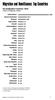 Migration and Remittances: Top Countries Top Immigration Countries a, 010 number of immigrants, millions United States b Russian Federation b Germany b Saudi Arabia b Canada b United Kingdom b Spain b
FDI performance and potential rankings. Astrit Sulstarova Division on Investment and Enterprise UNCTAD
 FDI performance and potential rankings Astrit Sulstarova Division on Investment and Enterprise UNCTAD FDI perfomance index The Inward FDI Performance Index ranks countries by the FDI they receive relative
INSTRUCTIONS FOR COMPLETING THE USAID/TDA DEFENSE BASE ACT (DBA) APPLICATION
 INSTRUCTIONS FOR COMPLETING THE USAID/TDA DEFENSE BASE ACT (DBA) APPLICATION Full Name of Insured or Company and Complete Mailing Address: This is whoever has the contract with USAID. Generally, it is
DEMOGRAPHIC AND SOCIOECONOMIC DETERMINANTS OF SCHOOL ATTENDANCE: AN ANALYSIS OF HOUSEHOLD SURVEY DATA
 BACKGROUND PAPER FOR FIXING THE BROKEN PROMISE OF EDUCATION FOR ALL DEMOGRAPHIC AND SOCIOECONOMIC DETERMINANTS OF SCHOOL ATTENDANCE: AN ANALYSIS OF HOUSEHOLD SURVEY DATA By Hiroyuki Hattori, UNICEF This
Per Minute Rate Unlimited North America
 AT&T U-verse Calling Calling Rates Rates do not include taxes, fees, surcharges. Call destinations and rates are subject to change. An additional per minute rate for international calls terminating on
1.1 LIST OF DAILY MAXIMUM AMOUNT PER COUNTRY WHICH IS DEEMED TO BEEN EXPENDED
 1 SUBSISTENCE ALLOWANCE FOREIGN TRAVEL 1.1 LIST OF DAILY MAXIMUM AMOUNT PER COUNTRY WHICH IS DEEMED TO BEEN EXPENDED Albania Euro 97 Algeria Euro 112 Angola US $ 322 Antigua and Barbuda US $ 220 Argentina
GLOBAL. 2014 Country Well-Being Rankings. D Social (% thriving) E Financial (% thriving) F Community (% thriving) G Physical (% thriving)
 0 0 GLOBAL 0 Country Rankings 0 0 0 0 0 0 0 0 0 0 0 0 0 0 0 0 0 : >0.0% 0.% 0.0% 0.% 0.0% 0.% 0.0% 0.0% A Country s global rank B in three or more elements of well-being C (% thriving) D (% thriving) E
Time Warner Cable Date: 03/03/2014. Phone Product Management. BCP Standard International Rates
 Afghanistan $1.070 $1.100 Afghanistan Albania $1.040 $1.230 Albania Algeria $0.490 $0.560 Algeria Andorra $0.460 $0.750 Andorra Angola $1.440 $1.520 Angola Anguilla $0.570 $0.690 Anguilla Antarctica $3.010
Criteria rules. FTSE4Good Inclusion Criteria for the Marketing of Breast Milk Substitutes
 Criteria rules FTSE4Good Inclusion Criteria for the Marketing of Breast Milk Substitutes ftserussell.com Original January 2015; rebranded December 2015 Contents 1.0 Criteria... 3 2.0 Risk Categories...
UNAIDS 2013 AIDS by the numbers
 UNAIDS 2013 AIDS by the numbers 33 % decrease in new HIV infections since 2001 29 % decrease in AIDS-related deaths (adults and children) since 2005 52 % decrease in new HIV infections in children since
Fiscal Rules and Fiscal Responsibility Frameworks for Growth in Emerging and Low-Income Countries
 Fiscal Affairs Department Effects of Good Government, by Ambrogio Lorenzetti, Siena, Italy, 1338-39 Fiscal Rules and Fiscal Responsibility Frameworks for Growth in Emerging and Low-Income Countries Martine
Summary of GAVI Alliance Investments in Immunization Coverage Data Quality
 Summary of GAVI Alliance Investments in Immunization Coverage Data Quality The GAVI Alliance strategy and business plan for 2013-2014 includes a range of activities related to the assessment and improvement
New Technologies and services - Cable Television
 New Technologies and services - Cable Television WORLD: AFRICA provide service Angola Benin Botswana Burkina Faso Burundi applications. Cameroon The relevant licence must be obtained. Cape Verde Central
(b) the details of those who have been given asylum of other country, country-wise during the last three years
 Annexure Table indicating country-wise data on asylum seekers (LS Starred Q No. 232 for answer on 5.8.2015 on Political Asylum ) S.No. Name of Country (a) the total number of Indians who have sought political
LIST OF PAYMENT FOR VISA AND SECURITY BOND PAYMENT FOR VISA ( RM )
 LIST OF AND COUNTRY FOR Afghanistan 20 2000 Albania 20 2000 Algeria 20 2000 Angola 20 1500 Antigua and Bermuda - 2000 Argentina 20 2700 Armenia 20 2000 Australia - 1500 Austria ( Vienna ) 20 1500 Azerbaijan*
Lebara Unlimited Plan
 AFGHANISTAN $0.05 $0.19 ALBANIA $0.35 $0.43 ALGERIA $0.28 $0.38 AMERICAN SAMOA $0.15 $0.15 ANDORRA $0.07 $0.44 ANGOLA $0.25 $0.35 ANGUILLA $0.33 $0.33 ANTARCTICA $1.39 $0.00 ANTIGUA AND BARBUDA $0.25 $0.25
EMERGENCIES 911 ABROAD
 EMERGENCIES 911 ABROAD If you re in an emergency situation abroad, you ll need to know how to contact the police, an ambulance, or even the fire department. Not every county uses 911 as its emergency contact
Manufacturing & Reproducing Magnetic & Optical Media Africa Report
 Brochure More information from http://www.researchandmarkets.com/reports/3520587/ Manufacturing & Reproducing Magnetic & Optical Media Africa Report Description: MANUFACTURING & REPRODUCING MAGNETIC &
JAMAICAN IMMIGRATION DEPARTMENT VISA REQUIREMENTS FOR JAMAICANS TRAVELLING OVERSEAS AND FOREIGNERS COMING TO JAMAICA
 JAMAICAN IMMIGRATION DEPARTMENT VISA REQUIREMENTS FOR JAMAICANS TRAVELLING OVERSEAS AND FOREIGNERS COMING TO JAMAICA COUNTRY ENTRY VISA Foreigners coming to Jamaica AFGHANISTAN Prior to arrival (pta) ALBANIA
Policy Paper 12. Education for All Global Monitoring Report. Increasing tax revenues to bridge the education financing gap
 Education for All Global Monitoring Report Policy Paper 12 March 2014 Increasing tax revenues to bridge the education financing gap Sustained economic growth has increased the resources that many of the
TWC Phone Service International Rate Table Comparison
 Afghanistan $0.35 $0.35 Included* Included* $1.07 $1.10 Albania $0.15 $0.24 $1.04 $1.23 $1.04 $1.23 Algeria $0.17 $0.36 $0.49 $0.56 $0.49 $0.56 Andorra $0.05 $0.22 $0.46 $0.75 $0.46 $0.75 Angola $0.18
New Zealand =============================== Standard Courier NZD$5.00 Rural Delivery Courier NZD $5.00 + $4.50 = $9.50. Australia (Zona A)
 New Zealand =============================== Standard Courier NZD$5.00 Rural Delivery Courier NZD $5.00 + $4.50 = $9.50 Australia (Zona A) Option 1: Airmail economy - 2-6 working days, no tracking NZD $11.50
Capital Account Regulations and the Trading System
 Capital Account Regulations and the Trading System Kevin P. Gallagher Global Economic Governance Initiative Boston University [email protected] www.bu.edu/gegi Pardee Center TASK FORCE REpORT MARCh 2013 Capital
JSPS RONPAKU (DISSERTATION PhD) PROGRAM APPLICATION GUIDELINES FOR FY 2015
 JSPS RONPAKU (DISSERTATION PhD) PROGRAM APPLICATION GUIDELINES FOR FY 2015 April, 2014 Japan Society for the Promotion of Science 1. Outline of JSPS RONPAKU Program The Japan Society for the Promotion
SCALES OF ASSESSMENTS AND CURRENCY OF MEMBER STATES CONTRIBUTIONS FOR 2016-2017 OUTLINE
 38th Session, Paris, 2015 38 C 38 C/37 26 August 2015 Original: English Item 9.3 of the provisional agenda SCALES OF ASSESSMENTS AND CURRENCY OF MEMBER STATES CONTRIBUTIONS FOR 2016-2017 OUTLINE Source:
Secured Transactions and Collateral Registries: A Global Perspective Access to Finance, IFC
 Secured Transactions and Collateral Registries: A Global Perspective Access to Finance, IFC 5 th Financial Infrastructure and Risk Management Training, Rabat, Morocco, September 2014 Alejandro Alvarez
Adobe Creative Cloud Availability
 Adobe Availability Countries/Regions for teams for teams United States Afghanistan Albania Algeria Andorra Angola Anguilla Antigua & Barbuda Argentina Armenia Aruba Australia Austria Azerbaijan Bahamas
The Africa Infrastructure
 AIDI May 2016 www.afdb.org Chief Economist Complex Table of Contents 1. Introduction and Background 1. Introduction and Background 2. The AIDI 2016 Highlights 3. Main Results 4. Conclusions References
VISA REQUIREMENTS FOR ALL COUNTRIES
 COUNTRY VISA REQUIRED REMARKS Afghanistan Islamic State of Afghanistan Albania Republic of Albania Business/Vacation Yes Visa not required for visits of up to thirty (30) days. Algeria Democratic and Popular
Financing Education for All in Sub Saharan Africa: Progress and Prospects
 Financing Education for All in Sub Saharan Africa: Progress and Prospects Albert Motivans Education for All Working Group Paris, 3 February 211 1 Improving the coverage and quality of education finance
World Health organization/ International Society of Hypertension (WH0/ISH) risk prediction charts
 World Health organization/ International Society of Hypertension (WH0/ISH) risk prediction charts (charts in colour) 2 1. Introduction 2. Instructions on how to use WHO/ISH (World Health Organization/International
WHO global estimates on prevalence of hearing loss. Mortality and Burden of Diseases and Prevention of Blindness and Deafness WHO, 2012
 WHO global estimates on prevalence of hearing loss Mortality and Burden of Diseases and Prevention of Blindness and Deafness WHO, 2012 In 2012, WHO released new estimates on the magnitude of disabling
Ensure that the HRTWS is included in the Declaration of the Post-2015 Development Agenda
 Ensure that the HRTWS is included in the Declaration of the Post-2015 Development Agenda SOCIAL MEDIA STRATEGY SHEET Join us for a weeklong Twitter campaign (Monday 27 April- Friday 1 May) Campaign background:
HEALTHIEST COUNTRIES 1 to 40
 BLOOMBERG RANKINGS THE WORLD'S HEALTHIEST COUNTRIES HEALTHIEST COUNTRIES 1 to 40 1 Singapore 89.45% 92.52% 3.07% 2 Italy 89.07 94.61 5.54 3 Australia 88.33 93.19 4.86 4 Switzerland 88.29 93.47 5.17 5 Japan
International Talk & Text
 International Talk & Text Use your voice plan minutes to call landlines in over 50 countries, including Mexico, Canada and the Dominican Republic Unlimited text messaging to any cell phone in over 200
Quote Reference. Underwriting Terms. Premium Currency USD. Payment Frequency. Quotation Validity BUPA AFRICA PROPOSAL.
 Quote Reference Family Quote 2013 Underwriting Terms BUPA AFRICA PROPOSAL Full Medical Underwriting and/or Continuous PreviousMedical Exclusions Premium Currency USD Payment Frequency One annual payment
Global Online Business Intelligence Masterfile
 Size of Universe Cost Source Min Order Quantity 5,000 Update Frequency 6,074,363 Names USD 150.00 /M Addresses (Business Addresses Only) USD 175.00 /M Addresses (Named Executives) USD 150.00 /M Addresses
International calls Standard rates without a calling plan
 If you don t select or already have a call plan, the standard call charges from UK landlines to international landlines across the world are shown below. To save money on international calls as well as
JAMAICA IMMIGRATION UNIT
 AFGHANISTAN pta ALBANIA poe ALGERIA - pta ANDORRA poe ANGOLA pta ANTIGUA & BARBUDA ARGENTINA 30 days 30 days ARMENIA - poe pta AUSTRALIA AUSTRIA 90 days pta (Schengen AZERBAIJAN - poe pta BAHAMAS BAHRAIN
Total merchandise trade
 Total merchandise trade October 214 213 213-13 212 213 Total exports f.o.b. 18 3 64 1 1 8 2 Total imports c.i.f. 18 49 1 1 7 1 an Union (28) 6 76 41 4 33 - extra-eu (28) exports 2 31 16 13 13 7 7 China
BADEA EXPORT FINANCING SCHEME (BEFS) GUIDELINES
 BADEA EXPORT FINANCING SCHEME (BEFS) GUIDELINES 1 P.O. Box 5925 Jeddah 21432 Kingdom of Saudi Arabia Telephone: 636 1400 Telex: 601137-601407 ISDB SJ Facsimile: 636 6871 Jeddah (IDB) Facsimile: 637 1064
Some rights reserved 1 2 3 4 15 14 13 12. A copublication of The World Bank and the International Finance Corporation.
 2013 International Bank for Reconstruction and Development/The World Bank 1818 H Street NW, Washington, DC 20433 Telephone: 202-473-1000; Internet: www.worldbank.org Some rights reserved 1 2 3 4 15 14
MCI Business Complete Unlimited
 MCI Business Complete Unlimited Only available in areas where MCI offers Local Service and customers must be enrolled in corresponding MCI Business Complete Local Product to receive benefits of this plan.
UIS INFORMATION PAPER JUNE 2013. ADULT AND YOUTH LITERACY National, regional and global trends, 1985-2015
 UIS INFORMATION PAPER JUNE 213 ADULT AND YOUTH LITERACY National, regional and global trends, 1985-215 UNESCO The constitution of the United Nations Educational, Scientific and Cultural Organization (UNESCO)
AIO Life Seminar Abidjan - Côte d Ivoire
 AIO Life Seminar Abidjan - Côte d Ivoire Life Insurance Market Survey of Selected African Countries Bertus Thomas Africa Committee of the Actuarial Society of South Africa Agenda SECTION 1 SURVEY OBJECTIVE
KYOTO PROTOCOL STATUS OF RATIFICATION
 KYOTO PROTOCOL STATUS OF RATIFICATION Notes: R = Ratification At = Acceptance Ap = Approval Ac = Accession 1. ALBANIA ----- 01/04/05 (Ac) 30/06/05 2. ALGERIA ---- 16/02/05 (Ac) 17/05/05 3. ANTIGUA AND
Abortion Policies and Reproductive Health around the World United Nations
 Abortion Policies and Reproductive Health around the World United Nations Department of Economic and Social Affairs Population Division DESA The Department of Economic and Social Affairs of the United
Country classification
 Statistical annex 143 Country classification Data sources, country classifications and aggregation methodology The statistical annex contains a set of data that the World Economic Situation and Prospects
CONVENTION FOR THE SUPPRESSION OF UNLAWFUL SEIZURE OF AIRCRAFT SIGNED AT THE HAGUE ON 16 DECEMBER 1970
 CONVENTION FOR THE SUPPRESSION OF UNLAWFUL SEIZURE OF AIRCRAFT SIGNED AT THE HAGUE ON 16 DECEMBER 1970 Entry into force: The Convention entered into force on 14 October 1971. Status: 185 Parties. This
Subject: Director (D-1) UNESCO Liaison Office in Addis Ababa (Ethiopia) and UNESCO Representative to Ethiopia 6ETAFR0001RP
 05/10/2015 Ref.: CL/4132 Subject: Director (D-1) UNESCO Liaison Office in Addis Ababa (Ethiopia) and UNESCO Representative to Ethiopia 6ETAFR0001RP Sir/Madam, I wish to inform you that I have decided to
LOCAL: INTRALATA RATES: COLLECT: PER CALL SERVICE CHARGE: $.75; PER MINUTE CHARGE: $.07 DEBIT: PER CALL SERVICE CHARGE: $.60; PER MINUTE CHARGE: $.
 RATE INFORMATION SHEET LOCAL: (COLLECT: PER CALL SERVICE CHARGE: $.75; CALL RATE $.25 unlimited (~otal $1.00) DEBIT: $.80 INTRALATA RATES: COLLECT: PER CALL SERVICE CHARGE: $.75; PER MINUTE CHARGE: $.07
UNFCCC initiatives: CDM and DNA Help Desks, the CDM Loan Scheme, Regional Collaboration Centres
 UNFCCC initiatives: CDM and DNA Help Desks, the CDM Loan Scheme, Regional Collaboration Centres Africa Carbon Forum 03 July 2013 - Abidjan, Côte d Ivoire Ms. Flordeliza Andres Programme Officer, UNFCCC
Thomson Reuters/Global Property Research (TR/GPR) Index Methodology
 General Information In order to ensure the highest quality of each of its indices, Thomson Reuters (TR) and Global Property Research (GPR) exercise the greatest care when compiling and calculating indices
THE STATE OF MOBILE ADVERTISING
 AFRICA THE STATE OF MOBILE ADVERTISING Africa is a land of contrasts. It is the world s second-largest continent (after Asia), and home to the second-largest population yet it only outpaces Antarctica
Societies need regulation and
 Doing Business 2016 Overview Societies need regulation and businesses, as part of society, are no exception. Without the rules that underpin their establishment, operation and dissolution, modern businesses
Global Fuel Economy Initiative Africa Auto Club Event Discussion and Background Paper Venue TBA. Draft not for circulation
 Global Fuel Economy Initiative Africa Auto Club Event Discussion and Background Paper Venue TBA Draft not for circulation Launched on March 4, 2009 by the United Nations Environment Programme (UNEP), the
Gäller från 2015-06-01
 Alla priser är i kronor per minut inklusive moms. Vissa specialnummer/nät i en del destinationer har annat pris än standardpriserna nedan. Var i världen man ringer från har ingen betydelse på priset, bara
The Education for All Fast Track Initiative
 The Education for All Fast Track Initiative Desmond Bermingham Introduction The Education for All Fast Track Initiative (FTI) is a global partnership to help low income countries to achieve the education