
Frontline First Aid: EMR Cheat Sheet
|
|
|
- Beatrix Warner
- 10 years ago
- Views:
Transcription
1 Assessment Model Frontline First Aid: EMR Cheat Sheet Scene Survey H Hazards is there anything in the area that could cause problems or injuries E Environment is the area hot cold toxic unstable etc M Mechanism of Injury what happened to cause the injury or condition P Number of Patients how many people require assistance or transport A Additional Resources more personnel ambulance fire dept hazmat poison control tech rescue etc Primary Survey LOC D A B C Critical Interventions Stay & Play or Load & Go AVPU Alert Verbal stimulus Pain stimulus Unresponsive Delicate Spine Presumed or Ruled Out Airway with Cheater Carotid Check and OPA if unresponsive Breathing Oxygen or Assisted Ventilations if needed Circulation Radial Pulse, Skin and Rapid Body Survey - Blanket Quickly manage immediately life threatening conditions Transport decision and communication with Medical Control Secondary Survey Interview S Signs and Symptoms what is hurting or causing discomfort O Onset did this happen suddenly or gradually P Provokes is there anything that makes the pain better or worse Q Quality sharp dull throbbing aching stabbing burning crushing squeezing tingling etc R Radiating where is the pain; and does it stay in one spot or move to other areas S Severity how bad is the pain on a scale of 1-10 T Timing when did the pain start; and does is come and go or stay constant A Allergies are you allergic to anything and have you been recently exposed M Medications do you take medication have you taken too much too little missed them new ones recently P Previous Medical History relevant medical conditions or past incidents; diabetes high BP asthma COPD etc L Last Meal what and when did you last eat or drink is that normal for you E Events Leading Up To what were you doing when the pain or discomfort started LOC Respirations Pulse SpO2 Blood Pressure Pupils Body Core Temp? Cap Bgl? Palpation Auscultation Distal Circulation Vital Signs Glasgow Coma Scale Rate Rhythm Character Rate Rhythm Character Pulse Oximeter Blood Oxygen Level Palpation or Auscultation Record Systolic over Diastolic; or Systolic over P Pupils Equal and Reactive to Light compare size and reactivity of each pupil Measure body core temperature if relevant Measure Capillary Blood Glucose Level if relevant Head to Toe Feel for injuries Listen to the Chest if relevant Assess bilateral pulses and check motor and sensory function in extremities Page 1 of 8

2 Glasgow Coma Scale Eye Opening Best Verbal Response Best Motor Response 6 Obeys commands 5 Oriented 5 Localizes to pain 4 Spontaneously 4 Confused 4 Withdraws to pain 3 To voice 3 Inappropriate words 3 Flex to pain(decorticate) 2 To pain 2 Incomprehensible sounds 2 Extend to pain(decerebrate) 1 No response 1 No response 1 No response APGAR GCS less than 13 is life threatening Activity Limp Some extremity flexion Active Movement Pulse Absent Below 100 bpm 100 bpm or higher Grimace No response Grimace Cough, sneeze, cry Appearance Body/Extremities Blue/Pale Body Pink Extremities Blue Completely pink Respiration Absent Slow and Irregular Strong, crying 7-10 is Normal 4-6 is Fairly Low 0-3 is Critically Low CPR Compression: Ventilation Ratios Adult over 9 Child 1-8 Infant under 1 One Rescuer 30:2 30:2 30:2 Two Rescuer 30:2 15:2 15:2 Infant with pulse less than 60 bpm = Start CPR Check pulse for full 60 seconds if patient is Hypothermic CPR in transport - Treatable CPR 3 Consecutive No-Shocks (after contacting physician) Hypothermia Cardiac Tamponade Pulmonary Embolism Tension Pneumothorax Severe Blood Loss Overdose Airway Obstruction Page 2 of 8

3 Dynamic CPR / CPR on the Move Plan your exit route on the way in Have suction ready in case of vomiting during turns or lifts Watch for subtle vomiting inside the mouth or mask Reassess patient after every move or pause Secure patient AND equipment before moving Pocket mask may be more reliable than BVM during movement Set stretcher at a height that allows for effective compressions 6 Rights of Medication EMR s in BC can ADMINISTER Nitro & ASA and ASSIST with other Medications 1 Person Does this person have a prescription 2 Medication Have they had it before no Contraindications 3 Time When was the last dose taken is it needed now 4 Dose How much should they take 5 Route How should they take/use it 6 Documentation Record the time and effects of each dose Chest Pain Protocol Nitro Not prescribed Nitro Cialis - 48 hrs Viagra/Levitra 24 hrs BP 100 mmhg (PAC) BP < 90 mmhg (BCAS) Contraindications ASA Never had ASA before Allergic to ASA Already taken daily dose Can t chew/swallow Active Peptic Ulcer or Gastrointestinal Bleeding Pediatric Patient Nitro and/or ASA Procedure: If previously prescribed Nitro, with no Contraindications: give one 4-microgram spray If ASA is not Contraindicated have patient chew two 81 mg ASA or one 325 mg ASA If pain persists recheck contraindications and administer 2 nd and 3 rd Nitro doses waiting 3-5 minutes between doses Begin Entonox protocol if pain persists 5 minutes after 3rd dose; or right away if Nitro is contraindicated Start Nitro protocol from beginning if pain goes away then returns with a limit of 3 doses in a 30 minute period. Page 3 of 8

4 Load and Go Criteria Life threatening conditions found Serious injuries with multiple traumas Absent or unstable ABCs or Neurological status Decreased Level of Consciousness Ongoing Seizures Chest Pain if disorder or heart attack suspected Burns with suspected inhalation injuries Extensive burns Abdominal distension/tenderness Unstable pelvis injury Fractured femurs Amputations / Limb Threatening Injuries Pregnancy related conditions Environmental mishaps Critical Findings Finding Implication Action GCS less than 13 Decreased LOC OPA / NPA Breathing over 30 times/minute Tachypnea Assist Ventilations Breathing less than 10 times/minute Dyspnea Assist Ventilations Blood Pressure less than 80 mmhg Systolic Hypo-tension Position Supine Blood Glucose less than 4 mmol/l Hypoglycemia Glucose Oxygen Saturation (SpO2) less than 95% Hypoxia / Hypoxemia Increase O2 intake Infant pulse less than 60 bpm Equivalent to Absent Begin CPR Body core temperature below C Mild Hypothermia Rewarm slowly Body core temperature below C Moderate Hypothermia Rewarm slowly Body core temperature below <30 C Severe Hypothermia Rewarm slowly Body core temperature above 37 C Hyperthermia Cool rapidly APGAR below 4 Unresponsive Load and Go Pulseless, angulated limb Limb Threatening Load and Go Attempt to realign Adult Pulse Rate over 160 bpm Urgent Tachycardia Load and Go Oxygen Cylinder Calculations Duration of Flow = (gauge pressure -200 psi) x C Flow Rate (lpm) C = Cylinder Constant D Cylinder = 0.16 L/psi E Cylinder = 0.28 L/psi M Cylinder = 1.56 L/psi Page 4 of 8

5 Oxygen Flow Rates Frontline First Aid: EMR Cheat Sheet Device BC EMALB Paramedic Association of Canada (Canadian Red Cross Emergency Care Manual) Simple / Standard Mask 6 15 lpm N/A Non-Rebreather Mask 8 15 lpm 10 + lpm Bag Valve Mask 15 lpm 10 + lpm Nasal Canula 2 4 lpm 1 4 lpm Cushing s Triad 3 concurrent conditions commonly associated with Congestive Heart Failure or Head Injury Increased Systolic Blood Pressure Slow Heart Rate Irregular Breathing Diastolic Blood Pressure remains Normal IV Drip Set Calculations Standard / Regular = 15 gtts/ml Macro / Adult = 10 gtts/ml Micro / Mini = 60 gtts/ml Gtts / min = volume to be infused x gtts/ml Infusion time (minutes) Common IV Solutions Solution Commonly Used For Ringer s Lactate Blood loss D5W / D10W Hypoglycaemia Normal Saline Dehydration 2/3 1/3 Dehydration Common IV Complications Interstitial Circulatory Overload Thrombosis and Thrombophlebitis Catheter Embolism Infection of Catheter Site Allergic Reaction Air Embolism Page 5 of 8

6 KED Strapping Sequence Frontline First Aid: EMR Cheat Sheet My Middle Baby Bottom Looks Legs Hot Head Tonight Top Simple Triage and Rapid Treatment (S.T.A.R.T.) Dead / Non-Salvageable (BLACK) Immediate (RED) Not Breathing Breathing > 30 per minute Breathing with absent radial pulse Decreased LOC Delayed (YELLOW) Unable to walk Minor (GREEN) Able to walk Breathing Normal Radial Pulse Present Normal LOC Sager Traction Splint Assess injured leg Look/Feel Pulse Motor-Sensory Apply Traction Secure Splint Assess Injured Leg Look Feel Pulse Motor-Sensory Suspected Fracture of Femur or Tib-Fib Remove and adjust saddle to ensure short side of saddle hinge is down Nestle saddle against injured leg (short hinge down) Have helper stabilize splint and apply small thigh strap Apply ankle harness above malleoli Apply traction of 10% body weight 15 lbs maximum per limb 5 lbs maximum for open fractures and upper or lower third fractures 5 lbs maximum for Pediatric patients 30 lbs maximum for Bi-Lateral fractures (15 lbs per leg) Ensure adequate padding 3 straps around splint; above and below injury Secure thigh strap; then the other two straps Secure Figure 8 Strap Reassess all splint straps and Traction Gauge Ensure Leg in line with body; same length as other leg Note presence or absence of Pedal Pulse Ensure no movement / aggravation of injured limb Page 6 of 8

7 Entonox Contraindications - Acronym D Decompression Altitude sickness I Inability must be able to follow instructions and self-administer V Ventilation the area must be well ventilated I Inhalation of Carbon Monoxide or Smoke N Nitro taken Nitroglycerin in the past 5 minutes E Embolism possible air bubbles in lungs or blood stream (Pneumothorax) Entonox Protocol Indications Pain Contraindications (D-I-V-I-N-E) Inability to comply with instructions Enclosed area without ventilation Suspected Air Embolism or Pneumothorax Nitroglycerin taken in last 5 minutes Suspected Inhalation Injury and O2 saturation less than 100% Suspected Carbon Monoxide Poisoning; even if O2 saturation reads 100% Decompression sickness Cautions Completed before administration Proper Storage Instructions to Patient Depressant Drugs Shock Distended Abdomen COPD Maxillo-facial Injuries Primary Survey Investigation of Pain (OPQRST) Vital Signs including O2 saturation completed Contraindications ruled out Shake bottle if stored improperly Adequate ventilation secured (vehicle ventilation system activated if available) Not left unused over long periods Not stored below -6 Celcius Not stored vertically Self-administered using mask/bite stick Mask/bite stick operation Pain should be relieved May feel: o Light-headed o Giddy o Drowsy o Nauseous Stop or start at any time Use until pain relieved or Adverse effects felt Notify you if adverse effects felt Page 7 of 8

8 Relevant S-A-M-P-L-E Information (History) MVA Patient Location of patient Which vehicle patient was in How many vehicles involved Impact speed Exterior damage Interior damage Type of restraints Initial position of patient Condition of patient Loss of consciousness Condition of other patients Wearing a seat belt? Fall Where from Height Free fall or hit other objects Landing surface Position of patient at impact What hit first Position Found Loss of consciousness Cause of fall Pedestrian Struck What hit them Size and weight of object Velocity of vehicle Vehicle part that hit patient Damage to vehicle Distance patient thrown Loss of consciousness Condition of patient Condition of Vehicle Occupants Shooting Type of firearm Range and Angle Loss of consciousness Type of bullet Entrance and exit wounds Initial position and condition of patient Stabbing Type and size of weapon Loss of consciousness Type of wound Number of wounds Other injuries Initial position and condition Lund & Browder Burn Estimation Sheet Area Age Adult A = half of head 9.5% 8.5% 6.5% 5.5% 4.5% 3.5% B = half of one thigh 2.75% 3.25% 4% 4.5% 4.5% 4.75% C = half of one lower leg 2.5% 2.5% 2.75% 3% 3.25% 3.5% Page 8 of 8

Frontline First Aid EMR Scenario Examples
 Course Type: Start Date: Instructors initial scenarios as they are completed CPR-AED Scenarios CPR with Hypothermia Load and Go CPR with Obstructed Airway Continue CPR after airway clears with NO obvious
First Responder (FR) and Emergency Medical Responder (EMR) Progress Log
 First Responder (FR) and Emergency Medical Responder (EMR) Progress Log Note: Those competencies that are for EMR only are denoted by boldface type. For further details on the National Occupational Competencies
National Registry of Emergency Medical Technicians Emergency Medical Technician Psychomotor Examination BLEEDING CONTROL/SHOCK MANAGEMENT
 BLEEDING CONTROL/SHOCK MANAGEMENT Candidate: Examiner: Date: Signature: Possible Applies direct pressure to the wound 1 NOTE: The examiner must now inform the candidate that the wound continues to bleed.
404 Section 5 Shock and Resuscitation. Scene Size-up. Primary Assessment. History Taking
 404 Section 5 and Resuscitation Scene Size-up Scene Safety Mechanism of Injury (MOI)/ Nature of Illness (NOI) Ensure scene safety and address hazards. Standard precautions should include a minimum of gloves
National Registry of Emergency Medical Technicians Emergency Medical Responder Psychomotor Examination PATIENT ASSESSMENT/MANAGEMENT TRAUMA
 PATIENT ASSESSMENT/MANAGEMENT TRAUMA Scenario # Note: Areas denoted by ** may be integrated within sequence of Primary Survey/Resuscitation SCENE SIZE-UP Determines the mechanism of injury/nature of illness
National Registry of Emergency Medical Technicians Emergency Medical Responder Psychomotor Examination BVM VENTILATION OF AN APNEIC ADULT PATIENT
 BVM VENTILATION OF AN APNEIC ADULT PATIENT Candidate: Examiner: Date: Signature: Possible Points Checks responsiveness NOTE: After checking responsiveness and breathing for at least 5 but no 1 Checks breathing
OFA 3 TO EMR BRIDGE COURSE STUDY GUIDE
 OFA 3 TO EMR BRIDGE COURSE STUDY GUIDE Frontline First Aid & Emergency Training 250-470-0205 [email protected] www.frontlinefirstaid.ca Welcome to your Canadian Red Cross Emergency Medical
National Registry Skill Sheets
 Bleeding Control/Shock Management BVM Ventilation of an Apneic Adult Patient Cardiac Arrest Management/AED Joint Immobilization Long Bone Immobilization Oxygen Administration By Non-Rebreather Mask Patient
EMERGENCY MEDICAL RESPONDER (EMR) PRACTICAL SKILLS EXAMINATION REPORT State Form 54407 (R / 5-13)
 EMERGENCY MEDICAL RESPONDER (EMR) PRACTICAL SKILLS EXAMINATION REPT State Form 54407 (R / 5-3) INDIANA DEPARTMENT OF HOMELAND SECURITY EMERGENCY MEDICAL SERVICES CERTIFICATION 302 West Washington Street,
Southern Stone County Fire Protection District Emergency Medical Protocols
 TITLE Pediatric Medical Assessment PM 2.4 Confirm scene safety Appropriate body substance isolation procedures Number of patients Nature of illness Evaluate the need for assistance B.L.S ABC s & LOC Focused
Northwestern Health Sciences University. Basic Life Support for Healthcare Providers
 Northwestern Health Sciences University Basic Life Support for Healthcare Providers Pretest May 2005 This examination to be used only as a PRECOURSE TEST for BLS for Healthcare Providers Courses Based
American Heart Association
 American Heart Association Basic Life Support for Healthcare Providers Pretest April 2006 This examination to be used only as a PRECOURSE TEST For BLS for Healthcare Providers Courses 2006 American Heart
Scenario 2 Is it ever safe enough?
 IRECA BLS Competition 2011 Scenario 2 Is it ever safe enough? Team Name Captain Name Judge 1 Judge 2 The Event: You are dispatched to a shooting for two injured at a local bar. Witnesses have told police
DOCUMENTATION TEMPLATES. All patient care reports should include the following information in the narrative:
 DOCUMENTATION TEMPLATES All patient care reports should include the following information in the narrative: Patient Data: -Chief Complaint -Mechanism of injury/nature of illness -Associated signs and symptoms/pertinent
Routine Protocols & Pulse Oximetry
 Routine Protocols & Pulse Oximetry Q4 2012 Pulse Oximetry Continuing Education 2012 4 th Quarter The purpose of this training bulletin is to familiarize the members of the Cleveland Fire Department of
State of Indiana EMR Psychomotor Skills Examination
 SECONDARY ASSESSMENT (Detailed Exam) *Credit should be given to candidates that use a brief exam f life-threatening injuries in the Primary Survey so long as it does not delay appropriate care. Head Neck
EMERGENCY MEDICAL RESPONDER (EMR) PRACTICAL SKILLS EXAMINATION REPORT
 Reset Form EMERGENCY MEDICAL RESPONDER (EMR) PRACTICAL SKILLS EXAMINATION REPT INDIANA DEPARTMENT OF HOMELAND SECURITY EMERGENCY MEDICAL SERVICES CERTIFICATION 302 West Washington Street, Room E239 Indianapolis,
State of New Hampshire Department of Safety Division of Fire Standards and Training & Emergency Medical Services
 State of New Hampshire Department of Safety Division of Fire Standards and Training & Emergency Medical Services September 2013 PATIENT ASSESSMENT / MANAGEMENT - TRAUMA Time allowed: 10 minutes SCENARIO
EPINEPHRINE AUTO-INJECTOR TRAINING POLICY ALLERGIC REACTION / ANAPHYLAXIS
 Page 1 of 1 EPINEPHRINE AUTO-INJECTOR TRAINING POLICY ALLERGIC REACTION / ANAPHYLAXIS All members/employees of (service) affiliate number must complete DOH training module #004124 and be familiar with
ADMINISTERING EMERGENCY OXYGEN
 FACT SHEET ADMINISTERING EMERGENCY OXYGEN Emergency oxygen can be given for many breathing and cardiac emergencies. It can help improve hypoxia (insufficient oxygen reaching the cells) and reduce pain
INTERNATIONAL TRAUMA LIFE SUPPORT
 INTERNATIONAL TRAUMA LIFE SUPPORT What to wear STUDENT GUIDE TO INTERNATIONAL TRAUMA LIFE SUPPORT ITLS is a practical course that stresses hands-on teaching. You should wear comfortable clothes that you
WET, COUGHING AND COLD NEAR RIVER BANK STUNG BY BEE CAUSING ANAPHYLACTIC SHOCK TO WRIST
 GRIT IN EYE BROKEN LEG BONE WET, COUGHING AND COLD NEAR RIVER BANK STUNG BY BEE CAUSING ANAPHYLACTIC SHOCK HEART ATTACK SUFFERING FROM SHOCK CHOKING SEVERE BLEEDING TO WRIST HYPOTHERMIA ANGINA Localised
Epinephrine Auto Injector Interim Policy (Amended March 12, 2008)
 Epinephrine Auto Injector Interim Policy (Amended March 12, 2008) Pursuant to the authority conferred by N.J.S.A. 26:2K-47.1, et seq., the Department of Health and Senior Services (the Department) shall
It is recommended that the reader review each medical directive presented in this presentation along with the actual PCP Core medical directive.
 It is recommended that the reader review each medical directive presented in this presentation along with the actual PCP Core medical directive. This presentation will highlight the changes and any new
Types of electrical injuries
 Types of electrical injuries Electrical injury is a term for all injuries caused by contact with electrical energy. Electrical contact can cause a wide variety of injuries involving most organ systems.
Patient Assessment/Management Trauma
 Patient Assessment/Management Trauma Date: / / Test Site Location: Station #: Takes or verbalizes standard precautions (BSI) if appropriate based on patient scenario SCENE SIZE-UP Determines the scene
American Heart Association. Basic Life Support for Healthcare Providers
 American Heart Association Basic Life Support for Healthcare Providers Pretest February 2001 This examination to be used only as a PRECOURSE TEST for BLS for Healthcare Providers Courses 2001 American
Oxygen - update April 2009 OXG
 PRESENTATION Oxygen (O 2 ) is a gas provided in compressed form in a cylinder. It is also available in liquid form, in a system adapted for ambulance use. It is fed via a regulator and flow meter to the
Emergency Medical Technician - Basic
 Washington State Specific Objectives for Emergency Medical Technician - Basic OFFICE OF EMERGENCY MEDICAL AND TRAUMA PREVENTION September 1996 Emergency Medical Technician - Basic Definition: Emergency
Obstetrical Emergencies
 Date: July 18, 2014 Page 1 of 5 Obstetrical Emergencies Purpose: To provide the process for the assessment and management of the patient with an obstetrical related emergency. Pre-Medical Control 1. Follow
!!!!!! Blood Pressure Measurement Palpation... 1 Blood Pressure Measurement Auscultation... 2 Conscious, Choking Adult or Child...
 !!!!!! Blood Pressure Measurement Palpation... 1 Blood Pressure Measurement Auscultation... 2 Conscious, Choking Adult or Child... 3 Conscious, Choking Baby... 4 Unconscious, Choking Adult, Child, or Baby...
Emergency Medical Responder Mid-Course Knowledge Evaluation
 Emergency Medical Responder Mid-Course Knowledge Evaluation Please do not write on this sheet. Indicate your answers on the answer sheet provided. 1. Medical control is the process by which a physician
Community Ambulance Service of Minot ALS Standing Orders Legend
 Legend Indicates General Information and Guidelines Indicates Procedures Indicates Medication Administration Indicates Referral to Other Protocol Indicates Referral to Online Medical Direction Pediatric
DRUG and ALCOHOL ABUSE
 M12 DRUG and ALCOHOL ABUSE EMS personnel must be aware that alcohol and drug ingestion can mask the symptoms of injury or illness. In addition, many injuries and illnesses can present as suspected alcohol
First Aid Multiple Choice Test
 First Aid Multiple Choice Test Answer all 25 questions by circling the correct answer. This is an open-book test. Answers are contained in The Boy Scout Handbook. Patrol Troop 1. When making a 911 call,
BRIGADE ASSESSMENT PROCESS LEVEL 1
 The Priory of Canada ST. JOHN AMBULANCE BRIGADE BRIGADE ASSESSMENT PROCESS LEVEL 1 1999 PATIENT CARE PRACTICAL ASSESSMENT 1 1999 BAP PHASE TWO - PRACTICAL SCENARIO NOTES FOR EVALUATORS Please Note: 1.
COALINGA STATE HOSPITAL. Effective Date: August 31, 2006
 COALINGA STATE HOSPITAL NURSING POLICY AND PROCEDURE MANUAL SECTION Emergency Procedures POLICY NUMBER: 715 Effective Date: August 31, 2006 SUBJECT: EMERGENCY CARE OF HEMORRHAGE 1. PURPOSE: The management
Intermedix Inc. EMR 2006 Data Element Name. Compliant. Data Number. Elements
 D01_01 EMS Agency X D01_02 EMS Agency D01_03 EMS Agency State X D01_04 EMS Agency County X D01_05 Primary Type of Service D01_06 Other Types of Service D01_07 Level of Service X D01_08 Organizational Type
Emergency Medical Technician Basic. Practical Skills Examination Sheets
 New York State Department of Health Basic Practical Skills Examination Sheets Rev 07/12 Basic Practical Skills Examination Sheets Updates Included on this page are the changes or updates that have been
BLS TREATMENT GUIDELINES - CARDIAC
 BLS TREATMENT GUIDELINES - CARDIAC CARDIOPULMONARY ARREST - NON-TRAUMATIC (SJ-B101) effective 07/01/99 Defibrillation CPR Apply S-AED and assess rhythm as trained. Defib as indicated Simultaneous OXYGEN:
How To Treat A Heart Attack
 13 Resuscitation and preparation for anaesthesia and surgery Key Points 13.1 MANAGEMENT OF EMERGENCIES AND CARDIOPULMONARY RESUSCITATION ESSENTIAL HEALTH TECHNOLOGIES The emergency measures that are familiar
PRIMARY CARE PRACTICE GUIDELINES
 1 of 6 1. OUTCOME To identify anaphylaxis in the primary care setting and provide an evidence informed emergency response utilizing the most current provincial and federal practice guidelines. 2. DEFINITIONS
81 First Responder Respiratory
 81 First Responder Medical Scenarios Asthma Scenario: You are called to a local house for a woman with trouble breathing. You arrive to find a 67-year-old woman sitting upright in a chair. She states she
EMS Patient Care Report Navigation Logic for Record Creation
 EMS Patient Report Navigation Logic for Record Creation This document serves to provide specifications regarding data entry and data element completion requirements for PreMIS Version 2 web-based application
Oxygen Therapy. Oxygen therapy quick guide V3 July 2012.
 PRESENTATION Oxygen (O 2 ) is a gas provided in a compressed form in a cylinder. It is also available in a liquid form. It is fed via a regulator and flow meter to the patient by means of plastic tubing
Adult, Child, and Infant Written Exam CPR Pro for the Professional Rescuer
 Adult, Child, and Infant Written Exam CPR Pro for the Professional Rescuer Instructions: Read each of the following questions carefully and then place an X over the correct answer on the separate answer
Official Online ACLS Exam
 \ Official Online ACLS Exam Please fill out this form before you take the exam. Name : Email : Phone : 1. Hypovolemia initially produces which arrhythmia? A. PEA B. Sinus tachycardia C. Symptomatic bradyarrhythmia
Low Blood Pressure. This reference summary explains low blood pressure and how it can be prevented and controlled.
 Low Blood Pressure Introduction Low blood pressure, or hypotension, is when your blood pressure reading is 90/60 or lower. Some people have low blood pressure all of the time. In other people, blood pressure
Success Manual and Cheat Sheet Notes to Pass Your Basic Life Support (BLS) Course
 Success Manual and Cheat Sheet Notes to Pass Your Basic Life Support (BLS) Course Written by: Jay Snaric, MS And Kimberly Hickman, RN CPR St. Louis 44 Meramec Valley Plaza St. Louis MO 63088 www.stlcpr.com
NEEDLE THORACENTESIS Pneumothorax / Hemothorax
 NEEDLE THORACENTESIS Pneumothorax / Hemothorax By: Steven Jones, NREMT-P Pneumothorax Pneumothorax is a collection of air or gas in the pleural space of the lung, causing the lung to collapse. Pneumothorax
New England Pain Management Consultants At New England Baptist Hospital
 New England Pain Management Consultants At New England Baptist Hospital Pain Management Center Health Assessment Dear New Pain Management Patient, Welcome to the New England Pain Management Consultants
Neonatal Reference Guide
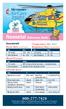 Operated by REACH Air Medical Services Assessment Heart Rate (beats/min.) Age Rate
The Family Library. Understanding Diabetes
 The Family Library Understanding Diabetes What is Diabetes? Diabetes is caused when the body has a problem in making or using insulin. Insulin is a hormone secreted by the pancreas and is needed for the
Neonatal Reference Guide
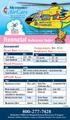 Operated by REACH Air Medical Services Assessment Heart Rate (beats/min.) Rate
Auto Accident Questionnaire
 Auto Accident Questionnaire Patient s Name: Date Of Accident: Date: Social History: (please complete the following, check all boxes that apply) Are you: Married Single Divorced Widowed # of Children: #
TN Emergency Medical Services
 TN Emergency edical ODULES AND UNITS ES System ES Providers: ER and ET Safety and Wellness Body echanics System Communication Documentation Therapeutic Communication Legal and Ethical Issues Intro to Respiratory
EMSPIC State NEMSIS Datasets
 E01_01 Patient Care Report Number X X E01_02 Software Creator X X E01_03 Software Name X X E01_04 Sofware Version X X E02_01 EMS Agency Number X X E02_02 Incident Number X E02_03 EMS Unit (Vehicle) Response
STANDARD OPERATING GUIDELINE
 STANDARD OPERATING GUIDELINE OPERATIONS REHAB EFFECTIVE: 11/26/2012 REVISED: S.O.G #: 320 PAGE: 1 of 6 1.0 Objective 1.1 To ensure the physical and mental conditions of personnel operating do not deteriorate
Target groups: Paramedics, nurses, respiratory therapists, physicians, and others who manage respiratory emergencies.
 Overview Estimated scenario time: 10 15 minutes Estimated debriefing time: 10 minutes Target groups: Paramedics, nurses, respiratory therapists, physicians, and others who manage respiratory emergencies.
Emergency Medical Services Advanced Level Competency Checklist
 Emergency Services Advanced Level Competency Checklist EMS Service: Current License in State of Nebraska: # (Copy of license kept in file at station) Date of joining EMS Service: EMS Service Member Name:
Diabetes Hypoglycemia/Hyperglycemia Reaction
 Diabetes Hypoglycemia/Hyperglycemia Reaction Hypoglycemic Reaction (Insulin Shock) A. Hypoglycemic reactions (insulin reactions) should be treated according to current nursing and medical recommendations.
FIREGROUND REHAB PROCEDURES
 FIREGROUND REHAB PROCEDURES The University of Pittsburgh Emergency Responder Human Performance Lab created these procedures as a guideline. Obtain approval from the local medical director before implementation.
ORTHOPAEDIC SPINE PAIN QUESTIONNAIRE
 ORTHOPAEDIC SPINE PAIN QUESTIONNAIRE NAME: DATE: ADDRESS: AGE: TELEPHONE#: RELIGION: OCCUPATION: REFERRED BY WHOM: NEAREST FRIEND/RELATIVE: TELEPHONE#: ADDRESS: PLEASE EXPLAIN WHY YOU HAVE COME TO SEE
Food Allergy Action Plan
 Food Allergy Action Plan Name: D.O.B.: / / Allergy to: Weight: lbs. Asthma: Yes (higher risk for a severe reaction) No Place Student s Picture Here Extremely reactive to the following foods: THEREFORE:
(a) Glasgow coma scale less than or equal to thirteen; (b) Loss of consciousness greater than five minutes;
 ACTION: Original DATE: 09/11/2014 3:19 PM 4765-14-02 Determination of a trauma victim. Emergency medical service personnel shall use the criteria in this rule, consistent with their certification, to evaluate
Emergency Medical Technician-I. Scenarios for Training
 Emergency Medical Technician-I Scenarios for Training Revised March 1, 1995 Alaska Emergency Medical Services Section Division of Public Health Department of Health and Social Services Box 110616 Juneau,
The EMT Instructional Guidelines in this section include all the topics and material at the EMR level PLUS the following material:
 Assessment EMR Use scene information and simple patient assessment findings to identify and manage immediate life threats and injuries within the scope of practice of the EMR. EMT Applies scene information
EMR EMERGENCY MEDICAL RESPONDER Course Syllabus
 6111 E. Skelly Drive P. O. Box 477200 Tulsa, OK 74147-7200 EMR EMERGENCY MEDICAL RESPONDER Course Syllabus Course Number: HLTH-0009 OHLAP Credit: No OCAS Code: 9373 Course Length: 66 Hours Career Cluster:
Venous Thrombosis and Pulmonary Embolism Treatment with Rivaroxaban
 Venous Thrombosis and Pulmonary Embolism Treatment with Rivaroxaban Information for patients and families Read this booklet to learn: about venous thrombosis and pulmonary embolism how the medicine Rivaroxaban
Pharmacology for the EMT
 Pharmacology for the EMT Presented by Wade Scoles RRT, NREMT Pharmacodynamics Everybody reacts to drugs differently Factors altering drug responses Age Body mass Sex Pathologic state Genetic factors Psychological
Emergency Medical Responder Program Information & Application Package LSBC
 Were do I start? To work as a Paramedic in British Columbia, you ll need to take the following steps: Complete the Emergency Medical Responder Program Complete the governments Paramedic licensing exams
Cardiac Arrest Pediatric Ventricular Fibrillation / Pulseless Ventricular Tachycardia Protocol revised October 2008
 Cardiac Arrest Pediatric Ventricular Fibrillation / Pulseless Ventricular Tachycardia Protocol revised October 2008 Preamble In contrast to cardiac arrest in adults, cardiopulmonary arrest in pediatric
MARYLAND STATE SCHOOL HEALTH SERVICES GUIDELINES
 Department of Health and Mental Hygiene Maryland State Department of Education Maryland State School Health Council MARYLAND STATE SCHOOL HEALTH SERVICES GUIDELINES Emergency Management Guidelines for
PARAMEDIC TRAINING CLINICAL OBJECTIVES
 Page 1 of 21 GENERAL PATIENT UNIT When assigned to the General Patient unit paramedic student should gain knowledge and experience in the following: 1. Appropriate communication with patients and members
CENTRAL TEXAS COLLEGE EMSP 1305 EMERGENCY CARE ATTENDANT. Semester Hours Credit: 3
 CENTRAL TEXAS COLLEGE EMERGENCY CARE ATTENDANT INSTRUCTOR: Semester Hours Credit: 3 OFFICE HOURS: I. INTRODUCTION Course Description: First responder course in emergency medical care. Emphasis on requirements
Fainting - Syncope. This reference summary explains fainting. It discusses the causes and treatment options for the condition.
 Fainting - Syncope Introduction Fainting, also known as syncope, is a temporary loss of consciousness. It is caused by a drop in blood flow to the brain. You may feel dizzy, lightheaded or nauseous before
New Patient Evaluation
 What area hurts you the most? (Please choose one) When did this pain start? Neck Other: Back How did this pain start? How often do you experience this pain? Describe what this pain feels like. What makes
.org. Fractures of the Thoracic and Lumbar Spine. Cause. Description
 Fractures of the Thoracic and Lumbar Spine Page ( 1 ) Spinal fractures can vary widely in severity. While some fractures are very serious injuries that require emergency treatment, other fractures can
DISCHARGE CRITERIA FOR PHASE I & II- POST ANESTHESIA CARE
 REFERENCES: The Joint Commission Accreditation Manual for Hospitals American Society of Post Anesthesia Nurses: Standards of Post Anesthesia Nursing Practice (1991, 2002). RELATED DOCUMENTS: SHC Administrative
EMERGENCY TREATMENT OF ANAPHYLAXIS EPINEPHRINE AUTO-INJECTOR
 I. GENERAL GUIDELINES EMERGENCY TREATMENT OF ANAPHYLAXIS EPINEPHRINE AUTO-INJECTOR A. PURPOSE To counteract a severe allergic reaction (anaphylaxis) to a foreign substance as prescribed by the licensed
CHAPTER 21 QUIZ. Handout 21-1. Write the letter of the best answer in the space provided.
 Handout 21-1 QUIZ Write the letter of the best answer in the space provided. 1. A severe form of allergic reaction is called A. an allergen. C. epinephrine. B. anaphylaxis. D. an immune reaction. 2. Harmless
1. Dosing Schedule: your customized schedule of your weekly injections as provided by the center.
 Home Immunotherapy Raza Pasha, MD Congratulations. You are now on the path to better control of your allergies. The following is your instruction guide to allow you to become more familiar with proper
ORAL ANTICOAGULANTS RIVAROXABAN (XARELTO) FOR PULMONARY EMBOLISM (PE)
 ORAL ANTICOAGULANTS RIVAROXABAN (XARELTO) FOR PULMONARY EMBOLISM (PE) Information Leaflet Your Health. Our Priority. Page 2 of 6 What Are Anticoagulants And What Do They Do? This information leaflet has
Obstetric Emergencies
 Obstetric Emergencies Dr. Si Lay Khaing Senior Lecturer/ O&G Specialist Faculty of Medicine University of Malaya 15 th March 2014 Abstract Life Saving, The obstetric patient is unique in medicine as two
Adult Drug Reference. Dopamine Drip Chart. Pediatric Drug Reference. Pediatric Drug Dosage Charts DRUG REFERENCES
 Adult Drug Reference Dopamine Drip Chart Pediatric Drug Reference Pediatric Drug Dosage Charts DRUG REFERENCES ADULT DRUG REFERENCE Drug Indication Adult Dosage Precautions / Comments ADENOSINE Paroxysmal
CPR/AED for Professional Rescuers and Health Care Providers HANDBOOK
 CPR/AED for Professional Rescuers and Health Care Providers HANDBOOK TABLE OF CONTENTS SECTION 1: THE PROFESSIONAL RESCUER The Duty to Respond 2 Preventing the Spread of Bloodborne Pathogens 3 Taking Action
OPTIONAL LESSON Anaphylaxis and Epinephrine Auto-Injector
 OPTIONAL LESSON Anaphylaxis and Epinephrine Auto-Injector Lesson Length: 54 minutes GUIDANCE FOR THE INSTRUCTOR To complete this lesson and meet the lesson objectives, you must: Discuss all points in the
PHSW Procedural Sedation Post-Test Answer Key. For the following questions, circle the letter of the correct answer(s) or the word true or false.
 PHSW Procedural Sedation Post-Test Answer Key 1 1. Define Procedural (Conscious) Sedation: A medically controlled state of depressed consciousness where the patient retains the ability to continuously
(C) AMBULANCE VICTORIA
 The Newborn Baby: Definitions and Contacts Newborn definition 'Newborn' refers to the first min to hours post birth. For the purpose of resuscitation, AV accepts up to the first 24 hours from birth in
Tag # NEMSIS FIELD FIREHOUSE FIELD Located Section E1: Record Information E01_01 Patient Care Report Number Patient ID Unique Patient ID that is
 Section E1: Record Information E01_01 Patient Care Report Number Patient ID Unique Patient ID that is generated Section E2: Unit/Agency Information E02_01 EMS Agency Number Service Number E02_02 Incident
FIRST AID FOR BASEBALL COACHES
 FIRST AID FOR BASEBALL COACHES Liability Issues. Do the right thing State provides qualified immunity Chapter 258 C, Section 13. Good Samaritan Law: No person who, in good faith, provides or obtains, or
California Correctional Health Care Services
 RN Protocol: I. POLICY A. Function: To facilitate and guide the Registered Nurse (RN) in the assessment and treatment of patients presenting with burns. B. Circumstances under which the RN may perform
Team Leader. Ensures high-quality CPR at all times Assigns team member roles Ensures that team members perform well. Bradycardia Management
 ACLS Megacode Case 1: Sinus Bradycardia (Bradycardia VF/Pulseless VT Asystole Out-of-Hospital Scenario You are a paramedic and arrive on the scene to find a 57-year-old woman complaining of indigestion.
STATE OF OHIO EMS BOARD REGIONAL PHYSICIANS ADVISORY BOARD EMS GUIDELINES AND PROCEDURES MANUAL FOR EMERGENCY MEDICAL RESPONDERS
 STATE OF OHIO EMS BOARD REGIONAL PHYSICIANS ADVISORY BOARD EMS GUIDELINES AND PROCEDURES MANUAL FOR EMERGENCY MEDICAL RESPONDERS INTRODUCTION Ohio emergency medical services (EMS) providers strive every
Nassau Regional EMS Council Basic Life Support Protocols and Supplements to State BLS Protocol Manual Table of Contents
 Nassau Regional EMS Council Basic Life Support Protocols and Supplements to State BLS Protocol Manual Table of Contents Approved/ Revised Effective BLS Adult Nerve Agent/Organophosphate Poisoning Antidote
The American Heart Association released new resuscitation science and treatment guidelines on October 19, 2010.
 ACLS Study Guide The American Heart Association released new resuscitation science and treatment guidelines on October 19, 2010. Please read the below information carefully This letter is to confirm your