
The Alberta College of Paramedics
|
|
|
- Bertram Underwood
- 10 years ago
- Views:
Transcription
1 The Alberta College of Paramedics Alberta Occupational Competency Profile (AOCP) Upgrade Gap Training Program Emergency Medical Responder (EMR) Airway Management Module Study Guide

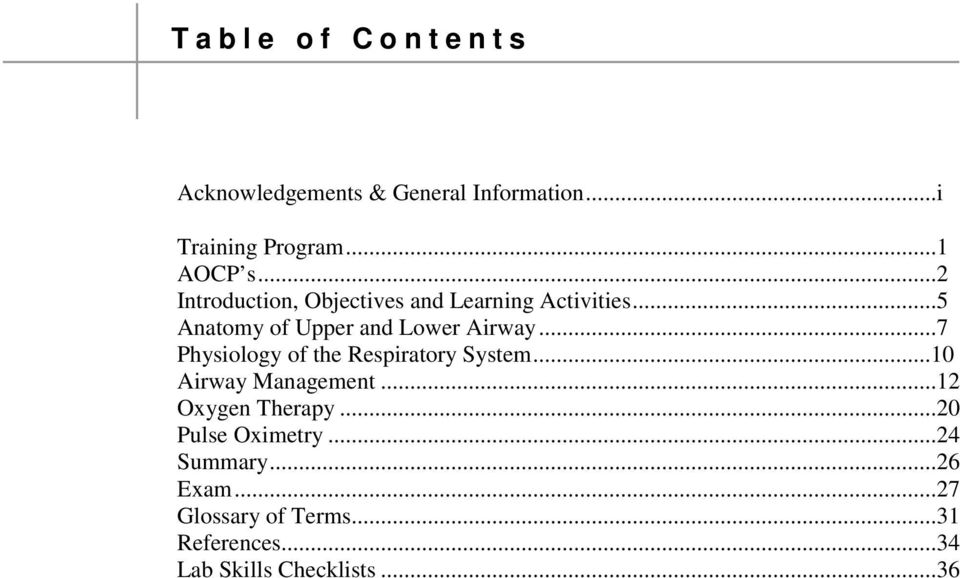
2 Table of Contents Acknowledgements & General Information...i Training Program...1 AOCP s...2 Introduction, Objectives and Learning Activities...5 Anatomy of Upper and Lower Airway...7 Physiology of the Respiratory System...10 Airway Management...12 Oxygen Therapy...20 Pulse Oximetry...24 Summary...26 Exam...27 Glossary of Terms...31 References...34 Lab Skills Checklists...36
3 Acknowledgements & General Information INTRODUCTION The overall goal of this program is to provide standardized upgrade gap education to ensure that all regulated practitioners of the Alberta College of Paramedics (College) meet the Health Professions Act, Paramedic Regulation and the scope of practice as defined by the Alberta Occupational Competency Profiles (AOCP) for the profession. The Alberta Occupational Competency Profiles (AOCP) were developed through the facilitation of Dr. Bill DuPerron of Alberta Health and Wellness. Many College regulated practitioners were involved in compiling and organizing information about the roles and functions of paramedics, emergency medical technicians and emergency medical responders into the Profile. The completion of the AOCP for the College is an important milestone for the profession. The document is a result of a collaborative partnership with the College and Alberta Health and Wellness plus the work and effort of members of the College. The Competency Profile describes the vast expanse of competencies in Alberta at the present time as well as additional changes in scope of practice, which are identified in the Upgrade Gap Training Program. Each module in the Gap Training Program covers the additional competencies for a specific Competency Cluster as identified in the AOCP for each of the three disciplines regulated by the College. The Profile includes the knowledge, skills, attitudes, and judgments related to a variety of roles held by registered practitioners of the College. BACKGROUND The Health Professions Act (HPA) governs all regulated health professions in Alberta. The HPA was passed by the Alberta Legislature in May 1999 and in December 2001 the Order in Council proclaiming the Health Professions Act was signed by the Lieutenant Governor. The HPA replaces a regulatory system (the Health Disciplines Act) that included multiple statutes that had different registration, continuing competence and investigation and disciplinary processes. Under the HPA, previous legislated exclusive scopes of practice will be eliminated and replaced with an overlapping scope of practice model based on restricted activities. Restricted activities are health services that only authorized persons may provide. STRUCTURE OF THE HPA The HPA will deal with processes such as registration, continuing competence, professional conduct, restricted activities, investigation and discipline that apply to all the professions. Each of the 28 professions will have their own regulation that will address in detail, profession specific areas such as required qualifications for entry into the profession. The Paramedic profession is expecting to be governed by the HPA in the near future. Alberta College of Paramedics Introduction of the Upgrade Gap Training Program i

4 ABOUT THE AOCP Most of the competencies have been learned in basic education; other competencies have been acquired through advanced education, on the job training, and experience. All EMRs, EMTs and EMT-Ps have the basic competencies; however, competency on the job will vary depending on job requirements, and policy and procedure of the employing agency. The Profile provides a cumulative view of the competencies within the Scope of Practice and within the general and specialized areas of that practice. The College has developed the following educational module for upgrading the knowledge and skills of registered practitioners to meet the Alberta Occupational Competency Profiles (AOCP), the new Regulation and scope of practice. HISTORY OF THE PROCESS On March 4, 2000, the Paramedic Association of Canada adopted the National Occupational Competency Profile (NOCP), which included both a new classification and generic competencies for four professional designation levels of Paramedicine. On March 22, 2000, the Alberta College of Paramedics Council made the commitment that the Alberta College of Paramedics AOCP would meet or exceed the NOCP. ACKNOWLEDGEMENTS Alberta College of Paramedics Continuing Competency Ad Hoc Education Committee Members: Douglas Britton, MEM, EMT-P, Chair Renee Linssen, EMR, Vice-Chair William Coghill, MEM, EMT-P, CHCA Ruth Farrow, EMT-P, MLT Christine Patterson, MEM, EMT Richard Poon, BSc., EMT-P, MEd Marilyn Ringness, BSc., EMT-P Barry Straub, EMT-P Donna Lefurgey, CEO/Registrar Laurie Mitchell, Registration Division Leader Package Development and Design Portage College Prehospital Care Programs Lac La Biche, Alberta In collaboration with Alberta College of Paramedics Continuing Competency Ad Hoc Education Committee Alberta College of Paramedics Introduction of the Upgrade Gap Training Program ii

5 Module Creation and Research Portage College Prehospital Care Programs Lac La Biche, Alberta In collaboration with Alberta College of Paramedics Continuing Competency Ad Hoc Education Committee About the Authors (Portage College) Portage College (formerly Alberta Vocational Center, Lac La Biche) was established in The College currently offers over 30 certificate and diploma programs in six areas of study: Business, Human Services, Native Cultural Arts, Trades and Technical, Health and Wellness and Academic Upgrading. Over 1800 students are served annually through campuses in 13 northern Alberta communities, with another 1,300 taking short term or customized training programs each year. Portage College has been offering prehospital care training program since the mid 1980s. Portage College is currently approved by the Alberta College of Paramedics for the following Paramedicine programs: Emergency Medical Responder (EMR) Emergency Medical Technician (EMT) Emergency Medical Technologist-Paramedic (EMT-P) Disclaimer Portage College and the Alberta College of Paramedics have attempted to ensure that the information is in context relevant to the practitioner and is as concise as possible. Portage College has used a variety of resource materials in order to provide a solid base of up-to-date information. If any of the information contained within this module contradicts the direction you have received from your employer/medical director, the policy of your employer should take precedence over the information in this module. As a regulated practitioner of the Alberta College of Paramedics, while under the Health Disciplines Act, you may only deliver health services which fall within your scope of practice and is in accordance with the provisions of the Health Disciplines Act or the Health Professions Act when the HPA is implemented. Any content contained in this module that is beyond your scope or not within your current competence does not authorize you to deliver those health services. That is, if a given health service is not within your scope of practice and/or you have not yet attained the competency, you may not deliver that health service. Alberta College of Paramedics Introduction of the Upgrade Gap Training Program iii

6 Alberta Occupational Competency Profile (AOCP) Training Program Learning Goal This educational training is intended to review and upgrade the competencies of The Alberta College of Paramedics registered practitioners in order to meet the requirements of the new regulation under the Health Professions Act (2000) including the Alberta Occupational Competency Profile (AOCP) and scope of practice. Program Objective To provide standardized education to registered practitioners to ensure that all regulated members of the Alberta College of Paramedics meet the regulation and defined scope of practice for the profession. Program Format The Alberta Occupational Competency Profile (AOCP) training program will combine independent study modules and scheduled lab skills assessment sessions. Certification will be granted on successful completion of all program requirements. Independent Study Modules There are three EMR AOCP continuing education modules to be completed. 1. Pharmacology 2. Airway Management 3. Trauma & MCI Lab Skill Assessment All skills identified for each module will be assessed during the lab skills assessment for that module. Exam Mastery of the each module s content will be assessed through multiple-choice exams during the lab sessions. These exams are open book and can be found in each module following the module summary. EMR Airway Management 1

7 EMR Airway Management Competencies This module meets the following competencies of the Alberta Occupational Competency Profile (AOCP). A-2 Knowledge of Anatomy and Physiology A-2-4 Demonstrate an understanding of the respiratory system: Identify the organs of the respiratory system Identify the regions of the pharynx and describe their roles in respiration Describe the structure of the larynx and explain its function in respiration and voice production Explain the structure and function of the trachea List the events involved in inspiration and expiration Explain how compliance and airway resistance relate to breathing Describe how the oxygen carrying capacity of the blood is affected by oxygen and carbon dioxide A-6 Knowledge of Ambulance Equipment A-6-6 Identify equipment required for airway management, including but not limited to: Oxygen tanks Oxygen delivery devices Oxygen regulators Suction devices Oropharyngeal airway Positive pressure ventilation device Pocket mask Nasopharyngeal airway F-2 Perform Oximetry Testing F-2-1 Demonstrate knowledge of inclusion criteria: Altered mental status Hemodynamic instability Priority symptoms History of cardiac/pulmonary disease Use of sedative/narcotic drugs, etc F-2-2 Demonstrate the knowledge of pulse oximetry technology. F-2-3 Demonstrate knowledge of limitations: Environmental Equipment Patient Influences Medications EMR Airway Management 2

8 H-3 Determine Care for Respiratory Alterations H-3-3 Demonstrate the ability to develop and integrate a treatment plan for a patient presenting with alterations of the respiratory system, including but not limited to: Upper airway obstruction Anatomical Foreign body H-3-4 Evaluate efficacy of applied treatment plan and redirect treatmentutilizing principles of clinical decision making for the patient presenting with alterations of the respiratory system. H-13 Determine Care for Pediatric Patients H-14-3 Demonstrate the ability to develop and integrate a treatment plan for a pediatric patient, including, but not limited to: Foreign body airway obstruction (FABO) I-1 Perform Airway Management I-1-1 Demonstrate knowledge and ability to perform basic airway management skills: Manual maneuvers Head/tilt chin lift Modified jaw thrust Modified chin lift Heimlich maneuver Abdominal thrust Foreign body airway obstruction (FBAO) Simple adjuncts Oropharyngeal Airway (OPA) Nasopharyngeal airway (NPA) Suctioning techniques Oral suctioning Chest thrust Back blows (infants only) I-2 Perform Oxygen Therapy I-2-1 Discuss the indications for oxygen administration. I-2-2 Demonstrate knowledge and ability to administer oxygen with a nasal cannula. I-2-3 Demonstrate knowledge and ability to administer oxygen using low concentration mask. I-2-4 Demonstrate knowledge and ability to administer oxygen using a nonrebreather mask. I-2-6 Discuss potential complications and safety issues related to oxygen administration. I-2-7 Demonstrate the knowledge and understanding to calculate how long various sizes of oxygen cylinders will last with various flow rates. EMR Airway Management 3

9 I-2-8 I-2-9 Demonstrate the knowledge and understanding to discuss differences between portable and fixed oxygen delivery systems. Demonstrate knowledge to setup portable oxygen delivery devices. I-3 Perform Patient Ventilation I-3-1 Demonstrate knowledge and ability to ventilate a patient, including, but not limited to: Pocket mask Bag-valve-mask (BVM) EMR Airway Management 4

10 Airway Management Module Overview Introduction Anyone who has taken CPR training knows the importance of airway control. Emergency Medical Responders (EMR) have the knowledge and ability to react quickly when managing a compromised airway, integrating skills and equipment that exceed basic CPR knowledge of airway management. Imagine a scene where a 17-year-old female hit her head on a diving board while jumping into a pool. She is unresponsive, apneic, with a weak carotid pulse at a rate of 36 per minute. She has a large hematoma over her left eye; her skin is cyanotic, cool and diaphoretic. Due to the trauma c-spine control is necessary, making airway management of this patient that much more difficult. This module is designed to review the knowledge and skills that you perform as a practicing EMR, which will help you make the right decisions when managing a compromised airway. Learning Objectives Upon completion of this module the EMR will be able to: 1. Describe the anatomy of the upper and lower airway. 2. Explain the physiology of the respiratory system. 3. Discuss and perform effective airway management. 4. Demonstrate knowledge and application of oxygen therapy. 5. Demonstrate knowledge of pulse oximetry and its effectiveness in airway management. EMR Airway Management 5

11 Learning Activities Recommended Resources Each module identifies specific content students must cover to meet the module learning objectives. Key Terms Students are to define the Key Terms identified for each learning objective. Exam Mastery of the module content will be assessed through a multiple-choice exam during the lab sessions. This exam is open book and can be found in this module following the module summary. Lab Skills Practice Students are to review the skills identified in the Lab Skills Checklist provided in Appendix A. Review of these checklists is essential preparation for the lab skill assessments, which are mandatory for successful completion of this module. EMR Airway Management 6

12 Objective 1 Describe the Anatomy of the Upper and Lower Airway Our respiratory system allows oxygen to enter our body during inhalation and carbon dioxide to exit our body during exhalation. Proper exchange of these two gases (respiration) is necessary to meet the body s metabolic needs and maintain its homeostasis (a steady and normal internal environment). There are many illnesses and injuries that can inhibit respiration. To properly apply your skills to maintain a patent airway and ensure proper ventilation, you must have a clear understanding of the structures that make up the upper and lower airways. Upper Airway Mosby s EMT-I Nose During normal breathing, air enters the nose where it is warmed, cleansed, and humidified. Pharynx Allows air to flow in and out of the respiratory tract and food/liquids to pass into the digestive system. Has three regions: nasopharynx, oropharynx and hypopharynx. Nasopharynx is the uppermost from the nasal opening to back of the soft palate. Oropharynx the part of the pharynx between the soft palate and the upper edge of the epiglottis. Hypopharynx the portion of the pharynx below the upper edge of the epiglottis, opening into the larynx and esophagus. EMR Airway Management 7

13 Epiglottis Leaf-shaped structure just above the larynx. Prevents food and liquid from entering the trachea. Larynx Contains vocal cords, thyroid cartilage, and cricoid cartilage (the only complete ring of cartilage in the Trachea). Commonly referred to as the voice box. Vocal cords Suspended between cartilage. Controlled by several small muscles. Fine movement important for speaking and protecting the airway from liquids or solids. Lower Airway Mosby s EMT-I Trachea A tube supported by C-shaped rings of cartilage. Divides into right and left mainstem bronchi at the level of the sternal angle. The right mainstem bronchus is more directly in line with the trachea than the left. This is why foreign bodies are more likely to enter the right bronchus. EMR Airway Management 8

14 Alveoli Small air sacs with very thin walls surrounded by capillaries. The place where oxygen is transferred into capillaries to bind to the hemoglobin that is attached to the red blood cells. CO 2 collected by red blood cells is transferred to the alveoli. Exchange of oxygen and CO takes place in millions of alveoli with each 2 breath. Objective 1: Key Terms Respiration Homeostasis Nose Pharynx Epiglottis Larynx Vocal Cords Trachea Alveoli EMR Airway Management 9

15 Objective 2 Explain the Physiology of the Respiratory System Proper airway management also requires a thorough understanding of the mechanics of oxygenation and ventilation. Knowledge of normal respiratory physiology is paramount to successful airway management. Inhalation Active part of breathing. During inhalation, the diaphragm moves downward, intercostal muscles lift the ribs upward and outward, and accessory muscles lift the sternum and upper ribs. This increases the volume of the chest cavity resulting in a decrease of intrathoracic pressure (pressure within the thoracic cavity). Because atmospheric pressure (outside force on the body exerted by the weight of the air) is now greater than the intrathoracic pressure, air flows into the body filling the lungs. Exhalation Passive process. During exhalation, the diaphragm and intercostal muscles relax, decreasing the size of the thoracic cavity, which increases the intrathoracic pressure. Because the intrathoracic pressure is now greater than atmospheric pressure, air flows out of the lungs. Respiration There are two types of respiration: pulmonary and cellular. Pulmonary respiration is the exchange of oxygen and CO 2 between the alveoli and the blood of the pulmonary capillaries. This is possible through the process of diffusion (the movement of a gas from an area of higher concentration to an area of lower concentration). Cellular respiration is the same exchange of gasses but this occurs between blood in the body s capillaries and various body tissues. Oxygen and CO 2 exchange are dependant on many factors. Careful ventilation of the patient must be performed in order to prevent respiratory acidosis or respiratory alkalosis. Unnecessary hyperventilation of the patient can cause respiratory alkalosis, which results in an increase in hemoglobin (Hb) affinity for oxygen, but a decrease in the release of oxygen to the tissues of the body. Conversely, hypoventilation can cause respiratory acidosis, which can cause an increase in the release of oxygen to the tissues but a decrease in the affinity of Hb to oxygen. EMR Airway Management 10

16 Respiratory Acidosis: CO 2 is retained usually due to hypoventilation. H 2 CO 3 is formed in the blood. Respiratory Alkalosis: CO 2 is eliminated in excessive amounts due to increased respiratory rate. This is usually a compensatory response to metabolic acidosis. (Metabolic acidosis - when normal metabolism is impaired- acid forms. The acid is not respiratory so, by definition, it is metabolic acid ). Ventilation This is the actual mechanical process that moves air in and out of the lungs. Proper respiration (both pulmonary and cellular) is not possible without ventilation Hypoventilation (reduced rate or depth of breathing), often resulting in hypercarbia (an abnormal rise of carbon dioxide; greater than 45 mmhg). Objective 2: Key Terms Inhalation Exhalation Respiration Hemoglobin Hypoventilation Intrathoracic pressure Atmospheric pressure Diffusion Hypercarbia Ventilation Cellular respiration Pulmonary respiration Affinity EMR Airway Management 11

17 Objective 3 Discuss and Perform Effective Airway Management Early recognition and intervention of airway problems can mean the difference between life and death. This is why assessing the airway is one of the first and most important components of our patient assessment. Obstruction of the upper airway may be caused by a number of factors including secretions, vomitus, tongue and foreign bodies. These or the interruption of basic airway techniques can rapidly lead to hypoxia (lack of oxygen to the body s tissues and cells) causing cellular death. Continuous observation of the patient s airway is crucial in order to anticipate any potential problems that may compromise the airway. Suction One of the greatest threats to a patient s airway is vomiting and aspiration (pathology of inhaling vomitus or mucous into the respiratory tract). Proper airway management and suction can minimize and avoid the complications associated with this potential problem. Each suctioning attempt should be restricted to seconds or less if the airway becomes clear. If the airway is not clear suctioning must continue until it is. The airway must be cleared before any ventilation is begun. The patient should be pre-oxygenated with 100% oxygen both before each attempt. Suction should not be activated during insertion of the catheter because it depletes the airway of oxygen. Once the catheter is properly positioned, suction should be applied and the catheter withdrawn. Various types of suctioning units exist including handheld, battery powered, oxygen powered and fixed or mounted. Suction units are extremely important and must be always well maintained and in good working order. The two most common portable suction units are: Battery powered suction unit Handheld suction unit EMR Airway Management 12

18 Soft Suction Catheter It is a long, easy-to-use flexible tube, long enough to extend into the lower respiratory tract. (Note: EMR s are not allowed to suction the hypopharynx (farther than you can see), therefore, it must always be measured prior to using it to clear an OPA or NPA). Advantages: Comes in multiple diameter sizes. It can be inserted: Into the oropharynx or through an oropharyngeal airway (OPA-measure from the corner of the mouth to the earlobe). Into the nasopharynx or through a nasopharyngeal airway (NPA- measure from the tip of the nose to the tragus). Note: This is contraindicated in all patients with facial trauma or a suspected basilar scull fracture. Through an ET tube. (Note: Not in the EMR scope of practice.) Disadvantages: The soft suction catheter is ineffective in removing large volumes of secretions rapidly. It is often unable to retrieve even smaller food particles. Thick secretions have to be cleared from the catheter by sucking sterile water or saline through the catheter between suctioning attempts. Rigid (Tonsil-tip or Yankauer ) suctioning Advantages: Will not bend or kink. Removes larger particles. Standard size (measuring is not indicated; insert the catheter only as far as you can see, suctioning on the way out). Effective in removing large volumes of secretions rapidly. Multiple holes in catheter tip decreases blockages. Disadvantages: Its use is limited to suctioning of the oropharynx. Vigorous insertion can cause lacerations or other injuries. Basic Airway Maneuvers The most common cause of airway obstruction is the tongue. This blockage is directly related to the position of the patient s head and jaw. Since the submandibular muscles support the tongue, without sufficient muscle tone (e.g. decreased level of consciousness) the tongue will relax and fall backwards, partially obstructing the airway. Partial airway obstruction can be identified by the presence of snoring-like respirations. However, if not corrected this can become a complete airway obstruction leading to hypoxia, apnea and death. Simple airway maneuvers can correct this obstruction creating a clear airway. EMR Airway Management 13

19 Head-tilt, Chin-lift Place the patient in a supine position and kneel at the patient s side with one hand on the patient s forehead and one hand below the chin. Gently lift the chin and tilt the head back. This maneuver pulls the tongue forward and opens the airway. Modified Jaw-thrust This technique requires no manipulation of the neck and is indicated when you are suspecting the patient has a spinal injury. This is done by tightly placing your thumbs on the zygomatic arch. Place your middle fingers on either side of the angle of the mandible with ring and little fingers for support. Next thrust the jaw forward by pushing the middle fingers up on the angle of the jaw and using the thumbs on the zygomatic arch for leverage, if needed. EMR Airway Management 14

20 Modified Jaw-lift This airway maneuver allows you to lift the mandible and tongue up without inserting your thumb into the patient s mouth as in the standard jaw-tongue lift. Simply grasp the patient s jaw with your thumb under the chin and your index finger under the bottom lip, then lifting the jaw up. This can be done with or without c-spine control; however, it is not intended to maintain airway patency for any extended period of time due to the difficulty of holding this position. Simple Airway Adjuncts In addition to the basic airway maneuvers, commercial airway devices have been developed that accomplish the same goal; lifting the tongue off the posterior pharynx creating a patent airway. The advantage of these commercial airways is that the caregiver that was maintaining the basic airway maneuver can now be free to assist in other elements of the patient care. Oropharyngeal Airway (OPA) The OPA is indicated in any unconscious patient that does not have an intact gag reflex (If the patient s gag reflex is intact, the patient will gag, possibly vomit and could potentially aspirate). This device is designed to fit the natural curvature of the upper airway. Its various sizes allow it to be used with all ages (#00 for neonates - #6 for large adults). This is why measuring (from the corner of the mouth to the earlobe) is necessary to ensure the right size OPA is used for each patent. Procedure: Insertion of the OPA is a simple technique. For adults, insert the OPA with the curve inverted and move the distal end (tip) along the roof of the patient s mouth. Once you have reached the hypopharynx, rotate the OPA 180 degrees and continue insertion until the outer flange of the OPA is sitting flat against the patient s lips or teeth. For pediatrics, insertion is done differently because the tip of the OPA could damage the soft, undeveloped palate of this patient. Do not invert the OPA. With the use of a tongue depressor, hold the tongue out of the way and insert the OPA while following the natural curve of the tongue until the outer flange is sitting flat against the patient s lips or teeth. Made of plastic, the OPA not only allows for air to move freely into the pharynx but because of its placement between the teeth, the mouth will always be in an open position. This is practical when suctioning or should the patient suffer a seizure while in your care. EMR Airway Management 15

21 Types and Sizes Measuring the OPA Mosby s EMT-I Nasopharyngeal Airway (NPA) The NPA is very similar to the OPA but instead of inserting it into the oropharynx, the NPA is designed for insertion into the nasopharynx. The NPA should not stimulate the gag reflex; therefore, use in the semi-conscious patient is indicated. It is also very useful in maintaining a patent airway in patients who are seizing or experiencing trismus (a clenched jaw). This funnel shaped, soft rubber airway is designed to follow the natural curvature of the nasopharynx. The distal end is beveled, designed to guide it along the septum of the nose during insertion. Prior to use, a water-soluble gel should be added to the distal (bevel) end of the NPA, to lubricate the passage of the nasopharynx as it is inserted. The NPA comes in various sizes (20 French-36 French), also requiring measurement (form the tip of the nose to the tragus of the ear). Types and Sizes Measuring the NPA Mosby s EMT-I EMR Airway Management Placement after insertion 16
22 Contraindications: Avoid utilizing the nasopharyngeal airway in any patient predisposed to nosebleeds or who may have a nasal obstruction. Further to this, it should NEVER be used in the presence of a suspected basilar skull fracture, as the tube can inadvertently pass into the brain. Procedure: To properly size the airway, it should be slightly smaller in diameter than the patient s nostril (a rough rule is to also compare its diameter size to the diameter of the patients pinky finger ). The length is calculated by measuring from the tip of the patient s nose to the tragus of the ear. Obviously, selecting the appropriate sized airway is important, as a tube that is too small will not extend past the tongue and one that is too long may pass into the esophagus and result in hypoventilation and gastric distension when providing artificial ventilation. If no trauma history, hyperextend patient s head and neck. Maintain appropriate and effective ventilatory function. Ensure adequate oxygenation/ventilation prior to attempting airway insertion. Lubricate the exterior of the tube with a watersoluble gel to prevent/minimize trauma during the insertion. If possible, use a lidocaine gel in the conscious or semi-conscious patient, as the anesthetic effect on the mucosa will provide for an easier and more comfortable airway insertion. Push up on the tip of the nose and pass the tube into the right nostril, directing it straight back. The tube is held with the arch of the airway down towards the patient s face, with the bevel of the airway presenting its flat side to the patient s septum. Avoid pushing against any resistance, as this may cause trauma and kinking of this airway. If resistance is felt, attempt to ease the passage by slightly rotating the tube between your fingers as you advance. If the tube still cannot be passed, attempt to insert a smaller diameter airway. If the septum is deviated and insertion into the right nostril cannot be accomplished, the left nostril must be used. Insert the airway with the bevel towards the septum, rotating it until the funnel rests against the nare. If the patient gags as the last ½ is inserted, retract the airway slightly until it is tolerated by the patient and reinsert. Verify placement by assessing for clear breath sounds and adequate chest rise. The Emergency Medical Responder can also feel for airflow (when the patient exhales) at the proximal end of the device. Ventilate/oxygenate the patient as needed and required. Please Note: Insertion of the nasopharyngeal airway may injure the nasal mucosa, leading to bleeding, aspiration of clots into the trachea, and the need for suctioning to remove the secretions or blood. Forceful insertion may lacerate the adenoids, causing considerable bleeding. The EMR must be able to maintain a patent airway using a nasopharyngeal airway. EMR Airway Management 17
23 Foreign Body Airway Obstruction (FBAO) There has been great confusion over the new guidelines for the BLS treatment of an unconscious airway obstruction. Much of this confusion stems from the Canadian Heart Association and American Heart Association having different recommendations in their publications. To further complicate this issue, the ECC Guidelines 2000 provide different recommendations for the lay rescuer than for the healthcare provider. This section is dedicated to dispersing this cloud of confusion by providing you the Canadian Heart Association s recommendations and the rational behind them. BLS Treatment of Airway Obstruction with Chest Compressions In the American Heart Association ACLS Provider Manual (Appendix 1), abdominal thrusts are recommended to relieve airway obstruction. In Canada, the foundation recognized that previous guidelines often resulted in poor skill retention and performance. In addition, Class llb evidence suggests that chest compressions may create peak airway pressure that is equal to or greater than the pressure created by abdominal thrusts. In the interest of simplifying teaching and improving skill retention, Canada has adopted chest compressions as the recommended means of relieving airway obstruction for both healthcare providers (targeted responders) and the lay public (lay rescuer). [Heart and Stroke Foundation of Canada. (2003) Early Advanced Care, ACLS PLUS TM, A Canadian supplement to the ACLS Provider Manual (p.8). Heart and Stroke Foundation of Canada.] Adult: Conscious Choking Standing Position 1. Make a fist with one hand. 2. Place thumb side of the fist on the patient s abdomen, slightly above the navel and well below the breastbone. 3. Grasp the fist with the other hand and provide quick upward thrusts into the patient s abdomen. 4. Repeat the thrusts and continue until the object is expelled or the patient becomes unconscious. EMR Airway Management 18
24 Child: Conscious Choking Standing Position 1. Stand or kneel behind the patient, arms directly under the patient s axillae, encircling the patient s chest. 2. Place flat, thumb side of one fist against the patient s abdomen, in the midline slightly above Grasp the fist with the other hand and exert a series of up to 5 quick inward and upward thrusts. Do not compress the xiphoid process or the lower margins of the ribcage because force applied to these structures may damage internal organs. 3. Deliver each thrust as a separate, distinct movement, with the intent to relieve the obstruction. Continue the series of up to 5 thrusts until the foreign body is expelled or the patient becomes unresponsive. Unresponsive Airway Obstruction ADULT/CHILD/INFANT 1. Scene Safety 2. Determine Unresponsiveness 3. Phone First 4. Open Airway 5. Check for Breathing 6. Give 2 slow breaths if they do not go in, reposition and attempt again 7. Give chest compressions if rescue breaths do not go in (Adult: 15 compressions, Child/Infant: 5 compressions) 8. Look in mouth, repeat steps 4-8 as necessary Please Note: No blind finger sweeps for any age group Objective 3: Key Terms Aspiration Suction Soft Suction Catheter Rigid Suctioning Head-Tilt, Chin Lift Modified Jaw Thrust Modified Jaw Lift Oropharyngeal Airway (OPA) Nasopharyngeal airway (NPA) EMR Airway Management 19
25 Objective 4 Demonstrate Knowledge and Application of Oxygen Therapy There are many pathologies that can inhibit the body s normal oxygenation and ventilation. Continuous reassessment of the patient s airway, breathing and circulation is necessary as the patient s status can change at any time. It is important to continuously assess the patient for signs of respiratory distress indicating hypoxia (lack of oxygen to the body s tissues and cells) including tachypnea (increased respiratory rate), tachycardia (increased heart rate), cyanosis (bluish discoloration of the skin), and accessory respiratory muscle use. Administering oxygen to the patient may be all that is necessary to reverse these signs and eliminating the hypoxia. Oxygen Cylinders Medical oxygen is usually supplied as a compressed gas in seamless steel or aluminum with either green or white markings on the cylinder. The pressure of a full oxygen cylinder will be 2000 to 2200 psi; it must be reduced to 40 to 70 psi before administration to a patient, this is done through the regulator. There are two types of regulators available for oxygen cylinders 1) pressure-compensated flow meter (affected by gravity - must be kept upright) and 2) the Bourdon-gauge flow meter (not affected by gravity - can be used in any position). Due to the high pressure within the cylinder, no oil or other petroleum products can come in contact with the regulator. These compounds under high pressure can ignite causing fire. Cylinder Size & Constant Volume in Liters (L) Pressure (psi) D= E= M = In order to determine the time remaining on an oxygen cylinder, it is necessary to know: the remaining pressure in the tank, the flow rate of the oxygen being delivered, the size of the cylinder being used and its constant (the number representing a specific cylinder size used in the formula for calculating useful time remaining on an oxygen cylinder, when set at a specific liter flow). With this information, a simple formula is used to compute the remaining time. It is necessary to leave a safe residual pressure in a tank so it does not run dry and reduces refilling costs. Usually local oxygen filling services will allow for ~200psi as a safe residual pressure. EMR Airway Management 20
26 To determine the Flow Rates the formula is as follows: Formula: [Cylinder pressure remaining (psi) safe residual pressure (200psi)] x Constant = Time remaining (min.) Flow Rate (L/min) Example: D cylinder being used at 10 liters/minute with 1500 psi remaining: [1500 psi 200 psi] x 0.16 = 20.8 minutes (Time remaining at 10L/min) 10 L/min Oxygen Delivery Oxygen is delivered in a variety of ways. The following are oxygen delivery devices that are required for basic airway management. Nasal Cannula - If the flow meter is set between 1 and 6 liters per minute, oxygen concentrations in inspired air can range from about 24% to 40%. Simple Face Mask - With flow rates of 6 to 10 liters per minute, oxygen concentrations of 40% to 60% can be obtained in inspired air. Non-Rebreather Mask The oxygen flow rate must be set at whatever level will prevent complete collapse of the bag usually between liters/min. Oxygen concentrations of up to 90% of inspired air can be obtained with this device. Pocket Mask - Because of constant concerns about transmission of communicable diseases, the use of a pocket mask (folds into a case small enough to fit into your pocket) as a barrier may be considered in cases where artificial ventilation (timed exhalation directly into the patient s airway; a type of positive pressure ventilation) is provided. Pocket masks are available which contain an oxygen port for supplementing the oxygen to the patient at 40% to 60% and a one-way valve to protect the provider from coming in contact with the patient. This mask when ventilating, can deliver higher percentages of oxygen than mouth-to-mouth and larger volumes of air than the bag-valve-mask devices. Bag-Valve-Mask (BVM) - This positive pressure device allows for the delivery of high concentrations of oxygen while providing ventilation to the patient. It will deliver more than 90-95% oxygen at L/min with the reservoir bag attached (40%-50% without the reservoir bag). When performed correctly, this is the gold standard for ventilating when providing basic airway management. It should be used with an oropharyngeal airway (OPA) or nasopharyngeal airway (NPA) in place. EMR Airway Management 21
27 The BVM is also used with more advanced airway adjuncts including the endotracheal tube, the Combitube, and the Laryngeal Mask Airway (LMA ). Limited experience with the bag-valve-mask can lead to improper technique (E.g. poor mask seal) causing inadequate ventilation and oxygenation, which will be detrimental to the patient. Regular practice and experience is necessary to use this device correctly. Ventilation Accurate assessment of both oxygenation and ventilation is necessary to recognize and treat patients with respiratory distress and failure (see objective 4). The decision to ventilate should be made on more than just a respiratory rate that is too fast or too slow. Patient assessment, signs, symptoms and evaluation of oxygenation with pulse oximetry (normal SP0 2 is >95%) are necessary to assess oxygenation. The evaluation of ventilation should include assessment of the patient s tidal volume (chest rise and auscultation of lung fields) in addition to the respiratory rate. If inadequate oxygenation and ventilation are noted in the patient, then positive pressure ventilation with a bag-valve-mask (BVM) is necessary. To reduce the risk of gastric inflation that might lead to regurgitation and aspiration of stomach contents, the ECC Guidelines 2000 recommend reductions in both volume and speed at which rescuers provide ventilations, but only if supplemental oxygen is provided. The recommended volume with supplementary oxygen is 6 to 7 ml/kg delivered over an inspiratory period of 2 or more seconds (not up to 2 seconds). The new recommendations for volume with oxygen is 400 to 600 ml for the adult patient. This reduction in volume is only when supplementary oxygen is used because supplementary oxygen will maintain oxygenation despite the reduced volume. If supplemental oxygen is unavailable, the rescuer should try to deliver the same tidal volume recommended for mouth to mask ventilation, 10 ml/kg or ml. It is difficult to estimate the volume delivered, but the tidal volume should result in very obvious chest rise. American Heart Association, (2003). ACLS: Principles and Practice, (p. 135) Compliance (the stiffness or flexibility of lung tissue) is the ease at which air flows into the lungs during positive pressure ventilation. Good compliance is when there is minimal resistance to airflow. This would be the case if it was easy to squeeze the BVM during ventilations. Poor compliance would indicate high airway pressures making the BVM extremely difficult to squeeze. Some causes of this could be airway obstruction, tension pneumothorax (collapsed lung causing an increase in intrathoracic pressure), chest wall injuries and bronchoconstriction (constriction of the bronchioles; occurs in asthmatics). EMR Airway Management 22
28 Sellick s Maneuver Despite the best efforts when ventilating patients with a BVM and OPA, a certain amount of air will enter the esophagus, and over time cause gastric distension. This can impede ventilations by increasing intrathoracic pressure and decrease the ability for chest expansion. This will also increase the potential for the patient to vomit and possibly aspirate. Sellick s maneuver applies gentle pressure posteriorly on the anterior cricoid cartilage. Since the esophagus lies just behind the cricoid cartilage, this maneuver will effectively close the esophagus, redirecting air into the trachea. This maneuver should be done simultaneously during ventilation of a patient. Procedure: To locate the cricoid cartilage, palpate the thyroid cartilage (Adam s Apple) and feel the depression just below it (cricothyroid membrane). The prominence just inferior to this depression is the ring of cricoid cartilage. Using thumb and index finger, of one hand, apply gentle pressure to the anterior and lateral aspects of the cricoid cartilage just next to the midline. Please Note: If the patient begins to vomit immediately release the Sellick s maneuver, and roll the patient on their side. If you don t the high pressure created from the active regurgitation can rupture the patient s closed esophagus and cause massive internal bleeding. Objective 4: Key Terms Hypoxia Tachypnea Tachycardia Cyanosis Regulator Constant Safe Residual Pressure Artificial Respiration Positive Pressure Ventilation Tension pneumothorax Bronchospasm Thyroid cartilage Cricothyroid Membrane Compliance Sellick s Maneuver EMR Airway Management 23
29 Objective 5 Demonstrate Knowledge of Pulse Oximetry and its Effectiveness in Airway Management Pulse oximetry is a non-invasive (does not enter the body) measurement of arteriole hemoglobin oxygen saturation and pulse rate in the peripheral tissues. It is accurate and easy to use. Pulse oximetry has proven to be a valuable assessment tool in the field and is essential to patient care, especially for patients with respiratory or hemodynamic compromise, history of cardiac or pulmonary disorders or altered mental status. It uses a sensor probe, which contains two light-emitting diodes and two sensors. One diode detects oxygenated hemoglobin and the other deoxygenated hemoglobin. The oximeter uses this information to calculate the ratio of oxygenated vs. deoxygenated hemoglobin and determines the oxygen saturation percentage (Sa0 2 ). This percentage is then visually displayed either as a number, a bar graph or waveform depending on the make and model of the pulse oximeter. There are many types of sensor probes. The most common is the clip type designed for peripheral capillary beds, placed onto a fingertip, toe or earlobe. Pediatric sensor probes come with an adhesive tape, which allows for better attachment of the sensor so it cannot be easily pulled off. The pulse oximeter will continually reflect any changes in the oxygenation of the patient, usually before these changes are noticed in other vitals signs. This makes it an invaluable tool when assessing the efficacy of oxygen therapy. It is helpful to have a baseline oxygen saturation on your patient before treatment begins. This information will be useful when formulating a treatment plan for the patient. Oxygen saturation readings will also help to assess any improvement in the patient, as a result of the treatment, allowing you to change the treatment if necessary. Please Note: However, if your patient is critical NEVER withhold oxygen to obtain an oxygen saturation. These patients need oxygen now; the oxygen saturation is not initially important in these situations. The body s normal oxygen saturation range is 95% - 99%. Mild hypoxia is indicated with a range of 91% - 94%. This would require the administration of supplemental oxygen via a nasal cannula. Moderate hypoxia is readings between 86% and 91% - use of a higher concentration mask would be warranted. Less than 85% would need immediate intervention with support of 100% oxygen and possibly the use of a BVM. The goal of oxygen therapy is to maintain an oxygen saturation above 95%. This reading should always be recorded with other vital signs. EMR Airway Management 24
30 Though very accurate, the pulse oximeter can display false readings in certain situations. The sensors cannot differentiate between oxygen and carbon monoxide molecules so with carbon monoxide poisoning, a patient can be hypoxic even though the saturation is above 95%. High intensity light, nail polish, esthetic nails, and dirt will not allow the light emitted by the diode, to pass through the capillary bed of the finger. Therefore, it will be unable to calculate the saturation. Hemodynamic instability (low blood pressure; poor perfusion) of various causes (e.g. shock, hypothermia) will also inhibit the sensors because there is not enough circulation in the capillary beds due to peripheral vasoconstriction (constriction of the arterioles; shunting of blood). In patients with anemia or those suffering from hypovolemia, the saturation can be normal but because the level of hemoglobin within the blood is so severely depleted, the patient will in fact be hypoxic. Please Note: The pulse oximeter must detect a pulse for it to work accurately. Do not trust the oxygen saturation reading until you have confirmed that the patient s pulse corresponds with the pulse indicator on the machine. This pulse indicator can be an audible noise or visual, either as a flashing light, bar graph or waveform. Fig. P1 Pulse oximeter Fig. P2 Adult Sensor Fig. P3 Pediatric Sensor Objective 5: Key Terms Pulse Oximetry Non-invasive SaO 2 Hemodynamic Instability Peripheral Vasoconstriction Anemia Hypovolemia EMR Airway Management 25
31 Summary Airway management is the most critical component of patient care. Knowledge of airway anatomy and respiratory physiology are paramount to anticipating and intervening in potential airway complications. Continuous assessment of your patient s ABC s is critical to providing good patient care. Maintaining proficiency of your airway management skills requires regular practice and review, which will make all the difference when managing your next complicated airway. EMR Airway Management 26
32 Exam 1. The preferred procedure for opening the airway is the maneuver. a. Jaw-thrust b. Jaw-lift c. Sellick s d. Head-tilt/chin-lift 2. Lifting the mandible forward: a. Displaces the tongue b. Pulls the tongue forward c. Lifts the epiglottis over the glottic opening d. All of the above 3. Acute hypoventilation will result in an increase in: a. Carbon dioxide b. PH c. Oxygen saturation d. PaO2 4. Cricoid pressure is used to: a. Insert an OPA b. Relieve obstructed airway c. Remove fluids from the oropharynx d. Prevent regurgitation 5. Gurgling sounds heard on inspiration and/or expiration indicate: a. The accumulation of fluids or vomitus in the upper airway b. Swelling of the upper airway c. Obstruction of the airway by the tongue falling back against the oropharynx d. Spasm of the bronchial airways 6. The movement of oxygen from an area of greater concentration to an area of lesser concentration is called: a. Diffusion b. Osmosis c. Active transport d. Filtration 7. The thin, leaf shaped structure that closes over the opening of the trachea during swallowing to prevent substances from entering is called the: a. Vallecula b. Epiglottis c. Glottis d. Cricoid membrane EMR Airway Management 27
33 8. The portable Oxygen tank size D holds L of Oxygen: a. 400 b. 660 c d An abnormal rise of Carbon dioxide is known as: a. Hypoxia b. Hypoxemia c. Hypercarbia d. Anoxia 10. When suctioning a patient, the recommended amount of time is a maximum of seconds. a. 5 b. 10 c. 15 d Oxygen is transported from the lungs to the body cells by the: a. Plasma b. White Blood Cells c. Red Blood Cells d. Hemoglobin 12. To reduce the risk of gastric distension when using a BVM is to: a. Reduce volume and speed up rate b. Reduce ventilation time 1 ½ to 2 seconds c. Push on the stomach to expire air d. Reduce ventilation rate to less than 12 per minute 13. Where does the oxygen & CO2 exchange occur? a. Alveoli b. Pleural Space c. Bronchus d. Trachea 14. NRB masks deliver up to % of Oxygen. a. 16 % b. 90 % c. 70 % d. 100% EMR Airway Management 28
34 15. The OPA is properly measured from: a. The earlobe to the nose b. The corner of the mouth to the nose c. The corner of the ear to the corner of the mouth d. The ear to the chin 16. False SpO 2 readings are caused by: a. Nail Polish b. Esthetic Nails c. Dirt d. All of the above 17. What is a safe residual pressure for oxygen tanks? a. 100 psi b. 150 psi c. 300 psi d. 200 psi 18. What device measures the Oxygen levels in Patients & is commonly used in the Pre Hospital setting? a. Pulse Oximeter b. End Tidal CO 2 Detector c. ET detector d. Stethoscope 19. The normal range of Oxygen saturation in the body is: a. 90 % - 94 % b. 95 % - 99 % c. 85 % - 90 % d. 92 % - 94 % 20. Oxygen flow for assisted ventilations with a BVM is set at: a L b L c L d. 6 9 L 21. The function of the Pharynx is: a. Allow air flow in to the respiratory system b. Humidifies and warms the air that in inhaled c. Allow solids and liquids to pass into the digestive tract d. Both A & C EMR Airway Management 29
35 22. What causes Cellular Death? a. Dyspnea b. Hypoxia c. Tachypnea d. Hypovolemia 23. Disadvantages of using the Soft Suction Catheter is: a. Ineffective in removing large volumes of secretions rapidly b. Often unable to retrieve even smaller food particles c. Sterile water or Saline must be suctioned to prevent clogging d. All of the above 24. Define homeostasis: a. Gasses needed by the body for metabolic requirements b. A steady and normal internal environment c. The levels of Oxygen in the circulatory system d. None of the above 25. When foreign materials accidentally enter the lung during inspiration, it is called: a. Percussion b. Regurgitation c. Aspiring d. Aspiration EMR Airway Management 30
36 Glossary of Terms Objective 1: Key Terms Respiration The exchange of oxygen and carbon dioxide between the atmosphere and the body cells. Homeostasis The tendency of biological systems to maintain relatively constant conditions in the internal environment while continuously interacting with and adjusting to changes originating within or outside the system. Nose The specialized structure of the face that serves both as the organ of smell and as a means of bringing air into the lungs. Pharynx The throat; the musculo-membranous cavity, about 5 inches long, behind the nasal cavities, mouth, and larynx. Epiglottis The lidlike cartilaginous structure overhanging the entrance to the larynx. Larynx The muscular and cartilaginous structure, lined with mucous membrane, situated at the top of the trachea and below the root of the tongue and the hyoid bone. Vocal cords The folds of mucous membrane in the larynx, the superior pair being called the false, and the inferior pair the true, vocal cords. Trachea The air passage extending from the throat and larynx to the main bronchi; called the windpipe. Alveoli A little hollow, as the socket of a tooth, a follicle of an acrinous gland, or one of the thin-walled chambers of the lungs, surrounded by networks of capillaries through whose walls exchange of carbon dioxide and oxygen takes place. Objective 2: Key Terms Inhalation The drawing of air or other substances into the lungs. Exhalation The giving off of watery or other vapor, or of an effluvium. Respiration The exchange of oxygen and carbon dioxide between the atmosphere and the body cells. Hemoglobin - The main functional constituent of the red blood cell, serving as the oxygen-carrying protein. Hypoventilation Reduction in the amount of air entering the pulmonary alveoli, which causes an increase in the arterial carbon dioxide level. Intrathoracic Pressure pressure within the thoracic cavity. Atmospheric Pressure outside force on the body exerted by the weight of the air. Diffusion the movement of a gas from an area of higher concentration to an area of lower concentration. Hypercarbia Excess of carbon dioxide in the blood. Ventilation The process of exchange of air between the lungs and the ambient air. Cellular Respiration The same exchange of gasses but this occurs between blood in the body s capillaries and various body tissues. EMR Airway Management 31
37 Pulmonary Respiration The exchange of oxygen and CO2 between the alveoli and the blood of the pulmonary capillaries. Affinity - attraction; a tendency to seek out or unite with another object or substance Objective 3: Key Terms Aspiration The inspiration into the airway of foreign material. Suction The aspiration of gas or fluid by mechanical means. Soft Suction Catheter A long, easy to use flexible tube used for suction. Rigid Suctioning A hard tube used to suction large volumes of fluid. Head-Tilt/Chin-Lift The combination of two movements to open the airway with one hand on the patient s forehead and one hand on his chin, gently lift the chin and tilt the head back. To be used in non trauma patients. Modified Jaw Thrust Manual airway used when spinal precautions are taken. Place your thumbs on the zygomatic arch, with you index fingers on either side of the mandible and push forward. Modified Jaw Lift Grasps the patients jaw with your thumb under the chin and your index finger under the bottom lip and lift up on the jaw. Oropharyngeal Airway (OPA) An airway adjunct used to secure an airway through the oropharynx. Nasopharyngeal Airway (NPA) A soft, uncuffed plastic tube used to secure an airway through the nasopharynx. Objective 4: Key Terms Hypoxia Diminished availability of oxygen to the body tissues. Tachypnea Very rapid respirations. Tachycardia Abnormally rapid heart beat, usually taken to be over 100 beats per minute. Cyanosis A bluish discoloration of the skin and mucous membranes due to excessive concentration of reduced hemoglobin in the blood. Regulator Mechanical device designed to regulate system flow pressure in response to upstream or downstream pressure change. Constant The number representing a specific cylinder size used in the formula for calculating useful time remaining on an oxygen cylinder, when set at a specific liter flow. Safe Residual Pressure Oxygen cylinders should only be allowed to empty to the point where the regulator reads 200 psi. This is referred to as the safe residual pressure. Artificial Respiration The method of forcing air into the lungs in a person who still has a pulse but whose breathing has stopped. Positive Pressure Ventilation Air forced into the lungs by external over pressure Tension Pneumothorax A collapsed lung causing an increase in intrathoracic pressure. Bronchospasm Bronchial spasm. EMR Airway Management 32
38 Thyroid Cartilage The shield shaped cartilage of the larynx; the prominence it produces on the neck is the Adam s Apple. Cricothyroid Membrane The depression just below the thyroid cartilage Compliance The stiffness or flexibility of lung tissue. Sellick s Maneuver Gentle pressure applied to the anterior cricoid cartilage to effectively close off the esophagus, redirecting air into the trachea. Objective 5: Key Terms Pulse Oximetry A non-invasive measurement of arteriole hemoglobin oxygen saturation and pulse rate in the peripheral tissues. Non-invasive Not entering the body. SaO2 oxygen saturation of the blood. Hemodynamic Instability Low blood pressure; poor perfusion. Peripheral Vasoconstriction Constriction of the arterioles; shunting of blood. Anemia A condition in which there is reduced delivery of oxygen to the tissues. Hypovolemia Abnormally decrease volume of circulating fluid in the body. EMR Airway Management 33
39 References American Academy of Orthopedic Surgeons. (2002) Emergency Care and Transportation of the Sick and Injured. Jones and Bartlett Publishers. American Academy of Pediatrics. (2000). Pediatrics Education for Prehospital Professionals. Jones and Bartlett Publishers. American Heart Association. (2001, 2002) ACLS Provider Manual, American Heart Association. American Heart Association. (2002) PALS Provider Manual, American Heart Association. Bledsoe, B., Porter, R., & Cherry, R. (2000). Paramedic Care: Principals and Practice, Introduction to Advanced Prehospital Care. New Jersey: Prentice- Hall, Inc. Bledsoe, B., Porter, R., & Cherry, R. (2003). Essentials of Paramedic Care. New Jersey: Prentice-Hall, Inc. Campbell, John Emory. (2004). BTLS Basic Trauma Life Support. New Jersey: Pearson Education, Inc. Heart and Stroke Foundation of Canada. (2003) Early Advanced Care, ACLS PLUS;A Canadian supplement to the ACLS Provider Manual, Heart and Stroke Foundation of Canada. Miller Keane (1997), Encyclopedia & Dictionary of Medicine, Nursing & Allied Health Sixth Edition, W.B. Saunders Company. Portage College Prehospital Care 2004 curriculum from the Emergency Medical Responder, Emergency Medical Technician, and Paramedic programs. Shade,B.R., Rothenberg, M.A., Wertz, E., Jones, S.A., Collins, T.E., (2002), Mosby s EMT Intermediate Textbook, Second Edition, Elsevier Health Science. EMR Airway Management 34
40 Appendix A EMR Airway Management 35
41 Lab Skills Checklist SKILL GUIDELINES - INSERT AN NPA Apply PPE precautions Perform patient assessment Determine treatment plan List indications, contraindications and complications for this procedure Prepare equipment (Measure for appropriate size: Tip of nose to tragus) (NPA should be just smaller than nostril; patient s little finger) Have suction ready Determines LOC (AVPU) If no c-spine control: head-tilt-chin-lift; with c-spine: at 2/3 insertion have partner perform jaw thrust Select largest and least deviated nostril (usually right) Lubricate tip of airway with water soluble gel Insert airway into selected nostril with bevel towards septum in anterior to posterior direction Continue insertion until flange rests on nare If patient gags, withdraw until tolerated and consider insertion of shorter airway If resistance is met on insertion consider other nostril Evaluate air exchange Reassesses patient and note any complications Document PCR Comments: Instructor Name & Initials: Date: EMR Airway Management 36
42 Lab Skills Checklist SKILL GUIDELINES - PERFORM PULSE OXIMETRY Apply PPE precautions Perform patient assessment Obtain history and baseline vital signs Determine treatment plan List indications, contraindications and complications for this procedure Prepare equipment Assess patients fingers for temperature, nail polish, fake nails etc, and clean as required Place sensor on finger for adults, toe in infants Ensure monitor is reading, reposition as necessary Note display reading for SpO 2 and pulse Adjust ventilation and oxygen therapy as required Reassess patient and note any complications Document PCR Note: It is not recommended to withhold oxygen for baseline SpO 2 reading. If patient needs oxygen, give oxygen first then assess oxygen saturation. Comments: Instructor Name & Initials: Date: EMR Airway Management 37
Oxygenation. Chapter 21. Anatomy and Physiology of Breathing. Anatomy and Physiology of Breathing*
 Oxygenation Chapter 21 Anatomy and Physiology of Breathing Inspiration ~ breathing in Expiration ~ breathing out Ventilation ~ Movement of air in & out of the lungs Respiration ~ exchange of O2 & carbon
ADMINISTERING EMERGENCY OXYGEN
 FACT SHEET ADMINISTERING EMERGENCY OXYGEN Emergency oxygen can be given for many breathing and cardiac emergencies. It can help improve hypoxia (insufficient oxygen reaching the cells) and reduce pain
Pediatric Airway Management
 Pediatric Airway Management Dec 2003 Dr. Shapiro I., PICU Adult Chain of Survival EMS CPR ALS Early Defibrillation Pediatric Chain of Survival Prevention CPR EMS ALS Out-of-Hospital Cardiac Arrest SIDS
The EMT Instructional Guidelines in this section include all the topics and material at the EMR level PLUS the following material:
 Airway Management, Respiration and Artificial Ventilation EMR Applies knowledge (fundamental depth, foundational breadth) of general anatomy and physiology to assure a patent airway, adequate mechanical
Module 5 ADULT RECOvERY POSITION STEP 1 POSITION ThE victim
 Module 5 ADULT RECOVERY POSITION The recovery position is used in the management of victims who are unresponsive but have breathing and pulse. When an unresponsive victim is lying supine, the airway may
Laryngeal Mask Airways (LMA), Indications and Use for the Pre-Hospital Provider. www.umke.org
 Laryngeal Mask Airways (LMA), Indications and Use for the Pre-Hospital Provider Objectives: Identify the indications, contraindications and side effects of LMA use. Identify the equipment necessary for
Northwestern Health Sciences University. Basic Life Support for Healthcare Providers
 Northwestern Health Sciences University Basic Life Support for Healthcare Providers Pretest May 2005 This examination to be used only as a PRECOURSE TEST for BLS for Healthcare Providers Courses Based
National Registry of Emergency Medical Technicians Emergency Medical Responder Psychomotor Examination PATIENT ASSESSMENT/MANAGEMENT TRAUMA
 PATIENT ASSESSMENT/MANAGEMENT TRAUMA Scenario # Note: Areas denoted by ** may be integrated within sequence of Primary Survey/Resuscitation SCENE SIZE-UP Determines the mechanism of injury/nature of illness
American Heart Association
 American Heart Association Basic Life Support for Healthcare Providers Pretest April 2006 This examination to be used only as a PRECOURSE TEST For BLS for Healthcare Providers Courses 2006 American Heart
National Registry of Emergency Medical Technicians Emergency Medical Technician Psychomotor Examination BLEEDING CONTROL/SHOCK MANAGEMENT
 BLEEDING CONTROL/SHOCK MANAGEMENT Candidate: Examiner: Date: Signature: Possible Applies direct pressure to the wound 1 NOTE: The examiner must now inform the candidate that the wound continues to bleed.
National Registry of Emergency Medical Technicians Emergency Medical Responder Psychomotor Examination BVM VENTILATION OF AN APNEIC ADULT PATIENT
 BVM VENTILATION OF AN APNEIC ADULT PATIENT Candidate: Examiner: Date: Signature: Possible Points Checks responsiveness NOTE: After checking responsiveness and breathing for at least 5 but no 1 Checks breathing
Chapter 2 - Anatomy & Physiology of the Respiratory System
 Chapter 2 - Anatomy & Physiology of the Respiratory System Written by - AH Kendrick & C Newall 2.1 Introduction 2.2 Gross Anatomy of the Lungs, 2.3 Anatomy of the Thorax, 2.4 Anatomy and Histology of the
Emergency Medical Responder Mid-Course Knowledge Evaluation
 Emergency Medical Responder Mid-Course Knowledge Evaluation Please do not write on this sheet. Indicate your answers on the answer sheet provided. 1. Medical control is the process by which a physician
EMERGENCY MEDICAL RESPONDER (EMR) PRACTICAL SKILLS EXAMINATION REPORT State Form 54407 (R / 5-13)
 EMERGENCY MEDICAL RESPONDER (EMR) PRACTICAL SKILLS EXAMINATION REPT State Form 54407 (R / 5-3) INDIANA DEPARTMENT OF HOMELAND SECURITY EMERGENCY MEDICAL SERVICES CERTIFICATION 302 West Washington Street,
State of New Hampshire Department of Safety Division of Fire Standards and Training & Emergency Medical Services
 State of New Hampshire Department of Safety Division of Fire Standards and Training & Emergency Medical Services September 2013 PATIENT ASSESSMENT / MANAGEMENT - TRAUMA Time allowed: 10 minutes SCENARIO
Success Manual and Cheat Sheet Notes to Pass Your Basic Life Support (BLS) Course
 Success Manual and Cheat Sheet Notes to Pass Your Basic Life Support (BLS) Course Written by: Jay Snaric, MS And Kimberly Hickman, RN CPR St. Louis 44 Meramec Valley Plaza St. Louis MO 63088 www.stlcpr.com
Difficult Pre-hospital Airway Management
 Difficult Pre-hospital Airway Management Frans L. Rutten, MD, FDSA Elisabeth Hospital Tilburg, The Netherlands In management of patients with an emergency, airway management and ventilatory care are the
American Heart Association. Basic Life Support for Healthcare Providers
 American Heart Association Basic Life Support for Healthcare Providers Pretest February 2001 This examination to be used only as a PRECOURSE TEST for BLS for Healthcare Providers Courses 2001 American
Adult, Child, and Infant Written Exam CPR Pro for the Professional Rescuer
 Adult, Child, and Infant Written Exam CPR Pro for the Professional Rescuer Instructions: Read each of the following questions carefully and then place an X over the correct answer on the separate answer
81 First Responder Respiratory
 81 First Responder Medical Scenarios Asthma Scenario: You are called to a local house for a woman with trouble breathing. You arrive to find a 67-year-old woman sitting upright in a chair. She states she
404 Section 5 Shock and Resuscitation. Scene Size-up. Primary Assessment. History Taking
 404 Section 5 and Resuscitation Scene Size-up Scene Safety Mechanism of Injury (MOI)/ Nature of Illness (NOI) Ensure scene safety and address hazards. Standard precautions should include a minimum of gloves
Neonatal Intubation. Purpose. Scope. Indications. Equipment Cardiorespiratory monitor SaO 2 monitor. Anatomic Considerations.
 Page 1 of 5 Purpose Scope Indications Neonatal Intubation To assure proper placement of endotracheal tubes for maximum ventilation using proper intubation procedures. The policy applies to all Respiratory
First Responder (FR) and Emergency Medical Responder (EMR) Progress Log
 First Responder (FR) and Emergency Medical Responder (EMR) Progress Log Note: Those competencies that are for EMR only are denoted by boldface type. For further details on the National Occupational Competencies
Anatomy and Physiology: Understanding the Importance of CPR
 Anatomy and Physiology: Understanding the Importance of CPR Overview This document gives you more information about the body s structure (anatomy) and function (physiology). This information will help
Chapter 26. Assisting With Oxygen Needs. Elsevier items and derived items 2014, 2010 by Mosby, an imprint of Elsevier Inc. All rights reserved.
 Chapter 26 Assisting With Oxygen Needs Oxygen (O 2 ) is a gas. Oxygen It has no taste, odor, or color. It is a basic need required for life. Death occurs within minutes if breathing stops. Brain damage
Patient Assessment/Management Trauma
 Patient Assessment/Management Trauma Date: / / Test Site Location: Station #: Takes or verbalizes standard precautions (BSI) if appropriate based on patient scenario SCENE SIZE-UP Determines the scene
National Registry Skill Sheets
 Bleeding Control/Shock Management BVM Ventilation of an Apneic Adult Patient Cardiac Arrest Management/AED Joint Immobilization Long Bone Immobilization Oxygen Administration By Non-Rebreather Mask Patient
Understanding Hypoventilation and Its Treatment by Susan Agrawal
 www.complexchild.com Understanding Hypoventilation and Its Treatment by Susan Agrawal Most of us have a general understanding of what the term hyperventilation means, since hyperventilation, also called
Oxygen Therapy. Oxygen therapy quick guide V3 July 2012.
 PRESENTATION Oxygen (O 2 ) is a gas provided in a compressed form in a cylinder. It is also available in a liquid form. It is fed via a regulator and flow meter to the patient by means of plastic tubing
A. function: supplies body with oxygen and removes carbon dioxide. a. O2 diffuses from air into pulmonary capillary blood
 A. function: supplies body with oxygen and removes carbon dioxide 1. ventilation = movement of air into and out of lungs 2. diffusion: B. organization a. O2 diffuses from air into pulmonary capillary blood
Human Anatomy and Physiology The Respiratory System
 Human Anatomy and Physiology The Respiratory System Basic functions of the respiratory system: as a Gas exchange supply oxygen to aerobic tissues in the body and remove carbon dioxide waste product. in-
How you can help save lives
 How you can help save lives Through Life Support Training Courses with THE INTERNATIONAL LIFE SUPPORT TRAINING CENTER (ILSTC) TABLE OF CONTENTS Introduction Page 3 Basic Life Support for Healthcare Provider
2.06 Understand the functions and disorders of the respiratory system
 2.06 Understand the functions and disorders of the respiratory system 2.06 Understand the functions and disorders of the respiratory system Essential questions What are the functions of the respiratory
Oxygen - update April 2009 OXG
 PRESENTATION Oxygen (O 2 ) is a gas provided in compressed form in a cylinder. It is also available in liquid form, in a system adapted for ambulance use. It is fed via a regulator and flow meter to the
CHAPTER 5 - BREATHING "THE RESPIRATORY SYSTEM"
 CHAPTER 5 - BREATHING "THE RESPIRATORY SYSTEM" You have read how the blood transports oxygen from the lungs to cells and carries carbon dioxide from the cells to the lungs. It is the function of the respiratory
Hypoxia and Oxygenation Hypoxia is a serious threat to patients and escorts alike when
 Chapter 4 2 71 Hypoxia and Oxygenation Hypoxia is a serious threat to patients and escorts alike when they fly. Air medical escorts need to understand what causes hypoxia, why some people are more likely
Adult Choking and CPR Manual
 Adult Choking and CPR Manual 2009 Breath of Life Home Medical Equipment and Respiratory Services CHOKING Description: Choking is the coughing spasm and sputtering that happen when liquids or solids get
CHAPTER 1: THE LUNGS AND RESPIRATORY SYSTEM
 CHAPTER 1: THE LUNGS AND RESPIRATORY SYSTEM INTRODUCTION Lung cancer affects a life-sustaining system of the body, the respiratory system. The respiratory system is responsible for one of the essential
Target groups: Paramedics, nurses, respiratory therapists, physicians, and others who manage respiratory emergencies.
 Overview Estimated scenario time: 10 15 minutes Estimated debriefing time: 10 minutes Target groups: Paramedics, nurses, respiratory therapists, physicians, and others who manage respiratory emergencies.
What, roughly, is the dividing line between the upper and lower respiratory tract? The larynx. What s the difference between the conducting zone and
 What, roughly, is the dividing line between the upper and lower respiratory tract? The larynx. What s the difference between the conducting zone and the respiratory zone? Conducting zone is passageways
State of Indiana EMR Psychomotor Skills Examination
 SECONDARY ASSESSMENT (Detailed Exam) *Credit should be given to candidates that use a brief exam f life-threatening injuries in the Primary Survey so long as it does not delay appropriate care. Head Neck
LESSON 4 ORAL, NASOPHARYNGEAL, AND NASOTRACHEAL SUCTIONING.
 LESSON 4 ORAL, NASOPHARYNGEAL, AND NASOTRACHEAL SUCTIONING. 4-1. SUCTIONING a. Suctioning is a common nursing activity performed for the purpose of removing accumulated secretions from the patient's nose,
Oxygenation and Oxygen Therapy Michael Billow, D.O.
 Oxygenation and Oxygen Therapy Michael Billow, D.O. The delivery of oxygen to all body tissues is the essence of critical care. Patients in respiratory distress/failure come easily to mind as the ones
GUIDELINES FOR THE MANAGEMENT OF OXYGEN THERAPY
 SOUTH DURHAM HEALTH CARE NHS TRUST GUIDELINES FOR THE MANAGEMENT OF OXYGEN THERAPY AIM To supplement oxygen intake using the appropriate equipment in order to correct hypoxia and relieve breathlessness.
MECHINICAL VENTILATION S. Kache, MD
 MECHINICAL VENTILATION S. Kache, MD Spontaneous respiration vs. Mechanical ventilation Natural spontaneous ventilation occurs when the respiratory muscles, diaphragm and intercostal muscles pull on the
RESPIRATORY VENTILATION Page 1
 Page 1 VENTILATION PARAMETERS A. Lung Volumes 1. Basic volumes: elements a. Tidal Volume (V T, TV): volume of gas exchanged each breath; can change as ventilation pattern changes b. Inspiratory Reserve
Respiratory System. Chapter 21
 Respiratory System Chapter 21 Structural Anatomy Upper respiratory system Lower respiratory system throat windpipe voice box Function of Respiratory System Gas exchange Contains receptors for sense of
Emergency Medical Services Advanced Level Competency Checklist
 Emergency Services Advanced Level Competency Checklist EMS Service: Current License in State of Nebraska: # (Copy of license kept in file at station) Date of joining EMS Service: EMS Service Member Name:
PULMONARY PHYSIOLOGY
 I. Lung volumes PULMONARY PHYSIOLOGY American College of Surgeons SCC Review Course Christopher P. Michetti, MD, FACS and Forrest O. Moore, MD, FACS A. Tidal volume (TV) is the volume of air entering and
Emergency Medical Response INSTRUCTOR S MANUAL
 Emergency Medical Response INSTRUCTOR S MANUAL Contents Acknowledgments 3 SECTION A: ADMINISTRATION Chapter 1: Introduction 9 Course Purpose Course Objectives Course Participants Instructor Responsibilities
Scenario 2 Is it ever safe enough?
 IRECA BLS Competition 2011 Scenario 2 Is it ever safe enough? Team Name Captain Name Judge 1 Judge 2 The Event: You are dispatched to a shooting for two injured at a local bar. Witnesses have told police
U.S. ARMY MEDICAL DEPARTMENT CENTER AND SCHOOL FORT SAM HOUSTON, TEXAS 78234-6100 CARDIAC IMPAIRMENT SUBCOURSE MD0571 EDITION 100
 U.S. ARMY MEDICAL DEPARTMENT CENTER AND SCHOOL FORT SAM HOUSTON, TEXAS 78234-6100 CARDIAC IMPAIRMENT SUBCOURSE MD0571 EDITION 100 DEVELOPMENT This subcourse is approved for resident and correspondence
AEROSPACE MEDICAL SERVICE SPECIALTY INDEPENDENT DUTY MEDICAL TECHNICIAN EMERGENCY MEDICINE PROCEDURES
 QTP4N0X1C-9 02 July 2015 AEROSPACE MEDICAL SERVICE SPECIALTY INDEPENDENT DUTY MEDICAL TECHNICIAN EMERGENCY MEDICINE PROCEDURES Volume 9 TOTAL FORCE, TOTAL CARE EVERYTIME, ANYWHERE 383d TRAINING SQUADRON/XUFB
Reading Assignment: Tasks for the Veterinary Assistant, pages 467-473, Appendix L, O and P
 Patient Monitoring Reading Assignment: Tasks for the Veterinary Assistant, pages 467-473, Appendix L, O and P Patient monitoring during surgery is an extremely important task that is commonly the responsibility
EYE, EAR, NOSE, and THROAT INJURIES
 T6 EYE, EAR, NOSE, and THROAT INJURIES Management of injuries of the eyes, ears, nose, and throat focuses on airway management and initial stabilization of the injury. Bilateral comparisons can assist
Anatomy of the Respiratory System. The Respiratory System. Respiratory system functions mainly as gas exchange system for O 2 andco 2.
 The Respiratory System Respiratory system functions mainly as gas exchange system for O 2 andco 2! cellular respiration (energy production) closely tied to circulatory system General Functions of Respiratory
Southern Stone County Fire Protection District Emergency Medical Protocols
 TITLE Pediatric Medical Assessment PM 2.4 Confirm scene safety Appropriate body substance isolation procedures Number of patients Nature of illness Evaluate the need for assistance B.L.S ABC s & LOC Focused
Part 1: Physiology. Below is a cut-through view of a human head:
 The Frenzel Technique, Step-by-Step by Eric Fattah, Copyright 2001 [email protected] This document should be in electronic form at: http://www.ericfattah.com/equalizing.html Feel free to distribute
Pulmonary Diseases. Lung Disease: Pathophysiology, Medical and Exercise Programming. Overview of Pathophysiology
 Lung Disease: Pathophysiology, Medical and Exercise Programming Overview of Pathophysiology Ventilatory Impairments Increased airway resistance Reduced compliance Increased work of breathing Ventilatory
Objectives. Burn Assessment and Management. Questions Regarding the Case Study. Case Study. Patient Assessment. Patient Assessment
 Objectives Burn Assessment and Management Discuss the mechanisms and complications of a thermal burn, electrical burn and an inhalation burn Explain the factors to consider when determining the severity
Airway and Breathing Skills Levels Interpretive Guidelines
 Office of Emergency Medical Services and Trauma INDEX EFFECTIVE LAST REVIEW PAGES VERSION R-P11A 7/1/2011 7/1/2011 5 2011 Scope of Practice for EMS Personnel Emergency Medical Personnel are permitted to
EMERGENCY MEDICAL RESPONDER (EMR) PRACTICAL SKILLS EXAMINATION REPORT
 Reset Form EMERGENCY MEDICAL RESPONDER (EMR) PRACTICAL SKILLS EXAMINATION REPT INDIANA DEPARTMENT OF HOMELAND SECURITY EMERGENCY MEDICAL SERVICES CERTIFICATION 302 West Washington Street, Room E239 Indianapolis,
CHAPTER 9 BODY ORGANIZATION
 CHAPTER 9 BODY ORGANIZATION Objectives Identify the meaning of 10 or more terms relating to the organization of the body Describe the properties of life Describe the function for the structures of the
By Casey Schmidt and Wendy Ford
 By Casey Schmidt and Wendy Ford Body systems Digestive System Circulatory System Respiratory System Excretory System Immune System Reproductive System Nervous System Muscular System Skeletal System Endocrine
Basic techniques of pulmonary physical therapy (I) 100/04/24
 Basic techniques of pulmonary physical therapy (I) 100/04/24 Evaluation of breathing function Chart review History Chest X ray Blood test Observation/palpation Chest mobility Shape of chest wall Accessory
Ventilation Perfusion Relationships
 Ventilation Perfusion Relationships VENTILATION PERFUSION RATIO Ideally, each alveolus in the lungs would receive the same amount of ventilation and pulmonary capillary blood flow (perfusion). In reality,
First Responder: The National EMS Scope of Practice changes the name to Emergency Medical Responder.
 APPROVED SCOPE 2/8/08 BOARD MTG First Responder: The National EMS Scope of Practice changes the name to Emergency Medical Responder. Emergency Medical Responder (EMR) Description of the Profession The
Allina Emergency Medicine Education Healthcare Provider. CPR Study Guide. American Heart Association 2010 Guidelines
 Allina Emergency Medicine Education Healthcare Provider CPR Study Guide American Heart Association 2010 Guidelines The American Heart Association strongly promotes knowledge and proficiency in BLS< ACLS
Armstrong Medical Little Joe. 1 Manikin 1 Red Cross-branded Carrying Case
 Category Ambu CPR Pal Trainer Ambu Multi Man Armstrong Medical Actar D-Fib Armstrong Medical Little Joe Laerdal Little Anne Laerdal Resusci Anne Prestan Professional Adult Manikin Retail Price $257.89/each
Routine Protocols & Pulse Oximetry
 Routine Protocols & Pulse Oximetry Q4 2012 Pulse Oximetry Continuing Education 2012 4 th Quarter The purpose of this training bulletin is to familiarize the members of the Cleveland Fire Department of
Breathing and Holding Your Breath copyright, 2005, Dr. Ingrid Waldron and Jennifer Doherty, Department of Biology, University of Pennsylvania 1
 Breathing and Holding Your Breath copyright, 2005, Dr. Ingrid Waldron and Jennifer Doherty, Department of Biology, University of Pennsylvania 1 Introduction Everybody breathes all day, every day. Why?
EMERGENCY MEDICAL RESPONDER REFRESHER TRAINING PROGRAM Ohio Approved Curriculum
 EMERGENCY MEDICAL RESPONDER REFRESHER TRAINING PROGRAM Ohio Approved Curriculum Instructor Course Guide Ohio Approved EMR Refresher 5-16-2012 Page 1 OHIO APPROVED EMERGENCY MEDICAL RESPONDER REFRESHER
Neonatal Emergencies. Care of the Neonate. Care of the Neonate. Care of the Neonate. Student Objectives. Student Objectives continued.
 Student Objectives Neonatal Emergencies After completing this section the student will be able to: 1. Identify three physiologic and/or anatomic features unique to the newborn 2. List three perinatal factors
Pediatric Respiratory System: Basic Anatomy & Physiology. Jihad Zahraa Pediatric Intensivist Head of PICU, King Fahad Medical City
 Pediatric Respiratory System: Basic Anatomy & Physiology Jihad Zahraa Pediatric Intensivist Head of PICU, King Fahad Medical City Outline Introduction Developmental Anatomy Developmental Mechanics of Breathing
Adult Basic Life Support
 2 Adult Basic Life Support Introduction This chapter contains the guidelines for out-of-hospital, single rescuer, adult basic life support (BLS). Like the other guidelines in this publication, it is based
2161-1 - Page 1. Name: 1) Choose the disease that is most closely related to the given phrase. Questions 10 and 11 refer to the following:
 Name: 2161-1 - Page 1 1) Choose the disease that is most closely related to the given phrase. a disease of the bone marrow characterized by uncontrolled production of white blood cells A) meningitis B)
A. All cells need oxygen and release carbon dioxide why?
 I. Introduction: Describe how the cardiovascular and respiratory systems interact to supply O 2 and eliminate CO 2. A. All cells need oxygen and release carbon dioxide why? B. Two systems that help to
Emergency Medical Technician Basic. Practical Skills Examination Sheets
 New York State Department of Health Basic Practical Skills Examination Sheets Rev 07/12 Basic Practical Skills Examination Sheets Updates Included on this page are the changes or updates that have been
Lab #11: Respiratory Physiology
 Lab #11: Respiratory Physiology Background The respiratory system enables the exchange of O 2 and CO 2 between the cells and the atmosphere, thus enabling the intake of O 2 into the body for aerobic respiration
The American Heart Association released new resuscitation science and treatment guidelines on October 19, 2010.
 ACLS Study Guide The American Heart Association released new resuscitation science and treatment guidelines on October 19, 2010. Please read the below information carefully This letter is to confirm your
Basic life support (BLS) Techniques
 module Basic life support (BLS) Techniques 1 01 04. Basic Cardio Pulmonary Resuscitation (CPR) 08. Adult basic life support sequence, according to European Resuscitation Guidelines 12. Recognition of cardiorespiratory
AHA/AAP Neonatal Resuscitation Guidelines 2010: Summary of Major Changes and Comment on its Utility in Resource-Limited Settings
 AHA/AAP Neonatal Resuscitation Guidelines 2010: Summary of Major Changes and Comment on its Utility in Resource-Limited Settings Resuscitation step Recommendations (2005) Recommendations (2010) Comments/LOE
How To Treat A Pregnant Woman With A Miscarriage
 Special Patient Populations Obstetrics EMR Education Standard Recognizes and manages life threats based on simple assessment findings for a patient with special needs while awaiting additional emergency
a guide to understanding pierre robin sequence
 a guide to understanding pierre robin sequence a publication of children s craniofacial association a guide to understanding pierre robin sequence this parent s guide to Pierre Robin Sequence is designed
Community Ambulance Service of Minot ALS Standing Orders Legend
 Legend Indicates General Information and Guidelines Indicates Procedures Indicates Medication Administration Indicates Referral to Other Protocol Indicates Referral to Online Medical Direction Pediatric
1st Responder to Emergency Medical Responder Transition Course
 1st Responder to Emergency Medical Responder Transition Course Mandatory Training July 5, 2011 Authored by: Eddie Manley, Education Coordinator OSDH - EMS 1 st Responder to EMR Recommended Transition Course
N26 Chest Tubes 5/9/2012
 Thoracic cavity, pleural space 1 Conditions requiring chest drainage_1 Air between the pleurae is a pneumothorax Occurs when there is an opening on the surface of the lung or in the airways, y, in the
X-Plain Sinus Surgery Reference Summary
 X-Plain Sinus Surgery Reference Summary Introduction Sinus surgery is a very common and safe operation. Your doctor may recommend that you have sinus surgery. The decision whether or not to have sinus
Virginia Office of Emergency Medical Services Scope of Practice - Procedures for EMS Personnel
 Specific tasks in this document shall refer to the Virginia Education Standards. AIRWAY TECHNIQUES Airway Adjuncts Airway Maneuvers Alternate Airway Devices Cricothyrotomy Obstructed Airway Clearance Intubation
Human Body Vocabulary Words Week 1
 Vocabulary Words Week 1 1. arteries Any of the blood vessels that carry blood away from the heart to all parts of the body 2. heart The muscular organ inside the chest that pumps blood through the body
BLS TREATMENT GUIDELINES - CARDIAC
 BLS TREATMENT GUIDELINES - CARDIAC CARDIOPULMONARY ARREST - NON-TRAUMATIC (SJ-B101) effective 07/01/99 Defibrillation CPR Apply S-AED and assess rhythm as trained. Defib as indicated Simultaneous OXYGEN:
CHAPTER 21 QUIZ. Handout 21-1. Write the letter of the best answer in the space provided.
 Handout 21-1 QUIZ Write the letter of the best answer in the space provided. 1. A severe form of allergic reaction is called A. an allergen. C. epinephrine. B. anaphylaxis. D. an immune reaction. 2. Harmless
PROCEDURE FOR USING A NASAL CANNULA
 PROCEDURE FOR USING A NASAL CANNULA A nasal cannula is used to deliver a low to moderate concentration of oxygen. It can be used as long as nasal passages are open. A deviated septum, swelling of the nasal
Sheet 1A. Treating short/tight muscles using MET. Pectorals. Upper trapezius. Levator scapula
 Sheet 1A Treating short/tight muscles using MET Pectorals Once daily lie at edge of bed holding a half-kilo can, arm out sideways. Raise arm and hold for 10 seconds, then allow arm to hang down, stretching
NEEDLE THORACENTESIS Pneumothorax / Hemothorax
 NEEDLE THORACENTESIS Pneumothorax / Hemothorax By: Steven Jones, NREMT-P Pneumothorax Pneumothorax is a collection of air or gas in the pleural space of the lung, causing the lung to collapse. Pneumothorax
EMR EMERGENCY MEDICAL RESPONDER Course Syllabus
 6111 E. Skelly Drive P. O. Box 477200 Tulsa, OK 74147-7200 EMR EMERGENCY MEDICAL RESPONDER Course Syllabus Course Number: HLTH-0009 OHLAP Credit: No OCAS Code: 9373 Course Length: 66 Hours Career Cluster:
PROCEDURE FOR USING A NASAL CANNULA
 FOR USING A NASAL CANNULA A nasal cannula is used to deliver a low to moderate concentration of oxygen. It can be used as long as nasal passages are open. A deviated septum, swelling of the nasal passages,
CPR/AED for Professional Rescuers and Health Care Providers HANDBOOK
 CPR/AED for Professional Rescuers and Health Care Providers HANDBOOK TABLE OF CONTENTS SECTION 1: THE PROFESSIONAL RESCUER The Duty to Respond 2 Preventing the Spread of Bloodborne Pathogens 3 Taking Action