
ALBÉNIZ'S LEYENDA (Preludio-Asturias) by Stanley Yates
|
|
|
- Shanna Moore
- 9 years ago
- Views:
Transcription
1 YATE Albéniz s Leyenda (age ) ALBÉNIZ' LEYENDA (Preludio-Asturias) by tanley Yates by tanley Yates All Rights Reserved Extracts of music and text reroduced with ermission of Mel Bay Publications Inc Background to the Piece The Programmatic Asect The Original Pubication Arrangements for Guitar 5 The Elements of egovia's Arrangement 6 A New Arrangement 7 uggestions for Performance 8 In Conclusion 9 Resources Background to the Piece Albeniz's relude, Asturias-Leyenda, is erhas the quintessential "anish guitar" iece A favorite of Andrés egovia, and virtually every guitarist that followed him, the iece has become so widely identified with the guitar that those who do not know otherwise would robably be astonished to discover that the work was originally written for the iano Isaac Albeniz (86-99) wrote the iece during the early 89's, most likely in London (where he had established himself as a concert ianist and theatre comoser) The iece was first ublished in Barcelona, by Juan Bta Puol & Co, in 89 as the oening Preludio of a threemovement set entitled Chants d' Esagne, O Five years later, both Juan Bta Puol and the nion Musical Esañola in Madrid ublished a five-movement version of the work, again with our iece as the oening Preludio even years after this, in 9 (two years after Albéniz's death), the German ublisher Hofmeister ublished the first comlete version of an earlier work of Albéniz's, the uite esañola, O 7 This work had been advertised in 886 as an eight-movement suite, but only four of its movements had actually been ublished The four movements added to comlete the set, however, had all been ublished reviously under different titles It aears that the ublisher simly took existing works of Albéniz's and inserted them into the uite esañola, changing the names to fit those originally advertised 5 years earlier! (Perhas Albéniz, in characteristic style, had romised his early ublisher more works than he cared to deliver) Thus our iece, Preludio became known as Asturias (subtitled Leyenda), the originally advertised fifth movement of Albéniz's uite esañola Does all this really matter? I believe it does, since the title of a iece tells us something of its intended character The titles of the movements advertised for Albéniz's earlier uite
2 YATE Albéniz s Leyenda (age ) esañola draw uon a wide range of anish rovinces: Aragon, Andalucia, Castile, Catalonia, as well as the Northern mining region, Asturias The Chants d' Esagne, the collection in which our iece was originally ublished, however, is insired entirely by the Andalucia region - the home of flamenco, and of the Moorish invasion We need only comare the image of the Asturian bagie (the characteristic folk instrument of that region) with the Andalucian guitar to realize that Albéniz's insiration for the Preludio was not Asturias By what name should we refer to the iece then? Clearly, the misleading Asturias is out of the question Albéniz's original title Preludio does not misreresent the character of the iece, but says little about its identity and character The ublisher's subtitle Leyenda, on the other hand, is a quite evocative and identifiable title Although erhas not sulied by Albéniz himself, with clarity in mind, Leyenda ( Legend ) does aear a good comromise The Programmatic Asect Albéniz's Leyenda, a most evocative iece of music, has insired numerous dramatic stories, from biblical thunderstorms to devastating earthquakes, which were often found as adornments to the backs of old record covers However, Albéniz's nostalgia for his homeland was exressed in much more romantic, and much more inventive, terms than these Imagining himself of Moorish ancestry, most of Albéniz's own comments concerning the rogrammatic asect of his music derive from images of the Alhambra the elaborate Moorish alace-fortress that overlooks the Andalucian city of Granada Of this lace (which he visited on several occasions), Albéniz imagined evening serenades and uergas (all-night gysy flamenco arties), accomanied on the one hand by the strumming of guitars and on the other by the "lazy dragging of the fingers across the strings" of the guzla, an ancient Arabic instrument (a single examle of which Albéniz surely never saw, let alone actually heard) eaking in 886 of his serenata, Granada, Albéniz wrote: I live and write a erenatasad to the oint of desair, among the aroma of the flowers, the shade of the cyresses, and the snow of the ierra I will not comose the intoxication of auerga I seek now the traditionthe guzla, the lazy dragging of the fingers over the strings And above all, a heartbreaking lament out of tunei want the Arabic Granada, that which is art, which is all that seems to me beauty and emotion Albéniz's owers of musical descrition and romantic invention extended well beyond the realities of his life and his actual exeriences (even roducing a very colourful autobiograhical account of a young life that, in reality, was quite uneventful) Albéniz could hardly have visited From a letter written by Albéniz to his friend Enrique Moragas in 886 Cited in Walter Clark, Albéniz: Portrait of a Romantic (Oxford: Clarendon Press, 998), 65, fn The colorful stories of Albeniz's youth - his being denied entry to the Paris conservatory at age six after throwing a ball through a ane of glass, concert tours as a runaway from age eight, stowing away to the New World aboard a steamshi, studies with Franz Liszt, etc, are legendary, but fictitious Albéniz aears to have invented the whole story on the sot after a successful concert in Madrid in 886, reinventing his biograhy for inclusion in Giusee Arteaga y Pereira's Celebridades musicales, which was ublished in Barcelona later that year Incredibly, virtually all subsequent biograhies of Albéniz aear to derive from this source ee the reface to my Isaac Albéniz: Pieces Arranged for the Guitar (Pacific: Mel Bay Publications, 999), 8-
3 YATE Albéniz s Leyenda (age ) for himself the "tower" that insired the title of one of his best-known iano works, Torre bermea If he had, he would hardly have been insired to cature the exerience in music An amusing descrition of the Torre bermea is rovided by American author James Michener, who visited the "Vermillion Tower" on the strength of having heard Albéniz's iano work Fully execting to find a "slendid Moorish monument" he instead found "a air of square, dumy thingsa squat tower built of ugly brick in the worst ossible roortions, as far removed in sirit from the music of Albéniz as one could imagine" No doubt, Albéniz too had been cativated by the evocative words, "Torre bermea," which was enough to insire him to the comosition of a iece of music that described something deriving only from his owerful romantic imagination o what was the insiration behind Albéniz's reludio, Leyenda? Living outside ain (most of his ieces in "anish" style were written in London and Paris), Albéniz felt a nostalgia for his homeland which evoked images of flamenco, and of the ancient, Moorish quality of Andalucia even though Albéniz was a Catalan, he identified his "anishness" with Andalucia and even imagined that he was of Moorish ancestry (aarently an unfounded notion) Albéniz's music also resonds to the religious collision between the Moors and Christians in ain, insired by the uxtaosed architecture of those surviving, awe-insiring mosques of Granada, evilla and Cordoba, which later became catholic cathedrals All of these elements are to be found in our iece The oening section of the work could hardly be more evocative of the flamenco guitar, with its "oen-string" edal oint and "rasgueado" chords (figure ): The slow central section is more sohisticated The oening hrases evoke the cante ondo, the imrovised solo song of that ersecuted Indian-Jewish-Gysy cultural amalgam that roduced what we today call flamenco (figure ): James Michener, Iberia: anish Travel Imressions and Reflections (New York: Random House, 968), 95-7
4 YATE Albéniz s Leyenda (age ) This eventually gives way to a more rhythmic, dance-like section with more active "guitar accomaniment" (figure ): Aesthetically, the coda is the most sohisticated art of the comosition As with his Cordoba (a iece from the same cycle, insired by another city famous for its mosque-cathedral), Albéniz introduces a series of ure diatonic choral-style harmonies, evoking the music of the Christian church, and reflecting the imosition of that religion on the ancient Moorish architecture (figure 5a): Albéniz does not view this as a conquest, however, and following a tentative reference to the main flamenco theme of the iece there aears a harmonically remarkable assage: an imressionistic blur of suerimosed tonic ("Christian") and Phyrigian augmented-sixth ("Muslim") harmonies The work ends on bare octaves (neither reconciliation nor conquest here) (figure 5b):

5 YATE Albéniz s Leyenda (age 5) The Original Publication Before discussing guitar arrangements of the iece, we should take a brief look at the first ublished version for iano (which differs, in a coule of interesting ways, from later ublished versions) Although no manuscrit version of the iece is known to exist, I have been able to locate a coy of the first edition (which actually contains the signature and ex-libris stam of no less a figure than Ricardo Viñes, the virtuoso ianist and ersonal friend of Albéniz): As already mentioned, this first edition of the three-movement version of the Chants d' Esagne, (Preludio-Orientale-ous le Palmier) was ublished in Barcelona in 89 by one of Albéniz's main ublishers of the time, Juan Bta Puol & Co, with the late number P C These movements aear in identical form in the five-movement versions of the Chants d' Esagne ublished by Juan Bta Puol and nion Musical Esañola in Madrid in 897 Indeed, the engraving was made from the same lates Turning to the version of the iece that aeared as "Asturias-leyenda" after Albéniz's death, in the first edition of the "comlete" uite esañola, ublished in Leizig in 9 by Friedrich Hofmeister, we find a slightly different version of the iece Interestingly, nion Musical Esañola, who also ublished a "comlete" version of the uite esañola in 98, edited by Juan alvat, re-engraved the iece but clearly based it on the earlier version rather than the "revised" Hofmeister version All subsequent editions of the iece to the resent day, however, aear to be derived from the slightly altered Hofmeister edition We can therefore establish that two basic versions of the iece exist: the original version ublished as Preludio in the early versions of the Chants d' Esagne (89 and 897); the version that aeared as Asturias-Leyenda in the 98 nion Musical Esañola edition of the uite esañola
6 YATE Albéniz s Leyenda (age 6) the revised version ublished as Asturias-Leyenda by Hofmeister in 9 in the first comlete edition of the uite esañola (uon which subsequent editions of the iece aear to have been based, for examle the widely distributed version edited by Isador Philli, first ublished in 95 by International Music) The essential differences between the two early versions of the iece are few, but significant The original temo marking "Allegro ma non troo" in the later version became "Allegro" with an attached metronome marking of quarter-note = The unmarked central section of the original version is marked "Più Lento" in the later versions with a metronome marking of quarter = 8 There are also differences of dynamic and exression markings The dynamic range of the main section of the iece in the earlier version fff is moderated in the later version to ff The central section has less detail of exression markings in the later version, therefore aearing less exressive, esecially in the matter of rhythmic flexibility Perhas the most interesting difference, though subtle, concerns the addition of an accidental to several hrases in the melodic cante ondo section of the iece (figure 6): The later editions added a natural sign to the grace-note c-natural, removing the evocative augmented-second interval Albéniz used this "forbidden" melodic interval to evoke the Moorish quality of the cante ondo in several other ieces, including Granada, "a lament out of tune" (see the quotation above) That c is indeed the itch intended by Albéniz is verified by the fact that in all other instances of this grace-note figure in the iece, Albéniz used the customary shorthand sign (see figure, above) Only in the secial case of those figures that use the augmentedsecond did he take the trouble to write out the notes in full
7 YATE Albéniz s Leyenda (age 7) Arrangements for Guitar everal items of the Albéniz's iano reertory were arranged for guitar during the comoser's lifetime The first guitarist to do so was robably Francisco Tárrega (85-99), a fellow Catalan and an almost exact contemorary of Albéniz Tárrega's most illustrious student Miguel Llobet also made guitar arrangements of Albéniz's iano music, aarently with the blessing of the comoser, since Llobet erformed Albéniz's Granada in a concert arranged by Albéniz himself in Barcelona in 96 The first successful guitar arrangement of the reludio Leyenda, however, no doubt belongs to Andrés egovia, though he wasn't the first guitarist to erform or arrange the iece That distinction should robably go to the rolific arranger everino García Fortea In his autobiograhy of the years 89-9, egovia mentions that he was "transcribing Leyenda by Albéniz, which hereto had been layed from the transcrition made by that hack[!], Don everino Garcia" 5 Although I have not been able to determine when egovia first began to include the iece in his recital rograms, we do know that he rogrammed the iece for a recital in Graz, Austria in October, 9 6 Although the rogram is lost, it is quite ossible that egovia also rogrammed the iece for his milestone debut in Paris, earlier that year egovia did not record his arrangement until much later, however, in 95 (it aears on An Andres egovia Recital on the Brunswick label, AXTL 5), and he did not ublish it until three years after that, in 956 (with Ricordi American in Buenos Aires) From this oint on, a steady stream of guitar arrangements of Leyenda began to aear on the market, the maority tacitly taking egovia's edition as their rimary source 5 The Elements of egovia's Arrangement Albéniz's iano original cannot be layed on the guitar unedited; the original key of g-minor is unsuitable, many octave doublings and chord voicings cannot be reroduced, the original registration of the iece extends beyond the tessitura of the guitar, and the dynamic range (a long, continuous crescendo from to fff, for examle) cannot be realized literally In addressing these issues, egovia introduced a number of distinguishing features into his arrangement of the iece: He added guitaristic trilet figuration in the outer Allegro sections (figure 7): ee the reface to my Isaac Albéniz: Pieces Arranged for the Guitar, o cit, 7 5 Andrés egovia, egovia: An Autobiograhy of the Years 89-9 (New York: Macmillan Publishers, 76), 8 6 The rogram is included in Graham Wade and Gerard Garno, A New Look at egovia: His Life and his Music (Pacific: Mel Bay Publications, 997), 5
8 YATE Albéniz s Leyenda (age 8) (He also dearted from the constant staccato articulation of the original by adding sustained bass notes, as can be seen above) He also introduced trilet figuration in a assage at the end of the slow central section that refers to the texture of the oening Allegro section (inadvertently disguising the relationshi between the two sections?) (figure 8): And he again used trilet figuration at the end of the iece, where the original resents an imressionistic blur of suerimosed tonic and augmented-sixth harmonies (the original is again set in the rhythm and texture of the oening Allegro section) (figure 9):
9 YATE Albéniz s Leyenda (age 9) The Allegro sections end with a "guitaristic" flourish which, while erfectly reasonable on the iano, cannot be reroduced literally on the guitar egovia substituted izzicato eighthnotes and a concluding chord (figure ): At one oint in the Allegro sections it becomes imossible to retain both the uer and lower notes of an evocative Phrygian augmented-sixth chord egovia substituted the following chord, which reserves the correct uer tone, but alters the bass-note (figure ): 6 A New Arrangement In rearing my edition, Isaac Albéniz: 6 Pieces Arranged for the Guitar for my series with Mel Bay Publications, I was faced with the inevitable: I would have to include an arrangement of Leyenda Following the criteria that I had established for the rest of the edition, working from the very first edition of the iece and intent on resisting the weight of tradition, this resulted in quite some differences between my version and the one reviously established by egovia Here are some of the issues I addressed in the arrangement As already mentioned, the outer Allegro sections of this iece evoke the flamenco guitar, secifically the technique of laying a lower-voice melody with the thumb underneath a reeated uer oen-string edal, unctuated (later in the section) with emhatic "rasgueado" chords To my ear, the interest in such assages lies in the momentary "collision" and crossing of the arts I therefore chose a fingering that lays with the timbral differences between the reeated-note oen-string edal and the fretted melody beneath (rather than lacing this melody on the fourth and fifth strings, as do traditional guitar arrangements of the iece) (figure ):
10 YATE Albéniz s Leyenda (age ) I also maintained the staccato articulation of lower voice and rasgueado chords throughout the Allegro sections uch chords as the following are damed by the left-hand immediately after strumming (figure ): Albéniz's original kees to sixteenth-note rhythm throughout the Allegro section The effect is one of a gradually accumulating insistency as the oening melodic motive is reeated over and over again, suorted by the relentless, unchanging rhythm of the uer edal (In other words, I felt no need to incororate egovia s trilet figuration) Although the lower-voice melody remains essentially constant throughout the entire section, the uer reeated-note edal does change, as does the bass-art during the "rasgueado" section It is not ossible to remain faithful to both arts on the guitar, as can be seen in the following figure (figure ): I have always been bothered by the re-voiced augmented-sixth chord in traditional guitar arrangements of this iece, feeling the chromatically-altered bass A to be the most imortant note (it is this note that defines the inversional quality of the harmony, and which rovides very strong chromatic voice-leading in the lower voice) Wishing to retain the effect of an idiomatic oen-string edal and the chromatic movement of the bass, and to at least suggest the movement C-B of the original uer reeated-note edal oint, I decided uon the following solution (figure 5):
11 YATE Albéniz s Leyenda (age ) For those unfamiliar with the iano version, it may to take some getting used to, but it does sound quite authentic (even though the uer notes are not those of the original) I adoted the following figuration for the final flourish of this section (again, although it sounds quite like the original, the note-content has been translated to the idiom of the guitar) (figure 6): The evocative central section of the iece requires many subtle adustments in order for it to work idiomatically on the guitar I mention some of the more significant ones here Like many modern layers, I am very fond of lassicare vibrare (overlaing, har-like) effects on the guitar, and of "cross-string" ornaments I therefore decided to introduce these effects to highlight the evocative, ancient Moorish quality of the cante ondo sections of the iece (I also included a more traditional realization, as an aendix) (figure 7): I also considered the character of the original dynamic markings, which resulted in further evocative fingerings, such as the following (figure 7a):
12 YATE Albéniz s Leyenda (age ) I tried to maintain the relationshi between the texture of the oening Allegro and references made to it in the central and closing sections of the iece (figure 8): Like egovia, I found no elegant way to reroduce the voicing of the dance-like ortion of the central section, beyond retaining the rhythm and articulation of the original (with re-voiced chords) (see figures, 8 and 8, above) Finally, I recreated the imressionistic blur of the ending as follows (figure 9): 7 uggestions for Performance I would like to offer a few suggestions concerning the erformance of Albéniz's Leyenda An essential ingredient in caturing the character of any iece of music is the chosen temo One "notch" either side can have quite dramatic effect This iece is not a virtuosic toccata, but a nostalgic evocation of Moorish Granada Bearing in mind the original temo indication of Allegro ma non troo, I would suggest a temo of around quarter-note = 6- If you refer to take the "revised" temo of Allegro, then I would suggest a temo of around quarter-note = 6- (with or without trilet figuration) An imortant asect of the Allegro sections is the sense of constant dynamic growth from to fff (over measures!) To roect this in erformance, I use the following strategy:
13 YATE Albéniz s Leyenda (age ) -6 tasto 7- normal - crescendo mf crescendo, brighter sound 5- f crescendo, hard bright sound - ff very hard, bright sound 5-7 f normal sound 8 diminuendo 9 (I start the da cao at m almost imercetibly soft, murmuring (the iece, not me), which allows for an even wider dynamic range the second time through) Within these broad dynamics, the oening motive can also be subtly shaed, as follows (figure ): When laying the rasgueado chords (strummed quickly with ami) try to make sure the lower notes are clearly heard, and be sure to dam the chord immediately by releasing the left-hand ressure (or with the third finger, for the e-minor chord in mm -5) (see figure, above) If you absolutely can't live without egovia's trilet figuration, simly ut it back in between mm 7-8 Finally, consider the various changes of character that occur throughout the iece: the solo flamenco guitar of the Allegro ma non troo the soulful, Moorish cante ondo vocal of mm6-78, unctuated by "guitar" chords the tentative, yet rhythmic dance-like character of the accomaniment from mm79- the references to the oening solo guitar Allegro ma non troo at mm- the return to the solo vocal line at mm8- the diatonic "Christian" chorale harmonies that aear at mm85-8 interruted at mm 89-9 the last "breath" of the "solo guitar" at mm9- the uxtaosition of Muslim and Christian cultures reresented by the imressionistic suerimosition of tonic and augmented-sixth chords at mm95-6 the non-resolute ending of the final tonic octaves (Try visualizing these characters during your erformance)

14 YATE Albéniz s Leyenda (age ) 8 In Conclusion Albéniz's Leyenda is a iece of music that has been given a second life How often would we hear the iece had it not been adoted by guitarists? The same can be said of much of the Albéniz iano reertoire; ianists themselves rarely get to it and it is in the hands of guitarists that the music survives today Because of this, we may regard this adoted reertoire as something of our own As such, and since we have taken so freely from Albéniz s music, we have a resonsibility to do our best with it, to search for its essential character, to resect it, and to exress it with all the means available to us The arranging rocess is not only one of transferring the notes of one instrument to another; it is also the rocess of comosing with redetermined materials, of recomosing, as though the original had been written guitar in hand as the musical idea was first exressed in sound If Albéniz sat down today with a guitar in his hands, and the Alhambra in his mind, what would he lay? The new arrangement described here is simly one answer to that question 9 Resources tanley Yates' Albéniz Edition and Reviews
15 Arranged for guitar by TANLEY YATE % Allegro ma non troo π fl i 5 marcato il canto A mon cher ami Louis E Puol Prélude Chants d'esagne, O, no (Asturias leyenda, uite esañola, O 7, no 5) [q = ] fl sim IAAC ALBÉNIZ (London, ca 89) fl 7 6 f π x (cross-fingering) 6 π (reare ) 5 *) see note π *) see age 6 for alternative realizations of this assage 999 Mel Bay Publications Inc Reroduced with Permission - 5 For Private se Only
16 Prélude (Chants d'esagne) Asturias, leyenda (uite esañola) 9 π 5 8 VII 6 ami f semre n - V 7 ƒ - semre f cresc cresc n 5 (dam with ) ƒ 999 Mel Bay Publications Inc Reroduced with Permission 6 For Private se Only
17 - 5 VII 6 Preludio (Chants d'esagne) Asturias, leyenda (uite esañola) V f n dim semre 6 5 (dim) π n 55 sim 58 6 i - i a VII i m i m XI oco rit 999 Mel Bay Publications Inc Reroduced with Permission 7 For Private se Only
18 Prélude (Chants d'esagne) Asturias, leyenda (uite esañola) art har 9th fi 6 u cantando largamente ma dolce - J m F VII 6 67 J m F III 6 *) see note - i a m lv J dim Ó F VII 6 F m IV b J lv i a m dim e molto ritard Ó 6 n 8 n - molto rit u III 5 a temo II 5 marcato 89 marcato dim e rall n molto moreno 9 n *) see age 6 for an alternative realization of this assage II 5 a temo I n F n 999 Mel Bay Publications Inc Reroduced with Permission 8 For Private se Only
19 II 5 - dim n n b m - dim m morendo rit n cresc a temo Preludio (Chants d'esagne) Asturias, leyenda (uite esañola) cresc dim π a temo a temo π fi quasi ont dolce 8 & J m i lento art har m molto rit rall sim F J th 6 lv 5 quasi andante π molto rall π 5 J sim n m I n rall b b morendo n D a rit arm th π u % 999 Mel Bay Publications Inc Reroduced with Permission 9 For Private se Only
20 Prélude (Chants d'esagne) Asturias, leyenda (uite esañola) ALTERNATIVE REALIZATION The following is a more traditional alternative to the cross-string ornaments and lv effects used in measures 7-78 (7) - (78) dim dim e molto ritard Ó - Ó VII 6 F IV Many guitar arrangements introduce trilets at measure 7, though Albéniz's original kees the same rhythm throughout (as does the version resented above) Those who may wish to use trilet figuration may use the follwowing models to do so: for mm 7- i m 5 π - for mm 5-8 (returning to normal notes in m 9) i m f semre The otion also remains to remove the octaves of the original between mm 7-, with or without triet figuration, as follows: i m (7) or simly: (7) 999 Mel Bay Publications Inc Reroduced with Permission For Private se Only
Guitar Rubric. Technical Exercises Guitar. Debut. Group A: Scales. Group B: Chords. Group C: Riff
 Guitar Rubric Technical Exercises Guitar Debut In this section the examiner will ask you to play a selection of exercises drawn from each of the three groups shown below. Groups A and B contain examples
Jim Hall Chords and Comping Techniques
 Jim Hall Chords and Comping Techniques Jazz guitar comping is an art form in its own right. The comping rhythms, melodies, and voicings of the greatest Jazz guitarists are delightful to listen to, with
Chapter 2 How To Cheat A Barre Chord
 Chapter 2 How To Cheat A Barre Chord Now that you ve learned a variety of chords in different positions, there are times that we want to eliminate some of the notes. I know, in the previous chapter I explained
SYMPHONY #9 ANTONIN DVORAK
 SYMPHONY #9 ANTONIN DVORAK Dvorak s Symphony #9 is one of the most beloved works in the symphonic repertoire. Having had the experience of conducting it many times, I have accumulated a list of ideas,
National Standards for Music Education
 National Standards for Music Education 1. Singing, alone and with others, a varied repertoire of music. 2. Performing on instruments, alone and with others, a varied repertoire of music. 3. Improvising
summertime full score
 Jazz Lines Publications Presents the jeffrey sultanof master edition As recorded by charlie arker Arranged by jimmy carroll edited by jeffrey sultanof full score from the original manuscrit jl-8041 Music
Pinhole Optics. OBJECTIVES To study the formation of an image without use of a lens.
 Pinhole Otics Science, at bottom, is really anti-intellectual. It always distrusts ure reason and demands the roduction of the objective fact. H. L. Mencken (1880-1956) OBJECTIVES To study the formation
Music Theory Unplugged By Dr. David Salisbury Functional Harmony Introduction
 Functional Harmony Introduction One aspect of music theory is the ability to analyse what is taking place in the music in order to be able to more fully understand the music. This helps with performing
MUSIC A. PROGRAM RATIONALE AND PHILOSOPHY
 MUSIC A. PROGRAM RATIONALE AND PHILOSOPHY The systematic development of musical skills, knowledge and perception is fundamental to the total development of the individual. Music education should begin
Music Music: Grade 4 Product Performance GLE 1: Develop and apply singing skills to perform and communicate through the arts
 Expressive Singing Independent Singing : Grade 4 Product Performance GLE 1: Develop and apply singing skills to perform and communicate through the arts : knowledge of process and techniques for the production,
Foundation Course. Study Kit No 1. Away In A Manger
 Foundation Course Study Kit No 1 Away In A Manger Reharmonization Study Kit No. 1 Away In A Manger Author: Rosablanca Suen Web: www.learnpianowithrosa.com Email: [email protected] Cover Design:
Lesson DDD: Figured Bass. Introduction:
 Lesson DDD: Figured Bass Introduction: In this lesson you will learn about the various uses of figured bass. Figured bass comes from a Baroque compositional practice in which composers used a numerical
I II III IV V VI VII I I II III IV V VI VII I
 How to use Solfa in the choir with David Vinden Relative Solfa (Curwen s Tonic Solfa) enables the development of the Inner Hearing. It takes time to teach it according to Kodály s principles. Most choir
Put Your Song to the Tests
 Put Your Song to the Tests By Pat & Pete Luboff We ve been listening to songs in a professional capacity for over 20 years, as songwriting consultants, workshop leaders, contest judges and Taxi screeners.
Playing Chromatic Music on Mountain Dulcimer in 1-3-5 Tuning
 Playing Chromatic Music on Mountain Dulcimer in 1-3-5 Tuning By Rob Brereton The sentence I dread hearing when I talk to mountain dulcimer players is, There ain t no notes on a dulcimer, you just play
Bi- Tonal Quartal Harmony in Theory and Practice 1 Bruce P. Mahin, Professor of Music Radford University
 Bi- Tonal Quartal Harmony in Theory and Practice 1 Bruce P. Mahin, Professor of Music Radford University In a significant departure from previous theories of quartal harmony, Bi- tonal Quartal Harmony
Parameters for Session Skills Improvising Initial Grade 8 for all instruments
 Parameters for Session Skills Improvising Initial for all instruments If you choose Improvising, you will be asked to improvise in a specified style over a backing track that you have not seen or heard
2012 Music Standards GRADES K-1-2
 Students will: Personal Choice and Vision: Students construct and solve problems of personal relevance and interest when expressing themselves through A. Demonstrate how musical elements communicate meaning
Sample of Version 2.0 of Swing & Jump Blues Guitar
 The Charlie Christian Approach Charlie Christian (1916 1942) was one of the first real swing guitar players that had a lasting influence on all other swing and jump guitar players after him. Even more
Antonín Dvořák Life Dates: 1841-1904 Nationality: Czech Period: Late Romantic
 Antonín Dvořák Life Dates: 1841-1904 Nationality: Czech Period: Late Romantic I should be glad if something occurred to me as a main idea that occurs to Dvořák only by the way. Johannes Brahms (1833-97)
The Chord Book - for 3 string guitar
 The Chord Book - for 3 string guitar Prepared for: 3 string fretted cbg Prepared by: Patrick Curley Forward This short ebook will help you play chords on your 3 string guitar. I m tuned to G, if you re
Symphony No 1 (Asperger s) Dedicated to. All those who offered me grace over the years. The teachers The students The friends My family
 Symphony No 1 (Asperger s) Dedicated to All those who offered me grace over the years The teachers The students The friends My family Who could have made my life miserable Given all the mistakes I made
Time allowed: 1 hour 30 minutes
 SPECIMEN MATERIAL GCSE MUSIC 8271 Specimen 2018 Time allowed: 1 hour 30 minutes General Certificate of Secondary Education Instructions Use black ink or black ball-point pen. You may use pencil for music
How they invented chord patterns for the guitar. J. Chaurette. Dec., 2012
 How they invented chord patterns for the guitar J. Chaurette Dec., 2012 The guitar has a very long history; it has evolved over the ages to what it is now. It has achieved its final distinct form in 1770,
Spirit, Moving Over Chaos
 405-633 Clark/White Chorus, oboe or C inst., ercussion, ot. handbells, kybd. Text by Patricia Blaze Clark Music by David Ashley White 2 David Ashley White s secular and sacred comositions are widely erormed
Musical Literacy. Clarifying Objectives. Musical Response
 North Carolina s Kindergarten Music Note on Numbering/Strands: ML Musical Literacy, MR Musical Response, CR Contextual Relevancy Musical Literacy K.ML.1 Apply the elements of music and musical techniques
Open Tunings. instance, the melody C# B G A can be harmonized in the Open G tuning with the two drones B and D.
 16 Open Tunings instance, the melody C# B G A can be harmonized in the Open G tuning with the two drones B and D. When the strings of a tuning form a simple chord, the tuning is called open; the strings
Higher Music Concepts Performing: Grade 4 and above What you need to be able to recognise and describe when hearing a piece of music:
 Higher Music Concepts Performing: Grade 4 and above What you need to be able to recognise and describe when hearing a piece of music: Melody/Harmony Rhythm/Tempo Texture/Structure/Form Timbre/Dynamics
Tonic- The main pitch in tonal music, and also the first (and last) letter of a major or minor scale.
 Scale- A scale is a series of pitches in ascending order, such as D E F G A B C D. There are many kinds of scales, which differ in how many different pitch names they use, and in the pattern of steps they
Standard 1: Skills and Techniques 1
 1 Standard 1: Skills and Techniques 1 CB.1.1 Instrument Knowledge Skills CB.1.1.1 Instrument in good playing condition- including proper assembly, reed care, and cleaning. CB.1.2 Playing Posture Skills
Basic Guitar Chords. By Tomas Michaud
 Basic Guitar Chords By Tomas Michaud 2 Basic Guitar Chords - Lesson 1 Basic Guitar Chords - Lesson 2 Basic Guitar Chords - Lesson 3 Basic Guitar Chords - Lesson 4 Basic Guitar Chords - Lesson 5 More Exercises:
SCHEHERAZADE LESSON PLAN. Discovering the world of the Arabian Nights fairy tales through the music of Rimsky-Korsakov s Scheherazade
 Content focus: Music Visual Arts Language Arts History/Social Sciences SCHEHERAZADE LESSON PLAN Discovering the world of the Arabian Nights fairy tales through the music of Rimsky-Korsakov s Scheherazade
1. interpret notational symbols for rhythm (26.A.1d) 2. recognize and respond to steady beat with movements, games and by chanting (25.A.
 FIRST GRADE CURRICULUM OBJECTIVES MUSIC I. Rhythm 1. interpret notational symbols for rhythm (26.A.1d) 2. recognize and respond to steady beat with movements, games and by chanting (25.A.1c) 3. respond
b 9 œ nœ j œ œ œ œ œ J œ j n œ Œ Œ & b b b b b c ÿ œ j œ œ œ Ó œ. & b b b b b œ bœ œ œ œ œ œbœ SANCTICITY
 SANCTICITY ohn Scofield guitar solo from the live CD im Hall & Friends, Live at Town Hall, Volumes 1 & 2 azz Heritage CD 522980L Sancticity, a tune by Coleman Hawkins, is based on the same harmonic progression
The Four Main Musical Style Periods Associated with the Piano Repertoire
 The Four Main Musical Style Periods Associated with the Piano Repertoire Baroque 1600-1750 Major and Minor scales. (Music before this style period was not based on Major and Minor Scales) Polyphonic approaches
Demonstrate technical proficiency on instrument or voice at a level appropriate for the corequisite
 MUS 101 MUS 111 MUS 121 MUS 122 MUS 135 MUS 137 MUS 152-1 MUS 152-2 MUS 161 MUS 180-1 MUS 180-2 Music History and Literature Identify and write basic music notation for pitch and Identify and write key
Life Dates: 1840-1893 Country of Origin: Russia Musical Era: Romantic
 Life Dates: 1840-1893 Country of Origin: Russia Musical Era: Romantic I grew up in a quiet spot and was saturated from earliest childhood with the wonderful beauty of Russian popular song. I am therefore
Students' guide: Area of study 1 (The Western classical tradition 1650-1910)
 Students' guide: Area of study 1 (The Western classical tradition 1650-1910) This resource gives students a breakdown of Haydn's Symphony 101 in D major 'The Clock' movt. 2. It also offers guidance on
Southern Gospel Collection. Rehearsal Tips By Dennis Allen
 Southern Gospel Collection Rehearsal Tips By Dennis Allen I m Standing on the Solid Rock with Leaning on the Everlasting Arms Southern Gospel music has several wonderful things going for it: memories and
22. Mozart Piano Sonata in B flat, K. 333: movement I
 22. Mozart Piano Sonata in B flat, K. 333: movement I (for Unit 3: Developing Musical Understanding) Background Information and Performance Circumstances Biography Mozart was born in Austria on the 27
Teaching Notes 2015. Grade Three
 Teaching Notes 2015 Grade Three Little Reverie Key: A minor Composer: John McLachlan (1964 - ) The left hand melodic line must sing (Cantabile), and legato pedalling is necessary to help sustain the line
Handale Primary School Music Curriculum Year EYFS ( 4-5 year olds)
 Handale Primary School Music Curriculum Year EYFS ( 4-5 year olds) Music at EYFS stage reflects the different ways in which children learn and engage with other people. Many examples of stories, songs
Music Standards of Learning
 Music Standards of Learning for Virginia Public Schools Board of Education Commonwealth of Virginia April 2006 Music Standards of Learning for Virginia Public Schools Adopted in April 2006 by the Board
Non-Chord Tones. What is a harmony?
 Non-Chord Tones Non- tones are notes that don t seem to fit into the harmony that is sounding. They often breathe life into the melody by creating motion or adding some interesting tension. What is a harmony?
KODÁLY METHOD AND ITS INFLUENCE ON TEACHING WIND INSTRUMENTS IN HUNGARY
 KODÁLY METHOD AND ITS INFLUENCE ON TEACHING WIND INSTRUMENTS IN HUNGARY Jozsef Csikota Midwest Clinic Chicago, Illinois U.S.A. 15th December 2004 KODÁLY METHOD IN HUNGARIAN SCHOOLS In Hungary, every student
Arlington Public Schools Secondary Vocal/Choral Music Curriculum INTRODUCTION
 Arlington Public Schools Secondary Vocal/Choral Music Curriculum INTRODUCTION The Secondary Vocal/Choral Curriculum is designed for the vocal development of the choral musician and sets sequential standards
DVOŘÁK A NEW GENERATION OF EDITIONS. Bärenreiter
 B Ä R DVOŘÁK N R I T R U R T X A NW GNRATION OF DITIONS Bärenreiter T ANTONÍN DVOŘÁK BÄRNRITR URTXT DITIONS Serenade in major O. 22 for string orchestra dited by Robin Tait BA 10423 score erformance material
Illuminating Text: A Macro Analysis of Franz SchubertÕs ÒAuf dem Wasser zu singenó
 Illuminating Text: A Macro Analysis of Franz SchubertÕs ÒAuf dem Wasser zu singenó Maureen Schafer In ÒAuf dem Wasser zu singen,ó Franz Schubert embellishes a sentimental poem by L. Graf zu Stollberg to
Spanish Traditional Instruments
 Spanish Traditional Instruments Spain's history consists of many vibrant cultures, many of which influenced the others. Spain's traditional music originated with peoples such as the ancient Romans, who
Student Learning Guide to Pierre La Plante s American Riversongs. This guide belongs
 Student Learning Guide to Pierre La Plante s American Riversongs This guide belongs to 2 CONTENTS Learning Goals 3 Assignments 3 Historical Notes 4 Practice Guide 7 Creative Project 10 Optional Band Project
Arizona Music Standards
 Introduction Music is a subject with its own unique skills and knowledge, a respected repertoire of quality literature, an advanced system of notation and literacy, and a challenging form of cognition.
How to Improvise Jazz Melodies Bob Keller Harvey Mudd College January 2007 Revised 4 September 2012
 How to Improvise Jazz Melodies Bob Keller Harvey Mudd College January 2007 Revised 4 September 2012 There are different forms of jazz improvisation. For example, in free improvisation, the player is under
As Example 2 demonstrates, minor keys have their own pattern of major, minor, and diminished triads:
 Lesson QQQ Advanced Roman Numeral Usage Introduction: Roman numerals are a useful, shorthand way of naming and analyzing chords, and of showing their relationships to a tonic. Conventional Roman numerals
MAKING YOUR LINES SOUND MORE LIKE JAZZ!
 MAKING YOUR LINES SOUND MORE LIKE JAZZ! BY ALISDAIR MACRAE BIRCH One of the common questions asked by jazz guitar students is, How do I make my lines sound more like jazz? or Why do my improvised lines
At the piano; learning a natural hand position; the steady beat; pre-reading: two black keys Learning finger numbers, posture, and arm weight;
 PREPARATORY 0 1 At the piano; learning a natural hand position; the steady beat; pre-reading: two black keys Learning finger numbers, posture, and arm weight; pre-reading: three black keys; double bar
STRINGS OF THE ORCHESTRA WORKSHEET
 STRINGS OF THE ORCHESTRA WORKSHEET THE VIOLIN The development of the modern violin stems from of instruments available in Europe during the middle Ages. Some historians even suggest that the origins of
MUSIC GLOSSARY. Accompaniment: A vocal or instrumental part that supports or is background for a principal part or parts.
 MUSIC GLOSSARY A cappella: Unaccompanied vocal music. Accompaniment: A vocal or instrumental part that supports or is background for a principal part or parts. Alla breve: A tempo marking indicating a
Music Theory: Explanation and Basic Principles
 Music Theory: Explanation and Basic Principles Musical Scales Musical scales have developed in all cultures throughout the world to provide a basis for music to be played on instruments or sung by the
Internet Guitar Lessons Video and Lesson Content
 Internet Guitar Lessons Video and Lesson Content Backing Tracks Creating Backing Tracks Improvising over Chord Changes 6 - Backing Track Studio Session Gear Rundown Virtual Gig Part 1 Virtual Gig Part
KEYBOARD BENCHMARKS First Part
 KEYBOARD BENCHMARKS First Part Practice Materials and Study Guide 2 nd Edition Compiled by the Ave Maria University Department of Music 2010. All rights reserved. 2 Contents RATIONALE AND SCHEMAE FOR THE
8 th grade concert choir scope and sequence. 1 st quarter
 8 th grade concert choir scope and sequence 1 st quarter MU STH- SCALES #18 Students will understand the concept of scale degree. HARMONY # 25. Students will sing melodies in parallel harmony. HARMONY
www.migu-music.com Michael Gundlach DOWNLOAD PDF FILE WALKING BASS for Piano An easy method for creating Walking Bass Lines on Piano
 www.migu-music.com Michael Gundlach DOWNLOAD PDF FILE WALKING BASS for Piano An easy method for creating Walking Bass Lines on Piano Table of Contents 3 Explanation of the Contents 5 Introduction to the
Viola Time Book 2. RGP (Release, Glide and Press) Shifting Method 2
 Viola Time Book RGP (Release, Glide and Press) Shifting Method st Finger shifting without accidentals Exercise : st-rd Position shifting in C major Scale and arpeggio of C major Kayaking Down the Tarwin
Paxton-Buckley-Loda Instructional Curriculum Articulation and Alignment
 Paxton-Buckley-Loda Instructional Curriculum Articulation and Alignment Early Elementary Kindergarten through Second Grade Fine Arts State Goal 25: The students will be able to know the language of the
The DADGAD Chord Primer: How to Build Chords in DADGAD Tuning. Version 2.2. By: Mark Parnis www.markparnis.com [email protected]
 The DADGAD Chord Primer: How to Build Chords in DADGAD Tuning Version 2.2 By: Mark Parnis www.markparnis.com [email protected] DADGAD is essentially a variant on open D tuning, DADF # AD. The subtle
The risk of using the Q heterogeneity estimator for software engineering experiments
 Dieste, O., Fernández, E., García-Martínez, R., Juristo, N. 11. The risk of using the Q heterogeneity estimator for software engineering exeriments. The risk of using the Q heterogeneity estimator for
Beginner Guitar Level I
 Welcome to Beginner Guitar Level I E A D G B E * Please fill out the student form * Who is this guy? E A D G B E Logistics, etc.. sign in / out everyday start promptly -> don t be late! breaks / bathrooms
Music Theory. Level 1. Printable Music Theory Books. A Fun Way to Learn Music Theory. Student s Name: Class:
 A Fun Way to Learn Music Theory Printable Music Theory Books Music Theory Level 1 Student s Name: Class: American Language Version Printable Music Theory Books Level One Published by The Fun Music Company
Chapter 117. Texas Essential Knowledge and Skills for Fine Arts. Subchapter E. Middle School, Adopted 2013
 Middle School, Adopted 2013 117.E. Chapter 117. Texas Essential Knowledge and Skills for Fine Arts Subchapter E. Middle School, Adopted 2013 Statutory Authority: The provisions of this Subchapter E issued
Silver Burdett Making Music
 A Correlation of Silver Burdett Making Music Model Content Standards for Music INTRODUCTION This document shows how meets the Model Content Standards for Music. Page references are Teacher s Edition. Lessons
C Major F Major G Major A Minor
 For this task you will create a 16 bar composition with a Ground Bass Accompaniment. REMINDER A chord is built on the notes 1 3 5 of a scale. e.g. chord of C would have the notes C E G. The first note
The CAGED Guitar System
 The CAGED Guitar System First of all, let s look at an example below on how to use the CAGED guitar system: 1 The example showed above demonstrates the general idea of how the CAGED system works in a certain
Music 42701 (JUN154270101) General Certificate of Secondary Education June 2015. Listening to and Appraising Music. Time allowed 1 hour
 Centre Number Surname Candidate Number For Examiner s Use Other Names Candidate Signature Examiner s Initials Question Mark A General Certificate of Secondary Education June 2015 Music 42701 Unit 1 Listening
Reharmonizations and Substitutions
 Reharmonizations and Substitutions 7 th chords and scale harmonization Reharmonizing: Substituting chromatic chords within the iii vi ii V I progression For the sake of variety, coloration and creativity,
Slash Chords: Triads with a Wrong Bass Note?
 patrick schenkius Slash Chords: Triads with a Wrong Bass Note? In this article the phenomenon slash chord is being examined by categorizing almost all of them and the way these chords function inside the
Douglas Niedt's GUITAR TECHNIQUE TIP OF THE MONTH
 1 Douglas Niedt's GUITAR TECHNIQUE TIP OF THE MONTH Yes, it's "Doug's Dirty Little Secrets" I subtitled my Tech Tip "Doug's Dirty Little Secrets" after reading someone's posted message on a guitar web
Swing & Jump Blues Guitar Matthieu Brandt
 Swing & Jump Blues Guitar Matthieu Brandt Goto www.swingblues.com for more on Swing and Jump Blues Guitar. 1997-2016 No part of this material (book/cd/website) may be reproduced in any way without prior
Bell Music Reading Course #1 Introduction 101. D. Rod Lloyd Columbia River Handbells 2010
 Bell Music Reading Course #1 Introduction 101 D. Rod Lloyd Columbia River Handbells 2010 1 How Music Works Music is a graphical presentation of sounds played in a precise, predetermined order. Music is
Progression of Learning in Secondary School Music
 1 Progression of Learning in Secondary School Music August 20, 2010 2 Table of Contents Progression of Learning in Secondary School 3 Introduction 5 Knowledge 6 Applications of Knowledge 11 Competency
Local Connectivity Tests to Identify Wormholes in Wireless Networks
 Local Connectivity Tests to Identify Wormholes in Wireless Networks Xiaomeng Ban Comuter Science Stony Brook University [email protected] Rik Sarkar Comuter Science Freie Universität Berlin [email protected]
INTERVALS. An INTERVAL is the distance between two notes /pitches. Intervals are named by size and quality:
 Dr. Barbara Murphy University of Tennessee School of Music INTERVALS An INTERVAL is the distance between two notes /pitches. Intervals are named by size and quality: Interval Size: The size is an Arabic
Tutorial 1J: Chords, Keys, and Progressions
 Tutorial 1J: Chords, Keys, and Progressions Welcome! In this tutorial you ll learn how to: Other Level 1 Tutorials 1. Relate chords with keys 1A: Virtual Practice 2. Use basic blues progressions & blues
A MUSICAL APPROACH TO LEARNING THE BANJO NECK
 A MUSICAL APPROACH TO LEARNING THE BANJO NECK Introduction One of the things that has become clear to me, after a number of years of playing banjo, is that if I have any hope of improvising creatively
PROVIDENCE UNIVERSITY COLLEGE
 4.6.16 Music Academic Staff Bill Derksen, Ph.D., University of Minnesota, Emeritus Karen Sunabacka, Ph.D., University of California at Davis, Program Coordinator Darryl Friesen, D.M.A., University of Illinois
Learning to play the piano
 Learning to play the piano INTRODUCTION TO THE KEYBOARD... 2 STEPPING UP... 2 TREBLE SPACES... 7 BASS SPACES... 9 TIME SIGNATURE... 12 UP AND DOWN THE HILLS... 15 UP AND DOWN THE HILLS IN G MAJOR... 16
TWAS THE NIGHT BEFORE CHRISTMAS STUDY GUIDE
 TWAS THE NIGHT BEFORE CHRISTMAS STUDY GUIDE TEACHERS: Twas The Night Before Christmas is a very special type of show. This performance is the sequel to our highly popular show, The 12 Days Of Christmas.
Rehearsal Strategies A Night in Tunisia By Reginald Thomas, Professor of Jazz Piano Michigan State University, East Lansing, MI
 Rehearsal Strategies A Night in Tunisia By Reginald Thomas, Professor of Jazz Piano Michigan State University, East Lansing, MI Do you remember the first time you heard this jazz classic, A Night In Tunisia?
acousticguitarworkshop.com RICK PAYNE SP FINGERSTYLE BLUES More chapters in the story of how to play Fingerstyle Blues
 acousticguitarworkshop.com RICK PAYNE SP FINGERSTYLE BLUES More chapters in the story of how to play Fingerstyle Blues 2 Fingerstyle Blues 2 - Contents Welcome to Fingerstyle Blues 2! In the first course,
Project Management and. Scheduling CHAPTER CONTENTS
 6 Proect Management and Scheduling HAPTER ONTENTS 6.1 Introduction 6.2 Planning the Proect 6.3 Executing the Proect 6.7.1 Monitor 6.7.2 ontrol 6.7.3 losing 6.4 Proect Scheduling 6.5 ritical Path Method
BRASS OF THE ORCHESTRA WORKSHEET
 BRASS OF THE ORCHESTRA WORKSHEET THE TRUMPET The history of the trumpet can be traced back to when people used wood, and animal horns to their voice. These primitive instruments were mostly, and were also
The Tuning CD Using Drones to Improve Intonation By Tom Ball
 The Tuning CD Using Drones to Improve Intonation By Tom Ball A drone is a sustained tone on a fixed pitch. Practicing while a drone is sounding can help musicians improve intonation through pitch matching,
BASS BLUES LICKS AND PROGRESSIONS BOOK ON DEMAND V1.1, 2004
 BASS BLUES LICKS AND PROGRESSIONS BOOK ON DEMAND V1.1, 2004 Get It All.Net!, 2004, All Rights Reserved http://www.get-it-all.net/ 1 TABLATURE REFERENCE BASS FRETBOARD MAP (Past the 12 th fret the pattern
How to Read Chord Charts
 How to Read Chord Charts Learning to read chord charts is fun, easy and it will open a new world of songs to you, as you will now be able to decipher the code. As a teacher and studio guitarist, I use
NATIONAL STANDARDS for MUSIC EDUCATION
 NATIONAL STANDARDS for MUSIC EDUCATION 1. Singing, alone and with others, a varied repertoire of music. 2. Performing on instruments, alone and with others, a varied repertoire of music. 3. Improvising
Expanding Your Harmonic Horizons
 2016 American String Teachers National Conference Expanding Your Harmonic Horizons Harmony Clinic for Harpists Presented By Felice Pomeranz Publications used as resources from Felice's Library of Teaching
A Pianist s Story by Gill Backhouse
 A Pianist s Story by Gill Backhouse 1 edited by Sally Daunt This is adapted from the original chapter in Music and Dyslexia: Opening New Doors edited by T.R. Miles, & J. Westcombe, (2001), London: Whurr
Music, Grade 11, University/College Preparation (AMU3M)
 Music, Grade 11, University/College Preparation (AMU3M) This course emphasizes the appreciation, analysis, and performance of various kinds of music, including baroque and classical music, popular music,
Using sentence fragments
 Lesson 8 Descriptive Essays Description is not a distinct mode of writing, like expository, narrative, and persuasive, but the ability to write descriptively is essential to a host of writing genres. Many
BEGINNER GUITAR - LESSON 1
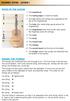 BEGINNER GUITAR - LESSON 1 PARTS OF THE GUITAR 1- The headstock. 2- The tuning pegs or machine heads. 3- The nut (where the strings are supported at the top of the fingerboard). 4- The frets (the metal
Crash Course in Music Theory for Guitarists by Andy Drudy
 Crash Course in Music Theory for Guitarists by Andy rudy An in-depth knowledge of music theory is essential for any musician. Learning the ropes so-to-speak, will rapidly expand your insight into you own