
H. Mauricio Ortega-Andrade 1, 2 * and Jorge H. Valencia 3
|
|
|
- Pierce Allen
- 10 years ago
- Views:
Transcription
1 Herpetology Notes, volume 3: (2010) (published online on 25 August 2010) First country records of Pristimantis luscombei (Duellman and Mendelson) and Syncope tridactyla (Duellman and Mendelson) in eastern lowlands of Ecuador (Amphibia: Anura: Strabomantidae, Microhylidae) H. Mauricio Ortega-Andrade 1, 2 * and Jorge H. Valencia 3 The Upper Amazon Basin is located closer to Andes along the Equator, at eastern lowlands of Colombia, Ecuador and Peru, which receives one of the highest levels of rainfall within all lowland Amazonia (Vigle 2008). These environmental conditions seem to favor the presence of the highest known species richness and complex herpetological communities (Dixon and Soini 1975; Duellman 1978; Duellman and Mendelson 1995; Lynch et al. 1997; Duellman 1999; Lynch 2005; Vigle 2008). For long time Amazonia was considered as one of the best studied regions in South America (Lynch 2005). Anyway, despite intense effort our knowledge of the Amazonian herpetofauna is far from beeing complete (Duellman and Mendelson 1995). Central Amazonian lowlands of Ecuador are not an exception and many areas remain unexplored and several species unreported or undescribed (Cisneros-Heredia and Meza-Ramos 2007; McCracken et al. 2007; Elmer and Cannatella 2008; Vigle 2008; Cisneros-Heredia et al. 2009; Ortega- Andrade 2009). Herpetological studies by Ecuadorian institutions through past fifteen years in the Amazonian lowlands of Ecuador resulted in the collection of novel species for the country, which we are glad to report herein. 1 Instituto de Ecología, A.C., Red de Biología y Conservación de Vertebrados, carretera antigua a Coatepec 351, El Haya, AP 63, Xalapa, Veracruz, México; [email protected] 2 Museo Ecuatoriano de Ciencias Naturales, División de Herpetología, Sección de Vertebrados, calle Rumipamba 341 y Av. de los Shyris, Quito, Ecuador and Fundación EcoCiencia, Proyecto de Conservación de la Cuenca Baja del Pastaza, Francisco Salazar E14-34 y Coruña, Quito, Ecuador; 3 Fundación Herpetologica Gustavo Orcés, Av. Amazonas 3008 y Rumipamba, Quito, Ecuador. *Corresponding author All specimens were reviewed from following institutions: Museo Ecuatoriano de Ciencias Naturales (DHMECN), Fundación Herpetológica Gustavo Orcés (FHGO), Museo de Zoología, Pontificia Universidad Católica del Ecuador (QCAZ), Quito, Ecuador, and American Museum of Natural History (AMNH), New York, United States of America. Morphometric measurements are in millimeters. Map, elevations and geographic coordinates were determined from the author s field notes, DHMECN, QCAZ and FHGO databases, and physical map of the Republic of Ecuador (IGM 2008), developed in ARCVIEW 3.2 (ESRI 1999). We follow the terminology of vegetal formations according with the classification system proposed by Palacios et al. (1999) to Ecuador. The research authorization (Nº001-IC-FAU/FLO-DRFN-P/MA) was issued by the Ministerio del Ambiente de Ecuador, Tena, Ecuador. Pristimantis luscombei (Duellman and Mendelson 1995) was known from a series collected from type locality at Teniente López and nearby areas from San Jacinto, Departamento Loreto, northern Peru. This small to medium sized ( mm in two females; mm in five males, Table 1) and pale orange frog can be recognized from other Amazonian Pristimantis frogs by: (1) iris orange, finely reticulated with black; (2) skin of dorsum shagreen with scattered pustules in females and W or \ /shaped dermal ridges in scapular region of males; venter granular in males, areolate in females; (3) snout with white blotches (cream interorbital stripe or stains in some males); and, (4) dorsal color pattern without marks or longitudinal stripes. In addition, we found the presence of small tubercles along the outer edge of tarsus in males DHMECN , not mentioned on the original description, useful for identification. Color in life: Dorsum greenish brown with some reddish stains in scapular region; snout with

2 252 H. Mauricio Ortega-Andrade et al. Figure 1. Adult male (A-B: DHMECN 3365) and adult female (C: DHMECN 4448) of Pristimantis luscombei from Amazonian lowlands, Republic of Ecuador. white blotches, upper lips with dark brown diagonal stripes; cream interorbital stripe or stains in some males. Groin yellowish-tan; anterior and posterior surfaces of thighs uniform brown. The belly is cream. Iris orange, finely reticulated with black (Figs. 1, 2). Color in preservative: Dorsum dark brown to metallic green (DHMECN 4448), with cream tubercles and low dermal ridges. Dorsal surfaces of thighs with dark brown transversal stripes; anterior and posterior surfaces of thighs uniform brown. Snout and interorbital stripe cream. Belly white with brown flecks. Seven specimens were collected along Evergreen lowland forest from Amazonia of Ecuador, at elevations between 195 and 300 m a.s.l. Specimen QCAZ was collected on 20 February 1996 by O. Torres, Ma. C. Terán and X. Cisneros; specimens FHGO were collected by M. Read, E. Carrillo, S. Aldaz and F. Ayala (no date related); specimens DHMECN were collected on 22 August 2005 and DHMECN 4448 on 2 June 2007, all by H. M. Ortega-Andrade.

3 New records of Pristimantis luscombei and Syncope tridactyla 253 Figure 2. Pristimantis luscombei from Amazonian lowlands, Republic of Ecuador: (A B) DHMECN 3366, juvenile; (C) DHMECN 3365, adult male; (D E) DHMECN 4448, adult female. Table 1. Measurements (in mm) of specimens of Pristimantis luscombei from Amazon Basin of Ecuador. Museum number DHMECN 3365 DHMECN 3366 DHMECN 4448 FHGO 5252 FHGO 5253 FHGO 5254 QCAZ Sex (status) Male Male Female Female Male Male Male Snout-vent length Head length Head width Tibia length Foot length Inter-orbital distance Horizontal eye Horizontal tympanic Eye-nostril distance


4 254 H. Mauricio Ortega-Andrade et al. Collections from Km 95 of Pompeya Sur Iro road (=Maxus road), province of Francisco de Orellana, are recognized as northernmost locality, ca. 153 km NW from San Jacinto, Departamento Loreto, Peru. Bufeo, province of Pastaza is the westernmost locality, ca. 89 Km NW from Teniente López, Departamento Loreto, Peru (Fig. 3). This species was commonly found on leaves of heliconia, herbs and bushes ( m) in terra firme forest, at night (HMOA pers. obs.). Figure 3. Map of Ecuador showing the locations of new records for Pristimantis luscombei (open squares) and Syncope tridactyla (open circle) in the Upper Amazon Basin: (a) Km 95 on Pompeya Sur Iro road (=Maxus road); (b) Obe Oriental, Parque Nacional Yasuní; (c) Lorocachi; (d) Bufeo. Black dots are type localities: (e) San Jacinto; (f) Teniente López. Provinces in eastern Ecuador: (1) Sucumbios; (2) Francisco de Orellana; (3) Pastaza; (4) Morona Santiago; (5) Zamora Chinchipe. Syncope tridactyla (Duellman and Mendelson 1995) has been known from two localities in Amazonian Lowlands of Northern Loreto, Peru and from Tabatinga, Amazonas, Brazil (Duellman and Mendelson 1995; Da Silva and Meinhardt 1999; Frost 2009). Specimens reviewed (Fig. 4, Appendix I) agree with description and diagnosis provided by Duellman and Mendelson (1995) and Da Silva and Meinhardt (1999) to assign it to genus Syncope. This species can be differentiated from Syncope antenori (Walker) and Syncope carvalhoi (Nelson) by present Finger II not visible externally, Figure 4. Body views of dorsum, belly, lateral profiles, hands and feet of Syncope tridactyla (QCAZ 9577, male, left; QCAZ 9520, adult female, right) from Lorocachi, province of Pastaza, Republic of Ecuador.

5 New records of Pristimantis luscombei and Syncope tridactyla 255 Fingers III and V visible as small bumps (Fingers II and V are longer in both previously species), Toe I not visible, Toe II visible only as small bump, tympanum present and visible externally (not differentiated in S. antenori). Noblella myrmecoides (Lynch) and Adelophryne adiastola (Hoogmoed and Lescure) differs from S. tridactyla mainly by the presence of a short, but visible, four finger and five toes with tips expanded or only slightly expanded; N. myrmecoides also has the tips of at least toes III IV acuminate. Although Duellman and Mendelson (1995) reported teeth in this species, we saw none in both reviewed specimens, match with observations made by Da Silva and Meinhardt (1999) on material available for their synonymy. Also, coloration in life of S. tridactyla is quite different from type series, according with Duellman and Mendelson (1995) description: KU Dorsum of head, body, and limbs dark brown with cream flecks and narrow cream canthal and dorsolateral stripes; flanks and belly black with cream spots; throat and ventral surfaces of limbs brown with cream flecks; anterior and posterior surfaces of upper arm orange-tan; iris red. In preservative, specimens reviewed had their dorsum uniformly brown, head some darker than dorsum; flanks brown with creamy- white flecks; throat, chest, belly and ventral surfaces of limbs with white blotches, variable in size. Variation in coloration is referred to specimens from Ecuador by lacking cream canthal and dorsolateral stripes described for holotype (Duellman and Mendelson 1995). We report the presence of S. tridactyla (Fig. 3) in Ecuador, based on specimens QCAZ 9520 (female) and QCAZ 9577 (male), collected from Lorocachi, Pastaza province by Ma. C. Terán, O. Torres-Carvajal and X. Cisneros, between 18 to 24 February Lorocachi is located on Evergreen lowland forest from Amazonia of Ecuador, 200 m a.s.l. This is the fourth known record and comprises the westernmost locality for S. tridactyla in its distributional range, ca Km NW from its closest locality, San Jacinto, Departamento Loreto, Peru. One adult female (QCAZ 9520, 11.2 mm in SVL) contained three eggs in its oviduct. Both specimens are slightly shorter than holotype and paratype (up to 12.4 mm in SVL) reported by Duellman and Mendelson (1995): QCAZ 9520, female (QCAZ 9577, male): Snout-vent length 11.3 mm (10.3 mm); head length 4.2 mm (4.2 mm); head width 4.1 mm (4.0 mm); femur 5.2 mm (5.3 mm); tibia length 5.1 mm (5.0 mm); foot length 7.2 mm (7.1 mm); inter-orbital distance 1.7 mm (1.7 mm); horizontal eye diameter 1.5 mm (1.5 mm); eye-nostril distance 1.1 mm (1.3 mm). After decades of intensive research on Upper Amazon Basin herpetofauna (e.g., Crump 1974; Dixon and Soini 1975; Duellman 1978; Lynch and Duellman 1980; Almendáriz 1987; Duellman and Mendelson 1995; Lynch 2005; Cisneros-Heredia 2006; Vigle 2008), the knowledge of amphibians and reptiles in this megadiverse area is still so far to be completed (Lynch 2005) that Central Amazonia of Ecuador can be considered as truly understudied region. More studies are urgently necessary to understand biology, biogeography and ecology of cryptic species, as those reported herein. Acknowledgements. We are grateful to S. Ron and L. A. Coloma from Museo de Zoología, Pontificia Universidad Católica del Ecuador, M. Yánez Muñoz and M. Altamirano from Museo Ecuatoriano de Ciencias Naturales, to María Elena Barragán and Katty Garzón from Fundación Herpetológica Gustavo Orcés, and to Darrel Frost and David Kizirian from American Museum of Natural History, for allow us review the herpetological collections under their management. Especially thanks to F. Ayala, D. Almeida, R. Betancourt, V. Peláez, I. Tapia, R. Pascocello and David Dickey whose provides generously assistance along museum specimens s review. HMOA is indebted to field companions Jorge Santi, Miguel Cachay, Tseremp Timias, José Ruiz, Alcides Ushigua and Franklin Mayancha for their efforts in collecting herpetofauna in the Shiwiar and Sápara territories; to E. Briones for supporting field work with equipments, materials and logistics through the field work at Pastaza indigenous territories; to Hector Santi, as the President of the Nacionalidad Shiwiar del Ecuador (NASHIE), and to Luis Armas, as the President of the Nacionalidad Sápara del Ecuador (NASAPE), the directive board and to the local people for authorize biological studies in their ancestral territories. The field work of HMOA and subsequent laboratory studies were supported by the project Biodiversity Conservation in Indigenous Territories on the Pastaza Region of western Amazon, Ecuador managed by Fundación EcoCiencia and The Center for Environmental Studies in Latin America (CESLA) of the University of Texas at Austin, financially supported by the Gordon and Betty Moore Foundation. Visits to collections by HMOA throughout were supported by fellowship grants from Consejo Nacional de Ciencia y Tecnología (CONACyT), México, Consejo de Superación Académica (COSUA), Instituto de Ecología, A.C., México, and Richard Gilder Graduate School, American Museum of Natural History, United States of America. References Almendáriz, A. (1987): Contribución al conocimiento de la herpetofauna Centroriental ecuatoriana. Revista Politécnica 7: Cisneros-Heredia, D. (2006): La Herpetofauna de la Estación de Biodiversidad Tiputini, Ecuador: Diversidad y ecología de los anfibios y reptiles de una comunidad taxonómicamente diversa. Quito-Ecuador. Universidad San Francisco de Quito. B.S. Thesis. 129 p.

6 256 H. Mauricio Ortega-Andrade et al. Cisneros-Heredia, D., Armijos-Ojeda, D., Valarezo, K. (2009): First country record of Pristimantis metabates (Duellman and Pramuk) and distribution extension of Pristimantis skydmainos (Flores and Rodríguez) in eastern Ecuador (Amphibia, Anura, Strabomantidae). Herpetol. Notes 2: Cisneros-Heredia, D., Meza-Ramos, P. (2007): An enigmatic new species of Glassfrog (Amphibia: Anura: Centrolenidae) from the Amazonian Andean slopes of Ecuador. Zootaxa 1485: Crump, M.L. (1974): Reproductive strategies in a tropical anuran community. University of Kansas Museum of Natural History. Miscellaneous Publication. N p. Da Silva, H.R., Meinhardt, D.J. (1999): The generic status of Adelophryne tridactyla: osteology, synonymy, and comments on the genus Syncope. J. Herpetol. 33: Dixon, J., Soini, P. (1975): The reptiles of the Upper Amazon Basin, Iquitos, Perú. Millwakee Public Museum 1975: Duellman, W.E. (1978): The biology of an equatorial herpetofauna in Amazonian Ecuador. Lawrence - Kansas. 352 p. Duellman, W.E. (1999): Distribution patterns of amphibians in South America. In: Patterns of distribution of Amphibians: A global perspective, p Duellman, W. E., Ed., Baltimore, USA. The John Hopkins University Press. Duellman, W.E., Mendelson, J. (1995): Amphibians and reptiles from northern Departamento Loreto, Peru: Taxonomy and biogeography. Univ. Kansas Sci. Bul. 55: Elmer, K. R., Cannatella, D. (2008): Three new species of leaflitter frogs from the upper Amazon forests: cryptic diversity within Pristimantis ockendeni (Anura: Strabomantidae) in Ecuador. Zootaxa 1784: ESRI.(1999): ArcView 3.2. Frost, D.R. (2009): Amphibian Species of the World: an Online Reference. Version Electronic database accesible at: Captured on: 08/04/2009. IGM. (2008): Mapa físico del Ecuador 1: Version. 1. Electronic database accesible at: index.php?option=com_content&task=view&id=85&itemid= 89. Captured on: 27 /02/ Lynch, J.D. (2005): Discovery of the richest frog fauna in the world: An exploration of the forests to the north Leticia. Rev. Acad. Colombiana Cienc. Exact. Fís. Natur. 29: Lynch, J.D., Duellman, W.E. (1980): The Eleutherodactylus of the Amazonian Slopes of the Ecuadorian Andes (Anura: Leptodactylidae). Misc. Pub. Univ. Kansas, Lawrance 69: Lynch, J.D., Ruiz-Carranza, P.M., Ardila-Robayo, M.C. (1997): Biogeographic patterns of Colombian frogs and toads. Rev. Acad. Colombiana Cienc. Exact. Fís. Natur. 21: McCracken, S., Forstner, M., Dixon, J.R. (2007): A new species of the Eleutherodactylus lacrimosus assemblage (Anura, Brachycephalidae) from the lowland rainforest canopy of Yasuni National Park, Amazonian Ecuador. Phyllomedusa 6: Ortega-Andrade, H.M. (2009): Amphibia, Anura, Eleutherodactylidae, Adelophryne adiastola Hoogmoed and Lescure, 1984: First countries records and distribution extension from Ecuador and Brazil. Check List 5: Palacios, W., Cerón, C., Valencia, R., Sierra, R. (1999): Las Formaciones Naturales de la Amazonía ecuatoriana. In: Propuesta preliminar de un sistema de clasificación de vegetación para el Ecuador continental, p Sierra, R., Ed., Quito. Vigle, G.O. (2008): The amphibians and reptiles of the Estación Biológica Jatun Sacha in the lowland rainforest of Amazonian Ecuador: A 20-year record. Breviora 514:1-30. Appendix I Pristimantis luscombei: ECUADOR: Orellana province: Obe Oriental, S, W, 216, DHMECN 3365, 3366; Parque Nacional Yasuní, S, W, 275 m a.s.l, FHGO Pastaza province: Bufeo, S, W, 311 m a.s.l., DHMECN 4448; Lorocachi, S, W, 195 m a.s.l., QCAZ Syncope antenori: ECUADOR: Morona Santiago province: Río Cusime, S, W, 320 m a.s.l., AMNH Syncope tridactyla: ECUADOR: Pastaza province: Lorocachi, S, W, 195 m a.s.l., QCAZ 9520, QCAZ Accepted by Angelica Crottini; Managing Editor: Dennis Rödder

A new and critically endangered species of Atelopus from the Andes of northern Peru (Anura: Bufonidae)
 Rev. Esp. Herp. (2004) 18:101-109 A new and critically endangered species of Atelopus from the Andes of northern Peru (Anura: Bufonidae) STEFAN LÖTTERS, 1 RAINER SCHULTE 2 & WILLIAM E. DUELLMAN 3 1 Mainz
A new araneid genus from the Galapagos Islands (Araneae: Araneidae)
 A new araneid genus from the Galapagos Islands (Araneae: Araneidae) Herbert W. Levi ABSTRACT Contrib. Nat. Hist. 12: 893 898. A new araneid, Galaporella thaleri sp. nov., similar to species of the genus
A new species of Fissiphalliidae from Brazilian Amazon Rain Forest (Arachnida: Opiliones)
 Zootaxa : 1 6 (2004) www.mapress.com/zootaxa/ Copyright 2004 Magnolia Press ISSN 1175-5326 (print edition) ISSN 1175-5334 (online edition) A new species of Fissiphalliidae from Brazilian Amazon Rain Forest
MUSEUM STREET, CHARLES W. MYERS' ABSTRACT. currently recognized. Dendrobates fantasticus. and D. reticulatus, both described by Boulenger
 AMERICAN MUSEUM Novitates PUBLISHED BY THE AMERICAN CENTRAL PARK WEST AT 79TH Number 2721, pp. 1-23, figs. 1-12 MUSEUM STREET, OF NATURAL HISTORY NEW YORK, N.Y. 10024 January 27, 1982 Spotted Poison Frogs:
Opportunities for RIT in Ecuador. By Rubén Proaño Assistant Professor Industrial Engineering [email protected]
 Opportunities for RIT in Ecuador By Rubén Proaño Assistant Professor Industrial Engineering [email protected] Opportunities for RIT in Ecuador o Latitude 0 0' 0 Picture credits: None of these pictures are
PARAMOS Enhancing capacities and coordination to cope with climate change effects
 PARAMOS Enhancing capacities and coordination to cope with climate change effects The Challenge Photo: Robert Hofstede Cotopaxi National Park, Ecuador The paramos form a neotropical high altitude ecoregion
INTEGRAL MINE ACTION ECAUDOR PERU Condor Mountain Range. Humanitarian Demining and Mine Risk Education in the Cordillera del Condor
 INTEGRAL MINE ACTION ECAUDOR PERU Condor Mountain Range PROJECT: COVERAGE: PARTNERS: EXECUTIVE AGENCY: Humanitarian Demining and Mine Risk Education in the Cordillera del Condor Ecuador - Province of Morona
First record of the family Pseudochiridiidae
 Barba ISSN 0065-1737 Díaz & Alegre Barroso: Pseudochiridiidae (Pseudoscorpiones) Acta Zoológica en Cuba Mexicana (n.s.), 29(3): 696-700 (2013) Nota Científica (Short Communication) First record of the
Productivity in Cloud Forests in the Andes
 Productivity in Cloud Forests in the Andes Carbon cycle measurements and model results from JULES Toby Marthews http://marthews.tripod.com Leeds, 10th June 2010 at the Oxford University Centre for the
Bol. Mus. Para. Emílio Goeldi. Cienc. Nat., Belém, v. 6, n. 1, p. 67-72, jan.- abr. 2011. Adriano Oliveira Maciel I, Marinus Steven Hoogmoed I
 Bol. Mus. Para. Emílio Goeldi. Cienc. Nat., Belém, v. 6, n. 1, p. 67-72, jan.- abr. 2011 Notes on the Vertebrates of northern Pará, Brazil: a forgotten part of the Guianan Region, III. A new species of
An enigmatic frog of the genus Atelopus (Family Bufonidae) from Parque Nacional Chirripó, Cordillera de Talamanca, Costa Rica
 An enigmatic frog of the genus Atelopus (Family Bufonidae) from Parque Nacional Chirripó, Cordillera de Talamanca, Costa Rica Jay M. Savage 1 & Federico Bolaños 2 1. Department of Biology, San Diego State
Exhibit Inquiry. Rainforest. Aug 11
 Exhibit Inquiry Exhibit Inquiry Have students look for the following exhibits related to living things during their visit to the Ontario Science Centre: Where to go: (Level 6) What it's about: Tropical
floridanum Banks, the only species of the genus previously
 1944] Three Species o[ Coleosoma ]rom Florida 51 THREE SPECIES OF COLEOSOMA FROM FLORIDA (ARANE/E; THERIDIID.E) x BY ELIZABETH B. BRYANT Among material recently sent the Museum of Comparative Zoology by
How To Identify A Hyla Tadpole
 OCCASIONAL PAPERS OF THE MUSEUM OF ZOOLOGY UNIVERSITY OF MICHIGAN SOME PANAMANIAN FROGS1 While Mr. C. B. Duryea and I were collecting for the Museum of Comparative Zoology in Panam5 and Costa Rica in the
New Mites in the Family Caeculidae
 BULLETIN OF THE U N IV E R SIT Y OF UTAH Vol. 35 March 15, 1945 No. 17 New Mites in the Family Caeculidae B Y STANLEY M ULAIK BIOLOGICAL SERIES, Vol. VIII, No. 6 PUBLISHED BY THE UNIVERSITY OF UTAH SALT
Association of Panamerican Veterinary Medical Colleges
 Association of Panamerican Veterinary Medical Colleges Animal Welfare and ONE HEALTH concept Dr. Juan de Jesus Taylor Preciado [email protected] PANVET Panamerican Veterinary Sciences Association
Appendix : Images of Monteverde
 Appendix : Images of Monteverde The road to central Santa Elena. Photo by N. Swetnam Central Santa Elena. To the left are shops and a hotel, to the right is the Catholic Church and parochial hall. This
ON A NEW SPECIES OF DENISONIA (REPTILIA, SERPENTES) FROM NEW GUINEA
 ON A NEW SPECIES OF DENISONIA (REPTILIA, SERPENTES) FROM NEW GUINEA by L. D. BRONGERSMA and M. S. KNAAP-VAN MEEUWEN Until now the Elapid genus Denisonia had not been recorded from New Guinea, and this
EcoMinga Foundation Progress Report 2008
 EcoMinga Foundation Progress Report 2008 By Lou Jost Top of the Cerro Candelaria Reserve. Photo: Luis Recalde The western edge of the Amazon Basin contains some of the most diverse cloud forests in the
JOHANNA ESPÍN MOSCOSO Curriculum Vitae
 JOHANNA ESPÍN MOSCOSO Curriculum Vitae Department of Sociology and Office Phone: (352) 392 0265 Criminology & Law Cell Phone: (352) 222 5037 University of Florida Skype: johanna.espin 3219 Turlington Hall
New records of amphibians from Thuong Tien Nature Reserve, Hoa Binh Province, Vietnam
 Herpetology Notes, volume 7: 51-58 (2014) (published online on 4 February 2014) New records of amphibians from Thuong Tien Nature Reserve, Hoa Binh Province, Vietnam Vinh Quang Luu 1,4,5, *, Canh Xuan
A NEW GENUS OF THE SPIDER SUBFAMILY GNAPHOSINA E FROM THE VIRGIN ISLANDS (ARANEAE, GNAPHOSIDAE ) Norman I. Platnick and Mohammad U.
 Platnick, N. I., and M. U. Shadab. 1977. A new genus of the spider subfamily Gnaphosinae from th e Virgin Islands (Araneae, Gnaphosidae). J. Arachnol. 3 :191-194. A NEW GENUS OF THE SPIDER SUBFAMILY GNAPHOSINA
Two new species of Lachesilla of Pedicularia group (Psocodea: Psocoptera ), from Valle del Cauca, Colombia
 Revista Colombiana de Entomología 39 (2): 237-242 (Julio - Diciembre 2013) 237 Two new species of Lachesilla of Pedicularia group (Psocodea: Psocoptera ), from Valle del Cauca, Colombia Dos especies nuevas
Natural Resources Conservation Service Dr. Sheryl H. Kunickis National Agricultural Research Coordinator, USDA NRCS Consortium Office
 GULF COAST CESU The Technical Representatives for the Federal Agencies are: Department of Defense L. Peter Boice Director Conservation, Office of the Deputy Under Secretary of Defense (Installations and
FIELD RECOGNITION OF THE LARVAE OF NATIVE COCCINELLIDAE, COMMON TO THE POTATO FIELDS OF AROOSTOOK COUNTY
 FIELD RECOGNITION OF THE LARVAE OF NATIVE COCCINELLIDAE, COMMON TO THE POTATO FIELDS OF AROOSTOOK COUNTY R. H. Storch Department of Entomolgy, University of Maine TECHNICAL BULLETIN 43 MAINE AGRICULTURAL
A new species of Myrmarachne from Kenya (Araneae: Salticidae)
 Genus Vol. 13 (3): 409-415 Wroc³aw, 30 IX 2002 A new species of Myrmarachne from Kenya (Araneae: Salticidae) WANDA WESO OWSKA 1 and KATHRYN SALM 2 1 Zoological Institute, Wroc³aw University, Sienkiewicza
Physiography, Geography and Climate of Latin America (Lecture 3)
 Physiography, Geography and Climate of Latin America (Lecture 3) Natural Landmarks in Latin America World's longest and second highest mountain range, and the world's highest active volcanoes. Biggest
A NEW SPECIES OF PLATYMANTIS (AMPHIBIA: ANURA: RANIDAE) FROM PANAY ISLAND, PHILIPPINES
 Herpetologica, 63(3), 2007, 351 364 E 2007 by The Herpetologists League, Inc. A NEW SPECIES OF PLATYMANTIS (AMPHIBIA: ANURA: RANIDAE) FROM PANAY ISLAND, PHILIPPINES CAMERON D. SILER 1,4, CHARLES W. LINKEM
Inter-municipal cooperation in watershed conservation through the establishment of a regional water fund FORAGUA in Southern Ecuador
 Inter-municipal cooperation in watershed conservation through the establishment of a regional water fund FORAGUA in Southern Ecuador Compiled by: Leander Raes, Eduardo Rengel and José Romero Short title:
FIRST SOUTH AMERICAN RECORDS OF HOLOCNEMUS PLUCHEI (SCOPOLI, 1763) AND SPERMOPHORA SENOCULATA (DUGÈS, 1836) (ARANEAE: PHOLCIDAE)
 Gayana 72(2): 261-265, 2008. Comunicación breve ISSN 0717-652X FIRST SOUTH AMERICAN RECORDS OF HOLOCNEMUS PLUCHEI (SCOPOLI, 1763) AND SPERMOPHORA SENOCULATA (DUGÈS, 1836) (ARANEAE: PHOLCIDAE) PRIMEROS
A Preliminary Analysis of the Scientific Production of Latin American Computer Science Research Groups
 A Preliminary Analysis of the Scientific Production of Latin American Computer Science Research Groups Juan F. Delgado-Garcia, Alberto H.F. Laender and Wagner Meira Jr. Computer Science Department, Federal
Optical Illusions (1)
 Optical Illusions (1) In the picture, the line segments at the top and at the bottom are the same length, but the line at the top looks longer. Let s investigate this optical illusion. 1. Draw two horizontal
30 August 1985. PROC. BIOL. SOC. WASH. 98(3), 1985, pp. 615-621
 30 August 1985 PROC. BIOL. SOC. WASH. 98(3), 1985, pp. 615-621 FRESHWATER SHRIMPS FROM VENEZUELA III: MACROBRACHIUM QUELCHI (DE MAN) AND EURYRHYNCHUS PEMONI, N. SP.; (CRUSTACEA: DECAPODA: PALAEMONIDAE)
Postdoctoral Fellow, September 2012-June 2013 School of Mind and Brain Humboldt University, Berlin
 SANTIAGO AMAYA Curriculum Vitae CONTACT Department of Philosophy, Cra 1 #18a-10 Edificio Franco, piso 5, (57) 1 3394949 x2530 [email protected] www.mindandaction.com EMPLOYMENT Assistant Professor,
RAFAEL BELLO BEDOY PhD in Evolutionary Biology. B.S. in Biology. 2002. Universidad de Guadalajara.
 RAFAEL BELLO BEDOY PhD in Evolutionary Biology Contact: 208 Mueller Lab The Pennsylvania State University University Park, PA 16802 Email: [email protected] Phone: 814-441-7731 EDUCATION B.S. in
A Most Colorful Mammal by Guy Belleranti
 Name: In the tropical rainforests of western Africa lives a mammal with a most colorful face and rump. This mammal is the mandrill, the world's largest monkey. The skin on a male mandrill's face has a
Speech understanding in dialogue systems
 Speech understanding in dialogue systems Sergio Grau Puerto [email protected] Departament de Sistemes Informàtics i Computació Universitat Politècnica de València Sergio Grau Puerto. Carnegie Mellon: June
A new species of Euplocania Enderlein (Psocodea: Psocoptera : Ptiloneuridae), from Magdalena, Colombia, with a proposed classification of the genus
 Dugesiana 20(2): 149-156 Fecha de publicación: 28 de diciembre de 2013 Universidad de Guadalajara A new species of Euplocania Enderlein (Psocodea: Psocoptera : Ptiloneuridae), from Magdalena, Colombia,
A new species of Ohilimia Strand, 1911 from New Guinea (Araneae: Salticidae)
 Genus Vol. 21(4): 625-629 Wrocław, 27 XII 2010 A new species of Ohilimia Strand, 1911 from New Guinea (Araneae: Salticidae) Joanna Gardzińska 1 & Barbara Patoleta 2 Katedra Zoologii, Uniwersytet Przyrodniczo-Humanistyczny
Naturalist Guide Carlos Chavarria
 Naturalist Guide Carlos Chavarria Carlos Roberto Chavarría has been working on conservation and community development based on the sustainable use of natural resources since 1984. He has a Forestry degree
Problem: CSI: The Experience - Educator s Guide
 Problem: At a nearby construction zone, workers have made a startling discovery. They uncovered several bones that look like they were buried some time ago. You are part of a team of forensic anthropologists
Introduction. Lourdes Y. Echevarría, 2 Andy C. Barboza, and 3 Pablo J. Venegas
 Official journal website: amphibian-reptile-conservation.org Amphibian & Reptile Conservation 9(1) [Special Section]: 34 44 (e109). Publication LSID: urn:lsid:zoobank.org:pub:ebc93ede-b09b-407c-92de-966bbd2cc2a2
DISCOVERY OF OSCAECILIA POLYZONA (AMPHIBIA: GYMNOPHIONA: CAECILIAIDAE) IN THE MIDDLE MAGDALENA WITH NOTES ON ITS ABUNDANCE AND HABITAT
 LYNCH, J. D. & A. R. ACOSTA: DISCOVERY OF OSCAECILIA POLYZONA (AMPHIBIA: GYMNOPHIONA... 585 ZOOLOGÍA DISCOVERY OF OSCAECILIA POLYZONA (AMPHIBIA: GYMNOPHIONA: CAECILIAIDAE) IN THE MIDDLE MAGDALENA WITH
KATHRYN ANN SORENSEN Email: [email protected]
 KATHRYN ANN SORENSEN Email: [email protected] EDUCATION PhD., Anthropology, 2010. M.A., Anthropology, 2002. B.S., Anthropology, Cum Laude, 2000. RESEARCH INTERESTS Settlement patterns and landscape
Facts About Drinking Water in the Petroecuador-Texpet Concession: Claims of Impacts by Petroleum Are False
 November 3, 2009 Facts About Drinking Water in the Petroecuador-Texpet Concession: Claims of Impacts by Petroleum Are False Case of Maria Aguinda et al. vs. Chevron Corp. The Plaintiffs attorneys in the
Transformation Groups and Dynamical Systems
 Transformation Groups and Dynamical Systems May 25th June 5th, 2015 http://www.ecsing.pucp.edu.pe/cimpa.php Nuria Corral, Francisco Ugarte 1. Scientific Program The school was held at the Pontificia Universidad
CLIMATE, FORESTS, WATER, AND PEOPLE: A Vision of Development for Tropical America
 CLIMATE, FORESTS, WATER, AND PEOPLE: A Vision of Development for Tropical America KATOOMBA XX Peru April 2014 MEETING OVERVIEW Just months before Lima hosts over 190 countries to advance international
Invasive Reptiles and Amphibians of Florida!
 1 Invasive Reptiles and Amphibians of Florida! 2 Created by: Thompson Antony Lauren Diaz Sean McKnight Alana Palau JoAnna Platzer Illustrated by Lauren Diaz Invasive Ecology of Reptiles and Amphibians
Too many reintroductions? A proposal for a decision-making system
 International workshop on proper design of avian reintroduction projects: trying to establish guidelines Baeza, 15-17 October 2012 Too many reintroductions? A proposal for a decision-making system Demasiadas
Teacher Management. Estimated Time for Completion 2 class periods
 AP Biology, Aquatic Science, Environmental Systems Morphometric Analysis of Eurycea in Austin, TX Teacher Page Essential Questions: Enduring Understandings Nature of Science and Data Vocabulary Morphometric
FCI-Standard N 105 / 29. 03. 2006 /GB FRENCH WATER DOG. (Barbet)
 FCI-Standard N 105 / 29. 03. 2006 /GB FRENCH WATER DOG (Barbet) 2 TRANSLATION : Jennifer Mulholland. ORIGIN : France DATE OF PUBLICATION OF ORIGINAL VALID STANDARD : 21.02.2006. UTILIZATION: Water dog
ISMAEL A. HINOJOSA-DÍAZ CURRICULUM VITAE
 ISMAEL A. HINOJOSA-DÍAZ CURRICULUM VITAE GENERAL Citizenship: Languages: Mexican Spanish, English Correspondence address: Department of Environmental Studies Emory University Math and Science Center, 5th
The Millennium Project World Federation of UN Associations Planning Committee Meeting July 24-26, 2008, Washington D.
 The Millennium Project World Federation of UN Associations Planning Committee Meeting July 24-26, 2008, Washington D.C ARGENTINA NODE Centro Latinoamericano de Globalización y Prospectiva Latin American
Minutes and mobility 2015
 Steering Committee online meeting (Monday, 9 th March 2015) Minutes and mobility 2015 Table of content I. Agenda... 2 II. Participants... 2 III. Minutes... 3 IV. Mobility match of offers and applicants...
Part 4. Development of raptor chicks. Raptors: a field guide for surveys and monitoring 281
 Part 4 Development of raptor chicks Raptors: a field guide for surveys and monitoring 281 Development of raptor chicks The photographs in this part of the book illustrate the development of nestlings for
Agenda 2 nd International Data Protection Conference June 5 & 6, 2014 Hotel Movich Pereira - Colombia Thursday, June 5
 Agenda 2 nd International Data Protection Conference June 5 & 6, 2014 Hotel Movich Pereira - Colombia Thursday, June 5 TIME SUBJECT SPEAKERS 9:00 a.m. Opening Session -Pablo Felipe Robledo Del Castillo,
Anurans in bromeliads, Parque Estadual da Serra do Brigadeiro, state of Minas Gerais, southeastern Brazil
 Journal of Species Lists and Distribution ISSN 1809-127X (online edition) www.checklist.org.br 2009 Check List and Authors LISTS OF SPECIES Anurans in bromeliads, Parque Estadual da Serra do Brigadeiro,
HIGH IN THE ECUADORIAN ANDES: THE NEST AND EGGS OF THE TAWNY ANTPITTA (GRALLARIA QUITENSIS)
 SHORT COMMUNICATIONS ORNITOLOGIA NEOTROPICAL 16: 567 571, 2005 The Neotropical Ornithological Society HIGH IN THE ECUADORIAN ANDES: THE NEST AND EGGS OF THE TAWNY ANTPITTA (GRALLARIA QUITENSIS) Harold
Nominations for Integrated Research on Disaster Risk (IRDR) Scientific Committee (SC)
 Nominations for Integrated Research on Disaster Risk (IRDR) Scientific Committee (SC) Please complete this form and send to: [email protected] DETAILES OF CANDIDATE NOMINATED Nominated
OCU's experience in adapting to the Spanish CV standard format (CVN)
 OCU's experience in adapting to the Spanish CV standard format (CVN) Bolonia, 26 th May 2011 Roberto Moreno, Product Manager Manuel Rivera, Clients Manager [email protected] +34 91.382.21.40 Index About OCU
PARAGUAY BIODIVERSITY PARAGUAY BIODIVERSITÄT
 ISSN 2313-0504 2(2)2015 PARAGUAY BIODIVERSITY PARAGUAY BIODIVERSITÄT Weyrauchia fulmínea (Nast, 1950) foto: U. Drechsel Asunción, Febrero 2015 Paraguay Biodiversidad 2(2) 7-11 Asunción, Febrero 2015 Recent
Reptiles and Amphibians of Curaçao
 33 Reptiles and Amphibians of Curaçao BY Dr. Nelly de Rooij (With 2 Figures). The Zoological Museum of Amsterdam received some collections of reptiles from Curaçao made by Dr. J. BOEKE in 1905, by Dr.
Universidad de los Andes School of Engineering
 Universidad de los Andes School of Engineering Outline» The country and the city» Universidad de los Andes» The School of Engineering: - Structure and resources - Academic programs - Research-Industry
REPRODUCTION IN THE GREEK ENDEMIC LIZARD Podarcis milensis (SAURIA: LACERTIDAE)
 REPRODUCTION IN THE GREEK ENDEMIC LIZARD Podarcis milensis (SAURIA: LACERTIDAE) C. ADAMOPOULOU 1, E. D. VALAKOS 2 & A. LEGAKIS 1 1 University of Athens, Department of Biology, Zoological Museum, Panepistimioupolis,
TOWARDS A GLOBAL STRATEGY FOR THE ENVIRONMENTAL SUSTAINABILITY OF THE PROVINCE OF CUENCA (SPAIN)
 Boletín de la Towards Asociación a global de Geógrafos strategy for Españoles the environmental N.º 59-2012, sustainability págs. 435-440 of the province of Cuenca (Spain) I.S.S.N.: 0212-9426 TOWARDS A
Motorcycle as a new massive mode of urban transportation: a challenge for many LA countries, cities and citizens
 Motorcycle as a new massive mode of urban transportation: a challenge for many LA countries, cities and citizens Ricardo Montezuma Msc, Ph.D. Director Fundación Ciudad Humana Profesor Titular Universidad
THREE NEW AGAMID LIZARDS FROM WESTERN AUSTRALIA
 Rec. West. Aust. Mus. 1981,8 (4) THREE NEW AGAMID LIZARDS FROM WESTERN AUSTRALIA G.M. STORR* ABSTRACT Three recently discovered species are described as new: Tympanocryptis aurita from east Kimberley,
Laboratory 1 Anatomical Planes and Regions
 Laboratory 1 Anatomical Planes and Regions Goals: Define the anatomical position, including the application of the terms right and left. List and correctly use the major directional terms used in anatomy.
FIRST RECORD OF NATALUS LANATUS (CHIROPTERA: NATALIDAE) IN COSTA RICA, AND CURRENT DISTRIBUTION OF NATALUS IN THE COUNTRY
 SHORT COMMUNICATIONS ECOTROPICA 17: 113 117, 2011 Society for Tropical Ecology FIRST RECORD OF NATALUS LANATUS (CHIROPTERA: NATALIDAE) IN COSTA RICA, AND CURRENT DISTRIBUTION OF NATALUS IN THE COUNTRY
CONTRIBUTION TO THE KNOWLEDGE OF DERMESTIDAE (COLEOPTERA) FROM CHILE CONTRIBUCIÓN AL CONOCIMIENTO DE LOS DERMESTIDAE (COLEOPTERA) DE CHILE
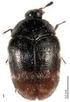 Rev. Chilena Ent. 2012, 37: 17-21 CONTRIBUTION TO THE KNOWLEDGE OF DERMESTIDAE (COLEOPTERA) FROM CHILE CONTRIBUCIÓN AL CONOCIMIENTO DE LOS DERMESTIDAE (COLEOPTERA) DE CHILE Jiří Háva 1 and Jaime Solervicens
VOLATILITY AND DEVIATION OF DISTRIBUTED SOLAR
 VOLATILITY AND DEVIATION OF DISTRIBUTED SOLAR Andrew Goldstein Yale University 68 High Street New Haven, CT 06511 [email protected] Alexander Thornton Shawn Kerrigan Locus Energy 657 Mission St.
Archaeology of Formative Ecuador
 This is an extract from: Archaeology of Formative Ecuador J. Scott Raymond and Richard L. Burger, Editors Jeffrey Quilter, General Editor published by Dumbarton Oaks Research Library and Collection Washington,
defined largely by regional variations in climate
 1 Physical Environment: Climate and Biomes EVPP 110 Lecture Instructor: Dr. Largen Fall 2003 2 Climate and Biomes Ecosystem concept physical and biological components of environment are considered as single,
Snakes of Massachusetts
 Snakes of Massachusetts Of the roughly 3,000 known species of snake found worldwide, only 15% are considered dangerous to humans. Luckily here in Massachusetts we only have two types of dangerous venomous
Nanosciences, Nanotechnologies, Materials and New Production Technologies Deployment in Latin American Countries
 Álvaro Duarte Ruiz Dr.rer.nat Departamento de Química Universidad Nacional de Colombia [email protected] NMP-DeLA Expert Workshop Buenos Aires, 19 th 20 th May, 2014 Major players in the country *Prof.