
Evidence Based Practice. What Interventions Work in Improving Motor Function? Marjorie Woollacott
|
|
|
- Shanna Washington
- 10 years ago
- Views:
Transcription
1 Evidence Based Practice What Interventions Work in Improving Motor Function? Marjorie Woollacott Evidence Based Practice Research Clinical Practice Ø Evidence based clinical practice: Integrating the best available research evidence with clinical expertise and patient preference (Sackett, 1998) 1
2 Research Evidence on Treatment: Summary Complete the motor matrix as you listen to the presentation - Examples, shown below: Individual Component Task/Activity Research Can Exercise Programs Focusing on Motor Systems Improve Balance and Gait Function? Impairment Level: Body alignment/range of motion Strength training Multi-system Exercise Programs Reactive Balance Training Constraint Induced Therapy Tai Chi Task-Oriented Training Treadmill Training Research Clinical Practice 2
3 Training Postural Alignment in Parkinson s patients: can it improve postural function? Schenkman et al 1998: RCT training axial musculature in Parkinson s to improve spinal flexibility and coordinated movement (decrease overactive flexor and increase underactive extensor muscle act.). 3x/wk for 1 wks. Could we use this evidence to support our balance retraining strategy for Bill? Or Jean? Research Evidence on Treatment: Summary Complete the motor matrix as you listen to the presentation - Examples, shown below: Individual Component Steady State Balance Alignment Task/Activity Sit/Stand Practicing trunk extension/trunk rotation Research Schenkman et al,
4 Does Postural Alignment Training Improve Postural Symmetry Post-Stroke? De Haart et al, 24, 25: 37 Patients received individualized standing balance and walking therapy for 12 wks Asymmetry improved during 1 week recovery period after stroke (p=.1), with most change in first 4 wks Also reduced visual dependence Worse in Dual task condition (math task): shows conscious control required for symmetry Asymmetric Stance Shumway-Cook et al, 1989: Compared postural biofeedback (15 min, 2x/day, 2 wks) to usual care PT for retraining alignment. Biofeedback group improved more than usual PT, but did not remain at follow-up. Winstein et al, 1989: similar protocol: stance asymmetry improved, but not locomotor asymmetry. Could these studies be used to support symmetry training post stroke? Research Evidence on Treatment: Summary Complete the motor matrix as you listen to the presentation - Examples, shown below: Individual Component Steady State Balance Alignment Steady State Balance Asymmetric Alignment Task/Activity Sit/Stand Practicing trunk extension/trunk rotation Task Oriented Practice or Biofeedback Research Schenkman et al, 1998 De Haart et al 24; Shumway-Cook et al,
5 Impairment Level: High Intensity Strength Training in Balance-Impaired Older Adults. What Aspect of Balance Improves? Hess & Woollacott 24 Mean age 81 Mildly-moderately balance impaired Training 3x/week, 1 wks Warm-up Strength-training in G, TA, H, Q 3 sets of 8 repetitions Progressive resistive training Strength improved Significantly Warm-ups Berg Balance Scale (Measures Steady State & Proactive Balance) Experimental group averaged 2.4 point increase in Berg scores Correlation between increase in Berg scores and increase in GA strength Score * Also improved signif. on TUG and ABC compared to controls Experimental pre post Control 5
6 Reactive Balance Control: Time to Stabilization & Mean Force Produced During Recovery Improved Backward Sway Condition Time to Stabilize Balance decreased as TA strength increased Suggests TA strength contributes to COP stabilization in response to a slip Could we use this evidence to support strength training to improve balance in Bill? Time to Stabilization Mean Force at R & L Ankle msec Nm/kg * Experimental * pre-train post-train Control Experimental Control Experimental Control MAR * MAL pre-train post-train Motor Matrix Individual Component Steady State Balance Alignment Steady State Balance Asymmetric Alignment Reactive Balance Amplitude scaling Task/Activity Sit/Stand Practicing trunk extension/trunk rotation Task Oriented Practice or Biofeedback Strength training Research Schenkman et al, 1998 De Haart et al 24; Shumway-Cook et al, 1989 Hess & Woollacott, 24 6
7 Will Strength Training Improve Function Performance in Stroke? Weiss et al, 2 12 wks, 2X/wk, 7% 1 rep max Lower-limb mean muscle strength improved 68% on affected side, 48% on intact side. Largest change for hip (88% affected; 13% intact) Repeated chair rise time decreased 21% (p.<2) Static & Dynamic Balance (Berg) improved 12% (p.<4) Note that patients must have a minimal amount of strength in the paretic limb for it to benefit from strength training. Could we use this evidence to support strength training to improve balance in Jean or Thomas? Does Strength Training Improve Balance in Persons w/ Parkinson s Disease? YES Dibble et al, 26 Since strength deficits are associated with bradykinesia, strength training might reduce this. 12 wk high force resistance training compared to standard care controls Strength group had sign. increase in muscle mass, 6 min walk distance (A) and decrease in stair descent time (B) compared to controls 6 min walk distance Stair Descent time 7
8 Does strength training improve gait in children with CP? Damiano et al, children with CP (6-14 yrs) Quadriceps strength training (3x/wk, 6 wks) at 65% of maximum isotonic force production. Children improved Q muscle strength, which resulted in improvement in degree of crouch at floor contact and increase in stride length. Multisystems Balance Training: u Targeted Training of spinal segments for sitting u u u u u Reactive Balance Training Constraint-Induced Therapy for Balance Tai Chi Task-Oriented Balance Training Treadmill Training 8
9 4/3/12 Targeted Training: Do children with CP at GMFCS Levels III-V benefit from training specific spinal segments? School program 2-3 min 5 days per week 6 months (typically lowering support every 2 mos) Play reaching/throwing games on stable then unstable surface Upper Thoracic Mid Thoracic Lower Lumbar Upper Lumbar GMFM_66 3 pretest post test 25 2 Example: GMFCS Level III - Progressed to lower lumbar pelvis hips GMFM_supine GMFM_sit Improvements reported by parents and teachers % subjects Improved Bilateral Upper Extremity Fn Improved eye contact Improved communication GMFCS III (n=1) 1% % % GMFCS IV (n=5) 1% 4% 2% GMFCS V (n=5) 1% 1% 1% 9
10 COP COP COP 4/3/12 Can Reactive Balance Training Improve Postural Control in Children with CP? 6 children with CP (mean age 9.3 yrs) 4 with spastic diplegia (level II on Gross Motor Function Classification System) 2 with spastic hemiplegia (Level I on GMFCS CP) Inclusion criteria: stand independently 3 sec. Intervention: 5 days forward and backward perturbation 1/ day (3-6 cm at cm/sec), while child watched video. Rests every 2-25 perturbations. (Shumway-Cook et al, Dev Med and Child Neurol, 23) Center of Pressure Path During Balance Recovery & Time to Stabilize Balance was Reduced by Training COP Path in Response to a Perturbation Causing Forward Sway Pretest -18 Post-test Day Follow-up Time to Stabilization (sec) Mean Forward Sway Baseline Intervention Posttest SD1 SD2 SD3 SD4 SH1 SH2 1
11 What Changes in Neuromuscular Response Characteristics Underlie These Changes in Performance? - Children with Hemiplegia and Diplegia showed Faster Muscle Contraction Onset to Slips (Woollacott et al, 25) - Muscle sequencing was also improved (not shown) Can this study be used to justify Reactive Balance Training in Bill and Jean? Motor Matrix Individual Component Steady State Balance Alignment Steady State Balance Asymmetric Alignment Reactive Balance Amplitude scaling Reactive Balance Amplitude Scaling Task/Activity Sit/Stand Practicing trunk extension/trunk rotation Task Oriented Practice or Biofeedback Strength training Standing manual perturbations Vary speed Vary amplitude Research Schenkman et al, 1998 De Haart et al 24; Shumway-Cook et al, 1989 Hess & Woollacott, 24 Woollacott et al, 25 11
12 Do Orthotics Help or Hinder Reactive Balance in children with CP? It depends. PERCENT USE OF ANKLE STRATEGY WITH DIFFERENT AFOs PERCENT USE OF DISTAL- PROXIMAL SEQUENCING Typical children: orange CP: pink Forced Use Therapy for Balance Control in Stroke: What Aspects of Balance are Improved? A New Therapy used in Individuals Post-Stroke is Forced Use Therapy (Taub et al, 1993) Classic treatment for upper extremity: Restriction of use of the uninvolved upper extremity and training of the involved upper extremity for 6 hrs/day for 2 wks Modifications to classic treatment for balance training: Required equal use of both lower limbs in balance (Verrier et al, 25) and used Task-Oriented Approach Methods: 1 subjects (mean age 6 yrs) at least 1 yr post-stroke. Inclusion: minimum 3/56 Berg Balance Scale, 2/3 Upright motor test - extension (Perry, 1995), Walk 15.2 meters (5ft) with or w/o assistive device Intense training: 2 weeks training, 6 hrs per day 5 days/wk 12
13 Performance on Berg, ABC Clinical Tests was improved as a result of Training & remained high at 3 mo. Follow-up Number of Self-Reported Falls Was Reduced Subject 12 months Prior to Massed Practice 12 months Following Massed Practice S1 3 S2 4 S3 2 1 S4 4 1 S5 4 S6 3 S7 9 S8 S9 1 1 S1 1 Mean ± SD 3.1 ± ±.5 * Paired t-test p<.9 Reactive Balance: Time to Stabilize Balance was reduced as a result of training Time (seconds) ES=.79 p<.1 Time to Stabilization of the COP Mean of the Medians Within Phases Baseline Training Maintenance * * S1 S2 S3 S4 S5 S6 S7 S8 S9 S1 13
14 What were the Neural Mechanisms Underlying These Improvements in Reactive Control? Mean Onset Latencies for the Gastrocnemius were Significantly Shorter After Training Time (ms) Pre-Test Post-Test 3M-FU Mean Onset Latencies for the Hamstrings were Significantly Shorter After Training Time (ms) Pre-Test Post-Test 3M-FU Pre vs Post Massed-Practice (Forced-Use) Training: Level Walking Can we use this evidence to justify intensive Task-Oriented Training post-stroke in Jean? 14
15 Effects of Tai Chi Training on SS, Proactive & Reactive Balance in Balance-Impaired Older Adults Gatts and Woollacott, Balance-Impaired subjects randomly divided into Tai Chi group or Control group (axial mobility and balance education) Training for both groups was 1.5 hours a day/5 days/week for 3 weeks. After post-testing the control group received the Tai Chi balance training. Post Training: Day 15 Ex: Of Woman Performing a Tai Chi Form in Lab Before vs After Training Can t hold leg up Well balanced 15
16 Change in Performance Time on Clinical Walking Test: (Timed Up and Go test) Tai Chi training improvement was sig (p<.1) while control was not Time in seconds Group 1 = Tai Chi Group 2a = axial flexibility/education Group 2b = Tai chi training after flexibility training Laboratory Tests of Balance: Balance Muscle Responses to slips were faster and organization improved (less co-contraction): TA Onset latency Group 2a milliseconds * Group 1 Group 2a Group 2b * Pre Post Cocontraction % of Group 7% 6% 5% 4% 3% 2% 1% % Group1 Group 2a Group 2b Pre Post 16
17 After Training: Walking While Balancing Cane Can this research be used to justify using Tai-Chi when retraining balance in Bill? Tai Chi and Parkinson s Disease Hackney & Earhart, people randomly assigned to Tai Chi or control group (no training) Tai chi: 2 1 hr training sessions in 1-13 wks Tai Chi sign. improved compared to controls Reported satisfaction with program and improved wellbeing Change in score Tai Chi UPDRS -1.5 (-5.6%) Berg Balance Tandem Stance (s) Six Minute walk (m) Control P value (between group comparison) 4.3 (17.2%) 3.3 (7%) -.5 (-1%) 8.3 (34.8%) (-27%) (1%).8 (.2%).46 17
18 Au-Yeung et al / Tai Chi Improves Standing Balance i Tai Chi and Stroke Au-Yeung et al, 29 Randomized Controlled Trial 136 patients > 6 mos post stroke; 62 control Control: general exercise, breathing, memory training Tai Chi 12 forms by PT trained to teach Tai Ch (2-5/grp) Both groups: 12 weeks Training (1 hr group + 3 hrs self practice) Tai Chi showed shorter RT and better COP excursion and speed during lean in all 4 directions Can this be used to justify Tai Chi when retraining balance in Jean? Figure 3 Comparison Between Tai Chi and Control Groups in the Limit of Stability Test Over Time Nonaffected side seconds Affected side seconds Backward seconds Forward seconds Reaction Time Time * ** End-point Excursion Control Tai Chi Week Week 6 Week 12 Week 18 Week Week 6 Week 12 Week 18 The results confirm that 12 weeks of regular Tai Chi practice at up to 4 hours a week can improve standing balance control in people with chronic stroke. Hart and coworkers 4 used Tai Chi to train stroke survivors for 12 weeks, but did not find any improvement on their balance in single leg standing. In contrast, the findings from our study clearly show that % limit of stability % limit of stability % limit of stability % limit of stability * * * Time ** ** ** ** Note: Reaction time (left column) and end-point excursion (right column) of the body s center of gravity, upon voluntary weight shifting in 4 directions: forward, backward, and toward the affected and nonaffected side. Error bars are 1 SE of the mean. Daggers and double daggers denote P.167 and P.5 for significant within-group changes with reference to the baseline. Asterisks and double asterisks denote P.5 and P.5, respectively, for significant between-group differences analyzed with mixed-model analysis of variance. What is the Effect of Dynamic Balance Training vs Stretching/Weight Shifting Training on Discussion Reactive Balance in Stroke? Marigold et al, 25 Patients w/ chronic Stroke given Dynamic balance (1 hr/ 3x/wk, 1 wks): tandem, 1 ft, wt shift, walk with obstacles, diff step length, cross-over etc, standing pert, EO, EC, foam Stretching/wt shifting Both groups improved significantly on Berg, TUG Dynamic balance group showed faster onset Reactive postural control in Rectus Femoris Fewer falls in response to perturbations after training Solid line: pretest Dotted line: posttest TA RF * * * * subjects with Tai Chi training improved t tary weight-shifting to different spatial 6 weeks after training commenced. These gible in the control group receiving gene Note that subjects practicing the short-f continuously shift their weight and chang between their 2 feet while they perf arm movements. 29 The general exercises trol group did not put similar demand on lack of balance-training specificity could trols did not show any significant impro balance. Compared with the control program, 1 form Tai Chi was more effective in imp balance of people after stroke, in terms of during voluntary weight-shifting toward t well as increased COG excursion amplitude forward, backward, and toward the no improvements were noticed as early as 6 training commenced. Our previous stud seniors improved their standing balance a training at 1.5 hours a day, 5 days a wee present results are encouraging because jects with chronic stroke improved their ing balance control with Tai Chi training hours a week for 12 weeks. Furthermore in practice time after the training ended, s group maintained their gains. Stroke survivors have been shown to r for postural control in standing. 14,41 They be significantly impaired in integrating standing equilibrium when compared wit terparts. 13 On average, the stroke sur showed much lower equilibrium scores in zation test conditions that challenged m integration function for balance. After 1 Tai Chi, subjects showed improvements rium in conditions 4 (visual and vesti (mainly vestibular integration when visual and 6 (higher level vestibular integratio conflicted with somatosensory input) (Ta group did not show similar improvement ing. During Tai Chi practice, simulta movements relative to the trunk and the 4 changes of head-and-body orientation re ment are required. This could have resul tion of the visual and vestibular systems Negative findings in the control group co the lack of simultaneous eye, head, body, during weight shifting in the general e When compared with the controls receivi 12 weeks of short-form Tai Chi training i lar ratio in condition 5. However, this e tained at follow-up, probably becau self-practice after Tai Chi training ended Downloaded from at UNIV OF OREGON on August 12, 29 18
19 Is Treadmill Training Better than Regular Gait Training Post Stroke? Richards et al 24 RCT compared technology based treadmill training, strength training, limb-load monitor task-oriented training vs. functional mobility/gait activities w/o technology Both groups in sub-acute phase improved equally after 3 mos training and maintained it for 3 mos Cochrane Review (Moseley et al, 23) states that there is not yet enough evidence to state that Body weight support TT is better than regular mobility training in stroke. However, it was noted that it may be the best for patients with limited walking ability & the only type of training for patients unable to walk LEAPS study (Duncan et al, 211) 48 post stroke participants stratified by locomotor function Severe <.4m/s Moderate: m/s Randomized to: BWSTT early (2 months) BWSTT & overground Tx Home program early (2 months) progressive, individualized strength & balance training, encouraged to walk daily (but walking not trained) BWSTT late (6 months) 3x week, 6 mins, 36 sessions Primary outcome: change in category of gait function (based on gait speed) at 1 year post stroke, secondary outcomes: Berg, ABC, 19
20 At 1 year LEAPS result 52% had increased functional walking ability (made the leap from one category to another) 6 months: Early training groups were better than the late training group who got usual care 1 year: No difference among the three groups on the primary or secondary measures Conclusion: BWSTT was not superior to a PT supervised exercise program in improving locomotor function. Usual care (as was currently done) was not sufficient. What is the optimal dose of exercise? (Sherrington et al, 28; Gillespie et al, 29) Depends on desired outcome If falls reduction is desired: Studies that show improvement have a total exercise dose of > 5 hours. Must include challenging balance exercise to reduced falls (must be progressive & intensive) Typical PT may be insufficient to achieve this desired outcome 2
21 Conclusions: 1. Training targeting individual subsystems (ROM, muscle strength) improves posture, stability in patients with neurological problems and balance-impaired older adults 2. Multidimensional programs training dynamic balance can also improve balance and reduce falls risk in older adults, patients with stroke, cerebral palsy, Parkinson s disease 3. We only know optimal exercise dose for reducing falls in OA more research is needed on other populations Small Groups: Treatment of Motor Components of Imbalance 21
22 Bill Treatment assignment: Motor Jean/Thomas Problem: Loss of balance when performing proactive balance tasks in standing and particularly walking. For example, loses balance when trying to step up curbs, when stepping over obstacles, when standing on one leg to put on trousers. Goal: to improve ability to perform functional tasks such as reaching, leaning, stepping up and over obstacles while standing and walking. Treatment strategies: Describe treatments strategies that will improve balance control particularly proactive balance problems. Be specific about what you will have Bill do, how you will progress his treatment, and what aspects of your treatment can be given as a home exercise program. What evidence do you have to justify your treatment ideas? Problem: Impaired reactive balance control. Reduced ability to recruit muscles in the legs for balance control and relies on arm(s) for recovery of balance. Goal: Increase use of leg muscles for reactive balance control. Treatment strategies: Describe treatment strategies that will improve balance control, specifically reactive balance control, in Jean or Thomas. Be specific about what you will have your patient do, how you will progress her treatment, and what aspects of your treatment can be given as a home exercise program. What evidence do you have to justify your treatment ideas? Treatment Assignment: Motor Individual Component Reactive Balance Amplitude scaling Task/Activity Strength training Research Hess & Woollacott, 24 Reactive Balance Amplitude Scaling Standing manual perturbations Vary speed Vary amplitude Woollacott et al, 25 22
23 Case Study Discussion Bill proactive balance Jean/Thomas Reactive balance Summary Training Motor Aspects of Balance Can we modify motor aspects of balance control? Yes, evidence suggests that training can modify motor components of balance (onset, amplitude, coordination etc) What strategies are effective? Strength training alone appears to be effective in some populations Task oriented training practicing functional tasks requiring different aspect of balance control Tai Chi Forced Use combined with task oriented training Targeted training aimed at progressive trunk control The extent to which practicing one balance task transfers to another is still unclear. 23
EFFECT OF VIBRATORY PLATFORM THERAPY ON POSTURE IN CHILDREN WITH CEREBRAL PALSY: A PILOT STUDY
 EFFECT OF VIBRATORY PLATFORM THERAPY ON URE IN CHILDREN WITH CEREBRAL PALSY: A PILOT STUDY Pierina MAGNA a, Natalia JERIA a, Carlos ALVAREZ a,b, Chiara RIGOLDI c & Manuela GALLI c a Departamento de Kinesiología
The Use of the Lokomat System in Clinical Research
 International Neurorehabilitation Symposium February 12, 2009 The Use of the Lokomat System in Clinical Research Keith Tansey, MD, PhD Director, Spinal Cord Injury Research Crawford Research Institute,
Putting the Rehabilitation into Complex Rehab Technology
 Chapters Putting the Rehabilitation into Complex Rehab Technology THE INTEGRATION OF TARGETED THERAPY IN A DYNAMIC STANDING PROGRAM How normal motor control development and skill acquisition is dependent
BESTest Balance Evaluation Systems Test Fay Horak PhD Copyright 2008
 BESTest Balance Evaluation Systems Test Fay Horak PhD Copyright 2008 TEST NUMBER/SUBJECT CODE DATE EXAMINER NAME EXAMINER Instructions for BESTest 1. Subjects should be tested with flat heeled shoes or
ARE THE USE OF MEDICARE G CODES MAKING YOU SPIN?
 1 2 3 4 5 6 7 8 ARE THE USE F MEDICARE G CDES MAKING YU SPIN? HERE ARE SME ANSWERS: VESTIBULAR REHABILITATIN SPECIAL INTEREST GRUP Functional Limitation Reporting Kenda Fuller, PT South Valley Physical
Knee Pain/OA Physical Therapy Approaches
 Knee Pain/OA Physical Therapy Approaches G. Kelley Fitzgerald, PT, PhD, FAPTA Professor, Department of Physical Therapy, School of Health and Rehabilitation Sciences Director, Physical Therapy Clinical
Functional Assessments for Geriatric Clients
 Disability Schemes Functional Assessments for Geriatric Clients Ann Medley, PT, PhD Texas Woman s s University School of Physical Therapy International Classification of Functioning, Disability, and Health
12. Physical Therapy (PT)
 1 2. P H Y S I C A L T H E R A P Y ( P T ) 12. Physical Therapy (PT) Clinical presentation Interventions Precautions Activity guidelines Swimming Generally, physical therapy (PT) promotes health with a
The goals of surgery in ambulatory children with cerebral
 ORIGINAL ARTICLE Changes in Pelvic Rotation After Soft Tissue and Bony Surgery in Ambulatory Children With Cerebral Palsy Robert M. Kay, MD,* Susan Rethlefsen, PT,* Marty Reed, MD, K. Patrick Do, BS,*
Therapeutic Recreation: Effects of a Riding Protocol on a Child with Cerebral Palsy
 May 2009 Rose Flammang, SPT Katrina Francis, SPT Therapeutic Recreation: Effects of a Riding Protocol on a Child with Cerebral Palsy The purpose of our research project was to Evaluate the effect of a
STROKE CARE NOW NETWORK CONFERENCE MAY 22, 2014
 STROKE CARE NOW NETWORK CONFERENCE MAY 22, 2014 Rehabilitation Innovations in Post- Stroke Recovery Madhav Bhat, MD Fort Wayne Neurological Center DISCLOSURE Paid speaker for TEVA Neuroscience Program.
PHOEBE RUNCIMAN DR. YUMNA ALBERTUS-KAJEE PROF. WAYNE DERMAN DR. SUZANNE FERREIRA
 NOVEL USES OF ELECTROMYOGRAPHY IN EVALUATION OF SKELETAL MUSCLE RECRUITMENT DURING EXERCISE IN ATHLETES WITH DISABILITIES: A KEY TO INJURY PREVENTION AND FUTURE CLASSIFICATION? PHOEBE RUNCIMAN DR. YUMNA
An Effective Exercise Prescription for Ataxia. Polly Swingle, PT The Recovery Project, LLC www.therecoveryproject.net 734-953-1745
 An Effective Exercise Prescription for Ataxia Polly Swingle, PT The Recovery Project, LLC www.therecoveryproject.net 734-953-1745 1 Are you Functional? Sit to stand from a chair without the use of your
Neural Plasticity and Locomotor Recovery: Robotics in Research
 International Neurorehabilitation Symposium February 12, 2009 Neural Plasticity and Locomotor Recovery: Robotics in Research Keith Tansey, MD, PhD Director, Spinal Cord Injury Research Crawford Research
Cerebral Palsy. www.teachinngei.org p. 1
 Cerebral Palsy What is cerebral palsy? Cerebral palsy (CP) is a motor disability caused by a static, non-progressive lesion (encephalopathy) in the brain that occurs in early childhood, usually before
Review Last Lecture. Definition of Gait? What are the 2 phases of gait? 5 parts of stance phase? 3 parts of swing phase?
 Abnormal Gait Review Last Lecture Definition of Gait? What are the 2 phases of gait? 5 parts of stance phase? 3 parts of swing phase? Abnormal Gait An altered gait pattern reflecting any lower extremity
1/12/2015. Tom Ambury, PT, CHC
 Tom Ambury, PT, CHC Attendees will understand the key components of the initial evaluation Attendees will understand the importance of the initial evaluation in establishing the skilled need for therapy
THE FUTURE OF STROKE REHABILITATION
 Disclosure of Financial Relationships Gary M. Abrams M.D. THE FUTURE OF STROKE REHABILITATION Gary M. Abrams M.D. Professor of Clinical Neurology Director of Neurorehabilitation UCSF Has disclosed the
The Insall Scott Kelly Center for Orthopaedics and Sports Medicine 210 East 64th Street, 4 th Floor, New York, NY 10065
 ANTERIOR CRUCIATE LIGAMENT RECONSTRUCTION POST-OPERATIVE REHABILITATION PROTOCOL 2003 AUTOGRAFT BONE-PATELLA TENDON-BONE and ALLOGRAFT PROTOCOL PHASE I-EARLY FUNCTIONAL (WEEKS 1-2) Goals: 1. Educate re:
Trunk Strengthening and Muscle and Coordination Exercises for Lower Limb Amputees
 Trunk Strengthening and Muscle and Coordination Exercises for Lower Limb Amputees Part One: Trunk Strengthening Trunk Extension Needed: Sturdy chair or stool, Theraband, and a Theraball if necessary. Sit
Current Concepts of Low Back Pain. Terry L. Grindstaff, PhD, PT, ATC, SCS, CSCS
 Current Concepts of Low Back Pain Terry L. Grindstaff, PhD, PT, ATC, SCS, CSCS 28% population reports LBP in past 3 months (CDC 2010) 60% recurrence rate (Turner et al, 1992) Low Back Pain Low Back Pain
Edited by P Larking ACC Date report completed 18 January 2010
 Brief report Hart Walker Reviewer Adrian Purins AHTA Edited by P Larking ACC Date report completed 18 January 2010 1. Background Cerebral Palsy (CP) is a group of disorders that arise from brain damage
Robot-Assisted Stroke Rehabilitation
 American Heart Association International Stroke Conference, 2012, New Orleans Robot-Assisted Stroke Rehabilitation Albert Lo, M.D., PhD Departments of Neurology and Epidemiology Associate Director, Center
Physical Therapy and Occupational Therapy Services of Young Children with Cerebral Palsy
 Physical Therapy and Occupational Therapy Services of Young Children with Cerebral Palsy Denise Begnoche, PT, DPT, Lisa Chiarello, PT, PhD, PCS, Doreen Bartlett, PT, PhD, Robert Palisano, PT, ScD Hui-Ju
Physical & Occupational Therapy
 In this section you will find our recommendations for exercises and everyday activities around your home. We hope that by following our guidelines your healing process will go faster and there will be
ACL Reconstruction Rehabilitation Program
 ACL Reconstruction Rehabilitation Program 1. Introduction to Rehabilitation 2. The Keys to Successful Rehabilitation 3. Stage 1 (to the end of week 1) 4. Stage 2 (to the end of week 2) 5. Stage 3 (to the
The Human Balance System
 PO BOX 13305 PORTLAND, OR 97213 FAX: (503) 229-8064 (800) 837-8428 [email protected] WWW.VESTIBULAR.ORG The Human Balance System A Complex Coordination of Central and Peripheral Systems By the Vestibular
Neuro-developmental Treatment of Adults with Hemiplegia. Kathryn R. Shaab, PT, DPT Sheltering Arms Hospital May 2008
 Neuro-developmental Treatment of Adults with Hemiplegia Kathryn R. Shaab, PT, DPT Sheltering Arms Hospital May 2008 History of NDT Developed by Berta Bobath Physiotherapist Gymnast Assisted by her husband,
Staying Mobile & Active Post Stroke. Kevin Lockette PT Ohana Pacific Rehab Services, LLC Honoulu- Kailua www.ohanapacificrehab.
 Staying Mobile & Active Post Stroke Kevin Lockette PT Ohana Pacific Rehab Services, LLC Honoulu- Kailua www.ohanapacificrehab.com 808 262 1118 Aging Process Changes in body composition Loss of muscle tissue/increase
Gait with Assistive Devices
 Gait with Assistive Devices Review Last Lecture Weak dorsiflexors? Vaulting? Hip hiking? Weak hip abductors? Hip circumduction? Ataxic gait? Antalgic gait? Explain the line of gravity Ambulation with Assistive
CAPTURE Collaboration and Proactive Teamwork Used to Reduce. Best Practices in Safe Transfers and Mobility to Decrease Fall Risk
 CAPTURE Collaboration and Proactive Teamwork Used to Reduce Falls Best Practices in Safe Transfers and Mobility to Decrease Fall Risk August 20, 2013 10 a.m. CST Dawn M. Venema, PT, PhD Jill Hassel, DPT
PD WARRIOR MODULE 1. Copyright PD Warrior 2012
 PD WARRIOR MODULE 1 1 PD WARRIOR STATIONS 1 OVERHEAD BALL THROW 2 SQUAT AND STOP 3 SCARF SNATCH 4 LADDER STEP & ARM BURNER 5 DOUBLE STEP TAP 6 BIKE SPRINTS 7 PARTNER BOX 8 BALL SLAMS & BALANCE 9 HELICOPTER
Neuro-rehabilitation in Stroke. Amit Kumar Neuro-Occupational Therapist
 Neuro-rehabilitation in Stroke Amit Kumar Neuro-Occupational Therapist Neuro-rehabilitation A process whereby patients who suffer from impairment following neurologic diseases regain their former abilities
Passive Range of Motion Exercises
 Exercise and ALS The physical or occupational therapist will make recommendations for exercise based upon each patient s specific needs and abilities. Strengthening exercises are not generally recommended
Today s session. Common Problems in Rehab. www.physiofitness.com.au/filex.htm LOWER BODY REHAB ESSENTIALS TIM KEELEY FILEX 2012
 Tim Keeley B.Phty, Cred.MDT, APA Principal Physiotherapist physiofitness.com.au facebook.com/physiofitness Today s session Essential list for the lower body Rehab starting point Focussing on activation,
Rehabilitation of Sports Hernia
 Rehabilitation of Sports Hernia (Involving Adductor Tenotomy, Ilioinguinal Neurectomy and Osteitis Pubis) An appendix follows this protocol for examples of exercises in each phase of rehabilitation. There
Rehabilitation after ACL Reconstruction: From the OR to the Playing Field. Mark V. Paterno PT, PhD, MBA, SCS, ATC
 Objectives Rehabilitation after ACL Reconstruction: From the OR to the Playing Field Mark V. Paterno PT, PhD, MBA, SCS, ATC Coordinator of Orthopaedic and Sports Physical Therapy Cincinnati Children s
Potential for new technologies in clinical practice
 Potential for new technologies in clinical practice International Neurorehabilitation Symposium University of Zurich Feb 12-13th 2009 Prof Jane Burridge Jane Burridge Feb 2009 Introduction Societal drivers
Instructions & Forms for Submitting Claims to Medicare
 Instructions & Forms for Submitting Claims to Medicare The Centers for Medicare and Medicaid services have issued a national coverage policy for the WalkAide. CMS will cover patients who have a diagnosis
Virtual Environments
 Re-Learning Motor Control Using Virtual Environments Maureen K. Holden, PhD, PT Northeastern University, Boston, MA, USA International Neurorehabilitation Symposium 2009 University of Zurich, Switzerland
Noyes Knee Institute Rehabilitation Protocol for ACL Reconstruction: Revision Knees, Allografts, Complex Knees
 Noyes Knee Institute Rehabilitation Protocol for ACL Reconstruction: Revision Knees, Allografts, Complex Knees 1-2 3-4 5-6 7-8 9-12 4 5 6 7-12 Brace: postoperative & functional () minimum goals: 0-90 0-120
Sue Schuerman, PT, GCS, PhD UNLVPT
 Sue Schuerman, PT, GCS, PhD UNLVPT Exercise & Physical Activity (Your Everyday Guide from the National Institute on Aging) Go4Life Retain our physical and mental health Continue to do the things we enjoy
Gait. Maturation of Gait Beginning ambulation ( Infant s gait ) Upper Limb. Lower Limb
 Gait Terminology Gait Cycle : from foot strike to foot strike Gait Phase : stance (60%) : swing (40%) Velocity : horizontal speed along progression Cadence : no. of steps per unit time Step length : distance
INTERNATIONAL CONFERENCE OF OCCUPATIONAL THERAPY 2012
 INTERNATIONAL CONFERENCE OF OCCUPATIONAL THERAPY 2012 To study the effectiveness of repetitive task oriented training as Occupational Therapy intervention in upper limb weakness in adult stroke: Systematic
 Low Back Pain Mansour Dib MD Physical Medicine and Rehabilitation Pain generators Disc Posterior elements Sacro-iliac joint Education - Spine Positioning Neutral Extension Flexion Disc disease Discogenic
Dr. Enas Elsayed. Brunnstrom Approach
 Brunnstrom Approach Learning Objectives: By the end of this lab, the student will be able to: 1. Demonstrate different reflexes including stimulus and muscle tone response. 2. Demonstrate how to evoke
Archery: Coaching Young Athletes. Developing Fundamental Movement Skills
 Archery: Coaching Young Athletes Developing Fundamental Movement Skills Make a long term commitment Long Term Athlete Development Long Term Athlete Development (LTAD) is a strategy for helping youngsters
ACUTE CARE TO REHABILITATION
 ACUTE CARE TO REHABILITATION JONATHAN P. QUEVEDO, M.D. JFK-JOHNSON REHABILITATION HOSPITAL PRESENTER DISCLOSURE INFORMATION JONATHAN P. QUEVEDO M.D. ACUTE CARE TO REHABILITATION FINANCIAL DISCLOSURE EMPLOYED
FUNCTIONAL STRENGTHENING
 FUNCTIONAL STRENGTHENING *This group of exercises are designed to increase leg and core endurance and stability as related to bipedal functional activities. *Perform this program for 4-6 weeks. It is ideal
Noyes Knee Institute Rehabilitation Protocol: Medial Ligament Repair or Reconstruction
 Noyes Knee Institute Rehabilitation Protocol: Medial Ligament Repair or Reconstruction Brace: Long-leg postoperative Custom unloading if required minimum goals: 0-90 0-110 0-120 0-130 Weight bearing: Toe
Review of Last Lecture - TE
 Gait Review of Last Lecture - TE Interventions to increase flexibility Generating muscle force depends on Open chain vs. closed chain PNF Balance strategies Benefits of aerobic exercise Gait An individual
Orthopaedic Issues in Adults with CP: If I Knew Then, What I Know Now
 Orthopaedic Issues in Adults with CP: If I Knew Then, What I Know Now Laura L. Tosi, MD Director, Bone Health Program Children s National Medical Center Washington, DC Epidemiology 87-93% of children born
Kimberly Anderson-Erisman, PhD Director of Education University of Miami & Miami Project to Cure Paralysis
 Webinar title: What is the Vibe? Vibration Therapy as a Rehabilitation Tool Presenter/presenters: Kimberly Anderson-Erisman, PhD Director of Education University of Miami & Miami Project to Cure Paralysis
KNEE EXERCISE PROGRAM
 KNEE PROGRAM INTRODUCT ION Welcome to your knee exercise program. The exercises in the program are designed to improve your knee stability and strength of the muscles around your knee and hip. The strength
or [email protected]
 INTRODUCTION The consequences of postural dyscontrol are pervasive and have a significant impact on activities of daily living, community mobility and social, work and leisure pursuits. The Community Balance
Post Surgery Rehabilitation Program for Knee Arthroscopy
 Post Surgery Rehabilitation Program for Knee Arthroscopy This protocol is designed to assist you with your rehabilitation after surgery and should be followed under the direction of a physiotherapist May
Functional Job Requirements For the Position of Business Service Manager Department of Education, Training and the Arts Queensland
 Department of Education, Training and the Arts Queensland This document was developed for the following purposes: assisting in the development of rehabilitation programs for injured or ill employees, and
Noyes Knee Institute Rehabilitation Protocol for Primary ACL Reconstruction: Early Return to Strenuous Activities
 Noyes Knee Institute Rehabilitation Protocol for Primary ACL Reconstruction: Early Return to Strenuous Activities 1-2 3-4 5-6 7-8 9-12 4 5 6 7-12 Brace: immobilizer for patient comfort () minimum goals:
FALLS are among the leading causes of fatal
 SPECIAL FEATURE Topics in Geriatric Rehabilitation Vol. 26, No. 2, pp. 147 154 Copyright c 2010 Wolters Kluwer Health Lippincott Williams & Wilkins The Relationship Between Range of Movement, Flexibility,
PILATES Fatigue Posture and the Medical Technology Field
 PILATES Fatigue Posture and the Medical Technology Field Marybeth Kane May 2014 Course: 2014, Pacific Palisades, CA 1 ABSTRACT A medical laboratory scientist (MLS) (also referred to as a medical technologist
The Royal Military College - Duntroon Army Officer Selection Board Bridging Period Conditioning Program
 The Royal Military College - Duntroon Army Officer Selection Board Bridging Period Conditioning Program CONTENTS Page Contents i INTRODUCTION 1 FAQS 2 CYCLE 1: NEUROMUSCULAR CONDITIONING FOCUS (WEEKS 1
Hip Arthroscopy Post-operative Rehabilitation Protocol
 Hip Arthroscopy Post-operative Rehabilitation Protocol Introduction Since the early 20 th century, when hip arthroscopy was regarded as being almost impossible to undertake, the procedure has developed
Pre - Operative Rehabilitation Program for Anterior Cruciate Ligament Reconstruction
 Pre - Operative Rehabilitation Program for Anterior Cruciate Ligament Reconstruction This protocol is designed to assist you with your preparation for surgery and should be followed under the direction
NETWORK FITNESS FACTS THE HIP
 NETWORK FITNESS FACTS THE HIP The Hip Joint ANATOMY OF THE HIP The hip bones are divided into 5 areas, which are: Image: www.health.com/health/static/hw/media/medical/hw/ hwkb17_042.jpg The hip joint is
Concussion Management Protocol for G-Force Program
 Concussion Management Protocol for G-Force Program Baseline ImPACT testing Recommended but not mandatory - Can be done anytime but ideally recommended before season begins - Ideally this should be done
NDT Treatment Planning Worksheet
 Child s Name: Kalab DOB: 01/01/02 Diagnosis: CP-Right-sided Heimplegia DOE: May 29, 2009 Therapist s Name: Mary Rose Franjoine Discipline: PT Current Participation: Attends his neighborhood school with
Where Should Rehabilitation Take Place?!
 Where Should Rehabilitation Take Place?! Three Basic Questions! 1. Is rehabilitation effective in improving a patient s functional abilities?!yes" yes" 2. Is rehabilitation cost effective?!yes" where"
W SITTING, KNEELING, LONG LEG & SIDE SITTING Perils, Problems, & Prevention
 W SITTING, KNEELING, LONG LEG & SIDE SITTING Perils, Problems, & Prevention Tema Stein B.P.T., D.O (mp) Paediatric Physical Therapist Osteopathic Manual Practitioner Toddlers, preschoolers and children
Physiotherapy Database Exercises for people with Spinal Cord Injury
 Physiotherapy Database Exercises for people with Spinal Cord Injury Compiled by the physiotherapists associated with the following Sydney (Australian) spinal units : Last Generated on Mon Mar 29 16:57:20
Al-Eisa E, Egan D, Deluzio K, & Wassersug R (2006). Spine; 31(3): E71-79.
 Effects of Pelvic Skeletal Asymmetry on Trunk Movement: Three-Dimensional Analysis in Healthy Individuals versus Patients with Mechanical Low Back Pain Al-Eisa E, Egan D, Deluzio K, & Wassersug R (2006).
Preparing for the Washington State Criminal Justice Training Commission Physical Ability Test
 Preparing for the Washington State Criminal Justice Training Commission Physical Ability Test Whereas many training routines can be used to improve performance in the Physical Ability Test (PAT), participants
Terminology of Human Walking From North American Society for Gait and Human Movement 1993 and AAOP Gait Society 1994
 Gait Cycle: The period of time from one event (usually initial contact) of one foot to the following occurrence of the same event with the same foot. Abbreviated GC. Gait Stride: The distance from initial
ANKLE STRENGTHENING INTRODUCTION EXERCISES SAFETY
 ANKLE STRENGTHENING INTRODUCTION Welcome to your Ankle Strengthening exercise program. The exercises in the program are designed to improve your ankle strength, fitness, balance and dynamic control. The
Rehabilitation Documentation and Proper Coding Guidelines
 Rehabilitation Documentation and Proper Coding Guidelines Purpose: 1) Develop a guide for doctors in South Dakota to follow when performing reviews on rehabilitation cases. 2) Provide doctors in South
No Equipment Agility/Core/Strength Program for Full Body No Equip Trainer: Rick Coe
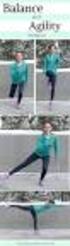 No Equipment Agility/Core/Strength Program for Full Body No Equip Trainer: Rick Coe Introduction Program designed to be performed in a circuit. Perform exercises in sequence without rest 2-3 times. Increase
How to read Dashboard Reports
 How to read Dashboard Reports The premise behind RPM 2 is to assess bilateral equivalence of the lower limbs. It has long been understood that bi-lateral equivalence is the key to improved athletic performance.
First Year. PT7040- Clinical Skills and Examination II
 First Year Summer PT7010 Anatomical Dissection for Physical Therapists This is a dissection-based, radiographic anatomical study of the spine, lower extremity, and upper extremity as related to physical
Body posture or posture control in back pain patients
 Body posture or posture control in back pain patients André Ljutow Centre for Pain Medicine, Nottwil What is this lecture about? Due to the possibility to measure human posture questions like «What is
The Influence of Functional Electrical Stimulation (FES) Cycling on Spasticity in Adolescents with Spinal Cord Injury
 1 The Influence of Functional Electrical Stimulation (FES) Cycling on Spasticity in Adolescents with Spinal Cord Injury Prepared by:rebecca Martin, OTR/L, OTD 1, Meredith Bourque, PT, DPT 1, Glendaliz
Exercises for older people
 Exercise for older people Exercises for older people Sitting Getting started If you ve not done much physical activity for a while, you may want to get the all-clear from a GP before starting. For the
Gait Analysis Laboratory Centro de Rehabilitación Infantil Teletón Estado de México
 Gait Analysis Laboratory Centro de Rehabilitación Infantil Teletón Estado de México Dr. Demetrio Villanueva Ayala Doctorado en Biomecánica, CINVESTAV Dr. Juan Carlos Pérez Moreno Especialista en Medicina
Functional Job Requirements For the Position of Special Education Teacher Department of Education, Training and the Arts Queensland
 Department of Education, Training and the Arts Queensland This document was developed for the following purposes: assisting in the development of rehabilitation programs for injured or ill employees, and
Expert Application of the 4x4 Matrix Focus on Progression
 Expert Application of the 4x4 Matrix Focus on Progression Phil Plisky, PT, DSc, OCS, ATC, CSCS 2 3 4 Phil Plisky 1 5 6 Symptoms of Internal Combustion Engine Dysfunction Rough idle Hesitation Engine Misfire
Exercises for the Hip
 Exercises for the Hip Gluteal Sets: Lie on your back, tighten buttocks and hold for 3-5 seconds. Repeat 20 times. Supine Hip ER/IR: Lie on your back with legs straight. Gently rotate knees out and in limited
Anterior Cruciate Ligament Reconstruction. ACL Rehab Protocol
 Anterior Cruciate Ligament Reconstruction Rehab Protocol This rehabilitation protocol has been designed for patients following ACL reconstruction who anticipate returning to a high level of activity as
How to Get and Keep a Healthy Back. Amy Eisenson, B.S. Exercise Physiologist
 How to Get and Keep a Healthy Back Amy Eisenson, B.S. Exercise Physiologist Lesson Objectives Statistics of Back Pain Anatomy of the Spine Causes of Back Pain Four Work Factors Core Muscles Connection
A Thesis. Entitled. The Effects of Core Stability Training on Star Excursion Balance. Test and Global Core Muscular Endurance.
 A Thesis Entitled The Effects of Core Stability Training on Star Excursion Balance Test and Global Core Muscular Endurance By Alex McCaskey Submitted to the Graduate faculty as partial fulfillment of the
March 7th. Smartnet &PNCR. Expanded Hammersmith Functional Motor Scale for SMA (HFMSE) PNCR Network for SMA
 PNCR Network for SMA March 7th Expanded Hammersmith Functional Motor Scale for SMA (HFMSE) 2009 Add-on module presented by PNCR - Expanded Hammersmith Functional Motor Scale (HFMSE) Smartnet &PNCR Hammersmith
THE EFFECTS OF WHOLE BODY VIBRATION THERAPY IN CHILDREN WITH CEREBRAL PALSY: A META- ANALYSIS
 THE EFFECTS OF WHOLE BODY VIBRATION THERAPY IN CHILDREN WITH CEREBRAL PALSY: A META- ANALYSIS Lauren Cochran, DPTc UCSF/SFSU Graduate Program in Physical Therapy CEREBRAL PALSY (CP) Motor impairment resulting
Spine Care Centre (SCC) protocols for Multiple Sclerosis Update 1 August 2015
 Spine Care Centre (SCC) protocols for Multiple Sclerosis Update 1 August 2015 Introduction Multiple sclerosis (MS) affects nerves in the brain and spinal cord, causing a wide range of symptoms including
Post Operative Total Knee Replacement Protocol Brian White, MD www.western-ortho.com
 Post Operative Total Knee Replacement Protocol Brian White, MD www.western-ortho.com The intent of this protocol is to provide guidelines for progression of rehabilitation. It is not intended to serve
Hip Bursitis/Tendinitis
 Hip Bursitis/Tendinitis Anatomy and Biomechanics The hip is a ball and socket joint that occurs between the head of the femur (ball) and the acetabulum of the pelvis (socket). It is protected by several