
Preparing for the Washington State Criminal Justice Training Commission Physical Ability Test
|
|
|
- Victoria Powers
- 10 years ago
- Views:
Transcription
1 Preparing for the Washington State Criminal Justice Training Commission Physical Ability Test Whereas many training routines can be used to improve performance in the Physical Ability Test (PAT), participants should keep in mind that physical training is specific. That is, one improves in activities practiced. If one wishes to optimize push-up performance, push-ups should be included in the training program. Many other exercises can also be included to strengthen the chest, shoulders, and arms, but push-ups should be included in the routine. Ideally, muscles and the cardiovascular system should be gradually and progressively trained over several weeks or months to achieve desired fitness gains. Physical adaptations occur gradually in response to regular, consistent overloads, i.e. doing more than your body is accustomed to doing. It is important to bear in mind that every individual adapts at a different rate- a stimulus resulting in an appropriate, moderate overload to one person may be too much or too little for another person. A participant who has been inactive for a significant period of time should plan to take six to twelve weeks to train for the PAT. The training routine should include exercises to train upper body strength and muscular endurance, abdominal muscular endurance, leg power, cardio-respiratory endurance and anaerobic power. Strength and cardio-respiratory endurance activities should be performed about every other day, or three days per week, to allow adequate recovery and positive adaptations to occur. Anaerobic (high intensity) training should be done once per week, and can be performed instead of a cardio-respiratory training session. For flexibility enhancement, good back health, and injury prevention, stretching exercises should be performed before and especially after training sessions, as well as on days off. Law enforcement officers have unique job functions, some of which can be physically demanding and dangerous. An officer's capability to perform those functions can affect personal and public safety. Training for the required skills is often more vigorous and demanding than the day-to-day job functions that the officer faces. Physical fitness underlies an officer's ability to perform many of the frequent and critical job tasks as well as the demanded training of skills. The minimum fitness standards identified below are the requisite levels for an officer to effectively learn the frequent and critical job motor skills. Higher levels of fitness are associated with better performance of physical job tasks required by the Washington State Criminal Justice Training Commission (WSCJTC) Basic Law Enforcement Academy (BLEA). The PAT is comprised of four tests: 300-Meter Run Maximum Push-Ups (no time limit) Sit-Ups (One Minute) 1.5-Mile Run / Walk Tests may be administered in the above order. While not required, the test battery process should be sequenced as follows: 1. Warm-up (5-10 minutes) may be self-directed or led by test personnel. General warm-up minutes of easy jogging, jumping jacks, etc. Stretching minutes, include stretches for shoulders, back, upper and lower legs. 2. PAT 300-Meter Run (15 minutes rest) Sit-Ups (1 Minute) (5 minutes rest) Maximum Push-Ups (10 minutes rest) Mile Run / Walk Cool-down (5 minutes) Walking - keep walking to avoid blood pooling in legs. Easy stretching.

2 300-METER RUN Purpose This test measures anaerobic capacity used in high intensity baton and defensive tactics training, and is important for performing short intense bursts of effort such as foot pursuits, rescues and use of force situations. Score in seconds: Mean: Equipment Standard track or marked level course (300 meters = 328 yds. or 984 ft.) Stopwatch (printing stopwatch is preferred) Numbered vests or other participant identifiers such as the card system explained in class. Video camera is strongly recommended for recording of performance and to discourage cheating. Procedures Read the instructions to the participants. Allow participants to warm up. (see above procedures) Instruct participants to cover the distance as fast as possible. Have participants line up at the starting line. Give the verbal command "Ready, Set, Go" (adding a visual command is effective) and begin timing as you finish the word go. The score is the time to the nearest half-second for completion of the run. Sample Script The 300-meter run measures your anaerobic power. You must complete the run without any help. At the start, you will line up behind the starting line. When I say "Go (or describe a visual command, such as dropping a flag or clipboard) the clock will start. Your goal is to run the distance as quickly as possible. You will run (describe the course, including a clear description of the finish line) to and through the finish area and receive a numbered card (your time will be recorded only when you cross the finish line). Do not bend, fold, or otherwise mutilate this card. Do not trade or lose track of this card, as this is your finish time. Are there any questions? Tips for the Test Administrator Participants may finish very close to each other in this event, therefore have assistance in recording times, or run participants in heats. It is best to pair different level individuals together for each flight or sprint to avoid simultaneous finishes.

3 PUSH-UP TEST Purpose This test measures the muscular strength/endurance of the upper body muscles in the shoulders, chest, and back of the upper arms (the triceps) used in high intensity self defense and arrest simulation training. This is important for use of force involving pushing motion breaking one s fall to the ground, use of the baton, etc. Score in repetitions: Mean: 28. Equipment Standard 4 inch foam cube. Procedures Read the instructions to the participants. Demonstrate the test, pointing out common errors and proper positioning. Have the participant get down on the floor in the front leaning rest position and perform one test push-up to properly locate the foam cube at the costal arch and above the zyphoid. Have the participant lower their body until they slightly compress the foam cube and arms are at least parallel to the floor then pushes up again. The back must be kept straight, and in each extension up, the elbows should lock. Resting in the up position (only) is allowed. The score is the maximum number of push-ups completed with no time limit. Sample Script The push-up measures the muscular strength and endurance of the upper body (chest, shoulders, and triceps). Place your hands on the ground so they are in a vertical line with your shoulders (approximately shoulder width apart). Your feet may be together, or up to 12 inches apart. Your body should be in a straight line from the shoulders to the ankles, and must remain that way throughout the exercise. When I say "Go, lower your body, by bending your elbows, until your upper arms are parallel to the ground and you compress the foam block. Your examiner will tell you when you have gone low enough. Then return to the starting position by completely straightening your arms. You may rest only in the up position. If you fail to keep your body in a straight line, touch your chest to the block, or to lock your elbows in the "up position, you will receive a warning. After one warning, incorrect repetitions will not count. There is no time limit. Do as many correct push-ups as possible. Your score is the number of correct repetitions. Watch this demonstration. Are there any questions? Tips for the Test Administrator Ensure that a non-slip surface is available. Ensure that participants maintain a slightly flexed or straight line from their shoulders to their ankles. Be alert for "head bobbers, that is, participants who move their heads up and down without lowering or raising their bodies. As well as sway back and push-ups from the waist up. The examiner should position him/herself at a 45-degree angle to the participant's head and shoulders. This allows the examiner to hold the block without interfering with the participants head while at the same time he checks for correct body alignment. Participants glasses should be removed. Remove or tuck-in baggy shirts so they do not obscure sight of the block.

4 ONE-MINUTE SIT-UP TEST Purpose This test measures the muscular strength/endurance of the abdominal muscles, which are used in selfdefense and high intensity arrest-simulation training. Further these muscles are important for performing tasks that involve the use of force, and it helps maintain good posture and minimize lower back problems. Score in repetitions: Mean: 34. Equipment Mat Stopwatch Partner Procedures Read the instructions to the participants. Demonstrate the event, pointing out common errors. Have the participant lie on his or her back, knees bent, heels flat on the floor. Hands should be held behind the head, with elbows out to the sides. A partner holds down the feet. Have the participant perform as many correct sit-ups as possible in one minute. In the up position, the individual must touch the elbows to the knees and then return to the lying position (fingers must touch the examiner s hand) before starting the next sit-up. The score is the number of correct sit-ups. Sample Script The sit-up measures the muscular strength/endurance of the abdominal muscles. Lie on your back, with your knees bent at 90 degrees or tighter, and your heels on the edge of the mat. Your feet may be together or apart, but the heels must stay in contact with the floor. Your partner will sit on your feet and wrap their arms around your calf muscle area. It is your responsibility to inform your partner of any adjustments that need to be made in order to assure your comfort. Your fingers must stay interlocked behind your head throughout the event. If your little fingers are not touching that is considered apart and such performance will not be counted. When I say "Go, lift your upper body by bending at the waist. Touch your elbows to your knees, and return to the starting position. When returning to the starting position, your fingers must touch the examiner s hand. You may rest but only in the "up" position. Do not arch your back or lift your buttocks from the mat. If you fail to keep your fingers interlocked, touch your elbows to your knees or your fingers to the examiner s hand, or if you lift your buttocks off the mat, you will receive one warning. After one warning, incorrect repetitions will not count. You will have one minute to do as many sit-ups as possible. I will give you signals at 30, 15 and 5 seconds remaining. Your score is the number of correct sit-ups. Watch this demonstration. Are there any questions? Tips for the Test Administrator Make sure that the hands remain interlocked behind the head. Little fingers touching are considered interlocked. The knees must remain at a 90-degree angle throughout the exercise. The buttocks must remain in contact with the floor at all times. Any resting must be done in the "up" position.

5 1.5-MILE RUN / WALK TEST Purpose This test is a measure of cardio-respiratory endurance (or aerobic capacity) used in extended control and defensive tactics training. This is important for performing tasks involving stamina and endurance (pursuits, searches, prolonged use of force situations, etc.) and for minimizing the risk of cardiovascular health problems. Score: 13:35 14:31 Mean: 14:02. Equipment 440-yard/400 meter track or marked level course Stopwatch (printing stopwatch is preferred) Numbered vests or other participant identifiers such as the card system explained in class. Video camera is strongly recommended for recording of performance and to discourage cheating. Procedures Read the instructions to the participants. Allow participants to warm up and stretch before the run. Instruct participants to cover the distance as fast as possible, but to begin at a pace they think they can easily sustain for minutes. Instruct participants to hold up fingers (to the video camera) indicating the number of laps completed and state their name. Instruct participants to line up at the starting line. Give the command "Go" and begin timing. If several participants run at once, have one administrator call out times at the finish line while an assistant records the names and respective times. Instruct participants to cool down after running the course by walking for an additional five minutes or so. This prevents venous pooling, a condition in which the blood pools in the legs. Walking enhances the return of blood to the heart and aids recovery. The score is the time it takes to finish the course to the nearest second. Sample Script The 1.5-mile run measures your cardio-respiratory endurance and the endurance of your leg muscles. You must complete the course without any help. At the start, you will line up behind the starting line. When I say, "Go, the clock will start. You will begin running at your own pace. To complete the 1.5 miles, you will (tell the runners how many laps they must run, or describe the course, including the finish line, if not run on a track). Your goal is to finish the 1.5 miles in as fast a time as you can. Try not to start too fast but at a pace you can sustain for about 10 to 15 minutes. You may walk but walking will make it difficult to meet the standard. You may run alongside another runner for help with the pace, but you may not physically assist or be assisted by another runner. I will call off your time at the end of each lap (if run on a track), and will record your finishing time. At the end of the run, continue walking for 3-5 minutes to cool down. Are there any questions? Tips for the Test Administrator If running on a track, instruct the participants to move out of the inside lane if they decide to walk. Using an assistant test administrator will give you flexibility in case someone needs help during the event. The assistant can either take over timing duties or provide help to the participant. The assistant can also be used to assist with recording times if there are many runners.

6 The timer should call off the times in minutes and seconds as the runners cross the finish line. Be aware of environmental conditions. Extreme heat, humidity, elevation, or poor footing will affect performance times and could increase risk of injury. Choose your testing site and schedule with these factors in mind. If not running on a measured track, measure your course carefully. Automobile odometers may not be accurate therefore, a measuring wheel is strongly recommended.

7 SCORING THE PHYSICAL ABILITY TEST BATTERY The Physical Ability Test score for each test item is recorded and added on the individual participant s sheet. The passing score is 160, with the range of scores for each test between 30 and 50. Example: The below measures are merely for illustration and are only approximate values. Sit-Ups 34 = 40 Points. Push-Ups 38 = 50 Points (Note that 34 and above receives the same maximum points) 1.5-Mile Run 14:31 = 30 Points. 300 Meter Dash 60 sec. = 45 Points. Total Test battery score is 200 points. The participant who scores below the 30-point level has failed the test but will be allowed to continue on the other test items with the option of re-test on any of the following: sit-ups and push-ups. The participant who scores above the 50-point level on a given test item will not be awarded more than that 50 points to apply towards the other test items.

8 Session Physical Ability Testing Card Basic Law Enforcement Academy Name Age Sex Agency Date of Test Class Session TAC Officer(s) Test Battery Information Event M-M-Max Actual R/T Points Examiner Signature 300 Meter Sprint (Seconds) Push Ups, Maximum (Repetitions) Sit Ups, 60 second (Repetitions) Subtotal 1.5 Mile Run (Minutes) 14:31 14:02 13:35 Total Comments: Applicant met the minimum standard. Applicant did not meet minimum standards in the circled events Push-Ups Sit-Ups 300 meter 1.5 mile

9 Scoring Matrix 300 Meter Run Scoring Matrix PUSH-UPS SCORING 1.5 MILE SCORING Seconds Total Seconds Total Reps Total Reps Total Seconds Total Seconds Total : : : : : : : : : : : : : : : : : : : : : : : : : : : : : : : : : : SIT-UPS SCORING 13: : Reps Total Reps Total 13: : : : : : : : : : : : : : : : : : : : :31 30

Corrections Division Physical Ability Test Guidelines
 Washington State Criminal Justice Training Commission Michael D. Parsons, Ph.D. Executive Director 19010 1st Ave. S. Burien, WA 98148 (206) 835-7300 www.cjtc.state.wa.us Corrections Division Physical Ability
The Nevada Peace Officers Standards and Training Physical Fitness Test
 The Nevada Peace Officers Standards and Training Physical Fitness Test All Nevada peace officers must take the POST Physical Fitness Test (PPFT), regardless of their age, within 16 weeks of their initial
Police Recruit Information Packet
 CITY OF DAYTON, OHIO CIVIL SERVICE BOARD Police Recruit Information Packet The information contained within this packet is intended to give candidates an understanding of the steps relating to the selection
UNIVERSAL FITNESS NETWORK, Inc. 2315 West Monica Dunlap, IL 61525 (309)-360-5615 [email protected] FACTS ABOUT THE PHYSICAL FITNESS ASSESSMENT TESTS
 UNIVERSAL FITNESS NETWORK, Inc. 2315 West Monica Dunlap, IL 61525 (309)-360-5615 [email protected] FACTS ABOUT THE PHYSICAL FITNESS ASSESSMENT TESTS Universal Fitness Network, Inc. specializes in physical
MIAMI POLICE DEPARTMENT
 MIAMI POLICE DEPARTMENT POLICE OFFICER PHYSICAL AGILITY TEST TRAINING MANUAL 400 NW 2 nd Avenue, Miami, FL 3328 REVISED 0/2 TABLE OF CONTENTS OVERVIEW... 2 LIST OF EVENTS... 3 EQUIPMENT REQUIRED... 4 PREPARING
Exercise 1: Knee to Chest. Exercise 2: Pelvic Tilt. Exercise 3: Hip Rolling. Starting Position: Lie on your back on a table or firm surface.
 Exercise 1: Knee to Chest Starting Position: Lie on your back on a table or firm surface. Action: Clasp your hands behind the thigh and pull it towards your chest. Keep the opposite leg flat on the surface
General Guidelines. Neck Stretch: Side. Neck Stretch: Forward. Shoulder Rolls. Side Stretch
 Stretching Exercises General Guidelines Perform stretching exercises at least 2 3 days per week and preferably more Hold each stretch for 15 20 seconds Relax and breathe normally Stretching is most effective
JTF 2 Pre-Selection Physical Fitness Testing
 JTF 2 Pre-Selection Physical Fitness Testing 1. General. This evaluation is used to predict a member s physical capability and their readiness to apply for JTF 2. 2. On top of these physical standards,
Physical Capability Strength Test: One Component of the Selection Process
 Physical Capability Strength Test: One Component of the Selection Process One aspect of the Power Systems Institute selection process is to successfully complete and achieve a passing score on a physical
PHYSICAL TRAINING STANDARDS
 KENTUCKY LAW ENFORCEMENT PHYSICAL TRAINING STANDARDS PHYSICAL FITNESS TESTING INFORMATION Prepared by: Department of Criminal Justice Training and Kentucky Law Enforcement Council Peace Officers Professional
Stick with the program!
 Getting Physically Prepared for the Naval Academy Physical education is an important part of the program at the Naval Academy. To ensure that you are physically prepared for Plebe Summer, you are encouraged
The 11+ A complete warm-up program
 The 11+ A complete warm-up program Part 1 & 3 A A }6m Part 2 B A: Running B: Jog back B! FIELD SET-UP A: Running exercise B: Jog back The course is made up of 6 pairs of parallel cones, approx. 5-6m apart.
How To Stretch Your Body
 Exercise Module A New Leaf Choices for Healthy Living University of North Carolina at Chapel Hill 2007 Center for Health Promotion and Disease Prevention Physical Activity Exercises for Keeping Active
Exercises for older people
 Exercise for older people Exercises for older people Sitting Getting started If you ve not done much physical activity for a while, you may want to get the all-clear from a GP before starting. For the
EXERCISE INSTRUCTIONS 1
 EXERCISE INSTRUCTIONS 1 Contents ANKLE TOUCHES... 4 BACK EXTENSIONS... 4 BACK REVERSE FLYES... 4 BALL ROLL... 4 BASKETBALL SQUATS... 4 BEAR CRAWL... 4 BICEP CURL (Resistance Band)... 4 BOXING JABS... 5
EXERCISE DESCRIPTIONS PHASE I Routine #1
 EXERCISE DESCRIPTIONS PHASE I Routine #1 Hip Mobility Exercise: Forward Out-In Movement: Raise leg out to the side, and rotate around to the front. Keep shin/thigh angle at 90 degrees. Exercise: Backward
Illinois Law Enforcement Training and Standards Board. Preface
 Illinois Law Enforcement Training and Standards Board Preface The Illinois Law Enforcement Training and Standards Board, in recognizing the importance of physical fitness status for academy performance
Fact sheet Exercises for older adults undergoing rehabilitation
 Fact sheet Exercises for older adults undergoing rehabilitation Flexibility refers to the amount of movement possible around a joint and is necessary for normal activities of daily living such as stretching,
Basic Training Exercise Book
 Basic Training Exercise Book Basic Training Exercise Book Instructions The exercises are designed to challenge the major muscles groups every day, approximately every 2 to 3 hours., for a total of 6 times
Functional Firefighter Fitness
 Functional Firefighter Fitness The information provided is for informational purposes only and is not intended as a substitute for the advice of, or treatment that may be prescribed by your physician.
Chronos - Circuit Training Bodyweight
 Outline Chronos - Circuit Training Bodyweight 1. Mountain climbers doubles x 10 2. Mountain climbers singles x 10 each leg 3. Mountain climbers singles out x 10 each leg 4. Mountain Climbers Doubles out
Physical Agility Test Preparation and Safety
 Physical Agility Test Preparation and Safety TT DD CC JJ J How to Prepare for the PAT Prior to taking the Physical Agility Test, applicants should seek medical advice from their physician. The day of the
Sue Schuerman, PT, GCS, PhD UNLVPT
 Sue Schuerman, PT, GCS, PhD UNLVPT Exercise & Physical Activity (Your Everyday Guide from the National Institute on Aging) Go4Life Retain our physical and mental health Continue to do the things we enjoy
Lower Body Strength/Balance Exercises
 Compliments of (Medical Group Name & Phone # to be inserted here) Lower Body Strength/Balance Exercises Hip Flexion Strengthens thigh and hip muscles. Use ankle weights, if you are ready to. Stand to the
Knee Conditioning Program. Purpose of Program
 Prepared for: Prepared by: OrthoInfo Purpose of Program After an injury or surgery, an exercise conditioning program will help you return to daily activities and enjoy a more active, healthy lifestyle.
Basic Stretch Programme 3. Exercise Circuit 4
 Basic Stretch Programme 3 Exercise Circuit 4 2 1 Calves Stand approximately 1 metre away from wall with legs straight and heels on floor. Step and lean forward and slowly push hips towards wall. Should
Cardiac Rehab Program: Stretching Exercises
 Cardiac Rehab Program: Stretching Exercises Walk around the room, step side to side, ride a bike or walk on a treadmill for at least 5 minutes to warm up before doing these stretches. Stretch warm muscles
Municipal Police Officers Education and Training Commission Physical Fitness Test Battery Protocols and Guidelines
 Municipal Police Officers Education and Training Commission Physical Fitness Test Battery Protocols and Guidelines The safety of all applicants and cadets is of the utmost importance. All applicants and
12 Week Do-it-Yourself Fitness Program
 12 Week Do-it-Yourself Fitness Program Created by Brad Awalt, MS, ACSM Assistant Manager, Health Plus [email protected] January 2011 Do you have a goal to begin an exercise routine, but not sure
ISOMETRIC EXERCISE HELPS REVERSE JOINT STIFFNESS, BUILDS MUSCLE, AND BOOSTS OVERALL FITNESS.
 ISOMETRIC EXERCISE HELPS REVERSE JOINT STIFFNESS, BUILDS MUSCLE, AND BOOSTS OVERALL FITNESS. By Askari A. Kazmi KazmisBioscienceLabs exercise helps reverse joint stiffness, builds muscle, and boosts overall
HELPFUL HINTS FOR A HEALTHY BACK
 HELPFUL HINTS FOR A HEALTHY BACK 1. Standing and Walking For correct posture, balance your head above your shoulders, eyes straight ahead, everything else falls into place. Try to point toes straight ahead
Fitness Training A Sensible Guide to Preparing for Selection in the Gurkhas
 Fitness Training A Sensible Guide to Preparing for Selection in the Gurkhas Background Physical fitness has a number of components: aerobic endurance (stamina), strength, speed, flexibility, muscle endurance,
Living Room Bodyweight Workout Week 1 March or jog in place for 1 min to increase heart rate and lubricate joints.
 Warm Up- Living Room Bodyweight Workout Week 1 March or jog in place for 1 min to increase heart rate and lubricate joints. Protocol- All exercises will be done for 2 sets of 10 repetitions. After the
Stair Workouts Get in Shape: Step up
 Stair Workouts Get in Shape: Step up Warning: If you feel any knee pain, refrain from continuing that particular exercise. Avoid the no pain, no gain motto and modify with regular walking or any activity
A proper warm-up is important before any athletic performance with the goal of preparing the athlete both mentally and physically for exercise and
 A proper warm-up is important before any athletic performance with the goal of preparing the athlete both mentally and physically for exercise and competition. A warm-up is designed to prepare an athlete
Stretching for Young Athletes. Shawn P. Anderson, SPT Duke University Doctor of Physical Therapy
 Stretching for Young Athletes Shawn P. Anderson, SPT Duke University Doctor of Physical Therapy Sports and exercise are usually integral parts of many adolescents life. Whether they play at school or in
This document fully describes the 30 Day Flexibility Challenge and allows you to keep a record of your improvements in flexibility.
 Welcome to the StretchTowel 30 Day Flexibility Challenge! You can Be More Flexible in 30 days by following our stretching program for 10 minutes a day. The best part is that you can stretch using the StretchTowel
No Equipment Agility/Core/Strength Program for Full Body No Equip Trainer: Rick Coe
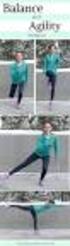 No Equipment Agility/Core/Strength Program for Full Body No Equip Trainer: Rick Coe Introduction Program designed to be performed in a circuit. Perform exercises in sequence without rest 2-3 times. Increase
EGOSCUE CLINIC PAIN/POSTURE STRETCHES 1. Standing Arm Circles: Helps Restore Upper Body Strength
 EGOSCUE CLINIC PAIN/POSTURE STRETCHES 1. Standing Arm Circles: Helps Restore Upper Body Strength Two sets of 40 repetitions each. Stand with your feet pointed straight and hip-width apart. Place your fingertips
Range of Motion. A guide for you after spinal cord injury. Spinal Cord Injury Rehabilitation Program
 Range of Motion A guide for you after spinal cord injury Spinal Cord Injury Rehabilitation Program This booklet has been written by the health care providers who provide care to people who have a spinal
Physical Fitness Assessment
 Madison Police Department Noble Wray, Chief of Police City-County Building 211 S. Carroll Street Madison, Wisconsin 53703-3303 PH 608 266 4022 [email protected] www.cityofmadison.com/police Physical
STRETCHING EXERCISES. Physical Activity Resource Center for Public Health PARC-PH
 STRETCHING EXERCISES Physical Activity Resource Center for Public Health PARC-PH STRETCHING 2 Safety Information...3 Benefits of Stretching...3 Safety Considerations Before and During Exercise...3 A Set
Always warm up before commencing any exercise. Wear the correct clothing and footwear; do not train if you are unwell or injured.
 SUGGESTED FITNESS PROGRAMME General Exercise Guidance Good exercise training advice is highly specific to the individual. It should be understood, therefore, that the advice provided here can only be general.
USCGA Health and Physical Education Fitness Preparation Guidelines
 USCGA Health and Physical Education Fitness Preparation Guidelines MUSCULAR STRENGTH Muscular strength and endurance can be improved by systematically increasing the load (resistance) that you are using.
Stair Workouts Get in Shape: Step up!
 Stair Workouts Get in Shape: Step up! Warning: If you feel any knee pains, refrain from continuing that particular exercise. Avoid the no pain, no gain motto and modify with regular walking or any activity
Don t. Hamstrings. Calf Muscles. both legs 2-3 times. stretch is felt in the back of the calf. Repeat with both legs 2-3 times.
 Remember to: Warm-up your muscles first before stretching (e.g. stretch after walking). Stretch until you feel mild discomfort, not pain. Never bounce or force a stretch. Hold the stretch for 10-30 seconds
REHAB PROGRAM. Heart & Lung. Training program developed by BungyPump in collaboration with reg. physiotherapist Rovena Westberg
 REHAB PROGRAM Heart & Lung Training program developed by BungyPump in collaboration with reg. physiotherapist Rovena Westberg Fun Exercise = Quality of life Healthier Hearts! Physical activity helps to
SAMPLE WORKOUT Full Body
 SAMPLE WORKOUT Full Body Perform each exercise: 30 secs each x 2 rounds or 2-3 sets of 8-12 reps Monday & Wednesday or Tuesday & Thursday Standing Squat Muscles: glutes (butt), quadriceps (thigh) Stand
CONDITIONING PROGRAM
 CONDITIONING PROGRAM Speed and Agility are two major components of sport that need to be trained just like strength, size, and power are developed in the weight room. It is true that no matter what your
Strength Training HEALTHY BONES, HEALTHY HEART
 Strength Training HEALTHY BONES, HEALTHY HEART No matter what your age, strength training can improve your bone health and your balance. As we age, our bones lose both tissue and strength. This condition
Instructor Training Program Levels 1 through 4 Uneven Bars
 USA Gymnastics Online: Technique: Uneven Bars Page 1 of 9 Instructor Training Program Levels 1 through 4 Uneven Bars Level 1 - Uneven Bars MOUNT: BACK HIP PULLOVER Grasp bar with hands "shoulder width"
Strength Training for the Runner
 Strength Training for the Runner Strength Training for the Runner What? The goal of resistance training for runners is not necessarily adding muscle mass but 1. improving muscular strength, 2. improving
ABOUT THE FUNCTIONAL FITNESS TEST: ABOUT THE AUTHORS:
 The Interactive Health Partner Wellness Program addresses fall prevention with assessments and outcomes tracking in an easy to use, comprehensive online system. Website: www.interactivehealthpartner.com
ACL Reconstruction Rehabilitation
 ACL Reconstruction Rehabilitation The following exercises are commonly used for rehabilitation following ACL reconstruction surgery. However, each knee surgery is unique and each person s condition is
Exercises for Low Back Injury Prevention
 DIVISION OF AGRICULTURE RESEARCH & EXTENSION University of Arkansas System Family and Consumer Sciences Increasing Physical Activity as We Age Exercises for Low Back Injury Prevention FSFCS38 Lisa Washburn,
Hip Conditioning Program. Purpose of Program
 Prepared for: Prepared by: OrthoInfo Purpose of Program After an injury or surgery, an exercise conditioning program will help you return to daily activities and enjoy a more active, healthy lifestyle.
TIPS and EXERCISES for your knee stiffness. and pain
 TIPS and EXERCISES for your knee stiffness and pain KNEE EXERCISES Range of motion exercise 3 Knee bending exercises 3 Knee straightening exercises 5 STRENGTHENING EXERCISES 6 AEROBIC EXERCISE 10 ADDITIONAL
Standing with legs slightly apart, inhale and expand chest and shoulders; exhale and draw in chest and shoulders.
 ILLUSTRATED EXERCISE #4 PAGE 1 2012 Bringing the Body to the Stage and Screen and Beyond by Annette Lust 1 Standing with legs slightly apart, inhale and expand chest and shoulders; exhale and draw in chest
The Santa Monica Orthopaedic and Sports Medicine Research Foundation. The PEP Program: Prevent injury and Enhance Performance
 The Santa Monica Orthopaedic and Sports Medicine Research Foundation The PEP Program: Prevent injury and Enhance Performance This prevention program consists of a warm-up, stretching, strengthening, plyometrics,
Stretching in the Office
 Stretching in the Office Legs: Quads, Hamstrings, IT band, Hip flexors, Gluts, Calves Quads: Standing @ desk maintaining upright posture, grab one leg @ a time by foot or ankle and bring it towards backside
Clasp hands behind hips and stretch arms down towards floor. Roll shoulder back to open chest. Do not let back arch. Power Skips
 Warm Up Exercises Jump Rope Ankle Bounces Jumping Jacks Using a fast twirl, rapidly jump up and down using spring in the feet and ankles, not in knees. V-Jumps Rapidly jump up and down using spring in
CBP Officer Candidate Pre-Employment Fitness Test-1 Physical Readiness Program
 U.S. Department of Homeland Security U.S. Customs and Border Protection CBP Officer Candidate Pre-Employment Fitness Test-1 Physical Readiness Program Last Edited 03-16-2015 0 Table of Contents Page Introduction
Chair Exercises For Older Adults
 Chair Exercises For Older Adults Many of these exercises were adapted from these sources: National Institute on Aging, Exercise: A Guide from the National Institute on Aging, 2001, http://www.nia.nih.gov/healthinformation/publications/exerciseguide/.
BEACH VOLLEYBALL TRAINING PROGRAM
 2008 ELITE PERFORMANCE ATHLETE CONDITIONING BEACH VOLLEYBALL TRAINING PROGRAM Team BC 2008 Steve Van Schubert, CAT(C), CSCS Training Schedule General Outline Phase 1 2 Weeks Phase 2 3 Weeks Phase 3 3 Weeks
Physical & Occupational Therapy
 In this section you will find our recommendations for exercises and everyday activities around your home. We hope that by following our guidelines your healing process will go faster and there will be
Strength and Conditioning Program
 Strength and Conditioning Program Guidelines All speed work must be performed when the body is fully rested. Proper sprinting techniques must be taught and mastered by the player. Adequate rest must follow
IMGPT: Exercise After a Heart Attack 610 944 8140 805 N. RICHMOND ST (Located next to Fleetwood HS) Why is exercise important following a heart
 Why is exercise important following a heart attack? Slow progression back into daily activity is important to strengthen the heart muscle and return blood flow to normal. By adding aerobic exercises, your
Have a ball SWISS BALL EXERCISES SWISS BALL TRAINING
 Have a ball SWISS BALL EXERCISES SWISS BALL TRAINING 2 Swiss Ball training is an excellent way to build 'core body strength' and have some fun at the same time. Training on the Ball forces you to use muscles
Spine Conditioning Program Purpose of Program
 Prepared for: Prepared by: OrthoInfo Purpose of Program After an injury or surgery, an exercise conditioning program will help you return to daily activities and enjoy a more active, healthy lifestyle.
WOMEN S FLAT TRACK DERBY ASSOCIATION Minimum Skills Requirements Version 4.10 Updated January 31, 2013
 WOMEN S FLAT TRACK DERBY ASSOCIATION Minimum Skills Requirements Version 4.10 Updated January 31, 2013 This document was created by the WFTDA Training Committee. Questions about the MSR should be directed
Self Management Program. Ankle Sprains. Improving Care. Improving Business.
 Ankle Sprains Improving Care. Improving Business. What is an ankle sprain? Ligaments attach to the ankle bones and allow for normal movement and help prevent too much motion within the joint. Ankle sprains
PHYSICAL EDUCATION IM 36
 PHYSICAL EDUCATION IM 36 IM SYLLABUS (2014) SYLLABUS 1 Physical Education IM 36 (Available in September) Syllabus 1 Paper (2hrs 30mins) & Practical (30mins) Introduction This syllabus provides candidates
The Lose-the-Last-1o-Pounds Workout
 Printable Workout: www.myfitstation.com The Lose-the-Last-1o-Pounds Workout From The Women s Health Big Book of Exercises Phase 1) Week 1-4 It s time to finish off that fat for good! This 8-week plan from
Rotator Cuff and Shoulder Conditioning Program. Purpose of Program
 Prepared for: Prepared by: OrthoInfo Purpose of Program After an injury or surgery, an exercise conditioning program will help you return to daily activities and enjoy a more active, healthy lifestyle.
9 exercises to rehab a torn ACL without surgery
 MENU Search foxnews.com Health Home Men's Health Women's Health Children's Health Alternative Medicine Diabetes Heart Health Allergies HEALTH 9 exercises to rehab a torn ACL without surgery By Julie Wilcox
Care at its Best! Foam Roller Exercise Program
 Foam Roller Exercise Program Foam rollers are a popular new addition the gym, physical therapy clinics or homes. Foam rollers are made of lightweight polyethyline foam. Cylindrical in shape, foam rollers
Rehabilitation. Rehabilitation. Walkers, Crutches, Canes
 Walkers, Crutches, Canes These devices provide support through your arms to limit the amount of weight on your operated hip. Initially, after a total hip replacement you will use a walker to get around.
KNEE EXERCISE PROGRAM
 KNEE PROGRAM INTRODUCT ION Welcome to your knee exercise program. The exercises in the program are designed to improve your knee stability and strength of the muscles around your knee and hip. The strength
Rehabilitation. Rehabilitation. Walking after Total Knee Replacement. Continuous Passive Motion Device
 Walking after Total Knee Replacement After your TKR, continue using your walker or crutches until your surgeons tells you it is okay to stop using them. When turning with a walker or crutches DO NOT PIVOT
FRNSW Physical Aptitude Test Candidate Preparation Guide
 FRNSW Physical Aptitude Test Candidate Preparation Guide TABLE OF CONTENTS PART 1 Introduction & General s for Your Training Program PART 2 Physical Activity Readiness Questionnaire (PAR Q) PART 3 Functional
try Elise s toning exercise plan
 try Elise s toning exercise plan Whether you want to start things off slow and gradually build up your fi tness, or begin with a challenge, Elise s toning exercise programme is designed for all levels.
Ready, Set - GOAL! BEGINNER 10K RUNNING PROGRAM
 Ready, Set - GOAL! BEGINNER 10K RUNNING PROGRAM Start smart, take some precautions: Before you start your running program, pay a visit to your physician. This is always a good idea, but especially in case
Ensure that the chair you use is sturdy and stable. Wear comfortable clothes and supportive footwear.
 Page 1 Safety Ensure that the chair you use is sturdy and stable. Wear comfortable clothes and supportive footwear. Prepare a space and have your exercise band and a glass of water (for afterwards) ready
THE ADULT FITNESS TEST
 THE ADULT FITNESS TEST The following pages contain instructions and tips on performing each part of the fitness test. You can do the adult fitness test events alone, but they are easier to do with a partner.
JUNIPERO SERRA VOLLEYBALL OFF SEASON TRAINING SCHEDULE
 JUNIPERO SERRA VOLLEYBALL OFF SEASON TRAINING SCHEDULE 2007 OFF SEASON WORKOUT Our off season workout is centered around Speed, Agility & Quickness which are athletic attributes that are very trainable
Yoga Teacher Training Home Study Course. Part 3b. Teaching and Practicing Sun Salutations
 Yoga Teacher Training Home Study Course Part 3b Teaching and Practicing Sun Salutations Sun Salutations (Surya Namaskar) A sun salutation is a graceful sequence of positions performed as one continuous
5TH GRADE FITNESS STUDY GUIDE
 PHYSICAL EDUCATION 5 TH GRADE FITNESS STUDY GUIDE PART I. Revised 5-13 DIRECTIONS: Review the following terms and concepts. Do not try to memorize the definitions, rather think about and understand: 1)
CHAPTER 3: BACK & ABDOMINAL STRETCHES. Standing Quad Stretch Athletic Edge - www.athleticedge.biz - (650) 815-6552
 CHAPTER : BACK & ABDOMINAL STRETCHES Standing Quad Stretch ) Stand and grasp right ankle with same hand, use a wall or chair to Lower maintain Back balance with left hand. Maintain an upright Stretches
Lower Body Exercise One: Glute Bridge
 Lower Body Exercise One: Glute Bridge Lying on your back hands by your side, head on the floor. Position your feet shoulder width apart close to your glutes, feet facing forwards. Place a theraband/mini
Otago Exercise Program
 Otago Exercise Program Edited Version Exercise Booklet Created by: Genesee County Coalition Supported by a grant from the Health Foundation for Western and Central New York Otago Exercise Program to Prevent
Low Back Pain: Exercises
 Low Back Pain: Exercises Your Kaiser Permanente Care Instructions Here are some examples of typical rehabilitation exercises for your condition. Start each exercise slowly. Ease off the exercise if you
Speed, Agility, Quickness Training
 Speed, Agility, Quickness Training Goal: To develop Speed, Agility, and Quickness (SAQ) and functional football strength for young football players through a consistent and safe format. Place the stations
Standard 1 Students demonstrate the motor skills and movement patterns needed to perform a variety of physical activities.
 Grade Three Third grade is a pivotal time in the development of students movement skills. Third graders who demonstrate and understand the proper form for locomotor and nonlocomotor skills now shift their
UCCS Women s Soccer. 2012 Summer Workout Packet. Everything You Need to Succeed. Lifting and Training Schedule
 UCCS Women s Soccer 2012 Summer Workout Packet Everything You Need to Succeed Day to Day Calendar Lifting and Training Schedule Day to Day Record Sheets Fitness Tests Daily Record Sheet Sunday Monday Tuesday
Strength Training for the Knee
 Strength Training for the Knee This handout is to help you rebuild the strength of the muscles surrounding the knee after injury. It is intended as a guideline to help you organize a structured approach
DAILY 16 PROGRAM. c. Daily 16 Cool-Down. A series of cool-down exercises that should be used as the final activity of a physical training session.
 DAILY 16 PROGRAM 1. The Daily 16 Program is a comprehensive series of warmup, conditioning, and cool-down exercises. The Daily 16 warmup exercises facilitate gradual distribution of blood flow to the muscles,
Anterior Cruciate Ligament Reconstruction Rehabilitation Protocol
 The First Two Weeks After Surgery You will go home with crutches and be advised to use ice. Goals 1. Protect reconstruction 2. Ensure wound healing 3. Maintain full knee extension 4. Gain knee flexion