
X-Plain Avian Influenza or Bird Flu Reference Summary
|
|
|
- Eileen Sharp
- 9 years ago
- Views:
Transcription
1 X-Plain Avian Influenza or Bird Flu Reference Summary Introduction Avian influenza is an infection caused by avian influenza viruses. Avian means bird and flu is an abbreviation of influenza. Avian flu can, in rare cases, be transmitted to humans. There is a real worry that avian flu has the potential to spread throughout the globe like wild fire resulting in thousands, if not potentially millions, of deaths. This reference summary explains what avian flu is, what are its symptoms and treatment options. It also discusses its potential future threats and prevention. Viruses Viruses are very small living particles that are made of an outer shell that protects genetic material packaged in the inside. Influenza Virus In order for a virus to replicate itself it needs to enter another living cell by attaching itself to the living cell s surface. To do so it uses complex and unique chemical compounds found on that cell s surface. Because of the complexity of these chemicals, viruses tend to infect only specific cells in a specific species. For example, certain viruses may only attack human nerve cells and others can attack only bird intestinal cells. Once inside the cell, the genetic material of the virus blends with the genetic material of the infected cell to replicate itself hundreds if not thousands of times. The hundreds of replicated viruses then kill the cell, burst out of it, and infect hundreds if not thousands of new cells. The cycle repeats itself until the patient dies or unless the patient s immune system destroys or keeps in check the invading viruses. The immune system is responsible for defending the body from foreign objects. 1
2 During virus replication, the genetic material of the virus can undergo changes known as mutations. The virus can also exchange genetic material with the infected cell. These genetic changes can modify the chemicals on the surface of the virus. This in turn may make it possible for the virus to attack living cells of different species. There are three types of influenza viruses, A, B or C. Types B and C are usually only found in humans and cause milder symptoms than type A, which can be found in both humans and animals such as birds, pigs, horses, whales and seals. Avian Flu Viruses The Avian influenza viruses occur naturally among birds. Wild birds worldwide may carry the viruses in their intestines, but usually do not get sick from them. Avian influenza is very contagious among birds and can make some domesticated birds, such as chickens, ducks, and turkeys, very sick and kill them. Infected birds shed influenza virus in their saliva, nasal secretions, and feces. Susceptible birds become infected when they have contact with contaminated secretions or excretions or with surfaces that are contaminated with secretions or excretions from infected birds. Domesticated birds may become infected with avian influenza virus through direct contact with infected waterfowl or other infected poultry, or through contact with objects or food that have been contaminated with the virus. Infection with avian influenza viruses in domestic poultry can cause a mild disease or a severe one that can kill 90 to 100% of the flock within 2 days. Human Infection Avian influenza virus usually refers to influenza viruses found chiefly in birds, but infections with these viruses can occur in humans. The risk from avian influenza is generally low to most people, because the viruses do not usually infect humans. Most cases of avian influenza infection in humans have resulted from contact with infected poultry such as domesticated chickens, ducks, and turkeys, or surfaces contaminated with secretion from infected birds. About 50% of infected people died from the infection. 2
3 Since 1997, there have been confirmed cases of human infection from several subtypes of avian influenza infection. There are more than 100 subtypes of avian flu viruses. A very small number of these are known to infect humans. The spread of avian influenza viruses from one ill person to another has been reported very rarely, and transmission has not been observed to continue beyond one person. Influenza A viruses are constantly changing, and they might adapt over time to infect and spread among humans. Symptoms The time between infection of a person with the flu virus and the appearance of symptoms, the incubation period, can range from one to five days. The symptoms of avian influenza vary in severity depending on which virus caused the infection. Symptoms of avian influenza in humans are similar to typical human influenza-like symptoms: Fever Cough Sore throat Muscle aches Eye infections Pneumonia or severe lung infections and other severe respiratory diseases can occur. This could lead to life-threatening complications that may necessitate hospitalization and use of a respirator. If complications are not treated early, death is possible. Treatment Prescription medicines approved for human influenza viruses should work in treating avian influenza infection in humans. However, there are no known medications that treat an avian influenza infection specifically. 3
4 However, influenza viruses may become resistant to these drugs, so these medications may not always work. Additional studies are needed to demonstrate the effectiveness of these medicines on bird flu viruses. Flu treatments that should work for avian flu include rest, medications to bring down high fevers, and drinking plenty of water. If complications occur and the patient becomes very sick, then hospitalization may be necessary with administration of oxygen or the use of a respirator. There currently is no commercially available vaccine to protect humans against the H5N1 virus, the avian flu virus found in Asia and Europe. However, vaccine development efforts are taking place. Research studies to test a vaccine to protect humans against H5N1 virus began in April 2005, and a series of clinical trials is under way. Prevalence To date, few human cases have been reported by the World Health Organization in Asia and Africa. Most cases have occurred as a result of people having direct or close contact with infected poultry or contaminated surfaces; however, a few cases of human-to-human spread of H5N1 have occurred. To date, outbreaks of influenza H5N1 among poultry were reported in Asia, Africa and Europe. Wild migratory birds have also been affected in Asia and Europe. Future Risk So far, the spread of H5N1 virus from person to person has been rare and has not continued beyond one person. Nonetheless, because all influenza viruses have the ability to change, scientists are concerned that the H5N1 virus could one day be able to infect humans and spread easily from one person to another. 4
5 Because these viruses do not commonly infect humans, there is little or no immune protection against them in the human population. If the H5N1 virus were to gain the capacity to spread easily from person to person, an influenza pandemic could begin. A pandemic is a worldwide outbreak of disease. The World Health Organization has recognized 6 phases of Avian Flu spread, and has determined that we are currently in Phase 3, the pandemic alert period. The last phase, or Phase 6, is the pandemic phase. Phase 1: Risk of human infection is low and there are no new subtypes of influenza viruses in humans and no human-to-human spread. Phase 2: Risk of human infection is substantial but there are no new subtypes of influenza viruses in humans and no human-to-human spread. Phase 3: (Current Phase) Risk of human infection is substantial and there are new subtypes of influenza viruses in humans and rare instances of human-tohuman spread. Phase 4: Risk of human infection is substantial and there are new subtypes of influenza viruses in humans and highly localized instances of human-to-human spread. Phase 5: Risk of human infection is substantial and there are new subtypes of influenza viruses in humans and localized large instances of human-to-human spread. Phase 6: This is the pandemic phase. Risk of human infection is substantial and there are new subtypes of influenza viruses in humans and sustained transmission of the virus in the general population. No one can predict when a pandemic might occur. However, experts from around the world are watching the H5N1 situation in Asia and Europe very closely and are preparing for the possibility that the virus may begin to spread more easily and widely from person to person. A pandemic could result in the deaths of hundreds of thousands if not millions of people. It could easily overwhelm health care systems worldwide jeopardizing diagnosis and treatments of other diseases. It could also lead to severely reduced productivity and the loss of countless hours of work, devastating the worldwide economy. 5
6 Prevention Tips The following tips will help you prevent flu infections such as the common flu and Avian flu: Wash your hands frequently with soap and water, particularly before eating and after sneezing or coughing. Use NIOSH-approved disposable masks rated N-95 or higher and that fit tightly over your nose and mouth. Cover your mouth and nose with tissue when you cough or sneeze. Put used tissues in a wastebasket. If you don t have a tissue, cough or sneeze into your upper sleeve. Stay at home if you are sick and stay away from others if they are sick. Eat only cooked meat and poultry. Conclusion Avian influenza or bird flu is an infection caused by avian influenza viruses. The virus is carried by wild birds and can devastate domestic birds if they get exposed to the virus. So far, the spread of avian flu from birds to humans and from person to person has been rare. Nonetheless, because all influenza viruses have the ability to change, scientists are concerned that the bird flu virus could one day be able to infect humans and spread easily from one person to another. No one can predict when a bird flu pandemic might occur. Experts from around the world are watching the spread of the bird flu viruses in Asia and Europe very closely. They are preparing for the possibility that the virus may begin to spread more easily and widely from person to person. For more information about Avian flu, check the website: PandemicFlu.gov 6
Influenza and Pandemic Flu Guidelines
 Influenza and Pandemic Flu Guidelines Introduction Pandemic flu is a form of influenza that spreads rapidly to affect most countries and regions around the world. Unlike the 'ordinary' flu that occurs
Swine Influenza Special Edition Newsletter
 Swine Influenza Newsletter surrounding swine flu, so that you ll have the right facts to make smart decisions for yourself and your family. While the World Health Organization (WHO) and the Centers for
Human Infl uenza Pandemic. What your organisation needs to do
 Human Infl uenza Pandemic What your organisation needs to do 21 Human Influenza Pandemic: What your organisation needs to do It s time to get ready In 2007 the Victorian Government released the Victorian
Useful contacts. Call 0800 1 513 513 to hear the latest information on swine flu. England: www.nhs.uk www.direct.gov.uk/swineflu
 Useful contacts Call 0800 1 513 513 to hear the latest information on swine flu. England: www.nhs.uk www.direct.gov.uk/swineflu Scotland: www.nhs24.com Wales: www.nhsdirect.wales.nhs.uk www.wales.gov.uk/health
Facts you should know about pandemic flu. Pandemic Flu
 Facts you should know about pandemic flu Pandemic Flu What s this brochure all about? This brochure provides information about pandemic flu. It gives the answers to 10 important questions concerning an
READ THIS LEAFLET VERY CAREFULLY, AND KEEP IT IN A SAFE PLACE. FLU IS SPREADING IN IRELAND, AND THIS INFORMATION IS IMPORTANT FOR YOU AND YOUR FAMILY.
 READ THIS LEAFLET VERY CAREFULLY, AND KEEP IT IN A SAFE PLACE. FLU IS SPREADING IN IRELAND, AND THIS INFORMATION IS IMPORTANT FOR YOU AND YOUR FAMILY. Information and medical advice for the public on Pandemic
MINISTRY OF HEALTH PANDEMIC INFLUENZA A / H1N1 2009 VACCINE FREQUENTLY ASKED QUESTIONS
 Government of the Republic of Trinidad and Tobago MINISTRY OF HEALTH PANDEMIC INFLUENZA A / H1N1 2009 VACCINE FREQUENTLY ASKED QUESTIONS Influenza vaccines are one of the most effective ways to protect
Key Facts about Influenza (Flu) & Flu Vaccine
 Key Facts about Influenza (Flu) & Flu Vaccine mouths or noses of people who are nearby. Less often, a person might also get flu by touching a surface or object that has flu virus on it and then touching
Adapted from a presentation by Sharon Canclini, R.N., MS, FCN Harris College of Nursing and Health Sciences Texas Christian University
 Adapted from a presentation by Sharon Canclini, R.N., MS, FCN Harris College of Nursing and Health Sciences Texas Christian University What is a Pandemic? A pandemic is basically a global epidemic an epidemic
Pandemic. PlanningandPreparednesPacket
 Pandemic PlanningandPreparednesPacket I m p o r t a n t I n f o r m a t i o n F r o m N e w Yo r k S t a t e s H e a l t h C o m m i s s i o n e r February 15, 2006 Dear New York State Employer: As you
PREVENTING THE SPREAD OF CONTAGIOUS ILLNESS
 PREVENTING THE SPREAD OF CONTAGIOUS ILLNESS This easy-to-use Leader s Guide is provided to assist in conducting a successful presentation. Featured are: INTRODUCTION: A brief description of the program
OHS preparedness for an influenza pandemic: A guide for employers
 OHS preparedness for an influenza pandemic: A guide for employers MAY 2009 1 CONTENTS 1. Introduction...3 1.1 Purpose... 3 1.2 Other relevant material and guidance... 3 1.3 Updates to this guidance...
Influenza Education Presentation Prepared by Peel Public Health 2014
 Influenza Education Presentation Prepared by Peel Public Health 2014 Disclaimer We are pleased to be able to offer you the use of our Influenza PowerPoint presentation for your use. Peel Public Health
Childhood Diseases and potential risks during pregnancy: (All information available on the March of Dimes Web Site.) http://www.modimes.
 Childhood Diseases and potential risks during pregnancy: (All information available on the March of Dimes Web Site.) http://www.modimes.org/ Fifth disease (erythema infectiosum) is a common, mild, childhood
BE SURE. BE SAFE. VACCINATE.
 DON T GET OR GIVE THE FLU THIS YEAR THANK YOU Vaccination is the only protection. www.immunisation.ie BE SURE. BE SAFE. VACCINATE. FLU VACCINE 2013-2014 Healthcare workers prevent the spread of flu and
FOR INFORMATION CONTACT:
 NEWS RELEASE FOR INFORMATION CONTACT: Caroline Calderone Baisley Deborah C. Travers Director of Health Director of Family Health Tel [203] 622-7836 Tel [203] 622-7854 September 10, 2014 For Immediate Release
Planning for 2009 H1N1 Influenza. A Preparedness Guide for Small Business
 09 Planning for 2009 H1N1 Influenza A Preparedness Guide for Small Business Table of Contents 02 Foreword 03 Introduction 04 How to Write Your Plan 05 Keeping Healthy: 10 Tips for Businesses 06 Keeping
http://www.who.int/csr/disease/avian_influenza/phase/en 4 http://new.paho.org/hq/index.php?option=com_content&task=view&id=1283&itemid=569
 Food and Agriculture Organization of the United Nations International Food Safety Authorities Network (INFOSAN) (Update) 30 April 2009 INFOSAN Information Note No. 2/2009 Human-animal interface aspects
FREQUENTLY ASKED QUESTIONS SWINE FLU
 FREQUENTLY ASKED QUESTIONS SWINE FLU Updated 5/6/09 ER FAQ What is swine flu? Swine flu is common disease of pigs and is caused by the same category of influenza virus (influenza A) that causes flu in
PANDEMIC INFLUENZA PLANNING:
 PANDEMIC INFLUENZA PLANNING: A Guide for Individuals and Families Get Informed. Be Prepared. U.S. Department of Health and Human Services January 2006 Pandemics are global in nature, but their impact is
Preparing for the consequences of a swine flu pandemic
 Preparing for the consequences of a swine flu pandemic What CIGNA is Doing To help ensure the health and well-being of the individuals we serve, CIGNA is implementing its action plan to prepare for the
SWINE FLU: FROM CONTAINMENT TO TREATMENT
 SWINE FLU: FROM CONTAINMENT TO TREATMENT SWINE FLU: FROM CONTAINMENT TO TREATMENT INTRODUCTION As Swine Flu spreads and more people start to catch it, it makes sense to move from intensive efforts to contain
Swine Flu and Common Infections to Prepare For. Rochester Recreation Club for the Deaf October 15, 2009
 Swine Flu and Common Infections to Prepare For Rochester Recreation Club for the Deaf October 15, 2009 Supporters Deaf Health Community Committee Members Julia Aggas Cathie Armstrong Michael McKee Mistie
PREPARING YOUR ORGANIZATION FOR PANDEMIC FLU. Pandemic Influenza:
 PREPARING YOUR ORGANIZATION FOR PANDEMIC FLU Pandemic Influenza: What Business and Organization Leaders Need to Know About Pandemic Influenza Planning State of Alaska Frank H. Murkowski, Governor Department
Canine Influenza. What do I need to know?
 Canine Influenza What do I need to know? What is canine influenza? Canine influenza is a newly emerging infectious disease caused by a flu virus. In dogs, a highly contagious strain of the influenza A
Quick Reference H1N1 Flu (swine flu)
 Quick Reference H1N1 Flu (swine flu) The United States declared a public health emergency in response to the recent reports of swine flu. UMR wants to help you understand some important facts about H1N1
Being Prepared for an INFLUENZA PANDEMIC A KIT FOR SMALL BUSINESSES
 Being Prepared for an INFLUENZA PANDEMIC A KIT FOR SMALL BUSINESSES i Commonwealth of Australia 2006 ISBN 0 642 72389 3 This work is copyright. Apart from any use as permitted under the Copyright Act 1968,
Pandemic Risk Assessment
 Research Note Pandemic Risk Assessment By: Katherine Hagan Copyright 2013, ASA Institute for Risk & Innovation Keywords: pandemic, Influenza A, novel virus, emergency response, monitoring, risk mitigation
Mitigating the Risk of a Pandemic
 PRECAUTIONS, NOT PANIC White Paper Series PRECAUTIONS, NOT PANIC White Paper Seri Mitigating the Risk of a Pandemic Mitigating the Risk of a Pandemic 2 Precautions, Not Panic: Mitigating the Risk of a
Northern Ireland swine flu helpline: 0800 0514 142
 15/09/2009 Page 1 Information for special school principals on swine influenza A (H1N1) This information sheet gives general information about swine infl uenza A (H1N1) (swine fl u) as well as addressing
Whooping Cough. The Lungs Whooping cough is an infection of the lungs and breathing tubes, both of which are parts of the respiratory system.
 Whooping Cough Introduction Whooping cough is a serious bacterial infection of the lungs and breathing tubes. It is also called pertussis. About 16 million cases of whooping cough happen worldwide each
FAQs on Influenza A (H1N1-2009) Vaccine
 FAQs on Influenza A (H1N1-2009) Vaccine 1) What is Influenza A (H1N1-2009) (swine flu) 1? Influenza A (H1N1-2009), previously known as "swine flu", is a new strain of influenza virus that spreads from
Why you and your Family Should Get the Flu Shot
 Why you and your Family Should Get the Flu Shot Why Get VaCCinated against influenza? Influenza (flu) is a virus that can lead to serious complications, hospitalization, or even death. Even healthy children
Influenza Vaccine Frequently Asked Questions. Influenza Control Program
 Influenza Vaccine Frequently Asked Questions Influenza Control Program Influenza or the flu can be a serious contagious disease, which is spread by droplet transmission through close contact with an infected
What is whooping cough. (pertussis)? Information and Prevention. Ocument dn
 What is whooping cough Ocument dn (pertussis)? Information and Prevention IMPORTANT Pertussis (or whooping cough) is a highly contagious infection that can cause uncontrollable, violent coughing. If you
Influenza Control Program. Frequently Asked Questions Wearing a Mask
 Influenza Control Program Frequently Asked Questions Wearing a Mask Influenza or the flu can be a serious contagious disease, which is spread by droplet transmission through close contact with an infected
ECDC INTERIM GUIDANCE
 ECDC INTERIM GUIDANCE Interim ECDC public health guidance on case and contact management for the new influenza A(H1N1) virus infection Version 3, 19 May 2009 ECDC intends to produce a series of interim
Workforce Guidelines: H1N1 Influenza and Flu-like Illness
 Workforce Guidelines: H1N1 Influenza and Flu-like Illness This document provides guidance to University supervisors and employees on how to handle H1N1 influenza (swine flu) and flu-like illness in the
AV1300 STAFF INFLUENZA IMMUNIZATION AND EXCLUSION POLICY
 AV1300 STAFF INFLUENZA IMMUNIZATION AND EXCLUSION POLICY 1.0 PURPOSE To help ensure that those at greatest risk of complications and death from influenza are optimally protected through the appropriate
INFLUENZA (FLU) Flu and You
 Influenza (Flu) What is the flu? The flu is an illness caused by flu viruses. The flu may make people cough and have a sore throat and fever. They may also have a runny or stuffy nose, feel tired, have
Chapter 5. INFECTION CONTROL IN THE HEALTHCARE SETTING
 Chapter 5. INFECTION CONTROL IN THE HEALTHCARE SETTING INTRODUCTION This chapter addresses infection control measures and practices in the healthcare setting and provides guidance to healthcare facilities
First Grade The Human Body Assessment
 First Grade The Human Body Assessment 1a. When we talk about the skeletal system we are talking about what part of our body? a. stomach b. bones 1b. How many bones in your skeleton? a. more than two hundred
SAFETY BULLETIN 02/09
 SAFETY BULLETIN 02/09 INFLUENZA PANDEMIC ASIA INDUSTRIAL GASES ASSOCIATION 3 HarbourFront Place, #09-04 HarbourFront Tower 2, Singapore 099254 www.asiaiga.org Revision of SB 02/06 Avian Flu INFLUENZA PANDEMIC
FOR IMMEDIATE RELEASE Release #2014-04
 FOR IMMEDIATE RELEASE Release #2014-04 CONTACT for this Release: Krista Dommer Office Phone: (209) 468-3571 Email: [email protected] Alvaro Garza, MD, MPH. Public Health Officer MEASLES OUTBREAKS PROMPT
RSV infection. Information about RSV and how you can reduce the risk of your infant developing a severe infection.
 RSV infection Information about RSV and how you can reduce the risk of your infant developing a severe infection. What is RSV? RSV is one of the most common respiratory viruses and is spread easily. By
Pandemic Planning and Response Guide for Businesses. September 2009
 Pandemic Planning and Response Guide for Businesses September 2009 For More Information Contact: ORC Worldwide 1800 K St. NW Suite 810 Washington DC, 20006 202-293-2980 [email protected] Originally
Pandemic Influenza: A Guide for Individuals and Families
 Pandemic Influenza: A Guide for Individuals and Families GET INFORMED. BE PREPARED. This guide is designed to help you understand the threat of a pandemic influenza outbreak in our community. It describes
WHO Regional Office for Europe update on avian influenza A (H7N9) virus
 WHO Regional Office for Europe update on avian influenza A (H7N9) virus Situation update 2: 30 April 2013 Address requests about publications of the WHO Regional Office for Europe to: Publications WHO
Pneumonia. Pneumonia is an infection that makes the tiny air sacs in your lungs inflamed (swollen and sore). They then fill with liquid.
 Pneumonia Pneumonia is an infection that makes the tiny air sacs in your lungs inflamed (swollen and sore). They then fill with liquid. People with mild (not so bad) pneumonia can usually be treated at
The flu vaccination WINTER 2016/17. Who should have it and why. Flu mmunisation 2016/17
 The flu vaccination WINTER 2016/17 Who should have it and why Flu mmunisation 2016/17 The flu vaccination 1 Winter 2016/17 Helping to protect everyone, every winter This leaflet explains how you can help
C. difficile Infections
 C. difficile Infections Introduction C. difficile is a type of bacteria that can cause diarrhea and infection of the colon. This bacterium is more likely to infect patients at hospitals and other healthcare
What Is. Norovirus? Learning how to control the spread of norovirus. Web Sites
 Web Sites Centers for Disease Control and Prevention (CDC) http://www.cdc.gov/norovirus/index.html Your Local Health Department http://www.azdhs.gov/diro/lhliaison/countymap.htm What Is Ocument dn Norovirus?
PREPARING FOR A PANDEMIC. Lessons from the Past Plans for the Present and Future
 PREPARING FOR A PANDEMIC Lessons from the Past Plans for the Present and Future Pandemics Are Inevitable TM And their impact can be devastating 1918 Spanish Flu 20-100 million deaths worldwide 600,000
Communicating BMI Results Administrators, Parents, and Community
 Communicating BMI Results Administrators, Parents, and Community North Andover Public Schools Barbara Hedstrom, RN, MSN, NCSN Cheryl Barczak, RN, MSN Kathy O Neill, RN, BS How We Started We had an early
Respiratory Syncytial Virus (RSV)
 Respiratory Syncytial Virus (RSV) What is? is a common virus that infects the linings of the airways - the nose, throat, windpipe, bronchi and bronchioles (the air passages of the lungs). RSV is found
Name Date Class. This section explains what kinds of organisms cause infectious disease and how infectious diseases are spread.
 Fighting Disease Name Date Class Infectious Disease This section explains what kinds of organisms cause infectious disease and how infectious diseases are spread. Use Target Reading Skills Before you read,
Blood Transfusion. There are three types of blood cells: Red blood cells. White blood cells. Platelets.
 Blood Transfusion Introduction Blood transfusions can save lives. Every second, someone in the world needs a blood transfusion. Blood transfusions can replace the blood lost from a serious injury or surgery.
NON-PHARMACEUTICAL INTERVENTIONS (NPIs): ACTIONS TO LIMIT THE SPREAD OF THE PANDEMIC IN YOUR MUNICIPALITY
 TOOL 4 HEALTH NON-PHARMACEUTICAL INTERVENTIONS (NPIs): ACTIONS TO LIMIT THE SPREAD OF THE PANDEMIC IN YOUR MUNICIPALITY WHAT ARE NON-PHARMACEUTICAL INTERVENTIONS? PREPAREDNESS RESPONSE This tool will help
CHAPTER 35 HUMAN IMMUNE SYSTEM STANDARDS:SC.912.L.14.52 & SC.912.L.14.6
 CHAPTER 35 HUMAN IMMUNE SYSTEM STANDARDS:SC.912.L.14.52 & SC.912.L.14.6 SECTION 1 - Infectious Disease 1.Identify the causes of infectious disease. 2.Explain how infectious diseases are spread. Causes
If you have a cold or the flu, you can spread the sickness to someone else. How does the sickness spread? Write your ideas on the lines below.
 The Immune System Textbook pages 100 109 Before You Read Section 3.1 Summary If you have a cold or the flu, you can spread the sickness to someone else. How does the sickness spread? Write your ideas on
Protecting your child against flu
 Protecting your child against flu Information for parents Flu mmunisation 2015/16 Helping to protect everyone, every winter This year, the flu vaccine is being offered to: children aged two, three and
Tuberculosis: FAQs. What is the difference between latent TB infection and TB disease?
 Tuberculosis: FAQs What is TB disease? Tuberculosis (TB) is a disease caused by bacteria (germs) that are spread from person to person through the air. TB usually affects the lungs, but it can also affect
Be Prepared for a Flu Pandemic
 How Be You Prepared Can For a Flu Pandemic March 2007 (Updated Sept. 12009) Be Prepared for a Flu Pandemic inor North Dakota Planning and Preparedness Packet Be Prepared for a Flu Pandemic 2 Table of Contents
Rockhampton Regional Council Local Disaster Management Plan Annexure 4 Sub Plans. 22. Influenza Pandemic Sub Plan
 Rockhampton Regional Council Local Disaster Management Plan Annexure 4 Sub Plans 22. Influenza Pandemic Sub Plan Abbreviations and Glossary AHPC Australian Health Protection Committee CCN Crisis Communication
X-Plain Pediatric Tuberculosis Reference Summary
 X-Plain Pediatric Tuberculosis Reference Summary Introduction Tuberculosis, or TB, is a bacterial infection that causes more deaths in the world than any other infectious disease. When a child gets TB,
Pandemic Flu Policy & Contingency Plan For Businesses
 Pandemic Flu Policy & Contingency Plan For Businesses For more information, please contact Byotrol [email protected] or +44 (0)161 277 9518 Content Sections in this document 1. 2. 3. 4. 5. 6. Introduction,
swine flu vaccination:
 swine flu vaccination: what you need to know Flu. Protect yourself and others. Contents What is swine flu?............... 3 About the swine flu vaccine....... 4 What else do I need to know?...... 8 What
PANDEMIC INFLUENZA. National Pandemic Influenza Plan
 NATIONAL PANDEMIC INFLUENZA PLAN National Pandemic Influenza Plan Contents Executive Summary.................................................................. 2 Glossary of Terms..................................................................
The H1N1 Flu in Ontario. A Report by Ontario s Chief Medical Officer of Health
 The H1N1 Flu in Ontario A Report by Ontario s Chief Medical Officer of Health September 2009 Ministry of Health and Long-Term Care Ministère de la Santé et des Soins de longue durée Chief Medical Officer
10. T and B cells are types of a. endocrine cells. c. lymphocytes. b. platelets. d. complement cells.
 Virus and Immune System Review Directions: Write your answers on a separate piece of paper. 1. Why does a cut in the skin threaten the body s nonspecific defenses against disease? a. If a cut bleeds, disease-fighting
Illinois Long Term Care Facilities and Assisted Living Facilities
 TO: FROM: RE: Illinois Long Term Care Facilities and Assisted Living Facilities Richard Dees, Chief, Bureau of Long Term Care Karen McMahon, Immunization Section Chief Craig Conover, MD, Medical Director,
WHEN TO WASH YOUR HANDS
 WHEN TO WASH YOUR HANDS Before eating or preparing food After using the toilet After blowing your nose After handling garbage or trash After touching pets or animals After touching shared objects Before
AVIAN INFLUENZA. The pandemic influenza clock is ticking. We just don t know what time it is. Laurene Mascola, MD, MPH, FAAP
 AVIAN INFLUENZA The pandemic influenza clock is ticking. We just don t know what time it is. Laurene Mascola, MD, MPH, FAAP D12:\Avian Flu.ppt No. 1 OUTLINE Background on Influenza A Impact of influenza
FLU VACCINATION - FREQUENTLY ASKED QUESTIONS
 FLU VACCINATION - FREQUENTLY ASKED QUESTIONS SEASONAL FLU VACCINATION 2015 2016 As a health care worker, am I required to be vaccinated against influenza (the flu)? It is not mandatory to be vaccinated
H1N1 SWINE FLU PANDEMIC
 H1N1 SWINE FLU PANDEMIC 2 PANDEMIC H1N1 SWINE FLU Pandemic H1N1 Swine flu A novel influenza A H1N1 virus emerged from Mexico in April 2009 and spread so rapidly that the World Health Organisation declared
Frequently asked questions about whooping cough (pertussis)
 Frequently asked questions about whooping cough (pertussis) About whooping cough What is whooping cough? Whooping cough is a highly contagious illness caused by bacteria. It mainly affects the respiratory
The effects of a pandemic can be lessened, however, if preparations are made ahead of time.
 PANDEMIC FLU FAMILY GUIDE TO PREPARATIONS A flu pandemic is a global outbreak of influenza that occurs when a new flu virus appears to which people have little or no immunity. Pandemic flu spreads easily
H1N1 Flu Vaccine Available to All Virginia Beach City Public Schools Students
 V i r g i n i a B e a c h C i t y P u b l i c S c h o o l s apple-a-day F o r O u r F a m i l y o f I n t e r e s t e d C i t i z e n s Special Edition H1N1 Flu Vaccine Available to All Virginia Beach
Bacteria vs. Virus: What s the Difference? Grade 11-12
 Bacteria vs. Virus: What s the Difference? Grade 11-12 Subject: Biology Topic: Bacteria, viruses, and the differences between them. The role that water plays in spreading bacteria and viruses, and the
The Immune System and Disease
 Chapter 40 The Immune System and Disease Section 40 1 Infectious Disease (pages 1029 1033) This section describes the causes of disease and explains how infectious diseases are transmitted Introduction
The Reality Pertussis can be a serious illness, part icularly for babies and young children.
 Sounds of Pertussis Pertussis, also known as whooping cough, is a poten tially deadly infection that can strike at any age, but is particularly dangerous for babies. The sounds of pertussis are like no
Thanks to Jim Goble, National City Corporation, for providing the resource material contained in this guide.
 Pandemic Planning for Business Thanks to Jim Goble, National City Corporation, for providing the resource material contained in this guide. CHARACTERISTICS AND CHALLENGES OF A PANDEMIC Source: http://www.pandemicflu.gov/general/whatis.html
C H E C K L I S T F O R P a n d e m i c
 C H E C K L I S T F O R P a n d e m i c B u s i n e s s P l a n n i n g & C o m m u n i c a t i o n s A b o u t T h i s C H E C K L I S T This publication offers the latest research and comprehensive advice
TB CARE EARLY DETECTION AND PREVENTION OF TUBERCULOSIS (TB) IN CHILDREN. Risk factors in children acquiring TB:
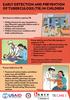 EARLY DETECTION AND PREVENTION OF TUBERCULOSIS (TB) IN CHILDREN Risk factors in children acquiring TB: Children living in the same household as a lung TB patient (especially children under 5) Children
Conjunctivitis - Pink Eye
 Conjunctivitis - Pink Eye Introduction Conjunctivitis is often called pink eye. It causes inflammation of the thin, clear lining inside the eyelid and on the white of the eye. The inflammation gives the
Preparing for. a Pandemic. Avian Flu:
 Avian Flu: Preparing for a Pandemic With increasing urgency over the past year, a variety of governments, nongovernmental organizations, industry groups, and media outlets have trumpeted the potential
Myth If someone with Ebola sneezes or sweats on you you will catch it
 EBOLA MYTH BUSTER General myths Myth There could be an Ebola outbreak in the UK at any time Fact We are not expecting a major outbreak in this country. The Chief Medical Officer has been clear that she
Information on Measles and Whooping Cough: Vaccination and Disease
 Information on Measles and Whooping Cough: Vaccination and Disease Vaccine s Mechanism of Action Vaccines expose the recipient to a small amount of an weakened organism. Through this exposure, the body
Borderless Diseases By Sunny Thai
 Borderless Diseases By Sunny Thai Millennium Development Goal #6 6. Combat HIV/AIDS, malaria and other borderless diseases. A. Halt and begin reversing spread of HIV by 2015. B. Achieve universal access
Guidelines for Hand Foot and Mouth Disease HFMD
 Guidelines for Hand Foot and Mouth Disease HFMD Hand, foot, and mouth disease, or HFMD, is a contagious illness caused by different viruses. Infants and children younger than 5 years are more likely to