
Guidance on the Use of Automated Flagger Assistance Devices
|
|
|
- Prosper Porter
- 9 years ago
- Views:
Transcription
1
2 Guidance on the Use of Automated Flagger Assistance Devices What is an automated flagger assistance device? Automated flagger assistance devices (AFADs) are mechanically operated temporary traffic control devices that function under the same operational principles as traditional flagging. AFADs are considered a safety enhancement because they minimize flaggers direct exposure to traffic by allowing them to control the flagging device from an area away from traffic, such as behind a guardrail. As a result, the AFAD increases worker safety compared to traditional flagging methods. It is important to recognize that AFADs do not eliminate the need for qualified flaggers at the work zone. Personnel should still be traditionally trained and available to step in as a manual flagger in case of a technology malfunction, or driver intrusion. Two types of AFADs are recognized in Part 6E of the 2009 Edition of the Manual on Uniform Traffic Control Devices (MUTCD). The first type uses a remotely controlled Stop/Slow sign mounted on a trailer or movable cart. The second type uses a remotely controlled red and yellow lens and a mechanically gated arm. A mechanically gated arm is required on the Red/Yellow lens device, and may be added to the Stop/Slow device to improve conspicuity and driver compliance. Figure 1: Examples of Stop/Slow (left) and Red/Yellow (right) automated flagger assistance devices. (Photos from the 2010 Washington Legislative Report) All AFAD applications must abide by the specific standards set forth in the MUTCD Section 6E.04. In accordance with NCHRP Report 350 and AASHTO s Manual for Assessing Safety Hardware, the AFADs must satisfy applicable crashworthiness standards based on device weight. Detailed specifications for Stop/Slow AFADs are provided in Section 6E.05; similarly, detailed specifications for Red/Yellow AFADs are listed in Section 6E.06. 2
3 Several States that recognize the benefits of AFADs also impose further device standards and guidelines that surpass the ones required by the MUTCD, such as additional supplemental warning signs, backup battery power, and flashing lights or gate arms on the Stop/Slow signs. This document is not intended to act as a book of State and/or Federal standards; rather, it summarizes guidelines for when AFADs may be an appropriate option. It is important for anyone wishing to use an AFAD to refer to the MUTCD in addition to checking with their State and local agencies for the most current version of their governing authority s policy or standard specifications. What are the factors affecting the use of AFADs? Duration of Work AFADs are typically used for short-term or intermediate-term lane or road closures such as bridge maintenance, haul road crossings, guardrail repair, and pavement patching. Their use is discouraged during long-term closures. Most States permit the use of AFADs during daytime or nighttime operations, but if used at night, the AFAD must be illuminated in accordance with Section 6E.08 of the MUTCD. Placement of AFADs It is preferable to place the AFAD within the shoulder of the road; however, if the shoulder is not adequate, the AFAD may encroach on the traveled lane provided that the appropriate sight distance is available. If this is the case, the gate arm must not extend into the adjacent lane. 1 Traffic Volume AFADs have been successfully implemented on roads with a wide range of average daily traffic (ADT) counts. Although the MUTCD does not provide any limitations in this area, some States have established supplementary guidelines. For example, the State of Virginia allows AFADs in temporary lane closures on two-way roads when the ADT is below 12,000 vehicles per day, 2 whereas the State of Minnesota restricts their use to roads with less than 1,500 ADT. 3 1 Washington State Department of Transportation, Typical Alternating One-way Traffic Automated Flagger Assistance Device (Remote Controlled by Flagger), available at 2 Virginia Department of Transportation, 2011 Virginia Work Area Protection Manual, available at 3 Minnesota Department of Transportation, Guidelines for the Selection of Temporary Lane Control Systems in Work Zones, Two-Lane Two-Way roads Closed to One Through Lane, available at 3
4 Operational Considerations of AFADS There are two methods of using AFADs in a work zone. The first method uses an AFAD at each end of the work zone while the second method employs an AFAD at one end and a flagger at the other end. Two separate flaggers are commonly used to operate either method; however, a single flagger may remotely control two flagging stations provided that the flagger has a clear view of each station, and of approaching traffic in both directions. In accordance with the MUTCD and crashworthiness standards, advanced warning signs must alert traffic in both directions of an impending stop and when not in use, the AFADs must be removed from the clear zone and the advanced warning signs covered. Figure 2: Example of a wireless remote control that operates an automated flagger assistance device. (Photo from: malfunction. 4 Most State standards limit the distance between flagging stations to less than 800 feet when the stations are controlled by two AFADs or one AFAD and one flagger; however, some States allow up to 1,000 feet between two AFADs when each AFAD has its own operator. If the distance between flagging stations is greater than 1,000 feet, engineers may be able to justify the use of AFADs using engineering judgment. Regardless of the distance between AFADs, States are encouraged to have a plan in place to act as a failsafe in case of an equipment Additional State Policies Most States permit the use of the Stop/Slow signs or the red/yellow lens; however, the States of Oregon and Washington only allow the use of the red/yellow lens devices unless special permissions are granted. 5,6 Kansas also imparts standards that are stricter than the MUTCD by not allowing the use of AFADs during nighttime operations. 7 In an evaluation of 4 The 2009 Edition of the Manual on Uniform Traffic Control Devices (6E.04(17)E) 5 Oregon Department of Transportation, Automated Flagger Assistance Device, available at 6 Washington State Department of Transportation, Work Zone Traffic Control Guidelines, available at 7 Kansas Department of Transportation, Special Provisions to the Standard Specifications, Edition 2007, available at 4
5 AFADs written by the Missouri DOT, the study team favored the red/yellow lens device with a stop arm and an intrusion alarm because it was cost efficient, easy to operate, and intuitive to understand. 8 Typical applications for the use of AFADs can be found in Appendix A or in the 2009 MUTCD, pages 570 and 572. What are the limitations to using AFADs? AFADs shall only be used in situations where there is just one lane of approaching traffic that needs to be controlled. Additionally, since AFADs are not traffic control signals, they must not be used to replace traffic signals or other continuously operating traffic control devices. While AFADs are a method to improve the safety of flagging operations, they do not eliminate the need for trained flaggers. AFAD operators must be certified flaggers trained on how to operate the device correctly, and the operator must be able to step in and manually control the lane closure in the event that an AFAD malfunctions. A Florida guideline on temporary traffic control requires that if one AFAD operator is used to manage both ends of the closure, a second qualified flagger must be present onsite to assist with manual flagging in the event of a malfunction. 9 Human Factors Issues While removing the flaggers from the direct flow of traffic improves the flaggers safety, there are situations where drivers may need to receive additional verbal warnings and/or directions from flagging personnel. In these cases, placing certified flaggers on the shoulder of the road may be a more appropriate option to ensure that the drivers needs are met. This could mean eliminating the AFAD altogether, or simply stationing the AFAD operator closer to the flow of traffic to assist the road users. One study in Virginia found that some drivers at a single work zone location were misinterpreting a supplementary sign on the Stop/Slow AFAD. 10 Drivers interpreted the sign, which read, Wait On Stop Go On Slow to mean that they should stop at the stop sign then proceed slowly. Since the MUTCD considers Go On Slow as an optional part of the sign, the 8 Missouri Department of Transportation, Evaluation of Automatic Flagger Assistance Devices, available at 9 Florida Temporary Traffic Control Devices Automated Flagger Assistance Devices, available at ftp://ftp.dot.state.fl.us/lts/co/specifications/developmental/dev102afad.pdf 10 Virginia Transportation Research Council Research, Report on the Evaluation of the Autoflagger in Virginia, available at 5
6 workers covered up the sign to only show Wait On Stop. This action improved driver compliance on that road. None of the other Stop/Slow AFAD implementation sites stated similar concerns. Technology Limitations Several AFAD systems manufacturers offer the option for an intrusion alarm, but a Virginia study found that workers were barely able to hear a 128 decibel alarm at a test facility when there was no traffic or running construction equipment. 11 The project supervisors speculated that the workers would not have heard the alarm at all if the system was installed in an active work zone. How much do AFADs cost? Although costs vary by manufacturer and system specifications, the average cost for a set of AFADs ranged from approximately $25,000 to $30,000. Some companies also rent AFADs for approximately $3,000-$3,200 per month, but these rates vary by geographic location and season; for example, renting an AFAD during the construction season will typically cost more than renting one during the off-season. Payment for AFADs is handled differently among State DOTs. For example, the Florida DOT bids the items as a contract unit price per day of use. North Carolina stipulates that shortterm use (less than 90 days) is billed per day, whereas long-term use (greater than or equal to 90 days) is billed per unit. 12 In some Missouri DOT districts, the DOT purchased AFADs for maintenance purposes and used them for the life of the device rather than billing them to various projects. How do workers and drivers feel about AFADs? After using AFADs on 59 projects during one construction season in Maine, one hundred percent of the surveyed workers recommended purchasing additional units for use throughout the State. The AFADs were equally valued by construction managers and crews. 13 Similarly, when asked about their experience with AFAD systems, flaggers in Missouri gave undeniably 11 Florida Temporary Traffic Control Devices Automated Flagger Assistance Devices, available at ftp://ftp.dot.state.fl.us/lts/co/specifications/developmental/dev102afad.pdf 12 North Carolina Department of Transportation, Automated Flagger Assistance Devices (North Carolina Special Provisions), available at 13 Maine Department of Transportation, Field Evaluation of Automated Flagger Assistance Devices, available at 6
7 positive responses in favor of the devices. 14 The AFAD operators expressed that they felt significantly safer when they were operating the AFAD away from the flow of traffic compared to when they would stand in the road as a human flagger. The workers praised the system for being easy to set up, intuitive for drivers to understand, and safe for workers and drivers. In a field evaluation, one construction manager stated, They are a cost saver, labor saver, and are a safer way to control traffic, as less people are in the traffic. Another commented that when they used the AFADs they had little difficulty getting someone to volunteer to operate the device. In the Missouri evaluation, the public survey results also indicated that drivers view the AFADs as an improvement over flaggers. Only one out of forty-nine survey responses registered a complaint that the gated arm was difficult to see clearly. The rest of the responses conveyed positive reviews. Conclusions In many situations, AFADs may be an appropriate alternative that can potentially increase the safety of flaggers by removing them from the direct flow of traffic, especially when there is no viable escape route for a standard flagger position during operations. Despite their wide applicability for short- or intermediate-term closures on bidirectional two lane roads, AFADs should only be operated by trained flaggers and they should not be used on road closures with more than one lane of traffic in each direction. AFADs with the red/yellow lens are more commonly used than the Stop/Slow AFAD, but both are deemed effective at a wide range of traffic volumes. The overall assessment of AFADs from workers and drivers is positive, and their use is recommended. Next Steps The MUTCD suggests that States choosing to use AFADS develop policies to govern their application. As recommended in Section 6E.04(17), key points to include in the policy are: guidelines for when to use one AFAD or two, maximum spacing between AFADs, volume-based criteria, fail safe procedures, and recommended additional signing. Table 1 briefly presents the States that have established standards for the use of AFADs that go beyond the requirements of the MUTCD. As State standards are constantly being revised and re-written, please review the most current version of your State and local standards prior to using an AFAD. 14 Missouri Department of Transportation, Evaluation of Automatic Flagger Assistance Devices, available at 7
8 Once a State has created its own policy, the next step is to encourage AFAD use in maintenance and construction activities. Traffic control plans for new projects can illicit contractors to use AFADs in lieu of traditional flaggers. Information on how and why to use AFADs can be used to supplement pre-established flagger training courses or developed into its own course. If public compliance or acceptance is a concern, States may conduct public outreach efforts on increasing awareness related to AFADs and appropriate driver response through mailings, television ads, or billboards. Table 1: Basic summary of State standards pertaining to Automated Flagger Assistance Devices (AFADs) Standard* Standard (year) Permits Stop/Slow Configuration Permits Red/Yellow Lens Configuration Maximum Spacing** Permits Nighttime Use*** MUTCD 2009 yes yes n/a yes Alabama 2010 yes yes n/a n/a Florida 2006 yes yes 800 feet yes Illinois 2008 yes yes n/a n/a Kansas 2007 yes yes 1000 feet no Minnesota 2011 yes yes 1000 feet n/a North Carolina 2008 yes yes 800 feet n/a Ohio 2011 yes yes 800 feet yes Oregon 2010 no yes n/a n/a Virginia 2011 yes yes 800 feet n/a Washington State 2012 no yes n/a n/a Wisconsin 2006 yes yes n/a yes Note: *AFADs have been successfully utilized in the following States even though separate State standards do not exist: Alaska, Missouri, New York State, and Vermont. Texas Transportation Institute, Studies to Determine the Effectiveness of Automated Flagger Assistance Devices and School Crossing Devices, available at **n/a indicates that maximum spacing between devices was not mentioned ***n/a indicates that nighttime use was not specified as permitted or prohibited 8
9 Appendix A Example Layouts Figure 3: Example layout for Stop/Slow AFADs. (Figure 6E-1 in the 2009 Edition of the MUTCD, Section 6E.05, Page 570) 9
10 Figure 4: Typical layout for Red/Yellow AFADs. (Figure 6E-2 in the 2009 Edition of the MUTCD, Section 6E.06, Page 270) 10
11 Figure 5: Example layout for haul road crossing using a flagger, but the MUTCD also allows AFADs to be used in this case. (Figure 6H-14 (TA-14) in the 2009 Edition of the MUTCD, Section 6H.01, Page 661) 11
Temporary Traffic Control for Building and Maintaining Single and Multi-Lane Roundabouts
 Purpose and Background Temporary Traffic Control for Building and Maintaining Single and Multi-Lane Roundabouts Although roundabouts have recently gained popularity and use in the United States, minimal
APPROVED WORK ZONE TRAFFIC CONTROL TRAINING GUIDELINES TRAINING PROVIDERS / COURSES FOR CONTRACTORS / SUBCONTRACTORS
 APPROVED WORK ZONE TRAFFIC CONTROL TRAINING GUIDELINES TRAINING PROVIDERS / COURSES FOR CONTRACTORS / SUBCONTRACTORS The South Carolina Department of Transportation will require work zone traffic control
Guidelines. Work Zone Access and Egress
 Guidelines on Work Zone Access and Egress This document describes concerns associated with work zone access and egress. The document offers recommended practices and describes effective strategies and
Table of Contents. Traffic Control Devices (Signs, Channelizing Devices, Lighting Devices, Pavement Markings) 2-7
 1 Table of Contents Introduction 2 Traffic Control Devices (Signs, Channelizing Devices, Lighting Devices, Pavement Markings) 2-7 Five Parts of a Traffic Control Zone 8 Buffer Space Guidance 9 Taper Length
Bicycle Laws in North Carolina and the U.S.
 Bicycle Laws in North Carolina and the U.S. Passing Cyclists in No-Passing Zones Several states, including Colorado, Maine, Mississippi, Ohio, Pennsylvania, Utah and Wisconsin have laws allowing motorists
WYDOT Quick Facts TRAFFIC SIGNALS
 TRAFFIC SIGNALS WYDOT Quick Facts 2 Advantages of traffic signals WYDOT Quick Facts Traffic signals control vehicle and pedestrian traffic by assigning priorities to various traffic movements to influence
TEMPORARY TRAFFIC CONTROL SAFETY
 TEMPORARY TRAFFIC CONTROL SAFETY BASIC PRINCIPLES OF WORK ZONE TRAFFIC MANAGEMENT Temporary traffic control zone safety has become an area of national concern as awareness of risk to workers, pedestrians,
Workers Compensation State Guidelines & Availability
 ALABAMA Alabama State Specific Release Form Control\Release Forms_pdf\Alabama 1-2 Weeks ALASKA ARIZONA Arizona State Specific Release Form Control\Release Forms_pdf\Arizona 7-8 Weeks by mail By Mail ARKANSAS
CHAPTER 2 TRAFFIC SIGNS AND HIGHWAY MARKINGS
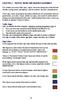 CHAPTER 2 TRAFFIC SIGNS AND HIGHWAY MARKINGS This chapter summarizes traffic signs, signals and road markings that control the flow of traffic, making streets and highways safer for motorists, bicyclists
Stop The stop sign, a red octagon with white lettering, means come to a full stop and be sure the way is clear before proceeding.
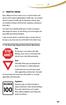 Tr a f f i c S i g n s 7 7. TRAFFIC SIGNS Many collisions and near crashes occur as a result of drivers who ignore or fail to respond appropriately to traffic signs. It is essential that the meaning of
LLC Member/Manager Disclosure Question by: Cathy Beaudoin. Jurisdiction. Date: 01 March 2011. LLC Member/Manager Disclosure 2011 March 01
 Topic: LLC Member/Manager Disclosure Question by: Cathy Beaudoin : Maine Date: 01 March 2011 Manitoba Corporations Canada Alabama Alaska Arizona Arkansas California Our statement of information (aka annual
Traffic controllers and speed zones
 Section 8 Traffic controllers and speed zones 8.1 Traffic Controllers 8.1.1 General (AS 4.10.2) (a) Equipment Traffic controllers shall wear approved high visibility clothing and shall control traffic
Village of Fox River Grove Automated Red Light Enforcement Program. OPTION I. Pay the Fine
 Frequently Asked Questions: Village of Fox River Grove Automated Red Light Enforcement Program What do I do if I receive a Notice of Violation? How much is the fine? The fine is $100.00 for each violation.
CHAPTER 11: PEDESTRIAN SIGNS AND SIGNALS
 CHAPTER 11: PEDESTRIAN SIGNS AND SIGNALS Traffic signs and signals should be useful for all pedestrians. It is essential to provide signals that are phased and timed to allow senior citizens, children,
REPORT OF FINDINGS NURSING FACILITY STAFFING SURVEY 2010
 REPORT OF FINDINGS NURSING FACILITY STAFFING SURVEY 2010 October, 2011 ABSTRACT Approximately 2 million workers were employed at nursing facilities across the United States in 2010. 1.3 million nursing
Utilizing Right of Way to Generate Revenue
 Utilizing Right of Way to Generate Revenue Requested by: State of Georgia Survey Deadline: November 15, 2011 1. Does your state have any Alternative Uses that generate a revenue stream. 2. If yes, please
Florida Class E Knowledge Exam Road Rules Practice Questions www.gdlinstitute.org
 If you purchase the Value Package from GDL Institute, over 100 additional practice questions are included at no additional cost. Use discount code PQ10 and receive 10% off of the package price! 1. If you
REPORT OF FINDINGS 2008 NURSING FACILITY STAFF VACANCY, RETENTION AND TURNOVER SURVEY
 REPORT OF FINDINGS 2008 NURSING FACILITY STAFF VACANCY, RETENTION AND TURNOVER SURVEY American Health Care Association Department of Research October, 2010 ABSTRACT Approximately 2 million workers were
INSTRUCTOR S GUIDE. Stay on the Right Track Highway-Railway Crossing Awareness Training for Newly Licensed Drivers
 INSTRUCTOR S GUIDE Stay on the Right Track Highway-Railway Crossing Awareness Training for Newly Licensed Drivers WHAT WE DO Operation Lifesaver is a nationwide, non-profit public information and education
Three-Year Moving Averages by States % Home Internet Access
 Three-Year Moving Averages by States % Home Internet Access Alabama Alaska Arizona Arkansas California Colorado Connecticut Delaware Florida Georgia Hawaii Idaho Illinois Indiana Iowa Kansas Kentucky Louisiana
Public School Teacher Experience Distribution. Public School Teacher Experience Distribution
 Public School Teacher Experience Distribution Lower Quartile Median Upper Quartile Mode Alabama Percent of Teachers FY Public School Teacher Experience Distribution Lower Quartile Median Upper Quartile
Safety Engineering Policy Memorandum
 Safety Engineering Policy Memorandum SAFETY 2-13 Automated Traffic Law Enforcement Systems: Red Light Running (RLR) Camera Enforcement Systems and Automated Railroad Grade Crossing (RGC) Enforcement Systems
2015 Fall Asphalt Conference VDOT 2016 Traffic Engineering Specification Revisions and Work Zone Reminders
 2015 Fall Asphalt Conference VDOT 2016 Traffic Engineering Specification Revisions and Work Zone Reminders Harry A. Campbell, P. E., Central Office, Traffic Engineering Division - October 6, 2015 2016
A GUIDE TO VOTING LEAVE LAWS BY STATE
 State Alabama Public and private s Time necessary to vote, not exceeding one hour, unless employee has two hours before work or after work available to vote. Alaska All s Not specified, but must allow
Transportation Management Plan Overview. Module 3
 Transportation Management Plan Overview Module 3 Module Outline TMPs and the WZ Rule What is a TMP? Why TMPs? When to Develop TMPs State-of-the-Practice Tools Tips TMP Overview 2 TMP Beginnings Idea for
WORK ZONE SAFETY & MOBILITY GUIDANCE DOCUMENT
 WORK ZONE SAFETY & MOBILITY GUIDANCE DOCUMENT August 2007 Prepared by: Vermont Agency of Transportation The following document was drafted in response to updates made to the work zone regulations at 23
NON-RESIDENT INDEPENDENT, PUBLIC, AND COMPANY ADJUSTER LICENSING CHECKLIST
 NON-RESIDENT INDEPENDENT, PUBLIC, AND COMPANY ADJUSTER LICENSING CHECKLIST ** Utilize this list to determine whether or not a non-resident applicant may waive the Oklahoma examination or become licensed
High Risk Health Pools and Plans by State
 High Risk Health Pools and Plans by State State Program Contact Alabama Alabama Health 1-866-833-3375 Insurance Plan 1-334-263-8311 http://www.alseib.org/healthinsurance/ahip/ Alaska Alaska Comprehensive
Highway-Rail Grade Crossing Training for School Bus Drivers
 D E C I D E S M A R T, A R R I V E S A F E Highway-Rail Grade Crossing Training for School Bus Drivers Presented by Operation Lifesaver, Inc. in cooperation with the National Association of State Directors
FLAGGER TRAINING MANUAL
 FLAGGER TRAINING MANUAL June 2012 (Rev. December 2012) INSTRUCTIONS This manual is for self-training. Everyone working as a flagger on Colorado Highway projects will have studied this document and successfully
Best Practice For Selecting Bus Stop Locations
 Best Practice For Selecting Bus Stop Locations There is no perfect school bus stop, because it is impossible to eliminate all potential hazards, but guidelines and training are still necessary to ensure
Fuel Taxes: December 2012. A State-by-State Comparison
 Fuel Taxes: A -by- Comparison December 2012 The 18th Amendment to the Washington Constitution dedicates motor fuel tax collections to highway purposes. Strategic Planning and Finance Number of s Fuel
Reference Guide to Work Zone Traffic Control Texas Engineering Extension Service (TEEX)
 Reference Guide to Work Zone Traffic Control Texas Engineering Extension Service (TEEX) Infrastructure Training & Safety Institute (ITSI) Material in this guide is largely extracted from the March, 2006
Compulsory Auto Insurance and Financial Responsibility Laws State Reporting Programs
 NATIONAL CONFERENCE OF STATE LEGISLATURES EMPLOYMENT AND INSURANCE PROGRAM Compulsory Auto Insurance and Laws State Reporting Programs 1 Alabama 32-7-6 32-7A-6 2000 32-7A-7 32-7A-7 Alaska 28.20 28.22.011
STATE MOTORCYCLE LEMON LAW SUMMARIES
 STATE MOTORCYCLE LEMON LAW SUMMARIES The Federal Lemon Law covers motorcycles and each state also has its own unique Lemon Law. In the chart below, Covered means whether or not a motorcycle is normally
Supplier Business Continuity Survey - Update Page 1
 Supplier Business Continuity Survey - Update Page 1 Supplier Business Continuity Survey A response is required for every question General Information Supplier Name: JCI Supplier Number: Supplier Facility
Impacts of Sequestration on the States
 Impacts of Sequestration on the States Alabama Alabama will lose about $230,000 in Justice Assistance Grants that support law STOP Violence Against Women Program: Alabama could lose up to $102,000 in funds
Recruitment and Retention Resources By State List
 Recruitment and Retention Resources By State List Alabama $5,000 rural physician tax credit o http://codes.lp.findlaw.com/alcode/40/18/4a/40-18-132 o http://adph.org/ruralhealth/index.asp?id=882 Area Health
City of Auburn Americans with Disabilities Act (ADA) Transition Plan for Curb Ramps, Sidewalks, and Pedestrian Signals ADA TRANSITION PLAN
 Americans with Disabilities Act (ADA) Transition Plan for Curb Ramps, Sidewalks, and Pedestrian Signals ADA TRANSITION PLAN December 21, 2009 Public Works Department 171 N. Ross Street, Suite 200 Auburn,
COURIERS: INDEPENDENT CONTRACTORS OR EMPLOYEES? A STATE-BY-STATE SURVEY OF UNEMPLOYMENT COMPENSATION LAWS
 COURIERS: INDEPENDENT CONTRACTORS OR EMPLOYEES? A STATE-BY-STATE SURVEY OF UNEMPLOYMENT COMPENSATION LAWS Charles M. Watkins Webster, Chamberlain & Bean Washington, D.C. Introduction The purpose of this
Signs, Pavement Markings, and Work Zones. Signs, Pavement Markings, and Work Zones
 Signs, Pavement 3 Signs, Pavement 77 3 Signs, Pavement This chapter includes information on highway signs that are intended to guide and inform you while you are driving. It includes information on the
Question by: Karon Beyer. Date: March 28, 2012. [LLC Question] [2012-03-29]
![Question by: Karon Beyer. Date: March 28, 2012. [LLC Question] [2012-03-29]](/thumbs/39/18786001.jpg "Question by: Karon Beyer. Date: March 28, 2012. [LLC Question] [2012-03-29]") Topic: LLC Question Question by: Karon Beyer : Florida Date: March 28, 2012 Manitoba Corporations Canada Alabama Alaska Arizona Arkansas California Colorado Arizona uses "manager" or "member," but not
Topic: LLC Question Question by: Karon Beyer : Florida Date: March 28, 2012 Manitoba Corporations Canada Alabama Alaska Arizona Arkansas California Colorado Arizona uses "manager" or "member," but not
We do require the name and mailing address of each person forming the LLC.
 Topic: LLC Managers/Members Question by: Jeff Harvey : Idaho Date: March 7, 2012 Manitoba Corporations Canada Alabama Alaska Arizona Arkansas California Colorado Arizona requires that member-managed LLCs
Mobile Emergency Response User Guide
 Mobile Emergency Response User Guide Table of Contents Introduction... 3 What s in the Box... 4 Mobile Emergency Response Features... 5 Connecting Your ADT Mobile Emergency Response System... 6 Using the
Englishinusa.com Positions in MSN under different search terms.
 Englishinusa.com Positions in MSN under different search terms. Search Term Position 1 Accent Reduction Programs in USA 1 2 American English for Business Students 1 3 American English for Graduate Students
NCSL Capitol Security Survey (2009 2010)
 NCSL Capitol Security Survey (2009 2010) 1. Please list your state Alabama 2 3% Alaska 1 2% Arizona 0 0% Arkansas 1 2% California 1 2% Colorado 3 5% Connecticut 0 0% Delaware 1 2% Florida 1 2% Georgia
APPENDIX 6-A. DETAILED DATA FOR EQUIPMENT PRICE MARKUPS TABLE OF CONTENTS
 APPENDIX 6-A. DETAILED DATA FOR EQUIPMENT PRICE MARKUPS TABLE OF CONTENTS 6-A.1 6-A.2 6-A.3 6-A.4 6-A.5 6-A.6 DETAILED WHOLESALER COST DATA... 6-A-1 DETAILED MECHANICAL CONTRACTOR DATA... 6-A-2 DETAILED
Chex Systems, Inc. does not currently charge a fee to place, lift or remove a freeze; however, we reserve the right to apply the following fees:
 Chex Systems, Inc. does not currently charge a fee to place, lift or remove a freeze; however, we reserve the right to apply the following fees: Security Freeze Table AA, AP and AE Military addresses*
Staying alert A guide to passenger security
 Staying alert A guide to passenger security GO Safely GO Transit is one of the safest transit systems in North America. Still, we have to be prepared for unexpected incidents. Your safety and security
SECTION 109 HOST STATE LOAN-TO-DEPOSIT RATIOS. The Board of Governors of the Federal Reserve System (Board), the Federal Deposit
 SECTION 109 HOST STATE LOAN-TO-DEPOSIT RATIOS The Board of Governors of the Federal Reserve System (Board), the Federal Deposit Insurance Corporation (FDIC), and the Office of the Comptroller of the Currency
Net-Temps Job Distribution Network
 Net-Temps Job Distribution Network The Net-Temps Job Distribution Network is a group of 25,000 employment-related websites with a local, regional, national, industry and niche focus. Net-Temps customers'
Summary Chart of Key Provisions of State Motorcycle Safety Laws
 State Alabama 1 Law Universal Requirements All cabs more more than 4 Alaska Age-specific Included Younger than 18 more than $300 / Arizona Age-specific Younger than 18 more than $250 Arkansas Age-specific
MAINE (Augusta) Maryland (Annapolis) MICHIGAN (Lansing) MINNESOTA (St. Paul) MISSISSIPPI (Jackson) MISSOURI (Jefferson City) MONTANA (Helena)
 HAWAII () IDAHO () Illinois () MAINE () Maryland () MASSACHUSETTS () NEBRASKA () NEVADA (Carson ) NEW HAMPSHIRE () OHIO () OKLAHOMA ( ) OREGON () TEXAS () UTAH ( ) VERMONT () ALABAMA () COLORADO () INDIANA
SECTION 109 HOST STATE LOAN-TO-DEPOSIT RATIOS. or branches outside of its home state primarily for the purpose of deposit production.
 SECTION 109 HOST STATE LOAN-TO-DEPOSIT RATIOS The Board of Governors of the Federal Reserve System, the Federal Deposit Insurance Corporation, and the Office of the Comptroller of the Currency (the agencies)
Workers Compensation Cost Data
 Workers Compensation Cost Data Edward M. Welch Workers Compensation Center School of Labor and Industrial Relations Michigan State University E-mail: [email protected] Web Page: http://www.lir.msu.edu/wcc/
Guidelines for Traffic Controllers
 Guidelines for Traffic Controllers keeping victorians connected 2 IMPORTANT Before undertaking the tasks of a Traffic Controller on a public road, a person must successfully complete an accredited Traffic
Testimony of Insurance Agents and Brokers of Pennsylvania. Before the House Insurance and Transportation Committees April 11, 2016
 ... ~,.. Insurance Agents& Brokers of Pennsylvania Testimony of Insurance Agents and Brokers of Pennsylvania Before the House Insurance and Transportation Committees April 11, 2016 Regarding HB 1258 and
MassDOT s Work Zone Transportation Management Procedures. By: Neil Boudreau, MassDOT and Michael Sutton, P.E., VHB
 MassDOT s Work Zone Transportation Management Procedures By: Neil Boudreau, MassDOT and Michael Sutton, P.E., VHB What is the Work Zone Safety and Mobility Rule? 23 CFR 630 Subpart J, effective October
The Obama Administration and Community Health Centers
 The Obama Administration and Community Health Centers Community health centers are a critical source of health care for millions of Americans particularly those in underserved communities. Thanks primarily
Chapter Forty-seven. RURAL TWO-LANE/MULTILANE STATE HIGHWAYS (New Construction/Reconstruction) BUREAU OF DESIGN AND ENVIRONMENT MANUAL
 Chapter Forty-seven RURAL TWO-LANE/MULTILANE STATE HIGHWAYS (New Construction/Reconstruction) BUREAU OF DESIGN AND ENVIRONMENT MANUAL Illinois RURAL TWO-LANE/MULTILANE STATE HIGHWAYS December 2009 2 Illinois
DOT HS 812 018 April 2014
 TRAFFIC SAFETY FACTS 2012 Data DOT HS 812 018 April 2014 Bicyclists and Other Cyclists In 2012, 726 pedalcyclists were killed and an additional 49,000 were injured in motor vehicle traffic crashes. Pedalcyclist
BUSINESS DEVELOPMENT OUTCOMES
 BUSINESS DEVELOPMENT OUTCOMES Small Business Ownership Description Total number of employer firms and self-employment in the state per 100 people in the labor force, 2003. Explanation Business ownership
SIGHT DISTANCE. Presented by Nazir Lalani P.E. Traffex Engineers Inc. [email protected] WHY IS SIGHT DISTANCE SO IMPORTANT?
 SIGHT DISTANCE Presented by Nazir Lalani P.E. Traffex Engineers Inc. [email protected] WHY IS SIGHT DISTANCE SO IMPORTANT? Drivers must be able to: Stop for objects in the roadway Stop for stationary
What to Know About State CPA Reciprocity Rules. John Gillett, PhD, CPA Chair, Department of Accounting Bradley University, Peoria, IL
 What to Know About State CPA Reciprocity Rules Paul Swanson, MBA, CPA Instructor of Accounting John Gillett, PhD, CPA Chair, Department of Accounting Kevin Berry, PhD, Assistant Professor of Accounting
Attachment A. Program approval is aligned to NCATE and is outcomes/performance based
 Attachment A The following table provides information on student teaching requirements across several states. There are several models for these requirements; minimum number of weeks, number of required
State-Specific Annuity Suitability Requirements
 Alabama Alaska Arizona Arkansas California Colorado Connecticut Delaware District of Columbia Effective 10/16/11: Producers holding a life line of authority on or before 10/16/11 who sell or wish to sell
NATSAP/ IECA Best Practices Between Educational Consultants and Program Members
 NATSAP/ IECA Best Practices Between Educational Consultants and Program Members 2015 National Association of Therapeutic Schools and Programs Independent Educational Consultants Association 1 Contents
Wireless Alarm System. Panic Button. User s Manual. Choice ALERT. Control all sensors, accessories and remote transmitters from one location
 Wireless Alarm System Panic Button User s Manual Choice ALERT Control all sensors, accessories and remote transmitters from one location Table of Contents Important Safeguards 4 Introduction 5 Activating
Data show key role for community colleges in 4-year
 Page 1 of 7 (https://www.insidehighered.com) Data show key role for community colleges in 4-year degree production Submitted by Doug Lederman on September 10, 2012-3:00am The notion that community colleges
Does your agency have authority to prevent governing people from opening another business when significant tax debts are owed?
 Topic: Question by: : Turn and Burn Entities? Patrick Reed Washington Date: November 1, 2013 Manitoba Corporations Canada Alabama Alaska Arizona Arkansas California Colorado Connecticut Delaware Page 1
Traffic Safety Facts 2008 Data
 Traffic Safety Facts 2008 Data Bicyclists and Other Cyclists DOT HS 811 156 Bicyclists and other cyclists include riders of two-wheel nonmotorized vehicles, tricycles, and unicycles powered solely by pedals.
Alabama Kentucky North Dakota Alaska Kentucky Ohio Arkansas Louisiana Oklahoma
 Alabama Kentucky rth Dakota Alaska Kentucky Ohio Arkansas Louisiana Oklahoma California (Assault) Maine Oregon California (Battery Maryland Pennsylvania Colorado Massachusetts Rhode Island Connecticut
Chapter 3. Methodology
 22 Chapter 3 Methodology The purpose of this study is to examine the perceptions of selected school board members regarding the quality and condition, maintenance, and improvement and renovation of existing
How To Improve Safety
 Collision Diagrams Collision diagrams are used to display and identify similar accident patterns. They provide information on the type and number of accidents; including conditions such as time of day,
The Week. Field Served: A comprehensive, balanced distillation of national and international news, opinions and ideas.
 The Week MAGAZINE Publisher s Statement 6 months ended June 30, 2014 Subject to Audit Field Served: A comprehensive, balanced distillation of national and international news, opinions and ideas. Published
Guelph Driving School. 246 WOOLWICH ST. Unit C Guelph, Ontario N1H 3V9. Office: 519-829-8801 Cell: 519-362-5664. Email: info@guelphdrivingschool.
 246 WOOLWICH ST. Unit C Guelph, Ontario N1H 3V9 Office: 519-829-8801 Cell: 519-362-5664 Email: [email protected] Dear Student, We would like to take this opportunity to thank you for choosing
How To Design A Crash Investigation Site
 CHAPTER 7 CRASH INVESTIGATION SITES December, 2000 7. Crash Investigation Sites (CIS) 7.1. Introduction and Usage The idea of "crash investigation sites" or areas outside of the freeway mainline where
********************
 THE SURETY & FIDELITY ASSOCIATION OF AMERICA 1101 Connecticut Avenue, N.W., Suite 800 Washington, D. C. 20036 Phone: (202) 463-0600 Fax: (202) 463-0606 Web page: www.surety.org APPLICATION Application
TRAFFIC SAFETY FACTS. Alcohol-Impaired Driving. 2009 Data
 TRAFFIC SAFETY FACTS 2009 Data Alcohol-Impaired Driving DOT HS 811 385 In 2009, there were 10,839 fatalities in crashes involving a driver with a BAC of.08 or higher 32 percent of total traffic fatalities
Utility Work Zone Traffic Control
 Utility Work Zone Traffic Control Guidelines Prepared for: United States Department of Transportation Federal Highway Administration Washington, D.C. Prepared by: Wayne State University Transportation
Merton Parking Service CCTV Enforcement Manual
 Merton Parking Service CCTV Enforcement Manual Version 1.3 April 2013 Introduction Legislation Data protection Health & Safety CCCTV camera equipment Mobile CCTV vehicles CCTV control room CCTV evidence
US and Canada Child Safety Seat Law Guide
 US and Canada Child Safety Seat Law Guide For informational purposes only. Please consult local authorities for further interpretation and current status. As of April 2016. Extended Rear-Facing is the
Traffic Safety Facts 2008 Data
 Traffic Safety Facts 2008 Data Alcohol-Impaired Driving DOT HS 811 155 In 2008, there were 11,773 fatalities in crashes involving a driver with a BAC of.08 or higher 32 percent of total traffic fatalities