
PRACTICE GUIDELINE TITLE: INTRAVENOUS LINE INSERTION: PERIPHERAL AND CENTRAL
|
|
|
- Lester Washington
- 9 years ago
- Views:
Transcription
1 PRACTICE GUIDELINE Effective Date: Manual Reference: Deaconess Trauma Services TITLE: INTRAVENOUS LINE INSERTION: PERIPHERAL AND CENTRAL PURPOSE: To outline the indications and options for intravenous access, provide guidelines for the performance of procedures, and provide emergent intravenous access to trauma patients. DEFINITIONS: 1. Intravenous access: A catheter that has been placed in a sterile manner into a vein to provide a route by which fluid, blood product and medications can be administered. 2. Peripheral: A superficial vein of the arm, hand, neck or foot that can be accessed percutaneously. 3. Central: The subclavian, jugular or femoral vein that can be accessed percutaneously: the saphenous or brachial vein that is accessed with a cut-down. GUIDELINES: 1. In general, intravenous access should be obtained early in the resuscitation of all trauma patients. The easiest site should be used first, and usually this us the forearm, or antecubital veins. If these are difficult to use, then consideration should be given to alternative sites including: a. Femoral vein. b. Subclavian vein. c. Internal jugular vein. d. Saphenous vein: i. At the ankle. ii. At the groin. 2. For trauma patients, the largest IV that is feasible should be used. In peripheral sites, this will be a 14 or 16 gauge IV line. For central vein use, this will be a multi-lumen catheter. 3. Sterility is important; however, getting the line in is even more important. Do your best to maintain sterile conditions but do not let it impair the urgency with which a line should be inserted. 4. Line placements: a. Peripheral IV: i. Two 14 or 16 gauge angiocaths in all adult patients. ii. All IV s should be inserted after adequate skin prep with chloraprep. iii. Peripheral IV s in children should utilize at least an 18 gauge angiocath whenever possible. iv. Avoid placement in an injured extremities.
2 b. Saphenous vein cut-down: i. Indications: a) Cardiac arrest from exsanguinations. b) Inability to obtain adequate IV flow from other IV sites. ii. Provides: Line out of way of chest, upper arms and neck. iii. Preparation: a) Cut-down tray, silk ligatures, xylocaine, chloraprep. b) IV tubing, extension tubing, 14 gauge intracath. c) Lactated ringers or saline for infusion. iv. Procedure: a) Select site two finger-breadths superior and two finger-breadths anterior to the medial malleolus (ankle) OR two finger-breadths lateral and two fingerbreadths caudal to the public tubercle (groin). b) Prep with chloraprep. c) Infiltrate area with 1% xylocaine. d) Transverse incision (ankle) or curvilinear incision (groin) over saphenous vein. e) Bluntly dissect saphenous vein and encircle with proximal and distal silk ligature. f) Tie distal silk ligature. g) Partially incise vein with #11 scalpel blade. h) Insert #14 gauge intracath or IV connecting tubing and tie proximal silk ligature. i) Run IV fluid wide open, with pressure bag if necessary. j) Close cut down incision with suture of choice. k) Apply sterile dressing. c. Femoral access: i. Should be done with an introducer or a 14 gauge angiocath in adults and a 16 or 18 gauge in children. ii. The area is prepped with betadine and a syringe is placed on the angiocath. iii. The angiocath or needle is inserted while aspira- iv. ting the syringe. When blood return is obtained, the catheter is gently inserted into the vein or a wire is placed for introducer insertion. d. Subclavian access: i. Indications: for adequate fluid administration, introducer catheters must be used. ii. Procedure:
3 a) With the patient in mild Trendelenberg, prepare the skin with chloraprep and drape the shoulder and chest with towels. b) Infiltrate the area where the catheter is to be inserted and the clavicular periosteum with 1% lidocaine. c) Note the landmarks: i) The junction of medial and middle onethird of the clavicle. ii) The minor supraclavicular fossa as defined by the sternal and clavicular heads of the sterno-cleidomastoid muscle and the superior border of the clavicle. d) The kit is opened and the syringe, needle and wire are removed. e) A 10 ml syringe (non-luer lock) is connected to the needle. f) With the needle perpendicular to the patient, the skin is penetrated for approximately 1 cm. After the tip of the needle has reached the clavicle, the inferior border is located by gentle probing and then the needle is advanced posterior to the clavicle. The entire maneuver so far is cm from the skin surface. g) The direction of the needle is then changed and aimed at the suprasternal notch. At this time, the syringe is almost parallel to the patient s skin surface since the needle has to be as close to the clavicle as possible. h) While applying gentle suction, the needle is slowly advanced in the direction of the notch, which is superior and medial to the site of puncture. Upon entering the vein, free flow of blood should be noted. i) The syringe is removed and the gloved thumb promptly applied over the open hub to avoid air embolus. j) The wire, previously placed in readiness, is threaded through the needle and advanced into the right atrium. If any resistance is encountered, STOP! k) The needle is removed from the wire, making sure that the wire is always controlled. A small stab incision is made next to the wire and the dilator placed over the wire. Gentle rotation usually facilitates entry of the dilator into the vein. The dilator is with drawn and the
4 iii. iv. introducer/dilator unit is inserted over the wire. The dilator is removed. l) The line is then flushed and sutured into place. m) A sterile dressing is applied. n) Chest x-ray is done to confirm placement. Complications: a) Venous hematoma b) Arterial puncture c) Pneumothorax d) Hemothorax e) Unsuccessful puncture The vein is usually reached by the last 2 cm of the needle and depression of the skin may be required. v. Right subclavian vein puncture is easier to perform for a right-handed person and also reduces the risk of thoracic duct puncture. If the patient has a pre-existing pneumothorax, use that side to place the subclavian catheter. Try to avoid inserting subclavian lines in the areas of clavicle fractures or in close proximity to penetrating trauma. REFERENCES: Deaconess Trauma Guideline Manual, RESUSCITATION PRIORITIES FOR THE MULTIPLE OR SERIOUSLY INJURED PATIENT. REVIEWED DATE JAN 05 JAN 08 JAN 06 JAN 07 REVISED DATE
5
Vascular Access. Chapter 3
 Vascular Access Chapter 3 Vascular Access Introduction Obtaining vascular access in infants and children can be difficult even under optimal conditions. Attempting emergent access in a hypotensive, struggling
Central Venous Access
 Central Venous Access Ian Rigby, Daniel Howes, Jason Lord, Ian Walker Resuscitation Education Consortium/Kingston Resuscitation Institute Introduction A great deal of this course is geared toward making
X-Plain Subclavian Inserted Central Catheter (SICC Line) Reference Summary
 X-Plain Subclavian Inserted Central Catheter (SICC Line) Reference Summary Introduction A Subclavian Inserted Central Catheter, or subclavian line, is a long thin hollow tube inserted in a vein under the
Policies & Procedures. I.D. Number: 1073
 Policies & Procedures Title:: CENTRAL VENOUS CATHETERS INSERTION ASSISTING I.D. Number: 1073 Authorization [] Pharmacy Nursing Committee [] MAC Motion #: [x] SHR Nursing Practice Committee Source: Nursing
Procedure -8. Intraosseous Infusion Adult and Pediatric EZIO. Page 1 of 7 APPROVED:
 Page 1 of 7 Intraosseous Infusion Adult and Pediatric APPROVED: EMS Medical Director EMS Administrator 1. Goals/Introduction: 1.1 Intraosseous (IO) infusion provides an effective alternative means of providing
Central Venous Catheters for Veterinary Technicians
 Central Venous Catheters for Veterinary Technicians Erica Mattox, CVT, VTS (ECC) Central venous catheterization is passing a long catheter into a large vein, such as the jugular or caudal vena cava. This
Difficult Vascular Access Alternative Approaches & Troubleshooting Tips
 Difficult Vascular Access Alternative Approaches & Troubleshooting Tips Michelle Lin, MD Associate Professor of Clinical Emergency Medicine UC San Francisco - San Francisco General Hospital [email protected]
Ankle Block. Indications The ankle block is suitable for the following: Orthopedic and podiatry surgical procedures of the distal foot.
 Ankle Block The ankle block is a common peripheral nerve block. It is useful for procedures of the foot and toes, as long as a tourniquet is not required above the ankle. It is a safe and effective technique.
Peripherally Inserted Central Catheter (PICC) for Outpatient
 Peripherally Inserted Central Catheter (PICC) for Outpatient Introduction A Peripherally Inserted Central Catheter, or PICC line, is a thin, long, soft plastic tube inserted into a vein of the arm. It
Clinician Competency:
 Thanks to CR Bard Clinician Competency: INS (Intravenous Nursing Society) recommends that an institution create a set criteria to evaluate the competency of nurses learning to place PICC Line / Midline
Aspira* Pleural Drainage Catheter
 Aspira* Pleural Drainage Catheter Instructions For Use Access Systems Product Description: The Aspira* Pleural Drainage Catheter is a tunneled, long-term catheter used to drain accumulated fluid from the
Placement of Epidural Catheter for Pain Management Shane Bateman DVM, DVSc, DACVECC
 Placement of Epidural Catheter for Pain Management Shane Bateman DVM, DVSc, DACVECC Indications: Patients with severe abdominal or pelvic origin pain that is poorly responsive to other analgesic modalities.
Current Status: Draft PolicyStat ID: 1547809 EZIO
 Current Status: Draft PolicyStat ID: 1547809 Originated: Reviewed: Last Revised Or Downloaded: Expiration: Document Area: N/A N/A N/A N/A Nursing POLICY STATEMENT: EZIO In the event that peripheral venous
PICC & Midline Catheters Patient Information Guide
 PICC & Midline Catheters Patient Information Guide medcompnet.com 1 table of contents Introduction 4 What is a PICC or Midline Catheter? 4 How is the PICC or Midline Catheter Inserted? 6 Catheter Care
PERIPHERALLY INSERTED CENTRAL CATHETERS (PICC) Fong So Kwan APN, Haematology unit Medical Department, QMH
 PERIPHERALLY INSERTED CENTRAL CATHETERS (PICC) Fong So Kwan APN, Haematology unit Medical Department, QMH 1 What is a PICC catheter? Primary vascular access device since their introduction in the mid-1970s,
I-140 Venipuncture for Blood Specimen Collection
 I-140 Venipuncture for Blood Specimen Collection Purpose Obtain a blood specimen by venipuncture for laboratory analysis using aseptic technique. Applies To Registered Nurses Licensed Practical/Vocational
Flushing and Dressing a Peripherally Inserted Central Catheter (PICC Line): a Guide for Nurses
 Flushing and Dressing a Peripherally Inserted Central Catheter (PICC Line): a Guide for Nurses Information for Nurses Introduction This information is for community nursing staffs who have been asked to
SOP 001: POLYCLONAL ANTIBODY PRODUCTION IN RABBITS
 SOP 001: POLYCLONAL ANTIBODY PRODUCTION IN RABBITS PURPOSE: To describe the proper procedure to follow when injecting adjuvants into rabbits for the production of polyclonal antibodies. POLICY: The improper
PERCUTANEOUS PD CATHETER IMPLANTATION SYSTEM
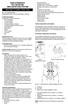 Place on Patient s Cranial Border of the Pubic Symphysis IMPLANTATION STENCIL Classic Exit Cuff Site PERCUTANEOUS PD CATHETER IMPLANTATION SYSTEM INSTRUCTIONS FOR USE VP 511 and VP-511M Implantation System
Vaxcel PICCs Valved and Non-Valved. A Patient s Guide
 Vaxcel PICCs Valved and Non-Valved A Patient s Guide Information about your Vaxcel PICC is available by calling the Navilyst Medical Vascular Access Information Line 800.513.6876 Vaxcel Peripherally Inserted
Aspira* Peritoneal Drainage Catheter
 Aspira* Peritoneal Drainage Catheter Instructions For Use Access Systems Product Description: The Aspira* Peritoneal Drainage Catheter is a tunneled, long-term catheter used to drain accumulated fluid
Measuring central venous pressure
 Elaine Cole Senior lecturer ED/Trauma, City University Barts and the London NHS Trust 1 Learning outcomes That the clinician can: Describe the sites of central venous catheterisation Understand why central
A PROCEDURAL GUIDE TO MIDLINE CATHETER INSERTION
 A PROCEDURAL GUIDE TO MIDLINE CATHETER INSERTION See Also CPG midline catheters for indications, contraindications and post insertion management What is a midline A midline catheter is an 8-12 cm catheter
Use of Ultrasound to Guide Vascular Access Procedures
 AIUM Practice Parameter for the Use of Ultrasound to Guide Vascular Access Procedures Parameters developed in conjunction with the American Academy of Physician Assistants (AAPA), the American Association
Hickman*, Leonard* and Broviac* Central Venous Catheters
 Bard Access Systems Hickman*, Leonard* and Broviac* Central Venous Catheters Long Term Instructions For Use Table of Contents Introduction Contents Page Introduction....................................
Medical Education Policy: Central Venous Catheter (CVC) Placement
 Medical Education Policy: Central Venous Catheter (CVC) Placement Facility: CMC Origin Date: June 2015 Revision Date: Sponsor: GMEC 1. PURPOSE: Carilion Clinic is committed to excellent patient care, with
Care of your peripherally inserted central catheter
 Care of your peripherally inserted central catheter A guide for patients and their carers We care, we discover, we teach Contents What is a PICC?.... 1 How is it put in?.... 1 What are the benefits of
Morpheus SMART PICC CT Insertion Kit
 Morpheus SMART PICC CT Insertion Kit Peripherally Inserted Central Catheter INSTRUCTIONS FOR USE ANGIODYNAMICS, INC. 603 QUEENSBURY AVE. QUEENSBURY, NY 12804 U.S.A. TOLL FREE: 800-772-6446 PHONE: 518-798-1215
Femoral Nerve Block/3-in-1 Nerve Block
 Femoral Nerve Block/3-in-1 Nerve Block Femoral and/or 3-in-1 nerve blocks are used for surgical procedures on the front portion of the thigh down to the knee and postoperative analgesia. Both blocks are
PATIENT GUIDE. Understand and care for your peripherally inserted central venous catheter (PICC). MEDICAL
 PATIENT GUIDE Understand and care for your peripherally inserted central venous catheter (PICC). MEDICAL Introduction The following information is presented as a guideline for your reference. The best
Coding Central Venous Access Devices
 Coding Central Venous Access Devices Audio Seminar/Webinar August 7, 2008 Practical Tools for Seminar Learning Copyright 2008 American Health Information Management Association. All rights reserved. Disclaimer
Chester Chest Model 2400 User s Manual
 Chester Chest Model 2400 User s Manual 308 South Sequoia Parkway, Canby, Oregon 97013 USA ph. 503.651.5050 fax 503.651.5052 email [email protected] Thank You For Your Purchase! Thank you for your purchase
and Implanted Ports With Open-Ended Catheters INSTRUCTIONS FOR USE Bard Access Systems, Inc.
 and Implanted Ports With Open-Ended Catheters INSTRUCTIONS FOR USE Bard Access Systems, Inc. Implanted Ports Table of Contents Contents Introduction.................................... 1 Description Page
Guy s, King s and St Thomas Cancer Centre The Cancer Outpatient Clinic Central venous catheter: Peripherally inserted central catheter
 Guy s, King s and St Thomas Cancer Centre The Cancer Outpatient Clinic Central venous catheter: Peripherally inserted central catheter This information leaflet aims to help answer some of the questions
The 5 Rights of Intraosseous Vascular Access
 Slide 1 The 5 Rights of Intraosseous Vascular Access Thank you for taking the time to participate in Vidacare s training program on the EZ-IO vascular access system. This training program is designed to
To maintain a port of entry to venous flow when all available peripheral ports have failed.
 I. Purpose: To maintain a port of entry to venous flow when all available peripheral ports have failed. II. General Comments: Since its development, these catheters have been used with increasing frequency
Ultrasound Guided Vascular Access
 Ultrasound Guided Vascular Access 9 Hamid Shokoohi, Ali Pourmand and Keith Boniface George Washington University Medical Center, Washington DC, USA 1. Introduction Vascular access is an important procedure
An Overview of Transradial Patient Set-up. Susan R. Cooney RN,BSN,CCRN Durham VAMC Cardiac Catheterization Lab Duke University School of Nursing
 An Overview of Transradial Patient Set-up Susan R. Cooney RN,BSN,CCRN Durham VAMC Cardiac Catheterization Lab Duke University School of Nursing Advantages of the Transradial Approach from a Nursing Perspective!!
30. BASIC PEDIATRIC REGIONAL ANESTHESIA
 30. BASIC PEDIATRIC REGIONAL ANESTHESIA INTRODUCTION Military anesthesia providers often encounter pediatric patients while delivering medical care in the field. The application of regional anesthesia
Common Regional Nerve Blocks Quick Guide developed by UWHC Acute Pain Service Jan 2011
 Common Regional Nerve Blocks Quick Guide developed by UWHC Acute Pain Service Jan 2011 A single shot nerve block is the injection of local anesthetic to block a specific nerve distribution. It can be placed
PICC and Midline Catheters
 PICC and Midline Catheters Infusion RN s Deb Bucher RN BSN CRNI Dawn Finch RN CRNI Marianne Hansen RN BSN CRNI Karman Youngblood RN BS CRNI Infusion Pharmacist Kathy Cimakasky Pharm D Tamara Migut RPh
Case 2. 30 year old involved in a MVA complaining of chest pain. Bruising over the right upper chest. Your Diagnosis
 Case 2 30 year old involved in a MVA complaining of chest pain. Bruising over the right upper chest. Your Diagnosis Diagnosis: Posterior Sterno-clavicular dislocation [PSCD] A posterior sterno-clavicular
How To Treat A Heart Attack
 13 Resuscitation and preparation for anaesthesia and surgery Key Points 13.1 MANAGEMENT OF EMERGENCIES AND CARDIOPULMONARY RESUSCITATION ESSENTIAL HEALTH TECHNOLOGIES The emergency measures that are familiar
All About Your Peripherally Inserted Central Catheter (PICC)
 All About Your Peripherally Inserted Central Catheter (PICC) General Information Intravenous (IV) therapy is the delivery of fluid directly into a vein. An intravenous catheter is a hollow tube that is
NHS FORTH VALLEY Chest Drain Insertion by Seldinger Method (Pigtail drains)
 NHS FORTH VALLEY Chest Drain Insertion by Seldinger Method (Pigtail drains) Date of First Issue 12/12/2012 Approved 12/12/2012 Current Issue Date 12/12/2012 Review Date 12/12/2014 Version 1 EQIA Yes 14/12/2012
Ultrasound-Guided Procedures in the Emergency Department Needle Guidance and Localization
 Ultrasound-Guided Procedures in the Emergency Department Needle Guidance and Localization Alfredo Tirado, MD a, *, Arun Nagdev, MD b, Charlotte Henningsen, MS a,c, Pav Breckon, MD d, Kris Chiles, MD b
Arrow NextStep and Arrow Cannon II Plus Chronic Hemodialysis Catheters
 Retrograde-Tunneling Insertion Poster Arrow NextStep and Arrow Cannon II Plus Chronic Hemodialysis Catheters Arrow Retrograde-Tunneling catheters Luer Lock caps Color-coded Luer Lock caps Arterial port
TREATMENT 1. Control bleeding by applying pressure over wound with Gauze Pads (Surgical Supply-4). 2. Contact Surgeon for laceration repair options.
 Page 1 of 8 pages NOTE Contact Surgeon before giving any medication marked with an asterisk. In an emergency or during Loss of Signal, begin appropriate treatment; then call Surgeon as soon as possible.
NEEDLE THORACENTESIS Pneumothorax / Hemothorax
 NEEDLE THORACENTESIS Pneumothorax / Hemothorax By: Steven Jones, NREMT-P Pneumothorax Pneumothorax is a collection of air or gas in the pleural space of the lung, causing the lung to collapse. Pneumothorax
PICCs and Midline Catheters
 Patient Education PICCs and Midline Catheters Patient s guide to PICC (peripherally inserted central catheter) and midline catheters What are PICCs and midline catheters used for? Any medicine given over
REMOVAL OF A PICC. Possible Cause Nursing Actions Prevention
 REMOVAL OF A PICC PICC lines are removed following a physician order, when therapy is completed or complications such as line sepsis, thrombosis or phlebitis, require removal. The removal of a PICC line
Right Heart Catheterization from the Arm
 Right Heart Catheterization from the Arm Mauricio G. Cohen, MD, FACC, FSCAI Director, Cardiac Catheterization Lab Associate Professor of Medicine 1 Disclosure Statement of Financial Interest Within the
Anatomical Consideration and Brachial Plexus Anesthesia. Anatomy
 Brachial Plexus Anesthesia There are four approaches to the brachial plexus. These include the interscalene, supraclavicular, infraclavicular, and axillary approach. For the purposes of this lecture we
CHEST TUBES AND CHEST DRAINAGE SYSTEMS
 CHEST TUBES AND CHEST DRAINAGE SYSTEMS Central Nursing Orientation April 2008 Revised September 2011 OBJECTIVES Describe common tubes and indications for use at LHSC Review indications and contraindications,
Intravenous Therapy. Marjorie Wiltshire, RN
 Intravenous Therapy Marjorie Wiltshire, RN :OBJECTIVES Define key terms related to intravenous therapy. Demonstrate the procedure for IV insertion, conversion to a saline lock, administration of IV fluids,
A4.7 Management of a totally occluded central catheter and persistent withdrawal occlusion (PWO)
 A4.7 Management of a totally occluded central catheter and persistent withdrawal occlusion (PWO) Types of Catheter Related Thrombotic A catheter-related thrombus may be intraluminal (inside the catheter)
Managing Your Non-Tunneled (Percutaneous) Catheter: PICC, SICC, and JCC. What is a PICC catheter?
 Managing Your Non-Tunneled The staff of the Procedure, Vascular Access, Conscious Sedation Service has written this information to explain your new PICC (peripherally inserted central catheter), SICC (subclavian
Policies and Procedures. Related to. IABP Therapy
 Policies and Procedures Related to IABP Therapy Courtesy of Datascope Corp. Clinical Support Services The following policies and procedures are intended to serve as guidelines for developing hospital policy.
Chapter 7. Expose the Injured Area
 Chapter 7 GUNSHOT WOUNDS KEY FIGURES: Entrance/exit wounds This chapter describes how to treat the external, surface wounds caused by a bullet. The evaluation for underlying injury related to gunshot wounds
Peripherally Inserted Central Catheter (PICC)
 Peripherally Inserted Central Catheter (PICC) Disclaimer This is general information developed by The Ottawa Hospital. It is not intended to replace the advice of a qualified healthcare provider. Please
by joseph e. muscolino, DO photography by yanik chauvin
 by joseph e. muscolino, DO photography by yanik chauvin body mechanics palpation of the anterior neck ESOUCES For more information go to www.medlineplus.gov and search under anterior neck. The anterior
Peripheral Venous Catheter Placement Simulator
 Attention Do not let ink from pens, newspapers, this manual or other sources come in contact with the manikin, as they cannot be cleaned the manikin skin. MW9 Peripheral Venous Catheter Placement Simulator
MISSISSIPPI BOARD OF NURSING IV THERAPY COURSE FOR THE EXPANDED ROLE LICENSED PRACTICAL NURSE COURSE OUTLINE
 THEORY MINIMUM 40 HOURS COURSE OUTLINE UNIT TOPIC HOURS* I LEGAL ASPECTS AND PRACTICE OF IV THERAPY 1 II REVIEW OF ANATOMY AND PHYSIOLOGY 6 III FLUID AND ELECTROLYTE BALANCE 10 IV EQUIPMENT AND PROCEDURES
Peripherally Inserted Central Catheter (PICC) Patient Instructions
 Patient Care Services 300 Pasteur Drive Stanford, CA 94305 Peripherally Inserted Central Catheter (PICC) Patient Instructions A Peripherally Inserted Central Catheter (PICC) is a soft flexible tube inserted
Medications or therapeutic solutions may be injected directly into the bloodstream
 Intravenous Therapy Medications or therapeutic solutions may be injected directly into the bloodstream for immediate circulation and use by the body. State practice acts designate which health care professionals
I. Questions for VAD slide program
 I. Questions for VAD slide program 1. The rate of central line associated blood stream infections (CLABSI) in the adult ICUs in Johns Hopkins Hospital is lower than the national average. 2. The mortality
If viewing a printed copy of this policy, please note it could be expired. Got to www.fairview.org/fhipolicies to view current policies.
 If viewing a printed copy of this policy, please note it could be expired. Got to www.fairview.org/fhipolicies to view current policies. Entity: Fairview Pharmacy Services Department: Fairview Home Infusion
PICC/Midclavicular/Midline Catheter
 47 PICC/Midclavicular/Midline Catheter Introduction- PICC/ MCV/ Midline You have a PICC/Midclavicular/Midline (peripherally inserted) catheter. This catheter should make receiving I.V. medicines or solutions
Nursing Management of Venous Access Devices: Peripheral IV lines
 Nursing Management of Venous Access Devices: Peripheral IV lines Mimi Bartholomay, RN, MSN, AOCN Denise Dreher,, RN, CRNI, VA-BC Theresa Evans, RN, MSN Susan Finn, RN, MSN, AOCNS Debra Guthrie, RN, CRNI
Anatomic Percutaneous Ankle Reconstruction of Lateral Ligaments (A Percutaneous Anti ROLL)
 Anatomic Percutaneous Ankle Reconstruction of Lateral Ligaments (A Percutaneous Anti ROLL) Mark Glazebrook James Stone Masato Takao Stephane Guillo Introduction Ankle stabilization is required when a patient
Upper Limb QUESTIONS UPPER LIMB: QUESTIONS
 1 Upper Limb QUESTIONS 1.1 Which of the following statements best describes the scapula? a. It usually overlies the 2nd to 9th ribs. b. The spine continues laterally as the coracoid process. c. The suprascapular
N26 Chest Tubes 5/9/2012
 Thoracic cavity, pleural space 1 Conditions requiring chest drainage_1 Air between the pleurae is a pneumothorax Occurs when there is an opening on the surface of the lung or in the airways, y, in the
02 DEPARTMENT OF PROFESSIONAL AND FINANCIAL REGULATION REGULATIONS RELATING TO ADMINISTRATION OF INTRAVENOUS THERAPY BY LICENSED NURSES
 02 DEPARTMENT OF PROFESSIONAL AND FINANCIAL REGULATION 380 BOARD OF NURSING Chapter 10: REGULATIONS RELATING TO ADMINISTRATION OF INTRAVENOUS THERAPY BY LICENSED NURSES SUMMARY: This chapter identifies
Central Venous Lines (CVP)
 2011 Central Venous Lines (CVP) Central Venous Line This pamphlet is about a central venous pressure (CVP) line and why it may be needed. We would like to encourage you to read this pamphlet. The nurses
Bard Access Systems, Inc. How to Care For Your. Nursing Guide
 Bard Access Systems, Inc. How to Care For Your Nursing Guide Table of Contents Introduction 1 Product Description Placement PowerPICC SOLO* Catheter Valve Function Indications for Use Catheter Irrigation
MODIFIED STRAYER GASTROCNEMIUS RECESSION: A Technique Guide for the Supine Positioned Patient
 C H A P T E R 4 5 MODIFIED STRAYER GASTROCNEMIUS RECESSION: A Technique Guide for the Supine Positioned Patient M. Jay Groves, IV, DPM Gastrosoleal equinus is a common deforming force on the foot and ankle.
Ward 29 guide to the safe preparation and administration of intravenous (IV) antibiotics at home
 Ward 29 guide to the safe preparation and administration of intravenous (IV) antibiotics at home Contents Page Important contact numbers 1 General information on preparing and administering IV antibiotics
A PATIENT S GUIDE TO CARDIAC CATHETERIZATION
 A PATIENT S GUIDE TO CARDIAC CATHETERIZATION The science of medicine. The compassion to heal. This teaching booklet is designed to introduce you to cardiac catheterization. In the following pages, we will
BD Saf-T-Intima. Hidden talents of BD Saf-T-Intima. BD SAF-T-Intima and SUBCUTANEOUS THERAPY REHYDRATION PALLIATIVE CARE. POST OPERATIVe PAIN RELIEF
 Hidden talents of BD Saf-T-Intima BD Saf-T-Intima SUBCUTANEOUS INFUSION REHYDRATION PALLIATIVE CARE BD SAF-T-Intima and SUBCUTANEOUS THERAPY PAEDIATRIC CARE POST OPERATIVe PAIN RELIEF BD Saf-T-Intima First
2. Does the patient have one of the following appropriate indications for placing indwelling urinary catheters?
 A. Decision to Insert a Urinary Catheter: 1. Before placing an indwelling catheter, please consider if these alternatives would be more appropriate: Bladder scanner: to assess and confirm urinary retention,
Spinal Arthrodesis Group Exercises
 Spinal Arthrodesis Group Exercises 1. Two surgeons work together to perform an arthrodesis. Dr. Bonet, a general surgeon, makes the anterior incision to gain access to the spine for the arthrodesis procedure.
1-800-962-9888. Table of Contents. Acute Vascular Access. Chronic Vascular Access
 Dialysis Products 1-800-962-9888 Table of Contents Acute Vascular Access MAHURKAR * Protection and Safety Solution (PASS) Trays... 3 Safety Catheter Insertion Tray (SCIT)... 4 Argyle Personal Protective
Section Two: Arterial Pressure Monitoring
 Section Two: Arterial Pressure Monitoring Indications An arterial line is indicated for blood pressure monitoring for the patient with any medical or surgical condition that compromises cardiac output,
Appendix L: Accessing/Deaccessing Implanted Central Venous Access Port
 Effective Date: 03/01/2008 Page 1 of 5 Recommendations for Use Insertion Considerations Implanted Port Dressing Access/ Reaccess An implanted port is strongly recommended for patients in whom more than
VENEPUNCTURE. Eileen Whitehead 2010 East Lancashire HC NHS Trust
 Eileen Whitehead 2010 East Lancashire HC NHS Trust 1 Definition The term venepuncture describes the procedure of inserting a needle into a vein, usually for the purpose of withdrawing blood for haematological,
CARE OF PERIPHERALLY INSERTED CENTRAL CATHETERS (PICC LINES)
 LEARNING MODULE FOR CARE OF PERIPHERALLY INSERTED CENTRAL CATHETERS (PICC LINES) CC 80-018 POST-ENTRY LEVEL COMPETENCY Date: July, 2004 Developed by: Maxine Young, RN Revised by: Central Venous Access
INTERDISCIPLINARY CLINICAL MANUAL Policy and Procedure
 INTERDISCIPLINARY CLINICAL MANUAL Policy and Procedure TITLE: Arterial Catheter Blood Sampling/Blood NUMBER: CC 80-005 Pressure Monitoring/Catheter Removal Effective Date: October 2014 Page 1 of 11 Applies
CMS Limitations Guide - Radiology Services
 CMS Limitations Guide - Radiology Services Starting October 1, 2015, CMS will update their existing medical necessity limitations on tests and procedures to correspond to ICD-10 codes. This limitations
Sheep@Purdue. Blood Sampling in Sheep AS-557-W
 Sheep@Purdue AS-557-W Blood Sampling in Sheep Becky Mitchell, Animal Sciences Student Mike Neary, Extension Sheep Specialist Gerald Kelly, Manager of Sheep Teaching and Research Flock Purdue University
Denver Ascites Shunt PAK
 42-2020/42-2025 15.5 Fr Denver Ascites Shunt PAK en fr de it es pt nl sv da fi no el ja Ascites Shunt Percutaneous Access Kit Kit de pose percutanée de shunt pour ascites Perkutanes Zugangs-Set für den
Lifecath Midline. A Nurses Guide to Lifecath Midline
 Lifecath Midline A Nurses Guide to Lifecath Midline [email protected] www.vygon.co.uk Lifecath Midline A Nurses Guide to Lifecath Midline This booklet provides guidance in the care and maintenance of Midline
Female Multi-Venous IV Arm Kit. Directions for Use
 Female Multi-Venous IV Arm Kit Directions for Use. 375-50001 2 Table of Contents Recommends 4 Items Included 4 Skill Taught 4 Multiple Veni-puncture 4 Instructions for Use 5 Replacing Skin and Veins 5
MegaCode Kid Advanced ECG Kid
 MegaCode Kid Advanced ECG Kid ENGLISH www.laerdal.com Directions for Use Table of Contents Items Included... 1 Skills Taught... 1 Introduction...1 Laerdal Recommends...1 SimPad Connection... 2 Intubation...
SECTION OF EMERGENCY MEDICAL SERVICES MINIMUM REQUIRED EQUIPMENT LIST PARAMEDIC
 MINIMUM REQUIRED EQUIPMENT LIST PARAMEDIC Trauma Dressing (2) Isolation Kits (2) OB Kit (1) - must contain Bulb syringe Betadine Solution (1 Bottle) Hemostat Window Punch Scalpel Exam Gloves (1 Box) Sterile
Care of Your Hickman Catheter
 Care of Your Hickman Catheter Johns Hopkins Kimmel Cancer Center, Revised 7/11 Contents What is a Hickman Catheter? Page 3 Does the Catheter Limit My Activities? Page 4 How Do I Care for My Catheter? Page
Liau DW : Injuries and Liability Related to Peripheral Catheters: A Closed Claims Analysis. ASA Newsletter 70(6): 11-13 & 16, 2006.
 Citation Liau DW : Injuries and Liability Related to Peripheral Catheters: A Closed Claims Analysis. ASA Newsletter 70(6): 11-13 & 16, 2006. Full Text An anesthesiologist inserted a 14-gauge peripheral
Chapter 5. The Shoulder Joint. The Shoulder Joint. Bones. Bones. Bones
 Copyright The McGraw-Hill Companies, Inc. Reprinted by permission. Chapter 5 The Shoulder Joint Structural Kinesiology R.T. Floyd, Ed.D, ATC, CSCS Structural Kinesiology The Shoulder Joint 5-1 The Shoulder
How to care for a Midline Catheter
 How to care for a Midline Catheter Developed by the health care professionals of the IV Program with assistance from the Department of Learning and Development. All rights reserved. No part of this book
Sample Policy. Policy and Procedure PICC Line (Peripherally Inserted Central Catheter)
 Policy and Procedure PICC Line (Peripherally Inserted Central Catheter) Policy: Product Description and Indications: The Per-Q-Cath PICC Line and the Groshong PICC Line is indicated for short or long term
A. ADMINISTERING SUBCUTANEOUS MEDICATIONS INTERMITTENTLY/CONTINUOUSLY B. (SUBCUTANEOUS INFUSION) HYDRODERMOCLYSIS
 SUBCUTANEOUS THERAPY A. ADMINISTERING SUBCUTANEOUS MEDICATIONS INTERMITTENTLY/CONTINUOUSLY B. (SUBCUTANEOUS INFUSION) HYDRODERMOCLYSIS PARTS I. Purposes II. General Information III. Responsibilities IV.