
Ankara University, Geological Engineering Department, Ankara, Turkey
|
|
|
- Byron McDonald
- 9 years ago
- Views:
Transcription
1 Yerbilimleri, 36 (3), Hacettepe Üniversitesi Yerbilimleri Uygulama ve Araştırma Merkezi Bülteni Bulletin of the Earth Sciences Application and Research Centre of Hacettepe University Evaluation of Undrained Shear Strength of Fine-Grained Soils in Consideration of Soil Plasticity İnce Taneli Zeminlerin Drenajsız Kesme Dayanımının Zemin Plastikliği Açısından Değerlendirilmesi KAMİL KAYABALI 1 *, ÖZGÜR AKTÜRK 2, MUSTAFA FENER 1, AYLA BULUT ÜSTÜN 3, ORHAN DİKMEN 1, FURKAN HAMZA HARPUTLUGİL 1 1 Ankara University, Geological Engineering Department, Ankara, Turkey 2 Akdeniz University, Geological Engineering Department, Ankara, Turkey 3 Mineral Research and Exploration Institute, Ankara 06100, Turkey Geliş (received) : 13 Ekim (October) 2015 Kabul (accepted) : 15 Aralık (December) 2015 ABSTRACT Undrained shear strength (s u ) is one of the key geotechnical parameters for both natural and remolded soils. While it is basically a function of water content, it is also related to soil plasticity. There has been a long-lasting debate as to whether the s u at the plastic and liquid limits are constant and whether the ratio of the s u at the plastic limit to the s u at the liquid limit is mostly fixed to 100. While this view is embraced by a great majority of researchers, some proclaim that the range of both the s u at the plastic limit (PL) and the s u at the liquid limit (LL) is rather wide; therefore, constant values of the s u cannot be assigned for either the PL or the LL. Accordingly, the view that there is a constant ratio between the two shear strengths is invalid. The scope of this investigation is to reassess this problem using the laboratory vane shear test (VST) along with a new supplementary tool, the mud-press machine (MPM). Sixty remolded soil samples were employed as the study material. The variation of soil strength at both the plastic and liquid limit is investigated using the VST and MPM methods. While the VST method does not portray a distinctive relationship between the s u and the two Atterberg limits, the newly introduced MPM method clearly shows that there is a meaningful relationship between the extrusion force, which is considered akin to the undrained shear strength, at the Atterberg limits and the two consistency limits, particularly the liquid limit. Concerning the constant ratio between the two shear strengths, namely the one at the plastic limit to the one at the liquid limit, it was found that this ratio is a constant, but it increases with the increase in soil plasticity. Keywords: Undrained shear strength, soil plasticity, vane shear test, mud press method, remolded soils. ÖZ Drenajsız kesme dayanımı (s u ) doğal ve yoğrulmuş zeminlerin ikisi için de önemli jeoteknik parametrelerden biridir. Temelde su içeriğinin bir fonksiyonu olmakla birlikte, zemin plastikliği ile de ilişkilidir. Plastik limitte ve likit limitteki drenajsız kesme dayanımının sabit ve plastik limitteki s u nun likit limitteki s u ya oranının çoğunlukla 100 civarında olduğuna dair görüşler halen tartışılmaktadır. Çoğu araştırmacılar bu görüşe katılmakla birlikte, bazı araştırmacılar da gerek plastik limitteki (PL) ve gerekse likit limitteki (LL) drenajsız kesme dayanımının geniş bir aralıkta saçılım gösterdiğini ve bu nedenle PL ve LL için sabit bir s u değerinin olmayacağını belirtmektedirler. Buna göre, iki kesme dayanımı arasındaki sabit oran fikri de geçersizdir. Bu çalışmanın amacı, bahsedilen problemin laboratuvar kanatlı kesme deneyi (VST) ile birlikte çamur sıkıştırma düzeneği (MPM) adı verilen yeni bir düzenek kullanılarak yeniden değerlendirilmesidir. Çalışmada 60 adet yoğrulmuş zemin numunesi kullanılmıştır. VST ve MPM yöntemleri kullanılarak plastik limit ile likit limitteki zemin dayanımının değişimi incelenmiştir. VST yöntemi su ile Atterberg limitleri arasında belirgin bir özellik sergilememekle birlikte, bu çalışmada takdim edilen MPM yöntemi drenajsız kesme dayanımı ile yakın ilişkili olduğu düşünülen ekstrüzyon kuvveti ile Atterberg limitleri ve özellikle de likit lim- * K, Kayabalı [email protected]

2 122 Yerbilimleri it arasında belirgin bir ilişkinin olduğunu göstermiştir. Plastik limittteki drenajsız kesme dayanımının likit limitteki kesme dayanımına oranının da irdelendiği çalışmada bu oranın belli bir zemin için sabit olduğu fakat artan zemin plastikliği ile birlikte oranın da arttığı gözlenmiştir. Anahtar Kelimeler: Drenajsız kesme dayanımı, zemin plastikliği, kanatlı kesme deneyi, çamur sıkıştırma yöntemi, yoğrulmuş zeminler. INTRODUCTION One of the most common index properties of fine-grained soils is the undrained shear strength (s u ), which differs for natural and remolded states. The undrained shear strength of remolded soils is important in many applications, including submarine investigations of offshore structures, pile design and studies of glacial soils (Bozozuk, 1972; Kvalstad et al., 2005; Yafrate and DeJong, 2005; Kayabali and Tufenkci, 2010; O Kelly, 2013). The sleeve friction in a cone penetration test is also a function of remolded strength (Powell and Lunne, 2005). When the quality of the soil-strength data is inadequate or poor, geotechnical engineers may wish to evaluate the s u as a lower bound value in making important design decisions (Wood, 1990; Sharma and Bora, 2003; Kayabali and Tufenkci, 2010; O Kelly, 2013). The major factor affecting the s u is the moisture content. The variation of the s u with the water content has been well-documented in the geotechnical literature. A brief summary of such studies was provided by Nagaraj et al. (2012). Numerous researchers attempted to relate the undrained strength of remolded fine-grained soils to the Atterberg limits. There has been an ongoing debate regarding the s u at the Atterberg limits resulting in two distinctive views. One claims that the undrained shear strengths at the plastic limit and liquid limit are fixed, and the ratio of the former to the latter is about 100. Another claims that the range of the variation of the s u at both the liquid and plastic limits is extremely large, and an assertion cannot be made that the s u has a unique value at either the LL or PL. The earliest assignment of the undrained shear strength to a consistency limit was done in 1939 by Casagrande (Sharma and Bora, 2003), who suggested that the s u at the LL is 2.65 kpa. Skempton and Northey (1953) reported that the s u at the liquid limit ranged from 0.75 kpa to 1.75 kpa. Wroth and Wood (1978) proposed a mean value of 1.7 kpa for the s u at the LL and further assumed that the s u at the PL is 100 times higher than what it is at the LL. This 100-fold variation in the undrained shear strength has also been verified by other researchers (e.g., Belviso et al., 1985; Sharma and Bora, 2003; Lee and Freeman, 2007). A summary of the proposed s u values at the liquid limit is provided in Table 1. A great majority of researchers found that the s u at the LL ranges from 1 2 kpa. Regarding the s u at PL, most researchers have proposed that it is around kpa and mostly towards the lower bound, as shown in Table 2. In contrast to the first view, which was summarized in Table 1, some researchers argue that there is not a theoretical basis for a fixed ratio of undrained strength for the Casagrande PL and LL (e.g., O Kelly, 2013). The variation of the undrained strength ratio may be attributed to clay-mineral activity in the soil (Wood, 1990; O Kelly, 2013). It is asserted that the mechanisms controlling the undrained shear strength and liquid limit for kaolinitic soils are different from that of montmorillonitic soils (Sridharan et al., 1999; Nagaraj et al., 2012). Nagaraj et al. (2012) stated that published data from various literature sources clearly show that the variation of the undrained shear strength at the liquid limit is observed to be nearly 60 times (from as low as 0.2 kpa to as high as 12 kpa) and that at the plastic limit is more than 17 times (from 35 kpa to 600 kpa), hence no unique value of undrained shear strength can be assigned either at the liquid limit or plastic limit of soils. The authors perception is that both claims are right in a sense and that the variations of the

3 Kayabalı vd. 123 Table 1. Undrained shear strengths (s u ) at liquid limit (adapted from Kayabali and Tufenkci, 2010 and Nagaraj et al., 2012). Çizelge 1. Likit limitteki drenasız kesme dayanımları (s u ) (Kayabalı ve Tüfenkçi, 2010 ile Nagaraj vd., 2012 den alınmıştır). Source s u range (kpa) Average (kpa) Remarks Casagrande 2.65 Quoted by Sharma and Bora (2003) British Standards Skempton and Northey (1953) Soils with very different PI values Norman (1958) Seed et al. (1964) 2.5 Quoted by Whyte (1982) Youssef et al. (1965) Skopek and Ter-Stepanian (1975) 1 3 Quoted by Wroth and Wood (1978) Karlsson (1977) Quoted by Whyte (1982) Wroth and Wood (1978) 1.7 ASTM Quoted by Wroth and Wood (1978) Swedish cone 1.7 Quoted by Whyte (1982) Whyte (1982) 1.6 Federico (1983) Quoted by Sharma and Bora (2003) Wood (1985) 1.7 Quoted by Sharma and Bora (2003) Medhat and Whyte (1986) 1.6 Sharma and Bora (2003) 1.7 Houlsby (1982) Quoted by Nagaraj et al. (2012) Wasti and Bezirci (1986) Quoted by Nagaraj et al. (2012) Locat and Demers (1988) Quoted by Nagaraj et al. (2012) Sridharan and Prakash (1998) Quoted by Nagaraj et al. (2012) Kayabali and Tufenkci (2010) ratio of undrained shear strength at the plastic limit to the one at the liquid limit or the large range of undrained shear strengths at either the PL or LL are thought to emanate from soil plasticity. The scope of this investigation is to evaluate the undrained shear strengths at two Atterberg limits using the VST technique along with a newly introduced method called the mud press method. MATERIALS The nature of this investigation requires the use of soils with a wide range of plasticity, which would require visiting a number of sites to collect soil samples if the investigation were based on natural soils. Considering the practical difficulty of such a procedure and the length of time to be spent, the use of artificially prepared soil samples was chosen. To accomplish this, a

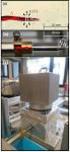
4 124 Yerbilimleri Table 2. Undrained shear strengths (s u ) at plastic limit (compiled by Kayabali and Tufenkci, 2010). Çizelge 2. Plastik limitteki drenasız kesme dayanımları (s u ) (Kayabalı ve Tüfenkçi, 2010 tarafından derlenmiştir). Source s u range (kpa) Average (kpa) Remarks British Standards (BS 1377, 1948) 110 Quoted by Whyte (1982) Skempton and Northey (1953) Quoted by Whyte (1982) Dennehy (1978) (arithmetic) 104 (geometric) Quoted by Whyte (1982) Arrowsmith (1978) Quoted by Whyte (1982) Whyte (1982) Cited as oral communication with Arrowsmith Wroth and Wood (1978) 170 Adopted as the best estimate Medhat and Whyte (1986) 110 Upon literature review Sharma and Bora (2003) 170 Cone penetration method bulk soil sample was mixed with fine sand and commercial powdered bentonite at varying drymass ratios. The final product of this procedure is 60 soil samples with liquid limits ranging from about 30 to 120, which covers the plasticity range of most soils on earth. The other materials employed in this investigation included testing tools such as a fall-cone device for measuring the liquid limit, a roll-plate device for determining the plastic limit, a miniature vane shear apparatus for testing the s u and a mud press machine (MPM) for determining a parameter similar to the s u. The use of those devices is explained in the following subsection. METHODS The liquid limits of the soil samples were determined by following the guidelines of the BS 1377 standard (British Standards Institution, 1990). The mass and the apex angle of the cone are 80 g and 30, respectively. A sufficient number of (5 8) water contents were tried to obtain a linear plot between the cone penetration depth and the water content. The reason for choosing the fall-cone method to determine the liquid limit is its superiority to the conventional Casagrande cup method, which involves a high degree of uncertainty (e.g., Belviso et al., 1985; Prakash and Sridharan, 2003). The plastic limit tests were carried out in accordance with the ASTM D-4318 standard (American Society for Testing Materials, 2001). The tests were repeated at least five times, and the average value was assigned as the plastic limit after dropping the lowest and the highest extremes. The tool used to determine the undrained shear strength of remolded fine-grained soils is the laboratory miniature vane shear device, which is a Wykeham Farrance model WF2350. The guidelines of the ASTM D4648 (ASTM, 2000) were followed for this test. The starting water content for the remolded samples to be tested using the laboratory VST is somewhat smaller than the liquid limit. The soil specimen is wetted at this water content and mixed homogeneously prior to shearing. The proceeding VST tests are carried out by adding a small amount of dry soil specimen to the previous wet mixture and remixing the new specimen, presumably at a slightly lower water content. The laboratory VST has four torque springs for different levels of soil stiffness. The appropriate spring was selected for each test so that shear failure takes place between of the sample rotation. The vane shear test was repeated at least five times for each soil sample at water contents in a range from slightly lower than the liquid limit to near the plastic limit to obtain a linear curve on a semi-logarithmic graph as shown in Figure 1, from which the y-intercept (i.e., log[a]) and

5 Kayabalı vd. 125 Figure 1. A sample plot for the results of the laboratory vane shear test. Şekil 1. Laboratuvar kanatlı kesme deneyi sonuçları için örnek bir diyagram. the slope of the curve (i.e., b) are determined. Because the slope values involve small decimals, they are represented by their inverse values (b -1 ) for practical purposes. A supplementary device called the mud press machine (MPM) (Figure 2) is introduced in support of the investigated topic. It consists mainly of a loadcell, a loading piston and a container. The container s diameter is 30 mm and has 28 holes, equally spaced at the bottom, each having a diameter of 2.5 mm. The sample preparation was done such that the pulverized soil samples were mixed at a water content slightly lower than the liquid limit. The soil specimen is placed in the container with the upper surface flattened. The piston is brought into contact with the specimen by using the loading arm. The loading is rendered manually until the wet specimen fails. The soil worms extruding from the bottom make a shape like spaghetti. The machine records the load as the test progresses. The load steadily increases as the test is in progress, and the load becomes constant at the time of failure, which is manifested by a flat curve on the load versus the time graph on the screen. The test is repeated at different water contents in the plastic range. A typical plot for the results of the MPM is presented in Figure 3, from which the extrusion forces at failure (which correspond to the y-intercept of the flat portion of the curve) are determined and plotted against the testing water content. The data pairs for this test are plotted on a semi-logarithmic graph, yielding a linear curve (Figure 4). Then, the slope (the b value) and the y-intercept (log[a]) of the curve are determined. The slope parameter (b) was taken as its inverse for the very same reason that it was done in the VST method. TEST RESULTS The results of the Atterberg limits tests are presented in Table 3. Also included in Table 3 are the coefficients of the semi-logarithmic plots of both the VST and MPM methods for 60 soil samples. As a first step towards determining the undrained shear strengths at the consistency limits, the s u values at the liquid limits were computed using the log(a) and b -1 coefficients given in Table 3 for 60 soils. Then, a plot was constructed illustrating the relationship between the s u at the liquid limit versus the liquid limit itself (Figure 5). While the plot is not very promising, it can be interpreted that the s u is high for lowplastic soils, or vice versa. Similarly, the log(a)


6 126 Yerbilimleri Figure 2. A view of the mud press machine and its components. Şekil 2. Çamur sıkma makinası ve bileşenlerinden bir görünüm. Figure 3. Plot of the results of the mud press method for various water contents. Şekil 3. Çamur sıkma yöntemi için değişik su içeriği sonuçlarına göre çizilmiş bir diyagram.

7 Kayabalı vd. 127 Figure 4. Extrusion force at failure versus the water content for a soil sample. Şekil 4. Bir zemin numunesi için yenilme anındaki ekstrüzyon kuvveti ile su içeriği ilişkisi. and b -1 coefficients were used to compute the s u values at the plastic limit for 60 soils. Another plot was constructed to illustrate the relationship between the undrained shear strength at the plastic limit and the plastic limit itself (Figure 6). Neither of these plots indicates a distinctive relationship between the two correlated parameters. The best interpretation for this plot would be the one similar to Figure 5; that is, the undrained shear strength at the plastic limit appears to decrease with the increasing soil plasticity; however, it is rather a vague conclusion. The mud press machine was employed as a supplementary tool to support the investigated topic. Similarly to what was done for the VST method, the extrusion force at the liquid limits (F LL ) and plastic limits (F PL ) were computed for 60 soils using the coefficients given in Table 3. Figure 7 shows the relationship between the extrusion force at the liquid limits versus the liquid limit itself. The quality of the correlation is remarkably good, having a regression coefficient (R 2 ) of It indicates that there is a strong relationship between the extrusion force at the liquid limit and the soil plasticity and that the extrusion force at failure decreases exponentially as the plasticity increases. A similar relationship was also sought between the extrusion force at the plastic limit and the soil plasticity. Figure 8 illustrates the computed extrusion forces at the plastic limit versus the plastic limit itself for 60 soil samples. Although it does not portray a relationship as strong as the correlation in Figure 7, it still offers a moderately good relationship (R 2 = 0.54) between the extrusion force at the plastic limit and the soil plasticity. Figure 8 also indicates that the extrusion force at the plastic limit is a peculiar value and that it decreases with the increasing plastic limit. Upon the observation that the MPM technique yields meaningful results for the targeted topic, the debatable issue of whether the ratio of the undrained shear strength at the plastic limit to the undrained shear strength at the liquid limit is constant and whether it is around 100 deserves to be addressed. Figure 9 was constructed for this purpose. The vertical axis of this plot indicates the ratio of the extrusion force at the plastic limit to the extrusion force at the liquid limit. The horizontal axis was selected to include the liquid limit, which is a better indication of soil plasticity in comparison with the plasticity index and the plastic limit. Figure 9 shows that there is a distinctive relationship between the ratio of the

8 128 Yerbilimleri Table 3. The results of the Atterberg limits, vane shear and mud press tests. Çizelge 3. Atterberg limitleri, kanatlı kesme ve çamur presi deney sonuçları No. LL PL a VST b VST a MPM b MPM

9 Kayabalı vd. 129 Table 3. Contiuned. Çizelge 3. Devam ediyor No. LL PL a VST b VST a MPM b MPM

10 130 Yerbilimleri Figure 5. Computed undrained shear strengths at the liquid limit versus the liquid limit for 60 soils. Şekil zemin numunesi için likit limitte hesaplama yoluyla bulunan drenajsız kesme dayanımı ile likit limit ilişkisi. Figure 6. Computed undrained shear strengths at the plastic limit versus the plastic limit for 60 soils. Şekil zemin numunesi için plastik limitte hesaplama yoluyla bulunan drenajsız kesme dayanımı ile plastik limit ilişkisi.

11 Kayabalı vd. 131 Figure 7. Computed extrusion forces at the liquid limit versus the liquid limit for 60 soils. Şekil zemin için likit limitte hesaplama yoluyla bulunan extrüzyon kuvveti ile likit limit arasındaki ilişki. Figure 8. Computed extrusion forces at the plastic limit versus the plastic limit for 60 soils. Şekil zemin için plastik limitte hesaplama yoluyla bulunan extrüzyon kuvveti ile plastik limit arasındaki ilişki.

12 132 Yerbilimleri Figure 9. The ratio of the computed extrusion force at the plastic limit to the computed extrusion force at the liquid limit versus the liquid limit. Şekil 9. Plastik limitte hesaplama yoluyla bulunan ekstrüzyon kuvvetinin likit limitte hesaplama yoluyla bulunan ekstrüzyon kuvvetine oranı ile likit limit arasındaki ilişki. extrusion forces and the soil plasticity. Considering that the extrusion force at failure with the MPM technique is akin to the undrained shear strength, it could be asserted that the shearstrength ratio is unique for soil of a certain plasticity and that it increases with the increasing plasticity. It should be noted that the strength ratio ranges from about 10 for low-plastic soils to greater than 40 for high-plastic soils. Figure 9 also includes the empirical relationship between the extrusion-force ratio and the liquid limit as expressed by equation (1) (R 2 = 0.80): F PL /F LL = 11.7 / ( LL) (1) Now that the MPM technique has been shown to have a meaningful relationship between the extrusion force at failure, which could be considered akin to the undrained shear strength, and soil plasticity, this supplementary tool might be considered as a new method to predict the undrained shear strength of remolded soils. While it is not the major aim of the present investigation, the introduction of a new tool and method for determining the undrained shear strength of remolded fine-grained soils would be considered an important contribution for the geotechnical community. Before analyzing the capability of the new tool and method to predict the undrained shear strength of tested soils, searching for a relationship between the VST technique and the undrained shear strength would be an appropriate first step. This procedure is also a necessity for the VST method to be taken as a reference for proposing the MPM approach as a new tool for predicting soil strength. As noted earlier, the miniature vane shear test was repeated at least five times per soil sample at different water contents. This resulted in a total of 300 experiments for 60 soils. Various methodologies were applied to relate the undrained shear strength to the water content along with the soil plasticity. It turned out that the best results could be obtained when the undrained shear strength is correlated with the liquidity index (LI), which combines the water

13 Kayabalı vd. 133 content (w) and soil plasticity, as expressed by equation (2): LI = (w PL) / (LL PL) (2) A simple regression analysis revealed that the undrained shear strength (in kpa) obtained from the VST method could be related to the liquidity index as given by equation (3) (R 2 = 0.63; Figure 10): s u = 84.8 ( LI ) (3) This last equation appears to have two important implications. The first one is that all soils have an undrained shear strength of about 1.7 kpa at the liquid limit because the liquidity index is to be 1.0 at the liquid limit for any soil, which concurs with the findings of Wroth and Wood (1978), who proposed a mean value of 1.7 kpa for the s u at the LL. The second implication is that all soils have an undrained shear strength of about 85 kpa at the plastic limit because the liquidity index is to be 0.0 at the plastic limit for any soil. Another simple regression analysis revealed that the extrusion force has a relationship with the liquidity index as expressed by equation (4) (R 2 = 0.60; Figure 11): F MPM = 78.3 (0.026 LI ) (4) Where F MPM is the extrusion force at failure (in kgf). The similarity between Equations (3) and (4) should be noted. Considering that the regression constants are very similar for the VST and MPM methods, it can be stated that the MPM technique has potential as a new tool for determining the undrained shear strength of fine-grained soils. Further elaboration is necessary to refine the results of the MPM method, preferably with a greater number of soil samples. This investigation includes a great body of data from two different techniques. One might argue that the extrusion forces (F) obtained from the MPM method might be directly correlated with the (s u ) from the VST method. However, it should be emphasized that the water contents of the MPM tests are not the same as those for the VST test because each of the test methods was performed by different operators at different times. Thus, the equations (3) and (4) relating the soil strength to liquidity index are provided separately. Figure 10. Undrained shear strengths from the VST method versus the liquidity index. Şekil 10. VST den bulunan drenajsız kesme dayanımı ile likitlik indeksi arasındaki ilişki.

14 134 Yerbilimleri Figure 11. Extrusion forces from the MPM method versus the liquidity index. Şekil 11. MPM den bulunan ekstrüzyon kuvveti ile likitlik indeksi arasındaki ilişki. CONCLUSIONS AND DISCUSSION The following conclusions can be derived from this investigation: 1) The miniature vane shear test appears to relate the undrained shear strength at the consistency limits to soil plasticity; however, the observed relationships are not satisfactory. 2) The newly introduced tool, called the mud press machine, shows a remarkably good relationship between the extrusion force at failure, which is considered akin to the undrained shear strength, and soil plasticity. The computed extrusion forces at the liquid limits correlate well with the liquid limits themselves. The similar observation is also valid for the computed extrusion forces at the plastic limits; however, it is not as remarkable as those for the liquid limit. 3) A relationship between the strength ratio at the two consistency limits and the soil plasticity was sought, and it was shown that the strength at the plastic limit to the strength at the liquid limit are somewhat related to each other. The strength ratio between the two increases with the increasing soil plasticity. While there is about a tenfold difference between those strengths at the plastic limit and liquid limit for low-plastic soils, respectively, the ratio jumps up to the 50s for highly plastic soils. In this respect, the 100-fold of strength ratio discussed in the literature turns out to be invalid. 4) Although it is not the major aim of the study, the ability of the MPM technique to predict the shear strength of fine-grained soils was also examined. It was concluded that the MPM has a great promise to be used as a new and simple tool to determine the undrained shear strength of both remolded and natural soils. 5) A great similarity between the extrusion forces at failure versus the liquidity index and between the undrained shear strength versus the liquidity index was observed. It is strongly recommended that the MPM be applied to a greater number of soil samples for further refinement. It is very likely that the refinement of the proposed method could end up with a

15 Kayabalı vd. 135 promising new testing method in geotechnical engineering. REFERENCES ASTM, Standard test method for laboratory miniature vane shear test for saturated fine-grained soil. ASTM Standard D American Society for Testing and Materials (ASTM), West Conshohocken, PA. American Society for Testing Materials, Standard test methods for liquid limit, plastic limit and plasticity index of soils. ASTM D West Conshohocken, PA. Arrowsmith, E. J., Roadwork fills a material engineer s viewpoint. Proc. Clay Fills Conf., ICE, London, Belviso, R., Ciampoli, S., Cotecchia, V., and Federico, A., Use of the cone penetrometer to determine consistency limits. Ground Engineering, 18(5), Bozozuk, M., Downdrag measurements on a 160-ft floating pipe test pile in marine clay. Canadian Geotechnical Journal, 9(2), British Standards Institution, British standard methods of test for soils for engineering purposes, BS 1377: Milton Keynes, British Standards Institution. Dennehy, J. P., The remoulded undrained shear strength of cohesive soils and its influence on the suitability of embankment fill. Proc. Clay Fills Conf., ICE, London, Federico, A., Relationships (c u w) and (c u s) for remolded clayey soils at high water content. Riv. Ital. Geotech., 17(1), Houlsby, G. T., Theoretical analysis of the fall cone test. Geotechnique, 32(2), Karlsson, R., Consistency limits. A Manual for the Performance and Interpretation of Laboratory Investigations, Part 6, Sweden Counc. Bldg. Res. Kayabali K. and Tufenkci, O. O., Undrained shear strength of remolded soils at consistency limits: Canadian Geotechnical Journal, 47(3), Kvalstad, T. J., Farrokh, N., Kaynia, A. M., Mokkelbost, K. H., and Byrn, P., Soil conditions and slope stability in the Ormen Large area. Marine and Petroleum Geology, 22(1-2), Lee, L. T. and Freeman, R. B., An alternative test method for assessing consistency limits. Geotechnical Testing Journal, 30(4), 1-8. Locat, J. and Demers, D., Viscosity, yield stress, remolded strength, and liquidity index relationships for sensitive clays. Canadian Geotechnical Journal, 25(4), Medhat, F. and Whyte, I. L., An appraisal of soil index tests. Geological Society, Engineering Geology Special Publication, 2, Nagaraj, H. B., Sridharan, A. and Mallikarjuna, H. M., Re-examination of undrained strength at Attergerg limits water contents: Geotechnical and Geological Engineering, 30, Norman, L. E. J., A comparison of values of liquid limit determined with apparatus having bases of different hardness. Geotechnique, 8, O Kelly, B. C., Atterberg limits and remolded strength-water content relationships: Geotechnical Testing Journal, 36&6), Powell, J. J. M. and Lunne, T., Use of CPTU data in clays/fine grained soils. Studia Geotechnica et Mechanica, 27(3-4), Prakash, K. and Sridharan, A, Critical appraisal of the cone penetration method of determining soil plasticity. Canadian Geotechnical Journal, 43, Seed, H. B., Woodward, R. J., and Lundgren, R., Fundamental aspects of the Atterberg limits. Proc. ASCE J. Soil Mech. Found. Div. 90(SM6),

16 136 Yerbilimleri Sharma, B. and Bora, P. K., Plastic limit, liquid limit and undrained shear strength of soil reappraisal. J. Geotechnical and Geoenvironmental Engineering, ASCE, 129(8), Skempton, A. W. and Northey, R. D., The sensitivity of clays. Geotechnique, 3, Skopek, J. and Ter-Stepanian, G., Comparison of liquid limit values determined according to Casagrande and Vasilev. Geotechnique, 25(1), Sridharan, A. Nagaraj, H. B. and Prakash, K., Determination of the plasticity index from flow index: Geotechnical Testing Journal, 22(2), Sridharan, A. and Prakash, K., Characteristic water content of a fine-grained soil-water system. Geotechnique, 48(3), Wasti, Y. and Bezirci, M. H., 1986, Determination of the consistency limits of soils by the fall cone test. Canadian Geotechnical Journal, 23(2), Whyte, I. L., Soil plasticity and strength a new approach for using extrusion. Ground Engineering, 15(1), Wood, D. M, Index properties and consolidation history. Proc. 11th Int. Conf. On Soil Mech. and Found. Eng., San Francisco, Wood, D. M., Soil behavior and critical state soil mechanics: Cambridge University Press, New York. Wroth, C. P. and Wood, D. M., The correlation of index properties with some basic engineering properties of soils. Can. Geotech. J., 15(2), Yafrate, N. J. and DeJong, J. T., Considerations in evaluating the remolded undrained shear strength from full flow penetrometer cycling. Frontiers in Offshore Geotechnics, ISFOG 2005 Gourvenec & Cassidy (eds). Taylor & Francis Group, London. Youssef, M. F., El Ramli, A. H., and El Demery, M., Relationships between shear strength, consolidation, liquid limit and plastic limit for remolded clays. Proc. 6th Int. Conf. Soil Mech. Found. Eng., Montreal, 1,

ISSN 2320-5407 International Journal of Advanced Research (2016), Volume 4, Issue 4, 537-545 RESEARCH ARTICLE
 Journal homepage: http://www.journalijar.com Journal DOI: 10.21474/IJAR01 INTERNATIONAL JOURNAL OF ADVANCED RESEARCH RESEARCH ARTICLE MODELING OF SHEAR STRENGTH-WATER CONTENT RELATIONSHIP OF ULTRA-SOFT
Index and strength properties of clay gravel mixtures
 Proceedings of the Institution of Civil Engineers Geotechnical Engineering February Issue GE Pages http://dx.doi.org/./geng... Paper Received // Accepted // Keywords: geotechnical engineering /strength
A new method of measuring plastic limit of fine materials
 Sivakumar, V. et al. (211). Géotechnique 61, No. 1, 88 92 [doi: 1.168/geot.211.61.1.88] DISCUSSION A new method of measuring plastic limit of fine materials V. SIVAKUMAR, D. GLYNN, P. CAIRNS and J. A.
Geotechnical Measurements and Explorations Prof. Nihar Ranjan Patra Department of Civil Engineering Indian Institute of Technology, Kanpur
 Geotechnical Measurements and Explorations Prof. Nihar Ranjan Patra Department of Civil Engineering Indian Institute of Technology, Kanpur Lecture No. # 28 Last lecture we have covered this Atterberg limit,
Geotechnical Characteristics of Two Different Soils and their Mixture and Relationships between Parameters
 Geotechnical Characteristics of Two Different Soils and their Mixture and Relationships between Parameters Arpan Laskar Post Graduate Student Civil Engineering Department, National Institute of Technology
Technical Bibliography on Use of Fall Cone for Determining Undrained Shear Strength and Atterberg Limits of Fine-Grained Soils
 Technical Bibliography on Use of Fall Cone for Determining Undrained Shear Strength and Atterberg Limits of Fine-Grained Soils prepared by Alan J. Lutenegger, P.E., PhD. The Fall Cone Test is used extensively
By D. P. StewarP and M. F. Randolph z
 T-BAR PENETRATION TESTING IN SOFT CLAY By D. P. StewarP and M. F. Randolph z ABSTRACT: A t-bar penetration test for soft clay that can be performed with existing cone penetration test (CPT) equipment is
NUMERICAL MODELLING OF PIEZOCONE PENETRATION IN CLAY
 NUMERICAL MODELLING OF PIEZOCONE PENETRATION IN CLAY Ilaria Giusti University of Pisa [email protected] Andrew J. Whittle Massachusetts Institute of Technology [email protected] Abstract This paper
Penetration rate effects on cone resistance measured in a calibration chamber
 Penetration rate effects on cone resistance measured in a calibration chamber K. Kim Professional Service Industries, Inc, Houston, TX, USA M. Prezzi & R. Salgado Purdue University, West Lafayette, IN,
The plastic limit of clays
 Haigh, S. K. et al. (213). Géotechnique 63, No. 6, 435 44 [http://dx.doi.org/1.168/geot.11.p.123] The plastic limit of clays S. K. HAIGH, P. J. VARDANEGA and M. D. BOLTON The plastic limit of soils was
BULLETION OF THE. Foreign Edition 2015 150 CONTENTS
 BULLETION OF THE MINERAL RESEARCH AND EXPLORATION Foreign Edition 2015 150 CONTENTS The Geology of Gökçeada (Çanakkale)... Ramazan SARI, Ahmet TÜRKECAN, Mustafa DÖNMEZ, Şahset KÜÇÜKEFE, Ümit AYDIN and
DETERMINATION OF PLASTIC LIMITS OF SOILS USING CONE PENETROMETER: Re-Appraisal
 DETERMINATION OF PLASTIC LIMITS OF SOILS USING CONE PENETROMETER: Re-Appraisal Agus Setyo Muntohar 1 and Roslan Hashim 2 ABSTRACT Cone penetrometer method has been proposed by many researchers as more
Numerical Simulation of CPT Tip Resistance in Layered Soil
 Numerical Simulation of CPT Tip Resistance in Layered Soil M.M. Ahmadi, Assistant Professor, [email protected] Dept. of Civil Engineering, Sharif University of Technology, Tehran, Iran Abstract The paper
Measuring the plastic limit of fine soils: an experimental study
 an experimental study Proceedings of the Institution of Civil Engineers Geotechnical Engineering 8 February 15 Issue GE1 Pages 53 64 http://dx.doi.org/.80/geng..00004 Paper 00004 Received 03/01/ Accepted
c. Borehole Shear Test (BST): BST is performed according to the instructions published by Handy Geotechnical Instruments, Inc.
 Design Manual Chapter 6 - Geotechnical 6B - Subsurface Exploration Program 6B-2 Testing A. General Information Several testing methods can be used to measure soil engineering properties. The advantages,
Relationship between the percentage of clay with liquid limit, plastic limit and plastic index in four different soils texture class
 Technical Journal of Engineering and Applied Sciences Available online at www.tjeas.com 2013 TJEAS Journal-2013-3-8/697-702 ISSN 2051-0853 2013 TJEAS Relationship between the percentage of clay with liquid
CEEN 162 - Geotechnical Engineering Laboratory Session 7 - Direct Shear and Unconfined Compression Tests
 PURPOSE: The parameters of the shear strength relationship provide a means of evaluating the load carrying capacity of soils, stability of slopes, and pile capacity. The direct shear test is one of the
Soil behaviour type from the CPT: an update
 Soil behaviour type from the CPT: an update P.K. Robertson Gregg Drilling & Testing Inc., Signal Hill, California, USA ABSTRACT: An initial application of CPT results is to evaluate soil type and soil
Drained and Undrained Conditions. Undrained and Drained Shear Strength
 Drained and Undrained Conditions Undrained and Drained Shear Strength Lecture No. October, 00 Drained condition occurs when there is no change in pore water pressure due to external loading. In a drained
GUIDELINE FOR HAND HELD SHEAR VANE TEST
 GUIDELINE FOR HAND HELD SHEAR VANE TEST NZ GEOTECHNICAL SOCIETY INC August 2001 CONTENTS Page 1.0 Introduction 2 2.0 Background 2 3.0 Recommended Practice 3 4.0 Undrained Shear Strength 3 5.0 Particular
Soil Mechanics. Soil Mechanics
 Soil is the most misunderstood term in the field. The problem arises in the reasons for which different groups or professions study soils. Soil scientists are interested in soils as a medium for plant
Estimation of Compression Properties of Clayey Soils Salt Lake Valley, Utah
 Estimation of Compression Properties of Clayey Soils Salt Lake Valley, Utah Report Prepared for the Utah Department of Transportation Research Division by Steven F. Bartlett, PhD. P.E. Assistant Professor
LABORATORY II. PLASTICITY - Atterberg limits. w L - Cone test, Cassagrande test
 LABORATORY II. PLASTICITY - Atterberg limits w L - Cone test, Cassagrande test Consistency - limits I P w L w P Is plasticity important? Smectite Structure Tetrahedral layer Octahedral layer Tetrahedral
Soil Classification Through Penetration Tests
 Pak. J. Engg. & Appl. Sci. Vol. 9, Jul., 2011 (p. 76-86) Soil Classification Through Penetration Tests A. H. Khan, A. Akbar, K. Farooq, N. M. Khan, M. Aziz and H. Mujtaba Department of Civil Engineering,
Tests and Analyses on Shear Strength Increment of Soft Soil under Embankment Fill
 Tests and Analyses on Shear Strength Increment of Soft Soil under Embankment Fill Guanbao Ye Professor Key Laboratory of Geotechnical and Underground Engineering,Tongji University, Ministry of Education,
Mitigation of Expansive Soils Damages
 Mitigation of Expansive Soils Damages Joseph Muhirwa Richard Benda Robert Sargent REU Program University of Texas at Arlington This presentation will focus on four main sections Introduction and Background
PREDICTING THE HYDRAULIC CONDUCTIVITY OF MAKASSAR MARINE CLAY USING FIELD PENETRATION TEST (CPTU) RESULTS
 Proceedings of the Sixth International Conference on Asian and Pacific Coasts (APAC 2011) December 14 16, 2011, Hong Kong, China PREDICTING THE HYDRAULIC CONDUCTIVITY OF MAKASSAR MARINE CLAY USING FIELD
Figure 2.31. CPT Equipment
 Soil tests (1) In-situ test In order to sound the strength of the soils in Las Colinas Mountain, portable cone penetration tests (Japan Geotechnical Society, 1995) were performed at three points C1-C3
CIVL451. Soil Exploration and Characterization
 CIVL451 Soil Exploration and Characterization 1 Definition The process of determining the layers of natural soil deposits that will underlie a proposed structure and their physical properties is generally
CONE PENETRATION TESTING AND SITE EXPLORATION IN EVALUATING THE LIQUEFACTION RESISTANCE OF SANDS AND SILTY SANDS ABSTRACT
 CONE PENETRATION TESTING AND SITE EXPLORATION IN EVALUATING THE LIQUEFACTION RESISTANCE OF SANDS AND SILTY SANDS E. J. Newman 1, T. D. Stark 2, and S. M. Olson 3 ABSTRACT Refined relationships between
Eurocode 7 - Geotechnical design - Part 2 Ground investigation and testing
 Brussels, 18-20 February 2008 Dissemination of information workshop 1 Eurocode 7 - Geotechnical design - Part 2 Ground investigation and testing Dr.-Ing. Bernd Schuppener, Federal Waterways Engineering
PHYSICAL AND PLASTICITY CHARACTERISTICS
 0 PHYSICAL AND PLASTICITY CHARACTERISTICS EXPERIMENTS #1-5 CE 3143 October 7, 2003 Group A David Bennett 1 TABLE OF CONTENTS 1. Experiment # 1: Determination of Water Content (August 26, 2003) pp. 1-3
CPTic_CSM8. A spreadsheet tool for identifying soil types and layering from CPTU data using the I c method. USER S MANUAL. J. A.
 CPTic_CSM8 A spreadsheet tool for identifying soil types and layering from CPTU data using the I c method. USER S MANUAL J. A. Knappett (2012) This user s manual and its associated spreadsheet ( CPTic_CSM8.xls
Fall Cone Test Parameters and Their Effects on the Liquid and Plastic Limits of Homogeneous and Non- Homogeneous Soil Samples
 Fall Cone Test Parameters and Their Effects on the Liquid and Plastic Limits of Homogeneous and Non- Homogeneous Soil Samples M. Reza Emami Azadi Assistant Professor, Dept. of Civil Eng., Shahid Madani
Numerical Analysis of Texas Cone Penetration Test
 International Journal of Applied Science and Technology Vol. 2 No. 3; March 2012 Numerical Analysis of Texas Cone Penetration Test Nutan Palla Project Engineer, Tolunay-Wong Engineers, Inc. 10710 S Sam
INTERNATIONAL JOURNAL OF CIVIL AND STRUCTURAL ENGINEERING Volume 3, No 3, 2013
 INTERNATIONAL JOURNAL OF CIVIL AND STRUCTURAL ENGINEERING Volume 3, No 3, 2013 Copyright by the authors - Licensee IPA- Under Creative Commons license 3.0 Research article ISSN 0976 4399 Reliability of
TECHNICAL REPORT ON SCALA DYNAMIC CONE PENETROMETER IRREGULARITY
 TECHNICAL REPORT ON SCALA DYNAMIC CONE PENETROMETER IRREGULARITY CETANZ Technical Report TR 1 Author(s) SJ Anderson, Geotechnics Ltd Report Date First Issue May 2010 Report Revision Date September 2011
Numerical study of rate effects in cone penetration test
 Numerical study of rate effects in cone penetration test Daichao Sheng, Richard Kelly, Jubert Pineda and Lachlan Bates Australian Research Council Centre of Excellence for Geotechnical Science and Engineering,
SOIL-LIME TESTING. Test Procedure for. TxDOT Designation: Tex-121-E 1. SCOPE 2. APPARATUS 3. MATERIALS TXDOT DESIGNATION: TEX-121-E
 Test Procedure for SOIL-LIME TESTING TxDOT Designation: Tex-121-E Effective Date: August 2002 1. SCOPE 1.1 This method consists of three parts. 1.1.1 Part I determines the unconfined compressive strength
Cone Penetration Testing in Geotechnical Practice. Tom Lunne Peter K. Robertson John J.M. Powell
 Cone Penetration Testing in Geotechnical Practice Tom Lunne Peter K. Robertson John J.M. Powell BLACKIE ACADEMIC & PROFESSIONAL An Imprint of Chapman & Hall London Weinheim New York Tokyo Melbourne Madras
USE OF CONE PENETRATION TEST IN PILE DESIGN
 PERIODICA POLYTECHNICA SER. CIV. ENG. VOL. 47, NO. 2, PP. 189 197 (23) USE OF CONE PENETRATION TEST IN PILE DESIGN András MAHLER Department of Geotechnics Budapest University of Technology and Economics
Measurement of Soil Parameters by Using Penetrometer Needle Apparatus
 Vol.3, Issue.1, Jan-Feb. 2013 pp-284-290 ISSN: 2249-6645 Measurement of Soil Parameters by Using Penetrometer Needle Apparatus Mahmoud M. Abu zeid, 1 Amr M. Radwan, 2 Emad A. Osman, 3 Ahmed M.Abu-bakr,
Ingeniería y Georiesgos Ingeniería Geotécnica Car 19 a Nº 84-14 of 204 ; TEL : 6916043 E-mail: [email protected]
 The plot below presents the cross correlation coeficient between the raw qc and fs values (as measured on the field). X axes presents the lag distance (one lag is the distance between two sucessive CPT
Soil Behavior Type using the DMT
 Soil Behavior Type using the DMT Peter K. Robertson Gregg Drilling & Testing Inc., Signal Hill, CA, USA. E-mail: [email protected] Keywords: Soil Behavior Type, CPT, DMT ABSTRACT: The most promising
GEOTECHNICAL ENGINEERING FORMULAS. A handy reference for use in geotechnical analysis and design
 GEOTECHNICAL ENGINEERING FORMULAS A handy reference for use in geotechnical analysis and design TABLE OF CONTENTS Page 1. SOIL CLASSIFICATION...3 1.1 USCS: Unified Soil Classification System...3 1.1.1
INTRODUCTION TO SOIL MODULI. Jean-Louis BRIAUD 1
 INTRODUCTION TO SOIL MODULI By Jean-Louis BRIAUD 1 The modulus of a soil is one of the most difficult soil parameters to estimate because it depends on so many factors. Therefore when one says for example:
Consolidation and Settlement Analysis
 19 Consolidation and Settlement Analysis Patrick J. Fox Purdue University 19.1 Components of Total Settlement 19.2 Immediate Settlement 19.3 Consolidation Settlement Total Consolidation Settlement Rate
Theory and practice of the fall cone test
 Koumoto, T. & Houlsby, G. T. (). GeÂotechnique 5, No. 8, 7±7 and practice of the fall cone test T. KOUMOTO and G. T. HOULSBY{ The fall cone is considered as a more reliable method for determining the liquid
Table of Contents 10.1 GENERAL... 10.1-1
 Table of Contents Section Page 10.1 GENERAL... 10.1-1 10.1.1 Overview... 10.1-1 10.1.2 Role of Uncertainty in Property Interpretation... 10.1-1 10.1.3 Role of Drainage in Property Interpretation... 10.1-2
Determination of Thermal Conductivity of Coarse and Fine Sand Soils
 Proceedings World Geothermal Congress Bali, Indonesia, - April Determination of Thermal Conductivity of Coarse and Fine Sand Soils Indra Noer Hamdhan 1 and Barry G. Clarke 2 1 Bandung National of Institute
HAULBOWLINE, CORK STATIC CONE PENETRATION TESTS FACTUAL REPORT
 HAULBOWLINE, CORK STATIC CONE PENETRATION TESTS FACTUAL REPORT CONE PENETRATION TESTS Cone resistance Local friction Porewater pressure Dissipations REPORT NO: RRM CONTRACT NO: GLOVER SITE INVESTIGATIONS
The University of Toledo Soil Mechanics Laboratory
 1 Grain Size Distribution Sieve Analysis The University of Toledo Soil Mechanics Laboratory Introduction The grain size distribution is a representation of the approximate distribution of soil grain sizes
Appendix A Sub surface displacements around excavations Data presented in Xdisp sample file
 Appendix A Sub surface displacements around excavations Data presented in Xdisp sample file Notation B1 = lowest level of basement slab c = cohesion E = drained Young s Modulus Eu = undrained Young s Modulus
International Journal of Scientific & Engineering Research, Volume 4, Issue 9, September-2013 409 ISSN 2229-5518
 International Journal of Scientific & Engineering Research, Volume 4, Issue 9, September-2013 409 Estimation of Undrained Shear Strength of Soil using Cone Penetration Test By Nwobasi, Paul Awo Department
Soil Mechanics. Outline. Shear Strength of Soils. Shear Failure Soil Strength. Laboratory Shear Strength Test. Stress Path Pore Pressure Parameters
 Soil Mechanics Shear Strength of Soils Chih-Ping Lin National Chiao Tung Univ. [email protected] 1 Outline Shear Failure Soil Strength Mohr-Coulomb Failure Criterion Laboratory Shear Strength Test
ALLOWABLE LOADS ON A SINGLE PILE
 C H A P T E R 5 ALLOWABLE LOADS ON A SINGLE PILE Section I. BASICS 5-1. Considerations. For safe, economical pile foundations in military construction, it is necessary to determine the allowable load capacity
Soil Testing Soil index properties 24. Cone Penetrometer Method BS 1377, 1924-2, EN DD ENV 1997-2. Semi-Automatic Cone Penetrometer
 24 Soil index properties Soil Index Properties Soil index properties are used extensively by engineers to discriminate between the different kinds of soil within a broad category, e.g. clay will exhibit
DIRECT SHEAR TEST SOIL MECHANICS SOIL MECHANICS LABORATORY DEPARTMENT OF CIVIL ENGINEERING UNIVERSITY OF MORATUWA SRI LANKA
 DIRECT SHEAR TEST SOIL MECHANICS SOIL MECHANICS LABORATORY DEPARTMENT OF CIVIL ENGINEERING UNIVERSITY OF MORATUWA SRI LANKA DIRECT SHEAR TEST OBJEVTIVES To determine the shear strength parameters for a
LABORATORY CLASSIFICATION OF SOILS FOR ENGINEERING PURPOSES
 Test Procedure for LABORATORY CLASSIFICATION OF SOILS FOR ENGINEERING PURPOSES TxDOT Designation: Tex-142-E Effective Date: August 1999 1. SCOPE 1.1 This method is a system for classifying disturbed and
Cone Penetration Testing (CPT) Michael Bailey, P.G. U.S. Army Corps of Engineers, Savannah District
 Cone Penetration Testing (CPT) Michael Bailey, P.G. U.S. Army Corps of Engineers, Savannah District Recommended publications ASTM D 5778-07 Standard Test Method for Electronic Friction Cone and Piezocone
Determination of undrained shear strength parameters for buried pipeline stability in deltaic soft clays
 Determination of undrained shear strength parameters for buried pipeline stability in deltaic soft clays T.A. Newson and M.F. Bransby Division of Civil Engineering, The University of Dundee, Nethergate,
Soil Mechanics SOIL STRENGTH page 1
 Soil Mechanics SOIL STRENGTH page 1 Contents of this chapter : CHAPITRE 6. SOIL STRENGTH...1 6.1 PRINCIPAL PLANES AND PRINCIPAL STRESSES...1 6.2 MOHR CIRCLE...1 6.2.1 POLE METHOD OF FINDING STRESSES ON
The Challenge of Sustainability in the Geo-Environment Proceedings of the Geo-Congress 2008 ASCE New Orleans LA
 The Challenge of Sustainability in the Geo-Environment Proceedings of the Geo-Congress 2008 ASCE New Orleans LA Strength and Permeability of a Deep Soil Bentonite Slurry Wall Christopher R. Ryan P.E. M
ABSTRACT 2. TAILINGS TYPES AND TESTS 1. INTRODUCTION. the Ball Penetration Test (BPT) and the Field Vane Test (FVT).
 CORRELATIONS OF SHEAR STRENGTHS OF SOFT OIL SANDS TAILINGS ASSESSED BY DIFFERENT IN SITU METHODS Srboljub Masala, Barr Engineering, Calgary, Alberta Navdip Dhadli, Shell Canada Energy, Calgary, Alberta
INSITU TESTS! Shear Vanes! Shear Vanes! Shear Vane Test! Sensitive Soils! Insitu testing is used for two reasons:!
 In-situ Testing! Insitu Testing! Insitu testing is used for two reasons:! To allow the determination of shear strength or penetration resistance or permeability of soils that would be difficult or impossible
INDIRECT METHODS SOUNDING OR PENETRATION TESTS. Dr. K. M. Kouzer, Associate Professor in Civil Engineering, GEC Kozhikode
 INDIRECT METHODS SOUNDING OR PENETRATION TESTS STANDARD PENETRATION TEST (SPT) Reference can be made to IS 2131 1981 for details on SPT. It is a field edtest to estimate e the penetration e resistance
How To Design A Foundation
 The Islamic university - Gaza Faculty of Engineering Civil Engineering Department CHAPTER (2) SITE INVESTIGATION Instructor : Dr. Jehad Hamad Definition The process of determining the layers of natural
Slope-Intercept Equation. Example
 1.4 Equations of Lines and Modeling Find the slope and the y intercept of a line given the equation y = mx + b, or f(x) = mx + b. Graph a linear equation using the slope and the y-intercept. Determine
Physical, mechanical, and hydraulic properties of coal refuse for slurry impoundment design
 Physical, mechanical, and hydraulic properties of coal refuse for slurry impoundment design Y.A. Hegazy, A.G. Cushing, & C.J. Lewis D Appolonia Engineering, Monroeville, PA, USA Keywords: coal, refuse,
CONSTANT HEAD AND FALLING HEAD PERMEABILITY TEST
 CONSTANT HEAD AND FALLING HEAD PERMEABILITY TEST 1 Permeability is a measure of the ease in which water can flow through a soil volume. It is one of the most important geotechnical parameters. However,
When to Use Immediate Settlement in Settle 3D
 When to Use Immediate Settlement in Settle 3D Most engineers agree that settlement is made up of three components: immediate, primary consolidation and secondary consolidation (or creep). Most engineers
PENETRATION OF BITUMINOUS MATERIALS
 NANYANG TECHNOLOGICAL UNIVERSITY School of Civil and Structural Engineering LABORATORY - PAVEMENT MATERIALS PENETRATION OF BITUMINOUS MATERIALS OBJECTIVES To examine the consistency of a sample of bitumen
DETERMINATION OF SOIL STRENGTH CHARACTERISTICS PERFORMING THE PLATE BEARING TEST
 III Międzynarodowa Konferencja Naukowo-Techniczna Nowoczesne technologie w budownictwie drogowym Poznań, 8 9 września 005 3rd International Conference Modern Technologies in Highway Engineering Poznań,
KWANG SING ENGINEERING PTE LTD
 KWANG SING ENGINEERING PTE LTD 1. INTRODUCTION This report represents the soil investigation works at Aljunied Road / Geylang East Central. The objective of the soil investigation is to obtain soil parameters
DEM modelling of the dynamic penetration process on Mars as a part of the NASA InSight Mission
 Proceedings of the 4th European Young Geotechnical Engineers Conference (EYGEC), Durham, UK Osman, A.S. & Toll, D.G. (Eds.) 05 ISBN 978-0-9933836-0 DEM modelling of the dynamic penetration process on Mars
Use and Application of Piezocone Penetration Testing in Presumpscot Formation
 Use and Application of Piezocone Penetration Testing in Presumpscot Formation Craig W. Coolidge, P.E. Summit Geoengineering Services, Rockland, Maine ABSTRACT: This paper examines the advantages and limitations
Standard Test Procedures Manual
 STP 206-4 Standard Test Procedures Manual Section: 1. SCOPE 1.1. Description of Test This method describes the procedure for determining the liquid limit, plastic limit and the plasticity index of coarse-grained
PART TWO GEOSYNTHETIC SOIL REINFORCEMENT. Martin Street Improvements, Fredonia, Wisconsin; Keystone Compac Hewnstone
 GEOSYNTHETIC SOIL REINFORCEMENT Martin Street Improvements, Fredonia, Wisconsin; Keystone Compac Hewnstone DESIGN MANUAL & KEYWALL OPERATING GUIDE GEOSYNTHETIC SOIL REINFORCEMENT Keystone retaining walls
LABORATORY DETERMINATION OF CALIFORNIA BEARING RATIO
 LABORATORY DETERMINATION OF CALIFORNIA BEARING RATIO STANDARD IS: 2720 (Part 16) 1979. DEFINITION California bearing ratio is the ratio of force per unit area required to penetrate in to a soil mass with
1 Mobilisation and demobilisation 1 Deep boring sum 2 Cone penetration tests sum 3 Miscellenous tests sum
 Malaysian Civil Engineering Standard Method of Measurement (MyCESMM) CLASS D: SITE INVESTIGATION WORK Measurement covered under other classes: Excavation not carried out for the purpose of soil investigation
Correlation of Engineering Parameters of the Presumpscot Formation to the Seismic Cone Penetration Test (SCPTU)
 The University of Maine DigitalCommons@UMaine Electronic Theses and Dissertations Fogler Library Fall 11-5-2015 Correlation of Engineering Parameters of the Presumpscot Formation to the Seismic Cone Penetration
Specification Guidelines: Allan Block Modular Retaining Wall Systems
 Specification Guidelines: Allan Block Modular Retaining Wall Systems The following specifications provide Allan Block Corporation's typical requirements and recommendations. At the engineer of record's
Some issues related to applications of the CPT
 Some issues related to applications of the CPT N. Ramsey Sinclair Knight Merz, Melbourne, Australia ABSTRACT: This paper reviews some issues related to the use of Cone Penetration Testing for geotechnical
Using Combination of SPT, DMT and CPT to Estimate Geotechnical Model for a Special Project in Turkey
 Using Combination of SPT, DMT and CPT to Estimate Geotechnical Model for a Special Project in Turkey Figen Orhun Onal GE, M.Sc., Site Works Manager, Zemin Etud ve Tasarım A.Ş., Istanbul, [email protected]
PART I SIEVE ANALYSIS OF MATERIAL RETAINED ON THE 425 M (NO. 40) SIEVE
 Test Procedure for PARTICLE SIZE ANALYSIS OF SOILS TxDOT Designation: Tex-110-E Effective Date: August 1999 1. SCOPE 1.1 This method covers the quantitative determination of the distribution of particle
Site Investigation. Some unsung heroes of Civil Engineering. buried right under your feet. 4. Need good knowledge of the soil conditions
 This is an attempt to create a stand alone self learning module on site investigation. Fasten your seat belts. Sit back, relax and enjoy. 1 2 Site Investigation Some unsung heroes of Civil Engineering
HIGHWAYS DEPARTMENT GUIDANCE NOTES ON SOIL TEST FOR PAVEMENT DESIGN
 HIGHWAYS DEPARTMENT GUIDANCE NOTES ON SOIL TEST FOR PAVEMENT DESIGN Research & Development Division RD/GN/012 August 1990 HIGHWAYS DEPARTMENT GUIDANCE NOTES (RD/GN/012) SOIL TEST FOR PAVEMENT DESIGN Prepared
SOME OBSERVATIONS ON THE OEDOMETRIC CONSOLIDATION STRAIN RATE BEHAVIORS OF SATURATED CLAY
 Journal of GeoEngineering, Vol. 5, No. 1, pp. 1-7, Feng: April Some 2010 Observations on the Oedometric Consolidation Strain Rate Behaviors of Saturated Clay 1 SOME OBSERVATIONS ON THE OEDOMETRIC CONSOLIDATION
ANNEX D1 BASIC CONSIDERATIONS FOR REVIEWING STUDIES IN THE DETAILED RISK ASSESSMENT FOR SAFETY
 ANNEX D1 BASIC CONSIDERATIONS FOR REVIEWING STUDIES IN THE DETAILED RISK ASSESSMENT FOR SAFETY ANNEX D1: BASIC CONSIDERATIONS FOR REVIEWING STUDIES IN DRA FOR SAFETY D1-1 ANNEX D1 BASIC CONSIDERATIONS
Evaluation of Properties of Soil Subgrade Using Dynamic Cone Penetration Index A Case Study
 International Journal of Engineering Research and Development e-issn: 2278-067X, p-issn: 2278-800X Volume 4, Issue 4 (October 202), PP. 07-5 Evaluation of Properties of Soil Subgrade Using Dynamic Cone
Laterally Loaded Piles
 Laterally Loaded Piles 1 Soil Response Modelled by p-y Curves In order to properly analyze a laterally loaded pile foundation in soil/rock, a nonlinear relationship needs to be applied that provides soil
POWDER PROPERTIES LABORATORY
 Ground Rules POWDER PROPERTIES LABORATORY You will work as a team of no more than 6 students. At the end of this laboratory session each team will turn in a single report. The report will be reviewed,
Effect of grain size, gradation and relative density on shear strength and dynamic cone penetration index of Mahi, Sabarmati and Vatrak Sand
 Discovery ANALYSIS The International Daily journal ISSN 2278 5469 EISSN 2278 5450 2015 Discovery Publication. All Rights Reserved Effect of grain size, gradation and relative density on shear strength
ESTIMATION OF UNDRAINED SETTLEMENT OF SHALLOW FOUNDATIONS ON LONDON CLAY
 International Conference on Structural and Foundation Failures August 2-4, 2004, Singapore ESTIMATION OF UNDRAINED SETTLEMENT OF SHALLOW FOUNDATIONS ON LONDON CLAY A. S. Osman, H.C. Yeow and M.D. Bolton
SUGGESTION ABOUT DETERMINATION OF THE BEARING CAPACITY OF PILES ON THE BASIS OF CPT SOUNDING TESTS
 SUGGESTION ABOUT DETERMINATION OF THE BEARING CAPACITY OF PILES ON THE BASIS OF CPT SOUNDING TESTS JóZSEF PUSZTAI About the authors Pusztai József Budapest University of Technology and Economics, Department
Methods for Land Reclamation using Soft Soil and Waste
 NTU-JTC I3C Seminar Methods for Land Reclamation using Soft Soil and Waste Chu Jian 2 August 2012 1 Outline Part 1. Overview of land reclamation methods Part 2. Methods for land reclamation using soft
Session 7 Bivariate Data and Analysis
 Session 7 Bivariate Data and Analysis Key Terms for This Session Previously Introduced mean standard deviation New in This Session association bivariate analysis contingency table co-variation least squares