
Measuring the plastic limit of fine soils: an experimental study
|
|
|
- Emily Hardy
- 10 years ago
- Views:
Transcription
1 an experimental study Proceedings of the Institution of Civil Engineers Geotechnical Engineering 8 February 15 Issue GE1 Pages Paper Received 03/01/ Accepted 01/08/ Published online // Keywords: codes of practice & standards/geotechnical engineering/strength & testing of materials ICE Publishing: All rights reserved Measuring the plastic limit of fine soils: j 1 j 2 VinayagamoorthySivakumar MSc,PhD,DSc,DIC,CEng,FICE Reader, School of Planning, Architecture and Civil Engineering, Queen s University Belfast, UK Brendan C. O Kelly PhD, FTCD, CEng, CEnv, MICE Associate Professor, Department of Civil, Structural and Environmental Engineering, Trinity College Dublin, Dublin, Ireland j 3 j 4 j 5 Laura Henderson PhD Research Engineer, Norwegian Geotechnical Institute, Oslo, Norway Catherine Moorhead MEng, PhD Teaching Assistant, Queen s University Belfast, Belfast, UK Shiao Huey PhD Assistant Professor, University of Western Australia, Perth, Australia j 1 j 2 j 3 j 4 j 5 The Casagrande thread-rolling method for determining the plastic limit of fine-grained soil is heavily dependent on operator judgement and can often give inconsistent or unreliable results. This paper presents an energy-based approach used in the development of an improved testing procedure for the plastic strength limit. A kg cone is allowed to fall freely through 0 mm before contacting the surface of the test specimen, with the plastic strength limit determined for a cone penetration depth of mm. For ten mineral clays of intermediate to very high plasticity tested, the plastic limits deduced using the cone were in good agreement with the measured Casagrande plastic limits. The values deduced using an 8 kg contacting cone were consistently lower than the Casagrande limits. Notation c u strength mobilised for quasi-static condition c ud dynamic strength c ud(f) strength mobilised for fast dynamic loading c u(ll) undrained strength at LL c u(pl) undrained strength at PL c u(pl) /c u(ll) strength variation over plastic range E (C@LL) energy released by falling cone at LL E (C@PL) energy released by falling cone at PL g gravitational constant h cone penetration depth K cone factor LL liquid limit m cone mass m LL cone mass used in fall-cone LL apparatus PL Casagrande plastic limit PL (0) plastic strength limit deduced for strength ratio of 0 V 0 velocity of cone with its tip just contacting the top surface of the test specimen V f at rest position _ª strain rate î strain rate effect on mobilised strength (¼ c u =c ud ) î F revised strain rate effect on strength (¼ c u =c ud(f) ) 1. Introduction The water content corresponding to the transition between the plastic and semi-solid states for fine-grained soil is defined as the Casagrande plastic limit (PL). Haigh et al. (13) postulated a more accurate definition for PL, based on the physical state of the soil as its water content reduces to PL. The Casagrande PL method involves rolling out wetted soil threads on a glass plate, with the Casagrande PL value corresponding to the water content at which crumbling of the soil thread first occurs in reducing the thread diameter from 6. 0mmto3. 0 mm (BS , BSI, 1990) or to 3. 2 mm (ASTM D43-05, ASTM, 05). Although simple, this method is rather crude and often unreliable, being heavily dependent on operator judgement (Sherwood, 1970). For instance, Table 1 lists Casagrande PL values (determined independently by four site investigation laboratories in accordance with the British Standard) for 11 inorganic fine-grained soils. The maximum variation in the measured PL values was 8%, although Sherwood (1970) reported that the variation can be up to %. Such large variations have prompted many researchers to seek more reliable and repeatable methods of measuring the PL value. New techniques centred on the fall cone apparatus have been developed over the past three decades, with some notable contributions, including the following methods. (a) Harrison s approach (Harrison, 1988), which relies on the relationship between liquidity index and the logarithm of penetration depth (h) for an 80 g 8 fall cone over the range 5 mm. The PL value was defined by extrapolating this relationship to determine the water content value for h ¼ 2. 0 mm, implying that the shear strength at this water 53

2 Type of soil LL: % PL: % Average PL: % GSI CPD WF QUB Max difference: % Sleech (SL) Belfast Clay (BC) Oxford Clay (OX) Canadian Clay (CC) Glacial till (GT) Tennessee (TN) Ampthill (AT) Donegal Clay (DC) London Clay (LC) Enniskillin (EK) Kaolin (KC) GSI: Glover Site Investigation Ltd; CPD: Central Procumbent Division, NI; WF: Whiteford Geoservices; QUB: Queen s University Belfast. Table 1. Liquid limits (LLs) and plastic limits (PLs) of soils obtained through different laboratories operating in Northern Ireland to BS 1377 (BSI, 1990) content is 0 times that mobilised at its liquid limit (LL). In other words, Harrison (1988) defined a new limit for use in geotechnics, namely the PL (0). (b) Stone and Phan (1995) developed an instrumented 8 cone, which was allowed to penetrate the test specimen at a rate of 3. 0 mm/min. The PL (0) value was determined as the water content that produced a cone penetration depth of mm under a cone force of 80 N. (c) Feng (00) performed a detailed investigation in which an 80 g cone was allowed to penetrate into test specimens prepared over a range of water contents. The data were analysed by plotting the cone penetration depth against water content in log log scale. Using this relationship, the PL (0) value was defined as the water content at which the cone penetration depth was estimated to be 2.0 mm. (d) Sivakumar et al. (09) proposed the fast static loading technique to apply a force of 55 N to the British Standard 80 g 8 fall cone in order to measure the PL. These techniques determine the PL value using a strength approach, which is arguabley a more sensible approach to use, as the fall-cone method is clearly more repeatable (mechanical test). Haigh et al. (13), in their assessment of PL for fine-grained soils, concluded that the Casagrande PL is a measure of soil brittleness, with deduced PL values not corresponding to a fixed strength. Hence they promoted a need for a strength approach (i.e. the PL (0) ) for geotechnical analysis, which is what the authors use in this paper through the new test methodology. However, the PL (0) does not necessarily have to correspond to the brittle transition that the Casagrande thread-rolling test implies. In other words, one should not expect the PL (0) to align with the results from the threadrolling method, as different mechanisms are at play in both tests (e.g. see Haigh et al. (13), O Kelly () and Stone and Phan (1995)). In considering the above fall-cone methods, each has its own advantages and disadvantages. The Stone and Phan (1995) approach requires a carefully instrumented cone and its use in standard commercial laboratories may prove difficult; however, it could be a useful device in research-led laboratories. The Feng (00) approach relies on a number of data points (as many as eight are required) collected for various water contents, which may not be economically viable in a commercial operation. The Sivakumar et al. (09) approach requires a compressed air supply in order to activate the piston force of 55 N, and also relies heavily on the calibration of the device (Sivakumar et al., 11). For these reasons, a more user-friendly, technically sound and simple approach is necessary to measure PL (0) with reasonable accuracy; hence the genesis of this research. 2. Basis to the proposed approach 2.1 Energy-based approach Wroth and Wood (1978), Wood (1990), Stone and Phan (1995) and Sharma and Bora (03), among others, have reported that for many inorganic fine-grained soils of low and intermediate plasticity, the saturated undrained strengths c u(ll) and c u(pl) at Casagrande LL and PL are approximately 1.7 and 170 kpa respectively. On this basis, the strength variation over the plastic range (cu(pl)/cu(ll)) is,0 for many inorganic fine-grained 54

3 soils. This has been demonstrated experimentally by Sharma and Bora (03) for 55 different soils. However, the measured strength variation over the plastic range can potentially be 170 (Wood, 1990). Regression analysis of reported water content undrained strength correlations for mineral soils performed by O Kelly (13) indicated a strength variation range of However, in the authors view, much of the variation in strength ratios may result from inaccurate measurement of the strength mobilised at Casagrande LL. According to BS (BSI, 1990), the LL corresponds to the water content at which the free-falling 80 g 8 cone penetrates into the remoulded soil specimen to a depth (h) of mm before coming to rest. At LL, the energy released by the falling cone (E (C@LL) ) is the difference in potential energy of the cone before and after penetration (Figure 1(a)), which is given by 1: E (C@LL) ¼ m LL g h where m LL is the cone mass used in the fall-cone LL apparatus (i.e. 80 g in the present investigation) and g is the gravitational constant. With the PL (0) defined in the same fashion as the British Standard fall-cone LL (i.e. water content for h ¼ mm), the cone mass required for the measurement of the fall cone PL is 0 3 m LL. Similarly, at PL (0), the energy released by the heavier cone (E (C@PL) ) is the difference in the potential energy of the cone before and after penetration 2: E (C@PL) ¼ 0 3 m LL g h For identical cones in term of cone surface roughness and apex angle, the deformed shapes of the soil after penetration at LL and PL are similar. Under these conditions, the energy dissipated in the soil at PL (0) is 0 times that for LL. Since an 80 g cone is used in the British Standard fall-cone LL method, an 8 kg cone would therefore be required for measuring PL (0). Using this heavier cone in routine laboratory investigations is not practical since it may bring about health and safety issues during the testing. Instead, the required energy (i.e. 0 times that for the fall-cone LL) can be extracted by (a) increasing the falling distance of the cone while maintaining its mass of 80 g 80 g cone cone angle Total mass m g with cone angle of V 0 0 m/s Soil at liquid limit (a) mm V f 0 m/s Falling distance 0 mm V m/s mm Soil close to plastic limit V f 0 m/s (b) Figure 1. Cone penetration at (a) liquid limit and (b) plastic limit 55

4 (b) increasing the cone mass and also incorporating a falling distance. If the cone mass of 80 g is to be maintained, the cone falling distance has to be 2.0 m, which is not a practical solution. Hence option (b) above is considered to be a more appropriate approach to achieve the required energy. Hook Platform for additional weight 2.2 Equipment The configuration adopted in the present study is shown in Figure 1(b). A cone of mass m is allowed to free fall from a stationary position through a clear distance of 0 mm before contacting the specimen surface. For the British Standard LL method, the cone penetrates the soil by mm at LL. In the proposed PL method, after free falling through 0 mm, the PL (0) condition is defined by the cone penetrating into the soil by mm before coming to rest; that is, the total falling distance is 2 mm. A simple calculation would show that the cone mass required for the proposed device is kg; this means it generates 0 times the potential energy of the 80 g fall cone penetrating into soil prepared at LL. This is the premise on which the new apparatus was developed and evaluated. Figure 2 shows a schematic diagram of the new PL device in which a 8 cone is attached to a vertical spindle that is guided during free fall by linear bearings. An 80 mm diameter thin metal disc is located just above the cone and is held in position by a 0 N capacity electromagnet, which is mounted on a support frame. In the present set-up, the cone assembly (i.e. the cone itself, its spindle and metal disc) has a combined mass of kg. A displacement gauge mounted on a vertical support rod can be moved away during cone penetration testing and brought back into position above the metal disc when taking cone penetration depth readings. The electromagnet is operated using a two-way switch such that, when its polarity is reversed, the magnetic field changes from north to south or from south to north. In the proposed set-up, the option of turning off the power to the electromagnet in order to release the metal disc (cone assembly) was not chosen because it may leave the kg mass with some residual magnetic flux. In this case, the metal disc (cone assembly) may not immediately depart from the electromagnet on turning off its power. Photographs of the device are provided in Figure Experimental programme 3.1 Validation of energy concept Falling objects develop kinetic energy that increases with the falling distance in proportion to the square of the velocity, assuming aerodynamic effects are negligible. The kinetic energy that the object has at a particular location/elevation is equivalent to the potential energy that the object has released over its falling distance. As part of the present investigation, an 8 kg 8 cone (Figure 3(b)) was allowed to penetrate into BS3-type foam, with the cone tip initially just contacting the foam surface. Out of Total mass with cone angle of Displacement transducer Wing nut Linear bearings 0 mm Sample prepared close to plastic limit Clamp Cone spindle Magnet Figure 2. Schematic of proposed fall cone PL measuring device trials performed, the mean cone penetration depth was mm, with standard deviation (SD) of mm. Next, the kg cone was allowed to free fall from a height of 0 mm above the foam surface and the resulting mean cone penetration depth was mm, with SD of 0. mm, again for trials. This observation generally confirms the energy conservation. Other factors that may affect the penetration depth, and which are discussed in greater detail later in the paper, include (a) magnetic repulsion acting when the polarity of the magnet is reversed in order to release the metal disc, allowing the cone assembly to fall under gravity (b) differences in strain rate (inertia) for different cones 56

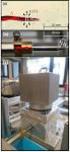
5 Total mass with cone angle of Cup (a) Total mass 8 kg through the additional 0 mm fall height. This maximum velocity was calculated from the cone s kinetic energy at the moment of contact between the cone tip and the test-specimen surface, assuming its acceleration was m/s 2. This is one of the critical details for the estimation of the PL (0). In routine testing laboratories, there is the potential that without regular cleaning and lubrication, the guide bearings may not remain sufficiently well lubricated to guarantee exactly the same dynamics of fall. This can be assessed by measurement of the contact velocity. Similarly, if some aerodynamic or frictional resistance in the bearings is anticipated (i.e. the cone s acceleration is not exactly m/s 2 ), calibrations can be performed after determining the actual kinetic energy at contact. However, such frictional and aerodynamic resistances were not significant in the present investigation, evidenced by remarkably similar cone penetrations obtained for the 8 kg cone and kg cone falling through 0 mm before penetrating into the BS3 foam. The experimental research performed to validate the proposed new PL approach was performed in two stages. In the first stage of experiments, the kg cone was allowed to free fall through 0 mm before contacting the horizontal surfaces of soil specimens prepared at close to the PL. The initial assessment was performed on kaolin and London Clay. As part of the crosscheck, an 8 kg cone was allowed to penetrate the soil specimens, although in this case, the falling distance was set at zero (Figure 3(b)). A 0 N capacity electromagnet was used to hold the cones in position before allowing them to free fall and penetrate into the test specimens. The potential effect of the magnetic field on the cone penetration response was investigated first. For instance, consider the magnet was under north pole influence, with the metal disc (attached to the cone spindle) under south pole influence (Figure 4(a)). The power to the electromagnet was then reversed, instantaneously changing the pole of the magnet to south (Figure 4(b)), thereby releasing the cone assembly, allowing it to fall under gravity. However, the metal disc (cone assembly) may hold some residual magnetic charge with south pole (b) Figure 3. New fall cone PL measuring devices: (a) kg cone; (b) 8 kg cone (c) aerodynamic and frictional resistances that may develop over the additional 0 mm free-fall distance for the kg cone set-up. In the present set-up, frictional resistance was minimised by using smooth, linear bearings to guide the vertical movement of the cone spindle. Aerodynamic effects were considered insignificant since the cone accelerates from a stationary position, reaching a maximum velocity of only 2. 0 m/s after free fall had occurred (a) Magnet Cone N S Cone (b) Magnet Figure 4. Change of polarisation: (a) before reversing power; (b) after reversing power S S 57

6 influence for some finite time (Figure 4(b)) on account of its greater mass, compared with that of the magnet. This means that the cone assembly (which just departed from the magnet) and the magnet itself could have the same polarisation, potentially exerting some additional force (repulsion) on the departing cone assembly. In order to examine the significance of this, the and 8 kg cones were allowed to free fall without using electromagnets in the experimental set-ups. This was not a particular problem for the kg 0 mm cone set-up. For the heavier 8 kg cone mass, the cone was hung from a beam located above the testing area using a thin wire and the cone was released by cutting the wire. In the second stage of experiments, fall cone tests were performed on a wide range of soils (see Table 1) using the kg 0 mm and 8 kg 0 mm cone set-ups. For both set-ups, an electromagnet was used to hold the cones in position before allowing them to free fall. 3.2 Specimen preparation The materials for LL and PL determinations were prepared by dry sieving through the 425 ìm sieve. Approximately 0 g of each soil was then thoroughly mixed with de-aired water to produce water contents somewhere close to the PL. The wetted soils were sealed in separate plastic bags and allowed to equilibrate over a h period. Although oven drying of soil in advance of consistency limit tests is not ideal (Mesri and Peck, 11), the fact that the test materials investigated for LL and PL determinations in this study had been prepared in exactly the same manner meant that the relative impact of oven drying on the experimental results was not significant. The soils were carefully compacted into British Standard fall-cone LL cups (BSI, 1990) using the procedure described by Sivakumar et al. (09). During compaction, a collar attachment to the cup allowed the formation of a specimen higher than the cup. This extra height was carefully trimmed back in line with the top rim of the cup before performing the penetration tests. For a given soil, the variation in bulk density between test specimens prepared at the same water content using this approach was only g/cm 3. Each specimen was placed in turn directly beneath the cone and initial depth readings were taken using the displacement gauge (see Figure 3). The cone was allowed to free fall, with the final penetration reading taken after 5 s, as specified in the British Standard fall-cone LL method, by which time the cone had come to its rest position. 4. Results and discussion 4.1 Experimental investigation stage 1 In order to ensure consistency, a strict procedure was adopted whereby the cone penetration depth for each water content value investigated was measured twice, with the average penetration reading used for further analysis. In almost every case, the difference in penetration readings from two repeat tests was below mm, well within the 0. 5 mm difference specified by the British Standard fall-cone LL method. Figure 5 shows the measured penetration depth (h) against water content relationship for kaolin, determined twice using the kg 0 mm cone set-up. This study proposes that the fall-cone PL is defined as the water content corresponding to h ¼ mm, which from regression analysis corresponded to % water content for this kaolin material. These observations show that the procedure adopted is repeatable when performed under similar conditions. The effect of using an electromagnet to hold the cone assembly in position before free fall was assessed for kaolin and London Clay materials. Figure 6(a) shows cone penetration depth plotted against water content relationships determined using the new PL device in which the kg cone was allowed to free fall without the use of the electromagnet (i.e kg free-fall data points), and in repeat tests by reversing the magnet polarity to allow free fall to occur (i.e kg magnet data points). When the electromagnet was used to hold the cone in position, the kaolin and London Clay had PLs (i.e. water contents for h ¼ mm) of. 8% and 27. 0% respectively. When the cone was allowed to free fall without using the magnet, the deduced PLs were.8% and 27.3%, respectively, demonstrating that the use of the electromagnet had no significant effect on the cone penetration. As explained earlier in the paper, in an ideal situation and as suggested by Wood (1990), one should use an 8 kg 8 fall cone to measure the PL (0), after determining the LL using an 80 g 8 fall cone. Koumoto et al. (07) have discussed in a similar manner the applicability of a 1.5 kg 608 fall cone to determine the PL (0), after determining the LL using a 60 g 608 fall cone. As a preliminary assessment, the 8 kg 8 cone set-up shown in Figure 3(b) was investigated in the present study, with this cone Test 1 Test Figure 5. Cone penetration plotted against water content (two repeat tests on kaolin) for kg 0 mm cone set-up 58

7 free fall, KC magnet, KC free fall, LC magnet, LC (a) 32 8 kg free fall, KC 8 kg magnet, KC 8 kg free fall, LC 8 kg magnet, LC (b) Figure 6. Effect of electromagnet on and 8 kg cone setups: (a) kg cone; (b) 8 kg cone held in position by an electromagnet, or alternatively hung using a thin wire, before allowing it to free fall and penetrate into the soil specimen. When the magnet was used to hold the 8 kg cone before falling, the kaolin and London Clay had PLs of 29. 6% and 25. 4% respectively ( 8 kg magnet data points in Figure 6(b)). When the cone was allowed to free fall by cutting the wire hanger, it did not make a significant difference in the PL estimations, again demonstrating that the electromagnet did not have a significant effect on the cone penetration. The experimental measurements also indicated that the PL values determined using the 8 kg 0 mm cone were less than those determined using the kg 0 mm cone (Figure 6). The gradients of the measured penetration depth against water content correlations were also distinctively different. Hence the rest of this study concentrated on examining the cone penetration depth against water content relationships for a wide range of soils, using the electromagnet as the mechanism to hold the cone assembly in position before free fall was allowed to occur. 4.2 Experimental investigation stage 2 Figure 7 shows the penetration depth against water content relationships for ten different soils (refer to Tables 1 and 2) determined using the 8 kg and kg cone set-ups. Table 2 lists the PL values determined for h ¼ mm using the two cone set-ups. Also included in this table are the Casagrande PL values determined independently by four geotechnical laboratories (value mass for a given soil is average of reported PLs) and in separate testing by the authors. In the authors study, uniform soil threads for the rolling-out procedure were formed by compacting the wetted soil in a metal cylinder (having an inner diameter of 4. 0 mm) before extruding the compacted soil from the cylinder by insertion of a 4. 0 mm diameter pin. The soil threads were carefully rolled out in accordance with BS (BSI, 1990), with the Casagrande PLs identified when the threads broke on reduction to 3.0 mm in diameter (witnessed and agreed by three individuals). The PL value ranges obtained by this method are given in Table 2. Referring to Table 2, for all ten soils investigated, the PL values determined using the 8 kg contacting cone were on a percentage basis,8. 8% (range %), and in absolute terms,2. 3% water content (range %), lower than the average of the Casagrande PL values reported by the four independent laboratories. Also note that the soil threads crumbled and disintegrated immediately on attempting to roll them out at water contents equal to the 8 kg PL values. Although the 8 kg PLs (i.e. PL (0) values) do not have to correspond to the brittle transition that the thread-rolling method implies, it was clear that for the ten clays investigated, the 8 kg fall cone set-up consistently underpredicted the Casagrande PLs. Similar findings have been reported by Feng (00), Kodikara et al. (06) and O Kelly (13), with experimental fall-cone PL (0) values underpredicting the Casagrande PLs. Compared with the 8 kg PLs, the PLs determined using the kg 0 mm cone set-up were, on average, approximately 1. 5% higher (range % water content, Table 2). When threads of the ten test soils were rolled out at the kg 0 mm PL values, they began to disintegrate as their diameters approached 3.0 mm. This suggested that the kg 0 mm PLs agreed more favourably with the Casagrande PLs (see Figure 8 in which the averages of the Casagrande PLs reported by the four geotechnical laboratories have been used). However, it should be noted that one should not expect the PL (0) (i.e. the values obtained using the 8 kg or kg free-falling cone) to align with the results from the thread-rolling experiment, as different mechanisms are at play in both tests. Nevertheless, an attempt was made to explore other potential reasons for the different PL values obtained using the 8 kg and kg freefalling cones. 59

8 EK, 8 kg EK, DC, 8 kg OX, 8 kg DC, OX, TN, 8 kg TN, 32 (a) 32 SL, 8 kg SL, LC, 8 kg LC, AT 8 kg AT, (b) 32 CC, 8 kg KC, 8 kg BC, BC, 8 kg CC, KC, (c) Figure 7. Penetration water content relationships ( and 8 kg cones): (a) EK, DC, OX and TN; (b) SL, LC and AT; (c) BC, CC and KC 5. Assessment of PLS measured using 8 kg and kg cones The next stage in the research was aimed at exploring the reason(s) for the difference in PLs determined using the kg 0 mm and 8 kg 0 mm cone set-ups, especially arising from differences in strain rate, which affect the strengths mobilised and hence the strength ratio cu(pl)/ac(ll). The strain rate varies during the penetration of the fall cone into the soil specimen. Koumoto and Houlsby (01) reported an average strain rate of, %/h for the 80 g 8 fall cone penetrating into soil prepared at LL. The estimated time period required for penetration of the 80 g cone into the soil by mm (i.e. at LL) was,0 ms. This was independently measured in the present study, as shown by the solid data points in Figure 9. Koumoto and Houlsby (01) also reported that a strain rate of,79%/h is typically adopted in measuring the undrained shear strength (c u ) in standard, unconsolidated, undrained, triaxial compression tests. Ladd and Foott (1974) stated that the undrained strength mobilised in triaxial compression increased with strain rate ( _ª) at 5% per log cycle. Kulhawy and Mayne (1990) showed statistically that the % increase in undrained strength per log-cycle of strain could be justified based on triaxial compression data for clays. Koumoto and Houlsby (01) also came to this conclusion based on regression analysis of triaxial strength data from three published sources. Based on the reported average strain rates, the ratio (î) between the dynamic undrained strength (c ud ) mobilised at the LL by the 80 g 8 fall cone and the quasi-static undrained strength (c u ) is,0. 74; that is, c ud c u. Assuming the cone characteristics (apex angle and surface roughness) and soil deformation patterns are similar to that for the British Standard fall-cone LL test, the time period required by the 8 kg contacting cone to penetrate into soil prepared at PL should be similar to that for the 80 g cone penetrating into soil prepared at LL. This was independently validated using digital measurements taken during the penetration of the 8 kg cone at close to PL (see Figure 9). Hence the strength ratio î for these cones under dynamic and quasi-static conditions would be expected to be the same. In the present investigation, the kg cone was allowed to free fall through 0 mm, contacting the test specimen surface at a velocity of 2. 0 m/s (in agreement with the measured velocity at the time of impact, from Figure 9), before coming to rest at h ¼ mm the basis assumed for measuring the fall cone PL. Hence the strain rates are far higher compared with the 8 kg contracting cone. An approximate estimate of the strain rate was determined from the time period required for the kg 0 mm cone to penetrate into soil prepared at PL (Figure 9). Compared with the 8 kg cone, the penetration time was found to reduce,-fold and ten-fold at the beginning and towards the end of penetration, respectively, with the strain rate increasing on average -fold. With an average strain rate of, %/h for the 8 kg cone, the average strain rate for the kg 0 mm cone set-up is, %/h. Based on the % average increase in undrained strength per log cycle increase in 60

9 Type of soil Average Casagrande PL by four laboratories: % PL ( kg cone): % PL (8 kg cone): % PL (by group of operators): % Difference in PL a Sleech (SL) Belfast Clay (BC) Oxford Clay (OX) Canadian Clay (CC) Tennessee (TN) Ampthill (AT) Donegal Clay (DC) London Clay (LC) Enniskillin (EK) Kaolin (KC) a Difference between Casagrande PL (average) and PL (0.727 kg). Table 2. Average of PLs for soils obtained through laboratories operating in Northern Ireland and PLs determined by the authors using the kg 0 mm and 8 kg 0 mm cone set-ups Average plastic limits obtained through four laboratories: % Plastic limit using cone: % Figure 8. Plastic limits obtained using kg cone setup and Casagrande method g cone (close to LL) cone (close to PL) 8 kg cone (close to PL) Time: s Figure 9. Cone penetration depth plotted against time (for soil close to LL and PL) strain rate (Koumoto and Houlsby, 01; Kulhawy and Mayne, 1990; Ladd and Foott, 1974), the revised undrained strength ratio î F (¼ c u =c ud(f) ) for the kg 0 mm cone set-up can be shown to be 0. 69, where c ud(f) is the strength mobilised for fast dynamic loading and c u is based on the strain rate of 79%/h; that is, c ud(f) c u. For the initial evaluation of the cone mass required in the new experimental set-up (i.e kg), an allowance was not made for the increased strain rate effects in moving from the 8 kg 0 mm to kg 0 mm cone set-ups. Hence, if PLs measured using the 8 kg contacting cone are to be reproduced, then the cone mass has to be increased from to kg (i.e. [ (1. 44/1. 35)]). Figure shows the penetration depth against water content relationships determined for the kaolin clay using kg 0 mm, kg 0 mm and 8 kg 0 mm cone set-ups. The test was not performed using a cone mass of kg due to human error. As shown in Figure, the g increase in mass for the lighter cone shifts the correlation line towards the 8 kg cone trend line. However, the increase in the cone mass is counterproductive for the present investigation 61

10 Cone penetration: mm kg 8 kg mm at PL), K is the cone factor and g is the gravitational constant. For the 8 cone free falling from at-rest position with its tip initially just contacting the test specimen surface, Koumoto and Houlsby (01) reported the theoretical cone factor as From Equation 3, the 8 kg 0 mm cone set-up would mobilise a dynamic strength of,1 kpa for h ¼ mm, equivalent to,193 kpa in triaxial compression at _ª ¼ 79%/h. This may explain why the experimental PL predictions for the ten test soils determined using the 8 kg cone were consistently lower compared with the Casagrande PL values (see Table 2). because the 8 kg PLs were not true representations of the soil behaviour, with the PLs obtained using the kg 0 mm cone set-up more realistic and in better overall agreement with the average of the five independent Casagrande PL measurements for a given clay. The proposed kg 0 mm fall cone PL method is in essence a strength approach that assumes the saturated quasistatic undrained strength (c u ) mobilised at the PL in triaxial compression for _ª ¼ 79%/h is,170 kpa. This strength value has been reported by Sharma and Bora (03), Stone and Phan (1995), Wood (1990) and Wroth and Wood (1978) for many inorganic fine-grained soils of low and intermediate plasticity. The effect of the significantly higher strain rates for the fall cones on mobilised strength must be allowed for, with for example, a typical average strain rate for the 8 kg contracting cone of, %/h. This value was deduced by Koumoto and Houlsby (01) from a very approximate global estimate of the actual strain rates in the test specimen. Based on the % average increase in undrained strength per log cycle increase in strain rate, a dynamic strength (c ud ) value of,2 kpa mobilised by the contacting 8 kg cone is equivalent to a c u value of 170 kpa mobilised in triaxial compression for _ª ¼ 79%/h. The undrained strength determined using the experimental relationship reported by Hansbo (1957) is given by 3: Figure. Penetration depth plotted against water content relationships for 8, and kg cone set-ups (kaolin) c ud ¼ Kmg h 2 where m is the cone mass, h is the cone penetration depth (i.e. An equally valid and complementary explanation is obtained by considering the dynamic c ud(ll) value of 2.66 kpa (Koumoto and Houlsby, 01) mobilised at h ¼ mm for the British Standard 80 g 8 fall-cone LL apparatus (BSI, 1990). On this basis, the 8 kg 0 mm cone set-up would mobilise a dynamic c ud(pl) value of 6 kpa. Hence the 8 kg cone mass must be reduced by a factor of approximately (i.e. ¼ 2/6 and corresponding strength ratio c u(pl) /c u(ll) of 87) to kg in order to mobilise an equivalent c u(pl) value of 170 kpa in triaxial compression at _ª ¼ 79%/h. Limited tests were performed on kaolin using 8 kg 0 mm, kg 0 mm and kg 0 mm cone set-ups in order to confirm the above analysis. The kaolin material used in performing these tests was sourced from a different batch and was found to have slightly different index values, as investigated by Boyd and Sivakumar (11), including a slightly higher PL than the kaolin material used in the earlier studies reported in Table 2. The agreement between the PLs determined using the kg 0 mm and kg 0 mm set-ups was extremely good (Figures 11(b) and 11(c)). The percentage difference in PLs determined for the 8 kg and kg cones was 4. 0% (in absolute terms 1. 3% water content). Based on the critical state framework (considering the necessary constitutive parameters for kaolin) and water content values at the PLs determined using the 8 kg and kg cones, the undrained strength ratio can be calculated as 1.17, which agrees favourably with the cone mass ratio of 1.15 (i.e. ¼ 8/6. 948). It must be restated that the new PL method ( kg 8 cone with a clear free fall of 0 mm) is essentially strength based. Any argument is not scientifically justified to corroborate PL measurements determined using the new method with those obtained using the classical Casagrande approach. However, based on the observational point of view, the measurements obtained using both methods were found to be in reasonably close agreement, at least for the ten mineral clays of intermediate to very high plasticity examined in the present investigation. The new method was developed on the basis of an undrained strength ratio (c u(pl) /c u(ll) ) of 0, typically reported for many low- and intermediate-plasticity fine-grained soils (Sharma and Bora, 03; Stone and Phan, 1995; Wood, 1990; Wroth and Wood, 1978). However, by considering strain rate effects in the predicted 62

11 (a) (b) (c) Figure 11. Penetration depth plotted against water content relationships for (a) 8, (b) and (c) kg cone set-ups fall-cone strengths, we later postulated that the strength ratio for the quasi-static condition appeared to be approximately 87. Some limited evidence has been presented to support this claim, although further investigation is required to draw any firm conclusion. In essence, therefore, the plastic limit values obtained using the new kg 0 mm fall cone set-up reported herein should be referred to as PL (0), which may be a preferred option as the strength ratio of 0 is more generally accepted within the geotechnical community. 6. Conclusion A new fall cone PL device has been developed using an energybased criterion, with the required energy achieved by allowing a kg 8 cone to free fall through 0 mm before penetrating into the soil specimen by mm, thereby defining the plastic strength limit. An 8 kg contacting cone, recommended by other researchers for the determination of the PL (0), was also investigated. For all ten mineral clays of intermediate to very high plasticity tested, the kg 0 mm cone set-up produced PLs in good agreement with the measured Casagrande PLs. The 8 kg fall cone consistently underestimated the Casagrande PLs and limited experimental data indicated that a lighter cone of kg mass would produce better overall agreement. Acknowledgement The authors also would like to thank Mr Vimalan Jeganathan (V J Tech Ltd, Reading, UK) and K V Senthilkumaran (P J Careys Contractors, UK) for their unconditional financial support for geotechnical research at Queen s University Belfast. REFERENCES ASTM (05) D43-05: Standard test methods for liquid limit, plastic limit, and plasticity index of soils. ASTM International, West Conshohocken, PA, USA. Boyd J and Sivakumar V (11) Experimental observation of stress regime in compacted fills when laterally confined. Géotechnique 61(4): BSI (1990) BS : Methods of test for soils for civil engineering purposes Part 2: Classification tests. BSI, London, UK. Feng TW (00) Fall cone penetration and water content relationship of clays. Géotechnique 50(2): 1 7. Haigh SK, Vardanega PJ and Bolton MD (13) The plastic limit of clays. Géotechnique 63(6): Hansbo S (1957) A new approach to the determination of the shear strength of clay by the fall-cone test. Proceedings of the Royal Swedish Geotechnical Institute : Harrison JA (1988) Using BS cone penetrometer for the determination of plastic limit of soils. Géotechnique 38(3): Kodikara JK, Seneviratne HN and Wijekulasuriya CV (06) Discussion on using a small ring and fall-cone to determine the plastic limit. Geotechnical and Geoenvironmental Engineering 132(2):

12 Koumoto T and Houlsby GT (01) Theory and practice of the fall cone test. Géotechnique 51(8): Koumoto T, Kondo F and Houlsby GT (07) Applicability of the fall cone method to determine the plastic limit of clays. Proceedings of Plasticity 07, Ancorage, AK, USA, pp Kulhawy FH and Mayne PW (1990) Manual on Estimating Soil Properties for Foundation Design. Electric Power Research Institute, Palo Alto, CA, USA, Report No. EL Ladd CC and Foott R (1974) A new design procedure for stability of soft clays. Journal of Geotechnical Engineering Division, ASCE 0(7): Mesri G and Peck RB (11) Discussion on a new method of measuring plastic limit of fine materials. Géotechnique 61(1): O Kelly BC (13) Atterberg limits and remolded shear strength water content relationships. ASTM Geotechnical Testing Journal 36(6): O Kelly BC () Closure to discussion by K Prakash and A Sridharan on Atterberg limits and remolded shear strength water content relationships. Geotechnical Testing Journal 37(4): Sharma B and Bora PK (03) Plastic limit, liquid limit and undrained shear strength of soil reappraisal. Geotechnical and Geoenvironmental Engineering 9(8): Sherwood PT (1970) The Reproducibility of the Results of Soil Classification and Compaction Tests. Road Research Laboratory, Crowthorne, UK, Report LR 339. Sivakumar V, Glynn D, Cairns P and Black JA (09) A new method of measuring plastic limit of fine materials. Géotechnique 59(): Sivakumar V, Glynn D, Cairns P and Black JA (11) Discussion on a new method of measuring plastic limit of fine materials. Géotechnique 61(1): Stone KJL and Phan CD (1995) Cone penetration tests near the plastic limit. Géotechnique 45(1): Wood DM (1990) Soil Behaviour and Critical State Soil Mechanics. Cambridge University Press, Cambridge, UK. Wroth CP and Wood DM (1978) The correlation of index properties with some basic engineering properties of soils. Canadian Geotechnical Journal 15(2): WHAT DO YOU THINK? To discuss this paper, please up to 500 words to the editor at [email protected]. Your contribution will be forwarded to the author(s) for a reply and, if considered appropriate by the editorial panel, will be published as a discussion in a future issue of the journal. Proceedings journals rely entirely on contributions sent in by civil engineering professionals, academics and students. Papers should be words long (briefing papers should be words long), with adequate illustrations and references. You can submit your paper online via where you will also find detailed author guidelines. 64

A new method of measuring plastic limit of fine materials
 Sivakumar, V. et al. (211). Géotechnique 61, No. 1, 88 92 [doi: 1.168/geot.211.61.1.88] DISCUSSION A new method of measuring plastic limit of fine materials V. SIVAKUMAR, D. GLYNN, P. CAIRNS and J. A.
Index and strength properties of clay gravel mixtures
 Proceedings of the Institution of Civil Engineers Geotechnical Engineering February Issue GE Pages http://dx.doi.org/./geng... Paper Received // Accepted // Keywords: geotechnical engineering /strength
LABORATORY DETERMINATION OF CALIFORNIA BEARING RATIO
 LABORATORY DETERMINATION OF CALIFORNIA BEARING RATIO STANDARD IS: 2720 (Part 16) 1979. DEFINITION California bearing ratio is the ratio of force per unit area required to penetrate in to a soil mass with
Measurement of Soil Parameters by Using Penetrometer Needle Apparatus
 Vol.3, Issue.1, Jan-Feb. 2013 pp-284-290 ISSN: 2249-6645 Measurement of Soil Parameters by Using Penetrometer Needle Apparatus Mahmoud M. Abu zeid, 1 Amr M. Radwan, 2 Emad A. Osman, 3 Ahmed M.Abu-bakr,
Numerical Simulation of CPT Tip Resistance in Layered Soil
 Numerical Simulation of CPT Tip Resistance in Layered Soil M.M. Ahmadi, Assistant Professor, [email protected] Dept. of Civil Engineering, Sharif University of Technology, Tehran, Iran Abstract The paper
Geotechnical Measurements and Explorations Prof. Nihar Ranjan Patra Department of Civil Engineering Indian Institute of Technology, Kanpur
 Geotechnical Measurements and Explorations Prof. Nihar Ranjan Patra Department of Civil Engineering Indian Institute of Technology, Kanpur Lecture No. # 28 Last lecture we have covered this Atterberg limit,
KWANG SING ENGINEERING PTE LTD
 KWANG SING ENGINEERING PTE LTD 1. INTRODUCTION This report represents the soil investigation works at Aljunied Road / Geylang East Central. The objective of the soil investigation is to obtain soil parameters
By D. P. StewarP and M. F. Randolph z
 T-BAR PENETRATION TESTING IN SOFT CLAY By D. P. StewarP and M. F. Randolph z ABSTRACT: A t-bar penetration test for soft clay that can be performed with existing cone penetration test (CPT) equipment is
Figure 2.31. CPT Equipment
 Soil tests (1) In-situ test In order to sound the strength of the soils in Las Colinas Mountain, portable cone penetration tests (Japan Geotechnical Society, 1995) were performed at three points C1-C3
Drained and Undrained Conditions. Undrained and Drained Shear Strength
 Drained and Undrained Conditions Undrained and Drained Shear Strength Lecture No. October, 00 Drained condition occurs when there is no change in pore water pressure due to external loading. In a drained
product manual HS-4210 HS-4210_MAN_09.08 Digital Static Cone Penetrometer
 HS-4210_MAN_09.08 product manual HS-4210 Digital Static Cone Penetrometer Introduction This Manual covers the measurement of bearing capacity using the Humboldt Digital Static Cone Penetrometer (DSCP).
Numerical Analysis of Texas Cone Penetration Test
 International Journal of Applied Science and Technology Vol. 2 No. 3; March 2012 Numerical Analysis of Texas Cone Penetration Test Nutan Palla Project Engineer, Tolunay-Wong Engineers, Inc. 10710 S Sam
c. Borehole Shear Test (BST): BST is performed according to the instructions published by Handy Geotechnical Instruments, Inc.
 Design Manual Chapter 6 - Geotechnical 6B - Subsurface Exploration Program 6B-2 Testing A. General Information Several testing methods can be used to measure soil engineering properties. The advantages,
NUMERICAL MODELLING OF PIEZOCONE PENETRATION IN CLAY
 NUMERICAL MODELLING OF PIEZOCONE PENETRATION IN CLAY Ilaria Giusti University of Pisa [email protected] Andrew J. Whittle Massachusetts Institute of Technology [email protected] Abstract This paper
CEEN 162 - Geotechnical Engineering Laboratory Session 7 - Direct Shear and Unconfined Compression Tests
 PURPOSE: The parameters of the shear strength relationship provide a means of evaluating the load carrying capacity of soils, stability of slopes, and pile capacity. The direct shear test is one of the
LABORATORY II. PLASTICITY - Atterberg limits. w L - Cone test, Cassagrande test
 LABORATORY II. PLASTICITY - Atterberg limits w L - Cone test, Cassagrande test Consistency - limits I P w L w P Is plasticity important? Smectite Structure Tetrahedral layer Octahedral layer Tetrahedral
The plastic limit of clays
 Haigh, S. K. et al. (213). Géotechnique 63, No. 6, 435 44 [http://dx.doi.org/1.168/geot.11.p.123] The plastic limit of clays S. K. HAIGH, P. J. VARDANEGA and M. D. BOLTON The plastic limit of soils was
1 Mobilisation and demobilisation 1 Deep boring sum 2 Cone penetration tests sum 3 Miscellenous tests sum
 Malaysian Civil Engineering Standard Method of Measurement (MyCESMM) CLASS D: SITE INVESTIGATION WORK Measurement covered under other classes: Excavation not carried out for the purpose of soil investigation
TECHNICAL REPORT ON SCALA DYNAMIC CONE PENETROMETER IRREGULARITY
 TECHNICAL REPORT ON SCALA DYNAMIC CONE PENETROMETER IRREGULARITY CETANZ Technical Report TR 1 Author(s) SJ Anderson, Geotechnics Ltd Report Date First Issue May 2010 Report Revision Date September 2011
INDIRECT METHODS SOUNDING OR PENETRATION TESTS. Dr. K. M. Kouzer, Associate Professor in Civil Engineering, GEC Kozhikode
 INDIRECT METHODS SOUNDING OR PENETRATION TESTS STANDARD PENETRATION TEST (SPT) Reference can be made to IS 2131 1981 for details on SPT. It is a field edtest to estimate e the penetration e resistance
Technical Bibliography on Use of Fall Cone for Determining Undrained Shear Strength and Atterberg Limits of Fine-Grained Soils
 Technical Bibliography on Use of Fall Cone for Determining Undrained Shear Strength and Atterberg Limits of Fine-Grained Soils prepared by Alan J. Lutenegger, P.E., PhD. The Fall Cone Test is used extensively
Effect of grain size, gradation and relative density on shear strength and dynamic cone penetration index of Mahi, Sabarmati and Vatrak Sand
 Discovery ANALYSIS The International Daily journal ISSN 2278 5469 EISSN 2278 5450 2015 Discovery Publication. All Rights Reserved Effect of grain size, gradation and relative density on shear strength
GUIDELINE FOR HAND HELD SHEAR VANE TEST
 GUIDELINE FOR HAND HELD SHEAR VANE TEST NZ GEOTECHNICAL SOCIETY INC August 2001 CONTENTS Page 1.0 Introduction 2 2.0 Background 2 3.0 Recommended Practice 3 4.0 Undrained Shear Strength 3 5.0 Particular
Soil Mechanics SOIL STRENGTH page 1
 Soil Mechanics SOIL STRENGTH page 1 Contents of this chapter : CHAPITRE 6. SOIL STRENGTH...1 6.1 PRINCIPAL PLANES AND PRINCIPAL STRESSES...1 6.2 MOHR CIRCLE...1 6.2.1 POLE METHOD OF FINDING STRESSES ON
Calibration and Use of a Strain-Gage-Instrumented Beam: Density Determination and Weight-Flow-Rate Measurement
 Chapter 2 Calibration and Use of a Strain-Gage-Instrumented Beam: Density Determination and Weight-Flow-Rate Measurement 2.1 Introduction and Objectives This laboratory exercise involves the static calibration
AP1 Oscillations. 1. Which of the following statements about a spring-block oscillator in simple harmonic motion about its equilibrium point is false?
 1. Which of the following statements about a spring-block oscillator in simple harmonic motion about its equilibrium point is false? (A) The displacement is directly related to the acceleration. (B) The
CONSTANT HEAD AND FALLING HEAD PERMEABILITY TEST
 CONSTANT HEAD AND FALLING HEAD PERMEABILITY TEST 1 Permeability is a measure of the ease in which water can flow through a soil volume. It is one of the most important geotechnical parameters. However,
Standard Test Procedures Manual
 STP 206-4 Standard Test Procedures Manual Section: 1. SCOPE 1.1. Description of Test This method describes the procedure for determining the liquid limit, plastic limit and the plasticity index of coarse-grained
Fluid Mechanics: Static s Kinematics Dynamics Fluid
 Fluid Mechanics: Fluid mechanics may be defined as that branch of engineering science that deals with the behavior of fluid under the condition of rest and motion Fluid mechanics may be divided into three
Geotechnical Characteristics of Two Different Soils and their Mixture and Relationships between Parameters
 Geotechnical Characteristics of Two Different Soils and their Mixture and Relationships between Parameters Arpan Laskar Post Graduate Student Civil Engineering Department, National Institute of Technology
DIRECT SHEAR TEST SOIL MECHANICS SOIL MECHANICS LABORATORY DEPARTMENT OF CIVIL ENGINEERING UNIVERSITY OF MORATUWA SRI LANKA
 DIRECT SHEAR TEST SOIL MECHANICS SOIL MECHANICS LABORATORY DEPARTMENT OF CIVIL ENGINEERING UNIVERSITY OF MORATUWA SRI LANKA DIRECT SHEAR TEST OBJEVTIVES To determine the shear strength parameters for a
Dynamic Load Testing of Helical Piles
 Dynamic Load Testing of Helical Piles ANNUAL KANSAS CITY SPECIALTY SEMINAR 2014 JANUARY 10, 2014 Jorge Beim JWB Consulting LLC Pile Dynamics, Inc. Main Topics Brief description of the Dynamic Load Test
Step 11 Static Load Testing
 Step 11 Static Load Testing Test loading is the most definitive method of determining load capacity of a pile. Testing a pile to failure provides valuable information to the design engineer and is recommended
Penetration rate effects on cone resistance measured in a calibration chamber
 Penetration rate effects on cone resistance measured in a calibration chamber K. Kim Professional Service Industries, Inc, Houston, TX, USA M. Prezzi & R. Salgado Purdue University, West Lafayette, IN,
Cone Penetration Testing (CPT) Michael Bailey, P.G. U.S. Army Corps of Engineers, Savannah District
 Cone Penetration Testing (CPT) Michael Bailey, P.G. U.S. Army Corps of Engineers, Savannah District Recommended publications ASTM D 5778-07 Standard Test Method for Electronic Friction Cone and Piezocone
Numerical study of rate effects in cone penetration test
 Numerical study of rate effects in cone penetration test Daichao Sheng, Richard Kelly, Jubert Pineda and Lachlan Bates Australian Research Council Centre of Excellence for Geotechnical Science and Engineering,
Relationship between the percentage of clay with liquid limit, plastic limit and plastic index in four different soils texture class
 Technical Journal of Engineering and Applied Sciences Available online at www.tjeas.com 2013 TJEAS Journal-2013-3-8/697-702 ISSN 2051-0853 2013 TJEAS Relationship between the percentage of clay with liquid
DEM modelling of the dynamic penetration process on Mars as a part of the NASA InSight Mission
 Proceedings of the 4th European Young Geotechnical Engineers Conference (EYGEC), Durham, UK Osman, A.S. & Toll, D.G. (Eds.) 05 ISBN 978-0-9933836-0 DEM modelling of the dynamic penetration process on Mars
Soil Mechanics. Soil Mechanics
 Soil is the most misunderstood term in the field. The problem arises in the reasons for which different groups or professions study soils. Soil scientists are interested in soils as a medium for plant
Interpretation of clogging effects on the hydraulic behavior of ion treated geotextiles
 9 th International Conference on Geosynthetics, Brazil, 2010 Interpretation of clogging effects on the hydraulic behavior of ion treated geotextiles Lee, K. W. Department of Civil Engineering, Dongseo
Constant Rate of Strain Consolidation with Radial Drainage
 Geotechnical Testing Journal, Vol. 26, No. 4 Paper ID GTJ10173_264 Available online at: www.astm.org Tian Ho Seah 1 and Teerawut Juirnarongrit 2 Constant Rate of Strain Consolidation with Radial Drainage
Improvement in physical properties for ground treated with rapid impact compaction
 International Journal of the Physical Sciences Vol. 6(22), pp. 5133-5140, 2 October 2011 Available online at http://www.academicjournals.org/ijps ISSN 1992-1950 2011 Academic Journals Full Length Research
Cone Penetration Testing in Geotechnical Practice. Tom Lunne Peter K. Robertson John J.M. Powell
 Cone Penetration Testing in Geotechnical Practice Tom Lunne Peter K. Robertson John J.M. Powell BLACKIE ACADEMIC & PROFESSIONAL An Imprint of Chapman & Hall London Weinheim New York Tokyo Melbourne Madras
GDS Triaxial Automated System (GDSTAS)
 GDS Triaxial Automated System (GDSTAS) Overview: The GDS Triaxial Automated System (GDSTAS) is a load frame-based triaxial testing system. The system is configured by choosing from a range of load frames,
SPECIFICATION FOR DYNAMIC CONSOLIDATION / DYNAMIC REPLACEMENT
 SPECIFICATION FOR DYNAMIC CONSOLIDATION / DYNAMIC REPLACEMENT 1.0 SOIL IMPROVEMENT 1.1 General Soil Investigation Information are provided in Part B1 annex as a guide to the Contractor for his consideration
TECHNICAL Summary. TRB Subject Code:62-7 Soil Foundation Subgrades February 2003 Publication No.: FHWA/IN/JTRP-2002/30, SPR-2362
 INDOT Research TECHNICAL Summary Technology Transfer and Project Implementation Information TRB Subject Code:62-7 Soil Foundation Subgrades February 3 Publication No.: FHWA/IN/JTRP-2/3, SPR-2362 Final
ASSESSMENT OF SHEAR WAVE VELOCITY FROM INDIRECT INSITU TESTS
 Proceedings of Indian Geotechnical Conference IGC-2014 December 18-20, 2014, Kakinada, India ASSESSMENT OF SHEAR WAVE VELOCITY FROM INDIRECT INSITU TESTS Kant, L., M. Tech Student, Department of Earthquake
Lymon C. Reese & Associates LCR&A Consulting Services Tests of Piles Under Axial Load
 Lymon C. Reese & Associates LCR&A Consulting Services Tests of Piles Under Axial Load Nature of Services The company has a long history of performance of tests of piles and pile groups under a variety
INSITU TESTS! Shear Vanes! Shear Vanes! Shear Vane Test! Sensitive Soils! Insitu testing is used for two reasons:!
 In-situ Testing! Insitu Testing! Insitu testing is used for two reasons:! To allow the determination of shear strength or penetration resistance or permeability of soils that would be difficult or impossible
CPTic_CSM8. A spreadsheet tool for identifying soil types and layering from CPTU data using the I c method. USER S MANUAL. J. A.
 CPTic_CSM8 A spreadsheet tool for identifying soil types and layering from CPTU data using the I c method. USER S MANUAL J. A. Knappett (2012) This user s manual and its associated spreadsheet ( CPTic_CSM8.xls
1. Fluids Mechanics and Fluid Properties. 1.1 Objectives of this section. 1.2 Fluids
 1. Fluids Mechanics and Fluid Properties What is fluid mechanics? As its name suggests it is the branch of applied mechanics concerned with the statics and dynamics of fluids - both liquids and gases.
DETERMINATION OF PLASTIC LIMITS OF SOILS USING CONE PENETROMETER: Re-Appraisal
 DETERMINATION OF PLASTIC LIMITS OF SOILS USING CONE PENETROMETER: Re-Appraisal Agus Setyo Muntohar 1 and Roslan Hashim 2 ABSTRACT Cone penetrometer method has been proposed by many researchers as more
HIGHWAYS DEPARTMENT GUIDANCE NOTES ON SOIL TEST FOR PAVEMENT DESIGN
 HIGHWAYS DEPARTMENT GUIDANCE NOTES ON SOIL TEST FOR PAVEMENT DESIGN Research & Development Division RD/GN/012 August 1990 HIGHWAYS DEPARTMENT GUIDANCE NOTES (RD/GN/012) SOIL TEST FOR PAVEMENT DESIGN Prepared
PREDICTING THE HYDRAULIC CONDUCTIVITY OF MAKASSAR MARINE CLAY USING FIELD PENETRATION TEST (CPTU) RESULTS
 Proceedings of the Sixth International Conference on Asian and Pacific Coasts (APAC 2011) December 14 16, 2011, Hong Kong, China PREDICTING THE HYDRAULIC CONDUCTIVITY OF MAKASSAR MARINE CLAY USING FIELD
Impact testing ACTIVITY BRIEF
 ACTIVITY BRIEF Impact testing The science at work Impact testing is of enormous importance. A collision between two objects can often result in damage to one or both of them. The damage might be a scratch,
PERMEABILITY TEST. To determine the coefficient of permeability of a soil using constant head method.
 PERMEABILITY TEST A. CONSTANT HEAD OBJECTIVE To determine the coefficient of permeability of a soil using constant head method. need and Scope The knowledge of this property is much useful in solving problems
A study on the Effect of Distorted Sampler Shoe on Standard Penetration Test Result in Cohesionless soil
 ISSN: 319-53 (An ISO 39: 00 Certified Organization) A study on the Effect of Distorted Sampler Shoe on Standard Penetration Test Result in Cohesionless soil Utpal Kumar Das Associate Professor, Department
Midterm Solutions. mvr = ω f (I wheel + I bullet ) = ω f 2 MR2 + mr 2 ) ω f = v R. 1 + M 2m
 Midterm Solutions I) A bullet of mass m moving at horizontal velocity v strikes and sticks to the rim of a wheel a solid disc) of mass M, radius R, anchored at its center but free to rotate i) Which of
NUMERICAL ANALYSIS OF THE EFFECTS OF WIND ON BUILDING STRUCTURES
 Vol. XX 2012 No. 4 28 34 J. ŠIMIČEK O. HUBOVÁ NUMERICAL ANALYSIS OF THE EFFECTS OF WIND ON BUILDING STRUCTURES Jozef ŠIMIČEK email: [email protected] Research field: Statics and Dynamics Fluids mechanics
Soil Testing Soil index properties 24. Cone Penetrometer Method BS 1377, 1924-2, EN DD ENV 1997-2. Semi-Automatic Cone Penetrometer
 24 Soil index properties Soil Index Properties Soil index properties are used extensively by engineers to discriminate between the different kinds of soil within a broad category, e.g. clay will exhibit
Soil behaviour type from the CPT: an update
 Soil behaviour type from the CPT: an update P.K. Robertson Gregg Drilling & Testing Inc., Signal Hill, California, USA ABSTRACT: An initial application of CPT results is to evaluate soil type and soil
Geotechnical Measurements and Explorations Prof. Nihar Ranjan Patra Department of Civil Engineering Indian Institute of Technology, Kanpur
 Geotechnical Measurements and Explorations Prof. Nihar Ranjan Patra Department of Civil Engineering Indian Institute of Technology, Kanpur Lecture No. # 13 (Refer Slide Time: 00:18) So last class, it was
Candidate Number. General Certificate of Education Advanced Level Examination June 2014
 entre Number andidate Number Surname Other Names andidate Signature General ertificate of Education dvanced Level Examination June 214 Physics PHY4/1 Unit 4 Fields and Further Mechanics Section Wednesday
4 Thermomechanical Analysis (TMA)
 172 4 Thermomechanical Analysis 4 Thermomechanical Analysis (TMA) 4.1 Principles of TMA 4.1.1 Introduction A dilatometer is used to determine the linear thermal expansion of a solid as a function of temperature.
Soil Mechanics. Outline. Shear Strength of Soils. Shear Failure Soil Strength. Laboratory Shear Strength Test. Stress Path Pore Pressure Parameters
 Soil Mechanics Shear Strength of Soils Chih-Ping Lin National Chiao Tung Univ. [email protected] 1 Outline Shear Failure Soil Strength Mohr-Coulomb Failure Criterion Laboratory Shear Strength Test
When to Use Immediate Settlement in Settle 3D
 When to Use Immediate Settlement in Settle 3D Most engineers agree that settlement is made up of three components: immediate, primary consolidation and secondary consolidation (or creep). Most engineers
SITEMA PowerStroke. Technical Information TI-P11. 1 Function. 2 Applications. Mould Closing Devices series FSK. Contents
 English translation of German original Technical Information TI-P11 SITEMA PowerStroke Mould Closing Devices series FS drive system for powerful forces on a short stroke hydraulic actuation closing force
Solid shape molding is not desired in injection molding due to following reasons.
 PLASTICS PART DESIGN and MOULDABILITY Injection molding is popular manufacturing method because of its high-speed production capability. Performance of plastics part is limited by its properties which
DYNAMIC CONE PENETRATION TEST INSTRUCTIONAL MANUAL GEOTECHANICAL
 DYNAMIC CONE PENETRATION TEST INSTRUCTIONAL MANUAL GEOTECHANICAL J. P. Scientific Instruments 7, Civil Lines, Roorkee-247667 DYNAMIC CONE PENETRATION TEST CONTENTS: PAGE NO. 1.0 INTRODUCTION 03 2.0 PROBLEM
CONE PENETRATION TESTING AND SITE EXPLORATION IN EVALUATING THE LIQUEFACTION RESISTANCE OF SANDS AND SILTY SANDS ABSTRACT
 CONE PENETRATION TESTING AND SITE EXPLORATION IN EVALUATING THE LIQUEFACTION RESISTANCE OF SANDS AND SILTY SANDS E. J. Newman 1, T. D. Stark 2, and S. M. Olson 3 ABSTRACT Refined relationships between
Schedule of Accreditation issued by United Kingdom Accreditation Service 21-47 High Street, Feltham, Middlesex, TW13 4UN, UK
 ccredited to Laboratory locations: Schedule of ccreditation United Kingdom ccreditation Service 21-47 High Street, Feltham, Middlesex, TW13 4UN, UK skern Road arcroft Doncaster South Yorkshire DN6 8DG
Commonwealth of Pennsylvania PA Test Method No. 632 Department of Transportation October 2013 5 Pages LABORATORY TESTING SECTION. Method of Test for
 Commonwealth of Pennsylvania PA Test Method No. 632 Department of Transportation 5 Pages LABORATORY TESTING SECTION Method of Test for TIME OF SETTING OF CONCRETE MIXTURES BY PENETRATION RESISTANCE 1.
METHOD STATEMENT HIGH STRIAN DYNAMIC TESTING OF PILE. Prepared by
 METHOD STATEMENT HIGH STRIAN DYNAMIC TESTING OF PILE Prepared by Infratech ASTM CO., LTD. Contents Chapter Description Page Contents...... 1 List of Appendix. 1 1. Introduction.. 2 2. Test Method..2 3.
EXPERIMENT 10 CONSTANT HEAD METHOD
 EXPERIMENT 10 PERMEABILITY (HYDRAULIC CONDUCTIVITY) TEST CONSTANT HEAD METHOD 106 Purpose: The purpose of this test is to determine the permeability (hydraulic conductivity) of a sandy soil by the constant
SOLID MECHANICS TUTORIAL MECHANISMS KINEMATICS - VELOCITY AND ACCELERATION DIAGRAMS
 SOLID MECHANICS TUTORIAL MECHANISMS KINEMATICS - VELOCITY AND ACCELERATION DIAGRAMS This work covers elements of the syllabus for the Engineering Council exams C105 Mechanical and Structural Engineering
Proof of the conservation of momentum and kinetic energy
 Experiment 04 Proof of the conservation of momentum and kinetic energy By Christian Redeker 27.10.2007 Contents 1.) Hypothesis...3 2.) Diagram...7 3.) Method...7 3.1) Apparatus...7 3.2) Procedure...7 4.)
ESTIMATION OF UNDRAINED SETTLEMENT OF SHALLOW FOUNDATIONS ON LONDON CLAY
 International Conference on Structural and Foundation Failures August 2-4, 2004, Singapore ESTIMATION OF UNDRAINED SETTLEMENT OF SHALLOW FOUNDATIONS ON LONDON CLAY A. S. Osman, H.C. Yeow and M.D. Bolton
Notes on Polymer Rheology Outline
 1 Why is rheology important? Examples of its importance Summary of important variables Description of the flow equations Flow regimes - laminar vs. turbulent - Reynolds number - definition of viscosity
Load Frames. www.humboldtmfg.com 1.800.544.7220 708.468.6300
 Lab Equipment Soil Lab Consolidation Load Frames 80 52 ConMatic IPC, Automated Consolidation System, 120/220V 50/60Hz HM-2470A.3F The ConMatic IPC is a fully-automated, incremental pressure controller
HAULBOWLINE, CORK STATIC CONE PENETRATION TESTS FACTUAL REPORT
 HAULBOWLINE, CORK STATIC CONE PENETRATION TESTS FACTUAL REPORT CONE PENETRATION TESTS Cone resistance Local friction Porewater pressure Dissipations REPORT NO: RRM CONTRACT NO: GLOVER SITE INVESTIGATIONS
8.2 Elastic Strain Energy
 Section 8. 8. Elastic Strain Energy The strain energy stored in an elastic material upon deformation is calculated below for a number of different geometries and loading conditions. These expressions for
Site Investigation. Some unsung heroes of Civil Engineering. buried right under your feet. 4. Need good knowledge of the soil conditions
 This is an attempt to create a stand alone self learning module on site investigation. Fasten your seat belts. Sit back, relax and enjoy. 1 2 Site Investigation Some unsung heroes of Civil Engineering
GUIDELINES FOR TESTING FRESH SELF-COMPACTING CONCRETE
 Growth Contract No. GRD2-2000-30024 GUIDELINES FOR TESTING FRESH SELF-COMPACTING CONCRETE Principal author: G. DE SCHUTTER September 2005 European Research Project: MEASUREMENT OF PROPERTIES OF FRESH SELF-COMPACTING
Weight The weight of an object is defined as the gravitational force acting on the object. Unit: Newton (N)
 Gravitational Field A gravitational field as a region in which an object experiences a force due to gravitational attraction Gravitational Field Strength The gravitational field strength at a point in
Prelab Exercises: Hooke's Law and the Behavior of Springs
 59 Prelab Exercises: Hooke's Law and the Behavior of Springs Study the description of the experiment that follows and answer the following questions.. (3 marks) Explain why a mass suspended vertically
Ingeniería y Georiesgos Ingeniería Geotécnica Car 19 a Nº 84-14 of 204 ; TEL : 6916043 E-mail: [email protected]
 The plot below presents the cross correlation coeficient between the raw qc and fs values (as measured on the field). X axes presents the lag distance (one lag is the distance between two sucessive CPT
Physics 2A, Sec B00: Mechanics -- Winter 2011 Instructor: B. Grinstein Final Exam
 Physics 2A, Sec B00: Mechanics -- Winter 2011 Instructor: B. Grinstein Final Exam INSTRUCTIONS: Use a pencil #2 to fill your scantron. Write your code number and bubble it in under "EXAM NUMBER;" an entry
4.3 Results... 27 4.3.1 Drained Conditions... 27 4.3.2 Undrained Conditions... 28 4.4 References... 30 4.5 Data Files... 30 5 Undrained Analysis of
 Table of Contents 1 One Dimensional Compression of a Finite Layer... 3 1.1 Problem Description... 3 1.1.1 Uniform Mesh... 3 1.1.2 Graded Mesh... 5 1.2 Analytical Solution... 6 1.3 Results... 6 1.3.1 Uniform
DEM modeling of penetration test in static and dynamic conditions
 DEM modeling of penetration test in static and dynamic conditions Quoc Anh Tran, Bastien Chevalier, Pierre Breul To cite this version: Quoc Anh Tran, Bastien Chevalier, Pierre Breul. DEM modeling of penetration
INTERNATIONAL JOURNAL OF CIVIL AND STRUCTURAL ENGINEERING Volume 3, No 3, 2013
 INTERNATIONAL JOURNAL OF CIVIL AND STRUCTURAL ENGINEERING Volume 3, No 3, 2013 Copyright by the authors - Licensee IPA- Under Creative Commons license 3.0 Research article ISSN 0976 4399 Reliability of
SOME OBSERVATIONS ON THE OEDOMETRIC CONSOLIDATION STRAIN RATE BEHAVIORS OF SATURATED CLAY
 Journal of GeoEngineering, Vol. 5, No. 1, pp. 1-7, Feng: April Some 2010 Observations on the Oedometric Consolidation Strain Rate Behaviors of Saturated Clay 1 SOME OBSERVATIONS ON THE OEDOMETRIC CONSOLIDATION
METHOD A10 (a) THE DETERMINATION OF THE IN-PLACE DRY DENSITY OF SOIL OR GRAVEL BY THE SAND REPLACEMENT METHOD
 METHOD A10 (a) THE DETERMINATION OF THE IN-PLACE DRY DENSITY OF SOIL OR GRAVEL BY THE SAND REPLACEMENT METHOD 1 SCOPE The in-place dry density of compacted soil or gravel, as defined below, is determined
PHYSICAL AND PLASTICITY CHARACTERISTICS
 0 PHYSICAL AND PLASTICITY CHARACTERISTICS EXPERIMENTS #1-5 CE 3143 October 7, 2003 Group A David Bennett 1 TABLE OF CONTENTS 1. Experiment # 1: Determination of Water Content (August 26, 2003) pp. 1-3
Subminiature Load Cell Model 8417
 w Technical Product Information Subminiature Load Cell 1. Introduction... 2 2. Preparing for use... 2 2.1 Unpacking... 2 2.2 Using the instrument for the first time... 2 2.3 Grounding and potential connection...
Kinetic Energy (A) stays the same stays the same (B) increases increases (C) stays the same increases (D) increases stays the same.
 1. A cart full of water travels horizontally on a frictionless track with initial velocity v. As shown in the diagram, in the back wall of the cart there is a small opening near the bottom of the wall
SITEMA PowerStroke. Technical Information TI-P12. 1 Function. 2 Applications. Mould Closing Devices series FSKP. Contents
 SITEMA PowerStroke FSP ocking, actuating and releasing by pneumatic pressure English translation of German original Technical Information TI-P1 SITEMA PowerStroke Mould Closing Devices series FSP drive
In-situ Load Testing to Evaluate New Repair Techniques
 In-situ Load Testing to Evaluate New Repair Techniques W.J. Gold 1 and A. Nanni 2 1 Assistant Research Engineer, Univ. of Missouri Rolla, Dept. of Civil Engineering 2 V&M Jones Professor, Univ. of Missouri
Soil Classification Through Penetration Tests
 Pak. J. Engg. & Appl. Sci. Vol. 9, Jul., 2011 (p. 76-86) Soil Classification Through Penetration Tests A. H. Khan, A. Akbar, K. Farooq, N. M. Khan, M. Aziz and H. Mujtaba Department of Civil Engineering,
PENETRATION OF BITUMINOUS MATERIALS
 NANYANG TECHNOLOGICAL UNIVERSITY School of Civil and Structural Engineering LABORATORY - PAVEMENT MATERIALS PENETRATION OF BITUMINOUS MATERIALS OBJECTIVES To examine the consistency of a sample of bitumen