
BULLETION OF THE. Foreign Edition CONTENTS
|
|
|
- Gary Singleton
- 9 years ago
- Views:
Transcription
1 BULLETION OF THE MINERAL RESEARCH AND EXPLORATION Foreign Edition CONTENTS The Geology of Gökçeada (Çanakkale)... Ramazan SARI, Ahmet TÜRKECAN, Mustafa DÖNMEZ, Şahset KÜÇÜKEFE, Ümit AYDIN and Öner ÖZMEN 1 Benthic Foraminiferal Biostratigraphy of Malatya Oligo-Miocene Succession, (Eastern Taurids, Eastern Turkey)... Fatma GEDİK 19 The Secrets of Massive Sulfide Deposits on Mid-Ocean Ridges and Küre-Mağaradoruk Copper Deposit... Yılmaz ALTUN, Hüseyin YILMAZ, İlyas ŞİNER and Fatih YAZAR 51 Orogenic Gold Prospectivity Mapping Using Geospatial Data Integration, Region of Saqez, NW of Iran...Alireza ALMASI, Alireza JAFARİRAD, Peyman AFZAL and Mana RAHİMİ 65 Geological Factors Controlling Potential of Lignite Beds within the Danişmen Formation in the Thrace Basin... Doğan PERİNÇEK, Nurdan ATAŞ, Şeyma KARATUT and Esra ERENSOY 77 Element Enrichments in Bituminous Rocks, Hatıldağ Field, Göynük/Bolu... Ali SARI, Murad ÇİLSAL and Şükrü KOÇ 109 Halloysite Intercalation of Northwest Anatolia... Bülent BAŞARA and Saruhan SAKLAR 121 Refinement of the Reverse Extrusion Test to Determine the Two Consistency Limits... Kamil KAYABALI, Ayla BULUT ÜSTÜN and Ali ÖZKESER 131 Investigation of Irrigation Water Quality of Surface and Groundwater in the Kütahya Plain, Turkey... Berihu Abadi BERHE, Mehmet ÇELİK and Uğur Erdem DOKUZ 145 Brief Note on Neogene Volcanism in Kemalpaşa Torbalı Basin (İzmir)... Fikret GÖKTAŞ 163 Notes to the Authors...169

2 Bull. Min. Res. Exp. (2015) 150: Bulletin of the Mineral Research and Exploration REFINEMENT OF THE REVERSE EXTRUSION TEST TO DETERMINE THE TWO CONSISTENCY LIMITS Kamil KAYABALI a*, Ayla Bulut ÜSTÜN b and Ali ÖZKESER a a Ankara Üniversitesi, Jeoloji Mühendisliği Bölümü, Ankara b Maden Tetkik ve Arama Enstitüsü Genel Müdürlüğü, Jeoloji Etütleri Dairesi Başkanlığı, Ankara. Keywords: Liquid Limit, Plastic Limit, Fall-cone Method, Rolling-Device Method, Reverse Extrusion Test ABSTRACT Liquid limit (LL) and plastic limit (PL) are the two most commonly used index properties of fine-grained soils. They have been used in not only classification of soils but also in correlation with certain engineering properties. Therefore, they have been subjected to numerous researches since they were first introduced by Atterberg in While their mechanisms were well defined in many codes and they have been in use for decades, criticisms often arose pertinent to the uncertainties inherent to them. Incredible amount of effort has been exerted to invent more rational testing methods in place of both the Casagrande s cup and bead rolling methods. Part of those efforts has been on devicing a single tool to measure the two relative index properties together. Recently, the reverse extrusion test was brought into the use of geotechnical engineers. It was shown that this tool has a potential of measuring LL, PL, and even the shrinkage limit (SL). The aim of this investigation is to reassess the ability of the reverse extrusion test to determine LL and PL with further refinement. In this regard 70 fine-grained soils covering a large range of plasticity were employed. Fall-cone method and rolling-device method were employed to determine LL and PL, respectively. The reverse extrusion tests were carried out at least five different water contents per soil sample. Extrusion pressures were plotted against water content and a curve fitting was applied to data pairs, from which the y-intercept (the coefficient a) and the slope (the coefficieent b) of the curve were determined. Those reverse extrusion coefficients were utilized to determine the representative extrusion pressures corresponding to LL and PL, as was done by the earlier researchers; however, the degree of success for the prediction of LL and PL using the representative extrusion pressures was not encouraging. Different from the previously proposed approaches, the reverse extrusion coefficients (i.e., a and b) were subjected to a multiple regression analysis along with the results of the conventional testing methods of fall-cone and rolling-device to determine the LL and PL as functions of the reverse extrusion parameters. It was shown that LL and PL can be predicted with a great degree of success using the reverse extrusion coefficients. While a great majority of the liquid limits found by using the fall-cone method were predicted with a ±10% error, almost all of the plastic limits found by the rolling device were predicted with a ±10% error. This refined investigation on the reverse extrusion test confirmed and proved that the reverse extrusion test is a simple, robust and inexpensive method capable of predicting both of two fundamental consistency limits using a single device. 1. Introduction Atterberg limits namely liquid limit and plastic limit are the most commonly used and most easily defined index properties of fine-grained soils. They were first proposed in 1911 by Atterberg for agricultural purposes to establish the range of moisture content of soils at the plastic phase (Casagrande, 1932). They determine interrelationships between the solid and liquid phases of soils. They have * Corresponding author: Kamil Kayabalı, [email protected] 131

3 Reverse Extrusion Method for Consistency Limits 132 been used extensively in classifying soils of similar mechanical properties. Whilest most researchers defined Atterberg limits as water holding capacity of soils, which is the basic physical meaning, another group of scientists considered them as critical states of undrained shear strength in terms of water content. The standardization of these limits for the purpose of soil classification were done by Casagrande (1932, 1958). Since then, these limits of consistence have been the focus of interest because they involve a number of uncertainties, they are defined by different equipments and, more importantly, they are not based on a rational basis for quantifying the consistency limits, particluarly the plastic limit. The most common procedure for defining the liquid limit of a soil uses the Casagrande s cup test as currently defined in ASTM (2010) D In this test, a brass cup is raised by a snail-shaped cam and then dropped from a distance of 10 mm onto a rubber base. The soil sample in the brass cup is grooved by special tool and the liquid limit is defined as the water content corresponding to 25 blows to close groove for a length of 13 mm. Because the chances are very low to catch the 25 blows at first attempt, the test is repeated several times at different water contents each having a different number of blows. A semilogaritmic plot is constructed with the water content is on the linear axis and the number of blows is on the logarithmic axis. A straight curve is fitted to the data points and the water content corresponding to 25 blows is read off. The liquid limit is the water content of a soil when 25 blows cause 13 mm of closure of the groove at the base of the cup. The uncertainties and/or the factors affecting the results of Casagrandes s cup method have been addressed as (Johnston and Strom, 1968; Wroth and Wood, 1978; Whyte, 1982; Clayton et al., 1995; Lee and Freeman, 2007; Haigh, 2012): 1) The hardness of the base of the apparatus (i.e. hard rubber in ASTM D4318 versus soft rubber in British Standards), 2) Physical properties of the bench on which the Casagrande s cup stands, 3) Changes in drop height due to lacking of regular calibration of the drop height, 4) The performance of the operator, 5) The tendency of halves to slide together, 6) The migration of water in dilatant soils, 7) Incorrect frequency of drops, 8) Soil type, 9) Use of worn grooving tools, 10) Incorrect forming of soil groove, 11) Dynamic effects inherent to the equipment. The range of results reported for Casagrande s cup method is rather alarming, particularly in view of the fact that it was known by the participating organizations that their results would be compared with those of rival organizations. Sherwood (1970) commented that Transport and Road Research Laboratory (UK) attempts to assess the amount of error attributable to defective or worn apparatus in the liquid limit test indicated that majority of error was due to operator technique (Clayton et al., 1995). It was reported that the incorrect frequency of drops caused some 15% moisture content error in determining the liquid limit using the Casagrande s cup method (Clayton et al., 1995). The test has been carried out worldwide with little variations from that proposed by Casagrande. For instance, while ASTM D4318 standard utilized hard rubber base, the British and Indian codes still enforces the use a soft rubber base. The grooving tool used in this test also comes two variants in ASTM and AASHTO. While the one by AASHTO yields unsatisfactory grooves, its use nevertheless persisted (Haigh, 2012). Plastic limit was defined by Atterberg as the water content at which the soil paste cannot be rolled into a thread (Casagrande, 1932). This method requires a soil mass to be rolled into a thread by hand with a specified pressure. The moisture content, expressed as a percentage of the weight of oven dried soil at which the soil mass begins to crumble when rolled into a thread of about 3 mm is defined as the plastic limit. Commonly known as the bead rolling test, this procedure has the following uncertainties and/or factors affecting the plastic limit test results (Whyte, 1982; Sivakumar et al., 2009): 1) The pressure applied to the soil bead, 2) The geometry (e.g. width of the hand contact to bead diameter), 3) The friction between the soil, hand, and base plate, 4) The speed of rolling,

4 Bull. Min. Res. Exp. (2015) 150: ) The risk of contaminating the soil sample, 6) The vagueness of the guidelines on the test. The amount of finger pressure used and the shape of the fingers varies to a great extent and, in addition, operators frequently do not perform the test using the tips of the fingers since these are eminently suited to the task (Clayton et al., 1995). Even if the test is performed by strictly following the guidelines specified in the related codes, its repeatability by the same operator and reproducibility amongst different agencies are low because it does not include a commonly accepted quantifiable procedure. For instance, because the operator visually inspects the diameter of the thread at the time of crumbling and usually uses no caliper to measure it, small variations in the diameter of the thread may cause considerable differences on the resulting PL value, which in turn may result in a different level of plasticity for the same soil or in a major shift from silt to clay or viceversa. Regarding a number of limitations of the Casagrande s cup method outlined above, many researchers proposed the use of the fall-cone method to determine the liquid limit (Sherwood and Ryley, 1970; Wood, 1982; Belviso et al., 1985; Wasti and Bezirci, 1986) and the same has been included in several national codes of practice such as British standars (BSI, 1990), Canadian standards (CAN/ BNQ, 1986) and Indian standards (ISI, 1985) (Prakash and Sridharan, 2006). In spite of the main advantages of fall-cone test such as simplicity, ease of operation and comparative reproducability, the American Society for Testing and Materials (ASTM), one of the worldwide used standards, has not included the fallcone method (Prakash and Sridharan, 2006). Attempts have been made so that the fall-cone can be employed to determine the plastic limit as well (e.g. Belviso et al., 1985; Prakash and Sridharan, 2006; Lee and Freeman, 2007). Lee and Freeman (2007) compared eight non-astm test methods to the Casagrands s cup liquid limit method and did the same for ten non-astm alternatives to the bead-rolling plastic limit method on three cohesive soils. They reported that only one non-astm method (i.e. the unified or dual-weight fall-cone apparatus) yield within 10% of the ASTM liquid and plastic limit values. One of the attempts for devising a single tool capable of determining both consistency limits is the development of soil extrusion test. Extrusion is a technique whereby materials such as metals, plastics or food stuff are induced to flow plastically through a die by a ram (Medhat and Whyte, 1986). It was first brought into attention by Timar (1974) who was able to have partial success to determine the most common two Atterberg limits (i.e., LL and PL) using the direct extrusion method. Difficulties were reported in interpreting the results due to the influence of friction as the billet is forced along the container of the die. Whyte (1982) first used the reverse extrusion test in soil mechanics extensively. He reported that the reverse extrusion technique is a reliable method for determining soil plasticity that promises to be rapid, simple and economical. Medhat and Whyte (1986) extended the use of the reverse extrusion test to relate the shear strength to extrusion pressures. They obtained plastic limit values with a reasonable repeatability and reported that the reverse extrusion method appears to offer potential as an index test method. In an attempt to determine the most common two consistency limits using the same and less operatordependent instrument, Kayabalı and Tüfenkçi (2007) employed the reverse extrusion test by following the guidelines outlined by Whyte (1982). For the twenty soils they tested, they set two extrusion pressures of 2250 kpa and 30 kpa for the plastic limit and liquid limit, respectively. Kayabalı and Tüfenkçi (2010) further refined the reverse extrusion test to determine consistency limits. They determined plastic limit and liquid limit as the water contents corresponding to the extrusion pressures of 3000 kpa and 35 kpa, respectively, based upon tests performed on 30 soil samples. Kayabalı (2012), based on about some 4000 consistency tests on 100 soils with different levels of plasticity, determined that the liquid limit, plastic limit and the shrinkage limits are the water contents corresponding to the extrusion pressures of 20 kpa, 2000 kpa and kpa, respectively. Research conducted by the senior author (i.e., Kayabali and Tüfenkçi, 2007; Kayabalı and Tüfenkçi, 2010 and Kayabalı, 2012) reveals that the extrusion pressures corresponding to liquid an plastic limits are not unique. Therefore, the determination of consistency limits as the water contents corresponding to the certain values of the extrusion pressure does not appear to be a viable approach. Nevertheless, the potential of the reverse extrusion test to determine the consistency limits can be addressed using a different analysis method. The scope of this investigation is two-folds: 1) Re-examination of the relation between the results of the reverse extrusion test and those of the consistency 133

5 Reverse Extrusion Method for Consistency Limits 134 limits by testing a new set of soil data representing a reasonably large range of soil plasticity. 2) Introduction of an alternative method and comparison between the methodology previously employed by the senior author and the newly proposed statistical approach. 2. Materials As part of the evaluation of the consistency limits via the reverse extrusion test 70 fine-grained soil samples were prepared. Because an investigation such a present study needs to cover a range of plasticity as wide as possible, the soil samples used for the investigation were prepared in the laboratory. The difficulty of obtaining a number of natural soil samples covering a large range of plasticity should be appreciated. Accordingly, the test materials were prepared using the mixtures of a natural soil sample with fine-grained sand and commercially available bentonite. The natural soil sample had a liquid limit and plastic limit of 54 and 26, respectively. In order to obtain soil samples of lower liquid limits than 54, a fine-grained sand sieved through a #40 mesh was added to the natural sample at varying proportions. A similar procedure was applied to obtain soil samples with higher liquid limits than 54 by adding commercial bentonite to the natural soil at certain increments. This way, a series of soil samples were constituted whose liquid limit ranged from 29 to 105. It should be noted that the natural soil samples was oven-dried, pulverized and sieved through #40 mesh prior to mixing with fine sand and bentonite. 3. Methods The testing methods employed for this investigation include the fall-cone, the rolling-device and the reverse extrusion. Whilest the Casagrande s percussion method is a more common method than the fall-cone test, it has long been recognized that the Casagrande liquid limit test is not very repeatable. In contrast, the fall-cone test has been shown to give a much lower standard deviation of the results than the cup test when identical samples are tested at multiple laboratories (Sherwood, 1970; Haigh, 2012). Upon this fact, the fall-cone method was selected to determine the liquid limit of soil samples. The setup employed for this purpose has a cone of 80 g mass and a cone angle of 30 degrees. The wet soil sample with a moisture content somewhat higher than its liquid limit was first homogeneously mixed and placed into the container of the setup with a smoothly leveled surface. The cone was released and let it penetrate into the specimen for 5 seconds. It was ensured that there was zero air gap between the tip of the cone and the upper surface of the specimen. The depth of penetration of the cone was measured by a digital gage. Following this, the moisture content of the specimen was determined. The second specimen was prepared in a manner so that the mositure content was higher than the previous stage. The specimen was homogeneously mixed again and subjected to cone penetration. Another moisture content determination was performed and this process was repeated on several specimens with different water contents. The cone penetration versus water content data were plotted on a linear graph and the water content corresponding to the penetration depth of 20 mm was determined as the liquid limit of the soil sample. As for the plastic limit test the rolling-device shown in figure 1 was utilized. While the common practice has long been the employment of hand rolling of a soil bead, introduction of a rolling-device and thus further standardization of the plastic limit eliminated some of the uncertainties pertinent to the performance of the plastic limit test by bead rolling by hand. In this test the top and bottom plates have smooth unglazed paper attached to them against sticking of the soil bead to those plates. The soil bead is placed between these two plates and the top plate is moved back and forth with a slight pressure. This action is continued until the top plate comes to contact with the side rails, which are 3.2 mm higher than the base plane of the bottom plate. The plastic limit is determined as the water content when the thread of soil breaks into a series of cylynder-shaped pieces about 3.2 to 9.5 mm in length. This process is repeated for at least three times and the average water content is fixed as the plastic limit. Figure 1- The rolling-device used to determine the plastic limit of soil samples.

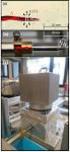
6 Bull. Min. Res. Exp. (2015) 150: The testing apparatus used for the reverse extrusion test is mainly composed of a container and a rammer (Figure 2). The inner diameter of container that the test is not operator dependent and eliminates many uncertainties pertinent to Casagrande s cup liquid limit and bead-rolling techniques. Figure 3- Schemmatical illustration of how the reverse extrusion method works (L = the length and D = the diameter of the soil billet). Figure 2- The reverse extrusion apparatus. is 38 mm and its height is 150 mm. The rammer has a die orifice of 6 mm in the middle. There is a clearance of 0.2 mm between the rammer and the inner surface of the container. Oven-dried, pulverized and sieved soil sample of about 150g is required for this test. Approximately 100g of soil specimen is first wetted by an amount of water slightly lower than its liquid limit and mixed homogeneously. The wet mixture is divided into a few chunks of about the same size. Each chunk is then dropped into the container and tapped with a piston. This way, all chunks of wet soil are filled into the container somewhat in a compacted manner to ensure that there is not large vugs in between. Then, the rammer is driven into the container, which are placed together in a uniaxial load frame with a digital load cell. The soil inside the container is loaded at a rate of 1 mm/min and the compression force is recorded. The soil is compressed until it fails in the form of soil worm as shown in figure 3. The compression force continues to increase until the compressed soil extrudes from the die orifice and then becomes steady as shown in figure 4, which consists of 5 experimental curves, each obtained at different water contents. The flat portion of curves in figure 4 corresponds to the extrusion pressures at failure, which are then plotted in a semilogarithmic graph against water content. A sample graph is shown in figure 5. The logarithm of extrusion pressure versus the water content results in a perfectly linear relationship. An attempt to investigate the operator dependence of the reverse extrusion test by employing several unexperienced people revealed Figure 4- Reverse extrusion test results for different water contents. The flat portion of curves develops after the soil worm forms. Figure 5- Example plot for the extrusion pressures at failure versus water contents. 135

7 Reverse Extrusion Method for Consistency Limits 4. Results and Discussion A comprehensive laboratory experiment program was followed towards predicting the two fundamental consistency limits of fine-grained soils. To determine the liquid limits of soil samples, at least five data pairs of cone penetration depth versus water content were constituted. The overall results obtained from the fallcone liquid limit tests are given in table 1 for 70 soil samples. Concerning the plastic limits of the same set of samples, the rolling-device method was employed as explained before. The plastic limit tests were repeated 5 times for each soil sample and the averages were taken and listed in table 1. Table 1- The liquid limits determined using the fall-cone method, the plastic limits determined using the rolling device method, and the reverse extrusion coefficients for 70 fine-grained soils used in this investigation. No. LL PL a b No. LL PL a b


8 Bull. Min. Res. Exp. (2015) 150: As for the reverse extrusion tests, at least five experiments were conducted on each soil sample at varying moisture contents. The extrusion pressure versus water content data pairs at the time of failure were plotted as shown in figure 5. The best fit curve for the data pairs was drawn upon visual inspection for each soil sample. The y-intercept (the coefficient a) and the slope (the coefficient b) of the best fit curve were determined for all 70 soil samples. These reverse extrusion coefficients (i.e. a and b values) for each soil were presented in table 1. The major reason for establishing the y-intercept and the slope of extrusion pressure versus water content plots is to analytically determine the spesific values of extrusion pressures at plastic and liquid limits. The extrusion pressures corresponding to the liquid limit values determined from the fall-cone test are calculated using the a and b coefficients and listed in table 2. Then, they are plotted as a histogram in figure 6(a). The histograms published by the senior author for the similar purposes are also included in figure 6 for comparison. A close look at figure 6(a) reveals that there is not a distinct range of extrusion pressures dramatically different from the others. Rather, it is observed that most extrusion pressures corresponding to liquid limits fall into a range from 0-30 kpa. To assign a representative extrusion pressure for the liquid limit as was done by Kayabalı and Tüfençki (2010) the arithmetic mean of all extrusion pressure values in this range can be taken, which is aproximately 15 kpa. Coincidently, the median value is also 15 kpa for this interval of extrusion pressures. Figure 6- Extrusion pressure distribution for liquid limit: a) This study, b) from Kayabalı and Tüfenkçi (2007), c) from Kayabalı and Tüfenkçi (2010) and d) from Kayabalı (2012). In order to predict the liquid limit using the representative extrusion pressure of 15 kpa determined above, a series of computations were carried out using the a and b coefficients. The results are listed in table 2. The liquid limit values predicted using the representative extrusion pressure of 15 kpa versus the original liquid limit values determined from the fall-cone test are plotted in figure 7 which 137


9 Reverse Extrusion Method for Consistency Limits yields a moderately good coefficient of regression (R 2 =0.62). It is observed that the liquid limit can be predicted with a great success up to 70; beyond that, the predicted LL becomes increasingly smaller as the measured LL increases. The most likely reason for this deviation is the fact that the extrusion pressure corresponding to the liquid limit is not the same for all soils. Figure 7- The predicted liquid limits using the representative extrusion pressure of 15 kpa versus the liquid limits determined from fall-cone method. The extrusion pressures corresponding to the plastic limits determined from the rolling-device method were calculated using the a and b coefficients as well. The newly predicted plastic limits are listed in table 2. Then, the predicted plastic limits are grouped into certain intervals to constitute a histogram in figure 8(a), which also includes previously published histograms of similar nature by the senior author for comparison purposes. It is observed that the extrusion pressures corresponding to plastic limits from the rolling-device method predicted using the a and b coefficients fall mostly into the interval of kpa; the mean of the extrusion pressures in this interval is approximately 2300 kpa. Using this representative value of 2300 kpa along with the two coefficients, plastic limits for each sample were predicted and listed in table 2. A correlation between the predicted plastic limits using the representative extrusion pressure of 2300 kpa and plastic limits from the rolling-device method is obtained with a moderate value of regression coefficent (R 2 = 0.71) (Figure 9). The degree of scatter around the plastic limit values of about appears to be high; which is also considered to be the results of assuming that the extrusion pressure corresponding to plastic limit is the same for all soils. 138 Figure 8- Extrusion pressure distribution for plastic limit: a) This study, b) from Kayabalı and Tüfenkçi (2007), c) from Kayabalı and Tüfenkçi (2010) and d) from Kayabalı (2012).

10 Bull. Min. Res. Exp. (2015) 150: Table 2- The computed extrusion pressures for liquid limit [P E(LL) ] and plastic limit [P E(PL) ], the predicted liquid limit and plastic limit using the representative extrusion pressures (LL PE=15 kpa and PL PE=2300 kpa ), the predicted liquid limit and plastic limit using the reverse extrusion coefficients in the empirical relationships (LL a&b and PL a&b ), and the amount of errors involved in predicting LL and PL with the empirical relationships (DLL and DPL). No. P E(LL) (kpa) P E(PL) (kpa) LL PE=15 kpa PL PE=2300 kpa LL a&b PL a&b DLL (%) DPL (%)

11 Reverse Extrusion Method for Consistency Limits Table 2- (contınued) Figure 9- The predicted plastic limits using the representative extrusion pressure of 2300 kpa versus the plastic limits determined from rolling-device method. Both regression coefficients for the correlations between the representative extrusion pressures from the reverse extrusion test and the liquid limits from the fall-cone method and the plastic limits from the rolling-device method, respectively, are rather encouraging; however, the authors perception is that neither the correlation between the predicted and laboratory-determined liquid limits nor the correlation between the predicted and the laboratory-determined plastic limits can be utilized for practical purposes because the amounts of error involved in both predictions would be unacceptably high. The most likely reason for the imperfect match between the predicted- and laboratory-determined Atterberg limits are the variations of predominant range of extrusion pressures in histograms of figures 6 and 8. For instance, the predominant intervals for the extrusion pressures corresponding to liquid limits are kpa for this study, kpa for Kayabalı and Tüfenkçi

12 Bull. Min. Res. Exp. (2015) 150: (2007) data, kpa for Kayabalı and Tüfenkçi (2010) data and kpa for Kayabalı (2012) data (Figure 6). The range of plasticity for soils used in this investigation and those in the previously published papers are not the same. Apparently, the extrusion pressures are plasticity dependent; for instance, while the soil samples with liquid limits higher than 75 have extrusion pressures corresponding to liquid limits less than 5 kpa, the soil samples with liquid limits around 30 or so have extrusion pressures corresponding liquid limits greater than roughly 30 kpa, indicating that the extrusion pressures corresponding liquid limits of low-plastic soils may be as high high as ten times that the extrusion pressures corresponding to liquid limits of high-plastic soils (see, for instance, table 1). A similar conclusion can be drawn from figure 8, where the predominant intervals of extrusion pressures corresponding to the experimentally determined plastic limits are kpa for this study, kpa for Kayabalı and Tüfenkçi (2007) data, kpa for Kayabalı and Tüfenkçi (2010) study and kpa for Kayabalı (2012) data. There is not a unique extrusion pressure to represent soils plastic limit either. The bottomline is that assigning a single extrusion pressure value for all liquid limits is not realistic; the same is true for plastic limit. At the next step the liquid and plastic limits are predicted with the empirical relationships given by equations (1) and (2), respectively. For instance, the liquid limit of any soil sample can be predicted by plugging the reverse extrusion coefficients of that soil sample into Eq. (1). Table 2 includes liquid limits and plastic limits for all soil samples predicted by the empirical relationships given in Eq. (1) and (2). Figure 10 illustrates the correlation between the predicted liquid limit by Eq. (1) and the liquid limit determined through the fall-cone method. The matching of the predicted data with the laboratory data is superior (with R 2 = 0.91) to the correlation between the liquid limits predicted by the representative extrusion pressure of 15 kpa (Figure 7). It appears that there is some scatter of data pairs in figure 10. One possible reason for this may be due to the uncertainties inherent to the fall-cone test itself. Further analyses may be required to asses this thoroughly. The correlation between the predicted PL using the reverse extrusion coeeficients [i.e., Eq. (2)] provided better matching with the laboratory data from the rolling-device (see Figure 11; R 2 = 0.91) than that did the representative extrusion pressure of 2300 kpa (Figure 9). In an attempt to seek a more meaningful relationship between the reverse extrusion characteristics of fine-grained soils and consistency limits a multiple regression analysis was carried out. For this purpose the liquid limit or the plastic limit were tried to be determined to be the functions of reverse extrusion coefficients (i.e., a and b). The multiple regression between the reverse extrusion coefficients and the liquid limits determined using the fall-cone method resulted in the following empirical relationship with R 2 = 0.92: LL = 0.04(a 3.3 )1.135 b (1) Likewise, the multiple regression analysis between the reverse extrusion coefficients and the plastic limits determined using the rolling-device method yield the following empirical relationship with R 2 = 0.94: PL = 0.04(a 2.33 ) b 0.98 (2) Figure 10- The predicted liquid limits using Eq. (1) versus versus the liquid limits determined from fallcone method. In order to assess the ability of the newly proposed equations to predict the liquid limit and plastic limit, a series of error analysis was performed. For instance, the amount of error involved in predicting the liquid limit with the proposed relationship (i.e., Eq. 1) was 141


13 Reverse Extrusion Method for Consistency Limits limit is shown in figure 13 as a histogram. The ability of the newly proposed equation to predict the plastic limit using the reverse extrusion coefficients appears to be remarkably good. About all plastic limits were predicted with an error of 10% and more than 80% of the plastic limits obtained from the rolling-device method can be found with a ±5% error. Figure 11- The predicted plastic limits using Eq. (2) versus versus the plastic limits determined from rollingdevice method. calculated as the ratio of the absolute value of the difference between the experimentally determined value and the predicted value to the experimentally determined value. The results are presented in table 2 as percentages. The same approach was employed to calculate the amounts of error for plastic limit and the results were listed in table 2. To examine the distribution of percent errors for predicting the liquid limit the histogram in figure 12 was constructed. It is observed that more than 70% of experimentally determined liquid limits were predicted with an error less than 10%. The mean of all error values is 7.2% with a standard deviation of 5.8%. The percent error distribution for the plastic Figure 13- Percent error distribution for the predicted plastic limits using Eq. (2) with respect to the plastic limits determined from rolling-device method. 5. Conclusions Following conclusions were drawn from this investigation: 1) The liquid limits and plastic limits predicted using the representative extrusion pressures of 15 kpa and 2300 kpa for the liquid limit and plastic limit, respectively, yield moderate- to good-level of correlations with the experimentally-determined consistency limits. 2) The imperfect match between the predicted consistency limits using the representative extrusion pressures and the experimentally determined consistency limits are attributed to the fact that the extrusion pressure corresponding to liquid limit is not constant for all soils. The same is true for plastic limit. It was observed that the extrusion pressures at either liquid limit or plastic limit for low-plasticity soils are many times those of high-plasticity soils. Therefore, the selection of representative extrusion pressures for liquid limit and plastic limit for the definition of those consistency limits proved not to be a good reference. 142 Figure 12- Percent error distribution for the predicted liquid limits using Eq. (1) with respect to the liquid limits determined from fall-cone method. 3) An alternative using the coefficents obtained from the fitted curves to the extrusion pressure versus water content data (i.e. a and b) in a multiple regression analysis showed that there exists a very

14 Bull. Min. Res. Exp. (2015) 150: good level of correlation between the reverse extrusion coefficents and the two consistency limits. 4) The success obtained from a new series of predictions using the emprical equations using the multiple regression analysis is much better. The average of absolute errors for plastic limit and liquid limit are 3% and 7%, respectively. 5) The previous researchers indicated that the reverse extrusion test is robust, simple and highly inexpensive method. This fact is confirmed herein and it is proposed that the reverse extrusion method can be reliably used for the prediction of two of the most commonly used consistency limits together. 6) The proposed method is limited to the soils with the liquid limit range of Precaution should be taken when applied to soils outside this range. Further analyses are recommended to cover the soils of very low plasticity as well as very high plasticity. References Received: Accepted: Published: June 2015 American Society for Testing Materials, Standard test methods for liquid limit, plastic limit, and plasticity index of soils: ASTM D , West Conshohocken, PA. Belviso, R., Ciampoli, S., Cotecchia, V., and Federico, A., Use of the cone penetrometer to determine consistency limits. Ground Engineering, 18(5), BSI, Methods of test for civil engineering purposes classification tets (BS1377-2): British Standard Institution (BSI), London, UK. CAN/BNQ, Soils determination of liquid limit by the Swedish fall-cone penetrometer method and determination of plastic limit: CAN/BNQ M-86, Canadian Standards Asspciation and Bureau de Normalization du Quebec, Rexdale, Ont. Casagrande, A, Research on the Atterberg limits of soils: Public Roads, 13, 3, Casagrande, A, Notes on the design of liquid limit device: Geotechnique, 8, 2, Clayton, C. R. I., Matthews, M. C. and Simons, N. E., 1995, Site investigation: Blackwell Science, 584 p. Dolinar, B., Predicting the normalized, undrained shear strength of saturated fine-grained soils using plasticity-value correlations: Applied Clay Science, 47, Haigh, S. K., Mechanics of the Casagrande liquid limit test: Canadian Geotechnical Journal, 49, ISI, Determination of liquid and plastic limits (2270)I In Indian Standard Method of Test for Soils, Part 5, Indian Standards Institution (ISI), New Delhi, India. Johnston, M. M., Strom, W. E. Jr., Results of second division laboratory testing program on standard soil samples: Misc. Paper, 3-978, U.S. army Engineer Waterways Experiment Station, Vicksburg, MS. Kayabalı, K., An alternative testing tool for plastic limit: Electronic Journal of Geotechnical Engineering 17(O), Kayabalı, K., Tüfenkçi, O. O., A different perspectıve for the determination of soil consistence limits: International Symposium on Geotechnical Engineering, Ground Improvement and Geosynthetics for Human Security and Environmental Preservation, Bangkok, Thailand, Kayabalı K., Tüfenkçi, O. O., Determination of plastic and liquid limits using the reverse extrusion technique: Geotechnical Testing Journal 33(1), Lee, L. T., Freeman, R. B., An alternative test method for assessing consistency limits. Geotechnical Testing Journal, 30(4), 1-8. Medhat, F., Whyte, I. L., An appraisal of soil index tests. Geological Society, Engineering Geology Special Publication 2, Prakash, K., Sridharan, A., Critical appraisal of the cone penetration method of determining soil plasticity. Can. Geotech. J. 43, Sherwood, P. T., The reproducibility of the results of soil classification and compaction tests: Report LR 339, Crowthorne, Road Research Laboratory. Sherwood, P. T., Ryley, M. D., An investigation of a cone-penetrometer method for the determination of the liquid limit. Geotechnique, 20, 2, Sivakumar, V., Glynn, D., Cairns, P., Black, J. A., A new method of measuring plastic limit of fine materials. Geotechnique, 59, 10, Timar, A., Testing the plastic properties of cohesive and intermediate-type soils by extrusion. Acta Tech. Ac. Sci. Hungary 76 (3-4), Wasti, Y., Bezirci, M. H., Determination of the consistency limits of soils by the fall-cone test. Canadian Geotechnical Journal 23, Whyte, I. L., Soil plasticity and strength a new approach for using extrusion. Ground Engineering, 15(1), Wood, D. M., Cone penetrometer and liquid limits. Geotechnique, 32, 2, Wroth, C. P., Wood, D. M., The correlation of index properties with some basic engineering properties of soils. Canadian Geotechnical Journal 15(2),

15

Geotechnical Measurements and Explorations Prof. Nihar Ranjan Patra Department of Civil Engineering Indian Institute of Technology, Kanpur
 Geotechnical Measurements and Explorations Prof. Nihar Ranjan Patra Department of Civil Engineering Indian Institute of Technology, Kanpur Lecture No. # 28 Last lecture we have covered this Atterberg limit,
Standard Test Procedures Manual
 STP 206-4 Standard Test Procedures Manual Section: 1. SCOPE 1.1. Description of Test This method describes the procedure for determining the liquid limit, plastic limit and the plasticity index of coarse-grained
A new method of measuring plastic limit of fine materials
 Sivakumar, V. et al. (211). Géotechnique 61, No. 1, 88 92 [doi: 1.168/geot.211.61.1.88] DISCUSSION A new method of measuring plastic limit of fine materials V. SIVAKUMAR, D. GLYNN, P. CAIRNS and J. A.
Index and strength properties of clay gravel mixtures
 Proceedings of the Institution of Civil Engineers Geotechnical Engineering February Issue GE Pages http://dx.doi.org/./geng... Paper Received // Accepted // Keywords: geotechnical engineering /strength
Relationship between the percentage of clay with liquid limit, plastic limit and plastic index in four different soils texture class
 Technical Journal of Engineering and Applied Sciences Available online at www.tjeas.com 2013 TJEAS Journal-2013-3-8/697-702 ISSN 2051-0853 2013 TJEAS Relationship between the percentage of clay with liquid
LABORATORY II. PLASTICITY - Atterberg limits. w L - Cone test, Cassagrande test
 LABORATORY II. PLASTICITY - Atterberg limits w L - Cone test, Cassagrande test Consistency - limits I P w L w P Is plasticity important? Smectite Structure Tetrahedral layer Octahedral layer Tetrahedral
CEEN 162 - Geotechnical Engineering Laboratory Session 7 - Direct Shear and Unconfined Compression Tests
 PURPOSE: The parameters of the shear strength relationship provide a means of evaluating the load carrying capacity of soils, stability of slopes, and pile capacity. The direct shear test is one of the
Geotechnical Characteristics of Two Different Soils and their Mixture and Relationships between Parameters
 Geotechnical Characteristics of Two Different Soils and their Mixture and Relationships between Parameters Arpan Laskar Post Graduate Student Civil Engineering Department, National Institute of Technology
Measuring the plastic limit of fine soils: an experimental study
 an experimental study Proceedings of the Institution of Civil Engineers Geotechnical Engineering 8 February 15 Issue GE1 Pages 53 64 http://dx.doi.org/.80/geng..00004 Paper 00004 Received 03/01/ Accepted
Figure 2.31. CPT Equipment
 Soil tests (1) In-situ test In order to sound the strength of the soils in Las Colinas Mountain, portable cone penetration tests (Japan Geotechnical Society, 1995) were performed at three points C1-C3
The University of Toledo Soil Mechanics Laboratory
 1 Grain Size Distribution Sieve Analysis The University of Toledo Soil Mechanics Laboratory Introduction The grain size distribution is a representation of the approximate distribution of soil grain sizes
c. Borehole Shear Test (BST): BST is performed according to the instructions published by Handy Geotechnical Instruments, Inc.
 Design Manual Chapter 6 - Geotechnical 6B - Subsurface Exploration Program 6B-2 Testing A. General Information Several testing methods can be used to measure soil engineering properties. The advantages,
Drained and Undrained Conditions. Undrained and Drained Shear Strength
 Drained and Undrained Conditions Undrained and Drained Shear Strength Lecture No. October, 00 Drained condition occurs when there is no change in pore water pressure due to external loading. In a drained
PHYSICAL AND PLASTICITY CHARACTERISTICS
 0 PHYSICAL AND PLASTICITY CHARACTERISTICS EXPERIMENTS #1-5 CE 3143 October 7, 2003 Group A David Bennett 1 TABLE OF CONTENTS 1. Experiment # 1: Determination of Water Content (August 26, 2003) pp. 1-3
Soil Testing Soil index properties 24. Cone Penetrometer Method BS 1377, 1924-2, EN DD ENV 1997-2. Semi-Automatic Cone Penetrometer
 24 Soil index properties Soil Index Properties Soil index properties are used extensively by engineers to discriminate between the different kinds of soil within a broad category, e.g. clay will exhibit
Measurement of Soil Parameters by Using Penetrometer Needle Apparatus
 Vol.3, Issue.1, Jan-Feb. 2013 pp-284-290 ISSN: 2249-6645 Measurement of Soil Parameters by Using Penetrometer Needle Apparatus Mahmoud M. Abu zeid, 1 Amr M. Radwan, 2 Emad A. Osman, 3 Ahmed M.Abu-bakr,
ISSN 2320-5407 International Journal of Advanced Research (2016), Volume 4, Issue 4, 537-545 RESEARCH ARTICLE
 Journal homepage: http://www.journalijar.com Journal DOI: 10.21474/IJAR01 INTERNATIONAL JOURNAL OF ADVANCED RESEARCH RESEARCH ARTICLE MODELING OF SHEAR STRENGTH-WATER CONTENT RELATIONSHIP OF ULTRA-SOFT
HYDRAULIC STRUCTURES, EQUIPMENT AND WATER DATA ACQUISITION SYSTEMS Vol. IV - Testing of Materials and Soils - F. Druyts
 TESTING OF MATERIALS AND SOILS F. Druyts Pr. Eng., Department of Water Affairs and Forestry, Pretoria, South Africa Keywords: Materials testing, soil mechanics/properties, construction materials, earth
LABORATORY DETERMINATION OF CALIFORNIA BEARING RATIO
 LABORATORY DETERMINATION OF CALIFORNIA BEARING RATIO STANDARD IS: 2720 (Part 16) 1979. DEFINITION California bearing ratio is the ratio of force per unit area required to penetrate in to a soil mass with
Numerical Analysis of Texas Cone Penetration Test
 International Journal of Applied Science and Technology Vol. 2 No. 3; March 2012 Numerical Analysis of Texas Cone Penetration Test Nutan Palla Project Engineer, Tolunay-Wong Engineers, Inc. 10710 S Sam
A Determination of g, the Acceleration Due to Gravity, from Newton's Laws of Motion
 A Determination of g, the Acceleration Due to Gravity, from Newton's Laws of Motion Objective In the experiment you will determine the cart acceleration, a, and the friction force, f, experimentally for
product manual HS-4210 HS-4210_MAN_09.08 Digital Static Cone Penetrometer
 HS-4210_MAN_09.08 product manual HS-4210 Digital Static Cone Penetrometer Introduction This Manual covers the measurement of bearing capacity using the Humboldt Digital Static Cone Penetrometer (DSCP).
Effect of grain size, gradation and relative density on shear strength and dynamic cone penetration index of Mahi, Sabarmati and Vatrak Sand
 Discovery ANALYSIS The International Daily journal ISSN 2278 5469 EISSN 2278 5450 2015 Discovery Publication. All Rights Reserved Effect of grain size, gradation and relative density on shear strength
Soil Mechanics. Soil Mechanics
 Soil is the most misunderstood term in the field. The problem arises in the reasons for which different groups or professions study soils. Soil scientists are interested in soils as a medium for plant
STANDARD OPERATING PROCEDURES
 Date: July 27, 2014 Author: Emily Barasa STANDARD OPERATING PROCEDURES METHOD FOR DETERMINATION OF ATTERBERG LIMITS AND LINEAR SHRINKAGE IN SOILS Contact Details: Telephone: +254 (20) 7224000/4235/4279/4163
GUIDELINE FOR HAND HELD SHEAR VANE TEST
 GUIDELINE FOR HAND HELD SHEAR VANE TEST NZ GEOTECHNICAL SOCIETY INC August 2001 CONTENTS Page 1.0 Introduction 2 2.0 Background 2 3.0 Recommended Practice 3 4.0 Undrained Shear Strength 3 5.0 Particular
PART I SIEVE ANALYSIS OF MATERIAL RETAINED ON THE 425 M (NO. 40) SIEVE
 Test Procedure for PARTICLE SIZE ANALYSIS OF SOILS TxDOT Designation: Tex-110-E Effective Date: August 1999 1. SCOPE 1.1 This method covers the quantitative determination of the distribution of particle
DETERMINATION OF PLASTIC LIMITS OF SOILS USING CONE PENETROMETER: Re-Appraisal
 DETERMINATION OF PLASTIC LIMITS OF SOILS USING CONE PENETROMETER: Re-Appraisal Agus Setyo Muntohar 1 and Roslan Hashim 2 ABSTRACT Cone penetrometer method has been proposed by many researchers as more
LABORATORY CLASSIFICATION OF SOILS FOR ENGINEERING PURPOSES
 Test Procedure for LABORATORY CLASSIFICATION OF SOILS FOR ENGINEERING PURPOSES TxDOT Designation: Tex-142-E Effective Date: August 1999 1. SCOPE 1.1 This method is a system for classifying disturbed and
Spring Force Constant Determination as a Learning Tool for Graphing and Modeling
 NCSU PHYSICS 205 SECTION 11 LAB II 9 FEBRUARY 2002 Spring Force Constant Determination as a Learning Tool for Graphing and Modeling Newton, I. 1*, Galilei, G. 1, & Einstein, A. 1 (1. PY205_011 Group 4C;
Apr 17, 2000 LAB MANUAL 1302.0. 1302 PARTICLE SIZE ANALYSIS OF SOILS AASHTO Designation T 88 (Mn/DOT Modified)
 Apr 17, 2000 LAB MANUAL 1302.0 1302 PARTICLE SIZE ANALYSIS OF SOILS AASHTO Designation T 88 (Mn/DOT Modified) 1302.1 SCOPE This method describes a procedure for the quantitative determination of the distribution
A study on the Effect of Distorted Sampler Shoe on Standard Penetration Test Result in Cohesionless soil
 ISSN: 319-53 (An ISO 39: 00 Certified Organization) A study on the Effect of Distorted Sampler Shoe on Standard Penetration Test Result in Cohesionless soil Utpal Kumar Das Associate Professor, Department
NOTES on the CONE PENETROMETER TEST
 GE 441 Advanced Engineering Geology & Geotechnics Spring 2004 Introduction NOTES on the CONE PENETROMETER TEST The standardized cone-penetrometer test (CPT) involves pushing a 1.41-inch diameter 55 o to
TECHNICAL Summary. TRB Subject Code:62-7 Soil Foundation Subgrades February 2003 Publication No.: FHWA/IN/JTRP-2002/30, SPR-2362
 INDOT Research TECHNICAL Summary Technology Transfer and Project Implementation Information TRB Subject Code:62-7 Soil Foundation Subgrades February 3 Publication No.: FHWA/IN/JTRP-2/3, SPR-2362 Final
Estimation of Compression Properties of Clayey Soils Salt Lake Valley, Utah
 Estimation of Compression Properties of Clayey Soils Salt Lake Valley, Utah Report Prepared for the Utah Department of Transportation Research Division by Steven F. Bartlett, PhD. P.E. Assistant Professor
NUMERICAL MODELLING OF PIEZOCONE PENETRATION IN CLAY
 NUMERICAL MODELLING OF PIEZOCONE PENETRATION IN CLAY Ilaria Giusti University of Pisa [email protected] Andrew J. Whittle Massachusetts Institute of Technology [email protected] Abstract This paper
TECHNICAL REPORT ON SCALA DYNAMIC CONE PENETROMETER IRREGULARITY
 TECHNICAL REPORT ON SCALA DYNAMIC CONE PENETROMETER IRREGULARITY CETANZ Technical Report TR 1 Author(s) SJ Anderson, Geotechnics Ltd Report Date First Issue May 2010 Report Revision Date September 2011
KWANG SING ENGINEERING PTE LTD
 KWANG SING ENGINEERING PTE LTD 1. INTRODUCTION This report represents the soil investigation works at Aljunied Road / Geylang East Central. The objective of the soil investigation is to obtain soil parameters
METHOD A7 THE DETERMINATION OF THE MAXIMUM DRY DENSITY AND OPTIMUM MOISTURE CONTENT OF GRAVEL, SOIL AND SAND
 SCOPE METHOD A7 THE DETERMINATION OF THE MAXIMUM DRY DENSITY AND OPTIMUM MOISTURE CONTENT OF GRAVEL, SOIL AND SAND Definition The maximum dry density and optimum moisture content, as defined below, is
SOIL-LIME TESTING. Test Procedure for. TxDOT Designation: Tex-121-E 1. SCOPE 2. APPARATUS 3. MATERIALS TXDOT DESIGNATION: TEX-121-E
 Test Procedure for SOIL-LIME TESTING TxDOT Designation: Tex-121-E Effective Date: August 2002 1. SCOPE 1.1 This method consists of three parts. 1.1.1 Part I determines the unconfined compressive strength
INDIRECT METHODS SOUNDING OR PENETRATION TESTS. Dr. K. M. Kouzer, Associate Professor in Civil Engineering, GEC Kozhikode
 INDIRECT METHODS SOUNDING OR PENETRATION TESTS STANDARD PENETRATION TEST (SPT) Reference can be made to IS 2131 1981 for details on SPT. It is a field edtest to estimate e the penetration e resistance
INTERNATIONAL JOURNAL OF CIVIL AND STRUCTURAL ENGINEERING Volume 3, No 3, 2013
 INTERNATIONAL JOURNAL OF CIVIL AND STRUCTURAL ENGINEERING Volume 3, No 3, 2013 Copyright by the authors - Licensee IPA- Under Creative Commons license 3.0 Research article ISSN 0976 4399 Reliability of
Soil Mechanics SOIL STRENGTH page 1
 Soil Mechanics SOIL STRENGTH page 1 Contents of this chapter : CHAPITRE 6. SOIL STRENGTH...1 6.1 PRINCIPAL PLANES AND PRINCIPAL STRESSES...1 6.2 MOHR CIRCLE...1 6.2.1 POLE METHOD OF FINDING STRESSES ON
Mitigation of Expansive Soils Damages
 Mitigation of Expansive Soils Damages Joseph Muhirwa Richard Benda Robert Sargent REU Program University of Texas at Arlington This presentation will focus on four main sections Introduction and Background
METHOD OF TEST FOR DETERMINATION OF PERMEABILITY OF GRANULAR SOILS
 Laboratory Testing Manual Date: 99 06 21 Page 1 of 7 METHOD OF TEST FOR DETERMINATION OF PERMEABILITY OF GRANULAR SOILS 1. SCOPE 1.1 This method covers the determination of the coefficient of permeability
POWDER PROPERTIES LABORATORY
 Ground Rules POWDER PROPERTIES LABORATORY You will work as a team of no more than 6 students. At the end of this laboratory session each team will turn in a single report. The report will be reviewed,
Soil Classification Through Penetration Tests
 Pak. J. Engg. & Appl. Sci. Vol. 9, Jul., 2011 (p. 76-86) Soil Classification Through Penetration Tests A. H. Khan, A. Akbar, K. Farooq, N. M. Khan, M. Aziz and H. Mujtaba Department of Civil Engineering,
The plastic limit of clays
 Haigh, S. K. et al. (213). Géotechnique 63, No. 6, 435 44 [http://dx.doi.org/1.168/geot.11.p.123] The plastic limit of clays S. K. HAIGH, P. J. VARDANEGA and M. D. BOLTON The plastic limit of soils was
CONSTANT HEAD AND FALLING HEAD PERMEABILITY TEST
 CONSTANT HEAD AND FALLING HEAD PERMEABILITY TEST 1 Permeability is a measure of the ease in which water can flow through a soil volume. It is one of the most important geotechnical parameters. However,
GRADATION OF AGGREGATE FOR CONCRETE BLOCK
 GRADATION OF AGGREGATE FOR CONCRETE BLOCK Although numerous papers have been written concerning the proper gradation for concrete mixes, they have generally dealt with plastic mixes, and very little published
HIGHWAYS DEPARTMENT GUIDANCE NOTES ON SOIL TEST FOR PAVEMENT DESIGN
 HIGHWAYS DEPARTMENT GUIDANCE NOTES ON SOIL TEST FOR PAVEMENT DESIGN Research & Development Division RD/GN/012 August 1990 HIGHWAYS DEPARTMENT GUIDANCE NOTES (RD/GN/012) SOIL TEST FOR PAVEMENT DESIGN Prepared
DIRECT SHEAR TEST SOIL MECHANICS SOIL MECHANICS LABORATORY DEPARTMENT OF CIVIL ENGINEERING UNIVERSITY OF MORATUWA SRI LANKA
 DIRECT SHEAR TEST SOIL MECHANICS SOIL MECHANICS LABORATORY DEPARTMENT OF CIVIL ENGINEERING UNIVERSITY OF MORATUWA SRI LANKA DIRECT SHEAR TEST OBJEVTIVES To determine the shear strength parameters for a
Geotechnical Measurements and Explorations Prof. Nihar Ranjan Patra Department of Civil Engineering Indian Institute of Technology, Kanpur
 Geotechnical Measurements and Explorations Prof. Nihar Ranjan Patra Department of Civil Engineering Indian Institute of Technology, Kanpur Lecture No. # 13 (Refer Slide Time: 00:18) So last class, it was
Eurocode 7 - Geotechnical design - Part 2 Ground investigation and testing
 Brussels, 18-20 February 2008 Dissemination of information workshop 1 Eurocode 7 - Geotechnical design - Part 2 Ground investigation and testing Dr.-Ing. Bernd Schuppener, Federal Waterways Engineering
Penetration rate effects on cone resistance measured in a calibration chamber
 Penetration rate effects on cone resistance measured in a calibration chamber K. Kim Professional Service Industries, Inc, Houston, TX, USA M. Prezzi & R. Salgado Purdue University, West Lafayette, IN,
14.330 SOIL MECHANICS Assignment #4: Soil Permeability.
 Geotechnical Engineering Research Laboratory One University Avenue Lowell, Massachusetts 01854 Edward L. Hajduk, D.Eng, PE Lecturer PA105D Tel: (978) 94 2621 Fax: (978) 94 052 e mail: [email protected]
CONE PENETRATION TESTING AND SITE EXPLORATION IN EVALUATING THE LIQUEFACTION RESISTANCE OF SANDS AND SILTY SANDS ABSTRACT
 CONE PENETRATION TESTING AND SITE EXPLORATION IN EVALUATING THE LIQUEFACTION RESISTANCE OF SANDS AND SILTY SANDS E. J. Newman 1, T. D. Stark 2, and S. M. Olson 3 ABSTRACT Refined relationships between
Technical Bibliography on Use of Fall Cone for Determining Undrained Shear Strength and Atterberg Limits of Fine-Grained Soils
 Technical Bibliography on Use of Fall Cone for Determining Undrained Shear Strength and Atterberg Limits of Fine-Grained Soils prepared by Alan J. Lutenegger, P.E., PhD. The Fall Cone Test is used extensively
SHORE A DUROMETER AND ENGINEERING PROPERTIES
 SHORE A DUROMETER AND ENGINEERING PROPERTIES Written by D.L. Hertz, Jr. and A.C. Farinella Presented at the Fall Technical Meeting of The New York Rubber Group Thursday, September 4, 1998 by D.L. Hertz,
Commonwealth of Pennsylvania PA Test Method No. 632 Department of Transportation October 2013 5 Pages LABORATORY TESTING SECTION. Method of Test for
 Commonwealth of Pennsylvania PA Test Method No. 632 Department of Transportation 5 Pages LABORATORY TESTING SECTION Method of Test for TIME OF SETTING OF CONCRETE MIXTURES BY PENETRATION RESISTANCE 1.
CPTic_CSM8. A spreadsheet tool for identifying soil types and layering from CPTU data using the I c method. USER S MANUAL. J. A.
 CPTic_CSM8 A spreadsheet tool for identifying soil types and layering from CPTU data using the I c method. USER S MANUAL J. A. Knappett (2012) This user s manual and its associated spreadsheet ( CPTic_CSM8.xls
INSITU TESTS! Shear Vanes! Shear Vanes! Shear Vane Test! Sensitive Soils! Insitu testing is used for two reasons:!
 In-situ Testing! Insitu Testing! Insitu testing is used for two reasons:! To allow the determination of shear strength or penetration resistance or permeability of soils that would be difficult or impossible
Influence of Short Polymeric Fibers on Crack Development in Clays
 REMR Technical Note GT-SE-1.8 Influence of Short Polymeric Fibers on Crack Development in Clays Purpose To evaluate a methodology for preventing crack development in clays due to desiccation by the use
INTRODUCTION TO SOIL MODULI. Jean-Louis BRIAUD 1
 INTRODUCTION TO SOIL MODULI By Jean-Louis BRIAUD 1 The modulus of a soil is one of the most difficult soil parameters to estimate because it depends on so many factors. Therefore when one says for example:
MIME 3330 Mechanics Laboratory LAB 5: ROTATING BENDING FATIGUE
 MIME 3330 Mechanics Laboratory LAB 5: ROTATING BENDING FATIGUE Introduction In this experiment, the finite life fatigue behavior of a smooth cylindrical specimen as shown in Figure 1 will be studied in
T 549. WORKING GROUP CHAIRMAN N/A; reaffirmed SUBJECT RELATED
 NOTICE: This is a DRAFT of a TAPPI Standard in ballot. Although available for public viewing, it is still under TAPPI s copyright and may not be reproduced or distributed without permission of TAPPI. This
Sheet Metal Shearing & Bending
 Training Objective After watching the program and reviewing this printed material, the viewer will gain a knowledge and understanding of the principles and machine methods of shearing and bending sheetmetal
USE OF CONE PENETRATION TEST IN PILE DESIGN
 PERIODICA POLYTECHNICA SER. CIV. ENG. VOL. 47, NO. 2, PP. 189 197 (23) USE OF CONE PENETRATION TEST IN PILE DESIGN András MAHLER Department of Geotechnics Budapest University of Technology and Economics
ANNEX D1 BASIC CONSIDERATIONS FOR REVIEWING STUDIES IN THE DETAILED RISK ASSESSMENT FOR SAFETY
 ANNEX D1 BASIC CONSIDERATIONS FOR REVIEWING STUDIES IN THE DETAILED RISK ASSESSMENT FOR SAFETY ANNEX D1: BASIC CONSIDERATIONS FOR REVIEWING STUDIES IN DRA FOR SAFETY D1-1 ANNEX D1 BASIC CONSIDERATIONS
ASSESSMENT OF SHEAR WAVE VELOCITY FROM INDIRECT INSITU TESTS
 Proceedings of Indian Geotechnical Conference IGC-2014 December 18-20, 2014, Kakinada, India ASSESSMENT OF SHEAR WAVE VELOCITY FROM INDIRECT INSITU TESTS Kant, L., M. Tech Student, Department of Earthquake
4.3 Results... 27 4.3.1 Drained Conditions... 27 4.3.2 Undrained Conditions... 28 4.4 References... 30 4.5 Data Files... 30 5 Undrained Analysis of
 Table of Contents 1 One Dimensional Compression of a Finite Layer... 3 1.1 Problem Description... 3 1.1.1 Uniform Mesh... 3 1.1.2 Graded Mesh... 5 1.2 Analytical Solution... 6 1.3 Results... 6 1.3.1 Uniform
Physics Lab Report Guidelines
 Physics Lab Report Guidelines Summary The following is an outline of the requirements for a physics lab report. A. Experimental Description 1. Provide a statement of the physical theory or principle observed
Tensile Testing Laboratory
 Tensile Testing Laboratory By Stephan Favilla 0723668 ME 354 AC Date of Lab Report Submission: February 11 th 2010 Date of Lab Exercise: January 28 th 2010 1 Executive Summary Tensile tests are fundamental
Standard Test Method for Mechanical Cone Penetration Tests of Soil 1
 Designation: D 3441 98 AMERICAN SOCIETY FOR TESTING AND MATERIALS 100 Barr Harbor Dr., West Conshohocken, PA 19428 Reprinted from the Annual Book of ASTM Standards. Copyright ASTM Standard Test Method
Objectives. Experimentally determine the yield strength, tensile strength, and modules of elasticity and ductility of given materials.
 Lab 3 Tension Test Objectives Concepts Background Experimental Procedure Report Requirements Discussion Objectives Experimentally determine the yield strength, tensile strength, and modules of elasticity
Procedure for the Determination of the Permeability of Clayey Soils in a Triaxial Cell Using the Accelerated Permeability Test
 Procedure for the Determination of the Permeability of Clayey Soils in a Triaxial Cell Using the Accelerated Permeability Test R&D Technical Report P1-398/TR/2 Dr E. J Murray Research Contractor: Murray
T 815 SUBJECT. (No changes from Draft 2)
 WI 050308.03 T 815 DRAFT NO. 3 TAPPI DATE March 12, 2006 WORKING GROUP CHAIRMAN Gary Vosler SUBJECT CATEGORY RELATED METHODS FISCOTEC See Additional Information CAUTION: This Test Method may include safety
Prelab Exercises: Hooke's Law and the Behavior of Springs
 59 Prelab Exercises: Hooke's Law and the Behavior of Springs Study the description of the experiment that follows and answer the following questions.. (3 marks) Explain why a mass suspended vertically
1) Write the following as an algebraic expression using x as the variable: Triple a number subtracted from the number
 1) Write the following as an algebraic expression using x as the variable: Triple a number subtracted from the number A. 3(x - x) B. x 3 x C. 3x - x D. x - 3x 2) Write the following as an algebraic expression
GUIDELINES FOR TESTING FRESH SELF-COMPACTING CONCRETE
 Growth Contract No. GRD2-2000-30024 GUIDELINES FOR TESTING FRESH SELF-COMPACTING CONCRETE Principal author: G. DE SCHUTTER September 2005 European Research Project: MEASUREMENT OF PROPERTIES OF FRESH SELF-COMPACTING
SPECIFICATION FOR DYNAMIC CONSOLIDATION / DYNAMIC REPLACEMENT
 SPECIFICATION FOR DYNAMIC CONSOLIDATION / DYNAMIC REPLACEMENT 1.0 SOIL IMPROVEMENT 1.1 General Soil Investigation Information are provided in Part B1 annex as a guide to the Contractor for his consideration
Fundamentals of CONE PENETROMETER TEST (CPT) SOUNDINGS. J. David Rogers, Ph.D., P.E., R.G.
 Fundamentals of CONE PENETROMETER TEST (CPT) SOUNDINGS J. David Rogers, Ph.D., P.E., R.G. Cone Penetration Test CPT soundings can be very effective in site characterization, especially sites with discrete
Penetration Tests in a Mold on Regolith Quasi-Analogues at Different Relative Densities
 Penetration Tests in a Mold on Regolith Quasi-Analogues at Different Relative Densities C. Vrettos 1, A. Becker 2, K. Merz 3, and L. Witte 4 1 Division of Soil Mechanics and Foundation Engineering, Technical
Geotechnical Investigation Test Report
 Geotechnical Investigation Test Report Report No. htsc/rcd/ 3457 Dated: - 20/03/2010 Asphalt Standard Penetration Test as per IS 2131 ------------- IS 6403 Soil Job Card No - 1649 Cement Client/Department
DryWeight BulkVolume
 Test Procedure for BULK SPECIFIC GRAVITY AND WATER ABSORPTION OF AGGREGATE TxDOT Designation: Tex-201-F Effective Date: January 2016 1. SCOPE 1.1 Use this method to determine the bulk specific gravity
The University of Toledo Soil Mechanics Laboratory
 The University of Toledo Soil Mechanics Laboratory 1 Soil Moisture-Density Relationship Standard and Modified Proctor Tests Introduction For earthork construction it is important to compact soils to a
Session 7 Bivariate Data and Analysis
 Session 7 Bivariate Data and Analysis Key Terms for This Session Previously Introduced mean standard deviation New in This Session association bivariate analysis contingency table co-variation least squares
Chapter 10. Key Ideas Correlation, Correlation Coefficient (r),
 Chapter 0 Key Ideas Correlation, Correlation Coefficient (r), Section 0-: Overview We have already explored the basics of describing single variable data sets. However, when two quantitative variables
Comparison of Continuous Dynamic Probing with the Standard Penetration Test for Highly Weathered Limestone of Eastern Sudan
 Comparison of Continuous Dynamic Probing with the Standard Penetration Test for Highly Weathered Limestone of Eastern Sudan Prof. Dr. Khairul Anuar Kassim Deputy Dean, Research and Graduate Studies, Faculty
Crimp Tooling Where Form Meets Function
 Crimp Tooling Where Form Meets Function Quality, cost, and throughput are key attributes for any production process. The crimp termination process is no exception. Many variables contribute to the results.
Force measurement. Forces VECTORIAL ISSUES ACTION ET RÉACTION ISOSTATISM
 Force measurement Forces VECTORIAL ISSUES In classical mechanics, a force is defined as "an action capable of modifying the quantity of movement of a material point". Therefore, a force has the attributes
Fundamentals of Extrusion
 CHAPTER1 Fundamentals of Extrusion The first chapter of this book discusses the fundamentals of extrusion technology, including extrusion principles, processes, mechanics, and variables and their effects
Head Loss in Pipe Flow ME 123: Mechanical Engineering Laboratory II: Fluids
 Head Loss in Pipe Flow ME 123: Mechanical Engineering Laboratory II: Fluids Dr. J. M. Meyers Dr. D. G. Fletcher Dr. Y. Dubief 1. Introduction Last lab you investigated flow loss in a pipe due to the roughness
Chapter 8 Design of Concrete Mixes
 Chapter 8 Design of Concrete Mixes 1 The basic procedure for mix design is applicable to concrete for most purposes including pavements. Concrete mixes should meet; Workability (slump/vebe) Compressive
SIEVE ANALYSIS OF FINE AND COARSE AGGREGATES
 Test Procedure for SIEVE ANALYSIS OF FINE AND COARSE AGGREGATES TxDOT Designation: Tex-200-F Effective Date: January 2016 1. SCOPE 1.1 Use this test method to determine the particle size distribution of
SECTION 55 PIPE FOR STORM DRAINS AND CULVERTS (FAA D-701)
 SECTION 55 PIPE FOR STORM DRAINS AND CULVERTS (FAA D-701) 55-1 GENERAL The Contractor shall perform all work required by the plans for construction of pipe for storm drains, precast polymer trench drains
Math Matters: Dissecting Hydrometer Calculations
 Math Matters: Dissecting Hydrometer Calculations By Jonathan Sirianni, Laboratory Assessor In the 16th century Galileo and the Tower of Pisa made famous the fact that two objects, no matter their mass,
The Basic Principles of Sieve Analysis
 The Basic Principles of Sieve Analysis Introduction Many natural and manufactured materials occur in a disperse form, which means that they consist of differently shaped and sized particles. The particle