
TOS9213S (SPEC80623) TOS9213AS (SPEC80767)
|
|
|
- Sibyl Cannon
- 9 years ago
- Views:
Transcription
1 Part No. Z , IB Dec OPERATION MANUAL DC WITHSTANDING VOLTAGE/ INSULATION RESISTANCE TESTER TOS9200 Series TOS9213S (SPEC80623) TOS9213AS (SPEC80767) DANGER This Tester generates high voltage. Any incorrect handling may cause death. Read Chapter 3 Precautions on Handling in this manual to prevent accident. Keep this manual near the tester for easy access of the operator.

2 Use of Operation Manual Please read through and understand this Operation Manual before operating the product. After reading, always keep the manual nearby so that you may refer to it as needed. When moving the product to another location, be sure to bring the manual as well. If you find any incorrectly arranged or missing pages in this manual, they will be replaced. If the manual it gets lost or soiled, a new copy can be provided for a fee. In either case, please contact Kikusui distributor/ agent, and provide the Kikusui Part No. given on the cover. This manual has been prepared with the utmost care; however, if you have any questions, or note any errors or omissions, please contact Kikusui distributor/agent. Disposing of used Kikusui products in the EU Under a law adopted by member nations of the European Union (EU), used electric and electronic products carrying the symbol below must be disposed of separately from general household waste. This includes the power cords and other accessories bundled with the products. When disposing of a product subject to these regulations, please follow the guidance of your local authority, or inquire with your Kikusui distributor/agent where you purchased the product. The symbol applies only to EU member nations. Disposal outside the EU When disposing of an electric or electronic product in a country that is not an EU member, please contact your local authority and ask for the correct method of disposal. The other company names and product names that appear in this manual are the trademarks or registered trademarks of the respective manufacturers. Reproduction and reprinting of this operation manual, whole or partially, without our permission is prohibited. Both unit specifications and manual contents are subject to change without notice. Copyright 2009 Kikusui Electronics Corporation

3 Interlock Function The first time the tester is turned on following delivery, the interlock function activates and testing is disabled. Before starting a test, read "6.3 INTERLOCK Connector" for the procedure for starting up the tester using the interlock function. About this manual This operation manual describes the withstanding voltage tester TOS9213S and TOS9213AS. This manual is applicable to the Tester whose ROM version number is: Ver. 1.4x You can check the version number on the opening screen at turning on the power or by using the *IDN? message. For the *IDN? message, see "7.4.1 Register-Related Messages and General Purpose Messages." When you contact us for any information about the Tester, please indicate the ROM version number and serial number of the Tester. The serial number is shown on the rear panel of the Tester. The opening screen (Example of ROM version is 1.20) TOS9213S DC WITHSTANDING VOLTAGE / INSULATION RESISTANCE TESTER Ver KIKUSUI ELECTRONICS CORP. TOS9213S/ TOS9213AS i

4 To supervisor in charge of operation If the operator does not read the language used in this manual, translate the manual into appropriate language. Help the operator in understanding this manual before operation. Keep this manual near the tester for easy access of the operator. For your own safety (to avoid electrification) While the tester is delivering its test voltage, never touch the following areas, or else, you will be electrified, and run the risk of death by electric shock. the output terminal the test leadwires connected to the output terminal the Device Under Test (DUT) any part of the tester, which is electrically connected to the output terminal, and the same part as above immediately after the output has been cut off when in the DC mode of test. Also, electric shock or accident may arise in the following cases: the tester being operated without grounding. if the gloves for electrical job are not used. approach to any part connected to the output terminal while the power of the tester is turned on. the same action as above immediately after the power of tester has been turned off when in the DC mode of test. ii TOS9213S/ TOS9213AS

5 Power Requirements of this Product Power requirements of this product have been changed and the relevant sections of the Operation Manual should be revised accordingly. (Revision should be applied to items indicated by a check mark.) Input voltage The input voltage of this product is VAC, and the voltage range is to VAC. Use the product within this range only. Input fuse The rating of this product's input fuse is A, VAC, and. WARNING To avoid electrical shock, always disconnect the AC power cord or turn off the switch on the switchboard before attempting to check or replace the fuse. Use a fuse element having a shape, rating, and characteristics suitable for this product. The use of a fuse with a different rating or one that short circuits the fuse holder may result in fire, electric shock, or irreparable damage. TOS9213S/ TOS9213AS iii

6 Safety Symbols For the safe use and safe maintenance of this product, the following symbols are used throughout this manual and on the product. Understand the meanings of the symbols and observe the instructions they indicate (the choice of symbols used depends on the products). OR Indicates that a high voltage (over 1000 V) is used here. Touching the part causes a possibly fatal electric shock. If physical contact is required by your work, start work only after you make sure that no voltage is output here. DANGER Indicates an imminently hazardous situation which, if ignored, will result in death or serious injury. WARNING Indicates a potentially hazardous situation which, if ignored, could result in death or serious injury. CAUTION Indicates a potentially hazardous situation which, if ignored, may result in damage to the product and other property. Shows that the act indicated is prohibited. Is placed before the sign DANGER, WARNING, or CAU- TION to emphasize these. When this symbol is marked on the product, see the relevant sections in this manual. Indicates a protective conductor terminal. Indicates a chassis(frame) terminal. iv Safety Symbols TOS9213S/ TOS9213AS

7 Safety Precautions The following safety precautions must be observed to avoid fire hazard, electrical shock, accidents, and other failures. Keep them in mind and make sure that all of them are observed properly. Using the product in a manner that is not specified in this manual may impair the protection functions provided by the product. Users Operation Manual This product must be used only by qualified personnel who understand the contents of this operation manual. If it is handled by disqualified personnel, personal injury may result. Be sure to handle it under supervision of qualified personnel (those who have electrical knowledge.) Purposes of use Do not use the product for purposes other than those described in the operation manual. This product is not designed or manufactured for general home or consumer use. Line Voltage Input power Use the product with the specified input power voltage. For applying power, use the AC power cord provided. This product is an equipment of IEC Overvoltage Category II (energy-consuming equipment supplied from the fixed installation). Fuse The fuse can be replaced with a new one. When replacing a fuse, use the one which has appropriate shape, ratings, and specifications. Cover There are parts inside the product which may cause physical hazards. Do not remove the external cover. TOS9213S/ TOS9213AS v

8 L N G Grounding This product is an IEC Safety Class I equipment (equipment with a protective conductor terminal). To prevent electric shock, be sure to connect the protective conductor terminal of the product to electrical ground (safety ground). Installation This product is designed for safe indoor use. Be sure to use the product indoors. When installing products, be sure to observe precautions concerning installation location. For details, see the respective page in the operation manual. Relocation Turn off the power switch and then disconnect all cables when relocating the product. Be sure the operation manual be included when the product is relocated. Check? Operation If any abnormality or failure is detected in the products, stop using it immediately. Unplug the AC power cord. Be careful not to allow the product to be used before it is completely repaired. Do not disassemble or modify the product. If it must be modified, contact Kikusui distributor/agent. Maintenance and checking To avoid electrical shock, be absolutely sure to unplug the AC power cord before performing maintenance or checking. Do not remove the cover. To maintain performance and safe operation of the product, it is recommended that periodic maintenance, checking, cleaning, and calibration be performed. Service Internal service is to be done by Kikusui service engineers. If the product must be adjusted or repaired, contact Kikusui distributor/agent. vi TOS9213S/ TOS9213AS

9 Front panel and Rear panel Before using the tester, be sure to read Chapter3 "Precautions on Handling" Deflected meter pointer means that the Tester is in DANGER HIGH VOLTAGE state. Lighted lamp means that the Tester is in DANGER HIGH VOLTAGE state. TEST PASS FAIL PROTECTION FUNCTION GPIB DCW IR SYSTEM LOCAL RMT MEMORY AUTO RECALL ENTER I/F KEY LOCK ENTRY OUTPUT DANGER EDIT STORE CURSOR HIGH VOLTAGE F1 F2 F3 F4 F5 MAX 10kV SHIFT PREV NEXT REMOTE TERMINAL LOW DC WITHSTANDING VOLTAGE/ INSULATION RESISTANCE TESTER TOS9213S Before using the remote-control function, read the Operation Manual. To change testing conditions, press the STOP button. Before using the remote-control function, read the Operation Manual. DANGER HIGH VOLTAGE terminal To ensure safety, be sure to connect to an earth ground. See 2.5 Connecting the AC Power Cord. For connection, begin with the test leadwire of the low-voltage level. TOS9213S/ TOS9213AS vii

10 Description of Contents This manual is composed of the following chapters: Chapter 1 Preface This section provides an outline of the tester and explains its features and options. Chapter 2 Setup This chapter describes the procedures from unpacking to installation to operation checking. Chapter 3 Precautions on Handling This chapter describes the precautions to be followed in the handling of this tester. When using the tester, take utmost care to ensure safety. Chapter 4 Part names and Functions This chapter describes the names and functions of components such as switches, displays, and connectors on the front and rear panels. Chapter 5 Basic Operations This chapter describes the procedures for conducting withstanding voltage and insulation resistance tests. Chapter 6 Using Terminals and Connectors This chapter describes the procedures for use of the connectors on the front and rear panels. Chapter 7 GPIB/RS-232C Interface This chapter describes the GPIB and RS-232C interfaces and the device messages. Chapter 8 Controlling the TOS6200 This chapter describes the procedure for using the tester to control Kikusui s earth continuity tester TOS6200 via the RS-232C interface. Chapter 9 Maintenance This chapter describes the maintenance, inspection, and calibration of the tester. Chapter 10 Specifications This chapter describes the electrical and mechanical specifications for the tester. Appendix Appendix describes the operating principle of the tester and ASCII code table (20H to 7EH). viii TOS9213S/ TOS9213AS

11 Contents Safety Symbols iv Safety Precautions v Chap. 1 Chapter 1 Preface 1.1 Outline Features Options Chapter 2 Setup 2.1 Unpacking Precautions for Installation Precautions for Moving Checking the Line Voltage and Fuse Switching source voltages Checking and replacing fuses Connecting the AC Power Cord Checking Operations Chap. 5 Chap. 4 Chap. 3 Chap. 2 Chapter 3 Precautions on Handling 3.1 Prohibited Operations Action When in Emergency Precautions on Testing Warning for Residual High Voltages Dangerous States of Failed Tester To Ensure Long-Term Use Without Failures Daily Checking Chap. 6 Chap. 7 Chapter 4 Part names and Functions 4.1 Front Panel Rear Panel Chapter 5 Basic Operations 5.1 Turning on the Power Pre-Test Zero Adjustment Structure of LCD Screen Settings for DC Withstanding Voltage Testing Settings on the DCW1 screen Settings on the DCW2 screen Settings on the DCW3 screen Settings for Insulation Resistance Testing Settings on the IR1 screen Settings on the IR2 screen Settings on the IR3 screen Connecting the Test Leadwire Chap. 8 Appendix Chap. 10 Chap. 9 TOS9213S/ TOS9213AS ix

12 5.6.1 Connecting the test leadwire to the tester Connecting a DUT Starting and Ending a Test Starting a test Ending the test System Settings SYSTEM SYSTEM SYSTEM SYSTEM Interface Settings Panel Memory Storage in the panel memory Recalling panel memory Program Creating and editing a program Executing a program Suspending the program Judgement on the program Exiting the program Key Lock Invalid Settings Protection Initialization Chapter 6 Using Terminals and Connectors 6.1 REMOTE Terminal SIGNAL I/O Connector Specifications for the SIGNAL I/O connector Example Starting a test Recalling the panel memory and programs INTERLOCK Connector STATUS OUT Connector Chapter 7 GPIB/RS-232C Interface 7.1 GPIB Interface Connecting the GPIB cable Setting the GPIB address RS-232C Interface Connecting the RS-232C cable RS-232C settings RS-232C flow control Messages and Terminators Messages Terminators Special symbols and characters Device Messages Register-related messages and general purpose messages Messages used exclusively for DC withstanding voltage testing x TOS9213S/ TOS9213AS

13 7.4.3 Messages used exclusively for insulation resistance testing Messages common to all tests System-related messages Memory-related messages Program-related messages Registers Message List Register-related messages and general messages Messages for DC withstanding voltage testing Messages for insulation resistance testing Messages common to all tests System-related messages Memory-related messages Program-related messages Chapter 8 Controlling the TOS Pre-Control Preparation Connection and startup procedure Settings on the TOS Settings on the TOS9213S/ TOS9213AS Starting a Test Test Judgement Canceling the TOS6200 Control Mode Chapter 9 Maintenance 9.1 Cleaning Inspection Maintenance Calibration Troubleshooting Chapter 10 Specifications 10.1 Withstanding Voltage Test Mode Insulation Resistance Testing Mode Interface and Other Functions General Specifications Dimensions Appendix A.1 Operating Principle A-1 A.2 ASCII Code 20H to 7EH A-3 Index Chap. 1 Chap. 2 Chap. 3 Chap. 4 Chap. 5 Chap. 6 Chap. 7 Chap. 8 Appendix Chap. 10 Chap. 9 TOS9213S/ TOS9213AS xi

14 xii TOS9213S/ TOS9213AS

15 Preface Chap. 1 Chapter 1 Preface This section provides an outline of the tester and explains its features and options. TOS9213S/ TOS9213AS 1-1

16 1.1 Outline The TOS9213S/ TOS9213AS (hereinafter referred to as the tester ) is withstanding voltage/insulation resistance tester. The tester can perform DC withstanding voltage testing and insulation resistance testing. The tester can operate at up to 10 kvdc (at a maximum output of 50 W for up to 1 minute) in DC withstanding voltage testing. The tester is capable of performing withstanding voltage testing on electronic equipment and components in accordance with safety standards, including IEC, EN, VDE, BS, UL, CSA, JIS, and the Electrical Appliance and Material Safety Law (in Japan.) The high-voltage block features a high-efficiency switching power supply and a PWM-based switching amplifier. This ensures high and stable output extremely resistant to power-supply and load fluctuations. Because the tester boasts measurement accuracy that enables it to handle high-resolution current measurements and judgements of values as small as tens of µa, it is ideal for testing solar panels (photovoltaic panels) and other devices. For insulation resistance testing, TOS9213S is compatible with the test voltage range of 25 V to 1000 V (at a resolution of 1 V) and the resistance measuring range of 0.01 M to 9.99 G (at rated current range of 50 na to 1 ma maximum), whereas TOS9213AS is compatible with the test voltage range of 25 V to 1500 V (at a resolution of 1V) and the resistance measuring range of 0.01 M to 9.99 G (at rated current range of 50nA to 1 ma maximum, or at rated current range of 50 na to 0.1 ma if the test voltage setting exceeds 1020 V). Not only can the tester make judgements using insulation resistance values, it can also make judgments using measurements of the leakage current that flows through the insulation resistance. Once connected to a DUT, the tester can not only perform DC withstanding voltage tests, and insulation resistance tests separately, but can also conduct these tests consecutively using the program function. When combined with the high-voltage scanner TOS9221/TOS9220, each tester can operate using four channels. The tester can be connected to four scanners, thus permitting the connection of a total of 16 channels. Further, when used together with the earth continuity tester TOS6200, the tester can also be applied to safety tests such as earth continuity tests. (When combined with the scanner, the output voltage is up to 6 kv.) The tester is equipped with GPIB and RS-232C as standard features, making them highly applicable to a variety of automatic testing systems that require greater safety and reliability. 1-2 TOS9213S/ TOS9213AS

17 TERMINAL LOW TERMINAL LOW DC WITHSTANDING VOLTAGE/ INSULATION RESISTANCE TESTER TOS9213S DC WITHSTANDING VOLTAGE/ INSULATION RESISTANCE TESTER TOS9213S Example of system application 1 TOS9220/9221 Chap. 1 TOS9213S/9213AS SCAN I/F H.V LOW DUT Switching power supply Switching power supply GND terminal Frame Output terminal Preface RS-232C TOS6200 Example of system application 2 TOS9220/9221 DUT TOS9213S/9213AS SCAN I/F H.V Maximum of 16 channels LOW RS-232C GPIB TOS6200 RS-232C TOS9213S/ TOS9213AS 1-3

18 1.2 Features Two testing functions DC withstanding voltage, and insulation resistance tests When connected to a DUT, the tester can perform these two different tests consecutively. DC withstanding voltage test at 10 kv (maximum output of 50 W) The tester can perform DC withstanding voltage tests for a wide voltage range of up to 10 kv (maximum output of 50 W and maximum duration of 1 minute). The tester is equipped with a stable, low-ripple DC/DC converter with a voltage regulation of 1 % or less. DCW Output Voltage Range 10.0 Voltage [kv] Current [ma] Improved measurement accuracy The tester is equipped with a digital voltmeter for withstanding voltage testing with an accuracy of ±(1 % of the reading +20 V), and another for insulation resistance testing with an accuracy of ±(1 % of the reading +1 V). The two voltmeters display measured values not only during a test but also during execution of a program. The tester is equipped with an ammeter for withstanding voltage testing that features accuracy of ±(3 % of the reading +5 A *1 ). Thus, it is capable of performing high-resolution tests, such as those that are required for PV panels. The two ammeters display measured values not only during a test but also during execution of a program. *1: 0 to 2mA range Insulation resistance test at 25 V to 1500 V (resolution of 1 V) / 0.01 M to 9.99 G (at rated current range of 50 na to 1 ma maximum *2 ) TOS9213S allows you to conduct an insulation resistance test at test voltage range of 25 V to 1000 V (resolution of 1 V) with resistance measuring range of 0.01 M to 9.99 G. Whereas, TOS9213AS allows you to conduct a test at test voltage range of 25 V to 1500 V (resolution of 1 V) with resistance measuring range of 0.01 M to 9.99 G. *2: For TOS9213AS, if the test voltage setting exceeds 1020 V, the resistance measuring range is valid at rated current range of 50 na to 0.1 ma. 1-4 TOS9213S/ TOS9213AS
![duration of 1 minute). The tester is equipped with a stable, low-ripple DC/DC converter with a voltage regulation of 1 % or less. DCW Output Voltage Range 10.0 Voltage [kv] 8.00 6.00 4.00 2.00 0.](/docs-images/46/21708462/images/page_18.jpg "00 0 1 2 3 4 5 Current [ma] Improved measurement accuracy The tester is equipped with a digital voltmeter for withstanding voltage testing with an accuracy of ±(1 % of the reading +20 V), and another")
19 Test voltage Resistance measuring range 25 V 0.03 M M 50 V 0.05 M G 100 V 0.10 M G 125 V 0.13 M G 250 V 0.25 M G 500 V 0.50 M G 1000 V 1.00 M G 1500 V M G Chap. 1 Preface IR Measurement Range Voltage [V] Leakage current judgement (insulation resistance testing) For insulation resistance testing, in addition to the conventional judgement method using resistance values, the tester can also perform judgements using the value of the leakage current that flows through the insulation resistance. Fully programmable GPIB and RS-232C interfaces as a standard feature All functions except for the POWER switch, KEYLOCK, and program execute (AUTO) functions, are remote-controllable. Test conditions such as the test voltage, judgement value, and test time can be controlled remotely in DC withstanding voltage and insulation resistance tests. Measured values and measurement results can also be read back by remote control. The GPIB and RS-232C interfaces provided as a standard feature smoothly interface the tester with a PC, sequencer, and other devices. Flexible control function realized by a high-voltage scanner When combined with the optional high-voltage scanner TOS9220 (5 kvac/6 kvdc), the tester can test multiple points in withstanding voltage and insulation resistance tests. Using the tester panel, each channel can be set to a HI/LO/OPEN voltage. One scanner can operate up to four channels. Up to four scanners can be connected to the tester, enabling the simultaneous operation of a total of 16 channels. The TOS9221 is equipped with a function for detecting connections between the high-voltage test leadwire and the DUT, thus ensuring highly reliable testing. TOS9213S/ TOS9213AS 1-5

20 Rise-time control function In DC withstanding voltage testing, and insulation resistance testing, a voltage can be slowly increased until it reaches a required test value, instead of applying the required test voltage to the DUT immediately after the start of a test. The voltage rise time can be set to 0.1 s through 99.9 s at a resolution of 0.1 s, and to 100 s through 200 s at a resolution of 1 s. The start voltage, which is applied at the start of a test, can be set to 0 % to 99 % of the test voltage at a resolution of 1 %. Thus, the tester conforms to the requirement for the type certification test under the UL standard and the withstanding voltage test under the IEC standard that less than half of the test voltage be applied initially and slowly increased for a specified period of time before the test voltage is reached. Discharge function Generally, DUTs contain capacitive elements. Therefore, DUTs remain charged immediately after a DC withstanding voltage test or insulation resistance test has been conducted, resulting in the danger of electric shock. The tester has a function for forcibly discharging the DUT upon completion of DC withstanding voltage test or insulation resistance test. You can set the discharge time to a value between 0 and 300 s. Enhanced safety To enhance safety, the tester is equipped with a number of devices and safety functions, including safe output terminals, a discharge function, and an analog voltmeter that constantly monitor the output-terminal voltages. Such safety measures also include a danger lamp that constantly monitors output-terminal voltages even when no test is under way and lights up when a voltage is detected, in addition to an interlock function that cuts off output in coordination with an external device. Voltage hold function During judgement, this function allows the tester to retain measured voltages recorded upon completion of a test, while it is still outputting the judgement results. Combined with the rise-time control function, the voltage hold function enables detection of the dielectric breakdown voltage. Output voltage monitoring function When the output voltage deviates from ± (10 % of the setting +50 V), the monitoring function activates to suspend the test, ensuring highly reliable testing. High operability The tester is easy to operate, allowing the operator to start using it without difficulty. The tester displays the primary test conditions on the first page of the menu, with the secondary test conditions shown on the following pages. To set test conditions, simply use the cursor key to choose from among the items displayed on the LCD, and then turn the rotary knob. The function keys allow you to jump to items to be set. During a test, the output voltage can be changed using the rotary knob. 1-6 TOS9213S/ TOS9213AS

21 Saving 100 test conditions for each test One hundred test conditions, such as the test voltage, judgement value, and test time, can be set and named for each test of the DC withstanding voltage, and insulation resistance. For example, the name of the applicable safety standard and the shipment destination of the DUT can be saved. Even when a change is made to the destination of a product or the name of the applicable safety standard, there is no need to change the preset test conditions. To recall these test conditions, simply set the memory number. If such test conditions have their own name, they can be confirmed using that name. Test conditions can even be recalled from outside. Chap. 1 Preface Programmed test conditions By configuring the test conditions saved for each test, 100 test steps can be performed consecutively. When used together with the earth continuity tester TOS6200, the tester integrates the test conditions saved in the earth continuity tester to perform continuous tests. Tests can be performed easily, such as on the insulation resistance, DC withstanding voltage, and earth continuity, in that order. Up to 500 steps can be configured, with 100 programs storable, permitting recalls even from outside. Remote-control function and signal output function Used exclusively for options, the DIN connector on the front panel enables the remote control of start/stop operations, like its conventional counterpart. Using the SIGNAL I/O connector on the rear panel, start/stop operations can be conducted and the panel memory or program memory can be recalled. Seven signals are output by the open collector through the SIGNAL I/O connector HV ON, TEST, PASS, UPPER FAIL, LOWER FAIL, READY, and PROTECTION. These signals can be used together with the remote-control function to automate testing and save labor. WARNING This tester handles a high voltage of 10 kvdc. Therefore, do not touch the DUT or cables, as electric shock may result. Around the DUT, provide full safety measures such as an enclosure to keep workers away. In addition, to ensure safety, exercise extreme care to prevent the output of a high voltage due to improper connections and operations. TOS9213S/ TOS9213AS 1-7
22 1.3 Options The following options are available for this tester: RC01-TOS/RC02-TOS remote-control box This remote-control box is used for remote control of the start/stop operations of this tester. It is connected to the REMOTE terminal on the front panel. The RC01-TOS has one START switch. The RC02-TOS has two START switches, and starts operation only when both are pressed simultaneously. Function OPERATE switch The TEST-switch operation is effective only when the OPERATE switch is on. Operation is forcibly stopped when the switch is turned off. START switch This switch starts a test only when the OPERATE switch is on and in the ready status. STOP switch This switch is used to cut off the output voltage and cancel the FAIL status. It performs the same function as the STOP switch on the front panel. RC01-TOS: 200 mm(w) x 70 mm(h) x 39 mm(d) RC02-TOS: 330 mm(w) x 70 mm(h) x 39 mm(d) 1-8 TOS9213S/ TOS9213AS
23 High-voltage test probe HP01A-TOS/HP02A-TOS This test probe is connected to Kikusui s withstanding voltage tester to output a test voltage. It is designed to prevent the unintended output of a test voltage. To output a test voltage, hold the slide lever on the test-probe grip and pull the trigger with one hand, then press the switch on top of the probe using the other hand. When you release either hand, the STOP signal is output and the test voltage is cut off. Chap. 1 Preface Maximum working voltage 4 kvac (rms) 50 Hz/60 Hz 5 kvdc Cable length HP01A-TOS: Approximately 1.8 m HP02A-TOS: Approximately 3.5 m WARNING This probe is designed for a maximum working voltage of 4 kvac/5 kvdc. It is dangerous to apply a voltage exceeding this level. Be sure to use this probe at a test voltage below the maximum working voltage. Do not connect this probe to the DUT when a test voltage is being output from the probe. In addition, do not cut off the connection to the DUT when a test voltage is being output from the probe. If the connection between the probe and the DUT is cut off while a high voltage is being output from the probe, the DUT may be damaged. In addition, the DUT remains charged, making it extremely dangerous. Therefore, connect the probe to a DUT before staring a test, be sure to confirm that the LED on the probe is off before ending a test, and then disconnect the DUT from the probe. CAUTION To conduct a test under the UL standard using this probe, turn on the FAIL MODE function on the tester. When this function is on, the tester performs the next action to allow the FAIL status to be checked. When the test ends in the FAIL status, the status is not cancelled even when you release your hand from the probe. To cancel the FAIL status, press the STOP switch on the tester. For settings, see FAIL MODE in "5.8 System Settings". TOS9213S/ TOS9213AS 1-9
24 High-voltage scanner The high-voltage scanner TOS9220/TOS9221 has a function to distribute a test voltage supplied by the tester among multiple test points. A single high-voltage scanner distributes an output to four channels. Each channel can be set to a different electric-potential level HIGH, LOW, or OPEN. AC/DC testing and insulation resistance testing can be conducted at any of four test points. Up to four scanners can be connected to one tester, enabling expansion to a maximum of 16 channels. The contact between the output on each channel and a test point can be checked (the contact check function is provided for the TOS9221 scanner only). These features ensure highly reliable, labor-saving withstanding voltage and insulation resistance tests on electric and electronic devices and components having multiple test points. Maximum working voltage 5 kvac (rms) 6 kvdc WARNING This high-voltage scanner is designed for a maximum working voltage of 5 kvac/6 kvdc. It is dangerous to apply a voltage exceeding this level. Be sure to use this scanner at a test voltage below the maximum working voltage TOS9213S/ TOS9213AS
25 Setup Chap. 2 Chapter 2 Setup This chapter describes the procedures from unpacking to installation to operation checking. TOS9213S/ TOS9213AS 2-1
26 2.1 Unpacking Upon receiving the product, confirm that the necessary accessories are included and have not been damaged in transit. Should any damage or shortage be found, please contact Kikusui distributor/agent. Retain the packing material for future transport. or or The power cord that is provided varies depending on the destination for the product at the factory-shipment. PLUG: NEMA5-15 [85-AA-0003] PLUG: CEE7/7 [85-AA-0005] PLUG: GB1002 [ ] AC Power cord (1 pc.) The fuse that is provided varies depending on the destination for the product at the factory-shipment. TL01-TOS High-voltage test leadwires (1 set) 1.5 m [82970] Spare fuse (1 pc.) 10 A, 250 V [ ] or 6.3 A, 250 V [ ] Operation Manual (1 copy) [Z ] Fig.2-1 "HIGH VOLTAGE DANGER" sticker (1 sheet) [A ] List of accessories Interlock jumper (1 pc.) [ ] NOTE Place the "HIGH VOLTAGE DANGER" sticker in a visible location near the tester or installation site. The product does not include a SIGNAL I/O cable, GPIB interface cable, or RS- 232C interface cable. Users are requested to procure them on their own. 2-2 TOS9213S/ TOS9213AS
27 2.2 Precautions for Installation Be sure to observe the following precautions when installing the tester. Do not use the tester in a flammable atmosphere. To prevent explosion or fire, do not use the tester near alcohol, thinner, or other combustible materials, or in an atmosphere containing such vapors. Avoid locations where the tester is exposed to high temperatures or direct sunlight. Chap. 2 Setup Do not locate the tester near a heater or in areas subject to drastic temperature changes. Operating temperature range: +5 C to +35 C (+41 F to +95 F) Storage temperature range: -20 C to +70 C (-4 F to +158 F) Avoid humid environments. Do not locate the tester in a high-humidity environment near a boiler, humidifier, or water supply. Operating humidity range: 20 % to 80 % rh (no dew condensation permitted) Storage humidity range: 90 % rh or less (no dew condensation permitted) Condensation may occur even within the operating humidity range. In that case, do not start using the tester until the location is completely dry. Do not place the tester in a corrosive atmosphere. Do not install the tester in a corrosive atmosphere or one containing sulfuric acid mist or the like. This may cause corrosion of various conductors and imperfect contact with connectors, leading to malfunction and failure, or in the worst case, a fire. Do not locate the tester in a dusty environment. Dirt and dust in the tester may cause electrical shock or fire. Do not use the tester where ventilation is poor. This tester features a forced-air cooling system. Provide sufficient space for the air inlet on the lateral side and the air outlet on the rear side to allow air to flow. Do not place the tester on a tilted surface or in a location subject to vibrations. If placed on a non-level surface or in a location subject to vibration, the tester may fall, resulting in damage and injury. Do not use the tester in locations affected by strong magnetic or electric fields. Operation in a location subject to magnetic or electric fields may cause the tester to malfunction, resulting in electrical shock or fire. TOS9213S/ TOS9213AS 2-3
28 Do not use the tester in locations near a sensitive measuring instrument or receiver. Operation in a location subject, may cause such equipment may be affected by noise generated by the tester. At a test voltage exceeding 3 kv, corona discharge may be generated to produce substantial amounts of RF broadband emissions between grips on the test leadwire. To minimize this effect, secure a sufficient distance between alligator clips. In addition, keep the alligator clips and test leadwire away from the surfaces of conductors (particularly sharp metal ends). Use the product in an industrial environment. This product may cause interference if used in residential areas. Such use must be avoided unless the user takes special measures to reduce electromagnetic emissions to prevent interference to the reception of radio and television broadcasts. 2.3 Precautions for Moving When moving the tester to the installation site or otherwise transporting it, take the following precautions: Before moving the tester, turn off the power switch. Transporting the tester with its POWER switch on can lead to electric shock and damage. When moving the tester, Disconnect all wires from it. Moving the tester without disconnecting the cables may result in breakage of the wire or injury due to the tester tipping over. For transportation, use the special packing material for the tester. Transport the tester in its original package to prevent vibration and falls, which may damage the tester. If you require packing material, contact Kikusui distributor/agent. Be sure to include this manual. 2-4 TOS9213S/ TOS9213AS
29 2.4 Checking the Line Voltage and Fuse Before turning on the POWER switch, be sure to check ratings of the AC power line and fuse Switching source voltages Chap. 2 CAUTION To prevent malfunctions, be sure to operate within the line-voltage range. Setup The input rating of the tester is shown in Table 2-1. You can change the input voltage with the LINE VOLTAGE RANGE switch on the rear panel. Set the LINE VOLTAGE RANGE switch for the AC power line that you will use. Table2-1 Input rating LINE VOLTAGE RANGE switch setting V V Nominal voltage range (Allowable voltage range) 100 VAC to 120 VAC (85 VAC to 132 VAC) 200 VAC to 240 VAC (170 VAC to 250 VAC) Allowable frequency range 47 Hz to 63 Hz Fig.2-2 LINE-VOLTAGE RANGE switch TOS9213S/ TOS9213AS 2-5
30 2.4.2 Checking and replacing fuses WARNING To prevent electric shock, before checking or replacing the fuse, be sure to turn off the POWER switch and unplug the AC power cord. Make sure that the fuse used conforms to the instrument specifications, including shape, rating, and characteristics. Using a fuse with different rating or short-circuiting, the fuse holder will damage the instrument. 1. Turn off the POWER switch, and unplug the AC power cord. 2. On the rear panel, remove the fuse holder, as shown in Fig. 2-3, by pushing it inward and unscrewing it counterclockwise using a screwdriver. 3. In accordance with the fuse rating as shown in Table 2-2, check the fuse type and replace the fuse. 4. Following the above steps in the reverse order, reinstall the fuse holder. 1 2 Fig.2-3 Table2-2 Removing the fuse holder Fuse rating LINE VOLTAGE FUSE (250 V) RANGE switch setting UL198G IEC V 10 A SLOW V 6.3 A(T) NOTE The pre-arcing time-current characteristic of fuses are named differently in the UL and IEC standards. Use fuses conforming to both or either of the standards. 2-6 TOS9213S/ TOS9213AS
31 2.5 Connecting the AC Power Cord WARNING This product is an IEC Safety Class I equipment (equipment with a protective conductor terminal). To prevent electric shock, be sure to ground (earth) the unit. This product is grounded through the ground wire of the power cord. Be sure to connect the power plug to an outlet with an appropriate earth ground. Chap. 2 Setup NOTE Use the supplied power cord to connect to the AC line. If the supplied power cord cannot be used due to the rated voltage or the plug shape, have the cord replaced with an appropriate power cord of length 3 m or less by a qualified engineer. If obtaining a power cord is difficult, consult your Kikusui agent or distributor. In an emergency, the power cord with a plug may be used to disconnect the product from the AC line in an emergency. Connect the plug to an easily accessible power outlet so that the plug can be removed from the outlet at any time. Be sure to allow enough space around the power outlet. Do not use the supplied power cord on other instruments. This product is an equipment of IEC Overvoltage Category II (energy-consuming equipment supplied from the fixed installation). 1. Turn the POWER switch off. 2. Check that the AC power line complies with the input rating of the tester. See "2.4 Checking the Line Voltage and Fuse". 3. Connect the power cord to the AC LINE connector on the rear panel, connect the power cord plug to an outlet with proper grounding. Grounded three-contact electrical outlet Fig.2-4 Plug connection TOS9213S/ TOS9213AS 2-7
32 When Connecting to an Ungrounded Outlet If you have to connect the tester to an ungrounded outlet, connect the protective conductor terminal on the rear panel of the tester to an earth ground. Have specialized engineers select, manufacture, and install cables. To ensure secure connection, use proper tools. Electrical ground (safety ground) Fig.2-5 Grounding by using the protective conductor terminal 2-8 TOS9213S/ TOS9213AS
33 2.6 Checking Operations WARNING This tester does not generate output until the protection status is cancelled by the interlock function. To quickly check operations, connect the interlock jumper (provided with this product) to the INTERLOCK connector. Use the interlock jumper only to quickly cancel the protection status. When using this tester, use the interlock function as much as possible to ensure a safe operating environment. To use jigs in withstanding voltage or insulation resistance testing, provide a cover or other means for the DUT to prevent electric shock by cutting off the output when the cover is opened. It is also recommended that an enclosure be provided around the operating area and that output be cut off every time the door is opened. For details, see "6.3 INTERLOCK Connector". When the power is turned on, the tester lights all LEDs on the front panel. Confirm that all LEDs are on to ensure safety. It is particularly dangerous to start a test when the DANGER lamp is broken. Chap. 2 Setup CAUTION After turning off the POWER switch, wait several seconds before turning it on. Turning the POWER switch on/off repeatedly with insufficient intervals may damage the tester. 1. Confirm that the LINE VOLTAGE RANGE switch setting is appropriate for the AC power line that you will use. See "2.4 Checking the Line Voltage and Fuse". 2. Turn on the POWER switch. 3. Confirm that all LEDs on the front panel are lit. The DANGER lamp will light so that you can confirm that it works, but the tester will not actually be generating voltage. 4. Following the opening screen, display the DCW screen and confirm that the tester is kept in the PROTECTION status by the interlock function. INTERLOCK flickers on the LCD. 5. Turn off the POWER switch. 6. Connect the interlock jumper (provided with the product) to the INTER- LOCK connector on the rear panel. See Page 2-10 "Connecting the interlock jumper". 7. Turn on the POWER switch again. 8. Following the opening screen, display the DCW screen and confirm that the tester is kept in the READY status. READY flickers on the LCD. The above steps complete the checking procedure. TOS9213S/ TOS9213AS 2-9
34 Connecting the interlock jumper 1. Insert a screwdriver into A to open B. 2. Insert the interlock jumper into B. Confirm that the cable shield is not caught in the jumper. 3. By lightly pulling on the jumper, confirm that it is connected securely. 4. Take the same steps for the positive (+) and negative (-), then short-circuit both sides. Shank diameter: φ3; tip width: 2.6 mm A B Fig.2-6 Connecting the jumper 2-10 TOS9213S/ TOS9213AS
35 Chap. 3 Chapter 3 Precautions on Handling Precautions on Handling This chapter describes the precautions to be followed in the handling of this tester. When using the tester, take utmost care to ensure safety. WARNING The tester derivers a 10 kvdc test voltage which can cause human injury or death. When operating the tester, be extremely careful and observe the cautions, warnings, and other instructions given in this chapter. TOS9213S/ TOS9213AS 3-1
36 3.1 Prohibited Operations Do not turn on/off the power repeatedly After turning OFF the power switch, be sure to allow several seconds or more before turning it ON again. Do not repeat turning ON/OFF the power switch rapidly if you do this, the protectors of the tester may not be able to render their protective functions properly. Do not turn OFF the power switch when the tester is delivering its test voltage you may do this only in case of emergency. Do not short the output to the earth ground Pay attention so that the high test voltage line is not shorted to a nearby AC line or nearby devices (such as conveyors) which are connected to an earth ground. If it is shorted, the tester chassis can be charged up to the hazardous high voltage. Be sure to connect the protective grounding terminal of the tester to an earth line. If this has been securely done, even when the HIGH VOLTAGE terminal is shorted to the LOW terminal, the tester will not be damaged and its chassis will not be charged up to the high voltage. Be sure to use a dedicated tool when grounding the protective grounding terminal. See "2.5 Connecting the AC Power Cord". NOTE The term "AC line" here means the line on which the tester is operating. That is the line to whose outlet the AC power cable of the tester is connected. It may be of a commercial AC power line or of a private-generator AC power line. Do not apply an External Voltage Do not apply a voltage from any external device to the output terminals of the tester. The analog voltmeter on the front panel cannot be used as stand-alone voltmeter. They may be damaged if their output terminals are subject to an external voltage. 3.2 Action When in Emergency In case of an emergency (such as electric shock hazard or burning of DUT), take the following actions. You may do either (a) or (b) first. But be sure to do both. (a)turn OFF the power switch of the tester. (b)disconnect the AC power cord of the tester from the AC line receptacle. 3-2 TOS9213S/ TOS9213AS
37 SHIFT AUTO RECALL ENTER EDIT PREV DCW IR SYSTEM LOCAL STORE NEXT I/F KEY LOCK RMT 3.3 Precautions on Testing Wearing Insulation Gloves When handling the tester, be sure to wear insulation gloves in order to protect yourself against high voltages. If no insulation gloves are available on your market, please order Kikusui distributor/agent for them. Precautions for Pausing Tests When changing test conditions, press the STOP switch once to take precautions. If you are not going to resume the test soon or if you are leaving the Test area, be sure to turn-off the POWER switch. OUTPUT DANGER HIGH VOLTAGE MAX10kV REMOTE F1 F2 F3 F4 F5 STOP switch TEST PASS FUNCTION MEMORY CURSOR FAIL PROTECTION ENTRY GPIB Chap. 3 Precautions on Handling TERMINAL LOW DC WITHSTANDING VOLTAGE/ INSULATION RESISTANCE TESTER TOS9213S POWER switch Items Charged Up to Dangerous High Voltages When in test, the DUT, test leadwires, probes, and output terminals and their vicinities can be charged up to dangerous high voltages. Never touch them when in test. WARNING The vinyl sheaths of the alligator clips of the test leadwires which are supplied accompanying the tester have no sufficient insulation for the high test voltages. Never touch them when in test. Alligator clip Never touch this part. TOS9213S/ TOS9213AS 3-3
38 Matters to be Sure of After Turning-OFF Power If you have to touch the DUT, test leadwires, probes, and/or output terminals and their vicinities for re-connections or other reasons, be sure of the following two matters. (a) The analog voltmeter indicates zero. (b) The DANGER lamp has gone out. Warnings for Remote Control Be extremely careful when operating the tester in the remote control mode in which the dangerous high test voltage is ON/OFF-controlled remotely. Provide protective means as follows: Provide means to assure that the test setup does not become the test voltage is being delivered by inadvertent operation. Provide means to assure that none can touch the DUT, test leadwires, probes, output terminals and their vicinities when the test voltage is being delivered. 3.4 Warning for Residual High Voltages WARNING In DC withstanding voltage testing and insulation resistance testing, the test leadwire, test probe, and DUT are charged to a high voltage. The tester is equipped with a discharge circuit, but some time is nonetheless required to discharge them after the output is cut off. There is a danger of electric shock during discharge. To avoid electric shock, take the utmost care to ensure that the DUT, test leadwire, probe, and highly charged parts around the output terminal are not touched. If it is necessary to touch them, be sure to confirm both (a) and (b): (a) The analog voltmeter indicates zero. (b) The DANGER lamp has gone out. As soon as the output is cut off, the tester s discharge circuit starts forced discharging. Do not disconnect the DUT during a test or prior to completion of discharging. Discharge time The length of the discharge time varies according to the properties of the DUT and the test voltage. Discharge is conducted at a resistance of approximately 500 k in DC withstanding voltage testing, and at 25 k in insulation resistance testing. 3-4 TOS9213S/ TOS9213AS
39 When no DUT is connected, the tester itself requires the following lengths of time to reduce the internal capacitor voltage to 30 V. Insulation resistance testing at 1000 V: Approximately 0.5 ms DC withstanding voltage testing at 10 kv: Approximately 50 ms Assuming that a 0.05 F capacitor is tested, the following lengths of time are required to reduce the charge to 30 V. Insulation resistance testing at 1000 V: Approximately 5 ms DC withstanding voltage testing at 10 kv: Approximately 190 ms If the DUT is disconnected during a test or before the completion of discharging, assuming that the DUT has a capacity of 0.01 F and a parallel resistance of 100 M, approximately 6 seconds at 10 kv and approximately 3.5 seconds at 1 kv are required for the DUT to discharge to 30 V. When the approximate time constant of the DUT is known, the time required for discharging to 30 V after the output is cut off is calculated as the time constant times the value given above. 3.5 Dangerous States of Failed Tester Chap. 3 Precautions on Handling Typical possible dangerous states of the tester are as shown below and in which cases the most dangerous situation that the high test voltage remains delivered and won't be turned off! may occur. When this situation has occurred, immediately turn OFF the power switch and disconnect the AC power cable from the AC line receptacle. The DANGER lamp does not go out despite you have pressed the STOP switch. The DANGER lamp does not light up despite the pointer of the analog voltmeter is deflected indicating that the output voltage is being delivered. Also when the tester is in other malfunctioning states than the above, there is a possibility that the output voltage is delivered irrespective of your proper operating procedure. Never use the tester when it has failed. WARNING Keep the tester away of other people until you call our service engineer for help. Immediately call Kikusui distributor/agent. It is hazardous for an unqualified person to attempt to troubleshoot any tester problem. TOS9213S/ TOS9213AS 3-5
40 3.6 To Ensure Long-Term Use Without Failures The withstanding voltage-generating block of the tester is designed to release half the rated amount of heat, in consideration of the size, weight, cost, and other factors of the tester. The tester must therefore be used within the ranges specified below. If you deviate from these ranges, the output block may be heated to excess, activating the internal protection circuit. Should this happen, wait until the temperature returns to the normal level. Output requirements for withstanding voltage testing Ambient temperature Upper reference Pause Output time t 40 C D C 2.5 ma< i At least as long as the output time Maximum of 1 minute i 2.5 ma At least as long as the judgement wait time (WAIT TIME) Continuous output possible (Output time = voltage rise time + test time + voltage fall time) 3.7 Daily Checking To avoid accidents, confirm at least the following before starting operation: The tester is connected to an earth ground. The coating of the high-voltage test leadwire is free from cracks, fissures, and breakage. The high-voltage test leadwire is not broken. The tester generates FAIL signal when the ends of the low-voltage test leadwire and high-voltage test leadwire are short-circuited. 3-6 TOS9213S/ TOS9213AS
41 Chap. 4 Chapter 4 Part names and Functions This chapter describes the names and functions of components such as switches, displays, and connectors on the front and rear panels. Part names and Functions TOS9213S/ TOS9213AS 4-1
42 SHIFT AUTO RECALL ENTER EDIT PREV DCW IR SYSTEM LOCAL STORE NEXT I/F KEY LOCK RMT 4.1 Front Panel [9] Analog voltmeter [10] Analog-voltmeter zero adjuster [6] FUNCTION [7] MEMORY [8] LCD [5] Indicator [4] LOCAL/KEYLOCK [11] DANGER lamp TEST PASS FAIL PROTECTION FUNCTION GPIB OUTPUT DANGER MEMORY CURSOR ENTRY [3] START [12] LOW/GUARD Fig.4-1 HIGH VOLTAGE MAX10kV TERMINAL LOW REMOTE Front panel F1 F2 F3 F4 [14] F1 to F5 [13] REMOTE terminal F5 DC WITHSTANDING VOLTAGE/ INSULATION RESISTANCE TESTER TOS9213S [15] SHIFT [2] STOP [1] POWER [17] Rotary knob [16] CURSOR [1] POWER Used to turn the power on/off. When the power is turned ON ( ), the tester starts under the same test conditions as when the power was turned off ( ) at the end of the preceding test. To start using the factory settings, press the SHIFT key + the POWER switch to initialize the settings. For details, see "5.15 Initialization". NOTE With initialization, all contents of the panel memory and stored programs are cleared. Before starting initialization, confirm that no necessary data remains in the memory. [2] STOP Press this switch under the circumstances listed below. After this switch is pressed, the tester enters the READY status. When you want to stop testing. When you want to clear a PASS or FAIL judgement or the PROTECTION status. When you want to stop the forced discharge that occurs after testing (when the discharge time is set to a value other than 0.0 s). [3] START Used to start a test. The test starts when this switch is pressed while READY is displayed on the LCD. Once the test starts, the LCD displays TEST and the TEST LED flashes on the indicator during a voltage rise. When the tester reaches the test voltage, the TEST LED remains lit. 4-2 TOS9213S/ TOS9213AS
43 [4] LOCAL/KEYLOCK Used to return to the LOCAL mode during remote control with the GPIB or RS- 232C interface. In remote control, the LED lights up to the right of the key. To activate the key-lock function during local control, press this key together with the SHIFT key. In the key-lock mode, the LCD displays KEYLOCK. [5] Indicator TEST LED indicating that a test is under way. The LED flashes during contact checks, voltage rise, and voltage fall. It lights up while the test voltage is being output. PASS LED indicating the test results. This LED lights up when a PASS judgement is made. No PASS judgement is made when the timer function is off. FAIL LED indicating the test results. This LED lights up when a FAIL judgement is made. PROTECTION LED indicating that the protection function has been activated. The activated protection function is shown at the top right of the LCD. For the protection function, see "5.14 Protection". [6] FUNCTION Chap. 4 Part names and Functions Used to select the test-mode settings, system settings, or interface settings. DCW When this key is pressed, the LED lights up. The LCD displays the DC withstanding voltage testing screen (DCW). IR When this LED is pressed, the LED lights up. The LCD displays the insulation resistance testing screen (IR). SYSTEM /I/F When this key is pressed, the LED lights up. The LCD displays the system settings screen (SYSTEM). To display the interface settings screen (INTERFACE), press this key together with the SHIFT key. TOS9213S/ TOS9213AS 4-3
44 [7] MEMORY AUTO/EDIT When this key is pressed, the LED lights up. The LCD displays the program execution screen (AUTO READY). To display the program edit screen (AUTO EDIT), press this key together with the SHIFT key. RECALL/STORE Used to recall the panel memory. To change the memory number, first press the rotary knob, then press the ENTER key next to the rotary knob to recall the contents. To store data in memory, press this key together with the SHIFT key. [8] LCD Displays settings and measurements. [9] Analog voltmeter Voltmeter used to display the output voltage. Directly reads the voltage between the HIGH VOLTAGE terminal and the LOW terminal. WARNING CAUTION While the pointer of the analog voltmeter is moving, never touch the HIGH VOLTAGE terminal, test leadwire, or DUT. This voltmeter cannot be used as an independent voltmeter. It may malfunction if a voltage is applied to the output terminal from outside. [10] Analog-voltmeter zero adjuster Adjuster used to adjust the analog voltmeter to the zero point. CAUTION Prior to zero adjustment, be sure to turn off the POWER switch. [11] DANGER lamp Red lamp indicating that a high voltage is being output. This lamp lights up during testing and automatic testing, or while an output voltage remains in the output terminal. WARNING While this lamp is lit, never touch the HIGH VOLTAGE terminal, test leadwire, or DUT. 4-4 TOS9213S/ TOS9213AS
45 [12] LOW/GUARD Lights when the LOW/GUARD for the GND is set to LOW for each test. WARNING When this lamp is off, check the grounding of the DUT, jigs and peripheral devices. Read the relevant sections of "Chapter 5 Basic Operations", and strictly follow the instructions given. [13] REMOTE terminal Terminal used to connect the optional remote-control box or the exclusive probe. NOTE [14] F1 to F5 Functions corresponding to the F1 to F5 keys on the LCD. [15] SHIFT Used to switch the function menus and expand key functions. When the POWER switch is turned on while this key is pressed, the tester settings are initialized (returns to the default settings). For details, see "5.15 Initialization". With initialization, all contents of panel memory and stored programs are cleared. Before starting initialization, confirm that no necessary data remains in the memory. Chap. 4 Part names and Functions [16] CURSOR Used to move the cursor to set test conditions. When pressed together with the SHIFT key, it enables screen contrast adjustment and the switching of setting screens. [17] Rotary knob READY status : Used to set test conditions on the LCD Test in Progress : Used to change the test voltage TOS9213S/ TOS9213AS 4-5
46 4.2 Rear Panel [22] GPIB [23] SIGNAL I/O [24] SCANNER [25] FUSE [21] INTER LOCK [20] STATUS OUT [19] RS-232C [26] LINE VOLTAGE RANGE [18] OUTPUT [27] AC LINE Fig.4-2 Rear panel [28] Protective conductor terminal [29] Cord holder [18] OUTPUT LOW terminal Low-voltage terminal for outputting the test voltage. HIGH VOLTAGE terminal High-voltage terminal for outputting the test voltage. The test voltage is output between this terminal and the LOW terminal. WARNING During a test, never touch the HIGH VOLTAGE terminal. CAUTION Internal circuit may malfunction if a voltage is applied to it from outside. [19] RS-232C Connector used to connect an RS-232C cable in order to remotely control the tester via a PC using the RS-232C interface. [20] STATUS OUT Connector for connecting a warning light. Maximum output voltage of 24 VDC and maximum output current of 100 ma. 4-6 TOS9213S/ TOS9213AS
47 [21] INTERLOCK If the line between these terminals is opened, the tester enters the PROTECTION status and disables the execution of a test. INTER LOCK flashes on the LCD. [22] GPIB Connector used to connect a GPIB cable in order to remotely control the tester via a PC using the GPIB interface. [23] SIGNAL I/O WARNING 25-pin D-SUB connector. Used to start and end a test by remote control, and to check the status of the tester using a signal. For details, see "6.2 SIGNAL I/O Connector". [24] SCANNER Connector used to connect the optional high-voltage scanner. [25] FUSE Fuse holder. Contains a fuse for AC input. Improper handling of the fuse holder may lead to electric shock. Be sure to follow the instructions given in "2.4 Checking the Line Voltage and Fuse". Chap. 4 Part names and Functions [26] LINE VOLTAGE RANGE Switch for selecting an input-voltage range. WARNING Before turning on the POWER switch, be sure to confirm that the voltage to be used is consistent with the voltage range selected using the LINE VOLTAGE RANGE switch. For details, see "2.4 Checking the Line Voltage and Fuse". [27] AC LINE Power-cord connector used to supply power to the tester. Use the power cord provided with the product. WARNING Improper handling of this connector may lead to electric shock. Be sure to follow the instructions given in "2.5 Connecting the AC Power Cord". TOS9213S/ TOS9213AS 4-7
48 [28] Protective conductor terminal This is a terminal for grounding the tester when you connect it to an ungrounded outlet. For details, see "2.5 Connecting the AC Power Cord". [29] Cord holder Holder for the power cord. CAUTION Do not place the tester on sides other than the bottom surface. Leaving the cord holder beneath the tester makes it extremely unstable, and is extremely dangerous. 4-8 TOS9213S/ TOS9213AS
49 Chapter 5 Basic Operations Chap. 5 This chapter describes the procedures for conducting withstanding voltage and insulation resistance tests. Basic Operations TOS9213S/ TOS9213AS 5-1
50 5.1 Turning on the Power WARNING CAUTION This tester does not generate output until the protection status is cancelled by the interlock function. The tester can be activated temporarily using the interlock jumper (provided with the product). Before starting a test, read "6.3 INTERLOCK Connector" for the procedure for starting up the tester using the interlock function. To prevent electric shock, be sure to turn off the POWER switch before connecting/disconnecting the SIGNAL I/O, GPIB, and RS-232C cables. As soon as the power is turned on, all LEDs of the tester light up. To ensure safety, confirm before starting up the tester that all LEDs are lit. It is particularly dangerous to start a test when the DANGER lamp is broken. When the POWER switch has been turned off, wait several seconds before turning it on again. Turning the POWER switch on/off repeatedly at insufficient intervals may damage the tester. NOTE Even after the power is turned on, the tester does not start a test if the settings are invalid or the tester is in the protection status. For details on the invalid settings and protection status, see "5.13 Invalid Settings" and "5.14 Protection". 1. Confirm that the LINE VOLTAGE RANGE switch setting is appropriate for the AC power line that you will use. See "2.4 Checking the Line Voltage and Fuse". 2. Turn on the POWER switch. 3. Confirm that all LEDs on the front panel are lit. The DANGER lamp will light so that you can confirm that it works, but the tester will not actually be generating voltage. Following the opening screen that displays the ROM version and other information, the LCD displays the last screen displayed when the POWER switch was turned off in the previous test. The first time the POWER switch is turned on following the delivery of the product, the tester is placed in the PROTEC- TION status by the interlock function. 5-2 TOS9213S/ TOS9213AS
51 Screen title Lower-limit judgment ON/OFF status Offset ON/OFF status Tester status and test results (INTERLOCK flickers first.) DCW1 LOWER OFF INTERLOCK TIMER OFF UPPER 0.00kV 0.02mA 0.5s LOWER VOLT LOWER UPPER TIMER Test-time ON/OFF status Test time Test voltage Function menu Judgment value or measured value Cutoff current-setting display status 5.2 Pre-Test Zero Adjustment Before starting a test, perform zero adjustment on the analog voltmeter. Perform the following procedure: 1. Turn off the POWER switch. 2. Confirm that the analog voltmeter indicates 0. Otherwise, adjust the analog-voltage zero adjuster until the voltmeter indicates 0. Chap. 5 Basic Operations Analog voltmeter zero adjuster OUTPUT DANGER HIGH VOLTAGE MAX 10kV TERMINAL LOW TOS9213S/ TOS9213AS 5-3
52 5.3 Structure of LCD Screen The tester s LCD screens are composed of setting screens and execution screens, as shown in Fig On the setting screens, settings can be made for the tester and test conditions or automatic testing can be programmed. The execution screens indicate the test status. Setting screen DCW (DC Withstanding Voltage Test) Page 3 Page 2 Page 1 IR (Insulation Resistnce Test) Page 3 Page 2 Page 1 SYSTEM Page 4 Page 3 Page 2 Page 1 AUTO EDIT INTERFACE Execution screen DCW TEST IR TEST AUTO TEST Fig.5-1 Structure of the LCD screen 5-4 TOS9213S/ TOS9213AS
53 5.4 Settings for DC Withstanding Voltage Testing To make settings for a DC withstanding voltage test, use the DC Withstanding Voltage-Test Setting screen (DCW). To jump to this screen (DCW1), press the DCW key. The LED on the DCW key lights up. The DC Withstanding Voltage-Test Setting screen has three pages, from DCW1 to DCW3. To move between these pages, press the SHIFT key + keys. To return to DCW1 from DCW2 or DCW3, press the DCW key. NOTE No setting can be made in the KEYLOCK status. The three DCW pages allow the following settings to be made: DCW1 Test voltage Lower reference (LOWER) and ON/OFF of the lower judgement function Upper reference (UPPER) Test time (TEST TIME) and ON/OFF of the timer function DCW2 Start voltage Voltage rise time (RISE TIME) Judgement wait time (WAIT TIME) Discharge time (DISCH TIME) LOW/GUARD settings for the GND Chap. 5 Basic Operations DCW3 Channel settings for the high-voltage scanner ON/OFF of the contact check function To move the cursor between items, use the keys. When a function is shown on the F1 to F5 keys, they can be used to jump to the target item. To make settings for items displayed on these keys, press the SHIFT key + F1 to F5 keys. TOS9213S/ TOS9213AS 5-5
54 5.4.1 Settings on the DCW1 screen Setting the test voltage for DC withstanding voltage testing DCW1 LOWER OFF READY TIMER OFF UPPER 1.00kV 5.00mA 3.0s VOLT LOWER UPPER TIMER F1 F2 F3 F4 F5 SHIFT The test voltage to be applied to a DUT can be set to 0.00 kv through 10.5 kvdc (at a resolution of 0.01 kv). To make settings, use the rotary knob with the cursor at the test voltage. 1. To bring the cursor to the test voltage, press the F1 (VOLT) key (the keys can also be used). 2. Using the keys, move the cursor to the target digit. 3. Using the rotary knob, set a test voltage. NOTE When settings are being made, if the test voltage multiplied by the upper reference exceeds 55 W, READY disappears and OVER 55 W flashes at the top right of the LCD to indicate that testing cannot be performed. In such a case, reduce the test voltage or the upper reference. Turning the lower judgement function ON/OFF DCW1 LOWER OFF READY TIMER OFF UPPER 1.00kV 5.00mA 3.0s LOWER ON/OFF TIMER ON/OFF F1 F2 F3 F4 F5 SHIFT The lower judgement function can be turned on/off. When the lower judgement function is on, the test ends with a FAIL judgement if the measured current drops below the lower reference. The lower reference is explained in the following section. You can set the lower judgement function to ON/OFF using the SHIFT + F2 keys, regardless of the location of the cursor. Each time the SHIFT + F2 keys are pressed, ON and OFF alternate. The keys can also be used to move the cursor to ON/OFF of the lower judgement function. If the cursor is at ON/OFF of the lower judgement function, the rotary knob can be used to make settings. 5-6 TOS9213S/ TOS9213AS
55 Turn the rotary knob clockwise: ON Turn the rotary knob counterclockwise: OFF Setting the lower reference (LOWER) DCW1 LOWER ON READY TIMER OFF 1.00kV LOWER 0.01mA 3.0s VOLT LOWER UPPER TIMER F1 F2 F3 F4 F5 SHIFT The lower reference can be set between 1 µa and 5.50 ma (at a resolution of 0.01 ma for the 1.00 ma to 5.50 ma range, and 1 µa for the 1 µa to 999 µa range). When the lower judgement function is set to ON and the measured current is at or below the lower reference, the test ends with a FAIL judgement. If the fluctuation of the leakage current of the DUT is limited and the leakage current is sufficiently high to enable the tester to make a judgement, set the lower reference below the smallest fluctuation. Making this setting makes it possible to identify a DUT that contains an exceptionally small leakage current, and even to detect a disconnection and failed contact in the test leadwire, thus ensuring a high-quality withstanding voltage test. If the lower judgement function is not to be used, turn it off. If the cursor is at the lower reference, the rotary knob can be used to make settings. 1. If the lower reference is not displayed, press the F2 key (LOWER) to display it. (When the lower reference is displayed, the cursor can be moved using the keys.) 2. Using the keys, move the cursor to the target digit. 3. Using the rotary knob, set the lower reference. Chap. 5 Basic Operations NOTE If the lower reference is set at or above the upper reference while the lower judgement function is on, READY disappears and UP<=LOW flashes at the top right of the LCD to indicate that testing cannot be performed (the lower reference is factory-set to 0.10 ma). Lower the lower reference or raise the upper reference. No lower judgement is made while the voltage is rising or before the WAIT TIME has elapsed. TOS9213S/ TOS9213AS 5-7
56 Setting the upper reference (UPPER) CAUTION If the upper reference is set to above 2.5 ma, the protective circuit may be activated. To avoid this, set the output time to 1 minute or less and provide a pause longer than the test time. DCW1 LOWER OFF READY TIMER OFF UPPER 1.00kV 5.00mA 3.0s VOLT LOWER UPPER TIMER F1 F2 F3 F4 F5 SHIFT The upper reference can be set to 1 µa through 5.50 ma (at a resolution of 0.01 ma for the 1.00 ma to 5.50 ma range, and 1 µa for the 1 µa to 999 µa range). Once a current exceeding the upper reference is detected, the test ends with a FAIL judgement. If the cursor is at the upper reference, the rotary knob can be used to make settings. 1. If the upper reference is not displayed, press the F3 key (UPPER) to display it (while the upper reference is displayed, the cursor can be moved using the keys). 2. Using the keys, move the cursor to the target digit. 3. Using the rotary knob, set the upper reference. NOTE With the lower judgement function on, if the upper reference is set at or below the lower reference, READY disappears and UP<=LOW flashes at the top right of the LCD to indicate that testing cannot be performed (the lower reference is factory-set to 0.20 ma). Lower the lower reference, raise the upper reference, or turn off the lower judgement function. When settings are being made, if the test voltage multiplied by the upper reference exceeds 55 W, READY disappears and OVER 55 W flashes at the top right of the LCD to indicate that testing cannot be performed. In such a case, lower the test voltage or the upper reference. 5-8 TOS9213S/ TOS9213AS
57 Turning the timer ON/OFF DCW1 LOWER OFF UPPER 1.00kV 5.00mA 3.0s LOWER ON/OFF READY TIMER OFF TIMER ON/OFF F1 F2 F3 F4 F5 SHIFT Make ON/OFF settings for the timer function. When the timer function is turned on, the test time can be controlled, as shown in Setting the test time in the next section. When the preset test time has elapsed with a leakage current recorded between the lower and upper references, the test ends with a PASS judgement. You can set the timer function to ON/OFF using the SHIFT + F5 keys, regardless of the location of the cursor. Each time the SHIFT + F5 keys are pressed, ON and OFF alternate. The keys can also be used to move the cursor to ON/OFF of the timer function. If the cursor is at ON/OFF of the timer function, the rotary knob can be used to make settings. Turn the rotary knob clockwise : ON Turn the rotary knob counterclockwise : OFF Setting the test time (TEST TIME) Chap. 5 Basic Operations DCW1 LOWER OFF READY TIMER OFF UPPER 1.00kV 5.00mA 3.0s VOLT LOWER UPPER TIMER F1 F2 F3 F4 F5 SHIFT The time during which a preset voltage is applied to the DUT can be set to 0.3 s through 999 s (at a resolution of 0.1 s for the 0.3 s to 99.9s range and 1 s for the 100 s to 999s range). When the cursor is at the timer, the rotary knob can be used to make settings. 1. To move the cursor to the timer, press the F5 key (TIMER). (The keys can also be used.) 2. Using the keys, move the cursor to the target digit. 3. Using the rotary knob, set the test time. TOS9213S/ TOS9213AS 5-9
58 5.4.2 Settings on the DCW2 screen Setting the start voltage DCW2 START : 10% RISE : 0.1s( V/s) DISCH : 0.0s WAIT : 0.3s GND : LOW START V RISE TM DISCH WAIT TM F1 F2 F3 F4 F5 SHIFT For a DC withstanding voltage test, set the start voltage as a percentage of the test voltage, to 0% through 99% (at a resolution of 1%). When the cursor is located to the right of START, settings can be made using the rotary knob. 1. To move the cursor to the right of START, press the F1 (START V) key (the keys can also be used). 2. Using the rotary knob, set the start voltage. NOTE When the start voltage is set to 1% or more, approximately 100 ms is required for the tester to reach the start voltage from 0 V. Approximately 100 ms RISE TIME TEST TIME TEST VOLTAGE START VOLTAGE 0 Fig.5-2 Time Start voltage (DCW) Setting the voltage rise time (RISE TIME) DCW2 START : 10% RISE : 0.1s( V/s) DISCH : 0.0s WAIT : 0.3s GND : LOW START V RISE TM DISCH WAIT TM F1 F2 F3 F4 F5 SHIFT The rise time between the start voltage and the test voltage can be set to 0.1 s through 200 s (at a resolution of 0.1 s for the 0.1 s to 99.9s range and 1 s for the 100 s to 200s range) TOS9213S/ TOS9213AS
59 When the cursor is to the right of RISE, settings can be made using the rotary knob. 1. To move the cursor to the right of RISE, press the F2 key (RISE TM). (The keys can also be used.) 2. Using the keys, move the cursor to the target digit. 3. Using the rotary knob, set the rise time. The figure (V/s) in parentheses represents the voltage increase per second calculated for reference using the set value. If the value cannot be displayed in three digits, --- is displayed instead. Discharge time (DISCH TIME) DCW2 START : 10% RISE : 0.1s( V/s) DISCH : 0.0s WAIT : 0.3s GND : LOW START V RISE TM DISCH WAIT TM F1 F2 F3 F4 F5 The discharge time, the amount of time after DC withstanding voltage testing is completed for which the tester forcibly discharges, can be set to a value between 0.5 and 300 s (in 0.1 s steps from 0.5 to 99.9 and in 1 s steps from 100 to 300 s). If you set the discharge time to 0.0 s, the tester will continue discharging until the voltage between the output terminals falls below approximately 30 V. If the voltage between the output terminals exceeds approximately 30 V even after the specified discharge time has passed, the tester will continue discharging until the voltage falls below that value. When the cursor is to the right of DISCH, settings can be made using the rotary knob. 1. To move the cursor to the right of DISCH, press the F3 key (DISCH). (The keys can also be used.) 2. Using the rotary knob, set the rise time. SHIFT Chap. 5 Basic Operations NOTE Discharging will stop if you press the STOP switch during forced discharge. However, discharging will not stop if the discharge time has been set to 0.0 s. WARNING When you stop forced discharge, the voltage between the output terminals may still be at a dangerous level. TOS9213S/ TOS9213AS 5-11
60 Setting the WAIT TIME DCW2 START : 10% RISE : 0.1s( V/s) DISCH : 0.0s WAIT : 0.3s GND : LOW START V RISE TM DISCH WAIT TM F1 F2 F3 F4 F5 SHIFT In DC withstanding voltage testing, if a test voltage is applied to a DUT that contains capacitive elements, a large charge current may flow until charging is completed. To avoid upper fail judgement by the charge current, a wait time must be provided from the starts of START VOLTAGE, and upper fail judgement will be ignored during wait time. Set the wait time to 0.3 s through 30.0 s (at a resolution of 0.1 s). When the cursor is located to the right of WAIT, the rotary knob can be used to make settings. 1. To move the cursor to the right of WAIT, press the F4 key (WAIT TM). (The keys also can be used.) 2. Using the rotary knob, set the wait time. NOTE With the timer ON, if the wait time thus set exceeds the sum of the voltage rise time and the test time, OVER WAIT flashes on the LCD to indicate that testing cannot be performed. Setting the current detection response (RESPONSE) DCW2 START : 10% RISE : 0.1s( V/s) RESPONSE : SLOW DISCH : 0.0s GND : LOW WAIT : 0.3s RES- PONS GND F1 F2 F3 F4 F5 SHIFT By changing the integrated time constant of the current detection circuit, switch the current detection response for UPPER FAIL judgement. Integrated time constant SLOW : Approximately 40 ms MID : Approximately 4 ms FAST : Approximately 0.4 ms The current detection response can be set using the SHIFT + F2 keys (RESPONSE), regardless of the location of the cursor. Each time the SHIFT + F2 keys are pressed, the selection is switched among SLOW, MID, and FAST, in order TOS9213S/ TOS9213AS
61 Using the keys, move the cursor to the right of the current detection response (RESPONSE), and make settings using the rotary knob. Turn the rotary knob clockwise : SLOW MID FAST Turn the rotary knob counterclockwise : FAST MID SLOW SLOW In the SLOW mode, a current is detected at an integrated time constant of approximately 40 ms in response to the mean value. This is equivalent to the current-detection response of Kikusui s general-purpose withstanding voltage tester. This setting complies with the dielectric breakdown detection defined in the safety standards, and can be used to conduct withstanding voltage testing of ordinary electric devices and electronic components. NOTE According to the safety standard (IEC ), dielectric breakdown is regarded to have occurred when, as a result of the application of a test voltage, the flowing current sharply increases beyond control, that is, it becomes impossible to maintain the flowing current below a certain level. Corona discharge or instantaneous flashover is not regarded as dielectric breakdown. In accordance with this standard, Kikusui s withstanding voltage tester makes a FAIL judgement for a test if the tester, having a mean-value-responsive current-detection circuit, detects a current above the upper reference (UPPER) flowing into a DUT. Chap. 5 MID, FAST MID and FAST, with integrated time constants of approximately 4 ms and 0.4 ms, respectively, detect currents in response to the mean value, similarly to peak detection. These two modes respond more quickly than the SLOW mode, making them suitable for the detection of an instantaneous discharge, as well as a discharge containing high-frequency elements. Due to their excellent ability to detect the upper reference, they are effective in withstanding voltage tests on DUTs that are prone to dielectric breakdown, such as small electronic devices. However, the two modes are not always useful in repeatable withstanding voltage tests, as they detect even a minimal discharge. Basic Operations NOTE Even in the FAST mode, minimal discharges are sometimes not detected. Also, in the MID and SLOW modes, depending on the discharge method, the voltage monitoring function may operate and the tester may enter the PROTECTION status before UPPER FAIL detection takes place. TOS9213S/ TOS9213AS 5-13
62 Setting LOW/GUARD for the GND DCW2 START : 10% RISE : 0.1s( V/s) RESPONSE : SLOW DISCH : 0.0s GND : LOW WAIT : 0.3s RES- PONS GND F1 F2 F3 F4 F5 SHIFT You can select either of the following two measurement modes; the LOW mode that the GND is connected to the tester s LOW terminal, the GUARD mode that the GND is used as guard. In both modes, the tester detects the current flowing into the LOW terminal from the HIGH VOLTAGE terminal via the DUT. In the LOW mode, the LOW terminal is connected to the chassis. This leads to the problem of the insulation resistance between the test leadwire and jigs and the earth being included in the measurement. Nonetheless, the GND mode ensures safe testing, as it does not short-circuit the ammeter. In the GUARD mode, on the other hand, only the current flowing into the LOW terminal from the HIGH VOLTAGE terminal via the DUT is measured, while the influence of the insulation resistance between the earth and the test leadwire and jigs is eliminated. For this reason, the GUARD mode is effective in measurements that require high sensitivity and high accuracy. At the same time, however, the ammeter can be short-circuited, posing a grave danger if the LOW terminal and the chassis are short-circuited when part of the DUT is connected to an earth ground. If it is not known whether the DUTs and jigs are grounded, select the LOW mode. To switch between the two modes, use the SHIFT + F3 keys, regardless of the location of the cursor. Each time the SHIFT + F3 keys are pressed, LOW and GUARD alternate. Using the keys, move the cursor to the right of GND; settings can then be made using the rotary knob. Turn the rotary knob clockwise: GUARD Turn the rotary knob counterclockwise: LOW When LOW is selected, the LOW/GUARD LED lights up. LOW/GUARD LED lights up OUTPUT DANGER HIGH VOLTAGE MAX10kV TERMINAL LOW 5-14 TOS9213S/ TOS9213AS
63 LOW In the LOW mode, the current which flows through the LOW terminal by insulation resistance of the test leadwire and jigs is included in the measurements, as shown in Fig. 5-3 (A) and (B). However, the ammeter is protected from short-circuiting, thereby ensuring safe testing regardless of whether the DUT is grounded. For this reason, it is recommended that LOW be set in ordinary tests. HIGH VOLTAGE terminal D U T Insulation resistance of test lead wire and jigs Ammeter TOS9213S TOS9213AS LOW terminal Setting to LOW (A) DUT grounded Chap. 5 TOS9213S TOS9213AS HIGH VOLTAGE terminal Ammeter LOW terminal Setting to LOW (B) DUT not grounded D U T Insulation resistance of test lead wire and jigs Basic Operations Fig.5-3 Selecting LOW TOS9213S/ TOS9213AS 5-15
64 GUARD WARNING If it is not known whether the DUT or jig is grounded, never select GUARD. If GUARD is selected while the DUT is grounded, the ammeter will be short-circuited, thereby disabling measurement and posing a grave danger. See Fig. 5-4 (B). If GUARD is selected, do not connect this tester to any measuring instruments or other devices that involve single-side grounding, such as Kikusui s high-voltage digital voltmeter A and current calibrator TOS1200. Otherwise, the ammeter will be short-circuited. See Fig. 5-4 (A). HIGH VOLTAGE terminal Ammeter D U T A TOS9213S TOS9213AS LOW terminal Setting to GUARD (A) Connecting the A HIGH VOLTAGE terminal Ammeter D U T Insulation resistance of the test lead wire and jigs TOS9213S TOS9213AS LOW terminal Setting to GUARD (B) Selecting GUARD when the DUT is grounded Fig.5-4 Dangerous connection CAUTION If the LOW terminal of this tester is connected to the HIGH or LOW terminal of the earth continuity tester TOS6200, the ammeter will make measurement errors if GUARD is selected, as the resistor inside the TOS6200 is connected in parallel to the tester s ammeter. Therefore, to use the TOS6200, avoid connecting these terminals, or select LOW TOS9213S/ TOS9213AS
65 Select GUARD only when DUTs, such as small electronic components and jigs, are completely floating electrically. As shown in Fig. 5-5, the GUARD mode enables high-sensitivity, high accuracy measurement, as it excludes the current by insulation resistance of the test leadwire and jigs. HIGH VOLTAGE terminal Ammeter D U T Insulation resistance of the test lead wire and jigs TOS9213S TOS9213AS Fig.5-5 LOW terminal Setting to GUARD Selecting GUARD Basic Operations Chap. 5 TOS9213S/ TOS9213AS 5-17
66 5.4.3 Settings on the DCW3 screen Channel settings for the high-voltage scanner DCW3 CH : HIGH : LOW : CONTACT CHECK : ON HIGH LOW OPEN F1 F2 F3 F4 F5 SHIFT Make settings with the optional scanner connected. Each channel can be set to HIGH, LOW, or OPEN. Use the keys to move the cursor ( ) to a channel, and use the F1, F2, and F3 keys to make settings. If the channel has already been specified, settings can be made using the rotary knob. The SHIFT + F1 keys can be used to open all channels, regardless of the location of the cursor. WARNING If the test leadwire is not connected to the DUT, do not leave the wire connected to the output terminal on the scanner. The TOS9220 scanner does not have a contact check function to detect connection to the DUT. If the tester is set to the high-voltage (HIGH) level, a test can be started using a channel with the test leadwire not connected to the DUT. NOTE To clearly indicate the relationships between the connected test leadwire and the channel, affix the Channel Display Seal (provided for the scanner) to the test leadwire. If an unconnected channel is selected, INVALID CH flashes on the LCD. DCW3 CH : HIGH : LOW : CONTACT CHECK : ON INVALID CH HIGH LOW OPEN 5-18 TOS9213S/ TOS9213AS
67 Turning the contact check ON/OFF When the optional high-voltage scanner TOS9221 (with the contact check function) is connected to the tester, the continuity between the test leadwire and the DUT can be tested using the HIGH or LOW terminal prior to application of a test voltage. To do so, turn on the contact check function. With the high-voltage scanner TOS9220, a check is conducted on the continuity through to inside of the scanner only. To turn the contact check function on/off, use the SHIFT + F5 keys. Each time the SHIFT + F5 keys are pressed, ON and OFF alternate, regardless of the location of the cursor. The cursor moves to CONTACT CHECK. Using the key, move the cursor to the right of CONTACT CHECK. Settings can also be made using the rotary knob. Turn the rotary knob clockwise: ON Turn the rotary knob counterclockwise: OFF Press the DCW key to return to the DCW1 screen, and then press the START switch. READY will then disappear from the LCD, and a contact check will start for each channel. The test starts as soon as the continuity is confirmed. The test continues until the test time preset on the timer has elapsed or the STOP switch is pressed. (CH1) Contact Check 1 Chap. 5 Basic Operations (CHn) Contact Check n HV ON TEST Fig.5-6 Contact check The contact check time is calculated using the following formula: Contact check time = 260 ms + 60 ms x (number of channels set to HIGH or LOW) When a continuity error is detected in a contact check, FAIL appears at the top right of the LCD. On the high-voltage scanner, the LED of the failed channel lights up in orange. DCW1 LOWER OFF FAIL TIMER OFF UPPER 1.00kV 5.00mA 3.0s VOLT LOWER UPPER TIMER TOS9213S/ TOS9213AS 5-19
68 5.5 Settings for Insulation Resistance Testing To make settings for an insulation resistance test, use the Insulation Resistance-Test Setting screen (IR). To jump to this screen, press the IR key. The LED on the IR key will then light up. The Insulation Resistance-Test Setting screen has three pages from IR1 to IR3. To move between these pages, press the SHIFT key + keys. To return to IR1 from IR2 or IR3, press the IR key. NOTE No setting can be made in the KEYLOCK status. The three IR pages allow the following settings to be made: IR1 IR2 IR3 Test voltage Lower reference (LOWER) and ON/OFF of the lower judgement function Upper reference (UPPER) and ON/OFF of the upper judgement function Resistance value-based judgment/current value-based judgment selection Test time (TEST TIME) and ON/OFF of the timer function Voltage rise time (RISE TIME) Judgement wait time (WAIT TIME) Discharge time (DISCH TIME) LOW/GUARD settings for the GND Channel settings for the high-voltage scanner ON/OFF of the contact check function To move the cursor between items, use the keys. When a function is shown on the F1 to F5 keys, they can be used to jump to the target item. To conduct the operations displayed on these keys, press the SHIFT key + the F1 to F5 keys TOS9213S/ TOS9213AS
69 5.5.1 Settings on the IR1 screen Setting the insulation resistance test voltage IR1 READY LOWER ON UPPER OFF TIMER ON 10 V LOWER 0.01M 3.0s VOLT LOWER UPPER TIMER F1 F2 F3 F4 F5 SHIFT NOTE The test voltage to be applied to a DUT can be set to -10 V through VDC (at a resolution of 1 V) on TOS9213S, and -10 V through V(at resolution of 1V) on TOS9213AS. (The negative (-) mark is not displayed.) To make setting, use the rotary knob with the cursor at the test voltage. 1. To move the cursor to the test voltage, press the F1 key (VOLT). (The keys can also be used.) 2. Using the keys, move the cursor to the target digit. 3. Using the rotary knob, set the test voltage. With the lower judgement function on, if the test voltage divided by the lower reference exceeds 1.1 ma, READY disappears and OVER 1.1 ma flashes at the top right of the LCD to indicate that testing cannot be performed. In case of the test voltage setting exceeding 1020 V on TOS9213AS, however, OVER 0.11 ma flashes when the test voltage divided by the lower reference exceeds 0.11 ma. In either case, lower the test voltage or raise the lower reference. Chap. 5 Basic Operations TOS9213S/ TOS9213AS 5-21
70 Turning the lower judgement function ON/OFF IR1 LOWER OFF UPPER OFF 10 V LOWER 1.00M 3.0s LOWER ON/OFF UPPER ON/OFF JUDGE I/R READY TIMER OFF TIMER ON/OFF F1 F2 F3 F4 F5 SHIFT The lower judgement function can be turned on/off. When the lower judgement function is on, the test ends with a FAIL judgement if the measured insulation resistance or the value of the leakage current that flows through the insulation resistance drops below the lower reference. The lower reference is explained in the following section. If the lower judgement function is off, the test ends without a FAIL judgement. You can set the lower judgement function to ON/OFF using the SHIFT + F2 keys, regardless of the location of the cursor. Each time the SHIFT + F2 keys are pressed, ON and OFF alternate. The keys can be used to move the cursor to ON/OFF of the lower judgement function. When the cursor is located at ON/OFF of the lower judgement function, the rotary knob can be used to make settings. Turn the rotary knob clockwise : ON Turn the rotary knob counterclockwise : OFF CAUTION If the lower and upper judgement function is off, no FAIL judgement is made for that function. Note that a PASS judgement is made when the timer is turned on. Setting the lower reference (LOWER) You can set the lower and upper references using resistance or current values. For details, see, "Selecting Resistance Value-based or Current Value-based Judgement" on page Resistance value-based judgment Current value-based judgment IR1 READY LOWER ON UPPER ON TIMER ON 10 V LOWER 0.01M 3.0s VOLT LOWER UPPER TIMER IR1 READY LOWER ON UPPER ON TIMER ON 10 V LOWER 1.0µA 3.0s VOLT LOWER UPPER TIMER SHIFT SHIFT 5-22 TOS9213S/ TOS9213AS
71 Resistance value-based judgment The lower reference can be set to 0.01 M through 9.99 G (at a resolution of 0.01 M for the 0.01 M to 9.99 M range, 0.1 M for the 10.0 M to 99.9 M range, 1 M for the 100 M to 999 M range, and 0.01 G for the 1.00 G to 9.99 G range), but below the maximum rated current. When a resistance value at or below the lower reference is detected following a wait time, the test ends with a FAIL judgement. Current value-based judgment The lower reference can be set to 0.1 µa through 1.00 ma (at a resolution of 0.1 µa for the 0.1 µa to 99.9 µa range, 1 µa for the 100 µa to 1.00 ma range). After testing starts and the testing voltage is reached, if a current value at or below the lower reference is detected, the test ends with a FAIL judgement. NOTE With the lower judgement function on, if settings are made so that the test voltage divided by the lower reference exceeds 1.1 ma, READY disappears and OVER 1.1 ma flashes at the top right of the LCD to indicate that testing cannot be performed. In case of the test voltage setting exceeding 1020 V on TOS9213AS, however, OVER 0.11 ma flashes when the test voltage divided by the lower reference exceeds 0.11 ma. In either case, lower the test voltage or raise the lower reference. No lower judgement is made until the WAIT TIME has elapsed. No lower judgement is made during the voltage rise time. When the cursor is at the lower reference, the rotary knob can be used to make settings. 1. To display the lower reference, press the F2 key (LOWER). (When the lower reference is displayed, the cursor can be moved using the keys.) Chap. 5 Basic Operations 2. You can select resistance value-based judgement or current valuebased judgement by pressing SHIFT+F4. Pressing SHIFT+F4 causes the currently selected option to switch between resistance (R) and current (I) and causes the units that are displayed on the screen to change. 3. Using the keys, move the cursor to the target digit. 4. Using the rotary knob, set the lower reference. NOTE With both the upper and lower judgement functions on, if the lower reference is set at or above the upper reference, READY disappears and UP<=LOW flashes at the top right of the LCD to indicate that testing cannot be performed. Reduce the lower reference or raise the upper reference. To measure the resistance even when it results in a decrease in the test voltage, turn off the low judgement. In such a case, if the output voltage deviated from the range of the output-voltage monitor function by ±(10% of the setting + 50 V), the measured voltage flashes on the LCD voltmeter to warn of a decrease in the test voltage. The test can still be conducted, however. TOS9213S/ TOS9213AS 5-23
72 Turning the upper judgement function ON/OFF IR1 READY LOWER ON UPPER ON TIMER ON UPPER 10 V 10.0M 3.0s LOWER ON/OFF UPPER ON/OFF JUDGE I/R TIMER ON/OFF F1 F2 F3 F4 F5 SHIFT The upper judgement function can be turned on/off. When the lower judgement function is on, the test ends with a FAIL judgement if the measured insulation resistance or the value of the leakage current that flows through the insulation resistance drops below the lower reference. The upper reference is explained in the following section. You can set the upper judgement function to ON/OFF using the SHIFT + F3 keys, regardless of the location of the cursor. Each time the SHIFT + F3 keys are pressed, ON and OFF alternate. The keys can be used to move the cursor to ON/OFF of the upper judgement function. If the cursor is at ON/OFF of the upper judgement function, the rotary knob can be used to make settings. Turn the rotary knob clockwise : ON Turn the rotary knob counterclockwise : OFF NOTE If the lower and upper judgement functions are off, no FAIL judgement is made. Note that, when the timer is turned on with both functions off, a PASS judgement is made. Setting the upper reference (UPPER) You can set the lower and upper references using resistance or current values. For details, see, "Selecting Resistance Value-based or Current Value-based Judgement" on page Resistance value-based judgment Current value-based judgment IR1 READY LOWER ON UPPER ON TIMER ON UPPER 10 V 10.0M 3.0s VOLT LOWER UPPER TIMER IR1 READY LOWER ON UPPER ON TIMER ON UPPER 10 V 1.0µA 3.0s VOLT LOWER UPPER TIMER SHIFT SHIFT 5-24 TOS9213S/ TOS9213AS
73 Resistance value-based judgment Current value-based judgment The upper reference can be set to 0.01 M through 9.99 G (at a resolution of 0.01 M for the 0.01 M to 9.99 M range, 0.1 M for the 10.0 M to 99.9 M range, 1 M for the 100 M to 999 M range, and 0.01 G for the 1.00 G to 9.99 G range), but below the maximum rated current. The upper reference can be set to 0.1 µa through 1.00 ma (at a resolution of 0.1 µa for the 0.1 µa to 99.9 µa range, 1 µa for the 100 µa to 1.00 ma range). After testing starts and the testing voltage is reached, if a resistance value at or above the upper reference is detected, the test ends with a FAIL judgement. After testing starts and the judgement wait time passes, if a current value at or above the upper reference is detected, the test ends with a FAIL judgment. NOTE No upper judgement is made during the voltage rise time. No upper judgement is made until the WAIT TIME has elapsed When the upper judgement function is on and the test voltage setting exceeds 1020 V on TOS9213AS, the test voltage divided by the upper reference cannot exceed 0.11 ma. If it exceeds 0.11 ma, READY disappears and OVER 0.11 ma flashes at the top right of the LCD to notify that testing cannot be performed. In such case, lower the test voltage or lower the upper reference. Chap. 5 When the cursor is at the upper reference, the rotary knob can be used to make settings. 1. To display the upper reference, press the F3 key (UPPER). (When the upper reference is displayed, the cursor can be moved using the keys.) Basic Operations 2. You can select resistance value-based judgement or current valuebased judgement by pressing SHIFT+F4. Pressing SHIFT+F4 causes the currently selected option to switch between resistance (R) and current (I) and causes the units that are displayed on the screen to change. 3. Using the keys, move the cursor to the target digit. 4. Using the rotary knob, set the upper reference. NOTE With both the upper and lower judgement functions on, if the upper reference is set at or below the lower reference, READY disappears and UP<=LOW flashes at the top right of the LCD to indicate that testing cannot be performed. Raise the upper reference, reduce the lower reference, or turn off the lower judgement function. TOS9213S/ TOS9213AS 5-25
74 Selecting Resistance Value-based or Current Value-based Judgement IR1 LOWER OFF UPPER OFF READY TIMER OFF 10 V LOWER 1.00M 3.0s LOWER ON/OFF UPPER ON/OFF JUDGE I/R TIMER ON/OFF F1 F2 F3 F4 F5 SHIFT You can set the reference values for lower and upper judgement using resistance or current values. Judgement that uses the insulation resistance value is referred to as resistance valuebased judgement, and judgement that uses the value of the leakage current that flows through the insulation resistance is referred to as current value-based judgement. You can switch between resistance value-based and current-value based judgment using the SHIFT + F4 keys, regardless of the location of the cursor. Pressing SHIFT+F4 causes the currently selected option to switch between resistance (R) and current (I) and causes the units that are displayed on the screen to change. Turning the timer ON/OFF IR1 READY LOWER ON UPPER ON TIMER OFF UPPER 10 V 10.0M 3.0s LOWER ON/OFF UPPER ON/OFF JUDGE I/R TIMER ON/OFF F1 F2 F3 F4 F5 SHIFT Make ON/OFF settings for the timer function. When the timer function is turned on, the test time can be controlled as specified in Setting the test time in the next section. When the preset test time has elapsed with the resistance recorded between the lower and upper references, the test ends with a PASS judgement. You can be set the timer function to ON/OFF using the SHIFT + F5 keys, regardless of the location of the cursor. Each time the SHIFT + F5 keys are pressed, ON and OFF alternate. The keys can also be used to move the cursor to ON/OFF of the timer function. If the cursor is at ON/OFF of the timer function, the rotary knob can be used to make settings. Turn the rotary knob clockwise : ON Turn the rotary knob counterclockwise : OFF 5-26 TOS9213S/ TOS9213AS
75 Setting the test time (TEST TIME) IR1 READY LOWER ON UPPER ON TIMER ON 10 V LOWER 0.01M 3.0s VOLT LOWER UPPER TIMER F1 F2 F3 F4 F5 SHIFT The time during which a preset voltage is applied to the DUT can be set to between 0.5 s and 999 s (at a resolution of 0.1 s for the 0.5 s to 99.9 s range and 1 s for the 100 s to 999 s range). When the cursor is at TIMER, the rotary knob can be used to make settings. 1. To move the cursor to TIMER, press the F5 key (TIMER). (The keys can also be used.) 2. Using the keys, move the cursor to the target digit. 3. Using the rotary knob, set the test time. Chap. 5 Basic Operations TOS9213S/ TOS9213AS 5-27
76 5.5.2 Settings on the IR2 screen Setting the voltage rise time (RISE TIME) IR2 RISE : 0.1s( V/s) DISCH : 0.0s GND : LOW WAIT : 0.3s RISE TM DISCH WAIT TM F1 F2 F3 F4 F5 SHIFT The rise time between the start voltage and the test voltage can be set to 0.1 s through 200 s (at a resolution of 0.1 s for the 0.1 s to 99.9 s range and 1 s for the 100 s to 200 s range). When the cursor is to the right of RISE, settings can be made using the rotary knob. 1. To move the cursor to RISE, press the F2 key (RISE TM). (The keys can also be used.) 2. Using the keys, move the cursor to the target digit. 3. Using the rotary knob, set the rise time. The figure (V/s) in parentheses represents the voltage increase per second calculated for reference using the set value. If the value cannot be displayed in three digits, --- is displayed instead. Discharge time (DISCH TIME) IR2 RISE : 0.1s( V/s) DISCH : 0.0s GND : LOW WAIT : 0.3s RISE TM DISCH WAIT TM F1 F2 F3 F4 F5 SHIFT The discharge time, the amount of time after insulation resistance testing is completed for which the tester forcibly discharges, can be set to a value between 0.5 and 300 s (in 0.1 s steps from 0.5 to 99.9 and in 1 s steps from 100 to 300 s). If you set the discharge time to 0.0 s, the tester will continue discharging until the voltage between the output terminals falls below approximately 30 V. If the voltage between the output terminals exceeds approximately 30 V even after the specified discharge time has passed, the tester will continue discharging until the voltage falls below that value. When the cursor is to the right of DISCH, settings can be made using the rotary knob. 1. To move the cursor to the right of DISCH, press the F3 key (DISCH). (The keys can also be used.) 2. Using the rotary knob, set the rise time TOS9213S/ TOS9213AS
77 NOTE Discharging will stop if you press the STOP switch during forced discharge. However, discharging will not stop if the discharge time has been set to 0.0 s. WARNING When you stop forced discharge, the voltage between the output terminals may still be at a dangerous level. Setting the WAIT TIME IR2 RISE : 0.1s( V/s) DISCH : 0.0s GND : LOW WAIT : 0.3s RISE TM DISCH WAIT TM F1 F2 F3 F4 F5 SHIFT In insulation resistance testing, if a test voltage is applied to a DUT that contains capacitive elements, the measured insulation resistance will be below the optimal value due to a charge current, until charging is completed. To avoid upper fail judgement by the charge current, a wait time must be provided from the starts of START VOLTAGE, and upper fail judgement will be ignored during wait time. Set the wait time to 0.3 s through 10 s (at a resolution of 0.1 s). When the cursor is located to the right of WAIT, the rotary knob can be used to make settings. 1. To move the cursor to the right of WAIT, press the F4 key (WAIT TM). (The keys can also be used.) 2. Using the rotary knob, set the wait time. Chap. 5 Basic Operations NOTE With the timer ON, if the wait time thus set exceeds the sum of the voltage rise time and the test time, OVER WAIT flashes on the LCD to indicate that testing cannot be performed. TOS9213S/ TOS9213AS 5-29
78 Setting LOW/GUARD for the GND IR2 RISE : 0.1s( V/s) DISCH : 0.0s GND : LOW WAIT : 0.3s GND F1 F2 F3 F4 F5 SHIFT You can select either of the following two measurement modes; the LOW mode that the GND is connected to the tester s LOW terminal, the GUARD mode that the GND is used as guard. In both modes, the tester detects the current flowing into the LOW terminal from the HIGH VOLTAGE terminal via the DUT. In the LOW mode, the LOW terminal is connected to the chassis. This leads to the problem of the insulation resistance between the test leadwire and jigs and the earth being included in the measurement. Nonetheless, the GND mode ensures safe testing, as it does not short-circuit the ammeter. In the GUARD mode, on the other hand, only the current flowing into the LOW terminal from the HIGH VOLTAGE terminal via the DUT is measured, while the influence of the insulation resistance between the test leadwire and jigs and the earth is eliminated. For this reason, the GUARD mode is effective in measurements that require high sensitivity and high accuracy. At the same time, however, the ammeter can be short-circuited, posing a grave danger if the LOW terminal and the chassis are short-circuited when part of the DUT is connected to the earth ground. If it is not known whether the DUTs and jigs are grounded, select the LOW mode. To switch between the two modes, use the SHIFT + F3 keys, regardless of the location of the cursor. Each time the SHIFT + F3 keys are pressed, LOW and GUARD alternate. Using the keys, move the cursor to the right of GND; settings can then be made using the rotary knob. Turn the rotary knob clockwise : GUARD Turn the rotary knob counterclockwise : LOW When LOW is selected, the LOW/GUARD LED lights up. LOW/GUARD LED lights up OUTPUT DANGER HIGH VOLTAGE MAX10kV TERMINAL LOW 5-30 TOS9213S/ TOS9213AS
79 LOW In the LOW mode, the insulation resistance of the test leadwire and jigs is included in measurements, as shown in Fig. 5-7 (A) and (B). However, the ammeter is protected from short-circuiting, ensuring safe testing regardless of whether the DUT is grounded. For this reason, it is recommended that LOW be set in ordinary tests. HIGH VOLTAGE terminal Ammeter D U T Insulation resistance of the test lead wire and jigs TOS9213S TOS9213AS LOW terminal Setting to LOW (A) DUT grounded TOS9213S TOS9213AS HIGH VOLTAGE terminal Ammeter LOW terminal Setting to LOW (B) DUT not grounded D U T Insulation resistance of the test lead wire and jigs Chap. 5 Basic Operations Fig.5-7 Selecting LOW TOS9213S/ TOS9213AS 5-31
80 GUARD WARNING If it is not known whether the DUT or jig is grounded, never select GUARD. If GUARD is selected while the DUT is grounded, the ammeter will be short-circuited, disabling measurement and posing a grave danger. See Fig. 5-8 (B). If GUARD is selected, do not connect this tester to any measuring instruments or other devices that involve single-side grounding, such as Kikusui s high-voltage digital voltmeter A or current calibrator TOS1200. Otherwise, the ammeter will be short-circuited. See Fig. 5-8 (A). HIGH VOLTAGE terminal Ammeter D U T A TOS9213S TOS9213AS LOW terminal Setting to GUARD (A) Connecting the A HIGH VOLTAGE terminal Ammeter D U T Insulation resistance of the test lead wire and jigs TOS9213S TOS9213AS LOW terminal Setting to GUARD (B) Selecting GUARD when the DUT is grounded Fig.5-8 Dangerous connection CAUTION If the LOW terminal of this tester is connected to the HIGH or LOW terminal of the earth continuity tester TOS6200, the ammeter will make measurement errors if GUARD is selected, as the resistor inside the TOS6200 is connected in parallel to the tester s ammeter. Therefore, to use the TOS6200, avoid connecting these terminals, or select LOW TOS9213S/ TOS9213AS
81 Select GUARD only when DUTs, such as small electronic components and jigs, are completely floating electrically. As shown in Fig. 5-9, the GUARD mode enables high-sensitivity, high accuracy measurement, as it excludes the insulation resistance of the test leadwire and jigs. HIGH VOLTAGE terminal Ammeter D U T Insulation resistance of the test lead wire and jigs TOS9213S TOS9213AS Fig.5-9 LOW terminal Setting to GUARD Selecting GUARD Basic Operations Chap. 5 TOS9213S/ TOS9213AS 5-33
82 5.5.3 Settings on the IR3 screen Channel settings for the high-voltage scanner IR3 CH : HIGH : LOW : CONTACT CHECK : ON HIGH LOW OPEN F1 F2 F3 F4 F5 SHIFT Make settings when the optional scanner is connected. Each channel can be set to HIGH, LOW, or OPEN. Use the keys to move the cursor ( ) to a channel, and use the F1, F2 and F3 keys to make settings. If the channel has already been specified, settings can be made using the rotary knob. Using the SHIFT + F1 keys, all channels can be opened regardless of the location of the cursor. WARNING If the test leadwire is not connected to the DUT, do not leave the wire connected to the output terminal on the scanner. The TOS9220 scanner does not have a contact check function to detect connection to the DUT. If the tester is set to the high-voltage (HIGH) level, a test can be started using a channel with the test leadwire not connected to the DUT. NOTE To clearly indicate the relationships between the connected test leadwire and the channel, affix the Channel Display Seal (provided for the scanner) to the test leadwire. If an unconnected channel is selected, INVALID CH flashes on the LCD. IR3 CH : HIGH : LOW : CONTACT CHECK : ON INVALID CH HIGH LOW OPEN 5-34 TOS9213S/ TOS9213AS
83 Turning the contact check ON/OFF When the optional high-voltage scanner TOS9221 (with the contact check function) is connected to the tester, the continuity between the test leadwire and the DUT with the HIGH or LOW terminal can be checked prior to the application of a test voltage. To do so, turn on the contact check function. With the high-voltage scanner TOS9220, a check is conducted on the continuity through to inside of the scanner only. Use the SHIFT + F5 keys to turn the contact check function on/off. Each time the SHIFT + F5 keys are pressed, ON and OFF alternate, regardless of the location of the cursor. The cursor moves to CONTACT CHECK. Using the key, move the cursor to the right of CONTACT CHECK. Settings can also be made using the rotary knob. Turn the rotary knob clockwise : ON Turn the rotary knob counterclockwise : OFF Press the IR key to return to the IR1 screen, and then press the START switch. READY then disappears on the LCD, and a contact check starts for each channel. The test starts as soon as the continuity is confirmed, and continues until the test time preset on the timer has elapsed or the STOP switch is pressed. (CH1) Contact Check 1 (CHn) Contact Check n HV ON TEST Chap. 5 Basic Operations Fig.5-10 Contact check The contact check time is calculated using the following formula: Contact check time = 260 ms + 60 ms x (number of channels set to HIGH or LOW) When a continuity error is detected in a contact check, FAIL appears at the top right of the LCD. On the high-voltage scanner, the LED of the failed channel lights up in orange. IR1 FAIL LOWER ON UPPER OFF TIMER ON 10 V LOWER 0.01M 3.0s VOLT LOWER UPPER TIMER TOS9213S/ TOS9213AS 5-35
84 5.6 Connecting the Test Leadwire WARNING It is extremely dangerous to connect the test leadwire incorrectly, as the DUT may be charged to an excessively high voltage. Be sure to make connections securely Connecting the test leadwire to the tester Connecting the low-voltage test leadwire 1. Check for a disconnection in the test leadwire. 2. Connect the low-voltage test leadwire to the tester s LOW terminal. Fix the test leadwire mounting guard. LOW terminal Test lead wire (black) Fig.5-11 Connecting the low-voltage test leadwire Connecting the high-voltage test leadwire After connecting the low-voltage test leadwire, follow the procedure specified below. 1. Press the STOP switch. 2. Confirm that the analog voltmeter indicates Confirm that the DANGER lamp is off. 4. Connect the high-voltage test leadwire to the HIGH VOLTAGE terminal. 5. Short-circuit the low-voltage and high-voltage test leadwires, and confirm that no high voltage is output Connecting a DUT After connecting the low-voltage and high-voltage test leadwires, connect a DUT by following the procedure specified below. 1. Press the STOP switch TOS9213S/ TOS9213AS
85 2. Confirm that the analog voltmeter indicates Confirm that the DANGER lamp is off. 4. Short-circuit the low-voltage and high-voltage test leadwires, and confirm that no high voltage is applied. 5. Connect the low-voltage test leadwire to the DUT. 6. Connect the high-voltage test leadwire to the DUT. WARNING During the test (the TEST lamp or DANGER lamp is lit), never touch the HIGH VOLTAGE terminal, test leadwire, or DUT. Reducing the effects of noise If a short circuit or breakdown occur, noise generated can lead to the malfunctioning of peripheral electronic components. To reduce the effects of noise, install a toroidal core or a resistor of approximately 470 between the DUT and the end of the highvoltage test leadwire from the tester, and between the DUT and the end of the lowvoltage test leadwire, as close as possible to the DUT. See Fig Using a toroidal core, it is recommended that a divisible core be used for power cable with a diameter of approximately 20 mm, and that it be wound two or three times around the core. When connecting a resistor, check its power rating. For an upper reference of 10 ma or less, use a resistor of approximately 470 (3 W, impulse withstanding voltage of 30 kv). When such a resistor is connected, the voltage actually applied to the DUT is slightly smaller than the output-terminal voltage (approximately 10 V less at 10 ma) due to a voltage drop caused by the resistor. This type of resistor is highly useful in reducing the effects of noise. Chap. 5 Basic Operations HIGH VOLTAGE terminal LOW terminal TOS9213S TOS9213AS Toroidal core DUT Toroidal core Location as close as possible to the DUT HIGH VOLTAGE terminal 470, 3 W Fig.5-12 LOW terminal TOS9213S TOS9213AS 470, 3 W DUT Location as close as possible to the DUT Reducing the effects of noise TOS9213S/ TOS9213AS 5-37
86 5.7 Starting and Ending a Test NOTE The test cannot be started with invalid settings or in the protection status. For information on invalid settings and the protection status, see "5.13 Invalid Settings" and "5.14 Protection". The test cannot be started while the STOP switch is pressed. (The test also cannot be started when the STOP signal of remote control is active.) If the DOUBLE ACTION is on, press the START switch within approximately 0.5 seconds after pressing the STOP switch, as the test will not start otherwise. For details on DOUBLE ACTION, see "5.8 System Settings". If the MOMENTARY function is ON, the test runs only while the START switch is pressed. For details on MOMENTARY, see "5.8 System Settings" Starting a test To start a test, press the START switch when the tester is in the READY status on the Test-Condition Settings screen. When the tester is in the READY status, READY lights up at the top right of the LCD. Example of an DC withstanding voltage test (READY) DCW1 LOWER OFF READY TIMER OFF UPPER 2.50kV 5.00mA 3.0s VOLT LOWER UPPER TIMER As soon as the test starts, the LCD displays the following: During the test, TEST is displayed at the top right of the LCD, and the TEST LED and DANGER lamp light up on the indicator. (During a voltage rise, TEST flashes at the top right of the LCD.) Example of an DC withstanding voltage test (TEST) DCW LOWER OFF NORM TEST TIMER OFF 2.50kV 11 A 3.0s DISP The time is displayed differently depending on whether the timer function is on or off. The timer is ON : The remaining test time is displayed. The timer is OFF : The elapsed test time is displayed. (When 999 seconds have elapsed, 999 flashes.) 5-38 TOS9213S/ TOS9213AS
87 If the key is not locked, the test voltage can be changed during the test using the rotary knob. The cursor moves to the 2nd decimal place in IR, and to the 1st decimal place in DCW. NOTE If the test voltage is changed when the measured current is close to the upper reference, the test may end with a FAIL judgement. Screens can be switched during the test using the F5 key (DISP). To suspend the test, press the STOP switch. Example of a DC withstanding voltage test (DISP1) (DISP2) Measured current DCW LOWER OFF TEST TIMER OFF NORM 1.00kV 10 A 3.0s DISP Measured current DCW NORM 1.00 kv A s TEST 999 M DISP Chap. 5 Example of an insulation resistance test (DISP1) IR LOWER OFF OFFSET OFF TEST TIMER OFF NORM 50 V 10.0G 3.0s DISP Measured resistance (DISP2) IR 50 V NORM 1.4 s 12.0G Measured resistance TEST 4 na DISP Basic Operations NOTE In insulation resistance testing, when the resistance value to exceed 99.9 G is detected, 99.9 flashes on the LCD. In insulation resistance testing with the lower judgment function off, even if settings are made so that the test voltage divided by the lower reference exceeds 1.1 ma, testing can be performed. However, when the voltage value which is out of the range of ±(10 % of setting +50 V) is detected during the test, the measurement voltage value flashes on the LCD. TOS9213S/ TOS9213AS 5-39
88 5.7.2 Ending the test WARNING You can stop forced discharge by pressing STOP, but when you do so, the voltage between the output terminals may still be at a dangerous level. Make sure that the voltage level is safe before you touch the DUT, test leadwire, probe, and highly charged parts around the output terminal. PASS judgement Example of an DC withstanding voltage test (PASS) DCW LOWER OFF NORM PASS TIMER ON 2.50kV 11 A 3.0s DISP When the timer is ON: When the test time has elapsed without the occurrence of the FAIL status, the test ends with a PASS judgement. When a PASS judgement is made, PASS appears at the top right of the LCD, the PASS LED lights on the indicator, and a buzzer sounds. The PASS judgement is displayed for approximately 0.2 seconds (by default). The display time for the PASS judgement can be set to 0.2 s through 10.0 s or to HOLD. The buzzer action synchronizes with the PASS display time. For the setting procedure, see "5.8 System Settings". The measurement results are displayed while PASS is displayed. When PASS HOLD is not set to HOLD, the tester automatically returns to the READY status after a PASS judgement is made. When the timer is OFF: The test continues until the FAIL conditions are met. Press the STOP switch to suspend the test. The test does not make a judgement and PASS is not displayed TOS9213S/ TOS9213AS
89 START START HV ON TEST 100 ms Rise Time Test Time HV ON TEST Rise Time Test Time Output voltage Output voltage PASS PASS READY READY The start voltage is set on the DCW. IR Fig.5-13 Timing chart for PASS judgement FAIL judgement Example of an DC withstanding voltage test (FAIL) Chap. 5 DCW LOWER OFF NORM FAIL TIMER ON 2.50kV 1.0 ma 3.0s DISP DC withstanding voltage testing If the lower judgement function is off, the test ends with a FAIL judgement when a current larger than the upper reference is detected. The power is then cut off. If the lower judgement function is on, the test ends with a FAIL judgement when the tester detects a current larger than the upper reference or a current smaller than the lower reference. The power is then cut off. When lower and upper judgements are made, FAIL and FAIL appear, respectively, at the top right of the LCD. At the same time, the FAIL LED lights on the indicator and a buzzer sounds. To cancel the FAIL judgement, press the STOP switch (the FAIL judgement is output until the STOP switch is pressed). The measurement results are displayed until the STOP switch is pressed. The FAIL judgement other than that described above is a CONTACT FAIL ( FAIL ) judgement that is made when the contact failure is detected while a scanner is used. Basic Operations NOTE In DC withstanding voltage testing, no lower judgement is made during a voltage rise time (RISE TIME). In DC withstanding voltage testing, an upper judgement is not made until the WAIT TIME has elapsed to eliminate the effects of a charge current in capacitive DUTs. TOS9213S/ TOS9213AS 5-41
90 Insulation resistance testing If the upper judgement function is on, the test ends with a FAIL judgement when a resistance larger than the upper reference is detected. The power is then cut off. If the lower judgement function is on, the test ends with a FAIL judgement when the tester detects a resistance smaller than the lower reference. The power is then cut off. Using a lower and upper judgement, FAIL and FAIL appear, respectively, at the top right of the LCD. At the same time, the FAIL LED lights up on the indicator and a buzzer sounds. To cancel the FAIL judgement, press the STOP switch (the FAIL judgement is output until the STOP switch is pressed). The measurement results are displayed until the STOP switch is pressed. The FAIL judgement other than that described above is a CONTACT FAIL ( FAIL ) judgement that is made when the contact failure is detected while a scanner is used. NOTE In insulation resistance testing, an upper judgement is not made during a voltage rise time (RISE TIME). In insulation resistance testing, a lower judgement is not made until the WAIT TIME has elapsed to eliminate the effects of a charge current in capacitive DUTs. START START HV ON TEST HV ON TEST Output voltage Output voltage FAIL FAIL STOP STOP READY READY DCW IR Fig.5-14 Timing chart for the FAIL judgement 5-42 TOS9213S/ TOS9213AS
91 5.8 System Settings To display the system setting screen (SYSTEM), press the SYSTEM key. The LED on the SYSTEM key lights up. The system settings screen (SYSTEM) is composed of four pages SYSTEM1 to SYSTEM4. To switch among these pages, press the SHIFT key + keys. Settings can be made for the following items: SYSTEM1 Measurement-mode (MEAS MODE) settings Pass hold-time (PASS HOLD) settings Turning ON/OFF the momentary function (MOMENTARY) Turning ON/OFF the FAIL mode (FAIL MODE) Turning ON/OFF the double-action function (DOUBLE ACTION) SYSTEM2 Buzzer-volume (BUZZER) settings Contrast (CONTRAST) settings Discharge-mode (DISCH MODE) settings SYSTEM3 STATUS-SIGNAL OUTPUT settings SYSTEM4 Inputting a comment (COMMENT) Chap. 5 Basic Operations SYSTEM 1 SYSTEM 1 OFF ON MEAS MODE : NORM PASS HOLD : 10.0s MOMENTARY FAIL MODE DOUBLE ACTION MEAS PASS F1 F2 F3 F4 F5 Setting the measurement mode (MEAS MODE) A leakage-current measurement mode can be selected. NORM : Ordinary measurement mode MIN/MAX : The measurement mode for holding the maximum current in withstanding voltage testing and the minimum resistance recorded after the WAIT TIME has elapsed in insulation resistance testing TOS9213S/ TOS9213AS 5-43
92 1. Using the F1 key (MEAS) or the keys, move the cursor to MEAS MODE. 2. Using the rotary knob, select NORM or MIN/MAX. Setting the pass hold time (PASS HOLD) The hold time can be set to 0.2 s through 10.0 s (at a resolution of 0.1 s) for a PASS judgement. When HOLD is set, a PASS judgement is held until the STOP switch is pressed. 1. Using the F2 key (PASS) or the keys, move the cursor to PASS HOLD. 2. Using the rotary knob, set the pass hold time. Turning the momentary function ON/OFF (MOMENTARY) NOTE Releasing the START switch with MOMENTARY on is equivalent to pressing the STOP switch. As a result, in a programmed automatic test, the test is unable to proceed to the next step if the step interval time is set to HOLD. When MOMENTARY is on, the test continues as long as the START switch is held down. When MOMENTARY is set to ON, the tester performs a test only for as long as the START switch remains pressed. Since this operation keeps the operator s hands confined to the front panel of the tester or the optional START switch during a test, it increases the safety of operations. Use of this function together with the optional RC02-TOS (a remote-control box operated using both hands) further increases safety. The momentary function can be set using the SHIFT + F1 keys, regardless of the location of the cursor. Each time the SHIFT + F1 keys are pressed, ON and OFF alternate. The mark on the screen is to the left of MOMENTARY. When the mark is to the left of MOMENTARY, settings can be made using the rotary knob. Turn the rotary knob clockwise : ON Turn the rotary knob counterclockwise : OFF When ON is set, items are highlighted. SYSTEM 1 MEAS MODE : NORM PASS HOLD : 10.0s MOMEN TARY FAIL MODE DOUBLE ACTION OFF ON MOMENTARY FAIL MODE DOUBLE ACTION F1 F2 F3 F4 F5 SHIFT 5-44 TOS9213S/ TOS9213AS
93 Turning the FAIL mode ON/OFF (FAIL MODE) When the FAIL mode is on, it is impossible to cancel a FAIL judgement or the protection status using the STOP signal by remote control. To use the optional high-voltage test probe (HP01-TOS, HP02-TOS), turn on the FAIL mode. When the test ends with a FAIL judgement, the tester s FAIL status is not cancelled even if you release your hand from the probe. To cancel the FAIL status, press the STOP switch on the front panel. The FAIL mode can be set using the SHIFT + F2 keys, regardless of the location of the cursor. Each time the SHIFT + F2 keys are pressed, ON and OFF alternate. The mark on the screen is to the left of FAIL MODE. When the mark is to the left of MOMENTARY, settings can be made using the rotary knob. Turn the rotary knob clockwise : ON Turn the rotary knob counterclockwise : OFF Turning the double-action function ON/OFF (DOUBLE ACTION) When the double-action function is set to ON, a test cannot be started unless the START switch is pressed within approximately 0.5 s after the STOP switch is pressed ( READY disappears approximately 0.5 s after the STOP switch is pressed). To start a test, not only the START switch but also the STOP switch must be pressed. This bothersome operation is intended to enhance safety. To control the tester using the GPIB or RS-232C, turn off this function. Chap. 5 Basic Operations SYSTEM2 The double-action function can be set using the SHIFT + F3 keys, regardless of the location of the cursor. Each time the SHIFT + F3 keys are pressed, ON and OFF alternate. The mark on the screen appears to the left of DOUBLE ACTION. When the mark is to the left of DOUBLE ACTION, settings can be made using the rotary knob. Turn the rotary knob clockwise : ON Turn the rotary knob counterclockwise : OFF SYSTEM 2 BUZZER VOL. : 4 CONTRAST : 6 DISCH MODE : NORM BUZZER CONTRAST DISCH F1 F2 F3 F4 F5 TOS9213S/ TOS9213AS 5-45
94 Setting the buzzer volume (BUZZER) The buzzer volume can be set to 0 through 10 (at a resolution of 1) for FAIL judgement. The buzzer volume for PASS judgement is half that for FAIL judgement. 1. To display the BUZZER VOL., press the SHIFT + keys to display the SYSTEM2 screen. 2. Using the F1 key (BUZZER) or the keys, move the cursor to BUZZER VOL. To hear the preset sound, press the F1 key (BUZZER). 3. Using the rotary knob, adjust the buzzer volume. Setting the contrast (CONTRAST) The LCD screen contrast level can be set to 1 through 10 (at a resolution of 1). 1. To display the CONTRAST, press the SHIFT + keys to display the SYSTEM2 screen. 2. Using the F2 key (CONTRAST) or the keys, move the cursor to CONTRAST. 3. Using the rotary knob, adjust the contrast level. The contrast level can be set using the SHIFT + keys, regardless of the screen displayed. Setting the discharge mode (DISCH MODE) You can select the discharge mode to be applied while the output is not turned on. NORM: The tester stops discharging when the voltage between the output terminals fall 30 V or below and the specified discharge time has elapsed after the test. CONT: The tester keeps discharging while the output is not turned on. That is, the tester keeps discharging even after the specified discharge time has elapsed. 1. To display the DISCH MODE, press the SHIFT + keys to display the SYSTEM2 screen. 2. Using the F3 key (DISCH) or the keys, move the cursor to DISCH MODE. 3. Using the rotary knob, adjust the discharge mode. The discharge mode can be set using the SHIFT + keys, regardless of the screen displayed TOS9213S/ TOS9213AS
95 5.8.3 SYSTEM3 Setting the STATUS SIGNAL OUTPUT Make settings to specify the timing of the output of a DC voltage of 24 V from the STATUS OUT connector on the rear panel. SYSTEM 3 STATUS SIGNAL OUTPUT : OFF ON H.V ON TEST PASS READY OFF H.V ON TEST PASS READY ON U FAIL L FAIL C FAIL PROTECT POWER ON F1 F2 F3 F4 F5 SYSTEM 3 STATUS SIGNAL OUTPUT : UPPER FAIL LOWER FAIL OFF ON CONTACT FAIL H.V ON TEST PASS READY OFF PROTEC- TION ON U FAIL L FAIL C FAIL PROTECT POWER ON POWER ON F1 F2 F3 F4 F5 SHIFT Chap. 5 To make settings for the STATUS SIGNAL OUTPUT terminal, use the function keys or the rotary knob. Each time a function key or the SHIFT + function keys are pressed, the item shown on the key is turned on/off. The mark appears to the left of the selected item. Using the rotary knob, the items shown with the mark on the left can be set. Turn the rotary knob clockwise : ON Turn the rotary knob counterclockwise : OFF Items set to ON are highlighted. Basic Operations H.V ON TEST PASS READY U FAIL L FAIL C FAIL When H.V ON is set to ON, 24 VDC is output during the test, while a voltage remains between the output terminals, or during automatic testing. When TEST is set to ON, 24 VDC is output during the test after the test voltage reaches the preset value. That is, no voltage is output during the RISE time or FALL time. When PASS is set to ON, 24 VDC is output during a PASS judgement. When READY is set to ON, 24 VDC is output while READY is displayed on the LCD. When U FAIL is set to ON, 24 VDC is output while FAIL is output in an upper judgement. When L FAIL is set to ON, 24 VDC is output while FAIL is output in a lower judgement. When C FAIL is set to ON, 24 VDC is output while FAIL is output in a contact check. TOS9213S/ TOS9213AS 5-47
96 PROTECT POWER ON When PROTECT is set to ON, 24 VDC is output while the tester is in the PROTECTION status. However, 24 VDC is not output if the tester is in the PROTECTION status due to errors in 24 VDC of STATUS OUT or 24 VDC of SIGNAL I/O. When POWER ON is set to ON, 24 VDC is output while the POWER switch is on SYSTEM4 SYSTEM 4 SYSTEM 4 COMMENT Inputting a comment (COMMENT) A comment can be added using up to 3 lines with 20 characters per line (ASCII 20H to 7EH, Appendix 2). 1. Display the SYSTEM4 screen. 2. Using the keys, move the cursor to where the comment is to be input. 3. Using the rotary knob, select characters TOS9213S/ TOS9213AS
97 5.9 Interface Settings To display the interface setting screen (INTERFACE), press the SHIFT + SYSTEM/ I/F keys. The SYSTEM/I/F key lights up. NOTE When interfaces have been changed, turn the power off and on again to confirm the new settings. The interface setting screen permits the following settings to be made: 1. GPIB address 2. Communication speed of the RS-232C interface 3. Data length of the RS-232C interface 4. Parity of the RS-232C interface 5. Stop bit of the RS-232C interface INTERFACE GPIB ADDRESS : 3 SPEED : PARITY : NONE DATA : 8bit STOP : 2bit GPIB SPEED DATA PARITY STOP F1 F2 F3 F4 F5 For each interface setting, see "7.1 GPIB Interface" or "7.2 RS-232C Interface". Chap. 5 Basic Operations TOS9213S/ TOS9213AS 5-49
98 5.10 Panel Memory The tester is capable of storing up to 100 preset patterns of test conditions in its internal memory for each DC withstanding voltage test and insulation resistance test. Storable test conditions DCW test IR test Test voltage Lower reference (LOWER) ON/OFF of the lower judgement function Upper reference (UPPER) ON/OFF of the upper judgement function - Test time (TEST TIME) ON/OFF of the timer function Start voltage - Voltage rise time (RISE TIME) Judgement wait time (WAIT TIME) LOW/GUARD settings for the GND HIGH/LOW/OPEN settings for the scan channel ON/OFF of the contact check function Example of an DC withstanding voltage test (display of panel memory) Operation status of the panel memory Memory No. Panel-memory name DCW1 MEM 00 : --UNTITLED-- LOWER OFF TIMER OFF UPPER 1.00kV 5.00mA 3.0s VOLT LOWER UPPER TIMER Storage in the panel memory NOTE To store data, first specify a memory number, followed by a memory name. To return to the previous name, move the cursor to the memory number after setting the memory name. Storing the results of an DC withstanding voltage test in panel memory (example) 1. Press the DCW key to display the DC withstanding voltage test screen (DCW1), and set the test conditions TOS9213S/ TOS9213AS
99 2. Press the SHIFT + RECALL/STORE keys to display STO 00:--UNTI- TLTED-- to the right of the title. 3. Using the rotary knob, set a memory number (00 to 99). 4. Using the key, move the cursor to --UNTITLTED Using the rotary knob, enter a memory name (using up to 12 characters). Use ASCII-code characters from 20H through 7EH (see the Appendix"A.2 ASCII Code 20H to 7EH"). 6. Press the ENTER key to store the test conditions under the set memory number. Upon completion of the storage procedure, STO changes to MEM. To cancel the storage operation, move the cursor to any location on the display before pressing the ENTER key. DCW1 STO 05 : DCW-TEST5 LOWER OFF TIMER OFF UPPER 2.50kV 5.00mA 3.0s VOLT LOWER UPPER TIMER Chap Recalling panel memory DCW1 RCL 99 : DCW-TEST99 LOWER OFF TIMER OFF UPPER 5.00kV 5.00mA 5.0s VOLT LOWER UPPER TIMER Basic Operations 1. Press the RECALL key to display RCL Memory No.: Memory Name to the right of the title. 2. Using the rotary knob, specify the memory number to be recalled (00 to 99). 3. Press the ENTER key to recall the test conditions under the memory number. RCL changes to MEM to the right of the title. To cancel the recall operation, move the cursor to any location on the display before pressing the ENTER key. Once the recalled test conditions have been changed, the memory number disappears. The memory number does not reappear even if the previous test conditions are restored. TOS9213S/ TOS9213AS 5-51
100 5.11 Program By combining test conditions stored in internal memory, up to 100 programs composed of a total of 500 steps can be created. Each program can accommodate 100 steps. For details on memory, see "5.10 Panel Memory". Press the AUTO key. The LED lights up and the program screen (AUTO) is displayed. Step No. Program No. Program name Repeat-test setting AUTO PRG 00 : --UNTITLED-- READY 01 DCW02-HOLD 02 IR s 03 TOTAL: 2 Test step Total number of steps Example of a program Flow of a program test Memory DCW01 Interval HOLD Memory IR01 Interval 0.5 s END Step 00 Step 01 To create the above program, make the following settings: 00: DCW01-HOLD 01: IR01-0.5s END (Explanation of the program example) At Step 00, DCW01 (DC withstanding voltage test) is conducted. The Step-00 interval time is set to HOLD. Thus, Step 01 does not start until the START switch is pressed. When START is pressed, IR01 (insulation resistance test) ends at Step 01 and, 0.5 seconds later, the tester enters the READY status. When END is set to RET, the test restarts at Step TOS9213S/ TOS9213AS
101 Creating and editing a program On the program screen (AUTO), recall the number of the program to be created or edited. Press the SHIFT + AUTO/EDIT keys. The program edit screen will then appear, with EDIT displayed at the top right. The program is stored as it is created or edited. If a program is to be created or edited, the following settings must be made: Program name Memory number (step settings) Interval time Repeat-test settings AUTO 01 DCW02-1.0s 02 IR s 03 INS Step number PRG 00 : --UNTITLED-- DEL Program display Program status Program No. Program name Setting display window Repeat-test settings NAME : --UNTITLED-- HIVOLT : 5.00kV S:50% LOW-UP : 0.1-5mA TIMER : CH : Deletion of program steps Memory No. Interval time Insertion of program steps EDIT Chap. 5 Basic Operations Setting the program name Enter the name of the program to be created (using up to 12 characters). 1. Press the SHIFT + F1 keys to move the cursor to the program name. 2. Using the keys, move the cursor to the target character. 3. Using the rotary knob, select characters. Use ASCII characters from 20H (space) to 7EH (~) (see the Appendix"A.2 ASCII Code 20H to 7EH"). 4. Upon completion of editing, press the SHIFT + F1 keys to move the cursor to the step number. TOS9213S/ TOS9213AS 5-53
102 Setting the test conditions (Memory No.) and interval time NOTE If a test condition under the preset memory number is set to TIMER OFF, a program test ends once the STOP switch is pressed, preventing the next test from being performed. For each step, set the memory number of the test conditions to be used and the interval between steps. The program executes the test in order of step number. When the cursor is positioned at the step number, the screen can be scrolled using the rotary knob. The keys can be used to perform scrolling, regardless of the location of the cursor. Upon completion of each step, END or RET is displayed. 1. To move the cursor to the step number, press the SHIFT + F1 keys. 2. Move the cursor to the step below the step to be inserted. To add a step to the previous step, move the cursor to END or RET. 3. Press the F1 key (INS). A step (DCW00-0.2s) will be inserted at the cursor. 4. Using the key, move the cursor to DCW to the right of the step number. 5. Using the rotary knob, set the target test (DCW, IR, EC). To control the earth continuity tester TOS6200, select EC. See "Chapter 8 Controlling the TOS6200". 6. Using the key, move the cursor to the memory number. 7. Using the rotary knob, set a memory number. 8. Using the key, move the cursor to the interval time to the right of the memory number. 9. Using the rotary knob, set an interval time (from 0.2 s to 9.9 s, HOLD). If the interval time is set to HOLD, the next step starts when the START switch is pressed with the specified step in the HOLD status. To delete a step, move the cursor to the corresponding step number and press the F2 key (DEL). To change the interval time or the memory number of a step, move the cursor to the target and make changes using the rotary knob TOS9213S/ TOS9213AS
103 Setting the repeat test To make settings necessary to repeat a test, use the SHIFT + F2 keys, regardless of the location of the cursor. Each time the SHIFT + F2 keys are pressed, END and RET alternate. END: The program ends, the tester returns to the first step and enters the READY status and. RET: The program returns to the first step and starts a new test Executing a program NOTE Releasing the START switch when START MOMENTARY is on is equivalent to pressing the STOP switch. As a result, in a programmed automatic test, the test is unable to proceed to the next step if the step interval is set to HOLD. If the test executes a step with the timer function set to OFF, it is unable to proceed to the next step. Chap. 5 To run a program, display the program screen (AUTO). AUTO 01 DCW00-0.2s 02 IR s 03 TOTAL: 2 PRG 05 : KIKUSUI TEST NAME : --UNTITLED-- CH : NORM INTVL : 0.2 s 1.00 kv 12 A 3.0 s Basic Operations 1. Press the AUTO key to display the program screen (AUTO). 2. Using the rotary knob, specify the number of the program to be recalled. The name of the selected program is displayed to the right of the program number. To check the memory contents, press the SHIFT + F1 keys. The cursor will move to the step number. Using the rotary knob, select a step number. The test conditions for the selected step are displayed. 3. To run the program, press the START switch. During the test, TEST is displayed and the TEST LED lights up on the indicator. The step being run is displayed in reverse image Suspending the program To suspend the test while running a program, press the STOP switch. To start the program from the beginning, press the START switch. TOS9213S/ TOS9213AS 5-55
104 Judgement on the program PASS judgement When the interval time for each step is set to other than HOLD, the program makes a PASS judgement if a PASS judgement is made for every step (only if the programmed repeat test is set to END). A PASS judgement is made after the interval time for the previous step has elapsed. The tester then returns to the READY status. If the interval time for any step is set to HOLD, the test does not proceed to the next step unless the START switch is pressed. FAIL judgement Once a FAIL judgement is made while the program is being run, the test stops at that step. Check the failed step and press the STOP switch. If the START switch is pressed again, the program starts from the beginning Exiting the program To exit the PROGRAM mode in order to return to the normal mode, press the DCW key or IR key. The LED on the AUTO key goes off, and the test-condition setting screen appears TOS9213S/ TOS9213AS
105 5.12 Key Lock The key lock function is used to prevent the unintentional alteration of test conditions. To lock the panel settings, press the SHIFT + LOCAL/KEY LOCK keys. On the panel, only the START and STOP switches are operable. While the key lock function is on, KEY LOCK is displayed on the LCD. To cancel the key lock function, press the SHIFT + LOCAL/KEY LOCK keys. DCW1 LOWER OFF READY TIMER OFF UPPER 1.00kV 5.00mA 3.0s KEY LOCK 5.13 Invalid Settings When an invalid setting is made, the messages shown below flash on the tester. Testing cannot be performed when a message is displayed. The messages below are arranged in order of priority. DCW1 Message displayed here LOWER ON UP<=LOW TIMER OFF UPPER 1.00kV 0.1mA 3.0s VOLT LOWER UPPER TIMER Chap. 5 Basic Operations INVALID CH OVER WAIT OVER 55 W OVER 1.1 ma OVER 0.11mA (for TOS9213AS only) UP<=LOW INVALID CH appears in the scanner channel settings when a channel that is not connected to the tester is specified. OVER WAIT is displayed when, with the timer on, the preset wait time exceeds the sum of the rise time and the test time. OVER 55 W is displayed when, in settings for a DC withstanding voltage test, the test voltage multiplied by the upper reference exceeds 55 VA. OVER 1.1 ma is displayed when, during settings for an insulation resistance test, the test voltage divided by the lower reference exceeds 1.1 ma. In case of the test voltage setting exceeding 1020 V on TOS9213AS, OVER 0.11 ma is displayed when the test voltage divided by the lower/upper reference exceeds 0.11 ma. UP<=LOW is displayed when, with the lower or upper judgement function on, the upper value is set at or below the lower value. TOS9213S/ TOS9213AS 5-57
106 5.14 Protection The tester enters the PROTECTION status in the cases specified below, as the internal protective circuit activates. In the PROTECTION status, the PROTECTION LED lights on the indicator, the output is cut off, and the test stops. The following events are arranged in order of priority in protection: Internal power fault When the main power supply in the tester is overloaded, OVER CURR flashes on the LCD. Press the POWER-switch again. If OVER CURR is still displayed, an internal circuit may be broken. Contact Kikusui distributor/agent. DCW1 LOWER OFF OVER CURR TIMER OFF UPPER 1.00kV 5.00mA 3.0s VOLT LOWER UPPER TIMER INTERLOCK signal When the interlock connector is opened, the tester enters the INTERLOCK status. INTERLOCK flashes on the LCD. To cancel the INTERLOCK status, short-circuit the INTERLOCK signal and press the STOP switch. For details, see "6.3 INTERLOCK Connector". DCW1 LOWER OFF INTERLOCK TIMER OFF UPPER 1.00kV 5.00mA 3.0s VOLT LOWER UPPER TIMER Insertion/extraction of the scanner connector When a connector is inserted or extracted with the optional scanner in use, the protection function activates and SCANNER flashes on the LCD. To cancel the protection function, press the STOP switch. DCW1 LOWER OFF SCANNER TIMER OFF UPPER 1.00kV 5.00mA 3.0s VOLT LOWER UPPER TIMER 5-58 TOS9213S/ TOS9213AS
107 SIGNAL I/O signal When there is a change in the ENABLE-signal level of pin 23 on the SIGNAL I/O connector, the protection function activates and SIGNAL I/O flashes on the LCD. To cancel the protection function, press the STOP switch. DCW1 LOWER OFF SIGNAL I/O TIMER OFF UPPER 1.00kV 5.00mA 3.0s VOLT LOWER UPPER TIMER REMOTE When the remote-control connector on the front panel is inserted or extracted, the protection function activates and REMOTE flashes on the LCD. To cancel the protection function, press the STOP switch. DCW1 LOWER OFF Monitoring of AC line REMOTE TIMER OFF UPPER 1.00kV 5.00mA 3.0s VOLT LOWER UPPER TIMER When INPUT-VOLTAGE RANGE on the rear panel differs from the actual inputvoltage range, the protection function activates and the following message is displayed on the LCD. To cancel the protection function, turn off the POWER switch, and check the AC line and the settings on the tester. Chap. 5 Basic Operations The setup of line selector is wrong. Turn off the power switch, and them confirm line voltage and the setup of line selector. Output-voltage monitoring function When the output voltage deviates from ±(10 % of the setting +50 V), the protection function activates. VOLT ERROR flashes on the LCD, and the test stops. To cancel the protection function, press the STOP switch. In insulation resistance testing, however, the test continues if LOWER is set to OFF. In this case, the measured voltage flashes on the LCD voltmeter to indicate the decrease in the test voltage if the output voltage deviates the monitor range. DCW1 LOWER OFF VOLT ERROR TIMER OFF UPPER 1.00kV 5.00mA 3.0s VOLT LOWER UPPER TIMER TOS9213S/ TOS9213AS 5-59
108 Output-power limiting function This is a protection function intended to limit the output power during a test. If the output voltage multiplied by the measured current (including the offset value) exceeds 55 VA in DC withstanding voltage tests, the protection function activates. OVERLOAD flashes on the LCD, and the test stops. At an output voltage of 10.1 kv, for instance, when the measured current (including the current in the DUT and test probe) exceeds 5.45 ma, the output power exceeds 55 VA and the test stops due to an overload. To cancel this function, press the STOP switch. DCW1 LOWER OFF OVER LOAD TIMER OFF UPPER 10.0kV 5.50mA 3.0s VOLT LOWER UPPER TIMER Overheat protection When the internal temperature of the tester rises to an abnormal level, the protection function activates. OVERHEAT flashes on the LCD, and the test stops. Abnormal temperatures are caused by a reduction in the air flow of the air inlet or outlet, malfunctioning of the fan or other components, and operations at high temperatures. Usually, the internal temperature falls to a normal level in approximately 10 minutes if there is no malfunctioning of the fan. Once the temperature returns to the normal level, press the STOP switch to cancel the protection function. Abnormal temperatures may be caused by the malfunctioning of the fan if the protection function activates frequently. DCW1 LOWER OFF OVER HEAT TIMER OFF UPPER 1.00kV 5.00mA 3.0s VOLT LOWER UPPER TIMER Abnormal 24-V output When the 24-VDC output of the STATUS connector or SIGNAL I/O connector suffers an overload or other abnormality, the protection function activates, 24V OCP flashes on the LCD. To cancel the protection function, eliminate the cause of the problem and then press the STOP switch. DCW1 LOWER OFF 24V OCP TIMER OFF UPPER 1.00kV 5.00mA 3.0s VOLT LOWER UPPER TIMER 5-60 TOS9213S/ TOS9213AS
109 TOS6200 protection When the TOS6200, while controlled by the tester, enters the PROTECTION status, the tester itself also enters the PROTECTION status. TOS6200 flashes on the LCD. To cancel the status, eliminate the cause of the problem with the TOS6200 and then press the STOP switch. AUTO PRG 00 : --UNTITLED-- TOS DCW s 02 IR s 03 EC s INS DEL Communication error during TOS6200 control When an error occurs in interface settings or communication cables while the tester is controlling the TOS6200, COM ERR flashes on the LCD. To cancel the protection function, eliminate the cause of the communication error and then press the STOP switch. AUTO 01 DCW s 02 IR s 03 EC s INS DEL PRG 00 : --UNTITLED-- COM ERR Chap. 5 Basic Operations TOS9213S/ TOS9213AS 5-61
110 5.15 Initialization NOTE When the tester is initialized, the contents of panel memory and all programs are cleared. Before initializing the tester, make sure these contents will not be needed. To initialize the tester, press the SHIFT key + the POWER switch to start it up. Initialization will start. All contents of memory are deleted, and the tester returns to the factory settings. (Hold the SHIFT key down until KIKUSUI ELECTRONICS CORP. disappears.) Factory settings Test-Condition Settings screen DCW IR Test voltage (VOLTAGE) 0.00 kv 10 V Lower judgement (LOWER) OFF ON Lower reference (LOWER) 0.10 ma 1.00 M 1.0 µa Upper judgement (UPPER) OFF Upper reference (UPPER) 0.20 ma 100 M 100 µa Timer (TIMER) ON ON Timer set value (TIMER) 0.5 s 0.5 s Start voltage (START) 0 % Voltage rise time (RISE TIME) 0.1 s 0.1 s Discharge time (DISCH TIME) 0.0 s 0.0 s Judgement wait time (WAIT TIME) 0.3 s 0.3 s LOW/GUARD of the GND (GND) LOW LOW Scanner channel ALL OPEN ALL OPEN CONTACT CHECK OFF OFF System screen (SYSTEM) MEAS MODE NORM PASS HOLD 0.2 s MOMENTARY OFF FAIL MODE OFF DOUBLE ACTION OFF BUZZER VOL 4 CONTRAST 6 STATUS-SIGNAL OUTPUT All OFF COMMENT Clear Interface screen (INTERFACE) GPIB ADDRESS 4 SPEED DATA 8 bits PARITY NONE STOP 2 bits 5-62 TOS9213S/ TOS9213AS
111 WARNING Chapter 6 Using Terminals and Connectors This chapter describes the procedures for use of the connectors on the front and rear panels. In remote control, the tester turns an extremely high voltage on/off using an external signal. This poses grave potential danger. Provide full safety measures to prevent the unintentional generation of a high voltage. While a high voltage is being generated, the DUT, high-voltage test leadwire, probe, and output terminals never touched. Never conduct remote control unless sufficient safety measures have been provided. Chap. 6 Using Terminals and Connectors TOS9213S/ TOS9213AS 6-1
112 6.1 REMOTE Terminal The REMOTE terminal is the 5-pin DIN connector on the front panel. This connector is used exclusively to connect the optional remote-control box RC01-TOS/RC02-TOS and high-voltage test probe HP01A-TOS/HP02A-TOS. When this optional device is connected, the START switch on the front panel becomes invalid. OUTPUT DANGER HIGH VOLTAGE MAX 10kV REMOTE F1 TERMINAL LOW Fig.6-1 REMOTE terminal REMOTE terminal WARNING Use the optional high-voltage test probe HP01A-TOS/HP02A-TOS at 4 kvac or 5 kvdc or less. CAUTION Keep the signal line at least 500 mm from the high-voltage test leadwire and the DUT. Do not short-circuit the test voltage to the signal line. Otherwise, all internal circuits may be destroyed. 6-2 TOS9213S/ TOS9213AS
113 Control procedure 1. Turn off the POWER switch. 2. Using the exclusive connection cable (5-pin DIN cable), connect the optional device to the REMOTE connector on the front panel. 3. Turn on the POWER switch. A test can be started on the optional device. In such a case, the START switch on the panel becomes invalid. To stop the test, either press the STOP switch on the panel or input the STOP signal on the optional device. For details, see the operation manual for the optional device. 4. To return to the panel for control, first turn off the POWER switch on the tester. 5. On the front panel, remove the exclusive connection cable (5-pin DIN cable) from the REMOTE connector. 6. Turn on the POWER switch. The START switch on the panel becomes valid. NOTE When the START signal of the SIGNAL I/O connector is valid, the signal has priority over the START signal of the REMOTE terminal. The STOP signals of the SIGNAL I/O connector and the REMOTE terminal are accepted equally. If the REMOTE connector is inserted/extracted with the POWER switch on, REMOTE flashes on the LCD. The tester enters the PROTECTION status ( PROTECTION lights up) and cuts off the high-voltage output. In making system settings, when FAIL MODE is set to ON, the FAIL or PRO- TECTION status cannot be cancelled even if the STOP signal is input from the REMOTE terminal. To cancel the statuses, press the STOP switch on the panel. For the system settings, see "5.8 System Settings". Chap. 6 Using Terminals and Connectors TOS9213S/ TOS9213AS 6-3
114 6.2 SIGNAL I/O Connector WARNING CAUTION To prevent electric shock, turn off the device before connecting/disconnecting a cable. Keep the signal line at least 500 mm from the high-voltage test leadwire and the DUT. Do not short-circuit the test voltage to the signal line. Otherwise, all internal circuits may be destroyed. The SIGNAL I/O connector is the 25-pin D-SUB connector on the rear panel. By inputting a signal to the SIGNAL I/O connector, a test can be started/stopped and the panel memory and program memory can be recalled. In addition, the status of the tester can be checked using the output signal from the SIGNAL I/O connector. Connector on the rear panel XM3B-2522 D-sub 25-pin female connector (socket); manufactured by OMRON Corporation, Screw M2.6 x 0.45 SIGNAL I/O connector OMRON Corporation: XM2B-2502 Complies connector (plug) D-sub 25-pin male (with fix screw M2.6) Fig.6-2 SIGNAL I/O NOTE For 25-pin D-SUB connectors and cables, use a shielded type with a length of 3 m or less to prevent malfunction due to noise. The internal control circuit of the tester is designed to prevent malfunction caused by noise generated by the tester or peripheral devices. However, connected devices may malfunction if unshielded cables are connected to SIGNAL I/O terminals, because such cables would virtually make a sort of antenna to pick up external noise. To avoid this problem, use metal connectors, shielded cables, and external circuits housed in a shielded case. Connect them to the tester s housing (do not connect the COM line to a shield or an earth ground). These measures insulate SIGNAL I/O-related circuits from the external environment, thus reducing malfunction due to noise. 6-4 TOS9213S/ TOS9213AS
115 6.2.1 Specifications for the SIGNAL I/O connector Input signal Low active control input High-level input voltage: 11 V to 15 V Low-level input voltage: 0 V to 4 V Low-level AC current: Maximum -5 ma Input interval: Minimum 5 ms Output signal Open collector output Fig.6-3 SIGNAL I/O pin assignment Output withstanding voltage: 30 VDC Output saturation voltage : Approximately 1.1 V (25 C) Maximum output current : 400 ma (TOTAL) Internal configuration STB MODE MODE1 N.C COM COM +24V ENABLE STOP START PROTECTION PM7 PM6 PM5 PM4 PM3 PM2 PM1 PM0 H.V ON TEST PASS U FAIL L FAIL READY The same common line is used for the input signal circuit and the output signal circuit. The input signal circuit is pulled up to +12 V. Therefore, opening the input terminal is equivalent to inputting a high-level signal. Chap. 6 Outputsignal control block Inputsignal control block +12V +12V Output signal 1 Output signal 2 Input signal 1 Input signal 2 Using Terminals and Connectors COM Fig.6-4 Internal configuration of the SIGNAL I/O block TOS9213S/ TOS9213AS 6-5
116 Pin assignment Table6-1 SIGNAL I/O assignment No. Signal name I/O Details of signal 1 PM0 I LSB 2 PM1 I 3 PM2 I 4 PM3 I 5 PM4 I 6 PM5 I 7 PM6 I 8 PM7 I MSB 9 STB I 10 MODE0 I 11 MODE1 I LSD MSD 2-digit BCD low active input Signal input terminal for selection between the panel memory for DCW, and IR, and the program memory for AUTO Memory recall by latching this selection signal at the rise of the strobe signal Input terminal for the strobe signal of the panel memory and program memory Selects a test mode 2-bit low active input MODE0 L H L MODE1 H L L Test mode DCW IR AUTO 12 NC 13 COM Circuit common (chassis potential) 14 H.V ON O 15 TEST O 16 PASS O 17 U FAIL O ON during a test and an automatic test (AUTO) or while a voltage remains between the output terminals ON during a test (except for voltage rise and voltage fall) ON during the time preset in the PASS HOLD settings when a PASS judgement is made Continuously ON in an UPPER FAIL judgement. Continuously ON in a CONTACT FAIL judgement with the scanner connected. 18 L FAIL O Continuously ON in an LOWER FAIL judgement. Continuously ON in a CONTACT FAIL judgement with the scanner connected. 19 READY O ON during the READY status 20 PROTECTION O ON when the PROTECTION function is activated 21 START I Input terminal for the START signal 22 STOP I Input terminal for the STOP signal 23 ENABLE I V Input terminal for the ENABLE signal for the START signal Output terminal for +24 V internal power, with a maximum output current of 100 ma 25 COM Circuit common (chassis potential) NOTE If U FAIL and L FAIL are turned on simultaneously, CONTACT FAIL is meant. It is impossible to directly control the input signal using a logic IC such as HC. 6-6 TOS9213S/ TOS9213AS
117 6.2.2 Example Input signal Control at a make-contact Using the make-contact of a relay or switch, set the input level to LOW. S1 COM Control using a logic elements Instead of the switch described above, use a logic element such as a transistor. For the transistor s collector current ic, allow at least 5 ma. ic COM Output signal NOTE The open collector output can lead to burning of the output device and the printed circuit board if the load is short-circuited. Use a protection fuse for output. To drive an inductive load such as a relay, be sure to connect a diode in parallel with the coil. Chap. 6 Driving a relay (example) The relay can be driven using the output signal. Achieving the L-level for the digital signal (example) Using the output signal, the L-level for the digital signal can be achieved. COM 400 ma or less R Relay A 30 V or less Using Terminals and Connectors COM L during signal output 30 V or less TOS9213S/ TOS9213AS 6-7
118 CAUTION Keep the signal line at least 500 mm from the high-voltage test leadwire and the DUT. Do not short-circuit the test voltage to the signal line. Otherwise, all internal circuits may be destroyed. Do not extract a current exceeding the maximum rated current of 100 ma from the +24 V internal power supply. Once a current exceeds the maximum rated current, the overcurrent protection function activates and 24V OCP flashes on the LCD. The tester enters the PROTECTION status. If the overcurrent protection function activates, turn off the POWER switch to prevent an overcurrent. If an overcurrent flows continually for hours, the internal circuit may malfunction. NOTE The internal control circuit of the tester is designed to prevent malfunction caused by noise generated by the tester or peripheral devices. However, connected devices may malfunction, if unshielded cables are connected to SIGNAL I/O terminals, because cables would virtually make a sort of antenna to pick up external noise. To avoid this problem, use metal connectors, shielded cables, and external circuits housed in a shielded case. Connect them to the tester s housing (do not connect the COM line to a shield or an earth ground). These measures insulate SIGNAL I/O-related circuits from the external environment, thus reducing malfunction due to noise Starting a test To start a test by using the SIGNAL I/O connector, set the ENABLE signal to a low level first. After a lapse of 10 ms or more from the READY signal has turned to a low level, set the START signal to a low level for 5 ms or more. The READY signal turns to a high level after the effective START signal has been detected. When the ENABLE signal is the low level, the START signal for the SIGNAL I/O connector is enabled. At the same time, the START input for the REMOTE terminal and the START switch on the panel are disabled. ENABLE (IN) READY (OUT) 5 ms or more START (IN) 10 ms or more Fig.6-5 START signal 6-8 TOS9213S/ TOS9213AS
119 Control procedure 1. Short-circuit ENABLE of the START signal on pin 23 using pin 13 or pin 25 (COM) to shift to the low level. The START switch on the panel and the START input of REMOTE will then become invalid. A stop operation is workable with the STOP switch on the panel, or by inputting STOP from the REMOTE terminal or the STOP signal from SIGNAL I/O. 2. While the READY signal on pin 19 is ON, short-circuit the START signal on pin 21 using pin 13 or pin 25 (COM) to shift to the low level. The test will then start. 3. Short-circuit the STOP signal on pin 22 using pin 13 or pin 25 (COM) to shift to the low level. The test will then stop. 4. To cancel the remote-control function, set ENABLE of the START signal to the high level. The START switch on the panel will then become valid, while the START signal for SIGNAL I/O will become invalid. NOTE When the ENABLE level of the START signal is changed, REMOTE flashes on the LCD. The tester enters the PROTECTION status ( PROTECTION lights up). To cancel the PROTECTION status, use the STOP switch on the panel or the STOP signal. If FAIL MODE is set to ON in the system settings, neither the FAIL status nor the PROTECTION status can be cancelled using the STOP signal from the remote control. To cancel these statuses, use the STOP switch on the panel. For the system settings, see "5.8 System Settings". The input terminal is pulled up to +12 V by resistance. Opening the input terminal is equivalent to inputting a high level. Chap. 6 Using Terminals and Connectors TOS9213S/ TOS9213AS 6-9
120 6.2.4 Recalling the panel memory and programs The MODE signal, PM signal, and STB signal are handled with the timing specified below (confirm that the READY signal is at the low level). Table 6-2 shows how the MODE1 to MODE0 signals and the PM0 to PM7 signals relate to the panel memory number and the program number. READY (OUT) MODE 1-MODE 0 (IN) PM0-PM7 (IN) STB (IN) 10 ms or more 5 ms or more 10 ms or more 10 ms or more Fig.6-6 Strobe signal The next signal input requires an interval of 10 ms or more. NOTE The input terminal is pulled up to +12 V by resistance. Opening the input terminal is equivalent to inputting a high level TOS9213S/ TOS9213AS
121 Table6-2 PM signals and recall numbers MODE 1 MODE 0 H L L H L L MSD LSD PM7 PM6 PM5 PM4 PM3 PM2 PM1 PM0 MAIN H H H H H H H H Recalls DCW panel memory 0. H H H H H H H L Recalls DCW panel memory 1. H H H H H H L H Recalls DCW panel memory 2. L H H L L H H H Recalls DCW panel memory 98. L H H L L H H L Recalls DCW panel memory 99 H H H H H H H H Recalls IR panel memory 0. H H H H H H H L Recalls IR panel memory 1. H H H H H H L H Recalls IR panel memory 2. L H H L L H H H Recalls IR panel memory 98. L H H L L H H L Recalls IR panel memory 99. H H H H H H H H Recalls AUTO program 0. H H H H H H H L Recalls AUTO program 1. H H H H H H L H Recalls AUTO program 2. L H H L L H H H Recalls AUTO program 98. L H H L L H H L Recalls AUTO program 99. Chap. 6 Using Terminals and Connectors TOS9213S/ TOS9213AS 6-11
122 6.3 INTERLOCK Connector As a means of ensuring the safety of the operator, the tester is equipped with an interlock function to cut off output in coordination with external devices. Once the interlock input terminals are opened, the interlock function activates to shift the tester to the PROTECTION status ( PROTECTION lights up). The output is cut off to disable testing. In this status, it is impossible to start a test using the START switch (*1) or cancel the PROTECTION status using the STOP switch (*2). The interlock function restricts the tester s output from outside to ensure the safety of the operator. If the interlock function shifts the tester to the PROTECTION status, short-circuit the interlock input terminals to disable the INTERLOCK signal. Then, cancel the status using the STOP switch. NOTE *1 Includes the REMOTE terminal, START signal for SIGNAL I/O, and START command for GPIB and RS-232C *2 Includes the REMOTE terminal, STOP signal for SIGNAL I/O, and STOP command for GPIB and RS-232C WARNING The first time the tester is turned on following delivery, the interlock function activates and testing is disabled. An interlock jumper is provided with the product to be used for performance checks. Use this jumper only to temporarily cancel the protection function. When installing the tester, use the interlock function as much as possible to ensure safety. When using jigs and devices in withstanding voltage and insulation resistance testing, provide a safety cover that encloses the DUT and cuts off output while the cover is open. Alternatively, to prevent electric shock, set up a safety fence around the testing area that cuts off output in coordination with door movements. Circuit of the interlock input block +12 V Door open/close switch + 1 k INTERLOCK 3.3 k 5.6 V Internal circuit of TOS9213S/ TOS9213AS 1 k 6-12 TOS9213S/ TOS9213AS
123 INTERLOCK-signal input requirements Open: Terminal-to-terminal current of 0.5 ma or less Short-circuited: Terminal-to-terminal current of 1 ma or more Connecting the interlock jumper 1. Insert a screwdriver into A, and open B. 2. Insert the interlock jumper into B. Take care to prevent the jumper coating from becoming caught in B. 3. Lightly pull on the jumper to confirm that it is securely connected. 4. Take the same steps for the positive (+) and negative (-) terminals. Then, short-circuit (+) and (-). Shank diameter: ø3; tip width: 2.6 mm A 10 mm B To connect a safety device, use the following cable and switch types: Compatible cables: Solid wire: ø0.65 (AWG22) Stranded wire: 0.32 mm 2 (AWG22); element-wire diameter: ø0.18 or more Removed coating: 10 mm Rated switch voltage and current: 30 VDC, 0.1 A or more Circuit for reference When the door is opened, its contacts open, thus setting the INTERLOCK signal high. This activates the interlock function. Chap. 6 Using Terminals and Connectors Door open/close switch Connection to the door open/close switch TOS9213S/ TOS9213AS 6-13
124 6.4 STATUS OUT Connector The STATUS OUT connector is an output connector to be connected to the warning light. Choose warning statuses on the System screen, from among H.V ON, TEST, PASS, READY, U FAIL, L FAIL, CONTACT FAIL, PROTECTION, and POWER ON. If two or more statuses are chosen at a time, the logical sum of them, is outputted. For settings on the System screen, see "5.8 System Settings". Maximum output voltage: 24 VDC; maximum output current: 100 ma Compatible cables: Solid wire, ø0.65 (AWG22) Stranded wire, 0.32 mm 2 (AWG22); element wire diameter: ø0.18 or more Connecting to the connector 1. Remove approximately 10 mm of coating from the tip of the signal cable. 2. Insert a screwdriver into A, and open B. 3. Insert the cable into B. Take care to prevent the coating from becoming caught in B. 4. Gently pull on the cable to confirm that it is securely connected. Shank diameter: ø3; tip width: 2.6 mm A 10 mm B CAUTION Do not extract a current exceeding the maximum rated current of 100 ma from the +24 V internal power supply. Once a current exceeds the maximum rated current, the overcurrent protection function activates and 24V OCP flashes on the LCD. The tester enters the PROTECTION status. If the overcurrent protection function activates, turn off the POWER switch to prevent an overcurrent. If an overcurrent flows for an extended period, the internal circuit may malfunction TOS9213S/ TOS9213AS
125 Chapter 7 GPIB/RS-232C Interface This chapter describes the GPIB and RS-232C interfaces and the device messages. WARNING NOTE In remote control, an external signal is used to turn a high voltage on/off, resulting in serious potential danger. To avoid the accidental generation of a high voltage and prevent workers from touching the device under testing (hereinafter referred to as a DUT ), the high-voltage test leadwire, the high-voltage probe, and the output terminals when a high voltage is being output, provide full safety measures. Never conduct remote control without taking proper safety measures. When an abnormal voltage occurs on the power line while a remote control operation using GPIB or RS-232C interface, the tester returns PROTECTION (line voltage monitoring) message. However, when the power of the tester is turned on while an abnormal voltage occurs already on the power line, the tester cannot return a message. Chap. 7 GPIB/RS-232C Interface TOS9213S/ TOS9213AS 7-1
126 7.1 GPIB Interface NOTE If settings are made so that the tester controls the earth continuity tester TOS6200, the GPIB interface cannot be used for remote control. For details, see "Chapter 8 Controlling the TOS6200". List of GPIB functions Function Subset Description Source handshaking SH1 All functions provided Acceptor handshaking AH1 All functions provided Talker T6 All functions provided except for the talk-only function Expansion talker TE0 No function Listener L4 All functions provided except for the listen-only function Expansion listener LE0 No function Service request SR1 All functions provided Remote local RL1 All functions provided Parallel polling PP0 No function Device clear DC1 All functions provided Device trigger DT0 No function Controller C0 No function Electrical interface E1 Open collector Connecting the GPIB cable Turn off all POWER switches on the tester and other devices that are part of the GPIB system. Connect the GPIB cable to the GPIB connector on the rear panel of the tester. GPIB cables are available from Kikusui. Contact the supplier or your Kikusui agent. GPIB cable: 1 m (Product No ) GPIB cable: 2 m (Product No ) GPIB cable: 4 m (Product No ) 7-2 TOS9213S/ TOS9213AS
127 7.1.2 Setting the GPIB address To conduct remote control using the GPIB interface, a GPIB address must be set on the tester. Do not use an address already set in the system. To set a GPIB address, use the Interface Settings screen. To display the Interface Settings screen (INTERFACE), press the SHIFT + SYS- TEM(I/F) keys. The SYSTEM(I/F) key then lights up. INTERFACE GPIB ADDRESS : 4 SPEED : PARITY : NONE DATA : 8bit STOP : 2bit GPIB SPEED DATA PARITY STOP F1 F2 F3 F4 F5 Set the GPIB address on the tester to 0 through 30. NOTE The set GPIB address becomes valid after the tester is restarted. 1. Using the F1 key (GPIB) or the keys, move the cursor to the GPIB ADDRESS. 2. Using the rotary knob, set a GPIB address. 3. On the tester, turn off the POWER switch and then turn it on again. GPIB/RS-232C Interface Chap. 7 TOS9213S/ TOS9213AS 7-3
128 7.2 RS-232C Interface Connecting the RS-232C cable Turn off all POWER switches on the TOS9200 and other devices that are part of the RS-232C system. Connect the RS-232C cable to the RS-232C connector on the rear panel of the tester. As the RS-232C cable, use an AT-type 9-pin D-SUB female-female cross cable. 1: CD (carrier detection) 2: RXD (received data) 3: TXD (transmitted data) 4: DTR (data terminal ready) 5: GND (signal ground) 9: RI (ring indicator) 8: CTS: (clear to send) 7: RTS: (request to send) 6: DSR (data set ready) pin D-SUB female pin D-SUB female Fig.7-1 On the tester AT-type 9-pin connector Example of a cross cable RS-232C settings To use an RS-232C interface, the settings specified below must be made. RS-232C interface communication speed RS-232C interface data RS-232C interface parity RS-232C interface stop bit To make settings, use the Interface Settings screen. To display the Interface Settings screen (INTERFACE), press the SHIFT + SYS- TEM(I/F) keys. The SYSTEM(I/F) key will then light up. INTERFACE GPIB ADDRESS : 4 SPEED : PARITY : NONE DATA : 8bit STOP : 2bit GPIB SPEED DATA PARITY STOP F1 F2 F3 F4 F5 NOTE When the interface settings are changed, they become valid after the tester is restarted. 7-4 TOS9213S/ TOS9213AS
129 Setting the communication speed 1. Using the F2 key (SPEED) or the keys, move the cursor to SPEED. 2. Using the rotary knob, select one of the following three speeds: bps bps 9600 bps Setting the data length 1. Using the F3 key (DATA) or the keys, move the cursor to DATA. 2. Using the rotary knob, select either of the following: 7 bits 8 bits Setting the parity 1. Using the F4 key (PARITY) or the keys, move the cursor to PARITY. 2. Using the rotary knob, select one of the following three parities: NONE ODD EVEN Setting the stop bit 1. Using the F5 key (STOP) or the keys, move the cursor to STOP. 2. Using the rotary knob, select either of the following: 1 bit 2 bits Chap. 7 GPIB/RS-232C Interface TOS9213S/ TOS9213AS 7-5
130 7.2.3 RS-232C flow control Communication with the RS-232C must be regulated by flow control or using an acknowledge message. One-way transmission may make proper communication difficult. For details on acknowledge messages, see "7.3.1 Messages". Communication among tester controllers can be controlled by executing Xon and Xoff. These control codes are controlled by DC (Device Control) codes. Function ASCII code DC1 Send request 11h DC3 Send Stop request 13h Controlling transmission from the RS-232C terminal to the tester RXD DC3 Suspend DC1 Restart transmission TXD Up to three characters The tester suspends transmission within three characters following the receipt of DC3. Controlling transmission from the tester to the RS-232C terminal TXD DC3 Suspend DC1 Restart transmission RXD Up to ten characters Fig.7-2 Have the RS-232C terminal suspend transmission within 10 characters following the receipt of DC3. Controlling transmission between the RS-232C terminal and the tester 7-6 TOS9213S/ TOS9213AS
131 7.3 Messages and Terminators This section explains the terms used for communication between the computer (controller) and the tester (device). See Fig Controller Device Program message Command message Query message Response message Command program header Query program header Program header Response program header Program data Data Response data Program -message terminator Response -message terminator Controller Device Fig.7-3 Messages and terminators Messages Program messages Commands sent from the computer to the tester are referred to as program messages. Responses sent from the tester to the computer are referred to as response messages. Each message is composed of a program-header block and a data block. Program messages are either command messages or query messages. Command messages are used to execute specific functions of the tester and to change settings. Query messages are used to inquire about the settings and status of the tester. Chap. 7 GPIB/RS-232C Interface TOS9213S/ TOS9213AS 7-7
132 Describing a program message A space (ASCII: 20h) must be inserted between the program header and the data. Program header Space (ASCII: 20h) Data If there are two or more pieces of data, connect them using, (ASCII: 2Ch)., Program header Space (ASCII: 20h) Data To connect program messages, use ; (ASCII: 3Bh). ; Program message NOTE To describe data using hexadecimals, add #H. (Example) The decimal 10 is expressed as #H0A in hexadecimal. With the GPIB interface, to the end of a program message to maintain the HOLD OFF status until the message has been executed. However, in the event of a command message terminator with only EOI, use "@@". Acknowledge message (RS-232C) Acknowledge messages are used only with the RS-232C interface. They are sent from the tester to the controller, and are used to confirm that the handling of a program message has been completed. Acknowledge header Acknowledge messages contain only a header composed of character strings in ASCII codes. The following two acknowledge messages are used: OK : Normal termination ERROR : Abnormality such as a syntax error Using the SILENT command message, settings can be made to specify whether to return an acknowledge message. 7-8 TOS9213S/ TOS9213AS
133 7.3.2 Terminators A program-message terminator is used to end a program message. A response-message terminator is used to end a response message. Program-message terminators Any of the following can be used as a program-message terminator. No settings necessary: CR+LF+EOI, LF, LF+EOI, CR+EOI Response-message terminators By default, CR+LF+EOI is used. It can be changed to one of the following in accordance with the TRM command message. EOI is used only for GPIB. CR+LF+EOI, LF+EOI, EOI, CR+EOI NOTE EOI is exclusively used for GPIB as a program-message terminator and a response-message terminator Special symbols and characters The symbols and characters used to describe program messages and response messages are given below, along with their definitions. Symbols and character < > { } _ Description The parentheses indicate program data. In actual programming, do not use these parentheses. Choose one from among the characters and numerals enclosed in parentheses and separated by. In actual programming, do not use these parentheses. Represents a space Chap. 7 GPIB/RS-232C Interface TOS9213S/ TOS9213AS 7-9
134 7.4 Device Messages Program messages and response messages supported by the tester are referred to as device messages. The following describes each device message supported by the tester. The symbol in parentheses following the device-message name is the abbreviation of the message name Register-related messages and general purpose messages Below, general purpose device messages and messages common to all modes are explained. general purpose device messages are used to set and reset each register, make inquiries, and specify a terminator. *CLS Resets the status byte register, event status register, device status register, protection register 1, protection register 2, fail register, invalid-setting register, and error register. For each register, see "7.5 Registers". Message Setting: *CLS *ESR The event status register is reset when it is read by the *ESR? Message. For details on the event status register, see "7.5 Registers". Message Query: *ESR? Response To reset, the contents of the event status register are returned to *ESR?. (Example) When Bit 5 of the event status register is set, 32 is returned. *IDN Inquires about the model name and ROM version of the tester Message Query: *IDN? Response The model name of the tester is returned to *IDN?, as follows: 7-10 TOS9213S/ TOS9213AS
135 KIKUSUI ELECTRONICS CORP., TOS9200, 0, 1.00 Company name Model name Version No. Not used *RST Initializes the tester (to original factory-set settings). Note the settings made in the INTERFACE screen will not be initialized. For details on initialization, see "5.15 Initialization". Response Setting: *RST *SRE *STB Sets or resets each bit of the service-request enable register, or inquires about the contents of the register. For details on the service-request enable register, see "7.5 Registers". Message Setting: *SRE_<value> Query: *SRE? Program data Data format: Hexadecimal or decimal Set value: 00H to FFH (0 to 255) Resolution: 1H (1) (Example) To set the service-request enable register to #50H, *SRE #H50 Response To *SRE?, the contents of the service-request enable register are returned. (Example) When Bit 5 and Bit 6 of the service-request enable register are set, 96 is returned. Used to inquires about the contents of the status byte register. For details on the status byte register, see "7.5 Registers". Message Query: *STB? Response To *STB?, the contents of the status byte register are returned. (Example) When Bit 5 and Bit 6 of the status byte register are set, 96 is returned. Chap. 7 GPIB/RS-232C Interface TOS9213S/ TOS9213AS 7-11
136 CLR DSE DSR ERR Resets all registers exclusive of enable register and sets the STOP flag. The same procedure is performed as when the GPIB bus line message DCL or SDC has been received. Also used to perform the same processing as is performed by a DCL message from the RS-232C. Message Setting: CLR Sets or resets each bit of the device-status enable register, or inquires about the contents of the register. For details on the device-status enable register, see "7.5 Registers". Message Setting: DSE_<value> Query: DSE? Program data Data format: Hexadecimal or decimal Set value: 00H to FFH (0 to 255) Resolution: 1H (1) (Example) To set the device-status enable register to 01H, DSE #H01 Response To DSE?, the contents of the device-status enable register are returned. (Example) When Bit 5 of the device-status enable register is set, 32 is returned. Used to inquires about the contents of the device status register. For details on the device status register, see "7.5 Registers". Message Query: DSR? Response To DSR?, the contents of the device status register are returned. (Example) When Bit 5 of the device-status enable register is set, 32 is returned. The error register is reset when read by the ERR? Message. For details on the error register, see "7.5 Registers". Message Query: ERR? 7-12 TOS9213S/ TOS9213AS
137 Response To ERR?, the contents of the error register are returned. (Example) When Bit 3 of the error register is set, 8 is returned. FAIL Inquires about the contents of the fail register. For details on the fail register, see "7.5 Registers". Message Query: FAIL? Response To FAIL?, the contents of the fail register are returned. (Example) When Bit 4 of the fail register is set, 16 is returned. FUNCTION (FUN) INVALID (INV) Shifts the LCD to each mode (setting screen) and Inquires about the current mode (displayed screen). Message Setting: FUNCTION_<value> FUN_<value> Query: FUNCTION? FUN? Program data Data format: Integer Set value: 1: DCW; 2: IR; 3: AUTO TEST; 4: AUTO EDIT; 5: SYSTEM; 6: OFFSET ADJ; 7: INTERFACE (Example) To change the contents of the program (to shift to AUTO EDIT) FUN 4 Response message To FUN?, the current mode is returned. (Example) If the current mode is the DC withstanding voltage test, 0 is returned. Used to inquires about the contents of the invalid-setting register. For details on the invalid-setting register, see "7.5 Registers". Message Query: INVALID? INV? Response To INV?, the contents of the invalid-setting register are returned. (Example) When Bit 3 of the invalid-setting register is set, 8 is returned. Chap. 7 GPIB/RS-232C Interface TOS9213S/ TOS9213AS 7-13
138 LOCAL (LOC) Return to the LOCAL from the REMOTE state. Message Query: PROTECTION (PROT) SILENT (SIL) LOCAL LOC Inquires about the contents of protection registers 1 and 2. For details on the protection registers, see "7.5 Registers". Message Query: PROTECTION? PROT? Response To PROT?, the contents of protection registers 1 and 2 are returned. (Example) When Bit 3 and Bit 5 are set in protection registers 1 and 2, 8 and 32 are returned, respectively. Used in control via RS-232C to specify whether to return an acknowledgment message to a message divided by the response message terminator. The SILENT? message is used to inquire about the set value that specifies whether to return an acknowledgment message. As an acknowledgment message, either OK or ERROR. is returned. If an acknowledgment message is to be received, the RS-232C must be set at full duplex communication. Full duplex communication: The transmission of data in two directions simultaneously. For full duplex settings, see the manual for your PC. Message Setting: SILENT_<{0 1}> SIL_<{0 1}> Query: SILENT? SIL? Program data Data format: Integer Set value: 0: Return an acknowledge message. 1: Do not return an acknowledge message. (Example) To set Do not return an acknowledge message, SIL 1 Response To SIL?, the set value for an acknowledge message is returned. (Example) If the current settings are made to Do not return an acknowledge message, 1 is returned TOS9213S/ TOS9213AS
139 START Starts testing. While a test program is running, it shifts the program from the step suspended due to a HOLD setting in the interval to the next step. This command message is valid only in the test conditions set up (ACW, DCW, IR), offset measurement (OFFSET), or program (AUTO) screens. Switch screens using the FUNCTION message. Message Setting: START STOP Performs the following functions: Stops testing. Clears PASS and FAIL judgements and the PROTECTION status. Stops forced discharge (unless the discharge time is set to 0.0 s) Message Setting: STOP TRM Used to set the response-message terminator, then inquire about the set value it. Note that the GPIB uni-line message EOI is effective only in GPIB communication. Message Setting: TRM_<{ }> Query: TRM? Program data Data format: Integer Set value: 0: CR/LF+EOI; 1: LF+EOI; 2: EOI; 3: CR+EOI (Example) To set the response-message terminator to LF+EOI, TRM 1 Response To TRM?, the preset response-message terminator is returned. (Example) If the response-message terminator is set to LF+EOI, 1 is returned. Chap. 7 GPIB/RS-232C Interface TOS9213S/ TOS9213AS 7-15
140 7.4.2 Messages used exclusively for DC withstanding voltage testing This section explains the messages used to check the test conditions and settings for DC withstanding voltage testing. DCW:TESTV (D:TES) Sets the test voltage for a DC withstanding voltage test. Also inquires about the set or setting test voltage. NOTE This message is valid even during a test. However, make only fine voltage adjustments rather than large changes to the voltage. A substantial change may activate the protective circuit to shift the tester to the protection status. Message Setting: DCW:TESTV_<voltage> D:TES_<voltage> Query: DCW:TESTV? D:TES? Program data Data format: Real number Set value: 0.00 E3 to 10.5 E3 (or 0 to 10500) Resolution: 0.01 E3 Unit: V (Example) To set the test voltage to 5.00 kv, D:TES 5.00E3 Response To D:TES?, the currently set test voltage is returned. (Example) If the test voltage is currently set to 2.50 kv, 2.50E3 is returned. DCW:LOWER (D:LOW) Sets the lower reference (LOWER) and ON/OFF of the lower judgment function for a DC withstanding voltage test. Also inquires about the lower reference and the ON/ OFF status of the lower judgment function. Message Setting: DCW:LOWER_<lower reference, {ON OFF}> D:LOW_<lower reference, {ON OFF}> Query: DCW:LOWER? D:LOW? Program data <lower reference> Data format: Real number Set value: 0.01 E-3 to 5.50 E TOS9213S/ TOS9213AS
141 Resolution: 0.01 E-3 for 1.00 E-3 to 5.50 E-3, E-3 for E-3 to E-3 Unit: A Program data <{ON OFF}> Data format: Character Set value: OFF (0), ON (1) (Example) To set the lower reference to 1 ma, D:LOW 1E-3,ON Response To D:LOW?, the currently set lower reference and the ON/OFF status of the lower judgment function are returned as lower reference, ON/OFF. (Example) If the lower reference is currently set to 2.0 ma and the lower judgment function to OFF, 2.00E-3,0 is returned. DCW:UPPER (D:UPP) Sets the upper reference (UPPER) for a DC withstanding voltage test. Also inquires about the set or setting upper reference. CAUTION If the upper reference is set above 5 ma, the protective circuit may be activated. To prevent this, set the output time below 1 minute and the pause to longer than the output time. Message Setting: DCW:UPPER_<upper reference> D:UPP_<upper reference> Query: DCW:UPPER? D:UPP? Program data Data format: Real number Set value: 0.01 E-3 to 5.50 E-3 Resolution: 0.01 E-3 for 1.00 E-3 to 5.50 E-3, E-3 for E-3 to E-3 Unit: A (Example) To set the upper reference to 5 ma, A:UPP 5E-3 Response To D:UPP?, the preset upper reference is returned. (Example) If the upper reference is currently set to 2.00 ma, 2.00E-3 is returned. Chap. 7 GPIB/RS-232C Interface TOS9213S/ TOS9213AS 7-17
142 DCW:TIMER (D:TIM) Sets the test time (TEST TIME) and ON/OFF of the timer function for an DC withstanding voltage test. Also inquires about the current test time and the ON/OFF status of the timer function. Message Setting: DCW:TIMER_<test time, {ON OFF}> D:TIM_<test time, {ON OFF}> Query: DCW:TIMER? D:TIM? Program data <test time> Data format: Real number Set value: 0.3 to 999 Resolution: 0.1 for 0.3 to 99.9, 1 for 100 to 999 Unit: s Program data <{ON OFF}> Data format: Character Set value: OFF (0), ON (1) (Example) To set the test time to 5 s, D:TIM 5,ON Response To D:TIM?, the current test time and the ON/OFF status of the timer function are returned as test time, 1/0. (Example) If the test time is currently set to 2.0 s and the timer function to OFF, 2.0,0 is returned. DCW:STARTV (D:STAR) Sets the start voltage for a DC withstanding voltage test. Also inquires about the set or setting start voltage. Message Setting: DCW:STARTV_<start voltage> D:STAR_<start voltage> Query: DCW:STARTV? D:STAR? Program data Data format: Integer Set value: 0 to 99 Resolution: 1 Unit: % (Example) To set the start voltage to 10% of the test voltage, D:STAR 10 Response To D:STAR?, the current start voltage is returned. (Example) If the start voltage is currently set to 0%, 0 is returned TOS9213S/ TOS9213AS
143 DCW:RISETIME (D:RTIM) Sets the voltage rise time (RISE TIME) for a DC withstanding voltage test. Also inquires about the set or setting voltage rise time. Message Setting: DCW:RISETIME_<voltage rise time> D:RTIM_<voltage rise time> Query: DCW:RISETIME? D:RTIM? Program data Data format: Real number Set value: 0.1 to 200 Resolution: 0.1 for 0.1 to 99.9, 1 for 100 to 200 Unit: s (Example) To set the voltage rise time to 1 s, D:RTIM 1 Response To D:RTIM?, the current voltage rise time is returned. (Example) If the voltage rise time is currently set to 2.0 s, 2.0 is returned. DCW:DISCH (D:DIS) Sets the discharge time (DISCH TIME), which is the duration of the forcible discharge that occurs after DC withstanding voltage testing. Also inquires about the current discharge time. Message Setting: DCW:DISCH_<DISCH TIME> D:DIS_<DISCH TIME> Query: DCW:DISCH? D:DIS? Program data Data format: Real number Set value: 0.0, 0.5 to 300 Resolution: 0.1 for 0.5 to 99.9, 1 for 100 to 300 Unit: s (Example) To set the discharge time to 1 s, D:DIS 1 Response To D:DIS?, the current discharge time is returned. (Example) If the discharge time is currently set to 2.0 s, 2.0 is returned. Chap. 7 GPIB/RS-232C Interface TOS9213S/ TOS9213AS 7-19
144 DCW:WAITTIME (D:WTIM) Sets the WAIT TIME for a DC withstanding voltage test. Also inquires about the set or setting WAIT TIME. Message Setting: DCW:WAITTIME_<WAIT TIME> D:WTIM_<WAIT TIME> Query: DCW:WAITTIME? D:WTIM? Program data Data format: Real number Set value: 0.3 to 30.0 Resolution: 0.1 Unit: s (Example) To set the WAIT TIME to 1 s, D:WTIM 1 Response To D:WTIM?, the currently set WAIT TIME is returned. (Example) If the WAIT TIME is currently set to 2.0 s, 2.0 is returned. DCW:RESPONSE (D:RES) Sets the current detection response speed (RESPONSE) for an DC withstanding voltage test. Also inquires about the set or setting current detection response speed. Message Setting: DCW:RESPONSE_<{0 1 2}> D:RES_<{0 1 2}> Query: DCW:RESPONSE? D:RES? Program data Data format: Integer Set value: 0: SLOW; 1: MID; 2: FAST (Example) To set the current detection response speed to FAST, D:RES 2 Response To D:RES?, the preset current detection response speed is returned. (Example) If the detection response speed is currently set to MID, 1 is returned TOS9213S/ TOS9213AS
145 DCW:GND (D:GND) Sets LOW/GUARD of the GND for a DC withstanding voltage test. Also inquires about the set or setting value of the GND. WARNING If it is not known whether a DUT or jig is grounded, never select GUARD. If GUARD is selected with a DUT grounded, the ammeter will be short-circuited, disabling measurement and posing a grave danger. See Fig. 7-4 (B). When GUARD is selected, do not connect the tester to devices grounded on a single side, such as Kikusui s high-voltage digital voltmeter A or current calibrator TOS1200. Otherwise, the ammeter will be short-circuited. See Fig. 7-4 (A). HIGH VOLTAGE terminal Ammeter D U T A TOS9213S TOS9213AS LOW terminal Setting to GUARD (A) Connecting the A TOS9213S TOS9213AS (B) Selecting GUARD when the DUT is grounded Fig.7-4 HIGH VOLTAGE terminal Ammeter LOW terminal Setting to GUARD Dangerous connections D U T Insulation resistance of test lead wire and jig Chap. 7 GPIB/RS-232C Interface CAUTION When the tester s LOW terminal is connected to the HIGH or LOW terminal of the earth continuity tester TOS6200, the ammeter will suffer measurement errors if GUARD is selected, as the resistor in the TOS6200 is connected in parallel with the tester s ammeter. To use the TOS6200, either do not connect one terminal to another, or set the LOW terminal to LOW. TOS9213S/ TOS9213AS 7-21
146 DCW:SCAN (D:SCAN) Message Setting: DCW:GND_<{GUARD LOW}> D:GND_<{GUARD LOW}> Query: DCW:GND? D:GND? Program data Data format: Character Set value: LOW (0), GUARD (1) (Example) To set the GND to GUARD, D:GND 1 Response To D:GND?, the current GND setting is returned. (Example) If the GND is currently set to LOW, 0 is returned. Sets HIGH/LOW/OPEN for the scanner channel in a DC withstanding voltage test. Also inquires about the current setting for the scanner channel. Message Setting: DCW:SCAN_<channel, {H L O}> D:SCAN_<channel, {H L O}> Query: DCW:SCAN?_<channel> D:SCAN?_<channel> Program data <channel> Data format: Integer Set value: 1 to 16 Resolution: 1 Program data <{H L O}> Data format: Character Set value: O (0): OPEN; L (1): LOW; H (2): HIGH (Example) To set scanner channel 1 to HIGH, D:SCAN 1,H Response To D:SCAN?2, the preset value for scanner channel 2 is returned. (Example) If scanner channel 2 is currently set to OPEN, 0 is returned. DCW:SCANW (D:SCANW) Sets HIGH/LOW/OPEN for 16 scanner channels at a time using 16 bits in a DC withstanding voltage test. Also inquires about the current settings for all 16 channels. Message Setting: DCW:SCANW_<setting 1, setting 2> D:SCANW_<setting 1, setting 2> 7-22 TOS9213S/ TOS9213AS
147 Query: DCW:SCANW? D: SCANW? Program data <setting 1> Data format: Integer Set value: 0 to (#HFFFF) Resolution: 1 LOW is represented by 0 and HIGH by 1. Program data <setting 2> Data format: Integer Set value: 0 to (#HFFFF) Resolution: 1 OPEN is represented by 1 and NOT OPEN by 0. (Example) To set scanner channels 1 through 4 to LOW, scanner channels 5 through 8 to HIGH, and the other channels to OPEN, D:SCANW #H00F0,#HFF00 OPEN in setting 2 has priority over setting 1. Response To D:SCANW?, the settings for all 16 channels are returned as setting 1 and setting 2 using 16 bits. (Example) If scanner channels 1 through 5 are currently set to HIGH, channels 6 through 10 to OPEN, and the other channels to LOW, 31,992 is returned. DCW:CONTACTCHECK (D:CCH) Sets ON/OFF of the contact check function for a DC withstanding voltage test. Also inquires about the status of the function. Message Setting: DCW:CONTACTCHECK_<{ON OFF}> D:CCH_<{ON OFF}> Query: DCW:CONTACTCHECK? D:CCH? Program data Data format: Character Set value: OFF (0), ON (1) (Example) To set the contact check to ON, D:CCH ON Response To D:CCH?, the current setting for the contact check is returned. (Example) If the contact check is currently set to ON, 1 is returned. Chap. 7 GPIB/RS-232C Interface TOS9213S/ TOS9213AS 7-23
148 7.4.3 Messages used exclusively for insulation resistance testing This section explains the messages used to check the test conditions and settings for insulation resistance testing. IR:TESTV (I:TES) Sets the test voltage for an insulation resistance test. Also inquires about the preset test voltage. NOTE This message is valid even during a test. However, make only fine voltage adjustments rather than a large change to the voltage. A substantial change may activate the protective circuit to shift the tester to the protection status. Message Setting: IR:TESTV_<voltage> I:TES_<voltage> Query: IR:TESTV? I:TES? Program data Data format: Integer Set value: 10 to 1020 (TOS9213S) 10 to 1530 (TOS9213AS) Resolution: 1 Unit: V (Example) To set the test voltage to 500 V, I:TES 500 Response To I:TES?, the currently set test voltage is returned. (Example) If the test voltage is currently set to 250 V, 250 is returned TOS9213S/ TOS9213AS
149 IR:LOWER (I:LOW) Sets the lower reference (LOWER) and ON/OFF of the lower judgment function for an insulation resistance test. Also inquires about the lower reference and the ON/ OFF status of the lower judgment function. CAUTION If the lower or upper judgment function is OFF, no FAIL judgment is made for that function. With this setting, note that, a PASS judgment is made when the timer is turned on. Message Setting: IR:LOWER_<lower reference, {ON OFF}> I:LOW_<lower reference, {ON OFF}> Query: IR:LOWER? I:LOW? Program data Resistance value-based judgment Data format: Real number Set value: 0.01 E6 to 9.99 E9 Resolution: 0.01 E6 (0.01 E6 to 9.99 E6), 0.1 E6 (10.0 E6 to 99.9 E6) 1 E6 (100 E6 to 999 E6), 0.01 E9 (1.00 E9 to 9.99 E9) Unit: Program data Current value-based judgment Data format: Real number Set value: 0.01 E-6 to 1.00 E-3 Resolution: 0.1 E-6 (0.1 E-6 to 99.9 E-6), 1 E-6 (100 E-6 to 1000 E-6) Unit: A (Example) To set the lower reference to 99.9 M, I:LOW 99.9E6,1 Response To I:LOW?, the currently set lower reference and the ON/OFF status of the lower judgment function are returned as lower reference, 1/0. (Example) If the lower reference is currently set to 1.00 G and the lower judgment function to OFF, 1.00E9,0 is returned. Chap. 7 GPIB/RS-232C Interface TOS9213S/ TOS9213AS 7-25
150 IR:UPPER (I:UPP) Sets the upper reference (UPPER) and ON/OFF of the upper judgment function for an insulation resistance test. Also inquires about the set or setting upper reference and the ON/OFF status of the upper judgment function. Message Setting: IR:UPPER_<upper reference, {ON OFF}> I:UPP_<upper reference, {ON OFF}> Query: IR:UPPER? I:UPP? Program data Resistance value-based judgment Data format: Real number Set value: 0.01 E6 to 9.99 E9 Resolution: 0.01 E6 (0.01 E6 to 9.99 E6), 0.1 E6 (10.0 E6 to 99.9 E6) 1 E6 (100 E6 to 999 E6), 0.01 E9 (1.00 E9 to 9.99 E9) Unit: Program data Current value-based judgment Data format: Real number Set value: 0.01 E-6 to 1.00 E-3 Resolution: 0.1 E-6 (0.1 E-6 to 99.9 E-6), 1 E-6 (100 E-6 to 1000 E-6) Unit: A Program data <{ON OFF}> Data format: Character Set value: OFF (0), ON (1) (Example) To set the upper reference to 1.00 G, I: UPP 1.00E9,1 Response To I:UPP?, the preset upper reference and the ON/OFF status of the upper judgment function are returned as upper reference, 1/0. (Example) If the upper reference is currently set to 5.00 G and the upper judgment function to OFF, 5.00E9,0 is returned TOS9213S/ TOS9213AS
151 IR:RJUDGE (I:RJUD) Specifies whether or not to use resistance values as the reference values for upper and lower judgement in insulation resistance testing. Also inquires about whether or not resistance values are currently being used. Message Setting: IR:RJUDGE_<{ON OFF}> I:RJUD_<{ON OFF}> Query: IR:RJUDGE? I:RJUD? Program data <{ON OFF}> Data format: Character Set value: OFF (0), ON (1) (Example) To enable resistance value judgement, I:RJUD ON Response To I:RJUD?, a value indicating whether or not resistance value judgement is enabled is returned. (Example) If resistance value judgement is enabled, 1 is returned. NOTE I:RJUD ON and I:IJUD OFF are the same setting. IR:IJUDGE (I:IJUD) Specifies whether or not to use current values as the reference values for upper and lower judgement in insulation resistance testing. Also inquires about whether or not current values are currently being used. Message Setting: IR:IJUDGE_<{ON OFF}> I:IJUD_<{ON OFF}> Query: IR:IJUDGE? I:IJUD? Program data <{ON OFF}> Data format: Character Set value: OFF (0), ON (1) (Example) To enable current value judgement, I:IJUD ON Response To I:IJUD?, a value indicating whether or not current value judgement is enabled is returned. (Example) If current value judgement is enabled, 1 is returned. Chap. 7 GPIB/RS-232C Interface NOTE I:IJUD ON and I:RJUD OFF are the same setting. TOS9213S/ TOS9213AS 7-27
152 IR:TIMER (I:TIM) Sets the test time (TEST TIME) and ON/OFF of the timer function for an insulation resistance test. Also inquires about the current test time and the ON/OFF status of the timer function. Message Setting: IR:TIMER_<test time, {ON OFF}> I:TIM_<test time, {ON OFF}> Query: IR:TIMER? I:TIM? Program data <test time> Data format: Real number Set value: 0.5 to 999 Resolution: 0.1 for 0.5 to 99.9, 1 for 100 to 999 Unit: s Program data <{ON OFF}> Data format: Character Set value: OFF (0), ON (1) (Example) To set the test time to 5 s, I:TIM 5,ON Response To I:TIM?, the current test time and the ON/OFF status of the timer function are returned. (Example) If the test time is currently set to 2 s and the timer function to OFF, 2.0,0 is returned. IR:RISETIME (I:RTIM) Sets the voltage rise time (RISE TIME) for an insulation resistance test. Also inquires about the set or setting voltage rise time. Message Setting: IR:RISETIME_<voltage rise time> I:RTIM_<voltage rise time> Query: IR:RISETIME? I:RTIM? Program data Data format: Real number Set value: 0.1 to 200 Resolution: 0.1 for 0.1 to 99.9, 1 for 100 to 200 Unit: s (Example) To set the voltage rise time to 1 s, I:RTIM 1 Response To I:RTIM?, the current voltage rise time is returned. (Example) If the voltage rise time is currently set to 2.0 s, 2.0 is returned TOS9213S/ TOS9213AS
153 IR:DISCH (I:DIS) Sets the discharge time (DISCH TIME), which is the duration of the forcible discharge that occurs after insulation resistance testing. Also inquires about the current discharge time. Message Setting: IR:DISCH_<DISCH TIME> I:DIS_<DISCH TIME> Query: IR:DISCH? I:DIS? Program data Data format: Real number Set value: 0.0, 0.5 to 300 Resolution: 0.5 to 99.9: 0.1, 100 to 300: 1 Unit: s (Example) To set the discharge time to 1 s, I DIS 1 Response To I:DIS?, the current discharge time is returned. (Example) If the discharge time is currently set to 2.0 s, 2.0 is returned. IR:WAITTIME (I:WTIM) Sets the WAIT TIME for an insulation resistance test. Also inquires about the set or setting WAIT TIME. Message Setting: IR:WAITTIME_<WAIT TIME> I:WTIM_<WAIT TIME> Query: IR:WAITTIME? I:WTIM? Program data Data format: Real number Set value: 0.3 to 10.0 Resolution: 0.1 Unit: s (Example) To set the WAIT TIME to 1 s, I:WTIM 1 Response To I:WTIM?, the currently set WAIT TIME is returned. (Example) If the WAIT TIME is currently set to 2.0 s, 2.0 is returned. Chap. 7 GPIB/RS-232C Interface TOS9213S/ TOS9213AS 7-29
154 IR:GND (I:GND) Sets LOW/GUARD of the GND for an insulation resistance test. Also inquires about the set or setting value of the GND. WARNING If it is not known whether a DUT or jig is grounded, never select GUARD. If GUARD is selected with a DUT grounded, the ammeter is short-circuited, disabling measurement and posing grave danger. See Fig. 7-5 (B). When GUARD is selected, do not connect the tester to devices grounded on a single side, such as Kikusui s high-voltage digital voltmeter A or current calibrator TOS1200. Otherwise, the ammeter will be short-circuited. See Fig. 7-5 (A). HIGH VOLTAGE terminal Ammeter D U T A TOS9213S TOS9213AS LOW terminal Setting to GUARD (A) Connecting the A HIGH VOLTAGE terminal Ammeter D U T Insulation resistance of the test lead wire and jig CAUTION TOS9213S TOS9213AS (B) Selecting GUARD when the DUT is grounded Fig.7-5 LOW terminal Setting to GUARD Dangerous connections When the tester s LOW terminal is connected to the HIGH or LOW terminal on the earth continuity tester TOS6200, the ammeter will suffer measurement errors if GUARD is selected, as the resistor in the TOS6200 is connected in parallel with the tester s ammeter. To use the TOS6200, either do not connect one terminal to another, or set the LOW terminal to LOW TOS9213S/ TOS9213AS
155 Message Setting: IR:GND_<{GUARD LOW}> I:GND_<{GUARD LOW}> Query: IR:GND? I:GND? Program data Data format: Character Set value: LOW (0), GUARD (1) (Example) To set the GND to GUARD, I:GND 1 Response To I:GND?, the current GND setting is returned. (Example) If the GND is currently set to LOW, 0 is returned. IR:SCAN (I:SCAN) Sets HIGH/LOW/OPEN for the scanner channel in an insulation resistance test. Also inquires about the current setting of the high-voltage scanner channel. Message Setting: IR:SCAN_<channel, {H L O}> I:SCAN_<channel, {H L O}> Query: IR:SCAN?_<channel> I:SCAN?_<channel> Program data <channel> Data format: Integer Set value: 1 to 16 Resolution: 1 Program data <{H L O}> Data format: Character Set value: O (0): OPEN; L (1): LOW; H (2): HIGH (Example) To set scanner channel 1 to HIGH, I:SCAN 1,H Response To I:SCAN? 2, the scanner channel 2 setting is returned. (Example) If the scanner channel is currently set to OPEN, 0 is returned. Chap. 7 GPIB/RS-232C Interface TOS9213S/ TOS9213AS 7-31
156 IR:SCANW (I:SCANW) Sets HIGH/LOW/OPEN for 16 scanner channels at a time using 16 bits for an insulation resistance test. Also inquires about the settings for all 16 channels. Message Setting: IR:SCANW_<setting 1, setting 2> I:SCANW_<setting 1, setting 2> Query: IR:SCANW? I:SCANW? Program data <setting 1> Data format: Integer Set value: 0 to (#HFFFF) Resolution: 1 LOW is represented by 0 and HIGH by 1. Program data <setting 2> Data format: Integer Set value: 0 to (#HFFFF) Resolution: 1 OPEN is represented by 1 and NOT OPEN by 0. (Example) To set scanner channels 1 through 4 to LOW, scanner channels 5 through 8 to HIGH, and the other channels to OPEN, I:SCANW #H00F0,#HFF00 OPEN in setting 2 has priority over setting 1. Response To I:SCANW?, the settings for all 16 channels of the high-voltage scanner are returned as setting 1 and setting 2 using 16 bits. (Example) If scanner channels 1 through 5 are currently set to HIGH, channels 6 through 10 to OPEN, and the other channels to LOW, 31,992 is returned. IR:CONTACTCHECK (I:CCH) Sets ON/OFF of the contact check function for an insulation resistance test. Also inquires about the status of the function. Message Setting: IR:CONTACTCHECK_<{ON OFF}> I:CCH_<{ON OFF}> Query: IR:CONTACTCHECK? I:CCH? Program data Data format: Character Set value: OFF (0), ON (1) (Example) To set the contact check to ON, I:CCH ON Response To I:CCH?, the current setting for the contact check is returned TOS9213S/ TOS9213AS
157 (Example) If the contact check is currently set to ON, 1 is returned Messages common to all tests This section explains the messages commonly used in all tests. VDATA (VDAT) Inquires about the monitor voltage for each test. During the test, the real-time voltage is returned. After the test, the previous test voltage is returned. Message Query: VDATA? VDAT? Response To VDAT?, the monitor voltage is returned for DCW in a DC withstanding voltage test, and for IR in an insulation resistance test. (Example) If the current monitor voltage in an DC withstanding voltage test is 1.5 kv, 1.50E3 is returned. NOTE In insulation resistance testing with the lower judgment function off, even if settings are made so that the test voltage divided by the lower reference exceeds 1.1 ma, testing can be performed. However, when the voltage value which is out of the range of ±(10 % of setting +50 V) is detected during the test, the measurement voltage value flashes on the LCD. In this case, -1 is returned. Chap. 7 IDATA (IDAT) Inquires about the monitor current. During the test, the measured normal value or the maximum value is returned, depending on the MEAS MODE setting in the system settings. After the test, the previous test current is returned. Message Query: IDATA? IDAT? GPIB/RS-232C Interface Response To IDAT?, the monitor current is returned for DCW in a DC withstanding voltage test. (Example) If the present monitor current in an DC withstanding voltage test is 10.0 ma, 10.0E-3 is returned. TOS9213S/ TOS9213AS 7-33
158 RDATA (RDAT) Inquires about the monitor resistance. During the test, the measured normal value or the minimum value is returned, depending on the MEAS MODE setting in the system settings. After the test, the previous monitor resistance is returned. Message Query: RDATA? RDAT? Response To RDAT?, the monitor resistance is returned for IR in an insulation resistance test. (Example) If the current monitor resistance is 10.0 M, 10.0E6 is returned. NOTE In insulation resistance testing, when the resistance value to exceed 9.99 G is detected G < 99.9 G :The returned resistance value is not warranted G : 99.9 flashes on the LCD and -1 is returned. TIME Inquires about the test time elapsed (the remaining time when the timer function is on) and the test status. Message Query: TIME? Response To TIME?, the time elapsed (the remaining time when the timer function is on) and the test status are returned as time, status. Rising (Rise): 0; Testing (Test): 1; Ending (End): 3 (Example) If the time elapsed (or the remaining time) is 7.0 s and the test is under way, 7.0,1 is returned. MON Inquires about each monitor value Message Query: MON? Response To MON?, the current monitor value is returned. When no test is under way, the previous test results are returned. Returning in DC withstanding voltage testing Test type (1: DCW), monitor voltage, monitor current NORM, monitor current MAX, monitor resistance MIN, elapsed (remaining) time, test status (0: Rise/1: Test/3: End) 7-34 TOS9213S/ TOS9213AS
159 Returning in insulation resistance testing Test type (2: IR), monitor voltage, monitor resistance NORM, monitor resistance MIN, monitor current, 0, elapsed (remaining) time, test status (0: Rise/1: Test/3: End) (Example) If an DC withstanding voltage test is under way at a monitor voltage of 2.50 kv, monitor current NORM of 5.2 ma, monitor current MAX of 12 ma, monitor resistance MIN of 10 M, and remaining time of 2.6 s, 1,2.5E3,5.2E-3,12E-3,10E6,0,2.6,1 is returned. NOTE In insulation resistance testing with the lower judgment function off, even if settings are made so that the test voltage divided by the lower reference exceeds 1.1 ma, testing can be performed. However, when the voltage value which is out of the range of ±(10 % of setting +50 V) is detected during the test, the measurement voltage value flashes on the LCD. In this case, -1 is returned. In this case, -1 is returned. In insulation resistance testing, when the resistance value to exceed 9.99 G is detected G < 99.9 G :The returned resistance value is not warranted G : 99.9 flashes on the LCD and -1 is returned. SCANTYPE (STYP) Inquires about the number of valid connected channels and the model name of the scanner. Message Query: SCANTYPE? STYP? CFAILCH (CFCH) Response To STYP?, the number of valid channels and the model name of the scanner are returned as follows: Number of valid channels, scanner 1, scanner 2, scanner 3, scanner 4 0: None; 1: TOS9220; 2: TOS9221 (Example) If there are 12 valid channels and scanners TOS9220, TOS9220, and TOS9221 (in that order, from the nearest to the tester) are connected without a fourth scanner connected, 12,1,1,2,0 is returned. Inquires about the channel in the C FAIL status. Chap. 7 GPIB/RS-232C Interface Message Query: CFAILCH? CFCH? Response To CFCH?, the channel in the CONTACT FAIL status is returned. (Example) If channel 12 is currently in the CONTACT FAIL status, 12 is returned. TOS9213S/ TOS9213AS 7-35
160 7.4.5 System-related messages This section describes the messages to be set on the system screen. MEASMODE (MMOD) PASSHOLD (PHOL) Sets the display mode (MEAS MODE) of the measured current (or measured resistance). Also inquires about the display mode of the measured current (or measured resistance). Message Setting: MEASMODE_<{NORM MAX}> MMOD_<{NORM MAX}> Query: MEASMODE? MMOD? Program data Data format: Character Set value: NORM: Real Time; MAX: Max Hold (Min Hold) (Example) To set the display mode of the measured current (or resistance) to Max Hold (Min Hold for resistance), MMOD MAX Response To MMOD?, the present display mode of the measured current (or resistance) is returned as 0 for NORM and 1 for MAX. (Example) If the display mode of the present measured current is set to Real Time, 0 is returned. Sets the PASS hold time in a PASS judgment. Also inquires about the current PASS hold time. Message Setting: PASSHOLD_<set value> PHOL_<set value> Query: PASSHOLD? PHOL? Program data Data format: Real number, character Set value: 0.2 to 10.0, HOLD Unit: s (Example) To set the PASS hold time to HOLD, PHOL HOLD Response To PHOL?, the current PASS hold time is returned. (Example) If the current PASS hold time is 0.5 s, 0.5 is returned TOS9213S/ TOS9213AS
161 BUZZERVOL (BVOL) Set the buzzer volume. Also inquires about the current buzzer volume. Message Setting: BUZZERVOL_<set value> BVOL_<set value> Query: BUZZERVOL? BVOL? Program data Data format: Integer Set value: 0 to 10 Resolution: 1 (Example) To set the buzzer volume to 5, BVOL 5 Response To BVOL?, the current volume is returned. (Example) If the current buzzer volume is 3, 3 is returned. CONTRAST (CON) Sets the LCD contrast. Also inquires about the current LCD contrast. Message Setting: CONTRAST_<set value> CON_<set value> Query: CONTRAST? CON? Program data Data format: Integer Set value: 0 to 10 Resolution: 1 (Example) To set the LCD contrast to 5, CON 5 Response To CON?, the current LCD contrast is returned. (Example) If the current LCD contrast is 6, 6 is returned. Chap. 7 GPIB/RS-232C Interface DMOD Sets the discharge mode. Also inquires about the current discharge mode setting. Message Setting: DMOD_<{NORM CONT}> Query: DMOD? Program data Data format: Character TOS9213S/ TOS9213AS 7-37
162 MOMENTARY (MOM) FAILMODE (FMOD) Set value: NORM (0), CONT (1) (Example) To set the discharge mode to NORM, DMOD NORM Response To DMOD?, the current discharge mode is returned. (Example) If the current discharge mode is NORM, 0 is returned. Sets the start momentary function (MOMENTARY). Also inquires about the current start momentary setting. Message Setting: MOMENTARY_<{ON OFF}> MOM_<{ON OFF}> Query: MOMENTARY? MOM? Program data Data format: Character Set value: OFF (0), ON (1) (Example) To set the start momentary function to OFF, MOM OFF Response To MOM?, the current start momentary setting is returned. (Example) If the start momentary function is currently ON, 1 is returned. Sets the FAIL mode (FAIL MODE). Also inquires about the current FAIL mode setting. Message Setting: FAILMODE_<{ON OFF}> FMOD_<{ON OFF}> Query: FAILMODE? FMOD? Program data Data format: Character Set value: OFF (0), ON (1) (Example) To set the FAIL mode to OFF, FMOD OFF Response To FMOD?, the current FAIL mode setting is returned. (Example) If the FAIL mode function is currently ON, 1 is returned TOS9213S/ TOS9213AS
163 DOUBLE ACTION (DAC) Sets the double-action mode (DOUBLE ACTION). Also inquires about the current double-action mode setting. Message Setting: DOUBLEACTION_<{ON OFF}> DAC_<{ON OFF}> Query: DOUBLEACTION? DAC? Program data Data format: Character Set value: OFF (0), ON (1) (Example) To set the double-action mode to OFF, DAC OFF Response To DAC?, the current double-action mode setting is returned. (Example) If the double-action mode is currently ON, 1 is returned. SIGHVON (SHV) Sets H.V ON of Status Signal Output. Also inquires about the H.V ON setting. Message Setting: SIGHVON_<{ON OFF}> SHV_<{ON OFF}> Query: SIGHVON? SHV? Program data Data format: Character Set value: OFF (0), ON (1) (Example) To set H.V ON of Status Signal Output to OFF, SHV OFF Response To SHV?, the current H.V ON setting for Status Signal Output is returned. (Example) If H.V ON for Status Signal Output is currently set to ON, 1 is returned. Chap. 7 GPIB/RS-232C Interface SIGTEST (STES) Sets TEST for Status Signal Output. Also inquires about the current TEST setting. Message Setting: SIGTEST_<{ON OFF}> STES_<{ON OFF}> Query: SIGTEST? STES? Program data TOS9213S/ TOS9213AS 7-39
164 SIGPASS (SPAS) SIGUFAIL (SUF) Data format: Character Set value: OFF (0), ON (1) (Example) To set TEST for Status Signal Output to OFF, STES OFF Response To STES?, the current TEST setting for Status Signal Output is returned. (Example) If the TEST status of Status Signal Output is currently set to ON, 1 is returned. Sets PASS for Status Signal Output. Also inquires about the current PASS setting. Message Setting: SIGPASS_<{ON OFF}> SPAS_<{ON OFF}> Query: SIGPASS? SPAS? Program data Data format: Character Set value: OFF (0), ON (1) (Example) To set the PASS status of Status Signal Output to OFF, SPAS OFF Response To SPAS?, the current PASS setting for Status Signal Output is returned. (Example) If the PASS status of Status Signal Output is currently set to ON, 1 is returned. Sets U FAIL for Status Signal Output. Also inquires about the current U FAIL setting. Message Setting: SIGUFAIL_<{ON OFF}> SUF_<{ON OFF}> Query: SIGUFAIL? SUF? Program data Data format: Character Set value: OFF (0), ON (1) (Example) To set the U FAIL status of Status Signal Output to OFF, SUF OFF Response To SUF?, the current U FAIL setting for Status Signal Output is returned. (Example) If the U FAIL status of Status Signal Output is currently set to ON, 1 is returned TOS9213S/ TOS9213AS
165 SIGLFAIL (SLF) Sets L FAIL for Status Signal Output. Also inquires about the current LOW FAIL setting. Message Setting: SIGLFAIL_<{ON OFF}> SLF_<{ON OFF}> Query: SIGLFAIL? SLF? Program data Data format: Character Set value: OFF (0), ON (1) (Example) To set the L FAIL status of Status Signal Output to OFF, SLF OFF Response To SLF?, the current L FAIL setting for Status Signal Output is returned. (Example) If the L FAIL status of Status Signal Output is currently set to ON, 1 is returned. SIGREADY (SREA) Sets READY for Status Signal Output. Also inquires about the current READY setting. Message Setting: SIGREADY_<{ON OFF}> SREA_<{ON OFF}> Query: SIGREADY? SREA? Program data Data format: Character Set value: OFF (0), ON (1) (Example) To set the READY status of Status Signal Output to OFF, SREA OFF Response To SREA?, the current READY setting for Status Signal Output is returned. (Example) If the READY status of Status Signal Output is currently set to ON, 1 is returned. Chap. 7 GPIB/RS-232C Interface SIGPROTECTION (SPR) Sets PROTECT for Status Signal Output. Also inquires about the current PROTECT setting. Message Setting: SIGPROTECTION_<{ON OFF}> SPR_<{ON OFF}> Query: SIGPROTECTION? SPR? TOS9213S/ TOS9213AS 7-41
166 Program data Data format: Character Set value: OFF (0), ON (1) (Example) To set the PROTECT status of Status Signal Output to OFF, SPR OFF Response To SPR?, the current PROTECT setting for Status Signal Output is returned. (Example) If the PROTECT status of Status Signal Output is currently set to ON, 1 is returned. SIGPOWERON (SPOW) SIGCFAIL (SCF) Sets POWER ON for Status Signal Output. Also inquires about the current POWER ON setting. Message Setting: SIGPOWERON_<{ON OFF}> SPOW_<{ON OFF}> Query: SIGPOWERON? SPOW? Program data Data format: Character Set value: OFF (0), ON (1) (Example) To set the POWER ON status of Status Signal Output to OFF, SPOW OFF Response To SPOW?, the current POWER ON setting for Status Signal Output is returned. (Example) If the POWER ON status of Status Signal Output is currently set to ON, 1 is returned. Sets C FAIL for Status Signal Output. Also inquires about the current C FAIL setting. Message Setting: SIGCFAIL_<{ON OFF}> SCF_<{ON OFF}> Query: SIGCFAIL? SCF? Program data Data format: Character Set value: OFF (0), ON (1) (Example) To set the C FAIL status of Status Signal Output to OFF, SCF OFF Response To SCF?, the current C FAIL setting for Status Signal Output is returned TOS9213S/ TOS9213AS
167 (Example) If the CONTACT FAIL status of Status Signal Output is currently set to ON, 1 is returned. COMMENT (COM) Inputs a comment (memo). Also inquires about the current comment. Up to three lines can be entered, with a maximum of 12 characters per line. Message Setting: COMMENT_<"1st line","2nd line","3rd line"> COM_<"1st line","2nd line","3rd line"> Query: COMMENT? COM? Program data Data format: String Set value: ASCII Code 20H to 7EH (Except 22H ("), 27H ('), 2CH (,), 3BH (;), and 40H (@)) Put Set value in 22Hs (".) (Example) To enter KIKUSUI in the 1st line, a blank in the 2nd line, and TOS9213S in the 3rd line, COM "KIKUSUI"," ","TOS9213S" Response To COM?, the current comment is returned. (Example) If KIKUSUI is entered in the 1st line and ABCDEFGHIJK in the 3rd line, with no entry in the 2nd line, the following comment is returned ( = space): KIKUSUI,, ABCDEFGHIJK Memory-related messages DCW:RECALL (D:REC) This section explains the messages used in connection with memory. Recalls the contents of memory stored in a DC withstanding voltage test Message Setting: DCW:RECALL_<memory number> D:REC_<memory number> Program data Data format: Integer Set value: 0 to 99 Resolution: 1 (Example) To recall memory 10 for DC withstanding voltage testing, D:REC 10 Chap. 7 GPIB/RS-232C Interface TOS9213S/ TOS9213AS 7-43
168 IR:RECALL (I:REC) Recalls the contents of memory stored in an insulation resistance test Message Setting: IR:RECALL_<memory number> I:REC_<memory number> Program data Data format: Integer Set value: 0 to 99 Resolution: 1 (Example) To recall memory 10 for insulation resistance testing, I:REC 10 DCW:STORE (D:STOR) Stores the current settings for a DC withstanding voltage test. Note that the memory name is not stored (the existing memory name is not replaced). Message Setting: IR:STORE (I:STOR) DCW:STORE_<memory number> D:STOR_<memory number> Program data Data format: Integer Set value: 0 to 99 Resolution: 1 (Example) To store the current settings for a DC withstanding voltage test to memory 10, D:STOR 10 Stores the current settings for an insulation resistance test. Note that the memory name is not stored (the existing memory name is not replaced). Message Setting: IR:STORE_<memory number> I:STOR_<memory number> Program data Data format: Integer Set value: 0 to 99 Resolution: 1 (Example) To store the current settings for an insulation resistance test to memory 10, I:STOR 10 DCW:MEMORY (D:MEM) Stores the test conditions for a DC withstanding voltage test to a specified memory number. Also inquires about the contents of the memory with the specified number TOS9213S/ TOS9213AS
169 Message Setting: Query: Program data Data format: DCW:MEMORY (D: MEM)_<memory number, "memory name", test voltage, lower reference, upper reference, test time, lower judgment{on OFF}, timer{on OFF}, start voltage, voltage rise time, WAIT TIME, GND{GUARD LOW}, contact check{on OFF}, scanner Hi/Low, scanner Open> DCW:MEMORY? D:MEM? <memory number> Integer Set value: 0 to 99 Resolution: 1 Program data <memory name> Data format: String Set value: ASCII Code 20H to 7EH (up to 12 characters) (Except 22H ("), 27H ('), 2CH (,), 3BH (;), and 40H (@)) Put Set value in 22Hs (".) Program data <test voltage> Data format: Real number Set value: 0.00 to 10.5 E3 Resolution: 0.01 E3 Unit: V Program data <lower reference> Data format: Real number Set value: E-3 to 5.50 E-3 Resolution: 0.01 E-3 for 1.00 E-3 to 5.50 E-3, E-3 for E-3 to E-3 Unit: A Program data <upper reference> Data format: Real number Set value: E-3 to 5.50 E-3 Resolution: 0.01 E-3 for 1.00 E-3 to 5.50 E-3, E-3 for E-3 to E-3 Unit: A Program data <test time> Data format: Real number Set value: 0.3 to 999 Resolution: 0.1 for 0.3 to 99.9, 1 for 100 to 999 Unit: s Program data <lower judgment{on OFF}> Data format: Character Set value: OFF, ON (0, 1) Program data <timer{on OFF}> Data format: Character Set value: OFF, ON (0, 1) Program data <start voltage> Chap. 7 GPIB/RS-232C Interface TOS9213S/ TOS9213AS 7-45
170 Data format: Integer Set value: 0 to 99 Resolution: 1 Unit: % Program data <voltage rise time> Data format: Real number Set value: 0.1 to 200 Resolution: 0.1 for 0.1 to 99.9, 1 for 100 to 200 Unit: s Program data <WAIT TIME> Data format: Real number Set value: 0.3 to 30.0 Resolution: 0.1 Unit: s Program data <GND{GUARD LOW}> Data format: Character Set value: LOW (0), GUARD (1) Program data <contact check{on OFF}> Data format: Character Set value: OFF, ON (0, 1) Program data <scanner Hi/Low> Data format: Integer Set value: 0 to (#HFFFF) Resolution: 1 LOW is represented by 0 and HIGH by 1. Program data <scanner Open> Data format: Integer Set value: 0 to (#HFFFF) Resolution: 1 OPEN is represented by 1 and NOT OPEN by 0. OPEN has priority over HIGH/LOW. Response To D:MEM? _<memory number>, the contents of the memory specified by memory number are returned. The memory contents are returned in the same order as with program messages. (Example) If memory 12, at inquiry, contains the memory name DCW12, test voltage of 5.50 kv, lower reference of 5.00 ma, upper reference of 5.00 ma, test time of 2.0 s., lower judgment set to ON, timer set to ON, start voltage of 20%, voltage rise time of 0.2 s, WAIT TIME of 0.5 s, GND set to LOW, contact check set to ON, scanners 1 through 5 set to Low, scanners 6 through 10 set to High, and the other scanners set to Open, then, DCW12,5.50E3,5.00E-3,5.00E-3,2.0,1,1,20,0.2, 0.5,0,1,992,64512 is returned TOS9213S/ TOS9213AS
171 IR:MEMORY (I:MEM) Stores the test conditions for an insulation resistance test to a specified memory number. Also inquires about the contents of the memory with the specified number. Message Setting: Query: Program data Data format: IR:MEMORY (I: MEM)_<memory number, "memory name", test voltage, lower reference, upper reference, test time, lower judgment {ON OFF}, upper judgment{on OFF}, timer{on OFF}, voltage rise time, WAIT TIME, GND{GUARD LOW}, contact check{on OFF}, scanner Hi/Low, scanner Open> IR:MEMORY? I:MEM? <memory number> Integer Set value: 0 to 99 Resolution: 1 Program data <memory name> Data format: String Set value: ASCII Code 20H to 7EH (up to 12 characters) (Except 22H ("), 27H ('), 2CH (,), 3BH (;), and 40H (@)) Put Set value in 22H (".) Program data <test voltage> Data format: Real number Set value: 10 to 1020 Resolution: 1 Unit: V Program data <lower reference> Data format: Real number Resistance value-based judgment Set value: 0.01 E6 to 9.99 E9 Resolution: 0.01 E6 (0.01 E6 to 9.99 E6), 0.1 E6 (10.0 E6 to 99.9 E6) 1 E6 (100 E6 to 999 E6), 0.01 E9 (1.00 E9 to 9.99 E9) Unit: Current value-based judgment Set value: 0.1 E-6 to 1.00 E-3 Resolution: 0.1 E-6 (0.1 E-6 to 99.9 E-6), 1 E-6 (100 E-6 to 1000 E-6) Unit: A Program data <upper reference> Data format: Real number Resistance value-based judgment Set value: 0.01 E6 to 9.99 E9 Resolution: 0.01 E6 (0.01 E6 to 9.99 E6), 0.1 E6 (10.0 E6 to 99.9 E6) 1 E6 (100 E6 to 999 E6), 0.01 E9 (1.00 E9 to 9.99 E9) Unit: Current value-based judgment Set value: 0.1 E-6 to 1.00 E-3 Chap. 7 GPIB/RS-232C Interface TOS9213S/ TOS9213AS 7-47
172 Resolution: 0.1 E-6 (0.1 E-6 to 99.9 E-6), 1 E-6 (100 E-6 to 1000 E-6) Unit: A Program data <test time> Data format: Real number Set value: 0.5 to 999 Resolution: 0.1 for 0.5 to 99.9, 1 for 100 to 999 Unit: s Program data <lower judgment{on OFF}> Data format: Character Set value: OFF, ON (0, 1) Program data <upper judgment{on OFF}> Data format: Character Set value: OFF, ON (0, 1) Program data <timer{on OFF}> Data format: Character Set value: OFF, ON (0, 1) Program data <voltage rise time> Data format: Real number Set value: 0.1 to 200 Resolution: 0.1 for 0.1 to 99.9, 1 for 100 to 200 Unit: s Program data <WAIT TIME> Data format: Real number Set value: 0.3 to 10.0 Resolution: 0.1 Unit: s Program data <GND{GUARD LOW}> Data format: Character Set value: LOW (0), GUARD (1) Program data <contact check{on OFF}> Data format: Character Set value: OFF, ON (0, 1) Program data <scanner Hi/Low> Data format: Integer Set value: 0 to (#HFFFF) Resolution: 1 LOW is represented by 0 and HIGH by 1. Program data <scanner Open> Data format: Integer Set value: 0 to (#HFFFF) Resolution: 1 OPEN is represented by 1 and NOT OPEN by 0. OPEN has priority over HIGH/LOW TOS9213S/ TOS9213AS
173 Response To I:MEM? _<memory number>, the contents of the memory specified by memory number are returned. The memory contents are returned in the same order as with program messages. (Example) If memory 15, at inquiry, contains the memory number IR15, test voltage of 50 V, lower reference of 0.05 M, upper reference of 10.0 M, test time of 2.0 s, lower judgment set to ON, upper judgment set to OFF, timer set to ON, voltage rise time of 0.2 s, WAIT TIME of 0.5 s, GND set to LOW, contact check set to ON, scanners 1 through 5 set to Low, scanners 6 through 10 set to High, and the other scanners set to Open, then IR15,50,0.05E6,10.0E6,2.0,1,0,1,0.2,0.5,0,1,992,64512 is returned Program-related messages This section describes the messages used in connection with the program (AUTO). PRGNAME (PNAM) Specifies a program number and names the program. Also inquires about the program name. Message Setting: PRGNAME_<program number,"program name"> PNAM_<program number,"program name"> Query: PRGNAME?_<program number> PNAM?_<program number> Program data <program number> Data format: Integer Set value: 0 to 99 Resolution: 1 Program data <program name> Data format: String Set value: ASCII Code 20H to 7EH (up to 12 characters) (Except 22H ("), 27H ('), 2CH (,), 3BH (;), and 40H (@)) Put Set value in 22Hs (".) (Example) To name program 10 TEST 10, PNAM 10,"TEST 10" Response To PNAM?_<program number>, the name of the program with the specified number is returned. (Example) If the name of program 10 is TEST10, TEST10 is returned. Chap. 7 GPIB/RS-232C Interface PRGTEST (PTES) Sets the specified program. TOS9213S/ TOS9213AS 7-49
174 PRGEDIT (PED) Message Setting: Program data Data format: Integer Set value: 0 to 99 Resolution: 1 (Example) To set program 10, PTES 10 PRGTEST_<program number> PTES_<program number> Creates a program using stored memory. Also inquires about the contents of the program corresponding to a program number and step number. Following execution of this message, the program edit screen automatically appears. Message Setting: Query: Program data Data format: PRGEDIT_<program number, step number, mode selection {1 2 3}>, memory number, interval time> PED_<program number, step number, mode selection {1 2 3}, memory number, interval time> PRGEDIT? (PED?)_<program number, step number> PED?_<program number, step number> <program number> Integer Set value: 0 to 99 Resolution: 1 Program data <step number> Data format: Integer Set value: 0 to 99 Resolution: 1 Program data <mode selection {1 2 3}> Data format: Integer Set value: 1: DCW; 2: IR; 3: EC Program data <memory number> Data format: Integer Set value: 0 to 99 Resolution: 1 Program data <interval time> Data format: Real number, character Set value: 0.2 to 9.9, HOLD Resolution: 0.1 Unit: s NOTE All parameters must be entered, even if the value isn t changed TOS9213S/ TOS9213AS
175 Do not skip a step number. Overwrite the existing step, or add a new step after the last step. Up to 500 steps can be used in a set of programs. For example, if 100 steps are set for each of programs 0 to 4, no step is available for program 5. (Example) At step 15 of program 10, to program memory 3 for DC withstanding voltage testing at an interval time of 2 s, PED 10,15,1,3,2.0 Response To PED?_<program number, step number>, the contents of the specified step of a specified program are returned. (Example) If, at step 15 of program 10, memory 3 for DC withstanding voltage testing is programmed at an interval time of 2 s, 1,3,2 is returned. PRGRETURN (PRET) Makes the RETURN/END settings for a specified program. Also inquires about the RETURN/END setting for a specified program. Message Setting: PRGRETURN_<program number,{on OFF}> PRET_<program number,{on OFF}> Query: PRGRETURN?_<program number> PRET?_<program number> Program data <program number> Data format: Integer Set value: 0 to 99 Resolution: 1 Program data <program name> Data format: Character Set value: OFF (0), ON (1) (Example) To set program 10 to RETURN, PRET 10,ON Response To PRET?_<program number>, the RETURN setting for the specified program is returned. (Example) If program 10 is set to the END mode, 0 is returned. Chap. 7 GPIB/RS-232C Interface PRGNEW (PNEW) Deletes a specified program. Message Setting: PRGNEW_<program number> PNEW_<program number> TOS9213S/ TOS9213AS 7-51
176 PRGTOTAL (PTOT) PRGINS (PIN) Program data Data format: Integer Set value: 0 to 99 Resolution: 1 (Example) To delete program 10, PNEW 10 Inquires about the total number of steps in a specified program Message Query: Program data Data format: PRGTORAL?_<program number> PTOT?_<program number> <program number> Integer Set value: 0 to 99 Resolution: 1 Response To PRET?_<program number>, the total number of steps in a specified program is returned. (Example) If the total number of step in program 10 is 55, 55 is returned. Inserts a memory number into the specified step of a specified program. Following the execution of this message, the tester automatically displays the program edit screen. Message Setting: Program data Data format: PRGINS_<program number, step number, mode selection{1 2 3}, memory number> PIN_<program number, step number, mode selection{1 2 3}, memory number> <program number> Integer Set value: 0 to 99 Resolution: 1 Program data <step number> Data format: Integer Set value: 0 to 99 Resolution: 1 Program data <mode selection {1 2 3}> Data format: Integer Set value: 1: DCW; 2: IR; 3: EC Program data <memory number> Data format: Integer 7-52 TOS9213S/ TOS9213AS
177 Set value: 0 to 99 Resolution: 1 NOTE Do not skip a step number. Overwrite the existing step or add a new step after the last step. Up to 500 steps can be used in a set of programs. For example, if 100 steps are set for each of programs 0 to 4, no step is available for program 5. (Example) To insert memory 3 for DC withstanding voltage testing into step 15 of program 10, PIN 10,15,1,3 PRGDEL (PDEL) Deletes the specified step of a specified program Message Setting: Program data Data format: PRGDEL_<program number, step number> PDEL_<program number, step number> <program number> Integer Set value: 0 to 99 Resolution: 1 Program data <step number> Data format: Integer Set value: 0 to 99 Resolution: 1 (Example) To delete step 15 from program 10, PDEL 10,15 Chap. 7 AUTORUNNING (ARUN) Inquires which step the program is currently executing Message Query: AUTORUNNING? ARUN? Response To ARUN?, the step currently being executed by the program is returned. (Example) If step 55 of the program is being executed, 55 is returned. GPIB/RS-232C Interface TOS9213S/ TOS9213AS 7-53
178 7.5 Registers *1 For TOS9213AS, Over 0.11 ma when the test voltage setting exceeds 1020 V. Protection register 1 OVER LOAD: Over 55 W LVP (Low Volt): Over Crrent OCP: Current Sensor OHP: Over Heat Protection register 2 TOS62 PROT: TOS6200 Protection TOS62 COMM: TOS6200 Communication Error REN: Remote Enable REM IO: Remote In/Out SCAN: Scanner In/Out INTERLOCK: Interlock 10%50V: Volt setting 100/200: Select 100/ Invalid-setting register Fail register TOS62 PROT COMM TOS Protection register 1 Protection register 2 SCANNER WAIT CHANNEL TIME REN REM IO SCAN INTER LOCK INV PROT STOP FAIL PASS HV ON TEST SET READY 3 UP LOW UPPER FAIL OVER 1.1mA *1 Read by INV? LOWER FAIL OVER LVP OCP 1 LOAD OVER 55W CONTACT FAIL Read by FAIL? OHP Read by PROT? 10% 50V 100/200 Read by PROT? Invalid Setting Logical sum Logical sum Logical sum Device status register Read by DSR? & & & & & & & & Logical sum INV PROT STOP FAIL PASS HV ON TEST SET READY Device-status enable register Read by DSE? (initial value: 80H) 7 6 CME EXE Event status register CME (Command Error): Syntax error, data error, or out-of-range error EXE (Execution Error): When an invalid message has been received FREQ command during the test, etc. Issuance of a service request Logical sum 7 & RQS MSS 7 6 Read by *ESR? ESB & ESB DSB & DSB Logical sum Event Status Byte Dvice Status Byte & & Read by serial polling & & Status byte register Read by *STB? Service-request enable register This register is set by *SRE and read by *SRE?. (Initial value: 70H) Fig.7-6 Structure of status data 7-54 TOS9213S/ TOS9213AS
179 NOTE In a command message in each register, hexadecimal data can be used by adding #H. In a query message in each register, all response data is composed of decimals. For each bit of each register, 1 represents set and 0 represents reset. The contents of the enable register are not backed up. Status Byte register, Service-Request Enable register Bit 7 Not used with this tester 6 5 "RQS (Request) "MSS (Master Summary Status)" "ESB (Standard Event Status Bit)" Description Confirms that a service request has been issued. Reset by being read by series polling. Logical sum of the status byte register and the service-request enable register. Read by *STB? Indicates that a bit of the event status register has been set 4 "DSB (Device Status Bit)" Indicates that a bit of the device status register has been set 3 Not used with this tester 2 Not used with this tester 1 Not used with this tester 0 Not used with this tester Event Status register Bit Description 7 Not used with this tester 6 Not used with this tester 5 CME (Command Error) Indicates a syntax error, data error, or our-of-range error 4 EXE (Execution Error) Indicates that an invalid message has been received during the test or in the protection status 3 Not used with this tester 2 Not used with this tester 1 Not used with this tester 0 Not used with this tester Chap. 7 GPIB/RS-232C Interface TOS9213S/ TOS9213AS 7-55
180 Device Status register, Device-Status Enable register Bit Description 7 PROT (Protection) Protection status 6 STOP Suspension of the test 5 FAIL FAIL judgment 4 PASS PASS judgment 3 HV ON Waiting for a contact check and outputting a voltage 2 TEST Outputting a test voltage 1 INV SET (Invalid setting) LCD displaying an invalid message such as UP LOW or OVER 55 W 0 READY READY status Contact Check HV ON TEST Protection register 1 Fig.7-7 Relation of TEST (Bit 2) to HV ON (Bit 3). Bit Description 7 Not used with this tester 6 Not used with this tester 5 Not used with this tester 4 OVER LOAD When 55 W is exceeded in DCW 3 LVP (Low Voltage Protection) When 1.1 ma is exceeded in IR 2 OCP (24 V) When a 24 V overcurrent has been detected in the SIGNAL I/O connector or INTERLOCK connector 1 Not used with this tester 0 OHP (Over Heat Protection) When the internal temperature has increased abnormally Protection register 2 Bit Description 7 TOS6200 PROT (Protection) When the TOS6200 is in the protection status 6 TOS6200 COMM (Communication Error) When an error has occurred in communication with the TOS REN (Remote Enable) Change in the Enable signal for SIGNAL I/O 4 REM IO (Remote In/Out) When the remote-control connector has been connected/disconnected 3 SCAN (Scanner In/Out) When the scanner connector has been connected/disconnected, or when a channel specified at a step during the AUTO test is disconnected. 2 INTERLOCK In the INTERLOCK status 1 10 %±50 V (Setting 10 %±50 V) When the test voltage has deviated from 10% ±50 V 0 100/200 (Select 100/200) When a source voltage outside the preset range has been applied 7-56 TOS9213S/ TOS9213AS
181 Fail register Bit Description 7 Not used with this tester 6 Not used with this tester 5 Not used with this tester 4 Not used with this tester 3 Not used with this tester 2 UPPER FAIL Indicates FAIL for the upper cutoff value 1 LOWER FAIL Indicates FAIL for the lower cutoff value 0 CONTACT FAIL Indicates FAIL in a contact check Invalid-Setting register Bit Description 7 Not used with this tester 6 Not used with this tester 5 Not used with this tester 4 SCANNER CHANNEL When an unconnected channel has been specified 3 WAIT TIME At rise time + test time wait time 2 UP LOW When the lower cutoff value exceeds the upper cutoff value 1 OVER 1.1mA, OVER 0.11mA (for TOS9213AS only) 0 OVER 55W Error register OVER1.1 ma indicates that the test voltage divided by the lower reference has exceeded 1.1 ma in IR. OVER0.11mA indicates that the test voltage divided by the lower/upper reference has exceeded 0.11 ma in IR when the test voltage setting exceeds 1020 V on TOS9213AS. When the test voltage multiplied by the upper reference has exceeded 55 W in DCW Bit Description 7 Not used with this tester 6 Not used with this tester 5 Not used with this tester 4 Not used with this tester 3 Invalid message Indicates an invalid message 2 Out-of-range error Indicates an out-of-range error 1 Data Error Indicates a data error 0 Syntax Error Indicates a header error Chap. 7 GPIB/RS-232C Interface TOS9213S/ TOS9213AS 7-57
182 7.6 Message List The symbols in parentheses in the Header column represent abbreviated messages. R/W represents a query message (R) or command message (W). Note 1: The commands that are valid during a rise time, test time, fall time, pass judgment, fail judgment, or interval time are marked with ➀, and invalid commands are indicated by ➁. The commands valid only in the ready status or interval hold status are marked with ➂. Note 2: The commands valid in the protection status are marked with ➀, and the invalid commands are marked with ➁ Register-related messages and general messages Header Data A B Function and response data R/W Min. Max. Resolution Unit Note 1 Note 2 *RST W -- Initializes devices. (Resets to factory settings, except for the INTER- ➀ ➀ FACE screen settings) *IDN? R -- Returns KIKUSUI ELECTRONICS CORP., TOS9200, 0, x.xx. ➀ ➀ ERR? R -- Returns an error value and clears it. ➀ ➀ TRM W Sets the terminator. 0: CR LF+EOI; 1: LF+EOI; 2: EOI; 3: CR+EOI ➁ ➁ TRM? R -- Returns the preset terminator value. ➀ ➀ *CLS W -- Clears the status byte register, event status register, device status register, protection register 1, protection register 2, fail register, invalid-setting register, ➀ ➀ and error register. *STB? R -- Returns the status-byte-register value. ➀ ➀ *SRE W Sets the service-request enable register. ➁ ➁ *SRE? R -- Returns the service-request-enable-register value. ➀ ➀ *ESR? R -- Returns the event-status-register value and clears it. ➀ ➀ DSE W Sets the device-status enable register. ➁ ➁ DSE? R -- Returns the device-status-enable-register value. ➀ ➀ DSR? R -- Returns the device-status-register value. ➀ ➀ PROTECTION? (PROT?) R -- Returns the values of protection registers 1 and 2. ➀ ➀ FAIL? R -- Returns the fail-register value. ➀ ➀ INVALID? (INV?) R -- Returns the invalid-setting-register value. ➀ ➀ CLR W -- Clears all registers and sets a Stop flag (same as DCL and SDC). ➀ ➀ SILENT (SIL) W 0 1 0/1 -- Acknowledge message (RS-232C) ➁ ➁ SILENT? (SIL?) R -- Returns the acknowledge-message (RS-232C) value. ➀ ➀ START (STAR) W -- Starts a test. (valid in the ready status and the interval hold status) ➂ ➁ STOP W -- Suspends the test. Cancels the PASS, FAIL, and PROTECTION. Stops forced discharge. ➀ ➀ Shifts between modes. FUNCTION W : DCW; 2: IR; 3: AUTO TEST; 4: AUTO EDIT; (FUN) 5: SYSTEM; 7: INTERFACE ➁ ➁ Returns the current mode. FUNCTION? R -- 1: DCW; 2: IR; 3: AUTO TEST; 4: AUTO EDIT; (FUN?) 5: SYSTEM; 7: INTERFACE ➀ ➀ LOCAL (LOC) W Return to the LOCAL from the REMOTE state. ➁ ➀ 7-58 TOS9213S/ TOS9213AS
183 7.6.2 Messages for DC withstanding voltage testing Header DCW:TESTV (D:TES) DCW:TESTV? (D:TES?) DCW:LOWER (D:LOW) DCW:LOWER? (D:LOW?) DCW:UPPER (D:UPP) DCW:UPPER? (D:UPP?) DCW:TIMER (D:TIM) DCW:TIMER? (D:TIM?) DCW:STARTV (D:STAR) DCW:STARTV? (D:STAR?) DCW:RISETIME (D:RTIM) DCW:RISETIME? (D:RTIM?) Data A B Function and response data R/W Min. Max. Resolution Unit Note 1 Note 2 W 0.00 R W R 0.00 E E-3 W E E E E E , 0.01 V Sets the test voltage. ➀ ➁ V Returns the test-voltage setting. ➀ ➀ A Lower reference (0.001 to 0.999/1.00 to 5.50) OFF ON OFF/ON -- Turns the low judgment function ON/OFF E , 0.01 A, -- Returns the lower reference and the ON/OFF status of the judgment function. Returns ON/OFF as 1 or 0. A Upper reference (0.001 to 0.999/1.00 to 5.50) ➁ ➁ R A Returns the upper reference. ➀ ➀ W R , 1 s Timer set value (0.3 to 99.9/100 to 999) OFF ON 0/1 -- Timer function s, -- Returns the timer ON/OFF setting. Returns ON/OFF as 1 or 0. W % Sets the start voltage. ➁ ➁ R % Returns the start-voltage setting. ➀ ➀ W , 1 s Sets the voltage rise time (0.1 to 99.9/100 to 200) ➁ ➁ R s Returns the voltage-rise-time setting. ➀ ➀ DCW:DISCH (D:DIS) W 0.0, , 1 s Sets the discharge time (0.0/0.5 to 99.9/100 to 300) ➁ ➁ DCW:DISCH? (D:DIS?) DCW:WAITTIME (D:WTIM) DCW:WAITTIME? (D:WTIM?) DCW:RESPONSE (D:RES) DCW:RESPONSE? (D:RES?) R s Returns the discharge-time setting. ➀ ➀ W s Sets the WAIT TIME (0.3 to 30.0) ➁ ➁ R s Returns the judgment-wait-time setting. ➀ ➀ W SLOW FAST 0 to 2 Sets the Response Filter (0: SLOW, 1: MID, 2: FAST) ➁ ➁ R Returns the (0: SLOW, 1: MID, 2: FAST) DCW:GND (D:GND) W LOW GUARD 0/ to set GND to GUARD, and 0 to set to LOW ➁ ➁ DCW:GND? (D:GND?) DCW:SCAN (D:SCAN) DCW:SCAN? (D:SCAN?) DCW:SCANW (D:SCANW) DCW:SCANW? (D:SCANW?) DCW:CONTACT CHECK (D:CCH) DCW:CONTACT CHECK? (D:CCH?) R -- W Returns the GUARD/LOW setting for GND as 1 or Sets channels 1 through 16 to Hi/Low/Open H L H/L/O -- (0: Open; 1: Low; 2: High). R W #HFFFF #HFFFF R -- Returns the Hi/Low/Open setting for channels 1 through 16 (0: Open; 1: Low; 2: High). The 1st data represents channels 1 through 16 with 0: Low and 1: Hi, using 16 bits. The 2nd data represents Open and Not Open, with 1 for Open. The Open setting for the 2nd data has priority over the 1st data. Returns a WORD-type value for Hi/Low and Open/ Not Open. W OFF ON 0/1 -- Sets ON/OFF of the scanner contact check function. ➁ ➁ R 0 1 0/1 -- Returns the ON/OFF status of the scanner contact check function. ➁ ➀ ➁ ➀ ➀ ➀ ➁ ➀ ➁ ➀ ➀ ➁ ➀ ➁ ➀ ➀ ➀ ➁ ➀ ➁ ➀ ➀ Chap. 7 GPIB/RS-232C Interface TOS9213S/ TOS9213AS 7-59
184 7.6.3 Messages for insulation resistance testing Header Data A B Function and response data R/W Min. Max. Resolution Unit Note 1 Note 2 IR:TESTV (I:TES) W *1 1 V Sets the test voltage. ➀ ➁ IR:TESTV? (I:TES?) R V Returns the test-voltage setting. ➀ ➀ Lower reference of the resistance value-based judgment (0.01 M to 9.99 M, 10.0 M to 99.9 M, 100 M to E6 E9 999 M, 1.00 G to 9.99 G) IR:LOWER (I:LOW) IR:LOWER? (I:LOW?) IR:UPPER (I:UPP) IR:UPPER? (I:UPP?) W R W R Lower reference of the current value-based judgment 0.1, 1 A E-6 E-6 (0.1 to 99.9/100 to1000) OFF ON OFF/ON Turns the lower judgment function ON/OFF. Returns the lower reference. Uses M or A as the /A unit. Returns the ON/OFF status of the judgment -- function. Returns ON/OFF as 1 or E E Upper reference of the resistance value-based judgment (0.01 M to 9.99 M, 10.0 M to 99.9 M, 100 M to 999 M, 1.00 G to 9.99 G) Upper reference of the current value-based judgment (0.1 to 99.9/100 to1000) , 1 A E-6 E-6 OFF ON OFF/ON -- Turns the upper judgment function ON/OFF. Returns the upper reference. Uses M or A as the /A unit. Returns the ON/OFF status of the judgment -- function. Returns ON/OFF as 1 or 0. IR:IJUDGE (I:IJUD) W OFF ON 0/1 Turns the current value-based judgment function ON/ OFF. ➁ ➁ IR:IJUDGE? Returns the ON/OFF status of the current valuebased judgment function. R 0 1 0/1 (I:IJUD?) ➀ ➀ IR:RJUDGE Turns the resistance value-based judgment function W OFF ON 0/1 (I:RJUD) ON/OFF. ➁ ➁ IR:RJUDGE? Returns the ON/OFF status of the resistance valuebased judgment function. R 0 1 0/1 (I:RJUD?) ➀ ➀ IR:TIMER , 1 s Timer set value (0.5 to 99.9/100 to 999) W (I:TIM) OFF ON 0/1 -- Timer function ➁ ➁ IR:TIMER? s, Returns the timer value and the ON/OFF status of the R (I:TIM?) -- timer. Returns ON/OFF as 1 or 0. ➀ ➀ IR:RISETIME (I:RTIM) W , 1 s Sets the voltage rise time (0.1 to 99.9/100 to 200). ➁ ➁ IR:RISETIME? (I:RTIM?) R s Returns the voltage-rise-time setting. ➀ ➀ IR:DISCH (I:DIS) W 0.0, , 1 s Sets the discharge time (0.0/0.5 to 99.9/100 to 300) ➁ ➁ IR:DISCH? (I:DIS?) R s Returns the discharge-time setting. ➀ ➀ IR:WAITTIME (I:WTIM) W s Sets the WAIT TIME (0.3 to 10.0). ➁ ➁ IR:WAITTIME? (I:WTIM?) R s Returns the judgment-wait-time setting. ➀ ➀ IR:GND (I:GND) W LOW GUARD 0/ to set GND to GUARD, and 0 to set it to LOW ➁ ➁ IR:GND? (I:GND?) R -- Returns the GUARD/LOW setting for GND as 1 or 0. ➀ ➀ IR:SCAN W (I:SCAN) H L H/L/O -- Sets channels 1 through 16 to Hi/Low/Open. ➁ ➁ IR:SCAN? Returns the Hi/Low/Open settings for channels 1 R (I:SCAN?) through 16. ➀ ➀ #HFFFF 1 -- IR:SCANW (I:SCANW) W #HFFFF 1 -- The 1st data represents channels 1 through 16 with 0: Low and 1: Hi, using 16 bits. The 2nd data represents Open and Not Open, with 1 for Open. The Open setting for the 2nd data has priority over the 1st data. ➁ ➀ ➁ ➀ ➁ ➁ ➀ ➁ ➀ ➁ 7-60 TOS9213S/ TOS9213AS
185 Data A B Header Function and response data R/W Min. Max. Resolution Unit Note 1 Note 2 IR:SCANW? Returns a WORD-type value for Hi/Low and Open/ R -- ➀ ➀ (I:SCANW?) Not Open. IR:CONTACT W OFF ON 0/1 -- Sets ON/OFF for the scanner contact check function. ➁ ➁ CHECK (I:CCH) IR:CONTACT Returns the ON/OFF status of the scanner contact R 0 1 0/1 -- ➀ ➀ CHECK?(I:CCH?) check function. * for TOS9213S, whereas 1530 for TOS9213AS Messages common to all tests VDATA? (VDAT?) IDATA? (IDAT?) RDATA? (RDAT?) TIME? MON? Header SCANTYPE? (STYP?) CFAILCH? (CFCH?) Data A B Function and response data R/W Min. Max. Resolution Unit Note 1 Note 2 R V Monitor voltage (DCW: 0 E3 to 99.9 E3) (IR: 0 to 9999) ➀ ➀ R A Monitor current (0 to 999 E-6, 1.00 E-3 to 9.99 E-3, 10.0 E-3 to 99.9 E-3, 100 E-3 to 999 E-3) ➀ ➀ R Monitor resistance (0.01 E6 to 9.99 E6, 10.0 E6 to 99.9 E6, 100 E6 to 999 E6, 1.00 E9 to 9.99 E9) ➀ ➀ R R s, -- R -- R -- Returns the elapsed (remaining) time (0 s to 99.9 s, 100 s to 999 s) and Rise/Test/End (0/1/3). Returns the elapsed time when the timer is off. Returns the remaining time when the timer is on. Test type (1: DCW; 2: IR) Monitor voltage (W: 0 E3 to 99.9 E3; IR: 0 to 9999) Monitor current Norm (0 to 999 E-6, 1.00 E-3 to 9.99 E-3, 10.0 E-3 to 99.9 E-3, 100 E-3 to 999 E-3) Monitor current MAX (0 to 999 E-6, 1.00 E-3 to 9.99 E-3, 10.0 E-3 to 99.9 E-3, 100 E-3 to 999 E-3) Monitor resistance Norm (0.01 E6 to 9.99 E6, 10.0 E6 to 99.9 E6, 100 E6 to 999 E6, 1.00 E9 to 9.99 E9) Monitor resistance Min (0.01 E6 to 9.99 E6, 10.0 E6 to 99.9 E6, 100 E6 to 999 E6, 1.00 E9 to 9.99 E9) Real current (0 to 999 E-6, 1.00 E-3 to 9.99 E-3, 10.0 E-3 to 99.9 E-3, 100 E-3 to 999 E-3) Imaginary current (0 to 999 E-6, 1.00 E-3 to 9.99 E-3, 10.0 E-3 to 99.9 E-3, 100 E-3 to 999 E-3) Monitor current IR (0 to 999 E-9, 1.00 E-6 to 9.99 E-6, 100 E-6 to 999 E-6, 1.00 E-3 to 9.99 E-3, 10.0 E-3 to 99.9 E-3, 100 E-3 to 999 E-3) Monitor resistance DCW (0.01 E6 to 9.99 E6, 10.0 E6 to 99.9 E6, 100 E6 to 999 E6, 1.00 E9 to 9.99 E9, 10.0 E9 to 99.9 E9, 100 E9 to 999 E9) Elapsed (remaining) time (0 s to 99.9 s, 100 s to 999 s) Separates Rise/Test/End (0/1/3) using, in this order and then returns it. The results of the previous test are returned except during the test. Returns the monitor current in DCW, and the monitor resistance in IR. Returns the number of valid channels and the scanner type (Units 1 through 4). (0: none; 1: TOS9220; 2: TOS9221) Returns the channel number (1 through 16) in the CONTACT FAIL status. ➀ ➀ ➀ ➀ ➀ ➀ ➀ ➀ Chap. 7 GPIB/RS-232C Interface TOS9213S/ TOS9213AS 7-61
186 7.6.5 System-related messages Header MEASMODE (MMOD) MEASMODE? (MMOD?) PASSHOLD (PHOL) W 0.2 PASSHOLD? (PHOL?) BUZZERVOL (BVOL) BUZZERVOL? (BVOL?) Data A B Function and response data R/W Min. Max. Resolution Unit Note 1 Note 2 W NORM MAX -- R 0 1 0/ HOLD Sets the measured-current (resistance) display mode. NORM: Real Time; MAX: Max Hold Sets the measured-current (resistance) display mode. 0: Real Time; 1: Max Hold 0.1 s Pass hold time ➁ ➁ R s Returns the pass hold time. 0.2 to 10.0 or HOLD ➀ ➀ W Sets the buzzer volume. ➀ ➀ R -- Returns the buzzer-volume setting. ➀ ➀ CONTRAST (CON) W Sets the contrast level. ➀ ➀ CONTRAST? (CON?) R -- Returns the contrast setting. ➀ ➀ DMOD W NORM CONT -- Sets the discharge mode. ➀ ➀ DMOD? R -- Returns the discharge mode setting. ➀ ➀ MOMENTARY (MOM) MOMENTARY? (MOM?) FAILMODE (FMOD) FAILMODE? (FMOD?) DOUBLEACTION (DAC) DOUBLEACTION? (DAC?) W OFF ON OFF/ON -- Start momentary ➁ ➁ R -- W OFF ON OFF/ON -- R -- Returns the start-momentary setting. ON/OFF is returned as 1 or 0. Fail mode (The STOP key used to cancel the Fail and Protection statuses.) Returns the Fail-mode value. ON/OFF is returned as 1 or 0. W OFF ON OFF/ON -- Start double action ➁ ➁ R -- Returns the start-double-action value. ON/OFF is returned as 1 or 0. SIGHVON (SHV) W OFF ON OFF/ON -- Sets the value of Status Signal Output: HVON. ➀ ➀ SIGHVON? (SHV?) R -- ON/OFF is returned as 1 or 0. ➀ ➀ SIGTEST (STES) W OFF ON OFF/ON -- Sets the value of Status Signal Output: TEST. ➀ ➀ SIGTEST? (STES?) R -- ON/OFF is returned as 1 or 0. ➀ ➀ SIGPASS (SPAS) W OFF ON OFF/ON -- Sets the value of Status Signal Output: PASS. ➀ ➀ SIGPASS? (SPAS) R -- ON/OFF is returned as 1 or 0. ➀ ➀ SIGUFAIL (SUF) W OFF ON OFF/ON -- Sets the value of Status Signal Output: U FAIL. ➀ ➀ SIGUFAIL? (SUF?) R -- ON/OFF is returned as 1 or 0. ➀ ➀ SIGLFAIL (SLF) W OFF ON OFF/ON -- Sets the value of Status Signal Output: L FAIL. ➀ ➀ SIGLFAIL? (SLF) R -- ON/OFF is returned as 1 or 0. ➀ ➀ SIGREADY (SREA) W OFF ON OFF/ON -- Sets the value of Status Signal Output: READY. ➀ ➀ SIGREADY? (SREA?) SIGPROTECTION (SPR) SIGPROTECTION? (SPR?) R -- ON/OFF is returned as 1 or 0. ➀ ➀ W OFF ON OFF/ON -- Sets the value of Status Signal Output: PROTEC- TION. R -- ON/OFF is returned as 1 or 0. ➀ ➀ SIGCFAIL (SCF) W OFF ON OFF/ON -- Sets the value of Status Signal Output: CONTACT FAIL. ➀ ➀ SIGCFAIL? (SCF?) R -- ON/OFF is returned as 1 or 0. ➀ ➀ SIGPOWERON (SPOW) W OFF ON OFF/ON -- Sets the value of Status Signal Output: POWER ON. ➀ ➀ ➁ ➀ ➀ ➁ ➀ ➀ ➀ ➁ ➀ ➀ ➁ ➀ ➀ ➀ 7-62 TOS9213S/ TOS9213AS
187 Header SIGPOWERON? (SPOW?) COMMENT (COM) COMMENT? (COM?) Data A B Function and response data R/W Min. Max. Resolution Unit Note 1 Note 2 R -- ON/OFF is returned as 1 or 0. ➀ ➀ W R 20H 7EH -- Comment (memo) 20 characters in the 1st line *1 20H 7EH -- Comment (memo) 20 characters in the 2nd line *1 20H 7EH -- Comment (memo) 20 characters in the 3rd line *1 *1: 20H to 7EH are ASCII code. Put Set value in 22Hs (".) Except ( ), ( ), (,), (;), and (@) --,--, -- Returns a comment (memo). 1st line, 2nd line, 3rd line ➁ ➀ ➁ ➀ GPIB/RS-232C Interface Chap. 7 TOS9213S/ TOS9213AS 7-63
188 7.6.6 Memory-related messages Header DCW:RECALL (D:REC) IR:RECALL (I:REC) DCW:STORE (D:STOR) IR:STORE (I:STOR) DCW:MEMORY (D:MEM) DCW:MEMORY? (D:MEM?) Data A B Function and response data R/W Min. Max. Resolution Unit Note 1 Note 2 W Recalls DCW memory. ➁ ➁ W Recalls IR memory. ➁ ➁ W W W H 7EH E E E3 5.5 E E V Test voltage 0.001, , 0.01 A A Stores the current settings in DCW memory (except for the memory name). Stores the current settings in IR memory (except for the memory name). Stores the next contents in the memory corresponding to a DCW memory number. Memory name: 12 characters (20H to 7EH are ASCII code. Put Set value in 22Hs (".) Except ( ), ( ), (,), (;), and (@)) Lower reference Upper reference , 1 s Test time OFF ON OFF/ON -- Lower ON/OFF OFF ON OFF/ON -- Timer ON/OFF % Start-voltage/test-voltage ratio , 1 s Voltage rise time s WAIT TIME 0 1 0/1 -- GND (0: LOW; 1: GUARD) 0 1 0/1 -- Contact Check Scanner Hi/Low (0 to 0xFFFF:16Bit, 0:Low, 1:Hi) R "Scanner Open (0 to 0xFFFF:16Bit, 0:Hi or Low, 1:Open)" Returns the contents of memory corresponding to the DCW memory number (memory name, test voltage, lower reference, upper reference, test time, lower ON/ OFF, timer ON/OFF, start-voltage/test-voltage ratio, voltage rise time, WAIT TIME, response filter setting (0/1/2), GND, contact check, scanner Hi/Low, scanner Open). ON/OFF is returned as 1 or 0. Scanner Hi/Low and scanner Open are returned in decimal form using 16 bits. ➁ ➁ ➁ ➀ ➁ ➁ ➁ ➀ 7-64 TOS9213S/ TOS9213AS
189 Header IR:MEMORY (I:MEM) IR:MEMORY? (I:MEM?) Data A B Function and response data R/W Min. Max. Resolution Unit Note 1 Note 2 W Stores the next contents in the memory corresponding to an IR memory number. 20H 7EH -- Memory name: 12 characters (20H to 7EH are ASCII code. Put Set value in 22Hs (".) Except ( ), ( ), (,), (;), and (@)) V Test voltage 0.01 E6 0.1 E E6 0.1 E E E E E , 0.1, 1 Lower reference of the resistance value-based judgment 0.1, 1 A Lower reference of the current value-based judgment 0.01, 0.1, 1 Upper reference of the resistance value-based judgment 0.1, 1 A Upper reference of the current value-based judgment , 1 s Test time OFF ON OFF/ON -- Lower ON/OFF OFF ON OFF/ON -- Timer ON/OFF OFF ON OFF/ON -- Start-voltage/test-voltage ratio , 1 s Voltage rise time s WAIT TIME 0 1 0/1 -- GND (0: LOW; 1: GUARD) 0 1 0/1 -- Contact Check Scanner Hi/Low (0 to 0xFFFF:16Bit, 0:Low, 1:Hi) R "Scanner Open (0 to 0xFFFF:16Bit, 0:Hi or Low, 1:Open)" Returns the contents of the memory corresponding to an IR memory number (memory name, test voltage, lower reference, upper reference, test time, upper ON/OFF, timer ON/OFF, voltage rise time, WAIT TIME, GND, contact check, scanner Hi/Low, scanner Open). ON/OFF is returned as 1 or 0. Scanner Hi/Low and scanner Open are returned in decimal form using 16 bits. ➁ ➀ ➁ ➀ Chap. 7 GPIB/RS-232C Interface TOS9213S/ TOS9213AS 7-65
190 7.6.7 Program-related messages Header PRGNAME (PNAM) PRGNAME? (PNAM?) PRGTEST (PTES) PRGEDIT (PED) Note 3 PRGEDIT? (PED?) PRGRETURN (PRET) PRGRETURN? (PRET?) PRGNEW (PNEW) PRGTOTAL? (PTOT?) PRGINS (PIN) Note3 PRGDEL (PDEL) AUTORUNNING? (ARUN?) Data A B Function and response data R/W Min. Max. Resolution Unit Note 1 Note 2 W Program number 20H 7EH -- R W W R W Program number Program step number : DCW, 2: IR, 3: EC Memory number , HOLD 0.1 s Program name: 12 characters (20H to 7EH are ASCII code. Put Set value in 22Hs (".) Except ( ), ( ), (,), (;), and (@)) Returns the program name corresponding to a program number Sets the program corresponding to a program number. Interval time Proceeds to the next step by sending the START when in the HOLD status Returns the contents of a program corresponding to a program number and step number Program number OFF ON OFF/ON -- R W R W W R Program number OFF: END (Ends the program) ON: RET (Returns to the first step) Program step number : DCW, 2: IR, 3: EC Memory number Program number Program step number Returns ON/OFF of the RETURN setting for the program corresponding to a program number. Clears the program corresponding to a program number. Returns the total number of steps in the program corresponding to a program number. Returns the step currently being executed by a program. ➁ ➀ ➁ ➁ ➀ ➁ ➀ ➁ ➀ ➁ ➁ ➀ ➁ ➀ ➁ ➁ ➀ ➁ ➀ ➁ ➀ ➁ ➁ ➀ Note 3: When PRGEDIT (PED) or PRGINS (PIN) is executed, the program EDIT screen automatically appears TOS9213S/ TOS9213AS
191 Chapter 8 Controlling the TOS6200 This chapter describes the procedure for using the tester to control Kikusui s earth continuity tester TOS6200 via the RS-232C interface. This control function is used to recall and execute the test conditions stored in the TOS6200 s memory by executing the tester s program. For details on the RS-232C interface, see the Operation Manual for the GPIB and RS-232C Interfaces separately available. NOTE The GPIB interface cannot be used to control the TOS6200 with the tester. During control of the TOS6200, the tester cannot be controlled using the GPIB interface. Chap. 8 Controlling the TOS6200 TOS9213S/ TOS9213AS 8-1
192 8.1 Pre-Control Preparation Connection and startup procedure 1. Turn off the POWER switch on the tester and the TOS Using an RS-232C cable, connect the RS-232C connectors on the rear panel of the tester and the TOS6200. Use a cross cable of the 9-pin D-SUB female-female AT type as the RS-232C cable. 3. Turn on the POWER switch on the tester and the TOS Settings on the TOS6200 Interface settings On the TOS6200, press the SHIFT + SYSTEM /I/F keys. The LED on the SYSTEM /I/F key will then light up, and the Interface Settings screen (INTERFACE) will appear. On this screen, make the settings specified below. SPEED (Communication speed) : bps DATA (data length) : 8 bits PARITY : NONE STOP (stop bit) : 2 bits Upon completion of the above settings, turn the POWER switch off and then on again. For details on the setting procedure, see the Operation Manual for the TOS6200. Setting the PASS hold time On the TOS6200, press the SYSTEM key. The LED lights up on the SYSTEM key, and the System Settings screen (SYSTEM 1) appears. The PASS hold time must be set to HOLD so that the tester can catch PASS signals from the TOS6200 without failure. When the tester recognizes the PASS signal from the TOS6200, the tester enters the INTERVAL mode, regardless of the pass hold time settings. For details on the setting procedure, see the Operation Manual for the TOS6200. Setting test conditions It is necessary to preset test conditions for the TOS6200 in panel memory. In the TOS6200, memories 1 through 18 contain factory settings that conform to the relevant safety standards. To add new test conditions, use memories 19 through TOS9213S/ TOS9213AS
193 8.1.3 Settings on the TOS9213S/ TOS9213AS Interface settings On the tester, press the SHIFT + SYSTEM /I/F keys. The LED then lights up on the SYSTEM /I/F key, and the Interface Settings screen (INTERFACE) appears. On this screen, make the settings specified below. SPEED (Communication speed) : bps DATA (data length) : 8 bits PARITY : NONE STOP (stop bit) : 2 bits Upon completion of the above settings, turn the POWER switch off and then on again. For details on the setting procedure, see "7.2.2 RS-232C settings". Setting LOW/GUARD for the GND To conduct an earth continuity test together with other tests, set GND to LOW on the DCW2, and IR2 screens. If GND is set to GUARD, the internal resistor of the TOS6200 is connected in parallel with the tester s ammeter, leading to measurement errors in the ammeter. To use the TOS6200, do not connect the TOS6200 s HIGH or LOW terminal to the tester s terminal. Otherwise, set GND to LOW. Controlling the TOS6200 Chap. 8 TOS9213S/ TOS9213AS 8-3
194 Making settings for a test program On the tester s Program Settings screen (AUTO), set the TOS6200 s memory number for the step in which an earth continuity test is to be conducted. For details on program settings, see "5.11 Program" Setting procedure 1. Press the AUTO key to display the Program screen (AUTO). 2. Using the rotary knob, select the number of the program to be created or edited. 3. With the target number selected, press the SHIFT + AUTO/EDIT keys to display the Program Edit screen ( EDIT appears at the top right of the screen). Step No. Program display Program status Program No. Program name Repeat settings AUTO INS PRG 00 : --UNTITLED-- DEL EDIT Deletion of program steps Insertion of program steps 4. To enter or change program names, press the SHIFT + F1 keys to move the cursor to the program name. Using the keys, move the cursor to the target character. Using the rotary knob, select a character. Use characters from 20H to 7EH of the ASCII code (see Appendix "A.2 ASCII Code 20H to 7EH"). If program names are not to be changed, move on to Step If the cursor is at the program name, press the SHIFT + F1 keys to move the cursor to the program step. 6. Using the rotary knob or the keys, select the step number for the earth continuity test. Position the cursor at the step to be inserted. Press the F1 key (INS) to insert a step (DCW00-0.2s) at the cursor position. 7. Using the key, move the cursor to DCW to the right of the step number. 8. Using the rotary knob, select EC. 8-4 TOS9213S/ TOS9213AS
195 9. Using the key, move the cursor to the memory number. 10. Using the rotary knob, set the TOS6200 s memory number to be used. 11. Using the key, move the cursor to the interval time to the right of the memory number. 12. Using the rotary knob, set the interval time (0.2 s to 9.9 s, HOLD). With the interval time set to HOLD, when the START switch is pressed, the next step starts if the specified step is in the HOLD status. 13. In accordance with the above procedure, make settings for an earth continuity test in the program step. Upon completion of settings, press the AUTO key to return to the Program screen. The Program screen displays the total number of steps thus set. The tester enters the READY status. Step No. Program No. Program name Repeat settings AUTO TOTAL:10 PRG 00 : --UNTITLED-- READY Test step Total number of steps Controlling the TOS6200 Chap. 8 TOS9213S/ TOS9213AS 8-5
196 8.2 Starting a Test Screen settings TOS6200 On the TOS6200, display the Test Condition Settings screen (MAIN). The tester forcibly shifts the TOS6200 to the Test Condition Settings screen (MAIN). TOS9213S/ TOS9213AS On the tester, display the Program screen (AUTO). (To display the Program screen (AUTO), press the AUTO key.) Checking the TOS6200 status Confirm that the TOS6200 is in the READY status. In the READY status, the TOS6200 displays READY at the top right of the screen. Unless the TOS6200 is in the READY status, the tester is unable to control the TOS6200. Key-locking the TOS6200 If the LOCAL key is pressed on the TOS6200 while it is running a program, the tester enters the LOCAL mode and the test is suspended. To prevent such an occurrence, it is recommended that the tester be key-locked. To lock the panel settings, press the SHIFT + LOCAL/KEY LOCK keys. On the panel, only the START switch and the STOP switch are valid. During keylock, KEY LOCK appears on the LCD. To cancel the key-lock function, press the SHIFT + LOCAL/KEY LOCK keys. Starting/suspending a test To start a test, use the START switch on the tester. To suspend a test, use the STOP switch on the tester. If the STOP switch on the tester fails to stop the TOS6200 due to a communication error between the tester and the TOS6200, also press the STOP switch on the TOS6200 to suspend the test. 8-6 TOS9213S/ TOS9213AS
197 8.3 Test Judgement The tester reads the test results of the TOS6200 and displays a judgement on-screen. FAIL judgement by the TOS6200 When the tester or TOS6200 makes a FAIL judgement at any step of the execution of a program, the program stops at that step regardless of whether the repeat settings of the tester program are made to RETURN or END, and regardless of the preset interval time. To cancel the FAIL status of a FAIL judgement in an earth continuity test, use the STOP switch on the tester. PASS judgement by the TOS6200 With the interval time for each step set to any value other than HOLD, if a PASS judgement is made for all steps, a PASS judgement is made for the program as a whole. (This applies only to the repeat settings made to END.) A PASS judgement is made after the interval time has elapsed for the last step. The tester then returns to the READY status. If the interval time is set to HOLD in any step, it is not possible to proceed to the next step unless the START switch on the tester is pressed. To suspend the test, press the STOP switch on the tester. The tester returns to the READY status. NOTE During the execution of a program, no buzzer may sound even if the TOS6200 makes a PASS judgement. This does not indicate any abnormality. Displaying a communication error In the following cases, COM ERR flashes and the PROTECTION LED lights up to indicate a communication error: The POWER switch on the TOS6200 is turned off. The interface settings for the TOS6200 are not made as instructed in "8.1.2 Settings on the TOS6200" The RS-232C cable is disconnected or broken. At the start of a test, the TOS6200 is not in the READY status. To cancel a communication error, press the STOP switch. Eliminate the cause of the communication error, and restart the test. Chap. 8 Controlling the TOS6200 TOS9213S/ TOS9213AS 8-7
198 PROTECTION During the execution of the tester s program, if the PROTECTION function activates on the TOS6200, TOS6200 flashes at the top right of the screen on the tester, and the PROTECTION LED lights up. To cancel the PROTECTION function on both the tester and the TOS6200, press the STOP switch on the tester. A test using the TOS6200 may not start, depending on the cause of PROTECTION. To restart the test, eliminate the cause of PROTECTION and confirm that the tester is in the READY status. 8.4 Canceling the TOS6200 Control Mode The tester is ready to control the TOS6200 via the RS-232C interface, so the POWER switch must first be turned off. To cancel the control mode, take the following steps: 1. On the tester and the TOS6200, turn off the POWER switch. 2. On the rear panel of the tester and the TOS6200, disconnect the RS- 232C cable from the RS-232C connector. To use either the tester or the TOS6200 alone, turn on the POWER switch. 8-8 TOS9213S/ TOS9213AS
199 Chapter 9 Maintenance This chapter describes the maintenance, inspection, and calibration of the tester. Regular maintenance and inspection are necessary to maintain the initial performance of the product. Maintenance Chap. 9 TOS9213S/ TOS9213AS 9-1
200 9.1 Cleaning To clean the surface of the tester, including the panel, wipe it with a soft cloth moistened with water-diluted neutral detergent. WARNING CAUTION Before starting cleaning, be sure to turn off the POWER switch and unplug the power cord. Do not use volatile materials such as thinner and benzene. These materials may change surface colors, erase prints, or blur the display. 9.2 Inspection WARNING Tearing and breakage of the cable coating may lead to electric shock and fire. In such a case, immediately discontinue use of the tester. To purchase accessories, contact Kikusui distributor/agent. AC Power cord Check for tears in the cable coating, looseness and fracture of the plug, and breakage of the cable. High-voltage test leadwire Check the cable coating for tears, fissures, and breakage. 9-2 TOS9213S/ TOS9213AS
201 9.3 Maintenance WARNING To replace components, the tester cover must be opened, but only by our service representative. Contact your Kikusui agent/distributor if it is necessary to perform replacement work. High-voltage relay The high-voltage relays inside the tester are consumable. Although service life depends on the usage environment, we recommend that the high-voltage relays be replaced every one million tests. We also recommend regular internal inspections and cleaning at the same intervals. Cooling fan The service life of the cooling fan is approximately 60,000 hours. The revolutions per minute of the cooling fan are controlled based on the internal temperature, and its service life depends partly on the conditions under which it is used. Replace the cooling fan after approximately 60,000 hours. In addition, conduct internal inspection and cleaning of the tester at the same time. Backup battery The tester uses a lithium battery for memory backup. When the battery s power supply runs out, such data as test conditions cannot be stored in memory. Depending on the conditions under which it is used, replace the backup battery every three years. In addition, conduct internal inspection and cleaning of the tester at the same time. 9.4 Calibration To maintain the accuracy of measuring instruments for an extended period, calibration should be performed regularly. WARNING The tester generates voltages as high as 10 kvdc. Calibration is extremely dangerous; contact your Kikusui agent if calibration services are required. Chap. 9 Maintenance TOS9213S/ TOS9213AS 9-3
202 9.5 Troubleshooting Not all problems involve mechanical failures. Before requesting repair service, recheck your problem. Find your problem in the list below, and correct it as instructed. If it still persists or if you cannot find it in the list, contact Kikusui distributor/agent Problem Checkpoint Items for reference Page Is the power cord disconnected? "2.5 Connecting the AC Power 2-7 Cord" The tester does not start when the POWER is turned on. The LCD screen does not appear when the POWER is turned on. Is the fuse broken? "2.4 Checking the Line Voltage and Fuse" 2-5 Is the contrast level too low? "5.8 System Settings" 5-43 Is the ambient temperature too low? General Items of Specifications A panel key does not work. Is the Key Lock function working? "5.12 Key Lock" 5-57 The START switch does not work. The output voltage does not reach the preset level. The fan does not work. The high-voltage scanner does not work. The TOS6200 does not start up. Is the panel key remotely controlled from the REMOTE terminal or SIG- NAL I/O? Is the panel key remotely controlled from outside via the GPIB or RS- 232C? Is the STOP signal input? Is the tester in the PROTECTION, PASS, or FAIL status? Are you currently making settings for the system and interface or editing a program? Are you currently storing data in or recalling it from the panel memory? Is the double-action function valid? "6.1 REMOTE Terminal" "6.2 SIGNAL I/O Connector" LOCAL/KEYLOCK 4-3 "Chapter 6 Using Terminals and Connectors" 6-1 "5.14 Protection" 5-58 "5.8 System Settings" "5.9 Interface Settings" "5.11 Program" Turning the double-action function ON/OFF (DOUBLE ACTION) Is READY displayed? "5.13 Invalid Settings" 5-57 Is the ENABLE signal for SIGNAL I/ O at the low level? "6.2 SIGNAL I/O Connector" 6-4 Is RISE TIME set to too large a RISE TIME settings for each test value? The revolutions per minute are controlled based on the internal temperature. The fan stops revolving if the temperature is too low. If OVERHEAT appears without the fan revolving, a fault has occurred. Is the interface cable connected? Is a cross cable being used as the interface cable? Are the RS-232C settings correct? If they are incorrect, correct them. Then, reset the POWER switch. "Chapter 8 Controlling the TOS6200" TOS9213S/ TOS9213AS
203 Chapter 10 Specifications This chapter describes the electrical and mechanical specifications for the tester. Specifications Chap. 10 TOS9213S/ TOS9213AS 10-1
204 10.1 Withstanding Voltage Test Mode Output section DC Output-voltage range Resolution 0.05 kv to 10.0 kv DC 10 V Accuracy ±(1.5 % of setting + 20 V) Maximum rated load (*1) Maximum rated current Ripple No load at 10 kv Maximum rated load Voltage regulation Short-circuit current Discharge function Start voltage Output-voltage monitoring function Voltmeter Analog Digital 50 W (10 kv/5 ma) 5 ma 100 Vp-p Typ. 100 Vp-p Typ. 1 % or less [maximum rated load no load] 40 ma Typ. Forced discharge at the end of test (discharge resistance: 500 k ) The discharge time can be set to a value from 0.5 s to 300 s (*2). The voltage at the start of the test can be set as the start voltage. Setting range 0% to 99% of the test voltage (resolution of 1%) Scale Accuracy Indicator Measurement range Resolution If the output voltage exceeds ±(10% of setting + 50 V), output is cut off and the protection function activates. 10 kv AC/DC F.S ±5% F.S Mean-value responsive 0.0 kv to 10.5 kv DC 10 V Accuracy ±(1.0% of reading + 20 V) Response HOLD function Mean-value responsive (response time of 200 ms) The voltage measured at the end of test is held during the PASS and FAIL period. *1 Limitation on output The tester s withstanding voltage generator is designed to radiate half as much heat as the rated output, in consideration of the size, weight, cost, and other factors of the tester. It is therefore necessary to use the tester within the ranges specified below. Operations deviating from these ranges may heat the output section excessively, thereby activating the protective circuit. In such a case, suspend the test and wait until the temperature falls to the normal level. Output limitation in withstanding voltage testing Ambient temperature Upper reference Pause Output time 2.5 ma < i At least as long as the output time Maximum of 1 minute t 40 C DC At least as long as the judgement i 2.5 ma wait time (WAIT TIME) Continuous output possible (Output time = voltage rise time + test time + voltage fall time) *2 About the discharge time setting If you set the discharge time to 0.0 s or if the voltage between the output terminals exceeds approximately 30 V even after the specified discharge time has passed, the TOS9213S/ TOS9213AS will continue discharging until the voltage between the output terminals falls below approximately 30 V TOS9213S/ TOS9213AS
205 Ammeter Measurement range Display Accuracy (*3) Response Hold function Calibration Selection of LOW/GUARD for the GND (*4) Judgement function LOW GUARD 0.00 ma to 5.5 ma DC i < 1 ma 1 ma i < 5.5 ma A. ma 0 A to 2.00 ma: ±(3 % of reading +5 A) 2.01 ma to 5.50 ma: ±(3 % of reading+10 A) Mean-value responsive (response time of 200 ms) i = measured current The measured current at the end of the test is held during the PASS period. Performs calibration using the root-mean-square value of a sine wave with a pure resistive load Selection permitted for current measurement between the mode for the GND point connected to the LOW terminal, and the mode using guard. Connects the GND point to the LOW terminal. Measures the current flowing to the LOW terminal (chassis) (for normal operation). Sets the GND point as guard. Measures the current flowing to the LOW terminal, but does not measure the current flowing to the chassis (for high-sensitivity, high-accuracy measurements). Judgement method/action Judgement Judgement method Display Buzzer SIGNAL I/O UPPER FAIL LOWER FAIL PASS When the tester detects a current exceeding the upper reference, it cuts off the output and makes an UPPER FAIL judgement. However, no judgement is made until the judgement wait time (WAIT TIME) has elapsed. When the tester detects a current below the lower reference, it cuts off the output and makes a LOWER FAIL judgement. However, no judgement is made during the voltage rise time (RISE TIME). When the preset time has elapsed without any abnormalities, the tester cuts off the output and makes a PASS judgement. The FAIL LED lights up. Displayed on the LCD The FAIL LED lights up. Displayed on the LCD The PASS LED lights up. Displayed on the LCD ON ON ON Outputs the U FAIL signal Outputs the L FAIL signal Outputs the PASS signal Setting range for the upper reference (UPPER) Setting range for the lower reference (LOWER) Judgement accuracy (*3) Current detection method Response switching function The PASS signal is output at the timing preset on PASS HOLD. If HOLD is set, the PASS signal is output continuously until the STOP signal is input. The UPPER FAIL signal and the LOWER FAIL signal are output continuously until the STOP signal is input. The FAIL and PASS buzzer volumes are adjustable. However, they cannot be adjusted individually, as they are set in common. 1 µa to 5.50 ma DC 1 µa to 5.50 ma DC (With the LOWER OFF function) 0 A to 2.00 ma: ±(3 % of reading +5 A) 2.01 ma to 5.50 ma: ±(3 % of reading+10 A) The absolute current values are integrated and compared with the reference value. The current detection response for UPPER FAIL judgement can be set to FAST/ MID/SLOW (*5) Chap. 10 Specifications TOS9213S/ TOS9213AS 10-3
206 Time Setting range for the voltage rise time (RISE TIME) Setting range for the test time (TEST TIME) Accuracy Setting range for the judgement wait time (WAIT TIME) 0.1 s to 200 s 0.3 s to 999 s (With the TIMER OFF function) ± (100 ppm + 20 ms) 0.3 s to 30 s [(RISE TIME + TEST TIME) > WAIT TIME] *3 When the GND LOW/GUARD setting is set to LOW, the humidity must not exceed 70 % rh. *4 With the GND set to GUARD, current measurement is disabled if the part of the DUT connected to the LOW terminal is grounded, which poses extreme danger. Never ground the DUT. In ordinary operation, set the GND to LOW. *5 In the MID and SLOW modes, depending on the discharge method, the voltage monitoring function may operate and the TOS9213S/ TOS9213AS may enter the PROTECTION status before UPPER FAIL detection takes place TOS9213S/ TOS9213AS
207 10.2 Insulation Resistance Testing Mode Output section Output-voltage range Resolution -25 V to V (TOS9213S), -25 V to V (TOS9213AS) 1 V Accuracy ± (1.5 % of Setting + 2 V) Maximum rated load 1 W (-1000 V DC/1 ma) (*1) Maximum rated current 1 ma (*1) Ripple Voltage regulation Short-circuit current Discharge function 1 kv no-load 2 Vp-p or less Maximum rated load Output-voltage monitoring function Voltmeter Analog Digital Scale Resistance meter Accuracy Indicator Measurement range Resolution 10 Vp-p or less 1% or less [Maximum rated load no load] 12 ma or less Forced discharge at the end of test (discharge resistance: 25 k ) The discharge time can be set to a value from 0.5 s to 300 s (*2). If the output voltage exceeds ±(10% of the setting + 50 V), output is cut off and the protection function activates. 10 kvdc F.S ±5% F.S Mean-value responsive / root-mean-square value scale 0 V to V (TOS9213S), 0 V to V (TOS9213AS) 1 V Accuracy ± (1 % of reading + 1 V) Measurement range 0.01 M G (at rated current range of 50 na to 1 ma maximum) (*3) Display R < 10.0 M 10.0 M R < M M R < 1.00 G R = measured insulation resistance 1.00 G R 9.99 G. M. M M. G Accuracy Hold function Selection of LOW/GUARD for the GND (*4) LOW GUARD 50 na i 100 na 100 na < i 200 na 200 na < i 1 A 1 A < i 1 ma ± (20 % of reading) ± (10 % of reading) ± (5 % of reading) ± (2 % of reading) [In the humidity range of 20 % to 70 % R.H (no condensation), with no disturbance such as swinging of the test leadwire]i = measured current The measured current at the end of the test is held during the PASS period. Selection permitted for current measurement between the mode for the GND point connected to the LOW terminal, and the mode using guard. Connects the GND point to the LOW terminal. Measures the current flowing to the LOW terminal (chassis) (for normal operation). Sets the GND point as guard. Measures the current flowing to the LOW terminal, but does not measure the current flowing to the chassis (for high-sensitivity, high-accuracy measurements). * ma maximum when the test voltage setting exceeds V on TOS9213AS. *2.About the discharge time setting: If you set the discharge time to 0.0 s or if the voltage between the output terminals exceeds approximately 30 V even after the specified discharge time has passed, the TOS9213S/ TOS9213AS will continue discharging until the voltage between the output terminals falls below approximately 30 V. *3.At rated current range of 50 na to 0.1 ma when the test voltage setting exceeds V on TOS9213AS. *4. When the GND is set to GUARD, current measurement is disabled if the part of the DUT connected to the LOW terminal is grounded, which poses extreme danger. Never ground the DUT. In ordinary operation, set the GND to LOW Chap. 10 Specifications TOS9213S/ TOS9213AS 10-5
208 Judgement function Judgement method/action In UPPER and LOWER judgement, you can switch between resistance value-based judgement and current value-based judgement. Judgement Judgement method Display Buzzer SIGNAL I/O UPPER FAIL LOWER FAIL PASS When the tester detects a resistance or a current exceeding the upper reference, it cuts off the output and makes an UPPER FAIL judgement. However, in resistance value-based judgement, judgement does not take place while the voltage is rising (RISE TIME), and in current valuebased judgement, judgement does not take place during the judgement wait time (WAIT TIME). When the tester detects a resistance or a current below the lower reference, it cuts off the output and makes a LOWER FAIL judgement. However, in resistance value-based judgement, judgement does not take place during the judgement wait time (WAIT TIME), and in current valuebased judgement, judgement does not take place while the voltage is rising (RISE TIME). When the preset time has elapsed without any abnormalities, the tester cuts off the output and makes a PASS judgement. The FAIL LED lights up. Displayed on the LCD The FAIL LED lights up. Displayed on the LCD The PASS LED lights up. Displayed on the LCD ON ON ON Outputs the U FAIL signal Outputs the L FAIL signal Outputs the PASS signal Setting range for the upper reference (UPPER) Setting range for the lower reference (LOWER) Resistance value-based judgment Current valuebased judgment Resistance value-based judgment Current valuebased judgment The PASS signal is output at the timing preset on PASS HOLD. If HOLD is set, the PASS signal is output continuously until the STOP signal is input. The UPPER FAIL signal and the LOWER FAIL signal are output continuously until the STOP signal is input. The FAIL and PASS buzzer volumes are adjustable. However, they cannot be adjusted individually, as they are set in common M to 9.99 G [Below the maximum rated current] 0.1 µa to 1.00 ma 0.01 M to 9.99 G [Below the maximum rated current] 0.1 µa to 1.00 ma 10-6 TOS9213S/ TOS9213AS
209 Judgement function Judgement current 50 na i 100 na 100 na < i 200 na 200nA < i 1 A 1 A < i 1 ma 0.01 M R < 10.0 M 10.0 M R < 50.0 M 50.0 M R < 100 M 100 M R < 200 M ± (2 % of setting + 3digit) Judgement accuracy For both UPPER and LOWER UPPER, LOWER 200 M R < 500 M ± (20 % of setting + 5digit) 500 M R < 1.00 G ± (10 % of setting + 5digit) ± (5 % of setting + 5digit) 1.00 G R < 2.00 G ± (20 % of setting + 10digit) 2.00 G R < 5.00 G ± (20 % of setting + 20digit) 5.00 G R < 10.0 G ± (10 % of setting + 10digit) Time Setting range for the voltage rise time (RISE TIME) Setting range for the test time (TEST TIME) Accuracy Setting range for the judgement wait time (WAIT TIME) Judgement current = test voltage/(upper,lower) [In the humidity range of 20 % to 70 % rh (no condensation), with no disturbance such as swinging of the test leadwire] [In LOWER judgement, 0.5 s or longer test time is required after the WAIT TIME has elapsed. In LOWER judgement for 1 µa or lower (200 na or lower when GND is set to GUARD), 1.0 s or longer wait time is required.] 0.1 s to 200 s 0.5 s to 999 s With the TIMER OFF function ± (100 ppm + 20 ms) 0.3 s to 10 s [(RISE TIME + TEST TIME) > WAIT TIME] Specifications Chap. 10 TOS9213S/ TOS9213AS 10-7
210 10.3 Interface and Other Functions REMOTE SIGNAL I/O 5-pin DIN connector on front panel Remote control of start/stop operation using an option Remote control box RC01-TOS, RC02-TOS High-voltage test probe HP01A-TOS, HP02A-TOS (at a test voltage of 4 kvac/5 kvdc or less) 25-pin D-SUB connector on rear panel No. Signal name I/O Description of signals 1 PM0 I LSB 2 PM1 I 3 PM2 I 4 PM3 I 5 PM4 I 6 PM5 I 7 PM6 I 8 PM7 I MSB 9 STB I 10 MODE0 I 11 MODE1 I LSD MSD 2-digit BCD low active input Signal input terminal for selection between the panel memory for DCW, and IR, and the program memory for AUTO Memory recall by latching this selection signal at the rise of the strobe signal Input terminal for the strobe signal of the panel memory or the program memory Selection of a test mode 2-bit low active input MODE0 L H L MODE1 H L L Test mode DCW IR AUTO 12 NC 13 COM Circuit common (chassis potential) 14 H.V ON O ON during a test and an automatic test (AUTO) or while a voltage remains between the output terminals 15 TEST O ON during a test (except for voltage rise and voltage fall) 16 PASS O 17 U FAIL O 18 L FAIL O 19 READY O ON during the READY status ON during the time preset in the PASS HOLD settings when a PASS judgement is made Continuously ON in an UPPER FAIL judgement. Continuously ON in a CON- TACT FAIL judgement with the scanner connected. Continuously ON in an LOWER FAIL judgement. Continuously ON in a CON- TACT FAIL judgement with the scanner connected. 20 PROTECTION O ON when the PROTECTION function is activated 21 START I Input terminal for the START signal 22 STOP I Input terminal for the STOP signal 23 ENABLE I Input terminal for the ENABLE signal for the START signal V Output terminal for +24 V internal power, with a maximum output current of 100 ma 25 COM Circuit common (chassis potential) 10-8 TOS9213S/ TOS9213AS
211 SIG- NAL I/O STATUS OUT INTERLOCK input SCANNER RS-232C GPIB Input specifications High-level input voltage 11 V to 15 V Low active control of all input signals Low-level input voltage 0 V to 4 V The input terminal is pulled up by the resistance to +12 V. Low-level input current Maximum of 5 ma Opening the input terminal is equivalent to Input period Minimum of 5 ms inputting a high-level voltage. Output specifications Output method Output withstanding voltage Output saturation voltage Maximum output current Open collector output (4.5 V to 30 V DC) 30 V DC Approximately 1.1 V (25 C) 400 ma (TOTAL) Output terminal for the warning light + terminal (red) Outputs +24 V during the preset period with a maximum output current of 100 ma - terminal (black) +24 V circuit common line + terminal (yellow) - terminal (yellow) Communication speed TOS6200 interface (only in AUTO mode) Cuts off output when the + and terminals are opened, and enters the PROTECTION status to disable testing Interlock input + terminal Interlock input terminal Open: When the current between terminals is 0.5 ma or less Short-circuited: When the current between terminals is 1 ma or more 8-pin MINI DIN connector on rear panel Interface terminal for optional high-voltage scanner TOS9220/ pin D-SUB connector on rear panel (conforming to EIA-232-D) Remote control possible for all functions other than POWER switch, KEY- LOCK, and AUTO 9600 bps/19200 bps/38400 bps START/STOP control, test-condition settings Reads TOS6200 measurements and measurement results Conforms to IEEE Std Remote control possible for all functions other than POWER switch, KEY- LOCK, and AUTO Function Subset Description Source handshaking SH1 All functions provided Acceptor handshaking AH1 All functions provided Talker T6 Expansion talker TE0 No function Listener L4 Expansion listener LE0 No function All functions provided except for the talkonly function All functions provided except for the listen-only function Service request SR1 All functions provided Remote local RL1 All functions provided Parallel port PP0 No function Device clear DC1 All functions provided Device trigger DT0 No function Controller C0 No function Electrical interface E1 Open collector Chap. 10 Specifications TOS9213S/ TOS9213AS 10-9
212 Indicator Testing function Memory function DCW IR AUTO DCW Maximum of 100 IR Maximum of 100 AUTO Backup battery life MEASURE MODE PASS HOLD TIME TEST TIME KEYLOCK NORM MAX/MIN MOMENARY FAIL MODE DOUBLE ACTION 240x64-dot LCD. Displays settings, measurements and judgement results. Executes DC withstanding voltage test Executes insulation resistance test Automatically executes DC withstanding voltage test (DCW), insulation resistance test (IR), and earth continuity test (EC). The TOS6200 (Earth Continuity Tester) is necessary for earth continuity testing. Maximum of 100 test patterns, with each having up to 100 steps (total of 500 steps) At least 3 years (at 25 C) Displaying the measured current in withstanding voltage testing and the measured insulation resistance in insulation resistance testing can be selected as shown below Displays, during the test, the measured current in withstanding voltage testing and the measured insulation resistance in insulation resistance testing Displays, during the test, the maximum measured current in withstanding voltage testing and the minimum measured insulation resistance in insulation resistance testing during one test The time during which a PASS judgement is held can be set from 0.2 s to 10.0 s at a resolution of 0.1 s, or to HOLD. Executes a test only while the START switch is pressed Cancels to reset the FAIL or PROTECTION status produced by the STOP signal with remote control Starts a test only when the START switch is pressed within approximately 0.5 s after the STOP switch is pressed Shifts to the status in which no keys other than the START and STOP switches are accepted 10.4 General Specifications Environment Installation location Warranty Temperature range Humidity Operating Temperature range Humidity Storage Temperature range Humidity Power requirements Nominal voltage range (Allowable voltage range) Power consumption Using no load (READY) Using the rated load Allowable frequency range Insulation resistance Indoors at an altitude of up to 2000 m 5 C to 35 C (41 F to 95 F) 20 % to 80 % rh (No condensation) 0 C to 40 C (32 F to 104 F) 20 % to 80 % rh (No condensation) -20 C to 70 C (-4 F to 158 F) 90 % RH or less (No condensation) 100 V to 120 V AC / 200 V to 240 V AC (85 V to 130 V AC / 170 V to 250 V AC) Selectable 100 VA or less Maximum of 200 VA 47 Hz to 63 Hz 30 M or more (500 V DC) [between the AC LINE and chassis] TOS9213S/ TOS9213AS
213 Withstanding voltage Earth continuity Safety (*1) Electromagnetic compatibility (EMC) (*1) Dimensions Weight Accessory AC Power cord High-voltage test leadwire TL01- TOS (1.5 m) Interlock jumper HIGH VOLTAGE DANGER sticker Fuse Operation Manual 1390 V AC, 2 seconds, 20 ma or less [between the AC LINE and chassis] 25 A AC/0.1 or less Conforms to the requirements of the following directive and standard. Low Voltage Directive 2006/95/EC EN (Class I (*2), Pollution degree 2) Conforms to the requirements of the following directive and standard. EMC Directive 2004/108/EC EN (Class A (*3)) EN (Class A (*3), Group 1 (*4)) EN EN Under following conditions 1. Used test leadwire TL01-TOS which is supplied. 2. No discharge occurs at outside of the tester. 3. Used the shielded cable which length is less than three meters when the SIGNAL I/O is used. See Fig Dimensions. Approx. 12 kg (Approx lb) 1 pc. 1 set 1 pc. 1 sheet 1pc. 1 copy *1. Only on models that have CE marking on the panel. Not applicable to custom order models. *2.This is a Class I equipment. Be sure to ground this product s protective conductor terminal. The safety of this product is only guaranteed when the product is properly grounded. *3.This is a Class A equipment. This product is intended for use in an industrial environment. This product may cause interference if used in residential areas. Such use must be avoided unless the user takes special measures to reduce electromagnetic emissions to prevent interference to the reception of radio and television broadcasts. *4.This is a Group I equipment. This product does not generate and/or use intentionally radio-frequency energy, in the form of electromagnetic radiation, inductive and/or capacitive coupling, for the treatment of material or inspection/analysis purpose. Specifications Chap. 10 TOS9213S/ TOS9213AS 10-11
214 10.5 Dimensions MAX10 (0.39) MAX455 (17.91) 430 (16.93) MAX150 (5.91) 132 (5.20) 370 (14.57) MAX430 (16.93) MAX 30 (1.18) Unit: mm (inch) Fig.10-1 Dimensions TOS9213S/ TOS9213AS
215 Appendix Appendix describes the operating principle of the tester and ASCII code table (20H to 7EH). A.1 Operating Principle BUZZER [9] LCD/LED START/STOP [1] [2] Reference-voltage generation circuit 10 kv DC/DC converter DCW KEY H.V REMOTE SCAN I/F Control circuit [4] 1 kv DC/DC converter [5] IR voltmeter IR SIGNAL I/O STATUS OUT Interlock [3] Discharge circuit [6] Voltmeter GPIB RS-232C [8] Judgement circuit [7] Current detection circuit LOW AC line [10] POWER SUPPLY GUARD LOW Fig.A-1 TOS9213S/ TOS9213AS block diagram [1] Reference-voltage generation circuit Generates a reference voltage corresponding to the test voltage in DC withstanding voltage testing and insulation resistance testing. During the preset voltage rise time (RISE TIME), the reference voltage increases from zero to the preset test voltage, exerting little transient voltage stress on the DUT. [2] 10 kv DC/DC converter The high-voltage generation circuit for DC withstanding voltage testing. At an output of 10 kv, the converter enhances the output from the reference-voltage generation circuit by approximately 300 times to obtain 1.25 kv. Further, it achieves 10 kvdc in the 4-time Cockcroft and Wolton circuit. The converter realizes a low-ripple stable test voltage of up to 10 kv (maximum rated power of 50 W) with a voltage regulation of 1 % or less. Appendix TOS9213S/ TOS9213AS A-1
216 [3] Discharge circuit Equipped with a function for forcibly releasing a charge in the DUT contained at the end of a DC withstanding voltage test or an insulation resistance test, thus preventing electric shock. [4] 1 kv DC/DC converter High-voltage generation circuit for insulation resistance testing. At an output of 1000 V, the converter enhances the output from the reference-voltage generation circuit by approximately 200 times to obtain 1000 V. At -25 V to V (a maximum rated current of 1 ma), the converter realizes a low-ripple stable test voltage with a voltage regulation of 1 % or less. [5] IR voltmeter Digital voltmeter for insulation resistance testing with an accuracy of ±(1 % of reading + 1 V). The output voltage is divided using a high-precision, high-voltage resistor. These voltages are input to the A/D converter and displayed on the LCD during the test. The insulation resistance is obtained by dividing voltage by current which detected on the current detection circuit in the insulation resistance meter. [6] Voltmeter Equipped with a high-precision digital voltmeter with an accuracy of ±(1 % of reading + 30 V) and an analog voltmeter with an accuracy of ±5% f.s. (a) Digital voltmeter The digital voltmeter divides the output voltage using a high-precision high-voltage resistor, and converts divided voltages into DC voltages in the AC/DC conversion circuit. These voltages are collected by the A/D converter and displayed on the LCD during the test. The voltmeter constantly monitors the voltage on the output terminal, even when no test is under way. When a voltage is detected, the voltmeter turns on the DANGER lamp. (b) Analog voltmeter Rectifies currents flowing into divider resistors, and drives the DC voltmeter. Conducts voltage measurement in AC/DC withstanding voltage testing, as well as insulation resistance testing. [7] Current detection circuit (a) Current detection circuit for withstanding voltage testing Converts the current flowing into the output terminal into a voltage using the reference resistance, and further transforms it into a DC voltage in the AC/DC conversion circuit. This voltage is input to the A/D converter and displayed on the LCD. (b) Current detection circuit for insulation resistance testing Converts the current flowing into the output terminal into a voltage in the currentvoltage conversion circuit, and collects it in the A/D converter. The insulation resistance value is determined by dividing the voltage measured on the voltmeter for insulation resistance testing by the current obtained in this current detection circuit. The insulation resistance value is then displayed on the LCD. A-2 TOS9213S/ TOS9213AS
217 [8] Judgement circuit In withstanding voltage testing, this circuit compares the DC current measured in the current detection circuit with the reference voltage, which corresponds to the preset upper or lower reference. If a current exceeding the upper reference is detected, the circuit determines that a withstanding voltage error has occurred and cuts off the test voltage. In addition, if detected currents are below the lower reference, the circuit determines that the high-voltage test leadwire is disconnected or in poor contact, and thus cuts off the test voltage. [9] Control circuit Controls the test voltage. This circuit also manages voltage measurement, current measurement, judgement, and test time, in addition to conducting sequence control on the CPU. [10] POWER SUPPLY Converts AC voltages from an AC line into DC voltages in order to supply them to circuits A.2 ASCII Code 20H to 7EH These characters can be used for the title names in panel memory and program memory and comments. Turn the rotary knob counterclockwise to enter ASCII code [ ] (20H). Turn the rotary knob clockwise to enter ASCII code [~] (7E). NOTE The tester does not accept [ ] (22H), [ ] 27H, [,] (2CH), or [@] (40H). Appendix TOS9213S/ TOS9213AS A-3
218 A-4 TOS9213S/ TOS9213AS
219 Index Messages *CLS *ESR *IDN *RST *SRE *STB AUTORUNNING (ARUN) BUZZERVOL (BVOL) CFAILCH (CFCH) CLR COMMENT (COM) CONTRAST (CON) DCW:CONTACTCHECK (D:CCH) DCW:DISCH (D:DIS) DCW:GND (D:GND) DCW:LOWER (D:LOW) DCW:MEMORY (D:MEM) DCW:RECALL (D:REC) DCW:RESPONSE (D:RES) DCW:RISETIME (D:RTIM) DCW:SCAN (D:SCAN) DCW:SCANW (D:SCANW) DCW:STARTV (D:STAR) DCW:STORE (D:STOR) DCW:TESTV (D:TES) DCW:TIMER (D:TIM) DCW:UPPER (D:UPP) DCW:WAITTIME (D:WTIM) DMOD DOUBLE ACTION (DAC) DSE DSR ERR FAIL FAIL MODE (FMOD) FUNCTION (FUN) IDATA (IDAT) INVALID (INV) IR:CONTACTCHECK (I:CCH) IR:DISCH (I:DIS) IR:GND (I:GND) IR:IJUDGE (I:IJUD) IR:LOWER (I:LOW) IR:MEMORY (I:MEM) IR:RECALL (I:REC) IR:RISETIME (I:RTIM) IR:RJUDGE (I:RJUD) IR:SCAN (I:SCAN) IR:SCANW (I:SCANW) IR:STORE (I:STOR) IR:TESTV (I:TES) IR:TIMER (I:TIM) IR:UPPER (I:UPP) IR:WAITTIME (I:WTIM) LOCAL (LOC) MEASMODE (MMOD) MOMENTARY (MOM) MON PASSHOLD (PHOL) PRGDEL (PDEL) PRGEDIT (PED) PRGINS (PIN) PRGNAME (PNAM) PRGNEW (PNEW) PRGRETURN (PRET) PRGTEST (PTES) PRGTOTAL (PTOT) PROTECTION (PROT) RDATA (RDAT) SCANTYPE (STYP) SIGCFAIL (SCF) SIGHVON (SHV) SIGLFAIL (SLF) SIGPASS (SPAS) SIGPOWERON (SPOW) SIGPROTECTION (SPR) SIGREADY (SREA) SIGTEST (STES) SIGUFAIL (SUF) SILENT (SIL) START STOP TIME TRM VDATA (VDAT) Numerics A , 5-32 A abnormal 24-V output AC LINE AC power line accessories acknowledge message , 7-14 Action When in Emergency all registers analog voltmeter , 5-3 AUTO/EDIT B backup battery BUZZER buzzer volume , 7-37 C C FAIL , 7-35, 7-42 calibration channel , 5-34 Class I equipment TOS9213S/ TOS9213AS I-1
220 cleaning COMMENT comment , 7-43 communication error communication error during TOS6200 control communication speed contact check function , 5-35, 7-23, 7-32 CONTRAST , 7-37 cooling fan cord holder current detection response speed current value-based judgement current-detection response speed CURSOR D daily checking DANGER lamp data length DCW delete a specified program device status register , 7-56 device-status enable register , 7-56 DISCH MODE DISCH TIME , 5-28 discharge mode discharge time...3-4, 5-11, 5-28, 7-19, 7-29 DOUBLE ACTION , 7-39 E each monitor value emergency END ending the test error register , 7-57 event status register , 7-55 F FAIL judgement , 5-56 FAIL MODE , 7-38 fail register , 7-57 failed tester FAST For your own safety... -ii FUNCTION FUSE , 2-6, 4-7 G GPIB GPIB address GPIB cable GPIB functions ground (earth) GUARD , 5-32 H H.V ON , 7-39 HIGH VOLTAGE terminal high-voltage relay high-voltage scanner HP01A-TOS , 6-2 HP02A-TOS , 6-2 I indicator initialization , 7-11 insertion/extraction of the scanner connector inspection insulation glove insulation-resistance test voltage interface , 8-3 INTERLOCK , 4-7 INTERLOCK connector INTERLOCK signal internal memory internal power fault interval time INVALID CH invalid settings invalid-setting register , 7-57 IR K KEY LOCK L L FAIL , 7-41 LCD LINE VOLTAGE RANGE LINE-VOLTAGE RANGE switch LOCAL/KEYLOCK LOW , 5-31 LOW terminal LOW/GUARD , 5-14, 5-30, 8-3 LOW/GUARD of the GND , 7-30 LOWER , 5-22 lower judgement function ON/OFF , 5-22 lower reference , 5-22, 7-16, 7-25 M maintenance MEAS MODE , 7-36 measurement mode MEMORY message , 7-58 MID MOMENTARY , 7-38 monitor current monitor resistance monitor voltage monitoring of AC line I-2 TOS9213S/ TOS9213AS
221 N number of valid connected channels O opening screen... -i options OUTPUT output-power limiting function output-voltage monitoring function OVER 0.11mA OVER 1.1 ma OVER 55 W OVER WAIT overheat protection P panel memory parity PASS , 7-40 PASS HOLD PASS hold time , 8-2 PASS judgement PM signals POWER power cord POWER ON , 7-42 precautions for installation precautions for moving precautions on testing program , 7-49 program messages program name program-message terminator prohibited operations PROTECT , 7-41 protection protection register protection register protection register protective conductor terminal R RC01-TOS...1-8, 6-2 RC02-TOS...1-8, 6-2 READY , 7-41 recall RECALL/STORE recalls the contents of memory , 7-44 reducing the effects of noise REMOTE , 6-2 REMOTE terminal residual high voltages resistance value-based judgement RESPONSE response-message terminator...7-9, 7-15 RET RETURN RISE TIME , 5-28 ROM version... -i, 7-10 rotary knob RS-232C RS-232C cable RS-232C flow control S SCANNER service-request enable register , 7-55 set and reset each register set the specified program setting the repeat test SHIFT SIGNAL I/O SIGNAL I/O connector SIGNAL I/O signal SLOW special symbols and characters START start voltage , 7-18 starting a test , 6-8, 7-15, 8-6 status byte register , 7-55 STATUS OUT STATUS OUT connector STATUS SIGNAL OUTPUT step currently executed by the program STOP stop bit store the current settings storing strobe signal structure of status data system T terminator TEST , 7-39 test leadwire TEST TIME...5-9, 5-27, 7-18, 7-28 test time elapsed test voltage , 7-24 test voltage for DC withstanding voltage testing timer function , 7-28 timer ON/OFF , 5-26 To supervisor in charge of operation... -ii TOS , 5-32 TOS , 5-32, 7-2, 8-1 TOS6200 protection TOS9220/TOS troubleshooting U U FAIL , 7-40 unpacking UP<=LOW UPPER , 5-24 upper judgement function ON/OFF TOS9213S/ TOS9213AS I-3
222 upper reference...5-8, 5-24, 7-17, 7-26 V voltage rise time , 5-28, 7-19, 7-28 W WAIT TIME , 5-29, 7-20, 7-29 I-4 TOS9213S/ TOS9213AS
223
224 KIKUSUI ELECTRONICS CORP Higashiyamata, Tsuzuki-ku, Yokohama, , Japan Tel: Fax: Website Printed in Japan
Part No. IA005001. Feb. 2013 USER S MANUAL INSULATION RESISTANCE TESTER TOS7200
 Part No. IA005001 Feb. 2013 USER S MANUAL INSULATION RESISTANCE TESTER TOS7200 DANGER This Tester generates high voltage! Any incorrect handling may cause death. Read Chapter 2 PRECAUTIONS ON HANDLING
Electrical Safety Tester
 Electrical Safety Tester GPT-9000 Series QUICK START GUIDE GW INSTEK PART NO. 82PT-99040MA1 ISO-9001 CERTIFIED MANUFACTURER This manual contains proprietary information, which is protected by copyright.
RIGOL. Quick Guide. DS1000CA Series Oscilloscope. Aug. 2011. RIGOL Technologies, Inc.
 Quick Guide DS1000CA Series Oscilloscope Aug. 2011 Technologies, Inc. Guaranty and Declaration Copyright 2011 Technologies, Inc. All Rights Reserved. Trademark Information is a registered trademark of
User Guide. Model 380260 Insulation Tester / Megohmmeter
 User Guide Model 380260 Insulation Tester / Megohmmeter Introduction Congratulations on your purchase of Extech s Insulation Tester/Megohmmeter. The Model 380260 provides three test ranges plus continuity
Manual Ranging MultiMeter
 Owner s Manual Manual Ranging MultiMeter Model 82345 CAUTION: Read, understand and follow Safety Rules and Operating Instructions in this manual before using this product.! Safety! Operation! Maintenance!
AutoRanging Digital MultiMeter
 Owner's Manual AutoRanging Digital MultiMeter Model No. 82139 CAUTION: Read, understand and follow Safety Rules and Operating Instructions in this manual before using this product. Safety Operation Maintenance
Multi-Range Programmable DC Power Supplies 9115 Series
 Data Sheet Multi-Range Programmable DC Power Supplies 1200 W / 3000 W Multi-Range DC Power Supplies Features & Benefits Any model can replace several supplies on your bench or in your rack. Unlike conventional
EPM3. Phase Sequence and Motor Rotation Tester. Users Manual
 EPM3 Phase Sequence and Motor Rotation Tester Users Manual 1 L1 L2 L3 2 3 A B C CAT 600V 3-PHASE TESTER 5 TEST M1 M2 BATT M3 EPM3 MOTOR ROTATION TESTER EPM3 MOTOR ROTATION DETERMINED WHILE FACING MOTOR
Portable Air Conditioner
 Portable Air Conditioner Owner's Manual Model:3 in 1 12,000 Btu/h Series 3 Please read this owner s manual carefully before operation and retain it for future reference. CONTENTS 1. SUMMARY...1 2. PORTABLE
Model UT201/202: OPERATING MANUAL. Table of Contents
 Table of Contents Title Overview Unpacking Inspection Safety Information Rules For Safe Operation International Electrical Symbols The Meter Structure Rotary Switch Functional Buttons The Effectiveness
Daker DK 1, 2, 3 kva. Manuel d installation Installation manual. Part. LE05334AC-07/13-01 GF
 Daker DK 1, 2, 3 kva Manuel d installation Installation manual Part. LE05334AC-07/13-01 GF Daker DK 1, 2, 3 kva Index 1 Introduction 24 2 Conditions of use 24 3 LCD Panel 25 4 Installation 28 5 UPS communicator
Achat 115MA full-range speaker. user manual
 Achat 115MA full-range speaker user manual Musikhaus Thomann Thomann GmbH Hans-Thomann-Straße 1 96138 Burgebrach Germany Telephone: +49 (0) 9546 9223-0 E-mail: [email protected] Internet: www.thomann.de
Power supply unit Model: PAC-SC50KUA
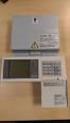 Building Air Conditioning Control System Power supply unit Model: PAC-SC50KUA Installation Manual Contents 1. Safety precautions... 1 2. Product feature... 2 1. Specification... 2 2. Appearance... 2 3.
TOS9200 SERIES Hipot Tester with Insulation Resistance Test
 Perfect design for System Operation, introducing our top of the line of Hipot / Insulation Resistance Testers TOS920(AC/DC) TOS9200(AC) Capable of performing hipot and insulation testing in comply with
4P359542-1H. Wireless LAN Connecting Adapter <BRP069A41> Installation Manual
 4P359542-1H Wireless LAN Connecting Adapter Installation Manual Wireless LAN Connecting Adapter Installation Manual Homepage: http://www.onlinecontroller.daikineurope.com For details
MEGGER 210170 Insulation & Low Resistance Tester
 MEGGER 210170 Insulation & Low Resistance Tester User Guide SAFETY WARNINGS Safety Warnings and Precautions must be read and understood before the instrument is used. They must be observed during use.
UT202A Operating Manual. Contents
 Title Contents Page Overview Unpacking Inspection Safety Information Rules for Safe Operation International Electrical Symbols The Meter Structure Functional Buttons and auto power off Display Symbols
IDEAL INDUSTRIES, INC. TECHNICAL MANUAL MODELS: 61-763 61-765
 IDEAL INDUSTRIES, INC. TECHNICAL MANUAL MODELS: 61-763 61-765 The Service Information provides the following information: Precautions and safety information Specifications Performance test procedure Calibration
PowlVac Vacuum Integrity Tester
 Instructions IB-60025B PowlVac Vacuum Integrity Tester POWELL ELECTRICAL MANUFACTURING COMPANY 8550 MOSLEY DRIVE HOUSTON, TEXAS 77075 USA PHONE (713) 944-6900 FAX (713) 947-4453 www.powellelectric.com
Multi-Range Programmable DC Power Supplies 9115 Series
 Data Sheet 1200 W Multi-Range DC Power Supplies Features & Benefits Any 9115 series model can replace several supplies on your bench or in your rack. Unlike conventional supplies with fixed output ratings,
Model 1756 Test Lead Kit
 Keithley Instruments 28775 Aurora Road Cleveland, Ohio 44139 1-888-KEITHLEY http://www.keithley.com Model 1756 Test Lead Kit Gerneral Purpose Test Lead Information Description These test leads allow you
CAUTION OPC-LM1-ID. Option Card for Frequency Divider. Fuji Electric FA Components & Systems Co., Ltd. Instruction Manual
 Instruction Manual Option Card for Frequency Divider Deliver this instruction manual without fail to those who actually operate the equipment. Read this operation manual and understand the description
CAUTION OPC-LM1-IL. Option Card for Encoder of Line Driver Output. Instruction Manual
 Instruction Manual OPC-LM1-IL Option Card for Encoder of Line Driver Output CAUTION Deliver this instruction manual without fail to those who actually operate the equipment. Read this operation manual
Instruction Manual. 2in1 LAN Tester & Multimeter. Model: LA-1011
 Instruction Manual 2in1 LAN Tester & Multimeter Model: LA-1011 1 Contents Introduction... Features... Safety Precautions.. Meter Description... Electrical Specification... Operation.. AutoRanging Multimeter.
IMPORTANT SAFETY INSTRUCTIONS WARNING READ AND SAVE THESE OPERATING AND SAFETY INSTRUCTIONS BEFORE USING THIS HEATER.
 THERMAWAVE CERAMIC HEATER Model HZ-850 Series Model HZ-860 Series IMPORTANT SAFETY INSTRUCTIONS WARNING READ AND SAVE THESE OPERATING AND SAFETY INSTRUCTIONS BEFORE USING THIS HEATER. Warning Failure to
Dielectric Withstand and Ground Bond Testers For Production Line Safety Agency Compliance Testing
 Dielectric Withstand and Ground Bond Testers For Production Line Safety Agency Compliance Testing U.S. patent#: 5,548,501, 6,054,865. Other patents pending. Safety agency listed. ENHANCED GRAPHIC LCD The
Single Day Alarm Clock with. Bluetooth and USB Play-through
 Single Day Alarm Clock with Bluetooth and USB Play-through MODEL : BSC 200 READ THIS INSTRUCTION MANUAL BEFORE OPERATING THE APPLIANCE. SAVE THIS MANUAL FOR FUTURE REFERENCE. TABLE OF CONTENTS IMPORTANT
Electrical Safety Tester Verification
 Ensuring Validity of Regulatory Tests Verification of electrical safety testing equipment is a procedure that is often overlooked by manufacturers. Running test verification is crucial to ensuring that
Mini Power Bank and Charger
 Mini Power Bank and Charger Owner s Manual Please read before using this equipment. Your charger is ETL listed to UL standards and meets all applicable FCC standards. WARNING: To reduce the risk of fire
Mercury Helios 2 ASSEMBLY MANUAL & USER GUIDE
 Mercury Helios 2 ASSEMBLY MANUAL & USER GUIDE TABLE OF CONTENTS INTRODUCTION...1 1.1 MINIMUM SYSTEM REQUIREMENTS 1.1.1 Apple Mac Requirements 1.1.2 PC Requirements 1.1.3 Supported PCIe Cards 1.2 PACKAGE
7 FUNCTION DIGITAL MULTIMETER
 7 FUNCTION DIGITAL MULTIMETER 90899 OPERATING INSTRUCTIONS 3491 Mission Oaks Blvd., Camarillo, CA 93011 Visit our Web site at http://www.harborfreight.com Copyright 2004 by Harbor Freight Tools. All rights
User s Manual Before using the inverter, you need to read and save the safety instructions.
 User s Manual Before using the inverter, you need to read and save the safety instructions. STI SERIES (STI200, STI300, STI500, STI700, STI1000) Power Frequency Pure Sine Wave Inverter The information
High PoE Midspans NPD-6001A NPD-9501A. en Installation Manual
 High PoE Midspans NPD-6001A NPD-9501A en Installation Manual High PoE Midspans Table of Contents en 3 Table of contents 1 Safety 4 1.1 About this Manual 4 1.2 Legal Information 4 1.3 Safety Precautions
ADM1TE 5/30A DIN rail single phase two wire energy meter
 ADMTE 5/30A DIN rail single phase two wire energy meter. Safety instruction.2 Foreword.3 Performance criteria.4 Specifications.5 Basic errors.6 Description.7 Dimensions.8 Installation.9 Operating.0 Troubleshooting.
How To Use A Cdm250 Digital Multimeter
 User Manual CDM250 Digital Multimeter 070-6736-03 Copyright Tektronix, Inc. 1987. All rights reserved. Tektronix products are covered by U.S. and foreign patents, issued and pending. Information in this
Agilent 87421A/87422A Power Supply
 Agilent 87421A/87422A Power Supply Technical Overview Designed specifically for Agilent Technologies microwave system amplifiers Bias cable permits remote placement Compact size for easy system integration
MICA HEATER INSTRUCTION MANUAL Model No: UHM-786 230V 50Hz 2200W
 MICA HEATER INSTRUCTION MANUAL Model No: UHM-786 230V 50Hz 2200W Safety Precautions To reduce the risk of personal injury or damage to property, basic safety precautions must be observed including the
Congratulations! Thank you!
 TM-47 ORDERCODE D1370 Congratulations! You have bought a great, innovative product from DAP Audio. The DAP Audio Microphone range brings excitement to any venue. Whether you want simple plug-&-play action
DC POWER SUPPLY ALIMENTATION C.C.
 DC POWER SUPPLY ALIMENTATION C.C. ISO-TECH IPS 303A 201-3424 ISO-TECH IPS 601A 201-3446 82IP-303A0ME E1 SAFETY TERMS AND SYMBOLS These terms may appear in this manual or on the product: WARNING. Warning
Online UPS. PowerWalker VFI 1000R/1U
 Online UPS PowerWalker VFI 1000R/1U Manual Uninterruptible Power Supply System Table of Contents 1. Important Safety Warning... 1 1-1. Transportation... 1 1-2. Preparation... 1 1-3. Installation... 1 1-4.
Duct Humidity Transmitter
 SDC-H Duct Humidity Transmitter Features Replaceable sensor element Humidity measurement for air ducts Minimum and maximum value memory 0 0V, 0 0mA or 0V, 4 0mA measuring signals selectable with jumpers
=============================== WARNING
 =============================== WARNING EXPLANATION OF GRAPHICAL SYMBOLS This symbol is intended to alert the user to the presence of unprotected dangerous voltage" within the product's enclosure that
M 140i. Multifunction Calibrator. Operation Manual
 M 140i Multifunction Calibrator Operation Manual M-140i Multifunction Calibrator MEATEST, s.r.o. 2 Operation Manual v33 MEATEST, s.r.o. M-140i Multifunction Calibrator Content Operation Manual... 1 Basic
AXIS T81B22 DC 30W Midspan
 INSTALLATION GUIDE AXIS T81B22 DC 30W Midspan ENGLISH About this Document This document includes instructions for installing AXIS T81B22 on your network. Previous experience of networking will be beneficial
Match. GE Digital Energy. Uninterruptible Power Supply 500-1500 VA. Technology for the Digital World. Match UPS. GE Digital Energy.
 Match Uninterruptible Power Supply 500-1500 VA Manufactured by: General Electric Company Telephone +41 (0)91 / 850 51 51 CH 6595 Riazzino (Locarno) Fax +41 (0)91 / 850 51 44 Switzerland Website www.gedigitalenergy.com
Ground Resistance Clamp On Tester
 USER MANUAL Ground Resistance Clamp On Tester MODEL 382357 Introduction Congratulations on your purchase of Extech s 382357 Ground Resistance Tester. This Clamp on device allows the user to measure ground
Instruction Manual for IV-08MTV LCD Color Monitor
 Version 1.3 Created in December 2004 Instruction Manual for IV-08MTV LCD Color Monitor Thank you for purchasing our IV-08MTV LCD Color Monitor. Before using it, read this manual carefully to become familiar
DRM75A 230V 20/100A DIN rail single phase two wire energy meter
 DRM75A 230V 20/100A DIN rail single phase two wire energy meter 1.1 Safety instruction 1.2 Foreword 1.3 Performance criteria 1.4 Specifications 1.5 Basic errors 1.6 Description 1.7 Dimensions 1.8 Installation
User Guide. www.burntec.com. 4 wire Earth Resistance Tester Model GRT300
 User Guide 4 wire Earth Resistance Tester Model GRT300 Introduction Congratulations on your purchase of Extech s 4 Wire Earth Resistance Tester. The Model GRT300 has been designed and tested according
Model UT33A: OPERATING MANUAL Table of Contents (1)
 Table of Contents (1) Title Overview Unpacking Inspection Safety Information Rules For Safe Operation International Electrical Symbols The Meter structure Functional Buttons LCD Display Measurement Operation
VACUUM CLEANER INSTRUCTION MANUAL
 VACUUM CLEANER INSTRUCTION MANUAL MODEL: SVC9702 PLEASE READ THIS MANUAL CAREFULLY BEFORE USING AND KEEP IT PROPERLY FOR FUTURE USE 1 Safety Cautions: WARNING: To reduce the risk of fire, electrical shock,
Square D Clipsal DIN-Rail Four-Channel Auxiliary Input Unit
 Square D Clipsal DIN-Rail Four-Channel Auxiliary Input Unit SLCLE5504AUX for Use with Wired C-Bus Networks Instruction Bulletin Retain for future use. Square D Clipsal DIN-Rail Four-Channel Auxiliary Input
Drayton Digistat +2RF/+3RF
 /+3RF Programmable Room Thermostat Wireless Model: RF700/22090 Model: RF701/22092 Power Supply: Battery - Thermostat Mains - Digistat SCR Invensys Controls Europe Customer Service Tel: 0845 130 5522 Customer
Service manual. Website: www.andico.com.au CAUTION - BEFORE SERVICING THE UNIT, READ THE SAFETY - PRECAUTIONS IN THIS MANUAL.
 Website: www.andico.com.au Service manual CAUTION - BEFORE SERVICING THE UNIT, READ THE SAFETY - PRECAUTIONS IN THIS MANUAL. - ONLY FOR AUTHORISED SERVICE PERSONNEL. MODELS: MPK1-09CR-QB8 MPK1-12ER-QB6
2013 VTech Printed in China 91-009656-000 US
 Rechargeable Power Pack User s Manual 2013 VTech Printed in China 91-009656-000 US INTRODUCTION The Rechargeable Power Pack makes it easier than ever to keep the InnoTab 3 or InnoTab 3S charged and ready
T0118 T2118 T3118. Instruction Manual
 Programmable indoor transmitter of temperature T0118 Programmable indoor transmitter of atmospheric pressure T2118 Programmable indoor transmitter of temperature, relative humidity and other derived humidity
USER S MANUAL. MaxPower 400-600 UPS. Uninterruptible Power System 28-2MAXPO0018
 USER S MANUAL MaxPower 400-600 UPS Uninterruptible Power System 28-2MAXPO0018 IMPORTANT SAFETY INSTRUCTIONS SAVE THESE INSTRUCTIONS This manual contains important instructions for models MaxPower 400 and
How To Use A Power Supply Unit (Upu)
 BRAVER UPS (Uninterruptible Power System) User s Manual Safety CAUTION! This UPS utilizes voltages that may be hazardous. Do not attempt to disassemble the unit. The unit contains no user replaceable parts.
LOXONE 12 Channel Amplifier
 LOXONE 12 Channel Amplifier Item no.: 200110 Thank you for purchasing the Loxone Twelve Channel Amplifier. The versatility of the Amplifier makes it the perfect choice for almost every type of custom multi-room
LS1024B / LS2024B/ LS3024B. Solar Charge Controller USER MANUAL
 EPSOLAR LS1024B / LS2024B/ LS3024B Solar Charge Controller USER MANUAL Thank you very much for selecting our product! This manual offers important information and suggestions with respect to installation,
ramon 2.2 Radon Monitor manual
 ramon 2.2 Radon Monitor manual I.) GENERAL... Your ramon 2.2 Radon Monitor comes with a power supply unit and the instruction manual. Before using your Radon Monitor, please carefully read this instruction
User's Guide. True RMS Industrial Multimeter
 User's Guide 97650 True RMS Industrial Multimeter Ω C ã F ã 10A V µ 10A V ã ã ma A Introduction This meter measures AC/DC Voltage, AC/DC Current, Resistance, Capacitance, Frequency (electrical & electronic),
Auto-ranging Digital Multimeter 52-0052-2 INSTRUCTION MANUAL
 Auto-ranging Digital Multimeter 52-0052-2 INSTRUCTION MANUAL WARNING: READ AND UNDERSTAND THIS MANUAL BEFORE USING YOUR MULTIMETER. FAILURE TO UNDERSTAND AND COMPLY WITH WARNINGS AND OPERATING INSTRUCTIONS
Cisco TelePresence MCU 4500 Series safety and compliance information
 Cisco TelePresence MCU 4500 Series safety and compliance information On this page: Safety information symbols Operating guidelines Safety warnings Technical specifications Compliance information WEEE information
Seven function digital multimeter
 Seven function digital multimeter 98025 Set up And Operating Instructions Distributed exclusively by Harbor Freight Tools. 3491 Mission Oaks Blvd., Camarillo, CA 93011 Visit our website at: http://www.harborfreight.com
aseries A13B Mini Bullet Camera User Manual
 aseries A13B Mini Bullet Camera User Manual Thank you for purchasing our product. If there are any questions, or requests, please do not hesitate to contact the dealer. This manual applies to the MicroView
User s Guide DDS-3X25 USB ARBITRARY FUNCTION GENERATOR
 User s Guide DDS-3X25 USB ARBITRARY FUNCTION GENERATOR Content General safety summary...1 Introduction...2 Chapter 1 Getting started...3 System Requirements...4 Installing Hardware...5 Installing Software...8
5000V Graphical Megohmmeter Model 5070
 5000V Graphical Megohmmeter Model 5070 The Model 5070, the latest design in 5000V Megohmmeters, is the most innovative product in its class on the market today. The features and functions incorporated
DUAL%CHANNEL BROADBAND%LINEAR%AMPLIFIER Model&A800D
 ELECTRONICS AB DUAL%CHANNEL BROADBAND%LINEAR%AMPLIFIER Model&A800D & HIGH&VOLTAGE& FIXED&GAIN& BROADBAND & 800Vpp&60mA& 100x& DC&to&ca&200&kHz & LOW&OUTPUT&IMPEDANCE& HIGH&SLEW&RATE &
DLP-PU/E Instruction Manual
 Instruction Manual BEFORE USING THE POWER SUPPLY UNIT Pay attention to all warnings and cautions before using the unit. Incorrect usage could lead to an electrical shock, damage to the unit or a fire hazard.
BroadBand PowerShield. User Manual
 BroadBand PowerShield User Manual 990-0375G 12/2006 Chapter 1 General Information The PowerShield provides a power source for broadband telephony and other DC applications. Safety This Safety Guide contains
YSmart Technology Co.,Ltd
 YSmart Technology Co.,Ltd GWV Series Grid Tie Microinverter User Manual The copyright of this user manual belong to YSmart TechnologyCompany Limited. Without the written permission of the copyright holder,
esata External Storage
 esata External Storage Operation Manual DA-ES110 Before reading this manual This operation manual contains basic instruction on installing and using esata External Storage, an IDIS product. Users who are
TIG INVERTER INSTRUCTION MANUAL
 TIG INVERTER INSTRUCTION MANUAL Contents Warning General Description Block Diagram Main Parameters Circuit Diagram Installation and Operation Caution Maintenance Spare Parts List Troubleshooting 3 4 4
COLOR VIDEO DOOR PHONE CDV-71BE/D
 COLOR VIDEO DOOR PHONE CDV-71BE/D 513-11, Sangdaewon-dong, Jungwon-gu, Seongnam-si, Gyeonggi-do, Korea Int l Business Dept. : Tel.; +82-31-7393-540~550 Fax.; +82-31-745-2133 Web site : www.commax.com Printed
Current Probes. User Manual
 Current Probes User Manual ETS-Lindgren L.P. reserves the right to make changes to any product described herein in order to improve function, design, or for any other reason. Nothing contained herein shall
THE NEW GENERATION IN TECHNOLOGY. NI-3103A Alarm Clock w/fm Radio ipod & iphone Docking. Operating Instructions
 THE NEW GENERATION IN TECHNOLOGY NI-3103A Alarm Clock w/fm Radio ipod & iphone Docking Operating Instructions Table of Contents Important Safeguards... 3 Parts... 6 Controls... 6 To Set Up... 7 ipod/iphone
Handheld portable appliance testers
 PAT100 SERIES Handheld portable appliance testers PAT100 SERIES Handheld portable appliance testers Simple Tick/Cross, pass/fail indication plus measurement Battery powered with rechargeable options Includes
www.iconnectivity.com
 www.iconnectivity.com USER GUIDE WARRANTY INFORMATION iconnectivity warrants to the original purchaser that this unit is free of defects in materials and workmanship under normal use and maintenance for
Point of view HDMI Smart TV dongle Mini RF Keyboard
 Point of view HDMI Smart TV dongle Mini RF Keyboard English Contents Contents... 1 General notices for use... 2 Disclaimer... 2 Box Contents... 2 1. HDMI TV dongle... 3 1.1. Product display... 3 1.2. Instructions
Safety Precautions WARNINGS
 Safety Precautions This guide contains a variety of safety markings related to the safe and correct operation of the USB Data Transfer Cable. Be sure to read this guide and any related manuals carefully
Use and Care Manual. Model CPA12KH AIR CONDITIONER
 Use and Care Manual Model CPA12KH AIR CONDITIONER Introduction Thank you for choosing this air conditioner to provide you and your family with all of the "Home Comfort" requirements for your home, cottage
Instruction Manual Copy Adapter "CPAD-C1A" "CP Fuji Electric Systems Co., Ltd. INR-SI47-0886a-EU Rev 052010
 Instruction n Manual Copy Adapter "CPAD-C1A" Thank you for purchasing our Copy Adapter CPAD-C1A. This product is designed to copy function codes and their data, which are stored in the FRENIC-Mini series
INFRARED QUARTZ WALL HEATER
 INFRARED QUARTZ WALL HEATER MODEL NO: IQ2000 PART NO: 6939004 MOUNTING & OPERATION INSTRUCTIONS GC0715 INTRODUCTION Thank you for purchasing this CLARKE Infrared Wall Heater. Before attempting to use this
High Power Programmable DC Power Supplies PVS Series
 Data Sheet High Power Programmable DC Power Supplies The PVS10005, PVS60085, and PVS60085MR programmable DC power supplies offer clean output power up to 5.1 kw, excellent regulation, and fast transient
Tutorial on Safety Standard Compliance For Hipot Testing
 Chroma Systems Solutions, Inc. Tutorial on Safety Standard Compliance For Hipot Testing 19071, 19073 Hipot Testers Keywords: Safety Issues, Electrical Shock, Fire, Hipot (Dielectric Withstand), Leakage
INSTALLATION GUIDE. AXIS T8133 Midspan 30W
 INSTALLATION GUIDE AXIS T8133 Midspan 30W ENGLISH Liability Every care has been taken in the preparation of this document. Please inform your local Axis office of any inaccuracies or omissions. Axis Communications
ENGLISH INSTRUCTION & INSTALLATION MANUAL DUCTLESS MINI SPLIT AIR CONDITIONING SYSTEMS
 ENGLISH INSTRUCTION & INSTALLATION MANUAL DUCTLESS MINI SPLIT AIR CONDITIONING SYSTEMS Céliera Corporation. All rights reserved. Unauthorized duplication, reproduction prohibited. CONTENTS SAFETY PRECAUTIONS...
REGULINE 600VA / 1000VA REGULATOR USER MANUAL
 REGULINE 600VA / 1000VA REGULATOR USER MANUAL TUNÇMATİK REGULINE SERIES AUTOMATIC VOLTAGE REGULATOR Models: REGULINE 600VA / REGULINE 1000VA Principle of Operation Automatic Voltage Regulators regulate
Operating Manual Remote Cost Control Monitor
 Operating Manual Remote Cost Control Monitor INTRODUCTION: Congratulations on purchasing the Remote Cost Control. This is a state-of-the-art power monitoring socket that is highly accurate and easy to
DC Electronic Loads 8500 series
 Data Sheet DC Electronic Loads 8500 series 2400W 600 W - 1200 W 300 W Versatile & Economical DC Electronic Loads The 8500 series Programmable DC Electronic Loads can be used for testing and evaluating
USER MANUAL Stand Alone Power Supply PSQ 2909 / PSQ 3909 / PSQ 4909 PSQ 2920 / PSQ 3920 / PSQ 4920
 USER MANUAL Stand Alone Power Supply PSQ 2909 / PSQ 3909 / PSQ 4909 PSQ 2920 / PSQ 3920 / PSQ 4920 [This page intentionally left blank] Warning for Your Protection 1. Read these instructions. 2. Keep these
When any of the following symbols appear, read the associated information carefully. Symbol Meaning Description
 Samba OPLC SM35-J-R20 Installation Guide The Unitronics SM35-J-R20 offers the following onboard I/Os: 12 Digital Inputs, configurable via wiring to include: 1 HSC/Shaft-encoder Input, 2 Analog inputs (only
MCR1900 Media Converter 19-Slot Chassis
 MCR1900 Media Converter 19-Slot Chassis Installation Guide Part #5500304-11 Copyright Statement This document must not be reproduced in any way whatsoever, either printed or electronically, without the
Broadband Telecommunications Drop Amplifier
 INSTALL SHEET BDA Broadband Telecommunications Drop Amplifier Introduction The Broadband Telecommunications Drop Amplifier (BDA) is a two-way, 1 GHz amplifier designed for customer-premise amplification
/ Instruction Manual. Analog Input/Output Interface Card "OPC-G1-AIO"
 / Instruction Manual Analog Input/Output Interface Card "OPC-G1-AIO" Fuji Electric Co., Ltd. INR-SI47-1288b-JE English Version Preface Thank you for purchasing our analog input/output interface card.
Keysight N4877A Clock Data Recovery and Demultiplexer 1:2
 Keysight N4877A Clock Data Recovery and Demultiplexer 1:2 Getting Started Getting Started with the Keysight N4877A Clock Data Recovery and Demultiplexer 1:2 You only need a few minutes to get started
The table below lists the symbols used on the Clamp and/or in this manual. Important Information. See manual.
 i800 AC Current Clamp Instruction Sheet Introduction The i800 AC Current Clamp, the Clamp, has been designed for use with multimeters, recorders, power analyzers, safety testers, etc., for accurate non-intrusive