
Chapter 24 WS - Dr. Larson - Summer School
|
|
|
- Maximilian Berry
- 9 years ago
- Views:
Transcription
1 Name: Class: _ Date: _ Chapter 24 WS - Dr. Larson - Summer School Matching IDENTIFYING KEY TERMS, PEOPLE, AND PLACES Match each item with the correct statement below. You will not use all of the items. a. Tet Offensive b. Geneva Conference c. Vietnamization d. New Left e. domino theory f. Gulf of Tonkin Resolution g. My Lai massacre h. conscientious objectors i. napalm j. deferment k. escalation l. teach-ins m. Ho Chi Minh Trail 1. congressional act giving the President nearly complete control over United States military actions in Vietnam 2. major Viet Cong attack on towns, cities, and American bases throughout South Vietnam 3. incident in which American troops killed from 175 to 400 Vietnamese villagers 4. the fear that if one nation falls to communism, its neighbors will soon follow 5. policy of replacing American forces with South Vietnamese soldiers 6. In 1964, President Johnson began a military, or expansion of American involvement, in the Vietnam War. 7. College professors held in which they expressed opinions about the Vietnam War. 8. Young men who opposed fighting in a war on moral or religious grounds were. 9. College students could postpone being drafted into military service by getting a(n). 10. Troops and supplies poured into South Vietnam from the North via the, a supply route that passed through Laos and Cambodia. 1

2 Name: IDENTIFYING KEY TERMS, PEOPLE, AND PLACES Match each item with the correct statement below. You will not use all the items. a. Ho Chi Minh Trail b. Geneva Accords c. Viet Cong d. My Lai massacre e. generation gap f. Tet Offensive g. napalm h. New Left i. teach-in j. Vietminh k. conscientious objector l. escalation 11. Communist guerrillas called the fought to gain control of South Vietnam. 12. North Vietnamese troops and supplies poured into South Vietnam via the. 13. During the, mounted during the Vietnamese New Year, many cities and military bases in South Vietnam were attacked by Communist forces. 14. The brutality of the American soldiers who killed Vietnamese villagers during the shocked many Americans. 15. The early 1960s saw a widening of the. 16. expansion of the war effort 17. political movement which believed that problems of racism and poverty called for radical changes in American society 18. proceedings during which professors and others aired opinions about the Vietnam War 19. person who resists fighting a war on moral or religious grounds 20. the League for the Independence of Vietnam KEY TERMS Match each of the following terms with its description below. a. Geneva Accords b. Gulf of Tonkin Resolution c. Vietminh d. Viet Cong 21. League for the Independence of Vietnam 22. Communist guerrillas in South Vietnam 23. authorization for Johnson to take military action meeting to discuss the division of Vietnam 2

3 Name: Multiple Choice Identify the letter of the choice that best completes the statement or answers the question. IDENTIFYING MAIN IDEAS 25. President Kennedy s policy in Vietnam was to a. send 100,000 troops to South Vietnam. b. increase the number of American military advisors. c. gain the loyalty of the Viet Cong. d. support the efforts of Ho Chi Minh. 26. Escalation of the war in Vietnam began with the a. My Lai massacre. b. passage of the Gulf of Tonkin Resolution. c. formation of the Viet Cong. d. publication of the Pentagon Papers. 27. American soldiers fighting in Vietnam had to cope with a. lack of training. b. tropical infections and booby traps. c. a lack of sophisticated equipment. d. working side by side with Communists. 28. Civilians in both North Vietnam and South Vietnam had to suffer the effects of American efforts to destroy roads and bridges through a. Vietnamization. b. guerrilla warfare. c. saturation bombing. d. sniper fire. 29. In the United States, television was instrumental in a. promoting understanding between Americans and the Vietnamese. b. developing enthusiasm for the American war effort in Vietnam. c. bringing the brutality of the war into people s living rooms. d. revealing the contents of classified military documents. 30. Some Americans questioned the fairness of the draft because a. the government refused to draft African Americans. b. only men between the ages of 18 and 26 were drafted. c. college students could easily avoid the draft. d. women were drafted along with men. 31. People who opposed fighting the war on moral or religious grounds were known as a. freedom fighters. b. men of honor. c. conscientious objectors. d. Viet Cong. 32. The Vietnam War finally ended in 1975 when a. North Vietnam surrendered. b. U.S. forces invaded Cambodia. c. Nixon signed a peace treaty with North Vietnam. d. North Vietnam gained control over all of Vietnam. 3

4 Name: 33. What did the United States fear would happen if it did not get involved in Vietnam? a. Diem would be assassinated. b. The French would be in control. c. Vietnam would invade China. d. Communists would take over. 34. What congressional action gave President Johnson the authority to escalate the Vietnam War? a. the Pentagon Papers b. the Geneva Conference decision c. the Gulf of Tonkin Resolution d. a Joint Chiefs of Staff finding 35. Which of the following conditions did Americans fighting in Vietnam experience? a. an enemy with more advanced weapons b. unqualified support from the home front c. sniper fire and land mines d. harsh cold 36. Television coverage of the Vietnam War a. encouraged support for the war. b. built support for communism. c. brought the brutality of the war into American homes. d. showed how effective American weapons were in defeating the enemy. 37. What was the primary focus of the protest movement of the 1960s? a. to ban the use of Agent Orange b. to demand U.S. withdrawal from Vietnam c. to end segregation of the military d. to build support for the draft 38. Tensions between students who opposed the war and National Guardsmen resulted in four deaths at a. Kent State. b. Ole Miss. c. James Madison University. d. Ohio State. 39. In 1970, President Nixon announced that American forces would invade which country? a. China. b. Laos. c. South Vietnam. d. Cambodia. 40. How did the Vietnam War finally end in 1975? a. with the defeat of North Vietnam b. with the South Vietnamese takeover of Hanoi c. with North Vietnam gaining control of all of Vietnam d. with control of all of Vietnam being returned to France 41. Who was the nationalist leader who led Vietnam against the French? a. Nguyen Van Thieu b. Nguyen Cao Ky c. Ho Chi Minh d. Dien Bien Phu 4

5 Name: 42. Why did President Kennedy support the government of Ngo Dinh Diem? a. Diem had been democratically elected. b. Kennedy feared that Communists would take over South Vietnam. c. Kennedy feared that the Viet Cong would attack Saigon. d. Diem had honestly used American aid to carry out economic reforms. 43. Why did South Vietnamese military leaders overthrow Diem? a. He had joined the Communists. b. He had lost American support. c. He had tried to flee Saigon. d. He had converted to Buddhism. 44. What was President Johnson s objective in Vietnam? a. to unite the country b. to promote democracy in South Vietnam c. to advise the South Vietnamese d. to prevent a Communist takeover 45. What did Congress do after the North Vietnamese attack in the Gulf of Tonkin? a. declared war on North Vietnam b. gave Johnson control over American actions in Vietnam c. voted to withdraw from Vietnam as quickly as possible d. took complete responsibility for the conflict in Vietnam 46. What principle, described by President Eisenhower, became associated with American involvement in Southeast Asia? a. containment b. dividing Vietnam c. the domino theory d. strengthening South Vietnam 47. American soldiers were confused to discover that many South Vietnamese people a. spoke French. b. worked at farming and fishing. c. had fled to Laos and Cambodia. d. did not appreciate their efforts. 48. Fighting conditions for American soldiers included a. a dry, windswept environment. b. the constant threat of bombing by B-52s. c. the constant hazard of booby traps. d. endless head-on clashes with enemy troops. 49. One advantage the Viet Cong guerrillas had was their a. sophisticated weapons. b. elaborate tunnel systems. c. truck convoys. d. chemical weapons. 50. In fighting the North Vietnamese, United States forces used a. saturation bombing. b. animal snares and punji stakes. c. guerrilla tactics. d. germ warfare. 5

6 Name: 51. Herbicides such as Agent Orange were used mainly to a. firebomb civilian targets. b. smash roads and heavy bridges. c. expose Viet Cong hiding places. d. frighten peasants. 52. The officer in charge of the My Lai massacre was a. Le Ly Hayslip. b. Hugh Thompson. c. Ron Kovic. d. William Calley. 53. The death toll at My Lai might have been even greater but for a. a lack of ammunition. b. the heroics of an American helicopter crew. c. a sudden, drenching downpour. d. the arrival of Viet Cong reinforcements. 54. Many young people in the 1960s had freedom and opportunities unknown to previous generations, thanks to a. postwar prosperity. b. the baby boom. c. the Vietnam War. d. rock-and-roll music. 55. The student protest movement of the 1960s emerged from the a. civil rights movement. b. conformity of the 1950s. c. New Left. d. Communist revolution. 56. The Port Huron Statement by the SDS called for power to be rooted in a. youth, beauty, dreams, and wealth. b. possession, privilege, and circumstance. c. faith, hope, and charity. d. love, reflectiveness, reason, and creativity. 57. Most people who refused to be drafted in the early 1960s were a. beatniks. b. conscientious objectors. c. professors. d. leaders of the free speech movement. 58. Many young men resisted the military draft by a. joining the army. b. joining SDS. c. going to Canada. d. engaging in protest demonstrations. 59. During the election of 1968, the issues dividing the country a. also caused a split in the Democratic Party. b. united various factions in the Democratic Party. c. had little effect on the outcome of the election. d. none of the above 6

7 Name: 60. The winner of the 1968 election was a. Democrat Eugene McCarthy. b. Republican Richard Nixon. c. Independent George Wallace. d. Democrat Hubert Humphrey. 61. What was the status of the Vietnam War by the end of Johnson s presidency? a. Violence and conflict had escalated. b. Bombing was reduced and calls for peace negotions began. c. There was a stalemate, with no resolution in sight. d. The South Vietnamese were winning and called for the North to surrender. 62. What did Nixon do as he withdrew American troops from Vietnam? a. sent troops to Laos b. accepted a proposed peace settlement c. evacuated Saigon d. resumed bombing raids 63. Which of the following reignited student protests in 1970? a. the defeat of Eugene McCarthy b. Johnson s escalation of the war c. Nixon s invasion of Cambodia d. the surrender of Saigon 64. Which of the following was not part of the peace treaty signed in 1973? a. The seventeenth parallel would continue to divide North and South Vietnam. b. All prisoners of war would be released. c. Elections to unify the country would be held within 60 days. d. The United States would withdraw from South Vietnam. 65. What did North Vietnam do after the last Americans fled Saigon? a. attacked Hanoi b. signed the Paris peace agreement c. bombed Cambodia d. completed its conquest of South Vietnam 66. What was one legacy of the Vietnam War? a. democracy for Laos and Cambodia b. a flood of refugees from Southeast Asia c. Communist rule of Southeast Asia d. a more powerful American President 67. What was one reason for the creation of the Vietnam Veterans Memorial? a. to honor Asian Americans b. to celebrate the end of communism in Vietnam c. to honor the women who served d. to help heal the wounds created by the war 7

8 Name: Essay CRITICAL THINKING 68. Identifying Assumptions Before the Vietnam War, what assumptions did American leaders make about the ability of the United States to stop communism anywhere in the world? How did these assumptions change after the war? 69. Identifying Central Issues Identify one antiwar argument made by protesters of the Vietnam War and one prowar argument made by supporters of the war. 70. Determining Relevance Why was the Tet Offensive considered a psychological victory for the Viet Cong? 71. Making Comparisons Compare the reception given to American soldiers returning from the Vietnam War with that given to soldiers returning from World War II. 8

Ho Chi Minh Source: http://www.wumingfoundation.com/gallery/indocina/e.jpg
 Causes of The Vietnam War 1954: The French lose control of Vietnam 1. In the 1800s, French established themselves as the colonial power in Vietnam 2. Vietnam Contiuously resisted French control. 3. Ho
Note Taking Study Guide ORIGINS OF THE VIETNAM WAR
 SECTION 1 ORIGINS OF THE VIETNAM WAR Focus Question: Why did the United States become involved in Vietnam? As you read, describe the Vietnam policies of Presidents Truman, Eisenhower, Kennedy, and Johnson.
Cold War Spreads to Asia
 Cold War Spreads to Asia China China becomes Communist 1920s Mao Zedong leads communist forces against Chiang Kai Shek leader of China s Nationalist government During WWII set aside civil war to resist
US History. The Vietnam War. Student Workbook Unit 10. Name: Period: Teacher:
 US History The Vietnam War Student Workbook Unit 10 Name: Period: Teacher: 2 Vocabulary Homework Define each term and explain how it was important to the Vietnam War. Remember, all homework is due the
CHAPTER 22 CHEAT-CHEAT STUDY GUIDE
 CHAPTER 22 CHEAT-CHEAT STUDY GUIDE Vietnam: French colony; U.S. tried to aid France in regaining control after WWII Domino Theory: can t let Vietnam fall to communism, must contain it if you let one country
The Vietnam War was a war designed to control the country side of South
 The Vietnam War was a war designed to control the country side of South Vietnam which was at the time very poor, illiterate, and lived mostly by farming. They had great family ties, and didn t know much
OUTLINE OF VIETNAMESE HISTORY
 Rice Fields at Bac Hamlet by Phan Ke An OUTLINE OF VIETNAMESE HISTORY RESISTANCE TO THE CHINESE 1st Millennium B.C. 2nd Century B.C. Period of the Hung Kings, Bronze Age Annexation by the Han Chinese Empire
Indochina. Vietnam, Laos, and Cambodia Mountainous terrain Deltas: Red River (north) Mekong (south) Tropical rainforests
 The Vietnam War Essential Questions Was it possible for the United States to have definitively won the Vietnam War? What experiences did American soldiers undergo in Vietnam? How did the American public
HISTORY REVISION GUIDE
 Name Paper 2 HISTORY REVISION GUIDE THE USA AND VIETNAM: FAILURE ABROAD AND AT HOME 1964-1975 NOTE: This guide only prepares you for the Paper 2 Section B questions on Vietnam. You must use your other
The Vietnam War: A timeline
 The Vietnam War: A timeline BY DAVID WALBERT 1858 1884 Vietnam becomes a French colony, called Indochina. 1930 The Indochinese Communist Party is formed. Ho Chi Minh is a founder. September 1940 Japan
Revision booklet. The reasons for US involvement in Vietnam, 1961 3, pp. 2-4. Escalation of the US war effort, 1964 1968, pp. 5-7
 The USA and Vietnam 1961 75 Revision booklet The reasons for US involvement in Vietnam, 1961 3, pp. 2-4 Escalation of the US war effort, 1964 1968, pp. 5-7 The crisis of the war, 1964 1968: Vietnam, pp.
HADDONFIELD PUBLIC SCHOOLS Curriculum Map for VIETNAM Busarello
 HADDONFIELD PUBLIC SCHOOLS Curriculum Map for VIETNAM Busarello SEPT-OCT (semester 1) & JAN-FEB(semester 2) Targeted Standard(s): NJCCCS : 6.1.12 A 1,2,3,4,5,6,7,8; 6.2.12 A 1,2,3,4,5,7; 6.2.12 B 5,6;
Colonial Vietnam. The French Presidential Palace, located in the city of Hanoi, remains a powerful reminder of French colonial influence.
 The French Presidential Palace, located in the city of Hanoi, remains a powerful reminder of French colonial influence. Colonial Vietnam The Southeast Asian nation of Vietnam is bordered by China to the
DSST A HISTORY OF THE VIETNAM WAR
 DSST EXAM CONTENT FACT SHEET DSST A HISTORY OF THE VIETNAM WAR EXAM INFORMATION This exam was developed to enable schools to award credit to students for knowledge equivalent to that learned by students
II. 2006 Core Knowledge National Conference, The Vietnam War, 8 th Grade 1
 The Vietnam War Grade Level: 8 th grade Social Studies Written by: Katie Birckhead, Henley Middle School, Crozet, Virginia Length of Unit: (15 45 minute periods; 7 Lessons) I. ABSTRACT In this unit, students
The Nightmare of Vietnam
 25 The Nightmare of Vietnam GEORGE C. HERRING The Vietnam War was one of the most controversial episodes in United States history. American involvement in that conflict began with Truman and persisted
Anti-Vietnam War Movement Lesson Plan. Central Historical Questions: Why did many Americans oppose the Vietnam War?
 Lesson Plan Central Historical Questions: Why did many Americans oppose the Vietnam War? Materials: Anti-War Images Powerpoint Anti-War Timeline Anti-War Documents A and B Anti-War Documents Graphic Organizer
Ho Chi Minh (1890-1969): Major Events in the Life of a Revolutionary Leader
 Ho Chi Minh (1890-1969): Major Events in the Life of a Revolutionary Leader 1890 On May 19, HO Chi Minh was born the second son to a family of farmers living in Kim Lien, a small village in Annam (Central
Chapter 22: World War I. Four most powerful European nations in the early 1900s were Great Britain, France, Germany, Russia.
 Chapter 22: World War I The Beginnings of World War I World War I was fought from 1914-1918. United States entered World War I in 1917. The Origins of Europe s Great War Nationalism Four most powerful
American History: Lyndon Johnson and the Vietnam War
 02 November 2011 voaspecialenglish.com American History: Lyndon Johnson and the Vietnam War AP Thousands gather at United Nations Plaza in New York City on April 15, 1967, for a peaceful demonstration
AMERICAN HISTORY CHAPTER 22 PACKET: The Vietnam Years
 AMERICAN HISTORY CHAPTER 22 PACKET: The Vietnam Years Take-Hme Hmewrk Packet 100 Pints Hnr Cde I understand that this is an independent assignment and that I can nt receive any assistance frm any ther
Wars in Korea and Vietnam
 Wars in Korea and Vietnam 3 MAIN IDEA WHY IT MATTERS NOW TERMS & NAMES REVOLUTION In Asia, the Cold War flared into actual wars supported mainly by the superpowers. Today, Vietnam is a Communist country,
Why did Australia fight in Vietnam?
 Retro 2, p. 202-203. One land many stories, p. 182-183 Why did Australia fight in Vietnam? Inquiry question. Why was Australia involved in the Vietnam War? How did various groups respond to Australia s
Military Advisors in Vietnam: 1963
 Military Advisors in Vietnam: 1963 Topic: Vietnam Grade Level: 9-12 Subject Area: US History after World War II Time Required: 1 class period Goals/Rationale In the winter of 1963, the eyes of most Americans
The Vietnam War. US involvement in Southeast Asia
 The Vietnam War US involvement in Southeast Asia Colonial Origins Vietnamese culture: villages, rice; Buddhist historic tension with Chinese Arrival of French mid 19th century (Imperialism Colonization)
Vietnam War: Facts, Stats & Myths Credit: Capt. Marshal Hanson, USNR (Ret.) and Capt. Scott Beaton, Statistical Source
 Web Source - http://www.uswings.com/vietnamfacts.asp Vietnam War: Facts, Stats & Myths Credit: Capt. Marshal Hanson, USNR (Ret.) and Capt. Scott Beaton, Statistical Source 9,087,000 military personnel
Name Period Date. The Cold War. Document-Based Question
 Name Period Date Task: The Cold War Document-Based Question How effective was the United States government in its attempt to halt the spread of communism in Europe and Asia between the years 1945 and 1975?
The Vietnam War. Chapter. SECTION 1 Going to War in Vietnam SECTION 2 Vietnam Divides the Nation SECTION 3 The War Winds Down U.S. EVENTS WORLD EVENTS
 Chapter The Vietnam War 1954 1975 SECTION 1 Going to War in Vietnam SECTION 2 Vietnam Divides the Nation SECTION 3 The War Winds Down American soldiers march up a hill in Vietnam in 1968, as fires behind
Washington in the 60s Discussion Guide
 Washington in the 60s Discussion Guide The decade of the 1960s in Washington was a time of dramatic transformation and an era of great tumult and uncertainty, as the sleepy southern town became a bustling
How successful was the Civil Rights campaign in achieving its aims between 1950 and 1965? I have a dream...
 How successful was the Civil Rights campaign in achieving its aims between 1950 and 1965? I have a dream... Civil Rights Aims Desegregation Voting Rights Civil Rights End to Discrimination Methods Legal
The Causes of the French and Indian War
 The Causes of the French and Indian War The End of the French Threat 1. relations between England & the colonies had been positive until the 1760s 2. England & France were the two main rivals for leadership
Declaration of Independence, Democratic Republic of Vietnam* Ho Chi Minh (Hanoi, 2 September 1945).
 33 Declaration of Independence, Democratic Republic of Vietnam* Ho Chi Minh (Hanoi, 2 September 1945). (SEPTEMBER 2, 1945) "All men are created equal. They are endowed by their Creator with certain inalienable
Created by Paul Hallett
 The Cuban Missile Crisis was a confrontation during the Cold War between the Soviet Union and the United States regarding the deployment of nuclear missiles in Cuba. The missiles had been placed to protect
cold war Short Answer
 cold war Short Answer 1. Recognize Ideologies The banner carried by these East German demonstrators in the autumn of 1989 reads, Improve Politics--only with new Government. Explain the meaning of this
Terrorist or freedom fighter or..?
 Learning outcomes Students will practice arguing and understanding views which are not necessarily their own Students will gain an understanding of how history can judge events in a different way from
Reporting from Vietnam
 Reporting from Vietnam Put yourself in the following scenario: It s 1968 and you are a reporter for a television program called 50 Minutes. Your producer wants you to travel to Vietnam to shoot a story
USA - A Divided Union? - African American Civil Rights
 USA - A Divided Union? - African American Civil Rights In 1865 slaves the Southern states of America were freed - however African Americans across America continued to face discrimination, especially in
Chapter 30. The Vietnam Era
 Chapter 30 1960 1975 The Vietnam Era Why It s Important The Vietnam era left scars on America. More than 58,000 United States troops died in Vietnam, and thousands more were wounded. The war damaged people
5th social studies core skills (5thsocstud_coreskills)
 Name: Date: 1. On July 4, 1852 a writer was asked to speak at an Independence Day celebration in Rochester, New York. Below is a part of his speech. Fellow citizens Pardon me, and allow me to ask, why
The Sequence of Causes of the Cold War
 The Sequence of Causes of the Cold War Outside the U.S. In the U.S. 1917 Revolutions in Russia 1917-1919 Russian Civil War 1941-1944 Second Front against Hitler Casablanca Conference 1943 Teheran Conference
Chapter 15, Section 5. Turning the tide of the War
 Chapter 15, Section 5 Turning the tide of the War Battles General Battles Result Ambrose Burnside Fredericksburg (C/S) The Union suffered 13,000 losses Joseph Hooker Chancellorsville (C/S) Union force
A BRIEF HISTORY OF US MILITARY VETERANS AT THE UNIVERSITY OF PENNSYLVANIA
 A BRIEF HISTORY OF US MILITARY VETERANS AT THE UNIVERSITY OF PENNSYLVANIA From the American Revolution through the current wars in the Middle East, University of Pennsylvania students, faculty, and staff
WALTER CRONKITE IMAGE #33C
 WALTER CRONKITE IMAGE #33C In a CBS interview before his death, President John Kennedy remarked that it was up to the South Vietnamese whether their war would be won or lost. But the young president had
Cold War Practice. Attorney General Robert H. Jackson, on the Nuremberg Trials
 Class: Date: Cold War Practice Multiple Choice Identify the choice that best completes the statement or answers the question. 1. Which of these was an agreement reached at the Yalta Conference that one
GEORGIA AMERICAN REVOLUTION
 GEORGIA in the AMERICAN REVOLUTION AMERICA HEADS TOWARD INDEPENDENCE: Until 1763, independence was unthinkable!!! Great Britain was the greatest, most powerful nation on earth, and the American colonists
YEAR 9/10 AUSTRALIAN HISTORY
 YEAR 9/10 AUSTRALIAN HISTORY INSTRUCTIONS: - Print this document off and keep it in your History workbook - As you read this document, underline all of the key/main words - Tick off each syllabus dot point,
1914-1918: WORLD WAR I CFE 3201V
 1914-1918: WORLD WAR I CFE 3201V OPEN CAPTIONED NATIONAL GEOGRAPHIC SOCIETY 1992 Grade Levels: 10-13+ 25 minutes 1 Instructional Graphic Enclosed DESCRIPTION The forces of nationalism, imperialism, and
Addendum: American History II:
 Addendum: American History II: On June 23, 2011, the North Carolina General Assembly passed The Founding Principles Act (SL 2011-273). This act calls for local boards of education to require, as a condition
National Security Strategy: The Vietnam War, 1954-1975
 National Security Strategy: The Vietnam War, 1954-1975 Professor Branislav L. Slantchev January 1, 2014 Overview We look briefly at the longest war America ever fought, the Vietnam War. We trace the gradual
Name. September 11, 2001: A Turning Point
 Name Directions: For the following questions(s), use this passage adapted from Mark Kishlansky s, Patrick Geary s, and Patricia O Brien s text, Civilization in the West. September 11, 2001: A Turning Point
MEKONG VIET CONG DRAWINGS & STORIES 1964-1975. Sherry Buchanan
 DIARIES MEKONG VIET CONG DRAWINGS & STORIES 1964-1975 Sherry Buchanan artist / thai ha / place / ca mau, mekong delta, military region 3 / date / december 1966. inscription / guerrilla warfare: a surprise
Social Studies. Directions: Complete the following questions using the link listed below.
 Social Studies Name: Directions: Complete the following questions using the link listed below. Questions 1-8: http://www.biography.com/people/adolf-hitler-9340144 (Pages 1-2) Questions 9-17: http://www.history.com/topics/world-war-ii/adolf-hitler
World War II: Causes and Consequences: Teacher s Guide
 World War II: Causes and Consequences: Teacher s Guide Grade Level: 6-8 Curriculum Focus: U.S. History Lesson Duration: Two to three class periods Program Description Examine Hitler s occupation of Europe
Religious Studies (Short Course) Revision Religion, War and Peace
 Religious Studies (Short Course) Revision Religion, War and Peace How to use this presentation The first part of this presentation (blue headings) will give you brief information, religious viewpoints
Although the dominant military confrontations of the 20 th century were centered on the
 To what extent were the policies of the United States responsible for the outbreak and development of the Cold War between 1945 and 1949? Although the dominant military confrontations of the 20 th century
How accurate is it to say that the Black Power movements of the 1960s achieved nothing for Black Americans?
 How accurate is it to say that the Black Power movements of the 1960s achieved nothing for Black Americans? An answer given a mark in Level 5 of the published mark scheme In the 1960s different Black Power
Second Grade The War of 1812 Assessment
 Second Grade The War of 1812 Assessment 1a. Who was president during the War of 1812? a. George Washington b. James Madison 1b. Who was president during the War of 1812? a. George Washington b. James Madison
Rationale/ Purpose (so what?) Nature and scope of topic. Why is this significant to the mission of educating future citizens?
 Title: Vietnam Controversy Lesson Author: Sloan Lynch and Margaret Beale Key Words: Communism, Cold War Grade Level: 11 th Grade Time Allotted: 55 Minutes Rationale/ Purpose (so what?) Nature and scope
The South feared that the North would take control of Congress, and Southerners began to proclaim states rights as a means of self-protection.
 U.S. History to 1865 Study Guide HISTORY AND SOCIAL SCIENCE STANDARDS OF LEARNING CURRICULUM FRAMEWORK 2008 (NEW) Reformatted version created by SOLpass www.solpass.org STANDARD USI.9A ISSUES DIVIDING
Sample Test: Colonialism and Foundations of America. Use the following map and your knowledge of Social Studies to answer question 1.
 Sample Test: Colonialism and Foundations of America Use the following map and your knowledge of Social Studies to answer question 1. 1. What key activity does this map depict? A Middle Passage B Trans-Saharan
German initiated battle in western europe that attempted to push back the allied advance that was un. Sample letter requesting financial assistance
 German initiated battle in western europe that attempted to push back the allied advance that was un. Sample letter requesting financial assistance from employer. German initiated battle in western europe
World History Course Summary Department: Social Studies. Semester 1
 World History Course Summary Department: Social Studies All World History courses (Honors or otherwise) utilize the same targets and indicators for student performance. However, students enrolled in Honors
Differing Views of Australia's Involvement in the Vietnam War
 Differing Views of Australia's Involvement in the Vietnam War XXXXXX XXXXXXX Australia 16th of May 1970 Appropriate letter writing formation Dear Granddad, I understand why you believe I should do my duty
4.7: Checks on Presidential Power AP U. S. Government
 4.7: Checks on Presidential Power AP U. S. Government Formal Checks Found in U. S. Constitution Presidential or Executive Power Appoint Cabinet Officers, Federal Judges, and Ambassadors But, had to be
Celebrations in Australia History: The Vietnam War
 Celebrations in Australia History: The Vietnam War by Tahlia Hennessy Hypothesis: The controversial Vietnam War had a huge impact on Australian society in the 1960s and 1970s and in the long term has helped
Name: Date: Hour: Allies (Russia in this instance) over the Germans. Allies (British and American forces defeated German forces in Northern Africa)
 Name: Date: Hour: World War II Use your textbook and other sources to complete the chart below regarding the significant events that took place during World War II. Answer the questions that follow in
Essential Question: What was the impact of European imperialism in Africa and India?
 Essential Question: What was the impact of European imperialism in Africa and India? Unit X Quiz 2 1. When did the Suez Canal open? 2. Why was it initially difficult for European powers to control their
Hobbes, Locke, Montesquieu, and Rousseau on Government
 CONSTITUTIONAL RIGHTS FOUNDATION Bill of Rights in Action 20:2 Hobbes, Locke, Montesquieu, and Rousseau on Government Starting in the 1600s, European philosophers began debating the question of who should
MacArthur Memorial Education Programs
 MacArthur Memorial Education Programs World War II Primary Resources Flag Raising on Iwo Jima, February 23, 1945 Background President Woodrow Wilson described World War I as the war to end all wars. In
 Not Only My Victory Speech by Angela Davis on September 11, 1972 Berlin Friedrichstadt-Palast (translated from German by Lenore Bartko) Friendship! Dear comrades, dear Comrade Honecker, dear comrade members
Australia and the Vietnam War
 Why did Australia enter the war in 1965? Did Australians support this decision? Page 1 of 20 Why does a nation go to war in another country? In 2003 Australia went to war in a country thousands of kilometres
Foreign Affairs and National Security
 Foreign Affairs and National Security Objectives: TLW understand and explain the following questions as it relates to the Foreign affairs of the American Government What is foreign policy? What is the
Slavery, the Civil War, and Reconstruction Gettysburg and the Gettysburg Address
 Non-fiction: Slavery, the Civil War, and Reconstruction Gettysburg and the Gettysburg Address Slavery, the Civil War, and Reconstruction Gettysburg and the Gettysburg Address In the summer of 1863, Southern
FDR Birth Announcement. Franklin Delano Roosevelt was born on January 30, 1882 to James Roosevelt and Sara Delano Roosevelt at their home in Hyde
 FDR Birth Announcement. Franklin Delano Roosevelt was born on January 30, 1882 to James Roosevelt and Sara Delano Roosevelt at their home in Hyde Park, New York. This whimsical birth announcement was found
World Book Online: The trusted, student-friendly online reference tool. Name: Date:
 World Book Online: The trusted, student-friendly online reference tool. World Book Student Database Name: Date: Find It! Martin Luther King, Jr. Martin Luther King, Jr., was one of the most important leaders
U.S. Voting Rights Timeline
 1776 Only people who own land can vote Declaration of Independence signed. Right to vote during the Colonial and Revolutionary periods is restricted to property owners most of whom are white male Protestants
TEACHER S KEY SESSION 1. THE WORLD BEFORE THE GREAT WAR. PRETASK. 3. Pre- listening.
 TEACHER S KEY SESSION 1. THE WORLD BEFORE THE GREAT WAR. PRETASK 3. Pre- listening. 1. Before 1914, the nations of Europe were involved in a race to obtain overseas colonies all over the world, mainly
NATIONAL SENIOR CERTIFICATE GRADE 12
 NATIONAL SENIOR CERTIFICATE GRADE 12 HISTORY P1 EXEMPLAR 2014 MARKS: 150 TIME: 3 hours This question paper consists of 9 pages and an addendum of 14 pages. History/P1 2 DBE/2014 INSTRUCTIONS AND INFORMATION
Occupation 101: Voices of the Silenced Majority (90 minutes) (2007)
 Occupation 101: Voices of the Silenced Majority (90 minutes) (2007) Watch Occupation 101. A copy of the DVD is included in the Teaching Trunk. Alternatively, you can watch it on youtube with your students:
Table of Contents Part One: Social Studies Curriculum Chapter I: Social Studies Essay Questions and Prewriting Activities
 Table of Contents Part One: Social Studies Curriculum Chapter I: Social Studies Essay Questions and Prewriting Activities 1. How the United States Became a World Power 1 2. Immigration 5 3. The Role of
The Story of the Native Americans
 The Story of the Native Americans Today there are about 2.4 million people (0.8% of the US population 1 ) who call themselves Native Americans. Most of them (about 62%) live in cities and small towns.
Lesson 1: Trouble over Taxes
 Lesson 1 Summary Lesson 1: Trouble over Taxes Use with pages 268 273. Vocabulary Parliament Britain s law-making assembly Stamp Act law that placed a tax on printed materials in the colonies repeal cancel
The Civil Rights Movement in the 1950s and 1960s.
 The Civil Rights Movement in the 1950s and 1960s. - 1950, 2/3 of the Black population still lived in the south, still segregated.! - 1955, Rosa Parks and the Montgomery Bus Boycott.! - Martin Luther King
TEACHING DEMOCRACY. Cal Humanities & The California History-Social Science Project
 TEACHING DEMOCRACY Jenna Rentz & Bryan Shaw Mt. Diablo High School April 25, 2012 The Power of the Presidency Cal Humanities & The California History-Social Science Project Copyright 2012, Regents of the
Is it time to choose your own adventure
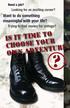 ? Need a job? Looking for an exciting career? Want to do something meaningful with your life? Trying to find money for college? Is it time to choose your own adventure? Check it out! say the recruiters
Sparta was the greatest military power in the Greek city-states Spartans lived in harsh conditions, without luxuries, to make them tough fighters.
 Sparta was the greatest military power in the Greek city-states Spartans lived in harsh conditions, without luxuries, to make them tough fighters. There is much less information about the Spartans than
Life Changes among US Veterans in Thailand and Local Reactions A Short Outline of a Qualitative Study
 Life Changes among US Veterans in Thailand and Local Reactions A Short Outline of a Qualitative Study -Egill Hedinn Bragason, Ph.D., Rajabhat Institute Udon Thani, Thailand. Several years ago, I became
Option 1: Use the Might of the U.S. Military to End the Assad Regime
 1 Option 1: Use the Might of the U.S. Military to End the Assad Regime The Syrian dictatorship s use of chemical weapons against its own people was terrible. But we must not let it overshadow the larger
To What Extent is The Cold War a Result of Two Conflicting Ideologies?
 Rahaf Alwattar Daniela Morales Kiley Smith Madison So To What Extent is The Cold War a Result of Two Conflicting Ideologies? The Cold War was an unceasing state of political and military tensions between
Mohandas Gandhi / Ho Chi Minh. Freedom Fighters OR Terrorists?
 Mohandas Gandhi / Ho Chi Minh Freedom Fighters OR Terrorists? Gandhi: A Paradox (1869-1948) Unconventional Politician A Victorian Moralist in the Age of Great Dictators Searching for Peace in an era of
Dear Delegates, It is a pleasure to welcome you to the 2016 Montessori Model United Nations Conference.
 Dear Delegates, It is a pleasure to welcome you to the 2016 Montessori Model United Nations Conference. The following pages intend to guide you in the research of the topics that will be debated at MMUN
Chapter 2, Section 4: Launching the New Nation
 Chapter 2, Section 4: Launching the New Nation With George Washington the first president, the United States begins creating a working government for its new nation. Opening Activity: In a paragraph discuss
WORLD WAR 2 Political and economic conditions in Europe and throughout the world after World War 1 led directly to World War 2:
 Political and economic conditions in Europe and throughout the world after World War 1 led directly to World War 2: 1. The Treaty of Versailles, ending World War 1, was particularly harsh on Germany and
Chapter 9: The Policies of Alexander Hamilton and Thomas Jefferson
 Chapter 9: The Policies of Alexander Hamilton and Thomas Jefferson Department of State, Department of Treasury, Department of War, Attorney General, Postmaster General : 5 government departments established