
Symbiotic Relationships Cards
|
|
|
- Byron Warren
- 9 years ago
- Views:
Transcription
1 Predation Cards: Symbiotic Relationships Cards Biology Lion and Zebra The lion hunts and kills the zebra for its food. Wolf and Rabbit The wolf hunts and kills the rabbit for its food. Bear and Salmon The bear catches salmon in the river and eats it for food. Snake and Mouse The snake lies in wait and captures a mouse running by for its food. Frog and Insect The frog uses its long, sticky tongue to catch insects for food. Bear and Berries The bear forages through the forest and finds berries for food. Rabbit and Lettuce A rabbit happens upon a garden and eats the lettuce growing in it. Grasshopper and Leaf A grasshopper lands on a plant and eats its leaves for food. 2012, TESCCC 06/07/12 page 1 of 8

2 Polar Bear and Seal A polar bear hunts and captures the seal for its food. Hawk and Vole A hawk swoops down and catches a vole for its food. Lion and Water Buffalo The lion stalks the water buffalo, attacks, and eats it for food. Mantis and Bee The mantis captures a bee and eats it for nourishment. Alligator and Deer A lucky alligator spots a deer drinking water, attacks the deer, kills it and eats it for food. Goat and Grass A goat munches on the grass in a field for its food. Shark and Fish A shark captures fish for its food. Cougar and Deer The cougar hunts deer and kills it for its food. 2012, TESCCC 06/07/12 page 2 of 8

3 Wolf and Caribou The wolf hunts and kills the caribou for its food. Cow and Grass A cow munches on the grass in a field for its food. Lizard and Insect A lizard captures insects for its food. Whale and Plankton A whale uses its teeth to filter plankton from the water and eats the plankton for food. Parasitism Cards: Cuckoo and Warbler A cuckoo may lay its eggs in a warbler s nest. The cuckoo s young will displace the warbler s young, and the warbler will raise the cuckoo s young. Deer and Tick Ticks feed on deer blood, causing irritation to the deer and potentially giving it various diseases such as Lyme disease. Mistletoe and Oak Tree Mistletoe extracts water and nutrients from the oak tree, causing harm to the oak tree. Lice and Humans Lice attach to human hair and enjoy the warmth given off by the human. They eat tiny amounts of human blood, causing the human to have little red bumps that are quite itchy. They may also transmit disease to the human. 2012, TESCCC 06/07/12 page 3 of 8

4 Fleas and Cat Fleas live on the cat s body and eat its blood. They cause irritation to the cat and may transmit disease to the cat. Bird Mites and Humans Bird mites might happen upon a human when trying to find a new bird to feast on. Instead, it eats the blood of the human, causing the human to develop irritating, itchy bumps. Tapeworm and Dog The tapeworm enters the dog when the dog eats feces containing tapeworm larvae. The tapeworm attaches to the dog s stomach and feeds off of the dog s nutrients. This often causes harm to the dog. Bed Bugs and Human Bed bugs will bite and feed off a human up to 500 times in one night. This causes small red bumps and itchiness to the human. Black Wasp and Aphids Black wasps plant eggs in aphids. The larvae eat the aphids from the inside. Braconid Wasp and Tomato Hornworm Larva This wasp lays its eggs inside the hornworm. As they hatch, they eat their way out, killing the hornworm in the process. Downy Mildew on Vegetable Plants The downy mildew fungus invades a host plant and feeds off it. This often causes discoloration or stunted growth in the plant. Mosquitoes and Human Mosquitoes find a human and feast upon their blood. This causes a small reaction on the human s skin, resulting in a red, itchy bump. In addition, mosquitoes can pass along disease to their human host. 2012, TESCCC 06/07/12 page 4 of 8

5 Commensalism Cards: Biology Hermit Crabs and Snails Hermit crabs live in shells made and then abandoned by snails. Maribou Stork and Bees The stork uses its saw-like bill to cut up the dead animals it eats. As a result, the dead animal carcass is accessible to bees for food and egg-laying. Bison and Cowbird As bison walk through the grass, insects become active and are seen and eaten by the cowbird. Remora Fish and Shark Remoras attach themselves to a shark s body. They then travel with the shark and feed on the leftover food scraps from the shark s meals. Whales and Barnacles Barnacles create home sites by attaching themselves to whales. Human Gut Bacteria and Humans Certain bacteria live within the digestive system of humans and feed on various things within the human. This is not detrimental to the human. 2012, TESCCC 06/07/12 page 5 of 8

6 Clownfish and Sea Anemone The clownfish lives within the tentacles of the sea anemone. This provides protection to the clownfish and the clownfish also feeds on the food scraps of the sea anemone. Cattle Egret and Cattle or Horses The cattle egret follows cattle or horses and preys on the insects the animals stir up as they graze. Golden Jackals and Tigers If a golden jackal is expelled from its pack, it may attach itself to a particular tiger, trailing it at a safe distance and then feeding on the tiger s kills. Birds and Army Ants Some birds follow army ant raids on forest floors. When the army ant colony travels along the forest floor, it stirs up numerous flying insects. As the insects flee from the army ants, the birds following the ants catch the insects. Orchids and Trees Orchids grow on the trunks or branches of the trees. They receive light they need and nutrients that run down along the trees. The orchids do not affect the trees. Mosses and Trees Mosses can grow on the trunks or branches of trees. They get light they need as well as nutrients that run down along the trees. The mosses do not affect the trees. Goby Fish and Sea Urchins The goby fish live amongst the sea urchins and are provided protection from their predators. Man-of-War Fish and Portuguese Man of War Jellyfish The man-of-war fish lives amongst the Portuguese man-of-war jellyfish and are provided protection from their predators. 2012, TESCCC 06/07/12 page 6 of 8

7 Imperial Shrimp and Sea Cucumbers The shrimp hitch a ride on the sea cucumbers, which takes them through a large feeding area without expelling their own energy. Pearl Fish and Sea Cucumber The pearl fish spends its day in the intestines of the sea cucumber and emerges at night to feed on small crustaceans. This does not appear to harm the sea cucumber. Mutualism Cards Ostrich and Gazelle Ostriches and gazelles feed next to each other. They both watch for predators and alert each other to danger. Because the visual abilities of the two species are different, they each can identify threats that the other animal would not see as readily. Yucca Plant and Yucca Moth Yucca flowers are pollinated by yucca moths. The moths lay their eggs in the flowers where the larvae hatch and eat some of the developing seeds. Wrasse Fish and Black Sea Bass Wrasse fish feed on the parasites found on the black sea bass s body. Oxpecker and Rhinoceros Oxpeckers feed on the ticks found on a rhinoceros. In addition, if they sense danger, the oxpecker will fly up and scream out as a warning to the rhinoceros. Honey Guide Bird and Badger Honey guide birds alert and direct badgers to beehives. The badgers then expose the hives and feed on the honey first. Then, the honey guide birds eat. Boxer Crab and Anemone The boxer crab carries a pair of small anemones in its claws. When a predator approaches, it waves the anemones around which presents its stinging tentacles and deters the predator. The anemones get small particles of food from the crab when it eats. 2012, TESCCC 06/07/12 page 7 of 8

8 Alpheid Shrimp and Goby Fish The alpheid shrimp dig a deep burrow and keep safe underground. The alpheid shrimp has bad vision, so it is vulnerable to predators when above ground. The goby fish stands guard at the entrance of the burrow and will flick its tail to signal the shrimp that it is safe to come out. The goby fish gets a burrow to live in while the shrimp is warned of predators. Bees and Flowers Bees fly around to various flowers and gather nectar, which they use to make food. When a bee lands on a flower, it gets some pollen on its hairy body. Then, when the bee lands on the next flower, some of the pollen from the first flower rubs off, pollinating the plant. Mycorrhizal Fungi and Plants The mycorrhizal fungus invades the roots of some plants and gets nutrients from the plant. The fungus helps the plant absorb inorganic nitrogen and phosphorus from the soil. Some fungi also secrete antibiotics, which can help protect the plant from parasitic fungi and bacteria. Anemone Hermit Crab and Anemones Biology The crab attaches several anemones to its shell using them as camouflage and as a deterrent to potential predators. The anemones have a mobile home and get more exposure to food than if they remained stationary. Spider Crab and Algae Spider crabs live in shallow areas of the ocean floor. Greenishbrown algae lives on the crab s back, helping the crabs blend in with their environment, which makes them less noticeable to predators. The algae are provided with a good place to live while the crab receives camouflage. Honeypot Ants and Aphids The honeypot ants get food by stroking the aphid for their sweet honeydew secretions. The ants provide protection for the aphid by aggressively fighting off predators such as ladybugs. Algae and Fungi (Lichen) Algae and fungi can live together, forming lichen. The algae produce carbohydrates through photosynthesis, providing nutrients to both the algae and the fungi. The fungi provide moisture for the algae. Otters and Kelp Otters float and sleep on forests of kelp in the water. The kelp provides them a place to anchor in the moving water. The otters eat sea urchins, which normally feed on the kelp. 2012, TESCCC 06/07/12 page 8 of 8

Ecology 1 Star. 1. Missing from the diagram of this ecosystem are the
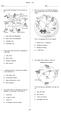 Name: ate: 1. Missing from the diagram of this ecosystem are the 5. ase your answer(s) to the following question(s) on the diagram below and on your knowledge of biology.. biotic factors and decomposers.
Matter and Energy in Ecosystems
 Matter and Energy in Ecosystems The interactions that take place among biotic and abiotic factors lead to transfers of energy and matter. Every species has a particular role, or niche, in an ecosystem.
EcoVenture Class: Symbiotic Relationships 7 th -12 th Grade Teacher Guide Overview and Resource Materials
 EcoVenture Class: Symbiotic Relationships 7 th -12 th Grade Teacher Guide Overview and Resource Materials For more information contact: School Programs On-site Manager 725 East 10600 South Sandy, UT 84094
DOG Pets cat - dog - horse - hamster - rabbit - fish
 CAT Pets cat - dog - horse - hamster - rabbit - fish DOG Pets cat - dog - horse - hamster - rabbit - fish HORSE Pets cat - dog - horse - hamster - rabbit - fish HAMSTER Pets cat - dog - horse - hamster
Pond Vocabulary Words and Meanings
 Pond Vocabulary Words and Meanings Adapt: to adjust to a use or situation Aquatic: from or in the water Bacteria: tiny organisms, too small to be seen with the naked eye Carnivore: an animal that eats
The Need Is Mutual: The Importance of Biological Interactions
 The Need Is Mutual: The Importance of Biological Interactions Science Topic: Food Webs Grades: 6 th -8 th Essential Question: What kinds of relationships are involved in biological interactions? Lesson
food chains reflect How are these organisms important to one another? organism: a living thing
 reflect Different plants and animals live together. Look at the picture of the garden. What organisms live there? Grass, trees, bugs, and birds live there. Fish and frogs live there, too. Can you think
Symbiotic Relationships Grade Seven
 Ohio Standards Connection: Life Sciences Benchmark C Explain how energy entering the ecosystems as sunlight supports the life of organisms through photosynthesis and the transfer of energy through the
CHAPTER 20 COMMUNITY ECOLOGY
 CHAPTER 20 COMMUNITY ECOLOGY MULTIPLE CHOICE 1. The relationship between a predator and its prey is best illustrated by a. a snake eating a bird. c. a lion eating a zebra. b. a fox eating a mouse. d. a
Principles of Ecology
 2 Principles of Ecology section 1 Organisms and Their Relationships Before You Read On the lines below, list the organisms that you have encountered today. You share the same environment with these organisms.
What activities do you think an organism would use bioluminescence for?
 Relationships for Survival: The Role of Bioluminescence overview In these activities, students will focus on ecological relationships and investigate the many ways that species might interact using bioluminescence.
Name Class Date. Adapting to the Environment Adaptations and Survival
 CHAPTER 3 4 SECTIN Adapting to the Environment Adaptations and Survival EFRE YU READ After you read this section, you should be able to answer these questions: What adaptations help animals survive? What
Life Science Study Guide. Environment Everything that surrounds and influences (has an effect on) an organism.
 Life Science Study Guide Environment Everything that surrounds and influences (has an effect on) an organism. Organism Any living thing, including plants and animals. Environmental Factor An environmental
Prairie Food Chains & Webs Producers, Consumers & Decomposers
 Kansas Prairies s, s & Decomposers Science, Life Science, Reading, Math Materials Vocabulary worksheet Food Chain worksheet Overview To explore the organisms found on a prairie and identify the various
honey bee By Henry Touray
 honey bee By Henry Touray Introduction For my project I have chosen to research Bees. I chose to find out about the bee because bees have been in the news lately. Lots of hives have died out and scientists
6. Which of the following is not a basic need off all animals a. food b. *friends c. water d. protection from predators. NAME SOL 4.
 NAME SOL 4.5 REVIEW - Revised Habitats, Niches and Adaptations POPULATION A group of the same species living in the same place at the same time. COMMUNITY-- All of the populations that live in the same
NOTE TO TEACHER: It is appropriate to introduce the mitochondria (where energy is made) as a major structure common to all cells.
 5.2.1 Recall the cell as the smallest unit of life and identify its major structures (including cell membrane, cytoplasm, nucleus, and vacuole). Taxonomy level: 1.1 and 1.2-A Remember Factual Knowledge
Lesson Plan Two - Ecosystems
 Lesson Plan Two - Ecosystems Summary Students discuss what living things need to survive. They identify the abiotic and biotic components of an ecosystem and describe the roles and interactions of producers
How Species Interact with Each Other
 SECTION 2 How Species Interact with Each Other What s the difference between lions in a zoo and lions in the wild? In the wild, lions are part of a community and a food web. In the African savanna, lions
4. Which choice below lists the biomes in order from lowest precipitation amounts to highest precipitation amounts?
 Ecosystems and Biomes 1. All of the living organisms in a forest plus their environment is an example of A. a biome. B. a community. C. a population. D. an ecosystem. 2. Which of the following best describes
Prairie Food Chains & Webs Producers, Consumers, & Decomposers
 Kansas Prairies Prairie Food Chains & Webs Producers, s, & Decomposers Life Science, Math, Reading, Science Materials Student Worksheet A: Vocabulary Student Worksheet B: Food Chain Overview To explore
Discover Entomology. Discover Entomology. A Science, a Career, a Lifetime. A Science, a Career, a Lifetime
 Discover Entomology A Science, a Career, a Lifetime Discover Entomology A Science, a Career, a Lifetime What is Entomology? Entomology is the study of insects. Entomologists study bees, ants, beetles,
Lesson 1. Objectives: ocus: Subjects:
 Lesson 1 The Web of Life Objectives: 1. Understand the concept of an ecosystem. 2. Understand the interdependence of members of an ecosystem. Subjects: 1. Ecology 2. Language 3. Art MATERIALS: Copies of
Animal Classification. Contents. Preparation
 Animal Classification A collaborative sorting activity for Key stages 2 & 3 Teachers notes Contents Animal Cards: 8 Pictures per card (54 +2 blanks) Alphabetical list of pictured animals Group cards: VERTEBRATE/INVERTEBRATE
www.irishseedsavers.ie Natural surface water on earth includes lakes, ponds, streams, rivers, estuaries, seas and oceans.
 www.irishseedsavers.ie POND LIFE FACT SHEET Natural surface water on earth includes lakes, ponds, streams, rivers, estuaries, seas and oceans. A pond is a small body of fresh water shallow enough for sunlight
ECOSYSTEM RESPONSES. reflect
 reflect There is a saying, No man is an island, which means that people need one another in order to survive. Everyone on Earth is interconnected in some way. This is not only true of human beings, but
Grassland Food Webs: Teacher Notes
 Grassland Food Webs: Teacher Notes Alan Henderson ecosystem Objectives After completing this activity students will be able to: Create a food web and identify producers and consumers. Assign organisms
Figure 4. Clown fish and anemone. Figure 5. Sea spider. Page 2 of 6. Saylor URL: www.saylor.org/bio102
 Symbiosis The phrase symbiotic relationship simply refers to a close ecological relationship between two different species. These relationships differ along a spectrum from positive to negative interactions.
Classification. Living Things. bacteria and blue green algae: (single celled organisms without a nucleus)
 Teacher Discovery Card Classification Information There are millions different kinds plants and animals in the world Each different kind plant and animal is called a species We can group species together
Use this diagram of a food web to answer questions 1 through 5.
 North arolina Testing Program EO iology Sample Items Goal 4 Use this diagram of a food web to answer questions 1 through 5. coyotes 3. If these organisms were arranged in a food pyramid, which organism
food webs reflect look out! what do you think?
 reflect Imagine for a moment that you stay after school one day to clean up the classroom. While cleaning, you move some plants away from the sunny windows. A week later, you remember to move the plants
Second Grade Insects Assessment
 Second Grade Insects Assessment 1a. The stiff shell that covers an insect s body is called an: a. outer shell b. exoskeleton 1b. The stiff shell that covers and insect s body is called an: a. outer shell
2 nd Grade Science Unit B: Life Sciences Chapter 3: Plants and Animals in Their Environment Lesson 1: How are plants and animals like their parents?
 2 nd Grade Science Unit B: Life Sciences Chapter 3: Plants and Animals in Their Environment Lesson 1: How are plants and animals like their parents? offspring Offspring are young plants and animals. Offspring
World Oceans Day at ZSL Whipsnade Zoo
 World Oceans Day at ZSL Whipsnade Zoo Teachers notes KS 1 & KS 2 This booklet will help you to focus your self guided trail on ocean animals, looking at the adaptations of the species and focusing in on
Food Chains (and webs) Flow of energy through an ecosystem Grade 5 Austin Carter, Dale Rucker, Allison Hursey
 Food Chains (and webs) Flow of energy through an ecosystem Grade 5 Austin Carter, Dale Rucker, Allison Hursey References: Columbus Public Schools Curriculum Guide- Grade 5 GK-12 Biological Science Lesson
Class Insecta - The insects
 A Introduction 1. Very species rich 2. Characteristics a. 3 pairs of legs b. 2 pairs of wings (most) except flies (1 pair of wings - Diptera) B. Distribution 1. All habitats except saltwater - replaced
Worksheets. (Caterpillars of Singapore s Butterflies) Worksheet Title Recommended level. Adaptations of the caterpillar defence mechanism
 Worksheets (Caterpillars of Singapore s Butterflies) Worksheet Title Recommended level 1 Life cycle of a butterfly P3 2 Am I an insect? P3 3 4 Adaptations of the caterpillar defence mechanism The butterfly
Unit 4 Lesson 1: A Pest by Any Other Name
 Focus Areas: Pest Control: Biological; Environmental Science, Language Arts Focus Skills: critical thinking, conducting research, observing, graphing, interpreting data Objectives To explore human attitudes
Producers, Consumers, and Food Webs
 reflect Think about the last meal you ate. Where did the food come from? Maybe it came from the grocery store or a restaurant. Maybe it even came from your backyard. Now think of a lion living on the plains
Who Eats What in the Woods?
 Who Eats What in the Woods? Developed with teachers at Tolworth Junior School in Kingston upon Thames in 2000. The webaddress for this activity is; Last updated 26th February 2008 This activity has now
Life processes. All animals have to carry out seven life processes. These are: 2. Respiration taking in one gas and getting rid of another
 Food chains Life processes All animals have to carry out seven life processes. These are: 1. Movement being able to move its body 2. Respiration taking in one gas and getting rid of another 3. Reproduction
Cycles of life. You will be visiting the museum to see some baby animals and their parents. Here are some of their stories.
 Cycles of life Some animals die of old age, some die of disease, some are killed and eaten by other animals. But the world does not run out of animals because more are being born or hatched all the time.
Activity 1 Exploring Animal Diets and Sizes
 Activity 1 Exploring Animal Diets and Sizes Objective & Overview: Using measurement and books, students will gain a better understanding of animal size, diversity, and diet through the fun study of wildlife.
Silent, Nighttime Hunters By Guy Belleranti
 By Guy Belleranti Owls are raptors, or birds of prey. They are carnivores who quickly and silently swoop down on their prey from above. Most raptors such as eagles, hawks and falcons are day hunters. They
Honey Bee Background Information
 Honey Bee Background Information Honey bees are very important. Honey bees are the strongest link in the chain between the people who grow the food and the people who eat the food. Without honey bee pollination,
ANECDOTES ABOUT ANIMALS AND PLANTS ON THE SEASHORE
 Explorer Education Programme ANECDOTES ABOUT ANIMALS AND PLANTS ON THE SEASHORE Students and teachers can use the following stories and anecdotes to help remember facts about the animals and plants they
Emerald Tree Boa: Emerald Tree Boas are bright green to blend in with their habitat. They are part of the boa family and are constrictors.
 Anaconda: The anaconda lives in the swamps and rivers. Anacondas can also climb trees. Adults can get as big as 20 feet long. Anacondas are good swimmers. They have scales and can swim quickly. They kill
These pages build on Units 2B & C and introduce predator-prey relationships and food chains.
 Unit 4B Habitats Teaching Notes These pages build on Units 2B & C and introduce predator-prey relationships and food chains. Curriculum, resource and other links Sc1 & Sc2 Resources Associated with this
Food Chains and Food Webs
 Program Support Notes by: Spiro Liacos B.Ed. Produced by: VEA Pty Ltd Commissioning Editor: Sandra Frerichs B.Ed, M.Ed. Executive Producers: Edwina Baden-Powell B.A, CVP. Sandra Frerichs B.Ed, M.Ed. You
Population, Community & Ecosystem Worksheet
 Population, Community & Ecosystem Worksheet Name Section A: Intro to Ecology The wolves and moose of Isle Royale are known world-wide, and they are the focus of the longest-running study of a predator-prey
Wetlands by Leslie Cargile
 Name: by Leslie Cargile What do the bogs in Ireland, the marshes in South Carolina, and the swamps of Louisiana have in common? If you said they re all wetlands, you d be right! are any land that is flooded
Rainforest Food Web Tropical Rainforests Temperate Rainforests
 Rainforest Food Web The list of plants and animals endemic to rainforest biome is exhaustive, and that makes the rainforest food web one of the most complex food webs of the world. Continue reading...
FOOD CHAINS, FOOD WEBS AND ECOLOGICAL PYRAMIDS
 FOOD CHAINS, FOOD WEBS AND ECOLOGICAL PYRAMIDS SECTION 1 In an ecosystem, plants capture the sun's energy and use it to convert inorganic compounds into energy-rich organic compounds. This process of using
My favourite animal is the cheetah. It lives in Africa in the savannah, It eats and gazel es. It is big and yel ow with black spots.
 The crocodile is big and green. It has got a long tail, a long body and a big mouth with big teeth. It has got four short legs. The crocodile eats fish and other animals. He lives in Africa and America,
Insect identification sheet
 information leaflet Insect identification sheet To enable you to identify the insect you have in your home, we have provided some identification sheets. These depict the most common pest species that you
Animal Adaptations -- Vocabulary
 Section 1 Objectives o Children will understand what animal adaptations are. o Children will be able to explain why animal adaptations are important. o Children will be able to explain different types
Level Topic Basic Intermediate Advanced Open. What is a typical How common is sexchanging clownfish family like? father)?
 Examples of potential biology topics in Finding Nemo (Pixar Animation Studios 2003, G). Clownfish mating What are other complex Can you compare and What is a typical How common is sexchanging in fish?
CCR Biology - Chapter 14 Practice Test - Summer 2012
 Name: Class: Date: CCR Biology - Chapter 14 Practice Test - Summer 2012 Multiple Choice Identify the choice that best completes the statement or answers the question. 1. Zebras live on the savannas of
Layers. Forest floor, canopy, and more!
 Layers Forest floor, canopy, and more! Introduction When I was nine, I went to a museum about wildlife and there was part of the museum that was about rain forests and it had some plants that lived in
Animals all around. Lesson 1. What s Alfie got? He s got a stick insect. 1 Say. $ CD2. 3 Read and match. 1 What s Liam got?
 Lesson 1 Animals all around Lesson 1 1 Say. $ CD2 21 2 Listen and say the number. $ CD2 22 3 tortoise 1 2 hamster iguana 5 6 8 guinea pig 7 spider canary 3 Read and match. 1 What s Liam got? a She s got
Seagrasses. What are seagrasses? Why seagrass isn t seaweed!
 Seagrasses What are seagrasses? Seagrasses are plants that grow underwater but they are not the same as seaweeds (algae). Some species of seagrass look very much like terrestrial (land) grass, with straplike
This hands-on activity incorporates observing, classifying, predicting, sequencing, formulating models, and drawing conclusions.
 SCIENCE Science and the Environment 4 th Grade FOOD CHAINS Overview: All organisms, or living things, depend on other organisms for nutrients. The movement of nutrients through an environment is visualized
8.2 - A Local Ecosystem:
 8.2 - A Local Ecosystem: 1. The distribution, diversity and numbers of plants and animals found in ecosystems are determined by biotic and abiotic factors: Distinguish between the abiotic and biotic factors
Grade 5 Standard 5 Unit Test Heredity. 1. In what way will a kitten always be like its parents? The kitten will...
 Grade 5 Standard 5 Unit Test Heredity Multiple Choice 1. In what way will a kitten always be like its parents? The kitten will... A. be the same color. B. learn the same things. C. have the same body structures.
Wildlife for the Workforce Part II:
 Wildlife for the Workforce Part II: Turtles and Tortoises, Snakes, Bees, and Exotic Animals Sarasota County Parks and Recreation Turtles and Tortoises Common cooter Green sea turtle Gopher tortoise Terrapin
Everything You Wanted to Know About Spiders!
 Everything You Wanted to Know About Spiders! How do spiders fit into the Animal Kingdom? Spiders are arthropods, a group of invertebrates containing insects, crustaceans, millipedes, centipedes, arachnids
Region of Georgia : Mountains
 Region of Georgia : Mountains Northern most region of GA Cold weather in the winter Brasstown Bald is the highest point in Georgia Lots of creeks and streams High above sea level Poor soil for farming
Animals and Adaptation
 Animals and Adaptation From: http://www.learninghaven.com/science/articles/animals_and_adaptation.htm In order for animals to survive, they need to be able to adapt. In this lesson we will look at the
SPECIES DESCRIPTION Picture
 SPECIES DESCRIPTION Picture German Cockroach Cockroach egg case & nymphs 12-15mm (Adult Stage)Mid to dark brown body. Lighter area with 2 dark bars behind head. Wings. Very long antennae. Young are smaller
Reptiles and Amphibians by Guy Belleranti
 Name: Take a look at the four animals pictures below. Do you know which ones are reptiles and which ones are amphibians? The chameleon is an unusual lizard that can change the color of its scaly body.
Who Glows there? Bioluminescence of Fireflies, Mushrooms, and Jellyfish
 Who Glows there? Bioluminescence of Fireflies, Mushrooms, and Jellyfish Glenna Smith Anthony Todd Background: Most people think of fireflies when it comes to bioluminescent or glowin-the-dark organisms,
Key Idea 2: Ecosystems
 Key Idea 2: Ecosystems Ecosystems An ecosystem is a living community of plants and animals sharing an environment with non-living elements such as climate and soil. An example of a small scale ecosystem
Rainforest Rescuers Overview
 Rainforest Rescuers Overview Rainforest Rescuers takes students into a thriving coastal rainforest to learn about its ecosystem and the delicate balance and interdependence of its flora and fauna. Through
Structures of animals
 Structures of animals Name: All animals have been designed with different parts, which we call structures, that make up their bodies. Each of these structures is important as it is used to perform a specific
The animals at higher levels are more competitive, so fewer animals survive. B.
 Energy Flow in Ecosystems 1. The diagram below shows an energy pyramid. Which of the following best explains why the number of organisms at each level decreases while moving up the energy pyramid? The
CLASS S - AGRICULTURE
 LIBRARY OF CONGRESS CLASSIFICATION OUTLINE CLASS S - AGRICULTURE (Click each subclass for details) Subclass S Subclass SB Subclass SD Subclass SF Subclass SH Subclass SK Agriculture (General) Plant culture
Rain Forests. America's. Web of Life. Rain Forest Ecology. Prince William Network's OVERVIEW OBJECTIVES SUBJECTS
 Rain Forest Ecology National Science Education Standards Standard C: Life Sciences Populations and ecosystems. Standard C: Life Sciences Diversity and adaptation of organisms. Standard F: Science in Personal
2.2 Interactions Among Species
 Key Terms ecological niche bog predator prey mutualism parasite ecological niche the way that an organism occupies a position in an ecosystem, including all the necessary biotic and abiotic factors 2.2
What is a food chain?
 3 What is a food chain? Learning Intention Understand that plants and animals in a habitat are dependent on each other. National Curriculum Skills Science Interdependence of living organisms in those 2
Lesson Plan: Plant and Animal Relationships. An Instructor-Guided Lesson for Students Grades 6-8
 NJCCS Addressed: Lesson Plan: Plant and Animal Relationships An Instructor-Guided Lesson for Students Grades 6-8 6 Various human activities have changed the capacity of the environment to support some
5.1 Ecosystems, Energy, and Nutrients
 CHAPTER 5 ECOSYSTEMS 5.1 Ecosystems, Energy, and Nutrients Did anyone ever ask you the question: Where do you get your energy? Energy enters our world from the Sun but how does the Sun s energy become
Wild About... Frogs and Frogspawn
 a Wild About... Rutland County Council Nature notes Frogs belong to a group of animals called amphibians, which also includes newts and toads. Amphibians live both on land and in water. Water is needed
STUDY GUIDE ECOLOGY. CHAPTER 21: Populations 1. An overview of ecology. Ecology is the study of interactions between organisms and their environment.
 STUDY GUIDE ECOLOGY CHAPTER 21: Populations 1. An overview of ecology. Ecology is the study of interactions between organisms and their environment. 2. A Hierarchy of interactions: cells tissues organs
Answers to the Student Worksheet for the Salt Marsh Virtual Field Trip
 Answers to the Student Worksheet for the Salt Marsh Virtual Field Trip Please answer the following questions. 1. What characteristics define a Salt Marsh? found around the world located only along the
a. a population. c. an ecosystem. b. a community. d. a species.
 Name: practice test Score: 0 / 35 (0%) [12 subjective questions not graded] The Biosphere Practice Test Multiple Choice Identify the letter of the choice that best completes the statement or answers the
2. What kind of energy is stored in food? A. chemical energy B. heat energy C. kinetic energy D. light energy
 Assessment Bank Matter and Energy in Living Things SC.8.L.18.4 1. What is energy? A. anything that takes up space B. anything that has mass C. the ability to conduct current D. the ability to do work 2.
AMERICAN MUSEUM OF NATURAL HISTORY SCAVENGER HUNT
 AMERICAN MUSEUM OF NATURAL HISTORY SCAVENGER HUNT Begin on the 4 th floor. Take the stairs since they are faster than the elevators. Look but do not touch while in the museum. Keep your voices low but
KS1 Animal Habitats. Scheme of Learning
 KS1 Animal Habitats 1 Scheme of Learning KS1 Animal Habitats Scheme of Learning This scheme of learning has been put together by Marwell Wildlife for teachers to use with their KS1 pupils. It is a complete
Adapt to Your Habitat Complements Teacher Guide Adaptations: Secrets to Survival
 Adapt to Your Habitat Complements Teacher Guide Adaptations: Secrets to Survival Theme: and animals have many different adaptations that allow them to survive. Objectives: Understanding what adaptations
Exhibit Inquiry. Rainforest. Aug 11
 Exhibit Inquiry Exhibit Inquiry Have students look for the following exhibits related to living things during their visit to the Ontario Science Centre: Where to go: (Level 6) What it's about: Tropical
The main source of energy in most ecosystems is sunlight.
 Energy in Ecosystems: Ecology: Part 2: Energy and Biomass The main source of energy in most ecosystems is sunlight. What is the amount of energy from the sun? 100 W/ft 2 The energy gets transferred through
Monarch Butterflies: Beautiful But Poisonous by Kelly Hashway
 by Kelly Hashway If you ve ever seen a monarch butterfly, then you ve probably noticed their bright orange and black colors. It makes them easy to see in the sky. You may think this would put the Monarch
Section 3: Trophic Structures
 Marine Conservation Science and Policy Service learning Program Trophic Structure refers to the way in which organisms utilize food resources and hence where energy transfer occurs within an ecosystem.
The Fly. Quality Pest Management. Live Cleaner. Live Healthier. Cluster Fly. The weather is warming up and as if from no where the flies appear.
 The Fly The weather is warming up and as if from no where the flies appear. House Fly Flies will pitch and feed on just about anything including faeces to your lunch! They spread disease and are a generally
Landfills-T27 20810 Vector & Bird Control
 These materials were developed under the auspices of CalRecycle for specific technical training presentations and are posted as reference documents for the local government and CalRecycle staff who attended
240Tutoring Life Science Study Material
 240Tutoring Life Science Study Material This information is a sample of the instructional content and practice questions found on the 240Tutoring GACE Early Childhood Education. This information is meant
INSECTS CLASSROOM RESOURCES CREATED AND COMPILED BY IPTV K-12 CONNECTIONS
 INSECTS CLASSROOM RESOURCES CREATED AND COMPILED BY IPTV K-12 CONNECTIONS *THE MATERIALS WERE DESIGNED TO ACCOMMODATE A K-6 AUDIENCE PLEASE MODIFY AS APPROPRIATE INSECTS A to Z Work with a partner to complete
Introducing SEA LIFE centre Children s Activity Packs
 Introducing SEA LIFE centre Children s Activity Packs Great news, you re visiting a SEA LIFE centre and we ll do everything possible to make sure you have a wonderful day out. Whether you are a Scout,