
Chapter 7 Tuberculosis Infection Control
|
|
|
- Clinton Blair
- 10 years ago
- Views:
Transcription
1 Chapter 7 Tuberculosis Infection Control Table of Contents Chapter Objectives Introduction Infectiousness TB Infection Control Measures TB Infection Control Program TB Infection Control in Nontraditional Facility-based Settings TB Infection Control in the Home Chapter Summary References Chapter Objectives After working through this chapter, you should be able to Describe the factors that determine the infectiousness of a tuberculosis (TB) patient; Explain the main goals of a TB infection control program; Discuss the three levels of an effective TB infection control program; Explain the purpose and the characteristics of a TB airborne infection isolation room; and Describe the circumstances when respirators and surgical masks should be used. 189

2

3 Introduction M. tuberculosis can be transmitted in virtually any setting. Clinicians should be aware that transmission has been documented in health-care settings where health-care workers (HCWs) and patients come in contact with persons with infectious TB who Have unsuspected TB disease, Have not received adequate or appropriate treatment, or Have not been separated from others. Health-care settings in this context include clinics and hospitals, as well as nontraditional facilitybased settings such as emergency medical services, correctional facilities, home-based health-care and outreach settings, long-term care facilities, and homeless shelters. People who work or receive care in health-care settings (as referenced above) are at higher risk for becoming infected with M. tuberculosis; therefore, it is necessary to have a TB infection control plan as part of a general infection control program designed to ensure the following: Prompt detection of TB; Airborne precautions; and Treatment of persons who have been suspected or confirmed to have TB disease (see Chapter 2, Transmission and Pathogenesis of Tuberculosis). People who work or receive care in health-care settings are at higher risk for becoming infected with M. tuberculosis; therefore, it is necessary to have a TB infection control plan. Study Question 7.1 In which of the following health-care settings can TB be transmitted? (circle the one best answer) F. Where TB patients have not received adequate and appropriate treatment. G. Where TB patients have not been separated from others. H. Where persons who have unsuspected TB disease come into contact with others. I. A, B, and C are all correct. J. Only A and B are correct. 191

4 Infectiousness The infectiousness of a TB patient is directly related to the number of droplet nuclei carrying M. tuberculosis (tubercle bacilli) that are expelled into the air. Depending on the environment, these tiny particles can remain suspended in the air for several hours. M. tuberculosis is transmitted through the air, not by surface contact. Infection occurs when a person inhales droplet nuclei containing M. tuberculosis, and the droplet nuclei traverse the mouth or nasal passages, upper respiratory tract, and bronchi to reach the alveoli of the lungs. Persons with extrapulmonary TB disease may have concurrent unsuspected pulmonary or laryngeal TB disease. Except for laryngeal TB disease, extrapulmonary TB disease is rarely infectious; however, transmission from extrapulmonary sites has been reported to occur during aerosol-producing procedures such as autopsies and tissue irrigation. The characteristics of a patient with TB disease that are associated with infectiousness include, but are not limited to, those listed in Table 7.1. The infectiousness of a TB patient is directly related to the number of droplet nuclei carrying M. tuberculosis (tubercle bacilli) that are expelled into the air. Infection occurs when a person inhales droplet nuclei containing M. tuberculosis, and the droplet nuclei traverse the mouth or nasal passages, upper respiratory tract, and bronchi to reach the alveoli of the lungs. 192

5 Table 7.1 Infectiousness of People Known to Have or Suspected of Having TB Disease* No cough Factors Associated with Noninfectiousness No cavity in the lung No acid-fast bacilli on sputum smear Extrapulmonary (non-pulmonary) TB disease Receiving adequate treatment for 2 weeks or longer Not undergoing cough-inducing procedures Negative sputum cultures Presence of a cough Cavity in the lung Factors Associated with Infectiousness Acid-fast bacilli on sputum smear TB disease of the lungs, airway, or larynx Not receiving adequate treatment Undergoing cough-inducing procedures (e.g., bronchoscopy, sputum induction, and administration of aerosolized medications) Positive sputum cultures * Infectiousness depends on a variety of factors. Clinicians should consider all of these factors when determining whether a TB patient should be considered infectious. In general, young children with pulmonary TB disease are less likely than adults to be infectious, because children are sometimes unable to produce sputum when they cough, or may have paucibacillary TB. However, it is still possible for children to transmit M. tuberculosis to others if they have infectious characteristics, such as a positive AFB smear or cavity on a chest radiograph. In general, young children with pulmonary TB disease are less likely than adults to be infectious, because children are sometimes unable to produce sputum when they cough, or may have paucibacillary TB. For most patients, infectiousness appears to decline rapidly after adequate and appropriate treatment is started; however, the rate of decline varies from patient to patient. Some patients with unrecognized or inadequately treated drug-resistant TB disease may remain infectious for weeks or even months. Patients with drug-resistant TB disease may not respond to the initial drug regimen, acquire further drug resistance, and remain infectious until they receive adequate treatment. Infectiousness appears to decline rapidly after adequate and appropriate treatment is started; however, the rate of decline varies from patient to patient. 193

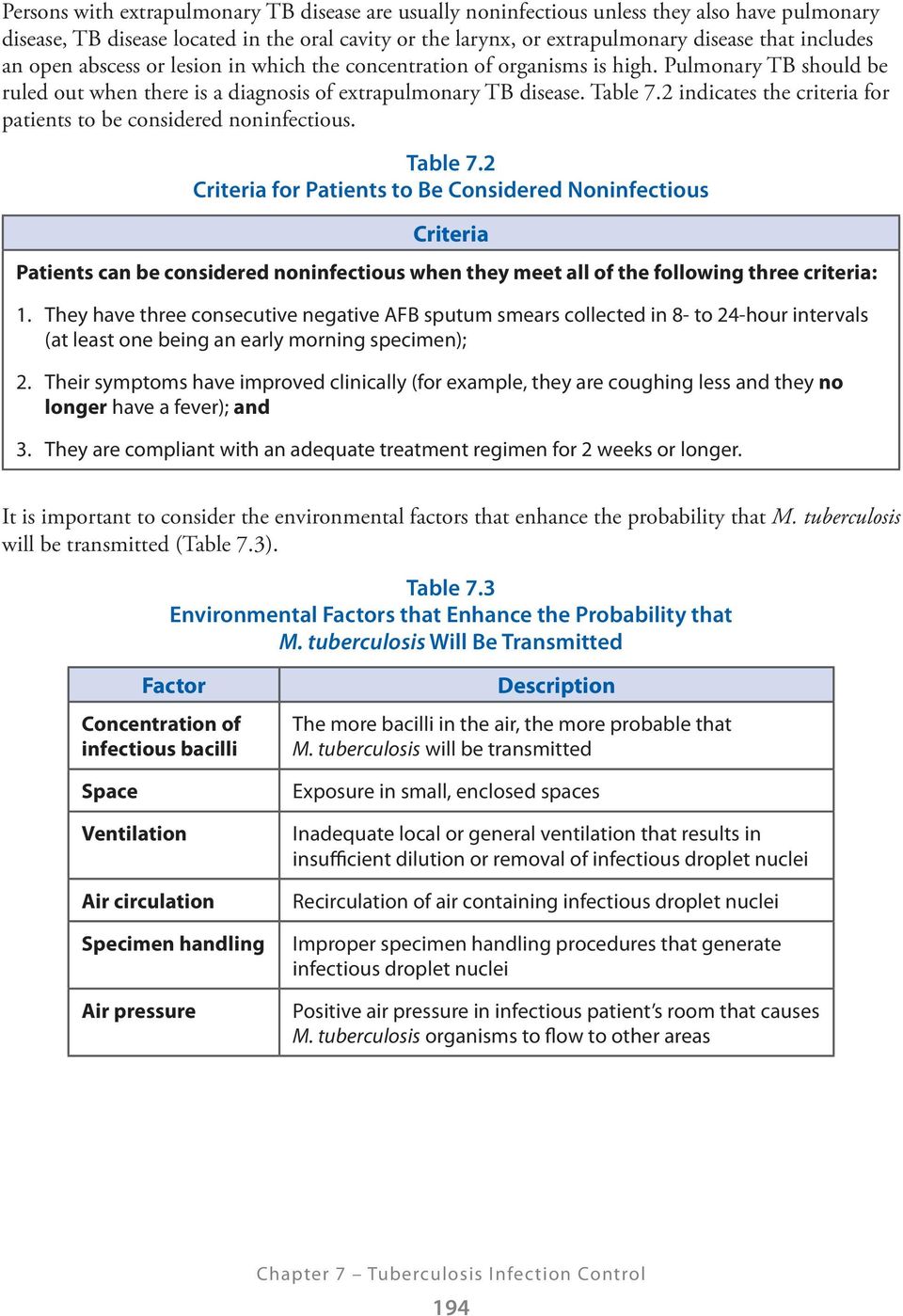
6 Persons with extrapulmonary TB disease are usually noninfectious unless they also have pulmonary disease, TB disease located in the oral cavity or the larynx, or extrapulmonary disease that includes an open abscess or lesion in which the concentration of organisms is high. Pulmonary TB should be ruled out when there is a diagnosis of extrapulmonary TB disease. Table 7.2 indicates the criteria for patients to be considered noninfectious. Table 7.2 Criteria for Patients to Be Considered Noninfectious Criteria Patients can be considered noninfectious when they meet all of the following three criteria: 1. They have three consecutive negative AFB sputum smears collected in 8- to 24-hour intervals (at least one being an early morning specimen); 2. Their symptoms have improved clinically (for example, they are coughing less and they no longer have a fever); and 3. They are compliant with an adequate treatment regimen for 2 weeks or longer. It is important to consider the environmental factors that enhance the probability that M. tuberculosis will be transmitted (Table 7.3). Table 7.3 Environmental Factors that Enhance the Probability that M. tuberculosis Will Be Transmitted Factor Concentration of infectious bacilli Space Ventilation Air circulation Specimen handling Air pressure Description The more bacilli in the air, the more probable that M. tuberculosis will be transmitted Exposure in small, enclosed spaces Inadequate local or general ventilation that results in insufficient dilution or removal of infectious droplet nuclei Recirculation of air containing infectious droplet nuclei Improper specimen handling procedures that generate infectious droplet nuclei Positive air pressure in infectious patient s room that causes M. tuberculosis organisms to flow to other areas 194
7 Study Questions Indicate if the following statements about infectiousness are true or false. (Choose the one best answer and write the letter for the correct answer on the line next to the question number.) Patients Children are more likely than adults to be infectious. For most patients, infectiousness appears to decline rapidly after adequate treatment is started. Some patients with unrecognized or inadequately treated drug-resistant TB disease may remain infectious for weeks or even months. Patients with drug-resistant TB disease may not respond to the initial drug regimen, acquire further drug resistance, and may remain infectious until they receive adequate treatment. True or False A. True B. False 7.6 Patients can be considered noninfectious when they meet which of the following criteria? (choose the one best answer) A. They are compliant with an adequate regimen for 2 weeks or longer. B. Their symptoms have improved clinically. C. They have three consecutive negative sputum smears collected in 8- to 24-hour intervals (at least one being an early morning specimen). D. A, B, and C are all correct. E. Only A and B are correct. 7.7 Which of the following environmental factors can enhance the probability that M. tuberculosis will be transmitted? (choose the one best answer) A. Concentration of infectious bacilli in the air B. Exposure in small, enclosed spaces C. Inadequate local or general ventilation that results in insufficient dilution or removal of infectious droplet nuclei D. A, B, and C are all correct. E. Only A and B are correct. 195

8 TB Infection Control Measures TB infection control measures should be based on a careful assessment of risk for transmission of TB in the facility or setting. The goals of effective TB infection control programs are to Detect TB disease early and promptly; Isolate those who have or are suspected of having TB disease (airborne precautions); and Treat people who have or who are suspected of having TB disease. TB infection control measures should be based on a careful assessment of risk for transmission of TB in the facility or setting. Detection of TB Disease The primary risk to health-care workers (HCWs) and the general population is the undiagnosed or unsuspected patient with TB disease. Within health-care settings, protocols should be implemented and enforced to promptly identify, isolate, separate, and either transfer or manage persons who have suspected or confirmed TB disease. Personnel who admit patients to facilities should be trained to detect signs and symptoms of TB disease. People suspected of having TB disease should be given a diagnostic evaluation as soon as possible (see Chapter 4, Diagnosis of Tuberculosis Disease). Clinicians and other HCWs should suspect TB disease in people who have any of the symptoms listed in Table 7.4 and isolate them until TB is excluded. Table 7.4 Symptoms of TB Disease Symptoms People who have any of the following symptoms should be evaluated for TB disease: Persistent cough (3 weeks or longer); Chest pain; Bloody sputum; Weight loss or loss of appetite; Fever; Chills; Night sweats; Malaise; or Fatigue 196

9 The primary risk to health-care workers (HCWs) and the general population is the undiagnosed or unsuspected patient with TB disease. Airborne Precautions TB airborne precautions should be initiated for any patient who has signs or symptoms of TB disease (suspected TB), or who has documented infectious TB disease and remains infectious in spite of treatment. TB airborne precautions should be initiated for any patient who has signs or symptoms of TB disease (suspected TB), or who has documented infectious TB disease and remains infectious in spite of treatment. Persons who have or are suspected of having infectious TB disease should be placed in an area away from other patients, preferably in an airborne infection isolation (AII) room. An AII room is a single-occupancy patient-care room in which environmental factors are controlled to minimize transmission of infectious agents. If a facility does not have an AII room, patients should be placed in a room that has been designated for isolation of persons with suspected or known infectious TB disease and, if possible, referred to a facility with an AII room. A patient who has drug-susceptible TB of the lung, airway, or larynx, who is on standard multidrug antituberculosis treatment, and who has had a substantial clinical and bacteriologic response to therapy (e.g., reduction in cough, resolution of fever, and progressively decreasing quantity of AFB on smear result) is probably no longer infectious. However, because culture and drug-susceptibility results are not usually known when the decision to discontinue airborne precautions is made, all patients with suspected TB disease should remain under airborne precautions until they have had three consecutive negative AFB sputum smear results, each collected in 8- to 24-hour intervals, with at least one being an early morning specimen; have received standard multidrug antituberculosis treatment (minimum of 2 weeks); and have demonstrated clinical improvement. Airborne precautions in a health-care or congregate setting may be discontinued when a patient has been on adequate therapy for 2 weeks or longer, symptoms improve, and there have been three consecutive, negative AFB sputum smear results. Treatment Patients who have confirmed TB disease, or who are considered highly probable to have TB disease, should promptly start appropriate treatment (see Chapter 6, Treatment of Tuberculosis Disease). 197

10 Study Questions 7.8 Which of the following is NOT a goal of an effective TB infection control program? (choose the one best answer) A. Detect TB disease early and promptly. B. Isolate from others those people who have or are suspected of having TB disease. C. Ensure everyone wears a personal respirator. D. Treat people who have or are suspected of having TB disease. 7.9 The primary risk to health-care workers and the general population is the undiagnosed or unsuspected patient with TB disease. (choose the one best answer) A. True B. False 7.10 TB airborne precautions should be initiated for which of the following patients? (choose the one best answer) A. Any patient who has signs or symptoms of TB disease B. Any patient who has documented infectious TB disease and remains infectious in spite of treatment C. Any patient who has TB meningitis D. A, B, and C are all correct. E. Only A and B are correct. 198

11 TB Infection Control Program A TB infection control program should be based on the following three levels of hierarchy (Table 7.8): 1. Administrative controls, which reduce risk of exposure; 2. Environmental controls, which prevent spread and reduce concentration of droplet nuclei; and 3. Respiratory-protection controls, which further reduce risk of exposure in special areas and circumstances. 1. Administrative Controls The first and most important level of a TB infection control program is the use of administrative measures to reduce the risk of exposure to persons who might have TB disease. Administrative controls consist of implementing the following activities: Assigning someone the responsibility and authority for TB infection control in the health-care setting; Conducting a TB infection control risk assessment of the setting; Developing and instituting a written TB infection control plan to ensure prompt detection, separation from others (into an AII room if possible), and treatment of persons who have suspected or confirmed TB disease; Ensuring the availability of recommended laboratory processing, testing, and reporting of results; Implementing effective work practices for managing patients who may have TB disease; Ensuring proper cleaning, sterilization, or disinfection of equipment that might be contaminated (e.g., endoscopes); Educating, training, and counseling HCWs, patients, and visitors about TB infection and disease; Testing and evaluating workers who are at risk for exposure to TB disease; Applying epidemiology-based prevention principles, including the use of setting-related TB infection control data; Using posters and signs to remind patients and staff of proper cough etiquette (covering mouth when coughing) and respiratory hygiene; and Coordinating efforts between local health department and high-risk health-care and congregate settings. The first and most important level of a TB infection control program is the use of administrative measures to reduce the risk for exposure to persons who might have TB disease. 199

12 Health-Care Worker Education and Training Health-care worker (HCW) education and training on TB infection and disease is an essential part of a TB infection control program and can increase adherence to TB infection control measures. Education and training should emphasize the increased risks posed by an undiagnosed person with TB disease in a health-care setting and the specific measures to reduce this risk. Health-care settings should document that all HCWs, including physicians, have received training relevant to their work setting. Resources for TB education and training can be found on the following websites: CDC DTBE website ( Find TB Resources website ( and Regional Training and Medical Consultation Centers TB Training and Education Products website ( All health-care settings should conduct an annual evaluation for follow-up education and training based on the Number of untrained or new HCWs; Changes in the organization and services of the health-care setting; and Availability of new TB infection control information. Facility Risk Assessment Health-care and congregate settings should conduct an annual evaluation of the risk for transmission of M. tuberculosis. The risk assessment determines the type of administrative, environmental, and respiratory-protection controls needed by examining the Number of patients with TB disease in the setting; Promptness of detection, isolation, and evaluation of patients with suspected or confirmed TB disease; Evidence of transmission of M. tuberculosis in the setting; and Community rate of TB disease. Health-care and congregate settings should conduct an annual evaluation of the risk for transmission of M. tuberculosis. Risk Classification The purpose of the risk classification is to determine the need for a TB testing program for HCWs and the frequency of testing. The risk classification, or risk level, will vary; however, all settings should perform risk classification as part of risk assessment to determine the need for and frequency of a HCW testing program, regardless of the likelihood of encountering persons with TB disease. Baseline TB testing should be conducted for HCWs upon hiring (see Chapter 3, Testing for Tuberculosis Infection and Disease). The three TB risk classifications are indicated in Table

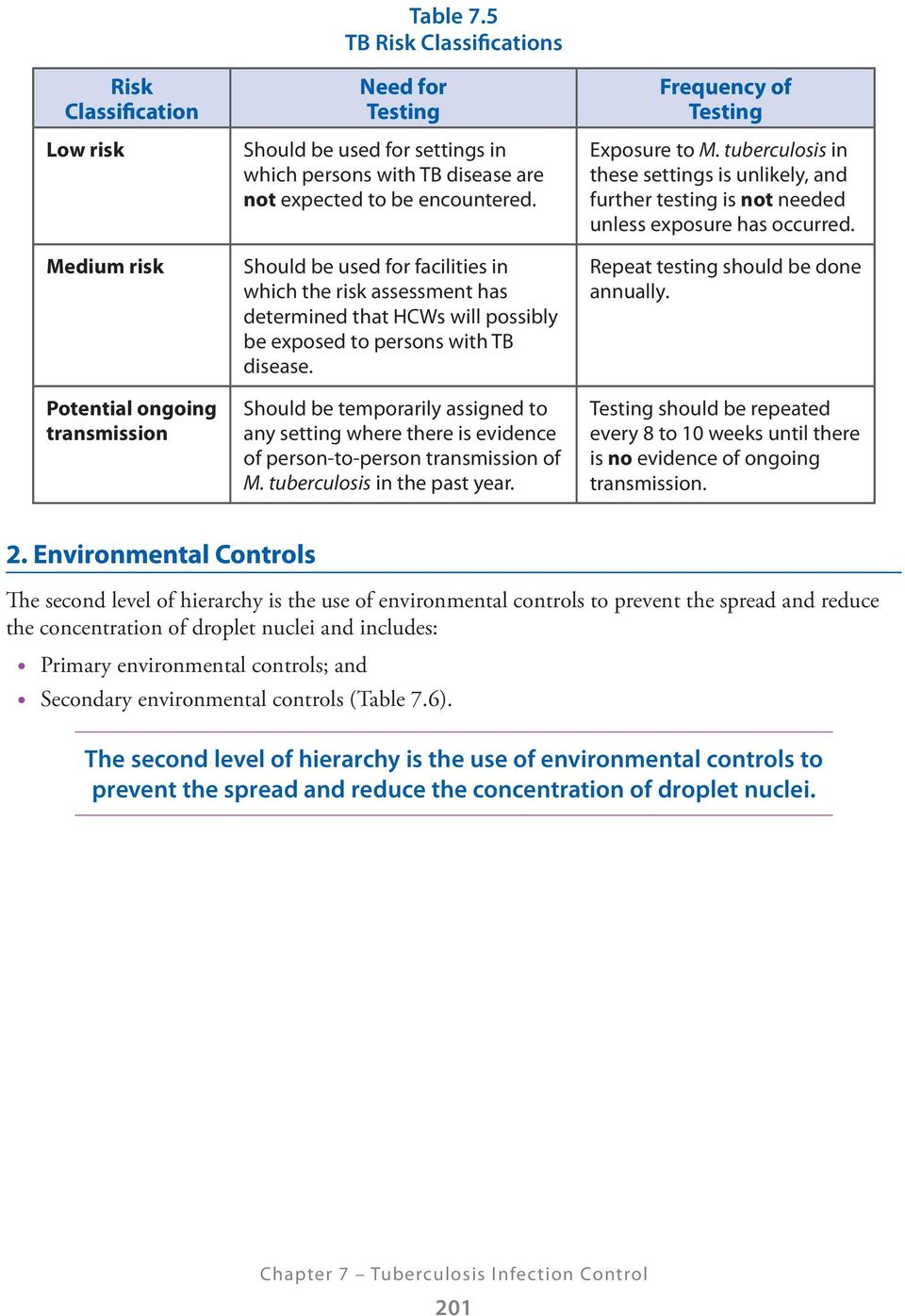
13 Risk Classification Low risk Medium risk Potential ongoing transmission Table 7.5 TB Risk Classifications Need for Testing Should be used for settings in which persons with TB disease are not expected to be encountered. Should be used for facilities in which the risk assessment has determined that HCWs will possibly be exposed to persons with TB disease. Should be temporarily assigned to any setting where there is evidence of person-to-person transmission of M. tuberculosis in the past year. Frequency of Testing Exposure to M. tuberculosis in these settings is unlikely, and further testing is not needed unless exposure has occurred. Repeat testing should be done annually. Testing should be repeated every 8 to 10 weeks until there is no evidence of ongoing transmission. 2. Environmental Controls The second level of hierarchy is the use of environmental controls to prevent the spread and reduce the concentration of droplet nuclei and includes: Primary environmental controls; and Secondary environmental controls (Table 7.6). The second level of hierarchy is the use of environmental controls to prevent the spread and reduce the concentration of droplet nuclei. 201
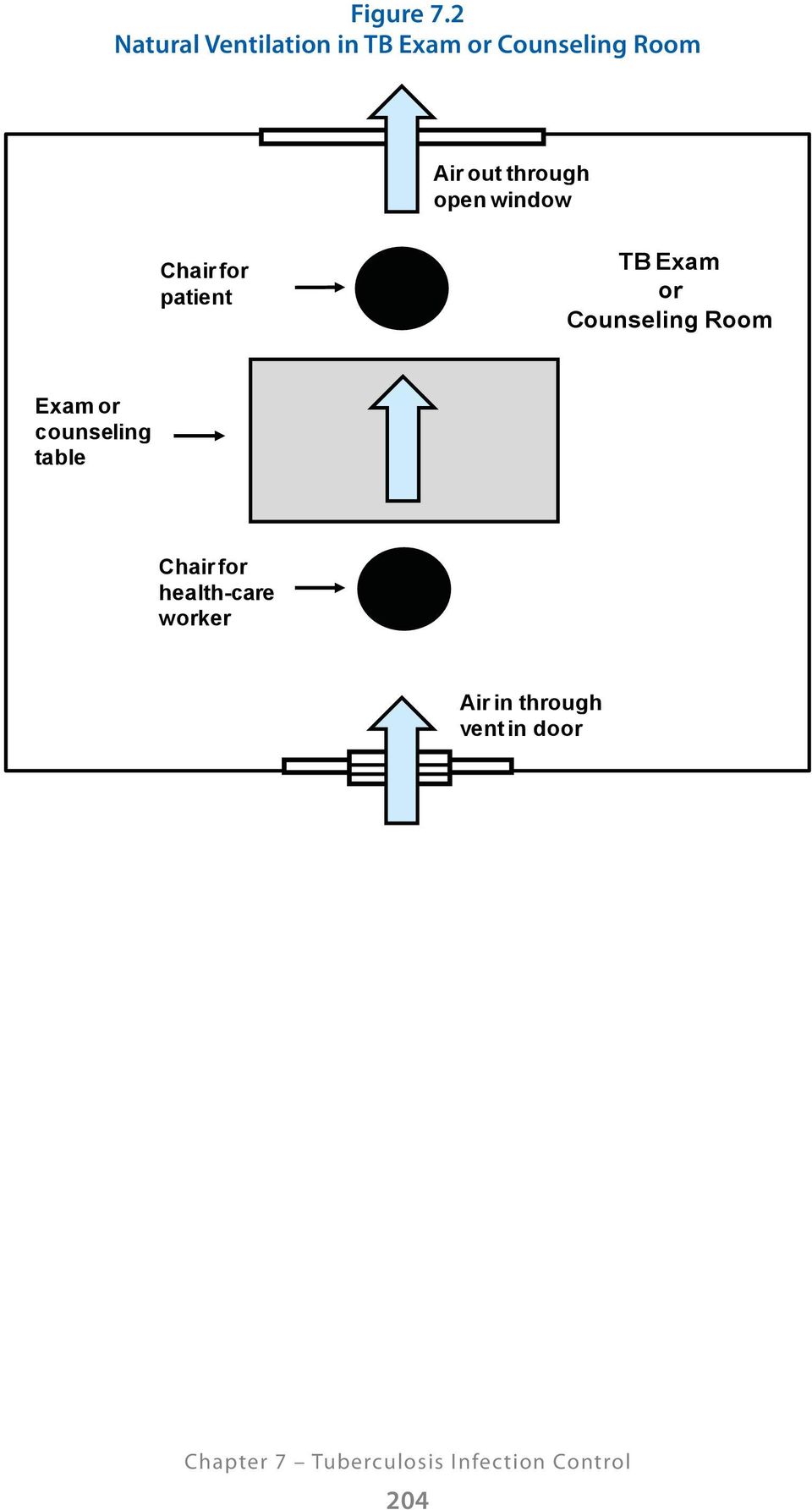
14 Table 7.6 Environmental Controls Primary Environmental Control Controls the source of infection by diluting and removing contaminated air and by using general ventilation Uses natural ventilation (e.g., open doors, windows) Uses mechanical ventilation equipment to circulate and move air in a building Uses local exhaust ventilation (e.g., hoods, tents, or booths) Secondary Environmental Control Controls airflow in areas adjacent to the source and cleans air Controls the airflow to prevent contamination of air in areas adjacent to the source (AII rooms) Cleans the air by using high efficiency particulate air (HEPA) filtration or ultraviolet germicidal irradiation (UVGI) Primary Environmental Controls Primary environmental controls consist of controlling the source of infection by using local exhaust ventilation (e.g., hoods, tents, or booths) and diluting and removing contaminated air by using general ventilation. Ventilation is the movement and the replacement of air in a building with air from the outside or with clean, recirculated air. When fresh air enters a room, it dilutes the concentration of particles in room air, such as droplet nuclei. There are two types of ventilation: Natural ventilation Mechanical ventilation Natural Ventilation Natural ventilation relies on cross ventilation in a building designed for good air exchange; for example, the use of open doors and windows to bring in air from outside. Natural ventilation can be useful for nontraditional facility-based and congregate settings that do not have a central ventilation system. In these settings, waiting rooms, shelter dormitories, or other rooms in which people congregate should have an operable window, door, or skylight that is kept open as often as possible. Fans can be used to help distribute the air (Figure 7.1). If the direction of airflow is unknown, staff should sit near the fresh air source and clients should sit near the exhaust location (Figure 7.2). This can help protect staff from droplet nuclei expelled by patients with unidentified TB disease. In addition to these environmental measures, cough etiquette and respiratory hygiene should be encouraged to further reduce risk (Figure 7.3). 202

15 Figure 7.1 Exhaust Fan Used for Distributing Air 203

16 Figure 7.2 Natural Ventilation in TB Exam or Counseling Room Air out through open window Chair for patient TB Exam or Counseling Room Exam or counseling table Chair for health-care worker Air in through vent in door 204
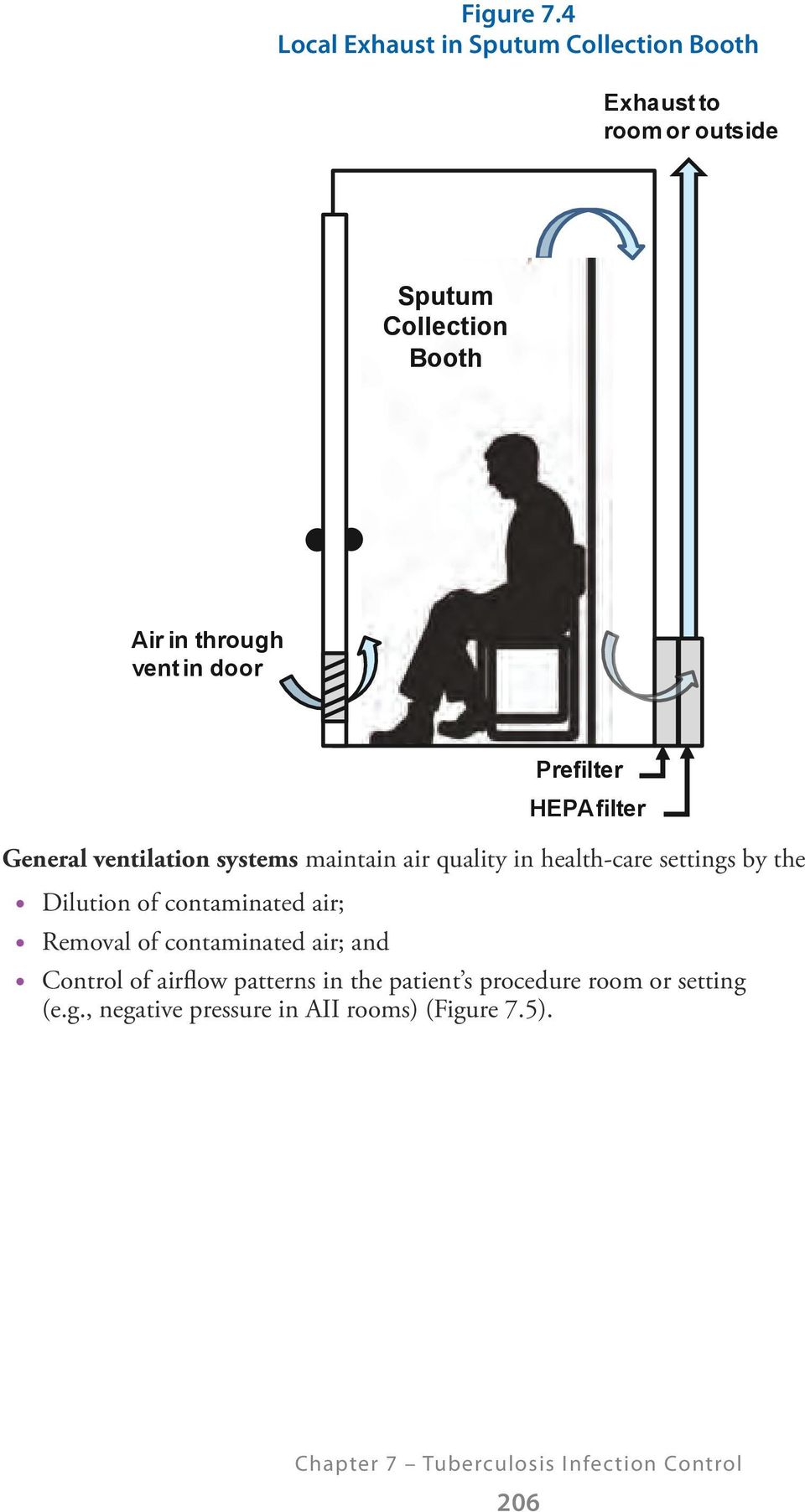
17 Figure 7.3 Person with Infectious TB in Waiting Room Mechanical Ventilation Mechanical ventilation refers to the use of equipment to circulate and move air in a building. Mechanical ventilation should be used by hospitals, TB clinics, and other health-care and congregate settings expecting to see a confirmed or suspected TB patient. Mechanical ventilation consists of Local exhaust ventilation; and General ventilation. Local exhaust ventilation stops airborne contaminants before they spread into the general environment. Local exhaust ventilation includes the use of External hoods; Booths; and Tents. Local exhaust ventilation should be used for cough-inducing and aerosol-generating procedures (Figure 7.4). If local exhaust ventilation cannot be used, cough-inducing and aerosol-generating procedures should be performed in an AII room. If an AII room is not available, the procedures should be performed outdoors and away from People; Windows; and Air intakes. 205

18 Figure 7.4 Local Exhaust in Sputum Collection Booth Exhaust to room or outside Sputum Collection Booth Air in through vent in door Prefilter HEPA filter General ventilation systems maintain air quality in health-care settings by the Dilution of contaminated air; Removal of contaminated air; and Control of airflow patterns in the patient s procedure room or setting (e.g., negative pressure in AII rooms) (Figure 7.5). 206
19 Figure 7.5 Airborne Infection Isolation (AII) Room 12 Minimum 210 CFM exhaust Patient bed TB Patient Room 10 x 12 (120 sq. ft. per patient) 10 Window 8 6 high ceiling 160 CFM supply Private Bathroom Negative air flow Supply air system 50 CFM 12 air changes per hour Corridor TB AII rooms are designed to prevent the spread of droplet nuclei expelled by a patient with TB disease. In TB clinics, hospitals, and other inpatient settings, patients known to have TB disease or suspected of having TB disease should be placed in a TB AII room immediately. Health-care facilities that provide care for patients with suspected or confirmed TB disease should have at least one AII room. Medical facilities in correctional settings should also have at least one AII room. The need for additional AII rooms should be based on the TB risk assessment for the setting. In TB clinics, hospitals, and other inpatient settings, patients known to have TB disease or suspected of having TB disease should be placed in a TB AII room immediately. 207

20 Health-care facilities that provide care for patients with suspected or confirmed TB disease and medical facilities in correctional settings should have at least one AII room. One characteristic of AII rooms is their negative pressure relative to other parts of the facility. Negative pressure causes air to flow from the corridors into the AII room. The air from the AII room cannot escape to the other parts of the health-care setting when the door is closed and the ventilation system is operating properly. The doors and windows of AII rooms must be kept closed as much as possible in order to maintain negative pressure, and the pressure must be checked periodically to make sure that it remains negative. Air from the AII room can be exhausted directly to the outdoors, where the droplet nuclei will be diluted in the outdoor air, or passed through a special high efficiency particulate air (HEPA) filter that removes most (99.97%) of the droplet nuclei before it is returned to the general circulation. If a HEPA filter is not used, the air should be exhausted directly to the outside away from air-intake vents, persons, and animals, in accordance with applicable federal, state, and local regulations on environmental discharges. One characteristic of AII rooms is the negative pressure relative to other parts of the facility. Negative pressure allows air to flow from the corridors into the AII room. Air from the AII room can be exhausted directly to the outdoors, where the droplet nuclei will be diluted in the outdoor air, or passed through a special high efficiency particulate air filter that removes most (99.97%) of the droplet nuclei before it is returned to the general circulation. In existing health-care settings, AII rooms should have airflow of six or more air changes per hour (ACH). In new or renovated health-care settings, AII rooms should have airflow of at least 12 ACH. When feasible, the airflow in existing health-care setting AII rooms should be increased to 12 ACH by Adjusting or modifying the ventilation system; or Using air-cleaning methods: room-air recirculation units containing HEPA filters or ultraviolet germicidal irradiation (UVGI) systems that increase the equivalent ACH. It is important that AII rooms be single-patient rooms with a private bathroom. Entry of visitors and HCWs should be restricted and monitored to minimize the transmission of M. tuberculosis. All HCWs who enter an AII room should wear N95 disposable filtering facepiece respirators (see Respiratory-Protection Controls). An N95 respirator should be fitted correctly before using. Visitors should be offered and encouraged to use respiratory protection (i.e., N95 respirator) and instructed by HCWs on how to use it. Health-care settings with AII rooms should observe the policies and practices indicated in Table
21 Table 7.7 Policies and Practices for Airborne Infectious Isolation (AII) Rooms in Health-Care Settings Policies and Practices Keep doors and windows closed as much as possible; Maintain an adequate number of AII rooms; Check negative pressure by monitoring and recording the direction of airflow on a daily basis; Perform diagnostic and treatment procedures in the AII room; Ensure patients adhere to AII precautions; Group AII rooms in one part of the health-care setting; Schedule patients with suspected and confirmed infectious TB disease for procedures when few HCWs and no other patients are present; Provide a surgical mask for patients with suspected or confirmed infectious TB disease during transport, in waiting areas, and when others are present; and Review environmental control maintenance procedures and logs to determine if maintenance is being conducted properly and regularly. Secondary Environmental Controls Secondary environmental controls consist of controlling the airflow to prevent contamination of air in areas adjacent to the source (AII rooms) and cleaning the air by using HEPA filtration (Figure 7.6) or ultraviolet germicidal irradiation (UVGI) (Figure 7.7). HEPA filters can be used to filter droplet nuclei from the air and must be used when discharging air from: Local exhaust ventilation booths or enclosures directly into the surrounding room or area; and An AII room (or other negative-pressure room) into the general ventilation system (e.g., in settings in which the ventilation system or building configuration makes venting the exhaust to the outside impossible). Secondary environmental controls consist of controlling the airflow to prevent contamination of air in areas adjacent to the source (AII rooms) and cleaning the air by using HEPA filtration or UVGI. UVGI is an air-cleaning technology that consists of the use of special lamps that give off germicidal ultraviolet irradiation (wave length=254 nm). The lamps are used to inactivate the tubercle bacilli contained in the droplet nuclei. Overexposure to UV light can be harmful to the skin and eyes; lamps must be installed in the upper part of rooms or corridors or placed in exhaust ducts. Regular, appropriate maintenance is essential to ensure UVGI lamps are operating correctly. 209
22 Figure 7.6 HEPA Filter Figure 7.7 Ultraviolet Germicidal Irradiation (UVGI) 3. Respiratory-Protection Controls Respiratory-protection control is the third level of a TB infection control program and consists of the use of personal protective equipment in situations that pose a high risk for exposure to TB disease (Figure 7.8). Use of respiratory protection can further reduce risk for exposure of HCWs to droplet nuclei expelled into the air. The following measures can be taken to reduce risk for exposure: Implementing a respiratory-protection program; Training HCWs on respiratory protection; and Educating patients on respiratory hygiene and the importance of cough etiquette. Respiratory-protection control is the third level of a TB infection control program and consists of the use of protective equipment in situations that pose a high risk for exposure to TB disease. 210
23 Figure 7.8 Health-Care Worker and Infectious TB Patient Using Respiratory Protection All health-care settings that use respiratory-protection controls are required by the Occupational Safety and Health Administration (OSHA) to develop, implement, and maintain a respiratoryprotection program. Administrative and environmental controls minimize the number of areas in which exposure to M. tuberculosis might occur and therefore minimize the number of persons exposed. These control measures also reduce, but do not eliminate, the risk for exposure in limited areas. In these settings, respiratory protection should be used by all persons, including HCWs and visitors. These settings include: TB AII rooms; Rooms where cough-inducing or aerosol generating procedures are done; Ambulances and other vehicles transporting infectious TB disease patients; and Homes of infectious TB disease patients (for HCWs; other persons should not visit the homes of infectious persons). The effectiveness of a respiratory-protection program requires the development of written standard procedures. Standard procedures should include information and guidance for the proper selection, use, and care of respirators. Settings where HCWs use respiratory protection to prevent transmission of M. tuberculosis should develop, implement, and maintain a respiratory-protection program. The program should provide HCWs with annual training on TB control, TB infection control, and respiratory protection, including fit-testing. Settings where HCWs use respiratory protection to prevent transmission of M. tuberculosis should develop, implement, and maintain a respiratory-protection program. 211
24 The minimum respiratory protection is a filtering face-piece respirator and must be selected from those approved by CDC/National Institute for Occupational Safety and Health (NIOSH) under Title 42 CFR, Part 84. It must meet one of the following specifications: Nonpowered air-purifying respirators (N95, N99, N100, R95, R99, R100, P95, P99, and P100), including disposables; Powered air-purifying respirators (PAPRs) with high-efficiency filters; or Supplied-air respirators. It is important that respirators fit different face sizes and features properly. It is also important to understand the difference between respirators and surgical masks. Respirators are designed to protect HCWs and other individuals from inhaling droplet nuclei (Figure 7.9). Surgical masks are designed to reduce the number of droplets being exhaled into the air by persons with infectious TB disease when they breathe, talk, cough, or sneeze (Figure 7.10). Persons suspected or confirmed to have infectious TB disease should be given, and encouraged to use, a surgical mask to minimize the risk of expelling droplet nuclei into the air. Respirators are designed to protect HCWs and other individuals from inhaling droplet nuclei. Surgical masks are designed to reduce the number of droplets being exhaled into the air by persons with infectious TB disease when they breathe, talk, cough, or sneeze. 212
25 Figure 7.9 Respirator for Health-Care Workers Figure 7.10 Surgical Mask for Persons with Infectious TB Disease Health-care worker wearing a respirator Infectious TB patient wearing a surgical mask Respirators Designed to filter out droplet nuclei from being inhaled by the health-care worker and other individuals. Should properly fit different face sizes and features. Should NOT be worn by the patient. Surgical masks Designed to stop droplet nuclei from being spread (exhaled) by the patient. Should NOT be worn by the health-care worker 213
26 Table 7.8 TB Infection-Control Program: Level of Controls Administrative Controls Assign responsibility for TB infection control Conduct TB risk assessment Develop and institute a written TB infection-control plan Ensure the timely availability of recommended laboratory processing, testing, and reporting of results Implement effective work practices for the management of patients with suspected or confirmed TB disease Ensure proper cleaning and sterilization or disinfection of potentially contaminated equipment Train and educate health-care workers Test and evaluate health-care workers for TB infection and disease Apply epidemiology-based prevention principles Use posters and signs demonstrating and advising respiratory hygiene and cough etiquette Coordinate efforts with the local or state health department. Environmental Controls Reduce concentration of infectious droplet nuclei through the following technologies:»» Ventilation technologies, including Natural ventilation Mechanical ventilation»» High efficiency particulate air filtration (HEPA)»» Ultraviolet germicidal irradiation (UVGI) Respiratory Protection Controls Implement a respiratory-protection program Train health-care workers on respiratory protection Educate patients on respiratory hygiene and the importance of covering their cough Test HCWs for mask fit and functionality 214
27 Study Questions Case study Jose Jose, the Harris County TB Control Manager, is conducting a risk assessment to determine the type of administrative, environmental, and respiratory-protection controls that are needed in his area What things should Jose examine? (choose the one best answer) A. Number of patients with TB disease in the setting and the community rate of TB disease B. Evidence of transmission of M. tuberculosis in the setting C. Promptness of detection, isolation, and evaluation of patients with suspected or confirmed TB disease. D. A, B, and C are all correct. E. Only A and B are correct. Match the setting and testing characteristics for each type of TB risk classification. (Choose the one best answer and write the letter for the correct answer on the line next to the question number.) Setting and Testing Characteristics 7.12 Temporarily assigned to any setting with evidence of person-to-person transmission of M. tuberculosis in the past year Setting where persons with TB disease are not expected to be encountered Facilities in which the risk assessment has determined that health-care workers will possibly be exposed to persons with TB disease. TB Risk Classification A. Low-risk classification B. Medium-risk classification C. Potential ongoing transmission classification 7.15 Repeat testing is not needed unless exposure has occurred Repeat testing should be done every 8 to 10 weeks until there is no evidence of ongoing transmission Repeat testing should be done annually. 215
28 Indicate whether the types of environmental controls below are primary or secondary controls. (Choose the one best answer and write the letter for the correct answer on the line next to the question number.) 7.18 HEPA filtration Environmental Controls 7.19 Natural, mechanical, and local exhaust ventilation Primary/Secondary Controls A. Primary control B. Secondary control 7.20 Ultraviolet germicidal irradiation 7.21 Controls airflow in areas adjacent to the source and cleans air 7.22 Controls the source of infection by diluting and removing contaminated air and by using general ventilation Indicate if the following statements about TB airborne infection isolation (AII) rooms are true or false. (Choose the one best answer and write the letter for the correct answer on the line next to the question number.) Statements about TB AII Rooms 7.23 Designed to prevent the spread of the droplet nuclei to other rooms in the facility Have positive pressure relative to other parts of the facility. True or False A. True B. False 7.25 Air from the AII room is exhausted directly to the outdoors, or passes through a special filter that removes all of the droplet nuclei Entry of visitors and health-care workers should be restricted and monitored to minimize the transmission of M. tuberculosis Patients staying in AII rooms should wear N95 disposable filtering face-piece respirators AII rooms can be used for multiple patients. 216
29 7.29 Which of the following respiratory protection measures reduces risk for exposure to TB disease? (choose the one best answer) A. Implementing a respiratory-protection program B. Training health-care workers on respiratory protection C. Educating patients on respiratory hygiene and the importance of cough etiquette D. A, B, and C are all correct. E. Only A and B are correct Which of the following statements about respiratory protection is true? (choose the one best answer) A. Respirators are designed to protect health-care workers and other individuals from inhaling droplet nuclei. B. Surgical masks are designed to reduce the number of droplets being exhaled into the air by persons with infectious TB disease. C. Health-care workers can wear surgical masks for protection against droplet nuclei, and persons with infectious TB disease can wear respirators to prevent the spread of TB. D. A, B, and C are all correct. E. Only A and B are correct. 217
30 Match the activities with the type of TB infection control. (Choose the one best answer and write the letter for the correct answer on the line next to the question number.) Activities 7.31 Use natural exhaust ventilation and mechanical ventilation to remove contaminated air Use personal protective equipment in situations that pose a high risk for exposure to TB disease Assign someone the responsibility and authority for TB infection control in the health-care setting. TB Infection Controls A. Administrative controls B. Environmental controls C. Respiratory protection controls 7.34 Ensure the availability of recommended laboratory processing, testing, and reporting of results Control the airflow to prevent contamination of air in areas adjacent to the source and clean the air by using HEPA filtration or UVGI Conduct a TB infection control risk assessment of the setting. TB Infection Control in Nontraditional Facility-Based Settings All nontraditional facility-based settings where patients with TB disease receive care should establish and follow a TB infection control program. These settings include but are not limited to Correctional facilities; Homeless shelters; Long-term care facilities; Home-based health-care and outreach settings; and Emergency medical services (EMS) (Table 7.9). All nontraditional facility-based settings where patients with TB disease receive care should establish and follow a TB infection control program. 218
31 Correctional Facilities TB disease can be a substantial health concern in correctional facilities. TB outbreaks in correctional facilities can lead to transmission in surrounding communities. Health-care settings in correctional facilities should be classified as at least medium risk based on the possibility of exposure to persons with TB disease. Correctional facilities overall are classified as minimal risk or non-minimal risk based on the TB risks of the population housed in the facility. A respiratory-protection program should be implemented with at least one AII room available where inmates with suspected or confirmed TB disease can be isolated immediately. Those inmates who must be transported should wear a surgical mask during transport. Correctional facilities should maintain a tracking system for inmate TB testing and treatment, and establish a mechanism for sharing this information with state and local health departments and other correctional facilities. Homeless Shelters TB disease is more common in the homeless population than in the general population. Several factors in the shelter environment can influence the likelihood of M. tuberculosis transmission, including crowding and the state of the ventilation system. The absolute number and population density of persons sharing the same breathing space is important. If all other factors are constant, the size of the shelter population is directly proportional to the likelihood that someone with infectious TB will be present and that someone else will become infected. Conversely, the smaller the population and less crowded the shelter, the lower the risk. Homeless shelters should implement a tracking system for clients and establish a mechanism for sharing this information with state and local health departments when appropriate. Long-Term Care Facilities TB disease poses a health risk in long-term care facilities (LTCFs) such as hospice and skilled-nursing facilities. Transmission of M. tuberculosis has occurred in LTCFs and pulmonary TB disease has been documented in HIV-infected patients and other immunocompromised patients residing in hospices. LTCFs must have adequate administrative and environmental controls if they accept patients with suspected or confirmed infectious TB disease. These include airborne precaution capabilities and a respiratory-protection program. People most at risk in LTCFs include Patients; HCWs; Visitors; and Volunteers Home-Based Health-Care and Outreach Settings Transmission of M. tuberculosis has been documented in home-based health-care and outreach settings. HCWs in these settings should be able to Evaluate signs and symptoms of TB disease for early detection and treatment; Educate patients on the importance of reporting symptoms and signs of TB disease; and Wear an N95 personal respirator when entering homes of persons with suspected or confirmed infectious TB disease or when transporting such persons in an enclosed vehicle. 219
32 Emergency Medical Services (EMS) Although the overall risk is low, there has been documented transmission of M. tuberculosis in EMS occupational settings. EMS personnel should be included in Comprehensive training, education, and testing programs for TB infection; and Follow-up testing as indicated by the risk classification of the setting. Drivers, HCWs, and other staff transporting patients with suspected or confirmed TB should wear an N95 respirator, and the patients should wear a surgical mask. In addition, ambulances should allow for the maximum amount of outdoor air to be circulated in the vehicle. Table 7.9 TB Infection Control for Nontraditional Settings Setting Transmission of M. tuberculosis Screening/testing Recommendations Correctional facilities Substantial health concern TB outbreaks in these settings can lead to transmission in surrounding communities Heath-care settings in these facilities are at least medium risk All correctional staff should be screened and tested for TB annually Implement a respiratoryprotection program with at least one AII room or have a transfer policy Inmates with suspected or confirmed TB disease should be isolated immediately and wear a surgical mask when being transported outside of an AII room Facilities should maintain a tracking system for sharing information with state and local health departments and other correctional facilities Homeless shelters Occurs in these settings More common in homeless shelters than in general population Frequent visitors are at risk of exposure Symptom screening Evaluate the resident for signs and symptoms of TB disease for early detection and treatment Educate staff on importance of reporting signs and symptoms of TB disease 220
33 Setting Transmission of M. tuberculosis Screening/testing Recommendations Longterm care facilities Occurs in these settings Poses a health risk to patients, health-care workers, visitors, and volunteers New employees and residents should receive symptom screening and possibly testing upon entry Must have adequate administrative and environmental controls that include»» Airborn precaution capabilities»» Respiratory-protection program Patients with suspected or confirmed infectious TB disease should not stay in LTCFs unless adequate administrative and environmental controls are in place Homebased healthcare and outreach settings Occurs in these settings Symptom screening Employees should receive annual screening and/or testing Evaluate the resident for signs and symptoms of TB disease for early detection and treatment Educate patients and staff on importance of reporting signs and symptoms of TB disease Wear an N95 respirator when entering homes of persons suspected of having infectious TB disease Emergency medical services Low health concern Include a comprehensive employee screening program to test for TB infection Conduct followup testing as indicated by the risk classification of the setting Drivers, health-care workers, and other staff should wear an N95 respirator in a high-risk situation Persons with suspected TB who are transported in an ambulance should wear a surgical mask Ambulances should allow for maximum amount of outdoor air to circulate in the vehicle 221
34 Study Question 7.37 Which of the following statements about TB infection control in nontraditional settings is true? (choose the one best answer) A. All nontraditional settings where patients with TB disease receive care should establish and follow a TB infection control program. B. Nontraditional settings include correctional facilities, homeless shelters, long-term care facilities, home-based health-care, and emergency medical services. C. Emergency medical services has a documented overall high level of transmission of M. tuberculosis. D. A, B, and C are all correct. E. Only A and B are correct. TB Infection Control in the Home Patients who are suspected to have, or have, confirmed TB disease are frequently sent home after starting treatment, even though they may still be infectious. Patients with TB disease can be sent home even if they do not have three negative sputum smears, if the following criteria are met: A follow-up plan has been made with the local TB program; The patient is on standard TB treatment, and directly observed therapy (DOT) has been arranged; No infants or children less than 5 years of age or persons with immunocompromising conditions are present in the household; and The patient is willing to remain isolated in the home except for health-care associated visits until the patient has negative sputum smear results. Patients who have suspected or confirmed TB disease are more likely to have already transmitted TB infection to members of their household before their TB disease was diagnosed and treatment was started. However, TB patients and members of their household should take steps to prevent the further spread of TB infection after they return home (Table 7.10). Patients with TB disease should Be instructed to cover their mouth and nose when coughing or sneezing; Sleep alone and not in a room with other household members; and Refrain from having visitors in the home until they are noninfectious. 222
35 HCWs who visit TB patients in their homes should take the following precautions to protect themselves from exposure to M. tuberculosis (Table 7.10): Instruct patients to cover their mouth and nose with a tissue when coughing or sneezing; Wear a respirator when visiting the home of a patient with infectious TB disease or when transporting a patient with infectious TB disease in a vehicle; and Collect specimens in a well ventilated area, away from other household members In addition, HCWs whose responsibilities include visiting infectious patients should participate in an annual TB testing program. Table 7.10 TB Infection Control in the Home Steps that Patients Can Take to Prevent the Further Transmission of TB in the Home Cover their mouth and nose when coughing or sneezing Sleep alone and not in a room with other household members Refrain from having visitors in the home until they are noninfectious. Precautions for Health-Care Workers to Take to Protect Themselves from Exposure to M. tuberculosis Instruct patients to cover their mouth and nose with a tissue when coughing or sneezing Wear a respirator when visiting the home of a patient with infectious TB disease or when transporting a patient with infectious TB disease in a vehicle Collect specimens in a well-ventilated area, away from other household members Study Questions 7.38 Elton was just diagnosed with TB and is considered infectious. Lilian, his nurse, is instructing him about steps he can take to prevent the spread of TB infection to others when he returns home today. Which of the following steps should Lilian mention? (choose the one best answer) A. Cover his mouth and nose when coughing or sneezing. B. Do not have visitors until he is noninfectious. C. It is ok to sleep in the same room with his wife. D. A, B, and C are all correct. E. Only A and B are correct. 223
36 Lilian will be conducting DOT at Elton s home starting tomorrow. Which of the following precautions should Lilian take to protect herself from exposure to TB? (Choose the one best answer and write the letter for the correct answer on the line next to the question number.) Precautions for Health-Care Workers Visiting the Home of a TB Patient Who May Be Infectious 7.39 Spray the room where they will meet with a disinfectant before Elton enters it Wear a respirator when visiting Elton s home Wear a surgical mask when visiting Elton s home. Yes or No A. Yes (take this precaution) B. No (this is not an effective precaution) 7.42 Collect specimens in a well-ventilated area, away from other household members Refrain from touching any surfaces in the home. Chapter Summary M. tuberculosis can be transmitted in virtually any setting. Clinicians should be aware that transmission has been documented in health-care settings where HCWs and patients come in contact with persons with infectious TB who Have unsuspected TB disease, Have not received adequate treatment, or Have not been isolated from others. The infectiousness of a TB patient is directly related to the number of droplet nuclei carrying M. tuberculosis (tubercle bacilli) that are expelled into the air. Depending on the environment, these tiny particles can remain suspended in the air for several hours. M. tuberculosis is transmitted only through the air, not by surface contact. Infection occurs when a person inhales droplet nuclei containing M. tuberculosis, and the droplet nuclei traverse the mouth or nasal passages, upper respiratory tract, and bronchi to reach the alveoli of the lungs. Persons with extrapulmonary TB disease may have concurrent unsuspected pulmonary or laryngeal TB disease. Except for laryngeal TB disease, extrapulmonary TB disease is rarely infectious; however, transmission from extrapulmonary sites has been reported to occur during aerosol-producing procedures such as autopsies and tissue irrigation. For most patients, infectiousness appears to decline rapidly after adequate and appropriate treatment is started; however, the rate of decline varies from patient to patient. Some patients with unrecognized or inadequately treated drug-resistant TB disease may remain infectious for weeks or even months. Patients with drug-resistant TB disease may not respond to the initial drug regimen and may remain infectious until they receive adequate treatment. 224
37 TB infection control measures should be based on a careful assessment of risk for transmission of TB in the facility or setting. The goals of effective TB infection control programs are to Detect TB disease early and promptly; Isolate those who have or are suspected of having TB disease (airborne precautions); and Treat people who have or are suspected of having TB disease. The primary risk to HCWs and the general population is the undiagnosed or unsuspected patient with TB disease. Within health-care settings, protocols should be implemented and enforced to promptly identify, isolate, and either transfer or manage persons who have suspected or confirmed TB disease. Personnel who admit patients to facilities should be trained to detect signs and symptoms of TB disease. A TB infection control program should be based on the following three levels of hierarchy: 1. Administrative controls, which reduce risk of exposure; 2. Environmental controls, which prevent spread and reduce concentration of droplet nuclei; and 3. Respiratory-protection controls, which further reduce risk of exposure in special areas and circumstances. The first and most important level of a TB infection control program is the use of administrative measures to reduce the risk for exposure to persons who might have TB disease. The second level of hierarchy is the use of environmental controls to prevent the spread and reduce the concentration of infectious droplet nuclei and includes primary and secondary controls. Respiratory-protection control is the third level of a TB infection control program and consists of the use of protective equipment in situations that pose a high risk for exposure to TB disease. Use of respiratory protection can further reduce HCW risk of exposure to droplet nuclei expelled into the air. All nontraditional facility-based settings where patients with TB disease receive care should establish and follow a TB infection control program. These settings include but are not limited to Correctional facilities; Homeless shelters; Long-term care facilities; Home-based health-care and outreach settings; and Emergency medical services; 225
38 Patients who are suspected to have, or have, confirmed TB disease are frequently sent home after starting treatment, even though they may still be infectious. Patients with TB disease can be sent home even if they do not have three negative sputum smears, if the following criteria are met: A follow-up plan has been made with the local TB program; The patient is on standard TB treatment, and DOT has been arranged; No infants or children less than 5 years of age or persons with immunocompromising conditions are present in the household unless they have been evaluated and started on treatment; and The patient is willing to remain isolated in the home except for health-care associated visits until the patient has negative sputum smear results. References CDC. Guidelines for preventing the transmission of Mycobacterium tuberculosis in health-care settings, MMWR 2005; 54 (No. RR-17). CDC. Prevention and control of tuberculosis in correctional and detention facilities: Recommendations from CDC. MMWR 2006; 55 (No. RR-09): Curry International Tuberculosis Center (US). Tuberculosis Infection Control: A Practical Manual for Preventing TB;
Tuberculosis Exposure Control Plan for Low Risk Dental Offices
 Tuberculosis Exposure Control Plan for Low Risk Dental Offices A. BACKGROUND According to the CDC, approximately one-third of the world s population, almost two billion people, are infected with tuberculosis.
MIOSHA s Tuberculosis Guidelines For Worker Protection from Mycobacterium (Occupational Health Program Directive No. 96-9)
 MIOSHA s Tuberculosis Guidelines For Worker Protection from Mycobacterium (Occupational Health Program Directive No. 96-9) In recent years, the incidence of Mycobaterium Tuberculosis (M. tuberculosis)
Maryland County Health Department Tuberculosis Infection Control Plan
 Maryland County Health Department Tuberculosis Infection Control Plan Introduction In 1998, the Division of TB Control developed a Tuberculosis (TB) Prevention Plan template for use by the local health
09/27/2006 Centers for Disease Control and Prevention Division of Tuberculosis Elimination
 Appendix B. Tuberculosis (TB) risk assessment worksheet This model worksheet should be considered for use in performing TB risk assessments for healthcare facilities and nontraditional facility-based settings.
PEOSH Model Tuberculosis Infection Control Program
 PEOSH Model Tuberculosis Infection Control Program Revised November, 2004 NOTE: The information in this document is not considered to be a substitute for any provision of the PEOSH Act or for any standards
Tuberculosis Intensive November 17 20, 2015 San Antonio, TX
 Tuberculosis Infection Prevention in Health Care Settings Jeffrey L. Levin, M.D., M.S.P.H. November 18, 2015 Tuberculosis Intensive November 17 20, 2015 San Antonio, TX EXCELLENCE EXPERTISE INNOVATION
Long-term Care - TB Risk Assessment
 Montana DPHHS Tuberculosis Program Long-term Care - TB Risk Assessment Long-term Care, Residential Treatment, ESRD (outpatient), Hospice (inpatient) Today s Date Facility Address Phone County Completed
Maria Dalbey RN. BSN, MA, MBA March 17 th, 2015
 Maria Dalbey RN. BSN, MA, MBA March 17 th, 2015 2 Objectives Participants will be able to : Understand the Pathogenesis of Tuberculosis (TB) Identify the Goals of Public Health for TB Identify Hierarchy
Enforcement Policy and Procedures for Occupational Exposure to Tuberculosis.
 SUBJECT: Purpose: Scope: Enforcement Policy and Procedures for Occupational Exposure to Tuberculosis. To provide uniform inspection procedures and guidelines to be followed when conducting inspections
TB CARE EARLY DETECTION AND PREVENTION OF TUBERCULOSIS (TB) IN CHILDREN. Risk factors in children acquiring TB:
 EARLY DETECTION AND PREVENTION OF TUBERCULOSIS (TB) IN CHILDREN Risk factors in children acquiring TB: Children living in the same household as a lung TB patient (especially children under 5) Children
Guidelines for Preventing the Transmission of Mycobacterium tuberculosis in Health-Care Facilities, 1994
 October 28, 1994 / Vol. 43 / No. RR-13 Recommendations and Reports Guidelines for Preventing the Transmission of Mycobacterium tuberculosis in Health-Care Facilities, 1994 U.S. DEPARTMENT OF HEALTH AND
Clinical description 2 Laboratory test for diagnosis 3. Incubation period 4 Mode of transmission 4 Period of communicability 4
 Tuberculosis Contents Epidemiology in New Zealand 2 Case definition 2 Clinical description 2 Laboratory test for diagnosis 3 Case classification 3 Spread of infection 4 Incubation period 4 Mode of transmission
U.S. DEPARTMENT OF HEALTH AND HUMAN SERVICES Public Health Service Centers for Disease Control and Prevention
 U.S. DEPARTMENT OF HEALTH AND HUMAN SERVICES Public Health Service Centers for Disease Control and Prevention National Center for HIV, STD, and TB Prevention Division of Tuberculosis Elimination Public
Assisted Living - TB Risk Assessment
 Montana DPHHS Tuberculosis Program Assisted Living - TB Risk Assessment Assisted Living, Adult Day Care, Adult Foster Care & Transitional Living Centers Today s Date Facility Address Phone County Completed
INFECTION CONTROL PRECAUTIONS
 INFECTION CONTROL PRECAUTIONS Outline Standard Precautions Droplet Precautions Contact Precautions Airborne Precautions References STANDARD PRECAUTIONS Use Standard Precautions, or the equivalent, for
Chapter 5. INFECTION CONTROL IN THE HEALTHCARE SETTING
 Chapter 5. INFECTION CONTROL IN THE HEALTHCARE SETTING INTRODUCTION This chapter addresses infection control measures and practices in the healthcare setting and provides guidance to healthcare facilities
Risk for Tuberculosis in Swiss Hospitals. Content. Introduction. Dr. med. Alexander Turk Zürcher Höhenklinik Wald alexander.turk@zhw.
 Risk for Tuberculosis in Swiss Hospitals 17. Tuberkulose Symposium Münchenwiler Risk for Tuberculosis in Swiss Hospitals Dr. med. Alexander Turk Zürcher Höhenklinik Wald [email protected] 1 Content
Chapter 8 Community Tuberculosis Control
 Chapter 8 Community Tuberculosis Control Table of Contents Chapter Objectives.... 227 Introduction.... 229 Roles and Responsibilities of the Public Health Sector Providers.... 229 Roles and Responsibilities
MANAGEMENT OF TUBERCULOSIS IN PRISONS: Guidance for prison healthcare teams
 MANAGEMENT OF TUBERCULOSIS IN PRISONS: Guidance for prison healthcare teams Document control Title Type Author/s Management of tuberculosis in prisons: Guidance for prison healthcare teams Operational
ECDC INTERIM GUIDANCE
 ECDC INTERIM GUIDANCE Interim ECDC public health guidance on case and contact management for the new influenza A(H1N1) virus infection Version 3, 19 May 2009 ECDC intends to produce a series of interim
TUBERCULOSIS (TB) SCREENING GUIDELINES FOR RESIDENTIAL FACILITIES AND DRUG
 TUBERCULOSIS (TB) SCREENING GUIDELINES FOR RESIDENTIAL FACILITIES AND DRUG Tx CENTERS Tuberculosis Control Program Health and Human Services Agency San Diego County INTRODUCTION Reducing TB disease requires
Regulations for Tuberculosis Control in Minnesota Health Care Settings
 Regulations for Tuberculosis Control in Minnesota Health Care Settings A guide for implementing tuberculosis (TB) infection control regulations in your facility Tuberculosis Prevention and Control Program
Transmission & Pathogenesis of Tuberculosis
 April-December, 2011: TB cases reported by the media in US Transmission & Pathogenesis of Tuberculosis Shu-Hua Wang, MD, MPH & TM Assistant Professor of Medicine The Ohio State University TB found at Seaside
Wildfire Smoke and Your Health
 PUBLIC HEALTH DIVISION http://public.health.oregon.gov Wildfire Smoke and Your Health When smoke levels are high, even healthy people may have symptoms or health problems. The best thing to do is to limit
REPUBLIC OF NAMIBIA MINISTRY OF HEALTH AND SOCIAL SERVICES
 REPUBLIC OF NAMIBIA MINISTRY OF HEALTH AND SOCIAL SERVICES Tuberculosis Infection Control Guidelines i MINISTRY OF HEALTH AND SOCIAL SERVICES Tuberculosis Infection Control Guidelines Directorate: Special
Guidelines on Airborne Infection Control in Healthcare and Other Settings
 Guidelines on Airborne Infection Control in Healthcare and Other Settings April 2010 Directorate General of Health Services Ministry of Health & Family Welfare Nirman Bhawan, New Delhi Guidelines on Airborne
12 Points of Tuberculosis (TB) Patient Education
 12 Points of Tuberculosis (TB) Patient Education Transmission of TB TB is a disease caused by the TB germ. The disease is mainly in the lungs (pulmonary TB), but the germ can travel to other parts of the
4. Infection control measures
 4. Infection control measures Apart from general hygienic practices and vaccination, staff of institutions should also adopt specific infection control measures against communicable diseases. The measures
Illinois Long Term Care Facilities and Assisted Living Facilities
 TO: FROM: RE: Illinois Long Term Care Facilities and Assisted Living Facilities Richard Dees, Chief, Bureau of Long Term Care Karen McMahon, Immunization Section Chief Craig Conover, MD, Medical Director,
Patient Education CONTENTS. Introduction... 12.2
 CONTENTS Introduction... 12.2 Purpose... 12.2 General Guidelines... 12.3 Language and Comprehension Barriers... 12.4 Education Topics... 12.5 Medical Diagnosis... 12.5 Contact Investigation... 12.6 Isolation...
Respiratory Protection Program In Health Care Facilities Administrator's Guide
 TB Respiratory Protection Program In Health Care Facilities Administrator's Guide U.S. DEPARTMENT OF HEALTH AND HUMAN SERVICES Public Health Service Centers for Disease Control and Prevention National
Re: Updating Guidance: Prevention Strategies for Seasonal Influenza In Healthcare Settings
 July 21, 2010 Thomas R. Frieden, MD, MPH Director, Centers for Disease Control and Prevention U.S. Department of Health and Human Services 1600 Clifton Road, NE. MS A 20 Atlanta, GA 30333 RE: Prevention
Core Curriculum on Tuberculosis: What the Clinician Should Know Sixth Edition 2013
 Core Curriculum on Tuberculosis: What the Clinician Should Know Sixth Edition 2013 CS234269 To View or Order the Core Curriculum on Tuberculosis To view or download the Core Curriculum, please visit: www.cdc.gov/tb.
Lesson 7: Respiratory and Skeletal Systems and Tuberculosis
 Glossary 1. asthma: when the airways of the lungs narrow, making breathing difficult 2. bacteria: tiny living creatures that can only be seen with a microscope; some bacteria help the human body, and other
Shelters and TB: What Staff Need to Know VIEWER S GUIDE
 Shelters and TB: What Staff Need to Know VIEWER S GUIDE SECOND EDITION, 2008 Shelters and TB: What Staff Need to Know VIEWER S GUIDE SECOND EDITION, 2008 The Francis J. Curry National Tuberculosis Center
X-Plain Pediatric Tuberculosis Reference Summary
 X-Plain Pediatric Tuberculosis Reference Summary Introduction Tuberculosis, or TB, is a bacterial infection that causes more deaths in the world than any other infectious disease. When a child gets TB,
MEMBERS OF THE NATIONAL TECHNICAL COMMITTEE FOR PREVENTION & MANAGEMENT OF TUBERCULOSIS FOR HEALTH CARE WORKERS IN MINISTRY OF HEALTH
 2012 1 MEMBERS OF THE NATIONAL TECHNICAL COMMITTEE FOR PREVENTION & MANAGEMENT OF TUBERCULOSIS FOR HEALTH CARE WORKERS IN MINISTRY OF HEALTH Advisor Chairman Secretary Dr. Lokman Hakim Bin Sulaiman Deputy
Ambulance Service. Patient Care. and. Transportation Standards
 Ambulance Service Patient Care and Transportation Standards Ministry of Health and Long-Term Care Emergency Health Services Branch Patient Care A. General Each operator and each emergency medical attendant
TB Prevention, Diagnosis and Treatment. Accelerating advocacy on TB/HIV 15th July, Vienna
 TB Prevention, Diagnosis and Treatment Accelerating advocacy on TB/HIV 15th July, Vienna Diagnosis Microscopy of specially stained sputum is the main test for diagnosing TB (1 2 days) TB bacilli seen in
Biosafety in the Mycobacteriology Laboratory
 Biosafety in the Mycobacteriology Laboratory Thomas M. Shinnick, Ph.D. Mycobacteriology Laboratory Branch Division of Tuberculosis Elimination SAFER HEALTHIER PEOPLE Why is Biosafety Needed in the Mycobacteriology
Tuberculosis: FAQs. What is the difference between latent TB infection and TB disease?
 Tuberculosis: FAQs What is TB disease? Tuberculosis (TB) is a disease caused by bacteria (germs) that are spread from person to person through the air. TB usually affects the lungs, but it can also affect
Tuberculosis (TB) Screening Guidelines for Substance Use Disorder Treatment Programs in California
 Tuberculosis (TB) Screening Guidelines for Substance Use Disorder Treatment Programs in California 1 of 7 Table of Contents Preface 2 TB Symptoms and TB History 2 Initial Screening 2 Follow-Up Screening
3. Blood and blood products such as serum, plasma, and other blood components.
 Mississippi Downloaded 01/2011 101.11 Infectious Medical Waste. The term "infectious medical waste" includes solid or liquid wastes which may contain pathogens with sufficient virulence and quantity such
HEALTH EFFECTS. Inhalation
 Health Effects HEALTH EFFECTS Asbestos can kill you. You must take extra precautions when you work with asbestos. Just because you do not notice any problems while you are working with asbestos, it still
Recommendations for the Prevention and Control of Influenza in Nursing Homes Virginia Department of Health
 Recommendations for the Prevention and Control of Influenza in Nursing Homes Virginia Department of Health Settings such as nursing homes that house persons at high risk for influenza-related complications
NOTICE OF PUBLIC HEARING REGARDING PROPOSED CHANGES IN HEALTH CARE SERVICES PROVIDED BY FRESNO COUNTY
 NOTICE IS HEREBY GIVEN that a public hearing will commence on Tuesday, September 23, 2008, at 9:00 a.m. (subject to continuance on that date of the hearing) at the Fresno County Board of Supervisors Chambers,
Tuberculosis Prevention and Control Protocol, 2008
 Tuberculosis Prevention and Control Protocol, 2008 Preamble The Ontario Public Health Standards (OPHS) are published by the Minister of Health and Long- Term Care under the authority of the Health Protection
Influenza Control Program. Frequently Asked Questions Wearing a Mask
 Influenza Control Program Frequently Asked Questions Wearing a Mask Influenza or the flu can be a serious contagious disease, which is spread by droplet transmission through close contact with an infected
HEPA-filtered Negative Air Machines and their Role in Creating Airborne Infection Isolation Rooms with the ECU AnteRoom. Frequently Asked Questions
 HEPA-filtered Negative Air Machines and their Role in Creating Airborne Infection Isolation Rooms with the ECU AnteRoom Frequently Asked Questions What is a negative air machine and why do I need one?
Get the Facts About. Disease
 Get the Facts About TB TUBERCULOSIS Disease What s Inside: 3 PAGE Get the facts, then get the cure 4 PAGE 9 PAGE 12 PAGE Learn how TB is spread Treatment for TB disease Talking to family and friends about
HEALTH CARE GUIDELINES AND STANDARDS
 HEALTH CARE GUIDELINES AND STANDARDS APPLICATION NOTE LC-126 INTRODUCTION This publication provides excerpts from some of the many guidelines and standards that pertain to the construction and operation
Management of Norovirus Infection Outbreaks in Hospitals and Nursing Homes Noroviruses are a group of viruses that cause acute gastroenteritis in
 Management of Norovirus Infection Outbreaks in Hospitals and Nursing Homes Noroviruses are a group of viruses that cause acute gastroenteritis in humans. Norovirus was recently approved as the official
Recommendations from the Minnesota Department of Health (MDH) for Completing the CDC Facility TB Risk Assessment Worksheet
 Recommendations from the Minnesota Department of Health (MDH) for Completing the CDC Facility TB Risk Assessment Worksheet The Facility TB Risk Assessment Worksheet, developed by the Centers for Disease
In-Room HEPA Cleaners: Guidance Document
 In-Room HEPA Cleaners: Guidance Document Healthcare Human Factors Group Centre for Global ehealth Innovation University Health Network Toronto, ON, Canada Oct, 2007 Table of Contents 1 Introduction...4
Guidance on Preparing Workplaces for an Influenza Pandemic
 Guidance on Preparing Workplaces for an Influenza Pandemic OSHA 3327-05R 2009 Occupational Safety and Health Act of 1970 To assure safe and healthful working conditions for working men and women; by authorizing
THIS IS AN OFFICIAL NH DHHS HEALTH ALERT
 THIS IS AN OFFICIAL NH DHHS HEALTH ALERT Distributed by the NH Health Alert Network [email protected] December 11, 2014; 1030 EST (10:30 AM EST) NH-HAN 20141211 Start of Norovirus Season in New Hampshire
Today, healthcare facilities must be prepared to face
 Alternate Methods for USING GERMICIDAL UV-C Disinfection Lamps TO SUPPLEMENT HEPA Filtration By Dave Shagott Today, healthcare facilities must be prepared to face potential large-scale threats from chemical,
Sandblasting & Silica Exposure Control Plan
 Safety & Health Program 10627 Midwest Industrial Boulevard, St. Louis, MO Phone: 314-785-6425 Fax: 314-785-6426 Sandblasting & Silica Exposure Control Plan The purpose of this program is to inform interested
Guidance for the Selection and Use of Personal Protective Equipment (PPE) in Healthcare Settings
 Guidance for the Selection and Use of Personal Protective Equipment (PPE) in Healthcare Settings 1 : Program Goal Improve personnel safety in the healthcare environment through appropriate use of PPE.
Today s topic is Asbestos Safety. This training is a part of OSHA s Asbestos Standard (29 CFR 1910.1001).
 Today s topic is Asbestos Safety. This training is a part of OSHA s Asbestos Standard (29 CFR 1910.1001). You will learn the: About the dangers of asbestos. How to identify asbestos. How to protect yourself
Procedures for the Effective Use of Biological Safety Cabinets
 Procedures for the Effective Use of Biological Safety Cabinets APPROVAL DATE BY BIOHAZARDS SUBCOMMITTEE: August 10, 2012 SUPERSEDES: March 1, 2012 This corporate guideline/procedure is intended as a minimum
INFECTION CONTROL POLICY MANUAL
 Page 1 of 7 POLICY MANUAL Key Words: personal protective equipment, PPE, safety equipment, infection control, standard precautions Policy Applies to: All staff employed by Mercy Hospital. Credentialed
Qualitative Fit Testing Instructions for Kimberly-Clark * Tecnol * PFR95 * N95 Particulate Filter Respirators and Surgical Masks
 Qualitative Fit Testing Instructions for Kimberly-Clark * Tecnol * PFR95 * N95 Particulate Filter Respirators and Surgical Masks OSHA requires fit testing for all employees who wear respirators. To ensure
Tuberculosis Surveillance and Screening for Long Term Care Facilities in Colorado
 Tuberculosis Surveillance and Screening for Long Term Care Facilities in Colorado Developed by the Colorado Medical Directors Association and The Colorado Department of Public Health and Environment Introduction:
3M Personal Safety Division 3M Center, Building 0235-02-W-75 St. Paul, MN, USA 55144-1000 651 733 1110
 3M Personal Safety Division 3M Center, Building 0235-02-W-75 St. Paul, MN, USA 55144-1000 651 733 1110 3 24 March 2014 Respiratory Protection for Exposures to Particulate Air Pollution Air pollution is
Tuberculosis and You A Guide to Tuberculosis Treatment and Services
 Tuberculosis and You A Guide to Tuberculosis Treatment and Services Tuberculosis (TB) is a serious disease that can damage the lungs or other parts of the body like the brain, kidneys or spine. There are
Questions and Answers About Tuberculosis
 Questions and Answers About Tuberculosis 2014 Questions and Answers About Tuberculosis 2014 Questions and Answers About Tuberculosis ( TB) was written to provide information on the diagnosis and treatment
4.Infection Control. A. Introduction to Infection Control
 4.Infection Control A. Introduction to Infection Control 1. Nosocomial infections are acquired by 5-10% of hospitalized patients, resulting in increased cost of millions of dollars annually. 2. Center
British Columbia Institute of Technology. BCIT Safety Manual ASBESTOS MANAGEMENT
 BCIT Safety Manual Contents 1. Purpose... 3 2. Definitions... 3 2.1 Asbestos... 3 2.2 Asbestos Containing Material (ACM)... 3 2.3 Friable Material... 3 2.4 Low Risk Work Activity... 3 2.5 Moderate Risk
Exposure. What Healthcare Personnel Need to Know
 Information from the Centers for Disease Control and Prevention National Center for Infectious Diseases Divison of Healthcare Quality Promotion and Division of Viral Hepatitis For additional brochures
Responsibilities of Public Health Departments to Control Tuberculosis
 Responsibilities of Public Health Departments to Control Tuberculosis Purpose: Tuberculosis (TB) is an airborne infectious disease that endangers communities. This document articulates the activities that
Pediatric Latent TB Diagnosis and Treatment
 Date Updated: April 2015 Guidelines Reviewed: 1. CDC Latent TB Guidelines 2. Harborview Pediatric Clinic Latent TB Management, 2010 3. Pediatric Associates Latent TB Guidelines, 2013 4. Seattle Children
Tuberculosis. Subject. Goal/Objective. Instructions. Rationale. Operations Directorate, Health Branch Immigration Medical Examination Instructions
 Subject Instructions for the screening of clients to detect tuberculosis (TB) in the context of the Canadian immigration medical examination (IME). Goal/Objective These instructions are provided to ensure
A SELF-EVALUATION CHECKLIST of BEST PRACTICES for AUTO REFINISH SHOPS and SCHOOLS
 A of BEST PRACTICES for AUTO REFINISH SHOPS and SCHOOLS www.epa.gov/dfe/pubs/projects/auto/ WHAT IS THE DESIGN FOR THE ENVIRONMENT (DFE) AUTO REFINISH PROJECT? The DfE Program has been working with the
Mould Mould A Basic Guide
 Mould A Basic Guide Summary Mould is a fact of life. Moulds will grow practically everywhere people live and work. Mould is recognized as an occupational hazard for indoor workers as well as outdoor workers
Material Safety Data Sheet
 Material Safety Data Sheet SECTION 1 COMPANY AND PRODUCT IDENTIFICATION PRODUCT NAME Limestone, Crushed Stone SYNONYMS Aggregate, Manufactured Sand MANUFACTURER EMERGENCY PHONE NUMBER Revised: 28 June
Advice for Colleges, Universities, and Students about Ebola in West Africa For Colleges and Universities
 Advice for Colleges, Universities, and Students about Ebola in West Africa For Colleges and Universities Advice for Study Abroad, Foreign Exchange, or Other Education-related Travel Is it safe to travel
What Is. Norovirus? Learning how to control the spread of norovirus. Web Sites
 Web Sites Centers for Disease Control and Prevention (CDC) http://www.cdc.gov/norovirus/index.html Your Local Health Department http://www.azdhs.gov/diro/lhliaison/countymap.htm What Is Ocument dn Norovirus?
Tuberculosis Management of People Knowingly Placing Others at Risk of Infection
 Policy Directive Ministry of Health, NSW 73 Miller Street North Sydney NSW 2060 Locked Mail Bag 961 North Sydney NSW 2059 Telephone (02) 9391 9000 Fax (02) 9391 9101 http://www.health.nsw.gov.au/policies/
COMMONWEALTH of VIRGINIA Department of Health
 COMMONWEALTH of VIRGINIA Department of Health MARISSA J. LEVINE, MD, MPH, FAAFP PO BOX 2448 TTY 7-1-1 OR STATE HEALTH COMMISSIONER RICHMOND, VA 23218 1-800-828-1120 Dear Colleague: Emerging Infections
What is whooping cough. (pertussis)? Information and Prevention. Ocument dn
 What is whooping cough Ocument dn (pertussis)? Information and Prevention IMPORTANT Pertussis (or whooping cough) is a highly contagious infection that can cause uncontrollable, violent coughing. If you
New York City Department of Health Protocols for Latent TB Infection Treatment
 New York City Department of Health Protocols for Latent TB Infection Treatment CONTENT A. Medical evaluation for latent TB infection (LTBI) treatment 1. Medical history and physical examination 2. Chest
Tuberculosis. TB the disease, its treatment and prevention
 Tuberculosis TB the disease, its treatment and prevention Tuberculosis TB (tuberculosis) is an infectious disease that usually affects the lungs, although it can affect any part of the body. About 150
Asbestos in the Workplace: A Guide to Removal of Friable Asbestos Containing Material
 Asbestos in the Workplace: A Guide to Removal of Friable Asbestos Containing Material Revised November 21, 2013 Application Code of Practice Where asbestos is present or believed to be present in a workplace
Interim Guidance for Medical Schools on health checks for active and latent Tuberculosis in medical students returning from elective periods overseas
 Interim Guidance for Medical Schools on health checks for active and latent Tuberculosis in medical students returning from elective periods overseas This document has been developed by: Dr Mathina Darmalingam
Risk Assessment: Biosafety Cabinet
 Risk Assessment: Biosafety Cabinet Biosafety cabinets (BSCs) serve as primary containment devices for operations involving potential splashes, spills or aerosolization of hazardous biological materials.
Yale New Haven Health System Center for Healthcare Solutions
 Table of Contents Education and Training Yale New Haven Health System Center for Healthcare Solutions 2009-2010 Fall/Winter Course Guide TOPICS [email protected] www.yalenewhavenhealth.org/healthcaresolutions
OHS preparedness for an influenza pandemic: A guide for employers
 OHS preparedness for an influenza pandemic: A guide for employers MAY 2009 1 CONTENTS 1. Introduction...3 1.1 Purpose... 3 1.2 Other relevant material and guidance... 3 1.3 Updates to this guidance...