
SECOND GRADE 1 WEEK LESSON PLANS AND ACTIVITIES
|
|
|
- Richard O’Brien’
- 9 years ago
- Views:
Transcription
1 SECOND GRADE 1 WEEK LESSON PLANS AND ACTIVITIES

2 UNIVERSE CYCLE OVERVIEW OF SECOND GRADE UNIVERSE WEEK 1. PRE: Discovering stars. LAB: Analyzing the geometric pattern of constellations. POST: Exploring myths about the constellations. SOLAR SYSTEM WEEK 2. PRE: Comparing the 9 planets of our Solar System. LAB: Comparing the distance between planets. POST: Exploring terrestrial and gas planets. EARTH WEEK 3. PRE: Comparing the Earth and the Moon. LAB: Exploring the characteristics of the Earth's surface. POST: Exploring the features of the Moon. WEEK 4. PRE: Contrasting different types of maps. LAB: Exploring longitude and latitude. POST: Comparing maps and globes. GEOGRAPHY Math/Science Nucleus 1990,

3 UNIVERSE CYCLE - UNIVERSE (2) PRE LAB OBJECTIVES: Students identify Orion and Ursa Major. 1. Discovering stars. 2. Identifying and comparing constellations. VOCABULARY: constellation galaxy light year nebula star universe MATERIALS: Celestial Globe Model The Big Dipper by F. Branley (Harper) Glow in the Dark Night Sky Book by C. Hatckett (Random) BACKGROUND: The Universe is a vast space of unknown dimensions. The Milky Way is our address in the Universe. Our Sun is only one small component amongst the other billions of stars in our galaxy, the Milky Way. The Solar System is a group of 9 planets that revolve around the Sun. We see objects in the night sky because they are either generating or reflecting light. While these objects also shine or reflect light during the day, we generally cannot see them because they are much dimmer than the bright light emitted by the nearby Sun. Most of the light we see at night comes from within our own galaxy, the Milky Way. Some points of light, however, are from other galaxies or nebulas, which are glowing clouds of gas within our galaxy. Most of the stars and galaxies we see at night are very far away. This is difficult for humans to comprehend. We do not even measure the distance in kilometers; instead, we use light years. Light travels about 300,000 km per second, faster than anything we know. A light year is the distance light can travel in one year, an almost unimaginable number. Multiply the number of seconds in one year (31,557,000) times 300,000 km/yr. This results in a distance of 9,467,100,000,000 km per year, or about 9.5 quadrillion kilometers/year. When ancient people looked in the night sky, they noticed groups of stars which Math/Science Nucleus 1990,

4 formed images of animals, gods, and heroes. In the silence and darkness, ancient humans started to tell stories to one another for entertainment. The students will look at two constellations in the lab: Orion and the Big Dipper. Orion was a hunter who was killed by a giant scorpion. He was placed in the sky but was still chased by the scorpion, which is found in a constellation (Scorpio) on the other side of the sky. When Orion is visible, the scorpion is below the horizon. When the scorpion rises, Orion sets, so that they are never visible at the same time. The Big Dipper is actually part of the Ursa Major (Big Bear) constellation, and represents a cup with a long handle. These points of light in the sky, and the shapes they represented, were also important for traveling at night and for determining the time of the year. The constellations, as they are now called, helped to guide the early people in many ways. The constellations are groupings of points of light, as seen from the Earth. Some of the points of light may represent far away galaxies, but the majority represent individual stars. There are 88 constellations that have been part of a historical written record. There are many other cultures who had terms for patterns of light, but unfortunately their record was not passed on through generations like the European/North African stories. These constellations will help students orient themselves in the nighttime sky. PROCEDURE: 1. Show students a celestial globe or a picture of the night sky. In the celestial globe the Earth is in the center. Tell students that if they are standing on the Earth and looking up they will see the stars on the other clear globe. If you are standing in the United States the stars you see in the sky are different than if you are standing on Australia. There is many directions to the Universe, depending on where you are looking. 2. Tell the students that we cannot see all the points of light of the night sky that are shown in many books (as shown the Glow in the Dark Night Sky Book) because of city lights and haze. Ask the students to name things that they may see in the night sky (moon, stars, satellites, planets, and galaxies). Explain that only stars and galaxies shine, or emit light; the other sky objects all reflect light. 3. You may want to ask students, how fast does light travel? They may never have thought about this question before. Switch the light on and off and ask them how long it takes the light to move from the bulb to the ground. Students won't be able to time such an event. Explain the speed of light and light years. You may want to compare the speed Math/Science Nucleus 1990,

5 of light with the speed of a car on the freeway which is about 80 km per hour or 1.33 km per minute or.02 km per second. Light is fast! 4. Ask the students which objects make their own light. Stars generate light because they are giving off energy. Ask them which star is closest to us. If they do not know, explain that it is our own Sun. Tell them that stars are like our Sun, but very far away. Show pictures of different types of stars, and say that our Sun is only a medium size star. 5. Explain that patterns of stars are called constellations, and that there are stories about some of these groups. Astronomers now use 88 constellations to help divide the Universe into areas. Scientists use these to help locate components in that sector. So the term constellations can mean a historical grouping of stars with stories and myths associated with them, or as a way to locate an area on a Celestial Globe. 6. Have the students read, The Big Dipper. Math/Science Nucleus 1990,

6 UNIVERSE CYCLE - UNIVERSE (2) LAB OBJECTIVES: Students make a constellation telescope. 1. Comparing and contrasting constellations. 2. Analyzing the geometric patterns of constellations. VOCABULARY: constellation galaxy star MATERIALS Constellation tubes (students make) Inflatable Celestial Globes BACKGROUND: Recognizing the constellations in the night sky usually requires one person pointing out the geometric configuration to another. Few people can see all the constellations because they cannot find some of the key stars. For example, the key star group in Orion is to locate the three stars of Orion s belt For the Big Dipper (part of the Ursa Major constellation), the four points of the bucket help locate it in the sky. Students should understand that constellations are not scientific groupings, but are a way astronomers can locate celestial objects from Earth. Not all the points of light in constellations are stars; some are far away galaxies. Describe galaxies as a big bunch of stars. The Milky Way is the galaxy that we are in and contains all the stars we can see. The faint streak across the night sky (a purple streak on the Inflatable Celestial Globes) is caused by looking into the center of the Milky Way. PROCEDURE: 1. This activity concentrates on two constellations in the night sky, Orion and the Big Dipper. These two constellations were chosen because they are visible in the night sky if you are doing these labs in the later part of the school year. Note that the Big Dipper is not a constellation, but part of the Ursa Major constellation, as shown on the dot to dot exercise. Increasing students geometric recognition of patterns can help them see the Math/Science Nucleus 1990,

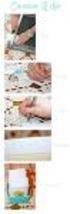
7 patterns in the night sky. However, the night sky is not available during the day so you need to make Constellation Tubes, which bring the night sky to the classroom. Direct students to complete the dot to dot exercise on Orion and Ursa Major. This will guide them to see the objects in the constellation tubes. 2. The instructions below guide you in making Constellation Tubes with the students. CONSTELLATION STATIONARY TUBE MATERIALS: long cans with plastic lids (e.g., potato chip or tennis ball cans) matte black paint (optional) tag board margarine tub with lid Cut both ends of the can, making a tube that you can look through. Paint the tube inside and out with matte black spray paint. Cut circles the size of the ends of the tube from the black tag board or heavy cardboard. The plastic lid should be used to keep the cardboard in place. Punch holes to create the constellations Orion and Big Dipper(Ursa Major) as shown below. Orion Big Dipper (Ursa Major) Note that you can make any constellation by punching different patterns in the tag board. Assemble the materials together as shown above. You have now made a child's telescope of the constellations. 3. Let children look into the open end of the Constellation Tube, and point the end with the tag board circles towards a window or light. They should see the star pattern in their "telescope". Math/Science Nucleus 1990,

8 4. Give the students either a paper "geoboard" (see enclosed master) or real geoboards. Have the students trace the patterns of the stars onto paper or the geoboards in the correct geometric relationship. You may want to demonstrate how to trace objects by putting 2 dots on the board and tell the students to copy them, as shown in the diagram to the right. Tell the students to make sure they place the dots in a similar pattern. Add a third dot and have them place the dot position on their paper. Again make sure they see the position. Give them only the two templates of Orion and the Big Dipper. You may want to add other templates but do not give them too many at a time. The goal is for them to be able to recognize Orion and the Big Dipper in the night sky. Please remember this only works in the Northern Hemisphere. Math/Science Nucleus 1990,

9 UNIVERSE CYCLE - UNIVERSE (2) LAB ORION Math/Science Nucleus 1990,

10 UNIVERSE CYCLE - UNIVERSE (2) LAB BIG DIPPER(within the URSA MAJOR) Math/Science Nucleus 1990,

11 UNIVERSE CYCLE - UNIVERSE (2) LAB GEOBOARD Math/Science Nucleus 1990,

12 UNIVERSE CYCLE - UNIVERSE (2) POST LAB OBJECTIVE: Students write a paragraph on one of the constellations. 1. Exploring myths about the constellations. 2. Finding information on the constellations. VOCABULARY: constellation myths MATERIALS: paper and pencil Internet Glow in the Dark Night Sky Book worksheet BACKGROUND: Constellations are groupings of stars and galaxies that we see from Earth. Remember that constellations are apparent associations of celestial objects that are many light years away. Many of these objects themselves are very far from each other. The zodiac is an imaginary belt in the heavens, usually between 18 degrees of the celestial equator, that encompasses the apparent paths of the principal planets of the Solar System, except for Pluto. Within this belt there are 12 constellations that are referred to as the Constellations of the Zodiac. They are used when we talk about the astrological sign we were born under. For example, if you are born at the end of January to mid February, your sign is Aquarius, the water bearer. The list of the 88 constellations is fun to review. These constellations are used to divide the heavens into units which help us locate other objects. It also tells something of the ancient peoples who looked up into the night time sky. In order to see animals such as elephants and lions in the sky, these animals must have been common in everyday life. The stories behind the constellations were created by story tellers within tribes of people. Math/Science Nucleus 1990,

13 LIST OF THE 88 CONSTELLATIONS ANDROMEDA (Princess) ANTLIA (Air Pump) APUS (Bird of Paradise) AQUARIUS (Water Bearer) AQUILA (Eagle) ARA (Altar) ARIES (Ram) AURIGA (Charioteer) BOOTES (Herdsman) CAMELOPARDALIS (Giraffe) CANCER (Crab) CANES VENATICI (Hunting Dog) CANIS MAJOR (Big Dog) CANIS MINOR (Little Dog) CAPRICORNUS (Sea Goat) CARINA (Keel of Ship) CASSIOPEIA (Queen) CENTARUS (Centaur) CEPHEUS (King) CETUS (Whale) CHAMAELEON (Chameleon) CIRCINUS (Compass) COELUM (Graving Tool) COLUMBA (Dove) COMA ABERENIES (Bernice's Hair) CORONA AUSTRA. (Southern Crown) CORONA BOREALIS (Northern Crown) CORVUS (Crow) CRATER (Cup) CRUX (Southern Cross) CYGNUS (Swan) DELPHINUS (Dolphin) DORADO (Swordfish) DRACO (Dragon) EQUULEUS (Horse) ERIDANUS (Po River) FORNAX (Furnace) GEMINI (Twins) GRUS (Crane) HERCULES (Hercules) HORROLOGIUM (Clock) HYDRA (Sea Serpent) HYDRUS (Water Snake) INDUS (Indian) LACERTA (Lizard) LEO (Lion) LEO MINOR (Little Lion) LEPUS (Hare) LIBRA (Balance) LUPUS (Wolf) LYNX (Bobcat) LYRA (Harp) MENSA (Table Mt.) MICROSCOPIUM (Microscope) MONOCEROS (Unicorn) MUSCA (Fly) NORMA (Level) OCTANS (Octant) OPHIUCHUS (Serpent Holder) ORION (Hunter) PEGASUS (Winged Horse) PAVO (Peacock) PERSEUS (Perseus) PHOENIX (Legendary Bird) PICTOR (Easel) PISCES (Fishes) PISCIS AUSTR. (Southern fish) PUPPIS (Stern of Ship) PYXIS (Compass of ship) RETICULUM (Net) SAGITTA (Arrow) SAGITTARIUS (Archer) SCORPIUS (Scorpion) SCULPTOR (Sculptor's tools) SCUTUM (Shield) SERPENS (Serpent) SEXTANS (Sextant) TAURUS (Bull) TELESCOPIUM (Telescope) TRIANGULUM (Triangle) TRIANGULUM AUS. So. (triangle) TUSCANA (Toucan) URSA MAJOR (Big Bear) URSA MINOR (Little Bear) VELA (Sail of Ship) VIRGO (Virgin) VOLANS (Flying Fish) VULPECULA (Fox) Math/Science Nucleus 1990,

14 PROCEDURE: 1. Remind students that constellations are groups of stars that form a pattern. Early people would look into the night sky and wonder what was in "outer space." They developed stories on the groups of stars. Astronomers use 88 constellations to divide up the heavens. 2. Give each student one of the constellations and have them imagine what the constellation may look like in the sky. Instruct students to write a paragraph on why that constellation may named. You may want to use the worksheet to concentrate on one constellation. 3. In the Glow in the Dark Night Sky Book, have the students find what their constellation actually looks like and see if they were correct. 4. If you have an Internet connection, you may wish to instruct the students to find their constellation on the Internet. The following sites may help students find the constellation pattern that we should see on Earth. The Golden Age of the Celestial Atlas. An excellent site. Historical pictures of different astronomers view of the celestial skies. National Geographic site which includes star charts of the nighttime sky. The constellations and their stars. Includes interactive sky charts and pictures of stars and galaxies. Math/Science Nucleus 1990,

15 UNIVERSE CYCLE - UNIVERSE (2) TAURUS, THE BULL Math/Science Nucleus 1990,

Janet s Planet Science Companion
 Janet s Planet Science Companion MODULE ONE: Navigating with Constellations LEAD-IN QUESTIONS QUESTION: How do we know which way is north, south, east or west? ANSWER: Possible answers: a compass, a map,
SLAS Messier Marathon Log Sheets # Messier Constellation Type Rating Instrument Date Time Location 1 M77 Cetus Galaxy Difficult
 1 M77 Cetus Galaxy Difficult 2 M74 Pisces Galaxy Difficult 3 M33 Triangulum Galaxy Difficult 4 M31 Andromeda Galaxy Easy 5 M32 Andromeda Galaxy Difficult 6 M110 Andromeda Galaxy Difficult 7 M52 Cassiopeia
Star signs and horoscopes
 Star signs and horoscopes Looking at constellations * 54 time 70 minutes learning outcomes To: recognise the star signs in horoscopes know that the star signs are part of the zodiac know that the stars
Make your own planisphere
 Make your own planisphere Dominic Ford April 2014 A planisphere is a simple hand-held device which shows a map of which stars are visible in the night sky at any particular time. By rotating a wheel, it
The Astronomical League s Double Star Club www.astromax.com
 The Astronomical League s Double Star Club www.astromax.com by John Wagoner American Association of Amateur Astronomers Introduction Welcome to the Astronomical League's Double Star Club. The purpose of
FIRST GRADE 1 WEEK LESSON PLANS AND ACTIVITIES
 FIRST GRADE 1 WEEK LESSON PLANS AND ACTIVITIES UNIVERSE CYCLE OVERVIEW OF FIRST GRADE UNIVERSE WEEK 1. PRE: Describing the Universe. LAB: Comparing and contrasting bodies that reflect light. POST: Exploring
THE WITNESS OF THE STARS
 Biblical Astronomer, number 100 45 THE WITNESS OF THE STARS Gerardus D. Bouw, Ph.D. Ancient names tell a story Many Biblical Astronomer readers are familiar with a notion variously called the gospel in
AST 114 Spring 2016 Introduction to the Night Sky INTRODUCTION TO THE NIGHT SKY
 NAME: INTRODUCTION TO THE NIGHT SKY What will you learn in this Lab? This lab will introduce you to the layout of the night sky: constellations and stars, their names and the patterns they make, and the
StarMaster Viewer. Copyright by the Lunar and Planetary Institute, 2008 LPI Contribution Number 1450 http://www.lpi.usra.edu/education/space_days
 StarMaster Viewer A constellation is a grouping of stars that appears to form a pattern or picture. Constellations help people orient themselves using the night sky by appearing as recognizable organizations
SECOND GRADE 1 WEEK LESSON PLANS AND ACTIVITIES
 SECOND GRADE 1 WEEK LESSON PLANS AND ACTIVITIES UNIVERSE CYCLE OVERVIEW OF SECOND GRADE UNIVERSE WEEK 1. PRE: Discovering stars. LAB: Analyzing the geometric pattern of constellations. POST: Exploring
STAR DECK GUIDE TO THE CONSTELLATIONS MICHAEL K. SHEPARD, PH.D.
 STAR DECK GUIDE TO THE CONSTELLATIONS BY MICHAEL K. SHEPARD, PH.D. ii TABLE OF CONTENTS Introduction 1 Constellations by Season 3 Guide to the Constellations Andromeda, Aquarius 4 Aquila, Aries, Auriga
Night Observing Project I OBSERVING THE NIGHT SKY THE CONSTELLATIONS
 Night Lab #1 Page 1 Night Observing Project I OBSERVING THE NIGHT SKY THE CONSTELLATIONS Note - bring a pencil, eraser, a star chart/wheel/planisphere, and this exercise packet. A. Objectives Learn to
Observing the Constellations of the Zodiac
 Observing the Constellations of the Zodiac Activity UCIObs 3 Grade Level: 8 12 Source: Copyright (2009) by Tammy Smecker Hane. Contact [email protected] with any questions. Standards:This activity addresses
CELESTIAL CLOCK - THE SUN, THE MOON, AND THE STARS
 INTRODUCTION CELESTIAL CLOCK - THE SUN, THE MOON, AND THE STARS This is a scientific presentation to provide you with knowledge you can use to understand the sky above in relation to the earth. Before
The Ultimate Messier Object Log PDF
 The Ultimate Messier Object Log PDF This special version of The Ultimate Messier Object Log was created in response to all those people who don t have Filemaker, or who don t have the computer skills to
Vocabulary Astronaut A person who travels and works in space.
 northern-stars.com [email protected] ABC s of the Sky Teacher s Guide Page 2 Vocabulary Astronaut A person who travels and works in space. Big Dipper A constellation in the northern skies that resembles
GETTING STARTED IN STAR GAZING. The fact you are here in this introductory session says you have an interest in the hobby of
 GETTING STARTED IN STAR GAZING by Nelson Tilden Sun City Oro Valley Astronomy Club The fact you are here in this introductory session says you have an interest in the hobby of astronomy, but please note
Astronomy. Welcome guide to. Welcome to Astronomy. Celestial Road Map. Getting Started
 Welcome guide to Astronomy R. Williams (STScI), the Hubble Deep Field Team and NASA by the publishers of Inside Welcome to Astronomy Star Maps Binoculars a Good Start What Can You See in a Telescope? Moon
astronomy 2008 1. A planet was viewed from Earth for several hours. The diagrams below represent the appearance of the planet at four different times.
 1. A planet was viewed from Earth for several hours. The diagrams below represent the appearance of the planet at four different times. 5. If the distance between the Earth and the Sun were increased,
KINDERGARTEN PHYSICS
 KINDERGARTEN PHYSICS 3 WEEKS LESSON PLANS AND ACTIVITIES APPLIED SCIENCE OVERVIEW OF KINDERGARTEN SCIENCE AND MATH WEEK 1. PRE: Describing and comparing nests, birds, and eggs. LAB: Describing different
KINDERGARTEN 1 WEEK LESSON PLANS AND ACTIVITIES
 KINDERGARTEN 1 WEEK LESSON PLANS AND ACTIVITIES UNIVERSE CYCLE OVERVIEW OF KINDERGARTEN UNIVERSE WEEK 1. PRE: Discovering misconceptions of the Universe. LAB: Comparing size and distances in space. POST:
Once you have assembled the cards, they can be used either as fact cards or for a variety of activities in the classroom including:
 Our Place in Space This activity consists of a series of 15 cards that include images of astronomical objects on the front and information about these objects on the reverse. The card backs include information
INDEPENDENT PROJECT: The Spring Night Sky
 INDEPENDENT PROJECT: The Spring Night Sky Your Name: What is the difference between observing and looking? As John Rummel said to the Madison Astronomical Society, January 11, 2002: Looking implies a passive
The Celestial Sphere. Questions for Today. The Celestial Sphere 1/18/10
 Lecture 3: Constellations and the Distances to the Stars Astro 2010 Prof. Tom Megeath Questions for Today How do the stars move in the sky? What causes the phases of the moon? What causes the seasons?
INDEPENDENT PROJECT: The Spring Night Sky
 INDEPENDENT PROJECT: The Spring Night Sky Your Name: What is the difference between observing and looking? As John Rummel said to the Madison Astronomical Society, January 11, 2002: Looking implies a passive
General Astronomy Phys1810 Fall 2015. Observing Exercises
 Observing Exercises You will complete 3 of the following exercises: Exercise 1: Sketching the North Circumpolar Cap (mandatory) Exercise 2: Seasonal Constellations Exercise 3: Telescope Observations Exercise
CELESTIAL MOTIONS. In Charlottesville we see Polaris 38 0 above the Northern horizon. Earth. Starry Vault
 CELESTIAL MOTIONS Stars appear to move counterclockwise on the surface of a huge sphere the Starry Vault, in their daily motions about Earth Polaris remains stationary. In Charlottesville we see Polaris
Douglas Adams The Hitchhikers Guide to the Galaxy
 There is a theory which states that if ever anybody discovers exactly what the Universe is for and why it is here, it will instantly disappear and be replaced by something even more bizarre and inexplicable.
Star Stories Teacher s Guide
 207-453-7668 [email protected] Star Stories Teacher s Guide Page 1 Star Stories Teacher s Guide The following Teacher s Guide is designed to help you prepare your students for their upcoming presentation
Related Standards and Background Information
 Related Standards and Background Information Earth Patterns, Cycles and Changes This strand focuses on student understanding of patterns in nature, natural cycles, and changes that occur both quickly and
Pre and post-visit activities - Navigating by the stars
 Pre and post-visit activities - Navigating by the stars Vocabulary List Adult Education at Scienceworks Pre-visit Activity 1: What is longitude and latitude? Activity 2: Using the Southern Cross to find
Changes in Our Sky Grade Two
 Ohio Standards Connection: Earth and Space Sciences Benchmark A Observe constant and changing patterns of objects in the day and night sky. Indicator 2 Observe and describe how the sun, moon and stars
CELESTIAL EVENTS CALENDAR APRIL 2014 TO MARCH 2015
 CELESTIAL EVENTS CALENDAR APRIL 2014 TO MARCH 2015 *** Must See Event 2014 ***April 8 - Mars at Opposition. The red planet will be at its closest approach to Earth and its face will be fully illuminated
galaxy solar system supernova (noun) (noun) (noun)
 WORDS IN CONTEXT DAY 1 (Page 1 of 4) galaxy A galaxy is a collection of stars, gas, and dust. We live in the Milky Way galaxy. One galaxy may contain billions of stars. solar system A solar system revolves
Stellarium a valuable resource for teaching astronomy in the classroom and beyond
 Stellarium 1 Stellarium a valuable resource for teaching astronomy in the classroom and beyond Stephen Hughes Department of Physical and Chemical Sciences, Queensland University of Technology, Gardens
[ ] ASTRONOMY AN EASY GUIDE TO EXPLORING THE UNIVERSE GETTING STARTED SOUTHERN HEMISPHERE VERSION INCLUDES A MOON MAP AND STAR CHARTS
![[ ] ASTRONOMY AN EASY GUIDE TO EXPLORING THE UNIVERSE GETTING STARTED SOUTHERN HEMISPHERE VERSION INCLUDES A MOON MAP AND STAR CHARTS](/thumbs/33/16631356.jpg "[ ] ASTRONOMY AN EASY GUIDE TO EXPLORING THE UNIVERSE GETTING STARTED SOUTHERN HEMISPHERE VERSION INCLUDES A MOON MAP AND STAR CHARTS") [ ] SOUTHERN HEMISPHERE VERSION GETTING STARTED ASTRONOMY IN AN EASY GUIDE TO EXPLORING THE UNIVERSE INCLUDES A MOON MAP AND STAR CHARTS FROM THE EDITORS OF Your First Steps in Astronomy ern Hemisphere
[ ] SOUTHERN HEMISPHERE VERSION GETTING STARTED ASTRONOMY IN AN EASY GUIDE TO EXPLORING THE UNIVERSE INCLUDES A MOON MAP AND STAR CHARTS FROM THE EDITORS OF Your First Steps in Astronomy ern Hemisphere
STUDY GUIDE: Earth Sun Moon
 The Universe is thought to consist of trillions of galaxies. Our galaxy, the Milky Way, has billions of stars. One of those stars is our Sun. Our solar system consists of the Sun at the center, and all
Scale of the Solar System. Sizes and Distances: How Big is Big? Sizes and Distances: How Big is Big? (Cont.)
 Scale of the Solar System Scale of the Universe How big is Earth compared to our solar system? How far away are the stars? How big is the Milky Way Galaxy? How big is the Universe? How do our lifetimes
[ ] ASTRONOMY AN EASY GUIDE TO EXPLORING THE UNIVERSE GETTING STARTED NORTHERN HEMISPHERE VERSION INCLUDES A MOON MAP AND STAR CHARTS
![[ ] ASTRONOMY AN EASY GUIDE TO EXPLORING THE UNIVERSE GETTING STARTED NORTHERN HEMISPHERE VERSION INCLUDES A MOON MAP AND STAR CHARTS](/thumbs/19/265653.jpg "[ ] ASTRONOMY AN EASY GUIDE TO EXPLORING THE UNIVERSE GETTING STARTED NORTHERN HEMISPHERE VERSION INCLUDES A MOON MAP AND STAR CHARTS") [ ] NORTHERN HEMISPHERE VERSION GETTING STARTED ASTRONOMY IN AN EASY GUIDE TO EXPLORING THE UNIVERSE INCLUDES A MOON MAP AND STAR CHARTS FROM THE EDITORS OF DID YOU KNOW THAT YOU can see a galaxy 2 1 2
[ ] NORTHERN HEMISPHERE VERSION GETTING STARTED ASTRONOMY IN AN EASY GUIDE TO EXPLORING THE UNIVERSE INCLUDES A MOON MAP AND STAR CHARTS FROM THE EDITORS OF DID YOU KNOW THAT YOU can see a galaxy 2 1 2
x Distance of the Sun to planet --------------------------------------------------------------------
 Solar System Investigation 26C 26C Solar System How big is the solar system? It is difficult to comprehend great distances. For example, how great a distance is 140,000 kilometers (the diameter of Jupiter)
Chapter 3: Familiarizing Yourself With the Night Sky
 Chapter 3: Familiarizing Yourself With the Night Sky Introduction People of ancient cultures viewed the sky as the inaccessible home of the gods. They observed the daily motion of the stars, and grouped
1.1 A Modern View of the Universe" Our goals for learning: What is our place in the universe?"
 Chapter 1 Our Place in the Universe 1.1 A Modern View of the Universe What is our place in the universe? What is our place in the universe? How did we come to be? How can we know what the universe was
Cycles in the Sky. Teacher Guide: Cycles in the Sky Page 1 of 8 2008 Discovery Communications, LLC
 Cycles in the Sky What is a Fun damental? Each Fun damental is designed to introduce your younger students to some of the basic ideas about one particular area of science. The activities in the Fun damental
An Introduction to Astronomy and Cosmology. 1) Astronomy - an Observational Science
 An Introduction to Astronomy and Cosmology 1) Astronomy - an Observational Science Why study Astronomy 1 A fascinating subject in its own right. The origin and Evolution of the universe The Big Bang formation
5- Minute Refresher: Daily Observable Patterns in the Sky
 5- Minute Refresher: Daily Observable Patterns in the Sky Key Ideas Daily Observable Patterns in the Sky include the occurrence of day and night, the appearance of the moon, the location of shadows and
1. In the diagram below, the direct rays of the Sun are striking the Earth's surface at 23 º N. What is the date shown in the diagram?
 1. In the diagram below, the direct rays of the Sun are striking the Earth's surface at 23 º N. What is the date shown in the diagram? 5. During how many days of a calendar year is the Sun directly overhead
Asterisms. Small star patterns for telescopes and binoculars. Demelza Ramakers
 Asterisms Small star patterns for telescopes and binoculars Demelza Ramakers Introduction Asterisms are star patterns. The constellation Cassiopeia is probably the well-known asterism in the night sky.
13 Space Photos To Remind You The Universe Is Incredible
 13 Space Photos To Remind You The Universe Is Incredible NASA / Via photojournal.jpl.nasa.gov New ultraviolet images from NASA s Galaxy Evolution Explorer shows a speeding star that is leaving an enormous
Week 1-2: Overview of the Universe & the View from the Earth
 Week 1-2: Overview of the Universe & the View from the Earth Hassen M. Yesuf ([email protected]) September 29, 2011 1 Lecture summary Protein molecules, the building blocks of a living organism, are made
Which month has larger and smaller day time?
 ACTIVITY-1 Which month has larger and smaller day time? Problem: Which month has larger and smaller day time? Aim: Finding out which month has larger and smaller duration of day in the Year 2006. Format
Orientation to the Sky: Apparent Motions
 Chapter 2 Orientation to the Sky: Apparent Motions 2.1 Purpose The main goal of this lab is for you to gain an understanding of how the sky changes during the night and over the course of a year. We will
Motions of Earth LEARNING GOALS
 2 Patterns in the Sky Motions of Earth The stars first found a special place in legend and mythology as the realm of gods and goddesses, holding sway over the lives of humankind. From these legends and
Lab Activity on the Causes of the Seasons
 Lab Activity on the Causes of the Seasons 2002 Ann Bykerk-Kauffman, Dept. of Geological and Environmental Sciences, California State University, Chico * Objectives When you have completed this lab you
Solar Angles and Latitude
 Solar Angles and Latitude Objectives The student will understand that the sun is not directly overhead at noon in most latitudes. The student will research and discover the latitude ir classroom and calculate
Chapter 1 Our Place in the Universe
 Chapter 1 Our Place in the Universe Syllabus 4 tests: June 18, June 30, July 10, July 21 Comprehensive Final - check schedule Website link on blackboard 1.1 Our Modern View of the Universe Our goals for
Space Exploration Classroom Activity
 Space Exploration Classroom Activity The Classroom Activity introduces students to the context of a performance task, so they are not disadvantaged in demonstrating the skills the task intends to assess.
Explain the Big Bang Theory and give two pieces of evidence which support it.
 Name: Key OBJECTIVES Correctly define: asteroid, celestial object, comet, constellation, Doppler effect, eccentricity, eclipse, ellipse, focus, Foucault Pendulum, galaxy, geocentric model, heliocentric
Newton s Law of Gravity
 Gravitational Potential Energy On Earth, depends on: object s mass (m) strength of gravity (g) distance object could potentially fall Gravitational Potential Energy In space, an object or gas cloud has
Science Investigations: Investigating Astronomy Teacher s Guide
 Teacher s Guide Grade Level: 6 12 Curriculum Focus: Astronomy/Space Duration: 7 segments; 66 minutes Program Description This library of videos contains seven segments on celestial bodies and related science.
Activity One: Activate Prior Knowledge: Powers of Ten Video and Explore the sizes of various objects in the solar system
 Scale in the Solar System ------------------------------------------------------------------------------------------------------------ SIXTH GRADE SCIENCE STANDARDS: STANDARD FOUR Students will understand
Science Benchmark: 06 : 01 Standard 01: THE MYSTICAL MOON axis of rotation,
 Science Benchmark: 06 : 01 The appearance of the lighted portion of the moon changes in a predictable cycle as a result of the relative positions of Earth, the moon, and the sun. Standard 01: Students
EARTH'S MOTIONS. 2. The Coriolis effect is a result of Earth's A tilted axis B orbital shape C revolution D rotation
 EARTH'S MOTIONS 1. Which hot spot location on Earth's surface usually receives the greatest intensity of insolation on June 21? A Iceland B Hawaii C Easter Island D Yellowstone 2. The Coriolis effect is
Earth, Moon, and Sun Inquiry Template Eclipses
 One Stop Shop For Educators The following instructional plan is part of a GaDOE collection of Unit Frameworks, Performance Tasks, examples of Student Work, and Teacher Commentary. Many more GaDOE approved
Fry Phrases Set 1. TeacherHelpForParents.com help for all areas of your child s education
 Set 1 The people Write it down By the water Who will make it? You and I What will they do? He called me. We had their dog. What did they say? When would you go? No way A number of people One or two How
Reasons for Seasons. Question: TRUE OR FALSE. Question: TRUE OR FALSE? What causes the seasons? What causes the seasons?
 Reasons for Seasons Question: TRUE OR FALSE? Earth is closer to the Sun in summer and farther from the Sun in winter. Question: TRUE OR FALSE? Earth is closer to the Sun in summer and farther from the
So What All Is Out There, Anyway?
 So What All Is Out There, Anyway? Imagine that, like Alice in Wonderland, you have taken a magic potion that makes you grow bigger and bigger. You get so big that soon you are a giant. You can barely make
Beginning of the Universe Classwork 6 th Grade PSI Science
 Beginning of the Universe Classwork Name: 6 th Grade PSI Science 1 4 2 5 6 3 7 Down: 1. Edwin discovered that galaxies are spreading apart. 2. This theory explains how the Universe was flattened. 3. All
The Sun and the Stars
 www.k5learning.com Objective Concepts (gravity, climate, solar system, hydrogen, helium, elements, core, ultraviolet rays, cluster, galaxy, Milky Way Galaxy); Sight words (surface, middle, dangerous, causes,
EDMONDS COMMUNITY COLLEGE ASTRONOMY 100 Winter Quarter 2007 Sample Test # 1
 Instructor: L. M. Khandro EDMONDS COMMUNITY COLLEGE ASTRONOMY 100 Winter Quarter 2007 Sample Test # 1 1. An arc second is a measure of a. time interval between oscillations of a standard clock b. time
Astronomy Notes for Educators
 Our Solar System Astronomy Notes for Educators Our Solar System 5-1 5-2 Specific Outcomes: Learning Outcome 1: Knowledge / Content and it place in the Milky Way Different types of bodies make up the Solar
Phases of the Moon. Preliminaries:
 Phases of the Moon Sometimes when we look at the Moon in the sky we see a small crescent. At other times it appears as a full circle. Sometimes it appears in the daylight against a bright blue background.
Astronomy Club of Asheville October 2015 Sky Events
 October 2015 Sky Events The Planets this Month - page 2 Planet Highlights - page 10 Moon Phases - page 13 Orionid Meteor Shower Peaks Oct. 22 nd - page 14 Observe the Zodiacal Light - page 15 2 Bright
Size and Scale of the Universe
 Size and Scale of the Universe (Teacher Guide) Overview: The Universe is very, very big. But just how big it is and how we fit into the grand scheme can be quite difficult for a person to grasp. The distances
Astrology: Fact or Fiction? 50-60 minutes, for 9th-12th grades
 Astrology: Fact or Fiction? 50-60 minutes, for 9th-12th grades Notice This lesson plan was created by Digitalis Education Solutions (DigitalisEducation.com) and is provided free of charge as a public service
The Expanding Universe
 Stars, Galaxies, Guided Reading and Study This section explains how astronomers think the universe and the solar system formed. Use Target Reading Skills As you read about the evidence that supports the
PUSD High Frequency Word List
 PUSD High Frequency Word List For Reading and Spelling Grades K-5 High Frequency or instant words are important because: 1. You can t read a sentence or a paragraph without knowing at least the most common.
UNIT V. Earth and Space. Earth and the Solar System
 UNIT V Earth and Space Chapter 9 Earth and the Solar System EARTH AND OTHER PLANETS A solar system contains planets, moons, and other objects that orbit around a star or the star system. The solar system
LER 2891. Ages. Grades. Solar System. A fun game of thinking & linking!
 Solar System Ages 7+ LER 2891 Grades 2+ Card Game A fun game of thinking & linking! Contents 45 Picture cards 45 Word cards 8 New Link cards 2 Super Link cards Setup Shuffle the two decks together to mix
Astronomy 1140 Quiz 1 Review
 Astronomy 1140 Quiz 1 Review Prof. Pradhan September 15, 2015 What is Science? 1. Explain the difference between astronomy and astrology. (a) Astrology: nonscience using zodiac sign to predict the future/personality
165 points. Name Date Period. Column B a. Cepheid variables b. luminosity c. RR Lyrae variables d. Sagittarius e. variable stars
 Name Date Period 30 GALAXIES AND THE UNIVERSE SECTION 30.1 The Milky Way Galaxy In your textbook, read about discovering the Milky Way. (20 points) For each item in Column A, write the letter of the matching
The Reasons for the Seasons
 The Reasons for the Seasons (The Active Learning Approach) Materials: 4 Globes, One light on stand with soft white bulb, 4 flashlights, Four sets of "Seasons" Cards, Four laminated black cards with 1 inch
The Earth, Sun & Moon. The Universe. The Earth, Sun & Moon. The Universe
 Football Review- Earth, Moon, Sun 1. During a total solar eclipse, when almost all of the Sun's light traveling to the Earth is blocked by the Moon, what is the order of the Earth, Sun, and Moon? A. Moon,
The Solar System. Source http://starchild.gsfc.nasa.gov/docs/starchild/solar_system_level1/solar_system.html
 The Solar System What is the solar system? It is our Sun and everything that travels around it. Our solar system is elliptical in shape. That means it is shaped like an egg. Earth s orbit is nearly circular.
The following words and their definitions should be addressed before completion of the reading:
 Seasons Vocabulary: The following words and their definitions should be addressed before completion of the reading: sphere any round object that has a surface that is the same distance from its center
Phases of the Moon. --demonstrate the ability to apply an in-depth understanding of moon phases to real life situations
 6 th Grade Standard I Rubric Phases of the Moon --demonstrate the ability to apply an in-depth understanding of moon phases to real life situations --demonstrate an understanding of different reasons why
RETURN TO THE MOON. Lesson Plan
 RETURN TO THE MOON Lesson Plan INSTRUCTIONS FOR TEACHERS Grade Level: 9-12 Curriculum Links: Earth and Space (SNC 1D: D2.1, D2.2, D2.3, D2.4) Group Size: Groups of 2-4 students Preparation time: 1 hour
Creation. Then God spoke and Creation came into being. God formed everything: Creation Week God called all that He had created good.
 Creation Teacher Pep Talk: Imagine darkness and emptiness and nothing else except God. God in His own time decides that He is going to create something wonderful: something which will eventually cost Him
Journey to other celestial objects. learning outcomes
 The eight planets Journey to other celestial objects C 44 time 80 minutes. learning outcomes To: know which planets have moons know which planets have rings know the colours of the different planets know
Activities: The Moon is lit and unlit too
 Activities: The Moon is lit and unlit too Key objectives: This activity aims to help student to: Identify the different phases of the Moon Know that the Moon does not produce its own light, but reflects
UC Irvine FOCUS! 5 E Lesson Plan
 UC Irvine FOCUS! 5 E Lesson Plan Title: Astronomical Units and The Solar System Grade Level and Course: 8th grade Physical Science Materials: Visual introduction for solar system (slides, video, posters,
ASTR 1030 Astronomy Lab 65 Celestial Motions CELESTIAL MOTIONS
 ASTR 1030 Astronomy Lab 65 Celestial Motions CELESTIAL MOTIONS SYNOPSIS: The objective of this lab is to become familiar with the apparent motions of the Sun, Moon, and stars in the Boulder sky. EQUIPMENT:
Earth, Moon, and Sun Study Guide. (Test Date: )
 Earth, Moon, and Sun Study Guide Name: (Test Date: ) Essential Question #1: How are the Earth, Moon, and Sun alike and how are they different? 1. List the Earth, Moon, and Sun, in order from LARGEST to
THE SOLAR SYSTEM - EXERCISES 1
 THE SOLAR SYSTEM - EXERCISES 1 THE SUN AND THE SOLAR SYSTEM Name the planets in their order from the sun. 1 2 3 4 5 6 7 8 The asteroid belt is between and Which planet has the most moons? About how many?
Astrock, t he A stronomical Clock
 Astrock, t he A stronomical Clock The astronomical clock is unlike any other clock. At first glance you ll find it has similar functions of a standard clock, however the astronomical clock can offer much
Science Standard 4 Earth in Space Grade Level Expectations
 Science Standard 4 Earth in Space Grade Level Expectations Science Standard 4 Earth in Space Our Solar System is a collection of gravitationally interacting bodies that include Earth and the Moon. Universal
SIXTH GRADE 1 WEEK LESSON PLANS AND ACTIVITIES
 SIXTH GRADE 1 WEEK LESSON PLANS AND ACTIVITIES UNIVERSE CYCLE OVERVIEW OF SIXTH GRADE UNIVERSE WEEK 1. PRE: Exploring how the Universe may have evolved. LAB: Comparing the night sky with zodiac signs.
Introduction to the Solar System
 Introduction to the Solar System Lesson Objectives Describe some early ideas about our solar system. Name the planets, and describe their motion around the Sun. Explain how the solar system formed. Introduction
Earth, Sun and Moon is a set of interactives designed to support the teaching of the QCA primary science scheme of work 5e - 'Earth, Sun and Moon'.
 is a set of interactives designed to support the teaching of the QCA primary science scheme of work 5e - ''. Learning Connections Primary Science Interactives are teaching tools which have been created
Space Poems For Preschool Children
 Space Poems Hey Diddle Diddle Hey diddle diddle, The cat and the fiddle, The cow jumped over the moon. The little dog laughed To see such sport, And the dish ran away With the spoon. Twinkle, Twinkle Little