
Hook. Myrtaceae. Eucalyptus citriodora. lemon-scented gum
|
|
|
- Jerome Lambert
- 9 years ago
- Views:
Transcription
1 LOCAL NAMES Amharic (shito bahir zaf); Arabic (kafur limuni); English (spotted gum,lemon-scented iron gum,,lemon-scented eucalypt,lemon gum); French (eucalyptus a odeur de citron); German (Zitronen- Eukalyptus); Luganda (kalintusi); Spanish (citriodora); Swahili (mkaratusi); Trade name (); Vietnamese (b[aj]ch d[af]n d[or]) BOTANIC DESCRIPTION Eucalyptus citriodora is a large, handsome evergreen tree, (max. 50) m in height; tall, straight trunk, cm in diameter; open, graceful crown of drooping foliage; bark smooth, white, powdery, sometimes pink, red or blue-grey, on large trunks dark or grey and shaggy. Round urn fruit at Hobdy collection, Maui, Hawaii (Forest and Kim Starr) Juvenile leaves alternate, ovate to broadly lanceolate, sometimes setose, petiolate, sometimes peltate; adult leaves alternate, lanceolate to narrowly lanceolate, 8-16 x cm, acuminate, strongly lemon scented when crushed; petiole mm long. Inflorescence terminal and compound or axillary and simple; umbels 3 flowers; flower buds white, clavate; operculum hemispherical, 3-4 x 4-5 mm, apiculate. Fruit ovoid or urceolate, 7-15 x 7-11 mm, often warty, with 3-4 deeply induced valves; seeds few, irregularly elliptical relatively large, shiny, black, 4-5 mm long. The genus Eucalyptus was described and named in 1788 by the French botanist l Héritier. The flowers of the Eucalyptus species are protected by an operculum, hence the generic name, which comes from the Greek words eu (well) and calyptos (covered). The specific epithet means lemon-scented. BIOLOGY E. citriodora is cross-pollinated, and the pollinating agents are usually blow flies, ants and, in particular, bees. The periodicity of reproduction of E. citriodora seems to be altered when it is planted outside its natural range. In Australia, it bears seed only every 3-5 years, while it fruits abundantly every year when grown as an exotic species in Brazil. Round urn fruit at Hobdy collection, Maui, Hawaii (Forest and Kim Starr) Bark at Keanae Arboretum, Maui, Hawaii (Forest and Kim Starr) Page 1 of 5

2 ECOLOGY E. citriodora grows naturally on rolling undulating plateaux, including dry ridges, in open forest and woodland, generally on poor soils, from 80 to 800 m altitude. The species can survive a severe dry season. In its natural range, the species is restricted to the central and northern coast of Queensland, with the main occurrence between Mackay and Maryborough, where it extends from the coast to over 200 miles inland. It is also common on a limited area of the higher and drier country near Atherton. The climate is tropical to subtropical and frost free near the coast, or with light frost inland at the higher altitudes. The main rainfall season is summer. BIOPHYSICAL LIMITS Altitude: m, Mean annual temperature: deg. C, Mean annual rainfall: mm Soil type: It is tolerant of a variety of soils. Commonly found on poor, gravelly soils, Podsols and residual Podsols of lateritic origin, and prefers well-drained but somewhat gravelly subsoils. DOCUMENTED SPECIES DISTRIBUTION Native: Exotic: Australia Albania, Algeria, Brazil, Cyprus, Egypt, Ethiopia, Fiji, Ghana, Greece, India, Italy, Kenya, Libyan Arab Jamahiriya, Malaysia, Malta, Morocco, Nigeria, Portugal, Spain, Sri Lanka, Tanzania, Tunisia, Uganda, United States of America, Vietnam, Zimbabwe Native range Exotic range The map above shows countries where the species has been planted. It does neither suggest that the species can be planted in every ecological zone within that country, nor that the species can not be planted in other countries than those depicted. Since some tree species are invasive, you need to follow biosafety procedures that apply to your planting site. Page 2 of 5

3 The map above shows countries where the species has been planted. It does neither suggest that the species can be planted in every ecological zone within that country, nor that the species can not be planted in other countries than those depicted. Since some tree species are invasive, you need to follow biosafety procedures that apply to your planting site. Eucalyptus citriodora PRODUCTS Apiculture: E. citriodora is a favourite of beekeepers because of the high quality and quantity of honey produced. Honey produced is light amber. Fibre: The tree is planted as one of the better eucalypts for producing pulp in low-altitude areas of tropical and subtropical regions. Timber: The wood density is kg/cubic m at 12% mc. The wood is heavy, strong, tough and resistant to termites. The heartwood is light brown to grey-brown and sometimes waxy to the touch. The sapwood is whitish, pinkish or cream, usually mm wide, but the width varies with growth rate. The grain is straight to interlocked, forming a ribbon stripe when quarter-sawn; a fiddleback pattern is sometimes evident. The timber is used for general construction, bridges, railway sleepers and ties, flooring, poles, sporting goods, agricultural implements and tool handles. Essential oil: The commercially important eucalyptus oil distilled from the leaves of this and other Eucalyptus species has medicinal and industrial uses. Medicine: The oils are used with steam and other preparations as an inhalant to relieve colds and influenza symptoms. Because of the refreshing odour of the oil and its efficiency in killing bacteria, it also finds application as antiseptic. SERVICES Reclamation: E. citriodora is planted for reforestation. Ornamental: It is cultivated in Australia, Brazil and North Africa for beautification. Intercropping: Studies in Nigeria suggest that beans are incompatible with E. citriodora, but maize and sorghum may be compatible. Addition of fertilizer can offset to an extent the depressive effects of E. citriodora on crops. Page 3 of 5

4 TREE MANAGEMENT Plantations can be established at a regular spacing of 3-4 m, but a spacing of 3 x 2 m is also practised. A mature tree is able to compete with weeds, although when young, good weed control (usually a 1m strip along each planting line) is essential, and 4-5 weedings each year for 2 years may be necessary before site occupancy is achieved. Growth is usually rapid, and subsequent management depends on the purpose for which the trees are being grown. If grown for pulpwood, the trees may be harvested after 6-10 years. Plantations grown for saw logs will require thinning. GERMPLASM MANAGEMENT Seed storage behaviour is orthodox. Viability is lost within 3 years in hermetic storage at room temperature with 13 + or - 2% mc. Hermetic storage at 4-6% mc and subzero temperatures is recommended. There are seeds/kg. PESTS AND DISEASES E. citriodora, when young, is liable to attack by termites, but it is attacked less by atta ants than most eucalyptus. It resists attacks by the Gonipterus beetle. Page 4 of 5

5 FURTHER READNG Anon The useful plants of India. Publications & Information Directorate, CSIR, New Delhi, India. Bekele-Tesemma A, Birnie A, Tengnas B Useful trees and shrubs for Ethiopia. Regional Soil Conservation Unit (RSCU), Swedish International Development Authority (SIDA). Boland DJ, Brophy JJ, House APN Eucalyptus leaf oils, use, chemistry, distillation and marketing. ACIAR/CSIRO. INKATA Press. Melbourne. Boland DJ. et. al Forest trees of Australia. CSIRO. Australia Hills WE, Brown AG Eucalyptus for wood production. CSIRO/Academic Press. Sydney. Hong TD, Linington S, Ellis RH Seed storage behaviour: a compendium. Handbooks for Genebanks: No. 4. IPGRI. ICRAF A selection of useful trees and shrubs for Kenya: Notes on their identification, propagation and management for use by farming and pastoral communities. ICRAF. Igboanugo ABI Effects of some Eucalyptus on yields of Vigna unguiculata L., Zea mays L. and Sorghum bicolar L. Agriculture Ecosystems and Environment. 24(4): Katende AB et al Useful trees and shrubs for Uganda. Identification, Propagation and Management for Agricultural and Pastoral Communities. Regional Soil Conservation Unit (RSCU), Swedish International Development Authority (SIDA). Mbuya LP et al Useful trees and shrubs for Tanzania: Identification, Propagation and Management for Agricultural and Pastoral Communities. Regional Soil Conservation Unit (RSCU), Swedish International Development Authority (SIDA). Soerianegara I, Lemmens RHMJ (eds.) Plant Resources of South-East Asia. No. 5(1): Timber trees: major commercial timbers. Backhuys Publishers, Leiden. Streets RJ Exotic forest trees in the British Commonwealth. Clarendon Press, Oxford. Webb DB, Wood PJ, Henman GS A guide to species selection for tropical and sub-tropical plantations. Tropical Forestry Papers No. 15, 2nd edition. Commonwealth Forestry Institute, Oxford University Press. Williams R.O & OBE The useful and ornamental plants in Zanzibar and Pemba. Zanzibar Protectorate. SUGGESTED CITATION Orwa C, A Mutua, Kindt R, Jamnadass R, S Anthony Agroforestree Database:a tree reference and selection guide version 4.0 ( Page 5 of 5

Oliv. Salicaceae. Populus euphratica. bhan, bahan
 LOCAL NAMES Arabic (hodung,gharab,bhan,bahan); Chinese (huyang); English (Indian poplar,euphrates poplar); Hindi (hotung,hondung,bhan,bahan); Trade name (bhan,bahan) BOTANIC DESCRIPTION Populus euphratica
(A. Rich.) Engl. Burseraceae. Commiphora africana
 LOCAL NAMES Afrikaans (harige kanniedood); Amharic (anqa); Arabic (angka,gafal); English (African myrrh,corkwood,poison-grub commiphora); French (myrrhe africaine); Somali (dabba'un'un,hammes-sagara);
R. Br. Fabaceae - Mimosoideae. Acacia melanoxylon
 LOCAL NAMES Amharic (omedla); Dutch (Australiese Swarthout); English (Tasmanian blackwood,swamp blackwood,blackwood acacia,blackwood,australian blackwood); French (acacia a bois noir); German (Schwarzholz
L. Malpighiaceae. Malpighia glabra. LOCAL NAMES English (West Indian cherry); French (cerise-antillaise); Thai (choeri); Vietnamese (so'ri)
 LOCAL NAMES English (West Indian cherry); French (cerise-antillaise); Thai (choeri); Vietnamese (so'ri) BOTANIC DESCRIPTION Malpighia glabra is a shrub or small evergreen tree, 2-3(-6) m tall, with spreading,
USEFUL TREES FOR THE LAKE TANGANYIKA BASIN TOOLKIT
 USEFUL TREES FOR THE LAKE TANGANYIKA BASIN TOOLKIT A TREE SPECIES SELECTION AND MANAGEMENT TOOLKIT FOR SUSTAINABLE AGROFORESTRY INTERVENTIONS IN THE CATCHMENTS OF LAKE TANGANYIKA USER GUIDE World Agroforestry
(L.) Jacq. Meliaceae. Swietenia mahagoni. mahogany, Honduran mahogany
 LOCAL NAMES Bengali (mahagni); Creole (kajou peyi); Dutch (mahok); English (West Indian mahogany,cuban mahogany tree,dominican mahogany,jamaican mahogany tree,spanish mahogany tree,west Indies mahogany,mahogany,puerto
De Wild. Fabaceae - Mimosoideae. Acacia mearnsii. black wattle
 LOCAL NAMES Amharic (mimosa); English (green wattle,tan wattle,australian acacia,,late ); French (acacie noir); German (gerber- Akazie); Indonesian (akasia); Italian (Mimosa di Mearns); Japanese (wattor-ju);
L. Santalaceae. Santalum album. sandalwood, East Indian sandalwood
 LOCAL NAMES Bengali (chandan,sufaid-chandan,peetchandan,srikhanda); Burmese (santagu); English (sandal,cendana,sandal tree,east Indian sandalwood,white Indian sandalwood,sandalwood); French (Santal blanc);
Engl. Rhamnaceae. Maesopsis eminii. mutere, musizi
 LOCAL NAMES English (umbrella tree); Indonesian (kayu afrika); Luganda (musizi,musinde,muside); Swahili (ndunga,msizi); Trade name (mutere,musizi) BOTANIC DESCRIPTION Maesopsis eminii is a large African
L. Guttiferae. Mammea americana
 LOCAL NAMES English (St. Domingo apricot,south American apricot,mammee apple,mamme,mamey); French (abricot d' Amerique,abricot de Saint- Dominque,abricot des Antilles,abricot pays,abricotier sauvage);
The lychee belongs to the Sapindaceae family Christian DIDIER
 THE LYCHEE Litchi chinensis Sonn is a tropical /subtropical fruit originated in southern China and southeastern Asia. The lychee belongs to the Sapindaceae family Christian DIDIER Introduction to LYCHEE
-1 7.04 Propagules adapted to wind dispersal n. -1 7.05 Propagules water dispersed n
 Australia/New Zealand Weed Risk Assessment adapted for Florida. Data used for analysis published in: Gordon, D.R., D.A. Onderdonk, A.M. Fox, R.K. Stocker, and C. Gantz. 2008. Predicting Invasive Plants
Roxb. ex DC. Fabaceae - Papilionoideae. Dalbergia sissoo. sissoo, shisham
 LOCAL NAMES Arabic (dalbergia,sissoo); Bengali (shisu,shishu,sisu); English (Bombay blackwood,sissoo,indian rosewood,sisso); Hindi (agaru,biridi,tali,gette,kara,shisham,sisam,sissai,sissu,sissoo); Indonesian
Tree factsheet images at pages 3, 4, 5
 Forest Ecology and Forest Management Group Tree factsheet images at pages 3, 4, 5 Prunus serotina Ehrh. taxonomy author, year Ehrhart 1783 synonym - Family Rosaceae Eng. Name Black Cherry, Wild Cherry
(Sw.) DC. Fabaceae - Mimosoideae. Prosopis juliflora
 LOCAL NAMES Arabic (mesquite); Creole (bayawonn,bayawonn fran); English (ironwood,algarroba,honey mesquite,mesquite,mesquite bean); Filipino (aroma); French (bayahonda,chambron,bayarone,bayahonde francais);
INTEGRATED PEST MANAGEMENT SYSTEM FOR KENNESAW STATE UNIVERSITY
 INTEGRATED PEST MANAGEMENT SYSTEM FOR KENNESAW STATE UNIVERSITY KENNESAW, GEORGIA PREPARED JANUARY 1997 REVISED NOVEMBER 2006 TABLE OF CONTENTS Introduction and Principles of Integrated Pest Management
Common Name: AMERICAN BARBERRY. Scientific Name: Berberis canadensis Miller. Other Commonly Used Names: none. Previously Used Scientific Names: none
 Common Name: AMERICAN BARBERRY Scientific Name: Berberis canadensis Miller Other Commonly Used Names: none Previously Used Scientific Names: none Family: Berberidaceae (barberry) Rarity Ranks: G3/S1 State
DC. Fabaceae - Mimosoideae. Acacia sieberiana
 LOCAL NAMES Afrikaans (papierbasdoring,platkroonsoetdoring); Arabic (kochai,kouk,kuk,kuka); Bemba (mutandafiwa,munganunshi); English (white thorn,umbrella thorn,flat-topped thorn,paperbark thorn,paperbark
Moringa Oleifera a Multipurpose Tree:
 Moringa Oleifera a Multipurpose Tree: 1.0 Introduction: Amandla Resources 1.1 Moringa Oleifera belongs to the onogeneric family of shrubs and trees and originated south of the Himalayas in Northern India.
Available study programs at Czech University of Life Sciences Prague
 EU subject code University subject Name of course/program Mobility Language Homepage 1,1 1,1 Environmental Engineering in Agriculture II Rural Communication and Extension 1,1 Tropical Forestry and Agroforestry
Published 2005 INTRODUCTION
 MORINGA LEAF POWDER By Beth Doerr and Lindsay Cameron Published 2005 Copyright ECHO 2007. All rights reserved. This document may be reproduced for training purposes if distributed free of charge or at
THE PERFORMANCE OF EUCALYPTUS HYBRID CLONES AND LOCAL LANDRACES IN VARIOUS AGROECOLOGICAL ZONES IN KENYA
 THE PERFORMANCE OF EUCALYPTUS HYBRID CLONES AND LOCAL LANDRACES IN VARIOUS AGROECOLOGICAL ZONES IN KENYA By PHANUEL OBALLA EBBY CHAGALA-ODERA LYDIA WAMALWA VINCENT OEBA ESTON MUTITU LINUS MWANGI MARCH
Apricot Tree Prunus armeniaca
 Apricot Tree Prunus armeniaca Up to 25-30 tall x 15-20 wide or partial shade 10 degrees F. General: The Apricot Tree is a subspecies of the peach and dates back 3,000 years to northeastern China. Apricots
Custard apple information kit
 information kit Reprint information current in 1998 REPRINT INFORMATION PLEASE READ! For updated information please call 13 25 23 or visit the website www.deedi.qld.gov.au This publication has been reprinted
Growing Cocoa Beans. Growing Region
 Growing Cocoa Beans All chocolate begins with cocoa beans, the fruit of the cacao tree (also called a cocoa tree). Scientists know that the cacao tree originated somewhere in South or Central America.
DEVELOPMENT GUIDELINES OAK TREES CARE AND MAINTENANCE
 DEVELOPMENT GUIDELINES OAK TREES CARE AND MAINTENANCE This guide will offer basic information for the preservation and maintenance of oak trees as a part of an overall landscape use. Unfortunately, oak
L. Eleagnaceae. Hippophae rhamnoides. sea buckthorn
 LOCAL NAMES Danish (tindved); English (); French (grisset,argousier,argasse); German (sanddorn); Lao (Sino-Tibetan) (starbu,dhar-bu); Spanish (espino falso,espino armarillo); Swedish (finbar); Trade name
Humidtropics Kiboga/Kyankwanzi Soybean production training
 Humidtropics Kiboga/Kyankwanzi Soybean production training Makerere University and Humidtropics collaboration Soybean Seed production Training of Kiboga-Kyankwanzi platform members in Soybean Seed Production
Major/Specialization. B.Sc. Degree
 B.Sc. Degree Extension and Extension and Forestry and Forest Reclamation of Arid & Mountainous Regions Agronomy & with two specializations Landscape Design Aquatic Ecology Fish Processing Forestry and
Bombax ceiba. Family: Malvaceae Red Silk-Cotton; Red Cotton Tree; Kapok; Flower Display: A+ Silk Cotton
 Stephen H. Brown, Horticulture Agent Lee County Extension, Fort Myers, Florida (239) 533-7513 [email protected] http://lee.ifas.ufl.edu/hort/gardenhome.shtml Bombax ceiba Family: Malvaceae Red Silk-Cotton;
Key Growth Stages. Kent McKay, NCREC. Minot, ND
 Growing Peas and Lentils Key Growth Stages Kent McKay, NCREC Area Extension Agronomist Minot, ND Pea and Lentil Growth Stages Seed Germination considerations Growth and development Desiccating Considerations
Discover Entomology. Discover Entomology. A Science, a Career, a Lifetime. A Science, a Career, a Lifetime
 Discover Entomology A Science, a Career, a Lifetime Discover Entomology A Science, a Career, a Lifetime What is Entomology? Entomology is the study of insects. Entomologists study bees, ants, beetles,
Integrated Pest Management
 Chapter 2 Integrated Pest Management In This Chapter Keywords After learning the information in this chapter, you will be able to: 1. Define Integrated Pest Management (IPM). 2. List and describe the 5
Maize is a major cereal grown and consumed in Uganda and in the countries of Kenya, Sudan, Democratic Republic of Congo and Rwanda
 Maize Production in Uganda Farmers have improved maize yields from 1,000Kg/ha to 3,000-5,000 Kg/ha using the recommended technologies Maize is a major cereal grown and consumed in Uganda and in the countries
GLOBAL WOOD AND WOOD PRODUCTS FLOW
 ITEM 5 GLOBAL WOOD AND WOOD PRODUCTS FLOW TRENDS AND PERSPECTIVES Table of Contents GLOBAL WOOD AND WOOD PRODUCTS FLOW - TRENDS AND PERSPECTIVES... 1 SUMMARY... 2 INTRODUCTION... 3 INTERNATIONAL TRADE...
L. Rubiaceae. Coffea arabica. arabica coffee
 LOCAL NAMES Burmese (ka-phi); Creole (kafe); Dutch (arabische Koffieboom); English (Arabian coffee,,brazilian coffee,coffee tree,abyssinian coffee); Filipino (kafe); French (caféier,café); German (Bergkaffee,arabischer
Ipomoea horsfalliae (prince's vine)
 Australia/New Zealand Weed Risk Assessment adapted for Florida. Data used for analysis published in: Gordon, D.R., D.A. Onderdonk, A.M. Fox, R.K. Stocker, and C. Gantz. 28. Predicting Invasive Plants in
Management of goats at pasture. Barry W Norton School of Land and Food, University of Queensland, Australia
 Management of goats at pasture Barry W Norton School of Land and Food, University of Queensland, Australia Introduction In Australian and most Asian production systems, goats are held continuously at pasture
Growing Balaton - Horticultural Considerations
 Growing Balaton - Horticultural Considerations Amy Iezzoni Dept. of Horticulture Michigan State University Jim Nugent District Horticulturist MSU Extension The fruit industry in Michigan has generations
Contact Centers Worldwide
 A Contact Centers Worldwide Country Tel.no. Supported lang. Contact Center Albania Algeria 852 665 00 +46 10 71 66160 Angola 89900 +34 91 339 2121 (Port) and Portuguese +34 913394044 +34 913394023 (Por)
 Guide to Selling Your Timber ONCE YOU READ THIS GUIDE, YOU WILL KNOW: What to do if someone offers to buy your timber. How to get help in selling your timber. When trees are ready to sell. Why a contract
Chief Operations Officer, CFC, World Bamboo Congress, April 2012
 Common Fund for Commodities and bamboo value chains Short brief by Guy Sneyers Short brief by Guy Sneyers Chief Operations Officer, CFC, World Bamboo Congress, April 2012 Young autonomous intergovernmental
Chapter 18 Introduction to. A f r i c a
 Chapter 18 Introduction to A f r i c a Ch. 18:1 Landforms & Resources 1. Africa s shape & landforms are the result of its location in the southern part of the ancient supercontinent of. Pangaea Over thousands
Most frequent NAICS codes assigned to Bureau of Land Management and Forest Service contracts in Oregon from 1997 10 2002
 ECOSYSTEM WORKFORCE PROGRAM Contractor Guide to Selecting a NAICS Code As of October 2003 all contractors doing business with the Forest Service and BLM must do so via electronic commerce through computer
L. Anacardiaceae. Mangifera indica. LOCAL NAMES Amharic (mango); Arabic (manga); Bengali (am); Burmese (thayet thaythypu,thar-yetthi,mempalam);
 LOCAL NAMES Amharic (mango); Arabic (manga); Bengali (am); Burmese (thayet thaythypu,thar-yetthi,mempalam); Creole (mango); Creole Patois (margot); Dutch (maggo,kanjanna manja,manggaboom,manja,bobbie manja);
FORESTED VEGETATION. forests by restoring forests at lower. Prevent invasive plants from establishing after disturbances
 FORESTED VEGETATION Type of strategy Protect General cold adaptation upland and approach subalpine forests by restoring forests at lower Specific adaptation action Thin dry forests to densities low enough
www.indg.in PLANT PROFILE
 AMLA PLANT PROFILE Family : Euphorbiaceae English name : Indian gooseberry, Embelic Indian name : Dhatri, Amlaka, Adiphala (Sanskrit) Amla, Amlika, Aonla (Hindi) Nelli, Malanelli (Tamil) Amalakkamu, Usirikai
Lesson Overview. Biodiversity. Lesson Overview. 6.3 Biodiversity
 Lesson Overview 6.3 6.3 Objectives Define biodiversity and explain its value. Identify current threats to biodiversity. Describe how biodiversity can be preserved. THINK ABOUT IT From multicolored coral
Climate Smart Agricultural Practices for Food Security in the Mountain Areas of Eastern Himalayas
 Climate Smart Agricultural Practices for Food Security in the Mountain Areas of Eastern Himalayas V. P. Singh*, D. Nayak*, L. Nabachandra Singh** and Gyambo Tshering*** * ICRAF, India, **CAU, India,***
Assessment of cork production in new Quercus suber plantations under future climate. Joana A Paulo Margarida Tomé João HN Palma
 Assessment of cork production in new Quercus suber plantations under future climate Joana A Paulo Margarida Tomé João HN Palma 22 May 2012 1 Introduction Climate is related to several variables that affect
Rural Flooding: The Potential Role of Forestry
 Rural Flooding: The Potential Role of Forestry Nadeem Shah, Tom Nisbet, & Huw Thomas Centre for Forestry and Climate Change Structure Background Woodland and Flood Alleviation The Theory. Studies on Woodland
The Basics of Tree Pruning
 The Basics of Tree Pruning By John Ball, Forest Health Specialist and Aaron Kiesz, Urban and Community Forestry Specialist Until the end of the 19 th century, trees were not a common sight in many parts
Tree and forest restoration following wildfire
 Peter F. Kolb (PhD) MSU Extension Forestry Specialist Adj. Assistant Professor Forest Ecology School of Forestry, University of Montana, Missoula, MT 59808 Tel. (406) 243-4705, e-mail: [email protected]
The relationship between forest biodiversity, ecosystem resilience, and carbon storage
 The relationship between forest biodiversity, ecosystem resilience, and carbon storage Ian Thompson, Canadian Forest Service Brendan Mackey, Australian National University Alex Mosseler, Canadian Forest
Wildfire Damage Assessment for the 2011 Southeast Complex Fires
 Wildfire Damage Assessment for the 2011 Southeast Complex Fires Chip Bates & Mark McClure, Forest Health Management Background: On March 24, 2011, multiple wildfires began across southeast Georgia. Strong,
L. Moraceae. Ficus sycomorus
 LOCAL NAMES Afrikaans (sycomorusvy,rivierwildevy); Amharic (shola,bamba); Arabic (subula); Bemba (mkunyu); English (wild fig,stranglerfig,sycamore,sycamore fig,bush fig,common cluster fig); French (figuier
Two Main Precautions Before You Begin Working
 Pruning Mango Trees Roy Beckford, Ag/Natural Resources Agent, UF/IFAS Lee County Two Main Precautions Before You Begin Working 1. Mango peel and sap contain urushiol, the chemical in poison ivy and poison
89% 96% 94% 100% 54% Williams 93% financial aid at Williams. completion statistics $44,753 76% class of 2013 average four-year debt: $12,749
 financial aid at Average - $, financial aid is comprehensive, covering books, health insurance, study abroad costs, travel, and personal expenses % % % % cost met by average % of with demonstrated need
L. Myrtaceae. Psidium guajava
 LOCAL NAMES Amharic (zeituna); Arabic (juafa,juava,guwâfah); Bengali (goaachhi,piyara,peyara); Burmese (malakapen); Creole Patois (gwayav); Dutch (goejaba); English (common guava,guava); Filipino (bayabas,guyabas);
Speaker Summary Note
 2020 CONFERENCE MAY 2014 Session: Speaker: Speaker Summary Note Building Resilience by Innovating and Investing in Agricultural Systems Mark Rosegrant Director, Environment and Production Technology Division
Managing Black Walnut
 Managing Black Walnut Mel Baughman Professor Emeritus University of Minnesota Lenny Farlee Extension Forester Purdue University Why Grow Black Walnut? Wood Products Rich, brown color Novelty items Lumber
L. Ebenaceae. Diospyros kaki
 LOCAL NAMES English (persimmon,oriental persimmon,keg fig,kaki plum tree,chinese fig,chinese plum,japanese persimmon,date plum); French (kaki,plaqueminier kaki); German (Kakipflaumenbaum); Italian (cachi);
Appendix 1: Full Country Rankings
 Appendix 1: Full Country Rankings Below please find the complete rankings of all 75 markets considered in the analysis. Rankings are broken into overall rankings and subsector rankings. Overall Renewable
4.0 Discuss some effects of disturbances on the forest.
 4.0 Discuss some effects of disturbances on the forest. 4.1 Describe common disturbances that occur in the Boreal forest. Disturbances are normal to the life of the forest. Forests are very resilient (able
Chapter 4A: World Opinion on Terrorism
 1 Pew Global Attitudes Project, Spring 2007 Now I m going to read you a list of things that may be problems in our country. As I read each one, please tell me if you think it is a very big problem, a moderately
AWESOME ADAPTATIONS WORKSHEETS. for. Rainforest Desert Mediterranean
 AWESOME ADAPTATIONS WORKSHEETS for Rainforest Desert Mediterranean IN THE RAINFOREST Write a sentence to record your experience in the Tropical House IT FEELS. IT SMELLS. THE TEMPERATURE is IT MAKES ME
Strawberry Anthracnose
 Strawberry Anthracnose Bill Turechek and Cathy Heidenreich Introduction - The term anthracnose is a general term used to describe plant diseases. Strawberry anthracnose refers to several diseases of strawberry
Management of Variety Collections. Experience in Germany
 Management of Variety Collections Experience in Germany Beate Rücker Federal Variety Office, Hannover, Germany Seminar on DUS Testing, Geneva, March 18-20, 2010 Variety collection for DUS testing Consideration
Are My. Pine Trees. Ready To Thin?
 Are My Pine Trees Ready To Thin? ARE MY PINE TREES READY TO THIN? One question private forest landowners ask most frequently is, Are my pine trees ready to thin? There is no definite answer to this question,
African Organic Agriculture Manual Booklet Series No. 4 Soil organic matter management HOW DO I IMPROVE THE SOIL ORGANIC MATTER?
 African Organic Agriculture Manual Booklet Series No. 4 Soil organic matter management HOW DO I IMPROVE THE SOIL ORGANIC MATTER? What do I need to know about soil organic mat Soil organic matter is essential
Strawberry Leaf Spot
 Strawberry Leaf Spot Cathy Heidenreich and Bill Turechek Introduction - Leaf spot is one of the most common and widespread diseases of strawberry. Mycosphaerella fragariae is also the cause of black seed
How to make a Solitary Bee Box
 How to make a Solitary Bee Box **Note: The following instructions include the use of tools that may be dangerous. Ensure there is adult supervision with children. Time: 1 hour People: 1-2+ Materials: Wood
Ecological Restoration of a Brackish Marsh at Parcel 11, Estate Carolina, St. John
 Ecological Restoration of a Brackish Marsh at Parcel 11, Estate Carolina, St. John Gary Ray, Ph.D. Virgin Forest Restorations For Coral Bay Community Council Aerial of Parcel 11 Brackish Marsh Ecological
Biogas-Lösungen für Kenias Agrarindustrie
 Biogas-Lösungen für Kenias Agrarindustrie Optimierung der Stromversorgung im kommerziellen und industriellen Sektor mit Erneuerbaren Energien in Kenia September, 2 nd, 2015, Berlin Dipl.-Ing. Walter Danner
Julian Evans Department for Environmental Science and Technology, Imperial College of Science, Technology and Medicine, University of London, UK
 FOREST PLANTATIONS Julian Evans Department for Environmental Science and Technology, Imperial College of Science, Technology and Medicine, University of London, UK Keywords: Forest plantations, plantation
1 SEEDLING QUALITY. Seedling quality
 Seedling quality Quality versus quantity A nursery manager s most important goal is to produce quality trees. Quality is more important than quantity. It is a common mistake in nurseries to concentrate
TERMITE CONTROL IF YOU RE NOT ASKING FOR TERMIDOR, YOU RE ASKING FOR TROUBLE.
 TERMITE CONTROL IF YOU RE NOT ASKING FOR TERMIDOR, YOU RE ASKING FOR TROUBLE. Termites can destroy your home Termites are increasingly causing major structural damage to buildings throughout Australia
Promoting Pollination Farming for Native Bees
 Promoting Pollination Farming for Native Bees Overview Pollination, the transfer of pollen grains to fertilize the ovules of flowers to produce seeds and fruits, is essential to agriculture and natural
Grade 4 Title: My Name is Magnolia Whittney McCray
 Grade 4 Title: My Name is Magnolia Whittney McCray Student Learning Objective(s): The students will understand why Magnolias are a type of evergreen. The students will create a story based on the information
Lam. Moringaceae. Moringa oleifera
 LOCAL NAMES Amharic (shiferaw); Arabic (rawag); Bengali (sujina,sohjna,sajina); Burmese (dan-da-lun,dandalonbin); Cantonese (nugge); Creole Patois (benzolive tree); English (moringa tree,ben-oil tree,cabbage
GLOBALG.A.P. FRUIT & VEGETABLES
 GLOBALG.A.P. FRUIT & VEGETABLES 04 GLOBALG.A.P. AT A GLANCE 06 GLOBALG.A.P. CERTIFICATION content 09 THE GLOBALG.A.P. FRUIT & VEGETABLES STANDARD 0 CERTIFIED PLANT PROPAGATION MATERIAL THE GLOBALG.A.P.
FDI performance and potential rankings. Astrit Sulstarova Division on Investment and Enterprise UNCTAD
 FDI performance and potential rankings Astrit Sulstarova Division on Investment and Enterprise UNCTAD FDI perfomance index The Inward FDI Performance Index ranks countries by the FDI they receive relative
ADVOC. the international network of independent law firms
 ADVOC the international network of independent law firms About ADVOC ADVOC is an international network of independent law firms, sharing international expertise in jurisdictions across the globe Our member
FINAL REPORT. Identification of termites causing damage in maize in small-scale farming systems M131/80
 FINAL REPORT Identification of termites causing damage in maize in small-scale farming systems M131/80 Project Manager: Dr MS Mphosi Co-workers: SH Nthangeni, UM du Plessis, AL Rossouw DETAILS PROJECT
Identification and Prevention of Frost or Freeze Damage By Linda Reddick, Kingman Area Master Gardener
 KINGMAN IS GROWING! COLUMN Identification and Prevention of Frost or Freeze Damage By Linda Reddick, Kingman Area Master Gardener Again this year we have been experiencing some very cold weather, with
Exhibit Inquiry. Rainforest. Aug 11
 Exhibit Inquiry Exhibit Inquiry Have students look for the following exhibits related to living things during their visit to the Ontario Science Centre: Where to go: (Level 6) What it's about: Tropical
New Feedstocks for Biofuels Global market study on Jatropha
 New Feedstocks for Biofuels Global market study on Jatropha Kraftstoffe der Zukunft 2008 Berlin, December 2nd, 2008 Kraftstoffe der Zukunft 20008 Berlin GEXSI LLP 2008 1 Content of this presentation 1
How To Plan A Buffer Zone
 Backyard Buffers Protecting Habitat and Water Quality What is a buffer? A buffer (also called a riparian buffer area or zone) is the strip of natural vegetation along the bank of a stream, lake or other
JAPANESE KNOTWEED. What is Japanese Knotweed?
 JAPANESE KNOTWEED What is Japanese Knotweed? Japanese Knotweed (botanical name Fallopia japonica) was introduced into Britain from Japan in the early 1800 s. It was originally grown as an ornamental plant,
Report from Life Coastal Woodlands. Forest management methods in the coastal woodlands
 Report from Life Coastal Woodlands Forest management methods in the coastal woodlands Ida Wigrup, Swedish Forest Agency 2007 Content 1 Introduction 3 2 Regeneration cutting with nature conservation consideration
A Visual Guide to Detecting Emerald Ash Borer Damage
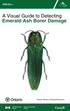 cfs.nrcan.gc.ca A Visual Guide to Detecting Emerald Ash Borer Damage Ontario Ministry of Natural Resources Library and Archives Canada Cataloguing in Publication A visual guide to detecting emerald ash
BENEFITS OF USING IPM
 Edward J. Bechinski and William H. Bohl Potato growers who use IPM consider all available pest control tools. Alternatives to conventional pesticides are the foundation of every IPM plan. Pesticides play
The Future. Trees. climate change and the timber industry ROGER SEDJO
 The Future of Trees climate change and the timber industry ROGER SEDJO N Not all the news on global climate change is gloomy. Global production of industrial timber should increase, even in the face of
THE SCIENCE THE FUTURE OF CANADIAN CANOLA: APPLY THE SCIENCE OF AGRONOMICS TO MAXIMIZE GENETIC POTENTIAL.
 THE SCIENCE THE FUTURE OF CANADIAN CANOLA: APPLY THE SCIENCE OF AGRONOMICS TO MAXIMIZE GENETIC POTENTIAL. WHERE WE HAVE BEEN CANOLA PRODUCTION HAS SURPASSED THE INDUSTRY TARGET OF 15 MMT. This was achieved
National Environment Awareness Campaign(NEAC) 2014-2015. Theme
 National Environment Awareness Campaign(NEAC) 2014-2015. Theme COMBATING DESERTIFICATION, LAND DEGRADATION AND DROUGHT Background Note Desertification is about land degradation: the loss of the land s
Care of Mature Backyard Apple Trees
 Education Center and Info Line practical solutions to everyday questions Toll free Info Line 1-877-398-4769 M-F 9 AM - 2 PM Care of Mature Backyard Apple Trees Introduction Backyard apple trees can be
CITRUS PRUNING. control, fruit production and size control
 CITRUS PRUNING Pruning techniques for tree health pest Pruning techniques for tree health, pest control, fruit production and size control Tree Shapes Citrus trees are generally pruned to a central leader