
L. Myrtaceae. Psidium guajava
|
|
|
- Myron Stokes
- 9 years ago
- Views:
Transcription
1 LOCAL NAMES Amharic (zeituna); Arabic (juafa,juava,guwâfah); Bengali (goaachhi,piyara,peyara); Burmese (malakapen); Creole Patois (gwayav); Dutch (goejaba); English (common guava,guava); Filipino (bayabas,guyabas); French (goyava,goyavier); German (Guavenbaum,guava); Hawaian (kuawa); Hindi (goaachhi,jamba,amrud,amarood,sapari,safed safari); Indonesian (jambu biji); Japanese (banjiro); Javanese (jambu klutuk); Khmer (trapaek sruk); Lao (Sino-Tibetan) (si da); Luganda (mupeera); Malay (jambu berase,jambu biji,jambu kampuchia,jambu batu); Mandinka (biabo); Portuguese (goiaba); Sanskrit (mansala); Sinhala (koiya,pera); Spanish (araza-puita,gauyaba blanca,perulera,guaiaba dulce,guayaba,guayaba agria,guayaba común,guayabillo,agria); Swahili (mpera); Tamil (koyya); Thai (ma-man,farang,ma-kuai); Tigrigna (zeitun); Urdu (amrud); Vietnamese (oi) BOTANIC DESCRIPTION Psidium guajava is a large dicotyledonous shrub, or small evergreen tree, generally 3-10 m high, many branches; stems crooked, bark light to reddish brown, thin, smooth, continuously flaking; root system generally superficial and very extensive, frequently extending well beyond the canopy, there are some deep roots but no distinct taproot. Leaves opposite, simple; stipules absent, petiole short, 3-10 mm long; blade oblong to elliptic, 5-15 x 4-6 cm, apex obtuse to bluntly acuminate, base rounded to subcuneate, margins entire, somewhat thick and leathery, dull grey to yellow-green above, slightly downy below, veins prominent, gland dotted. Inflorescence, axillary, 1- to 3-flowered, pedicles about 2 cm long, bracts 2, linear. Calyx splitting irregularly into 2-4 lobes, whitish and sparsely hairy within; petals 4-5, white, linear-ovate c. 2 cm long, delicate; stamens numerous, filaments pale white, about 12 mm long, erect or spreading, anther straw coloured; ovary inferior, ovules numerous, style about 10 cm long, stigma green, capitate. Fruits green at Wahinepee, Maui, Hawaii (Forest and Kim Starr) Fruit at Makawao, Maui, Hawaii (Forest and Kim Starr) Flower at Makawao, Maui, Hawaii (Forest and Kim Starr) Fruit an ovoid or pear-shaped berry, 4-12 cm long, weighing up to 500 g; skin yellow when ripe, sometimes flushed with red; pulp juicy, creamywhite or creamy-yellow to pink or red; mesocarp thick, edible, the soft pulp enveloping numerous, cream to brown, kidney-shaped or flattened seeds. The exterior of the fruit is fleshy, and the centre consists of a seedy pulp. From the Greek psidion (pomegranate), due to a fancied resemblance between the two fruits. BIOLOGY The pollen is viable for up to 42 hours and the stigmas are receptive for about 2 days. Bees are the principal pollinators. There is some self- and cross-incompatibility but several cultivars have set fair crops of seedless or few-seeded fruit. Levels of 60-75% selfing have been found in natural populations; this has been used to produce homozygotic varieties that can be propagated from seed. It is not known to what extent erratic flowering through the year affects pollination intensity. One of the most critical botanical characteristics of guava is that flowers are borne on newly emerging lateral shoots, irrespective of the time of year. The floral structure, which makes emasculation difficult and with a juvenile period of 3-5 years limit conventional breeding. Seedlings may flower within 2 years; clonally propagated trees often begin to bear during the first year after planting. Trees reach full bearing after 5-8 years, depending on growing conditions and spacing. The guava is not a long-lived tree (about 40 years), but the plants may bear heavily for years. Bats are the main fruit dispersal agents. Page 1 of 5

2 ECOLOGY P. guajava appears to have evolved in relatively open areas, such as savannah/shrub transitional zones, or in frequently disturbed areas where it is a strong competitor in early secondary growth. In some areas it is found in large thickets with as many as 100 plants in an area of less than half a hectare, although it is more often found in densities of 1-5 plants/ha. P. guajava is considered a noxious weed in many tropical pasture lands (when chemical control is not available, guava proliferation may result in the abandonment of a pasture). The guava is a hardy tree that adapts to a wide range of growing conditions. It can stand a wide range of temperatures; the highest yields are recorded at mean temperatures of deg. C. In the subtropics quiescent trees withstand light frost and months (depending on the cultivar) of mean temperatures above 16 deg. C suffice for flowering and fruiting. It fruits at altitudes up to m and survives up to m. Guava is more drought-resistant than most tropical fruit crops. For maximum production in the tropics, however it requires rainfall distributed over the year. If fruit ripens during a very wet period it loses flavour and may split. BIOPHYSICAL LIMITS Altitude: m, Mean annual temperature: deg. C, Mean annual rainfall: mm Soil type: Soils vary widely, including slightly to strongly acid. As expected from a secondary colonizer, it grows well on poor soils with reasonably good drainage, however growth and production are better on rich clay loams. DOCUMENTED SPECIES DISTRIBUTION Native: Exotic: Colombia, Mexico, Peru, United States of America Australia, Bangladesh, Brunei, Cambodia, Cameroon, China, Costa Rica, Cote d'ivoire, Cuba, Dominican Republic, Ecuador, Eritrea, Ethiopia, Fiji, Gabon, Gambia, Greece, Guyana, Haiti, India, Indonesia, Israel, Kenya, Laos, Malawi, Malaysia, Myanmar, Nigeria, Pakistan, Panama, Philippines, Puerto Rico, Samoa, Senegal, South Africa, Sri Lanka, Sudan, Tanzania, Thailand, Togo, Uganda, Venezuela, Vietnam Native range Exotic range The map above shows countries where the species has been planted. It does neither suggest that the species can be planted in every ecological zone within that country, nor that the species can not be planted in other countries than those depicted. Since some tree species are invasive, you need to follow biosafety procedures that apply to your planting site. Page 2 of 5

3 The map above shows countries where the species has been planted. It does neither suggest that the species can be planted in every ecological zone within that country, nor that the species can not be planted in other countries than those depicted. Since some tree species are invasive, you need to follow biosafety procedures that apply to your planting site. PRODUCTS Food: The whole fruit is edible; flavour varies from very acid to sweet with the best fruit being both sweet and mildly acid. It has a pleasant aroma, is very high in vitamin C ( mg/100 g of fruit), and a rich source of vitamin A and pectin ( %). Pectin content increases during ripening and declines rapidly in over-ripe fruit. Table varieties with good taste, large size and high pulp to seed ratio, have been developed for the fresh fruit market in many countries. Other varieties have been developed for the industrial purposes and the following wide variety of products are available: canned fruit or mesocarps in sweet syrup, puree, goiabada (a type of thick, sweet jam), jams and jellies, juices and nectars, ice cream and yoghurts. Guava paste, or guava cheese as known in the West Indies, is made by evaporating the pulp with sugar; it is eaten as a sweetmeat. A firm in the Philippines dehydrates slices of the outer, non-seeded part of the fruit to make a similar product. In some Asian countries such as Indonesia, the leaves are used in cooking. Apiculture: White fragrant flowers secrete nectar in excess all day attracting bees, which also collect juice from the damaged fruits. In India for instance, the blossoms occur in May and June. Fuel: Wood makes excellent firewood and charcoal because of its abundance, natural propagation, and classification as an undesirable weed. Timber: Sapwood light brown, heartwood brown or reddish; hard, moderately strong and durable. It is used for tool handle, fence posts and in carpentry and turnery. Tannin or dyestuff: The leaves and bark may be used for dyeing and tanning. Essential oil: Plant contains an essential oil. The volatile oil with methylchavicol, persein and d-pinene (a paraffin) is found in the leaf. Alcohol: Winemaking from the fruit has been commercialized in southern Africa. Poison: P. guajava has insecticidal properties. Medicine: All parts of the young fruit are astringent. Guava exhibits antibacterial action against intestinal pathogens such as Staphyloccocus. The dried ripe fruits are recommended as a remedy for dysentery, while the leaves and fruits are used as a cure for diarrhoea. Oil contains bisabolene and flavinoides that exhibit anti-inflammatory properties. A decoction of the leaves or bark is taken externally as a lotion for skin complaints, ringworm, wounds, and ulcers. Water from soaking the fruit is good to treat diabetes. The leaves are made into a cataplasm; cooked, they are given to horses with strangle. Some suggested treatments are digestive tract ailments, cold, and high blood pressure: leaf decoction or fruit juice with salt or sugar taken orally. Trauma, pain, headache, and rheumatism: hot leaf decoction compress. Sore throat, hoarse throat: leaf decoction, gargle. Varix, ulcer: leaf decoction, treated with warm water, bath. Hepatitis, gonorrhoea, and diarrhoea: clear fruit juice. SERVICES Ornamental: Widely cultivated as an ornamental fruit tree. Boundary or barrier or support: P. guajava has been used to stake yams (Dioscorea spp.); the small tree is cut back and used to support them. Yield increases of 33-85% have been recorded in Nigeria. Intercropping: Performed very well when intercropped with fodder crops such as maize, sorghum and cowpeas. Tree growth reduction is very small. Pollution control: Identified as useful for bio-indication and as a bio-accumulator in India. It is sensitive to sulphur dioxide; sensitivity to injury based on chlorophyll destruction. Page 3 of 5

4 TREE MANAGEMENT For intensively managed orchards in Thailand trees are spaced only 4-6 m apart but seedlings for fruit processing may be spaced up to 10 x 8 m apart. Irrigation during the dry season and frequent light pruning to promote the emergence of flowering shoots are employed for continuity of production throughout the year. When the crop is cycled most fertilizer is applied as a basal dressing at the end of the harvest, if necessary supplemented by a top dressing; if trees are cropped continuously, fertilizers are applied in several small doses. Growth rate is excellent and the plants coppice readily. Branching is extensive and pruning is necessary to form good orchard trees. Firewood cuttings cause excessive propagation by formulation of sprouts and suckers. Best time of day to harvest is early morning because by noon fruit is warmer and deteriorates more rapidly. During harvesting, great care is necessary to avoid fruit damage, as when collected almost ripe, they will only store for about 2-3 days at room temperature. Fruit for industrial purposes do not need such care but greater speed is still essential. Average yields are between kg/plant in 5 year-old plants and will reach a maximum production of kg at about 7 years if well managed. GERMPLASM MANAGEMENT Seed storage behaviour is orthodox; seeds at 6% mc survive 24 hours in liquid nitrogen; no loss in viability following 66 months hermetic storage at -20 deg. C with 5.5% mc. PESTS AND DISEASES Insect pests are numerous and in some cases severe. Fruit fly maggots such as Anastrepha striata, Dacus spp. and Ceratitis spp. are especially troublesome. Aphids (Aphis spp.) feed on young growth, causing the curling of leaves. Selenothirps rubrocinctus, the red-banded thirp; adult and larval forms puncture leaves of the infested tree and brownish stains appear. Heavily infested trees are sometimes completely defoliated. In Brazil yellow rust (Puccina psidii) is an extremely serious fungal pest, as are leaf spot (Phyllosticha guajayae) and anthracnose (Colletotrichum gloeosporioides). The green scale (Coccus viridis) occurs on branches. Fruit rot (Glomerella cingulata) shrivels green fruit and rots ripe fruit. Mushroom root rot (Clitocybe tabescens) can eventually kill the tree. Page 4 of 5

5 FURTHER READNG Anon The useful plants of India. Publications & Information Directorate, CSIR, New Delhi, India. Beg MU et. al Performance of trees around a thermal power station. Environment and Ecology. 8(3): Bein E Useful trees and shrubs in Eritrea. Regional Soil Conservation Unit (RSCU), Nairobi, Kenya. Bekele-Tesemma A, Birnie A, Tengnas B Useful trees and shrubs for Ethiopia. Regional Soil Conservation Unit (RSCU), Swedish International Development Authority (SIDA). Coates-Palgrave K Trees of southern Africa. C.S. Struik Publishers Cape Town. Cobley S & Steele W.M An Introduction to the Botany of Tropical Crops. Longman Group Limited. El Amin HM Trees and shrubs of the Sudan. Ithaca Press, Exeter. FAO Food and fruit bearing forest species. 3: Examples from Latin America. FAO Forestry Paper. 44/3. Rome. Hong TD, Linington S, Ellis RH Seed storage behaviour: a compendium. Handbooks for Genebanks: No. 4. IPGRI. ICRAF A selection of useful trees and shrubs for Kenya: Notes on their identification, propagation and management for use by farming and pastoral communities. ICRAF. Katende AB et al Useful trees and shrubs for Uganda. Identification, Propagation and Management for Agricultural and Pastoral Communities. Regional Soil Conservation Unit (RSCU), Swedish International Development Authority (SIDA). Lanzara P. and Pizzetti M Simon & Schuster's Guide to Trees. New York: Simon and Schuster Little E Common fuelwood crops. Communi-Tech Association, Morgantown, West Virginia. Mbuya LP et al Useful trees and shrubs for Tanzania: Identification, Propagation and Management for Agricultural and Pastoral Communities. Regional Soil Conservation Unit (RSCU), Swedish International Development Authority (SIDA). Nicholson B.E, Harrison S.G, Masefield G.B & Wallis M The Oxford Book of Food Plants. Oxford University Press. Noad T, Birnie A Trees of Kenya. General Printers, Nairobi. Perry LM Medicinal plants of East and South East Asia : attributed properties and uses. MIT Press. South East Asia. Peter G von Carlowitz Multipurpose Trees and Shrubs-Sources of Seeds and Innoculants. ICRAF. Nairobi, Kenya Raynor B Agroforestry systems in Pohnpei. Practices and strategies for development. Forestry Development Programme. Sardar Singh Bee-keeping in India. Indian Council for Agricultural Research. Sedgley M, Griffin AR Sexual reproduction of tree crops. Academic Press. London. Verheij EWM, Coronel RE (eds.) Plant Resources of South East Asia No 2. Edible fruits and nuts. Backhuys Publishers, Leiden. Vogt K A field guide to the identification, propagation and uses of common trees and shrubs of dryland Sudan. SOS Sahel International (UK). Williams R.O & OBE The useful and ornamental plants in Zanzibar and Pemba. Zanzibar Protectorate. SUGGESTED CITATION Orwa C, A Mutua, Kindt R, Jamnadass R, S Anthony Agroforestree Database:a tree reference and selection guide version 4.0 ( Page 5 of 5

(A. Rich.) Engl. Burseraceae. Commiphora africana
 LOCAL NAMES Afrikaans (harige kanniedood); Amharic (anqa); Arabic (angka,gafal); English (African myrrh,corkwood,poison-grub commiphora); French (myrrhe africaine); Somali (dabba'un'un,hammes-sagara);
Hook. Myrtaceae. Eucalyptus citriodora. lemon-scented gum
 LOCAL NAMES Amharic (shito bahir zaf); Arabic (kafur limuni); English (spotted gum,lemon-scented iron gum,,lemon-scented eucalypt,lemon gum); French (eucalyptus a odeur de citron); German (Zitronen- Eukalyptus);
L. Malpighiaceae. Malpighia glabra. LOCAL NAMES English (West Indian cherry); French (cerise-antillaise); Thai (choeri); Vietnamese (so'ri)
 LOCAL NAMES English (West Indian cherry); French (cerise-antillaise); Thai (choeri); Vietnamese (so'ri) BOTANIC DESCRIPTION Malpighia glabra is a shrub or small evergreen tree, 2-3(-6) m tall, with spreading,
Oliv. Salicaceae. Populus euphratica. bhan, bahan
 LOCAL NAMES Arabic (hodung,gharab,bhan,bahan); Chinese (huyang); English (Indian poplar,euphrates poplar); Hindi (hotung,hondung,bhan,bahan); Trade name (bhan,bahan) BOTANIC DESCRIPTION Populus euphratica
(L.) Jacq. Meliaceae. Swietenia mahagoni. mahogany, Honduran mahogany
 LOCAL NAMES Bengali (mahagni); Creole (kajou peyi); Dutch (mahok); English (West Indian mahogany,cuban mahogany tree,dominican mahogany,jamaican mahogany tree,spanish mahogany tree,west Indies mahogany,mahogany,puerto
R. Br. Fabaceae - Mimosoideae. Acacia melanoxylon
 LOCAL NAMES Amharic (omedla); Dutch (Australiese Swarthout); English (Tasmanian blackwood,swamp blackwood,blackwood acacia,blackwood,australian blackwood); French (acacia a bois noir); German (Schwarzholz
L. Guttiferae. Mammea americana
 LOCAL NAMES English (St. Domingo apricot,south American apricot,mammee apple,mamme,mamey); French (abricot d' Amerique,abricot de Saint- Dominque,abricot des Antilles,abricot pays,abricotier sauvage);
Strawberry Anthracnose
 Strawberry Anthracnose Bill Turechek and Cathy Heidenreich Introduction - The term anthracnose is a general term used to describe plant diseases. Strawberry anthracnose refers to several diseases of strawberry
4th GRADE MINIMUM CONTENTS-NATURAL SCIENCE UNIT 11: PLANTS
 PLANT BITS 4th GRADE MINIMUM CONTENTS-NATURAL SCIENCE UNIT 11: PLANTS There are four main parts to a plant. They are the root, stem, leaf and flower. Each part has an important task to do in the life of
L. Santalaceae. Santalum album. sandalwood, East Indian sandalwood
 LOCAL NAMES Bengali (chandan,sufaid-chandan,peetchandan,srikhanda); Burmese (santagu); English (sandal,cendana,sandal tree,east Indian sandalwood,white Indian sandalwood,sandalwood); French (Santal blanc);
Pineapples. Ian Hewett Horticultural Marketing Inspectorate United Kingdom. Version - October 2011
 Pineapples Ian Hewett Horticultural Marketing Inspectorate United Kingdom Version - October 2011 1 Definition Of Produce This Standard applies to pineapples of varieties (cultivars) grown from Ananascomosus(L).
Engl. Rhamnaceae. Maesopsis eminii. mutere, musizi
 LOCAL NAMES English (umbrella tree); Indonesian (kayu afrika); Luganda (musizi,musinde,muside); Swahili (ndunga,msizi); Trade name (mutere,musizi) BOTANIC DESCRIPTION Maesopsis eminii is a large African
The lychee belongs to the Sapindaceae family Christian DIDIER
 THE LYCHEE Litchi chinensis Sonn is a tropical /subtropical fruit originated in southern China and southeastern Asia. The lychee belongs to the Sapindaceae family Christian DIDIER Introduction to LYCHEE
DC. Fabaceae - Mimosoideae. Acacia sieberiana
 LOCAL NAMES Afrikaans (papierbasdoring,platkroonsoetdoring); Arabic (kochai,kouk,kuk,kuka); Bemba (mutandafiwa,munganunshi); English (white thorn,umbrella thorn,flat-topped thorn,paperbark thorn,paperbark
USEFUL TREES FOR THE LAKE TANGANYIKA BASIN TOOLKIT
 USEFUL TREES FOR THE LAKE TANGANYIKA BASIN TOOLKIT A TREE SPECIES SELECTION AND MANAGEMENT TOOLKIT FOR SUSTAINABLE AGROFORESTRY INTERVENTIONS IN THE CATCHMENTS OF LAKE TANGANYIKA USER GUIDE World Agroforestry
L. Anacardiaceae. Mangifera indica. LOCAL NAMES Amharic (mango); Arabic (manga); Bengali (am); Burmese (thayet thaythypu,thar-yetthi,mempalam);
 LOCAL NAMES Amharic (mango); Arabic (manga); Bengali (am); Burmese (thayet thaythypu,thar-yetthi,mempalam); Creole (mango); Creole Patois (margot); Dutch (maggo,kanjanna manja,manggaboom,manja,bobbie manja);
Bangladesh Visa fees for foreign nationals
 Bangladesh Visa fees for foreign nationals No. All fees in US $ 1. Afghanistan 5.00 5.00 10.00 2. Albania 2.00 2.00 3.00 3. Algeria 1.00 1.00 2.00 4. Angola 11.00 11.00 22.00 5. Argentina 21.00 21.00 42.00
De Wild. Fabaceae - Mimosoideae. Acacia mearnsii. black wattle
 LOCAL NAMES Amharic (mimosa); English (green wattle,tan wattle,australian acacia,,late ); French (acacie noir); German (gerber- Akazie); Indonesian (akasia); Italian (Mimosa di Mearns); Japanese (wattor-ju);
PINEAPPLE PRODUCTION. Introduction
 PINEAPPLE PRODUCTION Introduction The pineapple is a tropical and subtropical fruit grown in many countries in Africa. In Uganda it is mainly grown south of Lake Kyoga and western Uganda. Ii is a tradable
L. Rubiaceae. Coffea arabica. arabica coffee
 LOCAL NAMES Burmese (ka-phi); Creole (kafe); Dutch (arabische Koffieboom); English (Arabian coffee,,brazilian coffee,coffee tree,abyssinian coffee); Filipino (kafe); French (caféier,café); German (Bergkaffee,arabischer
(Sw.) DC. Fabaceae - Mimosoideae. Prosopis juliflora
 LOCAL NAMES Arabic (mesquite); Creole (bayawonn,bayawonn fran); English (ironwood,algarroba,honey mesquite,mesquite,mesquite bean); Filipino (aroma); French (bayahonda,chambron,bayarone,bayahonde francais);
L. Ebenaceae. Diospyros kaki
 LOCAL NAMES English (persimmon,oriental persimmon,keg fig,kaki plum tree,chinese fig,chinese plum,japanese persimmon,date plum); French (kaki,plaqueminier kaki); German (Kakipflaumenbaum); Italian (cachi);
89% 96% 94% 100% 54% Williams 93% financial aid at Williams. completion statistics $44,753 76% class of 2013 average four-year debt: $12,749
 financial aid at Average - $, financial aid is comprehensive, covering books, health insurance, study abroad costs, travel, and personal expenses % % % % cost met by average % of with demonstrated need
Flower Model: Teacher Instructions Sepals Anther Stamens (male) Filament Stigma Pistil Style (female) Ovary Petals sepals petals stamens pistil
 Flower Model: Teacher Instructions In order to better understand the reproductive cycle of a flower, take a look at some flowers and note the male and female parts. Most flowers are different; some have
Apricot Tree Prunus armeniaca
 Apricot Tree Prunus armeniaca Up to 25-30 tall x 15-20 wide or partial shade 10 degrees F. General: The Apricot Tree is a subspecies of the peach and dates back 3,000 years to northeastern China. Apricots
L. Eleagnaceae. Hippophae rhamnoides. sea buckthorn
 LOCAL NAMES Danish (tindved); English (); French (grisset,argousier,argasse); German (sanddorn); Lao (Sino-Tibetan) (starbu,dhar-bu); Spanish (espino falso,espino armarillo); Swedish (finbar); Trade name
Contact Centers Worldwide
 A Contact Centers Worldwide Country Tel.no. Supported lang. Contact Center Albania Algeria 852 665 00 +46 10 71 66160 Angola 89900 +34 91 339 2121 (Port) and Portuguese +34 913394044 +34 913394023 (Por)
L. Moraceae. Ficus sycomorus
 LOCAL NAMES Afrikaans (sycomorusvy,rivierwildevy); Amharic (shola,bamba); Arabic (subula); Bemba (mkunyu); English (wild fig,stranglerfig,sycamore,sycamore fig,bush fig,common cluster fig); French (figuier
Eligibility List 2015
 The Global Fund adopted an allocation-based approach for funding programs against HIV/AIDS, TB and malaria in 2013. The Global Fund policy states that countries can receive allocation only if their components
P omegranates. Texas Fruit and Nut Production. Larry Stein, Jim Kamas, and Monte Nesbitt, Extension Fruit Specialists, The Texas A&M University System
 E-613 2-13 Texas Fruit and Nut Production P omegranates Larry Stein, Jim Kamas, and Monte Nesbitt, Extension Fruit Specialists, The Texas A&M University System I nterest in growing pomegranates has increased
JICA Training Course Plant Variety Protection course
 Session 4: DUS Training provided by members of the Union DUS Training organized by Japan Tsukasa KAWAKAMI Intellectual Property Division, Ministry of Agriculture, Forestry and Fisheries (MAFF) Japan 1
Moringa Oleifera a Multipurpose Tree:
 Moringa Oleifera a Multipurpose Tree: 1.0 Introduction: Amandla Resources 1.1 Moringa Oleifera belongs to the onogeneric family of shrubs and trees and originated south of the Himalayas in Northern India.
Proforma Cost for international UN Volunteers for UN Partner Agencies for 2016. International UN Volunteers (12 months)
 Proforma Cost for international UN Volunteers for UN Partner Agencies for 2016 Country Of Assignment International UN Volunteers (12 months) International UN Youth Volunteers (12 months) University Volunteers
Countries Ranked by Per Capita Income A. IBRD Only 1 Category iv (over $7,185)
 Page 1 of 5 Note: This OP 3.10, Annex C replaces the version dated September 2013. The revised terms are effective for all loans that are approved on or after July 1, 2014. Countries Ranked by Per Capita
Common Name: AMERICAN BARBERRY. Scientific Name: Berberis canadensis Miller. Other Commonly Used Names: none. Previously Used Scientific Names: none
 Common Name: AMERICAN BARBERRY Scientific Name: Berberis canadensis Miller Other Commonly Used Names: none Previously Used Scientific Names: none Family: Berberidaceae (barberry) Rarity Ranks: G3/S1 State
Available study programs at Czech University of Life Sciences Prague
 EU subject code University subject Name of course/program Mobility Language Homepage 1,1 1,1 Environmental Engineering in Agriculture II Rural Communication and Extension 1,1 Tropical Forestry and Agroforestry
www.indg.in PLANT PROFILE
 AMLA PLANT PROFILE Family : Euphorbiaceae English name : Indian gooseberry, Embelic Indian name : Dhatri, Amlaka, Adiphala (Sanskrit) Amla, Amlika, Aonla (Hindi) Nelli, Malanelli (Tamil) Amalakkamu, Usirikai
-1 7.04 Propagules adapted to wind dispersal n. -1 7.05 Propagules water dispersed n
 Australia/New Zealand Weed Risk Assessment adapted for Florida. Data used for analysis published in: Gordon, D.R., D.A. Onderdonk, A.M. Fox, R.K. Stocker, and C. Gantz. 2008. Predicting Invasive Plants
IGCSE and GCSE Biology. Answers to questions. Section 2. Flowering Plants. Chapters 6-9. Chapter 6 Plant structure and function
 1 IGCSE and GCSE Biology. Answers to questions Section 2. Flowering Plants. Chapters 6-9 Chapter 6 Plant structure and function Page 54 1. a Epidermis. Helps maintain shape, reduces evaporation, resists
PURECHIA 2013 PARTNERSHIP BROCHURE. Rich Source of Omega-3, Protein, Fiber & Antioxidants. Next Big Thing in Food. www.purechia.co
 PURECHIA 2013 PARTNERSHIP BROCHURE Rich Source of Omega-3, Protein, Fiber & Antioxidants. Next Big Thing in Food. Pure Chia : Next Big Thing in Food Sustainable Agribusiness that Sources, Grows and Markets
Dwarf Sour Cherries for the Prairies
 Dwarf Sour Cherries for the Prairies By Bob Bors and Rick Sawatzky I never fully understood the story of how George Washington couldn t tell a lie about cutting down a cherry tree. I had always thought
Cash Crops, Food Crops and Agricultural Sustainability
 GATEKEEPER SERIES No. 2 International Institute for Environment and Development Sustainable Agriculture and Rural Livelihoods Programme Cash Crops, Food Crops and Agricultural Sustainability EDWARD B.
International Fuel Prices 2012/2013
 International Fuel Prices 212/213 8 th Edition Published by International Fuel Prices 212/213 8 th Edition Disclaimer Findings, interpretation and conclusions expressed in this document are based on the
Senate Committee: Education and Employment. QUESTION ON NOTICE Budget Estimates 2015-2016
 Senate Committee: Education and Employment QUESTION ON NOTICE Budget Estimates 2015-2016 Outcome: Higher Education Research and International Department of Education and Training Question No. SQ15-000549
Chilli - Long Red Cayenne, Long Slim Cayenne, P2391, Serano, Skyline 3, Star 6601, Thai chili, Thai Dragon.
 CAPSICUMS Hot pepper (chilli), sweet pepper and paprika. CLIMATE These crops require warmer conditions than tomatoes, and are more sensitive to cold and frost. The optimum mean temperatures for growth,
Roxb. ex DC. Fabaceae - Papilionoideae. Dalbergia sissoo. sissoo, shisham
 LOCAL NAMES Arabic (dalbergia,sissoo); Bengali (shisu,shishu,sisu); English (Bombay blackwood,sissoo,indian rosewood,sisso); Hindi (agaru,biridi,tali,gette,kara,shisham,sisam,sissai,sissu,sissoo); Indonesian
FORESTED VEGETATION. forests by restoring forests at lower. Prevent invasive plants from establishing after disturbances
 FORESTED VEGETATION Type of strategy Protect General cold adaptation upland and approach subalpine forests by restoring forests at lower Specific adaptation action Thin dry forests to densities low enough
Excerpt Sudan Fixed Telecommunications: Low Penetration Rates Get a Boost from Broadband Internet and VoIP Services
 Excerpt Sudan Fixed Telecommunications: Low Penetration Rates Get a Boost from Broadband Internet and VoIP Services This report is part of Pyramid Research s series of Africa & Middle East Country Intelligence
COMMISSION IMPLEMENTING DECISION. of 24.5.2016
 EUROPEAN COMMISSION Brussels, 24.5.2016 C(2016) 3040 final COMMISSION IMPLEMENTING DECISION of 24.5.2016 amending Commission Implementing Decision C(2015) 8936 of 15.12.2015 on the financing of humanitarian
Consolidated International Banking Statistics in Japan
 Total (Transfer Consolidated cross-border claims in all currencies and local claims in non-local currencies Up to and including one year Maturities Over one year up to two years Over two years Public Sector
Evaluating the benefits of integrated rice-duck farming as organic system in Bangladesh
 Evaluating the benefits of integrated rice-duck farming as organic system in Bangladesh Shaikh Tanveer Hossain*, H Konagaya, T Furuno and H Sugimoto * E-mail : [email protected] Fact Sheet of Bangladesh
Guidelines for DBA Coverage for Direct and Host Country Contracts
 Guidelines for DBA Coverage for Direct and Host Country Contracts An Additional Help document for ADS Chapter 302 New Reference: 06/14/2007 Responsible Office: OAA/P File Name: 302sap_061407_cd48 BACKGROUND:
Major/Specialization. B.Sc. Degree
 B.Sc. Degree Extension and Extension and Forestry and Forest Reclamation of Arid & Mountainous Regions Agronomy & with two specializations Landscape Design Aquatic Ecology Fish Processing Forestry and
As closely related members of the rose family,
 E-612 2-13 Texas Fruit and Nut Production lums, Nectarines, Apricots Cherries, Almonds and Prunus hybrids Larry Stein, Jim Kamas, and Monte Nesbitt Extension Fruit Specialists, The Texas A&M University
Fertilizer, Weed Control, Grubs, and General Application Questions
 Lawn Care FAQ s Fertilizer, Weed Control, Grubs, and General Application Questions Why do we have so many weeds? Dandelions in particular, weeds in general, do not seem concerned about how long lawn has
INTEGRATED PEST MANAGEMENT SYSTEM FOR KENNESAW STATE UNIVERSITY
 INTEGRATED PEST MANAGEMENT SYSTEM FOR KENNESAW STATE UNIVERSITY KENNESAW, GEORGIA PREPARED JANUARY 1997 REVISED NOVEMBER 2006 TABLE OF CONTENTS Introduction and Principles of Integrated Pest Management
Taxation Determination
 Page status: legally binding Page 1 of 8 Taxation Determination Fringe benefits tax: reasonable amounts under section 31G of the Fringe Benefits Tax Assessment Act 1986 for food and drink expenses incurred
Lam. Moringaceae. Moringa oleifera
 LOCAL NAMES Amharic (shiferaw); Arabic (rawag); Bengali (sujina,sohjna,sajina); Burmese (dan-da-lun,dandalonbin); Cantonese (nugge); Creole Patois (benzolive tree); English (moringa tree,ben-oil tree,cabbage
Mineral Industry Surveys
 4 Mineral Industry Surveys For information contact: Robert L. Virta, Asbestos Commodity Specialist U.S. Geological Survey 989 National Center Reston, VA 20192 Telephone: 703-648-7726, Fax: (703) 648-7757
Strawberry Leaf Spot
 Strawberry Leaf Spot Cathy Heidenreich and Bill Turechek Introduction - Leaf spot is one of the most common and widespread diseases of strawberry. Mycosphaerella fragariae is also the cause of black seed
FDI performance and potential rankings. Astrit Sulstarova Division on Investment and Enterprise UNCTAD
 FDI performance and potential rankings Astrit Sulstarova Division on Investment and Enterprise UNCTAD FDI perfomance index The Inward FDI Performance Index ranks countries by the FDI they receive relative
12. INSECT PEST AND DISEASE MANAGEMENT
 12. INSECT PEST AND DISEASE MANAGEMENT Conservation farming promotes a diversity of insect life, influences pest populations and also favours many beneficial insects. The beneficial insects which act as
Parts of a Flower and Pollination
 Science Unit: Lesson 3: Soils, Plants, and First Nations Parts of a Flower and Pollination School year: 2007/2008 Developed for: Britannia Elementary School, Vancouver School District Developed by: Catriona
AGFACTS. Strawberry disease control guide MAJOR DISEASES OF STRAWBERRIES
 AGFACTS AGFACTS AGFACTS www.agric.nsw.gov.au Strawberry disease control guide Agfact H3.3.1 third edition, May 2004 Lawrence Ullio, District Horticulturist Elizabeth Macarthur Agricultural Institute Camden
Ipomoea horsfalliae (prince's vine)
 Australia/New Zealand Weed Risk Assessment adapted for Florida. Data used for analysis published in: Gordon, D.R., D.A. Onderdonk, A.M. Fox, R.K. Stocker, and C. Gantz. 28. Predicting Invasive Plants in
Promoting Pollination Farming for Native Bees
 Promoting Pollination Farming for Native Bees Overview Pollination, the transfer of pollen grains to fertilize the ovules of flowers to produce seeds and fruits, is essential to agriculture and natural
FOREST RESTORATION MONITORING TOOL
 FOREST RESTORATION MONITORING TOOL Draft version for field test INTRODUCTION FAO upon recommendation of its members identified the need to initiate a comprehensive analysis, evaluation and documentation
RIPPLE Africa Step by Step Fruit Tree planting Guide
 RIPPLE Africa Step by Step Fruit Tree planting Guide NOTES ON FRUIT PRODUCTION Aim and Objective The aim and objective of RIPPLE Africa as an organisation is to make Nkhata Bay District one of the leading
Cisco Global Cloud Index Supplement: Cloud Readiness Regional Details
 White Paper Cisco Global Cloud Index Supplement: Cloud Readiness Regional Details What You Will Learn The Cisco Global Cloud Index is an ongoing effort to forecast the growth of global data center and
The Basics of Tree Pruning
 The Basics of Tree Pruning By John Ball, Forest Health Specialist and Aaron Kiesz, Urban and Community Forestry Specialist Until the end of the 19 th century, trees were not a common sight in many parts
Total Purchases in 2012
 Fighting Hunger Worldwide Food Procurement Annual Report 2012 Maize, Niger WFP/Rein Skullerud Procurement Mission Statement To ensure that appropriate commodities are available to WFP beneficiaries in
Irish potatoes are one of America s most
 E-511 11-10 Easy Gardening Joseph Masabni, Assistant Professor and Extension Horticulturist, The Texas A&M University System Irish potatoes are one of America s most popular vegetables the average American
Migration and Remittances: Top Countries
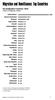 Migration and Remittances: Top Countries Top Immigration Countries a, 010 number of immigrants, millions United States b Russian Federation b Germany b Saudi Arabia b Canada b United Kingdom b Spain b
Plant Parts. Background Information
 Purpose The purpose of this lesson is for students to learn the six basic plant parts and their functions. Time Teacher Preparation: 30 minutes Student Activity: 60 minutes Materials For the teacher demonstration:
Expression of Interest in Research Grant Applications
 INTERNATIONAL CENTRE FOR GENETIC ENGINEERING AND BIOTECHNOLOGY THE ACADEMY OF SCIENCES FOR THE DEVELOPING WORLD UNITED NATIONS EDUCATIONAL, SCIENTIFIC AND CULTURAL ORGANIZATION ICGEB-TWAS-UNESCO/IBSP Joint
4. Comparative advantage in freshwater fish farming
 35 4. Comparative advantage in freshwater fish farming In this section we apply the RCA approach to a regional assessment of countries comparative advantage in culturing three freshwater fish species.
Moringa for Cattle Fodder and Plant Growth
 Balbir Mathur President, Trees for Life 3006 W. St. Louis, Wichita, KS, 67203-5129 (316) 945-6929 www.treesforlife.org July 2006 Moringa for Cattle Fodder and Plant Growth Two recent studies in Nicaragua
Fiscal Rules and Fiscal Responsibility Frameworks for Growth in Emerging and Low-Income Countries
 Fiscal Affairs Department Effects of Good Government, by Ambrogio Lorenzetti, Siena, Italy, 1338-39 Fiscal Rules and Fiscal Responsibility Frameworks for Growth in Emerging and Low-Income Countries Martine
Shell Global Helpline - Telephone Numbers
 Shell Global Helpline - Telephone Numbers The Shell Global Helpline allows reports to be submitted by either a web-based form at https://shell.alertline.eu or by utilising one of a number of telephone
Virginia Gardener http://www.hort.vt.edu/envirohort
 The Virginia Gardener http://www.hort.vt.edu/envirohort Name Help Sheets: Things Plants Need There are certain things that every living thing needs in order to live and grow. Just like you, plants need
HEALTHIEST COUNTRIES 1 to 40
 BLOOMBERG RANKINGS THE WORLD'S HEALTHIEST COUNTRIES HEALTHIEST COUNTRIES 1 to 40 1 Singapore 89.45% 92.52% 3.07% 2 Italy 89.07 94.61 5.54 3 Australia 88.33 93.19 4.86 4 Switzerland 88.29 93.47 5.17 5 Japan
INSTRUCTIONS FOR COMPLETING THE USAID/TDA DEFENSE BASE ACT (DBA) APPLICATION
 INSTRUCTIONS FOR COMPLETING THE USAID/TDA DEFENSE BASE ACT (DBA) APPLICATION Full Name of Insured or Company and Complete Mailing Address: This is whoever has the contract with USAID. Generally, it is
List of Agreements on Mutual Visa Exemption. Between the People s Republic of China and Foreign Countries
 List of Agreements on Mutual Visa Exemption Between the People s Republic of China and Foreign Countries (In alphabetical order of foreign countries) Last Update: May 9, 2015 No. Foreign Country Passport
Oak Trees BASIC GROWING REQUIREMENTS FOR YOUR
 They are beautiful in their peace, They are wise in their silence. They will stand after we are dust. They teach us, and we tend them. G.A. MacDunelmor BASIC GROWING REQUIREMENTS FOR YOUR Oak Trees The
University of California Cooperative Extension Master Gardeners The Backyard Orchard Fruit Cultivation Guide
 Strawberries (Short day: Chandler ; Day neutral: Fern ) Blueberries (Low chill: O Neal, Misty, Sunshine Blue ) Boysenberries ( Boysen, Olallie ) Raspberries ( Bababerry ) Bareroot and 6 packs in fall to
Ligustrum, Privet Ligustrum japonicum
 Ligustrum, Privet Ligustrum japonicum http://edis.ifas.ufl.edu/mg022 Propagation L. japonicum Ligustrum are propagated by softwood cuttings taken in spring, or 5 10 cm semihardwood cuttings with a heel
Two Main Precautions Before You Begin Working
 Pruning Mango Trees Roy Beckford, Ag/Natural Resources Agent, UF/IFAS Lee County Two Main Precautions Before You Begin Working 1. Mango peel and sap contain urushiol, the chemical in poison ivy and poison
ADVOC. the international network of independent law firms
 ADVOC the international network of independent law firms About ADVOC ADVOC is an international network of independent law firms, sharing international expertise in jurisdictions across the globe Our member
Care of Mature Backyard Apple Trees
 Education Center and Info Line practical solutions to everyday questions Toll free Info Line 1-877-398-4769 M-F 9 AM - 2 PM Care of Mature Backyard Apple Trees Introduction Backyard apple trees can be
System of Rice Intensification (SRI)
 System of Rice Intensification (SRI) Ramasamy Selvaraju Climate, Energy and Tenure Division (NRC), FAO Fifth annual Investment Days, Rome, Italy; 17 December 2013 Contents What is SRI? Main concepts of
Custard apple information kit
 information kit Reprint information current in 1998 REPRINT INFORMATION PLEASE READ! For updated information please call 13 25 23 or visit the website www.deedi.qld.gov.au This publication has been reprinted
GENERAL WATERING & CARE GUIDE
 GENERAL WATERING & CARE GUIDE Between 30-60 percent of water applied to lawns and gardens is never absorbed by the plants. Water is often wasted because it is applied too quickly and runs off, evaporates
Table 3. List of descritors for maize
 Table 3. List of descritors for maize Descriptor Descriptor Descriptor state Recording stage Remarks number 1 Accession number 2 Total no. of leaves Record the total number of At flowering leaves per plant
The World Market for Medical, Surgical, or Laboratory Sterilizers: A 2013 Global Trade Perspective
 Brochure More information from http://www.researchandmarkets.com/reports/2389480/ The World Market for Medical, Surgical, or Laboratory Sterilizers: A 2013 Global Trade Perspective Description: This report
Phenology. Phenology and Growth of Grapevines. Vine Performance
 Phenology and Growth of Grapevines Ker 2007 1 Soil Depth Texture Water and nutrient supply Climate Radiation Temperature Humidity Windspeed Rainfall Evaporation Cultural decisions Vine density Scion and
Growing Cocoa Beans. Growing Region
 Growing Cocoa Beans All chocolate begins with cocoa beans, the fruit of the cacao tree (also called a cocoa tree). Scientists know that the cacao tree originated somewhere in South or Central America.
Appendix A. Crisis Indicators and Infrastructure Lending
 Appendix A. Crisis Indicators and Infrastructure Lending APPENDIX A Table A.1. Crisis Indicators (Case Study Countries) Country % as Share of GDP Share of in Bank Crisis Severity Score (principal factor
Technical & Trade School Lines World Report
 Brochure More information from http://www.researchandmarkets.com/reports/1836899/ Technical & Trade School Lines World Report Description: TECHNICAL & TRADE SCHOOL LINES WORLD REPORT The Technical & Trade