
Chamnanni Rungprai, M.D.
|
|
|
- Jade Paul
- 9 years ago
- Views:
Transcription
1 Outcomes of single versus multi-level Gastrosoleus or Achilles tendon lengthening Techniques: A Comparative Study 1,2 Chamnanni Rungprai, M.D. Co-authors 1 Christopher Cyclosz, M.D. 1 Phinit Phisitkul, M.D. 1.University Of Iowa Hospital and Clinic, Iowa, USA 2.Phramongkutklao hospital and college of medicine, Bangkok, Thailand AOFAS 2015 Annual Meeting eposter

2 NO CONFLICT TO DISCLOSE Outcomes of single versus multi-level Gastrosoleus or Achilles tendon lengthening Techniques: A Comparative Study Chamnanni Rungprai, M.D. My disclosure is in the Final AOFAS Mobile App. I have no potential conflicts with this presentation.

3 Introduction Ankle equinus contracture is a commonly encountered condition in an orthopaedic foot and ankle practice. Gastrocnemius or gastrosoleus contracture has been postulated to be the root of numerous foot and ankle pathologies Diabetic foot ulcers Hallux valgus Metatarsalgia Adult acquired flatfoot disorder Plantar fasciitis Initial treatment should consist of conservative management including night splints and stretching exercises If these fail, surgical treatment is indicated. Single level gastrocnemius or Achilles tendon lengthening including open, percutaneous, and endoscopic techniques are considered standard techniques for the treatment of equinus contracture. However, patients with severe equinus contracture require multilevel of lengthening using combined procedures as mentioned above to achieve adequate ankle dorsiflexion. In addition, there has been no comparative study to demonstrate clinical outcomes and complications between single versus multiple levels of gastrocnemius or Achilles tendon lengthening techniques.

4 Materials and methods Retrospective chart review with prospectively collected data of 646 consecutive patients (676 feet) diagnosed with ankle equinus contracture and underwent single level of gastrocnemius or Achilles tendon lengthening techniques (610 patients / 640 feet) including open Valpius or Strayer (VSO) 200 patients / 206 feet, Baumann 38 patients / 38 feet, percutaneous triple hemisections (Hoke) 52 patients / 52 feet, endoscopic gastrocnemius recession (EGR) (320 patients/ 344feet), and multilevel using combined techniques 36 patients / 36 feet between January 2006 and June The primary outcomes include Foot Function Index (FFI) Short Form-36 (SF-36 Visual Analogue Scale Ankle dorsiflexion. Secondary outcome includes Operative time Complications Pre- and post-operative functional outcome scores were obtained and compared using Wilcoxon Rank Sum Test, and Chi-square Test.

5 Surgical technique A B A B C D C D Figure 1: EGR was performed by two portals technique (A). The gastrocnemius aponeurosis is identified (B), retrograde knife was used to release aponeurosis (C). The gastrocnemius muscle after complete release the gastrocnemius aponeurosis (D). Figure 2: Percutaneous tripple hemisection of Achilles tendon was performed by using three step cut technique is shown in picture 2A. The proximal medial cut is shown is picture 2B and middle lateral cut is shown in picture 2C and distal medial cut is shown in picture 2D.

6 Table 1 Demographic characteristics of single and multiple gastrocnemius or Achilles tendon lengthening. Parameters Open Strayer or Valpius Single level Multiple level Hoke Baumann EGR Combined procedure Number of patients / legs 200 / / / / / 36 Age of time at surgery (year) (range) 50.4 ± 15.6 ( ) 60.2 ± 13.1 ( ) 51.3 ± 14.1 ( ) 47.1 ± 15.7 ( ) 50.8 ± 13.5 ( ) Male : Female ratio (no. of patients) 95 : : : : : 20 BMI(Kg/m 2 ) (range) 31.8 ± 7.0 ( ) 33.8 ± 7.0 ( ) 31.4 ± 7.8 ( ) 32.8 ± 8.5 ( ) 33.9 ± 6.9 ( ) Duration of follow up (month) (range) 23.9 ± 19.4 (6-90) 27.5 ± 22.6 (6-81) 24.0 ± 11.9 (6-44) 17.6 ± 56.6 (12-53) 38.9 ± 28.6 (6-96)

7 TABLE 2 Group comparison between single and multiple gastrocnemius or Achilles tendon lengthening. Parameters Single level Multiple level Open Strayer or Valpius (n=200) Hoke procedure (n=52) Baumann procedure (n=38) Endoscopic technique (n=320) Combined techniques (n=36) Operative time (minutes) ± 5.07* (21-35) 3.15 ± 1.14* (2-5) ± 6.45 (21-38) ± 5.02 (12-30) 29.0 ± 7.1 (20-37) **Pre / Post-operative Visual Analog Scale (range) (no./total) SF-36 Score: at final follow up (points) **PCS: pre / postoperative (no./total) **MCS: pre / postoperative (no./total) Foot Function Index (FFI): pre / post-operative at final follow up ** Pain: pre / postoperative (no./total) **Disability: pre / post-operative (no./total) **Activity limitation: pre / post-operative (no./total) **Total score: pre / post-operative (no./total) 6.3 ± 2.7 / 3.6 ± 2.9 (n=175) 37.3 ± 9.1 / 43.3 ± 10.2 (n=76) 45.4 ± 11.4 / 50.1 ± 10.9 (n=76) 59.2 ± 15.2 / 36.7 ± 16.6 (n=76) 59.9 ± 15.9 / 41.0 ± 17.5 (n=76) 60.3 ± 12.2 / 40.5 ± 19.7 (n=76) 60.1 ± 13.6 / 39.2 ± 16.2 (n=76) 7.3 ± 2.3 / 3.2 ± 2.4 (n=47) 32.5 ± 9.5 / 45.5 ± 11.1 (n=32) 42.9 ± 10.5 / 49.1 ± 11.3 (n=32) 54.0 ± 18.0 / 34.5 ± 13.7 (n=32) 49.5 ± 18.1 / 36.2 ± 13.4 (n=32) 58.2 ± 14.9 / 34.5 ± 14.8 (n=32) 53.6 ± 14.1 / 35.6 ± 12.7 (n=32) 6.9 ± 1.8 / 3.8 ± 2.9 (n=35) 35.4 ± 4.9 / 44.1 ± 9.8 (n=26) 47.5 ± 11.2 / 56.8 ± 7.8 (n=26) 54.7 ± 13.7 / 39.1 ± 13.1 (n=26) 55.4 ± 14.4 / 34.6 ± 11.8 (n=26) 63.2 ± 16.0 / 39.2 ± 19.8 (n=26) 58.9 ± 12.1 / 37.7 ± 14.1 (n=26) 7.3 ± 2.2 / 3.4 ± 2.7 (n=276) 33.9 ± 9.6 / 45.1 ± 12.2 (n=185) 43.8 ± 11.8 / 51.4 ± 11.6 (n=185) 63.2 ± 18.4 / 42.1 ± 19.6 (n=185) 63.0 ± 19.6 / 43.3 ± (n=185) 67.9 ± 17.7 / 44.4 ± 23.8 (n=185) 64.2 ± 15.0 / 41.5 ± 19.0 (n=185) 7.8 ± 1.5 / 3.6 ± 3.1 (n=28) 33.0 ± 10.1 / 40.7 ± 12.4 (n=22) 43.9 ± 14.2 / 49.4 ± 10.6 (n=22) 68.8 ± 13.2 / 40.7 ± 12.4 (n=19) 56.8 ± 27.7 / 49.4 ± 10.6 (n=19) 67.4 ± 15.4 / 41.4 ± 25.4 (n=19) 64.3 ± 13.2 / 37.9 ± 20.0 (n=19)

8 Table 3 Ankle dorsiflexion between single and multiple gastrocnemius or Achilles tendon lengthening. Ankle range of motion Dorsiflexion Pre-operative (range, degrees) up (number of available patients/total number) Immediate postoperative / improvement (range, degrees) (number of available patients/total number) At final follow up / improvement (range, degrees) up (number of available patients/total number) Open Strayer or Valpius (n=200) -2.8 ± 8.9 ((-50) - 10) (n=164) 12.4 ± 4.8 / (15.0) ((-5) - 30) (n=164) 7.8 ± 5.7 / (10.62) ((-10) - 30) (n=164) Hoke technique (n=52) -0.5 ± 8.1 ((-20) - 10) (n=40) 10.1 ± 5.5 / (10.6) (0-20) (n=40) 6.6 ± 5.8 / (7.08) ((-5) - 20) (n=40) Single level Baumann technique (n=38) -5.1 ± 6.6 ((-30) - 10) (n=34) 9.8 ± 4.7 / (14.9) (0-20) (n=34) 7.8 ± 4.6 / (12.82) (0-20) (n=34) Endoscopic technique (n=320) -0.8 ± 5.4 ((-50) - 10) (n=294) 14.7 ± 6.7* / (15.6) (0-30) (n=294) 11.0 ± 6.6 / (11.84) ((-10) - 30) (n=294) Multiple level Combined techniques (n=36) ± 9.0* ((-5) - (-35)) (n=27) 9.0 ± 5.1 / (22.2)* ((-5) - 15) (n=27) 5.2 ± 5.9* / (18.4)* ((-10) - 15) (n=24)

9 Table 4 Complications between single and multiple gastrocnemius or Achilles tendon lengthening. Number of complications / Total number of legs (Percent) Single level Multiple level Complications 1. Superficial infection 2. Sural nerve dysesthesia 3. Weakness of plantar flexion Open Strayer or Valpius (n=206) Baumann Technique (n=52) Hoke Technique (n=38) Endoscopic Technique (n=344) Combined Technique (n=36) 13 (6.3%) 3 (7.9%) 0 (0.0%) 0 (0.0%) 1 (2.8%) 7 (3.4%) 1 (2.6%) 1 (1.9%) 10 (2.9%) 3 (8.3%) 9 (4.4%) 1 (2.6%) 5 (9.6%) 11 (3.2%) 10* (27.7%) (p=0.001) 4. Painful scar 5 (2.4%)* 1 (1.9%) 0 (0.0%) 0 (0.0%) 0 (0.0%) 5. Calf muscle atrophy 5 (2.4%) 0 (0.0%) 0 (0.0%) 8 (2.6%) 11* (30.5%) (p=0.001) 6. Rupture of the Achilles tendon 0 (0.0%) 0 (0.0%) 6* (15.8%) (p = 0.03) 0 (0.0%) 0 (0.0%)

10 Results All techniques demonstrated significant improvement in FFI, SF- 36, VAS, and ankle dorsiflexion (all p-value < 0.001). Multi-level of lengthening demonstrated significantly longer operative time than Hoke technique (p-value = 0.001) but the means improvement of ankle dorsiflexion intraoperatively and at final postoperative visit were significantly greater than all single level techniques (p-value = 0.001). The ankle dorsiflexion of multi-level at final post-operative visit was significantly lesser than endoscopic technique (p-value = 0.002) but was comparable with other single level lengthening. Weakness of plantarflexion and calf muscle atrophy was significantly higher in multi-level than all single level techniques (p-value < 0.05) while the rupture of the Achilles tendon was significant higher in single Hoke technique (p-value = 0.03). Sural nerve dysesthesia was higher in multi-level but this did not reach statistical significance while other complications were similar between groups.

11 Discussion Limitations Retrospective design, and therefore no randomization was used in the methods. Some patients were lost to follow-up and some did not response to the questionnaires, resulting in approximately fifty percent of patients available to be analyzed at final follow-up. Strengths Consecutive case collection. Relatively large number of subject. Systematically collected outcome data using validated assessment methods. All surgeries were performed by the same group of fellowship-trained orthopaedic foot and ankle surgeons. Conclusion Both single and multi-level techniques for gastrocnemius or Achilles tendon lengthening demonstrated significant improvement in outcomes as measured with the FFI, SF-36, VAS, and ankle dorsiflexion for treatment of tightness of gastrocnemius and gastrosoleus muscle. Hoke is fastest procedure but significant rapture rate of Achilles tendon. Multi-level lengthening resulted in significant improvement of ankle dorsiflexion at final post-operative visit and intraoperatively but leaded to higher sural nerve dysesthesia and significant weakness of plantarflexion and calf muscle atrophy.

12 Reference: 1. Abbassian A, Kohls-Gatzoulis J, Solan MC. Proximal medial gastrocnemius release in the treatment of recalcitrant plantar fasciitis. Foot Ankle Int Jan;33(1):14-9. doi: /FAI Abdulmassih S, Phisitkul P, Femino JE, Amendola A. Triceps surae contracture: implications for foot and ankle surgery. J Am Acad Orthop Surg Jul;21(7): doi: /JAAOS Armstrong DG, Stacpoole-Shea S, Nguyen H, Harkless LB. Lengthening of the Achilles tendon in diabetic patients who are at high risk for ulceration of the foot. J Bone Joint Surg Am. 1999;81: DiGiovanni CW, Kuo R, Tejwani N, Price R, Hansen ST Jr, Cziernecki J, Sangeorzan BJ. Isolated gastrocnemius tightness. J Bone Joint Surg Am. 2002; 84-A: Phisitkul P, Rungprai C, Femino JE, Arunakul M, Amendola A. Endoscopic Gastrocnemius Recession for the Treatment of Isolated Gastrocnemius Contracture: A Prospective Study on 320 Consecutive Patients. Foot Ankle Int May 21. pii: Roukis TS, Schweinberger MH. Complications associated with uni-portal endoscopic gastrocnemius recession in a diabetic patient population: an observational case series. J Foot Ankle Surg. 2010;49(1): doi: /j.jfas Salsich GB, Mueller MJ, Hastings MK, Sinacore DR, Strube MJ, Johnson JE. Effect of Achilles tendon lengthening on ankle muscle performance in people with diabetes mellitus and a neuropathic plantar ulcer. Phys Ther Jan;85(1): Sammarco GJ, Bagwe MR, Sammarco VJ, Magur EG: The effects of unilateral gastrocsoleus recession. Foot Ankle Int 2006;27(7): Saraph V, Zwick EB, Uitz C, Linhart W, Steinwender G. The Baumann procedure for fixed contracture of the gastrosoleus in cerebral palsy. Evaluation of function of the ankle after multilevel surgery. J Bone Joint Surg Br May;82(4): Saxena A. Endoscopic gastrocnemius tenotomy. J Foot Ankle Surg Jan-Feb;41(1):57-8.

Gastrocnemius Recession to Treat Isolated Foot Pain
 FOOT &ANKLE INTERNATIONAL Copyright 2010 by the American Orthopaedic Foot & Ankle Society DOI: 10.3113/FAI.2010.0019 Gastrocnemius Recession to Treat Isolated Foot Pain John D. Maskill, MD; Donald R. Bohay,
MODIFIED STRAYER GASTROCNEMIUS RECESSION: A Technique Guide for the Supine Positioned Patient
 C H A P T E R 4 5 MODIFIED STRAYER GASTROCNEMIUS RECESSION: A Technique Guide for the Supine Positioned Patient M. Jay Groves, IV, DPM Gastrosoleal equinus is a common deforming force on the foot and ankle.
Outline. The Agony of the Foot: Disclosure. Plantar Fasciitis. Top 5 Foot and Ankle Problems in Primary Care. Daniel Thuillier, M.D.
 The Agony of the Foot: Top 5 Foot and Ankle Problems in Primary Care Daniel Thuillier, M.D. Assistant Professor of Clinical Orthopaedics University of California San Francisco Plantar Fasciitis Achilles
Plantar Fascia Release
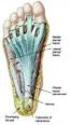 Plantar Fascia Release Introduction Plantar fasciitis is a common condition that causes pain around the heel. It may be severe enough to affect regular activities. If other treatments are unsuccessful,
Lower Extremity Orthopedic Surgery in Cerebral Palsy. Hank Chambers, MD Rady Children s Hospital - San Diego
 Lower Extremity Orthopedic Surgery in Cerebral Palsy Hank Chambers, MD Rady Children s Hospital - San Diego Indications Fixed contracture Joint dislocations Shoe wear problems Pain Perineal hygiene problems
Endoscopic Plantar Fasciotomy
 Endoscopic Plantar Fasciotomy Introduction Plantar fasciitis is a common condition that causes pain centralized around the heel. It may be severe enough to affect regular activities. Health care providers
.org. Posterior Tibial Tendon Dysfunction. Anatomy. Cause. Symptoms
 Posterior Tibial Tendon Dysfunction Page ( 1 ) Posterior tibial tendon dysfunction is one of the most common problems of the foot and ankle. It occurs when the posterior tibial tendon becomes inflamed
.org. Plantar Fasciitis and Bone Spurs. Anatomy. Cause
 Plantar Fasciitis and Bone Spurs Page ( 1 ) Plantar fasciitis (fashee-eye-tiss) is the most common cause of pain on the bottom of the heel. Approximately 2 million patients are treated for this condition
PHYSICAL EXAMINATION OF THE FOOT AND ANKLE
 PHYSICAL EXAMINATION OF THE FOOT AND ANKLE Presenter Dr. Richard Coughlin AOFAS Lecture Series OBJECTIVES 1. ASSESS 2. DIAGNOSE 3. TREAT HISTORY TAKING Take a HISTORY What is the patient s chief complaint?
EQUINUS DEFORMITY IN CEREBRAL PALSY. A Comparison between Elongation of the Tendo Calcaneus and Gastrocnemius Recession
 EQUINUS DEFORMITY IN CEREBRAL PALSY A Comparison between Elongation of the Tendo Calcaneus and Gastrocnemius Recession W. J. W. SHARRARD and S. BERNSTEIN,* SHEFFIELD, ENGLAND From the Children s Hospital,
The goals of surgery in ambulatory children with cerebral
 ORIGINAL ARTICLE Changes in Pelvic Rotation After Soft Tissue and Bony Surgery in Ambulatory Children With Cerebral Palsy Robert M. Kay, MD,* Susan Rethlefsen, PT,* Marty Reed, MD, K. Patrick Do, BS,*
PLANTAR FASCITIS (Heel Spur Syndrome)
 PLANTAR FASCITIS (Heel Spur Syndrome) R. Amadeus Mason MD Description Plantar fascitis is characterized by stiffness and inflammation of the main fascia (fibrous connective [ligament-like] tissue) on the
Plantar fasciitis is a common foot problem that occurs in 10%
 Review Article Plantar Fasciitis Heel Pain: Part 1 a Practical Management Plantar fasciitis is a common foot problem that occurs in 10% of the population. 1,2 The most involved age group is 40-50 3,4 Actually,
Plantar fascia. Plantar Fasciitis (pain in the heel of the foot)
 ! Plantar fascia Plantar Fasciitis (pain in the heel of the foot) Plantar Fasciitis is the most common foot problem seen in runners and is often associated with an increase in running mileage. Typically
Treatment of Recalcitrant Intermetatarsal Neuroma With 4% Sclerosing Alcohol Injection: A Pilot Study
 Treatment of Recalcitrant Intermetatarsal Neuroma With 4% Sclerosing Alcohol Injection: A Pilot Study Christopher F. Hyer, DPM,' Lynette R. Mehl, DPM,2 Alan J. Block, DPM, MS, FACFAS,3 and Robert B. Vancourt,
.org. Achilles Tendinitis. Description. Cause. Achilles tendinitis is a common condition that causes pain along the back of the leg near the heel.
 Achilles Tendinitis Page ( 1 ) Achilles tendinitis is a common condition that causes pain along the back of the leg near the heel. The Achilles tendon is the largest tendon in the body. It connects your
Predislocation syndrome
 Predislocation syndrome Sky Ridge Medical Center, Aspen Building Pre-dislocation syndrome, capsulitis, and metatarsalgia are all similar problems usually at the ball of the foot near the second and third
ADVANCEMENTS IN PLANTAR FASCIA SURGERY
 C H A P T E R 3 3 ADVANCEMENTS IN PLANTAR FASCIA SURGERY James L. Bouchard, DPM Andrea Cass, DPM INTRODUCTION It has been estimated that 90% of patients with plantar fasciitis and heel spur syndrome get
Plantar Fasciitis. Plantar Fascia
 Plantar Fasciitis Introduction Plantar fasciitis is an inflammation of the thick band of tissue that connects your heel bone to your toes. This thick band of tissue is called the plantar fascia. Plantar
Podo Pediatrics Identifying Biomechanical Pathologies
 Podo Pediatrics Identifying Biomechanical Pathologies David Lee, D.P.M., D. A.B.P.S. Purpose Identification of mechanical foot and ankle conditions Base treatments Knowing when to refer to a podiatrist
Surgical Treatment in Cerebral Palsy
 Surgical Treatment in Cerebral Palsy พ.ญ.ก ต วรรณ ว ป ลากร ภาคว ชาออร โธป ด กส คณะแพทยศาสตร มหาว ทยาล ยขอนแก น General consideration important to speak clearly and frankly with the family about the goals
5 Achilles tendon rupture
 5 Achilles tendon rupture Contents Introduction Anatomy Pathogenesis Classification Patient History and Physical Findings Imaging and Diagnostic Studies Treatment Pearls and Pitfalls Postoperative Care
Evaluate the hindfoot alignment after total knee arthroplasty; new radiographic view of the hindfoot.
 Evaluate the hindfoot alignment after total knee arthroplasty; new radiographic view of the hindfoot. Yusuke Hara, Kazuya Ikoma, Yuji Arai, Koji Nagasawa, Suzuyo Ohashi, Kan Imai, Masamitsu Kido, Toshikazu
Total Knee Replacement Specifications 2014 (01/01/2012 to 12/31/2012 Dates of Procedure)
 Summary of Changes Removed following ICD-9 Procedure s: 81.54 Total Knee Replacement (Bicompartmental, Partial Knee Replacement, Tricompartmental, Unicompartmental (hemijoint)). 81.55 Revision of Knee
UNILATERAL VS. BILATERAL FIRST RAY SURGERY: A PROSPECTIVE STUDY OF 186 CONSECUTIVE CASES COMPLICATIONS, PATIENT SATISFACTION, AND COST TO SOCIETY
 UNILATERAL VS. BILATERAL FIRST RAY SURGERY: A PROSPECTIVE STUDY OF 186 CONSECUTIVE CASES COMPLICATIONS, PATIENT SATISFACTION, AND COST TO SOCIETY Robert Fridman DPM, Jarrett Cain DPM, Lowell Weil Jr. DPM,
Foot and Ankle Technique Guide Proximal Inter-Phalangeal (PIP) Fusion
 Surgical Technique Foot and Ankle Technique Guide Proximal Inter-Phalangeal (PIP) Fusion Prepared in consultation with: Phinit Phisitkul, MD Department of Orthopedics and Rehabilitation University of Iowa
Massage and Movement
 Massage and Movement Incorporating Movement into Massage Part One: Theory and Technique in Prone With Lee Stang, LMT NCBTMB #450217-06 1850 West Street Southington, CT 06489 860.747.6388 www.bridgestohealthseminars.com
ORTHOPAEDIC SURGERY FOR THE LOWER LIMBS IN CHILDREN WITH CEREBRAL PALSY
 ORTHOPAEDIC SURGERY FOR THE LOWER LIMBS IN CHILDREN WITH CEREBRAL PALSY Robert M. Kay, M.D. Vice Chief, Children s Orthopaedic Center Children s Hospital Los Angeles Professor, Orthopaedic Surgery Keck-
Hyperpronation and Foot Pain
 Hyperpronation and Foot Pain Steps Toward Pain-Free Feet Steven D. Stovitz, MD; J. Chris Coetzee, MD THE PHYSICIAN AND SPORTSMEDICINE - VOL 32 - NO. 8 - AUGUST 2004 For CME accreditation information, instructions
Heel pain and Plantar fasciitis
 A patient s guide Heel pain and Plantar fasciitis Fred Robinson BSc FRCS FRCS(orth) Consultant Trauma & Orthopaedic Surgeon Alex Wee BSc FRCS(orth) Consultant Trauma & Orthopaedic Surgeon. What causes
ORIGINAL ARTICLE. EXCISION OF RETROCALCANEAL SPUR BY A LATERAL APPROACH FOR RELIEF OF HEEL PAIN. Nandivada V.S. Kiran Kumar
 EXCISION OF RETROCALCANEAL SPUR BY A LATERAL APPROACH FOR RELIEF OF HEEL PAIN. Nandivada V.S. Kiran Kumar 1. Assistant Professor. Department of Orthopaedics, King George Hospital. Visakhapatnam. CORRESPONDING
Screening Examination of the Lower Extremities BUY THIS BOOK! Lower Extremity Screening Exam
 Screening Examination of the Lower Extremities Melvyn Harrington, MD Department of Orthopaedic Surgery & Rehabilitation Loyola University Medical Center BUY THIS BOOK! Essentials of Musculoskeletal Care
Postoperative Rehabilitation Protocols for Achilles Tendon Ruptures A Meta-analysis
 CLINICAL ORTHOPAEDICS AND RELATED RESEARCH Number 445, pp. 216 221 2006 Lippincott Williams & Wilkins Postoperative Rehabilitation Protocols for Achilles Tendon Ruptures A Meta-analysis Amar A. Suchak,
CAPPAGH NATIONAL ORTHOPAEDIC HOSPITAL, FINGLAS, DUBLIN 11. The Sisters of Mercy. Plantar Fascitis
 1.0 Policy Statement... 2 2.0 Purpose... 2 3.0 Scope... 2 4.0 Health & Safety... 2 5.0 Responsibilities... 2 6.0 Definitions and Abbreviations... 2 7.0 Guideline... 3 7.1 Assessment... 3 7.2 Treatment...
Structure & Function of the Ankle and Foot. A complicated model of simplicity that you really think little about until you have a problem with one.
 Structure & Function of the Ankle and Foot A complicated model of simplicity that you really think little about until you have a problem with one. The Foot and Ankle Terminology Plantar flexion Dorsi flexion
Dr Rick Robinson, DPM Director of Podiatric Services USPHS Hospital at Whiteriver, AZ 2015 IHS National Combined Council Winter Meeting Friday,
 Dr Rick Robinson, DPM Director of Podiatric Services USPHS Hospital at Whiteriver, AZ 2015 IHS National Combined Council Winter Meeting Friday, January 30, 2015 1 We are all athletes, the difference is
RECURRENT HALLUX VALGUS: Treatment Considerations
 C H A P T E R 2 6 RECURRENT HALLUX VALGUS: Treatment Considerations Michael C. Lyons II, DPM Coralia Terol, DPM Jared Visser, DPM Jordan Grossman, DPM INTRODUCTION Recurrent hallux valgus is defined as
MUSCULOSKELETAL ULTRASOUND EVALUATION OF THE PLANTAR PLATE FOR IDENTIFICATION OF PLANTAR PLATE TEARS
 MUSCULOSKELETAL ULTRASOUND EVALUATION OF THE PLANTAR PLATE FOR IDENTIFICATION OF PLANTAR PLATE TEARS Erin E. Klein, DPM, MS Lowell Weil, Jr., DPM, MBA Lowell Scott Weil, Sr., DPM Jessica Knight, DPM Weil
Lower Back Spinal Fusion & Exercise
 & Exercise with Rick Kaselj, MS More FREE Information on Exercise & Injuries $299 Fitness Education Returning the Shoulder Back to Optimal Function Seminar Exercise Modification for the Sensitive Shoulder
MUSCLE/TENDON LENGTHENING. Following Selective Dorsal Rhizotomy (SDR) StLouisChildrens.org
 MUSCLE/TENDON LENGTHENING Following Selective Dorsal Rhizotomy (SDR) StLouisChildrens.org Patients who undergo selective dorsal rhizotomy (SDR) surgery at St. Louis Children s Hospital s Center for Cerebral
COMPLICATIONS OF PLANTAR FASCIA RELEASE
 C H A P T E R 8 COMPLICATIONS OF PLANTAR FASCIA RELEASE Michelle L. Butterworth, DPM INTRODUCTION Heel pain is one of the most common disorders that foot and ankle surgeons treat. Investigators have stated
Heel Pain: Heal! Amie C. Scantlin, DPM, MS, FACFAS Glencoe Regional Health Services (320) 864-3121 ext. 1933
 Heel Pain: Heal! Amie C. Scantlin, DPM, MS, FACFAS Glencoe Regional Health Services (320) 864-3121 ext. 1933 www.grhsonline.org Important Notice The information contained in this document is for informational
FORGET ME NOT: The Triple Arthrodesis
 C H A P T E R 1 5 FORGET ME NOT: The Triple Arthrodesis Andrea D. Cass, DPM INTRODUCTION The triple arthrodesis is a procedure that is performed much less commonly for the same conditions as it was 20
Rehabilitation Guidelines for Achilles Tendon Repair
 UW HEALTH SPORTS REHABILITATION Rehabilitation Guidelines for Achilles Tendon Repair The Achilles tendon is the strongest and thickest tendon in the body. It attaches the calf muscles (soleus and gastrocnemius)
Treatment of Spastic Foot Deformities
 Penn Comprehensive Neuroscience Center Treatment of Spastic Foot Deformities Penn Neuro-Orthopaedics Service 1 Table of Contents Overview Overview 1 Treatment 2 Procedures 4 Achilles Tendon Lengthening
Deformities. Assessment of Foot. The majority of foot deformities occur in otherwise healthy infants. However most generalized.
 Assessment of Foot Deformities in the Infant By Maureen Baxter, MDCM, FRCS The majority of foot deformities occur in otherwise healthy infants. However most generalized neurologic disorders (spina bifida,
Achilles Tendon Repair Surgery Post-operative Instructions Phase One: The First Week After Surgery
 Amon T. Ferry, MD Orthopedic Surgery Sports Medicine Achilles Tendon Repair Surgery Post-operative Instructions Phase One: The First Week After Surgery Amon T. Ferry, MD Orthopedic Surgery / Sports Medicine
HOME EXERCISE PROGRAM FOR FOOT AND ANKLE CONDITIONING Stretching and Strengthening Exercises for the Foot and Ankle
 Exercise Program for: Prepared by: Seasons Family Medicine 37 South 2nd East Rexburg ID, 83440 (208) 356-9231 HOME EXERCISE PROGRAM FOR FOOT AND ANKLE CONDITIONING Stretching and Strengthening Exercises
FACTORS ASSOCIATED WITH ADVERSE EVENTS IN MAJOR ELECTIVE SPINE, KNEE, AND HIP INPATIENT ORTHOPAEDIC SURGERY
 FACTORS ASSOCIATED WITH ADVERSE EVENTS IN MAJOR ELECTIVE SPINE, KNEE, AND HIP INPATIENT ORTHOPAEDIC SURGERY Dov B. Millstone, Anthony V. Perruccio, Elizabeth M. Badley, Y. Raja Rampersaud Dalla Lana School
John J Christoforetti, MD Mark Langhans Jr, BS, JT Redshaw, BS, Michael Allen DPT, Ellen Wilson ATC, Elizabeth Pickle, Ben Kivlan PT
 SAFETY OF OUTPATIENT HIP ARTHROSCOPY AS COMPARED TO INPATIENT ADMISSION: A PROSPECTIVE COHORT STUDY OF THE FIRST 100 OPERATIVE ARTHROSCOPIES FOR A FELLOWSHIP TRAINED HIP ARTHROSOCOPIST John J Christoforetti,
Case Report Reconstructive Osteotomy for Ankle Malunion Improves Patient Satisfaction and Function
 Case Reports in Orthopedics Volume 2015, Article ID 549109, 5 pages http://dx.doi.org/10.1155/2015/549109 Case Report Reconstructive Osteotomy for Ankle Malunion Improves Patient Satisfaction and Function
Plantar Heel Pain. By: Kevin Kleiner, M.B.S. New York College of Podiatric Medicine
 Plantar Heel Pain By: Kevin Kleiner, M.B.S. New York College of Podiatric Medicine Plantar Heel Pain: - Many Etiologies but few solutions Plantar heel pain more specifically: Heel pain felt in ones rear-foot
I. Ankle and Foot Orthotics: (AFO) are considered medical necessary when One or more of the following are met:
 Moda Health Plan, Inc. Medical Necessity Criteria Subject: Origination Date: 05/2015 Revision Date(s): Developed By: Medical Criteria Committee Effective 07/01/2015 Ankle-Foot Orthotics (AFO) Page 1 of
Posttraumatic medial ankle instability
 Posttraumatic medial ankle instability Alexej Barg, Markus Knupp, Beat Hintermann Orthopaedic Department University Hospital of Basel, Switzerland Clinic of Orthopaedic Surgery, Kantonsspital Baselland
The Ankle Sprain That Won t Get Better. By: George E. Quill, Jr., M.D. With springtime in Louisville upon us, the primary care physician and the
 The Ankle Sprain That Won t Get Better By: George E. Quill, Jr., M.D. With springtime in Louisville upon us, the primary care physician and the orthopaedist alike can expect to see more than his or her
Position Statement: The Use of VTED Prophylaxis in Foot and Ankle Surgery
 Position Statement: The Use of VTED Prophylaxis in Foot and Ankle Surgery Position Statement There is currently insufficient data for the (AOFAS) to recommend for or against routine VTED prophylaxis for
The Pilates Method: A Conditioning Program for Clients with Acetabular Dysplasia and Charcot-Marie-Tooth Disease
 The Pilates Method: A Conditioning Program for Clients with Acetabular Dysplasia and Charcot-Marie-Tooth Disease Kara McCulloch April 13, 2008 BASI Oct 2007 Apr 2008 Herndon, VA Abstract This study applies
Effective Plantar Fasciitis Exercises
 Effective Plantar Fasciitis Exercises Effective Plantar Fasciitis Exercises - 12 Week Plantar Fasciitis Exercise Solution - 1 3 Month Plantar Fasciitis Exercise Program Stage 1 Stage 2 Stage 3 Structure
Mitchell S. Fourman M.Phil Eugene Borst BS Eric Bogner, MD S. Robert Rozbruch MD Austin T. Fragomen, MD
 Post-Operative CT Measurements Accurately Predict the Need for Clinical Intervention Retrospective Findings to Support Prospective Clinical Trial Protocol Mitchell S. Fourman M.Phil Eugene Borst BS Eric
Page 2 of 6 plantar fascia. This is called the windlass mechanism. Later, we'll discuss how this mechanism is used to treat plantar fasciitis with str
 Page 1 of 6 Plantar Fasciitis (Heel Pain) Plantar fasciitis is a painful condition affecting the bottom of the foot. It is a common cause of heel pain and is sometimes called a heel spur. Plantar fasciitis
Plantar Fasciitis Information Leaflet. Maneesh Bhatia. Consultant Orthopaedic Surgeon
 Plantar Fasciitis Information Leaflet Maneesh Bhatia Consultant Orthopaedic Surgeon What is plantar fasciitis? The plantar fascia is a strong band of tissue that stretches from the heel to the toes. It
Mary LaBarre, PT, DPT,ATRIC
 Aquatic Therapy and the ACL Current Concepts on Prevention and Rehab Mary LaBarre, PT, DPT,ATRIC Anterior Cruciate Ligament (ACL) tears are a common knee injury in athletic rehab. Each year, approximately
Informed Patient Tutorial Copyright 2012 by the American Academy of Orthopaedic Surgeons
 Informed Patient Tutorial Copyright 2012 by the American Academy of Orthopaedic Surgeons Informed Patient - Carpal Tunnel Release Surgery Introduction Welcome to the American Academy of Orthopaedic Surgeons'
Chapter 140 Heel Pain
 Chapter 140 Heel Pain David R. Richardson, MD E. Greer Richardson, MD I. Overview and Epidemiology A. General characteristics Heel pain (subcalcaneal pain syndrome) is the most common foot-related symptom
.org. Ankle Fractures (Broken Ankle) Anatomy
 Ankle Fractures (Broken Ankle) Page ( 1 ) A broken ankle is also known as an ankle fracture. This means that one or more of the bones that make up the ankle joint are broken. A fractured ankle can range
The Five Most Common Pathomechanical Foot Types (Rearfoot varus, forefoot varus, equinus, plantarflexed first ray, forefoot valgus)
 The Five Most Common Pathomechanical Foot Types (Rearfoot varus, forefoot varus, equinus, plantarflexed first ray, forefoot valgus) Pathomechanical foot types usually refer to structural deformities that
Podiatry Specialty ICD-10-CM Coding Tip Sheet Overview of Key Chapter Updates for Podiatry and Top 20 codes
 Podiatry Specialty ICD-10-CM Coding Tip Sheet Overview of Key Chapter Updates for Podiatry and Top 20 codes Chapter 1 Certain Infectious and Parasitic Diseases Terminology changes: The term sepsis (ICD-10-CM)
Position Statement: The Use of Total Ankle Replacement for the Treatment of Arthritic Conditions of the Ankle
 Position Statement: The Use of Total Ankle Replacement for the Treatment of Arthritic Conditions of the Ankle Position Statement The (AOFAS) endorses the use of total ankle replacement surgery for treatment
Ankle Stabilisation Procedure
 Ankle Stabilisation Procedure Exceptional healthcare, personally delivered Following your consultation with a member of the Foot and Ankle team you have been diagnosed with an unstable ankle. This leaflet
A Patient s Guide to Plantar Fasciitis. Foot and Ankle Center of Massachusetts, P.C.
 A Patient s Guide to Plantar Fasciitis Welcome to Foot and Ankle Center of Massachusetts, where we believe in accelerating your learning curve with educational materials that are clearly written and professionally
George E. Quill, Jr., M.D. Louisville Orthopaedic Clinic Louisville, KY
 George E. Quill, Jr., M.D. Louisville Orthopaedic Clinic Louisville, KY The Ankle Sprain That Won t Get Better With springtime in Louisville upon us, the primary care physician and the orthopaedist alike
DROP FOOT AND TREATMENTS YOUNGMEE PARK
 DROP FOOT AND TREATMENTS YOUNGMEE PARK WHAT IS FOOT DROP Foot drop / Drop foot the inability to lift the front part of the foot not a disease a symptom of some other medical problems a sign of an underlying
Foot and Ankle Conditioning Program. Purpose of Program
 Prepared for: Prepared by: OrthoInfo Purpose of Program After an injury or surgery, an exercise conditioning program will help you return to daily activities and enjoy a more active, healthy lifestyle.
Chapter 21. How to do fasciotomy. neighboring structures
 Chapter 21 FRACTURES OF THE TIBIA AND FIBULA KEY FIGURES: Calf anatomy How to do fasciotomy Gastrocnemius and neighboring structures Longstanding open fracture Gastrocnemius flap Fractures of the tibia
Biomechanical Offloading
 Biomechanical Offloading Jeffrey D Lehrman, DPM, FACFAS, FASPS, FAPWH Fellow, American College of Foot & Ankle Surgeons Fellow, American Society of Podiatric Surgeons Fellow, Academy of Physicians in Wound
Total Contact Casting for Neuropathic Ulcers: A Lost Art?
 Total Contact Casting for Neuropathic Ulcers: A Lost Art? Authors: Robert M. Greenhagen, DPM 1, Dane K. Wukich, MD 2 The Journal of Diabetic Foot Complications, Volume 1, Issue 4, No. 2, All rights reserved.
Modifiers The Key To Proper Reimbursement. Proper use of modifiers (usually) leads to correct payment. Author: Kenneth F. Malkin, D.P.M.
 Modifiers The Key To Proper Reimbursement Proper use of modifiers (usually) leads to correct payment. Author: Kenneth F. Malkin, D.P.M. Dr. Malkin is a diplomate of the American Board of Quality Assurance
SHOULDER INSTABILITY IN PATIENTS WITH EDS
 EDNF 2012 CONFERENCE LIVING WITH EDS SHOULDER INSTABILITY IN PATIENTS WITH EDS Keith Kenter, MD Associate Professor Sports Medicine & Shoulder Reconstruction Director, Orthopaedic Residency Program Department
The Journal of Foot & Ankle Surgery
 The Journal of Foot & Ankle Surgery 49 (2010) 517 522 Contents lists available at ScienceDirect The Journal of Foot & Ankle Surgery journal homepage: www.jfas.org A Two-Stage Percutaneous Approach to Charcot
Objectives Learn the anatomy of the foot. Identify key terms associated with plantar fasciitis. Determine the causes of plantar fasciitis and understa
 Plantar Fasciitis Objectives Learn the anatomy of the foot. Identify key terms associated with plantar fasciitis. Determine the causes of plantar fasciitis and understand why it occurs. Recognize the injury
Physician Assistant Post Graduate Orthopaedic Surgery Fellowship Program. Watauga Orthopaedics
 Physician Assistant Post Graduate Orthopaedic Surgery Fellowship Program Watauga Orthopaedics Physician Assistant Post-Graduate Fellowship Program in Orthopaedic Surgery Required Texts: 1. Backache Macnab,
Minimally Invasive Spine Surgery For Your Patients
 Minimally Invasive Spine Surgery For Your Patients Lukas P. Zebala, M.D. Assistant Professor Orthopaedic and Neurological Spine Surgery Department of Orthopaedic Surgery Washington University School of
Heel Pain Syndromes DELLON INSTITUTES FOR PERIPHERAL NERVE SURGERY
 Heel Pain s 5 3333 N CALVERT ST, SUITE 370, BALTIMORE, MD 21218 T410 467 5400 F410 366 9826 delloninstitutes.com your complaints are Pain, numbness or burning in your heel. The timing of this pain and
ACL Reconstruction: Patellar Tendon Graft/Hamstring Tendon Graft
 ACL Reconstruction: Patellar Tendon Graft/Hamstring Tendon Graft Patellar Tendon Graft/Hamstring Tendon Graft General Information: The intent of these guidelines is to provide the therapist with direction
Cerebral Palsy Integrated Pathway, Scotland. CPIPS. Mark Gaston FRCS PhD Royal Hospital for Sick Children, Edinburgh
 Cerebral Palsy Integrated Pathway, Scotland. CPIPS Mark Gaston FRCS PhD Royal Hospital for Sick Children, Edinburgh Cerebral Palsy Integrated Pathway Scotland the story so far Background What CPIPS is
PODIATRIC SURGERY INFORMATION GUIDE: MANAGEMENT OF PLANTAR FASCIITIS/HEEL PAIN
 PODIATRIC SURGERY INFORMATION GUIDE: MANAGEMENT OF PLANTAR FASCIITIS/HEEL PAIN What is Plantar Fasciitis? Plantar fasciitis is pain in the heel and arch area of the foot. The plantar fascia is a strong
Chapter 5. Objectives. Normal Ankle Range of Motion. Lateral Ankle Sprains. Lateral Ankle Sprains. Assessment of Lateral Ankle Sprains
 Objectives Chapter 5 Assessment of Ankle & Lower Leg Injuries Review the following components of injury assessment related to the ankle and lower leg Stress tests Special tests Normal Ankle Range of Motion
Imaging of Lisfranc Injury
 November 2011 Imaging of Lisfranc Injury Greg Cvetanovich, Harvard Medical School Year IV Agenda Case Presentation Introduction Anatomy Lisfranc Injury Classification Imaging Treatment 2 Case Presentation
Ankle Fractures - OrthoInfo - AAOS. Copyright 2007 American Academy of Orthopaedic Surgeons. Ankle Fractures
 Copyright 2007 American Academy of Orthopaedic Surgeons Ankle Fractures "I broke my ankle." A broken ankle is also known as an ankle "fracture." This means that one or more of the bones that make up the
PROMIS: Collaborative Approach to Defining and Improving Outcomes in Orthopaedics
 PROMIS: Collaborative Approach to Defining and Improving Outcomes in Orthopaedics Kenneth J. Hunt, M.D. Stanford University Department of Orthopaedic Surgery Disclosures No financial relationships to disclose
Current Concepts In Orthotic Therapy For Pes Cavus
 Current Concepts In Orthotic Therapy For Pes Cavus http://www.podiatrytoday.com/current-concepts-in-orthotic-therapy-for-pes-cavus Podiatry Today- Volume 21 - Issue 10 - October 2008 Author(s): By Paul
Understanding. Heel Pain
 Understanding Heel Pain What Causes Heel Pain? Heel pain is a common problem that occurs when the heel is placed under too much stress. Heel pain is most often caused by walking in ways that irritate tissues
Y O U R S U R G E O N S. choice of. implants F O R Y O U R S U R G E R Y
 Y O U R S U R G E O N S choice of implants F O R Y O U R S U R G E R Y Y O U R S U R G E O N S choice of implants F O R Y O U R S U R G E R Y Your Surgeon Has Chosen the C 2 a-taper Acetabular System The