
Hyperpronation and Foot Pain
|
|
|
- Beatrice Mathews
- 10 years ago
- Views:
Transcription
1 Hyperpronation and Foot Pain Steps Toward Pain-Free Feet Steven D. Stovitz, MD; J. Chris Coetzee, MD THE PHYSICIAN AND SPORTSMEDICINE - VOL 32 - NO. 8 - AUGUST 2004 For CME accreditation information, instructions and learning objectives, click here. In Brief: Primary care physicians often see patients who have foot pain. Although foot disorders may have many diagnostic possibilities, the majority can be explained via the pathologic biomechanics of hyperpronation and the resulting changes in the kinetic chain. Four common problems often associated with hyperpronation are plantar fasciitis, posterior tibial tendon dysfunction, metatarsalgia, and hallux valgus. Interventions that seek to reduce hyperpronation and strengthen foot muscles are often recommended for treating foot pain. Foot pain is an extremely common problem. Exact prevalence rates in the general population are unknown, but various small studies in women report rates between 32% and 80%. 1 Evaluating and diagnosing foot pain can be daunting for physicians because of the wide array of conditions that can cause discomfort. One article 2 listed 49 different possible diagnoses for subcalcaneal heel pain alone. Although diagnoses may differ, hyperpronation (ie, pronation too early in the gait cycle) is likely an associated event. An understanding of the causes and effects of hyperpronation will greatly assist the evaluation and treatment of patients who have foot pain. Defining the Problem The discussion of foot disorders begins with an understanding of terminology and a review of the gait cycle. Foot pronation and supination are active processes that must be distinguished from pes planus and pes cavus, which are terms describing a static foot. Pronation entails calcaneal eversion, a downward migration of the midfoot, then forefoot abduction and dorsiflexion. With supination, the calcaneus inverts, and the forefoot adducts and plantar flexes. (1 of 10)2/17/2005 9:46:55 AM

2 Pes planus signifies a flatfoot and pes cavus denotes a hollow foot. While pes planus is typically described from visual observation alone, the actual definition depends on the metatarsal bones losing their normal longitudinal arch. Thus, people with hypertrophied muscles on the plantar surfaces of their feet, such as lifelong barefoot walkers, can be mistakenly viewed as having flatfeet, when, in fact, their bones maintain a normal longitudinal arch. The term "flexible flatfoot" describes an arch that is high when unloaded but flattens with standing if weight bearing does not cause calcaneal eversion. Hyperpronation occurs if weight bearing causes calcaneal eversion, in which case the static property of the foot cannot be clinically specified. The bottom of a "fixed" flatfoot remains flat whether the patient is sitting or standing. The Gait Cycle The normal gait cycle begins with a heel strike, and then very brief supination with force moving forward. This action is followed by pronation of the foot, whereby the weight becomes distributed over the midfoot, and finally a toe-off (figure 1). Toe-off is associated with a brief supination (ie, calcaneal inversion) caused by the windlass mechanism of the medial longitudinal arch. In normal ambulation, the force of the body is transmitted over the toes with approximately one third of body weight going over the first toe, and one sixth of body weight going over each of the lateral four toes. Individuals who lack physiologic pronation are said to be supinators, and their feet have difficulty absorbing the shock of weight bearing. The weight does not disseminate over the middle part of the foot, but rather remains on the bony lateral side. Much more commonly, people who have foot pain lack the initial supination, and thus pronate too early in the gait cycle (ie, hyperpronate). (2 of 10)2/17/2005 9:46:55 AM

3 What Causes Hyperpronation? With too-early pronation, the force is transmitted medially while the weight is still on the hindfoot and proximal midfoot. The medial longitudinal arch loses height, and that may set up a cascade of biomechanical problems related to the causes and effects of hyperpronation (figure 2). Biomechanically, the precipitating events in hyperpronation can be viewed in relation to the position of the talus. Although kinetic chain reactions occur from the hip down to the foot, the interdependent relationships of the talus, calcaneus, and navicular are especially important. A key point is that the talus does not simply sit atop the calcaneus; rather, it is positioned anteriorly and medially on the calcaneus (figure 3). The talus contacts the anterolateral edge of the proximal navicular bone, the most superior bone of the medial longitudinal arch. The talus has no tendinous attachments and thus depends on the static support of surrounding ligaments and bones. Malposition of one bone affects the adjacent proximal or distal bone. (3 of 10)2/17/2005 9:46:55 AM

4 The position of the calcaneus is greatly determined by the Achilles tendon. The Achilles tendon inserts onto the calcaneus slightly lateral to midline. A tight Achilles provides not only plantar flexion, but also eversion to the calcaneus. Both of these actions translate force medially on the talus and downward and medially on the navicular, possibly causing subsequent loss of height of the medial longitudinal arch. The position of the talus is supported distally by the navicular bone. In standing, the navicular bone maintains its position high on the medial longitudinal arch through the static support of surrounding bones and ligaments. A natural alignment between the talus and the navicular and a spring ligament (ie, the calcaneonavicular ligament) adjoining these bones locks the foot in place (figure 4). With ambulation, dynamic support from the posterior tibial tendon (PTT) is needed to maintain the superior position of the navicular. A weak PTT is unable to support the position of the navicular, and, once again, a loss of the medial longitudinal arch may occur. (4 of 10)2/17/2005 9:46:55 AM

5 Collapse of the medial longitudinal arch everts the calcaneus in relation to the talus; that is, the foot pronates. This may stretch the soft-tissue structures located posterior to the medial malleolus (namely, the PTT and the posterior tibial nerve), manifesting as posterior tibial tendinopathy or posterior tibial nerve entrapment. A collapsed arch can also stretch the spring ligament and plantar fascia, producing plantar fasciitis. With calcaneal eversion (pronation), the forefoot abducts and increases force through the medial rays, which can result in problems over the first ray, such as hallux valgus, and over the second ray, such as metatarsalgia. Modern society, with our rising obesity and dependence on footwear, may contribute to more people having hyperpronation and subsequent foot pain. Obese individuals have an altered gait with more extensive rearfoot eversion. 3 Heavier body weight results in higher plantar pressures, with the largest effect under the longitudinal arch and metatarsal heads. 4 Greater foot pronation occurs when wearing shoes than when walking barefoot. Shoes elevate the calcaneus, shorten the Achilles tendon, and effectively splint the foot, thereby limiting muscle contraction during ambulation. Extensive observational data suggest that wearing shoes in childhood is detrimental to the development of a normal longitudinal arch 5,6 and that shoeless populations have less chronic foot pain. 7 Examining the Feet When evaluating patients who have foot pain, it is essential to view their bare legs and feet from at least the midcalf down. The feet are examined when patients are seated with their feet off the ground, standing, and with ambulation. The "too many toes" sign (when the examiner can see the lateral four toes as the patient walks away) is often attributed to hyperpronation and forefoot abduction (figure 5). While this is generally the case, visualization of the lateral four toes may also result from more proximal causes, such as external rotation of the hip (eg, in the gait of classic dancers) without hyperpronation of the feet. More emphasis should be placed on viewing the Achilles tendon and noting if calcaneal eversion occurs. With the patient walking toward them, clinicians should observe if the medial longitudinal arch is maintained or whether the navicular bone seems to drop toward the floor with midstance. (5 of 10)2/17/2005 9:46:55 AM

6 It is also essential to note the strength of the PTT and the flexibility of the Achilles tendon. The PTT can be assessed by observing the patient while he or she does heel raises. Normally, the calcaneus inverts and the foot supinates with heel raises. Calcaneal eversion is often a sign of a weak PTT. Achilles tendon flexibility testing should be done with both a bent and a straight knee to differentiate the soleus (evident when knee is bent) from the gastrocnemius. The opposite foot can be used for comparison. It is important to place the subtalar joint in neutral alignment, and then apply a laterally directed force to the talar neck while pushing the forefoot medially to lock the foot (figure 6). Otherwise, calcaneal eversion or forefoot dorsiflexion may give a false impression of Achilles flexibility. Common Foot Disorders The deleterious effects of hyperpronation have been implicated in four common disorders of the feet. It is important to note that, while we discuss the physiologic plausibility whereby hyperpronation may lead to foot pain, prospective data are lacking. (6 of 10)2/17/2005 9:46:55 AM

7 Plantar fasciitis. The most common cause of hindfoot pain, plantar fasciitis results from a degeneration of the fibrous aponeurosis that courses the medial longitudinal arch. Patients report pain, generally near the distal medial border of the calcaneus, that is most prominent with the first step after a long rest. Plantar fasciitis is seen in patients who have a rigid cavus foot and in those who hyperpronate, and either deformity may increase the stress on the plantar fascia. Excessive body weight, genu valgus, and gastrocnemius-soleus contracture are all associated with increased pronation of the feet and are known precipitants of plantar fasciitis. 3,8 Treatment options have historically included rest, physical therapy, ice, heat, heel cups, pads, splints, shoe modification, orthoses, nonsteroidal anti-inflammatory medications, injections, and surgery. Of all the treatment options, the most consistently positive results have come from Achilles stretching programs, both active and passive, using night splints. 9,10 Exercises to stretch and strengthen the Achilles tendon are an effective means of decreasing hyperpronation, thus reducing pain. A large study 8 found that the use of heel cups, which raise the calcaneus (the opposite of Achilles tendon stretching), was the least effective of the various treatments evaluated. Posterior tibial tendinopathy. The main insertion for the PTT is on the medial navicular bone. The PTT is essential for initiating inversion and thus counteracting the forces of too-early pronation. Proper functioning of the PTT is necessary for dynamic stabilization of the medial longitudinal arch. A weak PTT cannot maintain the usual talonavicular alignment. The talonavicular joint capsule and plantar spring ligament will stretch out with time. With the resulting dorsolateral subluxation around the talar head, the midfoot is "unlocked," taking away the ability to push off. PTT dysfunction can cause compensatory forefoot supination, leading to problems such as hallux valgus and metatarsalgia. Thus, a strong PTT is necessary to protect against hyperpronation. Additionally, hyperpronation from other causes may result in PTT weakness, because the tendon becomes overstretched. PTT dysfunction, once considered a rare entity, is now recognized with increasing frequency, perhaps because of increasing obesity and improvements in diagnostic techniques. 11 Patients who have PTT dysfunction may report pain along the tendon's course, or pain more distally caused by changes in forefoot biomechanics. In the later stages, the lateral ankle may sustain compressive forces. Treatment in the early stages focuses on correcting the root cause of the hyperpronation, with an emphasis on mitigating gastrocnemius-soleus tightness and strengthening the PTT. Correcting PTT dysfunction early in its course may help avoid surgical intervention later. 11,12 If attenuation occurs, it is exceedingly difficult to treat conservatively. Hallux valgus. Lateral deviation of the proximal phalanx on the first metatarsal head often leads to a painful medial eminence, or bunion. Most patients who have hallux valgus have a genetic predisposition that combines with developmental changes to cause hyperpronation and excessive force on the first ray. Hallux valgus is almost exclusively found in shoe-wearing societies. 13 With rare exception, shoes elevate the heel in relation to the midfoot, producing a downward and medial force on the talus. A tight Achilles tendon has also been implicated. 13 Conservative treatment options include digital splinting, wearing wide-toed shoes, and (7 of 10)2/17/2005 9:46:55 AM

8 stretching the Achilles tendon. Metatarsalgia. Pain over the metatarsal heads without any other obvious diagnosis, such as a fracture, corn, or infection, can be termed metatarsalgia. The second metatarsal head is most frequently involved. Normally, weight is distributed over the toes in a fanlike pattern, with the first toe taking one third of the weight and the rest of the toes equally dividing the remaining two thirds. With hyperpronation, the forces move medially, and the second metatarsal may assume an excessively large percentage of the force. Additionally, weak flexor tendons place extra force on the metatarsal heads. 14 General treatment recommendations include strengthening the plantar muscles, wearing shoes with low heels and wide toe boxes, and, occasionally, using orthoses. Treating Foot Pain Each patient needs to be assessed individually, but some general recommendations seem to apply to many patients who have foot pain. Low-heeled shoes, Achilles tendon stretching, widetoed shoes, foot strengthening exercises, and weight loss (if needed) are common suggestions for foot pain associated with hyperpronation. Altering calcaneal position. High-heeled shoes increase force on the forefoot. 15 Low-heeled shoes and Achilles tendon stretching decrease the equinus force from an elevated calcaneus. The talus sits both anteriorly and medially atop the calcaneus, and thus any forward tilt to the calcaneus produces a medially directed downward force on the navicular, causing excessive pressure on the medial longitudinal arch. This changes the forces through the midfoot and forefoot, putting extra stress on the medial digits. A tight Achilles tendon enhances the medial force, because it inserts on the lateral side of the calcaneus. For years, Achilles tendon stretching has been a nearly ubiquitous recommendation in the treatment of foot pain, but a recent study by DiGiovanni et al 16 was the first to document that those with midfoot and forefoot pain had a tighter gastrocnemius tendon than controls who did not have foot pain. Increasing muscle strength. Weak foot muscles may contribute to foot pain. Wide-toed shoes and foot-strengthening exercises are prescribed. Axial loading applied to cadaveric feet without simulating the activity of the plantar flexors causes foot pronation and medial longitudinal arch collapse. 14 Wide-toed shoes allow the flexors to contract, and thereby strengthen, the surrounding musculature. Foot- strengthening exercises, such as toe curls and heel raises, strengthen the PTT, peroneus longus muscles, and the flexor tendons. Walking barefoot, if acceptable to the patient, is a functional method to strengthen foot musculature. In fact, less foot pronation occurs when running barefoot than when wearing shoes. Foot strengthening and weight loss (for overweight and obese patients) may help prevent chronic overload of the metatarsals that can lead to stress fractures and stress reactions. Foot musculature decreases with normal aging, and this may add to the effects of obesity to cause foot pain. Cadaveric studies have demonstrated that contraction of the flexor hallucis longus and the flexor digitorum longus pedis each decrease force on the metatarsals and, theoretically, prevent bony stress reactions. 14 Strengthening exercises help to preserve the strength of the contractions. Given that excessive body weight results in extra pressure and hyperpronation, weight loss should be encouraged for overweight patients who have foot pain. 3,4 (8 of 10)2/17/2005 9:46:55 AM

9 A Note of Caution Not all foot pain stems from hyperpronation. We believe that most cases of foot pain in the general population can be attributed to hyperpronation, but a lack of normal pronation has its own set of problems, namely, difficulty in absorbing the shock of weight bearing. The concept of hyperpronation may be novel to some medical providers, but it is frequently cited in running magazines as the major cause of foot pain. It is not uncommon for us to see runners who lack physiologic pronation and yet believe that their lower-leg or foot pain is caused by hyperpronation. They often are wearing custom rigid orthoses meant for hyperpronators. We recommend gently informing them that their rigid orthoses do not seem to be working and encouraging a trial of increased foot flexibility and strength. Linking the Kinetic Chain Foot pain is an extremely common problem, and the incidence will likely increase as our population ages and grows more obese. Although diagnoses may differ, hyperpronation is implicated as a common cause, and treatment recommendations are generally geared toward reducing hyperpronation. Helping patients understand the causes and effects of hyperpronation will increase their compliance with treatment recommendations, such as Achilles tendon stretching, foot strengthening, weight loss, and appropriate footwear. References 1. Balint GP, Korda J, Hangody L, et al: Regional musculoskeletal conditions: foot and ankle disorders. Best Pract Res Clin Rheumatol 2003;17(1): Karr SD: Subcalcaneal heel pain. Orthop Clin North Am 1994;25(1): Messier SP, Davies AB, Moore DT, et al: Severe obesity: effects on foot mechanics during walking. Foot Ankle Int 1994;15(1): Hills AP, Hennig EM, McDonald M, et al: Plantar pressure differences between obese and non-obese adults: a biomechanical analysis. Int J Obes Relat Metab Disord 2001;25 (11): Rao UB, Joseph B: The influence of footwear on the prevalence of flat foot: a survey of 2300 children. J Bone Joint Surg Br 1992;74(4): Sachithanandam V, Joseph B: The influence of footwear on the prevalence of flat foot: a survey of 1846 skeletally mature persons. J Bone Joint Surg Br 1995;77(2): Hoffmann P: Conclusions drawn from a comparative study of the feet of barefooted and shoe-wearing peoples. Amer J Orthop Surg 1905;3(2): Gill LH: Plantar fasciitis: diagnosis and conservative management. J Am Acad Orthop Surg 1997;5(2): Powell M, Post WR, Keener J, et al: Effective treatment of chronic plantar fasciitis with dorsiflexion night splints: a crossover prospective randomized outcome study. Foot Ankle Int 1998;19(1): Batt ME, Tanji JL, Skattum N: Plantar fasciitis: a prospective randomized clinical trial of the tension night splint. Clin J Sport Med 1996;6(3): Churchill RS, Sferra JJ: Posterior tibial tendon insufficiency: its diagnosis, management, and treatment. Am J Orthop 1998;27(5): Coetzee JC, Hansen ST: Surgical management of severe deformity resulting from (9 of 10)2/17/2005 9:46:55 AM

10 posterior tibial tendon dysfunction. Foot Ankle Int 2001;22(12): DeLee JC, Drez D Jr, Miller MD: DeLee & Drez's Orthopaedic Sports Medicine: Principles and Practice, ed 2. Philadelphia, Saunders, Sharkey NA, Ferris L, Smith TS, et al: Strain and loading of the second metatarsal during heel-lift. J Bone Joint Surg Am 1995;77(7): Snow RE, Williams KR: High heeled shoes: their effect on center of mass position, posture, three-dimensional kinematics, rearfoot motion, and ground reaction forces. Arch Phys Med Rehabil 1994;75(5): DiGiovanni CW, Kuo R, Tejwani N, et al: Isolated gastrocnemius tightness. J Bone Joint Surg Am 2002;84(6): Dr Stovitz is an assistant professor in the department of family practice and community health and director of sports medicine curriculum for family practice residency programs and Dr Coetzee is an assistant professor and chief of the foot and ankle division in the department of orthopedic surgery, both at the University of Minnesota in Minneapolis. Address correspondence to Steven D. Stovitz, MD, Smiley's Clinic, 2615 E Franklin Ave, Minneapolis, MN 55406; to [email protected]. Disclosure information: Drs Stovitz and Coetzee disclose no significant relationship with any manufacturer of any commercial product mentioned in this article. No drug is mentioned in this article for an unlabeled use. RETURN TO AUGUST 2004 TABLE OF CONTENTS HOME JOURNAL PERSONAL HEALTH RESOURCE CENTER CME ADVERTISER SERVICES ABOUT US SEARCH Copyright (C) The McGraw-Hill Companies. All Rights Reserved Privacy Policy. Privacy Notice. (10 of 10)2/17/2005 9:46:55 AM

PHYSICAL EXAMINATION OF THE FOOT AND ANKLE
 PHYSICAL EXAMINATION OF THE FOOT AND ANKLE Presenter Dr. Richard Coughlin AOFAS Lecture Series OBJECTIVES 1. ASSESS 2. DIAGNOSE 3. TREAT HISTORY TAKING Take a HISTORY What is the patient s chief complaint?
Predislocation syndrome
 Predislocation syndrome Sky Ridge Medical Center, Aspen Building Pre-dislocation syndrome, capsulitis, and metatarsalgia are all similar problems usually at the ball of the foot near the second and third
The Five Most Common Pathomechanical Foot Types (Rearfoot varus, forefoot varus, equinus, plantarflexed first ray, forefoot valgus)
 The Five Most Common Pathomechanical Foot Types (Rearfoot varus, forefoot varus, equinus, plantarflexed first ray, forefoot valgus) Pathomechanical foot types usually refer to structural deformities that
Flat foot and lower back pain
 Flat foot and lower back pain Dr James Tang, MBA, BDS, LDS RCS General Dental Practitioner, NASM Corrective Exercise Specialist with special interest in postural dysfunction & lower back problems, Level
Arches. Foot Injuries. Medial Longitudinal Arch. Lateral Longitudinal Arch. Transverse Arch. Arch Strains
 Arches Foot Injuries Three arches in the foot: 1) Lateral longitudinal arch 2) Medial longitudinal arch 3) Transverse arch These arches are maintained and supported by the wedging of the interlocking tarsal
Field Evaluation and Management of Non-Battle Related Knee and Ankle Injuries by the ATP in the
 Field Evaluation and Management of Non-Battle Related Knee and Ankle Injuries by the ATP in the JF Rick Hammesfahr, MD Editor s Note: Part Three consists of ankle injury evaluation and taping. Part Two
The Flatfoot. Flatfoot: Terminology, Treatment, & Importance of Cobey View page 1 of 10. Are You Smarter Than a 5 th Grader? Podiatrist?
 & Importance of Cobey View page 1 of 10 Society of Skeletal Radiology 2010 The Flatfoot Adult PTT Acquired Surgeries Flatfoot Terminology, Treatment, & Importance of Cobey View I have nothing to disclose
Podo Pediatrics Identifying Biomechanical Pathologies
 Podo Pediatrics Identifying Biomechanical Pathologies David Lee, D.P.M., D. A.B.P.S. Purpose Identification of mechanical foot and ankle conditions Base treatments Knowing when to refer to a podiatrist
Plantar fascia. Plantar Fasciitis (pain in the heel of the foot)
 ! Plantar fascia Plantar Fasciitis (pain in the heel of the foot) Plantar Fasciitis is the most common foot problem seen in runners and is often associated with an increase in running mileage. Typically
Clinical Analysis of Foot Problems
 Clinical Analysis of Foot Problems by Karen S. Seale, M.D. Introduction Orthotists are vital members of the foot care team. Their expertise and special interests in materials and biomechanics add a unique
Lower Back Spinal Fusion & Exercise
 & Exercise with Rick Kaselj, MS More FREE Information on Exercise & Injuries $299 Fitness Education Returning the Shoulder Back to Optimal Function Seminar Exercise Modification for the Sensitive Shoulder
Outline. The Agony of the Foot: Disclosure. Plantar Fasciitis. Top 5 Foot and Ankle Problems in Primary Care. Daniel Thuillier, M.D.
 The Agony of the Foot: Top 5 Foot and Ankle Problems in Primary Care Daniel Thuillier, M.D. Assistant Professor of Clinical Orthopaedics University of California San Francisco Plantar Fasciitis Achilles
Posttraumatic medial ankle instability
 Posttraumatic medial ankle instability Alexej Barg, Markus Knupp, Beat Hintermann Orthopaedic Department University Hospital of Basel, Switzerland Clinic of Orthopaedic Surgery, Kantonsspital Baselland
PLANTAR FASCITIS (Heel Spur Syndrome)
 PLANTAR FASCITIS (Heel Spur Syndrome) R. Amadeus Mason MD Description Plantar fascitis is characterized by stiffness and inflammation of the main fascia (fibrous connective [ligament-like] tissue) on the
Runner's Injury Prevention
 JEN DAVIS DPT Runner's Injury Prevention Jen Davis DPT Orthopedic Physical Therapy Foot Traffic 7718 SE 13th Ave Portland, OR 97202 (503) 482-7232 [email protected] www.runfastpt.com!1 THE AMAZING RUNNER
Foot and Ankle Conditioning Program. Purpose of Program
 Prepared for: Prepared by: OrthoInfo Purpose of Program After an injury or surgery, an exercise conditioning program will help you return to daily activities and enjoy a more active, healthy lifestyle.
.org. Plantar Fasciitis and Bone Spurs. Anatomy. Cause
 Plantar Fasciitis and Bone Spurs Page ( 1 ) Plantar fasciitis (fashee-eye-tiss) is the most common cause of pain on the bottom of the heel. Approximately 2 million patients are treated for this condition
Rehabilitation Guidelines for Lateral Ankle Reconstruction
 UW HEALTH SPORTS REHABILITATION Rehabilitation Guidelines for Lateral Ankle Reconstruction The ankle is a very complex joint. There are actually three joints that make up the ankle complex: the tibiotalar
12. Physical Therapy (PT)
 1 2. P H Y S I C A L T H E R A P Y ( P T ) 12. Physical Therapy (PT) Clinical presentation Interventions Precautions Activity guidelines Swimming Generally, physical therapy (PT) promotes health with a
By Agnes Tan (PT) I-Sports Rehab Centre Island Hospital
 By Agnes Tan (PT) I-Sports Rehab Centre Island Hospital Physiotherapy Provides aids to people Deals with abrasion and dysfunction (muscles, joints, bones) To control and repair maximum movement potentials
Chapter 5. Objectives. Normal Ankle Range of Motion. Lateral Ankle Sprains. Lateral Ankle Sprains. Assessment of Lateral Ankle Sprains
 Objectives Chapter 5 Assessment of Ankle & Lower Leg Injuries Review the following components of injury assessment related to the ankle and lower leg Stress tests Special tests Normal Ankle Range of Motion
PATHOLOGIC GAIT -- MUSCULOSKELETAL. Focal Weakness. Ankle Dorsiflexion Weakness COMMON GAIT ABNORMALITIES
 Pathological Gait I: Musculoskeletal - 1 PATHOLOGIC GAIT -- MUSCULOSKELETAL Normal walking is the standard against which pathology is measured Efficiency is often reduced in pathology COMMON GAIT ABNORMALITIES
Sports Injuries of the Foot and Ankle. Dr. Travis Kieckbusch August 7, 2014
 Sports Injuries of the Foot and Ankle Dr. Travis Kieckbusch August 7, 2014 Foot and Ankle Injuries in Athletes Lateral ankle sprains Syndesmosis sprains high ankle sprain Achilles tendon injuries Lisfranc
BACK PAIN FROM THE GROUND UP: THE WINDLASS EFFECT. Dr. Marcus A. Kampfe, CCEP, FAKTR, PSC, PES, CES, GFS
 BACK PAIN FROM THE GROUND UP: THE WINDLASS EFFECT Dr. Marcus A. Kampfe, CCEP, FAKTR, PSC, PES, CES, GFS WINDLASS EFFECT Mech of Gait Heel raise to toe off Supination of the foot, Ext rot of contact leg
Pathomechanics, Gait Deviations, and Treatment of the Rheumatoid Foot
 Pathomechanics, Gait Deviations, and Treatment of the Rheumatoid Foot A Clinical Report PHYLLIS DIMONTE and HOLLIS LIGHT This article describes the five major foot deformities or problems often seen in
International Standards for the Classification of Spinal Cord Injury Motor Exam Guide
 C5 Elbow Flexors Biceps Brachii, Brachialis Patient Position: The shoulder is in neutral rotation, neutral flexion/extension, and adducted. The elbow is fully extended, with the forearm in full supination.
Plantar Fasciitis. Plantar Fascia
 Plantar Fasciitis Introduction Plantar fasciitis is an inflammation of the thick band of tissue that connects your heel bone to your toes. This thick band of tissue is called the plantar fascia. Plantar
Biomechanical Explanations for Selective Sport Injuries of the Lower Extremity
 Biomechanical Explanations for Selective Sport Injuries of the Lower Extremity DR. LEE S. COHEN Podiatric Consultant: Philadelphia Eagles Philadelphia 76ers Philadelphia Wings Understanding Normalcy What
Common Foot & Ankle Sports Injuries
 Common Foot & Ankle Sports Injuries Symptoms Related to Abnormal Foot Biomechanics & their Differential Diagnosis Daniel Pang BSc (Hon) P&O, Cped Certified Pedorthist (USA) Only 10% of foot having structure
Clinical Movement Analysis to Identify Muscle Imbalances and Guide Exercise
 CLINICAL EVALUATION & TESTING Darin A. Padua, PhD, ATC, Column Editor Clinical Movement Analysis to Identify Muscle Imbalances and Guide Exercise Christopher J. Hirth, MS, ATC, PT, PES University of rth
This is caused by muscle strain to the Achilles tendon in the heel of the foot.
 Foot Facts Our feet were designed to move across uneven earthy surfaces. The hard, inflexible surfaces that we regularly walk on today, such as concrete, tile or wood, leave our feet wanting in terms of
Semmelweis University Department of Traumatology Dr. Gál Tamás
 Semmelweis University Department of Traumatology Dr. Gál Tamás Anatomy Ankle injuries DIRECT INDIRECT Vertical Compression (Tibia plafond Pilon) AO 43-A,B,C Suppination (adduction + inversion) AO 44-A
AOBP with thanks to: Dawn Dillinger, DO Kyle Bodley, DO
 AOBP with thanks to: Dawn Dillinger, DO Kyle Bodley, DO Common maneuvers in some sports that can increase risk for injury Jumping Pivoting while running Sudden stopping while running Maneuvering a ball
Screening Examination of the Lower Extremities BUY THIS BOOK! Lower Extremity Screening Exam
 Screening Examination of the Lower Extremities Melvyn Harrington, MD Department of Orthopaedic Surgery & Rehabilitation Loyola University Medical Center BUY THIS BOOK! Essentials of Musculoskeletal Care
Rheumatoid Arthritis of the Foot and Ankle
 Copyright 2011 American Academy of Orthopaedic Surgeons Rheumatoid Arthritis of the Foot and Ankle Rheumatoid arthritis is a chronic disease that attacks multiple joints throughout the body. It most often
Page 2 of 6 plantar fascia. This is called the windlass mechanism. Later, we'll discuss how this mechanism is used to treat plantar fasciitis with str
 Page 1 of 6 Plantar Fasciitis (Heel Pain) Plantar fasciitis is a painful condition affecting the bottom of the foot. It is a common cause of heel pain and is sometimes called a heel spur. Plantar fasciitis
ORTHOARIZONA Shelden L. Martin, M.D.
 ORTHOARIZONA Shelden L. Martin, M.D. Common Foot Procedures - Physical Therapy Guidelines 1. Hallux Rigidus: Cheilectomy with and without concomitant osteotomies. Hallux Rigidus refers to the limitation
Objectives Learn the anatomy of the foot. Identify key terms associated with plantar fasciitis. Determine the causes of plantar fasciitis and understa
 Plantar Fasciitis Objectives Learn the anatomy of the foot. Identify key terms associated with plantar fasciitis. Determine the causes of plantar fasciitis and understand why it occurs. Recognize the injury
Addressing Pelvic Rotation
 1 of 5 4/20/2008 10:31 AM http://www.strengthcoach.com Addressing Pelvic Rotation Aaron Brooks of Perfect Postures When trying to address your athlete's or client's limitations due to pain or joint restriction,
Plantar fasciitis is a common foot problem that occurs in 10%
 Review Article Plantar Fasciitis Heel Pain: Part 1 a Practical Management Plantar fasciitis is a common foot problem that occurs in 10% of the population. 1,2 The most involved age group is 40-50 3,4 Actually,
Heel Pain: Heal! Amie C. Scantlin, DPM, MS, FACFAS Glencoe Regional Health Services (320) 864-3121 ext. 1933
 Heel Pain: Heal! Amie C. Scantlin, DPM, MS, FACFAS Glencoe Regional Health Services (320) 864-3121 ext. 1933 www.grhsonline.org Important Notice The information contained in this document is for informational
Lower Extremities. Posterior Compartment of Thighs Knee Flexors
 Lower Extremities Lower extremities are adjusted to provide locomotion but, at the same time, carry the full body weight. The lower limb movement is transferred through the hip joint and pelvis onto the
Acute Ankle Injuries, Part 1: Office Evaluation and Management
 t June 08, 2009 Each acute ankle injury commonly seen in the office has associated with it a mechanism by which it can be injured, trademark symptoms that the patient experiences during the injury, and
November 2012 Case Study. Authors: Kyle Nagle, MD, MPH; Karl Fry, PT, DPT, OCS; David Bernhardt, MD
 CC: Right foot pain November 2012 Case Study Authors: Kyle Nagle, MD, MPH; Karl Fry, PT, DPT, OCS; David Bernhardt, MD HPI: A 17 year old female cross country runner presents with right foot pain. At a
Plantar Fasciitis Information Leaflet. Maneesh Bhatia. Consultant Orthopaedic Surgeon
 Plantar Fasciitis Information Leaflet Maneesh Bhatia Consultant Orthopaedic Surgeon What is plantar fasciitis? The plantar fascia is a strong band of tissue that stretches from the heel to the toes. It
Foot Pain. Aching in arch of foot - worse after prolonged weight bearing
 1 Foot Pain "Pronatory Disorder" ICD-9-CM: 734 Flat foot (pes planus-acquired) Diagnostic Criteria History: Physical Exam: Aching in arch of foot - worse after prolonged weight bearing Excessive pronation
The WalkOn Range. Dynamic Lower Leg Orthoses. NeW. Information for physicians, orthotists and physiotherapists
 The WalkOn Range Dynamic Lower Leg Orthoses NeW Information for physicians, orthotists and physiotherapists One Range Many Different Applications The WalkOn product range allows you to address the specific
Adult Advisor: Plantar Fasciitis. Plantar Fasciitis
 Adult Advisor: Plantar Fasciitis Page 1 of 3 Plantar Fasciitis What is plantar fasciitis? Plantar fasciitis is a painful inflammation of the bottom of the foot between the ball of the foot and the heel.
Plantar Heel Pain. By: Kevin Kleiner, M.B.S. New York College of Podiatric Medicine
 Plantar Heel Pain By: Kevin Kleiner, M.B.S. New York College of Podiatric Medicine Plantar Heel Pain: - Many Etiologies but few solutions Plantar heel pain more specifically: Heel pain felt in ones rear-foot
Heel pain and Plantar fasciitis
 A patient s guide Heel pain and Plantar fasciitis Fred Robinson BSc FRCS FRCS(orth) Consultant Trauma & Orthopaedic Surgeon Alex Wee BSc FRCS(orth) Consultant Trauma & Orthopaedic Surgeon. What causes
WHEN TO BE CONCERNED: Leg Bowing, Intoeing and Flat Feet.
 WHEN TO BE CONCERNED: Leg Bowing, Intoeing and Flat Feet. Understanding normal childhood development and recognizing signs of pathology WHAT IS NORMAL? Very important: the average and normal are not the
Paediatric Flat Feet Why do we treat the way we do? By Kim McArthur and Adam Jones
 Paediatric Flat Feet Why do we treat the way we do? By Kim McArthur and Adam Jones Aims and Objectives As clinicians we regularly make decisions in clinics regarding the orthotic treatment plan of children.
Syndesmosis Injuries
 Syndesmosis Injuries Dr. Alex Rabinovich Outline Anatomy Injury types and classification Treatment options Nonoperative vs. Operative Indications for operative Operative technique Postoperative management
Functional Anatomy and Lower Extremity Biomechanics
 Functional Anatomy and Lower Extremity Biomechanics Eric Folmar, MPT, OCS Functional Lower Extremity Biomechanics The science of foot, ankle, knee and hip biomechanics and their relationships and interactions
GET A HANDLE ON YOUR HEEL PAIN GUIDE
 GET A HANDLE ON YOUR HEEL PAIN GUIDE American Podiatric Medical Association www.apma.org/heelpain Take a Moment to Focus in on Your Feet. Does one (or even both) of your heels hurt? If so, you aren t alone.
Patellofemoral/Chondromalacia Protocol
 Patellofemoral/Chondromalacia Protocol Anatomy and Biomechanics The knee is composed of two joints, the tibiofemoral and the patellofemoral. The patellofemoral joint is made up of the patella (knee cap)
Hamstring Apophyseal Injuries in Adolescent Athletes
 Hamstring Apophyseal Injuries in Adolescent Athletes Kyle Nagle, MD MPH University of Colorado Department of Orthopedics Children s Hospital Colorado Orthopedics Institute June 14, 2014 Disclosures I have
George E. Quill, Jr., M.D. Louisville Orthopaedic Clinic Louisville, KY
 George E. Quill, Jr., M.D. Louisville Orthopaedic Clinic Louisville, KY The Ankle Sprain That Won t Get Better With springtime in Louisville upon us, the primary care physician and the orthopaedist alike
Structure & Function of the Ankle and Foot. A complicated model of simplicity that you really think little about until you have a problem with one.
 Structure & Function of the Ankle and Foot A complicated model of simplicity that you really think little about until you have a problem with one. The Foot and Ankle Terminology Plantar flexion Dorsi flexion
PERFORMANCE RUNNING. Piriformis Syndrome
 Piriformis Syndrome Have you started to experience pain in your hip or down your leg while beginning or advancing your fitness program? This pain may be stemming from the piriformis muscle in your hip.
Knee Conditioning Program. Purpose of Program
 Prepared for: Prepared by: OrthoInfo Purpose of Program After an injury or surgery, an exercise conditioning program will help you return to daily activities and enjoy a more active, healthy lifestyle.
Rehabilitation Guidelines for Achilles Tendon Repair
 UW HEALTH SPORTS REHABILITATION Rehabilitation Guidelines for Achilles Tendon Repair The Achilles tendon is the strongest and thickest tendon in the body. It attaches the calf muscles (soleus and gastrocnemius)
Achilles Tendon Repair Surgery Post-operative Instructions Phase One: The First Week After Surgery
 Amon T. Ferry, MD Orthopedic Surgery Sports Medicine Achilles Tendon Repair Surgery Post-operative Instructions Phase One: The First Week After Surgery Amon T. Ferry, MD Orthopedic Surgery / Sports Medicine
ORTHOTIC MANAGEMENT OF THE LOWER LIMB OF CHILDREN WITH CEREBRAL PALSY
 ORTHOTIC MANAGEMENT OF THE LOWER LIMB OF CHILDREN WITH CEREBRAL PALSY Marty Carlson, CPO Tamarack Habilitation Technologies, Inc. 1670 94 th Lane NE Blaine, MN 55449-4323 As we all know, the manifestations
The Forefoot Valgus Foot-Type Joe Fox, MS, LAT June 10, 2014
 The Forefoot Valgus Foot-Type Joe Fox, MS, LAT June 10, 2014 Introduction BS Kinesiology Exercise Science and Athletic Training, University of Wisconsin-Madison MS in Exercise Science Athletic Training,
A Patient s Guide to Plantar Fasciitis. Foot and Ankle Center of Massachusetts, P.C.
 A Patient s Guide to Plantar Fasciitis Welcome to Foot and Ankle Center of Massachusetts, where we believe in accelerating your learning curve with educational materials that are clearly written and professionally
Common Foot Pathologies
 Common Foot Pathologies Chondromalacia Patella (patellofemoral pain syndrome) Chondromalacia Patella (patellofemoral pain syndrome) What is it? Chondromalacia (of Greek origin meaning softening of the
What muscles do cyclists primarily use?
 Stress & Injury The following information has been taken from freely available articles from British Cycling and other Cycling organisations. Sources are noted at the end of this document. Please note
Treatment of Spastic Foot Deformities
 Penn Comprehensive Neuroscience Center Treatment of Spastic Foot Deformities Penn Neuro-Orthopaedics Service 1 Table of Contents Overview Overview 1 Treatment 2 Procedures 4 Achilles Tendon Lengthening
ILIOTIBIAL BAND SYNDROME
 ILIOTIBIAL BAND SYNDROME Description The iliotibial band is the tendon attachment of hip muscles into the upper leg (tibia) just below the knee to the outer side of the front of the leg. Where the tendon
OS TRIGONUM SYNDROME. Incidence: 10% unilateral and 2% bilateral in general population 1. Bilateral occurs in 50% of os trigonum population 4.
 OS TRIGONUM SYNDROME Incidence: 10% unilateral and 2% bilateral in general population 1. Bilateral occurs in 50% of os trigonum population 4. Mechanism of Injury: Os trigonum syndrome occurs due to repetitive,
.org. Posterior Tibial Tendon Dysfunction. Anatomy. Cause. Symptoms
 Posterior Tibial Tendon Dysfunction Page ( 1 ) Posterior tibial tendon dysfunction is one of the most common problems of the foot and ankle. It occurs when the posterior tibial tendon becomes inflamed
PODIATRIC SURGERY INFORMATION GUIDE: MANAGEMENT OF PLANTAR FASCIITIS/HEEL PAIN
 PODIATRIC SURGERY INFORMATION GUIDE: MANAGEMENT OF PLANTAR FASCIITIS/HEEL PAIN What is Plantar Fasciitis? Plantar fasciitis is pain in the heel and arch area of the foot. The plantar fascia is a strong
Understanding. Heel Pain
 Understanding Heel Pain What Causes Heel Pain? Heel pain is a common problem that occurs when the heel is placed under too much stress. Heel pain is most often caused by walking in ways that irritate tissues
Exercises for Low Back Injury Prevention
 DIVISION OF AGRICULTURE RESEARCH & EXTENSION University of Arkansas System Family and Consumer Sciences Increasing Physical Activity as We Age Exercises for Low Back Injury Prevention FSFCS38 Lisa Washburn,
Calcaneus (Heel Bone) Fractures
 Copyright 2010 American Academy of Orthopaedic Surgeons Calcaneus (Heel Bone) Fractures Fractures of the heel bone, or calcaneus, can be disabling injuries. They most often occur during high-energy collisions
Coaching the Injury Prone Athlete. www.englandathletics.org www.englandathletics.org/east
 Coaching the Injury Prone Athlete Injury! The Causes? Frequently the consequence of poor physical preparation ( accidents excluded) Exceeding training loads the athlete can handle at that time Volume,
How To Treat Heel Pain
 Plantar Fasciitis, Heel Spurs, Heel Pain The Plantar Fasciitis Organization is dedicated to the understanding of Plantar Fasciitis, Heel Spurs, and all other forms of Heel Pain. Welcome to the Plantar
Ankle Sports injuries. Ben Yates
 Ankle Sports injuries Ben Yates Common Extra-articular Conditions Lateral collateral ligament sprains (grades 1,2,3) Functional instability Mechanical instability Achilles tendonopathy (Achillodynia) superficial
Steve Manning 2/10/2011
 Utilising Footwear Modification as a Treatment Modality Steve Manning Intraining Running Injury Clinic, Milton BHlSc Podiatry (Hons), Level IV Coach Athletics SMA Qld President, QUT Sports Medicine Clinic
Taking Care of Flat Feet in Children
 1 Contact: Customer Service Foot Levelers, Inc. P.O. Box 12611 Roanoke, VA 24027-2611 (800) 553-4860 Ext. 3189 [email protected] Taking Care of Flat Feet in Children by Mark N. Charrette, DC Flatfoot
.org. Ankle Fractures (Broken Ankle) Anatomy
 Ankle Fractures (Broken Ankle) Page ( 1 ) A broken ankle is also known as an ankle fracture. This means that one or more of the bones that make up the ankle joint are broken. A fractured ankle can range
Self Management Program. Ankle Sprains. Improving Care. Improving Business.
 Ankle Sprains Improving Care. Improving Business. What is an ankle sprain? Ligaments attach to the ankle bones and allow for normal movement and help prevent too much motion within the joint. Ankle sprains
The Insall Scott Kelly Center for Orthopaedics and Sports Medicine 210 East 64th Street, 4 th Floor, New York, NY 10065
 ANTERIOR CRUCIATE LIGAMENT RECONSTRUCTION POST-OPERATIVE REHABILITATION PROTOCOL 2003 AUTOGRAFT BONE-PATELLA TENDON-BONE and ALLOGRAFT PROTOCOL PHASE I-EARLY FUNCTIONAL (WEEKS 1-2) Goals: 1. Educate re:
.org. Lisfranc (Midfoot) Injury. Anatomy. Description
 Lisfranc (Midfoot) Injury Page ( 1 ) Lisfranc (midfoot) injuries result if bones in the midfoot are broken or ligaments that support the midfoot are torn. The severity of the injury can vary from simple
W SITTING, KNEELING, LONG LEG & SIDE SITTING Perils, Problems, & Prevention
 W SITTING, KNEELING, LONG LEG & SIDE SITTING Perils, Problems, & Prevention Tema Stein B.P.T., D.O (mp) Paediatric Physical Therapist Osteopathic Manual Practitioner Toddlers, preschoolers and children
Integra. Subtalar MBA and bioblock Implant SURGICAL TECHNIQUE
 Integra Subtalar MBA and bioblock Implant SURGICAL TECHNIQUE Table of contents Introduction Description... 2 Indications... 2 Contraindications... 2 Surgical Technique Step 1: Incision and Dissection...3
Pathology-Designed Custom Molded Foot Orthoses
 Pathology-Designed Custom Molded Foot Orthoses Kevin B. Rosenbloom, CPed KEYWORDS Foot orthoses Custom orthoses Orthotic devices Pathology-designed orthoses Orthosis design Treating patients with custom
DROP FOOT AND TREATMENTS YOUNGMEE PARK
 DROP FOOT AND TREATMENTS YOUNGMEE PARK WHAT IS FOOT DROP Foot drop / Drop foot the inability to lift the front part of the foot not a disease a symptom of some other medical problems a sign of an underlying
CAPPAGH NATIONAL ORTHOPAEDIC HOSPITAL, FINGLAS, DUBLIN 11. The Sisters of Mercy. Plantar Fascitis
 1.0 Policy Statement... 2 2.0 Purpose... 2 3.0 Scope... 2 4.0 Health & Safety... 2 5.0 Responsibilities... 2 6.0 Definitions and Abbreviations... 2 7.0 Guideline... 3 7.1 Assessment... 3 7.2 Treatment...
Integra. Subtalar MBA Implant
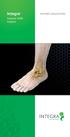 Integra Subtalar MBA Implant Patient EDUCATION Overview: What is Flatfoot? Flatfoot is a physical deformity where there is an absence of the arch that runs from the heel of the foot to the toes. A common
Chamnanni Rungprai, M.D.
 Outcomes of single versus multi-level Gastrosoleus or Achilles tendon lengthening Techniques: A Comparative Study 1,2 Chamnanni Rungprai, M.D. Co-authors 1 Christopher Cyclosz, M.D. 1 Phinit Phisitkul,
CPME Memorandum Proper Logging of Surgical Procedures November 15, 2012
 For the procedure codes listed below, the program director must review each entry to determine proper usage. 1.13 other osseous digital procedure not listed above 2.3.10 other first ray procedure not listed
63 Tarsometatarsal arthritis
 63 Tarsometatarsal arthritis Contents Introduction Anatomy Biomechanics Clinical Presentation Pathogenesis Physical Examination Imaging Conservative Treatment Operative Treatment Controversy References
Correlation between Lower Extremity Biomechanical Parameters and Injuries in Dancers: Longitudinal and Biomechanical Perspectives
 Correlation between Lower Extremity Biomechanical Parameters and Injuries in Dancers: Longitudinal and Biomechanical Perspectives Cheng-Feng Lin, PhD Grant Number: NSC 96-2314-B-6-7 - 關 鍵 字 : 下 肢 傷 害 芭
Council on Podiatric Medical Education
 CPME MEMORANDUM November 15, 2012 TO: Program Directors and Residents FROM: Council on Podiatric Medical Education SUBJECT: By conference call in October 2012, members of the Council's Residency Review