
16551 EMERGENCY LIGHTING SYSTEMS. C. Refer to Cornell Design & Construction Standard for Emergency Power Systems.
|
|
|
- Todd Horatio McKenzie
- 9 years ago
- Views:
Transcription
1 16551 EMERGENCY LIGHTING SYSTEMS PART 1: GENERAL 1.01 SUMMARY A. This Section provides the University guidelines for the installation of Emergency Lighting Systems. B. This standard was developed primarily to address the design and installation of emergency lighting equipment to support emergency egress from within a facility out to the public way. The intent is to meet compliance requirements for lighting the path of egress and to minimize the effort required in maintenance and testing of lighting equipment. C. Refer to Cornell Design & Construction Standard for Emergency Power Systems. D. Any proposed deviations from this standard must be submitted in writing to Cornell University Facilities Engineering (CU FE) for review and approval OBJECTIVE OF STANDARD A. The objective of this standard is to provide guidelines for designing an emergency lighting system that will allow safe egress from the building in the event of loss of power. This shall be accomplished using the following DESIGN considerations: 1. Provide system incorporating features that minimize maintenance and testing requirements. Testing will be performed as required by the latest adopted version of the Building Code of New York State (BCNYS.) a. Buildings with generators Reduce or eliminate the use of battery backup devices in buildings utilizing generators; connect all exit and emergency lighting to the building generator. b. Buildings without generators exit signs and emergency lights with batteries are acceptable if in compliance with this standard. 2. Consider centralized systems for supplying power to emergency lighting in buildings where possible (connected to an Emergency Power Supply System (EPSS) or via central battery unit). 3. Provide exterior egress and emergency lighting to the public way as defined by the BCNYS and as identified by the Authority Having Jurisdiction (AHJ). 4. Be energy efficient, utilizing minimum lighting levels for 'always on' night lights EMERGENCY LIGHTING SYSTEMS PAGE 1 of 8

2 5. Provide emergency lighting that activates upon a loss of branch circuit power, per code. 6. Provide 'NORMALLY OFF' emergency lighting in l ecture/classrooms above 49 occupants SYSTEM DESIGN PLANNING A. It is the Consultant s responsibility to prepare a code-compliant emergency lighting design and submit it to the Project Manager and CU FE for review before completion of the Contract Documents. Coordinate the following system design elements with the Project Manager and representatives from CU FE in a basis of design document: 1. List applicable Codes and Standards with Editions used in the system design, including applicable versions of the Building Code of New York State (BCNYS) and NFPA 101 Life Safety Code. Identify building occupancy type. 2. The Consultant shall verify that all applicable portions of these standards are incorporated into the project's design drawings, specifications and final construction. 3. Requests for variances from these Standards shall be submitted in writing to the Project Manager for review and written direction from CU FE DESIGN DOCUMENTATION A. The Consultant shall provide anticipated emergency lighting illumination levels to CU FE for review prior to completion of design documents. 1. This data shall be provided in electronic format using lighting software such as AGi32 Lighting Analysts or equal. 2. Data shall depict compliance with the performance requirements identified in this standard, including: a. Means of egress paths b. Illumination levels: i. Average ii. Minimum iii. Max:min ratio B. Determine and identify the system connection type. C. At the completion of the project, provide small scale plan(s) identifying any emergency lighting equipment battery units and their type(s) for record and testing purposes EMERGENCY LIGHTING SYSTEMS PAGE 2 of 8

3 1.05 SYSTEM CONNECTION A. In buildings with generators - New Construction: 1. Battery back-up units shall not be installed on generator powered circuits unless required by the BCNYS. If installed, battery back-up units must be installed in a manner that will allow the units to be accessible for maintenance and testing; remote testing capability shall be provided where units cannot be made readily accessible as defined by the NEC. 2. For additional information on generator requirements see Cornell Standard Emergency Power Systems. B. In buildings with generators - Existing Facilities: 1. For renovation projects or one-for-one retrofit/replacements where exit and emergency lighting is minor in scope, every attempt shall be made to eliminate battery back-up units and replace with non-testable units circuited to emergency power. C. In buildings without generators - New Construction: 1. For small buildings or facilities (those with minimal emergency loads), a life cycle cost analysis (including maintenance costs) should be performed to determine if battery pack sources, central inverter or a generator set source would be the most cost effective source for emergency systems. D. In buildings without generators - Existing Facilities: 1. Provide replacement units with battery backup as required per this standard SYSTEM PERFORMANCE A. General: Illumination values described herein shall be foot-candles measured at the floor level in accordance with the latest adopted version of BCNYS. B. Emergency Egress lighting shall exceed the following minimum illumination levels prescribed by BCNYS measured along the path of egress: 1. Initial average of 1 foot-candle (fc). 2. Minimum of 0.1fc at any point to 1 maximum-to-minimum illumination ratio. 4. Illumination levels shall be permitted to decline to 0.6 foot-candle average and a minimum at any point of 0.06 foot-candle at the end of the emergency lighting time duration of 90 minutes. C. University s experience from previous projects with building luminaires connected to the facility generator as emergency egress lighting is that the range shall be an average of between 2 and 3 foot-candles, with a minimum level of 0.5 foot-candles and a maximum level of 15 foot-candles. A level of 15 foot-candles directly below a EMERGENCY LIGHTING SYSTEMS PAGE 3 of 8

4 fixture would allow for a 1 foot-candle minimum between fixtures, which stays within the max-to-min ratio as required by code. D. At the conclusion of the project, egress and emergency lighting levels shall be verified during commissioning and testing. Systems MUST meet minimum lighting levels after 90 minutes DESIGN CRITERIA A. The Designer shall use the following criteria as guidelines in evaluating and selecting a system with the appropriate functional performance for the specific project circumstances. Systems utilizing emergency ballast type fixtures shall only be allowed with special permission from CU FE. System types by order of preference: B. ALWAYS ON (NIGHT LIGHT) SYSTEM - Emergency and egress lighting utilizing the general lighting system connected directly to the emergency power source through an emergency power automatic transfer switch (ATS). Note that facility exit signs, fire alarm, egress elevators, fire pumps and all life safety associated equipment may be connected to the same ATS. Any other loads shall be on their own transfer switch per the National Electrical Code (NEC). Circuits will be verified by CU FE. 1. Classrooms and Lecture rooms (defined Assembly spaces): utilize normally off emergency lighting with smart, self-diagnostic battery packs or room lighting on relay control devices connected to the local unswitched/undimmed leg of the lighting circuits. Fixtures must be labeled where they are connected to relay control devices. 2. Egress lighting in normally off areas: provide minimum lighting at egress paths within rooms or areas in Assembly o ccupancies over 49 where normally off emergency lighting is used. Wall LED floor wash lighting or strip/rope lighting is recommended circuited to the emergency lighting circuit. 3. Relay controlled lighting for normally off areas must be labeled at each room for 30 day and annual testing. Provide signage as described in this standard. 4. Exterior Emergency Lighting: provide at all required exits up to 30 feet away from building or to the public way, whichever is furthest from the building. Luminaires shall be connected to emergency power, switched off during the day with photo cell or other automatic control. 5. Stairwells: recommend two circuits feed alternate luminaires if the emergency lighting is served by an on-site generator. 6. Theatrical Dimmed Lighting systems require egress lighting per code, and emergency lighting connected to a UL labeled system relay integrated into the system. Provide test information and label fixtures connected to relay EMERGENCY LIGHTING SYSTEMS PAGE 4 of 8

5 C. NORMALLY OFF EMERGENCY LIGHTING: Self- contained individual or tandem smart self-diagnostic battery packs connected to local lighting circuit. This system requires exhaustive testing every 30 days and is not to be used without permission from CU FE. 1. Concealed 'pop out' luminaires are not to be used. 2. Integrated emergency ballast type fixtures are not to be used. 3. Classrooms and Lecture rooms shall use smart, self-diagnostic battery packs. 4. Egress lighting in assembly occupancies - wall LED floor wash lighting or strip/rope on normal power not switched. 5. Egress lighting (night lights) - provide non-switched lighting throughout exit path including stairwells, restrooms and exterior paths. 6. Exterior Emergency Lighting- Smart, self-diagnostic battery packs. 7. Stairwells- Provide smart, self-diagnostic battery packs. D. EXISTING LIGHTING SYSTEM RETROFIT INSTALLATION FOR ALWAYS ON (NIGHT LIGHT) SYSTEM 1. This system would re-circuit existing lights to a separate, (always-on) circuit connected to an emergency generator. In this system, it is imperative that the lighting levels be at the minimum design criteria since they will be on 24 hours a day. This is generally the most economical system since existing lighting circuits are not easily regrouped for control purposes. 2. Classrooms and Lecture rooms over 49 occupants shall have selftesting/self-diagnostic battery packs. Review with CU FE on a normally off relay option. 3. Exterior Emergency Lighting: provide at all required exits up to 30 feet away from building or to the public way. Lighting circuits serving exterior luminaires should be connected to emergency power, switched off during the day with photocell or other automatic control. 4. Stairwells: Provide minimal lighting to meet code, recommend two level lighting or alternate fixture two circuit wiring. Try to capture the existing lighting circuit and change light fixtures as needed. Remove switches to existing circuits. Egress and emergency lighting shall not be switched. 5. Theatrical Dimmed Lighting Systems require egress lighting per code, and emergency lighting connected to a UL labeled system relay integrated into the system. Provide test information and label fixtures connected to relay FIXTURE LOCATION A. As new or replaced exit signs or battery packs are located for illumination along the path of egress, consider ease of testing when selecting mounting heights. Testing may be manual pushbutton or visual EMERGENCY LIGHTING SYSTEMS PAGE 5 of 8

6 PART 2: PRODUCTS GENERAL confirmation of LED indicators, in order of preference and always within code requirements: 1. Locate unit where it can be tested by a (average height) person standing on the floor. 2. Locate unit where it can be tested with the aid of a 6-ft ladder. 3. If the unit cannot be located within easy access, provide for remote testing. Instruct contractor to provide tester for new systems. A. The University has standardized on Simkar exit and emergency lighting products for durability, to reduce the number of different manufacturers/models, and to simplify the testing requirements of campus emergency lighting equipment. This includes exit signage, wall packs and combination exit/wall pack units. Other units may be considered by CU FE based upon their ability to perform equally to the units specified herein. B. It is important that where emergency lighting equipment is equipped with battery backup, the self-testing/self-diagnostic (ST/SD) option must also be included. This will allow for a visual inspection of the equipment rather than a manual test of equipment during monthly code required tests. C. All emergency luminaires connected to a standby power source (without battery backup) shall be labeled with a 1 diameter permanent red DOT EXIT AND EMERGENCY LIGHTS A. Exit, AC only, non-testable: Simkar SLEDARW (white housing, red lettering, LED, 5-year warranty). B. Exit with battery back-up, testable: Simkar SLEDBRW-SD. C. Emergency (wall pack) light: Simkar SEMW/SD. D. Combination exit/emergency: Simkar SCLI2RW-SD. E. Exit discharge (exterior): an LED type product is preferred. Connect to emergency power where available. In non-generator buildings without an inverter system, consider connecting luminaire to battery source inside to facilitate maintenance and reliability. No HID will be permitted due to restrike limitations EMERGENCY LIGHTING SYSTEMS PAGE 6 of 8

7 2.03 CENTRAL BATTERY UNIT A. Equipment shall provide capacity for 90 minute run time at full load and shall be capable of supplying H.I.D, fluorescent, and incandescent loads. B. Final equipment size shall allow for 20% future load growth. C. Consideration during design shall include internal maintenance bypass switch, system monitoring terminal, and remote system status/monitoring tools. D. Unit shall be supplied by: 1. Dual-Lite 2. Myers Power Products 3. Crucial Power Products 4. Approved equal BATTERY BALLAST A. Battery ballasts are generally not preferred due to their limited lumen output in a power outage condition. Consultant shall provide emergency lighting levels from any selected battery ballast luminaire for review by CU FE. B. Any luminaires supplied with battery ballasts shall be mounted such that test switches are remotely located and/or visible from the ground level looking up to the luminaire. C. Preference is given to ST/SD type which automatically tests for 30 seconds each month and 90 minutes annually, and illuminate an LED and provide an audible alarm in the event of issues. D. Manufacturer: Bodine RediTest, or approved equal RELAY CONTROL DEVICES A. Recent installations on projects have included the installation of relay transfer devices, which are intended to automatically switch between the normal utility source and the standby source (typically a generator) on a power outage. They allow for the independent control of luminaires/circuitry, eliminating conventional, unswitched night light luminaire installations. B. Generally, this equipment would be installed only where there is a need for independent control of the luminaire by a lighting control system in assembly areas, and as a result of a power outage which would require a full on luminaire to provide egress illumination EMERGENCY LIGHTING SYSTEMS PAGE 7 of 8

8 C. Consideration must be given to locating any of these relay control devices for ease of access and inspection. Co-locate multiple devices in electrical closets to permit any code required testing. D. Provide a sign identifying the location of each relay control device. The sign shall be gray with red letters, 4 1/2 inches wide (the width of double gang wall switch) and 2 inches high; text 1/4" high minimum, located in coordination with the Project Manager. Sign shall state the following: E. Provide information on the selection of this equipment to CU Facilities Engineering as soon as possible in order to facilitate the design and location of equipment and signage. F. Bodine GTD, or approved equal. PART 3: EXECUTION COMMISSIONING A. Test all new units for proper operation and to verify that illumination levels are met at the end of a 90-minute duration. Where appropriate, verify that battery charging occurs. B. Label every unit with power panel and circuit identification ROUTINE EMERGENCY LIGHTING TESTING PROGRAM A. The University has implemented a campus-wide emergency lighting testing program in the Ithaca campus facilities. B. The routine exercising and operation of the equipment is administered through the campus asset management system, or directly through Campus Life Facilities, and consists of a custom plan for each facility directing personnel where to test and log each piece of equipment. C. Consultant shall be responsible to provide the final location of all emergency lighting equipment, types installed, and the method for testing equipment to the Project Manager EMERGENCY LIGHTING SYSTEMS PAGE 8 of 8

Linear. Emergency Operation for Linear Fluorescent Lamp Fixtures The Philips Bodine Linear Fluorescent Emergency Ballasts
 Linear Emergency Operation for Linear Fluorescent Lamp Fixtures The Philips Bodine Linear Fluorescent Emergency Ballasts Philips Bodine fluorescent emergency ballasts allow you to convert virtually any
EMERGENCY LIGHTING AND CONTROL
 I. Overview Emergency lighting control options are rapidly expanding in response to growing needs by design professionals and building owners to save energy and achieve aesthetic and functional design
Fire Alarm System Plans Review Checklist Property location Date of Review
 Fire Alarm System Plans Review Checklist Property location Date of Review 1. Is application completed in entirety? 2. Are the plans review fee submitted with the application? 3. Does floor plan include
5-8.1.4* Any required illumination shall be arranged so that the failure of any single lighting unit shall not leave any area in darkness.
 NFPA 101 Life Safety Code Section 5-8 Illumination of Means of Egress 5-8.1 General. 5-8.1* Illumination of means of egress shall be provided in accordance with this section for every building and structure
ISL-540 TBTS SERIES D EMERGENCY LIGHTING EQUIPMENT
 P.O. BOX 11846 TUCSON, AZ 85734 (520) 294-3292 FAX (520) 741-2837 www.iotaengineering.com INSTRUCTION MANUAL IMPORTANT SAFEGUARDS When using electrical equipment, basic safety precautions should always
HERNANDO COUNTY FIRE ALARM GUIDELINES
 HERNANDO COUNTY FIRE ALARM GUIDELINES To be used for all commercial building fire alarm system plan review. The procedures set forth in this document are the minimum requirements necessary to ensure a
University Design Standard. Fire Alarm Systems
 University Design Standard Fire Alarm Systems 1.0 Overview This document provides Virginia Tech s standards for the design and installation of fire alarm systems and equipment in new construction, retrofit
Lighting Requirements
 ASHRAE/IESNA Standard 90.1-1999 Lighting Requirements Joseph G. Howley Jr., IESNA GE Lighting Immediate Past Chair of ASHRAE SSPC 90.1 Lighting Subcommittee 1 How to Get the Standard Standard 90.1-2001
Application Note: Emergency Battery Backup System (EBBS) Solutions for the XIM Platform
 Application Note: Emergency Battery Backup System (EBBS) Solutions for the XIM Platform Version 20150626 The purpose of this application note is to outline design guidelines for implementing emergency
DELAWARE STATE FIRE MARSHAL FIRE ALARM SYSTEM CERTIFICATE OF INSTALLATION
 Phone System Owner Phone System Engineered by: of Record Drawings: of System Manuals: of Test Reports: System Installer 1. GENERAL INFORMATION Phone Delaware License No: Certificate Holder No. System Supplier
UNRIVALED EMERGENCY SOLUTIONS FOR LEDs CLASS 2 OUTPUT COMPLIANCE WITH AUTO-SENSE FORWARD VOLTAGE
 IOTA ILB-CP SERIES IOTA s ILB-CP Series Emergency Drivers bring dependable emergency lighting solutions for today s LED fixture designs. The IOTA ILB-CP Series operates in conjunction with the AC LED driver
OPEN OFFICE T8 HP FLUORESCENT HIGH PERFORMANCE LENSED
 OFFICE GUIDE 1 OPEN OFFICE T8 HP FLUORESCENT HIGH PERFORMANCE LENSED ROOM CHARACTERISTICS Length: 60' Width: 25' Height: 9' Reflectivity: Ceiling = 80% Walls = 50% Floor = 20% PRODUCT SPECIFICATIONS Photo
Mechanical, Plumbing, and Fire Protection Conditions
 Mechanical, Plumbing, and Fire Protection Conditions Mechanical Conditions The mechanical systems within the building consist of a combination of the original 1926 systems and renovations that occurred
C. Conform to requirements of Americans with Disabilities Act (ADA).
 SECTION 28 31 00 - FIRE ALARM AND DETECTION SYSTEMS PART 1 - GENERAL 1.1 SECTION INCLUDES A. Fire alarm and detection systems 1.2 REFERENCES A. NFPA 70 - National Electrical Code B. NFPA 72 - National
BELMONT FIRE DEPARTMENT FIRE ALARM SYSTEM REQUIREMENTS BFD-OFM-10-011
 Fire Alarm System plan(s) MUST be reviewed and approved by the Belmont Fire Department prior to the start of construction. The design and any changes must be fully compliant with NFPA 1, NFPA 101, NFPA
Bold items are particular to the City of Euless
 EULESS FIRE DEPARTMENT FIRE MARSHAL S OFFICE INFORMATION LINE: Revised 2/12 Fire Chief Wes Rhodes Fire Marshal Paul Smith EFD-FMO 3-2 2009 International Fire & Building Code as Amended NFPA Standards Adopted
ELECTRICAL EMERGENCY SYSTEM PLAN REVIEW OVERVIEW OF CODE REQUIREMENTS
 ELECTRICAL EMERGENCY SYSTEM PLAN REVIEW What to Look for during Plan Review OVERVIEW OF CODE REQUIREMENTS First determine the type of emergency power system; is the system designed for Emergency or Legally
INSTALLATION GUIDELINES for SOLAR PHOTOVOLTAIC SYSTEMS 1
 City of Cotati Building Division 201 W. Sierra Ave. Cotati, CA 94931 707 665-3637 Fax 792-4604 INSTALLATION GUIDELINES for SOLAR PHOTOVOLTAIC SYSTEMS 1 Any PV system on a new structures should be included
c. As mandated by law, facilities must obtain and maintain valid zoning permits as well as permits for intended use.
 Walmart Standards for Suppliers Section 7. Health and Safety 7. Health and Safety Suppliers must provide workers with a safe and healthy work environment. Suppliers must take proactive measures to prevent
Emergency Lighting Practices in the UAE. Richard Caple MSc MSLL Lighting Applications Manager SLL Vice President
 Emergency Lighting Practices in the UAE Richard Caple MSc MSLL Lighting Applications Manager SLL Vice President Agenda UAE emergency lighting requirements Emergency systems and luminaires Emergency lighting
Fire Alarm System Plans Submittal Guidelines For New and Existing Systems
 Fire Alarm System Plans Submittal Guidelines For New and Existing Systems SCOPE The Temecula Fire Prevention Bureau (TFPB) has established the following requirements for the submittal of all fire alarms,
Telluride Fire Protection District Fire Alarm Systems Policy Version 03/2007
 Telluride Fire Protection District Fire Alarm Systems Policy Version 03/2007 FIRE ALARM SYSTEMS POLICY TELLURIDE FIRE PROTECTION DISTRICT TABLE OF CONTENTS FIRE ALARM PROTECTION POLICY PLAN REVIEW SUBMITTAL
Prescriptive Program Rebate Application
 Prescriptive Program Rebate Application Check the appropriate program box for your rebate. OID Internal Use Only Cooling FSO (Fluid System Optimization) Foodservice Equipment Heating Lighting Motors &
City of Riverside Building & Safety Division Phone: (951) 826-5697 www.riversideca.gov
 City of Riverside Building & Safety Division Phone: (951) 826-5697 www.riversideca.gov BUILDING CODE REQUIREMENTS FOR CHILD DAY CARE The purpose of this document is to provide the user with a basic level
Fire Alarm and Detection Systems And Central Station Monitoring Plan Submittal Guidelines
 Fire Alarm and Detection Systems And Central Station Monitoring Plan Submittal Guidelines Red Oak Fire Rescue Office of the Fire Marshal 547 N. Methodist Red Oak, TX 75154 Phone: 469-218-7713 Fax: 468-218-7719
CAL FIRE/San Luis Obispo County Fire Fire Prevention Bureau
 CAL FIRE/San Luis Obispo County Fire Fire Prevention Bureau g GUIDELINE FOR SAFETY REQUIREMENTS FOR HAUNTED HOUSES PURPOSE This guide is intended to provide safety standards and regulations for the construction
TAMARAC FIRE RESCUE INSTRUCTIONS FOR FIRE ALARM PRE-SUBMITTAL CHECKLIST
 TAMARAC FIRE RESCUE INSTRUCTIONS FOR FIRE ALARM PRE-SUBMITTAL CHECKLIST In order to provide a comprehensive plan review in a timely manner, and to insure the design and installation of fire alarm systems
The following definitions apply with regard to requirements specified in this document:
 GUIDELINES FOR INSTALLATION OF TEMPORARY AND PERMANENT ABOVEGROUND DIESEL FUEL TANKS FOR EMERGENCY AND STANDBY POWER SYSTEMS LOCATED OUTSIDE OF BUILDINGS For Use by Unidocs Member Agencies or where approved
FLORIDA ATLANTIC UNIVERSITY FIRE ALARM SYSTEM INSTALLATION MANUAL
 FLORIDA ATLANTIC UNIVERSITY FIRE ALARM SYSTEM INSTALLATION MANUAL January, 2003 Environmental Health and Safety Florida Atlantic University 777 Glades Rd. Boca Raton, FL 33431 Phone: 561-297-3129 Fax:
FIRE AND LIFE SAFETY TRAINING
 FIRE AND LIFE SAFETY TRAINING 1 Objectives General Information Emergency Evacuation Plans / Regulatory Requirements Notification Systems Emergency Exits and Fire Doors Electrical Safety Fire Prevention
FIRE ALARM SYSTEM RECORD OF COMPLETION
 FUNDAMENTALS OF FIRE ALARM SYSTEMS 72 33 FIRE ALARM SYSTEM RECORD OF COMPLETION To be completed by the system installation contractor at the time of system acceptance and approval. 1. PROTECTED PROPERTY
AUTOMATIC SWINGING DOOR
 AAADM American Association of Automatic Door Manufacturers AUTOMATIC SWINGING DOOR OWNER'S MANUAL Distributed by: Section Contents Page Caution 2 To Our Customers 3 Service Availability 3 Compliance with
FIRE ALARM SYSTEM RECORD OF COMPLETION
 FIRE ALARM SYSTEM RECORD OF COMPLETION To be completed by the system installation contractor at the time of system acceptance and approval. 1. Protected Property Information Name of property: Description
LED DIMMING A HELPFUL GUIDE...
 LED DIMMING A HELPFUL GUIDE... Introduction There are five types of dimming control interfaces described in this document: 2-Wire Forward Phase, 2-Wire Reverse Phase, 3-Wire (Lutron), 4-Wire (0 10V), and
OCFRD TENT STANDARD 6000. This Standard operates under the authority of Orange County, Florida Ordinance and State Statutes.
 1. Authority Orange County Fire Rescue Department Tents & Membrane Structures Office of The Fire Marshall - 109 E. Church Street, Lower Level - Orlando, Florida 32801-3319 Phone: 407-836-0004 Fax: 407-836-8310
FIRE ALARM AND DETECTION SYSTEMS SECTION 16721
 PART 1 - GENERAL 1.01 WORK INCLUDED FIRE ALARM AND DETECTION SYSTEMS SECTION 16721 A. Provide a complete fully addressable, power limited, fire detection and evacuation system. The system shall be connected
Understanding Fire Alarm Requirements & Inspections. Presented By Bill Conroy Technical Sales For Briscoe Protective Systems Inc
 Understanding Fire Alarm Requirements & Inspections Presented By Bill Conroy Technical Sales For Briscoe Protective Systems Inc Introduction Fire Alarm Requirements are structured through a system of codes.
WHAT S NEW IN THE 2013 CODE?
 WHAT S NEW IN THE 2013 CODE? Changes to mandatory Title 24 lighting requirements California's new Building Energy Efficiency Standards take effect in 2014. They improve the energy efficiency of homes by
LOUISVILLE FIRE PROTECTION DISTRICT 895 West Via Appia, Louisville, Colorado 80027 303-666-8809
 LOUISVILLE FIRE PROTECTION DISTRICT 895 West Via Appia, Louisville, Colorado 80027 303-666-8809 Contractor s Checklist and Installation Guide TABLE OF CONTENTS Fire Protection Narrative........... 3 Fire
Guidance for Electrical Contractors on Emergency Lighting Legislation
 Guidance for Electrical Contractors on Emergency Lighting Legislation Issued in the interests of safety by in conjunction with the Industry Committee for Emergency Lighting ECA / ICEL Guidance For Electrical
ELECTRICAL CONTRACTORS THE UNIVERSITY OF TENNESSEE KNOXVILLE, TENNESSEE SECTION 16050 PAGE 1
 KNOXVILLE, TENNESSEE SECTION 16050 PAGE 1 PART 1 - GENERAL 1.01 RELATED DOCUMENTS: SECTION 16050 A. Drawings and general provisions of Contract, including General and Supplementary Conditions and Division-1
FIRE ALARM SYSTEM SUBMITTAL CHECKLIST AND APPLICATION
 PERMITS AND INSPECTIONS FIRE ALARM SYSTEM SUBMITTAL CHECKLIST AND APPLICATION 911 Assigned PROJECT LOCATION Subdivision: Lot: Blk: Sec: PROJECT New Construction Addition/Remodel Demolition Other: Number
Exterior Lighting for Energy Savings, Security, and Safety
 PNNL-18173 Prepared for the U.S. Department of Energy under Contract DE-AC05-76RL01830 Exterior Lighting for Energy Savings, Security, and Safety EE Richman November 2009 PNNL-18173 Exterior Lighting
LED Lighting. Emergency LED Products. The Philips Bodine BSL Driver Family ELI-S-20 Emergency Lighting Micro Inverter ELI-S-100 Dimming Inverter
 LED Lighting Emergency LED Products The Philips Bodine BSL Driver Family ELI-S-20 Emergency Lighting Micro Inverter ELI-S-100 Dimming Inverter Philips Bodine emergency LED drivers answer the call for LED
City of Riverside Building & Safety Division Phone: (951) 826-5697 www.riversideca.gov
 City of Riverside Building & Safety Division Phone: (951) 826-5697 www.riversideca.gov PHOTOVOLTAIC PERMITTING GUIDELINES The information provided in this document is general and is intended only as a
CLARK COUNTY FIRE DEPARTMENT Fire Hazard & Prevention Services
 CLARK COUNTY FIRE DEPARTMENT Fire Hazard & Prevention Services 575 E. Flamingo Road, Las Vegas, NV 89119 (702) 455-7316 FAX (702) 455-7347 105.8a-6.1 TITLE: FIRE ALARM SYSTEM REQUIREMENTS SCOPE: This guideline
MISSION CRITICAL FACILITIES DESIGN UPS BATTERY ROOM ENVIRONMENT CRITICAL DESIGN CONSIDERATIONS
 MISSION CRITICAL FACILITIES DESIGN UPS BATTERY ROOM ENVIRONMENT CRITICAL DESIGN CONSIDERATIONS Allen Wood Vice President Data Center Division Engineering Design Group INTRODUCTION It can be very effectively
SECTION 16721 FIRE ALARM AND SMOKE DETECTION SYSTEMS
 SECTION 16721 PART 1 - GENERAL 1.1 SECTION INCLUDES A. Fire Alarm Control Panels B. Manual Fire Alarm Stations C. Automatic Smoke D. Fire Alarm Notification Appliances E. Auxiliary Fire Alarm Equipment
Mike Holt s Illustrated Guide to. Rule 220.87, Articles 445, 700, 701, and 702. Based on the 2011 NEC
 Mike Holt s Illustrated Guide to NEC Requirements for Generators and Standby Power Systems Rule 220.87, Articles 445, 700, 701, and 702 Based on the 2011 NEC Extracted from Mike Holt s Illustrated Guides
NC State University Design and Construction Guidelines Division 26 Fire Alarm Systems
 NC State University Design and Construction Guidelines Division 26 Fire Alarm Systems 1.0 Purpose A. The following guideline provides the minimum standards and requirements for fire alarm systems. 2.0
Understanding Emergency Power Off (EPO)
 Understanding Emergency Power Off (EPO) White Paper #22 Executive Summary Emergency Power Off (EPO) is the capability to power down a piece of electronic equipment or an entire installation from a single
Exhibit C Design Review Guidelines
 Exhibit C Design Review Guidelines January 2015 Included in this Exhibit for Design Guidelines includes: Electrical Design Guidelines Electrical and Mechanical /Plumbing Construction Requirements Temporary
Open Office Plan. Function and Orientation. Space Characteristics. Material Properties. - 37 - Gregory Wolfe 2004 Senior Thesis Lighting / Electrical
 Open Office Plan Function and Orientation The open office plan on the top floor of the Westwood Community church holds 14 cubicles and doubles as the circulation space for the entire top floor. The area
Dennis Fire Department Fire Prevention Mark Dellner Fire Chief
 Dennis Fire Department Fire Prevention Mark Dellner Fire Chief FIRE SAFETY INSPECTION GUIDELINES FOR COMMERCIAL PROPERTIES (MA Fire Prevention Regulations 527 CMR, MGL Chapter 148) FIRE PREVENTION CHECKLIST-
FVSU-33201301 REPAIR & UPGRADE FIBER OPTIC 280000-1 SECTION 280000 FIRE ALARM SYSTEM CONNECTIVITY
 FVSU-33201301 REPAIR & UPGRADE FIBER OPTIC 280000-1 SECTION 280000 FIRE ALARM SYSTEM CONNECTIVITY PART 1 - GENERAL 1.1 SUMMARY A. Section Includes: 1. Fire-alarm control unit. 2. Addressable interface
Sustainable Office Design (SOD) is different than existing programs STEP 1: STEP 2: STEP 3: STEP 4:
 A NGuide a t i o n a l for G r i d Applicants a n d E v e r s o uand r c e Lighting Practitioners V4-20150202 Sustainable Office Design (SOD) is different than existing programs The new SOD Lighting Initiative
CITY OF PHILADELPHIA DEPARTMENT OF LICENSES AND INSPECTIONS ANNUAL CERTIFICATION FOR FIRE ALARM SYSTEMS
 CITY OF PHILADELPHIA DEPARTMENT OF LICENSES AND INSPECTIONS ANNUAL CERTIFICATION FOR FIRE ALARM SYSTEMS PROPERTY ADDRESS (BRT Address Required) TESTING CONTRACTOR (Name and Address) License No. ANNUAL
GRAFIK 5000TM/6000 /7000TM System Onsite Startup
 369625c 1 04.04.13 GRAFIK 5000TM/6000 /7000TM System What Standard GRAFIK 5000TM/6000 /7000TM Startup includes: Three visits to the job site during normal business hours. A pre-wire visit, a Startup visit,
DORMA MODEL PS-406BB POWER SUPPLY INSTALLATION INSTRUCTIONS
 Features: INSTALLATION Install in accordance with NFPA 70. DORMA MODEL PS-406BB POWER SUPPLY INSTALLATION INSTRUCTIONS Up to 1.95 Amps Load Capacity Class 2 Rated Outputs Overload, Over Voltage, and Short
Electrical. This section applies to the design and installation of building power distribution systems.
 Basis of Design This section applies to the design and installation of building power distribution systems. Design Criteria This section contains the architectural, structural and mechanical provisions
BUILDING INSPECTORS INSPECTION FORM FOR CHILD CARE CENTERS
 DCD-0304 Identification # Rev. 9/08 County Date of Inspection NAME OF OPERATION BUILDING INSPECTORS INSPECTION FORM FOR CHILD CARE CENTERS ADDRESS TELEPHONE: CITY STATE ZIP BUILDING INSPECTORS CERTIFICATE
LED Tubular Lamp / Kit Guide
 LED Tubular Lamp / Kit Guide LED lighting products have great potential to replace existing fluorescent lighting, reduce energy use and improve lighting quality in many indoor commercial applications.
General Lighting Recommendations
 Design Guidelines for Energy Efficient Lighting Systems Thank you for your interest in energy efficiency! According to the US Department of Energy, 51% of the energy used in commercial buildings is consumed
DENVER PUBLIC SCHOOLS DESIGN AND CONSTRUCTION STANDARDS This Standard is for guidance only. SECTION 17650 SECURITY SYSTEMS
 PART 0 DESIGN STANDARDS 0.01 GENERAL DESIGN GUIDELINES A. Inspections and observations by the Owner do not relieve the A/E of contract responsibilities. B. Chain of command 1. The DPS Project Manager is
527 CMR: BOARD OF FIRE PREVENTION REGULATIONS
 527 CMR 31.00: CARBON MONOXIDE ALARMS Section 31.01: Purpose and Scope 31.02: Definitions 31.03: General Installation Provisions 31.04: Specific Installation Provisions 31.05: Carbon Monoxide Protection:
FIRE ALARM SYSTEMS PERMIT APPLICATION, PLAN SUBMITTAL, DESIGN, INSTALLATION AND INSPECTION REQUIREMENTS Effective Date: January, 2011
 Office of the Fire Marshal 1.0 PERMITS FIRE ALARM SYSTEMS PERMIT APPLICATION, PLAN SUBMITTAL, DESIGN, INSTALLATION AND INSPECTION REQUIREMENTS Effective Date: January, 2011 1.1 To acquire an installation
Arapahoe County Residential Water Heater Installation and Inspection Guide
 Arapahoe County Residential Water Heater Installation and Inspection Guide The attached handout is designed to be a general permit submittal and inspection guide covering most installation instances, however
MEANS OF EXIT / ESCAPE / EGRESS SELF INSPECTION CHECKLIST
 OPTIONAL INFORMATION Name of School: Date of Inspection: Vocational Program/Course/Room: Signature of Inspector: MEANS OF EXIT / ESCAPE / EGRESS Guidelines: This checklist covers some of the regulations
FIRE ALARM SYSTEM PLAN SUBMITTAL CHECKLIST
 FIRE ALARM SYSTEM PLAN SUBMITTAL CHECKLIST All fire alarm system plan submittals must include this Fire Alarm System Plan Submittal Checklist. PLAN APPROVAL - No work shall be performed until plans are
Project Name: Nortrax Section 26 41 00 Project No: 13-013 SURGE PROTECTION DEVICES Page 1
 Page 1 PART 1 - GENERAL 1.1 RELATED DOCUMENTS A. General: Drawings and general provisions of the Contract, including General and Supplementary Conditions and Divisions 1 Specification sections apply to
Single Family Residential Basement Finish
 How to Use This Guide Building Guide Pottawattamie County Planning & Development Department Building & Safety Division Single Family Residential Basement Finish Provide two (2) sets of plans and complete
Fire Pump Controllers Remote Alarm Panels
 Fire Pump Controllers Remote Alarm Panels Remote Alarm Panels 1.8 Remote Alarm Panels FDAP-M Electric... DFDAP-M Diesel... Product Specifications... 2 6 9 Features 1-1 DFDAP-M / FDAP-M Remote Alarm Panel
APPLICATION GUIDE MINI PRODUCT GUIDE
 MINI PRODUCT GUIDE BETTER PERFORMANCE THROUGH ADVANCED TECHNOLOGY 100% Digital Passive Infrared (PIR) Detection Dual Technology Detection utilizing Microphonics Contractor Friendly Wiring Features MICROPHONICS
CITY OF FAIRFAX CODE ADMINISTRATION 703-385-7830 / FAX 703-385-9265 www.fairfaxva.gov
 CITY OF FAIRFAX CODE ADMINISTRATION 703-385-7830 / FAX 703-385-9265 www.fairfaxva.gov Finishing a basement to make additional living space in a house is a popular construction project for many homeowners.
ESTABLISHMENT OF A NEW BUSINESS
 ESTABLISHMENT OF A NEW BUSINESS ATTENTION BUSINESS OWNERS Certificate of Occupancy Permit Requirements & Application Prior to any materials associated with your business being moved into the property that
Small Business Lighting
 Small Business Lighting Business Customer Information Opportunity ID: For a free lighting assessment, please contact the Small Business Lighting program at 1-877-287-2250. Company name Date submitted Billing
Building Codes Update: The 2009 International Fire Code and the Apartment Industry
 ! Building Codes Update: The 2009 International Fire Code and the Apartment Industry Apartment operators and developers should be aware of organizational changes in the 2009 edition of the International
How To Light A Building In The United States
 Commercial Lighting Requirements of the 2006 International Energy Conservation Code U.S. Department of Energy Building Energy Codes Program Eric Richman, PNNL Materials developed by: Eric Richman, PNNL
LOS 2500 SUPER CEILING SENSOR. Installation Manual
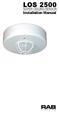 LOS 2500 SUPER CEILING SENSOR Installation Manual How Do RAB Occupancy Sensors Work? Selecting A Location: The L0S2500 sensor sees infrared heat changes caused by the motion of people within its detection
Building Permit Application
 Building Permit Application Administrative Use Only PARENT PERMIT NUMBER (Required if part of another project) PERMITTEE: PERMITTEE ADDRESS: E-MAIL ADDRESS: ARCHITECT/ENGINEER: PHONE: PHONE: ARCHITECT/ENGINEER
FIRE SAFETY INSPECTION REPORT
 FIRE SAFETY INSPECTION REPORT SINCERE KNIT GARMENTS LTD UNIT-1 EAST ISDAIR, CHANDMARI, FATULLAH OTHER FACTORIES: FAKIR KNIT LTD. July 20, 2014 Page 2 SUMMARY was surveyed for fire safety on 7/20/2014 by
Fire Alarm Systems Certification
 Fire Alarm Systems Certification The skills and knowledge listed under each task are suggestive of those involved in that task, but are not intended to constitute an exhaustive listing. 2.1 Submittal Preparation
EXETER TOWNSHIP DRY OR WET CHEMICAL FIRE SUPPRESSION SYSTEMS
 DRY OR WET CHEMICAL FIRE SUPPRESSION SYSTEMS POLICY STATEMENT This policy applies to NEW Dry or Wet chemical fire suppression systems. The Authority Having Jurisdiction will not waive major criteria in
Prime Power Services, Inc. Georgia, Carolinas 800 741 0128. NFPA 110 Standards for Emergency & Stand by Generators June 1, 2010
 Prime Power Services, Inc. Georgia, Carolinas 800 741 0128 NFPA 110 Standards for Emergency & Stand by Generators June 1, 2010 NFPA Disclaimer The views and opinions expressed in this seminar are purely
SCHOOL FIRE AND LIFE SAFETY INSPECTION CHECKLIST
 SCHOOL FIRE AND LIFE SAFETY INSPECTION CHECKLIST School Name: School Address: Town: Phone: Inspected By (Please Print): Inspection Organization Name: Inspector Phone: Date of Inspection: Building Name:
High Bay Occupancy Sensor Selection Guide
 High Bay Occupancy Sensor Selection Guide Make the most of your energy SM 1 2 Schneider Electric offers a vast array of lighting control sensors for HID and Fluorescent High Bay applications. HID High
Town of Bellingham Fire Department
 Town of Bellingham Fire Department OFFICE OF THE Fire Prevention Division Captain Robidoux- [email protected] Lieutenant Bangma- [email protected] Fire Safety Inspection Guidelines for
FIREFINDER XLS ADDRESSABLE FIRE ALARM SYSTEM SECTION 13851
 FIREFINDER XLS ADDRESSABLE FIRE ALARM SYSTEM SECTION 13851 PART 1 - GENERAL 1.1 RELATED DOCUMENTS A. Drawings and general provisions of the Contract, including General and Supplementary Conditions and
Doc 10. UTM Standards: Card Access Security System
 Doc 10 UTM Standards: Card Access Security System 1. GENERAL... 2 1.1. GENERAL REQUIREMENTS.... 2 1.2. SUMMARY OF WORK INCLUDED... 2 1.3. OVERVIEW... 2 1.4. MANDATORY REQUIREMENTS... 3 1.5. ACCESS CONTROL
NFPA 101 2015 20 Frequently Asked Questions
 February 2015 NFPA 101 2015 20 Frequently Asked Questions By Ron Coté, P.E. Ask an NFPA Expert The Technical Questions Service is free with your NFPA Membership. Our Technical Questions Service provides
SPECIFICATIONS FOR THE INSTALLATION OF FIRE ALARM SYSTEMS, SPRINKLER SYSTEMS, AND MASTER BOXES IN THE POQUONNOCK BRIDGE FIRE DISTRICT
 SPECIFICATIONS FOR THE INSTALLATION OF FIRE ALARM SYSTEMS, SPRINKLER SYSTEMS, AND MASTER BOXES IN THE POQUONNOCK BRIDGE FIRE DISTRICT The purpose of these specifications is to insure that there are minimum
Fire Alarm System Monitoring - CAN/ULC-S561-03
 Fire Alarm System Monitoring - CAN/ULC-S561-03 Brian McBain ULC Regulatory Services May 4, 2011 Copyright 1995-2007 Underwriters' Laboratories of Canada. All rights reserved. No portion of this material
Outdoor Path of Egress Solutions Dual-Lite 1
 Outdoor Path of Egress Solutions Dual-Lite 1 In the event of failure of normal lighting, the NFPA 101 Life Safety Code calls for emergency illumination along an egress path leading to a public way, which
SECTION 16721 FIRE ALARM AND DETECTION SYSTEM
 1. GENERAL 1.1. Related Documents: 1.2. Scope: 1.1.1. The general provisions of the Contract, including General and Supplementary Conditions and General Requirements apply to the work specified in this
Required Certification Documentation. Contractor's installation certification for range hood fire suppression systems.
 OFFICE OF UNIVERSIT BUILDING OFFICIAL PROJECT/CONSTRUCTION MAGER: Sample Manager Required Aboveground only Required Certification Documentation Contractor s material and test certifications for both above
Module 4, Lesson 12 Fire Alarm Systems
 Student Manual Module 4, Lesson 12 Fire Alarm Systems Performance Objectives At the conclusion of this lesson, you will be able to: Identify the components and functions of a fire alarm system and determine
2007 ICC FINAL ACTION AGENDA
 907.2.1.1 System initiation in Group A occupancies with an occupant load of 1,000 or more. Activation of the fire alarm in Group A occupancies with an occupant load of 1,000 or more shall initiate a signal
Instructions for Obtaining a Certificate of Smoke Detector, Carbon Monoxide Alarm, and Kitchen Fire Extinguisher Compliance
 Princeton Department of Emergency & Safety Services Instructions for Obtaining a Certificate of, Carbon Monoxide Alarm, and Kitchen Fire Extinguisher Compliance 1. Obtain an application Download from /forms
EMERGENCY LIGHTING DESIGN GUIDE
 LEGAL REQUIREMENTS The main reason for installing an emergency lighting system is to enable the building to meet fire safety legislation in a way that is visually acceptable and meets the user s needs