
Lower Extremities. Posterior Compartment of Thighs Knee Flexors
|
|
|
- Flora Russell
- 9 years ago
- Views:
Transcription
1 Lower Extremities Lower extremities are adjusted to provide locomotion but, at the same time, carry the full body weight. The lower limb movement is transferred through the hip joint and pelvis onto the spine. Every disruption of muscle balance and overload with no suitable compensation affects the basic function of lower limbs, i.e. the locomotion, and thus affects the body posture. Lower extremities often display abnormalities in the development of hip joints, such as knock-knees, bow legs, flat feet, etc. Considering the regular movement effort, sport training effort, random recreational movement activities (jogging) regardless of the musculoskeletal system s condition, carried out on inconvenient terrain and with inconvenient footwear, we can be certain some health problems will occur, sooner or later. Posterior Compartment of Thighs Knee Flexors Relaxing and stretching of muscles in the posterior compartment of thighs are very important compensation exercises. It is largely because these muscles are part of tonic muscles that tend to shorten and become tight. Since they are attached to pelvis, it is important to note they are therefore connected with lumbar muscle groups. In order to prevent these muscles from harm it is important they are all stretched equally. This implies that the low back should be focused on before we start stretching the posterior compartment of the thigh. This are is often overloaded and without its prior relaxation and stretching it is not possible to guarantee successful stretching of lower limbs, especially the knee flexors. Many of the exercises mentioned in the chapter on lumbar spine can be therefore used prior to the actual posterior thigh muscle stretching. Stretching that is usually done when standing or with one s trunk bent forward, cannot be valuable unless lumbar region has been stretched. That is because the more dominant muscle tonus of the lumbar area works as an anti-gravity force and hindering force at the same time. This could cause harm to the tightened muscles in the posterior thigh compartment (they are not in the ideal stretching position; see the rules of stretching and relaxing above). From the methodical point of view we should start stretching and relaxing muscles in the back-lying position..

2 Top-performance sport involved Soccer, Ice hockey Athletics: all kinds of running, jumping and walking Handball, Tennis Water sports (canoeing, rowing, etc.) Weight-lifting, Cycling Figure skating Rock climbing Hiking, condition jogging Muscle Origin Insertion Action Biceps femoris Ischial tuberosity, medial compartment of thigh bone (femur) Head of fibula (calf bone) Semimembranosus Ischial tuberosity Shin bone (tibia) Flexes the knee joint, extends the hip joint Flexes the knee joint, extends the hip joint Semitendinosus Ischial tuberosity Shin bone (tibia) Flexes the knee joint, extends the hip joint Gracilis Pubis Shin bone (tibia) Adducts thigh, flexes the knee joint Gastrocnemius Femur, posterior lower part Calcaneus (bone of the heel) Plantar flexion, flexes the knee joint Our goal is to compensate the muscle imbalance and strain in this area by using the appropriate exercises. The attention must be paid to the pelvis position when exercising. Pelvis must be stabilized and fixed. SP: (basic position): lie on your back with arms alongside your body as you breathe out, tilt your pelvis forward, draw the tip of your left foot up towards your body do the same with your right leg and then with both legs at the same time. Mistakes: sagging the lumbar spine, bending knees, lifting shoulders, leaning your head backwards.

3 SP: lie on your back with your left leg bent, foot on the floor; the right leg is raised with the knee bent, hands holding the knee, - breathe out and pull the knee towards your chest - breathe out, stretch your right leg and grasp your shin - breathe out and pull your right leg to your chest (You can make the exercise more difficult by pulling the tip of your right foot towards your body) - repeat the same with your left leg Mistakes: sagging the lumbar spine, lifting shoulders, head leaning backward, and insufficient stretching of the exercised leg. SP: sit on the floor with your legs slightly apart and your right leg bent, lean forward over your left leg and grasp your ankle (if you are dexterous enough grasp your foot), - breathe out, bend your elbows and then breathe freely, - repeat it on the other side. Mistakes: bending the leg you are exercising with and making round back. SP: Sit on the floor with your legs apart; bend forward slightly, arms rising forward with your palms on the floor, - breathe out and bend your elbows but do not move your hands on the floor; breathe regularly. Mistakes: bending your knees, knees not pointed upwards, lifting your shoulders. Note: during this exercise you also stretch anterior thigh muscles, which is not totally useless since these muscles assist with knee flexion. SP: stand with your right leg raised, facing a bench, your right foot is placed on the bench, - breathe out and lean slightly forward, keep your back straight, put your hands on your right thigh (above your knee)- until you feel slight pull, - repeat it with your other leg. Mistakes: bending your knees, sagging the lumbar spine, rounded your back, knee not pointed upwards. SP: stand up with your legs slightly apart, facing the wall ribs, lean forward with your back straight, the hands are placed on the rib at the hip level,

4 - breathe out and pull your pelvis away from the ribs until you stand up on your heels and feel a slight pull. Mistakes: bending your knees, sagging the lumbar spine, rounded back, head leaning backward, lifting your shoulders. SP: squat, put your palms on the floor, - as you breathe out stretch both legs until standing; your palms (fingers) are touching the ground. Mistakes: bending your knees, feet and knees not heading forward, bending your trunk rather than bending at the hips to lean forward Valgus and Varus Deformities of the Lower Extremities (Knee Joint) This chapter deals with the knee joint deviations from the lower limb axis. Knees can either be deviated outward (like the letter O) or inward (like the letter X). The axis of lower limbs is mainly influenced by the knee joint. Insufficient function of the lower extremity joints may result in (or deteriorate) deviations from the axis. As mentioned above, the hip joint condition affects the overall lower extremity alignment. The muscles of this area are dealt with in the chapter on knee joint muscles. There is also a connection between postural function of lower extremities hip joint, knee and ankle joint position - and sacroiliac joint in the low back area. Genua vara or bow legs is a deviation of the knees from a vertical axis which goes through the hip joint, knee joint and ankle joint on the anterior side. This alignment is caused by tight hip and weak abductors. Active exercise to balance muscle imbalance between hyper and hypoactive muscles is important. Genua valga or knock-knees is a deviation from the vertical axis which goes through the hip joint, knee joint and ankle joint toward the central axis. This deformity is often associated with the in-toeing position of the foot and heel. In both cases, it is important to strengthen the case of joint and increase the static muscle tonus. Exercises strenghtening the weak muscles and stretching the tight muscles of the lower extremities, without exerting the extremities, are also recommended. Sport disciplines enhancing the lower limb deformities:

5 soccer ice hockey, floor hockey, handball horse riding wrestling For better illustration and application of strenghtening exercises listed here or in other sources, it is necessary to recollect the relevant groups of muscles. Check the following list of muscle areas. Muscles of the hip joint area (See Hip Joint Area chapter) Muscles increasing the varus defomity: - posterior thigh muscles- their contraction decreases the inclination angle of the hip joint Muscles increasing the valgus deformity: - anterior thigh muscles- contraction increases the inclination angle of the hip joint Before we start exercising it is important to relax the lumbar area end the hip joint. During the exercise itself we observe the instructions mentioned in the initial part of thebook and follow the rules for stretching and strengthening. We also focus on the optimal number of repetitions (6-8 times). Varus deformity (O) SP: lie on you back, bend your knees, put your hands behind your knees, - as you breathe out, bring your legs to your chest, as you breathe in bring them away. Mistakes: head leaning backward, holding breath. SP: lie on your back with your right knee bent, both hands are placed behind the knee, - as you breathe out, pull the right leg towards your chest and stretch the left legs reaching as far as you can on the floor; as you breathe in, pull the right knee away, repeat on the other side. Mistakes: head leaning backward, lifting your legs from the floor, holding breath

6 SP: lie on your back, the knees are bent, legs apart, arms rest along your body, - as you breathe out, try to touch the floor with your right knee ( heading inward), next time try to get 1 cm (0.4 inch) closer to the floor, draw back as you breathe in, do the same with your left knee. Mistakes: the other leg assist with the movement, your shoulders and pelvis are lifted and pelvis from the floor, breathing out of the movement rhythm. SP: lie on your back with the ball held between your ankles, - as you breathe out press the ball with both ankles and then relax. Mistakes: bending your knees, sagging the lumbar spine. Valgus deformity (X): SP: Back-support sitting position, put a chair between your legs, - as you breathe out, try to push your legs inside against the resistance of the chair. Mistakes: bending your trunk, holding breath. SP: lie down with your back on the floor, part your legs, let your arms rest along your body, palms turned upward - as you breathe out slightly lift up your pelvis from the floor and stretch both your legs, feet turned outward Mistakes: pelvis insufficiently fixed, curving lumbar spine, movement of legs not coming from the hip joint, head bending backward, lifting up shoulders SP: sit on the floor with your legs apart, lean forward, arms are in between your legs, hand on the floor between the knees, - as you breathe out, bend your elbows while leaning the trunk slightly forward, hands still on the same spot. Mistakes: bending your legs, swinging movement of the trunk, irregular

7 breathing, head leaning backward, rounded back. SP: take the back-support sitting position with your legs apart, - as you breathe out, pull your shoulder blades towards each other and bend slightly forward keeping your back straight, arms resting on the floor. Mistakes: bending your legs, rounded back, holding breath, head leaning backward, legs turning outward. SP: lie on your back with your feet together, arms stretched sideways, - as you breathe out, slide your heels on the floor to the straddle position, tighten your abdominals, flatten your low back on the floor, as you breathe in slide the heel to the starting position. Mistakes: sagging the lumbar spine, head leaning backward. SP: lie on your right side, hold an overball between your ankles, your right arm is stretched upward, flat on the floor, your right arm is flexed with the hand placed in front of your chest for better balance, the pelvis is tilted forward, - as you breathe out, raise both feet app. 20 cm (app.8 inches) above the floor, breathe in and draw them back, do the same on the other side. Mistakes: body deviating from its vertical axis, hip joint flexion, trunk moving simultaneously, holding breath. SP: Take the straddle seat, knees are bent, feet places with their soles together, grasp your ankles, - as you breathe out, press your knees to the floor (make it easier by leaning elbows on your knees). Mistakes: rounded back, head leaning backward, swinging motion of the legs. SP: take the back-support sitting position with your legs apart, put your legs inside, between two legs of a chair,

8 - as you breathe out, press your feet outward against the chair s resistance Mistakes: head leaning backward, rounded back, holding breath SP: sit on a big ball with your legs slightly apart, arms stretched sideways, pull shoulders back, chin up, both feet flat on the floor, - cross one leg over the other one, switch legs and repeat, Mistakes: pelvis and shoulders insufficiently fixed, head pushed forward, rounded back. SP: stand with your feet together, - as you breathe out, try turning your knees actively outward. Mistakes: bending your knees, toes not pointed forward. Flat Feet Congenital flat foot is a very rare deformity. It is more common to develop this deformity than to be born with it. A complex of outer and inner factors may result in developing muscle imbalance and muscle weakness, ligament overload and subsequent fixation of the flat foot. Normal foot arch is one of the important postural and movement mechanisms and helps to maintain the body balance. The foot sole condition is connected to the knee position, which subsequently affects the pelvis and spine alignment. The foot arch collapse results in a flat foot. The foot has two functions carrying the body weight and enabling transfer of the body weight (movement). In order for a body to be stabilized it must supported on three pivot points. The foot also has three support points calcaneal tuberosity, head of the first metatarsal bone, and the head of the tarsal bone. We can distinguish two systems of arches of the foot transverse and longitudinal. The transverse arch lowering, between the heel and the head of the first metatarsal bone causes transversely flat foot. Lowering of the longitudinal arch, between the heads of the first and the fifth metatarsals causes a longitudinally flat foot. Arches are protected by elastic tissues of foot and enable flexible tread. The most effective prevention from flat feet and improving their state is everyday, regular and sufficiently long exercising.

9 Sport disciplines overloading the lower extremities and foot sole leading to worsening the negative deformities of muscle balance are the following: Soccer, ice hockey, basketball, handball Figure skating, sport and modern gymnastics Hiking Tennis Athletics: running, jumping, throwing Downhill skiing Jogging Transverse arch of the foot intercepted and supported by the tendon formed by tibalis anterior and fibularis longus: Muscle Origin Insertion Action Tibialis anterior External part of tibia (shin bone) Fibularis longus (Peronaeus longus) Head of fibula (calf bone) Navicular bone (internal), proximal phalanx of the great toe Navicular bone (internal), proximal phalanx of the great toe In general, the transverse arch is supported by all the traversing structures. supports the arch, dorsiflexion at the ankle joint Supports the arch, flexes foot Longitudinal arch of the foot intercepted and supported by tibialis anterior (see above). In general, the longitudinal arch of the foot is supported by structures that are lengthwise and crossways oriented on the sole (corresponding to the long foot axis). SP: lie down on your back with your feet together, arms resting alongside your body, - as you breathe out, stretch your toes (plantar flexion), press your lumbar spine against the floor, relax when breathing in. Mistakes: sagging the lumbar spine, head leaning backward. SP: take the back-support sitting position, - by curling and stretching the toes of both feet, slide both legs forward on the floor

10 (bending and stretching legs), so-called earthworm crawl. Mistakes: head leaning backward, round shoulders, relaxed abdominals. SP: sit on the bench, legs vertically down, put a rolling pin under your feet, - roll back and forth from your heel to your toes. Mistakes: round shoulders, insufficient pressure on the rolling pin. SP: sit on the bench, legs down, feet flat on the floor, - try to pull 3 imaginary points on your sole (heel, head of the tarsal bone of the great toe, head of the tarsal bone of the little toe) together by which you form socalled small foot (foot-curling), - alternate your feet. Mistakes: insufficient approaching of the 3 points, curling the toes SP: stand with a tennis ball under your right foot, - massage your sole by rolling the ball on the floor, repeat with your left foot. Mistakes: faulty posture bending your trunk, crouching, bending the leg you are not exercising. BP: stand with your feet together, - walk forward alternately on heels and tiptoes. Mistakes: bending knees, sagging lumbar spine, crouching. SP: stand with your legs slightly apart, - walk forward with your feet alternately turned outward and inward (walking on the outer and inner edge of the feet). Mistakes: bending knees, sagging the lumbar spine, rounded back. SP: stand with your feet together, - walk on uneven terrain, - walk on a pole or rope, etc. placed on the floor (walk forward, backward, to sides; try to use different parts of the sole).

11 Mistakes: rounded back, bending trunk forward

Exercise 1: Knee to Chest. Exercise 2: Pelvic Tilt. Exercise 3: Hip Rolling. Starting Position: Lie on your back on a table or firm surface.
 Exercise 1: Knee to Chest Starting Position: Lie on your back on a table or firm surface. Action: Clasp your hands behind the thigh and pull it towards your chest. Keep the opposite leg flat on the surface
General Guidelines. Neck Stretch: Side. Neck Stretch: Forward. Shoulder Rolls. Side Stretch
 Stretching Exercises General Guidelines Perform stretching exercises at least 2 3 days per week and preferably more Hold each stretch for 15 20 seconds Relax and breathe normally Stretching is most effective
Lower Body Strength/Balance Exercises
 Compliments of (Medical Group Name & Phone # to be inserted here) Lower Body Strength/Balance Exercises Hip Flexion Strengthens thigh and hip muscles. Use ankle weights, if you are ready to. Stand to the
Exercises for older people
 Exercise for older people Exercises for older people Sitting Getting started If you ve not done much physical activity for a while, you may want to get the all-clear from a GP before starting. For the
How To Stretch Your Body
 Exercise Module A New Leaf Choices for Healthy Living University of North Carolina at Chapel Hill 2007 Center for Health Promotion and Disease Prevention Physical Activity Exercises for Keeping Active
ACL Reconstruction Rehabilitation
 ACL Reconstruction Rehabilitation The following exercises are commonly used for rehabilitation following ACL reconstruction surgery. However, each knee surgery is unique and each person s condition is
Range of Motion. A guide for you after spinal cord injury. Spinal Cord Injury Rehabilitation Program
 Range of Motion A guide for you after spinal cord injury Spinal Cord Injury Rehabilitation Program This booklet has been written by the health care providers who provide care to people who have a spinal
Knee Conditioning Program. Purpose of Program
 Prepared for: Prepared by: OrthoInfo Purpose of Program After an injury or surgery, an exercise conditioning program will help you return to daily activities and enjoy a more active, healthy lifestyle.
EXERCISE INSTRUCTIONS 1
 EXERCISE INSTRUCTIONS 1 Contents ANKLE TOUCHES... 4 BACK EXTENSIONS... 4 BACK REVERSE FLYES... 4 BALL ROLL... 4 BASKETBALL SQUATS... 4 BEAR CRAWL... 4 BICEP CURL (Resistance Band)... 4 BOXING JABS... 5
EGOSCUE CLINIC PAIN/POSTURE STRETCHES 1. Standing Arm Circles: Helps Restore Upper Body Strength
 EGOSCUE CLINIC PAIN/POSTURE STRETCHES 1. Standing Arm Circles: Helps Restore Upper Body Strength Two sets of 40 repetitions each. Stand with your feet pointed straight and hip-width apart. Place your fingertips
HELPFUL HINTS FOR A HEALTHY BACK
 HELPFUL HINTS FOR A HEALTHY BACK 1. Standing and Walking For correct posture, balance your head above your shoulders, eyes straight ahead, everything else falls into place. Try to point toes straight ahead
Basic Stretch Programme 3. Exercise Circuit 4
 Basic Stretch Programme 3 Exercise Circuit 4 2 1 Calves Stand approximately 1 metre away from wall with legs straight and heels on floor. Step and lean forward and slowly push hips towards wall. Should
Foot and Ankle Conditioning Program. Purpose of Program
 Prepared for: Prepared by: OrthoInfo Purpose of Program After an injury or surgery, an exercise conditioning program will help you return to daily activities and enjoy a more active, healthy lifestyle.
NETWORK FITNESS FACTS THE HIP
 NETWORK FITNESS FACTS THE HIP The Hip Joint ANATOMY OF THE HIP The hip bones are divided into 5 areas, which are: Image: www.health.com/health/static/hw/media/medical/hw/ hwkb17_042.jpg The hip joint is
Cardiac Rehab Program: Stretching Exercises
 Cardiac Rehab Program: Stretching Exercises Walk around the room, step side to side, ride a bike or walk on a treadmill for at least 5 minutes to warm up before doing these stretches. Stretch warm muscles
A proper warm-up is important before any athletic performance with the goal of preparing the athlete both mentally and physically for exercise and
 A proper warm-up is important before any athletic performance with the goal of preparing the athlete both mentally and physically for exercise and competition. A warm-up is designed to prepare an athlete
Exercises for Low Back Injury Prevention
 DIVISION OF AGRICULTURE RESEARCH & EXTENSION University of Arkansas System Family and Consumer Sciences Increasing Physical Activity as We Age Exercises for Low Back Injury Prevention FSFCS38 Lisa Washburn,
Fact sheet Exercises for older adults undergoing rehabilitation
 Fact sheet Exercises for older adults undergoing rehabilitation Flexibility refers to the amount of movement possible around a joint and is necessary for normal activities of daily living such as stretching,
Shoulders (free weights)
 Dumbbell Shoulder Raise Dumbbell Shoulder Raise 1) Lie back onto an incline bench (45 or less) with a DB in each hand. (You may rest each DB on the corresponding thigh.) 2) Start position: Bring the DB
Lower Body Exercise One: Glute Bridge
 Lower Body Exercise One: Glute Bridge Lying on your back hands by your side, head on the floor. Position your feet shoulder width apart close to your glutes, feet facing forwards. Place a theraband/mini
stretches and exercises
 stretches and exercises The enclosed sheets contain stretches and exercises which can be used to delay and minimise the development of contractures and deformities occurring in children with Duchenne muscular
Don t. Hamstrings. Calf Muscles. both legs 2-3 times. stretch is felt in the back of the calf. Repeat with both legs 2-3 times.
 Remember to: Warm-up your muscles first before stretching (e.g. stretch after walking). Stretch until you feel mild discomfort, not pain. Never bounce or force a stretch. Hold the stretch for 10-30 seconds
Living Room Bodyweight Workout Week 1 March or jog in place for 1 min to increase heart rate and lubricate joints.
 Warm Up- Living Room Bodyweight Workout Week 1 March or jog in place for 1 min to increase heart rate and lubricate joints. Protocol- All exercises will be done for 2 sets of 10 repetitions. After the
CHAPTER 3: BACK & ABDOMINAL STRETCHES. Standing Quad Stretch Athletic Edge - www.athleticedge.biz - (650) 815-6552
 CHAPTER : BACK & ABDOMINAL STRETCHES Standing Quad Stretch ) Stand and grasp right ankle with same hand, use a wall or chair to Lower maintain Back balance with left hand. Maintain an upright Stretches
Clasp hands behind hips and stretch arms down towards floor. Roll shoulder back to open chest. Do not let back arch. Power Skips
 Warm Up Exercises Jump Rope Ankle Bounces Jumping Jacks Using a fast twirl, rapidly jump up and down using spring in the feet and ankles, not in knees. V-Jumps Rapidly jump up and down using spring in
DSM Spine+Sport - Mobility
 To set yourself up for success, practice keeping a neutral spine throughout all of these movements. This will ensure the tissue mobilization is being applied to the correct area, and make the techniques
KNEE EXERCISE PROGRAM
 KNEE PROGRAM INTRODUCT ION Welcome to your knee exercise program. The exercises in the program are designed to improve your knee stability and strength of the muscles around your knee and hip. The strength
Exercises for the Hip
 Exercises for the Hip Gluteal Sets: Lie on your back, tighten buttocks and hold for 3-5 seconds. Repeat 20 times. Supine Hip ER/IR: Lie on your back with legs straight. Gently rotate knees out and in limited
SAMPLE WORKOUT Full Body
 SAMPLE WORKOUT Full Body Perform each exercise: 30 secs each x 2 rounds or 2-3 sets of 8-12 reps Monday & Wednesday or Tuesday & Thursday Standing Squat Muscles: glutes (butt), quadriceps (thigh) Stand
Spine Conditioning Program Purpose of Program
 Prepared for: Prepared by: OrthoInfo Purpose of Program After an injury or surgery, an exercise conditioning program will help you return to daily activities and enjoy a more active, healthy lifestyle.
by Ellen Saltonstall and Dr. Loren Fishman
 10 Yoga Poses for Low Back Pain Prevention by Ellen Saltonstall and Dr. Loren Fishman Introduction This series of poses is designed to prevent future back pain and also to relieve back pain that you may
Standing with legs slightly apart, inhale and expand chest and shoulders; exhale and draw in chest and shoulders.
 ILLUSTRATED EXERCISE #4 PAGE 1 2012 Bringing the Body to the Stage and Screen and Beyond by Annette Lust 1 Standing with legs slightly apart, inhale and expand chest and shoulders; exhale and draw in chest
Stretching in the Office
 Stretching in the Office Legs: Quads, Hamstrings, IT band, Hip flexors, Gluts, Calves Quads: Standing @ desk maintaining upright posture, grab one leg @ a time by foot or ankle and bring it towards backside
Chair Exercises For Older Adults
 Chair Exercises For Older Adults Many of these exercises were adapted from these sources: National Institute on Aging, Exercise: A Guide from the National Institute on Aging, 2001, http://www.nia.nih.gov/healthinformation/publications/exerciseguide/.
Lumbar/Core Strength and Stability Exercises
 Athletic Medicine Lumbar/Core Strength and Stability Exercises Introduction Low back pain can be the result of many different things. Pain can be triggered by some combination of overuse, muscle strain,
Self-mobilization methods
 Self-mobilization methods 5 Muscle energy techniques, as outlined in previous chapters, provide us with an excellent series of methods for relaxation and stretching of specific tight, shortened, contracted
are you reaching your full potential...
 T h e r e s n o s u c h t h i n g a s b a d e x e r c i s e - j u s t e x e r c i s e d o n e b a d l y FIT for sport are you reaching your full potential... These tests are a series of exercises designed
Self-Myofascial Release Foam Roller Massage
 How it works. Self-Myofascial Release Foam Roller Massage Traditional stretching techniques simply cause increases in muscle length and can actually increase your chances of injury. Self-myofascial release
McMaster Spikeyball Therapy Drills
 BODY BLOCKS In sequencing Breathing and Tempo Flexibility / Mobility and Proprioception (feel) Upper body segment Middle body segment Lower body segment Extension / Static Posture Office / Computer Travel
Flexibility Assessment and Improvement Compiled and Adapted by Josh Thompson
 Flexibility Assessment and Improvement Compiled and Adapted by Josh Thompson Muscles must have a full and normal range of motion in order for joints and skeletal structure to function properly. Flexibility
Low Back Pain: Exercises
 Low Back Pain: Exercises Your Kaiser Permanente Care Instructions Here are some examples of typical rehabilitation exercises for your condition. Start each exercise slowly. Ease off the exercise if you
Physical & Occupational Therapy
 In this section you will find our recommendations for exercises and everyday activities around your home. We hope that by following our guidelines your healing process will go faster and there will be
Kelly Corso MS, ATC, CES, FMSC, CSST
 ACL Injury Prevention Program Kelly Corso MS, ATC, CES, FMSC, CSST What is the ACL??? The ACL or anterior cruciate ligament, attaches the front top portion of the shin bone (tibia) to the back bottom portion
A small roller with a big effect. The mini roller for massaging, strengthening, stretching and warming up
 A small roller with a big effect The mini roller for massaging, strengthening, stretching and warming up Suva Preventative products P. O Box, 6002 Lucerne Enquiries Tel. 041 419 58 51 Orders www.suva.ch/waswo
Spinal Exercise Program/Core Stabilization Program Adapted from The Spine in Sports: Robert G. Watkins
 Spinal Exercise Program/Core Stabilization Program Adapted from The Spine in Sports: Robert G. Watkins Below is a description of a Core Stability Program, designed to improve the strength and coordination
ISOMETRIC EXERCISE HELPS REVERSE JOINT STIFFNESS, BUILDS MUSCLE, AND BOOSTS OVERALL FITNESS.
 ISOMETRIC EXERCISE HELPS REVERSE JOINT STIFFNESS, BUILDS MUSCLE, AND BOOSTS OVERALL FITNESS. By Askari A. Kazmi KazmisBioscienceLabs exercise helps reverse joint stiffness, builds muscle, and boosts overall
Instructor Training Program Levels 1 through 4 Uneven Bars
 USA Gymnastics Online: Technique: Uneven Bars Page 1 of 9 Instructor Training Program Levels 1 through 4 Uneven Bars Level 1 - Uneven Bars MOUNT: BACK HIP PULLOVER Grasp bar with hands "shoulder width"
International Standards for the Classification of Spinal Cord Injury Motor Exam Guide
 C5 Elbow Flexors Biceps Brachii, Brachialis Patient Position: The shoulder is in neutral rotation, neutral flexion/extension, and adducted. The elbow is fully extended, with the forearm in full supination.
12 Week Do-it-Yourself Fitness Program
 12 Week Do-it-Yourself Fitness Program Created by Brad Awalt, MS, ACSM Assistant Manager, Health Plus [email protected] January 2011 Do you have a goal to begin an exercise routine, but not sure
try Elise s toning exercise plan
 try Elise s toning exercise plan Whether you want to start things off slow and gradually build up your fi tness, or begin with a challenge, Elise s toning exercise programme is designed for all levels.
No Equipment Agility/Core/Strength Program for Full Body No Equip Trainer: Rick Coe
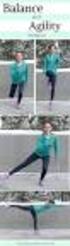 No Equipment Agility/Core/Strength Program for Full Body No Equip Trainer: Rick Coe Introduction Program designed to be performed in a circuit. Perform exercises in sequence without rest 2-3 times. Increase
How To Improve Drainage
 Rehabilitation Home Program Edema Exercises To Improve Drainage You will improve your lymph flow by doing a few exercises each day. These exercises are an important part of your home program. They may
EXERCISE DESCRIPTIONS PHASE I Routine #1
 EXERCISE DESCRIPTIONS PHASE I Routine #1 Hip Mobility Exercise: Forward Out-In Movement: Raise leg out to the side, and rotate around to the front. Keep shin/thigh angle at 90 degrees. Exercise: Backward
The 11+ A complete warm-up program
 The 11+ A complete warm-up program Part 1 & 3 A A }6m Part 2 B A: Running B: Jog back B! FIELD SET-UP A: Running exercise B: Jog back The course is made up of 6 pairs of parallel cones, approx. 5-6m apart.
BEACH VOLLEYBALL TRAINING PROGRAM
 2008 ELITE PERFORMANCE ATHLETE CONDITIONING BEACH VOLLEYBALL TRAINING PROGRAM Team BC 2008 Steve Van Schubert, CAT(C), CSCS Training Schedule General Outline Phase 1 2 Weeks Phase 2 3 Weeks Phase 3 3 Weeks
Sheet 1A. Treating short/tight muscles using MET. Pectorals. Upper trapezius. Levator scapula
 Sheet 1A Treating short/tight muscles using MET Pectorals Once daily lie at edge of bed holding a half-kilo can, arm out sideways. Raise arm and hold for 10 seconds, then allow arm to hang down, stretching
Trunk Strengthening and Muscle and Coordination Exercises for Lower Limb Amputees
 Trunk Strengthening and Muscle and Coordination Exercises for Lower Limb Amputees Part One: Trunk Strengthening Trunk Extension Needed: Sturdy chair or stool, Theraband, and a Theraball if necessary. Sit
Rehabilitation Exercises for Shoulder Injuries Pendulum Exercise: Wal Walk: Back Scratcher:
 Rehabilitation Exercises for Shoulder Injuries Begin these exercises when your pain has decreased about 25% from the time when your injury was most painful. Pendulum Exercise: Lean over with your uninjured
Care at its Best! Foam Roller Exercise Program
 Foam Roller Exercise Program Foam rollers are a popular new addition the gym, physical therapy clinics or homes. Foam rollers are made of lightweight polyethyline foam. Cylindrical in shape, foam rollers
PERFORMANCE RUNNING. Piriformis Syndrome
 Piriformis Syndrome Have you started to experience pain in your hip or down your leg while beginning or advancing your fitness program? This pain may be stemming from the piriformis muscle in your hip.
Passive Range of Motion Exercises
 Exercise and ALS The physical or occupational therapist will make recommendations for exercise based upon each patient s specific needs and abilities. Strengthening exercises are not generally recommended
Otago Exercise Program Activity Booklet
 Head Movements Stand up tall and look ahead. Slowly turn your head as far as you can to the right. Slowly turn your head as far as you can to the left. Repeat five times to each side. 44 Neck Movements
Preventing Falls. Strength and balance exercises for healthy ageing
 Preventing Falls Strength and balance exercises for healthy ageing Exercise should be comfortable and fun. To get the most out of your home exercise book, join a class for older people to check your exercises
ACL Reconstruction Physiotherapy advice for patients
 Oxford University Hospitals NHS Trust ACL Reconstruction Physiotherapy advice for patients Introduction This booklet is designed to provide you with advice and guidance on your rehabilitation after reconstruction
Physical Capability Strength Test: One Component of the Selection Process
 Physical Capability Strength Test: One Component of the Selection Process One aspect of the Power Systems Institute selection process is to successfully complete and achieve a passing score on a physical
Strength Training for the Runner
 Strength Training for the Runner Strength Training for the Runner What? The goal of resistance training for runners is not necessarily adding muscle mass but 1. improving muscular strength, 2. improving
Anterior Cruciate Ligament Reconstruction Rehabilitation Protocol
 The First Two Weeks After Surgery You will go home with crutches and be advised to use ice. Goals 1. Protect reconstruction 2. Ensure wound healing 3. Maintain full knee extension 4. Gain knee flexion
total hip replacement
 total hip replacement EXCERCISE BOOKLET patient s name: date of surgery: physical therapist: www.jointpain.md Get Up and Go Joint Program Philosophy: With the development of newer and more sophisticated
Info. from the nurses of the Medical Service. LOWER BACK PAIN Exercise guide
 Info. from the nurses of the Medical Service LOWER BACK PAIN Exercise guide GS/ME 03/2009 EXERCISE GUIDE One of the core messages for people suffering with lower back pain is to REMAIN ACTIVE. This leaflet
Low Back Pain Exercises Interactive Video Series Transcript July 2013
 Introduction Low Back Pain Exercises Interactive Video Series Transcript July 2013 ** Note: If an exercise causes an increase in your pain, stop the exercise.** [Music introduction; Dr. John Sheehan onscreen]
Chronos - Circuit Training Bodyweight
 Outline Chronos - Circuit Training Bodyweight 1. Mountain climbers doubles x 10 2. Mountain climbers singles x 10 each leg 3. Mountain climbers singles out x 10 each leg 4. Mountain Climbers Doubles out
Ensure that the chair you use is sturdy and stable. Wear comfortable clothes and supportive footwear.
 Page 1 Safety Ensure that the chair you use is sturdy and stable. Wear comfortable clothes and supportive footwear. Prepare a space and have your exercise band and a glass of water (for afterwards) ready
COMMON OVERUSE INJURIES ATTRIBUTED TO CYCLING, AND WAYS TO MINIMIZE THESE INJURIES
 COMMON OVERUSE INJURIES ATTRIBUTED TO CYCLING, AND WAYS TO MINIMIZE THESE INJURIES Listed are a few of the most common overuse injuries associated with cycling long distances. 1. Cervical and upper back
Rehabilitation after shoulder dislocation
 Physiotherapy Department Rehabilitation after shoulder dislocation Information for patients This information leaflet gives you advice on rehabilitation after your shoulder dislocation. It is not a substitute
Post Surgery Rehabilitation Program for Knee Arthroscopy
 Post Surgery Rehabilitation Program for Knee Arthroscopy This protocol is designed to assist you with your rehabilitation after surgery and should be followed under the direction of a physiotherapist May
ANKLE STRENGTHENING PROGRAM Program Time: 20 min. Recommended: 3x a week
 ANKLE STRENGTHENING PROGRAM Program Time: 20 min. Recommended: 3x a week Manuel A. Escalante, Jr. BS, ATC, EMT Model: Nathan Swift BS Note: This program is not meant to replace an evaluation by your coach,
Medial Collateral Ligament Sprain: Exercises
 Medial Collateral Ligament Sprain: Exercises Your Kaiser Permanente Care Instructions Here are some examples of typical rehabilitation exercises for your condition. Start each exercise slowly. Ease off
CORRECTIVE CHIROPRACTIC EXERCISES
 CORRECTIVE CHIROPRACTIC EXERCISES J O W E T T & M O U L T O N C h i r o p r a c t o r s introduction This booklet, presented by Jowett and Moulton Chiropractors, is designed to provide you with a general
MELT Mini Map For Motorcyclists
 MELT Mini Map For Motorcyclists The MELT Self-Treatment Tools needed for this monthʼs Mini Map can be found online at store.meltmethod.com. Depending on which tools you have on hand, you can start with
JUNIPERO SERRA VOLLEYBALL OFF SEASON TRAINING SCHEDULE
 JUNIPERO SERRA VOLLEYBALL OFF SEASON TRAINING SCHEDULE 2007 OFF SEASON WORKOUT Our off season workout is centered around Speed, Agility & Quickness which are athletic attributes that are very trainable
he American Physical Therapy Association would like to share a secret with you. It can help you do more with less effort breathe easier feel great.
 The Secret... T he American Physical Therapy Association would like to share a secret with you. It can help you do more with less effort breathe easier feel great. The secret is about good posture, which
9 exercises to rehab a torn ACL without surgery
 MENU Search foxnews.com Health Home Men's Health Women's Health Children's Health Alternative Medicine Diabetes Heart Health Allergies HEALTH 9 exercises to rehab a torn ACL without surgery By Julie Wilcox
Low Back Pain Exercise Guide
 Nader M. Hebela, MD Fellow of the American Academy of Orthopaedic Surgeons http://orthodoc.aaos.org/hebela Cleveland Clinic Abu Dhabi Cleveland Clinic Abu Dhabi Neurological Institute Al Maryah Island
THE BIG SIX. Six Best Volleyball Strength Training Exercises. By Dennis Jackson, CSCS www.strength-and
 THE BIG SIX Six Best Volleyball Strength Training Exercises By Dennis Jackson, CSCS www.strength-and and-power power-for for-volleyball.com THE SQUAT What it is The two most common squatting exercises
Stretching the Major Muscle Groups of the Lower Limb
 2 Stretching the Major Muscle Groups of the Lower Limb In this chapter, we present appropriate stretching exercises for the major muscle groups of the lower limb. All four methods (3S, yoga, slow/static,
Rehabilitation. Rehabilitation. Walkers, Crutches, Canes
 Walkers, Crutches, Canes These devices provide support through your arms to limit the amount of weight on your operated hip. Initially, after a total hip replacement you will use a walker to get around.
Basic Training Exercise Book
 Basic Training Exercise Book Basic Training Exercise Book Instructions The exercises are designed to challenge the major muscles groups every day, approximately every 2 to 3 hours., for a total of 6 times
Rehabilitation. Rehabilitation. Walking after Total Knee Replacement. Continuous Passive Motion Device
 Walking after Total Knee Replacement After your TKR, continue using your walker or crutches until your surgeons tells you it is okay to stop using them. When turning with a walker or crutches DO NOT PIVOT
Bankart Repair For Shoulder Instability Rehabilitation Guidelines
 Bankart Repair For Shoulder Instability Rehabilitation Guidelines Phase I: The first week after surgery. Goals:!! 1. Control pain and swelling! 2. Protect the repair! 3. Begin early shoulder motion Activities:
Pre - Operative Rehabilitation Program for Anterior Cruciate Ligament Reconstruction
 Pre - Operative Rehabilitation Program for Anterior Cruciate Ligament Reconstruction This protocol is designed to assist you with your preparation for surgery and should be followed under the direction
Physical Therapy after Hip Arthroscopy Therapy Phases 1 and 2
 Physical Therapy after Hip Arthroscopy Therapy Phases 1 and 2 patienteducation.osumc.edu Table of Contents Physical Therapy after Hip Surgery... 3 OSU Sports Medicine Locations... 4 Hip Therapy Goals...
Keep fit at the workplace! A simple training programme for more exercise at the workplace.
 Keep fit at the workplace! A simple training programme for more exercise at the workplace. INTRODUCTION Dear Readers, Keeping your body in one position, such as sitting or standing for a long time, results
Rotator Cuff and Shoulder Conditioning Program. Purpose of Program
 Prepared for: Prepared by: OrthoInfo Purpose of Program After an injury or surgery, an exercise conditioning program will help you return to daily activities and enjoy a more active, healthy lifestyle.
SHOULDER PULL DOWNS. To learn efficient use of the shoulder blades and arms while maintaining a neutral spine position.
 SHOULDER INTRODUCT ION Welcome to your shoulder exercise program The exercises in the program are designed to improve your shoulder mobility, posture and the control of the muscles in your neck and shoulder
THE BENJAMIN INSTITUTE PRESENTS. Excerpt from Listen To Your Pain. Assessment & Treatment of. Low Back Pain. Ben E. Benjamin, Ph.D.
 THE BENJAMIN INSTITUTE PRESENTS Excerpt from Listen To Your Pain Assessment & Treatment of Low Back Pain A B E N J A M I N I N S T I T U T E E B O O K Ben E. Benjamin, Ph.D. 2 THERAPIST/CLIENT MANUAL The
How To Roll Out
 THE GUIDE: ROLLING OUT WHAT IS THE MYOFASCIAL SYSTEM? The Myofascial System is a superficial fascia (a thin sheath of silvery tissue) that wraps around the outer surface of muscles and individual muscle
Stretching for Young Athletes. Shawn P. Anderson, SPT Duke University Doctor of Physical Therapy
 Stretching for Young Athletes Shawn P. Anderson, SPT Duke University Doctor of Physical Therapy Sports and exercise are usually integral parts of many adolescents life. Whether they play at school or in
TIPS and EXERCISES for your knee stiffness. and pain
 TIPS and EXERCISES for your knee stiffness and pain KNEE EXERCISES Range of motion exercise 3 Knee bending exercises 3 Knee straightening exercises 5 STRENGTHENING EXERCISES 6 AEROBIC EXERCISE 10 ADDITIONAL
Always warm up before commencing any exercise. Wear the correct clothing and footwear; do not train if you are unwell or injured.
 SUGGESTED FITNESS PROGRAMME General Exercise Guidance Good exercise training advice is highly specific to the individual. It should be understood, therefore, that the advice provided here can only be general.