
The Synthesizer Orchestra : A proposal for the structure of a live electronic ensemble
|
|
|
- Rhoda Lambert
- 9 years ago
- Views:
Transcription
1 The Synthesizer Orchestra : A proposal for the structure of a live electronic ensemble By Paul Sheeky Introduction The use of synthesizers in an orchestral context is nothing new. In fact most of the earliest completely electronic instruments were used in this way: the Theremin in works by Shostakovich 1 and Martinů 2, the Ondes Martenot was favoured by Messiaen, and Paul Hindemith wrote some pieces especially for the Trautonium. But these all used the electronic instruments as an addition to the traditional orchestra, and almost always as a solo instrument (with the notable exception of Percy Grainger s Free Music #1 which required the use of 4 Theremins). As synthesizers developed from the late 1950 s onwards, electronic music began to find its own unique voice. However, the music was produced in studios by single instruments, with performances often taped for use in a live context due to the awkwardness involved in moving such unwieldy yet oddly fragile machines. Multi-track tape could be used to give the impression of polyphony, but the technological limitations prevented any kind of live electronic ensemble being formed. Avant-garde composers wrote for electronic instruments, but their small scale experiments were hardly a match for the well established pomp and splendour of a fullsized classical orchestra. Thus it was that the earliest large scale classical electronic works were originated in studios through the use of multi-tracked monophonic instruments, especially the Moog synthesizer as used by Wendy Carlos on her seminal Switched On Bach (1968). Although the first works of this sort were electronic reproductions of music written for traditional instruments, the fact remained that with the limited technology, such music could not be played live. Add to this the fact that there was no established musical tradition associated with particular collections of electronic instruments, as there was for traditional instruments in the form of standard configurations such as chamber orchestra, string quartet, symphony orchestra etc. This all boded ill for the creation of a truly live electronic tradition. Even so, in 1970, Gershon Kingsly formed the First Moog Quartet with the express aim of performing electronic music live (although conventional instruments were often also included) and achieved a small measure of success for a short period of time. In general however, live electronic music has suffered from the fact that the synthesizer developed in parallel first with analogue tape, then with computer based sequencing and digital audio, which make playing live more of a choice than a necessity. Plus from a classical music perspective, the instruments have become associated more with cheesy pop music than with serious works of art. It is with this in 1 In his soundtrack to the 1931 film Odna (Directed by Leonid Trauberg and Grigori Kozintsev). 2 Fantasia from 1944.

2 mind that I set out the purpose of this essay, and that is to propose the formation of an orchestra formed entirely of electronic instruments i.e. a synthesizer orchestra. I intend to lay out and justify the structure this orchestra should take and to explain why I think such an enterprise is worthwhile. Finally I shall discuss the potential repertoire of such an orchestra. Why is a Synthesizer Orchestra desirable? I believe that live music is intrinsically valuable both as a cultural form and as individual artistic expression. Although huge amounts of electronic music is played 'live' every year, it is rarely fully live and is digitally sequenced with only some elements played live or parameters tweaked during the performance. The complexity and aural precision required by most modern electronic music makes a one hundred percent live performance of it very difficult. It would require numerous people with often expensive and complicated equipment. Thus most artists sacrifice the subtle individual nuance a human being brings to playing an instrument for the convenience of being able to control the music themselves. This can lead to the live performance itself rarely differing from performance to performance, or even from the recorded work. Some largely electronic artists, such as Faithless, combat this by adding conventional instruments to their live act, where these were barely noticeable in the studio-produced work, making the performance itself a remix of the album version of the track. This is good as far as it goes, but it can't work on purely electronic music. Prior to the advent of digital sequencers, performed electronic music was necessarily closer to a fully live experience, but the size and expense of the synthesizers used made it impractical for anyone but the originating artists to play the music live. Even then tape machines could be used as substitutes for individual performers, reducing the possibility of the players individual interaction with the other musicians and the music as it's played. This interaction is at the heart of live music and it makes each performance unique. This is one of the key things a synthesizer orchestra could bring. The second major reason a synthesizer orchestra (in a structure as described below) is desirable, is that it would allow electronic works to be easily reproduced by any ensemble without the need of specific equipment, bringing electronic music in line with classical and opening out the possibilities for the performance of works worldwide at any time, and not just when a particular artist tours. For this reason, the orchestra needs to be designed in such a way as to allow for the maximum compatibility between different ensembles, which could potentially contain very different synthesizers. The structure described below is an attempt to do this. A standardised orchestral structure also has some unique benefits for composers. Currently, electronic music composition is inextricably bound up with electronic music production. Standardised electronic ensembles would negate the need for complex and time-consuming production and

3 mastering procedures and could give the composer more time to concentrate on the music itself (although a certain amount of this time may end up being used for the purposes of communicating the sounds to be used in a work (see appendix 1), and the parameters that change during it (see appendix 2)). One final reason for the formation of a live electronic ensemble suggests itself. There are large numbers of people that own and love synthesizers; far more than could ever conceivably make a living out of their use. The synthesizer orchestra could harness this untapped resource of synth experts and bring them together for the common purpose of making one hundred percent live electronic music accessible to all. The structure of a Synthesizer Orchestra In designing a synthesizer orchestra, it is first useful to briefly analyse the structure of a traditional orchestra. The most immediately noticeable thing about a conventional orchestra is the fact that it is divided into various sound groups determined by the physical nature, and the timbral qualities, of the instruments involved i.e. string, woodwind, brass and percussion sections. This poses a problem for the synthesizer with its vast array of possible sounds. However this problem is easily solved by the introduction of a simple rule (or rather convention), whereby the sound groups are determined by the basic waveforms used in analogue synthesis i.e. sine / triangle, square / pulse, sawtooth and noise. One problem that arises from such a grouping is that many of the more interesting sounds produced by synthesizers are a combination of these waveforms. This could be solved by having a mixed waveform area in the centre alongside distinct sound groupings for specific passages so that the physical arrangement of the orchestra could look something like this.

4 Another issue raised by such an arrangement is that of the positioning of digital samplebased synthesizers and other electronic instruments such as samplers, which could play any variety of sounds. In reality this problem is not so much a question of positioning as a question of whether such instruments should be in the orchestra at all. The general conception of the orchestra is to create a standardised aural palette that any electronic musician has access to and any composer can have in mind when writing the music. The most important thing therefore is that any synthesizer orchestra can play the composed works in a reasonably accurate way. The vast array of sounds possible through sample-based synthesis and sampling makes this incredibly difficult for the orchestra without the exact same synthesizer or the same samples. It may well be the case that these can be made available to the orchestra by the composer, but this can t be assumed, meaning that the orchestra would have to spend a lot of time trying to recreate the sounds. On top of this, the kinds of sounds likely to be produced by such instruments are copies of real world sounds and conventional instruments, but as the object of the synthesizer orchestra is to make live music, it would be preferable to append the orchestra with conventional musicians rather than use sampled versions of them. This is not to say that samples should never be used by the orchestra (classical music has plenty of examples of taped accompaniments such as Respighi s use of birdsong in The Pines Of Rome (1924)), but that they should not be used as standard, in the same way that choral sections are not used as standard in a conventional orchestra. As the basic timbral character and physical arrangement of the proposed orchestra are established, I shall now return to the analysis of a conventional orchestra and see how this aids in the design of an electronic one. The vast majority of instruments in a conventional orchestra are monophonic. This includes all string, woodwind and brass instruments. Chords are played by combinations of performers playing different notes. Percussion and percussion-based instruments are polyphonic. These include keyboard instruments like the harpsichord and piano. However, synthesizers can be both monophonic and polyphonic. This leads us onto the complex question of what kinds of synthesizers should be used in the orchestra. Considering the monophonic / polyphonic question first, I think this can be left very much up to the practical circumstances of a particular orchestra. Polyphonic synths provide greater sound generating power in a smaller space. However monophonic synths would create a richer live sound by introducing more of a human touch to individual elements, but at the cost of a great deal more space (and transport costs and set-up times etc.). Now let us consider the relative merits of digital and analogue synthesizers. One disadvantage of digital sample-based synthesizers in this context has been discussed above, but this by no means rules them out as most would still have the basic waveforms required for them to play a part in the orchestra. Rather it is some older digital synths lack of expressive real-time controls which might lead to them not being used. And it is for the opposite reason that analogue and analogue-modelling synths would perhaps be favoured. Add to this the general acceptance that analogue synths have a richer and more organic

5 sound (an important consideration for a quality live experience), and we can safely assume that an orchestra composed of analogue synths would simply sound better. An additional attraction is the fact that vintage analogue synths often drift out of tune and would require tuning at the start of a performance, much like a conventional orchestra, which would add to the sense of occasion. Again, this is not to say that digital synths should always be excluded, just that they would not form the backbone of the orchestra. Above I discussed the difficulty of reproducing specific sounds created from samples, and it could be argued that the same difficulty exists for analogue synths as each has its own unique sound. In response to this I would say that if the sound groupings mentioned above are respected, or at least taken into account, by the composer, then the sound produced by the orchestra would be close enough to what was intended. In fact the difference could be a great strength. Each orchestra would have it s own distinct sound, making the live experience all the more special. Remember, no two violins sound the same either. Another important consideration is the way in which the synthesizers would be amplified. The instruments in a conventional orchestra do not have this concern as their sound comes directly from themselves (with microphones picking up and amplifying the sound if necessary), but a synthesizer needs amplification and a speaker to be heard, and there is no real need for this to be in close proximity to the instrument itself. Three distinct amplification options present themselves, each with their own advantages and disadvantages. The first and simplest is that all instruments are routed to a mixer which then feeds out to a standard PA system, in much the same way most conventional bands are amplified (albeit with microphones rather than a direct feed). This has advantages for the portability of an orchestra as only the synths themselves need to be carried with no additional amplification equipment needed as this would be already installed at the venue. However, the number of available channels on the mixer could be restrictive, plus a sound engineer is likely to be needed. But perhaps most importantly, the sound would not appear to be coming directly from the orchestra. This is not a problem with the second option, which is that each performer has his own amplification (either a powered monitor or guitar amp), which is placed directly in front of their synthesizer. From an audience perspective this would be much closer to the way a conventional orchestra would be heard, but could end up being too loud for certain performers (depending on where they were positioned). This method also has the advantage that the monitors could be chosen to match and enhance the individual characteristics of the synthesizer concerned. The third method is a compromise between the other two. In it each sound group in the orchestra would have its own small mixer and amplifier set up with the output speakers strategically placed to match the location of the actual instruments as much as possible, without damaging the hearing of the performers. However, in this as in much else of concern here, a great deal depends on the size of the ensemble. For instance the second method is an obvious choice for a synth quartet, but a small ensemble playing small venues would perhaps choose the

6 first, and a full orchestra may determine that the third option is best. One thing however is vital for all three methods and that is that each performer must have some kind of monitoring so they can hear their own instrument clearly. Single-sided headphones are the obvious choice here so their own playing can be heard but also that of the performers around them, creating the potential for more of a live vibe unique to each concert. Having the analogue synthesizer as the key instrument in the orchestra presents a unique problem to the performer, namely that he may not have enough hands. Some of the most interesting effects of synthesis are created by changing one or more of the synthesizers parameters during play. This may prove difficult to achieve if at least one hand is engaged in playing the keyboard. Thus, floating knob twiddlers may be required to achieve the composers wishes during particular passages. On top of this it should not be assumed that only a keyboard should be used as a control device. Breath controllers, laser harps and touch sensitive control pads are all suitable for use in a synthesizer orchestra. One thing that is very important however is that as much as is humanly possible should be played live. Any sequencing (which should ideally come from either a synth workstation or a separate hardware sequencer and not a computer) should be restricted to those passages that are unplayable by human beings, and even then these should be triggered by people and not programmed. This does raise the question of strict tempo matching as the orchestra itself would not be working from a metronome but from the pace dictated by the conductor. It would thus become one of the sequencer operator s key tasks to match the sequences to the current tempo of the orchestra through a constant process of tempo tapping and tweaking. Any tempo variations that occur as a result of this only add to the uniqueness of the live experience. In addition to the synthesizer sections of each sound group, two further sections could be added as required. These are a rhythm / percussion section and an effects section. Much modern electronic music contains numerous complex and very specific rhythmic elements that may be difficult to reproduce. So in accordance with the general principle of this orchestra (i.e. that the sounds should be simple enough to produce to make them easily shareable and playable live without the need for complex sequencing), the percussive palette could be restricted to those sounds commonly found on any drum machine: Bass Drum, Snare, Hi-hat, Crash, Ride / Cymbal, Clap, Cowbell and Toms. The same principle should be applied to the effects section. Many of the most interesting and complicated electronic sounds are actually the result of effects applied to various kinds of audio, sometimes rendering the source sound unrecognisable. Unfortunately, these effects are often very specific and would require the purchase of particular effects units or plug-in's. Thus, for the sake of universality, the effects allowed may need to be restricted to those available on the majority of effects units: Reverb, Delay, Chorus, Phaser, Flanger and Pitch Shifter. Additionally, real time changes to effects parameters are a commonly used creative tool, so effects units with easily accessible real time controls may need to be favoured.

7 So the synthesizer orchestra is beginning to take shape. Ideally it would consist of analogue (or analogue-modelling) monosynths, each played by an individual, with knob twiddlers, sequencer operators, rhythm players and an effects section added as required. It would play in specific sound groups through amplifiers as close to the originating synth as possible, but it is highly adaptable to individual circumstances, and can be appended and moulded as required. But one important question remains: What would it play? Repertoire As stated above, there have been many instances of classical music being adapted for synthesizers in electronic music history. These continue to prove relatively popular with William Orbit in particular bringing works in this vein to a modern audience. However, I do not feel that the electronic reinterpretation of traditional classical works should form the backbone of the synthesizer orchestra's oeuvre. These works were written specifically for the instruments with which they are traditionally played, and as such may not entirely suit the sometimes radically different sounds a synthesizer is capable of producing. Adaptations from classical works to electronic ones can take this into account and be wonderfully subtle and aurally bold, but in terms of a live experience, I think the audience for classical music would for the most part prefer the original works in the original style, and would regard the electronic versions as a mere novelty that they would soon lose interest in. The synthesizer orchestra must play to it's strengths and provide something that the audience can get nowhere else. Nor would I propose that the orchestra should make adaptations of existing electronic works it's main focus. Numerous works by hundreds of artists as diverse as Jean-Michel Jarre, Aphex Twin, Vangelis, Daft Punk, Brian Eno, Autechre and Kraftwerk could be played by the orchestra in a modified form. But these could still suffer from comparison to the original work. The fact that the sounds in the source work were electronically generated may mean the orchestra could provide a more accurate reproduction, but this does not change the fact that the works were written using specific instruments, without the synthesizer orchestra in mind. However, the playing of established works could be a good way to draw an audience to the live electronic ensemble, but their effectiveness will depend a great deal on the quality of the adaptation. It is with the above in mind, that I thus propose that the synthesizer orchestra's main focus should be the playing of original works specifically written for the structure described above. This would provide an original and unique experience for the audience, as well as creating a platform for new composers. Original works will be hard to come by at first, but once the principle of universality in electronic music composition becomes more established, the repertoire will grow and fully live electronic music could become commonplace. To help promote the idea of a full-size synthesizer orchestra, other

8 smaller ensembles, such as quartets, could be written for. As I myself have written for this design of synthesizer orchestra, I can testify to the difficulty the restrictions above impose, especially to electronic composers whose aural palette has very few boundaries. But the challenge is an interesting and welcome one and the prospect of hearing your music played one hundred percent live lies at it's end. Conclusion Above I present my idea for a synthesizer orchestra, but it should in no way be inferred that the structure of such an ensemble is fixed and unchangeable. All ideas develop over time and change is part of the process of bringing them to life. I merely discuss what I think are some of the key areas that would need to be addressed if an electronic orchestra were to be formed, and present some reasons such a thing may be desirable. I also suggest some principles (aural universality, as much played live as physically possible) on which it should be based. It is highly unlikely that a full orchestra of this type would be formed straight away, but through the gradual formation of smaller groups the idea could gain momentum and one day become a reality. It is thus that I encourage secret synthesizer virtuosos to reach out to their fellow electro heads and form themselves into electronic trios, quartets and quintets. Original music written for such ensembles should be practised and performed. It is through this process of trial and error that the concept of a fully live electronic ensemble will be honed and the formation of a full-sized synthesizer orchestra will become more than just an idea. Appendix 1 The Universal Synthesizer Preset The purpose of the Universal Synthesizer Preset (USP) is to aid ensembles attempting to reproduce a given piece of music by providing a list of the key parameters and corresponding values that are required to create a particular sound. It assumes that the synthesizer being used is either analogue or analogue-modelling, but this does not rule out the possibility that digital synths can use it as a guide to sound creation. It must be stressed that, due to the varied nature of synthesizers, the USP can only provide an approximation and an audio guide track of the complete work should be supplied by the composer. This can be appended by individual sound samples where certain tones are not clearly audible as separate entities in the finished work. As certain parameters require numerical values, and as all synths work on different scales, I'd suggest a standard scale of 0-10 is used. This can then be translated to other synths through conversion to a percentage and adjustment as required. So 8 becomes 80% which roughly translates to 100 in the standard MIDI scale of Pinpoint accuracy is neither possible nor important as the initial settings are only to point you in the right direction and will need to be tweaked to match the sound as it appears in the provided

9 guide track. The below represents a first attempt at a USP table that should provide enough information to a potential ensemble to get them started. More sound creation elements and notes from the composer can of course be added if needed. Oscillator 1 Oscillator 2 Oscillator 3 Noise Envelope 1 Envelope 2 Envelope 3 Keyfollow Filter LFO 1 LFO 2 Waveform Pitch (semitone) Pitch (fine) Relationship to next Oscillator Parameter affected Level Depth / Amount Attack Decay Sustain Release Type Slope Cutoff Resonance Parameter affected Shape Depth / Amount Speed Delay Type / Room Size Pre-Delay Length Damping Wet / Dry Reverb Delay Type Delay Time(s) Feedback EQ / Filter / Modulation Wet / Dry Appendix 2 Scoring for Synthesizer Ensembles The only real difference between scoring for electronic ensembles and doing so for classical ones is the increased number of expression instructions available to the composer. Every parameter on a synthesizer becomes available for change either over very short or very long periods of time. To communicate such changes effectively, I would suggest using something similar to the way most audio software displays such events i.e. with a track below the main part of the score that indicates the parameter changed and corresponding values. Screenshots could even be used by the composer to make up the score as in the below example.


10 Numerical values would need to be added to keep the score in line with the USP concept. MIDI files could also be a suitable choice for a composer distributing their work, but I am unsure about their parameter change storing capabilities. In this area in particular, I invite those with more scoring knowledge and experience than I to improve on the basic outline demonstrated here.

DIGITAL MUSIC DAY 1 WHAT IS SOUND? ANALOG AND DIGITAL EARLY RECORDING WAX FOR YOUR EARS ROUND BUT FLAT WIRE AND TAPE PURE SOUND
 DIGITAL MUSIC DAY 1 WHAT IS SOUND? 1. Making a sound playing a musical instrument, moves the surrounding the instrument. 2. Making a sound sends out air which hit your ears. 3. Waves of changing air pressure
Graham s Guide to Synthesizers (part 1) Analogue Synthesis
 Graham s Guide to Synthesizers (part ) Analogue Synthesis Synthesizers were originally developed to imitate or synthesise the sounds of acoustic instruments electronically. Early synthesizers used analogue
Delivering a Music Product
 Unit 9: Delivering a Music Product Unit code: QCF Level 3: Credit value: 10 Guided learning hours: 60 Aim and purpose R/600/6964 BTEC National The aim of this unit is to enable learners to experience the
Electronic music. live electronic music is where technology is used to make, change, or play sounds during live performance (usually on laptops).
 Electronic music Electronic music is music in which electronic technology, now mostly computer-based, is used to access, make, explore and configure sound materials, and which is heard through loudspeakers.
Music technology. Draft GCE A level and AS subject content
 Music technology Draft GCE A level and AS subject content July 2015 Contents The content for music technology AS and A level 3 Introduction 3 Aims and objectives 3 Subject content 4 Recording and production
Voltage. Oscillator. Voltage. Oscillator
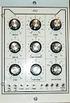 fpa 147 Week 6 Synthesis Basics In the early 1960s, inventors & entrepreneurs (Robert Moog, Don Buchla, Harold Bode, etc.) began assembling various modules into a single chassis, coupled with a user interface
Waves Trans-X. Software Audio Processor. User s Guide
 Waves Trans-X Software Audio Processor User s Guide Waves Trans-X software guide page 1 of 8 Chapter 1 Introduction and Overview The Waves Trans-X transient processor is a special breed of dynamics processor
Demonstrate technical proficiency on instrument or voice at a level appropriate for the corequisite
 MUS 101 MUS 111 MUS 121 MUS 122 MUS 135 MUS 137 MUS 152-1 MUS 152-2 MUS 161 MUS 180-1 MUS 180-2 Music History and Literature Identify and write basic music notation for pitch and Identify and write key
GCSE Music Unit 3 (42703) Guidance
 GCSE Music Unit 3 (42703) Guidance Performance This unit accounts for 40% of the final assessment for GCSE. Each student is required to perform two separate pieces of music, one demonstrating solo/it skills,
Little LFO. Little LFO. User Manual. by Little IO Co.
 1 Little LFO User Manual Little LFO by Little IO Co. 2 Contents Overview Oscillator Status Switch Status Light Oscillator Label Volume and Envelope Volume Envelope Attack (ATT) Decay (DEC) Sustain (SUS)
NMC MUSIC MAJOR STUDENT HANDBOOK
 NMC MUSIC MAJOR STUDENT HANDBOOK MUSIC Table of Contents PROGRAM SUMMARY... 2 GENERAL INFORMATION Accompanists... 3 Applied Music... 3 Convocations... 3 Ensembles... 3 Instrument Lockers... 3 Juries...
Studio Orchestra Seating
 Studio Orchestra Seating September 008 Abstract This document presents the seating arrangement for a studio orchestra. Considerations and favourable aspects will be discussed. As an example, details will
Concepts for the MIDI Composer, Arranger, and Orchestrator
 CH01-K52021.qxd 7/30/07 7:19 PM Page 1 1 Basic Concepts for the MIDI Composer, Arranger, and Orchestrator 1.1 Introduction to MIDI and audio sequencing If you are reading these pages you probably already
Final Report. Hybrid Synth by Synthesize Me. Members: Jamie Madaris Jack Nanney
 Final Report Hybrid Synth by Synthesize Me Members: Jamie Madaris Jack Nanney Project Abstract Our Senior Design project is a Digitally-Controlled Analog Synthesizer. The synthesizer consists of both digital
KODÁLY METHOD AND ITS INFLUENCE ON TEACHING WIND INSTRUMENTS IN HUNGARY
 KODÁLY METHOD AND ITS INFLUENCE ON TEACHING WIND INSTRUMENTS IN HUNGARY Jozsef Csikota Midwest Clinic Chicago, Illinois U.S.A. 15th December 2004 KODÁLY METHOD IN HUNGARIAN SCHOOLS In Hungary, every student
GETTING STARTED WITH STUDIO ONE ARTIST
 GETTING STARTED WITH STUDIO ONE ARTIST 2009, PreSonus Audio Electronics, Inc. All Rights Reserved. TABLE OF CONTENTS Studio One Artist Features...3 System Requirements...4 Installation and Authorization...5
ROCK BAND 3 WIRELESS KEYBOARD:
 Music Systems, Inc. ROCK BAND 3 WIRELESS KEYBOARD: MIDI User Guide HMXHW1023 REVISION: 01 Date: 07/16/10 Introduction... 3 What is MIDI?... 3 Features... 3 Getting Started... 4 Control Surface Functions
DGX-650 DIGITAL PIANOS
 The DGX-650 offers the playability of a real acoustic piano with a comprehensive suite of auto-accompaniment and performance functions that let you give form to your musical inspirations with ease. More
Orchestral Combos with EWQLSO
 Orchestral Combos with EWQLSO by Piotr Musiał Note: This tutorial was made using Cubase 4 Studio and Kontakt 3 Hi. My name is Piotr Musiał and I welcome You to my next tutorial! Being quite intrigued with
Greenwich Public Schools Electronic Music Curriculum 9-12
 Greenwich Public Schools Electronic Music Curriculum 9-12 Overview Electronic Music courses at the high school are elective music courses. The Electronic Music Units of Instruction include four strands
BOOM 808 Percussion Synth
 BOOM 808 Percussion Synth BOOM 808 is a percussion and bass synthesizer inspired by the legendary Roland TR-808 drum machine, originally created by Roland Corporation. For over 30 years, the sounds of
Cheat Sheet for Local Church Audio Training Sound Essentials. Kick:
 Cheat Sheet for Local Church Audio Training Sound Essentials Thank you for attending this session and supporting your church s ministry. I believe that, as a sound technician, you are a vital part of the
Salisbury Township School District Planned Course of Study - Music Production Salisbury Inspire, Think, Learn, Grow Together!
 Topic/Unit: Music Production: Recording and Microphones Suggested Timeline: 1-2 weeks Big Ideas/Enduring Understandings: Students will listen to, analyze, and describe music that has been created using
Acoustics for Musicians
 Unit 1: Acoustics for Musicians Unit code: QCF Level 3: Credit value: 10 Guided learning hours: 60 Aim and purpose J/600/6878 BTEC National The aim of this unit is to establish knowledge of acoustic principles
TerraTec Electronic GmbH, Herrenpfad 38, D-41334 Nettetal, Germany
 TERRATEC PRODUCER/SINE MB 33 II English Manual Version 1.0, last revised: November 2003 CE Declaration We: TerraTec Electronic GmbH, Herrenpfad 38, D-41334 Nettetal, Germany hereby declare that the product:
We will be covering the following topics in this document:
 ÂØÒňΠSupplemental Notes External Sequencing with the MC-505 November 15th, 1998 SN95 v1.0 As you know, the MC-505 Groove Box is a great instrument for creating grooves as well as for realtime control
Beginners Guide to the Walkingbass
 Beginners uide to the Walkingbass Learning to play a new instrument can open up a whole new world of creativity. It certainly has for me. The 3-string Walkingbass is an easy instrument to learn, yet it
Handale Primary School Music Curriculum Year EYFS ( 4-5 year olds)
 Handale Primary School Music Curriculum Year EYFS ( 4-5 year olds) Music at EYFS stage reflects the different ways in which children learn and engage with other people. Many examples of stories, songs
SYSTEM MIX PLUS. Owner's Manual DIGITAL MUSIC CORPORATION
 SYSTEM MIX PLUS Owner's Manual 1 Table of Contents 1. Introduction.................. 2 1.1 Overview 1.2 Unpacking 2. Operation................... 3 2.1 Front Panel 2.2 Rear Panel 3. Mixer.....................
Controllable Space Phaser. User Manual
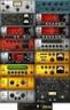 Controllable Space Phaser User Manual Overview Overview Fazortan is a phasing effect unit with two controlling LFOs. 1 Fazortan graphical interface We can distinguish two sections there: Configuration
Standard 1: Skills and Techniques 1
 1 Standard 1: Skills and Techniques 1 CB.1.1 Instrument Knowledge Skills CB.1.1.1 Instrument in good playing condition- including proper assembly, reed care, and cleaning. CB.1.2 Playing Posture Skills
KEYBOARD EXTENDED RANGE. Sixty Owner, s Manual P/N 049254
 THE SOUND THAT CREATES LEGENDS KEYBOARD EXTENDED RANGE Sixty Owner, s Manual P/N 049254 INTRODUCTION Your new Fender KXR 60 Keyboard Amplifier is the result of Fender s ongoing dialog with many of today
Tempest Manual Addendum
 Tempest Manual Addendum OS Version 1.1 This document details changes and additions to Tempest s operating system that are not in the Tempest Operation Manual. Manual Errata Assignment of an expression
Midi Workshop. SAWStudio. From RML Labs. To order this product, or download a free demo, visit www.sawstudio.com
 SAWStudio Midi Workshop From RML Labs Welcome to the exciting new Midi WorkShop add-on for SAWStudio! The Midi WorkShop requires SAWStudio, SAWStudioLite, or SAWStudioBasic as a host. The Midi WorkShop
AFX USER GUIDE ACOUSTIC REVERB PEDAL
 AFX USER GUIDE ACOUSTIC REVERB PEDAL Quick start clip batt off max warm bright short long decay time level tone studio room plate chamber stage canyon cathedral concert Power Install a 9V alkaline or lithium
STRINGS OF THE ORCHESTRA WORKSHEET
 STRINGS OF THE ORCHESTRA WORKSHEET THE VIOLIN The development of the modern violin stems from of instruments available in Europe during the middle Ages. Some historians even suggest that the origins of
Software Sequencing Basics
 October 12, 1998 software sequencing basics Software Sequencing Basics Supplemental Notes Roland gear is often used in conjunction with a variety of software sequencer programs. The purpose of this document
The Tuning CD Using Drones to Improve Intonation By Tom Ball
 The Tuning CD Using Drones to Improve Intonation By Tom Ball A drone is a sustained tone on a fixed pitch. Practicing while a drone is sounding can help musicians improve intonation through pitch matching,
Step by step guide to using Audacity
 Step by step guide to using Audacity Contents 1 - Introduction... 1 2 - Getting Started... 2 2.1 - Starting Audacity... 2 3 Recording, Saving and Editing Your Audio... 3 3.1 Recording your audio... 3 3.2
Mbox Basics Guide. Version 6.7 for LE Systems on Windows XP or Mac OS X. Digidesign
 Mbox Basics Guide Version 6.7 for LE Systems on Windows XP or Mac OS X Digidesign 2001 Junipero Serra Boulevard Daly City, CA 94014-3886 USA tel: 650 731 6300 fax: 650 731 6399 Technical Support (USA)
TRADUZIONE IN INGLESE degli
 TRADUZIONE IN INGLESE degli ORDINAMENTI DIDATTICI DEI CORSI DI STUDIO DEI CONSERVATORI DI MUSICA DEPARTMENT OF STRINGS SCHOOL OF HARP HARP Students completing required courses for the first level Academic
A series of music lessons for implementation in the classroom F-10.
 A series of music lessons for implementation in the classroom F-10. Conditions of Use The materials housed on this page are freely available for download and educational use. These resources were developed
M a n u a l O R C H E S T R A L T O O L S. C O M. 2011 by OrchestralTools Schwarzer & Mantik GbR
 M a n u a l O R C H E S T R A L T O O L S. C O M 2011 by OrchestralTools Schwarzer & Mantik GbR About Symphonic Sphere (SSP) When dreams transform into possibilities There are some nice orchestrational
HOW TO SET UP YOUR HOME STUDIO By John J. Volanski
 HOW TO SET UP YOUR HOME STUDIO By John J. Volanski This article was written as additional instructional material to be used in conjunction with the book Sound Recording Advice. It is an updated and rewritten
MIDI Mobilizer. Advanced Guide
 MIDI Mobilizer MIDI Memo Recorder Advanced Guide An in-depth guide to the features and functionality of the MIDI Mobilizer hardware and MIDI Memo Recorder application for iphone and ipod touch Electrophonic
GCSE Music Unit 4 (42704) Guidance
 GCSE Music Unit 4 (42704) Guidance (There are recordings to accompany this document.) The Task Students will be required to compose one piece of music which explores two or more of the five areas of study.
Table of contents. Quick Start... 1. Basic operation... 4. Creating your own sounds...12. Items in the screen... 6. Performing...
 1 Table of contents ii Quick Start... 1 Step 1 Listen to the sound of the effect programs...1 Step 2 Play back a song and cancel the guitar part...2 Step 3 Perform along with the song...3 Basic operation...
National Standards for Music Education
 National Standards for Music Education 1. Singing, alone and with others, a varied repertoire of music. 2. Performing on instruments, alone and with others, a varied repertoire of music. 3. Improvising
A Pianist s Story by Gill Backhouse
 A Pianist s Story by Gill Backhouse 1 edited by Sally Daunt This is adapted from the original chapter in Music and Dyslexia: Opening New Doors edited by T.R. Miles, & J. Westcombe, (2001), London: Whurr
High School Concert Band
 Summit Public Schools Summit, New Jersey High School Concert Band Revised by Steven Rapp 2012 Summit High School Concert Band: Grade Level 9 th -12 th Content Area: Performing Arts Length of Course: Full
MUSIC GLOSSARY. Accompaniment: A vocal or instrumental part that supports or is background for a principal part or parts.
 MUSIC GLOSSARY A cappella: Unaccompanied vocal music. Accompaniment: A vocal or instrumental part that supports or is background for a principal part or parts. Alla breve: A tempo marking indicating a
Sequential multi-effect sequencer
 Sequential multi-effect sequencer WHAT IS IT INTRODUCTION Sequential is a dynamic multi-effect that allows you to trigger different processing and synthesis algorithms in a rhythmical fashion. It features
Pizzicato. Music Notation. Intuitive Music Composition. A Full Range of Music Software for the Musician. and
 Pizzicato TM Music Notation and Intuitive Music Composition Pizzicato Light Pizzicato Beginner Pizzicato Notation Pizzicato Guitar Pizzicato Choir Pizzicato Soloist Pizzicato Drums & Percussion Pizzicato
Tutorial Use Ableton Live for a live set
 Intellinoise Studio Intelligent Audio Conception www.intellinoise.com www.electrypnose.com Tutorial Use Ableton Live for a live set Material needed : - Ableton Live - Some finished tracks 1. Introduction
THE DYNAMICS OF VOCAL CHAMBER MUSIC
 THE DYNAMICS OF VOCAL CHAMBER MUSIC International Congress of Voice Teachers VIII Brisbane, Australia July 10-14, 2013 Emily Romney [email protected] emilyromney.com Vocal Chamber Music What is
MIDI messages. March 2001 Edition 1.4
 March 2001 Edition 1.4 MIDI messages (For MIDI specialists only!) MIDI is that most rare of beasts, a standard set by a number of different manufacturers that is universally implemented and supported.
Music Technology II. What are some additional applications understand midi sequencing. for music production software?
 Music Technology II This class is open to all students in grades 9-12. This course is designed for students seeking knowledge and experience in music technology. Topics covered include: live sound recording
the minimoog synthesizer operation manual
 the minimoog synthesizer operation manual MOOG MUSIC INC. Academy Street (P.O. Box 131) Williamsville, NY 14221 A GUIDE TO THE OPERATION OF THE MINI MOOG MODEL D contents introduction basic mini moog features
MANCHESTER MIDI SCHOOL MUSIC PRODUCTION AND AUDIO ENGINEERING DIPLOMA COURSE INFORMATION PACK 15 MONTHS MIDISCHOOL.COM
 DIPLOMA 15 MONTHS MIDISCHOOL.COM INTRODUCTION Course Name: Duration: Incorporates: Music Production and Audio Engineering Diploma 15 Months 5 modules JUMP STRAIGHT TO: About the course tutor What you will
PSR-S950 DIGITAL KEYBOARDS
 The PSR-S950 arranger keyboard effectively blurs the line between digital and acoustic sound, and the result will alter your musical perceptions forever. We recorded pro musicians to achieve authentic
AUDACITY SOUND EDITOR SOFTWARE A USER GUIDE FOR AUDIO-VISUAL WORKERS
 AUDACITY SOUND EDITOR SOFTWARE A USER GUIDE FOR AUDIO-VISUAL WORKERS Prepared by Peter Appleton Copyright 2008 All illustrations in this guide were created using Audacity v1.2.6 Version 0.5 Page 1 of 18
Audio Equipment Maintenance Audio Signal Processing The Context 1: Sound Technology Professional Development 1
 Sound Technology The information contained in this document provides a summary of the content of each module. Please note this may be subject to change. Each student receives detailed Module Handbooks
Valvestate. 8280, 8240, 8080, 8040, 8020 & 8010 Combos
 Valvestate 8100 & 8200 Heads & 8280, 8240, 8080, 8040, 8020 & 8010 Combos Marshall Amplification plc Denbigh Road, Bletchley, Milton Keynes, MK1 1DQ, England Tel: (01908) 375411 Fax: (01908) 376118 Web
A-145 LFO. 1. Introduction. doepfer System A - 100 LFO A-145
 doepfer System A - 100 FO A-145 1. Introduction A-145 FO Module A-145 (FO) is a low frequency oscillator, which produces cyclical control voltages in a very wide range of frequencies. Five waveforms are
How to Start Making Music in Pro Tools
 How to Start Making Music in Pro Tools Read this guide if you are new to Pro Tools or are just starting out making your own music. Inside, you ll find quick examples of how to record, compose, mix, and
Understanding the DriveRack PA. The diagram below shows the DriveRack PA in the signal chain of a typical sound system.
 Understanding the DriveRack PA The diagram below shows the DriveRack PA in the signal chain of a typical sound system. The diagram below shows all the pieces within a sound system that the DriveRack PA
PRO DI PRO D2. User Guide. Direct Box. Stereo Direct Box
 www.radialeng.com PRO DI Direct Box PRO D2 Stereo Direct Box User Guide 1638 Kebet Way, Port Coquitlam BC V3C 5W9 tel: 604-942-1001 fax: 604-942-1010 email: [email protected] web: www.radialeng.com PRO
BRASS OF THE ORCHESTRA WORKSHEET
 BRASS OF THE ORCHESTRA WORKSHEET THE TRUMPET The history of the trumpet can be traced back to when people used wood, and animal horns to their voice. These primitive instruments were mostly, and were also
AM TRANSMITTERS & RECEIVERS
 Reading 30 Ron Bertrand VK2DQ http://www.radioelectronicschool.com AM TRANSMITTERS & RECEIVERS Revision: our definition of amplitude modulation. Amplitude modulation is when the modulating audio is combined
2012 Music Standards GRADES K-1-2
 Students will: Personal Choice and Vision: Students construct and solve problems of personal relevance and interest when expressing themselves through A. Demonstrate how musical elements communicate meaning
Portsmouth High School. Music Department
 Portsmouth High School Music Department What Courses Are Available as a Freshman? Piano I Guitar I Introduction to Music AP Music Theory Music Production & Engineering (Music Technology) Jazz Ensemble
The University of Alabama in Huntsville is an accredited institutional member of the National Association of Schools of Music.
 The University of Alabama in Huntsville 1 Music B102 Roberts Hall Telephone: 256.824.6436 Email: [email protected] The University of Alabama in Huntsville is an accredited institutional member of the
MUSICAL ANALYSIS WRITING GUIDE
 THE CRITERIA MUSICAL ANALYSIS WRITING GUIDE In writing your essay, the only thing you really need to do is fulfill the marking criteria. Let s look closely at what the criteria says. The student evaluates
2012-2013 MUSIC. Minors and Elective Courses
 2012-2013 MUSIC Minors and Elective Courses Message from the Dean I am always impressed by the passion, dedication, and downright happiness exhibited by the students who choose to study music at USC Thornton.
Strategies for Success Advising Guide:
 MIDDLESEX COMMUNITY COLLEGE Strategies for Success Advising Guide: Music Major As a student at Middlesex, you can earn either the Associate in Arts Liberal Arts and Science: Fine and Performing Arts, Music
MOORES SCHOOL OF MUSIC
 MOORES SCHOOL OF MUSIC U N I V E R S I T Y of H O U S T O N Andrew Davis, Director Scholarship Handbook Policies and Procedures Contact Numbers: Front Office... 713.743.3009 Scholarship Office........
2015 2016 VCE Music Performance
 2015 2016 VCE Music Performance Performance examination End of year Examination specifications Overall conditions The student will give a live performance in only one of the following contexts: as a member
Kronos Karma Combi Switching Technique Summary
 Kronos Karma Combi Switching Technique Summary Early Kronos owners discovered that the original mute behavior was not always desirable. Many live players desire to have a palette of programs available
MUSIC. MU 100 Fundamentals of Music Theory (4) MU 101 Listen to the Music (4) MU 102 Music Appreciation (4) MU 109 Class Voice (2)
 MUSIC MU 100 Fundamentals of Music Theory (4) An introduction to notation, including a study of intervals, scales, modes, meters, basic triads and seventh chords. Intended for non-majors or students with
BOSS GT-10 GUITAR EFFECTS PROCESSOR TRAINING GUIDE
 BOSS GT-10 GUITAR EFFECTS PROCESSOR TRAINING GUIDE Contents: 1. FEATURES 2. LEVEL ONE: Quick Demo and EZ Tone 3. LEVEL TWO: Going Deep 4. FIVE FEATURES TO KNOW and SHOW 5. ACCESSORIES 1. FEATURES BOSS
MUSIC OFFICE - SONGWRITING SESSIONS SESSION 1 HARMONY
 MUSIC OFFICE - SONGWRITING SESSIONS SESSION 1 HARMONY Introduction All songwriters will use harmony in some form or another. It is what makes up the harmonic footprint of a song. Chord sequences and melodies
RECRUITMENT AND BALANCED INSTRUMENTATION by Vince Corozine
 RECRUITMENT AND BALANCED INSTRUMENTATION by Vince Corozine Most successful band programs do not appear by chance but are the result of careful planning, teaching experience, and professional expertise.
Jim Hall Chords and Comping Techniques
 Jim Hall Chords and Comping Techniques Jazz guitar comping is an art form in its own right. The comping rhythms, melodies, and voicings of the greatest Jazz guitarists are delightful to listen to, with
MAKING YOUR LINES SOUND MORE LIKE JAZZ!
 MAKING YOUR LINES SOUND MORE LIKE JAZZ! BY ALISDAIR MACRAE BIRCH One of the common questions asked by jazz guitar students is, How do I make my lines sound more like jazz? or Why do my improvised lines
Basics. Mbox 2. Version 7.0
 Basics Mbox 2 Version 7.0 Copyright 2005 Digidesign, a division of Avid Technology, Inc. All rights reserved. This guide may not be duplicated in whole or in part without the express written consent of
Co-designed by TASCAM and
 Page 1 of 6 FW-1884 Control Surface and Audio/MIDI Interface Up to 18 simultaneous inputs Comprehensive mixing, automation, editing and navigation tools for DAWs Eight 100mm motorized touchsensitive channel
ÂØÒňΠMusic Workstation July 9, 1997
 XP-50 ÂØÒňΠMusic Workstation July 9, 1997 Supplemental Notes XP-50 Frequently Asked Questions This document is a compilation of questions and answers commonly asked of the Roland Technical Support department.
Music, Grade 11, University/College Preparation (AMU3M)
 Music, Grade 11, University/College Preparation (AMU3M) This course emphasizes the appreciation, analysis, and performance of various kinds of music, including baroque and classical music, popular music,
music and sound production 2014/15
 music and sound production 2014/15 always the right course Contents HND Music Business... 2 Music and Sound Production BA in Music Performance... 2 BTEC HND Music: Classical Performance and Musicianship...
Learn PRO Audio in your own home recording studio with... AUDIO MASTERCLASS
 Learn PRO Audio in your own home recording studio with... AUDIO MASTERCLASS Raise your knowledge and skills from where you are now to FULLY PROFESSIONAL level. Our 12-module MUSIC PRODUCTION & SOUND ENGINEERING
Supplemental Notes May 20, 1995 SN09 V1.0
 Supplemental Notes May 20, 1995 SN09 V1.0 Sequencing with the JV-90 and the VE-Series Voice Expanders The JV- 90 is an 8 part multitimbral synthesizer with 320 Patches, 80 Performances, and 5 Rhythm Sets
Neil Murray University of South Australia April 2011
 Introduction When it comes to writing, academic disciplines particularly those within the humanities and social sciences have a good deal in common and, for the most part, they share very similar expectations
SUZUKI Q CHORD. MODEL QC-1 Owners Manual
 SUZUKI Q CHORD MODEL QC- Owners Manual THANK YOU & CONGRATULATIONS Welcome to a new and exciting way to make music, that s creative, mind expanding and fun. Q Cards Every music lover has dreamed of playing
Musical Literacy. Clarifying Objectives. Musical Response
 North Carolina s Kindergarten Music Note on Numbering/Strands: ML Musical Literacy, MR Musical Response, CR Contextual Relevancy Musical Literacy K.ML.1 Apply the elements of music and musical techniques
Silver Burdett Making Music
 A Correlation of Silver Burdett Making Music Model Content Standards for Music INTRODUCTION This document shows how meets the Model Content Standards for Music. Page references are Teacher s Edition. Lessons
Inear Display Oxymore Version 1.0. http://www.ineardisplay.com
 Inear Display Oxymore Version 1.0 http://www.ineardisplay.com Thank you for using Oxymore. This guide will give you an overview of all the functions. HOW TO AUTHORIZE THE PLUGIN Enter the key you have
Music Sound Engineering and Production (Intermediate 2)
 Music Sound Engineering and Production (Intermediate 2) 7876 . September 2000 HIGHER STILL Music Sound Engineering and Production Intermediate 2 Support Materials Sound Engineering and Production Intermediate
Advanced Techniques for the Walkingbass
 Advanced Techniques for the Walkingbass I have seen guys with 5 string basses who can t get half the sounds that you are getting out of just three. -Buddy Fo of the Invitations If you have read the Beginners
The 10 th Summa Cum Laude International Youth Music Festival Vienna 1 st to 6 th of July 2016
 The Vienna International Association for Music and Culture Exchange presents: The 10 th Summa Cum Laude International Youth Music Festival Vienna 1 st to 6 th of July 2016 TERMS AND CONDITIONS I. General
East Sussex Music Summer School 2016. Course Information
 East Sussex Music Summer School 2016 Course Information 1a Junior Violin (2 days) This course is aimed at pupils in year 3 and above pupils should be between A and D major in Suzuki Violin Book 1 and have