
The Monochamini (Cerambycidae) of the Ethiopian
|
|
|
- Harriet Richardson
- 9 years ago
- Views:
Transcription
1 Ent. Arb. Mus. Frey 10, The Monochamini (Cerambycidae) of the Ethiopian Faunistic Region III. Oxyhammus and Relatives by Lawrence S. Dillon and Elizabeth S. Dillon The generic complexes of Oxylamia and Oxyhammus include a number of small species which for the most part are drabbly colored, even for this tribe, and which are largely uncommon in collections. Only through the Cooperation of a large number of institutions and individuals was it possible to obtain series of sufficient length to disclose the intricate interrelationsships of the genera and species. Material for this study was received from the American Museum of Natural History ([AMNH]; Academy of Natural Sciences of Philadelphia [ANSP]; British Museum (Natural History) [BM]; California Academy of Sciences [CAS]; Carnegie Museum [CM]; Chicago Natural History Museum [CMNH]; Cornell University [CU]; Deutsches Entomologisches Institute [DEI]; Ernst Fuchs [Fuchs]; E. F. Gilmour [EEG]; Lionel Lacey [LL]; Museum of Comparative Zoology [MCZ]; Naturhistoriska Riksmuseum, Stockholm [NRS]; Senckenberg Museum [SM]; Natural History Museum of Southern Rhodesia [NMSR]; Museum of Natural History at Trieste [MHNT]; Natural History Museum, Vienna [VNHM]; and Zoologische Sammlung, Munich [ZSM]. To the persons responsible for arranging for the loans from the respective institutions, the authors extend their grateful.thanks. The authors especially wish to thank Dr. G. Frey, of the museum that bears his name, and Dr. E. Haaf, editor of the Entomologische Arbeiten, who together have made the pages of this fine journal available to us. For a complete list of the parts that have composed this series, Part P) should be consulted. 1) Scientific Publications of the Reading Public Museum, Number 9, GUTTULAMIA Dillon and Dillon, gen. nov. Rather small, cylindrical, robust. Head of normal length, not retracted below; front feebly convex, erect, naarowed below eyes, sparsely punctate

2 416 Dillon: The Monochamini (Ceramb.) of the Ethiop. Faunistic Reg. as is the entire head; eye with lower lobe ovate, erect, slightly shorter than gena, the isthmus shghtly narrower than Upper lobes, which are separated by about one and one-half times their width; antennal tubercles subapproximate basally, divergent apically, moderately prominent. Pronotum shghtly wider across base than long, feebly narrower apically; lateral tubercles placed at middle, prominent, terminating in a short, acute tooth which is directed slightly caudad; basal transverse sulcus broad, shallow, the apical one subobsolete; disk with three feeble tubercles, the lateral ones obsolete, coarsely, sparsely punctate. Elytra with basal gibbosity rather prominent, armed at extreme base with two or three large granules; disk granulate-punctate on basal third and laterally to at least middle, thence coarsely, confusedly punctate, punctures finer apically; apices separately rounded; humeri not tuberculate. Prosternal process nearly one-third as broad as a procoxal cavity; mesosternal process simple, more than one-third as broad as a mesocoxal cavity. Legs moderately long, bind pair slightly longer; femora rather slender, wider medially, metafemora attaining apex of fifth sternite in male, in female reaching apex of fourth; tibiae unarmed; protarsi slightly enlarged in male. Antennae defective, fifth segment nearly attaining apex of elytra in male, with scarcely a fringe on first three Segments; scape elongate, attaining middle of pronotum, cylindrical, gradually thicker apically, cicatrix reaching about half around apical margin, strongly expaned laterally above; third segment one-third longer than scape, straight, feebly thicker apically from middle; fourth slightly shorter than third; fifth and following (?) gradually shorter. Genotype: Monochamus aurigutta Jordan. Remarks: This genus is distinguished by the erect, slightly convex front, the small lower ocular lobe, the median pronotal lateral tubercle, with a retrorse tooth at its apex, the elytra with a feebly granulate crest, and the scape elongate, slender. Guttulamia aurigutta Jordan Monochamus aurigutta Jordan, Nov. Zool., X, 1902, p Breuning, Nov. Ent., suppl. III (2), 1944, p Male. Dark reddishbrown, uniformly, finely, slate-gray pubescent. Pronotum on each side of basal half near bind angles with a broad, slightly oblique, golden yellow tomentose vitta, the inner margin of which is angularly produced medially. Elytra on each side of scutellum at extreme base and just behind middle with a transverse, narrow, densely black pubescent macula. Legs dark reddishbrown, the tibiae and tarsi slightly paler. An-

3 I i download Biodiversity Heritage Library, Ent. Arb. Mus. Frey 10, tennae bright reddishbrown, becoming yellow-brown from apical portion of third Segment. Entire head nearly uniformly, rather finely, not densely punctate; front feebly higher than wide, widest at lower angle of eye, narrowed somewhat above and below this point; eye with lower lobe erect, subtriangular, feebly longer than gena. Pronotum slightly wider across base than long, indistinctly narrower apically; lateral tubercles prominent, terminating at apex in an acute tooth, directed posteriorly; basal transverse sulcus narrow, shallow, apical one obsolete; disk with two obsolete latero-anterior tubercles, median basal one not prominent, entire surface moderately coarsely, not densely punctate, Elytra with basal gibbosity rather prominent, armed at extreme base with two or three large granulate punctures; disk on basal third and to middle laterally granulate-punctate, thence punctures simple, rather coarse, especially laterally, becoming quite fine suddenly behind middle; apices separately, broadly rounded. Antennae with fifth segment nearly attaining elytral apex, first three segments feebly fimbriate beneath; scape gradually clavate apically, densely, minutely punctulate; third segment one-third longer than first, straight; fourth slightly shorter than third, fifth to seventh successively shorter; remainder wanting. Female: More robust; antennae defective, wanting from third segment, base of third segment gray annulate. Length mm; width mm. Type locality: Lolodorf, North Cameroons. Distribution: The Cameroons. Cameroons: 2; no further locality data (Conradt) [NRS, DEI]. Remarks: This species is quite easily distinguished by the golden yellow vitta on the side of the pronotal disk, and by the velvety black maculae on the base and behind the middle of the elytra. The shape of the front, the small lobe of the eye, and nearly uniform punctation of the head and pronotum are other diagnostic characters. CESONIUM Dillon and Dillon, gen. nov. Small, subcylindrical. Head of normal length, not retracted below; front convex, one-half again as wide as long, slightly narrowed below, densely punctate; eye with lower lobe ovate, obliquely erect, distinctly shorter than gena; isthmus reduced to about a Single row of facets, Upper lobes separated by about three times their width; antennal tubercles subapproximate basally, divergent apically, rather prominent. Pronotum slightly wider at base than long, narrowed apically; lateral tubercles broad, feebly Ent. Arb. Mus. Frey, Bd. 10, H. 2 7

4 418 Dillon: The Monochamini (Ceramb.) of the Ethiop. Faunistic Reg. elevated, distinctly premedian, armed with a short, robust tooth; disk very densely punctate, with three small, rounded tubercles, the median one prominent; apical and basal transverse sulci broad, subobsolete. Elytra with basal gibbosities prominent, strongly convex, without a crest; entire surface densely covered with rather coarse, cribrose punctures, with irregulär areas of less dense punctation interspersed, apically the punctures bear short, thick, erect setae; apices separately rounded; humeri bearing a few granules but without a tubercle at angle. Pro- and mesosternal processes simple. Legs rather short, front ones longest; femora strongly thickened medially, the pairs gradually decreasing in robustness posteriorly; protibae unarmed; protarsi not expanded (female?). Antennae about two-thirds again as long as body (female?); not fimbriate ventrally except for several hairs on scape; scape robust, gradually widened to beyond middle, thence slightly tapering to apex, short, scarcely surpassing pronotal apex, cicatrix confined to Upper half of apical margin, strongly widened dorso-laterally; third segment straight, not thickened, twice as long as first; remainder gradually decreasing in length. Genotype: Monochamus crihellum Jordan. Remarks: This genus is quite distinct from all others of the group in the following combination of characters: front broad and strongly convex; lower ocular lobe shorter than gena; isthmus very narrow, consisting of a Single row of facets; elytra granulate only on humeri, very irregularly roughly punctate, punctures forming scattered, denuded patches and posteriorly bearing short, erect bristles; and antennae with scape short, thickest medially, third segment twice as long as scape. Cesonium cribellum Jordan Monochamus crihellum Jordan, Nov. Zool. X, 1902, p Monochamus crihellus (sie!) Jordan, Breuning, Nov. Ent. suppl. III (2) 1944, p Female. (?) Dark reddishbrown or piceous, rather densely covered with pale fulvous-gray pubescence, much interrupted by the deep punctation. Elytra with several larger denuded patches, one at basal third, rather broad, subquadrate, a second at apical two-fifths, obhque, wider towards suture, and another somewhat smaller, at apical quarter. Body beneath and legs dark ferugineous, very sparsely ashy pubescent; femora with surface somewhat darker. Antennae dark reddishbrown, segments beyond fourth gradually becoming fuscous; not annulate.

5 Ent. Arb. Mus. Frey 10, Head entirely covered by rather fine, close-set punctures; front onehalf again as wide as long, somewhat narrowed towards epistoma; eye with lower lobe narrowly ovate, not quite genal height, the isthmus between lower and upper lobes consisting of a Single row of facets. Pronotum about one-tenth wider across base than long; lateral tubercles broad but low, placed before middle, with a short, subacute tooth; disk with three small tubercles, median one somewhat larger; entire surface very densely, irregularly, moderately coarsely punctate; basal sulcus rather broad, shallow, apical one obsolete. Elytra entirely covered with patches of close-set, coarse punctures, the intervals with sparse similar punctures; basal gibbosities prominent, rather small; humeri with a few granules; apices separately rounded. Antennae about two-thirds again as long as body, sixth segment surpassing elytral apex, not at all fimbriate beneath; scape very robust, subovate, scarcely surpassing pronotal apex; third segment straight, nearly twice as long as first; remainder gradually shorter. Length 7 mm; width 2 mm. Type locality: Batanga, Cameroons. Distribution: Cameroons. Cameroons: 1; no further locality data [NRS]. Remarks: The peculiar dense, irregulär patches of denuded punctures, and the small eye will serve to distinguish this species. NONOCHAMUS Dillon and Dillon, gen. nov. Moderate-sized, subcylindrical, rather robust forms, with head of normal length, not retracted; front transverse, sides subparallel or feebly narrowed between eyes, sparsely punctate; eye with lower lobe broadly ovate, ranging from as tall to one-half again as tall as gena, isthmus slightly narrower than upper lobes, which are separated by a little more than one of their widths; antennal tubercles subapproximate at base, prominent. Pronotum slightly wider at base than long, base and apex subequal in width; lateral tubercles placed slightly anterior to the middle, moderately prominent, with a very short, subconical tooth; disk with three feebly elevated tubercles, entire surface sparsely punctate; transverse sulci more or less obsolete. Elytra granulate-punctate on basal sixth, thence with coarse, simple, confused punctures which decrease in size apically; apices obliquely truncate; basal gibbosity feeble, without crest; humeri with or without a larger granule at angle. Prosternal process simple, about one-fourth as broad as a procoxal cavity; mesosternal process unarmed, more than onethird as broad as a mesocoxal cavity. Legs moderately long, with front pair

6 420 Dillon: The Monochamini (Ceramb.) of the Ethiop. Faunistic Reg. slightly longer in male; femora rather slender, widest medially, metafemora surpassing apex of fourth sternite in male; tibiae subequal to femora, unarmed; protarsi feebly dilated in male. Antennae two and one-half times as long as body in male, fringed in variable degrees to base of third or fourth Segment; scape attaining apical sixth to apical fourth of pronotum, robust, gradually clavate, cicatrix extending at least two-thirds around apical margin, strongly widened dorso-laterally; third segment straight, not thickened nor swollen, one and two-thirds to two times as long as first; fourth to seventh more or less subequal; rest gradually decreasing, except the elongate eleventh. Genotype: Monochamus distigma Jordan. Remarks: In this genus the pronotal lateral tubercles are premedian, while the discal tubercles are subobsolete, with the base and apex uniform in width; the antennae have the fourth to seventh segments subequal in length and but little shorter than the third, which is straight; the elytra are granulate-punctate basally but lack a crest. Key to Species 1. Elytra with a common, whitish, V-shaped fascia behind humerus, extending behind to middle of suture griseofasciatus Elytra without a whitish fascia at base 2 Humeri without a larger granule at Humeri without a larger granule at angle; front very sparsely punctate distigma angle; front very sparsely punctate congoanus Nonochamus distigma Jordan Monochamus distigma Jordan, Nov. ZooL, X, 1902, p 147. Breuning, Nov. Ent. suppl. III (2), 1944, p Male. Piceous, rather sparsely covered with dull tawny pubescence, which is denser along sides of front. Scutellum broadly dull ochraceous along margins. Elytra with irregulär, small, glabrous areas, a larger arcuate one behind middle, broader on sutural side but distant from side and sutural margins. Body beneath, legs, and antennae dark reddishbrown, clothed with fine grayishbrown pubescence; tarsi ashy pubescent; antennae not annulate, the surface coloring somewhat paler beyond third segment. Head finely alutaceous and sparsely, coarsely punctate; front very feebly wider than long, sides parallel, surface sparsely, coarsely punctate;

7 Ent. Arb. Mus. Frey 10, eye with lower lobe broadly ovate, one-fourth again as tall as gena. Pronotum scarcely wider across base than long; lateral tubercles rather small, placed just before middle, ending in a short, conical spine; disk with three feebly elevated tubercles, surface rather sparsely, coarsely punctate; apical and basal sulci shallow, the former recurved medially. Elytra at extreme base sparsely, moderately granulate, behind basal fifth sparsely, coarsely punctate, not much more finely so apically, on sides punctures coarser and denser; humeri granulate, with a larger granule at angle; apices feebly obliquely, narrowly truncate at suture. Antennae two and one-half times as long as body, scarcely fimbriate beneath; scape robust, clavate from base, nearly attaining base of lateral tubercle; third, fifth, and sixth Segments straight, more than twice as long as first; fourth and seventh Segments each twice as long as first; rest gradually decreasing, except eleventh which is as long as fourth, arcuate. Length 12.5 mm; width 4 mm. Type locality: Benito, French Congo. Distribution: West Central Africa. Gabon: 1; no further data (Mocquerys) [ANSP]. Nonochamus griseofasciatus Breuning Monochamus griseofasciatus Breuning, Fol. Zool. Hydro., VII, 1935, p. 245; Nov. Ent. suppl. III (2), 1944, p Male. Piceous, densely covered with dark brown pubescence. Head with golden brown pubescence. Pronotum on posterior margin of median tubercle with a small macula of ochraceous pubescence. Scutellum very narrow margined with ochraceous. Elytra with a broad, common, V-shaped fascia, extending from basal fifth behind humeri to middle at suture, the posterior half of disk sprinkled with creamy white, poorly defined maculae. Body beneath and legs dark reddishbrown, rather sparsely covered with grayishbrown pubescence; tarsi ashy pubescent. Antennae piceous, the segments from fourth very slightly lighter distally, sparsely clothed with ashy pubescence, the apices of segments tinged with brown. Head above with a few fine punctures; front slightly wider than high, scarcely narrowed between eyes, surface sparsely, moderately punctate; eye with lower lobe broadly oval, about half again as tall as gena. Pronotum slightly broader across base than long, lateral tubercles low, placed distinctly before middle, terminating in a feeble, obtuse tooth; apical transverse sulcus obsolete, basal one distinct only at middle, scarcely visible laterally; disk rather uniformly covered with moderate sized, widely spaced

8 422 Dillon: The Monochamini (Ceramb.) of the Ethiop. Faunistic Reg. punctures, with three scarcely elevated tubercles, the posterior median one rather broader and more distinct. Elytra with basal gibbosity rather feeble; disk on basal fifth with sparse, moderately coarse, granulate punctures, thence punctures denser, gradually becoming finer to apex; apices broadly, slightly obliquely truncate. Antennae about two and one-half times as long as body, sparsely fimbriate beneath on first four segments; scape robust, gradually clavate to apex, feebly surpassing apical margin of pronotum; third segment straight, nearly twice as long as scape; fourth slightly shorter than third; fifth to seventh nearly equal to third; eighth to tenth gradually shorter; eleventh extremely elongate, arcuate. Length 13 mm width 4.1 mm. Type locality: Mundame, Cameroons. Distribution: The Cameroons. Cameroons: 1; Buea [NRS]. Remarks: This Speeles is quite easily recognized by the broad, common, V-shaped fascia on the basal half of elytra. Nonochamus congoanus Breuning Monochamus congoanus Breuning, Fol. Zool. Hydro., VII, 1935, p. 244; Nov. Ent. suppl. III (2), 1944, p Male. Piceous, elytra reddishbrown; head and pronotum grayishbrown pubescent, around eyes, on cheeks, and pronotal lateral and discal tubercles paler; head above with two irregulär, denuded, blackish maculae. Scutellum brownish fulvous pubescent. Elytra grayishbrown pubescent, with irregulär, brownish fulvous pubescent patches; apical quarter nearly entirely brownish fulvous; the grayish brown pubescence forming an irregulär band behind middle. Body beneath and legs reddishbrown, grayishbrown pubescent. Antennae with scape piceous, third segment dark brown, rest paler; covered with sparse, fine, grayishbrown pubescence, the basis indistinctly grayish. Head minutely alutaceous; vertex and genae with a few, rather coarse, deep punctures; front with scattered punctures, quadrate, sides subparallel, feebly widened below eyes; eyes with lower lobe broadly oval, about onehalf again as tall as gena. Pronotum slightly wider than long; disk with three tubercles, the median one slightly larger, with scattered, coarse, deep punctures; apical sulcus obsolete, basal one wide, shallow; lateral tubercles broad, ending in a short, obtuse tooth. Scutellum strongly transverse. Elytra at extreme base, with a few moderate sized granules, thence with coarse,

9 Ent. Arb. Mus. Frey 10, not dense punctures, becoming much finer apically; apices squarely, not broadly truncate. Antennae twice or more as long as body, fimbriate to fourth Segment; scape robust, attaining base of lateral tubercle, finely, densely punctate; third segment straight, two-thirds again as long as first; fourth and fifth segments subequal, each slightly shorter than third; sixth and seventh subequal, each slightly shorter than fifth; rest gradually shorter. Length 11.5 mm; width 4 mm. Type locality: Kondue, Belgian Congo. Distribution: Belgian Congo. Belgian Congo: 1; no further data [NRS]. Remarks: This species superficially resembles flavomarmoratus but lacks the erect setae, the punctation of the head and pronotum is not uniform, the antennal scape is more robust, and the scutellum is strongly transverse. The following species may not actually pertain to this genus, but without seeing the types, no other disposition appears superior: Nonochamus biplagiatus Breuning Monochamus biplagiatus Breuning, Fol. Zool. Hydro., VII, 1935, p "Close to distigma Jordan but form more elongate; lower ocular lobe as long as broad, as long as gena; entire head more finely punctate; pronotal spines shorter; elytra apically rounded. Red-brown, entirely yellowish gray tomentose, each elytron with a small, dark brown, discal macula somewhat behind the middle. Scutellum ochraceous. 12 mm. Type 1 6 from Belgian Congo: Sassa in museum of Tervuren." [Translation of the original description] Nonochamus inexpectatus Breuning Monochamus inexpectatus Breuning, Fol. Zool. Hydro., VIII, 1935, p. 51; Nov. Ent. Suppl. III (2), 1944, p "Close to congoanus Breuning, but first antennal segment shorter, more robust; front very finely, sparsely punctate; Vertex impunctate; pronotal disk finely, less densely punctate, lateral spines broader, blunt; elytra more finely punctate. 17 mm. Type 1? from Belgian Congo: Lukolela in Museum of Tervuren." [A translation of the original description].

10 424 Dillon: The Monochamini (Ceramb.) of the Ethiop. Faunistic Reg. PELLAMNIA Dillon and Dillon, gen. nov. Moderate-sized, cylindrical, robust, head rather short, not retracted; front slightly taller than wide (or feebly wider than high in gripha), narrowed between eye, and again toward mouth, very sparsely punctate; eye with lower lobe broadly ovate, subequal to gena in height, isthmus about as wide as upper lobes, separated by one of their widths or al little more; antennal tubercles subapproximate at base, divergent apically, prominent. Pronotum as long as wide at base, feebly narrowed apically; lateral tubercles median, feebly elevated, ending in a short, obtuse tooth; apical and basal sulci broad, shallow, the former recurved medially; disk with three tubercles, the median one most prominent, the two anterior ones placed close together near median line, moderately densely punctate. Elytra granulate-punctate on basal sixth or fourth, granules mostly on the moderately prominent basal gibbosities, punctures thence coarse to apex, finer apically; apices separately rounded; humeri simply rounded. Antennae two to two and a quarter times as long as body in male, one and one-third to one and one-half times body length in female, sparsely fringed beneath on scape or scape and third; scape at least attaining middle of pronotum, rather slender, gradually clavate apically, cicatrix reaching only about half around apical margin, strongly expanded laterally; third segment strongly or weakly clavate apically in both sexes, one-half again as long as first; fourth robust, slightly shorter than third; rest gradually shorter, except (in male) the elongate eleventh. Legs moderately long, the bind pair longest; femora robust, widest medially, metafemora attaining apex of fourth sternite (male) or third (female); tibiae unarmed; tarsi slightly expanded in male. Prostemal process simple, one-fourth to one-third as broad as a procoxal cavity; mesosternal process simple, less than one-half as broad as a mesocoxal cavity, rounded apically. Genotype: Melanopolia convexa Bates. Remarks: Here the lower ocular lobe is subequal to the genal height; the front is nearly or quite as tall as wide; pronotal disk has the anterior tubercles close to the median line; and the antennae have the third segment strongly or moderately clavate in both sexes, the fourth segment robust. Key to Speeles Elytra at base near humerus with a rather indistinct whitish vitta only attaining basal fourth; antennae with third segment strongly capitate from middle convexa

11 Ent. Arb. Mus. Frey 10, Elytra with a distinct whitish vitta from near humerus extending at least to middle; antennae with third segment feebly clavate apically gripha Pellamnia convexa Bates (figure I) Melanopolia convexa Bates, Ent. Month. Mag., XXI, 1884, p. 17. Monochamus convexus Bates. Jordan, Nov. Zool. X, 1903, p Breuning, Nov. Ent. suppl. III (2) 1944, p Monohammus clavifer Hintz, Deutsch. Ent. Zeitschr., 1913, p Male. Black or dark reddishbrown, entirely covered with fuscous or dark brown pubescence and maculate with white as follows: Head behind each eye with a rather narrow vitta, converging rather broadly on vertex, and with a very fine median vitta; front w^ith a broad, white fascia which extends across gena to occiput. Pronotum with a moderately wide vitta above each lateral tubercle, feeby convergent apically. Elytra with a large macula at base continuing pronotal vitta. widening behind humerus and not extending behind basal sixth; rest of disk irrorate with thin white pubescence, with the exception of a large, ovate patch at middle which forms a large macula, and a smaller similar macula at apex. Body beneath rather sparsely clothed with fine cinereous pubescence, becoming denser laterally. Legs sparsely cinereous pubescent; femora rather broadly annulate with fuscous near apex; tibiae broadly fuscous annulate at base and apex. An- Figure 1: Pellamnia convexa Bates (5 x3 tennae piceous or dark reddishbrown, paler from fourth segment, sparsely reddishbrown pubescent, except for scape and apical half of third which are densely pubescent; basal third of scape and fifth segment and basal halves of third and fourth, gray annulate. Head above minutely alutaceous, with a few coarse, scattered punctures; front minutely punctulate, with coarse punctures interspersed, feebly longer than wide; eye with lower lobe ovate, slightly shorter than gena.

12 426 Dillon: The Monochamini (Ceramb.) of the Ethiop. Faunistic Reg. Pronotum very nearly as long as wide, feebly narrowed apically; lateral tubercles median, broad at base, feebly elevated, with a short, acute tooth; apical and basal sulci wide, shallow, the former recurved medially; disk with three feebly elevated tubercles, median one basal, elongate, the anterior ones just each side of middle, entirely coarsely punctate. Elytra with extreme base granulate-punctate, thence coarsely, somewhat rugosely punctate to middle, behind which point punctures become much finer to apex; apices broadly, separately rounded. Antennae two and a quarter times as long as body, fimbriate sparsely on first segment; scape extending to behind middle of pronotum, rather slender, clavate apically; third segment stringht, distinctly clavate from behind middle, one-half again as long as first; fourth slightly shorter, slightly robust; rest slender, gradually shorter, except eleventh which is nearly as long as fourth. Female. More robust. Antennae one-third again as long as body; third segment more strongly clavate... ^, Length mm; width mm. Type locality: Gabon [convexa]; Benito, Fr. Congo [clavifer]. Distribution: West Central Africa. Cameroons: 1; no further data, Sept. 6, 1927 [AMNH]. 8; Efulen, Nov.- Jan. (Wever; Reis) [CM]. 1; Jaunde [SM]. Gabon: 1; Ogowe R. (Good) [CM]. French Congo: 1; Benito [SM]. Remarks: The clavate third segment of the antennae in both sexes, the scape annulate basally, and the elytra not vittate and with only a macula at extreme base (in addition to fine white irrorations) will distinguish this species. The specimen from French Congo is less densely and less distinctly irrorate on the elytra, fitting Hintz's description of clavifer very closely, but there are no further distinctions present. Pellamnia gripha Jordan (figure 2) Monohammus griphus Jordan, Nov. Zool. I, 1894, p Monochamus griphus Jordan. Aurivillius, Ent. Tidskr. XXIV, 1903, p Breuning, Nov. Ent. suppl. III (2), 1944, p Male. Black, covered with sparse, fine, fuscous pubescence and with white maculation as follows: Head with a rather narrow vitta behind Upper lobes of eyes, converging on Vertex; front with a broad fascia extending

13 lateral tubercles medial, broad at base, feebly elevated, ending in a short, acute tooth; apical and basal sulci broad, shallow, the former recurved medially; disk with three tubercles, the median one elongate, moderately elevated, the two anterior ones feebly elevated, broad, placed just each side of middle, entire surface coarsely, sparsely punctate. Elytra with basal fourth granulate-punctate, granules moderate-sized and extending onto humeri, becoming smaller posteriorly, rest of disk with coarse, deep punctures, not closely set, becoming suddenly finer at apical quarter; apices separately, broadly rounded. Antennae about twice as long as body, very feebly fimbriate beneath on apex of scape and on entire third segment; scape elongate, attaining middle of pronotum, slender, gradually clavate apically; third segment straight, very feebly clavate on apical third, onedownload Biodiversity Heritage Library, Ent. Arb. Mus. Frey 10, Over sides and branching upwards around anterior margin of eyes. Pronotum with a slightly broader vitta above lateral tubercles. Elytra with a broad vitta continuing that of pronotum, reaching from over humeri, arcuate, becoming broader posteriorly and interconnecting rather broadly at suture, before attaining suture it becomes much, before into reticular maculae, furthermore it extends caudad on disk in the same form to behind middle; a broad reticular fascia at apical third, and a reticular patch at apex; at middle of sides an elongate, reticular patch enclosing a fuscous macula and connecting w^ith the discal markings. Body beneath rather densely clothed with cinereous pubescence, Condensed and whiter on sides of sterna and abdomen. Legs cinereous pubescent; femora broadly annulate Figure2: with fuscous before apex; tibiae fuscous, Pellamnia gripha Jordan annulate with cinereous medially. Antennae (5 ^3 black, Segments somewhat paler from fourth; sparsely fuscous pubescent, apical thirds or halves of third and fourth segments, and apical quarter of fifth and sometimes sixth, cinereous annulate. Head above minutely alutaceous, with scattered coarse punctures; front as wide as high, coarsely, sparsely punctate and very finely punctulate; eye with lower lobe subovate, about equal to gena in height or feebly taller than it. Pronotum as long as wide at base, feebly narrowed apically;

14 Moderately small beetles, subcylindrical; head of normal length, distinctly declivous above; front somewhat retracted below with mouthparts lying in same plane, not convex, uniformly punctate, distinctly transverse, slightly narrowed between and below eyes; eye with lower lobe erect, narrowly oblong-ovate, slightly longer than gena, isthmus slightly narrower than Upper lobes which are separated by about twice their width; antennal tubercles subapproximate at base, strongly divergently apically, prominent. Pronotum distinclty wider across base than long, apically subequal to base; lateral tubercles small, placed slightly before middle, with a rather long recurved spine at apex; apical transverse sulcus obsolete, basal one distinct; disk with three rounded tubercles, the median one more distinct, sometimes with traces of two additional very small tubercles, entire surdownload Biodiversity Heritage Library, Dillon: The Monochamini (Ceramb.) of tlie Ethiop. Faunistic Reg. half again as long as first; rest gradually shorter, except eleventh which is longer than fifth. Female. More robust than male. Antennae one and one-third to one and one-half times as long as body. Pronotum with discal tubercles less prominent. Length mm; width mm. Type locality: Kuilu. Distribution: Cameroons into Belgian Congo. Cameroons: 5; no further data [NRS-2; DEI-3]. 1; Lolodorf (Dunkel) [ZSM]. 1; Dibongo, Sangag R. [ZSM]. 3; Sakbayeme, Sangag R. [CM]. 3; Buea [NRS]. 1; Efulen (Weber) [CM]. 13; Edea (Reis) [CM]. Belgian Congo: 1; Buta [SM]. 2; Urwald-Beni, Oct. 10 (Grauer) [VNHM].l; Urwald-Ukaiko, Dec. 10 (Grauer) [VNHM]. 1; Ukaika- Mawambi (Grauer) [VNHM]. 2; Batama (Lang + Chapin) [AMNH]. 1; Medje, Sept [AMNH]. Remarks: Apparently this species forms a number of minor local populations which appear to be more or less stable. As examples of these, the Sakbayeme specimens have the elytral vitta entirely broken into reticular patches almost immediately behind the humeri and the antennae are narrowly annulate only on third to fifth segments. The Edea specimens have no annulations on the antennae or have only narrow annulations on third and fourth segments; moreover, the elytral vitta usually falls to attain suture. Most of the eastern Belgian Congo examples have the body surface deep brown (perhaps indicating immaturity) and have the elytral white maculation considerably reduced. CORDOXYLAMIA Dillon and Dillon, gen. nov.

15 Ent. Arb. Mus. Frey 10, face irregularly punctate. Elytra with basal gibbosity quite prominent, not crested; disk on basal sixth, including humeri, finely granulate-punctate, thence irregularly punctate to apex; apices nearly squarely, rather broadly truncate, rarely with a feeble tooth at outer angle; humeri simply rounded. Prosternal process simple; mesostemal process broad, anteriorly arcuately sloping, not tuberculate. Legs moderately long, bind legs longest in both sexes; femora more robust medially, metafemora longer and more slender; protibiae unarmed, protarsi dilated in male. Antennae more than twice body length in male, one and two-thirds times as long in female; fimbriate beneath on first three segments; scape attaining apical fourth of pronotum, gradually clavate to apical third, then feebly tapering to apex, cicatrix obsolete on inner portion, scarcely extending halfway around apical margin, rather broad, especially dorso-laterally; third segment straight, not especially robust in either sex, more than half again as long as scape; in male fourth slightly longer than third, fifth and sixth equal, slightly longer than third. rest gradually shorter except eleventh which is longest; in female, fourth and following are gradually shorter than third. Genotype: Monohammus cordifer Chevrolat. Remarks: This genus is distinct from Metoxylamia in having the mesosternal process broad, not tumid, and anteriorly arcuately sloping, in addition the elytra are granulate on the entire basal sixth; the lower lobe of eye is narrow; the lateral tubercle of prothorax is placed slightly before middle; and the antennae in male have the third and fourth segments scarcely robust, with the fourth to sixth segments longer than third. Cordoxylamia cordifera Chevrolat Monohammus cordifer Chevrolat, Rev. Mag. ZooL, VIII, 1856, p. 491; Cent. Long., 1858 no. 54. Murray, Ann. Mag. Nat. Hist. (4), VI, 1879, p Oxylamia cordifera Chevrolat. Breuning, Nov. Ent. suppl. III (2) 1944, p Male. Dark reddishbrown to black, elytra usually slightly paler; densely covered with pale fulvous-ashy pubescence. Head above indistinctly tinged with brighter fulvous. Scutellum fuscous pubescent, narrowly margined except at base with ashy-fulvous. Elytra with a common postscutellar fuscous area extending to about basal fifth of suture which is variable in shape from subrotund to rhomboidal or even cordiform; disk variable in maculation, sometimes with a vague, oblique, dark brown fascia just behind middle, and often with small, scattered piceous maculae irregu-

16 430 Dillon: The Monochamini (Ceramb.) of the Ethiop. Faunistic Reg. larly placed and unequal in size. Body beneath and legs uniformly olive gray pubescent. Antennae with dull fulvous-gray pubescence; Segments from the fourth indistinctly grayish annulate. Head densely minutely alutaceous, rather densely covered with moderately coarse, deep punctures; front one-fourth again as wide as long, shghtly narrowed between and strongly narrowed below eyes, feebly convex; eye with lower lobe slightly taller than gena, erect, oblong-ovate. Pronotum distinctly wider across base than long, apex and base subequal; lateral tubercles small, prominent, placed slightly before middle, ending in a rather long acute spine which is directed slightly backwards. Apical transverse sulcus obsolete, basal one distinct, straight; disk with three or four rounded tubercles, the median one much more prominent than the others, the lateralmost quite small, punctation same as head. Elytra with basal gibbosity prominent, not crested; disk with basal sixth rather finely but not densely, granulate punctate, thence simply punctate to apex, the punctures somewhat finer and denser on apical third; apices feebly obliquely truncate, rarely with a feeble tooth at outer angle. Antennae two and one-third to two and one-half times body length, sparsely fimbriate on first and third segments; scape attaining apical fourth of pronotum, rather robust, gradually clavate to apex, feebly constricted just before apex; third segment straight, more than half again as long as first, fourth slightly longer than third; fifth and sixth equal, each a little longer than fourth; seventh a little shorter, equal to third; rest gradually shorter- eleventh longest of all. Female. More robust than male; antennae with seventh segment slightly surpassing apex of elytra, one and two-thirds times as long as body, fourth and following gradually shorter than third. Length mm; width mm. Type locality: Calabar. Distribution: West Central Africa. Nigeria: 1; Isheri, Lagos CoL, Apr. 9, 1949 (B. Malkin) [CAS]. Cameroons: 1; Matute, Tiko PI., May 1, 1949 (Malkin) [CAS]. 3; Efulen, Sept.- Nov. [CM]. 1; Edea [CM]. 1; Metel (Good [CM]. 1; Buea [NRS]. Gabon: 1; no further data [ANSP]. Remarks: Distinguished by the lack of dark pubescence on the pronotum and by the antennal formula of the male. The example from Nigeria has the overall punctation somewhat finer than the others and the fuscous areas of elytra are less distinct.

17 Ent. Arb. Mus. Frey 10, METOXYLAMIA Dillon and Dillon, gen. nov. Moderately small, subcylindrical. Head of normal length, declivous above, front distinctly vertical, mouthparts in the same plane with it or nearly so, scarcely convex, transverse, feebly narrowed between eyes, more strongly so below, punctata; eye with lower lobe ovate, slightly taller than gena, Upper lobe slightly wider than isthmus, separated by more than one of their widths; antennal tubercles subapproximate at base, strongly divergent apically, moderately prominent. Pronotum wider across base than long, apically equal in width to base; lateral tubercles placed at middle, somewhat prominent, armed at apex; transverse sulci subobsolete; disk trituberculate, distinctly punctate. Elytra granulate-punctate on basal fifth except on humeri, thence punctate to apices; basal gibbosities rather prominent, not crested; apices obliquely truncate, outer angle sometimes slightly prominent; humeri simply rounded. Prosternal process behind middle suddenly widened to base; mesosternal process strongly tumid, forming a sort of low tubercle, with its anterior face not quite vertical. Legs moderate in length, the middle pair slightly shorter; femora slightly more robust medially, profemora most robust, metafemora longest; protibiae unarmed; protarsi in male feebly dilated. Antennae twice as long as body in male, onethird or one-half again as long as body in female, sparsely fringed beneath on first three segments; scape robust, attaining apical quarter of pronotum, strongly clavate from base to middle, slightly constricted before apex, cicatrix subobsolete on mesial surface extending less than half-way around the apical margin, moderate in width; third and fourth segments robust in male, less so in female; third nearly straight, more than twice as apical margin, less so in female; third nearly straight, more than twice as long as scape; in male fourth to sixth successively slightly shorter, seventh as long as fifth, rest gradually shorter except eleventh, which is elongate; in female fourth and following increasingly shorter than third. Genotype: Monochamus variegator Aurivillius. Remarks: While most closely related to Oxylamia in the form of the antennae and prothorax, this genus differs by having the mesosternal process rather narrow, strongly tumid, subtuberculate, further more, the prosternal process is suddenly widened on posterior half, and the elytra are without distinct granules on humeri.

18 432 Dillon: The Monochamini (Ceramb.) of the Ethiop. Faunistic Reg. Metoxylamia variegatrix Aurivillius (figure 3) Monochamus variegator Aurivillius, Ark. Zool. III (18) 1907, p. 16, pl. 1, f. 6. Oxylamia variegatrix Aurivillius. Breuning. Nov. Ent. suppl. III (2) 1944, p Male. Fuscous, elytra reddish brown, rather densely covered with fulvous or ochraceous pubescente. Head sometimes darker on front; occiput Figure 3: Metoxylamia variegatrix fuscous. Pronotum with most of disk fuscous pubescent except apically and along a narrow median line. Scutellum medially with a rather broad, pale ashy vitta, rest fuscous. Elytra at base with a large, common, fuscous patch, extending one-fifth to one-fourth the length of suture and reaching humeri at base; laterally each elytron with a broad, fuscous vitta from humerus nearly to apex, the discal edge gradually approaching suture behind middle, then recurving laterad; remainder of disk with small, scattered flecks of fuscous pubescence; the vitta along the lateral margin overlaid with ashy. Body beneath light to dark reddish brown, rather sparsely clothed with fine, grayish pubescence. Antennae with scape dark reddish ^rown, rest paler, clothed with fulvous or Aurivillius ochraceous pubescence, apex of third, apical S X 4.5 of remaining segments darker pubescent. half of fourth segment, and apical three-fourths Head above and front finely alutaceous, moderately coarsely, rather densely punctate; genae behind eye with a Cluster of punctures, rest of side impunctate; front slightly wider than tall, feebly convex, slightly narrowed between eyes, more strongly so below eyes, with lower lobe oblongovate, nearly one-half again as tall as gena. Pronotum a little wider across base than long, apex as wide as base; lateral tubercles median, broad, well elevated, ending in a short, subacute spine; apical and basal sulci nearly obsolete, disk with three tubercles which are rather broad, feebly elevated, the median one largest, surface except tubercles coarsely, not densely punctate. Elytra with basal fifth (except on humeri) moderately coarsely granulate-punctate, disk thence coarsely punctate, laterally subseriately so,

19 Ent. Arb. Mus. Frey 10, punctures behind apical fifth suddenly finer; basal gibbosities prominent, not crested; apices obliquely truncate, the external angle sometimes slightly prominent. Antennae at least twice as long as body, very sparsely fringed on first three segments; scape robust, attainig apical fourth of pronotum, strongly clavate from base to middle, then feebly thicker apically, slightly constricted before apex, third and fourth segments robust, fifth slightly so, third slightly sinuate, more than twice as long as first, fourth to sixth successively shorter; seventh equal to fifth, eighth to tenth gradually shorter, eleventh elongate. Female. Somewhat more robust. Antennae one and one-half times as long as body; third and fourth segments not robust, fourth and following segments gradually diminshing in length. Length mm; width mm. Type locality: Buea, Cameroons. Distribution: Cameroons. Cameroons: 1; no further data [NRS]. 8; Buea (Rohde) [NRS, including types].?"south Africa": 1; no further date [EFG]. Remarks: It is not unlikely that the specimen in the E. F. Gilmour collection is mislabelled as coming from South Africa. OXYLAMIA Breuning Oxylamia Breuning, Nov. Ent. suppl. III (2) 1944, p Moderately small, subcylindrical. Head of normal length, declivous above; front retracted below, the mouthparts bent outwards at a distinct angle, slightly convex, feebly transverse, strongly narrowed between and below eye, scarcely punctate; eye with lower lobe nearly as broad as long, about genal length, isthmus narrow as are the Upper lobes which are separated by a distance equal to one of their widths; antennal tubercles subcontiguous at base, slightly prominent, divergent spically. Pronotum slightly transverse, apically distinctly narrower than base; lateral tubercles broad, not prominent, median, without a distinct tooth at apex; apical transverse sulcus obsolete, basal one broad and shallow; disk distinctly punctate, with three small tubercles, the median one more prominent. Elytra granulatepunctate on basal fourth, thence subseriately punctate to apex; basal gibbosity broad, feebly elevated; humeri simply rounded; apices obliquely truncate, the outer angle prominent or biefly dentale. Prosternal process simple, mesesternal process with a broad feebly elevated tubercle at angle. Legs moderate and subequal in length; femora rather slender, cylindrical, a little thicker medially, the profemora somewhat more robust in both sexes; pro- Ent. Arb. Mus. Frey, Bd. 10, H. 2 8

20 434 Dillon: The Monochamini (Ceramb.) of the Ethiop. Faunistic Reg. tibiae unarmed, protarsi somewhat expanded in male. Antennae more than twice body length in male or one-third again as long in female, fimbriate beneath on first four segments; scape short, just surpassing pronotal apex, slightly clavate apically, constricted near apex; cicatrix extending about two-thirds around apical margin, rather narrow, distinctly widened dorsolaterally; third and fourth segments slightly tumid in male, robust in female, the former two and one-half times as long as first, straight, the latter slightly shorter than third; fifth much shorter than fourth; remainder gradually decreasing, except seventh, in male, which is longer than the fifth and last which is longest of all. Genotype: Oxyhammus fulvaster Jordan, by original designation. Remarks: This genus is distinguished by the shape of the front and of the scape, and by the low tubercle on the mesosternum, as well as by the feebly dentate elytral apices and by the eyes being separated above by less than a width of an upper lobe. Oxylamia fulvaster Jordan Monohammus fulvaster Jordan, Nov. Zool. I, 1894, p Oxylamia fulvaster Jordan. Breuning, Nov. Ent. suppl. III (2) 1944, p Male. Fuscous, elytra slightly paler; densely covered with grayish brown pubescence, maculate with fulvous or ochraceous markings as follows: Head above with three narrow vittae, one at middle, and one behind each Upper lobe of eye; front and genae irregularly marked. Pronotum with two rather broad vittae, one each side of middle. Scutellum indistinctly, narrowly marginate. Elytra with small to moderate-sized maculae scattered over surface, ranging from 15 to 20 in number. Body beneath and legs dark reddish brown, covered with fine fulvous-brown pubescence; pronotum laterally irregularly, dull ochraceous pubescent; tibiae apically more strongly ochraceous pubescent. Antennae dark reddish brown, scape piceous, bases of segments form fifth slightly paler; fuscous pubescent, bases of segments from third broadly gray annulate. Head with a few punctures medially on vertex; front at widest point slightly wider than high, somewhat narrowed between and below eyes, sparsely punctate; genae behind eyes coarsely punctate, more densely so than on front; eye with lower lobe nearly as broad as high, oblong-ovate, equal to gena in height, or feebly taller. Pronotum one-seventh shorter than Wide at base, apically distinctly narrower; apical sulcus obsolete, basal one broad and shallow; lateral tubercles broad, feebly elevated, conical, the apex obtuse, without a distinct tooth, bent slightly backward, punctate;

21 \ download Biodiversity Heritage Library, Ent. Arb. Mus. Frey 10, disk with three fattened tubercles, the median ones largest, surface except medially with coarse, well separated punctures. Elytra on basal fourth rather finely, not densely granulate-punctate, the punctures subseriate, coarser toward suture, several of the interstices of the punctate series somewhat elevated; apices obliquely truncate, with a short tooth at outer angle, the tooth being quite variable in size; basal gibbosity feebly prominent; humeri simply rounded. Antennae two to two and one-half times as long as body, the fifth segment nearly attaining elytral apex, fimbriate to fourth Segment, more densely so on third segment; scape short, just surpassing pronotal apex, robust, gradually clavate apically, but narrowed just before apex, then re-expanded; third segment straight, tumid, two and one-half times as long as first; fourth tumid, narrower at apex, slightly shorter than third; fifth much shorter than fourth; rest gradually shorter, except seventh, which is feebly longer than fifth, and eleventh, which is longer than third. Female. More robust; antennae one-third longer than body, eighth segment attaining elytral apex, the third and fourth segments robust but not tumid, the segments from fifth gradually decreasing. Length mm; width mm. Type locality: Kuilu, Gabon. Distribution: West Central Africa. West Africa: 1; no further data [EFG]. Cameroons: 3; no further data [NRS; SM]. 1; Buea [NRS]. 1; Balanga [SM]. 1; Edea, July 28, 1923 (Reis) [CM]. 1; Victoria [SM]. 17; Efulen, Dec.-Jan. (Weber) [CM]. 8; Lolodorf (Good, Reis) [CM]. Gabon: 1; no further data [ANSP]. 1; Ogowe River (Good) [CM]. French Congo: 1; Benito [SM]. Belgian Congo: 1; Ilenge, Jan. [NRS]. Incertae Sedis As no specimes of the following species were encountered during the course of this study it is impossible to place them more accurately: Oxylamia ochreostictica Breuning Oxylamia ochreostictica Breuning. Breuning, Nov. Ent. suppl. III (2) 1944, p Tomolamia ochreostictica Breuning, Fol. Zool. Hydro. X, 1940, p "Close to fulvaster Jordan but the lower ocular lobes transverse, as long as genae. Head finely punctate; pronotal spines broad, conical, hardly recurved; sides of pronotum rather densely, finely punctate, the apical angle
22 436 Dillon: The Monochamini (Ceramb.) of the Ethiop. Faunistic Reg. of elytral margin produced in a very short spine; insterstices not elevated; mesosternal process strongly truncate anteriorly." "Black, opaque, elytra and antennae except first segment, red-brown, dark brown tomentose; vittae on pronotum less regulär; an oblique ochraceous band on genae; antennal Segments not gray annulate. Length 11 mm; width 3.25 mm. Type from Belgian Congo: Sankuru, Kondue in Tervueren Museum" [translation of the original description] Oxylamia flavoguttata Breuning Tomolamia flavoguttata Breuning, Fol. Zool. Hydro, VII, 1935, p 24. Oxylamia flavoguttata Breuning, Breuning, Nov. Ent. suppl. III (2) 1944, p "Close to fulvaster Jordan, but: somewhat less elongate, the fourth antennal segment in male thickened to the end; the genae hardly shorter than the lower ocular lobe, head impunctate, pronotal lateral spines more strongly beut backwards; elytra less elongate, the outer apical angle produced into a short spine, the punctures uniform; the sides of scutellum and the elytral maculae of a gray yellowish color. 11 mm. Type 1 male from Belgian Congo: Sassa in Museum of Tervueren" [A translation of the original description]. Oxylamia griseomarmorata Breuning Tomolamia griseomarmorata Breuning, Fest. E. Strand. I, 1936, p Oxylamia griseomarmorata Breuning. Breuning, Nov. Ent. suppl. III (2) 1944, p "Close to flavoguttata but: Front and middle of pronotal disk sparsely finely punctate, punctures on elytra not seriate, several very coarse punctures on the sides of pronotal disk and around lateral tubercles. All maculation of Upper surface as well as tomentum of the underside and legs of light gray color. Length 15 mm. Type 1 male from Uganda: Toro-Forest, in British Museum." [A translation of the oiriginal description]. Oxylamia derolia Jordan Oxyhammus derolius Jordan, Nov. Zool. X, 1902, p Oxylamia derolia Jordan. Breuning, Nov. Ent. suppl. III (2) 1944, p " (5. Brownish black, covered with a very short clayish olive tomentum, w^hich gives the insect a dark slaty grey appearance; antennal segments 4 to 11 grey at base; scutellum cream color, conspicious; a thin basal mesial
23 Ent. Arb. Mus. Frey 10, line on pronotum also creamy; no other markings. Frons paler pubescent at sides than in middle. "Head and thorax without any punctures, except three or four at lateral spine. Lower lobe of eye vertical, a little taller than cheek. Antennae three times as long as body; scape smooth, three times as long as apically broad (apart from narrow basal portion); third segment a little more than twice as long as scape, a third longer than segment 4. Prothorax a little longer than basally broad, apical and subapical transverse sulci distinct and regulär, but obsolete above in middle; no tubercles on disc; side-spine conical, rather short. Scutellum rounded. Elytra depressed, truncate at base and apex, with the Shoulders and sutural angles rounded and outer angle produced into a short spine; coarsely punctate-striate, the punctures distinct to apex, but here much smaller than at base, and not seriated; base granulöse. Mesosternal process slightly convex, not tuberculate, but also not grooved. "Length 12 mm; eletra 7V2 mm; breadth 3-/3 mm. 2(5(5, from Benito, French Congo" [a copy of the original description] Oxylamia feai Breuning Oxylamia feai Breuning, Nov. Ent. suppl. III (2) 1944, p "Close to variegatrix Auriv. but less elongate; third segment of antennae a little longer than fourth; head and pronotum finely punctate; pronotal lateral spine slightly recurved. Elytra very densely, finely punctate. The dark brown pubescence of the pronotal disk divided by a very narrow median longitudinal vitta of pale yellow, scutellum likewise dark brown; elytra without a lateral dark brown spot. Body beneath and legs covered with the same yellowish brown pubescence as the rest of the body. Length 11.5 mm; width 3.75 mm. Type from French Congo: Ndjole in the Museum at Genoa." [translation of the original description]. Oxylamia biplagiata Breuning Tomolamia biplagiata Breuning, Fol. Zool. Hydro. VII 1935, p Oxylamia biplagiata Breuning. Breuning, Nov. Ent. suppl. III (2) 1944, p "Elongate, antennae more than twice length of body, the third and fourth Segments slightly thickened in male; lower ocular lobe as long as broad, twice as long as gena; front and middle of pronotum densely, coarsely punctate. Elytra elongate, truncate apically, outer angle distinct; finely
24 438 Dillon: The Monochamini (Ceramb.) of the Ethiop. Faunistic Reg. punctate, at base finely granulate. Mesosternal process anteriorly vertically declivous. Tibiae slightly arcuate. "Red-brown; head, body beneath, legs, and antennae yellowish tomentose, pronotum and elytra red-brown tomentose; at the inner edge of lateral spine a fine ochre-yellow vitta and a similar band along apical edge of pronotum. On each elytron two large yellowish gray maculae, one before middle ending close to suture, the other approaching apical fourth. Length 10 mm. Type: 1 6 from Cameroon: Sanaga, in Plason collection" [a translation of the original description] Oxylamia subtriangulifera Breuning Oxylamia subtriangulifera Breuning, Longicornia I, 1951, p "Close to triangulifera Aurivillius, but has the punctation sparser on the front and pronotum, and the lateral spine of the pronotum conical and pointed. Elytra with granules on basal part, outer apical angle less distinct. The dark pubescence of elytra distinctly trilobed, the median lobe extending distinctly more posteriorly. Length 17 mm; width 6 mm. Type: c5 from Ivory Coast; Adiopodoume in Lepesme vollection." [a translation of the original description]. Oxylamia bitriangularis Breuning Oxylamia bitriangularis Breuning, Bull. Inst. Francis Afr. Noire, XI (2) 1950 (no page no.). "Antennae one-half longer than body; third segment a little longer than fourth, one-half longer than scape. Lower ocular lobes distinctly longer than genae. Head and pronotum finely and very densely punctate. Pronotum devoid of discal bosses, with a long, conical, pointed lateral spine. Elytra distinctly emarginate at apex (marginal angle prominent, forming a short triangulär lobe), very densely, rather finely punctate, punctures not seriate, slightly sparser towards apex. Mesosternal process distinctly truncate anteriorly. "Red, covered with a bright reddish brown pubescence. Vertex with two posterior dark brown spots. Scutellum pale yellow on bind margin. Elytra ornated with a large, dark brown, basal triangulär spot in common at the suture and each ornated with a narrow, elongate, discal, triangulär, dark brown spot behind middle, very narrowly outlined with yellowish. Antennae rather bright red, segments 3 to 10 infuscated apically. Length 9 mm, width 2.75 mm.
25 Ent. Arb. Mus. Frey 10, "Type: Cameroon: Ifan, Valley of N'Goko, Jan (in Inst. France d'afr. Noire)." "This species is close to bitriangulifera (sie!) Aurivillius, from which it differs by the lateral spine of pronotum, maculation, etc." [A translation of the original description] Oxylamia punctifrons Lepesme & Breuning Oxylamia punctifrons Lepesme and Breuning, Rev. franc. d'ent. XVIII. 1950, p. 36. "Length 14 mm; width 4.5 mm. - Close to fulvaster Jord., but the third antennal segment only a little longer than fourth, lower ocular lobes twice as long as genae, punctation of the front dense and very fine, on Vertex medially sparse and somewhat fine. Pronotum rather densely and slightly finely punctate, the lateral spine not acute. Elytra finely granulate at base, thence finely punctate, punctures not aligned, finer apically, intervals not elevated; outer angle of apex quite acute but not lobed. Mesosternal tubercle more developed than in fulvaster." "Dark brown, pale yellow pubescent, vertex (except behind eye), disk of pronotum, base of scutellum, and elytra, brown pubescent, the elytra marbled with pale yellow. Body beneath and legs grayish yellow pubescent. Antennae with segments 4-11 covered on apical regions with brown pubescence to a progressively greater extent apically. Type $ Ivory Coast: Banco, in the Museum of Paris." [translation of the original description]. CRIBRIHAMMUS Dillon and Dillon, gen. nov. Elongate-oblong, subcylindrical, moderate-size. Head of normal length, Vertex declivous, nearly impunctate; front scarcely retracted below, onefifth wider than long, the sides gradually widening to mouth; eye with lower lobe elongate-ovate, erect, one-third longer than gena, isthmus scarcely narrower than upper lobes which are separated by about twice their width; antennal tubercles subcontiguous, strongly prominent, distinctly divergent apically. Pronotum one-fourth wider than long; lateral tubercles slightly premedian, prominent, armed with a long tooth; apical and basal transverse sulci distinct; disk with three broad, low tubercles; punctate at base and on sides. Elytra with basal gibbosity prominent, broad, not crested; densely granulate-punctate on basal fourth, thence coarsely, densely, punctate, punctures finer apically; apices narrowly obliquely truncate, outer angle slightly produced; humeri coarsely granulate but without distinct
26 440 Dillon: The Monochamini (Ceramb.) of the Ethiop. Faunistic Reg. tubercle at angle. Prosternal process simple; mesosternal process rather broad, with a distinct rounded tubercle anteriorly. Legs moderately long, bind pair longest; femora subcylindrical, slightly tapering basally. Antennae in female with seventh segment slightly surpassing elytral apex, sparsely fimbriate beneath through fifth segment; scape rather slender, nearly attaining middle of pronotum, cylindrical, feebly clavate apically, scarcely flared laterally at apex, cicatrix confined to less than upper half of apical margin, narrowly open mesially, slightly widened dorsally; third segment straight, more than one-half again as long as first, remaining gradually shorter, except eleventh which is slightly longer than tenth. Genotype: Cribrihammus granulosus Dillon and Dillon, spec. nov. Remarks: This genus is closely related to Granulochamus but is distinct in having the lower lobe of eye quite narrow, the mesosternal process distinctly tuberculate and the elytral spices truncate, the outer angle produced. Also it is closely related to Oxyhammus, with similar confusedly, deeply punctate and unidentate, elongate elytra, and trituberculate pronotal disk. From it, this genus is distinct in having the scape a little more elongate, its sides nearly straight, gradually widening to apex; pronotal sulci shallow, the apical one obsolete medially and the pronotal disk has the tubercles smaller and of different form; the upper lobes of eye are more broadly separated; and the elytral basal gibbosity lacks a granulär prominence basally, and the apices are simply dentate, not spinöse, on the outer angle. Key to Speeles Integument piceous; elytra on base strongly and densely granulate granulosus Integument dark ferrugineous; elytra with a few scattered granules basally rugosus Cribrihammus rugosus Dillon and Dillon spec. nov. Female. Dark ferrugineous, moderately densely covered with tawny ashy pubescence. Pronotum on disk indistinctly clouded with brown. Scutellum densely fulvous pubescent, medially with an elongate, triangulär, glabrous area. Antennae narrowly annulate with whitish on apices of all Segments from third and on bases from fifth. Head impunctate, front one-fourth again as wide as high, sides subparallel, slightly constricted below eyes, broadly convex; eye with lower
27 Ent. Arb. Mus. Frey 10, lobe elongate-ovate, erect, one-half again as tall as gena. Pronotum about one-fifth again as wide across base as long, not narrowed apically, the apical margin strongly arcuate medially; lateral tubercles placed distinctly before middle, armed with a long, robust, arcuate spine which is directed somewhat upwards; apical and basal transverse sulci rather shallow, the former recurved medially and subobsolete there, the latter straight; disk with three rather small, more or less prominent similar tubercles, behind middle and on bases of lateral tubercles with scattered shallow punctures. Elytra with entire surface somewhat irregulär, basal gibbosities moderately elevated, without crests; disk near base with a few, fine, granulate punctures, thence to apex covered with coarse, deep, irregularly placed punctures; each disk with two or three feebly elevated costae, more distinct on posterior half; apices somewhat attenuate, broadly obliquely truncate, the outer angle robustly dentate, inner unarmed. Mesosternal process with a narrow, prominent, obtuse tubercle at angle. Antennae about one-fourth again as long as body, beneath scarcely fimbriate; scape slender, extending to middle of pronotum, gradually thickened to apex; third segment onethird again as long as first, nearly straight, remaining gradually decreasing in length, except eleventh which is slightly longer than tenth. Length: 23 mm; width 7.1 mm. Holotype: Female; Uluguru, 1600 m [SM]. Remarks: Tins Speeles is unicolorus tawny ashy, with the large, deep punctures giving a mottled effect; the elytra have the surface irregulär. Cribrihammus granulosus Dillon and Dillon, spec. nov. Female. Piceous, elytra on apical half (except at extreme apices) redbrown; covered with very sparse, fine, gray pubescence. Head with eye margined with fulvous-gray; sides of head tinged with the same color. Scutellum densely yellowish white pubescent, except for extreme base at middle. Elytra with grayish pubescence denser along lateral margin, probably (specimen rubbed) with an indistinct, elongate, brownish gray macula at middle, distant from suture, closer to lateral margin. Body beneath black, sparsely gray pubescent; mesepisternum and bind margins of first four sternites laterally, broadly, yellowish white pubescent, the metasternum posteriorly similarly pubescent; abdomen medially glabrous. Tibiae dark reddish brown. Antennae with scape dark reddish brown, rest paler; scape finely, sparsely gray pubescent, remaining Segments grayish brown pubescent, the basal third of third segment indistinctly gray annulate, apex of third, and apices and bases of remaining segments, narrowly gray annulate.
28 442 Dillon: The Monochamini (Ceramb.) of the Ethiop. Faunistic Reg. Head very finely, obsoletely punctate; front one-fifth wider than high, sides shghtly widened from apex to base, medially shallowly sulcate. ending in a transverse tumescence below, each side with a broad, feebly elevated hnear area; eye with lower lobe narrowly ovate, erect, one-third again as tall as gena. Pronotum one-fourth again as wide at base as long; lateral tubercles slightly before middle, prominent, ending in a long, acute tooth; basal and apical sulci rather broad, the latter recurved medially; disk with three broad tubercles, feebly elevated; entirely obsoletely punctate, a few coarse punctures on base and on base of lateral tubercles. Elytra on basal quarter rather densely granulate-punctate, the granules extending onto humeri, thence to middle coarsely punctate, behind middle punctures finer and sparser, obsolescent apically; basal gibbosities prominent, broad; apices obliquely truncate, the outer angle briefly, obtusely dentate. Antennae one and one-third times as long as body, beneath sparsely fimbriate to fourth Segment, very sparsely so on fifth; scape nearly attaining middle of pronotum, rather slender, cylindrical, gradually thickening to apex, slightly flared laterally; third segment straight, more than one-half again as long as first; fourth slightly shorter than third; rest gradually diminishing in length, except the slightly elongate eleventh. Length 20 mm; width 6.8 mm. Holotype: Female; Mt. Mbololo. Haita, Kenya, Apr. (Loveridge) [MCZ]. Remarks: Superficially this species resembles Granulochamus granulipennis Breuning, but it differs in the very narrow lower ocular lobe; the pronotum has three broad discal tubercles; the elytral apices are dentate and a mesosternal tubercles is present. OXYHAMMUS Kolbe Oxyhammus Kolbe, Stett. Ent. Zeit. LIV, 1894, p Jordan, Nov. Zool. X, 1903, p Breuning, Nov. Ent. suppl. III (2) 1944, p Tomolamia Lameere. Aurivillius, Col. Cat., pars 73, 1921, p. 82 [ex parte]. Moderate-sized, rather slender. Head slightly elongate, scarcely declivous above, front not retracted, slightly convex, strongly transverse, distinctly narrowed between and behind eyes, impunctate as is the remainder of the head; eye with lower lobe ovate, slightly taller than gena, isthmus narrower than upper lobes, which are separated by twice their width; antennal tubercles subapproximate basally, divergent apically, prominent; in male maxillary palpi broad, truncate. Pronotum one-fifth wider across base than long, slightly narrowed apically, lateral tubercles broad, placed very slightly before middle, armed with an acute, posteriorly curved spine;
29 i download Biodiversity Heritage Library, Ent. Arb. Mus. Frey 10, apical and basal transverse sulci distinct, former recurved medially; disk trituberculate, impunctate except at extreme base. Elytra with basal gibbosity prominent, armed at extreme base with a short prominence which bears several granules; disk basally granulate-punctate, thence to apex coarsely, irregularly punctate; apices obliquely truncate, outer angle armed with a long, acute spine; humeri simply rounded. Prosternal process simple, rather narrow; mesostemal process with a prominent, right angular tubercle anteriorly. Legs moderately long, hind legs strongly elongate (male); femora somewhat thicker medially, metafemora slender, nearly attaining apex of fifth sternite; protibiae unarmed; protarsi slightly expanded (male). Antennae (male) three-fourths again as long as body, slender, fimbriate beneath to apex, apical segments setose; scape nearly attaining middle of pronotum slender, somewhat thickened medially and at apex, cicatrix extending about two-thirds around apical margin, quite narrow; third Segment nearly straight, threefifths again as long as first; fourth and following gradually decreasing, eleventh distinctly longer than tenth. Genotype: Oxyhammus scuiellaris Kolbe, by monotype. Remarks: In addition to the long spines on the elytral apices, this genus is distinguished from its congeners by the elongate, slender, narrowly cicatrosed scape, the elongate antennae, and the strongly tuberculate mesosternum, and by the basal gibbosity of the elytra which bears a granulate prominence at its base. Oxyhammus scutellaris Kolbe Oxyhammus scutellaris Kolbe, Stett. Ent. Zeit, LIV, 1894, p Breuning, Nov. Ent. suppl. III (2) 1944, p Male. Dark reddish brown, with sparse, fine, brownish gray pubescence, much more sparse on elytra, maculate only by glabrous, impressed punctures. Antennae with bases and apices of segments narrowly annulate with pale fulvous. Head minutely alutaceous; front strongly transverse, onethird wider than long, narrowed between and below eyes; eye with lower lobe broadly ovate, one-half again as tall as gena. Pronotum one-fifth wider than long, slightly narrowed apically; lateral tubercles placed slightly before middle, broad, armed with a short, robust spine, which is directed slightly caudad; basal and apical transverse sulci well marked, the latter recurved medially; diso with three low, broad tubercles, a few shallow punctures basally. Elytra on basal fifth granulate-punctate, thence coarsely, rather shallowly punctate, from just before middle punctures somewhat sparser to apex, i
30 444 Dillon: The Monochamini (Ceramb.) of the Ethiop. Faunistic Reg. basal gibbosity prominent, at extreme base with a short prominence bearing several granules; apices narrow, obliquely emarginate, outer angle with a long, sharp spine. Antennae three-fourths again as long as body, very sparsely fimbriate beneath on all segments, eighth to eleventh with rather long hairs over entire surface; scape nearly attaining middle of pronotum, gradually clavate, feebly sinuate; third segment nearly straight, about threefifths again as long as first; fourth and following gradually decreasing in length, except eleventh which is slightly longer than tenth. Length 13.8 mm; width 4.5 mm. Type locality: Derema, Usambara, German East Afriea. Distribution: East Africa. East Africa: 1; no further data [NRS]. Remarks: the elytra have glabrous punctures and have their apices narrowly, obliquely emarginate, the outer angle bearing a long acute spine; the elytral basal gibbosity bears at its extreme anterior end a prominence which is provided with several granules. IPPITOIDES Dillon and Dillon, gen. nov. (Female). Moderately large, robust, cylindrical. Head impunctate, of normal length, feebly declivous above; front feebly transverse, somewhat narrowed between eyes; eye with lower lobe narrowly ovate, erect, a little taller than gena, isthmus scarcely narrower than Upper lobes, which are separated by twice their width; antennal tubercles subapproximate basally, widely divergent apically, feebly prominent. Pronotum distinctly transverse, somewhat narrowed apically; lateral tubercles placed a little anterior middle, armed with a robust, outer spine; with two transverse sulci at apex and at base, the inner apical one distinctly recurved medially, the inner basal one bisinuous; diso entirely tumid, obsoletely trituberculate, finely punctate basally. Scutellum triangulär, apex narrowly rounded. Elytra granulate-punctate at extreme base, rest of diso seriately punctate; basal gibbosity feebly prominent, armed with a distinct, erect tubercle at extreme base; apices squarely truncate, outer angle spined, inner angle unarmed; humeri simple, with a larger granule at angle. Prosternal process moderately broad, simple; mesosternal process with a prominent tubercle at angle. Legs moderately short, hind ones longest; femora robust, strongly tapering at base, slightly so at apex. Antennae one-fifth longer than body, rather sparsely fimbriate beneath on first four or five segments; scape subcylindrical, gradually feebly thickened to apex, nearly attaining middle of pronotum, cicatrix narrow, extending about one-half around apical margin,
31 Ent. Arb. Mus. Frey 10, slightly widened dorso-laterally; third segment feebly biflexuose, one-half again as long as first; fourth a little longer than first; rest gradually diminishing in length, except the slightly elongated eleventh. Genotype: Ippitoides uniformis Dillon and Dillon, spec. nov. Remarks: This genus is closely related to Ippitus but the lower ocular lobe is ovate instead of oblong: the upper lobes are much broader and separated by only twice one of their widths. Moreover, the elongated basal gibbosity is armed with a large tubercle at extreme base, and the elytral apices are squarely truncate, only armed on the outer angle. In addition, the pronotal lateral tubercles are placed distinctly cephalad of the middle; and the antennal scape is more elongate, as is also the third segment. Ippitoides uniformis Dillon and Dillon, spec. nov. Female. Dark reddish brown, densely clothed with fine brownish ashy pubescence. Head and pronotum on sides somewhat paler pubescent. Scutellum densely creamy white pubescent, glabrous medially. Antennae with apices of segments from third narrowly annulate with dense, whitish pubescence. Head impunctate; front feebly wider than high, distinctly narrowed between eyes; eyes with lower lobe elongate-ovate, feebly taller than gena. Pronotum one-fifth wider across base than long, gradually narrowed apically; lateral tubercles placed slightly before middle, prominent, armed with a robust, acute spine; apical margin feebly arcuate medially; with two transverse sulci at apex and base, the inner apical one recurved medially, the inner basal one bisinuous; disk obsoletely trituberculate, with a few scattered punctures towards middle of base. Elytra with basal gibbosity feebly prominent, armed anteriorly with a very prominent, erect, small tubercle; disk at extreme base and on humeri with very fine granulatepunctures, those on humeral angle somewhat coarser, one at angle larger, rest of surface finely, densely, seriately punctate, punctures somewhat confused near suture; apices squarely truncate, the outer angle produced into a robust spine, the inner angle unarmed. Mesosternal tubercle prominent, obtuse. Antennae about one-fifth again as long as body, rather sparsely fimbriate beneath on third segment, more sparsely so on first, fourth and fifth Segments; scape subcylindrical, feebly thicker on apical half, nearly attaining middle of pronotum; third segment slightly biflexuose, one-half again as long as first; fourth feebly longer than first; rest gradually shortened, except eleventh which is slightly elongated. Length 18 mm; width 6 mm. Holotype: Female; Pangani, German East Africa [SM].
32 446 Dillon: The Monochamini (Ceramb.) of the Ethiop. Faunistic Reg. Remarks: Distinguished from Ippitus simplex by having a large tubercle at middle of base of each elytron, this species further has the elytral apices squarely truncate, the outer angle armed with a robust spine, the inner one unarmed, and the antennal scape is more elongate, nearly attaining the middle of the pronotum. PSEUDANGULATUS Dillon and Dillon, gen. nov. Oblong-ovate, subdepressed; head slightly elongate, front not retracted below, two-thirds again as wide as high, sides nearly parallel, transversly rugose; eye with lower lobe strongly transverse, two-thirds as long as gena, isthmus very narrow, upper lobes separated by nearly four times their width; antennal tubercles robust, prominent, subapproximate at base, strongly divergent apically. Pronotum scarcely wider at base than long, distinctly tapering apically; lateral tubercles placed distinctly before the middle, rather feebly elevated, armed with a short tooth; apical and basal transverse sulci shallow; disk with five feebly elevated tubercles, the two basal lateral ones subcontiguous to the apical; entire surface finely punctate and irregularly rugose. Elytra with basal gibbosity prominent, broad, at base with a Single large tubercle; disk granulate-punctate on basal fourth, granules coarser on humeri, remainder of surface finely punctate; apices not dehiscent, narrowly, feebly obliquely truncate; humeri at angle with a rather large tubercle. Prosternal process not angulated; mesosternal process with a small, rounded tubercle anteriorly. Legs rather elongate, front ones longest, femora subcylindrical, scarcely narrowed at base and apex; protibiae in male with a distinct tooth; protarsi in male strongly expanded and fringed. Antennae robust, nearly half again body length, feebly fimbriate beneath on first and third segments fifth segment with a distinct tuft at apex, sixth and seventh with a very slight one; scape robust, nearly uniform in width, except at apex where it is slightly widened, attaining apical fourth of pronotum, transversely rugose, cicatrix narrowly extending completely around the apical margin, very strongly widened dorsolaterally; third segment nearly straight, two-thirds again as long as scape, fourth slightly shorter than third, fifth and sixth strongly shortened, remainder gradually diminishing, except eleventh which is slightly elongate. Genotype: Pseudangulatus comatus Dillon and Dillon, spec. nov. Remarks: While this genus superficially resembles Pseudhammus, it is distinct in having the prosternal process unangulated; in addition the elytra have at base a Single, large tubercle as well as one each humerus;
33 Ent. Arb. Mus. Frey 10, the lower ocular lobe is distinctly shorter than the gena, and the antennal fifth, sixth and seventh segments are tufted at apex, the fifth strongly so. Pseudangulatus comatus Dillon and Dillon, spec. nov. Male. Piceous, elytra dark reddish brown; entirely covered with graybrown pubescenee, vaguely tinged with ochraceous. Head on occiput with two dark brown, velvety maculae, one each side of middle, reaching more than half the distance to upper ocular lobe, narrowly outlined with fulvousochraceous; eye narrowly margined with fulvous. Pronotum with a rather indistinct, ochraceous macula on each apical discal tubercle. Scutellum narrowly margined with fulvous-ochraceous. Elytra each with a large, dark brown macula beginning before middle, elliptical, extending to apex, its margins poorly defined and evanscent; superimposed upon this slightly behind middle is a comma-shaped fulvous macula, the tail of which expands posteriorly, almost covering apical part of elytra; basal half of disk with tufts of fulvous-ochraceous tomentum sprinkled here and there, especially along posterior margin of basal gibbosity and either side of basal tubercle. Body beneath and legs with scattered white hairs; otherwise as above. Antennae with scape and third segment piceous, rest reddish brown, entirely covered with gray-brown pubescenee; third and fourth segments broadly but indistinctly gray-annulate. Head minutely alutaceous and more or less rugosely punctate; front two-thirds again as wide as high, parallel-sided, medially with a rather shallow sulcus, on upper half coarsely transversely rugose; eye with lower lobe transverse, two-thirds as tall as gena. Pronotum scarcely wider at base than long, slightly narrowed apically; lateral tubercle premedian, small, rather feebly elevated, ending in a short, robust tooth; apical transverse sulcus narrow, shallow, recurved medially, basal one broad and shallow, sinuate medially; disk with five feebly elevated tubercles, the two apical ones feebly elevated, broad, transverse, the three basal ones broad, elongate, the two lateral nearly touching the apical ones, entire surface punctate and rugose. Elytra granulate-punctate on basal quarter, the granules rather fine on disk, much larger on humeri, middle of each base with a Single, large, tubercle; humeri with a large tubercle at angle; basal gibbosity prominent, broad, contiguous at suture posteriorly; apices not dehiscent, narrowly, feebly obliquely truncate. Mesosternal process with a small, rounded tubercle anteriorly. Antennae robust, not quite half again as long as body, slightly fimbriate on first segment and basal half of third, fifth strongly tufted at apex, sixth and seventh very slightly so; scape robust, subcylindrical, nearly uniform in width, except at apex where it is slightly
34 448 Dillon: The Monochamini (Ceramb.) of the Ethiop. Faunistic Reg. flared, transversely rugose; third segment feebly arcuate, two-thirds again as long as scape; fourth slightly shorter; fifth and sixth strongly shortened; rest gradually decreasing in length, except eleventh, which is slightly elongate. Length 18 mm; width 6.5 mm. Holotype: Male: West Africa [DEI]. Remarks: The preapical dark macula on elytra, surmounted by a pale comma shaped spot, combined with a Single, large basal granule on the same Organs, distinguish this species. PSEUDOXYLAMIA Dillon and Dillon, gen. nov. Moderately small, subcylindrical. Head of normal length, declivous above; front somewhat retracted below (mouthparts bent outwards slightly), rather convex, feebly transverse, slightly narrowed between and below eyes, punctate; eye with lower lobe broadly ovate, nearly twice as tall as gena, isthmus distinctly narrower than upper lobe, Upper lobes separated by much more than one of their widths; antennal tubercles subapproximate at base, strongly divergent apically, prominent. Pronotum slightly wider across base than long, apically subequal to base; lateral tubercles placed at or slightly before middle, somewhat prominent, armed with a tooth at apex; apical sulcus subobsolete, basal one broad and shallow; disk with three broad, feebly elevated tubercles, entire surface punctate. Elytra granulate-punctate only on basal dark area, not on humeri, punctate thence to apices; basal gibbosity slightly prominent; apices broadly, slightly obliquely truncate, outer angle sometimes slightly prominent; humeri simply rounded. Prostemal process suddenly somewhat expanded on posterior half; mesosternal process moderate in width, gradually but distinctly declivous anteriorly. Legs moderately long, anterior ones longest; femora rather slender, cylindrical, widened medially, profemora more robust and longer; protibiae unarmed; protarsi feebly wider in male. Antennae in male at least twice as long, in female one-third again as long, as body, fimbriate on first three or four segments; scape not reaching behind apical third of pronotum, gradually clavate, cicatrix narrow, reaching only about onehalf around apical margin; third and fourth segments slightly tumid in male, the former more than three-fourths again as long as scape; fourth shorter than third; remaining segments gradually shorter, except eleventh in male, which is elongate. Genotype: Monochamus trianguliger Aurivillius.
35 Ent. Arb. Mus. Frey 10, Remarks: This genus resembles Metoxylamia in the prosternal process being widened on posterior half and in lacking granules on the humeri. From that genus it is distinct in having the lower ocular lobe nearly twice as tall as gena, in the prosternum before the process being distinctly punctate, and the mesosternal process is simply declivous, not tumid nor subtuberculate. Key to Species Elytra with two dark brown fasciae, the basal one broad, completely covering humeri and not much broader at suture than near humeri, the median fascia very broad, narrowed suturely, attaining suture tepahius Elytra with a Single fascia, at base, just attaining humeri, much widened at suture trianguligera Pseudoxylamia trianguligera Aurivillius Monochamus trianguliger Aurivillius, Ark. Zoll. XIX (A 17) 1927, p. 7. Oxylamia trianguligera Aurivillius. Breuning, Nov. Ent. suppl. III (2) 1944, p Male. Dark reddish brown, elytra slightly paler, rather densely fulvous pubescent. Pronotum with a large, rounded, fuscous area covering most of disk, including base but not apical margin; usually with a narrow, median, fulvous vitta; a small fuscous macula above on base of lateral tubercles; the fulvous pubescence laterally is slightly denser and forms a poorly defined vitta. Scutellum fuscous, margined with fulvous. Elytra basally with a large, common, triangulär, fuscous area, extending nearly onto humerus at base and along suture to basal fourth; disk with minute fuscous maculae which often become confluent, especially behind middle, where they tend to form an indistinct fascia. Body beneath dark reddish brown, abdomen paler, rather sparsely covered with fine, gray-fulvous pubescence. Legs dark reddish brown, tibiae and tarsi paler, gray-fulvous pubescent. Antennae with scape dark brown, rest paler, gray-fulvous pubescent. Head above minutely alutaceous, with a few deep punctures on vertex and on genae; front slightly convex, one-fourth again as wide as long, scarcely narrowed between eyes, more so below, rather sparsely, deeply punctate; eye with lower lobe broadly ovate, two-thirds again as tall as gena. Pronotum slightly wider at base than long, apex subequal to base; lateral tubercle slightly prominent, ending in a short, obtuse tooth, placed Ent. Arb. Mus. Frey, Bd. 10, H. 2 9
36 450 Dillon: The Monochamini (Ceramb.) of the Ethiop. Faunistic Reg. at middle; apical transverse sulcus obsolete, basal one broad, shallow; disk with three broad, low tubercles, the lateral ones more strongly prominent, entire surface with deep, well separated punctures. Elytra granulate-punctate only in basal fuscous area, granules small, rest of base coarsely, not densely punctate, punctures finer apically; basal gibbosity rather feeble, not crested; apices obliquely truncate, prominent on outer angle of truncature; humeri simple, not granulate. Antennae at least twice body length, feebly fimbriate beneath on first and third segments; scape attaining basal fourth of pronotum, robust, suddenly expanded at basal quarter, gradually widening thence to apical fourth, where it narrows again; third Segment straight, robust, three-fourths again as long as first; fourth robust, it and following successively feebly diminishing in length, except eleventh which is strongly elongate. Female. More robust; antennae about one-third again as long as body, third and fourth segments not robust. Length 8-13 mm; width mm. Type locality: Mayumbe, Belgian Congo. Distribution: West Central Africa. Cameroons: 1; Efulen, Jan. 6, 1912 (H. C. Weber) [CM). Gabon: 4; no further data [ANSP-2; NRS; SN]. French Congo: 2; Brazzaville (Bourval) [ANSP]. Belgian Congo: 1; Mayumbe: Zobe, Jan. 12, 1916 (Mayne) [NRS-type]. Remarks: While resembling M. variegatrix Aurivillius, this form lacks the long dark lateral macula of elytra, and the front is more strongly transverse and less narrowed between eyes. Pseudoxylamia tepahius Dillon and Dillon, spec. nov. Male. Fuscous, occiput black; entirely covered with dark brown pubescence. Head with front and genae fulvous pubescent; eyes margined above with golden fulvous. Pronotum with anterior margin, a rather broad flexuose vitta each side of disk, and a fine median streak on basal third, fulvous. Scutellum entirely rather narrowly margined with golden fulvous. Elytra with a broad, more or less macular, common chevron of cinereous pubescence, extending from behind humeri to slightly beyond middle at suture, on apical quarter a somewhat broken patch of dense cinereous pubescence, and with a few irregulär maculae of same color along suture and side margins. Body beneath and legs densely covered with short, silky yellowish ashy pubescence. Antennae dark reddish brown with segments from fourth distinctly paler, entirely covered with fulvous gray pubescence,
37 Ent. Arb. Mus. Frey 10, which is somewhat more sparse on the apical halves of fourth and following Segments. Head above minutely alutaceous, rather densely, coarsely punctate between eyes, as is the entire front; front one-eighth wider than long, rather strongly narrowed below eyes; eye with lower lobe broadly ovate, erect, nearly two times as high as gena; genae rather densely, coarsely punctate. Pronotum distinctly wider across base than long, sides gradually narrowed apically; lateral tubercles prominent, conical, placed slightly before middle, ending in a rather long, subacute, slightly recurved tooth; apical sulcus indistinct, shallow, broadly recurved medially, basal one broad, more deeply impressed medially, straight; disk uniformly coarsely, rather densely punctate, with three slightly elevated tubercles, the two anterior ones transverse. Elytra on basal quarter with not very close-set granulate-punctures, punctures thence dense, coarse basally, but becoming finer apically; apices broadly, slightly obliquely truncate, Prostemum and deflexed sides of pronotum densely, coarsely punctate. Antennae more than twice as long as body, sparsely fimbriate beneath on first four Segments; scape robust, slightly clavate apically, attaining apical third of pronotum; third segment feebly robust (as is also the fourth) nearly biflexuose, almost twice as long as first; fourth feebly shorter than third; rest gradually shorter, except the elongate eleventh. Female. More robust than male; antennae defective, sixth segment attaining elytral apex. Length mm; width mm. Holotype: Male; French Cameroons, Yaoundo, June 27 - Aug. 10 (Mc- Gough) [CU]. AUotype: Female; Cameroons (Conradt) [SM]. Remarks: This species is distinguished by the large, erect eye, by the densely punctate front and pronotum, and by the maculation, the latter consisting of a fulvous vitta each side of pronotum, an ashy chevron on basal half of elytra, and an ashy patch on their apices. DIDYOCHAMUS Dillon and Dillon, gen. nov. Moderate in size, cylindrical. Head somewhat shortened; front not retracted, scarcely wider than long, feebly narrowed between eyes, rather densely punctate; eye with lower lobe broad, erect, twice as tall as gena, isthmus distinctly narrower than upper lobes, which are separated by one and one-half to two times their width; antennal tubercles subapproximate basally, strongly divergent apically. Pronotum slightly wider across base
38 452 Dillon: The Monochamini (Ceramb.) of the Ethiop. Faunistic Reg. than long, indistinctly narrowed apically; lateral tubercles placed distinctly before middle, prominent, armed with a rather long, acute tooth; disk strongly punctate, with three to five subobsolete tubercles, the median one sometimes more distinct; apical sulcus obsolete, basal one usually distinctly impressed. Elytra with basal gibbosity broad, not very prominent, without a crest; disk rather finely granulate-punctate on basal fourth, remainder of disk to apex with simple confused punctures; apices broadly subtruncate; humeri simple. Prosternal process simple, not suddenly expanded on basal half; mesostemal process simple, gradually sloping. Legs moderately long, bind ones longest; femora cylindrical, slightly thickened medially, metafemora attaining base of fifth sternite; protibiae unarmed; protarsi scarcely expanded. Antennae nearly two and one-half times body length in male, in female two-thirds again as long as body, very sparsely fimbriate on basal segments; scape reaching to apical third of pronotum, rather slender, gradually clavate to apex, cicatrix extending little more than half around apical margin, slightly wider laterally; third segment feebly biflexuous, three-fifths again as long as first, remaining segments subequal to seventh or eighth, ninth and tenth shorter, eleventh elongate in male. Genotype: Monochamus flavomarmoratus Breuning. Remarks: While close to Oxylamia, this genus differs from it in having the front scarcely wider than long, and feebly narrowed between the eyes. The antennal scape moreover is more elongate, attaining the apical third of pronotum, the pronotum is not tumid anteriorly, and the Upper lobe of eye is much broader. Didyochamus flavomarmoratus Breuning Monochamus flavomarmoratus Breuning, Fol. Zool. Hydro., VII, 1935, p. 244; Nov. Ent. suppl., III (2) 1944, p Male. Piceous, elytra in part reddish brown. Head, pronotum, and scutellum rather densely brown-fulvous pubescent, interrupted by the punctation. Elytra more yellowish pubescent, with irregulär patches of dark brown mottling the entire surface; some of these patches form a poorly defined, rather irregulär, transverse fascia behind middle. Body beneath and legs dark reddish brown, sparsely covered with fulvous-brown pubescence. Antennae piceous, segments from third reddish brown, sparsely clothed with fine fulvous-brown pubescence, appearing (as do the legs) nearly glabrous, on underside of segments very thinly gray pubescent.
39 Eilt. Alb. Mus. Frey 10, Entire upper and lower surface as well as legs and antennae with short, erect setae, usually placed in the punctures. Head minutely alutaceous and everywhere with moderately coarse, deep, but not very closeset punctures; front as high as wide, sides parallel; eye with lower lobe ovate, about two times as tall as gena. Pronotum very slightly wider at base than long; apical and basal transverse sulci broad and shallow, the former recurved medially; disk with five tubercles, the lateralmost scarcely discernable, the others feeble, the median one most evident, entire surface with moderately coarse, deep, well-separated punctures; lateral tubercles broad, moderately elevated, ending in a short, subacute spine. Scutellum triangulär. Elytra on basal fifth with moderate-sized, well spaced granules, thence rather coarsely punctate, the punctures finer apically; apices broadly, squarely subtruncate. Antennae two or more times as long as body, not very densely fimbriate beneath to fourth segment, thence with scattered setae; scape moderately robust, gradually clavate, attaining base of pronotal lateral tubercle, very densely, finely punctate; third segment straight, nearly twice as long as first; third to seventh or eighth segments subequal, ninth and tenth successively shorter, eleventh elongate. Length mm; width mm. Type locality: Mundame, Cameroons. Distribution: The Cameroons. Cameroons: 4; no further data [NRS; DEI-2; SM]. 1; Buea (Rhode) [NRS], Remarks: The erect setae of the entire body and the uniform punctation of the pronotum and head, as well as the antennal formula, are outstanding characteristics of this species., PRODOMITIA Jordan Prodomitia Jordan, Nov. Zool. I, 1894, p Breuning, Nov. Ent. Suppl. III (2) 1944, p Rather small, subcylindrical; head of normal length; Vertex slightly declivous; front distinctly convex, feebly retracted below, transverse, narrowed between and below eyes, impunctate; eye with lower lobe ovate, erect, distinctly taller than gena, isthmus narrow, about half as wide as Upper lobe; upper lobes separated by about one and one-half times their width. Antennal tubercles approximate, divergent apically, prominent. Pronotum distinctly transverse, slightly narrowed apically; lateral tubercles placed scarcely before middle, small but prominent, with a robust, subacute tooth at apex; apical transverse sulcus broad and shallow, sinuous, basal one deeper, straight; disk with a broad tumescence either side of
40 454 Dillon: The Monochamini (Ceramb.) of the Ethiop. Faunistic Reg. middle impunctate or nearle so, Elytra with basal gibbosity prominent, not crested; disk basally narrowly granulate-punctate, tbence closely, deeply, more or less seriately punctata; apices obliquely truncate, unarmed; humeri simply rounded. Prosternal process moderately broad, simple; mesosternal process narrow, obliquely declivous, with a small, downwardprojecting tubercle anteriorly. Legs moderately long, bind ones slightly longer; femora moderately robust, tapering at base and apex; tibiae unarmed, protarsi strongly expanded in male. Antennae two-thirds again as long as body in male, one-fourth again as long in female, fimbriate on first and third segments; scape attaining apical fourth of pronotum, robust, thickened to basal fourth, slightly narrower apically, cicatrix extending about two-thirds around apical margin, strongly widened dorsally; third Segment not robust, two-thirds again as long as scape, fourth and following gradually shorter, except the slightly elongate eleventh. Genotype: Frodomitia squamigera Jordan, by monotypy. Remarks: This genus can be recognized by the presence of two broad tumescences on the pronotum, the shape of scape, the deep subseriate punctures on the elytra, and by the peculiar tubercle on the mesosternum. Frodomitia squamigera Jordan Frodomitia squamigera Jordan, Nov. Zool. I, 1894, p. 196, Breuning, Nov. Ent. suppl. III (2) 1944, p Male. Piceous or fuscous, elytra dark reddish brown; rather densly covered with dull gray-brown pubescence and entire body (except antennae from third segment and tarsi) sprinkled with white scales. Pronotum sometimes with a short, whitish, rather fine vitta medially at base. Scutellum densely white pubescent, except basally. Elytra with scattered, vague, grayish or whitish areas. Body beneath covered with fine brownish gray pubescence. Legs and antennae grayish brown pubescent; tarsi, and narrow bases and apices of antennal segments, gray. Head minutely alutaceous; front one-fourth wider than long, slightly narrowed between and below the eyes, impunctate; eye with lower lobe ovate, erect, one-fifth taller than gena. Pronotum slightly broader across base than long, apically a little narrower; lateral tubercles placed very little before middle, rather feebly elevated, with a short, subacute tooth at apex; apical sulcus broad, shallow, recurved medially, basal one finer, slightly more impressed; disk with two broad tumescences, one either side of middle, impunctate, or with a few punctures basally. Elytra on basal fifth granulate-punctate, the granules not close-set, thence with coarse,
41 Ent. Arb. Mus. Frey 10, deeply impressed punctures which are more or less seriate, apically becoming finer and somewhat confused; basal gibbosity distinct, not strongly elevated nor crested; apices obliquely truncate, unarmed. Antennae two-thirds again as long as body, fimbriate feebly on first and third segments; scape attaining apical fourth of pronotum, gradually thickened to basal quarter, thence parallel-sided to before apex where it is slightly narrowed; third Segment two-thirds again as long as first, very feebly sinuate; fourth slightly, and fifth much shorter; rest gradually diminishing in length, except eleventh, which is slightly longer than tenth. Female. Slightly more robust than male; antennae one and one-fourth times as long as body. Length mm; width mm. Type locality: Kuilu. Distribution: Cameroons. Gameroons: 2; no further data [NRS]. 5; Buea [NRS]. 1; Efulen [CM]. Remarks: The separate, white scales scattered irregularly over most of the elytra will suffice to distinguish this Speeles. TOMOLAMIA Lameere Tomolamia Lameere, Ann. Soc. Ent. France, LXII, 1893, p. 44. Breuning, Nov. Ent. Suppl. III (2) 1944, p Moderate to small beetles, subcylindrical. Head of normal length, slightly declivous above; front strongly transverse, feebly convex, not retracted, strongly narrowed below eyes, impunctate; eye with lower lobe broadly ovate, distinctly taller than gena, isthmus rather narrow, upper lobes separated by nearly twice their width; antennal tubercles subapproximate at base, divergent apically, prominent. Pronotum slightly wider at base than long, apically somewhat narrowed; lateral tubercles prominent, broad, placed at middle, armed with a short, acute spine; disk with a feeble, broad tumescence either side of middle, with a few punctures basally; apical and basal transverse sulci distinct, apical one recurved medially. Elytra with basal gibbosity prominent, not crested, disk at base narrowly granulate-punctate, thence rather coarsely, deeply, subseriately punctate; apices narrowly truncate, outer angle distinctly armed; humeri simply rounded. Prosternal process simple, moderate in width, mesosternal process rather broad, anteriorly tapering, posteriorly arcuately declivous, not tuberculate. Legs moderately long, bind pair longest; femora thickened medially; tibiae unarmed. Antennae (female) scarcely as long as body fimbriate beneath on base of third segment; scape attaining apical third
42 456 Dillon: The Monochamini (Ceramb.) of the Ethiop. Faunistic Reg. of pronotum, relatively slender, sinuous, gradually clavate, cicatrix extending about two-thirds around apical margin, only slightly widened dorsally; third segment slightly longer than scape; fourth shorter than first; rest gradually decreasing in length, except eleventh, which is slightly longer than tenth. Genotype: Tomolamia irrorata Lameere, by monotypy. Remarks: This genua resembles Prodomitia in the form of pronotum and in the elytral sculpturing, but the front is more transverse and is strongly narrowed below eyes; the antennae are shorter than body (female); and the mesosternal process is broad basally, tapering posteriorly, and without a tubercle. Tomolamia irrorata Lameere Tomolamia irrorata Lameere, Ann. Soc. Ent. France (5) IX, 1893, p. 44, Breuning, Nov. Ent., suppl. III (2) 1944, p Oxyhammus griseotinctus Hintz, Ergeb. Zweit. Deutsch. Zentr.-Afr. Exp. I, 1919, p Female. Reddish brown to piceous, elytra paler, rather densely clothed with grayish brown pubescence. Pronotum laterally touched with gray pubescence and medially at base with a short vitta of the same color. Scutellum densely white pubescent except at base. Elytra with numerous, small, irregulär, somewhat vaguely defined maculae of whitish gray. Body beneath and legs thinly clothed with fine, gray pubescence. Antennae graybrown pubescent, the apices and bases of segments very narrowly gray annulate. Head minutely alutaceous, impunctate; front strongly transverse, onethird wider than tall, feebly narrowed between eyes, strongly so below; eye with lower lobe broadly ovate, slightly taller than gena. Pronotum slightly wider at base than long, feebly narrower apically; lateral tubercles placed at middle, prominent, ending in a short, robust, backward-curved spine. Elytra granulate-punctate on basal fifth, granules small, not closely placed, thence with coarse, deep, more or less seriate punctures; apices feebly obliquely, rather narrowly truncate, the outer angle produoed into a distinct tooth which varies in length. Antennae scarcely as long as body, very sparsely fimbriate beneath on basal third of third segment; scape moderate in thickness, sinuate, gradually clavate apically, attaining apical third of pronotum; third segment one-fourth again as long as scape, feebly sinuate; fourth shorter than scape; rest gradually shorter, except eleventh which is longer than tenth.
43 Ent. Arb. Mus. Frey 10, Length mm; width mm. Type localities: Assinia [irrorata]; Cameroons [griseotinctus] Distribution: From the Cameroons through West Africa. Cameroons: 1; no further data [NRS]. Gabon: 1; Libreville [ZSM]. Remarks: The vague grayish white maculae of the elytra, and the unidentate apices of the some organs will serve to distinguish this species. CINCTOHAMMUS Dillon and Dillon, gen. nov. Small to moderate in size, robust. Head impunctate, of normal length, distinctly declivous above; front not retreacted below, feebly convex, transverse, narrowed between eyes, more strongly so below; eye with lower lobe broadly oval, subequal to gena in height, isthmus less than half as Wide as Upper lobes, which are separated by nearly twice their width; antennal tubercles subapproximate at base, strongly divergent apically, slightly prominent; in male all palpi with last segment obtriangular. Pronotum slightly wider across base than long, scarcely narrowed apically; lateral tubercles placed slightly behind middle, prominent, with a long, acute spine; two apical and basal sulci present, sulci narrow, deep, straight; disk entirely tumid, with a few coarse punctures on bases of lateral tubercles. Scutellum triangulär, its apex acute. Elytra basally granulate-punctate; rest of disk subseriately punctate, basal gibbosities feeble, not crested; apices emarginate, each bidentate, the outer spine larger and more robust; humeri simple. Prosternal process simple; mesosternal process short, strongly tumid medially, tumescence right angularly declivous. Legs rather short, hind ones longest; femora robust, strongly narrowed basally, scarcely so apically, metafemora attaining middle of fourth sternite; protibiae unarmed; protarsi feebly expanded in male. Antennae in male as long as body, in female slightly shorter, feebly fimbriate beneath on first three Segments; scape attaining apical third of pronotum, slightly sinuous, feebly thickened to middle, thence slightly narrowed to apex where it re-expands, cicatrix very narrow, only covering one-third of the apical margin, subequal in width throughout; third segment feebly biflexuose, one-fifth longer than scape; fourth shorter than first, rest gradually decreasing in length, except eleventh which is a little longer than tenth. Genotype: Oxyhammus cinctus Jordan. Remarks: In structure of the pronotal disk, the form of the front and the eye, and in the short antennae, this genus approaches Tomolamia, but the disk is more strongly tumid and there are two very distinct, straight sulci at apex as well as at base. Furthermore it is distinct in having the
44 458 Dillon: The Monochamini (Ceramb.) of the Ethiop. Faunistic Reg. mesosternal process subtuberculate, the elytra are seriately punctate, and their apices are emarginate and bidentate. Cinctohammus cinctus Jordan ^ ' (figure 4) Oxijhammus (?) cinctus Jordan, Nov. ZooL X, 1902, p Aurivillius, Ent. Tidskr. XXIV, 1903, p Breuning, Nov. Ent., suppl. III (2) 1944, p Oxyhammus konduensis Hintz, Deutsch. Ent. Zeitschr., 1913, p Male. Piceous, elytra dark reddish brown; gray pubescent. Pronotum with a broad fuscous fascia which Covers most of disk, extending each side nearly to base of lateral tubercles; at middle a narrow, vague, gray fascia, in part broken. Scutellum yellowish white, at extreme base fuscous. Elytra fuscous pubescent; humeri with gray-fulvous pubescence, which extends along base of disk to basal gibbosity and along extreme base narrowly to scutellum, with an irregulär, indistinct spur curving around hind margin of basal gibbosity but not attaining suture, and laterally with an extension along side margin to join a broad median fascia, which is irregulär anteriorly; apex with a broad fascia of the same color. Body beneath and legs dark reddish brown to fuscous, clothed with grayish pubescence, somewhat more densely so on sides of meso- and metasternum. Figure 4: Cinctohammus cinctus Jordan x4 Antennae fuscous, becoming slightly paler apically; scape and third segment gray pubescent, fuscous dorsally; remaining segments fuscous pubescent, at base and apex narrowly gray annulate. little Head minutely alutaceous, impunctate; front slightly transverse, a narrowed between eyes, more strongly so below; eye with lower lobe broadly oval, subequal in height to gena. Pronotum feebly wider at base than long, scarcely narrower apically; lateral tubercles placed slightly behind middle, prominent, with a long, stout, acute, strongly retrorse spine; with two very fine but distinct apical and basal sulci; disk entirely tumid, with a few coarse punctures basally on lateral tubercles. Elytra narrowly
45 Ent. Arb. Mus, Frey 10, at base with sparse granulate punctures, thence coarsely, subseriately punctate, the punctures somewhat finer towards apex; apices narrowly emarginate, with a short tooth at sutural angle and a stout, acute spine at outer angle; basal gibbosity feeble. Antennae scarcely longer than body, feebly fringed beneath on first and third segments; scape attaining apical third of pronotum, somewhat sinuous, gradually thickened to middle, feebly narrowed near apex; third segment slightly biflexuous, one-fifth longer than scape; fourth shorter than first; fifth much shorter than fourth; rest gradually drecreasing in length except eleventh which is longer than tenth. Female. More robust than male; antennae shorter than body. Length: mm; width mm. Type locality: Victoria, Cameroons (cincta); Kondue, Belgian Congo (kondueiisis). Distribution: Broadly through West Central Africa. Guinea: 1; no further data [NRS]). Cameroons: 2; no locality data [NRS; DEI]. 3; Efulen, Nov.-Dec. (H. L. Weber) [CM]. 4; Buea [NRS]. 3;Lolodorf (J. A. Reis) [CM]. Remarks: The dense yellowish white fascia at middle of elytra and the basal fascia curving around humerus, with the bidentate elytral apices, will serve to distinguish this species. IPPITUS Dillon and Dillon, gen. nov. (Female). Moderate in size, robust, cylindrical; head impunctate, feebly shortened, scarcely declivous above; front slightly transverse, feebly narrowed between eyes, more strongly so below; eye with lower lobe narrowly oblong, erect, slightly shorter than gena, isthmus feebly narrower than Upper lobes, which are separated by about four times their width; antennal tubercles subapproximate at base, widely divergent apically, feebly prominent. Pronotum distinctly transverse, apex subequal to base in width, lateral tubercles median, prominent, armed with a robust spine, with two transverse sulci apically and basally, the anterior apical one obsolete medially; disk entirely tumid, with three broad, subobsolete tubercles, feebly punctate basally. Scutellum triangulär, apex narrowly emarginate. Elytra granulate-punctate at extreme base, rest of disk subseriately punctate to apex, punctures placed in impressed Striae; basal gibbosities feeble, not crested; apices narrowly emarginate, the outer angle with a long tooth, inner with a short one; humeri rounded, granulate but not tuberculate. Prosternal process rather broad, strongly widened on basal half; mesostemal process broad, with a robust, right-angular tubercle anteriorly. Legs
46 460 Dillon: The Monochamini (Ceramb.) of the Ethiop. Faunistic Reg. moderately short, hind ones longest; femora robust, tapering strongly at base and apex. Antennae as long as body, fimbriate beneath on first and third Segments; scape attaining apical third of pronotum, distinctly thickened to beyond middle, broadly, shallowly constricted before apex, cicatrix extending half-way around apical margin, semi-circular; third segment feebly bisinuate, one-fourth longer than scape; rest gradually shortened, except eleventh which is slightly longer than tenth. Genotype: Oxyhammus simplex Aurivillius. Remarks: This genus is somewhat closely related to Cinctohammus, chiefly in the form of the pronotum (but this structure here is less tumid on disk). The prosternal process however, is strongly expanded on basal half, the eye has the lower lobe narrow, the upper lobes widely separated, and the front is scarcely narrowed between the eyes. In addition, the scape is shorter, with a semicircular cicatrix, and the elytra have the punctures arranged m impressed Striae. Ippitus Simplex Aurivillius Oxijhammus simplex Aurivillius, Ark. Zool. X (19) 1916, p. 12. Breuning, Nov. Ent., suppl. III (2) 1944, p Female. Fuscous, densely brownish gray pubescent; scutellum whitish pubescent, broadly divided medially. Body beneath and legs moderately densely clothed with short, gray pubescence; femora apically tinged vsdth brown. Antennae fuscous, somewhat paler apically, covered with graybrown pubescence, apices of segments from second narrowly whitish annulate. Head above minutely alutaceous, entirely impunctate; front one-fourth as Wide again as long, feebly narrowed between eyes, strongly so below; eye with lower lober narrowly oblong, slightly shorter than gena. Pronotum one-fourth wider across base than long, apically scarcely narrower; lateral tubercles media, with a long, robust, subacute spine directed backward; two apical and basal transverse, fine, deeply impressed sulci anterior apical one obsolete medially; disk entirely tumid, with three broad, subobsolete tubercles, with a few fine punctures basally. Elytra narrowly granulate-punctate basally, thence to apex rather coarsely, subseriately punctate, punctures becoming finer and more or less confused at apex; basal gibbosity broad, feebly elevated; apices narrowly emarginate, sutural angle with a short tooth, outer with a longer one. Antennae as long as body, fimbriate beneath on first and third segments; scape attaining apical third of pronotum, gradually thickened to middle, feebly constricted before
47 Ent. Arb. Mus. Frey 10, apex; third segment feebly bisinuate, one-fourth longer than scape; fourth slightly shorter than scape; fifth and following segments distinctly decreasing in length; eleventh slightly longer than tenth. Length 17.5 mm; width 6.1 mm. Type locality: Kwiro, German East Africa. Distribution: East Africa. German East Africa: Kwiro [NRS-type]. Remarks: This Speeles is distinguished by its uniform brownish gray pubescence. Incertae Sedis The following are translations of the original descriptions genera which have not been represented in material at band. FALSODIHAMMUS Breuning Falsodihammus Breuning, Fol. Zool. Hydrob. XI, 1942, p "Elongate, antennae slender, hardly one-fourth longer than body, first three antennal segments very sparsely fringed beneath, scape rather long, slender, with prominent but open cicatrix, about as long as fourth segment, third segment much longer; antennal tubercles low; eyes finely granulate, lower lobes almost twice as long as broad; front as high as Wide. Pronotum twice as broad as long, with two deep transverse sulci before base and behind apex; a large, blunt, conical tubercle at middle of side margin. Elytra long, apices round; each with a blunt, rather high, postbasal discal, longitudinal tubercle, and a blunt postmedian tubercle, which obliquely approaches the suture, the space between these two elevations is distinctly impressed as is also the preapical portion but to a lesser degree. Head not entirely retractile; prosternal process simple as is also the mesosternal; metasternum of normal length. Legs moderately long; femora clavate, mesotibiae sulcate externally, claws divaricate. Type: strandiellus Breuning." Falsodihammus strandiellus Breuning, Fol. Zool. Hydrobiol. XI, 1942, p. 118: "Lower ocular lobes more than twice as long as genae; head and pronotum impunctate; scutellum broad, trapeziform; elytra very densely, finely punctate throughout. Dark brown, brown tomentose, on each elytron a narrow, black band which begins on disk somewhat before middle (close to lateral margin) and extends obliquely caudad to suture (without
48 462 Dillon: The Monochamini (Ceramb.) of the Ethiop. Faunistic Reg. attaining it) and is thence prolonged somewhat posteriorly; antennal Segments from fourth lighter tomentose basally. 11 mm. Type from Belgium Congo: Mani in Tippmann collection." TOMOHAMMüS Breuning Tomohammus Breuning, Fol. Zool. Hydro., VII, 1935, p. 242; Nov. Ent. suppl. III (2) 1944, p "Form elongate; antennae slender, beneath scarcely fringed, about one-fourth longer than body, first segment with a fine complete rim on cicatrix, third segment distinctly longer than fourth; eyes coarsely facetted, lower lobe much longer than broad, about twice genal height. Pronotum with long, slender, lateral spines. Elytra elongate, apices emarginate, forming a sutural and marginal spine. Prosternal process narrow, as high as coxae, rounded anteriorly, posteriorly suddenly declivous, at its highest point each side ending in a small tubercle; mesosternal process simple; mesotibiae sulcate above. Type: T. strandi Breuning." Tomohammus Strandi Breuning, Fol. Zool. Hydrob. VII, 1935, p. 242., Nov. Ent., suppl. III (2) 1944, p "Front densely and coarsely, genae and Vertex finely, punctate. Pronotal disk less densely, rather coarsely punctate. Elytra basally finely granulate, thence coarsely punctate, punctures apically finer, partially seriate. "Red-brown, uniformly brownish yellow tomentose and flecked with brown; on each elytron a narrow, somewhat brighter but rather poorly defined band, which reaches from humerus in an arc to the suture at basal third. Antennal Segments beyond third darker. Length 14.5 mm; width 5 mm. Type from Tanganyika; Usambara, Nguelo, in Plason collection." PHRYNETOLAMIA Breuning Phrynetolamia Breuning, Fol. Zool. Hydro., VII, 1935, p. 343; Nov. Ent. suppl. III (2) 1944, p "Form elongate, antennae thick, somewhat shorter than body ($), first segment rather long, cicatrix not entirely closed, third segment longer than first or fourth, first five segments fimbriate beneath; eyes rather coarsely facetted, lower lobe very large, three times as tall as gena; front narrow. Pronotal spines long, acute, somewhat recurved. Elytra rounded at apex; prosternal process narrow, not so high as coxae, anterior end rounded,
49 Ent. Arb. Mus. Frey 10, posteriorly with small, rounded tubercles; mesosternal process with a median tubercle, anteriorly sharply declivous. Legs robust, femora slightly clavate, mesotibiae grooved above. Type strandi Breuning." Phrynetolamia Strandi Breuning, Fol. Zool. Hydro. VII, 1935, p. 244; Nov. Ent., suppl III (2) 1944, p "Head and pronotum not punctate, disk of latter with five elevations, elytra at base coarsely punctate, punctures rapidly becoming fine, disappearing at apical third." "Dark brown, covered throughout with brown pubescence which has a yellowish sheen, a yellow macula between antennal tubercles, vertex each side with a narrow yellow vitta which is directed outwards posteriorly, continuing to base of pronotum. Each elytron with a broad yellow band, which envelopes the humeral knob and continues to suture, extending to somewhat before middle and prolonged briefly along suture and thence recurved nearly to lateral margin, here it is prolonged once more, paralleling side margin to apex at suture and there ascending to apical third; a second broad yellow band extends form behind lower ocular lobe to bind margin of metasternum; sides of stemites and femora yellow flecked; antennal segments from second with apical ends densely yellow tomentose. Length 32 mm. Type 2 from Belgian Congo; Stanleyville in Itzinger collection.
New Species of Leaf Beetles (Coleoptera, Chrysomelidae) from China: VI
 ISSN 0013-8738, Entomological Review, 2006, Vol. 86, No. 6, pp. 662 669. Pleiades Publishing, Inc., 2006. Original Russian Text I.K. Lopatin, 2006, published in Entomologicheskoe Obozrenie, 2006, Vol.
floridanum Banks, the only species of the genus previously
 1944] Three Species o[ Coleosoma ]rom Florida 51 THREE SPECIES OF COLEOSOMA FROM FLORIDA (ARANE/E; THERIDIID.E) x BY ELIZABETH B. BRYANT Among material recently sent the Museum of Comparative Zoology by
ON A NEW SPECIES OF DENISONIA (REPTILIA, SERPENTES) FROM NEW GUINEA
 ON A NEW SPECIES OF DENISONIA (REPTILIA, SERPENTES) FROM NEW GUINEA by L. D. BRONGERSMA and M. S. KNAAP-VAN MEEUWEN Until now the Elapid genus Denisonia had not been recorded from New Guinea, and this
CONTRIBUTION TO THE KNOWLEDGE OF DERMESTIDAE (COLEOPTERA) FROM CHILE CONTRIBUCIÓN AL CONOCIMIENTO DE LOS DERMESTIDAE (COLEOPTERA) DE CHILE
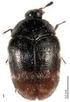 Rev. Chilena Ent. 2012, 37: 17-21 CONTRIBUTION TO THE KNOWLEDGE OF DERMESTIDAE (COLEOPTERA) FROM CHILE CONTRIBUCIÓN AL CONOCIMIENTO DE LOS DERMESTIDAE (COLEOPTERA) DE CHILE Jiří Háva 1 and Jaime Solervicens
On the Scaphidiidae (Coleoptera) of Chile
 Ent. Arb. Mus. Frey 31/32, 1983 161 On the Scaphidiidae (Coleoptera) of Chile By Ivan Löbl Geneva Abstract The Chilian Scaphidiidae are reviewed. Eight species, all belonging to the genus Baeocera Erichson,
A new araneid genus from the Galapagos Islands (Araneae: Araneidae)
 A new araneid genus from the Galapagos Islands (Araneae: Araneidae) Herbert W. Levi ABSTRACT Contrib. Nat. Hist. 12: 893 898. A new araneid, Galaporella thaleri sp. nov., similar to species of the genus
A new species of Halystus from Socotra Island (Coleoptera: Curculionidae: Scolytinae: Polygraphini)
 ACTA ENTOMOLOGICA MUSEI NATIONALIS PRAGAE Published 17.xii.2012 Volume 52 (supplementum 2), pp. 511 516 ISSN 0374-1036 A new species of Halystus from Socotra Island (Coleoptera: Curculionidae: Scolytinae:
A new species of Ohilimia Strand, 1911 from New Guinea (Araneae: Salticidae)
 Genus Vol. 21(4): 625-629 Wrocław, 27 XII 2010 A new species of Ohilimia Strand, 1911 from New Guinea (Araneae: Salticidae) Joanna Gardzińska 1 & Barbara Patoleta 2 Katedra Zoologii, Uniwersytet Przyrodniczo-Humanistyczny
New African Curculionidae
 Ent. Arb. Mus. Frey 9, 1958 707 New African Curculionidae By Sir Guy A. K. Marshall In a small collection of African Curculionidae, mostly collected in West Africa by Dr. Bechyne, kindly submitted to me
Revision of African Parandrinae (Coleoptera, Cerambycidae)
 University of Nebraska - Lincoln DigitalCommons@University of Nebraska - Lincoln Insecta Mundi Center for Systematic Entomology, Gainesville, Florida 8-24-2012 Revision of African Parandrinae (Coleoptera,
THREE NEW SPECIES OF MYRABOLIA REITTER (COLEOPTERA: CUCUJOIDEA: MYRABOLIIDAE)
 A N N A L E S Z O O L O G I C I (Warszawa), 2011, 61(2): 367-374 THREE NEW SPECIES OF MYRABOLIA REITTER (COLEOPTERA: CUCUJOIDEA: MYRABOLIIDAE) KAROL SZAWARYN 1 and WIOLETTA TOMASZEWSKA 2 Museum and Institute
Insect identification sheet
 information leaflet Insect identification sheet To enable you to identify the insect you have in your home, we have provided some identification sheets. These depict the most common pest species that you
ISOPERLA UMPQUA A NEW SPECIES OF WESTERN NEARCTIC STONEFLY (PLECOPTERA: ISOPERLINAE)
 Szczytko, S.W. and K.W. Stewart. 2013. Isoperla umpqua, a new species of western Nearctic stonefly (Plecoptera: Isoperlinae). http://zoobank.org/ urn:lsid:zoobank.org:pub:2dca0e5d-15be-4f6b-af64-3ac7aa19b1f4
MAURIZIO BIONDI and PAOLA D ALESSANDRO
 Eur. J. Entomol. 105: 719 736, 2008 http://www.eje.cz/scripts/viewabstract.php?abstract=1390 ISSN 1210-5759 (print), 1802-8829 (online) Taxonomical revision of the Longitarsus capensis species-group: An
FIELD RECOGNITION OF THE LARVAE OF NATIVE COCCINELLIDAE, COMMON TO THE POTATO FIELDS OF AROOSTOOK COUNTY
 FIELD RECOGNITION OF THE LARVAE OF NATIVE COCCINELLIDAE, COMMON TO THE POTATO FIELDS OF AROOSTOOK COUNTY R. H. Storch Department of Entomolgy, University of Maine TECHNICAL BULLETIN 43 MAINE AGRICULTURAL
A TAXONOMIC TREATMENT OF THE SPECIES OF ORTHOGONIUS MACLEAY (COLEOPTERA: CARABIDAE: ORTHOGONIINI) OF SINGAPORE
 THE RAFFLES BULLETIN OF ZOOLOGY 2007 THE RAFFLES BULLETIN OF ZOOLOGY 2007 55(2): 261 266 Date of Publication: 31 Aug.2007 National University of Singapore A TAXONOMIC TREATMENT OF THE SPECIES OF ORTHOGONIUS
ON TWO NEW SPECIES OF THE GENUS ACANTHOCHONDRIA OAKLEY (CRUSTACEA COPEPODA) FOUND IN JAPAN
 ON TWO NEW SPECIES OF THE GENUS ACANTHOCHONDRIA OAKLEY (CRUSTACEA COPEPODA) FOUND IN JAPAN by SUEO M. SHIINO Faculty of Fisheries, Prefectural University of Mie, Tsu, Japan Acanthochondria Oakley is a
A NEW GENUS OF THE SPIDER SUBFAMILY GNAPHOSINA E FROM THE VIRGIN ISLANDS (ARANEAE, GNAPHOSIDAE ) Norman I. Platnick and Mohammad U.
 Platnick, N. I., and M. U. Shadab. 1977. A new genus of the spider subfamily Gnaphosinae from th e Virgin Islands (Araneae, Gnaphosidae). J. Arachnol. 3 :191-194. A NEW GENUS OF THE SPIDER SUBFAMILY GNAPHOSINA
The Genus Austroleptis from South Chile and Patagonia (Diptera, Rhagionidae)
 Title The Genus Austroleptis from (Diptera, Rhagionidae) South C Author(s) NAGATOMI, Akira; NAGATOMI, Hisako Citation 南 海 研 紀 要, 8(2): 139-156 Issue Date 1988-02-29 URL http://hdl.handle.net/10232/15696
New species of Cerambycinae (Coleoptera, Cerambycidae) from South America
 INSECTA MUNDI A Journal of World Insect Systematics 0115 New species of Cerambycinae (Coleoptera, Cerambycidae) from South America Maria Helena M. Galileo Museu de Ciências Naturais, Fundação Zoobotânica
Stanislav Jákl. Geologická 1218, CZ- Praha 5-Hlubočepy, Czech Republic e-mail: [email protected]
 Studies and Reports Taxonomical Series 10 (2): 453-464, 2014 Contribution to knowledge of Cosmiomorpha (Microcosmiomorpha) Mikšič, 1977 (Coleoptera: Scarabaeidae: Cetoniinae: Goliathini) with descriptions
Description of a new Pygopleurus species (Col.: Glaphyridae), with a list of recorded species of the genera Pygopleurus and Eulasia from Iran
 Journal of Entomological Society of Iran 2007, 26(2), 1-6 1 Description of a new Pygopleurus species (Col.: Glaphyridae), with a list of recorded species of the genera Pygopleurus and Eulasia from Iran
New Mites in the Family Caeculidae
 BULLETIN OF THE U N IV E R SIT Y OF UTAH Vol. 35 March 15, 1945 No. 17 New Mites in the Family Caeculidae B Y STANLEY M ULAIK BIOLOGICAL SERIES, Vol. VIII, No. 6 PUBLISHED BY THE UNIVERSITY OF UTAH SALT
New species and subspecies of Octavius from South Africa, with a key and additional distribution records (Coleoptera: Staphylinidae: Euaesthetinae)
 ACTA ENTOMOLOGICA MUSEI NATIONALIS PRAGAE Published 30.iv.2014 Volume 54(1), pp. 195 231 ISSN 0374-1036 http://zoobank.org/urn:lsid:zoobank.org:pub:d94600bd-1221-47b6-9c70-ba8c82b74cec New species and
SPECIES DESCRIPTION Picture
 SPECIES DESCRIPTION Picture German Cockroach Cockroach egg case & nymphs 12-15mm (Adult Stage)Mid to dark brown body. Lighter area with 2 dark bars behind head. Wings. Very long antennae. Young are smaller
THE BENJAMIN INSTITUTE PRESENTS. Excerpt from Listen To Your Pain. Assessment & Treatment of. Low Back Pain. Ben E. Benjamin, Ph.D.
 THE BENJAMIN INSTITUTE PRESENTS Excerpt from Listen To Your Pain Assessment & Treatment of Low Back Pain A B E N J A M I N I N S T I T U T E E B O O K Ben E. Benjamin, Ph.D. 2 THERAPIST/CLIENT MANUAL The
Description of a new Omophron Latreille, 1802 species from Madagascar (Coleoptera: Carabidae: Omophronini)
 Baltic J. Coleopterol. 10(1) 2010 ISSN 1407-8619 Description of a new Omophron Latreille, 1802 species from Madagascar (Coleoptera: Carabidae: Omophronini) Uldis Valainis Valainis U. 2010. Description
A new click beetle genus from the Chilean Central Andes: Bohartina (Coleoptera, Elateridae, Elaterinae)
 A new click beetle genus from the Chilean Central Andes: Bohartina (Coleoptera, Elateridae, Elaterinae) Elizabeth T. Arias Essig Museum of Entomology, University of California, Berkeley, 210 Wellman Hall.
DEVELOPMENT AND GROWTH OF THE MANDIBLE
 2012-2013 ORAL BIOLOGY DEVELOPMENT AND GROWTH OF THE MANDIBLE Ass. Prof. Dr. Heba M. Elsabaa Development and Growth of the Mandible DEVELOPMENT OF THE MANDIBLE The Mandible Is the largest and strongest
A new species of Myrmarachne from Kenya (Araneae: Salticidae)
 Genus Vol. 13 (3): 409-415 Wroc³aw, 30 IX 2002 A new species of Myrmarachne from Kenya (Araneae: Salticidae) WANDA WESO OWSKA 1 and KATHRYN SALM 2 1 Zoological Institute, Wroc³aw University, Sienkiewicza
Review of the Haliplidae of Myanmar with description of Haliplus volpei (Coleoptera)
 Review of the Haliplidae of Myanmar with description of Haliplus volpei (Coleoptera) Bernhard J. van Vondel The present knowledge about the Haliplidae from Myanmar (Burma) is reviewed. Six species are
AP Physics B Ch. 23 and Ch. 24 Geometric Optics and Wave Nature of Light
 AP Physics B Ch. 23 and Ch. 24 Geometric Optics and Wave Nature of Light Name: Period: Date: MULTIPLE CHOICE. Choose the one alternative that best completes the statement or answers the question. 1) Reflection,
Article. Abstract. Introduction ALBERTO BALLERIO 1, BRUCE D. GILL 2 & VASILY V. GREBENNIKOV 2
 Zootaxa 2892: 1 24 (2011) www.mapress.com/zootaxa/ Copyright 2011 Magnolia Press Article ISSN 1175-5326 (print edition) ZOOTAXA ISSN 1175-5334 (online edition) Illustrated overview and identification key
A revision of the Aphthona gracilis species group (Coleoptera: Chrysomelidae) A.S. Konstantinov
 Труды Русского энтомологического общества. С.-Петербург, 2006. Т. 77: 178 188. Proceedings of the Russian Entomological Society. St. Petersburg, 2006. Vol. 77: 178 188. A revision of the Aphthona gracilis
FORENSIC ANTHROPOLOGY NOTES
 FORENSIC ANTHROPOLOGY NOTES Forensic Anthropology = the examinations of human skeletal remains for law enforcement agencies to determine the identity of unidentified bones. Questions asked: 1. Are the
IDENTIFICATION OF ADULT CORIXIDS 25
 IDENTIFICATION OF ADULT CORIXIDS 25 THE IDENTIFICATION OF BRITISH ADULT SPECIMENS OF SIGARA LATERALIS (LEACH), SIGARA CONCINNA (FIEBER), CALLICORIXA PRAEUSTA (FIEBER) AND CALLICORIXA WOLLASTONI (DOUGLAS
THREE NEW AGAMID LIZARDS FROM WESTERN AUSTRALIA
 Rec. West. Aust. Mus. 1981,8 (4) THREE NEW AGAMID LIZARDS FROM WESTERN AUSTRALIA G.M. STORR* ABSTRACT Three recently discovered species are described as new: Tympanocryptis aurita from east Kimberley,
Surgical Art. Formulaic Drawing Method. DRAWING WORKSHOP Learning to sketch for patient notes
 DRAWING WORKSHOP Learning to sketch for patient notes Surgical Art Formulaic Drawing Method Formulaic figure drawing systems involve using abstract rhythms and interlocking shapes to construct the human
Advanced MakeUp Tips by Kathy Whittington
 Advanced MakeUp Tips by Kathy Whittington Applying Eye Shadow Eyes are the windows to your soul. The right make up can add to the beauty of your eyes if you know how to accent the positive and minimize
ZOOLOGISCHE MEDEDELINGEN
 ZOOLOGISCHE MEDEDELINGEN UITGEGEVEN DOOR HET RIJKSMUSEUM VAN NATUURLIJKE HISTORIE TE LEIDEN (MINISTERIE VAN CULTUUR, RECREATIE EN MAATSCHAPPELIJK WERK) Deel 48 no. 21 15 november 1974 ARADIDAE IN THE RIJKSMUSEUM
Chapter 17: Light and Image Formation
 Chapter 17: Light and Image Formation 1. When light enters a medium with a higher index of refraction it is A. absorbed. B. bent away from the normal. C. bent towards from the normal. D. continues in the
Algebra Geometry Glossary. 90 angle
 lgebra Geometry Glossary 1) acute angle an angle less than 90 acute angle 90 angle 2) acute triangle a triangle where all angles are less than 90 3) adjacent angles angles that share a common leg Example:
Physics 25 Exam 3 November 3, 2009
 1. A long, straight wire carries a current I. If the magnetic field at a distance d from the wire has magnitude B, what would be the the magnitude of the magnetic field at a distance d/3 from the wire,
My Custom Design ver.1.0
 My Custom Design ver.1.0 Embroidery Data Creation Software Instruction Manual Before using this software, be sure to read this Instruction Manual for information on the correct use of the software. Keep
A review of Hippeutister Reichensperger with new species from California and Costa Rica (Coleoptera: Histeridae: Hetaeriinae)
 Zootaxa 1895: 39 52 (2008) www.mapress.com/zootaxa/ Copyright 2008 Magnolia Press ISSN 1175-5326 (print edition) ZOOTAXA ISSN 1175-5334 (online edition) A review of Hippeutister Reichensperger with new
Descriptions of two new species of Gyrocarisa (Trichoptera: Petrothrincidae)
 Zootaxa : 15 20 (2005) www.mapress.com/zootaxa/ Copyright 2005 Magnolia Press ISSN 1175-5326 (print edition) ZOOTAXA ISSN 1175-5334 (online edition) Descriptions of two new species of Gyrocarisa (Trichoptera:
A REVIEW OF THE ANTHOPHORA-SPECIES OF EGYPT
 Prof. Dr. H. PRIESNER A REVIEW OF THE ANTHOPHORA-SPECIES OF EGYPT [Hymenoptera : Apidae] A HEVIEW OF THE ANTHOPHORA-SPECIES OF EGYPT (Hymenoptera : Apidae] by Prof. Dr. H. PRIESNER INTRODUCTION Owing
ZOOLOGISCHE MEDEDELINGEN
 ZOOLOGISCHE MEDEDELINGEN UITGEGEVEN DOOR HET RIJKSMUSEUM VAN NATUURLIJKE HISTORIE TE LEIDEN (MINISTERIE VAN CULTUUR, RECREATIE EN MAATSCHAPPELIJK WERK) Deel 56 no. 1 15 augustus 1980 T H E GENUS ODONTOFROGGATIA
INSECTA MUNDIA Journal of World Insect Systematics
 INSECTA MUNDIA Journal of World Insect Systematics 0360 Two new species and one new genus of South American Cerambycidae (Coleoptera), with redescriptions and distributional records for other taxa Maria
THE GENUS LACCOBIUS IN MELANESIA (COLEOPTERA: HYDROPHILIDAE) 1
 Pacific Insects Vol. 22, no. 3-4: 385-400 17 December 1980 1980 by the Bishop Museum THE GENUS LACCOBIUS IN MELANESIA (COLEOPTERA: HYDROPHILIDAE) 1 By Elio Gentili 2 Abstract. Laccobius is represented
Thin Lenses Drawing Ray Diagrams
 Drawing Ray Diagrams Fig. 1a Fig. 1b In this activity we explore how light refracts as it passes through a thin lens. Eyeglasses have been in use since the 13 th century. In 1610 Galileo used two lenses
How to Age Golden Eagles
 ADVANCES IN BIRD IDENTIFICATION How to Age Golden Eagles Techniques for Birds Observed in Flight Hawk identification has advanced considerably in recent years. With the arrival of new field guides, new
TAXONOMIC (DICHOTOMOUS) KEYS
 TAXONOMIC (DICHOTOMOUS) KEYS One method of classifying and identifying objects includes using a taxonomic key, sometimes called a dichotomous key. A taxonomic key looks at the similarities and differences
2) A convex lens is known as a diverging lens and a concave lens is known as a converging lens. Answer: FALSE Diff: 1 Var: 1 Page Ref: Sec.
 Physics for Scientists and Engineers, 4e (Giancoli) Chapter 33 Lenses and Optical Instruments 33.1 Conceptual Questions 1) State how to draw the three rays for finding the image position due to a thin
New species of the genera Lebia Latreille and Aristolebia Bates from Indonesia (Coleoptera: Carabidae: Lebiini) 1
 Stuttgarter Beiträge zur Naturkunde A, Neue Serie 3: 111 121; Stuttgart, 30.IV.2010. 111 New species of the genera Lebia Latreille and Aristolebia Bates from Indonesia (Coleoptera: Carabidae: Lebiini)
Freehand Sketching. Sections
 3 Freehand Sketching Sections 3.1 Why Freehand Sketches? 3.2 Freehand Sketching Fundamentals 3.3 Basic Freehand Sketching 3.4 Advanced Freehand Sketching Key Terms Objectives Explain why freehand sketching
HYDROPHILIDAE: I. Check list and key to Palearctic and Oriental genera of aquatic Hydrophilidae (Coleoptera)
 JÄCII & Jl (eels.): Water Beetles of China Vol. Ill 3S3-395 Wien, April 2003 HYDROPHILIDAE: I. Check list and key to Palearctic and Oriental genera of aquatic Hydrophilidae (Coleoptera) A. KOMAREK Abstract
LONGHORNED BEETLES FROM GOMARDA WILDLIFE SANCTUARY, CHHATTISGARH, INDIA (COLEOPTERA: CERAMBYCIDAE)
 Mun. Ent. Zool. Vol. 11, No. 2, June 2016 613 LONGHORNED BEETLES FROM GOMARDA WILDLIFE SANCTUARY, CHHATTISGARH, INDIA (COLEOPTERA: CERAMBYCIDAE) Amitava Majumder*, Sumana Halder, Angshuman Raha, Bulganin
POCKET IDENTIFICATION GUIDE
 The Pennsylvania Native Bee Survey Citizen Scientist Pollinator Monitoring Guide POCKET IDENTIFICATION GUIDE Leo Donovall/Pennsylvania Department of Agriculture Bees vs. Wasps vs. Flies Bees Usually Very
Session 7 Bivariate Data and Analysis
 Session 7 Bivariate Data and Analysis Key Terms for This Session Previously Introduced mean standard deviation New in This Session association bivariate analysis contingency table co-variation least squares
Care and Use of the Compound Microscope
 Revised Fall 2011 Care and Use of the Compound Microscope Objectives After completing this lab students should be able to 1. properly clean and carry a compound and dissecting microscope. 2. focus a specimen
Convex Mirrors. Ray Diagram for Convex Mirror
 Convex Mirrors Center of curvature and focal point both located behind mirror The image for a convex mirror is always virtual and upright compared to the object A convex mirror will reflect a set of parallel
How To Identify A Byrrhidae Beetle
 Quoderno di Srudi e Nolizie di Storio Nolurole dello Romogno Quad. Studi Nat. Romagna, 17 suppl.: 55-61, giugno 2003 lssn 1123-6787 Roberto Fabbri & Hong-zhangZhou- THR.EE NEW SPECIES OF THE GENUS BYRRIIUS
So, you want to make a photo-realistic rendering of the Earth from orbit, eh? And you want it to look just like what astronauts see from the shuttle
 So, you want to make a photo-realistic rendering of the Earth from orbit, eh? And you want it to look just like what astronauts see from the shuttle or ISS (International Space Station). No problem. Just
SCOTTISH TERRIER. FEDERATION CYNOLOGIQUE INTERNATIONALE (AISBL) SECRETARIAT GENERAL: 13, Place Albert 1 er B 6530 Thuin (Belgique) 10.01.
 FEDERATION CYNOLOGIQUE INTERNATIONALE (AISBL) SECRETARIAT GENERAL: 13, Place Albert 1 er B 6530 Thuin (Belgique) 10.01.2011/EN FCI-Standard N 73 SCOTTISH TERRIER M.Davidson, illustr. NKU Picture Library
Determine Your Body Type and Size Body Proportion Length of Body Sections
 Determine Your Body Type and Size Body Proportion Length of Body Sections Proportion - Torso to Legs Are you longer in the torso or legs? Height in inches Torso vs. Legs Top half in inches Bottom half
JACK RUSSELL TERRIER
 05.12.2012 / EN FEDERATION CYNOLOGIQUE INTERNATIONALE (AISBL) SECRETARIAT GENERAL: 13, Place Albert 1 er B 6530 Thuin (Belgique) FCI-Standard N 345 JACK RUSSELL TERRIER SMOOTH COATED VARIETY BROKEN COATED
SPIXIANA 32 2 231 253 München, November 2009 ISSN 0341 8391
 SPIXIANA 32 2 231 253 München, November 2009 ISSN 0341 8391 New and rare species of the pseudomorphine genera Sphallomorpha Westwood, Adelotopus Hope, and Pseudomorpha Kirby mainly from far Northern Territory,
New neotropical species of the genus Holotrochus and the new
 ... download Biodiversity Heritage Library, http://www.biodiversitylibrary.org/ Ent. Arb. Mus. Frey 35/36, 1987 81 New neotropical species of the genus Holotrochus and the new genus Mimotrochus (Coleoptera,
Worksheets for Teachers. The Lowry
 Worksheets for Teachers The Lowry Worksheets LS Lowry Worksheets for Primary & Secondary Pupils The following pages contain worksheets for you to use with your class. They can be photocopied for each person
MATHS LEVEL DESCRIPTORS
 MATHS LEVEL DESCRIPTORS Number Level 3 Understand the place value of numbers up to thousands. Order numbers up to 9999. Round numbers to the nearest 10 or 100. Understand the number line below zero, and
Snakes of Massachusetts
 Snakes of Massachusetts Of the roughly 3,000 known species of snake found worldwide, only 15% are considered dangerous to humans. Luckily here in Massachusetts we only have two types of dangerous venomous
Reptiles and Amphibians of Curaçao
 33 Reptiles and Amphibians of Curaçao BY Dr. Nelly de Rooij (With 2 Figures). The Zoological Museum of Amsterdam received some collections of reptiles from Curaçao made by Dr. J. BOEKE in 1905, by Dr.
ANNALES HISTORICO-NATURALES MUSEI NATIONALIS HUNGARICI Volume89. Budapest, 1997 pp. 151-156.
 ANNALES HISTORICO-NATURALES MUSEI NATIONALIS HUNGARICI Volume89. Budapest, 1997 pp. 151-156. Three new species and a new subspecies of Meoneura from the Alps (Diptera, Carnidae) L. PAPP Department of Zoology,
When looking for a diamond, keep in mind that if a diamond is cut poorly, it affects the brilliance; the number of facets a stone has
 Diamond Buying Guide We have created a tutorial to provide you with the guidance you need when purchasing diamond jewelry. By developing your knowledge of diamonds, you will find shopping for and making
Students summarize a data set using box plots, the median, and the interquartile range. Students use box plots to compare two data distributions.
 Student Outcomes Students summarize a data set using box plots, the median, and the interquartile range. Students use box plots to compare two data distributions. Lesson Notes The activities in this lesson
NOVITATES AMER]ICAN MUSEUM MEXICO (COLEOPTERA) THE BUPRESTIDAE OF NORTH CENTRAL BY MONT A. CAZIER'
![NOVITATES AMER]ICAN MUSEUM MEXICO (COLEOPTERA) THE BUPRESTIDAE OF NORTH CENTRAL BY MONT A. CAZIER'](/thumbs/24/3912359.jpg "NOVITATES AMER]ICAN MUSEUM MEXICO (COLEOPTERA) THE BUPRESTIDAE OF NORTH CENTRAL BY MONT A. CAZIER'") AMER]ICAN MUSEUM NOVITATES PUBLISHED BY THE AMERICAN MUSEUM OF NATURAL HISTORY CITY OF NEW YORK JULY 16, 1951 NUMBER 1526 THE BUPRESTIDAE OF NORTH CENTRAL MEXICO (COLEOPTERA) BY MONT A. CAZIER' This paper
AMER]ICAN MUSEUM NOVITATES PUBLISHED BY THE AMERICAN MUSEUM OF NATURAL HISTORY CITY OF NEW YORK JULY 16, 1951 NUMBER 1526 THE BUPRESTIDAE OF NORTH CENTRAL MEXICO (COLEOPTERA) BY MONT A. CAZIER' This paper
Article. http://dx.doi.org/10.11646/zootaxa.3841.1.7 http://zoobank.org/urn:lsid:zoobank.org:pub:6fb24193-a0db-4494-8c2c-f7591e614e9c
 Zootaxa 3841 (1): 127 134 www.mapress.com/zootaxa/ Copyright 2014 Magnolia Press Article http://dx.doi.org/10.11646/zootaxa.3841.1.7 http://zoobank.org/urn:lsid:zoobank.org:pub:6fb24193-a0db-4494-8c2c-f7591e614e9c
A new species of Fissiphalliidae from Brazilian Amazon Rain Forest (Arachnida: Opiliones)
 Zootaxa : 1 6 (2004) www.mapress.com/zootaxa/ Copyright 2004 Magnolia Press ISSN 1175-5326 (print edition) ISSN 1175-5334 (online edition) A new species of Fissiphalliidae from Brazilian Amazon Rain Forest
Attribution Guide. Variety 1 Small Head; straight line of curls at back of head. Large Head; interrupted line of curls at back of head
 Classic Head Quarter Eagles The Coinage Act of 1834 reduced the standard weight of gold coins to promote coinage and circulation of the coins, previously valued at more than face value. The specifications
Chec List Journal of species lists and distribution
 Check List 8(5): 889 893, 2012 2012 Check List and Authors ISSN 1809-127X (available at www.checklist.org.br) Chec List Journal of species lists and distribution N o t e s on Geogra p h i c Distribution
KINGMAN IS GROWING! COLUMN
 KINGMAN IS GROWING! COLUMN THE INTRIGUING AGAVE BY LINDA REDDICK, KINGMAN AREA MASTER GARDENER An Agave is a tough, easy-care succulent that can add style to your garden, tolerate less than ideal conditions
TWO NEW FRESHWATER SPECIES OF THE GENUS JESOGAMMARUS (CRUSTACEA: AMPHIPODA: ANISOGAMMARIDAE) FROM CHINA
 THE RAFFLES BULLETIN OF ZOOLOGY 2004 THE RAFFLES BULLETIN OF ZOOLOGY 2004 52(2): 455-466 National University of Singapore TWO NEW FRESHWATER SPECIES OF THE GENUS JESOGAMMARUS (CRUSTACEA: AMPHIPODA: ANISOGAMMARIDAE)
FINNISH SPITZ. FEDERATION CYNOLOGIQUE INTERNATIONALE (AISBL) SECRETARIAT GENERAL: 13, Place Albert 1 er B 6530 Thuin (Belgique) 27.05.
 27.05.2015/ EN FEDERATION CYNOLOGIQUE INTERNATIONALE (AISBL) SECRETARIAT GENERAL: 13, Place Albert 1 er B 6530 Thuin (Belgique) FCI-Standard N 49 FINNISH SPITZ (Suomenpystykorva) 2 TRANSLATION: Finnish
Lectures of Human Anatomy
 Lectures of Human Anatomy Vertebral Column-I By DR. ABDEL-MONEM AWAD HEGAZY M.B. with honor 1983, Dipl."Gynecology and Obstetrics "1989, Master "Anatomy and Embryology" 1994, M.D. "Anatomy and Embryology"
Math 1B, lecture 5: area and volume
 Math B, lecture 5: area and volume Nathan Pflueger 6 September 2 Introduction This lecture and the next will be concerned with the computation of areas of regions in the plane, and volumes of regions in
GAP CLOSING. Volume and Surface Area. Intermediate / Senior Student Book
 GAP CLOSING Volume and Surface Area Intermediate / Senior Student Book Volume and Surface Area Diagnostic...3 Volumes of Prisms...6 Volumes of Cylinders...13 Surface Areas of Prisms and Cylinders...18
Baby Lab. Class Copy. Introduction
 Class Copy Baby Lab Introduction The traits on the following pages are believed to be inherited in the explained manner. Most of the traits, however, in this activity were created to illustrate how human
Lab Exercise 4. Epithelial Tissues. Connective Tissue Proper. What you need to be able to do on the exam after completing this lab exercise:
 Lab Exercise 4 Epithelial Tissues Connective Tissue Proper Textbook Reference: See Chapter 4 What you need to be able to do on the exam after completing this lab exercise: Be able to identify each type
LEADER IN CUTTING TECHNOLOGY
 LEADER IN CUTTING TECHNOLOGY FOR OVER 2 YEARS REASONS WHY TRONEX IS THE BEST IN THE WORLD 1 2 SUPERIOR CUTTING PERFORMANCE Cut hundreds of thousands of times before dulling. Cut hundreds of thousands of
Level 1 - Maths Targets TARGETS. With support, I can show my work using objects or pictures 12. I can order numbers to 10 3
 Ma Data Hling: Interpreting Processing representing Ma Shape, space measures: position shape Written Mental method s Operations relationship s between them Fractio ns Number s the Ma1 Using Str Levels
AUSTRALIAN MUSEUM SCIENTIFIC PUBLICATIONS
 AUSTRALIAN MUSEUM SCIENTIFIC PUBLICATIONS Bayly, I. A. E., 1971. A new species of Kelleria (Copepoda: Cyclopoida) from brackish water in Victoria. Records of the Australian Museum 28(6): 111 116. [27 September
Such As Statements, Kindergarten Grade 8
 Such As Statements, Kindergarten Grade 8 This document contains the such as statements that were included in the review committees final recommendations for revisions to the mathematics Texas Essential