
Sterilization Packaging Systems, Preparation and Loading for Steam Sterilization
|
|
|
- Ashley Poole
- 9 years ago
- Views:
Transcription
1 Sterilization Packaging Systems, Preparation and Loading for Steam Sterilization by Rose Seavey, RN, MBA, CNOR, ACSP Many thanks to the team at 3M Health Care for working with Managing Infection Contro l to provide the following accredited course. IAHCSMM has awarded one (1) contact point for completion of this continuing education lesson toward IAHCSMM recertification. The CBSPD has preapproved this inservice for one (1) contact hour for a period of five (5) years from the date of publication, and to be used only once in a recertification period. This inservice is 3M Health Care Provider approved by the California Board of Registered Nurses, CEP 5770 for one (1) contact hour. This form is valid up to five (5) years from the date of publication. Instructions for submitting results are on page 97. Managing Infection Control and 3M Health Care will be working collaboratively to provide continuing education courses in monthly editions of Managing Infection Control. Objectives After completion of this self-study activity, the learner will be able to: 1. Discuss the types and selection criteria for packaging systems for items to be steam sterilized. 2. Explain how to prepare and label a package for steam sterilization. 3. Write a policy and procedure for selection and use of packaging systems, preparation and loading of steam sterilizers. 4. Order the C o m p reh ensive guide to steam sterilization and sterility assur - ance in health care facilities ( A N S I / AAMI ST79:2006) document for your reference library. 78 MANAGING INFECTION CONTROL

2 Test Questions True or False 1. The purpose of any packaging system is to allow sterilization of the package cont ents, maintain sterility of contents until the package is opened, and permit delivery of contents without c o n t a m i n a t i o n. 2. Facilities should have a copy of the manufacturer s documented test data that provide assurance the packaging system selected meets the criteria required. 3. Holes or tears in textiles may be repaired or patched by sewing. 4. Filter material used in rigid container systems can be easily tested by healthcare personnel by using the nationally recognized test for the microbial barrier performance. 5. Labeling is important for quality assurance, inventory control and stock-rotation purposes. 6. Single peel packing is sufficient unless the package contains more than one item or would be difficult to open aseptically with only one peel pack. 7. It is OK to put paper-plastic pouches within wrapped sets or containment devices. 8. Mixing sterilizer loads of textiles, peel packs and container systems is fine as long as the containers go on the top shelf. 9. The combined weight of the containment device, the instruments, and any accessories or wrappers shall not exceed 25 pounds when the containment device load is configured according to the manufacturer s recommendations. 10. To facilitate air removal and steam penetration and drying, packages of textiles should be loaded on the cart loosely. Introduction A major responsibility of healthcare providers is to minimize patient risks. In the operating room, this is particularly important in regards to surg i c a l wound infections. A vital way to help prevent surgical wound infections is to present surgical items that are free of contamination at the time of use. This is accomplished by subjecting them to a validated sterilization process and maintaining the sterility up to the time they are used. 1 Sterilization is a science that utilizes many different technologies to accomplish the destruction of all microorganisms. However, once items are sterile, that sterility must also be maintained up to the time they are needed. Some of the components to sterilization such as packaging, preparation and loading of steam sterilizers are often overlooked or not readily understood. There are various methods and techniques used in packaging instrumentation and medical devices for sterilization, as well as instrument/tray preparation and sterilizer loading. This inservice will provide guidelines for evaluation, selection and use of packaging systems, preparation and assembly of surgical instrumentation and loading of the steam sterilizer as discussed in the new Association for the Advancement of Medical Instrumentation standard Comprehensive guide to steam sterilization and sterility assurance in health care facilities, ANSI/AAMI ST79:2006, as well as the 2006 Association of perioperative Registered N u r s e s (AORN) Recommended Practices on Sterilization in the Perioperative Practice Setting. Personnel considerations Accountability for performing sterilization processes should be assigned to competent individuals who have knowledge of all aspects of disinfection and sterilization procedures and safety precautions. Supervisory personnel responsible for sterilization and disinfection should have formal training and be knowledgeable about each method used. They should be aware of the need to acquire and follow the device and sterilizer manufacturer s written instructions for use. As with all processing activities, employees performing these duties should be given special training, and their competencies should be verified. 2 Selecting appropriate packaging materials The purpose of any packaging system is to allow sterilization of the package contents, maintain sterility of contents until the package is opened, and permit delivery of contents without contamination. There are many types of packaging systems. T h e choice of packaging systems include: Woven fabrics, usually 100% cotton, cotton-polyester blends, and synthetic blends; Nonwoven materials, made of plastic polymers, cellulose fibers or washed paper pulp bonded under pressure into sheets, not woven on a loom. These are usually designed for single use; Peel pouches of plastic and/or paper, made of a variety of materials, including paper, cellophane, polyethylene, Tyvek and various paper- p l a s t i c combinations; and Rigid container systems that are specially designed metal or plastic containers. 3 When selecting a packaging material, several factors must be taken into consideration. The selection should be dependent on many things, including size and weight of device, sterilization method, and storage location. We no longer just deal with what I call the knives, forks and spoons or basic stainless steel s u rgical instruments. Advances in surgical technique have resulted in the regular use of a wide assortment of complex and sophisticated surgical instrumentation. Healthcare professionals need to make sure these delicate and expensive items are protected, as well as sterilized according to the medical device manufacturer s written instructions. 80 MANAGING INFECTION CONTROL

3 Personnel should be aware of how the sterilization method and the devices being sterilized affect the selection of the appropriate packaging technique. Knowledge of how the packaging method affects the sterilization parameters is also important. 2 Sterilization packaging systems should be suitable to device(s) being sterilized. The packaging system should: permit identification of the contents, completely secure the devices, protect the package contents from physical damage (e.g. tears, puncture, compression), prevent the transfer of microorganisms, be free of holes, be free of toxic ingredients, be tamper-resistant, permit adequate air removal, allow sterilant penetration and removal, be non-linting, be large enough to distribute the contents evenly, maintain sterility of package contents until opened, allow aseptic presentation of the contents, be cost effective, and have manufacturer s written recommendations for use. Facilities should have a copy of the medical device m a n u f a c t u r e r s documented test data that will provide assurance that the packaging system selected meets the criteria required. 1,2 Not all packaging systems are created equal Packaging systems should be compatible with the specific type of sterilization intended. Not all packaging methods are appropriate for all types of sterilization. Some systems, such as those made of plastic or polymers may require an increased drying time. Some rigid containers systems can only be used in dynamic-air-removal (e.g., prevacuum) steam sterilizers. Some peel packs are not appropriate for all types of low temperature sterilization. 1,2 Packaging design and preparation All packaging materials should be at room temperature (68 F to 73ºF/20 C-23 C) and at a relative humidity of 30-60% for at least two hours before use. Packaging materials should be routinely examined for any holes, defects and inappropriate extraneous material. Using the manufacturers written recommendations, facilities should develop policies and procedures for all packaging techniques. 1,2 When using wrappers, woven or nonwoven, the package should be wrapped snug, but not too tightly. Loose wrapping could cause low spots that could collect condensate, and wrapping too tightly could result in strike-through ( passage of a liquid that could contain microorganisms through a barrier product, including its seams and/or points of a t t a c h m e n t ). 2 Rigid sterilization container systems should be scientifically proven to be suitable for the specific sterilization cycle to be used: When items are being prepared for sterilization, the container system should be verified as the correct one for the cycle being used. Before use, filters should be inspected for visible holes. Also for container systems designed for terminal sterilization (not flash sterilization), the user should obtain and follow the manufacturer s instructions to ascertain that the valve system opened for sterilization and closed after the drying cycle 2 The above requirements are necessary because temperature and humidity equilibration of packaging materials and product is needed to permit adequate steam penetration and to avoid superheating. Temperature affects relative humidity, so a preconditioning temperature range is also recommended. Experience has shown that if the packaging and product are too d r y, problems such as superheating and positive biological indicators (BIs) can result. The suggested humidity and temperature ranges were chosen for consistency with the conditions recommended for general environmental control in work areas. The 2-hour preconditioning period is minimum; some packaging materials might require a much longer equilibration time, depending on previous storage conditions. For sterility maintenance and aseptic presentation, certain items require double wrapping. Rigid sterilization container systems vary in their mechanics, their specific performance characteristics and their suitability for particular sterilization cycles. A change in the filter material (e.g., a change in brand) can affect air removal or sterilant penetration and evacuation in a container system. Filter material cannot be tested easily by health care personnel. There is no nationally recognized test for the microbial barrier performance of filters. However, as with any packaging system, inspection for integrity is part of a good quality assurance program. 2 Lot control numbers All packages intended for use as a sterile product should be labeled with a lot control identification. The sterilization label or load sticker should include the sterilizer identification number/code, the date of sterilization and the cycle number. This is necessary in the event that a sterilization recall is necessary and items must be retrieved. For proper stock rotation each item should be labeled with an expiration date. Each item in a load should be labeled with a control date for stock rotation and the following statement (or its equivalent): Contents sterile unless package is open or damaged. Please check before using. 2 Labels are usually affixed during load preparation. T h e labeling should be done just prior to the load being processed. If a facility chooses to label packages after the sterilization cycle, 82 MANAGING INFECTION CONTROL

4 the labeling should only be done after the packages are cool and dry. 1,3 I d e a l l y, every reprocessed medical device, especially an implant, should be fully traceable to the patient on whom it is used or in whom it is implanted: such traceability can be accomplished by recording the sterilizer load identifier on the patient chart or the patient name on the load record. 2 There is a higher degree of risk of infection to patients with an implant because: First, they are left behind at surgery, so if there are microorganisms on them, these will remain in the body. Infections associated with implants may not be evident for up to a year after surgery. Second, the placement of an implant often means the removal of tissue, with interruption of blood supply and significant manipulation of the tissues immediately adjacent to the implant, creating an area of potential safety for microorganisms to multiply, further increasing the risk of infection. Third, because there is interrupted blood supply, antibiotics cannot easily get to the microorganisms if they do multiply enough to cause a clinical infection. Fourth, the implant itself may be vital to continuing function of a body system, such as would occur with a total joint replacement, vascular graft, or intraocular lens placement. An infection may not be curable with the implant in place, and removing it could cripple or kill the patient. 4 In addition: The mortality rate (deaths) associated with infected total hip replacements approaches 50%, from the infection itself and from the complications associated with the resulting impaired mobility, such as blood clots and pneumonia. 4 Flash sterilization and identification Flash Sterilization (i.e., abbreviated/express cycle) is defined as a process designed for the steam sterilization of patient care items for immediate use. 1,2 For flash sterilization, labels are not used, but the following information should be generated for each sterilization cycle using a load record: sterilizer identification and cycle number; contents of load; time and temperature of exposure phase of cycle; signature or identification of operator; date and time of cycle. Flash sterilization of implantable devices is not recommended; however, if it is unavoidable, full traceability to the patient should be maintained. 2 Sterile package labels The user must be able to identify the contents of a package before it is opened; therefore, it is imperative that the package is labeled completely and correctly. Proper labeling is also important for quality assurance, inventory control and stock-rotation purposes. Each package should include: a description of the package contents, the expiration date or a shelf life statement, the initials of the person assembling the package, the department where the package is to be sent after sterilization, identification of the sterilizer and cycle number, and the date of sterilization (load sticker). Labeling should not harm the package material. A felt tip, quick-dry, nontoxic marker (e.g., Sharpie ) may be used to record the necessary information. With wrapped packages, the information should go on the sterilization indicator tape, never the wrap itself. (See Figure 1.) Labeling on paper-plastic pouches must be done on the clear plastic side only to avoid damaging the paper or bleeding of the ink that may damage the contents of the package. 3 Figure 1 Some sterile processing departments utilize an automated bar code tracking system that has all the necessary information on preprinted labels. These labels are much easier to read and decrease the chance of mislabeling due to human error. Sterile package closures Once assembled, the sterilization package needs to be secured. The closure method chosen must ensure the package remains t o g e t h e r, allow for sterilization penetration, avoid constriction of the pack, and maintain integrity of the package. Tape (other than sterilization indicator tape) should not be used to secure packages, nor should safety pins, paper clips, staples, or other sharp objects. 84 MANAGING INFECTION CONTROL

5 Figure 2 Figure 3 Figure 4. Example of single- and double-packaging with paper-plastic pouches. Reprinted with permission from the Association for the Advancement of Medical Instrumentation, Inc AAMI. All rights reserved. Elastomer bands designed specifically for sterile packaging are acceptable as outside closures only if the wrapper manufacturer explicitly recommends their use and only if care is taken to choose the proper size (relative to the length and width of the package) so that the elastomer band fits snugly yet does not constrict the package (e.g., create an hour- g l a s s e ffect) or cause excessive wrinkles or folds in the package. Rubber bands or tape should not be used to hold instruments together in a group. Tip protectors, if used, should be steam-permeable, fit loosely, and be used according to the manufacturer s instructions. The latching mechanism on rigid sterilization container systems should secure the lid so that it cannot move when l o c k e d. 2 (See Figure 2.) Paper-plastic pouches Peel pouches used for steam sterilization are made of paper and plastic. Pouches are frequently used to package small lightweight, low-profile items (e.g., one or two needle holders or small retractors). This is valuable when it is necessary to visualize the items before they are opened. Pouches are not recommended for heavy or bulky items because the seals may break open. 2, 3 There are various size peel pouches and peel pack rolls (which can be cut to size) on the market today. Choosing the correct size and application of the pouch is important. If the pouch is too tight, the seal may not hold; and if it is too loose, the item will move too much, which could also stress the seals to the point of rupturing. Proper sizing also allows for adequate air removal, steam penetration and drying. 2 Some peel pouches are self-sealing, meaning they come with a sticky strip that will fold over to form a seal after the item(s) is placed inside. Some need to be heat-sealed with a special machine that applies pressure and heat, which bonds the two sides t o g e t h e r, forming a seal. (See Figure 3.) The user needs to make sure there are no wrinkles or gaps in the seal that could allow microorganisms to enter the package and contaminate it. Single-peel pouching is sufficient unless the package contains more than one item or would be difficult to open aseptically with only one peel package (e.g., very small items). If the item is to be doublepackaged, two sequentially sized pouches should be used (i.e., the sealed inner pouch should fit inside the outer pouch without folding). When assembled, the pouches should be positioned so that plastic of the inner one faces the plastic of the outside one. 2 (See Figure 4.) 86 MANAGING INFECTION CONTROL

6 Figure 5. Sequential double-wrapping: Envelope fold. Figure 6. Sequential double-wrapping: Square fold. Reprinted with permission from the Association for the Advancement of Medical Instrumentation, Inc AAMI. All rights reserved. MANAGING INFECTION CONTROL 87

7 Wrapping techniques In order to maintain the sterility of a package the contents must be wrapped. It is crucial to choose the most appropriate material for the items being wrapped, as well as the type of sterilant to be used. Packages can be wrapped in two ways, sequential or simultaneous. When sequential wrapping is done, the items are wrapped twice, creating a pack within a pack. (See Figure 5.) When a pack is wrapped simultaneous the package is wrapped once with a special double layered synthetic nonwoven material bound on the sides. 6 (See Figure 6.) It is crucial to choose the most appropriate material for the items being wrapped, as well as the type of sterilant to be used. Whether you are using woven or nonwoven fabrics, there are two folding techniques commonly used for wrapping sterile packages. They are the envelope fold, most commonly used for smaller items, and instrument sets and the square fold, which is commonly used on larger packs. 16 (See Figure 7.) Textile packages Woven textiles are reusable, but their barrier qualities diminish by repeated laundering and sterilization cycles. Textile wraps need to be laundered, delinted, and inspected for holes (over lighted tables), worn spots, fabric separation and stains before each use. Holes should be mended by using vulcanized or thermo-seal patches, and never stitched. Textile wrappers should be assessed for their appropriateness for particular sterilization cycles. All textiles should be preconditioned (freshly laundered and allowed to equilibrate to room temperature and relative humidity for at least two hours) before being used on a pack. Previously sterilized fabrics are dehydrated and can lead to superheating and, consequently, sterilization failure. 88 MANAGING INFECTION CONTROL

8 Figure 7. Simultaneous double-wrapping: Envelope fold. Reprinted with permission from the Association for the Advancement of Medical Instrumentation, Inc AAMI. All rights reserved. Rigid containers Reusable rigid container systems are used for the packaging, transportation and storage of surgical instruments prior to, during and after sterilization. (See Figure 8.) It is believed that rigid containers are better at protecting surgical instruments and maintaining sterility than wrapped items. Containers consist of a lid with a filter mechanism that allows the sterilant to enter and exit the container. These box-like structures act as a microbial barrier and have a tamper-proof seal. Built in handles on the containers make it easier to lift and carry packages, which is ergonomically better for the staff. Most rigid containers have labels attached for easy identification. The manufacturer should provide: the recommendations regarding instrument type, placement and maximum weight; information on type of filters or wraps; locations of the most challenging area(s) for placement of biological indicators (BIs) and internal chemical indicators (CIs) for routine monitoring and product testing; and procedures for inspection and routine maintenance of the containment devices. MANAGING INFECTION CONTROL 89

9 All of the container s components (top, bottom, valve or filter mechanisms, securing or latching mechanisms) must function effectively as a unit. It is vital to the maintenance of sterility that these components work together to allow air removal, to facilitate sterilant penetration and removal, and to inhibit contamination. Before assembly, the container should be inspected to ensure gaskets are pliable, securely fastened, and without breaks or cuts. The container should be free from cracks and dents, and the locking mechanism should function properly. If the container is not acceptable, remove from service and return for repair. Filter retention mechanisms and fasteners such as screws and rivets should be secure and not loose. If the filter is found loose, the sterility of the contents should be questioned. Figure 8 90 MANAGING INFECTION CONTROL

10 Basins and basin sets To facilitate removal of moisture, basin sets should be prepared so that all basins are oriented to face the same direction. If nested, they should be at least one difference in size and be separated with nonlinting absorbent material to facilitate air removal, steam penetration and steam removal during the sterilization and drying procedure. The weight of wrapped basin sets should not exceed 7 pounds and the total number of basin sets per load should be evaluated to help ensure dry sets. 2 Surgical supplies Items such as syringes, needles, dressings and cotton balls should be individually packaged or packaged in small usable quantities. Do not use canisters with lids for these items because they do not allow for adequate air displacement, and the contents are compromised as soon as they are exposed to the environment. When packaging syringes, the barrel and the plunger should lie next to each other, and stylets should be removed from inside needles. 2 Devices with lumens Devices with lumens such as catheters, needles, suctions and tubing should have their stylets or plugs removed and should be flushed with distilled or demineralized water just prior to packaging and sterilization. The moisture in the lumens will generate steam from within the lumen. 2 Instrument preparation and assembly Preparing and assembling of instrument sets is a complex procedure. Instrument sets should be sterilized in perforated or wire-mesh bottom trays or in containment devices such as specially designed rigid organizing trays or rigid sterilization container systems, with all instruments held open and unlocked. (See Figures 11 and 12.) Multipart instruments should be disassembled for sterilization unless the device manufacturer provides validated instructions to the contrary. If commercially customized organizing trays or cassettes are used, the health care facility should request scientific documentation from the manufacturer that MANAGING INFECTION CONTROL 91

11 demonstrates the efficacy of the tray or cassette instrumentation arrangement in the steam sterilization cycle available to the facility. 2 Figure 9 Maximum weight According to AAMI, The combined weight of the containment device, the instruments, and accessories or wrappers shall not exceed 25 pounds when the containment device load is configured according to the manufacturer s instructions R a t i o n a l e: When containment devices, including their contents and any accessories or wrappers, are too heavy, sterilization and/or drying may be compromised in commonly available hospital sterilization cycles (according to ANSI/AAMI ST79, drying time is typically 20 to 30 minutes.) 2 92 MANAGING INFECTION CONTROL

12 It is not appropriate to put paper-plastic pouches within wrapped sets or containment devices because the pouches cannot be positioned to ensure adequate air removal, steam contact and drying. Containment devices and tray liners It is not appropriate to put paper-plastic pouches within wrapped sets or containment devices because the pouches cannot be positioned to ensure adequate air removal, steam contact and drying. The practice of confining instruments in paper-plastic pouches and then including them in wrapped or containerized sets (double-wrapping with dissimilar materials) has not been validated as appropriate and efficacious by any wrap, containment device, or paper-plastic manufacturer. 2 There are other items that can be used to contain or group small items within sets such as absorbent, single layer, flat wraps, and appropriate foam products or all paper autoclave bags (See Figures 12 and 13.) There are also small perforated mesh-bottom baskets with lids that can be used for this purpose. (See Figure 14.) Drying problems can be improved with the use of tray liners or other absorbent material. Drying is more efficient when the condensate is wicked away from the instruments and dispersed over a greater surface area. 2 Whatever you choose to use, it is important to make sure the items have been validated by the manufacturer to be used within sterile trays. MANAGING INFECTION CONTROL 93

13 Figure 10 Figure 11 Inspection Instruments should be dry and meticulously checked for cleanliness and defects or damage before assembly and packaging. All containment devices should be examined for any sharp edges, nicks or loose wire mesh to prevent tearing or perforating the wrapper. Rigid sterilization containers should be checked for all working parts before being used. 2 Loading the sterilizer Only packages that require the same sterilization time, temperature and drying time should be run in a load together. If a cart shelf liner is used, it should be made of a nonlinting, absorbent material that will dry in the drying time selected for the rest of the load. Load configurations should ensure adequate air removal, penetration of steam into each package, and steam evacuation. Items capable of holding water, such as solid-bottomed pans, basins, and trays, should be positioned so that they are oriented in the same direction and so that condensate can be eliminated (i.e., arranged in such a way normally on their sides that if water is present, it will drain out. 2 Metal items should not be placed over textile packages. The sterilizer manufacturer s written recommendations should always be followed. Figure 14 Figure 12 Figure MANAGING INFECTION CONTROL

14 Placement of peel pouches Peel packs should not lie flat on the cart shelf. They should stand on edge with the paper side of one pouch next to the plastic side of the next pouch. (See Figure 15.) There are special holding racks available to stand the peel packs on edge while properly spacing the packages, which helps to facilitate the steam contact and drying. 2 Figure 15 in the sterilizer could interfere with the air evacuation, sterilant penetration and drying; therefore, the manufacturer s recommendations and documentation should be carefully consulted before attempting to stack rigid container systems. The appropriateness of stacking container systems in the sterilizer depends on the design of the container system and the method of sterilization. 2 Textile packs To facilitate air removal, steam penetration and drying, textile packages should be loaded on the cart loosely, standing on their edge so that all fabric layers are not stacked one upon the other. 2 Utensils and glassware To allow for efficient displacement of air and speedy, even distribution of steam all the way through the load, items such as cups, bowls, solid-bottom pans and trays should be tilted on edge and facing the same direction. This position will also help eliminate pooling of condensate. Placement of instrument sets Instrument sets in perforated trays or rigid sterilization containers systems should be positioned flat on the sterilizer cart or shelf so that the bottom of the set touches the bottom of the shelf. (See Figures 16 and 17.) This arrangement will keep the instruments in an orderly fashion while preventing instrument damage, and will allow for easier air removal, sterilant penetration, condensate drainage and aid in drying. Stacking containers Summary Healthcare providers are responsible for minimizing risks to patients. The risk of surgical wound infections can be decreased by ensuring all surgical items are free of contamination at the time of use. Sterility maintenance is important in ensuring items are not contaminated once they come out of the s t e r i l i z e r. Evidence-based practice is the foundation of patient safety; therefore, many standards and recommended practices have been established for sterilization packaging systems, preparations and loading of steam sterilizers. These recommendations should be used as guidelines for the development of polices and procedures for packaging, preparation and loading sterile items. Following these proven standards will help to provide the highest quality of care to your patients. Figure 16 Figure 17 MANAGING INFECTION CONTROL 95

15 Glossary 1 Nonwoven materials: A sheet, web or batt of natural and/or synthetic fibers of filaments, excluding paper, that have not been converted into yarns and that are not bonded to each other by several means. Packaging systems: A generic term meant to include all types åof packaging, such as wrapping materials, pouches and rigid container systems. Rigid sterilization container system: Specifically designed heat-resistant metal, plastic, or anodized aluminum receptacles used to package items, usually surg i c a l instruments, for sterilization. The lids and/ or bottom surfaces contain steam- or gaspermeable, high-efficiency microbial filters. Sequential wrapping: A double-wrapping procedure that creates a package within a package. Superheating: A condition in which dehydrated textiles are subjected to steam sterilization. The package or product becomes too dry and causes destructive effects on the strength of the cloth fibers. In addition, the dehydrated textiles absorb moisture that may compromise the eff i- cacy of the sterilization process. Useful life: Length of time, as determined by the manuf a c t u r e r, for which a product maintains acceptable safety and performance characteristics. The manufacture should provide materials data to support useful life. Woven textile: A reusable fabric constructed from yarns made of natural and/or synthetic fibers or filaments that are woven or knitted together to form a web in a repeated interlocking pattern. Ordering Information AAMI ANSI/AAMI ST79:2006, Comprehensive guide to steam sterilization and sterility assurance in health care facilities Order code: ST79 or ST79-PDF Available in an attractive binder featuring sturdy metal rings, ledger-weight pages and a laminated tab for each section for easy navigation. AAMI will issue revised pages that can be substituted into the binder when changes are made. Also available in PDF format and as part of A A M I s electronic CD and subscription products. Price/Member discount price: $200/$100 AAMI documents can be purchased through AAMI by credit card using the following four options: 1. Internet: a a m i. o rg 2. Call: , ext 217 or , ext Fax: Mail: AAMI, Customer Service Center, 1100 N. Glebe Road, Suite 220, Arlington, VA AORN AORN Standards can be purchased through AORN using the following options: 1. Internet: 2. Call: , ext 1 or ext 1 (Monday- Friday, 8 a.m. to 4:30 p.m. MST) 3. Fax: By mail: AORN, Inc., Customer Service/Book Orders, 2170 South Parker Road, Suite 300, Denver, CO Payment can be made by VISA, MasterCard, American Express or Discover, either online or by mail/fax/phone. By authorized PO, and AORN will bill you ($100 minimum purchase). Sorry, we cannot accept POs for education conferences or services. (Not available for online orders.) 5. A CD-rom of the standards is available for the first time this year. References 1. Recommended Practices for Selection and Use of Packaging Systems. Association of perioperative Registered Nurses. A O R N Standards, Recommended Practices, and Guidelines The Association for the Advancement of Medical Instrumentation. Comprehensive guide to steam sterilization and sterility assurance in health care facilities. ANSI/AAMI ST79: Training Manual for Health Care Central Service. American Society for Health Care Central Service Professionals. Fourth Ed Schultz, Janet. Monitoring and Load Release for Implants Sterilized by Steam Within Healthcare Facilities. Managing Infection Control. Jan Central Service Technical Manual. International Association of Healthcare Central Service Materiel Management. Sixth Edition MANAGING INFECTION CONTROL

16 Sterile Process and Distribution CEU Information CEU Applicant Name Address City State Zip Code Rose Seavey RN, MBA, CNOR, ACSP, is the Director of the Sterile P rocessing Department at The C h i l d re n s Hospital of Denver. Ms. Seavey is an active member of the Association of perioperative R e g i s t e red Nurses (AORN) and c u rrently sits on the National Nominating Committee. She was h o n o red with A O R N s award for Outstanding Achievement in Clinical Nurse Education in She s e rved as the President of the American Society of Healthcare Central Service Pro f e s s i o n a l s ( A S H C S P ) in 2003 and is the 2002 recipient of A S H C S P N a t i o n a l Educator of the Year award. Ms. Seavey is a member of several AAMI working group committees that are developing re c o m m e n d e d practices and is currently a cochair for the AAMI ST8, Hospital steam sterilizers. In addition she has lectured and authored many a rticles on various topics relating to perioperative serv i c e s and sterile processing, locally, nationally and internationally. The CBSPD (Certification Board for Sterile Processing and Distribution) has pre-approved this inservice for 1 contact hour for a period of five years from the date of publication and to be used once in a re-certification period. Successful completion of the lesson and post test must be documented by facility management and those records maintained by the individuals until re-certification is required. DO NOT SEND LESSON OR TEST TO CBSPD. For additional information regarding Certification contact: CBSPD, 2 Industrial Park Road, Suite 3, Alpha, NJ or call or visit Web site at IAHCSMM has awarded 1 contact point for completion of this continuing education lesson toward IAHCSMM recertification. Nursing CE Application Form 3M Health Care provider approved by the California Board of Registered Nurses, CEP 5770 for 1 contact hour. This form is valid up to five years from the date of publication. 1. Make a photocopy of this form. 2. Print your name, address and daytime phone number and position/title. 3. Add your social security number or your nursing license number. 4. Date the application and sign. 5. Answer the CE questions. 6. Submit this form and the answer sheet to: Workhorse Publishing Managing Infection Control PO Box 25310, Scottsdale, AZ Participants who score at least 70% will receive a certificate of completion within 30 days of Managing Infection Control s receipt of the application. Application Please print or type. Name Mailing Address City, State, Country, Zip Daytime phone ( ) P o s i t i o n / Ti t l e Social Security or Nursing License Number Date application submitted ANSWERS 1. T 2. T 3. F 4. F 5. T 6. T 7. F 8. F 9. T 10. T Signature _ Offer expires December 2011 On a scale of 1-5, 5 being Excellent and 1 being Poor, please rate this program for the following: 1) Overall content 2) Met written objectives 3) Usability of content <12/06> Reprint with permission from Workhorse Publishing L.L.C Copyright 2007/Workhorse Publishing L.L.C./All Rights Reseved. MANAGING INFECTION CONTROL 97

THE BASICS OF PACKAGING
 THE BASICS OF PACKAGING Objectives: Review the regulatory requirements for packaging Present the purpose, function and essential characteristics of packaging Describe packaging options, their use, and
Sterilization of Surgical Implants: Did You Know
 Sterilization of Surgical Implants: Did You Know by Rose Seavey, RN, MBA, CNOR, ACSP Many thanks to the team at 3M Health Care for working with Managing Infection Control to provide the following accre
Packaging for Sterilization
 Packaging for Sterilization IT S NOT JUST A BOX, A BAG OR GIFT WRAPPING! by Rose Seavey, RN, BS, MBA, CNOR, ACSP Objectives After completion of this self-study activity, the learner will be able to: 1.
Heat Transfer. Condensation. Revaporization
 Objectives Wrapping a Towel Around the Problem of Wet Packs Identify causes of wet packs in steam sterilization Review suggested documentation that can assist in solving wet pack problems Why are Wet Packs
AST Standards of Practice for Packaging Material and Preparing Items for Sterilization
 AST Standards of Practice for Packaging Material and Preparing Items for Sterilization Introduction The following Standards of Practice were researched and authored by the AST Education and Professional
1/22/2012. When is it a good time to learn about sterile processing in your facility? Continuing Education Contact Hours. Learning Objectives
 Continuing Education Contact Hours Participants must complete the entire presentation/seminar to achieve successful completion and receive contact hour credit. Partial credit will not be given. All of
Best Practices for Loaner Surgical Instruments
 Best Practices for Loaner Surgical Instruments Copyright 2015, Sterile Processing University, LLC, All Rights Reserved. This material may not be copied or used without permission of the author. Nancy Chobin,
Getting a Handle on Loaner Instrumentation
 Getting a Handle on Loaner Instrumentation Essentials for a successful loaner program by Rose Seavey, RN, MBA, CNOR, CRCST, CSPDT Objectives After completion of this self-study activity, the learner will
THE BASICS OF STERILIZATION
 THE BASICS OF STERILIZATION Objectives: State the importance of sterilization to patient care Review three key essentials of the sterilization process Describe sterilization methods used, application,
Steam Sterilization Cycles for Lab Applications
 Steam Sterilization Cycles for Lab Applications Presented by Gary Butler STERIS Life Sciences August 2009 Early Steam Sterilizers Koch Upright Sterilizer First Pressurized Sterilizer First built by Pasteur-Chamberlain
Biological Indicators and
 & and BIs play an important role in the monitoring of sterilizers, along with physical and chemical indicators. However, only BIs contain live spores that directly measure the lethality of a sterilization
Federal Wage System Job Grading Standard For Laboratory Working, 3511. Table of Contents
 Federal Wage System Job Grading Standard For Laboratory Working, 3511 Table of Contents WORK COVERED... 2 WORK NOT COVERED...2 TITLES... 2 GRADE LEVELS... 2 NOTE TO USERS... 3 LABORATORY WORKER, GRADE
Top Ten Sterilization Issues in an Ambulatory Surgery Center
 10 Top Ten Sterilization Issues in an Ambulatory Surgery Center by Peggy Prinz Luebbert, MS, MT(ASCP), CIC, CHSP Objectives After completion of this self-study activity, the learner will be able to: 1.
STERILIZATION WRAP. STERISHEET user guide for the validation of the packaging THE BACTERIAL BARRIER FOR HUMAN PROTECTION
 STERILIZATION WRAP STERISHEET user guide for the validation of the packaging ARJOWIGGINS in few words A large range of sterilization wrap from standard creped paper to non-woven A large range of standard
Body Art Facility Infection Prevention And Control Plan Guideline
 Body Art Facility Infection Prevention And Control Plan Guideline In accordance with the California Health and Safety Code, Section 119313, a body art facility shall maintain and follow a written Infection
FACT SHEET : Using Autoclaves Safely
 CSULA Environmental Health and Safety Biosafety Office FACT SHEET : Using Autoclaves Safely Most science research laboratories on campus require the use of autoclaves. The primary purpose of the autoclave
Sun Windows General Information Sun New Construction Window Installation Instructions
 Sun Windows General Information Section 1 G F H H H A. Apply Weather Resistive Barrier B. Apply Sill Flashing Tape C. Place Waterproof Sill Shims D. Caulk Back of Nail Fin Sides & Top, Set Window, Fasten
Infection Control in the Dental Practice through Proper Sterilization
 Midmark Corporation 60 Vista Drive P.O. Box 286 Versailles, Ohio 45380-0286 937-526-3662 midmark.com Infection Control in the Dental Practice through Proper Sterilization In today's world, the need for
Sterile Dressing Change with Tegaderm CHG for Central Venous Catheter (CVC)
 Sterile Dressing Change with Tegaderm CHG for Central Venous Catheter (CVC) The dressing protects your catheter site. It also helps prevent infection at the site. Keep your dressing clean and dry at all
AMPSEAL* Automotive Plug Connector and Header Assembly
 AMPSEAL* Automotive Plug Connector and Header Assembly Application Specification 24 SEP 97 Rev E All dimensions are given in millimeters unless otherwise specified. All dimensional tolerances are +0.2
4. Cryogenic gloves are generally designed to protect the hands from intense cold or heat.
 PROTECTIVE GLOVES In many University laboratories, exposure to chemicals, infectious agents, sharp objects, extreme temperatures and other hazards can create a potential for injury to the hand. Wherever
UV100A Ultraviolet Air Treatment System
 UV100A Ultraviolet Air Treatment System INSTALLATION INSTRUCTIONS APPLICATION When installed in forced air heating and cooling systems, the UV100A Ultraviolet Air Treatment System kills airborne microorganism
New Applications for Dye Penetration Testing of SBS Packages and Films
 New Applications for Dye Penetration Testing of SBS Packages and Films Geoff Pavey, Principal Engineer Oliver Medical March 3-5, 2009 www.healthpack.net What will be covered Intro to Integrity failures/need
PICCs and Midline Catheters
 Patient Education PICCs and Midline Catheters Patient s guide to PICC (peripherally inserted central catheter) and midline catheters What are PICCs and midline catheters used for? Any medicine given over
DIY Advanced Dry Bags
 DIY Advanced Dry Bags You can make dry bags to fit specific items, such as sleep pads, chairs, etc., by taking a few measurements and making allowances for seams, the bottom pleat and the roll-down closure.
LOW-TEMPERATURE STERILIZATION IS AN EFFECTIVE MEANS TO
 CRCST Self-Study Lesson Plan Lesson No. CRCST 138 (Technical Continuing Education - TCE) Sponsored by: by Susan Klacik, ACE, CHL, CRCST, CIS, FCS, CSS Manager, St. Elizabeth Health Center, Youngstown,
BC Children s Hospital Mistake-Proofing Equipment Reprocessing. Laurence Bayzand Janice Penner Sue Fuller Blamey
 BC Children s Hospital Mistake-Proofing Equipment Reprocessing Laurence Bayzand Janice Penner Sue Fuller Blamey Case for Collaboration Patient Safety Learning System (PSLS) trending identified an increased
ReadyKart Mobile Processing Station Instructions for Use
 GE Healthcare Instructions 28-9606-47 AB ReadyKart Mobile Processing Station Instructions for Use Contents ReadyToProcess 1 Introduction... 1 2 General Description... 2 3 Description of Components... 4
Triple Threat 3-in-1 Game Table 3 IN 1 GAME TABLE
 NG0M Triple Threat 3-in- Game Table 3 IN GAME TABLE Thank 3 in Y Game Table Thank you for your purchase of our product. We work around the clock and around the globe to ensure that our products maintain
MINI ELECTRIC SEWING MACHINE OPERATION MANUAL
 MINI ELECTRIC SEWING MACHINE OPERATION MANUAL 1 Parts & Accessories Takeup Lever(D) Spindle(C) Spool(E) MAIN UNIT Bobbin Holder(V) Bobbin winder Spool(T) Needle Clamp Screw(O) Adjusting Screw(Q) Needle
NEW ELECTRICAL SUBSTATION Building 300 SECTION 07 53 23 ETHYLENE-PROPYLENE-DIENE-MONOMER ROOFING WORK
 ETHYLENE-PROPYLENE-DIENE-MONOMER ROOFING WORK PART 1 GENERAL 1.1 REFERENCES The publications listed below form a part of this specification to the extent referenced. The publications are referred to within
Care for your child s Central Venous Catheter (CVC)
 Care for your child s Central Venous Catheter (CVC) This booklet is intended for general informational purposes only. You should consult your doctor for medical advice. Please call the clinic or your home
Caring for Your PleurX Pleural Catheter
 Caring for Your PleurX Pleural Catheter A PleurX Pleural Catheter has been placed in your chest through a small incision in your skin into the pleural space (see picture below). This allows you to drain
DISINFECTION & STERILIZATION INFECTION CONTROL GUIDELINES SECTION 2 CLEANING & PACKAGING
 DISINFECTION & STERILIZATION INFECTION CONTROL GUIDELINES SECTION 2 CLEANING & PACKAGING Section 2- Cleaning and Packaging Cleaning of instruments and equipment Cleaning is defined as the removal of all
3 Attest Biological Monitoring System
 3 Attest Biological Monitoring System 1 Technical Product Profile A Technical Service Publication 2 Table of Contents Introduction...5 Product Description...5 Indicators... 5 Test Frequency... 8 Usage
1.1.2 Polypropylene The polypropylene must be a white opaque film, 1 2 mil thick. Biaxial orientation is preferred.
 Library of Congress Preservation Directorate Specification Number 700 704 09 Specifications for Pressure Sensitive Adhesive Labels For Application to Single Paper Sheets and Text Pages of Bound Books For
Titling, dating and marking up records
 Summary This factsheet intends to explain when you need paper records and how to look after them. You will discover: When you need to print records How to title and date paper records, and mark them with
Using Observation and Audit Tools to Improve Quality Outcomes
 Using Observation and Audit Tools to Improve Quality Outcomes by Cynthia Hubbard, RN, BS Objectives After completion of this self-study activity the learner will be able to: 1. Identify the infection risk
HT-0095 Mini PV Receptacles 22-32 AWG Crimping Hand Tool. Tool P/N HT-0095
 HT-0095 Mini PV Receptacles 22-32 AWG Crimping Hand Tool Tool P/N HT-0095 FCI MANUAL P/N 415988-001 Issued: Date (03/12/99) Page 1 of 18 HT-0095 Issued: Date (03/12/99) Page 2 of 18 Introduction Table
1000-LB. TRAILER JACK OWNER S MANUAL
 1000-LB. TRAILER JACK OWNER S MANUAL WARNING: Read carefully and understand all INSTRUCTIONS before operating. Failure to follow the safety rules and other basic safety precautions may result in serious
Improving the Quality of Surgical Trays. By: Stephen M. Kovach
 Improving the Quality of Surgical Trays By: Stephen M. Kovach Performance measurement in healthcare represents what is done and how well it is done. The goal is to accurately understand the basis for current
SEWING MAINTENANCE CHECKLIST
 SEWING MAINTENANCE CHECKLIST Many Retail, Brand-name Marketing, Mail Order and Sourcing Companies are visiting existing and potential Contractor sewing facilities and evaluating their sewing capabilities
Laboratory Biosafty In Molecular Biology and its levels
 Laboratory Biosafty In Molecular Biology and its levels Workshop 16-17 Oct..2012 Guidelines Does not mean optional Laboratory Biosafety The Laboratory Biosafety Manual is an important WHO publication
RAIL ADAPTER SYSTEM DRAFT TC-23-AIMSS CHAPTER 1 1-1 DESCRIPTION
 DRAFT TC-23-AIMSS CHAPTER 1 RAIL ADAPTER SYSTEM 1-1 DESCRIPTION The Rail Adapter System (RAS) consists of a set of lightweight specially modified sections that replace the standard front handguards on
Replacement Window Installation Guide Non-Impact & Impact Resistant Windows without Nailing Fin
 Replacement Window Installation Guide Non-Impact & Impact Resistant Windows without Nailing Fin americancraftsmanwindows.com Project Requirements: Failure to follow these instructions may void product
2. Remove rear cover of head lamp if bulbs are covered/sealed within the housings, and remove halogen bulb carefully.
 These instructions are designed to address most general installation procedures across vehicles and should not be considered vehicle make, model or year specific. Please contact the vendor directly for
Reflectex TM Reflective Concrete Interlayer Geotextile INSTALLATION GUIDELINES
 Reflectex TM Reflective Concrete Interlayer Geotextile INSTALLATION GUIDELINES Page 1 Table of Contents WHAT IS REFLECTEX TM?... 2 STORAGE AND HANDLING... 3 SITE PREPARATION... 3 PREPARATION OF EXISTING
PICC & Midline Catheters Patient Information Guide
 PICC & Midline Catheters Patient Information Guide medcompnet.com 1 table of contents Introduction 4 What is a PICC or Midline Catheter? 4 How is the PICC or Midline Catheter Inserted? 6 Catheter Care
Instructions For SF 6 Refill Kit
 S&C Vista Underground Distribution Switchgear UnderCover, Vault-Mounted, and Pad-Mounted Styles Instructions For SF 6 Refill Kit TABLE OF CONTENTS Section Page Section Page INTRODUCTION..................................
Appendix H IBC Managing Biohazardous Waste SOP
 Biohazardous waste is managed under the State of Rhode Island s Regulated Medical Waste Regulations (Regulation DEM-OWM-MW-1-2009, amended July, 2010). http://www.dem.ri.gov/pubs/regs/regs/waste/medwaste10.pdf
CAR SEAT/ STROLLER INSTRUCTION MANUAL
 CAR SEAT/ STROLLER INSTRUCTION MANUAL English PM-0624AB 3/98 Do not use this 4-in-1 System until you read and understand these instructions! IMPORTANT INFORMATION Thank you for selecting this 4-in-1 System
#002. Flash Sterilization. S t u d y G u i d e. The Hot Issues of. A Continuing Education Study Guide presented by
 #002 S t u d y G u i d e The Hot Issues of Flash Sterilization A Continuing Education Study Guide presented by For more information, visit the education page of our website www.steris.com The Hot Issue
Your Guide to Peritoneal Dialysis Module 3: Doing Peritoneal Dialysis at Home
 Your Guide to Peritoneal Dialysis Module 3: 6.0959 in Preparing to do PD One of the most important things about PD is to keep the dialysis area and anything that comes in contact with the PD equipment
STANDARD OPERATING PROCEDURES Safe Autoclave Operations
 Department of Environmental Health & Safety Biosafety & Biosecurity STANDARD OPERATING PROCEDURES Safe Autoclave Operations The purpose of this document is to provide standard operating procedures for
BUILDING MATERIALS, Wood, Laminated (Page 1 of 3) Viz.: Rafters; Arches; Beams; Joists; Timbers or Planks, structural or roof.
 BUILDING MATERIALS, Wood, Laminated (Page 1 of 3) Viz.: Rafters; Arches; Beams; Joists; Timbers or Planks, structural or roof. 1155 & 4155 LCL: Applies to all freight in less than container load quantities.
Understanding your Peripherally Inserted Central Catheter (PICC) Patient Information
 Understanding your Peripherally Inserted Central Catheter (PICC) Patient Information The Purpose of this Information Sheet This information sheet has been written by patients, members of the public and
Service Manual SSCI. The Care and Maintenance of Casters. Wheeling, IL (800) 323 7366. Form No. 702755 11/06
 Service Manual The Care and Maintenance of Casters SSCI Wheeling, IL (800) 323 7366 Form No. 702755 11/06 Service Manual Table of Contents General Information... 3 Introduction... 3 About this Manual...
Air Removal from the Sterilization Chamber
 TM Volume 5, Number 2 March 2008 Garrett Krushefski Scientific & Technical Services Manager Air Removal from the Sterilization Chamber I recently received a question from a customer asking why we state
Information for patients and nurses
 Information for patients and nurses Rocket IPC Pleural Catheter Indwelling Catheter Rocket Indwelling Pleural Catheter (IPC) Contents Contact Information...03 What s in the Rocket Dressing Pack and Bottle
Installation Manual. Solar Pool Heating System. Read the complete manual before beginning the installation
 Solar Pool Heating System Installation Manual Read the complete manual before beginning the installation 1. Sizing the System Visit www.techno-solis.com to size the system using the sizing calculator.
Biohazardous, Medical & Biological Waste Guidance Chart
 CSULA Environmental Health and Safety Biohazardous, Medical & Biological Waste Guidance Chart The chart below provides information on how to handle most, if not all, of the items that frequently are collectively
VC 104+ Rigid Grade / Rigid Grade Imagine VC 104 Rigid Grade Commercial Customised
 Page 1 of 6 instructions VC 104+ Rigid Grade / VC 104+ Rigid Grade Imagine / (for the rest of this document referred to as VC 104) can be applied to new and used trucks and trailers with painted rigid
CENTRAL SERVICE REGULATIONS FOR AMBULATORY SURGERY CENTERS
 CENTRAL SERVICE REGULATIONS FOR AMBULATORY SURGERY CENTERS Last updated July 2014 Legal disclaimer: The International Association of Healthcare Central Service Materiel Management (IAHCSMM) provides the
PATIENT GUIDE. Care and Maintenance Drainage Frequency: Max. Drainage Volume: Dressing Option: Clinician s Signature: Every drainage Weekly
 PATIENT GUIDE Care and Maintenance Drainage Frequency: Max. Drainage Volume: Dressing Option: Every drainage Weekly Clinician s Signature: ACCESS SYSTEMS Pleural Space Insertion Site Cuff Exit Site Catheter
3M Dual Lock Reclosable Fastener
 3 Dual Lock Reclosable Fasteners SJ3550CF (Type 250) SJ3551CF(Type 400) SJ3552CF(Type 170) Dual Lock Reclosable Fastener Black with a clear acrylic adhesive Product Information February, 2007 Product Description
Revised 4-3-2012 EHS Biosafety. 1 Select appropriate containers/bags for autoclaving.
 Requirements for Decontamination by Autoclaving Summary: Steam sterilization (autoclaving) is one of the most effective methods for decontaminating biohazardous material. Autoclaves use saturated steam
EH&S. Sheet. Fact. Safe and Effective Use of Autoclaves. What are autoclaves? Factors for effective sterilization. Dry heat cycle - when to use
 Please post or circulate Fact heet nvironment, ealth and afety Information for the Berkeley Campus No. 33 Revised 04/04/11 afe and ffective Use of Autoclaves Autoclaves are easy to use but can pose a safety
OVER 45 YEARS TEXTILE GRAFT TECHNOLOGY EXPERIENCE MAQUET THE GOLD STANDARD
 OVER 45 YEARS TEXTILE GRAFT TECHNOLOGY EXPERIENCE MAQUET THE GOLD STANDARD A comprehensive, proven vascular graft portfolio and exceptional professional support make MAQUET Cardiovascular a valuable asset
INSTALLATION INSTRUCTION - INSTRUCCIONES DE INSTALACION FOR DOUBLE-HUNG VENT REPLACEMENT WINDOW
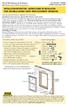 Vinyl Windows and Doors Manufactured by Pella Corporation INSTALLATION INSTRUCTION - INSTRUCCIONES DE INSTALACION FOR DOUBLE-HUNG VENT REPLACEMENT WINDOW Lea las instrucciones en español en el reverso.
Technique Guide. Reamer/Irrigator/Aspirator (RIA). For intramedullary reaming and bone harvesting.
 Technique Guide Reamer/Irrigator/Aspirator (RIA). For intramedullary reaming and bone harvesting. Table of Contents Introduction Reamer/ Irrigator/ Aspirator (RIA) 2 Indications 4 Surgical Technique Preparation
SBC90. Abrasive Blast Cabinet Assembly & Operating Instructions
 SBC90 Abrasive Blast Cabinet Assembly & Operating Instructions READ ALL INSTRUCTIONS AND WARNINGS BEFORE USING THIS PRODUCT. SAVE THESE INSTRUCTIONS FOR FUTURE REFERENCE. This manual provides important
Patient Information. PORT-A-CATH Implantable Venous Access Systems
 Patient Information PORT-A-CATH Implantable Venous Access Systems Your doctor has prescribed treatment that requires the frequent administration of medications or other fluids directly into your bloodstream
Ward 29 guide to the safe preparation and administration of intravenous (IV) antibiotics at home
 Ward 29 guide to the safe preparation and administration of intravenous (IV) antibiotics at home Contents Page Important contact numbers 1 General information on preparing and administering IV antibiotics
Acumen Enterprises, Inc.
 Hourly rates Discount w/o Rebate Electrician $78.00 10% $70.20 $70.73 HVAC Technician $78.00 10% $70.20 $70.73 Insulator $42.00 10% $37.80 $38.08 Sheet Metal Worker $74.00 10% $66.60 $67.10 Plumber/Pipefitter
Round Housing with Side Ports
 Power Steering Steering Control Unit (SCU) Parts and Repair Information 5 Series Steering Control Units 001 Square Housing with Side Ports Round Housing with Side Ports T E L RP Round Housing with End
Fundamental Autoclave Techniques
 Fundamental Autoclave Techniques Version 3, September 2010 Veronika Tatarinoff GSBmE University of NSW Brandy Nelson University of Kentucky The following information is directed at aseptic/sterile surgical,
Gear PEPSI CAN STOVE INSTRUCTIONS
 Gear PEPSI CAN STOVE INSTRUCTIONS [NOTE: Updated Instructions are now available. The new stove is less likely to develop flame leaks and the fuel/air mixture is improved. Instructions for a simmer ring
Vaxcel PICCs Valved and Non-Valved. A Patient s Guide
 Vaxcel PICCs Valved and Non-Valved A Patient s Guide Information about your Vaxcel PICC is available by calling the Navilyst Medical Vascular Access Information Line 800.513.6876 Vaxcel Peripherally Inserted
Packaging Well packaged, perfectly delivered
 Packaging Well packaged, perfectly delivered The TNT Express packaging solutions TNT Express endeavours to deliver your parcels in perfect condition and on time. But you yourself can also contribute to
Please read and keep these instructions. Run water through your machine before first use
 47070 Rev 1 24/3/05 2:23 PM Page 1 12 cup filter coffee maker Please read and keep these instructions getting the best from your new coffee maker Safety first Caution must be used when handling hot water,
Department: Manager: Safety Coordinator: Date:
 SAFETY and staff, regardless of hiring status or job position 1 1. Can staff name their department safety coordinator? 2. Is the Department Safety Binder current? 3. Do slip/trip hazards exist? 4. How
Standard Operating Procedure (SOP) Work Package 8. Sample Collection and Storage
 Standard Operating Procedure (SOP) Work Package 8 Sample Collection and Storage May 2008 SOP WP 8 - Sample collection Table of Contents 1 SAMPLE COLLECTION... 3 1.1 Sample collection -summary... 3 1.2
The Manitoba Pharmaceutical Association 200 TACHE AVENUE WINNIPEG, MANITOBA R2H 1A7 PHONE (204) 233-1411 FAX (204) 237-3468 E-Mail [email protected].
 The Manitoba Pharmaceutical Association 200 TACHE AVENUE WINNIPEG, MANITOBA R2H 1A7 PHONE (204) 233-1411 FAX (204) 237-3468 E-Mail [email protected] Guidelines for the Pre-filling of Insulin Syringes Pharmacists
HUMULIN 70/30 KwikPen
 1 Instructions for Use HUMULIN 70/30 KwikPen (70% human insulin isophane suspension 30% human insulin injection [rdna origin]) Read the Instructions for Use before you start taking HUMULIN 70/30 and each
-1- SPECIFICATIONS 002085 CONE SETTER PLATFORM ATTACHMENT INDEX
 -1-002085 CONE SETTER PLATFORM ATTACHMENT INDEX I. GENERAL EQUIPMENT : A. Intent Statement B. Cone Setter Platform II. III. 1. Understructure Frame 2. Mounting Components 3. Paint 4. Basket 5. Labels 6.
Sterilization A REVIEW OF THE BASICS. By Gayla Tilton and Myrna Kauffman 66 MANAGING INFECTION CONTROL
 Sterilization A REVIEW OF THE BASICS By Gayla Tilton and Myrna Kauffman 66 MANAGING INFECTION CONTROL Although sterilization has been performed in healthcare facilities for many decades, the process is
The corrugated box: A profile and introduction
 The corrugated box: A profile and introduction 1 More than just a plain brown box Ninety to ninety-five percent of U.S. manufactured goods are shipped to consumers in corrugated containers. In fact, more
September 3, 2009. Ric Boyd, Public Works Director Ketchikan Gateway Borough 344 Front St. Ketchikan, AK 99901
 September 3, 2009 Ric Boyd, Public Works Director Ketchikan Gateway Borough 344 Front St. Ketchikan, AK 99901 RE: Ketchikan Gateway Borough Gateway Recreation Center Roof Observations and Intrusive Inspections
02.11 Food and Nutrition Services
 02.11 Purpose Audience To assure proper and safe food handling, storage, and preparation. All Department of employees. Personnel The following guidelines shall be used to monitor proper and safe food handling,
Packaging Perishable Shipments
 Packaging Perishable Shipments To help prevent spoilage and maintain product integrity, follow these instructions for shipping your perishable items via FedEx Express services. Preparing Perishable Items
Australian/New Zealand Standard
 AS/NZS 4187:2003 AS/NZS 4187 Australian/New Zealand Standard Cleaning, disinfecting and sterilizing reusable medical and surgical instruments and equipment, and maintenance of associated environments in
Laboratory Line. Vertical and Bench-Top Life Science Autoclaves
 Laboratory Line Vertical and Bench-Top Life Science Autoclaves The Advanced Laboratory Line The Full Spectrum of Laboratory Sterilizers Sterilization in a laboratory environment has its unique requirements.
M128 SERVICE MANUAL- M128 MODEL #S-11 MANUAL CAN OPENER
 SERVICE MANUAL- M128 MODEL #S-11 MANUAL CAN OPENER 1 Model S-11 Can Opener Assembly Procedure The Model S-11 can opener will be assembled according to the following procedure: I. Model S-11 Handle and
Navico-Northstar 2kW JRC Radar Package, Scanner Cable Removal and Replacement
 Navico-Northstar 2kW JRC Radar Package, Scanner Cable Removal and Replacement This work instruction describes the methods and means for which to remove and reinstall optional scanner cable configurations
Clinical Guideline for: Aseptic Technique
 Clinical Guideline for: Technique Summary This guideline provides the principles of, Non Touch, and Clean Techniques to be implemented in the hospital environment. Key Points The essential elements of
THE BASICS OF DECONTAMINATION
 THE BASICS OF DECONTAMINATION Objectives: Review the basic factors that impact cleaning and decontamination of surgical devices. Present the fundamentals of manual and automatic cleaning Review various