
ABCs. Kidney. Stones. A Patient s Guide. To Help Prevent Recurrent Kidney Stones
|
|
|
- Irma Wilson
- 9 years ago
- Views:
Transcription
1 ABCs of Kidney Stones A Patient s Guide To Help Prevent Recurrent Kidney Stones

2 This publication is printed and distributed for educational purposes by MISSION PHARMACAL COMPANY San Antonio, TX Acknowledgment is made to the following people for expert guidance on the development of this booklet: David S. Goldfarb, MD Kristina Penniston, RD, PhD Margaret S. Pearle, MD Glenn M. Preminger, MD

3 Welcome A practical, step-by-step approach to avoiding recurrent kidney stones A group of medical experts in kidney stone disease has published a physician s version of ABCs of Medical Management of Stones for many years. Now, a new patient version is available just for people who have suffered from kidney stones. The objective of this brochure is to set forth simple and practical guidelines you can use in your daily life that will minimize your chances of developing another stone. Following your doctor s advice is the most important thing you should do to manage your condition. The recommendations in this brochure are designed to augment, not replace, the advice of your doctor. If you have any questions about the content of this brochure, please ask your doctor. 1

4 Q. Why do stones develop? A. Different kinds of stones form in different people for different reasons. Some diseases like high blood pressure, diabetes, obesity, osteoporosis, or chronic diarrhea might increase the risk. Heredity also plays a role in the formation of some kinds of stones. Certain metabolic imbalances in your system, like too much (or too little) calcium or oxalate, a common component of foods, might be involved. Some medications and supplements, like guaifenesin (for coughs) and topiramate (for epilepsy or migraines), also increase the risk of stone formation. But other important risk factors are directly related to diet and lifestyle. Obesity is a major risk factor. Dehydration that results from not drinking enough fluids is strongly linked to kidney stones, as are excessive salt intake and consuming too much animal protein (meat, poultry, and fish). Not drinking enough water High sodium intake Animal protein High temperatures Certain medications 2 For stones to form, a person s urine needs to be supersaturated with stone-forming compounds. This means there are not enough fluids in your urine to dissolve the solid particles that can form stones. These compounds are also more likely to form crystals when the urine has low levels of substances called inhibitors. Inhibitors slow the formation and growth of stones. Citrate is one of the most important inhibitors.

5 Q. Who gets stones? A. A lot of people, even as far back as a 7,000-year-old Egyptian mummy discovered by scientists, have evidence of kidney stones! 1 Every year, more than half a million people seek emergency treatment for kidney stone problems. Worldwide, 1 in 10 people might expect to have a kidney stone in their lifetimes. And over the past 30 years, they ve become even more common, growing from less than 4% to more than 5% of the US population. 1 If a person gets a stone, he or she has a 30% to 50% chance of getting another stone within 5 years. 2 The average rate of new stone formation in those who develop recurrent stones is 1 every 2 or 3 years. 3 Although it was previously thought that men were 3 times more likely to form stones than women, recent evidence suggests that women are forming stones at an increased rate, and currently the male to female ratio of stone formation is only 1.3 to

6 Q. How are stones treated? A. There is no cure for kidney stones, but once the immediate pain of the passing stone or stone removal has been resolved, the key to therapy is simple: prevent recurrence. Fortunately, the most common types of stones (calcium and uric acid) can be effectively managed with a combination of medication and diet/lifestyle changes. Medicine includes thiazide diuretics, potassium citrate, and allopurinol in appropriate patients. Q. How can I avoid getting more stones? A. Unless your stones are linked to a specific disease, the lifestyle and diet choices you make have a major impact on your likelihood of developing more stones. An overall strategy includes reaching and maintaining a healthy weight, and optimizing your diet. For most patients with stones, especially those due to calcium oxalate, dietary recommendations are neither complicated nor bland. The table at right provides a quick overview of dietary guidelines for preventing the recurrence of kidney stones. Following the table are a series of dietary guidelines that relate specifically to types of stones. The sheets are there for you to review with your doctor and learn which of the guidelines are appropriate for you. 4

7 A handy rule of thumb in eating to prevent stone disease is to avoid the stone promoters and focus on stone-inhibiting strategies. The following table shows a quick overview. Stone promoters Stone-inhibiting strategies Not enough fluid intake, low urine output, high urine supersaturation Too much salt intake Too much animal protein (meat, poultry, fish) Too much oxalate absorbed in the digestive tract (oxalate is commonly found in many plant foods) Drink at least 3 liters (quarts) of water or other low-sugar, low-calorie beverages daily, distributed throughout the day as much as possible Restrict salt to mg/day by reducing intake of processed foods, cheese, luncheon meats, salty snacks, and added salt Limit meat, poultry, and fish intake as needed to reduce targeted risk factors* identified by your doctor (such as high urine calcium or high urine uric acid); limit of 6 ounces per day is a good starting goal If you normally eat a lot of high-oxalate foods (spinach, beets, chocolate, nuts, seeds, and potatoes), reduce portion sizes and eat them less often 5 If your diet is already low in highoxalate foods, follow normal recommendations for dairy intake; it is important not to restrict calcium-containing foods because calcium binds with oxalate in your digestive tract to reduce the amount of oxalate in the kidneys *You may have only one risk factor for kidney stones or a combination of factors. Discuss your specific risk factors with your medical management team. 5

8 Q. What do fluids have to do with kidney stones? A. It s the job of your kidneys to remove waste products from your body. Every day they collect about 2 quarts of waste products and extra water. The kidneys then turn this into urine. Each time you urinate, you are getting rid of the waste products and extra water. To do their job right, the kidneys need lots of fluids. This is because fluids help to keep urine diluted enough to prevent crystals containing substances such as calcium and uric acid from forming. When urine is too concentrated or not watered down enough, kidney stones may form. That s why it is important to drink lots of fluids. It helps flush out the kidneys and dilute the urine. That, in turn, helps prevent stones and all the pain they can cause. Q. How much fluid should I drink every day? A. This varies greatly from one individual to another due to differences in physical activity, climate/temperature, etc. For most people, it is sufficient to drink at least 100 ounces of fluids daily (10 glasses, 10 ounces each, distributed throughout the day). This may sound like a lot, but it s really not. And it s one of the most important things you can do for your kidneys. 6

9 Q. What kind of fluids should I drink? A. Water is best, but you may also drink fruit juices, milk, and low-sugar/ low-calorie beverages (especially if weight is a concern). Excess fluid intake from high-sugar beverages should be avoided too much sugar in the diet, including sugars from beverages, has been linked to excess calcium in the urine. Alcohol in excess is also not recommended because it has the potential to cause dehydration. Whatever you choose to drink, just do it! The key to preventing kidney stones is fluids, fluids, and more fluids. Q. What if I just don t feel thirsty? A. Don t wait until you feel thirsty to drink fluids. By that time, you have already been without them for too long. Get in the habit of always having fluids with you. And be sure to eat foods that are high in fluids. These can include fruits, vegetables, and low-salt soups. Q. What are some tips to help me drink more fluids? A. Try to incorporate some of the suggestions below into your daily life: rry a special water bottle with you at all times Set an alarm clock on your desk to remind you when to drink fluids Drink a glass of water before going to bed Keep a 24-hour diary to record when you drink fluids Set a goal for how many ounces you want to drink per hour and try to reach it Drink a glass of water before and after every meal Try flavoring your water with lemon or lime juice or other low-sugar alternatives to make it more appealing 7

10 S Keep oxalate levels low Oxalate Oxalate is a common compound in many plant foods. High levels of oxalate in the urine may be caused by eating a lot of Oxalate high-oxalate foods, but it may also result from certain digestive disorders or chronic low intake of calcium. If you have been advised to reduce your consumption of dietary oxalates, see the table on the right for a list of foods with the highest oxalate values. Be sure to talk to your medical management team for more information, as there are many common misconceptions about oxalate content of foods, and to learn about strategies for optimizing your diet. 8

11 OXALATE-rich foods 6 FOOD ITEM SERVING SIZE OXALATE CONTENT (mg/serving) Spinach, cooked ½ cup 755 Spinach, raw 1 cup 656 Rhubarb ½ cup 541 Rice bran 1 cup 281 Almonds 1 ounce or 22 kernels 122 Miso soup 1 cup 111 Baked potato with skin 1 medium 97 Corn grits 1 cup 97 Bulgur, cooked 1 cup 86 Beets ½ cup 76 Navy beans ½ cup 76 Cocoa powder 4 teaspoons 67 Hot chocolate (homemade) 1 cup 65 Bran flakes with raisins 1 cup 57 9

12 Maintain calcium intake To help reduce oxalate levels in the body, calcium is best obtained from food sources (see the table below for a list of some high- calcium foods). This is because dietary calcium binds with oxalate in the digestive tract before it can reach the kidneys. If you need to supplement with calcium, it is typically advisable to first calculate your typical daily intake of calcium from food sources and then use calcium supplements only for the remainder you need to reach the established Dietary Reference Intake (DRI). For most adults, current DRI guidelines recommend between 1000 and 1200 mg of calcium daily. Some individuals, such as those with certain digestive disorders, may need significantly more calcium. Please discuss your specific calcium needs with your medical management team. CALCIUM-rich foods 7 FOOD ITEM SERVING SIZE CALCIUM CONTENT (mg/serving) Low-fat yogurt 1 cup (8 oz) 415 Milkshake 1 cup (8 oz) 362 Pizza, cheese* 1/2 of 10-inch pizza 355 Eggnog, nonalcoholic 1 cup (8 oz) 330 Low-fat yogurt with fruit 1 cup (8 oz)

13 CALCIUM-rich foods (cont.) FOOD ITEM SERVING SIZE CALCIUM CONTENT (mg/serving) Sardines, canned 1/2 cup (3-1/2 oz) 303 lcium-fortified beverages including orange juice, soy milk, and rice milk Milk (whole, low-fat, skim, or chocolate) 1 cup (8 oz) cup (8 oz) 300 Soups made with milk* 1 cup Swiss cheese* 1 slice (1 oz) 272 Red salmon 1/2 cup (3-1/2 oz) 259 Ricotta* 1 ounce 257 Soft-serve ice milk 1 cup 236 Provolone* 1 ounce 214 Cheddar cheese* 1 slice (1 oz) 204 Pink salmon 1/2 cup (3-1/2 oz) 196 Cheese sauce, homemade* 1/4 cup 178 Ice cream or ice milk 1 cup 176 American cheese* 1 slice (1 oz) 174 Mozzarella* 1 ounce 147 Custard or pudding 1/2 cup 145 Mustard greens, cooked 1/2 cup 138 Cream pie 1 piece (1/8 pie) 137 Cottage cheese, creamed* 1 cup (8 oz) 136 *These foods have higher sodium content and may not be the best sources of daily calcium. lcium content varies widely by brand. 11

14 Avoid excess sodium S High levels of dietary sodium ( salts ) may increase the amount of calcium excreted into the urine, which can increase the risk of stone formation. The Dietary Reference Intakes (DRIs) recommend no more than 1500 mg sodium per day for most adults. The real keys to reducing sodium intake are monitoring the nutrient labels of the foods you eat and limiting your intake of processed, convenience, and restaurant/takeout foods as well as cheeses, lunch meats, salty snacks, canned soups and vegetables, and creamy dressings and sauces. Although some people use it more than others, the salt shaker typically provides only 10% to 15% of our total sodium intake. The table below includes some common high-sodium foods. You can find the sodium content of specific foods and brands by searching the USDA Nutrient Data Laboratory Web site: Additional information is available at htm?modecode= sodium-rich foods 7 FOOD ITEM SERVING SIZE SODIUM CONTENT (mg/serving) Teriyaki barbecue marinade 1 fluid ounce 4554 Table salt 1 teaspoon 2300 Salt, onion 1 teaspoon

15 sodium-rich foods (cont.) FOOD ITEM SERVING SIZE SODIUM CONTENT (mg/serving) Salt, celery 1 teaspoon 1495 Meats and fish, canned 3-1/2 ounces 1357 avg ( ) Salt, seasoning 1 teaspoon 1288 Pizza, cheese 1/2 of 10-inch pizza 1127 Soups, canned 1 cup 1081 avg ( ) Soy sauce 1 tablespoon 1035 Smoked link sausage, pork 1 link (2-1/2 oz) 1012 Pickles (all varieties) 1 large (3-1/2 oz) 920 avg ( ) Cottage cheese, creamed 1 cup 851 Vegetable juices, canned 1 cup (8 oz) 736 Ham, cured, cooked 3-1/2 ounces 713 Frankfurter (all varieties) 1 frank (1-1/2 oz) 506 average Cheese, processed 1 ounce 414 avg ( ) Vegetables, canned with salt 1/2 cup 368 avg ( ) Sausage, pork, cooked 1 patty (1 oz) 345 Bacon, cured, cooked 3 slices 345 Cheese food, processed 1 ounce 322 avg ( ) Chips and snacks 1 ounce 322 avg ( ) Salami (all varieties) 1 slice (1 oz) 299 average Bologna (all varieties) 1 slice (1 oz) 276 average Cheeses, natural 1 ounce 207 avg (46-460) 13

16 Maintain high Oxalate magnesium intake Mg Higher dietary magnesium intake is associated with reduced stone risk. Magnesium helps to reduce the excretion of oxalate in the Oxalate Mg urine, and may also help to keep oxalate from binding to calcium in urine and forming calcium oxalate or calcium phosphate stones. The Dietary Reference Intake (DRI) for magnesium is 320 to 360 mg/day for most adult women and 400 to 420 mg/day for most adult men. To learn the specific magnesium values for the foods you eat, search the USDA Nutrient Data Laboratory Web site: Magnesium-rich foods 7 FOOD ITEM SERVING SIZE MAGNESIUM CONTENT (mg/serving) Peanuts, all types, roasted 1/2 cup 131 Tofu, raw, regular 1/2 cup 127 Peanuts, all types, raw 1/2 cup 123 Broccoli, cooked 2 large stalks 120 Spinach, cooked 1/2 cup 79 Chard, Swiss, cooked 1/2 cup 76 14

17 Magnesium-rich foods (cont.) FOOD ITEM SERVING SIZE MAGNESIUM CONTENT (mg/serving) Soybeans, cooked 1/2 cup 74 Tomato paste, canned 1/2 cup 67 Simulated meat products, meat extender 1 ounce 61 Small white beans, cooked 1/2 cup 61 Sweet potato, canned, mashed 1/2 cup 61 Black beans, cooked 1/2 cup 60 Dock (sorrel), cooked 1/2 cup 60 Nuts & seeds, all types 1 ounce 60 avg (9-152) Pumpkin seeds 1 ounce 152 Chestnuts 1 ounce 9 Chili with beans, canned 1/2 cup 58 White beans, cooked 1/2 cup 57 Baked beans 1/2 cup 55 Navy beans, cooked 1/2 cup 53 Peanut butter 2 tablespoons 51 Succotash, cooked 1/2 cup 51 15

18 Other dietary recommendations Animal protein ACID-ASH FOODS protein Animal Meat, fish, and poultry of all kinds are considered acid-ash foods. Minimizing your intake of these foods may be especially important if you have a history of uric acid stones. High intake of animal protein increases uric acid in the urine, which in turn promotes both calcium oxalate and uric acid stones. Acid-ash foods can also reduce the amount of urinary citrate, an important stone inhibitor. Stone inhibitors Fruits and vegetables collectively provide many stone inhibitors that may prevent all types of urinary tract stones. These inhibitors include potassium, magnesium, fiber, citric acid, phytate, and antioxidants. Eating at least 5 servings of a variety of fruits and vegetables every day may not only prevent you from forming more kidney stones, but also keep you healthy in other ways. In conclusion, whether you are a first-time kidney stone patient or a recurrent stone former, it is important to remember that there is no one size fits all diet for stone prevention. Talk to your physician or medical team about your need for a full metabolic or medical evaluation, including a consultation with a registered dietitian, to help develop a diet tailored to your specific situation. 16

19 Compliments of References 1. A to Z health guide. Kidney stones. National Kidney Foundation Web site. Accessed April 13, Hall PM. Nephrolithiasis: treatment, causes, and prevention. Cleveland Clinic J Med. 2009;76:10, Asplin JR, Coe FL, Favus MJ. Nephrolithiasis. In: Fauci AS, Braunwald E, Kasper DL, Hauser SL, Longo DL, Jameson JL, Loscalzo J, eds. Harrison s Principles of Internal Medicine. 17th ed. New York, NY: McGraw Hill Medical; 2008: Scales CD Jr, Curtis LH, Norris RD, Springhard WP, Sur RL, Schulman KA, Preminger GM. Changing gender prevalence of stone disease. J Urol. 2007;177: Mayo Clinic Health Letter discusses kidney stone treatment options [news release]. Rochester, MN: Mayo Clinic Health Letter; September 17, Accessed March 11, Oxalate table of foods. Harvard School of Public Health Nutrition Department Web site. Accessed November 23, Bradley L, et al. General guidelines in medical management. In: Resnick MI, Pak CYC, eds. Urolithiasis: A Medical and Surgical Reference. Philadelphia, PA: WD Saunders and Company; 2009:chap 11. StoneDisease.org An educational resource for healthcare professionals and their patients. missionpharmacal.com For additional copies call: or [email protected] K-513 Rev 0812

Kidney Stones and Diet
 Kidney Stones and Diet What are kidney stones? Urine is made up of water and substances such as calcium, oxalate and uric acid. Crystals begin to form first in the kidney when: there are higher than normal
Nutrition and Chronic Kidney Disease
 Nutrition and Chronic Kidney Disease I have been told I have early kidney failure. What does this mean? What can I expect? This means that your kidneys are not doing as good a job as they should to help
Diet for Kidney Stone Prevention
 Diet for Kidney Stone Prevention National Kidney and Urologic Diseases Information Clearinghouse U.S. Department of Health and Human Services NATIONAL INSTITUTES OF HEALTH How does diet affect the risk
Calcium and Vitamin D: Important at Every Age
 Calcium and Vitamin D: Important at Every Age National Institutes of Health Osteoporosis and Related Bone Diseases ~ National Resource Center 2 AMS Circle Bethesda, MD 20892-3676 Tel: (800) 624-BONE or
DIABETES & HEALTHY EATING
 DIABETES & HEALTHY EATING Food gives you the energy you need for healthy living. Your body changes most of the food you eat into a sugar called glucose. (glucose) Insulin helps your cells get the sugar
Nutrition Information from My Plate Guidelines
 Nutrition Information from My Plate Guidelines Note: This information was compiled from the website: http://www.choosemyplate.gov/ for participants in the 4-H Food Prep Contest 1/12/16. The information
Healthy Eating During Pregnancy
 Healthy Eating During Pregnancy Pregnancy is a time of great change. Your body is changing to allow your baby to grow and develop. Good nutrition will help you meet the extra demands of pregnancy while
Calcium and Calorie Content of Selected Foods
 E ARIZONA COOPERATIVE TENSION AZ1128 Revised 09/11 Calcium and of Selected Foods Vanessa A. Farrell, Linda Houtkooper Healthy bone growth and maintenance requires adequate calcium intake. You can meet
Will the cholesterol in my diet raise my blood cholesterol?
 Healthy eating for your heart What does heart healthy eating mean to me? Heart healthy eating is an important part of a healthy lifestyle. Heart healthy eating, along with regular physical activity and
Fertile Food Can you eat your way to pregnancy? Tracy Cherry, RD, CDN University of Rochester Women s Lifestyle Center
 Fertile Food Can you eat your way to pregnancy? Tracy Cherry, RD, CDN University of Rochester Women s Lifestyle Center Fertility Food Folklore Almonds a fertility symbol throughout the ages. The aroma
Bariatric Surgery: Step III Diet
 Bariatric Surgery: Step III Diet This diet is blended foods with one new solid food added daily. The portions are very small to help prevent vomiting. Warning: This diet does not have enough calories,
Nutrition & Transplantation
 Nutrition & Transplantation www.kidney.org National Kidney Foundation s Kidney Disease Outcomes Quality Initiative Did you know that the National Kidney Foundation s Kidney Disease Outcomes Quality Initiative
Taking Calcium and Vitamin D Supplements After Your Parathyroid Operation
 Taking Calcium and Vitamin D Supplements After Your Parathyroid Operation This handout explains how to meet your daily calcium and vitamin D needs after your parathyroid operation, once your calcium level
Ready, Set, Start Counting!
 Ready, Set, Start Counting! Carbohydrate Counting a Tool to Help Manage Your Blood Glucose When you have diabetes, keeping your blood glucose in a healthy range will help you feel your best today and in
High Blood Pressure and Chronic Kidney Disease. For People With CKD Stages 1 4
 High Blood Pressure and Chronic Kidney Disease For People With CKD Stages 1 4 National Kidney Foundation s Kidney Disease Outcomes Quality Initiative (NKF-KDOQI ) The National Kidney Foundation s Kidney
Take Control Nutrition Tools for Diabetes. 50/50 plate Portions Servings
 Take Control Nutrition Tools for Diabetes 50/50 plate Portions Servings Eat more Vegetables Especially non starchy vegetables Choosing Foods to manage blood glucose Select a variety of colors and types
High Blood pressure and chronic kidney disease
 High Blood pressure and chronic kidney disease For People with CKD Stages 1 4 www.kidney.org National Kidney Foundation's Kidney Disease Outcomes Quality Initiative Did you know that the National Kidney
NUTRITION AND HEMODIALYSIS
 NUTRITION AND HEMODIALYSIS www.kidney.org National Kidney Foundation's Kidney Disease Outcomes Quality Initiative Did you know that the National Kidney Foundation's Kidney Disease Outcomes Quality Initiative
Appendix A Food Sources of Vitamins and Minerals
 Appendix A Food Sources of Vitamins and Minerals Appendix A 229 Appendix A Food Sources of Vitamins and Minerals Vitamin A (Retinol) Food Amount IU* Liver 3 oz 45,400 Crab 2 cup,680 Egg medium 590 Fats
Protein Values in Foods
 Protein Values in Foods This document is used as reference material to support the Alternative Health Improvement Center s Newsletter article: Eat your Protein! Stay Healthy! located at http://ahicatlanta.com/articles/eat-your-protein-to-stay-healthy.html.
What to eat when you have kidney disease
 What to eat when you have kidney disease Making changes to your diet can help slow down the progress of kidney disease. What do the kidneys do? The kidneys: remove wastes from your blood help keep you
My Diabetic Meal Plan during Pregnancy
 My Diabetic Meal Plan during Pregnancy When you have diabetes and are pregnant, you need to eat small meals and snacks throughout the day to help control your blood sugar. This also helps you get in enough
Healthy Eating For Your Kidneys
 Winter 14 Healthy Eating For Your Kidneys (For People Not on Dialysis) BC Provincial Renal Agency If you have kidney disease, you may need to change the food you eat. Changes will depend on your appetite,
Calcium. How much Calcium do I need? Calcium needs are based on a person s age and stage of life. Recommended Daily Allowance (RDA) in milligrams
 Calcium Calcium is a key building block in the body. This mineral is vital for good health for people of all ages. Calcium helps to build bone and also helps to maintain healthy teeth, normal blood clotting,
PART1: Sodium and Hypertension
 PART1: Sodium and Hypertension Jeff Whittle, MD, MPH Staff Physician, Clement J. Zablocki VA Medical Center Professor of Medicine, Medical College of Wisconsin Lifestyle and Blood Pressure LIFESTYLE CHANGE
MEAL PLANNING FOR MECHANICAL SOFT DIET
 MEAL PLANNING FOR MECHANICAL SOFT DIET Definition of Terms Calories Protein Blenderized Pureed Units of energy. A nutrient used by your body for growth and repair. The best sources are milk, meats, fish,
Canada s Food Guide Jeopardy
 Canada s Food Guide Jeopardy Drafted: July 2008 Revised: December 2012 Eating Well with Canada s Food Guide Veg & Fruit Grain Products Milk & Alternatives Meat & Alternatives Physical Activity Miscellaneous
Carbohydrate Counting for Patients with Diabetes. Lauren Dorman, MS RD CDE Registered Dietitian & Certified Diabetes Educator
 Carbohydrate Counting for Patients with Diabetes Lauren Dorman, MS RD CDE Registered Dietitian & Certified Diabetes Educator Program Purpose To increase knowledge of carbohydrate counting skills for nurses
Learning Objectives. ADA Diet vs. Medical Nutrition Therapy. In Diabetes, Food IS Medicine: Current Trends In Diabetes Nutrition Management
 In Diabetes, Food IS Medicine: Current Trends In Diabetes Nutrition Management Laurel Najarian RD, CDE, M.ED Learning Objectives 1. Discuss the rationale and importance for the use of carbohydrate counting
EMBRACE Your Journey Nutrition During Treatment
 Nutrition is an important part of your cancer treatment. As you prepare for treatment, it is important to focus on eating a well-balanced diet so that your body is as healthy as it can be. When your body
Nutrition and Chronic Kidney Disease
 Nutrition and Chronic Kidney Disease National Kidney Foundation s Kidney Disease Outcomes Quality Initiative (NKF-K/DOQI TM ) The National Kidney Foundation is developing guidelines for clinical care to
100 Gram Fat Diet for 72 hour Fecal Fat Collection
 100 Gram Fat Diet for 72 hour Fecal Fat Collection The fecal fat test will help find out if you have steatorrhea (that is, excess fat in bowel movements due to the body not being able to absorb fat). To
(8 years or younger)
 What is iron? Iron deficiency in children (8 years or younger) Iron is a mineral found in food that your body needs. It is bound to hemoglobin, which is an important part of red blood cells. Iron helps
Presentation Prepared By: Jessica Rivers, BASc., PTS
 Presentation Prepared By: Jessica Rivers, BASc., PTS Presentation Outline Why should we care about our eating habits? Why is nutrition so important as we age? How do we know if we are eating healthy? What
Meal Planning for a Mushy Soft Diet After Laparoscopic Myotomy
 Meal Planning for a Mushy Soft Diet After Laparoscopic Myotomy Name: Date: Dietitian: Telephone: Why is it necessary to follow this diet? This diet is necessary for individuals who have had some types
A Guide to Reducing Dietary Sodium Intake
 Salt and High Blood Pressure A Guide to Reducing Dietary Sodium Intake A Look at the DASH eating plan My Plate Basics Sodium is a mineral element most commonly found in salt (sodium chloride) Sodium occurs
Nutrition for Kidney Stones
 Nutrition for Kidney Stones 1129 Northern Blvd. Suite 101 Manhasset, NY 11030 516. 365. 5570 Created by Dr. Simon Prince, FACP, FASN and Rachel Berman RD, CSR Overview Kidney stones are more common than
Gastrointestinal (GI) Modified Diet for Malabsorption
 Gastrointestinal (GI) Modified Diet for Malabsorption Malabsorption of the gastrointestinal (GI) tract may occur when sections of the small intestine have been removed due to disease, surgical problems
Food Groups for Low Potassium and Low Phosphorus Diets
 Food Groups for Low Potassium and Low Phosphorus Diets When you have kidney disease, you may need to follow a diet low in sodium, potassium and phosphorus. This diet is sometimes called a renal diet. You
Gaining Weight for Athletes
 Gaining Weight for Athletes Prepared by Jenn Van Ness, ATC June 2008 Gain Weight the Healthy Way To gain one pound, you need to eat approximately 500 more calories a day. Approximately one pound of fat
Maintaining Nutrition as We Age
 SS-207-06 For more information, visit the Ohio Department of Aging web site at: http://www.goldenbuckeye.com and Ohio State University Extension s Aging in Ohio web site at: http://www.hec.ohio-state.edu/famlife/aging
Eat More, Weigh Less?
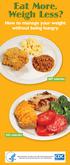 Eat More, Weigh Less? How to manage your weight without being hungry 607 calories 293 calories Department of Health and Human Services Centers for Disease Control and Prevention Can you weigh less without
Meal Planning for a Mushy Soft Diet After Nissen Fundoplication
 Meal Planning for a Mushy Soft Diet After Nissen Fundoplication Name: Date: Dietitian: Telephone: Questions? CALL YOUR DIETITIAN! Patient Food and Nutrition Services University of Michigan Hospital 1500
Ready, Set, Start Counting!
 Ready, Set, Start Counting! Carbohydrate Counting a Tool to Help Manage Your Blood Glucose When you have diabetes, keeping your blood glucose in a healthy range can help you feel your best today and in
Making Healthy Food Choices. Section 2: Module 5
 Making Healthy Food Choices Section 2: Module 5 1 Nutrition For Health What is healthy Tips on planning meals Making a shopping list/ Bulk orders Using WIC foods Cook and freeze What foods to choose How
MINTO PREVENTION & REHABILITATION CENTRE CENTRE DE PREVENTION ET DE READAPTATION MINTO. Counting Fat Grams. About This Kit
 MINTO PREVENTION & REHABILITATION CENTRE CENTRE DE PREVENTION ET DE READAPTATION MINTO Counting Fat Grams About This Kit In previous kits you have learned Foods to Choose and Foods to Decrease/Avoid for
Heart Healthy Diet: Tips for Lowering Cholesterol and Fat in Your Diet
 Heart Healthy Diet: Tips for Lowering Cholesterol and Fat in Your Diet Cholesterol Saturated Fats Polyunsaturated and Mono-unsaturated Fats This fat-like substance is needed for good health. However, high
Diet, activity and your risk of prostate cancer
 Diet, activity and your risk of prostate cancer Prostate cancer is the most common cancer in men in the UK. About one in eight men (12.5 per cent) will get prostate cancer at some point in their lives.
Days 1 and 2: Bariatric Clear Liquids
 Gastric Bypass Diet Days 1 and 2: Bariatric Clear Liquids Duration: 2 days Food consistency: Bariatric clear liquids, which includes clear, non-carbonated, noncalorie, caffeine-free liquids such as: o
Nutritional Guidelines for Roux-en-Y, Sleeve Gastrectomy and Duodenal Switch. Gastric Restrictive Procedures. Phase III Regular Consistency
 Nutritional Guidelines for Roux-en-Y, Sleeve Gastrectomy and Duodenal Switch Gastric Restrictive Procedures Phase III Regular Consistency The University of Chicago Hospitals Center for the Surgical Treatment
Calcium. Calcium is important for people of all ages for good health. This handout explains how to meet your daily calcium needs.
 Calcium Calcium is important for people of all ages for good health. This handout explains how to meet your daily calcium needs. Calcium is a mineral that helps form and maintain healthy bones and teeth.
How to Increase Volume in Your Meals
 How to Increase Volume in Your Meals By adding certain types of food to your diet and drinking more water, you can actually increase the amount of food you eat, while staying within your fat gram and calorie
A GUIDE TO HELP PLAN, PURCHASE & PREPARE YOUR OWN HEALTHY FOOD. FOOD SENSE HEALTHY MEALS ON A BUDGET
 A GUIDE TO HELP PLAN, PURCHASE & PREPARE YOUR OWN HEALTHY FOOD. FOOD SENSE HEALTHY MEALS ON A BUDGET You ll be surprised at how affordable, delicious & convenient your own meals can be! the Great Plate:
Following a 2 gram sodium diet What is sodium? Why should I limit the sodium in my diet? Where does sodium come from?
 Following a 2 gram sodium diet Your health care provider has asked you to follow a 2 gram sodium diet. This is a diet that moderately restricts the amount of sodium you eat. About ⅓ of the sodium in our
For those with Diabetes and Chronic Kidney Disease. This pamphlet is intended for people diagnosed with early stage chronic kidney disease.
 Nutrition Tips For those with Diabetes and Chronic Kidney Disease. This pamphlet is intended for people diagnosed with early stage chronic kidney disease. November 2014 1 Happy Living Well With Diabetes
Snacking and Gestational Diabetes
 Snacking and Gestational Diabetes Note to the Health Care Provider: Topics in this handout are discussed in Chapter 6 of the American Dietetic Association Guide to Gestational Diabetes Mellitus (1). When
But what does my body need? (No...it is not just candy and soda!)
 Chapter 35: Page 349 In the last chapter, you learned how important your immune system is to your survival. This week, you are going to learn how to keep your immune system strong and ready to protect
Healthy Eating for Diabetes
 Healthy Eating for Diabetes What is diabetes and why is it important to manage it? Diabetes occurs when there is too much glucose in the blood. Learning how to manage your diabetes will help you feel better
The Basics of Nutrition: Understanding Nutrition Facts, Servings Sizes, & Adequate Portions
 The Basics of Nutrition: Understanding Nutrition Facts, Servings Sizes, & Adequate Portions K AT I E L. H O W E H E A LT H E D U C AT O R D I V I S I O N O F S T U D E N T A F FA I R S U S C U P S TAT
Lesson 3 Assessing My Eating Habits
 Lesson 3 Assessing My Eating Habits Overview This lesson introduces the federal guidelines for healthy eating. Students assess their eating habits against these guidelines and make suggestions for improvement.
PROTEIN. What is protein?
 PROTEIN What is protein? Protein is the basic building block for the human body. It is made up of amino acids and helps build muscles, blood, hair, skin, nails and internal organs. Next to water, protein
Healthy Foods for my School
 yum, yum, yum, yum, yum, yum, yum, yum, yum, yum, yum, yum, yum, yum, yum, yum, yum, yum, yum, yum, yum, Healthy Foods for my School Nutrition Standards for Saskatchewan Schools Schools are an ideal place
Save Time and Money at the Grocery Store
 Save Time and Money at the Grocery Store Plan a Grocery List Making a list helps you recall items you need and also saves you time. Organize your list according to the layout of the grocery store. For
Carbohydrate counting a pocket guide
 counting a pocket guide www.bayerdiabetes.ca Contents Starches 3 Vegetables 4 Fruit/Fruit juices 5 Milk/Yoghurt 5 Fast foods 6 Proteins (meat/meat substitutes) 6 Drinks 6 Sweets/Sugary foods 7 Combination
Healthy Eating for Diabetes
 Healthy Eating for Diabetes What is diabetes? Diabetes is when your blood sugar (glucose) levels are higher than normal. For some people, this is because the insulin in their body doesn t work as well
Nutrition Recommendations and Interventions for Diabetes
 Nutrition Recommendations and Interventions for Diabetes S U P P L E M E N T Medical nutrition therapy (MNT) is important in preventing diabetes, managing existing diabetes, and preventing, or at least
Participant Group Nutrition Education outline: Get the Skinny on Milk
 Participant Group Nutrition Education outline: Get the Skinny on Milk Lesson Plan adapted from California WIC This group NE outline uses a facilitated discussion format, including a tasting activity. Select
Carbohydrate Counting for Patients With Diabetes. Review Date 4/08 D-0503
 Carbohydrate Counting for Patients With Diabetes Review Date 4/08 D-0503 Program Objectives At the end of the session you will know how to: Define carbohydrate counting Identify the relationship between
Eating Right for Kidney Health: Tips for People with Chronic Kidney Disease
 Eating Right for Kidney Health: Tips for People with Chronic Kidney Disease What you eat and drink can help slow down the progression of chronic kidney disease (also known as CKD ) and help prevent complications.
Why iron and haemoglobin are important
 Iron and haemoglobin Why iron and haemoglobin are important Meet Kylie Kylie is a blood donor. Kylie knows that having a healthy iron enriched diet will help restore the iron removed with blood donation.
Registered Trade Mark
 2008 High Energy, High Protein, Low Fiber Guidelines Registered Trade Mark High Energy, High Protein, Low Fibre Guidelines Eating well, even though you may not feel hungry, is an important part of taking
Nutrition Guidelines for Diabetes
 Nutrition Guidelines for Diabetes Eating healthy foods and keeping a healthy body weight are very important parts of a diabetes treatment plan. A healthy diet and weight helps to keep your blood sugar
Nutrition for Endurance: Cycling
 Nutrition for Endurance: Cycling Superior cycling ability comes from good training. However, without good food choices and the correct timing of meals, your training and performance will suffer. You need
LARGE GROUP PRESENTATION: PRESENTER S NOTES
 LARGE GROUP PRESENTATION: PRESENTER S NOTES Introduce yourself. Welcome! We are so glad you are here to learn about fruits and vegetables. Icebreaker Handout: Fruit or Vegetable: Parts of Many Words Read
February 2006. 23 Best Foods for Athletes
 23 Best Foods for Athletes February 2006 1. Beans Legumes a. Excellent source of fiber (important for keeping blood sugar and cholesterol levels under control). b. High in protein and a good source of
Nuts, Oils, Dressings, and Spreads
 Nuts, Oils, Session 1 Background Information Tips Goals Background Information Nuts, Oils, Eating Fats There are three types of fat we ll focus on in this program: Healthy fats (polyunsaturated fats),
American Cancer Society. Nutritional Guidelines for Reducing Your Risk of Cancer
 American Cancer Society Nutritional Guidelines for Reducing Your Risk of Cancer Cancer Impact More than one million Americans will be diagnosed with cancer this year. Scientific evidence suggests that
Lap-Band Instructions Post-op Diet
 Lap-Band Instructions Post-op Diet Now That I ve Had Surgery, What Do I Eat Liquid Diet *(1-2 weeks post-op) The goal during this phase is to protect the small stomach pouch. Only liquids can be tolerated
NUTRITION AND KIDNEY FAILURE (STAGE 5)
 NUTRITION AND KIDNEY FAILURE (STAGE 5) Are You Getting What You Need? www.kidney.org National Kidney Foundation s Kidney Disease Outcomes Quality Initiative Did you know that the National Kidney Foundation
Aim for an intake of *milligrams (mg)/day
 Food Sources of Iron Information about Iron Iron is a mineral that is important for good health. Iron carries oxygen to all parts of your body. Low iron levels can leave you tired, pale-looking and irritable.
Let s Talk Oils and Fats!
 Lesson Overview Lesson Participants: School Nutrition Assistants/Technicians, School Nutrition Managers, Child and Adult Care Food Program Staff, Teachers Type of Lesson: Short, face-to-face training session
DAY 1 DAY 2 DAY 3 DAY 4. Cereal with Fruit: 1 cup toasted oat cereal 1 medium banana ¼ cup lowfat milk 1 hard-cooked egg Beverage: Water, coffee, tea
 DAY 1 DAY 2 DAY 3 DAY 4 Peanut Butter Raisin Oatmeal: 1 cup cooked oatmeal ¼ cup raisins Tuna-Cucumber Wrap: 1 8 flour tortilla 3 oz tuna (canned in water) 2 Tbsp mayonnaise 5 cucumber sticks ¼ cup lowfat
Healthy Eating After 50
 National Institute on Aging AgePage Healthy Eating After 50 Food just doesn t taste the same anymore. I can t get out to go shopping. I m just not that hungry. Sound familiar? These are a few common reasons
Snack Time: Providing Healthy Snacks in Your After School Program
 Snack Time: Providing Healthy Snacks in Your After School Program California After School Resource Center (CASRC) Administered for the California Department of Education (C.D.E.) Hello, welcome to the
Nutrition and Bone Health Lesson 2: Take Calcium and Vitamin D
 Nutrition and Bone Health Lesson 2: Take Calcium and Vitamin D Getting Ready 1. Review lesson plan before each session. 2. Practice activities. 3. Copy handouts and post-test questions: a. Calcium-Rich
Carbohydrate Counting for Pediatric Patients With Type 1 Diabetes. Review Date 4/08 K-0591
 Carbohydrate Counting for Pediatric Patients With Type 1 Diabetes Review Date 4/08 K-0591 Program Purpose To increase knowledge of carbohydrate counting and insulin management skills for those caring for
We want you to have the best results possible while doing our detox. If your goal is weight loss, then eating the right foods and exercising
 Detox Menu Guide We want you to have the best results possible while doing our detox. If your goal is weight loss, then eating the right foods and exercising moderately will help boost your results and
Angela Doherty Senior Specialist Renal Dietitian Guy s Hospital
 Angela Doherty Senior Specialist Renal Dietitian Guy s Hospital Introduction Dietary Advice Fluid Intake Salt Animal Protein Alkalinisation of the Urine Achieving a Healthy Weight Anthropometry Dietary
BE KIND TO YOUR KIDNEYS
 Surviving the supermarket, p. 8 Roasted veggie salads, p. 12 Good snacks, bad snacks, p. 14 Photo: Sebastian Kaulitzki/fotolia.com. BE KIND TO YOUR KIDNEYS An estimated one out of five adults in their
BuyNuezdelaIndia.com
 BuyNuezdelaIndia.com The information provided in this guide is intended for your general knowledge only and is not a substitute for professional medical advice or treatment for specific medical conditions.
Liquid Diet. You can add enough liquid to any food to achieve a pourable consistency. Here are a few tips to keep in mind:
 Liquid Diet Your doctor and/or Registered Dietitian may recommend that you follow a liquid diet if you have trouble chewing or swallowing, if your stomach does not empty normally, if you have recently
Healthy Menu Planning
 Healthy Menu Planning Please save paper and print the pages of this resource back-to-back! Table of Contents Considerations for Planning Menus... 4 Menu Planning Principles... 4 Menu Cycling...5 Guidelines
Now that I have diabetes, do I have to give up my favorite foods?
 14 STAYIng HeALTHY with Diabetes: Simple Steps for HeALTHY Eating Eating healthy can keep your blood sugar in good control. Eating healthy also helps avoid weight gain. These simple steps will get you
Low Fat Diet after Cardiac Surgery With or Without Chyle Leak
 Low Fat Diet after Cardiac Surgery With or Without Chyle Leak What is chyle? Chyle (sounds like kyle) is a milky white fluid that contains protein, fat, cholesterol, lymphocytes, and electrolytes. It is
Melt Your Body Fat for Good!
 Melt Your Body Fat for Good! How to Boost Your Metabolism Naturally and Switch from Fat Storage to Fat Burning Before anything else, you must understand what is your metabolism s role in burning body fat
30 % The Food Guide Pyramid T F A O F T O C A L
 The Food Guide Pyramid L I M I T F A O F 30 % S T O T C A L O R I E United States Center for Home and Department of Nutrition Policy Garden Bulletin Agriculture and Promotion Number 252 What s in this
HIGH BLOOD PRESSURE. www.1on1health.com HIGH BLOOD PRESSURE. puts you at risk for heart. attack, stroke, and other. health problems.
 HIGH BLOOD PRESSURE puts you at risk for heart attack, stroke, and other health problems. Work with your doctor to keep your blood pressure under control. This may help you avoid problems later. For treatment
Heart healthy diet: 8 steps to prevent heart disease
 Heart healthy diet: 8 steps to prevent heart disease Changing your eating habits can be tough. Start with these eight strategies to kick start your way toward a heart healthy diet. By Mayo Clinic Staff