
CLINICAL GUIDELINES/NURSING Guideline for Procedure for the use of Negative Pressure Wound Therapy (NPWT) Reference Date approved March 2013
|
|
|
- Felix Burns
- 9 years ago
- Views:
Transcription
1 CLINICAL GUIDELINES/NURSING Guideline for Procedure for the use of Negative Pressure Wound Therapy (NPWT) Reference Date approved March 2013 Approving Body Supporting Policy/ Working in New Ways (WINW) Package Implementation date Supersedes Consultation undertaken Matron s Forum Does not support a Working in New Ways (WINW) package First Version NUH Tissue Viability Team, Nursing Practice Guidelines Group, Ward Sisters/Charge Nurses, Practice Development Matrons (PDMs), Clinical Leads, Matrons Target audience All Clinical Nursing Staff Document derivation / Extensive literature review carried out in evidence base: 2011/2012 into NPWT Review Date March 2018 Lead Executive Director of Nursing Author/Lead Manager Stuart Thompson-McHale, Tissue Viability Nurse Specialist Further Guidance/Information Contact the Tissue Viability Team Distribution: Tissue Viability Team, Ward Sisters/Charge Nurses, PDMs, Clinical Leads, Matrons, Nursing Practice Guidelines Group (includes University of Nottingham representative) This guideline has been registered with the Trust. However, clinical guidelines are guidelines only. The interpretation and application of clinical guidelines will remain the responsibility of the individual clinician. If in doubt contact a senior colleague or expert. Caution is advised when using the guidelines after the review date. 1

2 CONTENTS Page SUMMARY OF APPLICATION 3 INTRODUCTION 4 EVIDENCE BASE 4 RISK MANAGEMENT 5 IMPLEMENTATION OF NPWT 5 EQUIPMENT NEEDED FOR NPWT 6 DESCRIBING THE CARE REQUIRED 7 THE APPLICATION OF NPWT 8 THE REMOVAL OF NPWT 14 NEGATIVE PRESSURE THERAPY 16 SETTINGS ADDITIONAL POINTS AND 17 TROUBLESHOOTING POTENTIAL PROBLEMS 17 EDUCATION/TRAINING 19 PLANS FOR IMPLEMENTATION AND 19 DISSEMINATION REFERENCES 20 APPENDIX 1 APPENDIX 2 APPENDIX 3 APPENDIX 4 APPENDIX 5 APPENDIX 6 APPENDIX 7 APPENDIX 8 Self-directed competency document 3-yearly medical device competence End-user agreement form Bridging Preventing T.R.A.C pad damage Multiple wounds The VAC abdominal system Full explanation of the evidence base for NPWT 2

3 NPWT Summary for Application of Use Nursing actions Ensure the patient has no known contraindications to NPWT. Provide a patient information leaflet and obtain patient consent. Give prescribed analgesia prior to dressing change. Dressing removal Switch of the NPWT device 30 minutes before dressing removal. Assemble all the equipment needed for removal and application of a new dressing. Remove previous NPWT foam/gauze using sterile saline. Check that all the pieces of foam/gauze have been removed. Dressing application Cut the foam/gauze to the shape of the wound and place in the wound. Cover the foam/gauze with adhesive drape. Cut a hole in the drape for the suction tubing if using the foam based device If using the gauze based device ensure drape maintains a seal around the tubing and the gel strips. Write on the film drape and in the nursing evaluation how many pieces of foam or gauze have been placed in the wound. Change the canister weekly or when 2/3rds full. Set the pressure at continuous -125mmHg for foam and continuous 75mmHg for gauze. Change the dressing every 2-3 days. Additional instructions Seek advice from the tissue viability team for more complex wounds. If there are problems with the dressing or the pump that cannot be resolved remove the dressing and apply a conventional dressing until advice can be sought. 3

4 Guideline/Procedure for the use and application of Negative Pressure Wound Therapy (NPWT) 1) INTRODUCTION NPWT involves applying sub-atmospheric pressure across a wound to manipulate the wound healing process. When using this therapy either a foam or gauze based dressing is cut to fit the shape of the wound and then placed inside it. A film adhesive drape is then placed over the foam or gauze dressed wound. The dressed wound is then attached by tubing to a NPWT device. This device then applies negative pressure to the dressing-wound interface whilst at the same time draws excess fluid into a canister on the NPWT device (Hunter, Teot, Horch et al., 2007). The level of pressure used will depend on whether foam or gauze is used (see section 9). There are two types of NPWT dressings that are used, with several negative pressure devices using one or both dressing types. The dressings used with the NPWT devices are either reticulated sponge or non adherent gauze. Whether sponge or gauze is used is often dependent on clinical judgement and the type of wound that NPWT is to be applied to. There are two techniques used when applying a NPWT dressing. The foam-based technique, originally developed by Argenta and Morykwas (1997), uses a sealed polyurethane foam dressing attached by a tube to a vacuum device. The other technique utilises gauze and flexible drains based on the Chariker-Jeter technique (1989). These guidelines will deal with both techniques 2) EVIDENCE BASE Most of the clinical evidence for the use of NPWT is research where the foam based technique has been used. Principally, the mechanisms of actions for the therapy whatever dressing is used, is the same (see appendix 8 for a full explanation of the clinical evidence for NPWT). 4

5 3) RISK MANAGEMENT Wounds suitable for the use of NPWT NPWT is indicated for use on most wounds. The wounds it can be used on are acute and chronic wounds, wounds from trauma, dehisced wounds, leg ulceration, pressure ulceration, burns, meshed grafts and flaps. Each patient should have a holistic assessment to identify the suitability for NPWT prior to its application. Wounds not suitable for the use of NPWT Non enteric, non explored fistulae to other organs or body cavities (unless instructed by medical/surgical staff) Necrotic eschar Untreated osteomyelitis Malignancy in the wound (once any malignancy has been removed its use may be indicated following discussion with medical/surgical staff) Direct placement of NPWT over exposed blood vessels Wounds where caution is required when using NPWT Enteric fistulae Active bleeding Patients on anticoagulants Difficult wound haemostasis Weakened, irradiated or sutured blood vessels. Proximity to blood vessels Haemophilia Haemoglobinopathies (sickle sell) Abnormal clotting Underlying structures in the wound such as tendon, bone, organs and bowel. These structures will require protection with a non adherent dressing or liner before NPWT can be applied. 4) IMPLENTATION OF NPWT Permission must always be sort from the patient s consultant before applying NPWT to a wound. All patients should be given an information leaflet explaining the therapy, and given the opportunity to discuss any issues or concerns they may have. It should be written in the clinical record that the patient has given informed consent to the therapy and that they can decline to have the therapy 5

6 at any time. Written consent is not a pre-requisite for the application of this therapy in treating a patients wound or wounds. Informed verbal consent will suffice (Nottingham University Hospitals NHS Trust (2012). The user of the therapy must be competent, and have experience or have had training in its use. Obtaining competency in the use of this therapy may be obtained in a number of ways. A self-directed competency document on the use of NPWT is available (appendix 1). Formal workshops are provided by the Tissue Viability Team and the NPWT medical representatives. Learning can also be achieved by shadowing Tissue Viability Nurses and colleagues competent and experienced in the use of NPWT. Apart from the self-directed learning package which is not compulsory, all staff must be verified competent every three years for the use of the NPWT pumps as these are medical devices (appendix 2). If a patient is discharged into the community with a NPWT device, it is the responsibility of the discharging nurse to ensure that the patient signs an End User Agreement form (appendix 3). Patients commencing NPWT should have an individualised careplan completed. The tissue viability team will see patients, and will give advice and support with complex wounds that require NPWT. 5) EQUIPMENT NEEDED FOR NPWT NPWT device NPWT dressing (this may be sponge or gauze based depending on the device use) Canister (dependent on the device used) Sterile dressing pack Sterile disposable scissors A pair of sterile and non-sterile gloves Clinical waste bag Possible extras Gel strips Cavilon barrier sticks or Comfeel Plus Thin (for difficult to seal areas) Y-connector Non-adherent dressing such as Atrauman or Silflex 6

7 6) DESCRIBING THE CARE REQUIRED Patient assessment Action Rationale Carry out an holistic assessment of the patient which will include: a) Wound aetiology and position of the wound b) Nutritional assessment a) NPWT is contraindicated in certain wound types. The underlying cause of the wound and any complications must be established to enable assessment of the appropriate application. The position of the wound may also prevent NPWT being applied effectively b) Adequate nutrition plays a fundamental role in the process of wound repair and contributes significantly to the formation of white blood cells, antibodies, fibroblasts and collagen (Cutting, 1994). Hb and serum albumin levels should also have been checked to ensure nutritional support is adequate for wound healing. c) Pain c) NPWT can cause discomfort and pain. Analgesia may be required prior to dressing changes. In cases of severe discomfort, Entonox may be required (Nottingham University Hospitals Trust (2012). Procedure for the administration of Entonox/Equanox for adult patients. d) Level of pressure ulcer risk d) If NPWT is applied to a wound, the patient may be required to be nursed in bed. Appropriate preventative measures will need to be taken such as a pressure ulcer risk assessment and the commencement of a SSKIN bundle. 7

8 e) Peri-wound assessment f) Assessment of Quality of life and issues of diversity e) There needs to be at least a 2cm border of unbroken skin surrounding the wound. A complete seal with the film drape is required for the vacuum to be created. f) Patients may become anxious about starting the therapy. Agreement and concordance with the therapy is essential for it to be therapeutically effective. The provision of information (patient information leaflet) is known to reduce anxiety and will help patients to understand the therapy prior to giving consent (Teasdale, 1993). If a patient has a NPWT device attached to their wound and are having to carrying the pump around, this can affect the patient s quality of life. Patients may not comply with the treatment if it affects their quality of life and this may have an impact on the effectiveness of the therapy. Such a situation should not be a reason for denying this treatment unless the situation is contributing to possible risks or harm. An example of this would be a patient turning the device off during the night because of the pump being noisy. Attempts should be made with the patient to address any issues that may arise where the therapy is impacting on quality of life. g) Mobilisation g) The ability of a patient to mobilise with a NPWT device should be assessed. Mobilising with such a device may increase the risk of a fall. 7) THE APPLICATION OF NPWT A) The application of NPWT using the gauze based dressings.. Action 1 Wash hands and apply apron and gloves in accordance with Infection Control procedures (Nottingham University Hospitals NHS Trust, 2011) Rationale To reduce the risk of cross infection. 8

9 2 Open the sterile dressing pack onto a clean dressing trolley. Open the NPWT dressing pack and all the equipment needed for the dressing. Apply sterile gloves. 3 If necessary, irrigate the wound with sterile saline. 4 Ensure the surrounding skin and peri-wound area is clean and dry 5 Place the drain in the wound bed/sinus to calculate length of drain required, remove and trim as necessary to fit. To organise all the equipment needed for the procedure and to ensure you have everything at hand thus minimising the introduction of infection. This will aid assessment of the wound bed. The film drape will not adhere and will not create a seal if the surrounding skin is wet. Not all of the perforated drain is needed. Only enough to sit in the wound. Placing too much drain in the cavity may cause discomfort and trauma. 6 If a non-adherent wound contact layer is used, cut a single layer to the approximate size and shape of the wound and lay across the wound bed. 7 Place a layer of saline-moistened (not saturated) gauze on the wound bed and place the drain on top of the gauze, within approximately 1cm from the wound edge (alternatively, gauze can be wrapped around the drain if more suited to the wound). There should always be a layer of gauze between the drain and the wound bed, except if managing a sinus when the drain can be placed directly down the sinus tract. Lining the wound bed where underlying structures are visible will reduce the potential risk of damage to these structures caused by the adherence of the NPWT gauze This will allow for wound contraction as the wound heals. 9

10 8 Fill the wound bed with the remaining saline-moistened gauze and fluff to above skin level. This will create uniformed healing to the whole of the wound bed. 9 Cut the gel-strip in to two separate sections. Apply one section next to the wound bed where the drain ascends from the wound. Use the other gel-strip to sandwich the drain to the skin. 10 Cover the filled wound and gel-strip with the film drape ensuring contact with at least 2.5cm of intact skin beyond the wound edge. Pinch and crimp the film and gel around the drain to secure a proper seal. The gel-strip will help maintain a complete seal when the drape is applied. To achieve the correct fit of the film drape this is necessary to ensure a good seal around the wound. 11 Open the canister pack and attach the canister into the NPWT device. Ensure the polystyrene cushion is removed from the pin connection on the canister. 12 Attach the drain tubing to the top right hand corner of the canister, lining up locator stud with notch on canister tubing receptacle. Twist clockwise to lock. 13 Switch on the NPWT device and select the desired negative pressure setting. On the Venturi device this setting is usually - 80mmHg. 14 The dressing should become firm to the touch and appear dried raisin-like To correctly install the canister into the pump. To connect the dressing to NPWT device. To ensure the correct therapeutic pressure is applied to the wound. If the dressing fails to become firm, this is because the dressing is not completely sealed. 10

11 15 The screen on the Venturi NPWT device should automatically lock within several seconds. 17 If several pieces of gauze were used to dress/pack the wound, write on the actual film of the dressing with a permanent marker how many pieces were used. To prevent accidental alteration of the pressure settings on the device. To let the nurse that changes the dressing next time know that s/he has removed all the gauze from the wound. b) The application of NPWT using the foam-based dressings Action 1 Wash hands and apply apron in accordance with Infection Control procedures (Nottingham University Hospitals NHS Trust, 2011). 2 Open sterile pack on to a clean surface with the foam dressing and all the equipment needed and apply sterile gloves. 3 Clean wound, if necessary, with normal saline. 4 Ensure the surrounding skin and peri-wound area clean and dry. 5 Cut the foam to size with sterile scissors. Aim to fill the cavity, including undermined areas, but do not pack tightly. More than one piece of foam can be used but all the foam pieces need to be in contact with each other. The sponge should extend above the level of the surrounding skin. Rationale To reduce the risk of cross infection To organise equipment and minimise introduction of infection. To remove any debris and to aid wound assessment. The film dressing will not adhere and will not create a seal if the surrounding skin is wet. If the surrounding skin becomes red and irritated then see PROBLEMS section. The foam should be in contact with the wound bed; however it should not cause any pressure on the tissues by being packed in too tightly. The foam should not extend past the wound edges as this can damage the wound margin. FIGURE 1 11

12 6 Avoid cutting the foam over the wound and avoid cutting lots of small pieces. When cut, ensure there are no small loose pieces of foam around the edges. The number of pieces of foam inserted into the wound must be documented in the care plan. 7 Cut the film drape to cover the foam dressing. Allow at least a 3-5 cm border around the foam. 8 Apply film drape over the foam dressing. Seal down well at edges. Small pieces of foam could be left in a large wound and not accounted for if the wound is healing quickly. Fragments of foam debris in the wound may act as a focus for infection. To achieve the correct fit of the film drape this is necessary to ensure a good seal around the wound for the vacuum to be maintained. To achieve the correct fit of the film drape this is necessary to ensure good seal around the wound. 9 Cut a 3cm² hole in the centre of the drape. 10 Peel the backing off the T.R.A.C. pad (Therapeutic Regulated Accurate Care) Apply T.R.A.C. pad to film drape ensuring that the hole in the pad is in contact with the hole cut in the drape (If the T.R.A.C. pad is larger than the wound opening <4cm refer to Appendix 5. To allow opening for suction to be introduced. To provide an effective seal and so that the vacuum applied will reach the wound bed. 11 Open canister pack (if new one needed) and push canister into NPWT pump until it clicks into place. 12 Attach T.R.A.C. pad tubing to canister tubing. To correctly install canister into pump, in order to contain the wound exudate. To connect the dressing and the NPWT pump. 12

13 13 Open tubing clamps if any are closed 14 Switch on VAC pump and select the desired pressure settings, the optimum pressure for healing is usually 125mmHg, initially set on continuous pressure (see section 10 for pressure therapy settings). Pressure intensity is usually set to 10. Record pressure settings in the patients care plan. 15 Switch on NPWT therapy. The foam should collapse down and become firm, if this does not happen then see section 11 (potential problems). To allow the suction to reach the dressing and allow free drainage. To ensure the correct therapeutic pressure is applied to the wound. FIGURE 4 16 Lock the screen following selection of the correct pressure. 17 Ensure circulation to limbs/digits is not compromised by any constriction caused by NPWT therapy. Check pulses and question patient about presence of numbness and / or tingling. To prevent accidental alteration of settings. Drape may require loosening if drape or foam is applied circumferential. Constriction of blood vessels could occur. Best Practice DRESSING APPLICATION The number of foam and gauze pieces must be written on the edge of the film drape with a permanent marker pen. The manufacturer s instructions and dressing application guidelines are detailed on the internet, so staff can refer to this for further information. Following application, check that no tubing is causing pressure to the surrounding skin. If for any reason during treatment it is necessary for the patient to be disconnected from the pump, the pump should be switched off, the tubing clamped and the canister removed from the pump so it can accompany the patient with the dressing and tubing intact. Patients should not be disconnected from the pump for any longer than an hour as exudate will pool in the dressing. This will result in the dressing loosing its seal. Foam or Gauze must never be applied directly on, or be in any contact with intact skin! 13

14 8) THE REMOVAL OF NPWT The procedure for the removal of gauze or foam from the wound is similar. Actions Rationale 1 The NPWT device should be To reduce the risk of the dressing switched off minutes before adhering to the wound bed and to removal of the foam minimise patient discomfort 2 Raise the tube connector above the To ensure there is no fluid which level of the pump unit and drain could leak at the disconnection site. exudate into the canister. 3 Clamp off both sections of tubing To prevent fluid from leaking out 4 Wash hands and apply apron and To reduce the risk of cross infection non-sterile gloves in accordance with Infection Control procedures (Nottingham University Hospitals NHS Trust, 2011). 5 Disconnect the dressing tubing To separate the dressing from the from the canister tubing. NPWT device. 6 If the canister is either two thirds full The canister is a sealed unit that or has been in use for seven days it contains a solidifying agent. It should will need to be changed. If the be changed regularly to prevent same canister is to continue being infection or overfilling of the canister. used, ensure the connector end is Changes in the exudate colour and covered with sterile gauze or a the amount of exudate should be sterile field whilst disconnected. recorded in the care plan. 7 Gently stretch the occlusive film horizontally and slowly pull away from the skin. Do not peel back. 8 Gently remove the foam or gauze from the wound using saline to assist removal if necessary. 9 Check the number of gauze and foam pieces removed from the wound is the same as the number that were originally placed in the wound. 10 All the NPWT consumables (tubing, canister and dressings) are all disposable items that when removed should be discarded in an orange infectious clinical waste bag To break the film adhesive whilst minimising trauma to the patient. To minimise trauma to the wound tissue when removing the dressing. To ensure all the dressing is removed as if retained will cause failure to heal and may require surgical removal (Fox, et al, 2004). To reduce the risk of infection 14

15 11 Remove apron and gloves. Discard them in an orange infectious clinical waste bag. A clean apron and gloves should be applied and hands washed between removing the old dressing and applying a new one to the patient. To reduce the risk of infection and to prevent contamination of the wound. Best Practice DRESSING REMOVAL If the foam dressing adheres to the wound, introduce 10-30mls of normal saline into the dressing tubing with a syringe to soak the foam. Clamp off the tubing and wait minutes before dressing removal. If the foam or gauze severely adheres to the wound base or if NPWT is being used on children it is advisable to use a single layer of non-adherent wound dressing between the wound base and the foam/gauze dressing. However this will reduce the effectiveness of the therapy. 9) NPWT PRESSURE THERAPY SETTINGS: using the foam based system These are based upon KCI-Medicals guidelines when using foam based negative pressure therapy. Pressure settings may vary at the discretion of the tissue viability nurse or medical staff with particular reference to dressing change intervals. 15

16 Type of Wound Acute/ Traumatic Wounds Surgical Wound Dehiscence Pressure Ulcers Meshed Grafts and Bioengineered Tissues Chronic Ulcers, i.e. Leg Ulcers Flaps Initial Cycle Continuous for first 48 hours Continuous for duration of therapy Continuous for first 48 hours Continuous for duration of therapy Continuous for first 48 hours Continuous for duration of therapy Subsequent Cycle Intermittent 5 minutes on, 2 minutes off for rest of therapy Intermittent 5 minutes on, 2 minutes off for rest of therapy Intermittent 5 minutes on, 2 minutes off for rest of therapy Target Pressure Black Foam (PU) Target Pressure White Foam (PVA) 125 mmhg mmhg Titrate pressure up 25 mmhg for wounds with high exudate 125 mmhg mmhg Titrate pressure up 25 mmhg for wounds with high exudate 125 mmhg mmhg Titrate pressure up 25 mmhg for wounds with high exudate mmhg Graft requires covering with wide meshed non-adherent dressing if black foam issued mmhg mmhg 125mmHg Titrate pressure up 25 mmhg for wounds with high exudate mmhg Titrate up 25 mmhg for wounds with high exudate mmhg Titrate up 25 mmhg for wounds with high exudate Dressing Change Interval Every 48 hours Every hours with infected wounds Every 48 hours Every hours with infected wounds Every 48 hours Every hours with infection wounds Remove dressing after 4-5 days when using either foam Every 48 hours Every hours with infected wounds Fresh flaps = 72 hrs If there are complications every 48 hours. Every hours with infection The above table is a guide to therapy pressures. In certain circumstances these may not be the most suitable. For example the patient should remain on continuous therapy if - The patient is experiencing significant discomfort during intermittent therapy. There are high levels of exudate. Wait until the amount of drainage tapers off before changing to intermittent therapy. 16

17 A patient has had a sternotomy or sternectomy. It is recommended to continue continuous therapy to aid in splinting the wound and stabilising the chest wall. If the seal around the wound is difficult to maintain Generally, when using gauze the pressure would be set at -80mmHg 10) ADDITIONAL POINTS AND TROUBLESHOOTING Multiple wounds may be treated using one NPWT device. This can be achieved by using a Y connector or by bridging the foam. Contact the Tissue Viability Team for advice on how to do this. (See Appendix 4). If the pump is switched off or not working for more than two hours then the whole dressing must be replaced. Wound assessment should still take place and progress/deterioration documented as with any wound at each dressing change. Observe the skin regularly around the tubing as localised pressure may occur. Position the tubing so the patient is not sitting or lying on it. Consider bridging the dressing so the risk of this occurring is eliminated or reduced (See Appendix 5). When NPWT is applied, the patients mobility may be reduced especially if it is applied to a lower limb, therefore pressure areas must be observed frequently. The pump will alarm for several reasons i.e. if the canister is full, if the seal is lost or if the tubing is obstructed. Refer to the manufacturers guidelines to assess the problem. If the pump alarms when patients are being treated at home the patient/carers should be aware of how to silence the alarm and who to call. If a dressing requires removal and the attending nurse is not familiar with reapplying NPWT therapy, then an alternative absorbent dressing should be applied until a nurse with the relevant experience can reapply the dressing. This should be within 24 hours. 11) POTENTIAL PROBLEMS The foam or gauze is adhering to the wound bed - Irrigate around foam or gauze with saline. - If it is foam that is adhering to the wound, introduce saline into the dressing tubing to soak the foam. Close the clamp on the tubing and let this soak in for minutes. - Use a non adherent dressing (Atrauman or Silflex) underneath the 17

18 foam to line the wound bed. - Ensure dressing is not left in-situ for longer than the recommended time period Skin damage from the tubing and track pads This can occur if the T.R.A.C. pad is wider than the wound edges and steps need to be taken to protect the surrounding skin by applying film drape to the surrounding skin and placing a larger piece of foam over the wound opening (Appendix 5). The surrounding skin is red and irritated - Apply Cavilon barrier film to the surrounding skin. Apply the drape over this. - Apply a thin hydrocolloid e.g. Comfeel Plus Transparent onto irritated skin. Apply drape over this. The dressing does not collapse down when therapy is switched on, or the npwt pump does not reach the desired pressure - Listening for whistling to identify air leaks. Locate area of dressing drape that is not sealed. Patch with leftover drape or a film dressing e.g. Hydrofilm. - Check both clamps are open. - Check seal around gel-strip on the gauze-based dressing. - Check connections. - Ensure pump is switched on properly. - Ensure the TRAC pad is over the hole cut in the film. - Ensure canister is clicked into place correctly on the pump. - If bridging technique is being used check all foam in the bridge is touching. The patient is experiencing pain - Assess the need for regular analgesia or prior to dressing changes. - If pain is due to dressing adherence, take steps to minimise this. - Keep therapy on continuous pressure. - Reduce pressure by 25 mmhg in stages until patient is comfortable. The film drape is not sticking - Ensure skin around the wound is clean and dry. - Apply Cavilon barrier film underneath the drape. - Use gel strips available or thin hydrocolloid e.g. Comfeel Plus 18

19 Transparent to achieve a seal on areas where the drape will not stick down The wound is not progressing to heal - For shallower wounds cut the dressing slightly smaller than the wound edges to enhance inward epithelial migration. - Stop NPWT therapy for 1-2 days; use another appropriate conventional dressing then resume NPWT therapy. This may be effective in reinitiating the healing process. - Change the pressure setting from continuous to intermittent or vice versa if using a VAC KCI device. - Consider holistic reasons why the wound is not healing e.g. pressure, poor nutrition and infection. - If any of the above problems persist after steps have been taken to resolve them then contact your Tissue Viability Team or the company representative for the NPWT device being used. 12) EDUCATION AND TRAINING NPWT theory and guidelines for application will be taught in the acute trusts by the Tissue Viability Team and also by the company representatives of KCI Medical and Talley Medical NPWT theory is incorporated into the University of Nottingham Tissue Viability Contemporary Theory and Practice Module (formerly ENB N49) course. Practical demonstrations will take place for each wound that NPWT is applied to by the Tissue Viability Team. The nurse advisor from KCI Medical/Talley Medical and the Tissue Viability Team will provide workshops to support the application of the therapy. Updating will be provided via link nurse systems. 13) PLANS FOR IMPLEMENTATION AND DISSEMINATION The guidelines will be placed on the Trust s local Intranet sites. Reference will be made to them at Tissue Viability training sessions. Link Nurses will be informed at meetings and asked to disseminate information to teams. 19

20 16 REFERENCES Argenta, L.C., Morykwas, M.J. (1997). Vacuum assisted closure: a new method for wound control and treatment. Clinical experience. Annals of Plastic Surgery. 38(6): Banwell, P.E. and Musgrave, M. (2004) Topical negative pressure therapy: mechanisms and indications. International Wound Journal 1(2): pp Barrientos, S., Stojadinovic, O., Golinko, M.S., Brem, H., and Tomic-Canic, M. (2008) Growth factors and cytokines in wound healing. Wound Repair and Regeneration 16 pp Bjarnsholt, T., Kirketerp-Møller, K., Jensen, P.O., Madsen, K.G., Phipps, R., Krogfelt, K., Hølby, N. and Girskov, M. (2008) Why chronic wounds will not heal: a novel hypothesis. Wound Repair and Regeneration 16 pp Bryant, R.A. (2003) Acute and chronic wounds: nursing management 2 nd ed. St.Louis:Mosby. Chariker, M.E., Jeter, K.F., Tintle, T.E., Bottsford, J.E. (1989). Effective management of incisional and cutaneous fistulae with closed suction wound drainage. Contemporary Surgery. 34: Cutting, K. (1994) Criteria for identifying wound infection. Journal of wound Care. Resource File. Macmillan. London. Davydov Yu, A., Malafeeva,E.V., Smirnov, A.P., Flegontov, V.B. (1986) Vacuum therapy in the treatment of purulent lactation mastitis. Vestnik Khirurgii. Sept: Davydov Yu, A., Larichev, A.B., Menkow, K.G. (1988) The bacterial and cytological assessment of vacuum therapy of purulent wounds. Vestnik Khirurgii. 10: Evans, D. and Land, L. (2001) Topical negative pressure for treating chronic wounds: a systematic review. British Journal of Plastic Surgery 54. pp Falanga, V. (1992) Growth factors and chronic wounds: the need to understand the microenvironment. The Journal of Dermatology 19. pp Ford, C.N., Reinhard, E.R., Yeh, D., Syrek, D., de las Morenas, A., Bergman, S.B., Williams, S. and Hamori, C.A. (2002) Interim analysis of a prospective, randomised trial of vacuum-assisted closure versus the healthpoint system in 20

21 the management of pressure ulcers. Annals of Plastic Surgery 49(1): pp Fox, A., Tadros, A. and Perks, A.G.B. (2004) An unusual complication of Vacuum Assisted Closure in the treatment of a pressure ulcer. Journal of Wound Care. 13(8): pp Green, A.K., Puder, M., Roy, R., Arsenault, D., Kwei, S., Moses, M.A. and Orgill, D.P. (2006) Microdeformational wound therapy: effects on angiogenesis and matrix metalloproteinases in chronic wounds of 3 debilitated patients. Annals of Plastic Surgery 56(4): pp Gustafsson, R., Johnsson, P., Algotsson, L., Blomquist, S. and Ingemansson, R. (2002) Vacuum-assisted closure therapy guided by C-reactive protein level in patients with deep sternal wound infection. The Journal of Thoracic and Cardiovascular Surgery 123(5): pp Hampton, S. and Collins, F. (2004) Tissue viability: the prevention, treatment and management of wounds London:Whurr Publishers. Hunter, J.E., Teot, L., Horch, R. and Banwell, P.E. (2007) Evidence-based medicine: vacuum-assisted closure in wound care management. International Wound Journal 4(3): pp Joseph, E., Hamori, C.A., Bergman, S., Roaf, E., Swann, N.F. and Anastasi, G.W. (2000) A prospective randomised trial of vacuum-assisted closure versus standard therapy of chronic non-healing wounds. Wounds 12(3): pp KCI Medical (2009) The evidence for VAC therapy Oxford:KCI Medical Ltd. Kostiuchenok, B.M., Kolker,I.I., Karlov,V.A., Ignatenko, S.N., Muzyant, L.I., Samykina, T.D. (1986). The vacuum effect in the surgical treatment of purulent wounds. Vestnik Khirurgii. Sept: Mc Nulty, A.K., Schmidt, M., Feeley, T. and Kieswetter, k. (2007) Effects of negative pressure wound therapy on fibroblast viability, chemotactic signalling and proliferation in a provisional wound (fibrin) matrix. Wound Repair and Regeneration 15 pp Mendonca, D.A., Drew, P.J., Harding, K.G., (2007) A pilot study on the effect of topical negative pressure on quality of life. Journal of Wound Care 16(2): pp Morykwas, M.J., Argenta, L.C., Shelton-Brown, E.I., and McGuirt, W. (1997) Vacuum-assisted closure: a new method for wound control and treatment: 21
22 animal studies and basic foundation. Annals of Plastic Surgery 38(6): pp Mouës, C.M., Vos, M.C., van den Bemd, G.J., Stijner, E.R. and Hovius, S.E. (2004) Bacterial load in relation to vacuum-assisted closure wound therapy: a prospective randomised trial. Wound Repair and Regeneration 12: pp Mouës, C.M., Toorenenbergen, A.W.V., Heule, F., Hop, W.C. and Hovius, S.E.R. (2008) The role of topical negative pressure in wound repair: expression of biochemical markers in wound fluid during wound healing. Wound Repair and Regeneration 16: pp Neubauer, G. and Ujlaky, R. (2003) The cost-effectiveness of topical negative pressure versus other wound healing therapies. Journal of Wound Care 12(10): pp Nottingham University Hospitals NHS Trust (2012) Consent to examination or treatment policy [online]. Available at: http//nuhet/nuh_documents/documents/consent% [Accessed 16 January 2013]. Nottingham University Hospitals NHS Trust (2011) ANTT Asceptic Non Touch Technique Policy. [online] Available at: [Accessed 22 January 2013] Philbeck, T.E., Whittington, K.T., Millsap, M.H., Briones, R.B., Wright, D.G. and Schroeder, W.J. (1999) The clinical and cost effectiveness of externally applied negative pressure wound therapy in the treatment of wounds in home healthcare medicare patients. Ostomy Wound Management 45(11): pp Saxena, V., Hwang, C., Huang, S., Eichbaum, Q., Ingber, D., and Orgill, D. (2004) Vacuum-assisted closure: microdeformations of wounds and cell proliferation. Plastic and Reconstructive Surgery 114(5): pp Sen, C.K. (2009) Wound healing essentials: let there be oxygen. Wound Repair and Regeneration. 17 pp Stechmiller, J.K., Kilpadi, D.V., Childress, B. and Schultz, G.S. (2006) Effect of vacuum-assisted closure therapy of the expression of cytokines and proteases in wound fluid of adults with pressure ulcers. Wound Repair and Regeneration 14 pp Teasdale, K. (1993) Information and anxiety: a critical appraisal. Journal of Advanced Nursing. 18:
23 Timmers, M.S., Le Cessie, S., Banwell, P. and Jukemal, G.N. (2005) The effects of varying degrees of pressure delivered by negative-pressure wound therapy on skin perfusion. Annals of Plastic Surgery 55(6): pp Ubbink, D.T., Westerbos, S.J., Nelson, E.A., and Vermeulen, H. (2008) A systematic review of topical negative pressure therapy for acute and chronic wounds. British Journal of Surgery 95: Urschell, J.D., Scott, P.G., and Williams, H.T.G. (1988) The effect of mechanical stress on soft and hard tissue repair: a review. British Journal of Plastic Surgery 41: pp Weed, T., Ratliff, C. and Drake, D.B. (2004) Quantifying bacterial bioburden during negative pressure wound therapy: does the wound VAC enhance bacterial clearance? Annals of Plastic Surgery 52 pp Yager, D.R. and Nwomeh, B.C. (1999) The proteolytic environment of chronic wounds. Wound Repair and Regeneration 7: pp
24 11) FURTHER READING Coggrave M, West H and Leonard B. (2002) Topical negative pressure for pressure ulcer management. British Journal of Nursing (supplement). 11(6): s29-s38. Copson D.L. (2003) Topical negative pressure and necrotizing fasciitis. Nursing Standard (Tissue Viability Supplement) 18(6):71-80 Dakin J and Thompson S (2006) Use of topical negative pressure therapy with an abdominal dressing in the management of a laparostomy. Journal of Wound Care 15. (9) Medenz-Eastman S (2001) Guidelines for using negative pressure wound therapy. Advanced Skin and Wound Care. 14(6): Raffel, A.B. (1952). The use of Negative Pressure under skin flaps after radical mastectomy. Ann.Surg. 136: Silvis, R.S., Potter, L.E., Robinson, D.W., Hughes, W.F. (1955). The use of continuous suction negative pressure instead of pressure dressing. Ann Surg. 142(2): Wanner, M.B., Schwarzl, F., Strub, B., Zaech, G.A. and Pierer, G. (2003) Vacuum-assisted wound closure for cheaper and more comfortable healing of pressure sores: a prospective study. Scandanavian Journal of Plastic Surgery and Hand Surgery 37 pp Wounds UK (2008) Best Practice Statement: Gauze-based Negative Pressure Wound Therapy. Aberdeen: 24
25 Appendix 1 The use and application of Negative Pressure Wound Therapy (NPWT) An Educational self-directed package for registered Nurses April 2011 Review date: July 2013 Author: Stuart Thompson-McHale 25
26 Competency 1: The practitioner is able to demonstrate an understanding of how NPWT works and the Indications/contraindications of its use. List the four stages of wound healing. 1) 2) 3) 4) One of the actions of NPWT is that it causes mechanical stretch on the wound bed. Can you list the other 4 mechanisms of action? 1) 2) 3) 4) List the types of wounds NPWT may be applied to. 1) 2) 3) 4) 5) 6) Exposed blood vessels in the wound bed is one of the contraindications when applying NPWT. Can you list 4 other contraindications? 1) 2) 3) 4) 26
27 Competency 2: The practitioner is able to demonstrate pre-operational inspection and set-up of a NPWT device. Name the types of NPWT device used. 1) 2) List some of the features and settings on both devices (eg. Screen lock) 1) 2) 3) Where on the NPWT devices is the on/off switch? 1) The KCI Medical ATS device on/off switch is located where? 2) The Talley Medical device on/off switch is located where? Can you describe how to insert and release the canister? 1) What do you do to change the canister on a KCI Medical ATS device? 2) What do you do to change the canister on a Talley Medical device? 27
28 Competency 3: Demonstrates the ability to apply NPWT Name the sizes and the types of dressings used with both the KCI Medical device and the Talley Medical devise (There is a big difference between the dressings both companies produce). When cutting the foam dressings, you have to be careful as shards of foam are produced that could contaminate the wound. If you are cutting separate pieces and placing them inside the wound, what should you ensure you document or hand-over the nurse who will be carrying out the next dressing change? What would you do if after applying NPWT and the pump is turned on suction was not maintained? When applying the track pad to the wound using the KCI Medical device, what should the size of the hole be that you make in the drape before you apply the track pad? How do you dispose of the dressing and the canister for both devices? If a patient is having NPWT and the therapy is discontinued, how do you clean the pump ready for return to the equipment library? 28
29 Competency 4: The practitioner can demonstrate ability in using the NPWT device What is the pressure setting for the use of black foam with the KCI Medical device? What is the range of pressure settings for the use of white foam with the KCI Medical device? What is the pressure setting for the use of gauze with the Talley Medical device? Can you distinguish between the settings continuous and intermittent on the KCI Medical device? What is the purpose of the intensity setting on the KCI Medical device? 29
30 Competency 5: The practitioner can demonstrate ability in the maintenance and action taken when the pump alarms. What would you do if the pump alarmed and said canister leak? What would you do if the pump alarmed and said leak detected? What would you do if the pump alarmed and said tubing blockage? What would you check and do if the pump alarmed and said battery exhausted? 30
31 Appendix 2 31
32 Appendix 3 32
33 Appendix 4 Bridging Technique for the use of foam-based NPWT This technique is used when applying VAC to a wound that is in a difficult place to dress. Wounds on the plantar surface of the foot or on the heel are areas that benefit from the use of the bridging technique. Applying a T.R.A.C. Pad over the heel of a foot can restrict mobility and cause pressure and discomfort to the heel when walking. Dressing a heel wound using the bridging technique: Cover the heel in drape leaving the heel wound exposed. Decide where you want the T.R.A.C. Pad to be placed. Using the bridging technique allows the T.R.A.C. Pad to be applied anywhere on the foot. Once decided, apply another piece of drape a minimum of 6cm wide from the edge of the heel wound to where you want the T.R.A.C. Pad to sit. The function of applying drape in this way is to protect healthy skin from any suction when TNP is applied. Cut a piece of foam to sit in the heel wound. Cut a long piece of foam a minimum of 3cm wide that will act as a bridge joining the heel wound to the area where you want to apply the T.R.A.C. Pad. Place the foam for the heel in the wound and place the bridging foam on the draped foot area and occlude with drape (ensure that the heel foam and the bridging foam are touching for suction to travel across the foot to the heel). Cut a small hole in the occluded drape and foam where the T.R.A.C. Pad is to be placed and apply. Contact Tissue Viability for advice regarding the bridging technique. 33
34 Appendix 5 Preventing T.R.A.C. Pad Damage Small wounds with T.R.A.C. Pad: For wounds that are smaller in dimension that the T.R.A.C. Pad, a special dressing application is required to carefully protect the periwound tissue. 1. Cut the foam to fit into the wound cavity. 2. Cut the drape to fit over the wound cavity as well as 4-5 inches around the wound. 3. Cut a hole in the centre of the drape prior to placement over the foam. Apply the drape with the hole directly over the foam. 4. Cut another piece of foam large enough to extend 1-2cm beyond the T.R.A.C. Pad and lay directly over the hole in the drape. 5. Apply the T.R.A.C. Pad to the larger piece of foam. Initiate therapy. 34
35 Appendix 6 Treating Multiple Wounds Using Foam based NPWT The Y-connector should also be changed at least once a week or more frequently as needed: If it is due to be changed disconnect the Y-connector with the canister tubing and dispose of according to local protocol. If the Y-connector is not yet due to be changed, disconnect the canister tubing from the Y-connector and leave the Y-connector connected to the dressing tubing. 35
36 Appendix 7 VAC Abdominal Dressing System The abdominal dressing system is to be used for the treatment of an open abdomen where bowel is exposed. The use of this dressing system should be only carried out by the surgical team responsible for the patient with a laparostomy. Tissue Viability Nurses will only carry out this procedure under the instructions of the surgical team. The benefits of this system are: Containment of the abdominal contents A specialised non-adherent layer to protect the abdominal contents Removal of oedema to decompress the abdomen Stabilisation of the abdomen Minimise fascial suturing Collect and quantify fluid loss from the abdomen Allows for delayed primary closure Dressing the open abdomen with the abdominal dressing system:- Contraindications and precautions are consistent with all other wounds where negative pressure therapy is being used. Apply the encapsulated foam non-adherent layer over the exposed abdomen. Tuck the edges underneath the fascia. Foam must never be placed directly onto exposed bowel or abdominal contents. Cut the Granufoam to size and place over the non-adherent layer. Continue the dressing as per the procedure for a standard VAC dressing (step 8 onwards). Always apply continuous pressure when using the abdominal dressing system. Pressure is usually set at 125mmHg. Once bowel/internal organs no longer exposed, standard VAC dressings using black or white foam should be used. Advice regarding the management of patients with a abdominal negative pressure dressing insitu should be sought from the Tissue Viability Team. 36
37 Appendix 8 Foam-based technique One of the very first seminal papers to outline how this therapy works was a paper by Morykwas, Argenta, Shelton-Brown et al, (1997). This paper presented the findings from using the therapy on wounds that were made on the backs of pigs. In their research Morykwas et al, (1997) used the VAC (Vacuum Assisted Closure) device produced by KCI Medical. This device is the main NPWT device that is used clinically, as it is only fairly recently that KCI Medical had sole patency over this therapy. Therefore as a result of this patency, most of the research into NPWT involves studies where the KCI Medical VAC device is used. Gauze-based technique (Chariker-Jeter technique) Gauze based NPWT was first developed in the former Soviet Union during the 1980 s Kostiuchenok, Kolker, Karlov et al (1986) investigated the role of negative pressure in the surgical wounds that required debridement. Their findings indicated that NPWT was not an effective means of surgical debridement but that it reduced the number of microbes in the wound and improved tissue growth. Davydov Yu, Malafeeva, Smirnov et al (1986) compared two groups of subjects, a control and a vacuum therapy group. The patients receiving negative pressure to wounds for the treatment of purulent wounds demonstrated decreased infection rates and increase in granulation tissue formation. Examination of the wound fluid from the patients having negative pressure showed an increased number of white cells along with decreased bacterial counts. Davydov Yu, Larichec, Menkow et al (1988) studied the use of vacuum therapy in patients with purulent lactation mastitis. The results of the study showed reduced healing time, and assisted in the removal of slough and debris. Incidental findings included reduction in pain and improved granulation tissue. Chariker, Jeter, Tintle et al (1989) first developed negative pressure therapy by using a drain wrapped in gauze. This method of managing wounds has been referred to as the Chariker-jeter method of negative pressure wound therapy. In this therapy gauze and a drainage tube is placed inside a wound and then covered with a transparent drape. This 37
38 drainage tube is then connected to a canister and suction pump where pressure being applied to the wound is regulated. Chronic wound healing and NPWT NPWT is used both on acute and chronic wounds, but is particularly suited to chronic, non healing wounds. Chronic wounds heal in a protracted way in which the wound healing is abnormal compared to the healing of a normal acute wound. It is known that the physical environment of a chronic wound becomes altered in a way that is abnormal. This explains why chronic wounds fail to heal properly. It is thought that NPWT has the ability to restore the physical environment of a chronic wound to one which is more like an acute wound where the wound healing is normal and in which the wound heals (Hunter et al., 2007). There are several ways in which the physical environment is altered in chronic wounds. Often they have poor vascular perfusion, contain necrotic tissue, and all have bacterial contamination which contributes to prolonging the inflammation stage of wound healing. There is debate regarding the ability of bacteria in chronic wounds to produce biofilms which prevent topical anti-microbial agents being able to penetrate their cell walls and thus destroying them (Bjarnsholt, Kirketerp- Møller, Jenson et al., 2008). The inability of topical anti-bacterial agents to destroy the bacteria prolongs the inflammation stage of wound healing in chronic wounds. Another example where the physical environment of a chronic wound differs from an acute wound, is that there is an imbalance in the concentrations of cytokines, growth factors and proteases (Falanga, 1992; Yager and Nwomeh, 1999). In chronic wounds there is an imbalance of proinflammatory cytokines such as tumour necrosis factor-α (TNF-α) and interleukin-1β (IL-1β) compared to the levels of antagonists to inflammatory cytokines. When compared with acute wounds there is up to a 100-fold increase of TNF-α and IL-1β in chronic wound fluid and these cytokines in large numbers prolong the inflammation stage of wound healing (Mast and Schultz 1996 cited by Bryant 2000). Certain growth factors are also decreased in chronic wounds. Transforming growth factor-beta (TGF-β), platelet-derived growth (PDGF) and vascular endothelial growth factor (VEGF) are all decreased in chronic wounds yet increased in acute wounds (Barrientos, Stojadinovic, Golinko et al., 2008). Chronic wounds also have elevated protease levels such as matrix metalloproteins (MMP s) and a deficiency in protease inhibitors such as tissue inhibitors of matrix metalloproteins (TIMP s) (Bjarnsholt et al., 2008; 38
39 Yager and Nwomeh, 1999). An elevated level of MMP s in chronic wounds results in degradation of the extracellular matrix of wounds and of growth factors, all of which are essential for wound healing. NPWT works by altering this chronic wound soup of bacteria and proteases. Mechanism of action of negative pressure wound therapy on the chronic wound:- 1) Mechanical stress on the wound bed Many authors have reported that mechanical stimulation of cells leads to cell proliferation (Urschell, Scott and Williams, 1988). Stress applied to the base of the wound induced by NPWT is said to produce threedimensional stress within the cells (micro-strain) as well as across the whole area of the wound (macro-strain) (Hunter et al., 2007). During micro-strain, NPWT is said to drag the tissue into the pores of the reticulated wound dressing and increase the rate of cell growth and levels of granulation tissue. A paper by Saxena, Hwang, Huang et al (2004, p.1088) hypothesised that application of mechanical force to wounds induces tissue deformation at the level of individual cells, leading to cell stretch, therefore providing a powerful mechanism for inducing cell proliferation and angiogenesis. This study attempted to show microstrain through the use of computer modelling rather than on subjects, and was funded by KCI-Medical. Only one paper attempts to demonstrate how NPWT induces tissue deformation and angiogenesis in subjects. Green, Puder, Roy et al.(2006) conducted a study in the use of NPWT on the wounds of three patients and demonstrated increased micro-vessel density in those wounds that had received NPWT. In the study P-values were equal or less than 0.05 and increased micro-vessel density was interpreted as signifying increased proliferation and angiogenesis. This is the only study to try and demonstrate the effect NPWT has on tissue deformation in human subjects. The most recent study to demonstrate increased angiogenesis and cell proliferation using NPWT is a study by McNulty, Schmidt, Feeley, et al (2007). This study was an experimental study sponsored by KCI-Medical and did not involve actual subjects. 2) Enhanced blood perfusion Optimal blood perfusion is necessary to deliver oxygen, nutrients, blood cells and growth factors to a wound and in order to remove waste products such as carbon dioxide. The effect of NPWT on vascular biology needs further clarification, but it is believed that NPWT enhances blood perfusion to a wound. Studies have shown positive effects, but these studies have been on animals where increased blood flow was measured with the use of a Doppler probe. One study has looked at blood perfusion in the wounds of human subjects where NPWT was used. In this study by 39
40 Timmers, Cessie, Banwell et al (2005), ten subjects were chosen, but the wounds on the subjects were acute wounds and not chronic wounds. The study found significant increase in cutaneous blood flow when NPWT was applied to a wound. Like other studies focussing on NPWT, this paper was supported by a grant from KCI-Medical. Even though blood perfusion may be increased, it is still important to have enough erythrocytes in the blood to carry oxygen to the wound bed. Reduced haemoglobin levels can severely delay wound healing and both acute and chronic wounds become static and recalcitrant (Sen, 2009). 3) Oedema and wound exudate is reduced Wound oedema and exudate occur as a consequence of the inflammatory response, and are enhanced in the inflammation stage of healing of which chronic wounds are stuck in this stage (Bryant, 2000). It is thought that by removing the pro-inflammatory mediators which contribute to oedema formation, NPWT helps to reduce oedema and get the wound out of the inflammation stage of wound healing. Some argue that although it is observable to see a VAC device remove exudate from a wound, it is purely anecdotal that NPWT reduces oedema. There are no trials available which look at the effect of NPWT on wound oedema (Banwell and Musgrave, 2004). 4) Wound fluid composition is altered In chronic wounds proteolytic activity is elevated and this is central in the difference between acute and chronic wounds. Martix metalloproteins (MMP s) are higher in chronic wounds when compared to surgical wounds (Yager and Nwomeh, 1999). Higher levels of proteolytic enzymes have been found in the wound fluid of NPWT treated wounds indicating that NPWT helps reduce proteolytic enzyme activity. A recent study by Mouës, Toorenenbergen, Heule et al, (2008) found that in their thirty-three subjects, NPWT influences the microenvironment of the wound in terms of wound fluid composition and levels of MMP s. Their study indicates that NPWT alters the microenvironment of a wound to one which is more favourable to wound healing. This is especially the case where NPWT is applied to chronic wounds. NPWT has been shown to reduce not just MMP s but also TNF-α which is also at high levels in chronic wounds (Stechmiller, Kilpadi, Childress et al 2006). 5) Reduced bacterial burden Bacterial burden in chronic wounds has also been shown to be reduced by the suction action of NPWT. One study used C-reactive protein levels in patients with deep sternal wound infection as an indicator of the effectiveness of NPWT on bacterial burden. In sixteen patients where NPWT was used, Gustafsson, Johnsson, Algotsson et al, (2002) reported that elevated C-reactive protein levels reduced quickly once NPWT was 40
41 initiated to sternal wounds. They attributed this to the ability of NPWT to reduce the bacterial burden in these wounds. Weed, Ratliff, Drake et al (2004) in a retrospective analysis of twenty-five patients charts found NPWT had no effect on reducing the bacterial burden. Moules, Vos, van der Bemd et al (2004) found that Gram-negative bacilli in wounds treated with NPWT decreased but S.aureus actually increased. Cost effectiveness and quality of life Two areas where NPWT has been evaluated and explains why it is used in practice are its cost effectiveness and its effect on quality of life. A study by Neubauer and Ujlaky (2003) compared the cost-effectiveness of NPWT with conventional wound-healing treatments such as wet dressings. The study found that although NPWT is an expensive therapy, cost savings were made in terms of the accelerated healing times in patients treated with NPWT and in reduced frequency of dressing changes needed. Wounds treated with NPWT healed 2.5 times faster than conventional dressings. One study evaluates the cost of using NPWT in treating pressure ulcers. Philbeck, Whittington, Millsap et al. (1999) compared the cost of treating pressure ulcers with NPWT in comparison with treating them conventionally. The financial cost of NPWT was less over time than using conventional dressings on pressure ulceration. Another reason for the widespread use of NPWT is its ability to improve the quality of life of patients. Mendonca, Drew, Harding et al. (2007) in a pilot study found that NPWT can have a positive effect on the quality of life in patients in that dressing changes are less frequent and healing rates are increased. Systematic reviews Two systematic reviews of NPWT have been conducted recently. The first was conducted by Evans and Land (2001). They concluded that the randomised control trials were small and that there were methodological limitations to them. They also concluded that further high-quality randomised control trials were required. Disappointingly the most recent systematic review only identified thirteen randomised control trials and the conclusion of this review was far more affirmative. The study concluded that there is little evidence to support the use of NPWT in the treatment of wounds (Ubbink, Westerbos, Nelson et al., 2008). Even though there are still a small number of poor randomised control trials, there is an enormous amount of articles published in the literature regarding the use of NPWT. According to KCI-Medical, three million patients have been treated with NPWT (KCI Medical, 2009). 41
Standard Operating Procedure Template
 Standard Operating Procedure Template Title of Standard Operation Procedure: Topical Negative Pressure (TNP) Reference Number: Version No: 1 Issue Date: May 2012 Review Date: August 2015 Purpose and Background
* This policy is under review and is being updated. A revised policy will be added shortly * February 2009. Clinical Development Forum
 * This policy is under review and is being updated. A revised policy will be added shortly * Document Title: PCT Document Ref No.: Local Document Ref No.: Date of Approval: Approved by: Guidance for the
COMPLIANCE WITH THIS DOCUMENT IS MANDATORY
 COVER SHEET NAME OF DOCUMENT TYPE OF DOCUMENT Policy DOCUMENT NUMBER DATE OF PUBLICATION August 2011 RISK RATING Medium Risk LEVEL OF EVIDENCE REVIEW DATE August 2014 FORMER REFERENCE(S) EXECUTIVE SPONSOR
RATIFIED BY NNPDG SEPTEMBER 2006 FOR REVIEW 2009
 NOTTINGHAM UNIVERSITY HOSPTIALS/RUSHCLIFFE PCT NURSING PRACTICE GUIDELINES GUIDELINES FOR CARE OF A PATIENT WITH A WOUND DRAINAGE SYSTEM CONTENTS PAGE Introduction and Types of Drains 1 Procedure for Applying
PROCEDURE FOR THE APPLICATION OF GAUZE BASED NEGATIVE PRESSURE WOUND THERAPY (NPWT)
 PROCEDURE FOR THE APPLICATION OF GAUZE BASED NEGATIVE PRESSURE WOUND THERAPY (NPWT) First Issued Feb 2010 Issue Version Two Purpose of Issue/Description of Change To promote safe and effective care when
Vacuum-Assisted Wound Closure ISSN: 0002-936X American Journal of Nursing
 Vacuum-Assisted Wound Closure ISSN: 0002-936X American Journal of Nursing Author(s): Chua Patel, Christy T. MS, RN; Kinsey, Gail C. MS, RN, CNS; Koperski-Moen, Kelley J. ADN, RN; Bungum, Lisa D. BSN, RN
NEGATIVE PRESSURE WOUND THERAPY
 DISCLAIMER: These guidelines were prepared jointly by the Surgical Critical Care and Medical Critical Care Services at Orlando Regional Medical Center. They are intended to serve as a general statement
Managing cavity wounds Journal of Community Nursing March 1998 Author: Rosemary Pudner
 Managing cavity wounds Journal of Community Nursing March 1998 Author: Rosemary Pudner It has been seen in recent years, that an increasing number of patients are being discharged early into the community,
CHAPTER V CONCLUSION AND RECOMMENDATIONS. findings are presented, implications for nursing practice and education are discussed,
 CHAPTER V CONCLUSION AND RECOMMENDATIONS In this chapter, a summary of the findings and conclusion drawn from the findings are presented, implications for nursing practice and education are discussed,
All About Your Peripherally Inserted Central Catheter (PICC)
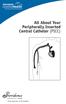 All About Your Peripherally Inserted Central Catheter (PICC) General Information Intravenous (IV) therapy is the delivery of fluid directly into a vein. An intravenous catheter is a hollow tube that is
APPLICATION OF DRY DRESSING
 G-100 APPLICATION OF DRY DRESSING PURPOSE To aid in the management of a wound with minimal drainage. To protect the wound from injury, prevent introduction of bacteria, reduce discomfort, and assist with
Caring for Your PleurX Pleural Catheter
 Caring for Your PleurX Pleural Catheter A PleurX Pleural Catheter has been placed in your chest through a small incision in your skin into the pleural space (see picture below). This allows you to drain
ABThera Open Abdomen Negative Pressure Therapy for Active Abdominal Therapy. Case Series
 ABThera Open Abdomen Negative Pressure Therapy for Active Abdominal Therapy Case Series Summary of Cases: USER EXPERIENCE The ABThera OA NPT system was found by surgeons to be a convenient and effective
Vacuum-assisted closure (VAC) is a noninvasive, active, closed
 P r o c e d u r e s P r o W O U N D C R E / S U R G E R y Peer Reviewed THE ESSENTIL WOUND CRE SERIES Vacuum-ssisted Wound Closure This is the third installment of The Essential Wound Care Series, which
Policies & Procedures. Title: I.D. Number: 1160
 Policies & Procedures Title: NEGATIVE PRESSURE WOUND THERAPY (NPWT) I.D. Number: 1160 Authorization: [X] SHR Nursing Practice Committee Source: Nursing Date Revised: March, 2010 Date Effective: November,
Introduction. What does PICO do? How does PICO work?
 Patient Information Introduction This patient handbook will provide you with important information while you are receiving negative pressure wound therapy (NPWT) from Smith & Nephew s PICO system. The
Protocol for the Use of Topical Negative Pressure Wound Management
 Protocol for the Use of Topical Negative Pressure Wound Management Approved by: CHS clinical Policy Group and Clinical Quality and Governance Committee On: 1 April 2010 12 April 2010 Review Date: March
Clinical Guideline for: Aseptic Technique
 Clinical Guideline for: Technique Summary This guideline provides the principles of, Non Touch, and Clean Techniques to be implemented in the hospital environment. Key Points The essential elements of
GUIDELINE FOR CARE OF A PATIENT WITH A NEPHROSTOMY TUBE
 GUIDELINE FOR CARE OF A PATIENT WITH A NEPHROSTOMY TUBE Reference Date approved Nov 2012 Approving Body Matrons Forum Supporting Policy/ Working in New Ways (WINW) Package Implementation date Supersedes
PATIENT GUIDE. Understand and care for your peripherally inserted central venous catheter (PICC). MEDICAL
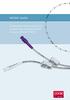 PATIENT GUIDE Understand and care for your peripherally inserted central venous catheter (PICC). MEDICAL Introduction The following information is presented as a guideline for your reference. The best
How many hours a day do you need to use the therapy? Introduction. How long will it take to improve your wound? What does PICO do? Will it be painful?
 Patient Information Introduction This patient handbook will provide you with important information while you are receiving negative pressure wound therapy (NPWT) from Smith & Nephew s PICO system. The
3M Steri-Strip S Surgical Skin Closure. Commonly Asked Questions
 3M Steri-Strip S Surgical Skin Closure Commonly Asked Questions What are the indications for use of 3M Steri-Strip S Surgical Skin Closure? Steri-Strip S Surgical Skin Closures are indicated as a primary
PATIENT GUIDE. Care and Maintenance Drainage Frequency: Max. Drainage Volume: Dressing Option: Clinician s Signature: Every drainage Weekly
 PATIENT GUIDE Care and Maintenance Drainage Frequency: Max. Drainage Volume: Dressing Option: Every drainage Weekly Clinician s Signature: ACCESS SYSTEMS Pleural Space Insertion Site Cuff Exit Site Catheter
Caring for a Tenckhoff Catheter
 Caring for a Tenckhoff Catheter UHN A Patient s Guide What is a Pleural Effusion? There is a small space between the outside of your lung and the chest wall (ribs). This space is called the pleural space.
CLINICAL GUIDELINES A REFERENCE SOURCE FOR CLINICIANS
 CLINICAL GUIDELINES A REFERENCE SOURCE FOR CLINICIANS This copy supercedes any previous revision. For revision level and contact information, refer to back cover of these guidelines. These guidelines
X-Plain Subclavian Inserted Central Catheter (SICC Line) Reference Summary
 X-Plain Subclavian Inserted Central Catheter (SICC Line) Reference Summary Introduction A Subclavian Inserted Central Catheter, or subclavian line, is a long thin hollow tube inserted in a vein under the
Sterile Dressing Change with Tegaderm CHG for Central Venous Catheter (CVC)
 Sterile Dressing Change with Tegaderm CHG for Central Venous Catheter (CVC) The dressing protects your catheter site. It also helps prevent infection at the site. Keep your dressing clean and dry at all
COMPLIANCE WITH THIS DOCUMENT IS MANDATORY
 COVER SHEET NAME OF DOCUMENT Wound Wound Assessment and Management TYPE OF DOCUMENT Procedure DOCUMENT NUMBER SESLHDPR/297 DATE OF PUBLICATION April 2014 RISK RATING Medium LEVEL OF EVIDENCE N/A REVIEW
Information for patients and nurses
 Information for patients and nurses Rocket IPC Pleural Catheter Indwelling Catheter Rocket Indwelling Pleural Catheter (IPC) Contents Contact Information...03 What s in the Rocket Dressing Pack and Bottle
What dressing for what wound. Prudence Lennox National Clinical Leader Healthcare Rehabilitation Ltd
 What dressing for what wound Prudence Lennox National Clinical Leader Healthcare Rehabilitation Ltd Wound assessment Accurate wound assessment is a prerequisite to planning appropriate care & should adopt
Simplicity through innovation
 RENASYS Soft Port Simplicity through innovation The new RENASYS Soft Port from Smith & Nephew represents a revolutionary advancement in Negative Pressure Wound Therapy (NPWT). This innovative Soft Port
History of Negative Pressure Wound Therapy (NPWT) NPWT Applicable to Multiple Types of Wound
 History of Negative Pressure Wound Therapy (NPWT) Cheng Siu Wah Winnie, NC Stoma & Wound Care Unit Department of Surgery, QEH Starting in the 1970s numerous articles appeared in the Russian literature
TAKING CARE OF WOUNDS KEY FIGURE:
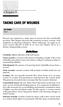 Chapter 9 TAKING CARE OF WOUNDS KEY FIGURE: Gauze Wound care represents a major area of concern for the rural health provider. This chapter discusses the treatment of open wounds, with emphasis on dressing
WOUND MANAGEMENT PROTOCOLS WOUND CLEANSING: REMOVING WOUND DEBRIS FROM WOUND BASE
 WOUND MANAGEMENT PROTOCOLS PURPOSE: Provide nursing personnel with simple guidance regarding appropriate dressing selection in the absence of wound specialist expertise Identify appropriate interventions
Caring for a Hemovac Drain
 Caring for a Hemovac Drain 269 12. Raise side rail. Lower bed height and adjust head of bed to a comfortable position. 13. Remove additional PPE, if used. Perform hand hygiene. These promote patient safety.
PATIENT GUIDE. Care and Maintenance Drainage Frequency: Max. Drainage Volume: Dressing Option: Clinician s Signature: Every drainage Weekly
 PATIENT GUIDE Care and Maintenance Drainage Frequency: Max. Drainage Volume: Dressing Option: Every drainage Weekly Clinician s Signature: ACCESS SYSTEMS Pleural Space Insertion Site Cuff Exit Site Catheter
Percutaneous Nephrostomy. Care of your Nephrostomy. Department of Urology
 Percutaneous Nephrostomy Care of your Nephrostomy Department of Urology You may encounter some problems at home but these are usually easily overcome. Listed below are some questions patients commonly
PICC & Midline Catheters Patient Information Guide
 PICC & Midline Catheters Patient Information Guide medcompnet.com 1 table of contents Introduction 4 What is a PICC or Midline Catheter? 4 How is the PICC or Midline Catheter Inserted? 6 Catheter Care
Guy s, King s and St Thomas Cancer Centre The Cancer Outpatient Clinic Central venous catheter: Peripherally inserted central catheter
 Guy s, King s and St Thomas Cancer Centre The Cancer Outpatient Clinic Central venous catheter: Peripherally inserted central catheter This information leaflet aims to help answer some of the questions
Wound Care: The Basics
 Wound Care: The Basics Suzann Williams-Rosenthal, RN, MSN, WOC, GNP Norma Branham, RN, MSN, WOC, GNP University of Virginia May, 2010 What Type of Wound is it? How long has it been there? Acute-generally
Flushing and Dressing a Peripherally Inserted Central Catheter (PICC Line): a Guide for Nurses
 Flushing and Dressing a Peripherally Inserted Central Catheter (PICC Line): a Guide for Nurses Information for Nurses Introduction This information is for community nursing staffs who have been asked to
Negative Pressure Wound Therapy Incorporating Early Exercise Therapy in Hand Surgery: Bag-type Negative Pressure Wound Therapy
 2013 67 4 271 276 Negative Pressure Wound Therapy Incorporating Early Exercise Therapy in Hand Surgery: ag-type Negative Pressure Wound Therapy * 272 67 4 14 15 17 ugust 2013 ag-type Negative Pressure
A Pocket Guide. Application and Cutting Guide
 A Pocket Guide Application and Cutting Guide Developed by Pia Carlsen, RN, Denmark Jacqui Fletcher, Principal Lecturer, MSc BSc (Hons) PG Dip (ED) RN ILT, UK Maria Mousley, AHP, Consultant Podiatrist,
Aseptic Technique Policy and Procedure
 Aseptic Technique Policy and Procedure Authorising Officer Tom Cahill, Deputy Chief Executive Signature of Authorising Officer: Version: V2 Ratified By: Risk Management and Patient Safety Group Date Ratified:
Patient Information Guide Morpheus CT Peripherally Inserted Central Catheter
 Patient Information Guide Morpheus CT Peripherally Inserted Central Catheter IC 192 Rev C A measure of flexibility and strength. Table of Contents 1. Introduction 2. What is the Morpheus CT PICC? 3. What
PICCs and Midline Catheters
 Patient Education PICCs and Midline Catheters Patient s guide to PICC (peripherally inserted central catheter) and midline catheters What are PICCs and midline catheters used for? Any medicine given over
How To Recover From A Surgical Wound From A Cast
 Care of Your Wounds After Amputation Surgery by Paddy Rossbach, RN Depending on the reason for your amputation and the state of your limb at the time of surgery, definitive closure of the wound may take
Since its introduction almost 20
 Guidelines for safe negative-pressure wound therapy Rule of thumb: Assess twice, dress once By Ron Rock MSN, RN, ACNS-BC Since its introduction almost 20 years ago, negative-pressure wound therapy (NPWT)
Inguinal Hernia (Female)
 Inguinal Hernia (Female) WHAT IS AN INGUINAL HERNIA? 2 WHAT CAUSES AN INGUINAL HERNIA? 2 WHAT DOES TREATMENT / MANAGEMENT INVOLVE? 3 DAY SURGERY MANAGEMENT 3 SURGICAL REPAIR 4 WHAT ARE THE RISKS/COMPLICATIONS
Eye Injuries. The Eyes The eyes are sophisticated organs. They collect light and focus it on the back of the eye, allowing us to see.
 Eye Injuries Introduction The design of your face helps protect your eyes from injury. But injuries can still damage your eyes. Sometimes injuries are severe enough that you could lose your vision. Most
Care for your child s Central Venous Catheter (CVC)
 Care for your child s Central Venous Catheter (CVC) This booklet is intended for general informational purposes only. You should consult your doctor for medical advice. Please call the clinic or your home
Looking after your urinary catheter at home
 Looking after your urinary catheter at home Information for patients and carers Useful contacts to keep: Name and title of community nurse Single point of access (SPA) for community nursing 24 hour service
ADVANCING the art and science of NPWT negative pressure wound therapy. www.deroyal.com
 ADVANCING the art and science of NPWT negative pressure wound therapy www.deroyal.com NPWT THE SCIENCE OF NEGATIVE PRESSURE WOUND THERAPY Basic Mechanisms of Negative Pressure Wound Therapy Three leading
Managing your bladder with a suprapubic catheter at home
 Managing your bladder with a suprapubic catheter at home Gateshead Primary Care Trust South Tyneside Primary Care Trust Sunderland Teaching Primary Care Trust What is a suprapubic catheter? A suprapubic
Chapter 11. Everting skin edges
 Chapter 11 PRIMARY WOUND CLOSURE KEY FIGURE: Everting skin edges In primary wound closure, the skin edges of the wound are sutured together to close the defect. Whenever possible and practical, primary
Ilioinguinal dissection (removal of lymph nodes in the groin and pelvis)
 Ilioinguinal dissection (removal of lymph nodes in the groin and pelvis) This sheet answers common questions about ilio-inguinal dissection. If you would like further information, or have any particular
FUNCTIONS OF THE SKIN
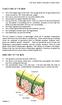 FUNCTIONS OF THE SKIN Skin is the largest organ of the body. The average adult has 18 square feet of skin which account for 16% of the total body weight. Skin acts as a physical barrier for you to the
Femoral Hernia Repair
 Femoral Hernia Repair WHAT IS A FEMORAL HERNIA REPAIR? 2 WHAT CAUSES A FEMORAL HERNIA? 2 WHAT DOES TREATMENT/ MANAGEMENT INVOLVE? 3 DAY SURGERY MANAGEMENT 3 SURGICAL REPAIR 4 WHAT ARE THE RISKS/COMPLICATIONS
Topical negative pressure in wound management
 Topical negative pressure in wound management Understanding topical negative pressure therapy Health economics and topical negative pressure therapy Selecting topical negative pressure therapy in practice
Summary of Recommendations
 Summary of Recommendations *LEVEL OF EVIDENCE Practice Recommendations Assessment 1.1 Conduct a history and focused physical assessment. IV 1.2 Conduct a psychosocial assessment to determine the client
Improving the Safety of Negative-Pressure Wound Therapy
 REVIEWS & ANALYSES Improving the Safety of Negative-Pressure Wound Therapy ABSTRACT Negative-pressure wound therapy (NPWT) is a noninvasive therapy that uses negative pressure to treat acute and chronic
Epidural Continuous Infusion. Patient information Leaflet
 Epidural Continuous Infusion Patient information Leaflet April 2015 Introduction You may already know that epidural s are often used to treat pain during childbirth. This same technique can also used as
Working together to prevent pressure ulcers (prevention and pressure-relieving devices)
 Working together to prevent pressure ulcers (prevention and pressure-relieving devices) Understanding NICE guidance information for people at risk of pressure ulcers, their carers, and the public Draft
Your Guide to Peritoneal Dialysis Module 3: Doing Peritoneal Dialysis at Home
 Your Guide to Peritoneal Dialysis Module 3: 6.0959 in Preparing to do PD One of the most important things about PD is to keep the dialysis area and anything that comes in contact with the PD equipment
Vaxcel PICCs Valved and Non-Valved. A Patient s Guide
 Vaxcel PICCs Valved and Non-Valved A Patient s Guide Information about your Vaxcel PICC is available by calling the Navilyst Medical Vascular Access Information Line 800.513.6876 Vaxcel Peripherally Inserted
Wound Healing. Healing is a matter of time, but it is sometimes also a matter of opportunity. Hippocrates
 C HAPTER 9 Wound Healing Healing is a matter of time, but it is sometimes also a matter of opportunity. Hippocrates As the above quote suggests, conduct regular and systematic wound assessments, and seize
After care following insertion of a suprapubic catheter
 Other formats After care following insertion of a suprapubic catheter If you need this information in another format such as audio tape or computer disk, Braille, large print, high contrast, British Sign
Laparoscopic Nephrectomy
 Laparoscopic Nephrectomy Information for Patients This leaflet explains: What is a Nephrectomy?... 2 Why do I need a nephrectomy?... 3 What are the risks and side effects of laparoscopic nephrectomy?...
BANDAGES AND BANDAGING TECHNIQUES
 BANDAGES AND BANDAGING TECHNIQUES Your role as a veterinary assistant is to understand the theory behind bandaging, as bandaging is the veterinary technician s and the veterinarian s role. You ll need
KINESIOLOGY TAPING GUIDE
 KINESIOLOGY TAPING GUIDE What is Kinesiology tape and how does Kinesiology tape work? How to apply Kinesiology tape Examples of application of UP Kinesiology tape for common injuries and conditions Introduction
call 811 to get advice from a nurse, or have someone drive the patient to a hospital Emergency Department. Patients should NOT drive themselves.
 Taking Care at Home After Surgery This checklist is to help you and your support person know what to do after you go home following your surgery. If you are given instructions verbally or in writing by
Zimmer DeNovo NT Natural Tissue Graft
 Zimmer DeNovo NT Natural Tissue Graft Surgical Technique Biologic treatment for early intervention and cartilage repair. Overview DeNovo NT Natural Tissue Graft (Fig. 1) is an off-the-shelf human tissue,
Bed Cleaning Procedure
 This is an official Northern Trust policy and should not be edited in any way Bed Cleaning Procedure Reference Number: NHSCT/10/308 Target audience: Nursing and Midwifery Staff Sources of advice in relation
Provide chairside support during the extraction of teeth and minor oral surgery
 About this workforce competence This workforce competence is intended for those who provide close support during the extraction of erupted teeth, the extraction of unerupted teeth or roots, and bone removal.
Long-term urinary catheters: prevention and control of healthcare-associated infections in primary and community care
 Long-term urinary catheters: prevention and control of healthcare-associated infections in primary and community care A NICE pathway brings together all NICE guidance, quality standards and materials to
Biliary Drain. What is a biliary drain?
 Biliary Drain What is a biliary drain? A biliary drain is a tube to drain bile from your liver. It is put in by a doctor called an Interventional Radiologist. The tube or catheter is placed through your
Wound Healing Community Outreach Service
 Wound Healing Community Outreach Service Wound Management Education Plan January 2012 December 2012 Author: Michelle Gibb Nurse Practitioner Wound Management Wound Healing Community Outreach Service Institute
Position Statement: Pressure Ulcer Staging
 Position Statement: Pressure Ulcer Staging Statement of Position The Wound, Ostomy and Continence Nurses (WOCN) Society supports the use of the National Pressure Ulcer Advisory Panel Staging System (NPUAP).
Status: Standard Procedure: specifies the procedures to be followed, only in exceptional circumstances should these not be followed
 Page 1 of 6 Status: Standard Procedure: specifies the procedures to be followed, only in exceptional circumstances should these not be followed Title: Standard Procedure for the Irrigating (flushing) of
Flushing and Dressing a Peripherally Inserted Central Catheter (PICC Line)
 Flushing and Dressing a Peripherally Inserted Central Catheter (PICC Line) Patient Information Introduction This booklet has been written to provide information to patients with a Peripherally Inserted
PROCEDURE FOR CATHETER AFTERCARE
 PROCEDURE FOR CATHETER AFTERCARE First Issued May 2010 Issue Version Two Purpose of Issue/Description of Change To promote safe and effective emptying of urinary drainage bags, closed drainage systems
Aspira* Pleural Drainage Catheter
 Aspira* Pleural Drainage Catheter Instructions For Use Access Systems Product Description: The Aspira* Pleural Drainage Catheter is a tunneled, long-term catheter used to drain accumulated fluid from the
Post-surgical V.A.C. VeraFlo Therapy with Prontosan Instillation on Inpatient Infected Wounds * COLLECTION OF CASE STUDIES
 COLLECTION OF CASE STUDIES Post-surgical V.A.C. VeraFlo Therapy with Prontosan Instillation on Inpatient Infected Wounds * *All patients were treated with systemic antibiotics Post-surgical V.A.C. VeraFlo
How to care for a Midline Catheter
 How to care for a Midline Catheter Developed by the health care professionals of the IV Program with assistance from the Department of Learning and Development. All rights reserved. No part of this book
Care of your peripherally inserted central catheter
 Care of your peripherally inserted central catheter A guide for patients and their carers We care, we discover, we teach Contents What is a PICC?.... 1 How is it put in?.... 1 What are the benefits of
Hemodialysis Access: What You Need to Know
 Hemodialysis Access: What You Need to Know Hemodialysis Access: What You Need To Know Whether you already get hemodialysis treatment, or you will need to start dialysis soon, this booklet will help you
Scout Vessel Guard. A cover for vessels during anterior lumbar spine surgery.
 Scout Vessel Guard. A cover for vessels during anterior lumbar spine surgery. Technique Guide Instruments and implants approved by the AO Foundation Table of Contents Introduction Scout Vessel Guard 2
Individualized Care Plans Fully Developed
 Appendix Individualized Care Plans Fully Developed A Refer to Chapter 1 The Nursing Process: A Synopsis, p. 32: Two Individualized Care Plans Fully Developed; Care Plan 1 for Mr. John Walters, Care Plan
Managing Your Non-Tunneled (Percutaneous) Catheter: PICC, SICC, and JCC. What is a PICC catheter?
 Managing Your Non-Tunneled The staff of the Procedure, Vascular Access, Conscious Sedation Service has written this information to explain your new PICC (peripherally inserted central catheter), SICC (subclavian
Wounds UK. Exsudex : another means of managing exudate Pauline Beldon
 Wounds UK Exsudex : another means of managing exudate Pauline Beldon Product REVIEW Exsudex : another means of managing exudate Heavily exuding wounds can cause discomfort to the patient as well as inhibiting
How do I evaluate my skin condition? What causes sore skin?
 skin care Taking good care of your peri-stomal skin is of utmost importance. Your skin is the base, on which all of your stoma products will be placed, so it is vital that it is kept in good condition.
Policies & Procedures. Care of
 Policies & Procedures Title: SUPRAPUBIC CATHETER Care of Changing Removal Authorization: [x] SHR Nursing Practice Committee I.D. Number: 1021 Source: Nursing Date Revised: November 2014 Date Effective:
To maintain a port of entry to venous flow when all available peripheral ports have failed.
 I. Purpose: To maintain a port of entry to venous flow when all available peripheral ports have failed. II. General Comments: Since its development, these catheters have been used with increasing frequency
Fact Sheet. Caring for and Changing your Supra-Pubic Catheter (SPC) Queensland Spinal Cord Injuries Service
 and Caring for and Changing your Supra-Pubic Catheter (SPC) What is a Suprapubic Catheter? A supra-pubic catheter is a tube that goes into your bladder through your abdominal wall which continuously drains
TREATMENT 1. Control bleeding by applying pressure over wound with Gauze Pads (Surgical Supply-4). 2. Contact Surgeon for laceration repair options.
 Page 1 of 8 pages NOTE Contact Surgeon before giving any medication marked with an asterisk. In an emergency or during Loss of Signal, begin appropriate treatment; then call Surgeon as soon as possible.
Your Nerve Block &Home Pump For Arm/Hand Surgery
 Your Nerve Block &Home Pump For Arm/Hand Surgery Department of Anesthesiology and Perioperative Medicine www.happypatient.org Updated 5/10 Why? To Help Control Postoperative Pain at Home A pump connected